
Learning with Families and Writing Together: How a National Writing Project Fellowship Supported Teachers to Foster Family Engagement and Literacy in Elementary Classrooms Becca Beltramo, Cristina Ramos, Joyce Butler & LaToya Burns NCTE 2022
Dear school systems,sorry to break it to you, but you cannot be culturally-responsive or sustaining if you do not involve,ask,validate parents’,caregivers’ and communities’ ways of knowing and being.

· Sep
Clara Vaz Bauler Twitter 2:12 PM
23, 2022·
Early Career Teacher Fellowship NWP & Panda Foundation
● 2020 Panda Foundation-charitable arm of Panda Express supported an early career elementary teacher year-long fellowship with a focus on family literacy and family engagement

● 100 teachers started the program and 80 finished. They were from Georgia,Texas,Illinois,Arizona,Nevada,California and Washington State.
● Requirements: attendance at monthly meetings,facilitation of family literacy event and writing about this event on The Current.
Beltramo- Family Recipe Writing Unit
Ramos - Noche de Lectura/Literacy Night
Butler - Family Poetry Night
Burns- First Grade Virtual Book Club
Roundtables Becca
Cristina
Joyce
LaToya
Becca Beltramo- Family Recipe Unit
● I was a professional chef in San Francisco before becoming a teacher.
● I wanted to bring that knowledge into the classroom.
● We started with a crepe recipe, which I filmed on Youtube and did a shared write with the recipe.
● Then we worked on Jamboard to create a recipe brianstorm of all the recipes we know.
● Interview with parent or family/community member.
● We then worked on google docs to write down at least 1 recipe.
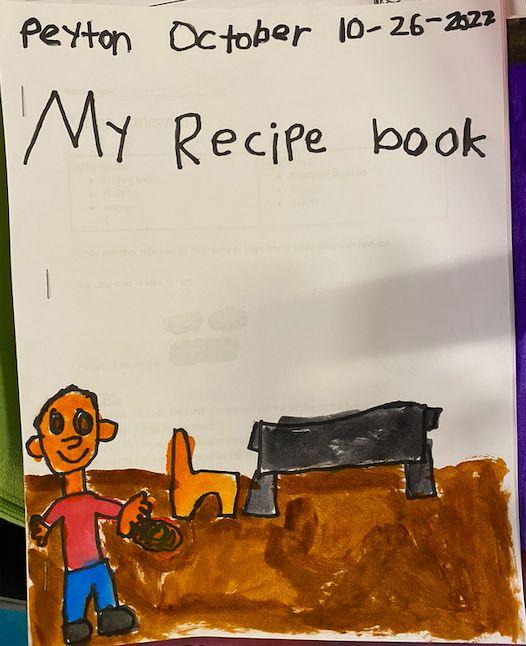
● Recipe books were made and distributed.
● I continue this unit in person as well with the same elements.
Introduction

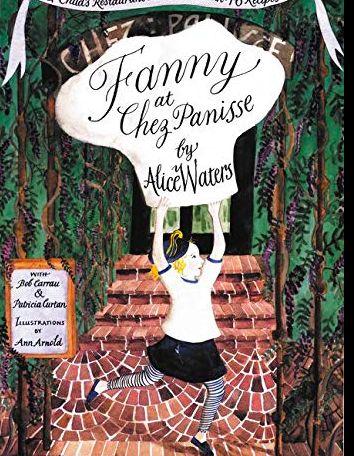


Cooking and food is very much a part of each of us and I wanted to celebrate the traditions and heritage of each person in the class. We learned about lots of different food from around the world and read a variety of read alouds that were about food and culture.
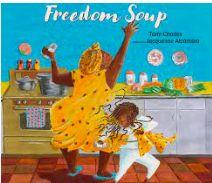
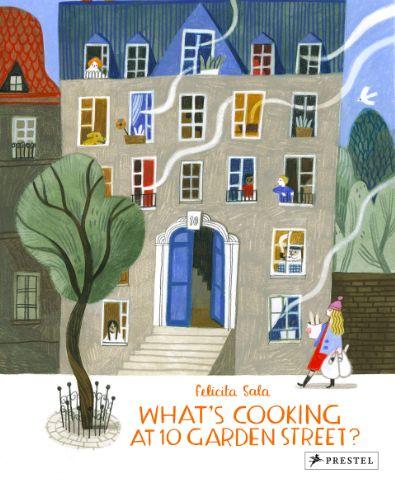
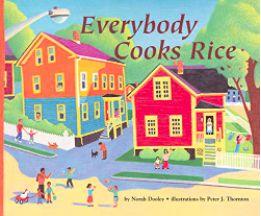
I wanted to create a unit that incorporated my history of professional cooking and incorporate families in the process.
How to make recipes with families










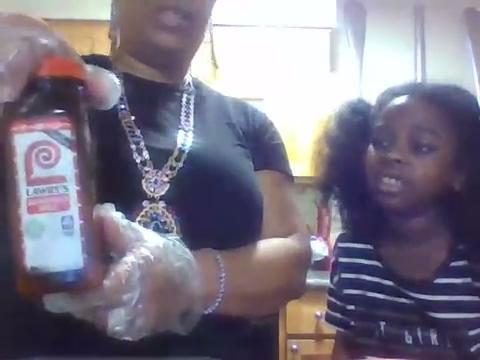
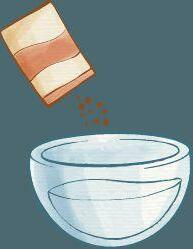
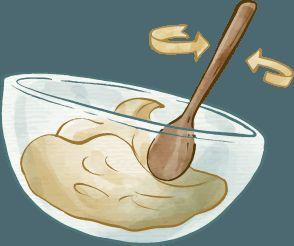
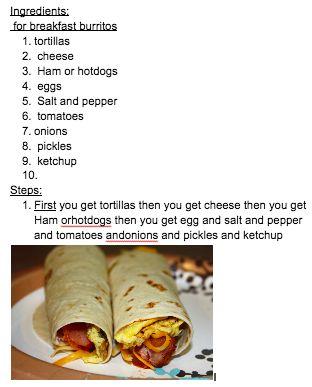
Some highlights from the unit…
● Students interviewed families about a favorite recipe in the family.
● We used jamboard to brainstorm ideas and google docs to write in our recipes.
We learned that writing, like cooking, is a process. Interviews Brainstorm
02 03





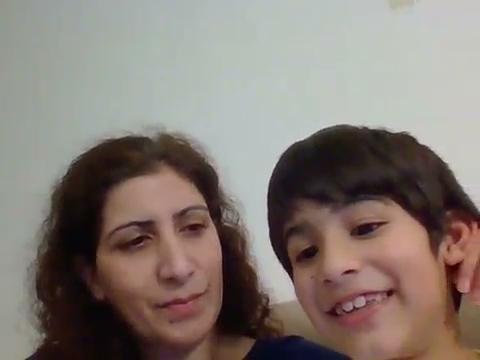

Students interviewed a family or community member about a dish.
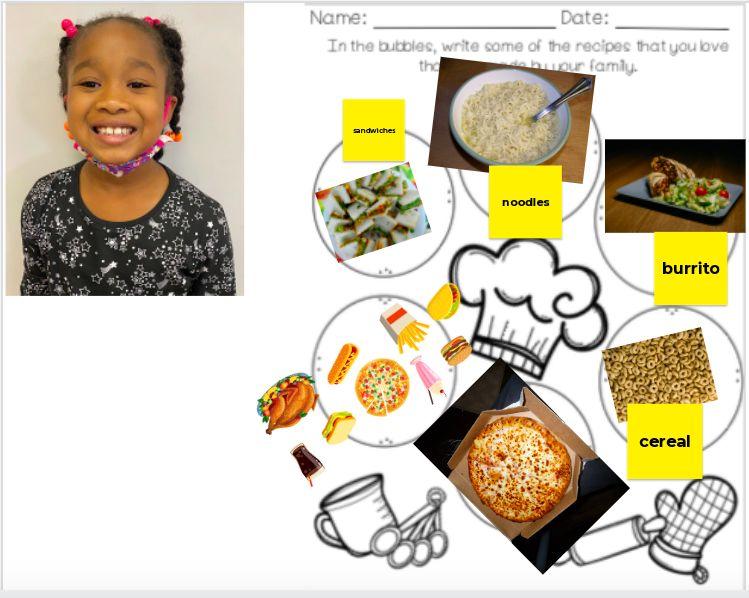
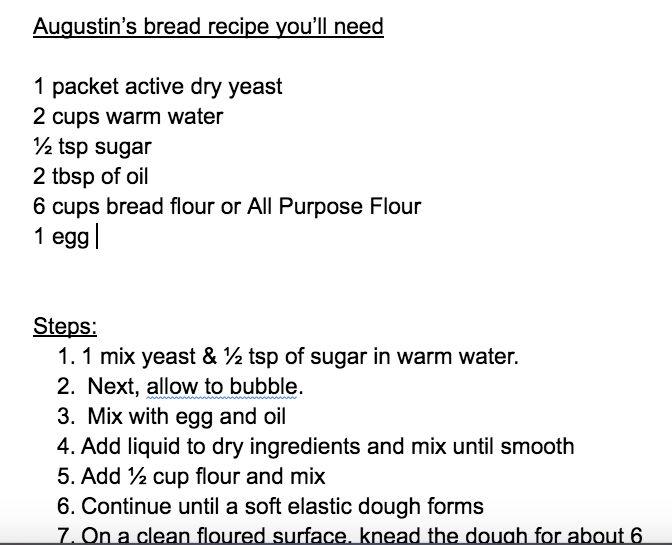
Students wrote out all the different recipes they knew how to cook.
Write and Revise
Students used google to help them spell and write.
01
Reflections from the unit

● I learned that this unit went well with one of the Black History month themes of Globalism.
● This unit was part of our informational unit writing- I have made it the opening to our nonfiction writing unit since the first time.
● Students and families were able to learn more about their cultural backgrounds and also brought them closer together.
● Recipe books were created and distributed after the unit.
● Students were able to edit their work using google docs/jamboard/google classroom.
● Students and families came together to do a recipe celebration which we shared recipes with other people from our 2nd grade community.
Joyce Balcos Butler: Connecting Families Through Digital Poetry Night

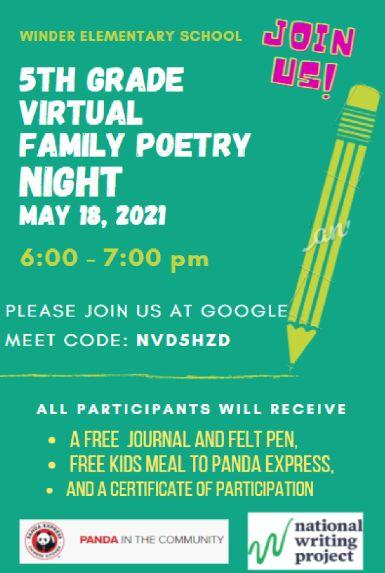
1. During the pandemic, students at Winder Elementary School in Winder, Georgia had an opportunity to collaborate with parents at a 5th grade family poetry night sponsored by the Panda Foundation.
2. As a Panda Fellow, we were tasked with fostering and engaging our families to participate in a Family Literacy experience.
3. I thought it might be fun for our students and families to learn about poetry while creating their own shared works along with family members.
Introduction to Digital Desks
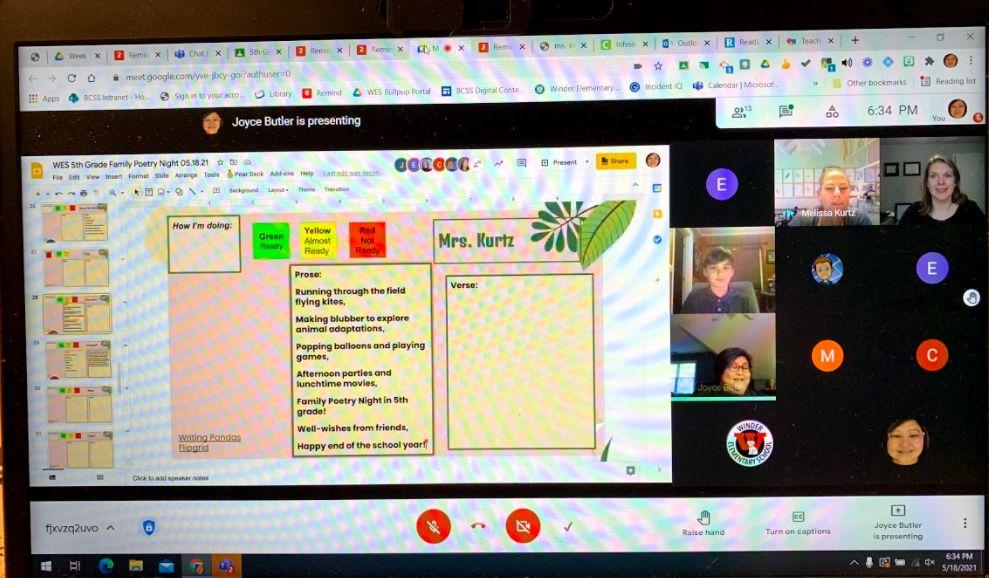
The idea behind digital desks was for students to be able to create their own works while sharing with others in the classroom.
● Digital desks can be created in Google or Microsoft platforms and can then be shared with students in Google classroom or Teams.
● The following slides show examples of some of the student work.
● In addition to writing poetry with their families, students were also able to record their works together using Flipgrid and Padlet.
Writing
Flipgrid
Pandas
Mother’sDay Padlet
.Ms. Butler



How I’m doing:
Red Not Ready Yellow Almost Ready Green Ready
blocksofwordswith punctuationaftereach
expressive,with
WritingPandas Flipgrid
Prose:[Large
though] Verse:[More
rhythmandrhymesometimes]
Verse| Burgherissosweet, Heislikecandy. Whenheprodsaroundthehouse, Heissilentlikethenight. Hegoesandcreatesagang, Toattackthedog.
issosweet,
islikecandy.
How I’m doing:
The Kaerichers Red Not Ready Yellow Almost Ready Green Ready
Burgher
He
(Sometimes) Verse| Ben-snakk Hechunkcat Withatophat HeisBen-snakk Writing Pandas Flipgrid
Yellow Almost Ready Green Ready
Red Not Ready
LARRY
hereisalink tomyflip grid thatI made.click onthewords thatarein Grayabove
Prose: Thisishowmyschool yearwentsoiwakeupinthe morningbrightandearlyand gettingdressedbrushmy teethandgettingmystuff readytogotoschoolandIit wasashockbecauseIdon't reallydon'tbreakwakeup thisearlysoitwashardand thenIgotoschooldifferent singallyournewclassmates andseeingyourfriendsand thatwasgoodmathscience andsocialstudieswaspretty easy.that'showitwent
Verse: LOVING Caring
Pandas
Enjoying make sure my work is done stay on top of me Listening and having fun And enjoying life LOVE YOU MOM.
How I’m doing:
Flipgrid
Writing
Silas
Verse: Thereisamonkeysheis chonkyheeatstoomany bananaandthemonkeyname washanna
How I’m doing:
Red Not Ready Yellow Almost Ready Green Ready
Prose: Thewind. Thewater. Flames. Stones. TheEarth. WritingPandas Flipgrid
Family Poetry Night
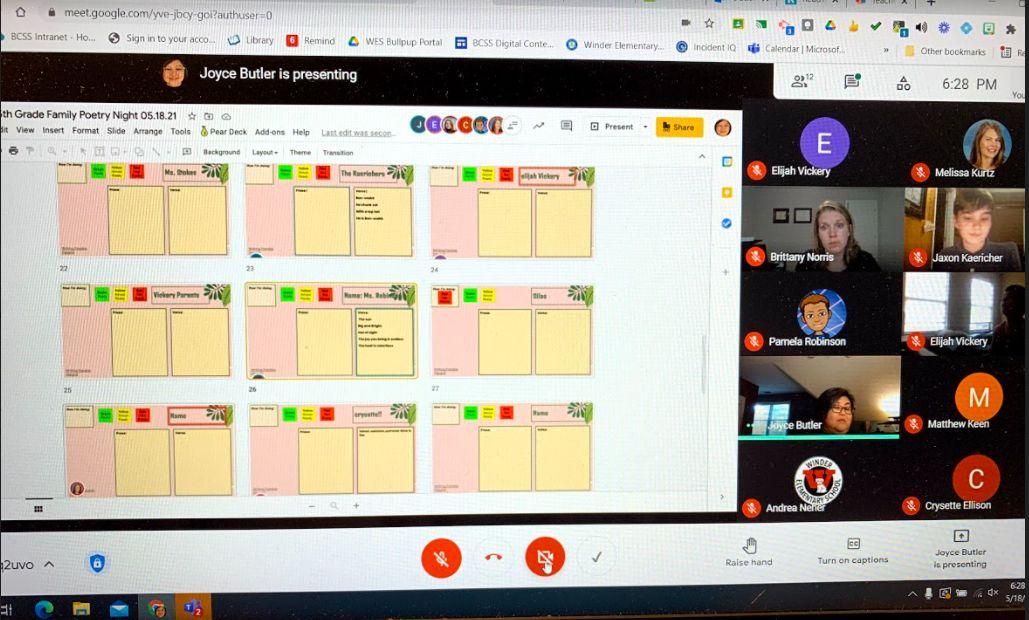
Family Poetry Night was a fun night of collaboration with families while learning about poetry. This event fostered family fun through engagement tand authentic shared writing.
LaToya Burns-

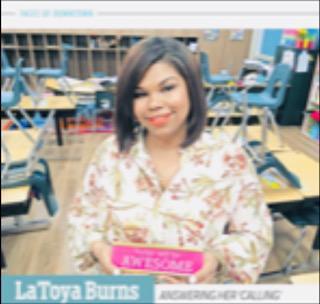
This is How We Do First Grade! My Year in First Grade Vs. Your Year in First Grade
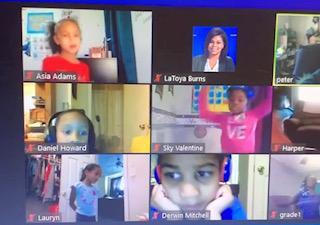
-In 2020 I was asked to become apart of the National Writing Project. I was presented with the task of creating a Family Engagement Night. However, my district had VERY strict COVID-19 protocols in schools. Which meant, we could not have any clubs, events, or programs that year. Everything had to be virtual, including class.
- I read the story, This is How We Do It, by: Matt Lamothe. The story is about the day in the lives of 7 students around the world. After reading this I had the idea of beginning a virtual book club.
This Is How We Do It- Matt Lamothe

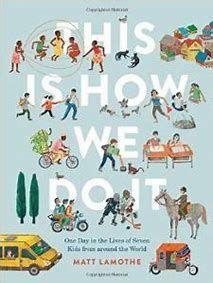
First Grade Book Club
The school year of 2020-2021 I taught my class virtually. I had a total of 30 students and I taught 15 students in the morning for 2 hours and 15 students in the afternoon for 2 hours. I announced to parents that class would be extended an additional 15 minutes to begin our book club meeting.
The book that I selected was Junie B. Jones, First Grader at Last, by Barbara Park. I selected this book because students were familiar with Junie B. Jones books from their Kindergarten year. Also, this story told the hilarious tale of the ups and of Junie B. Jones entering First Grade.
Junie B. Jones- First Grader at Last


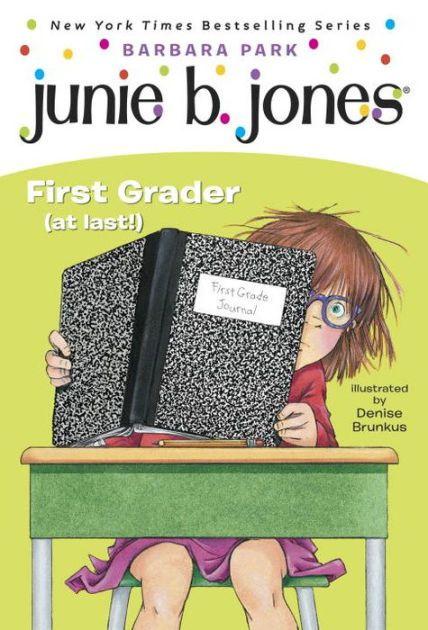
Book Club Procedures
Students had to read a chapter every night with their parents. After class, we had our “meeting time”.I re-read the chapter to the class and we had a discussion about each chapter. During this time, we began to compare and contrast Junie B. Jones’ First Grade Experience to their own. We discussed the difference between Junie B. Jones’ teacher, to theirs (me), friends, and even assignments.
Project and Family Engagement Students had to read a chapter each night with their parents, and I re-read the chapter during our meeting. While we discussed Junie B. Jones’ similarities and differences. At the conclusion of the book, students had to interview their parents about their first grade experience. This is very fun, and enlightening for students and parents. InterviewbyDanielH.whointerviewedhisgrandmother,HelenH.aka(Gigi) 1) Gigi,whatyearwereyouinfirstgradeandwhatwasthenameofyourschool? -Iwasinfirstgradein1964andmyschoolnamewasLeviWhiteElementary. 2) Doyourememberyourteachersname?-Yes,hernamewasMrs.White. 3) Wasshenice?-Shewasverynice,butstrict! 4) WhatdidyoulearninFirstgrade?-Ican’trememberallofthatDaniel. 5) Howdidyougettoschool?Didyouridethebus?-No,Iwalked. 6) Tellmeaboutlunch.Doyouremember?-Irememberweatelunchatschool. Wehadfreshbiscuitsandmilkwasonlyadime!
Reflection
Even though Covid restrictions made this project less engaging than usual, this experience was very enlightening because it allowed families to read together, learn more about each other, and also allowed them to reflect.
Students realized that they accomplished something that they felt was “hard”. Which was completing First Grade solely online. This experience was also eye opening to them because they learned that even though many things were different between their parents and themselves. There were still things that were the same.
Virtual Learning
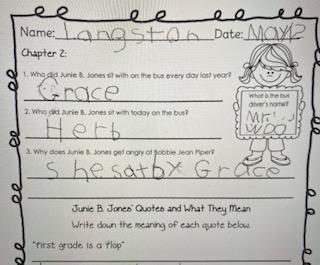
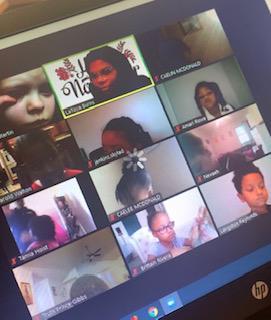
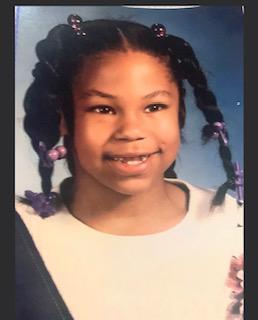
First Grader to First Grade Teacher
Noche de La Lectura/ Literacy Night
Cristina Ramos
My family literacy night revolved around a storytelling exchange between students and their parents


This was the agenda for the night. I wanted to add images wherever there was text.
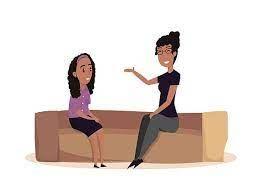
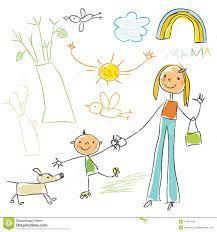






Rompehielo/ Ice Breaker Entrevistas/ Interviews 02 Dibujos/ Drawings 03 Comentarios y Preguntas/ Comments & Questions 04 01
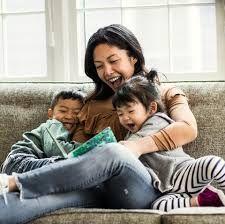
¿Qué es lo que más le gusta hacer en casa con su hija o hijo? Leer/Read Ver una película/Watch a movie Comer juntos/Eat together Jugar/Play Icebreaker: what do you like to do most at home with your child?
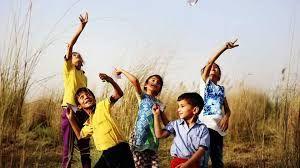
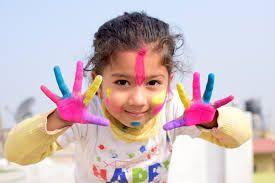
● ¿Fuiste al kindergarten? Did you go to kindergarten? ● ¿Cómo era tu clase? ¿Qué hacías tú en cambio? What was your class like? What did you do instead? ● ¿Qué era lo que más te gustaba hacer en la escuela/en la infancia?What was your favorite thing to do in school/as a child? ● ¿Qué era lo que menos te gustaba hacer en la escuela o de niño? What was your least favorite thing to do in school/as a child? ● ¿Qué esperas que haga en la escuela? What do you hope for me to do in school?
Entrevistas/Interviews
● ¿Cómo se llama tu escuela? What is your school called? ● ¿Cómo es tu escuela? How is your school? ● ¿Qué es lo que más te gusta hacer en la escuela? What do you like most in school? ● ¿Qué es lo que menos te gusta hacer en la escuela? What do you like least about school? ● ¿Qué esperas aprender en la escuela? What do you hope to learn at school? Entrevistas/Interviews

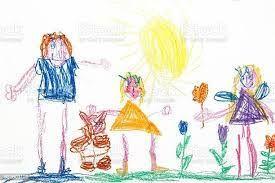
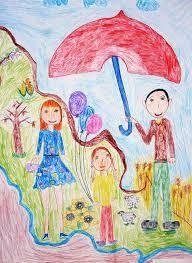
Dibujen su hijo/ Draw your child ALUMNOS Dibujen su padre/ Draw your parent
Dibujos/Drawings PADRES
¿Preguntas? O Comentarios/ Questions? Comments
During this time parents shared out how much they enjoyed this event. Some parents mentioned this was their first time having a conversation about their childhood and school with their own child. One parent mentioned he didn’t get a chance to ask his child how she felt about school until this event. The event was near the end of the school year.
Many of the children were surprised to learn their parents were in kindergarten. Some even learned that their parents struggled in school too. Families said they were happy to color together and talk about their child’s hopes.
One family member mentioned to their child that they don’t like to talk about their childhood often because it was hard.
I saw students completely engaged in listening and oral expression when they can connect to the content. I also saw parents open up and become vulnerable to connect with their children. This is meaningful learning.
Contact Information Becca Beltramo beltramor@sfusd.edu Cristina Ramos cjramos89@gmail.com Joyce Butler jbalcosbutler50@gmail.com LaToya Burns ljburns888@gmail.com