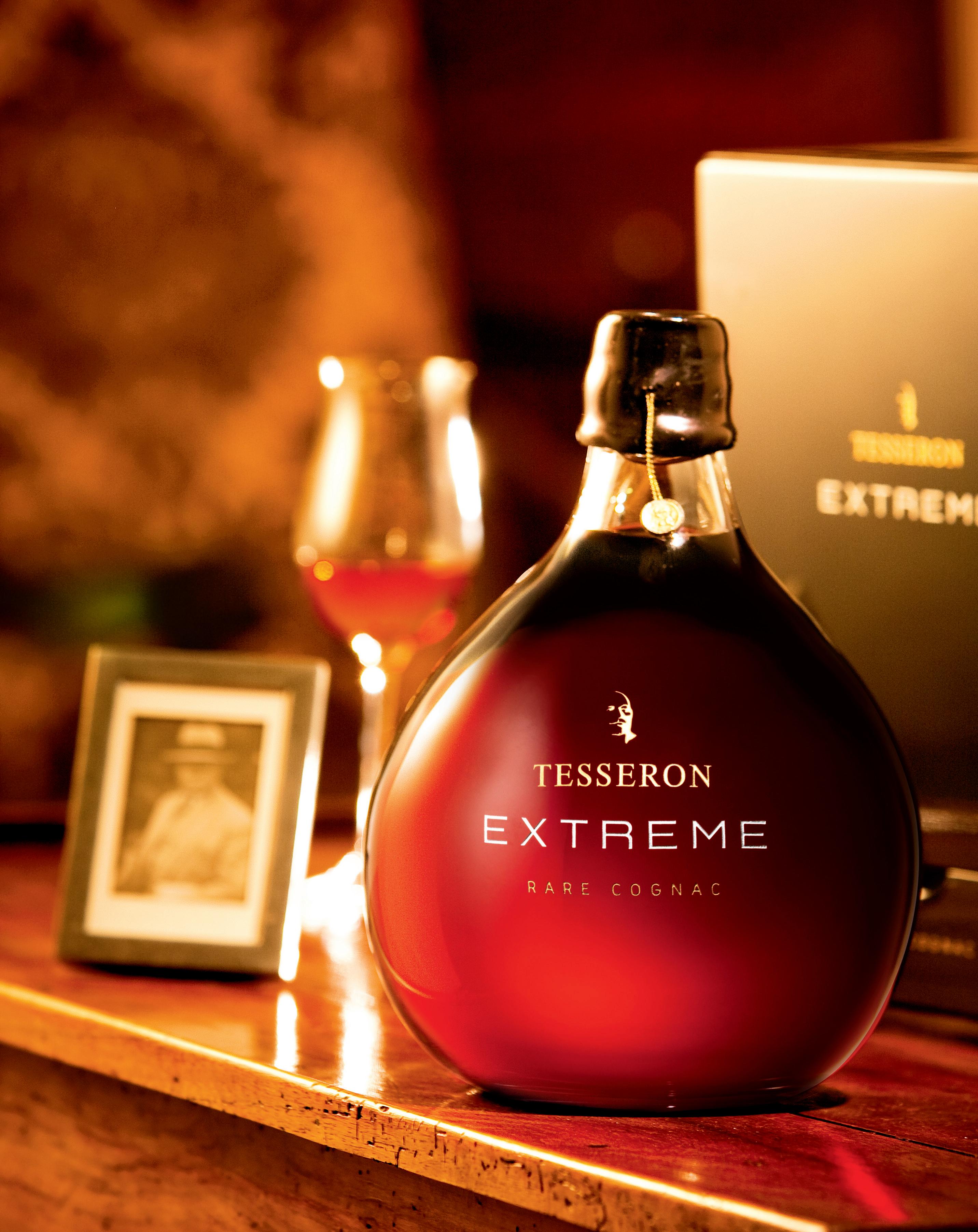
TESSERON COGNAC


Livets Goda PREMIUM PLUS
Ready to take your passion for wine, whisky, and the remarkable world surrounding these noble spirits to the next level? Subscribe to Premium Plus!
€7/month
Gain access to more than 18,000 drinks reviews, our top picks from the latest launches at Systembolaget, exclusive special editions and articles, the Recipe Library, and our archive of past issues.
Your subscription also includes full-year digital subscriptions to both of our flagship magazines, Livets Goda and Whisky & Bourbon. Everything in one place, right at your fingertips.
Subscribe today!

The Livets Goda App
– a world of drinks, always within reach
A MODERN, INSPIRING AND ESSENTIAL APP FOR WINE AND GASTRONOMY ENTHUSIASTS

The Livets Goda App is your personal companion in the world of fine drinks. Free to download and available for both iOS via the App Store and Android via Google Play, it brings the full Livets Goda experience wherever you go.
Premium subscribers can log in to unlock the app’s full potential, gaining access to the Wine Cellar, Recipe Bank, and much more. If you are a Premium Plus subscriber, you can also read our regular editions and special supplements directly within the app.
Whether you are navigating the challenge of selecting the right wine or whisky, looking for inspiration for an outstanding meal, or simply browsing the latest news, reviews and features, the Livets Goda App is your ultimate guide. It offers the same rich content as our website, along with additional functionality – including the Livets Goda Restaurant Guide.
With or without a subscription, this is an app designed to enhance the experience of every food and wine enthusiast. Download it today and discover why Livets Goda is Sweden’s leading source of knowledge and inspiration in the worlds of wine and gastronomy.


https://lgoda.se/app-google
AppStore (iOS): https://lgoda.se/app
Play (Android):


Editor-in-Chief Enquist Has the Floor… Welcome to the Phenomenon of “Hang-xiety”
When yesterday’s joy turns into this morning’s existential crisis. Enquist takes a closer look at hangover anxiety – and why the brain can sometimes become its own worst enemy.
A Few Brief Thoughts on This and That
From Berliner Luft and Sicilian limoncello to rum, gin, calvados, whisky and cognac. A wonderfully eclectic, enjoyable and slightly spirit-romantic journey through the editorial team’s latest discoveries.
Blended – News from the World of Drinks
Current news, trends and developments from the world of spirits and beverages, served in a concise and digestible format..
Tasted
The editorial team’s collective verdicts on current releases in whisky, bourbon, cognac, rum and other fine spirits.
Tesseron Cognac – Cognac’s Answer to Domaine de la Romanée-Conti
A family name that long remained hidden behind the major houses. Today, Tesseron stands as one of the most respected producers in the world of Cognac.
A Study in Whisky: Lagg Distillery Powerful peat, a distinct identity and remarkable precision. We take a closer look at one of Scotland’s most exciting young distilleries.
Clonakilty Distillery – A Stone’s Throw from the Atlantic
From an abandoned concrete structure to an award-winning whiskey producer. The story of a coastal Irish distillery that chose to follow its own path.
West Cork Distillers – From Sea to Whiskey
Three friends, a handful of stills and a bold idea. Today, West Cork is one of Ireland’s largest independent whiskey distilleries.
Boann Distillery – Focused on Single Pot Still Whiskey
In the Boyne Valley, whiskey is crafted with deep roots in the local landscape. A modern distillery with its eyes firmly fixed on tradition.
Midleton Distillery – In Conversation with Master Blender Dave McCabe
Following Billy Leighton’s long tenure, Dave McCabe takes the helm. A conversation about legacy, responsibility and the future of Ireland’s most influential whiskey house.
Karuizawa Whisky Distillery – A New Distillery with an Historic Name
Two decades after the legendary Karuizawa fell silent, a new distillery has emerged at the foot of Mount Asama. With respect for the past and a vision for the future, it seeks to reconnect with the legacy of Japan’s most mythical sherry-matured whisky.
Cigars: Good News for the Summer
Amid an increasingly turbulent world, there are still reasons to sit back and relax. We gather the season’s most exciting news for cigar enthusiasts.
WHISKY & BOURBON:
Anders Enquist
Erik Dahlström
Christoffer Enquist
Daniel Bruce
CEO, EDITOR-IN-CHIEF & PUBLISHER
Anders Enquist anders.enquist@livetsgoda.se
CREATIVE DIRECTOR & DESIGN
Erik Dahlström erik.dahlstrom@livetsgoda.se
ADVERTISING SALES christoffer.enquist@livetsgoda.se
COVER PHOTO Photo: Tesseron Cognac
VISITING ADDRESS Vikdalsvägen 50, Nacka Strand
POSTAL ADDRESS Box 4152, 131 04 Nacka
PRINTED BY Multiply SUPPORT support@livetsgoda.se
THE SCORING SCALE 97-100
Highest Recommendation – Exceptional and Monumental 92-96
Strongly Recommended. An excellent beverage. 87-91 Recommended. A well-made, high-quality beverage. 82-86 Acceptable. A solid beverage that does not stand out. FOR SUBSCRIPTIONS AND DIGITAL EDITIONS ON

THE MALT THAT MADE MALTS FAMOUS


Editor-in-Chief Enquist Has the Floor
Welcome to the Phenomenon of “Hang-xiety”
Most of us have probably been there. The evening started as a brilliant idea. One drink became two, two became four, the world grew a little softer and kinder around the edges, and life suddenly felt unusually full of love. But then morning arrives. And there you sit. Dry-mouthed. With your brain wrapped in cotton wool. Staring at your phone while trying to remember whether you really sent that message at 2:47 a.m. Why does everything suddenly feel like an existential crisis?
Welcome to the phenomenon that has been given the rather ingenious name “hang-xiety” – an unholy alliance between a hangover and anxiety, as researchers describe it, and the term feels remarkably spot on.
According to researchers, it is far from imaginary. On the contrary, a minor biological chaos is unfolding inside the body. The New York Times has spoken with experts who explain why yesterday’s relaxed mood so often turns into today’s mental train wreck.
When alcohol makes its entrance, the brain begins handing out feel-good messages. Dopamine flows freely, creating pleasure and well-being, while the neurotransmitter GABA helps us relax. Glutamate, which helps the brain keep things organised, is meanwhile told to take a break. The result? We feel calmer, happier, and considerably less concerned about consequences.
According to Stephen Holt of Yale School of Medicine, the problem is that the party does not end when the last drink is finished. In essence, he explains that when alcohol leaves the body, the brain wakes up like an overworked cleanup crew after a festival weekend and attempts to restore order. That is when many people experience a drop in mood, when small problems feel enormous, and when the brain suddenly insists on conducting a detailed review of every questionable decision made the night before.
Sally Adams, Associate Professor of Psychology at the University of Birmingham, knows exactly what that feels like. She herself used to rely on alcohol to unwind after stressful periods.
“The problem was that the anxiety always came back tenfold the next morning,” she says.
Research also shows that people suffering from a hangover often find it more difficult to regulate their emotions. Things that would normally pass unnoticed can feel like personal catastrophes.
As if that were not enough, alcohol also sabotages sleep. It may feel easier to fall asleep after a few drinks, but REM sleep – the restorative part of the night – pays the price. Add a little dehydration, a few questionable text messages, and perhaps a sudden concern about what you actually said to a colleague around midnight, and you have the recipe for a classic case of hangover anxiety.
At the same time, we all react differently. Genetics, body weight, mental health, and the amount of alcohol consumed all play a role. Some people simply wake up thirsty. Others wake up convinced they have ruined their lives, despite the fact that the only thing that really happened was ordering one kebab platter too many.
So how do you avoid hang-xiety?
Researchers have surprisingly simple advice: drink less, and try to think one step beyond that first glass of the evening.
Easy for them to say...
ETT GOTT PAR PÅ SYSTEMBOLAGSHYLLAN




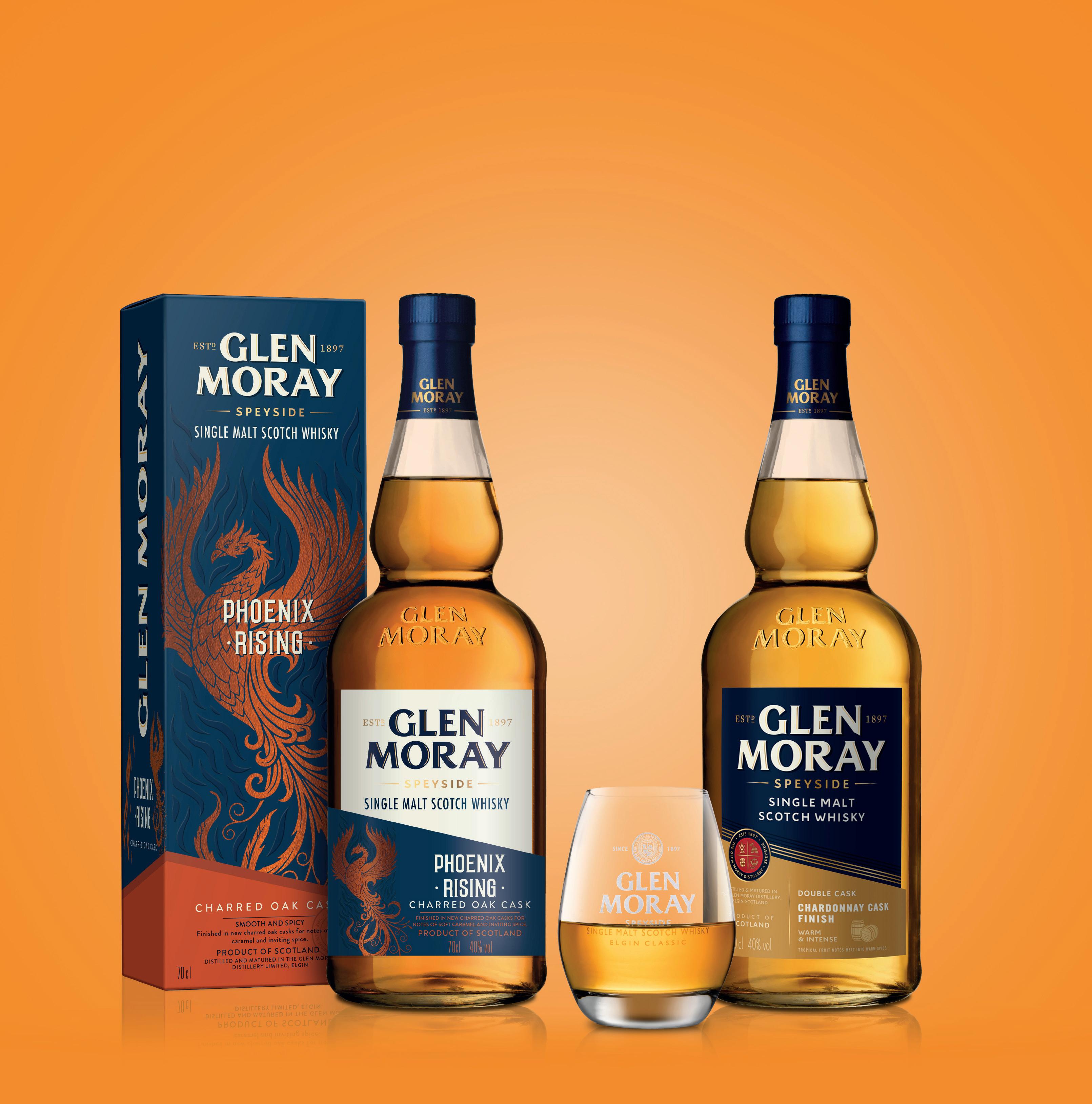



Glen Moray Chardonnay
A Few Brief Thoughts on This and That
As always, I feel obliged to warn sensitive readers—although I know this magazine has no such readers, sensitive ones that is, otherwise you would hardly still be here reading this—for the possibility of a certain unhealthy and decidedly politically incorrect romanticism surrounding spirits.
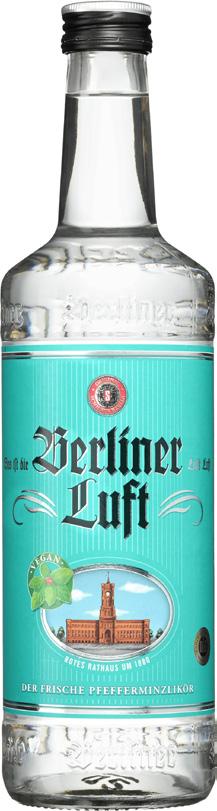
• Schilkin GmbH & Co. is one of Berlin’s most historic spirits houses, with roots stretching back to the period following the Russian Revolution. The Schilkin family fled Russia for Berlin in 1921, bringing with them not only their belongings but also a profound knowledge of vodka production. Today, it is above all the peppermint liqueur Berliner Luft, 18% (700 ml, No. 8521901, SEK 216, 86), that is associated with the company. It is also the product that keeps the cash flow healthy and the distillery’s heart beating. Over the years, Berliner Luft has evolved into something of a liquid calling card for the German capital and remains a staple of Berlin’s nightlife. Is it necessary? Probably not, but that is beside the point. Fortunately, the alcohol content stops at a modest 18%. This is, after all, a drink best served ice cold and one that has an almost alarming ability to slip down with effortless ease. There is a pure and refreshing peppermint character here, a well-judged sweetness, and a cooling freshness that makes it dangerously drinkable for anyone with a weakness for mint. And yes, it also happens to be rather trendy at the moment. Though Berlin would likely argue that it always has been.
• Calling limoncello trendy feels about as relevant as describing the Colosseum as an exciting new construction project. What is true, however, is that it remains every bit as necessary. Few drinks are quite as effective at cooling down one’s digestive system, thought processes, and any lingering traces of overconfidence after a generous dinner.
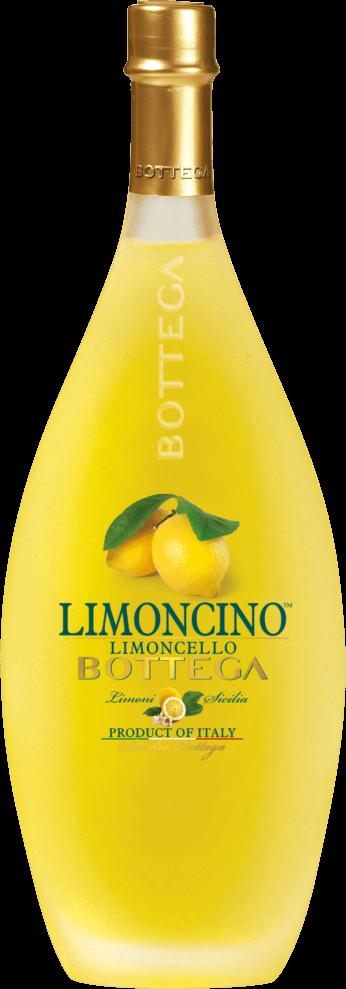
Limoncino Limoncella, 35% (Sicily, Bottega Spa, 500 ml, No. 8654702, SEK 329, 90), is a persuasive argument for keeping the tradition alive. It is based on organically grown lemons, with certified organic Femminello peels—the most widely planted lemon variety in Italy and something of the citrus world’s equivalent of a beloved film star—playing the leading role. The result is both authentic and generous, with citrus fruit radiating sunripened energy. The flavour moves between zesty freshness, gently spicy bitterness, and a viscous sweetness reminiscent of lemon curd with temperament, confidence, and expressive Italian hand gestures. The balance is precise and refreshing, with the lemon remaining firmly in command throughout without becoming sharp or intrusive. Serving is simple: very cold. And, incidentally, it works perfectly well on its own.
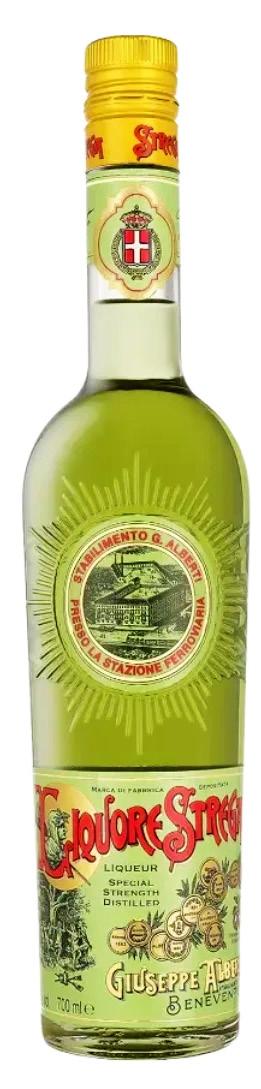
• Since we have already ventured down the liqueur path, there is no reason to step off the train just yet. The next station is Strega Green, 55% (Italy, Strega Alberti Benevento, 500 ml, No. 8218701, SEK 619, 89). Anyone familiar with the classic yellow Strega already knows that we are operating in a universe where herbs, spices, and Italian eccentricity happily share a table. Here we have the green cousin, somewhat wilder and somewhat more intense. Behind the contents lie more than 70 different herbs and spices sourced from around the globe, macerated and distilled according to traditional Italian methods.
Despite the impressive collection, the expression never feels dusty or oldfashioned. Quite the opposite. There is spice, energy, structured sweetness, and an intensity that manages to speak equally to those who remember when telephones were attached to walls and those who have never seen a CD. The flavour profile moves effortlessly through herbs, anise, citrus, spices, and a cooling freshness that holds the whole together with an iron fist in a velvet glove. If you enjoy Chartreuse, absinthe, Pernod, or other drinks that make your taste buds stand to attention, there is every chance you will become fond of this as well.
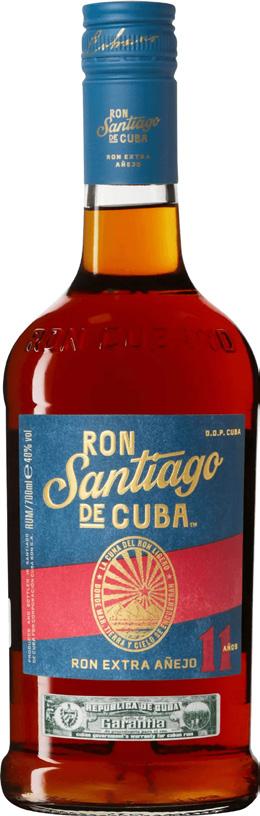
• From liqueur to rum, we arrive at Ron Santiago de Cuba Extra Añejo 11 Years, 40% (Ron Santiago de Cuba, 700 ml, No. 8434101, SEK 519, 91).
The name reveals most of what one needs to know: Cuba, rum, and eleven years of maturation in oak casks. This is a viscous and good-natured rum, yet without the sugary charm offensive that certain rums seeking popular appeal often rely upon. Santiago de Cuba therefore possesses a healthy degree of self-respect. Certainly there is generosity and warmth here, but also a fine spicy bite and a firm grip on the flavour profile that provides both tension and personality. Orange, apricot, coconut, cocoa, vanilla, and nuts coexist within a well-balanced register, while a faint maritime, liquorice-salted nuance adds extra character. It prevents the rum from becoming overly comfortable in its own company, resulting in a spirit that manages to be approachable without becoming weak, charming, accommodating, and generous without having to sell its soul.
• Dekadent Spirits is a Swedish premium brand with roots on Gotland and production in Hälsingland. In other words, a fully Swedish project, built upon 100% Swedish neutral spirit and locally grown ingredients. The company has now entered the gin category with its first release, Dekadent Pink Gin, 40% (Tevsjö Mill & Distillery, 500 ml, No. 8550602, SEK 375, 91).
That Sweden has become a serious gin-producing nation is hardly news by now. It feels as though there are more gin makers than moose in certain parts of the country, and the quality level continues to impress. Dekadent Pink Gin certainly does not disappoint.
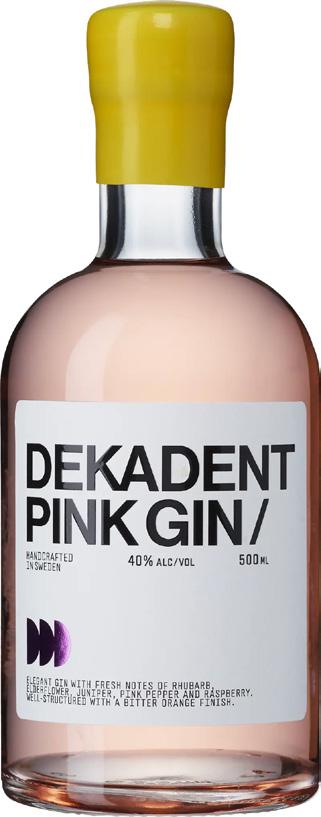
Rhubarb, raspberry, and elderflower are given clear prominence, yet juniper remains confidently at the centre while lime, orange, and a discreet touch of anise keep everything in order. The spice is distinct, the tannins slightly gravelly and driving, yet the texture simultaneously carries an airy and transparent energy. There is both structure and direction here, while the expression retains its sense of lightness. Dekadent has made a promising start to this new chapter.
Sometimes I get the feeling that I ought to spend considerably more time in the company of truly great Calvados. There is something fascinating about the way it can be rich and generous in scope, tinglingly vibrant and fiery with life, yet at the same time carry itself with stoic calm. Precision hand in hand with bubbling emotion. It may sound contradictory, perhaps even slightly incomprehensible, but those of you who know, know.
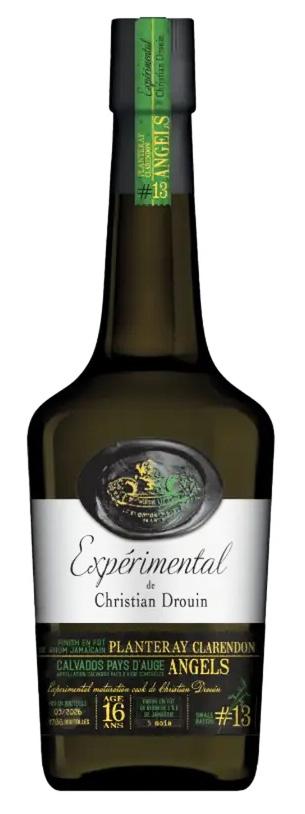
• Expérimental de Christian Drouin 16 Years Planteray Clarendon Angels, 47.5% (Normandy, France, not yet available, 94) is exactly that kind of Calvados. For this edition, Christian Drouin turned its attention to Jamaica and Clarendon Distillery, whose rum casks provided the finishing maturation.
The result is not merely successful—it is positively seductive. The rum casks create new dimensions, new nuances, and an additional aromatic pulse. Suddenly, the apple orchards of Normandy and the tropical landscapes of Jamaica find themselves sharing the same glass, and somewhere in between everything transports me to a pleasant mirage of swaying palm trees, brilliant white beaches, and a sea shimmering in turquoise.
The dried fruit character offers apple, orange, apricot, and a lightly bitter Seville orange note elegantly linked with coconut, ripe banana, and sophisticated hints of pineapple. Vanilla and chocolate envelop the whole and, yes, somewhere along the way the romanticism of spirits arrives in full force.
• Not quite as romantically inclined are we when turning our attention to Arrogant Bastard Whiskey, 48.5% (700 ml, No. 8474701, SEK 499, 90).
The name alone suggests we are dealing with someone who parks badly, interrupts people mid-sentence, and considers “slap in the face” a personal motto. Yet appearances can be deceiving. Behind the swaggering façade lies a considerably friendlier character than the label might suggest.
The whiskey is the result of a collaboration between California’s Stone Brewing—far better known for beer than whiskey—and Foundry Distilling Co. in Iowa. If one expects a liquid punch to the face built on aggression as a business model, one should think again. Certainly there is authority and a bass register that enjoys rumbling from time to time, but there is also a smoothness that prevents both man and beast from fleeing the scene.
The whiskey has matured for more than four years in heavily toasted new American oak casks, and with a mash bill of 100 percent malted barley it
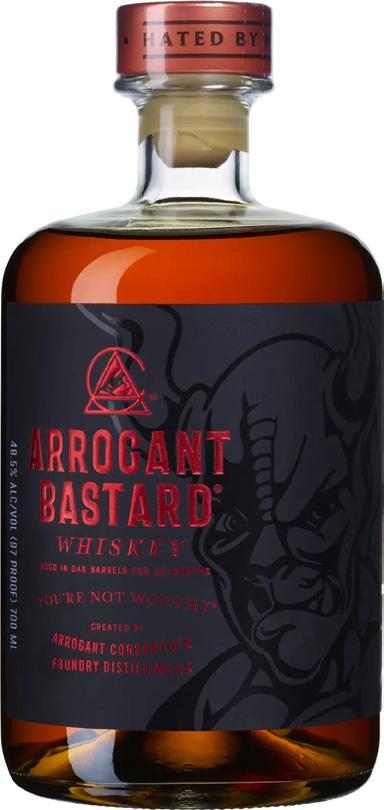
traces its origins directly to Stone Brewing’s legendary Arrogant Bastard Ale. This also reveals itself in the aromatics, where dark chocolate, maple syrup, and vanilla intertwine with caramelised dried fruit. Orange, apricot, cassis, cherry, and baked apples are joined by a darkly spiced backdrop of tobacco, oak, and toasted notes.
A bastard it may be, but a rather likeable one.
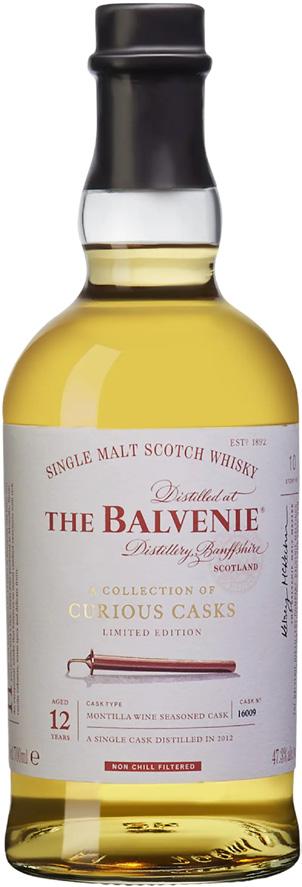
• Arrogant is hardly a word we would use for the Speyside showman The Balvenie. Here, the house signature has always been elegance, finesse, and an almost effortless balance within the power, regardless of how high one climbs the ladder of alcohol percentages. Balvenie Montilla Wine Cask 12 Years, 47.3% (700 ml, No. 6000301, SEK 839, 94) continues that tradition. This release bears the signature of Malt Master Kelsey McKechnie, who selected European oak casks that previously housed sweet wine from Montilla in southern Spain. These casks were responsible for the entire maturation process, making this the first Balvenie matured exclusively in this style of wood.
For a wine-minded eccentric such as myself, the suit fits almost perfectly. Honey, vanilla, and soft chocolate meet a sun-warmed and lightly caramelised fruit profile where citrus, apricot, peach, and sultanas mingle with dark cherries and currants. And lest we become entirely numb from all this velvety charm, a finely judged oak spice emerges from the wings, creating structure and backbone that encourage the palate to sharpen its senses, without any arrogance...
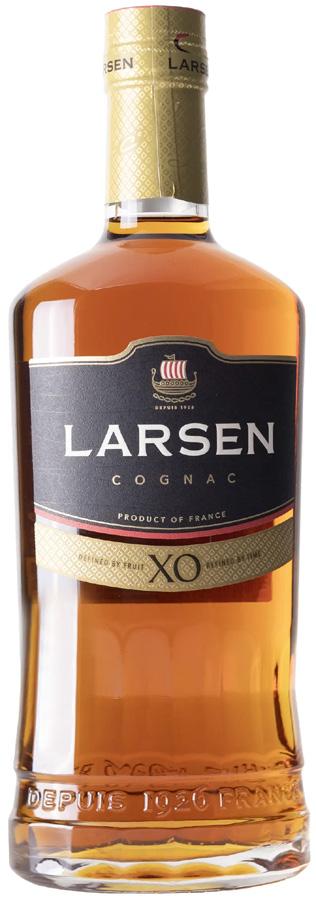
• Finally, with a soothing and almost therapeutic conclusion to this column, we arrive at what may well be one of the Cognac world’s more underrated stalwarts. Or perhaps rather one of those old friends who always arrives well dressed, pleasant, and in good spirits, without making a great fuss about it.
Larsen XO, 40% (700 ml, No. 5791701, SEK 899, 93) is a classic XO Cognac with an almost indomitable faith in the power of fruit. The blend is built from carefully selected eaux-de-vie from, among others, Grande Champagne and naturally possesses the respectable credentials required to bear the XO designation, meaning that the youngest component has spent at least ten years in oak.
Prunes, baked apples, dried apricot, peach, and orange arrive in orderly formation, closely followed by walnuts, vanilla, and chocolate. It is harmonious, generous, and so well balanced that one almost suspects the Cognac has attended mindfulness classes. The spice is subtle, the elegance self-evident, and the richness precisely judged.
As an after-dinner digestif it performs brilliantly. As a before-dinner digestif, it works rather well too...
The Spirits Corner with Anders Enquist
Refined Pink Gin Hits the Mark
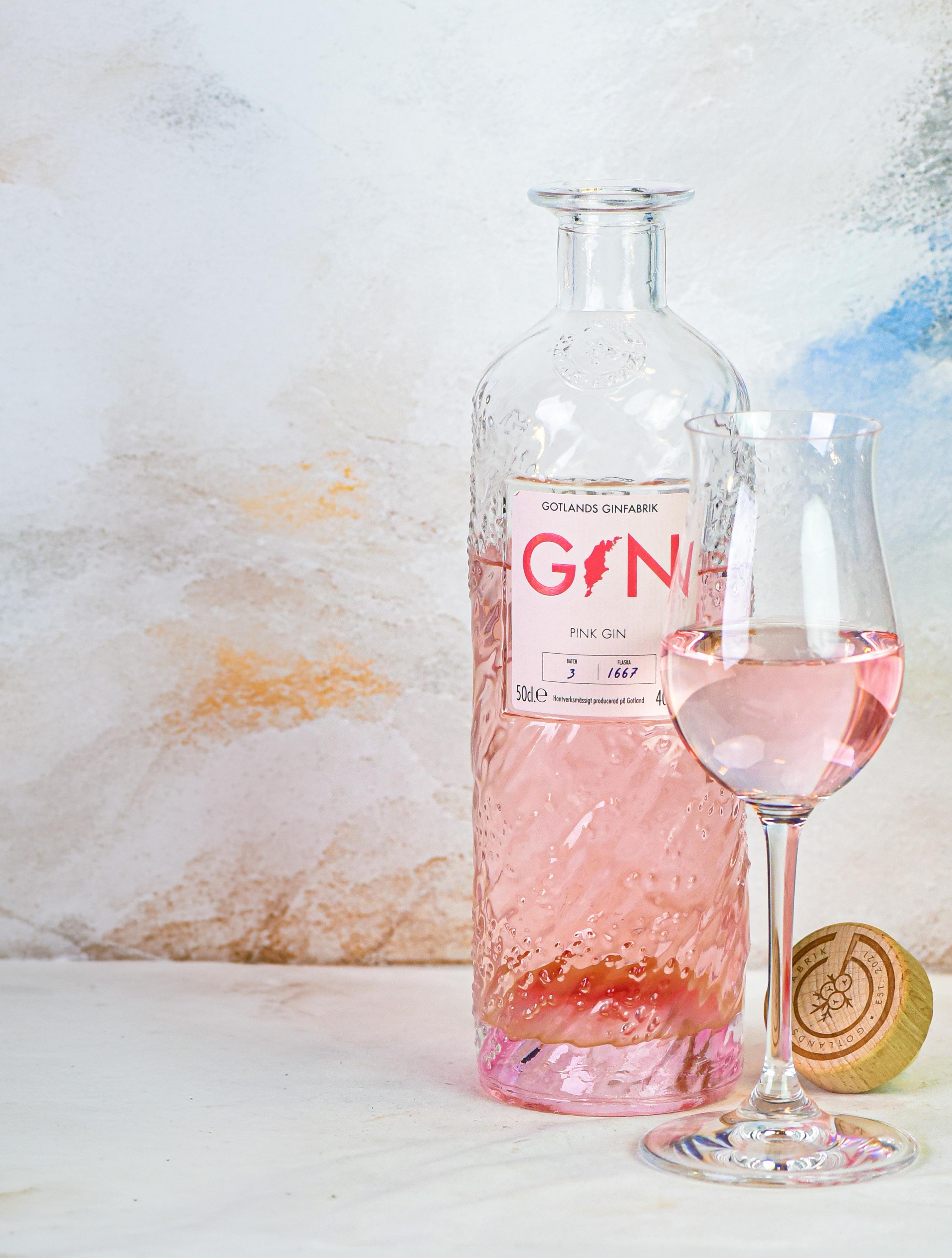
We have previously told the story of Gotlands Ginfabrik, but it bears repeating in brief. It began with two friends from Stockholm, Mathias and Sakarias, who found themselves on the island of Gotland. Their shared passion for gastronomy and spirits led to the founding of the distillery in 2021, with the launch of its first product – a Dry Gin – the following year. A spirit inspired, as they themselves described it, by “the rugged yet flourishing nature of Gotland and the power of sea and wind.” Since its inception, Livets Goda has followed this small distillery closely. In just a few short years, it has enjoyed a remarkable rise and is now Sweden’s third-largest craft gin producer. The explanation, of course, lies in the unwavering quality that has defined the distillery from the very beginning. Most recently, Gotlands Ginfabrik introduced its latest release – Pink Gin.
For devoted gin enthusiasts, the obvious question arises: hasn’t the distillery already produced a Pink Gin? Indeed it has. More than three years ago, Gotlands Ginfabrik launched its first interpretation, a bottling that now gracefully steps aside. Taking its place is a new expression created by Magnus Erntsson, who assumed the role of Master Distiller in December 2025. His first assignment was both clear and challenging: create a better Pink Gin. The objective was refinement rather than reinvention — preserving the gin’s juniper-driven identity while introducing a fruit character that feels contemporary without drifting into sweetness. So, the question remains: have they succeeded?
Gotlands Ginfabrik Pink Gin, 40%
GOTLAND / NR 3918702 / 500 ML / 379 SEK 92
With newly appointed Master Distiller Magnus Erntsson at the helm, an already successful Pink Gin has been elevated to an even more defined level. The brief from founders Mathias and Sakarias was clear: refine, do not change. The result demonstrates that they knew exactly what they were doing.
This is a gin that captivates immediately. Not through force, but through balance and a natural, polished elegance. It works beautifully as the foundation of a cocktail, served neat with a delicate twist of orange peel, or in a gin and tonic where the tonic is used sparingly. Yet there is such softness and integrity here that one almost hesitates to dilute it at all, preferring instead to enjoy it straight, lightly chilled in a wide bourbon glass. Juniper remains the backbone, surrounded by a fruitand flower-driven palette where rhubarb, strawberry and raspberry intertwine with gently rosy floral notes. Citrus lends brightness, while subtle hints of salty liquorice — more caressing than assertive — together with a mineral undertone create a cool, refreshing sensation. There is a distinct coastal signature here, as though the sea air itself has found its way into the distillate.
The texture is supple, the alcohol beautifully integrated at 40%, and the overall impression is one of composure rather than impact. One might entertain the thought of a few additional percentage points of alcohol for extra intensity, but that quickly becomes an academic discussion. This is already a gin in complete harmony.
Additional Note – 5,000 Bottles with a Pink Base
To mark this new chapter, Gotlands Ginfabrik is releasing an exclusive first edition. The first 5,000 bottles feature a specially painted pink base.
The Spirits
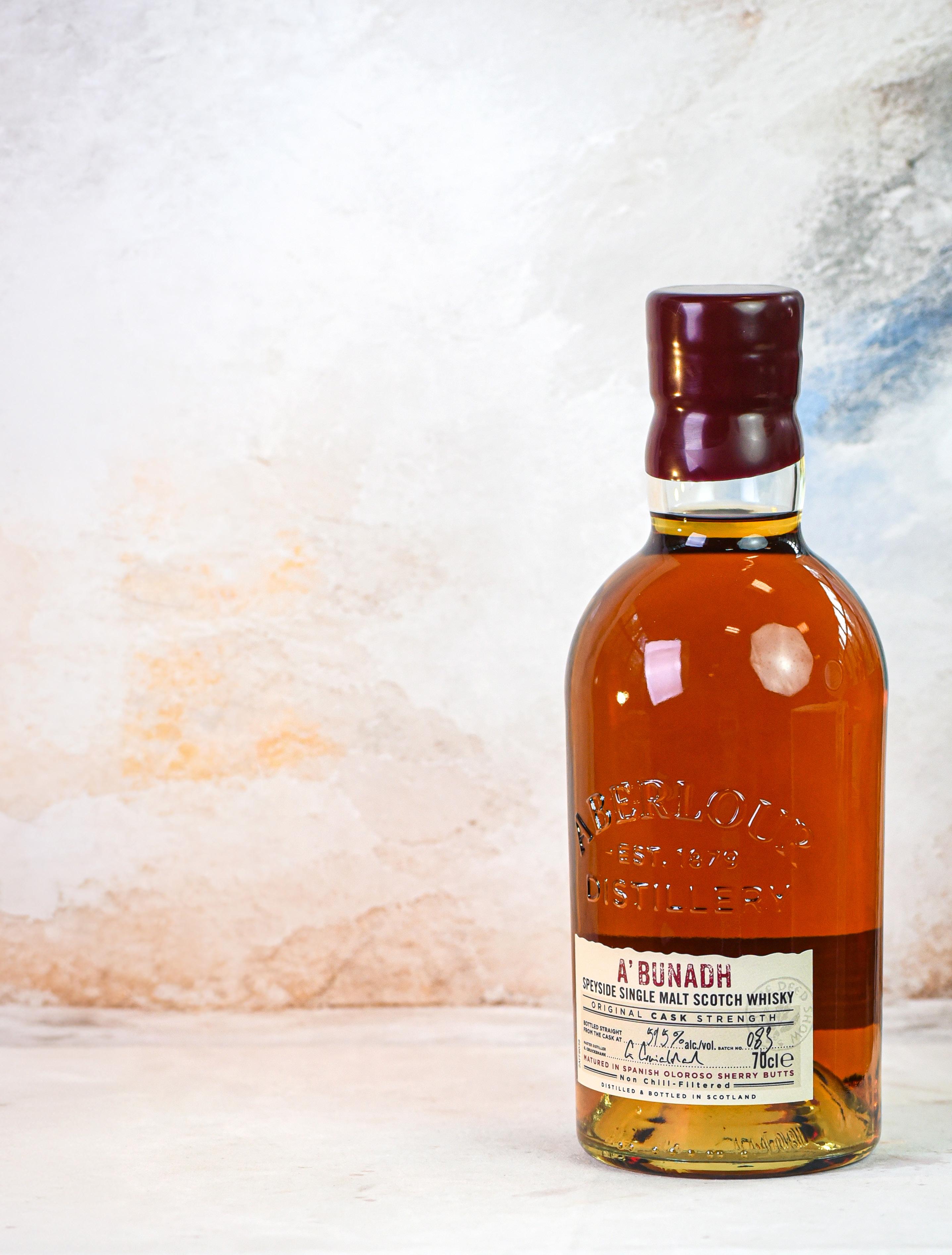
New in Systembolagets permanent range: Aberlour A’Bunadh, Batch #83, 59.5% – the dark poetry of the babbling river
In the heart of Speyside, only a few minutes’ walk southwest of the small town of Aberlour, we find Aberlour Distillery — founded in 1879 by philanthropist James Fleming and long regarded as one of the region’s most tradition-rich names. From here, we have now upgraded our tasting of the latest bottling of the distillery’s handcrafted pride, Aberlour A’Bunadh Batch #83, which from June 1 once again takes its place in Systembolaget’s permanent range. It is a whisky that continues to carry the series’ signature with natural authority — sherry-driven, powerful and darkly sensual, yet at the same time marked by that characteristic Aberlour balance where intensity and elegance walk hand in hand.
The name Aberlour means “the mouth of the babbling river,” a poetic nod to the site’s origins and the water sources that since the 1800s have been an integral part of the distillery’s identity. Aberlour Distillery also works exclusively with locally grown barley and in recent years has carried out extensive investments with the ambition of becoming one of the industry’s leading players in green distillation, aiming to achieve carbon-neutral production already this year.
The idea behind Aberlour A’Bunadh Batch #83 is to recreate the old-school Aberlour style through maturation exclusively in first-fill oloroso sherry casks and bottling at natural cask strength without chill filtration — factors that together shape the series’ dense, darkly generous and beloved character. The whisky is released in numbered batches where the alcohol level varies slightly from edition to edition, further reinforcing the sense of craftsmanship and living small-scale production.
A´Bunadh, Batch 83, 59.5%
SPEYSIDE / SKOTTLAND / NR 4175301 / 700 ML / 749 SEK
94
Aberlour A’Bunadh Batch #83 — where A’bunadh is Gaelic for “the original” — has over the years evolved from the series’ earlier darker and more brutally power-driven expression into a somewhat brighter and more nuanced, elegant style profile. Perhaps the most fascinating part of the journey has been how the whisky has gradually refined a greater finesse without losing either its soul or temperament. Today, the cask strength presents itself with an almost exemplary sense of controlled authority where the power never becomes clumsy, but instead is carried forward with natural balance through an age span moving between approximately five and twenty-five years. The oloroso casks continue to imprint their deep and spicy signature where mint-coated chocolate, medicinal herbs and caramelized sweetness integrate with impressive precision. Vanilla, coconut and dark chocolate weave themselves sensually into layers of fruit marked by cherries, dried apricots, oranges, sultanas and ripe apples, while zesty citrus notes lend a bittersweet nerve to the whole. In the finish, darkening tobacco leaves and a lightly wild liquorice tone emerge, adding further depth to the experience. When Aberlour Distillery intensifies the power in its whisky, it never let’s go of elegance, and Batch #83 is in many ways living proof of precisely that balancing act. Matured in first-fill oloroso sherry casks and bottled without either filtration or adjustment of alcohol strength. A’Bunadh is released in numbered batches.
The Spirits Corner with Anders Enquist
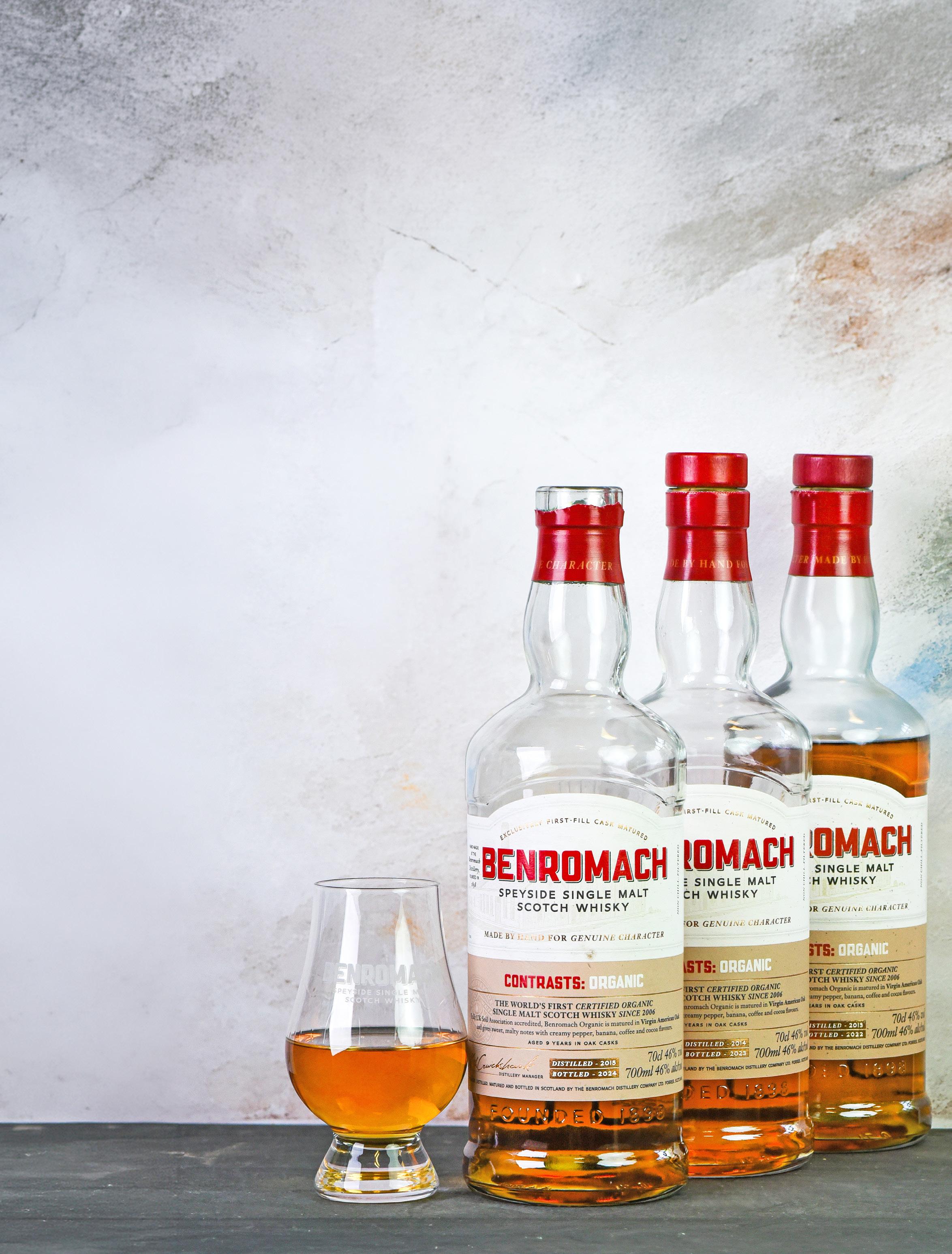
Benromach Organic Single Malt Across Three Vintages: 2013–2015
Benromach Organic Single Malt. In 1993, the remaining buildings of Benromach Distillery were acquired by independent bottler Gordon & MacPhail, allowing the Urquhart family to fulfil their dream of owning a distillery. When production resumed in 1998, the ambition was to create a single malt whisky with a classic Speyside character: beautifully balanced with a gentle touch of smoke. They succeeded. Benromach also remains one of the few distilleries in Scotland where traditional hands-on production methods are still central to the whisky-making process, largely avoiding automated systems.
Benromach Contrast Organic Single Malt Whisky, 46%, 2015
NR 145 (700 ML) 549 SEK 93
Like its predecessor, the 2015 vintage spent nine years maturing in 250-litre first-fill Virgin American Oak casks, a concept that continues to prove highly successful. Nine years have allowed the whisky to develop with remarkable grace, resulting in an elegant and unpretentious expression. Unlike most whiskies in Benromach’s core range, this release is produced using unpeated malt.
Any smoky nuance that appears is subtle and lightly toasted in character, leaning more towards cigar notes than peat smoke. It emerges beautifully in the finish, wrapped in supple leather tones. Before that, the whisky rewards with layers of citrus, ripe apples, peach, raisins and figs, complemented by refined touches of chocolate, liquorice, vanilla and caramel fudge. Delicate herbal nuances reminiscent of mint-sugared Italian herbs add further dimension to the experience. The overall impression is that of a mature and confident whisky, one that knows precisely which emotional strings to pull. Benromach continues to be one of the most dependable names in Scotch whisky, combining craftsmanship with an approachable sense of luxury, something clearly evident here.
Benromach Contrast Organic Single Malt Whisky, 46%, 2014
93
Organic 2014 is a whisky that wears its age exceptionally well, displaying mature and composed manners throughout. The casks have performed admirably, contributing elegant spice to a softly peated fruit profile where citrus, ripe apples, peach, raisins and figs intertwine with accents of chocolate, liquorice, vanilla and caramel fudge.
A curious yet appealing note of liquorice-infused mint sweetness flickers through the palate, adding complexity without disturbing the whisky’s harmonious freshness. There is a fullness here free from superficial clichés, while additional bottle age has allowed the tannins to settle gracefully.
The silky texture enhances the whisky’s elegant side, creating a structure that almost suggests a vinous quality. Developed notes of leather and tobacco emerge alongside persistent fruit in the finish, broadening both the depth and richness of the overall experience.
Benromach Contrast Organic Single Malt Whisky, 46%, 2013
93
Distilled in 2013 and bottled in 2022, this nine-yearold expression matured entirely in Virgin American Oak casks that have embraced the spirit beautifully. The result is a whisky offering generous fruit notes of orange and yellow citrus, apples and ripe figs, alongside elegant pepper spice, exotic accents and delicate violet florals. Honeyed nuances run through a gently toasted sweetness of chocolate and caramel. The texture is creamy and polished, combining softness with precision, while hints of dried tobacco emerge in the final stages. It is a whisky that balances richness and refinement with notable ease, showcasing the benefits of careful maturation and a confident cask programme.
The Spirits Corner with Anders Enquist
Crossfire Hurricane Rum – A Rum Riff from The Rolling Stones
Isle of Raasay Single
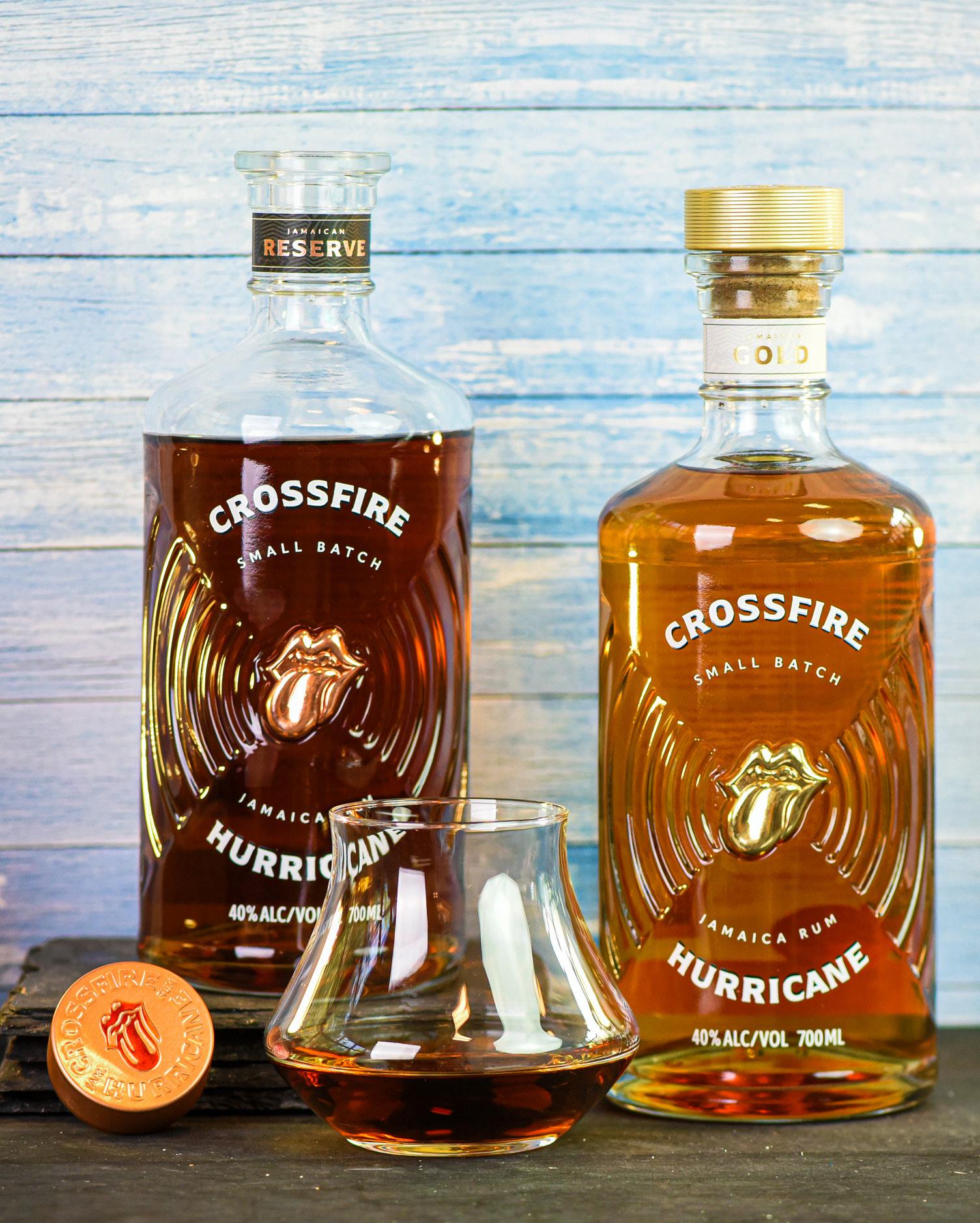
Crossfire Hurricane Gold, 40%
JAMAICA / CROSSFIRE HURRICANE / 700 / 8556601 / 449 SEK
"The Glimmer Twins" – Mick Jagger and Keith Richards – are taking The Rolling Stones out on yet another tour of duty with the forthcoming album Foreign Tongues, scheduled for release in July. Given that they still command an enormous audience and somehow continue to remain relevant to that audience, the timing of launching not one but two proprietary rums feels entirely natural. At this stage of rock mythology, having their own rum almost seems inevitable. The pleasing aspect is that these are not bottles one feels compelled to excuse or politely overlook. Quite the opposite. In fact, I found myself pleasantly surprised by just how assured the Gold expression feels, despite its relatively modest strength. It doesn't burn, it doesn't push, and it never attempts to impress through brute force, yet the finish lingers with conviction and confidence.
There is an attractive cask-driven spice where pepper, cinnamon and gentle ginger interact with maritime liquorice salinity and a naturally vibrant spirit character. The palate moves through sun-drenched citrus, apricot, arrack, plum and peach, softly caressed by vanilla and milk chocolate. A fleeting touch of sugared mint also drifts through the aftertaste. This is clearly a rum designed with cocktails in mind – and it will undoubtedly excel in that role – yet it is equally enjoyable neat, preferably served in a generous bourbon glass, with or without a single large ice cube.
Mick Jagger and Keith Richards continue rolling forward with the same effortless confidence that has defined The Rolling Stones for more than six decades. Coinciding with the release of the band's new album Foreign Tongues this summer comes the launch of Crossfire Hurricane Gold and Reserve – two Jamaican rum expressions developed by the legendary duo alongside internationally acclaimed rum ambassador Ian Burrell. This marks the first official spirits release in the band's 60-plus-year history, and it displays considerably more ambition than celebrity-backed projects in this category often tend to. This is not simply rock mythology bottled for commercial effect. Instead, it is a rum project firmly rooted in provenance, craftsmanship and style. Much like Jagger and Richards themselves, there are no desperate attempts to chase contemporary trends here – only a confident expression that remains remarkably assured in its identity.
Crossfire Hurricane Rum has grown out of the band's long-standing relationship with Jamaica. During the 1970s, The Rolling Stones spent significant periods working outside the United Kingdom and found in Jamaica an environment that profoundly influenced their musical direction. During what is often described as a form of creative exile from their home market, several recordings were made that would later become an important part of the band's legacy. Since then, Jamaica's music, rhythm and energy have remained woven into the story of The Rolling Stones. For those familiar with the catalogue, the name "Crossfire Hurricane" itself is drawn from the opening line of Jumpin' Jack Flash.
Both Mick Jagger and Keith Richards have been closely involved in shaping the flavour profile, blending decisions and visual identity of the project, working alongside Burrell throughout the process. The result is a pair of Jamaican blended rums, distilled and matured in Jamaica, combining spirit from four of the island's most respected distilleries: Hampden Estate, Long Pond, Worthy Park and Clarendon. Pot still and column still distillates work together in the blend, while the oldest component has matured for up to five years in ex-bourbon casks.
Crossfire Hurricane Reserve, 40%
JAMAICA / CROSSFIRE HURRICANE / 700 / 8287801 / 499 KR
91 Res erve leans more distinctly toward the style of an aged sipping rum, though it does so with grace and elegantly measured riffs throughout. A darker spice profile emerges alongside lightly caramelised fruit notes where bitter orange and baked apples meet prunes, cherries, cassis and dried apricot in a warm and seamless flow.
Vanilla and dark chocolate gently brush the background while violet and liquorice gradually unfold through the finish. Small clouds of dried tobacco contribute further depth and character. Reserve reinforces the impression that Jagger and Richards approached this project with genuine ambition.
It is, in many ways, reminiscent of The Rolling Stones themselves. If you have always appreciated the band – or at least respected the gentlemen behind it – disappointment rarely enters the equation. These days, the surprise lies in their continued ability to deliver with such effortless authority and stylistic confidence. Take In The Stars from the forthcoming album as an example: competent, self-assured and carrying a confidence that feels increasingly rare in modern music. There is no attempt to chase prevailing trends, only a steadfast commitment to the sound that made The Rolling Stones what they are – and which continues to endure.
Both rums are available through Systembolaget's Special Order Assortment.
The Spirits Corner with Anders Enquist
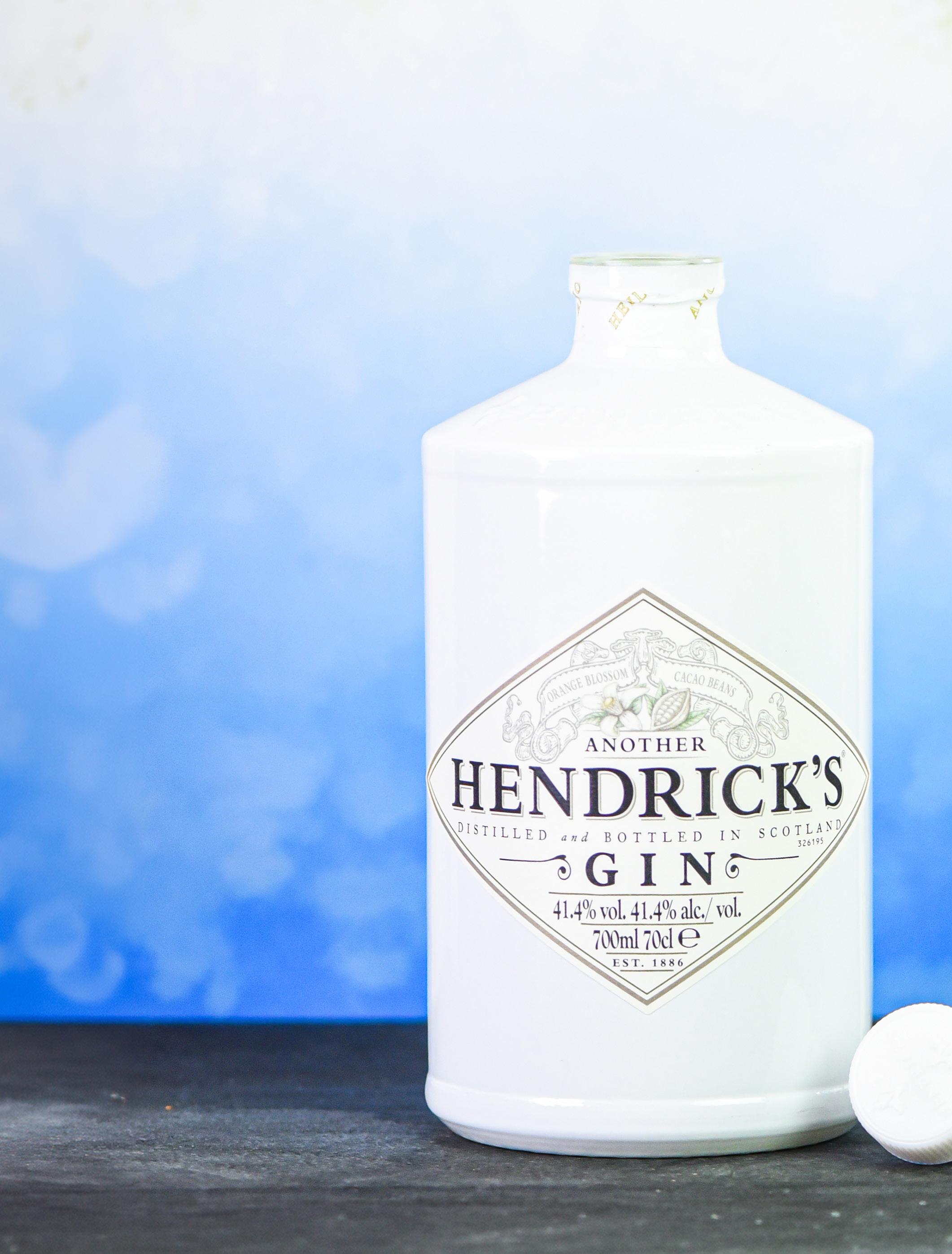
Hendrick’s Latest Creation – Another Hendrick’s: Harmonious and Beautifully Balanced
Hendrick’s Gin has recently unveiled Another Hendrick’s, infused with rose and cucumber and elevated by notes of orange blossom and cocoa. Available through selected Systembolaget stores from 10 April, it naturally caught our attention.
Hendrick’s Another Gin, 41.4%
SKOTTLAND / WILLIAM GRANT & SONS / 700 / 4215101 / 480 KR
93
Another Hendrick’s marks an unexpected new chapter in the story of Hendrick’s Gin, expanding and deepening the brand’s identity in equal measure. Inspired by Master Distiller Lesley Gracie’s fascination with chocolate and flowers, as well as the eccentric greenhouses surrounding the Hendrick’s Gin Palace on Scotland’s Ayrshire coast, this release ventures confidently beyond the familiar.
The combination of orange blossom and cocoa is unusual in itself, yet according to Gracie it remains deeply rooted in the house style. The question, then, is whether this is merely an intriguing concept on paper or something that genuinely reveals itself in the glass.
Initially, the nose follows a more classical path, offering juniper, citrus, clove and anise. It is on the palate that the cocoa beans truly make their entrance, doing so with both elegance and restraint. Here they seamlessly intertwine with orange notes that likewise step forward with greater clarity and purpose.
The result is a harmonious and beautifully balanced gin with distinct digestif-like qualities. The structure unfolds with an almost cashmerelike softness to its power — elegant, fluid and refined — while maintaining a subtle yet unmistakable signature of its own.
Tullamore D.E.W. Café Honey – Honey, Coffee and a Gentle Rebellion Against Moderation
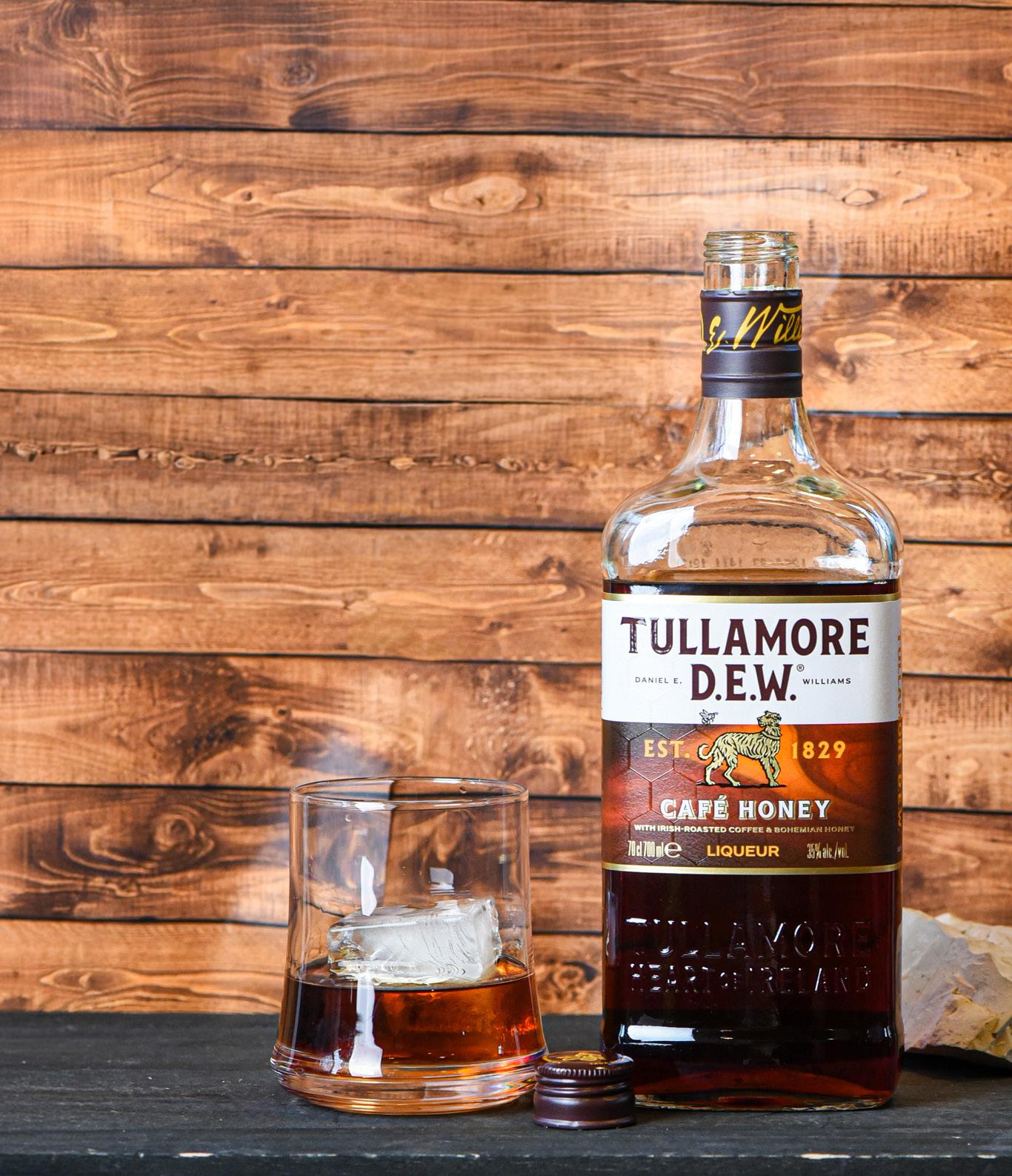
Tullamore D.E.W. has stepped confidently into the refined world of the coffee break – and perhaps its most easily seduced corner – with the launch of Tullamore D.E.W. Café Honey. Here, the distillery has taken an already approachable Irish whiskey and made it even harder to resist.
Café Honey builds on the success of Tullamore D.E.W. Honey, and the thinking seems to have been straightforward enough: why stop there when we can add carefully selected, Irish-roasted coffee as well? Bottled at 35% ABV, Café Honey is mature enough to be taken seriously, yet sweet, accessible and dangerously enjoyable. It is a spirit that welcomes seasoned whiskey drinkers and curious newcomers alike. In short, it is a strategic addition to the flavoured whiskey category and perhaps even a future gateway for a new generation of whiskey enthusiasts.
Tullamore Dew Café Honey, 35%
IRLAND / WILLIAM GRANT & SONS / 700 ML / NR 8252001 / 299 SEK
What we have here is a coffee-inspired whiskey liqueur that marries the softness of triple-distilled, triple-blended and triple-cask-matured Irish whiskey with locally roasted coffee from north-western Ireland and, as if that were not enough, a shamelessly charming dose of natural Bohemian honey.
The result feels as though someone crossed an Irish Coffee with a dessert menu, looked around the room and simply said, “Let's go with that.” And yes, it is disarmingly delicious.
Yet amid this wave of dessert-like indulgence, it should be noted that this is no sugar bomb lacking direction. A confident cask-driven spice steps forward to provide structure and deliver a timely reminder that there is more here than sweetness alone. Nothing meanders aimlessly across the palate; everything moves with purpose and a certain sense of authority.
As the finish unfolds, a delicate thread of cigar tobacco quietly emerges, as though someone behind the scenes has lit a fine cigar simply to remind us that we are, after all, still in the company of grown-ups.
With Café Honey, Tullamore D.E.W. has discovered a new territory, one where the phrase “just one more” suddenly feels like an entirely reasonable life philosophy.
Footnote
Best served slightly chilled, either neat or over a single large ice cube. For those inclined to push the boundaries a little – or simply impress their guests – Café Honey also performs beautifully in a contemporary take on Irish Coffee, particularly as an iced coffee cocktail made with cold brew. And for anyone feeling especially adventurous, or perhaps just a little braver after the first glass, it works surprisingly well in a Whiskey Sour. In short, it is a versatile pleasure, equally at home in a cocktail glass or in the hand of someone who has just decided to have “one quick drink.”
The Spirits Corner with Anders Enquist
Michter’s Celebration Sour Mash 2025 Edition – The Holy Grail of American Whiskey
When the revered distillery first unveiled Michter’s Celebration Sour Mash in 2013, it marked the birth of an entirely new category within American whiskey. Never before had an American whiskey been released at a price comparable to the world's most prestigious aged spirits.
The original expression was a blend of the finest Kentucky Straight Bourbon and Kentucky Straight Rye barrels resting in Michter’s warehouses, some matured for more than 20 and even 30 years. Every barrel was personally selected by then Master Distiller Willie Pratt. After decades of maturation and the inevitable effects of the angel’s share, only 273 bottles remained. A modern holy grail was born.
Since that inaugural release, Celebration Sour Mash has appeared only four times – in 2016, 2019, 2022 and now 2025 – each edition reinforcing its near-mythical status among whiskey enthusiasts and collectors around the world.
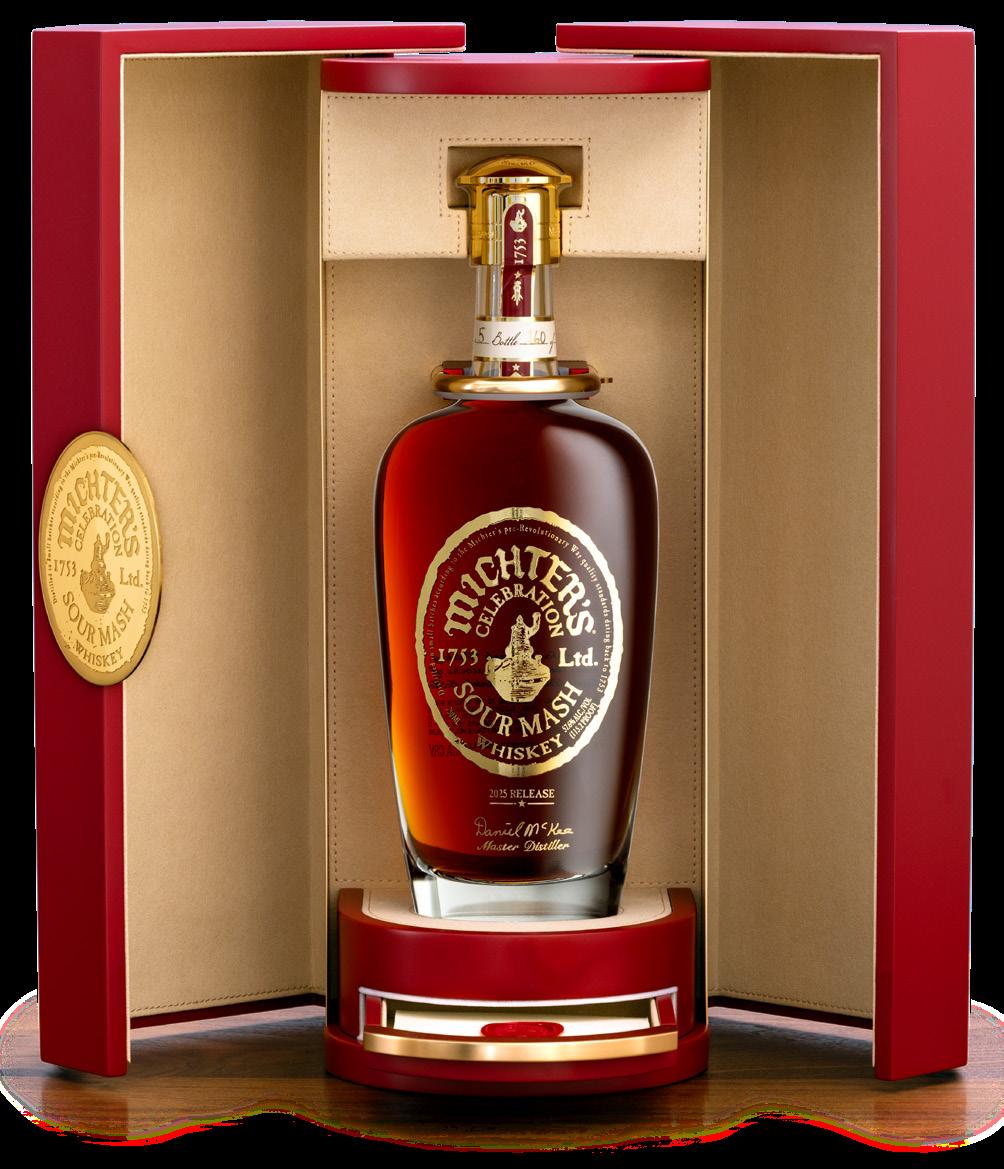
There is little doubt that Joe Magliocco has guided Michter’s into the uppermost echelon of the whiskey world. It is an achievement built not merely on ambition but on remarkable consistency, perhaps most clearly demonstrated when Michter’s became the first American whiskey producer ever to be named World’s Most Admired Whiskey by Drinks International for three consecutive years.
What is perhaps even more remarkable, however, is not the summit but the breadth of the range. From the entry-level bottlings available on retail shelves to the rarest and most sought-after releases, there runs an unbroken thread of precision, discipline and craftsmanship. It is a quality that never seeks attention, yet repeatedly earns it.
And within this hierarchy of expressions, where each level seems complete in its own right, there remains one final crescendo – a spirit where craftsmanship, philosophy and vision converge in their purest form: Michter’s Celebration Sour Mash.
At this point, comparisons cease. What remains is art.
For the 2025 edition, Master of Maturation Andrea Wilson and Master Distiller Dan McKee moved beyond the merely selective and into something approaching intuition. Seven barrels – four Kentucky Straight Rye and three Kentucky Straight Bourbon – were chosen not only for their individual greatness but for their ability to converse with one another.
This is not blending in the conventional sense. It is composition. Each voice is allowed to speak, yet the whole carries a meaning greater than the sum of its parts.
The age range stretches from more than 12 years to over three decades, a timeline measuring not simply maturation but the many expressions of maturity itself. The result is just 315 bottles – not as a marketing exercise, but as the inevitable consequence of uncompromising selection.
The price, approximately SEK 60,000 upon release, assuming one is fortunate enough to secure a bottle, is notable in itself. Yet it is hardly the heart of the story. Previous editions have achieved between SEK 150,000 and 200,000 at auction, a reflection not only of demand but of the mythology that now surrounds these releases.
Michter´s Celebration Sour Mash 2025 Edition, 57.6%
100 Batch 2025, Michter’s Celebration Sour Mash, is yet another milestone in the world of American whiskey, possessing a soul so complete that time itself almost feels redundant. Here, the energy of youth and the slowly distilled wisdom that only age can provide are brought together with effortless authority. This is not a whiskey searching for its identity; it is its identity. The ABV is carried as though strength itself has chosen to become transparent. The energy is clear and uninterrupted, supported by gently toasted undertones that establish their presence with grace and quiet confidence. There is a subtle vegetal whisper running through the whiskey, a finely tuned green thread moving alongside a restrained yet elegant fruit character, where oven-glazed pears and apples exist in a composed, almost contemplative harmony. Yet the fruit has far more to reveal. It gradually unfolds into layers of orange zest, dried peach and apricot, woven together in a honey-laden glow, lightly dusted with floral violet that drifts through the experience like a passing breeze. Vanilla and chocolate rest quietly in the background, not as embellishments, but as integral parts of the whole.
The structure is something beyond the ordinary. Exceptional is not an overstatement. This is power in its most refined form –cashmere rather than iron. Silky, seamless and beautifully composed, with a polished mineral sheen that lends both direction and stature. The spice is never forceful, yet perfectly judged, with ginger, cinnamon and pepper moving together in calm and self-assured harmony.
The finish lingers with creamy persistence, fading slowly, almost reluctant to leave, and one immediately understands why. This is a whiskey that does not merely impress or sweep across the palate with irresistible magnetism; it convinces without ever raising its voice. Every component appears to have found its exact place, and the whole moves beyond anything measurable.
Quite honestly, there is no alternative but 100 points.
And yet, in the end, numbers are not what define this whiskey. What remains is the feeling of standing before something that cannot be repeated. A fleeting perfection, captured in a glass – and then gone, yet destined to remain in memory forever.
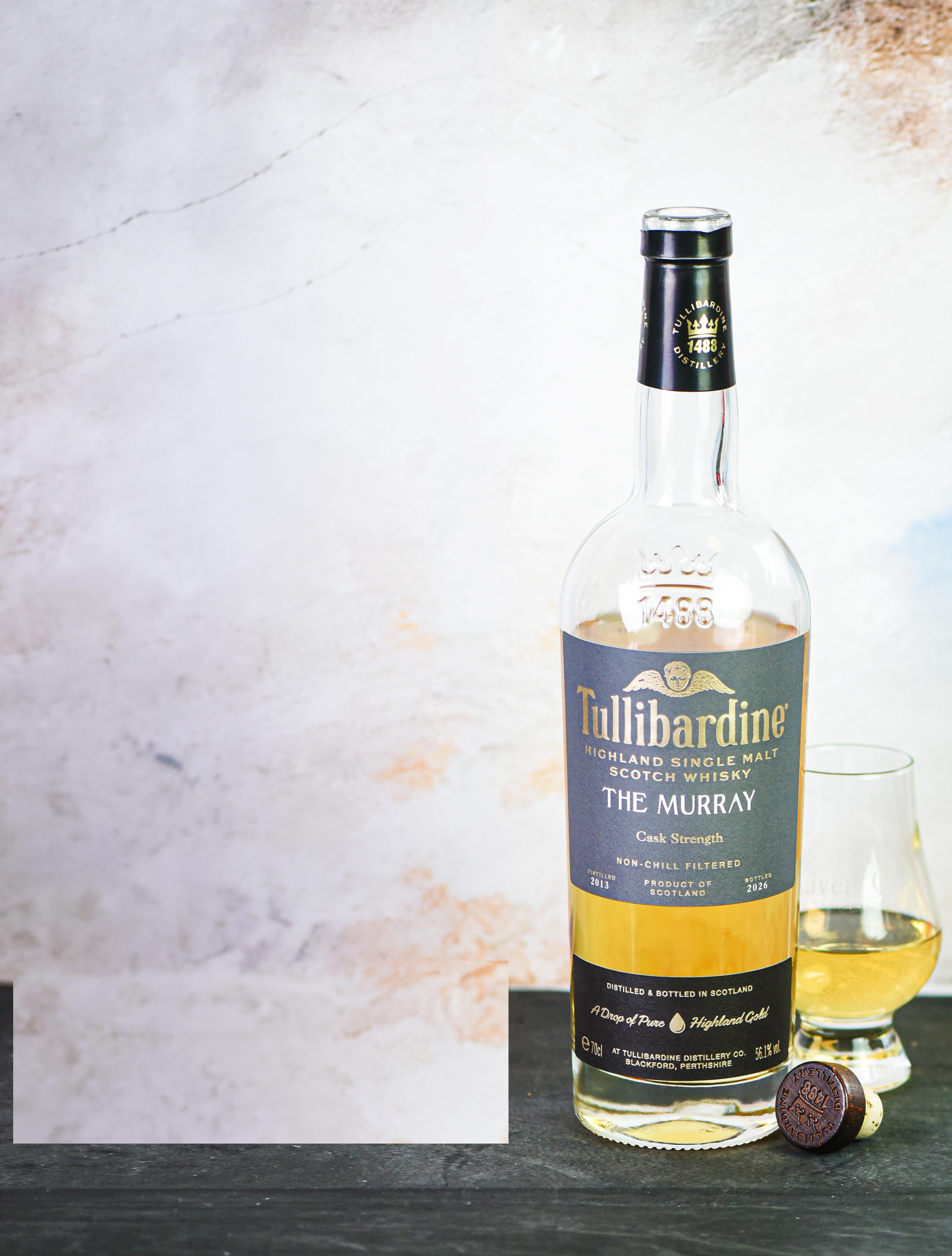
Tullibardine The Murray Cask Strength, Marquess Collection – understated power with a Highland soul
Tullibardine Distillery lies at the foot of the Ochil Hills in Blackford, Perthshire, precisely where the Scottish Highlands begin and the Highlands slowly open their soul. Here, the crystal-clear spring water has always been the lifeblood of the site, and it is still from this source that the distillery draws the water for its whisky production. The very same water was already used during the 15th century by Scotland’s first brewery, giving the location an almost mythological anchoring in the country’s beverage history. It was also here that James IV in 1488 purchased the beer for his coronation, an event that etched Blackford into Scottish history long before whisky became the region’s great pride. Even today, something of this historical presence rests over Tullibardine Distillery.
Tullibardine Distillery itself, however, was not founded until 1949 by the legendary distillery architect William Delmé-Evans, the man who would later also leave clear marks on distilleries such as Isle of Jura Distillery and GlenAllachie Distillery. With great respect for the site’s history, he transformed the old brewery into a modern whisky distillery and chose Blackford largely because of the pure, mineralrich water from the Ochil Hills. Tullibardine’s journey through the decades has, at the same time, been far from straightforward. During much of the 20th century, the majority of production went into blends, while the distillery passed between different owners and at times lived a rather anonymous existence in the whisky world. When Whyte & Mackay took over during the 1990s, production was ultimately mothballed in 1995 before the distillery was revived in 2003 following an acquisition by private investors. Since 2011, Tullibardine has been owned by Picard Vins & Spiritueux through Terroirs Distillers, and in recent years the distillery has increasingly begun to reclaim its place as an elegant and distinctive Highland voice with greater confidence than ever before.
Tullibardine The Murray, 56.1%
NR 4221001 (700 ML), 797 KR
Tullibardine The Murray 2013 forms part of the distillery’s so-called “Marquess Collection,” a series paying tribute to historical figures connected to the title Marquess of Tullibardine. “The Murray” specifically refers to Sir William Murray, the second Marquess of Tullibardine and a prominent Jacobite figure who took part in the Battle of Sheriffmuir in 1715. The whisky was distilled in 2013 and bottled in 2026 at a natural cask strength of 56.1%, without chill filtration and without colour adjustment. We are therefore speaking of thirteen years of maturation in first-fill bourbon casks, an upbringing that has given the whisky both depth and authority without weighing down its natural elegance. Here, a classic Highland character emerges where the power never truly needs to raise its voice. The texture is viscously full yet at the same time gracefully elegant without oily heaviness, and the whole moves with finely chiselled precision through every layer. A lightly caramelized tone embraces the fruit with a gentle hand where vanilla and toffee-coated, pie-baked apples harmonize with apricot, fig and orange in a warm and generous flow. From the oak comes a subtle spiciness that neatly tightens the experience and gives the whisky both nerve and structure. It is understatedly sophisticated rather than demonstratively powerful, and perhaps it is precisely there that the whisky finds its greatest charm.
BLENDED
Christian Drouin – The “King of Calvados” Launches Dry Normandy Cider
On 1 June, Christian Drouin’s dry cider, Le Cidre de Christian Drouin –Cidre Bouché Brut de Normandie, was launched at Systembolaget. The product is initially available in approximately 150 stores across Sweden. In Normandy, cider is more than just a beverage – it is an integral part of the landscape, the culture and the dining table. Here, heritage apple varieties and generations of expertise come together to create a cider style that clearly reflects its place of origin.
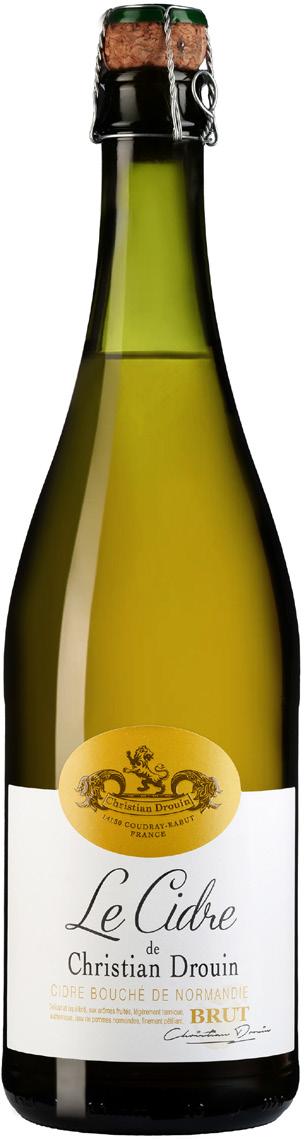
”In Normandy, cider is a natural part of the culinary culture. With this cider, we want to showcase a more nuanced and gastronomic side of the category, where structure, balance and the character of the apple are allowed to shine,” says Guillaume Drouin.
Le Cidre de Christian Drouin - Cidre
Bouché Brut de Normandie
No. 1393 (750 ml)
5% ABV
SEK 65
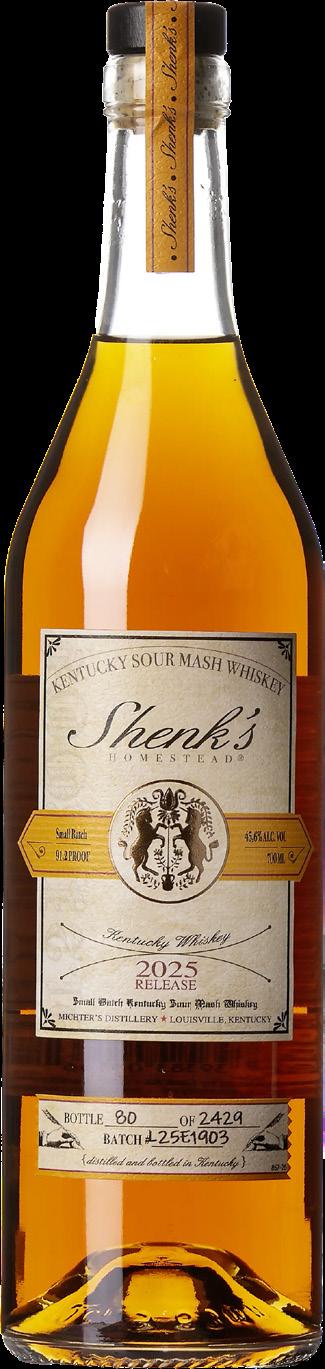
Michter’s Legacy Shenk’s Homestead Sour Mash 2025 –
An Uber-Elegant
Whiskey
Michter’s history dates back to 1753, when Swiss farmer John Shenk founded Shenk’s Distillery in Pennsylvania and began producing rye whiskey from locally grown grain in the Blue Mountain Valley. During the nineteenth century, Abraham Bomberger took over the operation, and the distillery became known as Bomberger’s.
In the 1950s, Lou Forman created the modern Michter’s brand, combining the names of his sons, Michael and Peter. Following a prolonged downturn in the American whiskey industry, the distillery went bankrupt in the late 1980s. The brand was ultimately rescued in the late 1990s when Joseph J. Magliocco acquired the rights and rebuilt Michter’s into the highly respected producer it is today.
Earlier this year, the 2025 edition of the Michter’s Legacy Series was released – Shenk’s Homestead Sour Mash 2025 (45.6% ABV) – now available through Systembolaget.
Shenk’s Homestead Sour Mash 2025
45.6% ABV – 97 Points
No. 42133 (700 ml)
SEK 1,850 Kentucky, USA
Aberlour A’Bunadh
Returns to the Permanent Range
The highly acclaimed Aberlour A’Bunadh, a long-time favourite among whisky enthusiasts, returned to Sweden’s permanent Systembolaget range on 1 June. Batch 83, which marks the relaunch, is bottled at 59.5% ABV and will gradually be succeeded by future batches.
The idea behind A’Bunadh is to recreate the classic Aberlour style through maturation exclusively in first-fill Oloroso sherry casks and bottling at natural cask strength without chill filtration. This approach contributes significantly to the rich and characterful profile for which the whisky is renowned. A’Bunadh is released in numbered batches, with the alcohol strength varying slightly from batch to batch.
Aberlour A’Bunadh, Batch 83 Cask Strength – 59.5% ABV
Article No. 41753
Price: SEK 749 (700 ml)
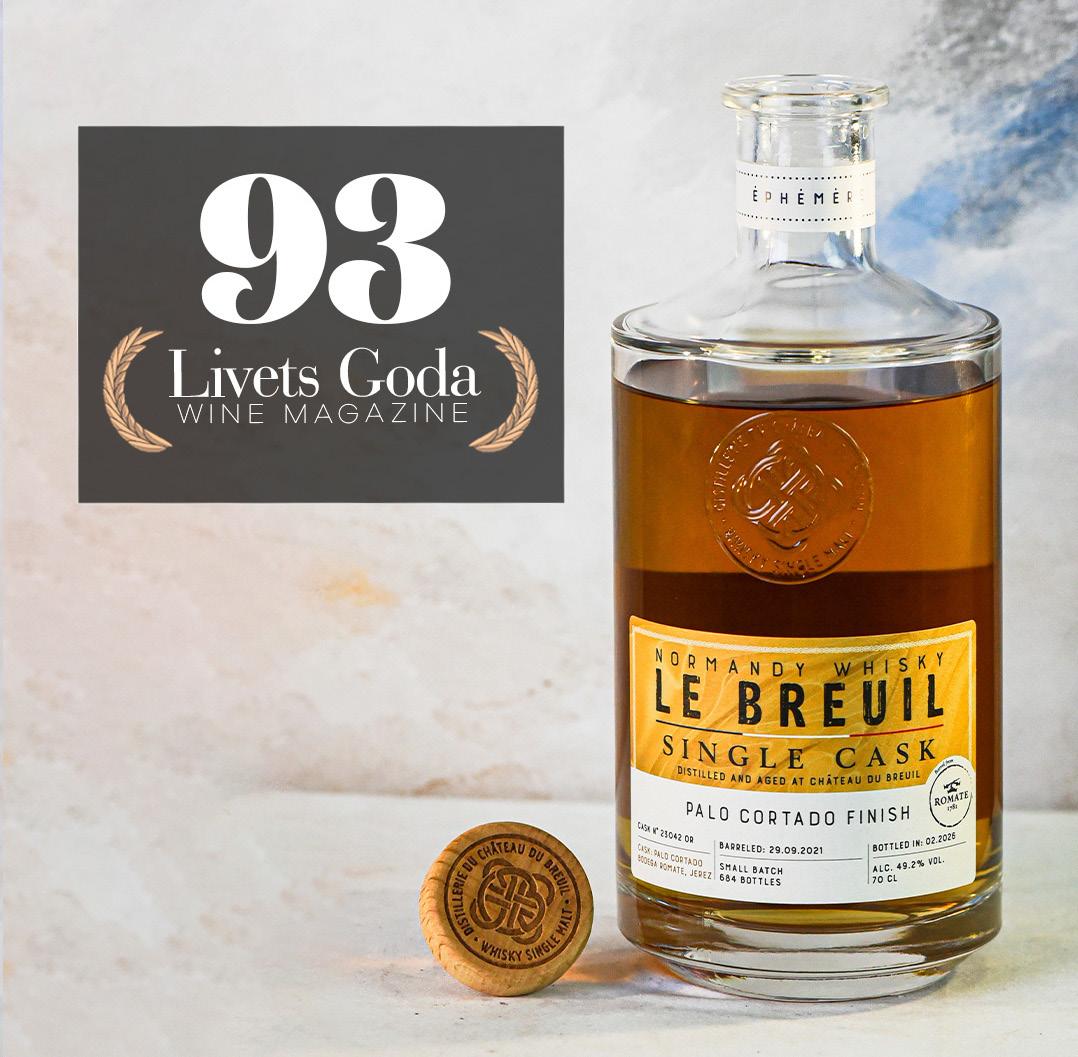
CHÂTEAU DU BREUIL WHISKY
CASK PALO CORTADO FINISH
Château du Breuil in Normandy continues to blur the boundaries between French apple-growing heritage and the more classical traditions of malt whisky. With this limited Single Cask release from the distillery’s Ephemeral Collection, launched in early May, that bridge is built with considerable finesse.
Editor-in-Chief Anders Enquist Tastes...
This whisky was distilled in traditional pot stills using 100% Golden Promise barley from England before receiving a finishing period in Palo Cortado casks personally selected from Bodega Sánchez Romate. A cask choice that seems to infuse the whisky with the very soul of Andalusia.
The result is a whisky where the elegance of sherry meets an unmistakably aristocratic French character. Nuts and dried fruits sweep across the palate alongside darker notes of prunes, figs and caramelised apples, joined by hints of cherry, cassis, apricot and orange. The palate carries its strength with subtle confidence, simultaneously biting and caressing with a pleasingly viscous texture.
The influence of the casks is refined rather than forceful, focusing on elegant spice rather than overt oak character. Notes of pepper, cinnamon and gentle ginger unfold with measured authority. As the finish reaches its final stages, delicate nuances of dried tobacco emerge, while the whisky maintains a poised precision throughout the experience.
No. 4216801 (700 ml)
SEK 639

”Kvalitet som skänker glädje i generationer”
GÖTEBORG STOCKHOLM MALMÖ brobergs.se
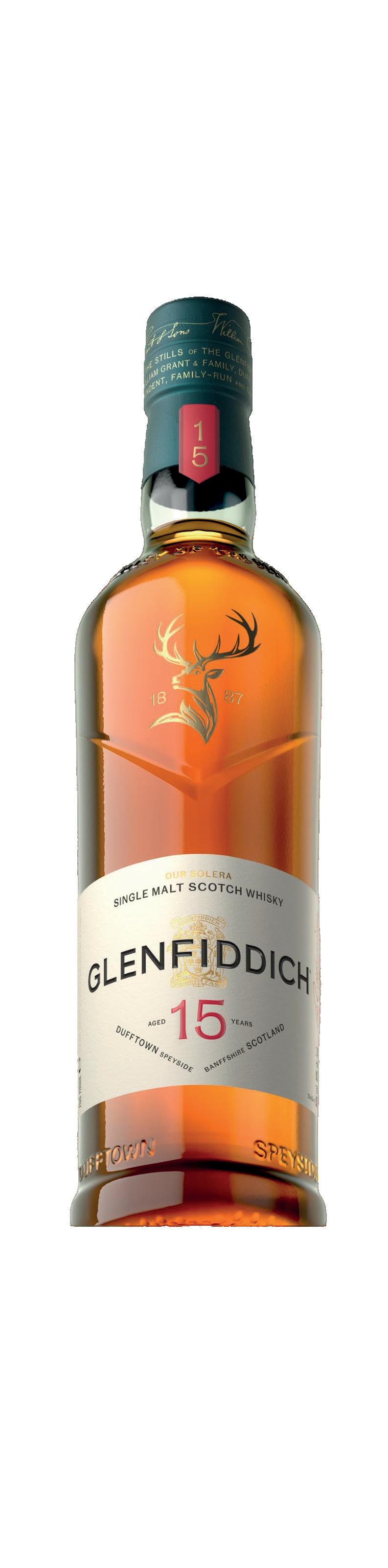
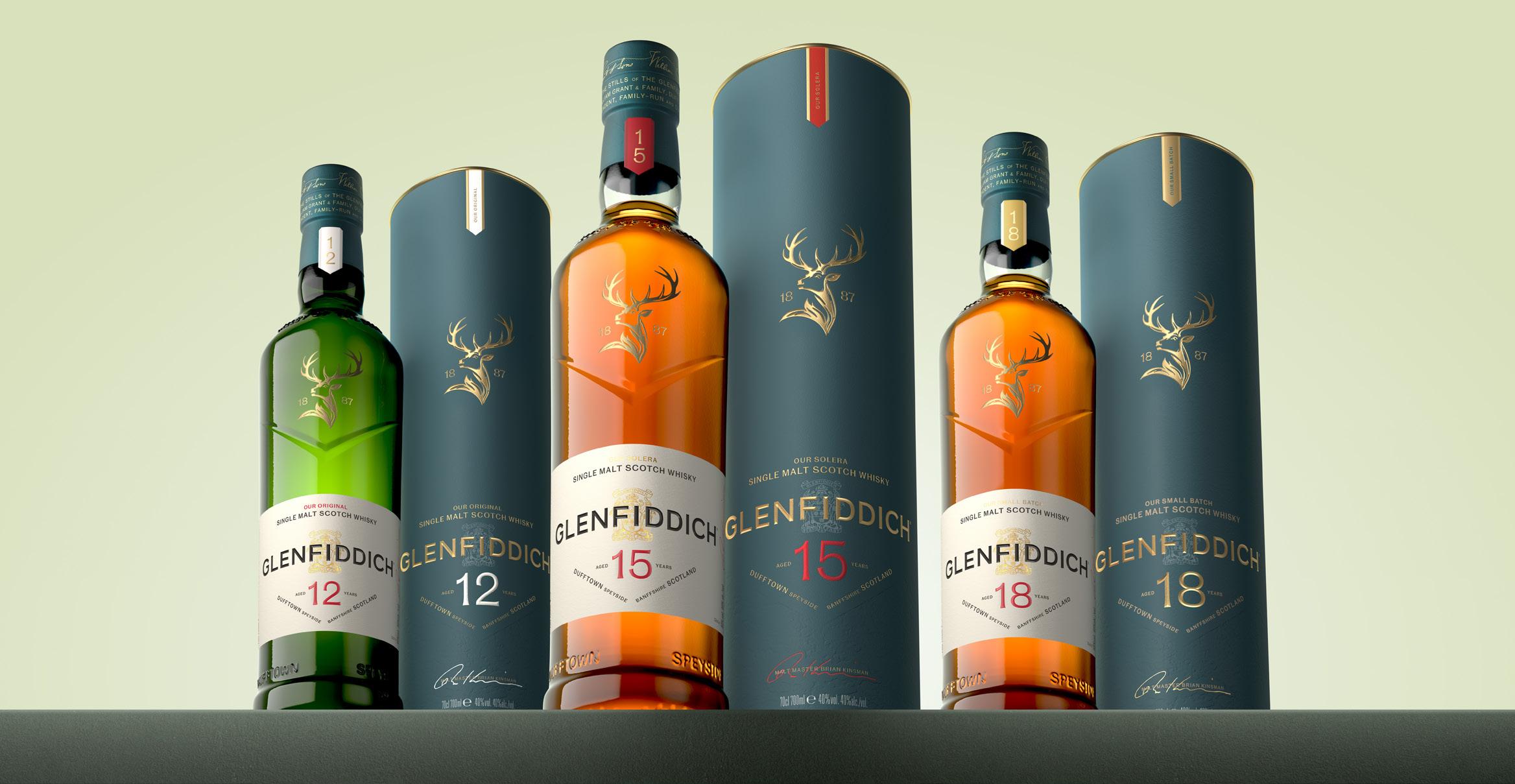
Glenfiddich – A New Identity for the World’s Most Awarded Whisky
Glenfiddich, the world’s most awarded Single Malt Scotch Whisky, has unveiled a new visual identity, marking the beginning of the next chapter in the brand’s history. Created for a modern audience, the updated design balances contemporary aesthetics with Glenfiddich’s rich heritage. The inspiration comes from rediscovered symbols found within the Glenfiddich family archives, which span more than five generations. The result is a design that honours Glenfiddich’s 139-year history while reinforcing its position as a British luxury icon.
Brian Kinsman, Glenfiddich’s Malt Master, comments: ”Innovation has always been part of Glenfiddich’s DNA. The distillery was founded by people who were not afraid to take risks, and that spirit continues to guide us today. It is also a major reason why Glenfiddich remains the world’s most awarded Single Malt Scotch Whisky. As Glenfiddich looks to the future through new cask finishes, maturation techniques and collaborations that challenge perceptions of single malt whisky, the brand remains firmly rooted in continuity and a deep respect for its heritage.”

Hjo Brewery – 100 Years in the Service of Swedish Small Beer
During the weekend of 23–24 May, Hjo Brewery celebrated its 100th anniversary. The historic brewery, best known for its traditional svagdricka (Swedish small beer), is one of only a handful of producers in Sweden still keeping this unique brewing tradition alive. Hjo Brewery stands as a testament to craftsmanship and history, with a century of svagdricka production forming part of Sweden’s living cultural heritage. The brewery has been an integral part of the town of Hjo since its founding and remains an important custodian of the country’s beverage traditions. The anniversary was celebrated on-site in Hjo throughout the weekend.
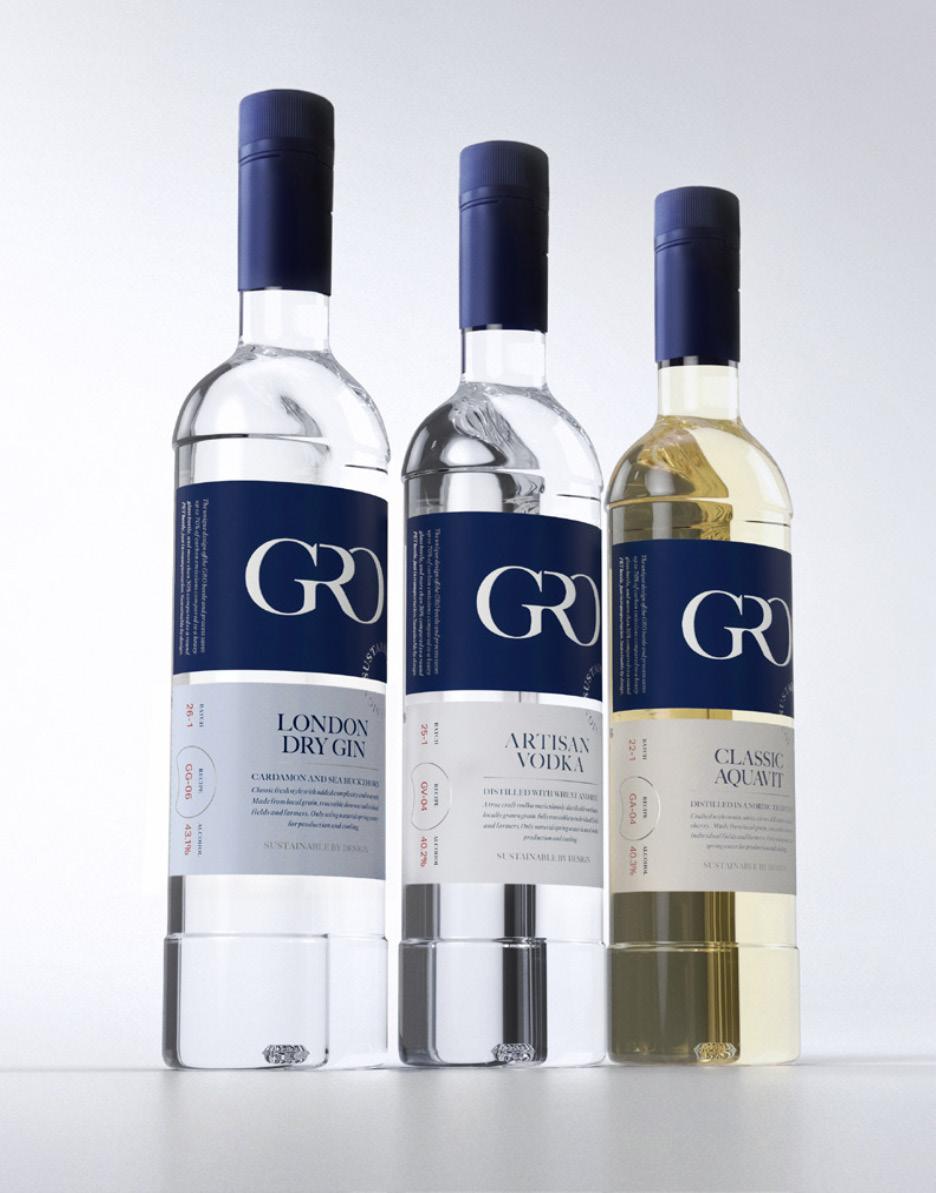
Gro Spirits Wins Prestigious International Design Award
– Creates a New Category in the Spirits Industry
Gro Spirits has been awarded a prestigious international design prize, further cementing the brand’s position as one of the most innovative newcomers in the spirits industry.
In an industry where a heavy glass bottle has long been synonymous with quality, GRO Spirits has emerged as a genuine alternative. Founded by Lars B Andersson, who brings decades of experience from the international spirits industry, the project began more than ten years ago with a simple yet profound observation: there was no true premium alternative that took sustainability seriously. Organic options existed, but they were either positioned at the simpler end of the market or packaged in heavy, energy-intensive glass bottles.
”If you want premium today, there are virtually no sustainable alternatives. That category doesn’t really exist,” says Lars B Andersson, founder of GRO Spirits.
A Bottle That Pushes the Boundaries of What Is Possible
Rather than starting with the liquid, GRO began with the packaging. The result is an entirely new type of bottle made from recycled PET (rPET), developed in collaboration with industrial designer Jonas Bourghart and graphic designer Philippe Bordonado.
The bespoke design is both visually striking and logistically superior, allowing up to twice as many units per pallet compared with traditional round glass bottles. Using rPET instead of glass reduces production energy consumption by as much as seven times. The bottle’s unique shape also reduces transport volume by approximately 50 percent compared with glass bottles and by 30 percent compared with conventional round PET alternatives. The bottles can be produced directly at the distillery, eliminating an entire stage of empty-bottle transportation. The label is fully recyclable and contains no foil or metal components.
Craftsmanship and Traceability in Every Drop
GRO’s portfolio – London Dry Gin, Artisan Vodka and Classic Aquavit – is handcrafted in copper stills using locally sourced ingredients from surrounding farms. Traceability is complete, with raw materials often traceable to individual fields and producers.
The distillery itself, housed in a former mill that has been in the family for six generations, is entirely self-sufficient in electricity thanks to its own hydropower facility. The water used in production comes from a private spring located on the estate.
”We started at the right end of the process. Instead of adding sustainability afterwards, we built everything around it from the very beginning,” says Lars B Andersson.
Dieline Awards – Global Recognition
The Dieline Awards are regarded as one of the world’s most prestigious honours in packaging design and are presented annually in New York. GRO’s recognition by the awards represents a significant international endorsement of both the originality and thoughtfulness of the concept.
According to the founders, however, the award itself is not the most important achievement.
”Winning a design award is gratifying, but that is not what makes this unique. What is unique is that we have genuinely succeeded in combining premium quality and sustainability,” says Lars B Andersson.
GRO Spirits is therefore positioning itself as a pioneer within a new category, one where premium quality and sustainability are no longer opposites, but two sides of the same coin.
About GRO Spirits
• Founded by Lars B Andersson, a veteran of the international spirits industry
• Portfolio: London Dry Gin, Artisan Vodka and Classic Aquavit
• Bottles made from recycled rPET with up to seven times lower environmental impact than glass
• Up to twice as many units per pallet compared with traditional glass bottles
• Distillery powered entirely by its own hydropower generation
• Full traceability of ingredients down to individual fields and producers
• Winner of the Dieline Awards 2026, New York
• Website: grospirits.com
GRÖNSTEDTS LAUNCHES THIS YEAR’S LE NATIONAL – A TRIBUTE TO SWEDISH CREATIVITY
Since Sweden’s National Day became an official public holiday in 2005, Grönstedts has marked the occasion each year with the release of Le National, a cognac sourced exclusively from Grande Champagne.
Production is highly limited – this year to just 1,002 bottles – and each edition features a unique design and flavour profile.
Released on 5 June, this year’s expression is an XXO Cognac, signifying a minimum of 14 years of maturation in oak casks. The 2026 edition pays tribute to Swedish ingenuity and the spirit of innovation that has helped place Sweden on the global map.
Behind the Grönstedts name stands Johan Daniel Grönstedt, the entrepreneur and innovator who, during the nineteenth century, became synonymous with Swedish cognac through his skill in blending and refining eaux-de-vie. In that same pioneering spirit, this year’s Le National tells the story of Swedish innovation – from dynamite, the safety match and the adjustable wrench to modern global success stories such as Spotify and Minecraft.
”Le National is our annual tribute to Swedish creativity and innovation. Johan Daniel Grönstedt was himself a pioneer with a strong entrepreneurial spirit, and each year gives us a new opportunity to interpret that legacy. With this year’s edition, we wanted to celebrate the curiosity and willingness to think differently that has
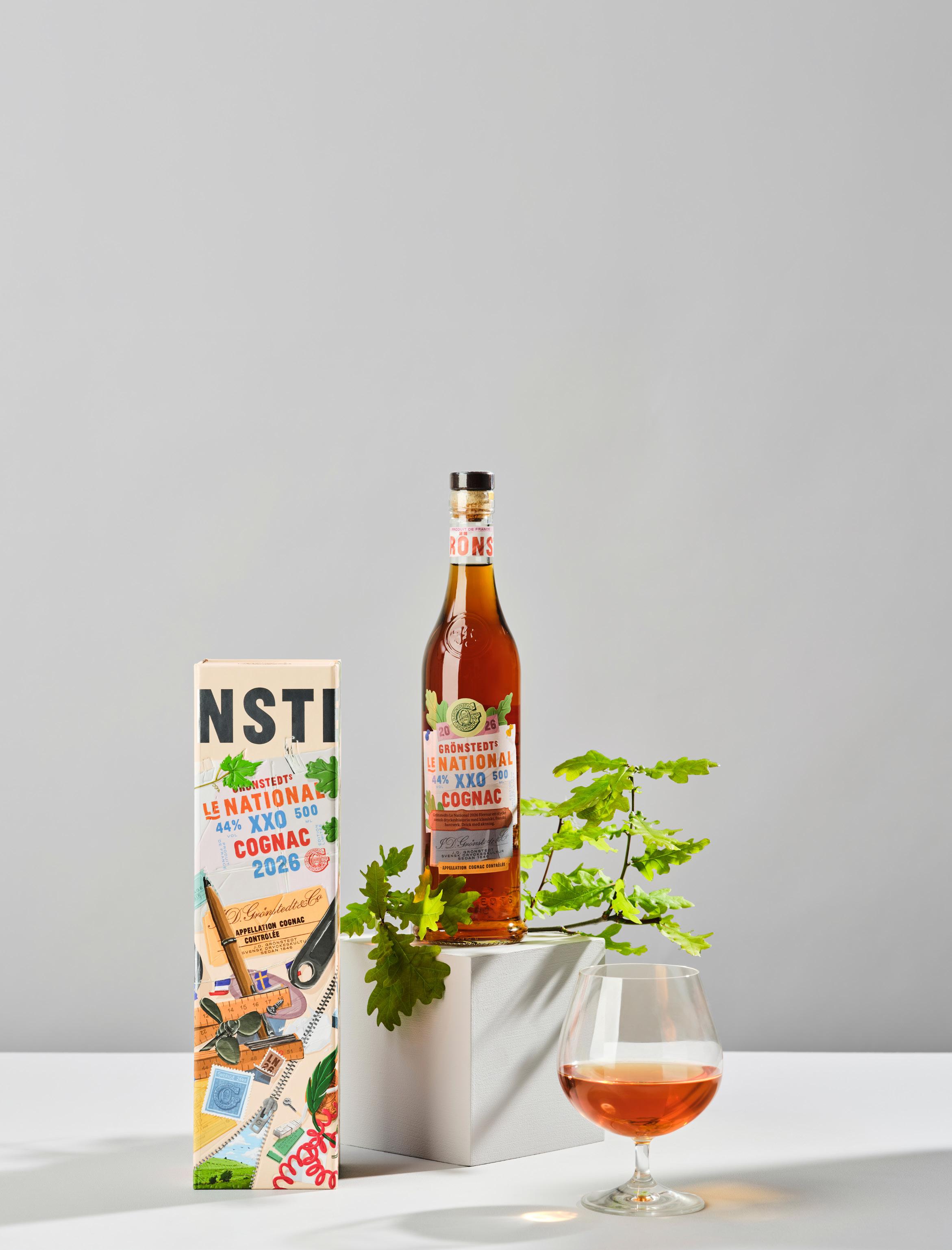
Photo: Famous Last Word
characterised Sweden throughout its history. It feels particularly meaningful to do so through a product built on craftsmanship, soul and tradition,” says Jenny Roshage.
Founded in 1846, Grönstedts has been part of Sweden’s beverage heritage for nearly two centuries. Through Le National, the brand continues to unite its cognac legacy with contemporary storytelling and modern design. Each year, a unique edition is released ahead of National Day, created with precision, passion and respect for the craft.
The visual identity for the annual limited editions of Grönstedts Le National is created by Famous Last Words (FLW), with graphic designer and illustrator Jacob Jerremalm and graphic designer Filip Callas.
”We wanted to create an illustration that feels alive and full of discoveries. Every time you pick up the bottle or open the box, you should be able to find new details. From classic Swedish innovations such as the adjustable wrench and dynamite to modern cultural phenomena like Minecraft and Spotify – all woven together in the curious and forward-looking spirit of Johan Daniel Grönstedt,” says Jacob Jerremalm.
Grönstedts Le National 2026 No. 4215602 (700 ml)
44% ABV SEK 895
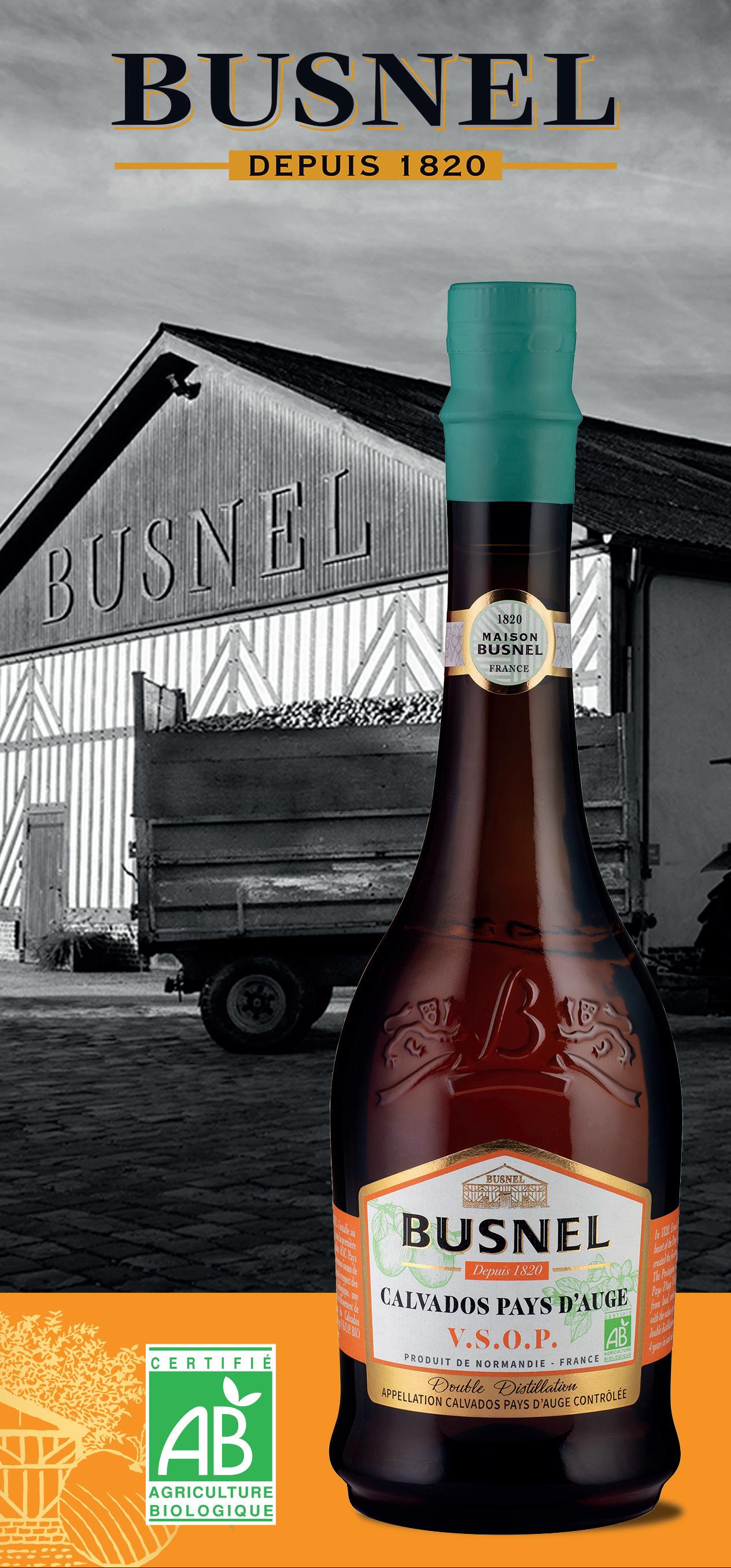
Busnel Calvados VSOP Bio tillverkas av 100% ekologiska cideräpplen från ekologiska fruktträdgårdar.
Busnel Calvados VSOP Bio Vol: 70 cl Alk: 40%



Is the Airport Beer Under Threat? Two in Five Swedes Want to Start Their Holiday at the Bar – Regardless
Should airports be allowed to serve beer early in the morning?
The debate has gained momentum following new proposals to restrict alcohol sales to travellers during morning hours – a move that could affect the travel habits of many Swedes. According to a survey commissioned by the hotel and travel search platform momondo, nearly two in five Swedes (36%) consider a beer or other alcoholic drink before departure an essential part of the holiday experience, regardless of the time of day. Including those who are happy to enjoy their first airport drink after 8 a.m., the figure rises to 42%.
For many Swedes, the holiday begins at the airport bar, which for some has become an integral part of the travel experience. The habit is most common among Millennials and Generation X travellers, while somewhat fewer members of Generation Z (27%) stop by the bar before boarding.
”For many people, the airport beer is less about the drink itself and more about the feeling that the holiday has begun. It is a small ritual that marks the transition from everyday life to leisure, and the survey shows that it remains a strong tradition among many Swedish travellers,” says Lisbet Due Berg, Communications Manager at momondo.
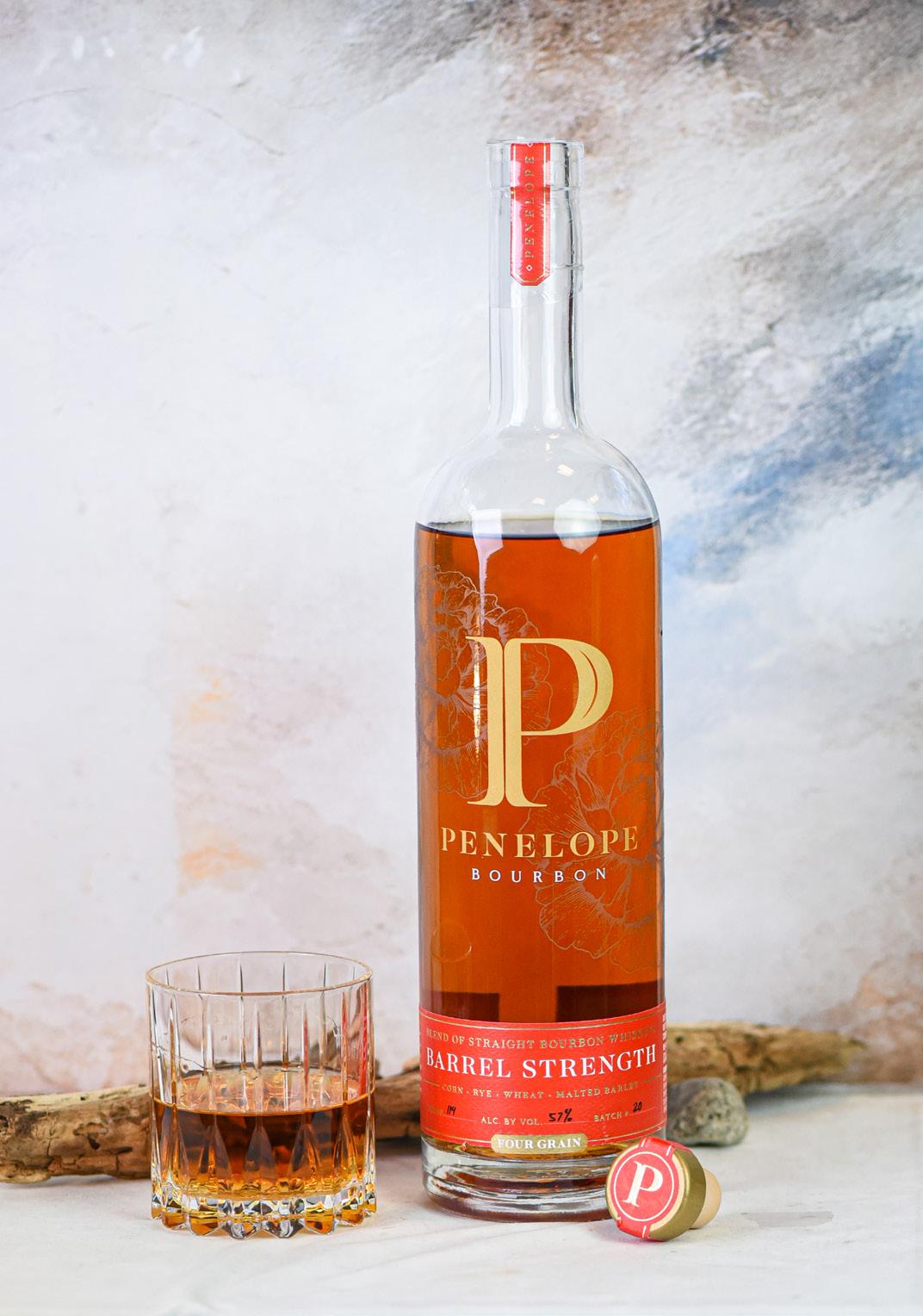
Penelope Bourbon Barrel Strenght
Penelope Bourbon was established in 2018 in Lawrenceburg, Indiana, by Mike Paladini and Danny Polise. From the outset, the company partnered with MGP Ingredients, producing its whiskey at MGP’s facility in Lawrenceburg. In 2023, MGP acquired Penelope Bourbon, a move that allowed the collaboration to continue while expanding production capabilities and further developing the brand’s cask programme.
At the end of last year, Penelope Bourbon became available in Sweden for the first time. On 17 July, Penelope Bourbon Barrel Strength will be released through Systembolaget.
WHISKY & BOURBON TASTES
Penelope Barrel Strength Bourbon, 57% 94
Penelope Barrel Strength Bourbon is an uncut, non-chillfiltered expression built on a mash bill of 82% corn, 8% wheat, 7% rye and 3% malted barley. Matured for a minimum of four years in new American oak casks, the whiskey carries its 57% ABV with confidence and poise rather than brute force. There is plenty of power here, but also admirable balance, resulting in a spirit that feels composed and purposeful rather than aggressive. The casks leave a clear and well-spiced signature, with notes of pepper, cinnamon and gentle ginger weaving through a generous fruit profile of caramelised apples, red berries and dried orange peel. Vanilla and chocolate emerge seamlessly, bringing roundness and sweetness to the palate before the finish lingers with refined tobacco nuances and a discreet yet elegant cedar spice.
of the Time of Day
About the Data
The online survey was conducted by Ripple Research among 1,000 Swedish respondents who plan to travel abroad within the next three years. Data collection took place between 17 March and 23 March 2026.
All data was collected in accordance with the guidelines of the Market Research Society (MRS) and ESOMAR, ensuring high ethical standards and robust data quality.
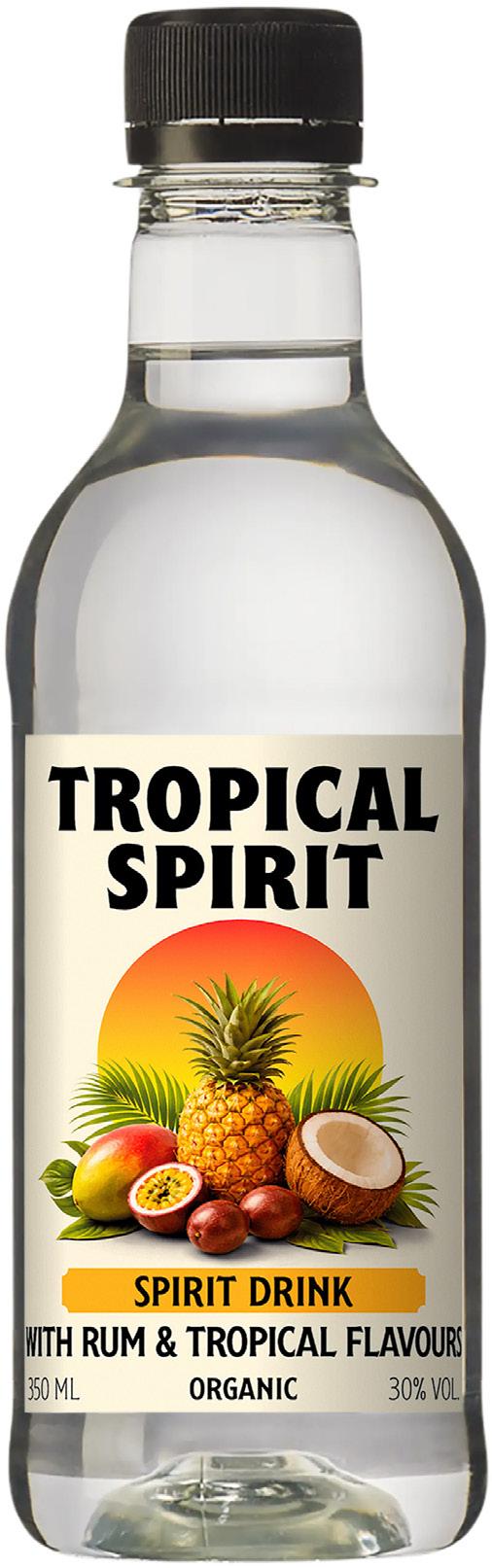
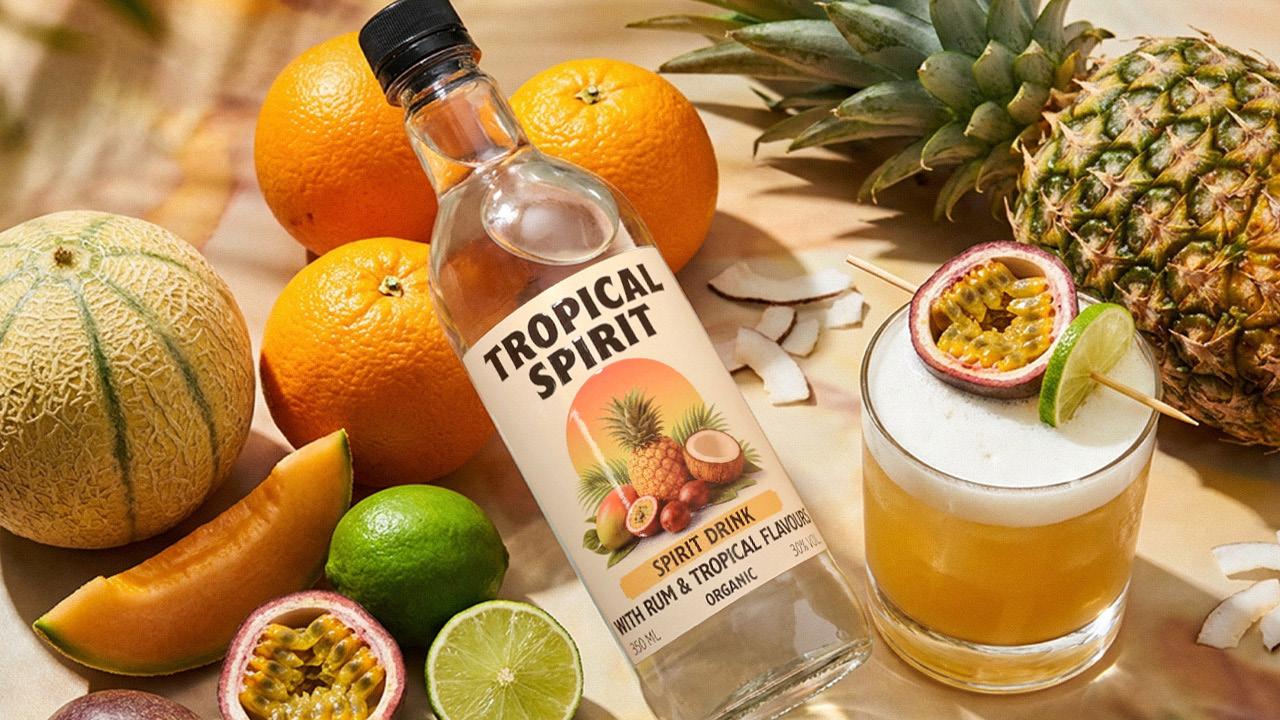
Organic Tropical Spirit from Walcher
On 1 June, Walcher Tropical Spirit was launched at Systembolaget. This organic, rum-based flavoured spirit offers a distinctly tropical profile and is available through a wide network of stores across Sweden.
With its vibrant summer character, Tropical Spirit is well suited for creating approachable cocktails, whether served over ice with lemon or lime soda, or mixed with fruit juice for a refreshing tropical serve.
Walcher Tropical Spirit
NO. 81142-01 (350 ML) SEK 139
Serving Suggestion:
Tropical Mojito
• 1 part Walcher Tropical Spirit
• 3 cl freshly squeezed lime juice
• 2 cl sugar syrup
• ½ passion fruit
• 6–8 mint leaves
• Soda water
Method
Gently muddle the mint leaves together with the sugar syrup in a lowball glass. Add the Tropical Spirit. Scoop out the passion fruit and stir the pulp into the glass. Fill with crushed ice and stir well. Top with soda water and garnish with a lime wheel and half a passion fruit.

Premiere of Spritz Week in Sweden
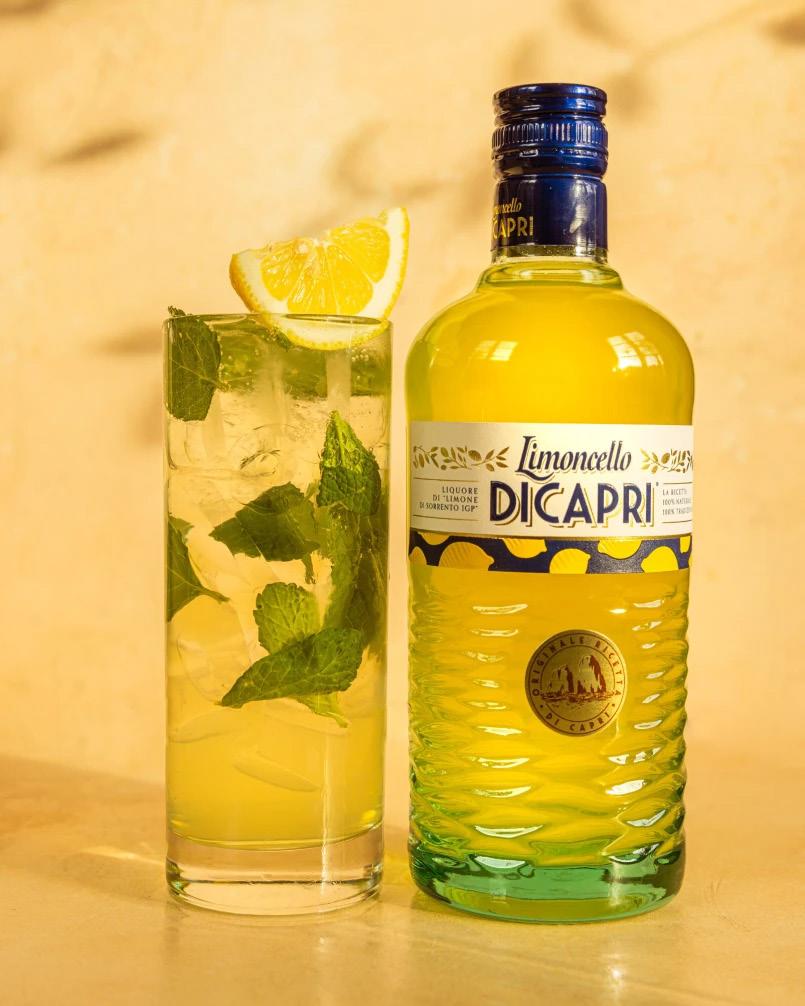
At the end of May, Spritz Week was launched in Sweden for the very first time – an initiative created by Limoncello DiCapri and Berntson Brands.
Restaurants and bars across the country put the limoncello spritz in the spotlight through dedicated serves, curated spritz menus, playful merchandise and attractive promotional offers. The ambition is to establish a clear annual spritz premiere that marks the official start of the summer aperitivo season. By celebrating one of the world’s most popular aperitif cocktails, the initiative aims to inspire more consumers to discover the relaxed and sociable drinking culture associated with the Italian aperitivo tradition.
LIMONCELLO DICAPRI
SPRITZ
• 4 cl Limoncello Dicapri
• 12 cl prosecco
• A splash of soda water
• Ice, mint and lemon for garnish
Method
Fill a large wine glass with ice (or a carafe if serving several guests).
Add the Limoncello DiCapri, pour in the Prosecco and top with soda water. Stir gently and garnish with mint and a slice of lemon.
THREE SPRITZ RECIPES
Originally, a spritz is a wine-based aperitif cocktail featuring a bitter element and soda water, served over ice. Today, however, the term is used more broadly to describe a refreshing, sparkling long drink in which a flavourful base is topped with soda water.
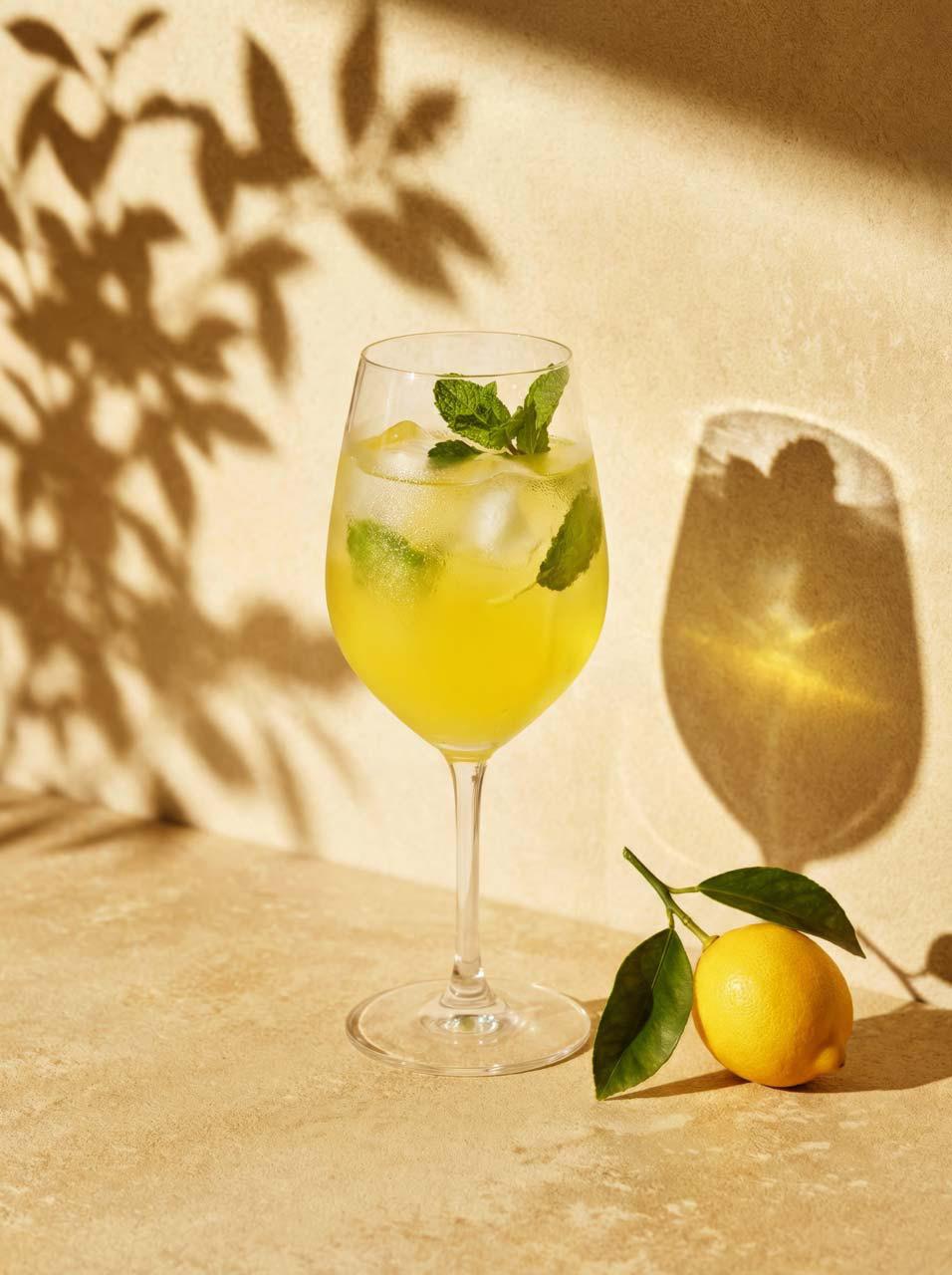

LIMONCELLO DICAPRI TONIC
• 4 cl Limoncello Dicapri
• 12 cl tonic water
• Ice, mint and lemon for garnish
Method
Fill a glass with ice (or a carafe if serving several guests). Add the Limoncello DiCapri and top up with tonic water. Stir gently and serve, garnished with mint and lemon.
LIMONCELLO DICAPRI SOUR
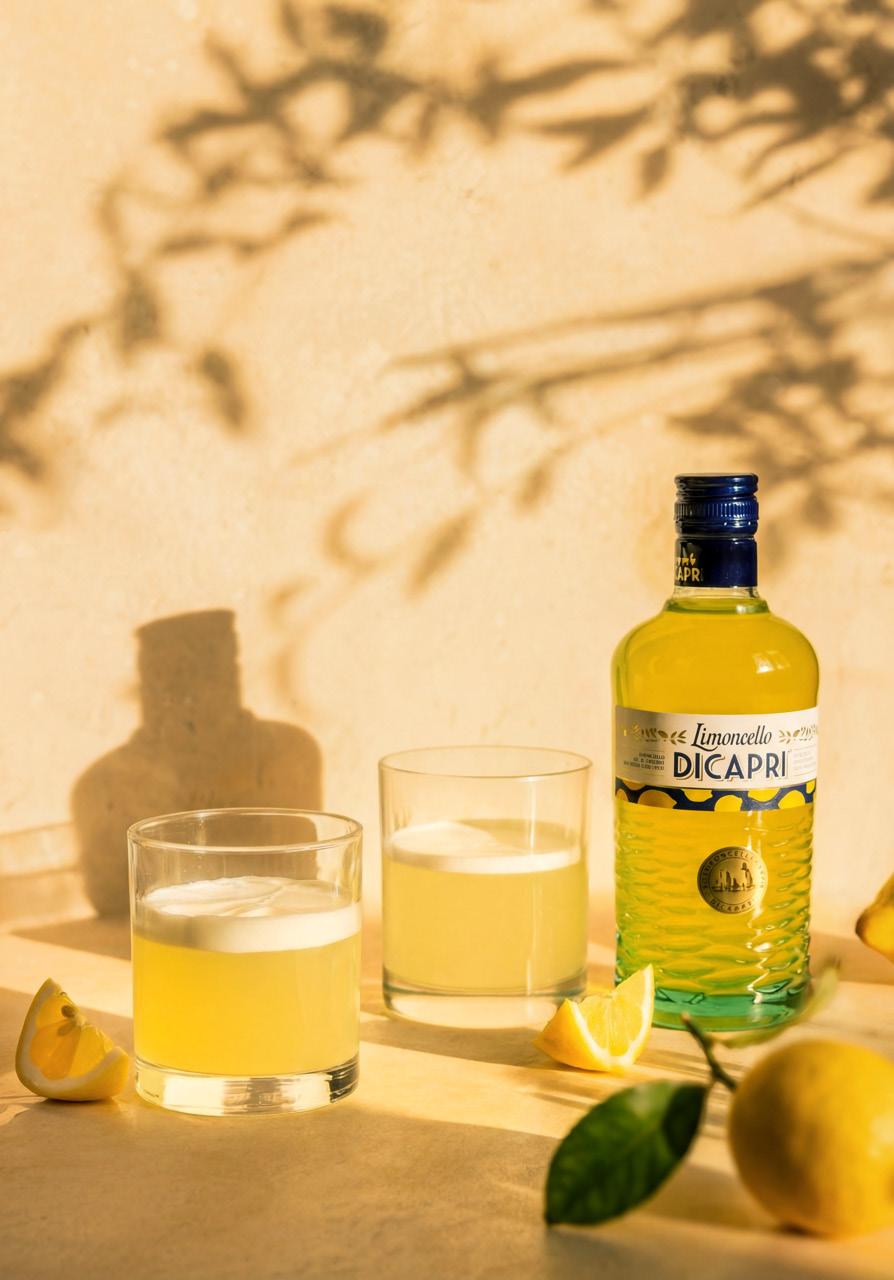
• 5 cl Limoncello Dicapri
• 3 cl fresh lemon juice
• 2 cl sugar syrup
• 1 egg white
Method
Shake all ingredients without ice for approximately 10 seconds. Add ice and shake again until well chilled. Strain into a chilled cocktail glass.
Serving Suggestion
As an aperitivo, classic antipasti are an excellent match – cured ham, olives, salami, aged cheeses and savoury snacks. The fresh citrus character also pairs beautifully with fish, shellfish and lighter spring and summer dishes.
Hantverk och historia i varje droppe
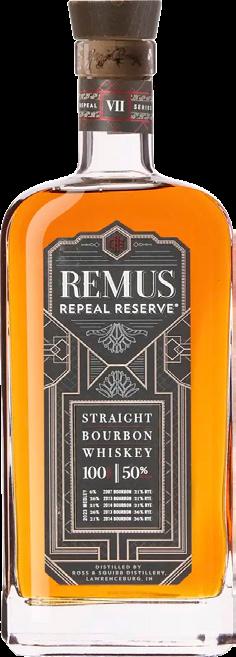
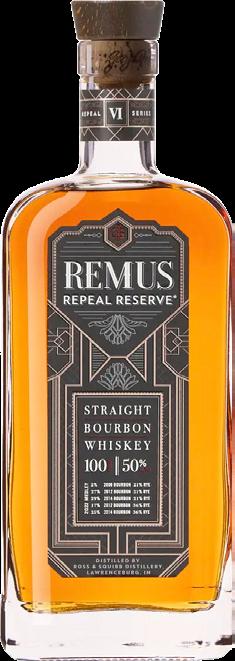
WHISKYKLUBB
SVERIGES GODASTE WHISKYKLUBB SEDAN ÅR 2000

VILL DU VARA MED I
SVERIGES GODASTE WHISKYKLUBB OCH FÅ EXKLUSIVA
WHISKYERBJUDANDEN
Anmäl dig utan kostnad till info@livetsgoda.se med ämnesraden ”Whiskyklubb”.
TASTED MARCH – JUNE ON THE BEER AND WHISKY HEAVENS
Presented here is a selection of spirits and beers tasted and reviewed by the editorial team during the period March–June.
BOURBON/WHISKEY
Stanhope Kentucky Straight Bourbon Whiskey, 44,8%
KENTUCKEY / USA / STANHOPE / 700 / 8216701 / 799 SEK
92
The mash bill stays comfortably within classic territory: 70% corn, 21% rye and 9% malted barley, then distilled and matured in American oak casks, exactly as it should be. No gimmicks, no circus tricks. Just a recipe that knows precisely what it is doing. In the glass, it behaves like that person at the dinner table who speaks the least yet somehow commands the room. Soft, composed and quietly self-assured. A subtle herbal whisper with hints of salted liquorice slips in among notes of vanilla, chocolate, honey, dried figs, orange, red berries and apricot. After a while, tobacco emerges, as if someone has settled back into a leather armchair, while the oak contributes a measured spice of pepper, cinnamon and a gentle touch of ginger. This is not a whiskey that jumps onto the table demanding attention. It stays seated, offers a knowing nod, and wins on points.
Stanhope Kentucky Straight Rye Whiskey, 45,2%
KENTUCKEY / USA / STANHOPE / 700 / 8203801 / 799 SEK
92+ With 95% rye in the mash bill, the first reaction is to raise an eyebrow and wonder whether this whiskey is actually intended to get along with anyone. But relax – it quickly gathers itself. After a brief identity crisis upon first acquaintance, it straightens its back, buttons its jacket and delivers a vibrant energy that sweeps across the palate.
The flavour architecture is anything but shy. Mint, violet and liquorice swirl through a fruit-driven landscape of orange, dried apricot, pie-ripe apples and sultanas. Everything is kept beautifully in check by a polished, almost self-assured touch of vanilla, chocolate and tobacco leaf, while a spice melody of cedar, gentle ginger, cinnamon and a subtle flirtation with cardamom settles over the whole like a perfectly tailored suit. A whiskey with freshness woven into its power –rather like an athlete who can both sprint effortlessly and, afterwards, tie a tie with impeccable precision.
Shenk’s Homestead Sour Mash 2025, 45,6%
KENTUCKY / USA / MICHTER’S DISTILLERY LLC / 700 / 42133 / 1 850 SEK
97 In this year’s edition of Shenk’s, Michter’s has once again worked with rye, malted rye and caramel malt. A portion of the fully matured whiskey has been aged in toasted, rather than charred, French oak casks. The wood is sourced from the Vosges region of France, airdried for 24 months and then toasted according to Michter’s precise specifications.
This is an uber-elegant whiskey in which every nuance seems to have found its natural place within the whole. From the very first sip, the palate unfolds with sensual depth. Caramelised malt sets the tone – warm, nutty and toffee-like – while vanilla, dark chocolate and liquorice are seamlessly woven into a broader aromatic tapestry.
The fruit carries an almost vinous resonance. Cassis and bright, tangy cherries meet rounded citrus notes of orange peel and apricot, framed by cedarwood, leather and cigar leaf, evoking the atmosphere of a quiet library where time itself
appears to rest. The casks contribute their voice through an expressive interplay of chilli pepper, gentle ginger and cinnamon, bringing both energy and authority without ever becoming excessive. A further layer reveals a subtle vegetal dimension – a suggestion of sugared mint – lending freshness to the whiskey’s generous warmth. There is an effortless sense of completeness here, with layer upon layer of detail, yet never any need to raise its voice. The subtle power that resides within this whiskey’s DNA is sufficient in itself.
Class from beginning to end.
Bottle tasted: No. 83 of a total 2,429 bottles, Batch #L25E1903.
WHISKY/WHISKEY SKOTTLAND
Arran Single Malt Amarone Cask Finish bottled 2026, 50%
ISLE OF ARRAN / SKOTTLAND / ARRAN
LOCHRANZA DISTILLERY / 700 / 4218101 / 699 SEK
94
The whisky is matured for a minimum of seven years, beginning its journey in ex-bourbon casks before being finished in former Amarone wine barrels for at least nine months –and often considerably longer when intuition is allowed to guide the process.
The Amarone casks weave an elegant vinous dimension into the whisky. Gentle touches of vanilla caress flavours of cherry, cassis, sultanas and blackberry, while a warm-blooded, sunkissed citrus energy runs through the palate. Apples, plums, apricot and peach merge into softly caramelised tones, while aromatic pepper, gentle ginger and cinnamon provide a spice profile of remarkable precision.
Towards the finish, nuances of cigar box and noble oak quietly emerge, lingering through a long and mature finale. Arran continues to impress with its seemingly effortless sense of harmony and attention to detail, and this Amarone Cask Finish feels more refined and self-assured with every passing batch and year.
MacPhail’s Collection Old Sherry Casks 21 Years, 40%
SKOTTLAND / GORDON & MACPHAIL / 700 / 4219701 / 1 299 SEK
95
The distillery behind this 21-year-old expression remains shrouded in mystery. According to Swedish importer Symposion, only a select handful of individuals at Gordon & MacPhail know its true origin – the result of highly specific and tightly regulated agreements with the distillery in question. We are, after all, dealing with whisky from a producer that almost never releases casks to independent bottlers. Yet Gordon & MacPhail’s historical stature, longstanding relationships and near-aristocratic standing within the Scotch whisky world occasionally open doors that remain firmly closed to almost everyone else.
The whisky itself presents with a sophisticated and gentle touch, making no false promises when it comes to planting smiling sherry notes at every turn. Light chocolate and crystallised vanilla drift through a dried yet vibrantly porous fruit landscape brushed with nuts, where orange, apricot, figs, dates, apples and peach unfold in graceful succession. Delicate touches of salted liquorice and violet leave a lingering impression, while the casks contribute a viscous, subtly vinous structure through which nostalgic breezes from an old wine cellar pass with quiet elegance. The spice profile remains restrained yet ever present, coloured by white peppercorns, gentle ginger and a discreet hint of cinnamon that adds depth without disturbing the harmony. Forty percent ABV may appear modest on paper, but this is a whisky governed by the intelligence of balance rather than the vanity of power. There is no need for the volume to raise its voice when the whisky already speaks with such effortless authority.
Ardmore Bourbon Cask Distillery Label, 2008, 46%
HIGHLANDS / SKOTTLAND / GORDON & MACPHAIL / 700 / 4219801 / 949 SEK
94+ Ardmore Distillery was founded in 1898 by the Teacher family and lies in the eastern Highlands, close to the borderlands of Speyside. Over the years, the distillery has become known for its peated character – here expressed at a medium level of peat influence –often more articulate and self-assured than that of many other Highland distilleries, yet rarely forceful in intent. This is peat smoke that integrates nobly into the whole, glowing with oldfashioned warmth and earthy elegance. Distilled in 2008 and bottled in 2023 after 15 years in ex-bourbon casks, this whisky has benefited from a maturation that has gently polished away its sharpest edges, allowing its power to evolve into a more elegant and confident expression without sacrificing its spicy vitality. There is a beautiful balance between maturity and energy. Chocolate and vanilla coax out nuances within its violet-tinged citrus fruit character, while the smoke maintains a sophisticated and understated
profile.
This is less about sooty peat and more about noble cigar smoke slowly unfurling through an old library of dark wood, leather and quiet contemplation. A mineral liquorice salinity lingers on the palate as a seductive echo, extending the whisky’s character with both depth and rewarding complexity. Beyond the pleasure it delivers, it is also something of a bargain in its category. This bottling forms part of Gordon & MacPhail’s classic Distillery Labels range, a series that carries a piece of whisky history in its own right. Its roots stretch back to a time when many distilleries had yet to view single malt as their principal stage. Instead, it was Gordon & MacPhail who, with remarkable sensitivity and respect for origin, allowed these distillates to find their own voice, while the distilleries themselves remained largely focused on supplying whisky for blends.
Glentauchers First Fill Sherry Hogshead Connoisseurs Choice 1999, 53,6%
SPEYSIDE / SKOTTLAND / GORDON & MACPHAIL / 700 / 4219901 / 2 589 SEK
96 From Glentauchers Distillery and entrusted to the hands of Gordon & MacPhail, this 25-year-old unpeated single malt was distilled on 22 September 1999 and bottled on 24 October 2024. The whisky spent its entire maturation in a first-fill sherry hogshead, resulting in a limited release of just 282 bottles worldwide, of which only 36 found their way to Sweden. Here, both distillate and cask are allowed to speak with complete integrity and richness, free from cosmetic shortcuts. Dark in complexion, the whisky invites with immediate allure, where dark chocolate, vanilla and toffee colour a brown sugar-kissed, caramelised fruit profile of dried cherries, baked apples, cassis, peach, figs, citrus and apricot.
The spice arrives with measured authority rather than force, as rounded ginger, cinnamon and nutmeg elegantly weave themselves through the composition. Sweetness and vibrant acidity move together with mutual respect, while a subtle vegetal dimension gradually unfolds in the depths, marked by liquorice-tinged herbs and violet.
Tobacco and aged leather settle naturally into the ensemble, lending the whisky an almost librarylike dignity, as though time itself has left its mark with both finesse and inevitability. There is something at once vital, rustic and elegant about the whole, as if the whisky balances effortlessly between an old sherry cellar and a living pulse of energy.
The vinous undertones breathe with quiet confidence and unhurried composure, leaving little doubt that this is a whisky still carrying further chapters, deeper nuances and undiscovered secrets within. Rather like a gracefully ageing fine wine, in other words.
Macallan Speymalt First fill Sherry Hogshead 20 Years, 2004, 59,1%
SPEYSIDE / SKOTTLAND / GORDON & MACPHAIL / 700 / 4220001 / 3 359 SEK
97 From The Macallan Distillery, under Gordon & MacPhail’s highly regarded Speymalt banner, comes this unpeated 20-yearold expression, distilled on 23 June 2004 and bottled on 18 July 2024. The whisky has been
matured entirely in a first-fill sherry hogshead, yielding just 337 bottles, of which only 36 were allocated to Sweden.
The cask has beautifully accentuated Macallan’s hallmark sherry-clad elegance, and the whisky breathes tradition, intensity and timeless Speyside character.
Darkly caramelised tones assert themselves without the need for loud, self-centred theatrics, casting their influence across a mature and intricately woven fruit landscape of blackcurrants, cherries, sultanas, apples, plums, peach, nectarine and apricot. Orange-infused chocolate gently coaxes forward a sweet yet finely balanced dimension, where freshness and depth coexist in graceful harmony.
Rich yet restrained in the same breath, the whisky keeps its power in check, allowing its nuances to speak with greater clarity. The cask evokes gentle breezes from cellars of another era, intertwined with an exotic spice character that lends both intrigue and depth. There are nostalgic currents here that have found their natural place in the present day.
This is a whisky that carries its history with both dignity and vitality.
Kilchoman Maury Cask Matured
Limited Edition 2026, 50% ISLAY / SKOTTLAND / KILCHOMAN / 700 / 4217801 / 899 SEK
94
This expression has been matured exclusively in Maury casks from the very first day to the last, an approach that stands apart from Kilchoman Distillery’s more modular cask strategies. Maury, the sweet fortified wine of Roussillon, is produced primarily from Grenache Noir, and this marks the first time the distillery has allowed this cask type to carry an entire maturation.
The whisky was filled in June 2021 and bottled in February 2026, resulting in a maturation period of just under five years. By age, it remains relatively youthful, yet the casks work with impressive efficiency. The vinous influence brings both roundness and nuanced sweetness, elevating the whisky to a sense of maturity that extends well beyond the numbers on the label.
There are gently caramelised tones woven through a spectrum of dried fruits, with sultanas, apricot, peach and orange taking centre stage.
The smoke lingers as a delicate veil, leaning more towards tobacco than peat, while notes of dark chocolate, vanilla and liquorice lend further texture and depth. The vegetal dimension also deserves attention, with hints of violet, mint and sage providing a fresh and engaging counterpoint. This is unmistakably Islay whisky, yet expressed through a more transparent and nuanced intensity. At the same time, it moves beyond many of the island’s expected conventions, gracefully blurring the boundaries of what Islay whisky can be.
Aberlour A’bunadh Alba 62,7%
HIGHLAND / SKOTTLAND / ABERLOUR DISTILLERY / 700 / 4217501 / 899 SEK
94 The previous release of this no-agestatement expression arrived with an impressive 58.9% ABV. This year, Aberlour pushes the throttle even further, reaching 62.7%, yet the distillery knows how to handle its horsepower with both finesse and elegance.
Maturation has taken place in American Quercus oak, familiar from the bourbon world, imparting
both spice and a subtle cedar-scraped edge to the whisky’s character. The fruit profile moves with remarkable energy, driven by orange zest, fresh apples, dried figs, sultanas and vibrant citrus notes that create an almost electric sense of momentum across the palate.
This is beautifully interwoven with a restrained sweetness of vanilla, light chocolate and soft fudge. The oak influence is unmistakable, lending a spice profile that is distinct without becoming aggressive, providing structure and direction rather than dominance.
Texture plays a crucial role here. The viscosity is striking – almost oily – carrying the flavour profile with effortless authority and weight. This is a whisky that reveals itself most completely in its natural form. Adding water risks disturbing the balance and diluting one of its greatest strengths: its remarkable body and presence.
At full strength, it certainly bites, but it does so with a controlled sense of indulgence.
Springbank Longrow 100 Proof
Bottled 2025, 57,1%
CAMPBELTOWN / SKOTTLAND / SPRINGBANK DISTILLERS / 700 / 4211101 / 779 SEK
93 Longrow 100 Proof carries its heritage with effortless authority. Under the traditional British proof system, “100 Proof” corresponds to 57.1% ABV, a strength that delivers power while maintaining remarkable precision in its expression.
The whisky spent its first four years maturing in refill bourbon casks before receiving a finishing period in refill casks that previously held Pinot Noir. The result is a vinous structure rather than overt sweetness, adding texture and nuance without overwhelming the spirit’s identity. According to the distillery, there is inspiration drawn from nearby Islay, visible across the water from Campbeltown, and there is certainly an echo of that influence in the character of the smoke. Yet Longrow remains firmly rooted in its own identity. The peat is noble and refined, more ash-toned and elegant than heavily sooty, carried on maritime breezes with notes of salted liquorice and a subtle herbal undertone.
The fruit unfolds through a warm, gently caramelised thread of blood orange, dried orange peel, red berries, figs and a whisper of peach. Spice settles across the palate like a discreet veil, never dominant but sufficiently present to provide depth and rhythm.
This is a whisky where youthful energy does not stand in opposition to elegance – quite the contrary. There is an innate spring in its step, a driving force within the structure and a balance that makes the power feel disciplined rather than assertive. A young Longrow, certainly, but one that has already found its voice.
Kilchoman Sherry Cask matured
Loch Gorm 2026 Edition, 46%
ISLAY / SKOTTLAND / KILCHOMAN / 700 / 4216901 / 987 SEK
95+ The 2026 release of this 10-year-old expression marks the fourteenth edition in a series that has consistently refined and elevated its character. This year, the cask composition has been increased from 23 to 24 Oloroso sherry casks, of which an impressive 21 are first-fill and the remaining three refill casks, further deepening the whisky’s sherry-driven profile.
In true Kilchoman fashion, power and elegance
are united in a seamless and beautifully balanced flow. The texture is rich and viscous without becoming heavy – rather like a well-trained boxer dressed in a tailored suit. The fruit is generous and concentrated, offering caramelised notes of cherry, orange, apricot, figs and apples. Chocolate toffee, vanilla and nut-kissed sweetness are woven together with a lightly violet-tinged, liquorice-and-mint-inflected vegetal breeze, while subtle maritime nuances drift in like a salt-sprayed whisper from the shores of Islay. At 50 ppm, the peat leaves a clear imprint, yet never dominates the room. The relatively youthful age contributes energy and cask-derived spice, expressed not only through dark pepper but also cinnamon and gentle ginger, all handled with Kilchoman’s characteristic patience and precision. Darker notes of tobacco and leather armchair add structure and depth to a finish that is both persistent and rewarding. The result is a whisky whose force field has been carefully sculpted –rich, fruit-driven and elegantly composed. A highly successful release, limited to just 254 bottles.
Bruichladdich Micro Provenance
Single Cask 1558, 56,9%
ISLAY / SKOTTLAND / BRUICHLADDICH / 700 / 4216601 / 1 999 SEK
96
The Micro Provenance series is an exploratory collection of single-cask bottlings, hand-selected by the distillery’s Master Blender, Adam Hannett. These individual casks embody a philosophy of quality over quantity, an uncompromising focus on provenance, and a selection process guided not by age but by flavour. Each release therefore becomes a snapshot in time, drawn from the distillery’s extensive archives.
This particular whisky was distilled in May 2011 and bottled in March 2025 after 13 years of maturation, with its final period spent in a first-fill cask from Pessac-Léognan. The release is small, the selection highly focused – a clear expression of craftsmanship on a limited scale.
This is an elegant and refined bottling from Bruichladdich Distillery, where the distillery’s delicate house style is allowed to speak with understated precision despite its respectable ABV. The fruit profile is rounded and gently caramelised, offering notes of pear, apple, fig, peach and raisins, with a subtle stone-fruit character lingering in the background.
The texture is silky, almost caressing, yet carries just enough grip to provide structure without disturbing the harmony. A restrained spice runs through the whisky, with hints of cedarwood and tobacco contributing depth and complexity. The smoke is understated and elegant, more integrated than assertive, melting seamlessly into the whisky’s lightly sweet character.
The finish delivers a pleasing salinity accompanied by liquorice-tinged nuances, creating a balanced and lingering aftertaste. This is not a Bruichladdich for those seeking raw, powerful peat smoke, but rather for those who appreciate elegance, texture and intricate detail.
Kilkerran Cask Strength Bourbon Casks 8 Years, 57,7%
CAMPBELTOWN / SKOTTLAND / KILKERRAN / 700 / 4215001 / 757 SEK
93+ Previously, this whisky was matured in a combination of bourbon, port and sherry casks. In recent releases, however,
maturation has taken place exclusively in ex-bourbon barrels, a deliberate move designed to showcase the distillery’s pure distillate character. What we have here is an eight-year-old cask-strength whisky from Glengyle Distillery in Campbeltown, bottled at 57.7% ABV, where power and precision meet within a carefully balanced structure.
The smoke is understated yet present, carrying a lightly tingling character with hints of peat and dried tobacco. It functions more as a subtle seasoning than a dominant feature, adding tension and complexity without taking centre stage. The texture offers an attractive viscosity –neither heavy nor oily – where a gentle velvet-like mouthfeel meets a lively sharpness.
The casks present themselves with maturity and restraint, avoiding any sense of raw oakiness. Instead, a cedar-driven and peppery spice contributes both energy and depth. The fruit profile moves through a bright and focused spectrum of citrus, peach and dried fruits, accompanied by notes of pear and a discreet exotic melon nuance in the background. Sweetness is measured but perfectly placed, with vanilla and milk chocolate providing a soft rounding effect without drifting into overt caramelisation. The overall impression is clean and focused, allowing the malt to take centre stage rather than herbs or secondary aromatics. A fine salinity and a touch of liquorice add further dimension. The finish is long and comfortably extended, carrying a pleasing softness in which notes of dried tobacco linger gracefully. This is a highly approachable yet sharply defined Kilkerran – a whisky with power behind it, delivered with finesse and control.
Kilkerran single malt is produced at Glengyle Distillery, originally founded by William Mitchell in Campbeltown in 1872. The distillery closed in 1925, but at the turn of the millennium the owners of Springbank revived Glengyle, restoring the buildings and bringing distillation back into operation in 2004. The first release followed in 2007, but as Springbank did not hold the rights to the Glengyle trademark, the whisky was instead named Kilkerran.
Springbank 30 Years Old bottled 2025, 46%
CAMPBELTOWN / SKOTTLAND / SPRINGBANK
DISTILLERS / 700 / 4211201 / 12 076 SEK
98
This 30-year-old expression in Springbank’s core range has been matured in 85% bourbon casks and 15% sherry casks, and it has been said before – and deserves to be repeated as often as necessary – that having a whisky of this calibre as part of a permanent range is as remarkable as it is generous. What is perhaps most fascinating is the way the whisky opens. Initially reserved, almost deceptively ordinary, but given air and time it gradually unfolds, revealing a profound personality where power is completely integrated – never demonstrative, yet always present. If we momentarily set aside the figure on the label – 30 years – and approach the whisky as objectively as possible (well, almost), one conclusion remains unavoidable: this is a phenomenal whisky. Here, the traditional and the contemporary meet in a timeless form. There is a sense of history, yet also of relevance, as though this is a whisky we will appreciate just as much forty years from now as we do today.
Aromatically, we move through a mature and finely tuned landscape of dried citrus, expressed through warmer notes of orange and mandarin, accompanied by raisins, figs and a whisper of apricot. The vanilla is slender and elegant, while the chocolate leans towards cocoa – restrained, precise and beautifully judged. In the depths, there are almost truffle-like nuances that add further resonance and complexity.
The structure is exquisite. Silken in texture, yet possessing a grip that feels almost vinous in character – carrying the flavour rather than pushing it forward. This is complexity that never needs to raise its voice. The cask influence is noble and fully integrated, bringing notes of cedar, dried cigar leaf, leather and the suggestion of a well-worn armchair in a warmly furnished room. There is also a subtle briny note present, not maritime salinity as such, but something more akin to still water touched by a faint mineral edge, with a discreet thread of liquorice quietly emerging beneath the surface.
The overall impression is elegant, cohesive and deeply memorable. This is not merely a great whisky; it is a whisky that reminds us why we fell in love with the category in the first place. And yes, it is worth every penny.
Springbank 18 Years Old, bottled 2025, 46%
CAMPBELTOWN / SKOTTLAND / SPRINGBANK DISTILLERS / 700 / 4211401 / 1 639 SEK
96
We move down in age, but certainly not in quality. Springbank 18 Years Old, matured in 50% bourbon casks, 45% sherry casks and 5% rum casks, demonstrates how the distillery’s signature character remains intact across generations of maturation. It stands in clear dialogue with the 30-year-old expression, not as a lesser version, but as a younger sibling with its own energy, precision and sense of purpose. There is a lightly caramelised, almost delicately charred note running through the fruit profile, adding character without ever becoming dominant. The citrus leans towards orange and mandarin, yet is sharpened by hints of ripe lime that bring a beautifully focused acidity. Structurally, it is unmistakably Springbank, with a silky texture and an elegant friction that grips rather than pushes.
The casks have left their mark, though more as the atmosphere of an old wine cellar than overt oak influence – integrated, deep and entirely natural. The fruit moves between ripe and green apples, apple peel and orange zest, accompanied by layers of dried tobacco, leather and suggestions of a well-worn leather armchair. Everything feels clean, cohesive and complex, with no single element disrupting the harmony of the whole. The spice profile is refined, carried by a gentle peppery lift, while a slightly more floral dimension than that found in the 30-year-old adds brightness and energy. Sweetness is balanced by a fine salinity, with slender notes of vanilla accompanied by hints of pipe tobacco and an ashtoned elegance lingering quietly in the background.
This is an 18-year-old whisky with genuine authority – classical in posture, timeless in expression and yet still carrying a clear sense of forward momentum.
Elegant. Very elegant.
Longrow Springbank Distillery Oloroso Cask Cadenhead 23 Years Old, 2002, 43,7%
CAMPBELTOWN / SKOTTLAND / CADENHEAD / 700 / 4216201 (LANS 30/4) / 3 999 SEK
96+
From Springbank Distillery and its heavily peated Longrow range comes this 23-year-old bottling, distilled in 2002 and bottled in 2026 by independent bottler Cadenhead’s. Matured in Oloroso sherry hogsheads, this is a whisky that does not attempt to dominate the room – it owns it through presence alone.
Here, Longrow reveals a more nuanced side of its traditionally robust smoky character. Rather than raw, tarry intensity, the whisky moves into a more sophisticated register, where the smoke evokes cigars, pipe tobacco and the lingering ash of a slowly smouldering ember. The casks speak in a refined voice. Cedarwood, gentle ginger and an aromatic pepper-driven spice are woven together with dried red berries and a lively citrus character that lifts the entire composition.
Further depth emerges through notes of roasted coffee beans, cocoa and dark chocolate, all seamlessly integrated. This is a whisky with remarkable self-control, unfolding its power through balance rather than force. The texture is silky, almost viscous, while a subtle tannic structure and a mineral edge provide both energy and definition.
Hints of maritime salinity, accompanied by liquorice and delicate violet notes, reinforce the whisky’s origins without slipping into cliché. This is not Longrow at its loudest; it is Longrow speaking in a quiet voice of authority, carrying with it a distinctly nostalgic glow.
Truly, truly excellent.
Cadenhead Mannochmore Bourbon Hogsheads
12 years 2013, 46%
SPEYSIDE / SKOTTLAND / CADENHEAD / 700 / 4191801 / 669 SEK
93+ The distillery, built in 1971 as a sister facility to Glenlossie Distillery, has long lived somewhat in the shadows. Yet here, in a 12-year-old expression distilled in 2013 and matured in bourbon hogsheads, Mannochmore demonstrates why Speyside is about far more than the obvious names.
There is something quietly self-assured about this whisky. It feels as though it has little interest in demanding attention, and perhaps for that very reason it earns it.
Softly perfumed floral nuances unfold with effortless elegance. A violet-kissed character runs through the citrus fruit, accompanied by hints of salted liquorice and a delicate spice that leans towards white pepper. The fruit profile also ventures into more exotic territory, revealing stone fruits, a touch of passion fruit and kiwi, all framed by a finely judged cask spice that binds the whisky together without ever becoming dominant.
What is perhaps most compelling is the balance between strength and fragility. There is an almost delicate tension running through the whisky, lending it a quietly intriguing, almost sensual character. The expression is bright and lifted, yet far from simple. Instead, it offers layers of nuance that reward a little patience and attention. And perhaps that is precisely why Mannochmore remains somewhat underrated. It does not pose
or perform. It quietly makes its way onto the palate, lingers in the memory and ultimately delivers far more than its price tag might suggest.
Cadenhead’s Enigma Speyside
Single MaltSPY.4.A Sherry Cask
Finish 12 Years, 2013, 50%
SPEYSIDE / SKOTTLAND / CADENHEAD / 700 / 4216301 / 849 SEK
94+
We find ourselves in Cadenhead’s Enigma Series, a range where nothing is off limits and virtually everything is permitted. As long as the whisky is good enough, it gets bottled. There is something refreshingly liberating about the concept – a playful yet uncompromising philosophy where convention is set aside and the final result is allowed to speak for itself. The series has even produced a bourbon whiskey, which says something about the freedom of approach.
In this case, the whisky was matured initially in bourbon casks before receiving a finishing period in Oloroso sherry casks from 2024 until bottling in February this year. It is a whisky that balances its darker elements with impressive precision. The decision by the Cadenhead’s team to reduce the strength to 50% ABV feels particularly well judged, allowing the structure to flourish without becoming angular or aggressive.
Aromatically, we move through a warm, gently sherry-influenced landscape of nut-tinged red berries, orange peel, dried apricot, figs and sultanas, accompanied by notes of cinnamon, ginger and a slender thread of vanilla. Chocolate lingers quietly in the background, while subtle hints of violet and salted liquorice provide both energy and movement. Everything feels integrated, almost modestly handled despite the whisky’s depth and complexity.
A fine acidity runs beneath the surface, bringing freshness and vitality. Towards the finish, an almost mouthwatering stony minerality emerges, introducing a distinctly vinous dimension that is both attractive and intriguing. That impression is reinforced by a restrained sweetness, nearly austere at times, while minty and vegetal nuances contribute a refreshing lift. In the closing moments, naturally woven notes of tobacco and leather make their appearance.
This is a dense yet graceful whisky, with excellent flow and a surprising sense of elegance. The casks leave their mark without creating friction, allowing the whisky’s character to remain intact. It is remarkably easy to be pleasantly surprised by the Cadenhead’s Enigma concept.
Glenallachie-Glenlivet Sherry Cask Cadenhead 17 Years, 2008, 46%
SPEYSIDE / SKOTTLAND / CADENHEAD / 700 / 4216101 / 1 089 SEK
95
From GlenAllachie Distillery, with its historical connection to the old “Glenlivet” designation, and bottled by Cadenhead’s, comes this 17-year-old expression distilled in 2008 and matured in refill sherry butts. This is a whisky that does not step forward through sheer force. Instead, it behaves like a thoughtful general, leading with elegance rather than authority. The fruit profile is refined and nuanced, with notes of cherry woven together with chocolate-kissed apples and orange. A sweet thread of pineapple adds a touch of brightness, while gentle vanilla softens the edges and subtle nutty nuances provide further dimension.
The spice is restrained yet present, offering gentle ginger, a whisper of cinnamon and a delicate peppery backbone. The texture feels almost naturally reduced, as though the whisky has already found its ideal balance. It carries a transparency and clarity of structure while still retaining a pleasing sense of energy. The casks provide a light grip, a gentle friction that prevents the whisky from becoming overly silky and instead creates a discreetly dry framework.
This is not a whisky that impresses through sheer volume or power. Rather, it succeeds through thoughtfulness, nuance and a character that continues to evolve in the glass. There is also a distinct association with both Calvados and Cognac, something in the nature of the fruit and the airy elegance that almost makes one want to serve it in a tulip-shaped brandy glass. The result is a subtle, complex and beautifully composed whisky, and above all, a remarkably fine digestif.
GlenAllachie is located in Aberlour, in the heart of Speyside, at the foot of Ben Rinnes. The distillery was built in 1967 and eventually became part of Pernod Ricard before being acquired by Billy Walker in 2017.
Benrinnes Palo Cortado Sherry Cask Finish Cadenhead 11 Years, 2014, 46% SPEYSIDE / SKOTTLAND / CADENHEAD´S / 700 / 4216701 / 739 SEK
93+ From Benrinnes Distillery comes this 11-year-old bottling, distilled in 2014 and bottled by Cadenhead’s in February 2026. Following an initial maturation in bourbon casks, the whisky received its final character through a finishing period in Palo Cortado hogsheads from 2023 onwards.
What emerges is a silky and beautifully composed whisky in which dark chocolate, vanilla and caramelised sweetness glide across the palate without a single harsh edge. The spice profile is understated yet precise – dark, gentle and subtle, more whispered than declared.
The fruit character is complex and somewhat elusive, moving between dried apples, apricot, orange and citrus, with a lightly exotic undertone. Gentle ginger contributes a tangy, spicy tension, woven into notes of burnt caramel and syrup. There is also a playful, almost nostalgic dimension that evokes memories of caramelised fruit sweets. The texture is elegant, carrying a gentle warmth and drive without becoming aggressive, while the balance between power and finesse is impressively judged. The finish ripples across the palate with a subtle tightening structure, bringing notes of salinity, liquorice and violet, alongside discreet touches of sweet tobacco, leather and polished hide.
This is a whisky with genuine personality and integrity. Warm, inviting and remarkably difficult not to enjoy.
Benrinnes Distillery sits in the shadow of the mountain from which it takes its name, close to the River Spey. An earlier distillery bearing the same name was destroyed by flooding in 1829; the present distillery was subsequently built on safer ground.
Berry Bros. & Rudd is one of the most historic and respected independent bottlers in the world. The company was founded as a merchant of coffee, tea and spices in 1698 by The Widow Bourne, who opened a shop at the very address where the
company still operates today: 3 St James’s Street, London. Over time, the business expanded into wine and spirits and became one of the pioneering independent bottlers.
Berry’s Own Selection Scotch Whisky is a range of exclusive whiskies from Berry Bros. & Rudd, with each cask personally selected by the company’s whisky expert, Douglas McIvor, before bottling.
Tormore Bourbon Barrels & Oloroso Hogsheads Cadenhead 14 Years 2011, 46%
SPEYSIDE / SKOTTLAND / CADENHEAD´S / 700 / NR 4216001 / 858 SEK
94+
Here we have another bottling from Cadenhead’s, this time from Tormore Distillery: a 14-year-old whisky distilled in 2011 and bottled in February 2026. A well-balanced cask composition of 60% bourbon casks and 40% Oloroso sherry hogsheads provides the framework for a whisky that may not be the loudest voice in the room, yet quietly wins you over through an immediately appealing combination of vanilla and chocolate. The style is elegant and restrained rather than expansive, carried by a soft and effortless structure that remains coherent from start to finish.
At a modest 46% ABV, it presents itself with an almost effortless ease. Notes of mint, salted liquorice and floral violet are woven together with a gently citrus-driven fruit character. In the background lies a more exotic register of kiwi and passion fruit, contributing a subtle, almost vinous sweetness.
The texture is consistently graceful, everything moving across the palate without friction or interruption. The casks provide exactly what is required – a delicate peppery edge and a finely judged oak influence that lends structure without disturbing the flow. Beneath it all runs a bright acidity that brings energy and keeps the whisky feeling alive and vibrant.
This is a whisky with air beneath its wings, one that prefers to dance across the palate rather than charge forward with force. The finish is long, unhurried and quietly beautiful. It is the kind of whisky one happily pours generously, whether served slightly cool in a large bourbon-style glass or in a more traditional tulip-shaped whisky glass. For those willing to listen, there is breadth, balance and a remarkably appealing elegance to be found here.
Ardnahoe Cask Strength 5 Years Old, 61%
ISLAY / SKOTTLAND / ARDNAHOE DISTILLERY / 700 / 42145 / 939 SEK
93+ Stewart Hunter Laing and his two sons, Andrew and Scott, move through Islay’s smoky landscape of tradition with effortless elegance and quiet precision. Ardnahoe Cask Strength is the third release in the distillery’s core range, matured for five years in first-fill bourbon casks.
The cask-strength bottling signals energy and momentum, yet despite its youth, the whisky displays a striking sense of maturity. The texture is full-bodied, the balance carefully judged and the power held firmly in check. The casks perform with discipline: the vanilla notes are refined, the spice precisely calibrated and entirely free from excessive oak influence.
This creates space for the fruit to shine, unfolding through shades of yellow and orange citrus, red berries and a discreet touch of chocolate. A
maritime liquorice salinity deepens the character and firmly anchors the whisky in its island origins. The smoke moves away from the rustic and tarry, leaning instead towards associations of fine cigars and their softly ashen clouds.
Power and elegance coexist convincingly in this youthful whisky, which already demonstrates an impressive sense of cohesion, with every component working together in harmony.
Caol Ila Charcoal Smoke & Caramels, Marsala Cask FinishCooper´s Choice, 55%
ISLAY / SKOTTLAND / THE VINTAGE MALT WHISKY CO / 700 / 42144 / 799 SEK
93+
Another superb release from independent bottler The Vintage Malt Whisky Co. and its consistently high-performing Cooper’s Choice range. The spirit originates from Caol Ila – perhaps Islay’s most melodic interpreter of smoke – and was initially matured in ex-bourbon casks before receiving a finishing period in a Marsala cask, Cask No. 0021.
In the glass, a beautifully expressive Islay whisky emerges – confident in character, yet tempered by a forgiving elegance that keeps its intensity firmly under control. No age statement is provided, but the vitality of the casks suggests youthful precision rather than deep maturity, likely somewhere in the region of eight to ten years old. The flavour profile is inventive and exceptionally well balanced, weaving together sweetness, maritime salinity, peat smoke and cask spice with a sense of calm confidence. Vanilla and fudge gently caress notes of dried orange and apricot, while a discreet bacon-like nuance – far less aggressive than it sounds – contributes an umamidriven depth that is elegantly softened by the rounded touch of honey.
Mint and violet introduce a cooling, lightly floral freshness before the finish tightens with an ashy tobacco note that arrives with both precision and poise.
This is a small-scale release of just 300 bottles, all allocated to the Swedish market, further enhancing the feeling that this is a fleeting yet highly memorable glimpse into Caol Ila’s smoky universe.
Arran 15 Year Old Rare Batch French Oak Grand Cru Casks, 52,5%
ISLE OF ARRAN / SKOTTLAND / ISLE OF ARRAN DISTILLERS / 700 / 42136 / 1 887 SEK
96Within Arran’s Rare Batch series, the spotlight is directed towards small releases and more unusual cask combinations, and this 15-year-old expression serves as a clear example of the distillery’s curiosity about how different oak types can shape the character of malt whisky.
The spirit, distilled at Lochranza on the Isle of Arran, follows a two-part maturation journey. It spends its first seven years in classic ex-bourbon casks of American oak before undergoing a further eight years of maturation in French oak casks that previously held Grand Cru wine from one of France’s most prestigious wine regions.
The result is a remarkable meeting between Arran’s naturally expressive fruit profile and the more vinous, aromatically spiced resonance contributed by the French oak. This is a whisky that rewards familiarity and benefits from a little patience in the glass.
The fruit displays a beautifully developed
Pine Brewing Company erbjuder svensktillverkad, smakrik hantverksöl med mycket attityd.
I vårt sortiment hittar du ett brett utbud, både mångåriga storsäljare och tidsbegränsade specialutgåvor. Vi har haft äran att ta emot flera prestigefyllda utmärkelser för våra öl, och 2023 blev vi utsedda till Årets Svenska Bryggeri. Häng med på resan och upptäck vårt sortiment online.
WWW.PINEBREWINGCOMPANY.SE
STARKÖL BRYGGD I FALKENBERG
maturity, with subtly dried notes of orange, apricot, Cognac-inspired apples, cherries, cassis and citrus sponge cake. A honey-kissed, lightly caramelised layer with gently toasted edges envelops the whisky, while chocolate, vanilla and toffee exert their softly guiding influence.
A sea-swept thread of liquorice quietly enters the melody, and the finish unfolds into a complex fusion of violet-infused tobacco and warm spice. In short, this is what we call inspired craftsmanship.
Bunnahabhain Sea Salted Sherry Palo Cortado Cask Finish Cooper´s Choice, 56%
ISLAY / SKOTTLAND / THE VINTAGE MALT WHISKY CO / 700 / 42138 / 839 SEK
94+ Independent bottler The Vintage Malt Whisky Company has built a strong reputation through its Cooper’s Choice range, a series of small-batch releases where the personality of the cask is given every opportunity to speak with a clear and distinctive voice. This expression draws its spirit from Bunnahabhain Distillery, the distillery that has stood on Islay’s north-eastern coast since 1881 and has long been celebrated for its more nuanced and less peat-driven style.
For this bottling, the whisky received a finish in casks that previously held Palo Cortado sherry, a style renowned for its dry, nutty and aromatically complex character. Bottled at a commanding 56% ABV, the result is a Bunnahabhain of singular personality, where the influence of the sherry casks unfolds with both depth and resonance.
A discreet maritime salinity, accompanied by hints of liquorice, leaves its mark across a fruit profile shaped by dark honeyed caramelisation and dried notes of orange, apricot, apples and dates. Spiced oak opens the door to a more exotic register, with touches of nutmeg, ginger and cinnamon woven into a peppery undercurrent.
As for peat and smoke, the expression remains subtle and finely judged, leaning more towards dried tobacco leaves and a gentle humidor-like character, where cedarwood-infused elegance casts a discreet glow across the whole.
This is a whisky with both presence and integrity – expressive yet composed, powerful yet nuanced – allowing Bunnahabhain’s coastal soul to remain visible beneath the deep resonance of the sherry casks.
SVERIGE
Sweden Rock 26 High Coast
Single Malt Whisky, 46%
HÖGA KUSTEN/ SVERIGE / HIGH COAST DISTILLERY / 700 / 8331801 / 850 SEK
91
The name of this whisky carries certain expectations of accessibility and broad appeal. It should not be overly complicated; rather, it ought to be approachable, rounded and welcoming. At the same time, it needs an edge – a touch of spice, a sharp guitar solo or a biting riff, if we are to keep the musical analogy alive –something that elevates the experience beyond the ordinary. Happily, it succeeds rather well. Sweden Rock 26 is built on whisky matured for just over seven years in first-fill bourbon casks and new American oak before undergoing a final twoyear maturation in twelve 250-litre Pedro Ximénez and Oloroso sherry casks. The result is a whisky with a pleasantly silky
texture and a gentle grip that speaks of careful craftsmanship and balance. The peat influence is confidently measured, supporting a beautifully resonant fruit profile marked by lightly brown sugar-caramelised notes, mint and liquoriceadorned dried orange and apricot, alongside dark red cherries, cassis, figs and sultanas. Vanilla and dark chocolate contribute subtle layers of richness, while the oak spice moves gracefully between cinnamon, gentle ginger and pepper. The overall composition feels harmonious, expressive and thoroughly well judged.
Beautifully put together.
Hven Seven Angels St Jegudiel, 50,6%
SVERIGE / SPIRIT OF HVEN / 500 / 42110-02 / 799
SEK
90+
Seven Angels is Spirit of Hven’s annual limited-edition series, with each release given its own identity and architectural concept. St Jegudiel – the Archangel – is the sixth edition, an unpeated blended malt composed of six casks matured for between 10 and 13 years.
The cask composition spans American Chinkapin oak, French Allier oak, and a contribution from Italian wine casks that previously held Cabernet Franc – a triangular interplay that leaves a distinct imprint on the whisky’s character. It is also evident how the distillery’s style has evolved over time, moving from a more constructed expression towards something considerably more organic and self-assured. The fruit feels freer, the texture more viscous and the overall composition more cohesive in its elegance.
St Jegudiel continues along that path. There is a controlled power here, a muscularity restrained by precision rather than muted by caution. The cask influence introduces a vinous, tannin-driven structure with a silky grip, while a nuanced sweetness runs through the palate, binding together notes of vanilla, nougat, chocolate and toffee.
The fruit carries a lightly caramelised tone and unfolds through flavours of apple, orange, dried apricot, red berries, peach and fig. Towards the finish, a subtle herbal dimension emerges, accompanied by salted liquorice and a discreet note of tobacco that quietly arrives with natural authority.
Yet there is also a sense that a little more remains to be unlocked. The finish does not quite reach the same level as the structure and aromatic precision displayed at the whisky’s core, and therein lies the key. With a more defined and persistent finale, the overall experience could rise from very good to truly compelling.
Seven Angels is released once a year, and for this edition 600 bottles of a total production of 1,217 have been allocated to the Swedish market. The whisky is unpeated and has been maturing since 2014 in five casks: two former Cabernet Franc French Allier oak casks, one ex-Oloroso sherry cask, and two American oak casks, one new and one that previously held Tycho Star Single Malt. The result is a whisky that continues to showcase Spirit of Hven’s growing confidence and refinement as a producer.
High Coast Riverboats Elfkungen 01,
51%
SVERIGE / HIGH COAST DISTILLERY / 500 / 4214602 / 799 SEK
92
Elfkungen 01 is the first of two releases in the Riverboats series – a tribute to the river and its quiet yet powerful flow. Riverboats 01 Elfkungen is built entirely from 100% unpeated whisky, matured in four 200-litre bourbon casks and a single 250-litre Oloroso sherry cask. The average maturation period exceeds eleven years, a stage at which High Coast appears to have found an ideal balance between strength and refined maturity.
The whisky moves across the palate with a viscous texture and natural roundness, while a lively acidity provides energy and elevates the fruit profile. A vinous character runs consistently through the expression, beautifully integrated with a tannic structure and a liquorice-tinged mineral salinity that leaves a discreet yet precise imprint.
The fruit is generous and nuanced, offering baked apples, caramelised cassis and cherries alongside dried orange and apricot. All of this is wrapped in gentle layers of vanilla and chocolate, while a finely tuned spice profile of ginger, pepper and cinnamon provides both structure and direction. A cool hint of mint adds further vitality and lift. The finish lingers gracefully, revealing notes of cedarwood and tobacco leaf elegantly woven into the composition, leaving behind a warm and nuanced aftertaste with both depth and dignity. Total production: 2,062 bottles.
ÖVRIGA URSPRUNG
Château du Breuil Whisky Cask Palo Cortado Finish, 49,2% FRANKRIKE / CHÂTEAU DU BREUIL / 700 / 4216801 / 639 KR 93
Château du Breuil in Normandy continues to push the boundaries between French apple culture and the more classical traditions of malt whisky, and in this limited Single Cask release from the distillery’s Ephemeral Collection, that bridge is constructed with considerable finesse.
This is a whisky distilled in traditional pot stills from 100% Golden Promise barley grown in England, before receiving a finish in Palo Cortado casks personally selected from Bodega Sánchez Romate. It is a cask choice that seems to transplant the very soul of Andalusia into the whisky’s bloodstream.The result is a whisky where the elegance of sherry meets an unmistakably aristocratic French spirit. Nuts and dried fruits sweep across the palate alongside deeper notes of prunes, figs and caramelised apples, joined by cherries, cassis, apricot and orange. The palate carries itself with understated power, simultaneously caressing and gripping with a beautifully viscous texture.
The influence of the casks is refined and measured, focusing more on elegant spice than overt oak character. Notes of pepper, cinnamon and gentle ginger gradually unfold with restrained authority, adding depth without overwhelming the spirit. In the final stages of the finish, delicately dried tobacco nuances emerge, while the whisky maintains a poised and upright precision from beginning to end.
TASTED
BOG Danish single malt whisky, 50%
DANMARK / THY WHISKY DISTILLERY / 700 / 8499301 / 800 SEK
92 Matured for a minimum of three years in a combination of Oloroso and Pedro Ximénez sherry casks, this expression arrives at the highest ABV in the series and is perhaps also its most complex and finely tailored release. The casks contribute a firm structure and welldefined spice, yet their influence is seamlessly integrated; they support rather than dominate. Following an initial, gently malty introduction on the nose, the palate opens into notes of chocolate-laced toffee, where candied dark red berries, orange zest and youthful figs unfold with impressive precision.
The finish moves towards glowing pipe tobacco, while the smoke remains refined and beautifully anchored within the overall composition.
Amrut Peated Cask Strength
Batch No 78, 62,8%
INDIEN / AMRUT DISTILLERIES / 700 / 8650201 / 1 048 SEK
95 There is something quietly defiant about the way Amrut defines maturity. Six years in cask may appear youthful on paper, yet in the glass it feels considerably older. Climate and craftsmanship combine to create depth, concentration and character at a pace few producers can match.
At 62.8% ABV, the power is unmistakable, yet always under control. The spice profile is warm and precise, the vanilla soft, while the sweetness leans towards dark chocolate, caramel and gently toasted notes. The fruit moves between apple, citrus, apricot and orange zest, carrying both freshness and substance.
The arrival is immediate and assertive, but balance quickly takes hold. The power is distributed evenly, the tempo settles, and the whisky finds its footing without friction. The smoke whispers rather than demands attention – a subtle peat influence that helps bind the structure together.
Towards the finish, everything tightens elegantly, revealing cedarwood, exotic spices, tea and tobacco in a long, lingering aftertaste. This is not merely power held in balance; it is discipline in its most seductive form.
Amrut Portonova Batch No 05, 62,1%
INDIEN / AMRUT DISTILLERIES / 700 / 8219501 / 1 498 SEK
96
Portonova is an unpeated single malt shaped by a maturation journey that is as dynamic as it is thoughtfully conceived. The whisky begins its life in new American oak and ex-bourbon casks before moving into Portuguese port wine casks and finally returning to bourbon wood, a process that leaves a distinct and nuanced imprint on the spirit.
The name itself carries both history and direction. Portonova refers to the coastal town of Parangipettai on India’s eastern shoreline, a region influenced by Portuguese presence between the sixteenth and eighteenth centuries – a connection elegantly reflected in the whisky’s vinous depth and character.
The aromatic profile is rich and expansive. Raisins, vanilla and chocolate meet baked apples, cherries, dried orange and apricot, all wrapped in lightly caramelised notes of brown sugar and
liquorice. The spice character is warm and enveloping, with gentle ginger, chilli pepper and cinnamon bringing both structure and movement to the palate.
As the whisky progresses, the expression gradually tightens and gains focus. Cedarwood and tobacco leaf emerge towards the finish, deepening the composition with quiet authority and refinement.
This is a whisky that moves with natural gravitas – generous and expressive, yet always supported by a structured texture where exotic intensity meets velvety precision.
Amrut Intermediate Sherry, Batch No 05, 57,1%
INDIEN / AMRUT DISTILLERIES / 700 / 8344601 / 1 598 SEK
95
Here we encounter a whisky shaped by another carefully orchestrated cask journey. Virgin oak and ex-bourbon casks provide the foundation, followed by a year of maturation in Oloroso sherry casks, before the spirit returns to the bourbon and virgin oak casks for its final period of development. It is a circular maturation process that imparts both depth and direction. The expression is exotically elegant, where a lightly brown sugar-caramelised sweetness meets vanilla and chocolate within a richly layered flavour architecture. The fruit unfolds in successive waves of orange, peach, fig, cassis, cherry and ripe apples, accompanied by discreet hints of coconut and nutmeg that add further complexity.
The spice profile is subtle yet persistent, carrying traces of cinnamon, cardamom, sweet ginger and a finely nuanced note of crushed tobacco leaf that deepens the composition and reinforces the whisky’s exotic origins.
This is a whisky that wears its intensity with effortless finesse.
Kavalan Solist Single Peated Cask Strength, Itinéraries Collection,
2016, 57,1%
YILAN COUNTY / TAIWAN / KAVALAN
DISTILLERY / 700 / 42124 / 2 139 SEK
96+
The Itineraries Collection is a shining part of the distillery’s acclaimed singlecask series – a selection of carefully chosen casks bottled at their natural cask strength, allowing each individual cask to speak with its own voice. The smoky character may originate either from casks that previously held peated whisky or from malt dried over peat fires. In this particular release, the malt has been peated to a subtle 10 ppm, a level that brings finesse and restraint to both the nose and palate. Peated expressions from Kavalan are produced in very limited quantities and are generally reserved almost exclusively for the Taiwanese market. Against that backdrop, Sweden’s allocation of 42 bottles from a total outturn of just 118 feels particularly noteworthy.
Everything here bears the unmistakable signature of the climate. Taiwan’s accelerated maturation conditions allow the sun’s intensity to drive depth, density and concentration into every layer of the whisky. It is a compressed arc of time, distilled into richness and character.
The exotic spice profile – led by cinnamon and accompanied by a finely tuned whisper of ginger – emerges with natural elegance and has become something of a house signature. Together with a
discreet peppery grip, it creates both tension and direction, while the casks’ silky friction holds the whisky together with almost tactile precision. Caramelised cherries emerge with a glowing intensity, while ripe apples and sultanas gradually sink into a golden, honey-kissed sweetness. Vanilla is woven softly into the fabric of the whisky as a foundational note, while milk chocolate melts into the composition, adding a creamy resonance. At the same time, an expressive fruit character unfolds through dried orange, apricot and lightly candied citrus peel, bringing freshness and lift. Amidst this generosity, a beautifully nuanced herbal depth begins to reveal itself. Liquorice root and subtly dry herbs provide a counterpoint to the sweetness, adding complexity and balance. The finish moves into more contemplative territory, where cedarwood and cigar box emerge with dry elegance, leaving behind a long and dignified echo.
This is Kavalan at its finest: disciplined, powerful and yet unmistakably silky.
Teeling Sommelier Selection
Rioja Wine Cask, 46%
IRLAND / TEELING WHISKY / 700 ML / NR 4211701 / 499 SEK
92
Teeling Sommelier Selection Rioja Wine Cask is part of Teeling’s experimental Sommelier Selection series, in which the distillery finishes its whiskey in casks sourced from renowned wine regions around the world.
Previous editions have featured finishes in casks from Margaux, Sauternes, Amarone, Douro and Alentejo, among others.
The Rioja edition is the seventh release in the series and the first to focus on Spain, featuring a finishing period in Spanish Rioja red wine casks. Built upon the foundation of Teeling Small Batch, the blend settles gracefully across both nose and palate.
A finely tuned spice structure and a mineraldriven tannic backbone provide firmness and energy to what is otherwise a soft and fruit-led whiskey. Lightly caramelised notes drift through aromas of violet and liquorice-kissed baked apples, accompanied by dried orange and apricot. Deeper within the structure, darker berries, peach, figs and sultanas emerge, bringing both breadth and depth to the expression. Vanilla, fudge and milk chocolate add a further dimension of rounded, carefully balanced sweetness, enriching the whiskey without overwhelming its elegance. Towards the finish, refined tobacco nuances gradually reveal themselves, lending a quiet sophistication and a gently bittersweet finesse to the lingering aftertaste.
The result is a whiskey that combines Teeling’s approachable fruit character with the structure, spice and vinous complexity imparted by the Rioja casks.
ROM
Mauritius Saint Aubin Single Cask Compagnie des Indes 9
Years, 2016, 56,8%
MAURITIUS / COMPAGNIE DES INDES / 700 / 4217701 / 979 SEK
95
From Mauritius and The Saint Aubin Distillery comes this pot still-distilled rum, matured for nine years and carrying itself with natural authority and an almost tropical aristocratic calm. The distillery oversees approximately 750 hectares of sugarcane plantations, with red sugarcane playing a central role in its identity, and it is clear that the raw material is treated with both respect and precision.
This is not a rum that demands attention through volume or excess. Instead, it unfolds its character with quiet confidence and measured elegance, allowing its complexity to reveal itself gradually and seductively.
The fruit glows beautifully in the glass, offering notes of orange, dried apricot, figs, ripe cherries and apples in a warm and generous flow, while a lightly caramelised tropical richness adds further dimension and allure. The sweetness moves gracefully between chocolate and vanilla, as the rum’s spicy backbone keeps the expression focused and vibrant.
There is an almost cigar-lounge atmosphere to the spirit. Cigar leaf, polished cedarwood and the casks’ gently toasted spice build the finish with both warmth and dignity. The texture is full without becoming heavy, the viscosity beautifully judged, and the aftertaste lingers long, leaving behind a dark and subtly sensual echo of molasses, spice and noble oak.
This is a rum that offers more than simple pleasure; it feels like a late-night conversation between tropical fruit, oak and fire.
Ecuador Romero & Son Single Ex Bourbon Cask Compagnie des Indes, 2016, 58,7%
ECUADOR / COMPAGNIE DES INDES / 700 / 4218201 / 846 SEK
94+ An idiosyncratic rum that, with effortless integrity, brings cask influence, fruit, tropical terroir and bittersweet sweetness into harmony in a way that feels both untamed and carefully orchestrated.
A deep cocoa-rich chocolate character and notes of caramelised vanilla elegantly align themselves with a muscovado sugar-infused fruit profile, where gently roasted and lightly dried nuances add depth and dimension. Apricot, fig and orange move through the palate with a glowing sense of calm, while a citrus-zest freshness lifts the expression and keeps the rum vibrant and alive. The casks work with precision, contributing an aromatic spice profile that is both finely detailed and clearly defined. Cardamom, chilli, cinnamon and subtle ginger build layers of warmth and energy with impressive balance. There is also a vinous tannic structure that provides texture and direction, while mineral nuances sweep through with polished authority, lending the rum a proud and purposeful stride. The finish is the sort that lingers long after the final sip. Chocolate toffee and cigar notes form a quietly intriguing alliance, where sweetness, spice and oak-driven darkness gradually fade with both charm and character.
This is a rum that vibrates with tropical vitality while simultaneously carrying a thoughtful and contemplative darkness beneath the surface.
GIN
Gingin Distillery Orange, Lemon, Lime, 41%
PITEÅ / SVERIGE / GINGIN DISTILLERY / 500 / 8507802 / 285 SEK
91
GinGin. With the addition of Orange, Lemon, Lime. One could call it unimaginative. One could just as easily call it brilliant.
Why take the scenic route when you can tell people exactly what it is – twice – and then sharpen the precision of juniper, herbs and anise with a citrus-driven flourish that acts almost like a flavour marker? Fortunately, it is a very effective one.
The team behind it has also done an admirable job of creating structure and balance. There is a noble grip to the spirit – a gentle tannic firmness, a subtly stony and polished character, and a thread of liquorice darkness quietly rumbling beneath the surface. It is not merely playful; it is thoughtfully composed.
In the end, it arrives at something rather endearing: a distinctly northern Swedish interpretation of gin logic. Clear, straightforward and delivered with a refreshing measure of selfawareness.
And yes, it is remarkably difficult not to appreciate.
ARMAGNAC
Armagnac
de Montal Collection de Millésimes 1976, 1986 & 1996, 40%
ARMAGNAC / FRANKRIKE / ARMAGNAC
MONTAL / 3X200 ML / 4217209 / 1 599 SEK
96
The cellars of Armagnac de Montal, stocked with generously aged Armagnac, continue to deliver annual pleasures. This latest release presents another tasting collection containing three 20 cl bottlings. This time, the featured vintages are 1976, 1986 and 1996 – three snapshots in time, each matured in 400-litre French oak casks. The grape composition remains firmly rooted in regional tradition, with Folle Blanche, Ugni Blanc, Colombard and Baco forming the backbone of these spirits. What we find here is timelessness in a glass.
1976
Five decades in the cellar, and as is so often the case with Armagnac de Montal, regardless of age, there remains a remarkable sense of vitality and elegance in the expression, not far removed from the finest examples of Cognac. A gently floral note meets a caramelised warmth, where dried orange, apricot, apple, cherry and pear are woven together into a soft and nuanced tapestry. Vanilla and dark chocolate dress the sweetness with refinement, a discreet marzipan note quietly emerges, and the oak continues to contribute a beautifully measured spice profile. (96 points)
1986
Here we find ourselves in a golden middle age, where the spirit moves with elegant lines of
vanilla and chocolate-kissed cherries, apples, apricot and orange, all carried by noble veins of caramelised sweetness.
The texture is lightly viscous and lends a sense of richness and grace, while the spice broadens its horizons through exotic notes of golden ginger and cinnamon, balanced by more classical elements of tobacco and a confident yet nuanced pepperiness. A finely integrated acidity breathes life into the composition, and in the long, sustaining finish there is an almost timeless quality – perhaps even a suggestion of eternal life.
A magnificent 1986. (97 points)
1996
Three decades of age is often considered highly respectable for a spirit, yet in the case of Armagnac de Montal it feels almost youthful –albeit mature enough to fully reveal the house’s inherent complexity.
The fruit profile elegantly weaves together a caramelised trio of orange, apple and cherry, draped in a restrained, almost artfully shy layer of vanilla and chocolate. The spice is aromatically driven, while a lightly tangy edge brings energy and lift to a texture that leans towards the vinous and viscous, with beautifully integrated tannins providing a velvety sense of structure and precision. (95+ points)
Together, these three vintages offer a compelling illustration of how Armagnac evolves through time – not merely growing older, but accumulating layers of character, depth and grace.
ROM
Dillon Rhum Blanc Agricole 40%
MARTINIQUE / FRANKRIKE / LA MARTINIQUAISE / 700 / 9023501 / 275 SEK
86 From Dillon in Martinique comes this rhum agricole, crafted from freshly pressed sugar cane juice and capturing the raw material in its purest and most unadorned form. There is an immediacy to the aroma, driven by freshness and an almost maritime, salt-sprayed tension. The fruit carries subtle hints of vanilla within a citrus-led profile of orange and lightly bitter zest, providing structure and energy rather than overt sweetness. In its clear, unaged form, notes of liquorice root, herbs and a gently vegetal sharpness emerge, occasionally flirting with the character of agave.
Towards the finish, a discreet whisper of smouldering charcoal ash appears. Never dominant, but sufficient to lend an additional rustic layer to the spirit’s personality. This is an obvious choice as a cocktail foundation, where purity and character are allowed to take centre stage, yet it is equally capable of standing confidently on its own. Served neat or over ice in a bourbon glass, it reveals a youthful vitality in which origin, raw material and craftsmanship speak without filters.
Hampden Estate Great House
Edition 2025 Old Pure Single Jamaican Rum, 57%
JAMAIACA / LE MAISON & VELIER / 700 / 42137 / 1 409 SEK
96 In 2010, Hampden Estate began maturing its rum entirely at the distillery under Jamaica’s tropical climate, and in 2018 the first
TASTED
official bottlings carrying the distillery’s own name were released. Since 2019, the Great House series has served as an annual tribute to the distillery’s history and unmistakable house style. Hampden Great House 2025 is the seventh release in the series. Its name references the historic Great House, built in 1779 by the Stirling family and still regarded as the symbolic heart of the estate. Matured in ex-bourbon casks and composed from several different Hampden marques spanning multiple vintages, it is a rum that effortlessly lives up to the expectations that accompany the Hampden name.
A chilli-spiced cask resonance and a driving sense of energy provide the framework for a broad spectrum of vanilla- and cocoa-kissed dried fruits. Orange, apricot, sultanas and apples unfold with confidence, while more tropical elements weave themselves seamlessly into the profile, bringing notes of pineapple, peach, coconut and banana, all touched by a gentle caramelised warmth.
An exotic spice character spreads elegantly across the palate, revealing layers of soft ginger, cinnamon, nutmeg and clove. Running through the entire experience is a maritime liquorice salinity that provides both tension and identity. In the finish, which seems to linger long after the final drop has disappeared, notes of elegantly bitter tobacco gradually emerge, placing a distinctive and dignified full stop on a thoroughly accomplished rum.
ÖL
Chimay 150, 10%
BELGIEN / BIERES DE CHIMAY / 330 / 5453403 / 42:90 SEK
93+
Chimay 150 was first brewed in 2012 as a limited-edition release to celebrate the brewery’s 150th anniversary. Since then, it has established itself as a familiar and welcome presence, offering a rich yet beautifully lifted profile built around notes of toffee, caramel, citrus and syrup loaf, complete with hints of lightly charred bread crusts.
Bitterness and sweetness are seamlessly integrated, creating a balanced and rewarding whole. The spice character carries an aromatic elegance that adds further complexity, while the finish reveals an almost stony firmness, lending the beer both structural definition and a refreshing sense of vitality.
The result is a beer that combines depth and generosity with poise and precision, allowing richness and freshness to coexist in impressive harmony.
Oude Kriek Boon 2019, 6,5%
BELGIEN / BROUWERIJ BOON / 375 / 167303 / 75 SEK
92 The beer is spontaneously fermented and built upon a blend of young and aged lambic that has matured in oak casks. No concentrates are used; instead, only fresh cherries are added, with the brewery specifying a minimum of 250 grams of fresh cherries per litre. The result is a beer with distinct vinous tendencies, occasionally inviting comparisons to Lambrusco. The cherry character leans towards sour cherries and morello cherries in style, delivering a fruit profile that is simultaneously toffee-tinged, sweet-and-sour, bittersweet, fresh, generous and richly expressive – precisely the
qualities one hopes to find in a fine Kriek. It is both thirst-quenching and impressively easy to drink, combining accessibility with genuine quality.
The cherries are harvested with great care, stripped of stems and leaves immediately after picking, and then frozen to preserve their freshness and integrity. This approach allows the brewery to maintain a consistent standard throughout the year, despite working with approximately 300 tonnes of fresh cherries annually.
The vintage stated on the bottle’s neck label refers not to the year of bottling, but to the harvest year of the cherries themselves.
Innis & Gunn Islay Whisky Cask Beer Laphroaig Limited Edition,
7,1% (2026)
SKOTTLAND / INNIS & GUNN / 330 / 1170503 / 42:90 SEK
93
Another annual release from Innis & Gunn, created in collaboration with Laphroaig, arrives with a maturation story that is every bit as important as the beer itself. The ale has been aged in casks that previously held Laphroaig’s 10-year-old whisky, before receiving a finishing period in port wine casks that had also been used by the Islay distillery – a double cask connection that leaves a clear imprint on the final expression.
The result is a softly smoky dark ale with a fullbodied texture and a lively acidity that lifts and energises the palate. Notes of toffee and chocolate weave themselves into a dark syrupladen, malty structure, while nutty nuances provide contrast to a fruit profile warmed by orange-toned richness.
Dried figs and a discreet liquorice-tinged pipe tobacco character add further depth, and the balance between sweetness and bitterness is carefully judged throughout. It is a thoroughly enjoyable beer, one in which the history of the casks is not merely evident, but actively carries the narrative forward.
Bad Seed No Fuzz Nelson, 7%
DANMARK / BAD SEED BREWING / 440 / 1053734 / 67:90 + PANT 2 SEK
94
Immediately aromatic, with a crisp hop profile led by Nelson Sauvin, the celebrated New Zealand hop variety that sets the tone from the outset. Gooseberries, green grapes and lime zest meet grapefruit, subtle tropical fruit and a discreet herbal edge. The clean malt foundation provides ample space for the hop’s vinous and citrus-driven character to shine. On the palate, the beer is taut and distinctly hopforward in a modern West Coast style. Citrus, gooseberry, honeydew melon and white grapes move across a light and dry malt body, while grapefruit bitterness and a gentle herbal spice build structure through the mid-palate. The finish is dry, refreshing and elegantly bitter, leaving behind a pure hop-driven echo that lingers with precision.
This is a fresh, focused and energetic beer, distinguished by the vinous gooseberry note that gives it both character and individuality. An exclusive brew created for the Swedish market, it showcases Bad Seed’s precision and confidence within the hop-driven style.
A finely executed piece of Danish brewing craftsmanship.
ÖVRIGT
Amaro Montenegro, 23%
BOLOGNA / ITALIEN / MONTENEGRO / 700 / 7380501 / 299 SEK
Let’s get through the technical part quickly, before anyone loses interest.
Amaro Montenegro derives its flavour from a secret botanical process dating back to 1885, known as the Metodo Montenegro. Herbs and botanicals are boiled, distilled and macerated with the kind of dedication that suggests someone is attempting to win a world championship in flavour extraction. The result is twelve essences that ultimately become six distinct flavour notes – as wonderfully precise as it sounds.
The final touch comes in the form of “Il Premio”, a small and almost mystical micro-distillation of five rare ingredients that provides the liqueur’s signature. Everything is then rounded off with sugar, water and alcohol.
Still with me? Excellent.
Now, analysing every botanical molecule and microscopic flavour nuance would likely make even the most devoted spirits enthusiast suddenly feel an urgent need to… water the plants. So let’s keep this human.
What we find here is an elegant meeting point between bitterness and sweetness. Bergamot leads the way with its floral and gently perfumed bitterness, followed by orange peel, toffee, caramelised sugar, nutty undertones and blossoming herbs. The texture is dense, viscous and irresistibly sticky in the most charming way. Any professional tasting principle involving “sip, swirl and spit” quickly reveals its limitations here – this simply does not want to leave the palate voluntarily.
Less poetic souls might call that lingering persistence something else entirely. We shall simply call it highly enjoyable.
And so to the eternal question: does it work? Absolutely.
Fresh, uplifting notes cut through the sweetness and provide balance, making it equally at home as a digestif after a generous meal or served over a large ice cube in a bourbon glass at a sundrenched outdoor bar.
In short: remarkably difficult to get wrong, and remarkably easy to want another glass.
Livets Goda PREMIUM PLUS
Ready to take your passion for wine, whisky, and the remarkable world surrounding these noble spirits to the next level? Subscribe to Premium Plus!
€7/month
Gain access to more than 18,000 drinks reviews, our top picks from the latest launches at Systembolaget, exclusive special editions and articles, the Recipe Library, and our archive of past issues.
Your subscription also includes full-year digital subscriptions to both of our flagship magazines, Livets Goda and Whisky & Bourbon. Everything in one place, right at your fingertips.
Subscribe today!
KAFFE, SOM FÖR FÖRSTA GÅNGEN.
Att dricka ett nyrostat kaffe är omvälvande.
Rostningen får bönan att släppa lös sina tusen aromer och smaker.
Nu är njutningen som allra rikast.
Koppar är ett nytt litet kafferosteri drivet av eldsjälar.
Vi rostar världens bästa bönor idag, så du kan njuta dem imorgon.
Vi undviker fördyrande mellanhänder.
Kaffet skickas direkt till din brevlåda.
Välkommen till vår hemsida och upptäck en ny värld av kaffe.
Beställ innan kl17.00, så postar vi nyrostat kaffe samma arbetsdag.
kafferosterietkoppar.se
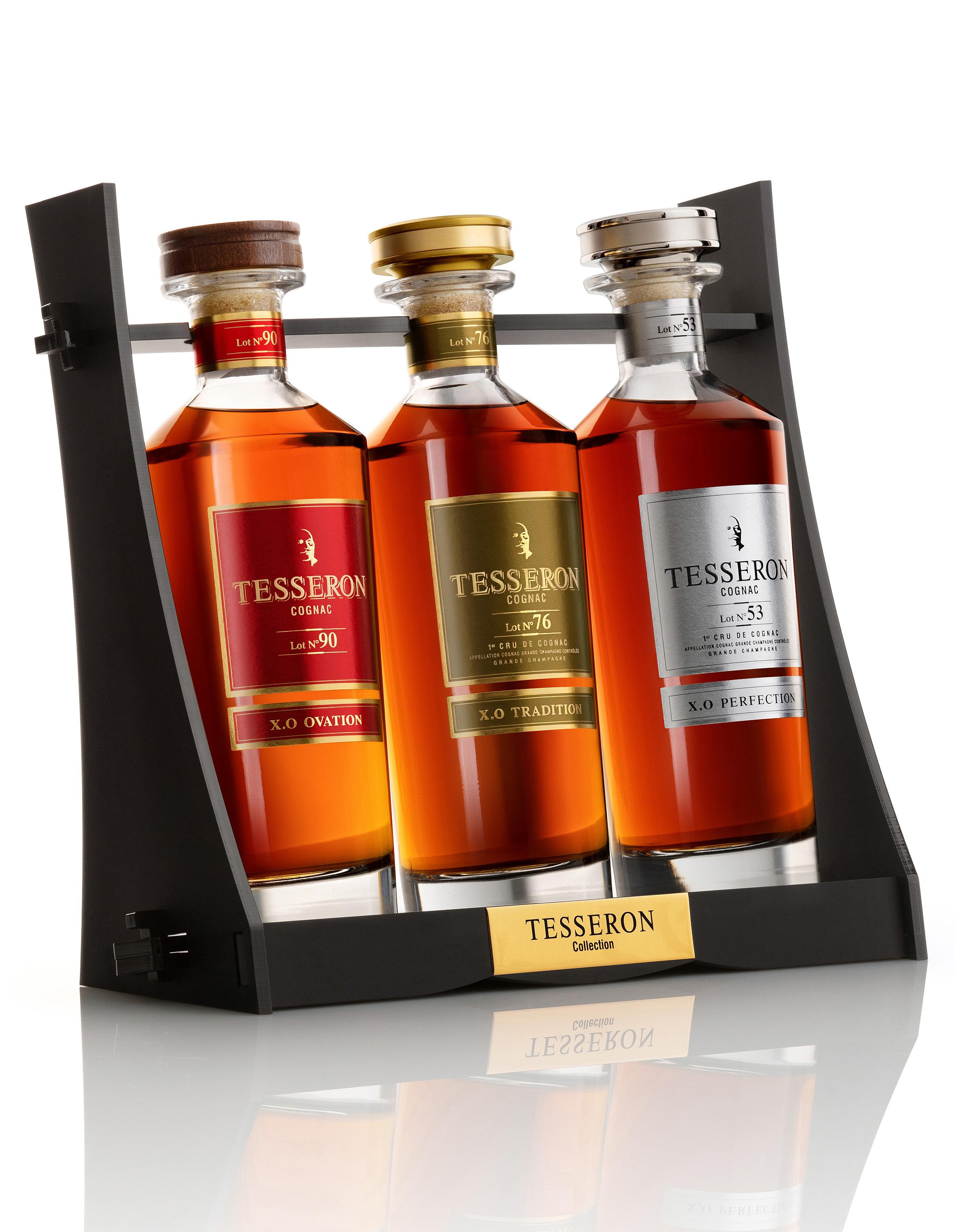
Tesseron Cognac
– the Cognac equivalent of Domaine de la Romanée-Conti
In the autumn of 2002, Alfred Tesseron had had enough. For decades, the family’s cognac had been sold on to the great and established houses, where the distillates played leading roles in exclusive blends without the Tesseron name ever being mentioned. The quality was unquestionable, yet the recognition and true identity were often lost behind the scenes. Eventually, the realization grew that the time had come to create something of their own. Resting in the family’s cellars was already a treasure trove of aged eaux-de-vie, filled with generations of knowledge and patience. Alfred Tesseron therefore decided to break new ground and launch a cognac house under the family name – Tesseron Cognac. It marked the beginning of a journey that would quickly write itself into modern Cognac history. With an uncompromising approach to quality, tradition and ageing, Tesseron created a style where elegance, depth and natural authority walk hand in hand. The rest is history – and a remarkably pleasurable one at that.
BY ANDERS ENQUIST
Tesseron is a small and almost seductively beautiful cognac house, hidden behind a tranquil inner courtyard where the presence of history feels as alive as the scent drifting from the old ageing warehouses. Everything began in 1905, when Abel Tesseron laid the foundations for what would much later evolve into one of Cognac’s most cult-revered names.
From the very beginning, Abel Tesseron had access to significant quantities of old cognac from renowned houses and small distilleries that have long since disappeared from the map. With an almost instinctive sense for quality, he constantly searched for new discoveries while continuing to distil his own cognac and slowly build the family’s reserves of eaux-de-vie. It is a work of patience from which the generations after him are still reaping the rewards today.
Over time, Tesseron established itself as a highly respected supplier of cognac and eau-de-vie to several of the region’s great names, including Delamain. The knowledge and craftsmanship were passed down from generation to generation, and today the house is led by third-generation owner Alfred Tesseron together with his children Mélanie and Noé Tesseron, as well as his nieces Mélanie and Philippine Tesseron. The family spirit still permeates the business and is clearly reflected in the house’s uncompromising commitment to quality and tradition.
Tesseron’s cognacs are primarily built on grapes from Cognac’s two most prestigious areas: Grande Champagne and Petite Champagne. Grande Champagne, with its chalk-rich soils, is considered to produce the region’s most long-lived and noble cognac distillates, while Petite Champagne contributes slightly rounder and more generous structures thanks to its clay- and limestone-dominated soils. Together, they create the classic Fine Champagne character where power, elegance and depth unite in effortless harmony.
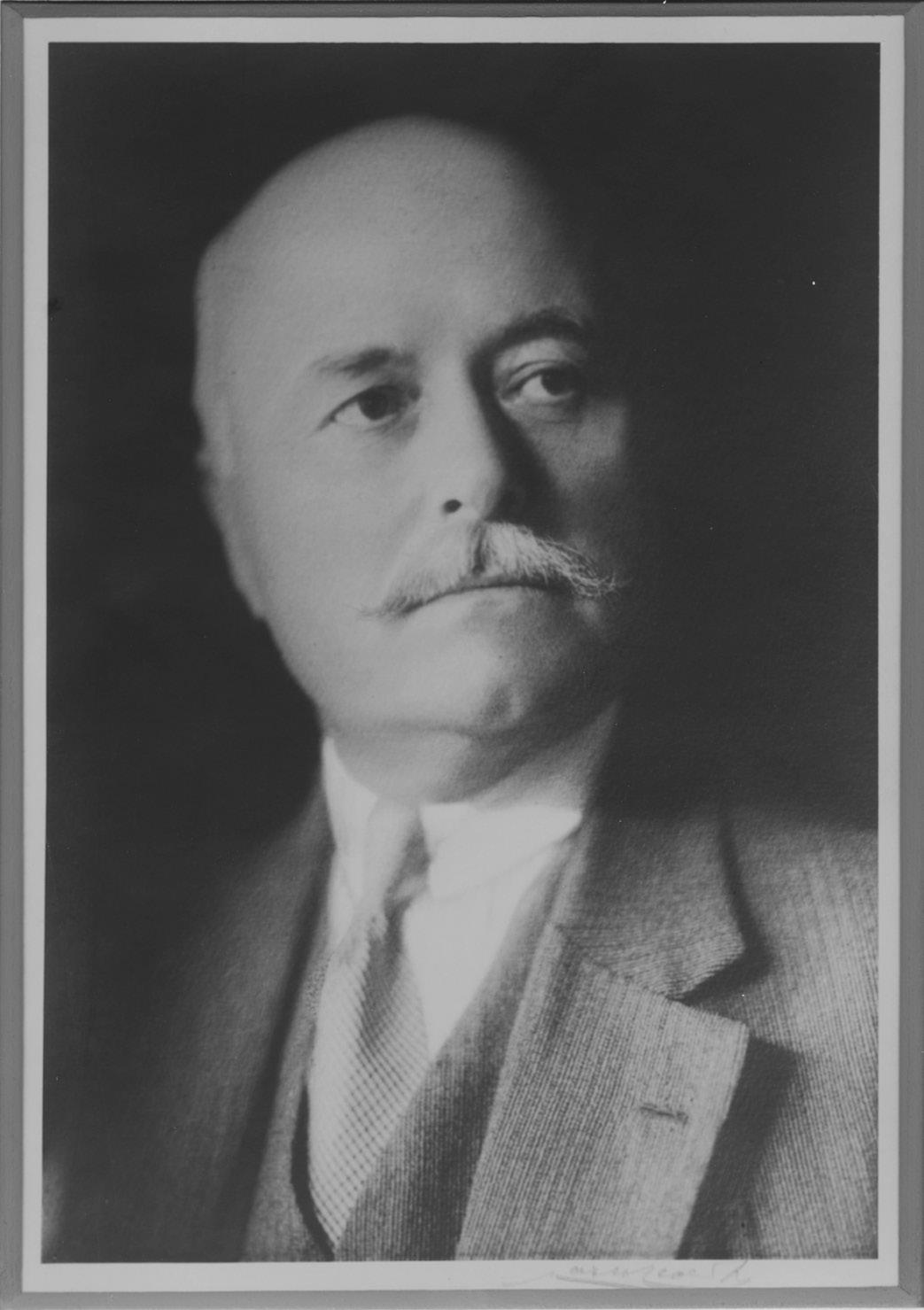
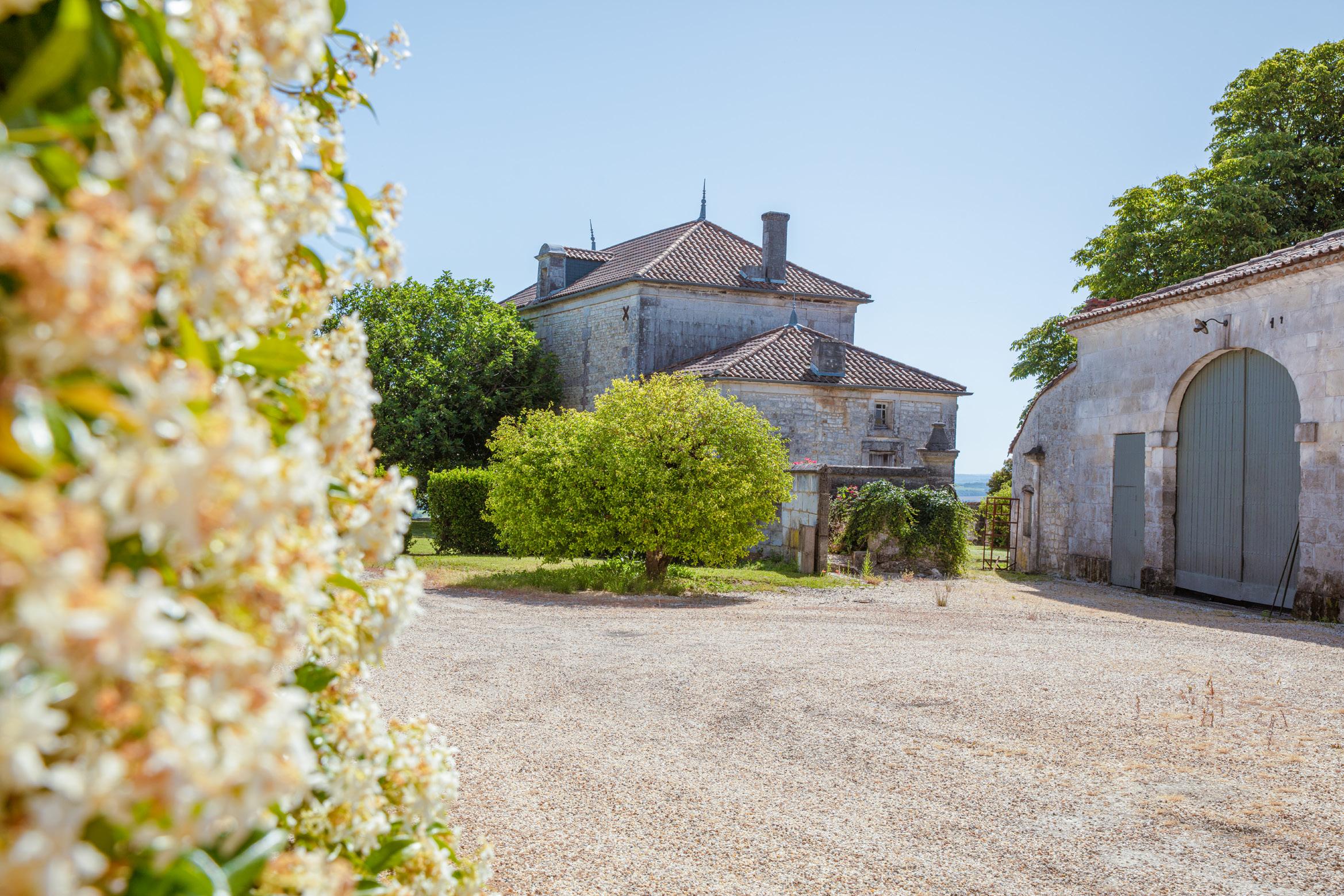
Abel Tesseron – Founder of Tesseron Cognac.
The Courtyard of Tesseron Cognac.
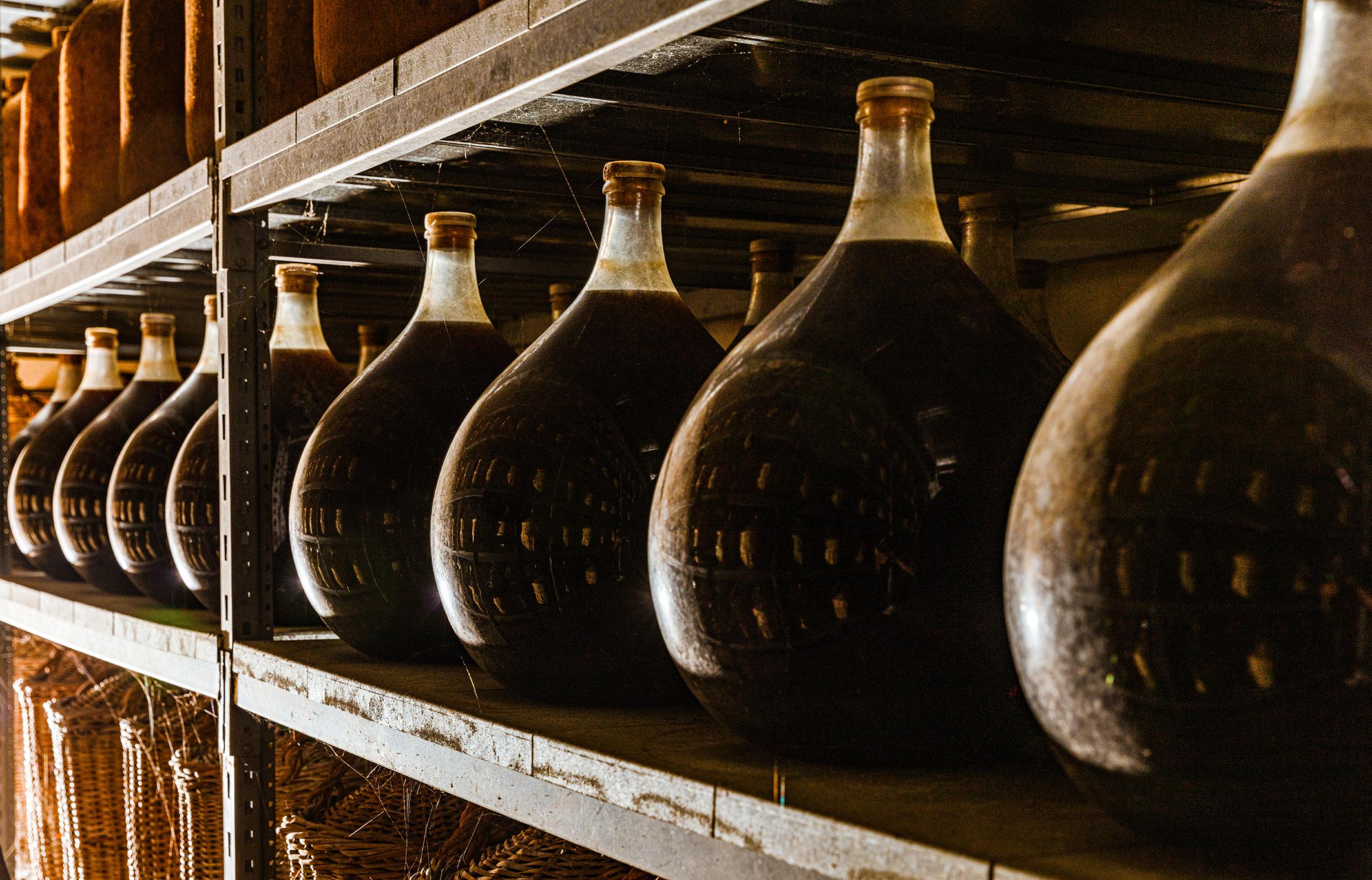
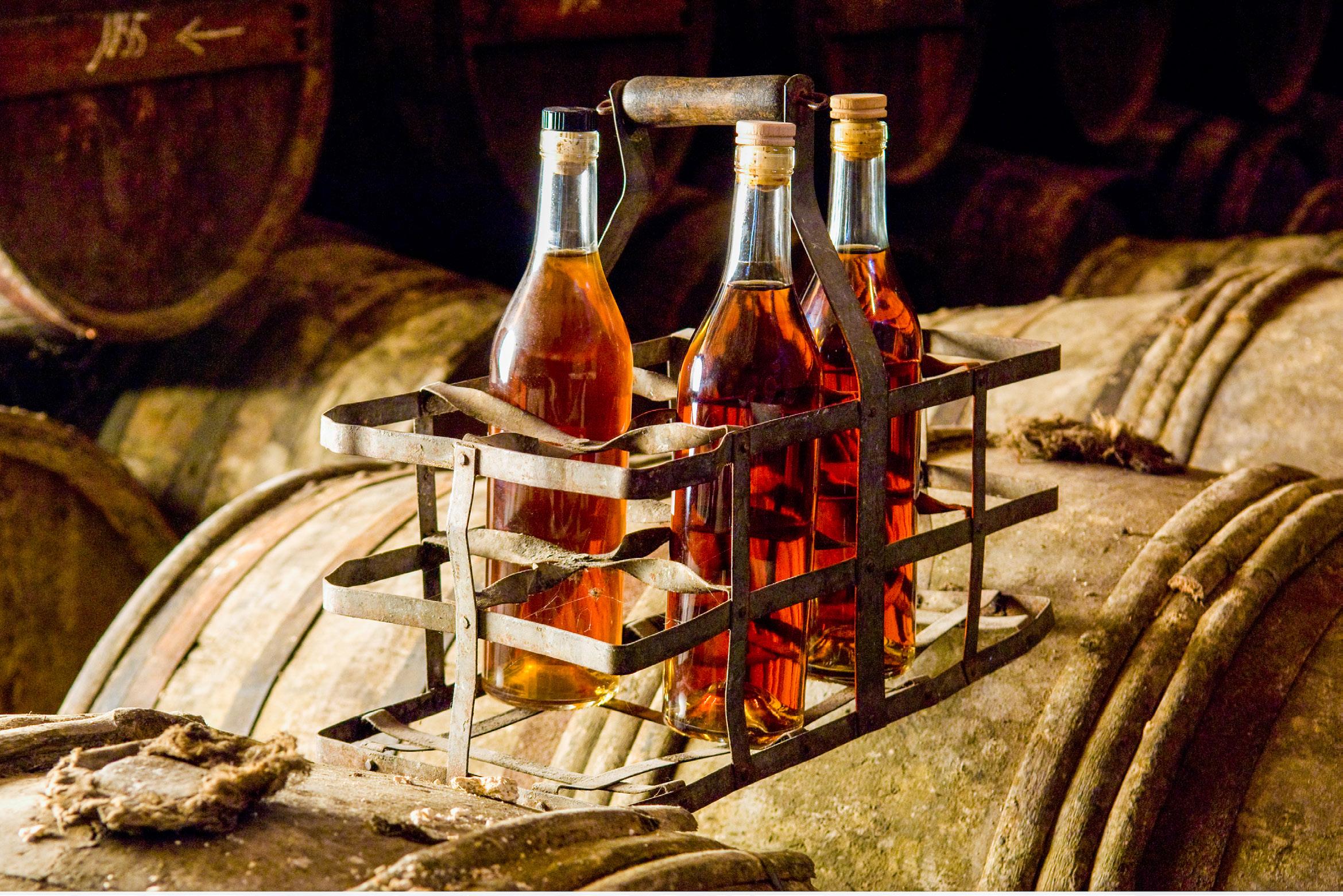
Cellar Details.
Photo: Philippe Roy.
Bottles Resting in the Ageing Cellar.
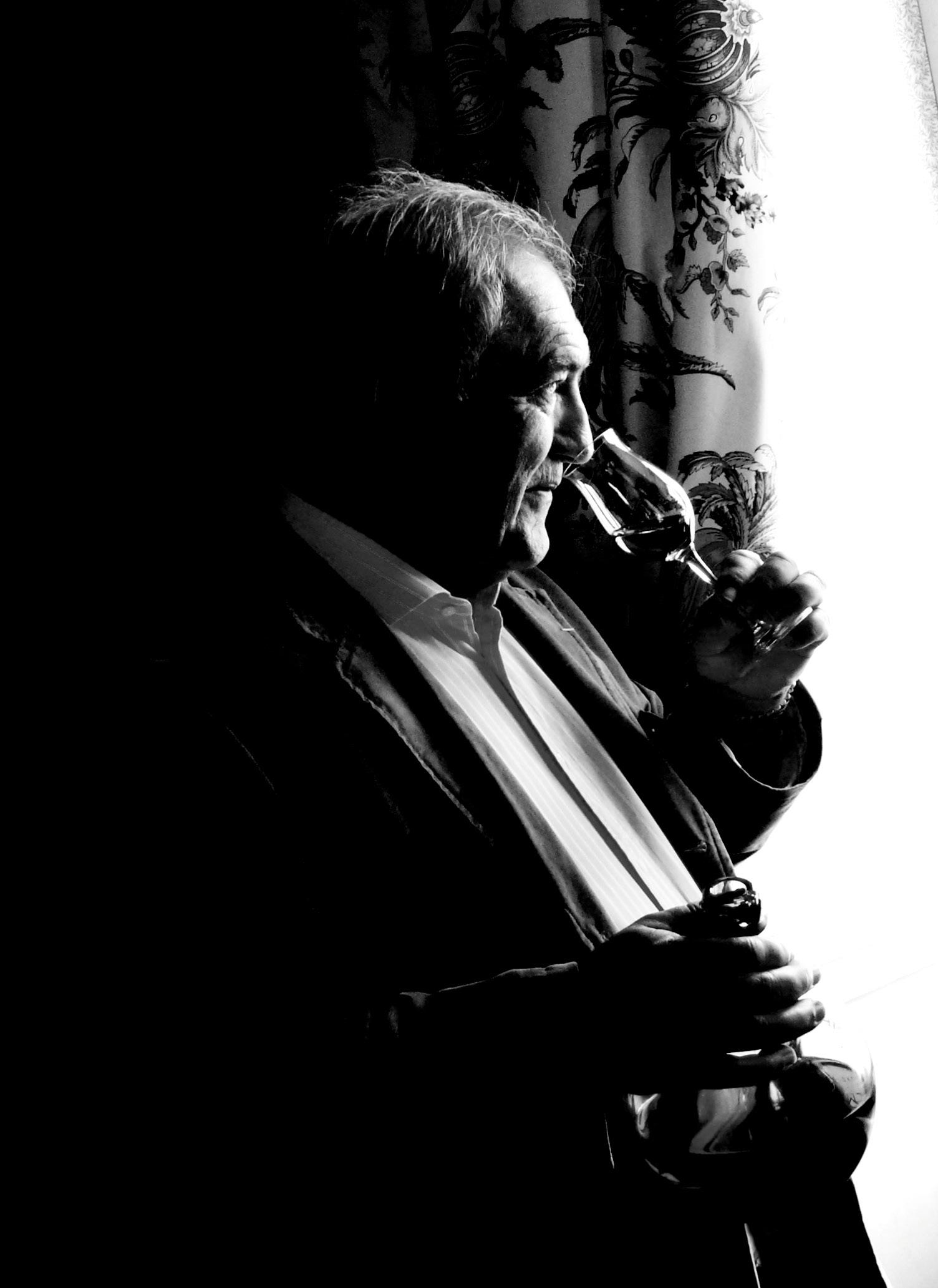
Alfred Tesseron – President of Tesseron Cognac, third-generation Tesseron.
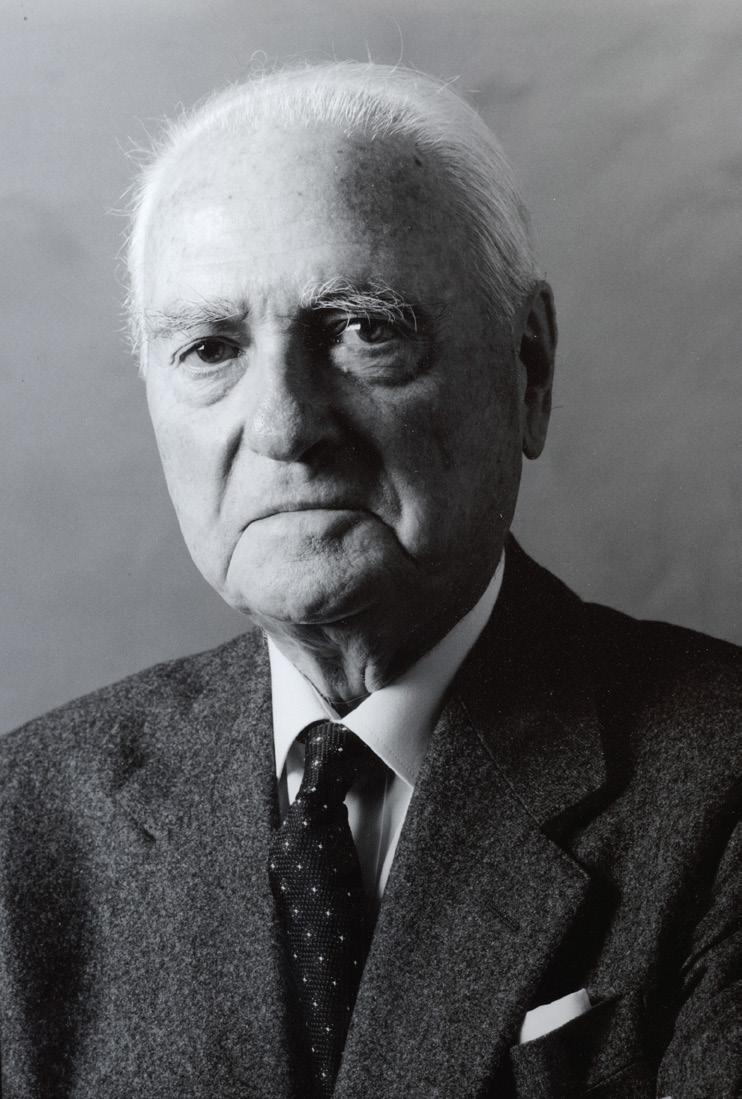
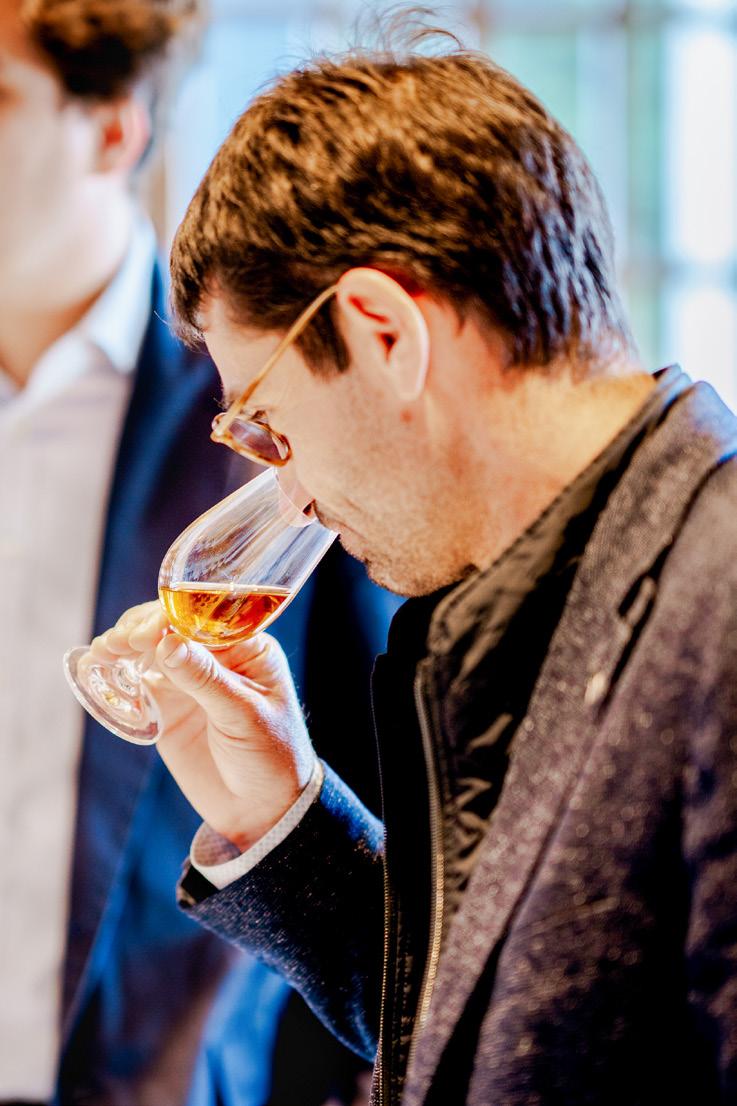
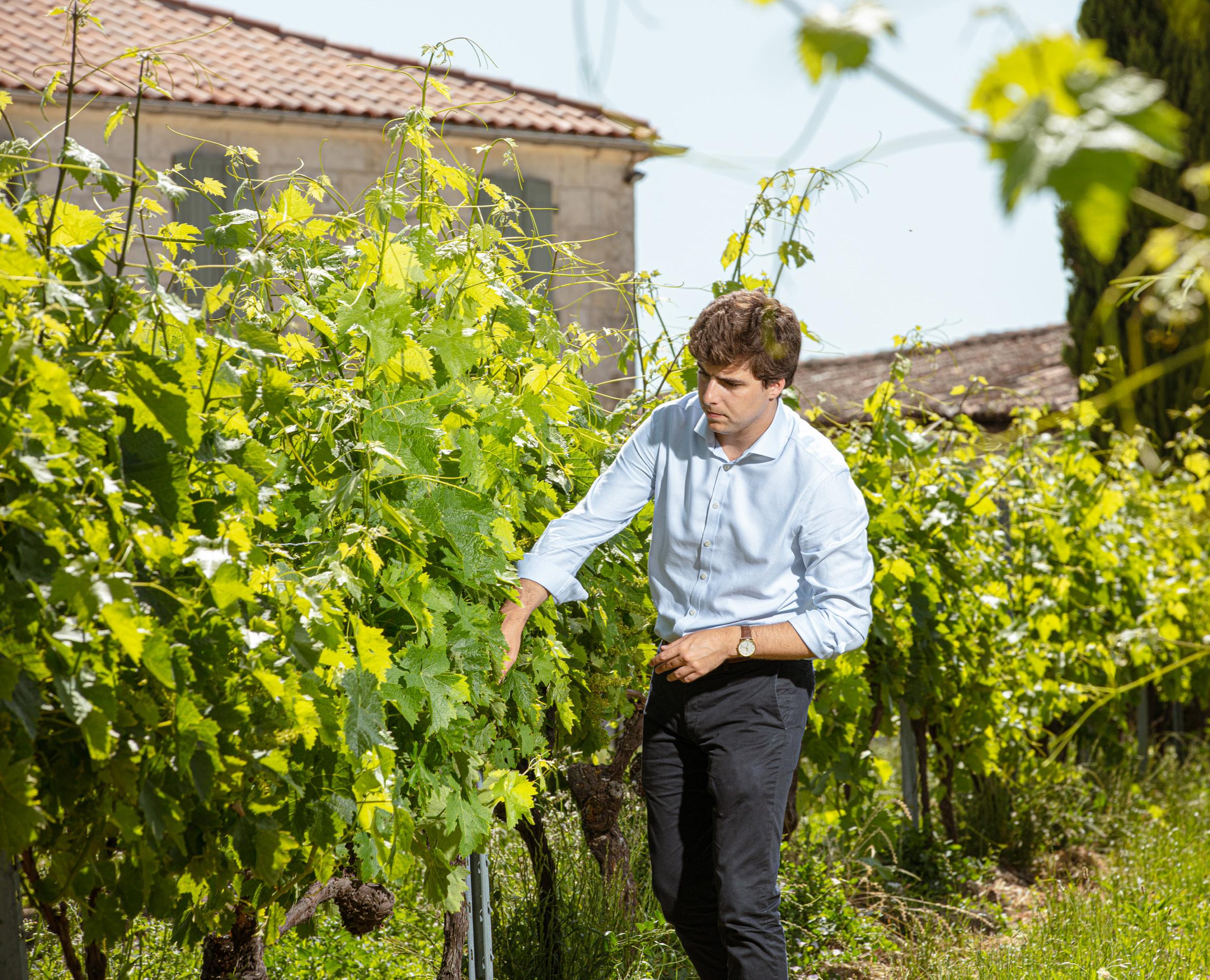
Ken Loach spelade in delar av filmen
Mélanie and Justine Tesseron – the fourth generation of the Tesseron family.
Guy Tesseron – son of Abel Tesseron and father of Alfred and Gérard Tesseron, second-generation Tesseron.
Romain Martial –Cellar Master at Tesseron Cognac.
Noé Tesseron – fourth-generation Tesseron, in the vineyard.
Production
At Tesseron Cognac, a part of Cognac’s original soul still lives on. The house is one of the few that continues to work with the three classic grape varieties: Ugni Blanc, Folle Blanche and Colombard. Ugni Blanc forms the backbone, while the far more difficult-to-cultivate Folle Blanche and Colombard contribute nuances of aromatic finesse, energy and complexity. The latter two produce very small yields and have therefore almost disappeared from the region, yet at Tesseron the tradition is preserved with stubborn precision and profound respect for craftsmanship. The grapes are harvested early in the autumn and vinified into a light, high-acid base wine of around nine percent alcohol – a crucial foundation for creating elegant and age-worthy eaux-de-vie. Distillation takes place slowly and carefully from the end of harvest until the end of March the following year. The cognac is double-distilled over an open flame in traditional copper stills of the Alambic Charentais type, where only the purest and most expressive heart of the distillate is retained for ageing.
Some of the distillates are also fermented together with their lees, adding further depth, structure and aromatic complexity. The result is cognac with both power and elegance – where texture, spice and silky length interact in a style that has made Tesseron a name highly regarded among cognac connoisseurs around the world.
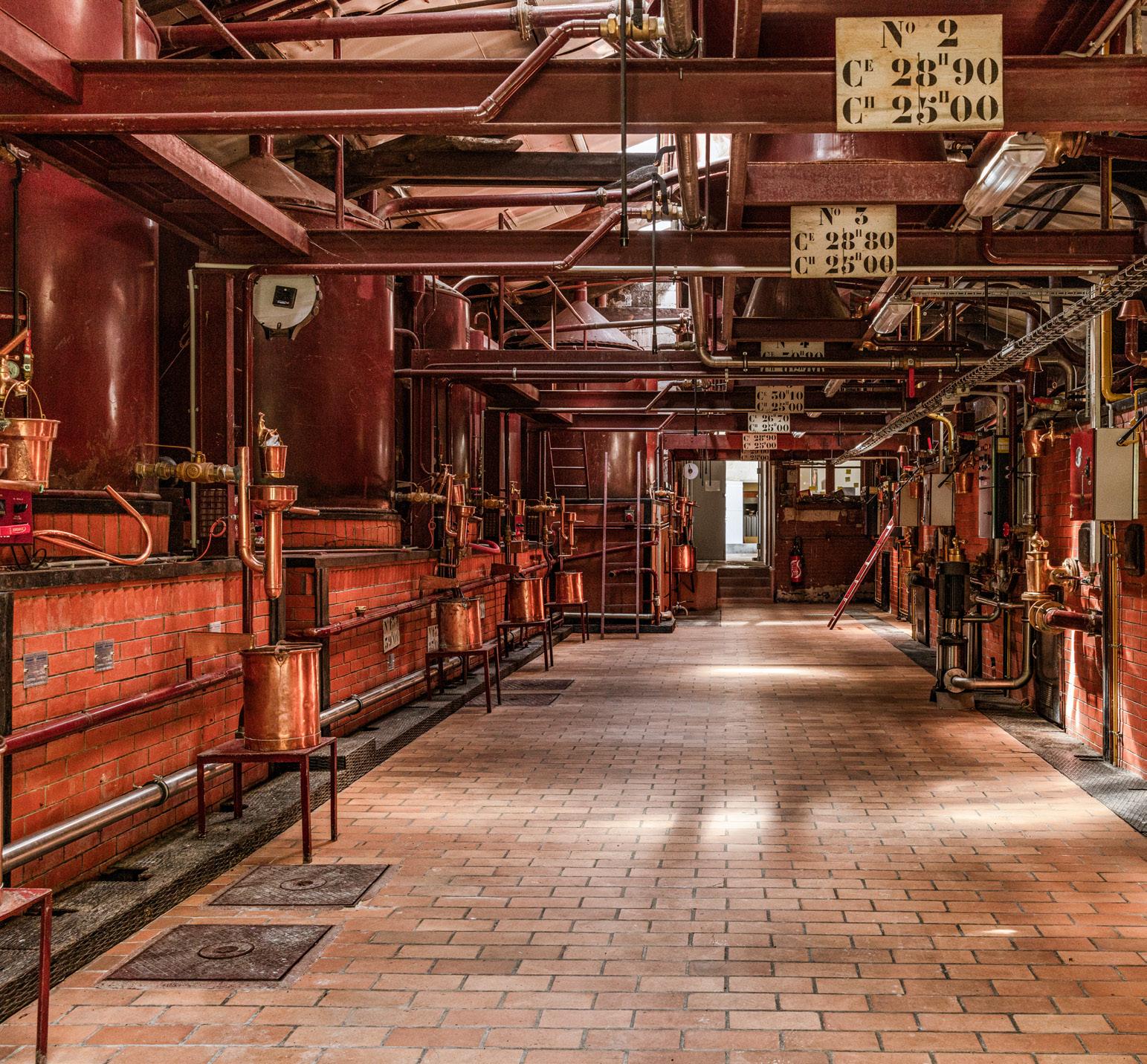
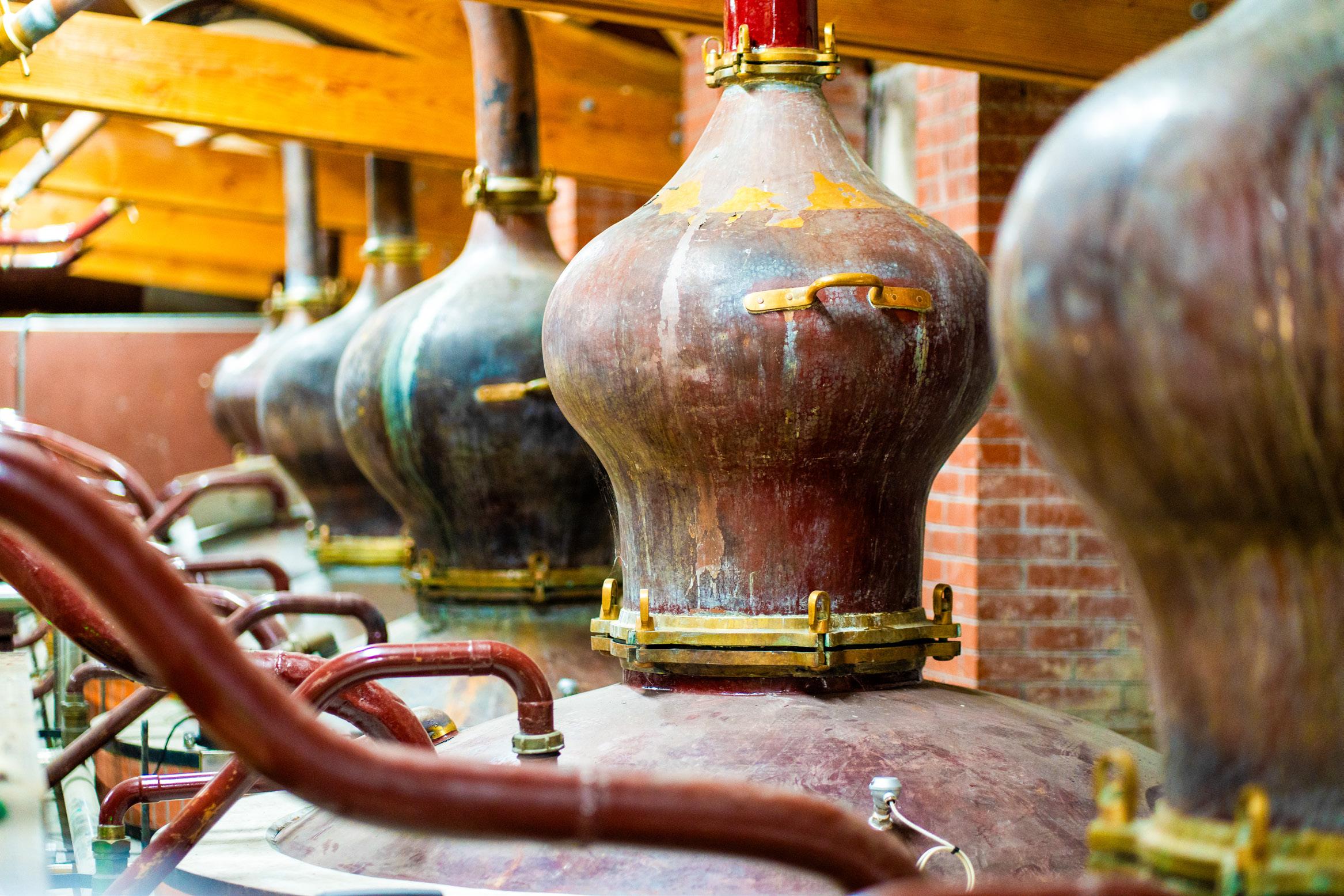
Inside the Distillery at Tesseron Cognac. Photo: Benjamin Juhel.
Details from the Distillery. Photo: Héloïse Allemandou.
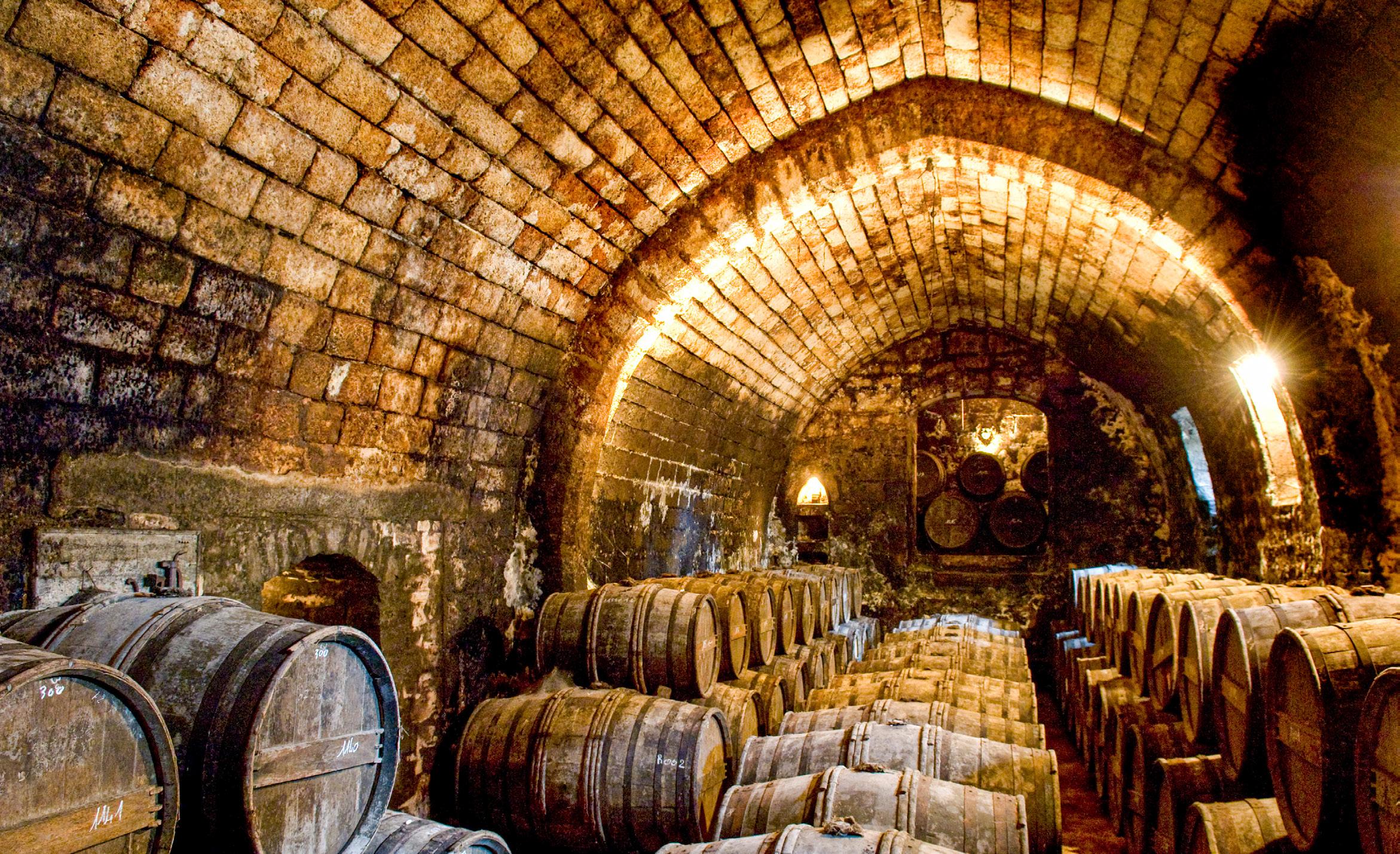
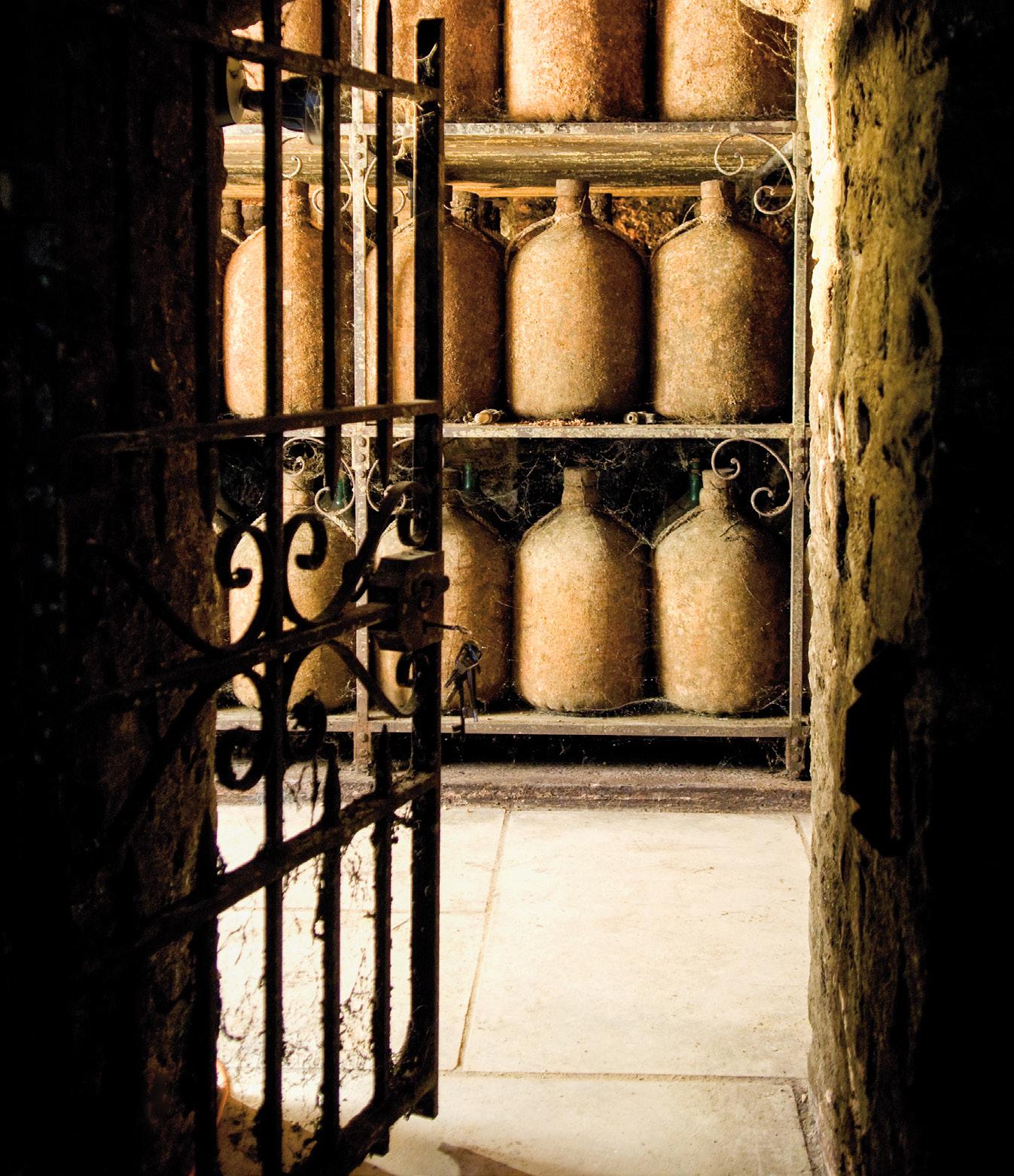
Cellars
At the heart of Tesseron Cognac’s historic estate rest cellar vaults whose history stretches all the way back to the 12th century. These cool and naturally humid cellars, which once served as the sacred crypt of the local church, still provide an almost ideal environment for the house’s young eaux-de-vie. Here, a quiet darkness and timeless silence prevail, where centuries of craftsmanship seem embedded within the very walls.
It is also here that the distillates slowly evolve in casks of classic Limousin oak, whose porous and characterful wood contributes structure, spice and depth. The barrels are crafted with great care by experienced coopers and become a crucial part of the cognac’s long development. In the meeting between living oak, the cool cellar air and the slow movement of time, Tesseron’s cognacs emerge with an aristocratic balance between power and elegance. When maturity has finally reached its ideal point, the house’s maître-dechai takes over, bringing together the various eaux-de-vie into cognacs of exceptional precision and harmony.
Today, Tesseron Cognac is regarded as one of Cognac’s foremost independent producers and has often been described as “the Cognac equivalent of Domaine de la Romanée-Conti” – a comparison that reflects the house’s uncompromising focus on quality, small-scale production and near-mythical exclusivity.
Tesserons historiska k ä llare.
The Cellar.
Tasting Tesseron Cognac
IMPORTER IN SWEDEN: LIVELY WINES
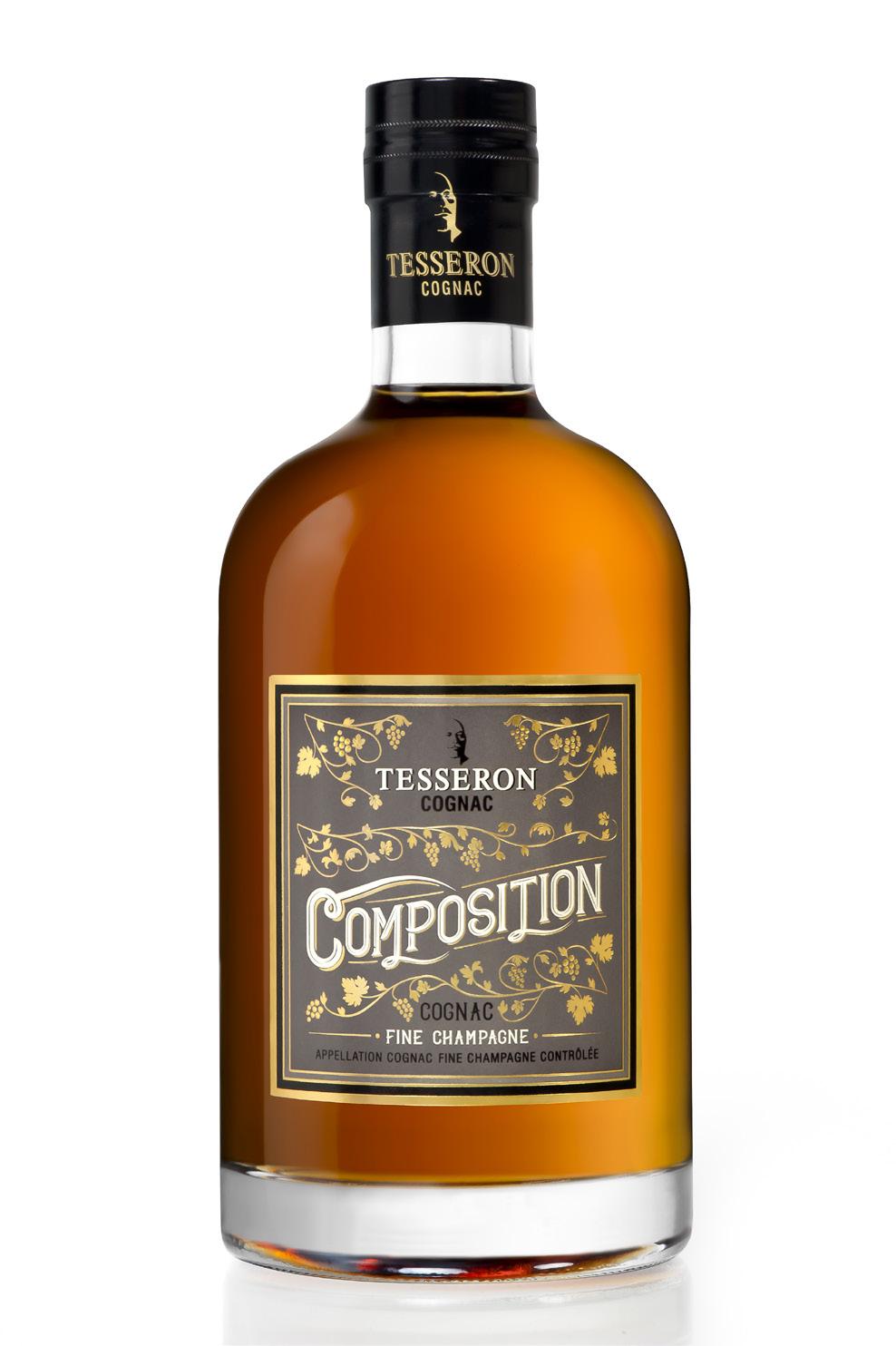
Tesseron Composition VSOP, 40%
700 ML, NOT AVAILABLE, SEK 699
94
Tesseron Cognac Composition is a personal collaboration between Alfred Tesseron and the house’s cellar master Romain Martial, created exclusively from young eaux-de-vie distilled and aged for a minimum of four years in Limousin oak casks. Its origins lie in Grande and Petite Champagne — in other words, Fine Champagne — and it is primarily built on the Ugni Blanc grape. It is also a relatively new addition to the Tesseron portfolio. This is without question a charming and energetically polished gateway into the world of Tesseron, where the oak reveals mature finesse rather than demonstrative power. Composition simultaneously carries the house’s precision and strong sense of origin with effortless elegance. The fruit profile is bright and generously ripe with pleasurable reflections of vanilla-kissed apricot, orange citrus, baked pears and apples. A delicate nuance of nutty chocolate quietly weaves into the whole, while the spice works subtly in the background, creating a pleasing tension and rhythm throughout the experience. Elegant, balanced and irresistibly approachable, this is a cognac of remarkable charm.
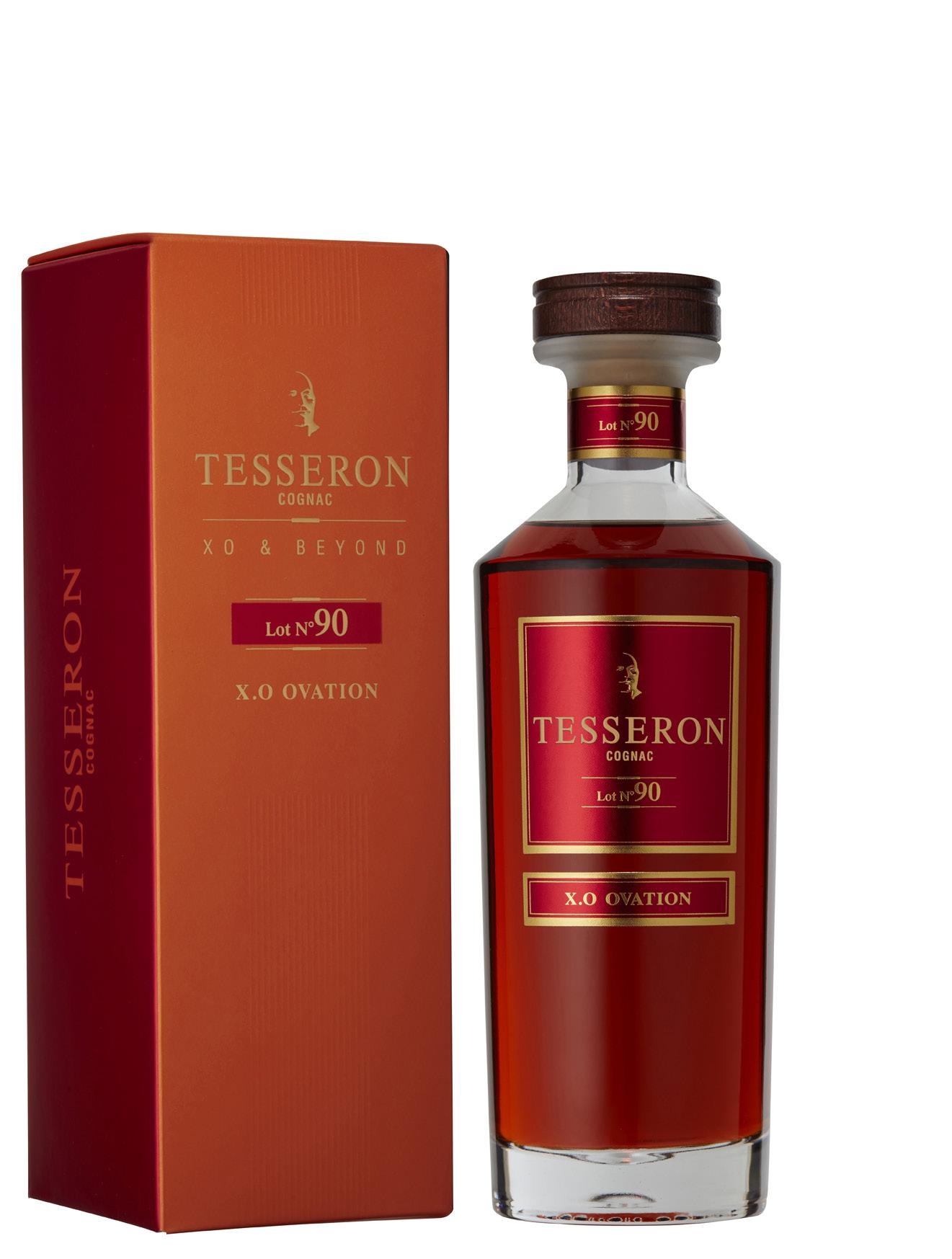
Tesseron Lot Nº90 XO Ovation, 40%
700 ML, PRIVATE IMPORT, SEK 1 259
95
Tesseron Lot N°90 XO Ovation is built on Ugni Blanc from Grande Champagne, Petite Champagne and Fins Bois, and has rested for more than ten years in Limousin oak casks, where youthful energy has gradually been dressed in ever deeper and more stoic maturity. Here, vitality and complexity meet in an expression that moves through the glass with effortless elegance.
Gentle nuances of vanilla, nuts and dark chocolate envelop the fruit core of baked pears, apples, apricot and ripe stone fruits, while the spice slowly builds structure and resonance. It is balanced, accessible and nobly composed, with silk-polished tannins and a finish that lingers with velvety length and calm, aristocratic depth.
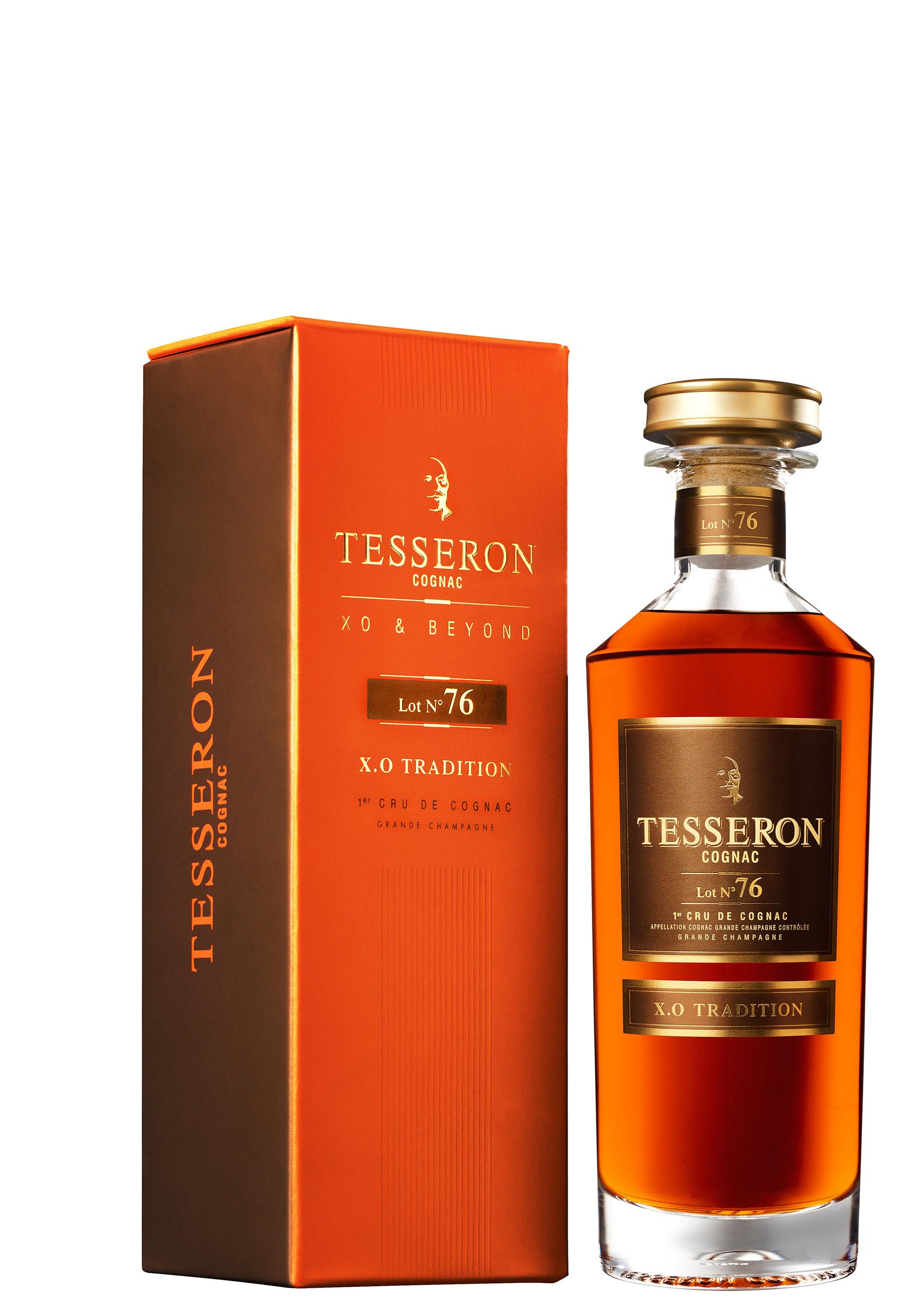
Tesseron Lot Nº76 XO Tradition, 40%
700 ML, PRIVATE IMPORT, SEK 1 998
96+ Lot n°76 XO Tradition is a blend of the house’s reserves from Grande Champagne, where the Ugni Blanc fruit has matured for more than a generation — up to 30 years — in old Limousin oak casks. And as always with Tesseron, everything revolves around aristocratic maturity where elegance consistently takes precedence over weight.
The remarkably graceful foundation — at once vinous and viscous — possesses a richness and exclusive oak spice that fills out its supple movements. The caramelisation is handled with exceptional sensitivity, lending refined sweetness to the developed and floral fruit notes of dried fig, cherry, apricot, orange and peach. A beautiful nuttiness emerges, accompanied by a subtle hint of marzipan.
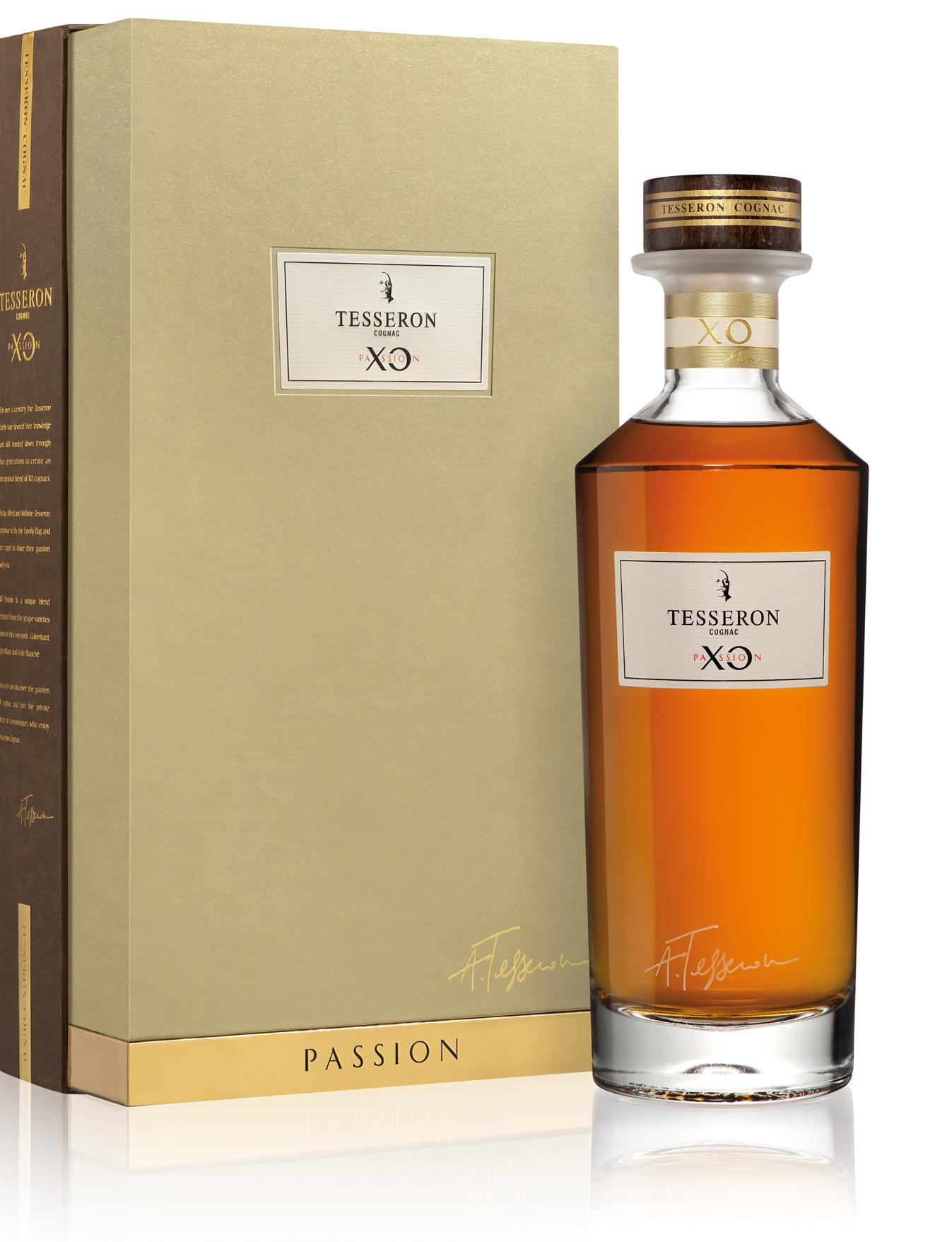
Tesseron Passion XO, 40%
700 ML, PRIVATE IMPORT, SEK 2 239
96 Tesseron Cognac XO Passion is a unique blend created exclusively from Ugni Blanc and built on eaux-de-vie from Grande Champagne, Petite Champagne and Fins Bois. Around thirty different distillates have been selected, and after more than ten years in Limousin oak, the whole has found its aristocratic balance in bottle.
However sophisticated and harmonious the cognac appears, there is simultaneously an almost — we write almost — fiery oak spice that gives the glossy elegance both nerve and subtle friction. Yet the harmony is never disturbed. The floral energy remains untouchable, while the vanilla- and chocolate-caressed fruit unfolds in sensual layers of dried fruit, all held together by a wonderfully provocative precision between power, elegance and mature intensity.
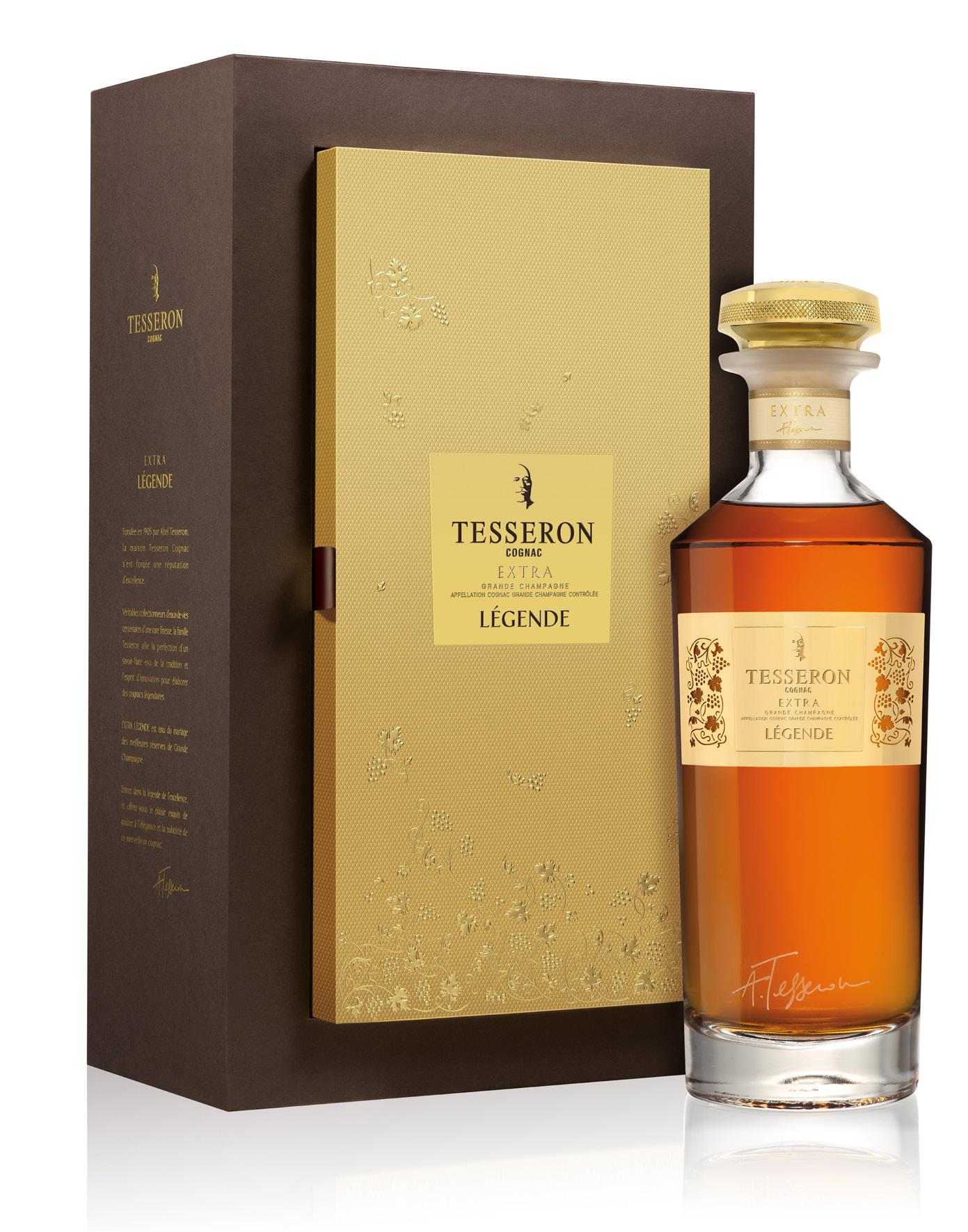
Tesseron Cognac Extra Légende, 40%
700 ML, PRIVATE IMPORT, SEK 3 779 97 Extra Légende is built from a marriage of the house’s finest reserves from Grande Champagne. Based on Ugni Blanc and composed of around fifty carefully selected eaux-de-vie, the cognac has rested in cask for longer than a generation (30–50 years) in cellars with varying humidity levels. Time allows every nuance to fall into place with sublime precision.
Dried apricot, peach, orange, dark berries and baked apples wrapped in caramelised tones merge with noble spices in a deep and sensual interplay. Roasted nuts and dark chocolate unfold in the background, while a whisper of tobacco lends an aromatic and contemplative dimension. The texture is unmistakably Tesseron: weightless and velvet-draped, yet anchored by a deep, noble warmth and friction that fades into harmonious resonance.
Tesseron Lot Nº53 XO Perfection, 40%
700 ML, PRIVATE IMPORT, SEK 3 999 97+
Lot n°53 XO Perfection is built on a blend of Ugni Blanc and Colombard from some of the house’s most sublime Grande Champagne reserves. After 50–60 years in the cellar, time has shaped a fine-lined acidity that lends the expression a noble nerve. Subtle mineral nuances and peppery spice place everything on the threshold between monumental maturity and aristocratic precision. The fruit carries elegant citrus notes woven together with layers of plum, fig, dark chocolate, precious wood, tobacco and dried fruit. A lightly oxidative nobility and gently caramelised tones bring further depth and dimension to the whole. The texture is viscous and creamy, yet simultaneously defined by subtle sharpness and precision. The finish is long, sophisticated and quietly magnificent. It is a cognac that whispers its greatness with complete natural authority.
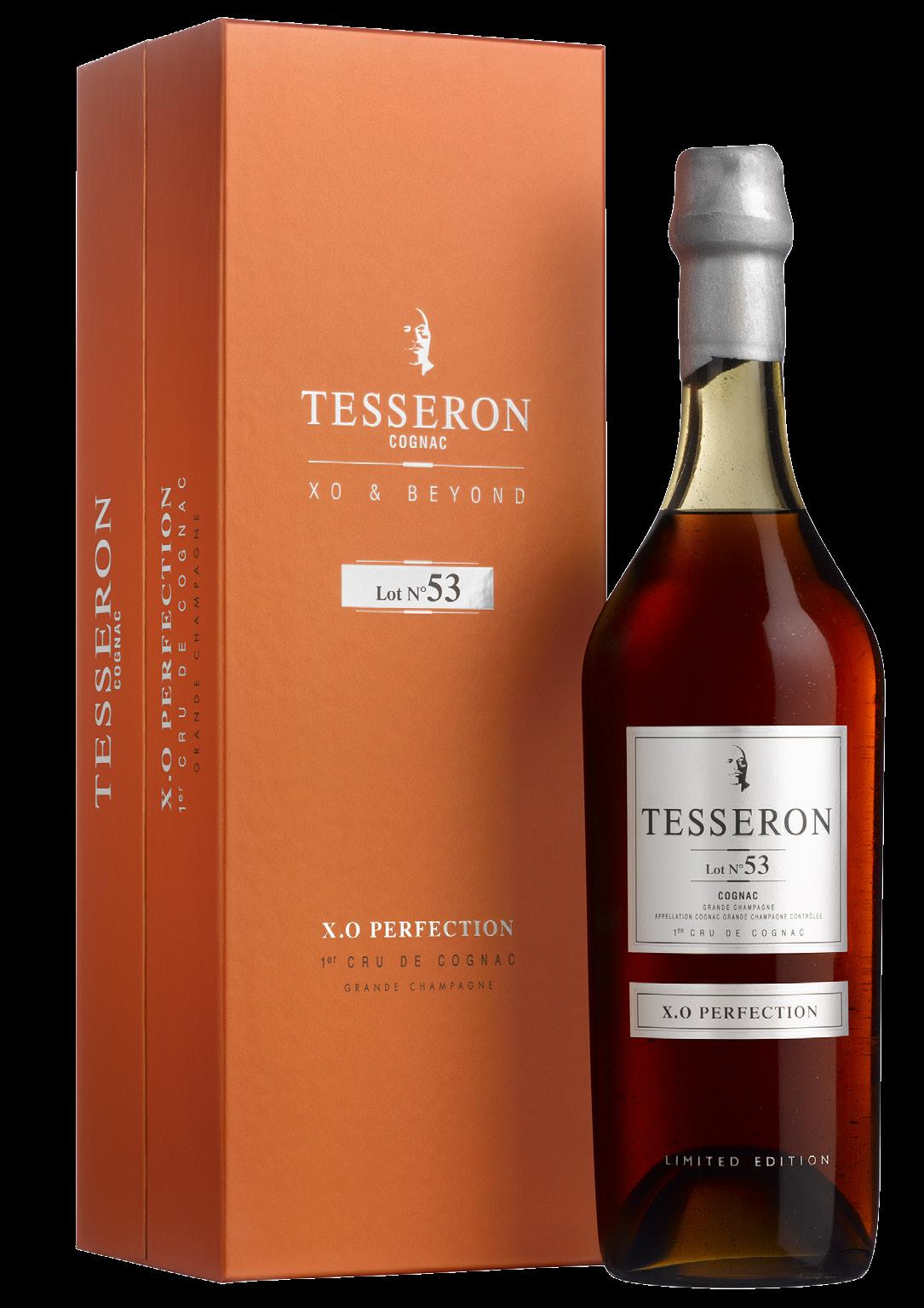
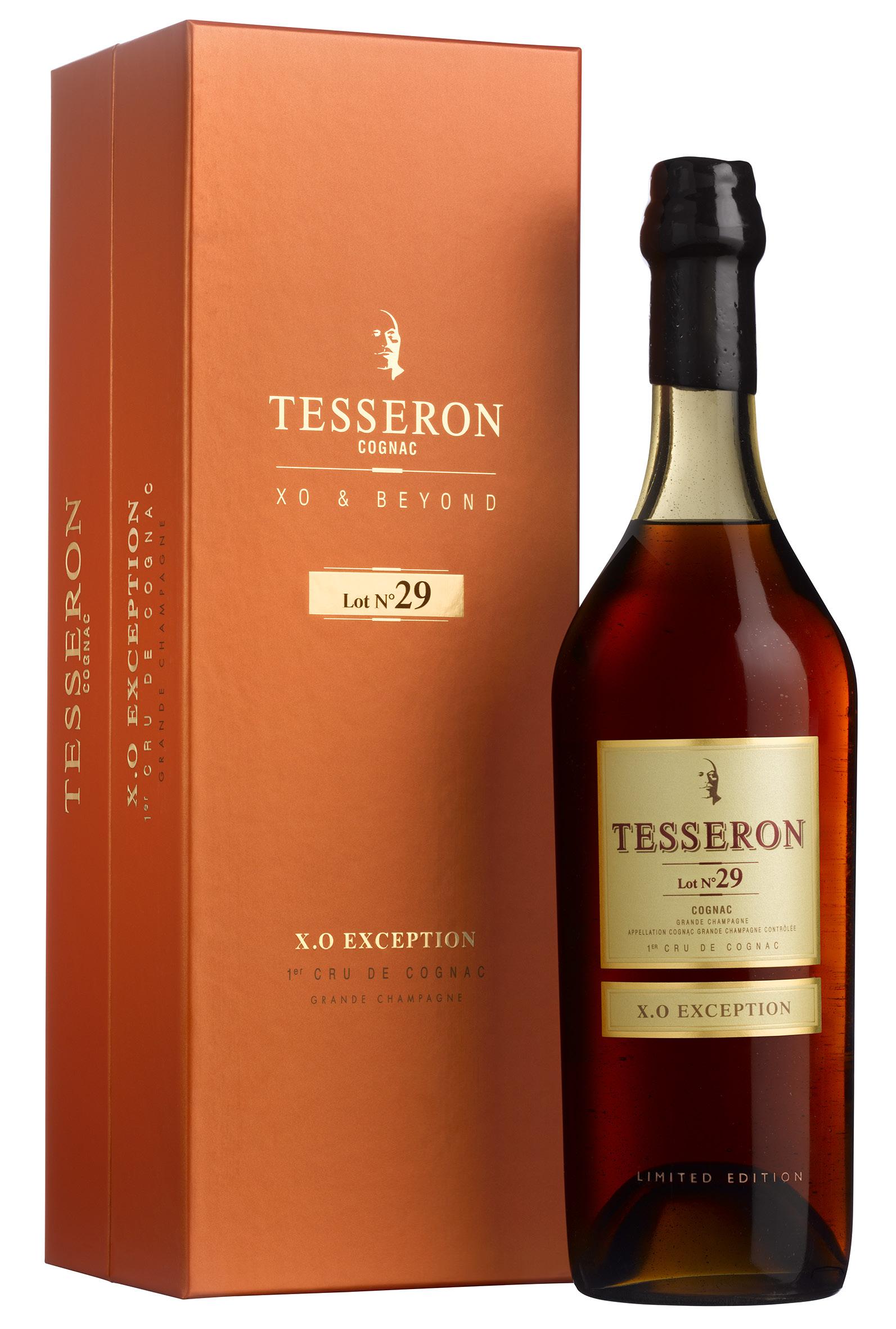
Tesseron Extrême Rare Cognac, 40%
NOT AVAILABLE, ESTIMATED MARKET PRICE SEK 60 000-10 000 EUROS FOR A MAGNUM BOTTLE.
100Tesseron Extrême is created from Abel Tesseron’s private collection and represents the house’s oldest and most exclusive reserves, with certain eaux-de-vie dating back to the 1850s. It is a distillate shaped by generations of patience, tradition and almost reverential craftsmanship. It is the family’s history in liquid form.
After around 90 years in Limousin oak, the cognac is transferred into glass demijohns — so-called bonbonnes — where it continues to rest in the house’s mythical “Paradis”, the silent cellar that once formed the crypt of a monastic abbey. Here, time stands still. The cognac is protected from further oak influence and instead allowed to purify itself, deepen and slowly perfect its own essence. Encountering Extrême is naturally a historic experience, yet beyond that vertigo emerges a magnificent cognac with an aristocratic and stoic calm. Despite its age, a strange pulse of life runs through the whole, while the aromas unfold with depth and ethereal precision in layers of dried fruit, walnut, leather, precious wood, tobacco leaf and cocoa. The texture is silky and almost weightless, while the momentum seems to have no endpoint. It is as much an echo from another era as a reminder that certain creations truly defy impermanence.
Tesseron Lot Nº29 XO Exception, 40%
700 ML, 8676201, SEK 7 299
Lot n°29 Exception is a rare Grande Champagne blend created from some of the family’s oldest and most exclusive reserves. Here, Ugni Blanc, Folle Blanche and Colombard unite in an expression that has rested for 75–90 years in Limousin oak, with a small part of the final blend additionally sourced from the house’s oldest cognac, preserved in glass demijohns.
We find ourselves in Cognac’s highest celestial sphere. The friction is as elegant as it is aristocratically polished, and the expression moves with sublime old-cognac character, where the patina of time has been transformed into pure poetry. The complexity is superb, the balance close to complete — this is Tesseron perfection in its most quietly monumental form.
Dark chocolate with fine nuttiness and vanilla-kissed nuances intertwine with noble tobacco notes of humidor, cigar, mocha and leather. The fruit is honeyed, nutty and candied with dried figs, plums, apples and apricot in the depths. The spice is embracing, the oak provides a silky texture and the tannins are wonderfully noble. The finish is long and sophisticated.
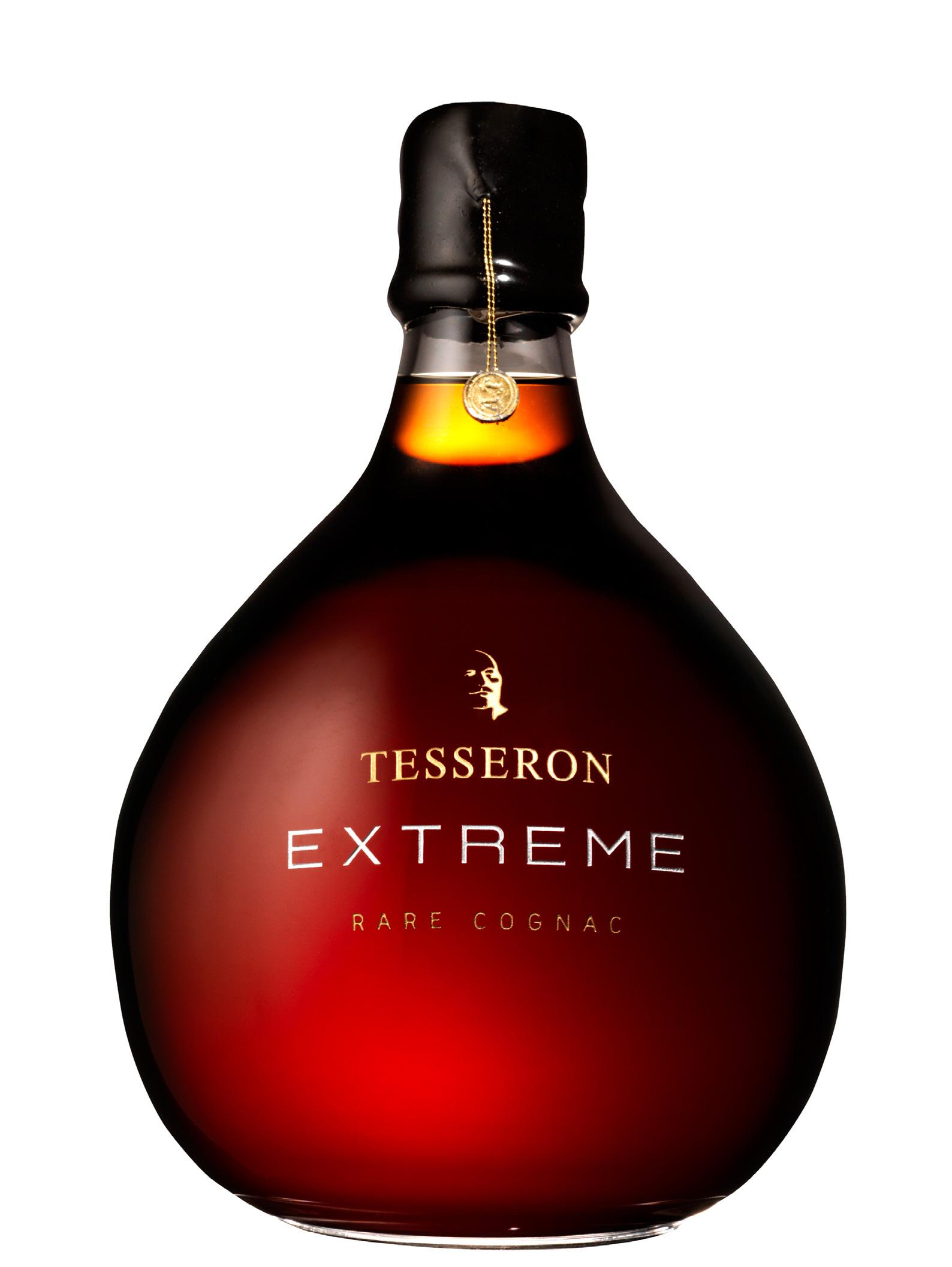
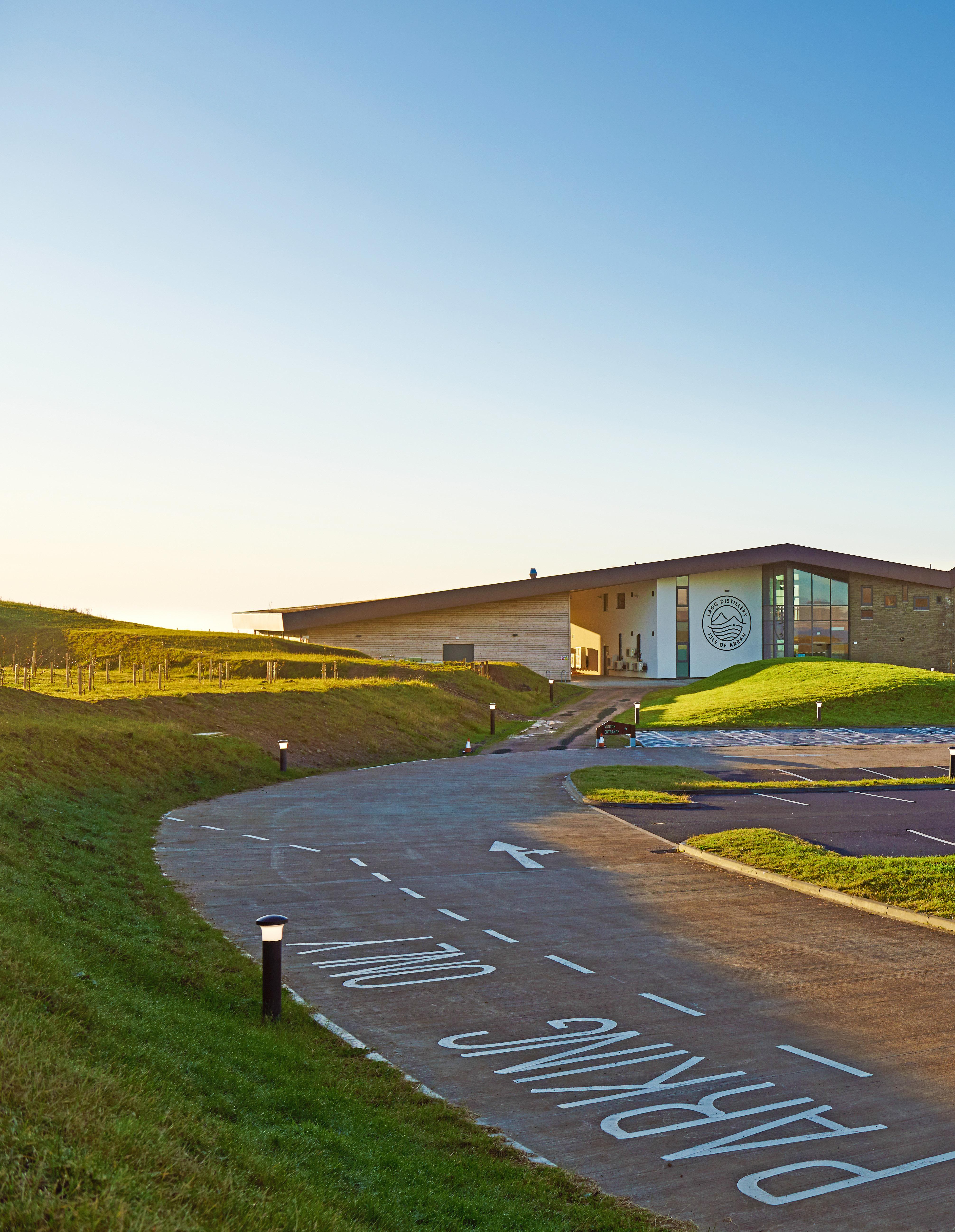
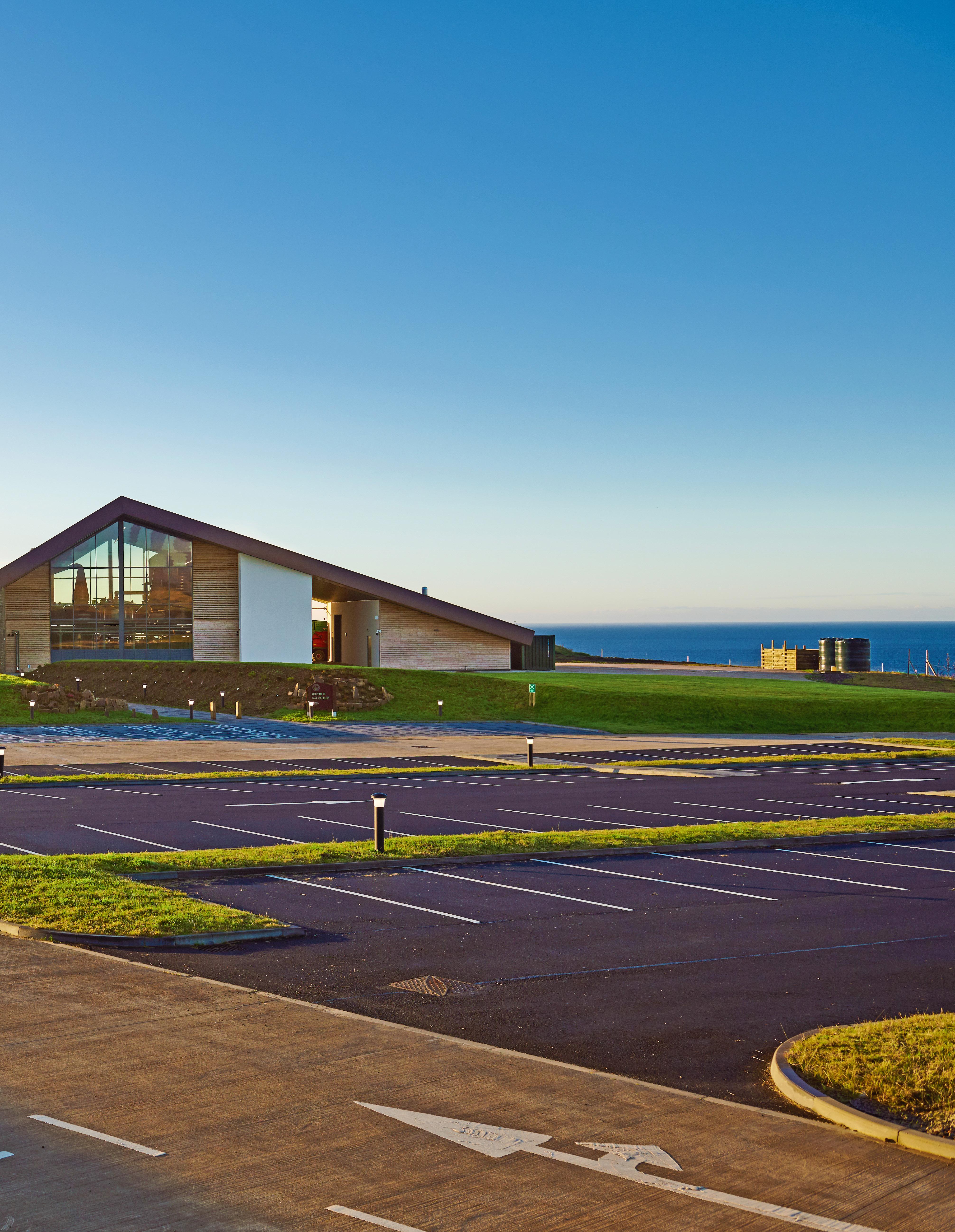
A Stylistic Study in Whisky Lagg Distillery
Lagg Distillery opened its doors in 2019 and is the sister distillery to Lochranza Distillery, with a complete focus on heavily peated whisky. The whisky takes its name from the village of Corriecravie, located just northwest of Lagg, where illicit distillation of the island’s “holy” spirit once took place. Here, we have tasted a number of cask samples and bottlings not yet launched in Sweden, which together provide a broader picture of the impressive quality and distinct identity that has already emerged within the walls of the distillery.
BY ANDERS ENQUIST
At the very southern tip of Arran’s dramatic coastline, where sea winds sweep in from the Firth of Clyde and the horizon opens toward the Hebrides, Lagg Distillery rests with an unmistakable authority in the landscape. The distillery’s architecture draws inspiration from the mythical rocky isle of Ailsa Craig, standing watch offshore like an ancient granite guardian, and on clear days both the Kintyre Peninsula, Campbeltown and Jura’s iconic mountain ridges can be glimpsed in the distance.
It is also a place where whisky always seems to have been present. Arran’s southern side was once a centre for illicit distillation, where smoke from the stills rose between the hills long before the law managed to catch up with reality. One of the most significant distilleries was in fact called Lagg and stood more or less where today’s facility has now been built. But history had other plans. When the harsh realities of the 19th century took hold, the stills gradually fell silent, and in 1837 Lagg too — as the island’s final outpost — descended into the near 160-year slumber of silence.
IT TOOK A VISIONARY OF HAROLD CURRIE’S calibre to awaken Arran’s whisky heart once again. The former Chivas Brothers director and D-Day veteran refused to let the dream die and founded Lochranza Distillery in 1995, marking the beginning of a new era for the island’s whisky production. Success came quickly, and after barely two decades it became clear that demand had grown far beyond the original capacity. The solution was both natural and bold: a new distillery on Arran’s southern tip where the smoke would once again be allowed to speak.
When Lagg opened its doors in March 2019, the focus turned toward powerful peated whisky with a clear identity and coastal nerve. Under the leadership of distillery manager Graham Omand, whisky with high ppm levels is produced here, where sooty peat smoke, oily maltiness and maritime salinity interact in an expression that clearly differs from Lochranza’s elegantly fruity style. The first mature whisky was released in 2022 in three batches of approximately 10,000 bottles each, matured in bourbon, sherry and red wine casks. Capacity today stands at around 750,000 litres per year, and Lagg has quickly established itself as one of Scotland’s most exciting young distilleries.
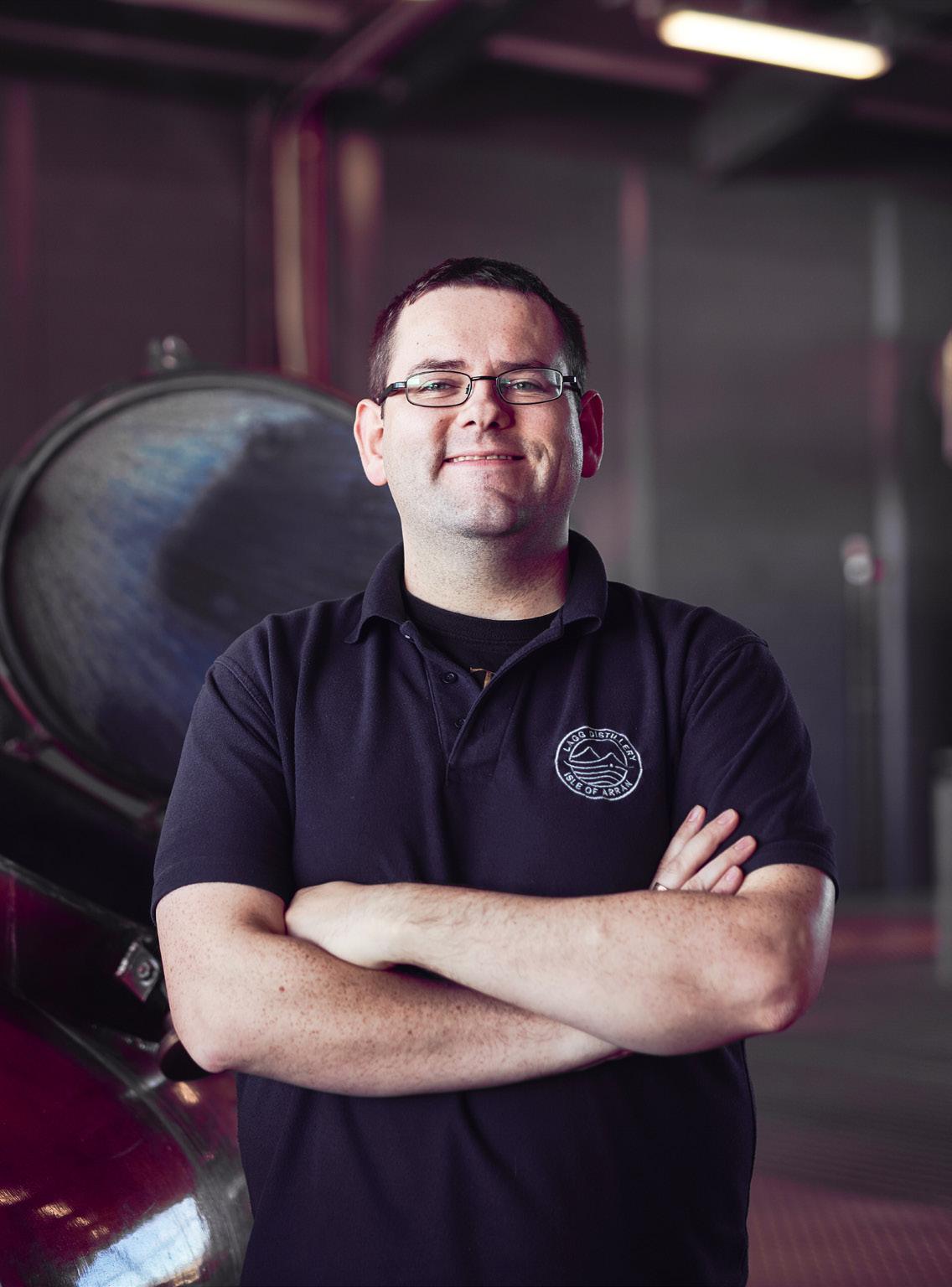
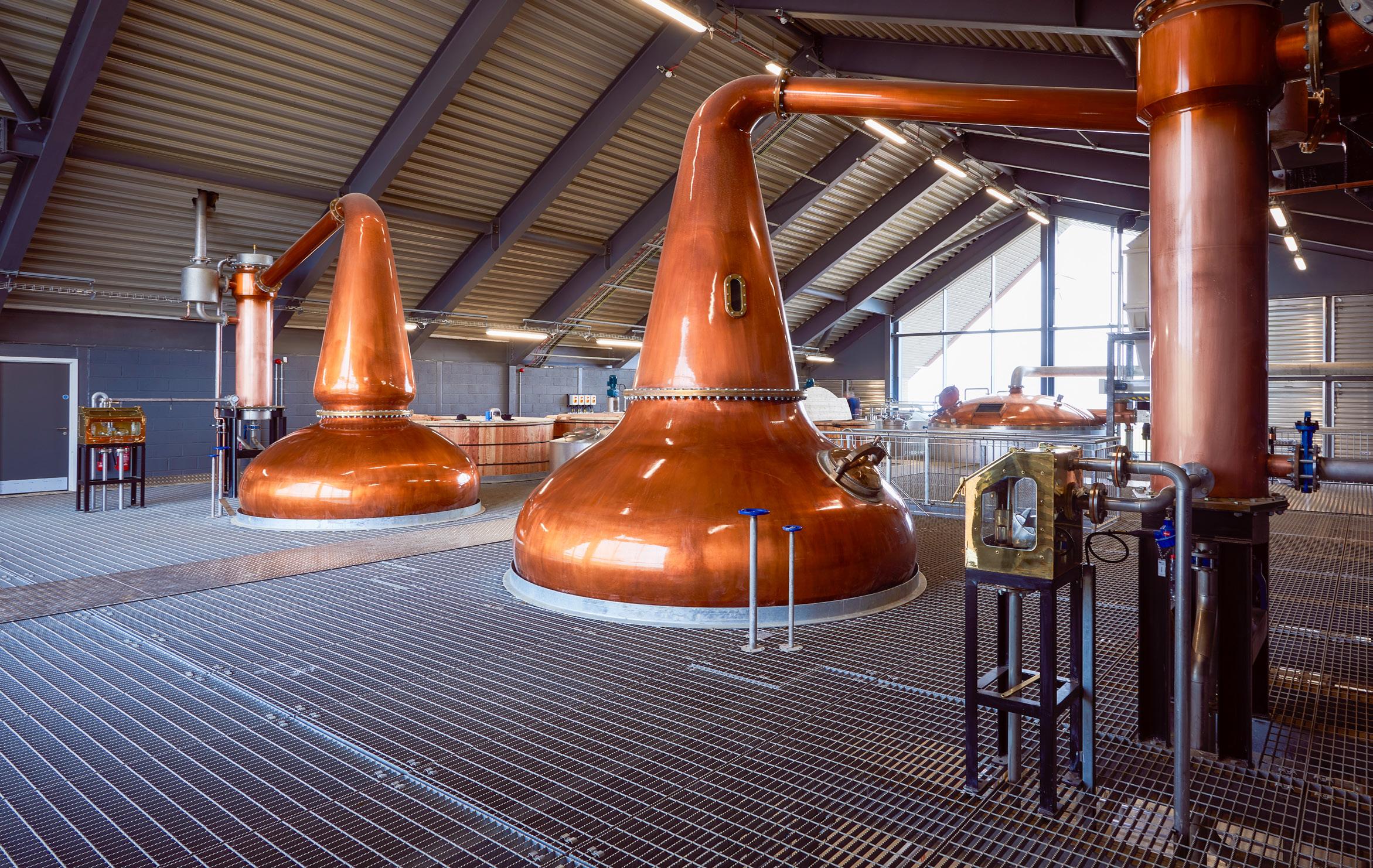
Graham Omand, Distillery Manager.
Inside the Distillery at Lagg Distillery.
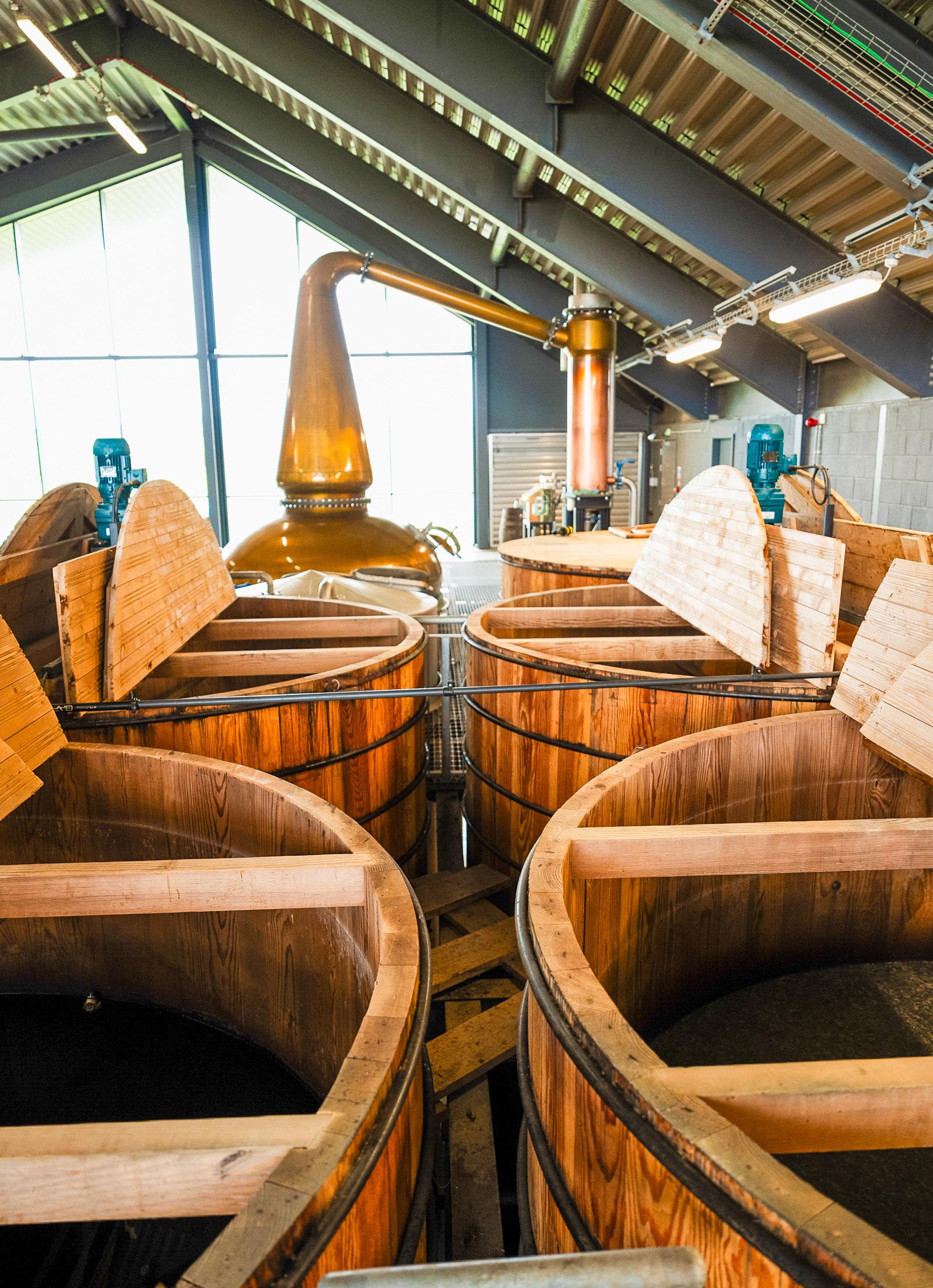
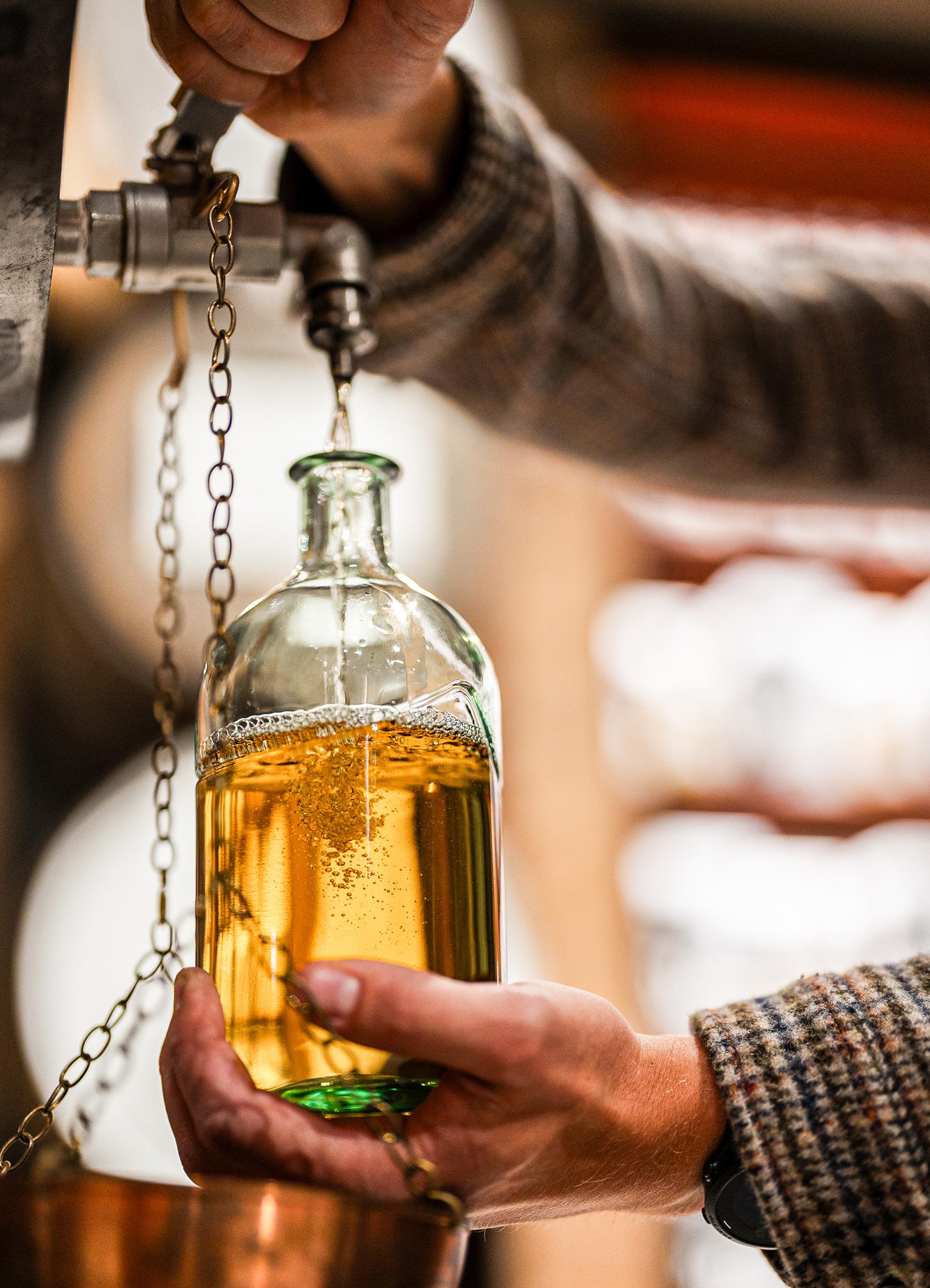
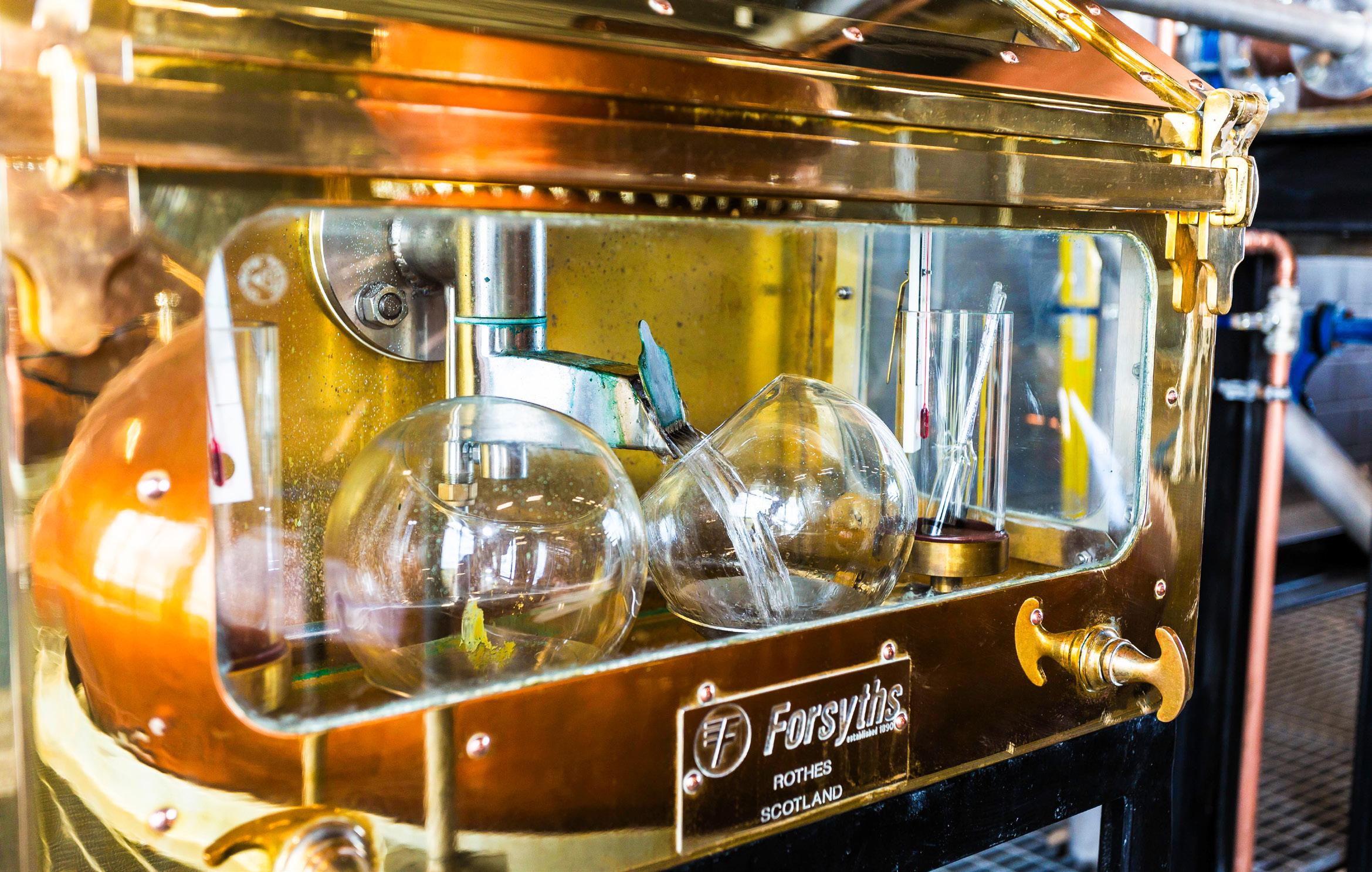
TASTED WHISKIES - LAGG DISTILLERY
Lagg Corriecravie Edition, Sherry Cask Finish
Lagg has built its soul around heavily peated whisky, often around 50 ppm, but what truly emerges through a tasting like this is not merely the power of the smoke, but the heart behind it. There is already an unmistakable sense of balance, structure and character here that shows the distillery has genuinely stepped onto the stage long dominated by Islay’s great names. This is not about imitation, but about establishing a distinct identity within the smoky landscape. And perhaps that is precisely where Lagg becomes most fascinating. This is no shadow behind Arran, nor some side production for those seeking a “slightly smokier” alternative. Lagg stands firmly on its own feet, with an expression that feels raw, coastal and at the same time surprisingly nuanced even at a young age. The smoke is not carried forward as a display of force, but as part of a greater narrative where fruit, salinity, maltiness and cask influence interact with an almost effortless elegance. It feels like a distillery that is still young, yet already carries the promise of a very long and beautiful future.
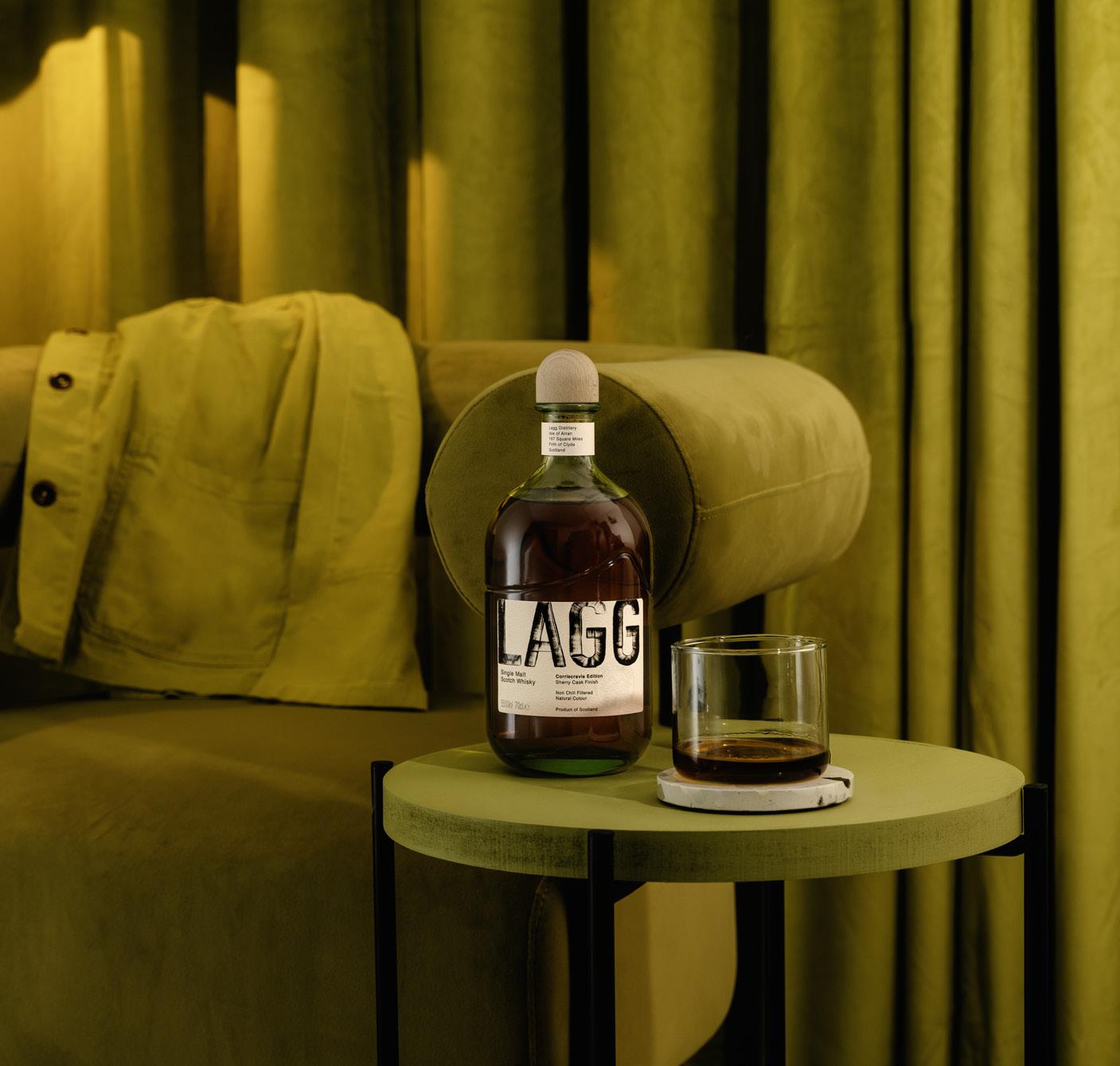
LAGG CORRIECRAVIE EDITION 2025,
#2 - Lagg Corriecravie Edition, Sherry Cask Finish, 2025, 55%
93+ Matured in ex-bourbon casks and thereafter finished for six months in Oloroso sherry hogsheads from Miguel Martín in Jerez. Here, peat smoke, liquorice and tar pastilles meet tobacco-laced fruitiness with figs, cherries, cassis and apples wrapped in dark muscovado sweetness, ginger, nutmeg and cinnamon — and they thrive magnificently together. Vanilla, dark honey and chocolate broaden the expression further, while the finish lingers with aromatic spice and a lightly cedar-soaked humidor finesse that makes the glass feel empty long before one is truly finished with it.
No. 4175401, 599 SEK
Lagg Corriecravie Edition, Sherry Cask Finish, 2024, 55%
94
The village of Corriecravie, which lends its name to the whisky, lies just northwest of Lagg. The whisky follows the maturation process of the 2025 release and builds fine complexity in both drive, peat smoke, cask spice and fruitiness, where dark chocolate, vanilla-infused and lightly caramelised cherries, figs and oven-baked apples emerge. It is gifted work, conjured by a distillery that has somehow managed to make sea breeze, leather armchairs and dessert trolleys cooperate without the slightest quarrel.
2024 OCH 2023
Lagg Corriecravie Edition, Sherry Cask Finish, 2023, 55%
93
We find ourselves entering a robust yet remarkably well-oiled sweet spiciness where peat smoke, liquorice, tar pastilles and tobacco embrace a fig-, cherry- and appletoned fruitiness with dark muscovado caramelised sweetness, drawn through with chocolate and vanilla. It is a bit like being embraced by a dockworker in a tweed jacket who unexpectedly turns out to bake phenomenal apple pies in his spare time. Seductive in its inviting squareness — said with love.
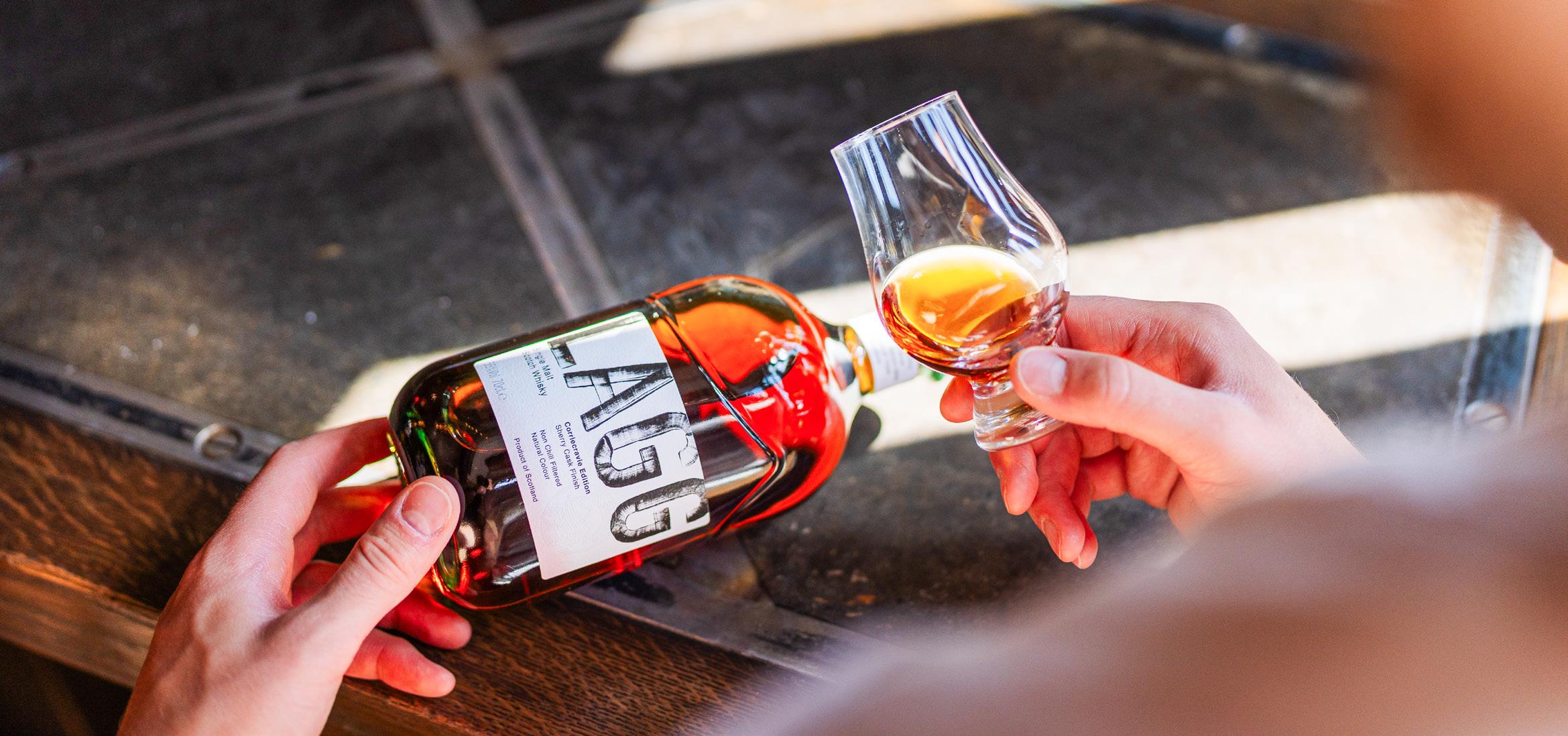
Lagg Kilmory Edition First Fill Bourbon Barrels NAS, 46%
93 A very beautiful youngster moving with light-footed grace inside a strength that has learned the difference between power and knocking over furniture. Clean and soft notes of citrus, apples, melon and honey-caressed vanilla meet maritime liquorice salinity and almost violet-like nuances. The smoke is balanced and close to elegant, the texture spicebrushed and carried by a naturally viscous gait. Ash, cigar and pipe tobacco linger in a somewhat short yet rewarding finish that leaves us with the feeling that the whisky could easily have stayed much longer and remained delightful company throughout.
Lagg Small Batch Pedro Ximenez Sherry NAS Finish Distillery Exclusive, 56.8%
95 Elegant with a distinct yet rounded pressure where roasted caramelised fruitiness intertwines with Danish King pastilles, vanilla and chocolate nuances around piecaressed apples, cassis, cherries, figs, plums, dried orange and apricot. The smoke carries liquorice salinity and more tobacco and cigar ash than overt peat. Rich and expressive in temperament, with sweeping exotic spice, proud length and a magnetic grip that refuses to let go even long after the glass is empty. We have a cigar club that has moved into a pastry shop — and somehow made everything work exquisitely together at the same time.
Lagg Small Batch Tequila Cask
Finish NAS Distillery Exclusive, 59.1%
95+ Distillery Exclusive means, exactly as the name suggests, a bottling sold only at the distillery on Arran, much like the previous whisky. And yes, it feels slightly unfairly inaccessible to the rest of the world, rather like discovering a fantastic pub that requires an expensive VIP card for entry, or perhaps an indispensable debut album pressed in 500
copies and sold in a record store in Harlem. Highly seductive when the elevated ABV warms rather than bites, while the cask management has created a viscously rounded texture that lifts the elegance even further. Within the earthy fruitiness, maritime liquorice salinity and vanilla align themselves with honey-embraced ripe citrus, agave and sweet yellow orchard fruit. Brilliant — and mildly irritatingly difficult to leave behind on the island.
Lagg Small Batch Palo Cortado
NAS Sherry Cask Finish, 56.2%
93+
A distinctly yellow citrus fruitiness, liquorice salinity and pronounced cask presence create a distinctive whisky with a fiery temperament. The spice sets the tone with pepper and a touch of chilli, yet there is also a filling vein of honey, vanilla caresses, light chocolate and floral attributes that gradually harmonise the power. The smokiness is well integrated and in the finish violet, mint and tobacco glimmer together in fine harmony. Here the whisky is stitched together splendidly, with far better self-discipline than it initially attempts to suggest.
Lagg Small Batch Distillery of the Year Exclusive Bottling, Full maturation in second fill Tokaj Barriques, 58%
96
An exclusive release and completely allin on Tokaj casks, where vanilla and toffee caramel are drawn through syrup, chocolate and honey that elegantly marry with tropical shades of apricot, orange, soot-kissed lychee, saffron, pear and melon. It may sound like a very brave purchase after two glasses of wine and too much confidence, yet strangely enough everything works brilliantly. The whole moves with balanced and expansive naturalness while the casks contribute a benevolent friction of structure along with peppery and exotic spice. All the elements seem to have spent a late night together and enjoyed themselves immensely. We want more of this.
Lagg Small Batch First Fill
Cotie-Rotie Wine Cask, 57.2%
95+
A small-scale bottling drawn at cask strength of 57.2%, where a roughly 50 ppm peat-smoked distillate has rested in first fill Côte-Rôtie casks from the Northern Rhône. A combination that now feels almost as natural in the whisky world as late decisions and someone always saying “just one last glass.” Lagg’s smokiness and the Rhône casks’ lightly BBQsmoked character are elegantly woven into a violet- and liquorice-minted fruitiness with dark berries, honey-caressed citrus and finely chiselled touches of vanilla and chocolate. It is robust, charmingly untidy and at the same time so well dressed that one almost begins to suspect the whisky was raised with linen napkins in an upper-class family.
Lagg Small Batch Manzilla Sherry Cask Finish, 57.6%
94 Lagg Distillery launched this global small batch release earlier this year in an edition of around 2 000 bottles. After bourbon maturation, the whisky received just over a year of finishing in first fill Manzanilla casks from Sanlúcar de Barrameda, and once again an exceptionally successful marriage arises between two worlds — rather like when peat smoke and sherry realise they not only enjoy the same music, but also share a somewhat unhealthy fascination with late nights and grand emotions in true Livets Goda spirit. Ash-smoked honey- and vanilla-caressed fruitiness of cherries, cassis, citrus, pie-marinated apples and sultanas coexist with lightly caramelised notes, liquorice salinity, mineral sea winds and a vinous tannin-driven grip. It is coastal, slightly unruly and at the same time almost unexpectedly well groomed.
Lagg Inaugural Batch 1, First Fill Bourbon, 3 Years, 50%
92
This was the distillery’s very first official single malt release and launched in 2022 as part of a trilogy of inaugural bottlings. Three years old, bottled at 50%, heavily peated around Lagg’s established 50 ppm and fully matured in first fill bourbon casks. In other words, this is not a whisky that sneaks in through the side door apologising for its existence. Earthiness and herbal-vegetal undertones coexist here with classic citrus fruitiness where vanilla and light chocolate quickly settle in as though they had already paid the rent. Lagg’s typical maritime salinity, violet-stained liquorice and mineral nuances simultaneously provide tannin-driven structure and keep everything on steady course with an almost provocatively mature authority for such a young age.
Lagg Inaugural Batch 2, Oloroso Sherry Firkin Finish, 3 Years, 50%
92
Inaugural Batch 2 continued the series, where the three-year-old whisky, after approximately 30 months in bourbon casks, received a six-month finish in small 55-litre Oloroso sherry firkins — small casks with unusually strong opinions and roughly zero interest in keeping a low profile. The sherry casks provide a broader and more elegant scope than in Batch 1, despite the youthful intensity still bouncing around the room like an enthusiastic terrier after espresso. The smoke is more integrated and leans more toward tobacco and cigar ash than dominant peat, while dark berries and raisin notes are wrapped in dark chocolate, vanilla, caramel and lightly caramelised nuances with fine salinity and nutty comforts. Youthful, loud and at the same time strangely well mannered.
Lagg Inaugural Batch 3, Rioja Firkin Finish, 3 Years, 50%
93
Lagg Distillery Inaugural Batch 3 concluded the distillery’s first official trilogy and continued with the same three-yearold, heavily peated base distillate around 50 ppm. After roughly 30 months in bourbon casks, the whisky received six months of finishing in small 55-litre Rioja red wine firkins — small casks that clearly did not travel all the way to Arran merely to stand quietly in a corner — and, just as the origin suggests, there is a handsome vinous tilt here. Despite its youth and peppery cask spice, the whisky moves with surprising maturity where soft citrus, apricot, plum, peach, fig and cherry are bedded into caramelised tones, vanilla and fudge. The smoke is subtle and integrated rather than ppm-boastful, elegantly making room for oak-aged tobacco in the finish. Frankly somewhat provocatively elegant for its young age, rather like a twenty-five-year-old already ordering the correct wine for dinner without even needing to look at the label.
Lagg Distillery Fatprov 24-LGVA-0208, First Fill Banyuls Finish, 4 Years, 59%
93+
Here we have a finish in Banyuls casks, the Southern French fortified wine from Roussillon, largely built on grenache and about as restrained as a Southern French three hours lunch that “was only supposed to last an
hour.” There is certainly plenty of energy, cask presence, oak spice and alcoholic intensity here, but once again it becomes clear how well Lagg’s smoky distillate thrives alongside wine cask finishing. The power is harmonised and the edges polished into vinous elegance, almost as though the whisky had suddenly started wearing velvet jackets without losing its fondness for harbour pubs. The fruitiness leans toward lightly caramelised blackberries, cherries, figs, plums and dark citrus, caressed with dark chocolate caramel and vanilla. Dark, generous and dangerously easy to become very fond of.
Lagg Distillery Fatprov LG19/1001, First Fill Bourbon Barrel, 6 Years, 56.1%
94
This is a single cask sample matured for six years in a first fill bourbon barrel and bottled at 56.1%, naturally with Lagg’s classic smokiness around 50 ppm, evolving into something akin to someone setting fire to a pastry shop down by the harbour and then serving the result in bottle form — and it works brilliantly. There is energy, cask spice and youthful intensity where pepper, cinnamon and soft ginger exchange places, yet six years in cask have simultaneously managed to place a more fluid and sweeter calm over the movements. In the interplay between bourbon cask and smoky distillate, vanilla- and fudge-caressed tones emerge around caramelised citrus and piebaked apples before the finish lands in cigar and
ashy smokiness. A whisky that only becomes harder to leave behind the closer one comes to saying goodbye.
Lagg Distillery Fatprov LG19/0750, Second Fill Sherry Hogshead, 5 Years, 60.1%
94+
Here we have a five-year-old expression where second fill sherry hogsheads have been entrusted with raising the distillate. Bottled at a proud 60.1%, there is certainly no lack of intensity and power — this whisky does not walk into a room asking permission, it rather parks the boat in the middle of the salon and orders cigars for the entire table. Yet the sherry cask works methodically and elegantly together with Lagg’s smokiness. Dark chocolate and vanilla caress muscovado-caramelised tones of dark cherries, pie-baked apples, dried apricot, orange, figs and raisins, while the finish opens the door to a leather-clad humidor and cigar ash. A textbook example of how to tame powerful movements. Still proudly smoky and delightfully biting, but now with enough self-control to at least pretend to read the wine list first.
Lagg Distillery Fatprov LG21/3175, First Fill Bourbon Barrel, 25ppm, 3 Years, 58.5%
92 Here we return to true young whisky territory with three years of maturation in first fill bourbon barrels, bottled at cask
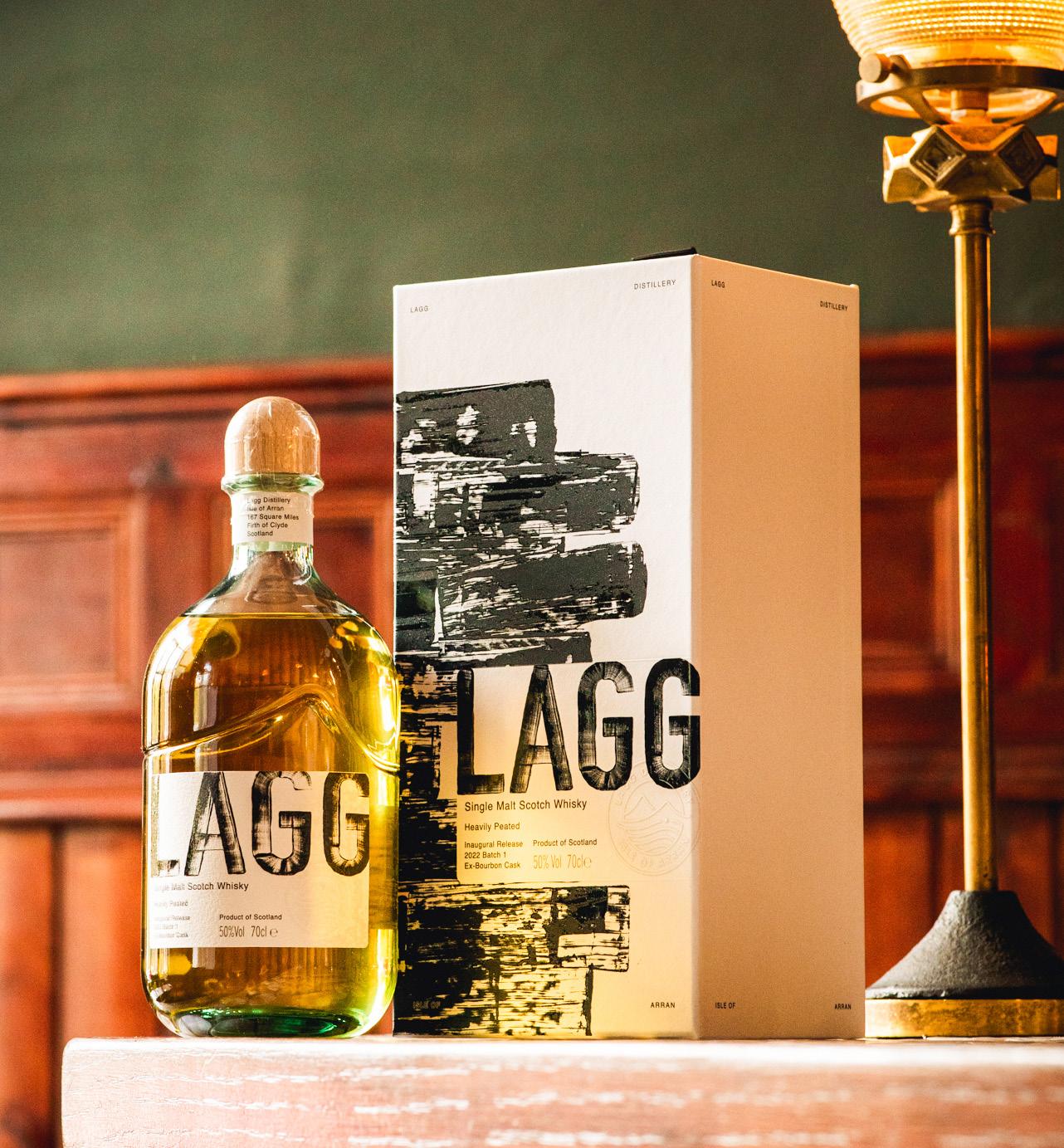
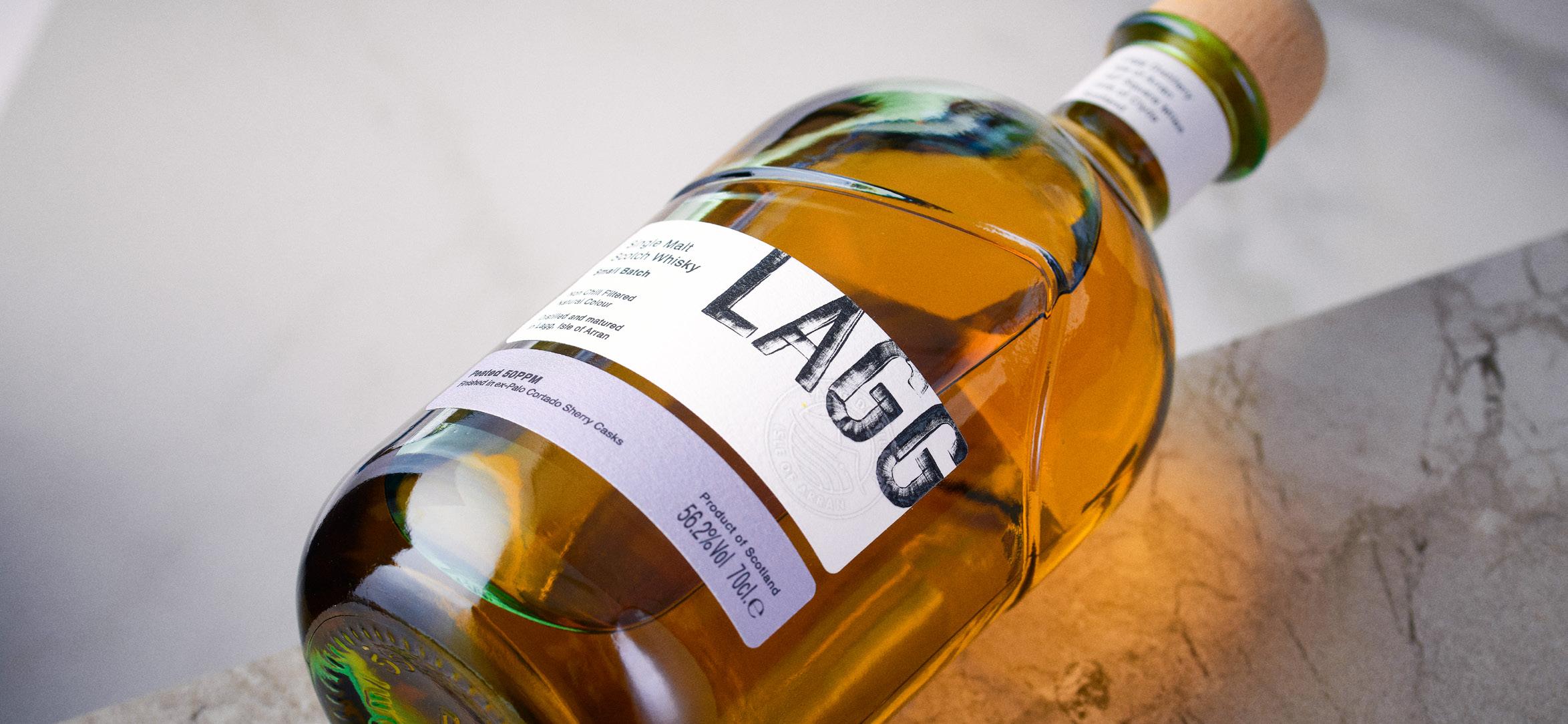
strength of 58.5% and with Lagg’s customary smokiness — albeit dialled down to 25 ppm. This could easily have become unbearably loud and wild, rather like the final hour at a harbour tavern where someone suddenly believes they can sing Tom Jones. Thankfully, that is not the case. Certainly the maritime liquorice salinity grabs hold immediately, just as it so often does at Lagg, yet there is simultaneously a lovely nuance and balance to the movements. The fruitiness is unmistakably young and revolves mainly around vanilla- and light chocolatecaressed citrus with a hint of honeydew melon, but that goes a long way when the finish is elegantly rounded off with cedar-spiced dried tobacco leaves. Young, lively and still considerably better behaved than many adult whiskies.
Lagg Distillery Fatprov LG19/1800, Secon Fill Koval Quarter Cask, 4 Years, 59.9%
93
Here we have four years matured in second fill Koval quarter casks, bottled at a respectful 59.9%. The small quarter casks naturally deliver a more intense cask influence, yet both the seasoned casks and Lagg’s classic peat smoke — which always lays an ashy and cigar-lifting haze across existence — behave surprisingly civilly. This could have become a complete rock festival across the palate, but the whisky strangely chooses a tie and good manners instead. The result is violet-sugared mint, vanilla-caressed citrus and caramel-like nuances in a whisky where the alcohol percentage displays far greater self-control than most people after two glasses of red wine and a spontaneous “let’s have one last.” Certainly it sings loudly in the wind, but always with style, authority and well-groomed pyromania.
Lagg Distillery Fatprov LG 20/2186, Second Fill Lochranza Cask, 4 Years, 61.1%
95
Matured in a second fill Lochranza cask from the sister distillery of the same name on Arran and bottled at a robust 61.1%. Here, Arran’s bourbon-cask elegance and Lagg’s well-structured peat smoke meet in an unusually successful marriage where we discover that we love life in rubber boots and sea breeze. Vanilla, fudge, honey and caramelised sweetness spread themselves around citrus, yellow plums, peach, sultanas and figs, while an exotically coloured whisky spice elegantly holds the whole together. It undoubtedly feels as though this whisky hurried through adolescence unusually quickly and could, without much protest, pass for an eight-year-old Lagg — provided it manages not to boast about its birth year after the third glass.
Lagg Distillery Fatprov LG19/0997, First Fill Bourbon Barrel, 5 Years, 60.5%
94+
Five years in first fill bourbon barrels and bottled at a dynamic 60.5%. The smoke here has become more integrated, almost subtle in expression, while the casks deliver energy and spice intensity with surgical precision. Vanilla, light chocolate fudge and honey caramelisation caress citrus, ripe apples, sultanas, peach and figs with great confidence. Sugared mint and violet align themselves with ashy peat smoke, smouldering tobacco leaves and coastal liquorice salinity, giving the finish a delightful and stubborn grip, rather like a very charming person refusing to leave the party despite the staff already stacking the chairs.
Lagg Distillery Fatprov LG19/1799, Second Fill Koval Quarter Cask, 3 Years, 59.6%
93 Earlier we tasted four years in second fill Koval quarter casks; here, instead, it is three years in the same cask type, bottled at 59.6%. And it is actually somewhat remarkable
how such a young whisky can offer such generous honeydew orchard fruitiness alongside sweet-and-sour citrus caramel. Young whisky otherwise tends to want to knock over furniture, speak too loudly and send illconsidered messages after midnight. Yet that appears to be Lagg’s signature: youth with unexpectedly good manners. Despite the distinctly peppery cask spice, the whisky moves with fine control and balance. Just as with the four-year-old, an ashy and cigar-lifting haze hangs over the expression, here with slightly more pipe tobacco in the peat-smoked lift and a note of violet-sugared mint lingering elegantly behind. It is a bit like meeting a rebel in a leather jacket who quotes poetry.
Lagg Arran Barley 90ppm, New Make Spirit, 63.5%
Lagg Distillery Arran Barley 90ppm New Make Spirit, bottled at a somewhat outrageously bold 63.5%, is Lagg in its most naked and experimental state. Here the smoke has been turned up to 90 ppm compared with the distillery’s normal level of around 50, and it is not merely singing through the sails — at times it feels as though the entire boat is attempting to restart the weather system over Arran. Yet the wind blows with curious elegance. Despite the dynamism, graceful movements arise even without the help of casks, or perhaps precisely because of it. This is a fascinating demonstration of what actually forms the foundation of the future whisky: honey-caressed citrus, melon, naturally vanilla-creamed nuances and a surprisingly finely chiselled sweetness that almost provocatively clearly shows that vanilla does not always need to come from a cask suffering from delusions of grandeur. And you know what — this could, without much difficulty, be drunk from the same hand as a well-crafted Mezcal or Tequila. They are in fact far closer to one another than whisky people sometimes dare admit. We never score New Make Spirit whisky, but if we did, we would land very high indeed…
IN FOCUS: IRELAND
Clonakilty Distillery A Stone’s Throw from the Atlantic
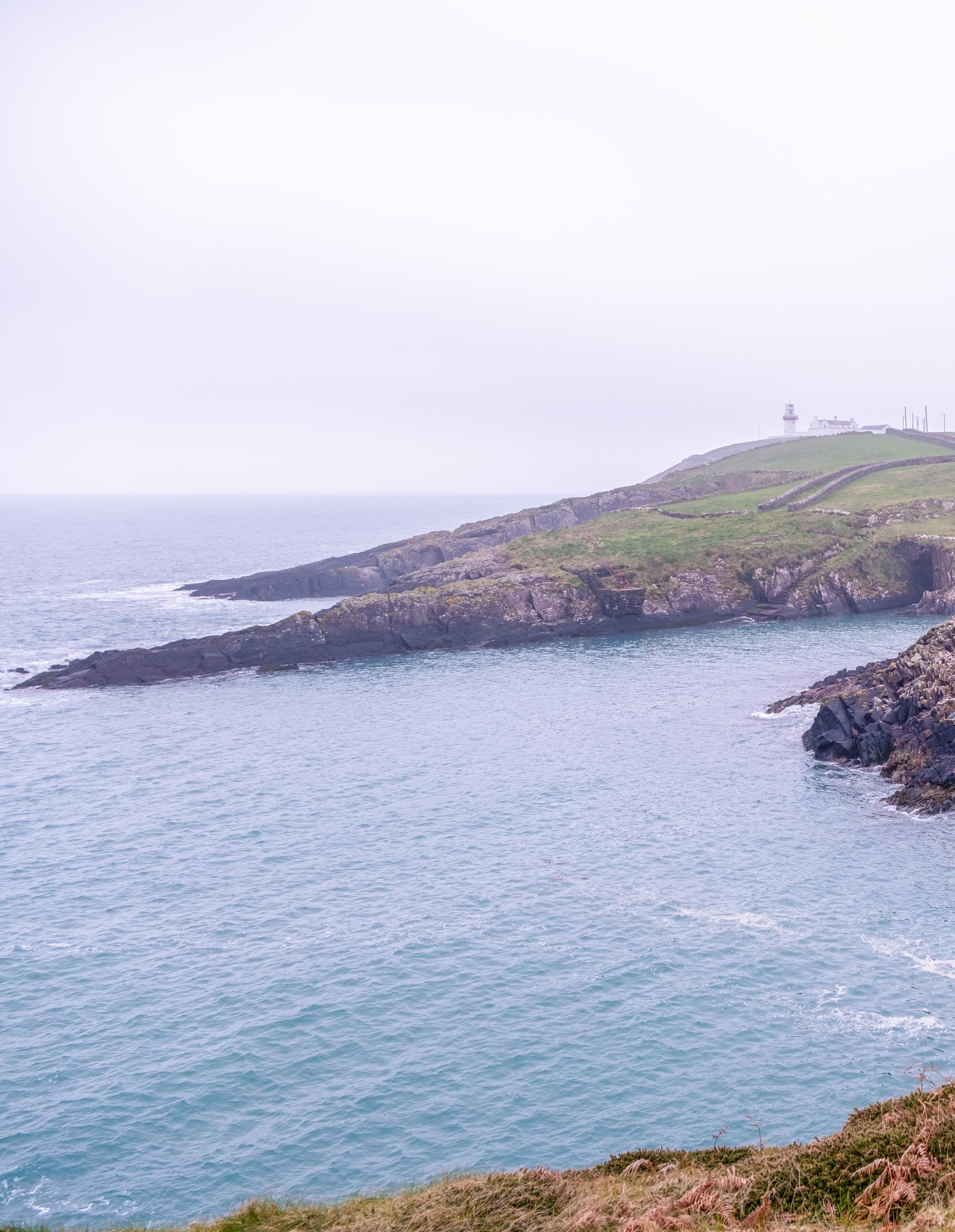
Founder Michael Scully initially planned to build a distillery on his family’s coastal farm, but because the area turned out to be protected land, his building application was denied. But then a completely different opportunity suddenly appeared. “I drove past the empty shell thousands of times until one day it just clicked.”
That is how Michael describes finding the site for his distillery. It was an abandoned concrete structure on the town’s old football ground – a construction project left unfinished since the financial crisis. Today, the distillery is located in the small coastal town of Clonakilty, just under an hour southwest of Cork by car, beside a bay opening out towards the Atlantic Ocean.
TEXT AND PHOTOS: DANIEL BRUCE
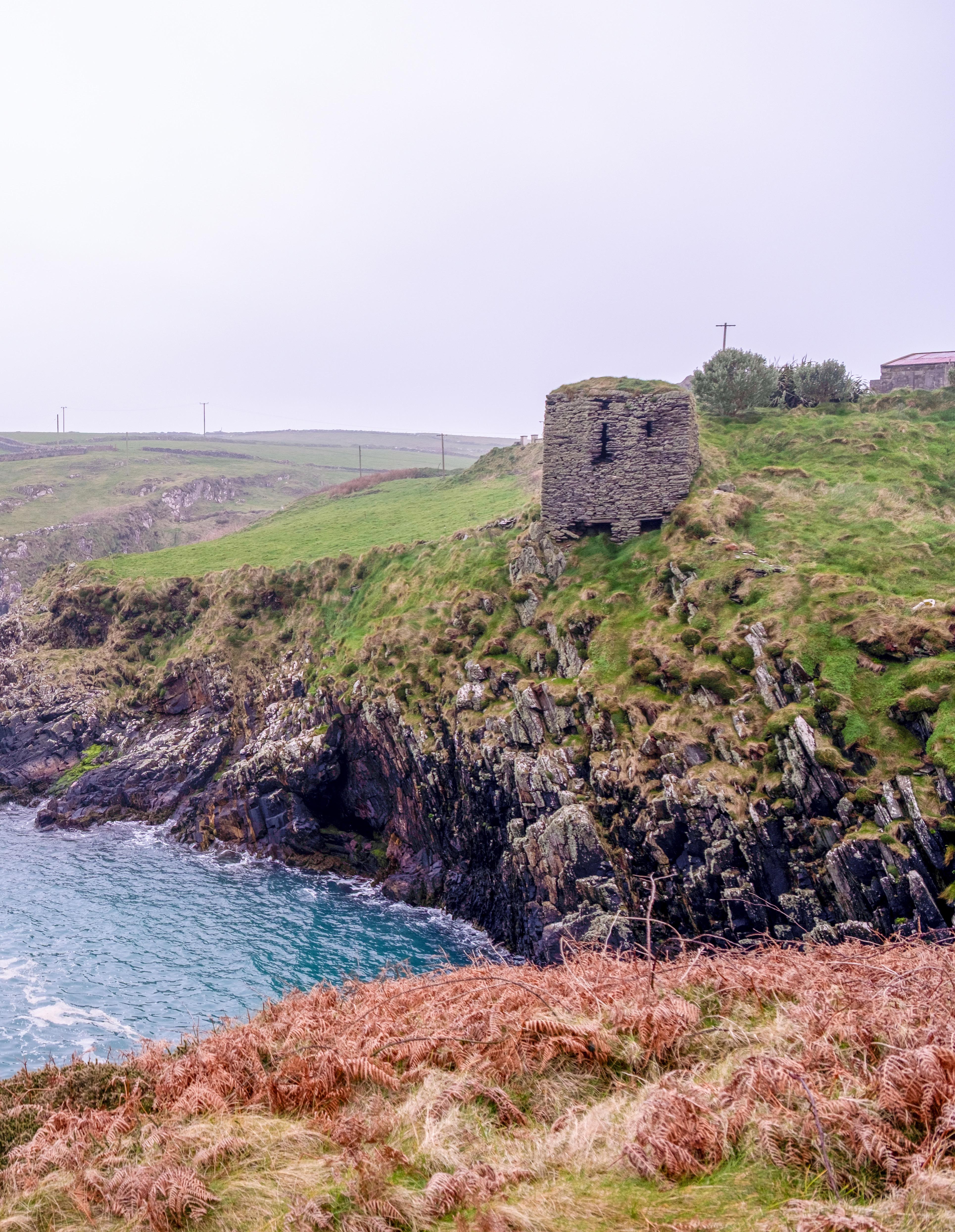
That Michael – an eighth-generation dairy farmer and barley grower – decided he wanted to make whiskey was also very much a coincidence. It all began during a trip to Eastern Europe when he and his wife enjoyed a seven-course tasting menu. Vodka was served with every course and when Michael’s wife declined after the second glass, he politely drank hers as well. “By the end of the meal, life felt very easy,” Michael laughs. “The last vodka we were served was made from milk, and that’s when it struck me – I can make that at home too.” Back in Ireland, Michael began distilling and the kitchen table was transformed into a laboratory filled with tasting samples. But after nine months of experimentation, he realised that vodka was not the way forward – whiskey was, a spirit he had always been fond of. In addition to the family farm’s barley fields and solid business experience, the mild coastal climate of West Cork was ideal for maturing whiskey.
CONSTRUCTION OF THE DISTILLERY ON THE EXISTING concrete structure began in 2015 and extensive work was required to ensure the building could support, among other things, three large copper stills and eight stainless steel washback’s. It was not until four years later that the first distillation took place. During the waiting period, Michael had time to consider what kind of whiskey he wanted to create. He decided partly to focus on the Irish tradition of blending unmalted and malted barley –so-called single pot still whiskey – but he was also curious to explore the quality of old barley varieties that had fallen into obscurity. As Michael drives along narrow country roads towards the coast, he tells me how he contacted the official Irish seed bank to see whether he could obtain an old barley variety. “I literally received a handful of Goldthorpe barley, a variety my great-grandfather grew here on the farm at the turn of the last century. I sowed the grains by hand, and because the quantity was too small for machinery, I had to manage everything with simple garden tools. The variety gives an extremely low yield, less than half that of a modern crop,
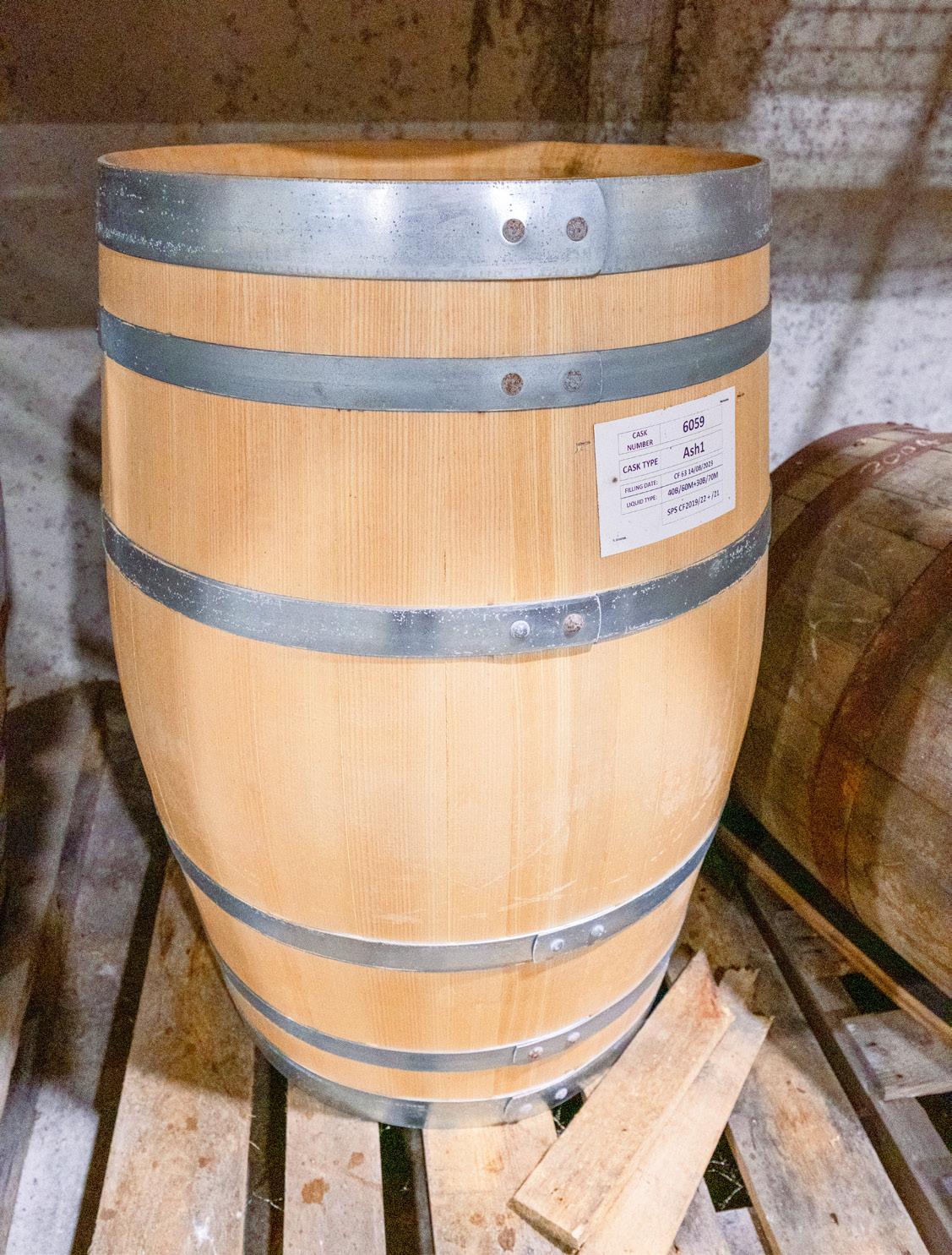
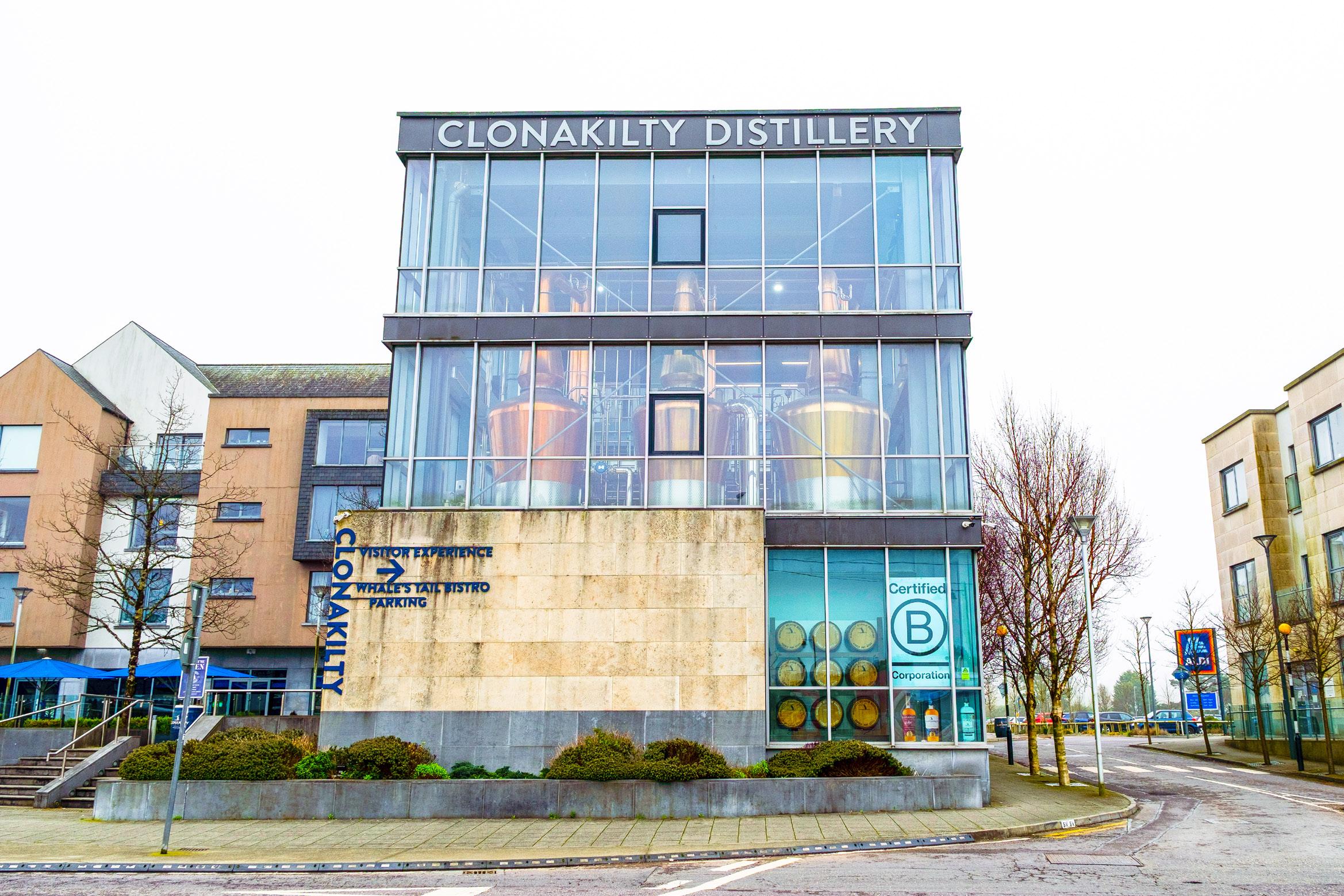
A Rare Whisky Cask Made from Ash Wood.
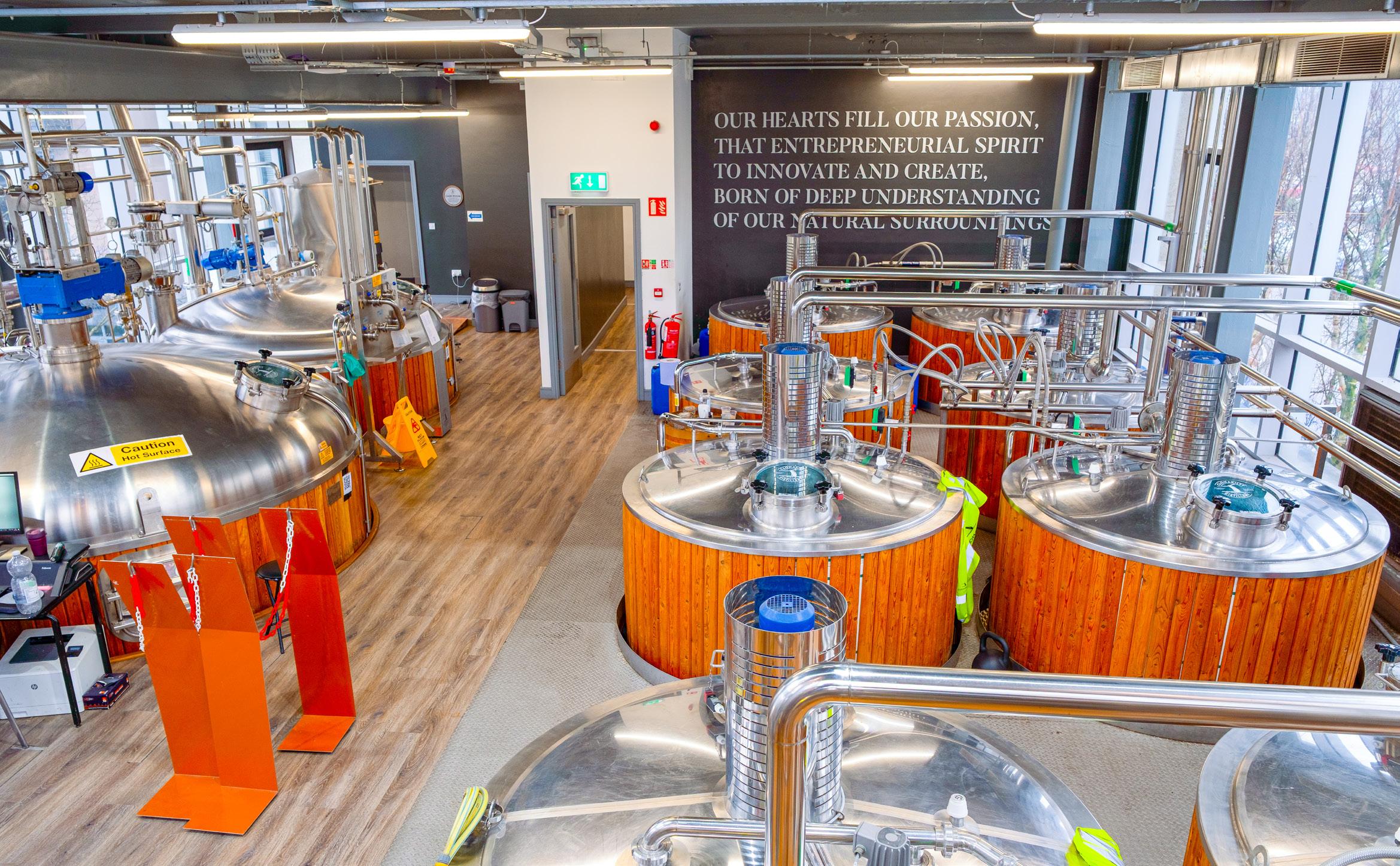
Fermentation takes place in the distillery’s eight washbacks over a period of 140 hours.
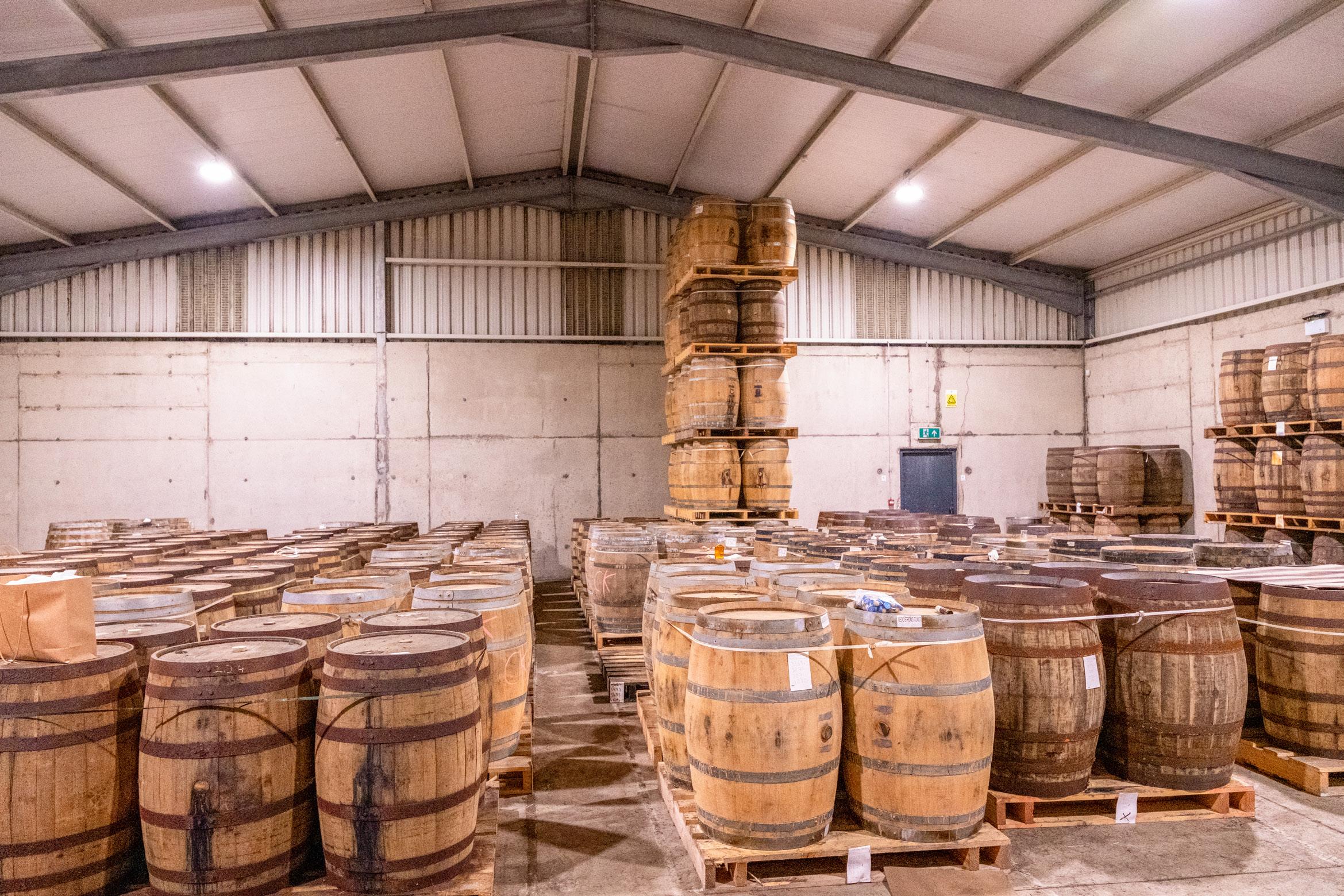
Around one hundred casks are stored in the distillery’s coastal warehouse.
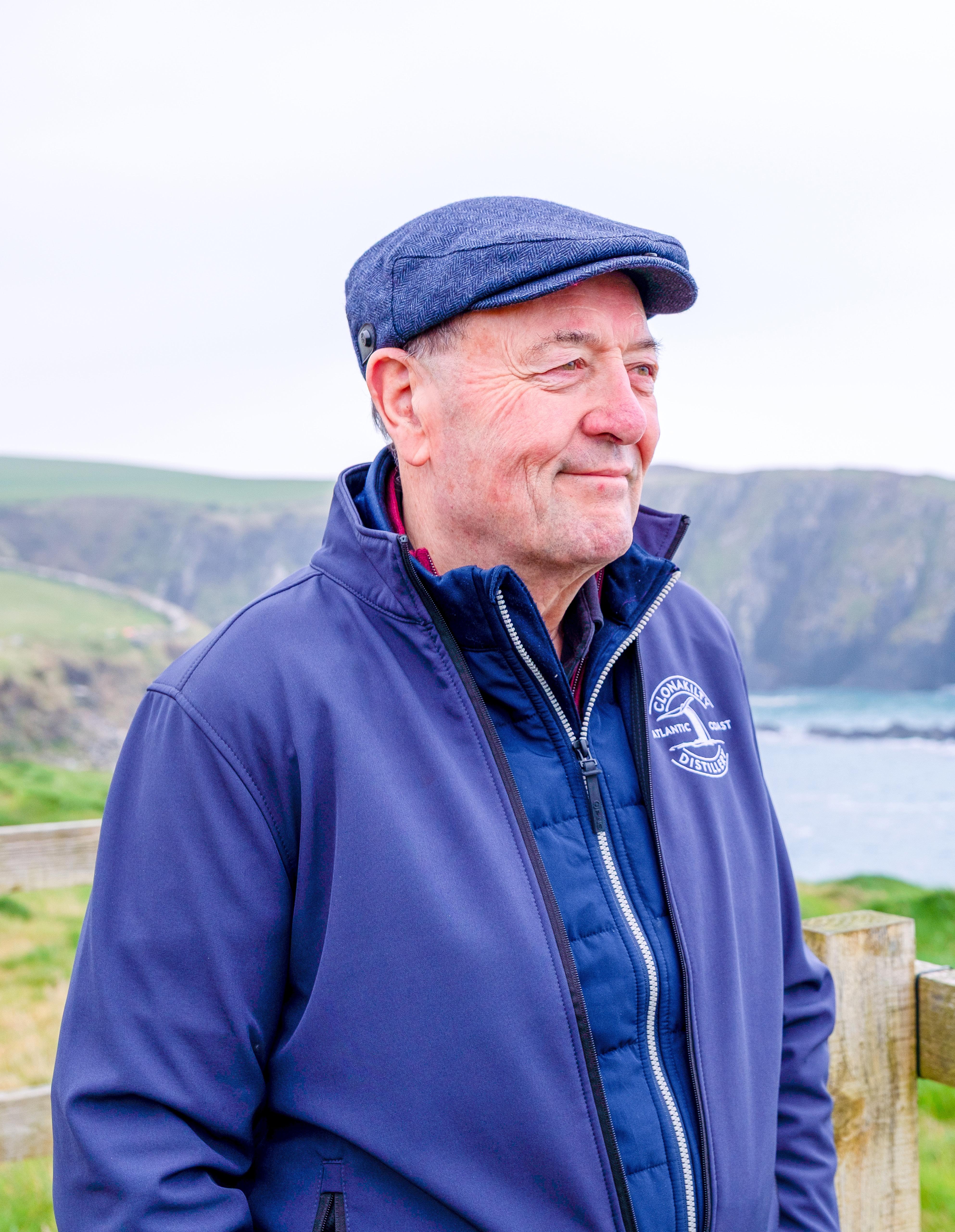
Founder Michael Scully is an eighth-generation dairy farmer and barley grower.
and it took several harvests before I finally had enough to distil a first batch,” he explains while showing me some of his fields stretching out with magnificent views over the Atlantic. Thanks to the more or less constant sea breeze, the distillery has had no issues with disease in its barley fields. However, Michael stopped growing Goldthorpe last year because the harvests had become too small. There is still plenty of whiskey made from the variety maturing in the warehouses, and the plan is to release the first expression in a couple of years.
MICHAEL CONTINUES, HOWEVER, TO CULTIVATE other barley varieties and his own production accounts for roughly a quarter of the distillery’s total needs. As far as possible, the remaining quantities of unmalted and malted barley are sourced from local farmers. And when local production is insufficient, he purchases grain from elsewhere in Ireland. After testing a wide range of grain recipes, Michael settled on a mash bill of 60% unmalted barley and 40% malted barley for Clonakilty’s single pot still whiskey. Once milling has been completed on the distillery’s Swiss Bühler roller mill, the unmalted barley passes through a so-called mash conversion vessel that helps break down starch into fermentable sugar. The wort is then pumped into one of the distillery’s eight washback’s where it is mixed with a fairly standard dry distiller’s yeast.
WHAT FURTHER DISTINGUISHES CLONAKILTY is its long fermentation time of 140 hours. “After the alcohol fermentation is complete, a secondary fermentation begins where bacteria and air from the surroundings are drawn into the product. Everything present in our local climate interacts and sets a very interesting and unique process in motion. It gives our whiskey a kind of fruity elegance. We can’t compete with the major giants in terms of quantity, so for us everything is about
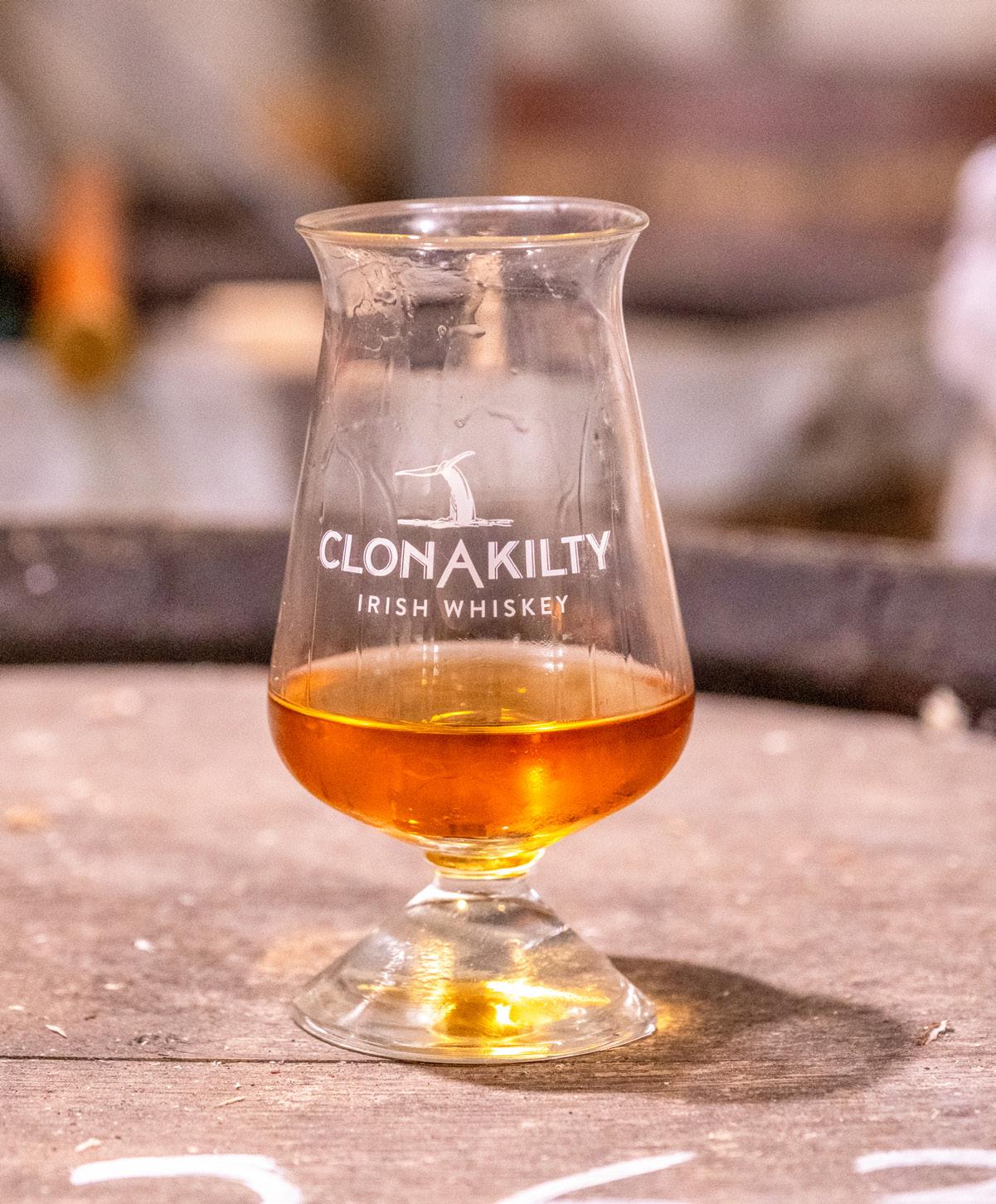
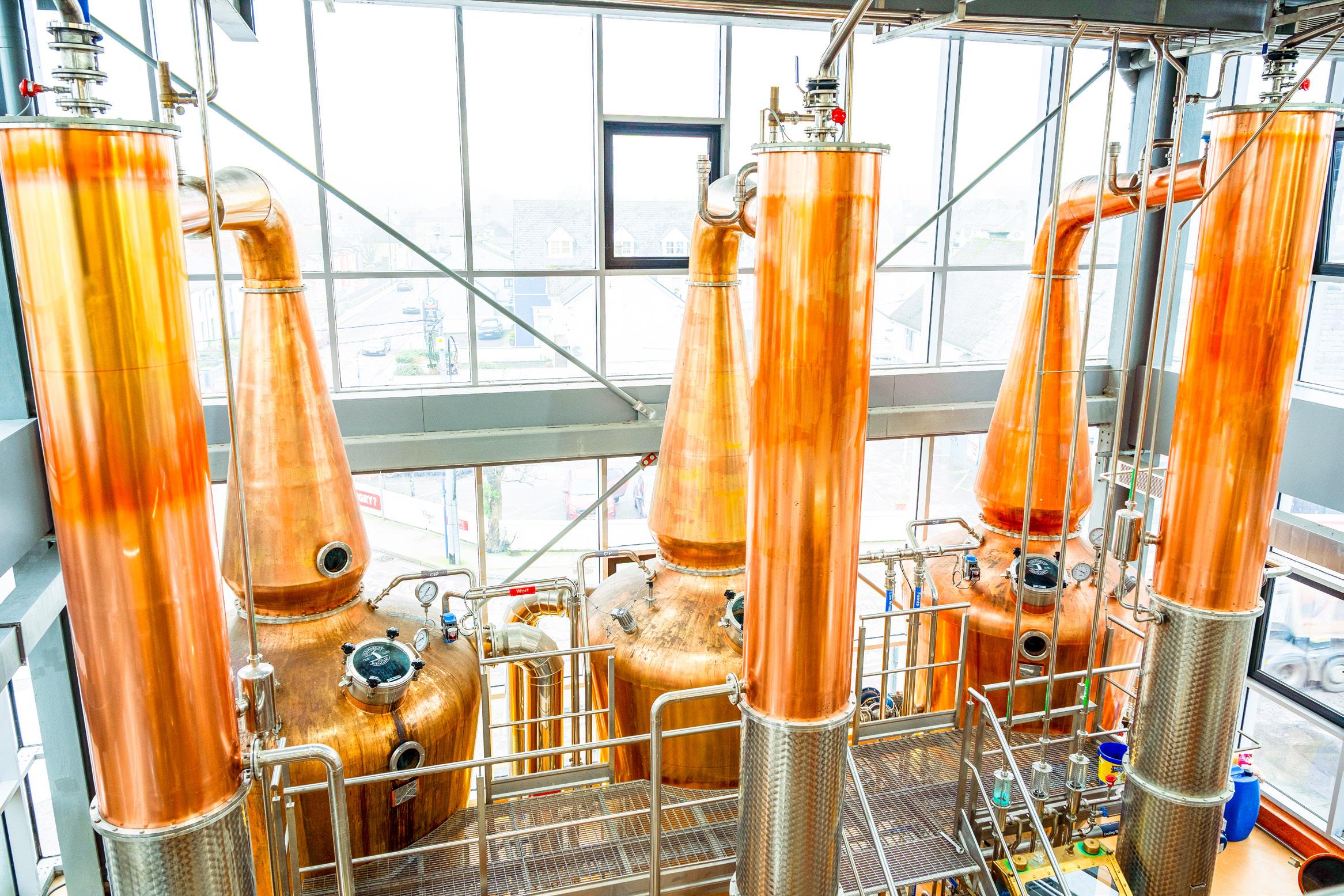
A Glass of Single Pot Still Whiskey Made from the Heritage Barley Variety Goldthorpe.
From left: the wash still has a capacity of 7,000 litres, while the intermediate still and spirit still each hold 4,600 litres.
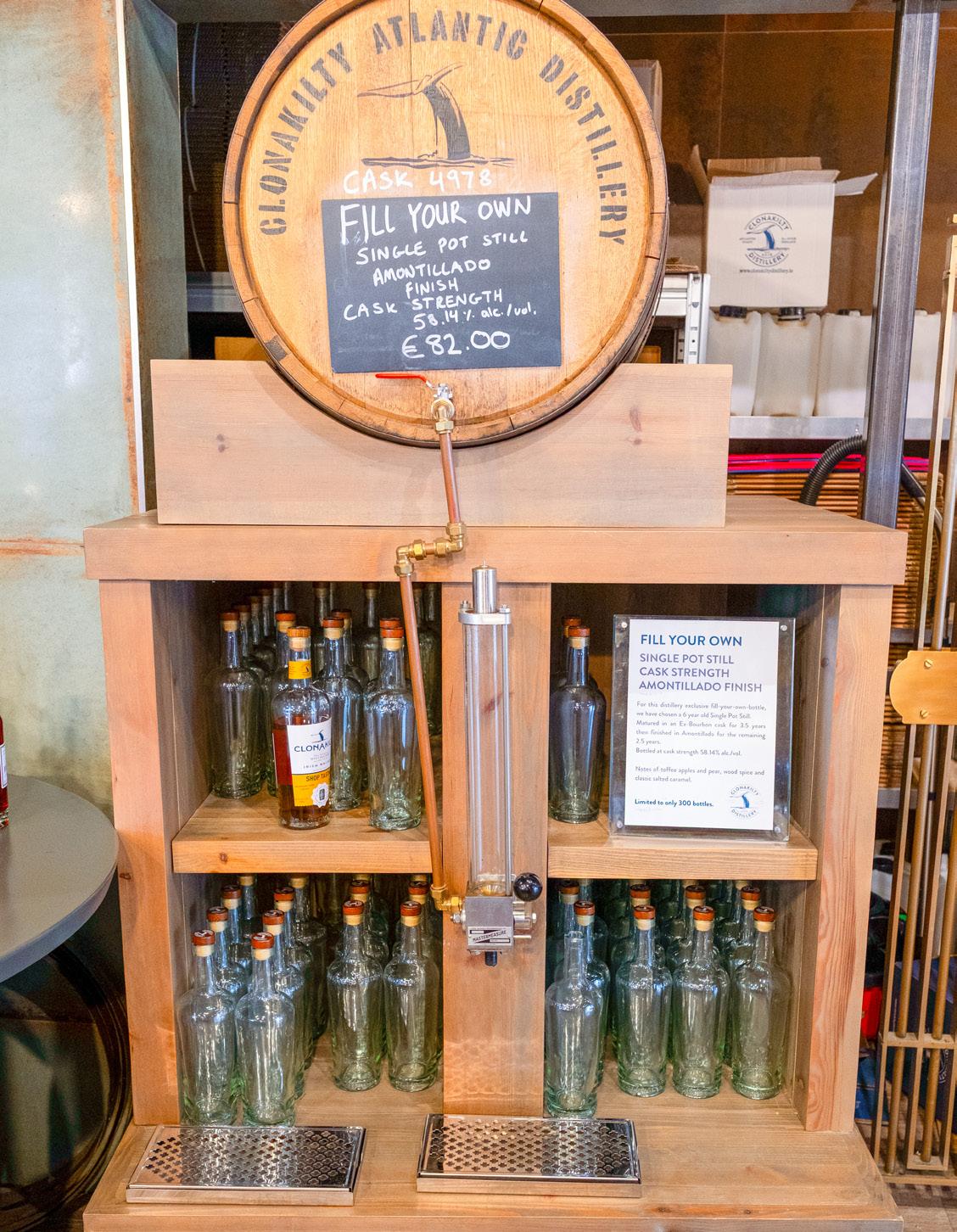
quality,” says Michael. The actual distillation takes place in three copper stills from the Italian manufacturer Barison, standing side by side behind a large panoramic window overlooking the town. Both the wash still and intermediate still are fitted with descending condensers, while the spirit still has ascending condensers. In this way, much of the flavour from the wash can be preserved during the first two distillations, while the slow third distillation helps create a fruity and elegant character. The new make spirit, which usually comes off the still at around 80% ABV, is then reduced to 63.5% using spring water from Michael’s family farm before being filled into casks.
MICHAEL HAD THE FIRST WAREHOUSE BUILT on the family farm near the Atlantic coast. But when he wanted to construct two additional warehouses, he was once again denied planning permission because of environmental protection regulations. Clonakilty’s three new warehouses were instead built closer to the distillery and, for logistical reasons, most of the casks were moved there. To reach the original warehouse, one must drive slowly along small country roads before arriving at a gate that has to be opened by hand – charming, but somewhat impractical. “We used to have almost a thousand casks here, but now there are only around a hundred left. The plan is to keep this warehouse for special casks and allow individual cask owners to store their whiskey here,” Michael explains while pouring me a sample of an almost four-year-old single pot still whiskey made from the Goldthorpe barley variety. In the glass, the locally grown barley offers generous sweetness and complex spicy notes, but it is the maritime salinity that lingers the longest. Considering the constant Atlantic Sea breeze penetrating the warehouse, it feels entirely reasonable that traces of sea salt have made their way all the way into the casks. It is a characterful whiskey that reflects its place of origin – the ocean breeze, the locally grown barley variety and the handcrafted production process.
Tasting
Clonakilty Distillery
Single Pot Still 46 %
92
Here we have a triple-distilled single pot still whiskey made from a combination of malted and unmalted Irish barley. The unmalted barley was also grown on founder Michael Scully’s own fields near the Atlantic coast. The whiskey has been matured in a mix of ex-bourbon, oloroso and amontillado casks. The nose is floral with hints of tropical fruits, spun sugar and digestive biscuits. On the palate, notes of peach, plum and a touch of lemon emerge, alongside honey, white pepper and a little ginger. Towards the finish, a subtle nutty character appears, adding an extra layer of complexity.
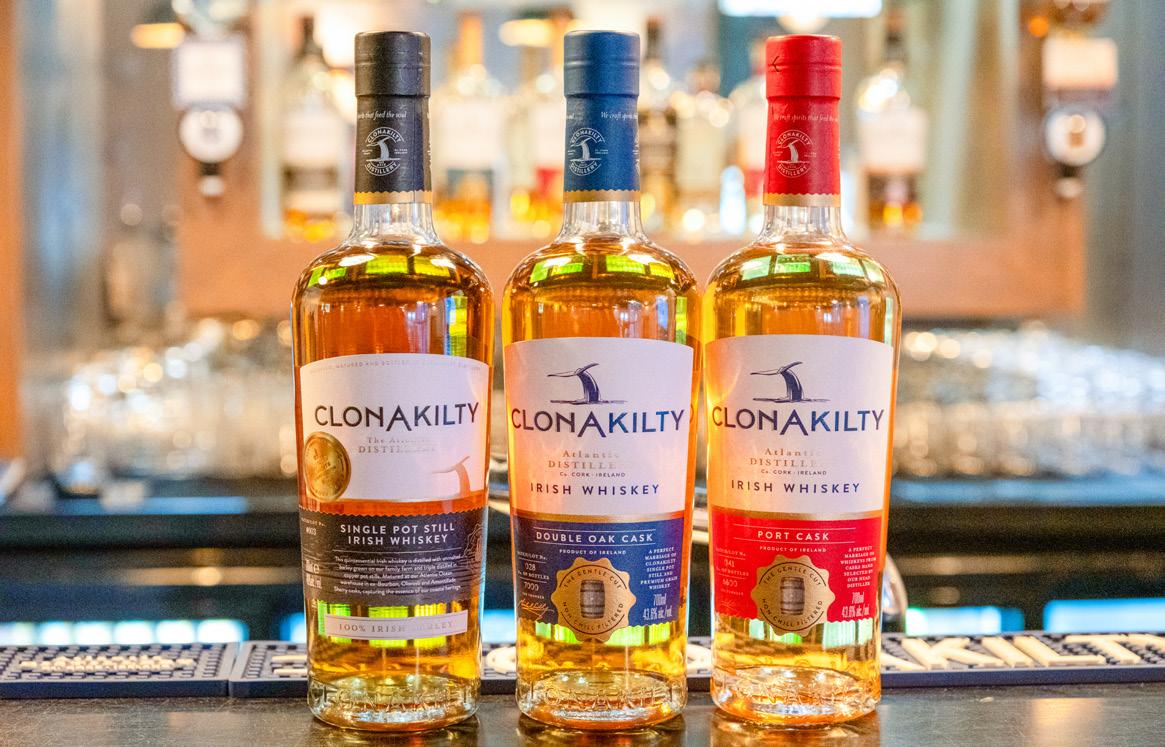
Port Cask 43,6 %
91
This is a premium blend from Clonakilty consisting of a combination of single pot still whiskey from Clonakilty and single grain whiskey from another Irish distillery. Maturation begins in ex-bourbon casks and finishes in port casks from the Douro Valley. The nose is vinous with notes of ripe red apples, Christmas spices and dried stone fruit. The palate offers apple pie with cinnamon, plums and a touch of stirred lingonberries. A fine malt sweetness together with raisins and nuts lingers quietly in the background.
Double Oak 43,6 %
90+
Double Oak is also part of the distillery’s premium blends, consisting of single pot still whiskey from Clonakilty and, once again, single grain whiskey from another Irish distillery. The whiskey has been matured in a combination of ex-bourbon, virgin American oak and so-called STR casks (Shaved, Toasted, Re-charred). The nose delivers plenty of sweet pears, fruit candies, vanilla and mandarin. The palate finds a fine balance between ripe apples, ripe lemon, caramel and oak spices in the form of ginger and white pepper.
Visitors to the distillery can bottle their own single pot still whiskey.
IN FOCUS: IRELAND
West Cork Distillers From Sea to Whiskey
As the name suggests, West Cork Distillers is located in the western part of County Cork – more specifically on the outskirts of the picturesque little town of Skibbereen in southern Ireland. The distillery was founded in 2003 by childhood friends John O’Connell, Ger McCarthy and Denis McCarthy. With some saved-up money, they purchased a couple of stills from a Swiss schnapps producer and began making whiskey without any prior experience. That the trio, just over 20 years later, would lead one of Ireland’s largest independent whiskey distilleries, employing 140 people, was probably something no one could have predicted.
TEXT AND PHOTOS: DANIEL BRUCE
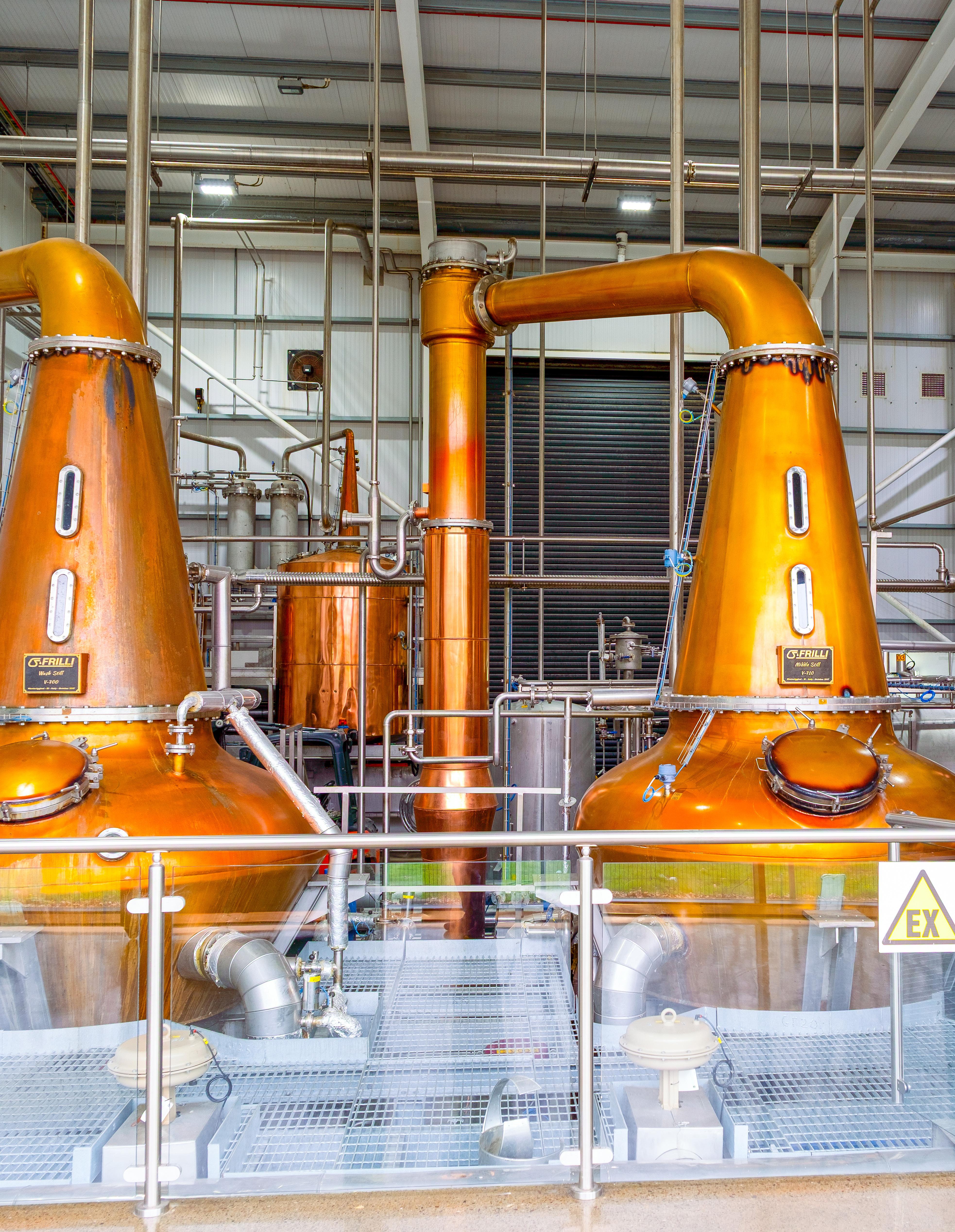
All single malt and pot still whiskey is distilled exclusively in three Frilli copper stills, crafted in Italy.
The first distillation did not, however, take place in Skibbereen, but behind Denis’s house in the fishing village of Union Hall – where all three had grown up. Denis and Ger had long worked as deep-sea trawlermen, but when fishing quotas declined around the turn of the millennium, they began looking for a new way to make a living. It was when they consulted their friend John, who at the time worked as a researcher and product developer at a food company, that they together decided to start their own business. The choice stood between processing seaweed and making whiskey – and perhaps it is not too surprising which option won. Slowly but surely, they began experimenting with whiskey production on a very small scale. Since they knew from the start that they wanted full control over production, they chose not to bring in any outside capital. At the same time, Denis and Ger continued fishing on the side for a while. But as demand for their whiskey grew, all three were soon able to focus exclusively on their newly founded company and begin hiring staff. A few years later, they had outgrown the small garage in Union Hall and in 2013 moved the distillery to a somewhat larger premises on Market Street in Skibbereen. Around the same time, they realised they needed to scale up production and built their own mash cooker. The vessel was named The Rocket – a reference to its remarkable efficiency – and took the mash from room temperature to boiling point in just 16 minutes. The distillery itself also continued to grow at rocket speed and in 2019 it was once again time to relocate, though only a few hundred metres away, to an old fish factory on Marsh Road on the outskirts of Skibbereen.
SHORTLY AFTER I ARRIVE AT WEST CORK Distillers one morning in March, coffee is served while I watch a short film in which the founding trio tell the story of their incredible journey from fishing to whiskey. The first thing that strikes me is that I really need to sharpen my ears to have
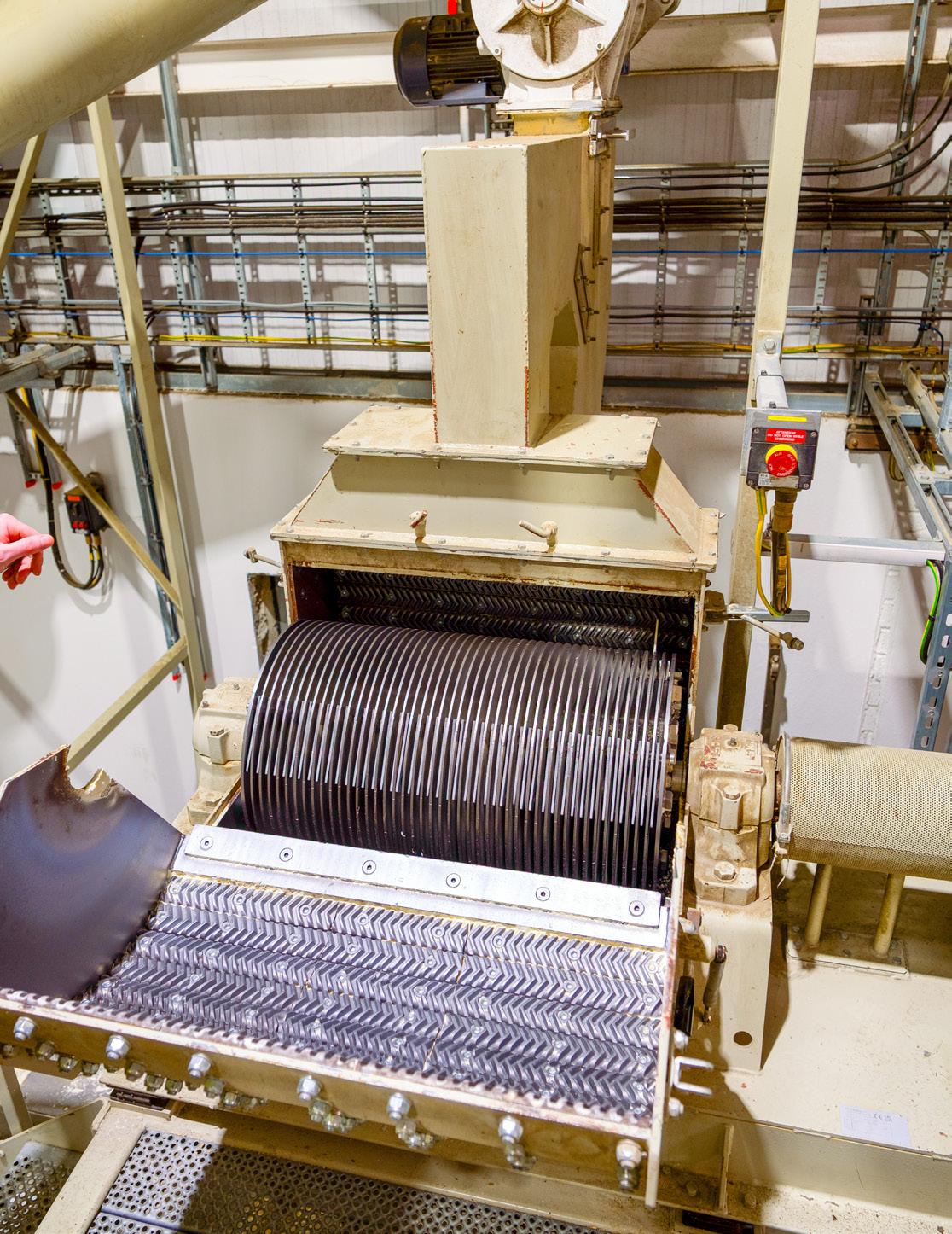
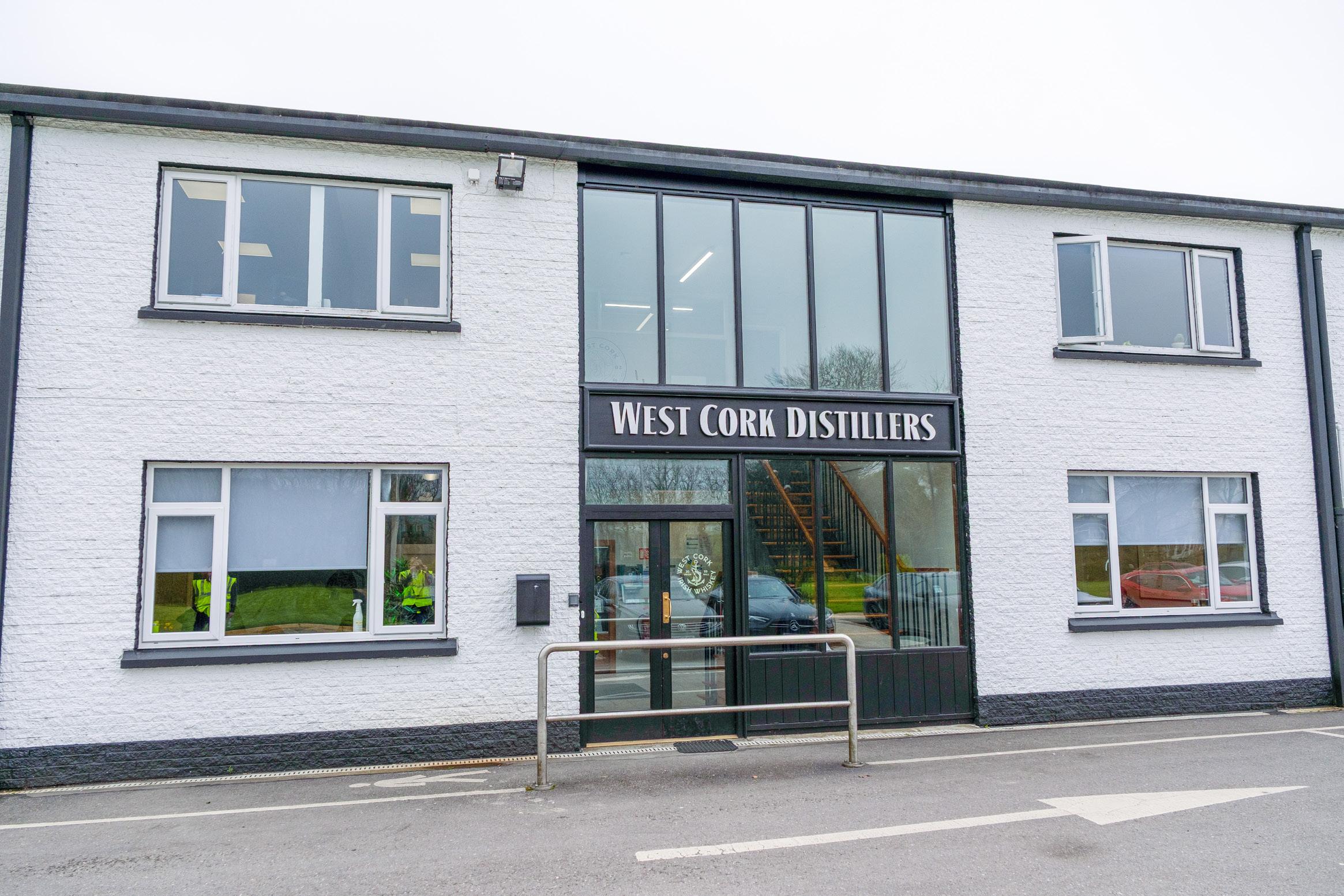
A hammer mill used to grind grain by breaking it apart with rotating hammers.
West Cork Distillers occupies a former fish processing factory on the outskirts of Skibbereen.
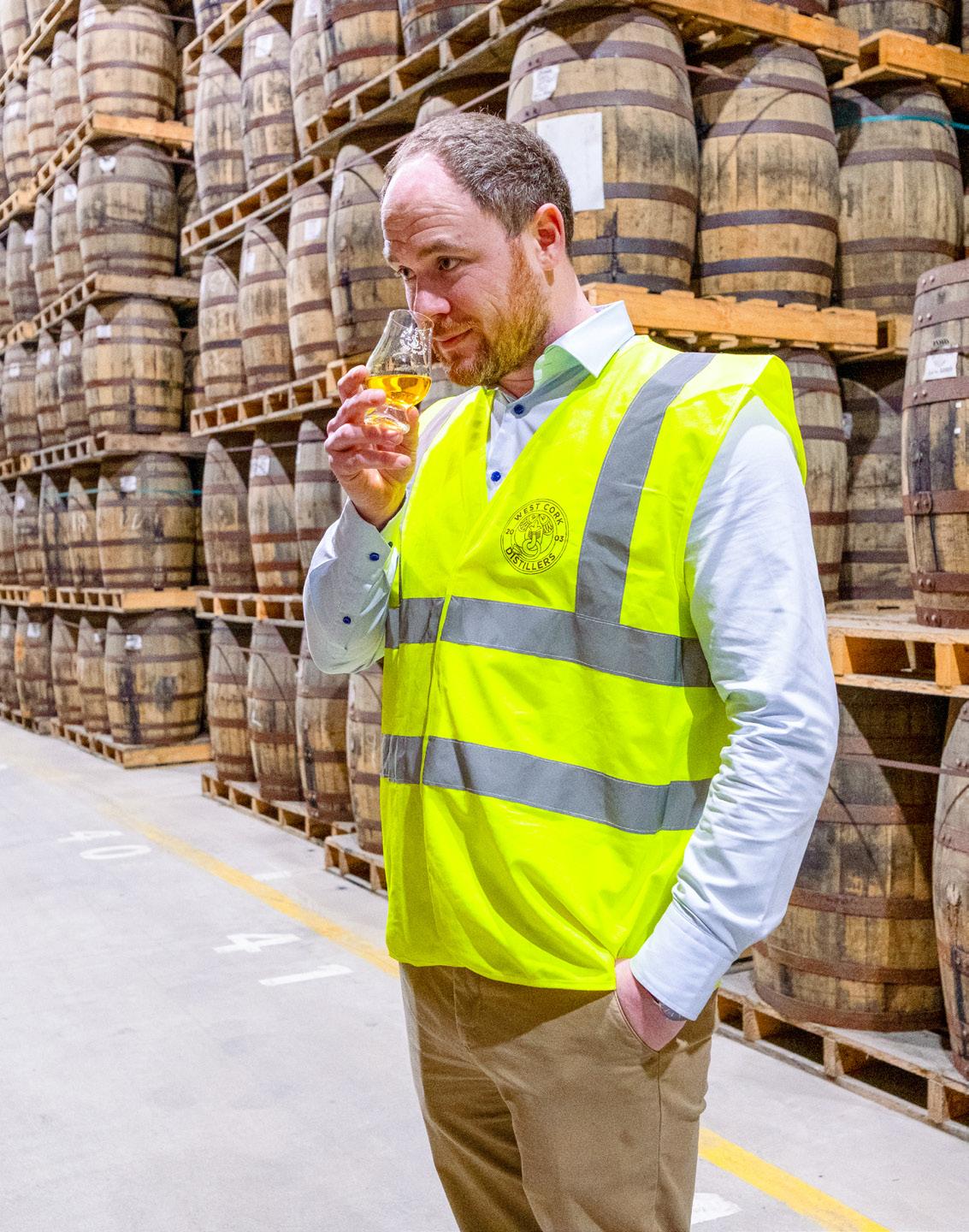
any chance of understanding the sing-song Cork accent, which at times resembles Jamaican English both in melody and pronunciation. Once the coffee is finished, I am handed a yellow safety vest and Head of Production John Harrington takes me on a tour. Our first stop is the distillery laboratory, where everything from wort to new make spirit is tested using both sensory analysis and advanced gas chromatography – a method that makes it possible to measure aroma compounds on a molecular level. But it is not only about quality control; the laboratory also serves as a breeding ground for creativity. “In the lab we can experiment with the wort to see how different yeast strains react to different temperatures. That way, we can begin with a 40-centilitre experiment which we can scale up to 1,500 litres before testing it on a full scale. For us, it has been extremely beneficial to have the capacity to conduct lots of small experiments with both mashing and fermentation before even deciding whether we want to do it commercially,” John explains.
WE LEAVE THE MAIN BUILDING AND CONTINUE around one hundred metres across the asphalt industrial estate to a black-painted building to see both how the barley is milled and how the mashing process works. One of the distillery’s core principles from the beginning has been to support the local community – among other things by using as much locally grown grain as possible. Even though they experiment with different grain types, barley dominates. And if the locally grown barley is insufficient, the remainder is sourced from other parts of Ireland. Importing grain from abroad is out of the question. As a first step, all grain passes through a machine that removes any stones or metal fragments. Milling is then carried out using a so-called hammer mill. “We chose a hammer mill because we wanted the flexibility to handle everything from wheat and corn to rye, whether malted or unmalted. The mill crushes the grain and forces it through a screen, giving us greater flexibility than other methods,” says John while opening the mill to show me the hammers inside. Besides being able to process
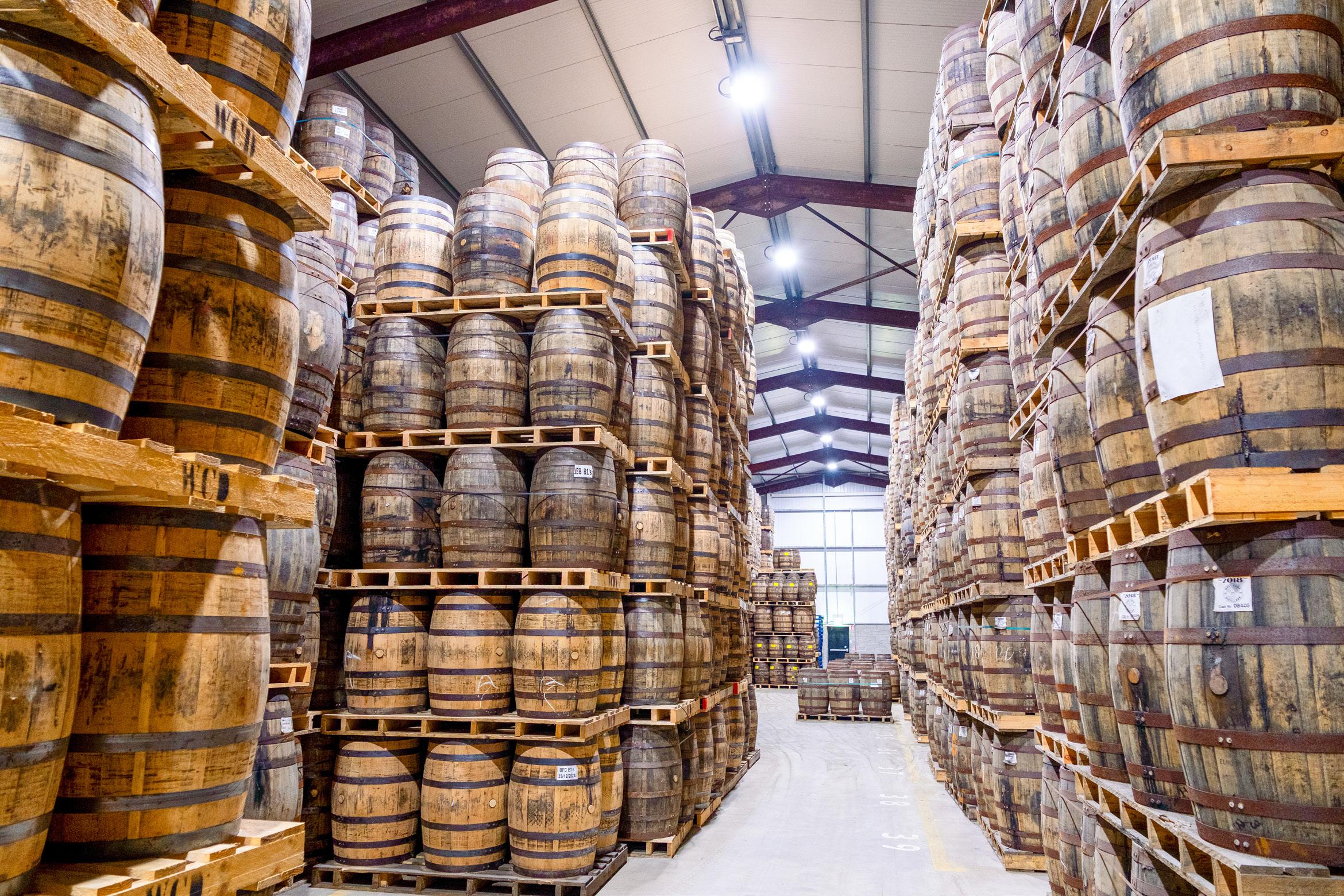
John Harrington –Production Manager at West Cork Distillers.
At the time of writing, the distillery has around 150,000 casks of whiskey in storage.
WEST CORK DISTILLERS
several different grain types, another advantage of the hammer mill is that it can grind the grain into relatively small particles. This works particularly well with West Cork Distillers’ unique mashing process. “Instead of using traditional mash tuns or mash filters, we separate the sugary liquid from the milled grain using a decanter centrifuge. In this way, we can both extract more sugar and do it faster,” John explains. The leftover material from mashing – the spent grain – is collected by local farmers and used as cattle feed.
ANOTHER THING THAT DISTINGUISHES
WEST CORK Distillers from most others is that all fermentation takes place outdoors, in 25 stainless steel washback’s. Since nearly every distillery I have visited has had its washback’s indoors, I become curious about how the Irish climate affects fermentation. “It does not make much difference because the Irish climate is very stable. Temperatures do not fluctuate dramatically. There may be a few days during summer reaching 25 degrees Celsius, but generally it stays between 5 and 20 degrees throughout the year. The variations are not extreme, and in any case, we use temperature-controlled vessels maintained at 25.5–26 degrees,” says John. Fermentation lasts four days and the wash usually reaches 13% ABV.
IRISH WHISKEY IS TRADITIONALLY DIVIDED
INTO four styles: single pot still, single malt, single grain and blended. At West Cork Distillers, they produce all four styles using no fewer than 21 stills. In
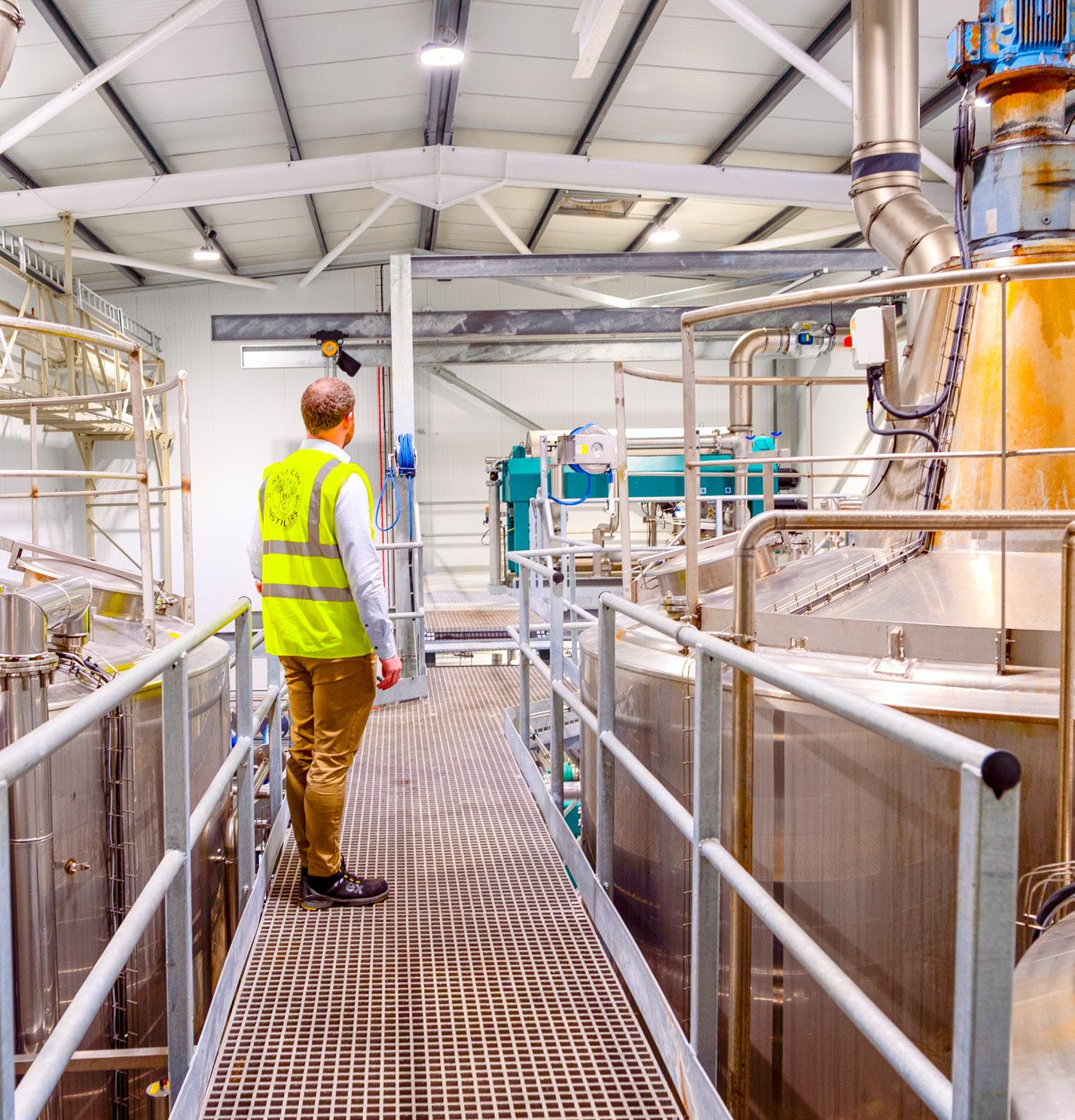
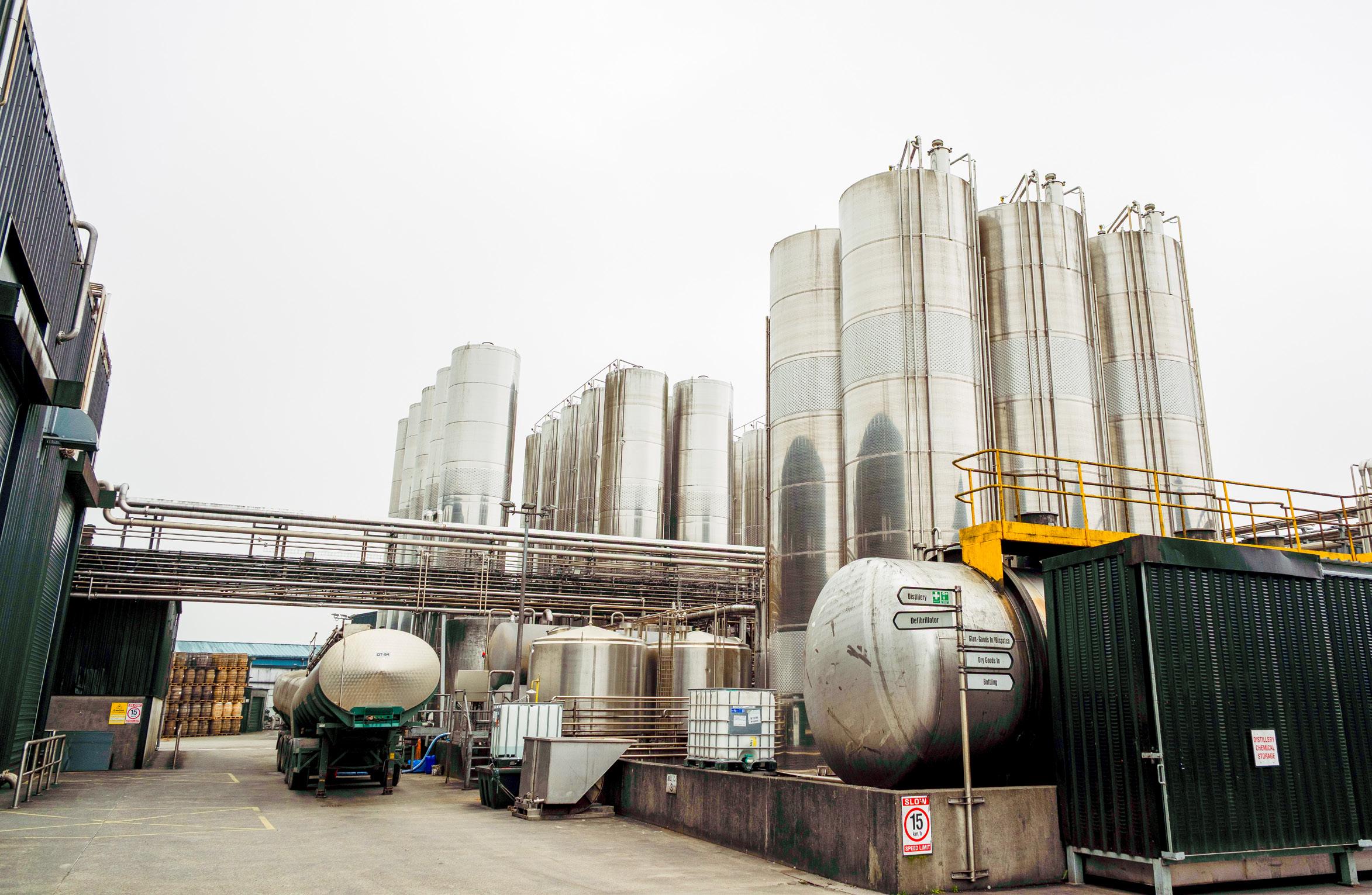
Instead of a traditional mash tun, a decanter centrifuge is used to separate the sugars from the milled grain.
All fermentation takes place outdoors in temperaturecontrolled stainless steel washbacks and lasts for four days.
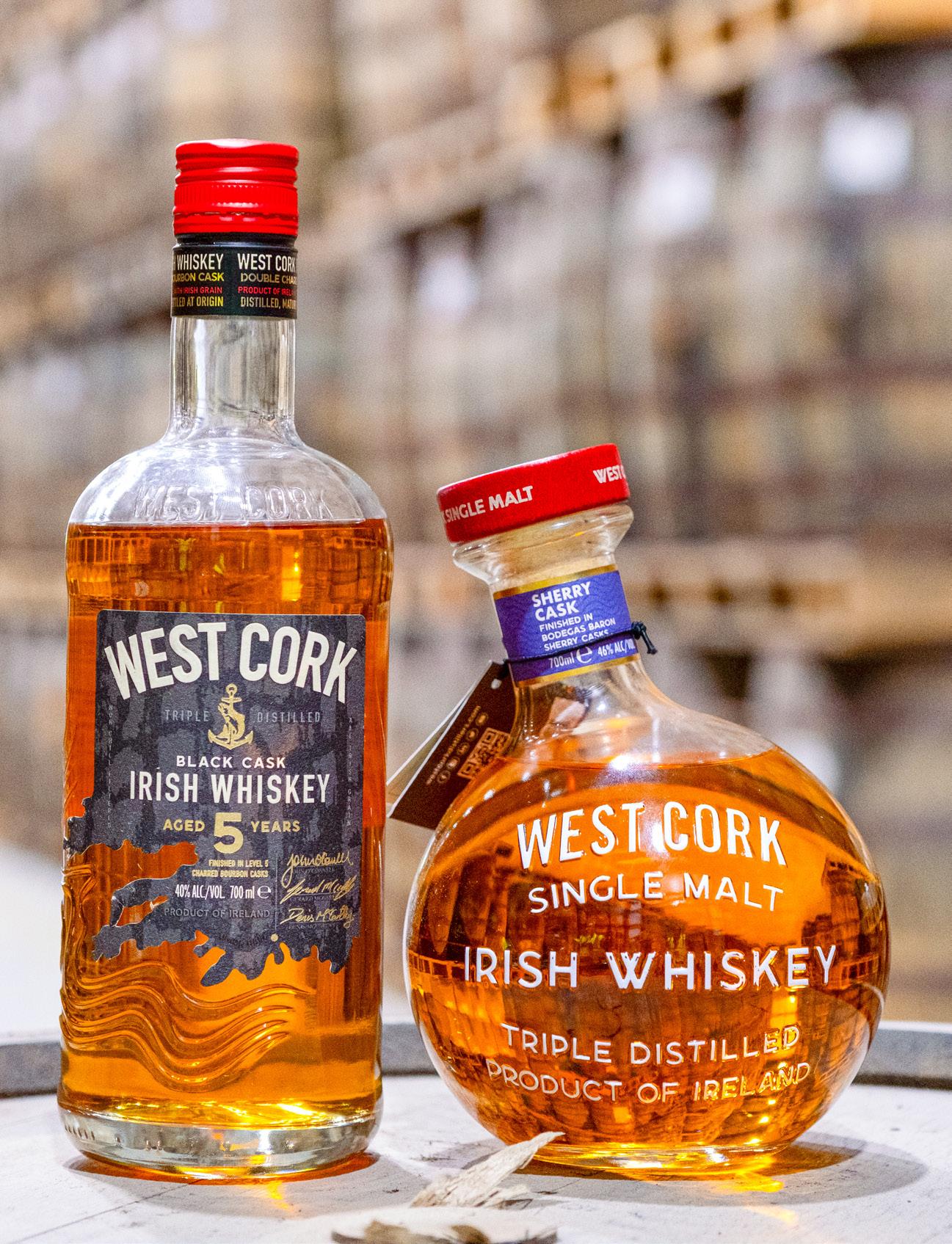
addition, they have purchased another three copper stills which they hope to bring into operation later this year. For their single malt and pot still whiskey, they exclusively use three Italian-made copper stills from Frilli. Here, the whiskey is distilled three times before the heart cut is taken at around 80% ABV. Their single grain and blended whiskey, by contrast, are produced using different types of column stills, with the finished new make spirit typically reaching 94.5% ABV. “We put enormous effort into developing our spirit profile. After five months of experimentation, we found the exact temperature settings for the perfect cut between heads, hearts and tails. Then we automated everything to guarantee the same result run after run. Consistency is crucial – otherwise it’s just a waste of time,” says John.
WHEN WE STEP INTO ONE OF THE DISTILLERY’S warehouses, I am greeted by a room filled to the brim with beautifully fragrant whiskey. At the distillery alone, they currently have 35,000 filled casks, but including their other warehouses across southern Ireland, the total number exceeds 150,000 casks. An impressive figure for a distillery that is still relatively young. Just as with the fermenting wash outdoors, the maturing whiskey is not exposed to any extreme temperature swings. “Mild winters and not overly hot summers result in slow evaporation during maturation. But we do not release our whiskey after three years and one day – we mature all of our whiskey for a minimum of five years,” John concludes.
Tasting West Cork
West Cork Black Cask 40%
88
This is an Irish blend made from 66% grain whiskey and 34% malt whiskey. The grain comes exclusively from Ireland, and all whiskey is triple distilled. Maturation begins in first-fill bourbon casks before the whiskey is finished for one year in heavily charred bourbon casks. The total maturation period is five years. The whiskey I have in my glass comes from a glass bottle, though at Systembolaget it is sold exclusively in PET bottles (35 cl and 70 cl respectively). The nose offers plenty of caramel and vanilla followed by a light spice structure. The palate largely mirrors the nose. In addition to vanilla and caramel, there are also notes of preserved pears together with a touch of ginger and freshly ground black pepper contributing additional complexity. But fundamentally, I find it hard to believe complexity is the main objective here. Rather, the aim seems to have been to create a well-balanced, vanilla-driven Irish blend that does not make too large a dent in the wallet. And in that, they have certainly succeeded.
West Cork Maritime Sherry Cask 46 %
91
This five-year-old triple-distilled single malt began its journey in first-fill ex-bourbon casks before finishing in sherry casks from Bodegas Baron. The unusual shape of the bottle is inspired by the glass fishing floats once used by fishermen. The fact that it is also very attractive and easy to pour from certainly does not hurt. The nose presents an intriguing combination of lime, peach, vanilla and freshly cut grass. On the palate, the fruity tones continue with mango, red apples, apricot and rhubarb cream. Towards the finish, a lightly spicy note of white pepper and ginger also emerges.
IN FOCUS: IRELAND
Boann Distillery – with a Focus on Single Pot Still Whiskey
In a converted car showroom with large panoramic windows – just under an hour north of Dublin – some of the most exciting Irish whiskey of the moment is being made. The distillery is located a few kilometres from the River Boyne in the fertile Boyne Valley, an area known for the ancient stone monument Newgrange – older than both the Egyptian pyramids and Stonehenge. The name is borrowed from the Irish goddess Boann who, according to legend, created the river – a connection the family deeply reveres and wanted to build upon. “We built our distillery on a goddess. All of our unmalted grains – barley, oats, wheat and rye – are grown within a fifty-mile radius of the distillery. So essentially, we distil the flavours of the landscape,” says Peter Cooney – founder and head of exports – when I meet him at the distillery on an unusually sunny spring day in March.
TEXT AND PHOTOS: DANIEL BRUCE
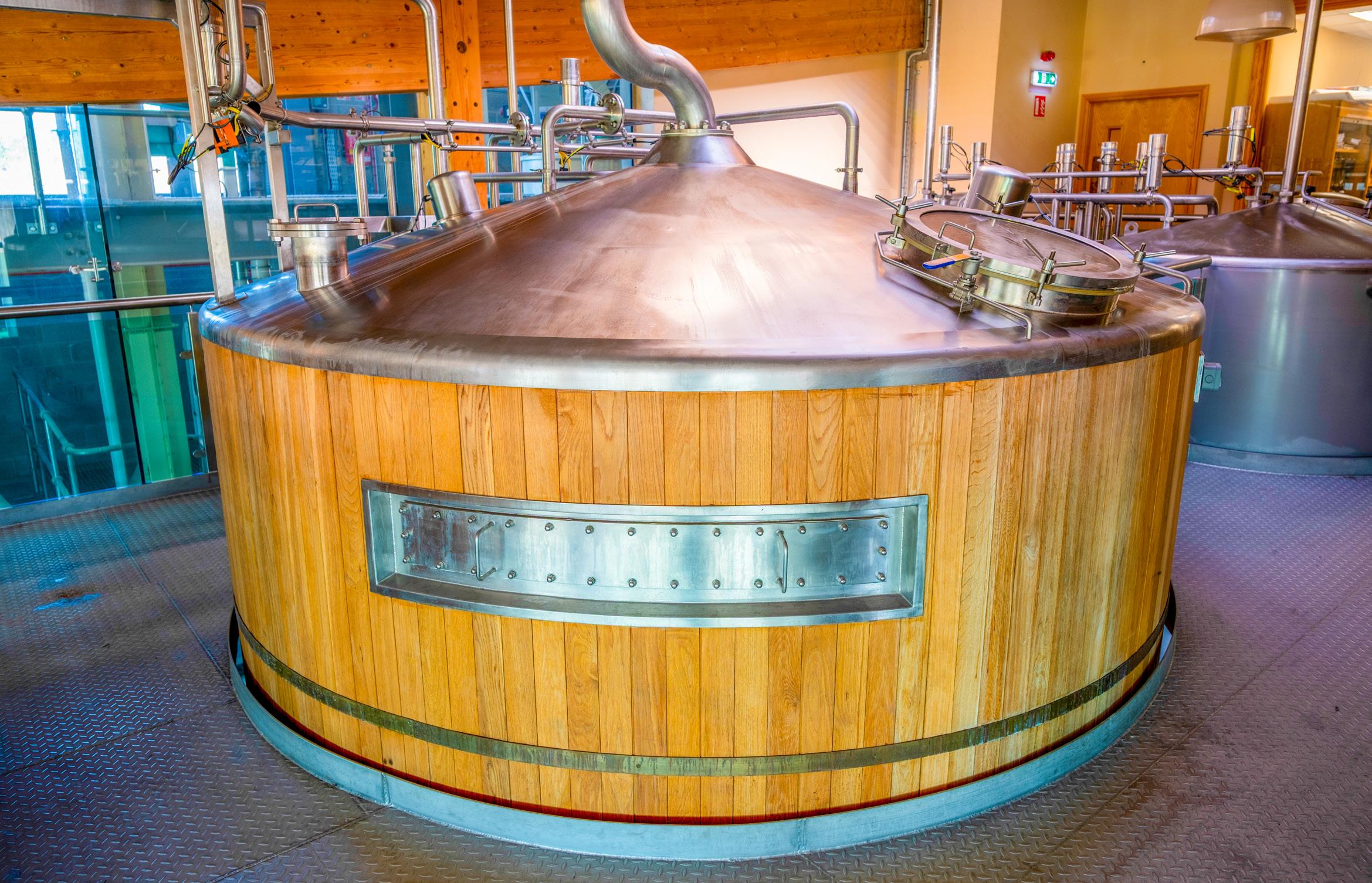
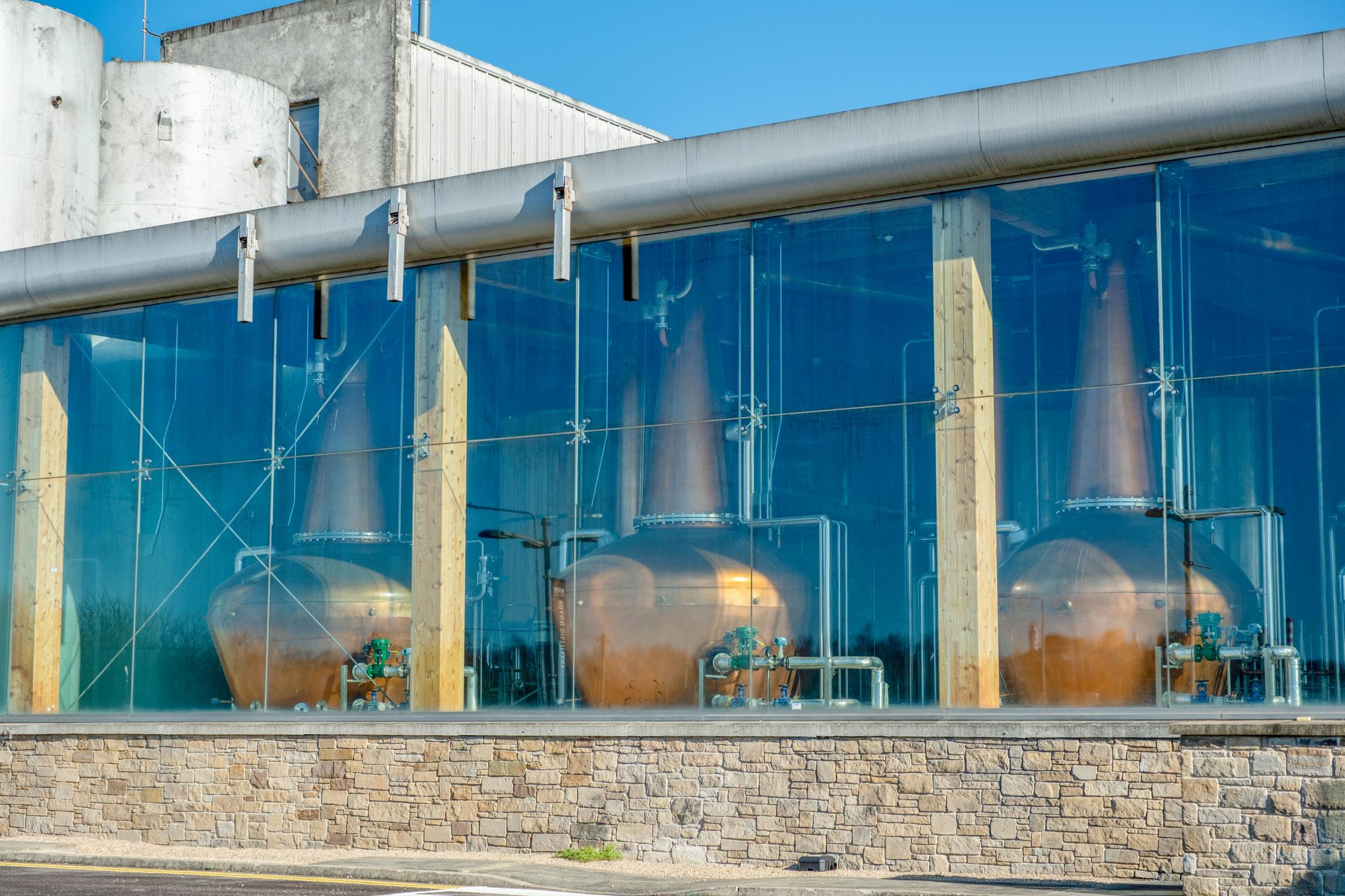
Just inside the main entrance, i sit down on a light leather bench and read a text on a framed plaque about the family behind the distillery. The story begins with Pat and Marie Cooney who, in 1974, began a career in the drinks industry by acquiring the company Gleeson Group. Initially, they mainly worked with bottling Guinness and distributing the popular stout to shops and bars. But when Guinness itself took over the bottling operation in the late 1970s, they were forced to look for other opportunities. Together with his brother, Pat came up with the idea of drilling for mineral water, which they discovered in County Tipperary in the mid-1980s. Tipperary Natural Mineral Water – as the brand was named –became a success and the company grew rapidly. They also produced cream liqueur and their own cider. And when they acquired the established wine company Gilbey’s, they suddenly became the largest wine distributor in Ireland. But the financial crisis of 2008 left deep scars on the company’s finances and in 2013 Pat and Marie decided to sell the entire business –apart from the cream liqueur and cider, which sold well internationally. At the same time, the idea of creating a family-owned distillery focused on single pot still whiskey began to take shape – a style where a significant portion of the grain is unmalted. “At first, we wanted to build the distillery in an old mill, so I spent the summer kayaking along the River Boyne searching for a mill that might work. We bid on a few, but luckily we didn’t get them. Then one Monday we drove past this building – an old Toyota showroom. We made a complete U-turn – from an old riverside mill to something ultra-modern with marble floors and glass walls. That’s how we ended up here,” says Peter, one of Pat and Marie’s five children.
WE BEGIN THE TOUR by taking a look at the Swiss-made Bühler mill. Despite running at full capacity for more than seven years, it still looks practically brand new. Since a significant portion of the grain being milled is unmalted and comes directly from the fields, it is especially important to let
it pass through a stone separator. “Every week we have to empty a large bucket filled with things like stones, nails and pieces of chicken wire. We’ve even found coins from the Roman Empire,” says Peter. The standard recipe for Boann’s single pot still whiskey is 40% malted barley, 55% unmalted barley, 3% oats and 2% rye, which falls within the legal framework of what may be called single pot still whiskey under Irish law. However, far from all whiskey is made this way. Since launching in December 2019, the family has experimented with 45 different mash bills. It is a pursuit that combines the search for new flavours with a desire to recreate how pot still whiskey was actually made in the past.
TO CARRY OUT THESE EXPERIMENTS in a methodical and scientific way, the family enlisted the help of whiskey historian Fionnán O’Connor. In his doctoral thesis, he explored the potential of forgotten historical grain recipes as a driver of innovation within modern Irish distillation. “He went back through the 250-year period when Ireland was the world’s largest whiskey producer and followed the agricultural and economic rollercoaster of the time. He investigated why wheat, oats or rye were used, and how factors such as the wheat boom affected historical grain recipes. He proved that if you bottled any of these old whiskey styles today, technically they would not be allowed to be called single pot still – because they all contained more than five percent of other cereals,” Peter explains. But the ambition does not stop at simply recreating history – the goal is to rewrite the rules for the future. Under current legislation, single pot still whiskey may contain a maximum of five percent other cereals in addition to barley.
THE COONEY FAMILY IS NOW PUSHING TO CHANGE the technical regulations and raise the limit to 30 percent. The aim is to make the definition more historically accurate and give Irish distilleries greater creative freedom. “We hope and believe that a change is on the way. It’s the big
The Italian-made copper stills from Green Engineering.
elephant in the room – everyone basically agrees that today’s regulations do not represent what Irish whiskey actually was.” The matter currently rests with the Irish Department of Agriculture for public consultation and, if the amendment is classified as a “standard adjustment,” the Irish government can approve it independently. But if it is considered more extensive, the matter must go all the way to the European Commission in Brussels.
GIVEN THAT A LARGE PORTION OF THE GRAIN used is unmalted, Boann has installed a so-called mash conversion vessel that helps convert the existing starch into fermentable sugar. A small amount of wort is then mixed with dry yeast and, once fermentation has started, the mixture is transferred into one of ten stainless steel washbacks with a capacity of 10,000 litres. After around 90 hours, the wash is fully fermented and reaches a strength of about eight percent alcohol. Like most whiskey distilleries in Ireland, Boann distils its whiskey three times. What is unique to Boann, however, is the choice of copper stills. Initially, the family considered buying stills from Forsyths in Scotland, but when it turned out they had a waiting list stretching several years, they began exploring other options. Through the company that manufactured their washbacks, they came into contact with an Italian producer called Green
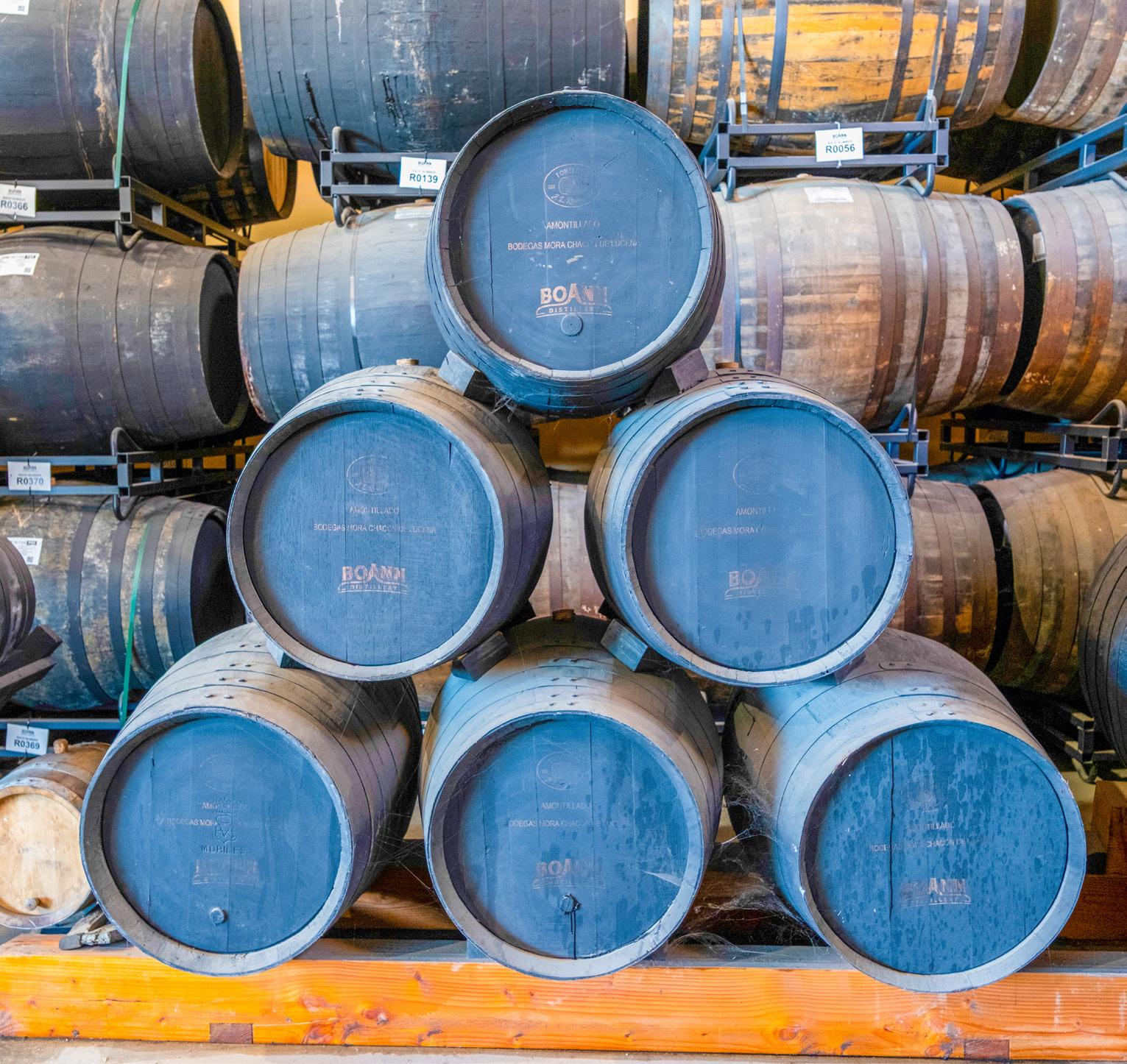
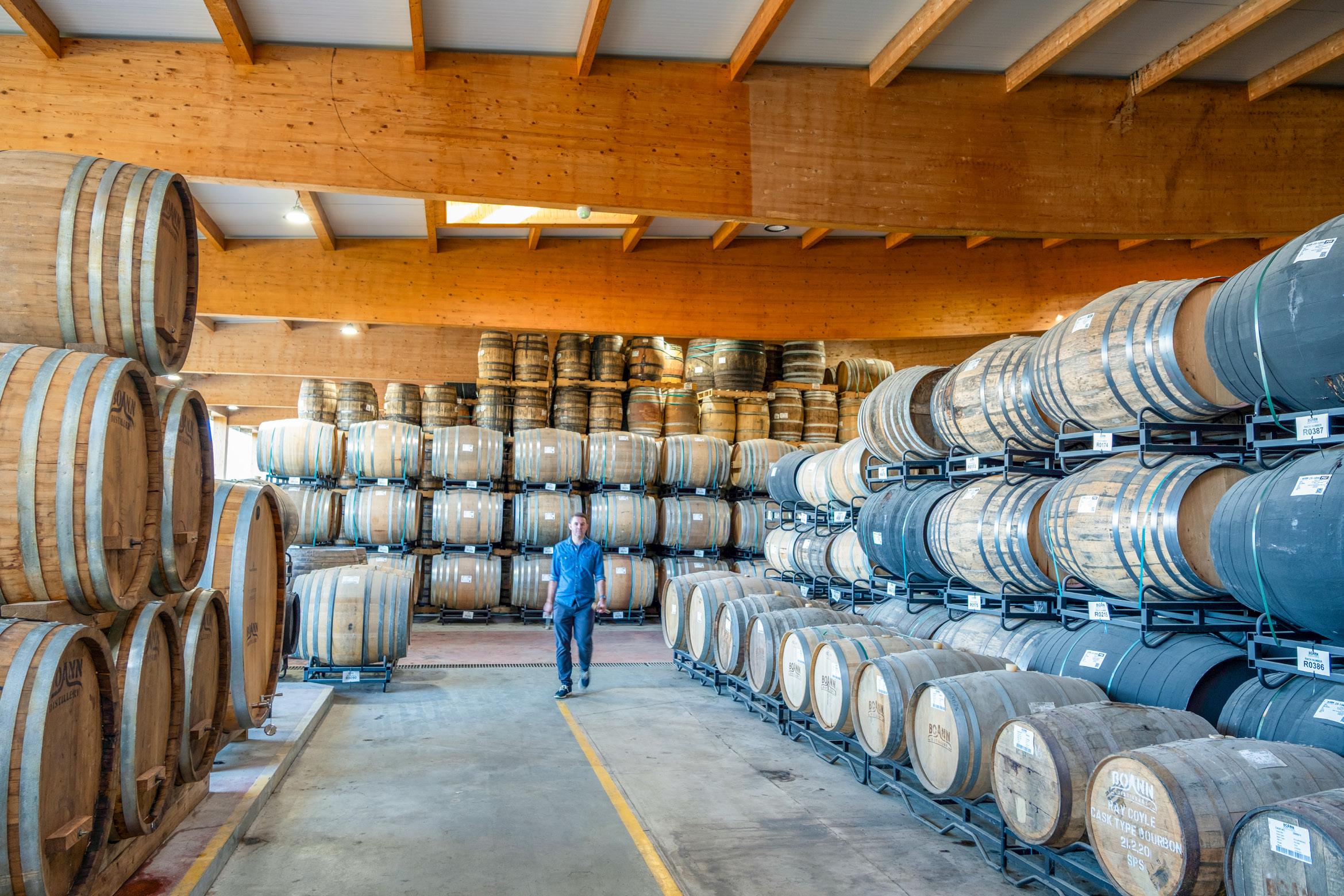
Since its founding in 2019, the distillery has been on the lookout for high-quality solera casks from the Sherry Triangle.
Boann’s experimental warehouse is located in a room adjoining the distillery.
Engineering, which offered three different copper stills equipped with nanotechnology in both the lyne arms and condensers. “If you were to look at the inside of the still with a microscope, the surface would appear like a landscape full of tiny valleys and peaks. Thanks to this, the alcohol vapours come into contact with six times more copper surface area than normal, which in turn produces a cleaner spirit,” Peter explains. Another interesting aspect is that both the intermediate still and the spirit still are equipped with reflux control. In practice, this means that, at the push of a button, the character of the spirit can be varied from light to medium or heavy. “Having three different base distillates is fantastic. By combining these with our different grain recipes, we actually have more variation possibilities than cask maturation itself provides. We’re talking about millions of combinations, unlike many other distilleries that begin with a single distillate and therefore become more one-dimensional.”
TODAY, BOANN HAS MORE THAN 25,000 CASKS OF WHISKEY spread across six warehouses. Unlike many of the larger Irish distilleries, which often favour standardised, newly made casks to ensure a consistent flavour profile, Boann moves in the opposite direction. Only around 30% of the casks are ex-bourbon, while the rest consist of a broad mix of sherry, marsala and many other cask types. In a room adjacent to the distillery – where the Cooney family once operated a small brewery – the most experimental maturation takes place. Peter shows everything from 100-year-old Oloroso casks from an entire solera system to Madeira casks from the historic producer Justino’s. He explains that these old casks possess extraordinary flavour richness: “After a hundred years in a Solera, flavour compounds have penetrated so deeply into the wood that they continue delivering character long after an ordinary cask would have given up.” I follow Peter into the experimental warehouse and taste various single pot still whiskeys matured for four to six years in, among other things, Japanese mizunara oak, cream sherry casks and French oak casks. Considering how impressive all the cask samples were, I can warmly recommend keeping an eye out for future single cask releases from Boann. For those unwilling to wait, there is already a core range of single pot still whiskey matured for four and a half years in marsala, madeira and pedro ximenez casks.
AT PRESENT, BOANN’S ANNUAL PRODUCTION stands at around 800 000 litres of pure alcohol. But as demand for the whiskey has increased, the distillery has ordered an additional mash tun and ten new washbacks. Once everything is installed and operational, Boann will be able to produce twice as much whiskey as it does today.
The copper stills feature nanotechnology designed to maximise copper contact during distillation.
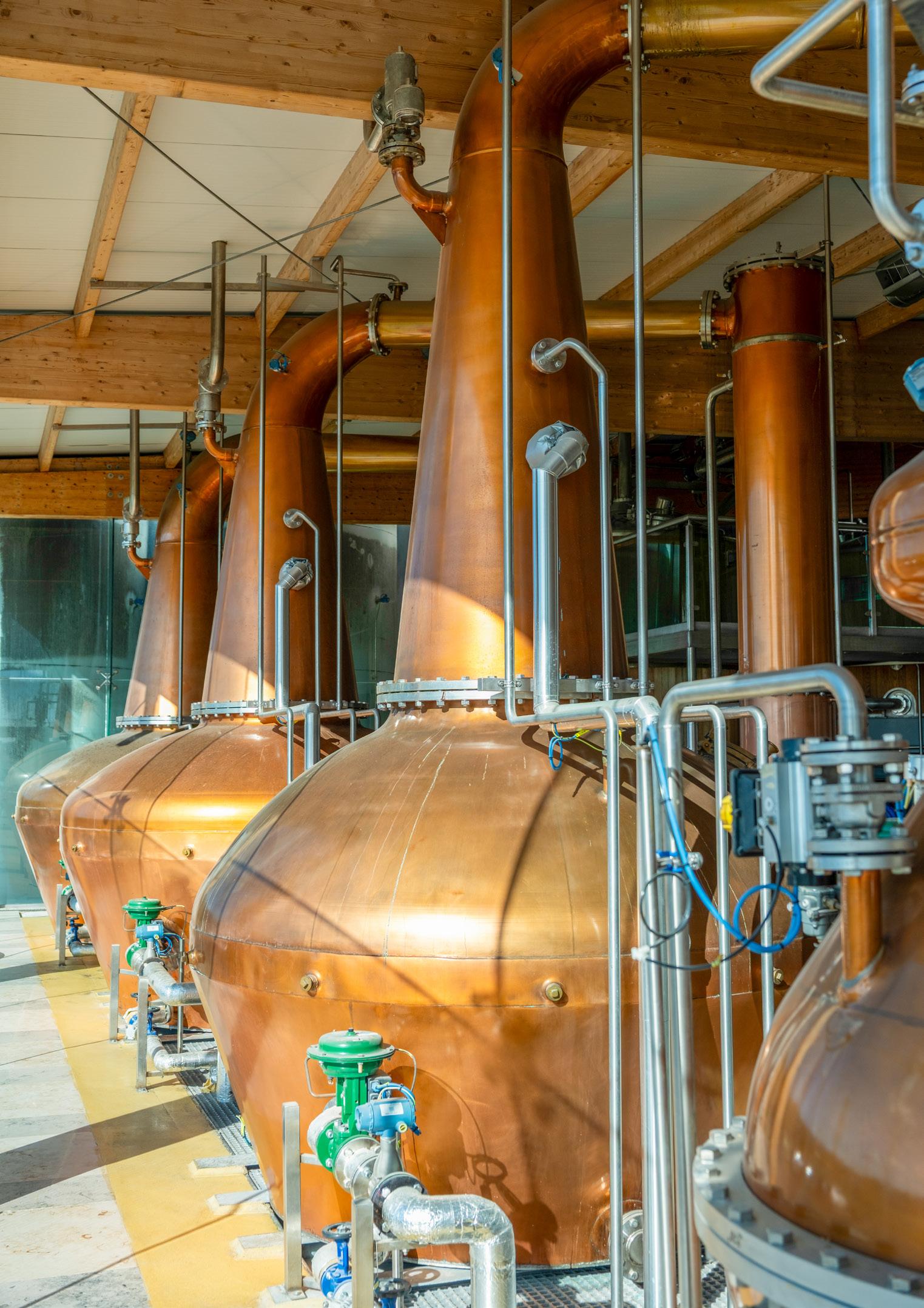
Provning Boann
Boann single pot still px cask 47 %
93 This four-and-a-half-year-old single pot still whiskey was launched in 2024 and is currently one of Boann’s three core expressions. The whiskey was initially matured in oloroso casks before receiving a finishing period in 500-litre pedro ximenez casks that had been part of a solera system for more than 60 years. The nose offers dates, cinnamon and freshly toasted muesli with raisins and caramelised oats. The palate is surprisingly light in style and reveals elegant nuances of ripe stone fruit, raisins, honey and once again dates. This is no sherry bomb, but rather a finely tuned interplay between Boann’s pot still character and carefully selected sherry casks.
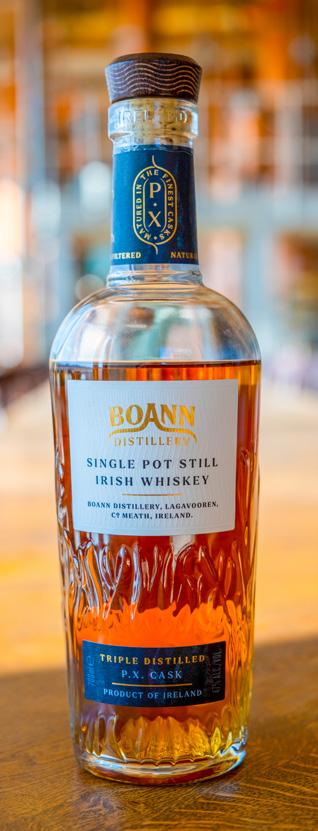
IN FOCUS: IRELAND
Midleton –Distillery A Conversation with Master Blender Dave McCabe
In the autumn of 2023, Dave McCabe assumed the role of Midleton’s new Master Blender. Considering that his predecessor Billy Leighton had worked at the distillery for 47 years and served as Master Blender for 19 of them, Dave undeniably inherited a weighty legacy to uphold. As Whisky & Bourbon’s correspondent, I met with Dave McCabe to find out how the initial phase has been and what lies ahead in Midleton’s fascinating journey.
TEXT & PHOTOS: DANIEL BRUCE
My first visit to Midleton begins with a walk through the old distillery. The experienced guide Tommy Byrne – who also teaches at the distillery’s whiskey academy – shows me around among old washback’s and patinated copper stills on a grey March day. The oldest building on the site dates back to 1794 and originally functioned as a wool mill. However, not much wool was spun there because the British government purchased the building in 1803 for military purposes during the Napoleonic Wars. Once the wars ended, interest in Irish whiskey grew rapidly. The three brothers James, Daniel and Jeremiah Murphy bought the building, converted it into a distillery and founded the business in 1825. They were far from alone in beginning whiskey production. Between 1821 and 1835, the number of distilleries in Ireland nearly tripled, from 32 to 93. But the increase was short-lived. Due to factors such as the temperance movement of the 1830s and the Great Famine of the 1840s, demand for Irish whiskey declined. In an effort to save the whiskey industry, James Murphy proposed a merger with four other Cork distilleries in the 1860s, and in 1867 the Cork Distilleries Company (CDC) was founded. Midleton followed suit and joined the group the following year. Almost exactly one hundred years later, another merger took place, this time between Cork Distilleries Company, John Jameson & Son and John Power & Son. Together they formed Irish Distillers, with Midleton as its base.
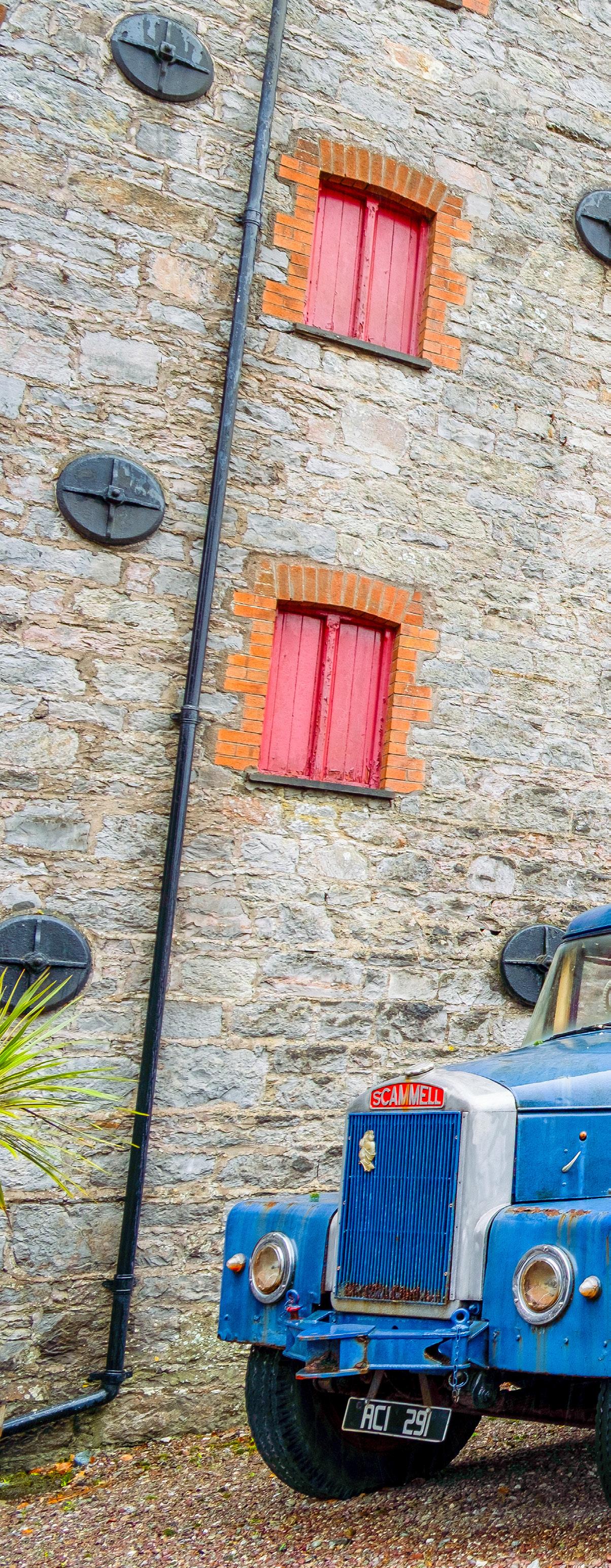
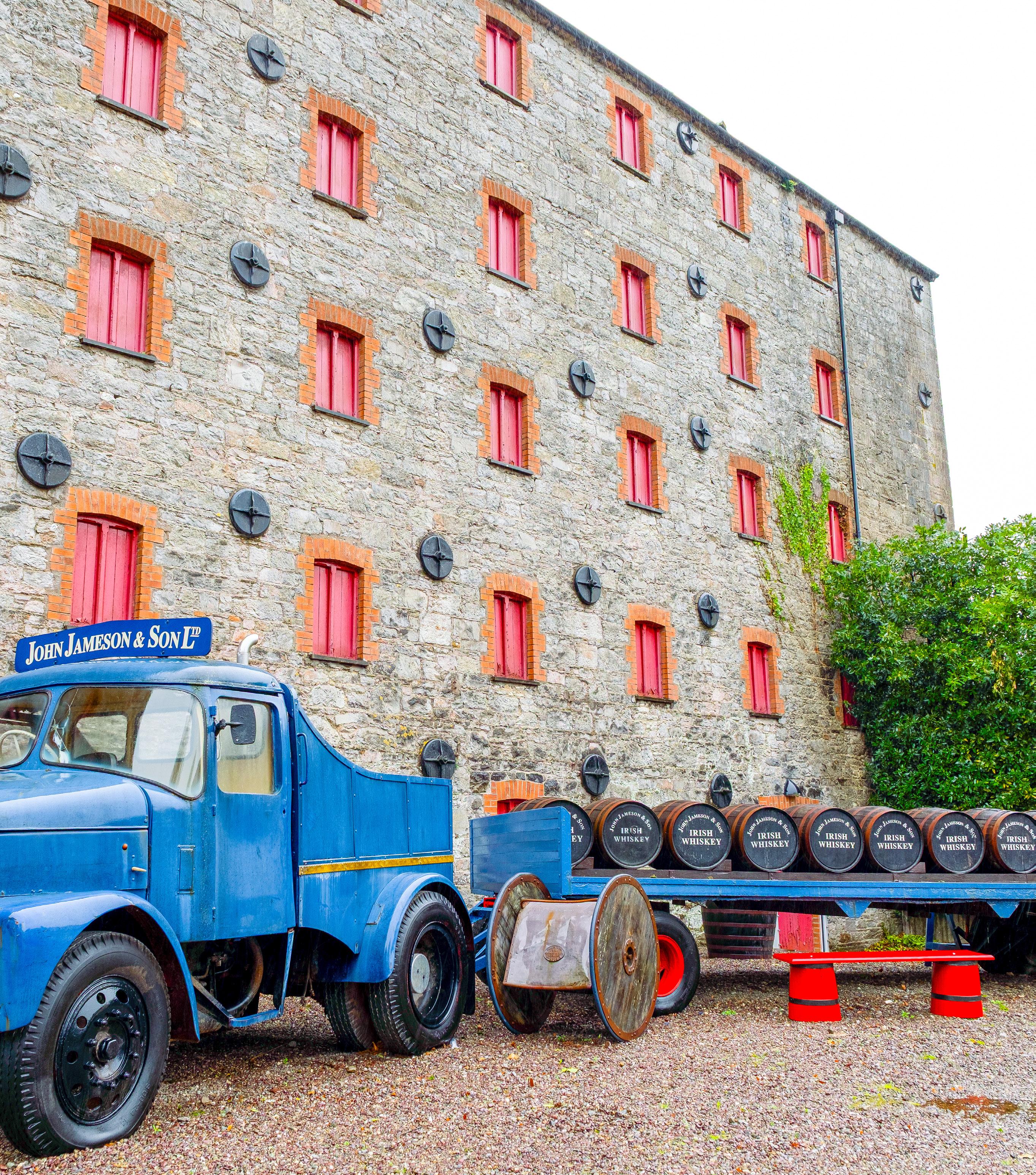
En äldre Scammell-lastbil fullastad med whiskyfat framför det gamla destilleriets imponerande stenfasad.
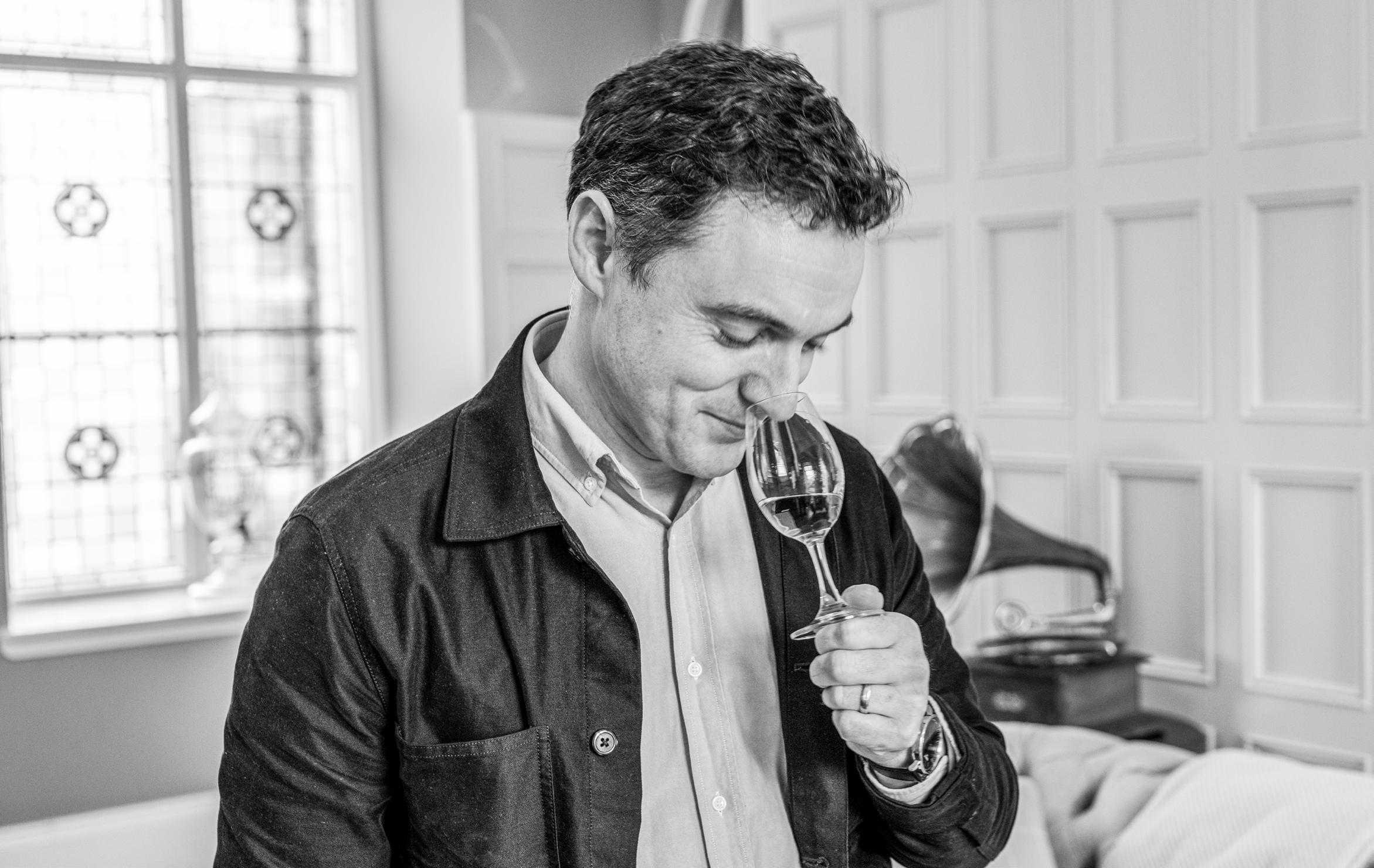
AND THEY PRODUCED NO SMALL AMOUNTS OF whiskey throughout history’s highs and lows. Tommy shows me the distillery’s old wash still from 1854 with a capacity of nearly 144,000 litres. This coal-fired still is the largest pot still ever built in the world and remained in use until 1975, when the old Midleton distillery was decommissioned and replaced by a newly built distillery a few hundred metres away.
Although the new stills hold just over half the volume of their gigantic predecessor, they are, interestingly enough, the largest pot stills currently in operation anywhere in the world. Unfortunately, I do not have time to visit the new distillery. Instead, we head towards the Distiller’s Cottage where the legendary Barry Crockett was born and raised. Here, tradition was passed down through generations, as his father Max Crockett also held the role of Midleton’s Master Distiller. While I settle into a brown leather armchair waiting for Master Blender Dave McCabe, I am served the celebrated pot still whiskey Redbreast 27 Year Old, matured in a combination of bourbon, sherry and port casks. Absolutely delicious.
You started here in 2010 – what did your journey towards becoming Master Blender look like?
I started on this side of the distillery, meaning the visitor centre, and in 2012 I helped establish the Irish Whiskey Academy where Tommy now works. To teach there, I needed to understand everything we do, so I spent time in every department – from analysing barley in the lab to working in the small pilot distillery. Billy Leighton (then Master Blender) was incredibly generous with his knowledge and time. He brought me to Spain to meet our coopers and sherry producers, and when he was here in southern Ireland we conducted tastings together. He mentioned that he was not getting any younger and that he was looking for someone to mentor. So around 2016, I transitioned into the role of “production technologist.” You could say it was a kind of test period working alongside him, where we spent a year tasting lots of whiskey and working extensively with inventory management. At the end of that year, he offered me the role of blender under him. And in 2023 I took over from him as Master Blender while he moved into an emeritus-style role.
How do you view your responsibility towards existing brands versus creating something new?
You are more of a custodian, ensuring quality and preserving tradition within existing brands, rather than simply taking over and changing everything according to your own vision. It’s a bit like a relay race where the goal is to hand everything over in the best possible condition to the next blender. But I’ve also been given freedom to create. We have developed new expressions such as the Redbreast Iberian Series. You learn from people like Billy how things should be in order to create new expressions – always with a connection to how the brands have been built over time. It’s important to always keep the brand’s history in mind when doing something new. There are wood types and cask styles I would never use when experimenting with Redbreast because they simply do not fit. The same type of wood, however, could be perfect for Jameson or Method & Madness.
How does the Method & Madness micro distillery function as an innovation platform?
It’s a fantastic brand from an experimental perspective because there is no history or heritage to consider – it’s essentially carte blanche. We have experimented with unusual wood types such as cherry, chestnut, acacia and amburana. With cherry wood, it actually didn’t work at all in the beginning – there was far too much cask influence and the final result wasn’t particularly good. We had to go back to the drawing board, fine-tune everything related to the blending and try again, and then it worked much better. With amburana, it was all about timing – not letting the whiskey stay in the cask too long. The beauty of experimentation is that you do not always succeed on the first attempt, but you learn what is possible. And if something works, Method & Madness becomes an excellent incubator to determine whether the idea is scalable for other brands. A concrete example is Jameson Triple Chestnut. We probably would never have gone directly to maturing Jameson in chestnut casks if we had not first tested it on a small scale through Method & Madness. Once we knew it suited the Jameson profile, we could move forward.
Dave McCabe was appointed Midleton’s new Master Blender in autumn 2023.
Redbreast 12 has an incredibly fine balance – how do you achieve that?
At Midleton, we produce three styles of pot still spirit: light, medium and heavy, or perhaps more accurately, traditional. The light style is fresh and citrus-driven with fine cereal character. The medium style has notes of clove but also a sort of orchard fruit character. The traditional style has a robust, oily, herbal and spicy profile. For Redbreast 12, we focus on blending the light style with the medium style. The maturation then takes place primarily in first-fill ex-bourbon casks and sherry casks. Ex-bourbon represents a larger proportion in the blend because I want the sweetness and toasted oak character to come forward. I also want the sherry to contribute dried fruit together with a nutty, almost marzipan-like character – but not so much that the tannins take over. That is why the sweetness from the bourbon casks is so important.
Your sherry casks seem unusually clean in style – how do you manage that?
We do not buy our sherry casks on the open market. We have them made specifically for us. Imagine new European oak that we then season with sherry for two years. Since we triple-distil, our spirit is fairly elegant and not as oily as it would be if double-distilled. We try to let the wood have as much positive impact as possible –not only from the sherry itself but also from the oak. Since 2001, none of our casks have been treated with sulphur whatsoever. We also ensure that the casks are delivered empty during autumn and winter when it is cold enough to prevent microbial growth.
I’ve drunk Jameson on many different occasions in several different countries. How do you achieve such consistent quality in a whiskey like Jameson produced on such a large scale?
Consistency is, to me, the single most important thing. We handle it differently compared to the Spot series or Redbreast because those are made batch by batch. Jameson functions almost like a solera system. We have components that form the building blocks – grain whiskey and pot still whiskey – and each of these has its own recipe. The components are first matured in separate vessels before being blended
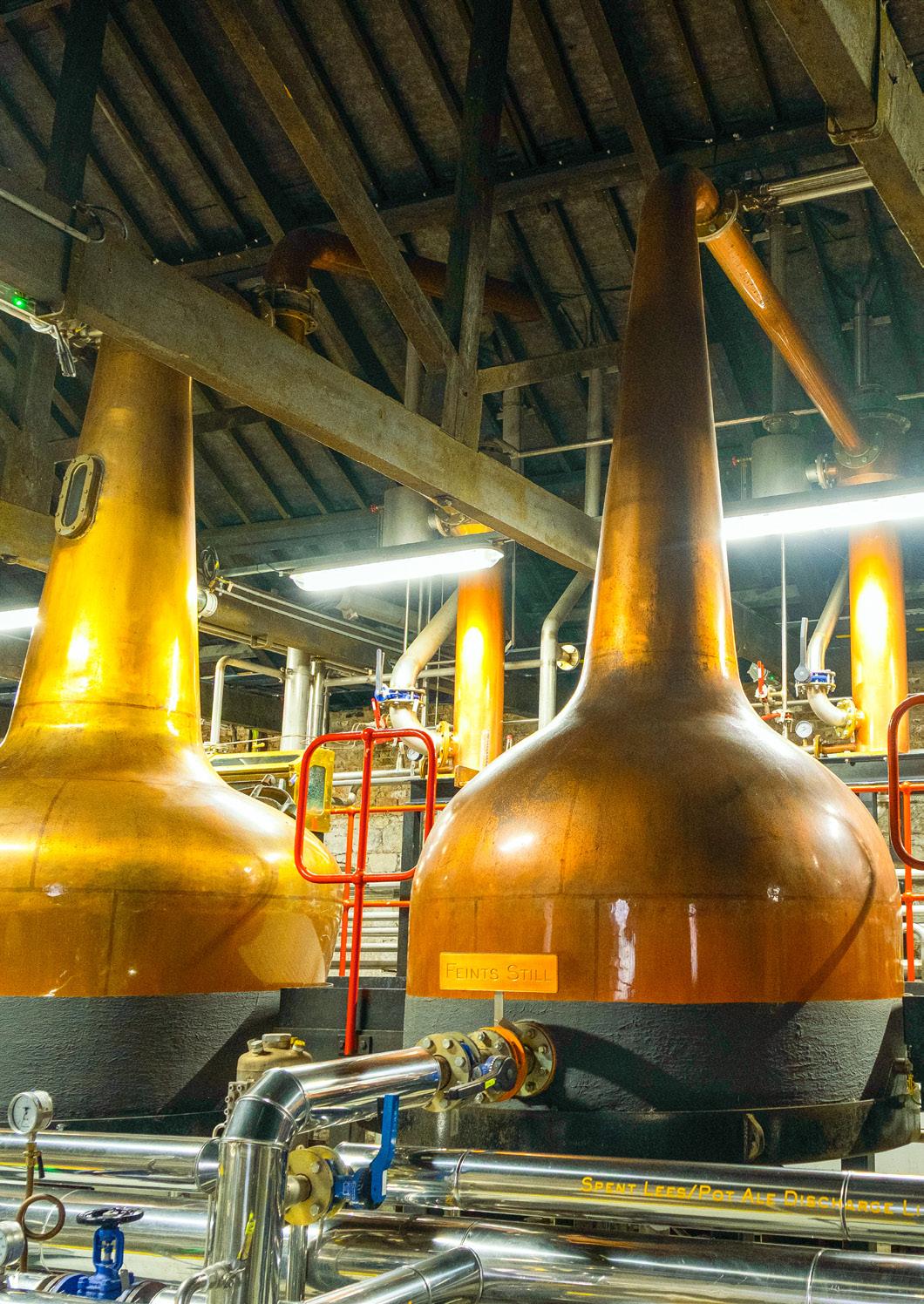
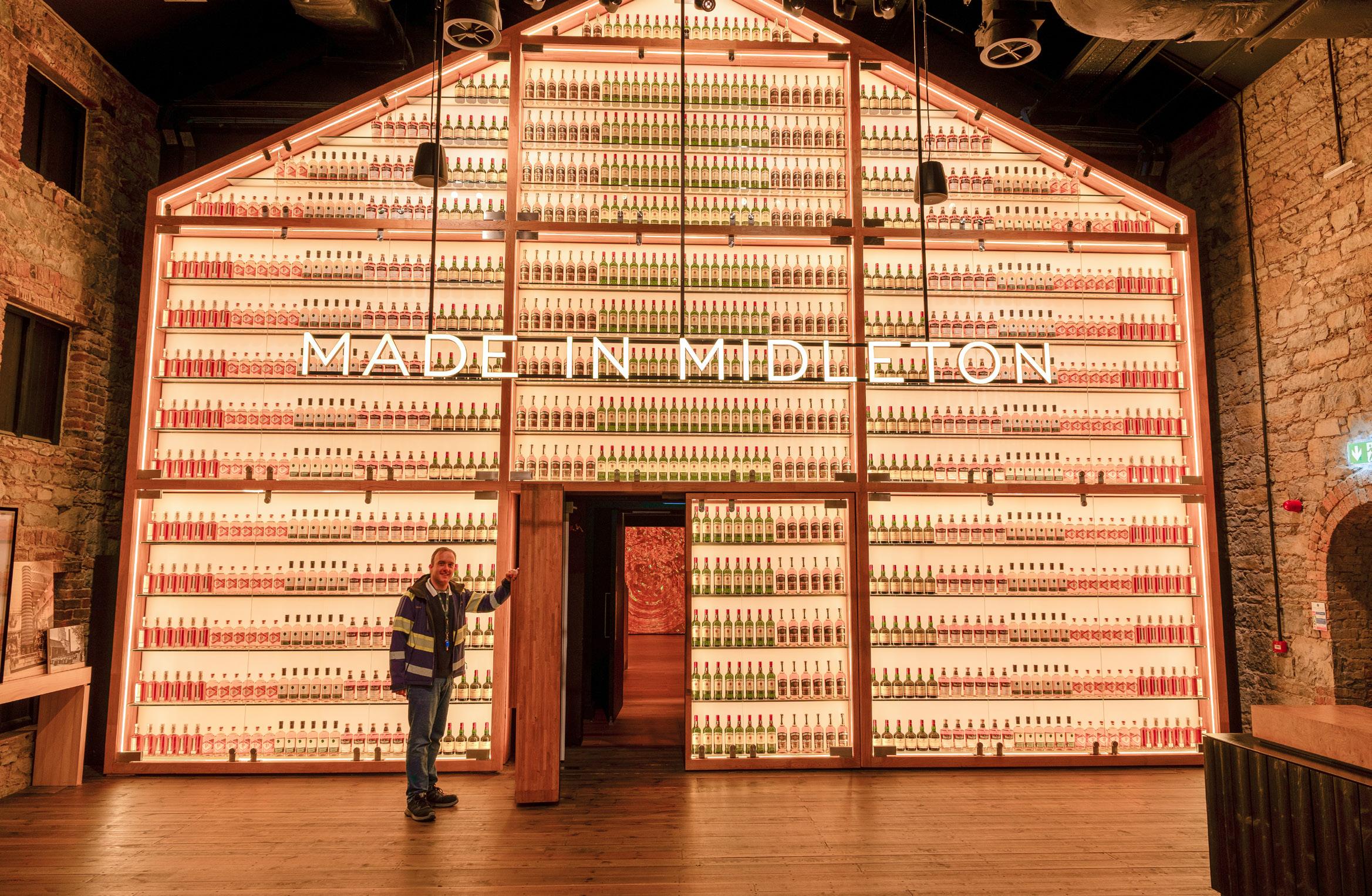
1,100
Irish Distillers experimentella destilleri Method & Madness ligger inne på det gamla Midleton-destilleriets område.
This glass wall, housing more than
bottles of Midleton whiskey, was unveiled in 2023.
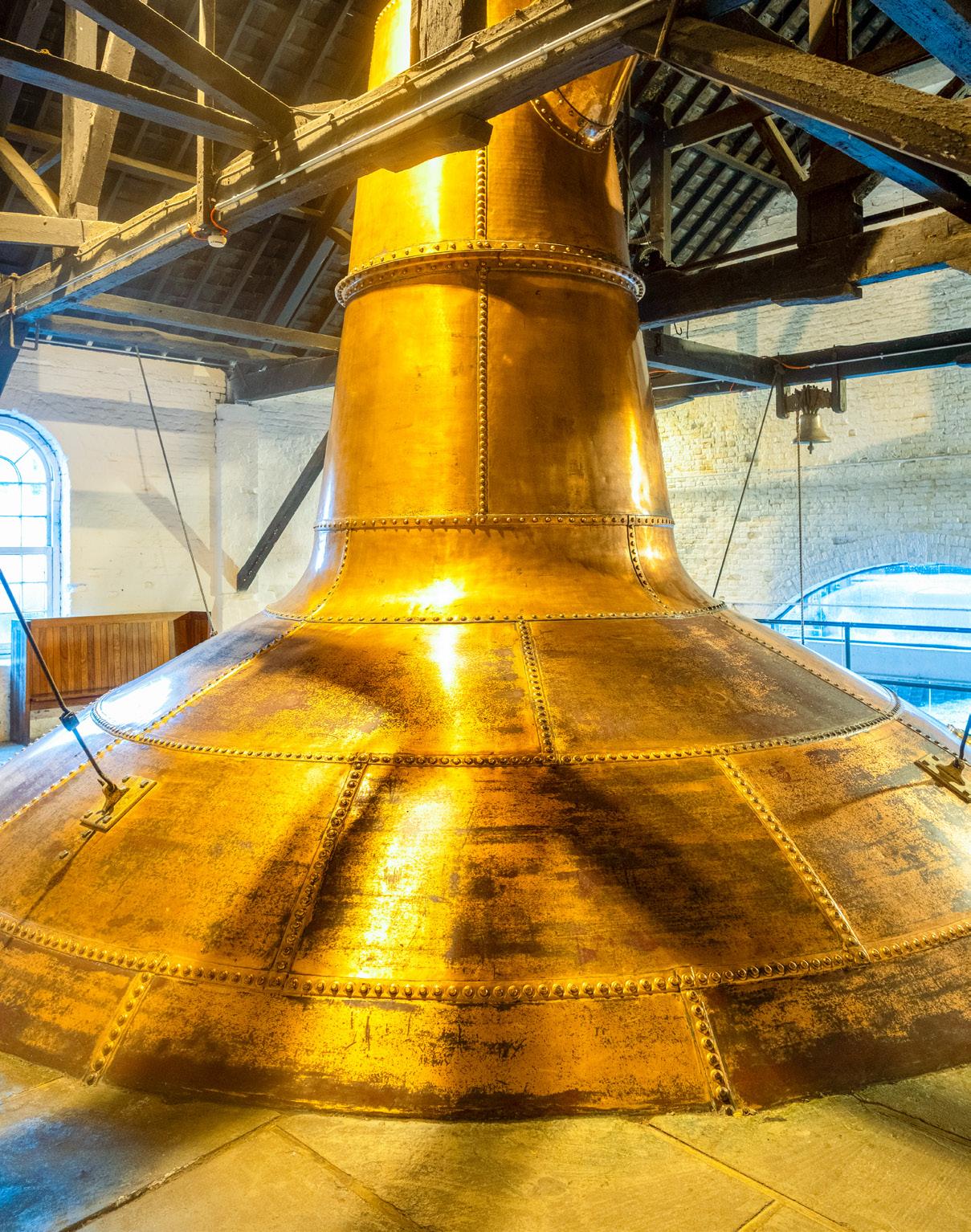
This coal-fired wash still from 1854 is the world’s largest pot still, with a capacity of 144,000 litres, and remained in production until 1975.
Midleton’s legendary Master Distiller Barry Crockett was born in the Distiller’s Cottage, which today houses a state-of-the-art archive and exclusive spaces for whiskey tastings.
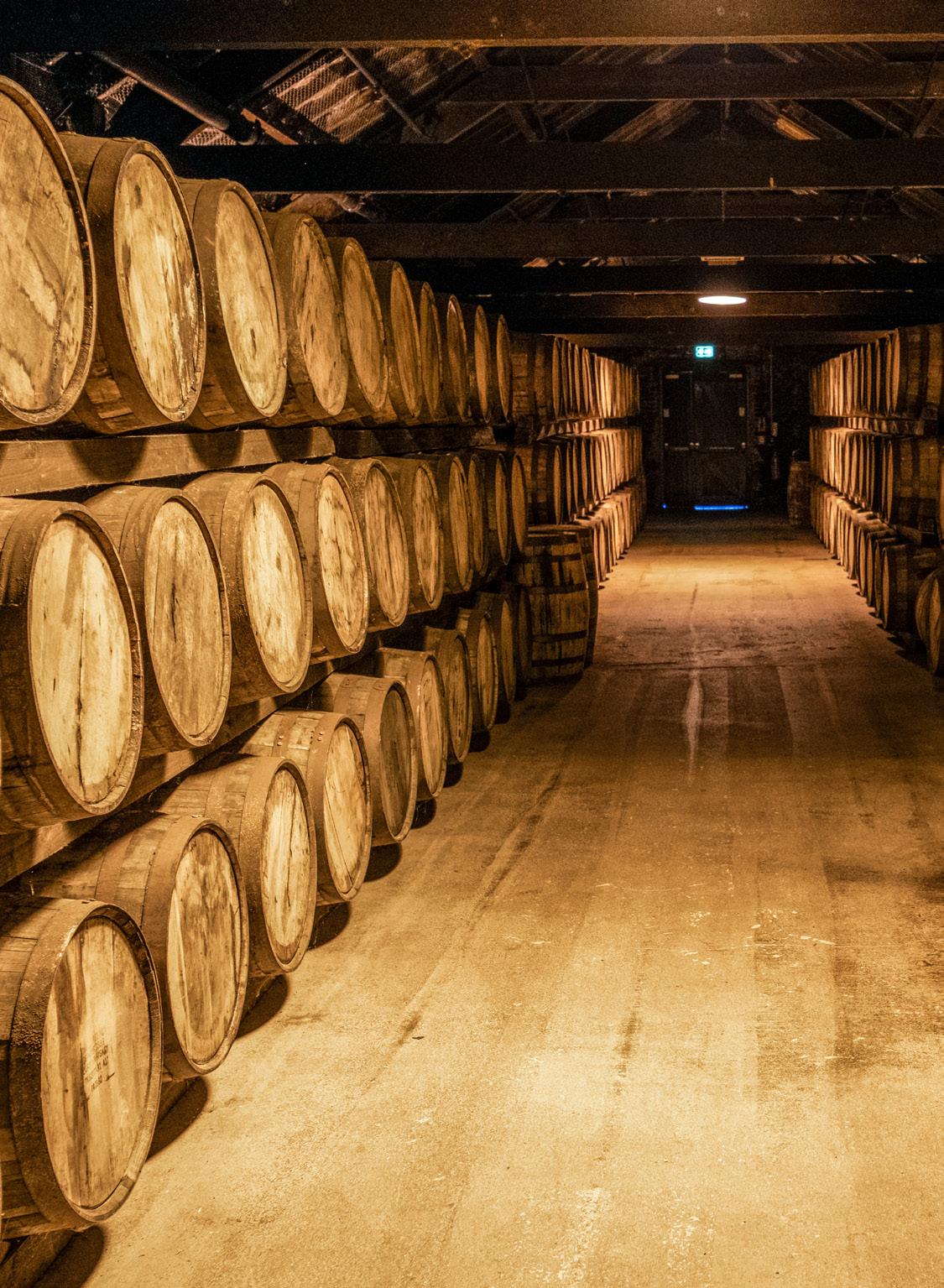
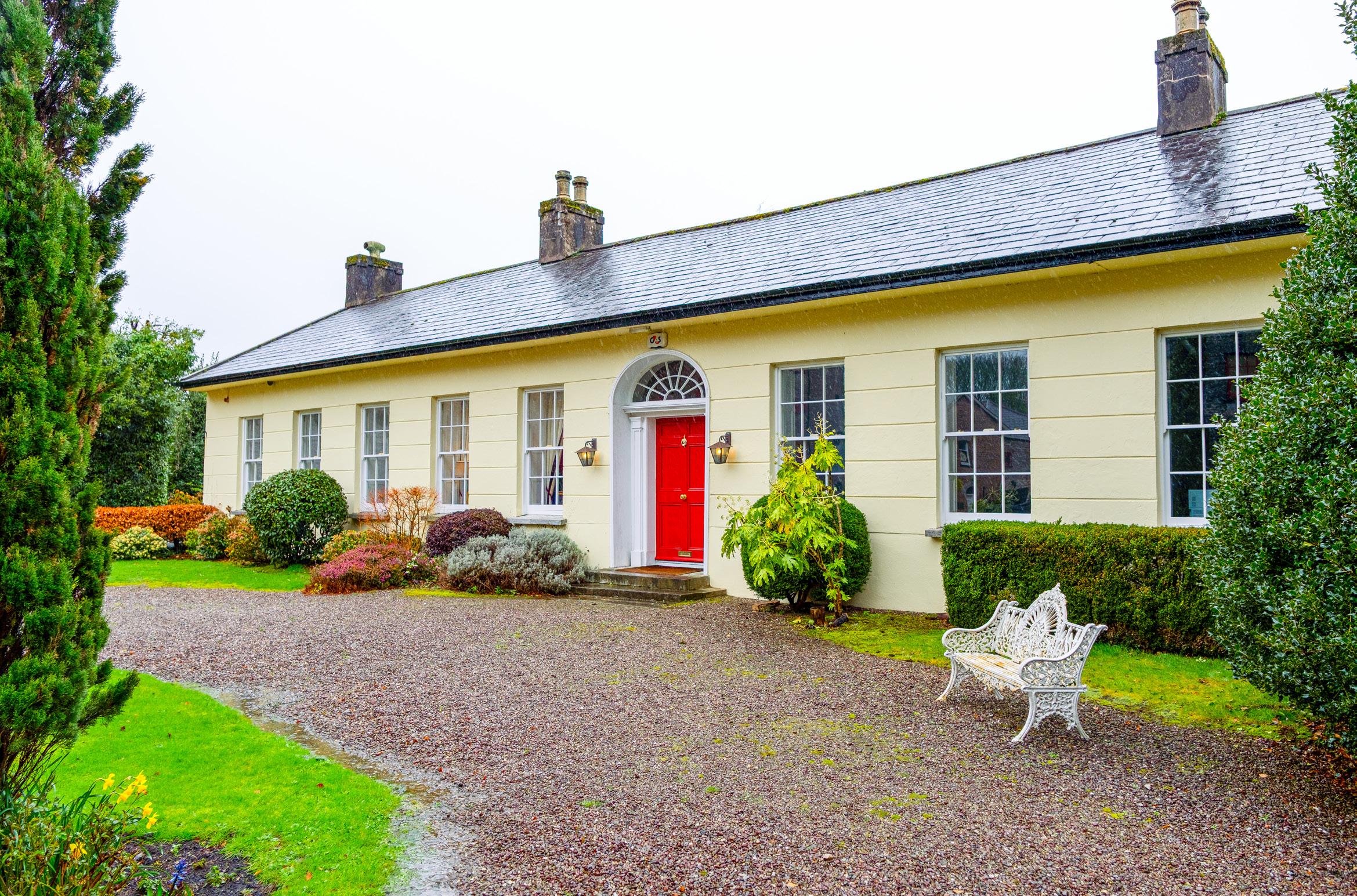
One of the few remaining dunnage warehouses still in use at Midleton.
together in the correct proportions in Jameson’s marrying vats. The crucial thing is that we never allow the vats to empty completely – we always refill them when roughly one-third remains, so old and new whiskey are constantly mixed together. That is how we maintain consistency.
How do you ensure inventory lasts for both today’s bestsellers and future prestige whiskies?
It is extremely challenging. What I fill into casks now, I need to ensure there will be enough of in four to five years to make Jameson – but I also need to make sure that what I produce this year will be sufficient to make Redbreast 12 in twelve years, Redbreast 27 in twenty-seven years. As sales and forecasts evolve, what and how much you produce each year also changes. It’s like sailing – you know your final destination in terms of projected sales, but the winds are constantly changing, so you continuously make small adjustments.
How are you working with sustainability?
Besides reducing water consumption per litre of alcohol, energy recovery is also extremely important to us. We have mechanical vapour recompression systems that can capture excess steam and reuse it to power the next round of distillation. We also run our column stills under pressure and vacuum to reduce energy consumption. On the agricultural side, in 2020 we introduced a bonus programme for barley farmers approved by the Irish
Farmers Association. Farmers who meet criteria such as planting hedgerows, cover crops or installing beehives receive bonus payments for every tonne of barley they deliver. So far, more than 269 farmers have joined.
In 2022 it was announced that you would build another distillery. How is that project progressing?
The plan is for it to be operational around 2030. It’s a completely new distillery being built right beside the existing one. It will essentially double our capacity. The pace may have changed somewhat since 2022 because growth has not been as explosive as we predicted, but the demand is still there, which justifies the expansion.
Tasting Midleton Irish Whiskey – Single Pot Still Discovery Pack
Tasted by Anders Enquist
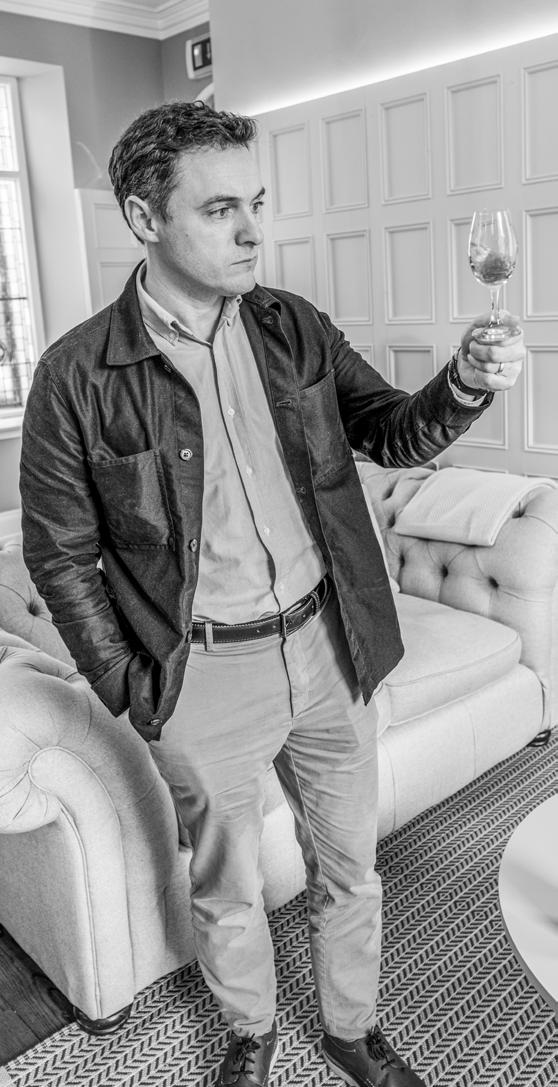
Single Pot Still Irish Whiskey is the most classic and distinctively Irish whiskey category, where malted and unmalted barley are combined and triple-distilled in traditional copper pot stills. The term “Single” also means that the entire whiskey comes from one single distillery. Available at the Swedish Systembolaget is a tasting pack from Midleton that captures four expressive sides of this richly flavoured Irish whiskey tradition: Redbreast 12 YO, Green Spot, Powers John’s Lane 12 YO and the highly exclusive Midleton Barry Crockett Legacy.
Redbreast 12 YO, 40%
92+ Redbreast 12 YO is produced from both malted and unmalted barley. Triple-distilled according to tradition and matured in a combination of bourbon-seasoned oak casks and Oloroso sherryseasoned oak. A whiskey with a noble grip to its spice. Chocolate, fudge and vanilla lay down the attractive sweet foundation within a fruit profile touched by salty maritime breezes alongside notes of apple and citrus. There are hints of sugared mint moving gently through a vegetal expression, while pipe tobacco and liquorice emerge in the finish together with subtle leathery undertones. A Redbreast with very fine qualities.
Green Spot, 40%
92 Green Spot Single Pot Still Irish Whiskey has been matured in a selection of ex-bourbon and ex-sherry casks. A whiskey with a masculine expression, yet there is also an elegant perfumed smile of violets and citrus blossom in its dimples of cherry and apricot. A complex bittersweetness lends vinous elegance and altogether creates a deeply attractive character.
Powers
John’s Lane 12 YO, 46%
93
Powers John’s Lane is a 12-year-old Single Pot Still whiskey matured in ex-bourbon, ex-Oloroso sherry and Iberian oak casks. The ambition here is to recreate the earthier old Powers Pot Still style, and the whiskey is named after the address of the original Powers Distillery where two of the old gigantic pot stills still remain. In true Powers fashion, the drive carries itself with humble confidence, without ever drifting into blandness. It is exceptionally well made with beautifully placed caramelised sweetness featuring vanilla, liquorice and toffee within fruit expressions of cherry, apricot, apples and figs. Small clouds of tobacco also drift by with diplomatic restraint. A fluffy whiskey with soft sharpness.
Midleton Barry Crockett Legacy, 46%
94
Midleton Very Rare Vintage Release first saw the light of day in 1984, with Master Distiller Emeritus Barry Crockett as its architect. 1984 marked the inaugural release and the whiskey lives on as a tribute to Barry, developing its blend from a selection of the finest casks, namely ex-bourbon and American oak. It is an elegant and balanced cask composition that reveals itself beautifully in bottled form. The fruit breathes nuanced notes of caramelised orange, apricot, apples, red berries and sultanas, touched by vanilla and pale nut-infused chocolate. A finely salted hint of liquorice flickers through, while the final stage fills out with tobacco and worn leather. A stylish and dignified act.
Dave.
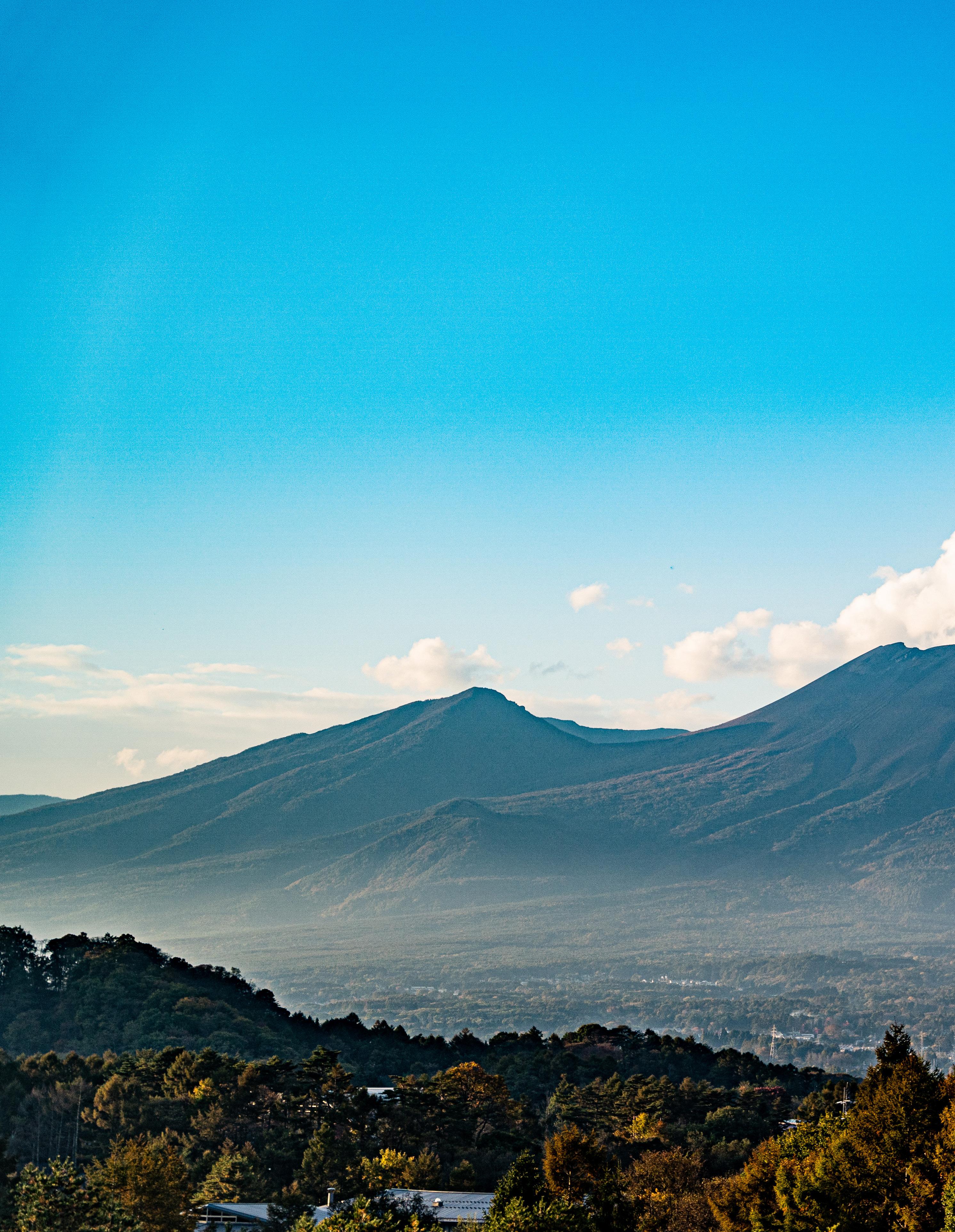
Karuizawa Whisky Distillery
– A New Distillery with an Old Name
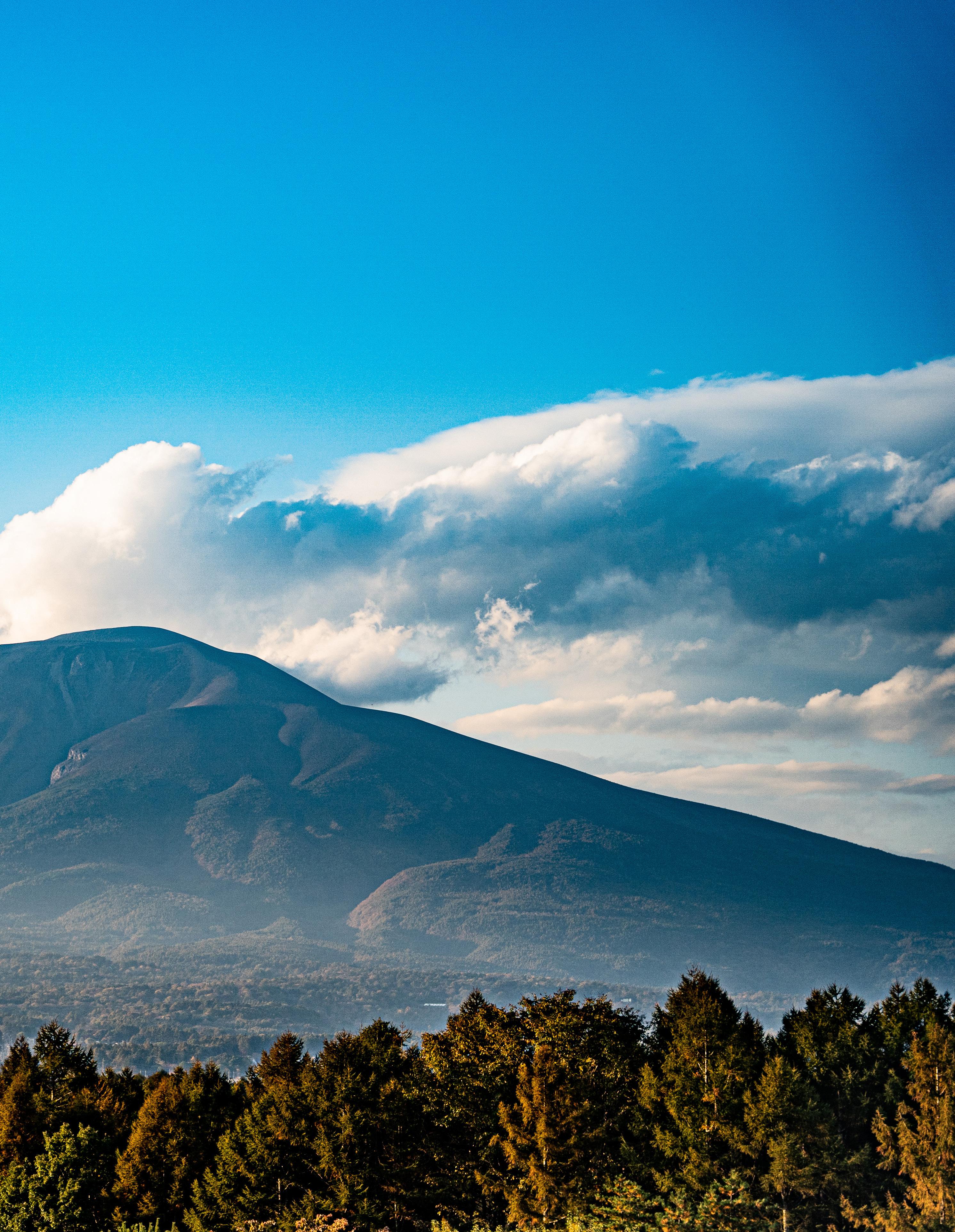
Just south of the exclusive mountain resort of Karuizawa – a little over an hour northwest of Tokyo by bullet train – the new Karuizawa Distillery lies at the foot of Mount Asama. Here, the first distillation took place on December 1, 2022 – more than 20 years after the legendary Karuizawa distillery ceased whisky production in the neighbouring town of Miyota, just a few miles to the west. To avoid confusion, it is important to point out that this is an entirely new distillery, even though founder Shigeru Totsuka’s ambition was consciously to create a whisky that carries forward the legacy of the celebrated sherry-matured whisky from the original Karuizawa.
TEXT AND PHOTOS: DANIEL BRUCE
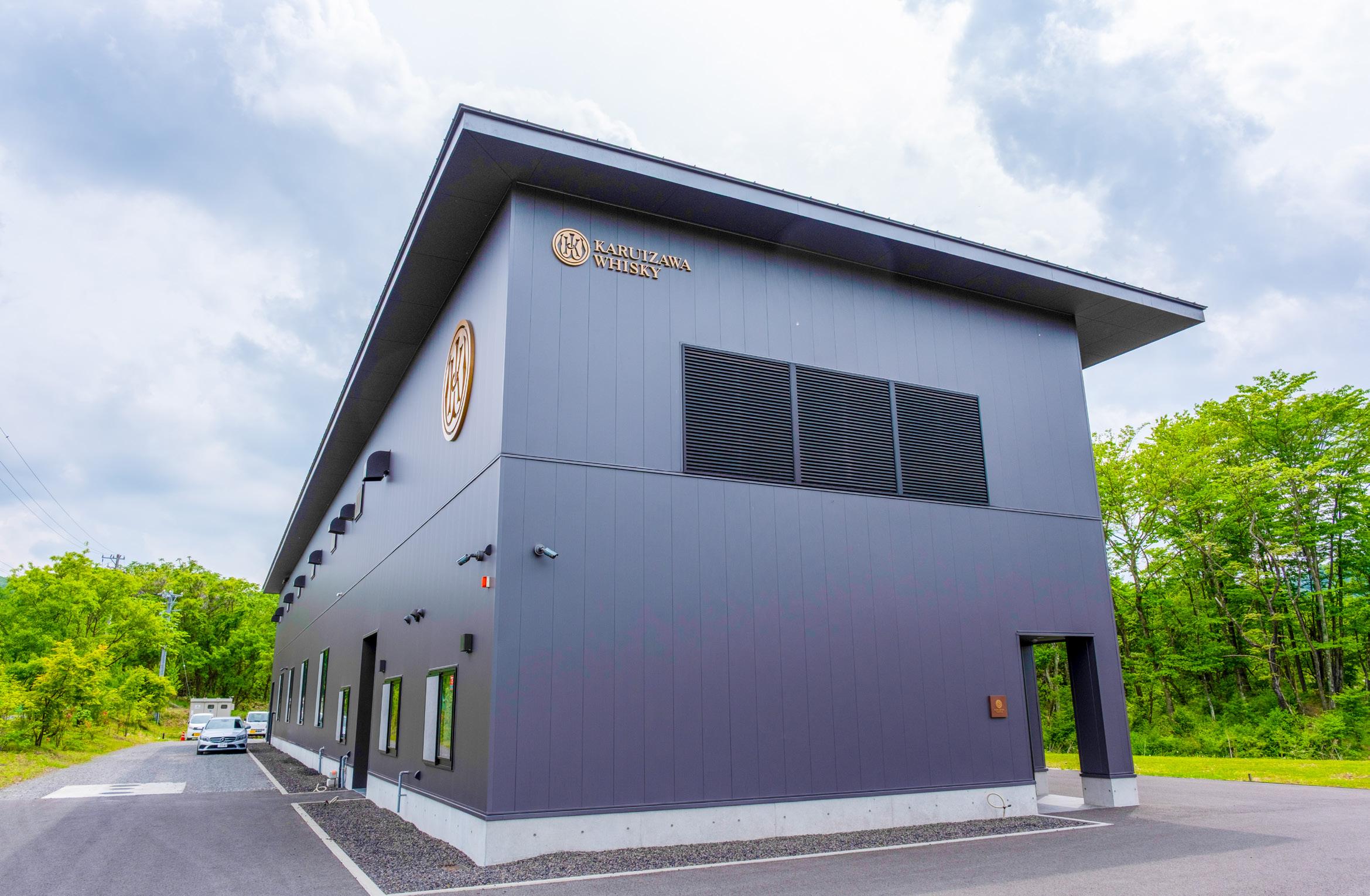
After slurping down a bowl of Black Soba noodles, I arrive in Karuizawa together with my interpreter Takumi on a sunny afternoon in May. Founder Shigeru Totsuka, who is also the 16th master brewer of the family-owned Totsuka Sake Brewery Co founded in 1653, welcomes me before the visit begins with a conversation in a meeting room overlooking the copper stills. As a sake brewer, Totsuka has always worked with beverages generally intended to be enjoyed young, in contrast to whisky, which requires maturation. “Sake in this region is entirely about freshness and rotation – you brew anew every season. But I have always been interested in drinks that require ageing, and when it comes to alcohol, whisky is the king of maturation,” he says. Since Totsuka had developed a fondness for the old Karuizawa whisky in bars around Tokyo and had also conducted successful maturation experiments using their casks for his own shochu, it felt natural for him to move towards that flavour profile.
IN ORDER TO ESTABLISH A NATURAL BRIDGE to the old Karuizawa whisky, Totsuka contacted the experienced Nakazato-san, who had worked for many years at the original Karuizawa distillery. When operations there were finally discontinued in 2012 (the distillery had been mothballed since 2000), it was Nakazato-san who turned the key for the final time. Convinced that his chapter as a whisky distiller was over, he neither kept notes nor recipes detailing how the whisky had been made. Returning to the profession two decades later therefore became an enormous challenge, and he was forced to dig deep into his memory in an attempt to recall every detail of the process. It took a little more than a year of hard work before the right feeling finally returned.
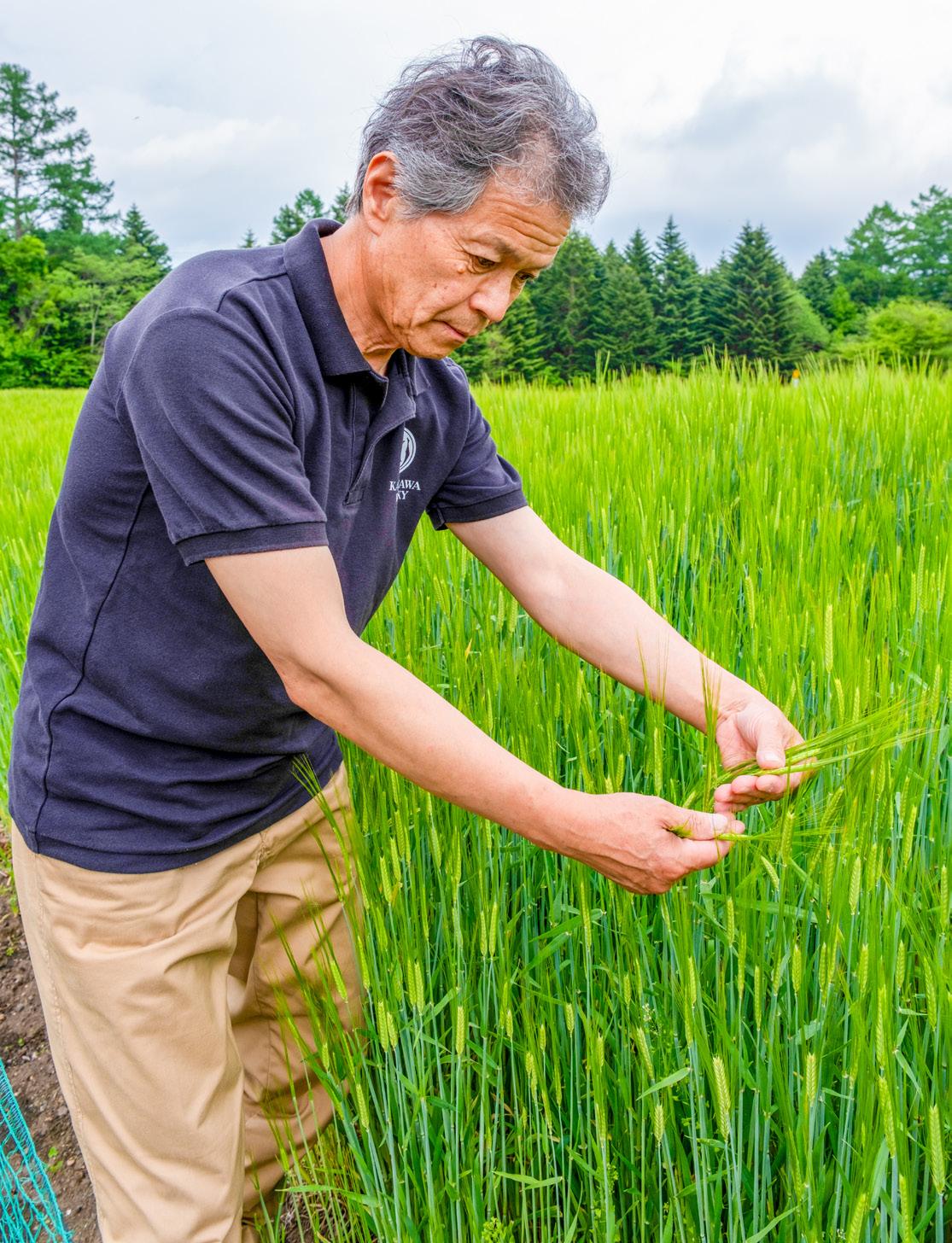
The New Karuizawa Distillery, Nestled at the Foot of Mount Asama Northwest of Tokyo.
Just a few metres from the distillery, Nakazatosan shows us a large field of barley grown by the distillery itself.
FATE, TOO, HAS LENT A HELPING HAND. Just over a year ago, an elderly man appeared unexpectedly at the new distillery. It turned out that he had worked at the original Karuizawa long before Nakazato-san’s time. He brought with him an invaluable gift in the form of an old notebook filled with detailed recipes and logbooks. “Use these to succeed,” was his simple message before handing over the documents. For Totsuka and Nakazatosan, the visit became a kind of confirmation that they were not merely making whisky, but preserving a piece of living history. Yet while the legacy has helped them find a direction, it is not the goal in itself. “With Nakazatosan’s knowledge and experience, we have the ability to create something similar. We are inspired by Karuizawa, but our ambition is to go even further – to become even better,” says Totsuka.
AN IMPORTANT STEP IN MAINTAINING THE SAME whisky style as the original distillery was the decision to use very similar copper stills. Totsuka turned to the renowned Scottish manufacturer Forsyths, but soon discovered that the specific shape he was seeking did not exist within their standard range. Instead of the usual onion-shaped design, Karuizawa’s stills have a straight body – a form more commonly associated with rum production than whisky. To successfully recreate the design, Totsuka travelled to the neighbouring town of Miyota to carefully study one of the original stills that still stands there like a monument. By measuring angles and documenting every detail of the old copper still, he produced sketches which he sent to Forsyths, who eventually custom-built the stills. However, when the stills were finally ready for delivery, the Forsyths team could not travel to Japan to install them due to Covid-related travel restrictions. The solution was for the parts to be shipped as a construction kit. Totsuka and Nakazato-san had to handle the assembly themselves using a rented crane. If one looks closely at the stills today, the numbering used to fit the pieces together can still be seen. “It was a special beginning to the journey. Despite my long experience, I had never before needed to assemble a distillery myself,” Nakazato-san
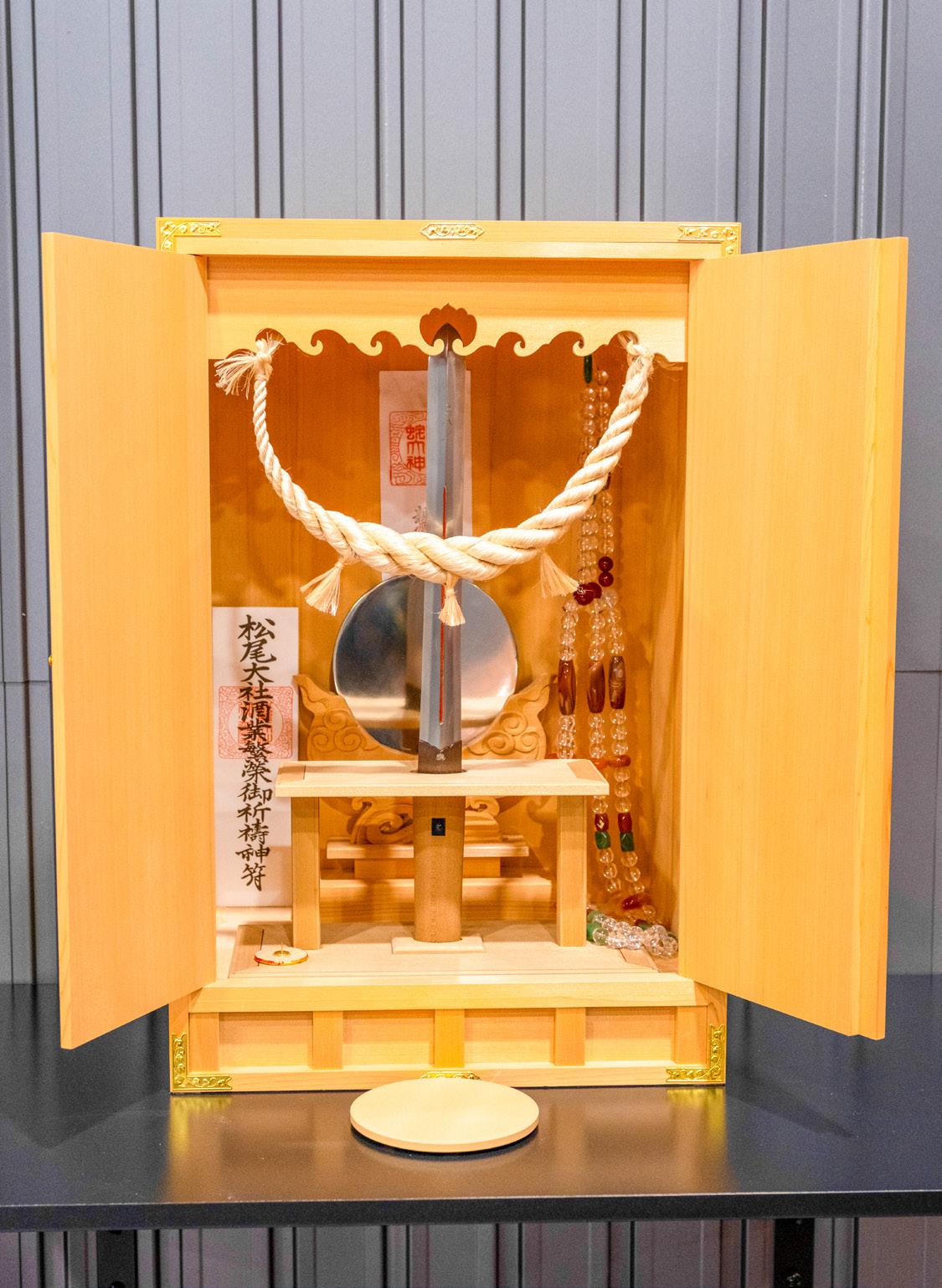
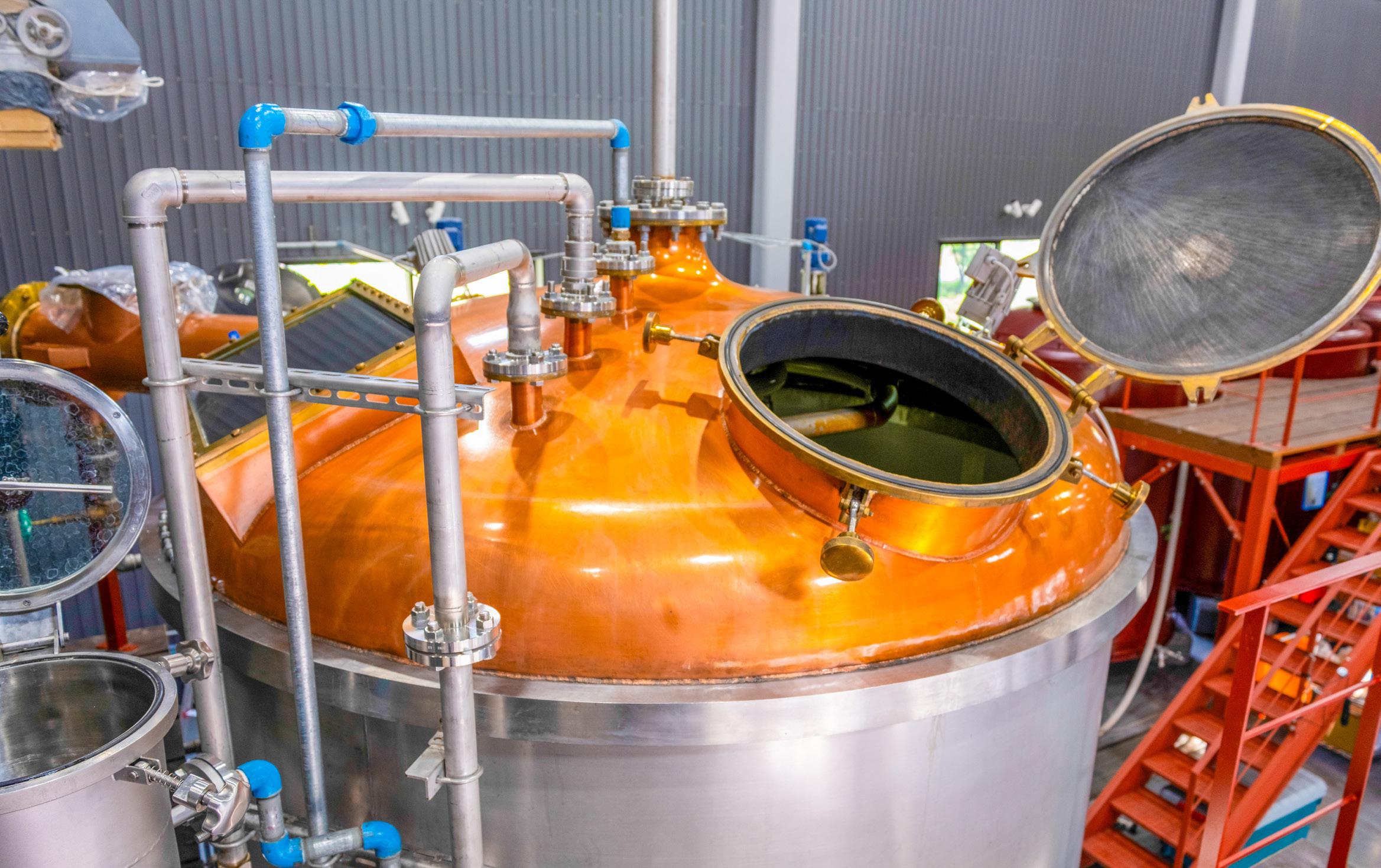
A Small Shinto Shrine Stands Watch Over Karuizawa’s Whisky Production.
The milled malt is mixed with hot water in three stages to extract as much sugar as possible.
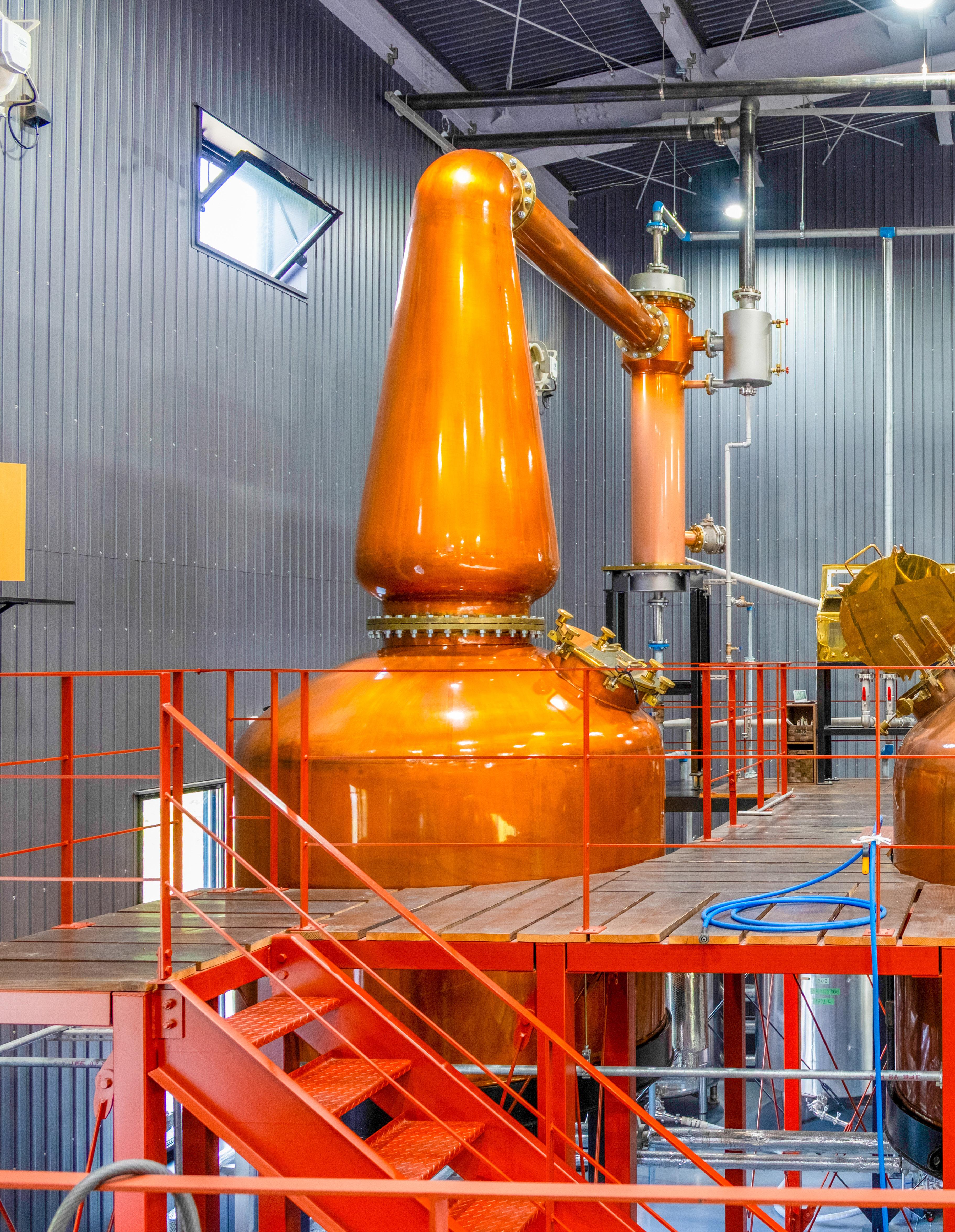
From left: the spirit still, with a capacity of 3,600 litres, and the wash still, which holds 5,000 litres.
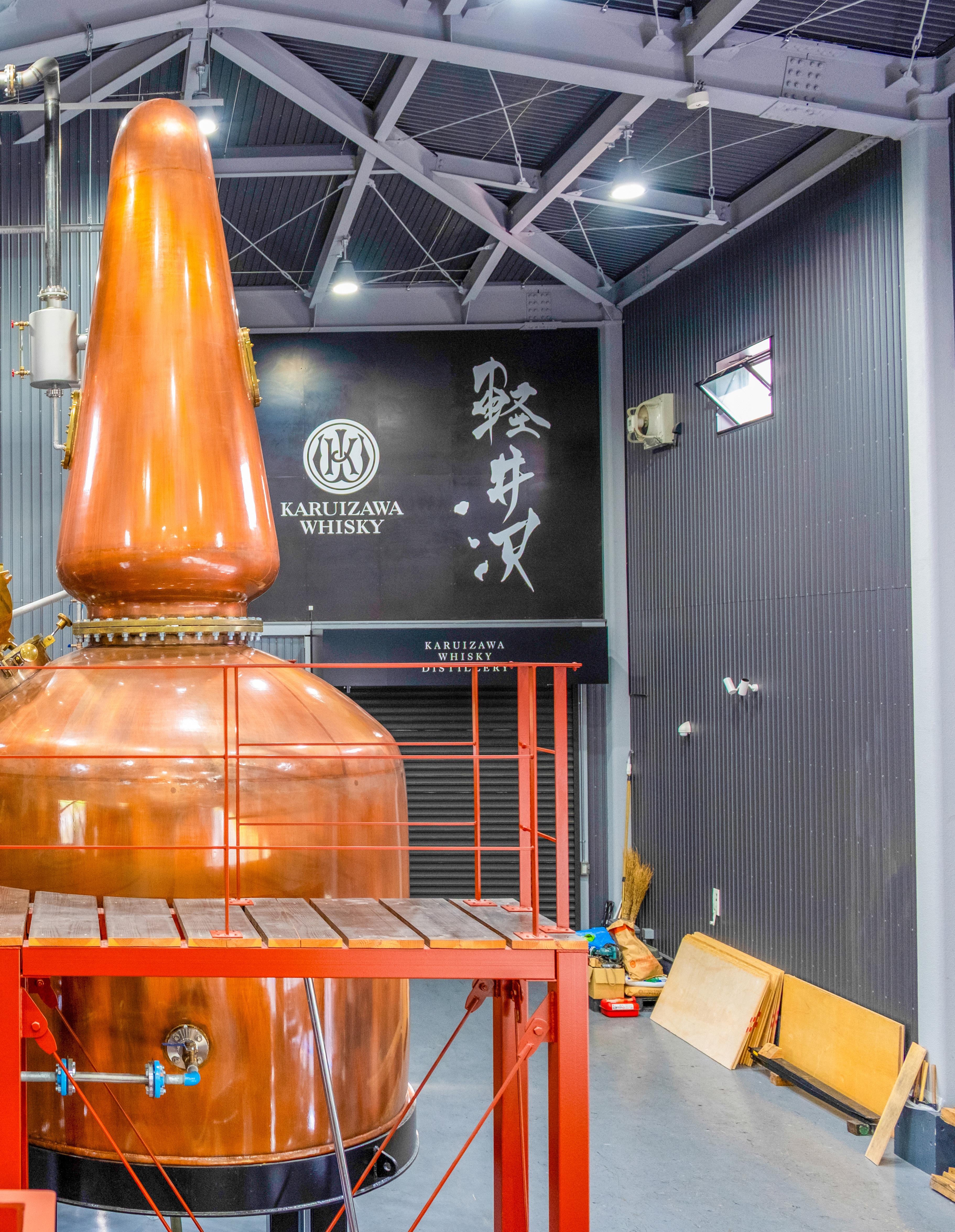
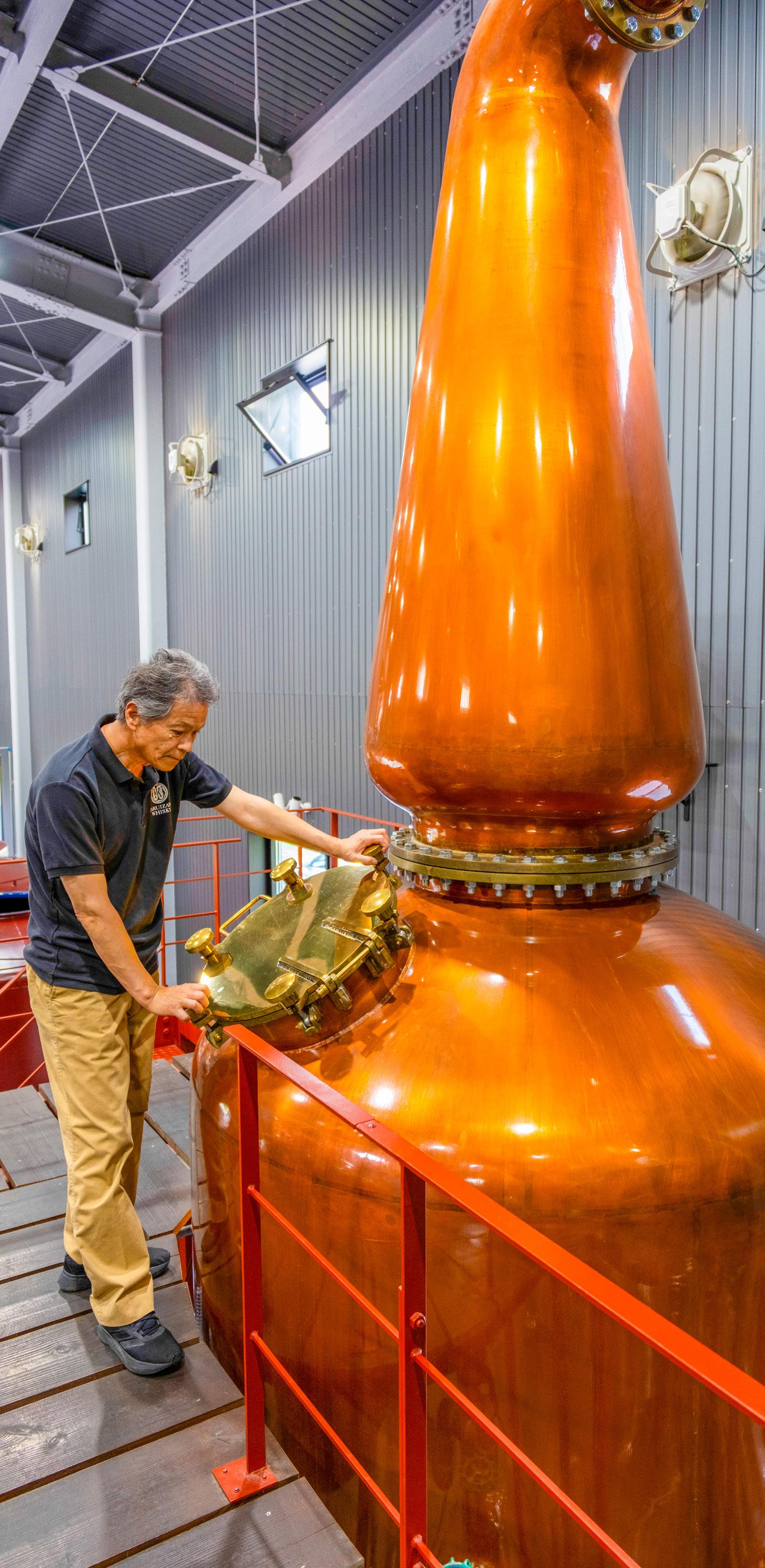
Following the second distillation, the new make spirit is reduced to 63.5% ABV and aged for at least ten years.
explains. The fact that the stills lack computers or modern control panels may possibly have made the installation somewhat easier. “Everything at the distillery is operated manually. From physically opening and closing the steam valves to monitoring the temperatures. Someone has to be here all the time,” explains Nakazato-san.
INSIDE THE DISTILLERY, IT IS OBVIOUS THAT no equipment has been transferred from the original Karuizawa. The four-roller malt mill is brand new and comes from the British manufacturer Allan Ruddock. The malt itself is also imported from England and milled according to the traditional ratio of 20% husk, 70% grist and 10% flour. The crushed malt is then mixed with hot water in three stages in order to extract as much wort as possible. The washback’s, however, are an exception to the otherwise newly purchased equipment. These are repurposed stainless steel sake tanks with a capacity of 5,000 litres from Totsuka’s own brewery. Once the wort has cooled to around 21 degrees Celsius, dried distiller’s yeast is added and fermentation is allowed to continue for three days – just as at the original Karuizawa. The water used comes from nearby Mount Asama and has been naturally filtered through layers of pumice stone and lava. It is relatively hard water, rich in both calcium and magnesium, which helps create the heavy and oily character for which the old Karuizawa was also known.
THE FULLY FERMENTED WASH USUALLY REACHES between 7–8% alcohol before the first distillation begins. The wash still holds 5 000 litres (the same volume as a washback) and is equipped with a downward-sloping condenser pipe. The condenser pipe on the spirit still also has a slight downward angle, though not quite as steep as that of the wash still. Distillation takes place slowly in order to preserve as much flavour as possible. “Our heart cut usually lands at around 69% ABV, but before filling it into casks we always reduce it to 63.5%,” says Nakazato-san while pouring a splash of the new make spirit into a glass. It is a high-quality distillate that is both fruit-driven and full-bodied with a spicy character. Since I have never tasted new make spirit from the original Karuizawa distillery, I cannot comment on whether there are similarities, but there is no doubt that the foundations for an exceptionally fine future whisky are certainly in place.
SOMETHING
THAT
SETS KARUIZAWA
APART FROM every other Japanese distillery I have visited is its policy that the whisky must mature for at least 10 years before it can be bottled and sold. Furthermore, the whisky is matured predominantly in various types of sherry casks, which was also the case at the original Karuizawa. At present, maturation takes place in a warehouse in the neighbouring town of Miyota, though there are plans to build both a warehouse and a visitor centre near the distillery. For anyone wishing to purchase an entire cask themselves, all contact is handled through Karuizawa’s distribution partner dekanta.com. Another project requiring a great deal of effort is their locally grown barley. Just a few metres from the distillery, Nakazato-san shows me a large field of swaying barley cultivated by the distillery itself. For now, however, the distillery remains highly discreet about sharing further information regarding the project. “We have produced a few test batches using our locally grown barley, but we have not yet made any official decision regarding how it will be used,” concludes Nakazato-san.
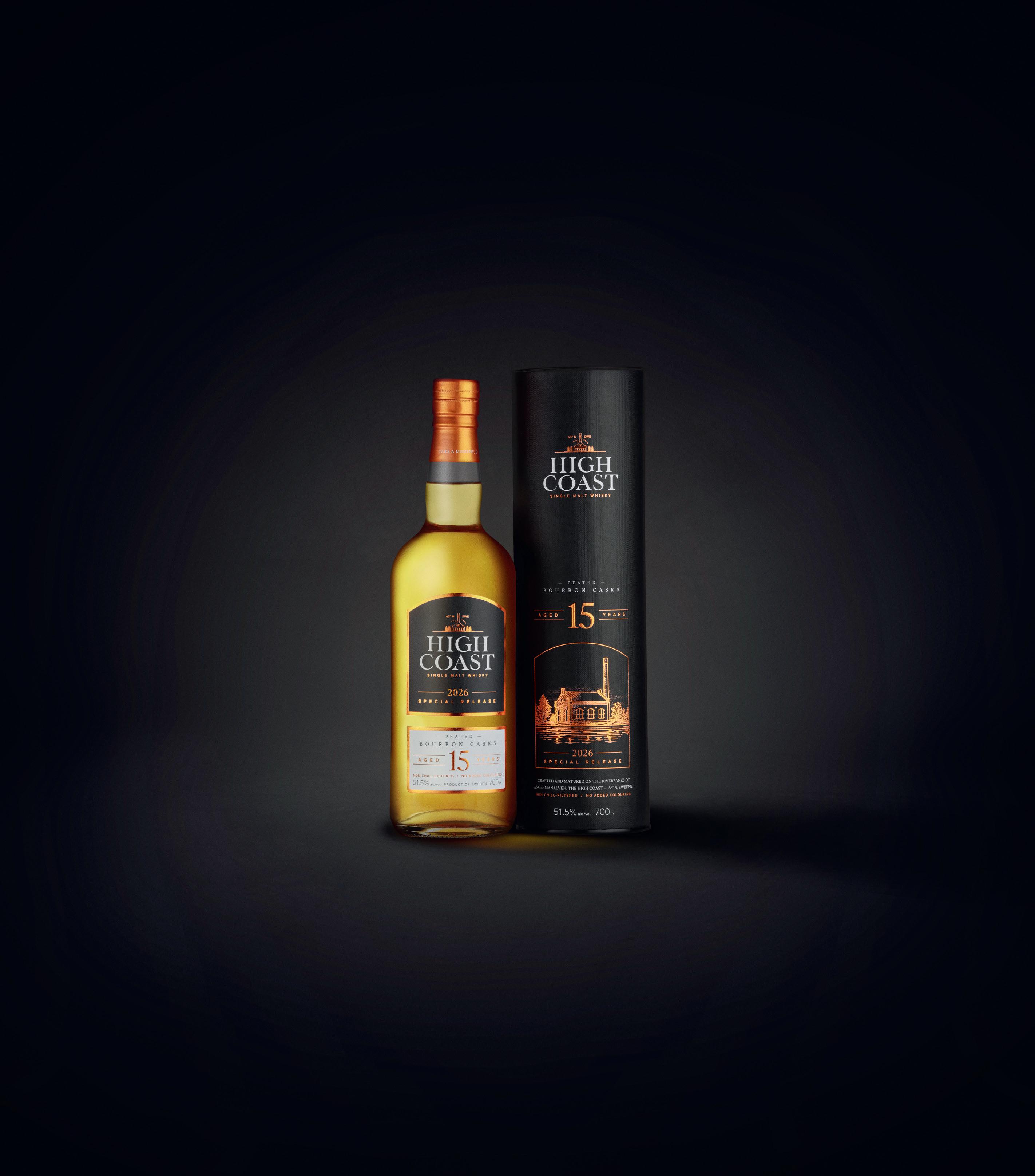
Good News for the Summer
We live in undeniably turbulent times. Every day, the news cycle is filled with reports of wars and conflicts, while Swedish politicians ramp up their election campaigns by throwing around varying degrees of well- and ill-considered promises and slogans. At the same time, the stock market continues its rollercoaster ride with little regard for already anxious investors. It is a lot to take in, and it is hardly surprising if one occasionally feels overwhelmed.
Of course, not everything is bleak, even if the reality we live in can sometimes be difficult to comprehend and navigate. In an age where the constant digital media buzz relentlessly competes for our attention, we are all forced to find our own ways of restoring balance. For some, it may be a refreshing walk in the woods with the dog, an invigorating workout, or the simple yet invaluable pleasure of sitting in the spring sunshine with a freshly brewed cup of coffee. For others, the remedy for everyday stress lies in treating themselves to something genuinely enjoyable – a form of gastronomic escapism – or perhaps simply settling down with a magazine such as this. A moment of pure quality of life, where the possibilities for enjoyment are endless.
As a harmonious counterweight to a world whose headlines constantly demand our attention, we present a selection of good news in its purest cigar form. Our hope is that these smoking-hot releases will bring a little muchneeded joy and invite you to embrace that meditative pause we all occasionally need. A handcrafted premium cigar may not solve the world's problems, but with genuine craftsmanship between your fingers and a glass of liquid gold by your side, life suddenly feels a little more balanced and considerably easier to embrace.
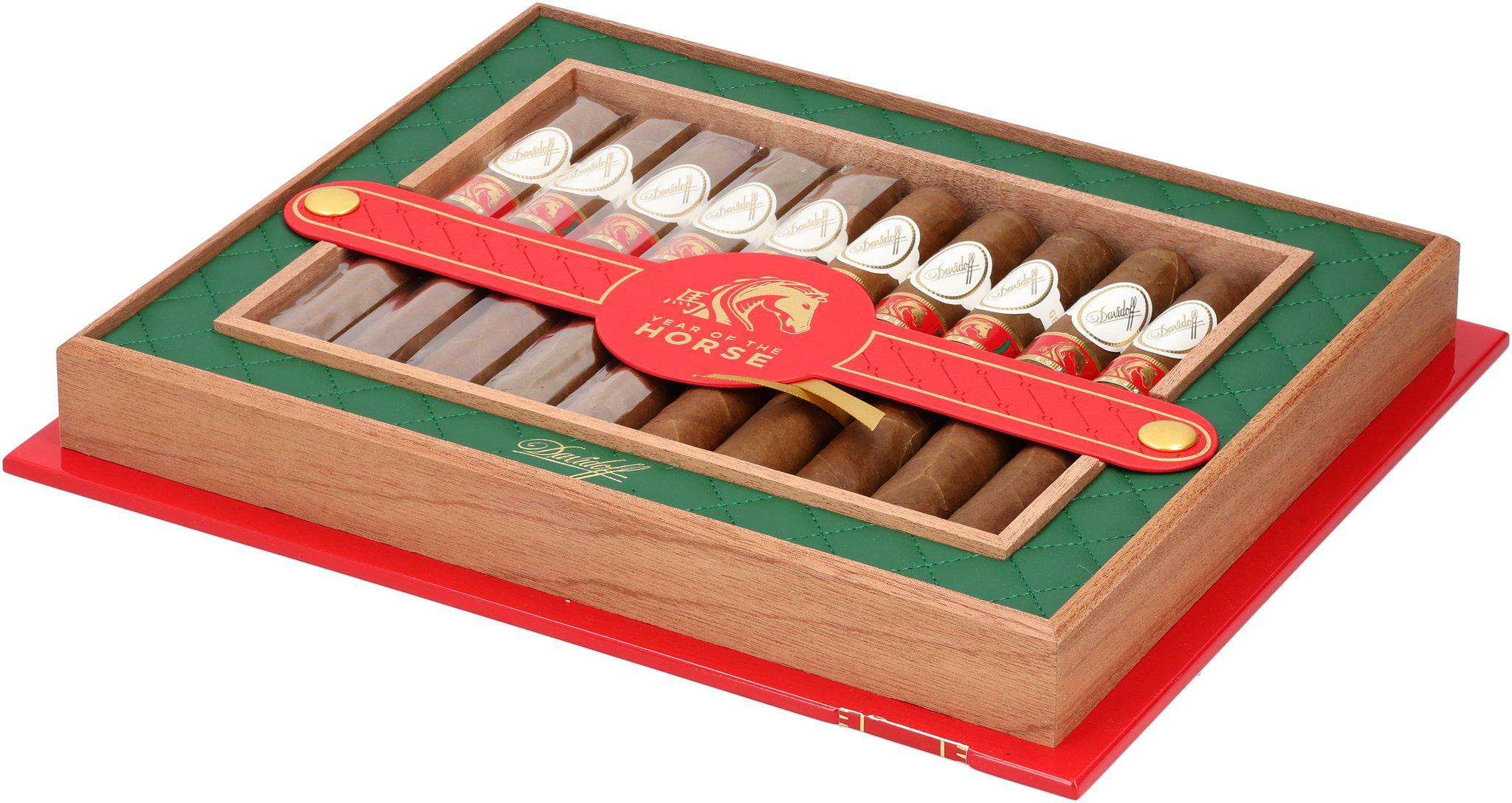
DAVIDOFF YEAR OF THE HORSE TORO
First up is not exactly a world premiere, but rather a new interpretation of a familiar theme. Since 2012, Davidoff has annually released a limited-edition cigar dedicated to the Chinese New Year. The cycle has now once again returned to the Year of the Horse, a cigar first introduced by Davidoff in 2013.
Behind this release lies seven years of development work and a meticulously crafted blend comprising six unique seed hybrids, all cultivated and refined by Davidoff itself. The tobacco comes exclusively from the Dominican Republic and has undergone extensive ageing, in some cases for up to ten years.
The smoking time falls somewhere between 70 and 90 minutes, providing
ample opportunity for contemplation and reflection. Medium-bodied in character, it opens with notes of sweet creaminess and roasted nuts. As the cigar develops, layers of spice emerge, accompanied by herbal nuances and delicate brushstrokes of chocolate.
The presentation deserves special mention. The cigars are housed in an elegant wooden box adorned with green and red accents – the horse's lucky colours according to tradition. Inside, a padded green lining evokes the look and feel of a saddle, while a removable strap inspired by riding reins keeps the cigars securely in place.
In the glass, a mature rum or a well-balanced single malt makes an excellent companion. For those who prefer a non-alcoholic pairing, a well-crafted espresso is always a safe choice.

FLOR DE OLIVA ORIGINAL ROBUSTO
Flor de Oliva Original is not a cigar that competes for attention, nor has it ever intended to do so. Rather, it is a cigar that quietly leans back and lets its contents speak for themselves. Produced in Nicaragua by the renowned Oliva Cigars, it is a clear example of how simplicity and experience often go hand in hand.
The tobacco is entirely Nicaraguan, giving the cigar its unmistakable
identity. The wrapper is Connecticut. The result is uncomplicated yet remarkably balanced, offering notes of wood, nuts and gentle spice, accompanied by touches of coffee and cocoa. This is not a cigar that demands your full attention. Instead, it resembles a good friend who leaves enough room for your thoughts to wander freely.
A lighter red wine such as Pinot Noir works beautifully alongside this cigar, as does a classic quality lager or even a refreshing iced tea.
DAVIDOFF PURO DOMINICANO CORONA LARGA
Davidoff Puro Dominicano is, in many ways, a statement. For the first time, Davidoff's Master Blenders have created a purely Dominican puro, sourcing tobacco from six distinct terroirs across the country – Yamasá, Martín Garcia, Villa González, Mao, Piloto and Navarrete.
Different locations, different microclimates and different expressions come together to form a cigar with both depth and a clear identity, each terroir contributing its own aromatic fingerprint. The result occupies the fascinating intersection between creaminess and spice. The Corona Larga's slender ring gauge and elongated format create a nuanced experience that allows the cigar to evolve at a measured pace.
Even before lighting, the Corona Larga reveals aromas of cedarwood, cocoa and subtle dried fruit. The wrapper is silky smooth with a slight oily sheen and fine veins, clear signs of carefully selected tobacco. Once lit, the cigar burns slowly and evenly, delivering a refined smoke texture. The flavour profile offers distinct notes of dark chocolate, roasted coffee, dried fruit and delicate spices that gradually evolve throughout the smoke, culminating in a long and persistent finish. It is a cigar that rewards patience and attention through its gradual transformations.
For those wishing to elevate the experience even further, a well-aged rum with restrained sweetness and gentle spice makes an excellent companion, preferably from the Dominican Republic to complete the circle.
As summer approaches, there may be little need for yet more news demanding our reaction, opinion or immediate judgement. Instead, it may be worth making room for things that ask for nothing more than time. A fine cigar belongs firmly in that category. It requires presence, but not performance, and offers companionship while still allowing space for silence.
What unites the cigars featured here is not merely their quality, but the way they remind us of the value of patience and tranquillity. Long ageing, careful craftsmanship and thoughtfully chosen formats stand
in sharp contrast to the pace that otherwise defines modern life. There is something deeply liberating about holding in your hands something that cannot be rushed.
Ultimately, it is not about turning your back on the world, but occasionally daring to place it on silent mode. For while the world continues to spin, headlines continue to shout and markets continue to fluctuate, there remains value in choosing your own pace, if only for a moment. And perhaps that is where the good news truly lies. Not in the feed, but in the pause.
THE CREW

ANDERS ENQUIST
VD & Chefredaktör.
DANIEL BRUCE
Efter romanska språkstudier i hemstaden Lund väcktes Daniels vinintresse i en siciliansk vinkällare 2008. Med ett stopp i Neapel bar det sedan av mot Köpenhamn där han tog jobb på Juuls Vin & Spiritus. Åtskilliga glas nerello mascalese senare fattade han pennan och började skriva om sina vinresor. Idag skriver han även om whisky och fotograferar från olika håll i världen.”


ERIK DAHLSTRÖM
Formgivare, fotograf och kulinarisk kreatör på Whisky & Bourbon och Livets Goda sedan starten. Stor passion för mat och dryck som genom åren utvecklats från hundratals restaurangbesök, resor och äventyr runt om i världen.
CHRISTOFFER ”KRICKAN” ENQUIST
Vår allas hjälte och en av sönerna i familjen
Enquist. En magiker både i telefon med tidningens kontaktnät och vid spisen när det ska lagas mat. Det här är dessutom killen du måste ta fram något extra klurigt om du ska lyckas lura honom med en blind flaska vin.
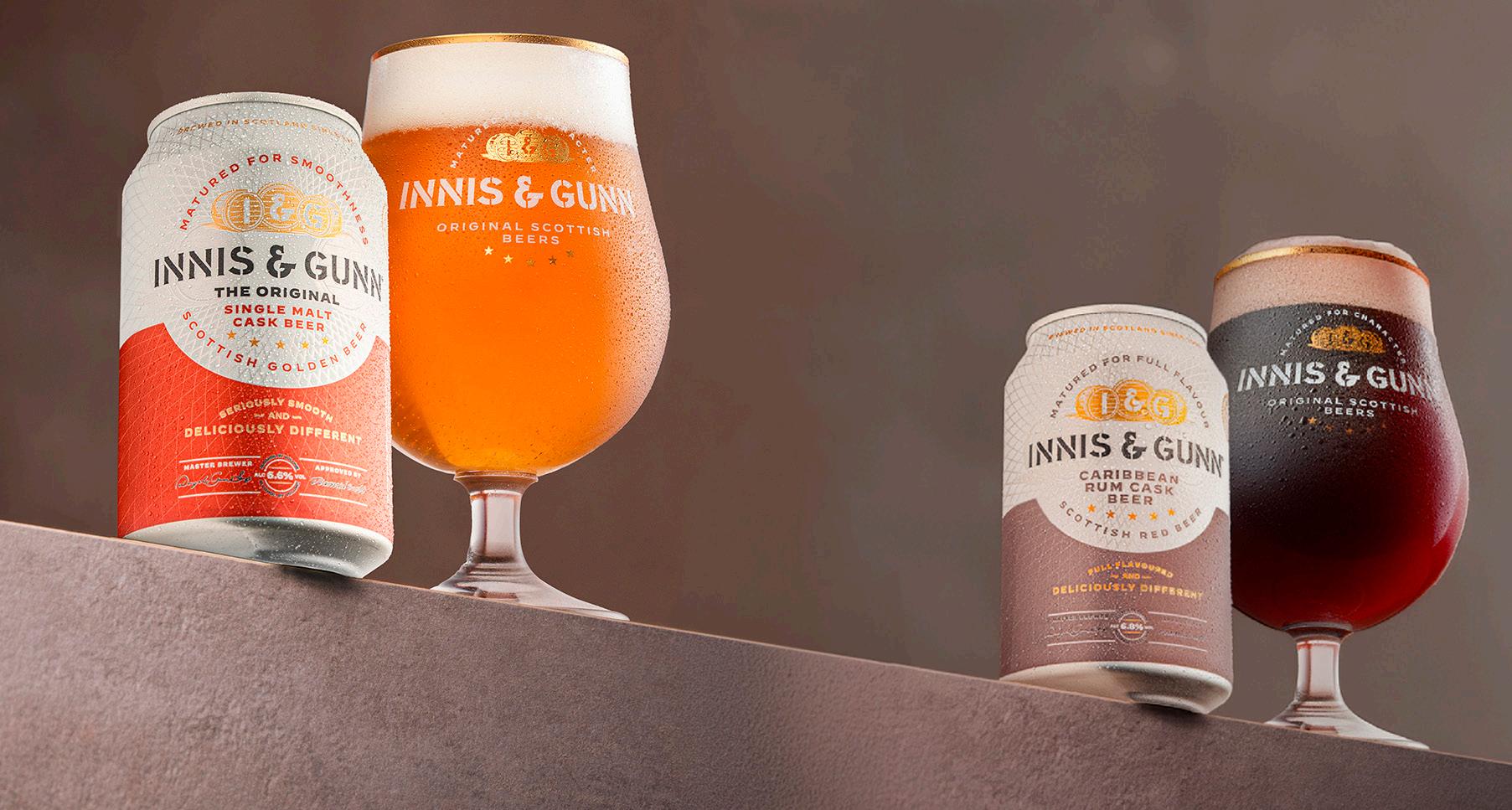

HTTPS://WWW.INSTAGRAM.COM/LIVETSGODA_MAGAZINE