Livets Goda
#188/2026
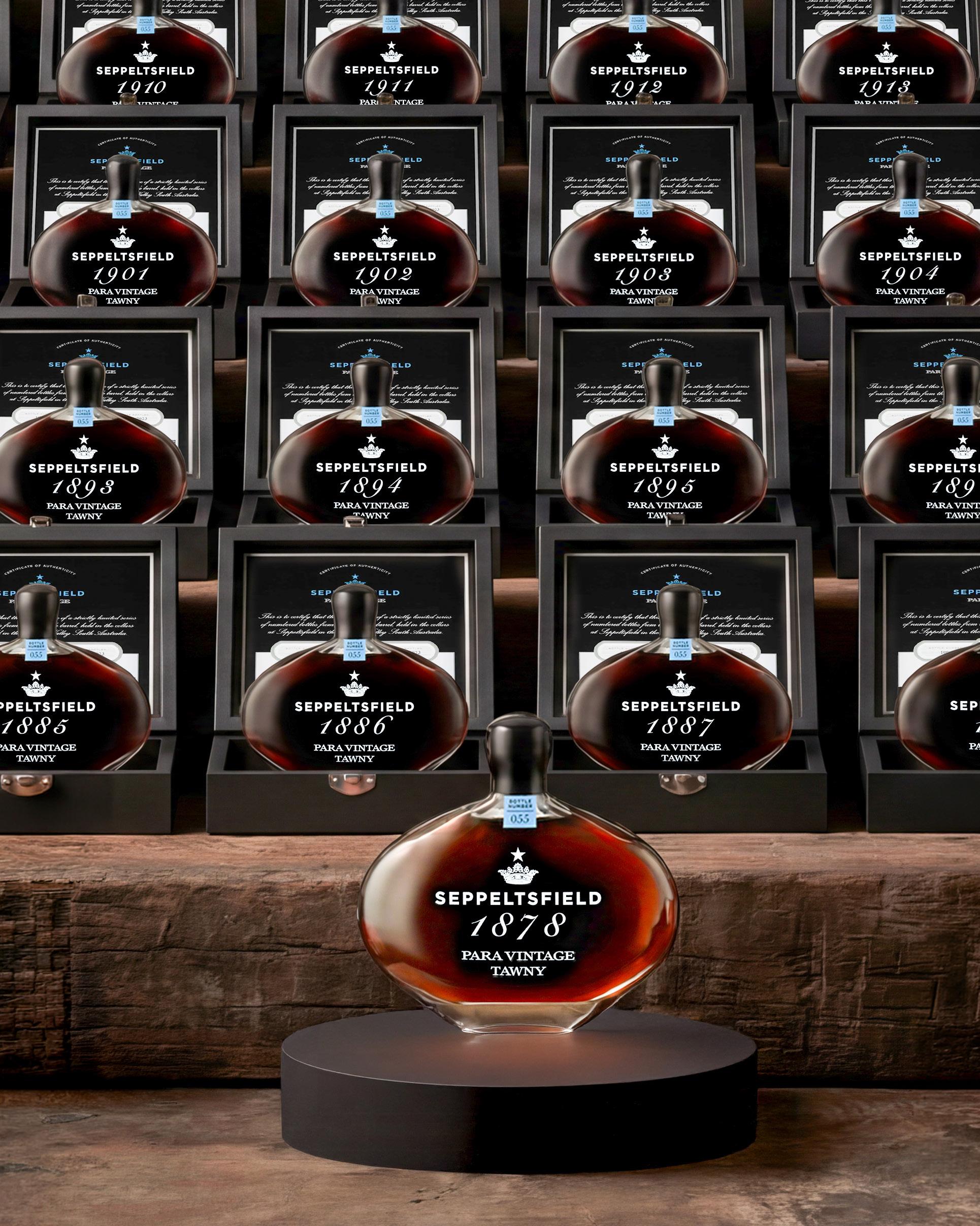
1878 – 1926
Seppeltsfield Centennial Collection: 100-Year-Old Tawny
Henschke
70 Vintages of Mount Edelstone
32 Iconic Vintage Champagnes
The 1995 vintage celebrates 30 years Back to the Future
With the help of Miles Davis Restaurant TABLE, Paris
Champagne Krug
Alain Brumont
The Visionary and Guiding Force of Madiran
The latest releases Giants from Stellenbosch
Four red classics
The Swedish Hockey Player Became a Michelin Chef in Oslo
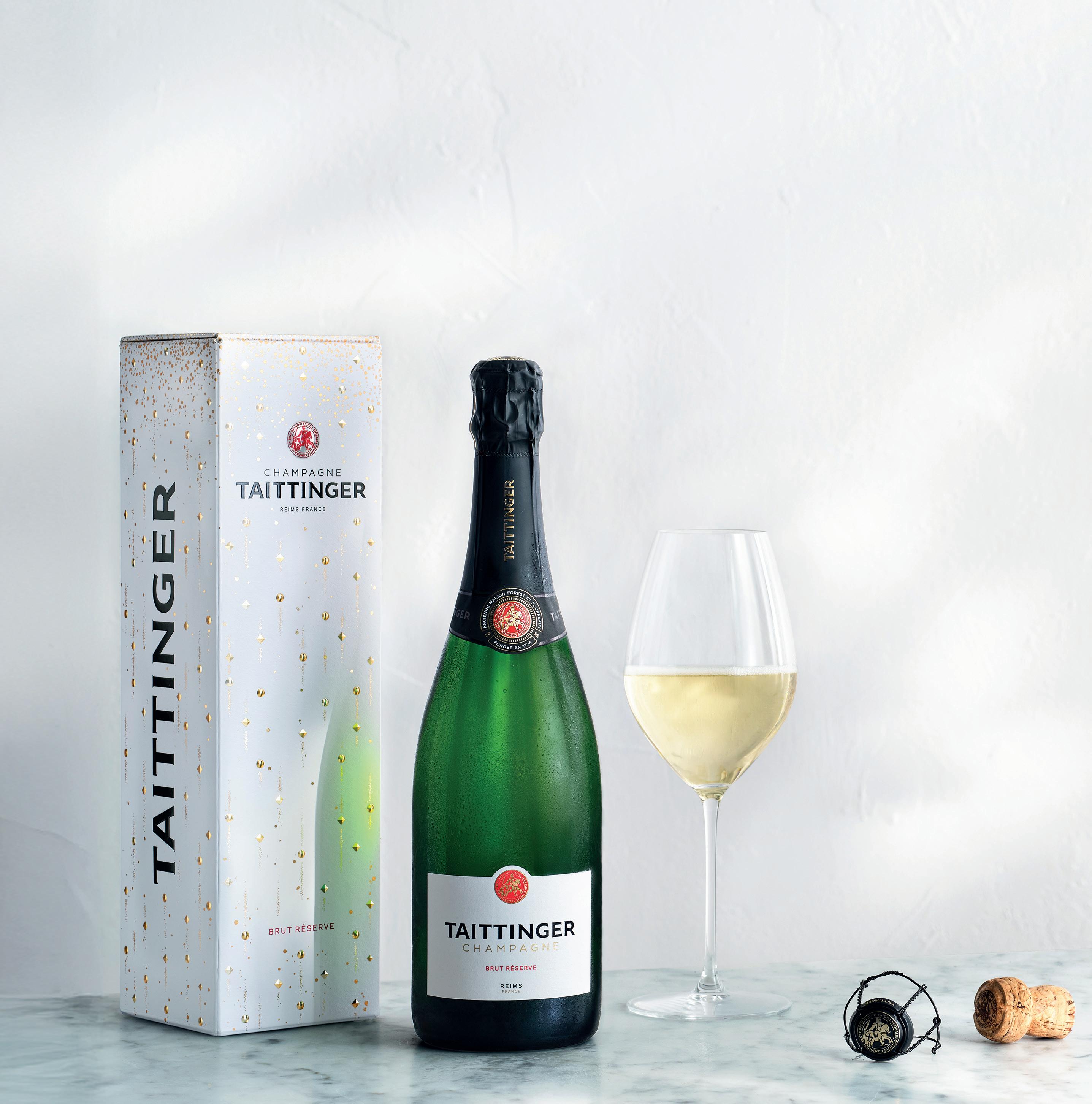
CHAMPAGNE TAITTINGER
FINESS, FRISKHET, ELEGANS!
”En klassisk champagne med imponerande balans mellan kvalitet och pris. Taittinger bevisar att lyx inte behöver kosta en förmögenhet.”
Champagneexperten Fredrik Schelin bestchampagne.se 27/10-2025
Amarone
15 % vol.
Art Nr 7918701
219kr
Tre personligheter. Samma hantverk.
Lucia De Maio.
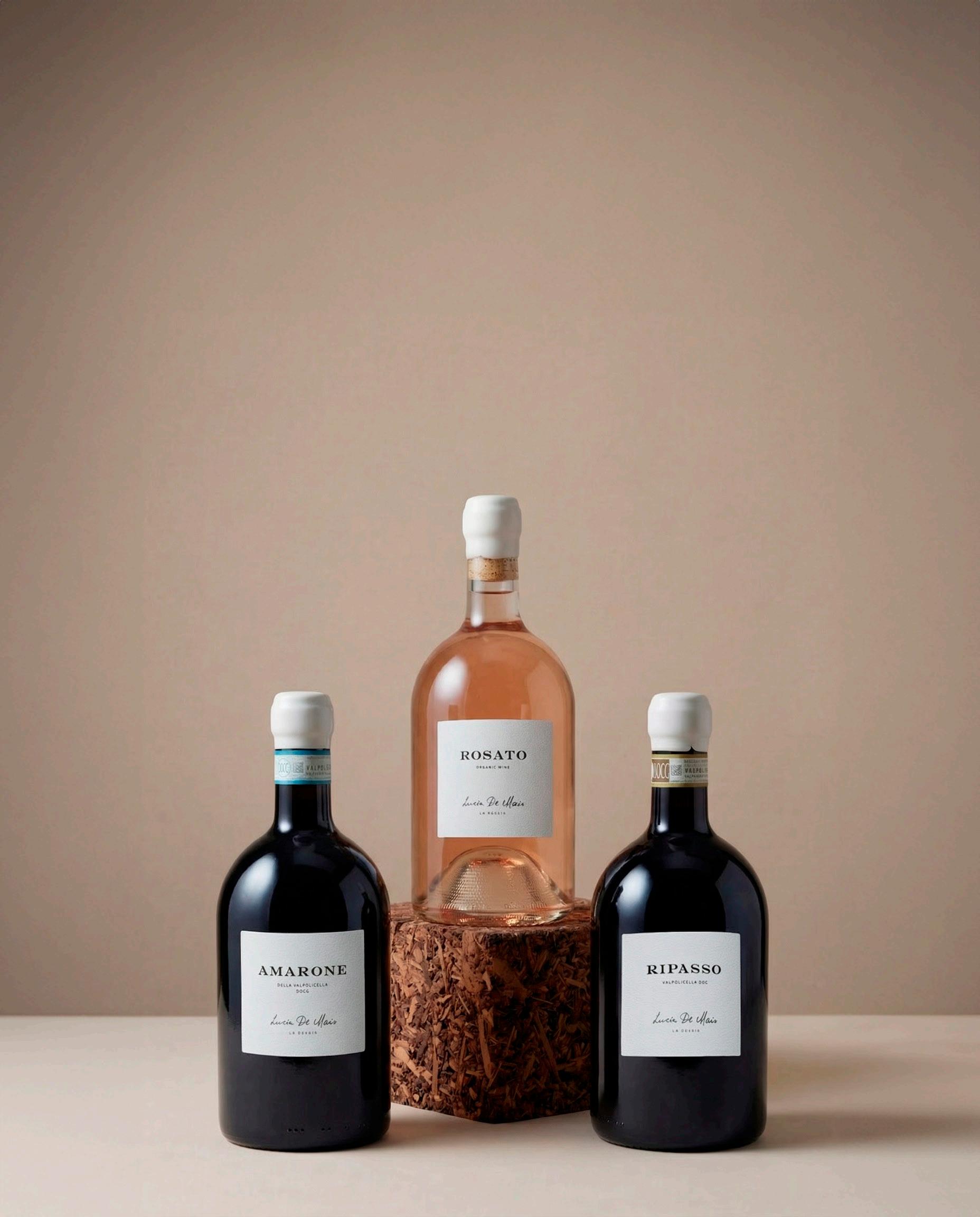
Rosato 12% vol.
Art Nr 7255601
99kr
13,5 % vol.
Art Nr 7206101
129kr
Alkohol kan skada din hälsa. Alkohol kan skada din hälsa.
Ripasso
Livets Goda PREMIUM PLUS
Would you like to take your passion for wine and the remarkable world surrounding these noble beverages to the next level?
SUBSCRIBE TO PREMIUM PLUS FROM LIVETS GODA!
You get access to more than 18, 000 beverage reviews, our best wine recommendations as well as our exclusive special editions and articles.
You will also receive digital annual subscriptions to both of our flagship magazines, Livets Goda and Whisky&Bourbon.
Premium Plus is a digital service based on Livets Goda’s website, www.livetsgoda.se
Subscribe today and enjoy the very best Livets Goda has to offer!

Visit www.livetsgoda.se or scan the QR code

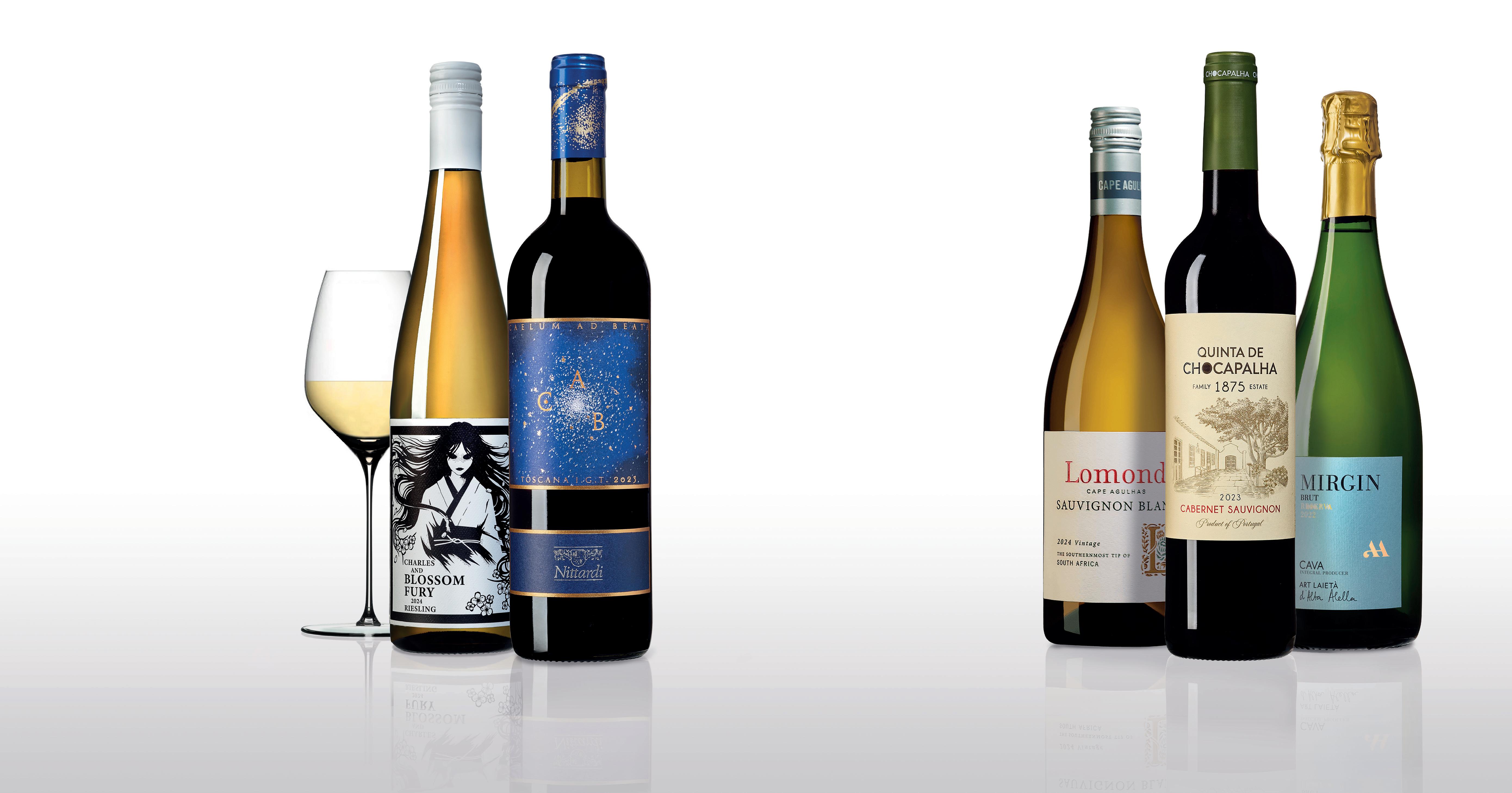
Nyhet! Charles and BLOSSOM FURY RIESLING
78606 | 12% | 75 cl | 2024 | 179:-
Ni minns väl Charles Smith som skakade om vinvärlden med Kung Fu Girl. Nu är han tillbaka med Blossom Fury. En efterlängtad uppföljare som inte bara lever upp till hypen, utan höjer ribban ytterligare.
Blossom Fury tar plats från första stund. Det är en torr riesling med ryggrad och nerv, kristallklar i sitt uttryck och laddad med energi. Frisk citrus och vit persika möter limezest och en tydlig grusig mineralitet. Syran är knivskarp men perfekt avvägd och driver smaken hela vägen ut i ett långt, vibrerande avslut.
Det här är en riesling med attityd. Vad annars från Charles Smith?
Nyhet! Fattoria Nittardi
CAB - Cabernet Sauvignon
253701 | 13,5% | 75 cl | 2023 | 189:-
Från klassiska vingården Nittardi i Toscana kommer CAB, ett namn med dubbel betydelse. Dels är det såklart en självklar hänvisning till druvan cabernet sauvignon, men det anspelar också på det latinska uttrycket Caelum ad Beata som betyder ”mot den välsignade himlen”. En poetisk blinkning till både platsen och ambitionen att skapa ett vin som strävar mot himmelska höjder.
Rubinröd färg och nyanserad doft av mogna plommon, mörka bär, viol, lakrits och lite kryddighet. Smaken är medelfyllig med toner av svarta vinbär, plommon, kryddor och en diskret ekfatskaraktär. Tanninerna är finkorniga och väl integrerade, balanserad struktur och långt avslut.
Passar utmärkt till rätter av rött kött och vilt, gärna grillat eller långkok. Servera med pappardelle och vips så är du i Toscana.
”En
uppföljare som vi väntat på”
I BESTÄLLNINGSSORTIMENTET
Fynd! ALLT OM VIN
”En ny rödvinsvän från Toscana”
PERFECT GUIDE
Svenska Dagbladet
”En av de bästa nyheterna i mars” ELLE Är du intresserad av goda drycker? Använd QR-koden och kom med i FRIENDS OF HANDPICKED Tips, kunskap, provningar och senaste nytt om oss på Handpicked Wines och alla våra produkter.
| handpicked.se
NYHET I ORDINARIE HYLLAN*
NYHET
Lomond Sauvignon Blanc
2645 | 13,5% | 75 cl | 149:-
Ett elegant och uttrycksfullt vin från vackra och vilda Cape Agulhas i Sydafrika. Vinet har en inbjudande doft av mogna krusbär, citrus och subtila inslag av tropisk frukt. Smaken är frisk och elegant, med välbalanserad syra och toner av passionsfrukt, mogen citrus och en lätt rundhet från ekfatslagringen. Ett vin som är lika gott till mat som att njuta av på egen hand.
Nyhet! Quinta de Chocapalha
Cabernet Sauvignon 95343 | 12,5% | 75 cl | 179:-
Den anrika bordeauxdruvan är ovanlig i Portugal. Men tack vare Quinta de Chocapalhas unika jordmån och atlantens fuktiga vindar har druvan funnit sin riktiga favoritplats.
Vinet har en stor doft av röda och mörka bär såsom plommon och svarta vinbär. Även i smaken finns svarta vinbär men även viol, solmogna blåbär och en angenäm örtighet. Tanninerna är tydliga men behagliga och i eftersmaken finns en härlig ekfatston. Låt dig förföras av Quinta de Chocapalhas egen tolkning av den fantastiska druvan cabernet sauvignon.
Alta Alella
Mirgin Brut Reserva 20145 | 12% | 75 cl | 2023 | 149:-
Från Katalonien och den ekologiskt certifierade gården Alta Alella kommer denna årgångscava med klassificeringen Cava de Guarda Superior.
Det betyder att lagringen måste vara minst 18 månader, vinet ska vara årgångsmärkt och druvorna ska komma från minst 10 år gamla stockar. Från och med årgång 2025 ska vinet även vara ekologiskt certifierat.
En torr och finstämd cava med friska toner av citrus, vita frukter och medelhavsörter.
Svenska Dagbladet
Fynd! TV4
NYHET I TILLFÄLLIGA SORTIMENTET*
FINNS I ORDINARIE HYLLAN*
FINNS I
ORDINARIE HYLLAN*
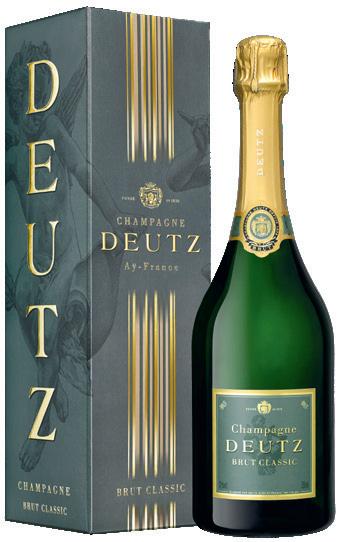
Alla Deutz champagner tappas sedan 2005 på den s.k. William-f askan, som alltsedan 1 961 an vänts till prestigecuvéerna Cuvée William Deutz och Amour de Deutz. Flas kans särprä glade f orm har häm tat i ationspir n frå n 1800-talets champagnefaskor, medm juka kurvor, ge nerö s ooppkr ch s mal, graciös hals. D en sm ala h alsen är inte bar a ögonfägnad utan redu cerar även intageta v syre vid disg orge me nt (processen då man skjuter ut jästfällningen) och förbättrar då vinets lagringspotential.
Alkohol är beroendeframkallande.
beroendeframkallande.
Alkohol i samband med arbete
Dal 1761
Hantverk och historia i varje droppe
arbete ökar risken för olyckor.
Table of Contents
Editor-in-Chief’s Remarks: That thing about points… A self-reflective and incisive take on the scoring system— where 100 points is not about perfection, but about surrendering to a wine.
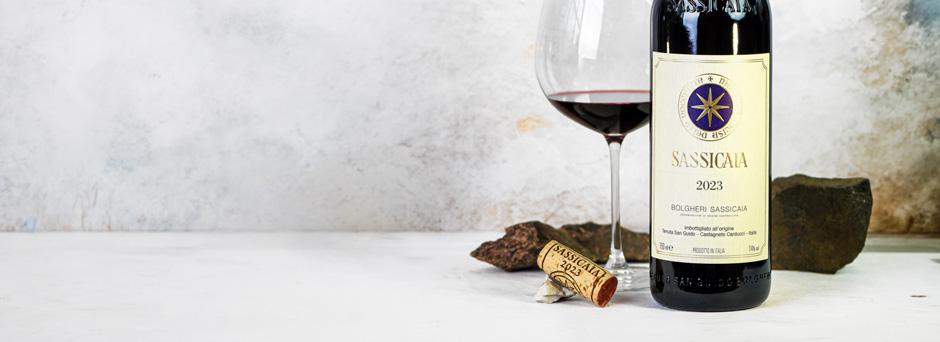
The Editor-in-Chief Shares a Bottle: Sassicaia 2023
An icon in a new expression. Sassicaia 2023 unites history and precision in a vintage where elegance, balance, and effortless greatness meet.
Andreas Larsson: The Malevolent Sommelier…
Self-irony, reckonings, and the absurdities of the wine world — Andreas Larsson reflects with humor, sharpness, and a touch of regret.
South Africa: Now & Then … A Retrospective of Two Vintages A deep dive into Rust en Vrede’s history and expression — where two vintages reflect evolution, tradition, and the passage of time.
A moment like this: Seppeltsfield’s hundred-year-old Tawny and Henschke’s history in a unique meeting of generations
Henschke 2022 Single Vineyard Collection
A release that showcases continuity and precision — where each vineyard tells its own story in the glass.
Alain Brumont: The Visionary and Guiding Force of Madiran The man who put Madiran on the map — a story of determination, tannat, and a region in transformation.
Jean Garandeau – CEO of Champagne Jacquesson
A new era for Champagne Jacquesson — where tradition meets investment and an uncompromising pursuit of quality.
Now & Then … A Retrospective of Two Vintages: Jacquesson Cuvée no728 vs Cuvée no748
From consistency to truth — Champagne Jacquesson’s 700 Series redefines what non-vintage champagne can be.
Top-10 Champagnes
A selection of the most impressive champagnes right now — from classics to modern benchmarks.
Krug’s latest releases — from Grande Cuvée 173 to Collection 1995
Krug continues to impress — new releases that showcase the house’s depth, complexity, and timeless precision.
Champagne – A Master Class in Resilience
From revolutions to the climate crisis — how Champagne continually adapts and refines its craft.
32 Iconic Vintage Champagnes
Three decades later, the 1995s are put to the test — a blind tasting that puts time, myth, and reality into perspective.
Château Mukhrani – a Swedish-owned wine château in the heart of Georgia
From ruins to fine wine — a unique venture where Swedish ambition meets Georgia tradition.
Tenuta delle Terre Nere: The Revolution on Etna Marco de Grazia transformed Mount Etna — a story of terroir, courage, and volcanic precision.
Ronchi di Castelluccio in Modigliana: Terroir Where the Apennines and the Forest Take Center Stage
A legacy renewed — where history, nature, and modern sensibility meet in elegant and expressive wines.
Lucas Madonia: When Burgundy Meets Valais
A new name to follow — where French sensibility and Swiss terroir create something unique.
Domaine Courbet: Another Side of Jura
Beyond the natural wine trend — a family-owned domaine that showcases Jura’s classical depth.
Back to the Future – With the Help of Miles Davis When food meets jazz — a philosophy of improvisation, creativity, and presence in the kitchen.
The Swedish Hockey Player Became a Michelin Chef in Oslo From ice hockey to the starred kitchen — Mikael Svensson’s journey to two Michelin stars and a path of his own.
Aussie and Proud Hyper-local and passionate — a restaurant that captures Australia’s soul on the plate.
Adventure-Loving Australians Embrace Wine by the Glass
A new drinking culture is emerging — where flexibility, curiosity, and by-the-glass service take over.
Corn at Michelin Level
- Factory and Fine Dining Under One Roof
Mexican food culture at new heights — where the history of corn meets modern gastronomy at the highest level.
Livets Goda
LIVETS GODA: Anders Enquist
Erik Dahlström Christoffer Enquist
Contributors – see last page. COVER PHOTO Seppeltsfield
EDITOR-IN-CHIEF anders.enquist@livetsgoda.se
CREATIVE DIRECTOR & DESIGN
Erik Dahlström erik.dahlstrom@livetsgoda.se
AD SALES christoffer.enquist@livetsgoda.se
DELIVERY ADDRESS Vikdalsvägen 50, Nacka Strand
MAILING ADDRESS Box 4152, 131 04 Nacka
SUPPPORT support@livetsgoda.se
PRINT Multiply Solutions
SCORING SCALE 97-100
Highest recommendation, monumental. 92-96
Very strong recommendation. A truly excellent beverage. 87-91
Strong recommendation. A good, high-quality beverage. 82-86
Acceptable, but no more.

That thing about points…
That thing about points. It’s actually a rather peculiar occupation. Sitting there, a fully grown adult, handing out numbers to fermented grape juice—and meaning it.
If I give a wine 99 points, what is it that’s missing for it not to get 100?
An atom? A breath? A cosmic click that didn’t quite click?
And when I finally—with a trembling hand and a certain dramatic weight in my soul—set 100 points… what am I really doing? Have I reached enlightenment? Have I become one with the terroir? Or was I simply in a very good mood?
Take Sassicaia 2023, for example. That’s when it happened. 100 points. Bang.
Not something you casually throw out between your coffee and cinnamon bun.
But what do I base it on?
Well, if you want to keep it simple, you could just say: read the review.
If you want to make it difficult—which I apparently do—you start talking to yourself instead.
And that’s where it gets interesting.
Physical Anders: Why are you giving it 100 points?
Subconscious Anders: Because the wine fits like a perfectly tailored suit.
Physical Anders: Right… but are we talking Savile Row or Dressmann?
Subconscious Anders: Savile Row. No doubt. With a discreet Italian flair.
Physical Anders: Okay… but are you comparing it to previous vintages or to other wines?
Subconscious Anders: Yes.
Physical Anders: Yes what?
Subconscious Anders: Yes.
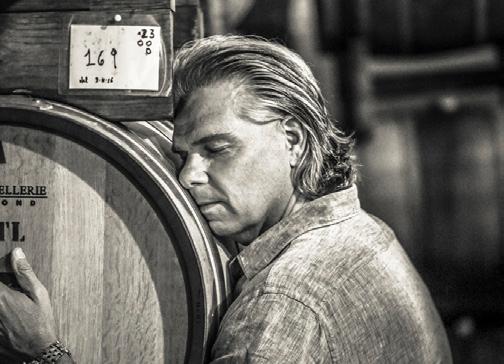
And there we are. Two versions of myself, in a conversation nobody asked for, that never quite lands on any definitive answer.
Because the truth is, there is no answer key. It’s not mathematics. It’s not physics. It’s more… philosophy meets form of the day.
I compare it to previous vintages of Sassicaia I’ve tasted— which is essentially all of them.
I compare it to other 100-point wines I’ve given around the world (not that many, actually), and wonder if they really deserved it.
I compare it to 99-point wines and ask myself if they should have been 100… or if I was just a bit stingy that day.
And so it goes.
99 points is often a wine that’s almost there.
Like a fantastic song where the chorus is brilliant, but the verse is just… very, very good.
You love it. You’re impressed. You almost want to write poetry.
But there’s something that doesn’t quite unleash the universe.
100 points, on the other hand…
That’s when everything just clicks. When nothing grates. When you stop analyzing and instead just… surrender. When you realize you’re no longer judging the wine— you’re in it.
And maybe that’s the point. 100 points is not perfection in any objective sense. It’s surrender.
Physical Anders: So you’re saying 100 points is when you give up?
Subconscious Anders: Exactly.
Physical Anders: That doesn’t sound very scientific.
Subconscious Anders: No. But it tastes very good.
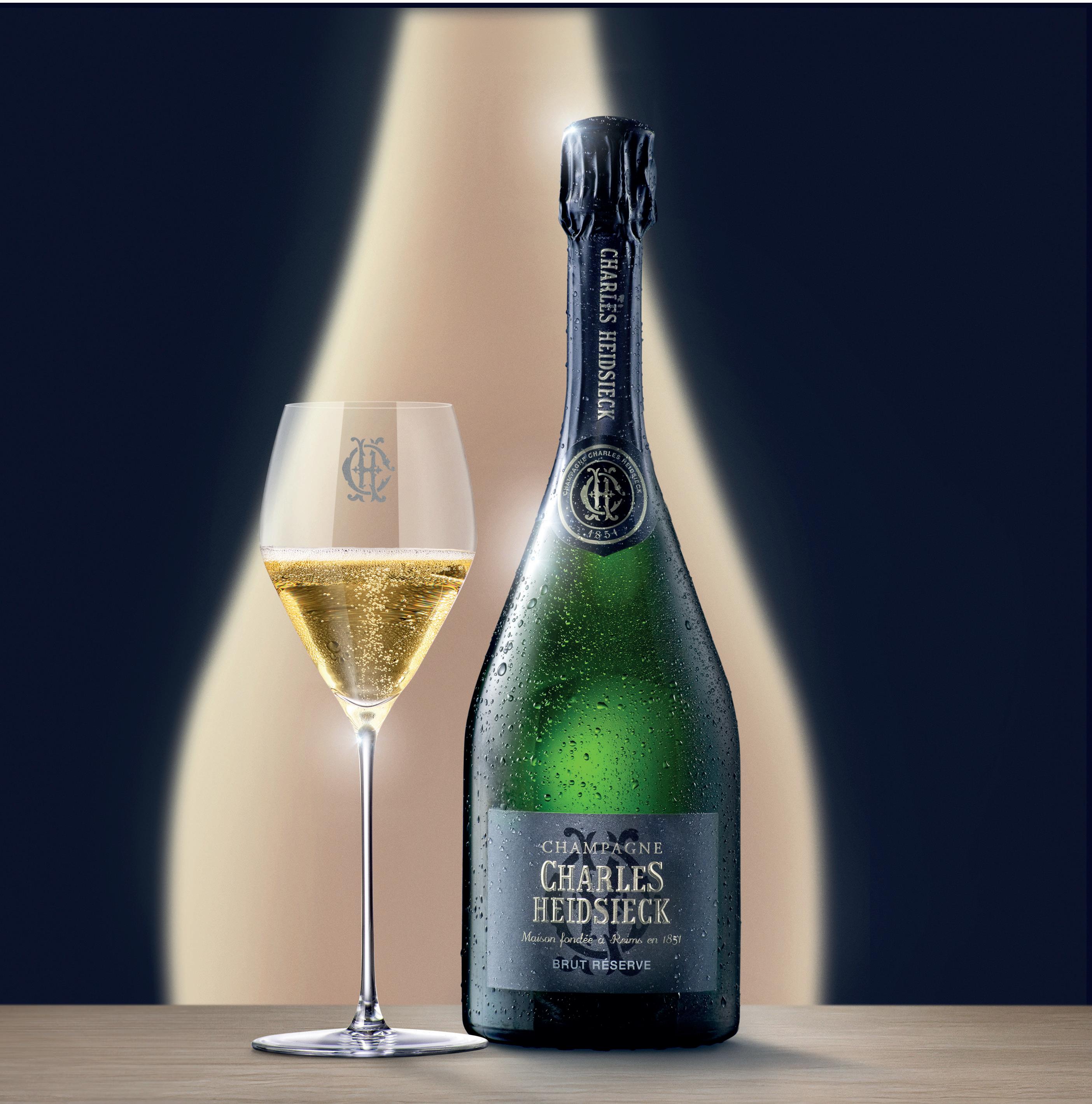
sveriges bästa champagne för femte året i rad!
Upptäck Charles Heidsiecks unika identitet. Genom minutiös vinmakning, 20 år gamla reservviner och lång lagring i Charles historiska kalkkällare är Brut Réserve inte bara en champagne, utan en exceptionell smakupplevelse. Med sin elegans, textur och oemotståndliga krämighet har den en fantastisk gastronomisk bredd.


www.provinum.se
CHARLES HEIDSIECK BRUT RÉSERVE NR 77522 ALK 12 % 589 KR

[ The Editor-in-Chief Shares a Bottle ]
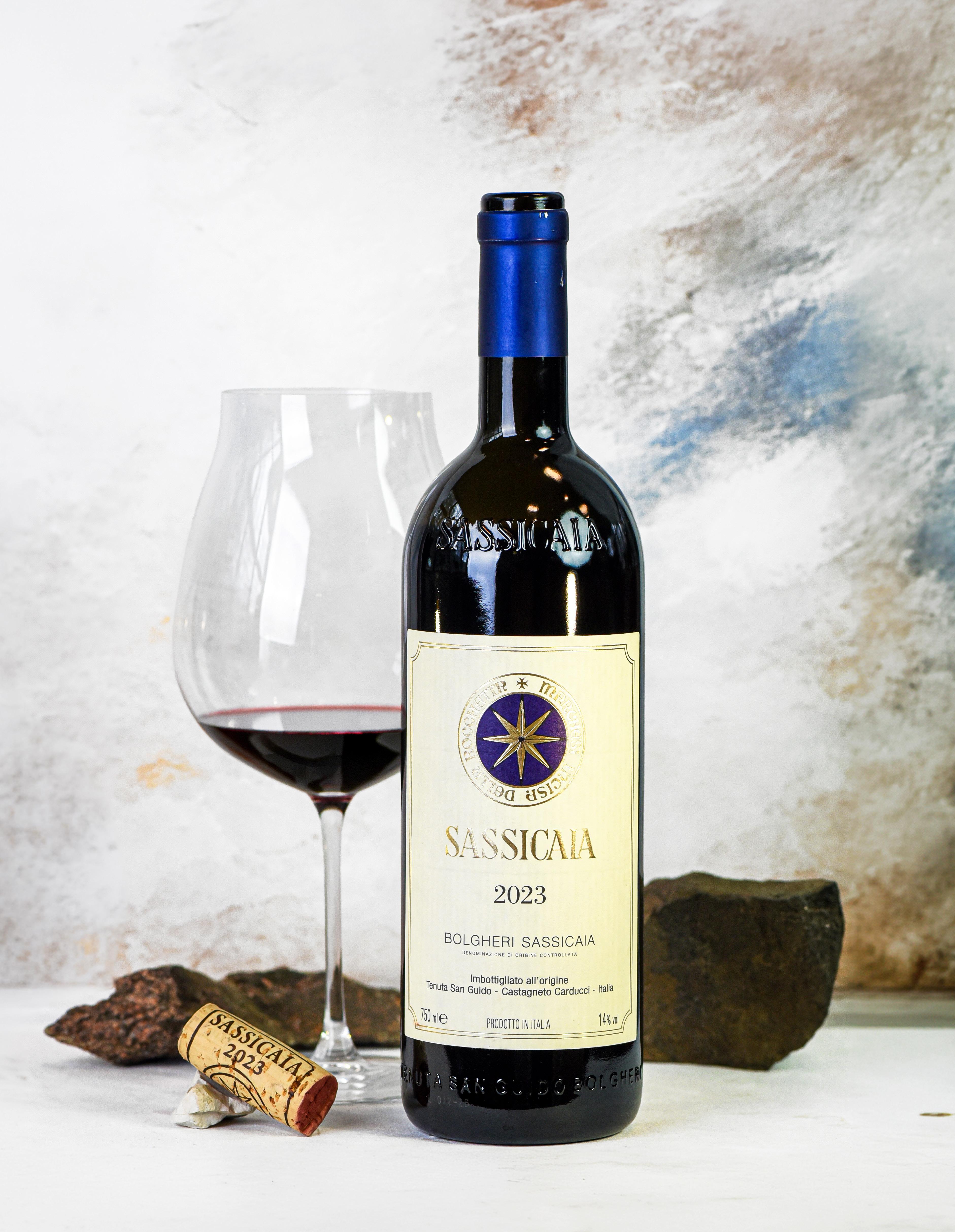
Sassicaia 2023 – stewarding the past in a beautiful contemporary remix
In the 1920s, an idea was born that would change the fate of Bolgheri. When Mario Incisa della Rocchetta tasted a wine from San Giuliano in Pisa, it struck him like an echo from the past – a whisper of great Bordeaux he had carried with him since his youth. In that moment, a vision took shape: to create something equally great, yet rooted in Italian soil.
With determination and an almost defiant conviction, he had Cabernet Sauvignon planted on the stony slopes below Castiglioncello di Bolgheri. The soils – those barren, gravelly sassi – carry a soul that speaks the same language as Graves, but with its own sun-drenched dialect. Here, something new takes form. Something of its own.
For more than two decades, Sassicaia lived quietly, a wine for the family, for the initiated, for moments that did not need to be shared. But in 1971 it emerged into the light with the 1968 vintage, refined alongside Giacomo Tachis –and suddenly the world was no longer the same. In 1978, everything changed. In a blind tasting in London, Sassicaia 1972 rose above the field and was crowned the world’s greatest cabernet. An Italian wine. A rebellion. A revelation.
Since then, Sassicaia has not merely been a wine – it is an idea, an icon, a testament that greatness knows no geographical boundaries. It is the soul of Bolgheri in liquid form, a symphony of stone, sea breeze and stubborn dream, and yes, forever one of my favourite wines, which I gladly share with myself…
The 2023 growing season was marked by a stable and balanced climate without extreme temperatures, with regular rainfall. Spring and early summer were somewhat wetter and required careful vineyard management, while the summer developed calmly. Rain in August slowed ripening and contributed to increased phenolic complexity, resulting in a fine balance between structure, acidity and tannin. Harvest took place by hand between 4 September and 5 October with careful selection. Fermentation took place in temperature-controlled stainless steel tanks using the estate’s own yeast strains, followed by malolactic fermentation at the end of October and subsequent ageing in French barriques. The wine consists of 87% cabernet sauvignon and 13% cabernet franc and is aged for 24 months, with 40% new oak, 40% first-use barrels and 20% second-use barrels.
SASSICAIA 2023
100
pts – international release in June
The 2023 vintage of Sassicaia returns the wine to its classical ground and roots, without losing its natural presence in the present. Precision is, in many ways, the defining keyword of the vintage. There is richness and an expressive side to the wine, yet it works in a whisper rather than a declaration – with small, exact movements rather than grand gestures. Here, charm and dignity coexist, integrity and sensuality in balanced interplay.
The excellent ripeness and concentration of the fruit leave a clear imprint on the wine. As so often, cabernet sauvignon dominates, with a smaller yet brilliant share of cabernet franc as a loyal counterpart. The vintage presents itself as concentrated and intensely elegant, with a clearer inclination towards red-ripe fruit rather than darker weight. It is within this more transparent elegance that the wine finds its triumph. The power is present, yet it is not carried by weight but by a noble posture, where the backbone remains firm and self-assured. The acidity pulses in depth, the musculature is athletic and supple, and the fruit – vital and generously developed – moves with a cool ripeness and a slenderly opulent red-berry precision that places balance at the centre.
A sensual sweetness is allowed space within the precisely balanced vein of acidity, giving the wine a complex dimension. The vintage draws out Sassicaia’s distinctive maritime and elegantly mineral salinity in a particularly beautiful way. Here, red cherries, softly darknosed raspberries, plums and blackcurrants reflect in their youthful phase, alongside perfumed rose-like nuances and a liquorice-laced herbal note where sage and lavender lend the aromatics a cool, almost wind-driven character. The oak handling works with surgical precision, leaving no mark upon the wine’s expression, but merely adding a discreet veil of cedar spice and tobacco across the structure. The tannins are as cashmere-silky as they are finely driven, and together with the energy of the acidity they shape a structure that is both disciplined and seductive.
It is a wine where elegance and power do not compete, but coexist in an expression that feels as natural as it is timeless – a vintage where precision is as impressive as its beauty.
Track: Purple Rain – Prince
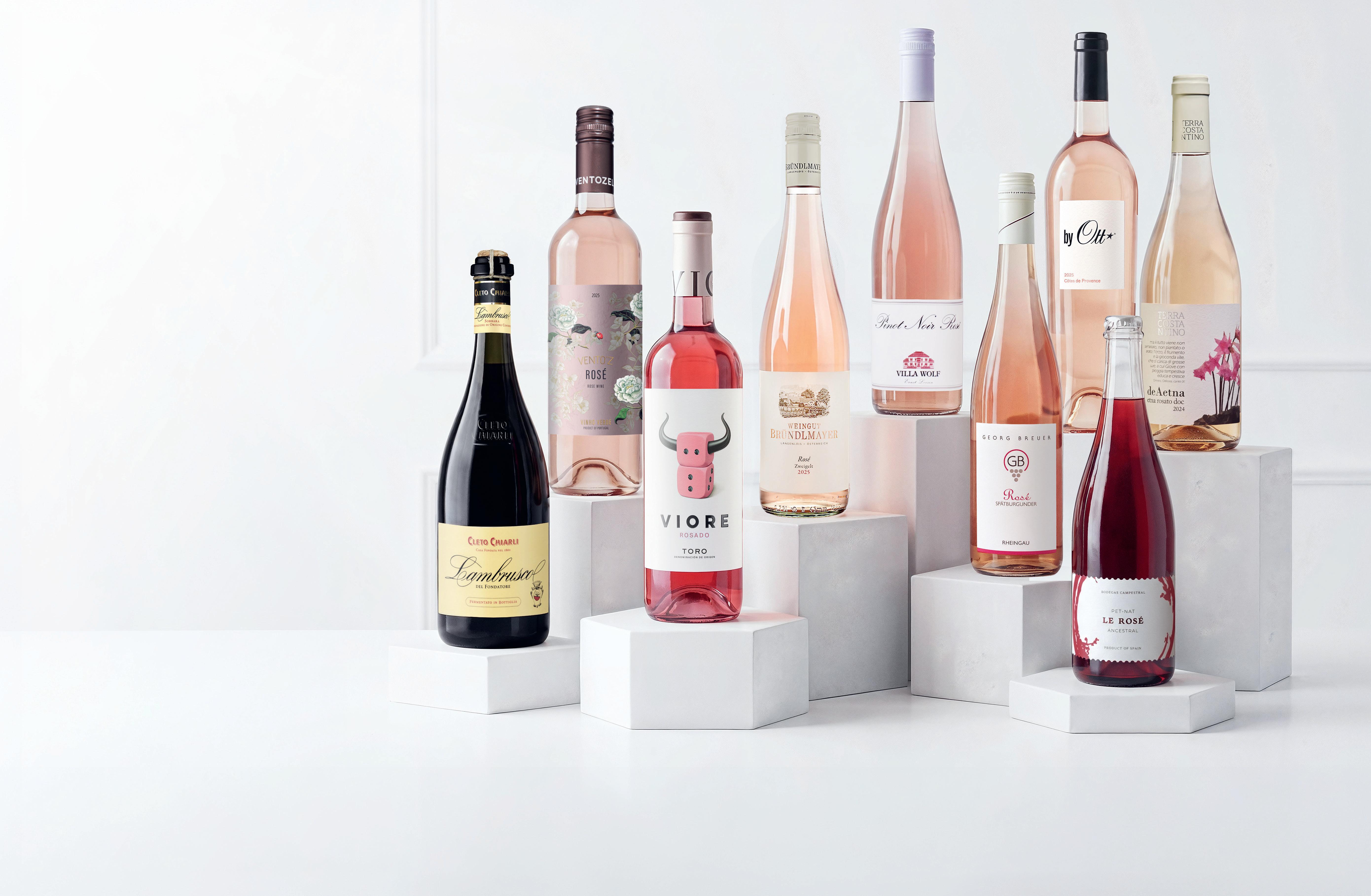
Nio roséviner. Nio karaktärer.
Finns i tillfälligt sortiment under våren.
Cleto Chiarli Lambrusco del Fondatore
9114001 | 11,5% | 750ml | 159kr
Lanseras 10 April.
Viore Rosado
9301501 | 14% | 750ml | 99kr
Lanseras 15 Maj.
By.Ott Rosé
9111401 | 13% | 750ml | 219kr
Lanseras 24 April.
Georg Breuer Spätburgunder Rosé
9571901 | 10,5% | 750ml | 149kr
Lanseras 5 Juni.
Bodegas Campestral Le Rosé Pét-Nat Ancestral
9494101 | 12,5% | 750ml | 199kr
Lanseras 17 April.
Terra Costantino DeAetna Rosato
9502001 | 13,5% | 750ml | 179kr
Lanseras 15 Maj.
Villa Wolf Pinot Noir Rosé
9231001 | 12% | 750 ml | 139kr
Lanseras 8 Maj.
Vento’z Rosé
9274501 | 11,5% | 750ml | 125kr
Lanseras 29 Maj.
Bründlmayer Zweigelt Rosé
96081 | 11,5% | 750ml | 149kr
Lanseras 8 Maj.
Alkoholkonsumtion under
graviditet kan skada barnet.

Chronicle with Andreas Larsson
The malevolent sommelier…
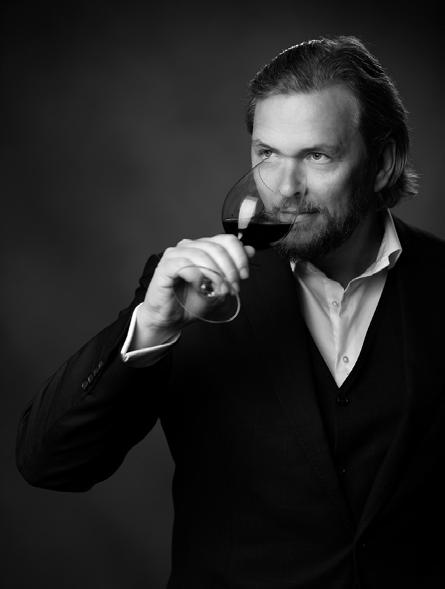
Some have called me a celebrity sommelier… I firmly reject this! I am but a simpler kind of craftsman without formal education, with countless undiagnosed letter combinations, concentration difficulties, a distorted self-image, an income as stable as an unsulfured Gamay, whose sole ambition is to be able to booze and swill at a certain level!
Basta!
There is an abundance of talented (and unfortunately less talented) celebrity chefs laughing all the way to the bank. We are flooded with equally numerous influencers who, with empty gazes and generous décolletage, at sunset among the vines, deliver sharp observations like “I love wine.”
But sommeliers?
When, with youthful enthusiasm, I was new to the wine world, I dreamed of an international career! In my delusion, I wanted to achieve rock star status like Jancis Robinson, Robert Parker, or Bo Patriksson (Hemmets Journal’s leading wine expert, editor’s note).
Things, however, do not always turn out as one imagines, and as I write this, I sit here as an old grump, summing up more than twenty years of wine writing in this magazine. To my horror, I realize that I am not only foolish, but downright mean, having let my vinous frustration spill over onto others.
Perhaps one of the main reasons my contributions to the magazine have not been as frequent is simply the fact that, in a somewhat heated moment, I called editor-in-chief Enquist the Donald Trump of the wine world!
Not because he is in any way a corrupt, misogynistic,
loud, and boorish Merlot-guzzler of the worst kind. No, only because his vast wine collection, both in volume and value, far exceeds that of the undersigned!
Perhaps these inferiority complexes also led me to the poor taste of calling a dear friend—also a food and wine connoisseur from the northern suburbs—the Meat Loaf of the wine world! Damn, that was low! Criticizing people’s behavior is one thing, but going after physical attributes might be a step too far? Especially when I myself look like a damn offspring of Jabba the Hutt and Kikki Danielsson.
I remember when, in a weak moment, I felt cornered by the natural wine Taliban—these Green Party figures of the wine world, dressed in terroir-faithful second-hand cardigans with a piquant scent of damp cellar and old antiquarian—who called me a disgusting, inflated white man in a suit, guzzling irresponsible amounts of Champagne from major houses and Bordeaux Cru Classé from 1855!
Now I no longer fit into the suit, the classified Bordeaux wines are running out, and I feel as old as Hans Artberg!
Instead, I should probably change personality and become a hipster sommelier. Cool T-shirt, beanie indoors, with inspiring soirées where organic sourdough pizza and gulp-friendly, juicy gems from Piemonte are paired with gangsta rap at a renowned swingers club around Nytorget.
And what about all those poor old wine-writing social democratic hacks? Those writers who, in a direct lineage from Per Albin Hansson, have had to apologize every time they recommended a non-boxed wine exceeding 99 SEK, and resorted to gastronomic
odysseys like “fruit-driven Verdicchio for Friday’s fine flounder,” “meaty Côtes du Rhône for Saturday’s luscious minute steak,” or “potent Pinotage for Sunday’s sodomitic escapades!”
Sorry! Enjoy your retirement, you old scoundrels!
From the bottom of my heart, I once again want to apologize to all point-counting engineers with high IQs and late sexual debuts for my constant nagging about your lack of right-brain thinking, empathy, and ability to enjoy wine. There are indeed non-quantifiable things like jazz and Vosne-Romanée that enrich life. But by all means, stick to your smoky whisky!
Pardon to the countless label drinkers who have felt the sting of my ladle!
Micke in Huddinge, who had to start consuming substantial volumes of antidepressants after I made it clear that there is not, nor will there ever be, anything called “Prestige Soave.” Prestige and Soave have about as much in common as craftsmanship and beer, vegan and sausage, or Edward Blom and a balanced diet!
Johannes in Fisksätra, who mortgaged the house, emptied the kids’ savings accounts, and bought Pomerol for six annual salaries before he even understood the difference between the right and left bank!
Per in Östergötland, who made it clear that Champagne from small growers is better than that from larger houses!
Many thanks, Per!
More clay, less dosage, more Meunier—and above all, easier to land a role in The Hobbit!
Forgive me, all of you!

”Det som håller över tid blir till din historia”
GÖTEBORG STOCKHOLM MALMÖ brobergs.se
SOUTH AFRICA
Giants from Stellenbosch
For a long time, we have spoken about the new wave of wine in South Africa, but one must never forget its classics—the wines that laid the foundation for the wine country South Africa is today. It is easy to be seduced by young winemakers, regions such as Swartland, Elgin, and Hemel-enAarde, light red blends and Chenin Blanc from old vines, but let us instead take a closer look at some true giants from Stellenbosch. Here, we are talking about age-worthy, classic red wines with a focus on Cabernet and Bordeaux blends— and a Pinotage, of course!
BY MAJA BERTHAS

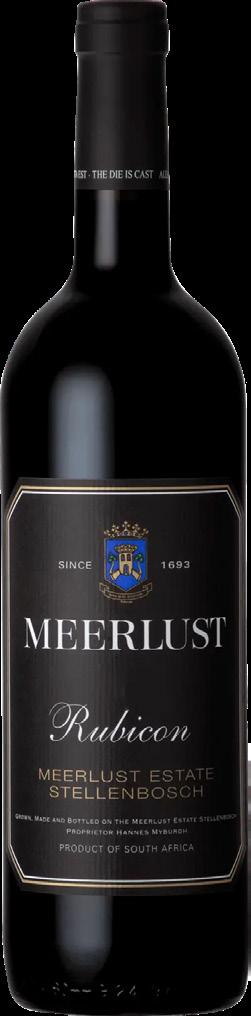
MEERLUST RUBICON 2022
STELLENBOSCH, 399 SEK NO. 202601
For this iconic wine, grapes are blended from four different sites on the estate—all with unique flavor profiles and exceptional terroirs. In this particular vintage, the blend consists of nearly equal parts Cabernet Sauvignon and Merlot, along with a smaller portion of Cabernet Franc and a touch of Petit Verdot. The palate is delicious, with notes of plum, cassis, and oak, where firm tannins make their presence felt on the tongue, and the elegant acidity leaves the palate wanting more. I have tasted several vintages of this wine and can attest to its excellent aging potential.
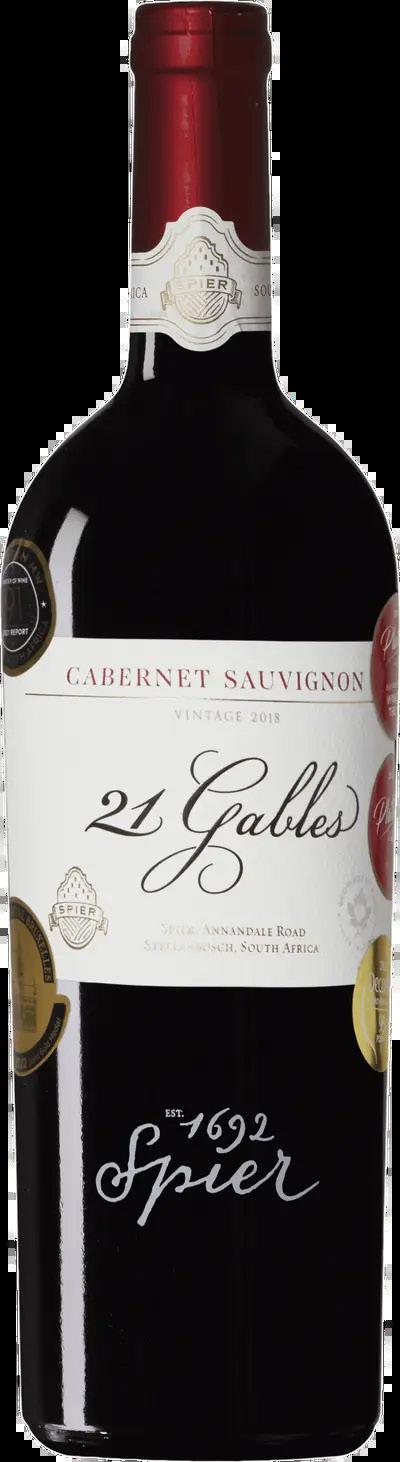
SPIER 21 GABLES CABERNET SAUVIGNON 2020
STELLENBOSCH, 349 SEK NO. 7056901
The grapes for this wine come from the slopes of beautiful Helderberg, considered one of the best areas for Cabernet Sauvignon in Stellenbosch. At just under 300 meters above sea level, the vines are also cooled by breezes from False Bay, only seven kilometers from the vineyards, which allows for a slow and extended ripening period. The wine sees a significant proportion of new oak, and the palate vibrates with cassis, blackcurrant leaf, perfumed violet, and cedarwood. Excellent to drink now, but can certainly be cellared if desired.
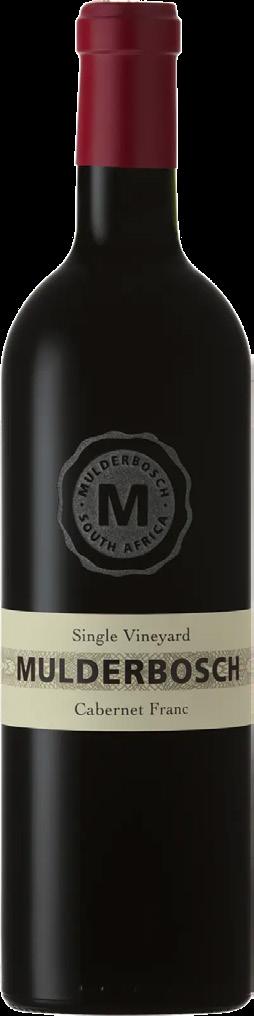
MULDERBOSCH SINGLE VINEYARD CABERNET FRANC 2019
STELLENBOSCH, 395 SEK NO. 5969201
The area around Polkadraai Hills has long been recognized for its outstanding Cabernet Franc. Johan Reyneke and Bruwer Raats are two of the major names, but Mulderbosch proves with this wine that they truly play in the top league. The grapes come from a section of a single vineyard located on a small hill just at the entrance to the estate, where the fruit achieves a remarkable concentration. The wine shows a fine balance between power and elegance, with spicy and dark-fruited notes combined with an aromatic touch of sweet licorice, violet, and a hint of herbs. A fantastic wine that I gladly enjoy on its own from large, generous glasses.
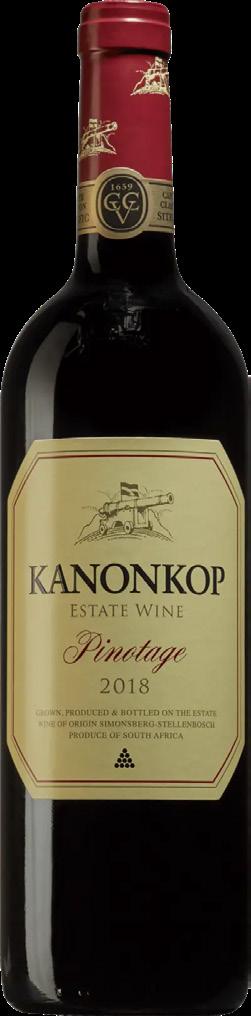
KANONKOP ESTATE PINOTAGE 2022
STELLENBOSCH, 359 SEK NO. 9570301
If you want to experience Pinotage at its very best, this is a wine worth ordering. Most of the grapes come from old vines planted without irrigation or trellising. They grow on the estate around Kanonkop at the foot of Simonsberg and are fermented in traditional concrete vats with regular punch-downs. The wine is then aged for 18 months, with the majority of the French barrels being new. The palate is packed with dark plums, coffee, blackberries, spices, and a delicious vanilla-laced finish reminiscent of chocolate. Wellintegrated tannins and a fine, balanced finish give the wine a cohesive overall impression. Highly age-worthy for those who wish to cellar a bottle for a few years.
SOUTH AFRICA
Now & Then A Retrospective of Two Vintages
RUST EN VREDE ESTATE 2022 VS 2006
With an almost breathtaking history spanning over 300 years, Rust en Vrede in Stellenbosch has established itself as one of the most prominent estates in the entire Cape Province. The beautiful Cape Dutch architecture, still preserved in the estate’s buildings, dates back to the late 18th century and is now classified as national heritage monuments. The modern era at Rust en Vrede began in 1977, when Jannie and Ellen Engelbrecht purchased the property and initiated a restoration that encompassed not only the buildings but also vineyards that had lain fallow for decades. Early on, the focus was placed on Cabernet Sauvignon, Syrah, and Merlot, and these are also the grapes that form the foundation of the signature wine, Rust en Vrede Estate.
BY MAJA BERTHAS
THIS WINE IS NOT ONLY A REFLECTION of the
estate’s terroir and unique expression, but in fact a direct translation of the place where the grapes are grown. The proportions of the grapes in the wine can almost be seen as a carbon copy of the estate’s plantings, as the percentage breakdown mirrors that found in the bottle. During a morning in Stellenbosch, I had the opportunity to sit down and speak with Danielle le Roux, who has been head winemaker at Rust en Vrede since 2022. The starting point of our conversation was how Rust en Vrede Estate has evolved over the years and how the character and personality of the wine have shifted. On the table were no fewer than four vintages of the wine, and what immediately struck me during the initial tasting was the stable and classical profile that all the wines displayed— despite their individual traits and vintage variations. I was deeply impressed to see how Rust en Vrede 1988 was still so vibrant and how, despite its mature tones, it exhibited such a beautifully spicy and perfumed elegance. This was also the first vintage touched by Kevin Arnold, and in 1993 he was also given the honor of being present when Nelson Mandela received the Nobel Peace Prize—raising a glass of Rust en Vrede Estate. One is humbled by the thought.
A GREAT DEAL HAS HAPPENED AT THE ESTATE
since Jean Engelbrecht, the son, took over operations, and extensive replanting has taken place in recent years. Above all, this has involved addressing the widespread issue of Leaf Roll virus that previously affected the vineyards at Rust en Vrede. With new vines in the ground, they gained access to much cleaner fruit, where the phenolic ripeness of the grapes was no longer disrupted by compromised
photosynthesis. This led to better concentration in the fruit and a steady increase in wine quality. However, during the period required for the new vineyards to reach maturity, they also ceased production of some of their singlevineyard wines—and the top cuvée 1694 has only recently returned to production, albeit in very limited quantities. Another major change at the estate is the decision to plant vines in an east–west orientation, which reduces the intense sun exposure previously experienced in the morning and afternoon, instead providing a more even distribution of heat and light. This has also helped the vines achieve better physiological ripeness without the risk of developing jammy flavors in the wine. Looking back at the earliest vintages, one can also discern that harvests were often carried out quite early—precisely to avoid excessive sun exposure toward the end of the growing season. There is a completely different elegance in the wines from Rust en Vrede today, something that also aligns with the broader evolution of classic red wines from Stellenbosch. We now speak of elegance, slenderness, and restraint rather than opulence, size, and power.
RUST EN VREDE ESTATE 2022
69% CABERNET SAUVIGNON, 24% SHIRAZ AND 7% MERLOT.
Following a very cold and rainy winter, the growing season began with warmth that in every way favored the ripening of Cabernet Sauvignon. The harvest took place under relatively cool conditions, and the grapes underwent a long and even ripening period, resulting in excellent fruit quality.
In accordance with Rust en Vrede’s hallmark precision, all harvesting was done by hand, and all grape varieties, clones, and small vineyard parcels were vinified separately. After fermentation, the wine matured for 18 months, with the Cabernet Sauvignon resting in 300-liter French oak barrels and the Syrah in 500-liter barrels. This wine truly embodies the new style of winemaking in South Africa. It presents a taut structure and a highly fruit-driven character that shines with a fresh, bluetoned perfume through the moderate use of oak. The tannins are softly gravelly and embrace the palate like a warm hug. Delicious, long, with high acidity and flavors of dark berries, blackcurrants, cherries, dried herbs, a touch of spice, and a hint of violet so typical of the red wines from Helderberg. This wine feels both modern and classical, in a style that truly represents the future of estate wines from Stellenbosch— and it is also a price sensation!
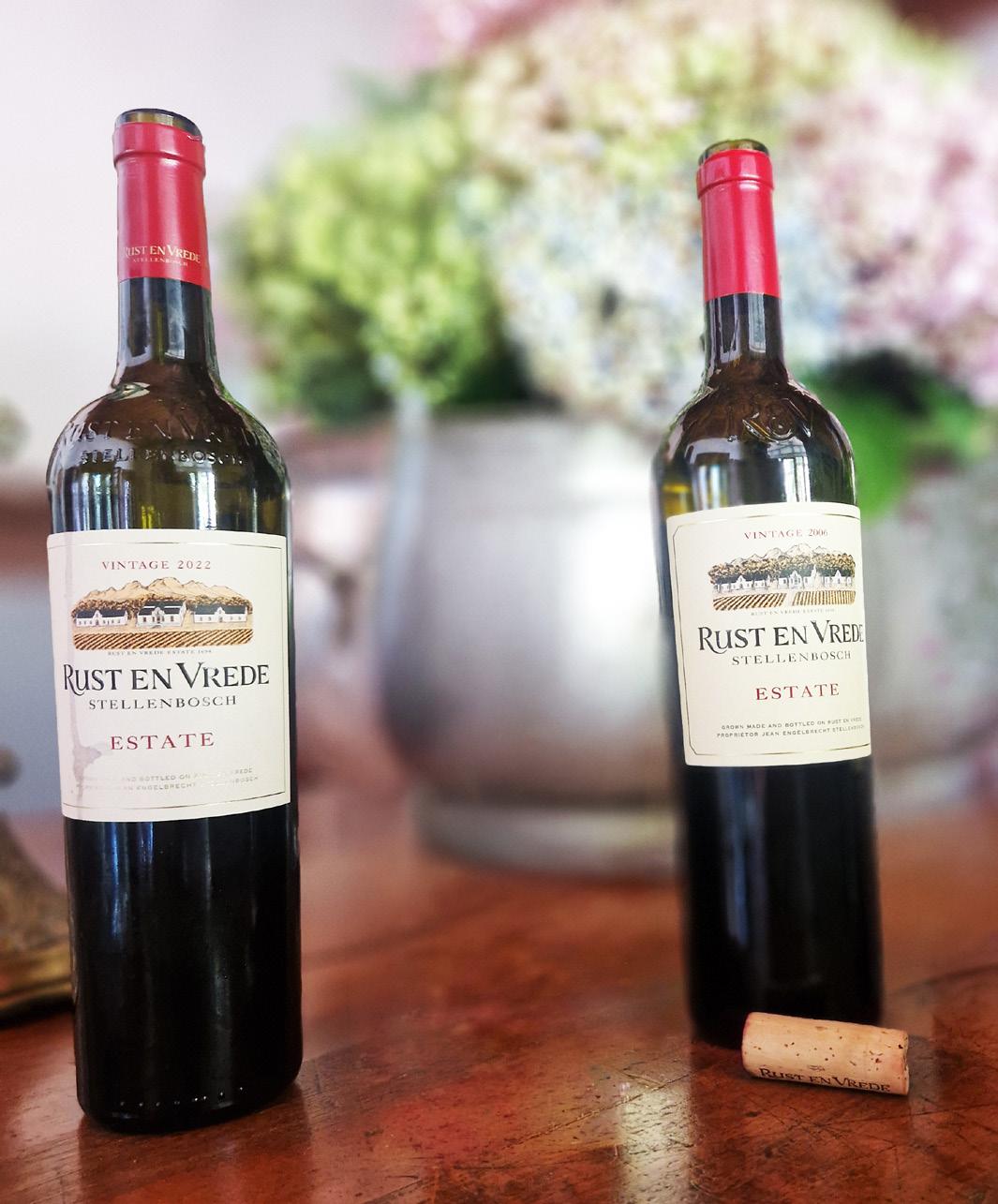
RUST EN VREDE ESTATE 2006
59% CABERNET SAUVIGNON, 33% SHIRAZ, 8% MERLOT
This vintage also began with a cooler spring, followed by a warm and dry summer, resulting in highly concentrated fruit, and the vintage is generally regarded as very good.
The major differences, when looking at the external conditions of this wine—such as winemaking and vineyard practices—are primarily influenced by the old vineyards but also by the stylistic approach. At this time, the estate still relied on older vineyards, many of which were affected by Leaf Roll virus, and the rows were still planted in a north–south orientation. This led to greater sun exposure, combined with faster ripening and higher sugar levels in the must. The wine has an alcohol level exceeding 15,5%, and the fruit is significantly richer and warmer than in the 2022 vintage. Moreover, this vintage is very much a “child of its time,” when Parker points were still highly influential, and one can clearly sense throughout the style that power rather than elegance was the guiding principle. In addition to French oak, a larger proportion of American oak was used, and the wine was aged for nearly 23 months in barrel before bottling. It is also evident that a higher proportion of new oak was employed during this period.
Here, one encounters a substantial wine that, with nearly twenty years of age, also
offers mature notes—albeit still in a relatively modest form. The palate is opulent, with ripe cherries, dark plums, hints of tobacco, tea leaves, and touches of leather, along with a faint charcuterie note. The influence of American oak is also noticeable, with a touch of vanilla lingering in the finish. The tannins are slightly dry, but the wine has a remarkably long finish that lingers on the palate. Grand, polished, and impressive, with many years still ahead for those who appreciate more mature wines.
So how will the wines evolve under Danielle’s leadership?
When asked directly, she replies that the ambition is to preserve the legacy established by previous winemakers, while adding her own signature. She strives to create wines where the grapes and the soil take center stage, and where elegance will be the defining thread.
—The fact that I am a woman will likely also influence the style of the wine. Perhaps we have a slightly softer approach to winemaking overall, she concludes.
A MOMENT LIKE THIS
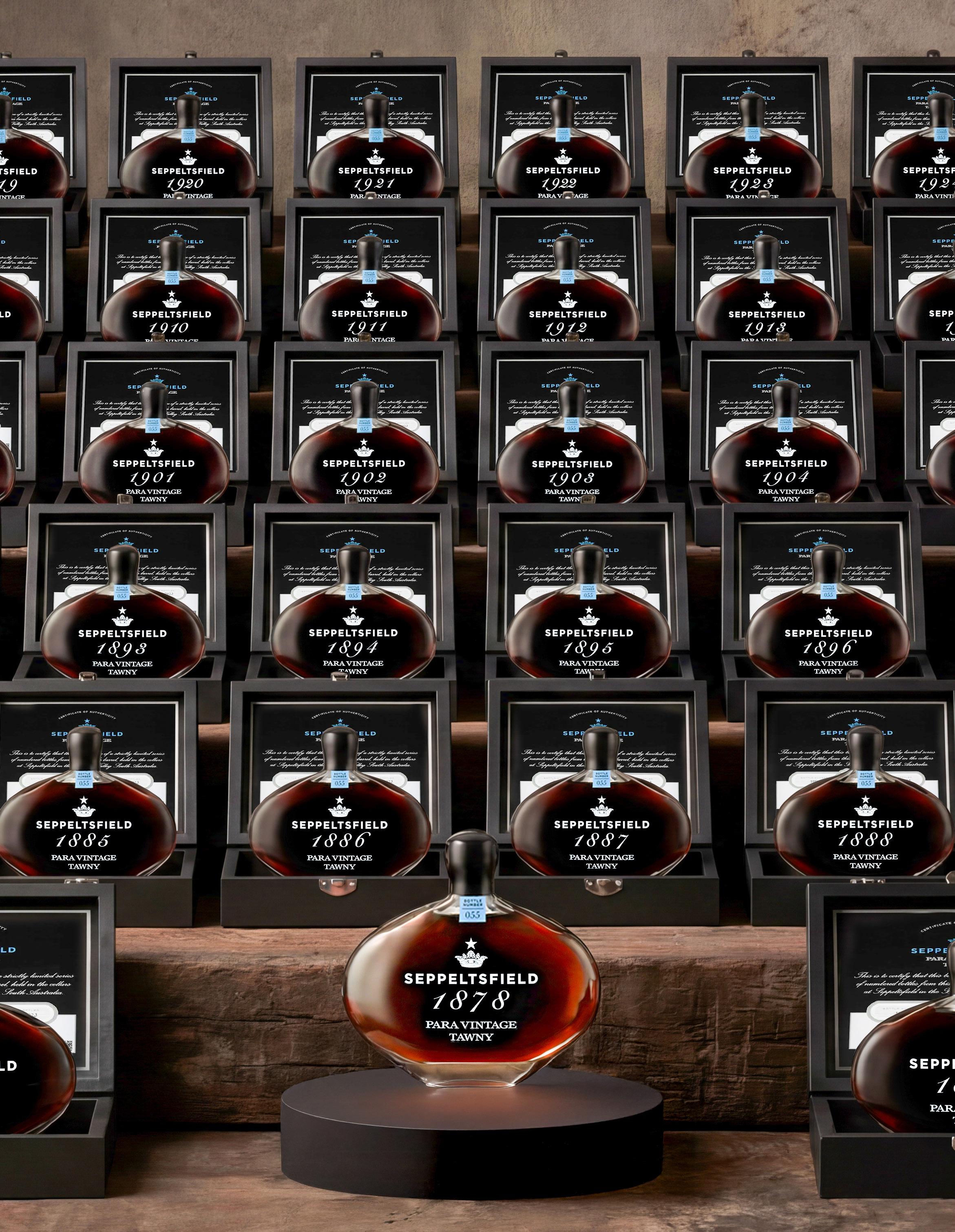
Seppeltsfield Centennial Collection: 1878 – 1926
175th Anniversary 100-Year-Old Tawny
Two premium South Australian producers recently hosted oncein a-lifetime vertical tastings at opposite ends of the Barossa. Both spanned decades, generations, and lifetimes. Livets Goda’s Australian correspondent Katie Spain was there to click her heels three times and be transported — via the glass — to another era.
TEXT: KATIE SPAIN
EVERY NOW AND THEN A WINE TASTING moves you so deeply it steals the breath from your lungs and the words from your mouth.
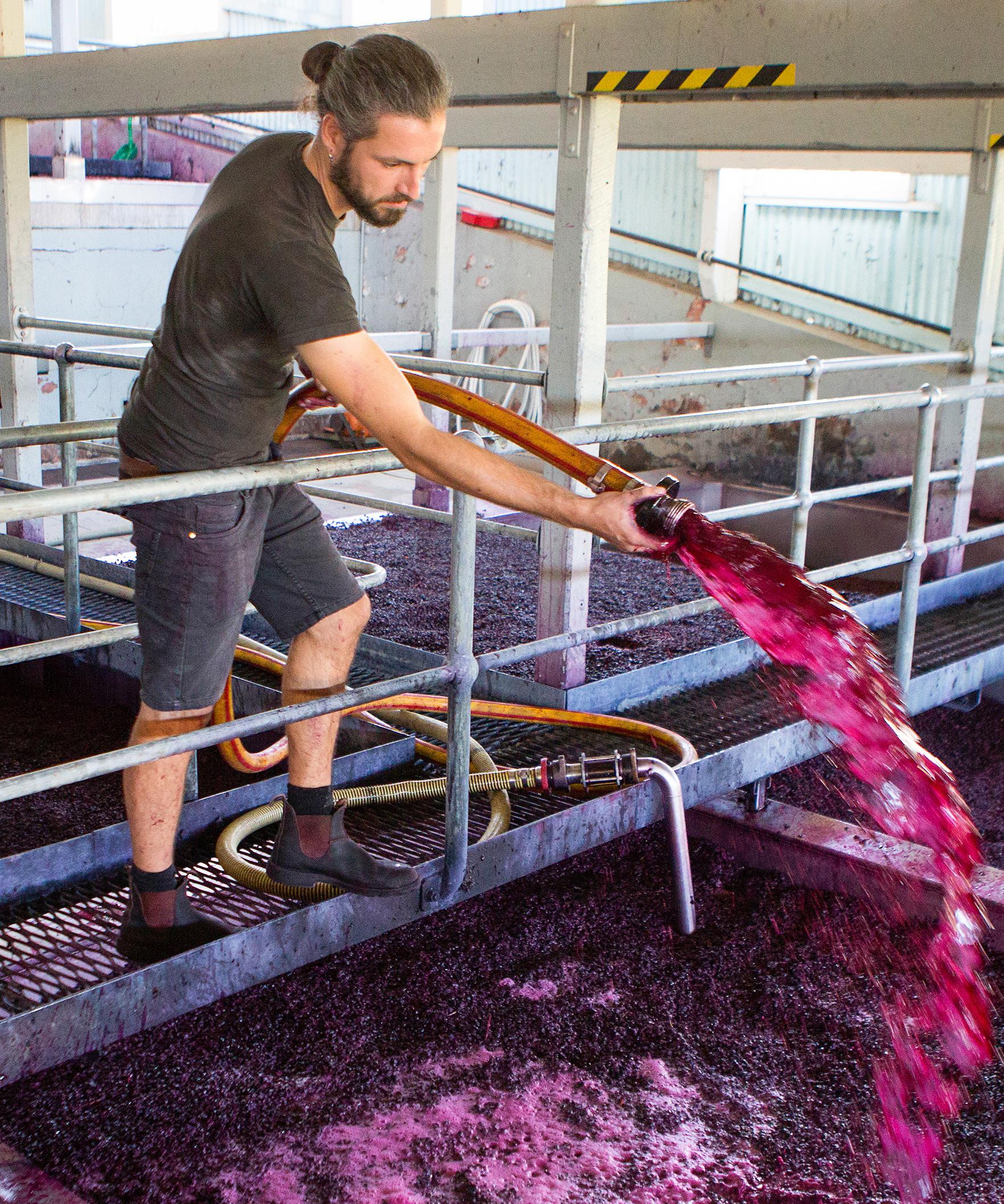
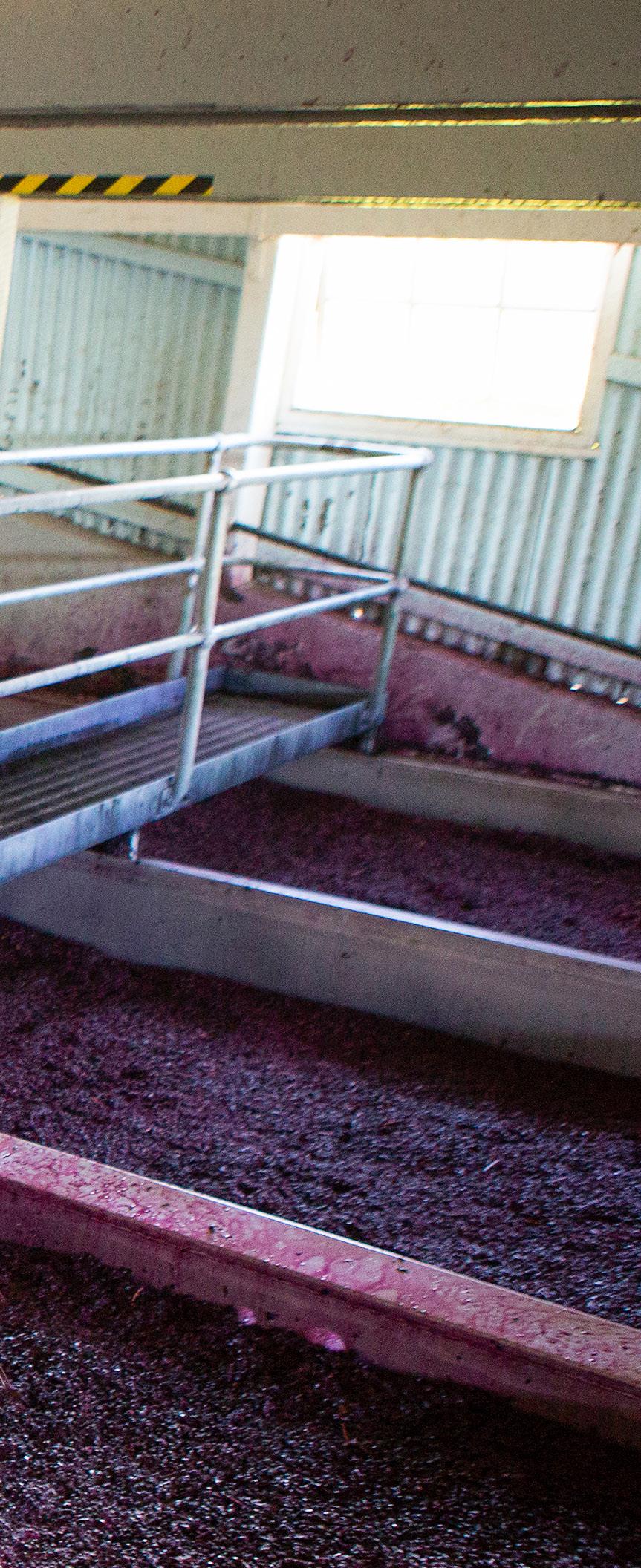
That’s what happened when a room full of bright wine minds (and yours truly) converged on Seppeltsfield’s Centennial Cellar to celebrate the Estate’s 175th Anniversary. This was no party. It was a serious and thrilling tasting of every Tawny dating back from 1878 to 1926, spanning 49 vintages. In addition, a wine from each decade, 2016 to 1926, spanning 10 vintages, to understand the ageing process of the wines.
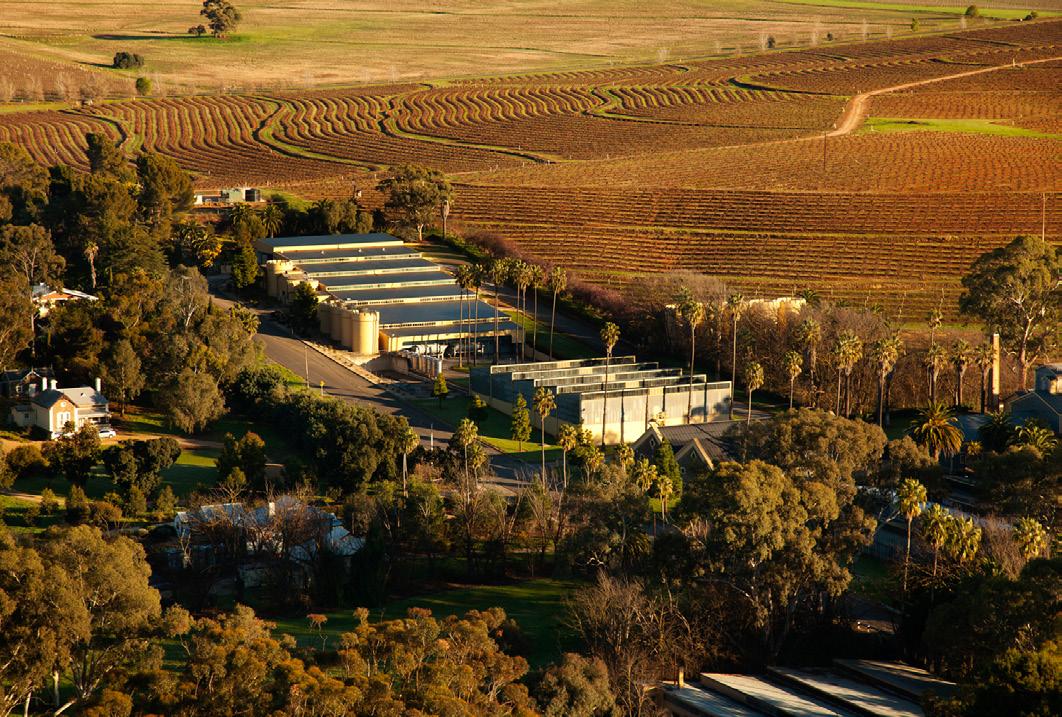
Established in 1851, the historic estate is now led by executive chairman and proprietor Warren Randall, but the spirit of its founders, Joseph and Johanna Seppelt, still
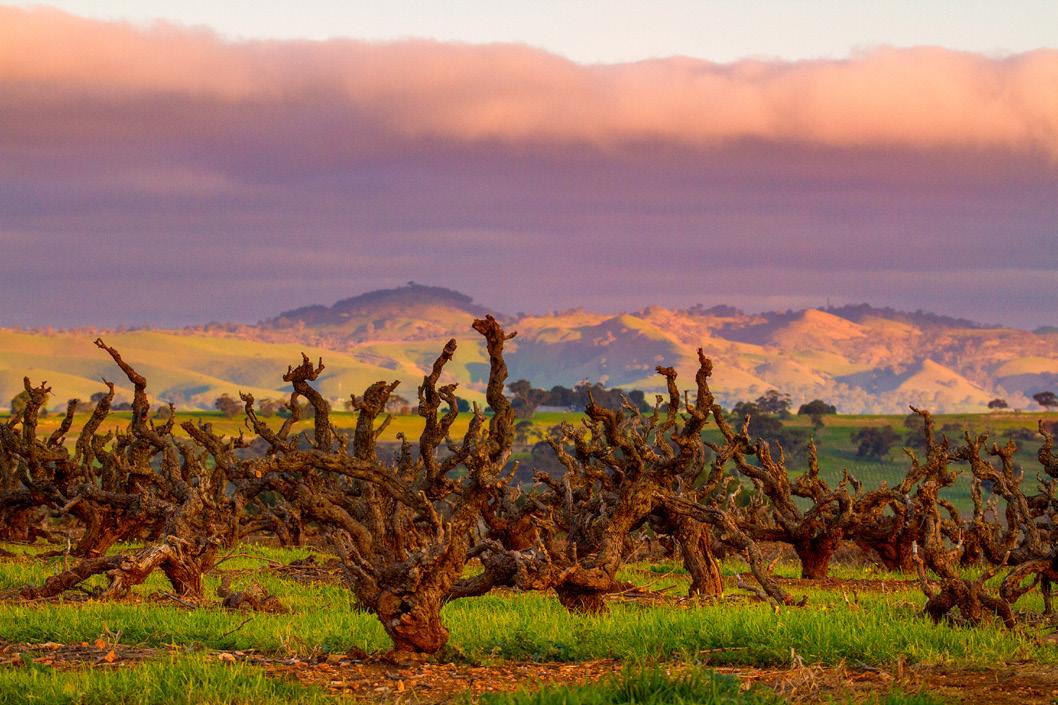
hums through the bluestone buildings and ancient cellars. Seppeltsfield has long been celebrated for its extraordinary fortified wines, most famously the Centennial Collection — the world’s only unbroken lineage of single vintage Tawny dating back to 1878.
THE TASTING PANEL INCLUDED THE SEPPELTSFIELD winemaking team led by chief winemaker Fiona Donald, Charlie Seppelt and Julian Bermingham, along with Seppelt family member Bill Seppelt, former fortified winemaker and industry legend James Godfrey.
The Centennial Cellar represents ambitions of a lasting family legacy. A lot can happen in 175 years. In the months, minutes and seconds that have passed since the Seppelt
“We’re going to set aside and bury my finest port wines to mark the completion of the winery, and they won’t be opened for 100 years.”
family established Seppeltsfield in 1851, Neil Armstrong plonked his size nine-and-a-half boots on the moon; global wars were fought, won and lost; the Great Depression hit; Karl Benz invented the first practical motor car; Elvis was born and died; airplanes defied gravity for the first time; a five-generation fortified and winemaking legacy unfolded.
The late Benno Seppelt (son of Seppeltsfield founders Joseph and Johanna Seppelt) had the initial vision for a 100-Year-Old Tawny. The entrepreneur and visionary created the Centennial Cellar – where he and generations of Seppeltsfield winemakers matured single barrels of vintage Tawny for 100 years before release.
“Benno was a real visionary and entrepreneur,” says senior winemaker Fiona Donald. “When the custom winery was complete Benno decreed, ‘We’re going to lay down and bury my finest ports to commemorate the completion of the winery, and it’s not to be opened for 100 years’.”
THE ONGOING LONGEVITY OF THE GOAL, long after Benno’s death, is testament to his vision and the devotion of staff over the years.
“As the current custodian of the Seppeltsfield Centennial Cellar, I am incredibly proud of the amazing legacy and vision of Benno Oscar Seppelt, son of our founders Joseph and Johanna Seppelt, dating back to 1878,” said executive chairman and proprietor Warren Randall. “A legacy that would outspan his lifetime, a gift to his great and great-great grand-children and beyond. To remind them of their origins and traditions and to give them purpose and meaning, to participate in life and to build something of value for the next generation.”
When Warren eventually took Seppeltsfield’s reins, the tradition continued.
“Every year the new vintage (the current release 100-year-old) is inducted into this collection,” Fiona says. “It’s a real tribute to the Barossa.”
WITH THAT, COMES RESPONSIBILITY
Especially for Fiona who watches over the precious centurion with pride. “When you put the wine down each year you think, ‘How am I going to be judged in 100 years? Even my children won’t taste it as it’s intended to be released’.”
As we all settled in for the tasting of a lifetime, Fiona told us it was the first time, as custodians, the team has had the chance to look at the current 100-Year-Old Para Vintage Tawny, from the 1926 vintage.
“I feel incredibly privileged to lead this incredible, unique tasting experience to honour the 175th Anniversary of Seppeltsfield,” Fiona said. “It was a pleasure to share with the finest wine experts in the world the Centennial Cellar, the opportunity to taste 100 summers and 100 winters, across 49 vintages. There is no other winery in the world who can offer this. It was also fascinating to taste a wine from each decade 2016 to 1926.”
By all accounts, 1926 was a truly wonderful vintage in the Barossa, with the results cared for by generations of winemakers. History and harvests are marked by a cycle of disappointments, lucky escapes and triumph.
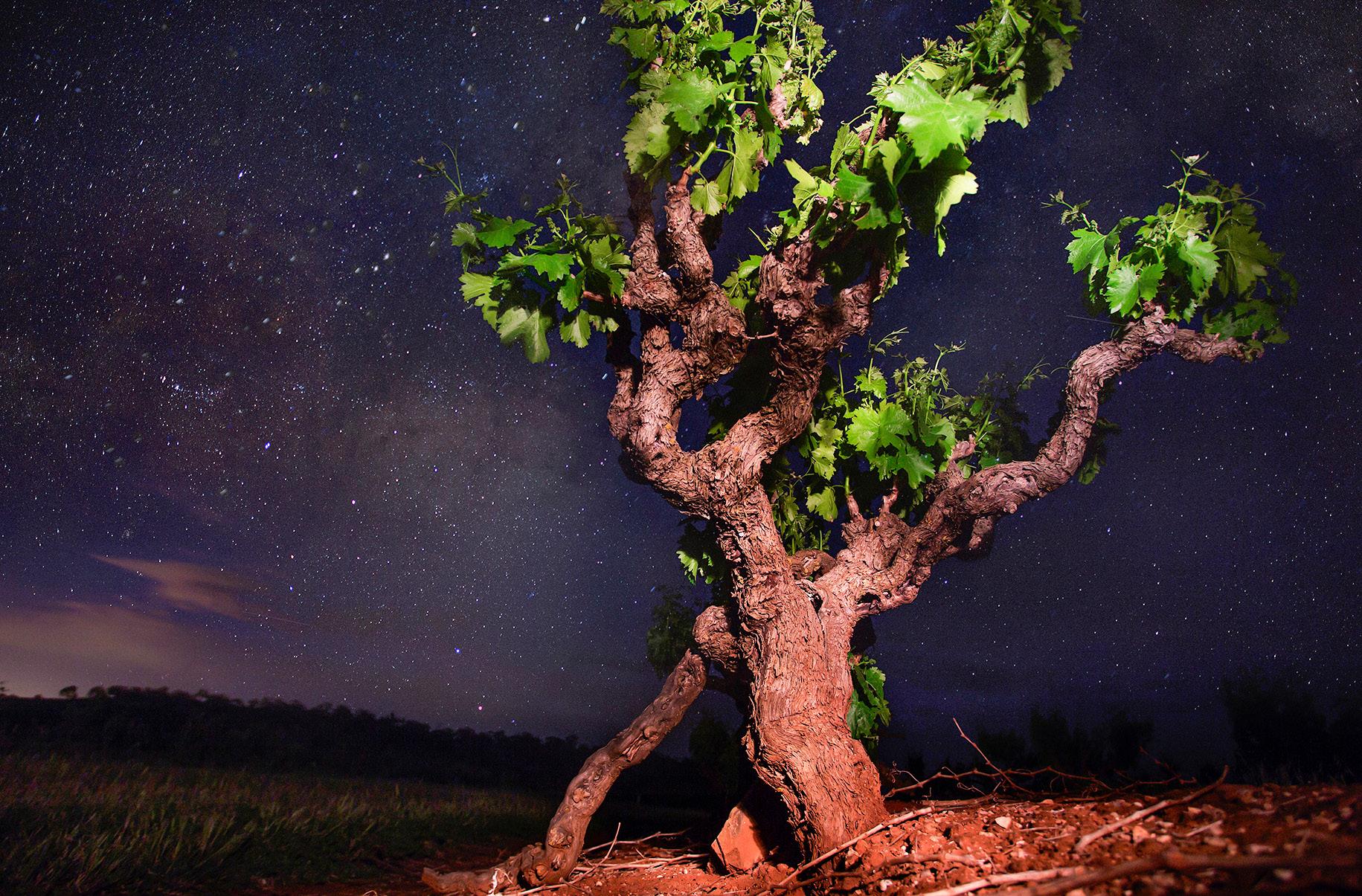
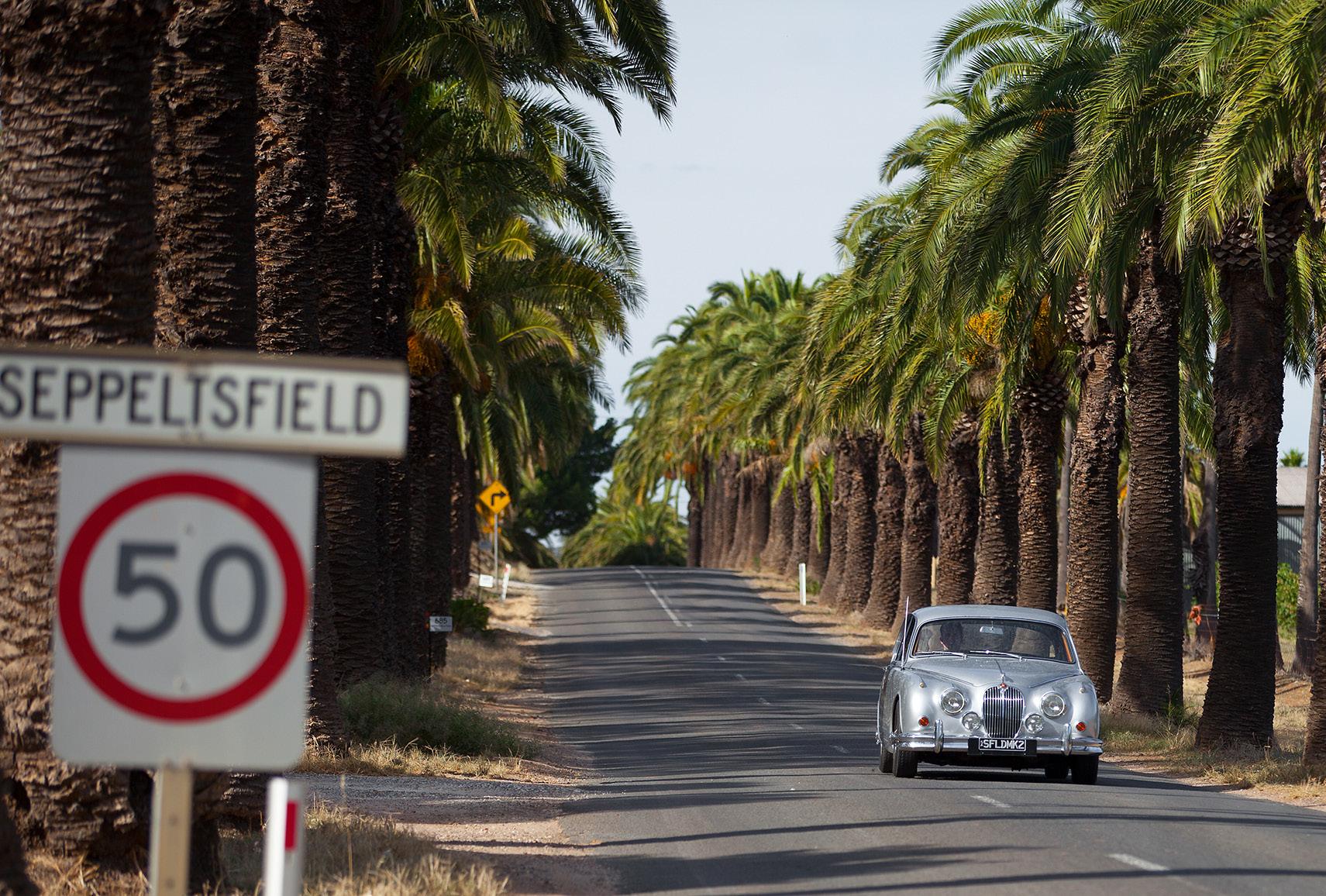
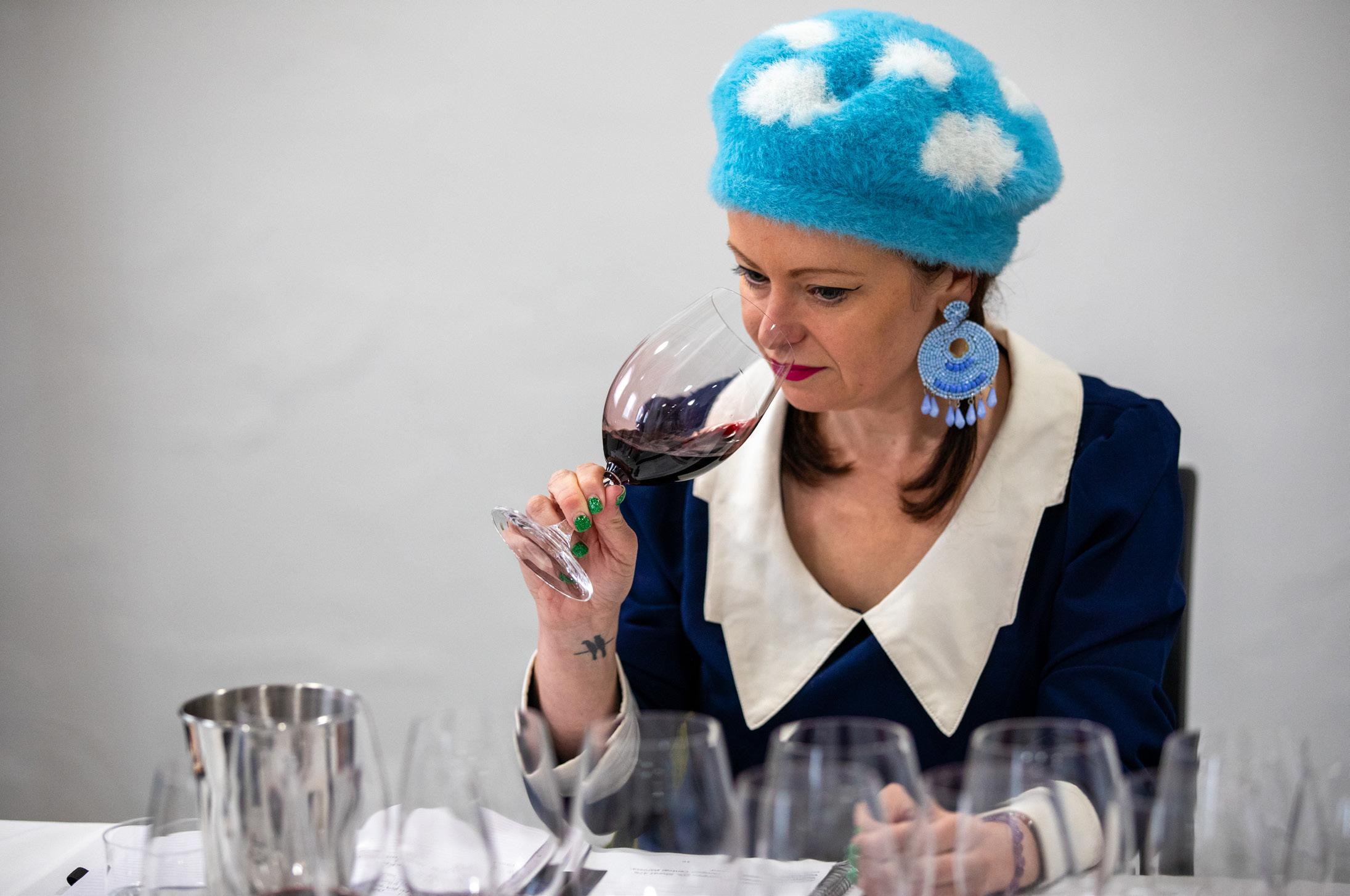
Livets Goda’s Katie Spain at the Seppeltsfield tasting.
Seppeltsfield Road
Photo: Dragan
TASTING 21-Year-Old Para Tawny Collection
“Deep breath. Here we go. It’s time for the Tawny to talk.”
2000 21-YEAR-OLD PARA TAWNY ⭐️⭐️
ALC: 20.8%
VARIETALS: SHIRAZ 51%, GRENACHE 49%
Nose is instantly engaging, consistently present and alluring. Grilled nectarine drizzled with toffee. The palate follows with buoyant, pert enthusiasm. Burnt toffee, creamy honey ice cream – Golden Gaytime icecram memories – a lick of salinity at the finish. A curvaceous, come hither, Marilyn Monroe of a tawny. Seductive.
2001 21-YEAR-OLD PARA TAWNY
ALC: 20.4%
VARIETALS: SHIRAZ 54%, GRENACHE 46%
Slightly more alcohol up front (hits before aromas) here and sweet across the palate. I love the burnt toffee finish on the back palate.
2002 21-YEAR-OLD PARA TAWNY
ALC: 20%
VARIETALS: SHIRAZ 60%, GRENACHE 40%
Gorgeous toffee almond nose. Candied marmalade and zippy acid twang. Fresh, all class with a side of sass. Clean, clarity, comforting, all at once. It’s like Audrey Hepburn – sexy and timeless. Personality abounds.
2004 21-YEAR-OLD
PARA TAWNY
ALC: 19.3%
VARIETALS: SHIRAZ 95%, GRENACHE 5%
Fine citrus spray upfront. There’s a cheekiness to the energy rippling through this wine. The salinity at the tail end is a delight – permeates the palate. Bright finish.
TASTING Evolution of Tawny Decade Tasting 2016-1926
Centennial Collection
2016 PARA VINTAGE
TAWNY
Red kelpie colouring. Butterscotch, candied orange and dried apricot aromas. Burnt toffee, and whippersnapper salinity follows. Bitter hem but bright as a button.
1996 PARA VINTAGE TAWNY
Flame-licked orange peel and dark chocolate Jaffa. The palate is shaped like the glass – leaner up front, voluptuous and heavy down below. Deep, dark, burnt toffee prominent. Depth. Baby’s got booty. Piercing.
1986 PARA VINTAGE TAWNY
Deeper brown on the eye –mysterious tales of yore. The nose takes you by surprise – it’s steep and leans into varnish and fresh polished grand piano. The palate’s intensity increases with dramatic intensity – burnt coffee. It’s like a boat pitching on the waves. Big surf. It feels ‘jolty’.
1976 PARA VINTAGE TAWNY
A change in palate weight happening. There’s harshness up front here that momentarily pitches you backwards. The aforementioned boat is still
bobbing on choppy waters. Palate calms – gradually… stewed sultanas, toffee undercurrent, sweet surge that crescendos on the back palate.
1966 PARA VINTAGE TAWNY
It’s like we’ve reached the eye of the storm. The nose settles – seductive curves dominate; rising, falling, then mellowing… wrapped up in sheer pantihose texture. A para of beguiling intensity and length. I’m smitten.
1956 PARA VINTAGE TAWNY
The nose pitches a little again but the proverbial Para waters are calm; gentle peaks of bush honey are highlights. Soft edges like fresh whipped meringue. I’m really seeing toffee almond, rich dark chocolate, and lush complexity across the palate. Ultimately smooth. I’m in love.
1936 PARA VINTAGE TAWNY
A broody rockpool full of magic. Super intense up front with spice and ultr-dark chocolate shards flitting through the underbelly; cinnamon stick, burnt toffee, and a firwork-flashes of bright citrus (orange peel) highlights.
1926 PARA VINTAGE TAWNY
⭐️⭐️⭐️
The stars are aligning. Be still my fluttering heart. The spice chapter continues this decade. Complexity rules here. A reassuringly smooth nose is followed by piercing intensity across the viscous, inky palate. Burnt caramel-embraced fig
and toffee almonds. Hint of salinity and gorgeous acid tucks the entire package up in bed like fresh, crisp sheets pulled up around the chin. The cogs are all turning in sync here – it feels complete. A century-old masterclass in balance.
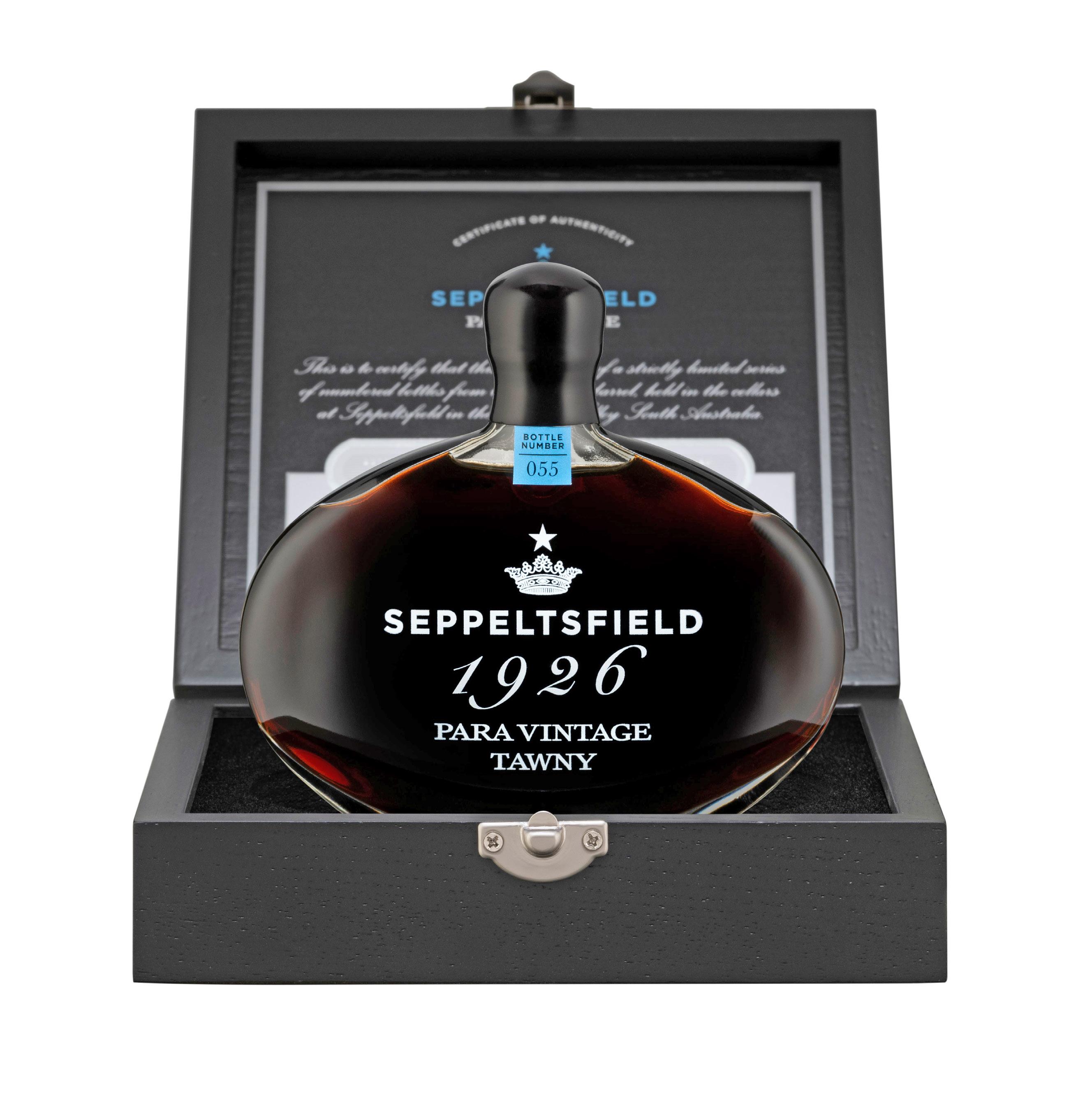
The 1926 100 Year Old Para
Vintage Tawny RRPs for AU $1850 (100ml) and is available from Seppeltsfield cellar door or via Centennial Collection - Seppeltsfield Barossa with shipping possible worldwide. The Seppeltsfield Estate is just under one hour’s drive from Adelaide, South Australia.
A MOMENT LIKE THIS
Henschke
– 70 Vintages of Mount Edelstone
There’s magic to be found among the gum trees and cool folds of South Australia’s Eden Valley, just east of the Barossa Valley. Close your eyes and you can almost hear the early settlers going about their day; farmers with hands and hopes deep in the soil.
Nowadays it is a place known for producers of elegant fine wines, especially Riesling and Shiraz, among them is Henschke, one of Australia’s oldest family-owned wineries.
STORY: KATIE SPAIN
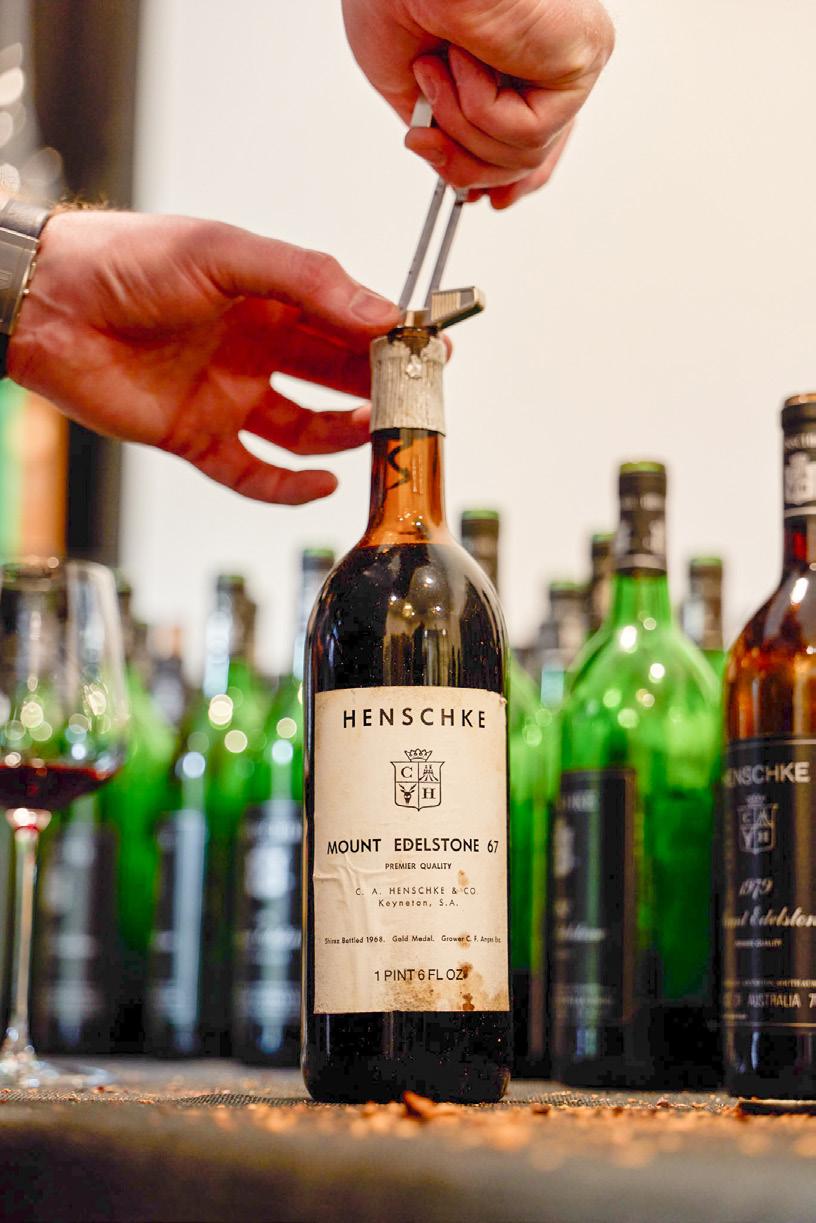
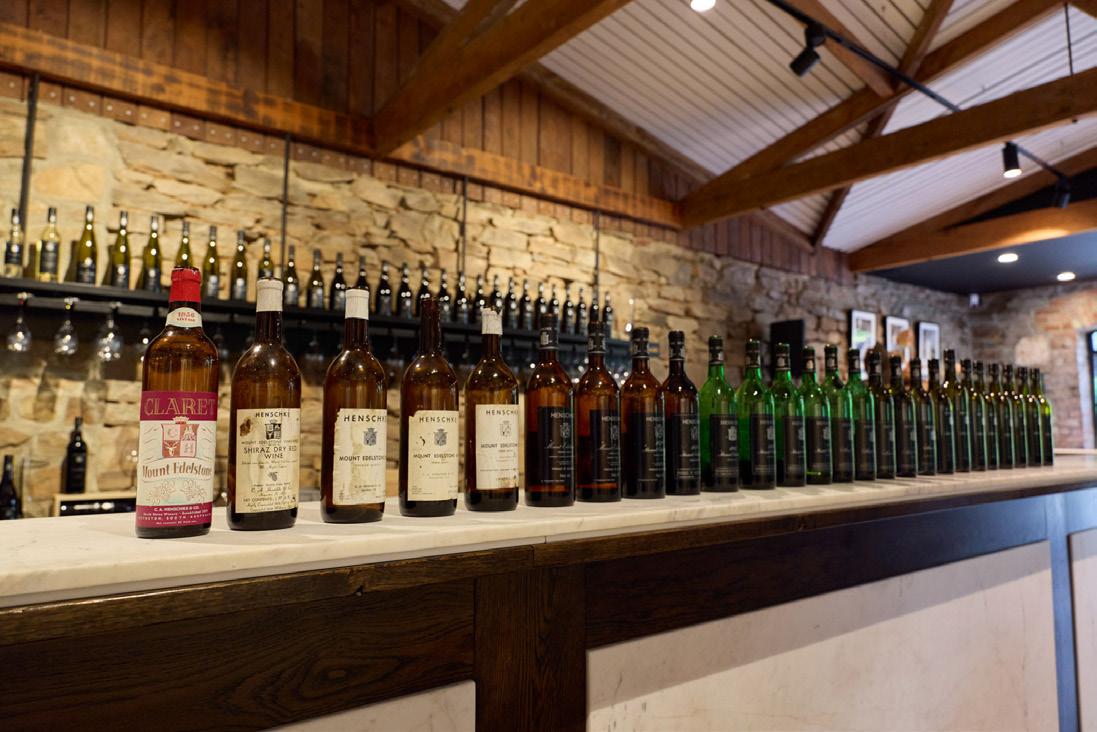
TASTINGS ARE ALWAYS ACCOMPANIED BY a healthy dose of storytelling but the vertical of Mount Edelstone Shiraz held at the brand’s cellar door on 24 February 2026 was something special.
As wine labels go, few capture history like this. Names like Mount Edelstone, The Wheelwright, Hill of Grace, and Julius Riesling, delve deep into the family’s past. Fifth-generation winemaker and managing director Stephen Henschke takes great delight in explaining the tales behind the titles.
“I was fortunate,” Stephen says. “I inherited the winery from my father Cyril and with it, wines with beautiful names.”
The first recorded sale of Henschke wine was in 1868 (just 300 gallons), and since then, the brand has become synonymous across the globe for exquisite Eden Valley and Adelaide Hills reds and whites.
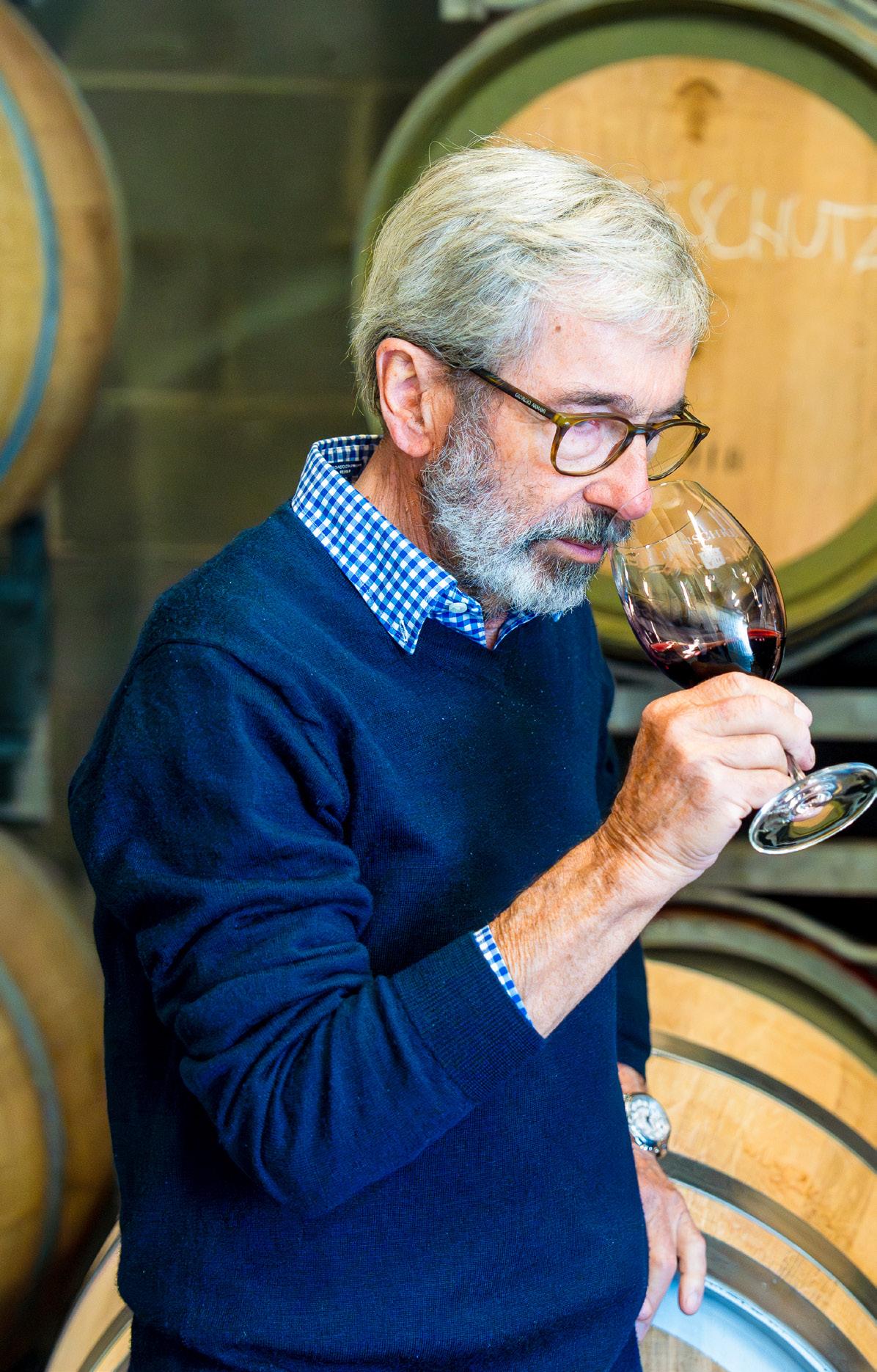
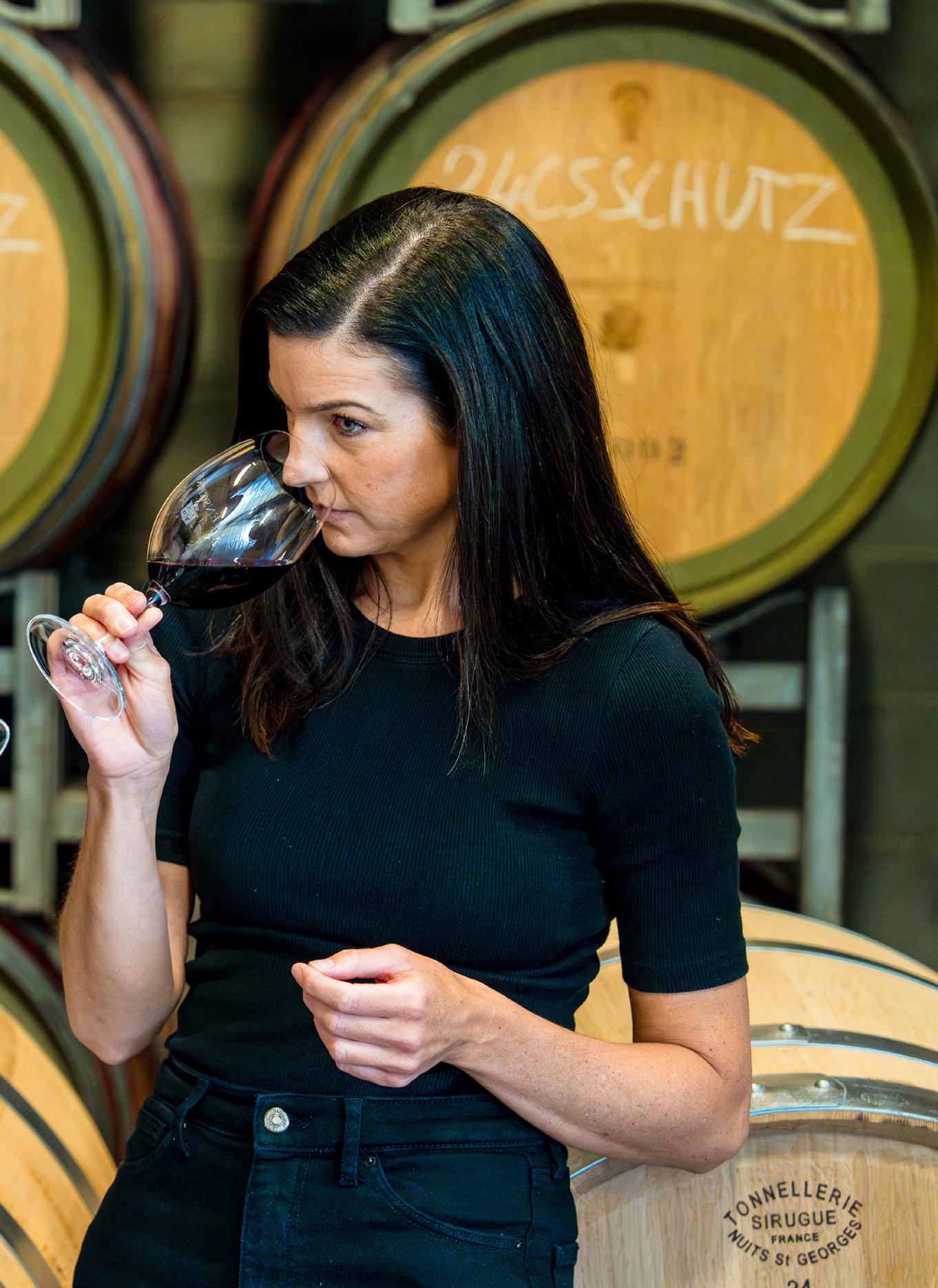
Stephen & Justine.
Photo: Charlie Phillpot
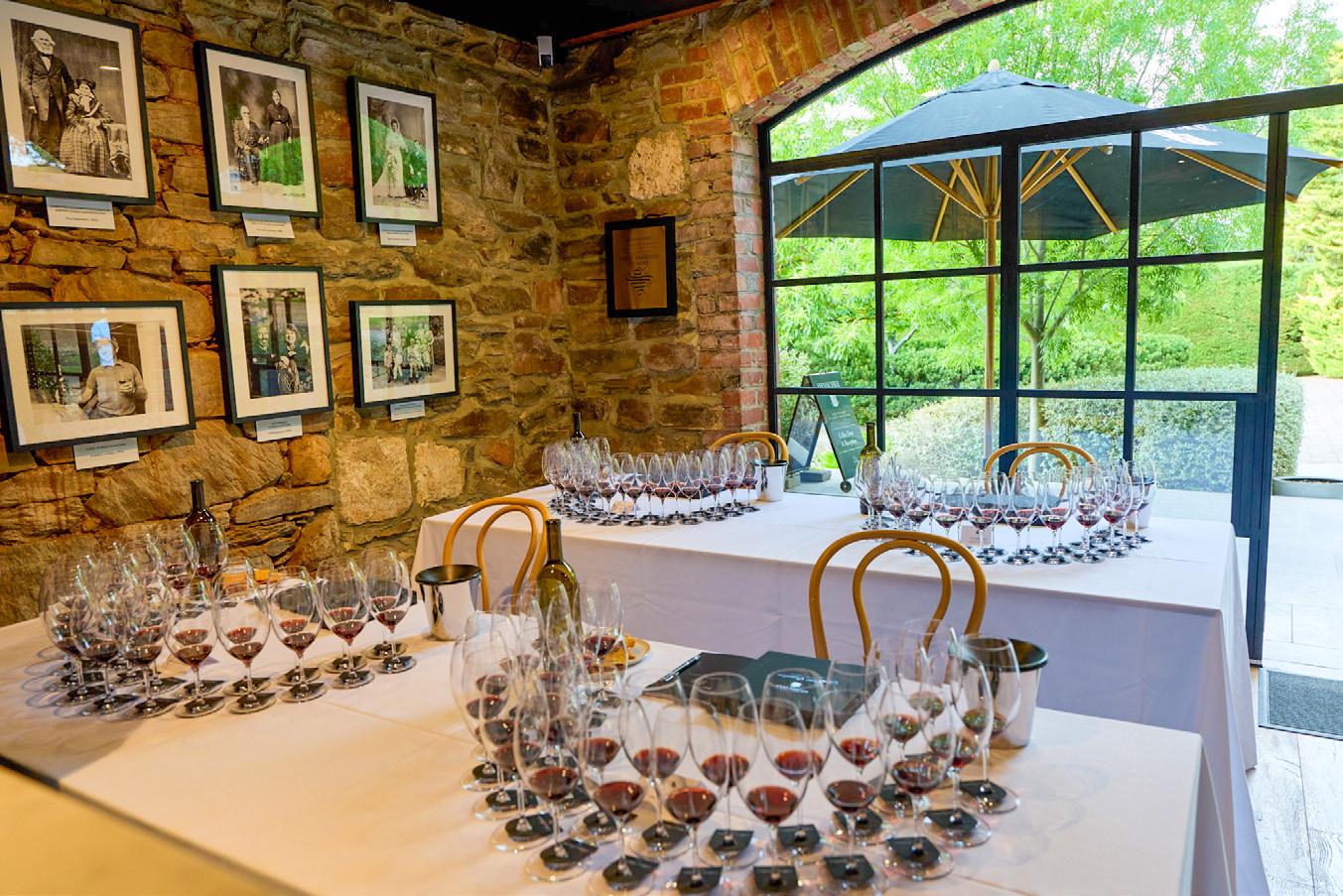
HENSCHKE WAS ESTABLISHED IN 1868 and the family has made wine for more than 150 years. Theirs is a story of love, ancient vines and authenticity. As labels go, Mount Edelstone is particularly poignant. The Shiraz was first produced in 1952 by fourthgeneration winemaker Cyril Henschke (Stephen’s father), using fruit from 16 hectares planted in 1912 by Ronald Angas, descendant of English landowner George Fife Angas. The site was a hillside c.vered with wattle (Australia’s national floral emblem – a native tree covered with bright yellow, fluffy flowers).
“Cyril knew the fruit was special,’ Stephen said as we settled in to sip through the decades. “He knew it was unique.”
When Cryil entered the wine in the Royal Agricultural Show in 1956 it won first prize. “That really kicked off Cyril’s reputation,” Stephen says. “This was his hero wine.”
IT IS AN IMPRESSIVE DROP, ARGUABLY
AUSTRALIA’S longest, consecutively-produced singlevineyard wine. Mount Edelstone was so successful it inspired Cyril to release Hill of Grace in 1958.
Stephen, his award-winning viticulturist wife Prue and their children Johann (winemaker and viticulturist), Justine (marketing and public relations manager) and Andreas (engineer).
Prue is the viticultural force behind the business. She takes an organic and biodynamic, as well as a botanical approach to vineyard management and for her efforts, has accumulated many global viticulture awards. Above all, it’s about doing the best by the environment, the vines and their future.
“Old vines don’t just give you wine, they give you a story,” Stephen says. “As the wine opens up you see more pages of that story. Our wines are made with a minimalist approach they show a strong sense of place.”
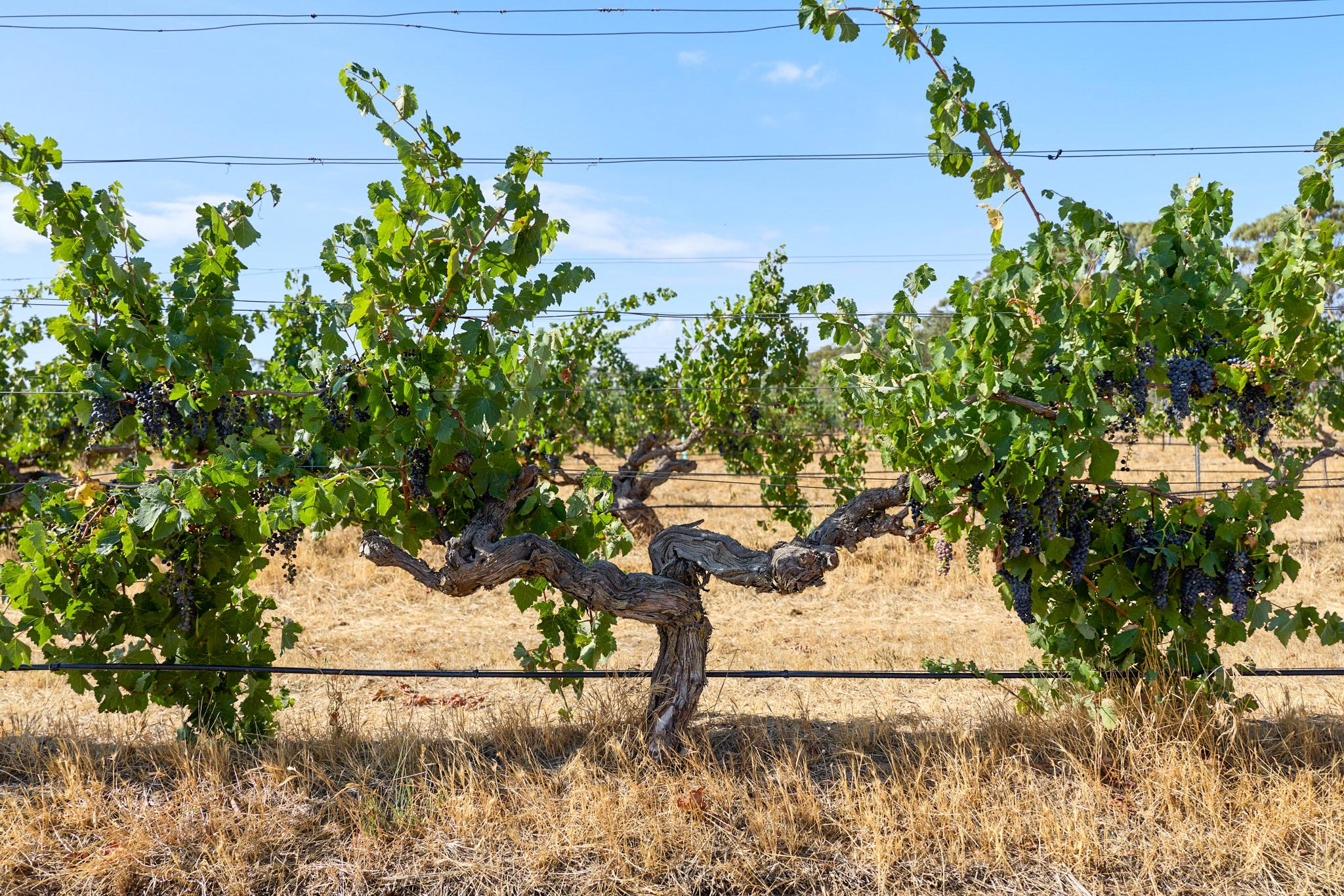
Eden Valley is Barossa Valley’s cooler, more contemplative cousin. The vineyard and its centuryold vines lie on an easterly slope that is gently woken by the cool dawn sun. Soft light and cool nights deliver grapes of complexity, balance and structure.
The name Mount Edelstone is a translation from the German Edelstein, meaning ‘gemstone’, a reference to the small yellow opals once found in the area, deep below the earth’s surface.
Now, 70 vintages later, Mount Edelestone Shiras is one of Australia’s longest consecutively produced singlevineyard wines.
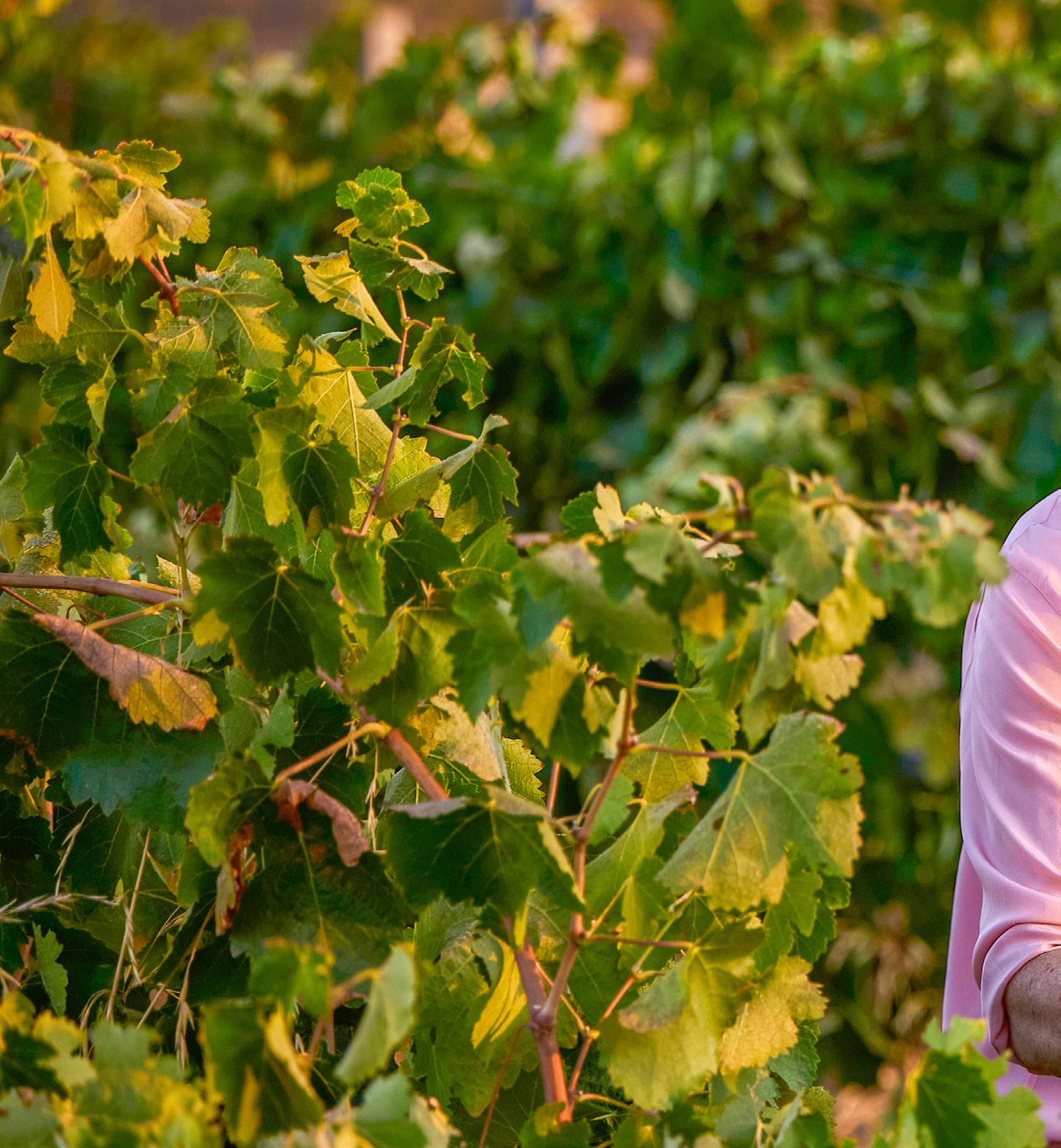
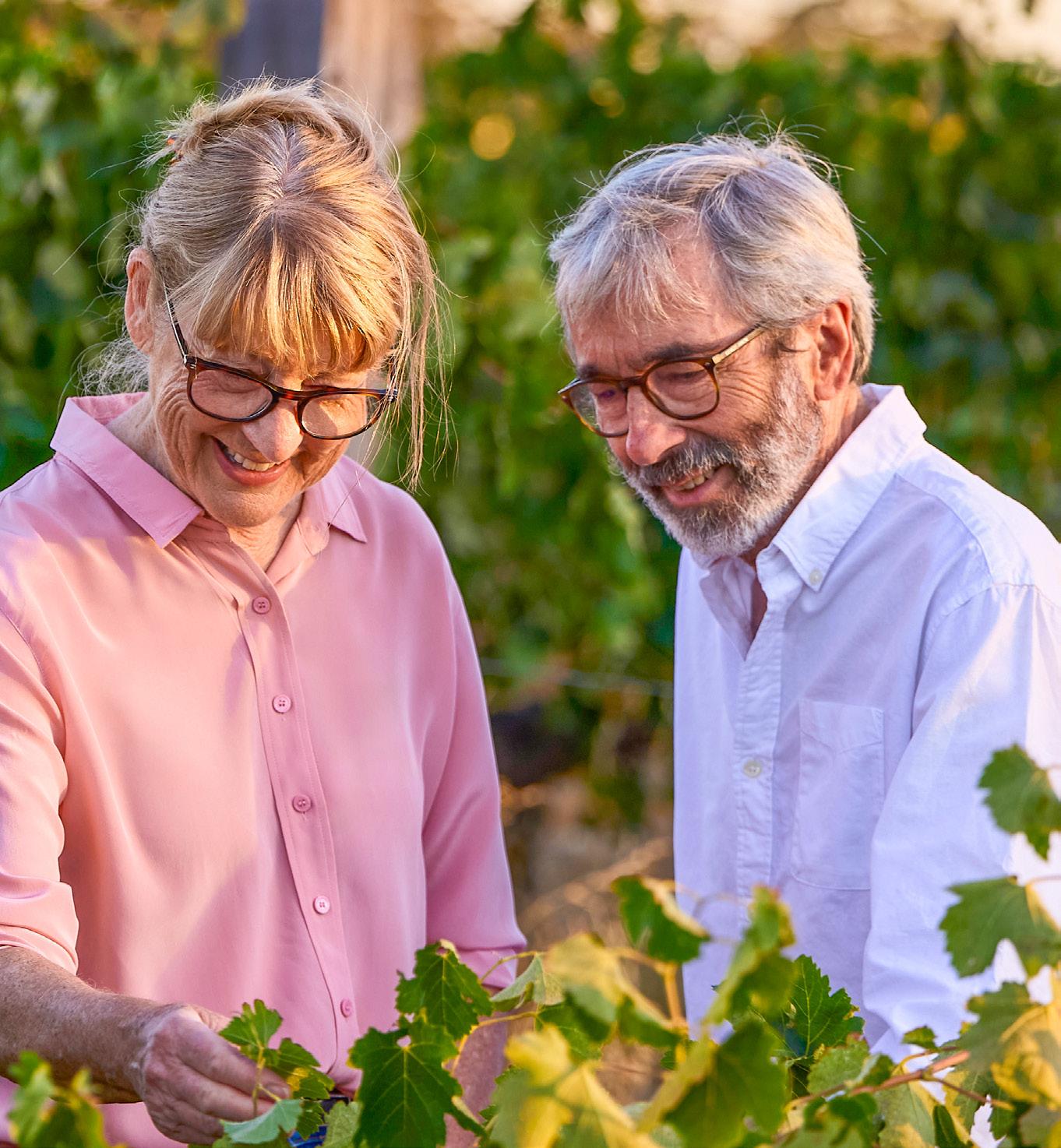
Prue & Stephen Henschke.
THE TASTING KICKED OFF
IN THE 1960S, coined by the Henschkes as a “decade of natural expression”. Globally, the 60s were a time when the world seemed to shift on its axis — politically, culturally, musically, and socially. Man walked on the moon, ‘peace, love and hippie culture’ were championed at Woodstock Festival, and fashion loosened up with miniskirts, bold prints, big hair and attitude.
This is where the vertical tasting began. As silence fell across the room of global wine scribes, seven decades of extraordinary purity emerged, magnified by the use of screwcap in Henschke’s premium red wines in 2001 and later Vinolok glass closure for export markets from 2004.
On reflection, there’s a sense of poise about these wines I adore. This was not only a masterclass in elegance and posture, it was a poetic exploration of wines with quiet poetry about them.
ACROSS THE BOARD, THERE WAS MAGNIFICENT
acid retention in the wines, contributing to their purity and freshness for 70 years and counting.
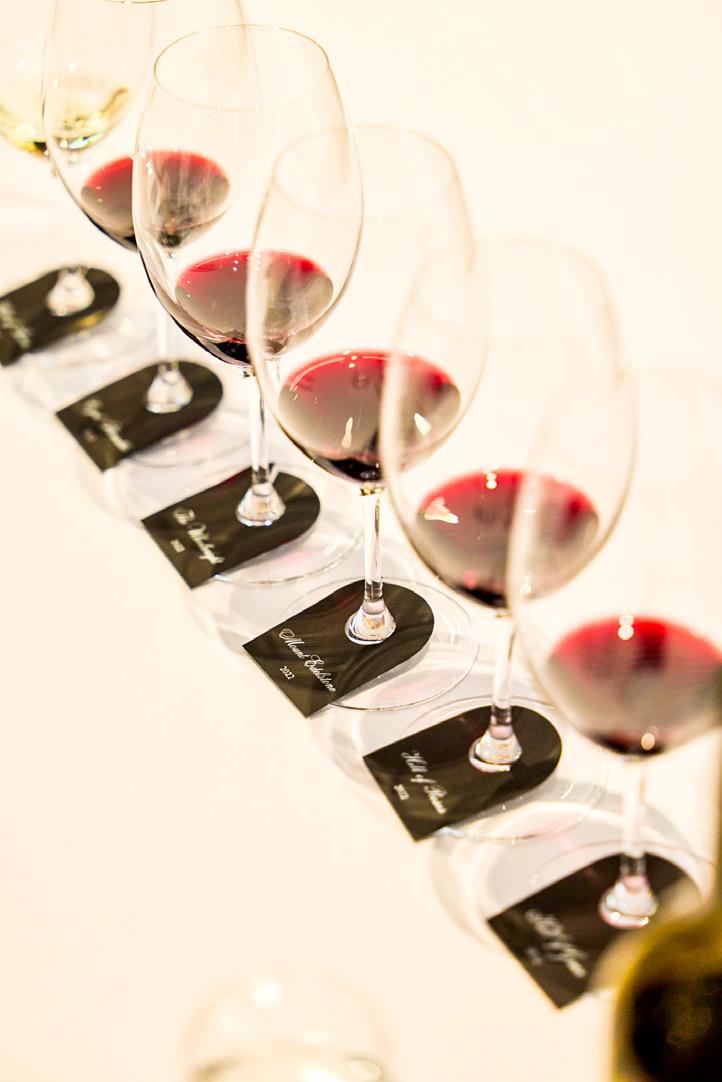
The Henschke family’s anticipated 2022 Single Vineyard Collection from the Eden Valley will be released globally on Wednesday, 6 May 2026. This collection includes 2022 Hill of Grace Shiraz, Hill of Roses Shiraz, Mount Edelstone Shiraz, The Wheelwright Shiraz, Cyril Henschke Cabernet Sauvignon and Hill of Peace Semillon.
According to Stephen, the 2022 vintage is one ‘graced by belief’ and celebrates the pioneering vision of fourth-generation winemaker Cyril Henschke.
“Years later, when asked which was his favourite wine he’d made, people expected him to say Hill of Grace but he always knew that Mount Edelstone was a wine that drew customers to him from all over Australia and the world,” Stephen says.
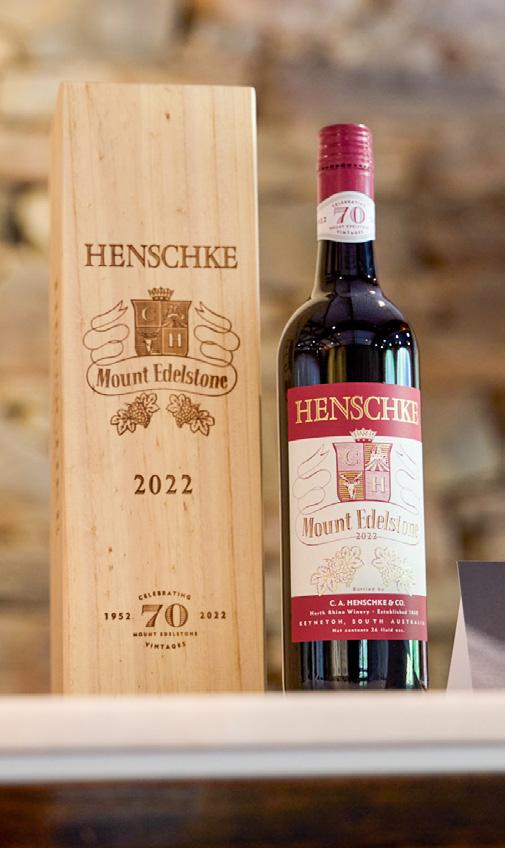
Henschke will also release 1500 bottles of the 2022 Mount Edelstone with the original 1950s label through select independent retailers and at their cellar door.
“It was quite an exciting process to bring the old lady back.
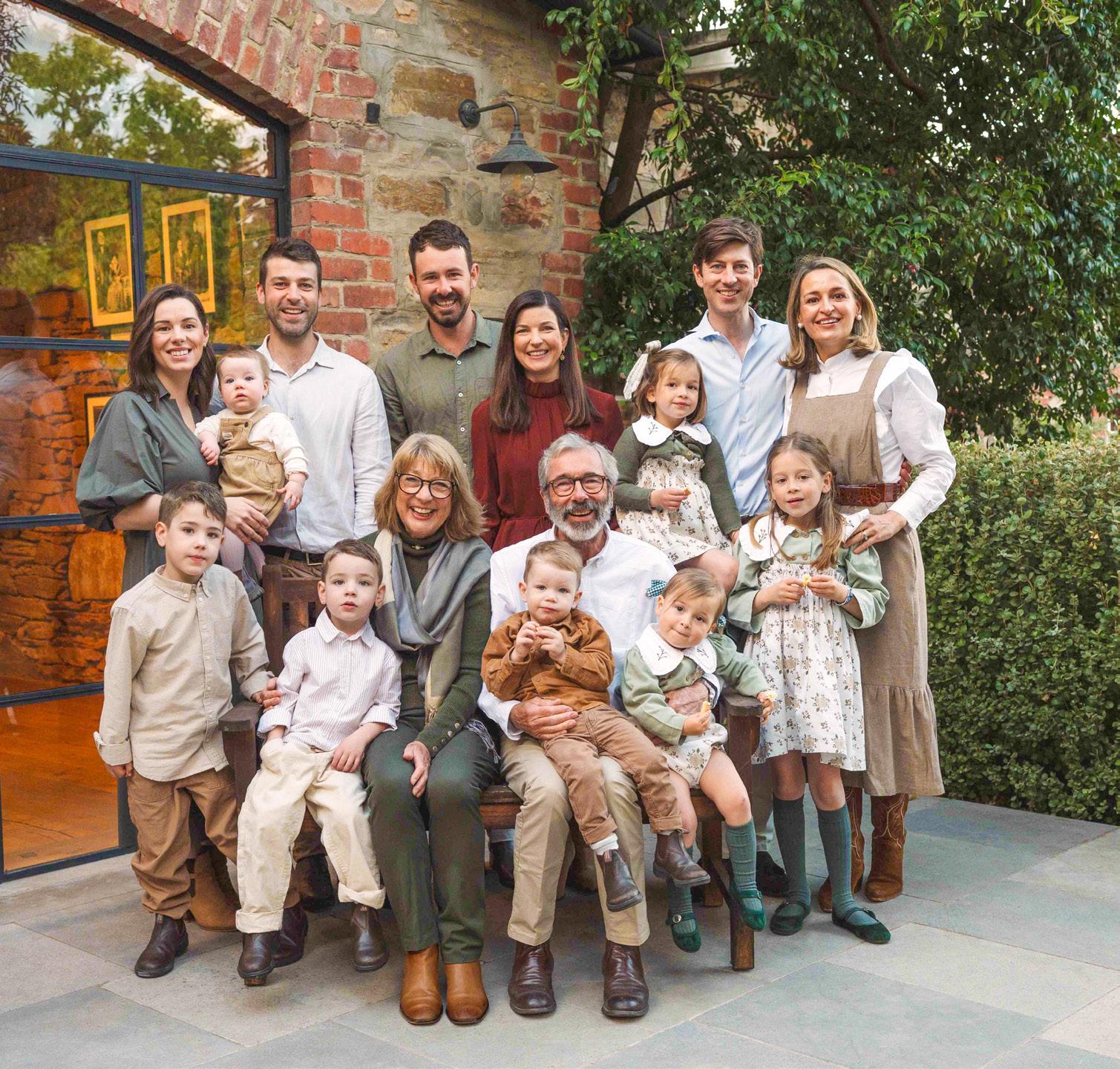
The Henschke family – fifth, sixth, and seventh generations.
TASTED WINES Highlights of the 70 Vintages of Mount Edelstone
“Never have I written ‘balance’ and ‘purity’ so often in a vertical tasting.”
1966 MOUNT EDELSTONE
Intrigue from the get-go. What was an excellent vintage (dry winter, frosty spring, a hot and dry year with low yields). Some fruit shrivelling provided higher concentration of flavour and there’s gorgeous intensity across the palate. A seesaw in absolute balance. Deep red fruit and an orange marmalade twang.
1973 MOUNT EDELSTONE
A rich, ripe beauty. The palate is sublime and fruit present throughout. I love the fierce intensity and acid drive. She’s sexy. Again, balance abounds.
1978 MOUNT EDELSTONE
A pert, fruit-driven palate with lovely, persistent pull and length, all wrapped up with a gentle oak cuddle.. There’s consistency here, and a lot to love.
1984 MOUNT EDELSTONE
As much as I wanted my birth year (’82) to deliver the ‘wow’ moment, it was the 1984 that stole the heart, largely thanks to the seductive whisper of sage, gorgeous acid, medley of dark and red berries. A Mary Poppins of a wine; practically perfect in every way.
1988 MOUNT EDELSTONE
The 80s just keep getting better. This was an excellent vintage. A sprinkle of sage and spice make this a unicorn of a wine. Lovely intensity across the palate, bow and arrow acid and savoury hem. It’s alert and beautifully balanced. I wish I aged this well.
1991 MOUNT EDELSTONE
Another excellent vintage. The nose whispers seductive sage sweet nothings. Dark fruit upfront, gorgeous acid line and elegant tannin. Beautifully put together, like Julia Roberts after her glamorous Pretty Woman transformation.
1996 MOUNT EDELSTONE
An aromatic cornucopia of dried sage and spice. The palate is pert, proud and energetic. There’s a life-affirming acid twang and energy throughout. Elegant sheer stocking tannin. An exceptional vintage.
2002 MOUNT EDELSTONE
Another exceptional vintage. Praise be for Mount Edelstone’s instantly recognisable aromatics. Spice leads the charge; alluring sage, and pepper. At 15% alcohol, it’s remarkably balanced. Gentle tannin and elegance throughout.
2016 MOUNT EDELSTONE
The nose! Stunning, ‘come hither’ presence. Rich, dark fruit, piercing acid twang and slight earthy twiggy notes. The palate is plush and finishes with finely chopped tannin. A wine of presence.
2022 Mount Edelstone – new release
Bright on the eye and an example of another exceptional vintage. Bursts with bright berry-packed youth and an undercurrent of the spice evident in previous vintages. So much positivity for the future. I can’t wait for the rich intensity that a few decades and patience will bring.
Happy anniversary Mount Edelstone, you glorious understated Australian icon.
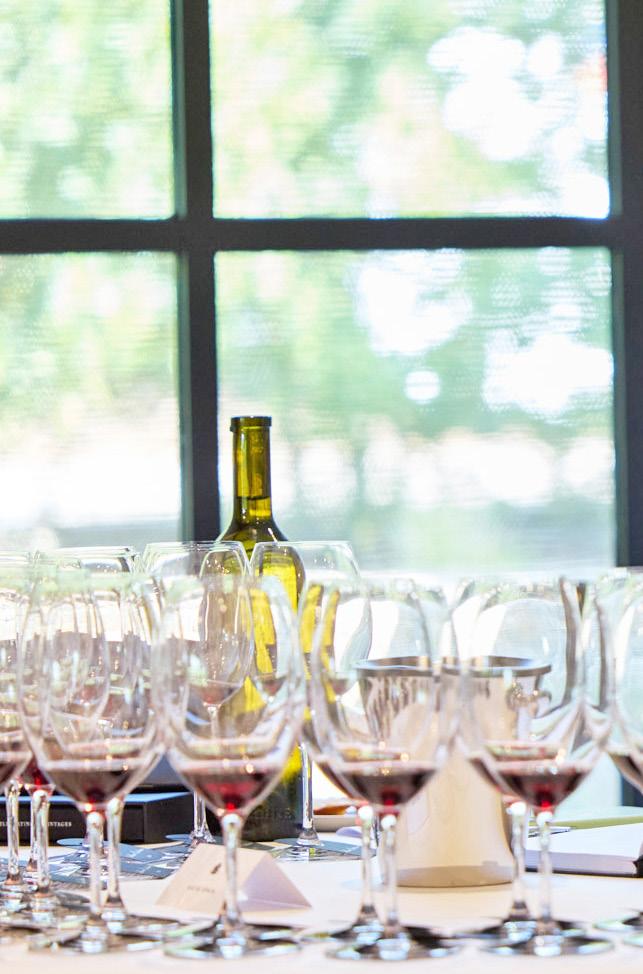
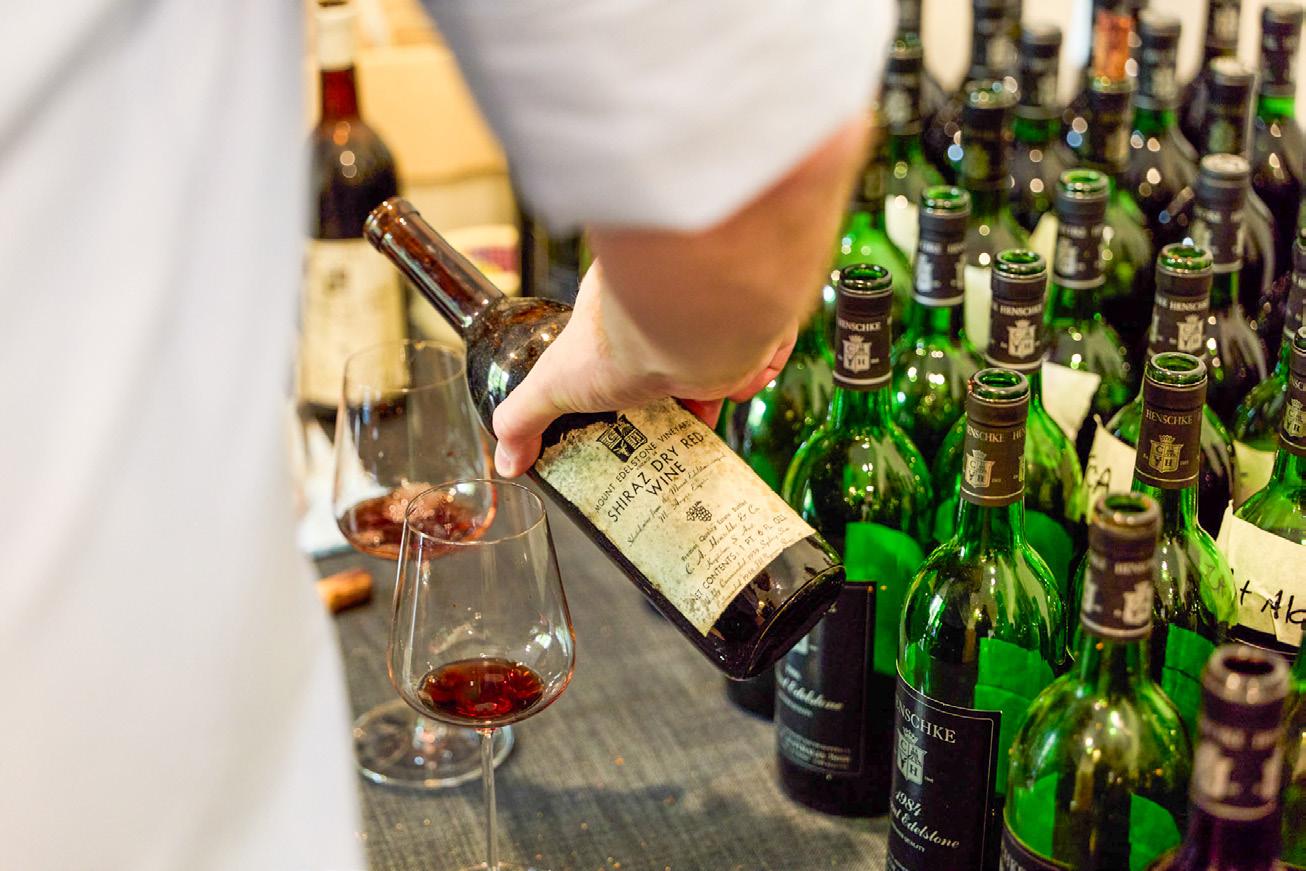
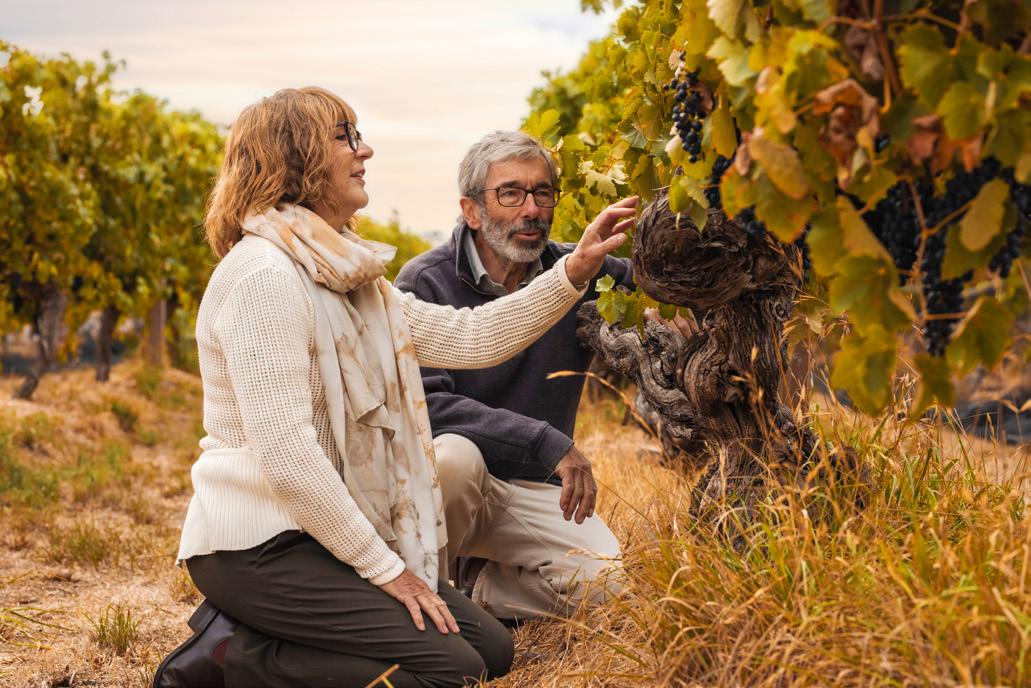
Prue & Stephen Henschke.
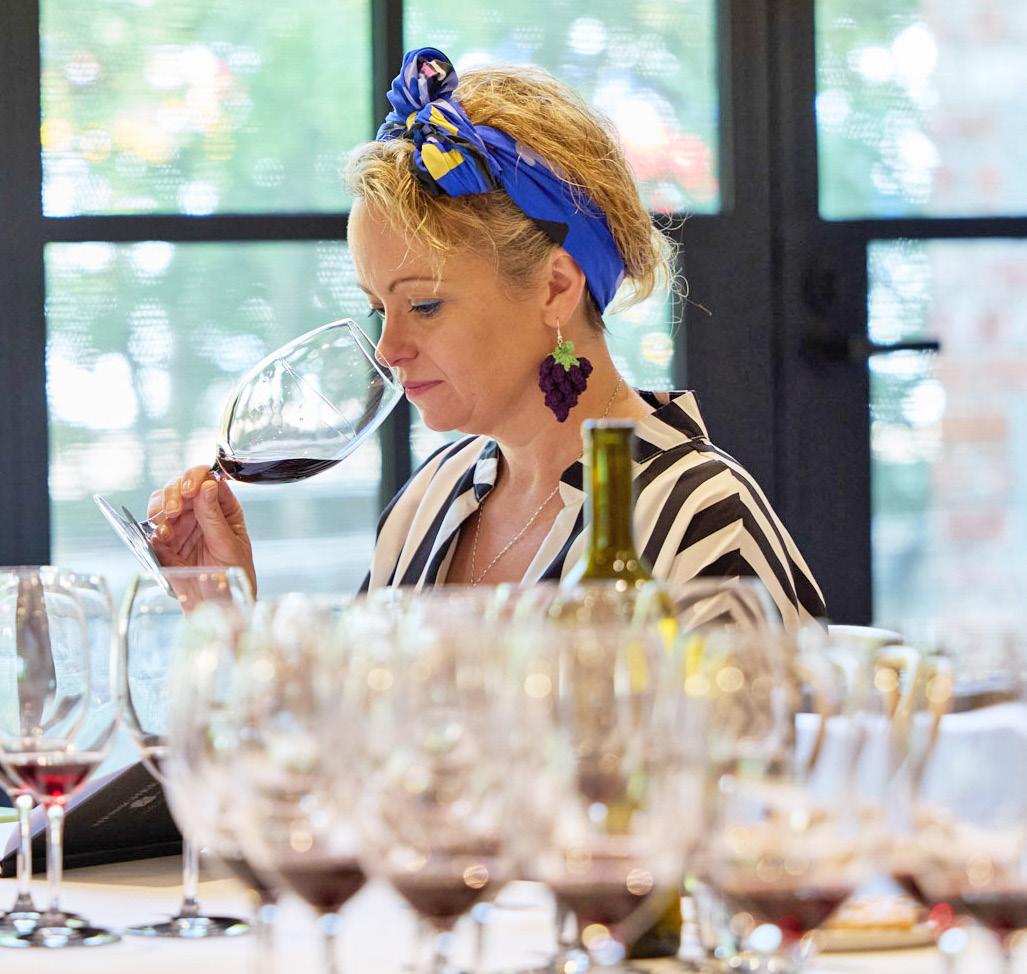
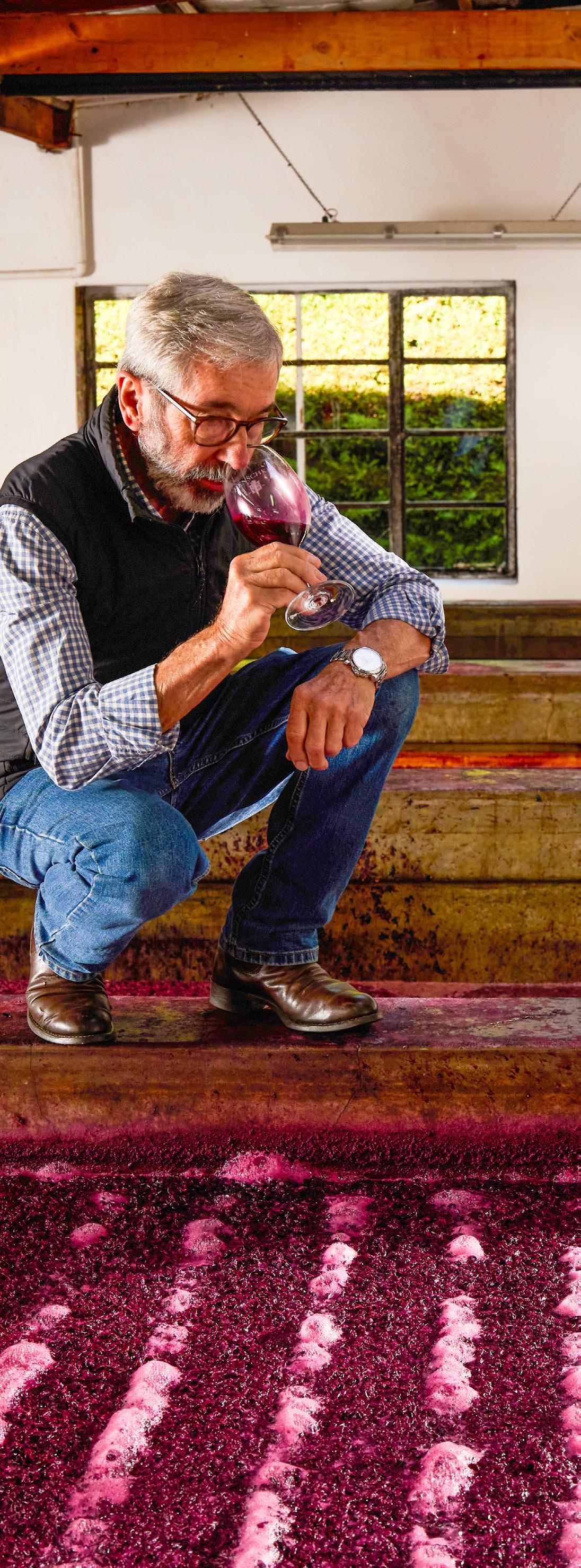
Katie Spain lifts the glass to her nose, allowing Mount Edelstone to unfold – a concentrated moment where the aromas slowly take shape among rows of tasting glasses.
Henschke 2022 Single Vineyard Collection
The
forthcoming
release of the Henschke 2022
Single Vineyard Collection sits firmly in the latter category — a reminder that in the Eden Valley, history is measured not in years, but in vines, families and belief. BY KATIE SPAIN
ON 6 MAY 2026, THE HENSCHKE FAMILY released the latest chapter in one of Australia’s most storied fine wine line-ups: Hill of Grace Shiraz, Hill of Roses Shiraz, Mount Edelstone Shiraz, The Wheelwright Shiraz, Cyril Henschke Cabernet Sauvignon and Hill of Peace Semillon. Each wine is drawn from a single vineyard, each deeply tied to the land that shaped it, and each carrying a thread of family history that stretches back generations.
For fifth-generation winemaker Stephen Henschke, the 2022 vintage is one defined by faith — a vintage, he says, “graced by belief.” The phrase is more than poetic flourish. It speaks directly to the pioneering vision of Stephen’s father, Cyril Henschke, whose conviction in the Eden Valley’s potential changed the trajectory of Australian fine wine.
IN 1952, CYRIL MADE HIS FIRST VINTAGE OF Mount Edelstone Shiraz, sourced from vines planted around 1912. One can only imagine the moment those grapes first arrived at the winery: the perfume of fermenting fruit rising from the tanks, revealing a wine of florals, spice, pepper, sage and dark fruit.
Seventy years later, Mount Edelstone stands as one of Australia’s longest consecutively produced single-vineyard wines — and a cornerstone of the nation’s fine wine story.
Stephen Henschke.
Cyril’s next great leap came with Hill of Grace, first made in 1958 from a small pocket of ancient shiraz vines planted by his maternal great-grandfather, Nicolaus Stanitzki, beside the Gnadenberg Lutheran Church in the tiny hamlet of Light Pass. Even then the vines were already approaching a century in age — their gnarled trunks quietly producing fruit that would become one of Australia’s most revered wines.
WHEN STEPHEN AND HIS WIFE Prue Henschke assumed stewardship of the vineyards, they inherited not only a remarkable collection of sites but also Cyril’s unwavering belief in the Eden Valley. Over the past four decades they have both preserved and expanded that legacy, introducing four additional single-vineyard wines: Cyril Henschke Cabernet Sauvignon, Hill of Roses Shiraz, The Wheelwright Shiraz and Hill of Peace Semillon. It has been a partnership of precision and care. Stephen’s meticulous approach in the winery is matched by Prue’s work in the vineyards. A botanist, viticulturist and environmentalist, she has spent decades improving soil health, canopy management and vine resilience across the family’s sites. Regenerative farming practices, alongside organic and biodynamic principles, now shape the way the vineyards are nurtured — with a focus on restoring balance to the ecosystem and reducing environmental impact.
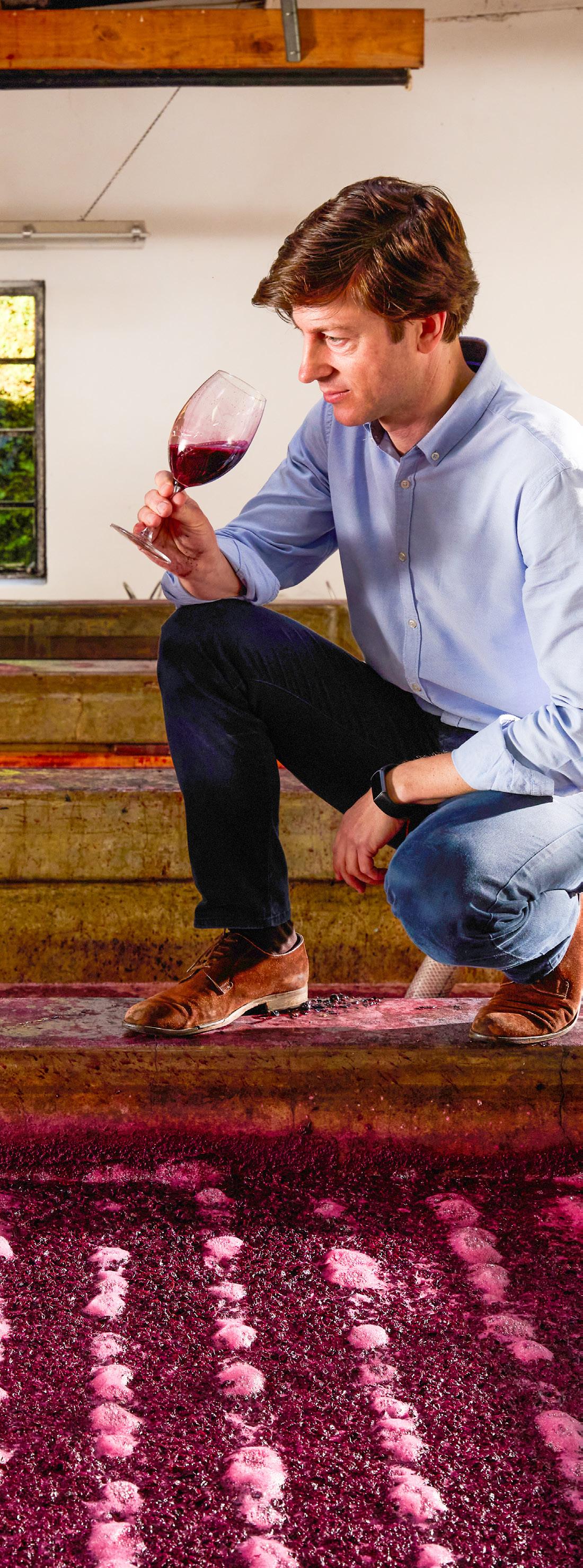
Johann Henschke.
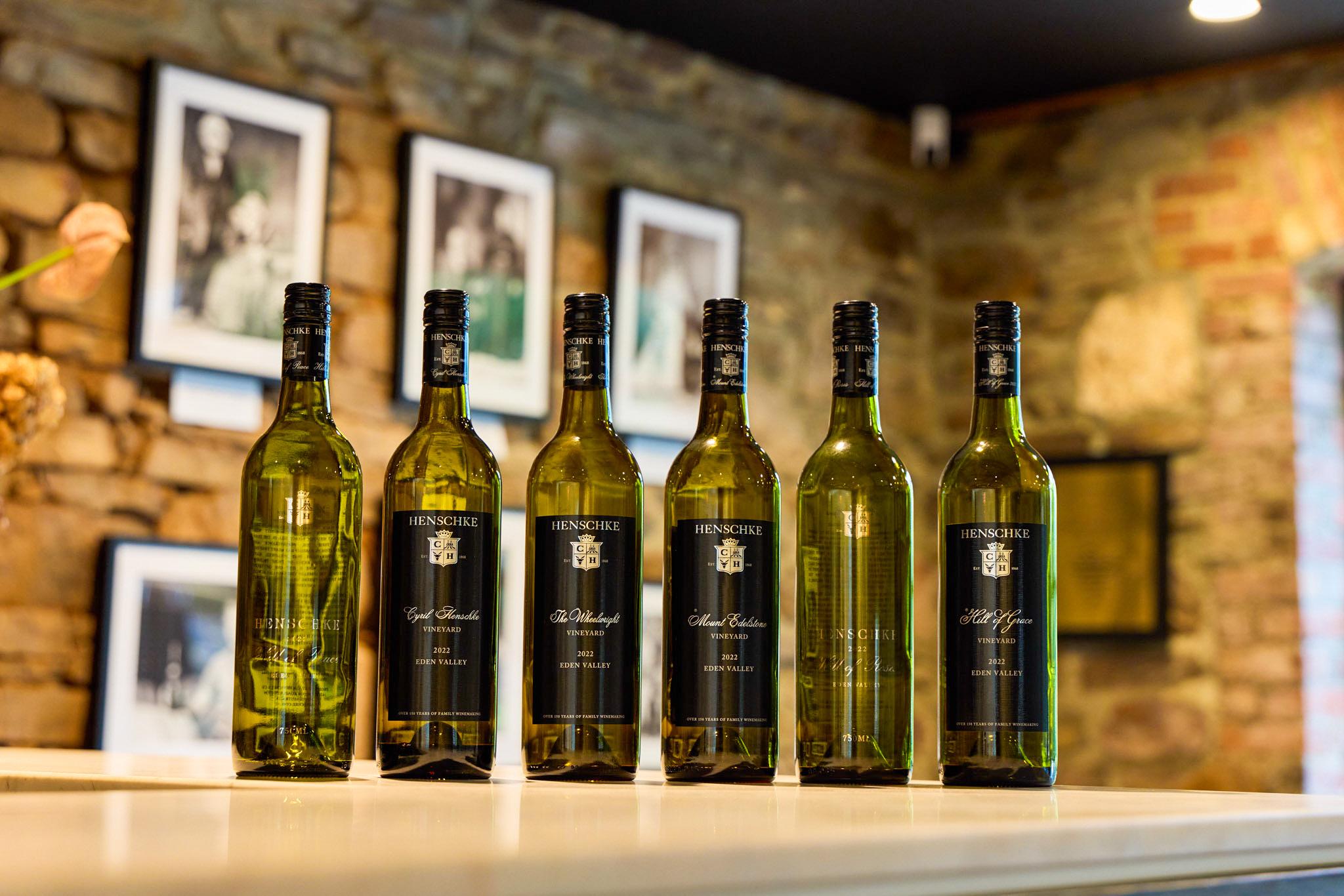
THE 2022 VINTAGE ITSELF UNFOLDED GENTLY.
A mild growing season meant harvest arrived later than usual, with picking taking place one to two weeks beyond the historical average. The conditions echo several celebrated Eden Valley years — including 1991, 1999, 2005, 2006, 2010 and 2015 — vintages known for producing wines of longevity and poise.
According to Prue, the resulting wines possess both energy and depth, with the structure to reward patient cellaring for decades under the right conditions.
In keeping with Henschke’s long-standing focus on quality and sustainability, the entire 2022 collection will be sealed under Stelvin screw cap closures, paired with four years of bottle maturation before release. The closures and bottles are sourced locally — a small but meaningful step in reducing environmental impact while ensuring consistency for long-term ageing.
FOR STEPHEN, THE RELEASE CARRIES an added sense of reflection. The 2022 Mount Edelstone marks the 70th anniversary of the wine first created by his father in 1952.
“Our family is honoured to share this collection from a milestone vintage,” he says. “These wines speak faithfully of their place, with elegance, distinction and enduring beauty.”
And that, perhaps, is the magic of the Henschke story. Across generations, through changing fashions and shifting seasons, the wines continue to do what great wines should: speak quietly but clearly of where they come from.
The 2022 Henschke Single Vineyard Collection will be available through fine wine retailers, restaurants and directly from Henschke from 6 May 2026.
Boekenhoutskloof -
CHAMPAGNE TAITTINGER
”Det är ett vin som redan idag fångar uppmärksamheten.” 92p
LivetsGoda.se
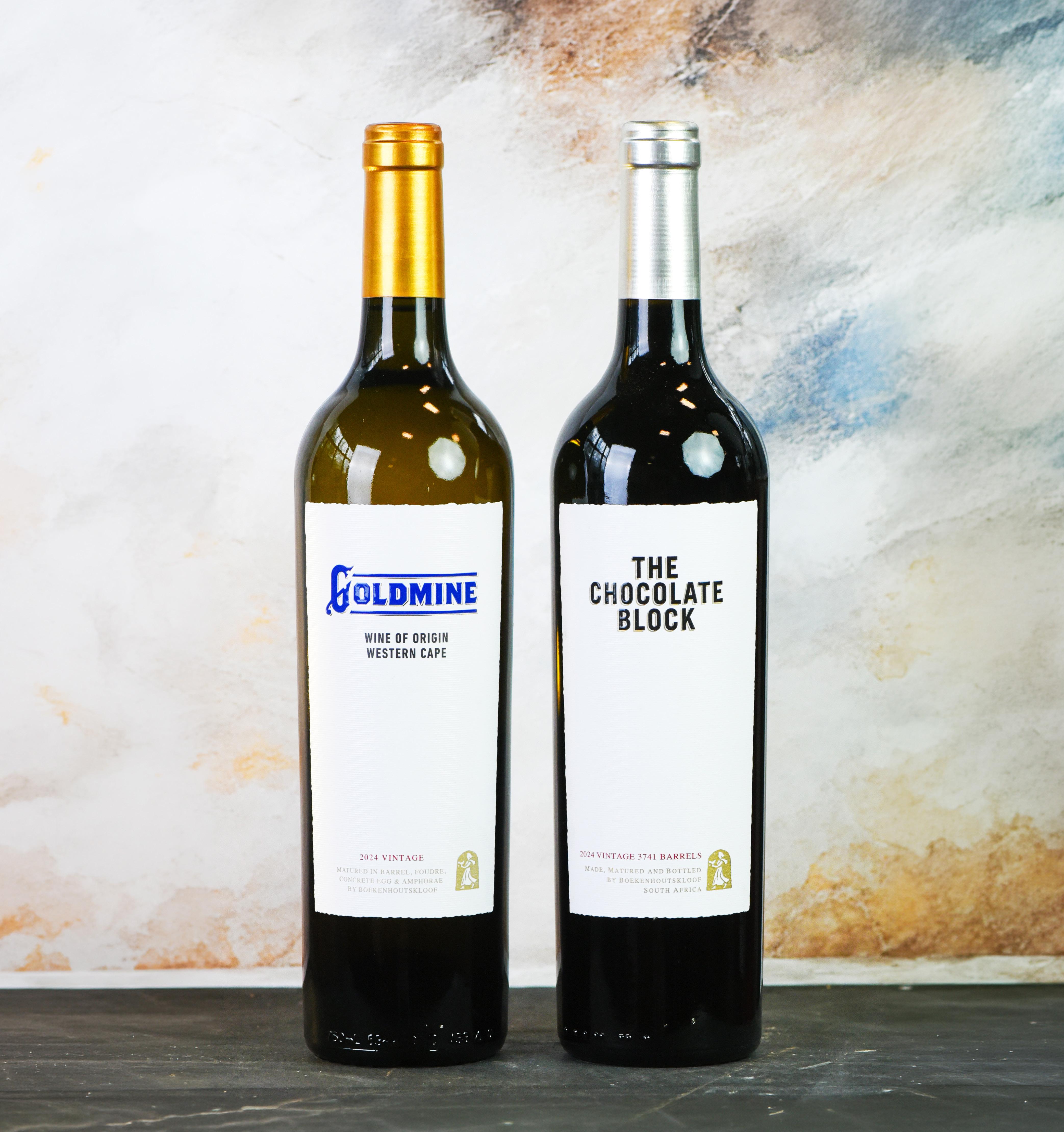
FINESS, FRISKHET, ELEGANS!
”Ett vin som rör sig med självklarhet”
93p
LivetsGoda.se
”En klassisk champagne med imponerande balans mellan kvalitet och pris. Taittinger bevisar att lyx inte behöver kosta en förmögenhet.”
Champagneexperten Fredrik Schelin bestchampagne.se 27/10-2025
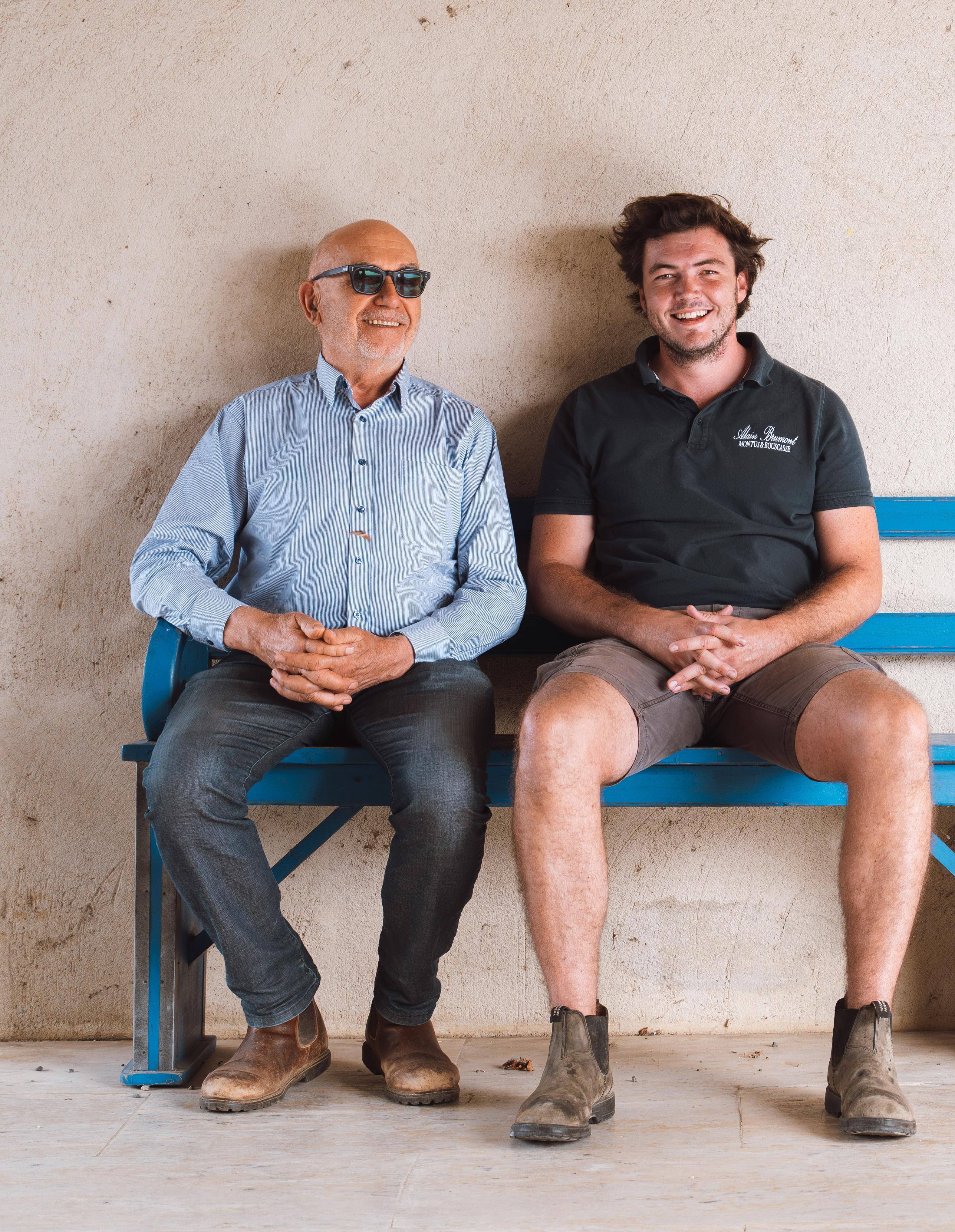
Alain Brumont & Antoine Veiry
Alain Brumont The Visionary and Guiding Force of Madiran
There are wine regions that live off their history, and then there are those shaped by a visionary. In southwestern France, Alain Brumont is such a figure. When he planted the first vines at Château Montus in 1979, Madiran was barely more than a footnote on France’s wine map. With Montus 1982, a new era began, and with Montus Prestige 1985, Brumont demonstrated that the tannat grape could produce powerful, structured, and long-lived wines – wines that reward patience, and ideally also a well-stocked cellar.
BY ANDERS ENQUIST
PHOTOS: LIVETS GODA / ALAIN
BRUMONT
TODAY, ANTOINE VEIRY, BRUMONT’S STEPSON, has taken over the winemaking at Château Montus and Château Bouscassé. After studies and experience from both France and other wine countries, he returned to the family estates and, since 2018, has carried the work forward – with respect for terroir, the power of tannat, and Brumont’s legacy. Recently, Livets Goda had Antoine visiting. Among the wines he brought were a brilliant and tightly charming Château Montus 2022, a 2012 of the same wine with sensual depth, the magnificent white Château Montus Blanc 2019, and not least Château Montus Prestige 2020. We mentally and visually land in southwestern France, in a region long living in the shadow of Bordeaux and Burgundy. Here, between the Atlantic and the Pyrenees, one name has changed everything: Alain Brumont.
“The region is small, almost insignificant in size compared to the great French appellations,” our guest explains. “When Alain started, it was mostly agriculture here – wine perhaps accounted for 20% of activity. But he wanted something else. He wanted to show what the terroir could truly deliver,” says Antoine as we sit down in Livets Goda’s editorial bar to taste the wines he has brought.
THE STORY BEGINS IN 1979, when Alain Brumont bought Château Montus. At that time, there were neither vineyards nor a functioning winery.
“There was essentially nothing. But the terroir had a historical reputation, and Alain was convinced it could produce great wines again,” Antoine continues.
He planted the first vines that same year. The first vintage came in 1982, but the real breakthrough would take a few more years.
“In 1985, he made Montus Prestige – a wine that changed everything. It was the first vintage that truly put Montus on the international map.”
About ten years later, Alain also took over the family’s original estate Château Bouscassé, creating the duality that still defines the house today: two estates, two terroirs, two expressions.
THE TWO ESTATES
, Château Montus and Château
Bouscassé, together form a kind of living laboratory for how soil and exposure shape a wine’s character.
At Montus, vineyards stretch across steep ridges where river stones – sometimes five to six meters deep – rest atop clay. The stones store heat during the day and release it slowly at night, ensuring stable and even ripening. Today, around 35 hectares are planted here, with tannat as the dominant variety.
Château Bouscassé comprises 45 hectares of vineyards with limestone and clay soils, located at around 150 meters altitude. Here, the expression becomes somewhat more classical, more limestone-driven and structured – a contrast that clearly demonstrates how soil shapes
personality. Brumont also has around five hectares of pinot noir, bottled separately. A small portion of wine is also sourced from neighboring growers with whom they have worked for many years.
Climate also plays its role. The region receives around 1 200 millimeters of rainfall per year, significantly more than, for example, Champagne, but the constant wind keeps the vineyards healthy and helps balance ripening. During harvest, temperatures can vary by up to 15 degrees between day and night, contributing to aromatic precision and fresh acidity.
MADIRAN
IS THE HOME OF TANNAT, and for Brumont, the grape became the heart of the project.
“We decided early on that tannat would be our signature. For the whites, we use petit courbu and petit manseng,” says Antoine.
Experimentation has always been part of the philosophy. Over the years, varieties such as nebbiolo, sangiovese, tempranillo, and pinot noir have been tested to understand the terroir’s potential.
“We still have pinot noir – about five hectares at Montus. It is bottled separately,” says Antoine.
Brumont’s vineyard work is based on extremely high planting density.
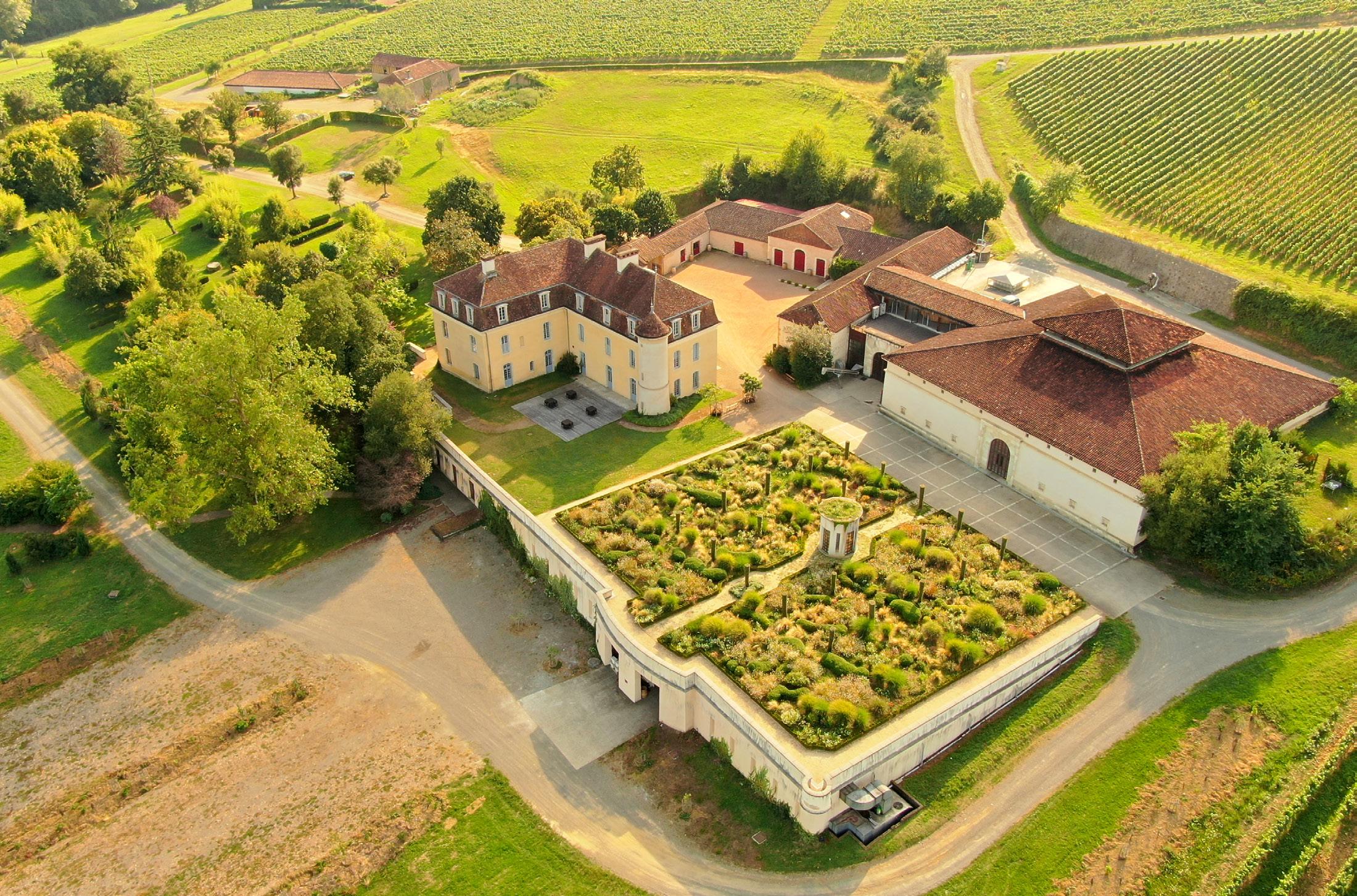
Château Montus
“We plant around 000 vines per hectare. That forces the vines to compete and creates better balance.”
The result is naturally lower yields and greater concentration in the grapes. The goal is small quantities of fruit per vine.
“In a cool year, I want about four to five bunches per vine. One bunch weighs around 300–400 grams. That gives roughly three kilos of grapes per vine.”
In warmer years, slightly higher yields are allowed to balance the ratio between skin and juice.
“The climate is changing, so we must adapt,” says Antoine.
WINEMAKING HAS ALSO EVOLVED significantly over the past two decades.
“In the past, extraction was heavy. Now we do the opposite – we try to work as gently as possible,” Antoine explains.
The process begins with cold maceration at three to five degrees for five days, followed by a long maceration of around three weeks.
“We make our own pied de cuve (yeast starter culture, editor’s note) and do not use commercial yeast. Fermentation takes place at 23–26 degrees to build tannin structure slowly.”
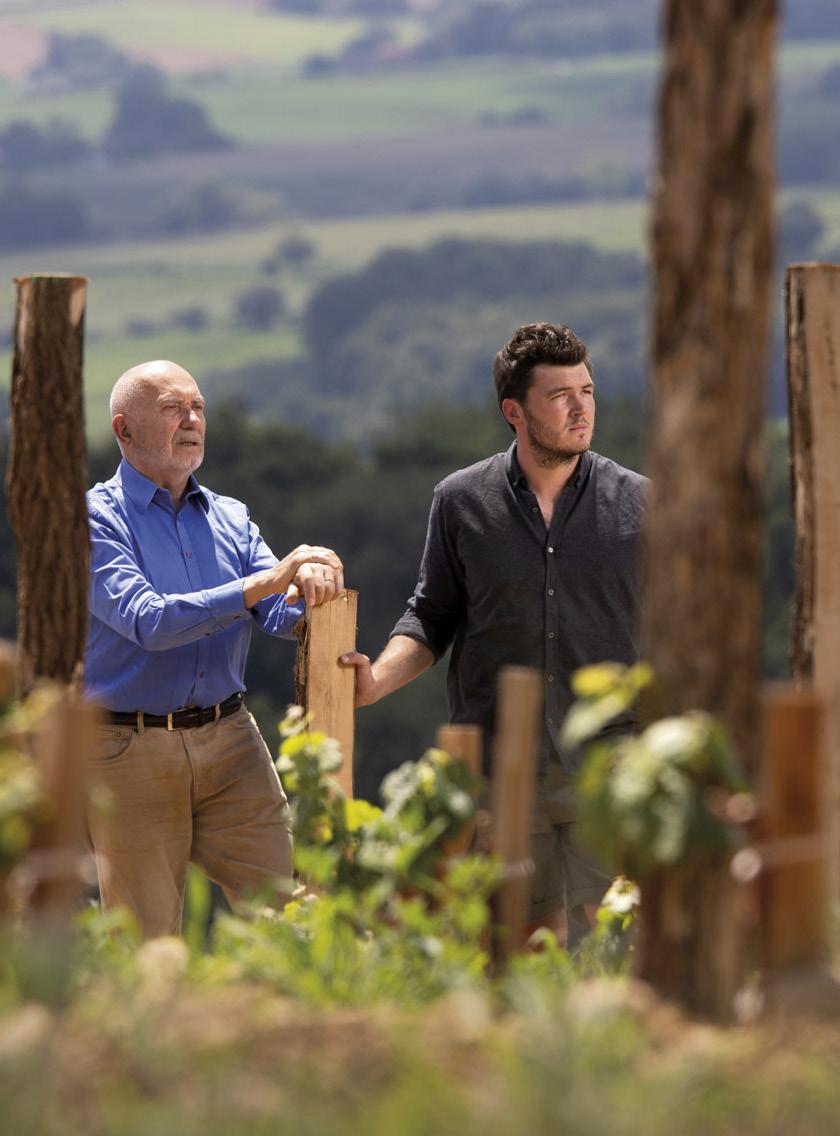
“We decided early on that tannat would be our signature.”
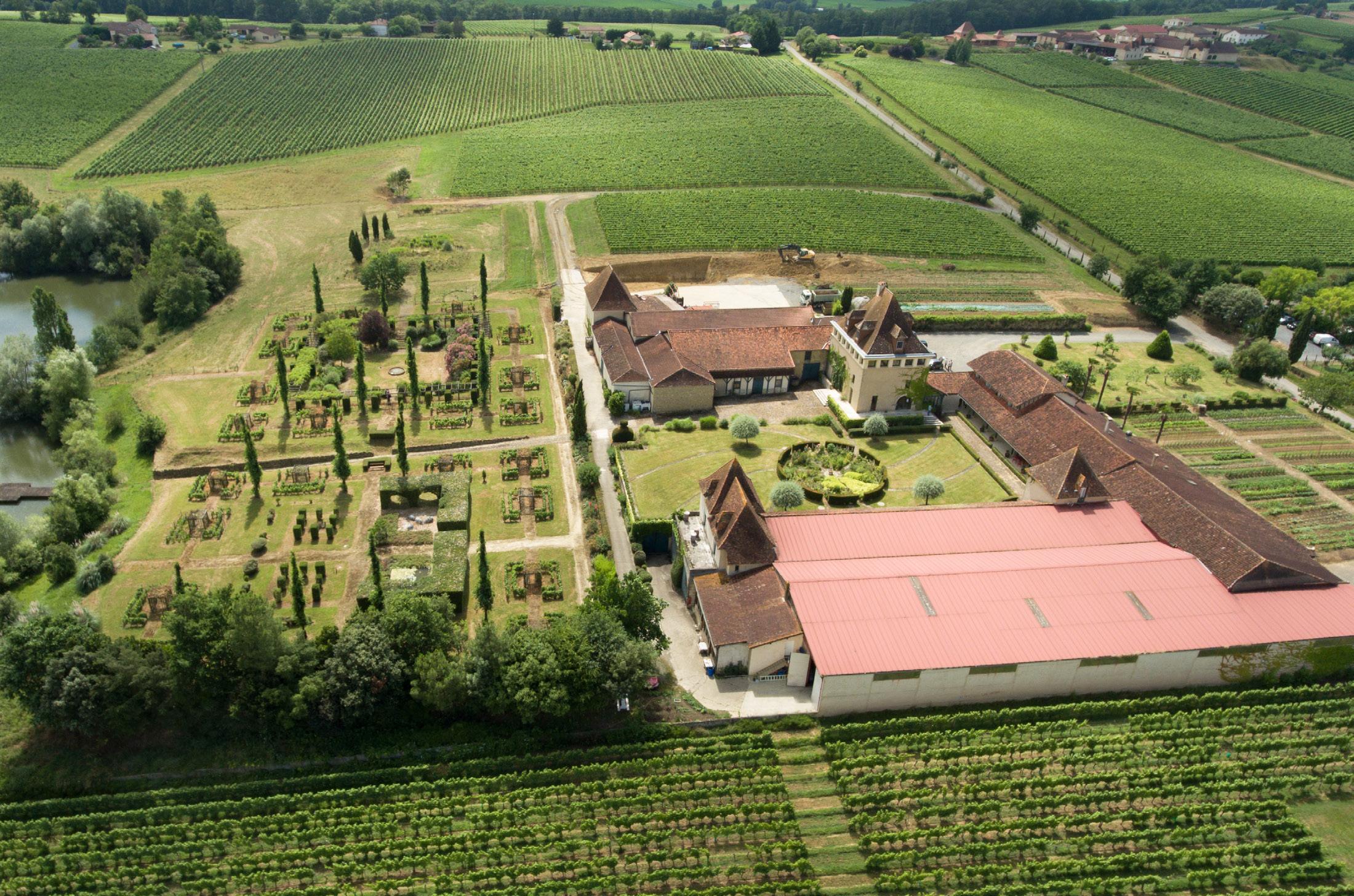
Château Bouscassé
Alain and Antoine.
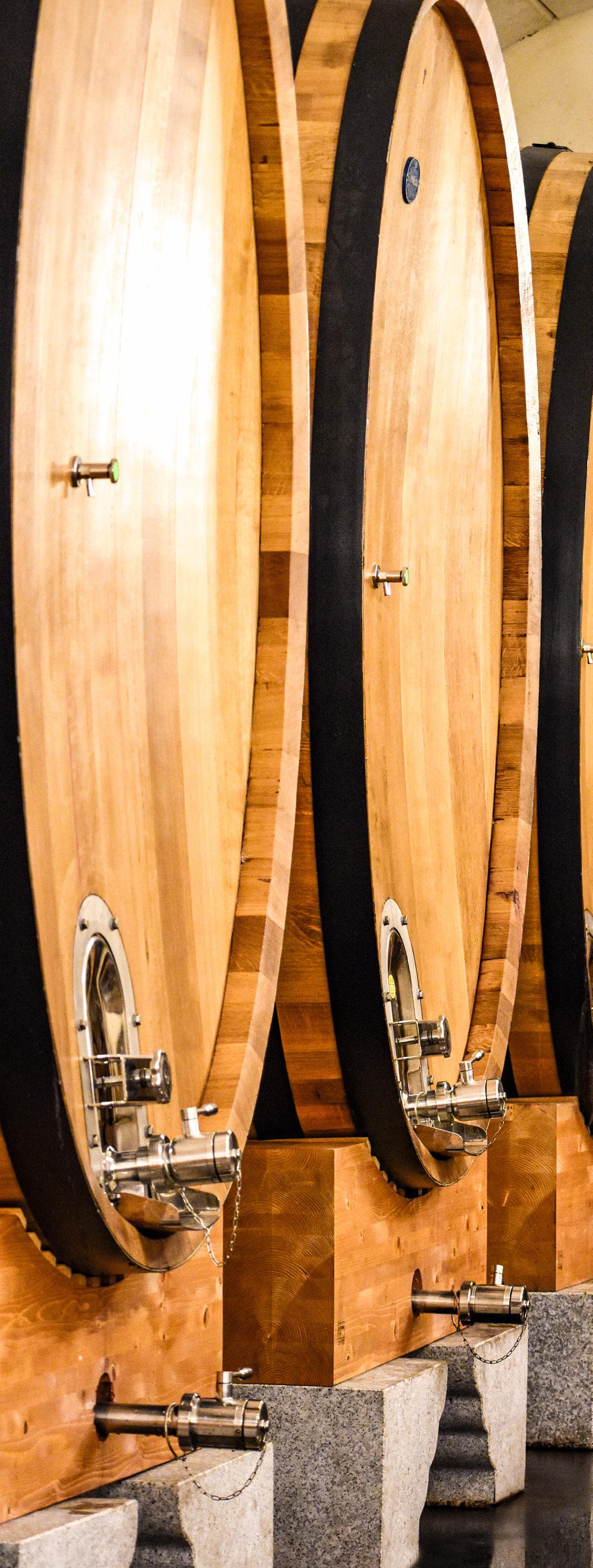
Another important change is grape sorting. Today, grapes are sorted using optical machines.
“We use eight different machines to sort the grapes. They remove everything – leaves, seeds, botrytis, insects. It completely changes the quality of tannins and aromas.”
The ageing program has also evolved. Historically, some cuvées were aged up to 40 months in barrique, but today the philosophy is more nuanced.
“Now we do the first year in a combination of barrique, 500-liter and 600-liter barrels. Then the wine is moved into larger vessels during the second and third year.”
For top wines, the proportion of new oak can be very high.
“In some years, it can be up to 80% new oak.”
The entry-level wine Taurus instead rests for two years in concrete, preserving the direct expression of the fruit.
MONTUS’ REPUTATION IS BUILT ABOVE ALL on its ageing potential.
“Open a Montus 1985 today and you’ll barely believe it’s tannat. It’s still alive,” says Antoine.
At the same time, the style has evolved somewhat.
“In the past, Alain always said: put the bottle in the cellar for twenty years. Today, we make wines that can be enjoyed earlier, but that can still develop for decades.”
This is evident in the wines. Recent vintages are more accessible in youth than 15–20 years ago, yet without losing the backbone and ageing potential that made Montus an icon.
Madiran remains a small region with few producers.
“There are perhaps forty percent independent producers and a large cooperative structure. It’s very small compared to Bordeaux.”
In practice, Montus has therefore become stronger than the appellation, Antoine suggests.
“People buy Montus – not Madiran. Alain tried for a long time to elevate the appellation, but eventually gave up. No one else followed in the quality work.”
TODAY,
A NEW GENERATION continues the legacy, with international experience.
“We continue to develop the vineyards, divide parcels, and plant more precisely according to terroir. Quality comes before expansion.”
A particularly exciting development concerns the white wines, says Antoine.
“We may only just have begun to understand the potential for great whites here. We are planting new vineyards now – but the results will only come in ten years.”
In the end, everything still revolves around the same vision that started it all in 1979.
“We are still only at the beginning. Burgundy has 800 years of history. We have one generation. But we are building something that will live for many generations to come.”
WINES TASTED Alain Brumont
IMPORTER IN SWEDEN: WINEAFFAIR
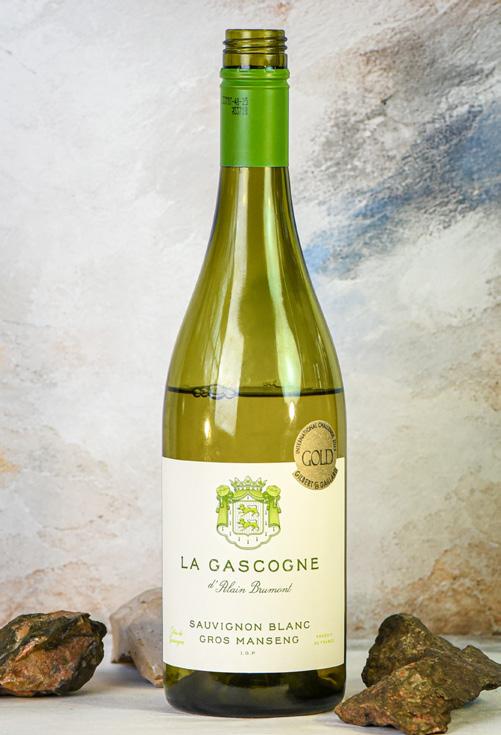
LA GASCOGNE PAR ALAIN BRUMONT SAUVIGNON BLANC AND GROS MANSENG
NO 2882 / 115 SEK
89+This white wine from Gascony is based on an even split between sauvignon blanc and gros manseng, with all vinification carried out in temperaturecontrolled stainless steel tanks to preserve freshness and aromatic clarity. The result is an entry-level wine that surprises with a quality and structure clearly exceeding what the price suggests. The nose opens with fresh lime, citrus zest, and floral nuances, where sauvignon blanc contributes lively energy while gros manseng adds a slight roundness and texture. On the palate, it shows well-ripened freshness, where citrus and green fruits are supported by fine acidity and a discreet viscosity that gives the wine a pleasant body without heaviness. The overall impression is clean, well-balanced, and effortlessly charming, with a structure that provides both firmness and drinkability. A polished wine where the fruit is held in fine balance by fresh acidity and a light aromatic floral note in the finish.
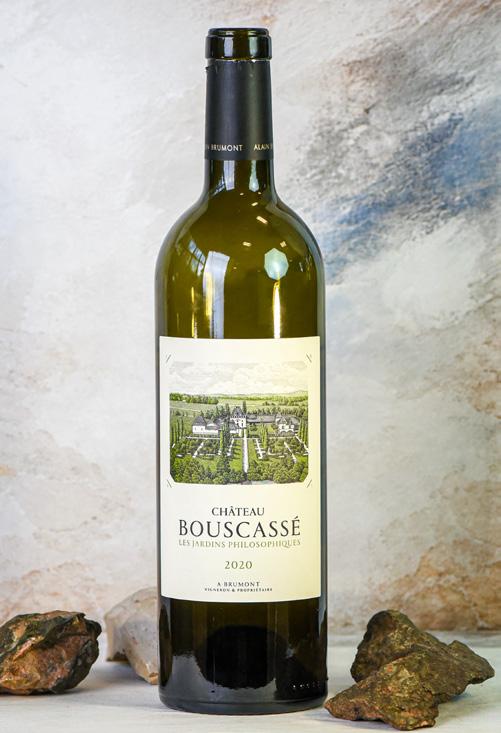
CHÂTEAU BOUSCASSÉ LES CHARDINS
PHILOSOPHIQUES 2020 NO. 92702 / 195 SEK
91
A wine that moves at the intersection of the sensual and the intellectual, where the southwestern French duo petit courbu and petit manseng shape an expression with both depth and energy. Vinification in steel and concrete preserves the purity of origin, and aromatically it opens with ripe peach and exotic notes of passion fruit, where an earthy background of mushroom and truffle adds complexity.
The minerality runs like a backbone through the wine, reinforced by a discreet salinity and licorice-tinged spice. It is finely structured, where small, precise tannins create elegant friction. The acidity is salivating and carries the wine with effortless precision toward a finish that is both sophisticated and long in its resonance.
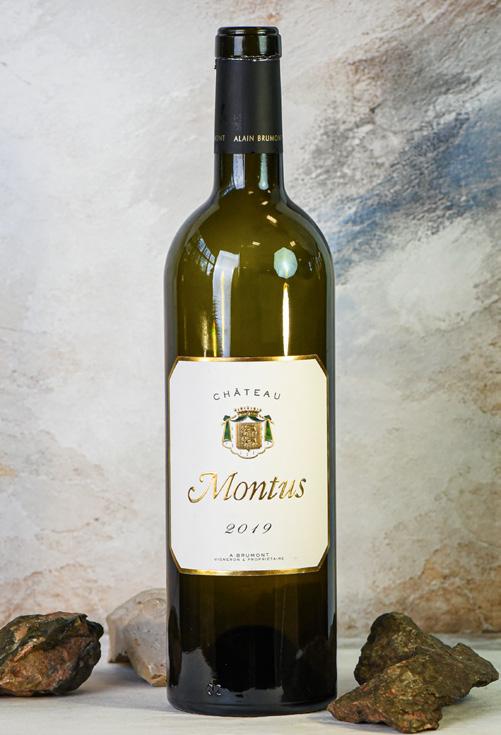
CHÂTEAU MONTUS BLANC 2019
NO. 71680 / 439 SEK
94
With an ambitious and clearly defined élevage involving two years in a combination of barrique and larger barrels of 500–600 liters, followed by an additional year in large oak vats up to 85 hectoliters, the wine gains a structure where almost exclusively new oak is integrated with impressive finesse. The fruit is carried by a generous yet disciplined roundness, where peach, orange, and exotic notes of passion fruit and mango unfold in a full but finely tuned expression. The texture is smoothly viscous, where the spice of the oak interweaves with subtle hints of mint and an earthy note of truffle. The whole is held in a precise grip of acidity and mineral salinity, giving both direction and energy. A wine of clear integrity and complex ageing potential, where power and elegance interact in a long, nuanced finish.
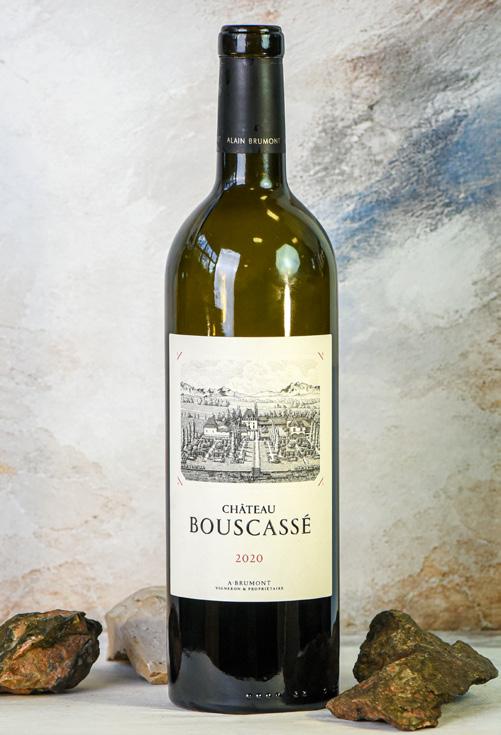
CHÂTEAU BOUSCASSÉ 2020
NO. 2204 / 189 SEK
91
Built from a multifaceted weave of 25 parcels, this wine is shaped by a classic southwestern French power triad – tannat as the backbone, supported by cabernet franc and cabernet sauvignon – where both young and old vines contribute depth and nuance. Ageing, one year in barrique followed by one year in larger vessels, provides structure without weight, allowing the mineral and slightly saline character of the origin to emerge with clarity. The fruit moves through a dark, vibrant spectrum of cassis, cherry, blackberry, raspberry, and plum, with a cool undertone adding energy. On the palate, the expression is direct yet refined, with an elegantly constructed structure where tobacco, citrus, and a lime-fresh acidity set a lively direction. A wine where power and finesse meet in balanced interplay, with clear integrity and an energy that drives toward a long, nuanced finish.
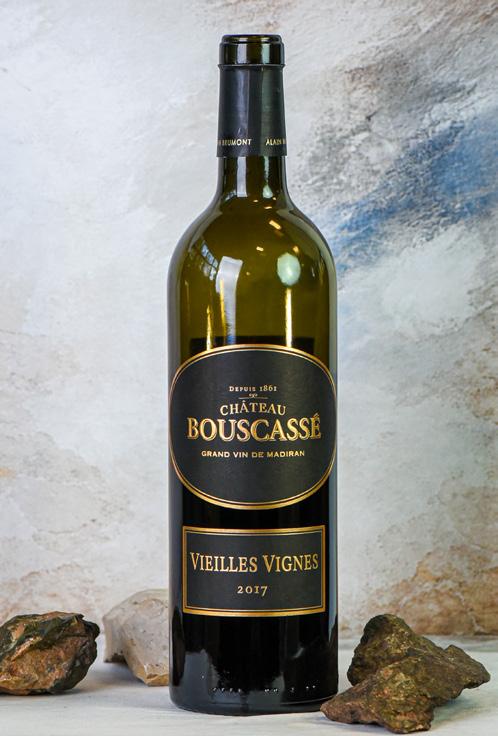
CHÂTEAU BOUSCASSÉ
VILLE VIGNES 2017
NO. 59228 / 399 SEK
93
From a small 1.5-hectare vineyard planted with over eightyyear-old vines comes this pure tannat, given full scope to express both power and detail. One year of ageing in exclusively new barriques leaves a clear signature, yet with surprising precision where the oak frames rather than dominates. The nose and palate open in a dark, spicy spectrum where cassis and blackberry meet chili heat, truffle, tobacco, and deep dark chocolate. On the palate, the wine is mature and composed, yet with a lively temperament that brings movement to the structure. The tannins are present but polished, carrying the fruit with both strength and elegance toward a long, resonant finish where complexity lingers.
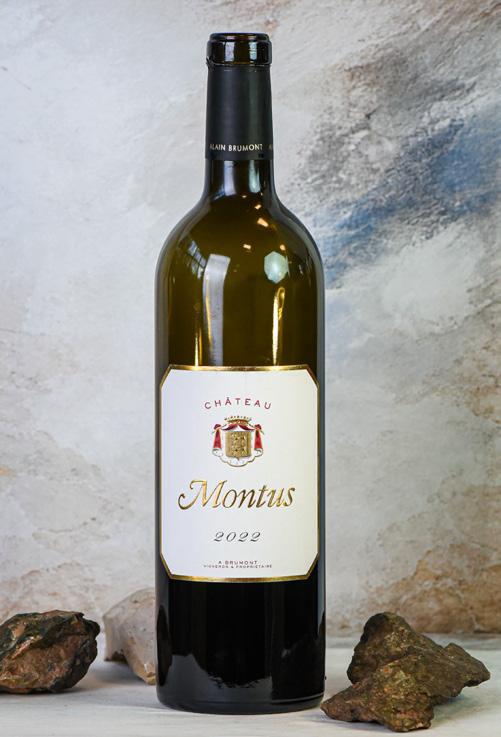
CHÂTEAU MONTUS 2022
NO. 92208 – TO BE RELEASED IN AUTUMN / 325 SEK
93+With tannat as the natural backbone, supported by 15% cabernet franc and 5% cabernet sauvignon, this wine is shaped in a style where power meets precision. Ageing – one year in small barrels followed by two years in larger vessels, with around 40% new oak – provides a structure both disciplined and generous.
The fruit moves through a dark, red-ripe spectrum of cassis, blackberry, and violet, alongside herbs such as sage and a clear mineral salinity. There is youthful energy, but also a stoic restraint, as if the power is deliberately held back to allow detail to emerge.
The tannins are elegant yet present, creating a fine, sensual friction that drives the wine forward. Spicy notes of chili, truffle, tobacco, and dark chocolate add depth. A wine already showing its opulent and sensual side, yet carrying the structure and integrity for further development.
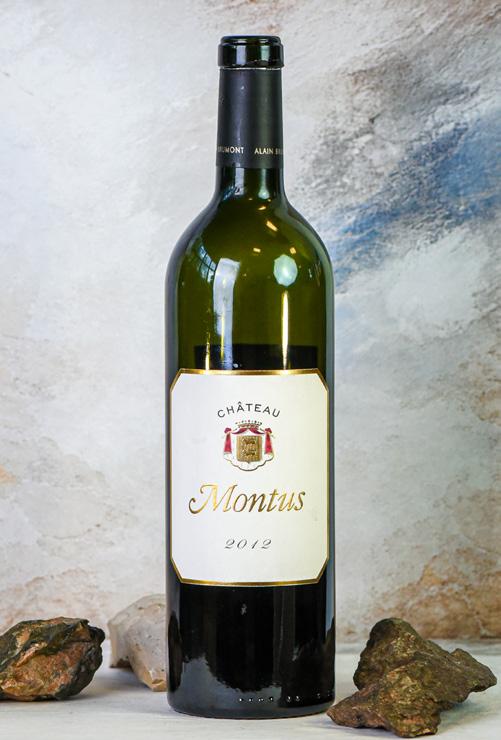
CHÂTEAU MONTUS 2012
No. 56305 / 429 SEK
93
80% tannat and 20% cabernet sauvignon, aged for nearly 16 months with 60% new barrique, form the foundation of a wine with both power and precision. The acidity is vibrant and supports a developed darkfruited palette where truffle, fig, cassis, tobacco, dark chocolate, and licorice intertwine with sage and a discreet chili spice. Violet and pine lift the aromatics, while hints of exotic mint and eucalyptus add a cooling counterpoint.
A salivating mineral salinity broadens the profile, creating renewed richness. The tannins move with mature, silky elegance, allowing just enough friction to give grip and length in a wine that beautifully balances evolving maturity with preserved youthfulness.
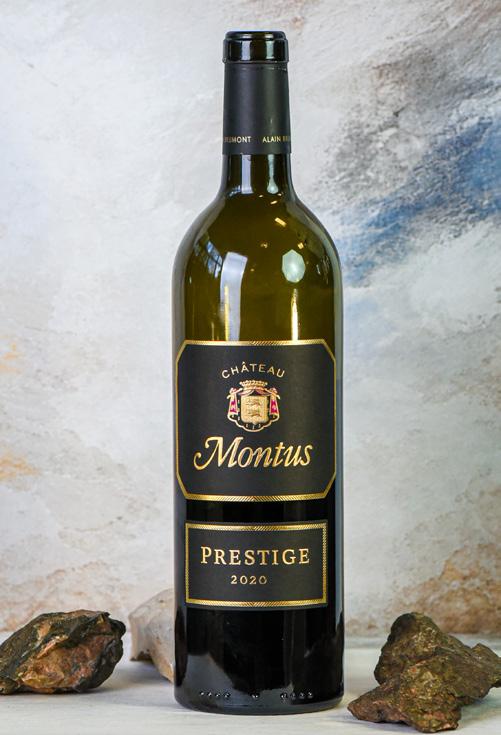
CHÂTEAU MONTUS PRESTIGE 2020
NO. 73960 / 639 SEK
95 Prestige de Château Montus was first created in 1985 and quickly became a benchmark for Madiran, where 100% tannat demonstrated a level that challenged France’s top wines. The 2020 vintage is the final Prestige, linked to Antoine’s changes in ageing philosophy for the red wines. Previously, Château Montus Prestige and Château Montus XL were essentially the same wine from the same vineyard site, differing only in ageing time –around two years for Prestige and up to 40 months for XL, where the best barrels from Prestige were selected for XL. When Antoine extended ageing to 36 months for all red wines, the real difference between the two cuvées disappeared. From the 2021 vintage onward, only Montus XL is produced, based on a long ageing from the best barrels, while the remaining volume goes into Château Montus in its classic form – now enriched with top-quality fruit. The fruit for Prestige/XL is harvested from the estate’s highest south-facing slopes, with stony soils over clay, from vines around 30 years old. The vineyard itself is 5.5 hectares, with the fruit selected from the top 2.5 hectares of the highest parcels.
The ageing process changed from the 2017 vintage, with the first year in barrique (around 50% new oak, depending on the year), followed by the second and third years in 80-hectoliter foudres. Bottling occurs after 36 months of ageing, followed by two additional years in bottle before release.
The 2020 vintage emerges as a rich, deep, and complex wine where dark, almost spiritually ripe fruit unfolds in shades of violet-tinged raspberry, cherry, blackcurrant, and blackberry. Truffle notes are as seductive as they are precise, and together with tobacco and cocoa they build a resonance that extends far beyond the immediate. The acidity is integrated and self-sustaining, providing a stoic energy in the depth of the wine – a quiet but clear driving force that keeps everything in perfect balance. Despite its intensity, the wine moves with a cool, almost beautifying transparency that lends unusual elegance.
The tannins, especially considering tannat’s often more forceful nature, appear here with a soft, gripping sensitivity. It may seem unexpected, but in this wine they carry a timeless quality, a structure likely to speak with the same voice even a decade from now. This is not just a wine – it is a dignified and emotional conclusion to an era.
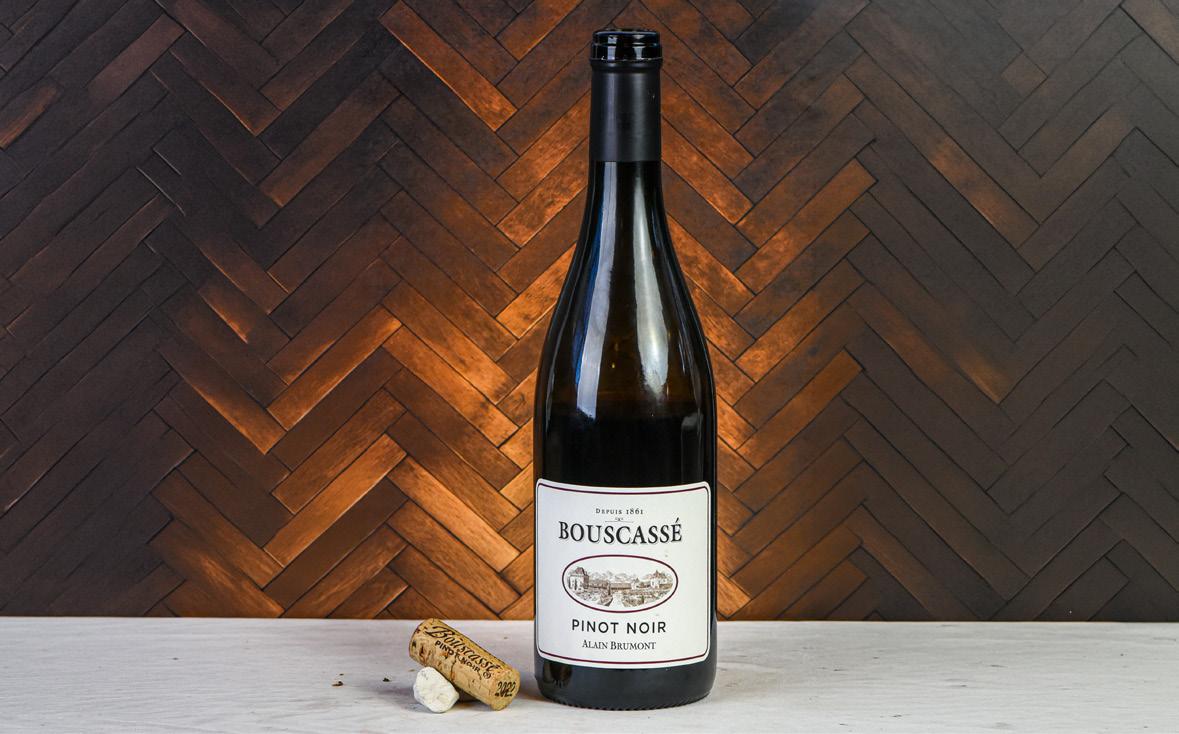
CHATEAU BOUSCASSÉ
PINOT NOIR 2022
NO. 5574801 / 259 SEK
91+Pinot noir may not be the most obvious grape in Alain Brumont’s world, nor something the broader audience immediately associates with the estate. Given the powerful signature of tannat and the estate’s extensive vineyard holdings, what emerges here is an immediately striking contrast –another side of the coin. There is still an inner musculature, but it is now carried by a more flowing, nuanced dynamic. Up to 20% whole clusters are used, and ageing takes place over about a year in cement tanks and oak barrels, some of them new. The fruit moves within a tension where a slight Rhône-like kinship meets pinot noir’s classical sensibility, while Brumont’s terroir rests deeply in the foundation. Violetscented raspberry, cherry, cranberry, and redcurrant set the tone, followed by blackberry and plum for added resonance. A discreet balsamic note passes by, while a brilliant citrus vein, carried by mineral tension from the subsoil, adds brightness and energy. Sage, tobacco, and mint contribute vegetal depth, with a hint of stem inclusion sharpening the spice with finesse. The tannins work finely and precisely, with a delicate yet gripping hold that
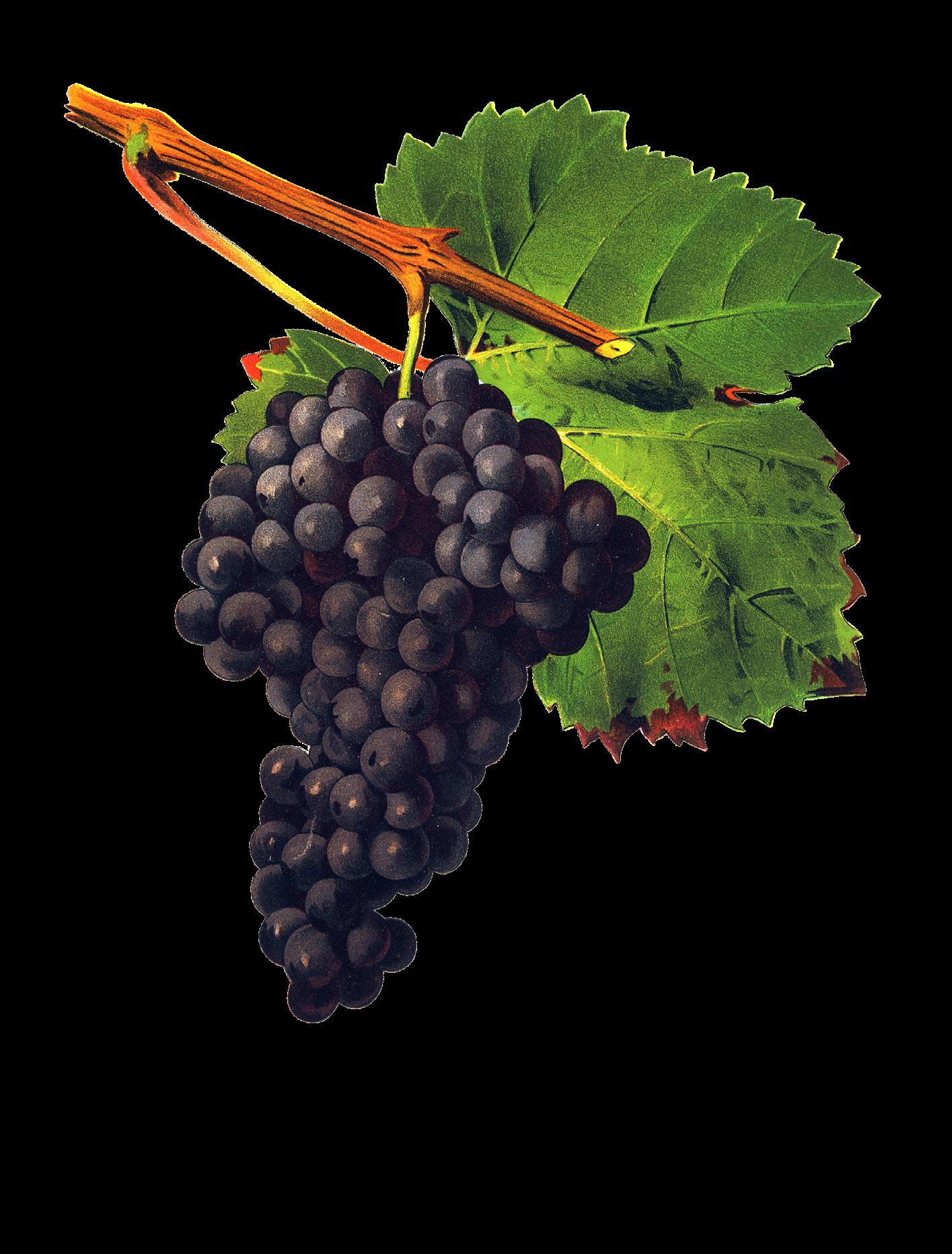
keeps the structure in perfect balance. The result is a pinot noir that unites expressiveness with elegance – a wine where power and grace meet in harmonious balance.
Tannat – the grape of power and patience
Madiran is the home of tannat – a grape historically known for its almost brutal tannin structure, but which in the right hands can produce wines with monumental ageing potential. Brumont has done much to demonstrate this. In the appellation, red wines must contain at least 60% tannat, often complemented by smaller amounts of cabernet sauvignon or cabernet franc. For whites, local varieties such as petit courbu, petit manseng, and gros manseng are used, while sweet wines must be made from 100% petit manseng.
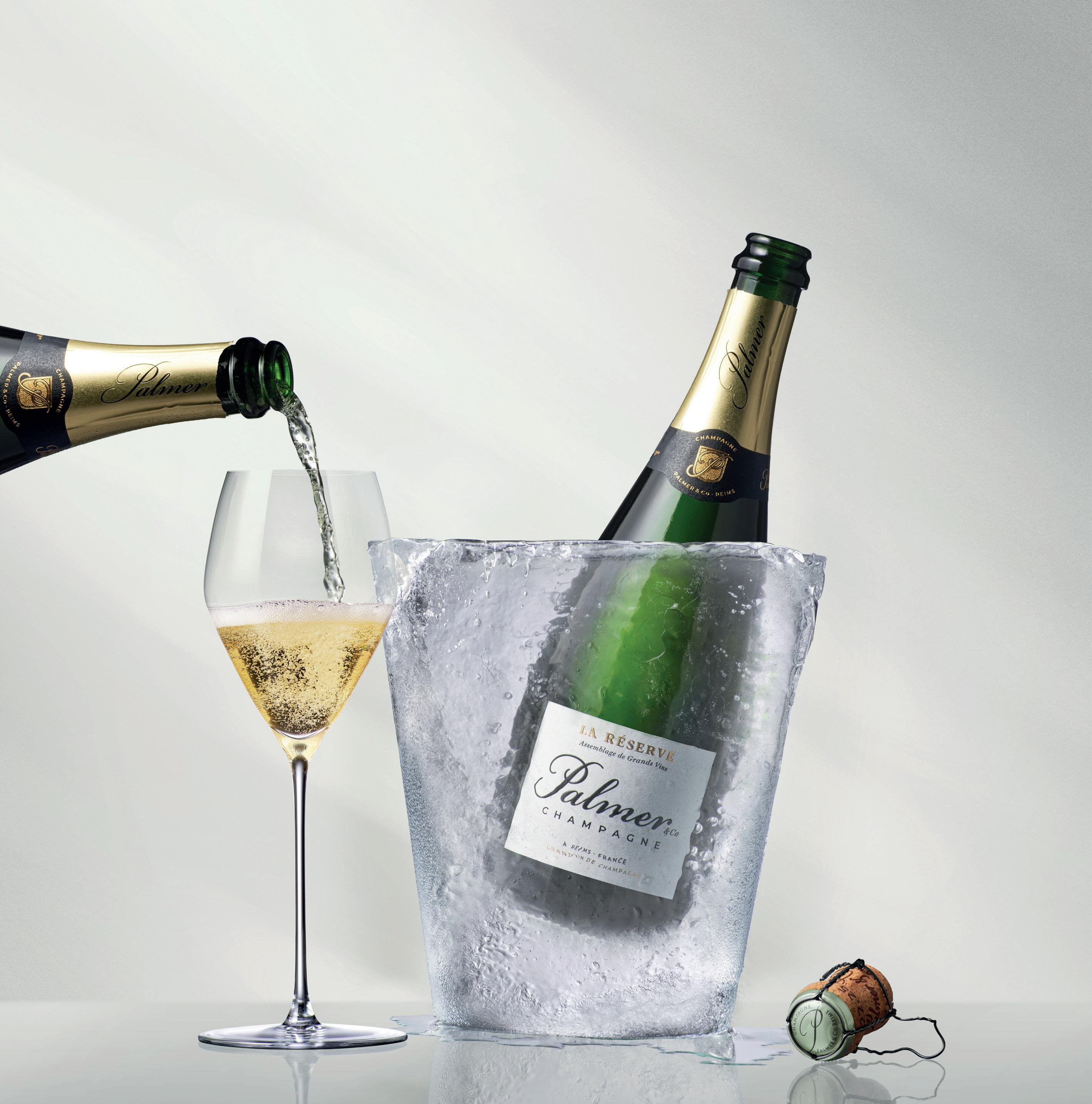
naturlig elegans
År 1947 gick sju odlare samman för att skapa en fantastisk champagne. Gemensamt för odlarna var deras prisade
Premier Cru- och Grand Cru-vingårdar och en vision att skapa en tidlös, naturlig och elegant champagne känd för sin balans och harmoni.
Med en dominans av Chardonnay, en stor del reservvin och en längre tid på jästfällningen än vad reglerna kräver definierar dessa egenskaper fortfarande Palmers & Co’s stil.
Tidlösa, naturligt eleganta champagner i perfekt balans.*
*Madeleine Stenwreth, Master of Wine


Enastående!
Dina Viner 2024
Palmer gör mig lycklig. En fantastisk bra champagne! Doft och smak av höst, gula äpplen och kärlek med hög syra och vacker mousse. Tack för en kvalitetsprodukt till ett bra pris.
Tina Nordström
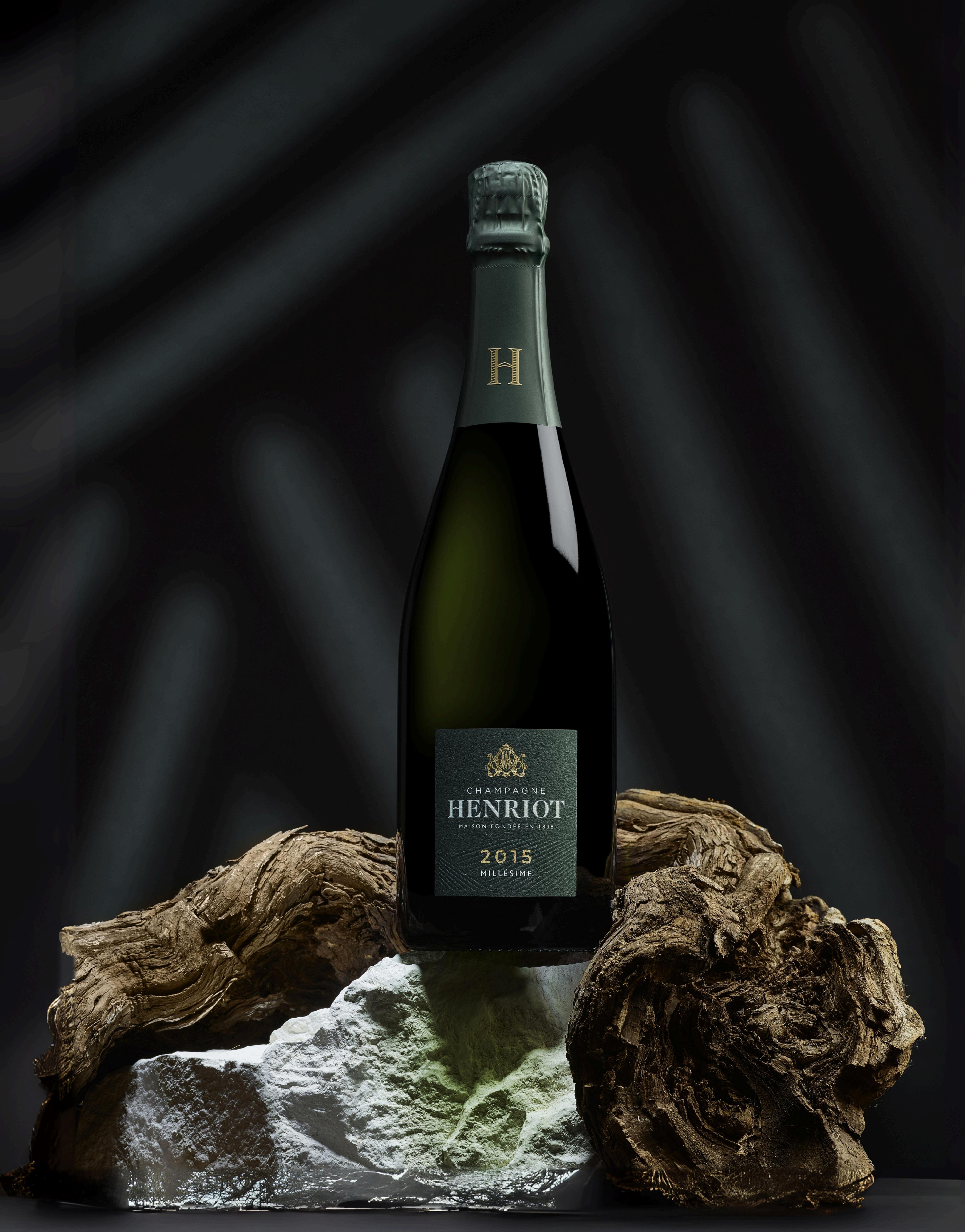
Denna årgång, som är resultatet av en intensiv sommar, konstant ljus och begränsade skördar, har en karismatisk och elegant profil
Den är tillverkad uteslutande av 100 % Premier- och Grand Cru-druvor och uttrycker den rena essensen av 2015 års skörd, med en balans mellan styrka och friskhet, mineralitet och elegans
En champagne som formats av tiden själv och en av Maison Henriots finaste tolkningar av naturen

Livets Goda
Jean Garandeau.
THE CHAMPAGNE STORY 4.0 JEAN GARANDEAU
– Managing Director,
the Champagne house Jacquesson

Jean Garandeau is currently appointed Managing Director of the prestigious Champagne house Jacquesson. He took the helm in September 2022 after the house was acquired by Artémis Domaines, the wine arm of François Pinault’s luxury group (which also owns brands such as Gucci and Château Latour). His appointment marks a significant transition for Jacquesson, as the company moved from nearly 50 years of family leadership under the brothers Jean-Hervé and Laurent Chiquet to becoming a jewel in the crown of a global luxury portfolio.
BY BJÖRNSTIERNE ANTONSSON AKA THECHAMPAGNESOMMELIER
JEAN GARANDEAU IS A SEASONED FIGURE in the international fine wine world, shaped by what is often referred to as a luxury-vigneron philosophy – a balance between historical heritage and modern precision. Prior to his role at Jacquesson, he served as Sales and Marketing Director for Artémis Domaines, where he worked with some of the most iconic estates in the wine world, including Château Latour, Domaine d’Eugénie, Clos de Tart, Bouchard Père & Fils, Château Grillet, Eisele Vineyard, and Beaux Frères.
He has also previously worked at the Champagne house Krug – a historically fitting connection, as its founder Johann-Joseph Krug himself worked as cellar master at Jacquesson in the 1830s. Garandeau, born in Burgundy with roots also in Bordeaux and the Charente region, grew up in an environment where wine was always a natural part of family life.
His mission at Jacquesson is clear: not to change the house, but to fine-tune it. In close dialogue with Jean-
Hervé and Laurent Chiquet, the work continues on the house’s terroir-driven philosophy, not least through the numbered 700 series and a focus on small, precisely defined productions. Under Garandeau’s leadership, Jacquesson is increasingly positioned at the very top tier of Champagne – with a production of around 250,000–300,000 bottles and an ever more pronounced exclusivity.
In December 2022, Artémis Domaines became the sole shareholder of the Champagne house Jacquesson.
WITHIN
ARTÉMIS DOMAINES, THERE IS AN ESTABLISHED sustainability exchange where technical teams from estates such as Château Latour, Domaine d’Eugénie, and Eisele Vineyard regularly share experience in viticulture and winemaking. The aim is to strengthen the work at Jacquesson & Fils through shared knowledge on environment, quality, and long-term resilience.
The work revolves around three main areas. In the vineyards, the focus is on reintroducing biodiversity through trees, shrubs, and varied vegetation to break monoculture and create more resilient ecosystems. At the same time, experience is shared around organic farming, where Château Latour’s work – as a certified organic Premier Grand Cru – serves as an important reference, alongside discussions of clonal and massal plant material for future plantings.
The exchange also includes cellar technology, where the focus is on precision vinification and reduced environmental footprint. Strategies for water and energy conservation, modern temperature control, and upgraded disgorgement technology – enabling lower sulfur levels – are examples of how the group’s shared philosophy is implemented in practice: to create pure, terroir-driven wines with as little intervention as possible.
Jean, you have led some of the most iconic names in the wine industry. You have a background deeply shaped by the classic wine regions of France. How did that shape your entry into the world of Champagne?
I was born in Burgundy to a Burgundian mother and a father from the Bordeaux/Charente region. I grew up in a culture where fine wine was a serious family affair. My career began at Moët & Hennessy, followed by time at Krug, which is a fitting historical parallel since its founder Johann-Joseph Krug was once cellar master at Jacquesson in the 1830s before founding his own house. Before leading Jacquesson, I was Sales and Marketing Director at Artémis Domaines, where I was responsible for iconic estates such as Château Latour, Domaine d’Eugénie, Clos de Tart, and Eisele Vineyard.
What role does Artémis Domaines play?
Artémis Domaines is the wine investment arm of François Pinault’s luxury group. They acquired a minority stake in Jacquesson in March 2022 and became the sole shareholder in December 2022.
My role is to integrate Jacquesson into the Artémis portfolio while ensuring its “creative independence” and preserving its cult status.
There was some concern when Artémis acquired such a family-driven house. What is your mandate? How would you describe your house/producer style and how do you achieve it?
My goal is not to “fix” Jacquesson, but to “fine-tune” it. We were brought in to ensure creative independence while
“It’s part of our DNA. You have to stay humble when taking over an estate like this. First, you need to understand our terroirs. Champagne is a liquid puzzle where the pieces change every year, and it often takes ten years to see the true fruit of your work”
providing the resources of the Artémis portfolio. I work closely with the former owners, Jean-Hervé and Laurent Chiquet, who remain on the board and continue to supply grapes from their own vineyards.
We maintain a focus on small production – around 250,000 to 300,000 bottles – to preserve exclusivity and quality. We follow a luxury-vigneron approach – a balance between heritage and precise stewardship. Central to this is the concept of the 700 series.
Jacquesson is known for rejecting continuity in favor of excellence through the 700 series. How is that style achieved? You describe Champagne as a “liquid puzzle.” How does the 700 series fit into this?
Exactly. The 700 series is our liquid puzzle, where the pieces change every year. While most houses chase a house style through continuity, we pursue the expression of the vintage.
On average, our Cuvée 700 is about 50–55% Chardonnay, 30% Pinot Noir, and the rest Meunier. But if Chardonnay yields are low – as they were in the Côte des Blancs for Cuvée 747 – we adjust the blend to reflect that reality. We let the vintage dictate the blend.
What are the unique characteristics of your terroir?
Terroir is everything. The expression in the vineyards of Aÿ is completely different from those in Dizy. We aim
to highlight these specific styles in our single-vineyard releases. We currently have three signature parcels, but we are cautious about expanding. If a vintage is exceptional, such as 2022, we may release up to four vineyard wines. But if the quality is not there, we do not produce them at all. We would even sacrifice a single parcel if necessary to ensure the quality of the 700 series blend.
We highlight each terroir through our signature parcels – Dizy Corne Bautray, Dizy Terres Rouges, Avize Champ Caïn, and Aÿ Vauzelle Terme.
We release these vineyard wines only in exceptional vintages. In 2022, for example, the vintage was so strong that we produced all four.
What do you think of the current trend toward singlevineyard terroir Champagnes?
It is part of our DNA. However, one must be humble when taking over an estate like this. You first need to understand our terroirs. Champagne is a liquid puzzle where the pieces change every year, and it often takes ten years to truly see the results of your work.
What primary operational changes have you implemented since Artémis Domaines took over at the end of 2022?
Our priority is to invest in our facilities to improve quality. We have focused heavily on infrastructure to provide our winemaking team with better tools:
Pressing: installed a new automatic press capable of handling small batches down to 1 000 kg.
Temperature control: implemented temperature regulation across all facilities to cool juices immediately after harvest.
Renovation: cellars have been refurbished and a new facility for the vineyard team has been built.
Disgorgement: upgraded disgorgement line for greater precision and lower sulfur levels.
Reserve storage: two large 90-hectoliter wooden vats have been added to diversify reserve wine ageing.
How do you view the future of Champagne in a changing climate?
We exchange ideas with other Artémis estates in Bordeaux, Burgundy, and the United States regarding organic farming and biodiversity. This includes reintroducing trees and shrubs in the vineyards and carefully considering which plant material to use for replanting.
How is Jacquesson preparing for a changing climate?
We regularly exchange ideas with technical directors from our other estates in Burgundy and the United States. We are exploring organic practices, reintroducing trees and shrubs for biodiversity (agroforestry), and carefully selecting plant material for future replanting. However, we are not trying to create “Burgundy in Champagne” – identity must remain clear.
What does a typical working day look like for you?
It is a mix of global wine marketing, administrative planning, and constant tastings with the team. It is very varied: hosting importers and clients, administrative work, and many tastings. We conduct regular blind tastings for dosage decisions and hold blending sessions throughout the year. I also spend a great deal of time following our investment strategy and traveling to promote the wines.
Since I find Jacquesson to have a truly gastronomic profile across all its Champagnes, this question feels natural: more personally, what is your favorite way to enjoy Champagne?
Fish and seafood pair perfectly – I especially love the raw character of scallops with carpaccio and yuzu, or caviar paired with Avize Champ Caïn. For wines with more Pinot Noir, I enjoy poultry with morels or black truffle. I also love pairing Champagne with Parmigiano –which is quite fun – or an aged Comté, which can create a wonderful nutty combination.
What do you drink besides your own Champagnes?
My taste is fairly broad. I love building references. My interests include Burgundy, Bordeaux, Syrah from the northern Rhône, Piemonte, and the transparent Rieslings of Germany.
Finally – your dream dinner guest?
I would serve them a Jacquesson, specifically Vauzelle Terme 1996. It was one of the most emotionally powerful wines I have ever tasted – absolutely incredible. As for the guest, it would be the contemporary artist Pierre Soulages. His work with black texture and how it reflects light – outrenoir – is a fascinating parallel to how we seek light and transparency in our wines.
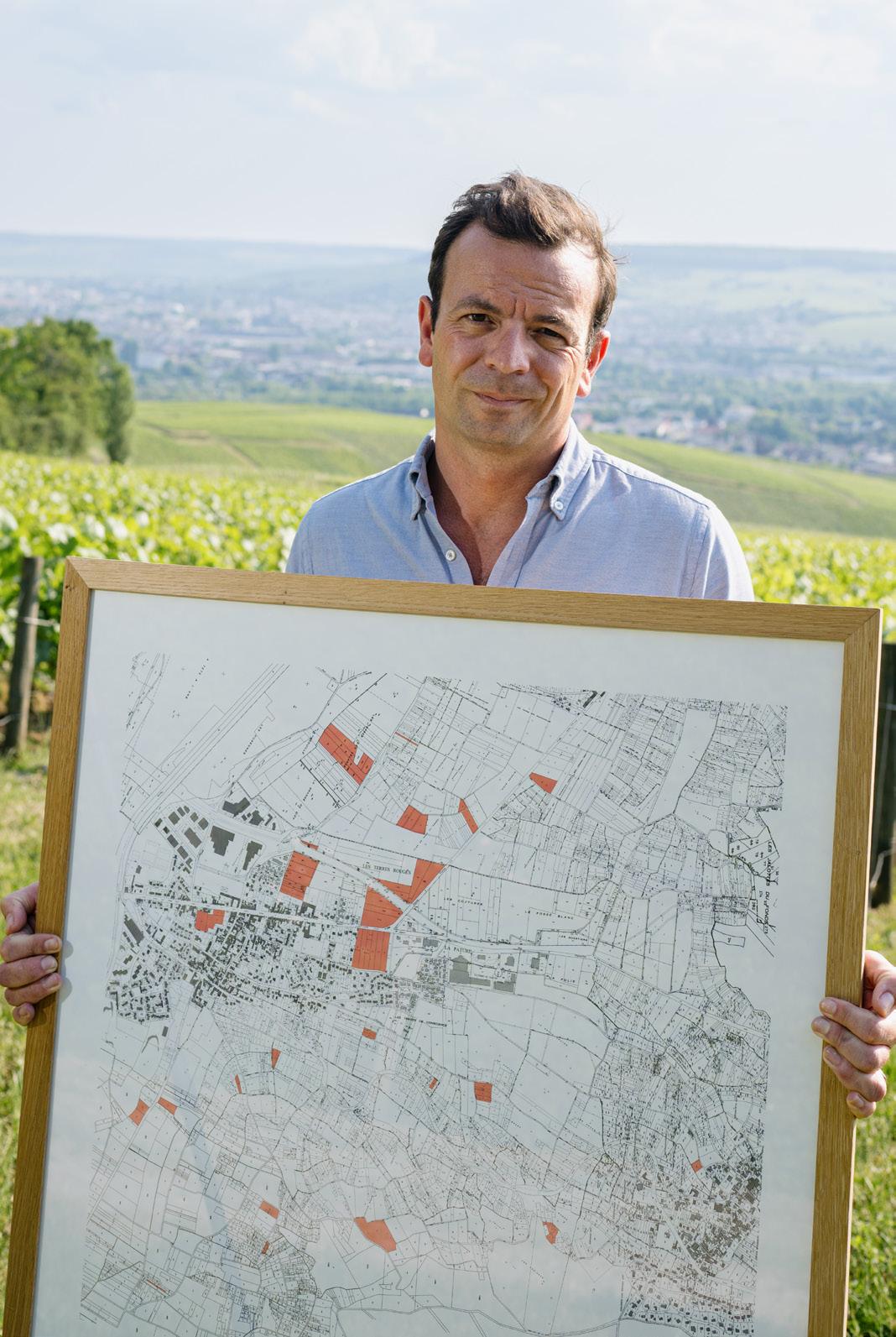
Facts
Year
1798
Milestones
Founded by Memmie Jacquesson
1974 Acquired by Jean Chiquet – beginning of the Chiquet era
Mar 2022
Sep 2022
Dec 2022
Artémis Domaines acquires a minority stake
Jean Garandeau appointed Managing Director
Artémis Domaines becomes sole shareholder
champagne med guldband palmer la réserve brut
Tidlös, naturligt elegant champagne i perfekt balans. art 7372 alk 12% 399 kr
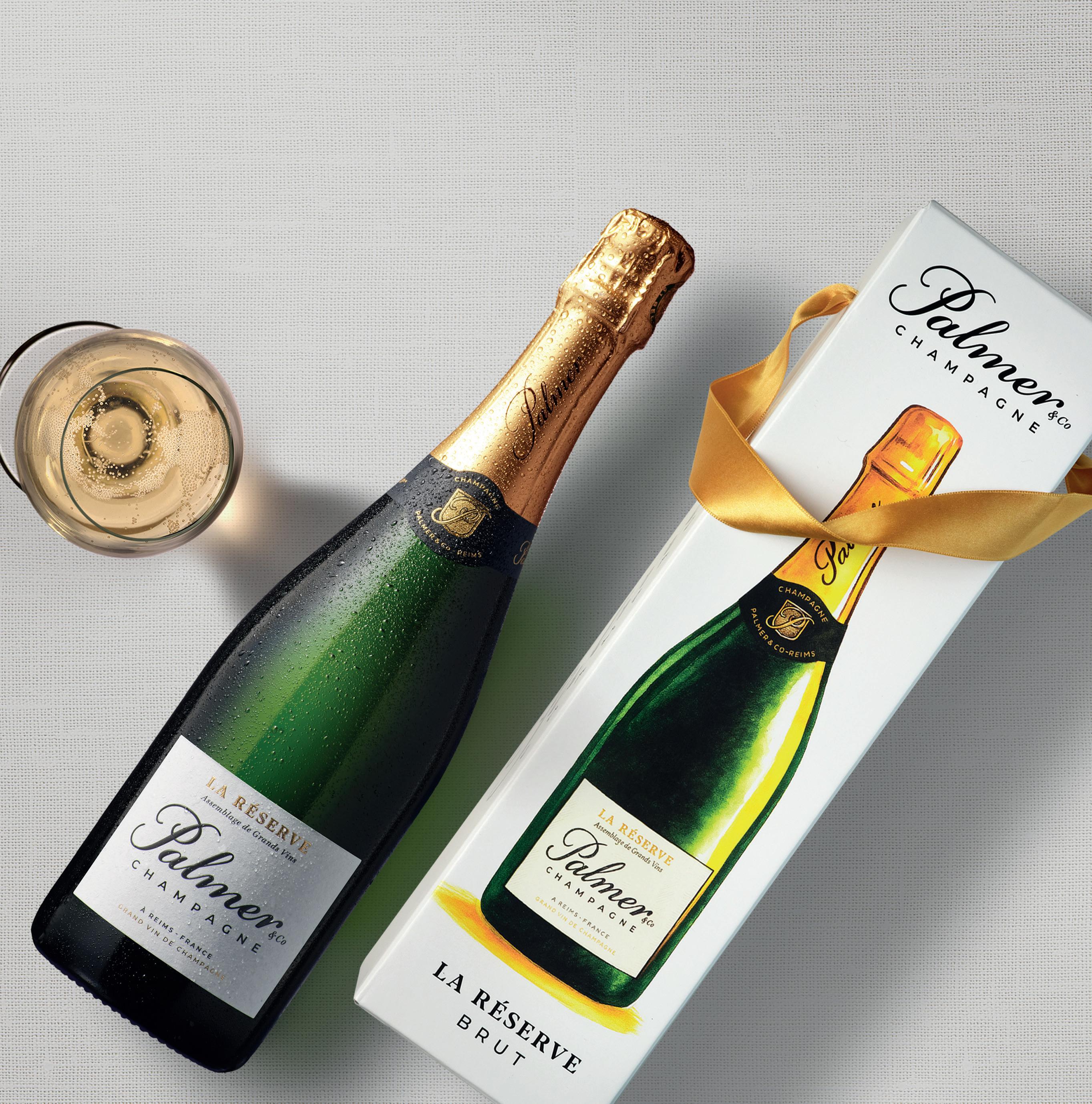



Bästa champagnen under 400 kr. Vinbetyget.se www.provinum.se
Palmer gör mig lycklig.
Tina Nordström
Tips och inspiration hur du kombinerar vin och mat får du som medlem i gastronomiklubben.se

JACQUESSON
Now & Then ... a retrospective of two vintages
CUVÉE NO728 VS CUVÉE NO748
BY BJÖRNSTIERNE ANTONSSON AKA THE CHAMPAGNESOMMELIER
THE BACKSIDE AND CUTTING EDGE OF BUBBLES: A PUZZLE JOURNEY FROM NO728 TO NO748
Drinking modern Champagne is, more often than not, like watching a rerun of an old sitcom; you know exactly when the laughs are coming, you recognize all the characters, and you know precisely how it ends. The big houses have built cathedrals of consistency – monuments to the unchanging, where every bottle tastes like the last, regardless of whether the world outside the cellar walls is burning or flooding.
Then we have Jacquesson. They are the annoying intellectuals in the class who refuse to answer yes or no. They respond with a counter-question. When the Chiquet brothers, at the turn of the millennium, decided to scrap their standard cuvée (yes, I know… an incredibly awkward and genderless name for something as wonderful as entry-level Champagne…) Perfection, in favor of the 700 series, they performed a surgical operation on the very idea of “Non-Vintage.” They stopped chasing the ghost of an eternal house style and instead began chasing the truth of a specific year.
THE NUMBER
The 700 series, where the first was 728 (based on the 2000 vintage), then 729 and so on. “728” was simply the “technical ID number in the cellar logbook” at the time – number 1 dates back to a cuvée from 1898, although these wines were not numbered on the labels. Essentially, it meant that this new Champagne, Cuvée 728, was the 728th Champagne the house had produced. To calculate which vintage each cuvée contains, take the cuvée number plus 1272. (748 + 1272 = 2020).
THE TOOLS BEHIND THE MAGIC
What makes Jacquesson so damn good right now is not just the philosophy – it’s the hardware. Jean Garandeau has invested heavily in infrastructure. A new automatic press capable of handling tiny batches down to 1,000 kg allows them to isolate every microscopic nuance of terroir. They have installed temperature control that chills the must immediately – a necessity in our feverish, climate-changed world. They have even upgraded the disgorgement line to further reduce sulfur levels. All to ensure the wine is as pure and naked as possible.
THE VERDICT
Drinking a cuvée from the 700 series is like having a conversation with someone who has nothing to hide. It is not a wine for those seeking comfort in the familiar. It is a wine for those who, like the artist Pierre Soulages (Garandeau’s dream guest, incidentally), understand that light – and truth – often resides in the texture of the dark, the complex, and the unyielding. Jacquesson is no longer just a Champagne house. It is a laboratory of excellence where each number in the 700 series is a new puzzle piece in the search for the perfect reflection of a place and a time. If you are still drinking Champagne that tastes the same every year, you have not understood the point. Buy a 748. Drink it slowly. And realize that perfection is not a destination – it is a number that keeps ticking upward.
JACQUESSON ‘CUVÉE NO728’
1ER CRU DIZY
27PN 37PM 36CH
market value approx. €100
90
Let us look back. Cuvée no 728 was the first step into the unknown. Based on the 2000 vintage, it was not just a wine; it was a manifesto. This is where the puzzle began to take shape – a liquid puzzle where the pieces change with every season. 728 was the wine that told the consumer: “We trust that you are smart enough to understand that nature is not a factory.” It was austere, intellectual, and free from that sticky dosage that so often masks mediocrity in Champagne.
Jacquesson has become a master at creating new and compelling cuvées and concepts. The standard Champagne Perfection has here transformed into blend number 728. As much as 68% of the wine comes from 2000, with the remainder being reserve wines. The proportion of oak barrels and Grand Cru vineyards is very high in this unfiltered and lightly dosed wine. Avize, Aÿ, and Dizy form, as usual, the backbone of this highly intriguing cuvée. At this stage, there is still plenty of youthful pear-scented fruit and green apple notes. These will grow more complex over time, and the high-quality Chardonnay present here will become increasingly creamy. Notes of wood, forest, spice, chocolate, and a hint of fino sherry run parallel to the fruit. Suddenly—mature!
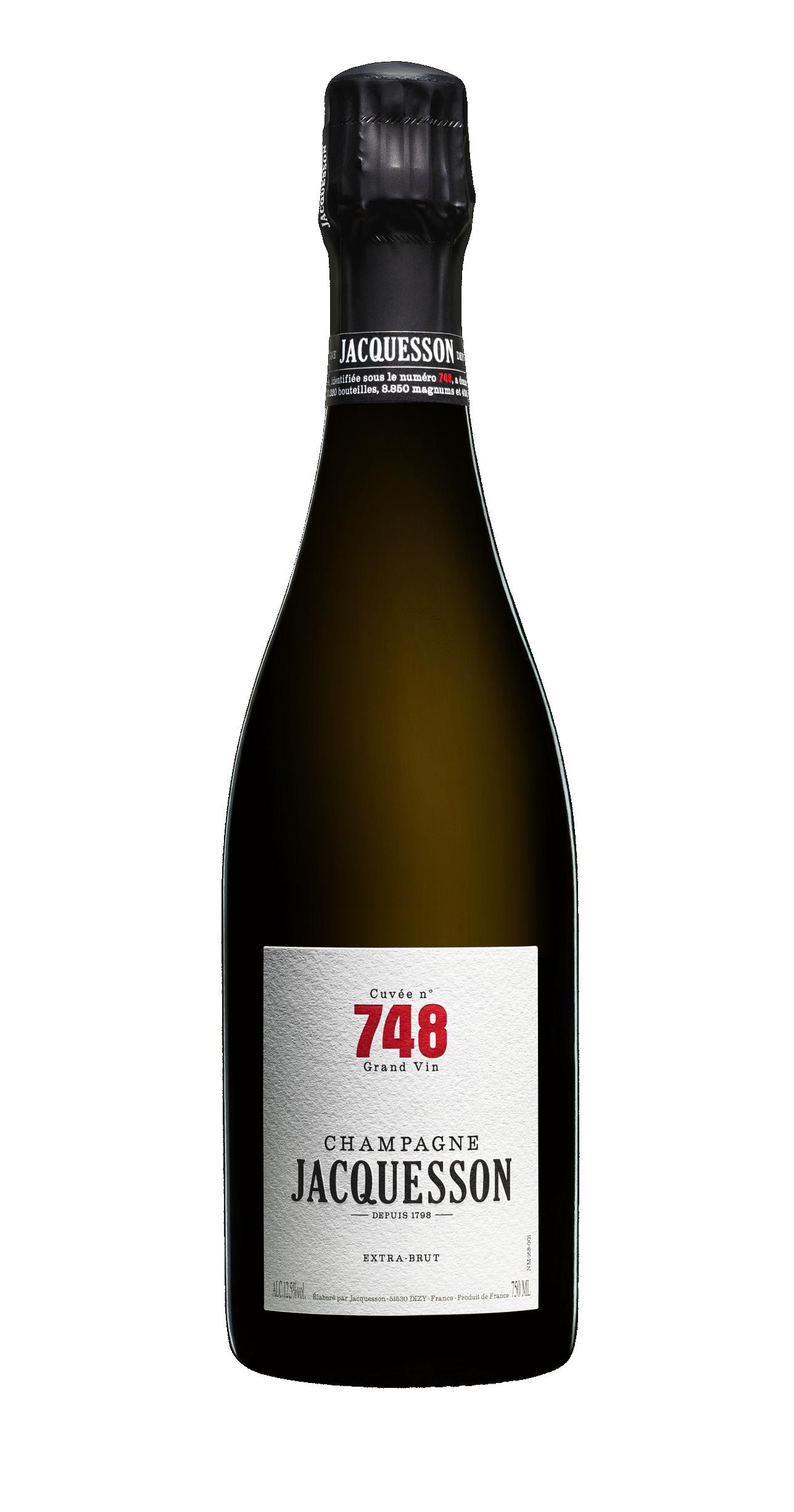
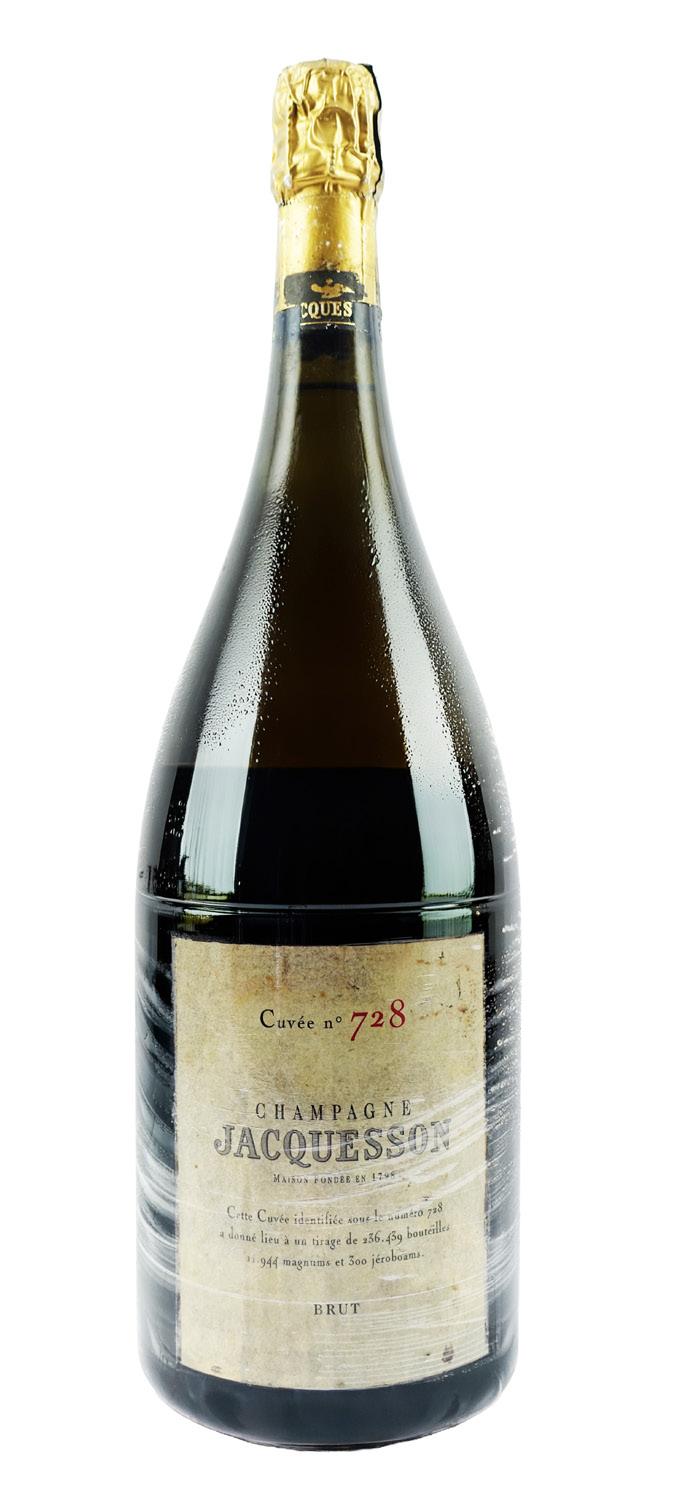
JACQUESSON ‘CUVÉE NO748’
1ER CRU DIZY
40PN 15PM 45CH
market value approx. €100
93
We sit in the winter of 25/26 with Cuvée 748 in the glass, based on the sunny and generous 2020 vintage. If 728 was a tentative yet determined revolution, 748 is a display of absolute control under Jean Garandeau’s new leadership. Garandeau, a man who moves with the same natural authority as a Premier Grand Cru, has not come to “fix” Jacquesson, but to “fine-tune” it with a precision bordering on the obsessive. With a blend of approximately 45% Chardonnay, 40% Pinot Noir, and the rest Meunier, 748 is a mirror of the 2020 growing season. It is a wine with an electric presence, a gastronomic backbone, and a transparency that makes one wonder why we ever accepted anything else.
Jacquesson’s concept of individually numbering each release of what is technically a non-vintage or multi-vintage wine has become a huge success, despite the fact that it is nearly impossible to keep track of which vintage forms the base of each wine. Many have followed and tried to find their own detail to stand out. At its core, I love the fact that each new vintage is allowed to leave its mark even on entry-level Champagne. The 2020 base here is, however, not as pronounced as it usually is. Jacquesson has, in order to maintain its house style, toned down the fruit somewhat and increased the proportion of Chardonnay to preserve freshness and identity.
I am always fond of these wines and keep a modest collection of the different releases. 748 is deliciously harmonious from the outset, but will age well and reach its peak between 2028–2032.
Top-10 Champagnes 13ème edition
BY BJÖRNSTIERNE ANTONSSON AKA THE CHAMPAGNESOMMELIER
CH =
CHARDONNAY PN = PINOT NOIR
10
MV DÉLALOT ’LES DIONYSIAQUES’
CHARLY-SÛR-MARNE
PM 60 PN 20 CH20
Market value approx. €85
90 I am fascinated by Jérôme Lefèvre’s uncompromising vision. These are wines for those who seek the soul of craftsmanship, for those who value the passage of time and nature’s own poetry. In an age where everything must move faster and be optimized, the Champagnes from Délalot & Jérôme Lefèvre are a radical counterreaction. This is not just winemaking; it is a philosophical manifesto bottled. In the small village of Charly-sûr-Marne in the Vallée de la Marne, where Meunier reigns, he has created a micro-domain that redefines the concept of luxury. Jérôme Lefèvre’s approach is deeply inspired by vitalist theories (sharing roots with Rudolf Steiner’s biodynamics) and thinkers such as Thoreau, Bachelard, and Fukuoka. Time is the most important ingredient, even in the winery. Fermentations take as long as they need, often very slow and entirely natural without additives. Processes are adapted to lunar cycles, a nod to the cosmic forces that govern nature. Each bottle leaving the cellar has been handled manually at least 40 times by the winemaker himself, from bottling to final release. It is a level of intimacy with the product that is virtually nonexistent in modern Champagne. The use of oak barrels enhances the wines’ distinctiveness and gives them the structure required to be “real wines,” not just bubbles.
9
PM =
PINOT MEUNIER
2002 THIÉNOT ’LA VIGNES AUX GAMINS’ GRAND CRU AVIZE
100CH
Market value approx. €100
92 Thiénot’s famous vineyard wine from old vines in Avize, in a strictly limited release of 3 300 bottles, is in this version slightly more exotic than usual due to the vintage character. The dosage is always low, and this time the Thiénot siblings have settled on 4 grams. Sparkling and exciting, this hits the mark with direct and powerful yellow fruit flavors—lemon, grapefruit, orange, and quince—with a fresh texture and fine bubbles that fill the mouth. What tension and precision! It has a sharp yet appetizing acidity that draws you in with intensity and generosity. It is super dry, delivering a vibrant texture with only the slightest hint of sweetness that lends a pleasing roundness. It shines brightly and still feels remarkably youthful, with immense ageing potential ahead. I love the energy and persistence here; it is pure and refined. Not overly demanding, yet so easy to drink. 100% Chardonnay, of which 90% comes from Grand Cru vineyards. The most elegant and complete version of this wine, now in full balance between terroir and fruit concentration. Fine secondary aromas flow without overtaking the characteristic citrus-driven purity and refined minerality.
8
MV DE
SOUSA ’CUVÉE DES CAUDALIE
- FÛT DE CHÊNESVIEILLES VIGNES’ (BASÅRGÅNG 2018) GRAND CRU AVIZE
100CH
Market value approx. €180
On my most recent trip to Champagne, I spent an entire day in Avize, visiting a string of producers. Before a visit to Franck Bonville, we parked at the small square around the corner. I simply had to step into de Sousa and replenish my stock of their ‘Cuvée de Caudalie’. Each cuvée is the result of meticulous vineyard work, with respect for nature through biodynamic methods and waiting for optimal ripeness. The Champagne comes from 60-year-old vines, and the blend is built on a 50% réserve perpétuelle that began in 1995. The nose is delicate, with subtle hints of oak. A very fine Champagne with undertones reminiscent of white Burgundy or Chablis. Good freshness and elegance with a gentle oak tone wrapped in fine vanilla aromas. On the palate, it reveals a gastronomic Champagne that evolves and lingers beautifully. It only gets better each time I taste it. Imagine sitting by the window at Wedholms Fisk, served a generous portion of turbot with Sandefjord butter and a large glass of Cuvée Caudalie! I’m in love!
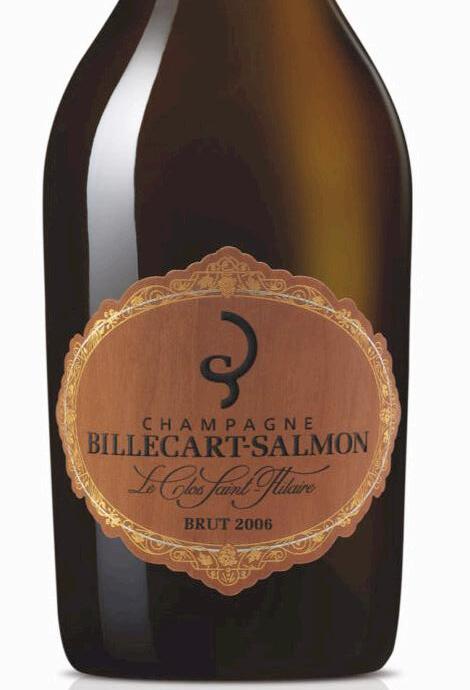
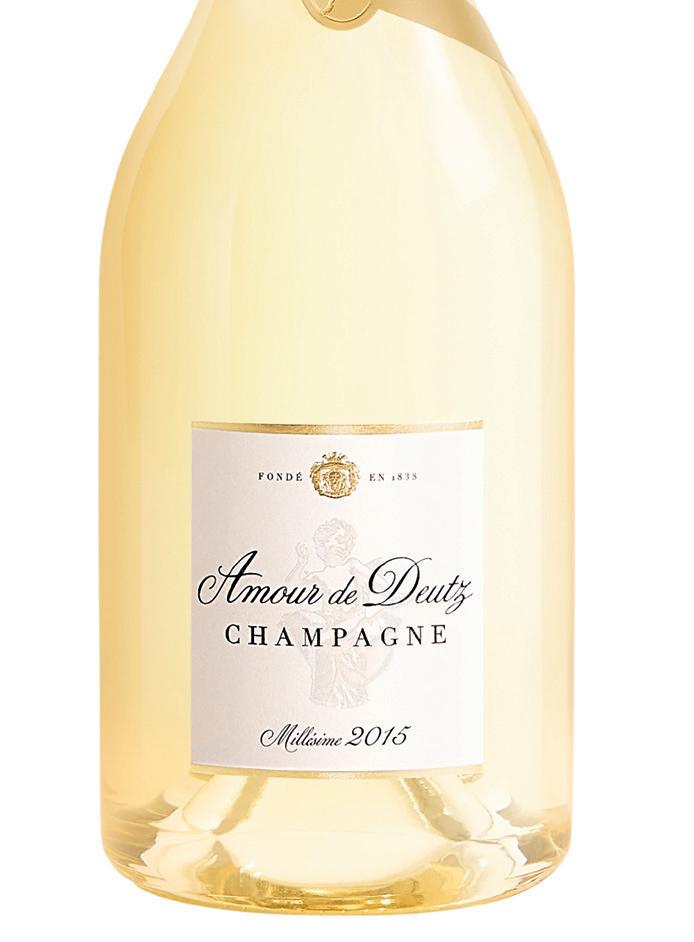
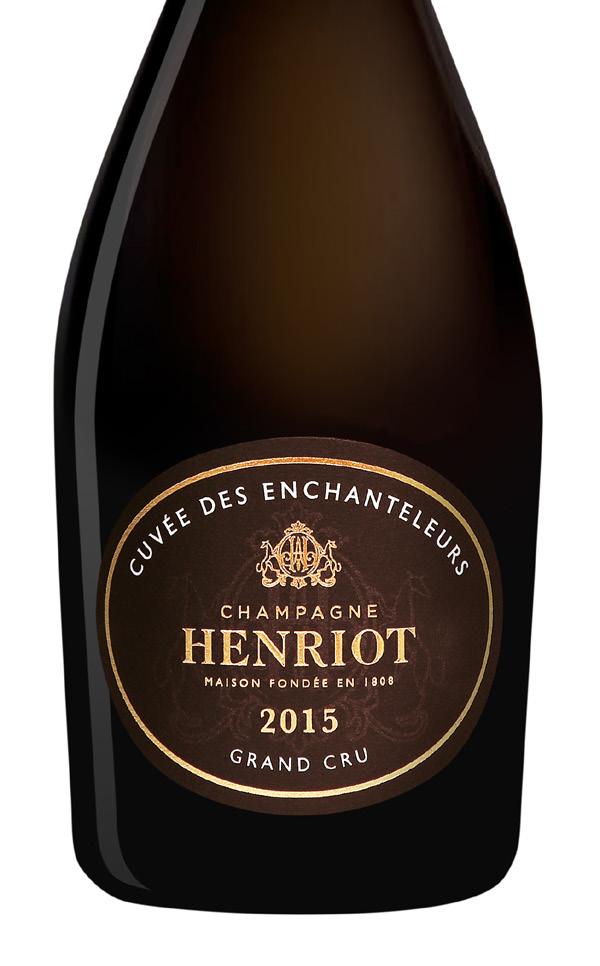
7
2006 BILLECART-SALMON ’LE CLOS SAINTE-HILLARE’
1ER CRU MAREUIL-SÛR-AŸ
100PN
Market value approx. €500
94 After a long period without any truly impressive Champagne icons, the drought was broken with a hedonistic evening at a former colleague’s home. Out came a stout bottle with a matte black label and bronze lettering. There are vineyards—and then there is sacred ground. Behind wrought-iron gates in the heart of Mareuil-sûr-Aÿ lies Billecart-Salmon’s bestkept secret: ‘Le Clos Saint-Hilaire’. From just a single walled hectare of pure Pinot Noir, harvested with extreme precision and vinified entirely in old oak barrels, emerges a Blanc de Noirs of almost mythical rarity. This is not just Champagne; it is a deeply vinous masterpiece balancing brute power with surgical finesse—reserved for moments when only the very greatest will do. This remarkable Clos, planted in 1964, is vinified exclusively in oak in its own dedicated cellar room and carries only 2 grams of dosage. Partially blocked malolactic fermentation—a practice increasingly common in warmer vintages— adds further definition. This is the slimmest and most elegantly modern expression of the wine to date. Seamless house style and beautiful texture. Not overly oaky or grower-driven in terroir expression, but rather a natural extension of the ultraelegant Billecart family style. Notes of grass, gooseberry, leather, and personal spice mingle with hints of magnesium typical of Mareuil-sur-Aÿ, while more prominent references lean toward white Burgundy— caramel, vanilla, and crème brûlée.
6
2015 DEUTZ ’AMOUR DE DEUTZ’ GRAND CRU
AŸ
100CH
Market value approx. €180
96 Premiere of a new vintage! 2015 was a year that tested the vines with relentless summer heat. To craft a Blanc de Blancs that breathes finesse rather than clumsy weight under such conditions is an art. Deutz, under cellar master Caroline Latrive, has proven mastery of that art with the 2015 ‘Amour de Deutz’. This is the house’s ode to Chardonnay—a cuvée sourced from their finest sites.
A pale yet radiant golden hue, with bubbles moving in diamond-cut precision. The first impression is a delicate floral kiss of hawthorn, acacia, and orange blossom. As the wine opens, it reveals sun-kissed yellow stone fruits, candied citrus, and a subtle yet unmistakable note of brioche and light honey. A lightly toasted character in the background speaks of time on the lees. The attack is razor-sharp and precisely sculpted. Despite the warmth of the year, the wine carries brilliant tension. The fruit leans toward blood orange, mandarin, and yellow peach, with an exotic hint of mango and passion fruit. The finish is what truly impresses—long, airy, and saline, tightening the generous fruit and leaving the palate clean and yearning for more. A brilliant wine balancing the warmth of 2015 with cool, chalky elegance. A wine built in three dimensions: width, depth, and length. Drink now for its youthful energy or cellar for a decade to allow the toastiness to unfold. A masterful achievement!
5
2015 HENRIOT ’CUVÉE DES ENCHANTELEURS’
1ER CRU ÉCUEIL
Dégorgement maj 2024
50PN 50CH
Market value approx. €200
96
The newer prestige name, Hemera (introduced only a few years ago), derived from the Greek goddess of light, is here replaced by the original Cuvée des Enchanteleurs. A wise decision! Four vintages of Hemera (2005, 2006, 2008, 2013) were released before Enchanteleurs returned.
Cellar master Alice Tétienne encapsulates Henriot’s house style in every bottle, expressing true terroir. Henriot is a Chardonnay-driven house producing some of the finest Champagnes—precise, elegant, and luminous. She fosters a spirit of collaboration among growers and partners. Made from a rigorous selection of the finest plots and bunches of Pinot Noir from Mailly, Verzy, and Verzenay, along with Chardonnay from Le Mesnil-sur-Oger, Avize, and Chouilly. Already showing subtle earthy notes of mushroom and truffle, alongside bright lemon, grapefruit, and toasted nuts. Highly complex—roasted, nutty, honeyed, baked pear, strawberry, and floral aromatics. The palate is powerful due to the equal blend of Chardonnay and Pinot Noir. Persistent acidity and impressive depth. Beautiful and destined to become legendary. Personally, I grow ever more fond of these classic, refined wines! Cuvée des Enchanteleurs, je t’aime!
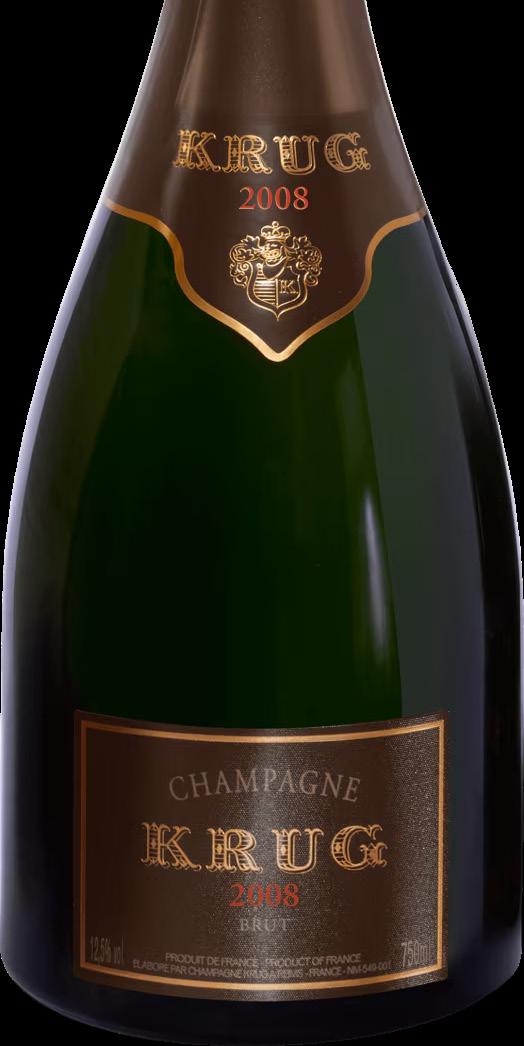
4
2008 KRUG ‘MILLÉSIME’ REIMS
53PN 25PM 22CH
Market value approx. €500
96
A vintage Champagne from this producer is rare. 2008 was an exceptional year in Champagne, and it shows in this intense, still remarkably youthful wine. Freshness and richness combine to deliver concentration, density, and outstanding ageing potential. Highly structured, framed with an almost red phenolic character reminiscent of great red Burgundy. The bubbles fade seamlessly into a finish lasting minutes. Legendary even before release! Internally referred to as Classic Beauty at Krug. I find a distinctly Pinot-driven composition, though still far too young—both now and when first tasted in spring 2021. With another decade, this mighty albatross may truly take flight. Structure and freshness are already impressive. Pale color with copper and bronze hints, and a lively stream of fine bubbles. Aromas of leather from Aÿ, olives from Bouzy, grapefruit, blood orange, licorice, fennel, mint, fudge, blackberry, and blueberry from Meunier. On the palate, fullbodied, dense, slightly smoky. Aromatically reminiscent of Clos d’Ambonnay. The style recalls the slow evolution of 2002 vintage Champagne. Sharp acidic attack, followed by a dense core of dark Valrhona chocolate, sweet licorice, and Ethiopian highland coffee. Long citrus-driven, peppery finish with lingonberry, cranberry, and ginger. Buy everything you see—but promise me you won’t open a bottle before 2030. Patience is the house’s hallmark, and never more justified than here.
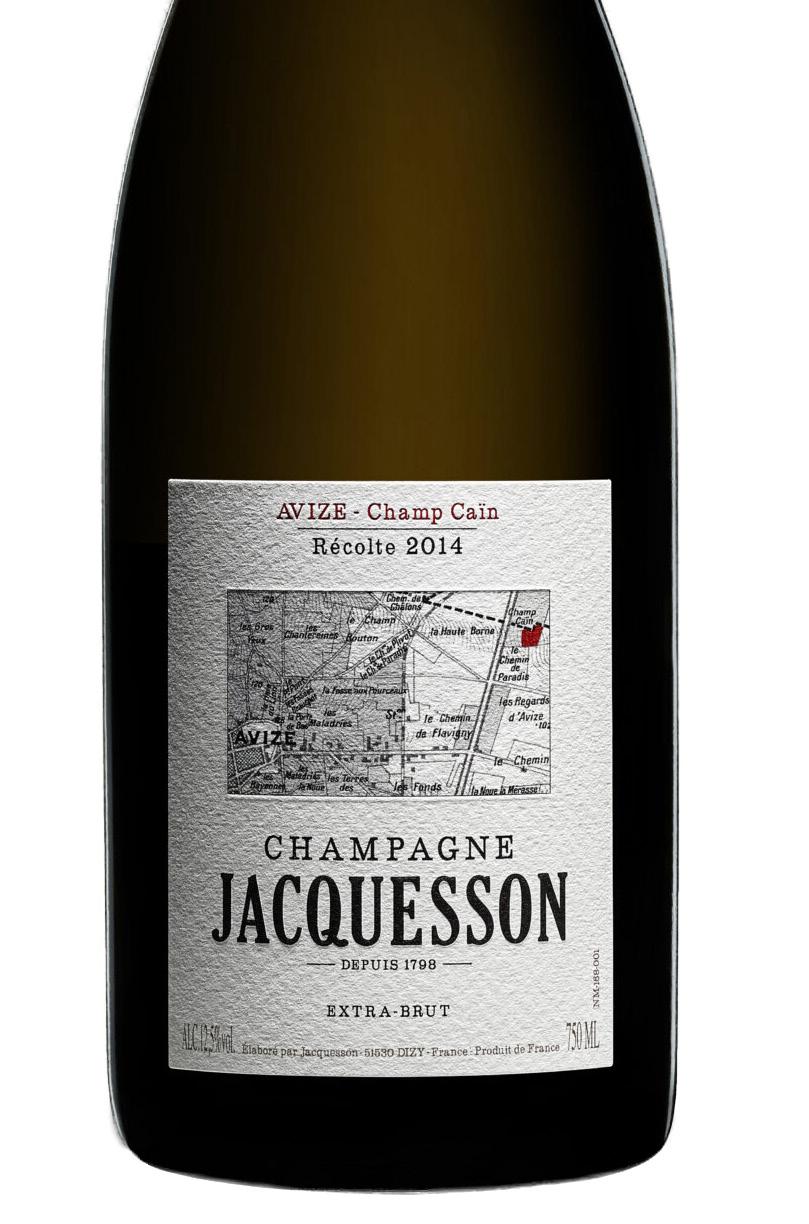
3
2014
JACQUESSON ‘AVIZE CHAMP CAÏN’
GRAND CRU AVIZE
Dégorgement januari 2024
100CH
Market value approx. €200
96 A top list without Jacquesson?! Impossible! I have followed the Chiquet brothers’ magic since the late ’90s. Jacquesson remains one of the most interesting houses today, offering outstanding value. It is with some sadness I note that Jean-Hervé and Laurent Chiquet have sold their jewel in Dizy, but winemaker Yann Le Gall remains as a guarantee for future success.
Jacquesson is almost unique in having deliberately halved production over 25 years to optimize quality. The brothers never compromised their vision, regardless of critics like myself who found the dosage levels a bit too low. They followed their path fully—and now enjoy well-earned days on the Riviera. Champ Caïn was born from isolating the very best parcel in Avize. 2014 is not a great vintage overall, but the unmistakable terroir profile—grilled lemon, straw, sea salt, walnut, and lightly browned butter—is present and deeply satisfying.
2
2018 POL ROGER ‘CUVÉE SIR WINSTON CHURCHILL’ EPERNAY
Dégorgement juni 2024]
PN-dominans, förmodligen 80PN 20CH
Market value approx. €250
97 So we meet again, old friend! How many times have I longed for the perfect Cuvée Sir Winston Churchill? I sit at a winter lunch at two-star Aira, enjoying one of the city’s finest gastronomic experiences. 1996 remains perhaps the greatest Churchill ever made. How will 2018 compare?
After difficult vintages in 2016 and 2017, 2018 brought abundance and concentration. Surprisingly high acidity ensures structure. The 2018 is generous, sun-filled, and hedonistic. Aromas of pear, candied mandarin peel, peach, and dried fruits. On the palate, full-bodied, vinous, broad-shouldered—yet balanced by vibrant acidity. The finish is long and enveloping. A muscular Churchill that will reward patience.
1 2008 BOLLINGER ‘R.D.’
AŸ GRAND CRU
Dégorgement 28 oktober 2022
71PN 29CH
Market value approx. €350
98 In January 2023, during Saint Vincent, I was invited with Richard Juhlin to Bollinger’s sacred tasting room for a pre-release of the 2008 ‘R.D.’ with Chef de Cave Denis Bunner. Three years later, I can only conclude—this legend continues to deliver.
‘R.D.’ embodies Madame Bollinger’s vision: freshness and nutty richness in perfect harmony. Particularly in cooler vintages, the autolytic character enhances structure.
The 2008 is still pale but evolving. The aroma is monumental: hazelnut cream, Domori chocolate, madeleine, marzipan, wood sauna, gunpowder, grilled beef, foie gras, honeysuckle, mushroom cream, honey, nougat.
On the palate, vibrant yet full, with mineral and marine notes, apricot fruit, and a long honeyed finish.
Among 2008s, Vieilles Vignes Françaises, Clos du Mesnil, Comtes de Champagne, Dom Pérignon, and Salon lead—closely followed by R.D., Cristal, Belle Époque, La Grande Année, La Grande Dame, and Krug Millésime.
Krug’s latest releases – from Grande Cuvée 173 to Collection 1995
BY ANDREAS LARSSON
GRANDE CUVÉE 173ÈME
EDITION
44% pinot noir, 34% chardonnay, 22% pinot meunier. 150 different wines from 2017 to 2001.
94 (with clear potential for improvement)
A gentle and lively mousse with a light golden core and copper hue. The nose is complex and harmonious with perfectly balanced oak and the nutty complexity it contributes, elegant orchard fruit, a slightly cooler fruit profile, a hint of autumn forest, autolytic butter, brioche and nougat notes. For the style, the palate is somewhat youthful with potential yet to be released, but with plenty of inherent power, an ever-precise acidity balanced by layers of nutty fruit and complex maturity notes, followed by a clean and persistent finish.
2009 CLOS DU MESNIL
96 Brilliant and light golden with a silky mousse. Great purity and intensity on the nose, yet discreet without exaggeration, with crushed chalk, hazelnut, light stone fruit, ripe citrus, toasted hazelnuts, gentle oak and an autolytic butteriness. The palate shines with a marked freshness for the vintage, albeit softer and more rounded for Mesnil. The palate offers fine maturity and
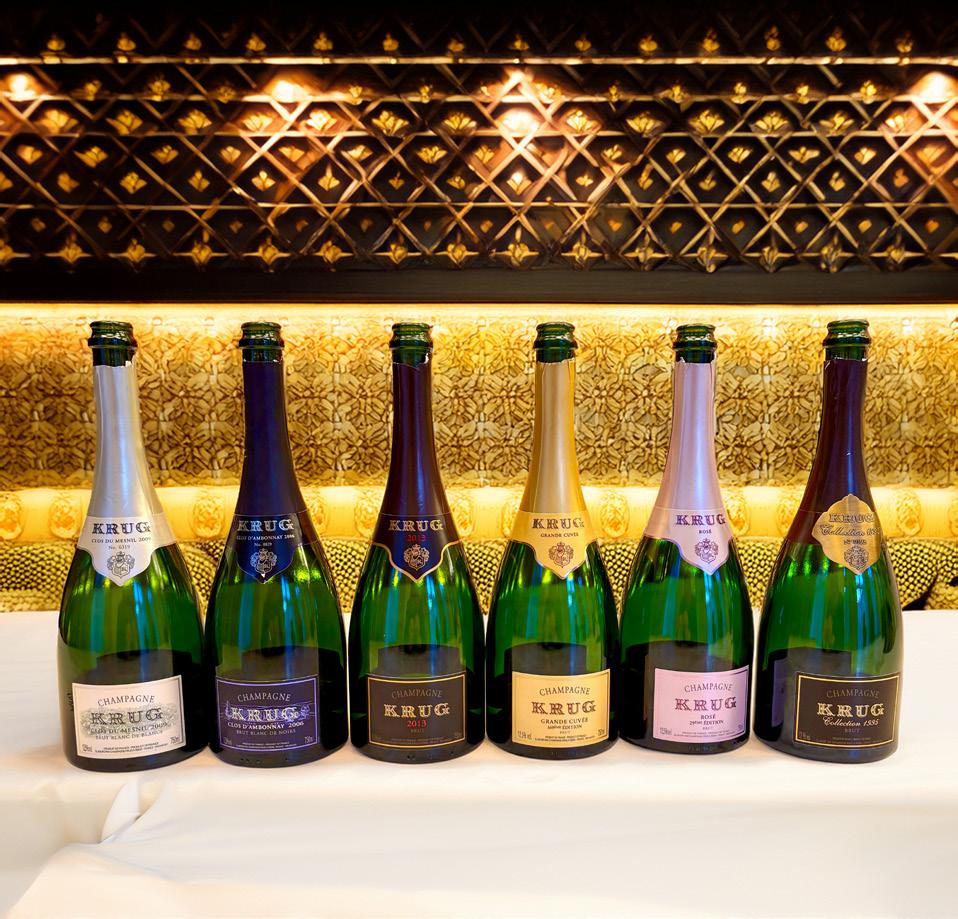
harmony with a gentle mousse, slightly exotic coconut/vanilla notes, dry spices and exotic yet fresh fruit with a touch of autumn forest. Structurally slender for the vintage but packed with power and liveliness, with a very long and resonant finish.
2006 CLOS D´AMBONNAY
97
This exudes Pinot and Burgundy with impressive intensity and character; tasted blind, I would aromatically say GevreyChambertin, with ripe red berries, sweet raspberries, pain d’épice, nougat, hazelnut cream, discreet oak and fine “cellar notes,” or rather a pantry filled with plenty of ripe and fragrant fruit. A powerful and elegant palate balancing brilliant acidity and fine extract, with a clear presence of tannin without feeling bitter; the bubbles move toward lightly whipped cream, nuanced spiciness, good expression and great power, with a very long and powerful finish.
VINTAGE 2013
41% pinot noir, 38% chardonnay, 21% pinot meunier
95 The first impression is a cooler Chardonnay harvested relatively early, with its classic notes of chalk, hazelnut, ripe citrus, cool stone fruit and fresh butter.
With a little aeration and warmth, riper Pinot enters, with red berries, pain d’épice and nougat, underscored by fine oak-derived spice and nuance. The palate is cooler yet powerful, nicely restrained with a brilliant Krug acidity and tension, intense and nuanced with very great length. Still restrained for the style, with great potential for development.
KRUG ROSÉ 29ÈME
EDITION
53% pinot noir including 11% red wine consisting of Les Crayons in Mutigny from 2017 and Côte Valnon from Aÿ from 2016, 28% chardonnay, 19% pinot meunier. A total of 29 wines and 5 vintages from 2017 to 2010.
97 The undersigned is relatively spoiled by drinking Krug on a regular basis, but this feels highly exotic as I rarely have the opportunity to taste this wine. Guinea fowl/copper hue with a lively and silky mousse. The first impression on the nose offers a classic Krug harmony and complexity, where relatively ripe Pinot, its red berries and fine spice, are underscored by elegant oak, toasted hazelnuts and chalk. A classic harmony between power, breadth and finesse with a lively freshness and astonishing length.
1995 COLLECTION
48% pinot noir, 35% chardonnay and 17% pinot meunier
98 The 1995s have for too long stood in the shadow of the 1996s, and this wine clearly shows that it is a vintage on par with the latter—slightly less extreme and definitely more homogeneous when considering the development of most wines. Here we are offered a wonderful abundance of orchard fruit, apricot, raspberry, hazelnut, nougat and delicate puff pastry creations with gentle toasting and discreet oak. The palate is powerful and gives an impression of sweetness even though it remains bone dry, with fine extract, a mature yet beneficial acidity, gentle creaminess, complex, harmonious and an extremely persistent finish. Champagne hardly gets better than this!
Smakrikt friskt vitt med smöriga toner
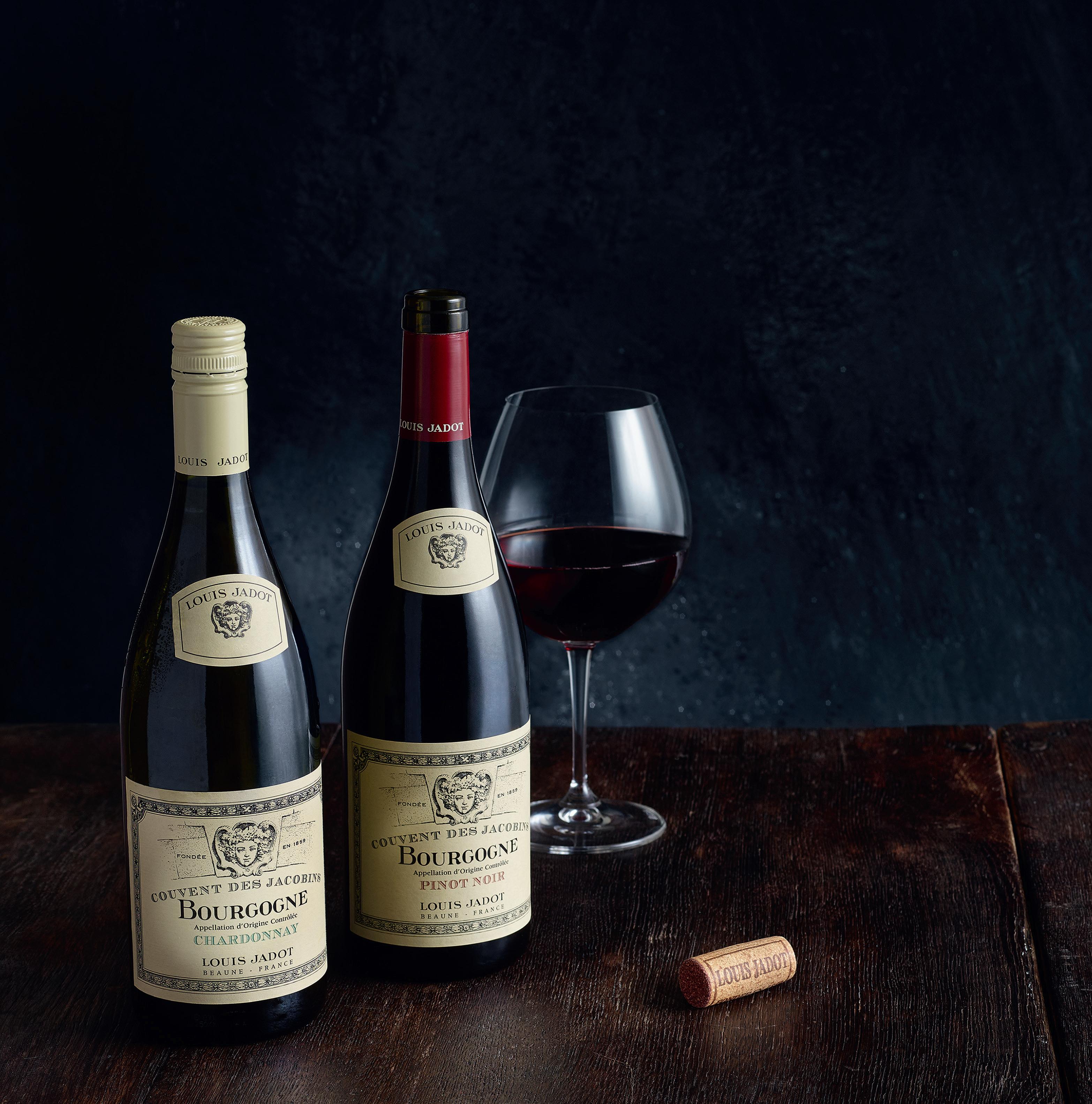
Pigg elegant & välgjord Pinot Noir
since 1859
Med tradition och kvalitet i varje flaska är Louis Jadot ett säkert val.
Gastronomisk pärla i ny årgång
Nominerat till Årets pinot noir!
Nr 5798 Couvent des Jacobins Bourgogne Blanc 219 kr 750 ml. Alk. 13% Nr 5283 Couvent des Jacobins Bourgogne Rouge 239 kr, 750 ml. Alk. 13% Finns på Frankrike-hyllan
Alkoholkonsumtion under graviditeten kan skada barnet

CHAMPAGNE – a master class in resilience
BY AMALIA G STÖCKEL
Heritage dating back to 1735 and modern architecture come together at Champagne Mandois.

The French Revolution, phylloxera, two world wars, and more recently climate change, a global pandemic, and punitive tariffs—champagne has survived just about everything and, moreover, managed to refine itself through each crisis.
During a visit to the appellation with Comité Champagne in September 2025, I was given insight into how the region constantly works to develop the entire production chain in order to continue producing the world’s most luxurious sparkling wines for many centuries to come.
MUCH IS SAID ABOUT RESILIENCE IN OUR TIME the ability to remain strong despite all manner of crises and to move forward in life without sacrificing too much of oneself. If any wine region embodies that concept, it is without question Champagne. The world’s most famous sparkling wine has, over the past three centuries, become so synonymous with luxury and abundance that it is easy to forget the wines we drink today are the result of a long series of mistakes, innovations, and a pure struggle for survival. The wine that accidentally underwent a second fermentation and made Dom Pérignon “drink stars,” the groundbreaking inventions of widow Barbe-Nicole Ponsardin, the development of bottles strong enough not to explode under pressure, and the grafting of European vines onto American rootstocks to protect vineyards from devastating phylloxera. The world is ever-changing, and crises will always arise.
THE
GREATEST CHALLENGES OF THE 21ST
CENTURY
FOR
THE CHAMPAGNE INDUSTRY
, aside from geopolitical factors such as war and punitive tariffs, are largely linked to climate change: grapes lacking sufficient acidity and freshness, new types of diseases and pests in the vineyards, and heavy bottles that leave large carbon footprints.
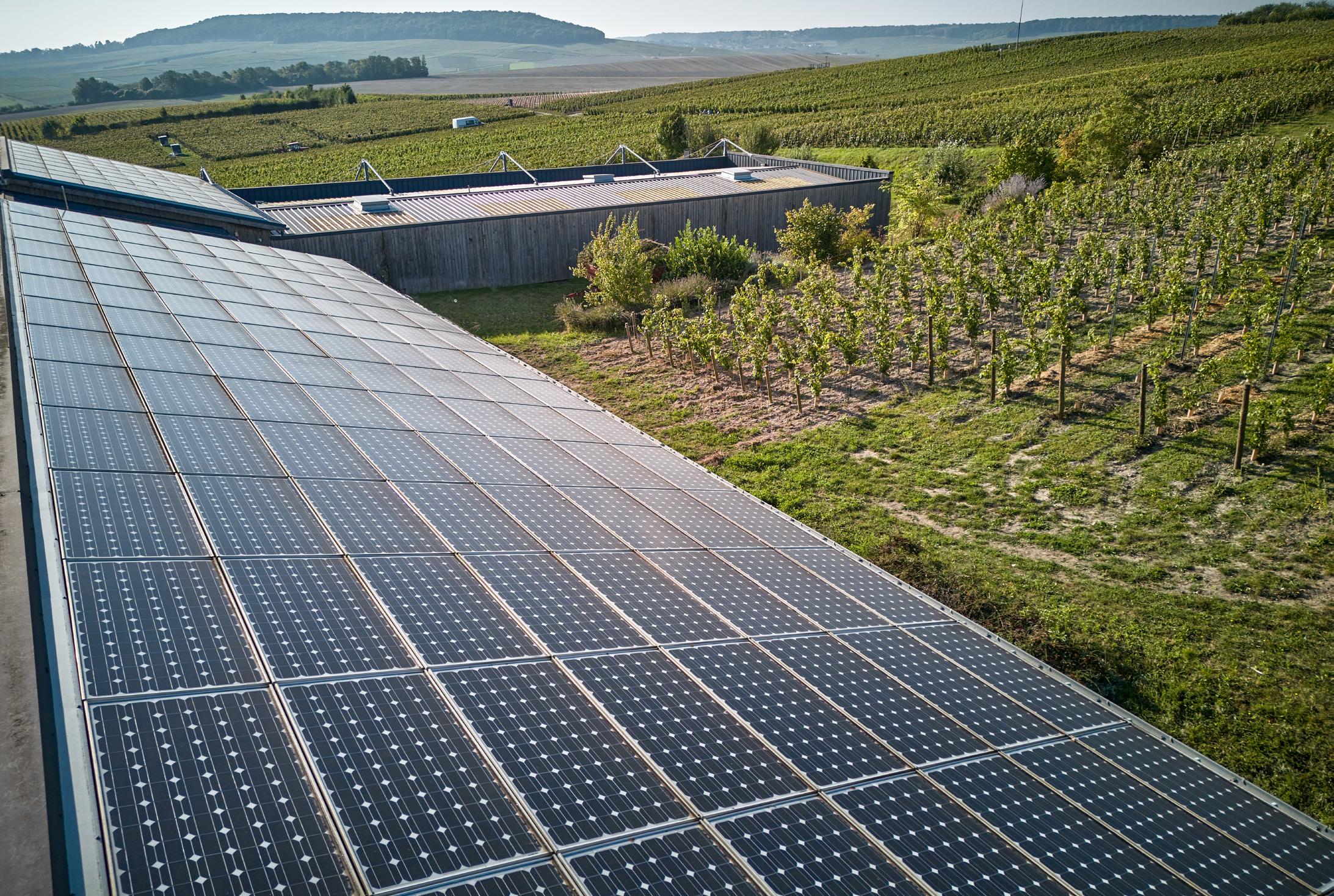
But none of this is really new to Champagne growers and houses. What the rest of the world has begun to feel sharply over the past decades, such as higher temperatures, has long been on the radar in Champagne, as in the wider wine world.
As early as 2003, the appellation carried out a comprehensive analysis of its carbon footprint, which led to an action plan that has so far resulted in a 75 percent reduction. The goal is a total reduction of 80 percent by 2050.
THE SUSTAINABILITY EFFORT BECAME EVEN MORE IMPORTANT
AFTER 2015, when the Hillsides, Houses and Cellars of Champagne were classified as a UNESCO World Heritage Site. Although Champagne accounts for only 4 percent of France’s vineyards and 0.5 percent of the world’s total vineyard area, annual production reaches around 300 million bottles.
The question is how much can truly be changed in a region and a wine so profoundly shaped by centuries of tradition. Innovation equals survival—but it must not erase identity, even as cool, fresh Champagne has begun to resemble France’s considerably warmer wine regions.
GRAPE INNOVATION IN A HISTORIC APPELLATION
One of the most fascinating questions in an appellation as tradition-bound as Champagne is undoubtedly grape varieties. Which will remain, for how long, and can they be replaced—and if so, by what? Today, the Champagne AOC permits seven grapes: the three classics chardonnay, pinot noir, and meunier, along with the lesser-known arbane, petit meslier, pinot blanc, and pinot gris. Chardonnay rosé, a pink-skinned mutation, is also sometimes mentioned. These latter five grapes account for less than 0.4 percent of vineyard plantings.
In the Bordeaux appellation, the heat-tolerant Portuguese grape touriga nacional has been approved; in Champagne AOC, the hybrid grape Voltis was temporarily approved in 2022. By hybrid, it is meant that it is a cross between two species of vine—for example European and American, or Asian—and not a crossing between two vines of the same species.
Voltis is one of four resistant grape varieties developed within INRAE’s ResDur (RÉSistance DURable) program and was released for planting in 2018. The grapes possess genetic traits that make them resistant to mildew and powdery mildew, among other threats.
“Breeding grape varieties is one of the most important
Solar panels at Comité Champagne’s experimental vineyard Plumecoq.
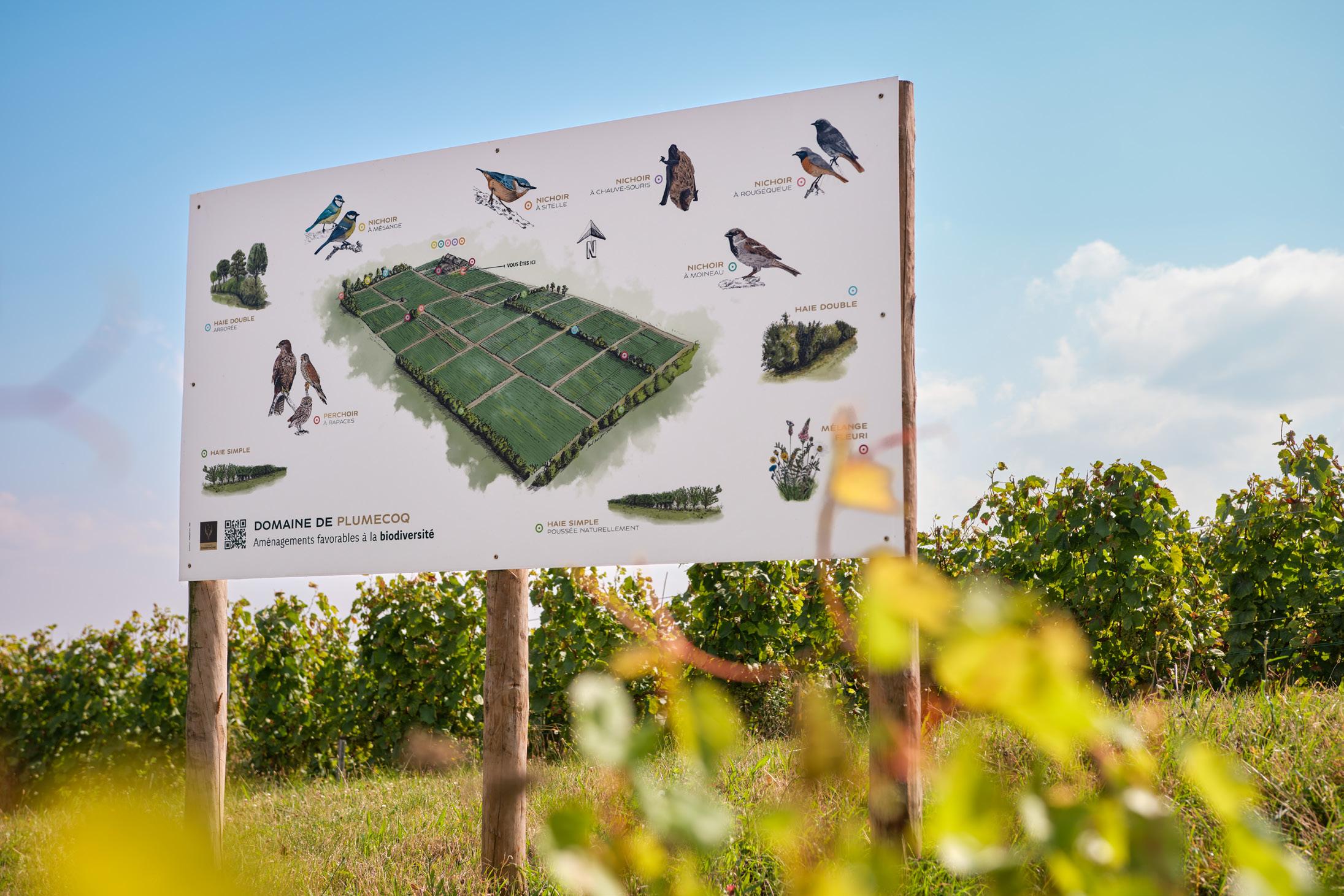
innovations,” Geoffroy Houdard of Comité Champagne tells us during a visit to the Plumecoq facility, one of Comité Champagne’s four experimental vineyards. Foreign varieties, mainly from Spain, were already brought in during the 1980s for experimentation.
“The focus is to work with the grapes’ resistant genes in the hope of eventually developing resistant versions of chardonnay, meunier, and the other Champagne grapes.”
That is considered possible no earlier than around 2030, Houdard continues.
IF VOLTIS BECOMES PERMANENTLY APPROVED
IN THE APPELLATION will be decided in 2032. Until then, it may represent no more than 5 percent of a grower’s vineyards and a maximum of 10 percent of the finished cuvée. To learn how to work with Voltis and its characteristics, plantings began in 2023, including at the Plumecoq research and development site.
The question is to what extent champagne remains champagne if Voltis begins to be used.
“The grape will not have any major impact on the wine’s typicity, since it is very similar to chardonnay,” Geoffroy Houdard assures me.
Time will tell. At the time of my visit in autumn 2025,
80 growers had planted a total of 8.9 hectares, and at the end of October the first harvest was carried out. Now we must wait until the first wines have been made according to all the appellation’s rules, and with luck the first bottles of champagne containing Voltis may become available sometime late in 2027.
THE BOTTLE – THE GREATEST ENVIRONMENTAL CULPRIT
Champagne producers are acutely aware of what is required to continue reducing their carbon footprint.
“What creates the greatest carbon emissions is packaging and bottling,” says Geoffroy Houdard of Comité Champagne. “The bottle is the biggest environmental culprit because of its weight.”
A champagne bottle must be able to withstand high pressure and therefore requires a certain shape and weight, but lighter bottles can be designed that do not explode. I hear this a few days later during a visit to champagne giant Pommery.
“Many special bottles for prestige cuvées weigh around 900 grams,” says winemaker Baptiste Chazeaud. “We have chosen not to bottle our new prestige project Apanage 1874 in that type of bottle, but instead use
Biodiversity at Plumecoq.
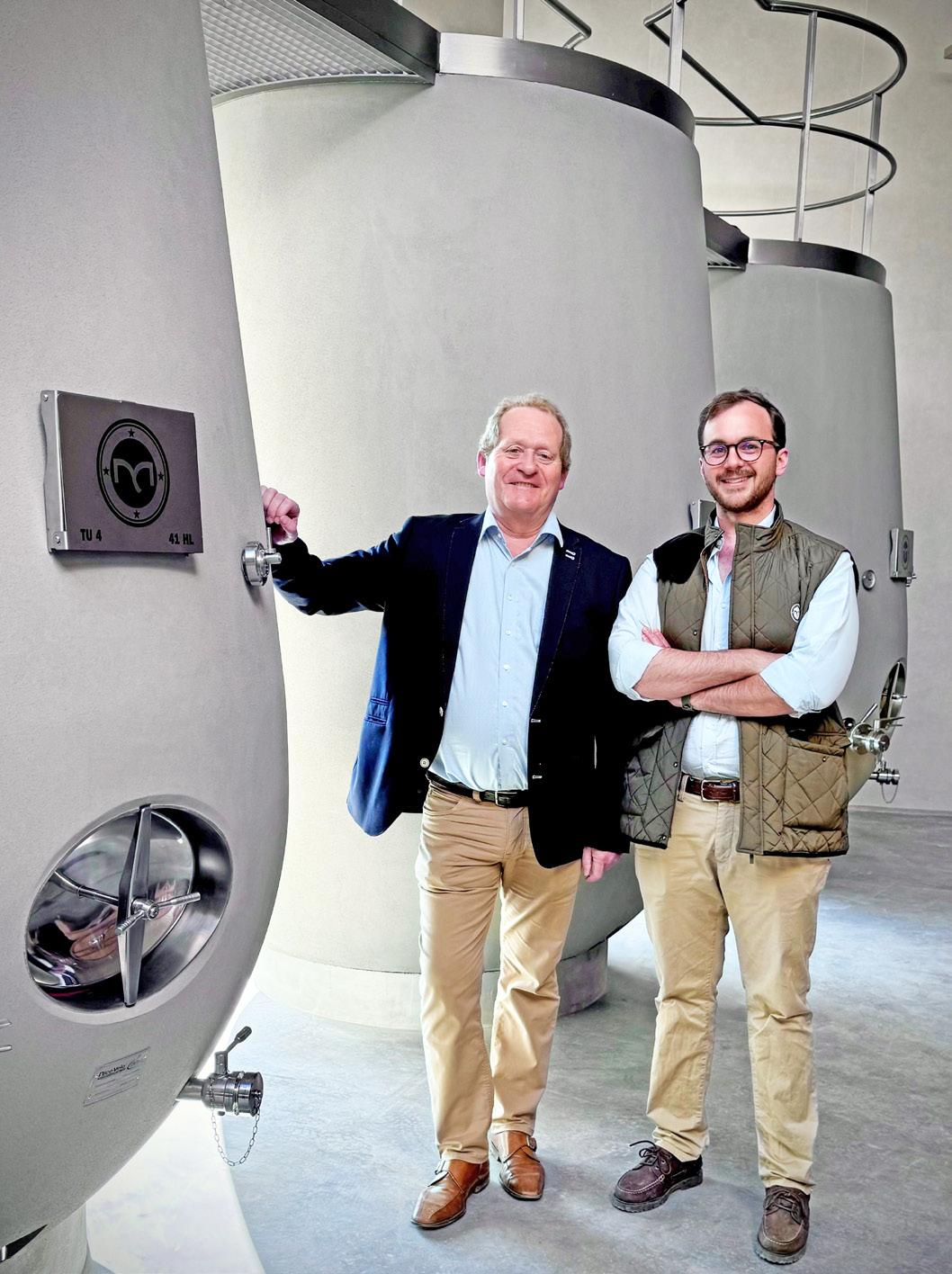
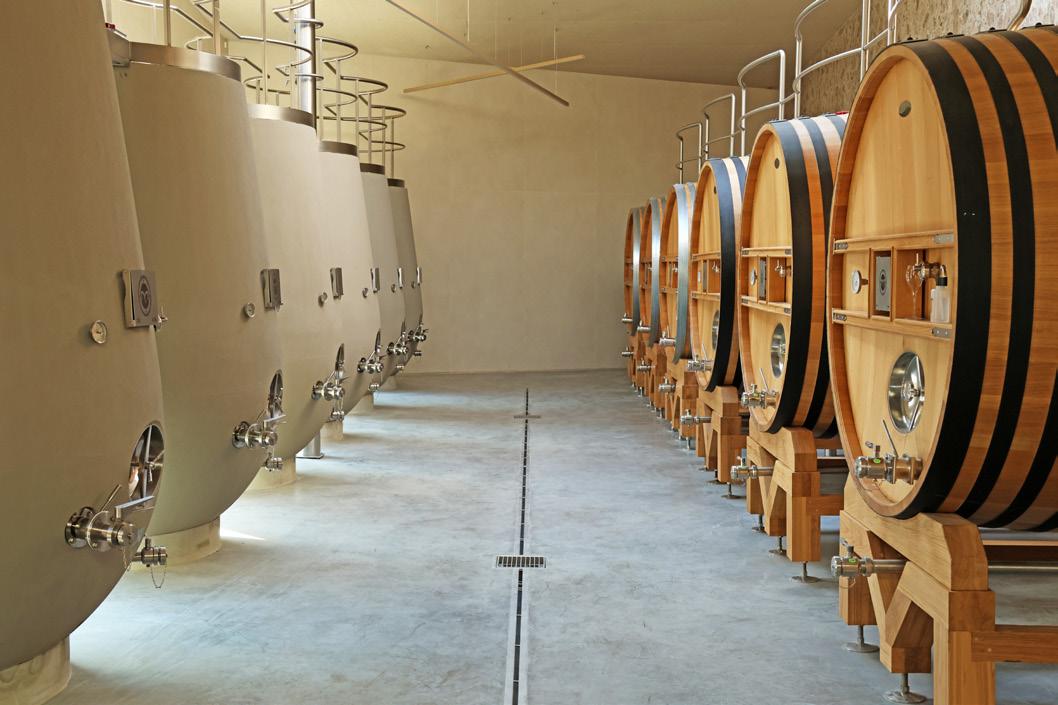
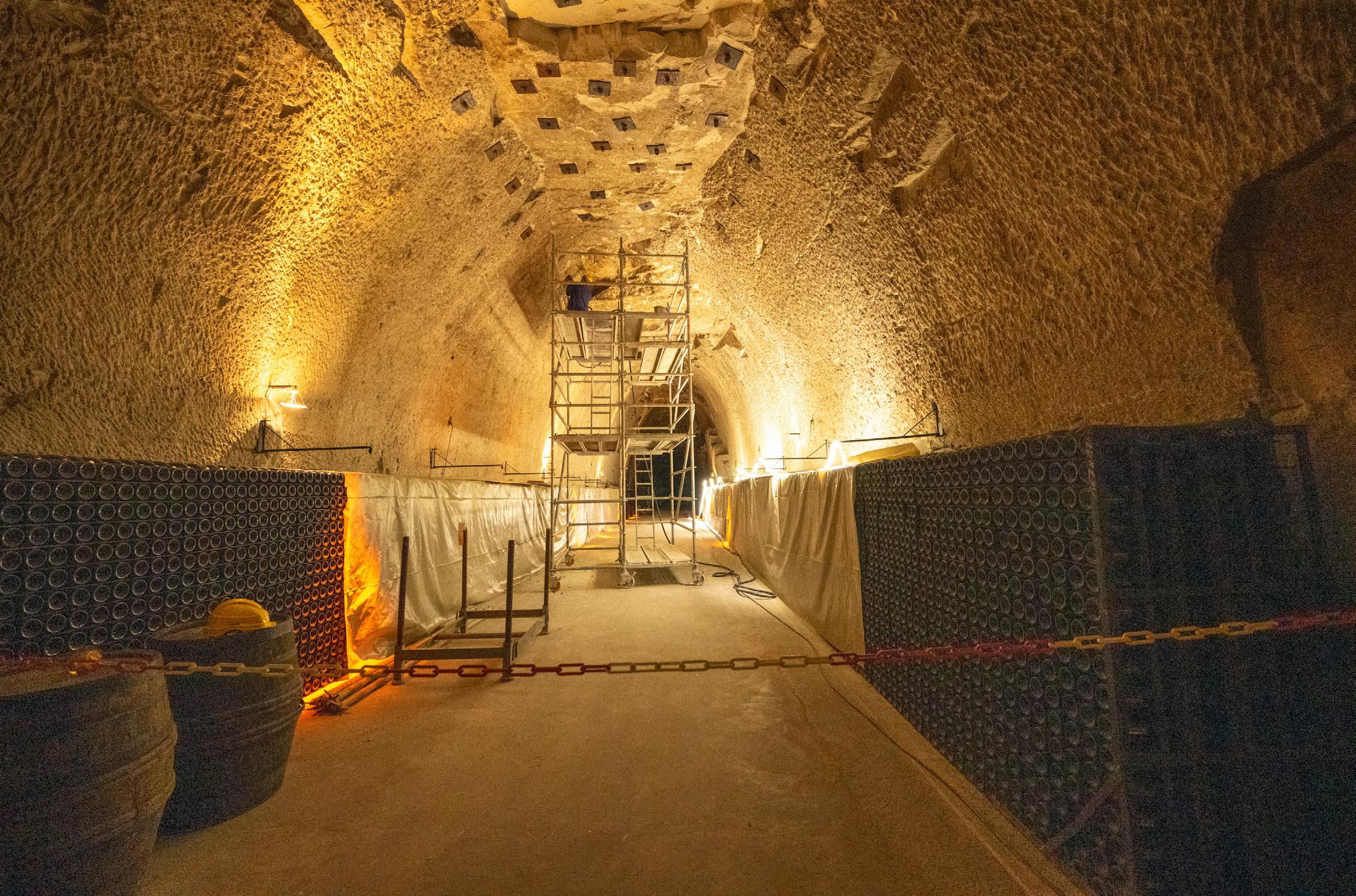
Claude Mandois and cellar master Maximilien de Billy at Champagne Mandois.
Concrete eggs and oak barrels at Champagne Mandois.
The PIWI grape Voltis.
The cellars at Joseph Perrier.
lighter alternatives that withstand the pressure while still standing apart through custom bottle and label design.”
At champagne house Joseph Perrier, Simon Fleury, brand manager, believes the bottles of the future may be made of something other than glass.
“In the end, it will be up to the consumer. Do we want bottles made of cardboard or other materials?”
An interesting thought. Would champagne feel equally luxurious and convey the same sense of century-old tradition if it were bottled in cardboard?
After bottling and packaging—which can range from simple cartons to elaborate, exclusive boxes— the transport chain follows as the second-largest environmental burden, since a large share of the 300 million bottles produced annually is exported. As for transport, external national and international factors come into play in other ways, and champagne producers do not have quite the same opportunity to influence them, even though they export significant volumes of wine.
MACHINES OR ANIMALS IN THE VINEYARDS?
What they can influence to the highest degree, however, is how they choose to work in the vineyards. Agriculture plays a significant role in terms of environment and sustainability, but as an environmental burden it ranks third. This is something the appellation has worked on for a long time; already in the 1990s people spoke of *agriculture raisonnée*, meaning “reasoned agriculture.”
Climate change is not the only factor affecting vineyard practices. No matter how much one might wish to use an efficient robot or tractor, for example to plow, there are certain places where the ground has become so fragile above the kilometers-long cellar tunnels that it could create a risk of collapse. There, horses must be used because they are lighter and do not create vibrations in the same way.
At Pommery, Baptiste Chazeaud explains that robots, tractors, and horses are all used to plow in the vineyard Clos Pompadour, the house’s natural laboratory since the 19th century, where Louis Pasteur once carried out research. Studies conducted by Comité Champagne have shown that using horses is not always the most environmentally friendly option. They are indeed lighter and do not vibrate like tractors and robots, but they require special transport, feeding, and care.
Work in Pommery’s cellar tunnels, however, is to a greater extent automated with consideration for the infrastructure.
“We use machines everywhere it is possible to use machines. The robot is not an enemy, but an ally,” says
Baptiste. “Take riddling, for example—it was one of the first steps we automated. It is neither reasonable nor sustainable for one person to perform the same movement up to 50,000 times a day when it makes no difference to quality whether it is done manually or by machine.”
THE FIGHT FOR QUALITY
Innovations and automation aside, the most important factor in production has always been and will always be access to sufficient quantities of high-quality grapes. One may have fantastic cutting-edge technology and sustainability certifications, but none of it matters if frost or hail at the wrong moment destroys an entire harvest and brings devastating financial consequences for a grower or champagne house. The changing climate has also brought new diseases and pests that previously did not exist in the appellation and which must now be fought in various ways, placing new demands on agriculture.
“Forecasts point to higher humidity in the region through 2050,” says Simon Fleury of Joseph Perrier. “That means more moisture stress, more powdery mildew, and increased investment to manage disease.”
At champagne house Champagne Mandois, cellar master Maximilien De Billy explains that they have been forced to stop biodynamic farming in certain vineyards.
“It was far too demanding to farm biodynamically across all our 20 hectares. We did it mainly for the experience—you learn something new every year. Writing ‘organic’ or ‘biodynamic’ on the label is not the goal. The goal is to make the best possible wine.”
Ophélie Lamiable of champagne house Champagne Lamiable agrees. She has never had any problem selling her wines without environmental certifications, yet still chose to farm organically because she believes it is the right path forward. In 2024, Lamiable received HVE and VDC certifications, but Ophélie has not yet decided whether they should appear on the label.
“What matters most—the identity, or showing that the farming is organic?”
CHAMPAGNE CONTINUES TO BALANCE between devastating frost nights and wines of the highest quality, between tradition and necessary renewal. It is not about surviving at any cost, but about continuing to make wine that remains recognizable, a reliable marker of reassurance when the world around it changes at great speed. Perhaps that is precisely why champagne, more than any other wine, continues to symbolize centuries of tradition and endurance.
• Environmental Certifications in Champagne
Around 70 percent of all vineyards in Champagne today hold some form of environmental certification. The breakdown is as follows: 45% are certified under VDC, 17% under HVE, and 8% are organically certified with the EU Organic Leaf. In addition, around twenty producers hold Terra Vitis certification, approximately 25 are Demeter certified, and around ten are members of Biodyvin.
• HVE
– Haute Valeur Environnementale
HVE is the highest level (Level 3) within the French Ministry of Agriculture’s environmental certification system for agriculture and viticulture. It aims to minimize impact on air, climate, water, soil, biodiversity, and landscape. Champagne is one of the regions in France with the highest number of HVE-certified operations.
• VDC
– Viticulture Durable en Champagne
Meaning “Sustainable Viticulture in Champagne,” VDC was developed by Comité Champagne. The certification is a voluntary commitment and an official recognition of Champagne growers’ environmental efforts. It focuses on three areas: biodiversity, carbon footprint, and water footprint.
• EU Organic Leaf (Organic Certification)
The European Union’s common organic label was created to help consumers identify organic products across the entire union. The label may only be used on products inspected by an approved certification body. At least 95% of the ingredients must be organic, while the remaining portion is subject to strict regulations. The same ingredient may not appear in both organic and nonorganic form.
• Terra Vitis
The only national French certification specifically dedicated to viticulture and recognized by the French Ministry of Agriculture and Food. Terra Vitis is based on comprehensive specifications, regular inspections, and full traceability from vineyard to finished product.
• Demeter
Demeter certification guarantees that products come from biodynamic farming and comply with international biodynamic standards. The certification places high demands on circular thinking, soil health, and biodiversity.
• Biodyvin
Biodyvin is an association of biodynamic winegrowers. The certification focuses on the practical application of biodynamic principles and includes strict rules for farming, vinification, and regular inspections.
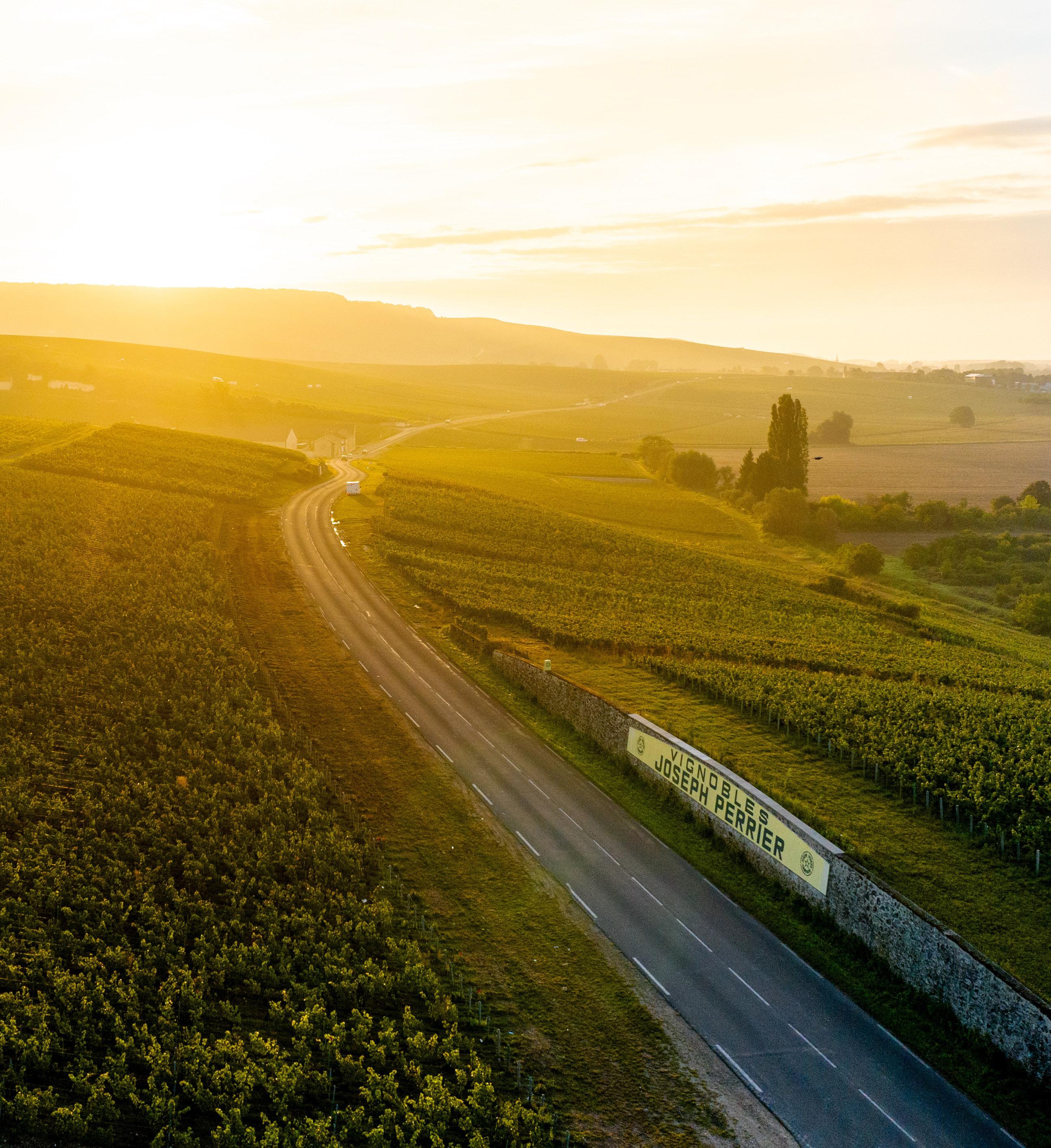
“What matters most—the identity, or showing that the farming is organic?”
Joseph Perriers, Châlons en Champagne.
Nestled between the continental warmth and cool northern currents, Austrian wines flourish in the heart of Europe. These ideal climatic conditions foster the growth of noble and elegant wines with EU-protected designation of origin. You can always spot them by the red-white-red capsule tops and the official quality wine check number on the label. austrianwine.com
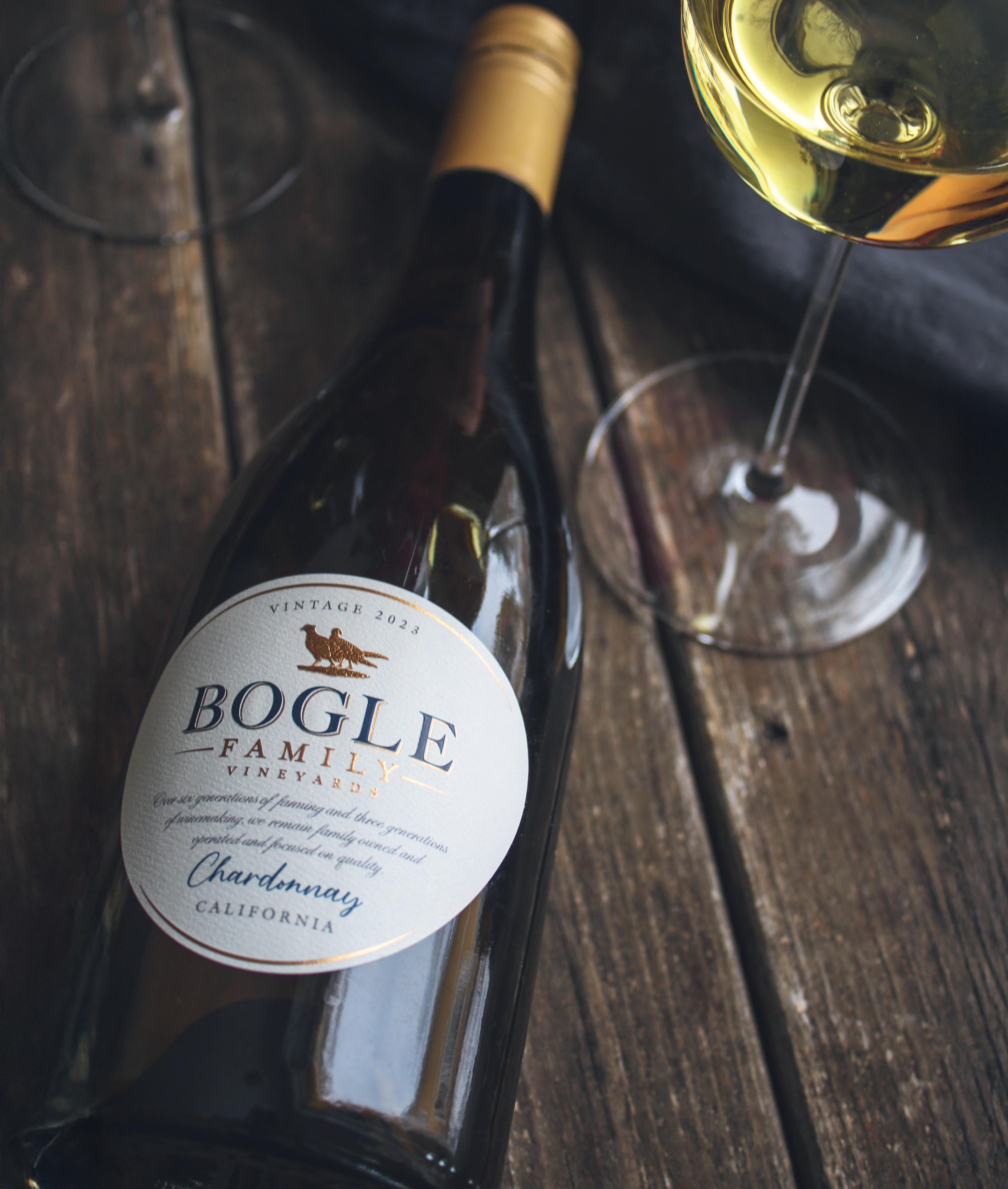
ELEGANT OCH GENERÖST FRUKTIGT
”Mycket av allt, helt enkelt, och ibland är ju det precis vad man vill ha.”
Andreas Grube, Winetable.se Finns på Systembolaget nr 1164 | 179 kr | alk. 14,5%
THE ’95S TURN 30!
32 ICONIC VINTAGE CHAMPAGNES
It has been 30 years since the 1995 vintage was harvested in Champagne. This high-quality vintage was long awaited—but has it stood the test of time?
Livets Goda attended the tasting that provided the answer.
TEXT & PHOTO: ANDERS MELLDÉN
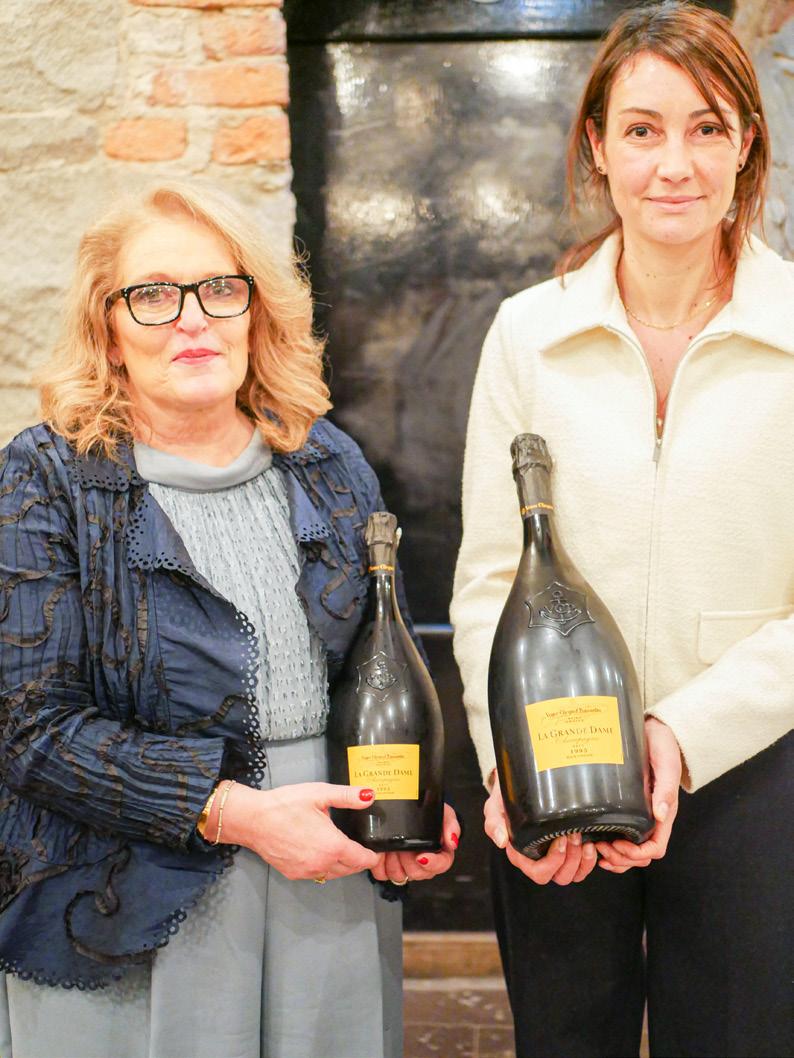
IT BEGAN WITH A “BOOM”! Yes, the 1990s in Champagne. The 1990 vintage is now considered a classic—age-worthy, rich, and incredibly delicious. But then a string of significantly weaker vintages followed, all the way until 1995, which proved to yield wines with fullness, complexity, and aging potential. But now, 30 years later—how do those ’95s really stand up?
Marina Olsson and Gomseglet Wine & Champagne Connoisseurs wanted to find out, and gathered the finest bubbles from the year for a blind tasting in Stockholm just before Christmas.
– The release of prestige champagnes from the 1990 vintage sparked my interest and laid the foundation for my first collection. The following years—1991, 1992, 1993, 1994—were mediocre, even too poor to produce prestige champagne, and the winemakers’ longing for a new great vintage dragged on.
BUT THEN 1995 ARRIVED. The weather was warm, giving the grapes generous flavor concentration and sugar-rich must, which in turn produced wines with body. At the same time, the balance with acidity was good, and the wines developed fine aromas and structure, offering both aging potential and early drinkability. Personally, I was hooked. 1995 combined richness and roundness with good acidity—my personal connection to the vintage includes a bottle of Pol Roger from that year, which I used to propose twelve years later. The proposal was successful, thankfully, but the wine could certainly have aged even longer. Something I have noticed in recent years, particularly at tastings with Marina Olsson where ’95s have been included that outperformed the even more celebrated 1996 vintage.

Large-format bottles — Marina Olsson helps Gaëlle Goossens pour the day’s special selection.
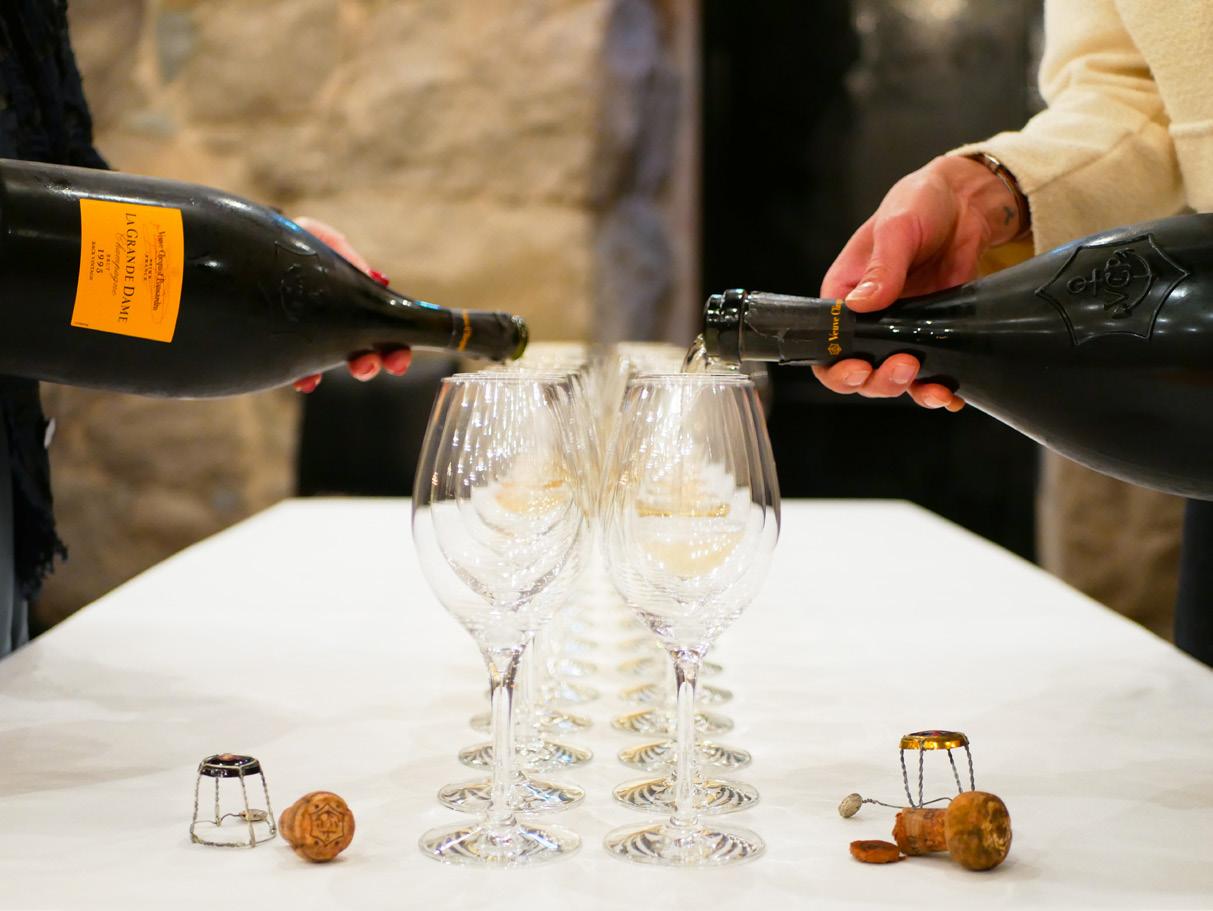
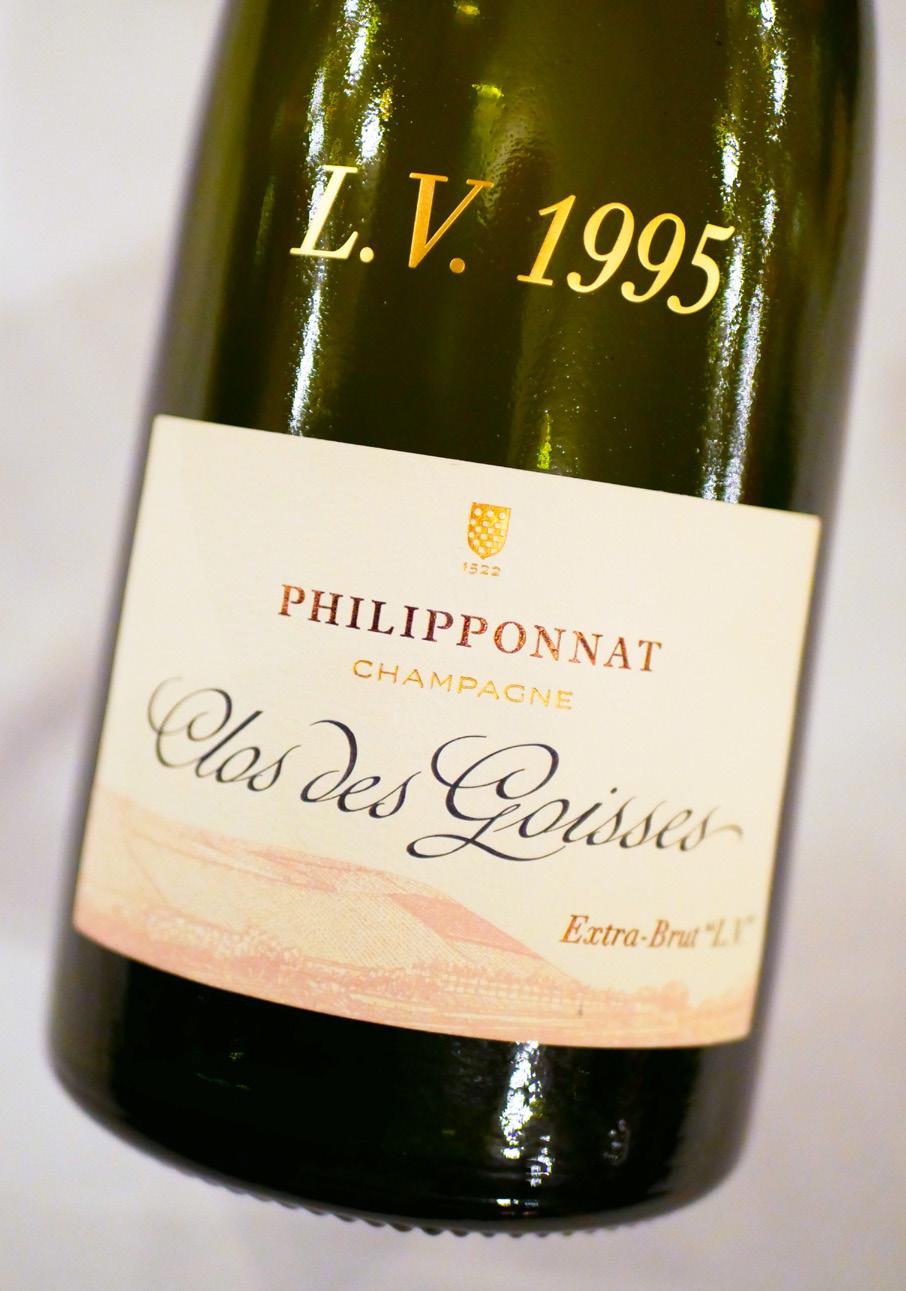
The final two wines are tasted openly. It is rather difficult to hide a jeroboam in foil…
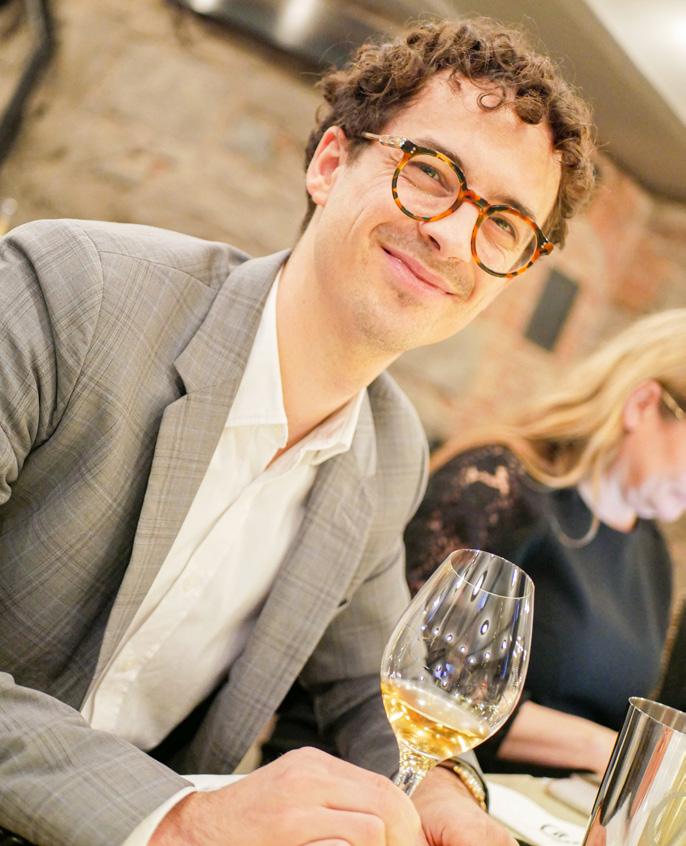
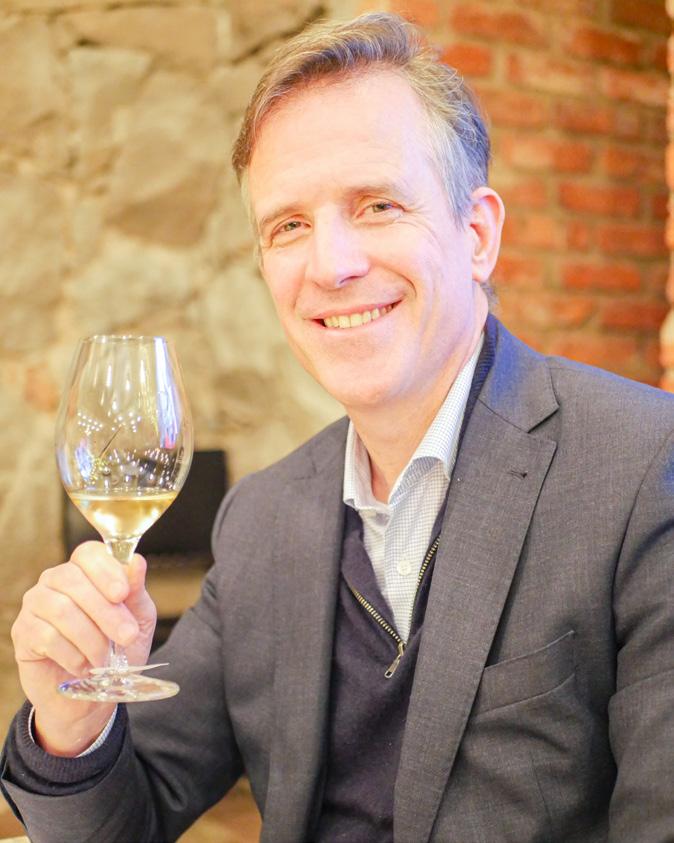
FOR THE 1996 VINTAGE HIT LIKE AN acid-driven bomb—according to many experts even better than 1995, with even greater aging potential. The ’95s were almost overshadowed and forgotten while everyone chased bottles from 1996.
But while the 1996 vintage was praised by a more or less unanimous critical community, winemakers were less certain.
–No, many were rather concerned about the high acidity levels. Journalists, however, shouted hallelujah, calling it “the vintage of the century” and issuing strong buying recommendations. The 1995 vintage suddenly became less interesting to collectors and investors and was almost forgotten in the hysteria, says Marina Olsson.
But not by you?
–No, my fondness for the 1995 vintage was, is, and has always been greater than for 1996.
And the winemakers agree?
–Yes, before my most recent 1996 tasting, held in 2021, I asked 30 head winemakers in Champagne for their views on 1996 versus 1995 as vintages. All 30 preferred 1995 for its fruit, purity, and balance between acidity and ripeness, and felt it showed a good, harmonious development over time.
How did you source all the bottles for this tasting?
–Since I already had a number at home, originally disgorged and purchased upon release many years ago, the timing was perfect to examine the durability and evolution of the vintage. I also asked my Champagneproducing friends to open their cellars, both for originally disgorged and late-disgorged bottles, as well as vinothèque wines. The response was fantastic and resulted in this lineup.
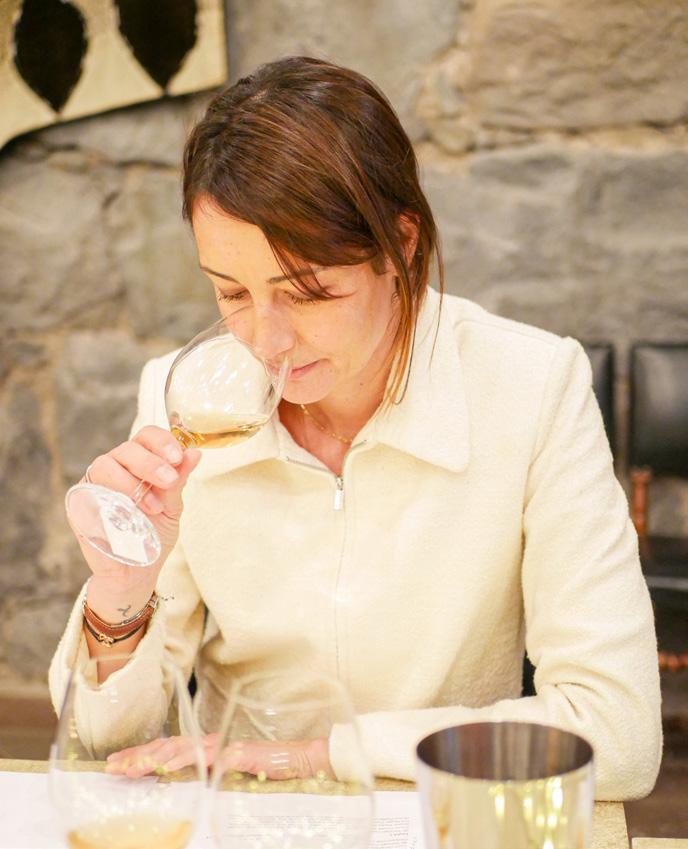
SOME OF HER FRIENDS FROM CHAMPAGNE ALSO wanted to attend the tasting. Thus, winemaker Gaëlle Goossens from Veuve Clicquot, François Philipponnat from Philipponnat, and Gilles de la Bassetière, CEO of de Venoge, traveled to Stockholm.
Was there any wine that stood out in particular?
–Diebolt Vallois Fleur de Passion 1995 is the first vintage of the wine. I’ve tasted it several times, and roughly every other time it’s phenomenal, every other time corked. The bottle presented today is the best I’ve ever had.
Any fly in the ointment?
–Unfortunately, four bottles were more or less corked, and one had been affected by its clear bottle, resulting in light strike and an off aroma. Five problematic wines out of 32 is quite a high proportion, but unfortunately not unusual for wines from this era.
Despite this, Marina Olsson believes the vintage lived up to expectations.
–My requirement for a prestige champagne is that it should reach at least 95 points out of 100 on the established scale. This time, 23 of the 32 wines did so, remarkable for wines of this age! Overall, the scores were high among most participants. Of all the unique tastings I have arranged over the past 15 years, none has received such consistently high ratings. As my table companion Gilles de la Bassetière said: “This tasting is not only historic but a clear expression of the quality and longevity of the 1995 vintage.”
More and more, François Philipponnat is taking his place within the family’s champagne house Champagne Philipponnat.
Gilles de la Bassetière, CEO of Champagne de Venoge, is often present at Gomsegel’s tastings.
Winemaker Gaëlle Goossens from Veuve Clicquot did not want to miss the unique tasting.
THE TASTING
1995, 30 years later
The flights are blind in such a way that the participants only know that it is the 1995 vintage in the glass, not which house or grower is behind the wine. The wines are either originally disgorged or late-disgorged and so-called vinothèque wines. Disgorgement year (Deg) is stated where possible.
1. Golden hue. Deep smoky aroma of coffee and roasted nuts with a tropical fruitiness that comes gradually. Rich, hearty and good taste with warmth, length and a delicious peach marmalade note. Long finish – broad and richly generous. Possibly not so elegant but very good.
94 pts Moët & Chandon Grand Vintage Collection Magnum (direct from the house, deg Feb 2015)
2. Light golden colour. Slightly closed fruit and a light note of salted almonds. Some gunpowder in the aroma gives a restrained style. Toasted notes and more and more gunpowder emerge gradually and offer development in the glass. Fresh acidity, thirstquenching and almost slightly unripe taste with a distinct citrus tone in the finish that feels somewhat unresolved. Age further?
94 pts Palmer & Co Collection BdB Magnum (direct from the house)
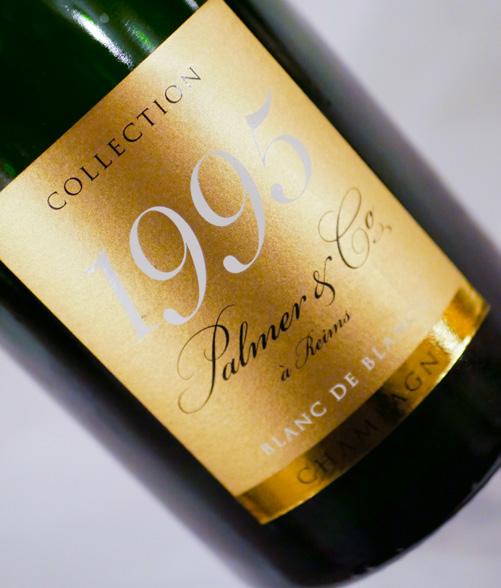
3. Unfortunately corked. Lanson Collection Magnum (direct from the house, deg Feb 2023)
4. Deep golden colour. A slightly meaty aroma with salinity and a note that reminds of smoke from the grill is combined with hints of honey and apricot. Rich taste with good fruit and proper acidity – a somewhat austere and powerful finish that lingers for a long time.
95 pts Lanson Collection (direct from the house, deg Aug 2014)
5. Unfortunately corked. Pommery Grand Royal Vinoteque (direct from the house)
6. Golden colour with a pull towards amber. Chanterelle forest, some sun-dried apricots and honey in the deep, developed aroma. Rich and very mature taste with candied, almost browned elements. Spicy finish with a tone of peach, grilled pineapple and a long nougat note. Delicious and ready to drink.
95 pts Veuve Clicquot La Grande Dame (original disgorgement)
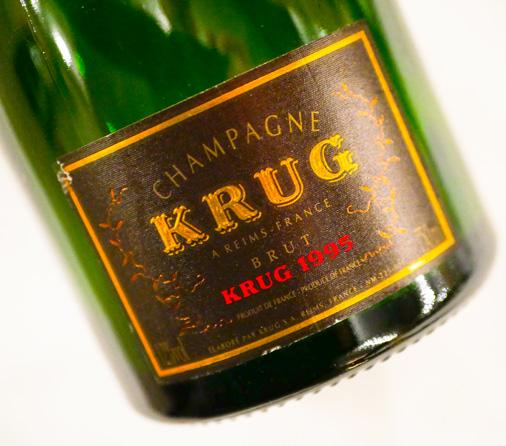
STARTER. It begins with a blind wine on the spot. Candied citrus meets popping gunpowder and hints of nougat in a seductively good taste. It feels mature, yes, but far from old. A wine that afterwards proves to stand up as a fully worthy challenger to several of the prestige bottles. And no one could guess what was in the glass...
96 pts Veuve Clicquot 1995 Cave Privée
7. Amber-coloured wine with very mature aroma. Slight volatile, oxidative hints but gradually forest floor and lovely peach-like fruit appear. The taste is properly mature and full with a slightly sharp acidity that almost leans towards sea salinity – a housetypical character that turns into nuttiness in the long finish. A wine that needs a lot of time in the glass, and which despite the developed style can be aged further.
95–97 pts Krug Vintage (original disgorgement)
8. Deep amber colour. Complex and exciting aroma of coffee, nuts and forest walk. Slightly low carbonation in the taste, but it is powerful and long with a good nougat-like finish. Long and delicious but clearly mature, on the border of oxidized, and needs to be drunk now. Some sediment in the glasses.
94 pts Billecart-Salmon Cuvée Nicolas François (original disgorgement)
9. Amber-coloured wine with minty aroma, inviting note of chocolate, hints of red berries, mocha and nuts. The house is recognized already on the aroma. Full and very good taste with admittedly somewhat cautious carbonation, but powerful and long, sweetacid balanced finish. Thirstquenching and good in fully mature style.
96 pts Bollinger La Grande Anée (original disgorgement)
10 . Here cork taint is discussed and a certain amount of it is definitely present. I still choose to describe the wine’s “background” which I think is worth it: Grilled citrus, potpourri and firm acidity in the taste which is long and fresh despite proper maturity. Sea tones and salinity in the finish. Unfortunately the wine is overshadowed by a certain cellar tone – a not entirely perfect cork is probably the reason.
Pol Roger Cuvée Sir Winston Churchill (originaldegorgering)
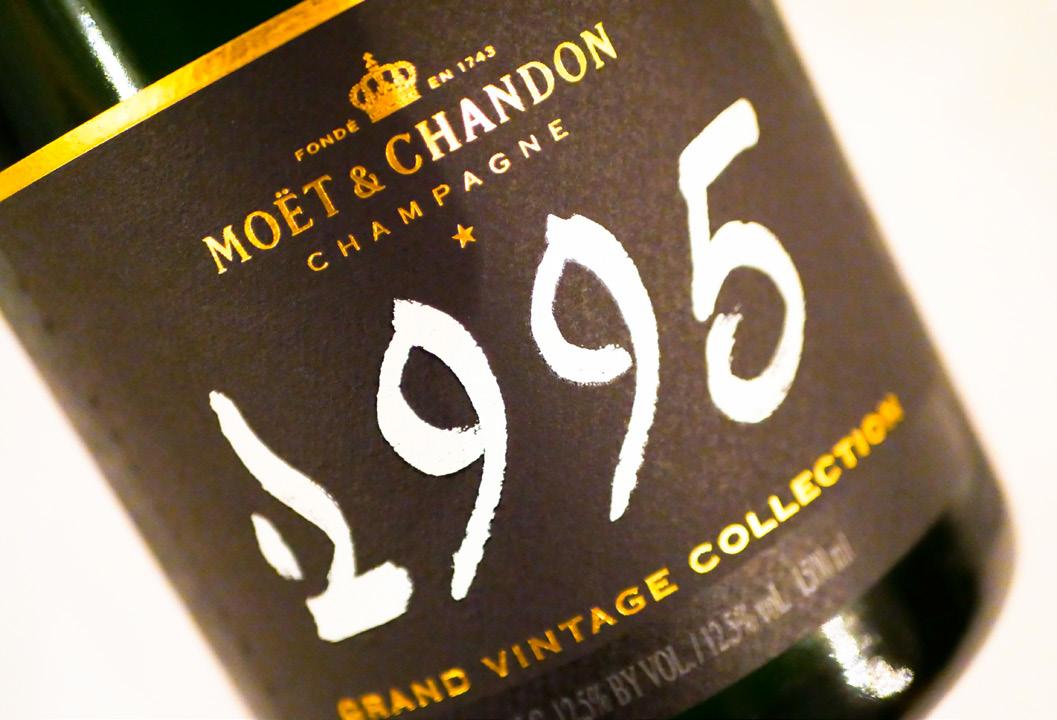
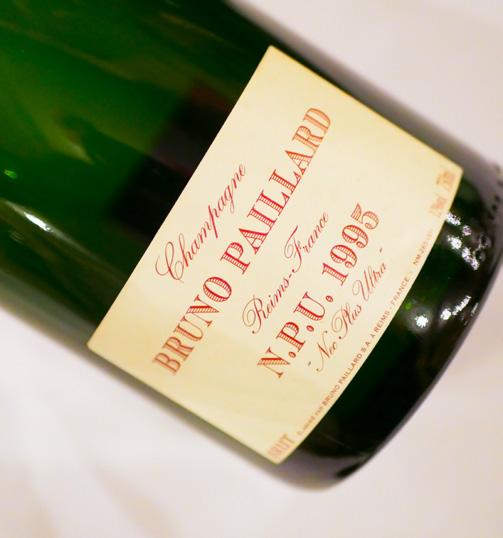
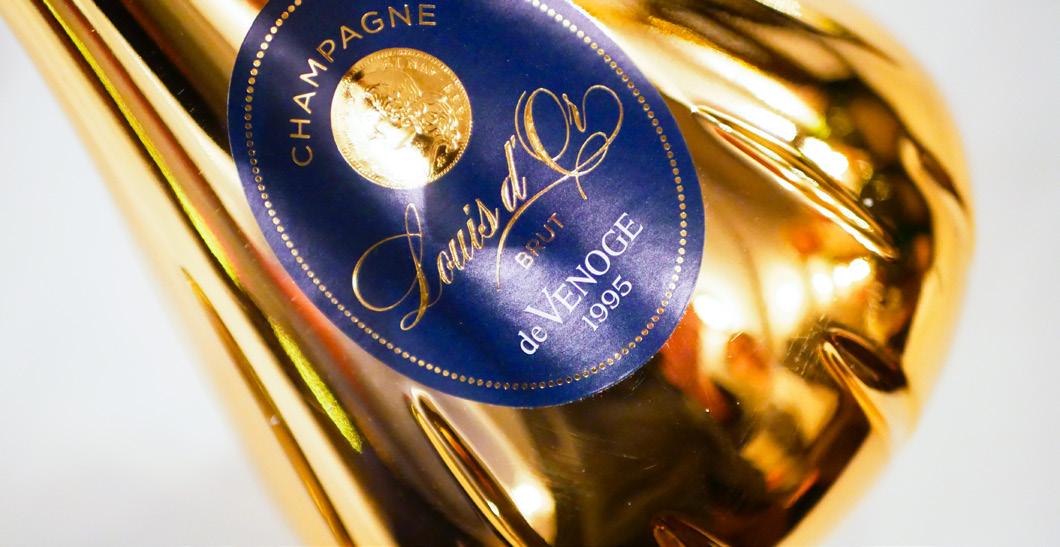
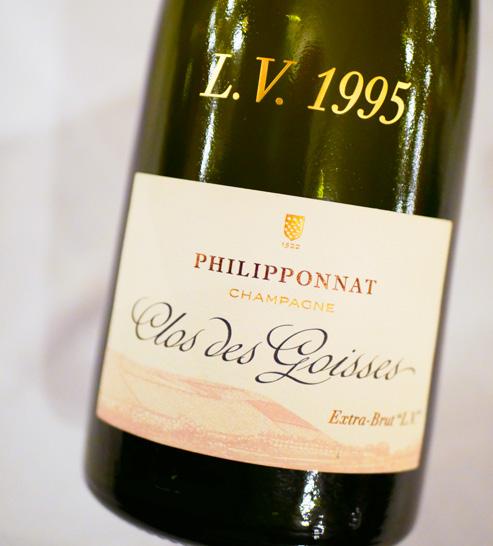
11. Golden brilliance in the colour. Gunpowder-driven aroma with noticeable reduction and a certain cellar note from the cork that disturbs, but which gradually gives way to wonderfully rich fruit, citrus, nectarines and a finely balanced honey tone. Needs a generous dose of air, but can then give a large, fairly fruit-dominated experience. Unfortunately a bad cork that does not allow for a reasonable score.
Perrier-Joët Belle Epoque Vinoteque (direct from the house)
12. Clear and golden colour. Inviting, neat, clean and caramel-fruited aroma with gentle mint tones that coexist with biscuity bread notes. Taut, citrus-caramel-acidic taste with slight florality and a youthfully fresh finish. Builds up an ever greater complexity in the glass over time. Fantastic wine that still seems to have a lot left to give.
96 pts Pommery Cuvée Louise (direct from the house)
13. Deep golden colour and a honey-scented maturity in the aroma. English marmalade and apricot-like fruit are matched by a mature, round and slightly spicy taste where honey tones and nougat dominate the finish. Powerful and ready to drink.
94 pts GH Mumm de Cramant (direct from the house)
14. Clear golden-yellow colour. The aroma has received some negative impact due to the uncolored, clear bottle. Light strike is the defect, caused by light creating unusual aromatic compounds in the wine that can be likened to aged cheese (!). I do however think the positive elements in the wine prevail, and find candied citrus, apple and mint. The taste is taut but richly fruited with inviting vanilla notes, and the finish is long and delicious in a fresh, acid-driven style. Not scored.
Amour de Deutz (direct from the house)
17. Nicely golden colour. Some florality in the aroma, with notes of nougat and gunpowder. The taste offers candied citrus, somewhat restrained stony smokiness, roasted mocha tones and noticeable acidity. A tricky wine – starts cautiously but comes out with some time in the glass.
95 pts Dom Pérignon P2 (direct from the house)
generous taste of ripe fruit, notes of peach and lychee and a sweet breadiness like brioche. Long, fresh finish with rich warmth.
95 pts Cuvée William Deutz Vinoteque (direct from the house)
15. Beautiful golden-yellow colour. Spices, dried fruit, cocoa and sea salinity are found in the deep, mature aroma. Very good taste – powerful with salty nuts and sun-ripened fruit while the acidity is lively and appetite-stimulating. Dry, neat finish with proper length. A true top champagne with a long life ahead.
97 pts Philipponnat Clos de Goisses Late Disgorged (direct from the house)
16. Deep golden colour and fully mature aroma of nougat, dried fruit and house-typical gunpowder-smoky reduction. Powerful and fully mature taste as well, with delicious candied fruit and spice market. At the same time there is a long, fine citrus tone and exciting tobacco notes in the finish.
96 pts Dom Pérignon (original disgorgement)
18. Deep golden colour. Mint chocolate, preserved peach and powerful concentration in the inviting aroma. The taste has spicy tobacco, apricot, red berries, some nuts and a long, concentrated finish with surprisingly noticeable oak character despite the age. Slightly rustic but very charming wine.
96 pts Bollinger RD (direct from the house)
19. Beautiful golden-coloured wine with delicate florality, a note of salted almonds and fresh, almost youthful, citrus. Clear honey tones in the taste which has intensity and length – a very good champagne where the maturity becomes more noticeable after some time in the glass.
96 pts de Venoge Cuvée Louis XV Late Disgorged (direct from the house, deg 2024)
21. Deep golden colour. Powerful and mature aroma with smoky gunpowder, mature elements of dried fruit and potpourri as well as a deep apricot tone. Good fruit and good length in the taste which also shows maturity with a long, spicy finish.
96 pts Bruno Paillard Nec Plus Ultra Vinoteque (direct from the house)
22. Deep golden colour with a pull towards amber. The aroma is filled with tobacco, spices and dried fruit. The taste is full of yellow, sun-ripened fruit, spices and a slightly firm tannin grip. Good, long and beautifully acid-rich finish.
96pts Boizel Joyau de France Vinoteque (direct from the house)
20. Golden-coloured wine with a big aroma of sunripened fruit, grilled pineapple, vanilla and coconut. Rich and
23. Beautiful golden-yellow wine. Noticeable gunpowder and almond tones in the aroma coexist with yellow fruit and some maturity in the form of honey. Properly gunpowderdriven taste in a surprisingly reductive style. At the same time there is good fruit with a hint of pleasant clementine bitterness. Long and complex finish. A bit “all over the place” right now.
95pts Pol Roger Cuvée Sir Winston Churchill (direct from the house)
24. Clear golden-yellow wine. Very stylish aroma of orange, melon and toasted almond – mature but not old. Good acid-rich and fresh taste of citrus and tropical fruits, with a long, very fresh finish. A very good wine with solid continued potential.
96–97p de Venoge Cuvée Louis XV Vinoteque (direct from the house)
27. Crystal clear, golden colour. Vanilla, coconut and gunpowder coexist with honeydew melon and peach in the rich aroma. Rich, powerfully delicious taste with dry, firm acidity, lovely fruit concentration and length. Complex brioche breadiness – a champagne that seeks a larger glass and even more time.
97 pts Taittinger Comtes de Champagne (original disgorgement)
25 . Golden colour. Very refined aroma of nectarine, mint, coconut and brioche. Extremely elegant, almost youthful, and very good. High acidity with refreshing length and fine roundness in the long, creamy finish. Gives a luxurious feeling.
96 pts Charles Heidsieck Blanc des Millénaires (original disgorgement)
26. Golden colour and a cautiously restrained aroma of nectarine, biscuit and gunpowder that only grows with every second. The taste offers deeper tones of gunpowder, vanilla, biscuit and sun-ripened, tropical fruit. The finish is long, rich and warming – a wine to enjoy for a long time, which develops positively in the glass. Probably has quite a lot of time left for those who are keen on aging.
97pts Diebolt-Vallois Fleur de Passion Vinoteque (direct from the house)
28. Light, clear and goldenyellow color. At first a restrained aroma of white flowers, lime and lemon balm with a small brioche note that appears gradually. Taut and acid-rich in the taste, with refreshing freshness that almost feels a bit young. Fine biscuit tones, light florality and candied citrus are found in the long finish.
97 pts Salon Cuvée S (original disgorgement)
29. Golden-colored wine with depth. Inviting rich aroma of rye bread, dried fruit and nuts, with salty sea tones in an unmistakable style. Full and complex taste of salted almonds, toasted bread, citrus, stone fruit and powerful acidity. Long and very delicious – vinous like a good Burgundy and almost requires such a glass to truly come into its own. Great!
98 pts Krug Clos du Mesnil (original disgorgement)
Anders Melldén’s 5 favourites
• Krug Clos du Mesnil 1995, 98 pts
• Philipponnat Clos de Goisses Late Disgorged 1995, 97 pts
• Diebolt-Vallois Fleur de Passion Vinoteque 1995, 97 pts
• Taittinger Comtes de Champagne 1995, 97 pts
• Salon Cuvée S 1995, 97 pts
Open flight
30. Golden-yellow color. Large, flirtatiously fruity aroma of candied citrus, red apple, nougat and brioche with a small gunpowder note. Rich taste of sun-ripened fruit, gunpowder and mandarin segments in sugar syrup. Fantastically good, long and delicious. Drinks well now but withstands long, continued aging. A lovely wine in a good format (magnum)
98pts Veuve Clicquot La Grande Dame Vinoteque Magnum (direct from the house)
31. Lighter color and a very taut, gunpowder-driven and almost slightly smoky tone in the aroma. Very impressive, large and long taste with fantastic youthfulness in the form of citrus, apple, acidity and freshness. Concentrated and complex, at the same time taut so it needs time. The bottle format (jeroboam) really contributes to maintaining the youthfulness. Should you happen upon a bottle, there is no rush to drink it.
96–98 pts Veuve Clicquot La Grande Dame Vinoteque Jeroboam (direct from the house)
Marina Olsson’s 5 favourites
• Diebolt Fleur de Passion Vinoteque 1995, 99 pts
• Krug Clos des Mesnil 1995, 99 pts
• La Grande Dame Jeroboam 1995, 98 pts
• Salon Cuvée S 1995, 97 pts
• Taittinger Comtes de Champagne 1995, 97 pts
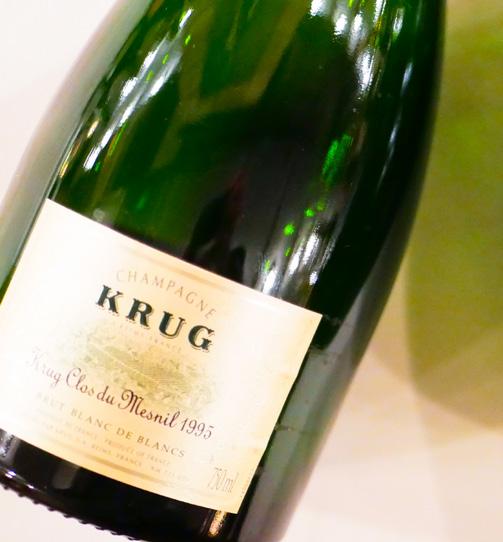
1995
how the vintage is described – a summary of comments from media and winemakers
After a series of weak years from 1991 to 1994, when several vintages were too poor to be declared, 1995 came as a welcome relief. The summer was warm and even all the way until the beginning of September when rain fell over the region. Despite some occurrence of rot, the harvest could be carried out at the end of September after the rain and yield both very good quality and good quantity. The wines from 1995 are characterized by richness and generosity, but are at the same time very well balanced. The vintage is reminiscent of 1988, but with less structure and more fullness. The best wines had good aging capacity, and some can still be drunk with great pleasure today.

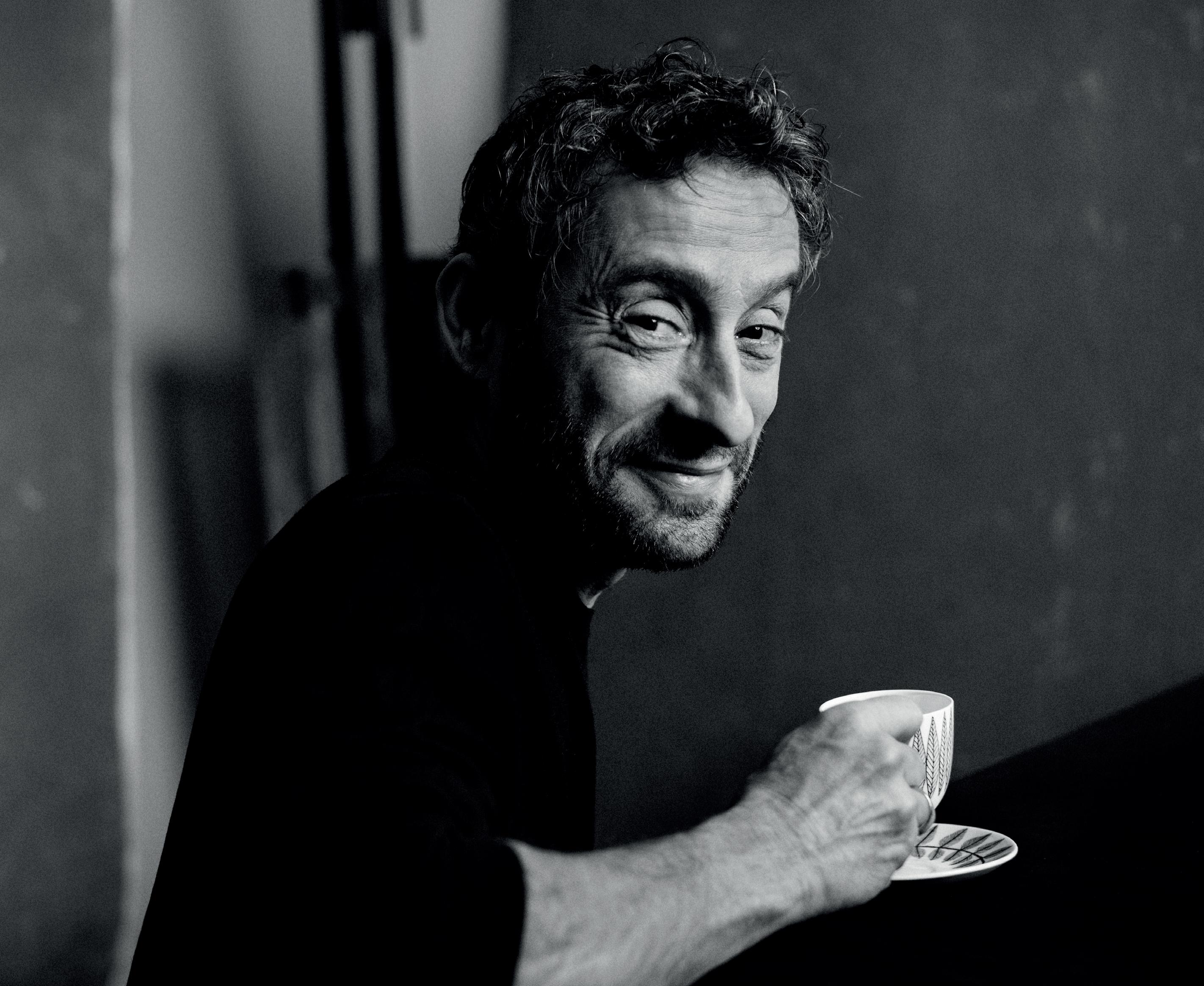
KAFFE, SOM FÖR FÖRSTA GÅNGEN.
Att dricka ett nyrostat kaffe är omvälvande.
Rostningen får bönan att släppa lös sina tusen aromer och smaker.
Nu är njutningen som allra rikast.
Koppar är ett nytt litet kafferosteri drivet av eldsjälar.
Vi rostar världens bästa bönor idag, så du kan njuta dem imorgon.
Vi undviker fördyrande mellanhänder.
Kaffet skickas direkt till din brevlåda.
Välkommen till vår hemsida och upptäck en ny värld av kaffe.
Beställ innan kl17.00, så postar vi nyrostat kaffe samma arbetsdag.

Château Mukhrani
– A SWEDISH-OWNED WINE ESTATE IN THE HEART OF GEORGIA
After the prolonged civil war in Georgia in the 1990s, the French-inspired wine estate Château Mukhrani, dating back to 1885, lay in ruins. Few could have imagined that wine would ever be made here again. But shortly after the turn of the millennium, a group of Georgian businessmen purchased the estate and began an extensive and time-consuming restoration. In 2006, the Swedish billionaire Frederik Paulsen – best known for his biopharma company Ferring and his polar expeditions – became a co-owner and eventually assumed full ownership through his beverage company Marussia. Together with the German winemaker Patrick Honnef, they are now working to develop Georgian wine in a new direction. “We decided that we wanted to be the first to produce fine wine from Georgia,” says Patrick.
TEXT AND PHOTOS: DANIEL BRUCE
WHEN I MEET PATRICK ONE MORNING in late
September, it is not only the grape harvest in Kartli –just under an hour’s drive northwest of Tbilisi – that is in full swing. They are also expanding the winery by installing new stainless steel fermentation tanks. The work is a couple of months behind schedule, but once completed, they will have smaller tanks to better manage their different vineyard plots. The design allows grapes to be brought in small
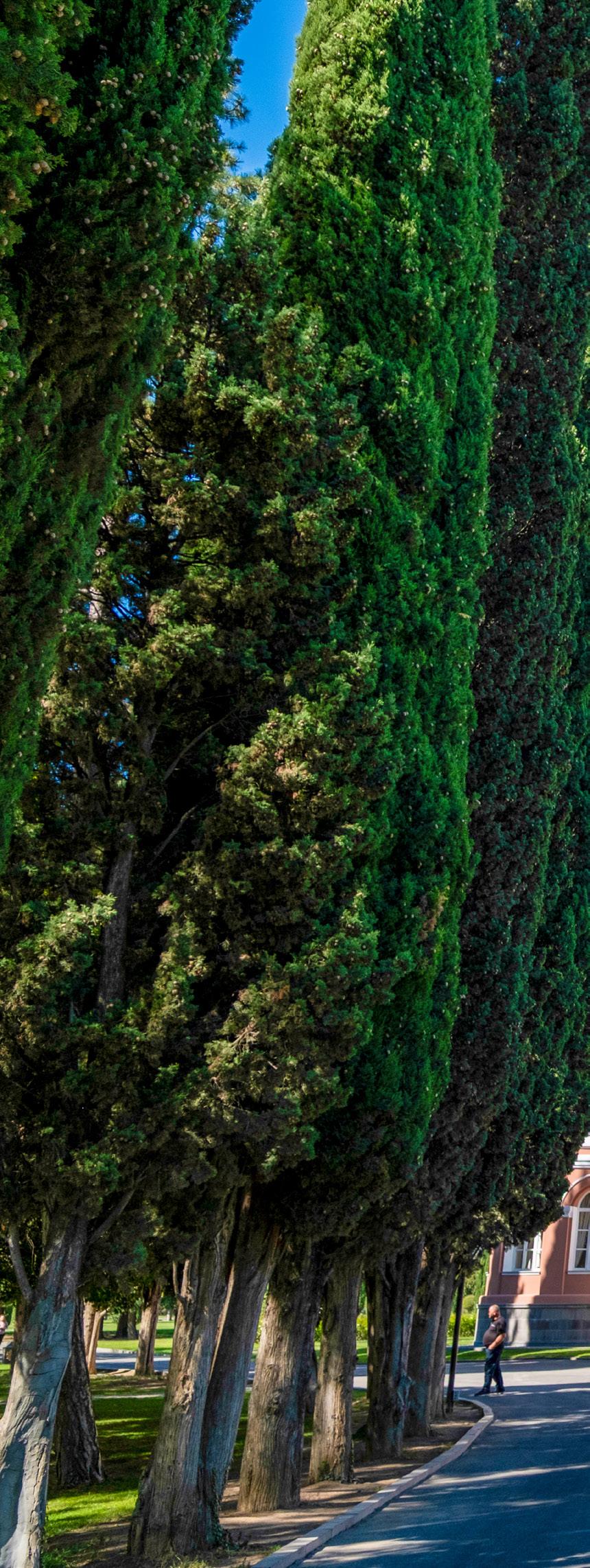
carts, tipped directly into the fermentation tanks, and then transferred to the cellar entirely without pumps. This enables gentler handling of the wine while improving both workflow and hygiene. “Our philosophy is organic, and it is important for us to show how we work. If I go to a restaurant and get to see the kitchen, I’m happy—but if it looks like a pigsty, I’m not sure I want to eat there. It’s a bit the same with a winery,” says Patrick.
Slottet var totalförstört efter 90-talets inbördeskrig och tog många år att renovera.
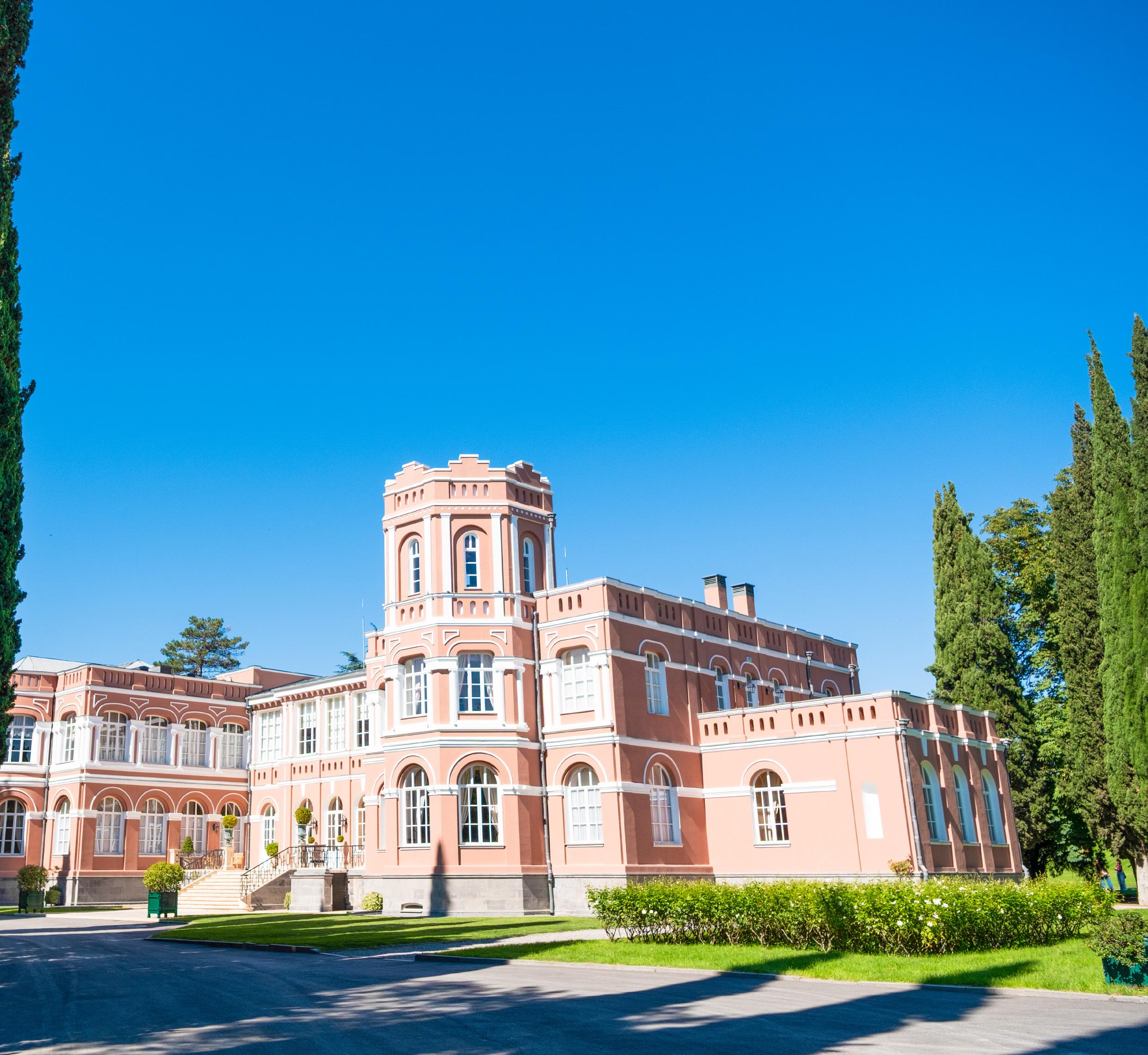
ALTHOUGH HE IS NOW DEEPLY ROOTED in Georgian soil, Patrick originally comes from Bonn in Germany. His father was a great wine enthusiast who took him to Burgundy and Bordeaux at an early age. Even if he did not fully understand what he tasted at the time, it shaped his palate. His path to the profession, however, was anything but straightforward. As a teenager, sports dominated his life, and his father actually
discouraged him from entering the wine industry. Patrick studied economics and worked at an advertising agency until his early thirties, when he began to question his career choice. “I asked my close friends, and everyone thought I should switch to winemaking. I was uncertain at first, but decided to pursue wine and studied winemaking and wine management at a university in southern Germany,” he explains.
IT DID NOT TAKE LONG before he secured an internship in Bordeaux with the von Neipperg family. What was meant to be a short stay turned into ten years in the region, where he, among other roles, was responsible for Château d’Aiguilhe in Castillon. Then came a phone call from Château Mukhrani in Georgia. “A Frenchman named Jacques Fleury, one of the founders of the revived estate, was looking for a new director. I didn’t really want to leave Bordeaux, but after a five-hour fascinating conversation about Georgia as the cradle of wine, I accepted a consultancy assignment,” he continues. Patrick arrived in Tbilisi for the first time in 2009, just after the war with Russia. He was met by a village in shock and a château completely destroyed after the civil war of the 1990s, when local warlords had used the cellar as a headquarters and left the estate in ruins. Despite the devastation, he felt from the very beginning “a strong spiritual energy” at the site. At the turn of 2013/2014, he made the full commitment and moved there with the goal of creating Georgia’s first top-tier winery.
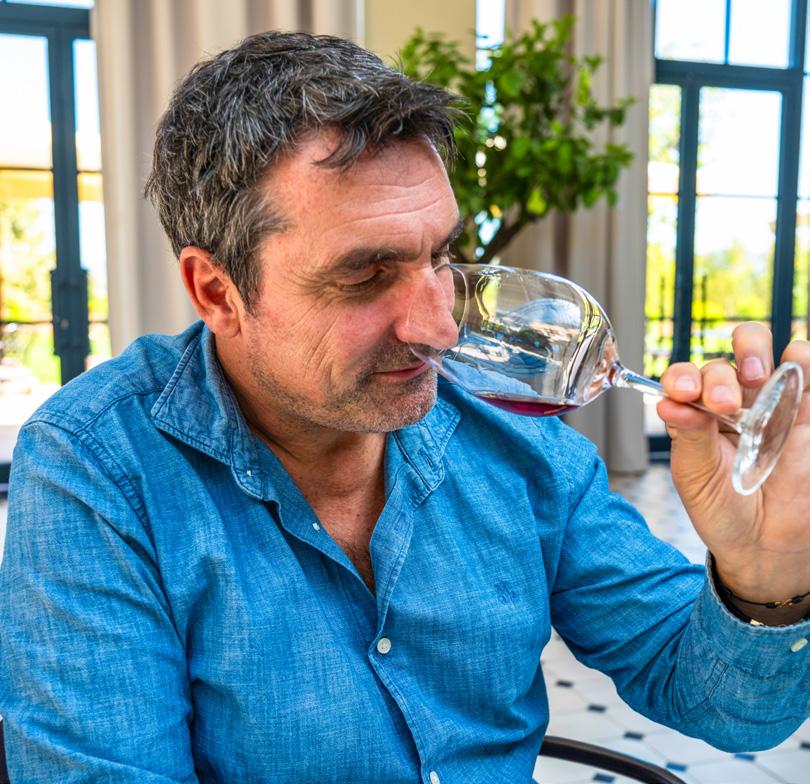
THE
JOURNEY HAS NOT BEEN WITHOUT CHALLENGES. Patrick recalls in particular a board meeting where he presented his new vision and was met with strong criticism. “Someone said they didn’t like that the wine had changed. Owner Frederik Paulsen asked who had given me permission to change the recipe. I replied: ‘You did. You gave me the task of making Mukhrani a world-class winery.’ The previous wines were at a level you would expect from a supermarket—clean in style, but uninteresting for a wine enthusiast. I said that if no one wanted to drink my wines in two years, they could fire me. At that point, there was only one way forward for me.”
TODAY, THE RESULTS ARE CLEAR.
Since the conditions are equally favorable for red and white grapes, Château Mukhrani produces roughly equal volumes of each. The climate in Kartli is mildly continental, with warm summers, mild autumn evenings, and relatively cold winters. The temperature difference between day and night during the growing season is sufficient for the grapes to reach good phenolic ripeness while preserving acidity. When I
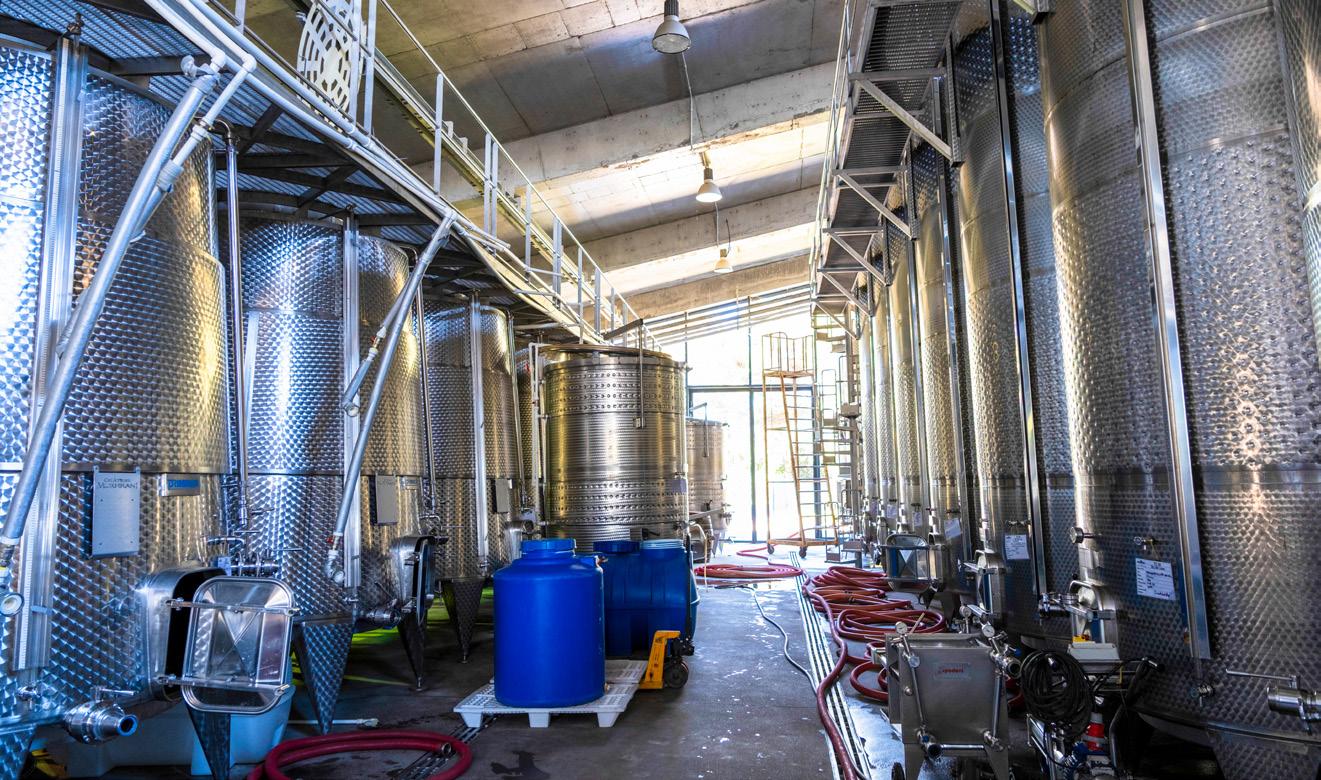
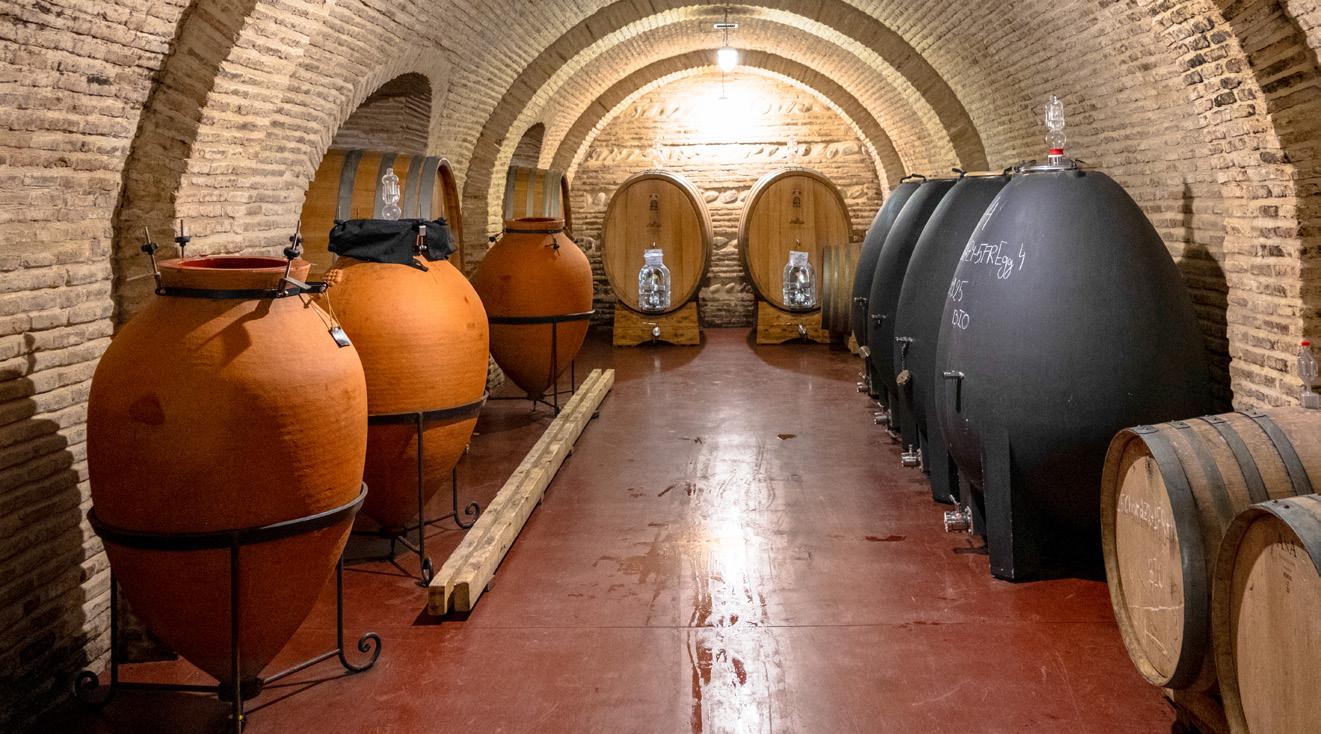
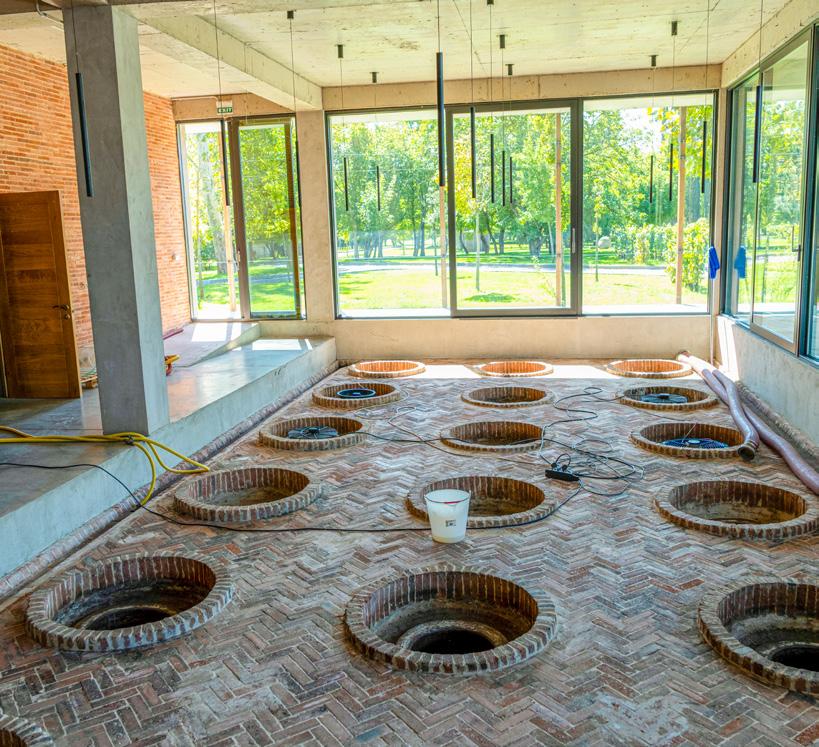
Many of Château Mukhrani’s qvevri hold around 2,000 liters, and skin-contact fermentation lasts up to six months.
At the turn of 2013–2014, Patrick Honnef took the leap fully and moved to Georgia with the goal of creating the country’s first top-tier winery.
Modern stainless steel tanks.
In addition to oak barrels and qvevri, they have also recently begun working with concrete eggs.
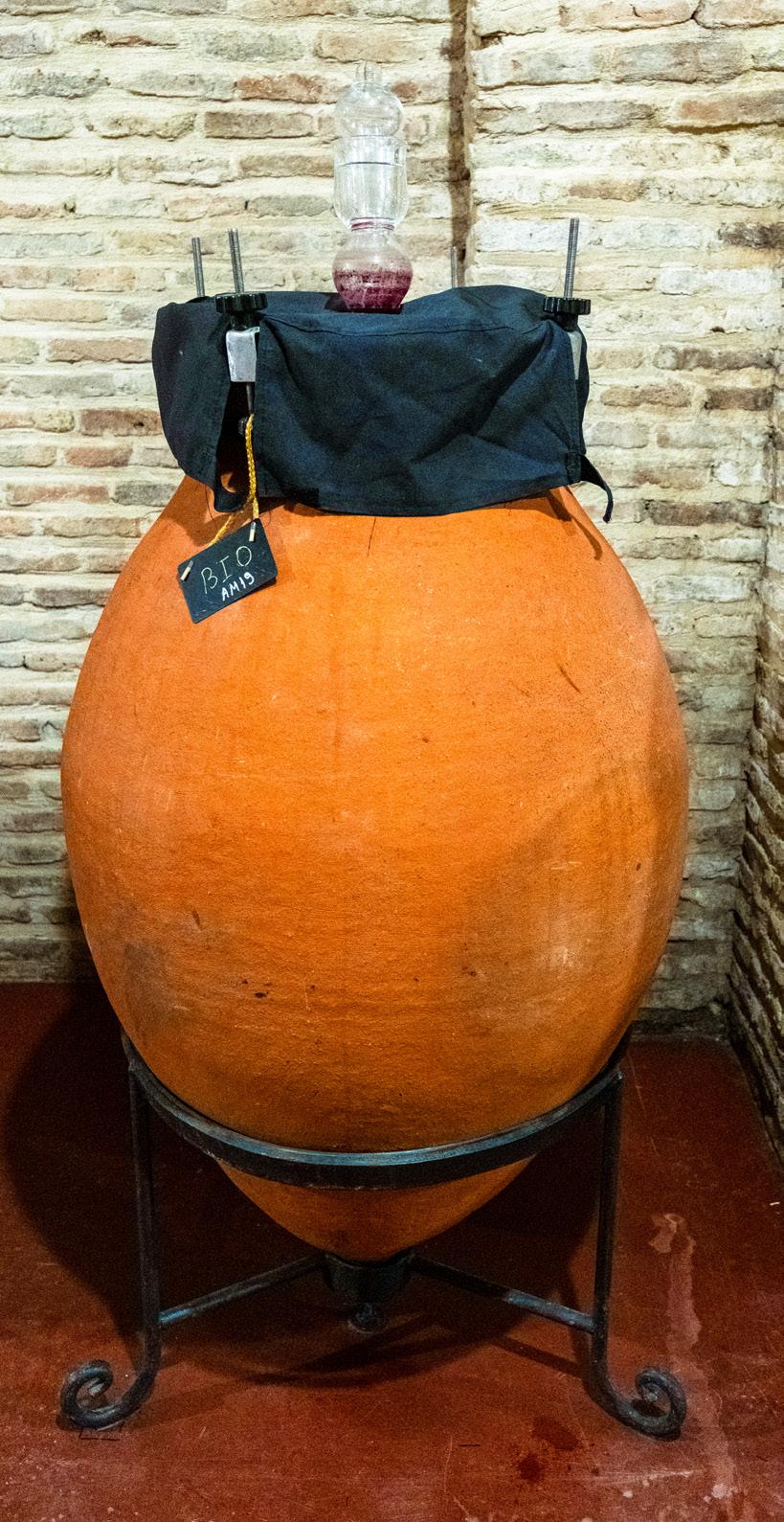
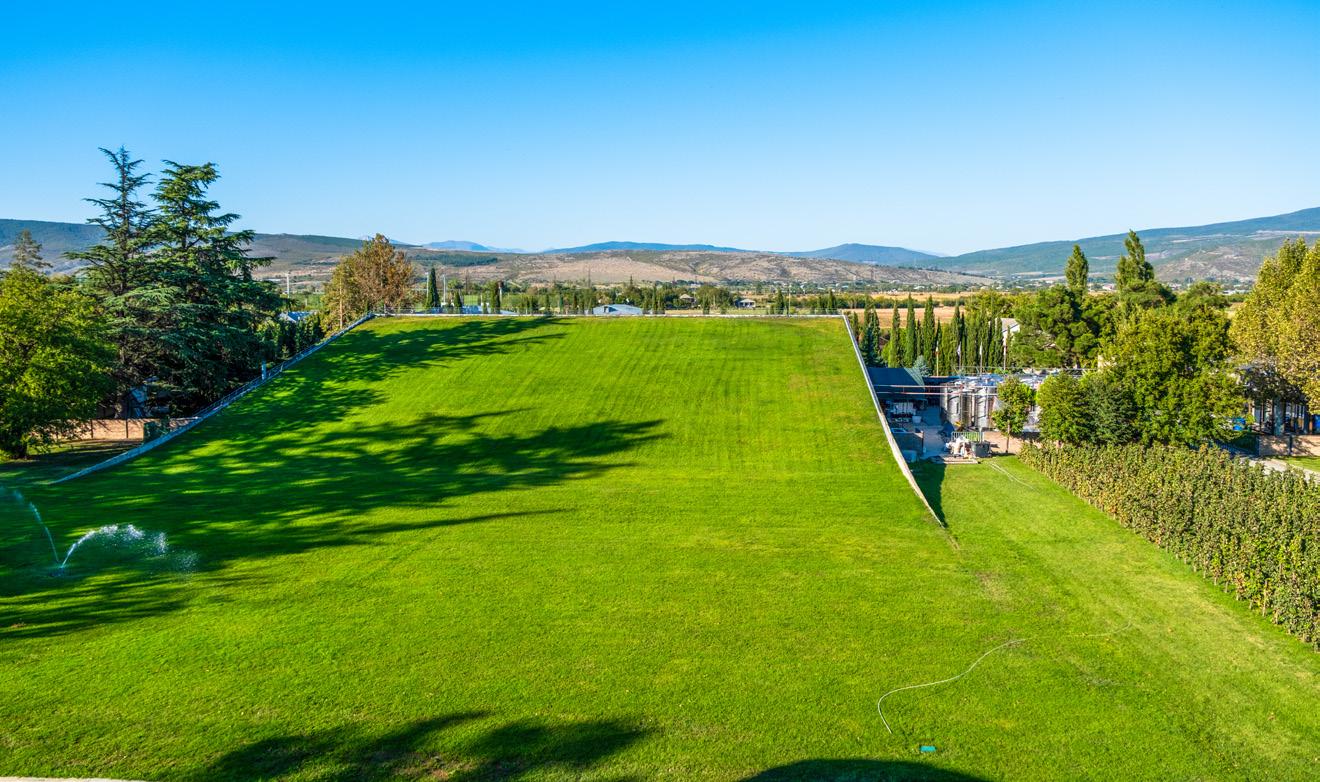
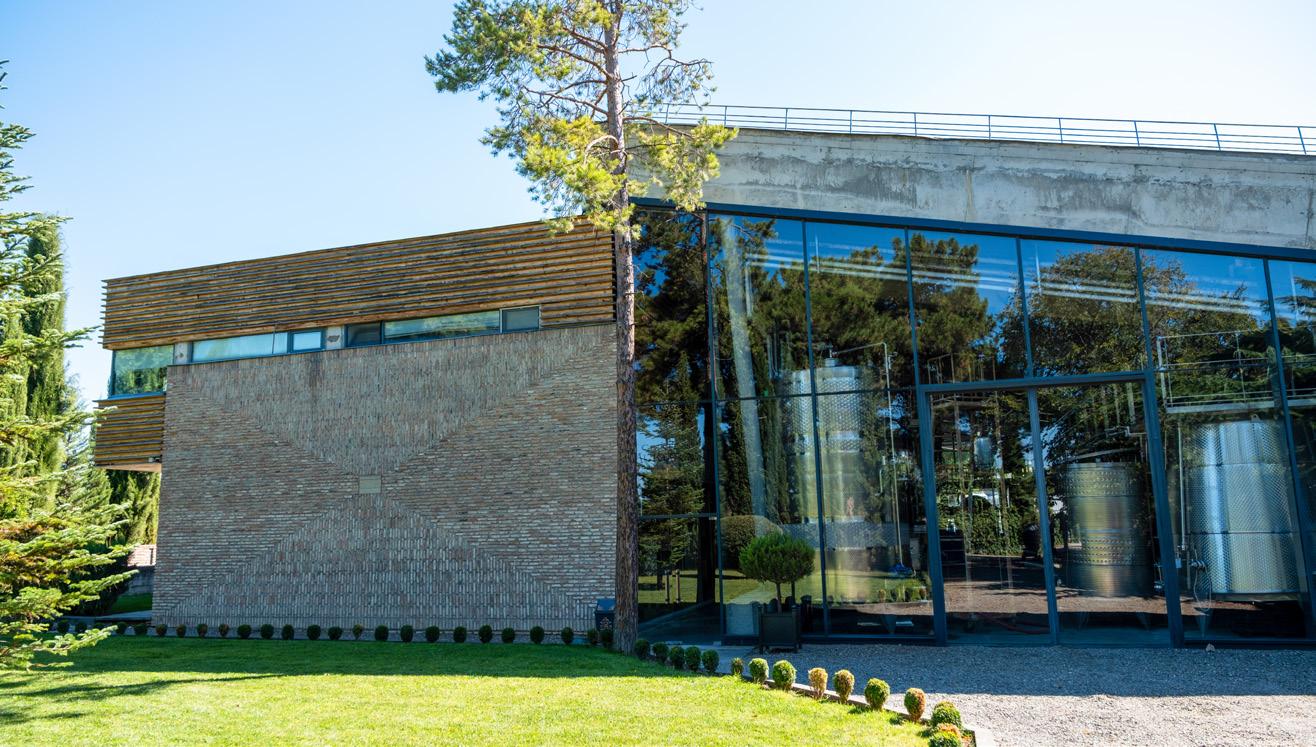
ask Patrick whether he has observed signs of climate change during his decade in Kartli, he says that it has not actually become warmer. On the contrary, summer heat extremes have slightly decreased. Instead, drought has become the main challenge. “Recent winters have been quite dry. Irrigation is important here, but only for quality. We measure water stress and never irrigate unless necessary. This year we had to irrigate quite a lot, while last year we didn’t need to at all,” he explains. And as in many other parts of the world, vineyards in Kartli are sometimes hit by deceptive cold snaps after flowering. Usually, cold air settles in low-lying areas, but nature does not always follow the rules. “For the second time in eleven years, we experienced spring frost in April, resulting in a loss of 20–30% of the harvest. Strangely, it wasn’t in the lowest area, where you would expect it, but on higher ground. Nature had a different plan,” says Patrick.
A STONE’S THROW FROM THE WINERY’S MAIN BUILDING lies Château Mukhrani’s qvevri cellar. In a glass-enclosed concrete structure, about a
dozen qvevri – large clay amphorae – are buried underground. Here, the must and skins are added after gentle pressing. “Just like when I worked in Bordeaux, we use native yeast. But we do it properly, not freestyle. That’s why it’s crucial that the yeast is of high quality, which is one of the reasons we work organically without pesticides,” he explains. Most of Mukhrani’s qvevri hold around 2 000 liters. Maceration times vary but rarely exceed six months. For Patrick, the natural character of the grape is decisive. “Something that is green from the start will not turn into summer flowers— it will only become more green. But if you work with ripe, healthy grapes, you can extract powerful and beautiful tannins. When we make qvevri wines, the goal is for them to be both elegant and interesting.”
AFTER FERMENTATION IS COMPLETE
– when all fermentable sugar has been converted into alcohol – residual sugar usually lands around three grams. The perceived sweetness sometimes experienced despite this low level is due to extended skin contact, which gives a rounder texture. Unlike in Kakheti in
The pointed shape at the bottom of a qvevri helps the wine circulate during fermentation.
The winery is located a couple of hundred meters from the château itself.
The winery lies beneath a sloping lawn.
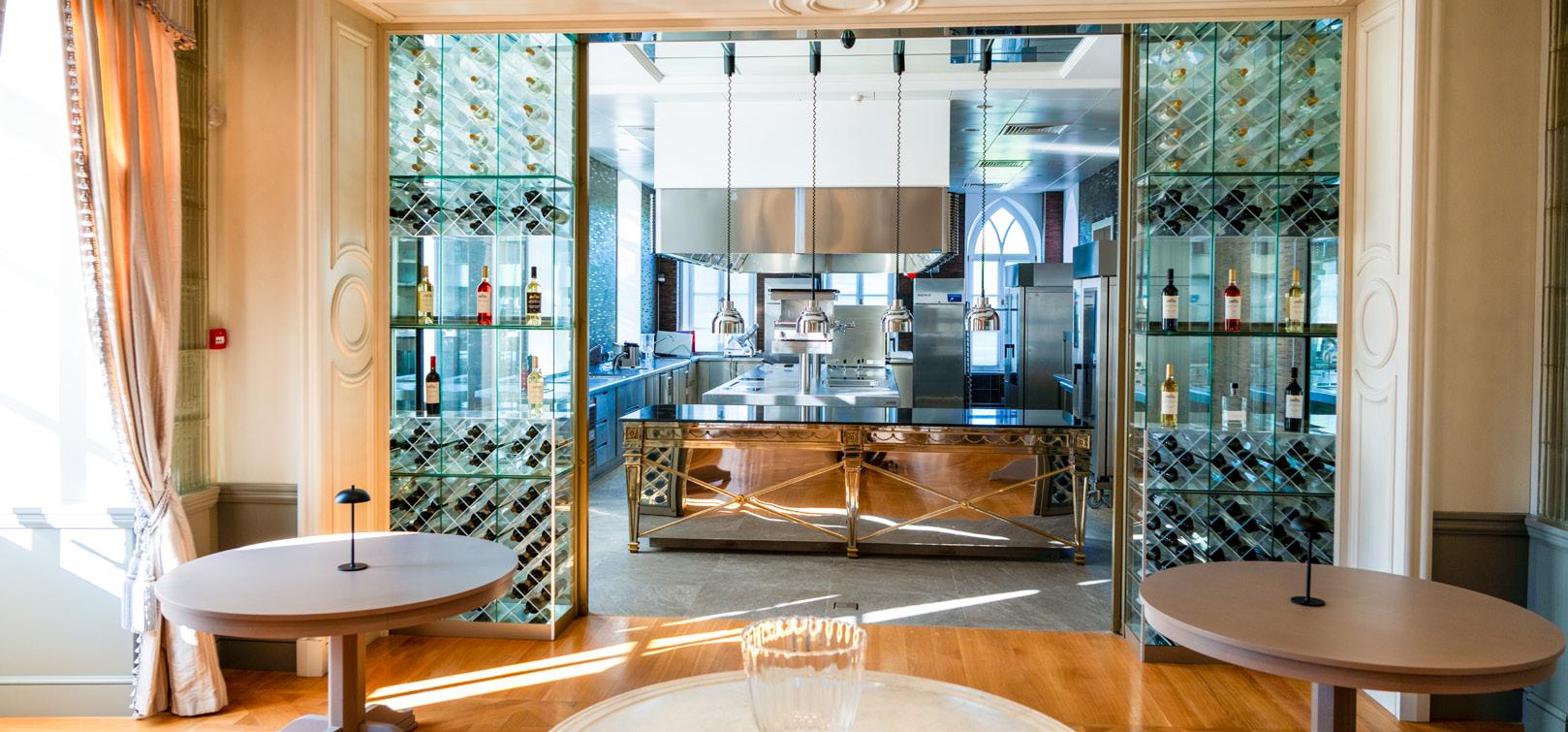
eastern Georgia, stems are generally not used during fermentation in Kartli. The climate is slightly cooler, meaning stems often do not ripen sufficiently. Patrick, however, has found a compromise. “What I do is spread the stems in the sun and let them dry for five days so they caramelize. That transforms the green tannins. When you add them back into the wine, they bring structure and acidity,” he says.
BUT FAR FROM ALL WINE
at Château Mukhrani is made in qvevri. From the modern winery with its gleaming steel tanks, we descend a steep staircase into the château’s more than 150-year-old cellar, carefully restored to preserve its charm. Across several vaulted rooms, Patrick shows dozens of amphorae, countless oak barrels of varying sizes, and a few concrete eggs. “We let the same grape varieties ferment in different vessels. Each material creates its own style and character. I love concrete eggs because they really highlight minerality. Oak barrels bring
a certain creaminess and elegance, but it’s not about oak flavor—it’s about oxygenation and shape, about building elegance without the oak taking over,” he explains.
THROUGH A LONG CELLAR CORRIDOR
we move from the wine cellar to another cellar located beneath the château itself. Until a few years ago, food was served here from an à la carte menu, but when demand exceeded capacity, the restaurant was moved to a newly built orangery a couple of hundred meters away. As Patrick opens a selection of his wines and orders the incredibly delicious cheese bread khachapuri, I ask how he sees the near future. “In the past, Georgia was mainly associated with simple, semi-sweet wines. We want to stand for Georgian fine wine and reach out—not only to the traditional market, but to the entire world. My goal is for Georgian wines to appear on wine lists everywhere, not just in Georgian restaurants. That would make me happy,” Patrick concludes.
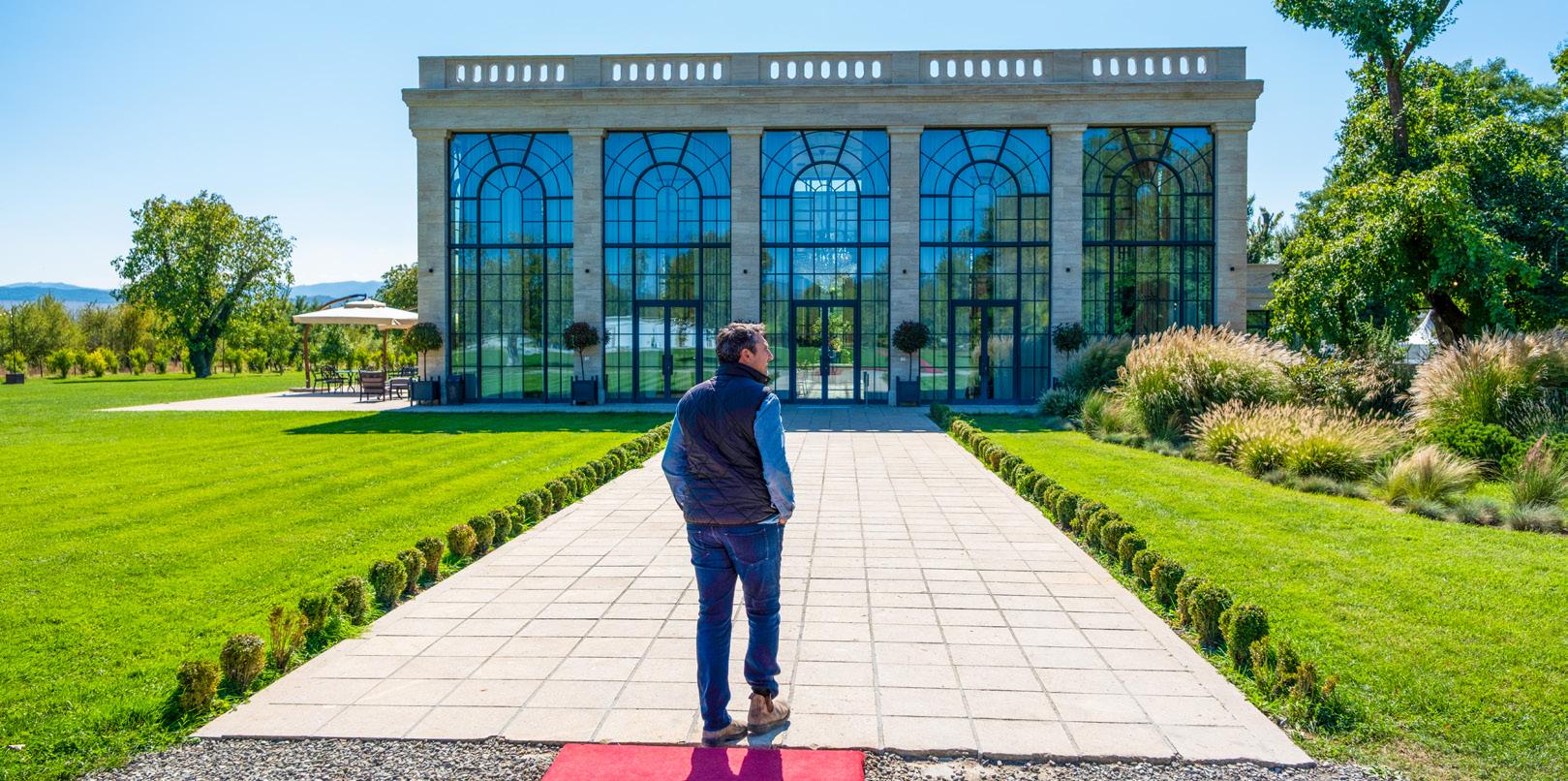
A brand-new restaurant kitchen at the château.
Patrick on the way to the orangery.
WINES TASTED
Château
Mukhrani
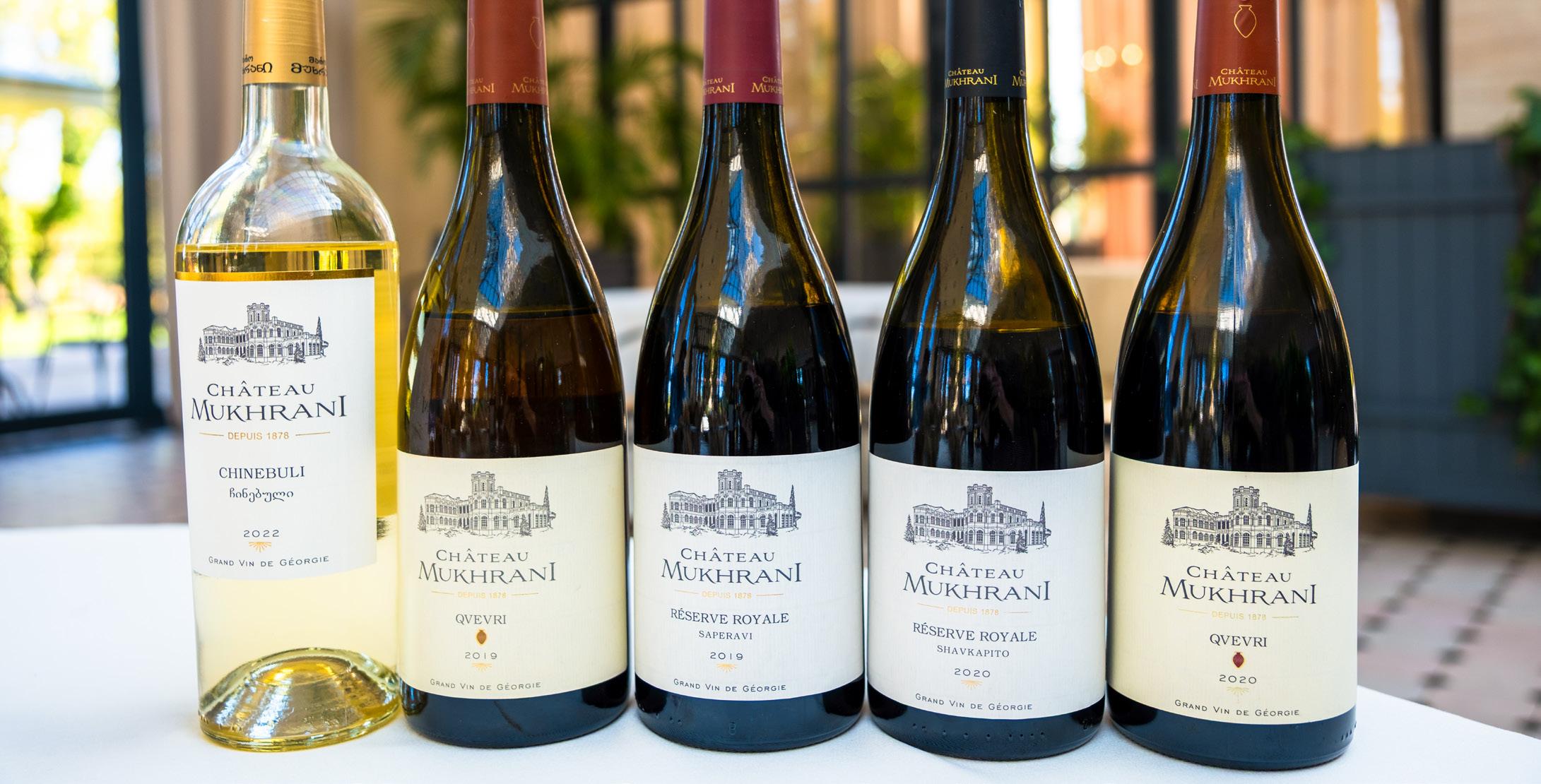
CHINEBULI 2022: 11,5%
92
Made from the indigenous grape chinuri, also known as chinebuli, and naturally fermented in a combination of stainless steel and concrete eggs. After one year on the lees, it has developed an aromatic profile with clear notes of lemon and honey. The palate is both fruity and floral, with apricot and grapefruit alongside a fine salinity and hints of beeswax. A fruit-driven and honest wine with a beautiful underlying minerality.
QVEVRI WHITE 2019 12,5%
94
A blend of rkatsiteli (70%) and goruli mtsvane (30%). After careful selection, the grapes fermented with native yeast in qvevri with six months of skin contact. The wine was then aged in a mix of oak barrels and stainless steel for a further eight months. Golden in color, with aromas of ripe stone fruit, lemon, and honey. On the palate, ripe peach and apricot return, accompanied by cloudberry, citrus, and wild herbs. The tannins are present yet well integrated with fruit and acidity. Delicious now, but will certainly evolve over many years.
SHAVKAPITO RÉSERVE ROYALE 2020 13%
94+Made from the indigenous shavkapito grape, whose thin skins somewhat resemble pinot noir. Naturally fermented and aged in a mix of new and old oak barrels, followed by a couple of years in bottle. The nose is deep and full yet elegant, with wild raspberry and red plum alongside subtle coconut notes. The palate is berry-driven with cherry and ripe raspberry, integrated oak, and fine spice. A fantastic wine showing the potential of shavkapito in Kartli.
QVEVRI RED 2020 13,5%
93 A blend of saperavi (68%), cabernet sauvignon (17%), and tavkveri (15%). Fermented in qvevri, with skins removed after about three months, followed by 15 months of ageing in a mix of oak barrels and clay amphorae. Neither fined nor filtered to preserve character. Aromas of blackberry, blackcurrant, and sweet tobacco. The palate is full and fruit-driven, with notes of ripe forest berries, dark chocolate, and black pepper. Tannins are clearly present yet balanced, and a subtle hint of volatile acidity lifts the wine, adding an extra layer of complexity.
Terre Nere THE REVOLUTION ON ETNA
There are people who do not simply follow the path, but create their own. Marco de Grazia is one such person—a winemaker with a passion and conviction that have not only transformed Etna, but the wine world at large. As a central member of the Barolo Boys during the 1980s and ’90s, he helped revolutionize wine production in Piedmont. But his true impact came in the early 2000s when he established his winery on the steep slopes of Etna. Here, in the midst of the active volcano, he discovered something few other winemakers had dared to see: a terroir with enormous potential for something truly unique.
BY MAJA BERTHAS
MARCO FIRST ENCOUNTERED ETNA on a journey that would change his life. He describes an immediate infatuation with the region and its distinctive terroir. There was something in the wines from Etna that he had not found anywhere else, something that evoked a sense of endless potential. He quickly acquired a piece of land, built his own winery, and began producing his first wines. But the road was not easy. Time and again, he found himself in conflict with the local regulatory authorities when he began putting the individual vineyard sites, or Contradas, on his labels—something that Etna wines at the time were not legally permitted to do. Marco did not give up. With strong will and conviction, he fought to make the authorities understand the importance of defining these unique sites, and eventually he succeeded. Today, the use of Contradas has become something that almost defines wine production around Etna, and the wines from Terre Nere speak clearly of this.
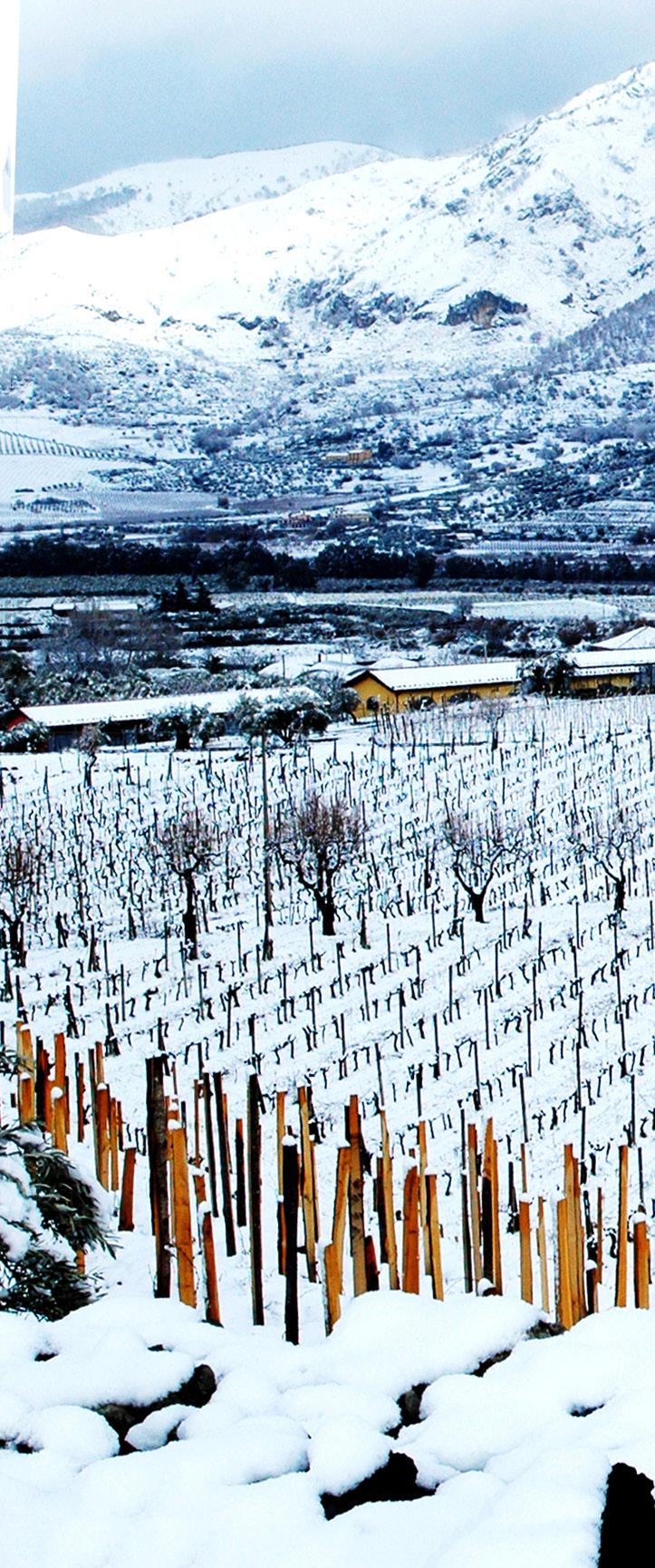
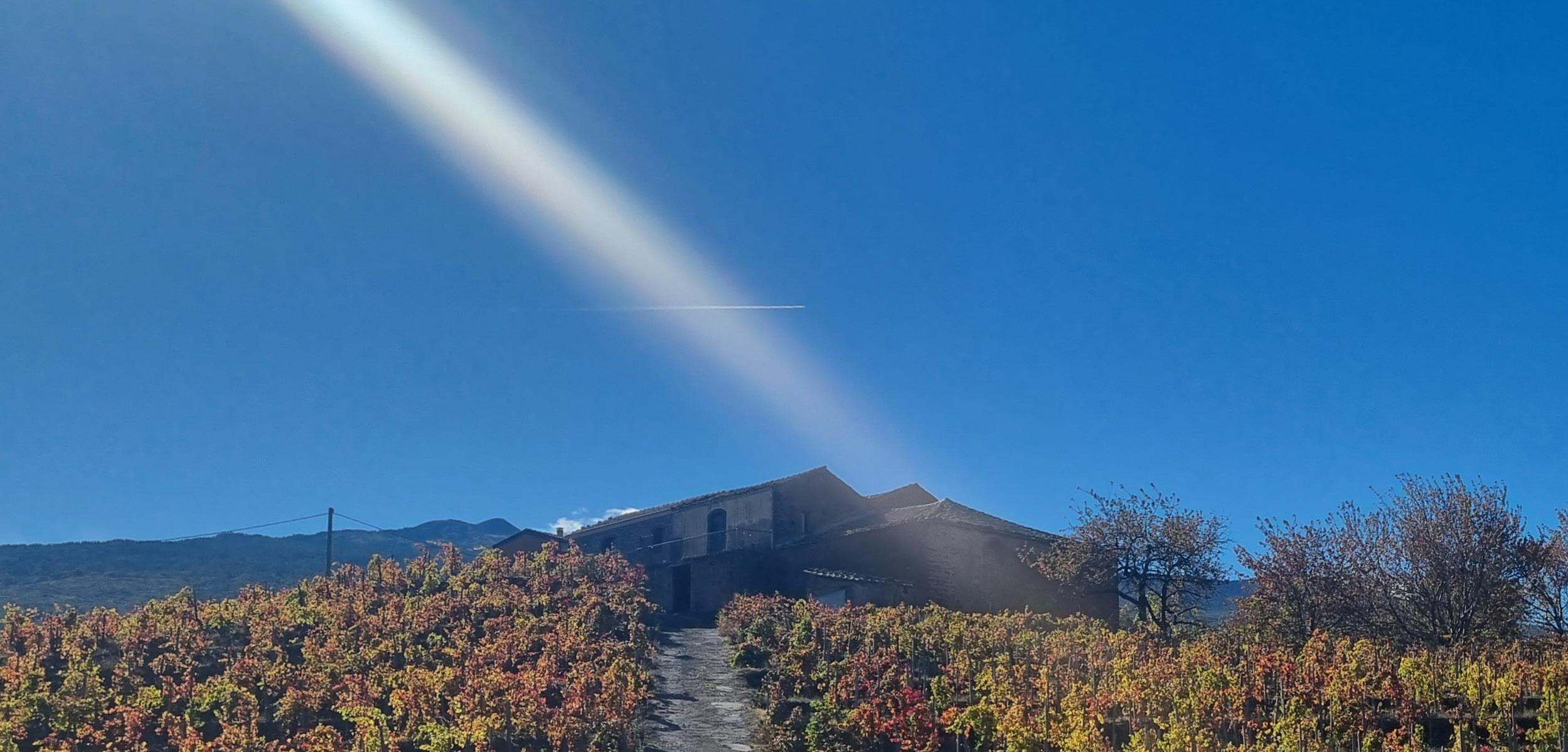
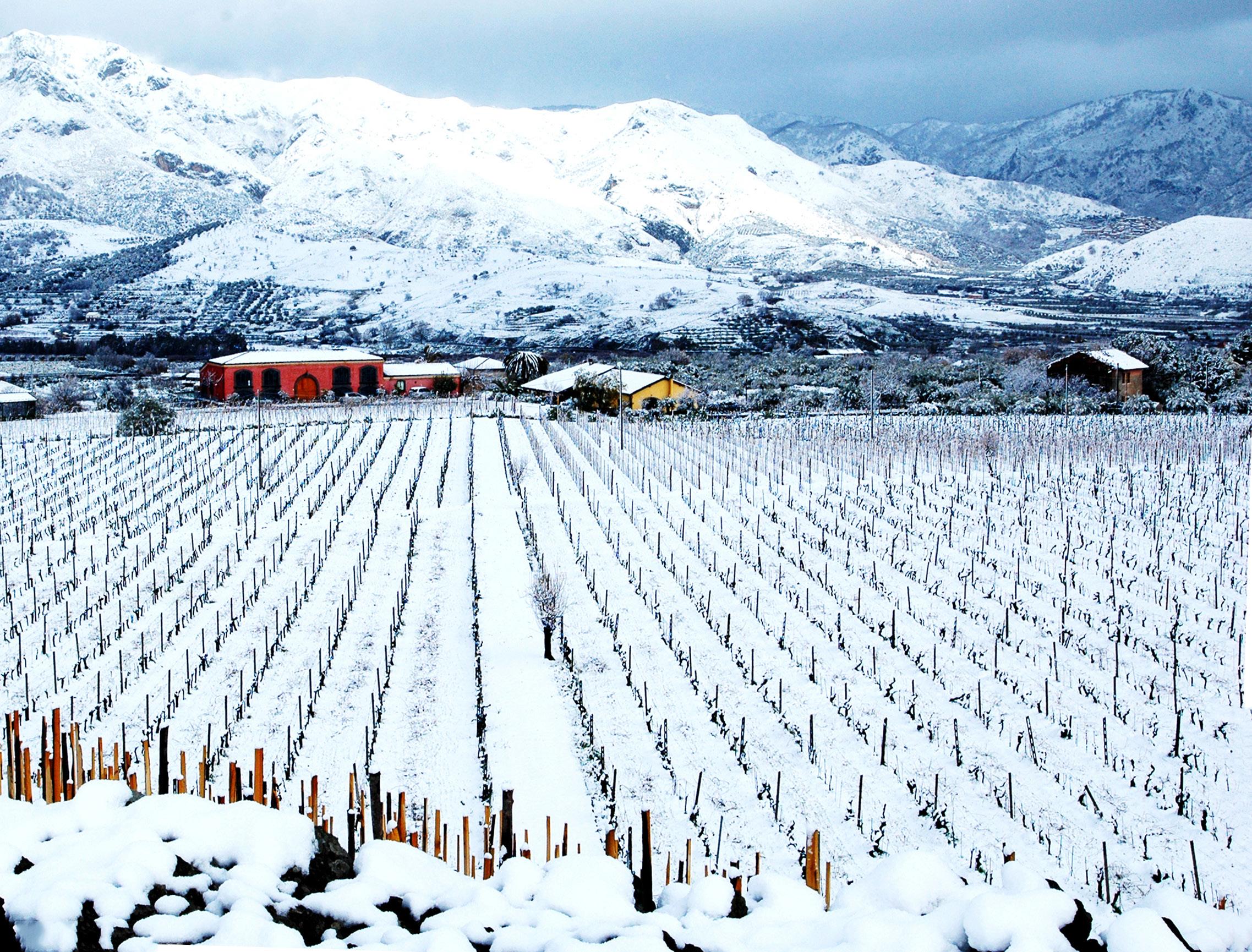
Calderara Sottana covered in snow.
THE VINEYARDS ON ETNA ARE AS COMPLEX as the region itself. Altitude, soils, rainfall, and temperatures vary significantly depending on location. From the eastern to the northern and southern sides of the volcano, the vineyards stretch out in a horseshoe shape, and Marco describes them with great enthusiasm. Despite the clear differences between the sites, there is a common thread in the wines.
– The most vital characteristic of the wines here is that they do not feel as if they come from a warm climate, says Marco. There is a particular structure and lightness often associated with more northerly vineyards. In a blind tasting, few would place these wines this far south, he continues.
There is also another parameter, perhaps most evident in the white wines, and that is the distinct salinity that has become the hallmark of this volcanic region.
– This in turn means that there is not the same need for high acidity in the wines; that element comes almost automatically, says Marco.
THE WARMEST PART OF ETNA lies on the southern slopes, where vineyards were once known for producing robust wines with high alcohol levels. But Marco is firmly convinced that the key to Etna wines is altitude. To produce wines with precision, elegance, and structure, the grapes must climb high, and Marco has acquired a very unique two-hectare vineyard situated at an impressive 950 meters above sea level.
– My first vintage of the wine Montalto was in 2022. I bought the vineyard from a man from whom we had previously only purchased grapes, says Marco.
The wine is a tribute to both warmth and elevation—it offers an oily, slightly tropical character, while on the palate a salivating sensation vibrates unmistakably. To truly understand the difference in expression, Marco pours another glass. This wine comes from the eastern slopes of the volcano around the town of Milo and expresses itself in an entirely different way. Terre Nere Bianco Superiore Salice Premier Cru is a wine that radiates energy and minerality, with a taut, upright profile where citrus and lime merge with a subtle hint of white flowers. A wine in sharp contrast to the first.
THE VINEYARDS ON ETNA’S EASTERN SIDE are characterized by a significantly cooler and more humid climate than the rest of the area, and part of the soil originates from inside the volcano itself.
– Here, it’s not just lava; a large part of the soil is very ancient and was formed when parts of the volcano collapsed into the sea on this side of the mountain, Marco explains.
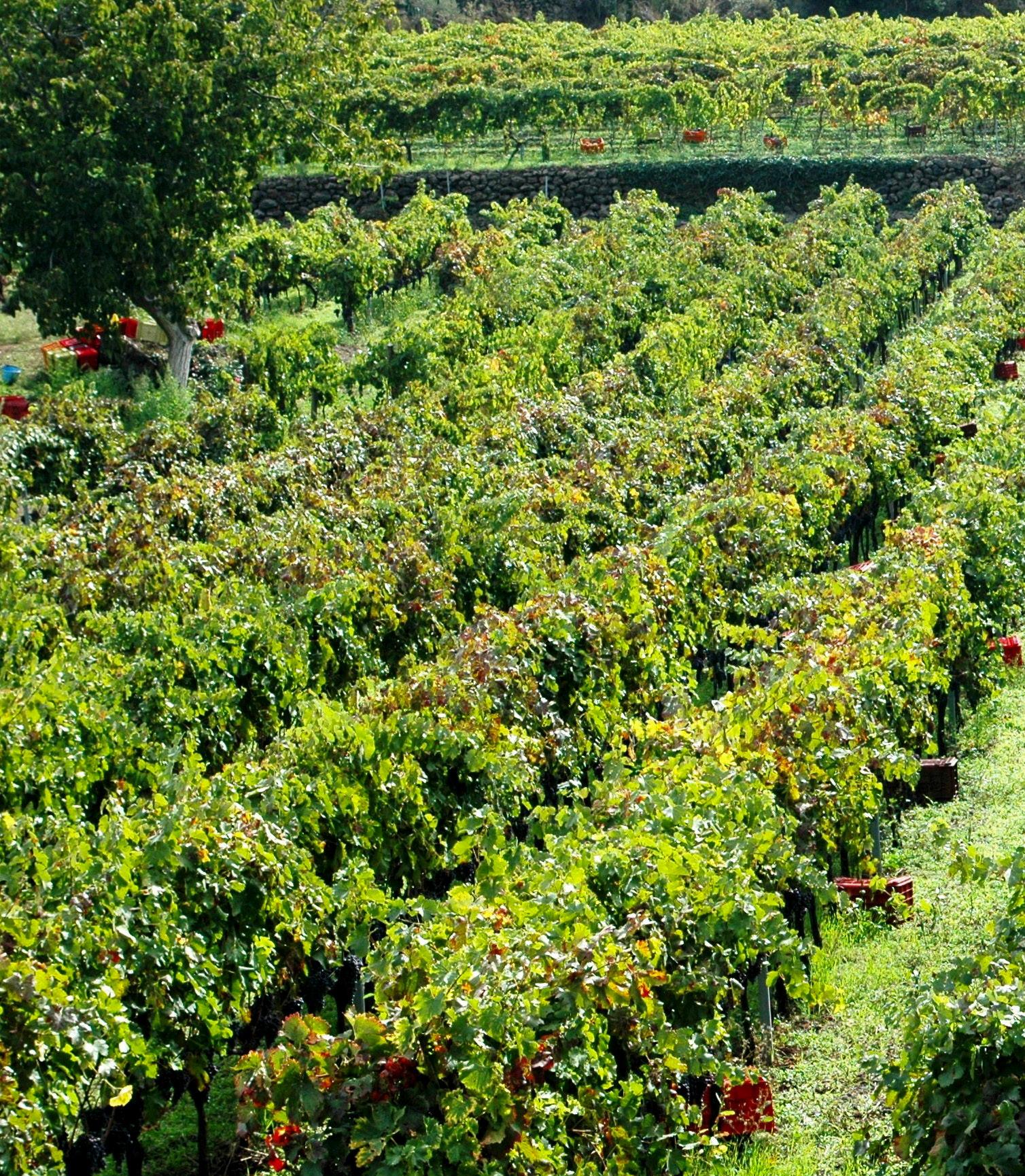
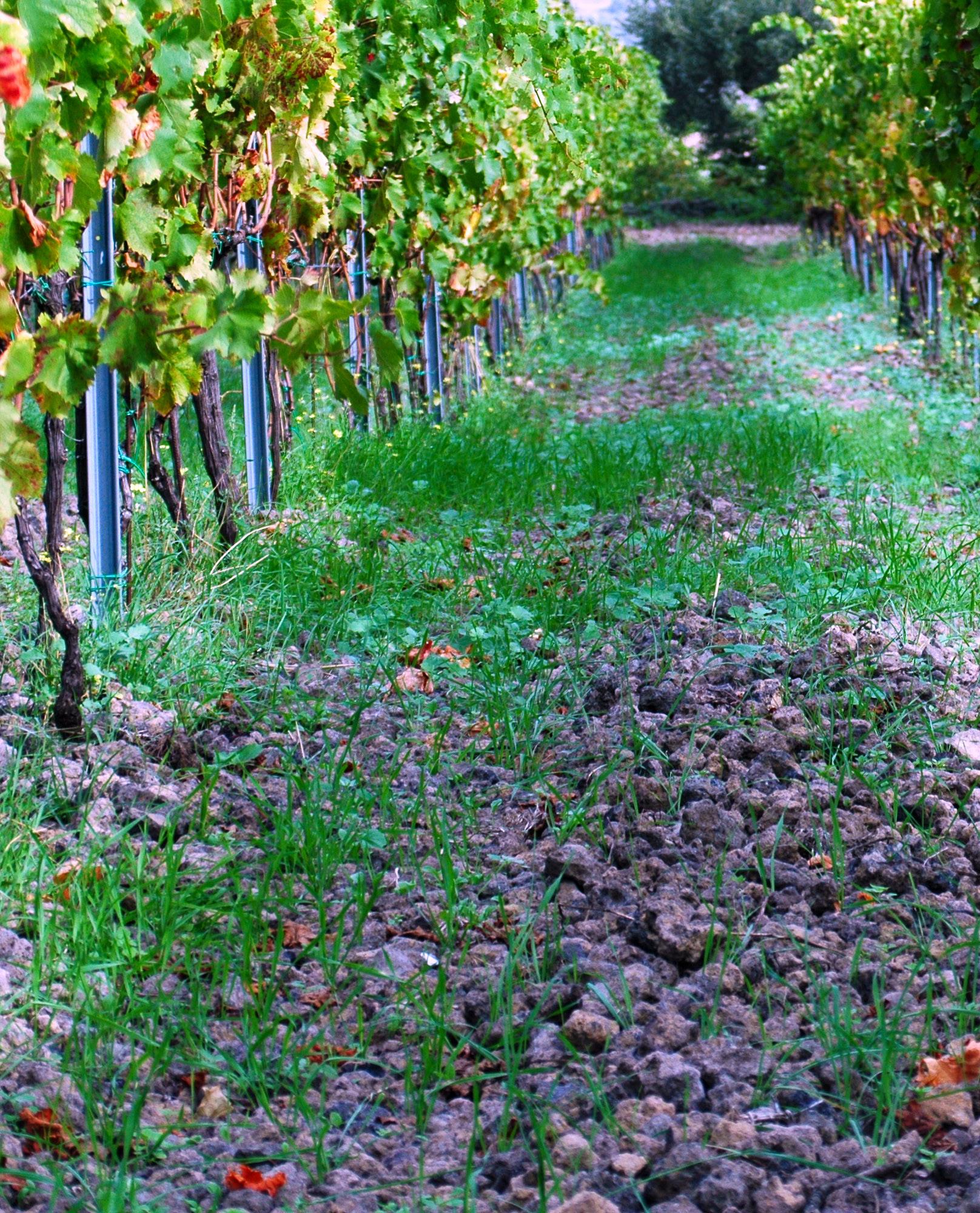
Calderara Sottana.
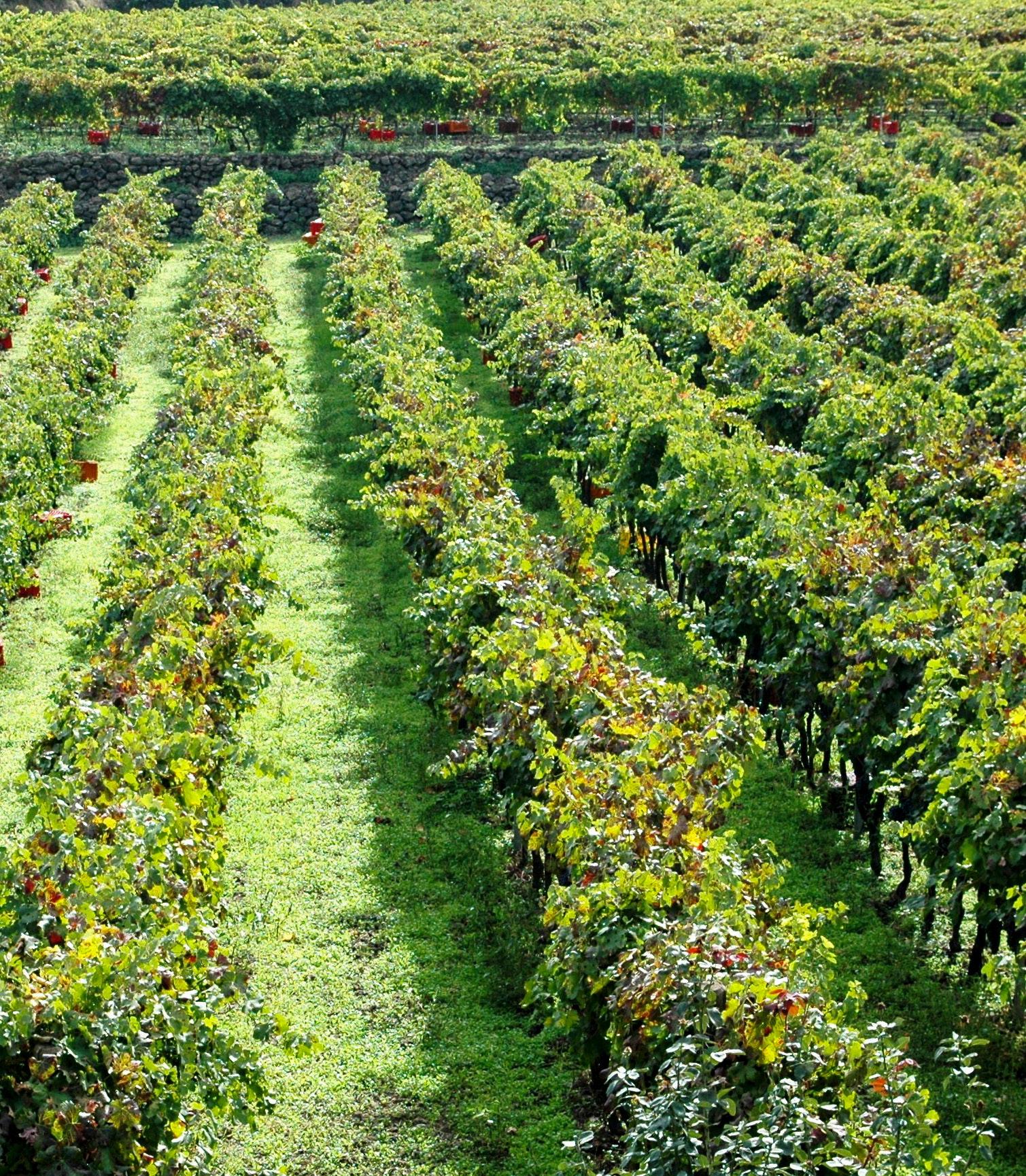
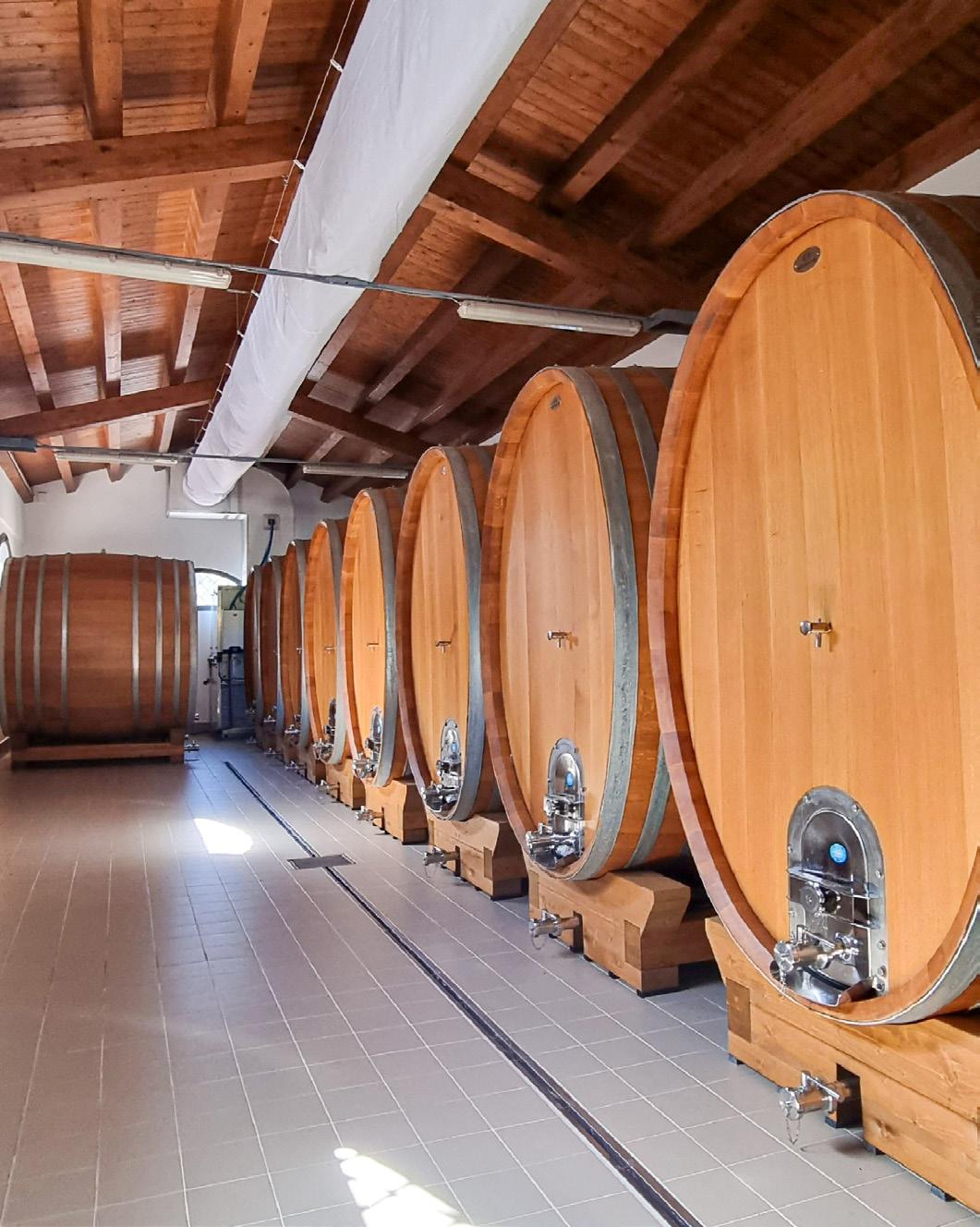
This is also one of the least sun-exposed areas around the volcano, as vineyards scattered across the steep slopes receive very limited sunlight. Partly because many are shaded by large ravines, and partly because the sun, after rising in the east, quickly passes over the 3,400-meter-high volcano. To capture as much sunlight as possible, it is therefore important that the vineyards are planted with a predominantly southern exposure.
– It is almost impossible to produce red wines here, says Marco. Quite simply, it is too cold and there is too little sun. It is on the northern side of the volcano that the finest red wines are produced, and Marco does not hesitate to compare these vineyards with the best sites in Burgundy. The old vineyards here—many between 60 and 100 years old—produce wines as complex as the most sought-after wines from France. The true crown jewel in Terre Nere’s portfolio is the small section of the contrada Calderara, consisting of 140-year-old ungrafted vines.
– On the northern side, there has never been a need for white wines, says Marco. The reds were simply too extraordinary.
AND PERHAPS IT IS PRECISELY FOR THIS REASON that in 2007 he decided to create the wine Etna Bianco Santo Spirito, made from 100 percent Carricante.
The vineyard is small, just 1.5 hectares, and is located at an elevation just above 700 meters above sea level.
Here, the beautiful terraces are defined by deep soils of volcanic ash and, unlike Calderara Sottana—where he also produces a white wine—there are almost no stones at all. Santo Spirito offers an elegant, floral, and almost perfumed style, while the neighboring wine from Sottana is large, complex, and with significantly greater body and character—or, as Marco himself puts it: If Calderara Sottana is a tenor, then Santo Spirito is the soprano.
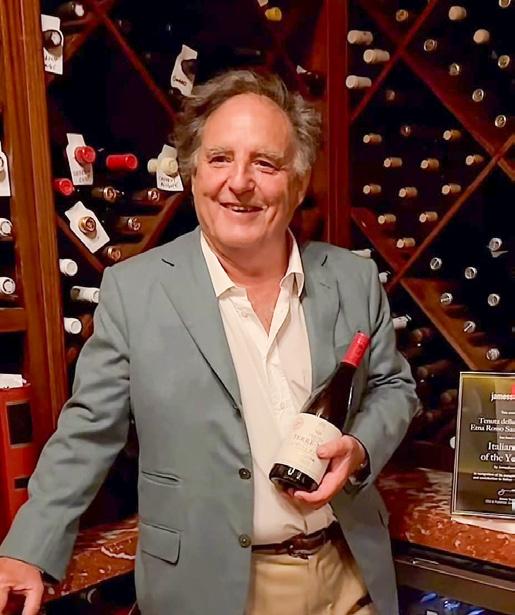
As we leave Marco de Grazia and his wines, it is with the feeling of having met someone who is far more than just a winemaker. He is a revolutionary, a visionary, and a person unafraid to go against the current. The wines from Terre Nere are as energetic as Marco himself—they speak of his passion, his struggle, and his vision for Etna. It is a privilege to taste these wines, and even more so to take part in the story behind each bottle.
Importer in Sweden: Vinovativa
Marco de Grazia.
RONCHI
DI CASTELLUCCIO IN MODIGLIANA
Terroir where the Apennines and the forest take center stage
On a sunny morning last September, I took the train via Bologna to Faenza, with Modigliana as my final destination, to spend the day at the Ronchi di Castelluccio estate, owned by brothers Aldo and Paolo Rametta. They have breathed new life into Ronchi di Castelluccio since taking over the historic property a few years ago. The estate was a driving force in beginning to produce quality wine—rather than wine for household consumption—in Modigliana in the 1970s. This was a new way of thinking, where founder Gian Vittorio Baldi focused on organic viticulture and cru wines. In this way, the iconic Ronchi wines were created. Today, Aldo and Paolo carry on this legacy by adding their own more contemporary touch to these elegant, expressive, and highly territorial wines.
BY KATARINA ANDERSSON
MODIGLIANA IS A SMALL municipality nestled in the Apennines between Faenza and the border of Tuscany. The area around Faenza and Modigliana stands with one foot in Romagna and the other in Tuscany, as it was part of Tuscany until 1923. That year, Benito Mussolini – Il Duce – decided to move the border, and a large part of the area was incorporated into the province of Forlì in Emilia-Romagna. It was important for Mussolini to be able to draw a direct line back to the Roman Empire. This meant that the Tiber River needed to have its source in Romagna, not in Tuscany.
We are talking here about a rural community with deep agricultural roots. Over the centuries, local farmers have played a central role in shaping Modigliana into what it is today. It is a place perhaps not widely known outside Italy, yet it is an exciting wine region with a distinctive terroir that has placed it on the international wine map
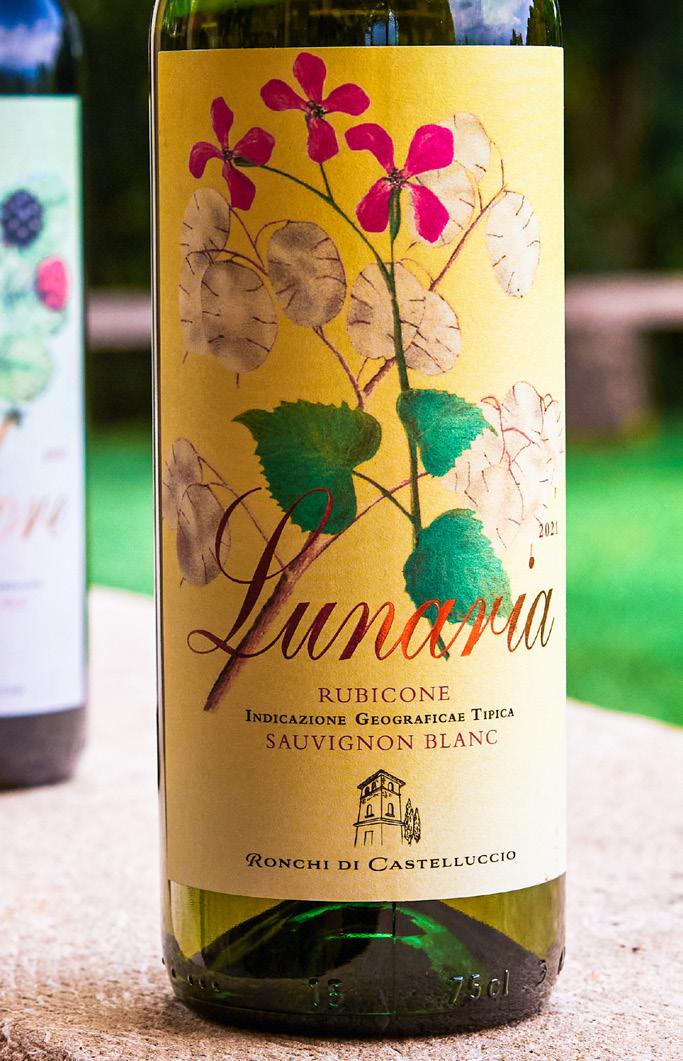
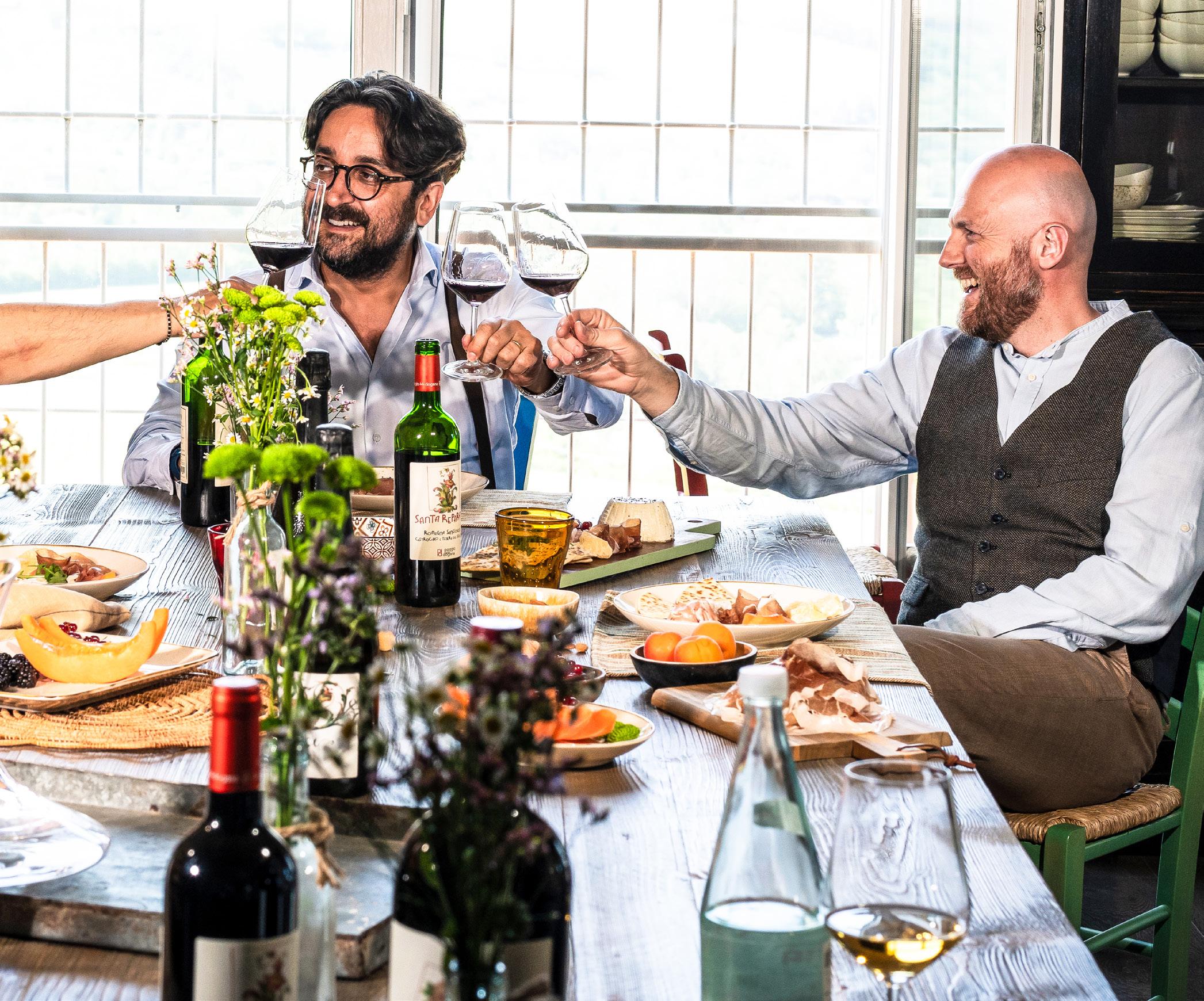

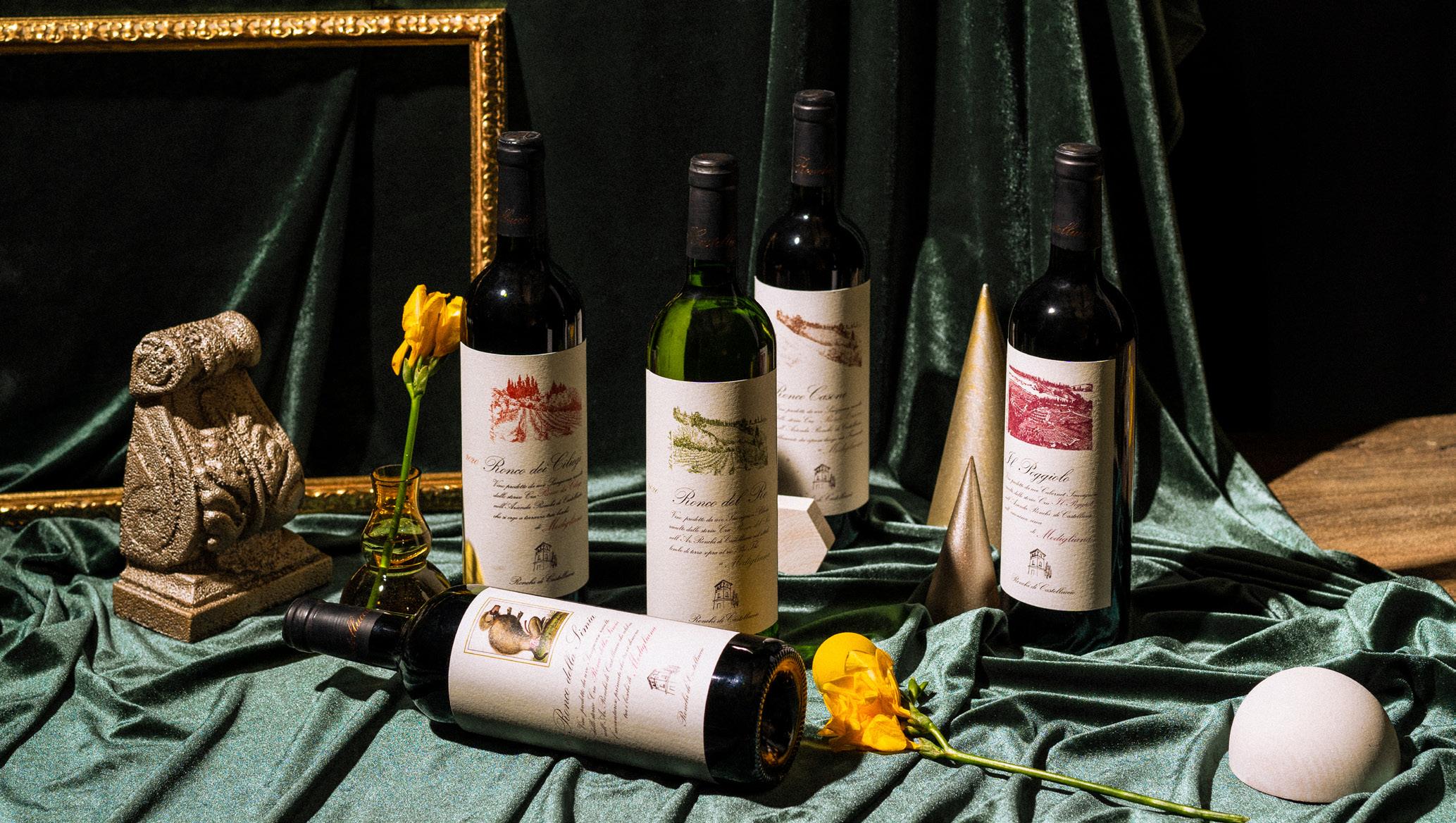
Paolo Rametta, Aldo Rametta and Fabio Castellucci.
thanks to the initiative and perseverance of small-scale producers. It is an area where wine has always been an essential part of life, seen as a staple rather than a simple beverage—often necessary for farmers to meet their daily nutritional needs. “It was the farmers and shepherds who grew grapes and made wine in the past,” explains Aldo. Wine was not just a drink, but a fundamental part of local identity, as it still is today.
MODIGLIANA THEREFORE HAS A VERY DISTINCTIVE TERROIR characterized by its altitude, forest landscape, and soils of marl and sandstone formed over millions of years. This means sandstone soils on steep slopes that become increasingly poor the higher you climb into the Apennines. However, it is the forest that is the dominant factor in the Modigliana area. In fact, smallscale producers here see the forest as their ally, living in symbiosis with the vineyards and contributing to biodiversity. The area is divided into three valleys—named after three streams: Ibola, Tramazzo, and Acerreta—each with its own microclimate. The Ibola valley is the darkest and most secluded, at higher altitude with dense forest and mountain vegetation, while Acerreta lies at the lowest elevation. Ronchi di Castelluccio is located in the Acerreta valley at 400 meters, where the landscape is “more open and brighter, with Mediterranean vegetation,” he explains.
RONCHI DI CASTELLUCCIO WAS FOUNDED IN 1974 by Gian Vittorio Baldi, an Italian film director, producer, screenwriter, and academic, who dreamed of making wines with a unique character around Brisighella and Modigliana in Emilia-Romagna. He sought a beautiful area in Romagna with a long history of viticulture that was neither too close nor too far from the sea. Baldi eventually found Ronchi di Castelluccio, where he and his wife, actress Macha Méril, realized their dream of producing French-inspired, top-quality organic wines with long ageing potential. This was long before organic and biodynamic winemaking became widely recognized.
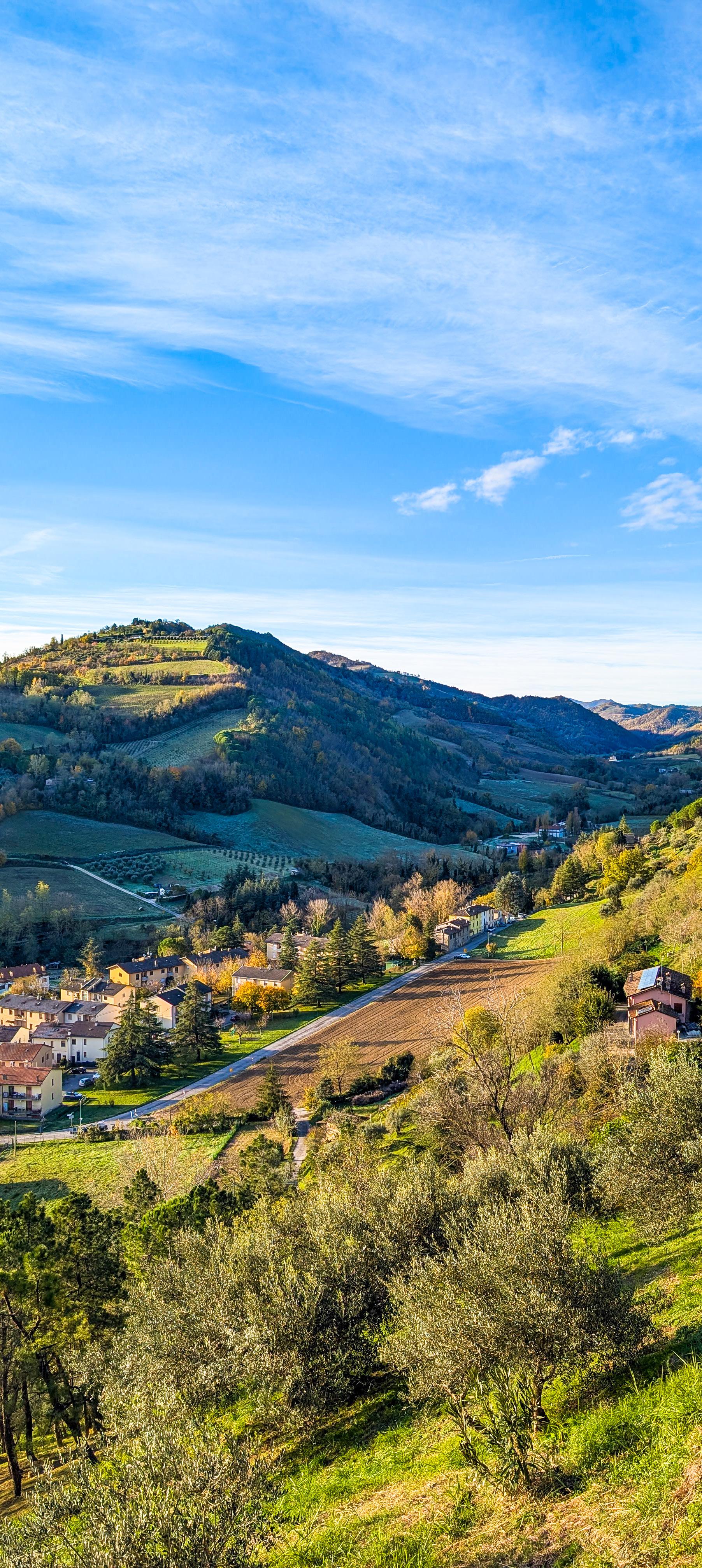
GIAN VITTORIO BALDI WANTED TO CREATE WINES with a clear local identity and enlisted the help of Luigi Veronelli (an Italian food and wine critic who promoted Italy’s gastronomic and wine heritage in the 20th century), Remigio Bordini (a renowned agronomist and Sangiovese expert in Emilia-Romagna, whose son Francesco Bordini now oversees the vineyards at Ronchi di Castelluccio), and his son Gian Matteo to put the plan into action. The two flagship grapes were initially Sauvignon Blanc and Sangiovese, resulting in the so-called “Ronchi” wines. A ronco is a small plot of land cleared from forest with a billhook and then planted with vines. Ronchi di Castelluccio has therefore played a significant role in wine production in Modigliana since the 1970s, particularly in the production of Sangiovese di Romagna wines.
ALDO AND PAOLO RAMETTA REMAIN firmly committed to preserving the wines’ unique local identity while also restoring or replanting parts of the vineyards and introducing certain innovations. The Rametta brothers have their roots in Emilia-Romagna, although they were born in New Orleans in the United States and later lived in Switzerland before returning “home” to attend university in Bologna. They worked in other industries before fully committing to realizing their dream of owning a winery together in Romagna. They began by acquiring Poggio della Dogana in Castrocaro Terme near Brisighella in 2016, before deciding to take over Ronchi di Castelluccio in 2020. According to Aldo, their passion for wine came from their father, who was a “great wine enthusiast” and collector who gathered wines during his travels around the world.
RONCHI DI CASTELLUCCIO COVERS APPROXIMATELY 60 HECTARES, of which 12 hectares are vineyards and the rest forest and other land. Aldo and Paolo plan to
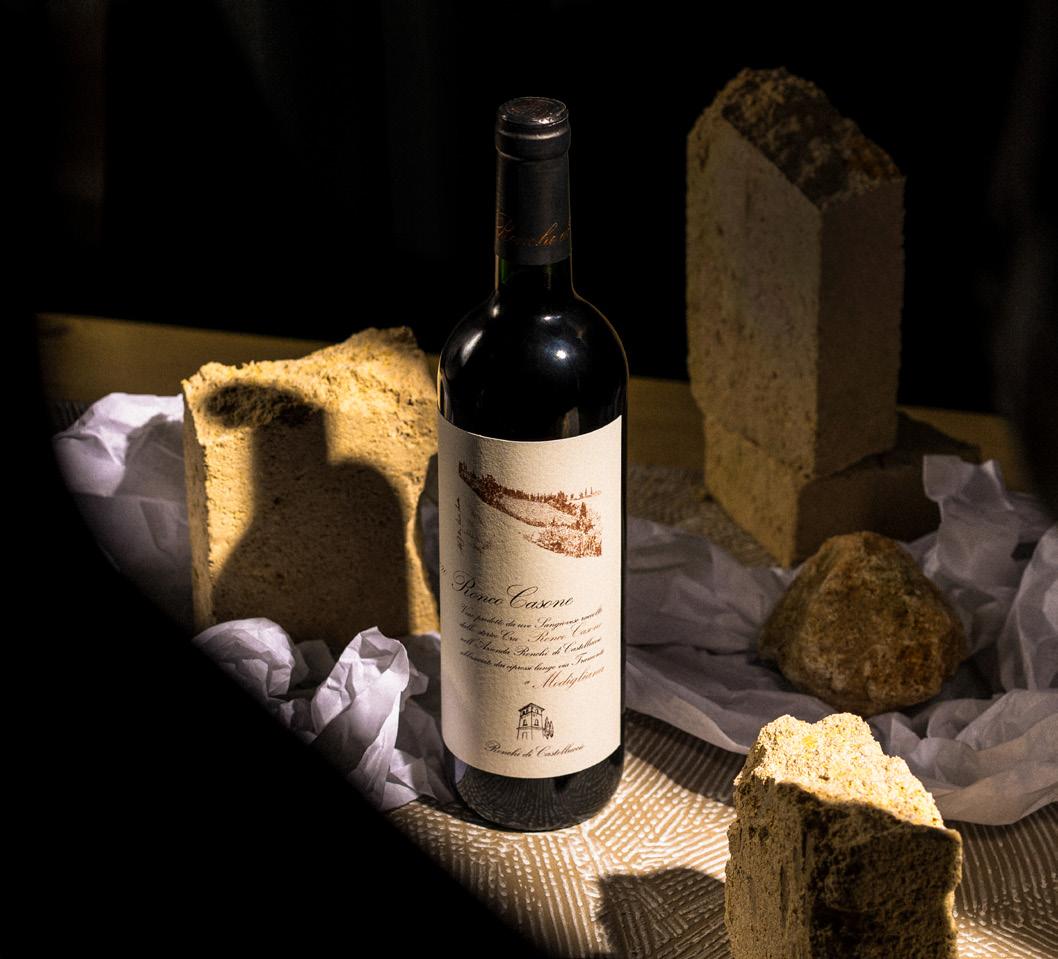
plant an additional 15 hectares of vineyards over the next three years and have also expanded operations to include organic cattle farming. It is a sustainable and “circular” project, as “we use manure from the cattle in the vineyards,” with the goal of achieving a “closed-loop system,” says Aldo Rametta.
Sangiovese is the king among grapes, even in Romagna. It is a grape that thrives in poor soils where it has to struggle to grow, which means it does well in the challenging terrain of Modigliana. The grape’s origin remains something of a mystery to this day, but more recent research and DNA analyses suggest that its roots lie in southern Italy rather than in Tuscany.
IT IS UNCLEAR WHEN SANGIOVESE FIRST BEGAN TO BE CULTIVATED in Romagna, although local journalist Beppe Sangiorgi claims it was first mentioned in a written document in the region in the 17th century. Research has also shown that monasteries in the Apennines played an important role during the early Middle Ages in the development of Sangiovese cultivation and winemaking. At Ronchi di Castelluccio, the vineyards have been planted with massal selections of ecotypes of Sangiovese and Sauvignon Blanc from the best existing vines. This means that they still cultivate ecotypes unique to the estate today, thanks to the massal selections made in the 1970s.
As I began tasting the wines together with Aldo, three cyclists arrived and knocked on the door. They asked if they could take a break, have a glass of wine, and admire the view over the Apennines from the terrace before continuing. Wine in Modigliana is truly an experience that combines history, culture, nature, agriculture, and conviviality.
TASTED WINES Ronchi di Castelluccio
LUNARIA, RUBICONE IGT SAUVIGNON BLANC, 2023
92 This pure Sauvignon Blanc is something of their “bestseller,” says Aldo Rametta. Up until 2023, this wine was made entirely from their own grapes, but over the past two years they have also had to source grapes from other local producers. The grapes are grown in clay and sandy soils at 300 to 400 meters altitude. It is a wonderfully fresh wine with typical green Sauvignon Blanc aromas—some boxwood at first, followed by softer green notes, citrus fruits, forest vegetation, and a summery marine salinity. It is a Sauvignon Blanc in Modigliana style that evokes the forest surrounding this area. A slim, highly drinkable white wine, perfect as an aperitif or with lighter dishes.
SOTTOVENTO, RUBICONE IGT SAUVIGNON BLANC, 2021
91
Sottovento is one of Ronchi di Castelluccio’s classic wines and highly representative of Modigliana’s terroir. The vineyard, planted in 1989 with alberello-trained Sauvignon Blanc vines at 390 meters altitude and southwest exposure, gives this wine its character. The watercolor label, whose brushstrokes are meant to depict the sea breeze blowing into Modigliana, makes the bottle a small work of art. It is a fresh and inviting
white wine with soft aromas, a slight creamy touch from fermentation in small oak barrels, followed by green notes, moss, tropical fruit, and forest vegetation. It has a good grip and structure on the palate, fine acidity, and a sense of sea breeze.
BELLADAMA, ROMAGNA ALBANA SECCO DOCG, 2023
92 This pure, dry Albana wine is produced at their Poggio della Dogana vineyard in Castrocaro Terme, within the Brisighella subzone. The vineyards lie on sandy soils at 200–300 meters altitude. A typical feature of Albana wines is the aroma and slight finish of almond, which we find here combined with citrus, yellow fruit, white flowers, and herbs, followed by a complex palate of grapefruit, orange, and herbs such as sage and rosemary. Belladama is aged exclusively in cement tanks, making it a pure and expressive white wine.
FARFARELLO, ROMAGNA ALBANA SECCO DOCG, 2022
91
Farfarello is their more structured white wine in a Riserva style, made from Albana grapes grown in Brisighella, like Belladama. Brix is a new project for Albana wines from Brisighella initiated by the local winemakers’ association, “Brisighella, Anima dei tre Colli.” The aim is to
highlight the distinctive terroir of the northern, central, and southern zones of Brisighella suitable for Albana cultivation. Fermentation takes place in barrique, followed by nine months of ageing in small oak barrels. It has a beautiful golden color, and the oak fermentation and ageing give it a charmingly smoky character, almost reminiscent of flint. It is fresh and mineral-driven with a complex bouquet of herbs, broom, white flowers, citrus, yellow fruit, and Mediterranean vegetation. Fine acidity, salinity, and a light tannic touch make it a balanced white wine. Elegant, with an almond finish and great persistence.
LE MORE, ROMAGNA SANGIOVESE MODIGLIANA DOC, 2023
93
This is a red wine with true Sangiovese Modigliana character—you can really feel the red fruit, the darker forest surrounding Modigliana at higher altitude, the Apennine Mediterranean vegetation, the sea breezes, and the moraine soils. It is a vertical, lively, soft, and juicy Sangiovese that is perfect for sharing with friends on a Friday evening. Together with Lunaria, it is one of the two wines Aldo and Paolo call the young rebels (giovani ribelli).
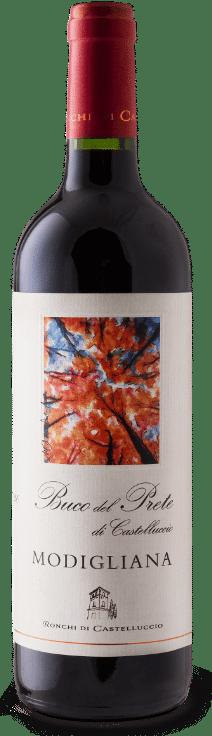
BUCO DEL PRETE, ROMAGNA SANGIOVESE
MODIGLIANA DOC, 2021
93
Here we enter Ronchi di Castelluccio’s Sangiovese cru wines. The Buco del Prete vineyard was planted in 1989 using massal selection of local clones of Sangiovese Grosso, and has been revitalized by Aldo and Paolo since they took over. It is a wine that serves as an excellent introduction to the iconic Ronchi wines. Aged for 12 months in 3 000-liter oak casks, it highlights the characteristic traits of Sangiovese beautifully. Full-bodied and fruit-driven, with notes of violet, forest undergrowth, herbs, moss, spice, and a touch of pepper. Fresh and fruity on the palate, with good grip, full yet still in a slim and elegant style.
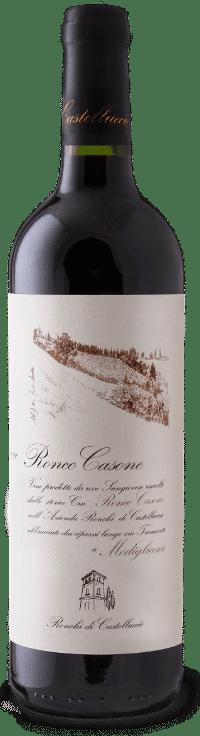
RONCO DELLA SIMIA, ROMAGNA SANGIOVESE
MODIGLIANA DOC, 2020
92
Ronco della Simia is made from Sangiovese grapes selected from local ecotypes in the Modigliana area. This is one of their top wines—powerful and full-bodied yet still elegant, from thick-skinned Sangiovese. The vineyard was planted by Remigio Bordini in 1975 and restored from 2019, making it one of the estate’s historic vineyards from the Vittorio Baldi era. The wine is aged for 10 months in tonneaux and smaller oak barrels, followed by at least 10 months in bottle to find its balance. Initially, one senses moraine soils, forest vegetation, and the typical slightly “bloody” mineral side of Sangiovese, followed by cherry, spice, and herbs. After an hour in the glass, even more beautiful fruit emerges. A wine with long ageing potential that only improves over time.
RONCO DELLA SIMIA, ROMAGNA SANGIOVESE
MODIGLIANA DOC, 2021
94
The 2021 vintage of Ronco della Simia is more open and approachable, as it was a warmer year than 2020, making it more fruit-driven, juicy, and ripe. Alongside cherry and other red fruits, it shows spicy notes, tobacco, herbs, and a sense of forest. Fresh and fruity on the palate, with good grip, structure, and finesse. A wonderful Sangiovese that feels more ready to drink than the 2020 vintage.
RONCO CASONE, ROMAGNA SANGIOVESE MODIGLIANA DOC, 2020
96
The forests growing in the Apennines around Modigliana truly come to life in this wine. I was immediately reminded of the line “Midway upon the journey of our life I found myself within a dark wood…” from Dante’s Inferno—not in the sense that “the straight path was lost,” but more as a labyrinth of myriad darker aromas and flavors. It is a slightly austere wine with vibrant acidity, salinity, notes of red fruit, blackberry, undergrowth, spice, and tobacco, in a contemporary yet powerful style. They themselves call it their “highlander wine.” Once again, Sangiovese Grosso is used, and the vineyard from 1979 has a northwest exposure, which in recent years has proven beneficial due to climate change. Even though it is a somewhat “dark” wine, it possesses finesse—and a long ageing potential.
LUCAS MADONIA
When Burgundy meets Valais
Switzerland may be home to a handful of respected biodynamic producers such as Marie-Thérèse Chappaz and Domaine de Beudon, but on the international natural wine scene it is so far only the mysterious Mythopia that has truly made a name for itself. Yet in the same region where all three are active, a young Frenchman is working to change that. We have met the country’s most interesting new addition, Lucas Madonia, in Corin-de-laCrête just below the ski resort of Crans-Montana.
BY TOBIAS TULLBERG
VALAIS IS NOT ONLY SWITZERLAND’S most interesting wine region, but also one of the most spectacular in the world. In the valley flows the Rhône river, on its way down toward the most beautiful part of Lake Geneva, and on both sides dramatic snow-covered mountain peaks rise up. Beneath these white summits, at between 270 and 1100 meters altitude, there are seemingly endless terraced vineyards. Along a 100 km stretch one finds no less than 5000 hectares of vines. Here grows a lot of pinot noir and the national grape chasselas, in the region known as fendant, but also a not insignificant amount of gamay. Savagnin, known from Jura, also performs well here, and autochthonous grape varieties such as petite arvine and humagne rouge contribute additional ampelographic distinctiveness. The same could be said for local rarities such as diolinoir, cornalin, rèze, lafnetscha and the gamay hybrids garanoir and gamaret.
FOR LUCAS MADONIA, THE REGION’S striking potential revealed itself during a journey – on his way back home to France from Italy – one day in 2021. Already the following year he had moved there and begun tending his first hectare of vines. Things moved quickly, but if there is one thing that is easy in Valais, it is renting vineyard land, in fact so easy that it is often completely free of charge. Buying is another matter. Even though landowners in the region are becoming less and less interested in viticulture, they are inclined to remain just that – owners. What is not free, however, is living in Switzerland. Especially not near highly exclusive ski resorts, of which Valais has no shortage. Well-known examples are Verbier and Zermatt – Lucas Madonia would eventually end up just below Crans-Montana, but now we have jumped ahead a few steps.
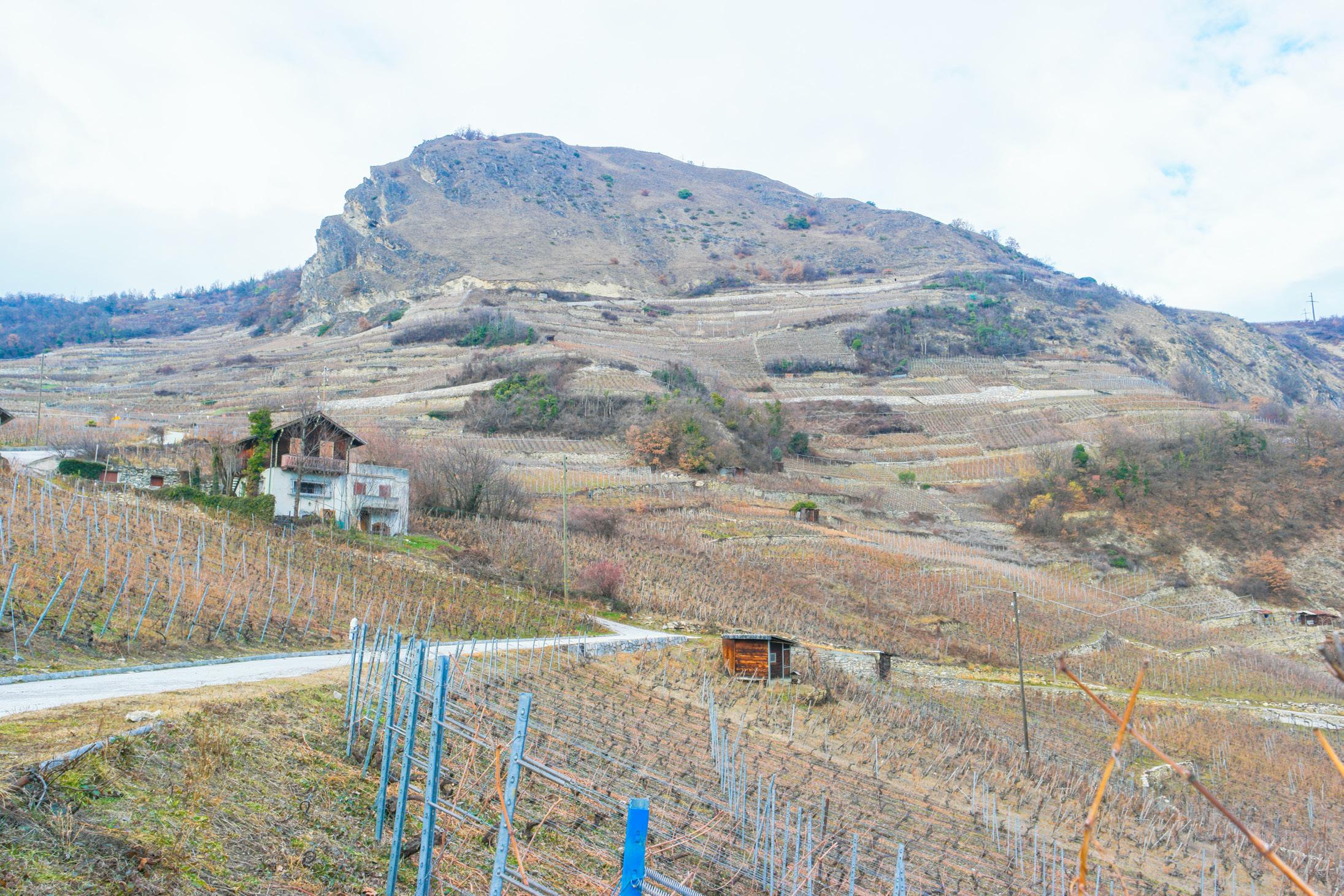
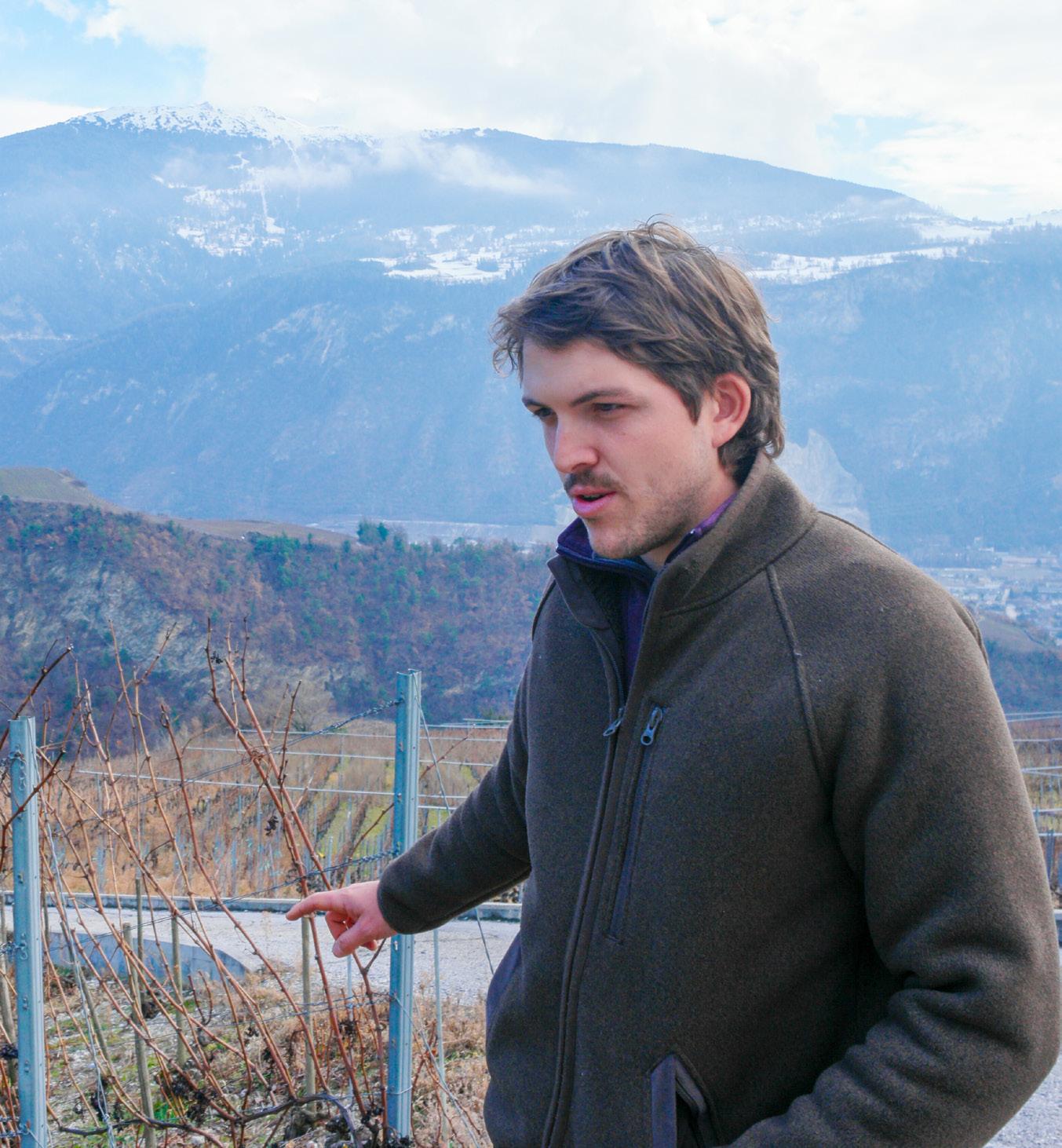
ORIGINALLY FROM MARSANNAY ON THE OUTSKIRTS of Dijon, Lucas grew up surrounded by viticulture without having a direct family connection to production. Being a vineyard worker was however a common job in the surroundings, so the idea was close at hand when he searched for his path in life. In 2017 he got the chance to try the profession with Marc Soyard, whose Domaine de la Cras we visited in Livets Goda issue 174. This was followed by an experience in Australia before, for his studies, he chose to leave his home region in favor of the more natural wine–oriented neighbour Jura. During the two years of a so-called BTS at the school in Montmorot he interned with Tony Bornard in Pupillin.
BACK TO THE ADVENTURE IN VALAIS where the year 2023 brought an additional 0.7 hectares of land. During the 2025 growing season he managed 2.5 hectares of steep and difficult-to-work vineyards at between 680 and 820 meters altitude in the surroundings of Ayent. The soils consist mainly of schist, limestone, loess, moraines, quartz and only a very small amount of clay. The vineyards are
Lucas Madonia.
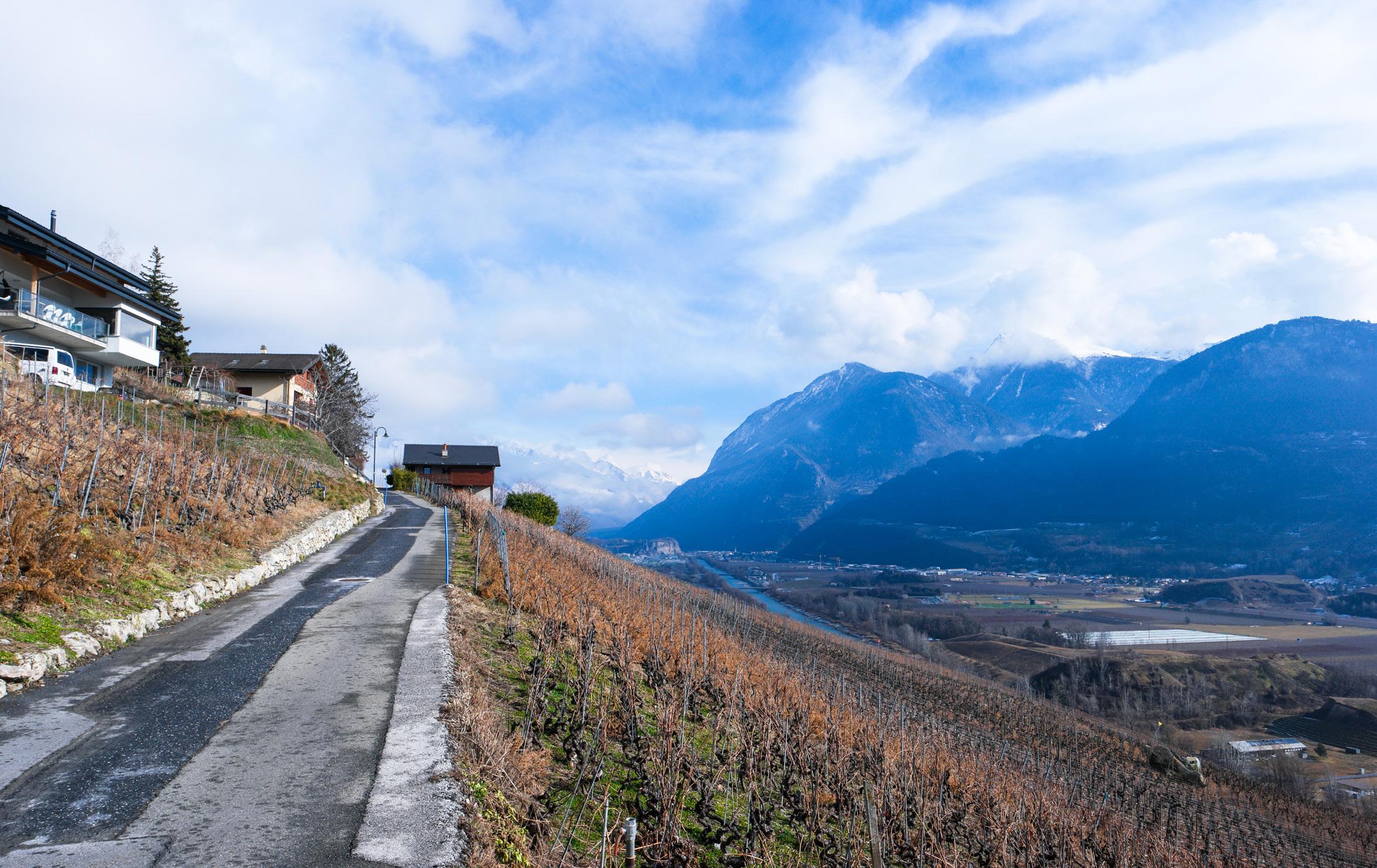
largely terraced, which prevents any mechanization of vineyard work. Grass management is done with a brush cutter and the organic spraying of Bordeaux mixture is carried out with a so-called atomiseur à dos. Normally there are 5–6 applications with less than 1 kg of copper per hectare, which is extremely modest. 2025 was however a historic year as the exceptional weather conditions meant that Lucas could completely avoid treating the vines. Add to that the fact that the wines are already zero-zero and you get something as unique as zero-zero-zero.
IT IS WITH THE RESULT OF THE SAID growing season that we begin our visit, after the morning’s thick fog made the planned tour of the vineyards impossible. Normally the sun shines here in these parts; the town of Sierre, ten minutes from where we are, is even called the Cité du Soleil as it on average can boast 300 days of sunshine a year. Add to that the fact that it rarely rains here in the lower parts of the mountain slopes and the conditions for organic viticulture soar. The risk of drought is also balanced by irrigation systems naturally replenished by meltwater from higher up in the mountains. One might think that organic principles are therefore more the rule than the exception here, but then one underestimates how conservative the conven-
tional majority of the Swiss wine industry is. It requires no particular expertise to see how much glyphosate is still used here with the aim of creating an easily managed but lifeless monoculture. The practices are reflected in equally heavy-handed oenology resulting in unspeakably dull commodity wines. Lucas Madonia represents, together with among others Mythopia and Domaine de Chérouche, a green oasis in an all-encompassing herbicide desert. But if one lifts one’s gaze from the neighbouring vineyards, the view is second to none, something we become aware of during the afternoon when the fog lifts.
THE COMPLETELY UNSPRAYED GRAPES OF 2025 have in February 2026 finished fermenting and are currently resting in their used barrels. Lucas embraces his Burgundian roots by focusing on the production of vineyard-specific cuvées. The winemaking also bears traces of his time in Jura as all red grapes are destemmed manually using a so-called crible (a device of perforated wooden planks assembled into a frame with high edges over which the grape clusters are poured; gentle rotating hand movements allow only nearly intact berries to fall through the holes while the stems remain). Maceration is then long; the grapes are generally pressed after 30 days and in some cases
pushed up to 40. The white grapes, on the other hand, are pressed directly on harvest day and the juice is transferred to 400-liter oak barrels for fermentation and aging. After this transfer the wines never again see the inside of a pump as bottling, which usually takes place in August, is done by gravity directly from the barrels. Unsurprisingly, sulphur is completely banned in the winemaking. Production reaches around 15 000 bottles per year, but Lucas now also has help from his girlfriend Ariane Gagné, originally from Quebec.
TOGETHER WE TASTE AROUND twenty barrel samples; in true Jura fashion we begin with the reds. Lucas blends samples from three different barrels and explains that he wants to produce an entry-level red in liter bottles with the idea that it should be practical to sell by the glass in bars and restaurants – an idea he has previously realized with a white wine. The red version is largely based on carbonic fermentation of gamay and diolinoir. It is simple, fun and clean but above all feels stable enough to withstand some time in an already opened bottle. It is very interesting to finally taste such a purist expression of this origin. We have been in the area before, with Marie-Thérèse Chappaz and Domaine de Beudon in issues 160 and 164 respectively, but the fact is that despite their biodynamic farming they produce their wines fairly conventionally – particularly when it comes to sulphur. Mythopia, which lies even closer to where we are, is in some way the other side of the same coin.
HERE NATURAL WINE
PRINCIPLES ARE TAKEN to such a hands-off level that they over several years develop into extremes where they taste more like Mythopia itself than any given origin. Another barrel sample consists of a pinot noir from sunny Sierre and is a clear example of the kind of wine Lucas wants to make. These are wines that stand in strong contrast to the prevailing glouglou trend of equally pale as easy-drinking reds. The same can be said for his 40-day macerated gamay grown at 700 meters altitude in Tsampon. Already just a few months after harvest it comes with a deep fruit that calls for more time in both barrel and bottle. A serious natural wine construction with a clear address. Another barrel sample that could not come from anywhere else is his first vinification of the grape cornalin, whose vines
are rooted in the sun-drenched soils of Sierre. When this local talent is freed from textbook oenology and, not least, sulphur, it tastes as if pinot noir and syrah had an alpine love child.
CHASSELAS, WHICH IS DRUNK SO much in Switzerland, can however be somewhat more difficult to convert into natural wine. The reason is its high pH, which leads to a tendency toward mousiness if protective sulphur is not added. For his entry-level white in liter bottles, Lucas has solved this issue by adding more acidic sylvaner. The white version also undergoes carbonic handling and results in a more avant-garde expression that is likely to find its audience – easy to like in its fruit-driven nature. More serious is his savagnin, whose vineyards we previously tried to make out in the fog. Here there is power, acidity and elements of aromas that almost resemble sauvignon blanc. Another interesting grape variety is petite arvine, which in a barrel where it has co-fermented with savagnin contributes clear notes of rhubarb.
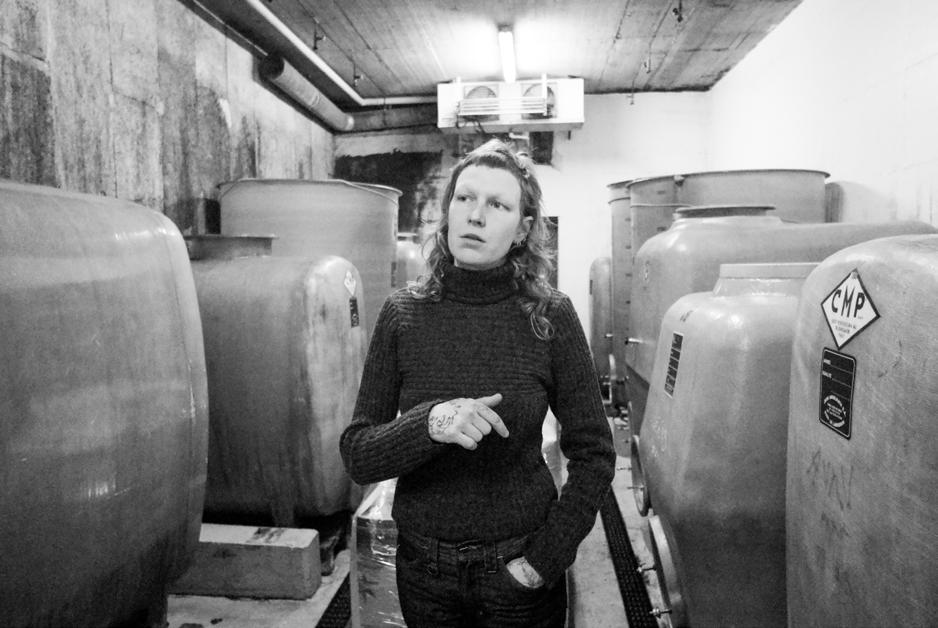
OVERALL IT IS STRIKING HOW CLEAN and coherent these wines are so early in their élevage. Apart from a hint of mousiness in a winter-reductive chardonnay barrel, we do not encounter a single natural wine symptom despite February being far from the best month to taste living wines. There is a kind of Burgundian precision to Lucas’s winemaking that gives his wines a strong sense of seriousness. Something that could also be said about his person. After spending a full day with Lucas and Ariane, which in addition to barrel tasting included lunch and visits in the vineyards, I am convinced that I have just visited the Swiss producer with the greatest international potential. There is an all-encompassing completeness to his production, from a sense of an origin far from overexposed to a Jura-influenced natural wine sensibility with a feel for aesthetics, that feels entirely unique in the country. In Geneva his wines are of course easy to find, but in London and Paris many have also understood the point. In Sweden, however, there is still no representation. If I were an importer and had to choose a single producer from Switzerland, I would without hesitation choose Lucas Madonia today.
Ariane Gagné.
WINES TASTED Lucas Madonia
ADIEU CHASSELAS 2023
91 This directly pressed chasselas was first transferred to 400-liter barrels and later to a transparent bottle with crown cap. 10,6% alcohol, so probably early harvested, which the slightly greener acidity also indicates. A somewhat challenging natural wine nose combining pear with a touch of nail polish remover. The palate is however completely clean and combines tart green apple with beeswax. With some time in the glass lemon zest takes over the aromatic profile. Probably best drunk close to its youthful peak now.
LORMEY CHASSELAS 2022
92
The 2022 chasselas almost looks macerated in the glass but is according to Lucas a direct press. Almond biscuit and peach mingle with orange – a lot of orange. The wine is more open and inviting than Adieu 2023, simply another level free from deviating natural wine aromas. Perfect drinking window now as youthful energy is combined with more tertiary complexity. A hair’s breadth from 93 points, but the
grape variety often lacks the drive and intensity for the next level.
BAHIAN SAVAGNIN 2023
94 Power and intensity are however not lacking in savagnin and Lucas Bahia 2023 is one of the best versions of the grape, outside Jura, that I have encountered. The sweet and rich fruit of dried apricot, with its Arboislike intensity, is held elegantly by the relatively modest alcohol level of 12,7%. A lively acidity lifts the full body toward weightlessness. Perhaps the best wine Lucas has made so far, at least according to himself.
THE BLOUGE 2023
92 Cabernet sauvignon, merlot, riesling and sylvaner is not a blend one encounters every day, but that is what can happen when one thinks freely and combines a red barrel with a white to create a blouge. In the aroma lingonberries and blueberries mingle with a touch of rosehip soup. The palate is an interesting mix of tart strawberries and green tomato. With 11,3% alcohol it is an almost perfect spring wine.
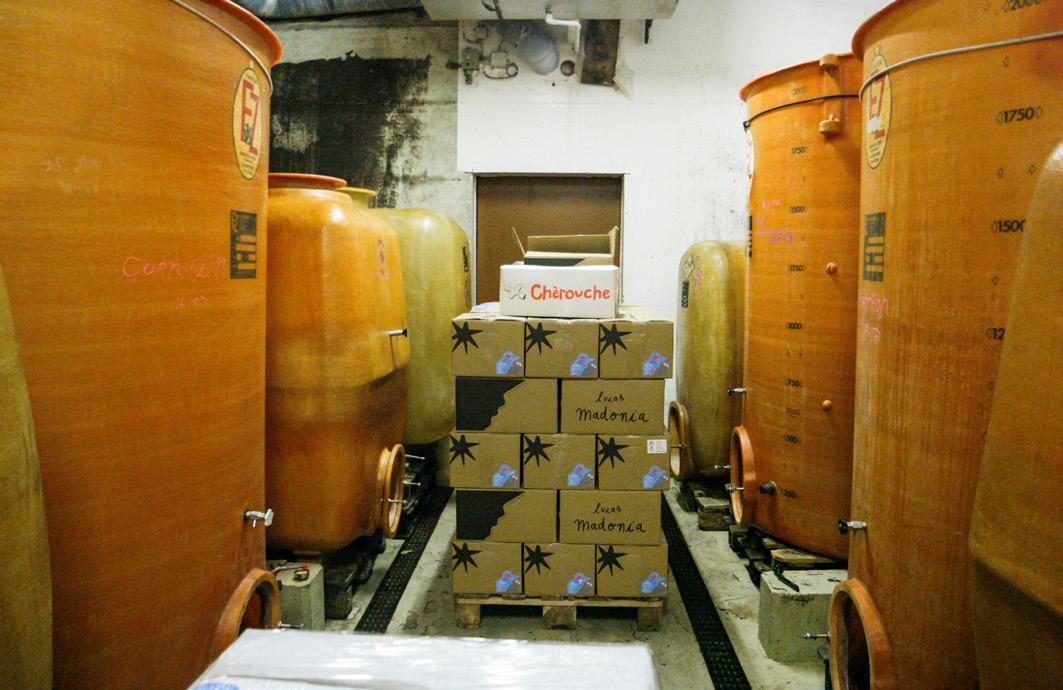
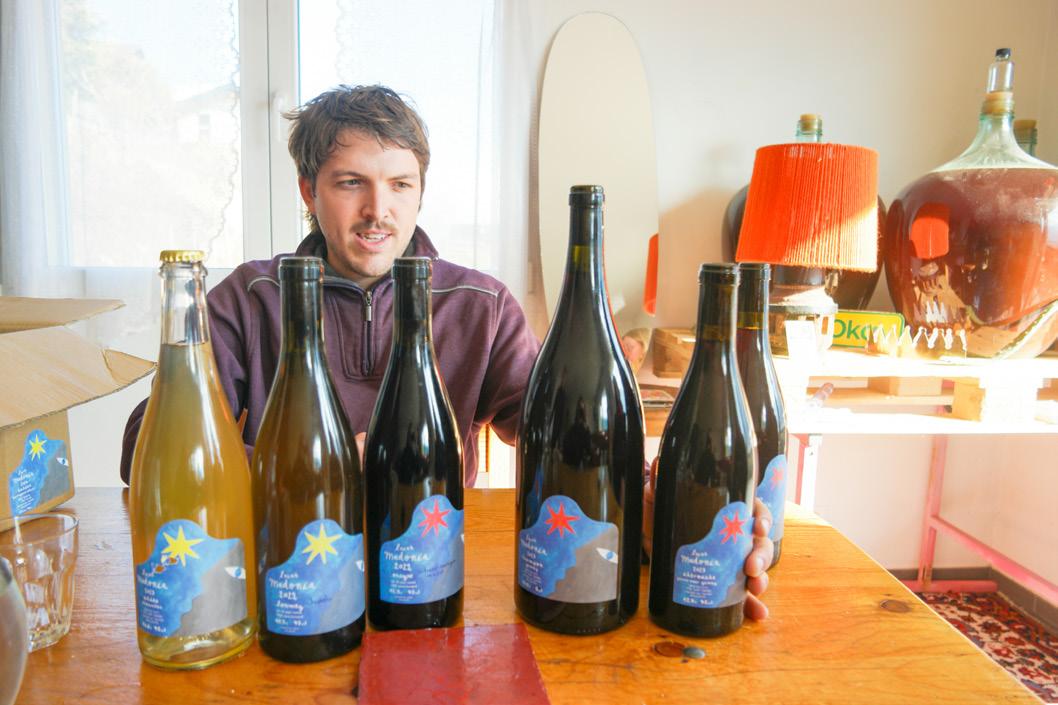
At its core it is easy-drinking with good acidity, but a couple of years in bottle have opened up a depth that takes it to the next level.
LA SIONNE 2023
92
One third each of gamaret, garanoir and chasselas macerated for 23 days before aging in 400-liter barrels. The significant proportion of white grapes softens the edges of the two gamay hybrids without the wine losing much colour. It is a big step closer to a conventional red compared to the previous wine. Here notes of green bell pepper call for attention in a palate otherwise dominated by overripe strawberries and cherries. A fun and versatile wine that is closer to the glouglou category than one might expect from Lucas Madonia today.
TSAMPON GAMAY 2023
93
Uncharacteristically glouglou in style, despite 31 days of maceration, yet still an extremely successful interpretation of alpine gamay. 10,9% alcohol makes this magnum dangerously easy to drink. The fruit is strongly marked by blood orange which makes it taste somewhat like a poulsard from BruyèreHouillon. As I do not have any more bottles of this cuvée, I hardly dare to think what two more years in the cellar would result in. An absolute must to try if the opportunity arises.
ORCYRE CABERNET
SAUVIGNON MERLOT 2022
93
Bordeaux left bank in natural wine attire, but from the Swiss Rhône Valley, may sound strange, but that is exactly what this wine is. Alpine cabernet and merlot macerated for 18 days, without stems, before being pressed to barrel. Blackcurrants and green bell pepper on the nose, raspberry jam on the palate. 12,9% alcohol and no added sulphur make the wine surprisingly easy to drink considering the grape varieties. Time in bottle has allowed the wine to find its balance and there is really nothing to wait for here.
CHÈROUCHE PINOT NOIR GAMAY 2023
93
This solid blend of pinot and gamay undeniably feels like red à la Madonia. Serious and structured natural wine. Despite the palate being tightly knit, the complexity is already beginning to show. Tomato leaf, balsamic vinegar, clove, dried figs and cocoa powder are all examples of aromas and flavours that pass in review. The wine gives a hint of nebbiolo, which suggests that one should wait a few years to get even more out of it. The patient will likely be rewarded with at least two extra points.
www.provinum.se
naturlig elegans
År 1947 gick sju odlare samman för att skapa en fantastisk champagne. Gemensamt för odlarna var deras prisade
Premier Cru- och Grand Cru-vingårdar och en vision att skapa en tidlös, naturlig och elegant champagne känd för sin balans och harmoni.
Med en dominans av Chardonnay, en stor del reservvin och en längre tid på jästfällningen än vad reglerna kräver definierar dessa egenskaper fortfarande Palmers & Co’s stil.
Tidlösa, naturligt eleganta champagner i perfekt balans.*
*Madeleine Stenwreth, Master of Wine
Enastående!
Dina Viner 2024
Palmer gör mig lycklig. En fantastisk bra champagne! Doft och smak av höst, gula äpplen och kärlek med hög syra och vacker mousse. Tack för en kvalitetsprodukt till ett bra pris.
Nordström
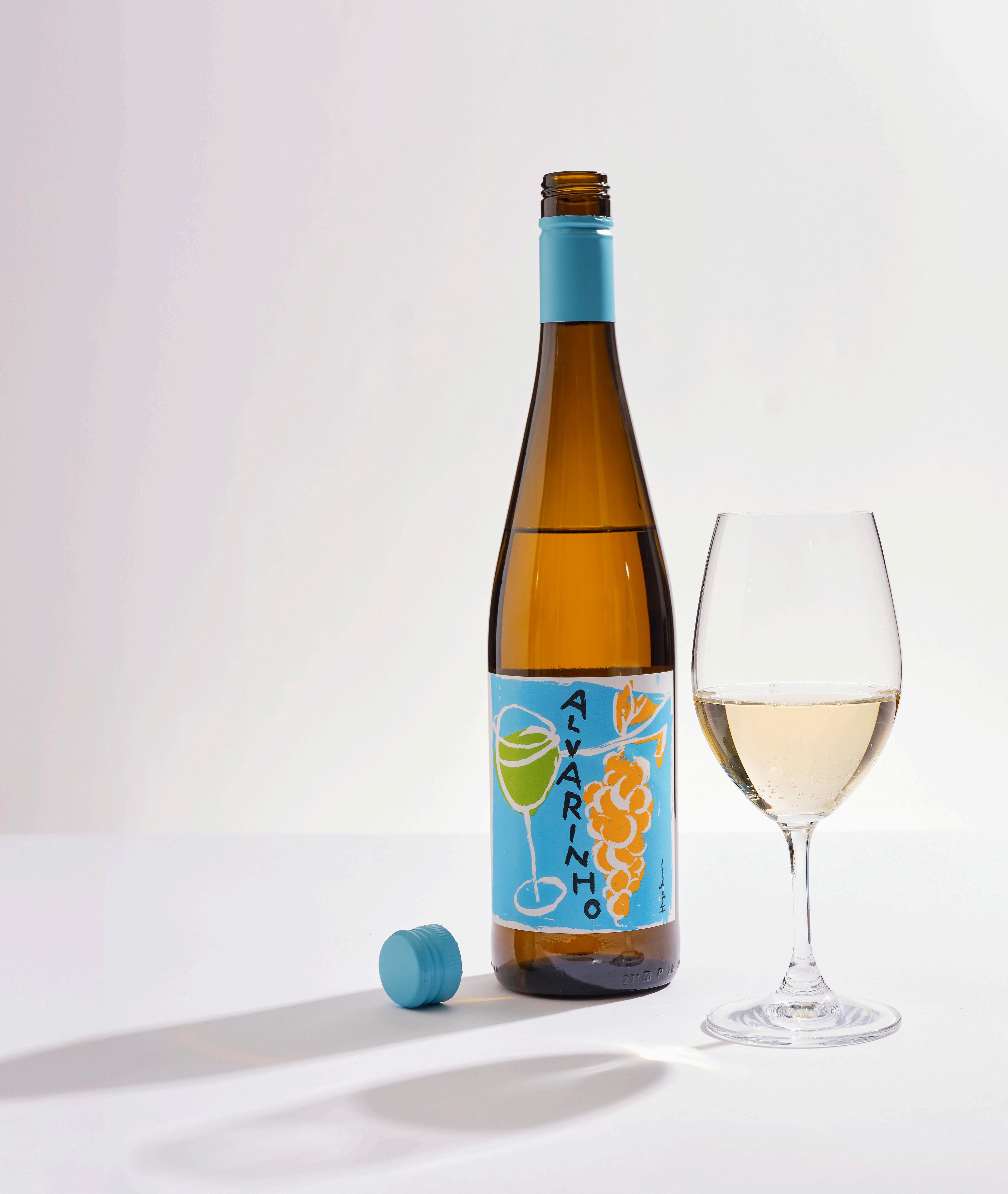
DOMAINE COURBET
Another Side of Jura
With the natural wine trend that has swept through France’s smallest wine region, it is easy to forget that there are other kinds of producers in Jura as well.
Damien Courbet’s family has cultivated grapes in the area around ChâteauChalon since 1869 and was among the earliest in the municipality to specialize entirely in their own production. Livets Goda spent an afternoon — which seamlessly drifted into evening — in the village of Névy-sur-Seille.
BY TOBIAS TULLBERG
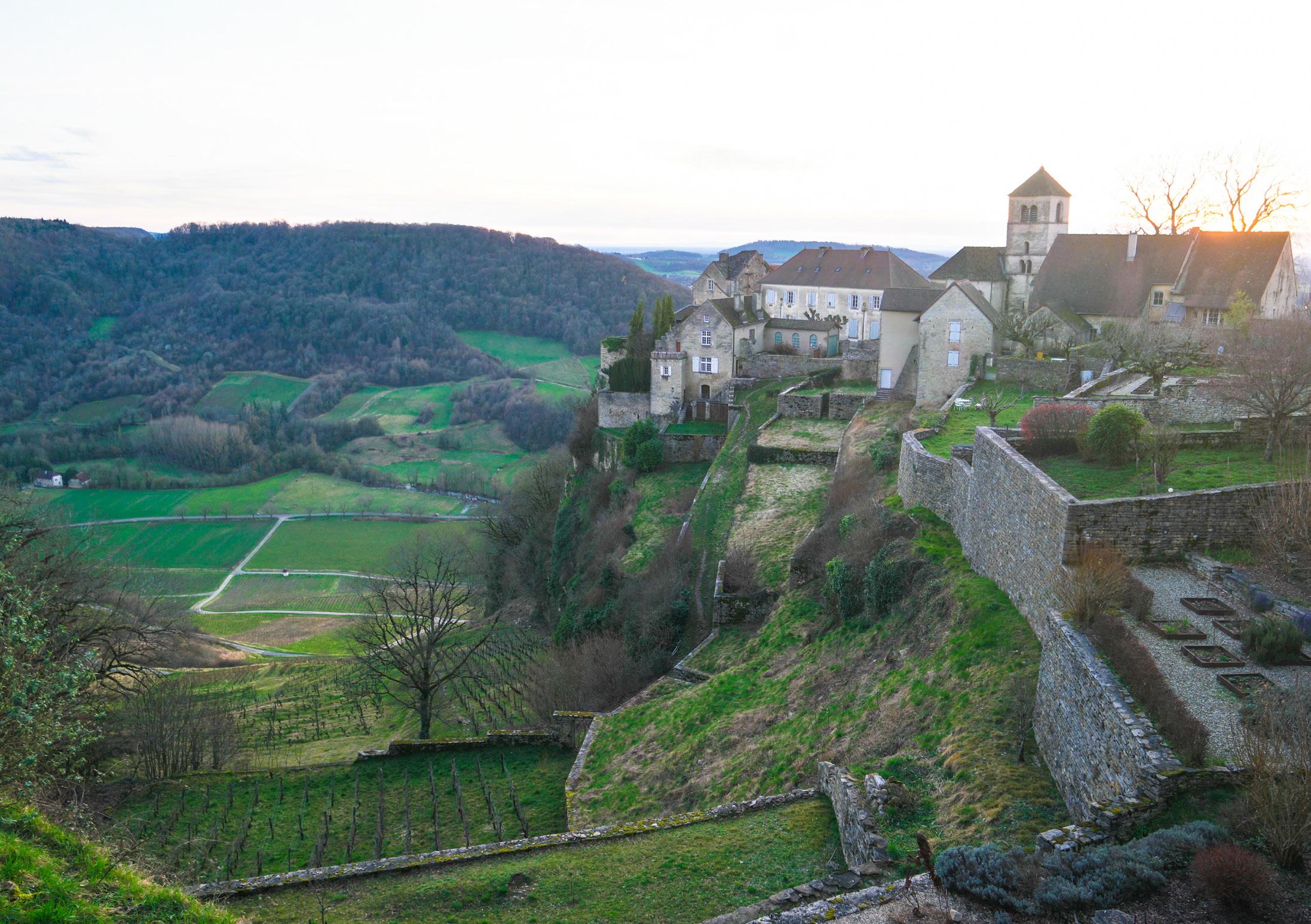
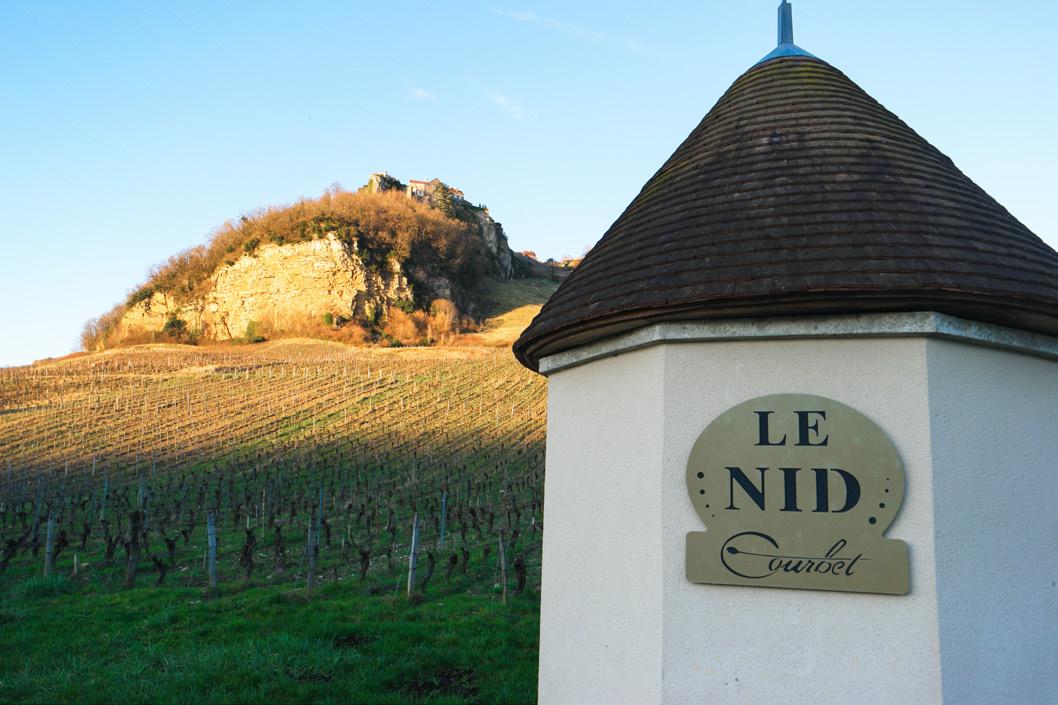
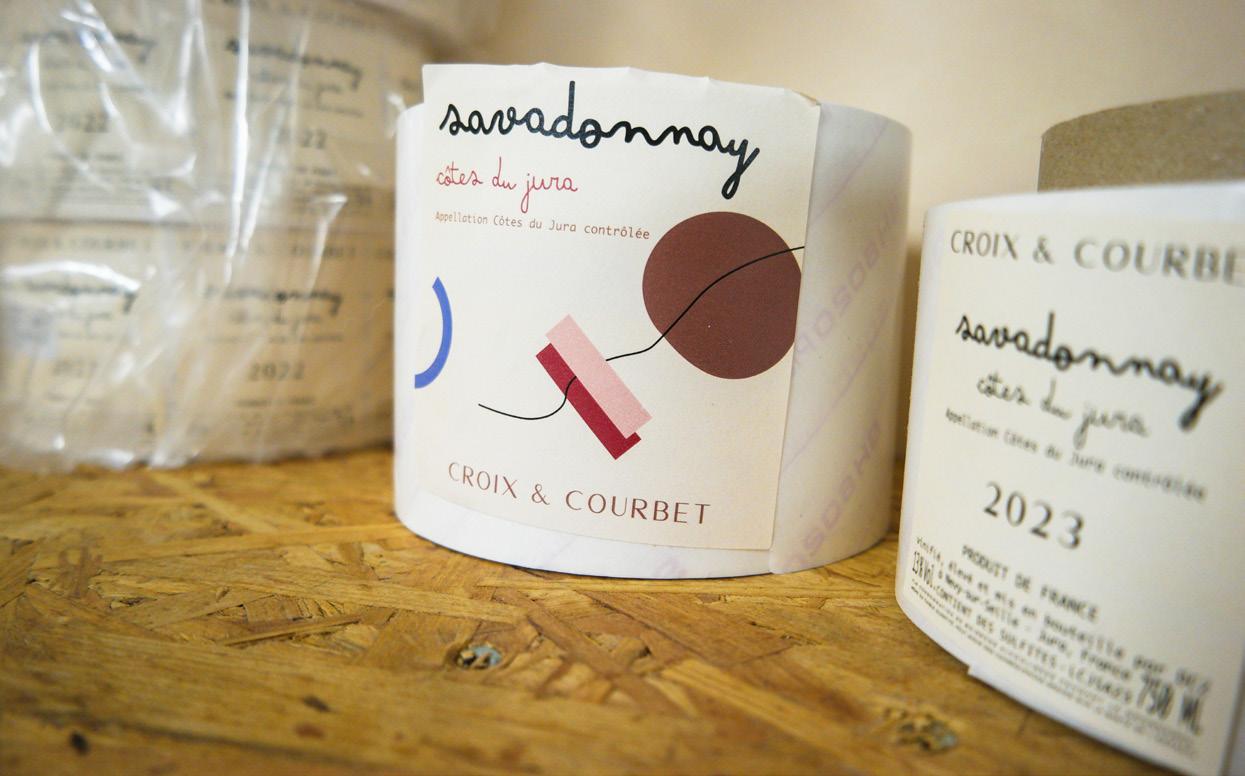
DAMIEN COURBET IS A TRUE VIGNERON. I can say that with confidence, as I often see him out in the vineyards, working side by side with his employees. Many would probably be shocked by how little time a significant number of vineyard owners—especially well-known ones—actually spend with their vines. Something that is equally true in the natural wine world. I rarely see Domaine Courbet’s wines in the restaurants and bars I frequent, and by rarely I mean never. The explanation is simple: they contain added sulfur. The estate is organically certified, and the winemaking could easily be classified as minimum intervention, but—and it is a big but—they are not marketed as natural wine.
For a long time, I had been meaning to delve into Damien’s wines, partly because I see him so often since I live across the street when I am in France, but mainly because more than half of their just over nine hectares lie within the appellation of Château-Chalon— the spiritual home of yellow wine. Since this unofficial Grand Cru covers only fifty hectares in total, these are significant holdings, including three different lieux-
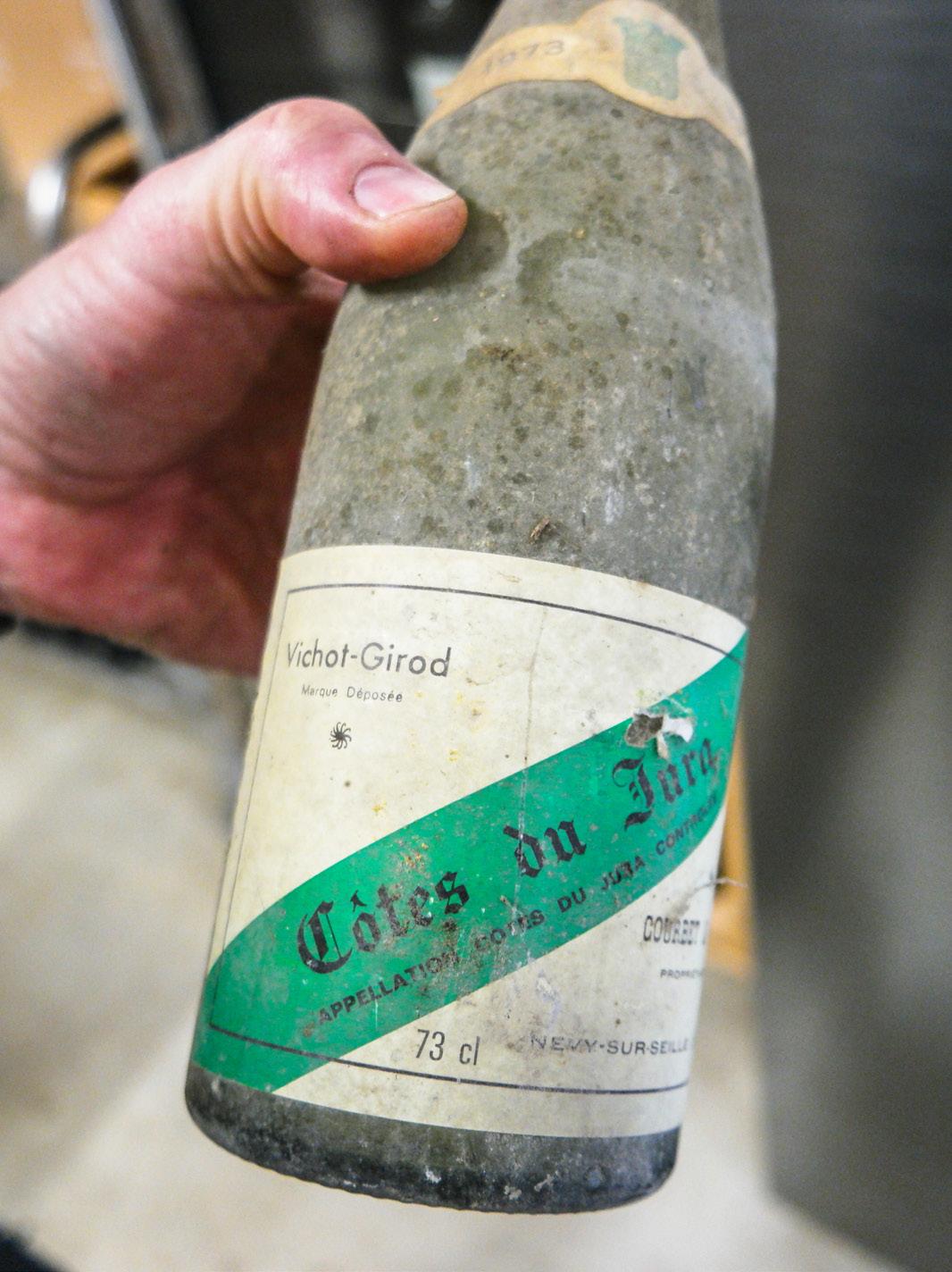
dits: the classic Sous-Roche, the lesser-known Sur Lya, and the legendary Puits Saint-Pierre.
EVEN IF A WINE HAS GROWN within the boundaries of the appellation mentioned above, that alone is not enough to use its name. Only the grape Savagnin may be used, and after fermentation the wine must spend at least six years and three months in barrel, where natural evaporation may not be offset by topping up. At least five of those years must occur under an aerobic biofilm known in French as voile. In other words, only the wine style vin jaune may use the appellation name Château-Chalon. Topped-up wines from the same origin, known as vins ouillés, are labeled Côtes du Jura.
That Damien would become a winemaker seems to have been obvious from the start. His family has been there since 1869. For the first hundred years they ran a mixed farm, which was the norm in the region. The classic combination included cows producing milk for cheese-making and grapes for cooperative wine production.
IT WAS DAMIEN’S GRANDFATHER who specialized the farm in the 1970s and turned it into an estate under the name Vichot-Girod, which came from one side of the family. That name remained on the labels until the 1990s. His father, Jean-Marie Courbet, was also president of the Jura viticulture society for eight years. Damien’s wine studies began with a BTS in Beaujolais and concluded with an oenology degree from Dijon. Before Jean-Marie decided in 2003 that it was time for Damien to return to Névy-sur-Seille to run the family estate, he accumulated a host of French and international experiences.
In Burgundy he spent time with Nicolas Potel, and in Alsace he worked at Zind-Humbrecht. He also spent time in Stellenbosch, and notably completed a harvest with Jim Clendenen at Au Bon Climat. Outside production, he also did a short internship in London at Morris & Verdin. This combination of deep roots and broad international experience is actually quite unique in the region.
ALREADY IN HIS FIRST YEAR BACK in Jura, he began experimenting with biodynamic farming on one hectare of the family land. The conversion from conventional farming then expanded hectare by hectare at a slow pace. In 2014 he began the official conversion to organic farming for the entire estate, with certification completed in 2019. That same year Damien also launched a side business in the form of a négoce together with his former classmate David Croix. Burgundy connoisseurs likely know Domaine des Croix, formerly Domaine Duchet, which changed names in 2005 after a meeting organized by Becky Wasserman. Until 2016 David Croix was also manager of Maison Camille Giroud. Croix & Courbet, as their label is called, is based on purchased grapes, and commercialization and distribution are handled separately from their other productions. So far, only Jura fruit is used, both from Arbois and the areas around Château-Chalon.
SO FINALLY, on a rainy afternoon in February, I meet Damien to taste through the 2025 vintage in the cellar and open a few bottles. Damien arrives straight from the vineyards despite the weather. It has been a very wet month, though there have been worse years. He shows me a photo from 2021 when the entire Sous Roche valley was completely flooded. Many wine regions suffer from water shortages; Jura is not yet one of them.
We each take a glass, and Damien leads me deep into the cellar to a room filled with barrels of Chardonnay. The 2025 vintage here produced juice with very low nitrogen
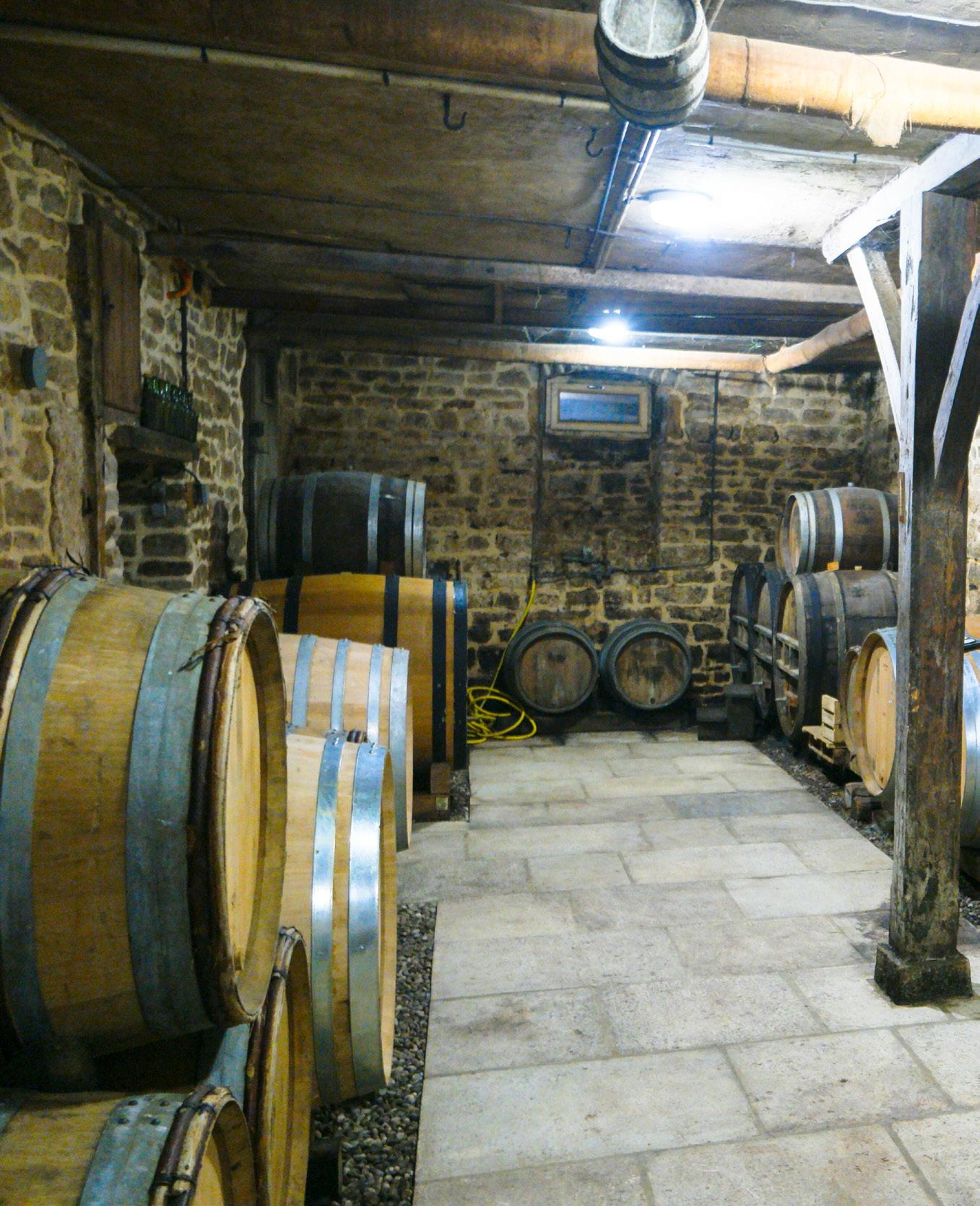
levels—or more precisely, yeast assimilable nitrogen (YAN)—which makes it difficult for yeast to complete fermentation. Unless one adds diammonium phosphate (DAP), that is. A strict natural wine dogmatist would not, and would rather risk a fermentation lasting several years. Damien is an oenologist and helps fermentation along when needed. The result is that all of his 2025 Chardonnay barrels are already dry during our visit.
WE BEGIN WITH A NEW ADDITION, a lieu-dit called En Crochant just below the village of Ménetru-le-Vignoble, planted in 1961. It is the first year Damien harvests this Chardonnay, and he should be pleased with the investment. It already tastes elegant and surprisingly complete, though his Chardonnay normally receives between 18 and 24 months of barrel aging.
I ask about what, to me, is the elephant in the room: the addition of sulfur. It turns out the doses are smaller than I had expected. After pressing, when the juice settles overnight, 1 gram per liter is added. At bottling, the
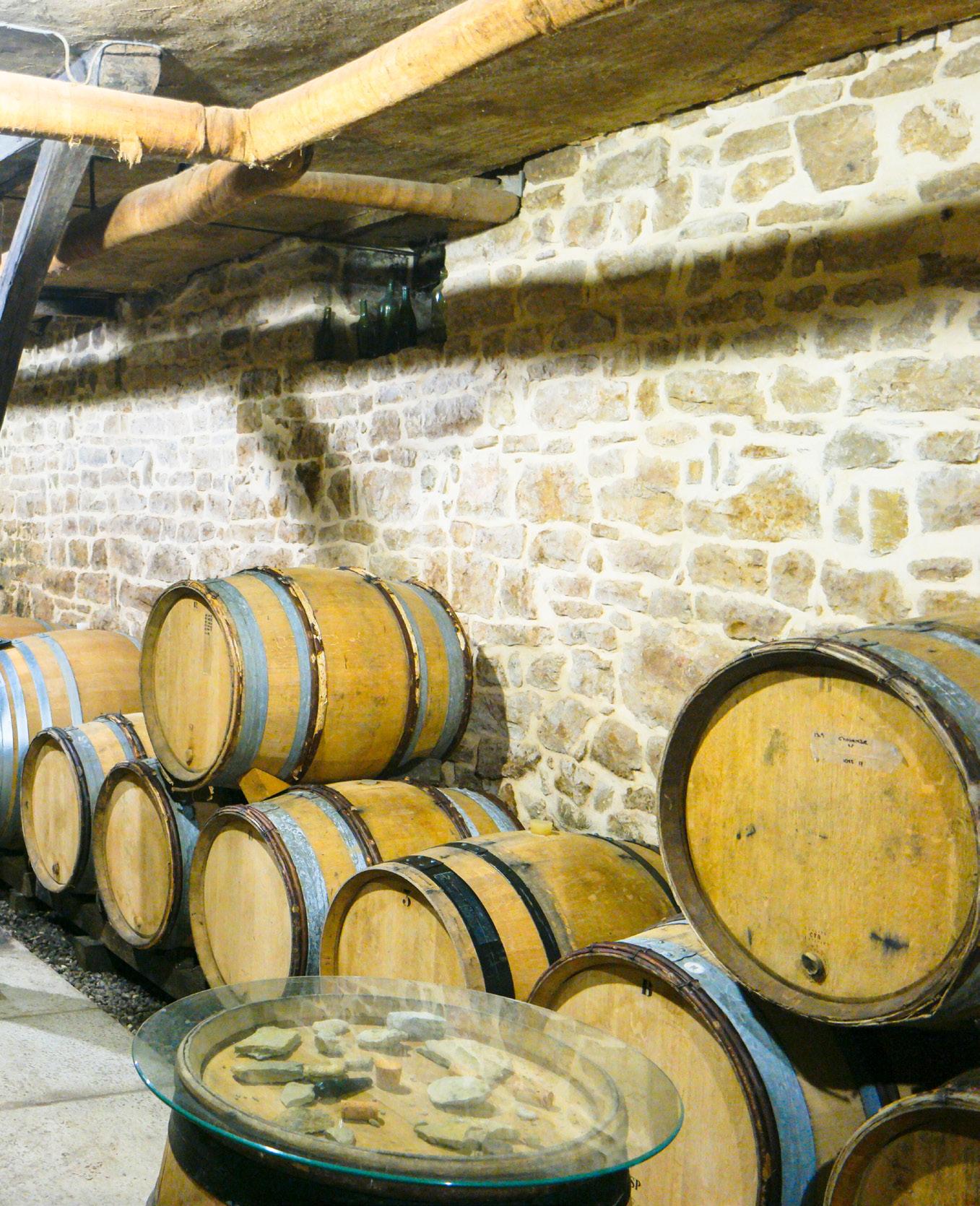
finished wine receives another dose of roughly the same size. Personally, I understand this technique more than those who add sulfur only at bottling. If one has come that far, it seems a shame not to go all the way. Technically, one gets much more out of this initial dose, which protects the wine while sugar still remains. In summary, Damien’s Chardonnay is highly polished on a technical level. We also taste the grape from Les Isles and Les Rondo. The former is his coldest site for Chardonnay and therefore the last to be harvested. The vines grow in limestone-rich clay, and the expression is tighter and more reductive. Les Rondo, by contrast, is a warm site and thus the first Chardonnay harvested. The expression is fruitier and rounder, with more breadth.
BEFORE MOVING ON TO Savagnin, we taste his two reds, of which there is much less. His Trousseau comes from the sites Au Maitresse and Calvaire and has been lightly extracted despite being pressed dry. Most of the grapes are destemmed by hand using what is locally called a
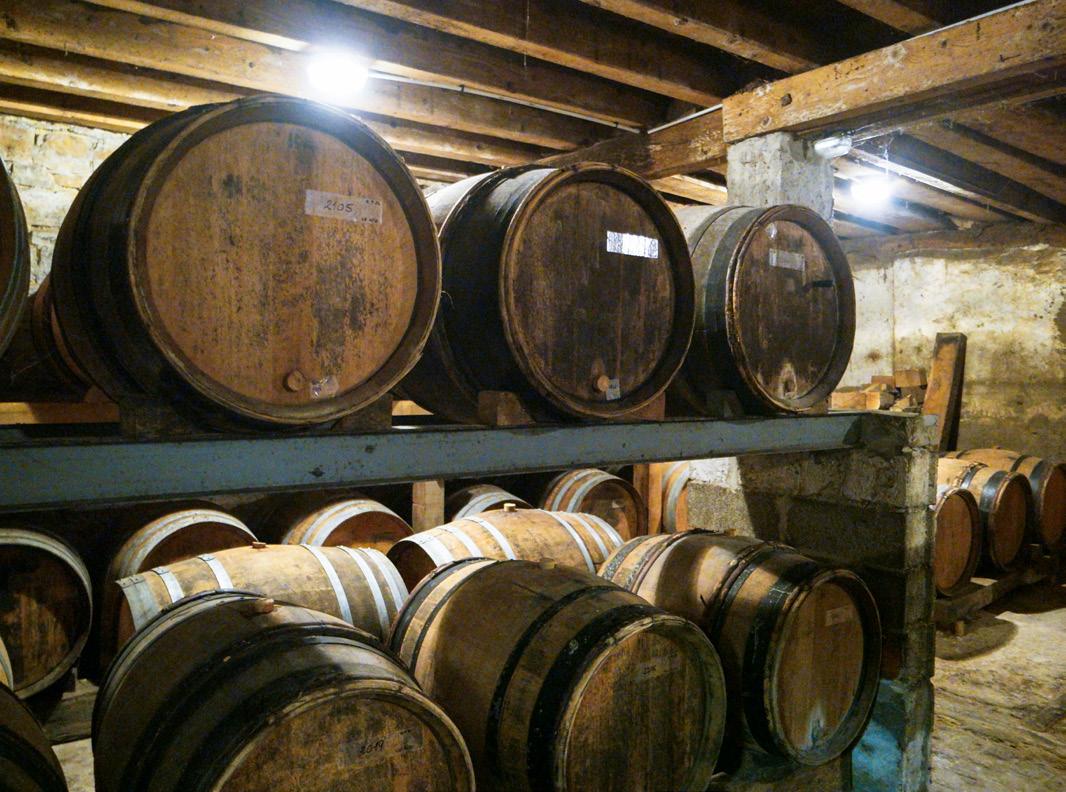
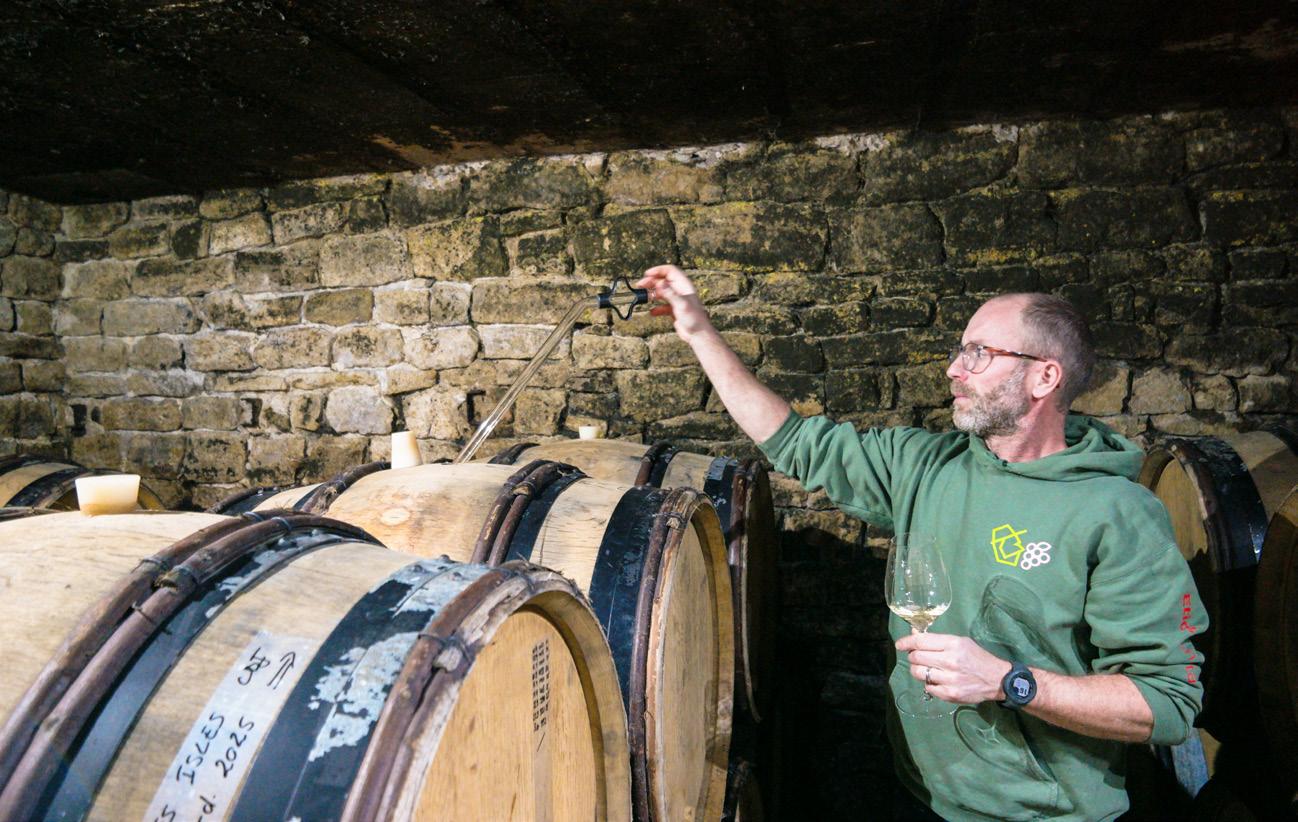
crible. In warmer years, however, up to 20% stems may remain, but never more. After fermentation the wine spends at most one year in barrel before bottling. For his red wines, sulfur is added only at that point. In other words, the barrels we taste are still natural wine. They are so good that, in my view, it is a shame they do not remain that way. I feel the same about his Poulsard, of which there is even less—only 500 liters.
WE MOVE ON TO THE ROOM where Damien keeps his concrete eggs and foudres. Last year he invested in a pair from the Austrian cooperage Schneckenleitner, now filled with Savagnin. For some time now, it has most often been foudre for this grape, unless it is destined for Château-Chalon.
The Schneckenleitner vessel we taste first contains fruit from the now ten-year-old vines planted behind Le Nid, the family’s emblematic vineyard. It is lime-driven and energetic, promising much for the vintage. The part of Le Nid planted by his father in 1982 has a deeper, more
buttery character. The heavy soils of Sur Lya, by contrast, produce a more aromatic version of the grape. We also taste a Savagnin from one of the concrete eggs, made by Burgundian producer Nomblot, whose material is more neutral than wood, which Damien appreciates. The interesting thing about the eggs is that their shape creates a natural bâtonnage effect, influencing fullness and mouthfeel. As yet, however, he has not bottled a cuvée based entirely on eggs.
AFTER LOOKING AROUND THE WINERY
, fully renovated in 2015, we go upstairs to the warmer office to taste some bottled wines. I must admit I was a little nervous about what I would think of Damien’s production, as my personal preferences have drifted so far toward natural wine that I not infrequently prefer flaws with soul over perfection without personality. That concern, if not already dispelled by the barrel tasting, was completely blown away by the carefully chosen bottles Damien brought upstairs.
TASTED WINES
Domaine Courbet
PERLE CRÉMANT DE JURA 2020
90 Damien’s sparkling wine is made only in certain years, and 2020 is the most recent release. After the secondary fermentation in bottle, it spends three years aging sur lattes before disgorgement—compared with the nine months required by the appellation laws for crémant. The nose is therefore autolytic, with bready aromas and hints of viennoiserie pastries. The fruit is full of apples, and the acidity is gentle yet fresh. An ambitious crémant to serve as a simpler, but reliable, substitute for champagne.
L’ORIGINE SAVAGNIN 2023
92 Courbet’s topped-up entry-level savagnin is based on the sites Sous
Because if there is one thing I love, it is Savagnin, Chardonnay, Trousseau and Poulsard from the magnificent terroir around Château-Chalon. Topped-up, oxidative, or yellow wine—it does not matter, as long as the origin shines through. And if there is one thing Damien does, it is produce wines with a strong sense of place. The fact that these are some of the area’s best lieux-dits hardly hurts. His more technically polished style brings a consistency not easily found in zero-zero natural wines. For those unwilling to accept the economic Russian roulette that can come with buying trendier Jura producers, there is simply Domaine Courbet (which is also sold in Sweden via Vintedge). Since I only had to cross the street to get home, a couple of beers happened as well before I once again braved the February rain—this time with an expanded understanding of what one of my absolute favorite regions can produce.
Roche and Sur Lya. The latter contributes a more aromatic style, while Sous Roche balances it with marl-driven power. The wine is very typical of the vintage—generous and highly fruity—which suits this cuvée, as it exists to showcase the fruitiness of savagnin. A more modern interpretation of both the grape and its origin, one many will likely prefer over the more challenging oxidative wines..
CHARDONNAY LES ISLES
2022
93 2022 has truly begun to come into its own now with a couple of years behind it. For a long time, it felt heavier and duller than 2023, which now seems strange considering the acidity and complexity that have emerged over the past year. The terroir imprint is also more clearly
etched compared with 2023, which feels a little more superficial in its immediate charm. Les Isles is often the last chardonnay parcel they harvest, as the grapes take longer to ripen here. The limestone-rich clay tends to produce more reductive wines. Positive reduction and chardonnay are often a winning combination, which is also the case here.
TROUSSEAU VIOLETTE 2023
92 A classically pale red trousseau with a slightly meaty opening in the glass. It smells of blood orange with a hint of smoked sausage. With time in the glass, the aromatic profile shifts toward licorice and violet. A very well-made version of this Jura grape, with extraction exactly where you want it.
Fruity enough to enjoy young, especially in this vintage, but with enough structure to develop in bottle. Would I have preferred it without the small sulfur dose at bottling? Yes. But on the other hand, these wines are made with a more controlled and technical elegance.
TROUSSEAU DE LA VALLÉE 2024
92 The frost-affected 2024 vintage did not yield much fruit, but all the more taut quality. This is a tight trousseau with a bright future. If you want to drink it young, chill it down to 14°C. Then it tastes like sweet cherries picked straight from the tree at the end of summer vacation. For now, less generous than the 2023 above, but I would dare guess that this is the vintage that will win in the long run.
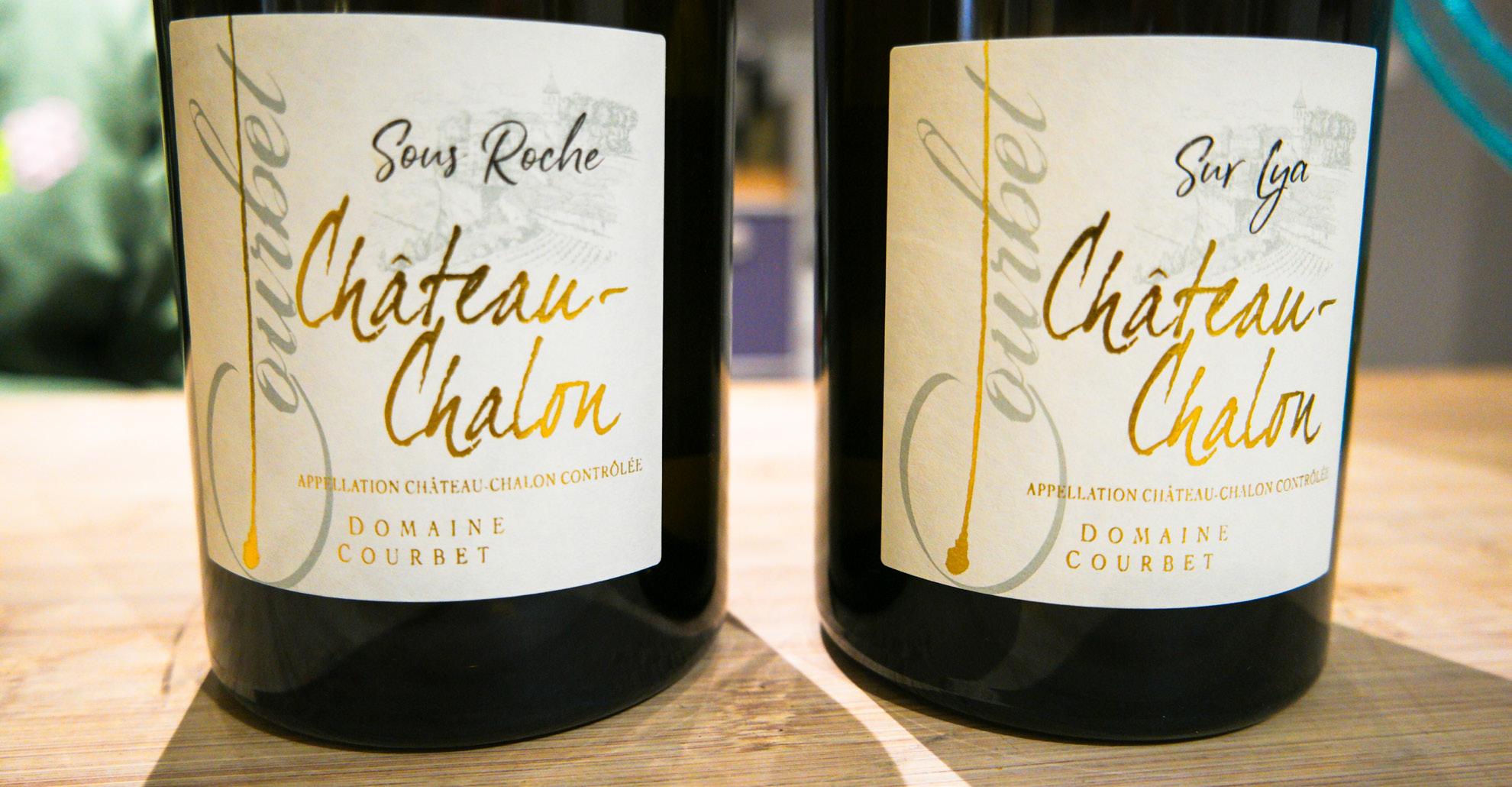
TRADITION 2022
93 The wine style Tradition comes from the fact that there is also chardonnay planted in the vineyards around Château-Chalon, though those grapes may not be used in the wine bearing that name. Often, untopped chardonnay was blended with savagnin barrels whose veil was not stable enough to become vin jaune within the appellation. Damien’s Tradition is built more on fruit than voile. It is a more modern interpretation of the style, likely easier for a broader audience to embrace. An immensely rewarding wine to serve by the glass in a restaurant or bar, as it only improves with air.
SAVAGNIN SOUS VOILE 2021
94
For those of us who are fans of voile wines, this savagnin is a perfect light version of a Château-Chalon. The complexity and power are there, though not quite at the same maximal level as fully yellow wines. Nor is it as expensive. Highly versatile as well, pairing with everything from cheese to spicy Asian cuisine. Acid-driven 2021, also a frost year, comes with elegance in the aromas and a cohesion that makes the finish
take a long time to fade. If you are only going to try one wine from Damien Courbet, it should be this one.
CHÂTEAU-CHALON SUR LYA 2018
95 Damien explains that for his single-site château-chalons, he bottles only from the middle of the barrel. The reason is to use only the most elegant part of the wine—a kind of cœur de cuvée. The remainder goes into the generic version. If elegance is what you seek, turn to Sur Lya. Château-Chalon is already the most refined origin for vin jaune, and this lieu-dit takes it a step further. Despite the style, floral fruit dominates the wine. 2018 is of course very young, being the most recent vintage released. With every passing year, it will only become better and better.
CHÂTEAU-CHALON SOUS ROCHE 2018
95 Classic Sous Roche from Courbet’s Le Nid is bottled according to the same principle as Sur Lya. Here, however, the expression is entirely different. Marldriven power is mixed with a smoky peatiness reminiscent of whisky. This unique combination of grape, terroir, and production method truly
results in incredible wines. The wine can absolutely be enjoyed in its youth, for example with well-aged comté, but should then be decanted well in advance to let the aromas bloom. If you can wait some 30–40 years, you are likely to have a wine brushing up against 100 points.
CHÂTEAU-CHALON PUITS SAINT PIERRE 2018
96
Puits Saint Pierre, located just below the village of Château-Chalon at the top of the slope, is known for having an extraordinarily clear marl expression. 2018 is no exception—direct and powerful from the start. Toffee apple and apple pie with vanilla sauce dominate the nose, which also has hints of curry. That the wine manages to be elegant and intense at the same time is typical of the site. The finish is immensely long and the aging potential endless. It could advantageously be decanted the day before if you wish to enjoy it young. A vin jaune from Puits Saint Pierre is as grand cru as it gets in Jura. 100 points are there for the taking someday, without doubt.
CROIX & COURBET CÔTES DU JURA LE CALVAIRE 2023
91 Damien’s négociant project with his friend David Croix tastes like Jura for people who prefer Burgundy. This chardonnay from the early-ripening lieu-dit Calvaire, on the road up toward the village of Ménetru-le-Vignoble, is a clear example of that statement. More obvious oak, more polished citrus fruit, and yogurt notes bring David’s wines to mind. For now, it is the generous vintage that defines the tasting experience; wait a few years for a more terroirdriven complexity to emerge.
CROIX & COURBET ARBOIS EN CHEMENOT 2023
91 Purchased savagnin from En Chemenot, a lieu-dit just east of the village of Arbois. Here the vines grow at 350 meters altitude in grey marl with northern exposure. The vintage-typical fruit has left its clear mark on a restrained expression of the site’s natural power. A tamed and highly polished savagnin that truly tastes like a Burgundian interpretation of the grape.
BACK TO THE FUTURE
– with the help of Miles Davis
Food should be created in the same way that Miles Davis created jazz.
-I think of it as culinary improvisation. That is the driving force I need to remain open to new interpretations. Miles was always full of energy and created together with his audience. And that is exactly what I am trying to do.
TEXT URBAN NILMANDER
PHOTO PHILIPPE VAURÉS/STÉPHANE RISS
BRUNO VERJUS IS CLEARLY not someone who follows the rulebook. He is now 64 years old and opened his restaurant TABLE in Paris only 10 years ago. Today it has two Michelin stars and this year it climbed to 10th place on the list of the world’s 50 best restaurants.
-Every morning when the producers’ packages arrive, it is like Christmas. It is always a surprise: we discover what is inside, and we are caught between the joy of discovery and the desire to understand what we should do with these beautiful things.
This is not a poetic metaphor; it is a working method. At Table, his restaurant in Paris, there is no fixed menu. There could not be, because the cuisine is born from what arrives, not from what has been decided in advance.
-Who knows a product better than the producer? They are the ones who can say to me: today I have this, this and this, and it is extraordinary. I do not give them a shopping list. I only want them to give me what they think is best, says Bruno Verjus.
THE RESULT IS A TASTING MENU that changes daily, because the starting point changes every day.
There is a reassuring, almost comforting idea that permeates contemporary fine dining: control.
Control over the product, the menu, the narrative, the experience.
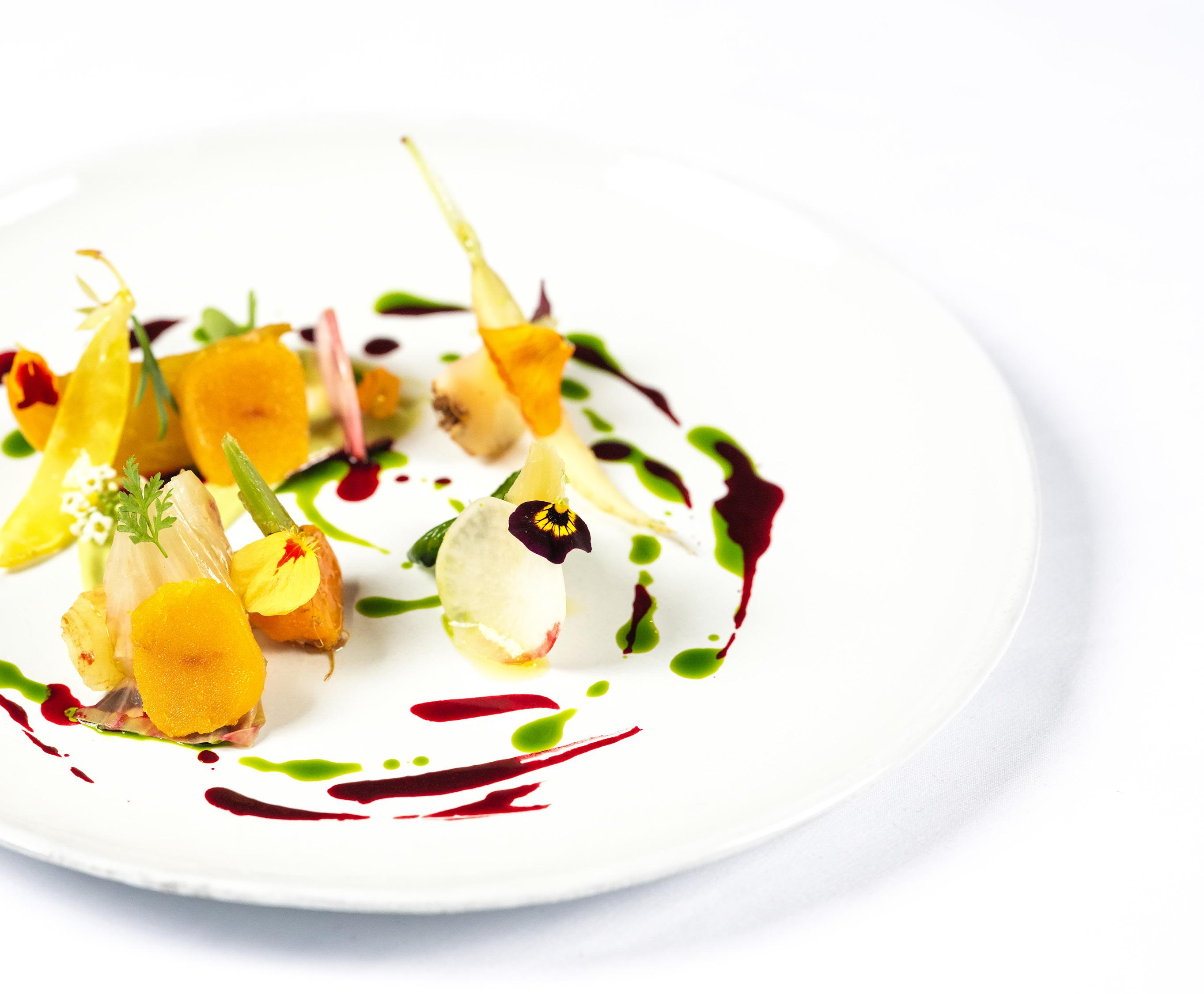
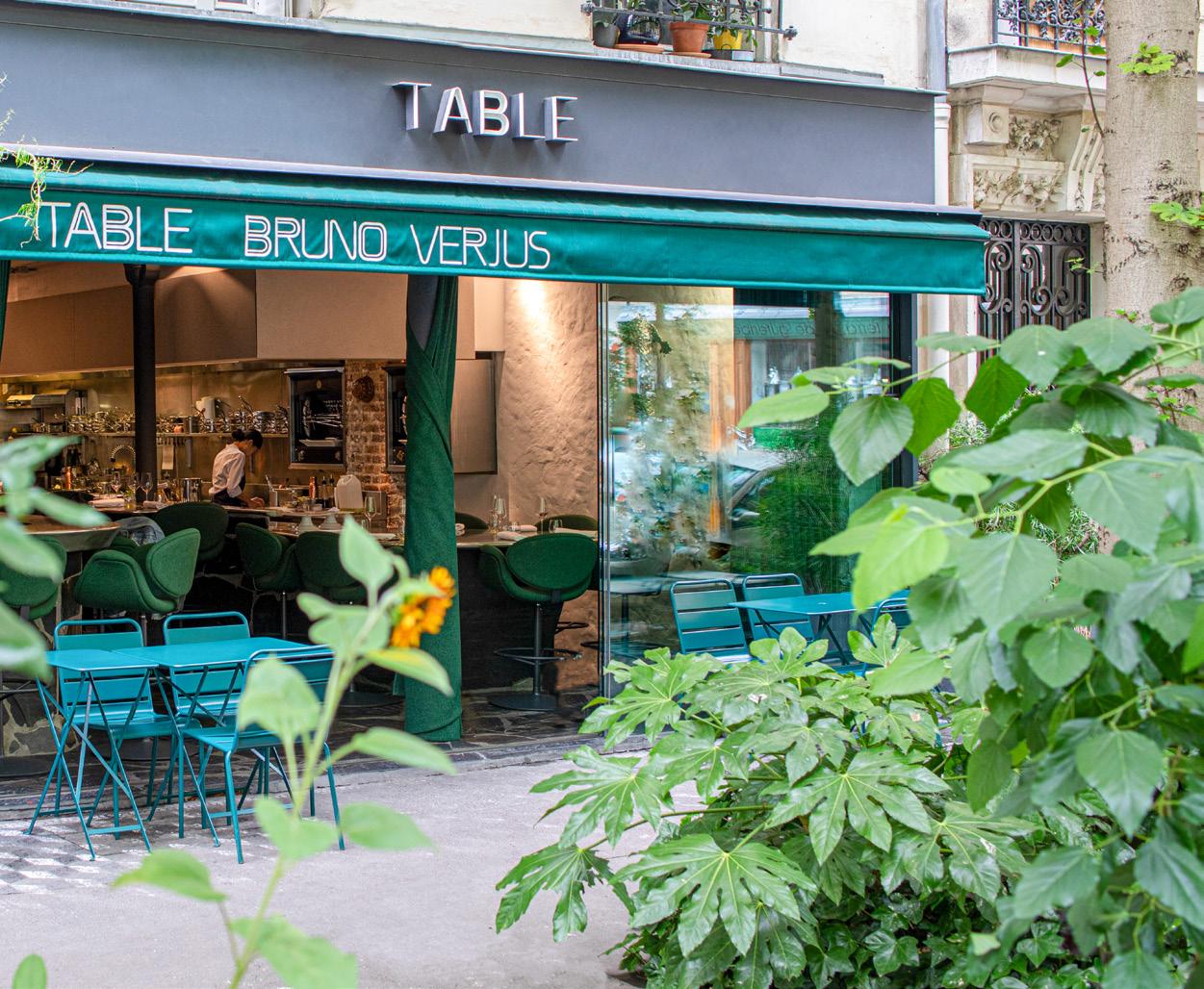
Bruno Verjus, on the other hand, deliberately questions that control. Not out of impulse, but out of trust. Trust in time, in matter, in living beings, in the diner. And above all in the belief that cooking does not mean dominating, but welcoming.
-There is an interesting thing when you look back. All the great chefs like Paul Bocuse and the others were always there in the restaurant taking care of their guests. Many chefs today have forgotten that and I think that is a shame. The most important thing, after all, is that you are happy to have been given the great honour of welcoming guests to your restaurant. At least that is what I think.
-Unfortunately, today you can go to many restaurants where most of it is a show to create attention.
HIS STORY IS EXCEPTIONAL when it comes to the path to running a successful restaurant. He studied to become a doctor in Lyon, travelled all over the world, lived in China for almost two decades and started a company for medical technology products and packaging that he sold in 2005.
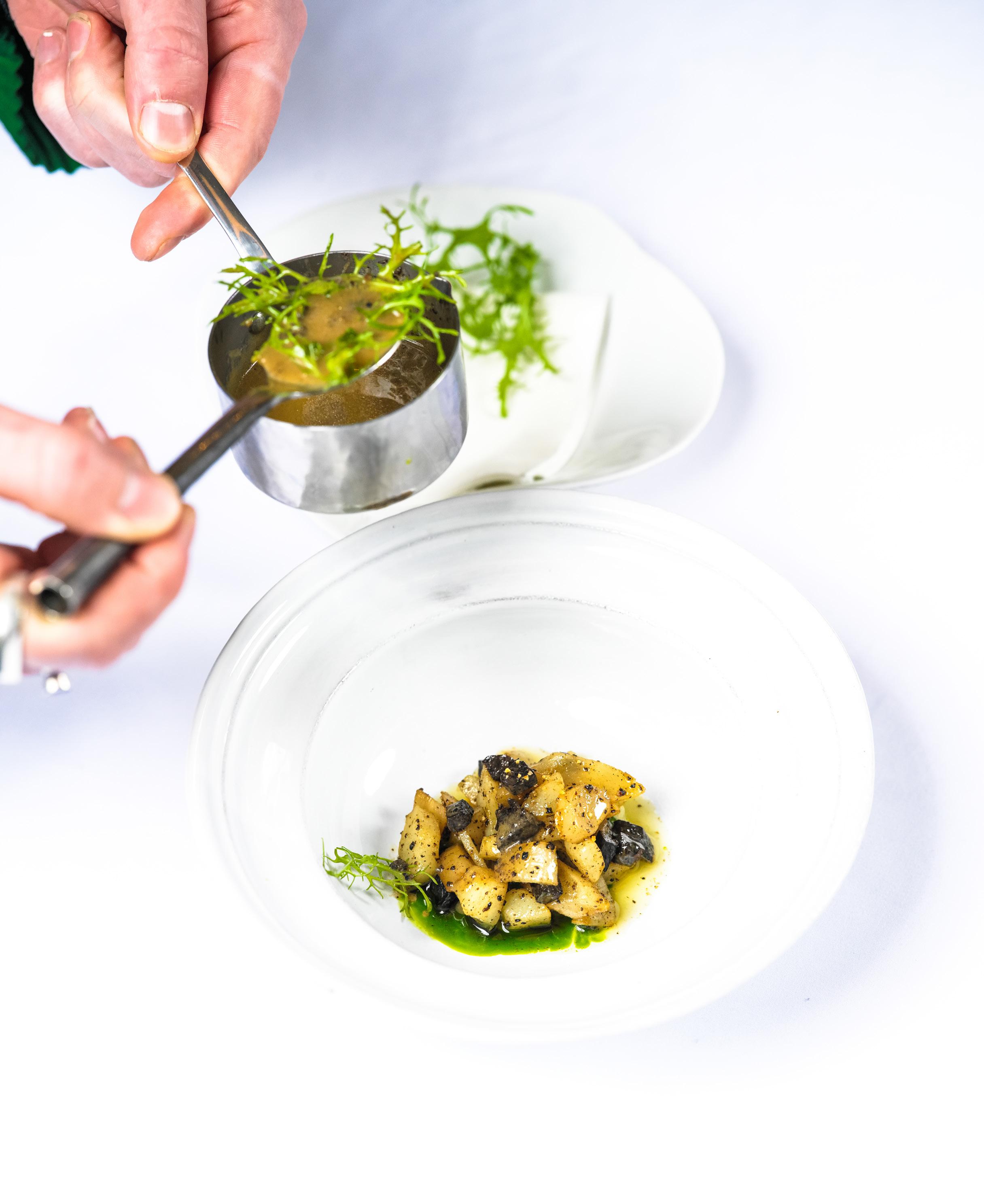
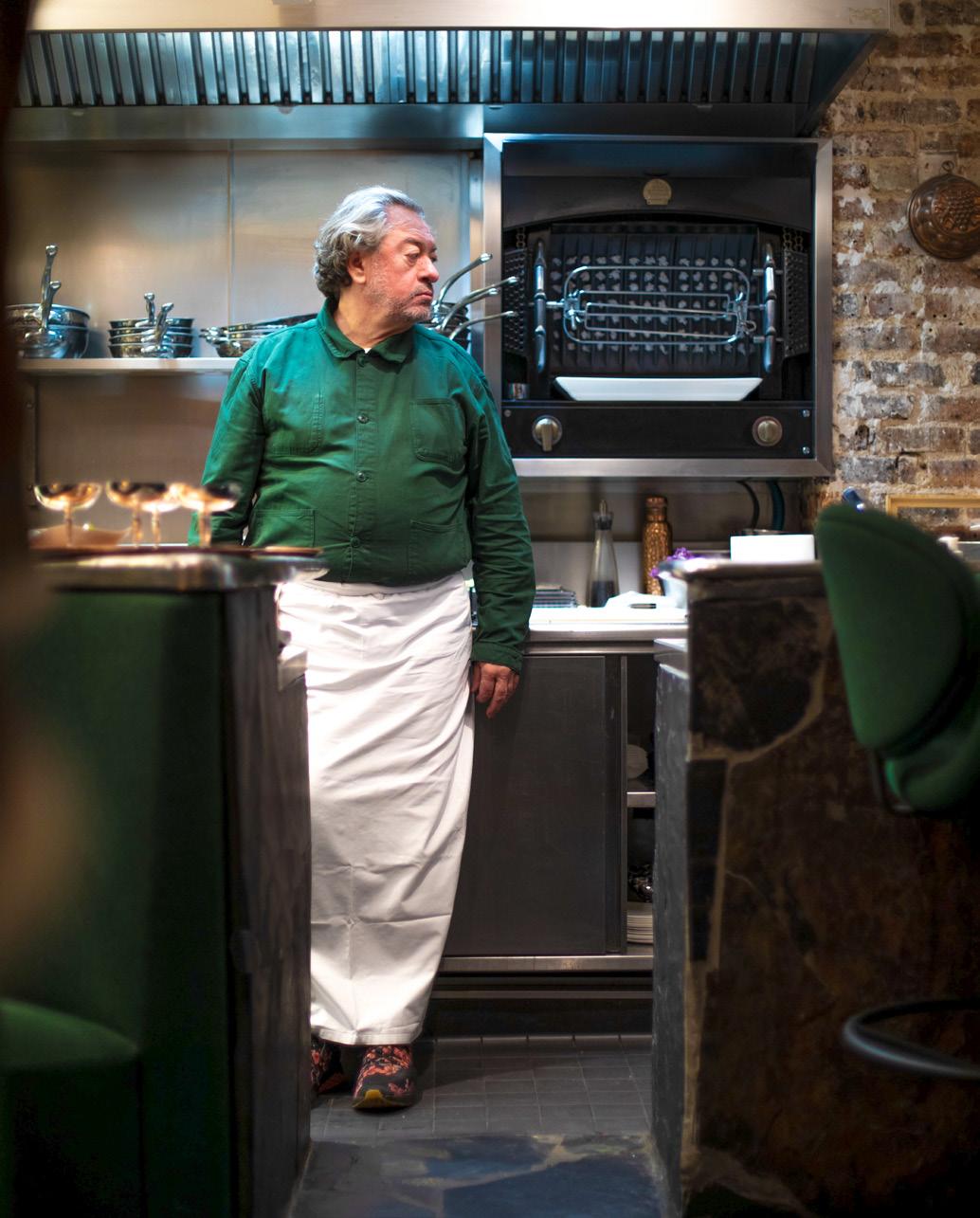
At the age of 50 he began writing and doing radio about what had been an important part of his life – food.
-For me, a restaurant visit is something personal, I want to be well taken care of, besides wanting good food, of course. When I opened my restaurant, my idea all along was that I would cook food that I myself wanted to eat, every day, he says.
And it was, of course, a gamble. No one knew Bruno Verjus in the chef world.
-Was I nervous? No, I completely denied what it would be like and was totally cool. I still deny reality. I think that if you want to achieve something drastically different, it is the only way, he laughs.
The plan from the beginning was to create something between a regular, classic bistro and fine dining.
-The bistro can be so-so and fine dining has too many dishes. What I wanted to create was fine dining but in a cool way, a place you should be able to go to every day.
-Now it is a bit different with Michelin stars and all the attention, but I still think you should be able to come every day, he says.
MANY FOOD CRITICS AND GUESTS have called what he has created a revolution. He himself sees it more as a journey back to the future.
-It is my young chefs who work with me who are going to take on my ideas and hopefully create that revolution. I am
too old to create it.
What TABLE Verjus does is to have a truly open kitchen, everything is cooked à la minute. The only things prepared in advance are certain sauces and perhaps meat or pigeon, which require a bit more preparation.
-Who wants food cooked hours in advance so that all the nutrients decrease? Sometimes it is confusing for chefs who have been trained in three-star kitchens to prepare, prepare, prepare, but after a while they embrace it completely. To do absolutely everything in front of the customers at the counter is a true joy, says Bruno Verjus.
IT
IS
ALSO A DIFFERENT APPROACH
to how things work in the kitchen,
-I tell my team; I do not need you so early in the morning because we do not prepare in advance. But when you arrive you should be 100 percent ready to cook for the guests.
That is also why Verjus rejects the idea of explaining to guests how to eat a dish.
-I hate it. When they tell you: ‘Put the spoon there for maximum pleasure’, there is something slightly pornographic about it that disturbs me. If we have done our job properly, the dish should be readable enough on its own.
And then he is back to Miles Davis. Jazz has its frameworks but improvisation makes it jazz.
-I love Miles Davis. He received some criticism during his
Bruno Verjus. Foto: Philippe Vaures
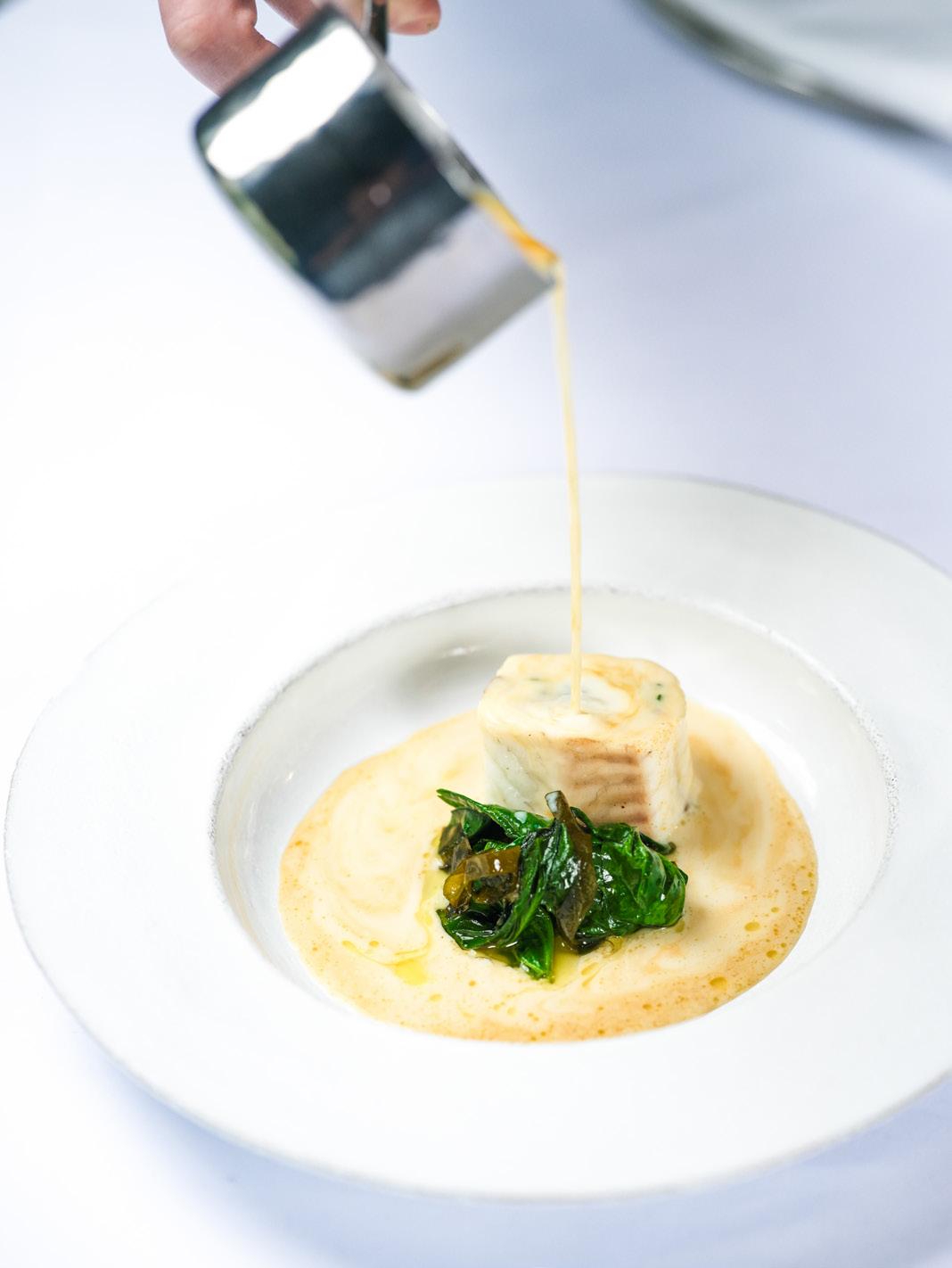
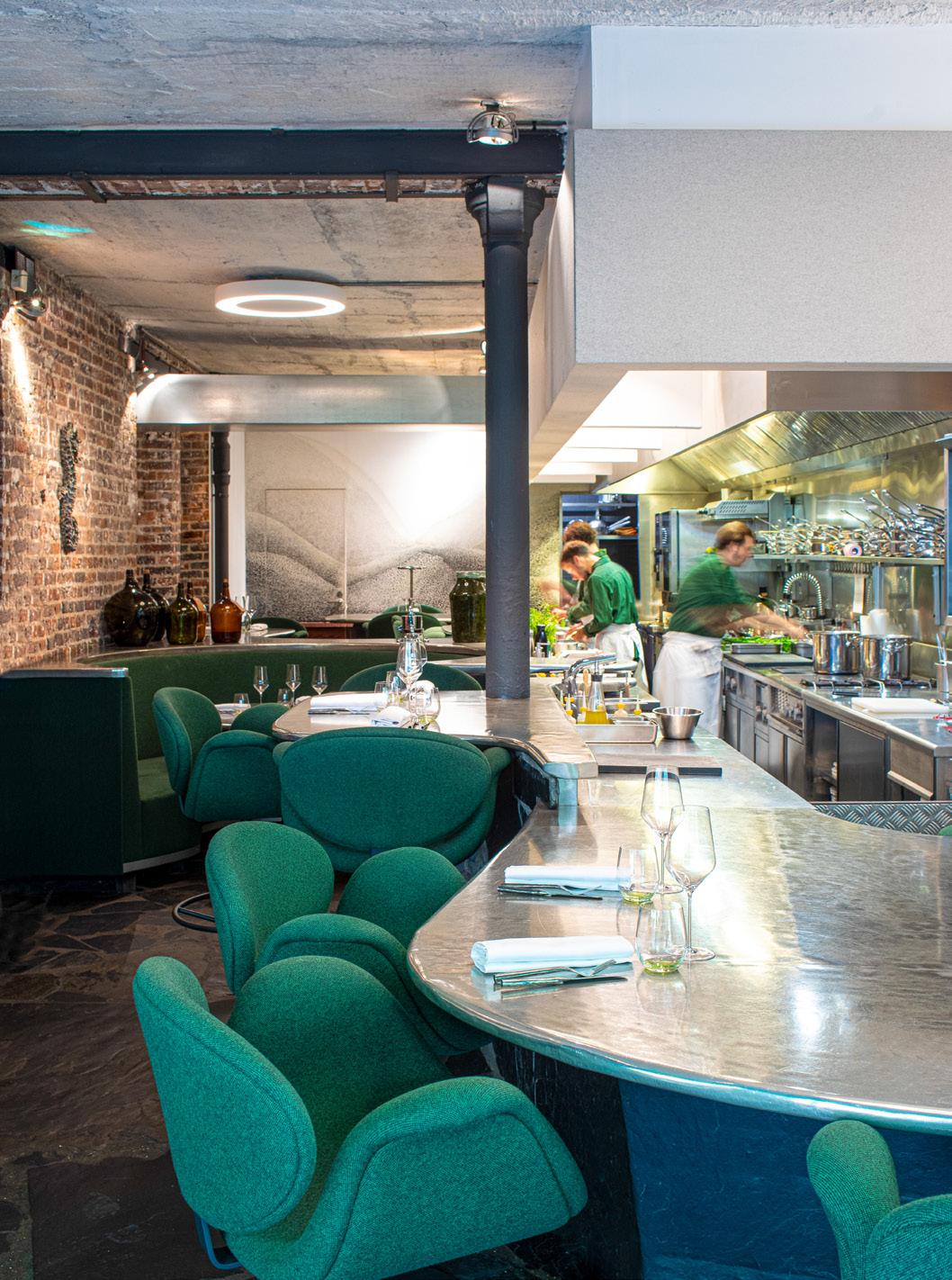
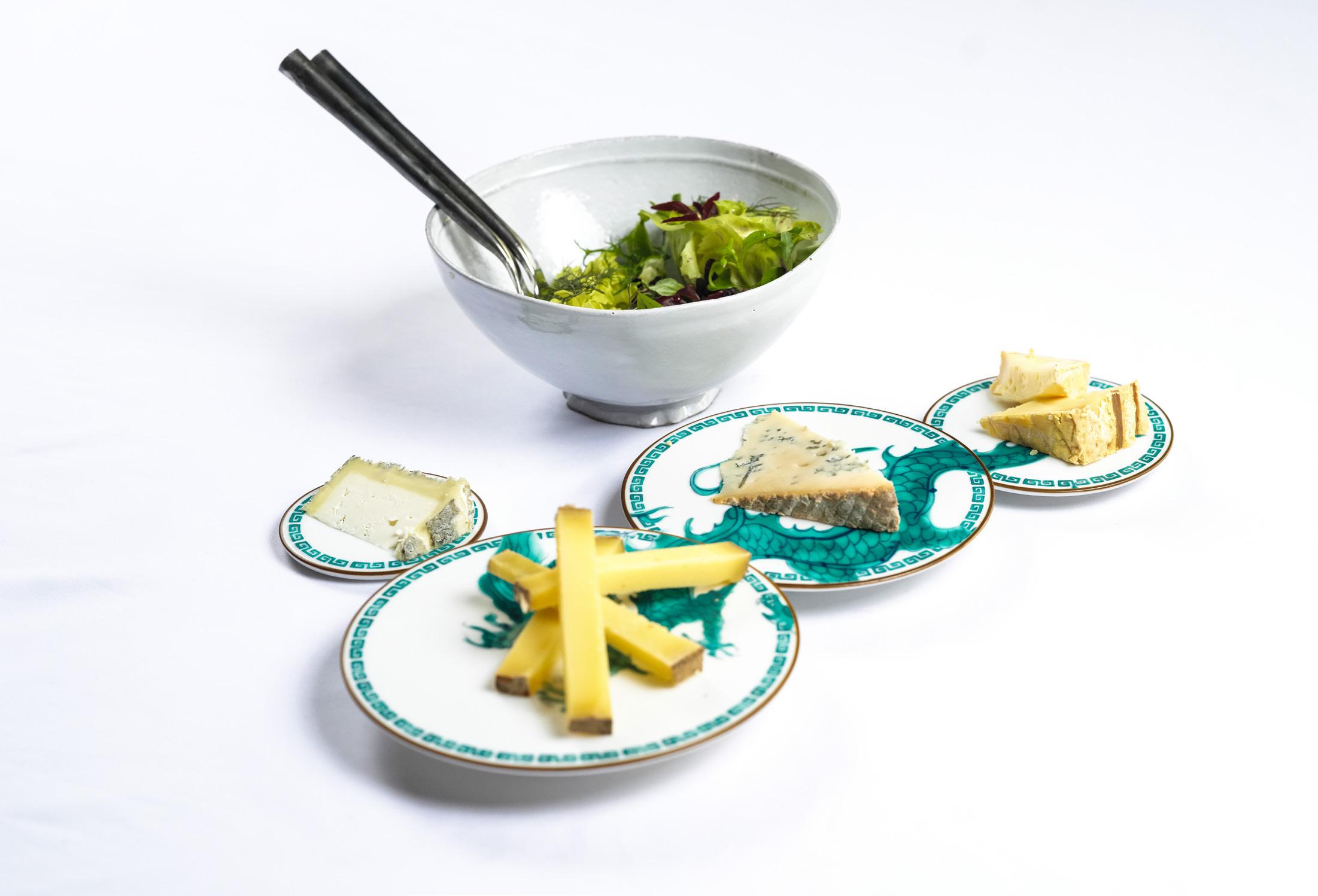
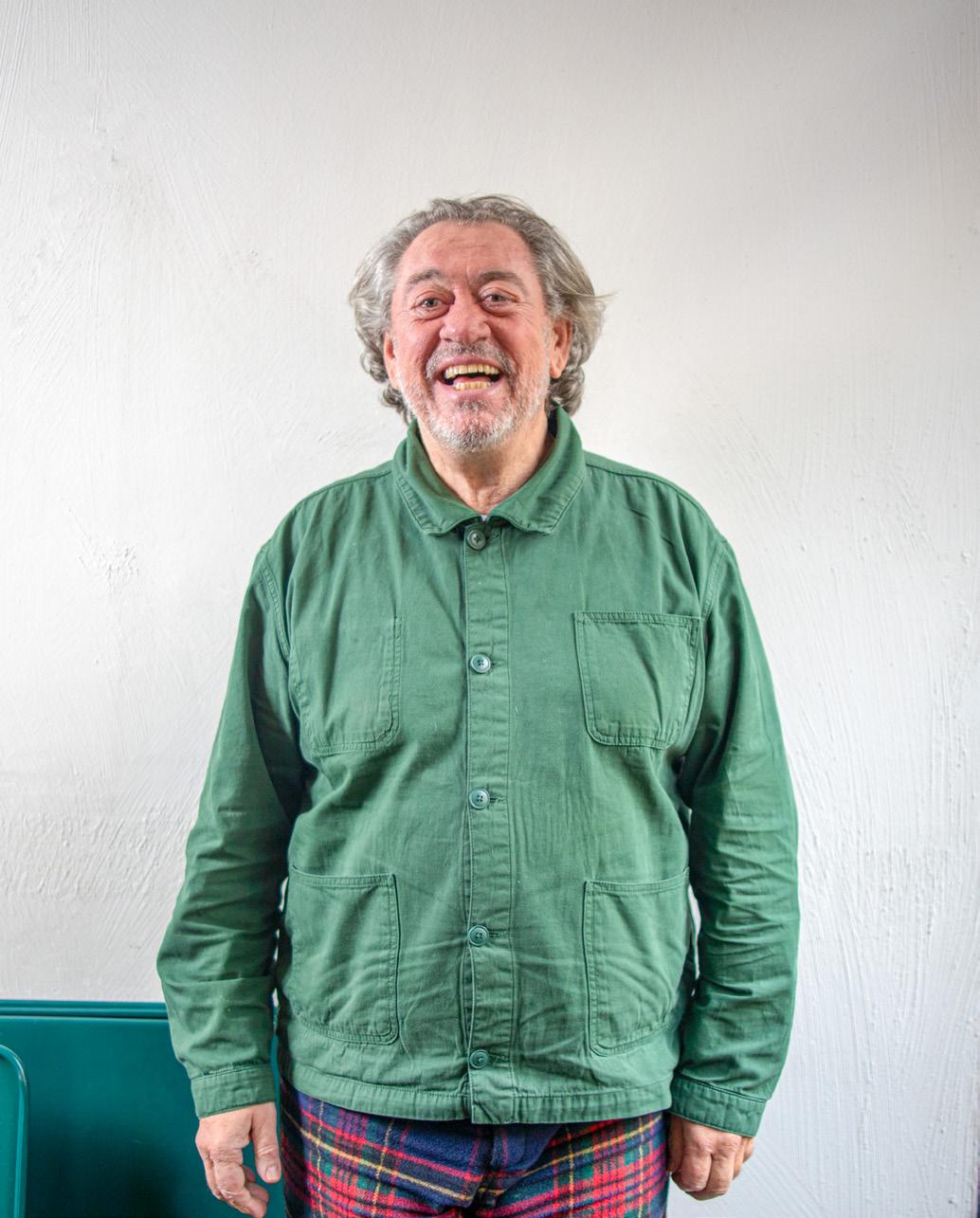
long career and some critics said that he did not play all the notes. He replied; no, I only play the best notes.
-I can say the same, I only make the best food, not everything. Creating new dishes is done through cooking, not by making endless sketches like so many chefs do, says Bruno Verjus.
Another thing that distinguishes his TABLE from other gourmet restaurants is the attitude towards the guest.
-Most people come to a restaurant and are hungry, they want something to eat. You should not have to sit for half an hour waiting for the first dish. So no bread to start with, you should have bread for breakfast, not for lunch!, so straight to the food, then you can serve smaller dishes afterwards, says Bruno Verjus.
THE GUEST AT TABLE THEREFORE GETS several dishes at once so that they do not feel hungry. And then, in the middle of the serious conversation, he starts giggling.
-I notice that my guests, who are often picky foodies who have travelled the world and eaten at fine restaurants, allow themselves to become a bit crazy when they eat at my place. It often happens that they forget their coat or their bag.
-It is the same with my chefs. Many come from fine Michelin restaurants and are extremely meticulous
and skilled. But after a while they allow themselves to be a bit crazy, not when they are working of course, but I notice that they become more relaxed as people. And that is wonderful! So beautiful!
-I usually joke that I have a neighbour next to the restaurant who smokes weed all day. And maybe the smoke goes into the kitchen and into the restaurant so that everyone becomes happy and a bit crazy!
-What happens when the neighbour moves?
HE MEANS THAT THERE MUST BE at least three levels in a dish.
-The first is the approach: surprise, discovery. The second is taste, the understanding of flavours. The third is emotions.
And that is where something chemical happens:
-It is what imprints itself in the hippocampus. Maybe twenty years later you taste something and suddenly you are back in a place, with a person, in a specific season. Everything comes back through the memory of taste, he says.
Then he pauses for a moment, almost surprised by his own journey:
-Sometimes I sit in my restaurant and think: it is incredible. The work we have done is dizzying. Today we are eighteen, a team, a family. Everyone in the service of the guests. It is a form of happiness, he says.
Bruno Verjus. Photo: Philippe Vaures
The southern Swedish born hockey player became a Michelin chef in Oslo
The choice stood between becoming a professional ice hockey player and a chef. It became chef, and today the Scanian Mikael Svensson has 2+1 Michelin stars at his restaurant Kontrast in Oslo.
–I don’t have that kind of romantic background where my grandmother made especially good meatballs and that’s why I became a chef. It was entirely a coincidence, he says.
TEXT URBAN NILMANDER PHOTO CARIN TEGNER

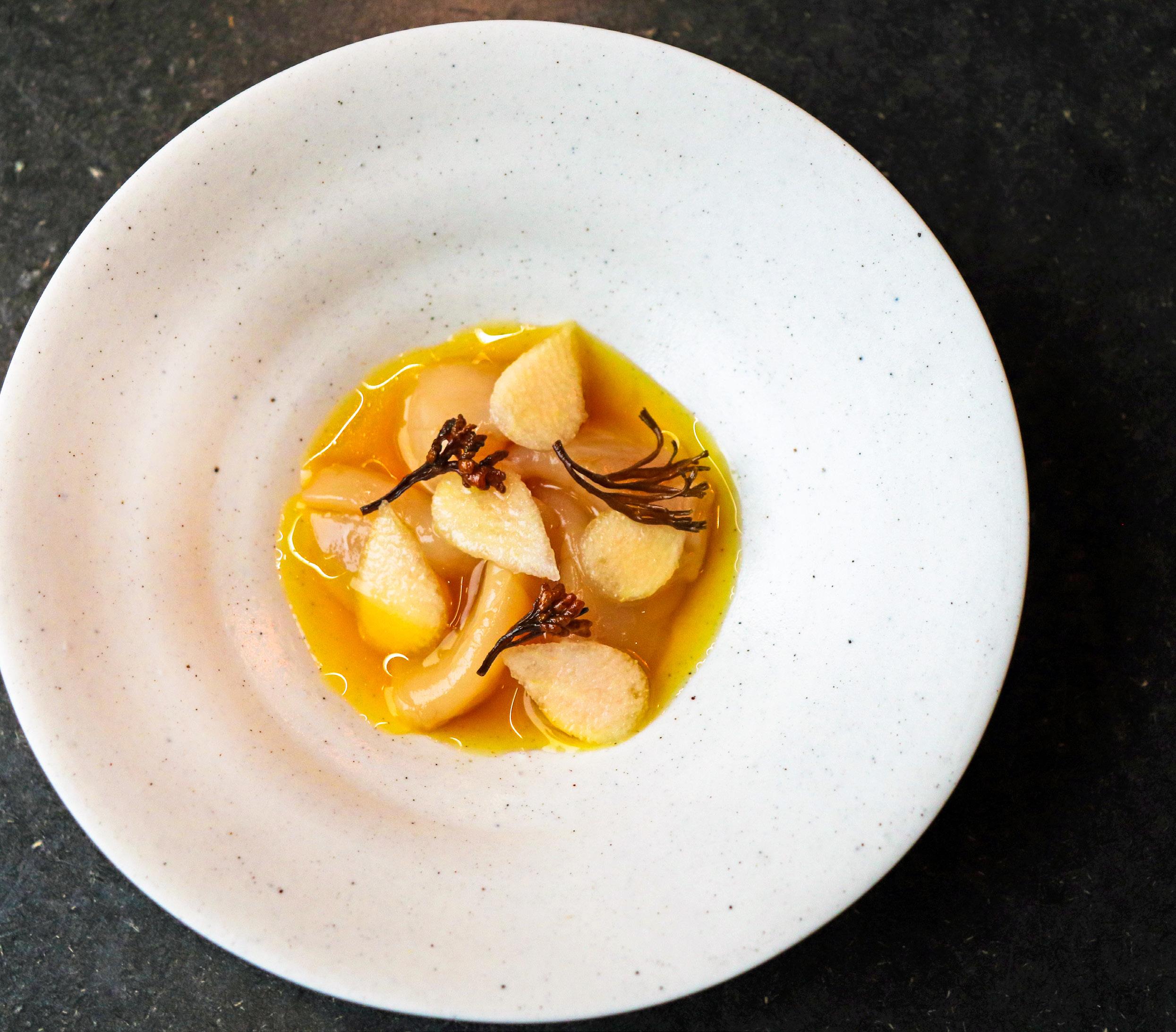
THE
SCANIAN (SKÅNE) ACCENT
IS ALMOST GONE
and when Mikael Svensson talks about his food he sometimes struggles to find the right Swedish words. And at the end of sentences he goes up like Norwegians tend to do.
–I actually got my Norwegian passport yesterday. Now I have both a Swedish and a Norwegian passport, but even though I’ve spent many years in Norway, I’m still Swedish – and Scanian (skånsk) of course, he laughs. His acclaimed restaurant Kontrast is located in the old industrial area of Oslo called Vulkan. An area beautifully situated by the Akerselva river, it is undergoing a
complete makeover with new buildings, hip restaurants and fine offices in the old brick structures.
–When I first came here in 2003, Oslo looked completely different. It was in many ways a small town where most restaurants were French or Italian and people mainly went out on Saturdays. Today Oslo has a large number of fantastic restaurants and people go out every day of the week, he says.
AFTER WORK EXPERIENCE AT BRÖSARPS GÄSTGIVERI (he has his roots in Österlen, Sweden) and culinary school in Kristianstad, at the age of 16 he began
Scallop, pear, saffron from Österlen.
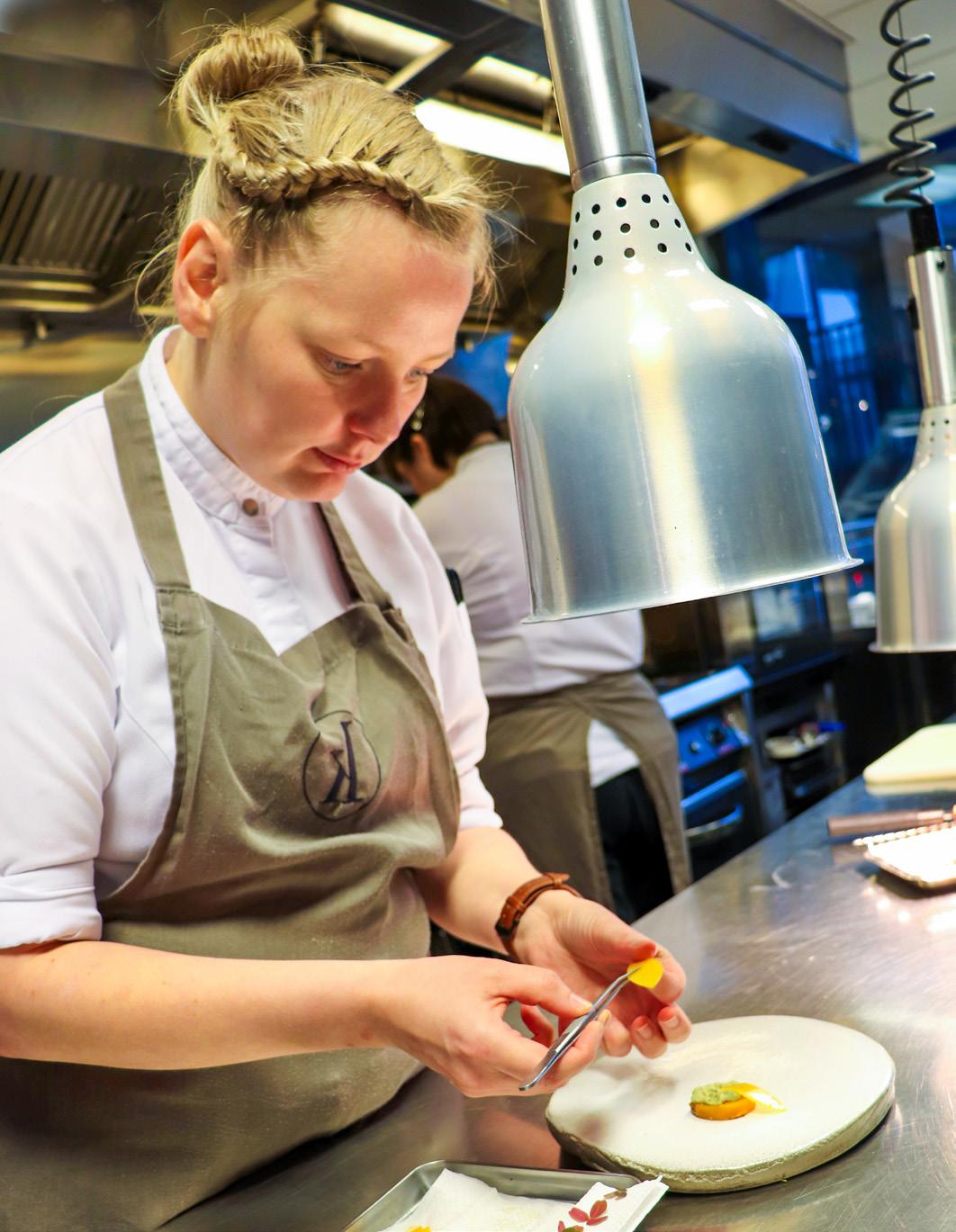
a long journey as a chef across both the Nordics and Spain.
–I wanted to gain Michelin experience as quickly as I could and got a job at Le Canard, a one-star restaurant here in Oslo in 2003. French food, strict hierarchy, a bit of “survival of the fittest”. But I never felt it was too tough, on the contrary I felt that I actually had the talent to keep up with those who had been working much longer, he says.
After two years at Le Canard he longed for home in south of Sweden and worked for a year at the small Österlen restaurant Karlaby Kro.
–By then I had also eaten at Noma in Copenhagen and been impressed by their food. This was before they became world-famous, so I managed to get an internship there a couple of days a week while working at Karlaby Kro.
HE THEN RETURNED TO MICHELIN LEVEL at 28+ in Gothenburg.
–Arrogant as you are at that age, I felt I needed to reach another level, I had to learn more. So after 28+ a colleague and I went to Spain and worked at the starred restaurant Martín Berasategui in Lasarte. It is probably Europe’s largest kitchen and there are an enormous number of people working there, says Mikael Svensson.
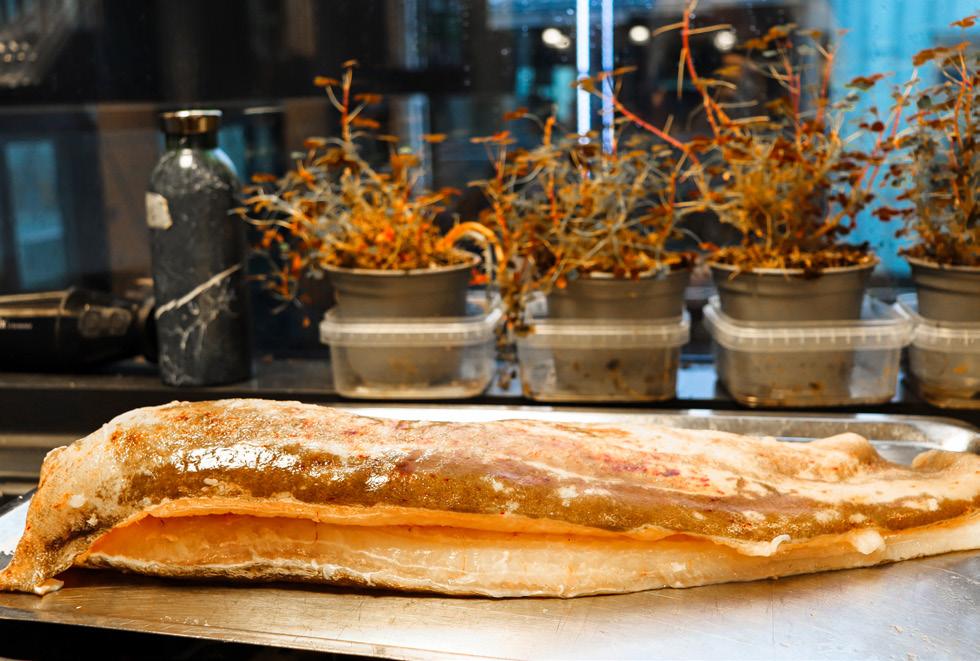
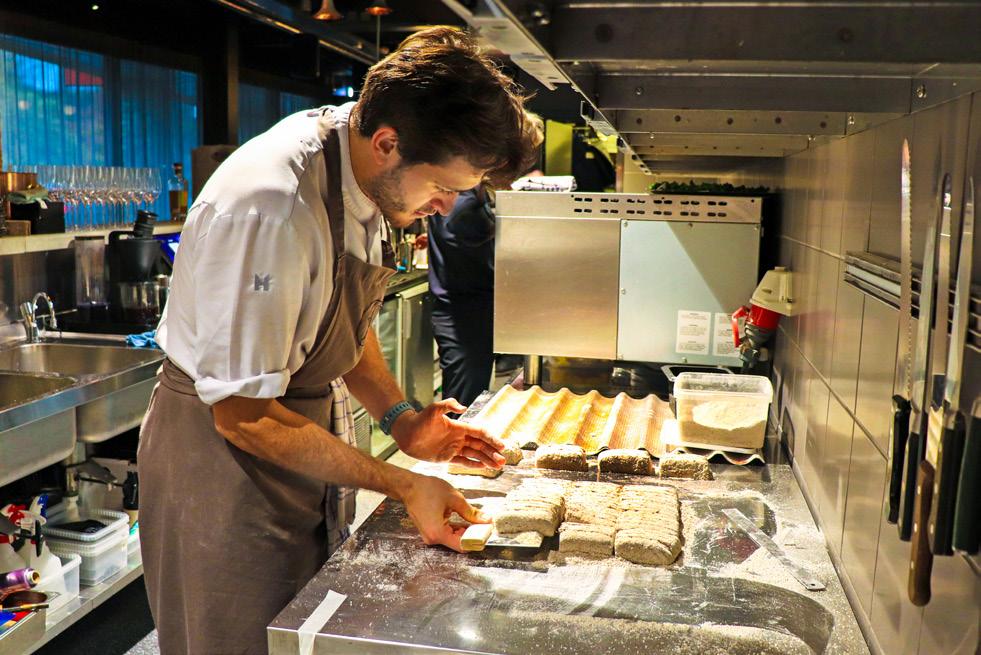
After that experience he became involved in a newly started project in Oslo.
It involved working at a restaurant in a hotel that aimed to become one of Europe’s best within five years, and the owners wanted to create a restaurant with at least two Michelin stars.
–This was in 2008 and that was exactly when the global financial crisis hit. It was an incredibly brutal year with owners who made every mistake you could imagine when it came to staff and finances. But for me it was incredibly educational. You learn the most from mistakes, and I have made great use of the knowledge I gained in 2008 when I later started my own place, he says.
SHORTLY AFTER THE BRUTAL EXPERIENCE he became involved in a new project in Oslo, a completely new concept with a large seafood restaurant in Tjuvholmen, by the water.
–They were going to open a seafood restaurant with space for 300 guests every day. For me something entirely new – could what I had learned be applied on a large scale? I saw it as a challenge, to see if I could manage it.
After two years it was time for the next stage in the long culinary journey.
Sonja Kristensen.
Cusk fish
Small sourdough loaves are going into the oven.
Good atmosphere.
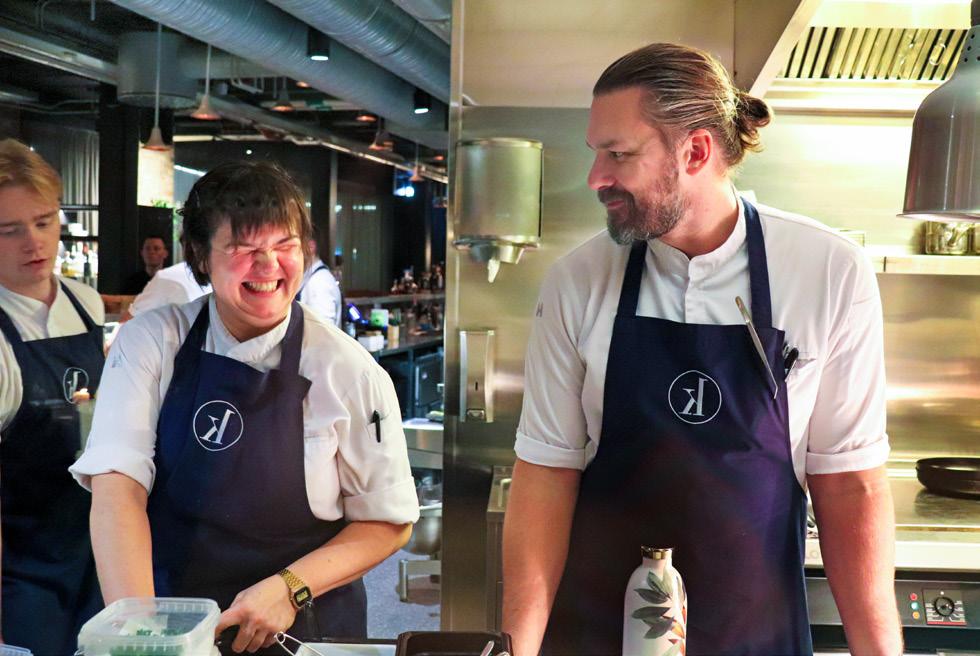
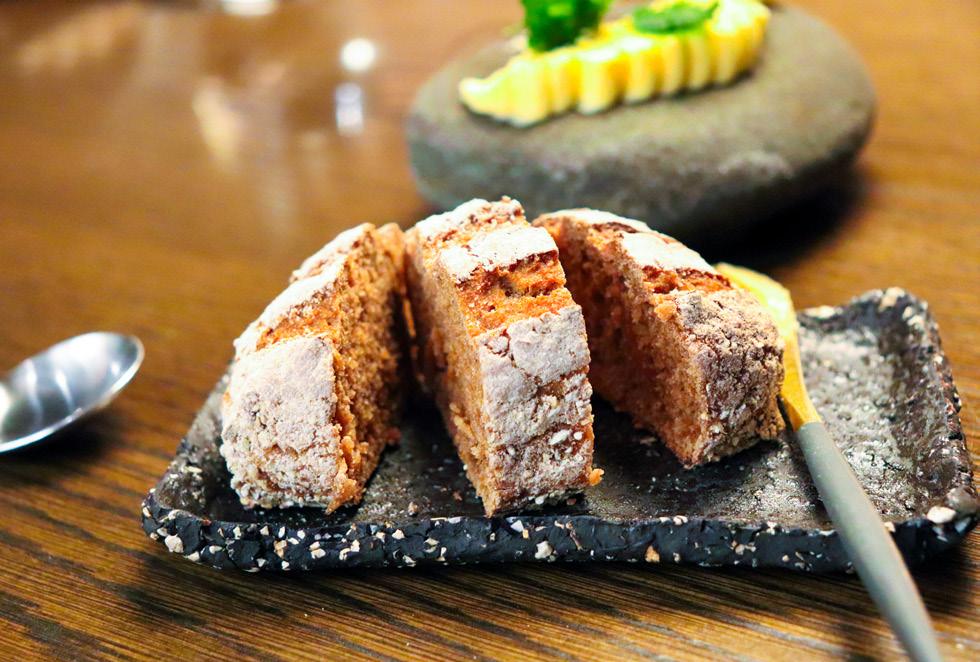
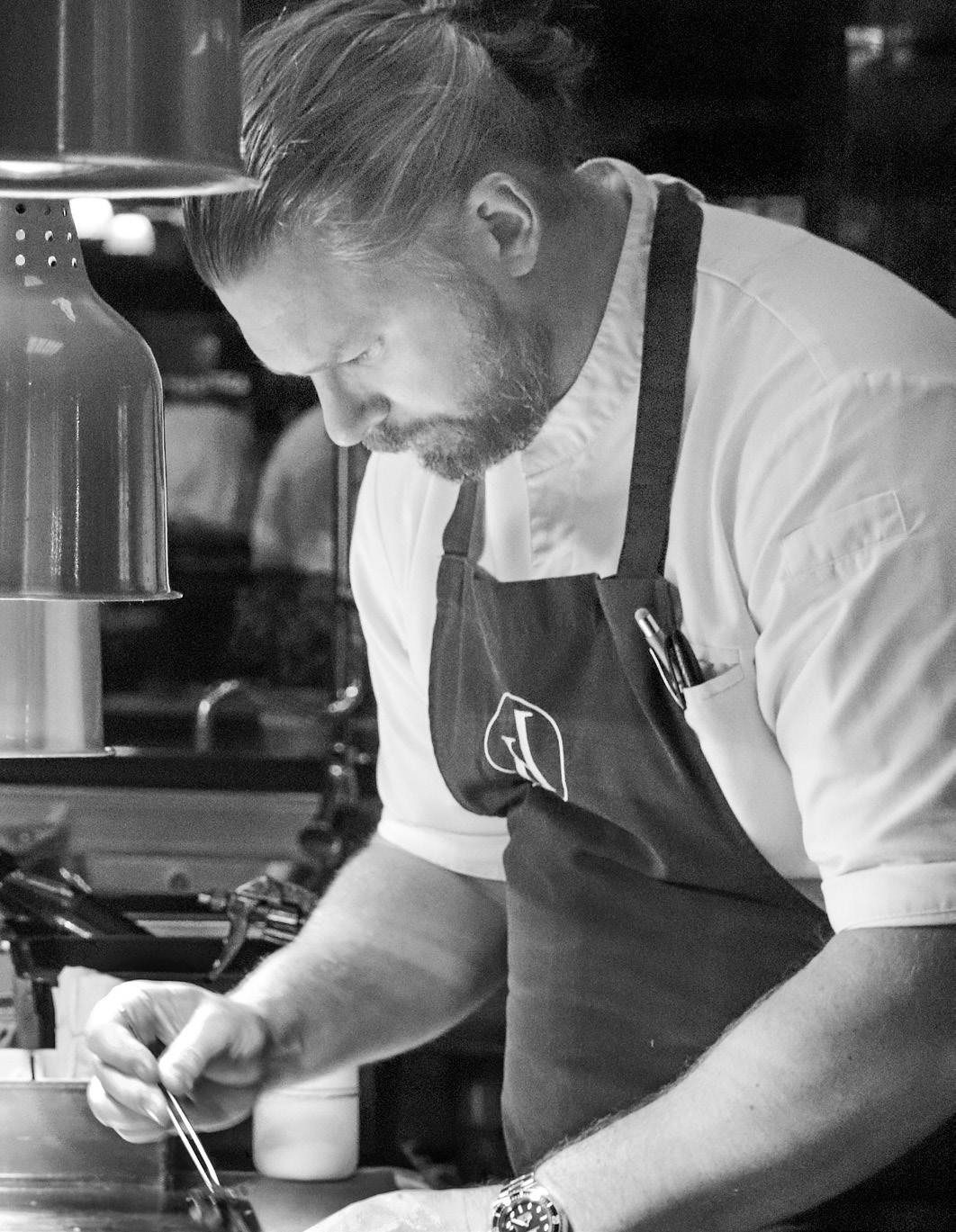
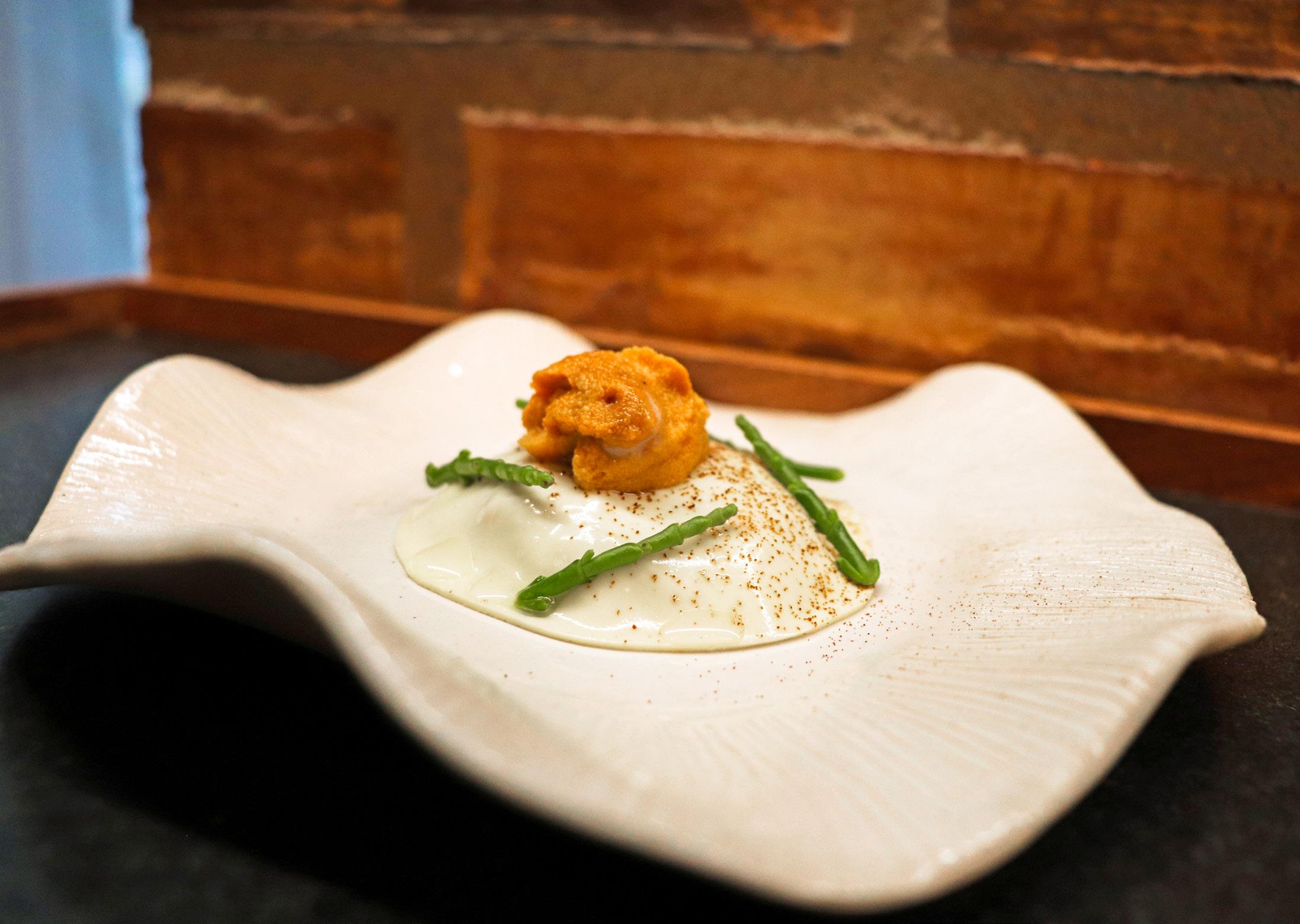
Mikael Svensson.
Norway lobster, sea urchin.
Homemade sourdough bread.
And the embryo of what is today Kontrast was created.
–I wanted to do something more creative where I could influence how you do service, the concept, and take responsibility for the whole solution. It ended up with me, perhaps naively, thinking that it can’t be that difficult to start your own place?
A friend tipped him about a hotel where he could open his own restaurant. That’s where Kontrast was born.
–After several years in Oslo I had learned how to find good suppliers of fish, good farmers to work with and had built a strong network. What I did at the hotel is basically what I do here today: good local produce, sustainable, organic and the best quality I can find, says Mikael Svensson.
AFTER 14 MONTHS OF COLLABORATION he chose to move on and then found the premises where Kontrast is located today. That was April 2015.
–It went very well and we got our first star already in February 2016. Then it took longer for the next one, which we received in 2024. After the first star we got more guests and could renovate and upgrade our ideas.
The plan from the beginning was to be independent, make money and develop, make more money and develop further.
–There was no Michelin ambition from the start other than that I wanted to develop the restaurant day by day and constantly make it better both as a guest experience and as a workplace. And it’s still like that, I don’t walk around thinking about a third star. I just want to improve and develop my ideas, he says.
HE IS SOMETIMES ASKED WHAT kind of food one gets at Kontrast.
–Kontrast is a contemporary Norwegian restaurant. You should feel that you are in Norway, but you should also feel that we are part of the global scene. And as a chef I of course carry everything I have learned and experienced at different restaurants.
The focus is largely on fish and seafood since Norway has an enormous supply very close by.
–If you eat at a starred restaurant in Copenhagen or Stockholm, almost everything comes from Norway. It is very inspiring to have such fine ingredients so close, it makes it easier to cook exciting food, he says.
He also talks a lot about expectations; guests expect something, and if you don’t have it they might be disappointed.
–It is our task as chefs to push the boundaries of the guests. I like to challenge guests, surprise them and give them something they definitely do not expect. Like my bone marrow ice cream, he says.

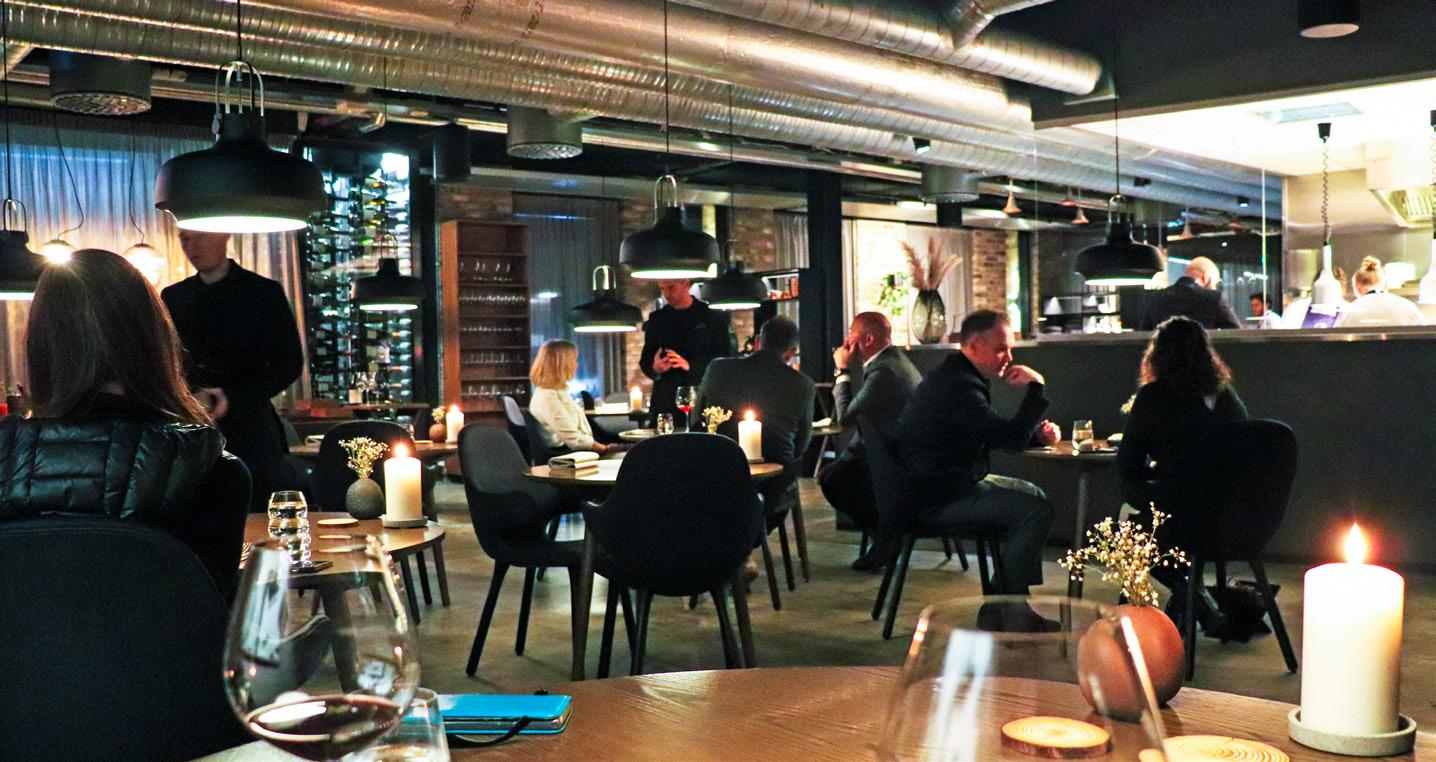
THAT KONTRAST FROM THE VERY BEGINNING decided to fully commit to the environment recently led to the restaurant being awarded the prestigious Michelin Green Star.
–It is of course a great confirmation that we have succeeded with what we envisioned when Kontrast opened – it was to be organic, sustainable and local, says Mikael Svensson.
Around 98% of Kontrast’s ingredients come from sustainable local Norwegian suppliers, while the remaining 2% – consisting of specialty products such as saffron, caviar and truffles – are imported sparingly.
This approach has also led him to go one step further.
–I early on felt that I wanted to take care of everything that was left over in a kitchen – peelings, apple cores, bones, coffee grounds and so on. So together with Will Moffat I created a separate company called B.culture. In the beginning it was mostly vinegar, but then we started making soy, garum, miso from what is left over, he says. B.culture sells to local restaurants and shops, but also to Sweden, France, England, Switzerland and Dubai.
The Scanian and newly minted Norwegian citizen Mikael Svensson also has a family with a partner and a five-year-old son. His partner is from Gothenburg, but the son is probably more Norwegian, he says.
–He has actually already started training ice hockey a couple of times a week. I of course don’t decide what he should do, but I have probably subconsciously influenced him that hockey is fun, Mikael Svensson laughs.
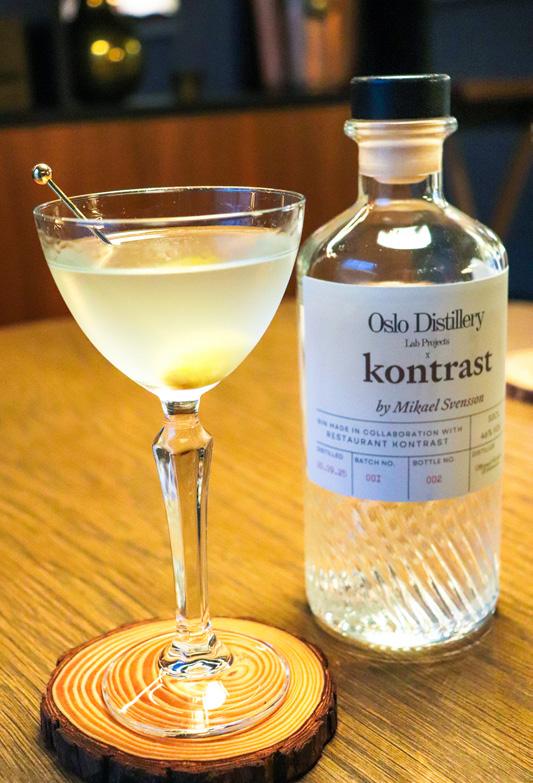
Wine pairing example Kontrast
Mukai Shuzo – Natsu No Omoide – NV
Haart – Goldtpfchen Riesling Kabinett – 2024
Jessica Litaud – Saint Veran – 2023
Tissot – Savagnin Sous Voile – 2020
Chanin – Los Alamos Pinot Noir – 2021
Podere Le Ripi – Cielo dÚlisse – 2019
Domaine de la Borde – Macvin du Jura – NV
Argyros – Vinsanto – 2016
(There is also a non-alcoholic menu with delicate homemade juices, created by the sommelier)
The dining room with guests.













Relax!
Relax Riesling har funnits i mer än 21 år på den svenska marknaden!
Vinet har en druvig smak med fin sötma, inslag av gråpäron, melon och citrus. 4 / 5
4,7/ 5
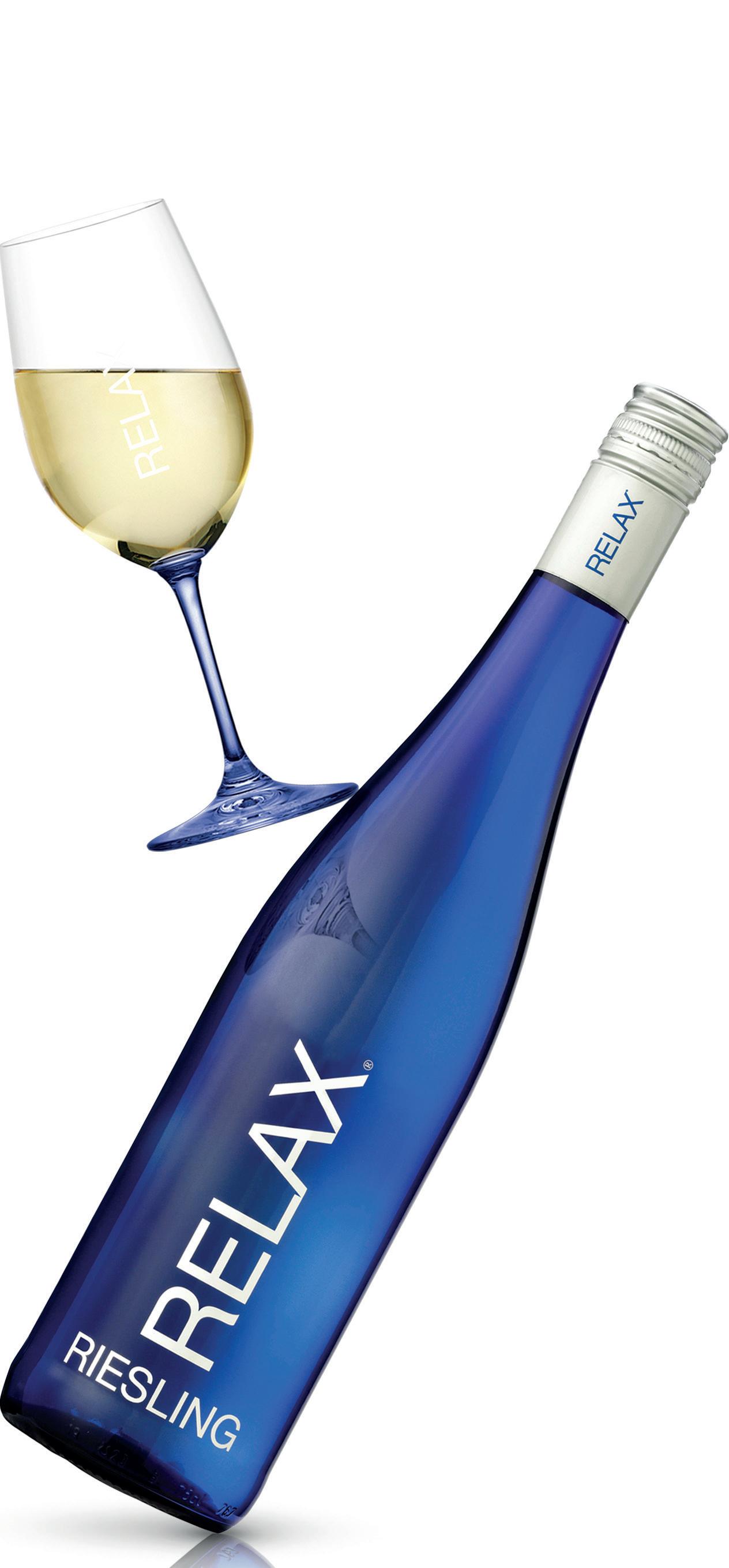
Serveras svalt, gärna till fisk och asiatiska rätter.
Art 7230 Alk 8,5 % 79 kr
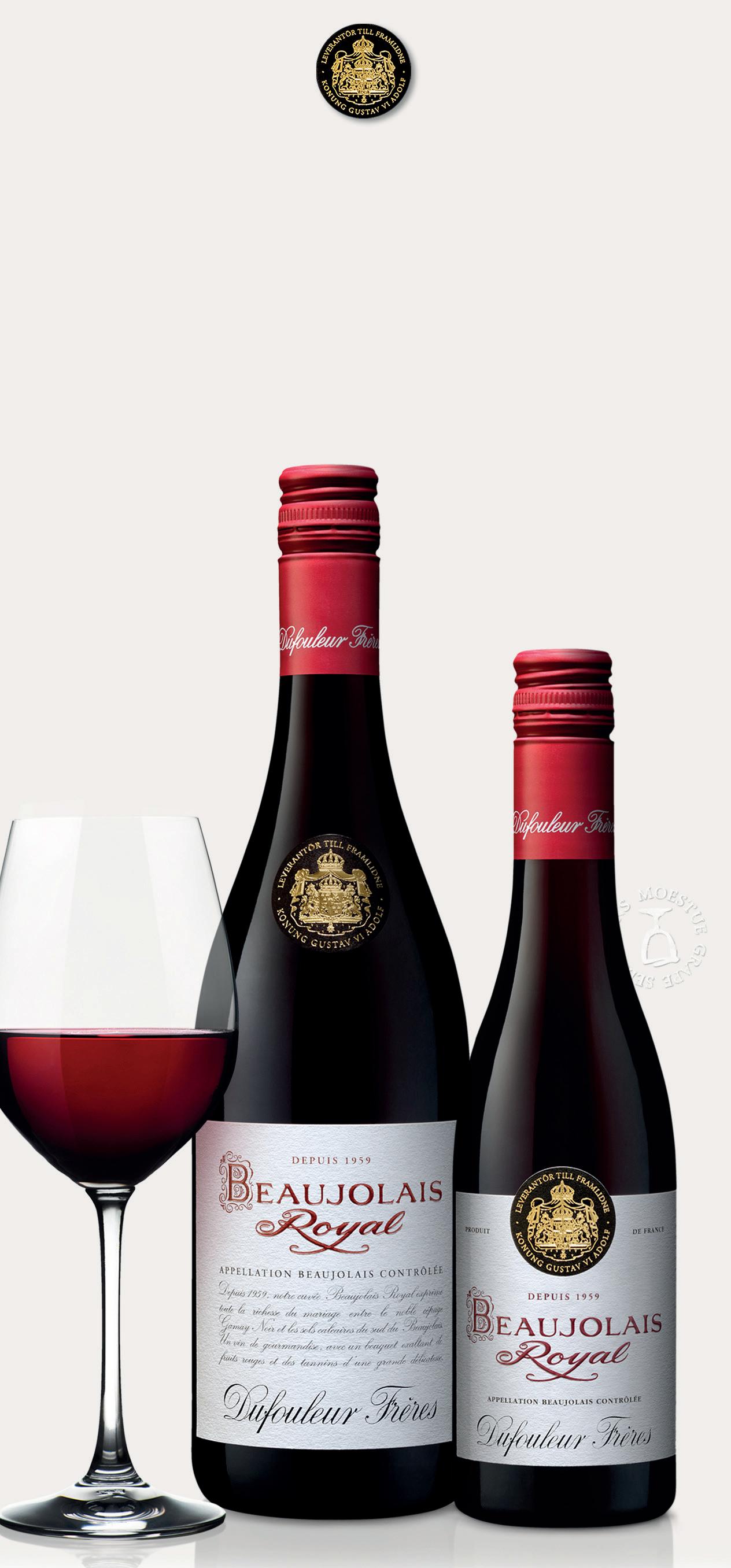
EN TIDLÖS KLASSIKER
från familjefirman
DUFOULEUR-FRÈRES
Beaujolais Royal gjorde sin debut på systembolaget redan 1955. Med sin runda och mjuka smak har den varit en favorit sedan dess. Servera gärna vinet lite svalt, omkring 14 grader, till sommarens härliga bufféer.
BEAUJOLAIS ROYAL ART NR: 5408 ALK: 12,5 %
4,3 av 5 vinguiden.com 2020
Aussie and proud
Our Australian correspondent Katie Spain’s favourite local restaurant just got better. The reason is hyper-local and close to the heart.
BY KATIE SPAIN
DEAR LIVETS GODA READERS, I HAVE A PROMISE
TO MAKE. As a wine writer, it is impossible to choose a favourite South Australian wine region. I love them all for their individual landscapes, quirky characters, rich history, evocative vineyards, grape varieties, and of course, the wines they produce. South Australia’s McLaren Vale, however, is the place I call home.
My vow to you is this: If you go the distance and visit this beautiful corner of the earth, I’ll take you for dinner at my favourite go-to restaurant The Salopian Inn.
Why do I love The Salopian (or “Slops” as us locals affectionately call it) so much?
It could be the organic kitchen garden that wraps its way around the historic stone building, much of which appears on the farm-to-plate menu alongside locally caught seafood and farm-grown meat. It could be the way a glass of McLaren Vale Grenache pairs perfectly with chef and co-owner Karena Armstrong’s kangaroo meat skewers, or the warm welcome from staff as they guide visitors past walls adorned with art. It could also be the vineyards framing the homely space, or the way the region’s winemakers and grape growers are regulars at this much-loved local institution.
Mostly though, it’s the way the humble venue recently transitioned to 100 per cent Australian beverages.
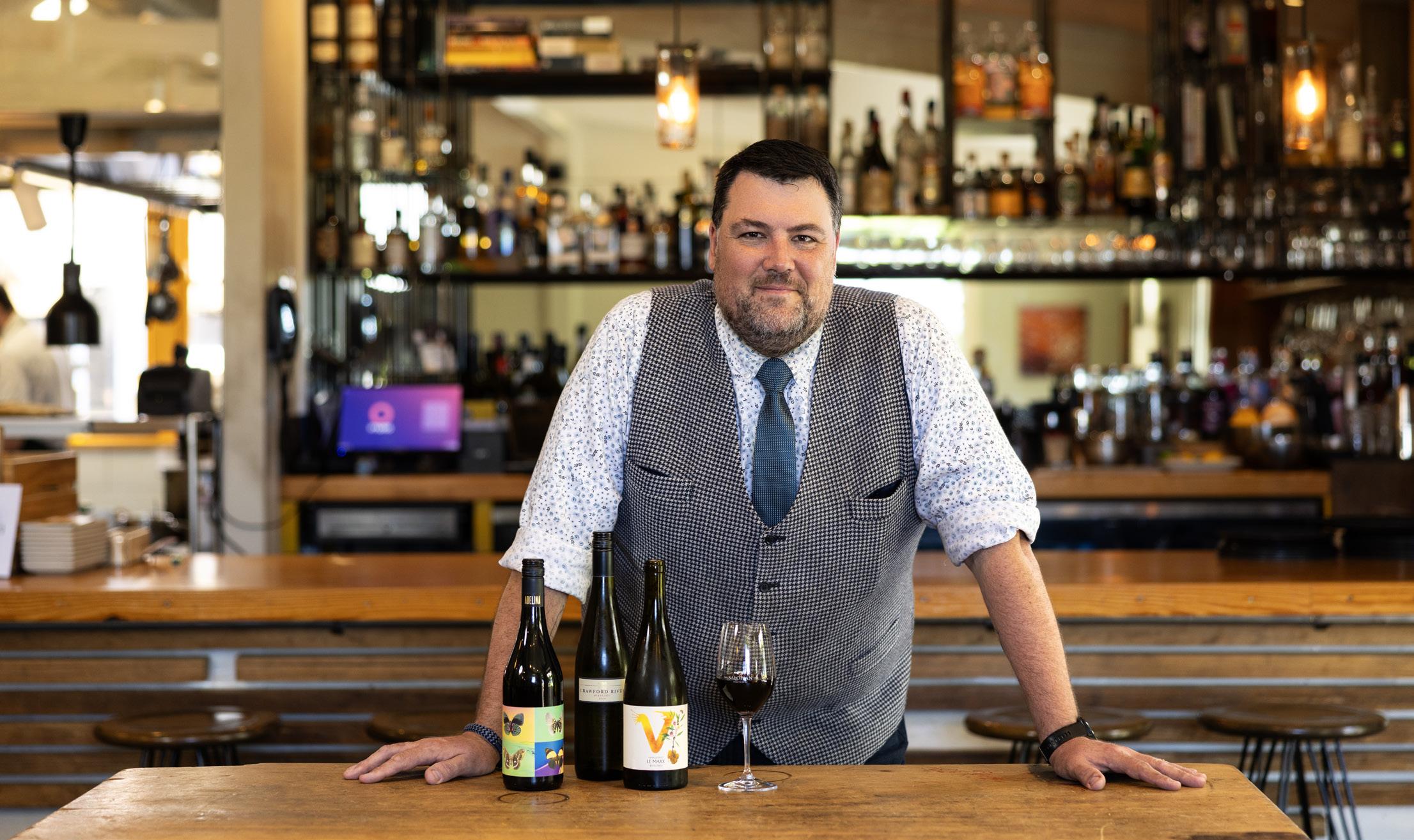
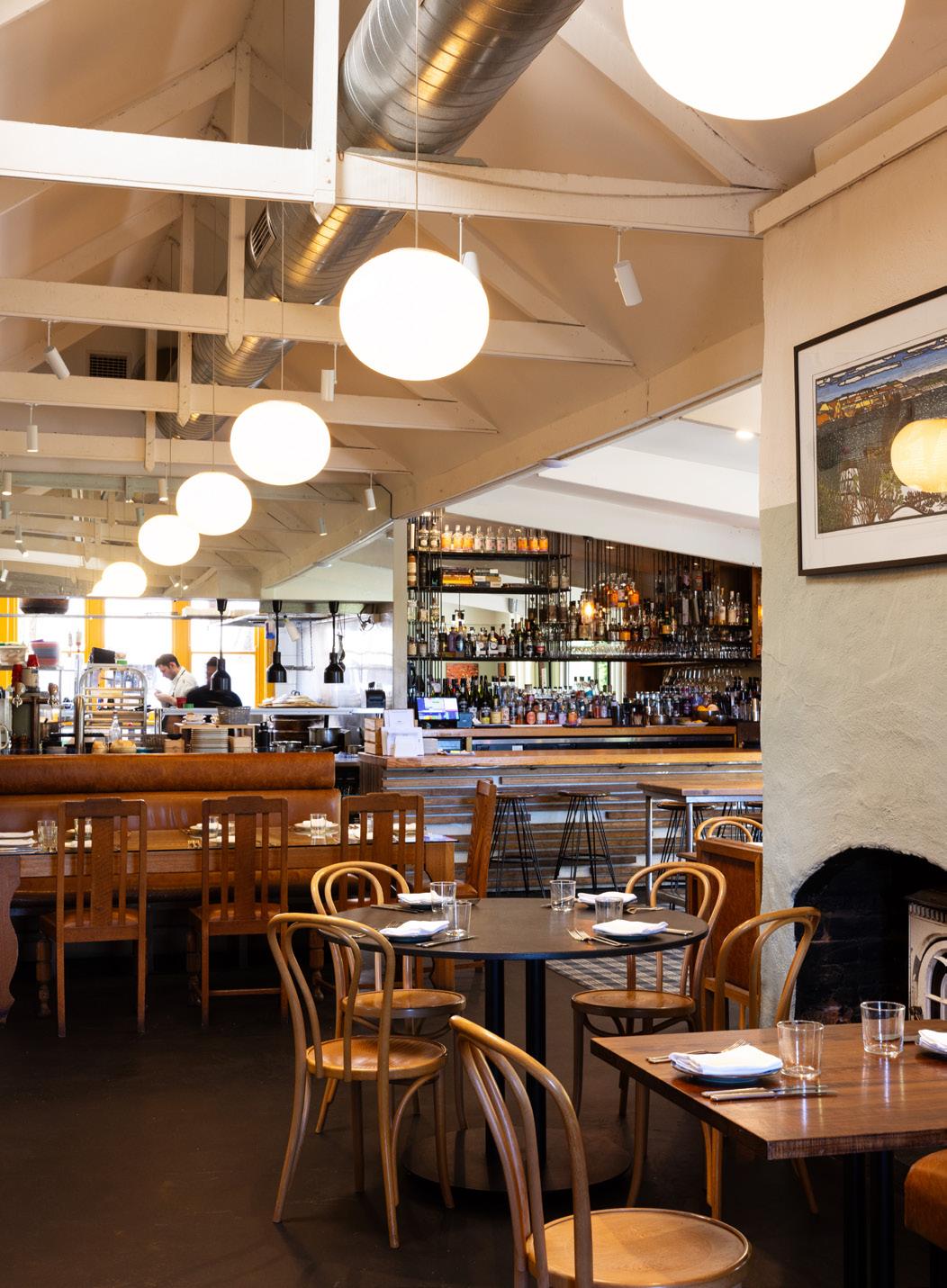
Alex Marchetti.
THE ANNOUNCEMENT IN LATE 2025 was a parochial power move the wine industry needed.
“Wine, beer, premium spirits, soft drinks - everything,” said co-owner and sommelier Alex Marchetti when I visited to chat about the decision. “It’ll all be Australian.”
There’s a lot to be proud of.
In September 2025, The Salopian Inn won the Best Wine List: South Australia in Australia’s Wine List of the Year Awards. Shifting to exclusively local is not a decision they take lightly but Marchetti decided the time was right after attending a wine tasting event with SC Pannell winemaker Steve Pannell.
“We tasted wines made from fruit from all the SC Pannell vineyards and they are world class,” Marchetti said. “Why don’t we put Australian wine on the same pedestal as we do international wines? Pannell said he only knows of one place that has the balls to list 100 per cent Australian wines.”
IT’S CERTAINLY NOT COMMON – yet - especially in highend restaurants. Infinity at Sydney Tower by esteemed chef Mark Best has a 100 per cent Australian wine list, as does The Blue Door in Surry Hills and Port Adelaide’s Colac.
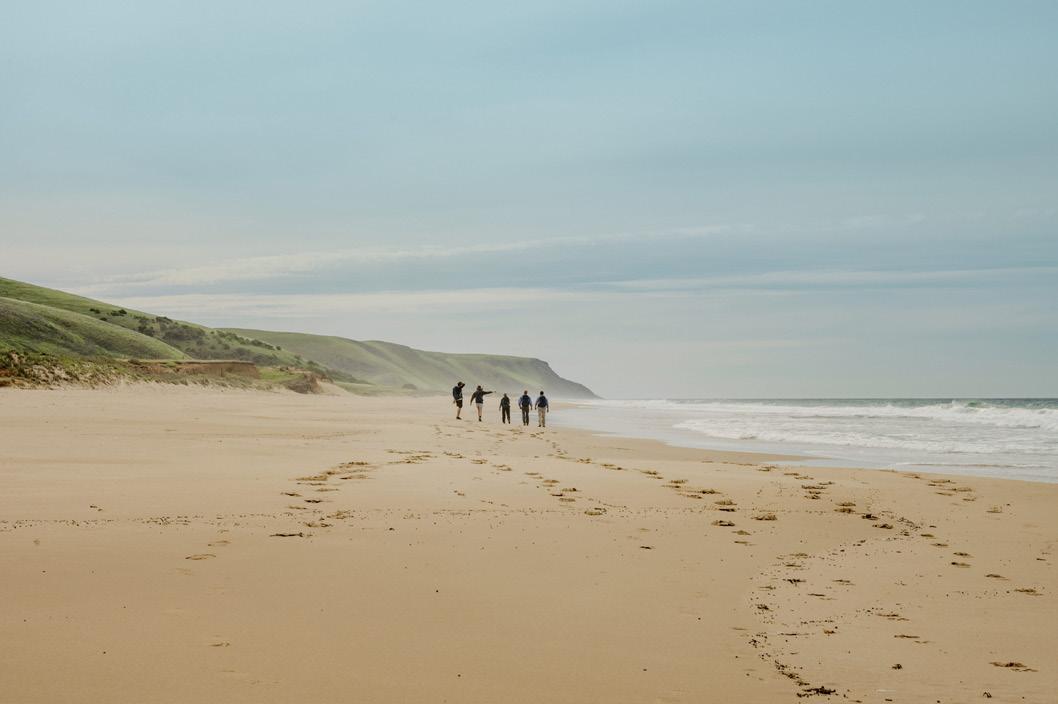
“The challenges the Australian industry faces is scary,” Marchetti said. “What’s going to happen to our producers over the next five to 10 years? Our wine philosophy has always been more about the smaller producers. I love hearing a winemaker say they had somebody ring up and place an order for a dozen wines because they tried the wine at the restaurant and they loved it.”
As 2026 approached, The Salopian Inn team phased out their international wine collection. One wine at a time.
“We ended up being able to have 30 or so wines on the pour and people can try a lot more,” Marchetti said. “It’s that ability to be able to have a glass of SC Pannell Little Branch Grenache, a glass of MMAD Shiraz or Joshua Cooper Cabernet.”
THE OFFERING NOW RANGES FROM small, hard to find producers to iconic drops like Barossa’s Henschke Hill of Grace and Jasper Hill Vineyard from Heathcote in Victoria.
“There’s no reason we can’t replace Burgundy with Tasmania’s Tolpuddle or Marco Lubiana,” Marchetti said. “In place of Champagne we now have Australian sparkling by the likes of Deviation Road (Adelaide Hills), Bellebonne (Tasmania), Arras (Tasmania), and Honey Moon Vineyard (Adelaide Hills). You’re actually paying less for a bottle of Deviation Road than you are for Mumm, Veuve Clicquot, or Moet and these wines don’t have to travel halfway across the world on container ships. Every single part of that is unsustainable. Why would you do that when you can get better quality wines from our own back door?”
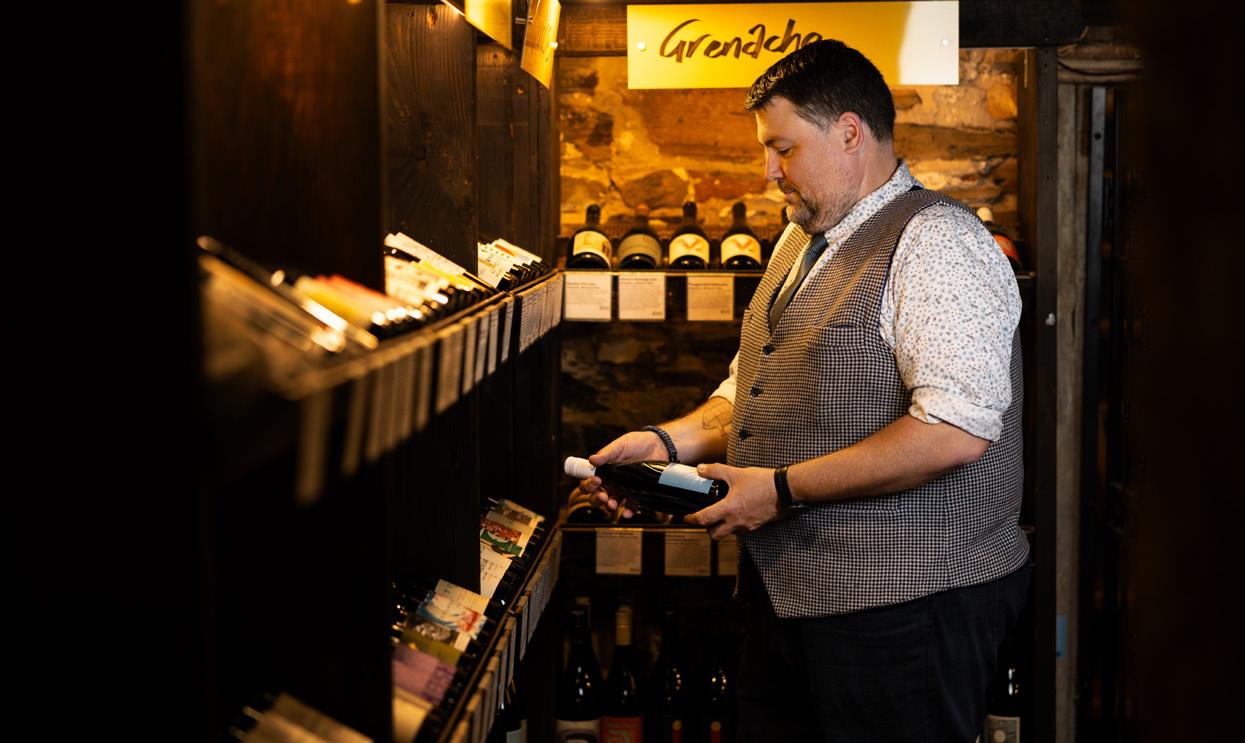
Alex in the wine cellar.
Hiking by the Southern Ocean, Fleurieu Peninsula.
It’s a continuation of what co-owner and chef Karena Armstrong does in the kitchen. Local, ethical producers with sustainability at heart.
“It’s going to be hard work but the exploration is exciting and the storytelling is going to be more interesting,” Marchetti said. “I love the challenge of finding the best Pinot Noir region in Australia. If you ask Adelaide people, it’s the Adelaide Hills. If you ask Victorians, it’s Yarra Valley, Mornington or Geelong. Ask Tasmanians and they’ll tell you it’s Tasmania. We have great Nebbiolo here, too.”
See you when you arrive in South Australia my beloved Scandinavians. The McLaren Vale Grenache is on me.
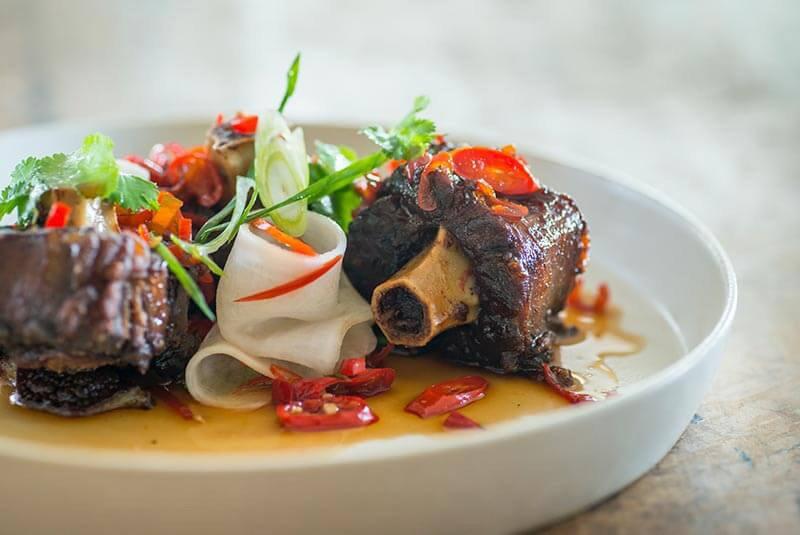
En kort historik
Bakom restaurangen döljer sig en rik historia. Det som idag är The Salopian Inn var en gång Gumprs Hostelry (1851–1853), Salopian Hotel (1854–1859) och The Volunteers Inn (1860).
När Salopian Inns vinkällare byggdes 1851 hade lantmätaren John McLaren redan kartlagt området söderut mot Fleurieuhalvön. Nybyggare slog sig ner och vinmakarna Thomas Hardy och John Reynell planterade sina första vinrankor – grunden till regionens framtida storhet.
Det var först ett sekel senare som McLaren Vales bordsviner började få internationell uppmärksamhet. Vid millennieskiftet dominerade shiraz, cabernet sauvignon, grenache och chardonnay, men regionen började också omfamna druvor som fiano, vermentino, tempranillo och barbera. Idag är detta lapptäcke av vingårdar en dynamisk och framåtblickande plats. Antalet vinproducenter och cellar doors är stort och varierat – från varsamt restaurerade byggnader till modern arkitektur. Regionen ligger i framkant vad gäller biologisk mångfald, miljömedvetenhet, hållbart jordbruk och nytänkande vinmakning.
Main Rd, McLaren Vale – salopian.com.au
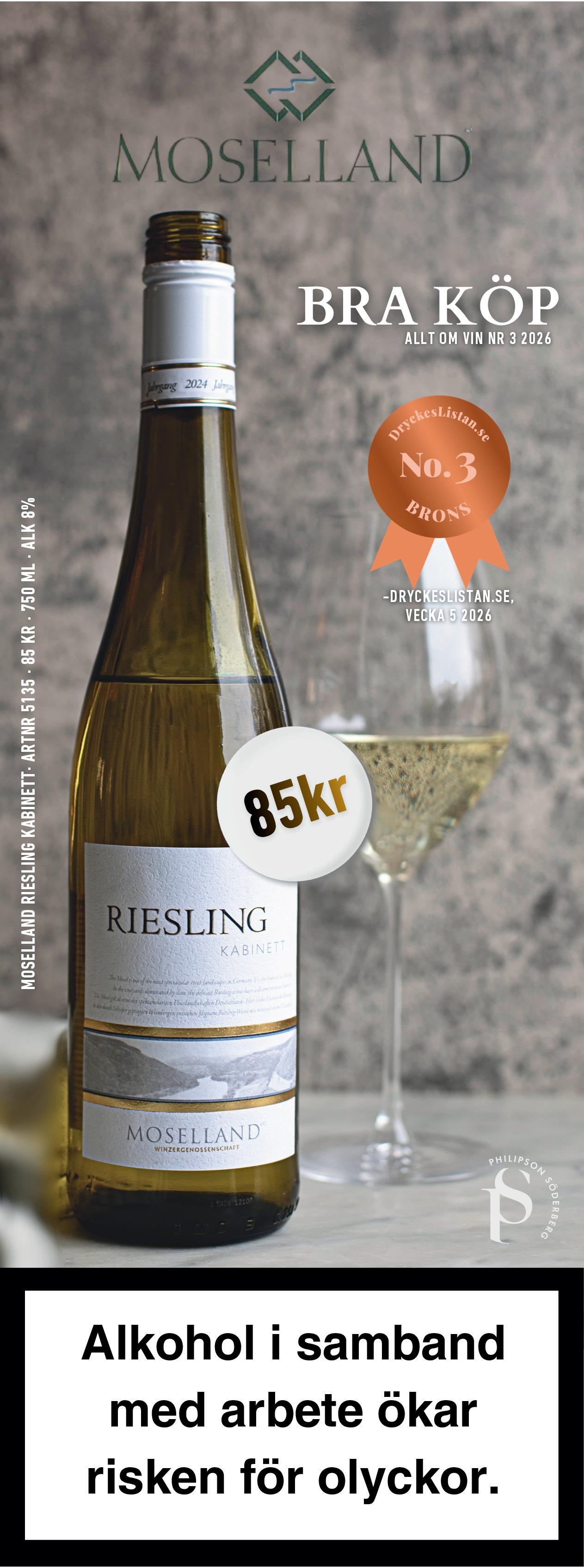
“Kangaroo neck”
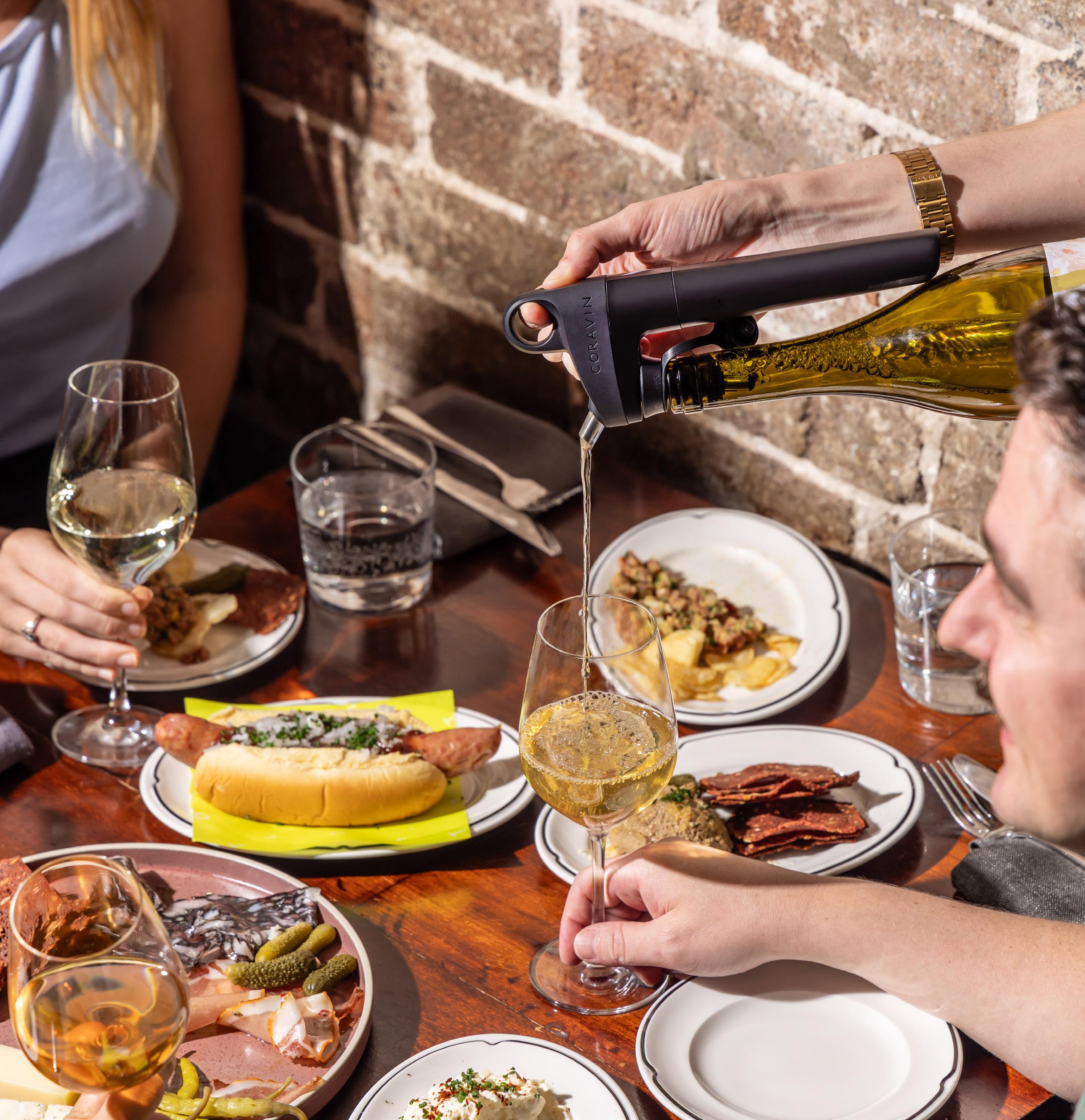

Adventurous Aussies embrace wines by the glass
A global shift towards ordering wine-by-the-glass is changing the way we drink, especially for adventurous Gen Z and Millennials. Katie Spain chats to some of the Australian sommeliers who embrace the movement.
BY KATIE SPAIN
THERE’S NO QUESTION THAT AUSTRALIA
BOASTS some of the finest wine in the world but the way we consume it is changing.
Australian bars and restaurants have increased their by-the-glass listings by a third since 2021. Personally, I’m thrilled. There’s a wonderful world of wine out there; who wouldn’t want to try top wines from Down Under without committing to a full bottle?
The numbers back it up. According to an independent survey conducted by Coravin, global innovator of wine-by-the-glass systems, 54 per cent of Australians are ordering more wine-by-the-glass (BTG) than they were two years ago.
Despite considerable challenges for hospitality and the wine trade in Australia, wine by-theglass is a growing category, aligning with a trend towards quality over quantity.
“Drink less but drink better is really true,”
says Sydney-based Alex Kirkwood, food and beverage director at The Point Group.
“We see new restaurants opening every week in Sydney and diners are always looking for something new. There’s been a big shift from the early days with the classic wine bar model of five or six different things by the glass, to really well curated and huge by the glass programs to deliver individual experiences.”
IT’S A SHIFT THAT US-BASED CORAVIN
FOUNDER and inventor Greg Lambrecht has observed globally.
“What I’m seeing is very intentional wine list construction,” Lambrecht says. “People are much more willing to buy particularly expensive wines by the glass, because it fractionalises the cost of the wine.”
While Millennial and Gen-Z drinkers are motivated by quality, diversity, and discovery,
Photo: Kera Wong
Baby Boomers (people born roughly between 1946 and 1964) were found to be motivated by practical factors like cost of living, health concerns, and drink driving considerations.
“We have found pretty consistently that the younger generation are drinking by the glass to explore,”
Lambrecht says. “They’re trying to learn and they’re not pigeonholing themselves into Burgundy or Bordeaux. They’re trying to drink wines from all over the place whereas we found that the Boomer population want to conserve cash and drink intentionally from a health perspective.”
SOME RESPONDENTS SIMPLY
WANTED TO
DRINK
a different wine with each course.
“Quick and quality is a key thing now too,” Kirkwood says. “Places with time limits on reservations mean people are nervous about over-committing to a bottle or half bottle, so their ability to drink a glass of something really serious and amazing means they can still have the great wine experience in a tighter timeframe.”
It’s not just about slapping a hefty price tag on rare drops.
“You still have to have the knowledge and the passion behind it,” says Victoria-based Wiremu Andrews, founder
of wine distribution and consultancy business Dearth of a Salesman. “You can’t just put a wine on the list and say, ‘there you go, pay $70 for this glass of wine’,” Andrews says. “As a customer, there’s never been a better time to get to know more about wines from all around the world. There’s such a bounty for people to try. A lot of people who are interested in wine, are thinking of style now. Not all Shiraz is created equal, so it means you can try myriad styles.”
In an attempt to help people navigate the options, Lambrecht and his team launched The Coravin Guide, an online tiering system based on the variety of a venue’s bythe-glass wine selection.
IN VICTORIA, THE ESTABLISHMENTS
WITH the highest by the glass rating (more than 60 wines by the glass) include Maison Bâtard, Grill Americano, CIRCL Wine House, Society, Marmelo, Steer Dining Room, Ten Minutes by Tractor, and Fantome Wine Bar & Restaurant, and Archive Wine Bar. In New South Wales, the highest rating went to the likes of Kipling’s Garage Bar, Bentley Restaurant & Bar, Aria, Rockpool Bar & Grill, Oborozuki, Quay, and Jonah’s Restaurant and Boutique Hotel. At Melbourne’s CIRCL, head sommelier and venue

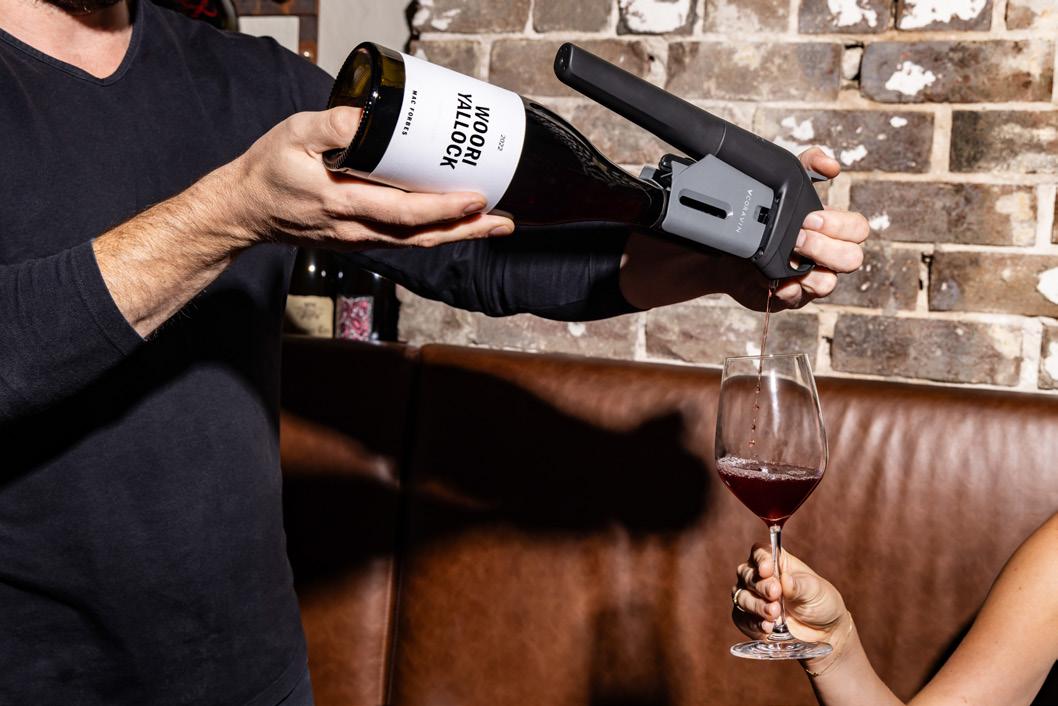
manager Xavier Vigier oversees a 1500-bottle, 125-page wine list and for his efforts, won Wine List of the Year in the Part of his role is taking “pain points” out of the decision-making process.
“Especially when people don’t know what wine to choose by the bottle,” Vigier says. “Some people might like white, some might like red. We need to invest a lot of time on the front of house to help them understand that the landscape is changing.”
Andrews, who is also a partner at Beechworth’s Sentio Wines, is heartened by what he’s seeing.
“Despite the naysayers saying, ‘we’re drinking less and people aren’t drinking as much’, I think there’s still a huge amount of people who find wine interesting and are coming into it,” he says. “Younger people and older people want something that grabs them and is interesting and different. They want to be able to go to a restaurant say, ‘I want half glass of that, and half a glass of that,’ so they can kind of be their own sommeliers, in a way.”
The Coravin Guide is live in the UK, USA, The Netherlands, Milan, Melbourne and Sydney. Expect additional announcements soon. guide.coravin.com
“Ett klokt val” -Ugglan

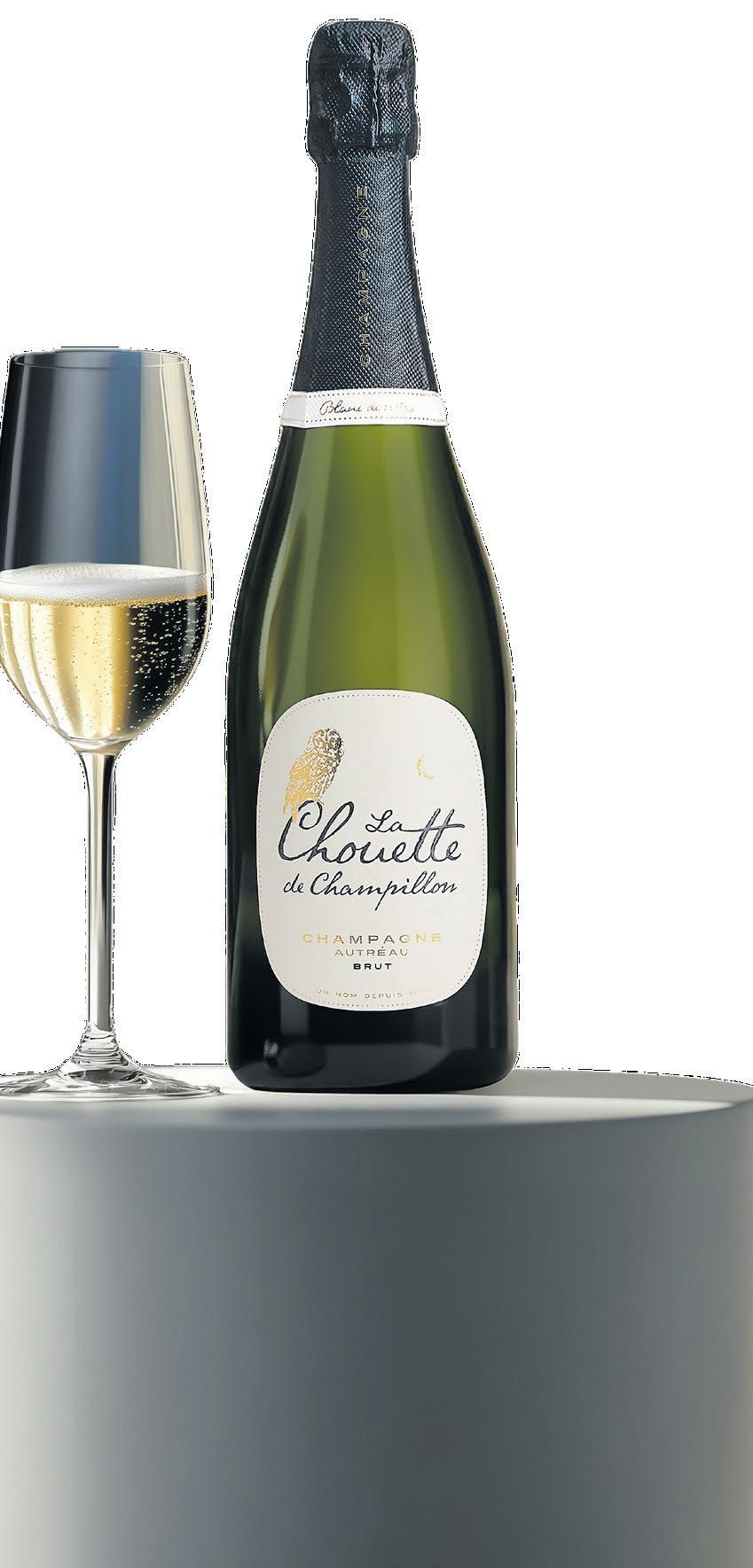


Photo: Kera Wong
The Coravin Guide.
Corn at Michelin level – factory and fine dining in the same house
There are at least 64 different varieties of corn in Mexico. Blue, red, black, yellow and multicolored. At Maizajo in Mexico City, the ancient Mexican food culture is taken one step further, up to Michelin level. –I love working with corn. But for me it is about combining traditional Mexican food with fine dining.
TEXT URBAN NILMANDER PHOTOS CARIN TEGNER/JOSE MIGUEL RAMIREZ
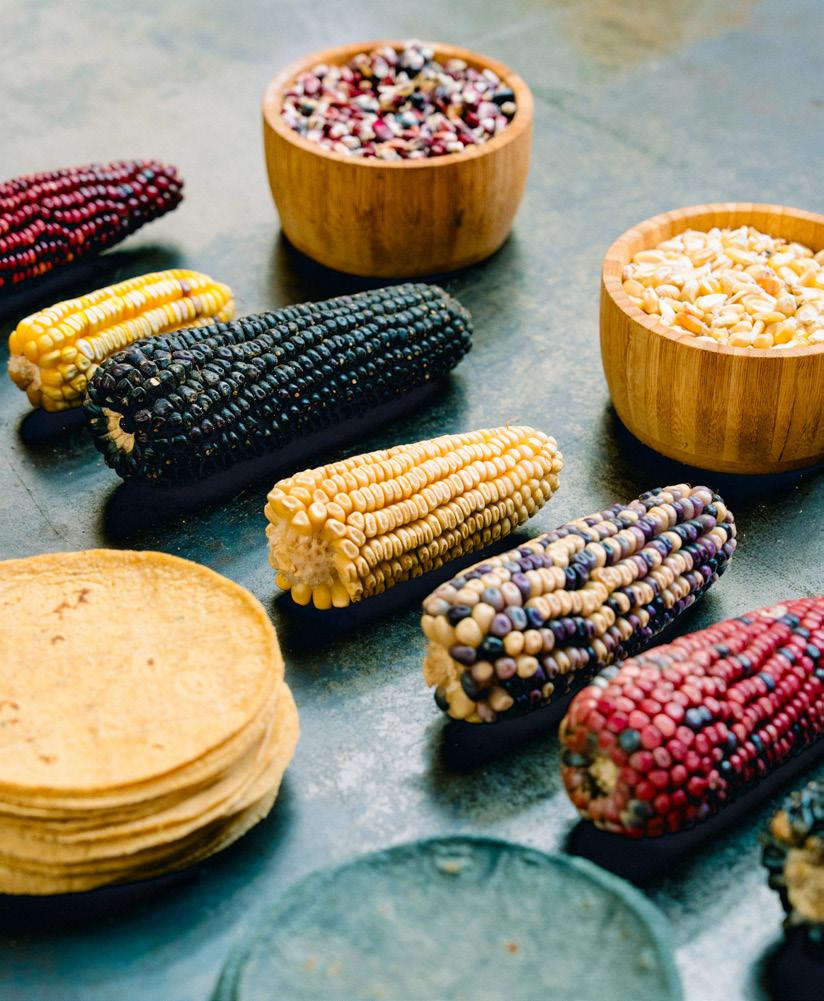
CHEF SANTIAGO MUÑOZ MOCTEZUMA WAS BORN in Mexico City. He sees himself as a guardian of Mexican roots and his city as open to those who arrive. The city gives to those who come, and those who come give back to the city – a mutual exchange that constantly nourishes and reshapes it, even as it remains true to itself.
–The best food you can find is usually on the street, it must always be fresh. All my inspiration comes from street food, and I can translate that into my restaurant and make it better because I know where all my products come from, says Santiago Moctezuma.
Street food has in recent years received increasing attention. A Michelin star was recently awarded to a small taqueria in Mexico City, Taqueria El Califa De Leon. Since then, the queues to the small street kitchen have stretched for kilometers.
WHAT HAS MADE SANTIAGO MOCTEZUMA famous beyond his city and internationally is the investment he has made in his tortilla factory and restaurant, Maizajo. It all began when a young Santiago Moctezuma was working in catering and was sent to a producers’ market an hour from the capital.
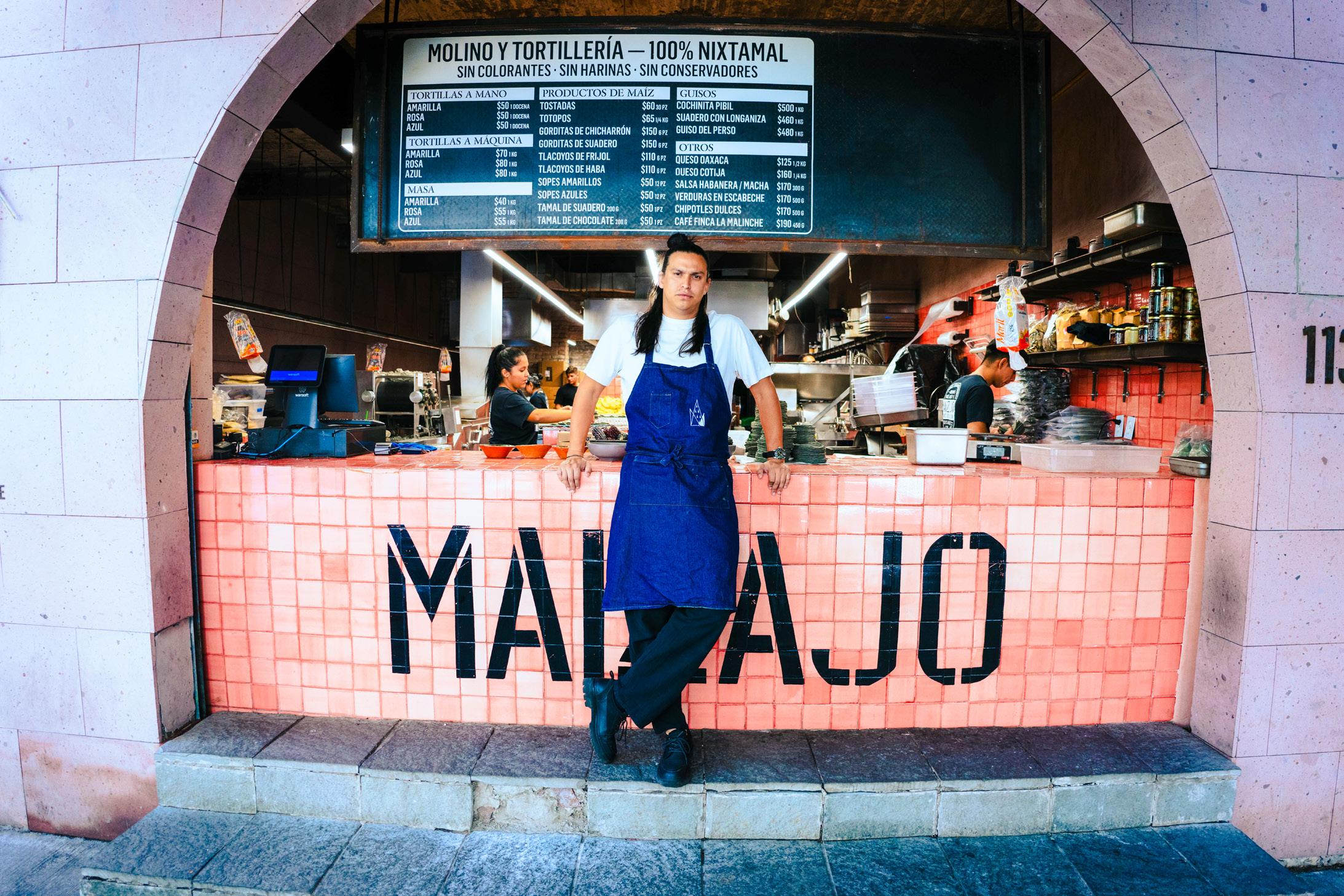
–I couldn’t believe that I had never seen a blue corn cob before, Santiago recalls.
He began to grow curious about nixtamalization, the traditional process that makes corn more digestible, nutritious and easier to eat. An idea began to take shape. Santiago decided to make traditional tortillas with roots in Mayan culture.
He took the step and opened Maizajo in 2016, a small tortillería in Mexico City’s trendy Colonia Roma.
In short, nixtamalization works by cooking the corn kernels and then letting them steep in water with a certain percentage of calcium hydroxide, slaked lime.
THE CALCIUM HYDROXIDE CAUSES THE HUSK OF the dried corn kernels to loosen, which leads to a soft and flexible tortilla, but the ancient process also releases the amino acid tryptophan and the B vitamin niacin so that they can be absorbed by our bodies.
Without this process it would be impossible to make soft, flexible tortillas, and they would also lack important nutritional value for us. Calcium hydroxide is also part of the characteristic flavor of a corn tortilla.
–Nixtamalizing is expensive and time-consuming. It is
exhausting. When I made tortillas all day I was so well trained. I want tortilla baking to be valued, like being a pizza maker, a pizzaiolo. I always tell people that I am a tortillero, he laughs.
More recently he has also made contact with an oyster farmer on the coast. The farmer produces millions of oysters each year and discards enormous amounts of shells. Shells that contain calcium hydroxide and which Maizajo now uses in its tortilla factory. Recycling.
“I want tortillamaking to be valued the way being a pizza maker - a pizzaiolo - is valued. I always tell people that I’m a tortillero”
Santiago Moctezuma.
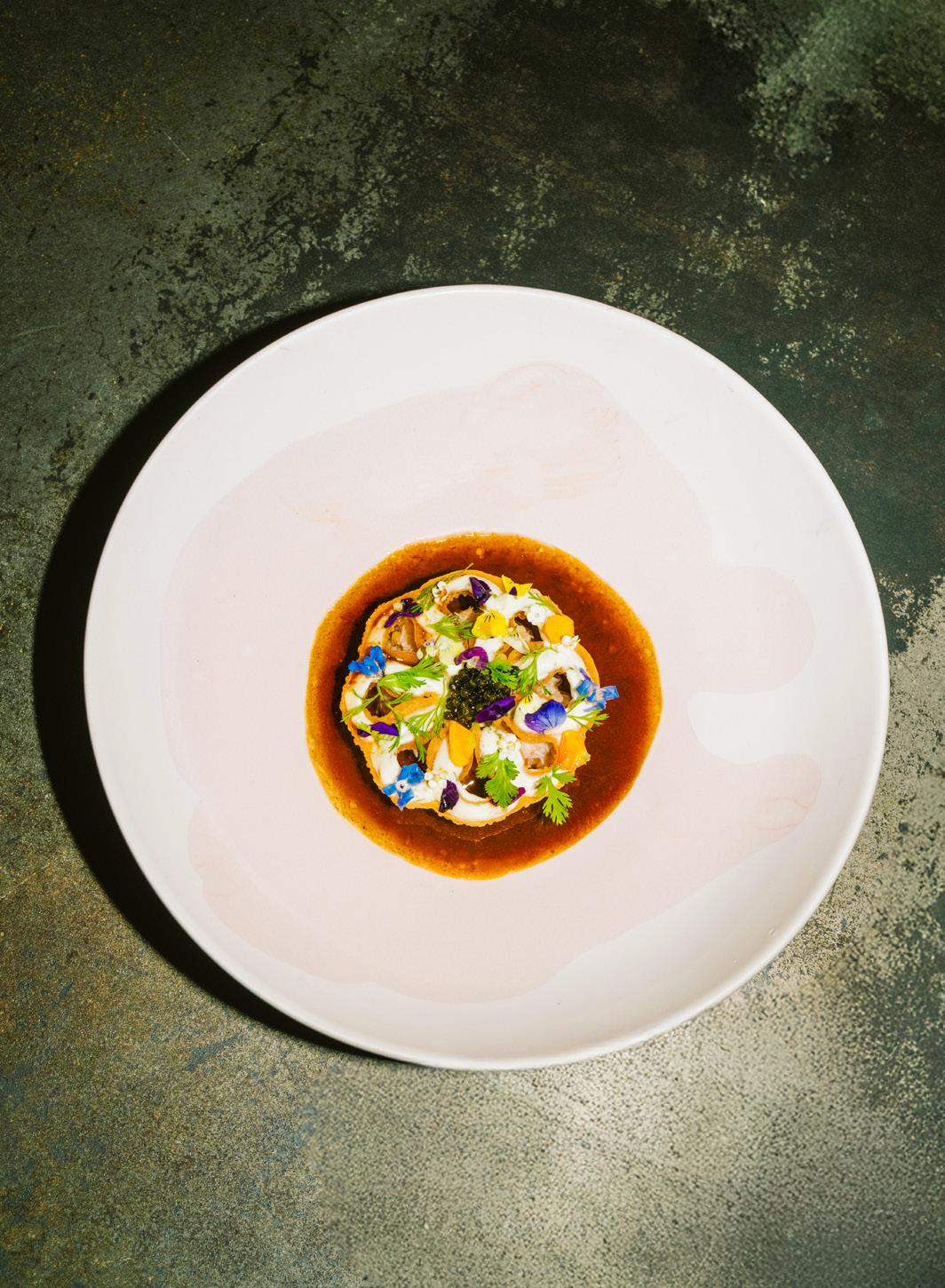
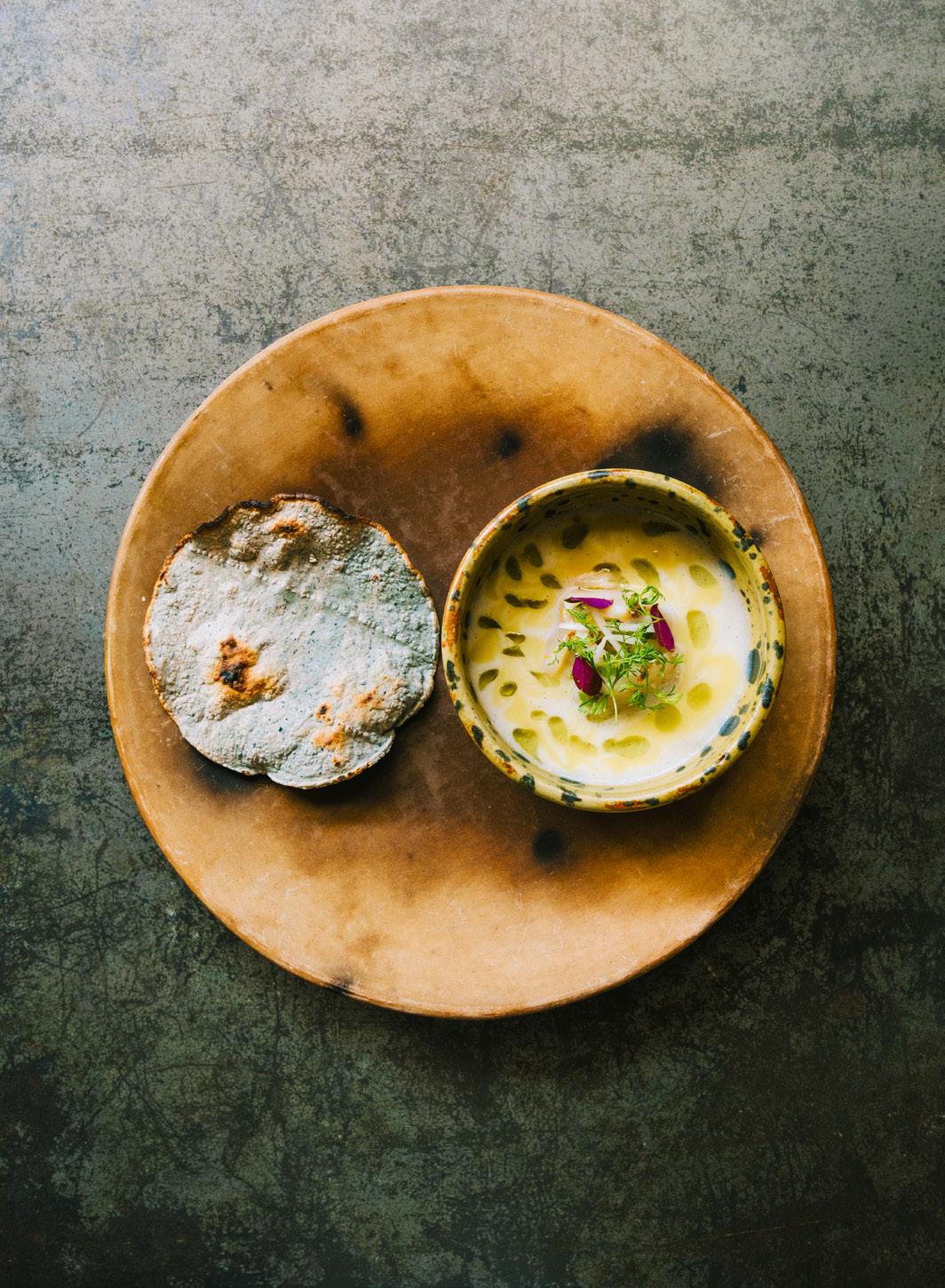
HIS FAMOUS TORTILLAS ARE NOW SOLD to around sixty restaurants in Mexico City.
Upstairs, in total contrast to the taqueria on the ground floor, is a fine dining restaurant where carefully composed dishes continue to highlight corn and Mexican roots.
The restaurant, created in an industrial design, has now brought him Michelin acclaim.
There he serves, among other things, suadero tacos (finely cut meat often used as filling in tortillas), seafood tlayuda (tlayuda is a tortilla from Oaxaca served in pizza size) and octopus longaniza (a crumbly sausage often served for breakfast, here made from octopus).
On the table there are tostadas and a spicy habanero and pepitas salsa (pumpkin seeds) while one scans the menu.
Oven-roasted blue corn tostada topped with avocado purée and sliced raw yellowfin tuna in a black sesame oil and soy dressing, as well as tamal de boda, are some other dishes.
Tamal de Boda is a vegetarian corn tamal filled with cooked poblano chili, leek and chard in achiote (red seeds that give a deep red color).
BUT HE WANTS TO REWRITE THE MYTH THAT all Mexican food is spicy.
–I work with many different kinds of chili and most are just flavorful, not at all hot, he says.
Santiago advocates respect – for ingredients and their origin, and for traditional techniques.
–This is my playground. This is where I turn emotions into dishes, ideas into cooking, inspiration into combinations, he says.
Something he learned already from his first encounter with the many different types of corn he uses today is origin.
–Today I know where 80 percent of what I buy comes from. What matters to me is who the producers of the corn are and how they work, he says.
The Covid years, which broke many restaurants, instead became a boost for Santiago and his team.
–We made homemade guisados (a meat and potato stew) and delivered them, together with tortillas or tostadas, to many homes every day, which meant that the business not only survived this extremely challenging period, but actually flourished. Instead of laying people off I had to hire, he explains.
“This is my playground. This is where I turn feelings into dishes, ideas into cooking, inspiration into combinations”
OVER THE YEARS IT HAS BEEN his commitment to those who grow corn across Mexico that has remained the core of the project.
–It is about offering better conditions to those in the fields, he explains.
And this extends not only to corn, but to those who supply him with vegetables, meat, fish and seafood.
Most vegetables come from Arca Tierra (a sustainable agricultural initiative in Xochimilco) and his goal is to achieve full traceability with the animal protein he serves. Respecting fishing seasons is also high on the list of priorities.
As a consequence, Santiago has another important goal in mind: to make guests understand that they are paying for an extraordinary taco – one that not only contains corn and fillings of the highest quality, but a taco that ensures the team at Maizajo receives fair wages, insurance and days off.
–I want restaurants to become great workplaces, he explains.
RECENTLY HE ALSO OPENED a Mexican restaurant in Bogotá in Colombia. There he uses the many varieties of corn found in Colombia as well as Colombian chili.
–I constantly want to improve and find more products that I do not know. We will also open another taqueria of a more traditional model but better.
Santiago’s list of dreams and goals grows longer every day.
Current ideas include the installation of solar panels, hiring an agronomist to oversee relationships with suppliers in the fields, and launching a new beverage list with fine Mexican and international wines, as well as agave spirits.
–I always feel that I am not doing enough, he says.
And even though his gaze is clearly set on a boundless sky, his feet remain firmly planted on the ground – close to the land, where it all began.
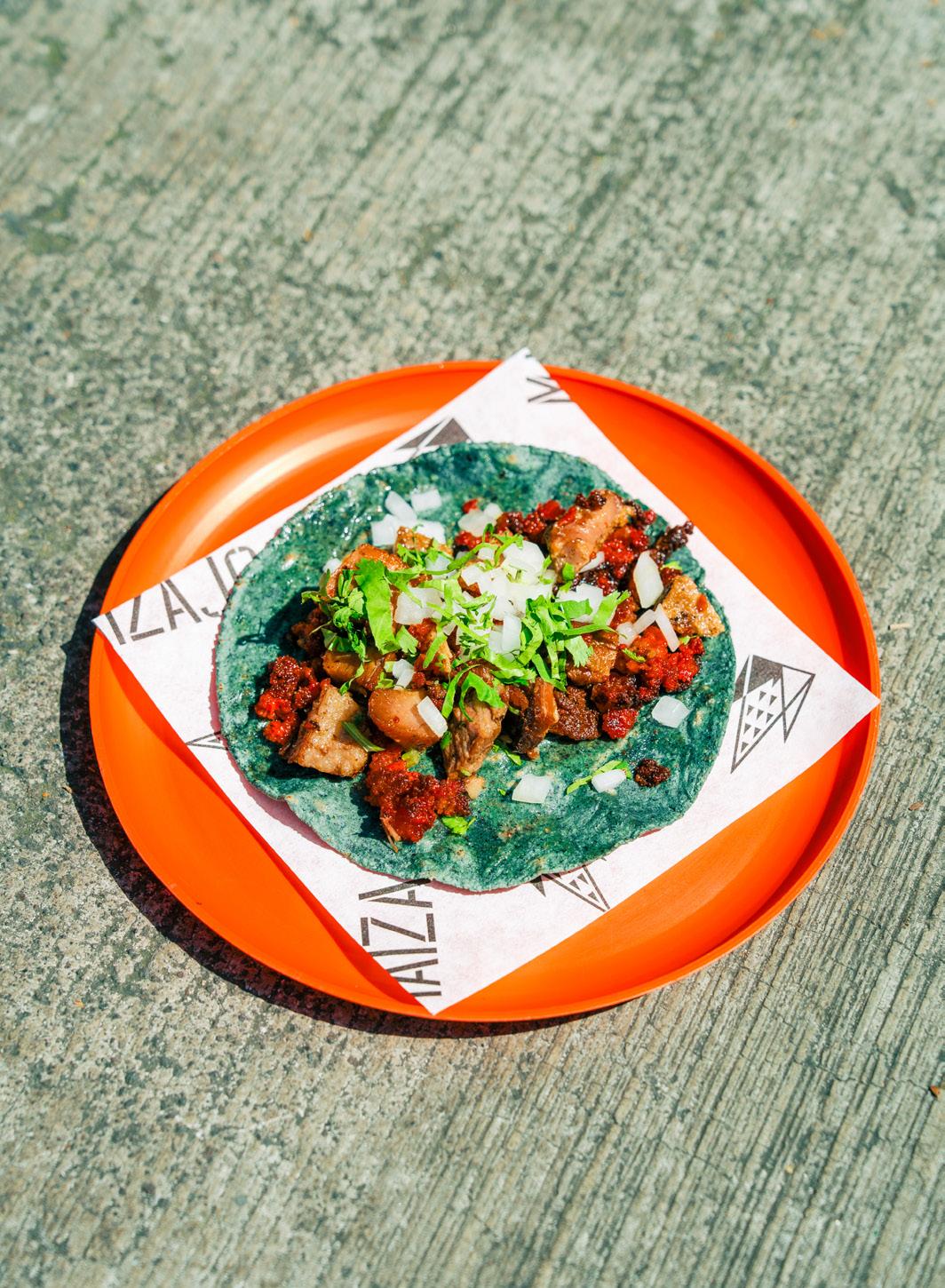
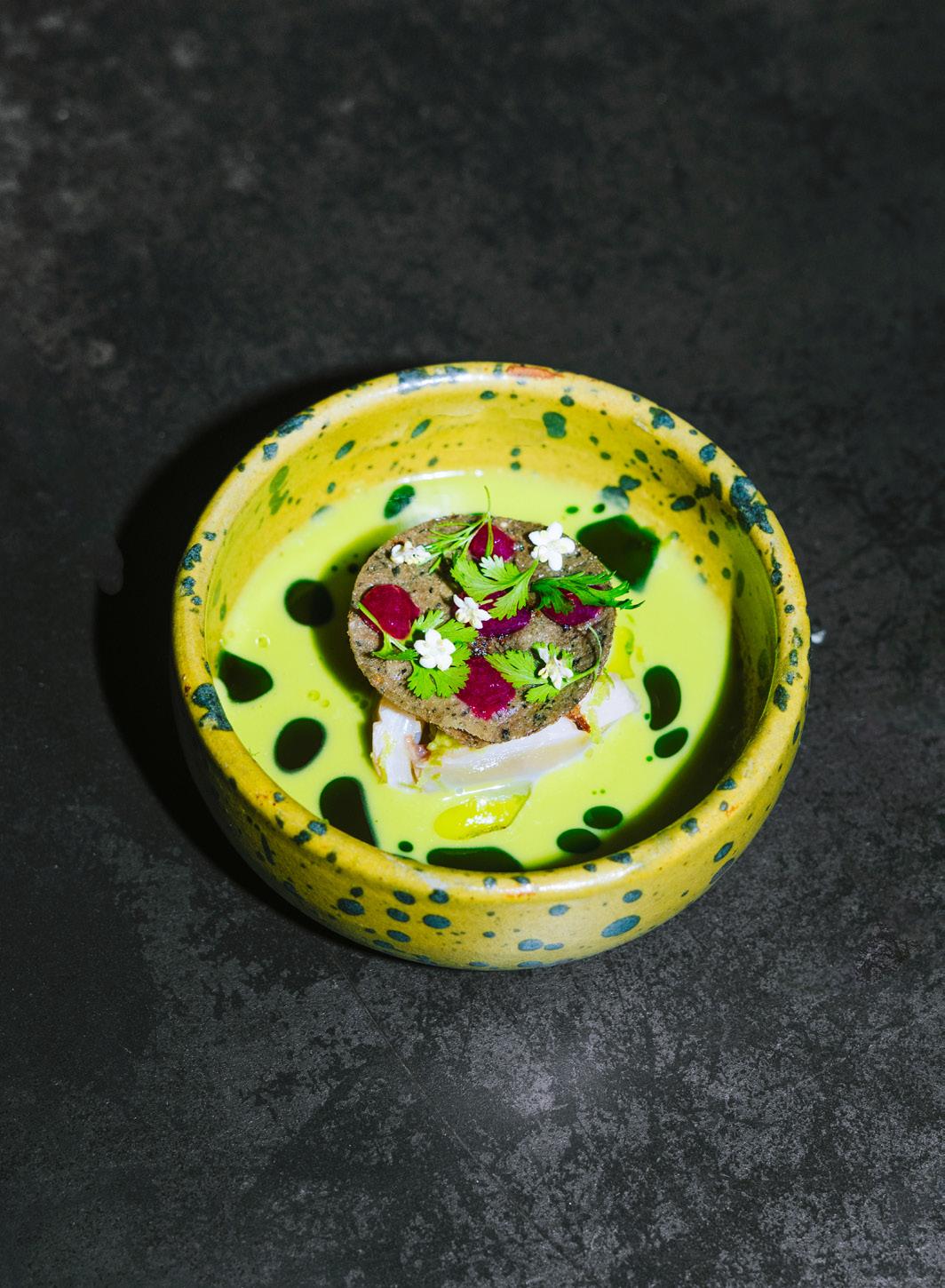
THE RECORD YEAR 1980
When popular music is discussed, it’s often said that the ’60s really ended around 1968. That was roughly when the term “pop” was replaced by “rock,” the songs (and the hair) got longer, solos became more prominent, and the more innocent party drugs were replaced by heavier, darker substances that would end up claiming many artists far too early. In a similar way, you could say that the ’80s, musically speaking, didn’t really begin until a few years into the decade. It was only then that synthesizers and drum machines had been fully integrated into the musicians’ normal vocabulary, rather than serving as a curious hint of the future.
BY ANDERS LUNDQUIST

AN ARTIST LIKE GARY NUMAN REALLY made a point of presenting himself as a robot—a replicant—and was considered to be making futuristic music. Beyond a synthesizer, however, his setup still included a proper acoustic drum kit, an electric bass, and an electric guitar. Not exactly cutting-edge, right? It was also the opposite of today, when almost all pop music is made using computers, synthesizers, sequencers, and auto-tune, yet nobody calls it “computer music.” The term synth-pop is instead more of a retro genre, where artists deliberately use “old-fashioned” synths and drum machines with dated sounds. In 1980, things were different. The future felt just around the corner, and it was almost eerie that the year of Nineteen Eighty-Four—George Orwell’s dystopian vision—was only a few years away (that much of what the book warned about—neo-fascism, surveillance societies, and a thoughtless herd behavior among historically unaware people—is now coming true is another, far sadder story).
1980 WAS A VITAL YEAR. Artists who had broken through just a couple of years earlier via punk and the so-called “new wave”—The Clash, Talking Heads, The Police, Elvis Costello, XTC, Joe Jackson, Blondie, The Jam, Patti Smith Group, Ultravox, among others—now dared (or managed) to show more sophisticated sides without losing their musical hunger. Nor were veterans like Billy Joel, Linda Ronstadt, John Hiatt, or Pete Townshend unaffected by the new wave. They all picked up the pace and intensity in their music around 1980.
FUTURE SUPERSTARS LIKE U2 and Pretenders released their debut albums that year. At the same time, “the new wave of British heavy metal” exploded. Longhaired British working-class lads like Iron Maiden and Def Leppard—both of whom made their album debuts in 1980—would soon be filling arenas. Something they are, incidentally, still doing 46 years later. Speaking of hard rock, two major ’70s bands also

found new life with new frontmen. Black Sabbath fired the heavily drugged Ozzy Osbourne and recruited Ronnie James Dio (who had already made a name for himself in Rainbow) for the successful album Heaven and Hell.
OSBOURNE, IN PARALLEL, got his act together with the help of his manager and future wife, Sharon Osbourne. Against all odds, he launched a successful solo career with Blizzard of Ozz that lasted until his death last year. AC/DC’s singer Bon Scott had died from excessive living, and many thought the band’s story was over. The band didn’t. They recruited Brian Johnson (ex-Geordie) and made Back in Black, which, with 50 million copies sold, is today the best-selling rock album of all time.
Many other veterans also tried to achieve something special. Visionaries like David Bowie and Peter Gabriel embraced new technology in their own ways and would each, in their own fashion, show the path forward.
SOME GROUPS WENT IN THE OPPOSITE DIRECTION and made calmer, more laid-back music than before. For example, Nazareth, who with Malice in Wonderland moved from screeching hard rock to more mature and sophisticated music (with successful results), and Kiss, who with Unmasked released something that could almost be described as a pop album. Phil Lynott, leader of Thin Lizzy, chose to keep the band’s music fairly unchanged on 1980’s Chinatown, but simultaneously made a solo album, Solo in Soho, showing he was not at all reluctant to experiment with synths or soft rock.
The song “Yellow Pearl” was a collaboration with Midge Ure from Ultravox, while “King’s Call” featured the then relatively new star Mark Knopfler from Dire Straits on lead guitar.
Speaking of Dire Straits, they had, since their sensational 1978 debut, become one of the biggest bands in the world and released the slightly Springsteen-influenced Making Movies in 1980 (with Roy Bittan from the E Street Band on piano).
NOT EVERYTHING WAS NEW AND UNTESTED. Many acts largely carried on as if the outside world didn’t exist. It was nearly impossible to hear influences from punk or new wave in artists like Steely Dan, Neil Young, Jackson Browne, Bruce Springsteen, Roxy Music, Stevie Wonder,
Van Morrison, Bob Dylan, Thin Lizzy, Status Quo, Journey, Whitesnake, Heart, Alan Parsons Project, Queen, or Genesis. That didn’t mean they made bad records—they were simply too focused on their own thing to notice that the musical climate around them had changed.
What about Sweden? Roughly the same things were happening, but with a delay of a year or so. The first major punk album, We’re Only in It for the Drugs by Ebba Grön, for example, didn’t come out until 1979, when role models like The Clash were already on their third album and beginning to move beyond punk.
SWEDISH POPULAR MUSIC IN 1980 was still mainly performed in Swedish. ABBA was an anomaly and was mostly regarded as an international act. It would also take a couple more years before Europe paved the way for the Swedish hard rock wave.
There were Swedish artists singing in English—Mikael Rickfors, Björn Skifs, among others—but on the other side were artists like Ulf Lundell, Magnus Uggla, Dag Vag, Ebba Grön and Anders F. Rönnblom, all of whom released some of their strongest albums in 1980—and all in Swedish.
1980 was also the year when Gyllene Tider and Noice (who had debuted the year before) began competing for teenage fans. Noice were considered “more dangerous,” while Gyllene Tider had a more wholesome image.
Something that would prove true: two of Noice’s original members fell into drug abuse and are now dead, while all members of Gyllene Tider are still alive and well.
THE PROG BANDS WERE A DYING BREED in 1980, and the left-leaning alternative music movement took some of its final breaths through albums by Zamla Mammaz Manna and Nationalteatern.
Instrumental music, meanwhile, was defended by artists like Janne Schaffer, who released the fine Presens, and Björn J:son Lindh, who in 1980 released his most beloved composition, “Brusa högre lilla å.” Or, as we used to call it back in the days of cassette “piracy”: Brusa mindre, TDK…
It was, in any case, a strong musical year for yours truly, who turned 15 in November 1980 and eagerly explored every conceivable genre—a musical appetite that, incidentally, has never faded. Any music you haven’t heard before is, after all, new. Even if it happens to have been made in 1980.
THE RECORDS
Here follow some of what are, in my opinion, the foremost examples of what a magnificent music year 1980 was. I hope you locate your favorites, but also discover a few albums you may not have checked out before.
AC/DC
Back in black
Many doubted AC/DC’s future when Bon Scott died and Brian Johnson from the group Geordie stepped in as his replacement. But “Back in black” is an enormous statement of strength. Today it is one of the world’s best-selling albums, and it’s easy to understand why. The suggestive opening “Hell’s bells” and the groovy title track are just two of half a dozen true highlights. And who can resist when they dial down the intensity of “Shoot to thrill” – only to start building it up again?
Airplay
Airplay
This album is considered something of a holy grail among connoisseurs of West Coast rock with a touch of AOR. David Foster, Jay Graydon, Bill Champlin and Tommy Funderburk in the same band! It also
features the songwriters’ version of “After the love is gone”, which Earth, Wind & Fire only got to record after some persistent persuasion. According to stubborn rumours, EWF’s Maurice White demanded a share of the songwriting credits, despite not having contributed a single note.
Alan Parsons Project
Turn of a friendly card
A concept album about gambling, games, luck and probability, inspired by the group’s stay in Monte Carlo. Classic APP with a wide range of guest vocalists. The Lenny Zakatek-sung “Games people play” became a hit, but Chris Rainbow’s performance on the title track and the beautiful ballad “Time” (the first vocal performance by the project’s main songwriter, Eric Woolfson) also stood out.
Pat Benatar
Crimes of passion
The second album from one of America’s rockiest ladies included the hit “Hit me with your best shot” as well as a cover of Kate Bush’s breakthrough song, “Wuthering heights”. The album was recorded at the legendary Sound City in Los Angeles – the studio where Keith Olsen worked before building his own, and where everyone from Fleetwood Mac to Rick Springfield recorded. The studio later became the subject of a documentary when Dave Grohl bought it.
George Benson
Give me the night
Guitarist and singer Benson is a master of “smooth” guitar playing at the crossroads of jazz, soul, funk and pop, and with this album he delivered a real high point – not least in the form of the title track, which became
a major hit. The fact that the album topped both the soul and jazz charts on Billboard and reached number three on the pop chart demonstrates his genre-crossing breadth. The album won three Grammys and Quincy Jones received a nomination for his sleek production.
Black Sabbath
Heaven and hell
Somewhat of a parallel to AC/DC and Genesis in that the band fared excellently with a new singer. Dio brought his dramatic vocal style from Rainbow. Combined with Black Sabbath’s darkness and heaviness, the result was magical – both on this album and on the followup “Mob rules”, before things fell apart between Dio and the rest of the band. Dio later repeated the formula with his own band, but soon became




something of a copy of himself. He still sang fantastically, though.
Blondie
Autoamerican
Blondie’s true peak period, with albums like “Parallel lines” and “Eat to the beat” as undeniable high points, had just passed – but in 1980 they were still a force to be reckoned with in their blend of new wave, pop and disco/synth influences. And a touch of German krautrock. The hit single “Call me” only appeared on the soundtrack to the film “American gigolo”, but this album also featured two hits in the reggaeinfluenced “The tide is high” and Debbie Harry’s somewhat awkward rap attempt, “Rapture”.
Blue Öyster Cult Cultusaurus Erectus
“The thinking hard rocker’s favorite band” felt a bit passé as the ’80s approached, but surprised many by hiring heavy metal’s foremost producer at the time, Martin Birch (who produced virtually all Deep Purple-related
bands), and releasing one of their strongest albums. The sound was more sophisticated and slightly synth-tinged, but the mystique remained, with songs like “Black blade”, featuring lyrics by fantasy author Michael Moorcock.
David Bowie Scary monsters
“If you’re only going to own one David Bowie album, this is the one,” said Bowie’s perhaps most frequent producer, Tony Visconti, in a fairly recent interview. It includes hits like “Ashes to ashes” and “Fashion”, but also more unusual gems like “Up the hill backwards” and “It’s no game” parts 1 and 2. The album has a great New York sound and is quite influenced by new wave, which suits Bowie perfectly. This became the last five-star Bowie album before he released “Outside” in 1995.
Jackson Browne
Hold out
Aside from the tasteful disco flirtation “Disco apocalypse”, Jackson Browne’s sixth album
hardly presented any new sides – ballads and soft rock were still his main strengths – but the record nevertheless had a modern, riff-driven rock edge in songs like “That girl could sing” and “Boulevard”. Perhaps the finest moments were still the ballads. “Of missing persons” dealt with the recently deceased Little Feat legend Lowell George, “Call it a Loan” (later translated into Swedish by Ulf Lundell on his “Sweethearts”) is a classic. And David Lindley has probably never been better on a Browne album than here.
The Buggles Age of plastic
Trevor Horn and Geoff Downes were two English musicians who had, among other things, played with disco singer Tina Charles. As The Buggles, they created electronic pop, and their hit “Video killed the radio star” prophetically foresaw the importance of MTV, and its music video was, fittingly, the first ever played when the channel launched.
They later joined Yes. Trevor Horn went on to become a producer for, among others, his own band Art of Noise as well as Frankie Goes To Hollywood, Yes, Grace Jones, Simple Minds and Seal.
Kate Bush Never for ever
On this, Kate’s third album, there are masterpieces like “Breathing” and “Babooshka”. There is still something delicate, melodic and almost fairylike hovering over her gothic piano pop. On the following album, “The dreaming”, she took full control of the production. This resulted in a heavier, more experimental, slightly mad and utterly, utterly wonderfully “arty” record.
The Clash Sandinista!
Following up the success of “London calling” could easily have caused writer’s block. For The Clash, it was the opposite. They wrote and recorded a massive amount of material in a wide variety of musical


styles and kept almost all of it. The result was a triple album. The band gave up part of their royalties so the record company could sell it at a consumer-friendly price. As expected, it became an uneven affair. Inspired moments like “The call up”, “Hitsville UK”, “Somebody got murdered” and the Eddy Grant cover “Police on my back” were mixed with filler.
Elvis Costello & the Attractions
Get happy!
Elvis Costello practically churned out brilliant new wave pop around 1980, and his fourth album (the third with The Attractions as backing band) absolutely burst with creativity: 20 songs on a single LP!
In addition to inspiration from ska – a genre that was hot in England at the time with bands like The Specials and Madness – there are also clear influences from soul and R&B, reflected in the album’s two cover choices: “I can’t stand up for falling down” by the
Stax duo Sam & Dave and “I stand accused” by The Merseybeats, a particularly fitting cover, as Costello himself came from Liverpool.
Def Leppard
On through the night
The sons of Sheffield made no secret of their ambition to make it big in the United States. The fact that the second song on their debut was called “Hello America” spoke volumes. The members were still teenagers, but already had strong songs and a cocky sound. This did not escape the attention of master producer Robert John “Mutt” Lange, who on the following three albums would guide them toward the fame they had dreamed of. Leppard would eventually refine their melodic hard rock to perfection – but this is where it all began.
Dexy’s Midnight Runners Searching for the young soul rebels
The eccentric Kevin Rowland and his tightly run band injected new life
into British soul with this debut album. Here was a charismatic frontman, high-energy playing and a wild, unruly horn section. The debut single “Geno” (a tribute to singer Geno Washington) went straight to number one in the UK, and on the group’s second album another massive hit appeared in the form of “Come on Eileen”. Over time, Rowland’s behavior and public statements became increasingly peculiar, and for many years his actions unfortunately came to overshadow the music.
Dire Straits
Making movies
David Knopfler left Dire Straits in a fit of anger during the making of this, the band’s third album. Older brother Mark was now the undisputed leader. Inspired by producer Jimmy Iovine’s work with Patti Smith and Bruce Springsteen, Mark Knopfler brought Iovine in, who in turn brought along Springsteen’s pianist Roy Bittan. In retrospect, the album feels like a transition between the
band’s initial soft rock and their later, more sophisticated records. Best track: the romantic, dobro-intro “Romeo & Juliet”, whose emotionally charged build-up became even more magical live.
Earth, Wind & Fire Faces
After closing out their first decade with three absolute masterpieces in a row – “Spirit”, “All’n’all” and “I am” – this soul/ funk/R&B/disco collective stepped on the gas and went for a double album. By this point, the band was incredibly tight and driven, and everything is played so precisely that it almost sounds programmed. The big hit singles were notably absent, however, and with their next album they made sure to secure a chart-topper in the form of “Let’s groove”.
Peter Gabriel
Peter Gabriel
Peter Gabriel’s third solo album, like the first two, had no title. Some call it “Peter Gabriel 3”, and in the US it was titled “Melt”, as the cover depicts
Gabriel’s face appearing to melt (an effect achieved by smearing a Polaroid image while it was still developing). The album was groundbreaking in many ways. Gabriel forbade the drummers from using cymbals and hi-hats. So-called world music flavors the sound. The processed, “ugly” textures point toward future industrial rock such as Nine Inch Nails.
Genesis Duke
After Phil Collins had failed to save his first marriage, Genesis – who had been a trio since 1977 – regrouped to write new material. Collins had already written material for his solo debut and contributed more than before, laying the groundwork for the band’s transition from progressive ’70s rock to more pop-influenced ’80s music. The album was recorded at ABBA’s Polar Studios in Stockholm and became the last Genesis record to carry a clear scent of the ’70s.
Daryl Hall & John Oates Voices
The “blue-eyed soul” duo from Philadelphia were already on their ninth album together in 1980 and delivered convincingly with hits like the US number one “Kiss on my list”, “You make my dreams” and a cover of “You’ve lost that lovin’ feeling”, combined with unexpectedly tougher tones likely inspired by the new wave. Then again, the duo had always had an experimental side. One album track, the Daryl Hall-penned ballad “Every time you go away”, was recorded five years later by British soul singer Paul Young and became a number one hit in the US and number four in the UK.
Emmylou Harris
Roses in the snow
Five years into her solo career, country princess Emmylou began to truly find her voice, although it would take another decade before she fully blossomed, and a few more years before she gained confidence as a

songwriter. In 2015, Harris received the Polar Music Prize. Well deserved, though perhaps somewhat surprising given that her genre has rarely been particularly big in Sweden. On August 26, Harris performs at Avicii Arena in Stockholm. An intimate evening is promised –though how intimate it can be in the former Globen remains to be seen.
Heart
Bébé le strange
Heart was fronted by sisters Ann and Nancy Wilson. They once said their friends wanted to be with someone in Led Zeppelin – they themselves wanted to BE Led Zeppelin. And they did a pretty good job –just go on YouTube and watch the Kennedy Center performance where they play “Stairway to heaven” in front of the surviving Zeppelin members. Not a dry eye in the house. In 1980, Heart still retained their early style, where heavy rock alternated with acoustic, Joni Mitchellinspired elements. In the mid-’80s, they would
return as an MTV-adapted hit machine with a string of generic power ballads. Commercially it was a success, but the sisters would later come to feel somewhat embarrassed by that era and return to their original style.
Ian Hunter
You’re never alone with a schizophrenic
Possibly the strongest solo album from the former Mott the Hoople frontman. Here, Hunter was reunited with guitarist Mick Ronson, while members of the E Street Band contributed as backing musicians. Hunter, now 86, has paused touring due to tinnitus issues, but continues to release strong albums.
Iron Maiden
Iron Maiden
That these long-haired youngsters would go on to sell 130 million albums was something few believed – not even they themselves. But Maiden have their own style, have worked incredibly hard, and generally seem like “nice lads” you’d happily share a pint with, so there’s


no resentment here. That said, I belong to those who have grown somewhat tired of their galloping metal and believe they never really surpassed this debut and its follow-up, “Killers”.
Joe Jackson Band Beat crazy
Joe Jackson remains one of Britain’s smartest and most gifted songwriters. Not as big as his contemporary Elvis Costello, but just as curious about exploring different musical styles. The underrated “Beat crazy” was his third album and the last in a new wave style before he experienced something of an identity crisis and made an album rooted in jump blues and jazz. Two years later he was living in New York and making fantastic records like “Night and day”. Jackson is still one of the best. Just listen to later albums like “Fast forward” and “Fool”. He has also written an excellent autobiography, “A Cure For Gravity”, which, quite originally, ends when he gets his first record deal!

The
Jam Sound affects
The Jam broke through in the punk wave but had more in common with bands like early The Who and referred to themselves as mods. In 1980 came the best album from Paul Weller’s explosive trio. Three years later, they would be split up. Weller formed the controversial The Style Council, which made a stiff attempt at elegant British soul, after which he became a celebrated solo artist.
Jethro Tull
A
After the 1979 album “Stormwatch”, the classic Jethro Tull lineup dissolved. Only leader Ian Anderson and guitarist Martin Barre remained. The album “A” was intended as a solo record by Anderson, but the record label forced him to release it as a Tull album. It turned out to be a notably lively and modern Tull record, thanks in large part to keyboard and violin virtuoso Eddie Jobson, previously heard with, among others, Roxy
Music, Frank Zappa and the band UK.
Billy Joel Glass houses
A sharp power pop album from one of the world’s most successful yet still somewhat underrated songwriters. Joel was tired of being associated with ballads like “Just the way you are” and wanted to be seen as a new waveinfluenced rock artist. An energetic powerhouse of a record with burners like “You may be right”, “All for Leyna” and “It’s still rock’n’roll to me”. The long, two-part documentary “Billy Joel: And so it goes” is highly recommended –it clearly shows just how autobiographical his songs were.
Journey Departure
Journey were here on their sixth album and the third with the formidable Steve Perry on vocals (a shift that led to a more vocal-driven and commercially oriented sound). The record is consistently strong and carries an appealing
spontaneous “live-in-thestudio” feel, but it would be its follow-up, Escape, that brought the major breakthrough. In 1980, Journey also released the largely instrumental soundtrack album Dream, After Dream, which harked back more to the band’s earlier, more progressive style.
Joy Division
Closer Joy Division from Manchester were the true flagship of what was known as “depression rock”. It hardly became any less bleak when singer Ian Curtis took his own life. “Closer” is widely regarded as Joy Division’s strongest album, and it’s hard to disagree. Their most famous song, “Love will tear us apart” (which later became a hit for Paul Young), was released only as a single. After Curtis’s death, the band reformed as New Order and became one of the biggest British pop groups. If you want to learn more about Curtis’s life (and death), Anton Corbijn’s biopic “Control” is recommended.

Judas Priest British steel
The sons of Birmingham, Judas Priest, had spent the latter half of the ’70s working their way up to become one of the most important bands in the heavy scene and can today be seen as pioneers of what we now call metal. Their major breakthrough came in 1980 with this album. It featured both radio-friendly tracks like “Living after midnight” and “Breaking the law”, the singalong anthem “United”, and heavier material like “Metal gods”. A hard rock album that even a mainstream audience could embrace.
Kiss
Unmasked
In 1980, Kiss were somewhat lost. They had scored a major hit with the disco-leaning “I was made for lovin’ you”, but had also alienated parts of their core audience. The solution was to make what can best be described as a power pop album. A good one, at that. It was long considered almost taboo among fans, but
in recent years it has undergone some degree of reappraisal.
John Lennon & Yoko Ono
Double fantasy
In the mid-’70s, the legendary ex-Beatle was drinking himself into oblivion, but he calmed down, returned to Yoko Ono, and became a stayat-home father to their son Sean. By 1980, he felt the urge to make music again and recorded this fine, if not particularly groundbreaking, comeback album together with Yoko. Later that same year, he was brutally murdered by a fan (!) outside his home in New York’s Dakota Building.
Bob Marley & the Wailers Uprising
Bob Marley had long been the uncrowned king of socalled “roots reggae” when he passed away from skin cancer in May 1981. The twelfth album, “Uprising” (which reached number three on the Swedish album chart), thus became the last by Bob Marley &

the Wailers. The album reached the top 10 in the UK, and its single “Could you be loved” became a hit on both sides of the Atlantic. The album’s other single, “Redemption song”, is today regarded as a classic. Marley’s importance to popular music in general and reggae in particular cannot be overstated.
Manfred Mann’s Earth Band
Chance
Manfred Mann had already enjoyed two periods of success, first with his ’60s pop band Manfred Mann, and later with the more progressive Earth Band of the ’70s. The latter entered the ’80s with a strong album that, true to the band’s tradition, included a fine Springsteen cover from his treasure trove of early material. This time, a heavily rearranged “For you”. Manfred Mann has now reached the age of 85, but still tours with his Earth Band, and they return to Gothenburg and Stockholm in November. MMEB are also said to
have recorded yet another cover from Springsteen’s debut album – their fourth!
Paul McCartney McCartney 2 “Macca”, as on his first self-titled album, played all the instruments on this experimental and playful solo record. It produced two hit singles, the danceable “Coming up” and the beautiful “Waterfalls”, but was largely considered odd (just listen to the third single, “Temporary secretary”). In hindsight, it’s clear that McCartney was exploring territory that Prince would later delve into more deeply, and the album today stands as one of his most interesting.
Van Morrison
Common one
Van Morrison recently returned, at the age of 80, with one of his strongest albums. Back in 1980, he was also at a creative peak. “Common one” is one of the Irish soul bard’s absolute finest efforts. The 14-minute “Summertime in England” is an epic
stream-of-consciousness journey (it’s quite obvious he wasn’t singing from a finished lyric, but that the text on the inner sleeve was transcribed from improvisations).
The meditative “Haunts of ancient peace” and “When heart is open” are also like balm for the soul. The album was critically panned at the time, but remains Morrison’s own favorite.
Motörhead Ace of spades
When I was growing up, Motörhead were seen as something of a joke by many of my friends – though the same was said about AC/DC, so that doesn’t say much. Lemmy’s outfit was not exactly masters of variation, and you don’t need to hear many of their albums to get a sense of what they sound like. If you’re going to own one, however, it should be this one. The fast title track has become something of a signature for both the band and Lemmy, who, after a hard-living life, passed away in 2015.
Ozzy Osbourne Blizzard of Ozz
Ozzy Osbourne had been fired from Black Sabbath, but with the help of his manager and future wife Sharon Arden, he built a solo career that would soon eclipse his former band in popularity. At one point, Black Sabbath even ended up as the opening act for their former singer. This was Ozzy’s solo debut, and the guitar work of prodigy Randy Rhoads makes it all the stronger. After a dispute, Lee Kerslake’s drums and Bob Daisley’s bass were replaced in a rather underhanded move by Sharon, so make sure to find the original version of the album if you plan to get it.
Dolly Parton 9 to 5 and odd jobs
The immensely talented Dolly Parton was already a legend in the country world by 1980 – she claims to have written both “Jolene” and “I will always love you” on the same day! – but with this album and the film “9 to 5”, she became a star everywhere.
That same year, she also released the solo album “Dolly, Dolly, Dolly”, which, however, ranks among her weaker efforts – largely because she did not write the songs herself.
Patti Smith Group Wave
The group’s final album before Patti took a break to start a family with her new love, Fred “Sonic” Smith (known from MC5). Produced by Todd Rundgren, who was the only one in the studio besides Patti who knew she planned to take a long hiatus (which would last a full eight years). The opening track “Frederick”, a tribute to her new partner, is jubilant, and “Dancing barefoot” is a modern classic. Patti Smith received the Polar Music Prize in 2011.
The Police Zenyatta Mondatta
By 1980, just two years after their debut album, The Police – with their distinctive mix of new wave, reggae influences and pop – had become perhaps the biggest band
in the world. Their third album dominated so completely that they even won a US Grammy for Best Instrumental Performance for “Behind my camel”, one of the album’s three Grammys.
Pretenders Pretenders
After a wild youth in Ohio (see her autobiography “Reckless”), Chrissie Hynde moved to London, where she dabbled as a rock journalist, hung around the city’s punk circles and tried to form a more lasting band. Eventually, Pretenders took shape and released this sensational debut in 1980. It includes classics like “Brass in pocket”, “Kid” and the Kinks cover “Stop your sobbing” (she also began a four-year relationship that same year with the song’s writer, Ray Davies). Hynde still leads Pretenders with a steady hand today.
Prince Dirty Mind
After two promising albums, on which Prince played all the instruments himself, he began to
seriously show that he was a future superstar. His third record presented a groove that was, in more ways than one, downright filthy. It was no coincidence that the Swedish newspaper DN used to refer to him as “the little soul satyr”. The multi-talented artist from Minneapolis left us far too early. If you ask me, he was the greatest of the ’80s superstars.
Queen
The game
After a string of ’70s albums where Queen proudly stated on the covers that no synthesizers had been used, they began to modernize their sound. Apart from the rockabilly flirtation “Crazy little thing called love” and the clearly Chic-inspired disco flirt “Another one bites the dust”, “The game” was the last album that sounded like classic Queen. The title track is a good example. After that, a more clinical and polished sound emerged. With four capable songwriters in the band, they continued

to produce hit singles, but “Radio ga ga” and “I want to break free” feel rather hollow today compared to the old classics.
Rockpile
Seconds of pleasure
Nick Lowe’s and Dave Edmunds’ respective solo albums “Labour of lust” and “Repeat when necessary”, released shortly before this Rockpile record (their only one under the band name), are both stronger, but this was a fine swan song from pub rock’s supergroup before things finally fell apart between Lowe and Edmunds. With the latter’s cardiac arrest at the age of 80 and his long recovery (still ongoing), all hopes of a reunion have been dashed.
Rolling Stones
Emotional rescue
Like on its predecessor “Some girls”, the band –encouraged by the trendconscious Mick Jagger – flirted with club music and disco. The title track’s falsetto funk is an example of the latter. But the album
also contains the band’s trademark mix of riffdriven rock and ballads, along with the occasional nod to punk. The Stones were so productive that they had songs left over. Three of these ended up on the next album, “Tattoo you”, one became a B-side to a later single, and one appeared in a deluxe box set.
Linda Ronstadt
Mad
love
The country rock and folk singer discovers power pop and new wave with successful results. Ronstadt has had a much broader musical range than many realize, with rock albums, a Spanishlanguage record that became the best-selling non-English album ever in the US, and two albums together with Emmylou Harris and Dolly Parton. Do check out the tragic and fascinating documentary about the talented and strong-willed Ronstadt. It’s called “The sound of my vocie” and was released in 2019.
Diana Ross
Diana
Nile Rodgers and Bernard Edwards of Chic reignited the fading solo career of the diva former Supremes singer. Dancefloor classics like “Upside down” and “I’m coming out” are, of course, eternal disco/ funk staples, but the entire album is strong. More about the making of this legendary record can be found in the Nile Rodgers feature published in the second-to-last issue of Livets Goda.
Roxy Music
Flesh + blood
After reuniting for “Manifesto”, the core trio of Roxy Music – Bryan Ferry, Phil Manzanera and Andy Mackay – decided to continue making music together almost immediately. The result was “Flesh + blood”. A somewhat uneven affair, but with a few highlights in the form of the singles “Over you”, “Oh yeah” and “Same old scene”. A certain lack of ideas is hinted at by the fact that two of the album’s tracks

are (unnecessary) covers. This was also the band’s first album without original drummer Paul Thompson, and his presence was sorely missed.
Rush Permanent waves
Unlike many hard rock acts of the ’70s, the members of the progressive Canadian power trio Rush were not afraid of the new decade, but embraced it. This was the first album where they were influenced by newer bands like The Police – something that would become even more apparent on subsequent releases. Vital!
Saga
Silent knight
These Canadians reportedly aimed to be a more rock-oriented Supertramp. The likable progressive pop-rockers succeeded quite well, although other influences were also noticeable. This was Saga’s first fully accomplished album. It would be followed by three more before they began
flirting with radio pop, lost two members and part of their original audience without gaining a new one. But from 1980 to 1985, they were hard to beat.
Steely Dan Gaucho
Steely Dan’s seventh album was almost painfully polished, yet immensely enjoyable in its blend of West Coast groove, jazz harmonies and soft rock production. Walter Becker struggled with serious drug problems, and it would become the duo’s last album for 20 years. Instead, “Gaucho” was followed by Donald Fagen’s elegantly nostalgic solo album “The nightfly”.
Talking Heads
Remain in light
The American art rockers’ most creative, rhythmic and inspired album is widely regarded as their absolute peak, and it’s hard to argue otherwise. The music draws inspiration from everything from Fela Kuti (Nigeria) to Can (Germany) and is produced by Brian
Eno – who else? One of the most important and groundbreaking albums of 1980. Peter Gabriel later recorded a fine version of “Listening wind”.
Thin Lizzy Chinatown
Thin Lizzy were always something more than a typical hard rock band. However much they lived out the rock myth, there was always a poetic elegance (paired with a twinkle in the eye) in Phil Lynott’s expression. “Chinatown” is not quite as magnificent as its predecessor “Black rose”, perhaps mainly because Snowy White is a paler guitarist than Gary Moore, but it is still a high-quality Lizzy album. That’s more than enough.
Pete Townshend
Empty glass
A very strong solo album –perhaps his very strongest – from the principal songwriter of The Who. “Empty glass”, a fitting title given his escalating alcohol problems, is an energetic record and a
major step up after The Who’s pale “Face dances”. Reportedly, Townshend felt threatened by punk and new wave, but he also poked fun at its proponents in the hit single “Rough boys”. Simon Phillips shines on drums, and “Let my love open the door” is a superb pop classic.
Ultravox
Vienna
Ultravox were arguably more interesting when fronted by John Foxx and produced by Steve Lillywhite, but they became most successful when Midge Ure took over as frontman. “Vienna” felt like a fresh breath of the future when it appeared – especially the title track, which is now a classic. The band’s formula did, however, become somewhat overused over time. Few bands, though, captured the feeling of Europe at the turn of the decade as stylishly as they did.

U2
Boy
U2 were formed in 1976 and, 50 years later, still have the same lineup – impressive in itself. In 1980, their Steve Lillywhite-produced debut was released and immediately put the Dublin band on the map. The sound was already there. A few years later, they had the songs as well, and world domination could begin. There was, however, a kind of youthful enthusiasm and hunger here that they have never quite managed to recapture since.
Van Halen
Women and children first
Van Halen’s third album lacked hit singles, but was all the more consistent for it. Above all, the record contained an extra dose of the spontaneity and sheer joy of playing that defined
the band at their best. Three more albums would follow before David Lee Roth left the group, Sammy Hagar took over, and a new era began.
Tom Waits
Heartattack and vine
Waits was not yet the legend he is today, but had long been a respected and fascinating singersongwriter. Much of his image was built on the idea of him as a poor, romantic poet who drank a bit too much and staggered home at dawn with a new lyric scribbled on a napkin. The beautiful loser. Yet there was also a cunning side to him, suggesting he kept a fair distance from his own alter ego. This album features the original version of “Jersey girl”, which Bruce Springsteen later made his own.
Whitesnake
Ready an’ willing
No doubt about it. He made his breakthrough as the singer of Deep Purple, but it was as frontman and leader of the bluesrocking Whitesnake that David Coverdale sang at his very best. At least here, before they became MTVadapted glam metal stars in 1987 and, in his attempt to compete with modern metal, he unfortunately ended up destroying his voice.
Stevie Wonder
Hotter than July
After a prolific ’70s, likely unmatched in the history of popular music, the musical genius—blind since birth—created his final masterpiece. He had been releasing albums for 17 years and was already considered a veteran. How old was he? 29. Incredible!
Yes Drama
The doomsayers cried foul when the synth-pop duo The Buggles joined Yes, but the result was a surprisingly lively and hungry album that paved the way for their 1983 commercial comeback, “90125”. Ironically, the old symphonic rockers were among the bands most clearly influenced by new wave acts like The Police. Rarely has the rhythm section—Chris Squire (bass) and Alan White (drums)—played so tightly and with such attitude.


The
Babys Union jacks
The underrated The Babys have long been a cult band within FM rock. The excellent John Waite (the man behind “Missing you”) fronted the band.
Black Rose
Black rose
Cher is best known for glamour and plastic surgery, but her rock band with then-boyfriend Les Dudek was terrific.
Cheap Trick
All shook up
The quartet from Rockford gets help from Beatles producer George Martin. Otherwise, it’s business as usual.
Bootsy Collins
Ultra wave
P-funk legend Bootsy, known as the bassist for Parliament and Funkadelic, proves he does just fine on his own.
Christopher Cross
Christopher Cross
Smooth yacht rock with hits like “Ride like the wind” and “Sailing”.
Forgotten gems from 1980
Rupert Hine Immunity
Groundbreaking and experimental, from a likeable super-producer who also wrote the theme for P3’s Eldorado.
Japan Gentlemen take Polaroids
After playing glam rock, Japan reinvented themselves as an art pop band. Singer David Sylvian became a cult figure after their split.
Phil Lynott
Solo in Soho
The Lizzy frontman’s first solo album revealed a softer, more poetic and reflective side of the gifted Irishman.
Metheny, Haden, DeJohnette, Redman, Brecker 80/81
A now-classic double album featuring some of the leading names in contemporary jazz in an exciting mix. Pat Metheny remains a major inspiration to this day.
The
Movies
India
Creative Brits who were never easy to pigeonhole. Sometimes they resembled Bowie, other times they shared traits with 10cc.
Nazareth
Malice in Wonderland
Their debut had come ten years earlier. Tired of hard rock, the Scots now moved toward a more polished sound, with Jeff “Skunk” Baxter as producer.
New England Explorer suite
An unknown but wellwritten pomp rock masterpiece produced by Mike Stone, previously best known for his work with Queen.
Mike Rutherford Smallcreep’s day
The Genesis bassist brought in Noel McCalla as vocalist, and the result was one of the best solo albums by any Genesis member.
Trillion
Clear approach
Strong, melodic AOR. Keyboardist Pat Leonard later worked as a producer for, among others, Madonna, Roger Waters and Elton John.
Touch Touch
American Touch (not to be confused with the late ’60s band of the same name) made cult pomp rock that outclassed veteran bands in the genre like Styx.
Utopia
Adventures In Utopia
Utopia released two albums in 1980. This was their “proper” one. The other, “Deface the music”, featured clever Beatles pastiches.
XTC
Black Sea
One of England’s best bands still played sharpedged new wave pop here. They would grow more sophisticated over time.
The LIVETS GODA CREW...
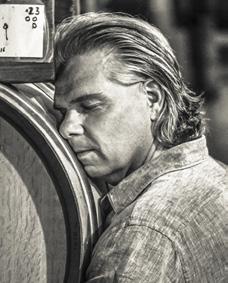
ANDERS ENQUIST
CEO & Editor-in-Chief who has always championed quality over quantity for his readers — whether the subject is wine, beer, whisky, or food. With a solid and extensive background in the magazine industry, he has spent many years traveling the world to cover and document the world of wine. Few people can match the experience this gentleman has acquired.
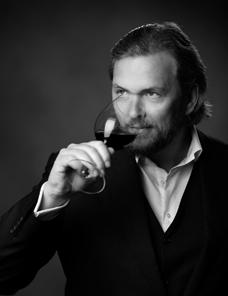
ANDREAS LARSSON
Andreas Larsson won the World Championship in 2007 and is therefore one of only three people in the world who can claim the titles of both World Champion and European Champion. He is a multiple Swedish and Nordic Champion; in 2004 he won the European Championship, and in 2005 he was named Wine International Sommelier of the Year. He was also the first Scandinavian elected as a permanent member of the Grand Jury Européen. When he does not have his nose in the glass, he enjoys Livets Goda, traveling, cooking, playing guitar, Johann Sebastian Bach, and John Coltrane.
BJÖRNSTIERNE ANTONSSON
Björnstierne Antonson is one of Sweden’s most recognized and decorated sommeliers, with a victory as Swedish Champion in 2003 and 13 silver medals in national and international competitions.
Björnstierne has worked at Grappe wine cellar, Baràvin (Sweden’s first wine bar), Wine Bar at Gondolen, and the eclectic Vassa Eggen. Today, you will find him as Wine Director & Creative Head Sommelier at Champagne Club by Richard Juhlin and with Livets Goda.
ULRIKA ERIKSSON
Ulrika moved to Sydney in 2004 and thrives with life Down Under. She works as a freelance journalist and editor and has a background as a radio host. Over the years, she has interviewed key figures in the restaurant and wine industries across Southeast Asia, Australia, and Europe. Now based in Canberra District, she writes about food and wine while experimenting in the kitchen with the country’s outstanding produce.

KATIE SPAIN
She is the woman from Australia who reports from the wine regions on the other side of the world. Her experience and knowledge are seemingly endless, and in addition to razorsharp features in Livets Goda, she is also a contributor to The Sydney Morning Herald and The Age, restaurant critic for Gourmet Traveller, as well as a writer for Wine Business Magazine.
TOBIAS TULLBERG
Tobias holds an MSc in Oenology and Viticulture from Montpellier SupAgro and the University of Lisbon. His studies concluded with an internship at one of the world’s leading wine institutes, ISVV in Bordeaux. His life as a traveling winemaker began in Saint-Émilion and, via destinations including New Zealand and Australia, eventually led him to England. After many years as Associate Winemaker at Hambledon Vineyard in Hampshire, Tobias is now based in Jura.


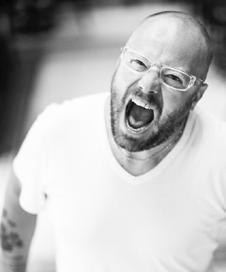
CHRISTOFFER ”KRICKAN” ENQUIST
Our shared hero and one of the sons of the Enquist family. A magician both on the phone with the magazine’s network of contacts and at the stove when it is time to cook. He is also the guy you need to bring something especially tricky for if you hope to fool him with a blind bottle of wine.
DANIEL BRUCE
After studying Romance languages in his hometown of Lund, Daniel’s interest in wine was awakened in a Sicilian wine cellar in 2008. After a stop in Naples, he then headed to Copenhagen, where he took a job at Juuls Vin & Spiritus. Countless glasses of nerello mascalese later, he picked up the pen and began writing about his wine travels. Today, he also writes about whisky and photographs from different corners of the world.
KATARINA ANDERSSON

Katarina holds a PhD in History and works as a wine writer, copywriter for the wine world, translator, and sommelier. Her wine writing focuses primarily on lesser-known wine regions, grape varieties, and small-scale producers.
She set her course from Ystad to Florence in the late 1990s to pursue her doctorate in history at the European University Institute, located between Florence and Fiesole. Florence has been her principal home ever since.
AMALIA GONZALEZ STÖCKEL
A communicator and political scientist by training, as well as a former beauty editor, she completed WSET Levels 2 and 3 at Restaurangakademien in 2010–11.
She works freelance—writing, hosting beverage tastings at venues including Spritmuseum, and producing the wine podcast Dos Gardenias and the Latino podcast La Once. Constantly in search of the next great beverage experience—so many grapes, so little time!
ERIK DAHLSTRÖM
Designer, photographer, and culinary creative at Livets Goda since the very beginning. With an endless passion for food and drink shaped by hundreds of restaurant visits and wine journeys over the years. Loves honest food on the plate paired with a truly great bottle of wine — and the music...
ANDERS MELLDÉN

Anders Melldén is a wine writer and the author of several wine books, including Winesplaining – värt att veta om vin and Winesplaining – prova, lagra, njut av vin. He also lectures in sommelier training programs. Sangiovese is one passion; another is luxurious champagne.
ANDERS LUNDQUIST
Anders is a Stockholm-based writer with music as his primary field of coverage. He has been published since 1980 and has worked full-time as a writer since the mid1980s. Over the years, he has conducted around 3,000 interviews and, through them, met many of his favorite artists, including Peter Gabriel, David Bowie, Neil Young, Rickie Lee Jones, Stevie Wonder, Aerosmith, Joni Mitchell, Jeff Lynne, Deep Purple, Todd Rundgren, Rush, Robert Plant, Supertramp, and 10cc.
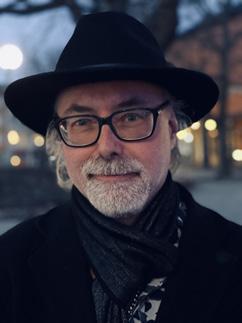
He is also active as a songwriter for various artists and is a member of the duo Last Plane Out, who are releasing a new album in spring 2024.
Suddenly, It Happens…
The headline is, to say the least, a useful one—and it has been used before. It is clearly quite handy, and so it is once again this time. Suddenly, it happens. One of the things the family missed when we moved out onto the plains just outside the small Scanian village was a bakery. The chance to feel a little continental and buy freshly baked bread in the morning—mostly on weekends, though we are not picky, every day of the week works just fine. Now we can. An ambitious and driven young woman has started a microbakery and bakes every day of the week—fantastic bread. As a bonus, she also makes cakes and exquisite chocolate pralines, the perfect gift for country dwellers on the Scanian plains. And as if that were not enough, the restaurant we have missed for just as long is also on the way. That too is being launched by ambitious entrepreneurs, with a Scanian-Italian theme in our case. Suddenly, it happens.
Suddenly, it is also happening in our emerging Swedish wine industry— our first Swedish wine region: Terra Skåne. A number of municipalities in northwestern Skåne have begun a collaboration to promote the new region, and around ten wine producers are involved in the project. The region offers promises of a flourishing future, and with well-known grape varieties such as Chardonnay and Pinot Noir—not “just” Solaris and Rondo. During the year, the new region will be highlighted through, among other things, Star Wine List of the Year in mid-June and an international sommelier competition in October. The opportunity to develop one’s own wine region is a luxury and something well worth making the most of. I now look forward to everyone raising cooperation to new levels and helping each other develop the region together. Suddenly, it happens.
During the spring, we in Chaîne des Rôtisseurs will also have the pleasure of enjoying Scanian gastronomy. At the beginning of May, our Swedish Grand Chapitre takes place, with Lund as its center. There too, Swedish wine will be highlighted through vineyard visits and tastings. Naturally, we will crown it all with the delicacies that the brilliant Scanian kitchen has to offer. Under the southern theme, our annual international meeting in 2026 will also be held in Aix-en-Provence in mid-June. That it is popular was shown not least by the bookings—everything sold out in just a few days. For our part, we are now working on the autumn events, and there will be quite a lot, we can reveal—perhaps one of our most eventful autumns in many years. Suddenly, it happens!
Vive la Chaîne!
Carl Wachtmeister Bailli Délégué / Chairman Sweden

COL D´ORCIA