Paediatriki
Trimonthly publication of the Greek Paediatric Society
President
A. Constantopoulos
Editorial board
Director
G. S. Varlamis
Members
S. Andronikou
E. Galanakis
A. Evangeliou
L. Thomaidou
M. Kanariou
A. Kapogiannis
S. Kitsiou-Tzeli
E. Mantadakis
P. Panagiotopoulou-Gartagani
A. Papadopoulou
V. Papaevagelou
A. Papathanassiou
A. Siamopoulou-Mavridou
A. Syrigou-Papavasiliou
Manuscript submission
e-mail: grammateia@e-child.gr
Instructions to authors: http://e-child.gr/publications/ instructions-to-authors
Owner
Greek Paediatric Society
15, Mpakopoulou st.
GR - 15451, Ν. Psychiko
Tel.: +302107771140
e-mail: grammateia@e-child.gr
Annual subscription
All foreign countries: US$50
CONTENTS
Atypical clinical manifestation of H1N1 virus infection
Alexandra Tsialla, Zoi Mpeka, Lida Sianidou, Martha Charisi
www.ped-congress.gr
Tania Siahanidou. Clinical approach of the floppy neonate.
Evangelia Stefanaki, Vassiliki Aggelakou. The role of breastfeeding in allergy prevention
Efrosini Kalyva, Efthimia Variami, Maria Kyriazi, and Dimitrios I Zafeiriou. Cognitive and executive profile in children with neurofibromatosis type 1
Annika Giata, Anastasia Bougea, Fotini Christidi, Evangelia Kararizou. Childhood headache and the influence of modern socioeconomic crisis. The teacher’s perspective.
Karampatakis Nikolaos, Katerina Haidopoulou. Asthma and obesity: A case of significant co-morbidity or overdiagnosis?
Eleni P.Kotanidou, Maria G.Grammatikopoulou, Bessie E. Spiliotis, Christina KanakaGantenbein, Maria Tsigga, Assimina Galli-Tsinopoulou Ten Year Obesity and Overweight Prevalence in Greek children: systematic review and meta-analysis
Stella Mouskou, Georgios Antonogeorgos, Christos Varakis, Chryssa Τzoumaka-Bakoula, Tania Siahanidou. Factors associated with complications on neonatal transport
natal care units in attica
Baka Margarita, Doganis Dimitrios, Pourtsidis Apostolos, Mpouxoutsou Despina, Varvoutsi Mary, Zampakidis Christos, Mavromatis Emmanouil, Kosmidi Eleni. Bone pain or osseous radiographic findings on diagnosis as prognostic factors for children with ALL
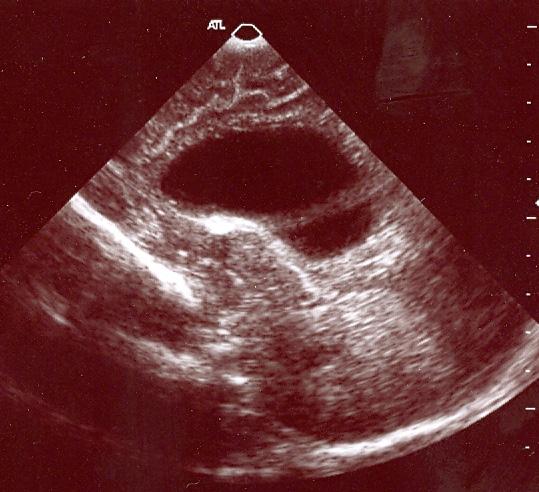
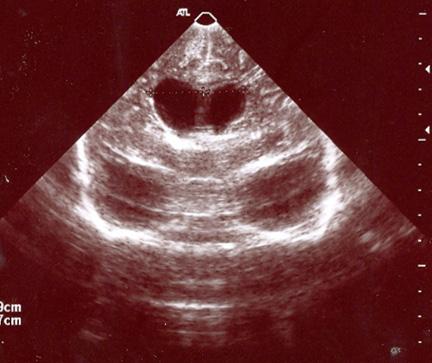
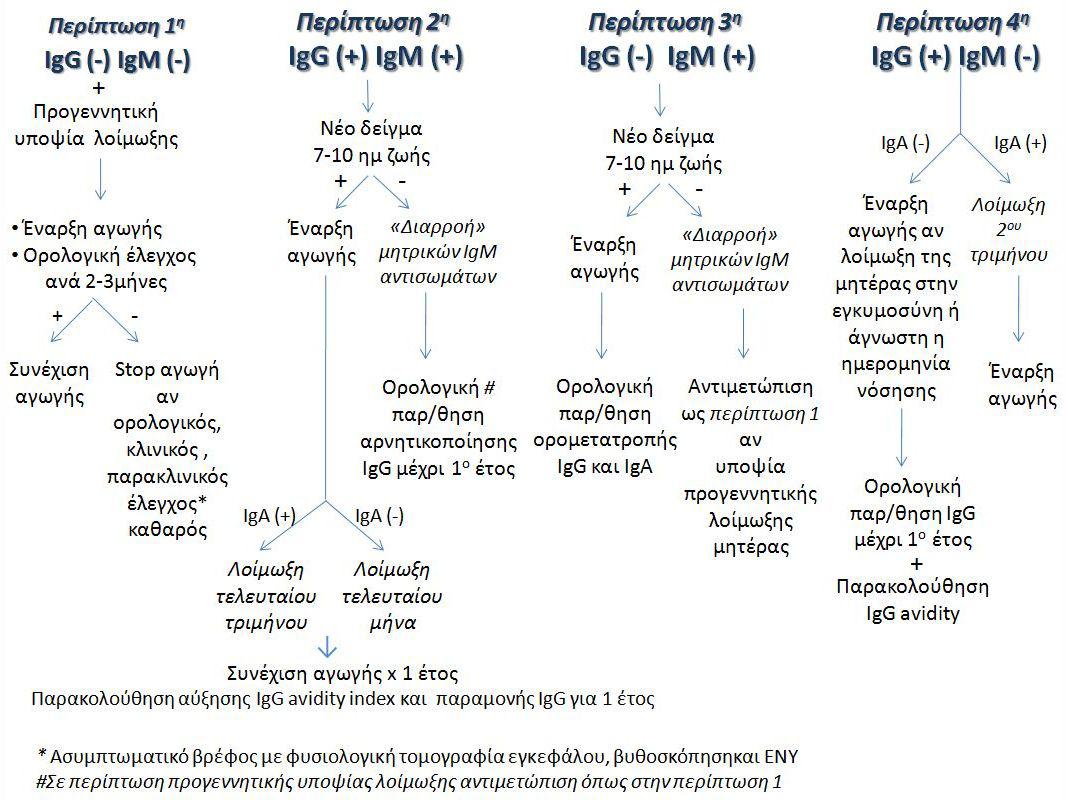
Foteini-Maria Chantzi, Vana Spoulou, Afroditi Saka, Dimitris Konstadinou, Maria Theodoridou. Congenital toxoplasmosis in dichorionic twin pregnancy. A case report and brief review
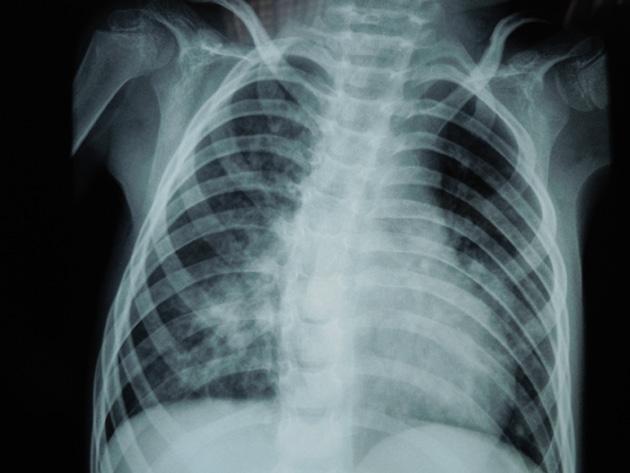
Alexandra Tsialla, Zoi Mpeka, Lida Sianidou, Martha Charisi. An atypical clinical manifestation of the virus of gripe H1N1
Τάνια
Tania Siahanidou
Neonatal Department, 1st Pediatric Department of University of Athens
Clinical approach of the floppy neonate
Tania Siahanidou
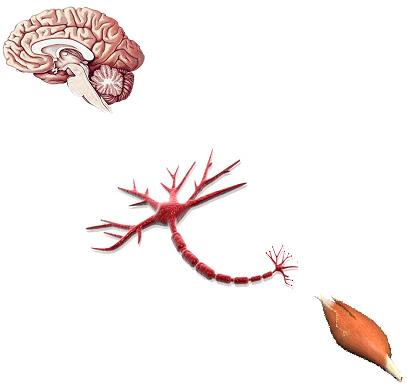
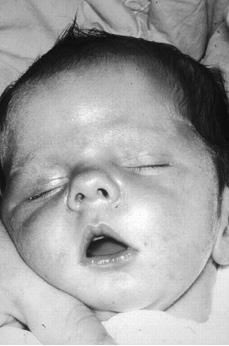
Flopiness in neonates is caused by lesions or disorders that affect any level of the nervous system from the brain to spinal cord, peripheral nerves, neuromuscular junction and muscle. The distinction of hypotonia into central and peripheral type is very useful for the determination of the level of damage and differential diagnosis. The history and physical examination of the neonate lead to the diagnosis in 40%-50% of cases. In recent years, advances in diagnostic precedures (neuroimaging, metabolic screen, molecular genetics/cytogenetics) provide the possibility to recognize the cause of hypotonia in a relatively short time period and it is expected that they will lead, in the near future, to the diagnosis of those causes of congenital hypotonia that remain obscure up to date. The present review focuses on the clinical approach of the floppy neonate by the practicing paediatrician/neonatologist. An algorithm for the diagnosis of the cause of hypotonia is suggested.
Keywords: hypotonia, neonate, causes, diagnosis
Αλληλογραφία
Τάνια
11527
Τηλ: 2132013-889, -517, 6944976085
Fax : 2107759167
e-mail: siahan@med.uoa.gr
Correspondence
Tania Siahanidou
Thivon and Levadias, 11527, Athens
Tel: +30 2132013-889, -517, 6944976085
Fax : 2107759167
e-mail: siahan@med.uoa.gr
21, 18, 13),
(Prader-Willi, Smith-LemliOpitz, Angelman, Sotos, Coffin-Lowry, Williams, 1p36 del syndrome, DiGeorge, Kabuki, Smith-Magenis, Wolf-Hirschhorn,
αισθητικοκινητικές νευροπάθειες π.χ. Charco-Marie-Tooth 1A, 1B, 2B, 4A, X (συνήθως εκδηλώνονται
αλλαντίαση
Ποικίλη έναρξη και βαρύτητα, αναπνευστικά προβλήματα συχνά και δυνητικά εξελισσόμενα
Ποικίλη έναρξη και βαρύτητα, μπορεί να βελτιωθεί με αναστολείς ακετυλοχολινεστεράσης (AchE)
Ενωρίς έναρξη με υποτονία, αναπνευστική ανεπάρκεια, άπνοια, αρθρογρύπωση. Ήπιες ή σοβαρές εκδηλώσεις
Ενωρίς αναπνευστική ανεπάρκεια, επεισόδια άπνοιας, δυσκολία στη σίτιση,
Fukuyama Σύνδρομο Walker-Warburg
MRI εγκεφάλου
Διάχυτη βλάβη λευκής ουσίας (εικόνα λευκοδυστροφίας), ± δυσπλασία φλοιού, ± υποπλασία παρεγκεφαλίδας
Φυσιολογική ή βλάβη λευκής ουσίας, δομικές διαταραχές εγκεφάλου, υποπλασία παρεγκεφαλίδας ή κύστεις παρεγκεφαλίδας
Φυσιολογική
Πολυμικρογυρία, παχυγυρία, συμμετοχή παρεγκεφαλίδας, παθολογικό σήμα στη λευκή
Λυσεγκεφαλία, υδροκέφαλος (Dandy-Walker), υποπλασία στελέχους/παρεγκεφαλίδας
Παχυγυρία και πολυμικρογυρία,
Νόσος Ullrich
1. Bodensteiner JB. The evaluation of the hypotonic infant. Semin Pediatr Neurol 2008;15:10-20
2. Leyenaar J, Camfield P, Camfield C. A schematic approach to hypotonia in infancy. Paediatr Child Health 2005;10:397-400
3. Peredo DE, Hannibal MC. The floppy infant: evaluation of hypotonia. Pediatr Rev 2009;30:e66-76
4. Prasad AN, Prasad C. The floppy infant: contribution of genetic and metabolic disorders. Brain & Development 2003;27:457-476
5. Prasad AN, Prasad C. Genetic evaluation of the floppy infant. Semin Fetal Neonatal Med 2011;16:99-108
6. Tulinius M, Oldfors A. Neonatal muscular manifestations in mitochondrial disorders. Semin Fetal Neonatal Med 2011;16:229-235
7. Staretz-Chacham O, Lang TC, LaMarca ME, Krasnewich D, Sidransky E. Lysosomal storage disorders in the newborn. Pediatrics 2009;123:1191-1207
8.
2007;19:75-78
9. Brown RH, Grant PE, Pierson CR. Case 35-2006: A newborn boy with hypotonia. N Engl J Med 2006;355:2132-2142
10. Laugel V, Cossee M, Matis J, de Saint-Marin A, Echaniz-Laguna A, Mandel JL, Astruc D, Fischbach M, Messer J. Diagnostic approach to neonatal hypotonia: retrospective study on 144 neonates. Eur J Pediatr 2008;167:517-523
11. Birdi K, Prasad AN, Prasad C, Chodirker B, Chudley AE. The floppy infant: retrospective analysis of clinical experience (1990-2000) in a tertiary care facility. J Child Neurol 2005;20:803-808
12. Goldstone AP, Holland AJ, Hauffa BP, Hokken-Koelega AC, Tauber M. Recommendations for the diagnosis and management of Prader-Willi syndrome. J Clin Endocrinol Metab 2008;93:4183-4197
13. Gunay-Aygun M, Schwartz S, Heeger S, O’Riordan MA, Cassidy SB. The changing purpose of Prader-Willi syndrome clinical diagnostic criteria and proposed revised criteria. Pediatrics 2001;108:e92
14. Harris SR. Congemital hypotonia: clinical and developmental assessment. Developmental Medicine & Child Neurology 2008;50:889-892
15. Vasta I, Kinali M, Messina S, Guzzetta A, Kapellou O, Manzur A, et al. Can clinical signs identify newborns with neuromuscular disorders? J Pediatr 2005;146:73-79
16. Milone M, Shen XM, Selcen D, Ohno K, Brengman J, Iannaccone ST, et al. Myasthenic syndrome due to defects in rapsyn. Neurology 2009;73:228-235
17. Engel AG, Shen XM, Selcen D, Sine SM. What have we learned from the congenital myasthenic syndromes. J Mol Neurosci 2010;40:143-153
18. Richer LP, Shevell MI, Miller SP. Diagnostic profile of neonatal hypotonia: an 11year study. Pediatr Neurol 2001;25:32-37
Abstract
Evangelia Stefanaki
Vassiliki Aggelakou
Paediatric Allergy Outpatients Clinic, Venizeleion General Hospital, Heraklion
The role of breastfeeding in allergy prevention
Evangelia Stefanaki, Vassiliki Aggelakou
Although breastfeeding is considered the gold standard for infant feeding the impact of breastfeeding on the allergic disease risk is controversial. This article reviews the current evidence for the role of breastfeeding in the prevention of allergic disease. The most important limitation of current studies is that they are observational studies since randomized control trials in breast feeding research would be considered unethical, the most recent systemic reviews report no protective effect on eczema while there is insufficient data regarding the effects of breastfeeding on objective measures of food allergy at any age. Studies show a paradoxical effect of breastfeeding on the prevention of asthma, with an apparent protective effect against early wheezing illness in the first years of life yet an increased risk of asthma in later life; however, these findings must be interpreted with caution in relation with the protection of breastfeeding against early life respiratory illnesses. Therefore, it is possible that the effect of breastfeeding on early wheezing illness reflects protection against respiratory infection, the predominant trigger of wheezing in early childhood, rather than a true reduction in risk of asthma. In summary, there is a need for more research with improved methodology so as to clarify the role of breastfeeding in development of allergic disease.
Keywords: breastfeeding, allergy, prevention
Αλληλογραφία
Στεφανάκη Ευαγγελία
Καρυωτάκη 22, 71409 Ηράκλειο
Tηλ.: 2810210140 - 6973553754
e-mail: linastef74@gmail.com
Correspondence
Stefanaki Evangelia
Kariotaki 22, 71409 Iraklio Tel.: +30 810210140+30 6973553754
e-mail: linastef74@gmail.com
1. Lowe AJ, Carlin JB, Bennett CM ,Abramson MJ, Hosking CS, Hill DJ, et al. Atopic disease and breast-feeding–cause or consequence? J Allergy Clin Immunol 2006; 117:682–7.
2. Mannel R., Martens P.J., Walker M. Core Curriculum for Lactation Consultant Practice. Massachussetts: Jones and Bartlett ;2008:272-322.(314,272,276)
3. Oddy WH, Rosales F. A systematic review of the importance of milk TGF-beta on immunological outcomes in the infant and young child. Pediatr Allergy Immunol 2010; 21:47–59
4. Brandtzaeg P. Mucosal immunity: integration between mother and the breast-fed infant. Vaccine 2003;21:3382–8.
5. Hanson LA, Korotkova M, Lundin S, Håversen L, Silfverdal SA, Mattsby-Baltzer I, et al. The transfer of immunity from mother to child. Ann N Y Acad Sci 2003; 987:199–206.
6. Bottcher MF, Jenmalm MC, Garofalo RP, Björkstén B. Cytokines in breast milk from allergic and nonallergic mothers. Pediatr Res 2000;47:157–62.
7. Kalliomaki M, Ouwehand A, Arvilommi H ,Kero P, Isolauri E. Transforming growth factor-beta in breast milk: a potential regulator of atopic disease at an early age. J Allergy Clin Immunol 1999;104:1251–7..
8. Penttila IA. Milk-derived transforming growth factor-beta and the infant immune response. J Pediatr 2010;156:S21–25.
9. Verhasselt V. Neonatal tolerance under breastfeeding influence: the presence of allergen and transforming growth factor-beta in breast milk protects the progeny from allergic asthma. J Pediatr 2010; 156:S16–20.
10. Verhasselt V. Oral tolerance in neonates: from basics to potential prevention of allergic disease. Mucosal Immunol 2010; 3:326–33.
11. Verhasselt V, Milcent V, Cazareth J, Kanda A, Fleury S, Dombrowicz D et al. Breast milk-mediated transfer of an antigen induces tolerance and protection from allergic asthma. Nat Med 2008; 14:170–5.
12. Ivarsson A, Hernell O, Stenlund H, Persson LA. Breast-feeding protects against celiac disease. Am J Clin Nutr 2002; 75:914–21
13. Koplin JJ, Osborne NJ, Wake M , Martin PE, Gurrin LC, Robinson MN et al. Can early introduction of egg prevent egg allergy in infants? A population based study. J Allergy Clin Immunol2010; 126:807–13.
14. Labeta MO, Vidal K, Nores JE, Arias M, Vita N, Morgan BP, et al. Innate recognition of bacteria in human milk is mediated by a milk-derived highly expressed pattern recognition receptor, soluble CD14. J Exp Med 2000;191:1807–12.
15. Duchen K, Casas R, Fageras-Bottcher M , Yu G, Björkstén B. Human milk polyunsaturated long-chain fatty acids and secretory immunoglobulin A antibodiesand early childhood allergy. Pediatr Allergy Immunol 2000;11: 29–39.
16. Sala-Vila A, Miles EA, Calder PC. Fatty acid composition abnormalities in atopic disease: evidence explored and role in the disease process examined. Clin Exp Allergy 2008;38:1432–11450.
17. Dandrifosse G, Peulen O, El Khefif N, Deloyer P, Dandrifosse AC, Grandfils C. Are milk polyamines preventive agents against food allergy? Proc Nutr Soc 2000;59:81–6.
18. Tang ML. Probiotics and prebiotics: immunological and clinical effects in allergic disease. Nestle Nutr Workshop Ser Pediatr Program 2009; 64:219–35; discussion 235–218, 251–217.
19. Adlerberth I, Wold AE. Establishment of the gut microbiota in Western infants. Acta Paediatr 2009; 98:229–38.
20. Penders J, Thijs C, van den Brandt PA, Kummeling I, Snijders B, Stelma F et al. Gut microbiota composition and development of atopic manifestations in infancy: the KOALA Birth Cohort Study. Gut 2007; 56:661–7.
21. Kalliomaki M, Kirjavainen P, Eerola E,Kero P, Salminen S, Isolauri E. Distinct patterns of neonatal gut microflora in infants in whom atopy was and was not developing. J Allergy ClinImmunol 2001; 107:129–34.
22. Bjo¨rkste´n B, Sepp E, Julge K, Voor T, Mikelsaar M. Allergy development and the intestinal microflora during the first year of life. J Allergy ClinImmunol 2001; 108:516–20.
23. Adlerberth I, Strachan DP, Matricardi PM Ahrné S, Orfei L, Aberg N et al. Gut microbiota and development of atopic eczema in 3 European birth cohorts. J Allergy Clin Immunol 2007; 120:343–50.
24. Wang M, Karlsson C, Olsson C, Adlerberth I, Wold AE, Strachan DP et al. Reduced diversity in the early fecal microbiota of infants with atopic eczema. J Allergy Clin Immunol 2008; 121:129–34.
25. Stark PL, Lee A. The bacterial colonization of the large bowel of pre-term low birth weight neonates. J Hyg (Lond) 1982; 89:59–67.
26. Du Toit G, Katz Y, Sasieni P, Mesher D, Maleki SJ, Fisher HR et al. Early consumption of peanuts in infancy is associated with a low prevalence of peanut allergy. J Allergy Clin Immunol 2008; 122:984–91
27. Kull I, Wickman M, Lilja G, NordvallSL, Pershagen G. Breast feeding and allergic diseases in infants-a prospective birth cohort study. Arch Dis Child 2002; 87:478–81.
28. Kull I, Melen E, Alm J, Hallberg J, Svartengren M, van Hage M et al. Breastfeeding in relation to asthma, lung function, and sensitization in young schoolchildren. J Allergy Clin Immunol 2010; 125:1013–9.
29. Matheson MC, Erbas B, Balasuriya A Jenkins MA, Wharton CL, Tang ML,et al. Breastfeeding and atopic disease: a cohort study from childhood to middle-age. J Allergy Clin Immunol 2007; 120:1051–7.
30. Tariq SM, Stevens M, Matthews S, Ridout S, Twiselton R, Hide DW.Cohort study of peanut and tree nut sensitisation by age of 4 years. BMJ 1996; 313:514–7.
31. Wetzig H, Schulz R, Diez U, HerbarthO, Viehweg B, Borte M. Association between duration of breast-feeding, sensitization to hen’s eggs and eczema infantum in one and two year old children at high risk of atopy. Int J Hyg Environ Health 2000; 203:17–21.
32. Gdalevich M, Mimouni D, David M, Mimouni M. Breast-feeding and the onset of atopic dermatitis in childhood: a systematic review and metaanalysis of prospective studies. J Am Acad Dermatol 2001; 45:520–7
33. Yang YW, Tsai CL, Lu CY. Exclusive breastfeeding and incident atopic dermatitis in childhood: a systematic review and meta-analysis of prospective cohort studies. Br J Dermatol 2009; 161:373–83.
34. Flohr C, Nagel G, Weinmayr G, Kleiner A, Strachan DP, Williams HC; ISAAC Phase Two Study Group. Lack of evidence for a protective effect of prolonged breastfeeding on childhood eczema: lessons from the International Study of Asthma and Allergies in Childhood (ISAAC) Phase Two. Br J Dermatol. 2011;165:1280-9.
35. Matheson MC, Allen KJ, Tang ML. Understanding the evidence for and against the role of breastfeeding in allergy prevention. Clin Exp Allergy. 2012 ;42:827-51
36. Rusconi F, Galassi C, Corbo GM Forastiere F, Biggeri A, Ciccone G et al. Risk factors for early, persistent, andlate-onset wheezing in young children. SIDRIA Collaborative Group.Am J Respir Crit Care Med 1999;160:1617–22.
37. Wright AL, Holberg CJ, Taussig LM, Martinez FD. Relationship of infant feeding to recurrent wheezing at age 6 years. Arch Pediatr Adolesc Med1995; 149:758–63.
38. Tariq SM, Matthews SM, Hakim EA, Stevens M, Arshad SH, Hide DW. The prevalence of and risk factors for atopy in early childhood: a whole population birth cohort study. J Allergy Clin Immunol 1998; 101:587–93.
39. Oddy WH, Holt PG, Sly PD, Read AW, Landau LI, Stanley FJ et al. Association between breast feeding and asthma in a 6 year old children: findings of a prospective birth cohort study. BMJ 1999; 319:815–9.
40. Wright AL, Holberg CJ, Taussig LM, Martinez FD. Factors influencing the relation of infant feeding to asthma and recurrrent wheeze in childhood. Thorax 2001; 56:192–7.
41. Silva JM, Camara AA, Tobias KR, Macedo IS, Cardoso MR, Arruda E et al. A prospective study of wheezing in young children: the independent effects of cockroach exposure, breast-feeding and allergic sensitization. Pediatr Allergy Immunol 2005; 16:393–401.
42. Linneberg A, Simonsen JB, Petersen J, Stensballe LG, Benn CS.Differentialeffects of risk factors on infant wheeze and atopic dermatitis emphasize a different etiology. J Allergy ClinImmunol 2006; 117:184–9.
43. Elliott L, Henderson J, Northstone K, Chiu GY, Dunson D, London SJ. Prospective study of breast-feeding inrelation to wheeze, atopy, and bronchial hyperresponsive-
ness in the Avon Longitudinal Study of Parents and Children (ALSPAC). J Allergy Clin Immunol 2008; 122:49–54.
44. Morass B, Kiechl-Kohlendorfer U,Horak E. The impact of early lifestyle factors on wheezing and asthma in Austrian preschool children. Acta Paediatr 2008; 97:337–
45. Larsson M, Ha¨gerhed-Engman L, Sigsgaard T, Janson S, Sundell J, Bornehag CG. Incidence rates of asthma, rhinitis and eczema symptoms and influential factors in young children in Sweden. Acta Paediatr 2008;97:1210–5.
46. Guedes HT, Souza LS. Exposure to maternal smoking in the first year of life interferes in breast-feeding protective effect against the onset of respiratory allergy from birth to 5 yr. Pediatr Allergy Immunol 2009; 20:30–4.
47. Scholtens S, Wijga AH, Brunekreef B, Kerkhof M, Hoekstra MO, Gerritsen J, Aalberse R, et al Breast feeding, parental allergy and asthma in children followed for 8 years. The PIAMA birth cohort study. Thorax 2009; 64:604–9.
48. Rothenbacher D, Weyermann M, Beermann C, Brenner H. Breastfeeding, soluble CD14 concentration in breast milk and risk of atopic dermatitis and asthma in early childhood: birth cohort study. Clin Exp Allergy 2005; 35:1014–21.
49. Sears MR, Greene JM, Willan AR , Taylor DR, Flannery EM, Cowan JO, Herbison GP et al. Long-term relation between breastfeeding and development of atopy and asthma in children and young adults: a longitudinal study. Lancet 2002; 360:901–7.
50. Oddy WH, de Klerk NH, Sly PD, Holt PG. The effects of respiratory infections, atopy, and breastfeeding on childhood asthma. Eur Respir J 2002; 19:899–905.
51. Sigurs N, Bjarnason R, Sigurbergsson F, Kjellman B. Respiratory syncytial virus bronchiolitis in infancy is an important risk factor for asthma and allergy at age 7. Am J Respir Crit Care Med 2000; 161:1501–7.
52. Von Mutius E, Illi S, Hirsch T, Leupold W, Keil U, Weiland SK. Frequency of infections and risk of asthma, atopy and airway hyperresponsiveness in children. Eur Respir J 1999; 14:4–11.
53. Mimouni Bloch A, Mimouni D,Mimouni M, Gdalevich M. Does breastfeeding protect against allergic rhinitis during childhood? A metaanalysis of prospective studies. Acta Paediatr 2002; 91:275–9.
54. Høst A, Koletzko B, Dreborg S, Muraro A, Wahn U, Aggett P et al. Dietary products used in infants fortreatment and prevention of food allergy. Joint Statement of the European Society for Paediatric Allergology and Clinical Immunology(ESPACI) Committee on Hypoallergenic Formulas and the European Society for Paediatric Gastroenterol Gastroenterology, Hepatology and Nutrition (ESPGHAN) Committee on Nutrition. Arch Dis Child 1999; 81:80–4.
55. Thygarajan A, Burks WA. American Academy of Pediatrics recommendations on the effects of early nutritional interventions on the development of atopic disease. Curr Opin Pediatr 2008; 20:698–702.
56. Sicherer SH, Burks AW. Maternal and infant diets for prevention of allergic diseases: understanding menu changes in 2008. J Allergy Clin Immunol 2008; 122:29–33.
57. Prescott SL, Tang MLK. The Australasian Society of Clinical Immunology and Allergy position statement: summary of allergy prevention in children. Med J Aust 2005; 182:464–7.
58. Black RE, Allen LH, Bhutta ZA , Caulfield LE, de Onis M, Ezzati M et al. MaCUS Group. Maternal and child undernutrition: global and regional exposures and health
consequences. Lancet 2008; 371:243–60.
59.Kelly YJ, Watt RG, Nazroo JY. Racial/ethnic differences in breastfeeding initiation and continuation in the United Kingdom and comparison with findings in the United States. Pediatrics2006; 118:e1428–35.
60. Bakoula C, Nicolaidou P, Veltsista A, Prezerakou A, Moustaki M, Kavadias et al. Does exclusive breastfeeding increase after hospital discharge? A Greek Study. J Hum Lact 2007;23:165–73.
61 Kelly YJ, Watt RG. Breast-feeding initiation and exclusive duration at 6 months by social class–results from the Millennium Cohort Study. Public Health Nutr2005; 8:417–21.
Ευφροσύνη
College,
Sheffield,
Efrosini Kalyva
The International Faculty of the University of Sheffield, CITY College, Thessaloniki, Greece
Efthimia Variami
Maria Kyriazi
Dimitrios I Zafeiriou
Developmental Centre “Fokas”, 1st Pediatrics Clinic, Aristotle University of Thessaloniki
Cognitive and executive profile in children with neurofibromatosis type 1
Efrosini Kalyva1, Efthimia Variami2, Maria Kyriazi2, and Dimitrios I Zafeiriou2
Neurofibromatosis type 1 is the most common single-gene disorder that affects the human central nervous system and causes neurological, musculoskeletal, visual and cutaneous anomalies, as well as predisposition for tumor creation. Due to the frequency of the disorder and the nature of its manifestations, studies have looked at its effects on the cognitive development of children with neurofibromatosis type 1. In this review special attention is paid to the cognitive impairments of children with neurofibromatosis type 1. Some older studies report severe mental retardation, while more recent research identifies two sub-groups with relatively low and normal intelligence quotient respectively. Special research and clinical interest is drawn upon the difficulties that children with neurofibromatosis type 1 face with their executive functioning, which is responsible for designing and executing actions – as well as adapting to the constantly changing environmental demands. Executive functioning is linked to cognitive functioning and constitutes an integral part of the
106
54622 Θεσσαλονίκη
Τηλ. - Fax: 2310241845
Κινητό: 6944330587
Correspondence
Dimitrios I Zafeiriou
Εgnatia 106, 54622 Thessaloniki
Tel - Fax: +30 2310241845
Mobile: +30 6944330587
WISC-R =Wechsler Intelligence Scale for Children-Revised
educational and academic process. Impairments in cognitive functioning can lead to attention deficit hyperactivity disorder symptoms and to autism spectrum disorder symptoms in children with neurofibromatosis type 1. Based on the specific findings it is essential to provide cognitive and academic training to children with neurofibromatosis type 1 in order to deal effectively with the aforementioned difficulties.
Keywords: neurofibromatosis type 1, cognitive function, executive function, attention deficit hyperactivity disorder, autism spectrum disorders
(10, 17, 18, 27, 28).
(10, 18, 28).
1. Dunn DW, Roos KL. Magnetic resonance imaging evaluation of learning difficulties and incoordination in neurofibromatosis. Neurofibromatosis 1989;2:1-5.
2. Ferner RE, Chaudhuri R, Bingham J, Cox T, Hughes RAC. MRI in neurofibromatosis 1. The nature and evolution of increased intensity T2 weighted lesions and their relationship to intellectual impairment. J Neurol Neurosurg Psychiatry 1993;56:492495.
3. DiMario EF Jr, Ramsby G, Greenstein R, Langshur S, Dunham B. Neurofibromatosis type 1: magnetic resonance imaging findings. J Child Neurol 1993;8:32-39.
4. Viskochil D, White R, Cawthon R. The neurofibromatosis type 1 gene. Annu Rev Neurosci 1993;16:183-205.
5. Shannon KM, O’Connell P, Martin GA, et al. Loss of the normal NF1 allele from the bone marrow of children with type 1 neurofibromatosis and malignant myeloid disorders. N Engl J Med 1994;330:597-601.
6. Colman SD, Williams CA, Wallace MR. Benign neurofibromas in type 1 neurofibromatosis (NFI) show somatic deletions of the NF1 gene. Nature Genet 1995;11:9092.
7. North KN, Riccardi V, Samango-Sprouse C, et al. Cognitive function and academic performance in neurofibromatosis. 1: consensus statement from the NF1 Cognitive Disorders Task Force. Neurology 1997; 48:1121-1127.
8. Riccardi VM. Neurofibromatosis, Natural History, and Pathogenesis. 1992. Johns Hopkins University Press, Baltimore, USA.
9. Friedman JM, Gutmann DH, MacCollin M, Riccardi VM. Neurofibromatosis: Phenotype, Natural History, and Pathogenesis. 3rd edn. 1999. The Johns Hopkins Press, Baltimore, USA.
10. Hofman KJ, Harris EL, Bryan RN, Denckla MB. Neurofibromatosis type 1: the cognitive phenotype. J Pediatr 1994;124:S1-8.
11. Lehtonen A, Howie E, Trump D, Huson SM. Behaviour in children with neurofibromatosis type 1: cognition, executive function, attention, emotion, and social competence. Dev Med Child Neurol 2013;55:111-125.
12. Johnson NS, Saal HM, Lovell AM, Schorry EK. Social and emotional problems in children with neurofibromatosis type 1: Evidence and proposed interventions. J Pediatr 1999;134:767–772.
13. Wolkenstein P, Zeller J, Revuz J, et al. Quality-of-life impairment in neurofibromatosis type 1: A cross- sectional study of 128 cases. Arch Dermatol 2001;137:1421–1425.
14. Ablon J. Gender response to neurofibromatosis 1. Soc Sci Med 1996;42:99–109.
15. Sebold CD, Lovell A, Hopkin R, Noll R, Schorry E. Perception of disease severity in adolescents diagnosed with neurofibromatosis type 1. J Adolesc Health 2004;35:297-302.
16. Crowe FW, Schull WJ, Nee1 JV. A Clinical, Pathological and Genetic Study of Multiple Neurofibromatosis. 1956. Charles C Thomas, Springfield IL, USA.
17. North K, Joy P, Yuille D, et al. Learning difficulties in neurofibromatosis type 1: the significance of MRI abnormalities. Neurology 1994;44:878-883.
18. Ferner RE, Hughes RAC, Wenman J. Intellectual impairment in neurofibromatosis 1. J Neurol Sci 1996;138:125-133.
19. Riccardi VM, Eichner JE. Neurofibromatosis. Phenotype, Natural History and Pathogenesis. 1986. Johns Hopkins University Press, Baltimore, USA.
20. Denckla MB, Hofman K, Mazzocco MMM, et al. Relationship between T2-weighted hyperintensities (unidentified bright objects) and lower IQs in children with neurofibromatosis 1. Am J Med Genet 1996;67:98–102.
21. Dilts CV, Carey JC, Kircher JC, et al. Children and adolescents with neurofibromatosis 1: a behavioral phenotype. Dev Behav Pediatr 1996;17:229–239.
22. Eliason MJ. Neurofibromatosis: implications for learning and behaviour. J Dev Behav Pediatr 1986;7:175-179.
23. Legius EM, Descheemaeker MJ, Spaepen A, Casaer P, Fryns JP. Neurofibromatosis type 1 in childhood: a study of the neuropsychological profile in 45 children. Genet Couns 1994;5:51-60.
24. Mazzocco MMM, Turner JE, Denckla MB, Hofman KJ, Scan-Ion DC, Vellutino FR. Language and reading deficits associated with neurofibromatosis type 1: evidence for not-sononverbal learning disability. Dev Neuropsych 1995;11:503-522.
25. Moore BD, Ater JL, Needle MN, Slopis J, Copeland DR. Neuropsychological profile of children with neurofibromatosis, brain tumor or both. J Child Neurol 1994;9:368377.
26. Bawden H, Dooley J, Buckley D, et al. MRI and nonverbal cognitive deficits in children with neurofibromatosis 1. J Clin Exp Neuropsychol 1996;18:784–792.
27. Stine SB, Adams WV. Learning problems in neurofibromatosis patients. Clin Orthop 1989;245:43-8.
28. North K, Joy P, Yuille D, Cocks N, Hutchins P. Cognitive function and academic performance in children with neurofibromatosis type 1. Dev Med Child Neurol 1995;37:427-436.
29. Acosta MT, Gioia GA, Silva AJ. Neurofibromatosis type 1: new insights into neurocognitive issues. Curr Neurol Neurosci Rep 2006;6:136-143.
30. Cutting LE, Koth CW, Denckla MB. How children with neurofibromatosis type 1 differ from ‘‘typical’’ learning disabled clinic attenders: nonverbal learning disabilities revisited. Dev Neuropsychol 2000;17:29-47.
31. Gilboa Y, Rosenblum S, Fattal-Valevski A, Toledano-Alhadef H, Rizzo A, Josman N. Using a virtual classroom environment to describe the attention deficits profile of children with neurofibromatosis type 1. Res Dev Disabil 2011;32:2608-2613.
32. Willcutt EG, Doyle AE, Nigg JT, Faraone SV, Pennington BF. Validity of the executive function theory of attention deficit ⁄ hyperactivity disorder: a meta-analytic
review. Biol Psychiatry 2005; 57: 1336–1346.
33. Tripp G,Wickens JR. Neurobiology of ADHD. Neuropharmacology 2009; 57: 579–589.
34. Payne JM, Hyman SL, Shores EA, North KN. Assessment of executive function and attention in children with neurofibromatosis type 1: relationships between cognitive measures and real-world behavior. Child Neuropsychol 2011;17: 313–29.
35. Rowbotham I, Pit-ten Cate IM, Sonuga-Barke EJ, Huijbregts SC. Cognitive control in adolescents with neurofibromatosis type 1. Neuropsychology 2009; 23: 50–60.
36. Hyman SL, Shores EA, North KN. The nature and frequency of cognitive deficits in children with neurofibromatosis type 1. Neurology 2005; 65: 1037–1044.
37. Huijbregts S, Swaab H, de Sonneville L. Cognitive and motor control in neurofibromatosis type I: influence of maturation and hyperactivity-inattention. Dev Neuropsychol 2010;35: 737–751.
38. Descheemaeker MJ, Ghesquie`re P, Symons H, Fryns JP, Legius E. Behavioural, academic and neuropsychological profile of normally gifted Neurofibromatosis type 1 children. J Intellect Disabil Res 2005; 49: 33–46.
39. Roy A, Roulin J-L, Charbonnier V, et al. Executive dysfunction in children with neurofibromatosis type 1: a study of action planning. J Int Neuropsych Soc 2010; 16:1056–1063.
40. Anderson BW. Comorbidity of attention deficit hyperactivity disorder and NF1. Am J Psychiatry 1992;149:148–149.
41. Mouridsen SE, Sorensen SA. Psychological aspects of von Recklinghausen neurofibromatosis (NF1). J Med Genet 1995;32:921–924.
42. Isenberg JC, Templer A, Gao F, Titus JB, Gutmann DH. Attention skills in children with neurofibromatosis type 1. J Child Neurol 2013;28: 45-49.
43. Payne JM, Arnold SS, Pride NA, North KN. Does attention-deficit-hyperactivity disorder exacerbate executive dysfunction in children with neurofibromatosis type 1? Dev Med Child Neurol 2012;54:898-904.
44. Pride NA, Payne JM, North KN. The impact of ADHD on the cognitive and academic functioning of children with NF1. Dev Neuropsychol 2012;37:590-600.
45. Lidzba K, Granström S, Lindenau J, Mautner VF. The adverse influence of attention-deficit disorder with or without hyperactivity on cognition in neurofibromatosis type 1. Dev Med Child Neurol 2012; 54:892-897.
46. Barton B, North K. Social skills in children with neurofibromatosis type 1. Dev Med Child Neurol 2004;46:553-563.
47. Gillberg C, Forsell C. Childhood psychosis and neurofibromatosis: more than a coincidence? J Autism Dev Disord 1984;14:1–8.
48. Williams PG, Hersh JH. The association of neurofibromatosis type 1 and autism. J Autism Dev Disord 1998;28:567–571.
49. Zafeiriou DI, Ververi A, Vargiami E. Childhood autism and associated comorbidities. Brain Dev 2007;29:257–272.
50. Zafeiriou, D., Ververi, A., Dafoulis, V., Kalyva, E., & Variami, E. Autism Spectrum Disorders: The quest for genetic syndromes. Am J Med Gen B: Neuropsychiatric Gen 2013;122:327-366.
51. World Health Organization. Mental Disorders: A Glossary and Guide to their Clas-
sification in Accordance with the 10th Revision of the International Classification of Diseases: Research Diagnostic Criteria (ICD-10). Geneva: World Health Organization, 1993.
52. Kalyva, E. Autism: Educational and therapeutic approaches. 2011. Sage, London, UK.
53. Mouridsen S, Andersen L, Sorensen S, Rich B, Isager T. Neurofibromatosis in infantile autism and other types of childhood psychoses. Acta Paedopsychiatr 1992; 55: 15–18.
54. Gaffney G, Tsai L. Magnetic resonance imaging of high level autism. J Autism Dev Disord 1987; 17: 433–438.
55. Fombonne E, du Mazaubrun C, Cans C, Grandjean H. Autism and associated medical disorders in a large French epidemiological sample. J Am Acad Child Adolesc Psychiatry 1997; 36: 1561–1569.
56. Noll R, Reiter-Purtill J, Moore B, et al. Social, emotional, and behavioral functioning of children with NF1. Am J Med Genet A 2007; 143A: 2261–2273.
57. Huijbregts S, de Sonneville L. Does cognitive impairment explain behavioural and social problems of children with neurofibromatosis type 1? Behav Genet 2011; 41: 430–436.
Αννίκα
Annika Giata¹
Faculty of Early Childhood Education, Νational and Kapodistrian University of Athens, Athens
Anastasia Bougea²
Fotini Cristidi²
Evangelia Kararizou²
1st Department of Neurology, Eginition Hospital of University of Athens, Athens
Childhood headache and the influence of modern socioeconomic crisis. The teacher’s perspective.
Annika Giata¹, Anastasia Bougea², Fotini Cristidi², Evangelia Kararizou²
Headache is an almost global symptom with significant personal and socioeconomic costs in adults as well in children and adolescents. Therefore, epidemiological studies are necessary to assess the extent of the problem early in childhood. The purpose of this review is to better understanding the characteristics of childhood headache, its correlation with the stressful lifestyle, the crisis of values and the position of teacher. Moreover, there are few studies on the impact of modern economic crisis on global health, but none about its association to headache in childhood.
Keywords: childhood headache, stressful lifestyle, economic crisis, teacher
Τηλ.: +302107289282
e-mail: ekarariz@med.uoa.gr
Correspondence
Evangelia Kararizou
72-74 Vas. Sofias av., 11528, Athens, Greece
Tel. +30 2107289282
Fax +30 2107216474
e-mail: ekarariz@med.uoa.gr
1. HMIΚPANIA
2. HMIΚPANIA
1. Zwart J, Dyb G, Holmen T, Stovner L, Sand T. The prevalence of migraine and tension type headache: headaches among adolescents in Norway. The Nord-Trondelag Health Study a large population based epidemiological study. Cephalalgia 2004;24:373–9.
2. Perquin CW, Hazebroek-Kampschreuer AAJM, Hunfeld JAM, Bohnen AM, Suijlekom-Smit LWA, Passchier J, et al. Pain in children and adolescents: a common experience. Pain. 2000;87:51–58.
3. Chu Μ, Land Shinnar S. Headaches in children younger than 7 years of age. Arch Neurol.1992;49:79-82.
4.
1993;1 (2):78-80.
5. Ofovwe GE, Ofili AN. Prevalence and impact of headache and migraine among secondary school students in Nigeria.Headache.2010;50:1570-1575
6. Pogliani L, Spiri D, Penagini F, Nello FD, Duca P, Zuccotti GV. Headache in children and adolescents aged 6-18 years in Northern Italy: Prevalence and risk factors. Eur J Paediatr Neurol. 2011;15:234-240
7. Anttila P, Metsahonkala L, Aromaa M, et al. Determinants of tensiontype headache in children. Cephalalgia. 2002;22:401–408.
8. Esposito M, Pascotto A, Gallai B, et al. Can headache impair intellectual abilities in children? An observational study. Neuropsychiatr Dis Treat. 2012;8:509–513.
9. Riva D, Aggio F, Vago C, Nichelli F, Andreucci E, Paruta N, et al. Cognitive and behavioural effects of migraine in childhood and adolescence. Cephalalgia 2006;26:596–603
10. Haverkamp F, Honscheid A, Muller-Sinik K. Cognitive development in children with migraine and their unaffected siblings. Headache 2002;42:776–9.
11. Aromaa M, Rautava P, Helenius H, Sillanpaa ML. Factors of early life as predictors of headache in children at school entry. Headache. 1998;38:23–30.
12. Just U, Oelkers R, Bender S, et al. Emotional and behavioural problems in children and adolescents with primary headache. Cephalalgia. 2003;23:206–213
13. Bandell-Hoekstra I, Abu-Saad HH, Passchier J, Knipschild P. Recurrent headache, coping, and quality of life in children: a review. Headache. 2000;40:357–370
14. Carlsson J, Larsson B, Mark A. Psychosocial functioning in schoolchildren with recurrent headaches. Headache. 1996;36: 77–82
15. Economou M, Madianos M, Peppou LE, Theleritis C, Patelakis A, Stefanis C. Suicidal ideation and reported suicide attempts in Greece during the economic crisis World Psychiatry. 2013;12(1):53-9.
16. Pitrou I, Shojaei T, Chan-Chee C, Wazana A, Boyd A, KovessMasfety V. The associations between headaches and psychopathology: A survey in school children. Headache. 2010;50:1537-1548.
17. Tietjen GE, Peterlin BL. Childhood abuse and migraine: Epidemiology, sex differences, and potential mechanisms. Headache.2011;51:869-879.
18. Swedean S.K.; Gonzales M.V., Zickefoose B.A.; Bush A.C.; Davis J M., Elrod D.C., et al. Recurrent Headache in Military-Dependent Children and the Impact of Parent Deployment. Military Medicine;2013;178(3):274-8
19. Løhre Α.The impact of loneliness on self-rated health symptoms among victimized school children Child and Adolescent Psychiatry and Mental Health 2012, 6:20
20. Zafar M, Kashikar-Zuck SM, Slater SK, et al. Childhood abuse in pediatric patients with chronic daily headache. Clin Pediat (Phila) 2012 ;51(6):590-3.
21. Andrasik F, Schwartz MS. Behavioral assessment and treatment of pediatric headache. Behav Modif. 2006;30:93–113.
22. Papadatou, D., Metallinou, O. Hatzichristou, C., Pavlidi, L. (2002) Students with a chronic and life limiting condition: Teachers’ perceptions and experiences. Illness, Crisis and Loss, 10(2): 108-125.
Abstract
Nikolaos Karampatakis
Katerina Haidopoulou
4th Department of Paediatrics, School of Medicine, Aristotle University of Thessaloniki, Papageorgiou General Hospital
Asthma and obesity: A case of significant co-morbidity or overdiagnosis?
Nikolaos Karampatakis, Katerina Haidopoulou
Asthma and obesity are two of the most common chronic diseases of childhood worldwide. The parallel increase of their incidence in recent decades has led many researchers in the quest of the correlations among them, but until today the exact mechanisms linking the two diseases remain unrevealed.
Among the mechanisms possibly involved in the association of asthma and obesity have been proposed direct effects of obesity on mechanical lung function, the pro-inflammatory properties of adipose tissue, hormonal effects and the influence of sex, reduced intake of antioxidants with nutrition and changes in the immune response, leading to chronic systemic inflammation.
The general effect of obesity in children’s respiratory system is clearly seen in the case of resuscitation after elective procedures or in cases of obstructive sleep apnea syndrome. However, the exact relationship of obesity with asthma is not clear, since available up to now data on lung function and bronchial hyperresponsiveness of obese children with asthma in different studies are controversial. Also inconsistent are the data derived from studies that attempt to link obesity with asthma severity in children.
Αλληλογραφία
Νικόλαος Καραμπατάκης
Βρυούλων 1 Δ, Τ.Κ: 55132,
Καλαμαριά
Τηλ.: 6947371342
e-mail: nkarampatakis@yahoo.gr
Correspondence
Nikolaos Karampatakis
Vrioulon 1D 55132, Κalamaria, Τel.: +30 6947371342
e-mail: nkarampatakis@yahoo.gr
In conclusion, taking under consideration the up to date facts, the treatment of asthma in obese children should be scheduled following the same guidelines that apply to normal weight asthmatic children.
Keywords: Overweight, obesity, asthma, child.
1. World Health Organisation (WHO), Fact sheet No 311, http://www.who.int/mediacentre/factsheets/fs311/en/ updated March 2013.
2. Skelton JA, Rudolph CD. Overweight and obesity. In Nelson Textbook of Pediatrics, Kliegman, Behrman, Jenson, Stanton eds, 18th ed, 2009, W.B.Saunders, Elsevier Inc, Philadelphia.
3. Consilvio NP, Di Pillo S, Verini M, de Giordis T, Cinqolani A, Chiavaroli V, et al. The reciprocal influences of asthma and obesity on lung function testing, AHR, and airway inflammation in prepubertal children. Pediatr Pulmonol 2010;45:1103-1110.
4. Kiess W, Reich A, Muller G, Galler A, Kapellen T, Raile K, et al. Obesity in childhood and adolescence: clinical diagnosis and management. J Pediatr Endocrinol Metab 2001;14 1431-1440.
5. Lang JE, Feng H, Lima JJ. Body mass index-percentile and diagnostic accuracy of childhood asthma. J Asthma 2009;46:291-299.
6. Ogden CL, Carroll MD, Curtin LR, McDowell MA, Tabak CJ, Flegal KM. Prevalence of overweight and obesity in the United States,1999-2004. JAMA 2006;295:15491555.
7. World Health Organization. Preventing chronic diseases: a vital investment. Geneva , Switzerland: WHO;2005.
8.
e-journal of Science & Technology (e-JST) 2010.
9.
2001-2010.
Θεσσαλονίκης; 2011.
10. Fiorino EK, Brooks LJ. Obesity and respiratory diseases in childhood. Clin Chest Med 2009;30(3):601–608.
11. Malakasioti G, Gourgoulianis K, Chrousos G, Kaditis A. Interactions of obstructive sleep-disordered breathing with recurrent wheezing or asthma and their effects on sleep quality. Pediatr Pulmonol. 2011;46(11):1047–54.
12. Peters JL, McKinney JM, Smith B, Wood P, Forkner E, Galbreath AD. Impact of obesity in asthma:evidence from a large prospective disease management study. Ann Allergy Asthma Immunol 2011;106(1):30-5.
13. Figueroa-Munoz JI, Chinn S, Rona RJ. Association between obesity and asthma in 4-11 year old children in the UK. Thorax 2001;56:133-37.
14. Flaherman V, Rutherford GW. A meta-analysis of the effect of high weight on asthma. Arch Dis Child 2006;91(4):334-9.
15. Arshi M, Cardinal J, Hill RJ, Davies PS, Wainwright C. Asthma and insulin resistance in children. Respirology 2010;15(5):779-784.
16. Ronmark E, Andersson C, Nystrom L, Forsberg B, Jarvholm B, Lundback B. Obesity increases the risk of incident asthma among adults. Eur Respir J 2005;25:282-8.
17. Mannino DM, Mott J, Ferdinands JM, Camargo CA, Friedman M, Greves HM, et al. Boys with high body masses have an increased risk of developing asthma: findings from the National Longitudinal Survey of Youth (NLSY). Int J Obes (Lond) 2006;30(1)
6-13.
18. Rastogi D, Canfield SM, Andrade A, Isasi CR, Hall CB, Rubinstein A, et al. Obesity –associated asthma- a distinct entity. Chest 2012;141(4):895-905.
19. Forno E, Lescher R, Strunk R, Weiss S, Fuhlbriqqe A, Celedon JC. Decreased response to inhaled steroids in overweight and obese asthmatic children. J Allergy Clin Immunol 2011;127(3):741-749.
20. Quinto KB, Zuraw BL, Poon KY, Chen W, Schatz M, Christiansen SC. The association of obesity and asthma severity and control in children. J Allergy Clin Immunol 2011;128(5):964-9.
21. Gennuso J, Epstein LH, Paluch RA, Cerny F. The relationship between asthma and obesity in urban minority children and adolescent. Arch Pediatr Adolesc Med 1998;152:1197-1200.
22. Kattan M, Kumar R, Bloomberg GR, Mitchell HE, Calatroni A, Gergen PJ, et al. Asthma control, adiposity and adipokines ammong inner-city adolescents. J Allergy Clin Immunol 2010;125(3):584-592.
23. Tantishira Kg, Litojua AA, Weiss ST, Fuhlbriqqe AL. Association of body mass with pulmonary function in the Childhood Asthma Management Program (CAMP). Thorax 2003;58(12):1036-41.
24. Sin DD, Sutherland ER. Obesity and the lung:4.Obesity and asthma. Thorax 2008;63:1018-23.
25. Sly PD,Holt PG, Stein R, Martinez FD. Asthma: disease mechanisms and cell biology. In: Taussig LM, Landau LI, LeSouef PN, Martinez FD, Morgan WJ, Sly PD, Eds. Pediatric Respiratory Medicine. Philadelphia: Mosby-Elsevier;2008:791-804.
26. Jensen ME, Wood LG, Gibson PG. Obesity and childhood asthma- mechanisms and manifestations. Curr Opin Allergy Clin Immunol 2012;12(2):186-92.
27. Spathopoulos D, Paraskakis E, Trypsianis G, Tsalkidis A, Arvanitidou V, Emporiadou M, et al. The effect of obesity on pulmonary lung function of school aged children in Greece. Pediatr Pulmonol 2009;44:273-280.
28. Fung KP, Lau SP, Chow OK, Lee J, Wong TW. Effects of overweight on lung function. Arch Dis Child 1990;65:512-515.
29. Musaad SM, Patterson T, Ericksen M, Lindsey M, Dietrich K, Succop P, et al. Comparison of anthropometric measures of obesity in childhood allergic asthma: central obesity is most relevant. J Allergy Clin Immunol 2009;123:1321-1327;e1312.
30. Nakajima K, Kubouchi Y, Muneyuki T, Ebata M, Equchi S, Munakata H. A possible association between suspected restrictive pattern as assessed by ordinary pulmonary function test and the metabolic syndrome. Chest 2008;134:712-718.
31. Sutherland TJ, Goulding A, Grant AM, Cowan JO, Williamson A, Williams SM et al. The effect of adiposity measured by dual-energy X-ray absorptiometry on lung function. Eur Respir J 2008;32:85-91.
32. Lang JE. Obesity, Nutrition and asthma in Children. Pediatr Allergy Immunol Pulmonol. 2012;25(2):64-75.
33. Lang JE, Holbrook JT, Wise RA, Dixon AE, Teague WG, Wei Cy, et al. Obesity in children with poorly controlled asthma: Sex differences. Pediatr Pulmonol 2013;48(9):847-856.
34. Global Initiative for Asthma (GINA) 2012.
35. Anderson SD, Brannan JD. Bronchial provocation testing: the future. Curr Opin All Clin Immunol 2011;11:46-52.
36. Kai-Hakon Carlsen. Reversibility, bronchial provocation testing and exercise testing. In: Paediatric Respiratory Medicine ERS Handbook. Eber E, Midulla Feds. 1st ed 2013 European Respiratory Society pp 83-92.
37. von Mutius E, Schwartz J, Neas LM, Dockery D, Weiss ST. Relation of body mass index to asthma and atopy in children: the National Health and Nutrition Examination Study III. Thorax 2001;56:835–838.
38. von Kries R, Hermann M, Grunert VP, von Mutius E. Is obesity a risk factor for childhood asthma? Allergy 2001;56:318–322.
39. Bastard JP, Maachi M, Van Nhieu JT, Jardel C, Bruckert E, Grimaldi A, et al. Adipose tissue IL-6 content correlates with resistance to insulin activation of glucose uptake both in vivo and in vitro. J Clin Endocrinol Metab 2002;87(5):2084-9.
40. Sood A. Obesity, adipokines and lung disease. J Appl Physiol 2010;108:744-753.
41 Fried SK, Bunkin DA, Greenberg AS. Omental and subcutaneous adipose tissues of obese subjects release interleukin-6: depot difference and regulation by glucocorticoid. J Clin Endocrinol Metab 1998;83(3):847-50.
42. Herbert A, Liu C, Karamohamed S, Liu J, Manning A, Fox CS, et al. BMI modifies associations of IL-6 genotypes with insulin resistance: The Framingham Study. Obesity (Silver spring) 2006;14:1454-61.
43. Kusminski CM, Mc Ternan PG, Kumar S. Role of resistin in obesity, insulin resistance and Type II diabetes. Clin Sci (Lond) 2005;109:243-56.
44. Maachi M, Pieroni L, Bruckert E, Jardel C, Fellahi S, Hainque B, et al. Systemic low-grade inflammation is related to both circulating and adipose tissue TNFalpha, leptin and IL-6 levels in obese women. Int J Obes Relat Metab Disord 2004;28:993-7.
45. Hotamisligil GS, Shargill NS, Spiegelman BM. Adipose expression of tumor necrosis factor-alpha: direct role in obesity-linked insulin resistance. Science 1993;259(5091):87-91.
46. Liese AD, Mayer-Davis EJ, Tyroler HA, Davis CE, Keil U, Duncan BB, et al. Development of the multiple metabolic syndrome in the ARIC cohort: joint contribution of insulin, BMI and WHR. Atherosclerosis risk in communities. Ann Epidemiol 1997;7:407-16.
47. Sandrini A, Taylor DR, Thomas PS, Yates DH. Fractional exhaled nitric oxide in asthma: an update. Respirology 2010;15:57-70.
48. Taylor DR, Pijnenburg MW, Smith AD, De Jonqste JC. Exhaled nitric oxide measurements: clinical application and interpretation. Thorax 2006;61:817-27.
49. Weisberg SP, Mc Cann D, Desai M, Rosenbaum M, Leibel RL, Ferrante AW Jr. Obesity is associated with macrophage accumulation in adipose tissue. J Clin Invest 2003;112:1796-808.
50. Cancello R, Clement K. Is obesity an inflammatory illness? Role of low-grade inflammation and macrophage infiltration in human white adipose tissue. BJOG 2006;113:1141-7.
51. Payne DN, Adcock IM, Wilson NM, Oates T, Scallan M, Bush A. Relationship between exhaled nitric oxide and mucosal eosinophilic inflammation in children with difficult asthma, after treatment with oral prednisolone. Am J Respir Crit Care Med 2001;164:1376-1381.
52. Shore SA, Rivera-Sanchez YM, Schwartzman IN, Johnston RA. Responses to ozone are increased in obese mice. J Appl Physiol 2003;95:938-945.
53. Van Veen IH, Ten Brinke A, Sterk PJ, Rabe KF, Bel EH. Airway inflammation in obese and nonobese patients with difficult-to-treat asthma. Allergy 2008;63:570–574.
54. Lessard A, Turcotte H, Cormier Y, Boulet LP. Obesity and asthma: a specific phenotype? Chest 2008;134:317–323.
55. Scott HA, Gibson PG, Garg ML, Wood LG. Airway inflammation is augmented by obesity and fatty acids in asthma. Eur Respir J. 2011;38:594–602.
56. Giouleka P, Papatheodorou G, Lyberopoulos P, Karakatsani A, Alchanatis M, Roussos C, et al. Body mass index is associated with leukotriene inflammation in asthmatics. Eur J Clin Invest 2011;4 1:30–38.
57. Kaaman M, Ryden M, Axelsson T, Nordstrom E, Sicard A, Bouloumie A, et al. ALOX5AP expression, but not gene haplotypes, is associated with obesity and insulin resistance. Int J Obes (Lond) 2006;30:447–452.
58. Lima JJ. Zhang S. Grant A, Shao L, Tantishira KG, Allayee H, et al. Influence of leukotriene pathway polymorphisms on response to montelukast in asthma. Am J Respir Crit Care Med 2006;173:379–385.
59. Yuksel H, Sogut A, Yilmaz O, Onur E, Dinc G. Role of Adipokines and Hormones of Obesity in Childhood Asthma. Allergy Asthma Immunol Res 2012;4(2):98-103.
60. Cottrel L, Neal WA, Ice C, Perez MK, Piedimonte G. Metabolic Abnormalities in Children with Asthma. Am J Crit Care Med. 2011;183(4):441-448.
61. Leung TF, Li CY, Lam CW, Au CS, Yung E, Chan IH, et al. The relation between obesity and asthmatic airway inflammation. Pediatr Allergy Immunol 2004;15:344–350.
62. Santamaria F, Montella S, De Stefano S, Sperli F, Barbarano F, Spadaro R, et al. Asthma, atopy, and airway inflammation in obese children. J Allergy Clin Immunol 2007;120:965–967.
63. Chow JS, Leung AS, Li WW, Tse TP, Sy HY, Leung TF. Airway inflammatory and spirometric measurements in obese children. Hong Kong Med J 2009;15:346–52.
64. Wong GW, Liu EK, Leung TF, Yung E, Ko FW, Hui DS, et al. High levels and gender difference of exhaled nitric oxide in Chinese schoolchildren. Clin Exp Allergy 2005;35:889–893.
65. Buchvald F, Baraldi E, Carraro S, Gaston B, De Jonqste J, Pijnenburg MW, et al. Measurements of exhaled nitric oxide in healthy subjects age 4 to 17 years. J Allergy Clin Immunol 2005;115:1130–1136.
66. Loos RJ, Phillips DI, Fagard R, Beunen G, Derom C, Mathieu C, et al. The influence of maternal BMI and age in twin pregnancies on insulin resistance in the offspring. Diabetes Care 2002;25:2191-6.
67. Palaniappan LP, Carnethon MR, Fortmann SP. Heterogeneity in the relationship between ethnicity, BMI and fasting insulin. Diabetes Care 2002;25:1351-7.
68. Sciacqua A, Candigliota M, Ceravolo R, Scozzafava A, Sinopoli F, Corsonello A, et al. Weight loss in combination with physical activity improves endothelial dysfunction in human obesity. Diabetes Care 2003;26(6):1673-8.
69. Lawlor DA, Ebrahim S, Smith GD. Associations of measures of lung function with insulin resistance and type 2 diabetes: findings from the British Women’s Heart and Health Study. Diabetologia. 2004;47:195-203.
70. Carroll CL, Stoltz P, Raykov N, Smith SR, Zucker AR. Childhood overweight increases hospital admission rates for asthma. Pediatrics 2007;120:734–740.
71. Ross KR, Hart MA, Storfer-Isser A, Kibler AM, Johnson NL, Rosen CL, et al. Obesity and obesity related co-morbidities in a referral population of children with asthma. Pediatr Pulmonol 2009;44:877–884.
72. Ginde AA, Santillan AA, Clark S, Camargo CA Jr. Body mass index and acute asthma severity among children presenting to the emergency department. Pediatr Allergy Immunol 2009;21:480–488.
73. Carroll CL, Bhandari A, Zucker AR, Schramm CM. Childhood obesity increases duration of therapy during severe asthma exacerbations. Pediatr Crit Care Med. 2006;7:527–531.
74. Hom J, Morley EJ, Sasso P, Sinert R. Body mass index and pediatric asthma outcomes. Pediatr Emerg Care 2009;25:569–571.
75. Adeniyi FB, Young T. Weight loss interventions for chronic asthma. Cochrane Database of Systematic Reviews 2012, Issue 7.
76. Adair LS. Child and adolescent obesity: epidemiology and developmental perspectives. Physiol Behav 2008;94:8-16.
77. Stolic M, Russel A, Hutley L, Fielding G, Hay J, MacDonald G, et al. Glucose uptake and insulin action in human adipose tissue-influence of BMI, anatomical depot and body fat distribution. Int J Obes Relat Metab DIsord 2002;26:17-23.
78. Garcia-Marcos L, Valverde-Molina J, Ortega ML, Sanchez-Solis M, Martinez-Torres AE, Castro-Rodriguez JA. Percentage body fat, skinfold thickness or body mass index for defining obesity or overweight, as a risk factor for asthma in schoolchildren: which one to use in epidemiological studies? Mattern Child Nutr 2008;4:304-310.
79. Zhang Z, Lai HJ, Roberg KA, Gangnon RE, Evans MD, Anderson EL, et al. Early childhood weight status in relation to asthma d evelopment in high-risk children. J Allergy Clin Immunol 2010;126:1157-1162.
80. Curry BA, Blizzard CL, Schmidt MD, Walters EH, Dwyer T, Venn AJ. Longitudinal associations of adiposity with adult lung function in tht Childhood Determinants of Adult Health (CDAH) Study. Obesity 2011;19:2069-2075.
81. Santamaria F, Montella S, Greco L, Valerio G, Franzese A, Maniscalco M, et al. Obesity duration is associated pulmonary function impairment in obese subjects. Obesity 2011;19:1623-1628.
82. Kosti RI, Priftis KN, Anthracopoulos MB, Papadimitriou A, Grigoropoulou D, Lentzas Y, et al. The association between leisure-time physical activities and asthma symptoms among 10 to 12-year-old children: the effect of living environment in the PANACEA study. J Asthma 2012;49(4):342-8.
83. Arvaniti F, Priftis KN, Papadimitriou A, Yiallouros P, Kapsokefalou M, Anthracopoulos MB, et al. Salty-snack eating, television or video-game viewing, and asthma symptoms among 10- to 12-year-old children: the PANACEA study. J Am Diet Assoc 2011;111(2):251-7.
84. Anthracopoulos MB, Fouzas S, Papadopoulos M, Antonogeorgos G, Papadimitriou A, Panagiotakos DB, et al. Physical activity and exercise-induced bronchoconstriction in Greek schoolchildren. Pediatr Pulmonol 2012;47:1080-1087.
85. Mortensen A, Lenz K, Abildstrøm H, Lauritsen TL. Anesthetizing the obese child. Paediatr Anaesth 2011;21(6):623-9.
86. Nafiu OO, Reynolds PI, Bamgbade OA, Tremper KK, Welch K, Kasa-Vubu JZ. Childhood body mass index and perioperative complications. Paediatr Anaesth 2007 ;17(5):426-430.
87. Nafiu OO, Green GE, Walton S, Morris M, Reddy S, Tremper KK. Obesity and risk of peri-operative complications in children presenting for adenotonsillectomy. Int J Pediatr Otorhinolaryngol 2009 ;73(1):89-95.
88. Viner RM, White B, Barrett T, Candy DC, Gibson P, Gregory JW, et al. Assessment of childhood obesity in secondary care: OSCA consensus statement. Arch Dis Child Educ Pract Ed 2012;97(3):98-105.
Ten Year Obesity and Overweight Prevalence in Greek children: systematic review and meta-analysis
Eleni P.Kotanidou1, Maria G.Grammatikopoulou2, Bessie E. Spiliotis3, Christina Kanaka-Gantenbein4, Maria Tsigga2, Assimina Galli-Tsinopoulou1
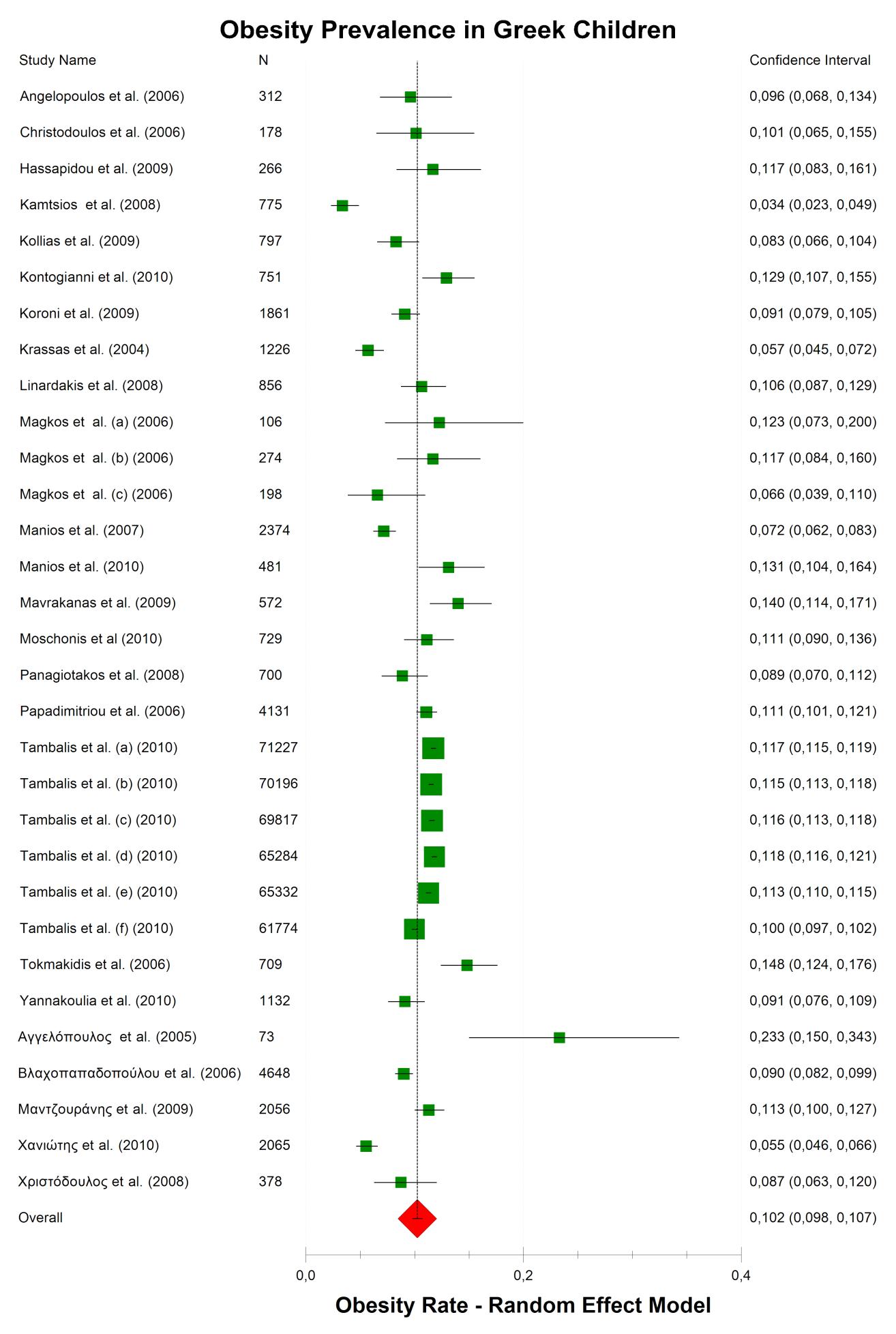
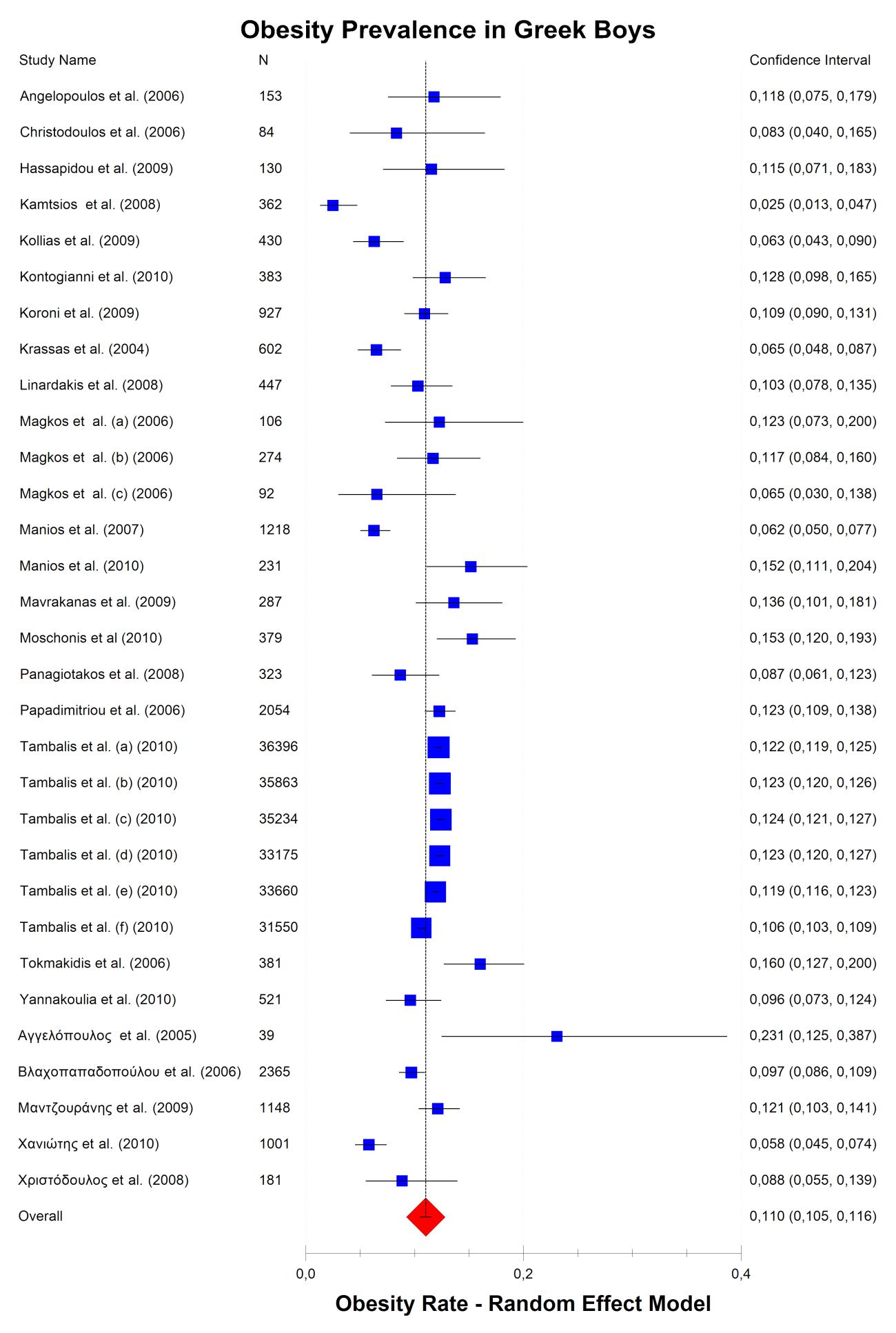
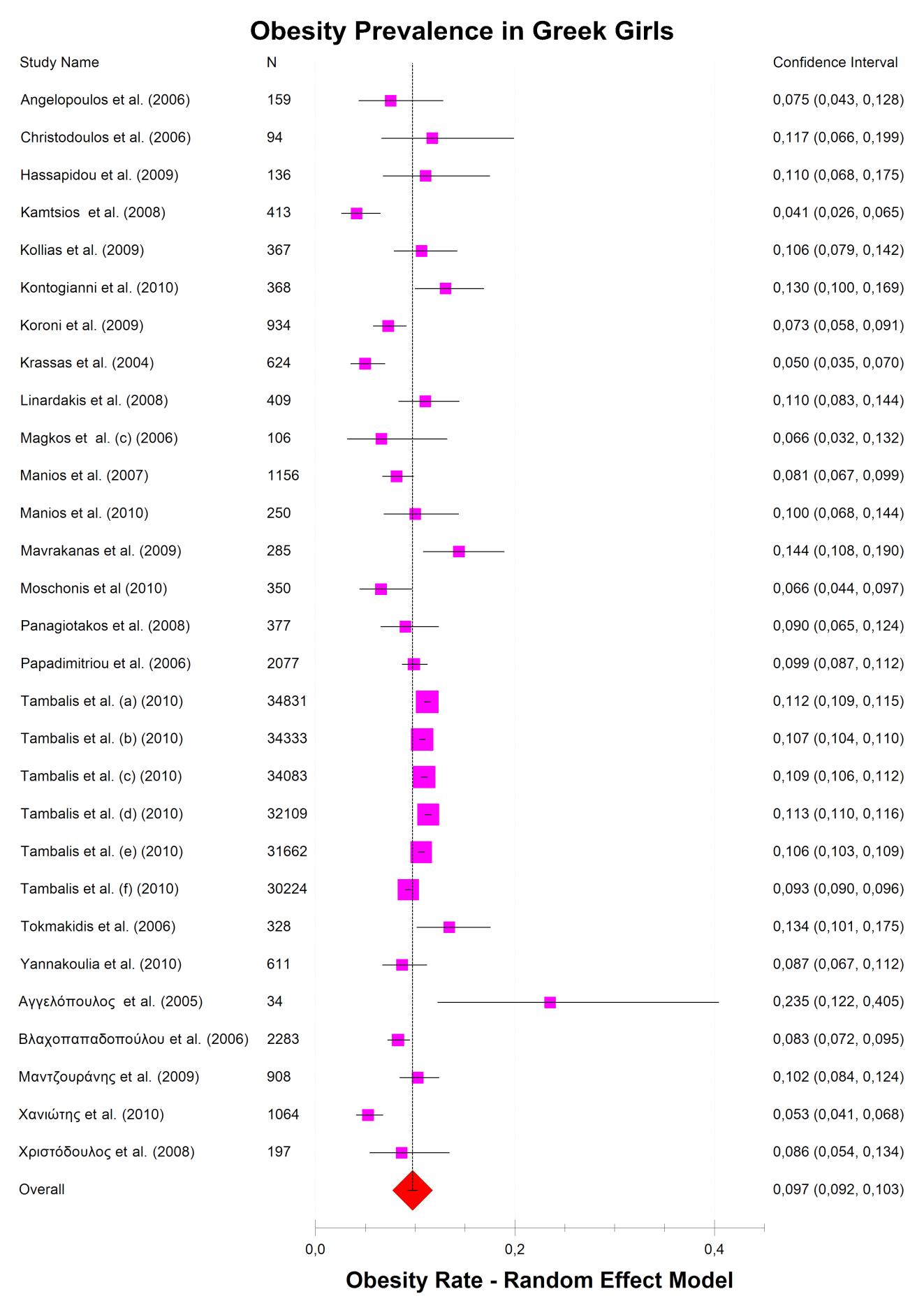
Background: The obesity epidemic has even affected children in Western world and Greece. The aim of this study was to report the prevalence of obesity in Greek children, aged 1-12 years old and to investigate the phenomenon trend during time. Methods: A systematic review- including all studies published in English and Greek from January 2001 until December 2010 regarding the childhood obesity, using the IOTF criteria - was performed. Twenty-five out of 134 published studies were finally
Αλληλογραφία
Ασημίνα Γαλλή-Τσινοπούλου,
Περιφερειακή Οδός-Νέα
Ευκαρπία,
ΤΚ 56403, Θεσσαλονίκη
Τηλ/fax: 2310991537
e-mail: gallitsin@gmail.com galtsin@otenet.gr
Correspondence
Assimina Galli-Tsinopoulou
Περιφερειακή Οδός-Νέα
Ευκαρπία,
ΤΚ 56403, Θεσσαλονίκη
Τηλ/Φαξ: 2310991537 e-mail: gallitsin@gmail.com galtsin@otenet.gr
Eleni P.Kotanidou1
Assimina Galli-Tsinopoulou1
4th Department of Pediatrics, Faculty of Medicine, Aristotle University of Thessaloniki
Maria G.Grammatikopoulou2
Maria Tsigga2
Department of Human Nutrition and Dietetics, Alexander Technological Educational Institute of Thessaloniki
Bessie E. Spiliotis3
Division of Pediatric Endocrinology and Diabetes, Department of Pediatrics, School of Medicine, University of Patras
Christina Kanaka-Gantenbein4 Division of Endocrinology, Diabetes and Metabolism, First Department of Pediatrics, Faculty of Medicine University of Athens
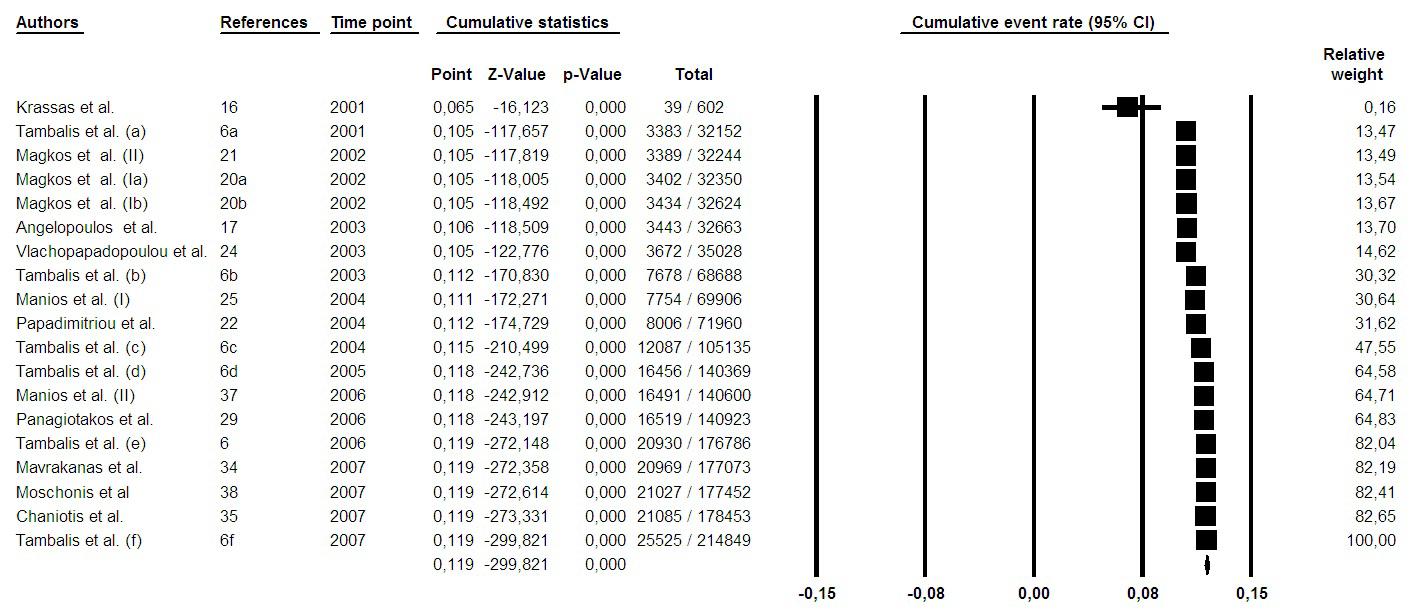
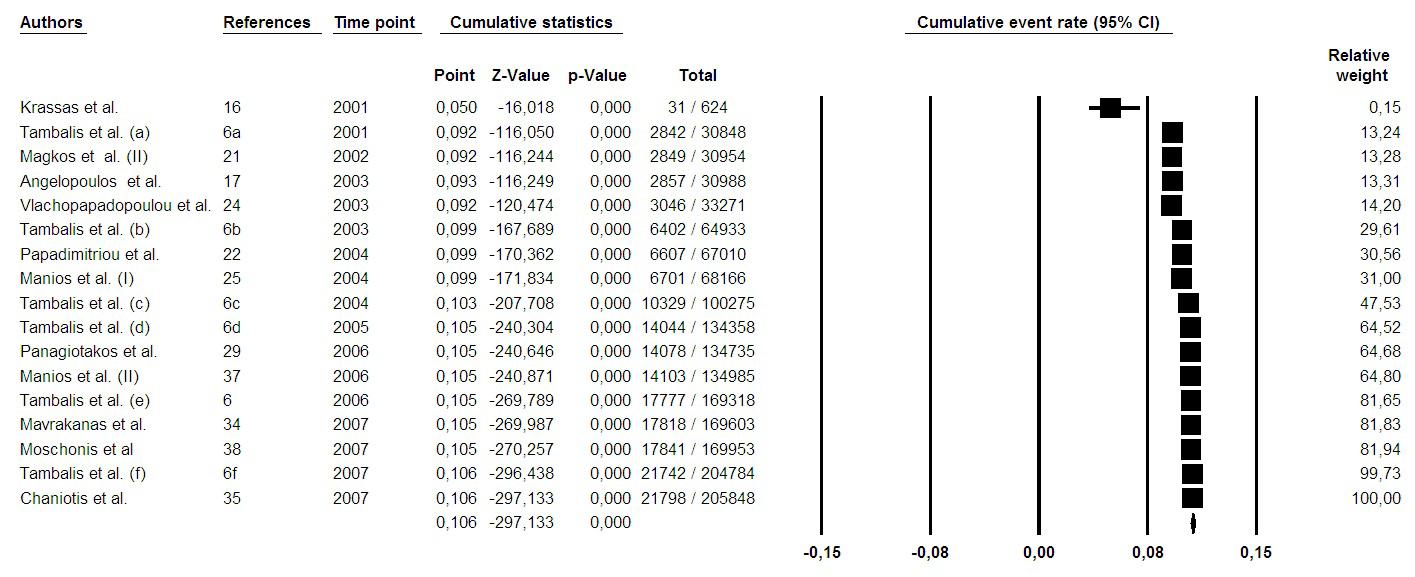
selected, including 219996 boys and 210772 girls. Random-effects meta-analytic models, sub-group meta-analysis, analysis of quality and cumulative analysis were performed. Results: Meta-analysis revealed that 10.2% (95%CI:9.8-10.7%) Greek children (1-12 years) are obese, 23.7% (95%CI:22.7-24.8%) are overweight and the combined prevalence of overweight and obesity is 34.0% (95%CI: 32.7-35.3%). Subgroup analysis by gender showed that 11% of the boys and 9.7% of the girls are obese, while 24.1% of the boys and 23.2% of the girls were overweight. The combined prevalence of excess in body weight predominated in the boys (35.0%) while in the girls the above prevalence was 32.7%. Cumulative analysis revealed an upward trend of the phenomenon (2001-2003), followed by a stabilization (20032010). Conclusions: During the decade 2000’s, 1/10 Greek children was obese and 3/10 were overweight. The adoption of policies in order to reverse the childhood obesity phenomenon is of great significance.
Keywords: obesity; overweight; children; Greece; meta-analysis
“children”, “childhood”, “obesity”, “overweight”, “weight status”, “body composition”, “Greece”, “Greek”.
Χρόνος συλλογής δείγματος
Αστικό/Επαρχιακό
≤500/501-1000/1001-2000/2001-3999/≥4000
Τοπικό/Εθνικό
Αναφέρεται (Α)/Δεν αναφέρεται(ΔΑ)
Αναφέρεται (Α)/Δεν αναφέρεται(ΔΑ)
Αναφέρεται (Α)/Δεν αναφέρεται(ΔΑ)
Αναφέρεται (Α)/Δεν αναφέρεται(ΔΑ)
≥75%/61-75%/≤60%/ΔΑ Αστικό
Αναφορά
Αναφορά
Όνομα
Έτος
Αναφορά
Όνομα
(CI 95%: 9.2%–10.3%, Q=214.9, p<0.001, I2=86.9%)
24.1% των αγοριών (CI 95%: 22.9%–25.4%, Q=846.6, p<0.001, I2=96.6%) και στο 23.2% των κοριτσιών (CI 95%: 22.1%-24.3%,Q=601.3, p<0.001, I2=95.5%).
35.0% στα αγόρια (CI 95%: 33.6%-36.6%, Q=1020.9, p<0.001, I2=97.2%)
10.7% (CI 95%: 10.2%–11.2%, Q=230.6, p<0.001, I2=94.8%)
23.8% (CI 95%: 22.4%–25.3%, Q=902.9, p<0.001, I2=98.7%) και
34.4% (CI 95%: 32.6%–36.2%, Q=953.6, p<0.001, I2=98.7%).
παχύσαρκα (CI 95%: 10.7%–11.9%, Q=147.3, p<0.001, I2=91.9%) και
23.4% υπέρβαρα (CI 95%: 21.8%–25.1%, Q=559.7, p<0.001, I2=97.9%)
(CI 95%: 9.6%–10.7%, Q=110.7, p<0.001, I2=90%)
(CI 95%: 22.3%–25.1%, Q=372.4, p<0.001, I2=97%).
33.8% (CI 95%: 32.1%–35.5%, Q=390.4, p<0.001, I2=97.2%).
1. Preventing chronic diseases: A vital investment. World Global Report. Geneva: World Health Organization; 2005.
2. Wang Y, Lobstein T. Worldwide trends in childhood overweight and obesity. Int J Pediatr Obes 2006; 1: 11-25.
3. Franks PW, Hanson RL, Knowler WC, Sievers ML, Bennett PH, Looker HC. Childhood obesity, other cardiovascular risk factors, and premature death. N Engl J Med 2010; 362: 485-493.
4. Wang G, Dietz WH. Economic burden of obesity in youths aged 6 to 17 years: 1979-1999 Pediatrics 2002; 109: 81-91.
5. Lien N, Henriksen HB, Nymoen LL, Wind M, Klepp KI. Availability of data assessing the prevalence and trends of overweight and obesity among European adolescents.
Public Health Nutr 2010; 13: 1680-1687.
6. Tambalis KD, Panagiotakos DB, Kavouras SA, Kallistratos AA, Moraiti IP, Douvis SJ, et al. Eleven-year prevalence trends of obesity in Greek children: first evidence that prevalence of obesity is leveling off. Obesity (Silver Spring) 2010; 18: 161-166.
7. Stroup DF, Berlin JA, Morton SC, Olkin I, Williamson GD, Rennie D, et al. Metaanalysis of observational studies in epidemiology: a proposal for reporting. Metaanalysis Of Observational Studies in Epidemiology (MOOSE) group. JAMA 2000; 283: 2008-2012.
8. Cole TJ, Bellizzi MC, Flegal KM, Dietz WH. Establishing a standard definition for child overweight and obesity worldwide: international survey. BMJ 2000; 320: 12401243.
9. Wells GA, Shea B, O’Connell D, Peterson J, Welch V, Losos M, et al. The Newcastle-Ottawa Scale (NOS) for assessing the quality of nonrandomized studies in metaanalyses. [12 May 2011]: Available from: http://www.ohri.ca/programs/clinical_epidemiology/oxford.htm
10. Hardy RJ, Thompson SG. Detecting and describing heterogeneity in meta-analysis. Stat Med 1998; 17: 841-856.
11. Higgins JP, Thompson SG. Quantifying heterogeneity in a meta-analysis. Stat Med 2002; 21: 1539-1558.
12. Haidich AB. Meta-analysis in medical research. Hippokratia 2010; 14: 29-37.
13. Petretta M, Pirozzi F, Sasso L, Paglia A, Bonaduce D. Review and metaanalysis of the Frequency of Familial Dilated Cardiomyopathy. Am J Cardiol 2011; 108: 11711176.
14. Chen JJ, Yu CB, Du WB, Li LJ. Prevalence of hepatitis B and C in HIV-infected patients: a meta-analysis. Hepatobiliary Pancreat Dis Int 2011; 10: 122-127.
15. DerSimonian R, Laird N. Meta-analysis in clinical trials. Control Clin Trials 1986; 7: 177-188.
16. Krassas GE, Tsametis C, Baleki V, Constantinidis T, Unluhizarci K, Kurtoglu S, et al. Prevalence of overweight and obesity among children and adolescents in Thessaloniki-Greece and Kayseri-Turkey. Pediatr Endocrinol Rev 2004; 1: 460-464.
17. Αγγελόπουλος
2005; 68: 433-438.
18. Angelopoulos PD, Milionis HJ, Moschonis G, Manios Y. Relations between obesity and hypertension: preliminary data from a cross-sectional study in primary schoolchildren: the children study. Eur J Clin Nutr 2006; 60: 1226-1234.
19. Christodoulos AD, Flouris AD, Tokmakidis SP. Obesity and physical fitness of preadolescent children during the academic year and the summer period: effects of organized physical activity. J Child Health Care 2006; 10: 199-212.
20. Magkos F, Manios Y, Christakis G, Kafatos AG. Age-dependent changes in body size of Greek boys from 1982 to 2002. Obesity (Silver Spring) 2006; 14: 289-294.
21. Magkos F, Piperkou I, Manios Y, Papoutsakis C, Yiannakouris N, Cimponerio A, et al. Diet, blood lipid profile and physical activity patterns in primary school children from a semi-rural area of Greece. J Hum Nutr Diet 2006; 19: 101-112.
22. Papadimitriou A, Kounadi D, Konstantinidou M, Xepapadaki P, Nicolaidou P. Prevalence of obesity in elementary schoolchildren living in Northeast Attica, Greece.
Obesity (Silver Spring) 2006; 14: 1113-1117.
23. Tokmakidis SP, Kasambalis A, Christodoulos AD. Fitness levels of Greek primary schoolchildren in relationship to overweight and obesity. Eur J Pediatr 2006; 165: 867-874.
24.
2006; 53: 47-53.
25. Manios Y, Costarelli V, Kolotourou M, Kondakis K, Tzavara C, Moschonis G. Prevalence of obesity in preschool Greek children, in relation to parental characteristics and region of residence. BMC Public Health 2007; 7: 178.
26. Χριστόδουλος
Παιδιατρική 2008; 71: 368-375.
27. Kamtsios S, Digelidis N. Physical activity levels, exercise attitudes, self-perceptions and BMI type of 11 to 12-year-old children. J Child Health Care 2008; 12: 232240.
28. Linardakis M, Sarri K, Pateraki MS, Sbokos M, Kafatos A. Sugar-added beverages consumption among kindergarten children of Crete: effects on nutritional status and risk of obesity. BMC Public Health 2008; 8: 279.
29. Panagiotakos DB, Papadimitriou A, Anthracopoulos MB, Konstantinidou M, Antonogeorgos G, Fretzayas A, et al. Birthweight, breast-feeding, parental weight and prevalence of obesity in schoolchildren aged 10-12 years, in Greece; the Physical Activity, Nutrition and Allergies in Children Examined in Athens (PANACEA) study. Pediatr Int 2008; 50: 563-568.
30. Hassapidou M, Papadopoulou SK, Frossinis A, Kaklamanos I, Tzotzas T. Sociodemographic, ethnic and dietary factors associated with childhood obesity in Thessaloniki, Northern Greece. Hormones (Athens) 2009; 8: 53-59.
31. Kollias AK, Skliros EA, Leotsakos N, Gikas A, Garifallos D. Childhood obesity in relation to parental weight status in Greece. Hippokratia 2009; 13: 253.
32. Koroni M, Garagouni-Areou F, Roussi-Vergou CJ, Zafiropoulou M, Piperakis SM. The stigmatization of obesity in children. A survey in Greek elementary schools. Appetite 2009; 52: 241-244.
33. Mantzouranis N DH, Pilianidis T, Tokmakidis S. Obesity prevalence in children aged 8-13 years according to IOTF cutoffs, CDC growth charts and Z-BMI scores. Paediatriki 2009; 72: 41-45.
34. Mavrakanas TA, Konsoula G, Patsonis I, Merkouris BP. Childhood obesity and elevated blood pressure in a rural population of northern Greece. Rural Remote Health 2009; 9: 1150.
35.
2010; 5: 49-61.
36. Kontogianni MD, Farmaki AE, Vidra N, Sofrona S, Magkanari F, Yannakoulia M. Associations between lifestyle patterns and body mass index in a sample of Greek children and adolescents. J Am Diet Assoc 2010; 110: 215-221.
37. Manios Y, Angelopoulos PD, Kourlaba G, Kolotourou M, Grammatikaki E, Cook TL, et al. Prevalence of obesity and body mass index correlates in a representative
sample of Cretan school children. Int J Pediatr Obes 2010; 6: 135-141.
38. Moschonis G, Tanagra S, Vandorou A, Kyriakou AE, Dede V, Siatitsa PE, et al. Social, economic and demographic correlates of overweight and obesity in primaryschool children: preliminary data from the Healthy Growth Study. Public Health Nutr 2010; 13: 1693-1700.
39. Yannakoulia M, Ntalla I, Papoutsakis C, Farmaki AE, Dedoussis GV. Consumption of vegetables, cooked meals, and eating dinner is negatively associated with overweight status in children. J Pediatr 2010; 157: 815-820.
40. Georgiadis G, Nassis GP. Prevalence of overweight and obesity in a national representative sample of Greek children and adolescents. Eur J Clin Nutr 2007; 61: 1072-1074.
41. Olsen LW, Baker JL, Holst C, Sørrensen TI. Birth cohort effect on the obesity epidemic in Denmark. Epidemiology 2006; 17: 292-295.
42. Skelton JA, Irby MB, Grzywacz JG, Miller G. Etiologies of obesity in children: nature and nurture. Pediatr Clin North Am 2011; 58: 1333-1354.
43. Kosti RI, Panagiotakos DB, Zampelas A, Mihas C, Alevizos A, Leonard C, et al. The association between consumption of breakfast cereals and BMI in schoolchildren aged 12-17 years: the VYRONAS study. Public Health Nutr 2007; 11: 1015-1021.
44. Papoutsakis C, Vidra NV, Hatzopoulou I, Tzirkalli M, Farmaki AE, Evagelidaki E, et al. The Gene-Diet Attica investigation on childhood obesity (GENDAI): overview of the study design. Clin Chem Lab Med 2007; 45: 309-315.
45. Antonogeorgos G, Papadimitriou A, Panagiotakos DB, Priftis KN, Nicolaidou P. Association of extracurricular sports participation with obesity in Greek children. J Sports Med Phys Fitness 2011; 51: 121-127.
46. Manios Y, Kourlaba G, Kondaki K, Grammatikaki E, Anastasiadou A, Roma-Giannikou E. Obesity and television watching in preschoolers in Greece: the GENESIS study. Obesity (Silver Spring) 2009; 17: 2047-2053.
47. Yannakoulia M, Papanikolaou K, Hatzopoulou I, Efstathiou E, Papoutsakis C, Dedoussis GV. Association between family divorce and children’s BMI and meal patterns: the GENDAI Study. Obesity (Silver Spring) 2008; 16: 1382-1387.
48. Krassas GE, Tzotzas T, Tsametis C, Konstantinidis T. Prevalence and trends in overweight and obesity among children and adolescents in Thessaloniki, Greece. J Pediatr Endocrinol Metab 2001; 14: 1319-1326.
49. Lean MEJ. Childhood obesity: time to shrink a parent. Int J Obes 2010; 34: 1–3.
50. Moschonis G, Iatridi V, Mavrogianni C, Siatitsa PE, Kyriakou AE, Dede V et al. Accuracy and correlates of visual and verbal instruments assessing maternal perceptions of children’s weight status: the Healthy Growth Study. Public Health Nutr 2011; 14: 1979-1987.
51. Grammatikopoulou MG, Galli-Tsinopoulou A, Daskalou E. Is pocket money an indicant of childhood obesity? Arch Dis Child 2008; 93: pw4-4pw.
52. Naukkarinen J, Rissanen A, Kaprio J, Pietiläinen KH. Causes and consequences of obesity: the contribution of recent twin studies. Int J Obes 2011; Epub doi: 10.1038/ ijo.2011.192
Factors associated with complications on neonatal transport το νeonatal care units in Αttica
Stella Mouskou1, Georgios Antonogeorgos2, Christos Varakis3, Chryssa Τzoumaka-Bakoula4, Tania Siahanidou5
Introduction: Neonatal transport is a high risk service as it deals with a sensitive group of patients, especially premature and severely ill neonates. Purpose: Τo record and analyze complications during neonatal transport as well as
Stella Mouskou1
Pediatrician-Neonatologist, “Aghia Sophia” Children’s Hospital
Georgios Antonogeorgos2
3rd Department of Pediatrics, National and Kapodistrian University of Athens, “Attikon” Hospital
Christos Varakis3
Health Economist, PhD, National and Kapodistrian University of Athens
Chryssa Τzoumaka-Bakoula4
2nd Department of Pediatrics, Medical School, National and Kapodistrian University of Athens, “P.& A. Kiriakou” Children’s Hospital
Tania Siahanidou5
Neonatal Unit, 1st Department of Pediatrics, Medical School, National and Kapodistrian University of Athens, “ Aghia Sophia” Children’s Hospital
to examine whether complications during transport are associated especially with the type of transportation (air transport or ambulance) or the reference hospital (with or without Neonatal Care Unit-NCU).
Materials and methods: During 1/1/2008-31/12/ 2009 a total of 1010 neonates were transported by the Neonatal Transport Unit (NTU) of the Hellenic National Center of Emergency Care. Simple and multiple logistic regression analysis was performed to assess the aforementioned correlations.
Results: 33,9% of neonates presented with at least one complication at the time of pick-up or during their transport – hypothermia presented the most frequent (14,8%). Νeonates with birth weight <2500g and neonates from hospitals without NCU presented complications more often (p<0.001). (37,4% vs 30,3% of neonates with birth weight >2500g and 41,3% vs. 29% from hospitals without and with NCU). When air transport was used, neonates were 33% more likely to present complications, 23 times more likely to be extubated and 3,2 times more likely to require urgent intubation. Furthermore, neonates transported from hospitals with a NCU were 33% less likely to present hypoglycemia, 46% less likely to present hypothermia, 97% less likely to require an urgent intravenous line cathetirisation and 96% less likely to require urgent intubation in comparision with neonates transported from hospitals without a NCU.
Conclusion: Νeonates with birth weight <2500g, as well as neonates from hospitals which do not have a NCU or are transported via air, have a greater risk to present with complications. It is very important to identify the high risk neonates, in order to insure a safe transport without any additional burden for the infant’s health.
Keywords: neonate, transport, air transport, complications, NCU
Αλληλογραφία
Στέλλα Μούσκου
Εφέσου 15, Παπάγου
Τ.Κ. 15669, Αθήνα
Τηλ.: 6945998723
Stelli_m@yahoo.com
Correspondence
Stella Mouskou
Efessou 15, Papagou 15669, Athens
Τel.: +30 6945998723
Stelli_m@yahoo.com
Συντομογραφίες
ΦΒΓ
ΜΦΒΓ
Mann-Whitney test.
574 (56,8)
436 (43,2)
552 (54,7)
458 (45,3)
499 (49,4)
303 (30)
111(11)
97 (9,6)
218 (21,6)
792(78,4)
464(45,9)
444 (44,1)
102 (10)
250(24,8)
250(24,8)
250(24,8)
260(25,7)
558 (55,2)
218(21,5)
51(5,1)
163(16,2) 20(2)
552(54,7)
470(46,5)
205(20,3)
135(13,4)
134(13,3)
36(3,6)
33(3,3)
247(21)
2,7 95%ΔΕ:1,87-3,90)
0,37, 95%ΔΕ:0,180,75),
342(33,9)
43(8,6)
106(20,7)
43(8,6)
52(17,2)
26(23,4)
28(28,9)
26(11,9)
123(15,5)
79(13)
70(17,5)
73(13,1)
47(20,6)
6(11,8)
23(13,4)
25(10)
30(12)
32(12,8)
62(23,8)
100(21,3)
49(9,1)
107(71,8)
445(51,7)
9(6,7)
140(16)
2(6,1)
147(15)
456(91,4)
405(79,3)
456(91,4)
251(82,8)
85(76,6)
69(71,1)
192(88,1)
669(84,5)
531(87)
330(82,5)
486(86,9)
181(79,4)
45(88,2)
149(86,6)
225(90)
220(88)
218(87,2)
198(76,2)
370(78,7)
491(90,9)
42(28,2)
416(48,3)
126(93,3)
735(84)
31(93,9)
830(85)
27(5,4) 7(1,4) 27(5,4) 4(1,3) 0(0) 3(3,1) 18(8,3) 16(2) 17(2,8) 17(4,3) 7(1,3) 9(3,9) 10(19,6) 8(4,7) 8(3,2) 6(2,4) 6(2,4) 14(5,4) 24(4,4) 6(1,1) 28(6,1) 11(8,1) 23(2,6) 6(18,2) 28(2,9)
472(94,6)
504(98,6)
472(94,6)
299(98,7) 111(100) 94(96,9)
200(91,7) 776(98)
593(97,2)
383(95,8)
552(98,7)
219(96,1)
41(80,4)
164(95,3)
242(96,8)
244(97,6)
244(97,6)
246(94,6)
460(97,9)
516(95,6)
546 (98,9)
430(93,9) 124(91,9)
852(97,4) 27(81,8) 948(97,1)
45(9)
58(11,4)
45(9)
30(9,9)
10(9)
18(18,6)
25(11,5)
78(9,8)
59(9,7)
44(11)
53(9,5)
24(10,5)
6(11,8)
20(11,6)
26(10,4)
35(14)
21(8,4)
21(8,1)
55(11,7)
48(8,9)
61(11,1)
42(9,2)
18(13,3)
85(9,7)
6(18,2)
454(91)
453(88,6)
454(91)
273(90,1) 101(91)
79(81,4)
193(88,5) 714(90,2)
551(90,3) 356(89)
506(90,5)
204(89,5) 45(88,2)
152(88,4)
224(89,6) 215(86)
229(91,6) 239(91,9)
415(88,3)
492(91,1)
491(88,9)
416(90,8)
117(86,7) 790(90,3) 27(81,8)
880(90,1)
20(3,3) 23(5,8)
20(3,6) 14(6,1) 0(0) 9(5,2) 4(1,6) 14(5,6) 11(4,4) 14(5,4)
30 (6,4) 13(2,4) 28(5,1) 15(3,3) 2(1,5) 41(4,7) 0(0) 43(4,4)
97(9,9) 17(3,4) 26(5,1) 17(3,4) 2(1,8) 2(1,8) 5(5,2) 9(4,1) 34(4,3)
482(96,6)
485(94,9)
482(96,6) 109(98,2) 109(98,2) 92(94,8)
209(95,9) 758(95,7)
590(96,7) 377(94,3)
539(96,4) 214(93,9) 51(100)
163(94,8)
246(98,4)
236(94,4) 239(95,6)
246(94,6)
440(93,6)
527(97,6)
524(94,9)
443(96,7)
133(98,5)
834(95,3)
33(100)
934(95,6)
214(98,2)
791(99,9)
558(99,8) 228(100) 51(100)
168(97,7)
609(99,8) 396(99)
466(99,1)
539(99,8)
548(99,3) 457(99,8) 135(100)
870(99,4)
1(6,3) 15(1,7)
211(96,8) 783(98,9)
164(95,3)
608(99,7)
386(96,5)
455(96,8)
539(99,8)
541(98)
453(98,9)
134(99,3)
860(98,3)
10(4,6) 23(2,9)
3(0,5)
208(95,4)
769(97,1)
556(99,5)
209(91,7) 51(100)
161(93,6)
607(99,5)
370(92,5)
444 (94,5)
533(98,7) 542(98)
436(95,2) 135(100)
842(96,7)
1,330 (0,976-1,814)
0,737 (0,468-1,158)
0,960 (0,453-2,033)
4,365 (2,187-8,712)
1,186 (0,735-1,912)
1,440 (0,656-3,159)
14,785 (1,644-132,97
1,607 (0,753-3,43)
3,645(0,227-58,514)
2,886 (1,062-7,841)
0,725 (0,084-6,241)
1,330 (0,976-1,814)
0,737 (0,468-1,158)
0,960 (0,453-2,033)
4,365 (2,187-8,712)
1,186 (0,735-1,912)
1,440 (0,656-3,159)
14,785 (1,644-132,97
1,607 (0,753-3,43)
3,645(0,227-58,514)
2,886 (1,062-7,841) 0,725 (0,084-6,241)
0,582 (0,447-0,759)
1,426 (1,005-2,023)
1,800 (0,975-3,322)
1,548 (0,781-3,070)
1,154 (0,764-1,744)
1,357 (0,671-2,753)
6,152 (0,685-55,238)
16,405 (4,972-54,133)
11,026 (2,492-48,780)
3,071 (0,560-16,844)
0,513 (0,373-0,707)
0,548 (0,356-0,844)
0,775 (0,389-1,054)
0,652 (0,283-1,505)
0,725 (0,445-1,181)
0,773 (0,331-1,807)
0,109 (0,007-1,655)
0,029 (0,003-0,256)
0,037 (0,005-0,296)
0,106 (0,010-1,130)
(8%) (9).
1. Bethany L, Farris, Truog WE. Immediate Care and Transport of the Sick Newborn. The Transport Guidelines Committee of the West Virginia Perinatal Partnership. http://www.wvperinatal.org/. Manual for the Washington State Regional Perinatal Care 2010;
2. Kempley ST, Sinha AK. On behalf of theThames Regional Perinatal Group.Census of neonatal transfers in London and the South East of England. Arch Dis Child Fetal Neonatal Ed 2004;89:F521–F6.
3. Shenai JP. Neonatal Transport. Outreach educational program. Pediatr Clin N Am 1993;40:275-85.
4. Pettett G, Sewell S, Merenstein G. Regionalization and transport in perinatal care. In: Merenstein G, Gardner S, editors. Handbook of neonatal intensive care. St Louis Missouri: Mosby; 2002. p. 31-44.
5. Lim M, Ratnavel N, Ratnavel A. A prospective review of adverse events during interhospital transfers of neonatew by a dedicated neonatal transfer service. Crit Care Med. 2008;9.
6. Hellstrom-Westas L, Hanseus K, Jogi P, Lundstrom N-R, Svenningsen N. Long-Distance Transports of Newborn Infants with Congenital Heart Disease. Pediatr Cardiol. 2001;22:380-4.
7. Holt J, Fagerli I. Air transport of sick newborn infant: audit from a sparsely populated country in Norway. Acta Paediatr. 1999;88:66-71.
8. Chance GW, O’Brien MJ, Swter PR. Transportation of sick neonates, 1972:an unsatisfactory aspect of medical care. Can Med Assos J. 1973;109:847.
9. Bowman E, Doyle LW, Murton LJ, Roy RN, Kitchen WH. Increased mortality of preterm infants transferred between tertiary perinatal centres BMJ. 1988;297(6656):1098-100.
10. Barry PW, Ralston C. Adverse events occurring during interhospital transfer of the critically ill. Arch Dis Child. 1994;Jul;71((1):):8–11.
11. Moss JS, Embleton ND, Fenton A. Towards safer neonatal transfer : the importance of critical incident review. Arch Dis Child. 2005;90:729-32.
12. Silveira SMM, Mello, M J G, Arruda Vidal, S, Frias, P G, Cattaneo, A. Hypothermia on Admission: a Risk Factor for Death in Newborns referred to the Pernambuco Institute of Mother and Child Health. Journal of Tropical Pediatrics. 2003;49:115-20.
13. Gomella TL, editor. On Call problems In Neonatology p:203-321. 5th ed. Norwalk: CT : Appleton & Lange; 2004.
14. Cranmer H, Shannon M. Pediatrics, Hypoglycemia : eMedicine Emergency Medicine. Available at : http://emedicine.medscape.com/ Last updated Oct 2007.
15. Stoll BJ. Hypoglycemia. The fetus and the neonatal infant. In Nelson.Textbook of Pediatrics. 18th ed. 2007:785-6.
16. Gomella TL, editor. Temperature Regulation in Neonatology p 39-43. 5th ed. Norwalk: CT: Appleton & Lange 2004.
17. Dodgin C. Web 0800 Use of neonatal stabilization score on neonatal transport [Abstract]. Journal of Air Medical Transport. 1989;8:53.
18. Meberg A, Hansen T. Neonatal transports—risks and opportunities. . Open Journal of Pediatrics, [Internet]. 2011;1(4):45-50 Webpage:http://www.scrip.org/journal/ojped.
19. Kempley ST, Baki, Y, Hayter, G, Ratnavel, N, Cavazzoni, E, Reyes, T. Effect of a centrilised transfer service on characteristics of inter-hospital neonatal transfers. Arch Dis Child Fetal Neonatal. 2007;92:185-8.
20. Cusack J, Field D, Manktelow B. Impact of service changes on neonatal transfer patterns over 10 years. Arch Dis Child Fetal Neonatal. 2007;2007(92):181-4.
21. Παιδιατρική, Εταιρεία, Βορείου, Ελλάδος. 4ο
Νεογνού-Βρέφους-Παιδιού (Πρακτικά) Νοεμβριος 2002, Θεσσαλονίκη.
22. Θεοδωράκη Μ,
2008 [Abstract].
2009;4:44.
24. Gill AB, Bottomley L, Chatfield S, Wood C. Perinatal transport : problems in neonatal intensive care capacity. Arch Dis Child Fetal Neonatal. 2004;89:220-3.
25. Killion C, Stein HM. The Impact of Air Ambulance Transport on Neonatal Outcomes. Newborn and Infant Nursing Reviews. 2009;9:207-11.
26. Kazemian M FS, Zozouni F. Neonatal transport in Tehran: A cause for much concern. Arch Iranian Med. 2004;7(4):256-9.
27. Yeager SB HJ, Greco KM, Duff J, Ravi RT and Laussen PC. Pretransport and Posttransport Characteristics and Outcomes of Neonates Who Were Admitted to a Cardiac Intensive Care Unit. Pediatrics. 2006;118:1069-77.
28. Hellstrom-Westas L, Hanséus, K.,Jogi, P ,Lundstrom, N.R., Svenningsen N. Longdistance transports of newborn infants with congenital heart disease. Pediatric Cardiology. 2001;22:380-4.
29. Hatherill M, Waggie Z, Reynolds L, Argent A. Transport of critically ill children in
a resource-limited setting. Intensive Care Med. 2003;29:1547-54.
30. Chess PR. Malhotra Y. Laroia N. Neonatal Emergencies. In:Critical Care Transport. University of Maryland: Jone & Banleu (Publishers) LLC. 2011:875-915.
31. American Academy of Pediatrics, Section on Transport Medicine. Guidelines for Air and Ground Transport of Neonatal and Pediatric Patients. 3rd Ed ed: Elk Grove Village; 2006.
32. Bowman E, Roy RN. Control of temperature during newborn transport : an old problem with new difficulties. J Paediatr Child Health. 1997;33:398-401.
33. Gunn T, Outerbridge E W. Effectiveness of neonatal transport. Can Med Assoc J. 1978;118:646-9.
34. Swamy R CC, Gristwood G, Lal M. Hyperthermia during transport of sick infants:An emerging problem? [Abstract] http://www.neonatalsociety.ac.uk. Presented at the Neonatal Society 2007 Spring Meeting.
Bone pain or osseous radiographic findings on diagnosis as prognostic factors for children with ALL
Abstract
The charts of 253 patients with Acute Lymphoblastic Leukemia (ALL) diagnosed from 11/92 to 12/05 and treated as per the BFM90/95, were reviewed. Clinical, laboratory findings and outcome were compared between children with bone pain and/οr radiographic bone findings and those without these findings. From the 253 children, 79 had bone pain at the time of diagnosis and 15 of them had bone radiographic findings as well. Children with bone pain at diagnosis were from 7 months to 14 years old (boys:36, girls:43) and the duration of symptoms was from 2 to 180 days (median 20 days). Of these 79 children 4 had T cell ALL, in 13 bone marrow on day 15 was M2 or M3 and 67/79 are alive. Children with bone pain at diagnosis and bone radiographic findings were from 2 to 136/12 years old, 10 were boys and 5 were girls and the duration of symptoms was from 17 to 180 days (median 50 days). Of these 15 children, one had T cell ALL, in 3 bone marrow was M2 or M3 on day 15 and 14 are alive. Statistical evaluation showed a) children with ALL and bone pain on diagnosis are predominantly girls b) in children with ALL and bone pain at diagnosis compared to those without bone pain duration of symptoms is longer (p=0.001), they have lower number of blasts on diagnosis (p=0.028), smaller blast percentage (p=0.033), lower LDH values (p=0.016) c) in children with ALL and imaging findings compared to those with bone pain but without imaging findings, duration of symptoms is longer (p=0.000), they have lower WBC count on diagnosis (p=0.016), smaller blast percentage (p=0.001) and absolute number of blasts (p=0.002) and higher platelet count on diagnosis (p=0.000), lower LDH values (p=0.007) d) the presence of osseous radiographic findings and / or bone pain does not influence the prognosis (p=ns). Conclusions: Children with bone pain at diagnosis are predominantly girls. In children with bone pain at diagnosis compared to those without pain, duration of symptoms is longer, LDH and percentage of blasts are lower and platelet count is higher. In children with bone pain and bone imaging findings compared to those without imaging findings duration of symptoms is longer, WBC count, LDH and percentage of blasts are lower and platelet count is higher. However, overall prognosis is not influenced by the above described imaging findings or the presence of bone pain.
Keywords: BONE PAIN, OSSEOUS RADIOGRAPHIC FINDINGS, CHILDREN, ALL
Αλληλογραφία
Δογάνης Δημήτριος Καπετάν Πετρούτσου 12, ΤΚ 11523
Τηλ.: 6972427616
e-mail: doganisd@gmail.com
Correspondence
Δογάνης Δημήτριος Καπετάν Πετρούτσου 12, ΤΚ 11523
Τηλ.: 6972427616
e-mail: doganisd@gmail.com
4 ETH 2/12 (7/12 - 14) AΓΟΡΙΑ 36 (46%)
43 (54%) 20 (2-180)
ΛΕΥΚΑ (x 109/L)
ΒΛΑΣΤΕΣ (x 109/L)
Ηb (gr/dl)
PLT (x 109/L)
LDH (U/L)
(174-12620)
4 ETH 3/12 (11/12 - 14 4/12) AΓΟΡΙΑ 108 (62%)
66 (38%) 10 (1-168) 19.2 (1.1-580) 8.365 (0-552.9) 52% (0-98%) 8.3 (3.3-14.8) 68000 (1000-491000)
(296-10000)
(15)
4 ETH 5/12 (2 – 13 6/12)
AΓΟΡΙΑ 10 (67%) ΚΟΡΙΤΣΙΑ 5 (33%)
50 (17-180) 4.9 (2.8-43.5) 0.196 (0-34.8) 4%
3 ETH 8/12 (7/12 - 14)
AΓΟΡΙΑ 26 (41%)
ΚΟΡΙΤΣΙΑ 38 (59%)
(0-144)
(0-100%)
(2.8-14)
(5-409)
<100
100-500
500-1000
>1000
1. Smith O, Hann I. Pathology of leukaemia; in Pinkerton R, Plowman PN, Pieters R (eds): Paediatric Oncology, ed 3. London, Arnold, 2004, pp 83-100.
2. Sinigaglia R, Gigante C, Bisinella G, Varotto S, Zanesco L, Turra S. Musculoskeletal manifestations in pediatric acute leukemia. J Pediatr Orthop. 2008;28:20-28.
3. Marwaha RK, Kulkarni KP, Bansal D, Trehan A. Acute lymphoblastic leukemia masquerading as juvenile rheumatoid arthritis: diagnostic pitfall and association with survival. Ann Hematol. 2010;89:249-254.
4. Gonçalves M, Terreri MT, Barbosa CM, Len CA, Lee L, Hilário MO. Diagnosis of malignancies in children with musculoskeletal complaints. Sao Paulo Med J. 2005;123:2123.
5. Sherry DD, Malleson PN. Nonrheumatic musculoskeletal pain, and idiopathic musculoskeletal pain syndromes; in Cassidy JT, Petty RE (eds): Textbook of Pediatric Rheumatology, ed 4. Philadelphia, Saunders, 2001, pp 362-381.
6. Kobayashi D, Satsuma S, Kamegaya M, Haga N, Shimomura S, Fujii T, Yoshiya S. Musculoskeletal conditions of acute leukemia and malignant lymphoma in children. J Pediatr Orthop B. 2005;14:156-161.
7. Maman E, Steinberg DM, Stark B, Izraeli S, Wientroub S. Acute lymphoblastic leukemia in children: correlation of musculoskeletal manifestations and immunophenotypes. J Child Orthop. 2007;1:63-68.
8. Robazzi TC, Barreto JH, Silva LR, Santiago MB, Mendonça N. Osteoarticular manifestations as initial presentation of acute leukemias in children and adolescents in Bahia, Brazil. J Pediatr Hematol Oncol. 2007;29:622-626.
9. Junnila JL, Cartwright VW. Chronic musculoskeletal pain in children: part I. Initial evaluation. Am Fam Physician. 2006;74:115-122.
10. Shalaby-Rana E, Majd M. (99m)Tc-MDP scintigraphic findings in children with leukemia: value of early and delayed whole-body imaging. J Nucl Med. 2001;42:878883.
11. Kumar R, Walsh A, Khalilullah K, McCormack D, Ryan S. An unusual orthopaedic presentation of acute lymphoblastic leukemia. J Pediatr Orthop B. 2003;12:292-294.
12. Newman AJ, Melhorn DK. Vertebral compression in childhood leukemia. Am J Dis Child. 1973;125:863–865.
13. Goodman JE, McGrath PJ. The epidemiology of pain in children and adolescents: a review. Pain. 1991;46:247-264.
14. Malleson PN, Beauchamp RD. Rheumatology: 16. Diagnosing musculoskeletal pain in children. CMAJ. 2001;165:183-188.
15. Cabral DA, Tucker LB. Malignancies in children who initially present with rheumatic complaints. J Pediatr. 1999;134:53-57.
16. Trapani S, Grisolia F, Simonini G, Calabri GB, Falcini F. Incidence of occult cancer in children presenting with musculoskeletal symptoms: a 10-year survey in a pediatric rheumatology unit. Semin Arthritis Rheum. 2000;29:348-359.
17. Tuten HR, Gabos PG, Kumar SJ, Harter GD. The limping child: a manifestation of acute leukemia. J Pediatr Orthop. 1998;18:625-629.
18. Jackson MA, Nelson JD. Etiology and medical management of acute suppurative bone and joint infections in pediatric patients. J Pediatr Orthop. 1982;2:313-323.
19. Morrey BF, Bianco AJ, Rhodes KH. Suppurative arthritis of the hip in children. J Bone Joint Surg [Am]. 1976;58:388-392. .
20. Haueisen DC, Weiner DS, Weiner SD. The characterization of “transient synovitis of the hip” in children. J Pediatr Orthop. 1986;6:11-17.
21. Culp RW, Eichenfield AH, Davidson RS, Drummond DS, Christofersen MR, Goldsmith DP. Lyme arthritis in children. J Bone Joint Surg [Am]. 1987;69:96-99.
22. Stechenberg BW. Lyme disease: the latest great imitator. Pediatr Infect Dis J. 1988;7:402-409.
23. Rogalsky RJ, Black GB, Reed MH. Orthopaedic manifestations of leukemia in children. J Bone Joint Surg [Am]. 1986;68:494-501.
24. Clausen N, Gøtze H, Pedersen A, Riis-Petersen J, Tjalve E. Skeletal scintigraphy and radiography at onset of acute lymphocylic leukemia in children. Med Petliatr Oncol. 1983:11:291-296.
25. Ribeiro RC. Pui C. Schell MJ. Vertebral compression fracture as a presenting feature of acute lymphoblastic leukemia in children. Cancer. 1988:61:589-592.
26. Masera G, Carnelli V, Ferrari M, Recchia M, Bellini F. Prognostic significance of radiological bone involvement in childhood acute lymphoblastic leukaemia. Arch Dis Child. 1977;52:530–533.
27. Fink CW, Windmiller J, Sartain P. Arthritis as the presenting feature of childhood leukemia. Arthritis Rheum. 1972;15:347–349.
28. Colby-Graham M, Chordas C. The childhood leukemias. J Pediatr Nurs. 2003;18:87–95.
29. Antunes NL. Back and neck pain in children with cancer. Pediatr Neurol. 2002;27:46–48.
30. Tafaghodi F, Aghighi Y, Rokni Yazdi H, Shakiba M, Adibi A. Predictive plain X-ray findings in distinguishing early stage acute lymphoblastic leukemia from juvenile idiopathic arthritis. Clin Rheumatol. 2009;28:1253-1258.
31. Costello PB, Brecher ML, Starr JI, Freeman AI, Green FA. A prospective analysis of the frequency, course, and possible prognostic significance of the joint manifestations of childhood leukemia. J Rheumatol. 1983;10:753-757.
32. Jones OY, Spencer CH, Bowyer SL, Dent PB, Gottlieb BS, Rabinovich CE. A multicenter case–control study on predictive factors distinguishing childhood leukemia from juvenile rheumatoid arthritis. J Pediatr. 2006; 117:840–844.
33. Jonsson OG, Sartain P, Ducore JM, Buchanan GR. Bone pain as an initial symptom of childhood acute lymphoblastic leukemia: Association with nearly normal hematologic indexes. J Pediatr. 1990; 117:233–237.
34. Hughes RG, Kay HEM. Major bone lesions in ALL. Med Pediatr Oncol. 1982; 10:67–70.
35. Ostrov BE, Goldsmith DP, Athreya BH. Differentiation of systemic juvenile rheumatoid arthritis from acute leukemia near the onset of disease. J Pediatr. 1993;122:595-598.
36. Wallendal M, Stork L, Hollister JR. The discriminating value of serum lactate dehydrogenase levels in children with malignant neoplasms presenting as joint pain. Arch Pediatr Adolesc Med. 1996;150:70-73.
37. Soni PN. Hypercalcaemia and multiple osteolytic lesions in childhood acute lymphoblastic leukaemia. Postgrad Med J. 1993;69:483-485.
38. Aur RJ, Westbrook HW, Riggs W Jr. Childhood acute lymphocytic leukemia. Initial radiological bone involvement and prognosis. Am J Dis Child. 1972;124:653–654.
39. Kundel DW, Brecher G, Bodey GP, Brittin GM. Reticulin fibrosis and bone infarction in acute leukemia. Implications for prognosis. Blood. 1964;23: 526-544.
40. Nies BA, Kundel DW, Thomas LB, Freireich EJ. Leukopenia, bone pain, and bone necrosis in patients with acute leukemia: a clinicopathologic complex. Ann Intern Med. 1965;62:698-705.
41. Heinrich SD, Gallagher D, Warrior R, Phelan K, George VT, MacEwen GD. The prognostic significance of the skeletal manifestations of ALL of childhood. J Pediatr Orthop. 1994;14:105–111.
42. Kai T, Ishii E, Matsuzaki A, Okamura J, Ikuno Y, Tasaka E, Ueda K. Clinical and prognostic implications of bone lesions in childhood leukemia at diagnosis. Leuk Lymphoma. 1996;23:119–123.
43. Muller HL, Horwitz AE, Kuhl J. Acute lymphoblastic leukemia with severe skeletal involvement: a subset of childhood leukemia with a good prognosis. Pediatr Hematol Oncol. 1998;15:121–133.
44. Hann IM, Gupta S, Palmer MK, Morris-Jones PH. The prognostic significance of radiological and symptomatic bone involvement in childhood acute lymphoblastic leukaemia. Med Pediatr Oncol. 1979;6:51–55.
Abstract
Foteini-Maria Chantzi1
Vana Spoulou1
Afroditi Saka1
Maria Theodoridou1
First Department of Pediatrics, Aghia Sofia Children’s Hospital, University of Athens, Greece
Dimitris Konstadinou2
Neonatal Intensive Care Unit, IASO Maternity Hospital, Athens, Greece
Congenital toxoplasmosis in dichorionic twin pregnancy. A case report and brief review.
Foteini-Maria Chantzi1, Vana Spoulou1, Afroditi Saka1, Dimitris Konstadinou2, Maria Theodoridou1
We report a case of primary infection by Toxoplasma gondii during dizygotic twin pregnancy. While the first neonate presented with severe CNS and ophthalmologic involvement, the second twin was free of disease. This case points out the possibility of different clinical presentation among twins after infection with the parasite during pregnancy, illustrates the clinical progression after the suggested management and gives the opportunity to express relative concerns regarding the prenatal and perinatal diagnosis and management.
Keywords: Toxoplasma gondii, neonate, twin pregnancy, hydrocephalous
fchantzi@yahoo.co.uk
Correspondence
Foteini-Maria Chantzi
Santorinis 24, Vari, Attiki Tel: +30 6974839090 e-mail: fchantzi@yahoo.co.uk
Συντομογραφίες
ΚΝΣ = Κεντρικό νευρικό
MRI = Μαγνητική τομογραφία
PCR
(θετικό >0,6 IU/ml)
IgG (θετικό>10 IU/ml)
Γενική Αίματος Ηb (g/dl)
Hct (%)
Γενική
Hb (g/dl)
Hct (%)
WBC (ανά μL)
Poly (%)
Lym (%)
PLT (ανά μL)
Βιοχημικός
Ur (mg/dl)
Cr (mg/dl)
Κ (mmol/L)
Na (mmol/L)
Cl (mmol/L)
γGT (U/L) ALP (U/L)
Ca (mg/dl)
1. Sahwi SY, Zaki MS, Haiba NY, Elsaid OK, Anwar MY, AbdRabbo SA. Toxoplasmosis as a cause of repeated abortion. J Obstet Gynaecol (Tokyo 1995) 1995;21(2):145-8.
2. Gilbert R, Tan HK, Cliffe S, Guy E, Stanford M. Symptomatic toxoplasma infection due to congenital and postnatally acquired infection. Arch Dis Child 2006;91(6):4958.
3. McLeod R, Kieffer F, Sautter M, Hosten T, Pelloux H. Why prevent, diagnose and treat congenital toxoplasmosis? Mem Inst Oswaldo Cruz 2009;104(2):320-44.
4. Lopes FM, Goncalves DD, Mitsuka-Bregano R, Freire RL, Navarro IT. Toxoplasma gondii infection in pregnancy. Braz J Infect Dis 2007;11(5):496-506.
5. Jones J, Lopez A, Wilson M. Congenital toxoplasmosis. Am Fam Physician 2003;67(10):2131-8.
6. Falavigna DL, Roncada EV, Nakazora D, Pelloso MC, Falavigna LF, de Araujo SM, et al. Congenital toxoplasmosis in dizygotic twins, Parana, Brazil. Rev Inst Med Trop Sao Paulo 2007;49(2):117-8.
7. Tjalma W, Vanderheyden T, Naessens A, Vanderheyden J, Foulon W. Discordant prenatal diagnosis of congenital toxoplasmosis in a dizygotic pregnancy. Eur J Obstet Gynecol Reprod Biol 1998;79(1):107-8.
8. Commodaro AG, Belfort RN, Rizzo LV, Muccioli C, Silveira C, Burnier Jr MN, et al. Ocular toxoplasmosis: an update and review of the literature. Mem Inst Oswaldo Cruz 2009;104(2):345-50.
9. Rodrigues IM, Castro AM, Gomes MB, Amaral WN, Avelino MM. Congenital toxoplasmosis: evaluation of serological methods for the detection of anti-Toxoplasma gondii IgM and IgA antibodies. Mem Inst Oswaldo Cruz 2009;104(3):434-40.
10. Phan L, Kasza K, Jalbrzikowski J, Noble AG, Latkany P, Kuo A, et al. Longitudinal study of new eye lesions in children with toxoplasmosis who were not treated during the first year of life. Am J Ophthalmol 2008;146(3):375-384.
11. Montoya JG. Laboratory diagnosis of Toxoplasma gondii infection and toxoplas-
mosis. J Infect Dis 2002;185 Suppl 1:S73-82.
12. Stagni L, Romano MA, Romano A, Magli A, Briganti F, Del Pezzo MA, et al. Prenatal screening for congenital toxoplasmosis in Campania: preliminary report on activities and results. Mem Inst Oswaldo Cruz 2009;104(2):374-7.
13. Sensini A. Toxoplasma gondii infection in pregnancy: opportunities and pitfalls of serological diagnosis. Clin Microbiol Infect 2006;12(6):504-12.
14. Lappalainen M, Hedman K. Serodiagnosis of toxoplasmosis. The impact of measurement of IgG avidity. Ann Ist Super Sanita 2004;40(1):81-8.
15. Wallon M, Franck J, Thulliez P, Huissoud C, Peyron F, Garcia-Meric P, et al. Accuracy of real-time polymerase chain reaction for Toxoplasma gondii in amniotic fluid. Obstet Gynecol 2010;115 (4):727-33.
16. Bessieres MH, Berrebi A, Cassaing S, Fillaux J, Cambus JP, Berry A, et al. Diagnosis of congenital toxoplasmosis: prenatal and neonatal evaluation of methods used in Toulouse University Hospital and incidence of congenital toxoplasmosis. Mem Inst Oswaldo Cruz 2009;104(2):389-92.
17. Pinon JM, Dumon H, Chemla C, Franck J, Petersen E, Lebech M, et al. Strategy for diagnosis of congenital toxoplasmosis: evaluation of methods comparing mothers and newborns and standard methods for postnatal detection of immunoglobulin G, M, and A antibodies. J Clin Microbiol 2001;39(6):2267-71.
18. Djurkovic-Djakovic O, Romand S, Nobre R, Couvreur J, Thulliez P. Serologic rebounds after one-year-long treatment for congenital toxoplasmosis. Pediatr Infect Dis J 2000;19(1):81-3.
19. Wallon M, Kodjikian L, Binquet C, Garweg J, Fleury J, Quantin C, et al. Longterm ocular prognosis in 327 children with congenital toxoplasmosis. Pediatrics 2004;113(6):1567-72.
20. Peyron F, Ateba AB, Wallon M, Kodjikian L, Binquet C, Fleury J, et al. Congenital toxoplasmosis in twins: a report of fourteen consecutive cases and a comparison with published data. Pediatr Infect Dis J 2003;22(8):695-701.
Αλεξάνδρα
Abstract
Alexandra Tsialla1
Zoi Mpeka1
Lida Sianidou1
PICU Penteli’s Children Hospital, Athens
Martha Charisi2
First Paediatric Department Penteli’s Children Hospital, Athens
Atypical clinical manifestation of H1N1 virus infection
Alexandra
Tsialla1
, Martha Charisi2 , Zoi Mpeka1 , Lida Sianidou1
H1N1 influenza virus ιinfection is the main cause of hospitalization mainly because it causes breathing difficulty. Rare clinical signs of H1N1 virus are leukopenia, thrombocytopenia, and shock. We describe the case of a boy of 5,5 years old with neurological problem with H1N1 infection and clinical picture of SIRS without breathing impairment. Discuss the clinical picture, laboratory findings, treatment with a review of a relevant literature.
Keywords: H1N1 influenza virus infection, leukopenia, thrombocytopenia, SIRS.
15236,
e-mail: alexandra_tsialla@yahoo. gr
Correspondence
Alexandra Tsialla 15236, Palaia Pentelie-mail: alexandra_tsialla@yahoo.gr
2.080Κ/μL
748,
Ραβδοπύρηνα/10% ΜΜ/6%), Hb: 11,3 gr/dl, Hct: 33,1%, Αιμοπετάλια: 25.200 Κ/μL PT: 14,9’’ (ΧΜ 12’’) PTTK: 58,5’’ (φτ 40’’) SGOT: 1.659 IU/L, SGPT: 539 IU/L, λευκωματίνες: 2,4 g/dL, NH3: 99 U/L, σάκχαρο ορού: 44 mg/dL, ουρία: 21 mg/dL, κρεατ: 0,2 mg/dL, Κ: 3,5 mEq/L , Να: 132 mEq/L, Ca: 8,4 mg/ dL, Cl: 103 mEq/L, P: 2,5 mg/dL, Mg: 1,3 mg/dL, CPK: 97 IU/L, γGT: 32 IU/L, ALP: 129 IU/L , LDH: 637 IU/L, χολερυθρίνη ολική: 0,2 mg/dL.
γεν. ούρων: ΕΒ: 1031, pH: 6, κετόνες: (++), Na: 125 mEq/lL, K: 48 mEq/L, Cl: 160 mEq/L.
Ag: γρίπης (-), ΕΝΥ: αιμορραγικό δείγμα, κ/α ΕΝΥ: (-), IgG:1570 mg/dL (340-1200), IgM: 184 mg/dL (45-200), IgA: <7,13 mg/dL (18-160), IgE: 71,1 IU/ml (<60), C3: 68,1 gr/dL (70-200), C4: 12,5 gr/dL (11-40).
κ/α ανωτ. αναπνευστικού: staph. aureus
(-).
SIRS = Systemic Inflammatory Response Syndrome
1. Centers for Disease Control and Prevention (CDC). Hospitalized patients with novel influenza A (H1N1) virus infection- California, April-May, 2009. MMWR Morb Mortal Wkly Rep 2009; 58:536.
2. Clinical management of human infection with pandemic (H1N1) 2009:revisedguidance. http://www.who.int/csr/resourses/publications/swineflu/clinical_managementh1n1.pdf. Assessed February 2010.
3. Εποχική γρίπη 2010- 2011. Ενημέρωση
Φεβρουάριος 2011. www.keelpno.gr
4.
&
2010-2011.
2010. www.keelpno.gr
5. Novel swine-origin influenza A (H1N1) virus investigation team. Emergence of a novel swine-origin influenza A (H1N1) virus in humans. N Engl J Med 2009;360:260515.
6. Cao B, Li XW, Mao Y et al. Clinical features of the initial cases of 2009 pandemic influenza A (H1N1) virus infection in China. N Engl J Med 2009;361:2507-17.
7. Hematological manifestations of systemic diseases. Infections. In: Nathan DG, Oski FA (eds). Hematology of Infancy and Childhood (7th ed). Philadelphia: Saunders Elsevier; 2009: 1696-1705.
8. Miyazaki AM, Hiroshige S, Ashihara Y, Okubo T, Ueo M, et al. Virus associated hemophagocytic syndrome accompanied by acute respiratory failure caused by influenza A (H3N2).Intern Med 2006; 45(20): 1183-118
9. Peltola V, Ziegler T, Ruuskanen O. Influenza A and B virus infections in children. Clin Infect Dis 2003;36: 299-305
10. Human infection with pandemic A (H1N1) 2009 influenza virus: clinical observations from Mexico and other affected countries, May 2009. Wkly Epidemiol Rec 2009;84(21):185-96.
11 Perez-Padilla R, de la Rosa-Zamboni D, de Leon SP et al. Pneumonia and respiratory failure from swine-origin influenza A (H1N1) in Mexico. N Engl J Med 2009;361:680-9.
12. CDC.: Evaluation of Rapid Influenza Diagnostic Test for Detected of Novel Influenza A (H1N1) Virus United States, 2009 MMWR 2009;58(30);826-829.
Μαύρου
Παναγιωτοπούλου
Παντελιάδης Χρήστος
Παπαβασιλείου -Συρίγου Αντιγόνη
Παπαδοπούλου Αλεξάνδρα
Παπαευαγγέλου Βασιλική
Παπαθανασίου - Καϊμαρά
Παυλοπούλου Ιωάννα
Παύλου Ευάγγελος
Πλατοκούκη Ελένη
Σαλάκος Χρήστος
Σιαμοπούλου - Μαυρίδου Αντιγόνη
Σούμπαση Βασιλική
Τσίτσικα Άρτεμις
Χατζησεβαστού - Λουκίδου Χαρίκλεια