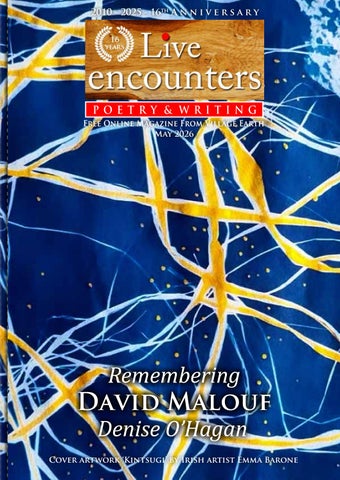
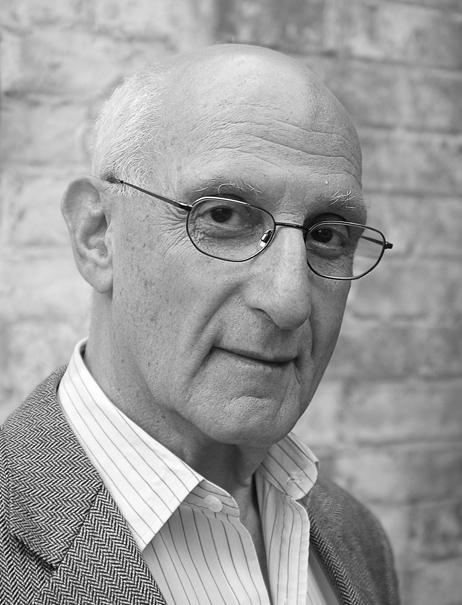
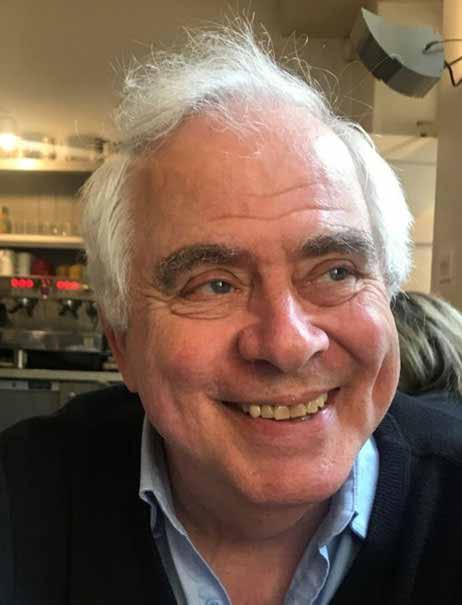
David Malouf in conversation with Denise O’Hagan
Denise: Good morning, David, and thank you for kindly agreeing to this conversation. You’re a poet and playwright, librettist and essayist as well as a novelist, so I might begin by asking what drew you to the world of words in the first place?
David: The need to discover what I most deeply understood at first, as only the writing itself – words in their moment of appearing on the page – could reveal it to me.
Denise: Inspiration comes in many forms – people, place or something else entirely. What shape does inspiration take for you, and has this changed over the years?
David: The sudden apprehension, set off by something seen and heard, or misheard or misread, of a new insight into things, that if I allowed the act of writing to reveal it would appear on the page and be there to be read.
Denise: Turning to your poetry, now, it is known not only for its lyricism and imaginative power, but also for its themes of ‘interconnectedness’, a sense of navigating the space between things and people. Is this also how you consider your work?
David: I think of poetry as revealing to me, as writer or reader, what I think and feel most intensely but also most deeply, but in a spirit of play, both verbally and in active consciousness. What I hope to discover there is my ‘real’ identity.
Denise: It is said that in times of crisis, people turn to poetry for inspiration, or consolation. Do you feel that with the recent crises – the Australian bushfires and global pandemic – poetry may be becoming ‘used’ in the interests of certain ideologies?
David: Poetry has nothing to do with issues or ideologies or opinions – or not as I –as a writer or reader – understand it.
Denise: Following on from that, what advice would you give to an aspiring poet?
David: I’d offer the same advice as Kipling and DH Lawrence. Kipling - ‘When your daemon is in charge, do not try to think consciously. Drift, wait, and obey.’
DH Lawrence - ‘A young man is afraid of his demon and puts his hand over the demon’s mouth sometimes and speaks for him. And the things the young man says are very rarely poetry.’ So I have tried to let the daemon have his say.
Denise: Writers work in different ways. Do you have a favourite writing routine – a time of day, method of working or anything else that you find conducive to writing?
David: Fiction demands discipline and persistence of a daily routine. Poetry appears out of nowhere, when it wills.
Denise: And finally, a practical question. We live in an age of increasing dependence on technology for both writing and the dissemination of our writing, yet I believe you prefer to work by hand. Why is this?
David: Writing is as much a bodily activity as a mental one. The pace at which the hand moves across a page seems to be one where first and second thoughts can appear almost instantaneously.
Denise: Thank you very much for your thoughts and time. It is an honour for us to have your participation in this special edition, and we have no doubt that our readers will be thrilled!
Mulberry Tree Dreaming
Parachute silk comes spooling out of the mouths of a silkworm factory; rumbustious breath of the big tree’s rebel stillness rocks the house. Invisible rip-cords jerk, sing, take the strain, and new light mushrooms skyward, a ceremony of change that no hands work; eyelids fatten, creep, from spirit, its actual meat, shape strange cosmologies that hold. Lords of the second breath and transformation, we too shake loose; our meaty souls grow light, grow luminous, break free of their sticky net of fingerprints, dull household chores, events. Is it enough, we ask, this faith, this breath? Can we ascend for ever? The grain of doubt finds its counterweight of earth and earth falls upward, takes us, heart and heel. The mulberry-tree, its filaments all sheer flame, seethes and billows. Tough limbs deal with the play of its buckled shadow on a wall.
David Malouf, Poems 1959-1989, University of Queensland Press, St Lucia, 1992.
From a Plague Year
A sign first in the sky, then other tokens, but plainer, on the flesh. June’s thirty suns flared and we were tinder. Flies appeared and bubbled in pools, their green gaze multiplied the dead. But we, the elected, all that term kept house, kept shop, kept silence, knowing no harm would come to us. We paid our taxes, served on juries, saw men punished or reprieved from death under the law. God’s eye was on us. Like a red-hot cautery it pricked and burned. Who keep His just commandments shall live. No terror can afflict the saints.
But still each week the numbers swell, the needle glows. In a devil’s covenant, through all the colours of the rainbow, pale flesh bruises black, then stinks and softens. We stop our noses, the death-cloud blooms. We find its dark seeds scattered like sunshine, everywhere.
And so we board our houses up, burn pitch, read in the Book and choke. By day no footfall, no wheel’s creak in the cobbled square. At night the town’s aswarm with cries, a fearful traffic. Dung-carts climb to where, in moonlit fields, whole families meet at the real pit’s edge, new nameless suburbs greet new citizens; they seethe like privy holes.
Some say the plague’s a rat, soft-bellied squeals in the rushes underfoot, a red-eyed fever that glares. Or blame the Jews. Or claim the air itself turns poisonous; where warm breath clouds a glass invisible armies spawn, one word’s enough to quell a city. It is death we suck on now. The plague in our mouth.
No help! Gender of spiders on the tongue that preaches, curses, pleads, God’s judgment wrung in black sweat from our limbs. Are we in Bedlam or is it Hell that rocks us with its flame? The sickness in this month is grown so general no man can judge. It comes to this: we kill our neighbours with the very prayers we sigh to Heaven. O my Lord, spare me, spare me.
David Malouf, Poems 1959-1989, University of Queensland Press, St Lucia, 1992.
To Be Written in Another Tongue
As for example, the language in which my grandfather dreams now he is dead, or living, muttered in his sleep. Clouds flow to a different breath, daylight moons hatch from the stillness of a different dark, where owls drop from the sun, dirt-coloured starlings by other names than we know them gather the dusk, grain by grain let fall the shadow of their bodies. Such ordinary events are poems in another tongue and no translation possible. Owl with its heavy blood and vowel an open mouth
too slow to snatch the heads off dustmotes. Humming-birds like Giotto’s tear-stained kamikaze angels
sorrow, having learned their name in a dead language is entrée to a steel-meshed aviary or Table of Contents, some grey Jardin des Plantes. Grandfather mumbles our names in the earth. We come to light out of his mouth, oracular bubbles.
I range through the thesaurus for a word: homesickness, yearning of grandsons for a language the dead still speak, the dying in their sleep still mutter, the advent of common objects, strange upon the tongue.
David Malouf, Poems 1959-1989, University of Queensland Press, St Lucia, 1992.
Dominique Hecq
Dominique Hecq is a widely anthologised and award-winning poet, fiction writer, essayist and translator. She lives and works on Wurundjeri Woi Wurrung land. Hecq writes in English and French. Her creative works comprise a novel, six collections of short stories and nineteen books of poetry, of which Errances is the latest (Recent Work Press, 2026).
Return to sender
Whiff of perfume. When I lie down on the couch my dreams slip away. The analyst is a white lilac tree with fleshy nipples. A honeysuckle abuzz with bees. A cherry tree puffing under the weight of plump redness. I have much to do today, he says. But I love you. Speak, my love. A bird crashes into the window and drops on the back veranda, wings spread out, beak wide open. I cup my palms over its ribcage. Feel its heart throb. I touch the analyst’s hand. It’s warm. The two of us, he says. Sunday. My father picks his teeth. I watch his ears. They quiver with each movement of his jaw. Large, fleshy ears stuck to his skull. Curly. Lots of creases and grooves. Furry and hollow in the middle. Furry funnels. My silent words pour in there. Cascade. But my father’s ears are deaf to my calls. Two massive doors with a locked safety screen each, a keyhole, peephole, bell and knocker. No mailbox.
Scenes from Ghent
After Jarad Bruinstroop
From the Gravensteen donjon the city is an Astérix cartoon wavering in haze. The moat fed with water from the river stinks of sewerage.
Smell that? You say. That’s what meat tastes like here.
Teetering with thirst we spiral down & out the stairs towards the exit. Cross the square & drink bad coffee in a posh café.
What did you make of the bit & bridle in the torture chamber?
I peer into your cinereous face. See that your jaw has dropped. Look, I say. I know what you mean. These were used to prevent free speech & perhaps also free love.
H. G. Wells unplugs his ears
On each new moon, clockwork oranges unnumber our days. We pull down our lower eyelids in turn and smash an opaque contact lens onto each of our eyeballs - no mirror. Because every calorie fights for its life, we scaffold our life around sleep. Munch ginger, garlic, hemp seeds, blackberries and macadamia nuts. We block blue lights. Embrace plume growth therapy. Discard quantum mechanics, smart phones, antibiotics and vaccines. We scoff at the idea of electromagnetic spectrum and AI. We’re hooked on Ozempic and metabolically cold plunge in diatonic scales. Soon, we’ll wing sororal songs between Aeaea and Scylla, rocking vessels with white ink and limestone breath from microbiome to velour galaxies. I will slam my hands over my ears, my shadow over her eyes.
With ears to see and eyes to hear, we are beauty that seduces the soundest for after silence, that which comes nearest to expressing the inexpressible is music.
Note: ‘After silence, that which comes nearest to expressing the inexpressible is music’ is a citation from H. G. Wells.
James Deahl
James Deahl was born in Pittsburgh in 1945; he moved to Canada in 1970, and is the author or editor of over thirty-five books, his five most recent titles being: Releasing The Wisdom Of Stone; To Possess The Land: AnAnthology Of Confederation Poetry; Four-Square Poems; Awareness; and The Confederation Poets: The Founding Of A Canadian Poetry, 1880 To The First World War. He is the editor of Tamaracks: Canadian poetry for the 21st century; In A Springtime Instant: The Selected Poems of Milton Acorn, 1950 – 1986; and Adder’s-tongues: A Choice of Norma West Linder’s Poems, 1969 – 2011. A cycle of his poems is the focus of the American television documentary Under the Watchful Eye. Deahl is the father of three daughters, Sarah, Simone, and Shona, and the grandfather of Scot and Felix. He lives in Sarnia, Ontario.
Octavio Paz’s Dream
After lovemaking, we slept in the river of night listening to the songs of the seven jade pendants nestled between your breasts. All the while, autumn passed into winter, snow filling the cedar’s boughs, burying fallen maple leaves.
As dark currents caressed our naked flesh, we heard the seven languages of water speak the seven words which call forth the sacred: that land of virginal light, pure as the first snowfall of December — a realm free of human sin.
The river moved ever towards its ocean, and we moved with it, carried along on its journey. Every current and eddy was a word, precise as stone, spoken in wonder. When dawn graced the water’s surface, we knew the river in its flowing had glimpsed the fields of glory.
Along The Appalachian Chain
With nice weather, in our Ford sedan we’d roam the long spine of Appalachia from Medix run, up in Elk County near the Allegheny National Forest, as far south as Preston and Tucker Counties deep in West Virginia’s coal country. Cousins lived in just about every remote village and mill town, mountain laurel and rhododendron blooming, the ridge tops haunted by ghosts of chestnuts. But today, seventy years later, not one spectre remains. Chestnuts now live in memory’s sweet chambers. Like all my aunts and uncles, only my rememberings hold them dear.
My kin worked the coal mines, or on railroads, or logged the hardwood forests; they raised families wherever the Pennsylvania or Baltimore & Ohio tracks went. In isolated hamlets where the sun refused to shine before eleven o’clock they watched massive steam locomotives haul coal and coke up steep grades a hundred railcars at a time. They watched lives get used up and saw friends and family laid away. The Laurel Highlands endure all our comings and goings. These mountains count the years of our passing. I remember dead chestnuts all along the Appalachian chain, their bleached trunks proud among the living trees, and coal barges on the Monongahela making their slow journey to Pittsburgh.
The Dark Bell
Snow blankets our trees as we embark upon another new year. Even here in the city’s heart as dusk comes down the avenue the trees draw back from their houses. A dark bell rings out to fill the space the trees relinquished, every sound an echo of other, distant sounds.
If you enter the coming night the harbour will still be frozen, the stars muffled by thick clouds. What you always think of as your own body may not be yours alone. When you look up the trees have completely vanished; only the sound of the bell remains and its long sojourn.
The River
A river is searching for you searching from Lake Huron to Lake St. Clair
And on it goes, from St. Clair southward to Lake Erie always searching calling your name throughout the cool dark nights through the mists of an early autumn morning
Far below these fields these fields of feed corn of soybeans, layer upon layer of bedrock — thick rock no one ever visits — lives on in its mineral silence
Yet even at this very hour in its honeycomb of darkness our bedrock prepares once again for winter.
One Day
All substance is one.
— Marcus Aurelius,
Tonight’s winter storm tossing among my cedars is the roar of waves along the Maine coast.
One day the Angel of Light will release me;
one day I may walk again where water and rock are one.
Meditations
John Philip Drury. Photo credit: Tess Despres Weinberg.
John Philip Drury is the author of six poetry collections: The Stray Ghost (a chapbook-length sequence), The Disappearing Town, Burning the Aspern Papers, The Refugee Camp, Sea Level Rising, and most recently The Teller’s Cage (Able Muse Press, 2024). His first book of narrative nonfiction, Bobby and Carolyn: A Memoir of My Two Mothers, was published by Finishing Line Press in August 2024. After teaching at the University of Cincinnati for 37 years, he is now an emeritus professor and lives with his wife, fellow poet LaWanda Walters, in a hundred-year-old house on the edge of a wooded ravine.
Twenty-first Century Branded Fruit Versus The Dreaming
No one anymore wants to shop the true but misshapen fruit of the myth-aisles, to caress the velvet foreskin of the apricot, the golden apple that a male god and his male devil first used to implicate a pristine Eve.
There’s no knowledge in the fruit aisles now: Granny Smith and Old Mother Williams usurped by a young pink lady and her siblings, hybridised with modified code; the cloying, sickly pineapple, symbol of old money and corporate wealth; and, of course, the F-worded phallic banana waiting to be unsheathed.
continued overleaf...
© John W Sexton
But split the true pineapple from its crown to its base, the pineapple of the first garden, and here you see the two golden sisters, shoulder to shoulder, their stiff upright hair of green, their owl’s eyes of bright gold: Two Equals One. For in Nature division does not mean fragmentation, but regeneration.
Halve the pomegranate from its vulva to its skull-button, and you will see the many wombs and their manifold gem-like foetuses: the many children destined all to become the one Mother again and again.
The Multiple, Manifold Goddess, now swimming, now rising through the meniscus of sleep; the Dark Goddess in her crab-claw necklace, burrowing through the tidal muck, up to her imagination in lugworms, razorfish, black winkles; the Bright Goddess, her itchy-ball menses spreading forest upon forest; the Goddess who offers her fruiting heads to the pecking crows; whose eternal suffering is in turn repaid by the myriad birds of the air, who fertilise her branches and roots with their lives, with their deaths, so that they may be birthed in turn as petal-winged sirens emerging from blossoms.
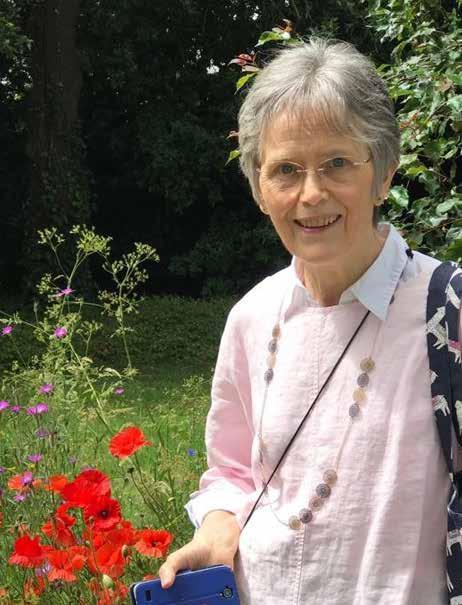
LaWanda Walters. Photo credit: Tess Despres Weinberg.
LaWanda Walters earned her M.F.A. from Indiana University, where she won the Academy of American Poets Prize. Her first book of poems, Light Is the Odalisque, was published in 2016 by Press 53 in its Silver Concho Poetry Series. Her poems have appeared in Poetry, Georgia Review, Southern Review, Nine Mile, Antioch Review, Cincinnati Review, Ploughshares, Shenandoah, and several anthologies, including Best American Poetry 2015, Obsession: Sestinas in the Twenty-First Century, and I Wanna Be Loved by You: Poems on Marilyn Monroe. She received Ohio Arts Council Individual Excellence Awards in 2020 and 2024. She lives in Cincinnati with her husband, poet John Philip Drury.
Amphitheater
Let’s pretend that Heaven is merely being part of an audience. Your work or your mistakes, your poor showing on the raised dais are over, now, and all you are expected to do is sit in an amphitheater with sweet breezes and dappled light to watch the ongoing play of how life is. At times, you might enjoy someone else’s comeuppance, as if this production were all in your honor. Look how that one who was unkind to you is no longer such hot stuff herself. Look how she has softened enough to see, in her mirror, that she no longer needs to lop off her hair so brutally— one side so short, the other side as long as Rapunzel. If her features were too regular, too beautiful to be spoiled by an odd haircut or unbecoming glasses (these ugly aids that showed her lack of vanity while she looked so good anyway), now she is nearing that stage of life that seems no more than her own unbecoming. Her rejection of you was never significant. Why did you take such notice of it? In the plush theater seat you might be weeping, now, for your enemy.
Bareback Heroine on Early Television
At the circus or the ranch on the tv show, you could always count on the headstrong girl with the broken back, beautiful in her jodhpurs, but close to naked now—
you could count on her being okay, later, walking just fine and marrying the man who carried her, unconscious and almost naked except for an army blanket wrapped so it looked like a strapless dress.
She’d be just fine, although she had to be undressed, first, so the doctor could listen to her heart as she lay in a strapless dress made of an army blanket— this was to prevent shock, I think they said.
The doctor used his stethoscope to listen to her heart and then pronounced she’d broken her back. She was naked and wrapped in a blanket to prevent shock. That was their excuse, but it really made the show better—
how the doctor who learns she’s broken her back must begin with getting those clothes off. So it used to be a romantic thing that made a story better if a beautiful woman was broken. So we got the wrong idea about doctors—and painters, too, like the one who seemed romantic to me, knowing my body, when all I knew came from playing “doctor” with some friends. I no longer think a story should be violently romantic. I know the girl in jodhpurs couldn’t walk away forever.
North Carolina Logic
One weekend, they were getting along and working together to till their lawn. He’d “borrowed” someone’s pickaxe, and she was scared at first, but the way it just sank into the soil, inevitable, made gardening easier. Fresh tomatoes, and later on, jail.
He had “anger issues” and was in and out of jail. She’d tricked him into marrying, he said, all along. She knew he’d love her and their child. The garden and the little girl would help. They forgot the lawn, though, and how they’d had fresh tomatoes, sinking their teeth into the sweet fruit. And that pickaxe—
it lay out on the lawn, half-buried, a pickaxe that a child could fall on. He’d be in and out of jail. She wasn’t pretty enough for him, and so he liked to sink his fist into her jaw, bash her head. She took it for a long time. He was handsome. He didn’t have to mow the lawn. She let him buy a Harley, his real love. She’d try to garden.
She worked fulltime as a court reporter, guarding their child from his drinking, his fist. The pickaxe must have been out there for years, deep in the weedy lawn, Chekhov’s gun. One day, she saw it and picked it up. Jail for life is what she might get. They hadn’t gotten along for years. What came over her to think she could sink
that pickaxe into the head of her husband as he lay, sunk in a Coors Lite dream? The glancing blow just put him on guard. Wide awake, he was chasing her. She would not have long to live now. Thank God her girl was at a party! The pickaxe had not worked. Had she meant it to? Who would go to jail now for murder? He was strangling her while he called the law.
She got to the kitchen drawer. Why did she go out to the lawn and pick that thing up? Adrenalin? Her hands slick, she sank a kitchen knife into his stomach and forgot about murder or jail. Once you start to kill a snake, you’d better stay on guard. She stabbed herself too, but that bloody pickaxe witnessed from the floor. The snake was dead before too long.
And before too long, there were lights circling on the lawn, a noir effect, blinking black and white, inside where the pickaxe spoke: There are no gardens in the jail, and now you’re sunk.
Terry McDonagh. Photo credit: Joanna Longster McDonagh
Terry McDonagh, Irish poet and dramatist has worked in Europe, Asia and Australia. He’s taught creative writing at Hamburg University and was Drama Director at Hamburg International School. Published eleven poetry collections, letters, drama, prose and poetry for young people. In March 2022, he was poet in residence and Grand Marshal as part of the Saint Patrick’s Day celebrations in Brussels. His work has been translated into German and Indonesian. His poem, ‘UCG by Degrees’ is included in the Galway Poetry Trail on Galway University campus. In 2020, Two Notes for Home – a two-part radio documentary, compiled and presented by Werner Lewon, on The Life and Work of Terry McDonagh, The Modern Bard of Cill Aodáin. His latest poetry collection, ‘Two Notes for Home’ – published by Arlen House – September 2022. He returned to live in County Mayo in 2019 www.terry-mcdonagh.com
In the Era of Dictionaries
In the era of hardback dictionaries I was young and proud to be the bearer of a mighty book –bigger than a bible – bound, covered, arranged, dressed and as full of mystery as any dream. It nourished and defied me with reams of words – all fresh, smirking and nonchalant as you like. It didn’t ever complain when I dog-eared while snatching at elusive meaning like a young saint sucking up sanctified water from an eternal spring.
Dear Dictionary, I haven’t lost respect or forgotten but, like others, I’ve joined the net race to look elsewhere for untried language. In reflective moments, I see you –quiet as an endless autumn, smiling down from a top shelf, urging me to sit on a granary step in a bundle of calm among breezes perusing and skimming through leaves, as song-birds sing songs I’d like to sing. After all, we are of element, word and creature. We are one.
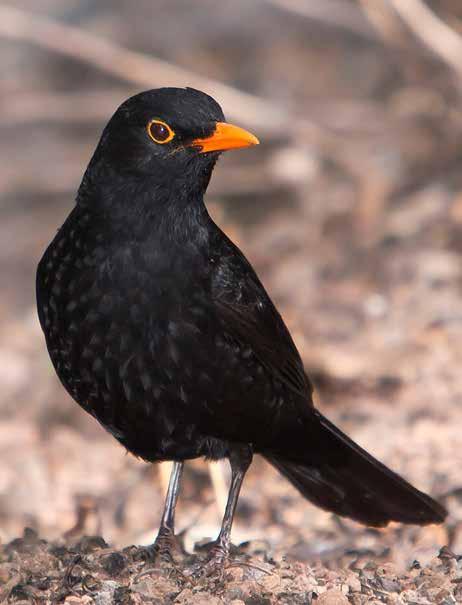
Somewhere a Lone Blackbird Sings
From over the hills and far away where grass was always greener, I would serenade childhood memories and meadows that don’t recognise me –now that I’m back – or ask me what I got up to in my long absence.
Today, a blackbird sang on a withering branch but that’s not the bird that used to intoxicate me nor is it the bush that housed my dreams and reached out to autumn that kept on dying.
It’s spring. Calves are gimping. I’m not my younger self but I am patient as I wait for my past to catch up with my here and now, as I strain for the faint song of a lone blackbird in the pilgrim stillness of bog-cotton and hawthorn.
Photograph courtesy: By Juan Emilio from Las Palmas de Gran Canaria, España - Mirlo. (Turdus merula cabrerae.) Uploaded by Snowmanradio, CC BY-SA 2.0, https://commons.wikimedia.org/w/index. php?curid=14512312
© Terry McDonagh
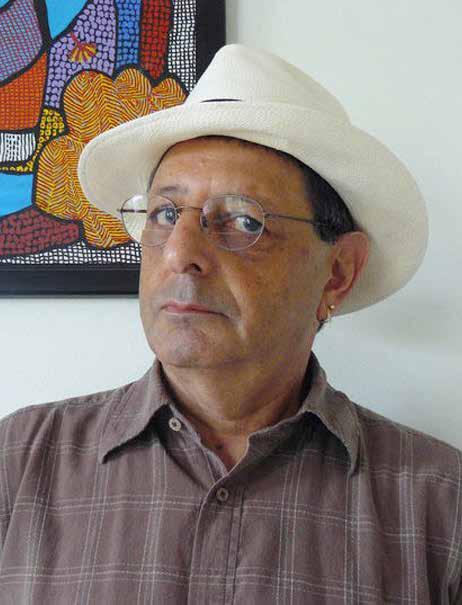
Richard W. Halperin. Photo credit: Raymond Keane.
Richard W. Halperin holds U.S.-Irish dual nationality and lives in Paris. On 1 November 2025, Salmon Poetry/Cliffs of Moher brought out All the Tattered Stars: Selected & New Poems, Introduction by Joseph Woods, which showcases 92 poems published by Salmon and by Lapwing/Belfast since 2010 and 26 new poems. On 7 January 2026, Mr Halperin was Special Guest Reader in the First Wednesday Poetry and Open-Mic Series, White House Bar, Limerick.
The Third Annunciation
The Annunciation. No one knows what happened, but everyone knows the result of what happened. That could be said about almost anything.
Patrick Pye, whose art I live with, often draws people – and sometimes angels –with scarves blowing in the wind.
Scarves are not breaths, or are they?
Wuthering Heights is read, but not understood. Wind is the title. Heights is the title. Artists are on to something.
Scarves, let’s call it.
On Margate Sands
There are no words for how it feels to be alone, yet the fact that being alone at times feels abnormal is important.
At age 12, in Chicago, I was reading a T.S. Eliot poem and came across the phrase ‘On Margate Sands.’ I had no idea what it meant.
At age 82, in Paris, I just reread the poem, came upon ‘On Margate Sands’ and have no idea what it means.
But then and now, it helps.
He touches upon either something or the source of something or the source of everything.
That calms and reassures me.
Also in Yeats.
A good friend, a theatre man, told me that when he is in The King of the Great Clock Tower or Purgatory, without understanding anything he feels that everything is correct.
That calms and reassures me.
Are Chicago and Paris, are age 12 and age 82, veils blown out the widow?
In my youth I saw several times Martha Graham in her ballet Clytemnestra. But I also saw her once darting out of the 50th Street exit of Saks Fifth Avenue. St. Patrick’s Cathedral, which is right across the street, blew out the window.
Pots of Paint
In Gilbert and Sullivan’s The Yeomen of the Guard the Fool dies.
Dorothy Parker’s longest short story is ‘Big Blonde.’
Those most gifted with wit can portray, and do, grief.
As an artist, one works with the pots of paint one is given. One can call them Muses or pots of paint.
I prefer pots of paint. Among mine, grief.
The Mother of the Muses is Memory. I wouldn’t say this at a party, or maybe I would, but I think her biggest pot of paint is grief.
Pots of experience.
Thoughts Going Nowhere like an Origami Peace Crane
Before I met my wife, she and her entire school class, like many worldwide, would fold origami peace cranes which then were shipped to the Children’s Peace Monument, Hiroshima.
Telling me this, she took a scissors, cut a small piece out of a paper placemat, folded it into a peace crane and handed it to me to flap its wings, because the crane itself couldn’t flap its own wings.
This past weekend, yet another insane war begun by fools whom fools have voted for, who claim that use of nuclear weapons is both the cause of going to war and –stockpile stockpile – the best deterrent to war.
Thoughts going nowhere like an origami peace crane. Peace cranes are made of paper but they are also made of the human soul. As I face this terrible morning flap flap.
If There Is a Difference: Moonlight in Gallipoli
There is Augustan verse and there is so-called free verse. If the poem is good, is there a difference? ‘Is there? Is there?’ has, in my view, no use at all when it comes to being kind: he who hates his brother is a murderer. This – and the interpretation of dreams – is for another poem.
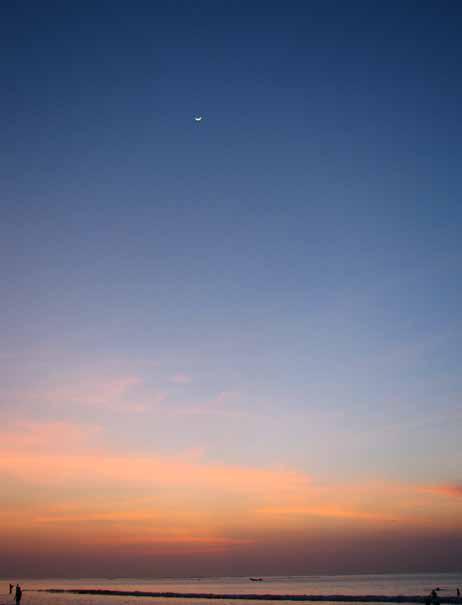
In the mist. Sometimes Russian paintings pull me into them. This evening, a watercolour by Karl Ivanovich Rabus: ‘Claire de lune, Gallipoli, détroit des Dardanelles,’ circa 1820. In the exact centre, a perfect full moon, sharply outlined, blank-faced. High above it, purplish clouds. Below it, the path of one pale moonbeam, crossing the mountains, spilling into the sea, traversing a wide stretch of open water, passing under a tiny iron bridge uniting two town structures, and arriving in the foreground, a harbour where a few people are clustered.
The air, which Rabus renders visible –good artists can do that – may be a mist. Or – I think of Bishop Berkeley –the mist may be in me, since I can only perceive anything through the mist of my senses, except sometimes. All of Plato, all the great religions of the world, and some surprises, are ‘except sometimes.’
I trace the moonbeam back to its source, so, back under the tiny iron bridge, over the wide stretch of open water, up the dark mountains, into the purplish sky. The sky has no stars and no stairs. If there is a difference between the two.
I see, close up, the blank-faced moon. I also see many people whom it has been my good fortune to know and to love. Is love – I am not talking about passion, although that may be part of it –always there, sharply outlined, bright?
In the watercolour, Gallipoli is calm. That would not always be the case.
Michael Minassian
Michael Minassian is a Contributing Editor for Verse-Virtual, an online poetry journal. His poetry collections Time is Not a River, Morning Calm, A Matter of Timing and Jack Pays a Visit, are all available on Amazon. His collection 1000 Pieces of Time was released October, 2025 by Sheila-Na-Gig, Inc. For more information: https://michaelminassian.com
A Trick of the Light
At the edge of the garden I saw a thin black snake stretched out on the grass, so still it seemed a twisted branch some storm had torn away from the limb of the apple tree, bare now with winter’s derelict wind. Perhaps in the morning I will wake to find the snake was simply a length of rope or a random stretch of garden hose, a trick of light and shadow no more deadly than other illusions, stories we tell ourselves, to welcome or shun the darkness, on the wounded shore.
The Models All Have Different Paths
says the weather man and at first, I think he is talking about Fashion Week in Manhattan, but then he mentions wind speed and barometric pressure, says this storm will be called Jerry, my father’s name, on the 10th anniversary of his death, just weeks after he told me about his time in the navy during WW2 typing supply requests in San Francisco or San Diego, he couldn’t remember where.
The eye is clearly formed, the weatherman continues, and I know just what he means— my father suddenly colorblind late in life, stopping at green lights until I took away his car keys— another cone of uncertainty before landfall, the beginning of the end.
Exit Stage Left
My colleague and office neighbor, a professor in the theatre department, caught a late summer cold. By fall, it turned to pneumonia, then cancer, then death— how sudden and inevitable it seemed.
I remember our conversations about acting, theatre, and students, comparing notes on our careers, and college years, how we ended up in Florida.
There are more moments lost than we know, he once said when we were having lunch.
Every semester, he visited my British Lit Class, reciting the Prologue to Beowulf in Old English from memory, my students looking bored and impressed in turn.
His wife took my course, and dropped by my office while she waited for Richard to finish his last class, telling me funny stories about how they met and fell in love.
When he got sick, his students collected money and sent flowers when he came home from the hospital.
He knows he’s going to die, she once told me.
I drove down to Key West for Spring Break that year and when I came back, he was gone— a kind and gentle man he took his last exit with no dragons by his side.
Nora Brennan
second collection of poems, Still
, was published by
in November
Elegy
I used to love how snowdrops waited for the year to turn before breaking ground, fingers pushed through a blanket of clay, their need to stretch and step onto the stage, perform the opening movement; robed in white, joined by crocuses, hyacinths and the golden bells of daffodils, a sublime symphony to announce spring.
All that constancy I took for granted, happenings that remained steadfast through the years.
Now, not long after Samhain, before the ghosts of their ancestors have come to rest, before the waning light stands still, they rise like bewildered children in the night, cast out on empty stomachs, confused by the warmth, caught in the crossfire of our greed, they risk annihilation, frost burn, a late November cut.
Children of the earth, our times have robbed your cradle.* We who should know better, close our eyes to your distress.
* Eavan Boland Child of our Time
in
Nora Brennan’s
Time
Revival Press
2024. A prize winner
national competitions including the Jonathan Swift and Francis Ledwidge poetry awards, her poems have appeared in Crannóg, The Kilkenny Poetry Broadsheet, Skylight 47, The Stony Thursday Book and elsewhere. She lives in Kilkenny.
Warming the Space
Rain, and more rain. Snails creeping up the walls again.
When a warm air mass meets the cold the meteorologist tells us, rain falls.
Kindness has that effect too. The unexpected sweetness of tears when a cold heart is touched by love a graced seeing when fog clears, not the one who turned her back to you but a child, frightened and alone.
At the grave, your watering eyes warm the space where forgiveness shakes the hand of pain.
Harvest
remembering Vincent’s Wheatfield with Crows
August and the golden fields, rich and generous, dry as a whistle, heads of corn bowed as if knowing their fate; my father on the headland, an ear of barley scrunched between his hands knowing, as he chewed the grain, the time was ripe for cutting; the hum and thrum of a thresher, crows gathered in the trees, toiling men, mugs of tea and currant bread, a meitheal to ferry the grain home.
Against all this, you, little more than half my age, your easel perched by the edge of a field, the windswept wheat cut through by a dead-end path. Here, mid-July as days shortened and nights grew cold, you painted a brooding sky, heavy with cloud, black crows soaring, and swooping down above the lush luminous grain. Did you hear the thrum of the harvester then weeks before the reaping?
Ray Whitaker
Ray Whitaker has six books published, and two chapbooks. His work has been published in fourteen different countries. He’s working on two new manuscripts now. Ray was a Delegate to the 2024 and 2025 Writer’s International Panorama Festival. He participates regularly with several zoom poetic events worldwide. Among them, he has been spotlighted on a US National Poetry broadcast from Quintessential Listening Poetry Online Radio In April, ’24; and also an International Poetry Recital hosted by The Fertile Minds out of India this past April 19th, 2024. In July od 2025, he has been the featured poet reading in David Leo Sirois’ Spoken Word Online, associated with Spoken Word Paris; and a featured poet for the Chicauga Arts Festival, in Plamer Lake, Colorado He is Moderator for Michael Lee Johnson’s FB “My Voice,Your Words- Poetry In Action” page; and an Editor for Masticadores Canada Journal.
Storm In The Distance
She walks intently forward unafraid of grey’s lack of definition fearing, respecting only the flickering red not minding the temporary, wavering oranges disregarding the black... knowing there is still something green somewhere.
Even tho something is burning out there perhaps in a county far away where strife makes humanity cry.
White snow refreshes everything.
Water
The headwaters of the Rio Grande are roaring full of snowmelt, poured down from high peaks rivulets filling rocky watercourse ways, those filing small gorges in the high rocks all of it pouring over cliffside a waterfall white with beauty falling two hundred fifty feet leaving a wee rainbow of mist in the air.
The Rio Grande flows it’s way to Texas and here the headwaters are angry crossing this now is impossible splashes and spray from rocks, and a noisy roar as the churning water collides. Even Brother Moose, daring to cross, has trouble.
The water could be the trouble with the constructs of men anger, trepidation, buffeting, thundering the mountain Gods voice their opinions with lightening, strong winds tug at trees.
Some Native American tribes say we are the water going well beyond a wet beyond a feel of humidity to the forests, the trees, the animals and even when we are laid to rest in the earth the flow continues as the earth gladly accepts us everything returns in a cycle as old as time and ends up in the rainwater falling.
Scramble
The rush to completion like a weighted option not like a leisurely pace up the path this urgency exists because it is Life, a birth umbilicus cut, newness of experience.
Not sure of the proper english word for this, this determined rush like to save a Life in an Emergency Room Nurses Respiratory Therapists, Docs wading in the crowded space around the gurney intention to correct malady relieving infirmity, life threatening instances requiring highly educated folk focused without hesitation.
No confusion. Failing not allowed in this moment. Again, not merely in a alpha male’s way or even the dominant female approach not that a’tall this scramble up a sheer rock face repelling ropes in place determined to safely make the space Brevity intention determination Woven and laced.
Valentina Teclici
Valentina Teclici was born in Romania and immigrated to New Zealand in 2002. She holds a Bachelor in Philosophy from the University of Iasi and a PhD in Sociology from the University of Bucharest, where her doctoral thesis focused on street children. Her debut book, De la noi din gradiniţă (From our Kindergarden), Ion Creangă Publishing House,1986, was awarded a national prize. Poems and excerpts from her books for children are included in the bibliography and textbooks for primary and secondary education in Romania. She has published several books of sociology, poetry and stories for children in both Romanian and English. Her work has been translated into French, Te Reo and Spanish, and published in many magazines and anthologies in New Zealand and overseas. Valentina has been a member of Writers’ Union of Romania since 1993, and of The Theosophical Society since 2022. In January 2026, she stepped into the role of Theosophy Hawke’s Bay Affiliated Centre Coordinator. She lives in Napier with her husband Robert.