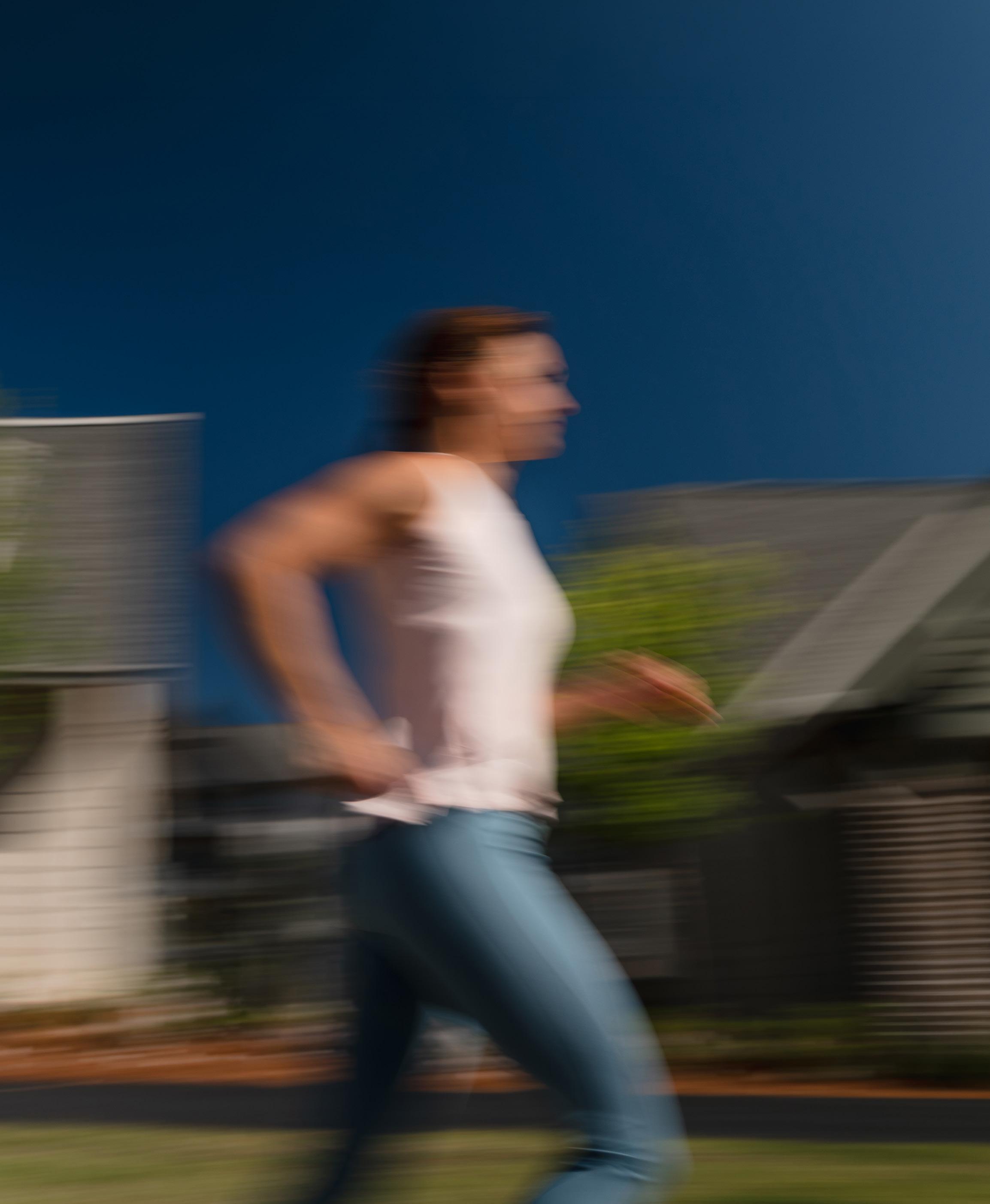
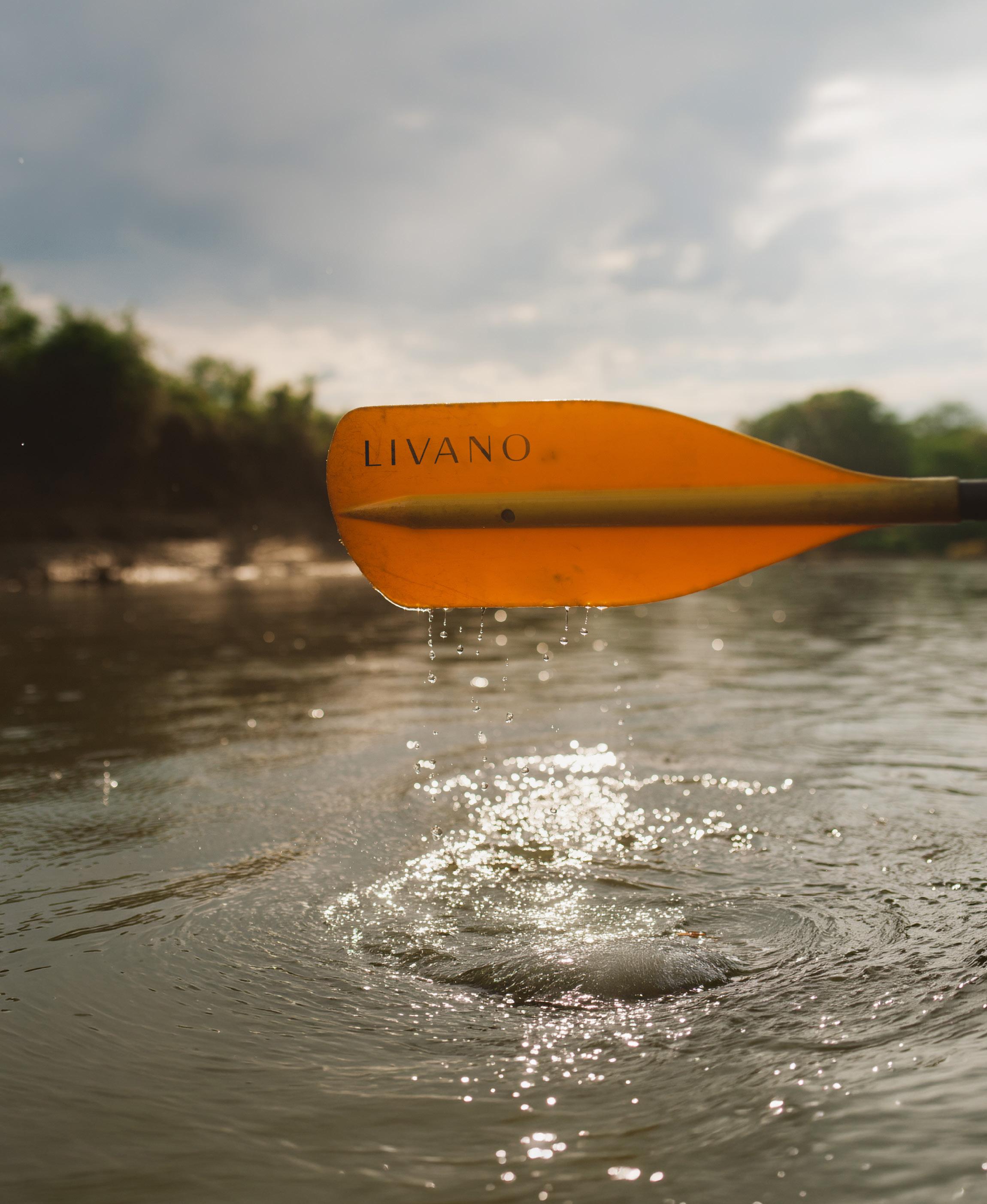
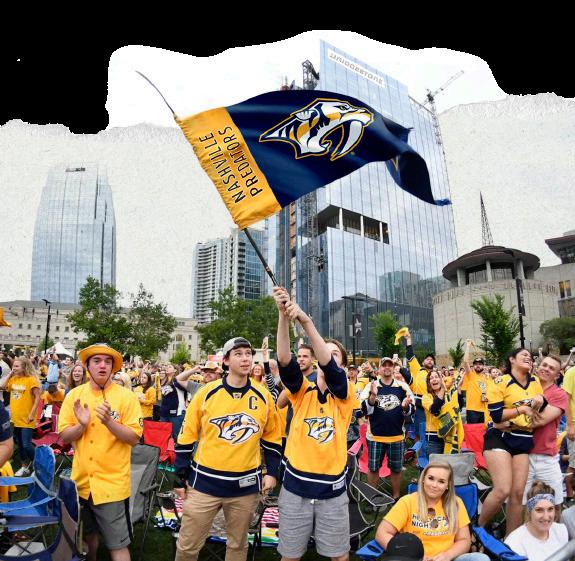
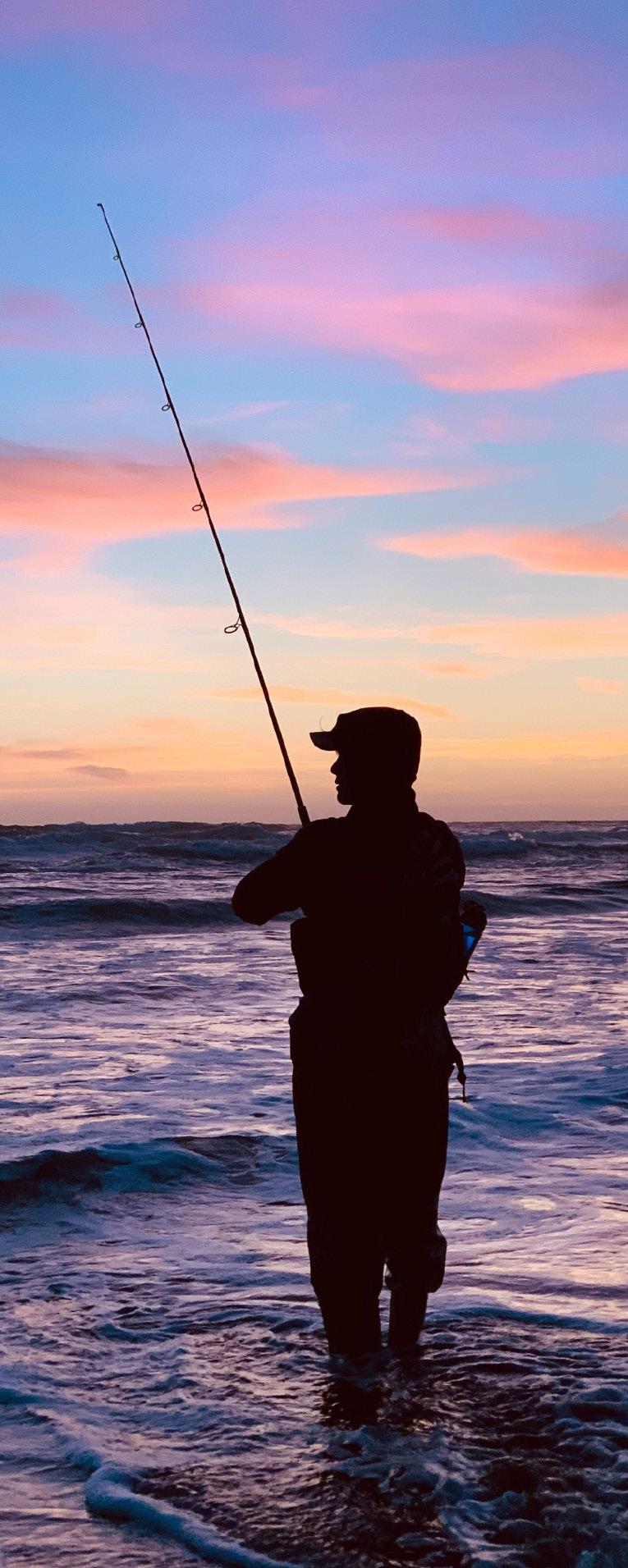
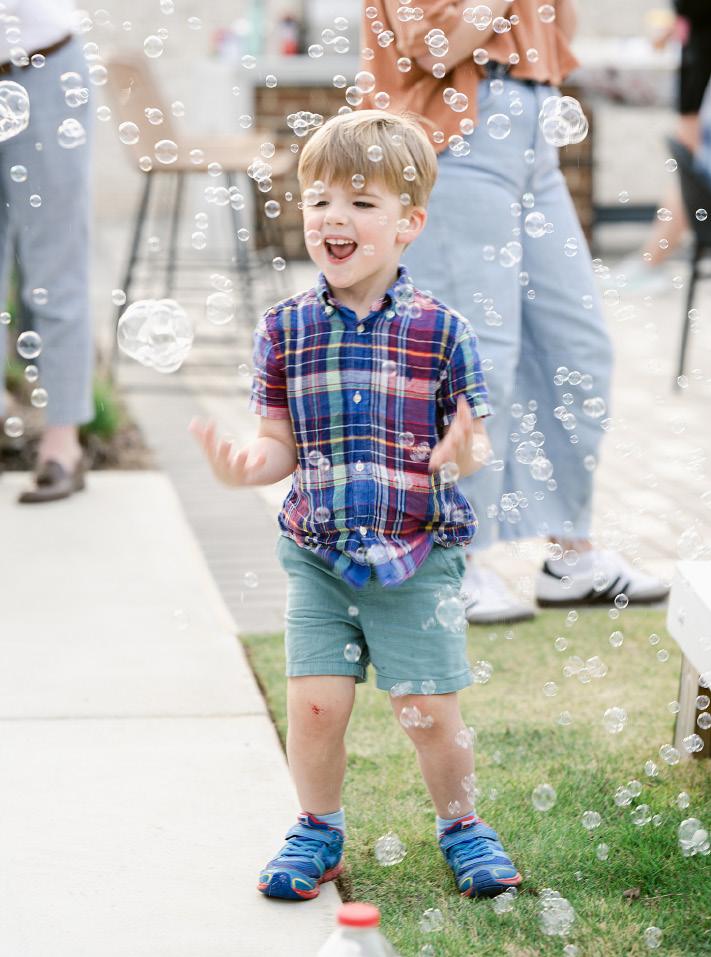
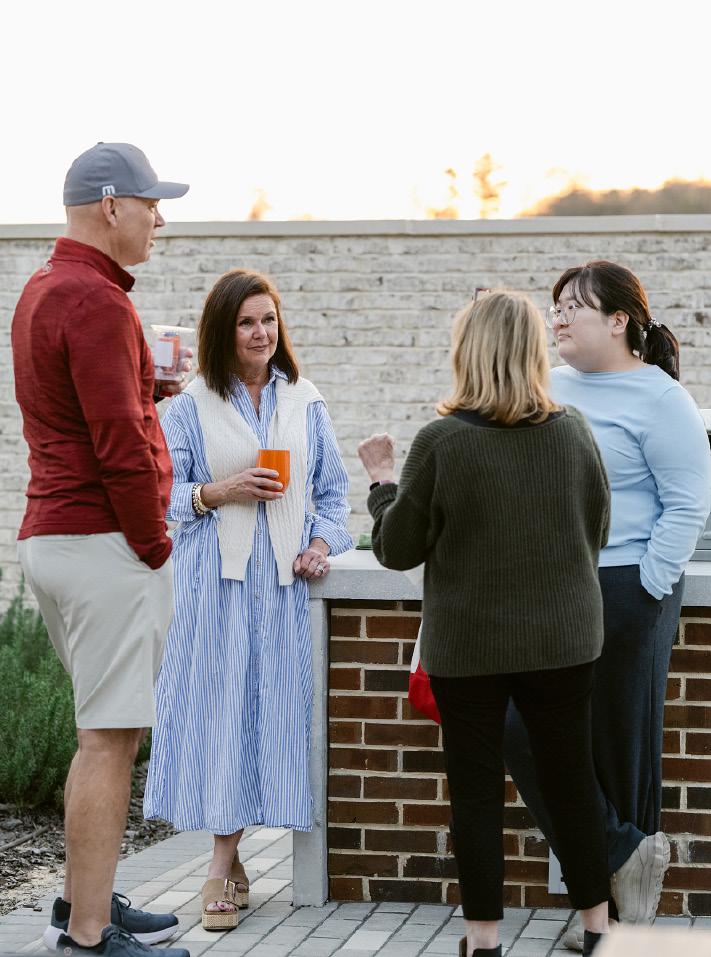
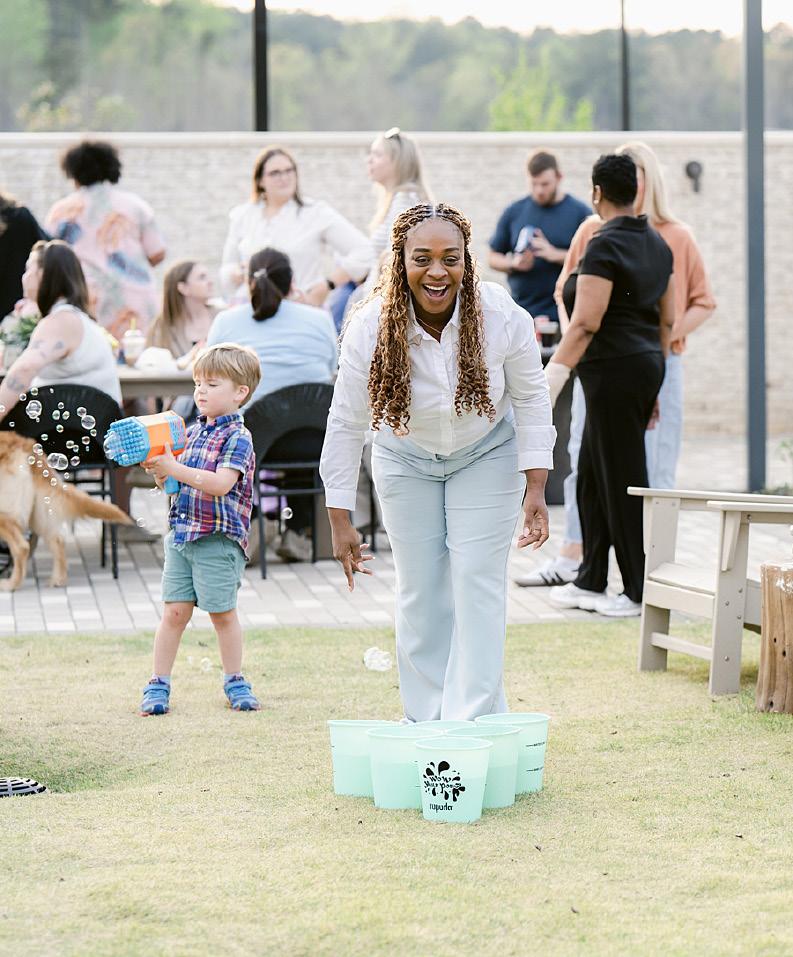
As summer stretches into fall, this issue of Matter leans into the energy of movement — of getting outside, trying something new, and finding connection through shared experiences. Whether it’s the rhythm of a game, the draw of nature, or the simple satisfaction of a good workout, sports and fitness have a way of bringing people together while pushing us forward.
In these pages, you’ll find stories that celebrate this spirit from every angle. We head to Knoxville for a look at the storied tradition of the Vol Navy, where game day becomes something much bigger than football. In Nashville, we explore the culture of Smashville and the community that rallies around it. And along the flats of Tampa Bay, we take a closer look at the balance between sport and stewardship, where fishing and conservation go hand in hand.
Of course, movement isn’t only about competition, it’s also about how we care for ourselves along the way. We’ve included smoothie recipes to fuel your workouts and support recovery, along with a look at fitness trends worth trying this season.
As always, we hope this issue inspires you in some way — to get active, to try something new, or simply to enjoy the season a little more fully. Here’s to the energy of summer, the transition into fall, and all the ways we move through it.
Welcome to Matter
Robb Crumpton CEO, LIV Development
LIV Development’s biannual publication, Matter, is exclusively published for the residents of Livano. Livano is a collection of dynamic multifamily communities created by LIV Development that are intentionally designed to help residents live richer, deeper, and fuller lives.
For more information about LIV Development, please visit livdev.com.
PAGE 4 Life at Livano
PAGE 8 Design Matters
PAGE 12 Dog Days
PAGE 16 Sailgating
PAGE 20 Let’s Get Physical
PAGE 26 Fuel. Move. Recover.
PAGE 28 One Wild Shore
PAGE 32 Smashville
PAGE 36 Pet Profile
PHOTOGRAPHY
BRYAN JOHNSON | Dog Days, Let’s Get Physical
DUSTIN FINKELSTEIN | Life at Livano (Knoxville)
GARI-ANN KIA | Life at Livano (Liberty Park)
WORDS
ROSALIND FOURNIER | Sailgating, One Wild Shore, Smashville
KATHERINE GLENN | Editor
ANNA BOWEN | Art Director
LIVANO.COM
Celebrating Spring
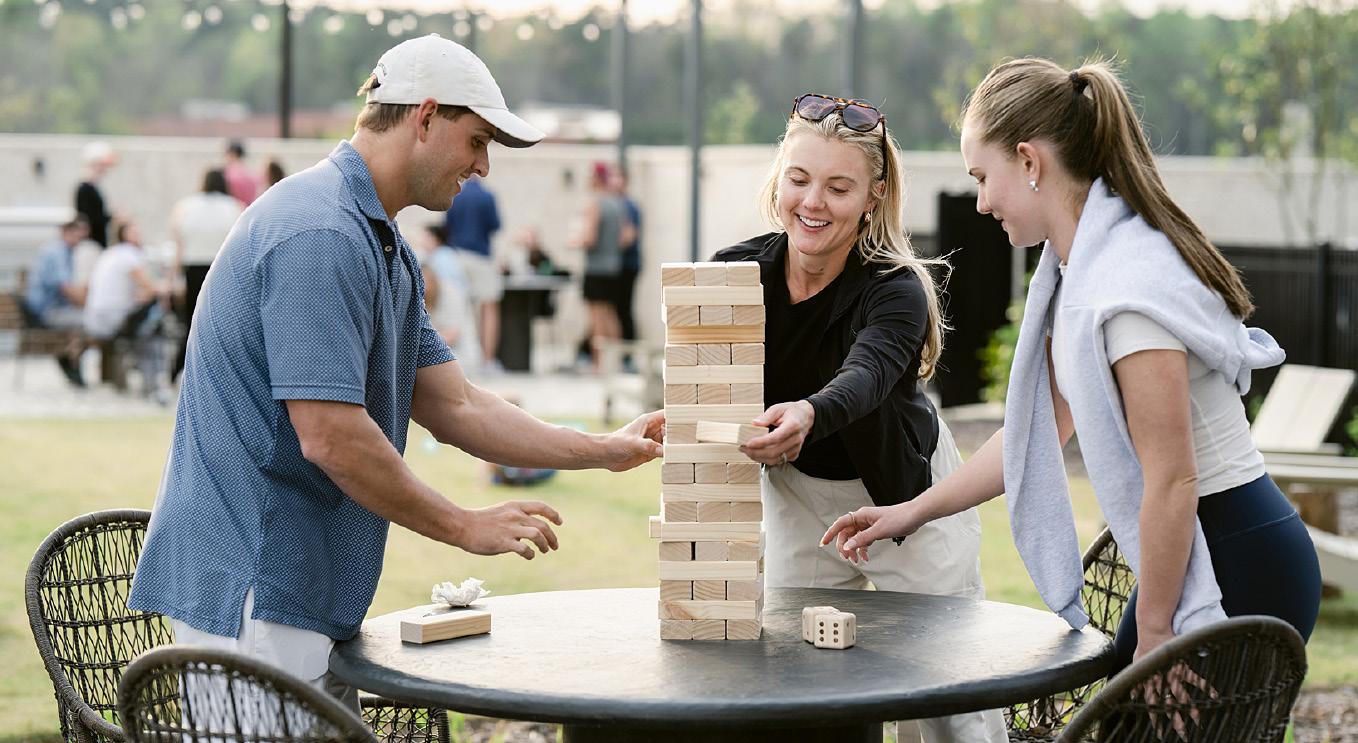
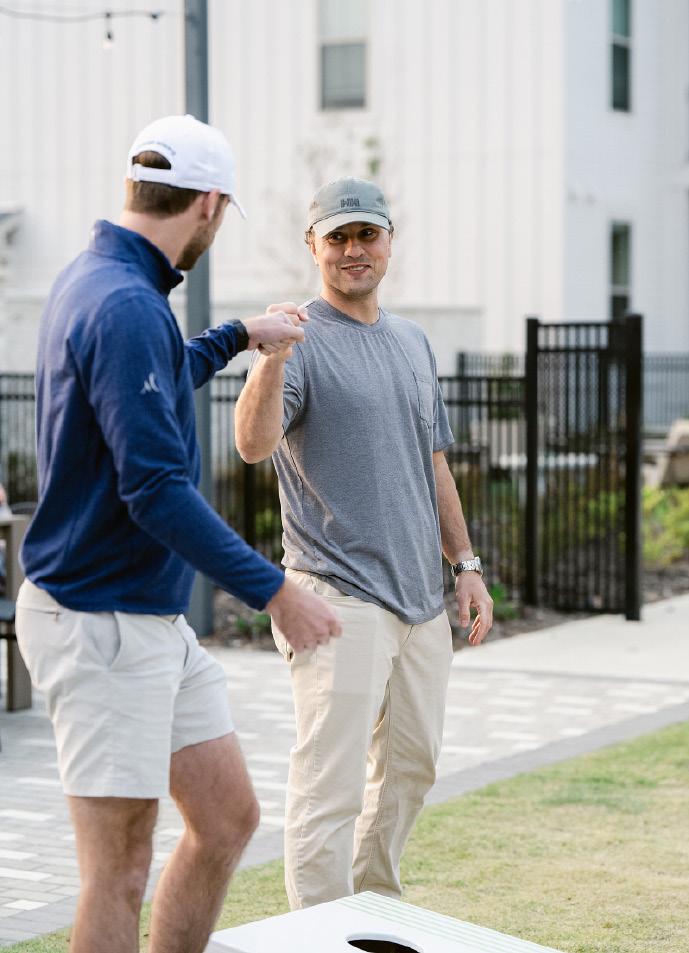
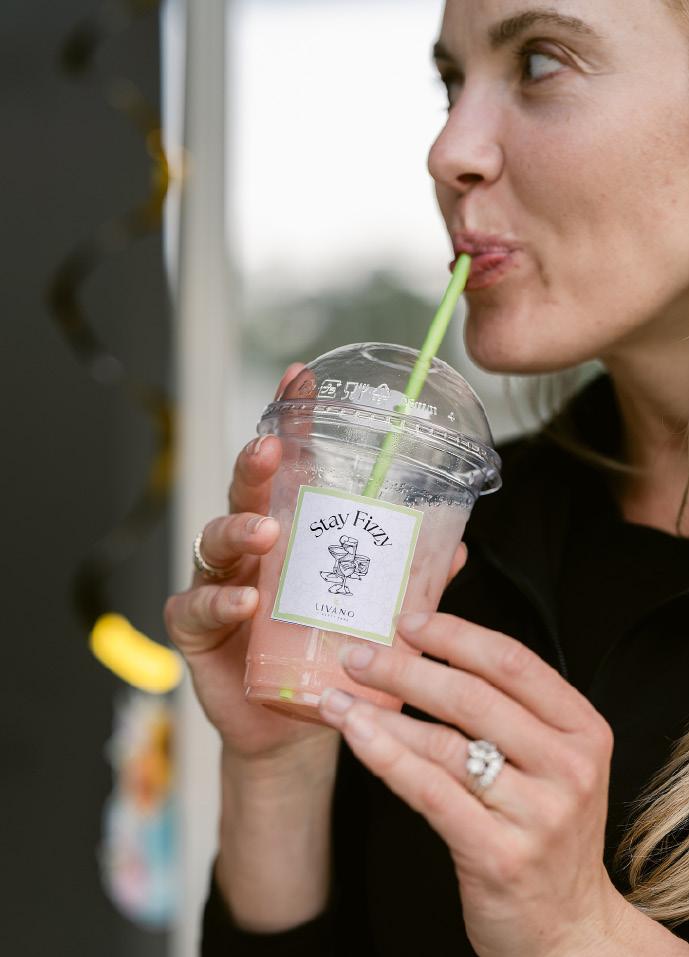
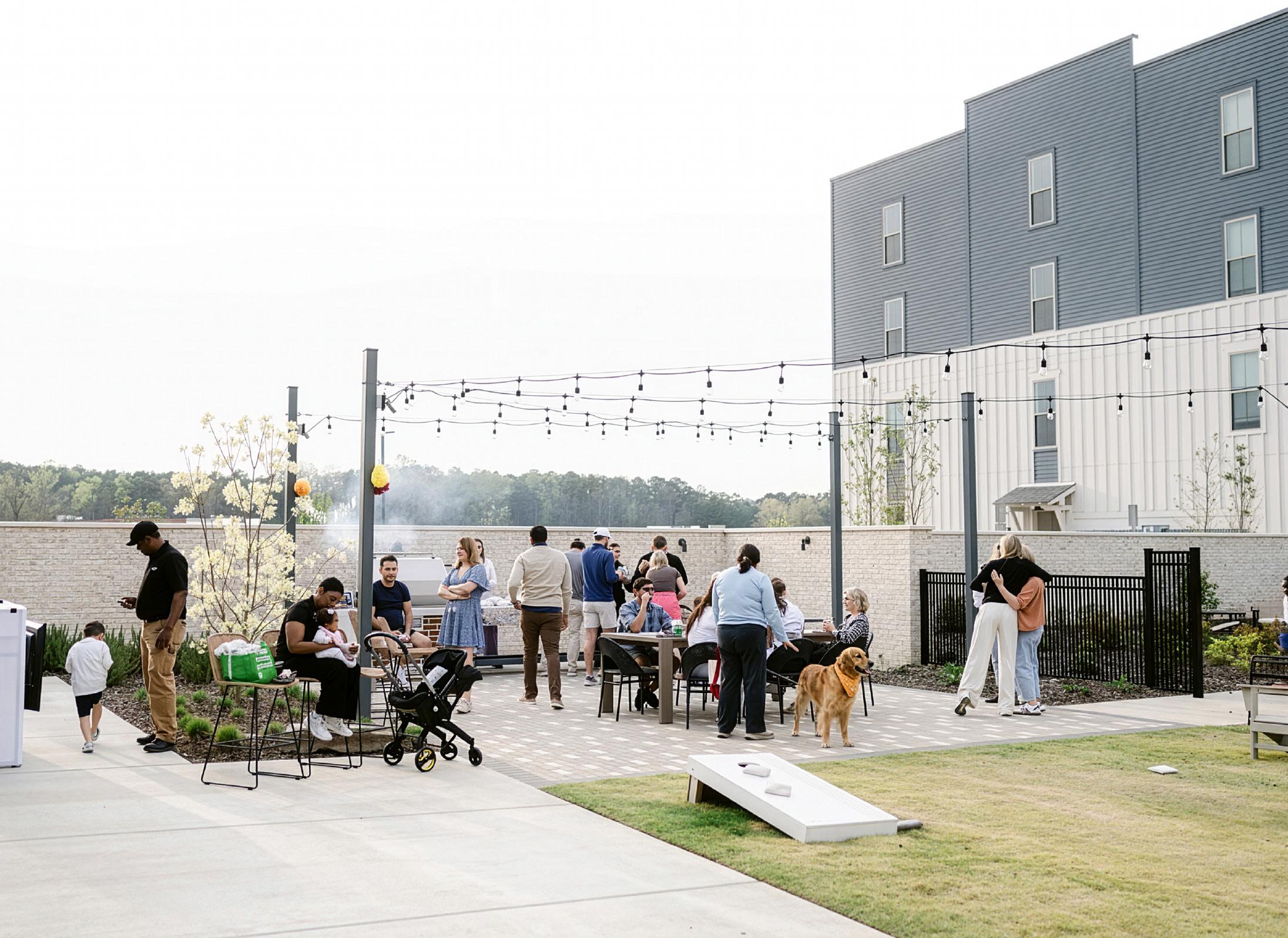
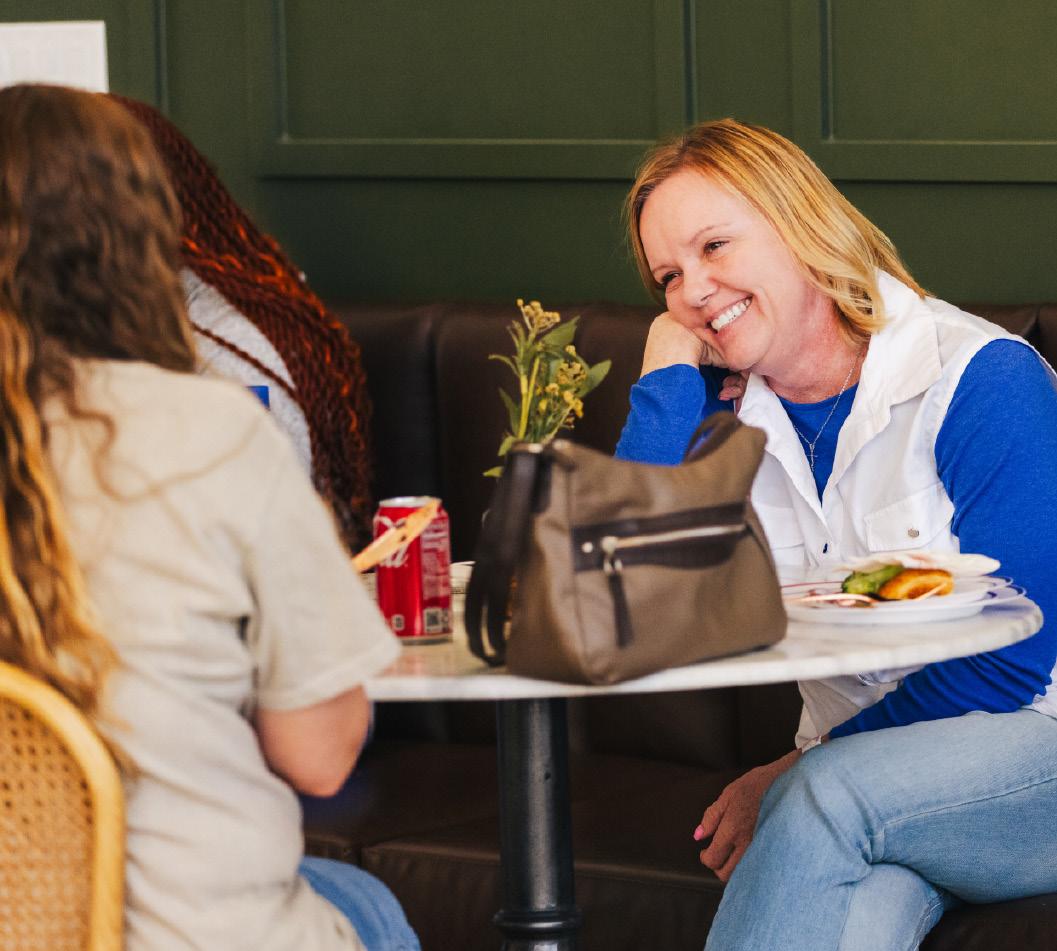
‘Our Spring Bash at Livano Liberty Park was one of those evenings that truly felt like community in action. Residents gathered, connected, and enjoyed the kind of laid-back, welcoming atmosphere that makes this place feel like home. A highlight of the night was music from our resident DJ, Wes, who kept the energy up while neighbors mingled, kids played lawn games, and everyone settled into the moment. The custom dirty soda bar was also a crowd favorite, offering fun, creative branded drinks that gave the event a unique and memorable touch.’
TAREKA SLAUGHTER
Community Director at Livano Liberty Park
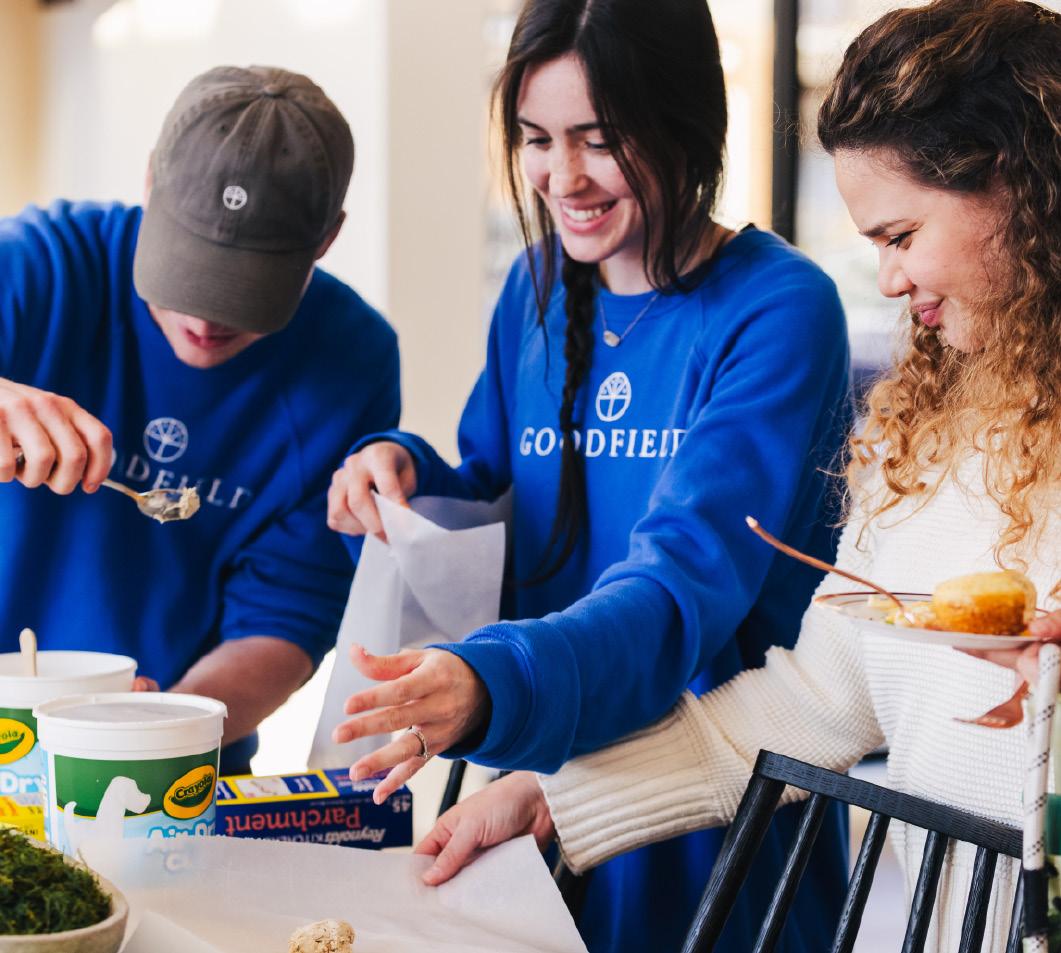
‘We hosted a hands-on clay-making event where residents could create their own artwork, along with a dinner featuring healthy options from a local catering company. Our favorite part was getting the opportunity to join in and create alongside our residents, which allowed us to connect more meaningfully. These shared moments are what truly build community here.’
LIVANO KNOXVILLE GOODFIELD TEAM
Frames of Mind
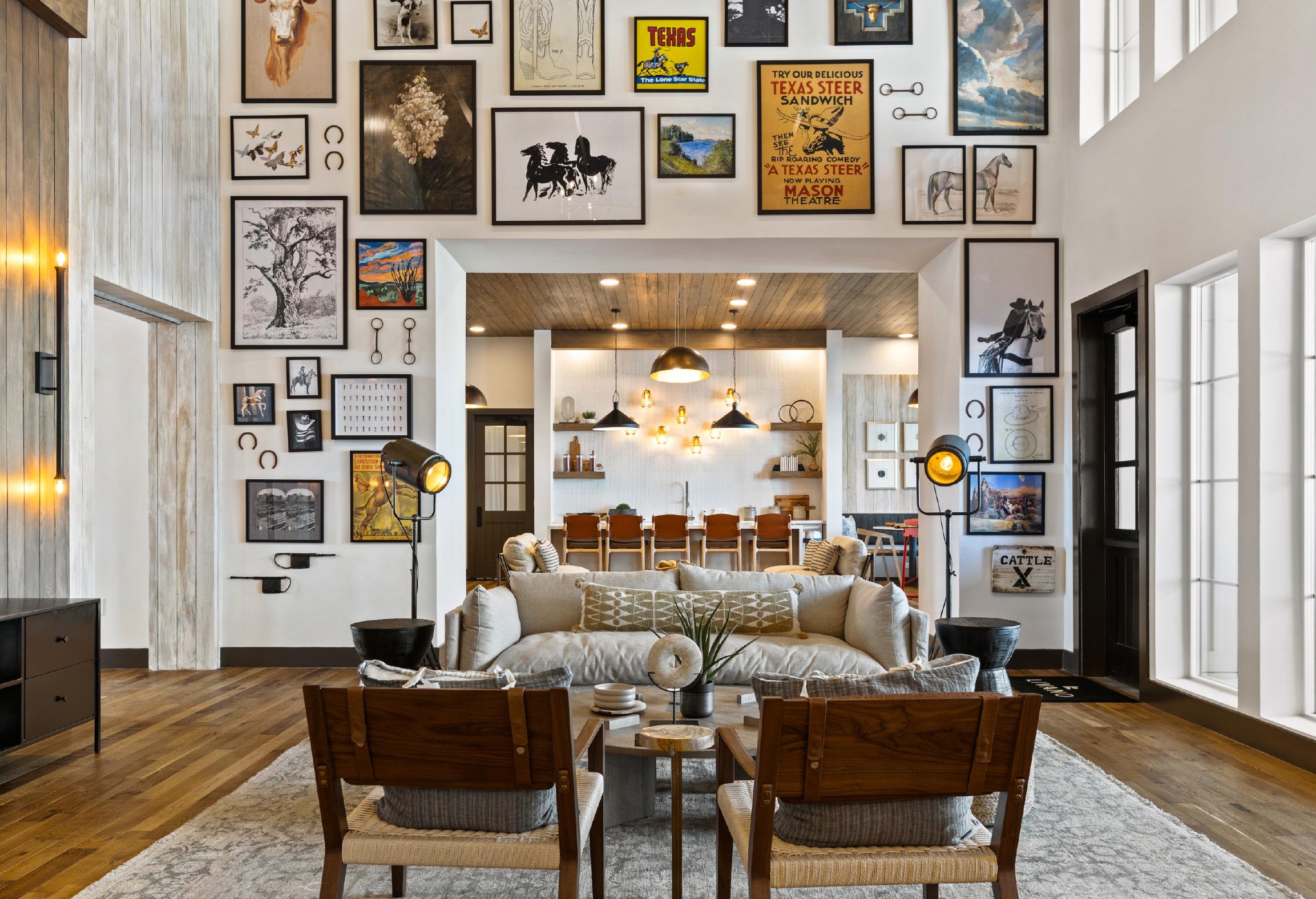
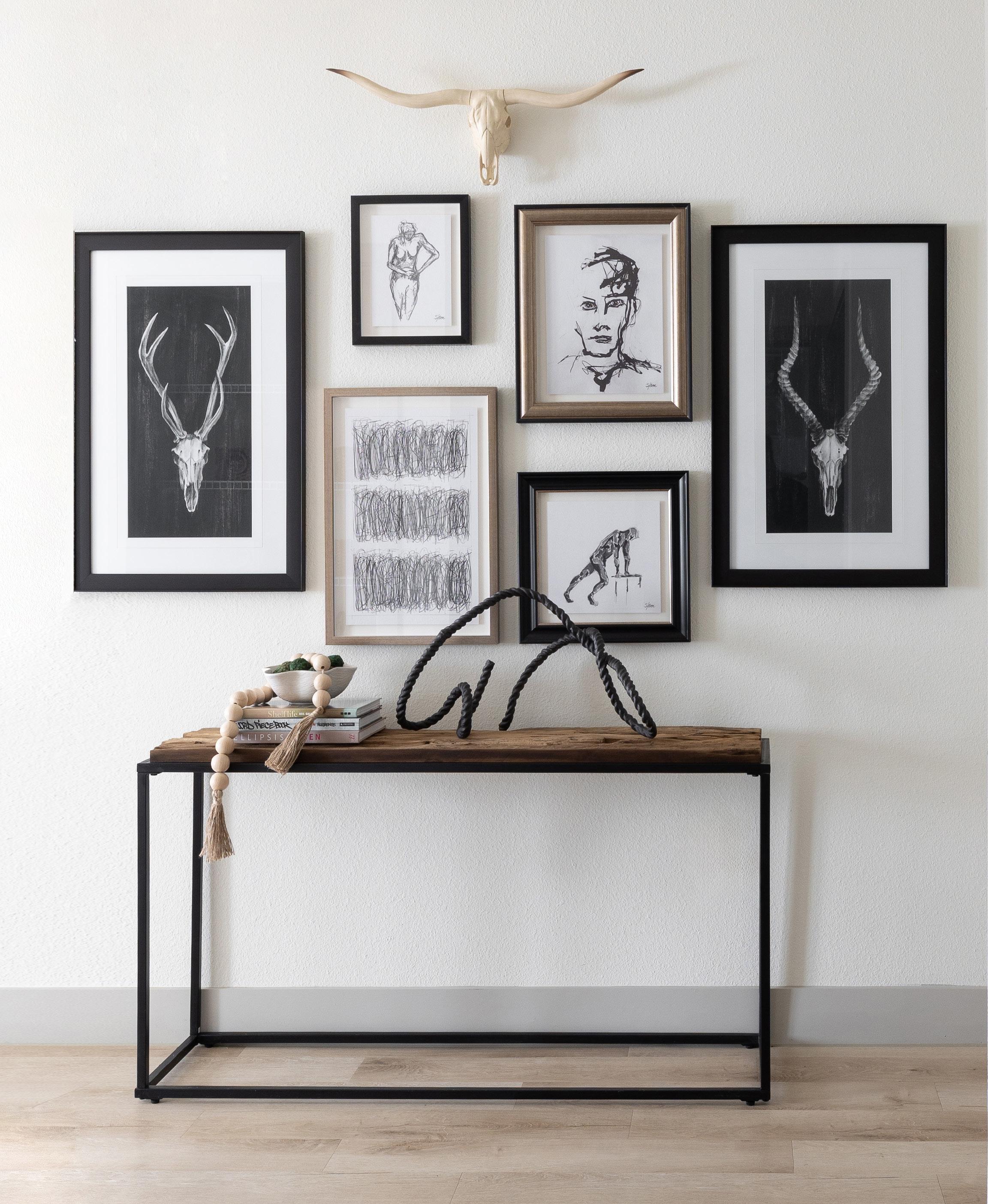
THE ARCHITECTURE OF A GALLERY WALL
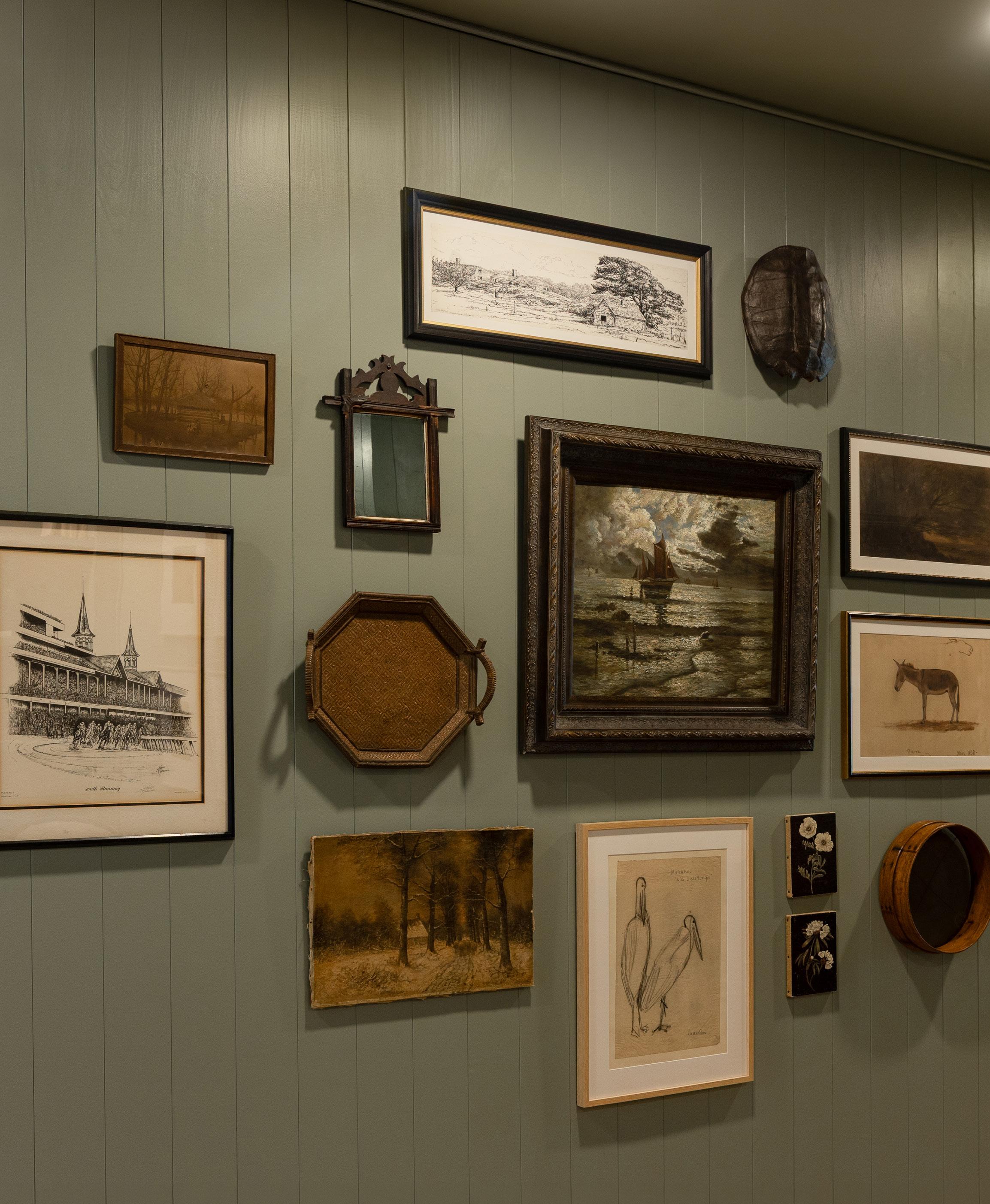
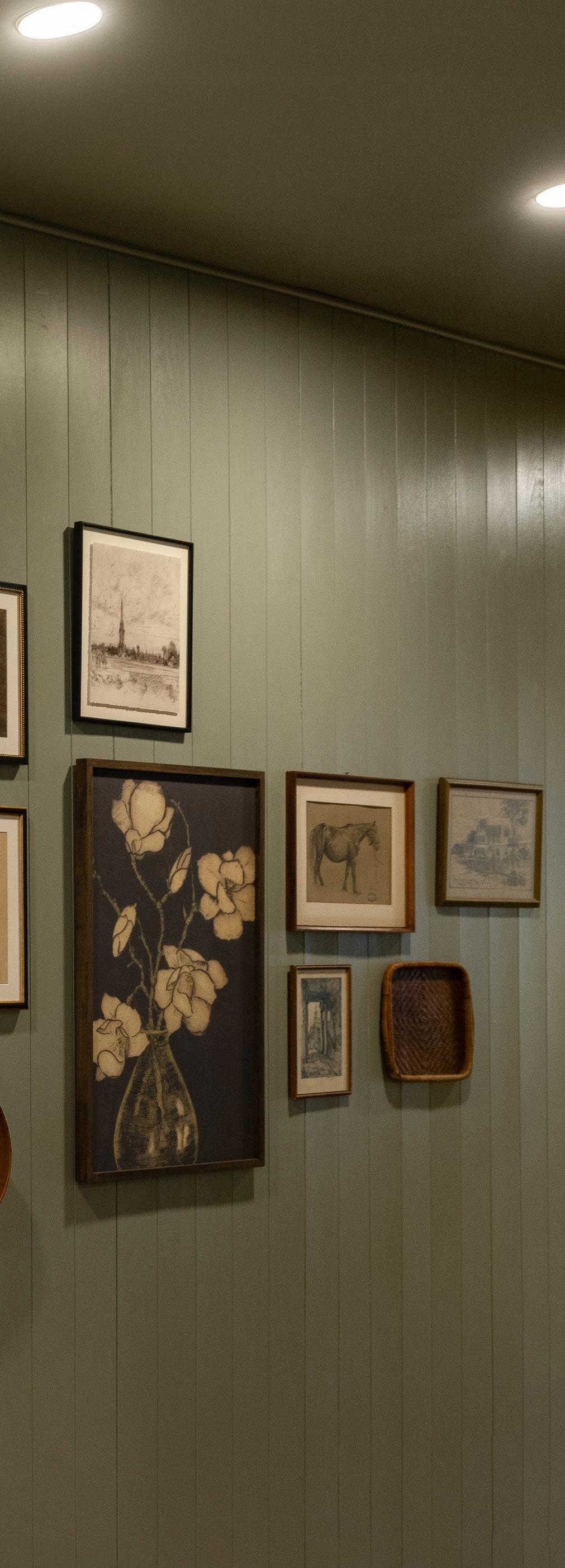
A large blank wall in your home can feel daunting, but it is an opportunity to tell a story that is uniquely yours. A gallery wall lets you layer art, photos, and keepsakes into something personal and visually stunning. These installations may look complex, but the steps are simple and can be easily tailored to fit your space and style.
① DEFINE THE GOAL & VIBE
Start by deciding how you want the wall to feel:
• Clean and modern (uniform frames, grid layout)
• Collected and eclectic (mixed frames, organic layout)
• Personal storytelling (family photos, travel, kids’ art)
Pick a loose theme — color palette, subject matter, or frame style — to keep it cohesive.
② CHOOSE THE WALL
Look for a space that naturally benefits from visual interest:
• Above a sofa or console
• Staircase wall
• Hallway
• Bed wall
Make sure the wall has enough breathing room. Gallery walls need space around them to shine.
③ GATHER YOUR ART & OBJECTS
Collect more than you think you need, then edit down. Include a mix of:
• Art prints or paintings
• Photos
• Text-based pieces
• Sculptural items (small mirrors, objects)
Lay everything out and remove anything that doesn’t fit the overall vibe.
④ PICK A LAYOUT STYLE
Choose a structure before you hang anything:
• Grid: symmetrical, same-size frames
• Salon style: organic, mixed sizes
• Linear: aligned along a center line
• Anchor piece: one large piece with smaller ones around it
⑤
PLAN IT ON THE FLOOR FIRST
Lay everything out on the floor in front of the wall:
• Start with your largest or “anchor” piece
• Build outward with medium, then small pieces
• Keep spacing consistent (2–3 inches between frames is a good rule)
Take a photo once it looks right, this becomes your reference.
⑥ TRANSFER TO THE WALL (NO GUESSING!)
Two good methods:
• Paper templates: Trace each frame on paper, tape to the wall, and adjust
• Painter’s tape outline: Mark the overall boundary of your gallery wall
This step prevents unnecessary holes.
⑦
HANG THE ANCHOR PIECE FIRST
Start with your largest or most important piece:
• Hang it at eye level (typically ~57–60 inches to center)
• Everything else builds around this
⑧ BUILD OUTWARD
Work from the center out:
• Maintain consistent spacing
• Step back frequently to check balance
• Alternate orientations (vertical/horizontal) for visual rhythm
• Repeat at least one element (color, material, or thickness)
• Keep a unifying thread (e.g., all black + wood frames)
• If you want a cleaner look, stick to one frame color.
⑩ FINAL ADJUSTMENTS
Once everything is up:
• Swap pieces if something feels off
• Check alignment visually (not just with a level)
Add or remove one piece if needed — balance matters more than symmetry.
Keep spacing consistent; this is what makes it look intentional.
Treat the whole arrangement as one large shape.
Eye level matters more than exact measurements.
Many retailers sell assorted frame packages specifically for gallery walls (Amazon, Pottery Barn, Etsy, West Elm, Target).
TIP #3
TIP #4
TIP #1
TIP #2
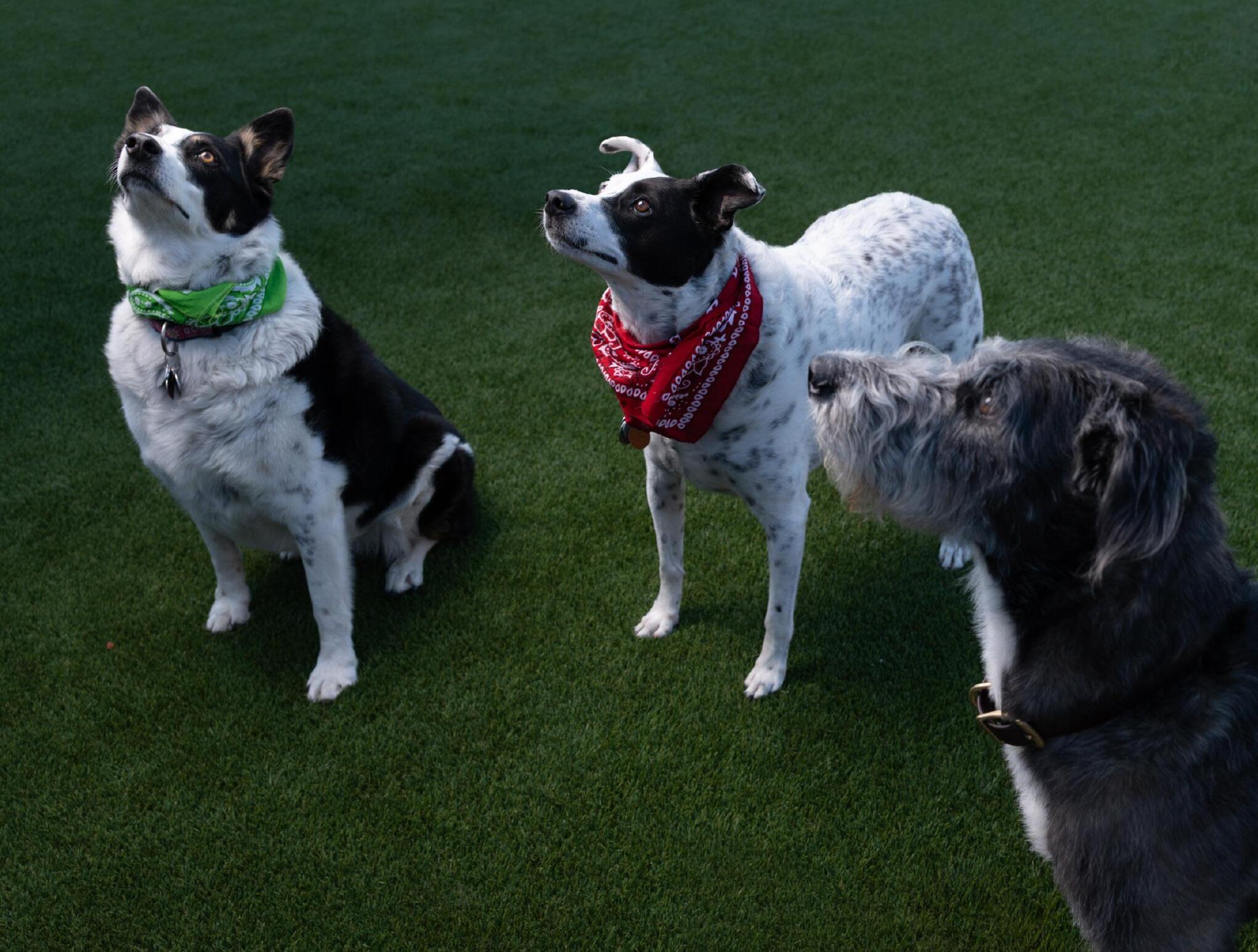
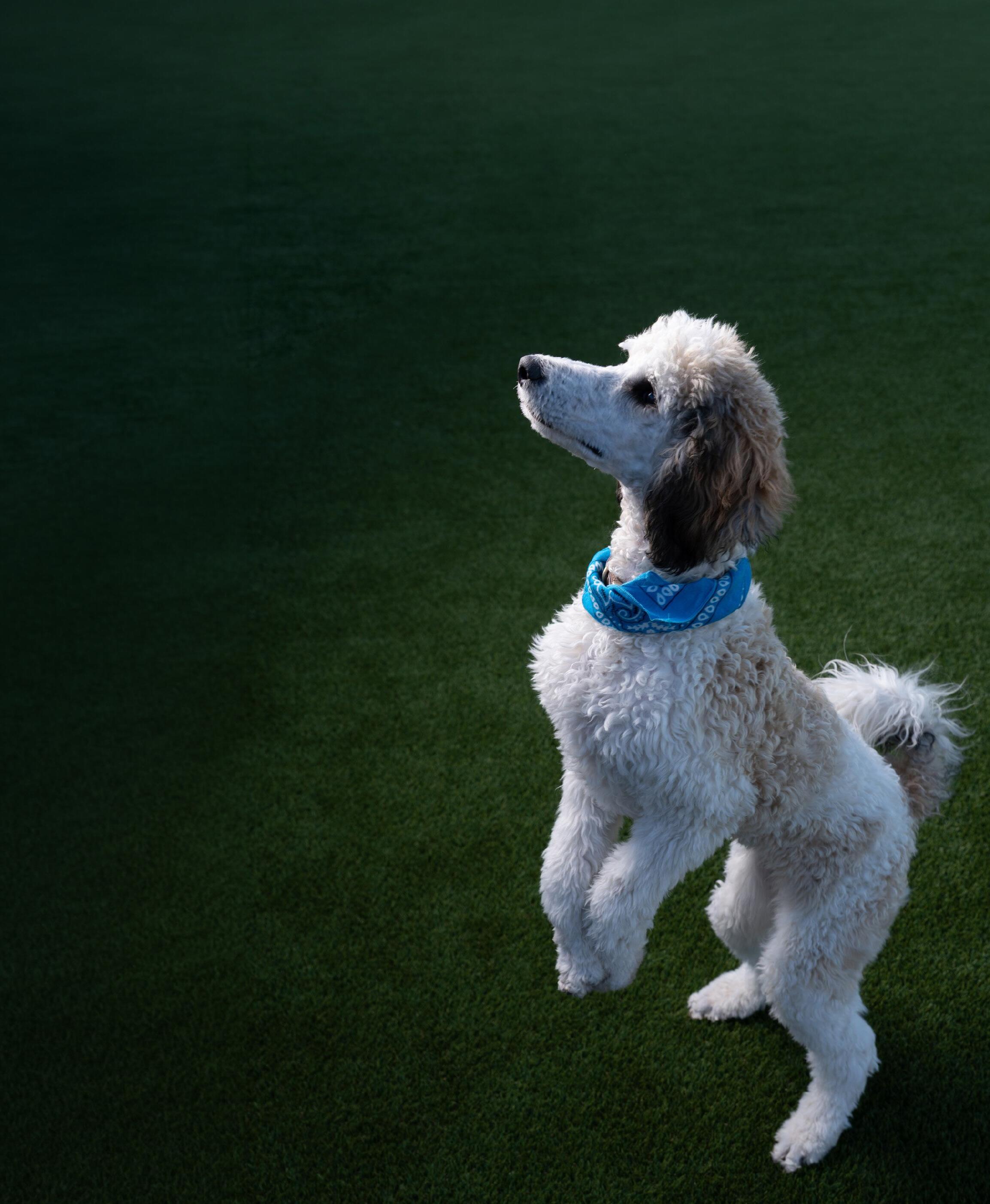
Dog Days
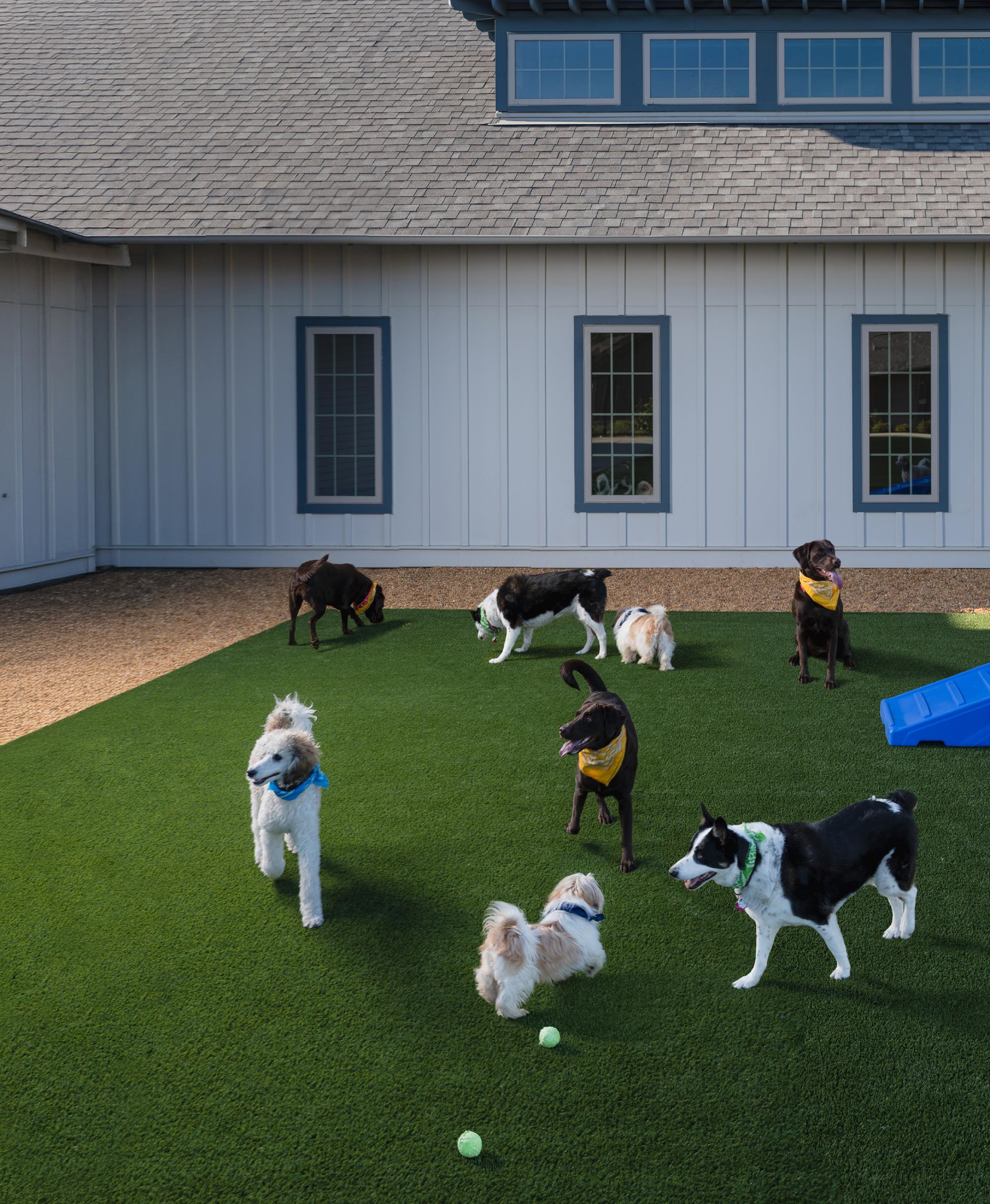
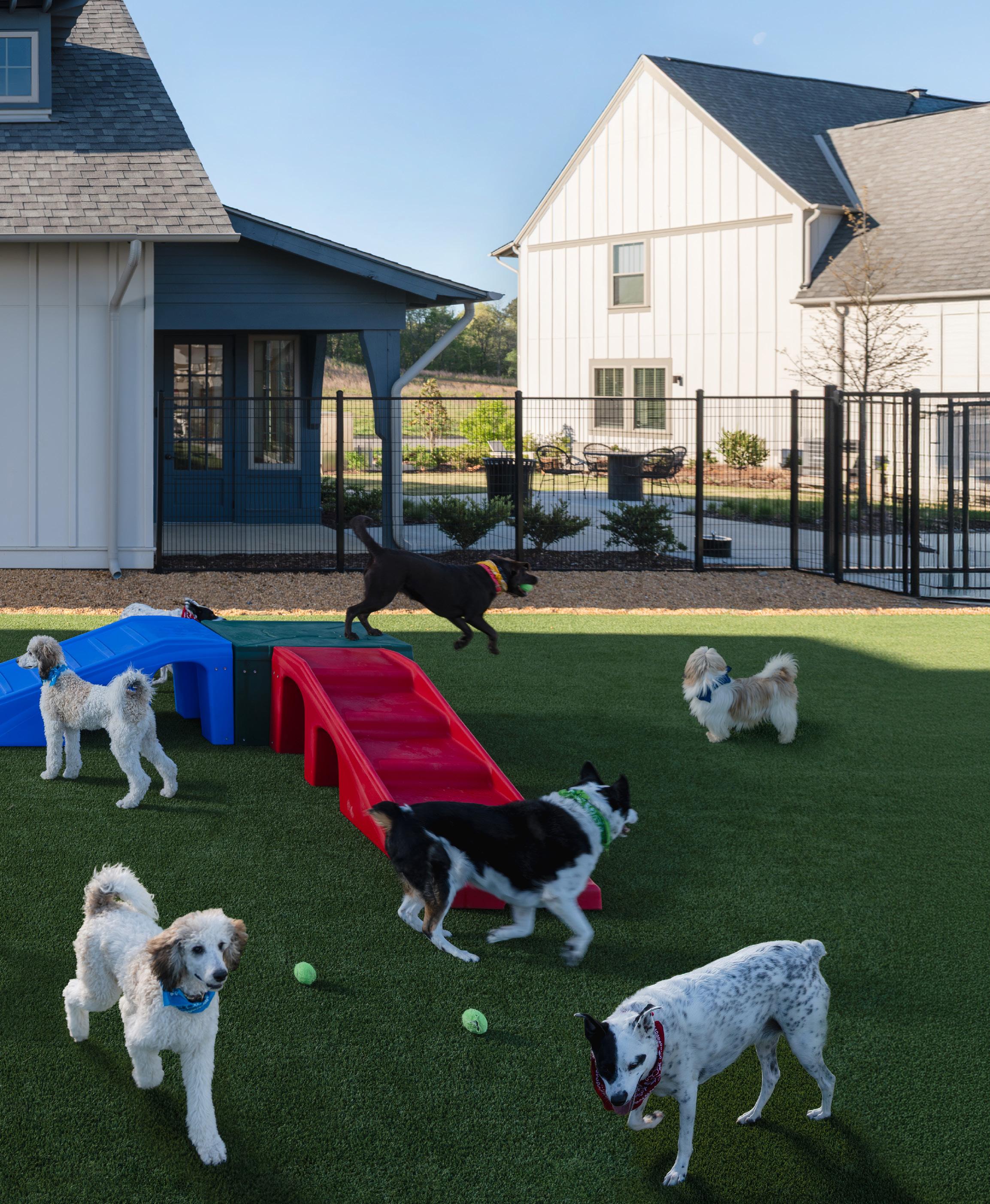
Meet the furry faces of Livano Liberty Park in Vestavia Hills, Alabama
LIVANO CATS & DOGS
Pets have that special ability to comfort us when we’re down, make us laugh when things get too serious, and show us all what unconditional love looks like. Their unwavering companionship and joy are what make them part of the family. At Livano, pets are not just welcome — they’re celebrated.
Now through the white orchard my little dog romps, breaking the new snow with wild feet.
Running here, running there, excited, hardly able to stop, he l e a p s, he s pi n s until the white snow is written upon in large, exuberant letters, a long sentence, expressing the pleasures of the body in this world.
Oh , I could not have said it better myself.
MARY OLIVER
CULTURE
Sailgating
NEYLAND STADIUM
VOL NAVY
LIVANO KNOXVILLE
Head to Knoxville for a University of Tennessee football game, and you’ll see all the passion fans expect from SEC football — a sea of team colors, those kids with chest paint, and ever-more elaborate tailgating in the hours leading up to the game. This being Tennessee, you’ll hear a lot of “Rocky Top.”
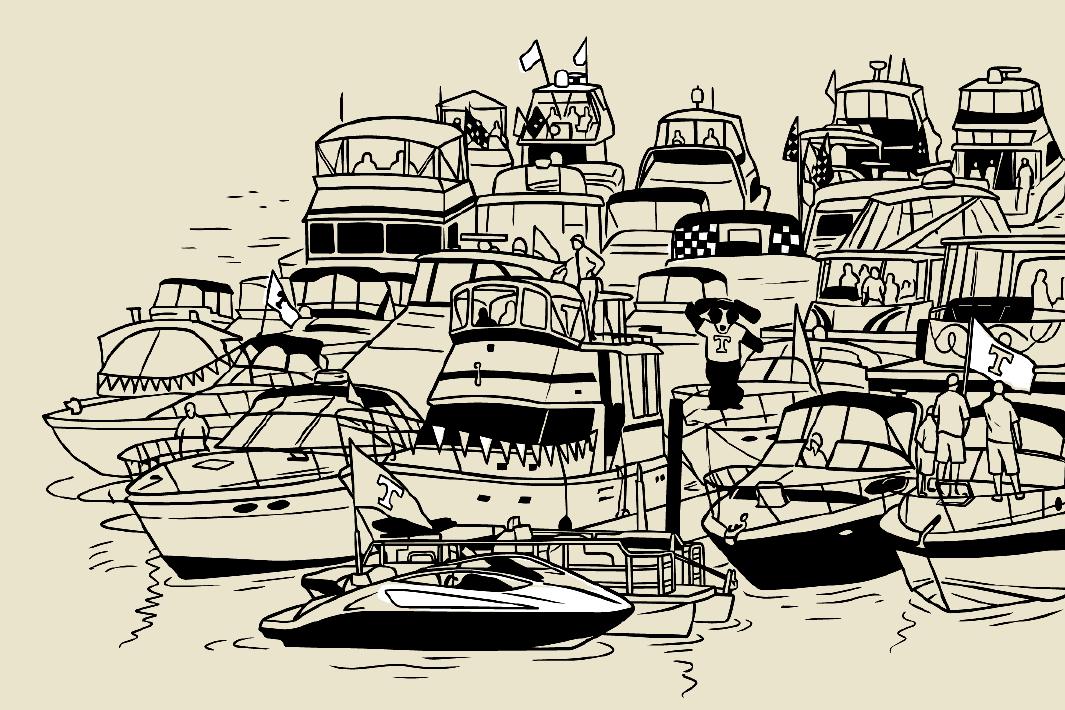
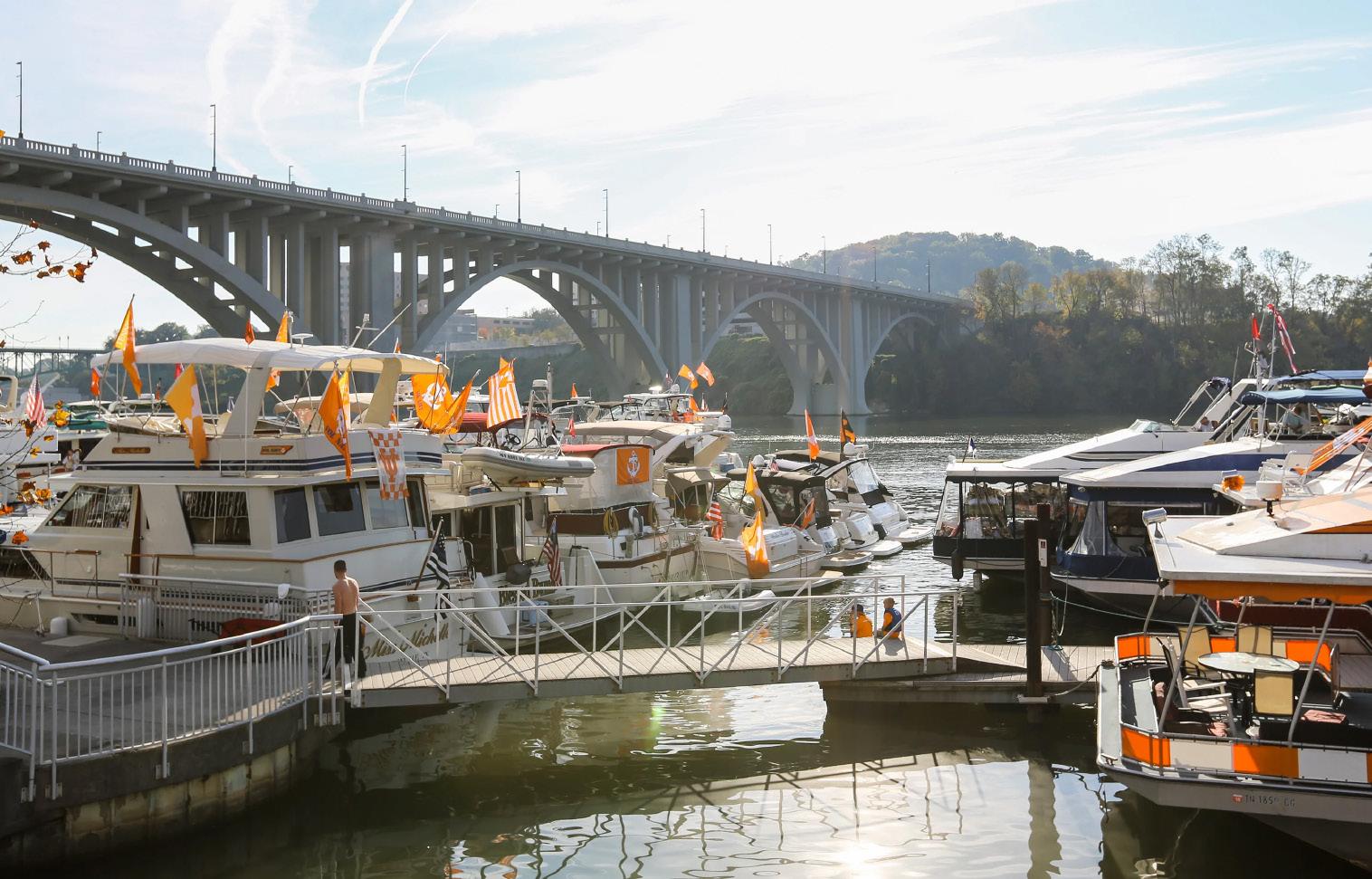
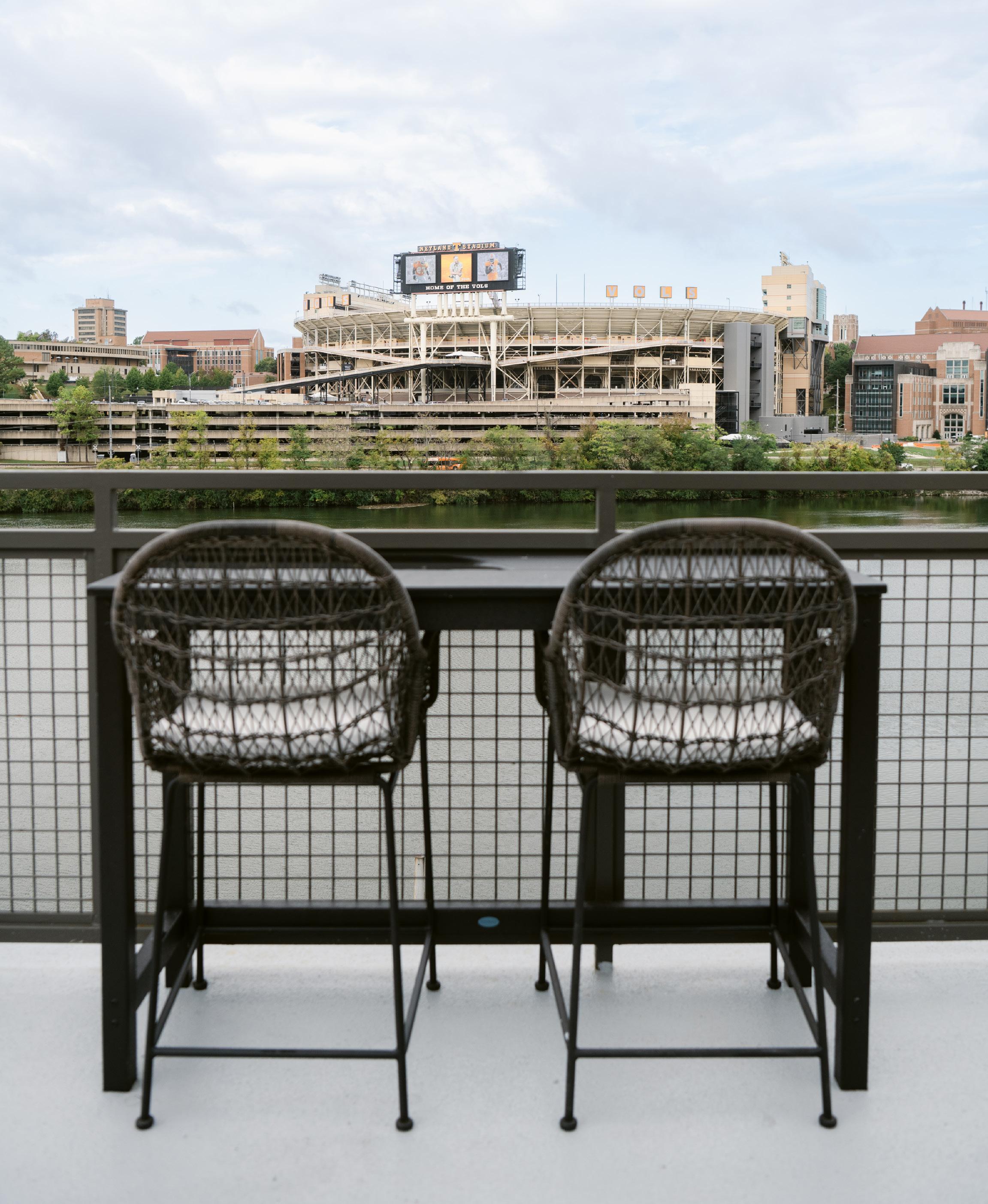
Go around the back of Neyland Stadium, and you’ll see what Tennessee has that its rivals don’t. The Tennessee River, about 100 yards from the stadium, is packed with yachts, houseboats, dinghies, and everything in between — all here for what Vols fans call “sailgating.” They have their own traditions and even their own flags, emblazoned with the logo of their collective name: they are the Vol Navy.
A few times every season, Patrick Deal and his wife load up their 52-foot Sea Ray Sand Ridge and boat from their home in Chattanooga to Knoxville to meet up with fellow Vols fans. “People come from all over the place,” Deal says. “It depends on the game. For the Alabama game, there will be a lot of folks from Alabama there. For the Oklahoma game, we had an Oklahoma fan who brought his own boat. Everyone is very welcoming, just there for a good time.”
The tradition began as a novel solution to a common problem: the headache of fighting traffic in and out of games. In 1962, play-by-play Vols commentator George Mooney decided to bypass all that and take his little boat up the river, tie it to a tree outside the stadium, and hike up the riverbank to the stadium. He told the story on the air, and others started to follow his example.
Today, big games attract hundreds of boats, and getting a good spot takes planning. Deal and his wife typically arrive on Wednesday and sleep in one of their three staterooms. “It’s kind of like anchoring out, but you’re tied to the dock,” he says. “You make it a vacation.”
With time to spare before kickoff on Saturday, the Deals and friends they’ve met on the river will walk to Market Square in downtown Knoxville to enjoy the local
restaurants and rooftop lounges. Other times, they take the dinghy they’ve brought along to cross over to the South Waterfront, where they can enjoy the nearby taprooms with fewer crowds.
Back on the river, the Vol Navy is fully decked out. “My wife brings out all the orange and white and pompoms and flags and decorations on the tables and dresses it up,” Deal says. Many boats have open bars. Lots of boats have generators, so fans can duck into air conditioned or heated cabins to escape the heat of early-season games or the chill of winter.
Boat-hopping is expected. Friends who arrive early enough will grab adjacent spots, but strangers are welcome too. “A lot of people get to know each other over the years,” says Deal, who owns a yacht brokerage business, iDeal Yachts, and often sees his customers on game days as well. “You have people go around and visit one another, and sometimes we’ll get visitors. Some people from opposing teams are curious, so they’ll come down and we’ll invite them over, too.”
And while few Vols fans would ever say out loud that anything beats being inside Neyland Stadium, some say the experience of watching from their berth on the water is a close second. “A lot of people go to the game, but not everybody,” Deal says. “Sometimes we stay on the boat and watch the game on our TV. You can hear the noise and fireworks and get a good idea what’s happening in the stadium, and it’s a lot of fun.”
Vol Navy is now a tradition they’ve passed on to their son, Landon, a UT graduate who got a boat of his own — not just for game days, but as a personal floating dorm starting his sophomore year. “He graduated last spring, and he still lives on it,” Deal says. “He brings his boat down to the Vol Navy and saves us a spot. It’s all about being around friends and family with a common interest: football and boating. That’s what holds the Vol Navy together, spending time with family and friends.”
VIEW OF NEYLAND STADIUM FROM LIVANO KNOXVILLE
Let’s Get Physical
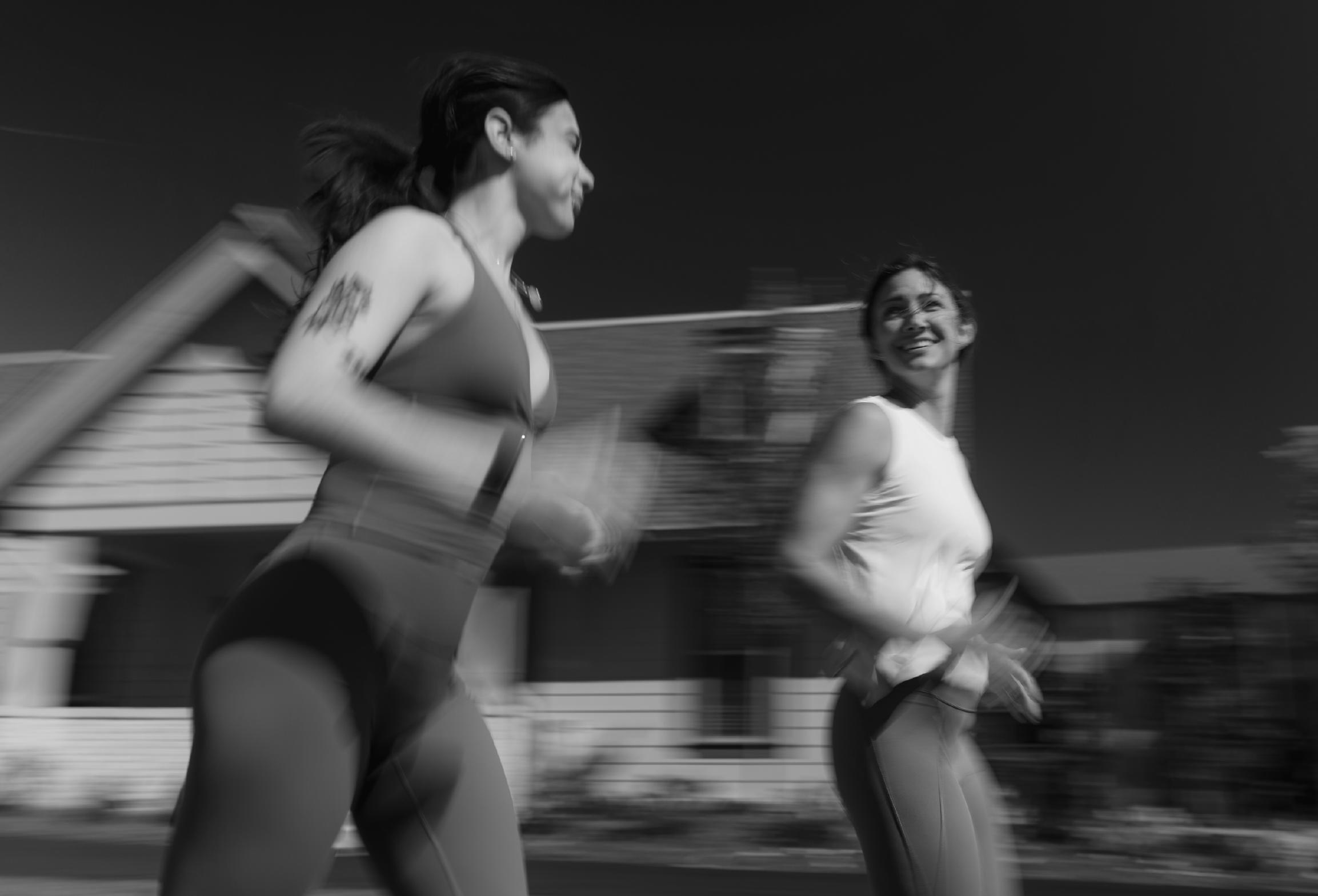
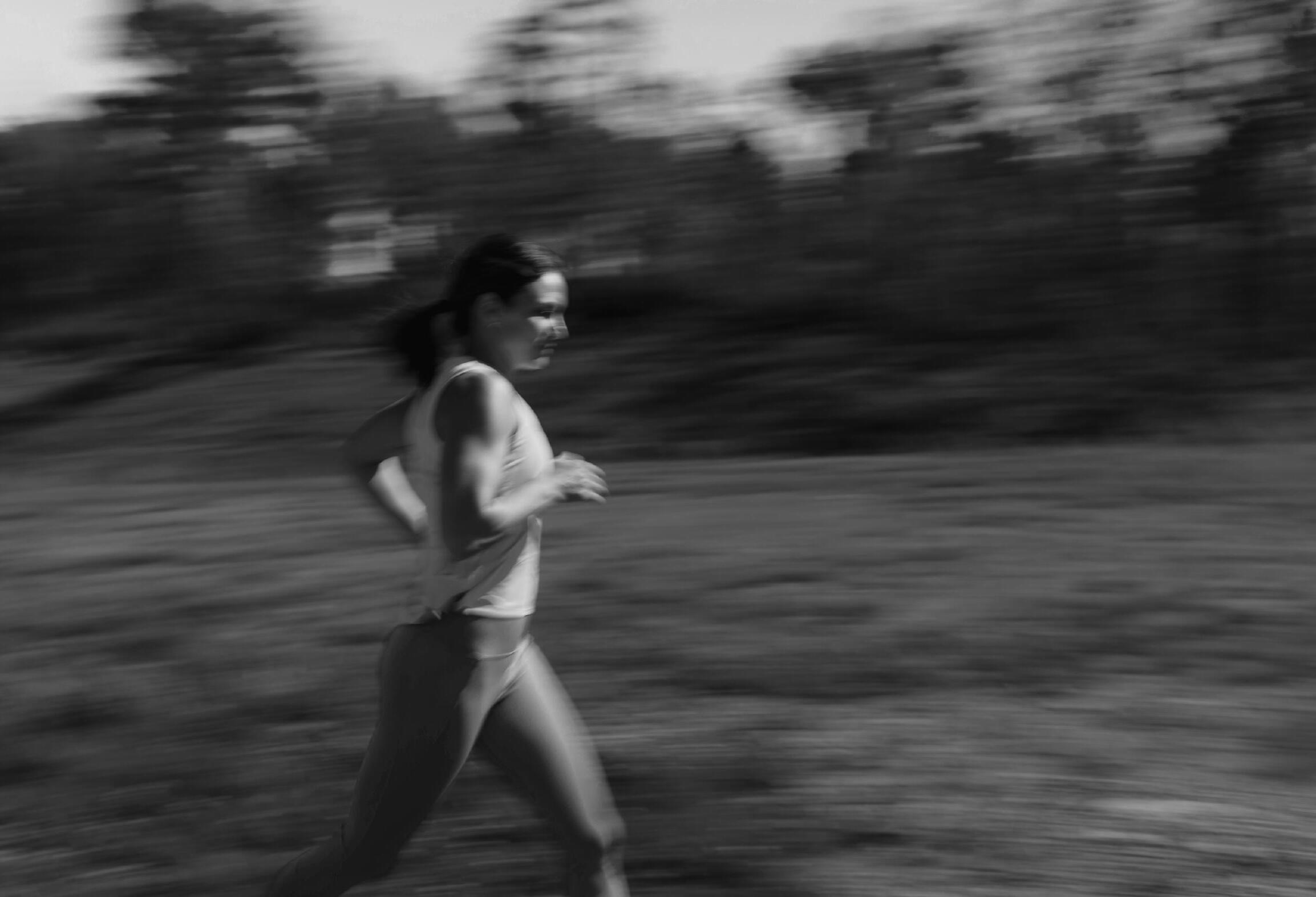
Fitness culture can have a short memory. Every few years, a new format captures the collective imagination. But something different has been happening lately. Instead of one trend displacing the last, a handful of distinct approaches have taken hold at the same time, each attracting a different kind of devotion.
We’re spotlighting three fitness trends, all focused on training with intention and building fitness that transfers to real life. And while boutique studios have driven much of their visibility, these trends do not require a specialized facility or premium membership. The well-equipped fitness center in your Livano community is all the infrastructure you need.
FUNCTIONAL STRENGTH
For a long time, gym culture was dominated by two things: aesthetics and isolation. Leg day meant leg press. Chest day meant bench press. The goal was the mirror.
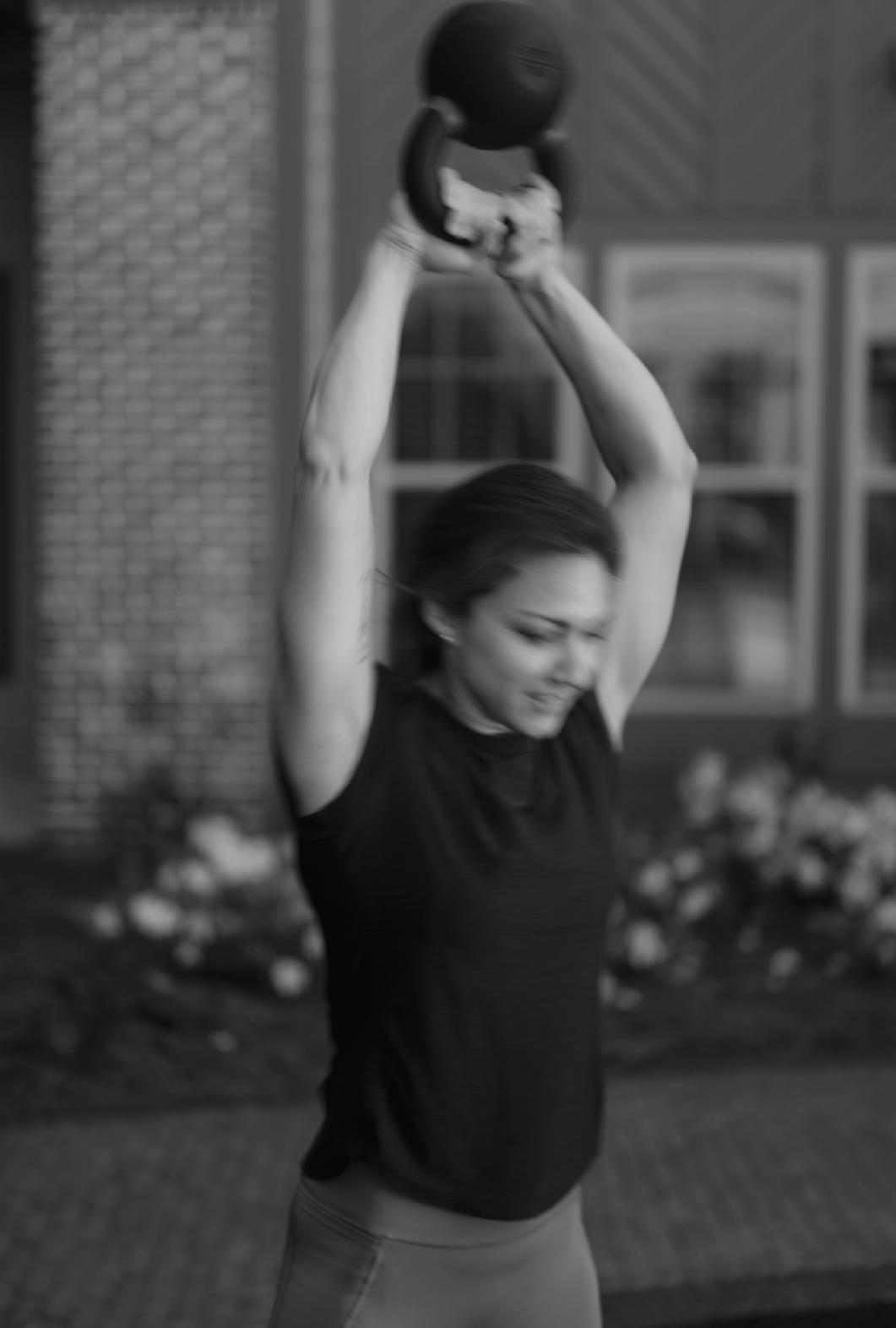
That’s changing. Functional strength training — which focuses on movement patterns rather than individual muscles — has moved from physical therapy clinics and sports performance centers into mainstream fitness, and it’s not hard to see why. Research on longevity and healthspan makes a compelling case: the ability to carry, hinge, push, and stabilize through a full range of motion predicts quality of life in ways that bicep circumference simply doesn’t.
The framework is built around fundamental human movements: the squat, the hinge, the push, the pull, the carry, and rotation. Instead of training muscles in isolation (a leg extension targeting the quads, a lat pulldown targeting one specific range) functional training loads those patterns in ways that require the whole body to coordinate. A goblet squat teaches the same mechanics as picking something up off the floor. A single-arm cable row trains the same muscles as closing a door while carrying groceries. The carryover to daily life is almost immediate, which is part of why it resonates with people who aren’t training for sport: they just want to feel capable.
Coaches and researchers have pushed this framework into popular conversation over the last few years, reframing fitness as preparation for the “last decade of life.” The goal isn’t just to be strong at 35, it’s to still be able to get off the floor unassisted, carry your own luggage, and climb stairs without a second thought at 80. Functional training is the most direct path to that.
In practice, getting started doesn’t require a dramatic overhaul of your routine. Swap one isolation movement for a compound alternative each session. Replace leg extensions with goblet squats. Replace cable flyes with a landmine press. Add a set of single-arm dumbbell carries to the end of your workout. The equipment footprint is small — a set of dumbbells or kettlebells and a cable system cover most of what you need. A well-stocked free weight area, the kind in your Livano fitness center, is genuinely all the setup required. The programming is the work; the equipment is already there.
HYROX TRAINING
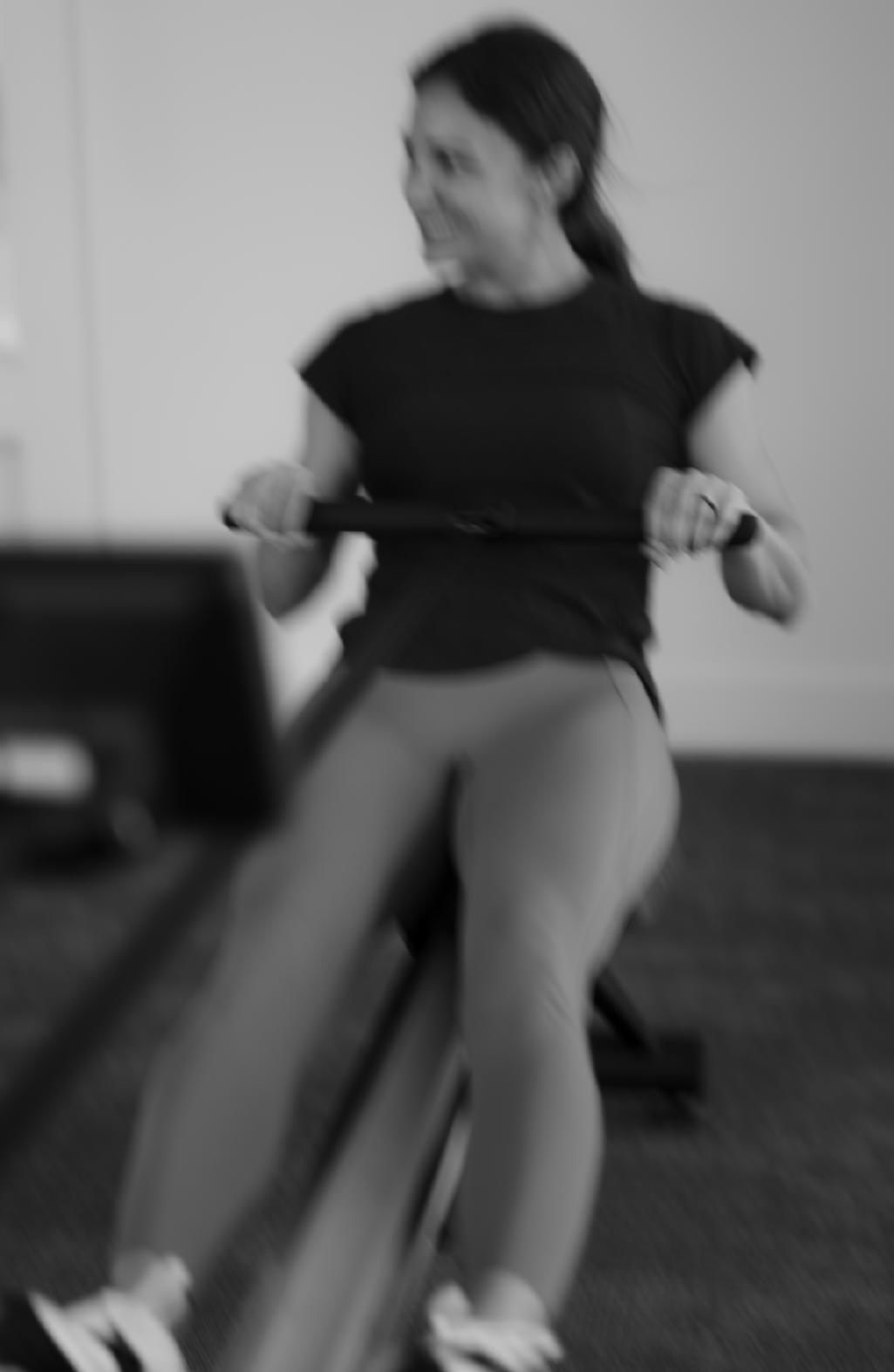
The format is straightforward: eight one-kilometer runs, each followed by one functional workout station — rowing, ski erg, sled push, sled pull, burpee broad jumps, kettlebell farmer’s carry, sandbag lunges, and wall balls. You race against the clock, log your time, and come back to beat it.
What makes Hyrox different from a triathlon or a CrossFit competition is the accessibility. The movements are standard. The format never changes. That means every finish time is comparable, whether you raced in Chicago, London, or Sydney. There’s no learning curve for the sport itself, just the fitness curve that comes with training for it.
The community aspect of Hyrox has driven a lot of the growth. Hyrox athletes tend to train together, share workouts online, and treat race day like a reunion. Amateur divisions mean you’re competing against people at your level, not elite athletes. And unlike a marathon, which demands months of running-specific prep, Hyrox rewards a broad base of fitness; you don’t need to specialize, you just need to be well-rounded.
To start training, you don’t need to register for a race first. Begin with the individual movements: row intervals, ski erg repeats, loaded carries, and
wall balls. Build your aerobic capacity alongside your strength. A good early goal is to complete any single Hyrox station at race weight — 24kg for men, 16kg for women — without stopping. From there, you string them together.
Your Livano fitness center has a rower, ski erg, and a functional training area stocked with kettlebells, which means you can log serious prep without ever leaving your building. Register for a local event when the training feels solid — or just use the format as a structure for your own workouts. Either way, the programming writes itself.
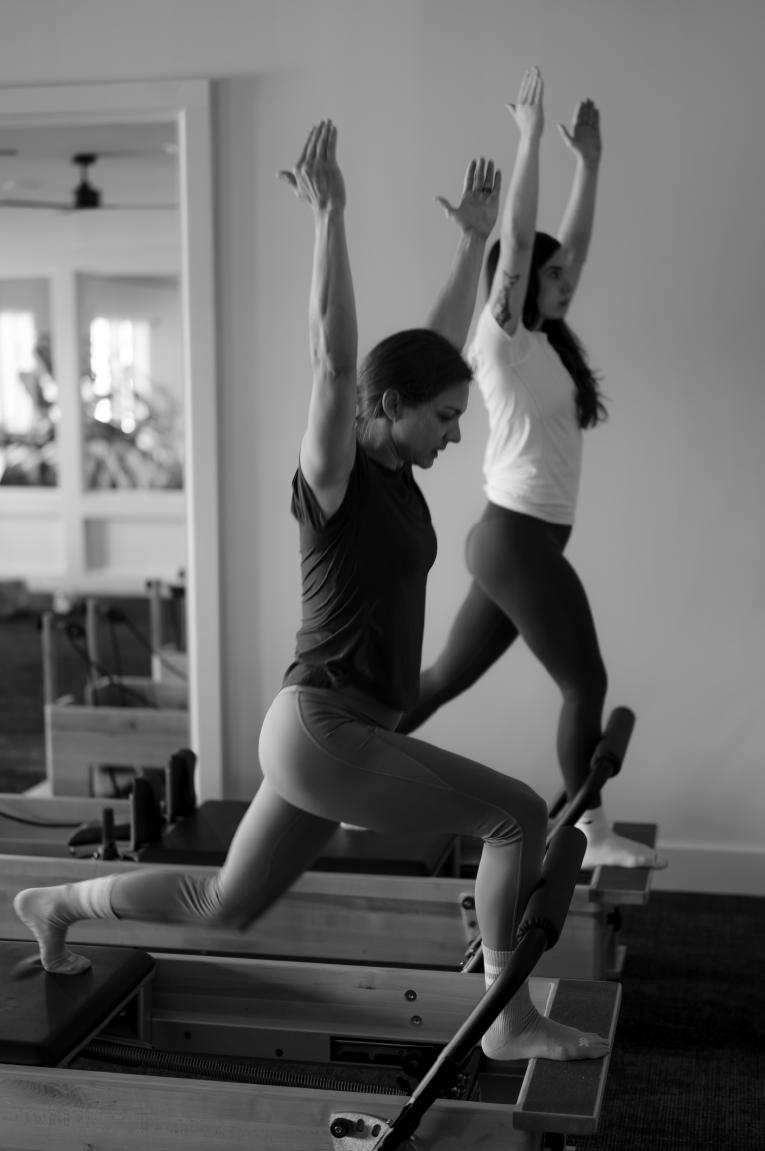
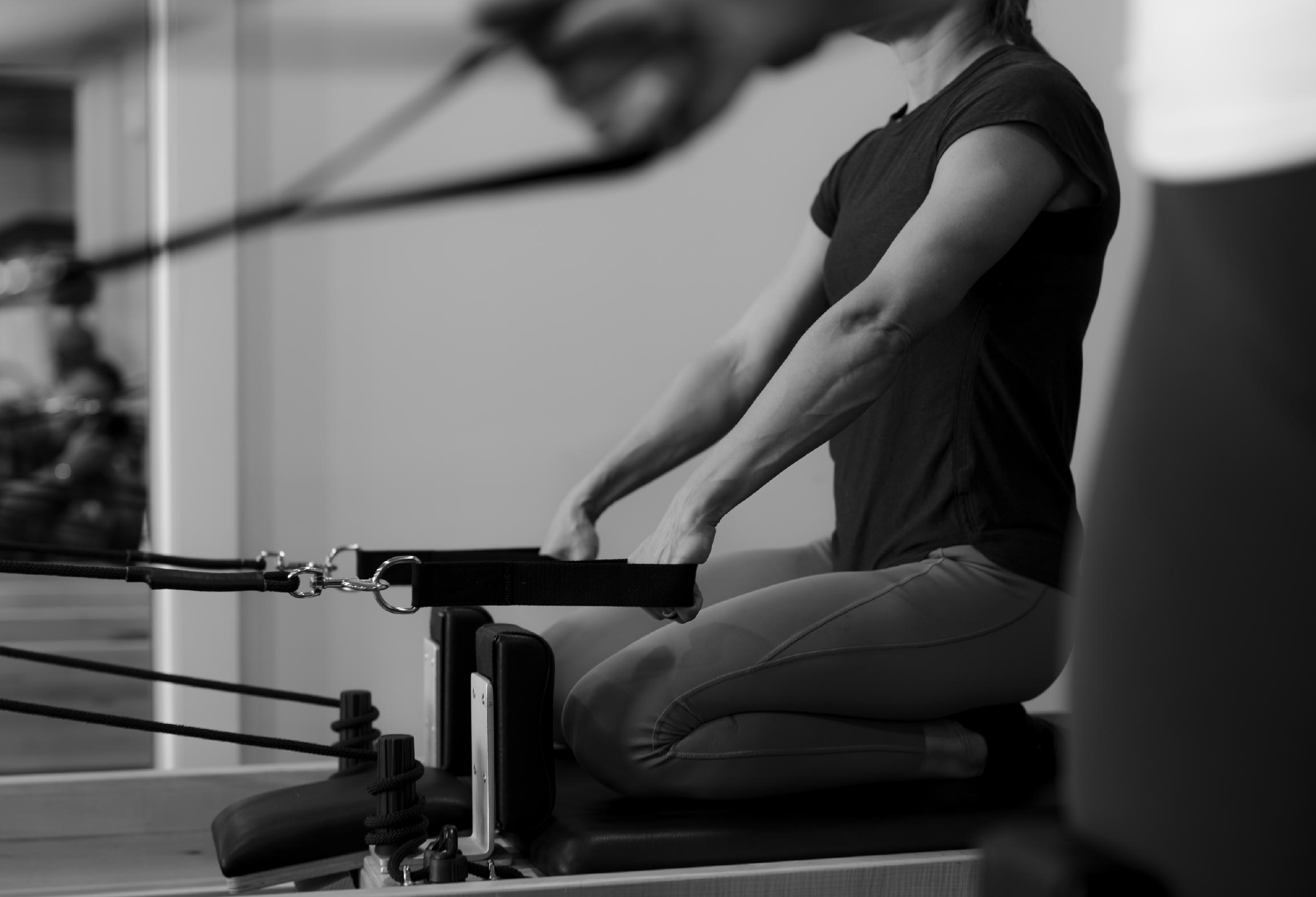
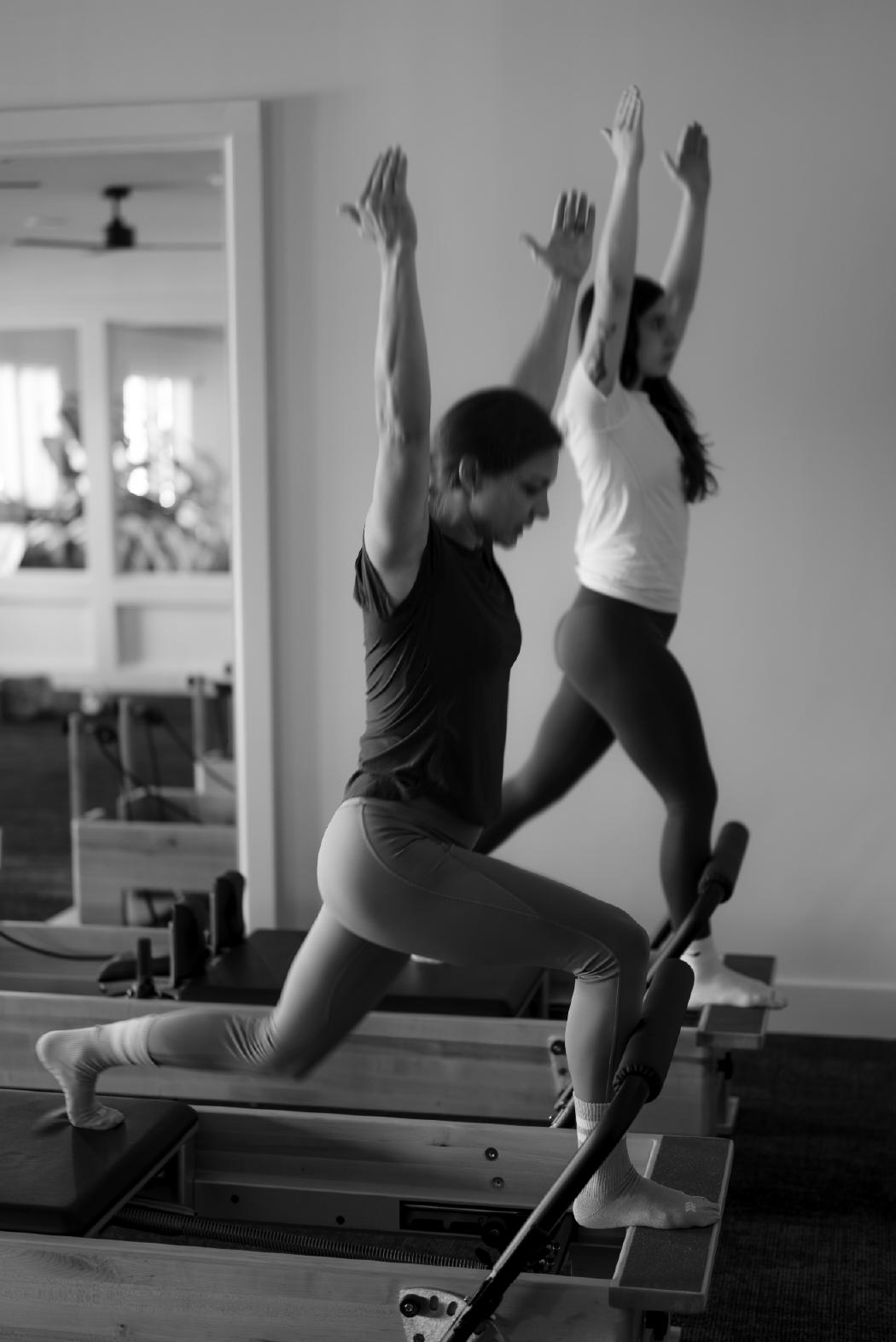
REFORMER PILATES
Reformer Pilates has been around since the 1920s. So why does it feel like everyone discovered it last year?
The short answer is that the rest of the fitness world finally caught up. As more people — athletes, physical therapists, trainers — started prioritizing movement quality over volume, reformer Pilates started making sense in a new way. It builds genuine strength through a full range of motion. It’s demanding without being punishing. And unlike a lot of trendy fitness formats, it has a century of clinical backing.
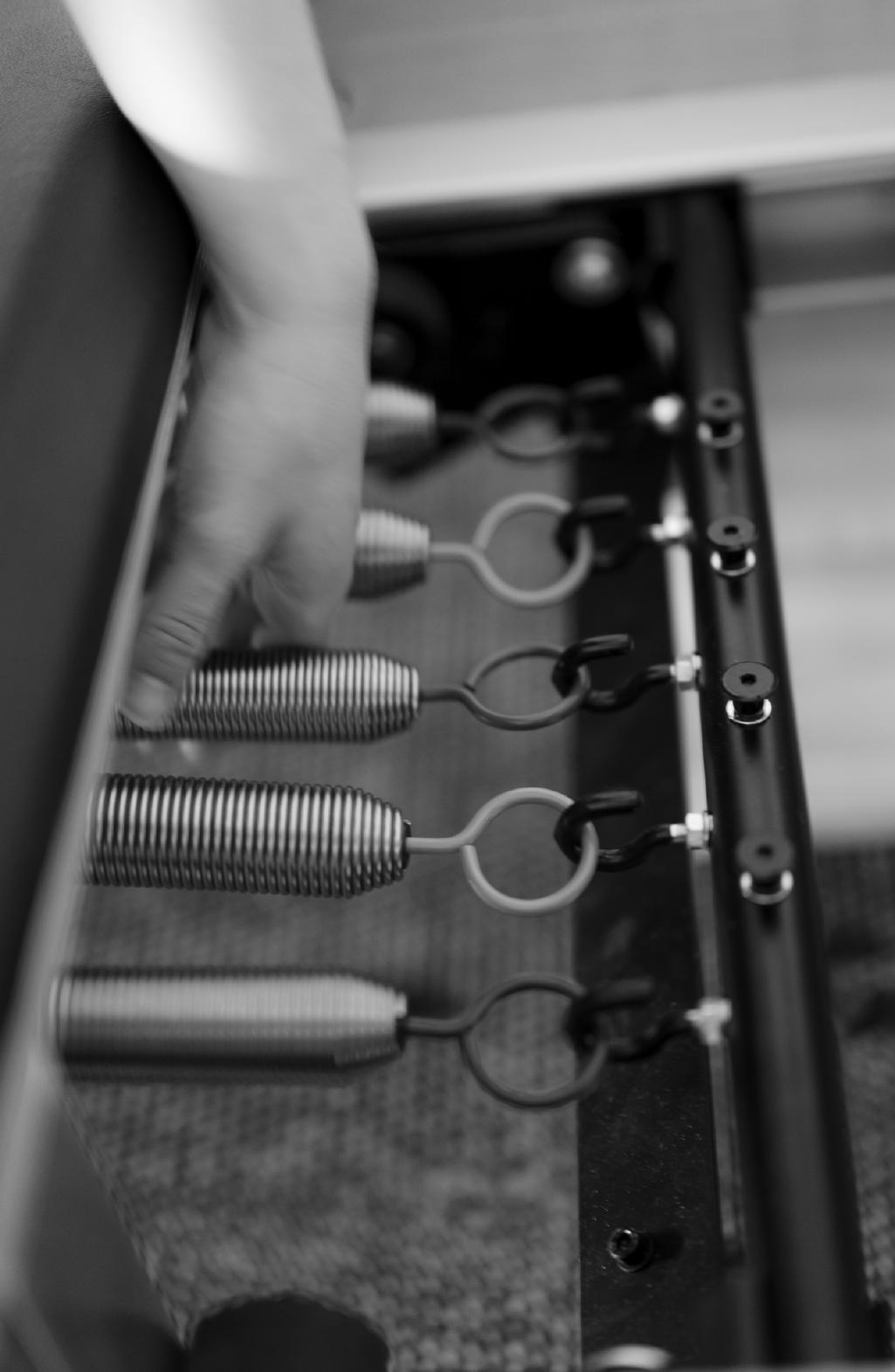
The reformer itself is a spring-loaded carriage on a sliding frame, with a foot bar, straps, and adjustable resistance. That resistance can assist a movement or resist it, which
makes the same piece of equipment useful for a first-timer and a seasoned practitioner. There’s no version of the reformer you age out of — it’s used in physical therapy, elite athletic training, and prenatal fitness for the same reason: it meets you where you are.
What a reformer session actually feels like is harder to describe. The movements are controlled and deliberate — nothing is ballistic, nothing is rushed — but the difficulty accumulates. You’ll feel muscles working that a conventional gym routine rarely reaches. The core engagement is constant, not because you’re doing crunches, but because most movements require stabilization across the whole trunk. People who’ve trained for years often find reformer Pilates humbling in the best way.
The equipment needed to try these trends can be found in your Livano fitness center. Follow the link below to additional training resources.
Fuel. Move. Recover.
At Livano, we believe wellness isn’t a single moment, it’s a cycle.
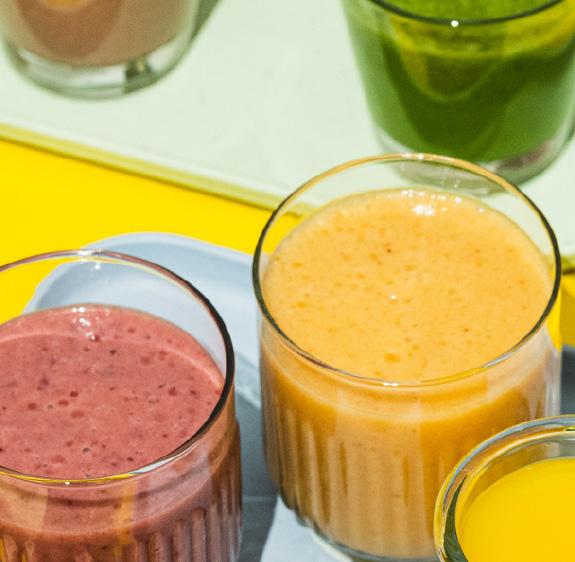
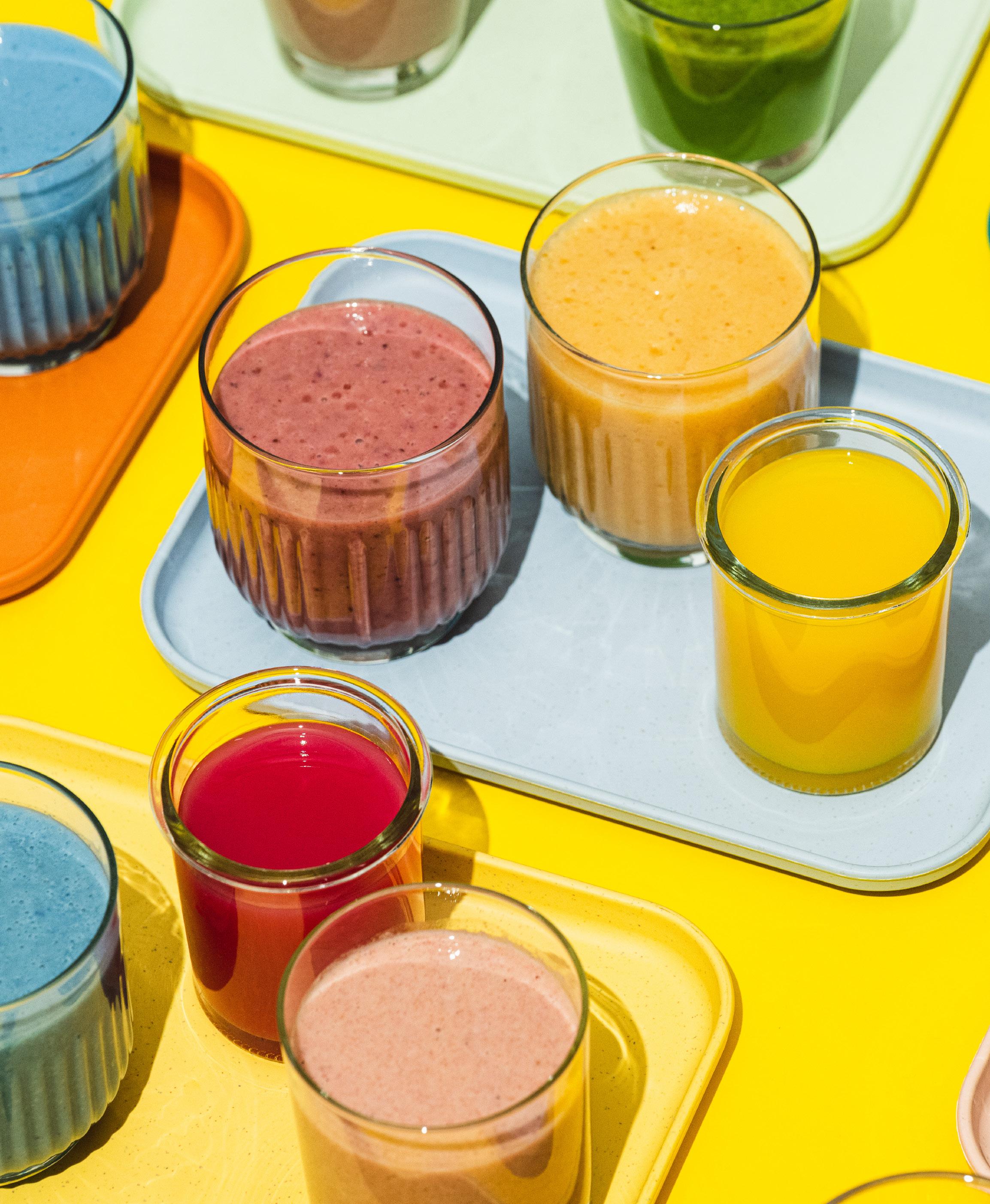
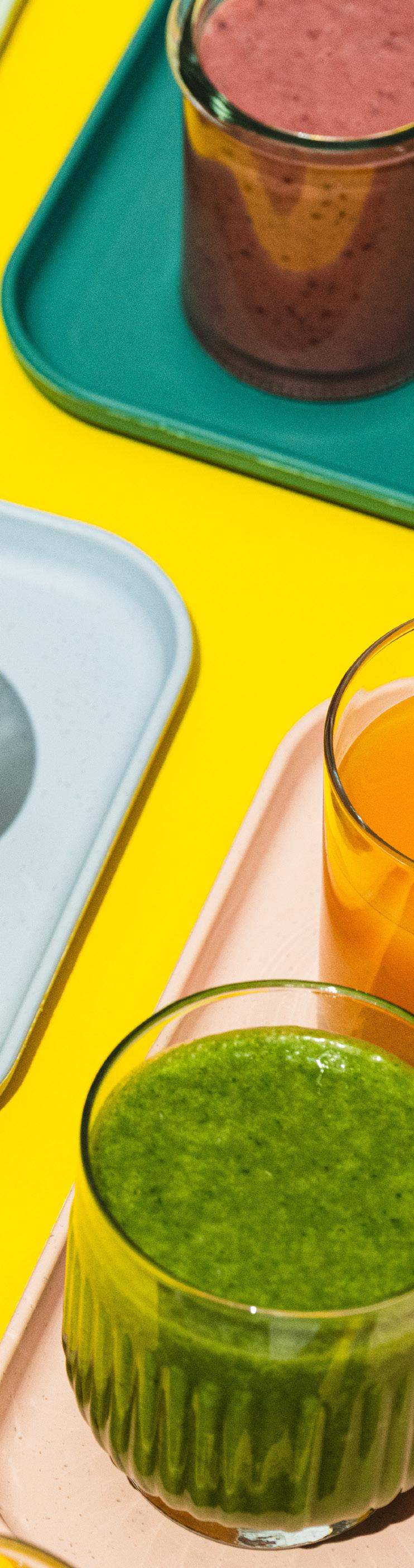
What you put into your body before and after you train matters just as much as the workout itself. We’ve put together two smoothie recipes designed to support every phase of your routine: one to power you up before you hit the fitness center, and one to help your body rebuild and recharge when you’re done.
PRE-WORKOUT POWER SMOOTHIE
The banana and oats give you carbs for fuel, cold brew provides a caffeine kick, and chia seeds offer a slow-burn energy boost without weighing you down.
INGREDIENTS
1 banana (frozen)
1/3 cup rolled oats
1/2 cup cold brew coffee
1/2 cup almond milk (unsweetened)
1 tablespoon honey
1 teaspoon chia seeds
1/3 teaspoon cinnamon
1/2 cup ice
NOTES
STEPS
1. Add rolled oats to the blender first and let them sit with cold brew coffee for 2 minutes to soften slightly; this makes blending smoother and the drink easier to digest.
2. Add banana, almond milk (unsweetened), honey, chia seeds, cinnamon, and ice to the blender.
3. Blend on high for 45–60 seconds until completely smooth.
4. Pour into a glass and drink.
Timing: Drink 30–45 minutes before exercise. The banana and oats provide steady carb energy, while the cold brew delivers a natural caffeine boost.
Swap: Not a coffee drinker? Replace cold brew with green tea or just extra almond milk.
POST-WORKOUT RECOVERY SMOOTHIE
Greek yogurt and protein powder rebuild muscle, berries fight oxidative stress, and the turmeric + black pepper combo is a natural anti-inflammatory duo to help with soreness. Tart cherry juice is the secret weapon for reducing next-day muscle ache.
INGREDIENTS
1/2 cup Greek yogurt (plain, full-fat)
1 tablespoon vanilla protein powder
1 cup frozen mixed berries
1 cup baby spinach
1/2 cup tart cherry juice
1 tablespoon almond butter
1/3 teaspoon turmeric
1 pinch black pepper
1 tablespoon hemp seeds
NOTES
STEPS
1. Add tart cherry juice, Greek yogurt, and almond butter to the blender first for smoother blending.
2. Add frozen mixed berries, baby spinach, vanilla protein powder, turmeric, and black pepper on top.
3. Blend on high for 45–60 seconds until silky smooth. If too thick, add a splash of water or more cherry juice.
4. Pour into a glass and sprinkle hemp seeds on top.
Timing: Best consumed within 30–60 minutes after your workout to aid with absorption.
Swap: No protein powder? Add an extra ½ cup of Greek yogurt instead.
One Wild Shore
Fishermen and conservationists work hand-in-hand to protect Tampa Bay’s natural beauty and unique ecology.
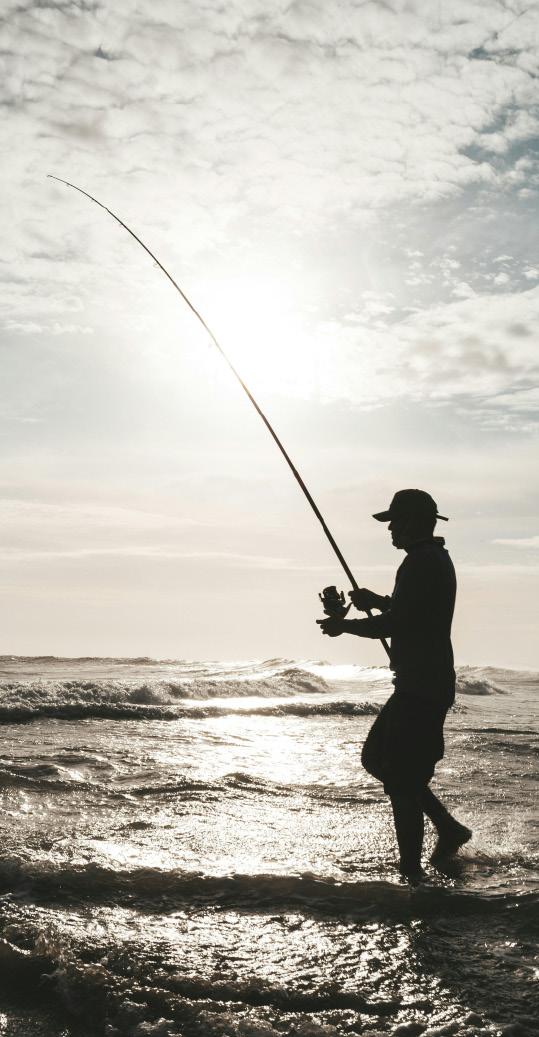
When Captain Brian Boehm takes anglers out on the Tampa Bay Flats, he loves to see it through their eyes — the undeveloped shorelines, the diversity of wildlife, and the ephemeral qualities that have drawn locals and visitors alike to the water for generations. “You could drive through and think it’s a preserve in places,” he says. “When people see the unbelievably beautiful scenery, catch a big fish, or see a sea turtle’s head pop up, I get the same joy that I had the first time I saw it.”
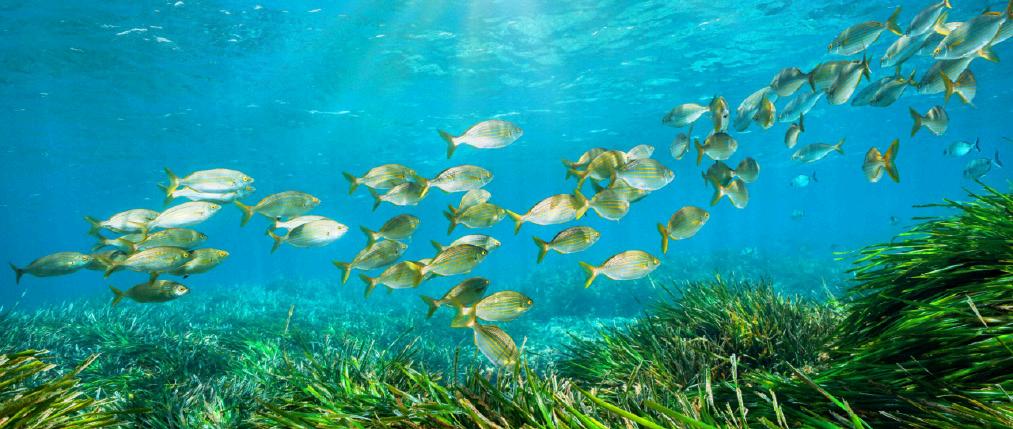
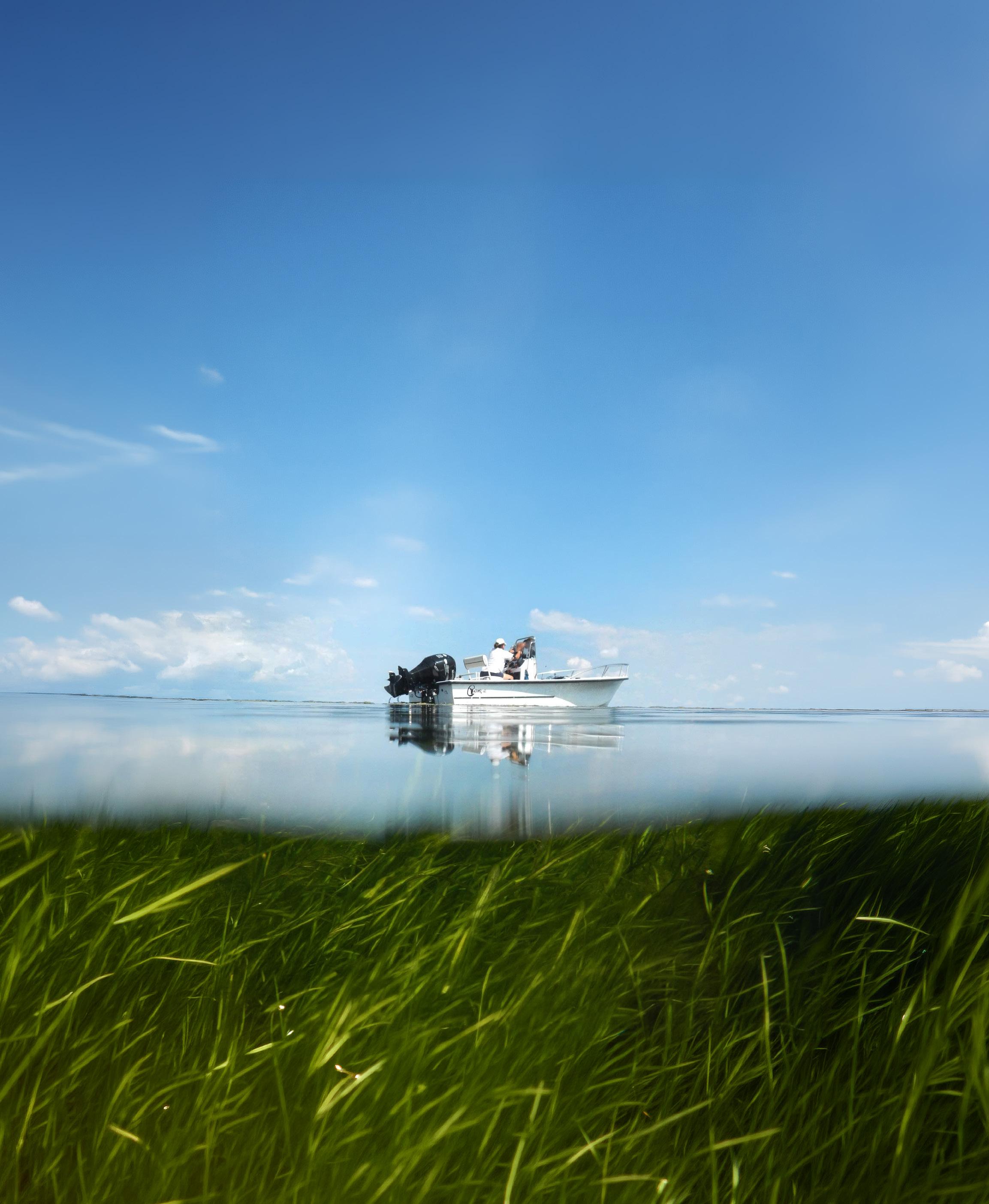
Stretching 400 square miles along Florida’s west-central Gulf Coast, Tampa Bay is the state’s largest open-water estuary, home to more than 200 species of fish as well as manatees, dolphins, great blue herons, and other wading birds.
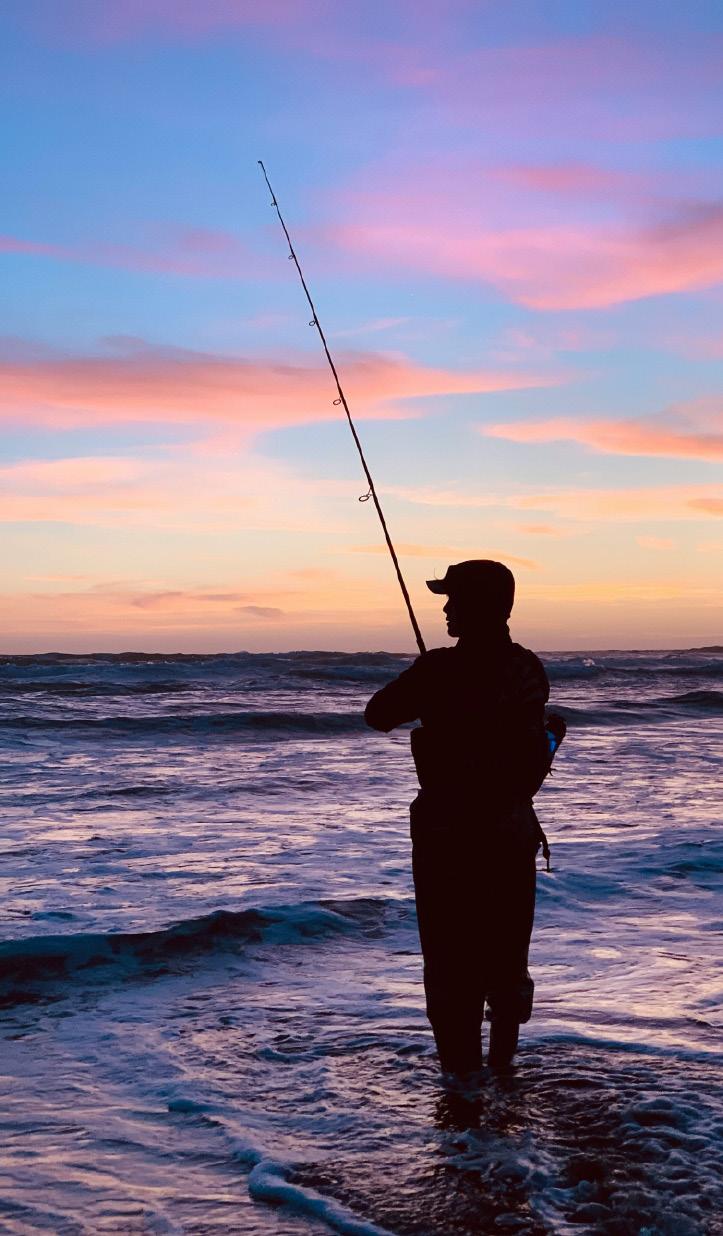
If you get up early enough to catch the sun rising over the flats, you might see Thean Toeuy fishing for redfish as they search the seagrass for food, fish tails flapping in the air. Toeuy, a Tampa native, loves spotting seahorses, crabs, and puffer fish, too. “The flats hold a wide variety of beautiful animals and plants that normally people don’t see,” he says. Toeuy sometimes fishes off the beach to catch dinner, “but most of the time I do catching and releasing. We want the fish to thrive in our area.”
THE GRASS BENEATH THE WATER
Toeuy and others will tell you it’s not just the fish, though. The Tampa Bay Flats are as much a story about plant life as marine life. Specifically, seagrass beds provide a fragile and vital ecosystem that locals are working hard to protect. Seagrass is where the juveniles of all sorts of marine life live. It’s the sole source of food for the local manatees. For anglers, healthy seagrass means a large and healthy fish population.
Protecting the seagrass is urgent work. Dr. Savanna Barry, a regional specialized agent with UF/IFAS Florida Extension Sea Grant Program, educates boaters and anglers about what they can do to protect this natural resource. The biggest risk boats pose to seagrass is propelling into too-shallow water, which can cause scarring — damage to the sea floor that uproots the seagrass and destabilizes the bottom sediments, so they’re more subject to erosion.
“We have found that when we show boaters aerial images of popular fishing spots with really heavy scarring of the seagrass, people are concerned,” Barry says. “Often just having a picture of the problem in an area they care about makes them inclined to be more careful.”
“When people see the unbelievably beautiful scenery, catch a big fish, or see a sea turtle’s head pop up, I get the same joy that I had the first time I saw it.”
AN OLD FLORIDA THAT STILL EXISTS
Max Chesnes is an East Coast transplant who moved here a few years ago to become an environmental reporter for The Tampa Bay Times. He grew up making trips to Florida with his father and uncles to fish the Florida Keys, so being here in Tampa Bay feels like a homecoming of sorts. “Tampa Bay really has brought me back to those early days of my childhood,” he says. “The amount of life you’ll see in just a short time frame is truly spectacular. I was out here recently, and we saw a mother and a calf dolphin in the same hour that we saw horseshoe crabs, hermit crabs, and tailing redfish right up against these beautiful islands. People like it because it is a visual reminder of an old Florida that still exists. There are still swaths of wild spaces that are largely untouched by human development, and I think people really want to keep it that way.”
The waters that inspire that conservation instinct sometimes change people’s lives entirely. Mike Goodwine was a committed bass fisherman until the day he decided to try saltwater fishing. “When I caught my first redfish, I knew right then and there I was done with bass fishing forever,” he says. “These fish will give you a fight.”
Before long he was taking friends on the water and even accommodating requests from people who saw YouTube videos featuring the giant redfish and snook he was catching. A friend urged Goodwine to get his captain’s license and then surprised him by signing him up for Sea School and covering the tuition.
Once official, Goodwine set himself apart not only with his fishing prowess but his friendly demeanor, hoping to defy the stereotype of the “old grouchy, salty captain,” he says. “I’m the ‘happy captain,’ just being myself, having fun, and teaching people how to fish.”
Goodwine is also pretty sure he was the first Black captain in all of Tampa Bay (now there are two).
“It’s hard to want to be something if you haven’t seen somebody who looks like you do it before,” he says. “I’ve had plenty of messages saying I’m an inspiration, and when they grow up they want to do it. If I never catch another fish in my life, but one person becomes a captain because of me, I’ll feel like I’ve done my job.”
Goodwine has been doing it long enough to see declines in the seagrass and is grateful for the efforts of groups like Tampa Bay Watch, Tampa Bay Waterkeeper, Captains for Clean Water, university scientists, and volunteers to restore it.
He also spreads the word to other captains as often as he can. Chesnes says he’s not alone in that.
“The history of the Tampa Bay estuary is this larger story of a community working together to restore an estuary that has suffered a large decline in seagrass coverage for several years, so oftentimes you’ll hear Tampa Bay referred to as a restoration success story. And the challenge is keeping that success.”
Boehm says the anglers he takes out on the Bay are as vested as anyone. “They come from all over, and a lot have seen destruction in their own home waters, so when they come here, they’re big-time conservation minded,” he says.
There are local regulations in place about what fish can be caught and kept, but Boehm says the anglers he meets ignore all that — they release everything they catch. “We actually go out and see the fish before we cast to it, so we’re sight fishing,” he says. “We’re making it as hard as it can be to fish because we want the challenge. People who do that have so much respect for the game they’re pursuing that they can’t even imagine keeping it.”
People like it because it is a visual reminder of an old Florida that still exists. There are still swaths of wild spaces that are largely untouched by human development, and I think people really want to keep it that way.
SMASHVILLE
HOW AN UNLIKELY SOUTHERN CITY BECAME ONE OF THE NHL'S MOST PASSIONATE
FAN BASES
John Stuck has the zeal of a convert. Before moving to the Nashville area, he “hated hockey,” he says. His best friend, though, is a huge fan, and eventually he agreed to take her to a Nashville Predators game.
“I became a superfan overnight,” Stuck says. Since that first game, he’s learned everything there is to know about the sport and personally met most of the team by going to practice sessions. He’s styled his mustache after Filip Forsberg, who plays left wing for the Preds. He even named one of his cats Filip Forsberg. He named the other Roman Josi, after the team captain.
“Before, I was into baseball and football,” Stuck says. “But after learning the sport, this is my favorite thing to do.”
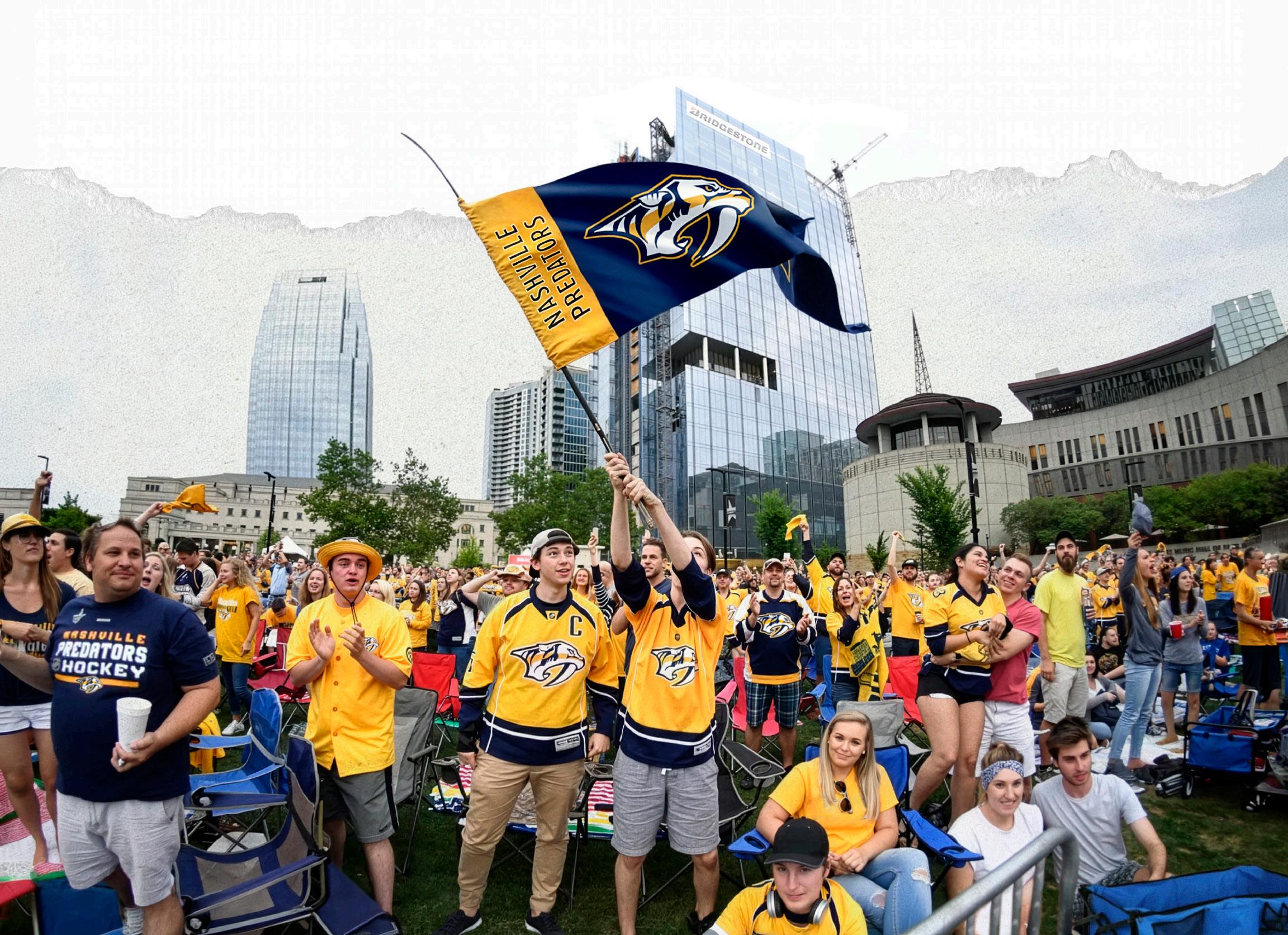
Stuck’s story mirrors the evolution of professional hockey in the city itself, which graduated from a farm team for the Atlanta Knights that generated relatively little attention, to an NHL presence that has produced a new nickname. Nashville’s not just Music City anymore, to hockey fans, this is Smashville.
When the Predators came in 1998, “hockey was not a traditional sport of Tennessee or Nashville,” says Rebecca King, the team’s Vice President of Communications and Executive Director of the Nashville Predators Foundation, the team’s philanthropic arm. “Now, a big portion of our fans haven’t known Nashville without hockey.”
Jessica Rizzardi is one of them. Raised in Franklin, Tenn., a suburb of Nashville, she grew up a Preds fan. Her father had played hockey, and her brother did Preds hockey camps growing up. “We’ve always been a hockey family,” she says. “It’s the most entertaining sport. It’s so fast paced, and every game is different.”
After graduating from college, she decided to try out for the Predators Energy Team, a co-ed squad whose members keep the fans hyped up during the games and serve as brand ambassadors at events. She was hired. “It was a perfect fit for me.” Now in her second season on the Energy Team, Rizzardi, who is also a professional dancer, says the team even invited her to choreograph a performance for a “Women of Smashville” theme night. Theme nights to celebrate a charity, holiday, the military, or just fans themselves, are a big part of Predators culture.
The Predators play in Bridgestone Arena (originally Nashville Arena), a downtown, multipurpose venue on Lower Broadway that also hosts big concerts and events like the SEC Basketball Tournament. At the time it opened, though, “it was not necessarily a desirable place to go. You would come to a game or another event, park in a gravel parking lot, and then you’d leave,” King says. “Now it’s a destination for our fans and for tourists. It’s great for the bars and restaurants, because after a game, 17,000 people are out on Broadway. A lot of outside people who come in see we have a strong hockey market, and so we have a strong away contingency that likes to come and see what we do in Nashville.”
BROADWAY
6TH AVE S
H O ME OF THE PRE DATO RS
H O ME OF THE PRE DATO RS
Rizzardi loves the energy. “One of the reasons so many people want to come to Preds games is because Bridgestone Arena is in the heart of the city,” she says. “My friends and I will go out after the game, and it’s fun to see everyone in their Preds gear. It’s really cool to have this community that extends beyond the game.”
For Stuck, the self-described hockey convert, the party outside sometimes rivals the action inside. On game days, the plaza outside the arena hosts parties with live music and giveaways, often drawing in people from the street who weren’t even planning to go to the game. If the Predators make the playoffs, “that’s the best time outside of the arena, because people bring lawn chairs, they put up a big screen and close off the streets,” he says. He’s watched playoff games both from inside the arena and outside, and “the watch party outside is even better.”
That sense of community runs deeper than game day. The Foundation takes players to visit kids in the hospital — on Halloween, King says, the players dress in themed costumes; last year they were Care Bears. Predators player Ryan O’Reilly, whose parents fostered several kids while he was growing up, buys tickets for any kids in foster care as well as other children dealing with challenges. “They get to come and have a VIP experience,” King says, “and after the game, he will sit and talk with them. They leave feeling like a million bucks.”
King says she has stories like that about every player on the team. “They are phenomenal humans who just happen to be really good at a sport.”
The fans have their own stories, too. In a social-media fan group, one member thanked a stranger who sent him a Preds visor after he lamented that he couldn’t find one. Another posted that he and his wife had recently moved to the area and appreciated the warm greetings they received from locals: “We have been to arenas and stadiums all over the country and rarely see this.”
As for the moniker “Smashville”? Some say it refers to the fan base, others define it as the giant party that surrounds every home game. Says King: “It’s about the high energy, the players knocking against the glass, all of that.” Whatever the origin, the name is here to stay. In 2017, a year all Preds fans remember, the team made its first-ever Stanley Cup Final appearance, and the Tennessee Department of Transportation used its digital highway message boards to spread the word: “Welcome to Smashville.”
“It was a fun way to tell people, yes, they’re coming to Smashville,” King says. “And they identify it with hockey.”
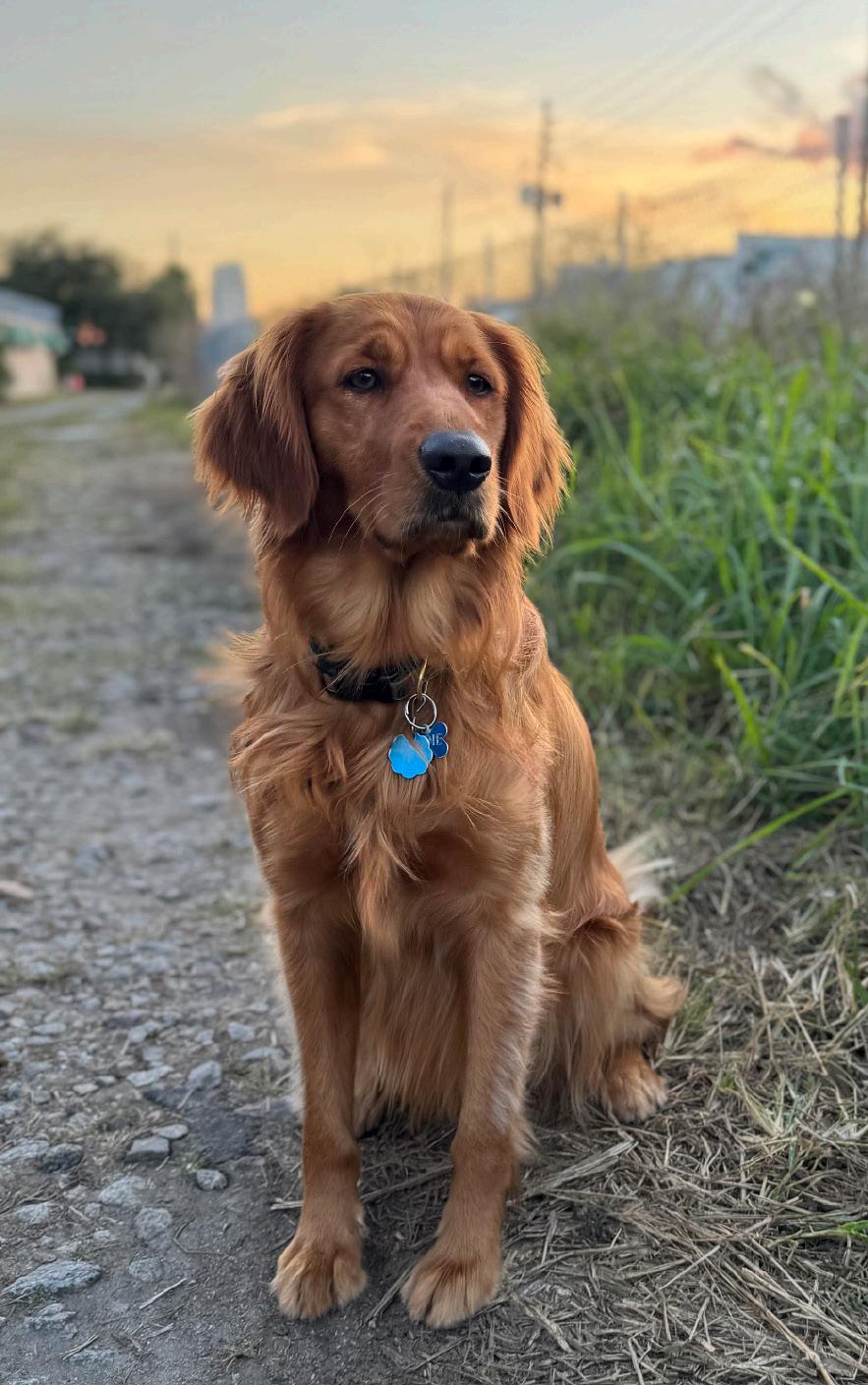
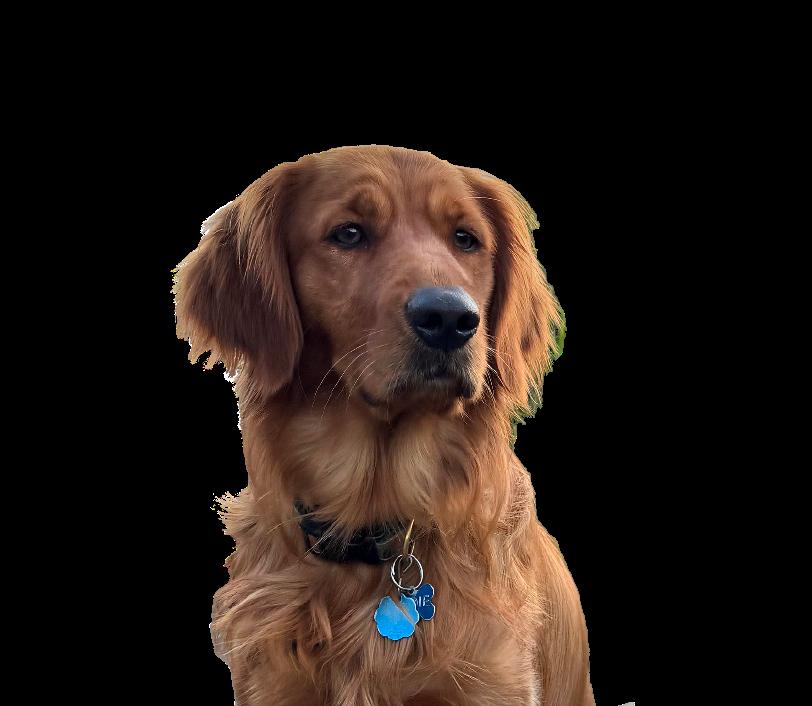
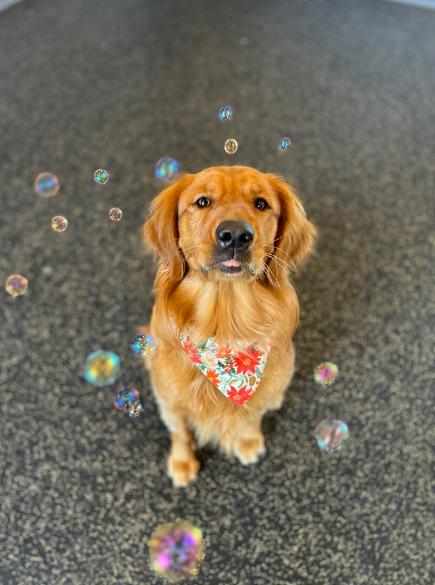
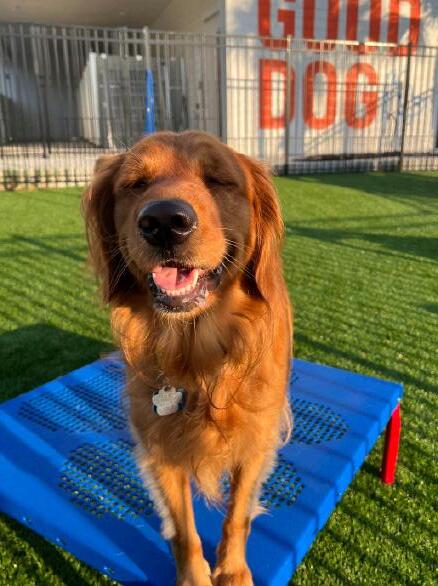
Sadie
BREED Field Golden Retriever
AGE 2.5 years
LIKES Swimming, playing fetch, Goldfish, and socks
DISLIKES Suitcases and the laundry hamper
NICKNAMES Sadie Sue
Sadie is the kind of dog who brings a little extra brightness wherever she goes. Since joining her owner, Andrew’s, family as a puppy, she’s become a steady source of energy, companionship, and everyday joy.
At Livano Sunlake, Sadie keeps a full social calendar. Whether she’s arriving for her weekly visit to the onsite Pet Center or stopping by the office to say hello, she has a way of lifting the mood and drawing people in. The staff describe her as a beloved fur-friend, noting that “her smile is truly one of a kind.” Her presence is warm, friendly, and instantly recognizable.
That same energy carries into everything she does. Sadie loves to swim and run, and she rarely passes up an opportunity for either. She’s also a frequent visitor at her “grandmother’s” house, where she plays with her sister Bailey and the other family dogs, Walter and Hudson. At home or away, she brings the same enthusiasm, whether she’s chasing a ball, collecting socks, or happily accepting a Goldfish snack. Suitcases and laundry hampers, however, remain objects of deep suspicion.
For Andrew, Sadie brings a sense of routine, connection, and happiness to daily life. And for the Livano Sunlake community, she’s more than just a familiar face — she’s part of what makes the neighborhood feel welcoming, connected, and full of life.
Your community. Your club.
Community is at the heart of everything we do. Livano Social Clubs is a platform for finding neighbors who share your interests. Whether you love cooking, walking, reading, or game nights, there’s a club for you to join or start. VISIT THE LIVANO APP TO JOIN A GROUP TODAY
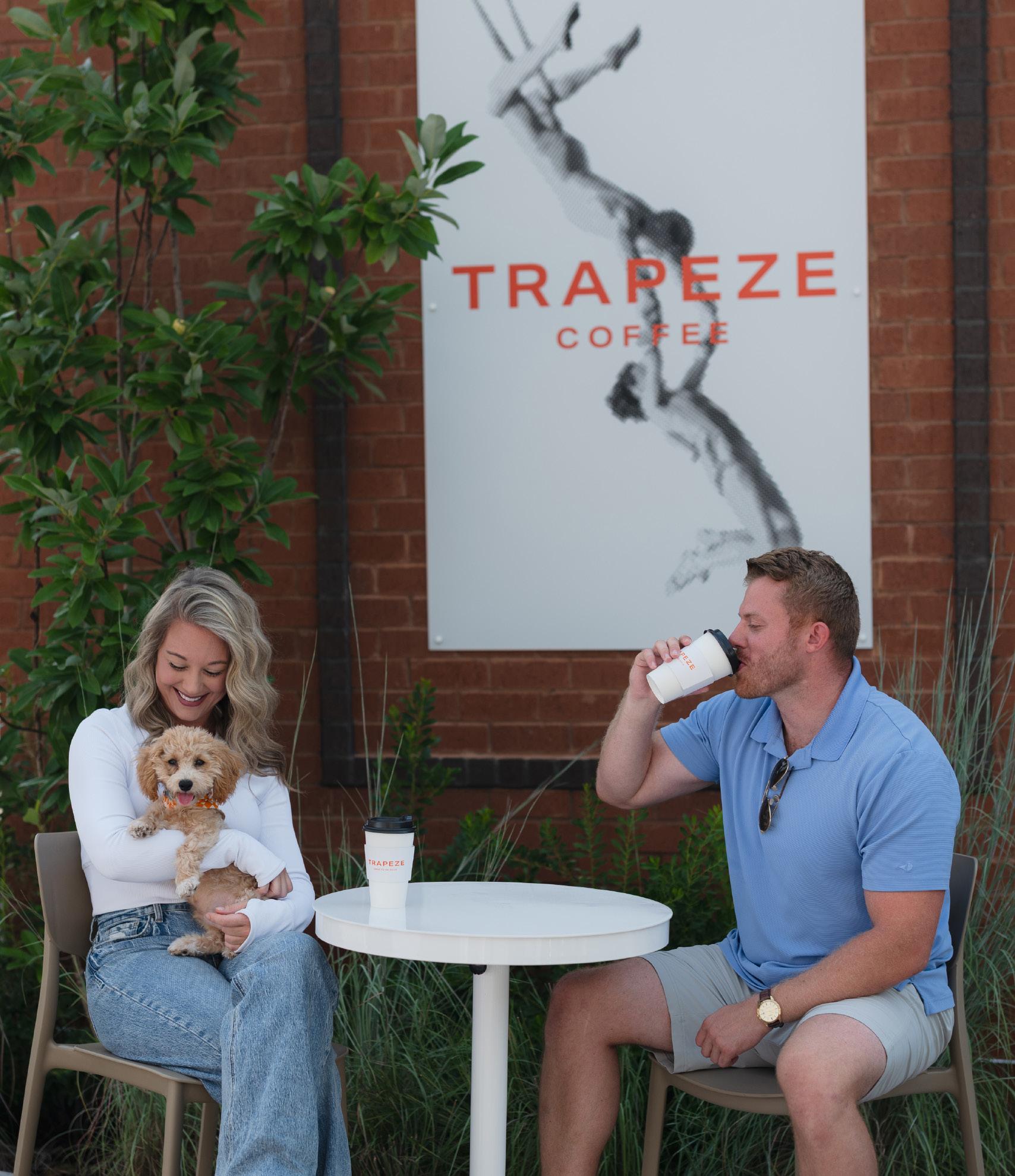
How you start your day matters. Trapeze is a vibrant coffee brand exclusive to Livano communities. Residents enjoy handcrafted coffee and espresso drinks served by our Trapeze baristas at no cost.
Bags of Trapeze coffee are also available for purchase at livanocollection.com.