Litro Magazine believes literary magazines should not just be targeted at writers themselves, or even those with a particular interest in literature, instead Litro believes in reaching the general reader whether they be a commuter, someone browsing in bookshop or in a bar or café to meet a friend.
General inquiries: contact info@litro.co.uk or call 020 3371 9971
T e Sum of our misfortunes by Catherine McNamara
T e Old man becomes brave by Matt Broom f eld
Crossing the Wake by Cindy A. Little f eld
Driving South on Any Road by Kelly Craig
Borders by Catherine Davidson
We share the Dance f oor by Sarah Raine
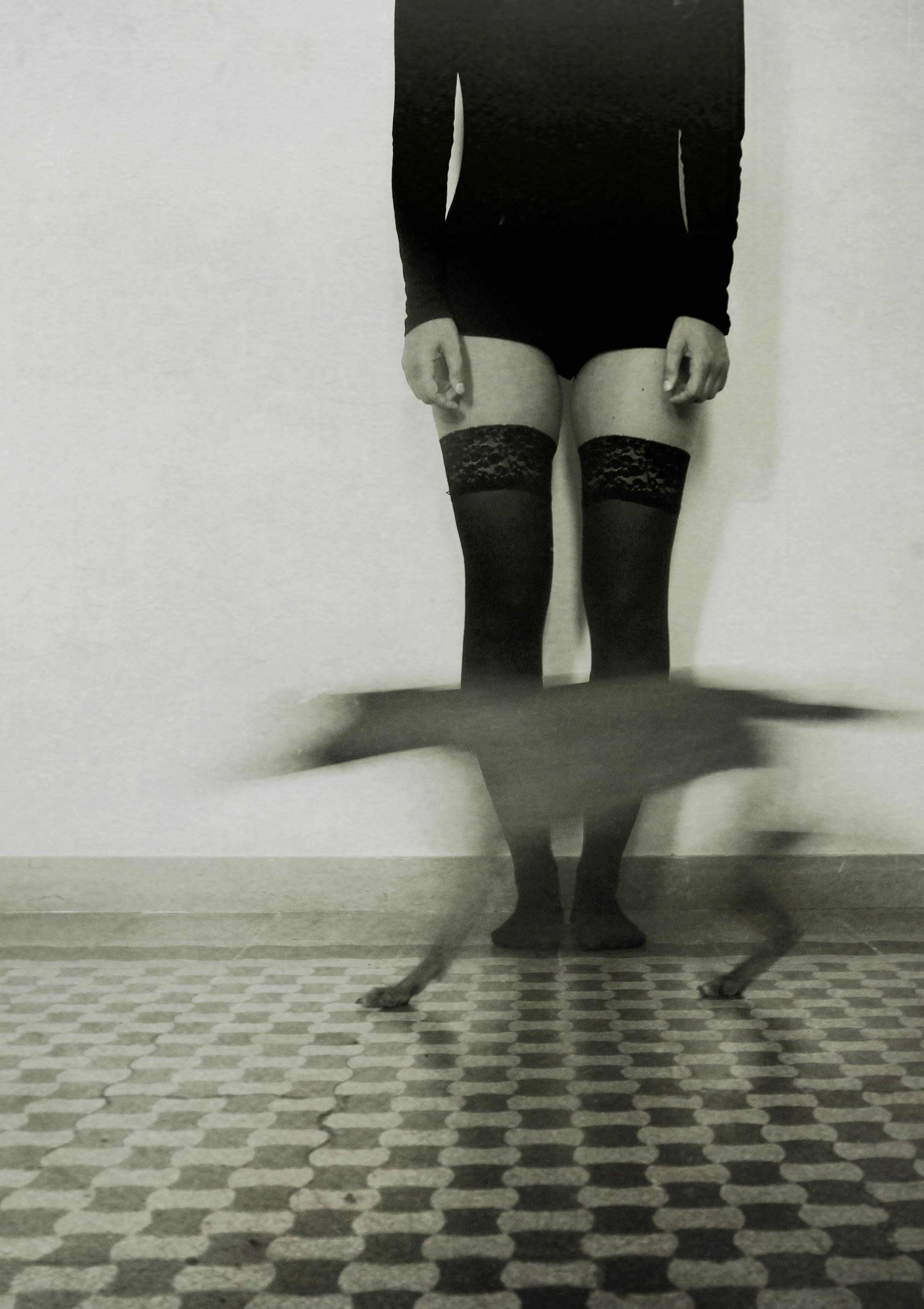
To Walk by Kara Dennison Photography by Victoria Yarlikova
CONTRIBUTORS
Matt Broomfeld is a journalist, writer and poet based in London. His poetry and prose has been published by Te Independent on Sunday, the Mays, the London School of Liberal Arts and Bare Fiction. His creative writing has been displayed across London by Poetry On Te Underground, performed by National Youth Teatre and included in teaching packs by the National Poetry Society. Matt was also a Foyle Young Poet of the Year.
Cindy A. Littlefeld has had fction that appeared in Te Rose & Torn Journal and Dogplotz Flash Fiction. She was a fnalist in the Glimmer Train Short Story Contest for New Writers. Cindy holds an MFA in creative writing from Southern New Hampshire University and is currently seeking representation for her frst novel.
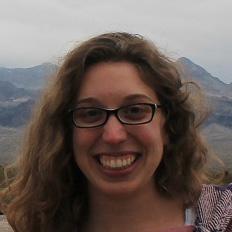
Kelly Craig is an emerging writer from Las Vegas, Nevada. Kelly studied English at William Smith College in Geneva, New York, and is currently working in Las Vegas as a teacher. Tis is her frst publication.
Catherine Temma Davidson lives in London, but grew up in California. She teaches Creative Writing at Regent’s University and is the author of a novel about Greek Women, Te Priest Fainted, and many poems, some of which have been published in pamphlets in the UK. She publishes essays with the Cofeelicious on Medium.
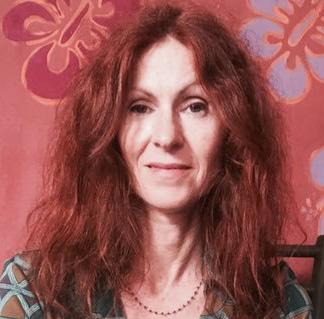
Catherine McNamara is an Australian author living in Italy after many years in West Africa. Her collection of Pelt and Other Stories was long listed for the Frank O’Connor Award and was a semi-fnalist in the Hudson Prize. Her stories have been Pushcart nominated, shortlisted and anthologized in the UK and Europe. Her story Te Architecture of Humans’ was published in Litro’s Story Sunday in October 2015.
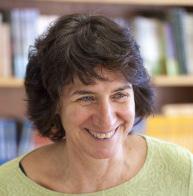
Sarah Elizabeth Raine is a PhD researcher at Birmingham City University (U.K.). She uses fction and auto-ethnographic writing to explore the nature of music scene participation and the experience of movement, belonging and identity.
Kara Dennison is a writer, editor, illustrator, and presenter from Virginia. Her work appears in the light novel series "Owl's Flower," "Associates of Sherlock Holmes" from Titan Books, and many more. Additionally, she's the community manager for Onezumi Events, which involves equal parts social media and drinking with Doctor Who actors. She currently lives in Newport News with her four guinea pigs.
Victoria Yarlikova is a belarusian hobbyist photographer based in Italy.
Editor's letter
Dear Reader,
Homonym, is a Latin name which is identical to that of a diferent organism, the newer of the two names being invalid. Our theme this month is just that Movement. Te word to me conjures up the oft-used- clichéd - the simple things are often the most important things. Restricted the simple act of Movement has so many life threatening consequences. Fully enabled and the mere act of Movement will lead to a good and healthy life this applies to the individual and for the collective Masses – whether formed for a Movement or gathered together feeing a place once called home. Life is the process of movement, from the simple act of breathing more to allow a more conscious life in disciplines such as yoga and meditation to the act of moving people from one place to another for survival, prosperity, discovery or simply an adventure. Europe continues to grapple with the infux of refugees -many feeing war-torn homes to seek refuge elsewhere. As I write this, Italy today announced the largest rescue of its shores of Refugees feeing Libya some 6,500 have been rescued of the coast of Libya with an estimated 40 co-ordinated rescue missions taking place a stretch of 12 miles of the Libyan town of Sabratha- an occurrence
that for our generation has become – what seems to be the daily norm – all played out in the backdrop of our relevant movements from summer beach retreats and last minute retreats for the summer. Refugees have been seeking safe haven in the West for years. Recently, however, something has changed. Tousands have become millions, as nation after nation succumbs to Movements towards anarchy and fanaticism. Tere is no doubting we live in the era of civil wars -now taking place in Islamic countries from Nigeria to Pakistan – this is why the many thousands has turned into millions.
Like the organism, Movement in this issue takes on its own being from one story to the next. For this issue we asked our readers to inspire and captivate us with compelling stories around Movement taken from over 300 submissions the collection compiled here do just that -captivate and inspire us!
Te Sum of Our Misfortunes by Catherine McNamara speaks of the Senegalese experience in today's Florence.
In the Essay Borders, Catherine Temma Davidson looks at race, culture and the limits of perspective.
We move into the collective masses forming to make a movement with Share the foor, Sarah Raine Essay inspired by Alfred Shutz’ 1951 article, ‘Making Music together’– looks at the making of music through the ‘northern Soul’ Dance movement, a movement that emerged independently in Northern England, the Midlands, Scotland and Wales from the British mod scene and the underground rhythm & soul of the late 1960s.
Journalist Matt Broomfeld, gives us Te Oldman becomes brave, a story looking at the individual as one man slowly and contemplatively moves towards various ways of ending his life.
In Crossing the Wake, Cindy A. Littlefeld, tells a story of a young girl coming to terms with the death of her mother.
Kelly Craig, moves our pages to Las Vegas, in her tale Driving South on Any Road, a story that seeks to engage with the complexity and richness of Las Vegas as a setting.
We close the issue with Te Walk, an autobiographical piece by Kara Dennison, focusing on her experiences with endometriosis. For many years her movement was
extremely limited by illness and the mere act of walking without pain, let alone running or jumping, feels like a strange and miraculous achievement.
Te good life is a process, not a state of being. So the next movement you take make it a good one!
Until next month, when our we wonder East: with the next installment of our World Series: India guest Edited by Shaashi Taroor – who joins us in London on October 13th, when we return to take over Waterstones Piccadilly with a special Indian themed evening of talks, debates, music and more.
Follow us on social media for more information
Editor-in-Chief
Eric Akoto
Join Our Community
Help us help writers. Your membership will support our efforts to find new ways of looking at the world through stories. You'll also be helping us provide opportunities and exposure for emerging writers, perhaps kick-starting their careers.
New Membership Options:
With our all-access UK membership, you get Litro Magazine delivered to your door: 10 issues of Litro Magazine a year, plus exclusive access to hundreds of short stories from past issues in our digital archive. Get in on our quarterly Book Club: four new books a year from our Book Club, plus access to live author Q&As, and the chance to see your reviews published on our site. Discounts on Litro Live! events: 50% off Litro Live! events and priority booking.
With our all-access International membership, you get all the same benefits as for UK readers, but at an additional cost for postage and packaging.
Our Student membership gives you the same benefits as a full membership, but at a discounted rate. You will be asked to show proof that you are a student of a school or university in the UK.
For more information:
Visit us online at www.litro.co.uk. and become a member so you never miss an issue! For general requests and information: Call us on +44 (0)20 3371 9971, or email us at info@litro.co.uk.
The Sum of Our Misfortunes
/ / Catherine McNamara
Speaks of the Senegalese experience in today's Florence.
Mathilde wanted to know us, she thought that she could. She came to Florence with her hats, her ugly boxer dog, her ideas of art that she tried to spoon into our black mouths. At frst she liked the best of us, the quiet ones with jobs who had showers in the same place every morning. But she was a thirsty girl and soon we were not enough. Our drugs, our cocks, the wall of our chatter and even what she saw of our majestic womenfolk and on Friday, our prayers. She fnished with us. We would be ignored in bars and on wind-whipped street corners. We sat on benches and watched her walking that dog in the Boboli Gardens.
At the beginning of summer Mathilde crossed the park. We saw her coming our way, her eyes hunted us down and we were no longer invisible. One man remarked that all winter he had seen Mathilde driven around in a sports car, kissing an older Italian at the wheel. Another had seen them drunk in the street, his hands all over her. Today, Mathilde wore denim shorts and we saw the twisting muscles in her thighs.
‘Hi guys,’ she said.
She looked at Mamadou who had not yet changed from his courier’s uniform.
‘Hey, you’re a new face. Who are you?’
‘Je suis Mamadou.’
Her eyes glanced over us.
‘Look guys, I need a model. To sketch. And eventually paint. It’s for my course. How about you, Mamadou?’
Mamadou sat there rolling over his hands.
‘I’ll pay you good money. You just have to stand there. A couple of diferent positions while I sketch. Naked. Easy-peasy.’
One of us tried to explain to Mathilde that Mamadou was employed and also married. Te man who spoke had several times been up to Mathilde’s apartment. He told us there
/
/
Borders
Catherine Temma Davidson
looks at race, culture and the limits of perspective.
I have forgotten many things about my early twenties, but I have not forgotten the trip I took to visit my ex-boyfriend in Cairo, Egypt. Tose events have played themselves over again in my mind so often they have taken on the sharp edges of fction. Like fction, my story is a version of reality, one others might dispute. Nevertheless I believe my memories are true. I believe they are true in the sense that they really happened and I believe they are true in the fctional sense, too: that certain events remain in my mind because they hold some nugget of insight, something important, that continues to demand attention. Teir signifcance has only deepened over time, both because of who I have become and because of what the world seems more and more bent on becoming.
It was our frst year out of college. My ex-boyfriend was working for the President of the American University in Cairo. I was working in Athens as an under-the-table news stringer. Even though we had broken up ofcially at the end of our senior year, we were far from home and lonely. We wrote to each other often, and in the spring, a letter arrived from B inviting me to come to Cairo. I accepted.
Te cheapest and easiest way to get to Egypt from Athens was to fy, and to fy I needed to take a Valium. I had never been a nervous fyer before, but I had been covering an ongoing story of Athens-bound planes dropping out of the sky. Libya and America were in a cold war, and fights to Greece were an easy target. Bombs on planes became so routine that when one blew out the side of a TWA jet that managed to land with only two passengers killed, the bureau sent me to cover it because none of the real reporters could be bothered. I was only 22, and the sobbing survivors had shaken me. You could buy Valium over the counter, and I still remember how it felt on that short fight, high above the Mediterranean: not just calm but elated, separated from the earth and its mortal concerns. It was a god-like perspective I needed before seeing the man who had been my great love for three years and from whom I had parted on bad terms.
B and I had met when we were sophomores living in the same house at Harvard. We firted with each other for a few months, then kissed at a Christmas party. Soon we were in love: a couple. It was the frst, serious grown-up relationship for both of us, and we stayed together until our senior year. Not an uncommon story, but our love was perhaps surprising. He was a committed and passionate athlete; I was a café basement dweller with a poet’s suspicion of organized sports. He was an East Coast suburbanite who favored button-down shirts and loafers; I was a Californian hippy who liked to wear hoop earrings and ethnic prints. He studied Gov-
Anirban Pal
/
We Share The Floor /
Sarah Raine
Essay inspired by Alfred Shutz’ 1951 article, ‘Making Mu- sic together’– looks at the making of music through the ‘northern Soul’ Dance movement, a movement that emerged independently in Northern England, the Midlands, Scotland and Wales from the British mod scene and the underground rhythm & soul of the late 1960s.
Our analysis of making music together has been restricted to what Halbwachs calls the musician’s music. Yet there is in principle no diference between the performance of a modern orchestra or chorus and people sitting around a campfre and singing to the strumming guitar.
–Alfred Schütz (1951)
All that is important is this one moment in movement. Make the moment important, vital, and worth living. Do not let it slip away unnoticed and unused.
–Martha Graham
Placing the bag on the foor, the ritual of the evening begins. Te extra socks, the laces done up just right on the leather-soled shoes, an interplay of signifcant gestures to which your fellow can relate. Moving your foot up and down, twisting your ankle, adjusting the ft, the length of the lace, a smudge on the toe. A slide on the carpet to make sure before the main stage, and the safe and considered moment of preparation is over. Now to fnd a place to begin: your introduction to the evening, to be considered or, in furried expectation, poured out upon the foor.
Watching the familiar movements on the dance foor as I stand on the edge, awaiting my turn, my frst record, I understand the slight dip of a head, extension of a hand, a leg, a scheme of expression and interpretation that only the initiated understand. A lull, a clap, a moment for catching your breath. Tose that do it out of turn stand out- sore thumbs in a harmonious movement. Both soothing and frightening at once, the fear of being found out, that you are only pretending and all the others are the possessors of true knowledge, of true experience, performers of truth in the shadow of your deception.
Ten the record plays, the one that you have been waiting for but couldn’t guess. It moves you to move, from the seated sides into a space, to become part of the motion on and of. Simple steps, on double beats for a fast record, focusing on the smooth, the capable footwork of the in crowd: your debut performance for this particular audience. And it works. Tose
The old man becomes brave
Matt Broomfeld
a story looking at the individual as one man slowly and contemplatively moves towards various ways of ending his life.
Te old man lived alone in a big block of fats. Every day he looked at his left hand all morning, from breakfast till lunch. For breakfast he ate half a dozen pickled eggs all in a row; for lunch he ate spaghetti hoops, microwaved on toast in winter but cold out of the can in summer. All afternoon he looked at his right hand, then for tea he ate fsh fngers and tinned peaches until his heart felt like it would burst. In the mornings, he tended to burp a lot. In the afternoons, he was more prone to sneezing fts, though often as the day wore on a burp began to play around his lips once more. He had a rocking chair by the microwave but he seldom rocked while he sat and stared at his hands. One day he realised that the time had come to climb up to the top of his block of fats and jump of and die.
He still sat in his rocking chair without rocking and stared at his hands, but as he settled down in the mornings with small, sweet burps rising from within his chest then his gaze took on an especial intensity and purpose. He had not planned a climbing route for many years. He meant to look at his hands for a few moments only, to focus his mind on the act of climbing and to remind him of the look of a rockface or wall where good purchase could be found. Yet he often found himself lost amidst the rifts of his wrinkles and delving into pores without end, his eyes wandering endlessly and forgetting the frm intentions with which he started each day. Te memory of a razor-sharp rock which had once sliced open a raw wound across the back of his right hand did not sharpen his mind, but cut it loose to foat back up clif-faces he no longer had the strength to climb.
Too often he would come to the end of a day and realise that he had done nothing but reminisce, and reproach himself as he smoked a fnal cigarette before bed. Some days he grew so angry that he wanted to stub his cigarette out on the back of his quaking hand, as punishment for his idleness. Tomorrow, he would focus his mind, or so he would tell himself as he ladled pickled eggs he did not deserve into his eager mouth. Ten the next day would pass in another reverie, and the day after that, and he would grow angry and frustrated and allow himself only four fsh fngers and a single slice of bread without margarine, for he knew that hunger could bring clarity to a spoiled mind. but then he would fnd he was too hungry to sleep, and trudge defeated downstairs to retrieve a pair of cold, clammy fsh fngers from the bin and dip them straight into the tub of margarine and devour them, though this made his heart hurt even more than when he glutted himself on tinned peaches too late at night.
Crossing the Wake / /
Cindy A. Littlefeld
A young girl deals with the death of her mother
Te summer my mother died, my father drove his way through grief and found a lake. A city barber trekking hours north with his nine-year-old to spend hot summer weekends at a cabin built so close to the shoreline you could hear the wash against rock when you lay in bed at night. A small place, plumbed with pipes that would need to be drained every fall when the seep of cool air sent us back to wait out another winter at home.
For years, my father was friendly with one of the neighbors, a guy named Jack who had the cabin next to ours. He was a few years younger, less polished than the men in leather shoes and button down shirts that came to my father’s barbershop in Providence. I couldn’t make sense of their friendship, not at frst, not until I felt the pull myself, the excitement in gaining passage on his firts with the forbidden.
When I was thirteen, Jack came over to our cabin one morning to tell us he was going to blow up the road. He had sold of some property down shore with the stipulation that the buyer put in his own right-of-way. A year later, the new owner was still using Jack’s driveway, leaning on the horn until he came out to move his car.
My father laughed and asked Jack if he wanted to come in for cofee.
“I’m serious,” Jack said. “I’ve got dynamite.”
My father’s face went slack. “You can’t.”
“I can,” Jack said.
He lent us his rowboat, and my father paddled out to the middle of the lake to wait it out.
“Give me a half hour,” Jack called after us.
It was a weekday morning and the lake stretched wide and calm, quiet but for the buzz of a chainsaw from the woods along the opposite shore.
“Lucky if he doesn’t kill himself,” my father said as he pulled the oar handles through the locks so that the ends dripped pearls of water back into the lake.
I’d been facing shore, and I spun around when he said it.
My father shook his head. “He’ll be fne.” But I could tell he was worried by how often he glanced at his watch after that.
Driving South on Any Road
tells a story of a young girl coming to terms with the death of her mother. / / Kelly Craig
Richie Nelson got shot on a Saturday night in March in his parents’ garage while hosting a party for the cast and crew of the school’s recent production of Te Crucible. Amber fought her mom all day Saturday to let her go to the party, but her mom held fast.
Monday morning it rained, the frst spring rain. Probably the only spring rain. It was coming down hard enough on the concrete that Amber heard it in her dream. Outside the orange streetlight was still on even though it was past time for sunrise–the streetlight was the sunrise today.
Te rain cloud moved west across the Las Vegas Valley and out toward the gap between the Spring and Sheep Mountains, a grey eyeshadow smudge in a vast sky. She turned of her alarm and opened the window, lying on her back and inhaling the scent of the sun baked, dusty screen, crackling and popping as it went from dry to wet. When she left her room she begged not to go to school. Her mom said that she needed to be there to grieve with her peers, to support those who had known him better, to take her math test and turn in her US history term paper.
Te rain stopped, that quickly. It rinsed the grit from the cars and the sidewalks and the stucco houses enough to expose their diferent shades of tan, stopping short of revealing that beneath the shades of tan everything was the same. Te sun peeked over Sunrise Mountain. By noon she would forget it had rained at all.
At school, Amber went straight to the theatre where she spent the early morning. Te casting sheet for the upcoming production of Hamlet was supposed to be posted on the door, but it wasn’t. No one was there. Amber did her makeup in the dressing room like she did every morning, so that her mom wouldn’t see–winged eyeliner and thick mascara like she’d been practicing, a layer of bronzer to give herself color on this grey day, dark lipstick. She went outside to the backstage courtyard, where, on nice days, everyone would hang out. But today it was just James, sitting on top of the concrete picnic table, smoking a cigarette. Tis wasn’t that kind of school; most kids wouldn’t have dared, but James must have known that he had some kind of immunity today. He wore tight pants and styled his hair so that it swooped down and covered his entire left eye and some of his right one. James did lights, and Amber didn’t know him well.
To Walk
Kara Dennison
an autobiographical piece, focusing on the writer's experiences with endometriosis. For many years her movement was extremely limited by illness and the mere act of walking without pain, let alone running or jumping, feels like a strange and miraculous achievement.
It's my friends' wedding day. I'm one of two non-family who were invited to the ceremony. Tey were both Latin teachers at the time... said their vows to each other in Latin. Tey were married in one of the historic buildings at the college we all went to.
And now we're going to the reception. Te basement of one of the colonial taverns. I'm walking with Emily, the bride, and the one other non-family guest. We're parked two blocks away. I'm dying. Dying. It hurts so much. I'm smiling. Sweating. Out of breath. Pain in my gut like everything's going to burst. Tears in my eyes. Smiling.
“Are you okay?”
I shrug. “Yeah, I thought I'd be able to handle it, but it's a little farther than I thought.” It's two blocks. I knew exactly how far it was. I just hoped.
“Oh, my God.” Emily looks crestfallen, guilty. “I didn't even think of that. I'm so sorry.” I reassure her. It's not her fault. If it had been a real problem, I would have said something. She's fne. It's my own fault. Besides, we'll be sitting down soon, right? It's fne.
She's better now.
I'm still hurting.
I'm twelve years old. Crumpled up in a bed in the abandoned convent that makes up the back half of my high school. Tired. Pain. My legs are on fre. My gut is about to explode. I'm crying. Crying from the pain. Certainly not from the school assembly I'm missing. A band made up of recovered drug addicts are in the gym playing “Adios marijuana, good-bye Mary Jane.” But I'd take that over this.
“Is it really that bad?” I can't tell if the nurse is incredulous or concerned.
It is. I nod.
“If it's really that bad, you should be in the hospital.” Ah, she's incredulous. Tat's what they always say when they don't believe you. Because the hospital makes it real, so you don't want to go if you're faking. Joke's on her, I don't want to go to the hospital because I'm scared of needles. I shake my head and bury my face in the pillow, quietly wondering what it would have been like to be a nun living here a century ago.
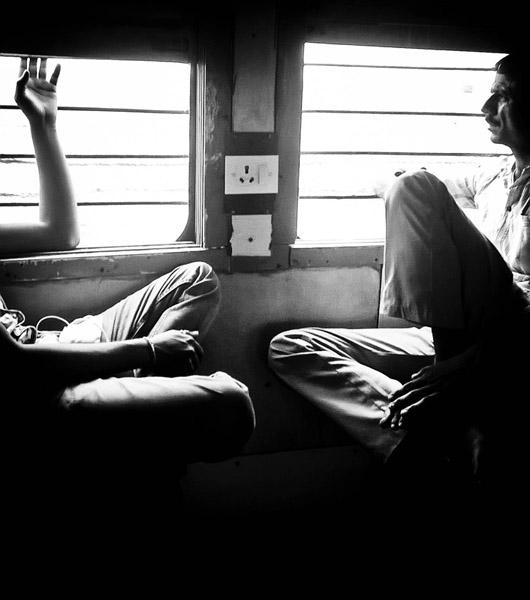
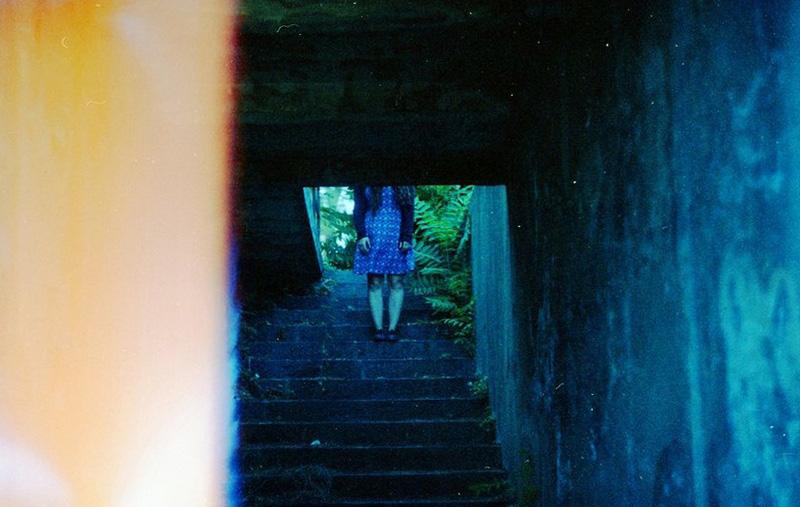
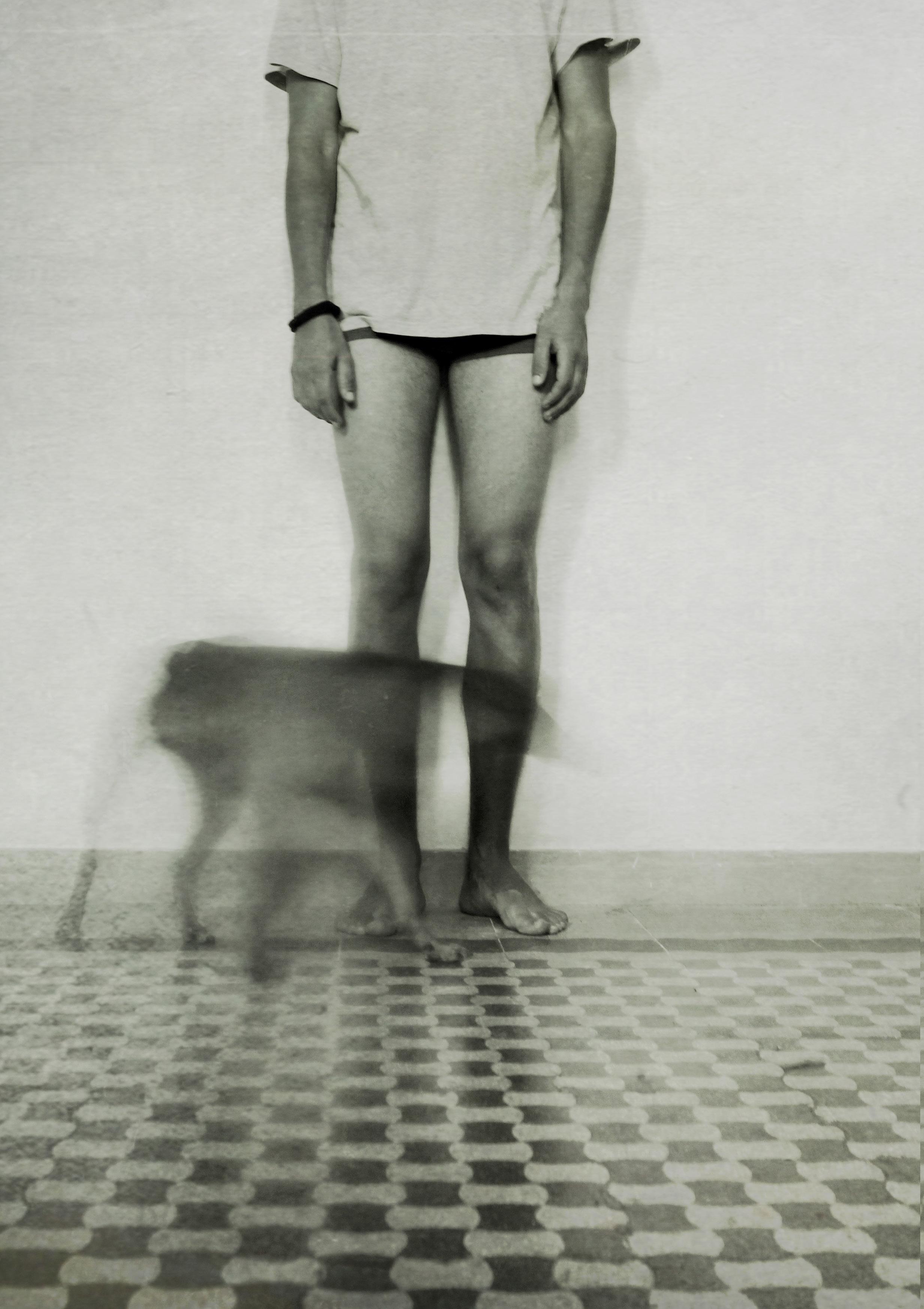
Photo Essay
Photography by Victoria Yarlikova, a Belarusian hobbyist photographer based in Italy. She say's of her work: "I gained a digital refex camera back in 2011 and started shooting. Two years ago I realized I wanted to try Polaroid and this is how my passion for analog photography began. I love to use my Zenit 122 and to be able to tell a short story with one picture."
See more of her work at Flickr @invisigoth88.
Victoria Yarlikova
Master of Fine Arts / MA
Creative Writing
Join the most successful Creative Writing course in the UK and complete a full-length book under the guidance of established writers directed by Poet Laureate Carol Ann Duffy.
• Study on campus or through online distance learning.
• Financial support is available through our postgraduate scholarships.
• A range of English short courses are also recruiting now. Visit our Postgraduate Fair on Wednesday 7 September.
Find out more: mmu.ac.uk/english/postgrad Or email: postgradenglish@mmu.ac.uk
The Manchester Writing Competition is now accepting entries for the 2016 Poetry Prize and the 2016 Fiction Prize. Both prizes are open internationally and offer the chance to win £10,000*.