Featuring
Jonas Hassen Khemiri
Lina Wolff
Agri Ismaïl
Malte Persson
Cilla Naumann
Cover art
Maria Friberg


Featuring
Jonas Hassen Khemiri
Lina Wolff
Agri Ismaïl
Malte Persson
Cilla Naumann
Cover art
Maria Friberg
Editor-in-Chief
Eric Akoto
Online Editor
Arts Editor
Daniel Janes arts@litro.co.uk
Assistant Fiction Editor/Story Sunday
lunchbreakfic
Tuesday Tales
Essays
Barney Walsh storysunday@litro.co.uk
Belinda Campbell lunchbreakfic@litro.co.uk
Hayley Camis tuesdaytales@litro.co.uk
Samuel Dodson essays@litro.co.uk
Contributing Editors at Large
Lead Designer Laura Hannum
Advertising Manager online@litro.co.uk
Sophie Lewis, Rio, Brazil
+44(0) 203 371 9971 sales@litro.co.uk
General inquiries: contact info@litro.co.uk or call 020 3371 9971
Litro Magazine believes literary magazines should not just be targeted at writers themselves, or even those with a particular interest in literature, instead Litro believes in reaching the general reader whether they be a commuter, someone browsing in bookshop or in a bar or café to meet a friend.
Join the most successful Creative Writing course in the UK and complete a full-length book under the guidance of established writers directed by Poet Laureate Carol Ann Duffy.
• Study on campus or through online distance learning.
• Financial support is available through our postgraduate scholarships.
• A range of English short courses are also recruiting now.
Visit our Postgraduate Fair on Wednesday 18 May.
Find out more: mmu.ac.uk/english/postgrad
Or email: postgradenglish@mmu.ac.uk


The Manchester Writing Competition is now accepting entries for the 2016 Poetry Prize and the 2016 Fiction Prize. Both prizes are open internationally and offer the chance to win £10,000*.
Find out more: manchesterwritingcompetition.co.uk
* Terms and conditions apply

10th July - 6th August 2016



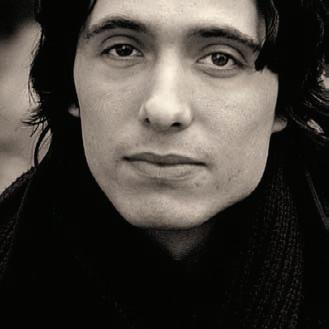
Jonas Hassen Khemiri



Jonas Hassen Khemiri is one of the most important writers of his generation in Sweden. His debut novel, One Eye Red (Ett öga rött) bookturned-phenomenon was awarded the Borås Tidning Award for Best Literary Debut Novel. This also became an enormous bestseller, selling over 200,000 copies in paperback— the most of any book, all categories, in Sweden in 2004.

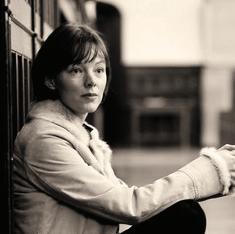



Lina Wolff has lived and worked in Italy and Spain. During her years in Valencia and Madrid, she began to write her short story collection Många människor dör som du(‘Many People Die Like You’; Albert Bonniers Förlag, 2009). Bret Easton Ellis and the Other Dogs, her first novel, was awarded the prestigious Vi Magazine Literature Prize and shortlisted for the 2013 Swedish Radio Award for Best Novel of the Year. She now lives in southern Sweden. Her second novel, De polyglotta älskarna (‘The Polyglot Lovers’), is forthcoming from Albert Bonniers Förlag in 2016.
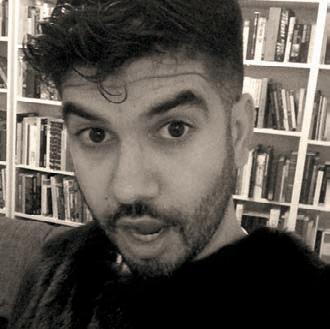
Agri Ismaïl is an Iraq and Swedish-based writer of fiction, legalese and criticism. Co-founder of Ludwig Salon in Dubai, former columnist for Soma Magazine in Iraqi Kurdistan, co-editor of Abstract Modem.
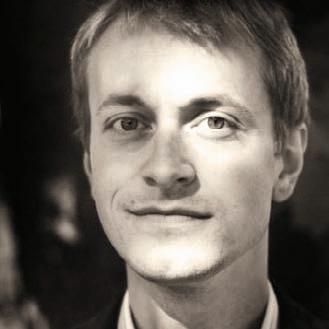
Malte Persson


Malte Persson is a Swedish author. His first book Livet på den här planeten "Life on this planet", a novel, was published in 2002. His subsequent two books are collections of poetry, Apolloprojektet "The Apollo Project" (2004) and Dikter "Poems" (2007). Persson has been said to belong to modernist group of LANGUAGE-poetry forming around the Swedish literary magazine OEI.
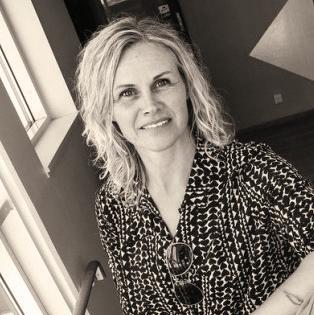
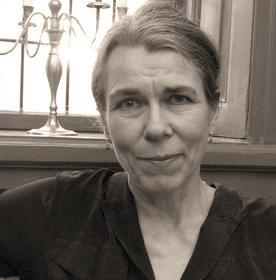





Cilla Naumann lives in Stockholm and has been working as a journalist since the mid-1980s. She made her literary debut in 1995 with the novel Vattenhjärta (Water Heart), receiving that year’s major Swedish debut novel award. Several of her books have been translated into other languages, including German, Dutch and Danish, and two of her short stories have been adapted for the screen.
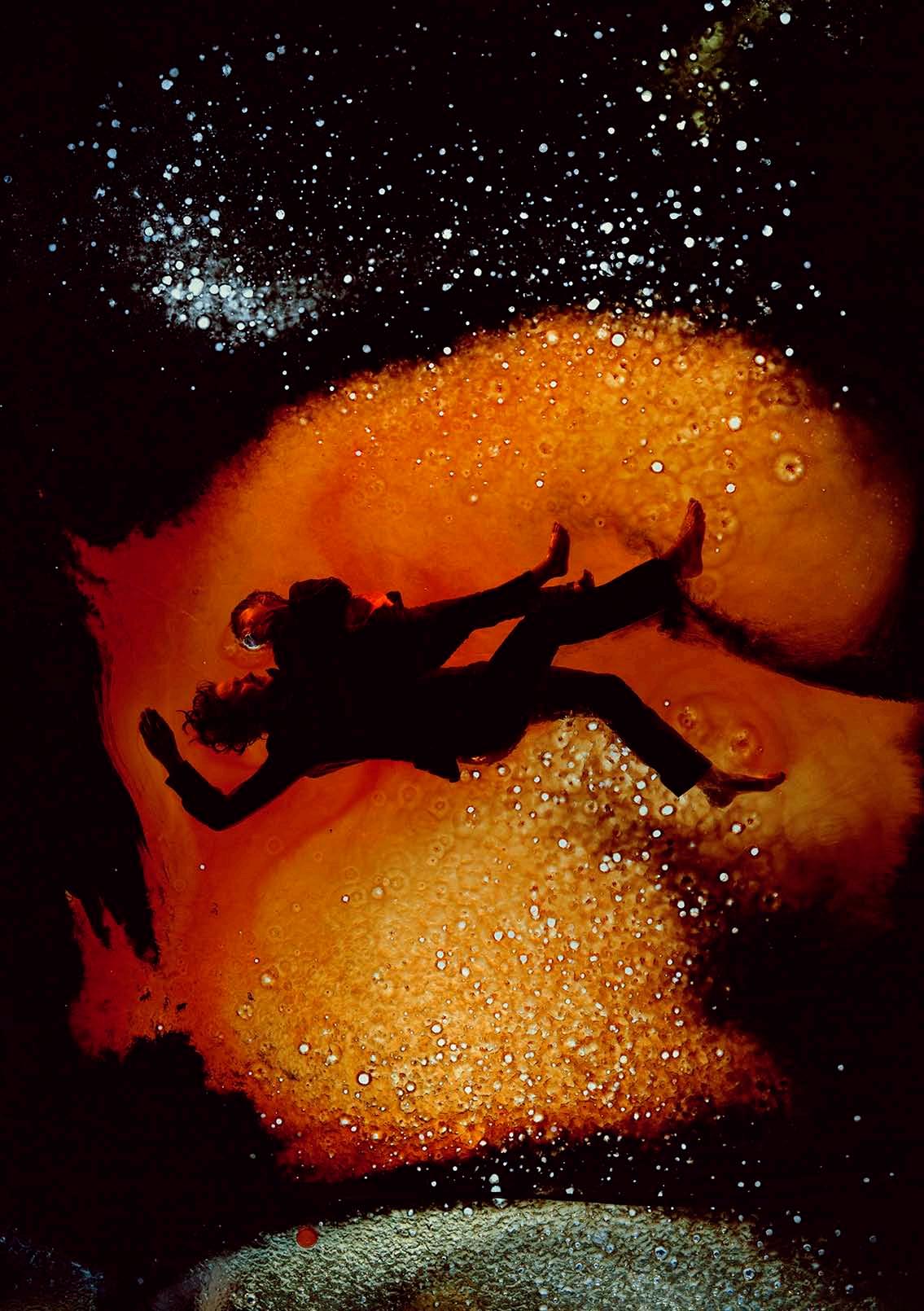
Maria Friberg is a Swedish artist known for her works revolving around themes of power, masculinity and man's relationship to nature. Her images depict ambiguous tableaus with isolated figures in provocative situations.
Dear Reader,
Litro has always been a keen promoter of outstanding fiction in translation, this year we will be bringing to Londoners, not one, not two but three special editions in translation, as part of our annual World Series editions.
As Cuba grows ever more accessible to outsiders, Litro will guide you through it’s Literary and artistic landscape bringing you Cuba’s hottest voices and artists in a special Cuba edition in July—to celebrate the Cuba edition we will be taking over Waterstones Piccadilly in July with a special evening of words and music follow Litro on Social media @Litro Magazine for more details.
I know, you’re dreaming of summer and busy getting in shape for a beach get away with autumn a distant thought but in October we will bring an Indian summer to our pages—as
we turn over the magazine to the celebrated Indian author Shashi Tharoor who will guest edit the India edition.
In the meantime we’ve given our pages to our Northern neighbours Sweden! Our Cover artwork is Painting Series #2 (2011) by the award winning Swedish artist Maria Friberg, courtesy of PiArtworks.
Welcome to the Swedish edition of Litro Magazine! The stories within, these pages have been compiled by the Swedish translator Nichola Smalley. Nichola say’s of the issue: “Even those of you who’ve never been to Sweden will probably have ideas about what it’s like, and what kind of literature comes out of it (moody detectives, anyone?). In putting together this special issue I wanted to present a different view of our northern neighbours—
one that encompasses the rural life of the Arctic Circle, we open the issue with eternal love on the streets of contemporary Stockholm (as in Jonas Hassen Khemiri’s tale of less-than-perfect memories ‘Unchanged Unending’), travelling to foreign climes (for an ill-judged proposal at a Spanish bullfight, in Lina Wolff’s ‘Verónica’), political perspectives (as Agri Ismaïl comments on current racialised politics in Sweden and abroad, in his essay ‘The Wreckage of the Nation State in the Time of Global Migration’), today’s digital culture (Malte Persson’s gives a satirical poem ‘In Hell’, and the social life of parks (with an unexpectedly fraught walk in Cilla Naumann’s ‘The Park Begins Here’).
Each of these writers is celebrated in Sweden. Some of them have had novels or other work published in English, others will be new to
UK readers. What they all have in common is a desire to write in new ways, challenging norms and expectations about what can be said and how. I hope the short texts presented here will inspire you to seek out more by these and other writers from Sweden—there’s a huge and diverse literary culture to discover!
Eric Akoto Editor in Chief

Help us help writers. Your membership will support our efforts to find new ways of looking at the world through stories. You'll also be helping us provide opportunities and exposure for emerging writers, perhaps kick-starting their careers.
With our all-access UK membership, you get Litro Magazine delivered to your door: 10 issues of Litro Magazine a year, plus exclusive access to hundreds of short stories from past issues in our digital archive. Get in on our quarterly Book Club: four new books a year from our Book Club, plus access to live author Q&As, and the chance to see your reviews published on our site. Discounts on Litro Live! events: 50% off Litro Live! events and priority booking.
With our all-access International membership, you get all the same benefits as for UK readers, but at an additional cost for postage and packaging.
Our Student membership gives you the same benefits as a full membership, but at a discounted rate. You will be asked to show proof that you are a student of a school or university in the UK.
For more information:
Visit us online at www.litro.co.uk. and become a member so you never miss an issue! For general requests and information: Call us on +44 (0)20 3371 9971, or email us at info@litro.co.uk.





Translation by Rachel Willson-Broyles by Jonas Hassen Khemiri
I wouldn’t change anything because our love was the most beautiful thing I’ve experienced and there’s nothing, nothing I regret. Do you hear me? I promise and swear everything was perfect. Together we were like the love that everyone goes around waiting for, you know, the love all the films and books and songs fail to capture.
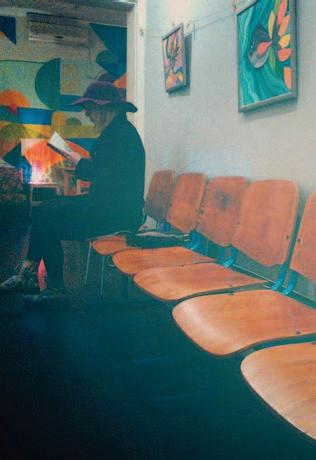
If I had to? If someone were to put a pistol to my head and really force me to change something now, afterwards, then I would probably change our first meeting. I mean, not because there was anything wrong with it, but honestly, how romantic is it to meet in the waiting room at a hospital?
Or a hospital is probably okay. It’s a little dramatic, sort of. We can keep the hospital. But if I had to change something I’d probably put us in a different waiting room. Instead of catching sight of each other at the STD clinic our eyes would meet at, like…I don’t know… the cancer ward. Is there one of those at Södersjukhuset? We’ll say there is. We’re sitting there on the cancer ward and our eyes meet and time stands still and you’re so fantastically beautiful that I can’t concentrate on my magazine.
Do you remember that? How I just sat there and pretended to read the gossip pages for several minutes just because I didn’t dare meet your eyes.
And as long as we’re at it I’d like to exchange the magazine for something that’s a little more me. Let’s have me sit there in the waiting room reading Anna Karenina. And instead of you leaning forward and saying what you said (damn it’s nice not to be the only one worrying about my holiday hookups), you lean forward and say something about Tolstoy’s insightful manner of depicting, like, women or animals or the class society. That can be our first meeting. And instead of running into each other out at the bus stop again and starting to talk about how shady it felt to pee in that plastic cup and how hard it is to stop in the middle of peeing, we run into each other out at the bus stop and start talking about how tough it is to have a loved one with cancer. Yeah, that should work.
And now we’re standing there by the bus stop and you ask me for a cigarette and I compliment you on your tattoo and you tell that funny story about how you decided to get it in Thailand when you were high as a kite and then you woke up and went around for several weeks hoping, hoping it was just a henna tattoo. We’ll keep that part—just as it was. But can we please take out the totally idiotic question I asked next? (So, was it a henna tattoo?) I’m still ashamed about that. Other than that there’s nothing I want to change.
Nothing.
Translation by Frank Perry by Lina Wolff
She put her hands around Mickey Mouse’s head and pressed it to her breasts. She looked up at me and smiled, and I thought about the gap between her front teeth and that I could get the tip of my tongue between it when I kissed her. One of Retiro’s chestnut trees rose behind her, and the sunlight was filtering through the foliage.
It was a lovely afternoon.
Mickey Mouse reached out a hand to her and said something in a strong Peruvian accent.
“Come on,” I said.
“Can Mickey Mouse come too?”
“No.”
I gave him a coin and told him that was it. He ought to look for some children instead. That was why he was here after all.
We went to the Peruvian restaurant on Ventura de la Vega. She said there was just something about the Peruvian accent: it had a quality we lacked in Spain. Especially those of us from Madrid.
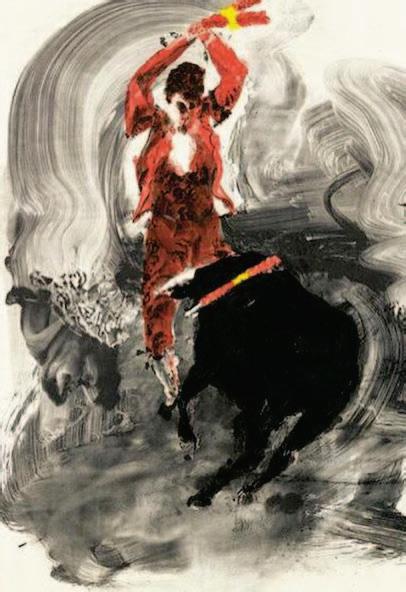
“It’s so lumbering the way you talk,” she said. “Like a big bull slowly turning round. That’s what you’re like. Lumbering, slow and you lisp as well. And you’re touchy. Jealous of Mickey Mouse—haha.”
“What are you really trying to say? You’d like Peru-Mickey for dessert?”
The waiter turned up and we ordered.
After the food she forgot about Mickey and started talking about her sister and Juanito.
“It’s weird,” she said, “how everything comes down to chance. I bet if Juanito had popped the question to my sister after something fun had happened or something cheerful in any case, she’d have said yes.”
I remembered Juanito. He used wet look gel on his hair and wore a linen suit in the summer. Not that I’m gay or anything but I thought he looked pretty okay. The linen shirt was highnecked, the way Mafiosos wear them and that guy who writes the songs for Elton John.
“That’s right,” she said. “Juanito should have proposed on a day my sister was in a good mood. Instead he did it after work, when she came home and was tired and grumpy and had a headache. And it wasn’t like he’d fixed her something nice. Lit candles, or even done the
Translation by F. Graham by Agri Ismaïl
WhenI was growing up in a neighbourhood of Greater Stockholm with one half-way decent pizzeria, where the odd car would be set on fire from time to time, there was an anecdote—most likely apocryphal—that circulated among our immigrant parents: some acquaintance’s child had told their parents that they should ring the NGO ‘Children’s Rights in Society’ at the least threat of a smacking. Underlying that anecdote was the fear that Swedish schools were teaching us things that turned obedient children into the sort of bolshie kids who would threaten to ring social services every time they felt disinclined to do something. In our parents' paranoia, there was a distorted mirror image of one of Sweden's fundamental principles: this was a country where it was unacceptable to hit children—under any circumstances. That was not something on which there was a consensus in the 'civilised' western world and which the 'uncivilised' world (the Muslim world in this case) needed to learn. Sweden was the first country to outlaw the physical chastisement of children.
We need to recall the long-standing Swedish attitude to violence against minors in order to grasp the extent to which 'Swedishness' has been misappropriated when over fifty
men can attack children in Stockholm because they look as though they don't belong here; in order to grasp that there has been so rapid and radical a change that the defence of Swedish norms can take the form of street violence targeting children, and that the police initially described events as the outcome of a 'rowdy Friday night', while the quality daily Svenska Dagbladet called them 'a disturbance in central Stockholm.' There are many reasons why it is now apparently socially acceptable to foment violence against minors, but they all come down to dehumanising people seen as different. They aren't children, but 'kids with beards', 'so-called refugees', ‘feral so-called street children' and 'guest criminals' (as opposed to ‘guest workers’), to quote just a few expressions from different sections of the commentariat. Over half of Syria's children have been forced to leave their homes in the course of the last five years, a tragedy so monumental that it is perhaps easier not to view them as ordinary children. And one of the most effective ways of dehumanising people, as we shall see, is the distinction we draw between different types of borders, with certain kinds of migration being viewed as positive, indeed natural, while another type is viewed as destructive, even harmful to our civilisation.
If you’ve written a book or had an article published, the Authors’ Licensing & Collecting Society (ALCS) could be holding money owed to you.
ALCS collects secondary royalties earned from a number of sources including the photocopying and scanning of books.



Unlock more information about how you could benefit by visiting www.alcs.co.uk
Translation by Annie Prime by Malte Persson
You have to imagine Sisyphos is happy.
Pushing along his baby buggy.
Writing his weekly review.
Hades is like Twitter: the other.
Hades is like Tinder: the same.
Hades is a never-ending haiku. Where demographics meets demagogy. Where TV series are the new novels.
Trapped in near-illegible diagrams. From a market research study.
That they call you about at dinner time. Is hell an animated GIF that was hardly funny the first time round. Is hell an open plan office.
A mailbox with no spam filter. Pling!
Are you a climate debate denier?
Test: Which Ensign Stål character are you?
It’s lucky I’m a genius.
It’s lucky the general public has a perfect ear for irony.
In hell. Inferno. Well? Hell, no!
In hell there are debates on poetry but nobody remembers any poetry.
All there is to read is editorials.
All there is to read is copy.
All there is to read is user licence agreements.

Translation by Alex Fleming by Cilla Naumann
We enter the park. The ground is blanketed with the brown leaves of last autumn. The trees still have naked black branches, but the sunlight is strong and the spring birds have awakened. The air is streaked by the long, sharp shadows of trees.
Thomas is walking fast and says I don’t seem any different. Not at all. His voice sounds normal when he says it, but he ups his pace even more. His wellies leave deep imprints in the thick leaves. I’m doing my best not to fall behind and not to lose my breath.
We walk where we always walk, the same route we took all those years, with the pram and then without. We’ve lived in this area for ages. Of course we’ve walked here a lot. Where else would we walk? It’s a lovely big park. There’s a deep pond in the middle. In summer the water lilies bloom and you can feed the ducks. And on the other side there’s a beautiful hill of oak trees where the windflowers grow in spring. The kids have always loved coming here. Of course we’ve come here a lot. It’s one of the city’s nicest parks and it’s so close to us. The air feels clean here and you can swim in the pond. And in the little playground on the north side there’s a sledge spinner and hills to sledge down in winter and animals to look at. Little black pigs and hens laying eggs in their nests and big hutches for guinea pigs and rabbits. Of course we’ve come here a lot. We live so close by. Where else would we have gone?
Thomas is walking really fast and I don’t know what difference he’s trying to find in me. What difference should he have seen? It’s not like I’ve changed on the outside. Just like he hasn’t, either. He looks just like he did yesterday, in that same worn leather jacket and those same boots. And those trousers—he’s had them a long time. He’s still him and I’m still me. And obviously we still look the same as yesterday and the day before that. The only difference is now he knows something about me, something about that longing he’s probably always known I’ve had. But it was last night that I named it. Otherwise everything would have been like it was before. The park would have been as normal and so would we. We’d have walked slower, slightly closer to one another. And we’d probably have touched every now and then, and held hands—that’s what we normally do.
In front of the café that’s closed for winter we turn and take the small path down towards the pond. Here among the trees it’s slightly murkier and more shaded, but this is still where we always turn. It makes for a better walk than the bigger path, the one that curves to the right towards the allotments. That path takes you back home too soon. We like walking; we love long walks. We’ve tried out all the paths in this park and have worked out how to get the longest possible walk in without having to turn back on our-selves.
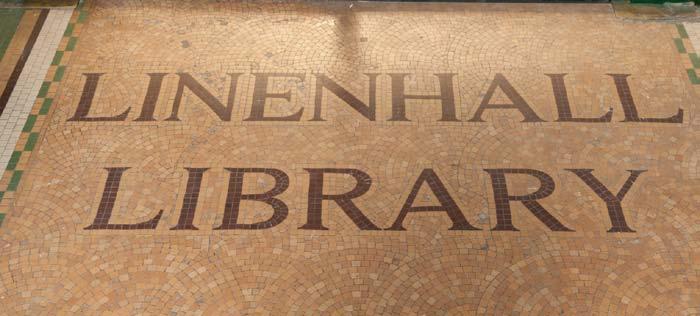
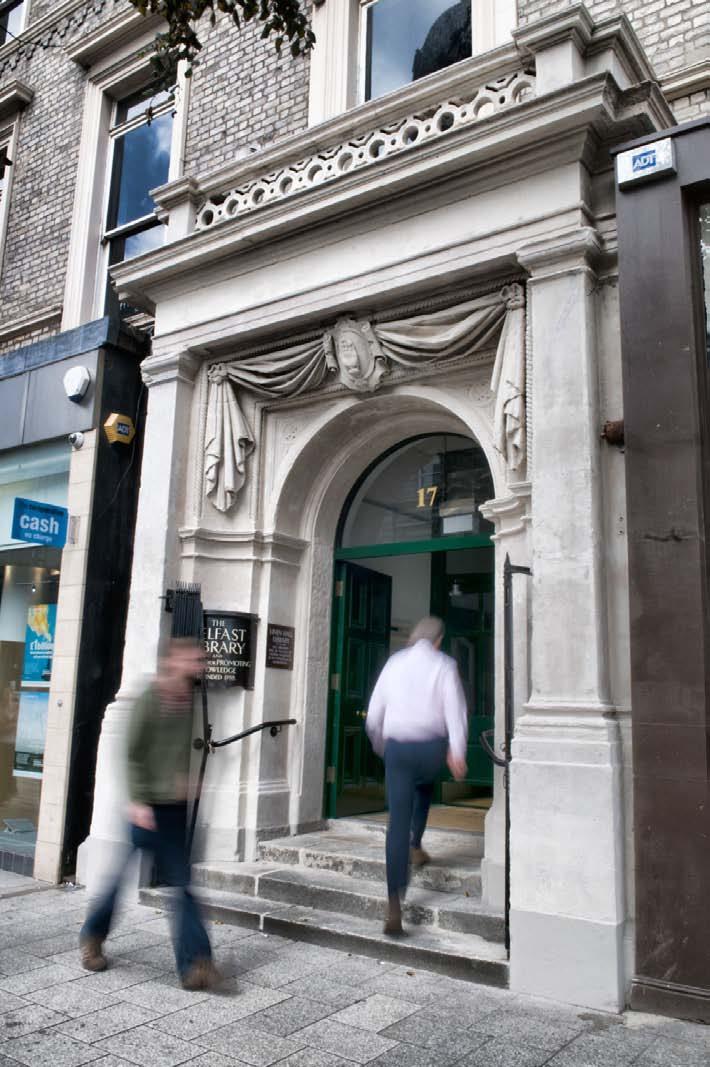
The Linen Hall Library in Belfast, Northern Ireland, seeks entries for the Michael McLaverty Short Story Award
Open to those over 18, who were born in, or are citizens of, or resident in Northern Ireland/Republic of Ireland.
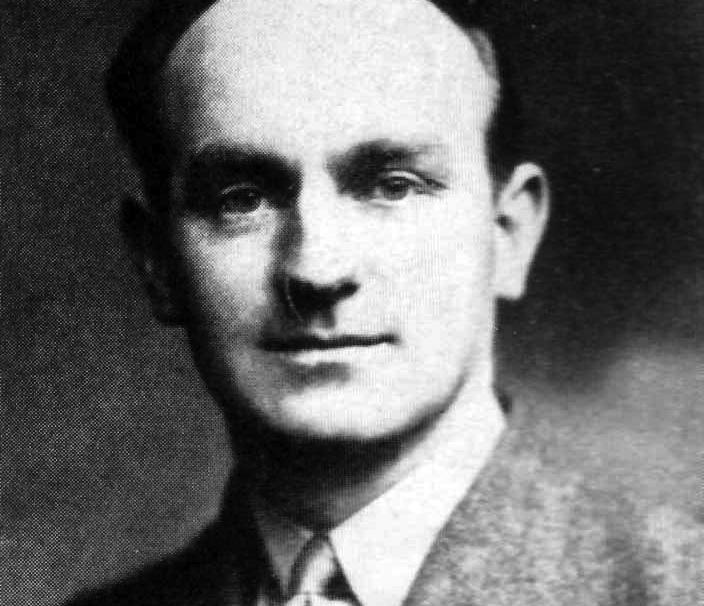
The award is designed to foster and encourage the tradition of the Irish short story and has run biennially since 2006. It is in honour of Michael McLaverty (1904–1992), one of the foremost proponents of the Irish short story. McLaverty’s archive was donated to the Library in 2005 by his Literary Executors and makes up one of our many world-famous collections.
The winner will receive £2,000 and the winning entry, with those placed second and third, will be published in an anthology.
Deadline: midnight Thursday 30 June 2016
The Linen Hall Library (est. 1788) is an historic, subscription library holding world renowned collections For competition rules and information please visit www.linenhall.com or contact the Library at info@linenhall.com or on +44 28 9032 1707


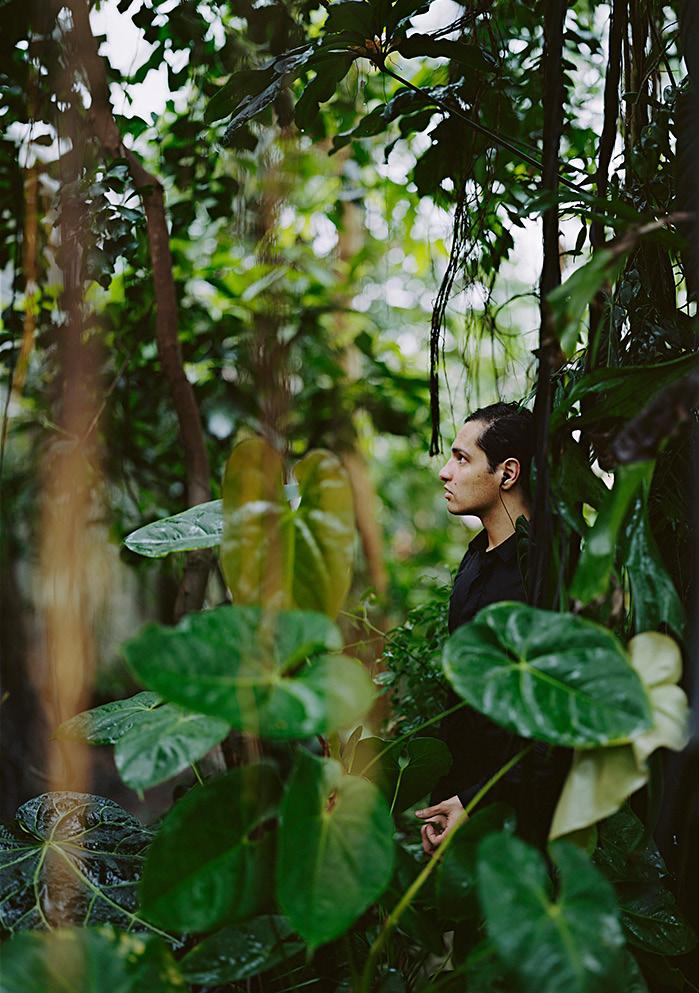
Tell us about yourself, your background and ethos.
I am an energetic and playful person with an impulsive love of starting new projects and taking risks.
I was raised by my mother and for a while we lived in a commune. Our home was always open, which meant I had the chance to meet many different types of people. This was during the 70´s when there was a feeling we could work collaboratively to change the world for the better. Coming into contact with such a broad spectrum of people was a formative experience that has influenced my artistic practice.
My surroundings were full of creative energy when I was growing up, my mother was a ceramicist and hairdresser. We also had an artist living with us for many years, me and him used to draw and paint together after school, a process that was very calming and helped me focus. I was also drawn to his free and exiting lifestyle.
I started to study art history but soon afterwards felt it would be far more fun to create art. My mother has supportive of me, even today I still love to discuss my works with her.


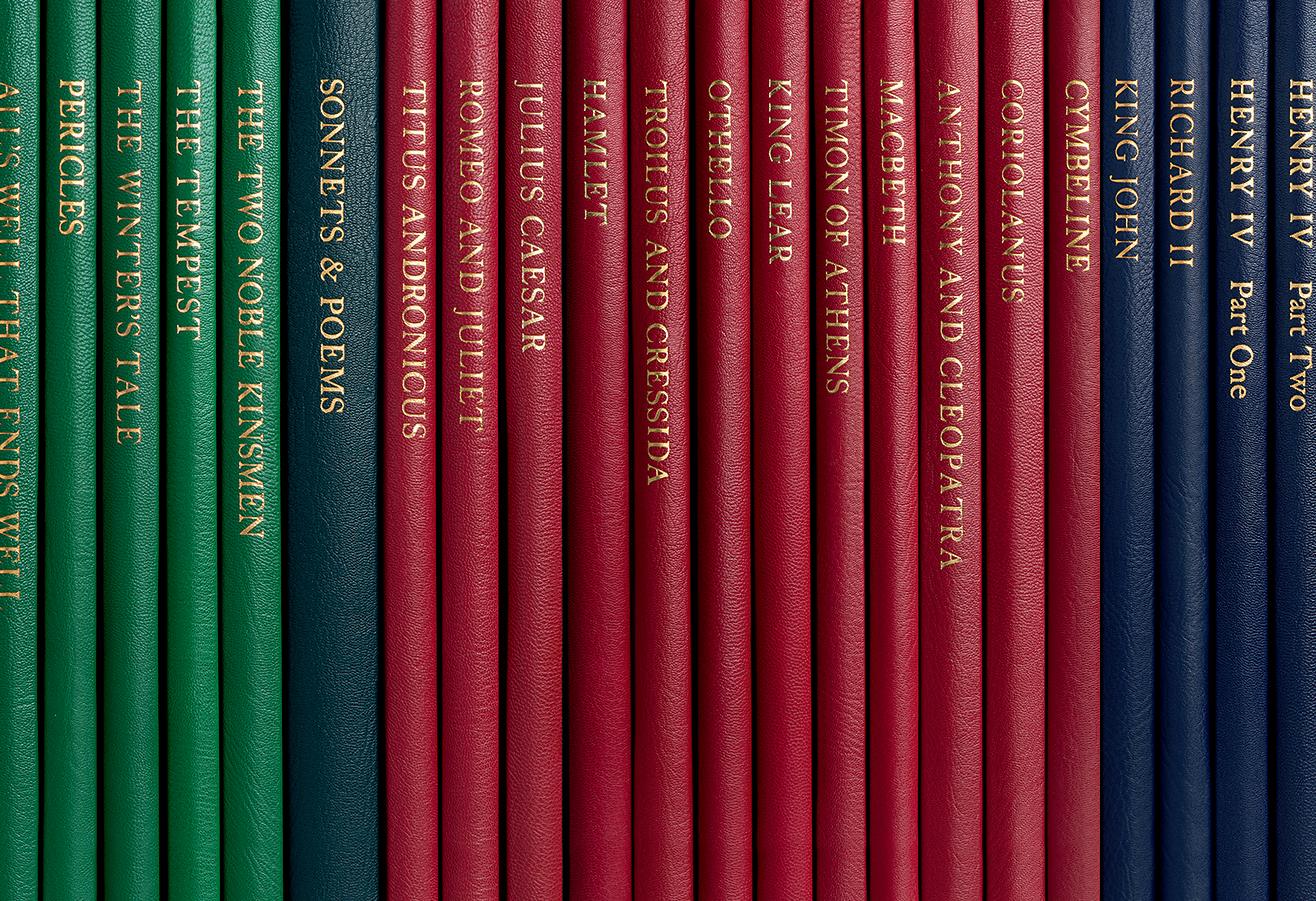
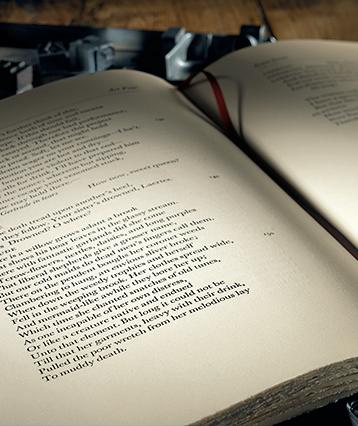
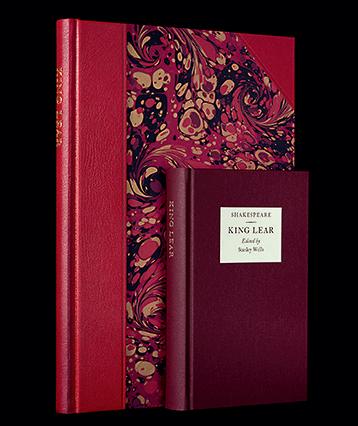
All of Shakespeare’s works printed letterpress in individual leather-bound volumes.
¶ since the first folio in 1623 there have been countless editions of shakespeare’s plays, yet none surpasses the restrained beauty of the letterpress shakespeare – a project that has taken The Folio society, britain’s leading publisher of fine books, eight years to complete.
¶ individual editions of all of shakespeare’s works, graced by pure and elegant typographic design, printed letterpress on thick, mould-made paper, and bound in leather with hand-marbled boards.
¶ Only 300 copies of each volume of the letterpress shakespeare are available to order.
To find out more go to www.foliosociety.com/letterpress or email letterpress@foliosociety.com