Featuring
Words by
Nicolas Ridley
Ian Manley
Toby Williamson
Tracey Iceton
Annie Dawid
Cheryl Powell
Arika Goodpasture
Annie Brechin
Tim Cooke
Izabella Scott
Douglas Kennedy
Art by
Hsin Wang

Featuring
Words by
Nicolas Ridley
Ian Manley
Toby Williamson
Tracey Iceton
Annie Dawid
Cheryl Powell
Arika Goodpasture
Annie Brechin
Tim Cooke
Izabella Scott
Douglas Kennedy
Art by
Hsin Wang
Make 2016 the year you join City’s growing list of published alumni. Applications to our intensive year-long Novel Studio programme for aspiring novelists are now open.
Deadline: 27th May 2016
Anna Mazzola, Novel Studio alumna and criminal solicitor. Debut novel, The Unseeing, published by Tinder Press, 2016.

Editor-in-Chief
Eric Akoto
Online Editor
Arts Editor
Daniel Janes arts@litro.co.uk
Contributing Interviews Editor Mia Funk interviews@litro.co.uk
Story Sunday Team Member Barney Walsh storysunday@litro.co.uk
Tuesday Tales
Essays
Hayley Camis tuesdaytales@litro.co.uk
Samuel Dodson essays@litro.co.uk
Contributing Editors at Large
Lead Designer
Laura Hannum
Advertising Manager online@litro.co.uk
Sophie Lewis, Rio, Brazil
+44(0) 203 371 9971 sales@litro.co.uk
Story Sunday onlinefiction@litro.co.uk
General inquiries: contact info@litro.co.uk or call 020 3371 9971. 1-15 Cremer Street, Studio 21.3 London E2 8HD
Litro Magazine believes literary magazines should not just be targeted at writers themselves, or even those with a particular interest in literature, instead Litro believes in reaching the general reader whether they be a commuter, someone browsing in bookshop or in a bar or café to meet a friend.





Nicolas Ridley

Nicolas Ridley has lived and worked in Tokyo, Casablanca, Barcelona, Hong Kong, Paris and London and now lives in Bath, England, where he writes fiction, nonfiction, scripts and stage plays—very, very slowly—under different names. Godfrey’s Ghost, a biographical memoir of his father, Arnold Ridley.
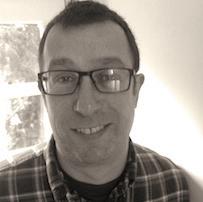
Ian Manley is a freelance journalist, PR and writer of anything (within reason) that people will pay for. He also writes short stories for his own entertainment, and hopefully yours, as a way of keeping his sanity in check.
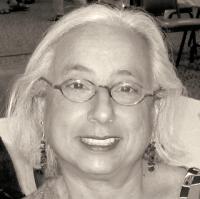
Dawid

Annie Dawid teaches creative writing at Arapahoe Community College in Littleton, Colorado. Her three published volumes of fiction are: York Ferry: A Novel, Lily in the Desert: Stories, And Darkness Was Under His Feet: Stories of a Family.
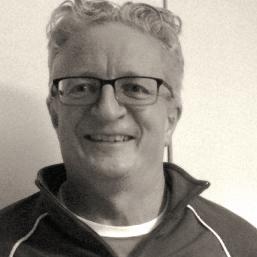
Williamson lives and works in London and likes maps.
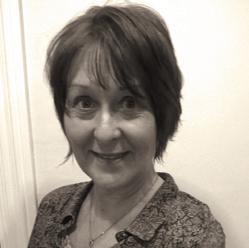
Cherly Powell is a member of Solihull Writers Workshop. I write short stories that are often ‘dark with an edge of humour’. I love to write about people who are misfits in some way—that might be about me, you or....well...the rest of humanity.
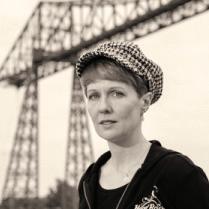
Tracey Iceton is an author and creative writing tutor from Teesside. She has won the 2013 HISSAC short story prize for ‘Butterfly Wings’, was runner up in the 2013 and 2014 Cinnamon Press short story competitions with ‘Slag’ and ‘As the world (re)turns’ which appear in the anthologies Journey Planner and Patria. Green Dawn at St Enda’s, her debut novel and part one of her Irish Trilogy, will be published by Cinnamon Press in 2016 with parts two and three following in 2017 and 2019.

Arika Goodpasture
Airika Goodasture is a freelance copywriter, editor, published poet and former journalist. She currently lives in Sun Valley, Idaho.

Douglas Kennedy
Douglas Kennedy is the author of twelve novels, including the international bestsellers The Big Picture, The Pursuit of Happiness, Leaving the World and The Moment. His most recent novel, The Heat of Betrayal, is now available in English as well as in French. He is currently working on his thirteenth novel.

Annie Brechin is a longtime poet and newbie screenwriter. Recipient of a Jerwood/Arvon Young Poets Apprenticeship and former Poetry Editor for The Prague Revue, she moved from Paris to Dubai last year.

Tim Cooke is a film, literature and photography enthusiast. BA in English Literature, MA in Digital Documentary and NCTJ Diploma in Journalism.
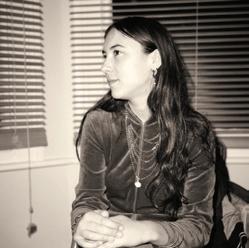
Izabella Scott is a writer and editor based in London. She has worked for the publisher MACK since 2012. In 2015 she was shortlisted for the Frieze Writer’s Prize

Wang
Hsin Wang is a Taiwanese fine art photographer based in Brooklyn. Hsin is noted for using muted color palette, graphics, and manipulation of negative space. Her works are characterized as minimal, elegant, and provocative. Hsin Wang had been selected to attend the 27th of Eddie Adams workshop and 2014 New York Times Portfolio Review.
Dear Reader,
Love, we spend our lives craving it in one form or another, searching for it, and talking about it. Its meaning is felt more than it is clearly expressed. Some call it the greatest virtue.
The rapper KRS-One said: “That word love is very very serious. Very addictive.”
Love. You can be in it or out of it. You may feel you can't live without it. You might feel it for yourself, your friends, your pet, your apartment, you’re partner.
In this issue we try to capture some of the questions Love asks of us: What is love? When do you feel love, and how? How do you cope with Love’ highs and lows?
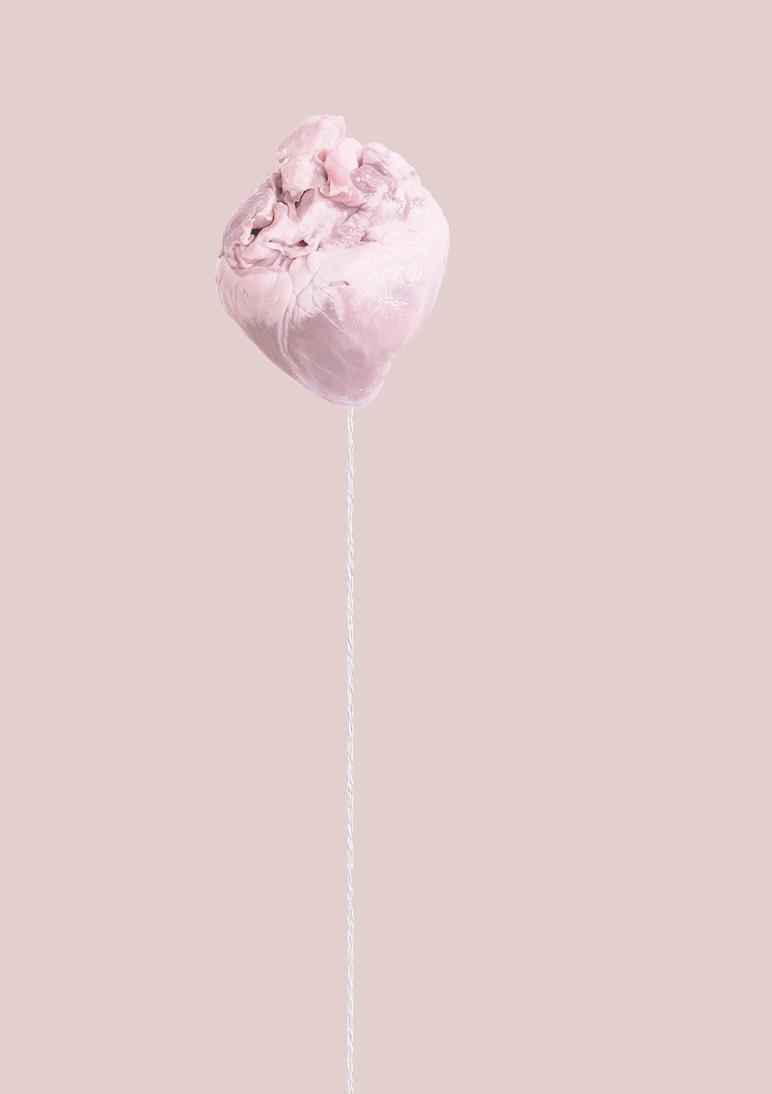
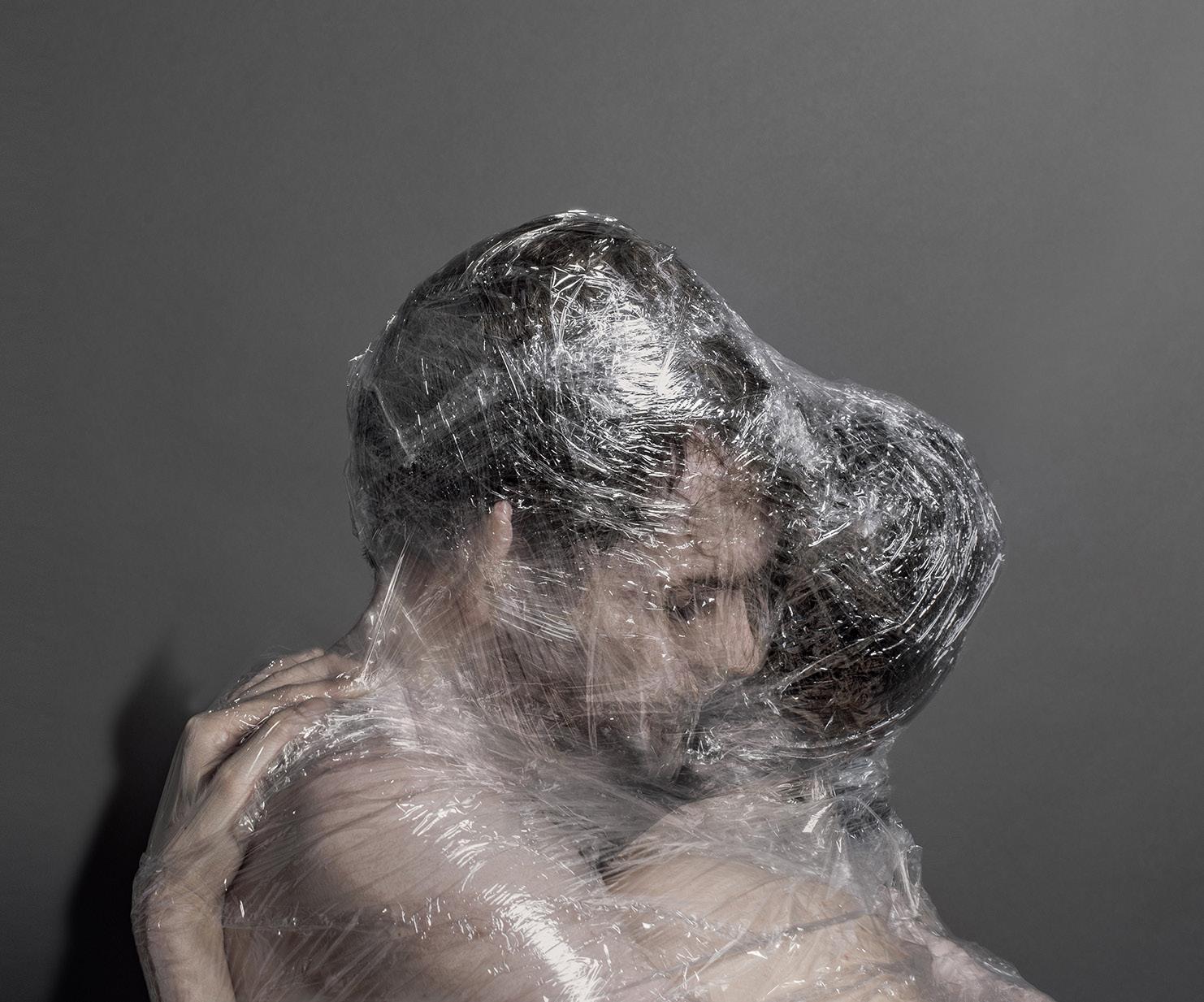
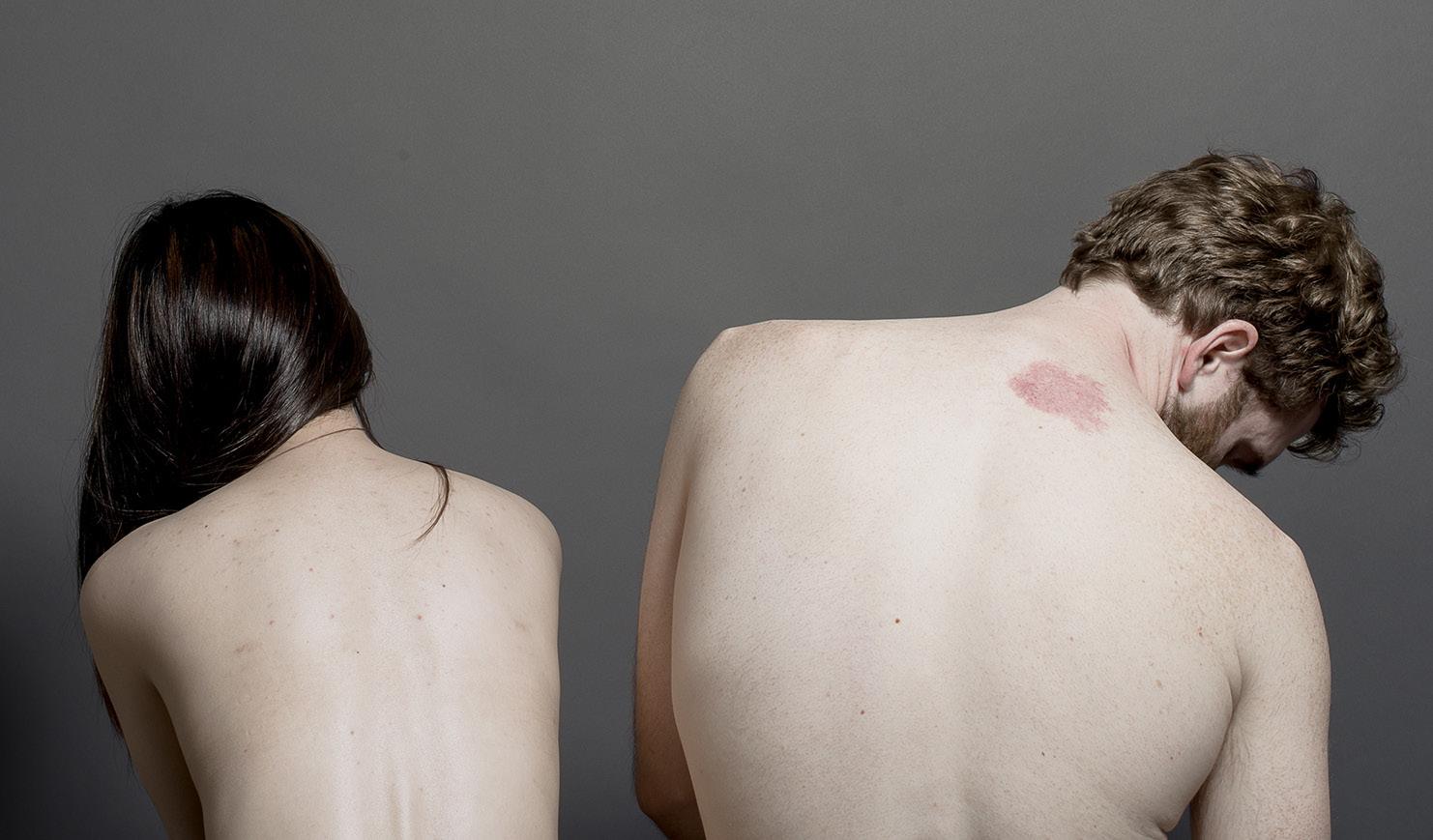
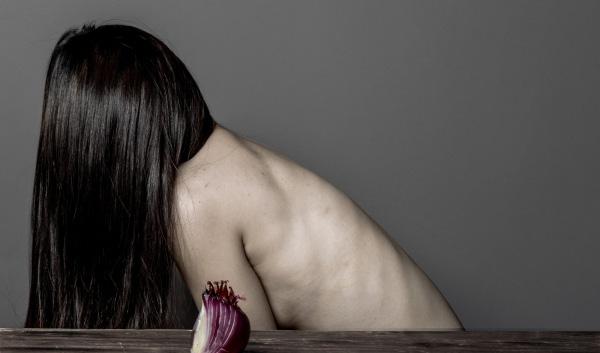
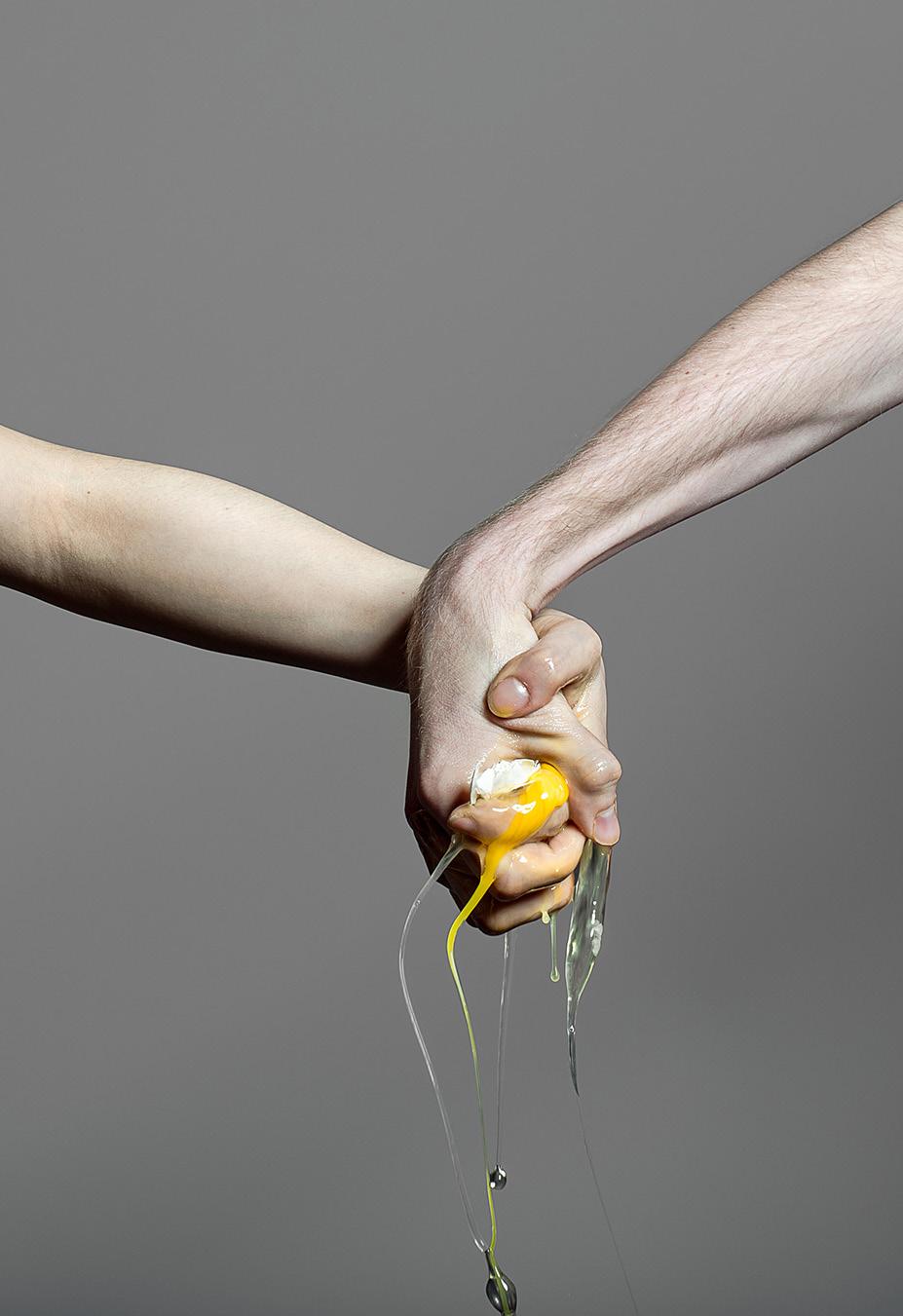
Our cover art is by Taiwanese, Brooklyn based fine art photographer Hsin Wang. Hsin’s images our beautiful even in the sadness and melancholy the images portray. She uses photography as a form of therapy to discover
her hidden feelings about relationships— “De-selfing” her latest Series- inspired after the break up of a six year relationship incorporates everyday objects to create her unique metaphoric and symbolic images. Its no wonder New York Times featured her work recently. Read her interview on page 43.
We open the issue with Nicolas Ridley’s Love by the month, two couples search for rekindled love—over a valentines meal takes a rather unexpected turn—revealing the bed swapping habits of Belsize Park.
Men are hunters by nature. Men are the ones that lead the romance dance, in Ian Manley’s, A Mouldy Proposal a young man uses a novel way to get the attention of a love interest on his daily bus commute.
Toby Willamson’s, The Love Map is a piece of flash fiction exploring love, desire through
a navigational chart. Holiday Romances, we've all had one—Tracey Iceton gives a two sided tale of a holiday romance—with Water Love. A professor leaves a trail of broken hearts in Annie Dawid’s, What Happens to Smart Women
Stay by Cheryl Powell is a story of love gone wrong; or love gone too right. It captures that still point of a fleeting moment .
In Annie Brechin’s Essay, Dating in Dubai we find how the middle Eastern country deals with love—especially one amongst the younger generation often outside marriage— given Dubai's constant reinvention and attempts to attract the worlds attention/ visitors: world's tallest tower A fountain you see from outer-space, the 12.1 million square feet shopping mall- with such a large
expat community—Dubai defies normal expectations—the islands, 7* hotel—richest race track, so how does it deal with Love outside marriage?
We come back to London with an essay, from Tim Cooke, The Black Path—a look at love between friends.
We close the issue with an interview with Douglas Kennedy who sits down with Litro’s interviews editor Mia Funk and talks all things Love—of course.
"That word love is very very serious. Very addictive.
"
Eric Akoto Editor in Chief


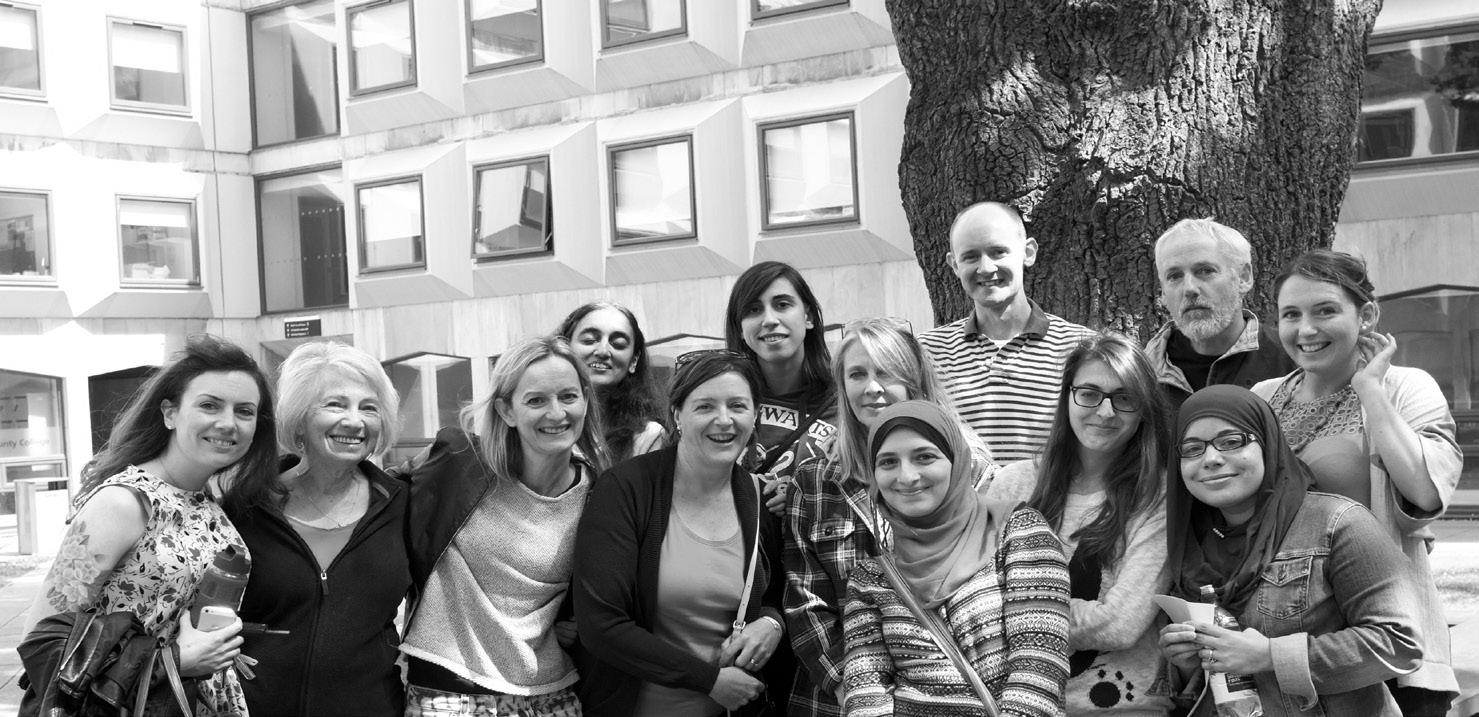
Lancaster’s Creative Writing MA programme is one of the oldest and most pre stigious in the UK. Its alumni include award-winning poets, short story writers, scriptwriters and novelists. We offer:
– Close and supportive tuition by published prizewinning authors, expert in all major genres
– Masterclasses fom visiting authors, editors and agents
– Inclusion in an exciting international community, immersion in a vibrant writing culture
– A student -centred approach that puts your project at the heart of our teaching
MA Study Options
• On the Lancaster campus with face-to -face workshops and tutorials
• By distance learning with a personal tutor as part of a global community of students
• Through Contemporary Literary Studies –mixing Creative W riting modules with those in English L iterature
Check out our website, including the possibility of bursary suport for early applicants: www.lancs.ac.uk/fass/english/

Tutors

Dr Jenn Ashworth
Dr Sarah Corbett
Jane Draycott
Prof Paul Farley
Dr Conor O’Callaghan
Dr George Green
Dr Zoe Lambert
Sara Maitland
Brian McCabe
Prof Graham Mort
Tom Pow
Dr Eoghan Walls
Michelene Wandor
Visiting Professors
Prof Paul Muldoon
Prof Terry Eagleton
Alumni Include Andrew Miller
Ali Shaw
Monique Roffey
Jacob Polley
Ray Robinson
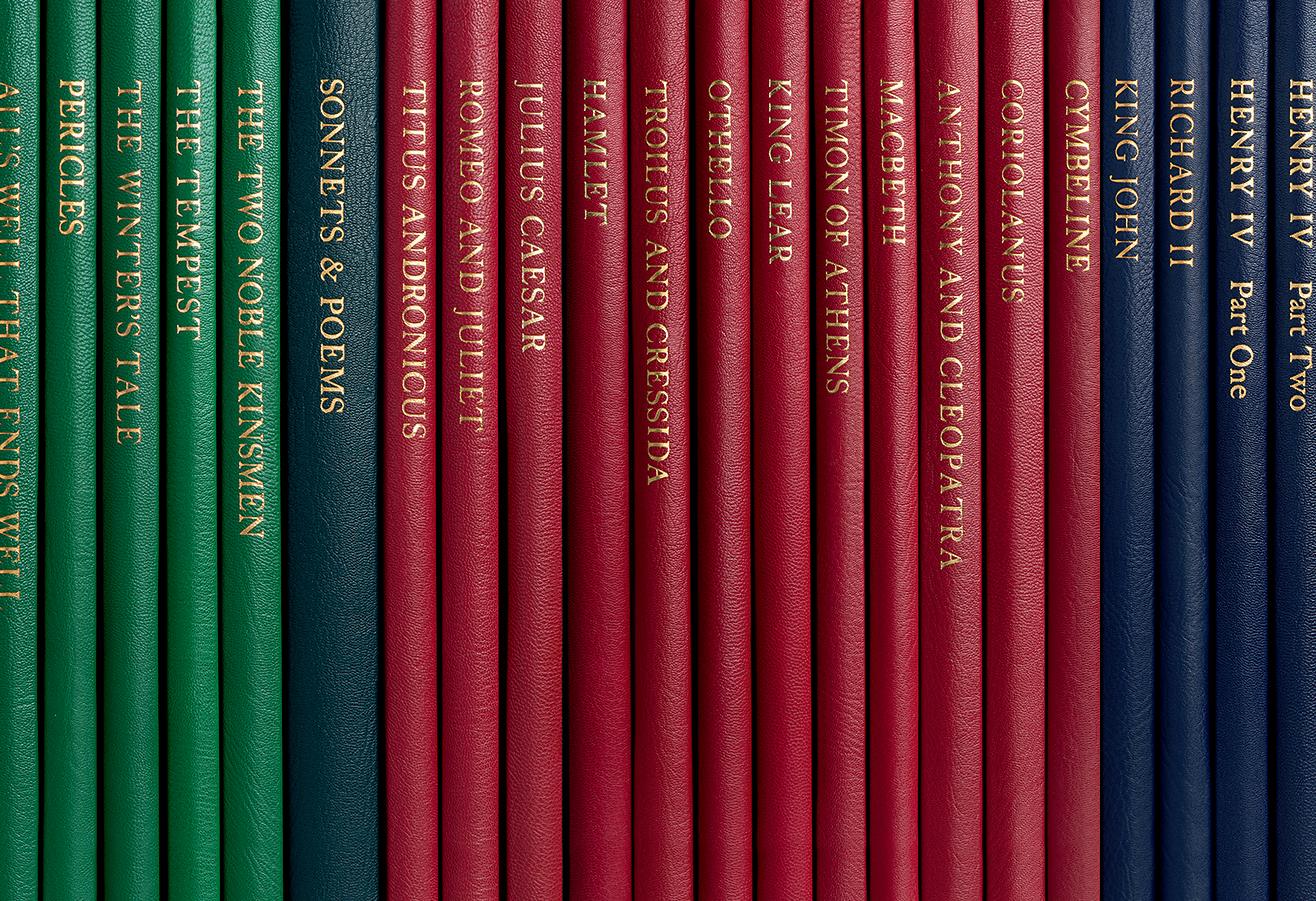
All of Shakespeare’s works printed letterpress in individual leather-bound volumes.
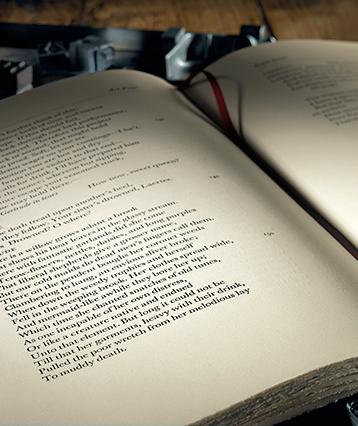
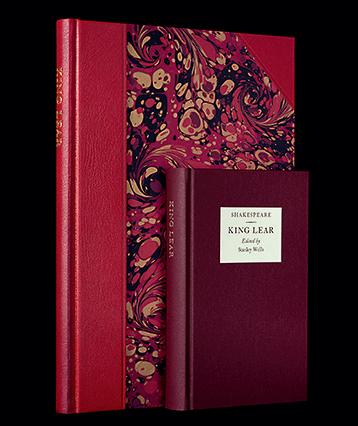
¶ since the first f olio in 1623 there ha ve been countless editions of shakespeare’s plays, yet none surpasses the restrained beauty of the letterpress shakespeare – a project that has taken The Folio society, britain ’ s leading publisher of fine books, eight years to complete
¶ indi vidual editions of all of shakespeare’s works, g raced by pure and elegant typog raphic design, printed letterpress on thick, mould-made paper, and bound in leather with hand-marbled boards
¶ Onl y 300 copies of each volume of the letterpress shakespeare are a vailable to order.
To find out more go to www.foliosociety.com/letterpress or email letterpress@foliosociety com
Two Couples' search for rekindled love over a valentines meal takes an unexpected turn. What happens to smart women: A college professor leaves a trail of broken hearts.
by Nicolas Ridley
How long should 'romantic love' last? There isn’t an answer. There can’t be one. But to pose the question on Valentine's Night is not unreasonable. I toy with the idea of asking Guy but, naturally, I don’t.
Guy and I are sitting at my usual table—the table Signor Colangelo always reserves for me—in the Ponte Vecchio in Camden Town. The table is beneath an antique wine rack at the back of the restaurant and is generally set a little apart. Guy isn’t happy with it.
—Too dark, too tucked away, he says. Let’s see if we can move.
Signor Colangelo explains, with great regret, that we can’t.
—All our tables are booked on Valentine’s Night, he says. Always on Valentine’s Night.
Guy, bending his head over the wine list, tries to disguise his displeasure.
—So, Lily, he says, looking up and around. This is where you come when I’m away.
—Yes, Guy, I say. This is where I come.
—A modest little eatery, isn’t it?
—Yes, Guy. As you say. A modest little eatery.
I watch the other couples in the restaurant. They are looking into each other’s eyes, leaning forward, listening, whispering sweet intimacies. On Valentine’s Night, Signor Colangelo fits in extra tables wherever he can. If I wished, I could overhear the couple at the table next to ours. The woman is wearing a cream silk shirt and silvery jewellery that dances in the candlelight.
Guy is studying the menu. Scowling slightly, running his finger rapidly down the page. The menu doesn’t change. I know it by heart but I still like to hold it in my hands. To picture the dishes. To savour their names. To let them take shape in my imagination.
—I’ll have the carpaccio and the pollo alla cacciatore, says Guy. And Lily will have bruschetta followed by vitello limone. That’s right, isn’t it, Lily?
Signor Colangelo looks at me. I nod. He nods back. Signor Colangelo and I understand one another.
—And a bottle of your Chianti Classico Reserva, says Guy.
—Certainly, Signor. Thank you, Signora.
There was a time when Guy liked watching me studying the menu. He would sit and smile and tell me how endearing he found my ‘indecision’. I might have tried to explain the pleasures of postponement but this isn’t something he would have understood. Later, he began to find my ‘indecision’ less endearing and I sensed it would soon become an irritation. That is why, whenever we eat out together, Guy orders for me.
He is telling me about his recent business trip to Beijing. Or Shanghai. Or somewhere else.
A young man finds love on his daily bus journey, via the medium of mouldy breadrcrumbs.
by Ian Manley
The 137 bus took, on average, 37 minutes to get from Clapham Common North Side to Sloane Square. He saw her every morning and most evenings, which meant he got the best part of five hours a week in her presence. If you factor out holidays and sick days that’s about 235 hours a year. Or just under ten days.
“I spent the first 27 hours trying not to catch her eye,” he told Chris. “You know, when you like the look of someone and you just keep snatching cheeky glances across.”
“Bet she caught you looking somewhere you shouldn’t have been!” he smirked.
“Exactly! Exactly. Why does that always happen eh?”
“So did she?”
“Did she what?”
“Catch you gawping at her?”
“Chris, you know me better than that…”.
“So she did! So what happened at hour 28? Did she slap you round the face?”
Hour 28
That was when it really started to happen. If you’ve ever been a regular commuter you’ll know there is a strict set of unwritten rules governing behaviour: everyone has their preferred spot, so don’t take it; don’t talk beyond the basics, and if you have to, keep it quiet; keep your phone on silent, especially keyboard tones; and if you’ve got a runny nose, blow it, don’t sniff.
It takes time to learn the rules and be acknowledged by your fellow sardines. But after being squashed in together for a total of 27 hours the other commuters start to accept you as one of their own, and give you a curt nod or a grunt when they see you at the bus stop or train platform.
“No, hour 28 she smiled at me, not a big smile, not even with both sides of her mouth, but it was a smile,” Tim said.
“Sounds more like a smirk.”
“No, it was definitely a smile. No doubt.”
He knew it was a smile because, like all-important smiles, it started off small and grew and grew until hour 31, when it ratcheted up to a full-on beam.
“How’s the commute fairing up?” she inquired—a standard commuter question.
“Fine, thanks, fine. Getting to read a lot of books,” said Tim—a standard commuter response.
She smiled the smile and moved down the line.
“And then I knew that I’d made it.”
“What do you mean, she only smiled at you!” Chris said.
“No, no, THAT came later. I mean I’d made it as a commuter.”
A piece of flash fiction exploring love, desire and navigational charts.
by Toby Williamson
AlthoughLucy liked to call it her love map it was a graph really. ‘Still, it has the power to guide me to lifelong love and happiness’ she kept telling herself.
Lucy was 37 and had grown up in Calgary, Canada. She came to the UK to find work and ended up in a job as a charity manager.
She was told about love maps from John, a work colleague, on a drunken staff night out. It was the only time before or since she had really spoken to him. He was at least 15 years older than her, married with kids, and their work paths didn’t really cross. But on that night they had ended up sitting next to each other in the pub. Lucy had drunkenly moaned about the absence of a long-term partner in her life, and he had cheerfully responded by saying she needed to draw her love map.
The details of what John had described were a bit sketchy when Lucy tried to construct her love map the next day but it seemed to hang together. She started with her first proper boyfriend after she turned 18 (qualified map reading age she decided). She put his name at the left hand end of the horizontal axis, on a big piece of graph paper, and then listed on the vertical axis, one above another, all the features of his personality, lifestyle, body, and anything else that was relevant, which she could most easily, and happily recall about him. She then did the same with her next boyfriend, ticking off above his name where he had similar features as the first, and adding any additional features to the list on the vertical axis. Where she could remember them, she also added the occasional fling or one night stand.
By the end of the afternoon she had 14 names and 35 different ‘love markers’, but it was clear from the frequency of ticks what the most common features were, linked together like contours—wiry frames, quiet, intelligent, thoughtful but capable of being opinionated, not materially obsessed, a bit of a wicked side, slightly geeky but not nerdy, frequently short-sighted, not north American, and a few others. The common markers are a navigational aid to identify the perfect partner, she thought. Where the correct longitude meets the right latitude.
So she followed it religiously. Every one night stand, boyfriend, lover, she immersed herself in, she charted onto the map. Each character co-ordinate, emotional triangulation point, interest, hobby, idiosyncratic belief that seemed of significance to her, was added to the chart. ‘This map will lead me to the right man’.
Yet to her surprise, and disappointment, still the destination she desired remained elusive. Relationships still ended the same way. Feelings over thought, forensic surveys of the emotional landscape—where he was and where she was—too often revealing them to be in different places.
It took Lucy more by surprise when she found herself in a relationship with another woman, Hannah, who mapped almost perfectly onto the main contours of the chart. ‘Wow’, thought Lucy. ‘I never thought of maps as being gender neutral. They always seemed such a boy thing (one boyfriend had once said to her that for a lot of men, ‘maps were second only to porn’—not
by Tracey Iceton
Thebrochure promises my first underwater breath will open the door to a different world, one where I’ll be free like never before. So I sign R. White on the consent form, pay the price of freedom ($300) and make for the beach clutching the printed promise that if I dared to open the door to my new underwater world life would never be the same again.
“What’s the score so far, Erik?” Paddy asks.
“We’re even I think,” I say knowing for sure it’s true.
“Well this is the last group of the season so winner takes all, eh?” He nudges me, “And don’t you be thinking you’re gonna beat me. Irish charm kicks Dutch free love’s arse this year.”
“Isn’t it luck, not charm, you Irish are famous for?” I ask as we wade across soft white sand towards a makeshift hut high above the tide-line that is the scuba-diving classroom.
“Aye, well, we’ll see.” Paddy jumps through the door ahead of me, the first to charm-smile at any prospective notches for his bedpost.
And there she is. Mid-twenties, blonde hair pulled back into a tight bun, iced milk skin. Blue eyes dart in and out, snatching glances before retreating like clown fish on the reef. Paddy nods in her direction. The game’s on again.
When I opened the door it led me to here: a classroom. Bare except for a single rickety bench (I perch warily between a jagged splinter and an overweight German), a small green chalkboard and a stack of thumb-bruised textbooks whose spines unanimously chorus, ‘Open water diver manual.’ Shadows of my home classroom haunt me; identical rows of plastic-wood desks and straight-backed chairs, computer and interactive white board, shelves of carefully preserved books (Shakespeare et al.). Me in my navy pin-striped suit. A familiar pain spans my forehead.
We are awaiting Sir. Erik and Paddy arrive. Dressed only in knee-length shorts with ragged hems and deep tans.
It’s my turn now. I manage to choke out, “Rebecca, teacher and because I thought diving might be fun,” in reply to Paddy’s questions.
“Well hello Rebecca. And there’s no need to look so terrified. Unlike the sharks, I don’t bite, do I, Erik?”
Erik says, “Time to get down to it, Paddy.”
“That’s exactly what I’m doing,” Paddy replies.
He splits a winks at Erik. I long to run out and slam the door behind me.
Paddy’s comment about biting drowns. Much better to go softly. Don’t stir up the bottom.
I ask them what they think the greatest danger is when diving. Get the usual response: drowning.
“It’s pressure,” I correct, “At sea level we have the weight of one atmosphere on us, that’s the
A professor leaves a trail of broken hearts.
by Annie Dawid
Professor Ecks wanted to know. "I see them pass through, at the top of their class, always single, with their stories of lost hopes, one-night stands, the men who couldn't appreciate them. Oh, it makes me sad."
It made me equally sad; I could have wept right there in the Midwestern diner in which we were on the third hour of lunch. Dr. Ecks sympathized. The tables were small; my hand with its cigarette rested only five and a half inches from his hand wrapped around his mug of coffee. We didn't touch; we just looked. We were paragons of self-control. "How do you see your life in, oh, perhaps, ten years from now?" Professor Ecks paid such careful attention to me that I was ready to pledge my future despite the existence of his Wife and Son, the arch-angelic young boy Dr. Ecks seemed to live for. I wondered if Mrs. Ecks was a Smart Woman whom Professor Ecks had rescued from solitude twenty years before.
"I'm in a cabin on the coast of Maine. I live there with two golden retrievers. I teach at the university twice a week, so the rest of the time I work at home, where I watch the waves and the herons and the lighthouse. It's a good life. I don't get famous but I do get—unlike Rodney Dangerfield—respect. From the people in our field who count. I have lots of friends with children for whom I'm a surrogate aunt. And I go gray early."
"Any…companions?" asked my professor.
"You mean, besides the dogs?"
"Well, yes. I mean—a man."
"It’s always me alone with my dogs. I can't picture the man who would fit." I am small and obsessively organized, known to arrange the order of magazines in the bathroom in alphabetical order. Professor Ecks clucked with sympathy. "It's hard for you, isn't it? You're so bright. And I know there are no men in the program for you."
He teaches, and I study toward my doctorate, in a tiny program in a diminutive private university. Most of the men are married; half of the women are single. All but one of the professors are men; half cheat on their wives—a large majority with graduate students.
It was late October, and Professor Ecks and I had been getting to know one another since I arrived from the coast. A golden shaft of afternoon sun reached inside the delicatessen to bathe us at our rear table. He had a beautiful face—like a Sir Reynolds' count or duke, stuck in time at a perennially turning-forty phase of regret. Solemn folds in his skin testified to past losses, the bohemian life he never dared. Dark, deep eyes and a sensitive, thin-lipped mouth, quivering with empathy. As small as me, Dr. Ecks could pass for a boy. But gray salted his lovely black mop of hair, and his hands were the hands of a man who knew how to worry: in perpetual motion, a celebrated doodler, Dr. Ecks' hands could draw the most miniscule boxes with yet more boxes inside them.
I loved his office—a bright, be-rugged room brimming with books and art and plants. He had a couch, two overstuffed chairs which faced each other, and an ancient reading lamp with silver
A story of love gone wrong; or love gone too right. That still point of a fleeting moment; or perhaps a whole eternity.
by Cheryl Powell
Thediner could be anywhere, set back from a plumb line road that ran east and west into a chalky nothingness; a square indifferent building in an inconsequential landscape that had no other reason to exists other than it was nowhere—and sometimes nowhere is where we need to be.
Inside, Seth places his palms face down on the Formica table, feeling its coolness against his hot skin, not wanting to look up and meet her eyes, though he knows she has slipped into the seat opposite and is staring right into him, the way she always does. Her misery is palpable. Yet his anger has not gone away; it ferments and swills in his stomach like rotten fruit. The monstrous unfairness of it all, the betrayal—he hadn’t seen it coming—and he can never forgive her.
“Hey, Nancy,” he says at last, raising his head a little, trying to keep his voice even. “You came.”
“I didn’t have a choice,” she says bitterly, and then, relenting, “Don’t I always?”
And he holds still, acknowledging the recrimination, aware of his pulse juddering, his nerves attenuated. Their meetings were always awkward, spiky; too much emotion.
He looks beyond her, catching the blue-green pattern of her dress in his peripheral vision, the tattooed italics on the side of her hand which, he knows, reads: ‘Like gold to airy thinness beat’, a line from a John Donne poem: two souls forever joined, however far apart they may be. It was exactly how they had felt at the time. How ridiculously sentimental. Love, they had found out later, was a brutal thing.
And then Seth notices that a waitress is shifting a broom around the floor and watching them. “You want somepin?” she stops sweeping.
“Coffee, please,” he says. “Just coffee; want some Nance?” but Nancy puts her hand over his and Seth recoils at her touch, as though it stings, and a great emptiness opens up inside him.
“Please, Seth, I miss the kids so much,” she says, and her voice is full of hunger. “You should have brought them?” A great sob rises in her throat though her eyes are dry. Seth understands this too well; hers is a heartache that goes beyond the catharsis of tears. And he sighs wretchedly.
“You know I can’t, Nance. They’re just babies. We agreed.”
And she moves her head, an imperceptible nod, and rush of words comes to Seth’s lips; words he wants to say but knows he must not, or their torment will never end, yet one word clings: stay
Instead, Seth says what he must. “This is our last meeting, Nancy,” his voice quavers. “We can’t do this any more. It isn’t helping.” And this time he looks into her eyes and sees something he doesn’t expect: relief.
And, Seth squeezes her hand in his and she lets him, and there, as ever, is her wedding ring; they are still married and she has never let him forget that. But now she slips it from her finger and places it in his palm and Seth understands: she is ready, and suddenly there is nothing else to say.
Flash Fiction
by Arika Goodpasture
Iwalked in on you once, stained and painted in blood. You were crying the best you could, gasping for air between your tears and bound up words. I thought you were trying to say my name, so I knelt beside you and asked you to sing. Fixed in myself, I thought that I shouldn’t have been there, and I thought about the world I left behind for you. I shouldn’t have seen you like that, I shouldn’t have, in my own ambiguous way, put you there. So I covered you in blankets, and tissues filled with blood, and we all just watched you as you cried. In your self-inflicted pain, I walked away from you that night, even as I rode with you in that death wagon, I was there but I was a million miles away from you. No one understood why I was so unconcerned with your state at the moment. I had seen your gashed and severed carcass, and all I could think to myself was, “So this is the destiny of two fools thought to be in love”.
Tell us about yourself, your background and ethos.
I am from Taipei, Taiwan. The city and the country are both beautiful and inspiring, and full of friendly people (and really really great food). It's kind of weird looking back at my life there. I didn't grow up in a creative or open-minded environment. Although my family is very supportive of me and my passions, I wasn't encouraged to create anything of my own.
You know, my first time visiting an art museum was at twenty-six years old! And before coming to NYC, I thought only certain people could make art. I thought that in order to be an artist, you had to be incredibly skilled and trained in drawing or painting.
I came to NYC to pursue a more creative, less restrictive existence. Since I moved to NYC four years ago, the city has torn apart my conception of who gets to create art.
Living here has replaced it with a whole new world of possibilities. Now I truly believe that opportunities to create are everywhere, you just need to keep an eye out for them, and be brave enough to grab them.
Who inspires you?
Many artists come to mind, but I think the Japanese artist Yayoi Kusama is the most inspiring to me! Her work is absolutely amazing. What I admire the most about her is her courage to break through her cultural constraints. Her family thought she shouldn’t pursue her own career, and when her work became renown in the States and Europe, the Japanese art world shunned her. And no matter what, if she’s sick or depressed or hungry or whatever, she devotes herself fully to her artwork. She still works nonstop today at the age of 81. Her desire and energy to create are just incredible.
How did you get into photography?
I can’t say it’s a very inspiring story, but since you asked…
I only started taking pictures three years ago. After two semesters in a graphic design certificate program at Pratt Institute, I felt so lost and wasn’t sure if graphic design was something I should pursue anymore. I wasn’t sure if I could contribute anything unique or
important things I learned from this project is that the foundation of happiness is your relationship with yourself. The project explored my personal failures, and the deeper I delved into that pain, the clearer it became that I really didn’t love myself. It made me personally realize that In order to have a healthy relationship (with your romantic partner, friends, family), you need to secure and love yourself first.
"Sometimes when I’m so full that my stomach feels like it’s running out of space or I’m going to explode, I’ll still have one more bite of ice cream…
"
original to the field, and that’s one of the most important things I strive for as an artist. I decided to take a basic photography class to at least learn how to use shutter speed or f-stops on my Sony Nex 5…Long story short, after I had my very first photography project, my teacher Federico Savini (one of my best teachers ever!) encouraged me to continue shooting, build a portfolio, and apply for a Master’s program, so I could start a new career path in photography.
Can you tell us a bit about your latest project ‘De-selfing’—what inspired you to focus the project on your personal experiences; and how do you feel this has developed you for future relationships?
Depression. I was suffering from severe depression when I was in school. I hated myself so much that I could barely look at myself in a mirror. Luckily, at the end of the semester, my teacher James Estrin encouraged us to do a selfportrait project. I had to look at myself.
Meanwhile, in my research I discovered the tragic story of Francesca Woodman and I took it as a sign that photography had come to my life at just the right moment.
Not to be dramatic, but this project really did save me in many ways. One of the most
Photography like all art is about communication and expression. How does your work fit within our cultural conversation? And do ensure the conversation carries on with your work?
My current work is all about my own relationships and personal feelings, so sometimes I wonder how that fits into the conversation. But then again, many people have told me that when they look at my work, they immediately get what I’m trying to say. Everyone always has some issues with their romantic partners. There is always a time in their lives to question who they are and what they want to be. Love might be a cliché topic, but we can’t help but think about it.
Sometimes when I’m so full that my stomach feels like it’s running out of space or I’m going to explode, I’ll still have one more bite of ice cream…
How long did it take you to complete— “De-Selfing”
De-Selfing was my thesis project for my Master’s degree at The School of Visual Arts, so there was a lot of pressure for me to work it, develop
it, and finish it on time..I only had about 6 months. However, that was the most intense and worthwhile 6 months of my life—to push myself to dig into all my feelings out and force myself to feel the pain again and again.
What’s your earliest childhood memory?
This question is probably the most difficult one! Sometimes I feel like my memory is like a goldfish...There is one childhood memory that somehow keeps coming back to me. My brother and I got lost in a subway station in Tokyo at rush hour. I was probably 10 years old. The whole time we held our hands tightly and tried to pass through crowds. We barely could see which way to go. Everyone looked like giants to us. That anxiety of not being able to find the way home is still coming back to me, maybe because I don’t really know where my home is yet. I’m still looking for it.
How do you relax?
I just got into biking again a few months ago and I am loving it! When I slow down, New York City becomes a slow motion movie. Because there is a distance between me and the people on the streets, so I can see clearly that other people are living their lives- they are laughing, fighting, singing, daydreaming, chasing a bus, carrying laundry…,etc. This makes me feel so small but also somehow peaceful.
Can you give us your top 5-10 tips for budding photographers?
Tip 1: Help out with your photographer friends’ projects as much as you can.
Tip 2: Don’t be shy to ask for their opinions about your work.
Tip 3: Find workshops, portfolio reviews, or programs to attend in order to expand your community of photographers.
Tip 4: Plan a photo walk or gallery walk with them. Discuss discuss discuss.
Tip 5: If you like someone’s work, let them know, write them a short email or share their work on social media. You never know what kind of relationships you might build with your favourite artists.
How would you define creativity?
To me, creativity means entirely abandoning criticism and self-doubt. It means being honest to yourself, being bold, and transforming your message into the art form and the aesthetics that you feel communicates it best.
In an internationalist, interconnected world, ideas and creativity are constantly being flung across community threads, internet chat rooms and forums, and social media sites (among many others). With so many different voices speaking at once, how do you cut through the incessant digital background babble? How do you make your creativity—your voice—stand out and be heard?
I’m not very active on social media so I don’t deal with too much of the background babble. I will say that if I’m interested in making a connection with someone, I send a private email, or ask to meet in person if possible.
Could you name your top five photographers—and explain why they impress you?
1. Francesca Woodman
Every time when I see her photographs I feel taken over by feelings, like I’m immersed in a pool of her sadness and depression. Theses something about her use of blur that brings her photographs to life, full feeling and time.
2. Elinor Carucci
I can't find another photographer like Elinor, one who has captured love and "drama" in a family so well. At first glance, her work depicts the quiet moments in life, but with
closer look, so much emotion is revealed. She shows me what "rich in love" means.
3. Gregory Crewdson
He is the master of perfectionism. I love observing every detail in his cinematic work. I often find myself plotting my own stories within his images.
4. Guy Bourdin
How can you not love his avant-garde, eccentric, and fun fashion photography!
5. Philip-Lorca diCorcia
I love both his street photography and staged work. He is undeniably brilliant at transforming streets into his own studiolike stage. He also brings street portraits
"to another level, which always teaches me something new.
What’s next in-terms of future projects?
I’m developing a new project concept which is about loving yourself. This time I will focus on the stories of others who have struggled with depression instead of my own.
Every time someone shares her or his personal story with me, I gain strength. Not just from the story itself, but the beautiful fact that the person is so brave but also vulnerable in front of me and to herself or himself. I want to capture that brave and vulnerable moment.
To me, creativity means entirely abandoning criticism and self-doubt. It means being honest to yourself, being bold, and transforming your message into the art form and the aesthetics that you feel communicates it best.
by Annie Brechin
Last autumn I was in Brazil for conference with colleagues from all over the globe. For the final night, we were asked to wear the traditional dress of the region where we work—and to prepare and perform a regional dance. Coming from the Middle East, my team arrived to the event in abaya (for the women) and dish-dash (for the men). Part of our dance was a spectacular reveal where we whipped off the abayas to reveal skimpy bellydancing costumes beneath.
For me it’s a fair metaphor for Dubai itself, the city I’ve lived in for a year and a half now. Modesty on top with pleasures of the flesh beneath. The UAE is a Muslim country, but it’s teeming with expats—85% of the population. Many of these are the lower end of construction workers, taxi drivers and those in the service industry, chiefly Pakistanis, Indians, Nepalese and Filipinos (the employment “caste” system in terms of nationality warrants a separate standalone article or better still an entire book). Yet a healthy proportion are young, party-loving Westerners out to enjoy the tax-free lifestyle to the max for these few halcyon years, before homesickness and family demands inevitably draw them back to their native lands.
Dubai does a lot to draw foreign workers, foreign investment and tourists to the country. It boasts, brags and crows about the biggest mall in the world, the tallest building, the man-made islands and the 7* hotel. So what are the limits, and where are the lines drawn?
It’s worth saying that UAE is no Saudi. The only thing that stops me driving is my lack of ability, not my sex. I’m not required to
cover my hair in public. The rule of thumb in Dubai, which you’ll see displayed in shopping malls, is that you should be covered from your shoulders to your knees. But the very reason for the signs in the malls is that they are practically the only place tourists go where this applies. You can be on the beach in your bikini without any hassle. In bars and hotel women frequently wear miniskirts and hot pants. We don’t go to work like that, but who does in Europe or US?
When it comes to relationships, the policy is to look the other way—up to a certain point. Technically, flat sharing is illegal and men and women can’t live together unless they are married. Vast numbers of them do. If you are an Emirati/Muslim you are more likely to be punished if caught—but no one is really checking. Sex outside marriage is also technically illegal. But unless there is proof, i.e. you get pregnant, again no one is checking. And birth control including the pill is available over the counter. You are however expected to be discreet. Public displays of affection are not tolerated. Snogging in nightclubs leads to intervention by the security guards and I once had a taxi driver tell me to stop kissing my boyfriend in the back of his cab.
If you do get pregnant options are slim for those who want to stay in the country. This is part where it gets slightly scary. Some doctors will report you if you are not married, then you face jail and deportation. You can of course go abroad to have an abortion. To keep the baby, you must marry or leave.
Of course all the penalties rest with the woman—whether the issue at stake is
by Tim Cooke
TheBlack Path, if my memory serves me right, works like an inter-dimensional portal: it slips one from the so-called posh side of the estate to an altogether darker territory. By dark I of course mean unclear, undefined, drenched in rumour, obscured by myth. I once read that the kids of this strange world wander the streets like zombies, wearing puce tracksuits in winter and muddy trousers through summer— the syrup of boiled sweets painted thick on their faces, pale ribs gleaming in the sun. But this is not an accurate representation.
The estate, as a whole, is believed to have previously been the largest of its kind in Europe. Its population currently floats around the 12,000 mark and constitutes a quarter of that of the entire region in which it lies.
Prior to 1936 the land was pasture, but the threat of war brought ordnance factories and a labyrinthine system of eight tunnels used to store ammunition. A decade later, property developers stormed the terrain and a complex suburban wilderness was born. Residential zones sprung up like spewed lava, cooling to reform the landscape. With a little effort you can still locate the tunnels, overgrown and derelict—sacred to the kids who own the edgelands.
The path itself is of chipped and scuffed concrete, punctured with potholes that gather rain and scupper the front wheels of cheap bicycles. It snakes for at least 300 metres alongside a GP surgery, a Sunday league football pitch and one of four local primary schools. On Google Maps, the trail, which some might prefer to call a lane or alleyway, has been coloured a macabre grey and left anonymous. This lack
of a label is indicative of a complex identity: a personality disorder of place.
Perhaps most evocative to the wanderer’s imagination are the long-limbed, skeletal trees and rustling hedgerows that line the track side, casting a tattered shade across the length and breadth of the remote strip. These shadows flicker in sinister patterns, dancing to the ebbs and flows of the heavens above. From a farmer’s field, behind the shrubbery on the outhern flank, cattle can be heard: cows grunting, calves chewing, and the occasional trill of a horse uttered to disorientate the daring rambler.
That mysterious scrap of farmland, I’ve been told, is to be converted into a rose bed of red brick housing, designed with an end goal of pure symmetry.
My own relationship with the path is deeply rooted in the frenetic, even schizophrenic, adolescent years that pulled my early self into the pieces from which I have been rebuilt. Every evening after school, come rain or shine, I would leave my parents’ house on the edge of town and traverse the three or so miles to my comrades at Spar Park (a shoddy play park at the foot of a steep slope, next to the Spar that we’d pillage like starving pirates).
My journeys began with a gentle incline up a street of large brown properties, over a crossroads and along a channel of neat terraces fronted by meticulous gardens. I know this section of the route like the back of my hand—years of walking to school, to the corner shop, to friends’ houses, and so on, having etched a map of minute sensory detail into the frontal lobes of my brain.
Essay Three
by Izabella Scott
1. A watchful, wilful captive, I look out through a sash widow onto Manchester Square, W1. Framing my view is an iron balcony upon which several plants sit, most extravagantly a marble vase brandishing pink geranium petals, soft and light and neoclassical. Another terracotta pot with bright red flowers jungles the right of my widow view—a blind spot. I love the lily pad leaves of geraniums—they open out into parasols, like umbrellas catching sunlight. And then, beyond the flowers and the balcony, a sliver of street and a private square marked off by iron railings, and full of enormous plane trees.
2. The square is curved; it’s more of an oval. My slice of view reveals a section of pavement along which cars are parked: a shiny silver Saloon and a black Range Rover. This is W1, and the checkered sunlight flecking the sidewalk might well be shimmering coins.
3. A man paces. He wears a blue suit, perfectly ironed with a grey handkerchief visible from his left pocket. The jacket is double-breasted and gold buttons glint in two rows like medallions. The man has oatmeal-coloured hair with a bald top, which is probably only visible to me, from the height at my window. He holds a large smartphone to his ear, he talks and paces.
4. The garden, by the way, is circular and fenced. I resent the privatisation of public space—sold off, turned into heritage sites for corporate tea parties rather than bushes full of horny couples. I really think there should be people making love in the bushes. The
sterility of manicured green spaces—if you threw a plum stone I bet it wouldn’t grow, the smooth surfaces of those lawns are as cruel as paving stones. It’s about maintenance, upkeep, preserving the image, and it creates a sense of powerlessness in me. A city in paralysis. Nothing new grows here, it says.
5. It’s so private. Even from my high window view, I can only glimpse small sections between the plane tree’s branches—it’s June and the trees are at the height of their virility, letting go after winter’s hibernation, flushing leaves. In fact, I can hardly see in at all. I see segments of a curved wooden bench, patches of a mown lawn, and trimmed bushes lining the inside of the fence and obscuring the view of passers-by.
6. Observing. Looking out of the window onto the street, watching cars slide past, people walking on the pavement, nearly always on the phone. Londoners, we try to fight time by doubling up tasks: walking somewhere can also be calling Thames Water. I’m guilty of this— no time to just look.
7. Man in a baggy blue t-shirt walks by with an iPad in one hand, phone in the other, his gaze switches between them—as if they compete for his attention, like pets. I have a moment to watch, before he retreats from my view, from the small portion of street I’m monitoring. I’m trying to isolate still lifes, to very quickly tender my mini surveys into text. The photographers’ decisive moment doesn’t really translate to writing; it’s more of a race to write out details, a lingering look.

Douglas Kennedy is the author of twelve novels, including the international best sellers The Big Picture, The Pursuit of Happiness, Leaving the World and The Moment. His latest novel, The Heat of Betrayal, is now available in English and in French as Mirage (with an American publication in Feb. 2016 under the title, The Blue Hour). He is also the author of three highlypraised travel books. Several of his novels have been filmed, including The Big Picture (starring Romain Duris and Catherine Deneuve) and The Woman in the Fifth (with Ethan Hawke and Kristen Scott Thomas). He is currently working on his thirteenth novel. More than 14 million copies of his books have been sold worldwide and his work has been translated into 22 languages.
We sat down in his Paris apartment to discuss his body of work, the importance of maintaining curiosity and living an interesting life. Born in Manhattan, he has lived in London, Paris, Dublin, Berlin, Montreal and other cities. After 34 years living in Europe, he now divides his time between Manhattan and Maine, but he is always travelling. His books have the pace of thrillers with an emotional core. He was a director of The Abbey’s Peacock Theatre in Dublin before moving to London, which he credits with giving him his start, first as a journalist and then as a travel writer and novelist.
" I think I write my own contradictions and then I discovered that they’re shared by a lot of people. And that what I was writing about really were things that most people lived with in one way or another.
"
Kennedy: How a book begins for me is strange. I never underestimate the unconscious in fiction and how it interplays. I’m writing a new book now and I remember going through five different ideas in my head and trying to live with them. It’s like trying to get involved with somebody or getting involved with somebody and then just seeing if it, as they say in Hollywood, “has legs.” That’s the same with an idea because you’re going to be living with it for––my pattern is––every two years.
I am a kind of fanatical traveller. I think I started doing that in my head in childhood, just to get away from a very difficult family situation, which I never thought, Oh my god, that was horrible. My parents had about as bad a marriage as it comes. But I'm very grateful to them on a certain level because it made me actually very independent very young.
Many of your books concern characters who experience a rupture which allows them to look at others or themselves in a new light. What was an important rupture for you which may have impelled you to become a writer?
Alright, I’ll say this for the first time here since you’ve asked. When I was thirteen years old, one day at the apartment in New York, I came home from school. My father was always travelling and he was running a mine in South America. And also, as I discovered later, working for the CIA destabilising the Allende regime. And the phone rang one day and a guy got on and he was drunk. And he said, (I don’t want to bring in the bad language) “Are you that son of a bitch, Tom Kennedy’s son?” I said, “Who’s this?” He said, “I’m the husband of the woman your father is fucking right now.”
(Kennedy’s eyebrows rise.)
That was the start of something.
Yes, that’s something that I came back to much later while doing the talking cure, using that Jungian expression. What was interesting was I wasn’t horrified. Actually, I sort of understood it because my mother was impossible. But also it was sort of...it was a horrendously cruel thing for an adult to do. But also, it was all out of fear. I sort of worked that out much later in adult life. When I was well into my forties, when I was thinking about it and talking about it.
But I think it also gave me something that is everywhere in my fiction, which is the notion of secrets. The Heat of Betrayal is a novel about secrets and the fact that everybody has this kind of cut off space which they don’t really share with others and occasionally gets revealed. And how that’s experienced by someone somewhat adjacent to this, a child or a spouse or a partner, whatever. How you deal with that is very interesting when that is revealed.
I’ve often said this to writers. Ask questions about other people, endlessly. I remember one of my ex-petite amies here, she said to me into the beginning of our little adventure, she said, “Tu pose trop de questions. Je ne comprends pas. Pourquoi?” “C’est de recherche.”
Some authors’ work requires an element of physical bravery–Hemingway, Mailer–but your writing seems to require a great deal of emotional courage. To write yourself so convincingly into the space of a woman’s mind you must have a very strong anima animus.
Thank you and thank you for saying that. I think you’ve hit on something crucial, which is that I’ve never really written aroman à clef, you know, something directly from my experience. There are two short stories that
"Americans believe that life is serious, but not hopeless. And Brits believe that life is hopeless, but not serious.
"are somewhat from my life, in the short story collection. But I’ve never written anything directly. And yet again, you are always writing about yourself. Even if you’re not writing about something you’ve actually lived, you’re dealing with your own internal weather system, as I’ve said, and we all have one. And you’re also dealing with the things that keep you up at night, the things that worry you, the things you haven’t been able to get right. Your fears. And everyone has fears. And they all come into play.
It was funny when I started getting successful as an novelist, someone asked me this. And I said, “Well, I think I write my own contradictions and then I discovered that they’re shared by a lot of people. And that what I was writing about really were things that most people lived with in one way or another. ***
When I was writing The Big Picture–this is something that an English journalist said to me at the time–she had just had two kids and she said, “finally someone is writing about just the hell of white nights and the way the whole dynamic of a couple changes when you have children. The sort of feeling of entrapment that you have.
On his time in Paris: Paris just always struck me as a place where–if you could actually begin to understand the culture in a proper way–not in an expatriate American way. Not where you have some
French friends, but you’re kind of living in an Anglophone bubble. I guess because of my books and because I insisted on mastering the language, I worked very hard at it.[...] I think also there’s just something in my sensibility that seems to work [in France].
You’ve received the Chevalier de l’Ordre des Arts et Lettres. You’re one of France’s best-selling novelists. Why do you think your works have translated so well to the French readership?
I think there are a couple of things. Writers work in different cultures for reasons that are frequently mysterious. I think what happened here was that I am able to bring in proper narrations and the French like that. Big stories which are very much about modern anxiety and the way we live now, and I do it in a way where, one, you turn the page, but also you think. And they liked that immediately
On his time in London:
London is wonderful. Culturally, it’s absolutely extraordinary. I had a very good moment where there was a lot of journalism there. It was the last great golden age of London journalism and I got published and I was able to travel the world. I found it a lot more fun than New York because it didn’t take itself so seriously. It wasn’t so self-important. And the English–I said this in The Special Relationship– “Americans believe that life is serious, but not hopeless. And Brits believe that life is hopeless, but not serious.”



PROFESSOR ROGER SCRUTON FBA
A one-year, London-based programme of ten evening seminars and individual research led by Professor Roger Scruton,offering examples of contemporary thinking about the perennial questions, and including lectures by internationally acclaimed philosophers.
Seminar-speakers for 2015/16 include:
• Roger Scruton
• Simon Blackburn
• Sebastian Gardner
• Raymond Tallis
Each seminar takes place in central London and is followed by a dinner during which participants can engage in discussion with the speaker.
The topics to be considered include consciousness, emotion, justice, art, God,
be by a research dissertation on an approved philosophical topic chosen by the student, of around 20,000 words. Guidance and personal supervision will be provided. Others who wish to attend the seminars and dinners without undertaking an MA dissertation can join the Programme at a reduced fee as Associate Students.
Course enquiries and applications:
Ms Claire Prendergast
T: 01280 820204
E: claire.prendergast@buckingham.ac.uk






If you’ve written a book or had an article published, the Authors’ Licensing & Collecting Society (ALCS) could be holding money owed to you.
ALCS collects secondary royalties earned from a number of sources including the photocopying and scanning of books.

Unlock more information about how you could benefit by visiting www.alcs.co.uk