
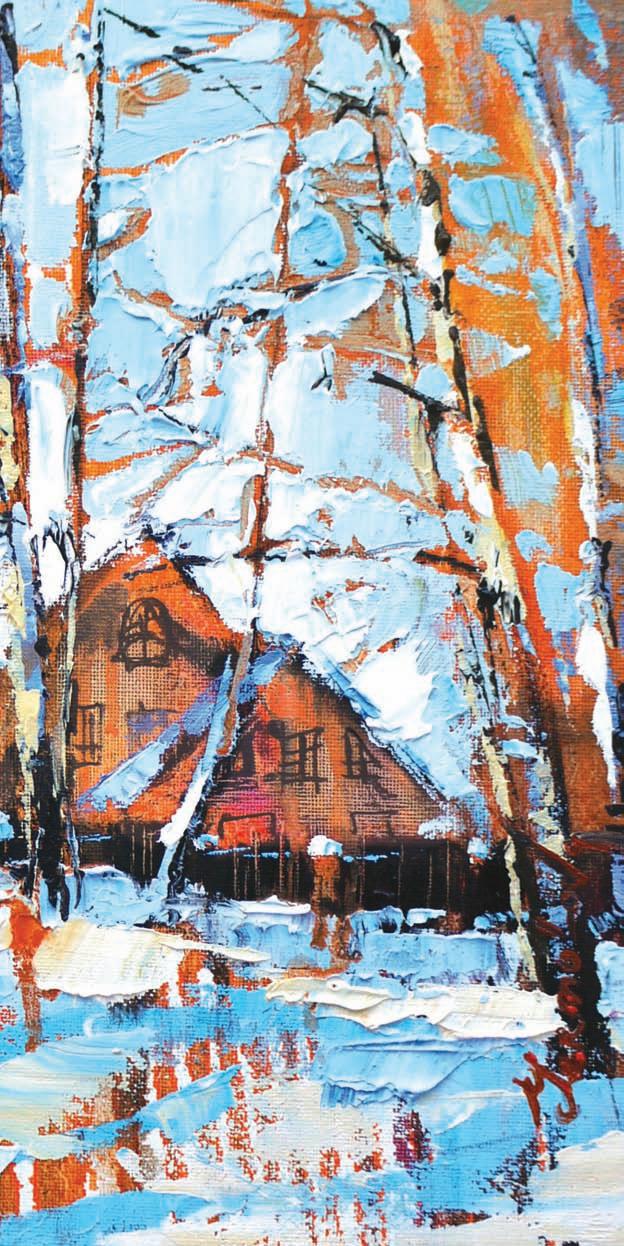
WELCOME TO ISSUE 101 OF LITRO
From the Editor
From the Editor
Faith in the twenty-first century remains almost as thorny an issue as it has been in all of recorded history, despite some late-twentieth-century predictions that it would eventually die a quiet death, overtaken in people’s minds and hearts by political or personal ideologies. Western capitalism had shed its need for faith, replacing it with science and progress; Communism had rejected it. Faith was simply surplus to requirements: a superstitious, vestigial left-over from a less enlightened stage of humanity.
These arguments were roundly scotched on September 11, 2001, when a new kind of terror was unleashed on New York, and again, far closer to home, on July 7, 2005. Faith was not going to go quietly: it was back at the top of the agenda, and as bloody and controversial as it had ever been, from the Exodus of the Israelites to the Crusades.
As we all know, there are many faiths and many religions in the world, fulfilling the apparently fundamental human need to believe in something greater than ourselves. Faith offers solace and a sense of belonging; it also causes strife, death and bloodshed. In this issue of Litro, you’ll meet a rabbinical student suffering from a crisis of faith; a rural housewife struck by the blinding light of God; a violent teenage atheist, and a photographer struggling with the dark legacy of religion and violence.
We’ve also got an extract from Shusaku Endo’s wonderful novel about Portuguese Catholics in Japan, Silence, with an introduction to the story by legendary director Martin Scorsese. Choked by tinsel, stuffed with mince pies and blasted by carols as we are at this time of year, Litro offers you some seasonal relief: a selection of superb stories that examine what we believe in, why – and just where it’s got us.
Happy Christmas!
Katy Darby Editor December 2010
Editor-in-Chief & Publisher, Eric Akoto
Editor, Katy Darby
Contributing Editor, Sophie Lewis
Online Editor, Laura Huxley
Events Editor, Alex James
Graphic Designer, Nicola Green
Cover artist: Iryna Yermolova, The Journey

Litro is Sponsored by UK Trade and Investments
Litro Magazine is London’s leading short story magazine. Please either keep your copy, pass it on for someone else to enjoy, or recycle it – we like to think of it as a small monthly book of short stories.
Contents:
The Memory Girl by
John Asling
Sorry by C.T.
Kingston
Yeshiva Student by Larry
Lefkowitz
The Godless Boys by Naomi
Wood
A Religious Experience by Charlie
Hill
Introduction to Silence by Martin
Scorsese
Silence by Shusaku Endo
Events Listings by Alex James
This month on Litro.co.uk


Litro Loyalty card: exciting new loyalty card: log in and find out about discounts on books, food, festivals and much more.
Q and A: read all about who we’re quizzing this month. Blogs: Emily Cleaver continues with her musings on all things literary.
News: Find out which lucky person won this year’s short story award.
The Memory Girl
John Asling
Eve is tired, confused. What has just happened, she wonders? She picks up the faded playing cards, shuffles absently, trying to remember the rules.
*
I spread the playing cards face down on the living room floor and invite granddad Jacob or granddad William to sit on a big fat cushion and flip the cards over two at a time to make a match. I love the exotic scent of granddad Jacob’s cigarettes, the sweetness of granddad William’s aftershave. They smile down at me.
“Play with me. Please, granddad.” I never forget a card. When the matching card is exposed, I pounce. At the end of the game, I have the most pairs. “I won again. I must have a much better memory than you.” I giggle and dance around the living room.
I never forget what is written on the chalkboard. When we move to a comfortable borough the teachers wonder if I get too much help. Mum and Dad sit uncomfortably close on plastic chairs in the head’s office, eyes lowered, as the teacher wearing a scoop-necked red jumper struggles to find the right words. Dad smiles gravely. Mum says, “I think you will see that Eve has a rather good memory and it shows in her work.” The teacher nods. In the coming weeks tests come back near perfectly.
I am at the head of the class and have many friends, long-legged youngsters like me. “Come on you guys, you have to remember this. You know it’s easy.” My arm high over my head, I lead the charge to the shade of our favourite tree. “Let’s learn this and then we can play again. In fourteen hundred and ninety-two, Columbus ...”
*
Eve ambles to the ringing telephone, brushing aside her shock of grey hair as she picks it up. It is her daughter Louise. The doctor is not sure, Eve tells her. They need more tests, more intelligence,
Sorry
C. T. Kingston
Even among the gaudy Christmas lights, strung up along the street like Fascists on lamp-posts, he sees it. It’s a flash of blue in the corner of his eye, glancing through the rain-pocked window of his speeding cab. He’s opened his eyes momentarily in mid-kiss, to find and ease the blonde’s bra-strap down over her golden shoulder. He breaks the kiss and nuzzles her warm neck with his lips, staring out. High in the top-floor window of the house he used to know, a blue neon sign reads SORRY.
He rings the familiar doorbell the next night, nervous, sick with destiny and daring, the blonde fobbed off: I’ll call.
Just as he’s about to turn away, the door opens. She’s there, black hair tumbled, eyes tired. The old dress she wears to work in. Her dark stare, her warm smell. She looks at him. Rain spots his jacket; late-night traffic yowls.
“I knew you’d see it,” she says, “sooner or later.”
His voice is dry and small in his mouth, as if he’s unused to talking. “How?”
She shrugs, half-smiles. “I had faith.”
And he can believe that. She always did have faith: in fate, in life, in people, in him. Especially in him.
“I’m sorry too,” he says. He doesn’t know he means it until the words are out. She looks different; as though she’s lost something and found something else she’d forgotten she was looking for.
She puts a hand out and touches his face. He feels a vertiginous hollowness in his chest as he thinks she is going to kiss him. Her fingers are cold.
“Good,” she says, and finds the other half of her smile. And she closes the door on him gently, as though not to wake someone inside.
He stands there for a minute, wondering about cabs and if any bars will be open nearby. When he looks up at her window again from the street, the sign is gone.
C. T. Kingston is an actress and fledgling writer. She has appeared in a lot of productions on the London fringe and on various fiction websites, and is currently writing a play. She lives in North London.
Yeshiva Student
Larry Lefkowitz
He did not stop, as was his custom, to read the notices pasted on the wall; not even one signed by the rabbinical council which denoted a matter of extreme importance. Once he would have devoured such a message – perhaps there would be a demonstration? For a respected yeshiva student like himself, one who drove himself to excel, demonstrations were a way of clearing his head, in addition to performing a mitzvah.
But today he did not even glance in the direction of the notices, ignoring their exhortations to read them via headlines and exclamation points and the vying colours of their paper. Today he walked rapidly but not to the yeshiva: he had actually taken a day off from his studies. Because of the thought. The thought that had crept into his mind as if inserted by Sammael: “But what if it is not true?”
Wherever he turned – morning prayers, evening prayers, the prayer upon going to bed, upon waking up – he heard a voice whisper, “But what if it is not true?”
He had never questioned his world. The world: Heaven and Earth as set out in the Torah. He had delighted in it, nestling within the emanations of the Torah as if it were a quilt on a cold winter’s night. Talmud allowed for questioning, but this was different. You questioned aspects of Torah, not Torah itself.
As he walked he strove to shut out the refrain, “But what if it is not true?” But how could it be not true? Every man dressed in black like himself that he saw on the street, his street, attested to the truth of it. Men far wiser than himself – even the head of the yeshiva – laboured in its service, as he himself had always striven to do. And now, even as his body swayed back and forth in prayer, the words mocked his movements, “But what if it is not true?”
He felt himself close to collapse. Greetings on the street went unacknowledged. If it had been summer, he could have gotten away on a summer recess tour. Climbed some hill, or travelled a wadi bed, and perhaps escape.d But it was winter.
His walking brought him to the Western Wall at midnight. For a time, he prayed and the question did not assail him. But then it came, as if oozing from between the very stones, “But what is it is not true?” Even here, he thought. Yet greater profanation. He wrote
The Godless Boys
Naomi Wood
The following is an extract from Naomi Wood’s novel The Godless Boys, to be published by Picador in 2011. In England, in 1950, there was a war between the Church and the Secular Movement. Some of the Movement were expelled to the Island. This scene takes us to the Island, thirty-six years after the conflict.
England, across the way, though it could not be seen tonight. The Sound was long and still. The boy crouched by the hedge, moonlight white on his skull. Underneath him was Lynemouth Town, slipping down the hill-slope toward the sea. A few lights were on here and there but mostly it was dark. You could think, up here, that the Island might be alone in this, this sea; a great glob of earth, with nothing else for miles but water.
Looking at the Sound like that, so deceptively calm, always made Nathaniel think of his da, and how the sea had gobbled him up in its brackish waters. His da’s boat would be out there, its keel dragging along the sea-bed, his body wet and strewn.
His da had been one of the first men of the Secular Movement to be expelled to the Island, in 1951, a fact which made Nathaniel very proud. Jack Malraux had been a plumber in Hartlepool before being found responsible for one of the church burnings in the summer of 1950 and deported here.
On the Island, Jack’s trade had been fishing and he’d done well from it. Nathaniel remembered the excitement of greeting his dad in Warkworth Bay when he came home for the weekend, and the rolling sound of the chains fixing the boat to the pier. When he left again, on the Monday morning, Nathaniel would accompany him down to the jetty, in the plum-blue mornings, in the winter months when the Island was all diamonded frost and sheeted ice, his hand in his father’s hand, as they walked down toward the water’s edge. Nathaniel would watch the boat leave, his da waving from the deck, knowing himself to be a softly shrinking dot in the distance, as his father sailed away to fish.
A Religious Experience
Charlie Hill
1.
Sheila is getting ready for choir. Her lift is due any minute. She is upstairs in the bedroom, ironing her dress. The iron is too hot and she turns the dial. The twisting of her fingers makes her skin prickle. She is beginning to regret the cup of tea she had from the pot she made him about half an hour ago. She’d made him the tea after dinner as usual, even if Wednesday night is choir night, the one night of the week that is hers, or should be. Tonight in particular should be special. She will be starting her first new piece with the choir. This doesn’t matter to Phil. Doesn’t seem to register with him. He is sitting downstairs in his chair as he does every night. In a minute he’ll probably call up to ask her how to work the video. She doesn’t blame him. She doesn’t blame anyone except perhaps herself for not being able to blame him.
Tea gives Sheila palpitations. If she has a cup after four in the afternoon, she can’t sleep at night. It is one of the effects of her condition. Another is anxiety. Sheila is on edge most of the time. She feels as though she has no room in her life, there is nowhere for her to go where she can be herself. Every time Phil calls up to her from downstairs she’s reminded of this. He’s a big man in a small house. All he does is sit in his chair and watch television, drink Famous Grouse and Yorkshire Tea, yet he is everywhere in the house. In the living room she breathes his smears of horsehair brush and shaving soap on skin; through the thick citrus of the bathroom she smells his sweet and sour whisky smell. He’s not a bad man. He has never mistreated her, not in that way. But Sheila is smothered. His life is her life is his life.
It’s worse now that he has retired. Now he’s retired there is more of him. And less too. It’s as though he has given up, passed sixtyfive before he has reached sixty. Sheila loves Phil dearly of course, but she loves him resentfully too. She has to love someone and dearly comes easily to her, but the resentment has also been there a long time, even if she has only just begun to realise it. On a Wednesday, when just for once he could make his own tea, it’s the resentment that is strongest. Because Sheila hasn’t given up.
She has been singing in the choir for about four months now. She
Introduction to Silence , by Shusaku Endo
Martin Scorsese
How do you tell the story of Christian faith? The difficulty, the crisis, of believing? How do you describe the struggle? There have been many great twentiethcentury novelists drawn to the subject – Graham Greene, of course, and François Mauriac, Georges Bernanos and, from his own very particular perspective, Shusaku Endo. When I use the word ‘particular’, I am not referring to the fact that Endo was Japanese. In fact, it seems to me that Silence, his greatest novel and one that has become increasingly precious to me as the years have gone by, is precisely about the particular and the general. And it is finally about the first overwhelming the second.
Endo himself had great difficulty reconciling his Catholic faith with Japanese culture. So it was not historical research but his own experience that drew him to the stories of the Portuguese missionaries of the seventeenth century who were forced to apostatise. He understood the conflict of faith, the necessity of belief fighting the voice of experience. The voice that always urges the faithful – the questioning faithful – to adapt their beliefs to the world they inhabit, their culture. Christianity is based on faith, but if you study its history you see that it’s had to adapt itself over and over again, always with great difficulty, in order that faith might flourish. That’s a paradox, and it can be an extremely painful one: on the face of it, believing and questioning are antithetical. Yet I believe that they go hand in hand. One nourishes the other. Questioning may lead to great loneliness, but if it co-exists with faith – true faith, abiding faith – it can end in the most joyful sense of communion. It’s this painful, paradoxical passage – from certainty to doubt to loneliness to communion – that Endo understands so well, and renders so clearly, carefully and beautifully in Silence.
Sebastian Rodrigues represents what you might call the ‘best and the brightest’ of the Catholic faith. ‘There
Silence Shusake Endo
Prologue
News reached the Church in Rome. Christovao Ferreira, sent to Japan by the Society of Jesus in Portugal, after undergoing the torture of ‘the pit’ at Nagasaki had apostatised. An experienced missionary held in the highest respect, he had spent thirty-three years in Japan, had occupied the high position of provincial and had been a source of inspiration to priests and faithful alike.
He was a theologian, too, of considerable ability, and in the time of persecution he had secretly made his way into the Kamigata region to pursue his apostolic work. From here the letters he sent to Rome overflowed with a spirit of indomitable courage. It was unthinkable that such a man would betray the faith, however terrible the circumstances in which he was placed. In the Society of Jesus as well as the Church at large, people asked themselves if the whole thing were not just a fictitious report invented by the Dutch or the Japanese.
Not that the Church at Rome was ignorant of the straitened circumstances in which the Japanese mission was situated. Letters from the missionaries had left no room for doubt. From 1587 the regent Hideyoshi, reversing the policy of his predecessor, had initiated a frightful persecution of Christianity. It first began when twenty-six priests and faithful were punished at Nishizaka in Nagasaki; and following on this Christians all over the country were evicted from their households, tortured and cruelly put to death. The Shogun Tokugawa pursued the same policy, ordering the expulsion of all the missionaries from Japan in the year 1614.
Reports from the missionaries tell of how on the 6th and 7th October of this same year, seventy priests, both Japanese and foreign, were herded together at Kibachi in Kyushu and forced to board five junks bound for Macao and Manila. Then they sailed into exile. It was rainy that day, and the sea was grey and stormy as the ships drenched by the rain made their way out of the harbour, passed beside the promontory and disappeared beyond the horizon.
Flaunting this severe decree of exile, however, thirty-seven priests refused to abandon their flock and secretly remained hiding in Japan. And Ferreira was one of these underground priests. He continued to inform his superiors by letter of the capture of the missionaries and the Christians, and of the punishment to which they were subjected. Today there is still extant a letter he wrote from Nagasaki on March 22nd 1632 to the Visitor Andrew
Litro Events, December 2010
by Alex James
2
December:
Fashion Illustration in Advertising,
Somerset House, As part of the Dior Illustrated: René Gruau and the Line of Beauty exhibition at Somerset House, industry experts will explore illustration’s role in advertising and communication throughout the 20th Century. See: ‘www.somersethouse.org.uk’
3 December: Barry Miles in conversation with Tony Elliott, Museum of London, Moorgate Acclaimed author Barry Miles and founder of Time Out Tony Elliott talk about London’s counterculture and Miles’ new book London Calling. From teddy boys and angry young men to the rise of punk and the Young British Artists of the nineties, listen to stories of London’s West End and Soho from the 1940s onwards. Barry Miles is the author of a number of seminal books on popular culture with London Calling: A Countercultural History of London since 1945 being his most expansive and definitive work so far. Following the discussion there will be a book signing.
6 December: Quintessentially Soho at
The House
of St Barnabas, 1 Greek Street It’s the Book Club Boutique’s awards night, with awards presented for dedication to books, booze and boogie-woogie! Line-up and nominations to be announced. Expect sick speeches, tears and laughter, schmaltzy Christmas film clips from Sally Dunbar, The Book Club Boutique band, Moustache Man and DJ Redman, and more. Dress code is glammed to the max: Oscars, ballgowns and white tie. See: ‘http://www.thebookclubboutique.com/”www.thebookclub boutique.com’ Also see: “http://www.facebook.com/pages/ Quintessentially-Soho-at-The-House-of-St-Barnabas /142836395759345”
12 December: Miles Davis London Exhibition,
Gallery 27, Cork Street. The last remaining 100 original paintings and drawings of one of the greatest jazz musicians ever, Miles Davis, will be showcased to reflect his well-documented fascination with women, together with evocations of African tribal art. Well known celebrities such as Prince, Phil Collins and Diana Ross now own work from previous collections. See: www.gallery27.com
10
December
2010 – 10 January 2011: Oona
Hassim, Open Studio, 44 Richmond Avenue, Islington, London, N1 OND Art lovers will get a chance to view new and selected paintings by artist Oona Hassim, at her open studios, in Islington, London. Oona Hassim is represented by Woolff Gallery, London and has her work in the London Institute Collection. Her unique style of painting will reveal her passion for life, activity and colour and focuses on crowds and the passage of life that traverses the city of London.
13 December: Evening with the Stars, Royal Observatory, Greenwich An after-dark experience at the Royal Observatory, Greenwich: watch the Sky Tonight planetarium show, look through the gigantic 28-inch telescope and use small telescopes in the Meridian Courtyard. See: www.nmm.ac.uk
14 December: Liars’ League – Faith & Hope, The Fellow, York Way, King’s Cross London’s premier short story night, where actors and writers come together to give you ‘performance prose’. The Liars’ League Christmas special features five festive stories on a Faith & Hope theme, and the first 50 lucky punters will receive a free CD and mince pie with their £5 ticket! See: www.liarsleague.com
17 – 18 December, 9pm – 2am: December Nights, Old Vic Tunnels, Leake Street For two nights only The Old Vic Tunnels will be transformed into a wonderfully whimsical underground town. A unique theatrical experience: drinks, dancing, top notch cabaret with live music, comedy and more. Tickets are only £6 and are available online or on the door. See: www.dark-carnival.co.uk or www.oldvictunnels.com
Until 18 December, 8pm: All I Want for Christmas, Jermyn Street Theatre, Piccadilly A brand new black comedy musical about a man who tries to buy the perfect Christmas – by hiring an escort girl to pose as his girlfriend when he goes to his parents’ for Christmas Day ... A stellar cast includes Jessica Martin and Andrew C. Wadsworth. “Not the usual Christmas comedy but a fascinating fantasy that will have you laughing” – Whatsonstage.com See: www.jermynstreettheatre.co.uk
28 December 2010 – 8 January 2011: The Magical Adventure of Anastasia, The New Players Theatre, The Arches, Villiers Street. Panto returns to the New Players with a bang! Join Dimitri and his outrageous mum Olga as they take Anastasia to Paris to be reunited with the Grand Duchess and reclaim her place in the last Royal family of Russia. But beware of Rasputin with his loveable sidekick Tushi as he tries to stop this dream coming true. See: www.newplayerstheatre.com
27 December: The Blitz Ten Inch at The Book Club, 100 Leonard Street EC2 They are bringing back the tin hats, stiff upper lip and DIY glamour of the Old East End in wartime London down at the Book Club this month. Get out your Fred Astaire and lindy-hop your way into 2011 to the sound of the Bow Bells and the best tunes this side of Tipperary. See: www.wearetbc.com
From 11 January 2011: The Fitzrovia Radio Hour, Trafalgar Studios, Whitehall After a sell-out run at the Edinburgh Fringe, The Fitzrovia Radio Hour hit the West End with a four-week run at Trafalgar Studios! Put on your spats and dig out your hats for three 1940s-inspired radio plays performed with live sound effects and cut-glass theatricality! See: www.fitzroviaradio.co.uk

“Why am I being kept alive? Rodrigues wonders. Where is my martyrdom? My glorious martyrdom?” – Martin Scorsese, introduction to Silence