MAKE YOUR VOTING PLAN VOTING MAKE YOUR VOTING PLAN
What you need to know before you go to the polls in May
BY CASE FENNER







What you need to know before you go to the polls in May
BY CASE FENNER


I’m just going to cut to the
BY MEGHAN GOTH

Icould try to butter you up first, but let’s just cut to the chase: This kind of election coverage isn’t cheap.
If you actually like having it around, consider throwing some support to the CityBeat Press Club.
These tax-deductible gifts are only used for public interest reporting — reporting like what you’re about to read in this edition of CityBeat. So every penny you donate will go directly to keeping your community more informed about the things that affect them.
OK, now for the buttering you up part:
Nearly 55 million Americans live without any local news coverage at all, according to the Associated Press’ Medill Local News Initiative.
Cincinnati has felt this acutely (as someone who’s worked in the local media landscape for a while, I can feel this in my bones).
While the city still has four television stations, a public radio station, and a daily newspaper, research from Rebuild Local News found that after the Cincinnati Post closed in 2007, fewer candidates ran for public office, incumbents became more likely to win reelection and voter turnout and campaign spending fell.
And while the Cincinnati Enquirer does still have local election coverage, some of it — from things like the basics of ballot issues to the columns that help readers make sense of it all — is behind a paywall.
Donations from people who find our work valuable is one way to help us keep everything (including all of our election coverage, our investigative work, our solutions journalism and more) free — even for the people who can’t afford to pay for it.
So that’s where we’re starting, and that’s why we brought you this edition: To help you understand the process, figure out how to make your voting plan, learn more about who is running, what the issues are you’ll be voting for and more.
Rather than take the view of a seasoned polit-
ical wonk, we want to make this information accessible and easy to find and understand.
We know you work hard for your money, and that the decision about where to use it isn’t a trivial one. We also know some people just can’t afford it — and that’s OK! There are a lot of other ways to support our work — you can share the stories on our website that you find meaningful; you can follow us on social media and share the stories that resonate with you with your networks.
You can find us online at citybeat.com. Most of our audience prefers Instagram — our handle there is @citybeatcincy. We also have a big Facebook community we’d love you to join: facebook.com/CincinnatiCityBeat
Thank you for reading, thank you for sharing and thank you for being part of the CityBeat community.
Meghan Goth is the executive editor at CityBeat. Email her at mgoth@linknky.com
Scan this QR code to make your contribution to the CityBeat Press Club.

For more election coverage throughout 2026, scan this QR code.

The primary election is May 5, but it’s never too early to start making your voting plan, especially if you aren’t sure if you are registered.
Whether you feel like you’re prepared or haven’t even thought about it yet, this guide is here to break down how, where and when you’ll be able to vote in Cincinnati and Hamilton County.
Below is a list of the key dates coming up ahead of the primary election and into the general election in November.
The last day to register to vote was April 6, with early voting starting the next day on April 7.
Right now
Anyone who is registered to vote in Ohio and is a resident of Hamilton County can vote in person at the Hamilton County Board of Elections office at 4700 Smith Road in Cincinnati.
Hours are 8 a.m. to 5 p.m. through April 24.
On Monday, April 27, the office will be open from 7:30 a.m. to 7:30 p.m.
On Tuesday, April 28, the office is open for an additional hour, from 7:30 a.m. to 8:30 p.m.
Hours go back to 7:30 a.m. to 7:30 p.m. for the remainder of that week, April 2 to May 1.
The office is open the weekend before the election:
• On Saturday, May 2, voters have from 8 a.m. to 4 p.m. to cast their ballots in person.
• On Sunday, May 2, those hours are from 1 p.m. to 5 p.m.
Absentee ballots:
If you need to fill out an absentee ballot, the request form must be received by April 28, meaning you should try to get it mailed out at least a week in advance (that means, if you’re reading this in our print edition, you don’t have much time left!).
You can download the form at votehamilton countyohio.gov/voting-options-2/mail
Other ways to get an absentee ballot request form:
• Call the board of elections at 513-9468544 or 513-946-8539
• Pick up a copy at the board of elections office at 4700 Smith Road in Cincinnati
• You can also find a form at any Hamilton County Public Library
April 28
This is the deadline for the board of elections to have received your absentee ballot. Plan to mail your ballot at least a week in advance to
BY CASE FENNER
ensure it arrives in time.
May 5
The big day!
Polling locations will be open from 6:30 a.m. to 7:30 p.m.
All absentee ballots that haven’t been mailed in should be delivered directly to the Hamilton County Board of Elections office at 4700 Smith Road in Cincinnati.
After the primaries conclude on May 5, the newly elected candidates start campaigning against each other in the lead up to the general elections.
There are some interesting state and national races, like a special election for JD Vance’s Senate seat, and local races that will determine everything from your tax bill to zoning laws that regulate what you can build on your property.
Here are the dates to watch out for heading into the General Election:
Sept. 18
U.S. citizens abroad can start sending in their absentee ballots for the general election on Sept. 18.
Note that for those filing absentee requests, if you intend to vote in the Nov. 3 general elections and the Nov. 3 special election, you have to file two separate absentee requests for each election.
Oct. 5
The deadline to register to vote for the general and special election is Oct. 5.
There are three ways to register to vote:
You can register online at voteohio.gov, but only if you have an Ohio driver’s license or Ohio state identification card. If you don’t have one, you will have to register in person.
You also need to provide the last four digits of your social security number if you vote online.
By Mail
Download a voter registration form at votehamiltoncountyohio.gov/register
Pick one up in person at the board of elections at 4700 Smith Road in Cincinnati.
Or you can have one mailed to you by calling 513-946-8500.
You can get a voter registration form and submit the form at any of the following locations:
• The Hamilton County Board of Elections, 4700 Smith Rd., Cincinnati, OH 45212
• The office of the registrar or any deputy registrar of the Ohio Bureau of Motor Vehicles
• Public libraries
• Public high schools or vocational schools
• County treasurer’s offices
• The office of the Secretary of State
• The office of any of the 88 county boards of elections
• Offices of designated agencies, including:
° The Department of Job and Family Services;
° The Department of Health (including the Women, Infants and Children (WIC) program);
° The Department of Mental Health;
° The Department of Developmental Disabilities;
° Opportunities for Ohioans with Disabilities; or
° The office of any state-assisted college or university responsible for providing assistance to disabled students
If you are physically unable to deliver your voter registration, you can provide it to an entrusted person to be delivered to the county board of elections within 10 days of completion or by the registration deadline.
Bring a valid Ohio driver’s license or voter ID. If you don’t have one, you’ll need to provide the last four digits of your social security number.
If you aren’t sure if you’re eligible to register to vote, these are the requirements:
1. You are a citizen of the United States
2. You will be at least 18 years old on or before the day of the next general election
3. You will be a resident of Ohio for at least 30 days immediately before the election in which you want to vote
4. You are not incarcerated (in prison or jail) for a felony conviction
5. You have not been declared incompetent for voting purposes by a probate court
6. You have not been permanently disenfranchised for violating the election laws
Oct. 6
Early voting begins on Oct. 6, right after the registration deadline. Early voting can be done at the Board of Elections office from 8 a.m. until 4 p.m. Monday through Friday.
Absentee ballots will also be sent out to those who registered for them.
Oct. 27
Oct. 27 is the deadline for absentee requests, which must be into the Board of Elections by 8:30 p.m.
Nov. 3
General Election Day!
Absentee ballots must be dropped at the Hamilton County Board of Elections drop box by 7:30 p.m.
Three Democratic candidates for Hamilton County commissioner will be on the ballot in the May 5 primary.
Incumbent Stephanie Summerow Dumas faces challengers Herman Najoli and current City Council Member Meeka Owens.
The winner of that race will face Jonathan Pearson in November.
Find more information, including candidates up for county judicial races and election results on Primary Election Day, at citybeat. com/2026-election-headquarters
Candidates are listed in alphabetical order by last name.
Stephanie Summerow Dumas
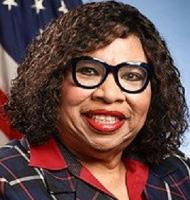
Stephanie Summerow Dumas is an incumbent candidate for Hamilton County commissioner. She previously served as the vice-mayor and mayor of Forest Park from 1993 to 2005; and as the village manager of Lincoln Heights from 2011 to 2015.
BY CASE FENNER
In 2018, Summerow Dumas beat then-incumbent Hamilton County Commissioner Chris Monzel. She won her second term in 2022. She currently serves as president of the commission.
In an interview with CityBeat, the commissioner spoke on her history outside of politics, her achievements while in office and the beliefs that ground her.
“I’ve been a social worker for 48 years,” Summerow Dumas said. In 1977, she graduated from the University of Cincinnati with a B.S. in the field. She was awarded the Social Work Distinguished Alumni Award from the school in 2024, as well as the Bridge Builders award from Best Point Education and Behavioral Health in 2025.
She has also published three books focusing on her Christian faith, politics and advocating for survivors of domestic violence.
Summerow Dumas pointed to multiple accomplishments during her tenure; starting with being the first African American woman to serve as a county commissioner in the state of Ohio. She also highlighted her work with county rent and food assistance programs, disability and re-entry housing and youth initiatives. She pointed to the new Bengals lease and Regional Safety Training Complex as two of her

biggest infrastructural achievements.
If re-elected, the commissioner said she would work on the construction of the Marriott Convention Headquarters Hotel across from the First Financial Center, formerly known as the Duke Energy Convention Center, expanding the county animal shelter, funding job and family resources, and building more housing; all while balancing the county budget.
As for what she believes?
“I believe in positivity, integrity, honesty, fairness, transparency, being a team player, flexibility, goodwill and hard work,” Summerow Dumas said.
Herman Najoli

Herman Najoli is a Democratic candidate running in the race for Hamilton County Commissioner. He previously ran for county commissioner in 2020, and mayor in 2021. He lost both races.
Najoli moved to the United States from Kenya in 2001, and moved to Cincinnati in 2007. Since arriving in the Queen City, he has worked as an educator at the Cincinnati Museum Center and as a case manager for City Gospel Mission.
Najoli has also served as an adjunct faculty member at Indiana Wesleyan University, where he taught a class on global studies and international business.
Najoli did not respond to multiple requests for comment. He has a candidate Facebook page, but other than an updated photo, he hasn’t posted anything since his failed mayoral campaign in 2021.
Meeka Owens

Meeka Owens is a member of Cincinnati City Council, first winning her seat in the 2021 election.
Owens previously served as the social responsibility officer for Mayor Aftab Pureval’s then-Clerk of Courts administration. She also cofounded the Greater Cincinnati Voter Collaborative in 2020, which worked to protect voting rights during the COVID-19 pandemic.
Owens won re-election in 2023 and 2025. She currently sits as the chair of city council’s Climate, Environment and Infrastructure Committee and as vice chair of the Equitable Growth and Housing Committee.
In an interview with CityBeat, the council member spoke on her history outside of politics, her achievements while in office and the beliefs that ground her.
Owens graduated from Miami University in 2003 with a B.S. in mass communication and marketing. She went on to achieve a master’s in human resources development from Xavier University. After graduating, she went on to found Optimize Organizational Development in 2009.
Owens underscored multiple achievements of her time in office, including policies focused on sustainable cost-of-living reductions, growing access to healthcare and stable housing and coalition building across the city’s many communities.
She called special attention to her efforts to expand support for families facing financial-related housing challenges — the so-called “eviction prevention program.” The program includes rent assistance and legal representation for tenants at risk of eviction. According to an independent November 2025 report, 779 households used the legal service provided, and 95% of them had “favorable outcomes,” including avoiding eviction altogether.
“My approach is rooted in listening first, then acting with urgency and purpose,” Owens said.
In regards to her beliefs, Owens said she believes every resident deserves stability, dignity and opportunity.
“I know that strong communities are built when the local government invests in people,” Owens said, “and when we prioritize practical solutions over politics, and outcomes over conflict.”
Winner of Democratic primary will face Jonathan Pearson in November
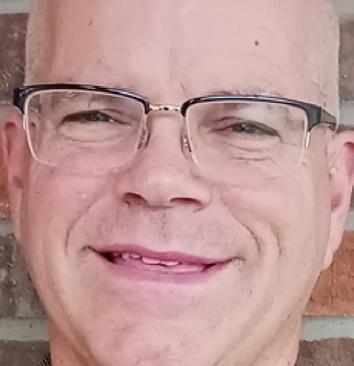
Jonathan Pearson is the sole Republican candidate for the county commissioner seat, and will face the winner of May’s Democratic primary in the November election.
Pearson will not appear on the primary ballot.
Pearson previously ran as a Republican for the county commissioner seat in 2024, where he lost to current Commissioner Alicia Reece.
Pearson has owned Pearson’s Home/Turf in Fairfax since 1992, and formerly worked in golf course maintenance.
Pearson did not respond to requests for comment for this article. He does not have a Facebook page for his campaign, and his former page on the Hamilton County Republican Party website is no longer active.
The last time he appears to have made public comments about running for commissioner was in 2024. In an interview with WVXU that year, Pearson said his primary concern as a potential county commissioner included “maintaining a well-studied budget,” and “keeping the public informed.” He also stressed the need for lower taxes and rent, he said in that interview.
KENNEN BUTLER

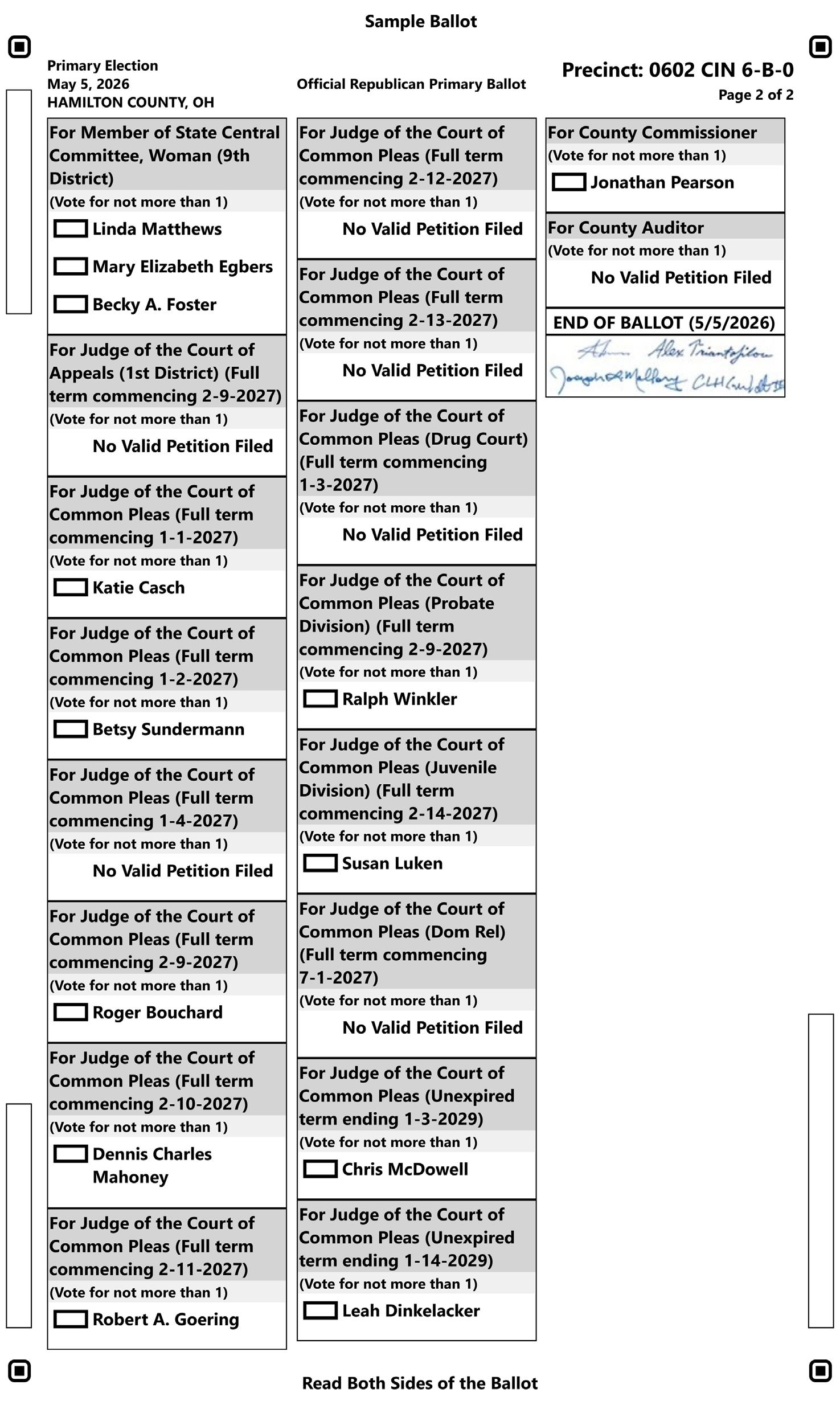
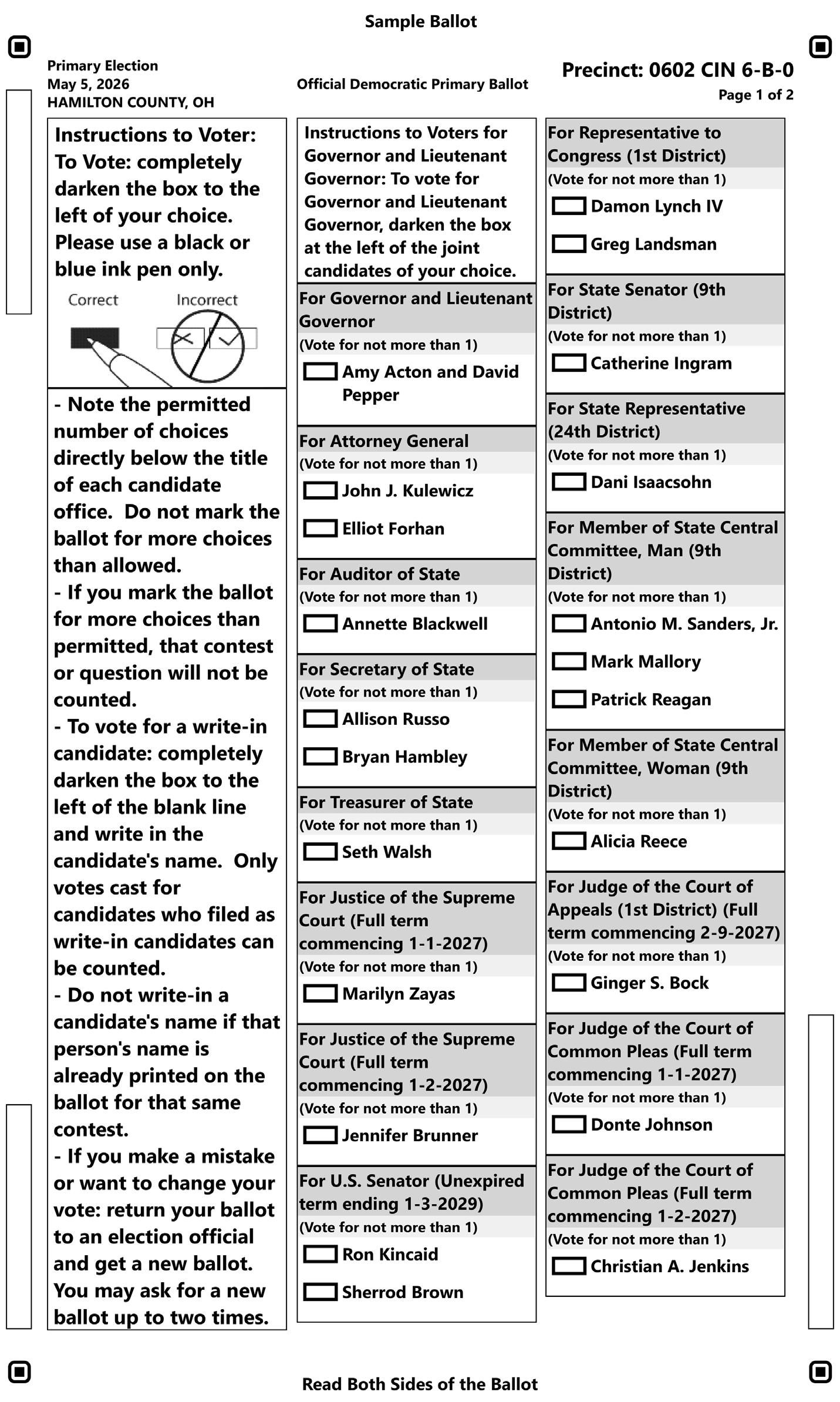
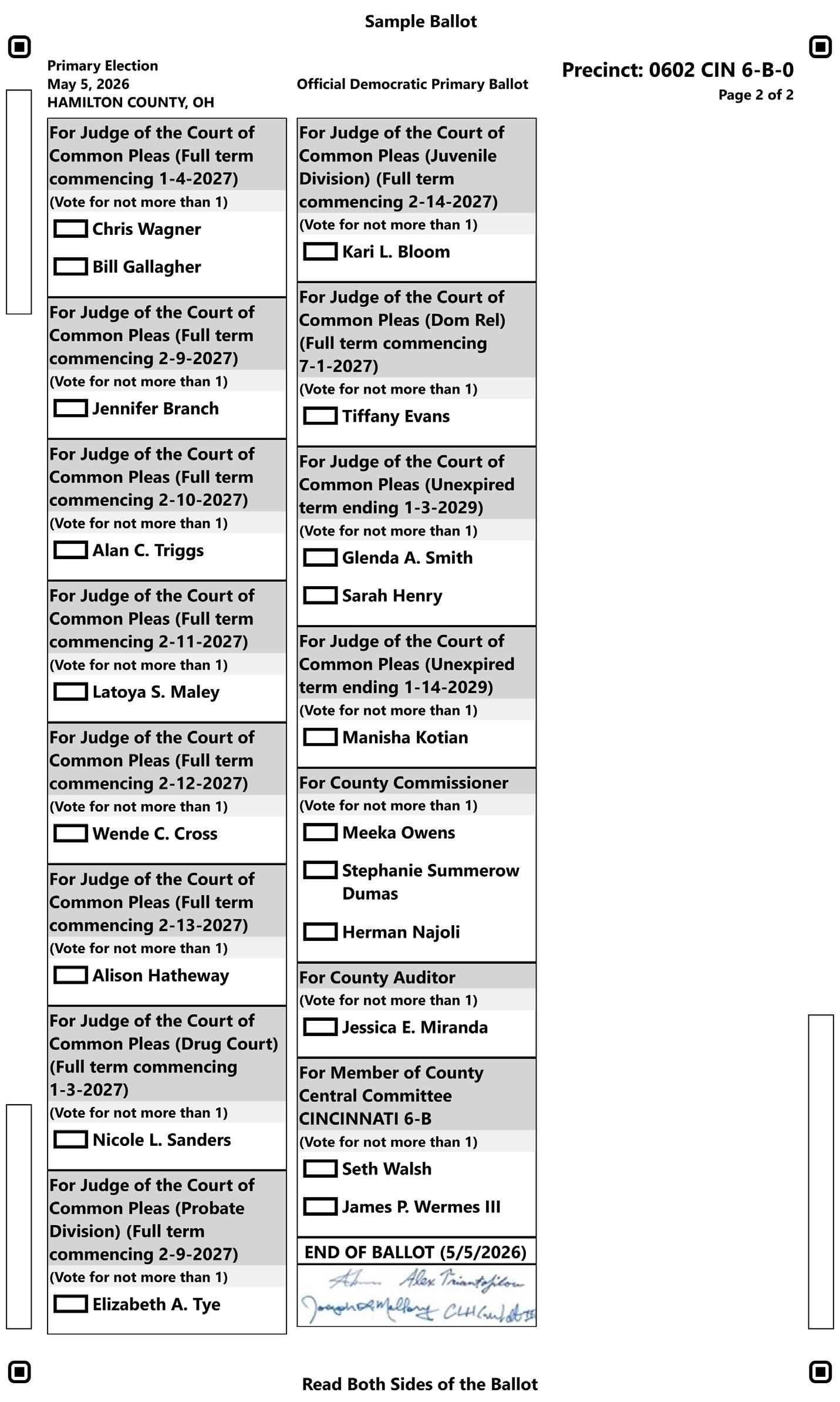
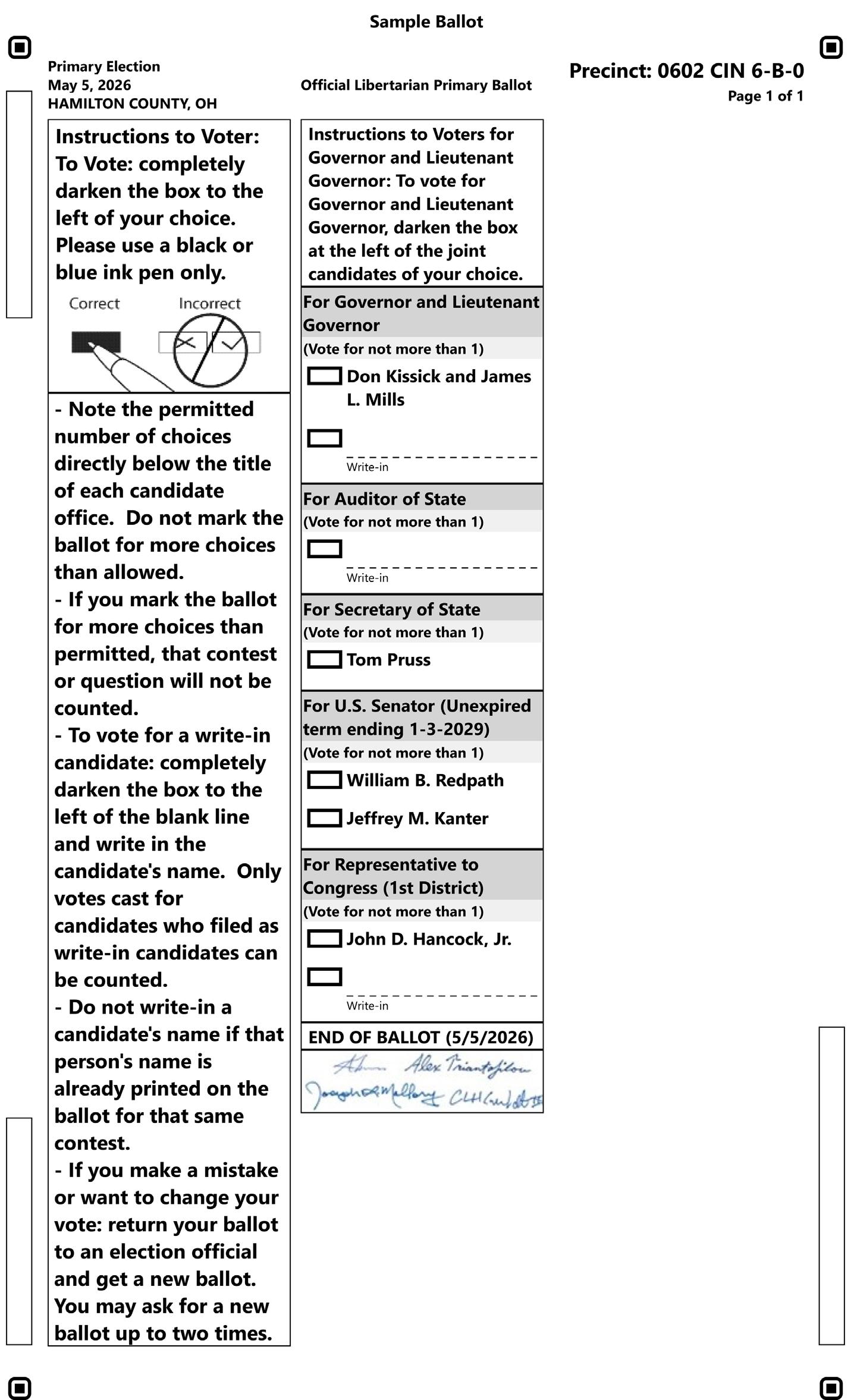
The Hamilton County Board of Elections releases sample ballots for each party ahead of the upcoming election.
The following sample ballots are what you will see if you are a registered Republican, Democrat or Independent. We’ve also included the certified list of questions and issues voters will see on the primary ballot.
Not sure what a mill or levy is? Flip to page 12 for an explainer.
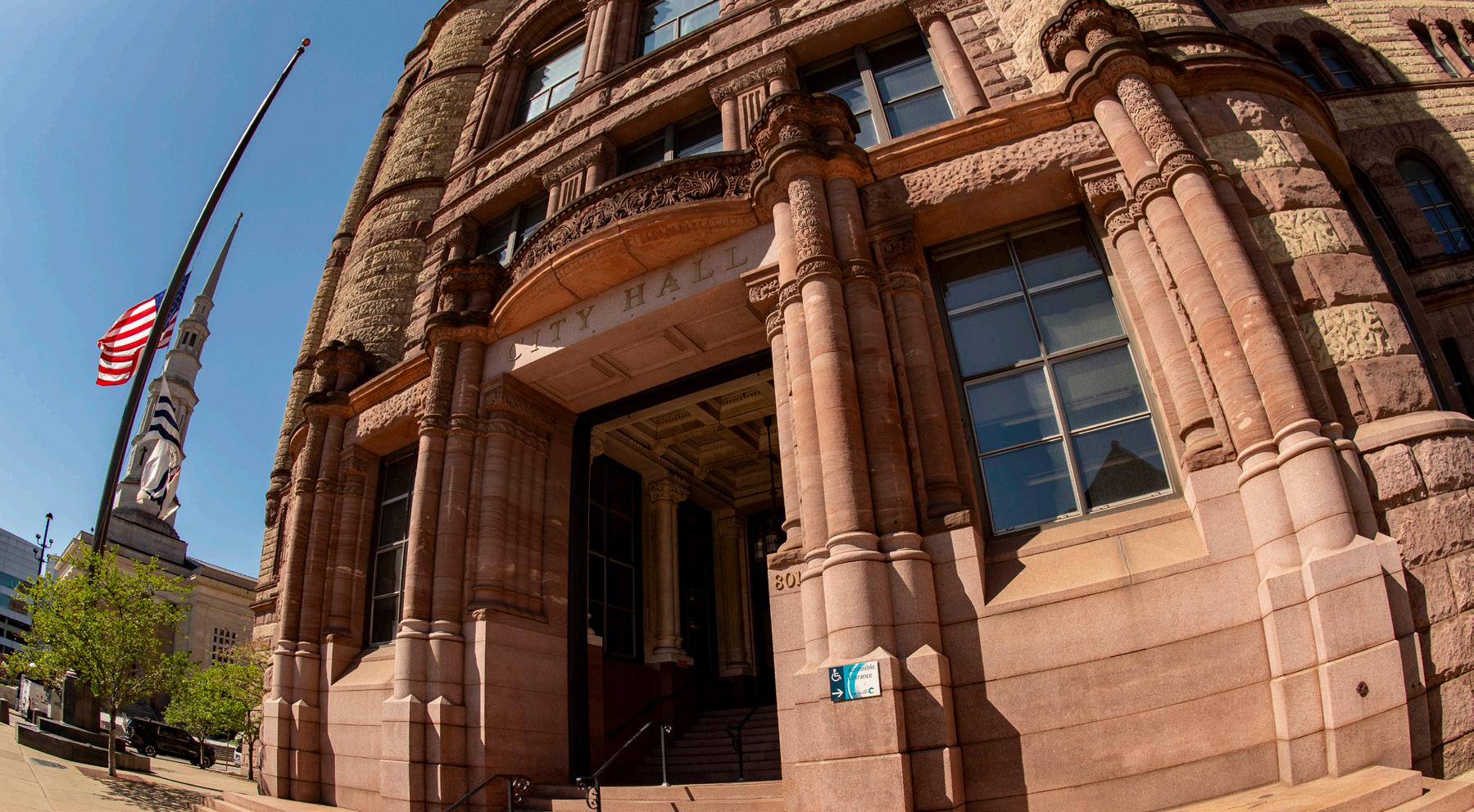
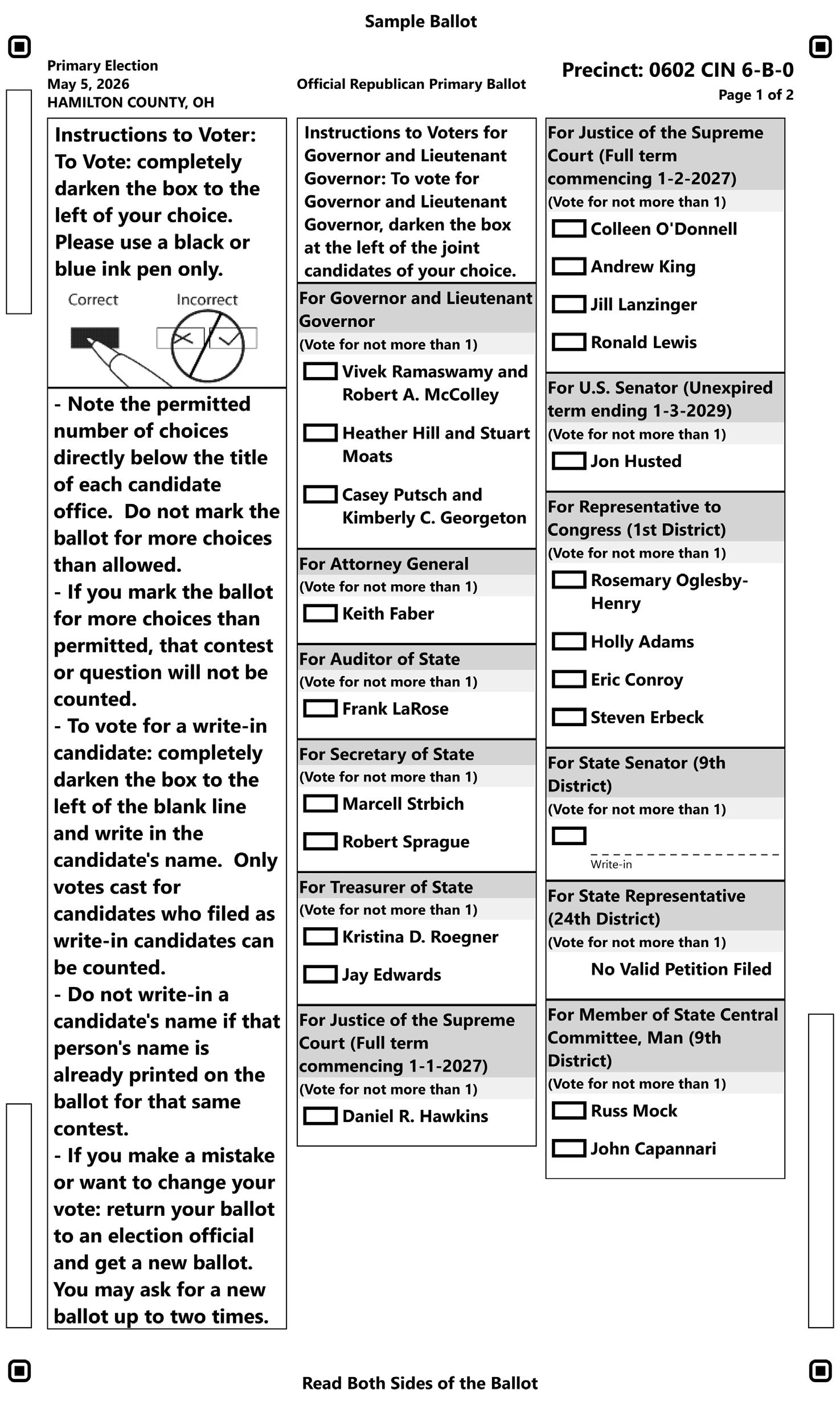
Primary Election | May 5, 2026 | Hamilton County, OH
Scan this QR code for profiles on all county races, along with the latest election news and information to help you make your voting plan.

Primary
Primary Election | May 5, 2026 Hamilton County, OH
While many are focused on the candidates themselves when they create their voting plan, it’s a good idea to educate yourself on the issues you’ll be weighing in on.
You don’t want to go to the ballot and be left wondering what on Earth you’re voting for.
These are the issues that will be on the ballots for Hamilton County voters on May 5:
Three school districts are seeking money to aid their current expenses in the May primary election.
Mt. Healthy City School District is seeking an indefinite 0.75% earnings tax on residents within its school district.
The Mt. Healthy Schools Board of Education believes an income tax may be the best means to adequately meet the financial requirements of the school district. The Mt. Healthy Schools board wrote a resolution [WHEN?] declaring it necessary to annually raise an additional amount for the school district.
Here’s what you’ll be voting for beyond the candidates (and a levy in waiting)
BY NOAH JONES

According to the resolution, the income generated by taxes raised within the current 10-mill levy is insufficient to fulfill the district’s necessary budgetary requirements.
The North College Hill City School District is also looking to aid its current expenses. It is seeking 1.25% of earnings tax over the following five years.
On Jan. 12, the North College Hill Schools Board of Education adopted a resolution requesting the state tax commissioner to estimate the property and income tax rates that would have to be imposed to generate about

$2.4 million annually.
Southwest Local City School District is seeking a new tax levy lasting five years. This levy is for four mills. A four-mill tax levy generates $4 in tax revenue for every $1,000 of a property’s assessed value
(Not sure what a levy or a mill is? Flip to the next page for an explainer.)
The City of Reading is seeking a tax levy of 5.89 mills. This tax levy asks $5.89 in revenue for every $1,000 of a property’s assessed value.
The money will be used for the issuance of bonds for municipal facilities. The levy, if passed, would last 28 years.
Section one of the resolution states that this tax levy is needed to issue $27 million in bonds by Reading’s city council. The funds would be used for site acquisition, new construction, improvements, renovations, additions to municipal facilities, and for equipment, furnishings, and site improvements.
Delhi Township is seeking a 3.2-mill tax levy, providing $3.2 for each $1,000 of assessed property, indefinitely from residents.
The money would support fire and emergency services.
“This is an emergency resolution for the immediate preservation of the public peace, health, safety or welfare of the township,” according to a resolution approved by the township.
The Hamilton County Job and Family Services tax levy will not be on the May 5 primary ballot.
The agency oversees child services for the county, funding the mandated local match to state and federal revenues for child services as required by Ohio’s child welfare statutes. Local responsibilities include investigations of allegations of child abuse and neglect and providing services to aid families, including mental health and substance use treatment, emergency housing and parent training.
Because it is seeing an increase in housing needs for its clients, the agency is losing more money than it takes in.
At current spending levels, projections show a levy would run a deficit by 2027. At a March 5 meeting, a consultant from Public Consulting Group identified $36 million in cuts for 2026 to allow the agency to stay solvent.
Details about the levy are still being worked out in preparation for the Nov. 11 general election ballot.















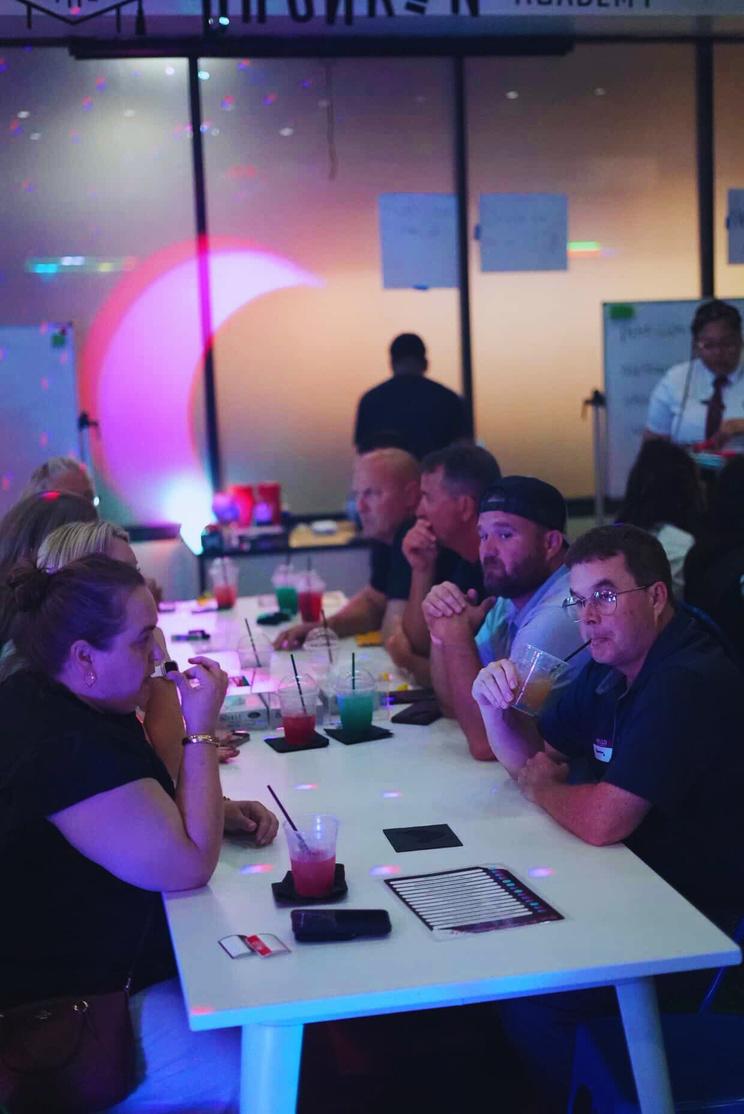














Three levies are on the ballot for Hamilton County voters during the upcoming May primaries.
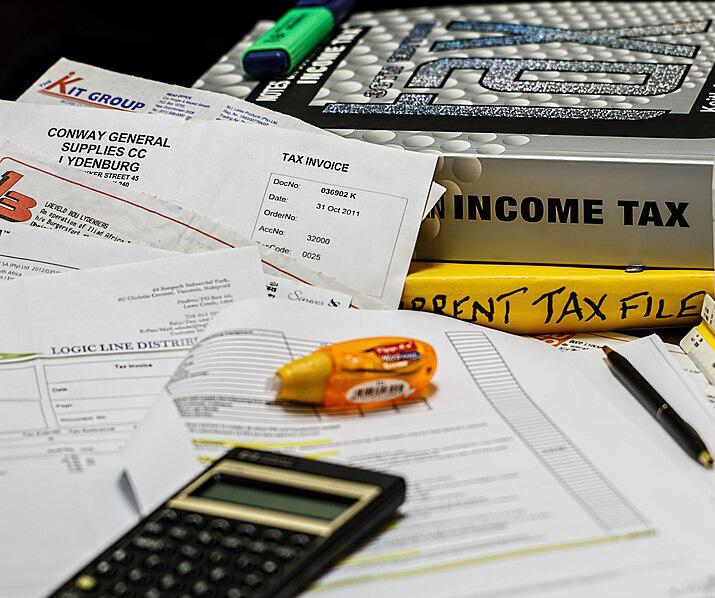
State law allows for citizens to vote on such tax increases, but the language around them can sometimes be confusing. Cutting through the legalese around these topics is important and helps make sure voters know what they’re voting for or against.


It’s not one of those water-wheel things, that’s for sure.
Mill — or millage — comes from the Latin phrase per mille, something measured in parts per thousand. In the United States, a mill is a type of property tax that uses the parts-perthousand formula to determine a “millage rate.”
That rate can be understood as a tax introduced for every $1,000 in property value. Hamilton County’s general fund millage rate, for instance, is 2.26 mills per $1,000 of assessed value; or 0.226% of the total value. So, if you have a $100,000 house, the county general fund tax would then be $226.
Inside, outside and effective mills

In Ohio, there are legislatively two types of mills: “inside” and “outside.” Inside mills must be under 1% (10 mills) of total assessed property value, and don’t have to be approved by voters.
Outside mills, on the other hand, must be put on the ballot and approved.
Some outside mills are also described as “effective.” An effective mill is one that has been subject to the property tax reduction factor, which was introduced in 1976 to keep the cost of property stable. Part of keeping that stable is keeping property tax rates down — the reduction factor does this by keeping taxation in a static state when new school funding legislation is passed or approved. Naturally, the resulting tax revenue is likely much lower than originally voted on.
The 20-mill floor
Public schools are widely considered an essential service; and as such, their funding is a vital resource. In 1977, the state government agreed and created a so-called “millage floor.”
“The 20-mill floor guarantees that each city, local and exempted village school district receives at least 20 mills worth of taxes for current expenses after the tax reduction factor is applied,” attorney Mackenzie Damon wrote for the Ohio Legislative Service Commission.
According to Damon, 477 of Ohio’s 611 school districts met the 20-mill floor as of 2024. 299 of those were rural, where the average voted for millage rate was 35.90 (3.59%). With the 20mill floor in place, however, only 15.90 (1.59%) of that funding is affected by the property tax reduction factor. Damon found that some school districts could save as much as $40,000
if they participated.
What is a levy?
It’s not one of those dam-like things, that’s for sure.
According to the Ohio School Board Association, “a property tax levy is the collection of taxes charged on the value of property. Each district must follow a process described in Ohio law in order for taxes to be levied on property within the district.”
That process includes a chance for residents of the taxable district to vote on a ballot initiative to approve or deny the levy, which means it’s also affected by the property tax reduction factor. These levies can serve a number of purposes, from covering operating expenses to emergencies, and classroom technology to new construction.
A levy is usually active for a maximum of 10 years before needing to be either renewed or replaced by another proposal. Cities and other local taxing authorities can also attempt to pass levies.
As previously mentioned, voters across Hamilton County are looking at three levy proposals on the May primary ballot.
The Southwest Local School District, which includes the towns of Harrison and New Haven, has proposed a four-mill (0.4%) tax levy for current expenses. The school district famously has the second-lowest tax rate in the county, and predicts that the levy will bring in $4.26 million over five years.
The city of Reading has a 5.89-mill (0.589%) levy ballot initiative that will go towards building and improving city facilities. According to the city, the projects should cost between $25 and $27 million; while the levy is expected to last 28 years.
Finally, Delhi Township has a 3.2-mill (0.32%) levy on the ballot to continue providing emergency fire and medical services to the city of almost 30,000 residents. Delhi Township Fire Chief Douglas Campbell hopes to see an additional revenue of $3.2 million from the measure. The operations had previously been working under a 1.99-mill (0.199%) levy, but that had left the services in a deficit.
BY CASE FENNER
ow do you register to vote?
There are six prerequisites to registering to vote in the state of Ohio:
1. You must be a citizen of the United States.
2. You must be 18 years old on or before the day of the general election.
3. You must have been a resident of Ohio for at least 30 days immediately before the election.
4. You must not be currently incarcerated on a felony charge.
5. You must not have been deemed incompetent to vote by a probate court.
6. You must not have violated Ohio voting laws in the past.
Clause 2 means that you can vote in a primary election at 17 years old; but only if you’ll have a birthday before the following general election.
Clause 4 allows those convicted and incarcerated on a misdemeanor charge, on parole following a felony charge or awaiting trial and arraignment to vote. Once released from prison, those with felony charges will have to re-register to vote.
The Hamilton County Board of Elections ex-

plicitly says on their website that its goal is to make registering to vote easy. Cincinnati residents can register in three ways: online, via snail-mail or in person.
To register online, visit voteohio.gov and click “Register to Vote Online” in the top left. You’ll be asked to provide your first and last name, date of birth, driver’s license or state ID number and the last four digits of your Social Security Number. You’ll also be asked to provide an address. You do not have to provide a party identification during this process.
To register via mail, visit votehamiltoncounty.gov/register and click “Register by Mail” in the drop-down menu. You can also call the

Board of Elections office at 513-946-8500 and ask them to mail you the registration form. The provided details are the same as applying online, and you do not have to provide a party identification.
To register in person, you can visit the Board of Elections office, the Bureau of Motor Vehicles office, the county Treasurer’s office or any public library branch. You’ll have to provide the same details as above, and won’t have to provide a party identification.
Are absentee ballots right for me?
The absentee request and ballot process can be overwhelming for many potential voters, but understanding how you can benefit from this practical tool helps immensely.
Both Democrats and Republicans are seeing increases in voters using absentee ballots. According to the Bipartisan Policy Center, 31% of all votes cast nationally in 2022 were filed absentee — an almost 11% increase since 2016.
If you want to file an absentee request, the process is rather easy. The forms can be found on the Ohio Secretary of State’s website, and can be mailed or handed in directly at the Board of Elections office. For identification purposes, they require either the last four digits of your Social Security Number, your state ID number or a copy of another photo ID.
You’ll also have to mark which type of election you’ll be filing the ballot in, the party you’ll be voting with and the date of the election. It’s important to remember that a separate request must be filed for each election.
It usually takes a few days for the ballot to arrive at your home. Once it’s filled out, mail it back in as soon as possible. It can also be turned back in to the Board of Elections office in person; but only you or a near relative can do so.
Absentee ballots, no matter how they are returned, are due at 7:30 p.m. on Election Day in order to be counted.
How do you vote early?
Early voting is a simple process in Hamilton County. You’ll simply go to the Board of Elections office during normal operating hours following the beginning of early voting.
Alternatively, you could also go to the Board of Education office the weekend before the election, which will be open later in the day.
Either way, make sure you bring an acceptable form of ID with you when you go.
Where do you find your polling place?
Polling place information can be found at voterlookup.ohiosos.gov. You’ll simply need to enter in your address to find your polling place.
What to know if you vote in person on Election Day
The state of Ohio has many rules about what is and is not allowed in a polling place. If you violate those rules, even if you did not mean to, there’s a chance you may be removed from the premises. Knowing these rules will help you be better prepared to vote in person on the big day.
Some very important things to remember while you’re out voting:
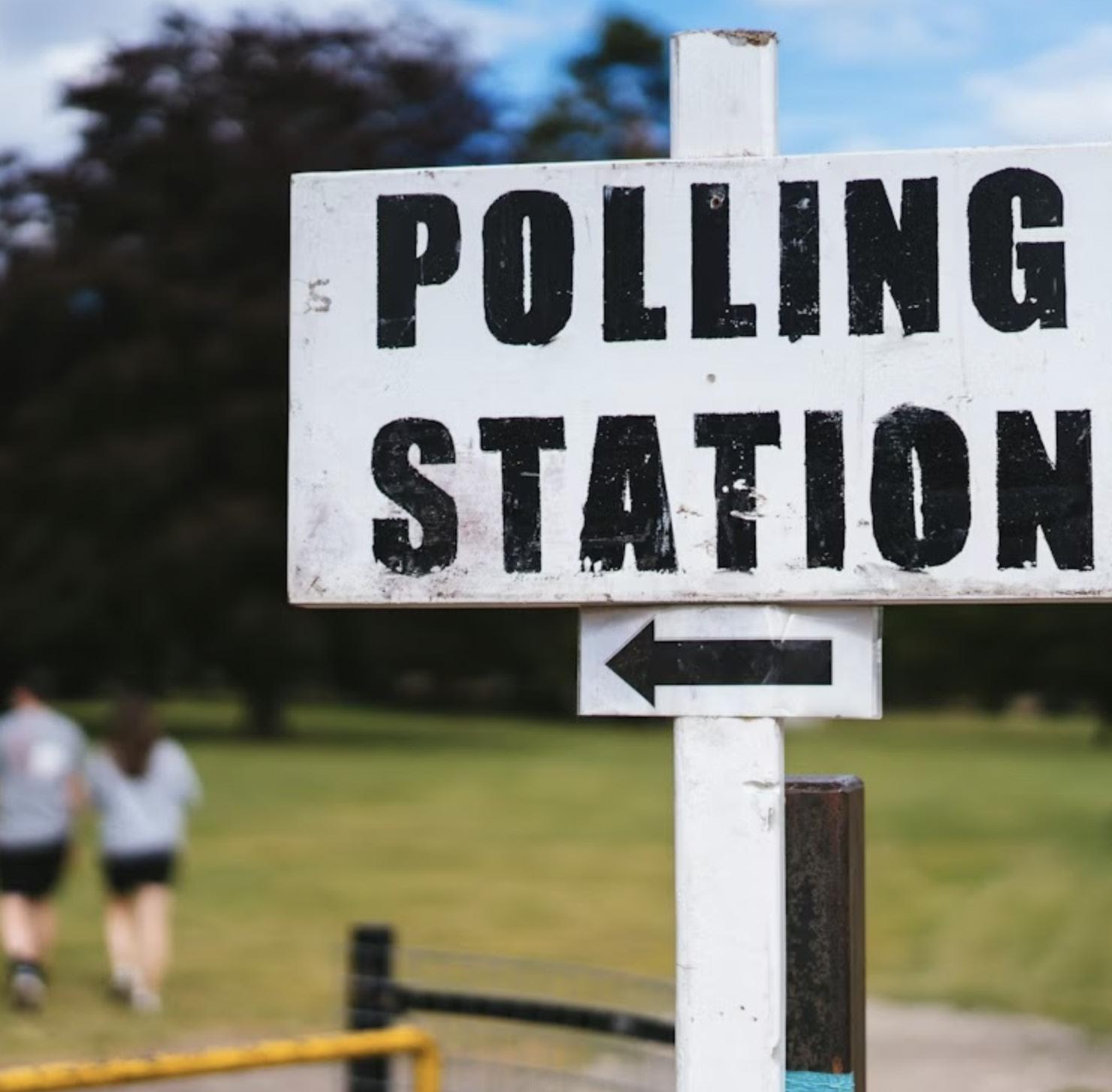
Two small U.S. flags are present 100 feet from every polling place. That is the boundary beyond which you can’t “loiter, congregate or engage in any kind of election campaigning” according to the Secretary of State’s office. That boundary extends 10 feet around any voter waiting in line past the flags.
You must bring an acceptable ID with you to the polls. Accepted IDs include a driver’s license, a state ID card, a U.S. passport or a U.S. military ID card. Any ID presented must not be expired.
As of the approval of House Bill 281 on April 6, 2023, you may be limited to only 10 minutes in a voting compartment or with a voting machine if all the others are occupied. This does not apply to voters with disabilities.
Voters with disabilities may have anyone of their choice assist them in filling out their ballot, so long as the chosen person is not their employer or their union officer. This extends to absentee ballots as well.
A challenge may be issued by election officials if they believe you may not be a U.S. citizen, you may not have lived in Ohio for the requisite 30 days, you may not be in the correct polling place or that you may not be of voting age. If a challenge is issued, an election official will ask a series of questions and may make you swear an oath.
If you’re challenged, you will still be able to fill out a provisional ballot, which will count if you are proven to be able to vote by the Board of Elections.
If you’re in line before 7:30 p.m., stay in line. You have the right to vote as long as you showed up while the polling place was still open.
BY CASE FENNER
In the state of Ohio, all magistrates and attorneys wishing to join the bench of the county Court of Common Pleas must participate in a partisan primary election, followed by a non-partisan general election.
Judges from different divisions within the court can choose to run for a seat within another division, but must also participate in the primary.
Below are the candidates running to be on the Court of Common Pleas who have a primary in May. Scan the QR code on this page to read full profiles of all the judges.
Court of Common Pleas Judge (General Division)
The Hamilton County Court of Common Pleas has 14 active judges on it. Those marked as incumbents below are up for re-election this year, while those that aren’t are not active judges on the court.
Who’s running?
Democrats
Jennifer Branch (Incumbent)
Wende Cross (Incumbent)
William Gallagher
Alison Hatheway (Incumbent)
Sarah Henry
Manisha Kotian
Latoya Maley
Christian Jenkins (Incumbent)
Donte Johnson
Alan Triggs (Incumbent)
Chris Wagner (Incumbent)
Republicans
Katie Casch (Incumbent)
Leah Dinkelacker (Incumbent)
Robert Goering (Incumbent)
Chris McDowell (Incumbent)
Court of Common Pleas Judge (Probate Division)
The Hamilton County Probate Court serves many of the legal needs for the county’s residents; including birth and death certificates, declarations of paternity, name changes and will deposits.
Incumbent Judge Ralph Winkler is facing a primary challenge from local attorney Elizabeth Tye. Winkler has sat on the bench since 2015.
Court of Common Pleas Judge (Juvenile Division)
The Hamilton County Juvenile Court hears cases with children as a legal feature, including criminal delinquency cases, custody hearings and child support cases.
Incumbent Judge Kari Bloom is facing a challenge in May by magistrate Susan Luken, who currently serves as the assistant administrator for the probate court. Bloom has sat on the bench since 2021.

Scan this QR code for profiles of all judges running for the


FRIDAY, MAY 1, 2026
6:30–10:30 pm
Memorial Hall
1225 Elm St. Cincinnati, OH 45202

Tickets on sale now at visionariesandvoices.com Use code citybeat10 to receive 10% off ticket price
Featuring artwork by Visionaries + Voices artists and community collaborators, Double Vision raises awareness and money in support of V+V’s mission to provide creative, professional, and educational opportunities for artists with disabilities. Famous drag queen, Penny Tration as emcee, and Steiner Auctions share the stage as they dazzle the crowd. Cincinnati’s own Ricky Nye will be playing jazz, blues, and boogie woogie piano early in the evening during the art preview and silent auction. Plus, we will have a pop-up shop, light bites, and a hosted bar.
Sponsors as of : 3/23/26 Visionary sponsors: ArtsWave The Kenneth and Harle Montgomery Foundation
sponsor:
Julie, and Tom Hefele Bob, Jan, and Rob Bolubasz The Robert H. Friedman