BY KANE MITTEN












BY NOAH JONES
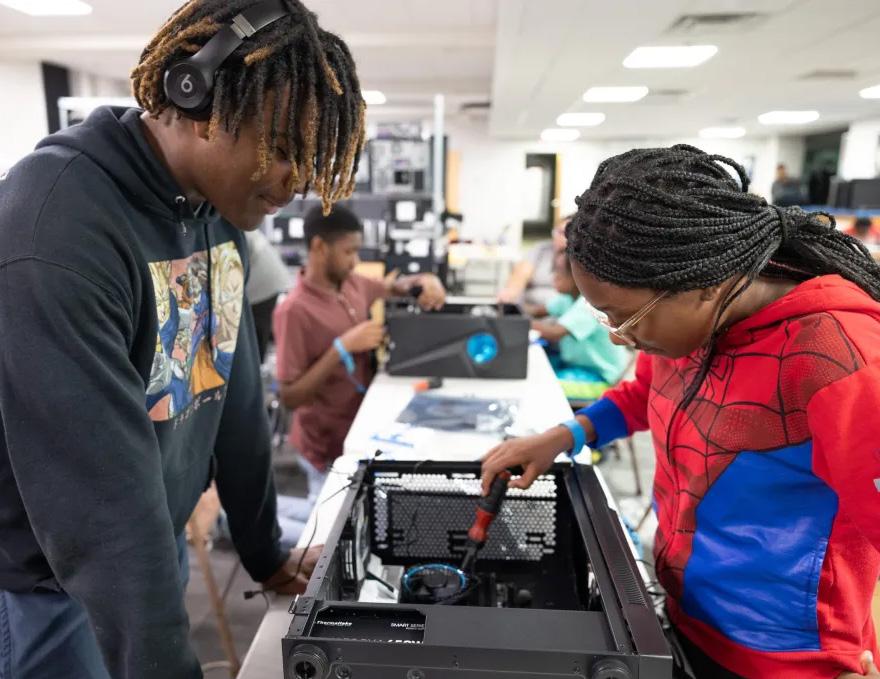
When imagining technology careers, a person sitting behind a computer coding may be one of the first things that comes to mind. But a local summer camp is reimagining what technology careers could look like for kids — and even adding some creativity to it.
At least, that’s what David Fowler, 24, began to understand after participating in the inaugural Camp BYOC summer camp back in 2014.
BYOC, or build your own computer, is a 501(c)3 nonprofit offering camps and clubs put together by Robin Walker. She worked in corporate IT for more than 30 years.
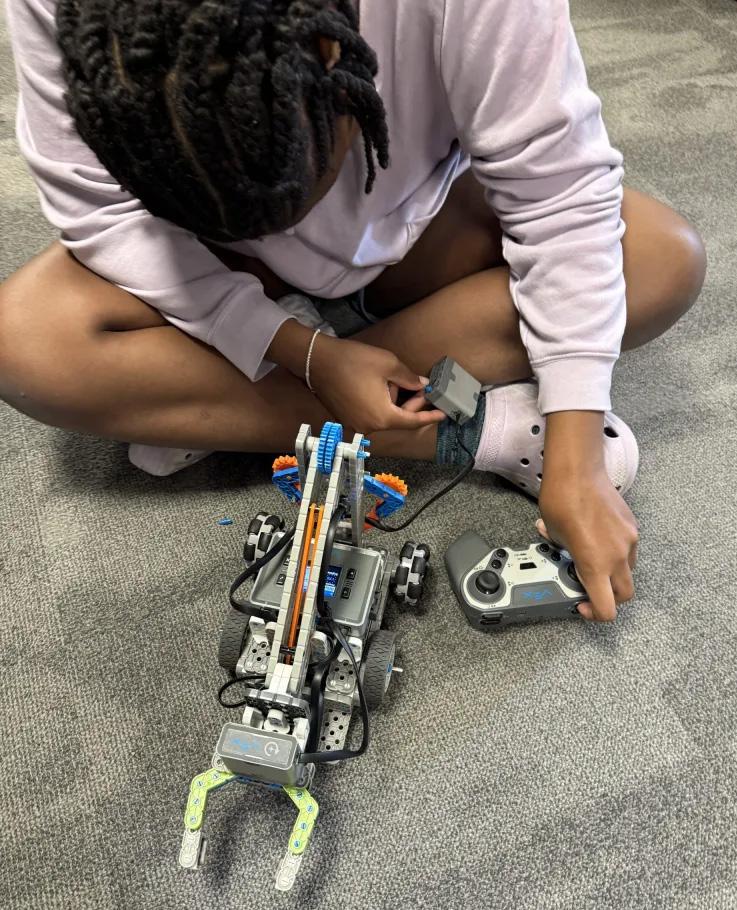
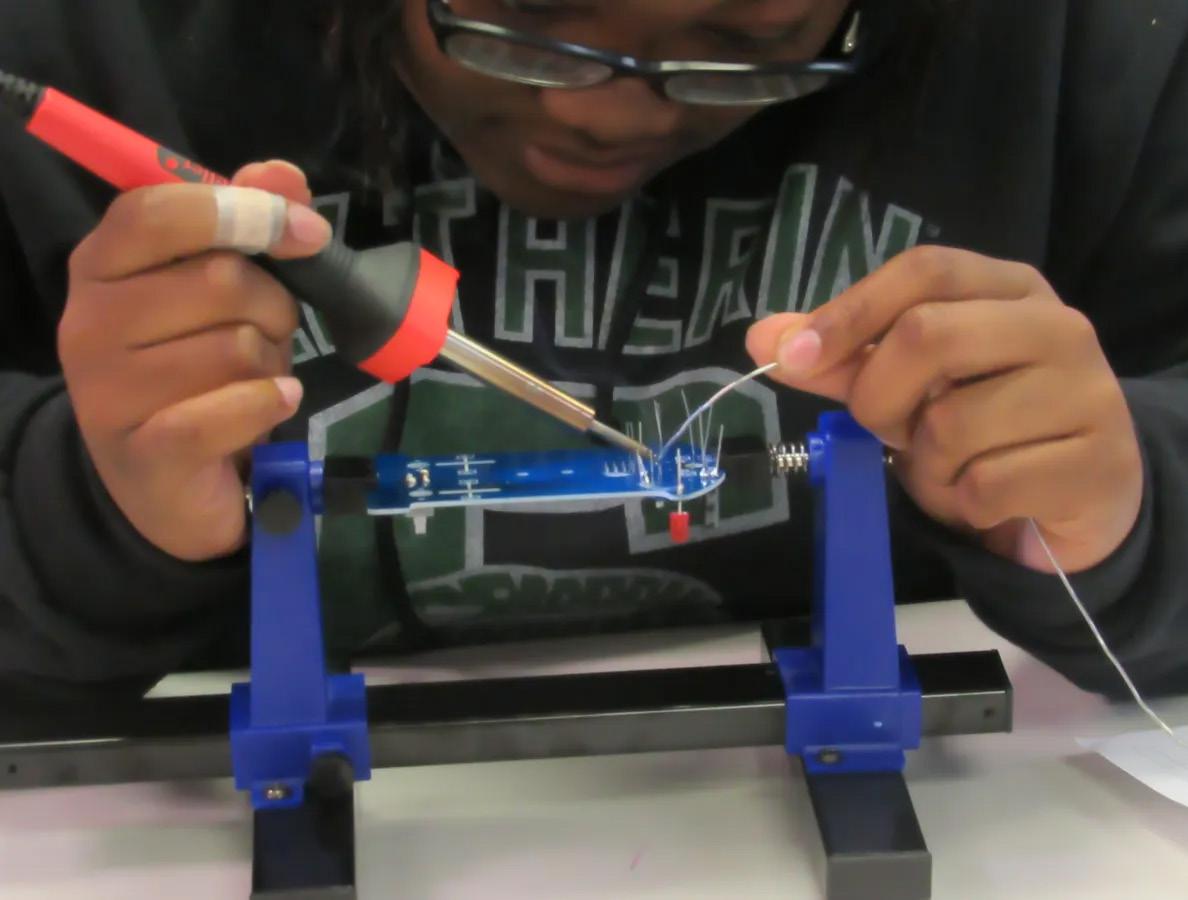
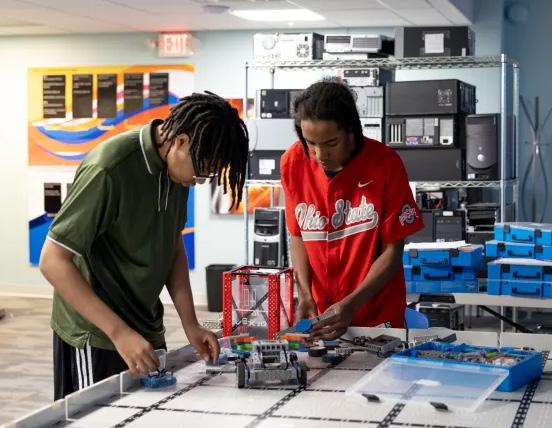
Walker started the computer building camp in 2014 to show campers how to build a computer. The camp, located at 1 Sheakley Way in Springdale, develops interest in technology and shows children what is possible in a STEM career.
“I thought it was a unique way to teach tech because it’s something that most organizations are not really doing,” Walker said.
For Fowler, attending the camp allowed him to see others excelling in a technological world.
“We went to Silicon Valley twice,” he said of the inaugural summer camp. “We went to Google, and we got to tour Facebook.”
Another student, Arielle Barnes, attended two tours of Silicon Valley tech companies. She said touring organizations like Microsoft changed her perspective on what her career could be as well. She met and networked with engineers and other STEM leaders and landed an internship in Silicon Valley her freshman year of high school.
“It’s just the power of networking and being able to communicate with the engineers, with recruiters,” she said. “I think that was very important.”
Fowler said he had always been good at math and science, but it was not until the Silicon Valley tours that he changed his perception of what a career in technology and STEM could be.
He added that his parents made him confident in his abilities, but it was seeing others in action that really made him think about where he could go with computers.
Fowler remembered the first camp ran the gambit of the computer world, touching on a bevy of topics over nearly half a month.
Of the topics, Fowler’s favorite was coding.
During the tours in California, he realized just how exciting the field could be.
“They told us about the different job opportunities there. And that really also made me think, ‘oh, wow. I like coding, and it’s lucrative,’” he said. “I like the creativity part about coding, and I like that coding wasn’t just set in stone, there were multiple ways to get to that same answer, or to get what you want, and then even ways to go even deeper.”
As time went on and BYOC camps grew from 11 students to nearly 100, Walker said the camp grew as well.
The summer camp has now expanded into monthly courses, offering specific focuses and clubs.
“We’ve added coding, we’ve added graphic design and web design. We’ve added STEM fundamentals, robotics, cyber security,” Walker said of specific clubs and camps. “So we have continued to evolve, to add more classes, to expose kids to more things.”
Fowler took his love for tech to Kentucky State University, or KSU, where he earned his bachelor’s degree in computer science. He said because of the things he learned at Camp BYOC each year, he was able to test out of the freshman-year Python coding classes.
He also was able to show older students how to do it.
“I was already more ahead of the game than most of my peers, I got in and was already taking sophomore classes in computer science,” he said. “They even had me start tutoring. So by my freshman year, I was tutoring sophomores and juniors still taking the course.”
After graduating, the thoroughbred returned to KSU for his master’s degree in information engineering.
He now runs KSU’s Youth Center for Excellence, a youth empowerment initiative that provides comprehensive, year-round programming to support the academic success, personal growth and social development of middle school students.
Fowler credits Walker’s summer camp for helping him shape his career and develop his passion.
“BYOC definitely helped make me who I am today,” he said. “I might have been good at math or science, but I didn’t think I would have ever actually say, ‘oh yeah, I can try coding’ if it weren’t for them.
“And then also, it gave me a passion of wanting to also mentor and teach, and so that’s what I do at Kentucky State,” he continued. “I run my own after-school youth program where I write the grants to help them get funded and have the staff that teach, and I get to bring in STEM components to them and show them a lot of the stuff that I learned from BYOC, and give it to them as well, because they don’t have anything like that here.”
Students attend the camp from all over the country, Walker said.
“Anyone who wants to can take a class. We’ve actually had people come from other states and take classes: Texas, Michigan, North Carolina, Missouri,” the founder said. “We also work with school districts where we can, to share with them what we’re doing and have them reach out to their parents to share this camp.”
Camp BYOC offers classes year round. The upcoming three-day spring break courses begin
March 17 and March 24. The camps, for ages 9 to 17, will focus on Python coding and the basics of multimedia. Various summer courses begin in June and July
Walker said teaching children about technology is vital to them being able to understand the world around them.
Donita Barnes, a mother of two Camp BYOC participants agrees. “You can always grow from it and use it,” she said.
Her daughter, Arielle, 20, attends the Ohio
State University and is earning a
“I think that this world is all about technology, and I just believe that starting off at such a young age is an advantage,” Donita Barnes said.
For Arielle Barnes, who took her first Camp BYOC course at age 12, the camp grew her interest in coding. Her son, Jadon, enjoys coding as well, but for creating video games.
Arielle and Jadon’s father, Jay Barnes, said
“I saw them develop a desire to and really grasp technology itself, especially with their coding. You know, they were able to get in and start coding to the point where they created a game,” he said.
Walker said knowledge in technology is vital in today’s environment, for safety and general know-how.
“You need to know how to manage your data,

so you are safe,” Walker said. “It doesn’t matter what area you’re working in. So it just helps you overall with life.”
Donita Barnes said she’d recommend this camp to anyone with children.
“I would definitely recommend it to someone, I do believe that children definitely learn something,” she said. “They learn it at a young age, and it is something that will definitely carry them as they get older into adulthood. It is a skill set that you will always have.”


Hi everyone.
I’m Christian LeDuc, the new community editor for CityBeat and LINK nky. I’m beyond honored to lead two teams of talented journalists at these iconic Tri-state publications. I’ve been a massive fan of the work CityBeat and LINK nky have produced over the years, and I’m excited for what’s to come.
So why did they give me this job?
I’ve lived in Cincinnati for about 10 years and have worked in the local news industry for the past six. After graduating from the University of Cincinnati in 2020, I took a job as a TV news producer at Local 12 WKRC-TV. I also worked as an assignment editor and digital content producer at WCPO 9 News for several years.
Most recently, I was a reporter at the Cincinnati Business Courier, where I spent more than two years covering the region’s bar, restaurant and retail industries, as well as manufacturing, health care and technology. Now, I oversee the teams of LINK nky and CityBeat reporters for our parent company, LINK Media.
My goal with LINK nky is to continue producing the hyperlocal content Northern Kentuckians love and deserve. At CityBeat, we’ve got a lot of work to do, but I truly believe my team and I can rebuild the publication into Cincinnati’s go-to source for food, culture, art, music and more.
One of the reasons I took this job is because these two publications aren’t owned by a major corporation. They’re small, scrappy and will-
ing to listen to the community, try new things and innovate. Trust me — that’s not normal in news anymore.
If you’re doing something cool in Cincinnati or Northern Kentucky, email me at cleduc@ citybeat.com. I’m passionate about telling compelling, impactful stories while also holding the region’s powerful people accountable.
OK, enough about work. Here’s a bit about me:
I grew up partly in Memphis, Tennessee, and partly in New York City.
I moved to Cincinnati for college and never left. I currently live in Over-the-Rhine with my partner, Jordan, an insanely talented artist. If you go to art shows around the region soon, you might see some of their work. We also have two cats. Miss Penny is chill, but Mr. Felix is a nightmare — though we love him anyway.
I also play drums. I’ve been banging since I was 4. I play in the local indie rock band White Lighter, which formed more than seven years ago. We perform around the Tri-state at places like Bishop’s Quarter in Loveland and Molly Malone’s in Covington at least once a month.
We also have a big following in Lexington, where you can often catch us playing at the Stagger Inn.
The band has also traveled around the country playing shows across the Midwest and in New York City and Los Angeles. We’ve got two albums out on Spotify. If you like punk, rock and grunge you’ll dig us.



BY KANE MITTEN
SCAN THIS QR CODE TO SIGN UP FOR


You can get the week’s headlines, learn about what’s happening this weekend, find out what's going on in the arts and culture scene, and more.
THEY’RE FREE AND COME STRAIGHT TO YOUR INBOX EVERY WEEK!
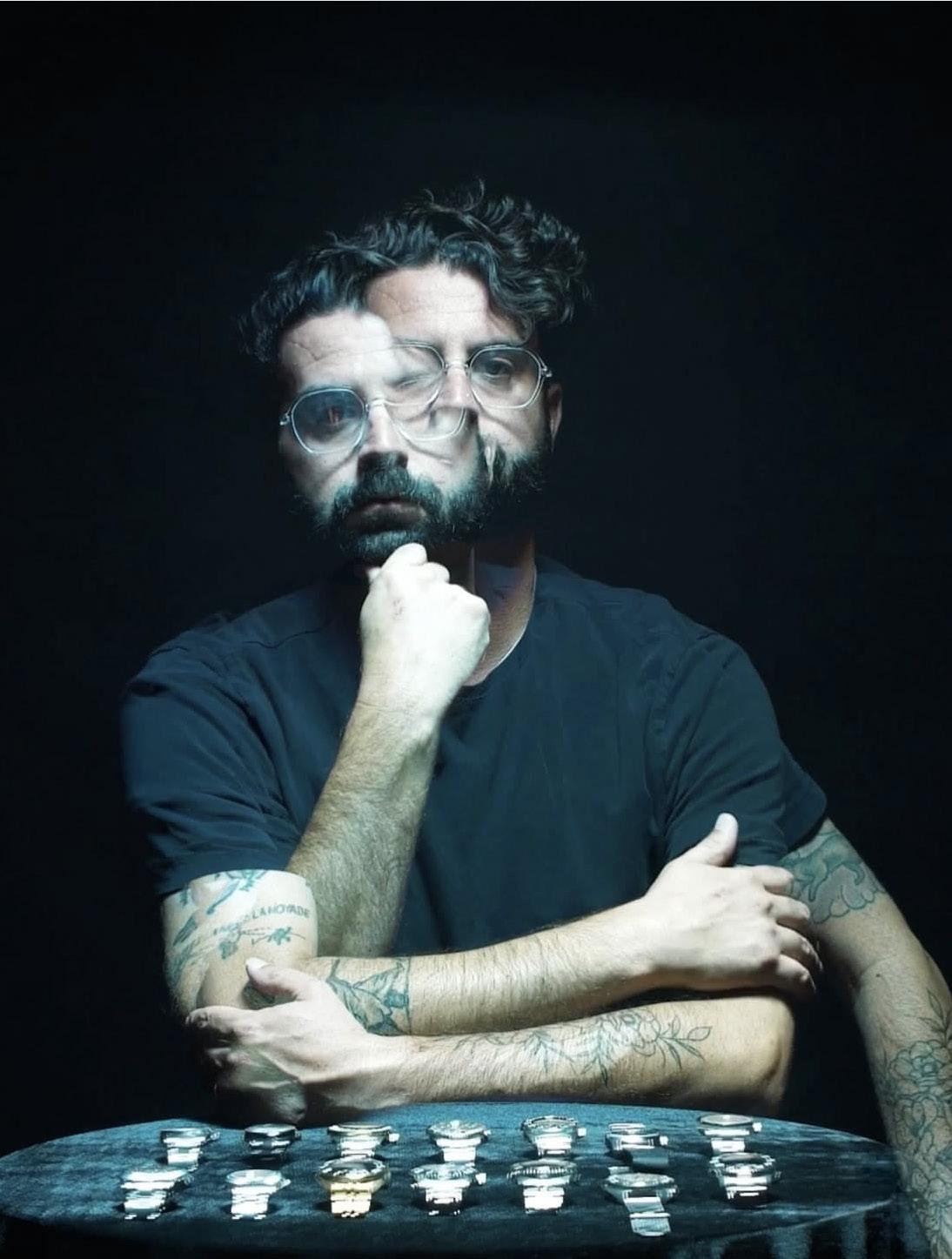
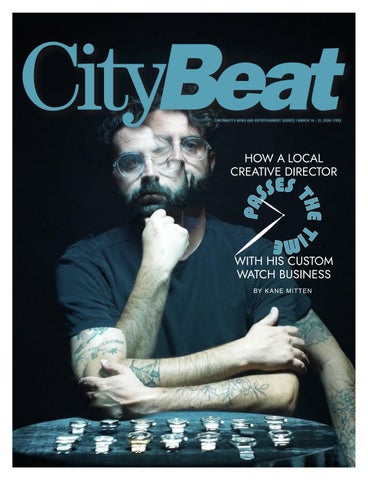
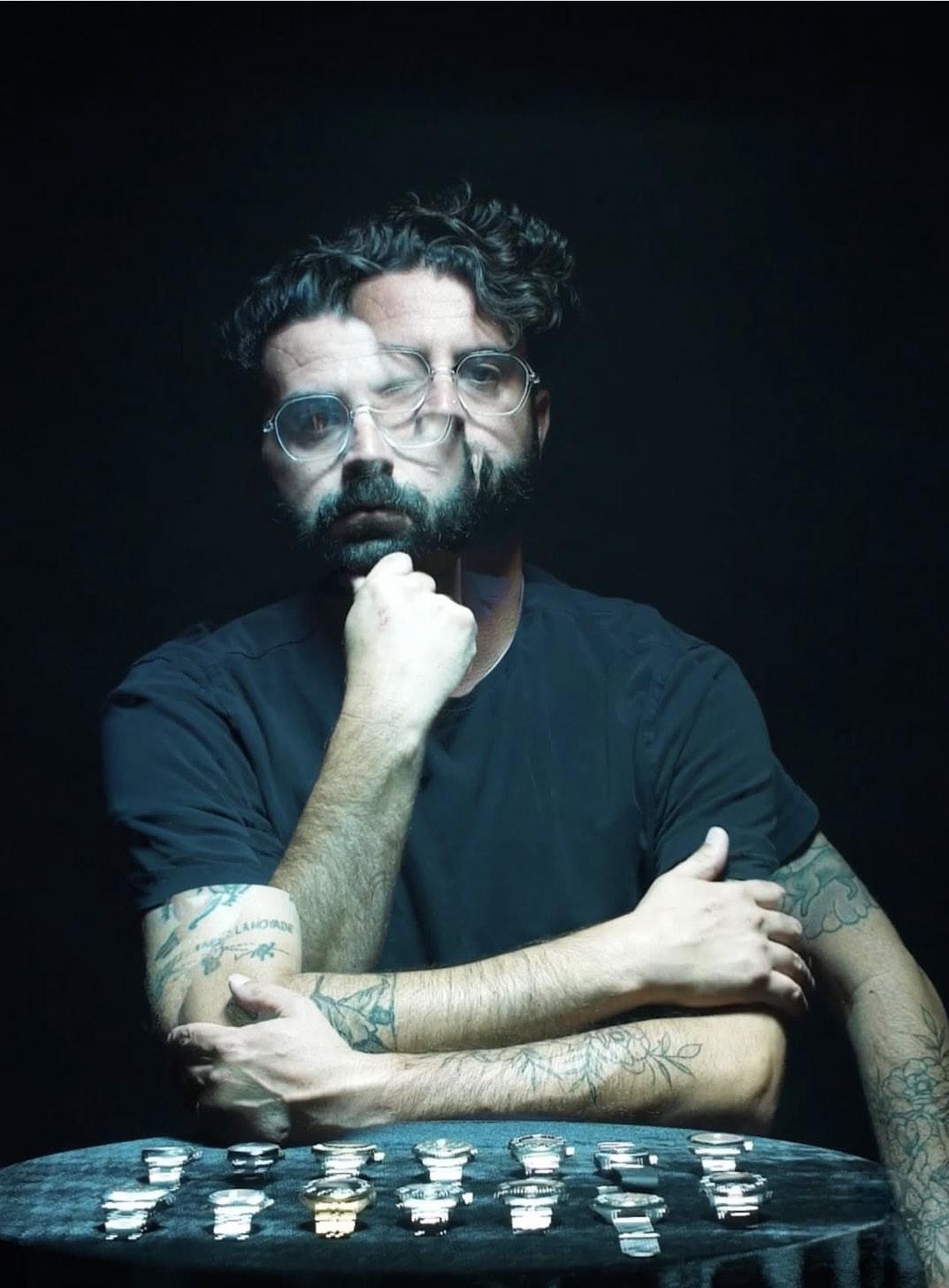
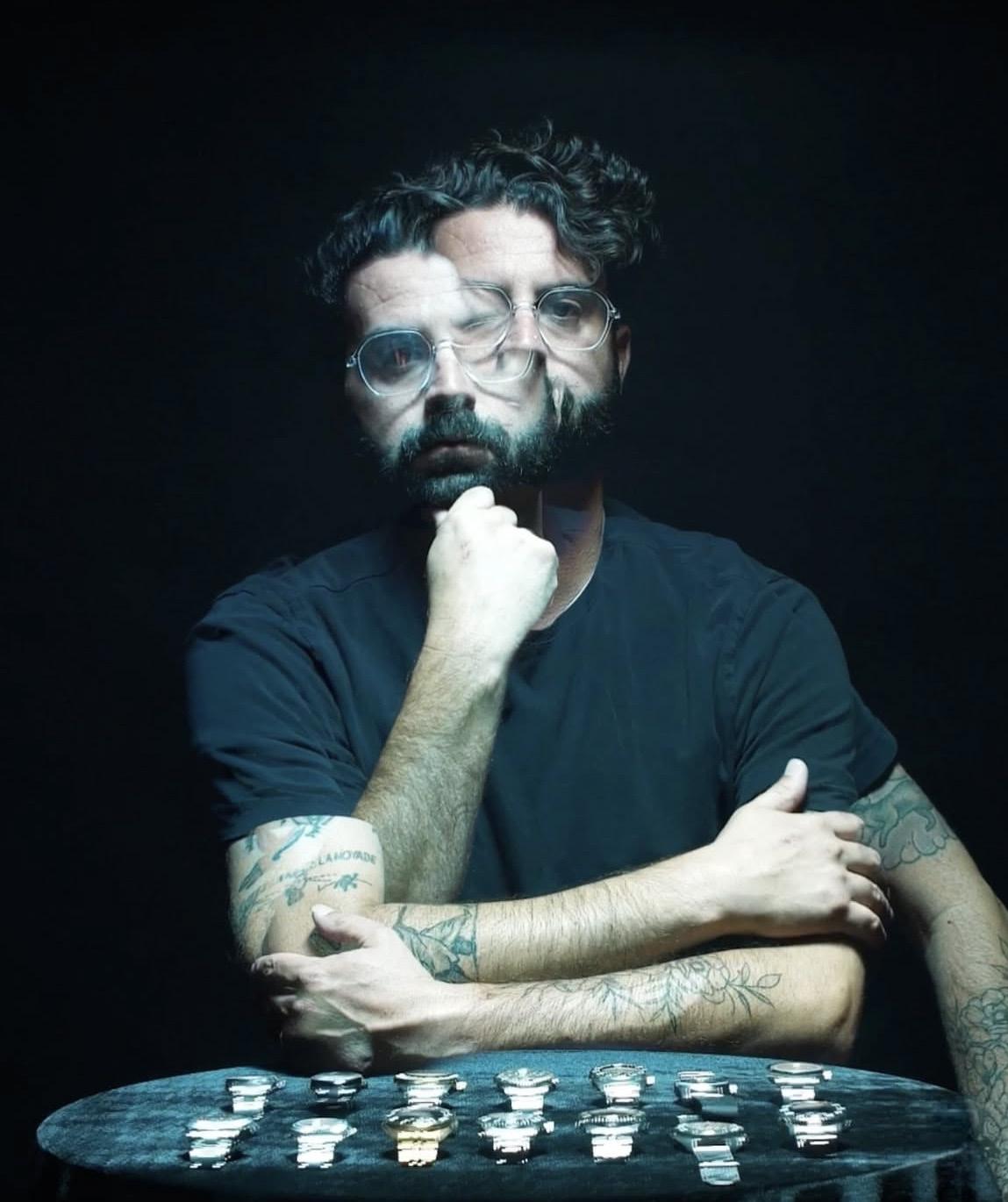
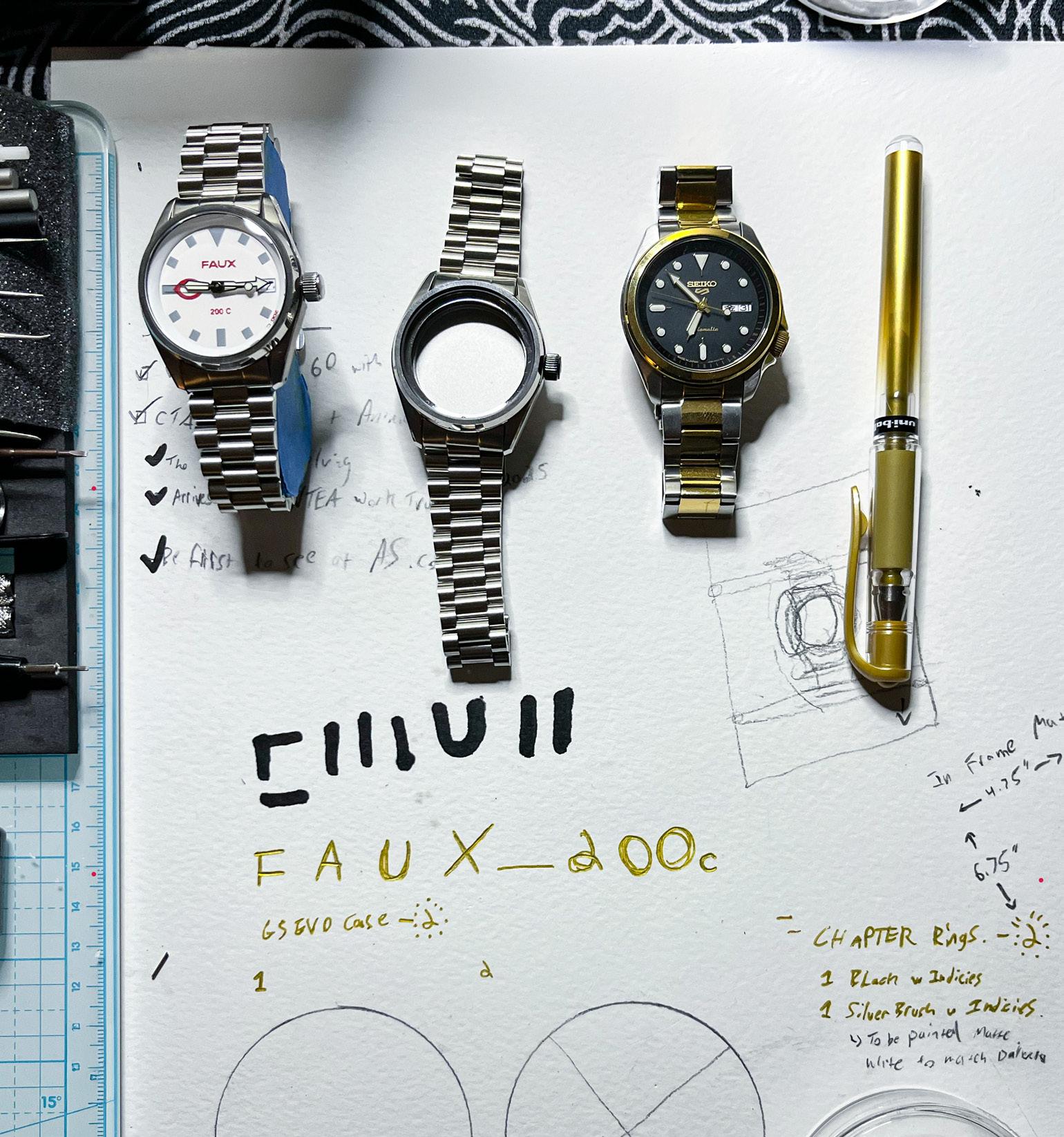
If you asked Creative Director and Newport resident Josh Jacob what he does in his free time, he might wryly explain his talent for making “fake watches.” But his watches are very real — and way more interesting than most of what you’d find in a jewelry store.
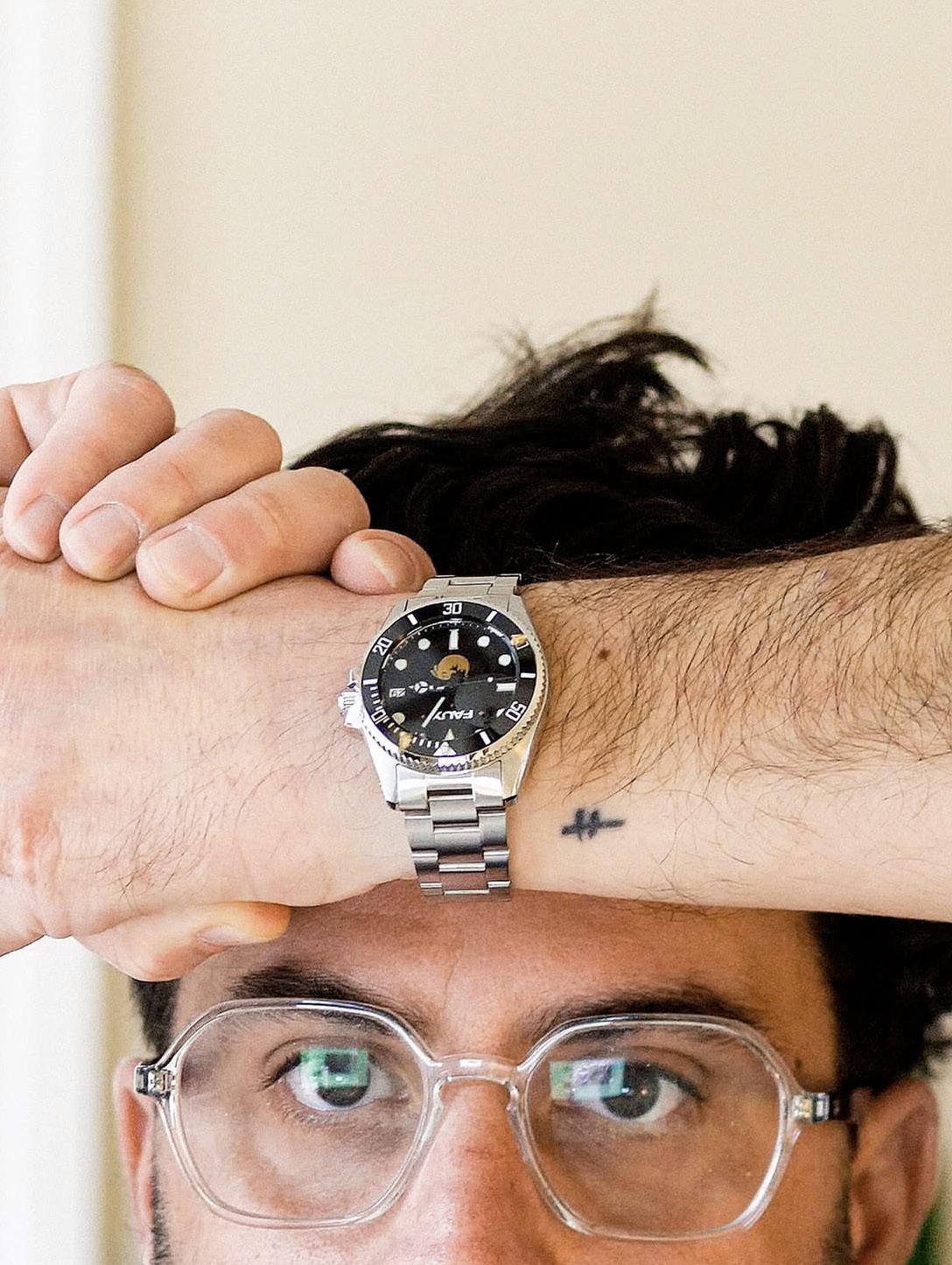
Faux Wrist, the timepiece brand Jacob created for his project, can make you the watch of your dreams. Everything about his watches — from obvious components like the bracelet or the hands of the clock to tiny details like the indices, the dial, and the crystal — is fully customizable to your liking.
He sources his watch components from the same manufacturers that major brands do, but without the hefty price tag that comes with a brand name. It’s part of his goal to make affordable watches that are “just as good, if not better” than the ones crafted by well-known names, but fully customized to fit anyone’s look.
“In my opinion, it’s cooler than wearing a Rolex, because you’re not just flexing that you own an expensive timepiece,” he said. “I like to think the person who wears the watches I
make is more interested in curating their own personal aesthetic, not just choosing what someone else thinks is cool.”
It all started when a friend of his won an Instagram giveaway for an Omega Speedmaster, a watch that normally retails for close to $8,000. Jacob became enamored with the mechanical construction of the watch, citing a prior love for analog technology in an age where everything is digital.
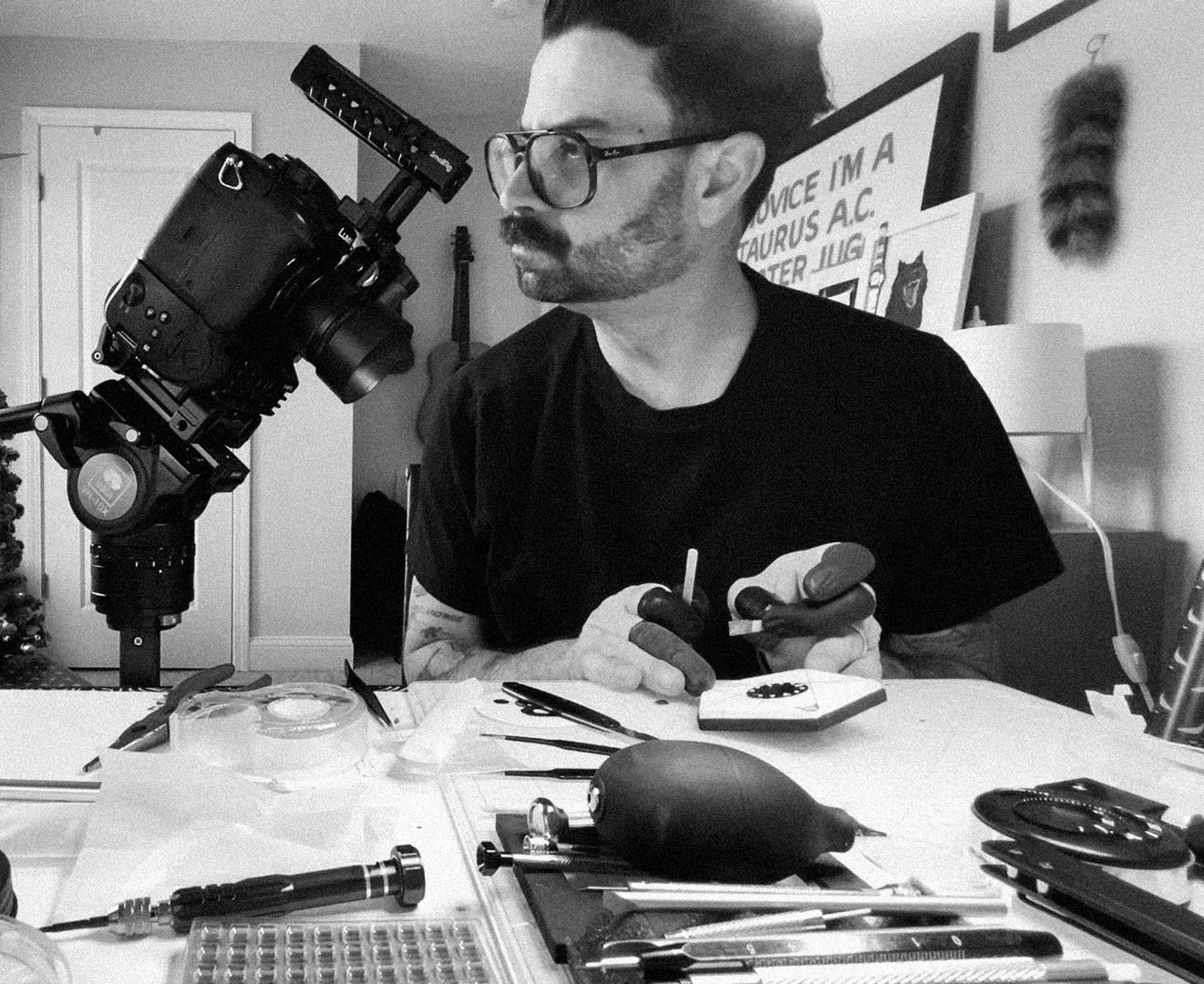
Eventually, he started learning “as much as I possibly could about watches and watch culture,” found a DIY watch kit online and decided to try his hand at making his own timepiece. The box said it could be built in an hour, but it actually took him closer to four or five.
“Setting the [watch] hands requires a really steady wrist. You’re operating off feel. Unless you’ve got a really good magnifying lens, you can’t see what you’re doing,” he said.
Over the course of his research, he discovered that his favorite watch brand, Seiko, sells its movements (the engine inside a watch that powers the clock) wholesale, and realized with
time and effort that he could make his own retail-quality watches from the same parts.
Finding the hobby came at exactly the right time for Jacob. Over the previous seven years, his mother was dealing with Alzheimer’s but it affected her differently than most. His mother initially suffered from aphasia, a disorder that breaks down the ability to speak, write or communicate, although it does not affect intelligence.
“You could see her eyes get wide during conversations like she wanted to participate, but she literally couldn’t talk… I like to think it’s similar to when something’s on the tip of your tongue, but you’re like that forever,” he said. “Her voice was taken away from her, but her mind was very much still there. It was heartbreaking.”
Over the “soul-crushing” period where his mother was at the end of her life, he got to a mental state where he “didn’t do anything but work and drink, constantly.” It reached a breaking point where he realized if he didn’t make some drastic changes, and fast, he wouldn’t “have anything to live for.”
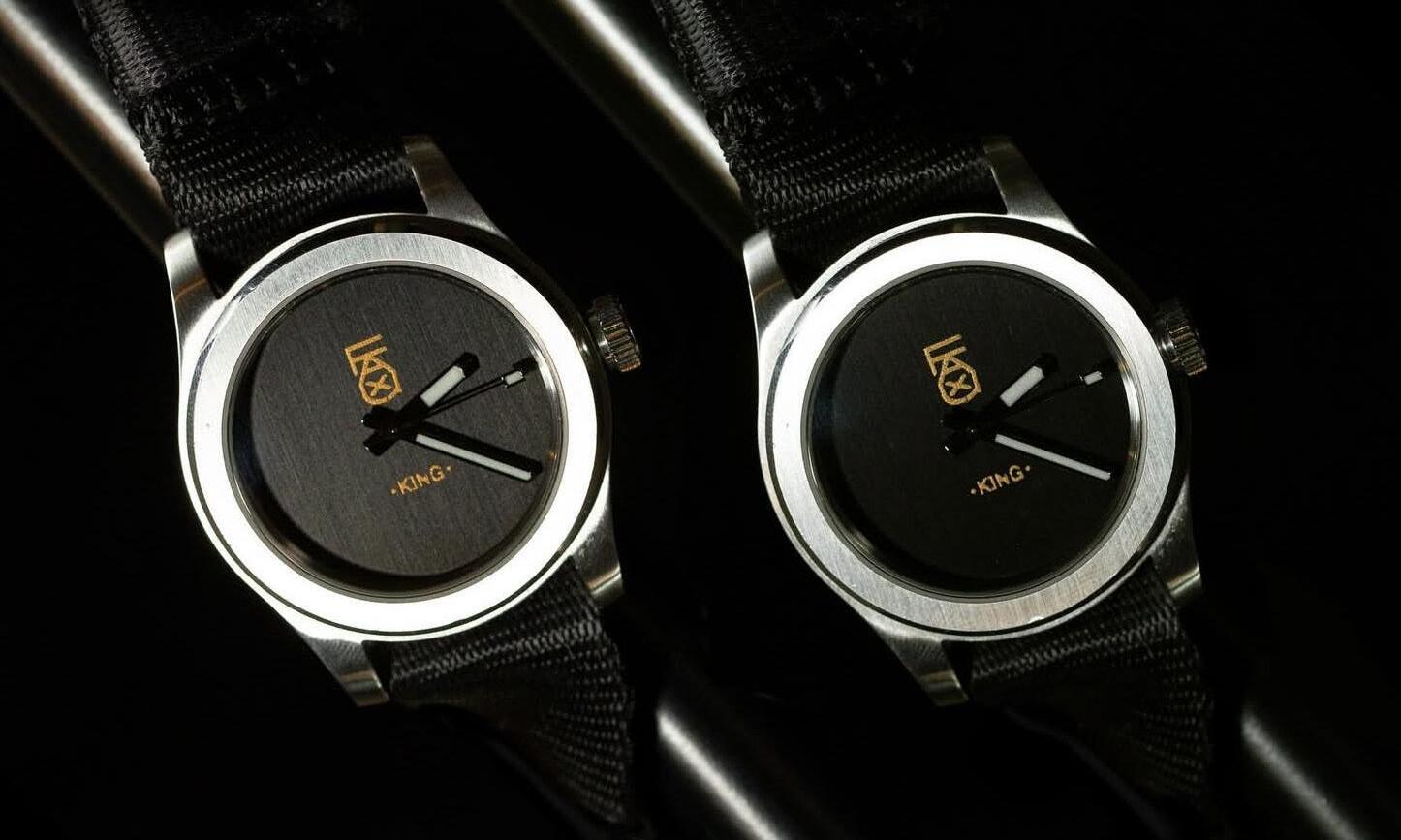
He went sober, started making watches to occupy his time and then got hit with a triple whammy: the COVID-19 pandemic, the death of his dog, King — who he’d owned for 14 years — and the death of his mother all in a few short months. Watchmaking became a “vehicle for grief” for Jacob and a distraction to keep his mental health in check.
“It was extremely important to have something to do when I was — what is the term now, crashing out? You have to give your brain something to focus on so you’re not just thinking about how everything sucks,” he said. “I literally made like seven watches based just off my dog, and called it the King series. The black dials on the watches reflected how I felt, like when people wear a black armband to acknowledge tragedy. It almost felt like I was paying homage to him.”
But then people started noticing his work. They’d find him online and send over pictures of their dad’s old watches, or a style of watch they like but couldn’t afford, or even just send over some art they like and ask for a watch based on it.
“It’s evolved into this cool thing now where I have a client base of family and friends and people I’ve never met who reach out and go, ‘Hey, can you make me a watch?’” he said. “It’s extremely rewarding, because I never even cared if it became that. I just needed it to be a distraction, right?”
Realizing that he’d have to “put some kind of brand” on this if he was going to turn watch-
making into a real hobby, he combined his B.A. in graphic design and dry sense of humor to come up with the logo for Faux, a tongue-incheek name that he knew “absolutely nobody would copy.”
“It was almost like, what is the worst possible name you could give a watch brand, and how can you take ownership of it to make it so cool and interesting that the name wouldn’t be a factor?” he said.
Jacob’s biggest goal for the future is to create parts himself instead of sourcing them from other countries so he can fabricate a watch entirely from scratch — a goal he’s made headway on, as he’s already in talks with manufacturers. It’ll be a higher-end version of what he does now, and these watches will tout the name of his “insanely amazing” new dog, Scout.
He knows that your average Rolex or Omega-obsessed watch fiend probably won’t care for his products, but that’s okay, as “there’s a really big gap in the market” for people who are interested in well-crafted timepieces but don’t want to drop thousands of dollars on one. For him, it’s all about making watches that reflect their owner.
“I would say it’s for people more my speed, who like the music I’m into, or the style of design I’m into, or things that are just interesting and cool… what would that look like if a watch brand did that?,” he said. “Overall, my goal is to continue to share this with people because they genuinely want to be a part of it.”
BY ANNE ARENSTEIN
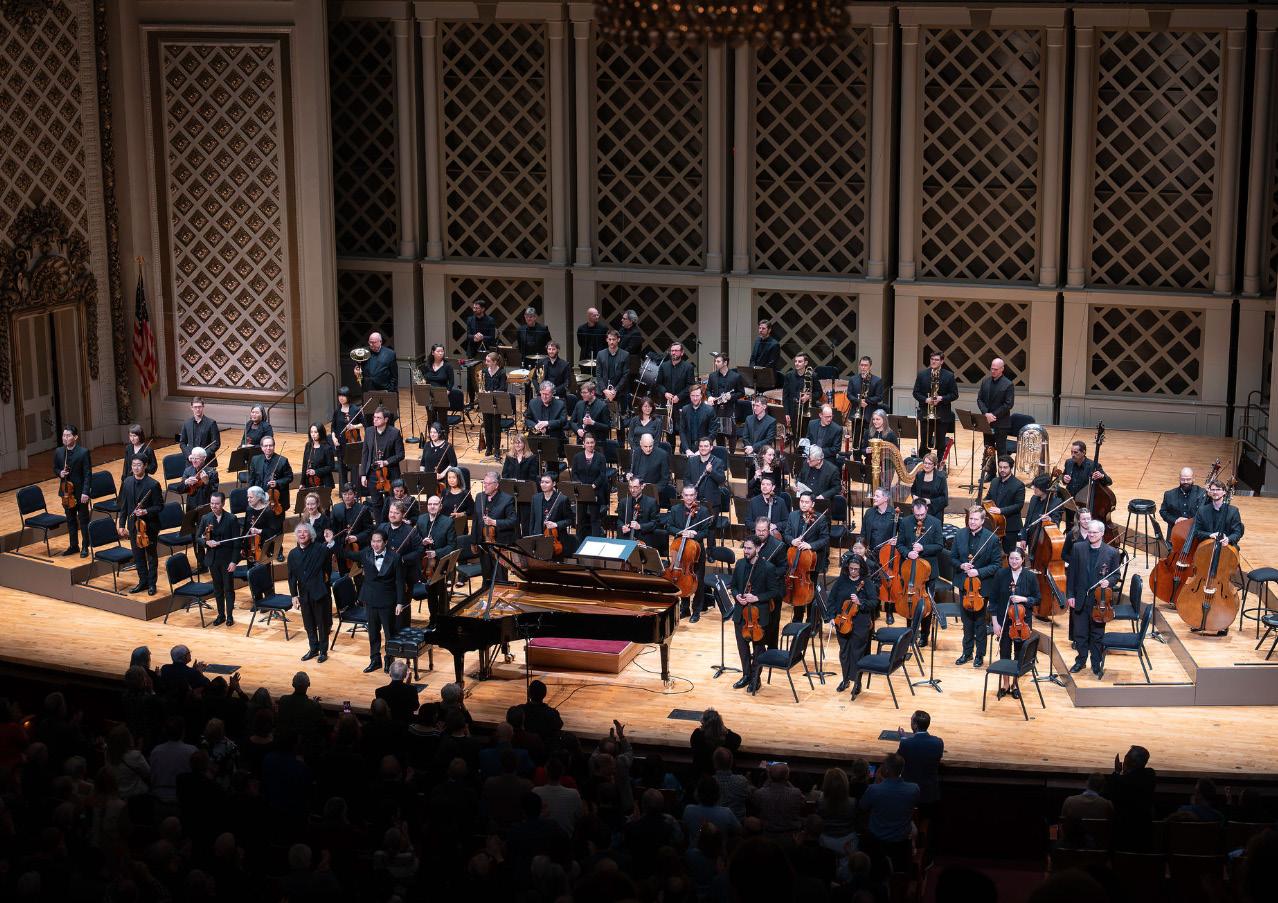
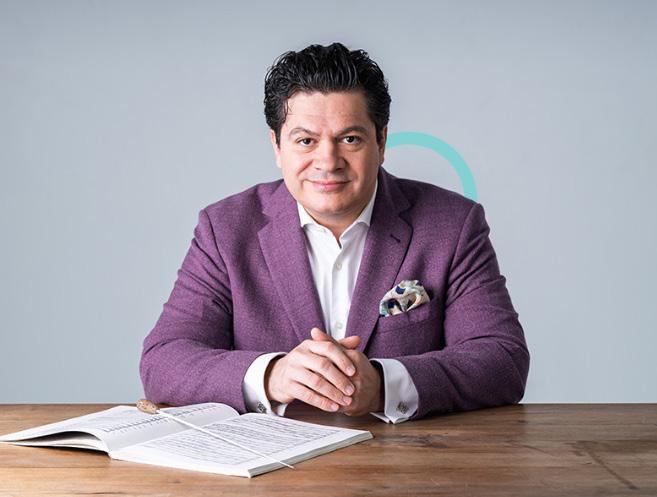
Cincinnati Symphony Orchestra Music Director Cristian Măcelaru has demonstrated his commitment to the orchestra, the Greater Cincinnati community and American voices since his first full season’s opening concert.
The CSO 2026-27 season is a through-line of Măcelaru‘s vision, a fearless, compelling series that invites audiences to experience the thrill of new works, new concert experiences and to savor familiar favorites.
The CSO’s exciting lineup spans 400 years of music by a global cohort of classic and living composers, works from the past making CSO debuts, commissions and co-commissions. The roster features world-class guest conductors and soloists including CSO members.
Măcelaru is on the podium for 12 pairs of concerts and in October, he will lead a workshop for rising conductors — another first for the CSO.
Speaking from his home in Paris, Măcelaru emphasized the necessity to explore music whether it was composed centuries ago or last week. “It’s absolutely essential for us as artists to stretch the boundaries of what we do in every direction, “he said. “You will see that I’m playing around with the idea of genres and what they actually mean.”
In an interview last year, Măcelaru promised that “we’ll be hearing more from Wynton Marsalis.” He wasn’t kidding. Oct. 2-4 kicks off with a three-day residency featuring the acclaimed trumpeter, the Jazz at Lincoln Center Orchestra, or JLCO, and violinist Nicola Benedetti.
The residency opens with Benedetti performing Bruch’s Violin Concerto and the CSO playing Marsalis’s Symphony No. 5, “Liberty,” a CSO co-commission honoring the USA’s 250th anniversary.
On Saturday, Oct. 3, Benedetti performs Marsalis’s Violin Concerto, which won the 2020 Grammy for best classical recording. And in what promises to be an epic event, the CSO and the JLCO join for a Marsalis-Măcelaru jazz-infused arrangement of Mussorgsky’s “Pictures at an Exhibition.”
Măcelaru has worked with Marsalis for several years and the riff on Mussorgsky’s classic symphonic poem grew out of their friendship and Marsalis’s frustration with the piece.
“He was playing an arrangement he didn’t like, so I suggested we do one ourselves,” Măcelaru said. “The way we’re performing it starts with the CSO playing and the JLOC responds. But what happens is that our responses get closer until we perform as one orchestra.”
The residency concludes with a concert by the
JLCO led by Marsalis, who steps down from his leadership role in 2027.
New works receiving U.S. and world premieres are Mark Simpson’s Piano Concerto performed by Icelandic pianist Vikingur Ólafsson and Errollyn Wallen’s Concerto for Orchestra. Wallen is a Belize-born British composer appointed Master of Music in 2024 by King Charles III.
Wallen’s concerto concludes a concert in March, Women’s History Month, featuring works by three 19th-century German women: Fanny Mendelssohn, Clara Schumann and Emilie Mayer, whose music is enjoying a revival 150 years after she was acclaimed as Beethoven’s peer.
Măcelaru credits a CSO staff member with bringing Mayer to his attention.
“The name was familiar but I never heard her work,” Măcelaru said. “Once I started listening and looking at the scores, I thought this is really good!”
Măcelaru, a tireless advocate for the works of his countryman, Romanian composer George Enescu, thrilled CSO audiences last fall with a stunning performance of Enescu’s Romanian Rhapsody No. 1, and next season, the CSO will play Enescu’s Symphony No. 3 for the first time, joined by the May Festival Chorus.
“Enescu is a composer we don’t hear enough, and he really has something to say,” Măcelaru said. “This symphony is his most accessible, and his sound world is fascinating with a wordless chorus just the same way that Ravel did, for effect.”
Măcelaru’s commitment to Baroque works continues with Bach’s iconic St. Matthew Passion, with the May Festival Chorus and vocal soloists Louise Alder, Karen Cargil, Nicholas Phan and Morgan Smith. Măcelaru’s background as a Baroque violinist was a tremendous asset for the sold-out performances of Handel’s Messiah in December, and Măcelaru says Bach’s Passion expands the idea of performance as storytelling.
CSO Proof, a series offering music experiences curated by musicians and media artists, brings Matthias Pintscher to conduct The Genesis Project, a co-commission by seven composers writing a piece for each day of creation according to the Old Testament.
Guest conductors include four CSO debuts: the legendary Phillipe Jordan, Gemma New, Delyana Lazarova and Marta Gardolińska. CSO Music Director Laureate Louis Langrée returns for two concerts.
Returning artists include piano divo Lang Lang, violinists Gil Shaham and Leila Josefowicz, and cellist Alisa Weilerstein. Four young
pianists make their debuts including Isata Kanneh-Mason and the phenomenal edgy vocal band Roomfull of Teeth makes its CSO debut.
Three CSO musicians are featured soloists: Principal Oboe Dwight Parry, Principal Violist Christian Colberg and Principal Trumpet Anthony Limoncelli.
Creating the season went beyond artistic and logistical coordination. Măcelaru works closely with CSO staff to discuss audience responses to CSO concerts.
“Many of our future concerts are concept experiences informed by audience surveys,” he said. “I was fascinated to see that the experience wasn’t necessarily about changing music but starting from the beginning, how they are invited into the hall.”
He recalled a conversation with a first-time CSO audience member.

“She told me she enjoyed the concert, but what impressed her most was when I raised my hands at the end of a piece. The music stopped and there was silence. ‘That was incredible!’ she said. ‘You got everyone to stop just by raising your hand!’ “When I talk to the team behind the scenes, I use a phrase they’re probably tired of hearing me say,” he said. “I say, you know, people really listen with their eyes.”




Visual elements will have an increased presence in the coming seasons, whether it’s the CSO and the JLCO facing off, the configuration of the St. Matthew Passion or simply watching the orchestra tune up, the experiences will be multi-sensory.
The latest exhibition at the Kennedy Heights Arts Center features the work of a husband and wife.
Sculptors Jan and Mark Wiesner came together to create Sculptural Storylines, a new gallery of sculptures about the power of the image, belief in the power of the story and the human need for both. Each tells a distinctly different version of the same story through their own artistic mediums —Jan using clay, Mark using cardboard.
The exhibition will run from March 20 through May 16.
The free Opening Reception is on March 20,

Great music and great performers are the power behind it all, fueled by Cristian Măcelaru’s expansive vision.
CSO 2026-27 season and ticket information: www.cincinnatisymphony.org

and Mark Wiesner will be giving an artist talk on April 18 at 1 pm.
The arts center’s gallery hours are 10 a.m. to 5 p.m. Tuesday through Friday and 11 a.m. to 4 p.m. on Saturdays.











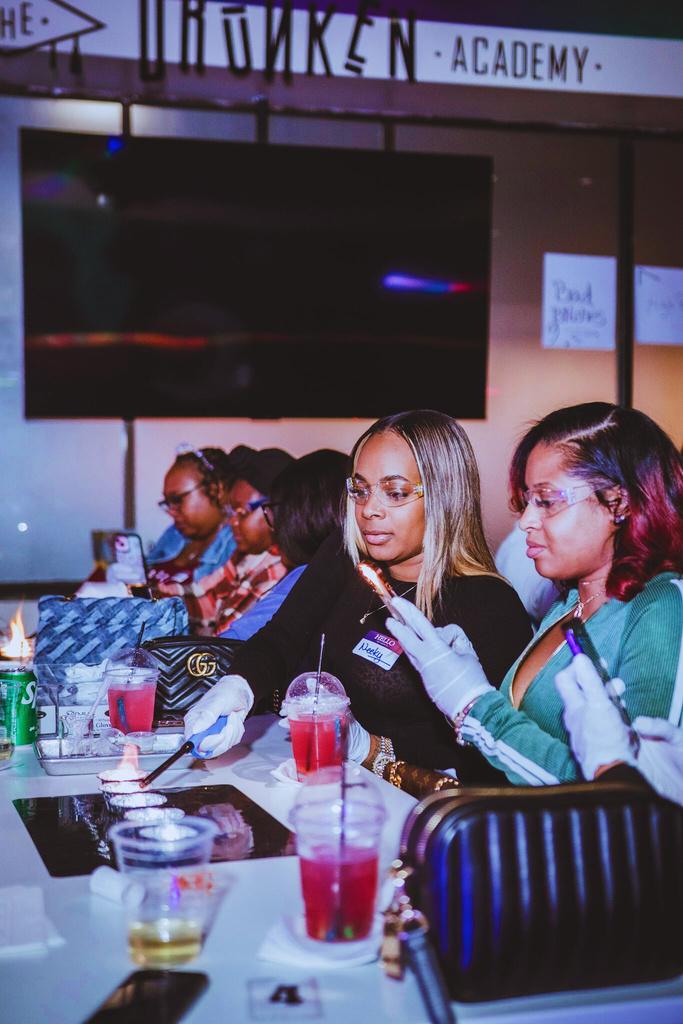












What’s more universal to the human experience than food?
We share food together, we make food for each other, we even spend hours arguing about our favorite foods. (Don’t believe me? Just go take a look at CityBeat’s Facebook comments.)
If you don’t know me, I’m our new arts & culture reporter, which means I cover everything from theater to music to visual arts. But my real passion — and my favorite thing to write about — is food.
Over the course of my career as a journalist, I’ve covered everything you can think of: vibrant openings, unique pop-ups, crazy cocktails, delicious desserts, elaborate sandwiches, restaurant labor investigations and more. One time, I even had to review 20 different breakfast restaurants in a two-week span. My stomach hurt almost as much as my wallet.
Having now joined CityBeat, I looked at our most popular pages over the past year and every single one is about food — specifically, the BEST food. It doesn’t matter if the article is a week old or 10 years old: people want to know what to eat!
I’ve enlisted Noah Jones, our community vi-
BY KANE MITTEN AND NOAH JONES
brancy reporter, to discuss our individual picks for the top five restaurants in the Cincinnati area. While my picks skew toward fine dining and his picks lean more toward fast-casual, all 10 are worth the trip. Let’s get to it.
Noah’s #5: The Echo, Hyde Park

The Echo is the kind of place that makes you feel like a regular customer from the minute you sit in a booth or the swivel seats at the bar. From young adults picking up a quick meal to the older diners slugging back coffee and conversation, this joint has a magical way of bringing eaters back to when diners were America’s peak food destination. The food is perfect for

breakfast or brunch, with seasonal specials — crabby benedict, anyone? — and staple foods like hearty omelets.
Kane’s #5: Nolia, Over-the-Rhine
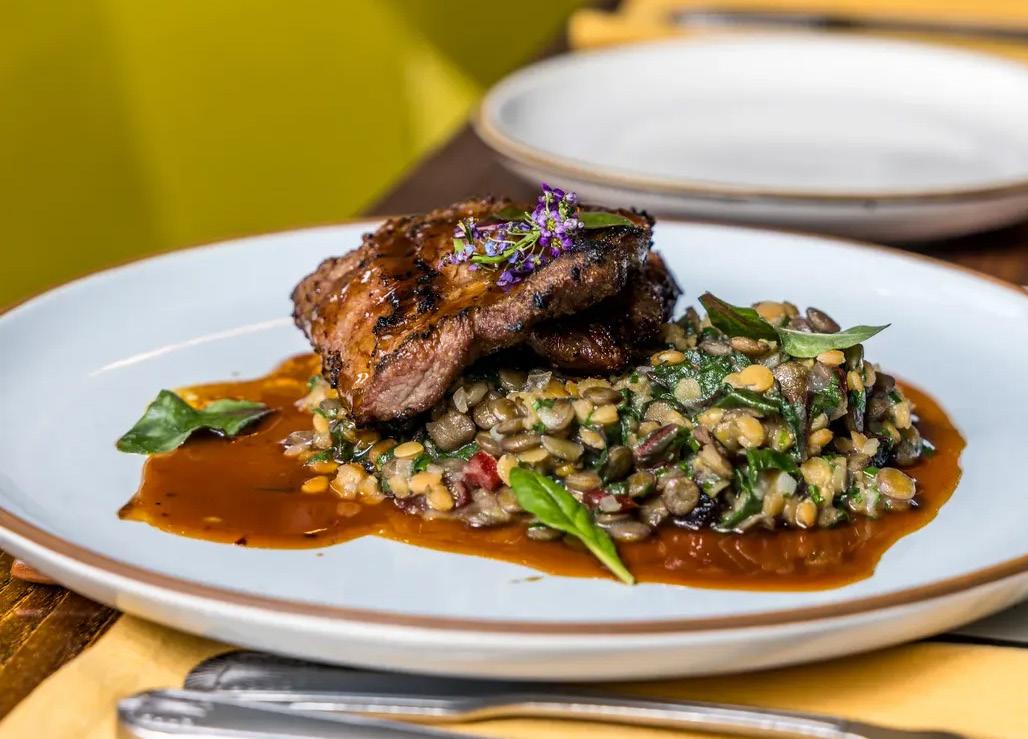
It’s a common misconception that Nolia is strictly a Cajun or Creole restaurant. Sure, owner Jeff Harris is from New Orleans, and yes, the ever-changing menu regularly sports cornbread, crab and crawfish. But this is a showcase for the flavors of the South and the entire world, with plenty of Indian and West African-inspired dishes adorning its menu across the years. Really, all you need to know is that Nolia is the best Southern restaurant in the Cincinnati area, and nothing soothes the soul like good Southern cooking.
Noah’s #4: Heyday, East Walnut Hills

This joint has a place in the heart of any Cincinnati burger lover. Heyday makes fantastic bar food, whether you’re enjoying a quiet summer day on its patio or carrying over a burger to the Growler House to watch an FC Cincinnati game. Plus, who doesn’t love the option of tater tots on the side?
Kane’s #4: Kiki, Clifton
I would pay a ridiculous amount of money to know what Kiki puts in its broth. Try as I might (and I have tried), I’ve never been able to replicate anything close to the savory-smooth chicken flavor in the broth of its Shio ramen, which also sports pork belly, rayu, nori, green onions and a tea-marinated egg. And when it comes to its excellent nigiri, there’s no fresher fish to be had in the Cincinnati area — except at Kiki’s sister omakase joint Roji, located downtown. One day, maybe I’ll be able to make

ramen that’s even half as good as this. But for now, I’ll just keep giving them my money.

There’s something exciting about waiting in a line out the door for food when you already know the wait is worth it. Mornings at Mochiko are always the start of a great day, thanks to its James Beard-nominated pastries (like an ube halaya croissant) and weekly baked specials. At night, it serves udon, karaage and other entrees in spectacular fashion, with standout weekly specials like its Cincinnati chili ramen. This beloved Asian-American eatery always serves up perfection and is a must-try when you’ve got out-of-town visitors.
Kane’s #3: Abigail Street, Over-the-Rhine
It’s fun to share food, but it’s even more fun to be surprised. Abigail Street’s Mediterranean-inspired menu is filled with incredible renditions of falafel, dates, scallops, short rib, octopus and more. So it’s really fun when I get to take someone new there and I watch their face scrunch up as I tell them we’re ordering broccoli. ‘All this amazing food and we’re getting broccoli?’ their facial expression reads. Then they take a bite and the look of surprise makes me think they’ve seen the face of God.
The restaurant’s Moroccan-spiced broccoli

That might sound cliche, but each item on the menu — like the chicken skewers or the blistered shishito peppers — invites friendly conversation in a way that too many restaurants lack, making it my top pick anytime I’m dining out with a big group. Everything at Mita’s is always so ridiculously well-executed that I regularly order the shrimp ceviche as a side even though I’m allergic. Food this great is worth a fuzzy tongue.
Noah’s #1: Ambar India, Clifton
— fried extra-crispy and served with berbere, sesame seeds, miso and tahini — is my favorite appetizer in the city. It’s got such a legendary reputation among my friends that I recently took a photo of it and sent it to someone as a playful attempt at making him jealous. His response? “I’ve been dreaming about that broccoli for months.” Which begs the question: if even the broccoli is this good, what’s the rest of the food taste like?
Noah’s #2: Your Mom’s Pizzeria, Mount Adams
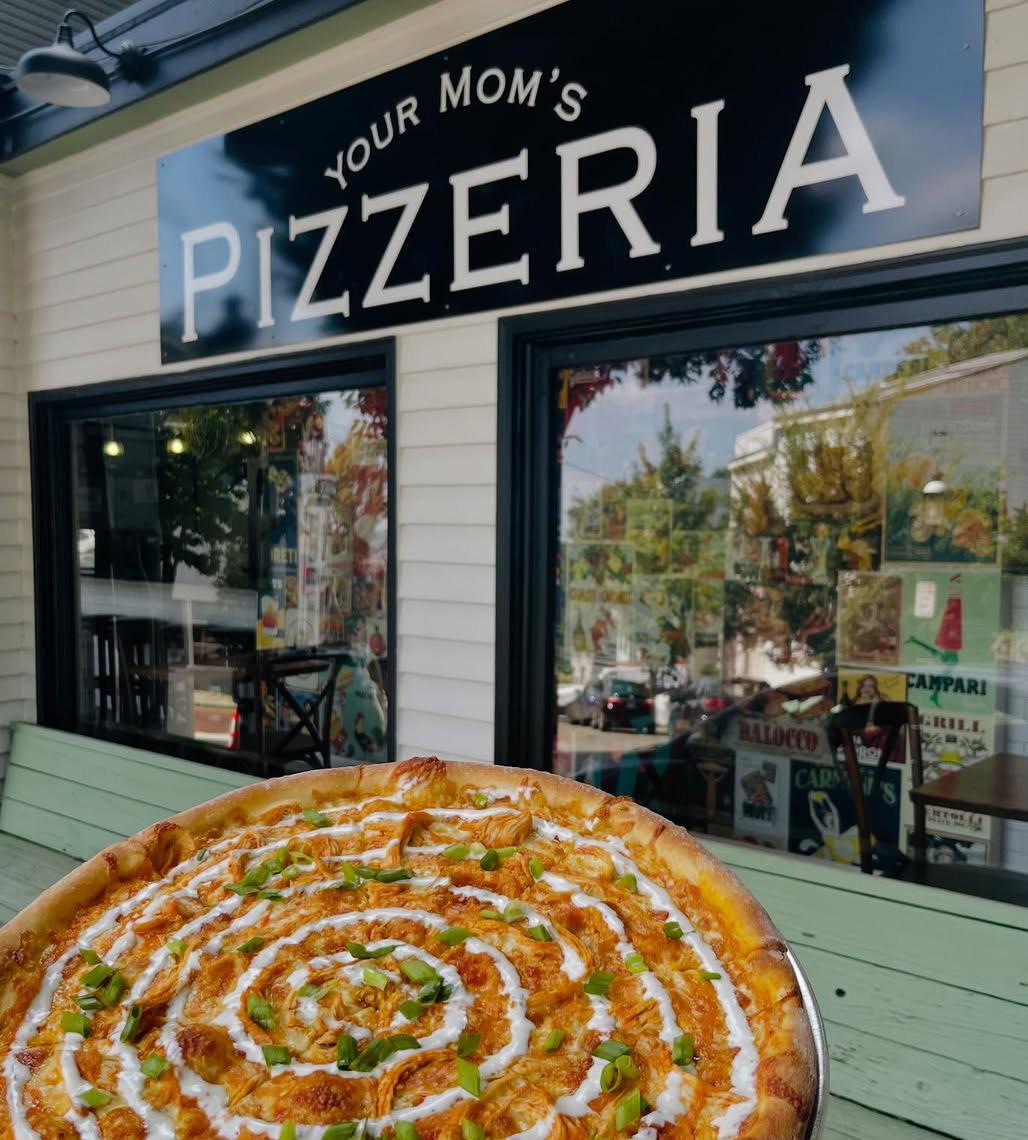
This literal mom-and-pop pizzeria excels at making fantastic pies. Take my favorite: the Shiesty, a pie with excellent tomato sauce and a damn good crust, topped with pepperoni, ricotta cheese, peppadews and one of the greatest inventions of all time in hot honey. Excuse me while I go wipe my chin.
Kane’s #2: Mita’s, downtown

Mita’s is probably the most critically lauded restaurant in the city: Among countless other awards, chef/owner Jose Salazar has been nominated as the best chef in the region by the James Beard Foundation a whopping six times. One visit makes it obvious why.
The Latin-focused cuisine at the restaurant, named as an homage to Salazar’s Colombian grandmother (his “mita”), has something that’s missing from a lot of fine dining: it’s fun.

Several curry dishes from the Ambar India menu served with rice. Photo Provided | Ambar India Restaurant
Indian food is in abundance in Cincinnati, but Ambar India stands out. Its unusually large portions, even for Indian spots, have left me with meals for days. The chicken saag slaps. The lamb curry slaps too. It’s hard to go wrong here. In fact, the only wrong decision you could make at Ambar is not placing an order for garlic naan.
Kane’s

At first glance, with the punk rock blasting over the speakers and plating so fancy it’s just begging to go on your Instagram story, you’d be forgiven for thinking that Wildweed is the kind of place they’d skewer on FX’s “The Bear.” But Wildweed’s ethos isn’t one of fine-dining snobbery. If anything, the place exhibits a freedom to experiment that you’d only see in Michelin-starred restaurants.
Here’s an example from my favorite dining experience ever: as their current location was being built, chefs David and Lydia Jackman hosted several pop-ups. During a winter 2023 edition, I ravenously consumed several dishes that would later become mainstays at the full restaurant — like quark-stuffed culurgiones and Dungeness crab risotto, the latter of which is probably the last meal I’d request if I was ever on Death Row.
As we finished the meal, Chef Jackman walked over and said he had a surprise for us while handing me a mysterious bowl of ice cream. I took a bite and gasped as he explained it was made from melted-down pine needles from his Christmas tree, then sat in stunned silence wondering how he even came up with something that bizarre. If you’re looking for food that will challenge your taste buds, Wildweed is your first stop. And if you’re averse to fine-dining, Wildweed will make you a believer.
If you were subjected to physical arrest during the curfew or protests in the City of Cincinnati from May 29 through June 8, 2020, were charged with a misdemeanor(s), and had those charges dismissed,
You Could Get a Cash Payment From a Settlement.
There is a proposed settlement in a class action lawsuit against the City of Cincinnati and Hamilton County regarding the injuries that protestors and others suffered when arrested during the curfew or protests in the City of Cincinnati from May 29 through June 8, 2020. The litigation is known as Kenney, et al. v. City of Cincinnati, Case No. 1:22-cv-295, in the United States District Court for the Southern District of Ohio Western Division.
WHO IS INCLUDED IN THE PROPOSED SETTLEMENT?
Claim Packages were mailed to Settlement Class Members on February 5, 2026. If you received a Claims Package, you were determined to be a member of the Settlement Class in this lawsuit. If you believe you should have received a Claims Package, please contact the Settlement Administrator at 1-800-598-3016 or info@cincinnatiprotestsettlement.com.
WHAT DOES THIS PROPOSED SETTLEMENT PROVIDE?
The Settlement Amount of $8,143,000 shall be allocated as follows: a) A Class Fund of $5,029,500 will be distributed to all Settlement Class Members. The Class Fund will be paid out in equal parts to every person in the Class listed. b) A Conditions of Confinement Subclass Fund in the total amount of $600,000 shall be distributed to members of the Settlement Class who timely submit Declarations in Support of Inclusion in Conditions of Confinement Subclass. The maximum award for each member who timely submits a Declaration will be $2,000, or, if more than 300 members of the Settlement Class timely submit Declarations, the total Conditions of Confinement Subclass Fund amount of $600,000 shall be divided evenly among all such members, resulting in a pro rata distribution. c) A Secondary Claim Fund of $300,000 will be distributed to Settlement Class Members who, in addition to being arrested, show they endured certain type of Uncompensated Injuries, to be adjudicated based on the evidence they submit.
d) A Class Representative Award Fund of $55,000.
e) An Attorney Fees, Cost, and Expenses Fund of $2,035,750 plus approximately $5,000 in costs will be distributed to Class Counsel to compensate the attorney fees and costs.
f) A Reserve Fund of $52,750 and an Administrative Expense Payment of $65,000 will be used to pay the expenses associated with distributing
and managing this money. These amounts are estimates and may increase or decrease based on actual expenses of administration, and on the actual number of class members who are determined to be eligible for payment.
HOW CAN I GET A CASH PAYMENT?
If you were determined to be a member of the Settlement Class, you are automatically eligible for compensation for your arrest. You are not required to do anything more. However, if you also fit into either one or both of the following categories, you may make an additional claim for more compensation.
You can also submit a Declaration in Support of Inclusion in the Conditions of Confinement Subclass by attesting that you were detained for more than five (5) hours in association with your arrest, AND/OR a Secondary Claim for Uncompensated Injuries, by showing evidence that you endured certain special injuries in addition to your arrest or arrest and confinement.
The deadline for submitting a Declaration of Inclusion in the Conditions of Confinement Subclass AND/OR a Secondary Claim is June 5, 2026, which can be completed online at www.cincinnatiprotestsettlement.com.
WHAT ARE YOUR OPTIONS?
Even if they do nothing, Class members will be bound by the Court’s decisions. Class members who want to keep their right to sue the Defendants themselves must exclude themselves from the Settlement Class by April 3, 2026. Any objection to the proposed settlement must be submitted to the Court by April 3, 2026
The Court has scheduled a final fairness hearing on May 7, 2026 to consider final approval of the proposed Plan of Allocation and to hear any objections. You may attend the final fairness hearing. If you wish to speak at the final fairness hearing, you must first file a written objection. You do not need to attend the hearing.
This notice summarizes the proposed settlement. For more information, visit www.CincinnatiProtestSettlement.com or contact the Settlement Administrator at 1-800-598-3016 or info@cincinnatiprotestsettlement.com. For more information: 1-800-598-3016 • www.CincinnatiProtestSettlement.com

BY KENNEDY DUDLEY
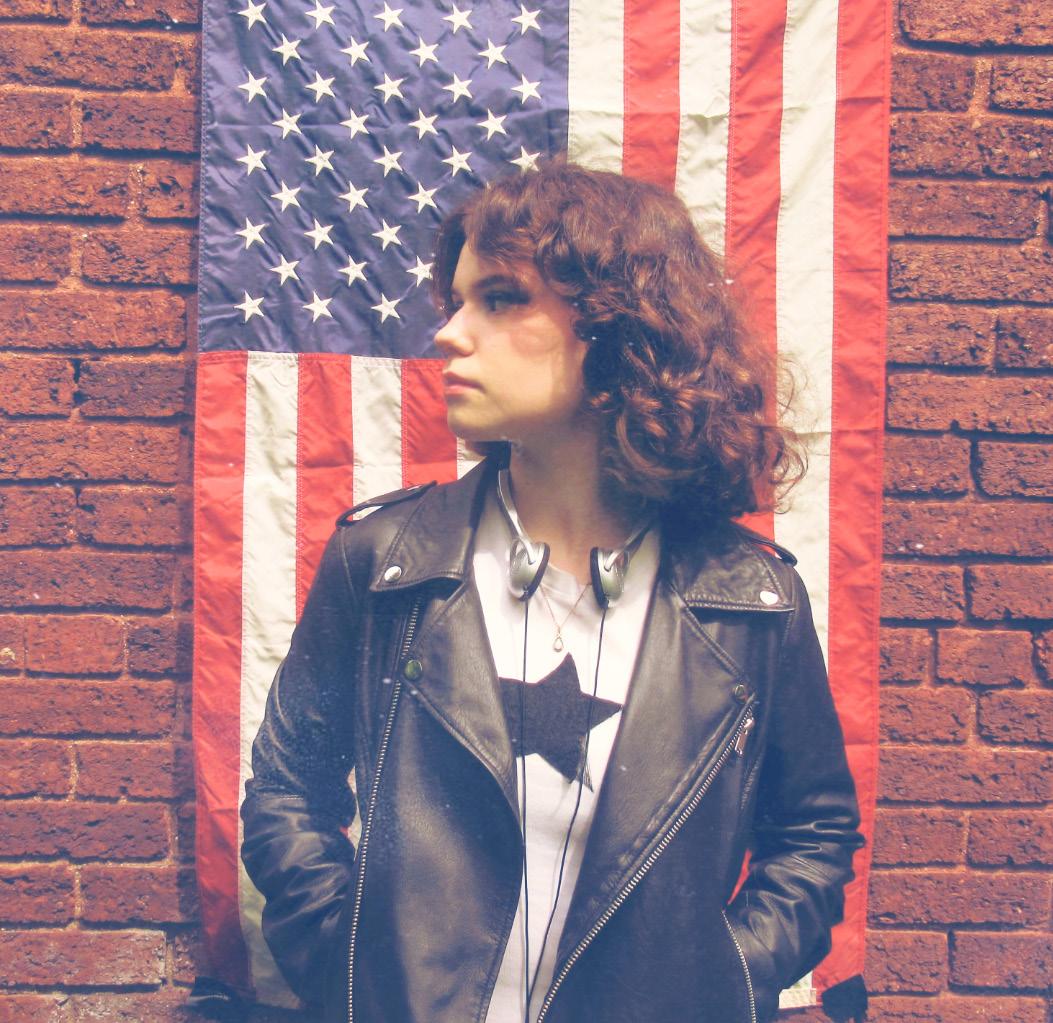
n the summer of 2012, the London Olympics had just begun, and Simone Biles was taking the world by storm, inspiring girls around the world of all ages to follow their dreams.
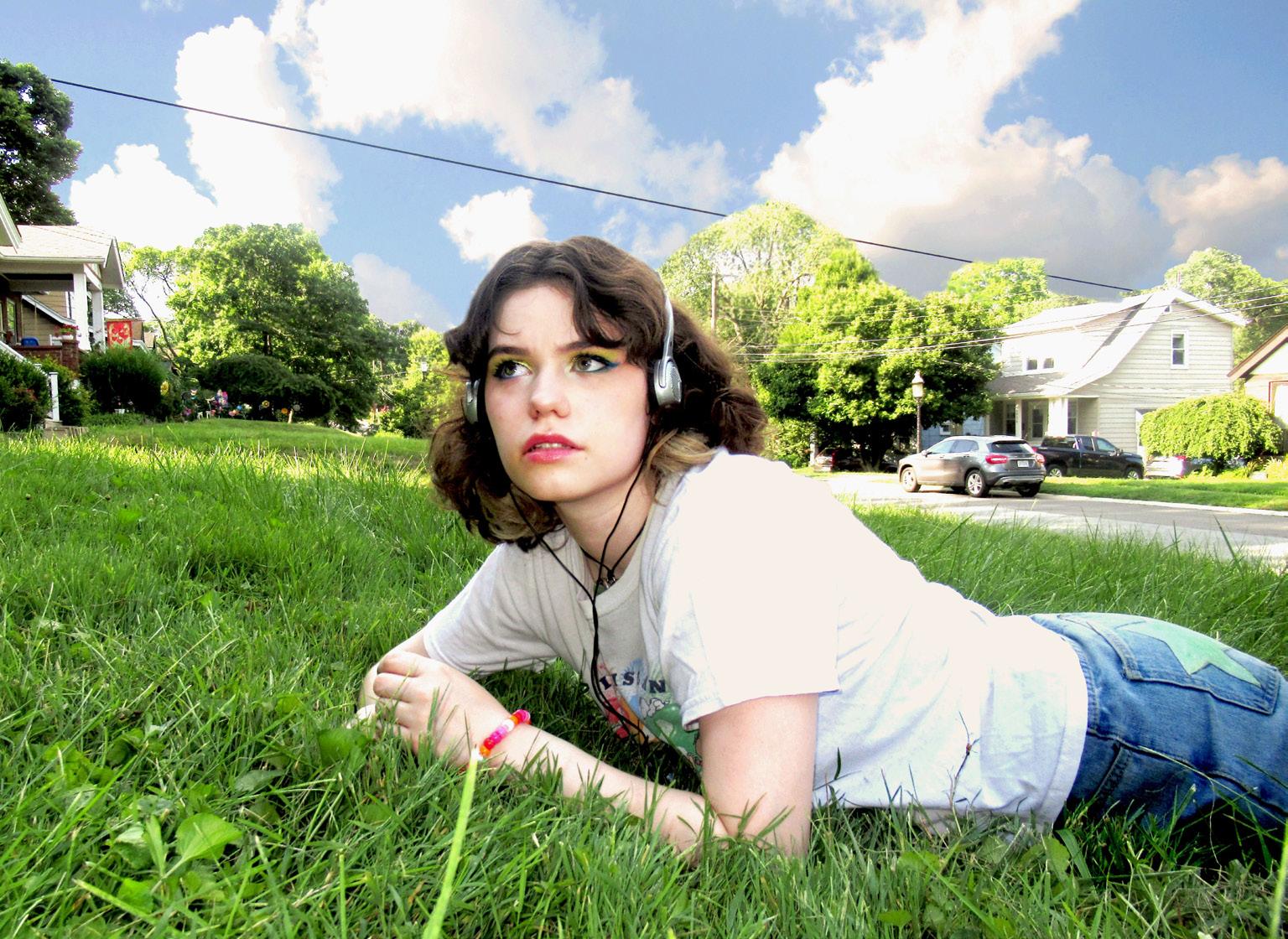
One of those girls was Sophie Mattimore, waking up every morning in her Pleasant Ridge home to do cartwheels around her room — hoping one day to soar as high as her idol.
But, as we know, childhood aspirations change, and one big change would come for Joy when she discovered singer Grace VanderWaal.
“I wanted to be her, I wanted the bob, I wanted everything,” said Mattimore, who now goes by the name Sophie Joy. “I loved how raw she was in her songs, and how even though she was only 11 or 12, she was very vulnerable. I really wanted to get into that vulnerability at such a young age [as well].”
Writing her own songs inspired by VanderWaal, Joy picked up a ukulele and began teaching herself to play. A few years later, she transitioned to guitar, starting with the Britney Spears song “Toxic.” She isn’t sure why she chose that particular song, but learning it marked the beginning of a musical journey she continues today — still using the same guitar she first picked up all those years ago.
“There’s only so many things that you can play on the ukulele,” she said. “I knew deep down that I wanted to expand my sound more. I’m always trying to expand my sound.”
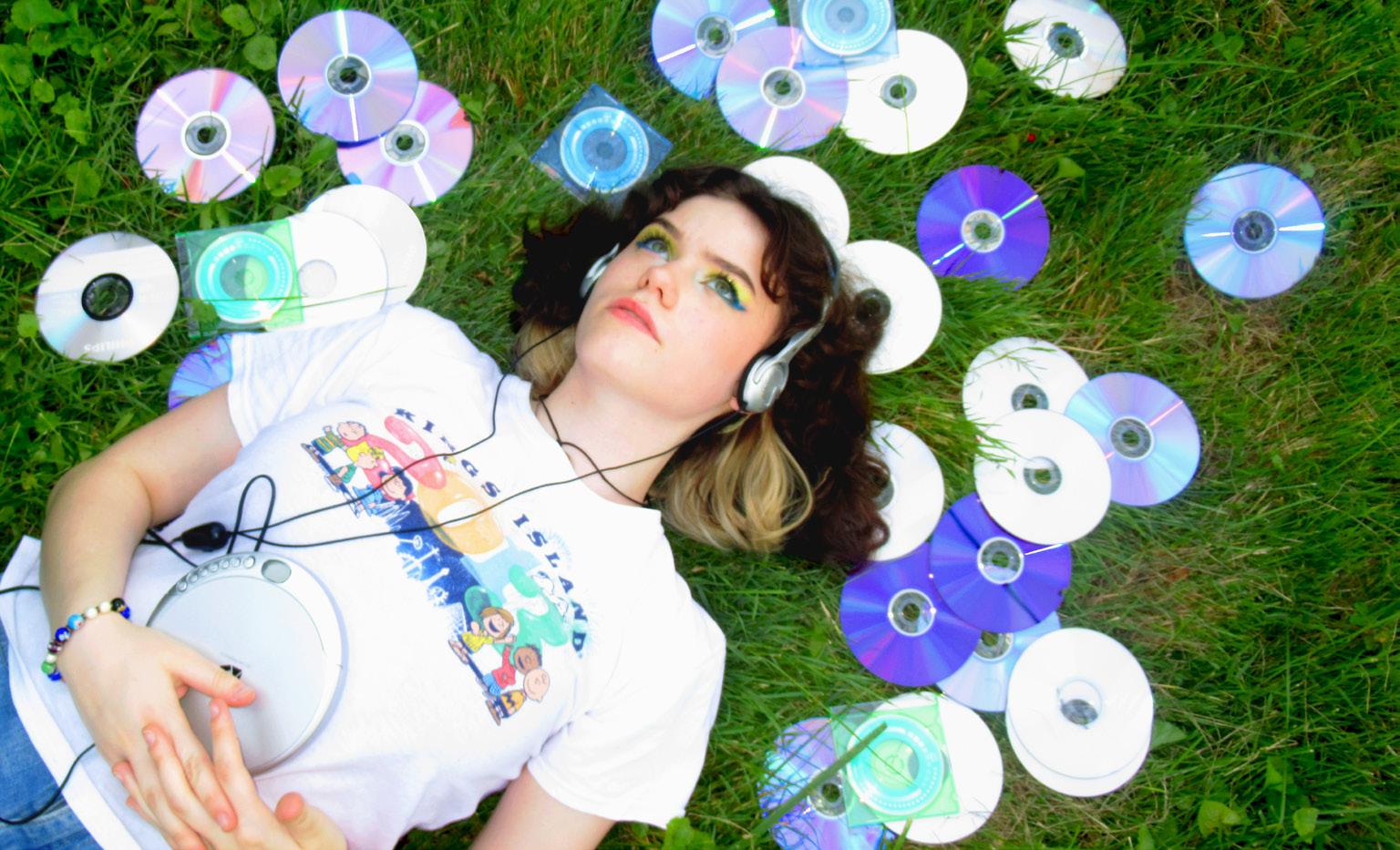
Now majoring in visual arts with a focus on painting and drawing at the Art Academy of Cincinnati, Joy has continued to develop her music alongside her studies. She released her first original single, “ceiling,” in April 2025.
“The first song I ever released was a cover of ‘Do I Wanna Know?’ and I don’t know why I decided to release that,” Joy said. “I was really proud of the production and the harmonies, so
I just kind of did it blindly. Then I was looking through all my songs — I have over 300 songs that I want to release — and I found ‘ceiling’. That was one of the first songs that I ever wrote, where I was like, ‘Wow, this is really good. I could do this for a living.”
She recorded and mixed the song on her phone in her dorm room and released it soon after. The experience made her realize that sharing her music didn’t require perfect conditions or an elaborate setup.
This sparked an artistic impulse in Joy.
“I realized I might as well [release] it now, what am I waiting for?” Joy said. “That was really weird, though, because the night that was released, I was on the phone with my mom, and on DistroKid, they show you all the places where your song is streaming, and it said over 200 countries.”
Joy was astounded, thinking this was going to be a local thing.
“It’s a fan favorite,” Joy said. “People really love that song, and I’m glad they do because that was a song that I barely played because it was so sad, but now it’s my favorite thing to play at shows.That kind of pushed me into this releasing spree that I had throughout the beginning of summer. By the time I knew it, I had a fully formed album.”
With over 300 songs waiting to be released and more ideas manifesting, she kept creating, even as finals approached. With a newfound energy for creating and the resources available to her, she dove deeper into her creative process.
Joy describes her sound as the sadness of a 13-year-old girl, with the sadness of a 20-yearold, and tons of sapphic yearning.
Her ideas for songs come from everyday life. “ceiling,” for example, came to be because a

friend of Joy’s had told her about an ex-partner who used to hang things from their ceiling, and then he felt like he couldn’t do that now because it would be copying.
“And I was like, ‘that’s a good song idea, let me write that down,’” Joy said. “My friends know that whenever they’re around me, if I hear a really poetic line, I’ll be like, ‘Let me write that down.’”
Sometimes one of those ideas will spark a song, and sometimes it’ll just be one word.
“With my song ‘apricot’, I just wanted to write a song titled ‘apricot,’” Joy said. “I’ll sit down, in a span from 30 minutes to a few weeks, for how long it takes me to write a song, and if I like it enough to where I can hear what it sounds like in my head, full production, I will [produce] it all myself.”
Joy released three more singles in summer 2025: “american dream,” “situation, baby,” and “rite of passage,” before releasing her debut album, “taped confessions,” in August. The culmination of nearly a decade in songwriting.
“It warmed my childhood heart,” says Joy. “The oldest song that I wrote on that album was ‘linger’ or ‘ceiling’ and as a kid, I had envisioned what it would sound like on a fully finished al-
bum. Now I have that, and it was so surreal to be like ‘I have an album, guys.’”
Joy said she thinks it’s unbelievable that people can hear what she’s saying and thinking on Spotify.
“Even if I’m not a big artist, it’s still such a crazy step to take,” Joy said. “My music teacher told me in high school that more people are going to be inspired by the art of me doing it rather than the lyrics themselves, and I feel that.”
After sharing her album, Joy has had the chance to perform some of its songs most recently at Strange Records, a shop in Morrow, Ohio. She has more performances coming up, most notably on March 25 at Little Art Theatre in Yellow Springs, Ohio, for its Women’s History Month showcase celebrating four generations of songwriters.
And as for what’s next for Sophie Joy? In short, a lot.
“I’m sitting on a lot of music right now,” she says. “At my Strange Records gig, I actually played a new song that I would like to release soon. I would also like to experiment with making my songs sound really goofy because I have a lot of sad songs, and I think it would be fun to make a really sad song sound not serious at all.”