BY
CODY PELLE











BY
BY NOAH JONES

The city of Cincinnati has approved allocating $8 million to the proposed Farmer Music Center
“We are going to get a nation-leading summer music venue here that’s hopefully going to attract acts that have previously passed us by–gone to Columbus, Indianapolis, Louisville, instead of stopping in the city of Cincinnati, and it will be home to the Cincinnati Symphony Orchestra, an amazing marquee talent,” said Cincinnati City Council Member Anna Albi, who led the charge for this motion.
“This will give us so many opportunities to have really cool performances,” she added.
Cincinnati Symphony Orchestra President & CEO Robert McGrath said he was excited to have received the support from city leaders.
“We are grateful to city leaders for their strategic investment in The Farmer Music Center and for recognizing the long-term value that this venue will have on both the cultural vitality and economic activity in the region,” said McGrath.
The center will be a $160 million amphitheater designed to host up to 20,000 guests and is expected to open in spring 2027. It is currently being built on the former site of Coney Island, within city limits. Once open, the Farmer Music Center is projected to yield a $100 million economic impact annually and $15 million
“After five years of earning our money back, we’re going to be taking in these profits with the tax revenue for the rest of the venue’s license,” Albi said.
At the March 18 meeting, Council Chair Jeff Cramerding said the members had just heard about this request for allocation. He told his fellow members he would vote ‘no’ on the allocation, citing numerous concerns, including a “short runway between us learning about it (and the vote).”
“Just to be clear to the public, this was not something that this council sat on for months. We learned about this in the past few weeks,” Cramerding said prior to the vote.
Albi said this project was known by city leaders for about 18 months.
“This has been something that the council has been aware of. It’s not surprising that an investment like this is seeking public and private support, and so in terms of timing, the vote happened … this will be something that gets put on as a budget line item, and we will all get a final vote on that line item in June,” Albi said.
Still, not everyone was happy with the result of the vote, wanting more information before making a decision.
Cincinnati Vice Mayor Jan-Michele Kearney said she was frustrated with the 5-4 vote by Cincinnati City Council to approve allocating the money to support the Farmer Music Center.
“I was very disappointed at that vote, not because I’m against the Farmer Music Center,” Kearney said, who voted ‘no’ on March 18. “I mean, it sounds like it’s going to be a wonderful venue. It will have an economic impact in Cincinnati, but we have so many other issues that we have to deal with that we have not discussed for the budget.”
The next step is to set priorities for the budget, including the information that citizens shared and information the council had collected. From there, the council would talk about allocations.
Mayor Aftab Pureval is given priorities and budgets by the city manager, and he can make modifications to fit the needs within the city.
Kearney said that didn’t happen this time. She said there was no financial analysis explaining why $8 million was needed.
“We started out before we even talked about priorities and even discussed what our citizens have told us, and what we know to be true,” the vice mayor said. “We said, OK we’re going to take $8 million and make a commitment to give it to this project.”
Kearney said that the mayor supports the Farmer Music Center, but was displeased with the lack of procedure, allocating millions of dollars without a financial analysis to show a need and before the community has a chance to hear about it publicly.
“Our problem really with that is this is a premature vote. No one could really explain why they were asking for $8 million there was no explanation, no previous discussion about that.”
Kearney also said this was an example of why citizens lose confidence in Cincinnati leadership, referring to the citizens survey heard at a different meeting this week.
“We have to work on that. We have to build confidence with our citizens, and part of it is being transparent and open and making sure we get public input,” said the vice mayor.
In the end, Albi believes this will be a plus to the economy and to the ability to keep Cincinnati a great place to live.
“I’m a millennial, I’m always really thinking about what’s going to help grow — what’s going to be something that’s going to help, that’s going to appeal to the next generation to stay in Cincinnati and see how fun and cool it is to live in Cincinnati,” the council member said. “And I think an amazing music venue like this is one of those things. So I’m excited.”
BY NOAH JONES
Intoxicating hemp products are no longer legal in the state of Ohio.
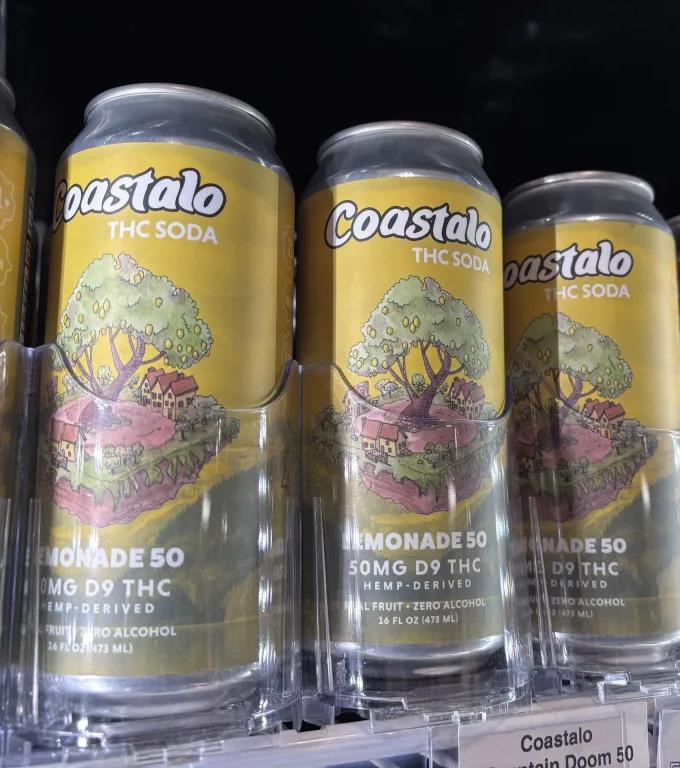
“It means we can’t sell anything more,” said Scott Hand, founder of Urban Artifact. The brewery produces the fruit-flavored hemp soda, Coastalo.
“We can’t make it anymore,” he added.
On Dec. 31, 2025, DeWine signed Senate Bill 56 into law, banning THC drinks from being sold, among other things. The 90-day grace period ended Friday, March 20 at midnight.
Bobby Slattery, founder of Fifty West Brewing Co. in Columbia Township, was forced to remove his most popular product from his brewery’s shelves late Thursday, March 19.
Slattery drove the final shipment of Sunflower, his company’s take on the beverage category, across the river and into Kentucky shortly before the ban went into effect.
“We’ve loaded four semi trucks,” he said His brewery released Sunflower in 2024.
“Our team came up with a great idea to put this product out … I said, ‘I’m not sure guys. We’ll give it a try. We think there might be a customer,’” Slattery said. “Not only was there a customer, it was the fastest-growing thing we’ve seen since probably opening Fifty West.”
The product sold more than an estimated 30,000 cases in 2025. This year, Slattery said it was outselling most of his craft beers.
“It’s frustrating, it’s hard, but we’re continuing the fight and are hopeful that ultimately the courts will rule in our favor and see what we see,” he said March 19 about the ban’s deadline. “We see this as executive overreach. It’s not the way our country was designed.”
In a video posted on the brewery’s Facebook page the afternoon of March 19, he tells his customers the drinks would be sent to Kentucky, where they are still legal.
The end of the grace period has been difficult for Ohio THC beverage manufacturers.
Hand said the ban has caused staffing nightmares.
“We’ve had to make difficult decisions running up to this week that have not been fun,” Hand said.
Slattery fought vocally since October, when
DeWine announced his plan to ban these products.
“What we’re fighting for is people’s jobs. There’s a lot of people that help develop those products,” Slattery said. “There’s a lot of people that help make those products. And so if those go away, that puts us in a tough spot where we have to restructure our company.”
Dan Tierney, deputy director for DeWine’s office, said he didn’t see jobs being affected long term.
“If you are a business that has been in business since the 1980s and has well-regarded, well-sold products throughout the year, those jobs will not go away,” Tierney said. “If you’re in a canning line, you’re going to be canning beer, even if THC drinks go away.
So I don’t think that anybody’s done the economic analysis of what will actually happen here.”
Slattery disagreed.
“I can say for my own company, that’s not correct,” he said. “This law will affect people’s jobs. There’s probably about 10 other craft breweries across the state that have been in regular communication, and this is already affecting jobs across the state, and we’ve communicated that.”
Moving forward, this ban could have an impact on local bars and restaurants.
Not consuming alcohol is a stance that many Americans, especially Gen Z and younger, are taking these days. A recent Gallup poll found that only 54% of U.S. citizens now drink alcohol on a moderate, regular basis, and those who do are drinking less. Hemp-derived THC products have allowed younger adults and nonalcoholic beverage seekers to still participate in bar culture.

incinnati Vice Mayor Jan-Michele Lemon Kearney said she is disappointed with the results of the biannual survey on how Queen City residents feel about their own home.
The survey, completed by ETC Institute, was discussed last month at a Cincinnati City Council meeting.
During the meeting’s presentation, it was noted that 42% of those surveyed had a positive view of Cincinnati’s overall image. In 2023, results showed 65% of those surveyed had a positive perception of the city.
The largest declines between 2023 and 2025 occurred in broad, perception-based measures that historically reflect cumulative sentiment over time rather than short-term operational changes, according to the executive summary of the survey results document.
These measures include the overall image of the city, the overall quality of services provided by the city, the overall feeling of welcome in the city and rating the city as a place to live, work and raise children. While these indicators remained relatively stable between 2021 and 2023, the sharper decline observed in 2025 suggests a broader change in resident mood and confidence rather than a sudden decline in city performance.
“It wasn’t the best of news,” Kearney said. “The ratings weren’t high, and that’s always concerning. It doesn’t sound like they had a lot of confidence in city leadership, and that would be on us as a council, so we have a lot of work to do.”
Specifically, opinions on public safety dropped overall. According to the 163-slide document, 32% of the people surveyed felt safe within the city. In 2023, 40% of respondents said they felt safe in Cincinnati.
In 2021, 59% of respondents selected “the city’s overall efforts to prevent crime” as the most important public safety item to focus on over the next two years, this figure increased to 67% in 2023 and rose to 71% in 2025, according to the data.
“We really got pummeled last summer about public safety, and so I totally understand that,” the vice mayor said. “We do have some hot (crime) spots, and we’ve got to deal with them, and we have to do a better job of that.”
Kearney added that the results were not a policing problem, but a communication problem.
“I think the lack of confidence in our leadership was probably the most hurtful,” Kearney said. “But what we need to pay a lot of attention to, because we are elected by the people of Cincinnati to serve, and if they feel we’re not serving them, well, that’s a big wake-up call for us.”
According to the survey results, 53% of the sur-
vey respondents chose potholes as their first, second or third choice for what needed the most attention from the city over the next two years. There were 15 options on the slide.
Kearney said she understood the public’s dissatisfaction with potholes and sidewalks, but that fixing issues with the streets is a result of Ohio’s weather and takes time.
“Our Department of Public Services was out early, before the snow fell, treating the streets,” Kearney said of the more than 60 trucks deployed to clear streets this winter. “They used technology to see what areas needed more treatment.”
Kearney said the survey was not all bad news. 311 Cincy, the city’s customer service system, ranked low on the survey’s priorities for cities.
“(311) won a national award,” she said. “They’re doing an excellent job, and that’s really part of public safety to get the services you need when you’re in a crisis.”
An operator at 311 Cincy was given an AFSCME Never Quit Award last fall for his service to the community.
Kearney also acknowledged the positive marks the city’s fire and ambulance services collected.
“When you look at our fire department and our police department, I mean, these are just some phenomenal men and women who are out there serving every day, and they’re part of the community,” she said. “I don’t think that came out in the survey.”
Kearney said there were issues her city leaders were working on, one conversation at a time.
“We know that there are inequalities,” she said. “We know we have issues with segregation, and we’re looking at those issues head on to see how you know how we can do better, and what can we do to make Cincinnati better? That’s real to me. We can’t run from problems. We have to take on the challenges. They can’t get solved overnight, but the fact that we listen to our citizens, we work with them and for them, and I think that’s really key.”

FRIDAY, MAY 1, 2026
6:30–10:30 pm Memorial Hall
1225 Elm St. Cincinnati, OH 45202

Tickets on sale now at visionariesandvoices.com
Use code citybeat10 to receive 10% off ticket price
Double Vision is arguably the most creative live and silent auction in Cincinnati! Featuring artwork by V+V artists and community collaborators, Double Vision raises awareness and money in support of V+V’s mission to provide creative, professional, and educational opportunities for artists with disabilities. Famous drag queen, Penny Tration as emcee, and Steiner Auctions share the stage as they dazzle the crowd. Cincinnati’s own Ricky Nye will be playing jazz, blues, and boogie woogie piano early in the evening during the art preview and silent auction. Plus, we will have a pop-up shop, light bites, and a hosted bar.

Sponsors as of : 3/23/26
Visionary sponsors: ArtsWave
The Kenneth and Harle
Montgomery Foundation
Major sponsor: Katie, Julie, and Tom Hefele
Bob, Jan, and Rob Bolubasz
The Robert H. Friedman Memorial Foundation


Beverage
ART



SCAN THIS QR CODE TO SIGN UP FOR


You can get the week’s headlines, learn about what’s happening this weekend, find out what's going on in the arts and culture scene, and more.
THEY’RE FREE AND COME STRAIGHT TO YOUR INBOX EVERY WEEK!
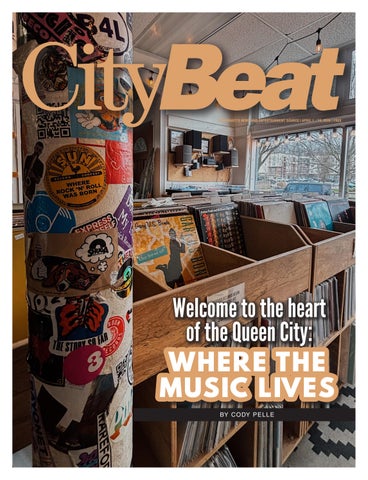
BY CODY PELLE
Cincinnati has always been an underrated town.
That’s nothing new. We’ve been slept on for centuries. Even Mark Twain was quoted as saying, “When the end of the world comes, I want to be in Cincinnati because it’s always 20 years behind the times.”
Life behind the times isn’t so bad. In fact, it’s the perfect disguise.
While folks are busy hyping up cities with white-hot spotlights, we’re heads down hustling as only a blue-collar town can. If you’re reading this, let me be the first to introduce you to The Heart of The Queen City. Over the next few months, I want to take you on a journey to discover the real soul of Cincy. Not a surface-level overview of where you can grab a decent cup of joe. The real deal. Stories that give you a peek under the hood at the engine that gives our town its horsepower.
If we’re talking soul in The Queen City, we have to start with the music. From Hank Sr. cutting “Lovesick Blues” and “I’m So Lonesome I Could Cry” at Herzog to James Brown nearly burning down King Records with “I Got You (I Feel Good),” we have no shortage of all-time classics with Cincinnati ties. As timeless as our music history is, David Sanborn said it best. “You’re only as good as your last record.” With that in mind, let’s take a trip up to Loveland to check in on the best record shop and smoothest recording group rocking today.
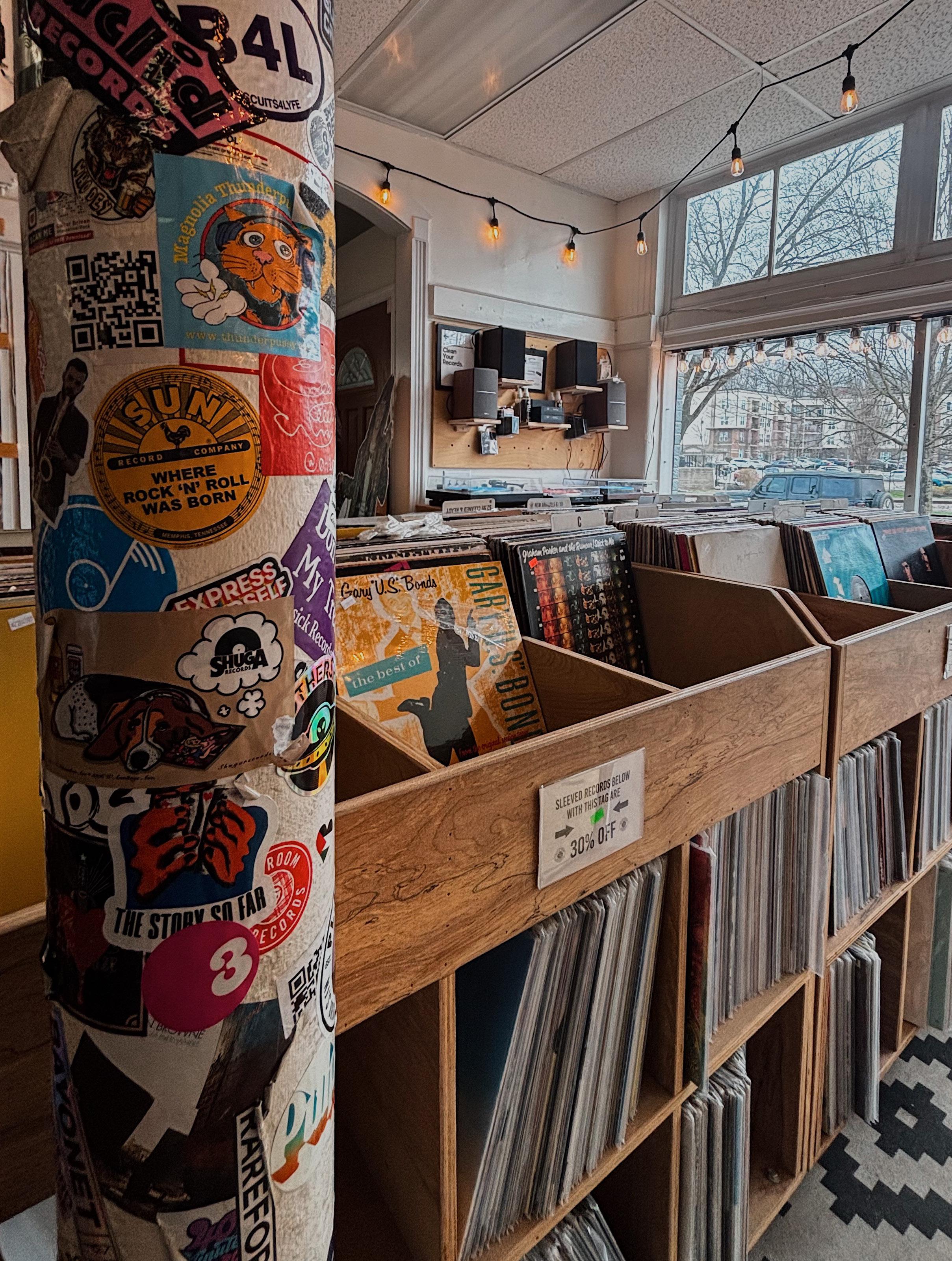
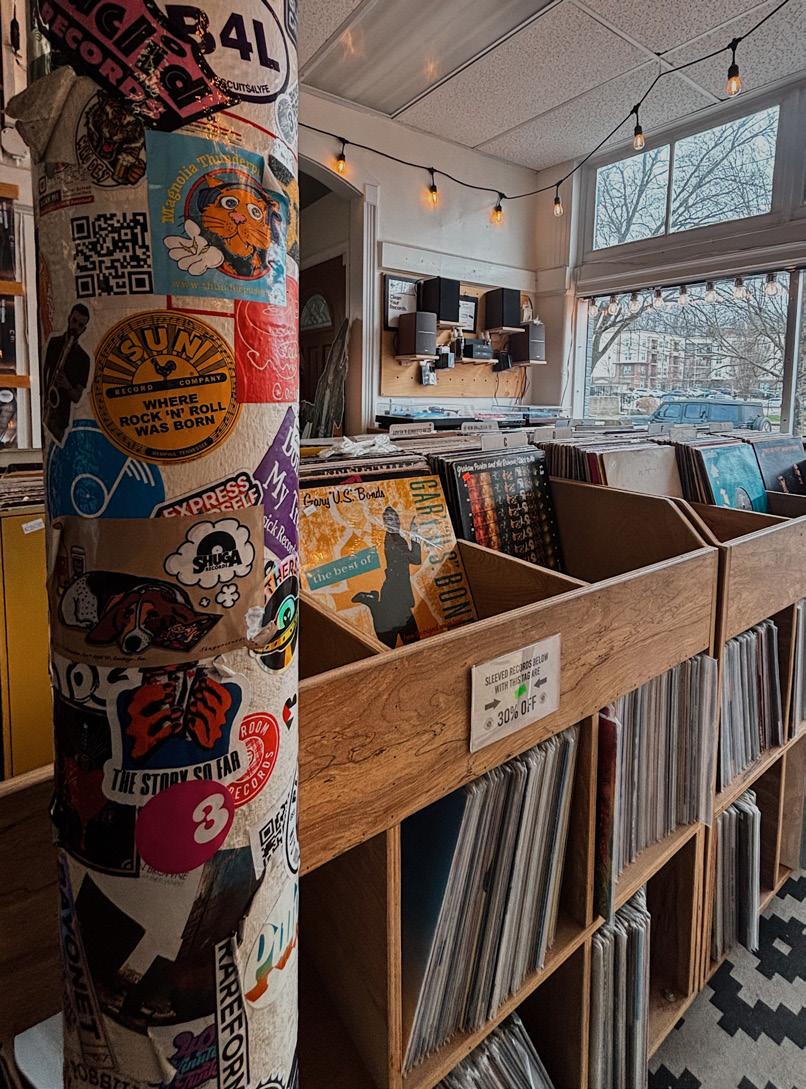
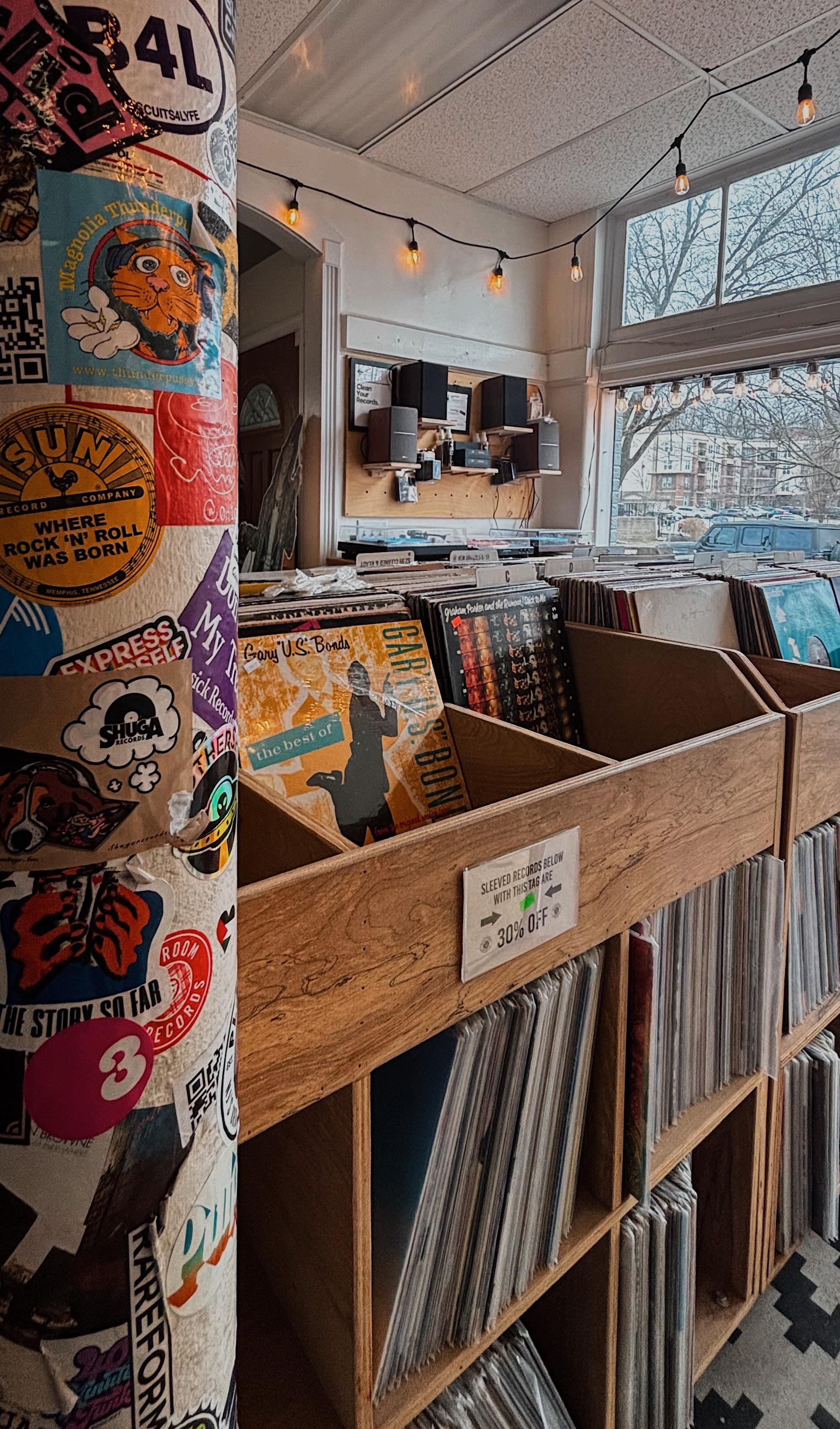
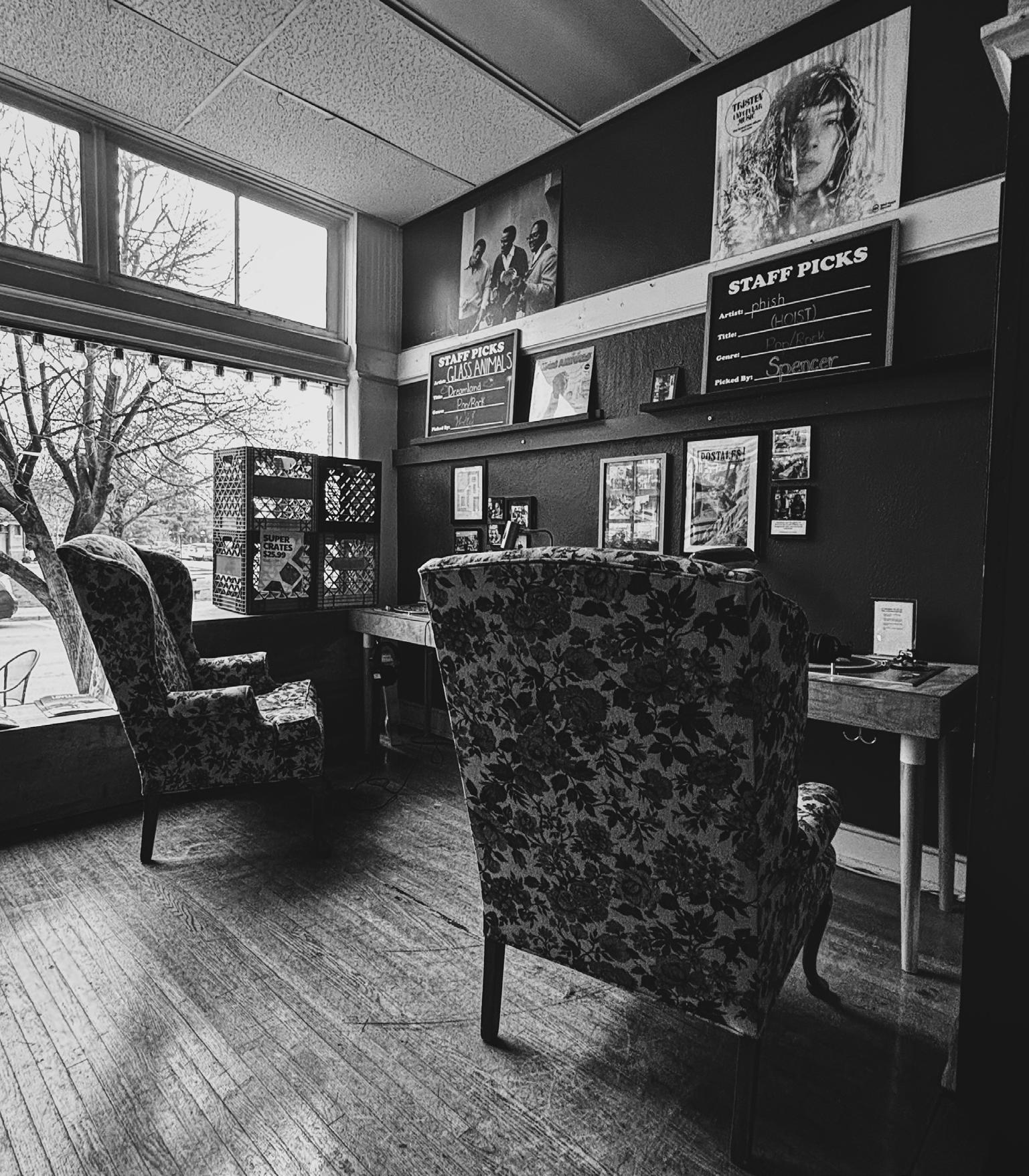
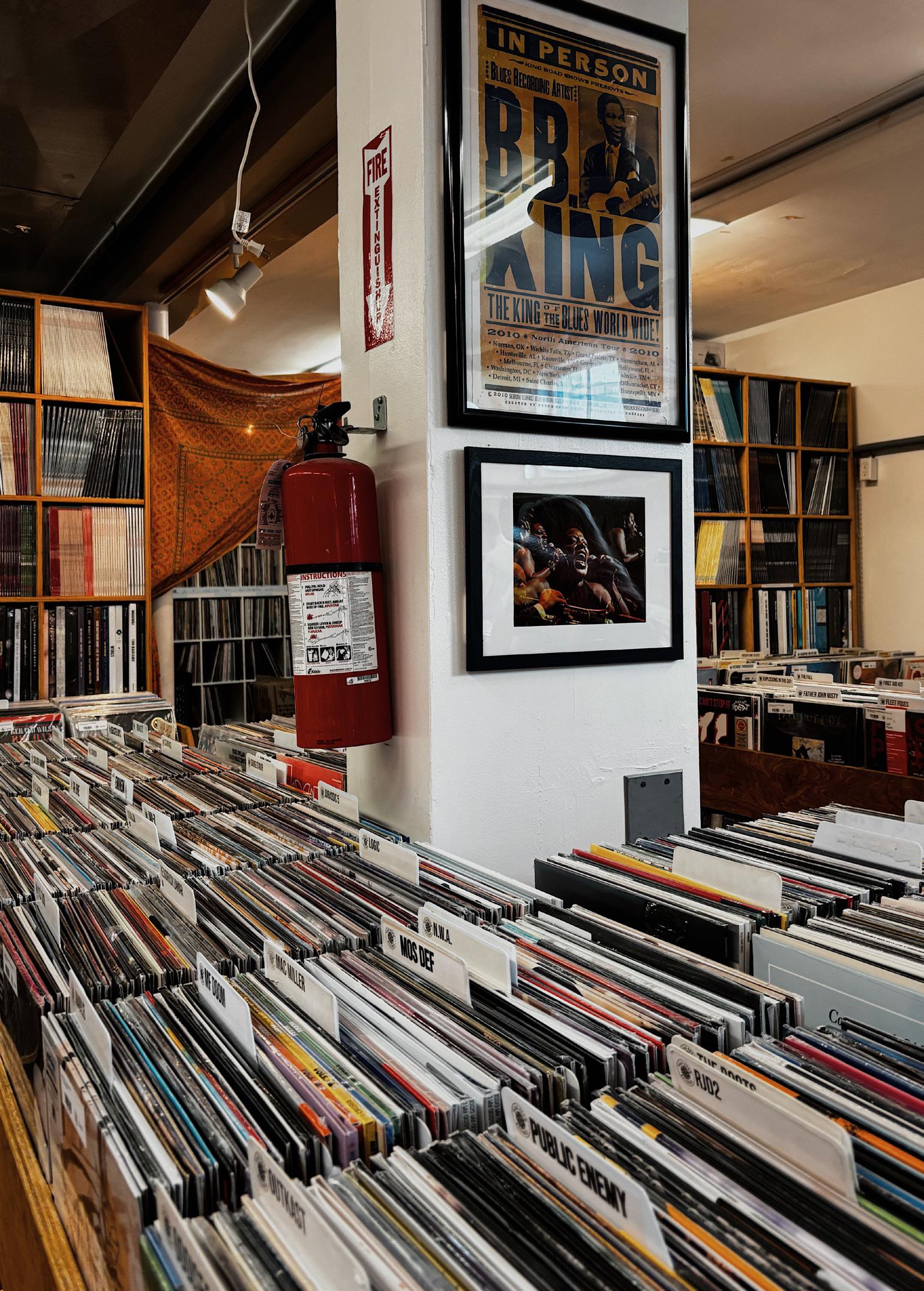
If you’ve ever spent any time in Loveland, you know how special the community is. I often find myself taking day trips up there to bike the trail overlooking the Little Miami and grab a cold one from Narrow Path Brewing. Without fail, I find myself perusing the “new arrivals” section at Plaid Room Records. As an avid vinyl collector, this place speaks to my soul.
I remember popping in years ago and stumbling upon a jazz trio doing their thing smack in the middle of the shop. It was like the Cincinnati version of a Tiny Desk Concert, and I couldn’t get enough. When they wrapped their set, they shouted out Loveland and Colemine Records. Little did I know, that moment was the Genesis of a lifelong love for all things Colemine. I found the “Colemine Records Official” playlist on Spotify, dove in headfirst, and never looked back.
My first time intentionally seeing a live performance from one of the Colemine Records groups was Durand Jones & The Indications at The Woodward Theater in Over-The-Rhine. When Aaron Frazier belted out the first note on their hit song “Is It Any Wonder,” time stopped in its tracks. I’ve always been a big Motown music fan, so to hear that music not just replicated but created and evolved in the year 2019 gave me a new appreciation for the city I call home.
Even after my newfound following, I still had no idea where the Colemine Records headquarters was. I assumed it was somewhere in Cincy, but I never knew for sure. So naturally, I went to the source. When I asked the woman working the front desk at Plaid Room Records if they knew where Colemine Records was based, I got a belly laugh in response, followed by a finger pointing up. Assuming she wasn’t talking about heaven (which wouldn’t have
surprised me based on their quality), I asked for more. She informed me that the studio was on the second floor of their building. My mind was blown.
In that moment, the building I was currently inhabiting became sacred ground. We sat talking shop for the next hour, and before I left, she sent me packing with several CDs from Colemine artists on the house. Artists like Kelly Finnegan, Thee Sinseers and Pale Jay became the soundtrack of my summer, and the fandom never faltered from there. This upcoming September, Durand Jones & The Indications will be opening for Charley Crockett in Youngstown, and you can bet I’ll be in attendance. Frankly, you should be, too.
Colemine Records is a prime example of how to write a new chapter of a timeless story. They trace their roots all the way to the King Records days in Cincinnati. Recording, pressing and selling albums out of one space in Loveland is enough of an achievement in itself, but to take that Ohio soul all across the world puts them in the rarest of air.
In addition to being the best record store in Cincinnati, Plaid Room also helps carry out the Colemine dream by championing and selling nearly all of the records in their shop. This is a business partnership that far surpasses the status quo and gives us Cincinnatians an offering unlike any other in the world.
What impresses me the most about Plaid Room Records is the community. Many of their employees have been there for over a decade, and every trip to the shop inevitably leads to a conversation about something incredible happening in the world of music. On my last visit, they told me all about the album release dance party they put on to celebrate Sturgill Simpson’s new record under his alter ego, Johnny Blueskies, “Mutiny After Midnight.” Events like those make music a transcendent experience, and the community they offer gives music nerds like me a space to call home.
All too often, Cincinnati is thought of as a “little brother” city. In my opinion, the biggest reason for that is the reality that not enough people have flipped over our rock to find out what is going on underneath.
The reason for creating this series for CityBeat in the first place is because of a harsh truth: I happened to luck into my discovery of Colemine Records. I just as easily could’ve missed out on the opportunity to make my musical life infinitely richer. What a shame that would have been. With that in mind, I want to give you, the Cincinnati faithful, the same sense of pride by telling the stories that likely won’t be found on national news. The true grit that gives the heart of this town its pulse.
I hope you’ll join us.
BY ANNE ARENSTEIN


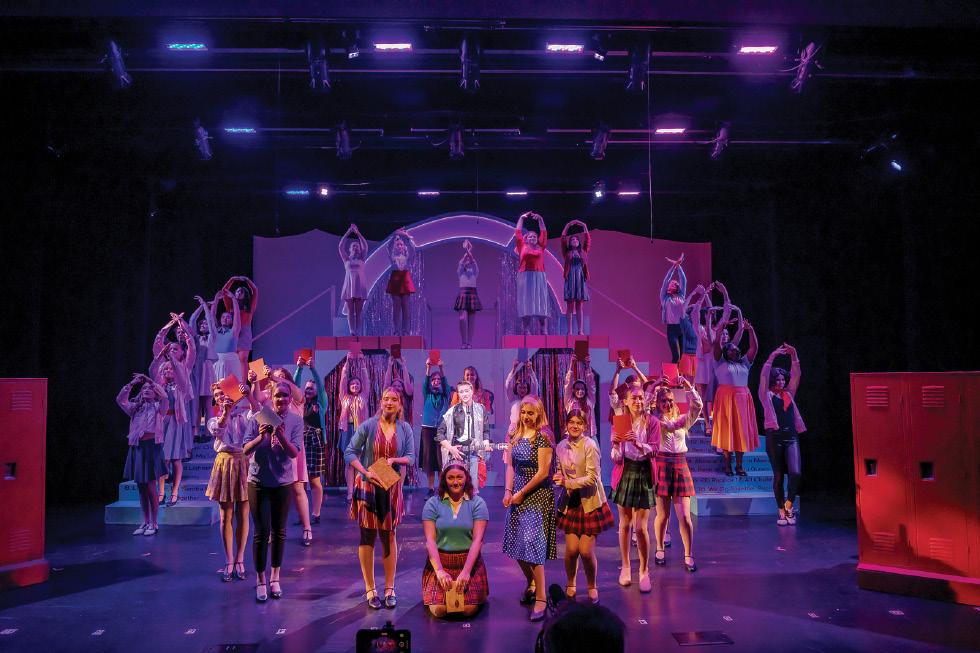
The Cincinnati Pops 2026-27 season continues the orchestra’s celebration of American music with a broadened palette of styles, artists and experiences.
Under dynamo music director John Morris Russell, known as JMR, the Pops welcomes and amplifies American music from its roots in Black and Appalachian traditions to hip-hop, jazz and salsa, and of course, the big screen.
JMR has been a tireless advocate for breaking down barriers in old-school Pops programming, working with underserved communities to ensure their voices are heard and seen. Next year’s schedule includes internationally acclaimed artists and rising regional talent in concert experiences that promise to engage the eyes and the ears.
‘“The Pops has always been about great American music, brought to life in super creative and engaging ways,’ JMR wrote to CityBeat. “From Broadway to Hollywood, bluegrass to hip-hop, the Pops plays it all.”
The Pops kicks off its season on Sept. 5 with a 10th anniversary celebration of the film “La La Land” with a screening and live accompaniment by the Pops orchestra and a jazz band led by principal guest conductor Damon Gupton — who also appears in the movie!
Film experiences include “Psycho” with Sarah Hicks leading Bernard Hermann’s unforgettable screeching violins for the ultimate Halloween experience on Oct. 27. Nov. 27 and 28 offer Disney’s “The Muppets Christmas Carol” with Pops assistant conductor Dupo Shen, and to bring in the new year, Stephen Spielberg’s “Hook” features a John Williams score, led by Pops assistant conductor Alex Amsel.
Tony-award winning artist Lea Salonga takes the stage Sept. 12 and 13 for an evening of Broadway and film songs with the Pops orchestra led by JMR. Before singing the roles of Jasmine in Disney’s “Aladdin” and “Mulan”, Salonga starred in the Broadway hits “Miss Saigon” and “Les Misérables”.
Two weeks later, the Pops offer a feast for the ears and the eyes with “Orchestral Canvas,” a multimedia concert pairing orchestral classics with famous artworks choreographed by Cincinnati’s acclaimed production company Lightborne. The program includes Gershwin’s “An American in Paris” and Respighi’s “Pines of Rome”.
JMR says Canvas “is an immersive experience with a dazzling mélange of popular works of art and brilliant orchestral showpieces.”
“It has been a real joy working with the Lightborne team to create something unique that you can’t experience anywhere else,” he continues. “But that’s like most everything we do at the Pops.”
Holiday tradition continues with the Pops Christmas concerts December 11 to 13, featuring Grammy winner Gaby Morena, the Pops Holiday Chorale.
The Pops continues to explore daring synchronisms between European classical forms and today’s most celebrated Black artists. Next season brings the return of Steve Hackman with his latest symphony fusion “Stravinsky X Kendrick Lamar,” meshing Stravinsky’s score for the ballet Petrushka with tracks from Lamar’s Pulitzer Prize-winning album “DAMN”.
Hackman’s website states that each work offers “a challenging commentary on the human soul…as Petrushka and Kung-Fu Kenny struggle with their identities and realities.”
Kendrick Lamar does not appear, but the production will feature vocal soloists and instrumentalists.
In March, Pops Principal Guest Conductor Damon Gupton returns to lead an evening of Billy Joel hits featuring singer, pianist and composer Tony DeSare.
The Pops season concludes in April with celebrations of America’s pastime and two of America’s musical foundations. Leading off on April 3 is “Play Ball!,” a concert that promises a musical journey from warm-ups to the ninth-inning finale.
On April 17, the annual Classical Roots concert presents one of the most eagerly anticipated events on the Pops calendar. Next year marks Classical Roots’ 26th anniversary, highlighting African American music’s many influences and contributions to every aspect of American music.
JMR will be on the podium, joined by resident conductor Jason Alexander Holmes, members of the CSO’s Nouveau Program for young musicians of color and the rousing Classical Root Community Choir. The joyful energy is sure to raise the roof.
The season concludes April 30 to May 2 with the next installment of “American Originals”, the Pops’ tribute to American Roots music. Bluegrass takes center stage with leading artists who will more than likely raise the roof again. Dynamic fiddler Michael Cleveland and his Grammy-award winning band Flamekeeper are joined by Sister Sadie, 2020 International Bluegrass Music Awards Entertainer of the Year.
“Each season at The Pops we endeavor to capture the essence of America’s dizzyingly diverse and intensely imaginative popular music scene, to create orchestral programs that inspire,” says JMR. “We can’t wait to share these programs with all of Cincinnati.”

Abeloved Findlay Market vendor is trying something new.
Dean’s Mediterranean Imports, a purveyor of goods and imports from all over the Middle East, has opened a full-service restaurant in Northside on March 10. The news comes as Dean’s celebrates 40 years of business at its current Findlay Market location in Over-the-Rhine; Lebanese immigrant Dean Zaidan opened the shop just below his apartment in 1986.
The new restaurant, titled Dean’s Mediterranean Table, will serve Middle Eastern staples — falafel, baba ghanouj and chicken shawarma — crafted from Zaidan family recipes, and each dish will use the same ingredients people have enjoyed from Dean’s for the past four decades.
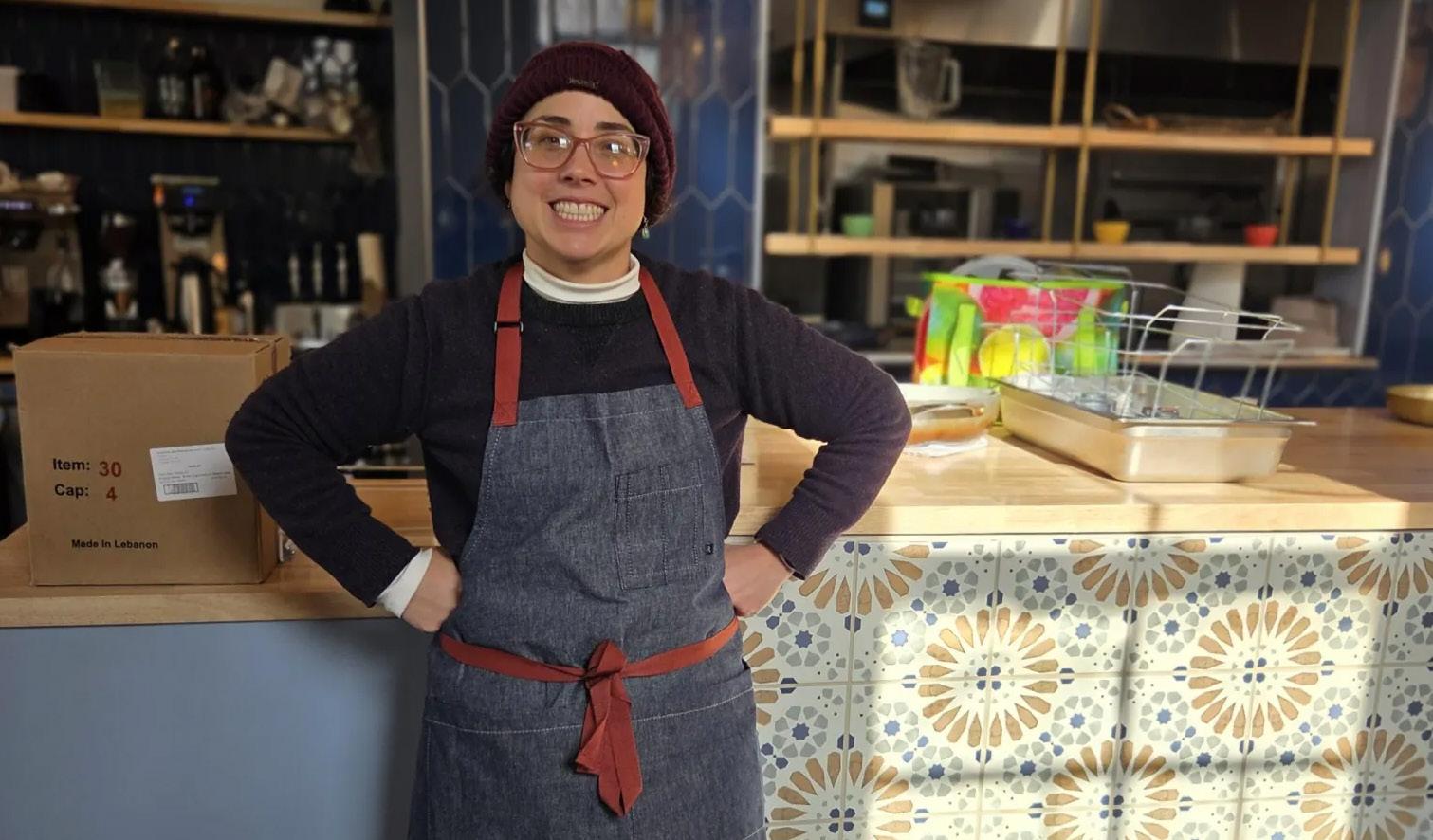
For owner Kate Zaidan, who took over the shop from her father almost a decade ago, the current store doesn’t have the capacity to do everything she wants to pursue.
“(Dean’s) is home for me. I grew up in the store. But there are things that I want to do with our ingredients that I felt like we don’t have the space for,” she said. “I had a kid then went on maternity leave and said ‘You know what, if the store doesn’t collapse while I’m gone, I’m going to open a new business.’”
She started seriously pursuing the idea in 2021, then found the future home of the Northside restaurant on the corner of Hamilton Avenue and Cosby Street. Five years of construction later, Dean’s Mediterranean Table is finally open for business.
It’s a big move for the store that essentially put Middle Eastern food on the map for Cincinnati. When the shop opened at Findlay Market 40 years ago, culinary delights we take for granted now — like pita bread, hummus and tabbouleh — were scarcely found anywhere in the Queen City area.
Dean Zaidan grew up in Lebanon and comes from a family of coffee and nut roasters. He met his wife, Cheryl, shortly after he emigrated
BY KANE MITTEN
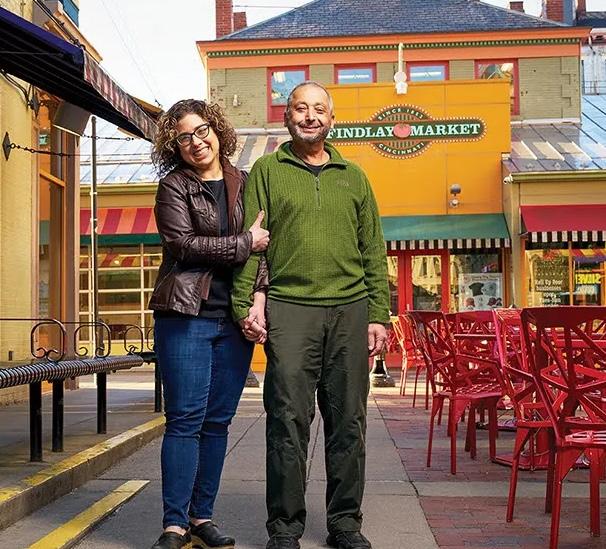
“My mom brought him down to Findlay Market to buy some goetta, and he fell in love with the place,” Kate said. “That style of shopping, where you get to know your purveyors and interact with people, felt really familiar to him. The community-focused style of shopping really drew him to opening at the market.”
But back then, Findlay Market was only open Wednesdays and Saturdays. Zaidan needed a full-time job, so he looked to his ancestors and opened Dean’s as a place to buy roasted nuts. Over time, it grew to become the one-stop shop for any Middle Eastern ingredients in the Cincinnati area.
When Kate signed on to run the store, it became even more popular thanks to the ad-
dition of its lunch menu. Well-known for its pita wraps, flatbreads and falafel, over half of business at Dean’s is now its hungry customers pursuing a cheap and delicious lunch option.
The restaurant version of Dean’s will still have all those items, but will also feature an expanded menu with several different appetizers and entrees, often with a mezze (small plate) styling.
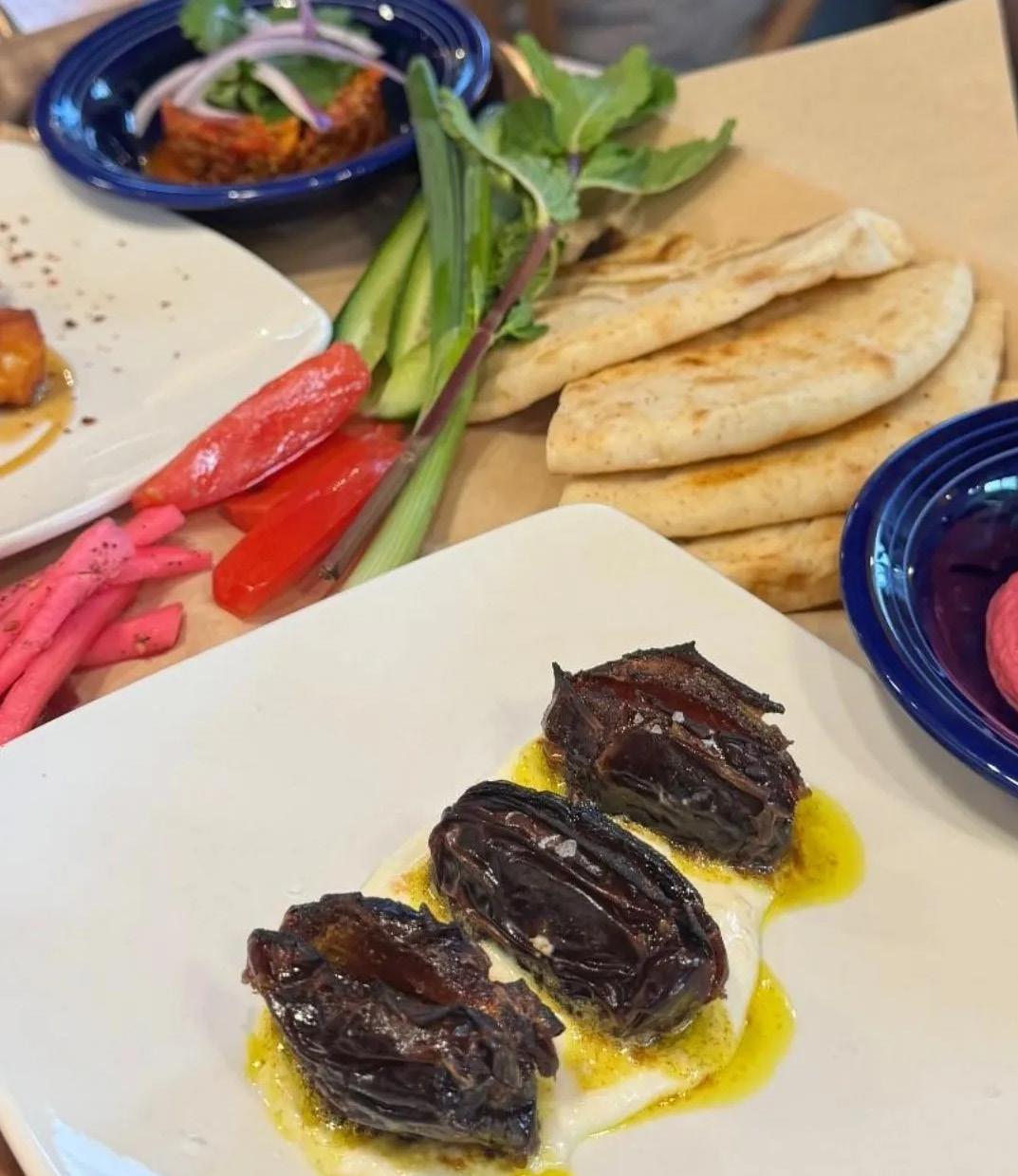
Take, for example, the grilled dates, which are prepared with hawaij butter — a Yemeni spice blend of cumin, turmeric and cinnamon — and served on a pillow of orange-scented ricotta. Or the halloumi, a Cypriot cheese that’s fried in aleppo, drizzled with hot honey and topped with smoky, sun-dried pepper.
There’s also plenty of larger platters, several of which are under $15, all sporting various meats
and vegetables over top of the Zaidans’ recipe for Lebanese rice — a mix of sauteed vermicelli noodles, basmati rice, lemons and plenty of olive oil, which has become such a staple at their family gatherings that “at every big celebration, no meal with my family is complete without it.”
In addition, the restaurant will have a robust menu of Turkish and Yemeni coffee, and several classes and events will be hosted to showcase all the flavors of the Middle East.
“I am at my best and happiest when I’m interacting with customers and sharing recipes … it’s my absolute favorite part of the job,” she said. “We actually soft-launched a series of classes in December. I did a class on the Mediterranean diet, we had classes on Moroccan food. They were already a huge hit.”
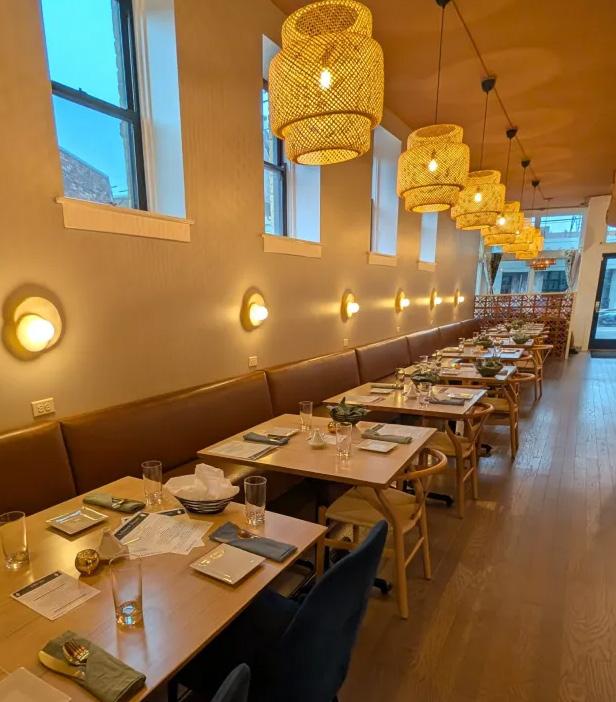
The new Dean’s will be open for breakfast, lunch and dinner. It will have a limited number of seats — just 25 spots indoors and 25 outdoors, which fits into Kate’s goal to have the restaurant produce high-quality food that still feels like home cooking.
“I’ve got the advantage of having a global pantry stocked with 40 years of experience of highend specialty retail from around the world,” she said. “I’ve always said our store carries the best products in the world. Now we get to cook with the best products in the world.”
For Kate, who’s not only carrying on her family’s legacy but expanding upon it, opening the new restaurant is fulfilling “a craving to put my own spin on things.”
“It feels really great to know that this immigrant story with my dad coming here and making a go at starting a business is going to continue, and it will for years to come,” she said. “To leave an imprint on the culinary scene in Cincinnati … that feels like I’m doing what I set out to do in the very beginning.”
Tentative hours are 8 a.m. to 8 p.m. every day, subject to change.
BY KANE MITTEN
When award-winning Mediterranean restaurant The Aperture closed its doors in Walnut Hills at the end of last year — and then reopened as a lunch-only barbecue spot in March — foodies across the Queen City were surprised.
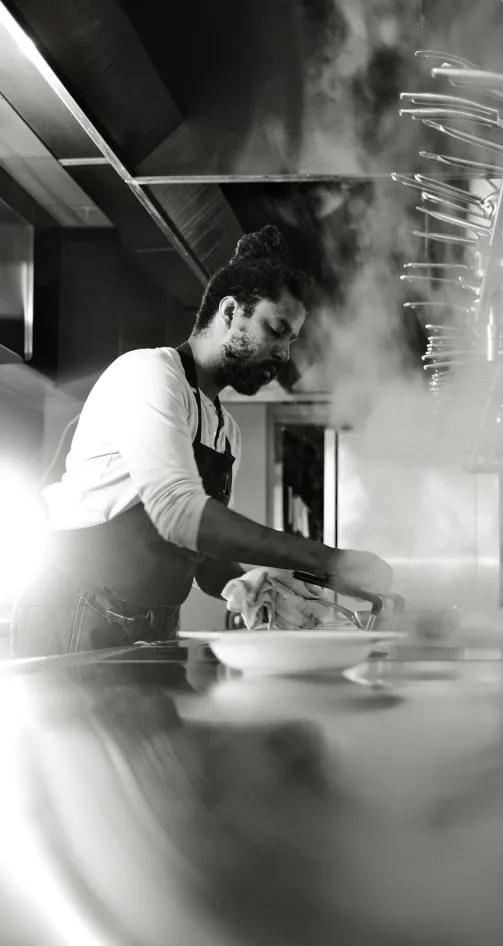
“I grew up in a family where we did backyard barbecues, whether it’s in Cleveland, or down here in Cincinnati, or traveling to Texas,” Anthony-Brown said. “In the wake of The Aperture closing, I’ve been going back to what led me into cooking in the first place. And for me, that’s watching my dad and my grandpa at six in the morning with a cup of coffee in the backyard. It’s revisiting that tradition and ritual of cooking that I think I may have gotten away from a little bit.”
The new menu at The Aperture is a meld of several different styles. Anthony-Brown will be pulling from his Midwestern roots for the barbecue, of course, but also from his trips to Texas and his collegiate experience in North Carolina.
The restaurant hasn’t forgotten its Mediterranean roots, either. For example, its collard greens are made with nduja, a spicy, spread-
able Calabrian sausage, instead of the traditional pork.
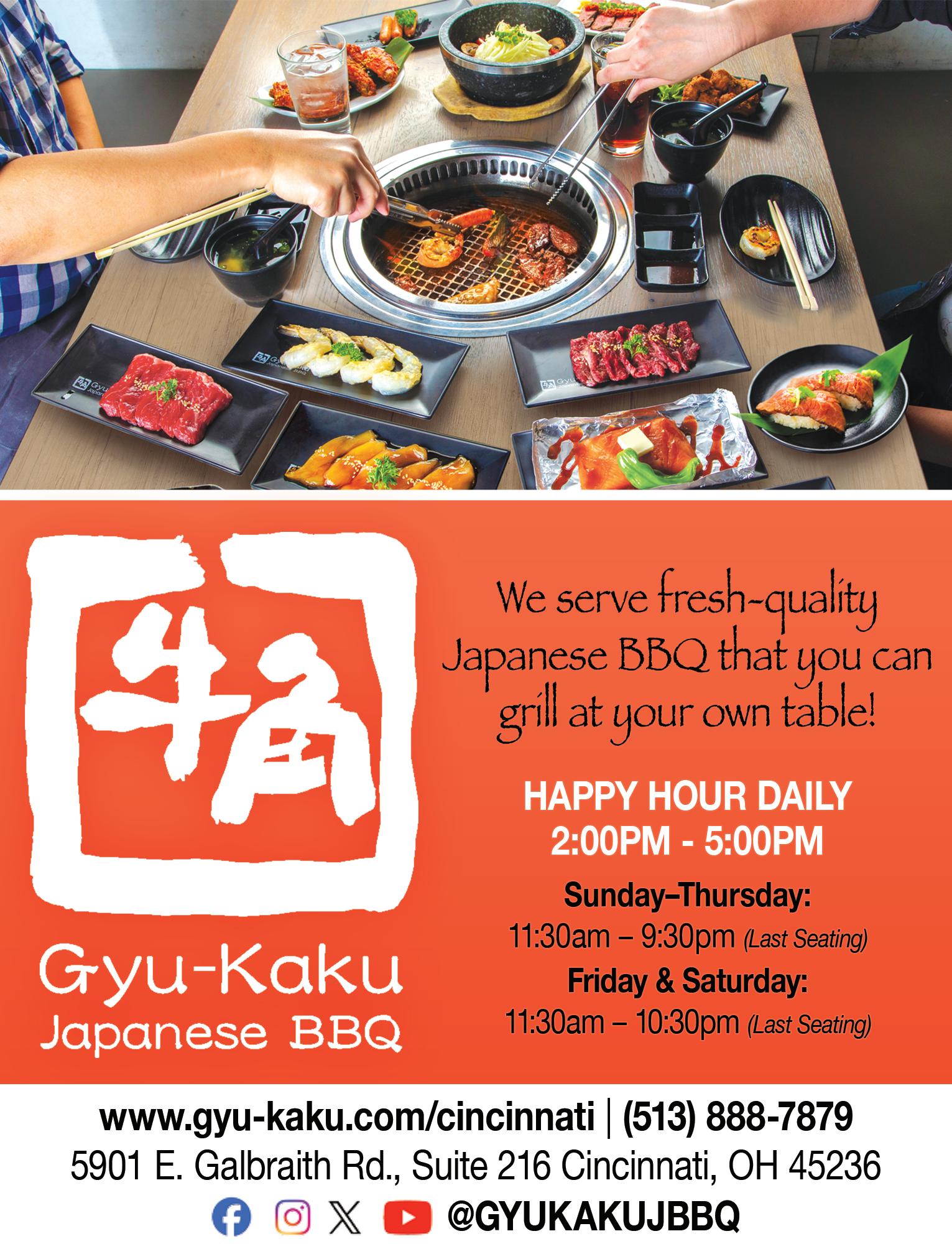
Highlights on the menu include their best-selling brisket, smoked pork ribs, lemon-pepper chicken wings, a fried chicken sandwich and its crispy pork belly, which gets braised, smoked and dropped in a fryer, making it “kinda like the nicest piece of bacon you’ve ever had,” Anthony-Brown said.
Yet every truly great barbecue spot is known for its sides (“I’ve always judged barbecue places for them,” Anthony-Brown said), and it’s no different here. The list features plenty of appetizing options like brown butter cornbread, potato salad, coleslaw, a rotating-flavor banana pudding and the aforementioned nduja collards. But the real show-stopper is its pimento cheese, which even Anthony-Brown admits he’s eaten “way too much of” since the restaurant’s reopening.
The shift to more casual fare has paid off for the restaurant so far. As Anthony-Brown tells it, a guest wandered in last week, grabbed his takeout order, and came back for seconds in less than two hours.
While lunch barbecue is only a temporary plan for the restaurant — as The Aperture’s building is also currently occupied by Basque steakhouse Etxe in the evenings — the experience lines up with their philosophy for the restaurant’s future.
“I think as we continue to lay down the framework for The Aperture 2.0, we keep coming back to the words of consistency and craveability, and barbecue is just that,” said General Manager Kyla Mains. “Guests want something they can come back and enjoy time and time again.”
Her favorite part of the experience, however, is the new lunch hours, making it feel like they’re a true part of the neighborhood since they can now actually meet the people and business owners who reside around them.
“It’s not an opportunity we’ve had in the past outside of running and grabbing a quick coffee before your 12-hour day inside of the restaurant, and you’re not leaving the restaurant once you’ve entered,” she said. “We’ve already gotten to see and talk to a lot of people within the community that have stopped by for lunch. And to me, that’s what’s most exciting is being able to really feel like we are a part of Walnut Hills in its truest sense.”
Anthony-Brown is having fun with the switch away from formal dining, but “at the end of the day, the barbecue is a bridge to a broader path,” and reflects what they want The Aperture to look like even after they “inevitably” transition back to evening dinner service.
“When Kyla says craveability, we’re looking at ‘what do you want to eat, right now?’… When you’re searching for food, you’re not looking at
a menu. You’re saying ‘I want pasta’ or ‘I want steak’ or ‘I want barbecue.’ And we’re like, okay, let’s fill that gap,” Anthony-Brown said. “We feel good about what we’re doing, but we also know we want to get back in the water that we want to figuratively swim in.”
As the restaurant closed its doors, Anthony-Brown and crew were “deeply proud of everything that happened in the first couple years here,” but had to make some “pragmatic decisions.”
“It’s a changing restaurant market, not just locally, but nationally. ‘What do people want?’ Predictability. While changing the menu as much as we did was exciting, it didn’t necessarily yield repeatable results,” Anthony-Brown said. “We just had to face some hard truths, and it’s nothing to be ashamed of, as I think every restaurant goes through it … It’s kind of us getting back to finding the balance between what the guest wants and what we want.”
For now, though, the team is happy to just have their guests wander in off the street while enjoying the quality of service The Aperture is known for.
“That’s what we want out of the next three to five months. Have the doors open, have the sign out, grab a bite, sit at the counter, maybe even put a couple tables out back. High level hospitality doesn’t always have to be white tablecloth … and you’re going to get the best hospitality from Kyla no matter if it’s got perfect plating or if it’s on a plastic tray,” Anthony-Brown said. “It’s something we want to reestablish for the neighborhood, but also selfishly for ourselves. We really just like to take care of people.”
The Aperture is now open for lunch Wednesday through Friday from 11 a.m. to 2:30 p.m. For more information, visit their website.
BY KANE MITTEN
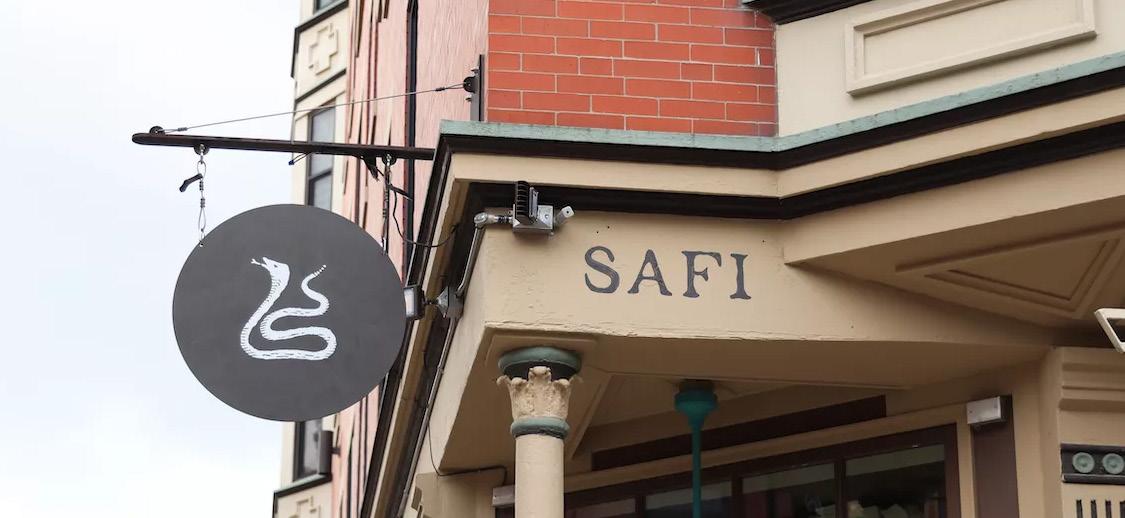
Safi, the wine bar in Over-the-Rhine owned by popular Cincinnati restaurateur Chef Jose Salazar, has reopened with some new changes. It temporarily closed after a final night of service on March 15 and reopened a week later with a new look, new hours, a new menu and a renewed focus on serving the neighborhood’s residents.
Salazar’s original intent was for the space to be a wine bar first and foremost, with Moroccan-influenced small plates available for snacking. But over time, it “morphed into more of a formal restaurant” that sometimes required reservations to get in, according to the chef.
“We’re making Safi what it was always intended to be … more of a laid-back neighborhood wine bar, more approachable, the kind of place where people can pop in before dinner, after dinner or just because,” Salazar said.
Salazar opened Safi in the 1401 Republic St. space in 2024 after running his self-named restaurant in the same space for a decade prior. In November 2025, he reopened the eponymous spot inside the former Saks Fifth Avenue building — now the headquarters of Paycor — on Fifth Street downtown.
The new Safi is shifting away from its Moroccan focus to more of a global outlook in both wine and food. For example, the much-loved burger and fries from Salazar’s shuttered OTR eatery Goose & Elder will be making an appearance on the new menu — an announcement that sent shockwaves through Cincinnati’s dining community, surprising Salazar.
“I wasn’t sure what to expect. I did have a feeling people would be excited about the burger … But people have been, like, texting and emailing and leaving comments on social media about it,” he said. “There’s a bit of nostalgia around what we did at Goose & Elder. There was definitely a cult following. We had some very, very loyal customers there, kind of like rabid fans, which I love.”
The updated menu will be more “intentional” in its focus on smaller dishes that work in a bar setting. While Safi was never intended to be a restaurant, it happened naturally over time due to the level of talent in the kitchen.
“Part of why it became a full-scale restaurant is because we have these people with enormous talents who are capable of doing all these wonderful things, and they need to have an outlet for those things,” Salazar said. “They’ll say ‘hey, I want to do this,’ and it’s hard to hold people back from doing those things. And so you say yes. And then next thing you know, you got a full-scale restaurant again.”
Safi is also transforming its wine program. Wine from all regions, not just the Mediterranean, will be on-hand — with many of the bottles available for to-go purchase. The bar will also be open later, as Safi will now close at 11 p.m. most nights.
In addition, Salazar plans to open the space
If you were subjected to physical arrest during the curfew or protests in the City of Cincinnati from May 29 through June 8, 2020, were charged with a misdemeanor(s), and had those charges dismissed,
You Could Get a Cash Payment From a Settlement.
There is a proposed settlement in a class action lawsuit against the City of Cincinnati and Hamilton County regarding the injuries that protestors and others suffered when arrested during the curfew or protests in the City of Cincinnati from May 29 through June 8, 2020. The litigation is known as Kenney, et al. v. City of Cincinnati, Case No. 1:22-cv-295, in the United States District Court for the Southern District of Ohio Western Division.
WHO IS INCLUDED IN THE PROPOSED SETTLEMENT?
Claim Packages were mailed to Settlement Class Members on February 5, 2026. If you received a Claims Package, you were determined to be a member of the Settlement Class in this lawsuit. If you believe you should have received a Claims Package, please contact the Settlement Administrator at 1-800-598-3016 or info@cincinnatiprotestsettlement.com.
WHAT DOES THIS PROPOSED SETTLEMENT PROVIDE?
The Settlement Amount of $8,143,000 shall be allocated as follows: a) A Class Fund of $5,029,500 will be distributed to all Settlement Class Members. The Class Fund will be paid out in equal parts to every person in the Class listed. b) A Conditions of Confinement Subclass Fund in the total amount of $600,000 shall be distributed to members of the Settlement Class who timely submit Declarations in Support of Inclusion in Conditions of Confinement Subclass. The maximum award for each member who timely submits a Declaration will be $2,000, or, if more than 300 members of the Settlement Class timely submit Declarations, the total Conditions of Confinement Subclass Fund amount of $600,000 shall be divided evenly among all such members, resulting in a pro rata distribution. c) A Secondary Claim Fund of $300,000 will be distributed to Settlement Class Members who, in addition to being arrested, show they endured certain type of Uncompensated Injuries, to be adjudicated based on the evidence they submit. d) A Class Representative Award Fund of $55,000. e) An Attorney Fees, Cost, and Expenses Fund of $2,035,750 plus approximately $5,000 in costs will be distributed to Class Counsel to compensate the attorney fees and costs. f) A Reserve Fund of $52,750 and an Administrative Expense Payment of $65,000 will be used to pay the expenses associated with distributing

and managing this money. These amounts are estimates and may increase or decrease based on actual expenses of administration, and on the actual number of class members who are determined to be eligible for payment.
HOW CAN I GET A CASH PAYMENT?
If you were determined to be a member of the Settlement Class, you are automatically eligible for compensation for your arrest. You are not required to do anything more. However, if you also fit into either one or both of the following categories, you may make an additional claim for more compensation.
You can also submit a Declaration in Support of Inclusion in the Conditions of Confinement Subclass by attesting that you were detained for more than five (5) hours in association with your arrest, AND/OR a Secondary Claim for Uncompensated Injuries, by showing evidence that you endured certain special injuries in addition to your arrest or arrest and confinement.
The deadline for submitting a Declaration of Inclusion in the Conditions of Confinement Subclass AND/OR a Secondary Claim is June 5, 2026, which can be completed online at www.cincinnatiprotestsettlement.com.
WHAT ARE YOUR OPTIONS?
Even if they do nothing, Class members will be bound by the


























BY NOAH JONES
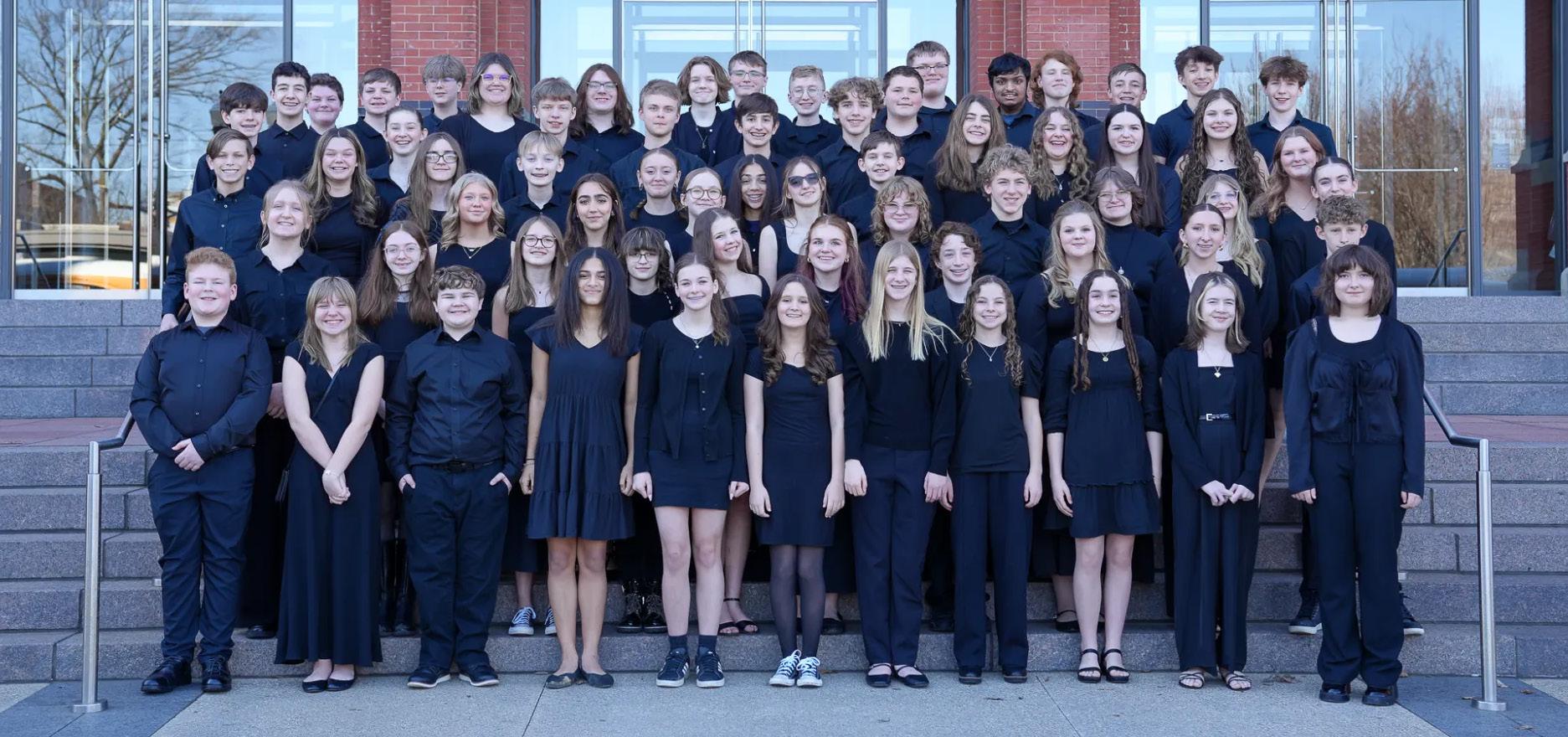
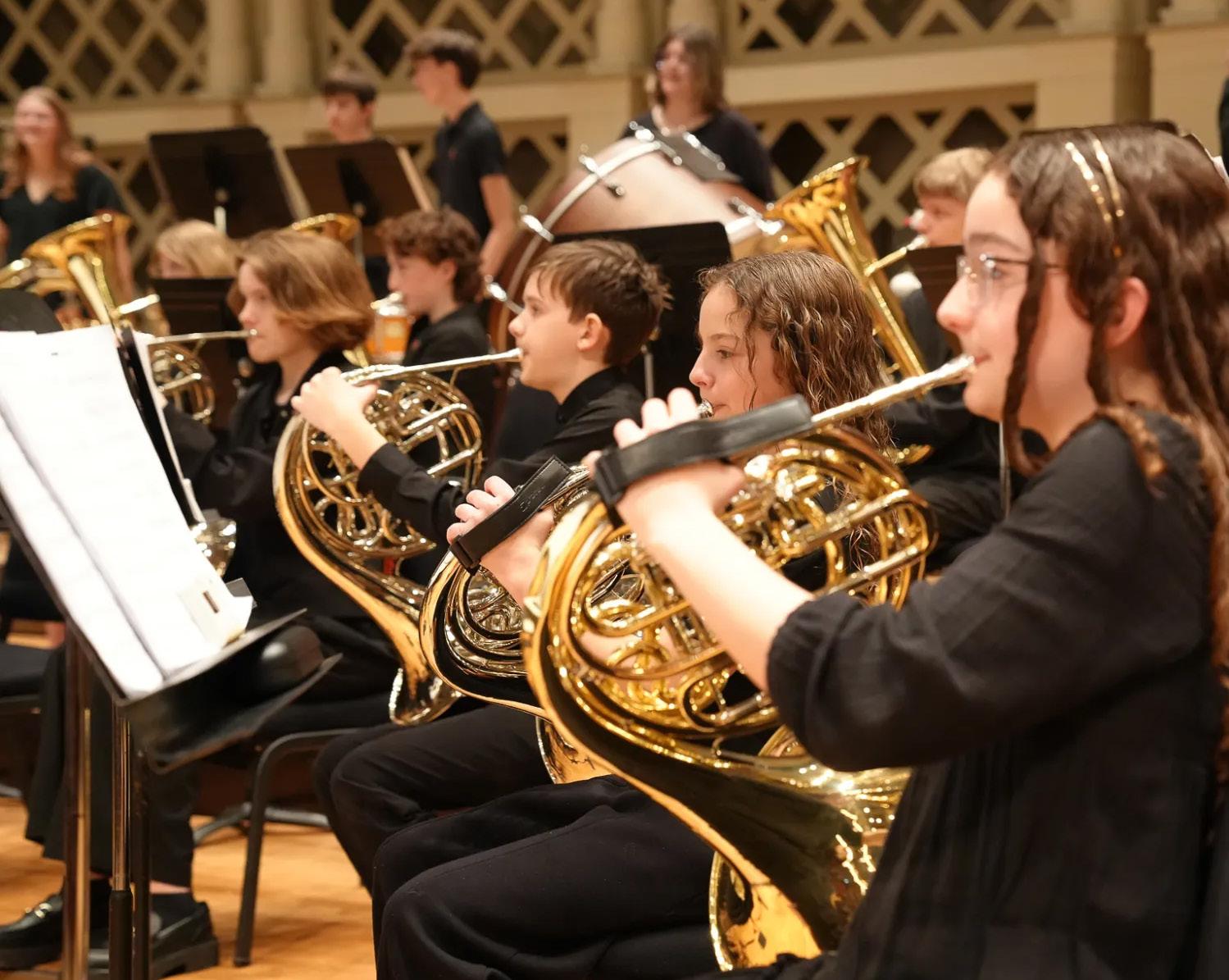
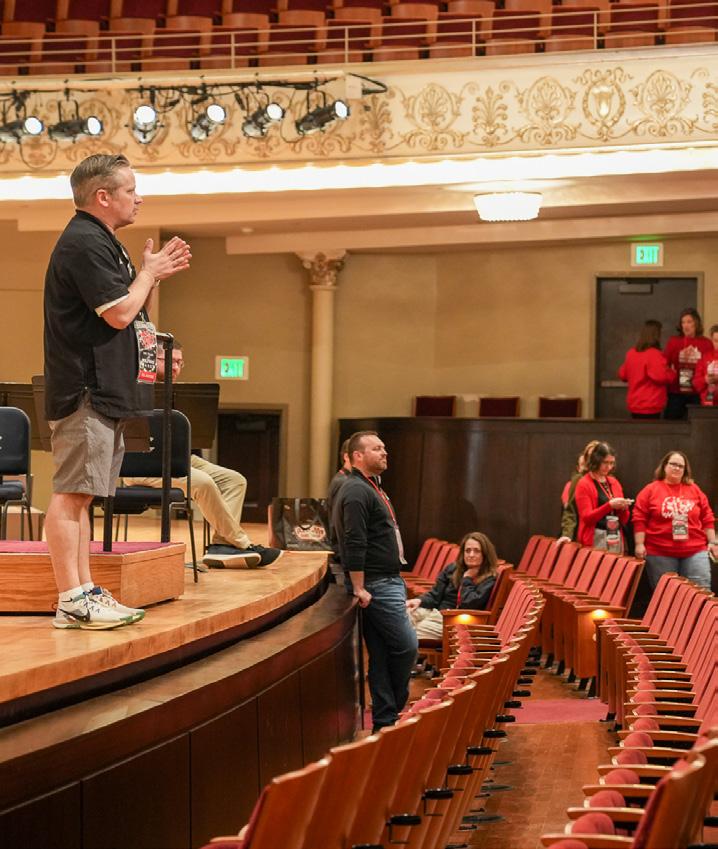
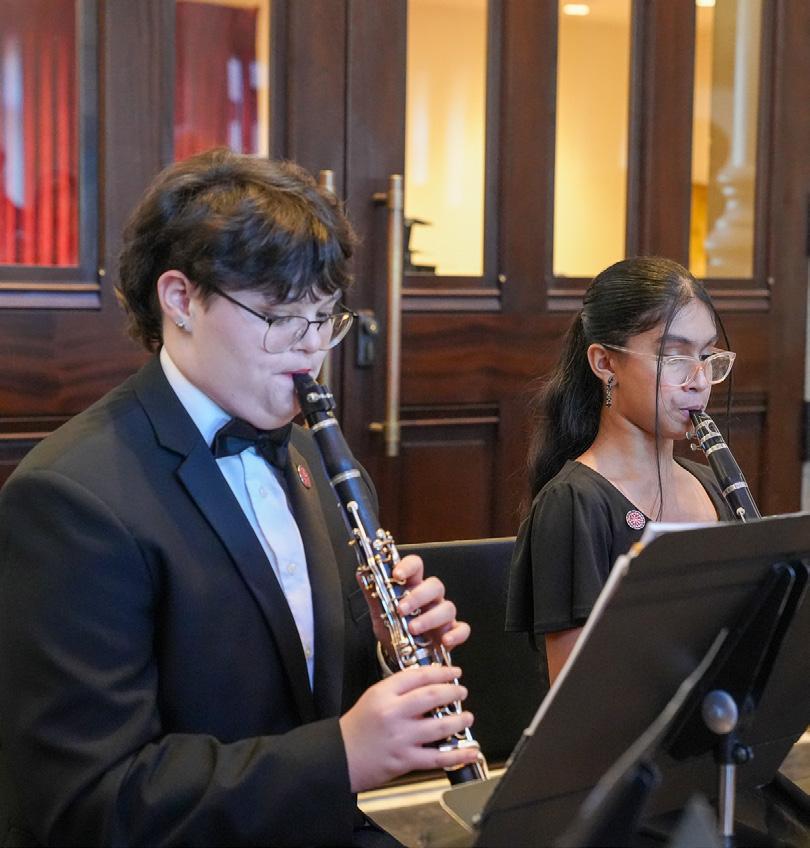
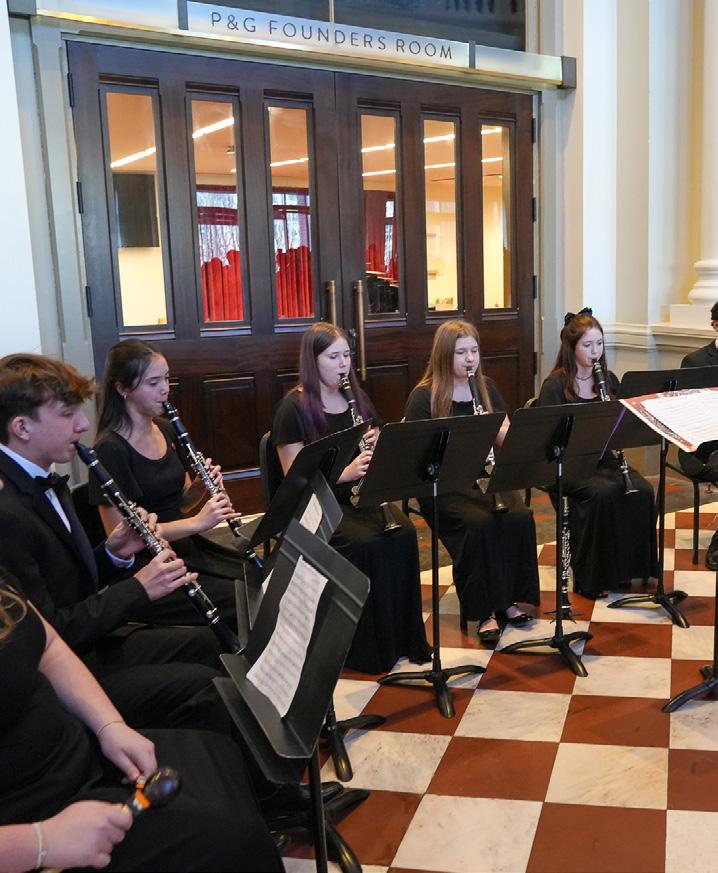
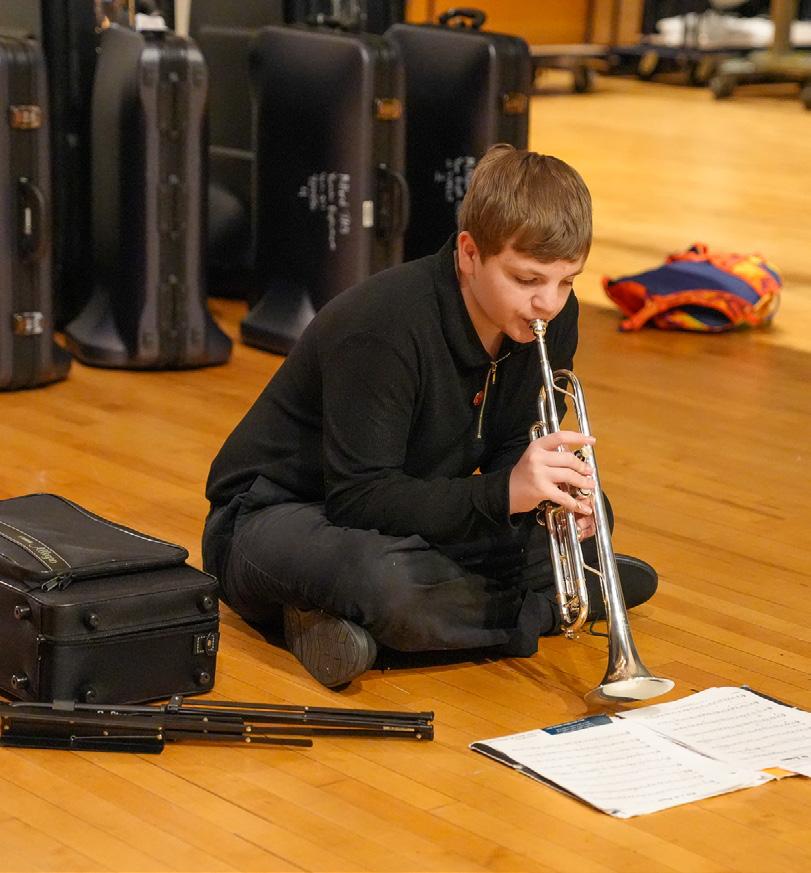
An event a century in the making brought Milford student musicians to Cincinnati Music Hall.
The Milford Exempted Village Schools band program celebrated its 100th anniversary with a special performance at Cincinnati Music Hall on March 8. This marked a milestone for one of the district’s longest continuously running programs.
Milford’s band program began during the 1924–25 school year, when music instruction first began taking shape in the district. Over the past century, the program has grown into one of the district’s most enduring and celebrated traditions.
“We are celebrating 100 years of our Milford band program,” said Josh Kauffman, Milford Schools director of fine arts. “Music Hall is such an iconic part of Cincinnati’s history, and even though Milford is in the suburbs, it’s still very much part of this community. Celebrating there brings the city’s musical legacy together with ours.”
Opened in 1878, Cincinnati Music Hall is one of the city’s most iconic cultural landmarks and has hosted generations of world-class musicians, including the Cincinnati Symphony Orchestra and Cincinnati Pops.
For Milford’s student performers, the opportunity to take the stage was both rare and memorable.
“I’ve never been there before, but seeing what it looks like, it almost feels like a movie scene,” said Fernando Llerena, a Milford High School
senior saxophonist. “Being able to perform there and connect with the community beyond Milford is an incredible opportunity.”
Llerena plans to continue music after graduation this year. He hopes to pursue a degree in saxophone performance at the University of Cincinnati or The Ohio State University, with the performance at Music Hall serving as a memorable milestone as he prepares for the next step in his musical journey.
“We’re really fortunate that Milford has great facilities for our students to rehearse and perform,” Kauffman said. “But acoustically, the best place for our band to perform on campus is our high school gymnasium, which can be challenging for music. This gave our students a once-in-a-hundred-year opportunity to perform on a world-class stage in a hall built for music.”
Kauffman first began exploring the idea for the centennial concert nearly a year ago after realizing the milestone was approaching. With support from the Cincinnati Arts Association, along with the Milford Schools Foundation and Milford Band Boosters, the plan gradually came together.
To honor both the history of Music Hall and the legacy of Milford Schools, the concert program reflected a blend of tradition and innovation. Directors selected a mix of classical and contemporary works, including “Convergences” by Robert Sheldon, a recently premiered piece and a band transcription of Bach’s “Arioso” as a tribute to the orchestral music that has filled Music Hall for generations.
The program also included “Rocket Ship” by composer Kevin Day, a modern work that highlights another defining part of Milford’s musical tradition.
“It’s a fairly new piece, but it features a marching snare drum. I wanted to include something that honors our legacy as a strong marching program and gives people that feeling of being on the field during a halftime show,” said Tim Dailey, director of bands at Milford High School.
For Kauffman, the opportunity to perform at Music Hall is about more than just a concert. It is about creating a lasting memory for the students.
“I hope someday when they’re bringing their families to see the symphony or ‘The Nutcracker’ here, they can lean over and say, ‘I performed on that stage too,’” Kauffman said. “That’s the kind of core memory we hope they take away from this experience.”