So why are its spaces disappearing? Hear from the people trying to prevent it




Y O U R N E X T H O M E I S

Discover over 180 move-in ready homes across Greater Cincinnati today!



So why are its spaces disappearing? Hear from the people trying to prevent it
Y O U R N E X T H O M E I S
Discover over 180 move-in ready homes across Greater Cincinnati today!
By Kane Mitten
Cincinnati has always been at the forefront of the push for gay rights, thanks to several legal incidents and tragedies across the last few decades: the infamous Mapplethorpe obscenity trial, the death of Kings Mills teenager Leelah Alcorn that became a rallying cry for trans rights across the globe, and local hero Jim Obergefell’s Supreme Court case that legalized gay marriage in the U.S., just to name a few.
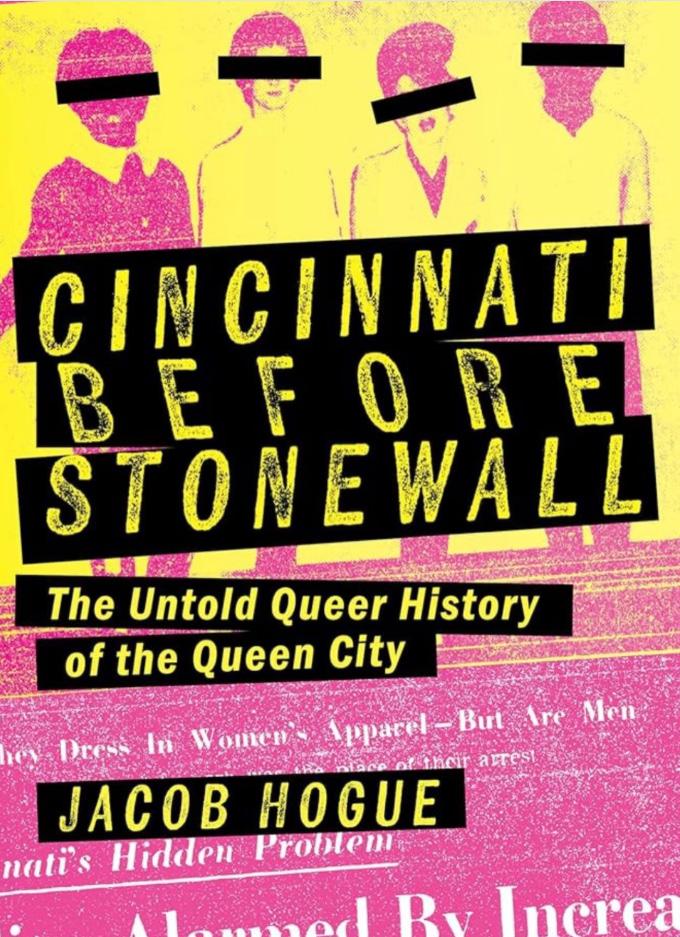
But Cincinnati has actually been one of America’s gayest cities since its inception, according to local historian Jacob Hogue’s new book “Cincinnati Before Stonewall.” In the book, Hogue challenges the prevalent idea that homosexuality is a modern invention by examining the city’s queer history from 1820 all the way up to the Stonewall Riots in 1969.
Hogue, who has a master’s degree in history from Northern Kentucky University and currently works in the Kenton County Library’s department of history and genealogy, began working on the book as part of his dissertation. Throughout, he details everything from queer Cincinnatians fighting for the Union in the Civil War to the country’s first famous “male impersonator” (what we’d now consider a transgender man) choosing the Queen City as his permanent home.
“If today’s LGBTQ+ movement is represented by the rainbow, then my book represents the storm that preceded it,” Hogue said. “We have plenty of queer activism today, but there’s a prelude to that, and that’s surviving. It’s a testament to the struggles and resilience of the queer individuals who paved the way before us that we can tell their stories today.”
Indeed, Hogue’s book is full of tragic violence and death. While there are several happy endings for the people mentioned in the book, there’s plenty of sorrowful moments too.
“If you’re going into this book expecting there to be a bunch of gay people draped in a rainbow flag skipping off into the sunset, this isn’t the book for you. This book is an
early exploration of queer people and, sadly, of queer discrimination,” Hogue said. “But it’s also an examination of tons of queer individuals from centuries ago or how Cincinnati was at the forefront of ideas like drag performers and intersex identities, for example.”
The first chapter of Hogue’s book details Julius Dexter, a Harvard-educated lawyer and philanthropist who fought as part of the 106th Ohio Volunteer Infantry in the Civil War before coming back to Cincinnati and constructing some of our most famous buildings and attractions, like the Cincinnati Zoo and Music Hall. (“When you see a building as beautiful as Music Hall, you just know a gay person had something to do with it,” Hogue jokes.)
Dexter wasn’t the only gay soldier in the 106th regiment, as detailed in the book, but he was probably the most famous. In the mid-1860s, another Harvard graduate named Eugene Bliss moved into the Dexter family mansion. He never left. Correspondences among their friends referred to the two as “Mr. and Mrs. Dexter,” Bliss frequently referred to Dexter in writing as “Jules,” and Rookwood Pottery founder Maria Longworth Storer acknowledged the couple in her own letters before hosting queer icon Oscar Wilde when he visited the city in 1882.
Another chapter in the book, cheekily titled “Be Gay, Do Crime,” opens by revealing how men and women choosing to live as the opposite gender had become so prevalent in late 1800s Cincinnati that a local newspaper deemed it “an epidemic.”
Further on, Hogue details how Frank Goldsberry — a master thief born with female genitalia — evaded conviction for his crimes thanks to quick wits, dozens of aliases and costume-changing genderbending exploits on the run.
“I knew trans people had always existed, but I didn’t expect to find this many in Cincinnati. But Goldsberry… he’s fascinating because he was the biggest criminal around,” Hogue said. “There were wanted posters up of him in every Midwestern state. And he dressed as a man and openly dated women while committing all these thefts and robberies.”
The Cincinnati Enquirer romanticized
Goldsberry’s exploits at the time and turned him into a local legend, writing that the thief was known for chewing tobacco, drinking bad whiskey and having “quite a romantic history” thanks to his many “admirers among the fair sex.”
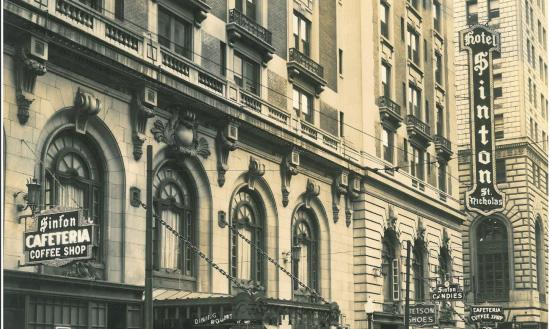
Several other chapters go into detail on popular watering holes for Cincinnati’s queer community, like the Gibson Hotel or the Sinton Hotel. (“Even back then, gays loved a hotel bar,” Hogue said.) Yet another chapter describes how the West End became a safe haven for Black, queer individuals from the late 1800s all the way up until the 1960s.
Hogue took particular care to point out his favorite person he researched for the book: Mary Ann Jefferson, a Black trans woman who lived near what is now Smale Riverfront Park and was wellknown for her violent clashes with police. A Cincinnati Enquirer reporter set out to the poor neighborhood known as “Rat Row” to detail Jefferson’s life in 1889, where he made the “shocking discovery” while Jefferson was near the end of her life in a city hospital that she was not born a woman.
“And with her dying breath, she’s resisting the authority telling her she’s something she’s not, saying ‘I am a woman. I am a wife.’ Even in her last moments, she’s standing up for herself.
That, to me, is activism,” Hogue said. “And now we have Cincinnati Pride just steps from where she lived.”
As Hogue grew up, he didn’t have many queer role models, and was taught that being gay was a “modern invention.” His goal with the book is two-fold: to establish that queer people have always been around — ”You’re gonna tell me being gay or trans started in the 1960s when I’ve found hundreds of examples from a century before?” he said — and to humanize people of historical record who were made out to be “villains” or “freaks.”
“People will comment on my posts and say, ‘Oh, it’s history of people having sex with each other,’ and I find that so reductive. Being gay or transgender has nothing to do with sex, and never has,” he said. “Back then, these people were treated like monsters, when they were actually just regular people like us. And I’m trying to write them back into Cincinnati’s historical narrative.”
Sometimes, he imagines what the subjects of his book could say if they knew they were now being labeled as “pioneers.”
“Back then, there was no vernacular or vocabulary to describe these people. There were no ways for them to even understand themselves. I cannot imagine how difficult that must have been. Yet they still persisted,” he said. “It makes me happy to know that these people who lived their lives on the margins of society can now be recognized. They weren’t trying to be famous. All they were doing was being themselves.”
In the end, though, Hogue hopes “future historians” will continue his work.
“That’s why I put all these dates and addresses and references in there. Honestly, I probably put in more than I should have. I want people to research it themselves. I want them to go find more,” he said. “Hopefully it’s a call to arms, you know? If this guy can write a book about this, maybe I can do it too.”
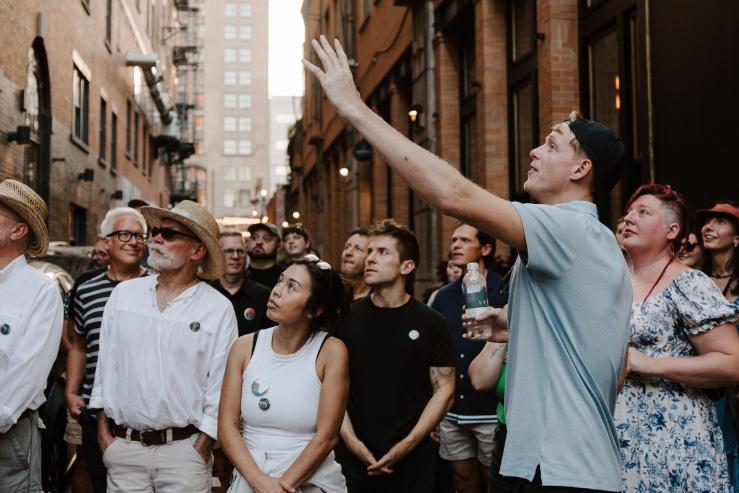
“Cincinnati Before Stonewall” is available for sale now both online and instores around the Cincinnati area. Hogue will host several book signings around the city during June, and also regularly hosts guided walking tours showcasing the locations from his book.
— and now, a
By Nadya Ellernorst
I’ve never really gotten a good look at Crosley Tower — neither exterior, nor interior. Upon the start of its demolition, my FOMO had me mourning. As the tear down progresses, however, I apparently need not fret.
In April, “The Crosley Tower Horror” was released on Steam for a very reasonable $1.99. I’m by no means a gamer, but I am an enthusiast for all things Cincinnati niche. So I opted to give it a try.
In this “urban exploration horror puzzle,” you’re a trespasser in Crosley, tasked with making it to the 16th floor.
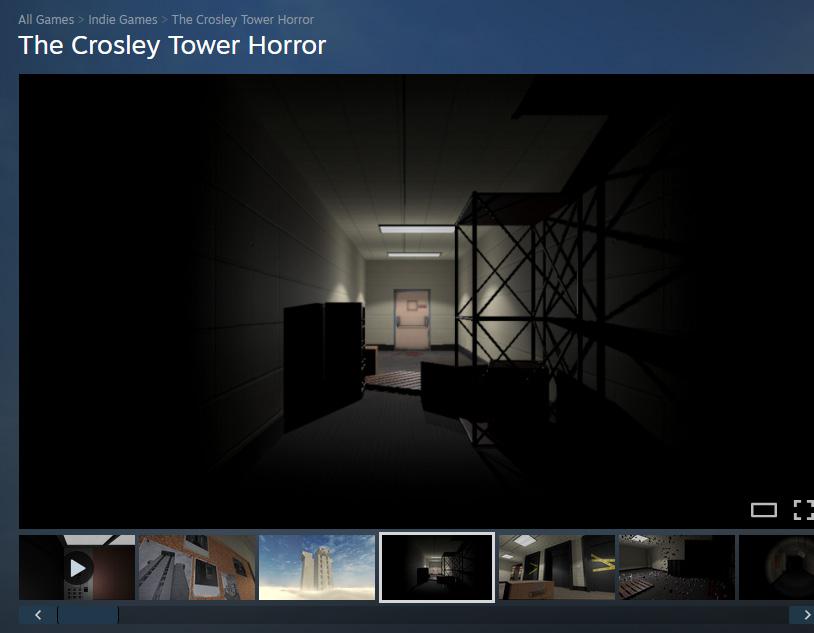
“THE
Your assignment? Retrieve the D.E.M.O.N. Sphere for a science experiment. Your nemesis? Asbestos. Lots of it, made all the worse by the fact that you have asthma. Alongside finding clues that’ll get you to the top floor, you also collect inhalers and batteries, which you use throughout the game to preserve your health and flashlight as you navigate asbestosspeckled spaces.
It’s a pleasantly creepy game. You rummage through cabinets in darkened circa 1969 labs, and piece together clues in abandoned notes. And while rumor has it that a man experiencing homelessness may inhabit the upper floors, signs point to something more sinister throughout the game; the start of the game includes a newspaper clipping referencing “many years of disappearances.”
It’s no secret that Crosley Tower enjoys its own hyper-local fandom, and a simultaneous, burning hatred that extends nationally. The Crosley Tower Appreciation Club remains one of the most popular groups on UC’s campus. Meanwhile, back in 2017, Architectural Digest put Crosley first on its list of the “7 Ugliest University Buildings in America.”
Juju Stojanovic has explored feelings like these. With both parents working at UC, the now-DAAP student grew up
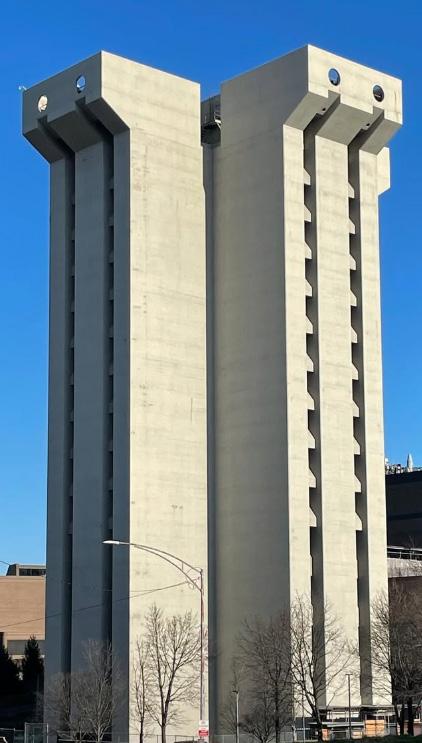
frequenting campus, where what she calls a “brutalist chunk of concrete” always stood out. Because of its form, yes, but also because of what her childhood self saw as a certain humanity.
“There were these portholes that were at the top that I think are just very personifiable as eyes,” Stojanovic said.
Today, she’s the mind behind the Crosley Display Face type design. Her research into Crosley history for the type design, and her subsequent discovery of a whole Crosley “culture,” eventually spawned her capstone project: “Ode to Crosley,” a 372-page book diving into the Crosley zeitgeist via history, photographs and other creative tributes.
Meanwhile, Louisville native Annie Thompson, a CCM graduate, didn’t grow up in the shadow of Crosley.
“I didn’t really think twice about the building, to be honest with you, at first,” she said. “My freshman year at UC was 2020, so I was barely even on campus.”
She still found herself fascinated by UC’s characteristically varied architecture as a whole. Tapping into this interest for her capstone project, she soon discovered a strong contender for a subject.
“One building stuck out a little bit from among the rest,” she said with a chuckle of her preliminary research.
She ultimately opted to pursue a Crosley-focused Capstone herself, producing a 15-minute documentary: “ Crosley Tower: A Special Hunk of Concrete.”
And in the era of its demolition, tributes have apparently become more intricate. This game, alongside Stojanovic’s projects and Thompson’s documentary, is arguably one of them.
The game design isn’t super complicated, but, as I learned from my conversations with Stojanovic and Thompson, it’s probably made by someone who knows the building interior well — they even included the exalted first-floor conversation pit.
Indeed, the 16th floor was locked off to the Crosley curious for the last few years of the building’s existence. The labs really were that outdated. Asbestos was a legitimate concern.
“The Crosley Tower Horror” is developed and published by Steam user ithinknotm8! Unfortunately, I wasn’t able to track down who this actually is, but, based on the apparent level of detail, I’d wager they’re a student or alum. Or perhaps just a major brutalist building fan with a very active imagination.
Both Stojanovic and Thompson use the same word in our conversations to describe Crosley Tower: “liminal.”
And despite neither having played the game, it’s a spot-on descriptor for it. Stojanovic recalls exploring the floors of the building (apparently this used to be a common UC pastime), and getting the sense of something lurking behind every closed door. The game — and apparently the building — might very well be
considered the Cincinnati version of “The Backrooms.”
This game may also be a reflection of the relationship between Crosley love and the digital sphere. In her conversations with alumni from previous decades, Stojanovic learned that Crosley only relatively recently became such a hot topic.
“Some of them told me that the discourse about it on campus was just not as much, and I think the internet is something that has helped to increase that,” she said.
So far, and despite the mixed opinions on the building itself, the game only has one negative review (“0-10 My dad is getting tired of checking under my bed for the Crosley tower”). From what I can tell, it’s pretty straightforward gameplay (I really have no basis for comparison, except maybe “Mario Kart”). You wander through abandoned floors, you rummage through random filing cabinets, you hold your breath — all in an eerie quiet.
For $1.99, I’ve found that it also offers a surprising amount of gametime for such a simple concept (although bear in mind that I am still new to this). Most of my attempts to beat the game have lasted 30 to 40 minutes, if not more — and there are no checkpoints or saves.
At the time of writing, the asbestos keeps besting me. I have yet to discover the potential horrors that await on the 16th floor. Yet, I can rest a little easier knowing that, through this game, and the entire Crosley subculture I’ve become acquainted with, there is one scary thing we’ll never need to fear — forever losing the memory of this Cincinnati architectural icon.










So why are its spaces disappearing?
Hear from the people trying to prevent it
By Kane Mitten
Talk to any queer individual and they’ll start listing them off. The Birdcage. Shooters. Below Zero. E19. The Flock. Good Judy’s. On Broadway. Main Event. Adonis. Simon Says. The Dock.
While Cincinnati was once something of a gay mecca — homosexual marriage was legalized in the U.S. thanks to Jim Obergefell, a Cincinnati citizen — in the past few years, the streets of the Queen City have been overrun with the structural corpses of former LGBTQ+ safe havens.
Terry Bond, who has co-owned the Crazy Fox Saloon in Covington with his husband, Carl Fox, for almost three decades, said the gradual decline of LGBTQ+ spaces is “partially because we’ve become victims of our own success.”
“Back then, gay bars were a necessity to avoid discrimination,” Bond said. “But things have gotten better for us. Generally, a gay couple can now go out together in public and be treated decently, and that’s a good thing! But that also takes away a little bit of the need for these exclusive locations.”
Fox was the original co-owner of popular queer hangout Rosie’s Tavern with
his late husband, Greg Landrum, in 1990.
The day Fox cashed out his retirement and signed the lease, Landrum was diagnosed with AIDS. He died two years later.
The first day Fox walked into Rosie’s, there were “16 dead rats and 125 rat holes in the basement,” and he never made a profit off the bar in its first seven years of business. In 1996, he met Bond, and the two eventually opened Crazy Fox together. He later sold Rosie’s to Diane Gamble, its current owner.
“At the risk of sounding silly, we’ve survived a lot,” Fox said.
Fox labeled neither Rosie’s nor Crazy Fox exclusively a “gay bar,” instead preferring to say they run an “everybody bar” that welcomes people from all walks of life. But that doesn’t mean the two aren’t involved in their local community.
“If we have less spaces, it’s because we have less ownership by people who care, and more corporate ownership who don’t give a f***, which is even worse than if you hate us,” Fox said.
It’s not for a lack of trying, of course.
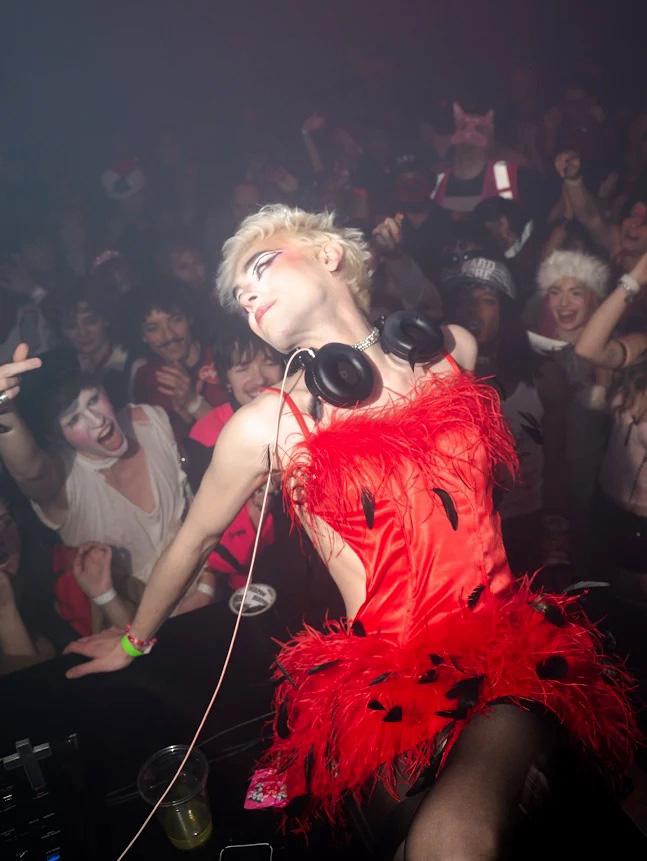
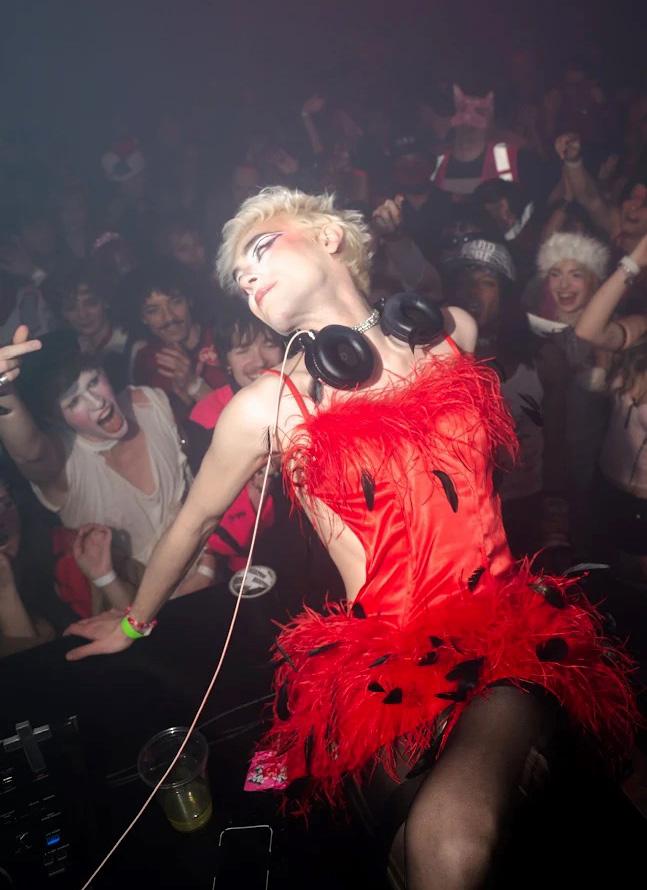
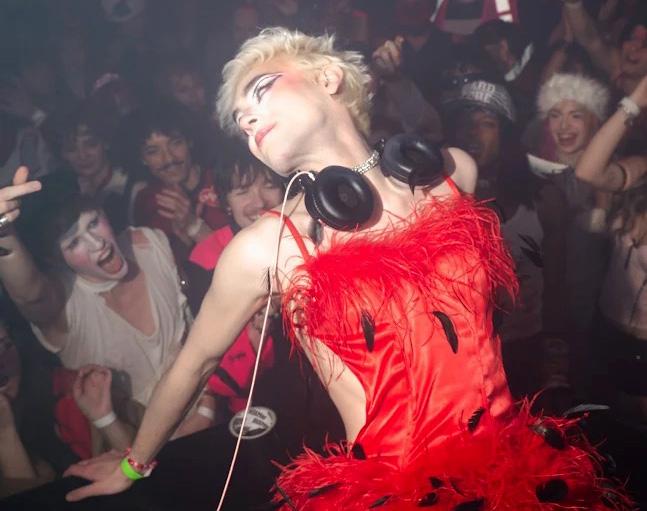
“Queer culture in Cincinnati is booming,” said local queer icon DJ Boywife. “There are people that want a reason to go out, dress up and party.”
But, he said, there just aren’t as many
places to go these days.
“You used to be able to walk around OTR and hop from gay bar to gay bar to gay bar just in one neighborhood,” Boywife said. “Now it’s like, ‘Which of the two places in the city are we going to?’”
Part of the squeeze on queer spaces is, of course, the economy and the younger generation’s hesitance to consume alcohol. A 2023 Gallup poll showed that young adults drink less than ever, and that spending on alcohol has reached 40-year lows.
“Everything’s more expensive, obviously. Drinks are pricey, and half the time, you have to buy admission just to get into where you want to go,” Boywife said. “Plus, the people who actually run these businesses care about dollar signs more than they care about serving the community. If the drag show isn’t going to make money, but line dancing is, they’re going to do line dancing.”
Tom Funke, a queer event promoter who recently purchased OTR concert venue The Mockbee, shared similar opinions, saying many of the people involved in Cincinnati’s queer community are only in it for “rainbow capitalism.”
“They’re trying to cash in on our community because no one in our
community is taking up the mantle,” he said. “Nervously, I feel a responsibility to create spaces that allow us to feel safe and allow us to define our own rules and have fun on our terms, and I guess I’m OK at producing events, and I just felt like I wasn’t seeing other people do it, so I thought I’d give it a shot.”
Previously, Funke hosted events for local institutions like museums. But he became frustrated with how much the local LGBTQ+ scene had dwindled, and even more frustrated with how queer spaces were being invaded by straight people in search of cheap drinks and a better, safer nightlife experience.
“I got into producing queer events because there just aren’t many. Even in 2015, we had way more,” he said. “The catalyst for me was during Pride one year when we were trying to get into Below Zero, and the regulars were in line all the way down to Coffee Emporium because the line was filled with straights excited to dance with the gays. A few of my friends in front of me said, ‘Tom, you produce all these events, why don’t you do something for us?’”
And so he did. These days, Funke hosts several burlesque, drag and musicfocused events targeted solely at the queer
He’s currently in the process of converting the second floor of The Mockbee into a multi-purpose queer space, with a nightclub in one area and a smaller room in another that can be used for all sorts of events like “book clubs, or listening parties, or smaller breakout events, or burlesque, or drag, or whatever. Bottom line: this is an LGBTQ+ owned space, and I’m going to make sure everybody knows that coming in.”
It’s a rarity in town these days, as many gay bars openly court bachelorette parties and the like to bolster their profits, according to local queer historian Jake Hogue.
“I think there’s an identity issue with the bars right now. The gay bars say everyone’s welcome, but if everyone comes, is it a gay bar anymore?” he said. “You say ‘yeah, come watch the drag show, bring your bachelorette parties in.’ It slowly erodes queer culture, because the space is no longer for us, it’s for making money at the expense of the gay community… If you walk into Bloom on any given Saturday, you might not even see a gay person for a minute. Last time I was there, I saw nothing but straight women, and that’s it.”
CityBeat has reached out to Bloom for a comment. The business has not responded as of this posting.
Hogue says he’s glad that society is more accepting of LGBTQ+ individuals and recognizes that exclusively queer spaces were born out of necessity, so “naturally, as we gain acceptance and visibility in mainstream culture, those places dry up. But that doesn’t mean they’re not needed.”
He’s happy that everyone is welcome in queer spaces, but added that if he’s dancing with someone at a club, he doesn’t necessarily want there to be
straight people around.
“I don’t know how you create an inclusive space that isn’t exclusive in some way, you know?” he said. “I’ve danced with a guy at Alice many times where it becomes a big deal. One time a guy even tried to fight me over it. Like, is that a safe space if you got to worry about someone fighting you? I’m not saying that straight people shouldn’t be welcome. I just think gay spaces should be incentivized for gay people.”
While Fox disagrees that there should be spaces exclusively for one group of people, he does take issue with organizations profiting from the LGBTQ+ community while offering nothing in return.
“Right now, investment groups are buying up all the existing bars and restaurants,” he said. “What’s more crucial, whether it’s strictly a gay bar or a bar for everybody, is who owns it, and how do they care for the community, since that’s what a ‘safe space’ is anyway.”
Fox and Bond said that younger LGBTQ+ individuals often look at older gay bars with rose-tinted glasses, noting that so-called “safe spaces” were often only safe if you were a white man; “there was racism, there was misogyny. A ‘safe space’ back then was a relative term,” Bond said.
But “that exploitative s*** doesn’t fly anymore” in today’s LGBTQ+ community, according to Hogue. However, the lack of proper spaces has him worried about the future.
“In the current political climate, gay and trans people everywhere are being attacked, and our rights could change on a moment’s notice. I fear a world in which things get worse, and all of our gay bars have dried up, and we have nowhere to go,” he said.
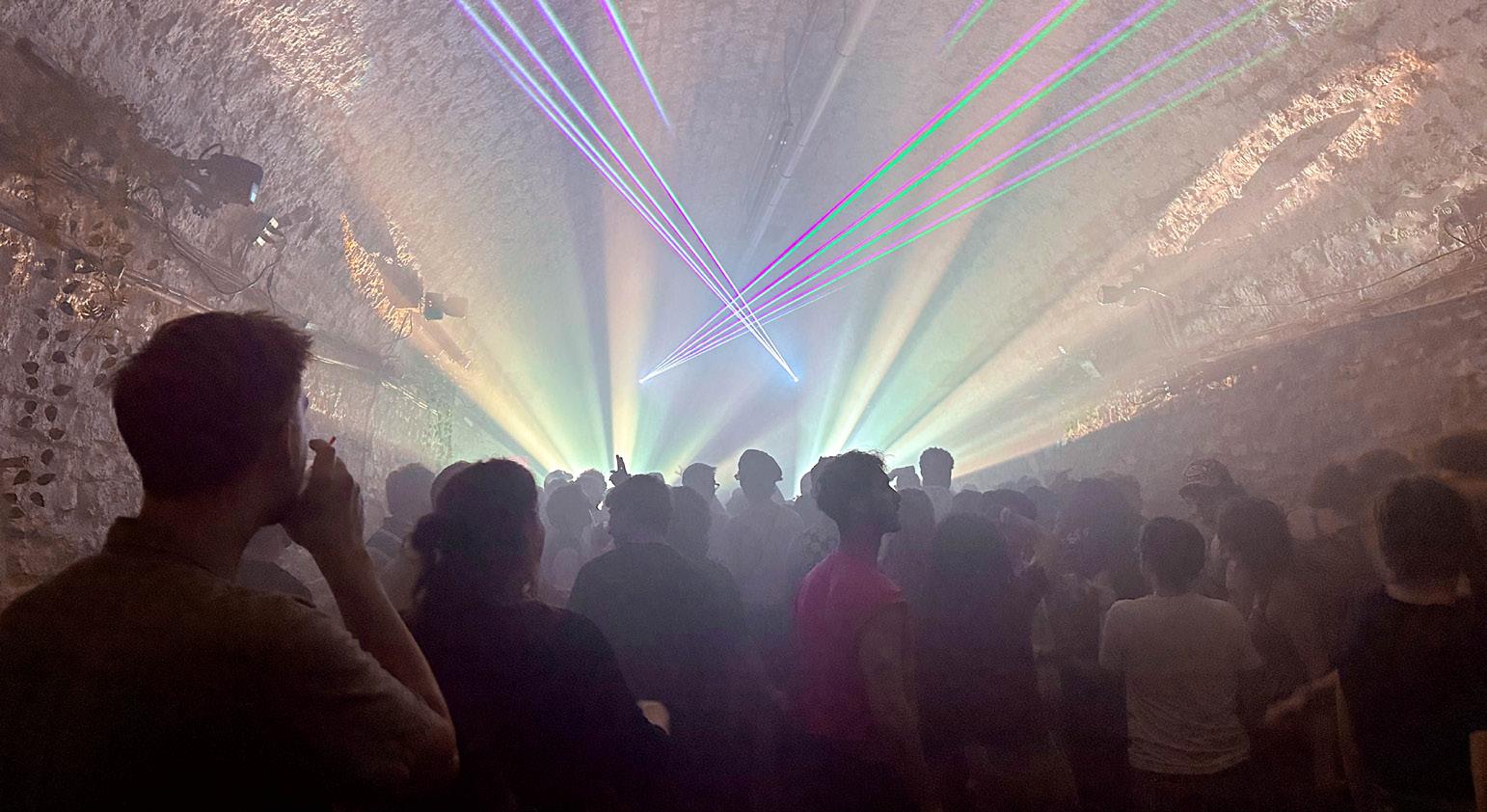
One thing’s clear: the lack of queer spaces is not for lack of desire.
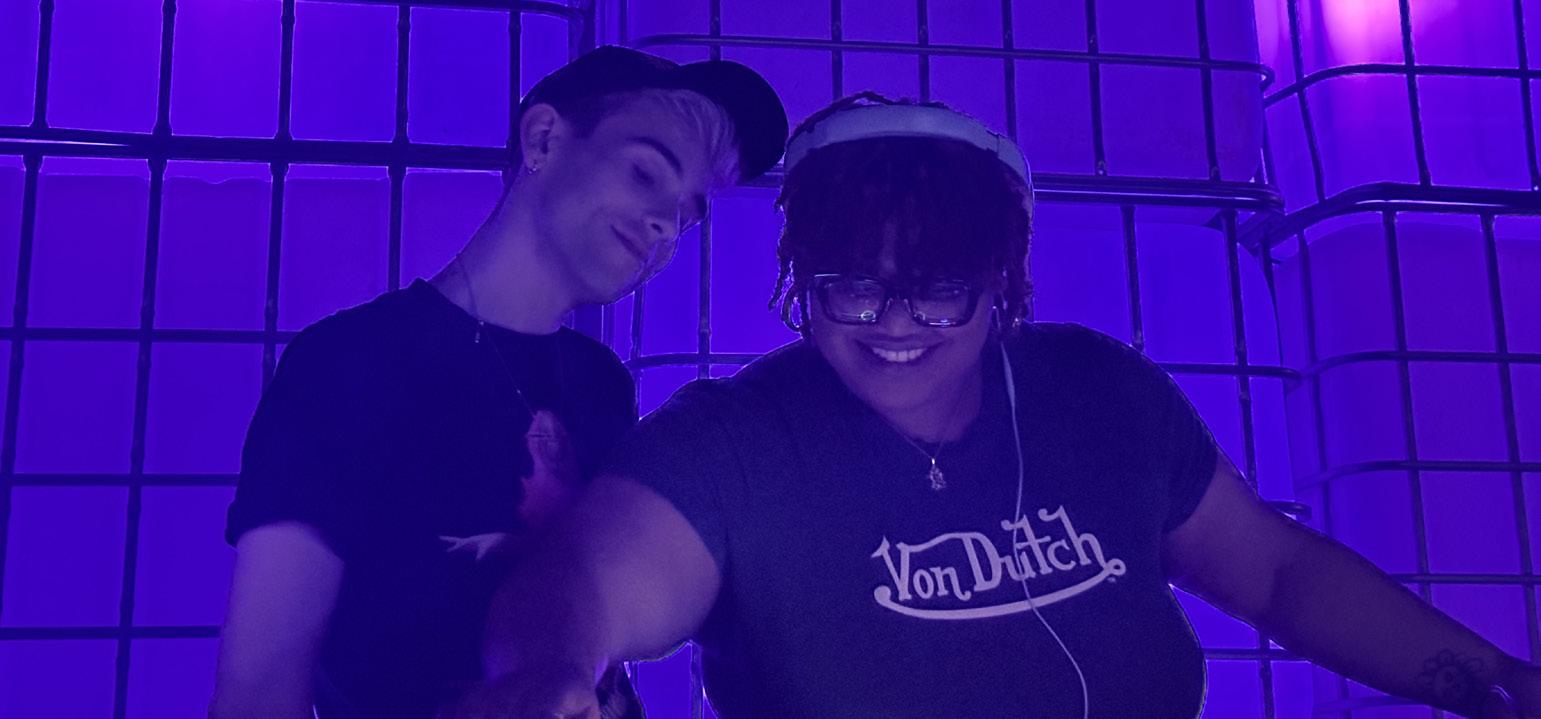
Boywife shared statistics from Sophie Night, a March event he co-hosted where transgender people got in free, while cis people paid $5. Despite being attended by a majority transgender crowd (he estimated about half to two-thirds), the group raised $3,000 for charity alone just from ticket sales.
“Queer people want something to do that’s only for them, especially now, to get away from daily life and everything in the news. It’s not for a lack of people wanting it, it’s a lack of people giving it,” he said.
Hogue attributes some event failures to mismanagement, noting that bars hosting queer events often neglect to promote the event for fear of scaring off other customers.
“We know nothing about the event unless, like, DJ Boywife posts about it. And then they blame us when the event fails. It makes no f****** sense,” Hogue said.
Boywife pointed out one recent failure in particular as “mismanagement and marginalization.”
“These bar owners think they’re throwing us a bone by letting us perform when we’re actually the ones filling up their space and selling tickets and selling drinks. We’re not people to them, we’re dollar signs. That’s how I felt with Mecca before it closed this year,” he said. “We’d make that place as popping as it was in its prime. For them to close and sell to a construction office when we don’t have a lot of clubs, gay or straight, in the first place is like a slap in the face.”
There’s also a sense of complacency in the community, according to all four individuals.
“A lot of gays in Cincinnati fall into a routine. The same people go to the same bars every weekend. It’s never, ‘oh, I’m gonna go explore another part of town, I’m gonna go to this new bar.’ They go to Alice, they go to Bloom, that’s it,” Hogue said. “Why not patronize the other gay bars that already exist? Go to Bar 901. Go to Tillie’s. Go to the Crazy Fox. Most people don’t even know Home Base Tavern exists.”
Shuttered gay bar The Birdcage is soon to reopen under new ownership, too, and “if people don’t go after complaining this much, I swear to God, I will lose it,” he said.
Boywife mentioned that he often hears people are disappointed with the current offerings — but “a closed mouth doesn’t get fed.”
“If you go to the same club over and over every single weekend, and you’re not happy with them, what message does that send?” he said. “We have to call out these clubs and get our friends together and make s*** shake, because they’re not going to do it for us. And if that’s not what queer people have always done, I don’t know what is.”
Fox encourages young people looking for a space catering to their needs to do the same thing he did: open one, and be “a young gay person who lives out their dream.”
“Make it happen! Is it hard? F*** yeah, it’s hard. Anyone that believes it should be easy… well, it should be, but it’s not,” he said. “You can sit back and say ‘I want this to happen,’ but you have to grab yourself by the balls or the titties or whatever you have that hurts and say ‘Look, this is what it’s going to take, and I’m willing to do it.’ It’s not too late. The game’s not over.”

By Rick Pender
he 23rd annual Cincinnati Fringe Festival is happening right now (May 29-June 13), presenting an outrageous assortment of one-hour, live performances by more than 35 independent local, national and international artists in pop-up venues around Over-the-Rhine.
This year’s primary lineup of 25 productions features new work from 13 local creators, 10 productions from across the U.S. and two international artists from Canada and Australia. More than 160 ticketed events will use theater, art, music, dance, puppetry, clowning and whatever might land in between.
Katie Hartman, producer for five years, calls Cincy Fringe really special.
“It’s a festival where artists and patrons mix and mingle in Know Theatre’s Underground Bar (1120 Jackson St., Over-the-Rhine),” Hartman said. “There’s a party there every night after shows conclude.”
Ingrid Garner, from Orange County, California, returns for her third appearance. In 2024 and 2025 in her solo show, “Eleanor’s Story,” she performed as her grandmother, who lived in Germany during World War II. Garner earned “Pick of the Fringe” recognition in 2025.
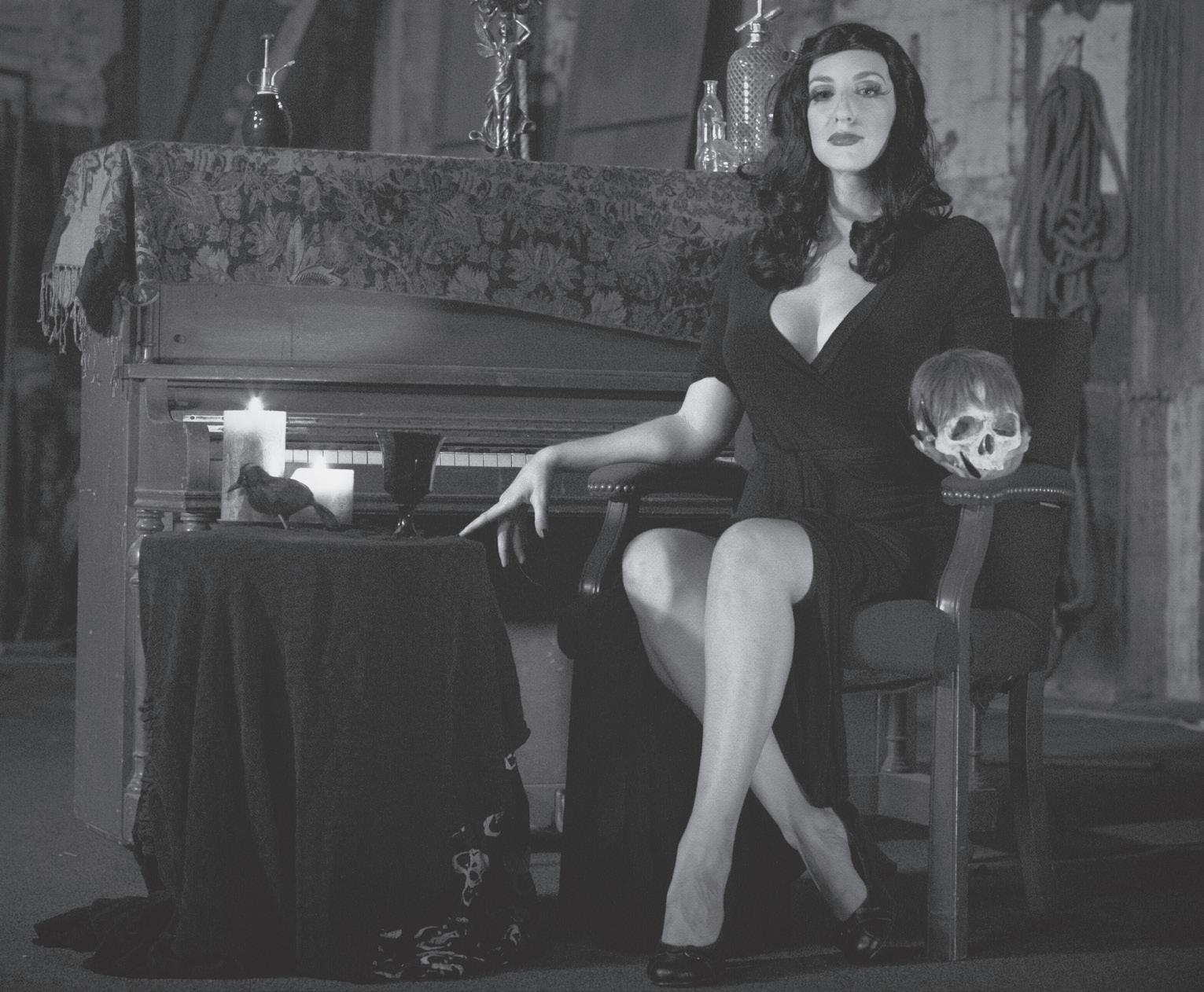
This year, she’s conceived something quite different: The world premiere of “A Hollywood Horror Story,” the wild and true story behind TV’s first horror host, Vampira, an overnight sensation in 1954.
“Before I did ‘Eleanor’s Story,’ I was doing stage adaptations of bad ‘B’ movies — ‘Night of the Living Dead’ and ‘Plan 9 from Outer Space,’” Garner said.
Vampira has been a passion of Garner’s since she was cast as the character in 2012.

“She was at a peak of fame for one year in 1954, just like the hottest thing on earth,” Garner said. “A year later she ended up starring in what would become one of the worst films of all time, ‘Plan 9,’ by director Ed Wood.”
Why Cincy Fringe?
“Because a lot of folks premiere shows at the Cincy Fringe,” Garner said. “It’s always been talked about by artists in such a loving way. Everyone expresses how magical it is — a smaller festival that’s curated, and an audience that’s very dedicated and willing to try anything.”
Garner came to Cincinnati last October for an under-the-radar tryout during a “Weird Cabaret” event produced by another Fringe regular, Erika Kate MacDonald.
Garner thinks of Nurmi as the “grandmother of punk,” someone who inspired hippies, goths, punks and sci-fi nerds.
“I kind of view her as this alien sent down to earth to save the earthlings from the fate of 1950s conformity,” Garner said. “Her life was about making fun of the ideals of ’50s femininity.”
“Hollywood Horror Story” is both a story about Nurmi’s life and the creation of Vampira.
“Literally anybody will see themselves in this show,” Garner said. “It’s delivered as an episode of “The Vampira Show.” In fact, we’re sort of screening the narrative of Maila Nurmi’s life, the woman who played Vampira, sort of a real-life Cinderellameets-Frankenstein story.
“In the first 20 minutes, I play Maila, going through her early life and the influences that would eventually inspire Vampira. I do the transformation onstage into the character until we have our lab scene. It’s really a story of creator and creation, itself such a B movie trope.”
assured woman.
“For me, that’s Vampira, that’s Maila — she was definitely very Jekyll/Hyde and a lot more bold and really punk rock, more than I am,” Garner said. “It’s really time for Vampira to come back into the zeitgeist. She has truly influenced so many aspects of our culture today. You recognize her in all the images that came before her, like the evil queen and Norma Desmond in “Sunset Boulevard,” and you recognize her in the punks and goths you saw later. It’s time to see how this all came about and how she brought it all together. I hope I do it justice.”
A few more Cincy Fringe shows worth considering: Madeline Rowe’s “Papa” is a portrait of Frankenstein’s monster, not just a creation — but somebody’s son. Bruce Ryan Costella’s “Rat Man Happy Place” is a dystopian tour through the ruins of what was once Disney World. Australian Jon Bennett will present “This Will Only Ever Happen Once.” A Fringe favorite, Bennett recreates some of life’s unrepeatable moments. Two2Mango from Toronto will perform “Colonial Circus: History, Clown Style,” featuring a pair of brown Indian clowns who make fun of colonialism and the way white people characterize history. Tickets: cincyfringe.com
Also happening in the theater world soon:
Touring productions of “The Lion King” have played to sold-out venues across the United States and around the world for three decades. It returns to downtown Cincinnati’s Aronoff Center this month for its fourth visit (June 10-July 5).The show has been a theatrical hit since its Broadway debut in 1997. It is a winner of six Tony Awards, including one for Best Musical and another for Best Direction of a Musical.
If interested, please contact: Vivian
“No one really knew, even the other artists,” Garner said, “until I stepped out onstage and premiered the first 20 minutes of this show. Erika and the Cincy Fringe are why the show exists now.”
Nurmi was a onetime model, nightclub coat-check attendant and necktie painter. Her Vampira costume for a 1954 Halloween party was inspired by the wicked witch in “Sleeping Beauty” and Charles Addams’ Morticia. She had a waspish hourglass figure, creepy fingernails and long, sleek black hair. A Los Angeles TV executive cast her as the host of late-night horror films. Her brief eight-month run earned a fivepage photo spread in Life magazine.
In addition to portraying Nurmi as Vampira in “A Hollywood Horror Story,” Garner uses video and her own acting transformations to bring in others who influenced Nurmi — including horror stars Bela Lugosi and Lon Chaney Jr. — who Garner called the actor’s “ghoul gang.”
“I think she was a lot braver than I ever was,” Garner said. “I always kind of considered myself a ‘plain-clothes’ goth. But I’ve always been kind of a morbid and macabre person with a very dark sense of humor. I didn’t always love horror films. I was a fearful person most of my life, but I remember thinking as a kid, if I could just be scarier than anything that could crawl through my window, I would feel safe.”
Garner loved how Nurmi adopted the evil queen in “Snow White” as a role model. She saw her as a confident, self-
“The Lion King's” imaginative musical stage version, designed and conceived by Tony winner Julie Taymor, is the real deal: Actors in animal costumes as well as large puppets have charmed audiences for three decades. Previous Cincinnati presentations happened in 2003, 2015 and 2020, just before the COVID pandemic shut down theaters everywhere. It’s an awe-inspiring piece of stagecraft, well worth seeing. Tickets: 513-621-2787 or cincinnatiarts.org/events/official-ticketsource
Another recent Broadway hit, “Dear Evan Hansen,” will be produced by The Carnegie in Covington (June 19-28). Winner of the 2017 Tony Award for Best Musical, it’s about an angsty teen who uses social media to invent a role for himself after a classmate’s suicide. He gets undeserved credit for something he didn’t do. Ultimately an uplifting story about connecting and belonging, this is a good show about the importance of empathy for families with teens. The Carnegie has built a solid reputation for well staged musical productions and has assembled a talented cast for this production. Tickets: 859-9571940
Since 1819, Cincinnati has been lovingly called the “Queen City.”
It’s a name that at once calls to mind a sense of regal femininity, though that royal sense may contrast with the muddy waters of the Ohio. Back then, thanks to the riverboat traffic on those brackish tides, Cincinnati was a booming city on the frontier of the United States.
Today, Kelsey Ference, known to her 22,000 Instagram followers and countless newsletter subscribers as Midwestern Lesbian, is on a type of frontier of her own
MIDWESTERN LESBIAN SEEKS TO INCORPORATE CLASSIC SIGNS OF MIDWESTERN AMERICA (LIKE LIVESTOCK AND SQUARE DANCING) WITH QUEERNESS. IMAGE PROVIDED | MIDWESTERN LESBIAN



making. A queer frontier, at that.
“Cincinnati is so gay,” she said.
Ference started the Instagram page and associated event planning business in 2021, while they were running Rhinegeist Brewery’s social media.
“I was creating a weekly calendar of all the events we were doing in the taproom,” Ference said, “and I thought to myself, ‘Why don’t we have a calendar like this for all the queer events happening in and around the city?’” That led her to creating the first Queer Weekly Calendar, which quickly went up on the business’ new Instagram account. The calendar is still updated weekly, though it’s now called the Cincy Gay Agenda.
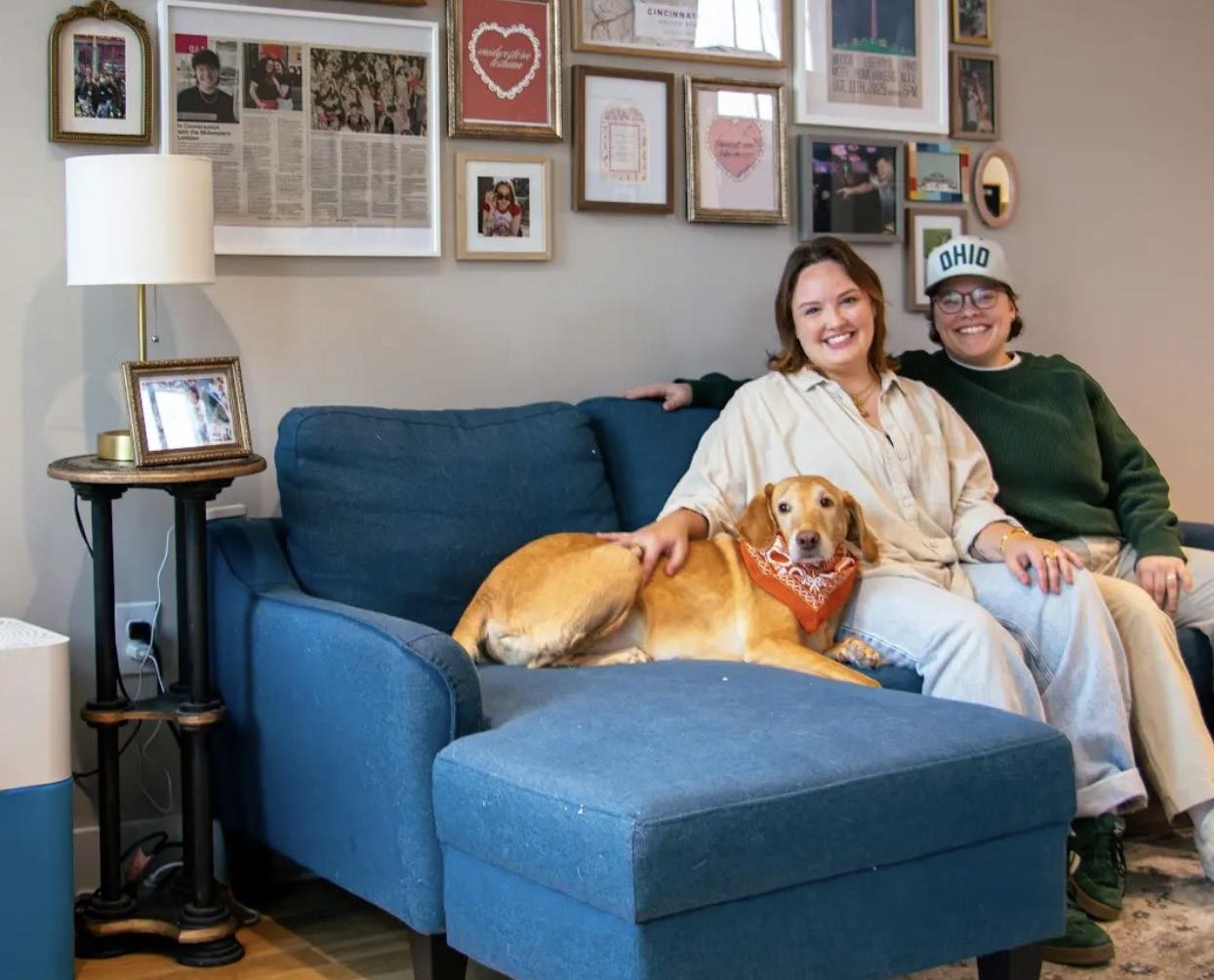
Ference and their partner Caitlin Chrisenée, who started dating in 2023, began organizing specifically sapphic events when the pair noticed a severe lack of spaces — especially bars — for their audience in Cincinnati. Their inaugural event series, Sapphic Sips, showed off some classic hallmarks of what makes the duo’s work so wonderful: a clever name, a great venue and a welcoming, joyously queer atmosphere.
“I want to create authentic connections with people so they can meet other queer people, make friends, be in community and just feel loved, and seen and welcomed,” Ference said.
However, in light of the House passage of Ohio Bill 249— the Indecent Exposure Modernization Act — in March, which explicitly criminalizes public drag and cabaret performances as first-degree misdemeanors, Ference noted that queerness itself is under attack on the state and federal level.
“For a lot of freshly out people, and people who aren’t even out, the first thing that they think of when they want to go and be in community is going to drag shows,” they said.
Ference, who has organized drag performances throughout the city, argued that drag artists are one of the pillars of queer culture, and that the policy passed in Columbus seeks to fuel hatred towards not just those performers, but the entire culture they represent.

“It’s incredibly disheartening,” Ference said, “but I think that our community is strong enough to fight back and show people that there’s no danger in a drag show. At the end of the day, what we want is to be surrounded by people who know us, love us and respect us.”
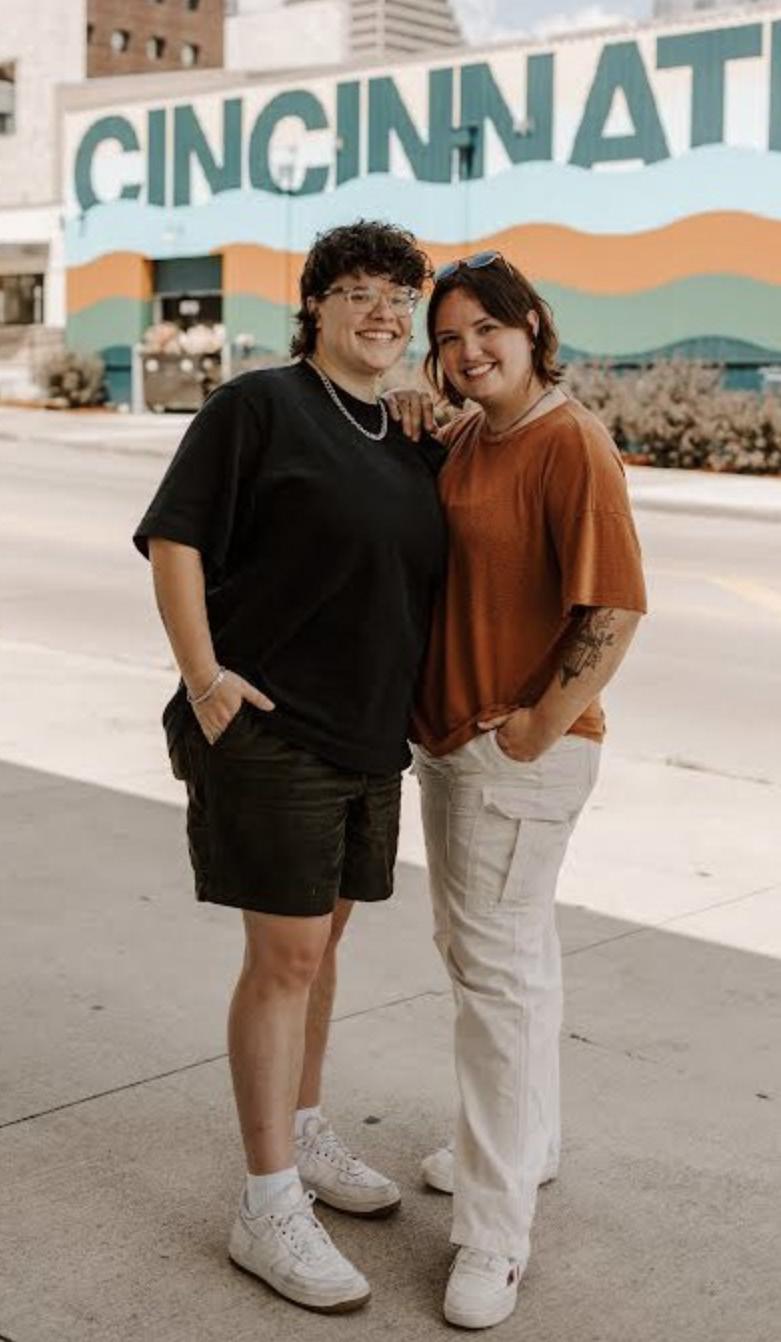








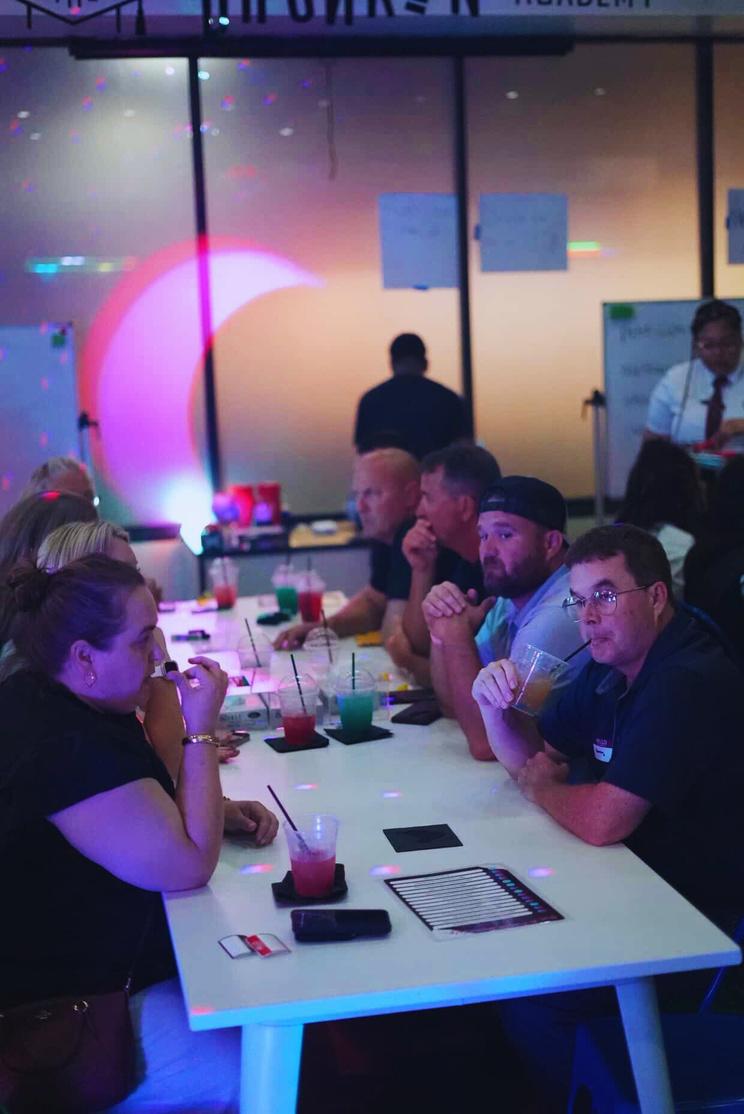

To do that, we need more queer spaces, Ference explained — and not just bars or clubs. Midwestern Lesbian seeks to incorporate locales throughout the city, including places like The Porch in Washington Park, which will soon be hosting Sapphic Sunday Funday on June 14.
sapphic events. A newly created Instagram page for the soon-to-be-released Columbus Gay Agenda already has 460 followers.











Looking further into the future, Midwestern Lesbian intends to expand to other Midwest cities and states in need of

Midwestern Lesbian has events all Pride Month long, though the good times don’t stop when July rolls around. If you know of any upcoming queer events that need more attention, you can submit them to Ference on the Midwestern Lesbian website.
Step into 1,800 acres of breathtaking beauty and a community that meets you exactly where you are. From friendly faces to trails for every age and ability, discover a space where everyone belongs.
Start planning your visit at CincyNature.org/visit or scan the QR code today!

By Kane Mitten
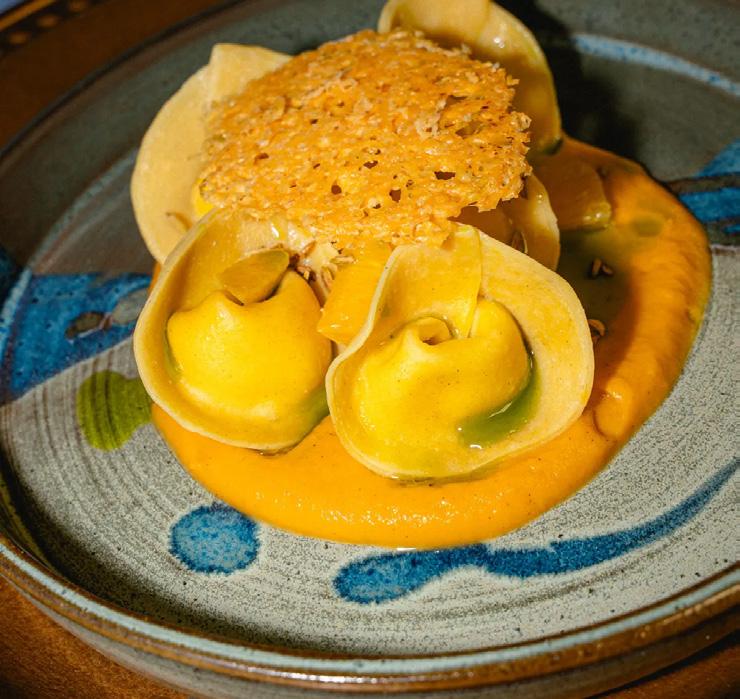
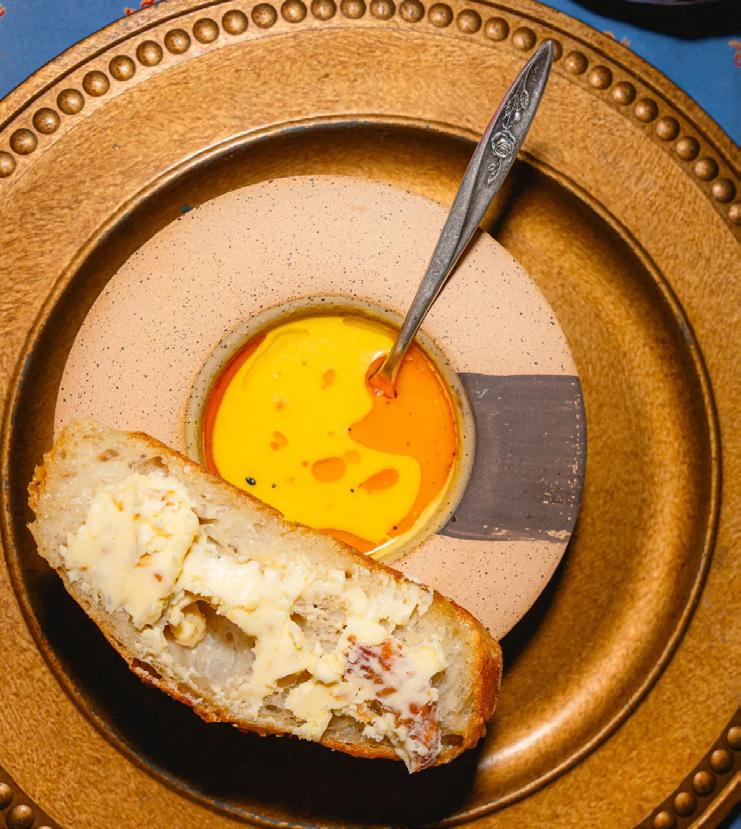
Afive-course farm-to-table dinner with completely organic ingredients, presented on handmade ceramic dishes that you get to take home.
Sound enticing? The Potter’s Table is the Queen City’s most exclusive, best-kept culinary secret — if you know any chefs in Cincinnati, you might’ve heard rumblings about the food, but you almost certainly haven’t been able to try it.
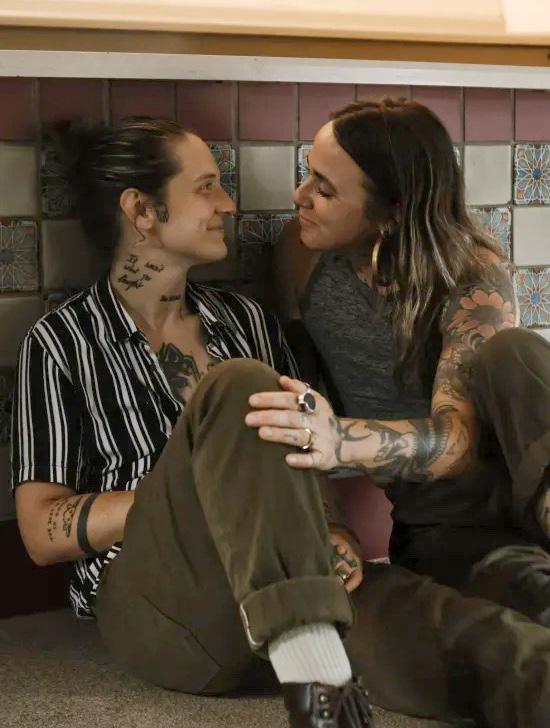
Local queer couple Blake and Colleen Crawford-Larson founded the pop-up dinner series out of a desire to merge their two creative interests: fine dining and pottery. The results are nothing short of stunning.
Guests entering The Potter’s Table enjoy an amuse-bouche and a glass of champagne, followed by five courses made with just-harvested ingredients from local Turner Farms, all of which are sweetened only with natural sugars. Each course is served on a ceramic dish made by Colleen or Bonnie McNett, the owner of Whistlestop Clay in Loveland. And at the end of the night, each guest chooses one ceramic piece to take home with them to their own kitchen.
The setup ensures that no two dinners are the same, even down to the plates you’re eating on. It’s born out of Blake’s absolute revulsion towards any sort of waste, especially when it comes to the restaurant industry.
The couple met in Asheville, North Carolina, where both were self-described “industry rats” — Colleen managed frontof-house at the vegan restaurant Plant for several years, while culinary wunderkind Blake became the region’s youngest executive chef at 23 when she took over French bistro Bouchon.
During the COVID-19 pandemic, Blake’s parents purchased a wedding venue in rural Adams County, Ohio, and not-so-subtly suggested she move back to the state she was born in.
“My mom was constantly texting me every other week like, ‘Sure could use some hands! Really wish we had some help up here!’ So eventually, we [moved] up and we were like, ‘Well, we don’t really
want to do the wedding thing. But we will utilize your space when weddings aren’t booked,’” Blake said.
Thus began the journey for the couple to open their first venture, Flock. But before that, Blake took on a job that affected her cooking philosophy for years to come.
In the time between moving to Cincinnati and opening their own restaurant, Blake became executive chef at the Hope Springs Institute, a nonprofit “transformational retreat center” in Peebles, Ohio that provides “growth and healing” to guests. But her food budget was practically skeletal: the nonprofit gave her $300 every two weeks to serve groups of 30+ eating three meals a day. It’s a tough task in a proper city, much less a food desert like Adams County.
Her time at the nonprofit proved as transformational as it was for the center’s guests. Over time, she’s adapted a nowaste philosophy, noting when it comes to food waste that humans “are so used to, as a society, seeing things as they are and not as they could be.”
Blake said that after watching how much food was wasted for a set menu, she could never work in a traditional restaurant kitchen again.
Eventually, the two opened Flock in West Union, Ohio, which had a similar focus to their new dinner series: using only the freshest ingredients possible from local sources. Their first night open, Colleen knew they had something special.
“Our first Flock event, it was initially a little awkward. These six strangers showed up… it’s like, they didn’t know each other, they didn’t know us. We had just moved to West Union. We’re outsiders,” she said. “Then [Blake and I] were in the back doing dishes, and we hear them all start laughing and cracking up at the table together. And we looked at each other and just smiled.”
But over time, their desire to keep going decayed. “Three rural winters” was a lot for the two, and the two faced plenty of discrimination for being a queer couple, with Colleen saying it was “no longer fun” to live in Adams County — prompting
their move to Cincinnati to be in a place “where we saw and existed around other people like us.”
In West Union, the two had several locals boycott them for making “gay bread,” and even had a customer afraid of “gay water.”
“[He] would not let me fill his water,” Colleen said. “He didn’t want me touching the things he was consuming. Despite him being there to eat my wife’s food, he had a difficult time with me being close to his food because I’m gay. And that was something I never wanted to feel again, and I don’t want anyone to feel again. With The Potter’s Table, knowing that people are aware of who we are and what we stand for and still choose to come is really important to me.”
Blake felt like the two “rode a very fragile line” of keeping their lives private to stay in business, and The Potter’s Table was created out of a desire to “pay homage to a part of ourselves that we had to keep silent.”
“Growing up as a queer person in the Bible Belt, there aren’t a lot of tables that fit you, so I think it’s imperative for us to build our own tables… and to find people willing to sit with us and have dinner through hard times and hard conversations,” Blake said. “Even when we can’t control anything else going on in the world, we can sit across from our neighbor and be genuine for an hour.”
After they realized their time at Flock was ending, the two came to a crossroads. Blake worked at the popular Southern eatery Nolia in Over-the-Rhine and eventually transitioned to serving as executive chef at Turner Farm, while Colleen contemplated a return to the ceramic art form she went to college for — and then her wife urged her to “just buy the f****** clay.”
“I went into our spare bedroom with a $100 pottery wheel I got off Amazon, and I went to college in 2013 so it had been some time since I’d even touched clay… I started throwing some pieces and Blake came in and she goes, ‘Oh, these are great!’ and I’m like, ‘No, babe, these are s***,’” she said, laughing.
She decided to pursue pottery fulltime and purchased a professional pottery wheel and a kiln. Presa Ceramics was born, and Colleen now sells her wares — mugs, vases, plates, utensils — at shops all over the Cincinnati area.
Eventually, the two realized they missed the sense of community they got from feeding people. Earlier this year, they conceptualized The Potter’s Table to “find their balance again and realize what matters.”
“Being two creative people in a relationship, we really wanted to find a way where we could both shine and both feel supported. We wanted to have community,” Colleen said. “We also always dreamt of having a long table full of people, right? Like, what are you doing in life if you’re not sitting at a table with a bunch of
people enjoying themselves?”
While the concept is “a love letter to each other” and a “dream come true,” it’s still a ton of work. It takes the two about a month of preparation for each dinner, on both the culinary and ceramic fronts.
“A lot of the concepts will be me making a shape, then Blake looks at it and goes, ‘I want to put ice cream in there.’ And I go ‘OK, I’ll make 12,’” Colleen said. “It’s an intersection of my mind and her mind. Like, how can I build something that will showcase her food and vice versa?”
Their food has become a hidden favorite of Cincinnatians everywhere, from Beard-nominated chefs to local influencers. Ben Plotkin, creator of Explore Cincinnati, called Blake and Colleen “incredibly talented” and described the food as “delicious, inventive, and beautifully presented.” One standout dish from his dinner was a turnip-derived ice cream, with honey cake on top and a light sprinkling of puffed mustard seeds.
“I found myself just as excited to see which piece of pottery would arrive next as I was to taste the next dish,” he said.
The outpouring of support and recognition from their peers and fans alike has been “fantastic,” and the two foresee Cincinnati becoming a major culinary hub just like Asheville did.
“I think if we keep inspiring each other to create, and we see things as less of a competition and more of a collaboration, Cincinnati could become the next food destination. That’s how these things start, when fire lights fire,” Blake said. “When we moved to Asheville, it was already a ‘food city,’ but when we left there was any kind of restaurant you could imagine. And I see that for Cincinnati, it’s such a cool and unique space with so much talent… it could be really special.”
The couple will host future Potter's Table events at different businesses all over the Ohio area. Guests who wish to attend the July and August dinners can join the waitlist — of which, at the time of writing, over 100 people have already signed up for — by messaging their official account on Instagram: @potterstbl.
By Kennedy Dudley
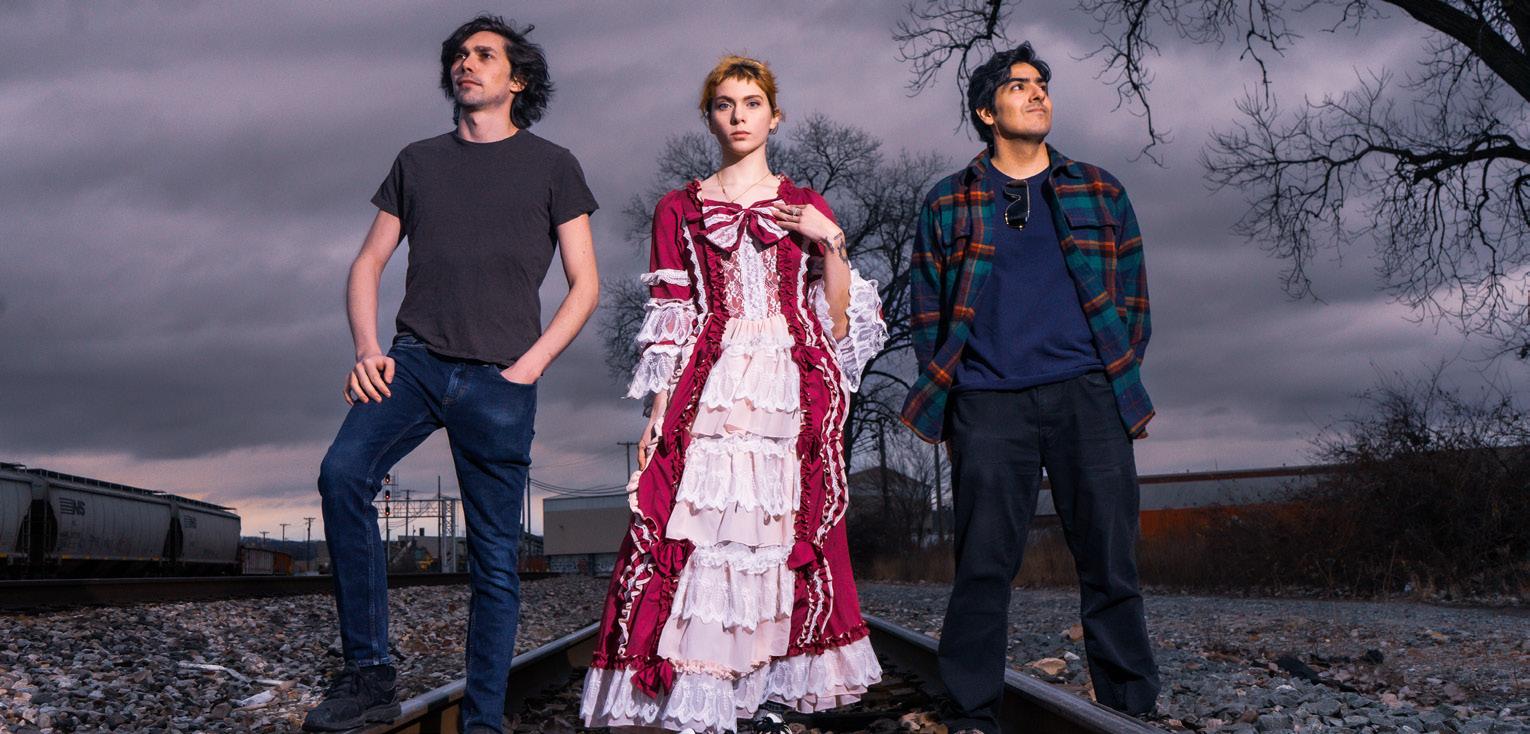
For the past nine years, Fruit LoOops has been pushing the boundaries of live music with post-pop performance art, turning every gig into a one-night-only spectacle. The trio consists of vocalist and creative director Jackie Switzer, drummer Patrick Apfelbeck and Kevin Hall on synths and soundscapes.
“Watching music itself is boring,” Hall said. “Or it can be boring. So we try to make it more than just a show. It’s an experience.”
In fact, they want you to be unsure of what you are experiencing.
“We’re just after things that make you kind of stop and be like, ‘Wait, what am I looking at here?’” Switzer said. “It’s not really about shock value. It’s about undercutting expectations, but in a way that isn’t overwhelming. Just enough to keep everyone on their toes.”
Fruit LoOops’ origin story is probably not like anything you’ve ever heard.
“Switzer had a dream where she was put on the spot at an open mic night, using contact mics on fruit and chopping them up,” Apfelbeck said.
Switzer posted about it in a Facebook group called the Dream Journal Collective.
“A bunch of our friends, including me, saw her post and were like, ‘This is actually a cool idea,’” Apfelbeck said. “‘Let’s try it in real life.’”
Their sets are often a compilation of whatever they can find or make — there’s a very DIY attitude about it.
“It’s just dealing with making what you can, with what you have, for costumes and physical props,” Switzer said. “I’ve known Apfelbeck for about nine years now, and Hall joined a few months after that. We all came together through other music projects. Fourth Wife, a post-punk group, was one of the bands where Apfelbeck and I first met Hall.”
What came from that was the band’s first performance.
“We tried the fruit thing, and it kind of worked,” Apfelbeck said, laughing. “Then we took it as a starting point and made electronic music with Switzer doing poetry over it.”
The band’s performances are more than just a concert; they are immersive theater, and always unpredictable.
“One of the really early sets, we had my roommate dress identically to me,” Switzer said. “I started the set, then ran to the back of the bar while my roommate, dressed the same, took my place on stage. We just like messing with the audience, amping up an expectation and then really undercutting that.”
The band aims to be interesting both audibly and visually.
“We’re definitely kind of extreme, sonically, so it made sense to be extreme visually, too,” Apfelbeck said.
The band is known for its wild themes. Anything you can think of, they’ve probably done it: checkerboard costumes, pizza mafia storylines, even a goat sacrifice.
“We had 50 red robes from the
Cincinnati Boy Choir and gave them out to the audience,” Switzer said. “Then we made this effigy, and at a certain point, told everyone to rip it apart. People want an opening to interact, to feel a part of something when they go see live music.”
That sense of community is essential.
“The interactions with the audience are always personal,” Hall said. “We want people to feel included. If there’s speaking, it’s always about the world we’ve built for that set. It’s never just, ‘How are you tonight?’ It’s about inviting people into the story.”
Hall, who handles synths and studio overdubs, points out that the band’s eccentric style is also a way to bridge the gap for listeners who might be new to their abrasive, left-field sound.
“We’ve always been extremely loud, mildly to very dissonant at times,” Hall said. “We use a lot of micro-tuning. The songs can be pretty breakneck pace. Switzer’s vocal effects can be pretty abrasive. So there’s definitely a lot of elements that, if you’re not into extreme music, can push you away. The performance art gives people something to latch onto. But I wouldn’t say that’s why we do it. It’s just a nice thing that’s there. It helps give us a branch to people who wouldn’t normally be listening to this kind of music.”
Fruit LoOops has played around 200 shows, changing the theatrical set concepts for each show.
“The general rule is, we don’t play the same kind of theatrical set in the same city twice,” Switzer said. “If we’re on tour, we’ll repeat sets, but never at home.”
Where do the set ideas come from?
“It’s usually something that makes us laugh,” Switzer said. “Like, our next set is kind of about the Muppets, but really it’s about the peanut gallery — the two old men in the balcony, making fun of us. We just try to see how far we can take a simple idea with a $50 budget.”
A bit of improv plays its part, too.
“The theatrical part is kind of like a Christopher Guest or “Curb Your Enthusiasm” style,” Apfelbeck said. “We have point A and point B, but how we get there is up for grabs. The music, though, is pretty composed by the time we bring it on stage.”
Over time, their process has evolved.
“In the beginning, there wasn’t really a flow to it,” Switzer said. “Now, it’s like a play; an intro, a rise, a climax and a fall.
We set out the variables, but it depends on who’s available and who wants to be there.”
The band has adapted to changes, like the departure of their original creative director, Sam, who moved to San Francisco.
“Now, sometimes we have comedians or friends step in, or we rely more on costumes and samples,” Switzer said.
Collaboration is key to how Fruit LoOops navigates so many creative voices.
“We’re all pretty opinionated,” Apfelbeck said. “But if someone has a strong idea, we’re good at rolling with it. Veto power is respected — if someone’s not into it, we don’t force it. We just follow
the enthusiasm.”
“We’re all friends, so if someone’s serious about not wanting to do something, that’s it,” Switzer agreed. “We just want to be on the same page.”
Despite the challenge of living in different cities, the band still manages to perform as often as possible.
“We perform as much as we can because that’s the way to practice together, to evolve anything,” Switzer said. “It’s fun, and it reinforces the trajectory we’re trying to go forward with.”
Playing live is also their playground.
“I like to road test our new songs,” Apfelbeck said. “I’m not trying to write for the crowd, but it’s helpful to see what works. You can feel the energy in the room and iterate in the studio afterward.”
While the band has many favorite places to perform, they do have some that stand above the rest.
“Motor’s up there,” Apfelbeck said. “Northside Tavern can be cool too. But special shout out to Design Collective. They’ve been super supportive from the get-go, always an open invitation to play there. And they just get it. You can go to them with a wild idea and they’ll help make it happen.”
For more information about Fruit LoOops, including upcoming show time and album releases, follow the band on Instagram at @fruitnloops

JULY 25 & 26
SATURDAY 11am-2:30pm 2:30PM-6:00pm SUNDAY 11am-3pm
You’re invited to the biggest playdate of the year!
Saturday, June 13 I 10am - 2pm at Contemporary Arts Center (CAC)

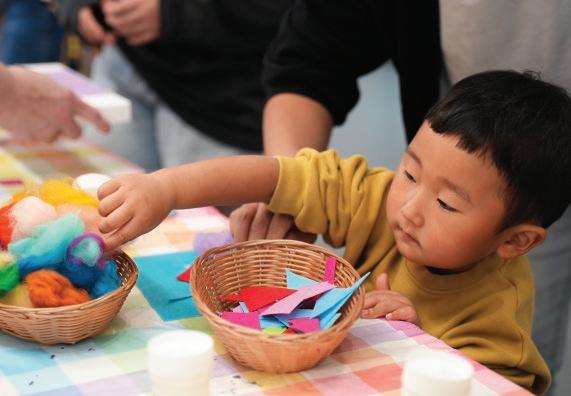

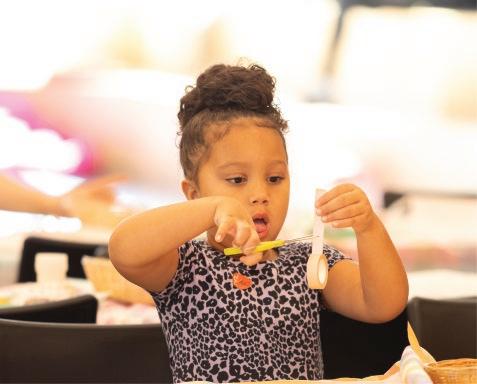


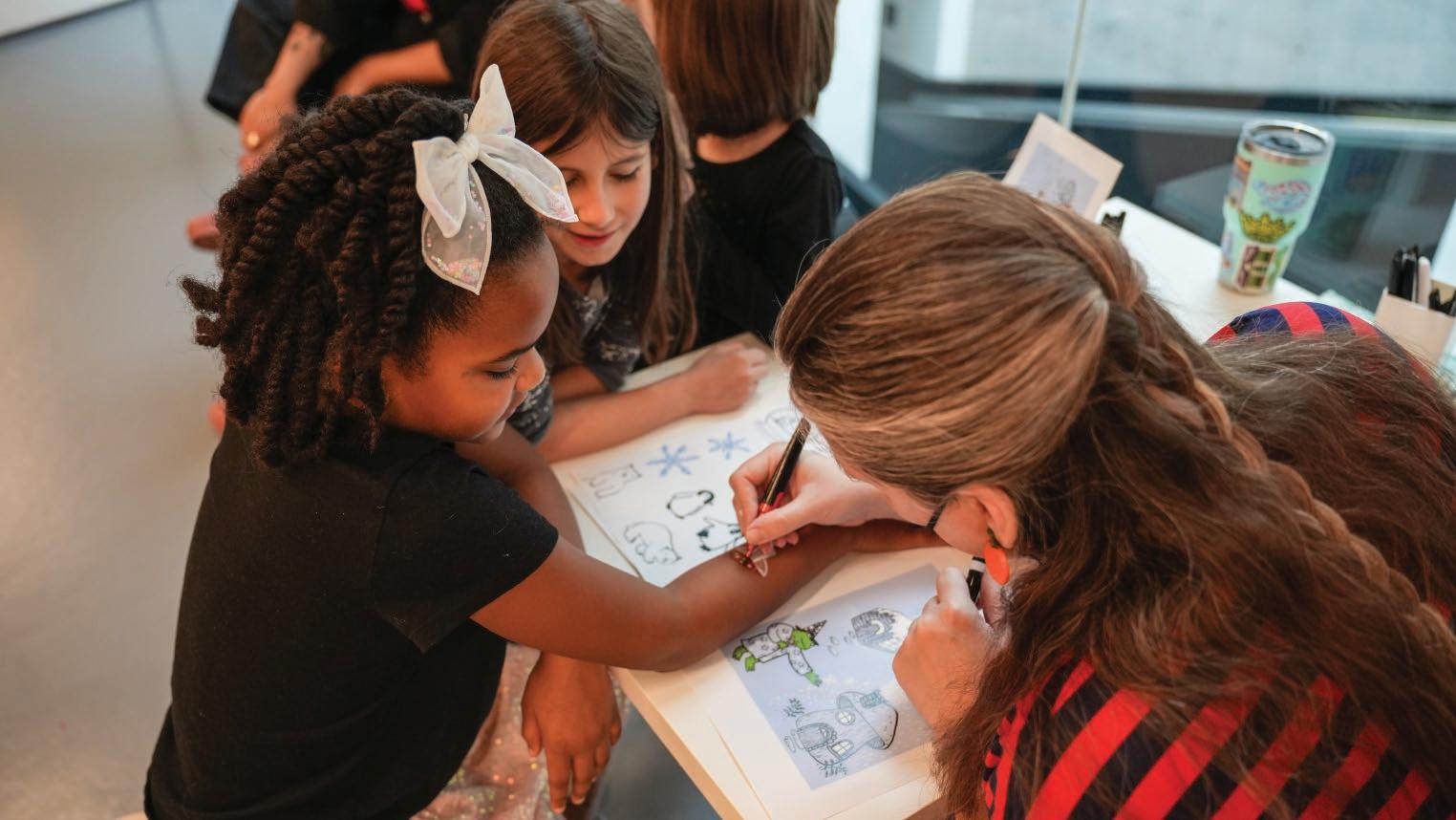
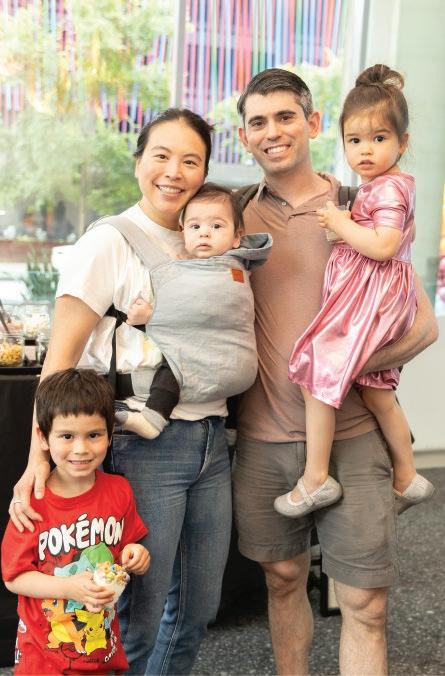
Artful Adventure is a celebration of creativity designed for the whole family. This fun-filled day features classic, fan-favorite CAC programs and special art activations like cardboard city building, blue tape mural making, collaborative printmaking and so much more.
Enjoy activities from our Partners:
• Beech Acres Parenting Center
• DJ Nat Jones
• Micah Mickles
• Michael Stillion
• Little Fox Face Painting
• Take A Moment Studio
• ProjectArt Cincinnati
• Know Theatre
• Za Za’s Scent-Sational Super Power

Savor food + beverages from our Vendors:
• The BonBonerie
• The Magnificent Morsels Kitchen
• Marx Bagels
• Molly’s Cupcakes
• Rhinegeist
• Seasoned Dish Catering & Events
• Shango’s Urban Taqueria
• Yucky Cookies