Circa 1979: Material and Tone in the Paintings of Sherron Francis by Clanci
Jo Conover
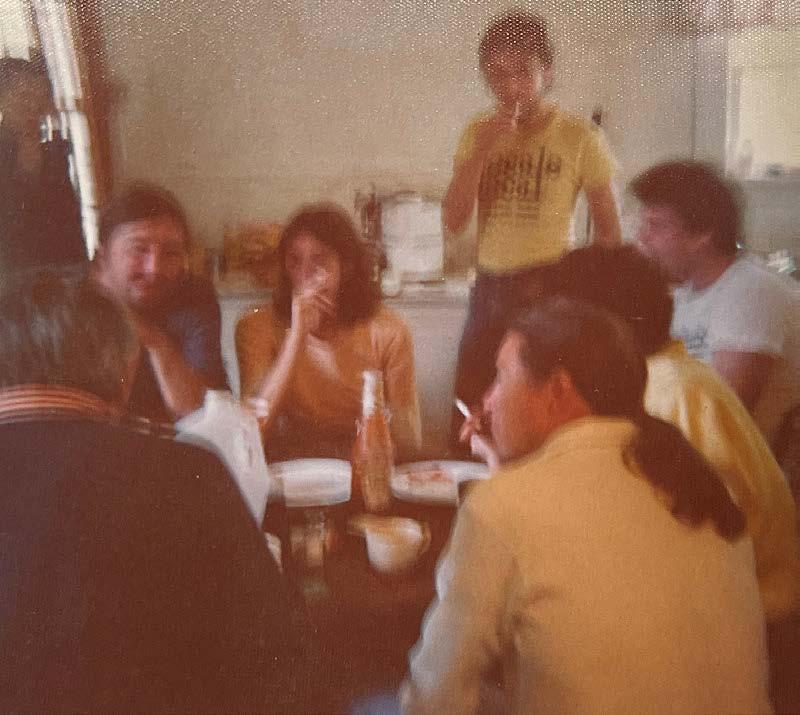
The 1970s were a kinetic time for Color Field artist Sherron Francis, marking an evolution in her career from emerging to established. The decade would see Francis abandon her figurative training for abstraction, immerse herself in a cadre of creatives around Greenwich Village that included Larry Poons and Clement Greenberg, and sojourn to Long Island’s North Fork where she moonlit as a fisherwoman. Her New York loft at 16 Waverly Place was at the heart of artistic innovation, with figures like Dan Christensen, Paula DeLuccia, Mernet Larsen, and Ree Morton neighboring the loft (Fig. 1).1 Despite being surrounded by a crew of accomplished artists, Francis did not draw inspiration from any one person, rather letting the cultural zeitgeist itself serve as a metaphysical muse.
Francis received six solo exhibitions in the ‘70s—two of which were held at the famed André Emmerich Gallery in 1973 and 1974, with later showings at Tibor de Nagy in 1978 and again in 1980. She also kept busy with group exhibitions across the U.S. and abroad, notably the Whitney Biennial (1973), the Museum of Fine Arts, Houston (1974, 1975), and the Art Gallery of Alberta (1977).
Reviewing her first show with Emmerich, art critic Peter Schjeldahl wrote favorably in the New York Times that Francis’ “...paintings, stained and brushed to a suavely grainy texture, each float an area of warm, soft color in a somewhat less-intensely colored field… Her colors run to luxurious browngolds, dreamy bluegreens and dusty pinks, though each canvas is alive with a variety of evanescent hues and tints. The goal of her art is to be at once as gorgeous and as delicate as possible: she intends to ravish.”2
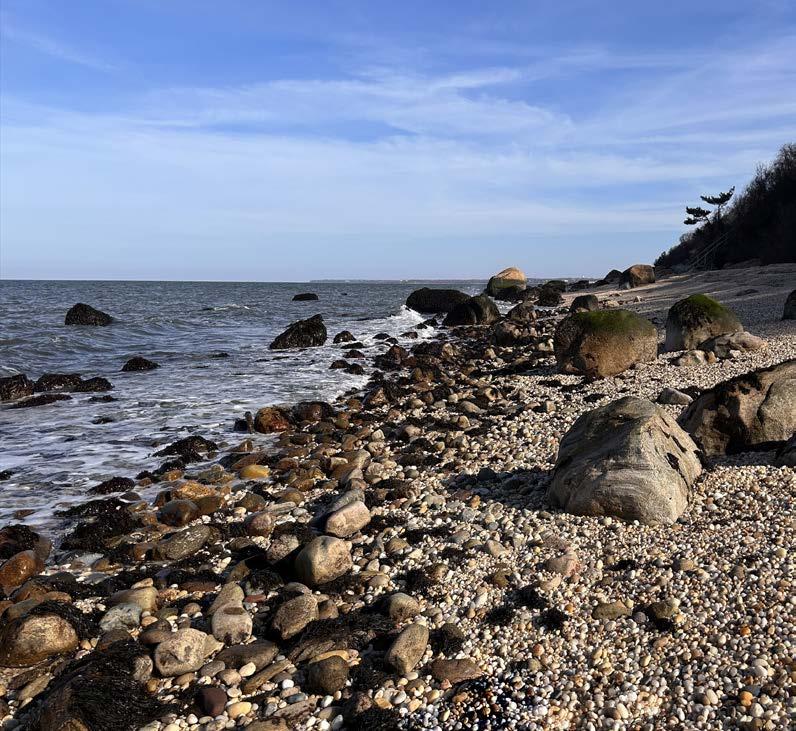
The success Francis experienced through her exhibits with Emmerich gave her the agency to take extended trips to the North Fork (Fig. 2), which became a major source
Fig. 1: Sherron Francis with Dan Christensen and Friends, c. 1980
Fig. 2: Shoreline from Horton's Point Beach in Southold, NY, 2026, photograph by Sophie Coco
of inspiration for the artist.3 After spending summers retreating to Long Island in this proverbial Manhattanite tradition, Francis purchased a home in Cutchogue, allowing her even greater access to the island’s remote North Fork; she would eventually relocate full time in the 1990s.4
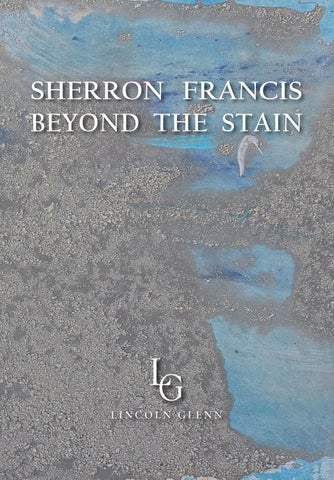
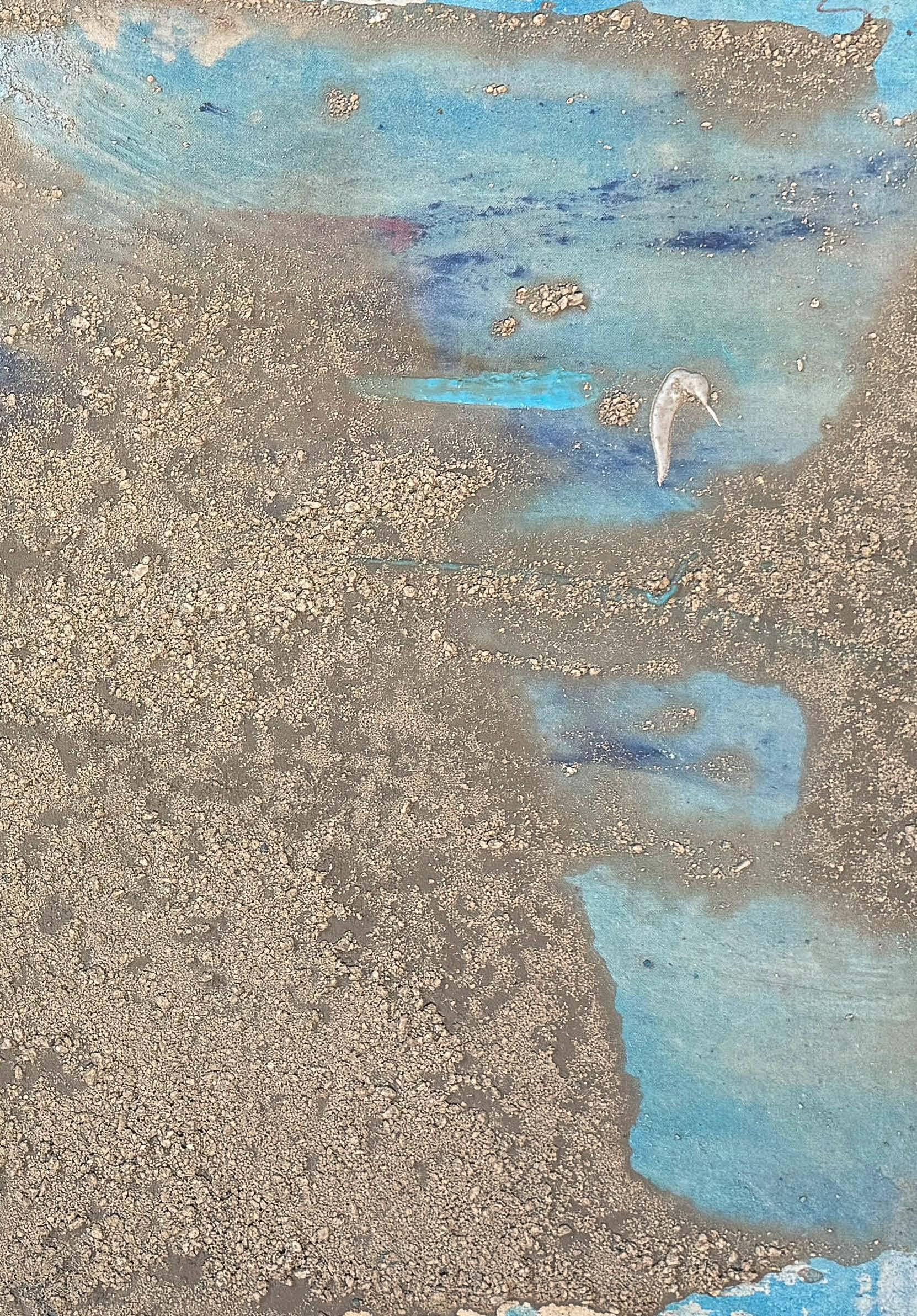
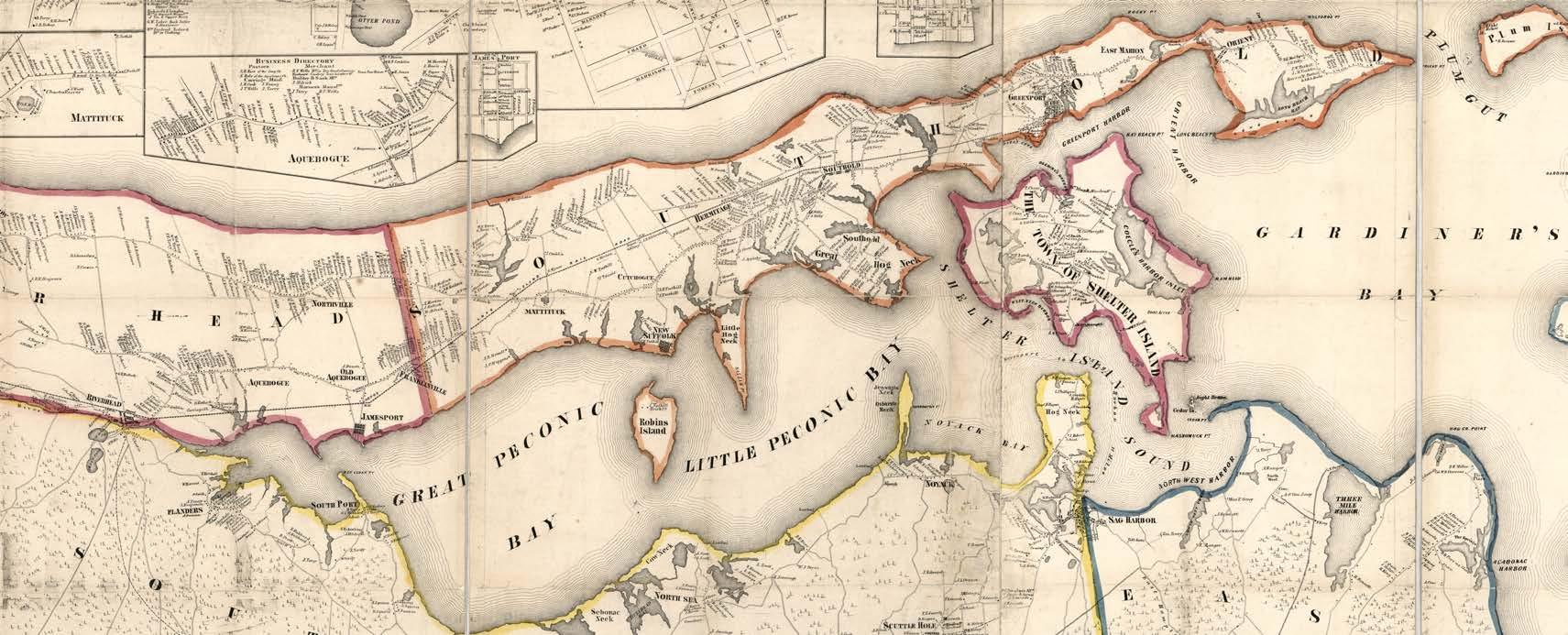
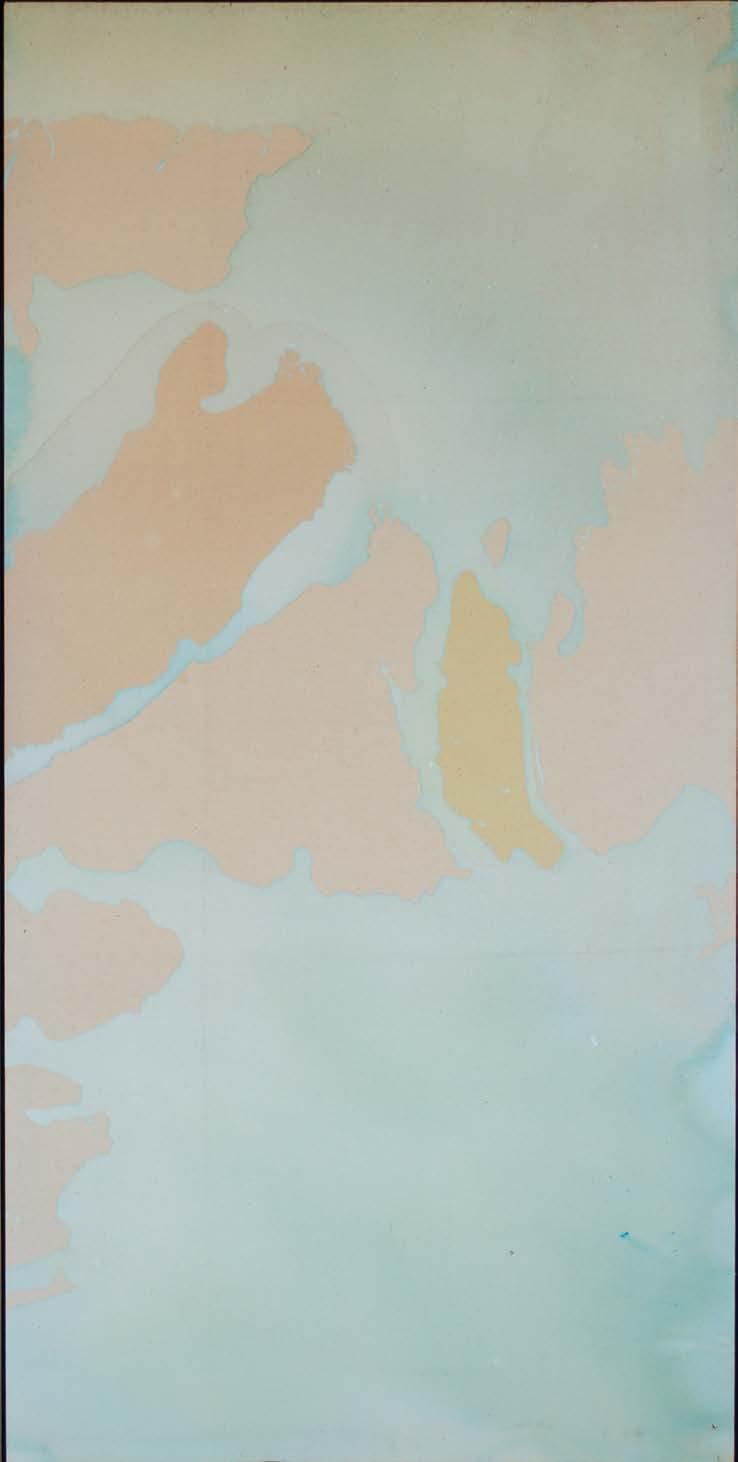
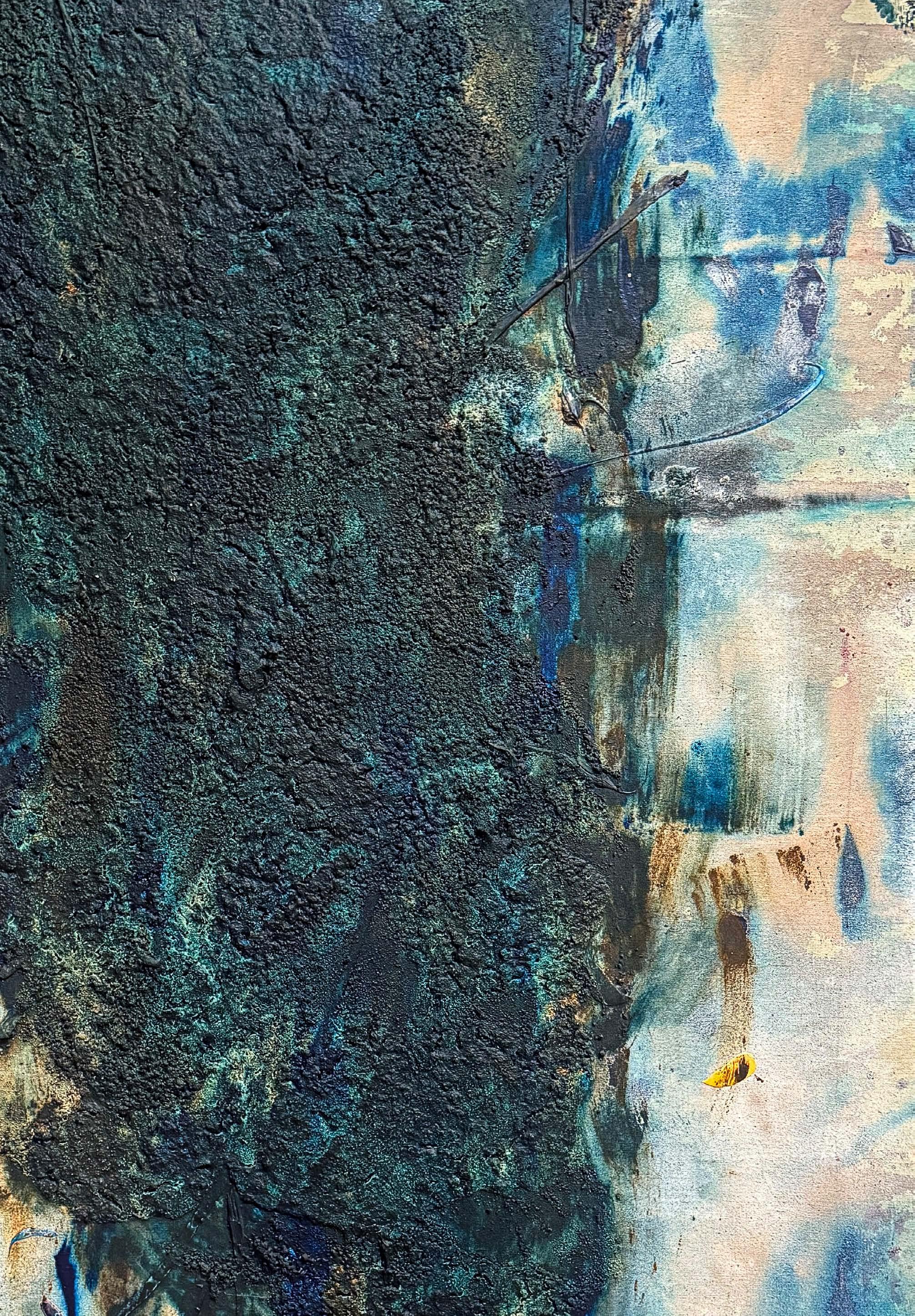
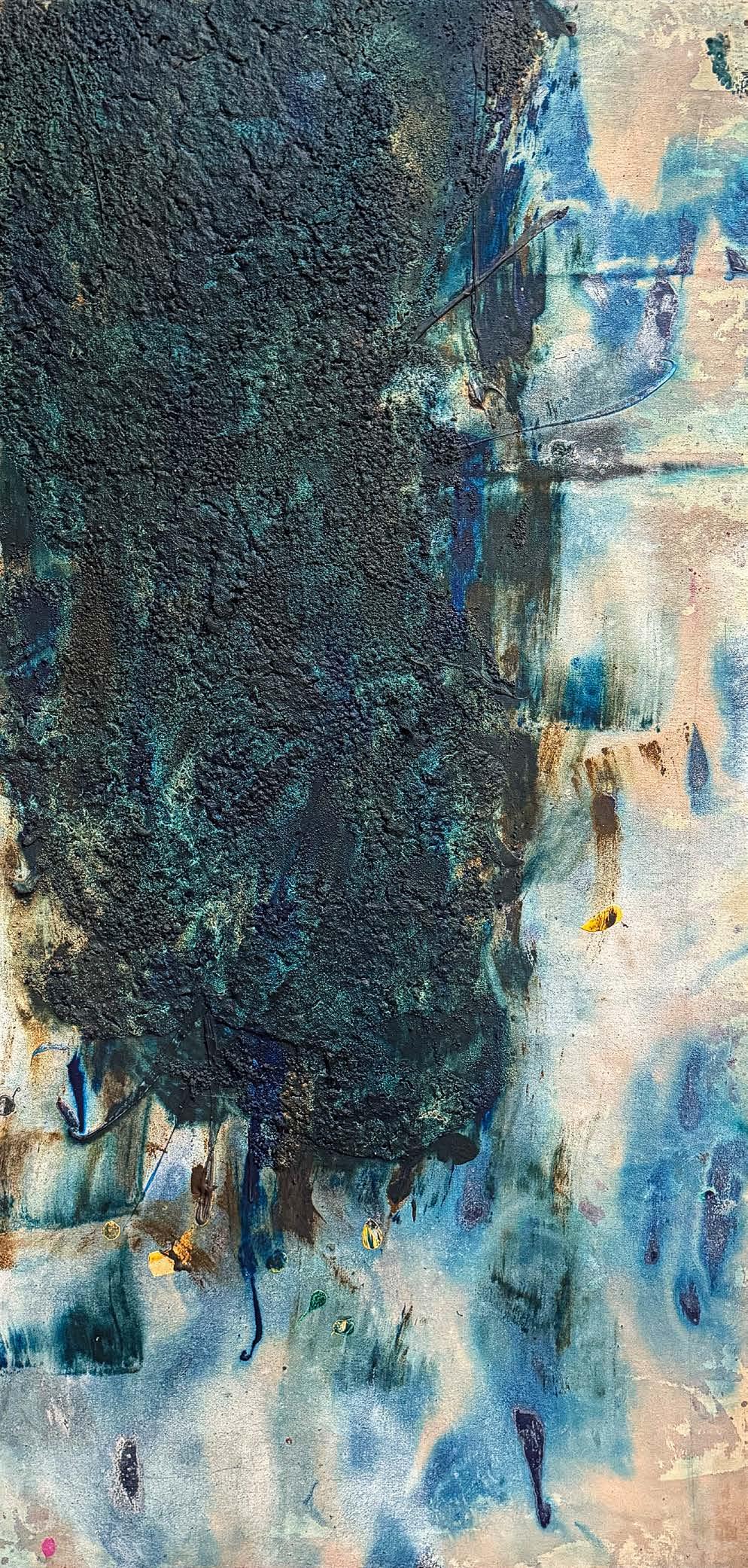
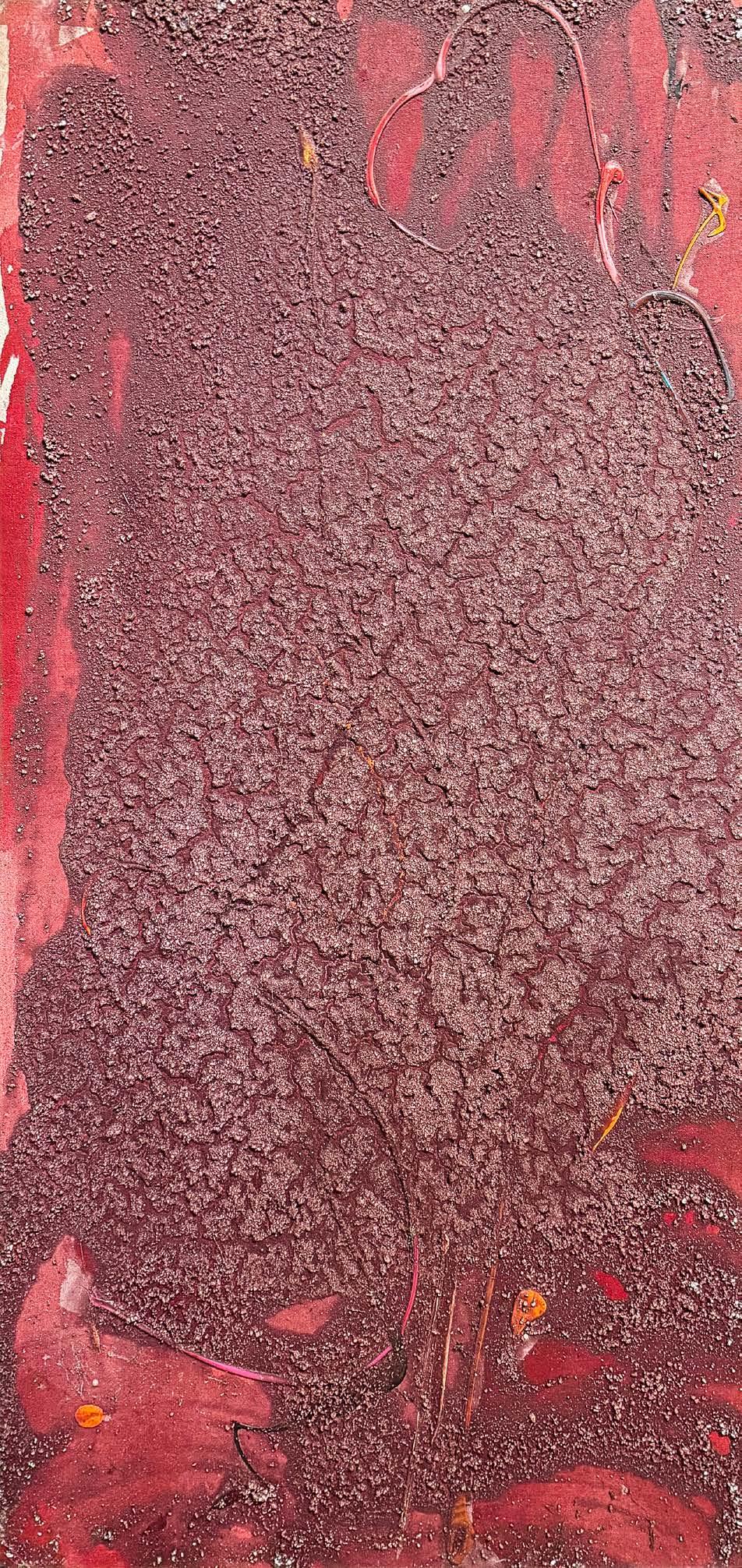
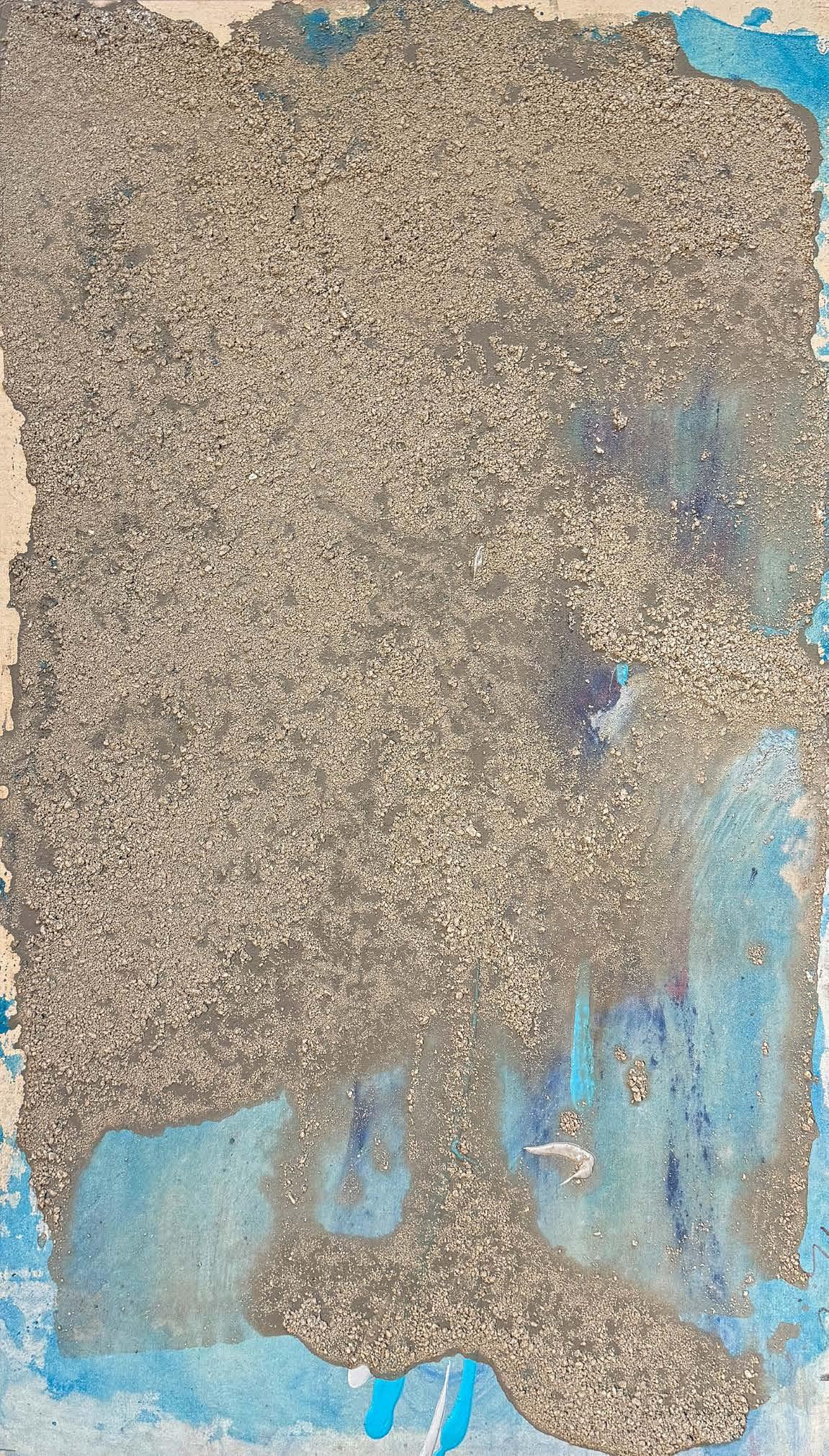
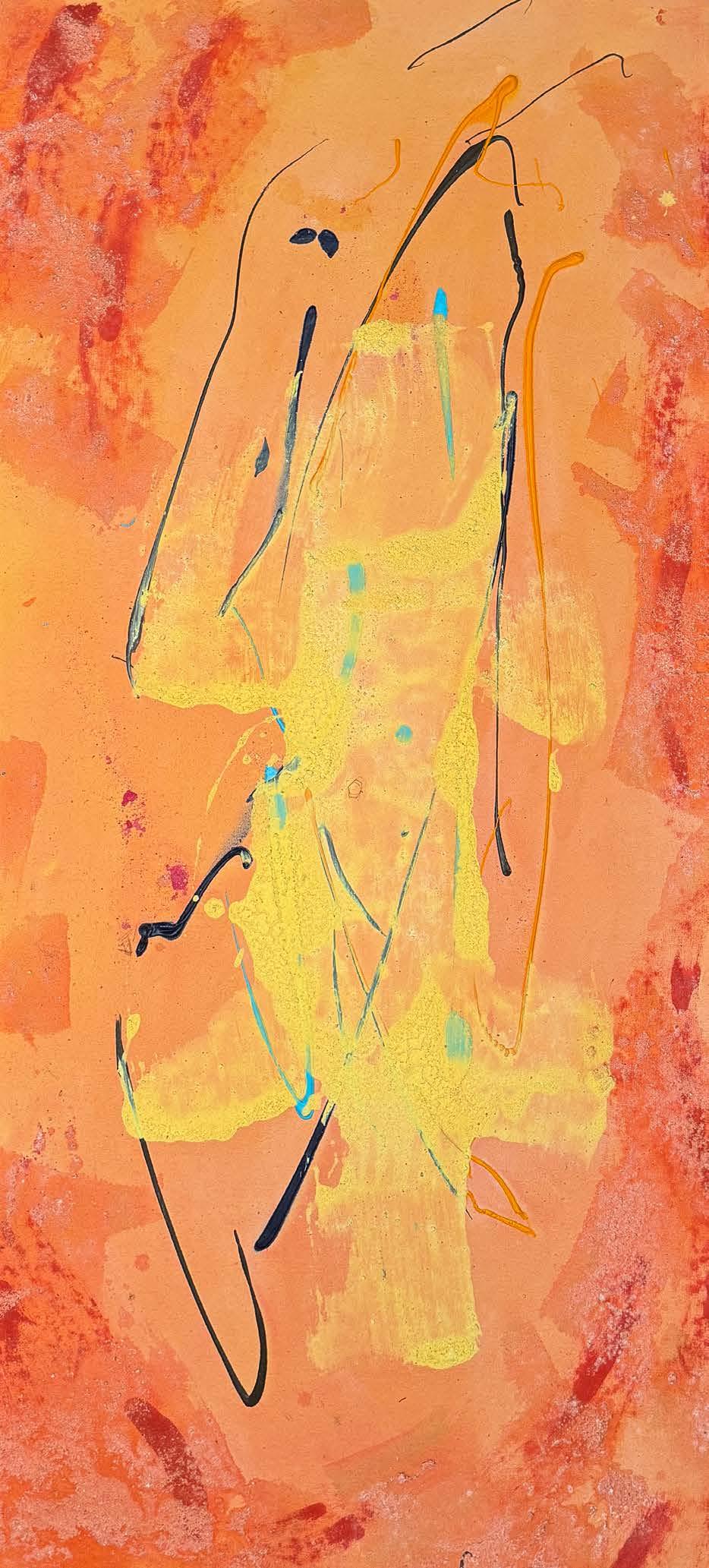
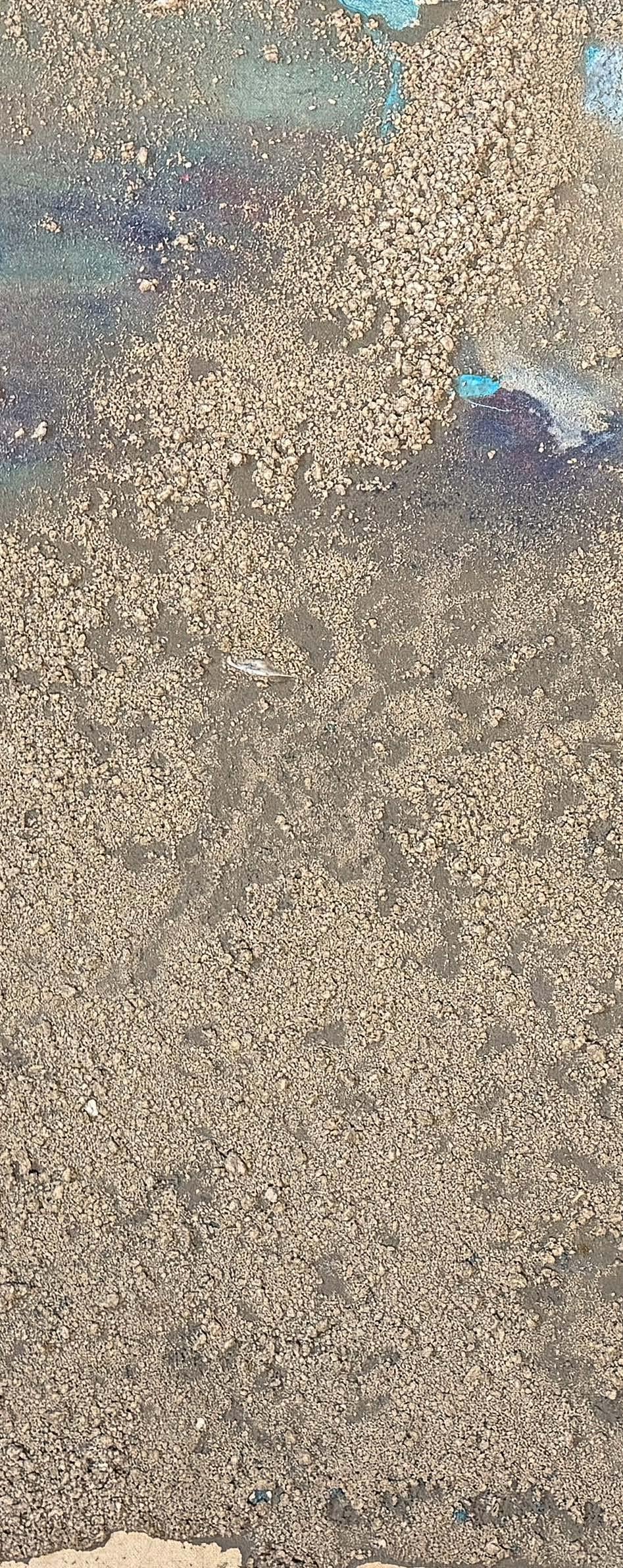
The featured paintings in Beyond the Stain primarily date to 1979, after Francis had spent a considerable portion of her time on the North Fork (Fig. 3). Fog Bank (p. 15) provides a literal interpretation for what could be a deconstructed shoreline, incorporating forms and colors that allude to the turbidity of early morning fog.
Fig. 3: Chace, J, John Douglass, and Robert Pearsall Smith. Map of Suffolk County, L.I., N.Y.: from actual surveys (North Fork detail). [Philad'a Philadelphia: John Douglass, publisher, 1858], Library of Congress, Geography and Map Division.
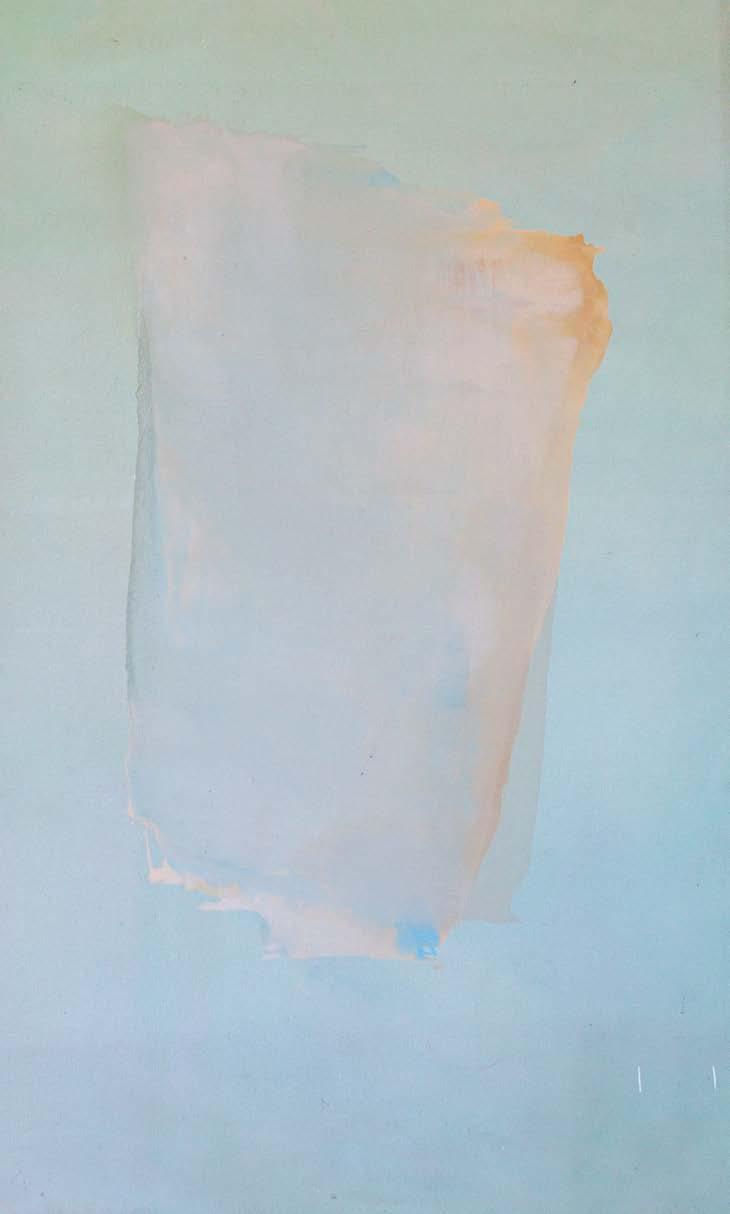
A subject repeated in her work, Pete’s Neck (p. 12) represents Peter’s Neck Point in Orient near the tip of the North Fork, where thin strips of land intersect with coastal highways that feed into the Atlantic (see the farthest land mass in the contiguous North Fork outlined in orange, Fig. 3). The canvas reflects this seaside topography by implementing mixed media to achieve dimension, overlaying a color field conceived in the artist’s signature water-based acrylic style. Francis revisited this region and its fragmented lands in a later work of the same name (Fig. 4), while another untitled work likewise invokes the geography of Long Island’s East End (Fig. 5).
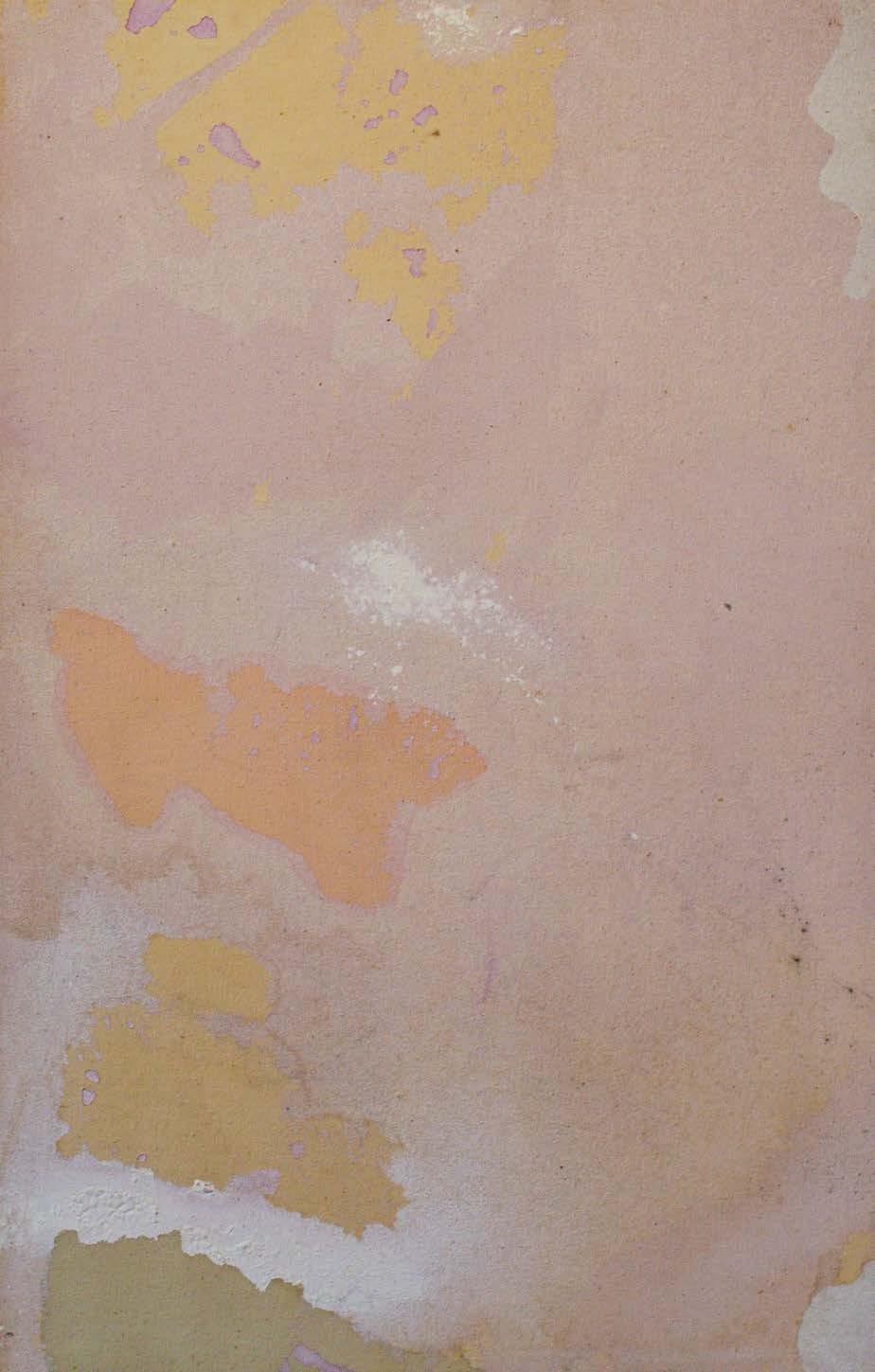
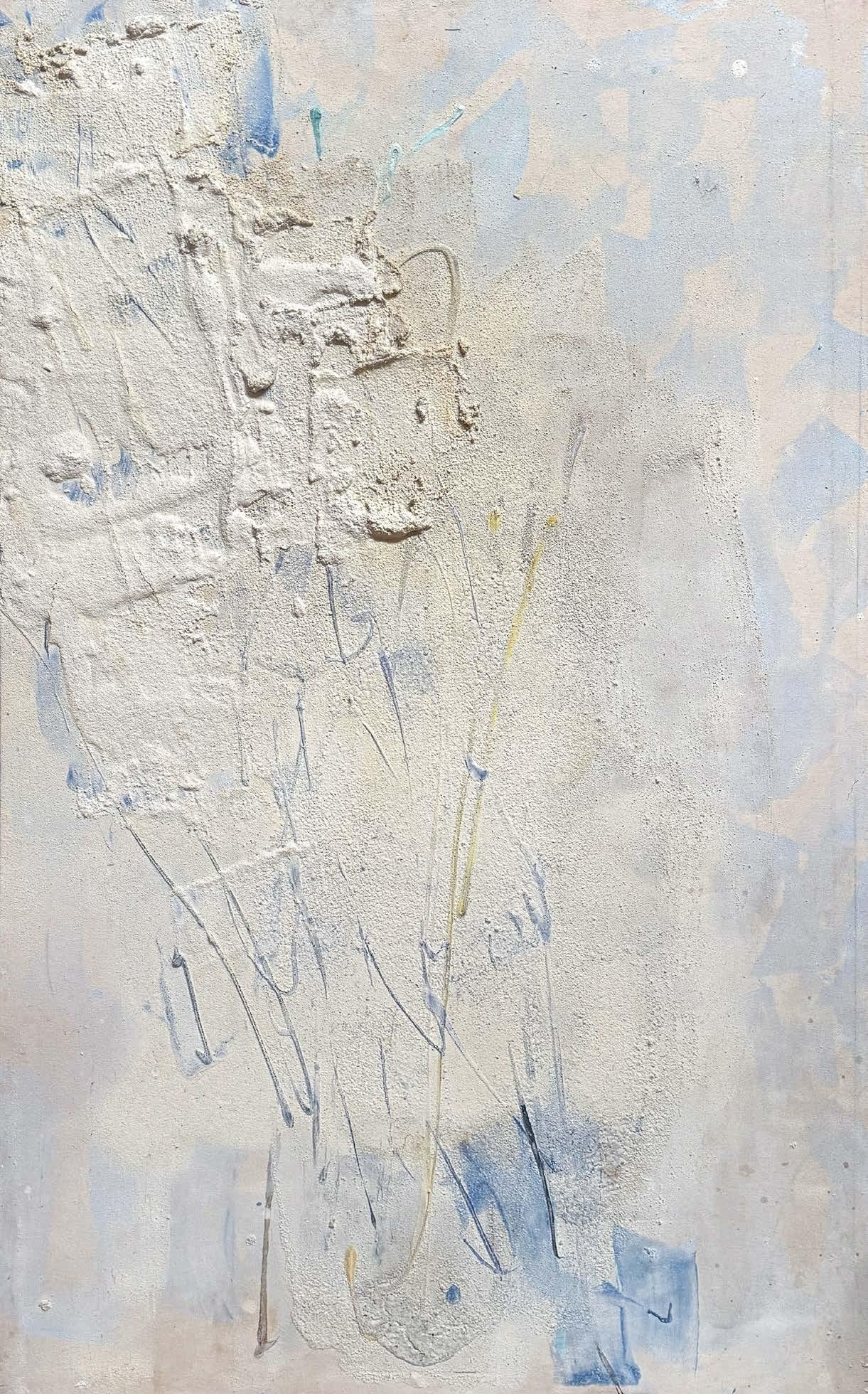
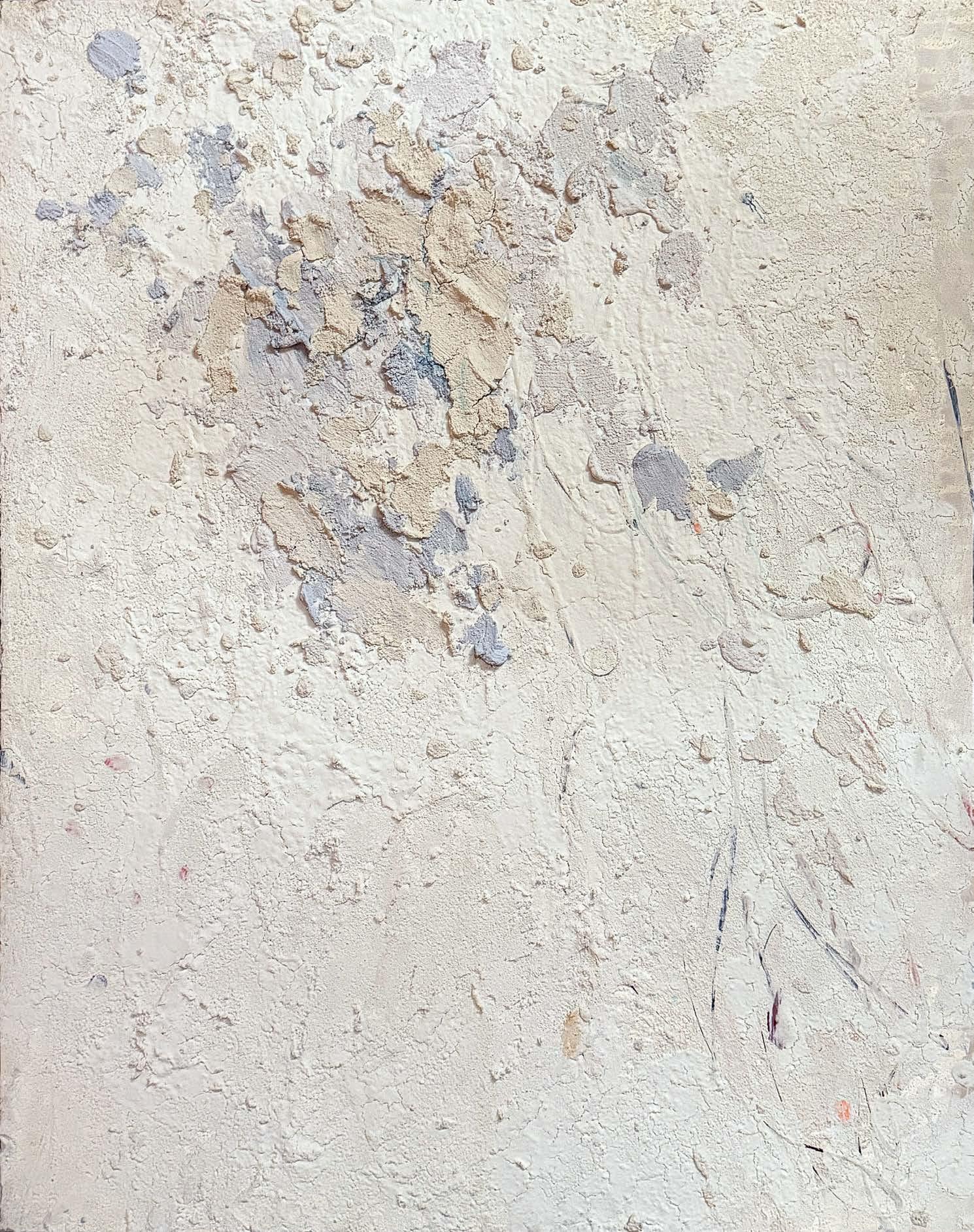
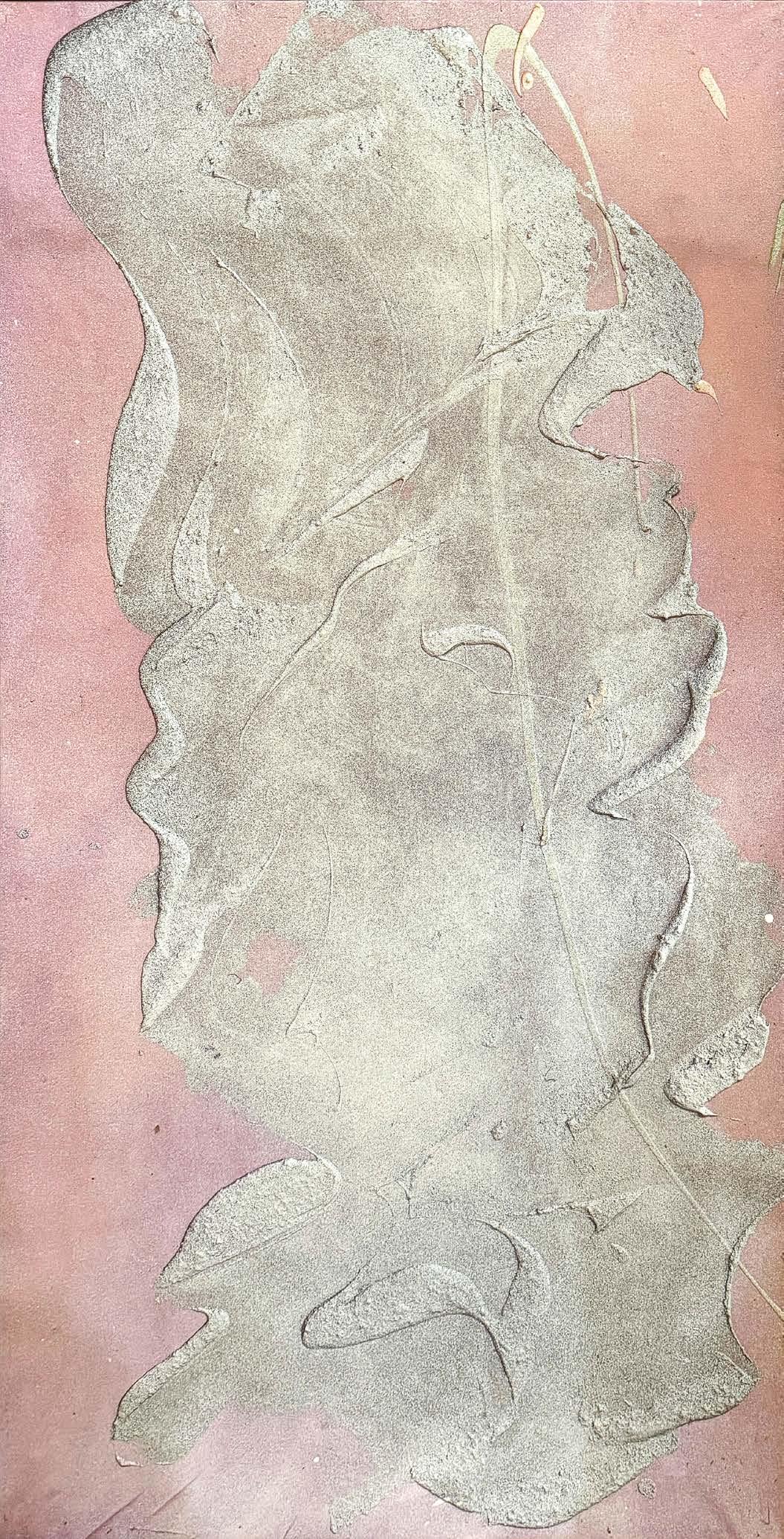
Much of the textural depth present in the exhibited paintings can be attributed to the use of sand, collected by Francis from the shores of Long Island, imbuing the works with a physical piece of her chosen home (see: White Shades of Pale, 1979, p. 16). The careful collection of this choice material anchors these abstract arrangements
22 in.
40 in.
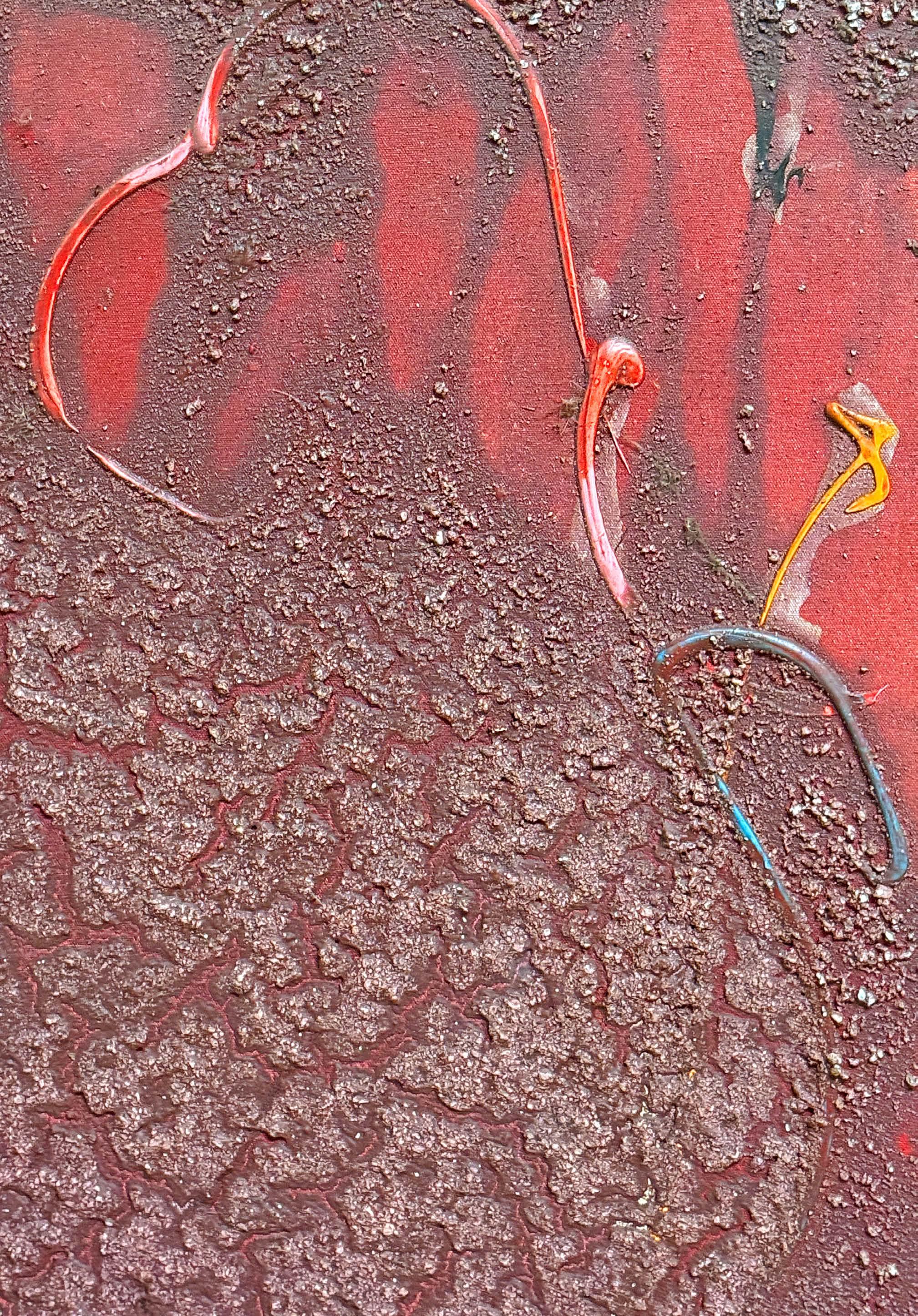
to a tangible, terrestrial plane, giving them a sense of place despite the permeating ambiguity of each composition. Acrylic gel is also included in a number of works, creating thick, raised interventions that remind of drawing, evoking the intimacy of the practice between artist and substrate.
An inspection of Francis’ work from the first half of the 1970s, when she initially abandoned representational subjects, reveals an innate comprehension of abstraction. Executed mainly in acrylic while occasionally incorporating enamel, these earlier forays into nonobjectivity encouraged the artist to expand her practice, testing mixed media and pushing the boundaries of how a painting can be made. Coarse Aggregate (Fig. 6), 1972, exemplifies Francis’ adept handling of light and color that would go on to inform—almost serving as the basis for—her later mixed media paintings. In the second half of the ‘70s, her work was capturing greater dimension
Fig. 4 (left): Sherron Francis, Pete’s Neck, 1981, acrylic on canvas, 34 ½ x
Fig. 5 (right): Sherron Francis, Untitled, 1981, acrylic on canvas, 80 x
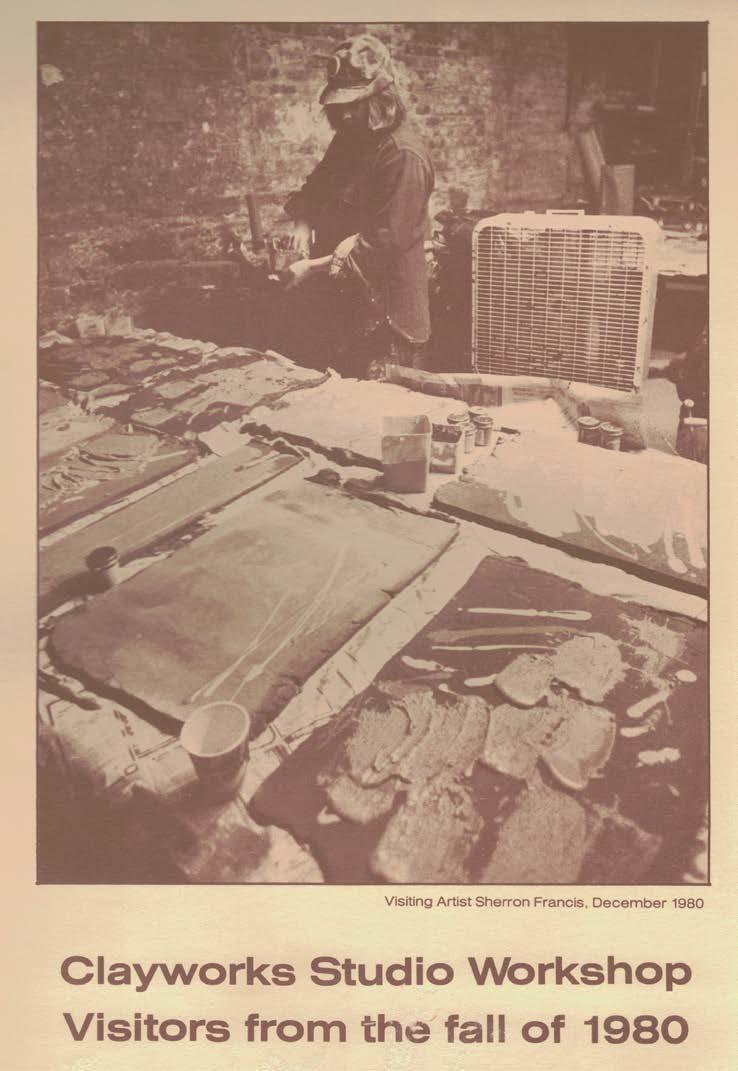
through the use of materials like sand and gravel,5 and by 1980, she was producing ceramic paintings at Clayworks (Fig. 7). 6
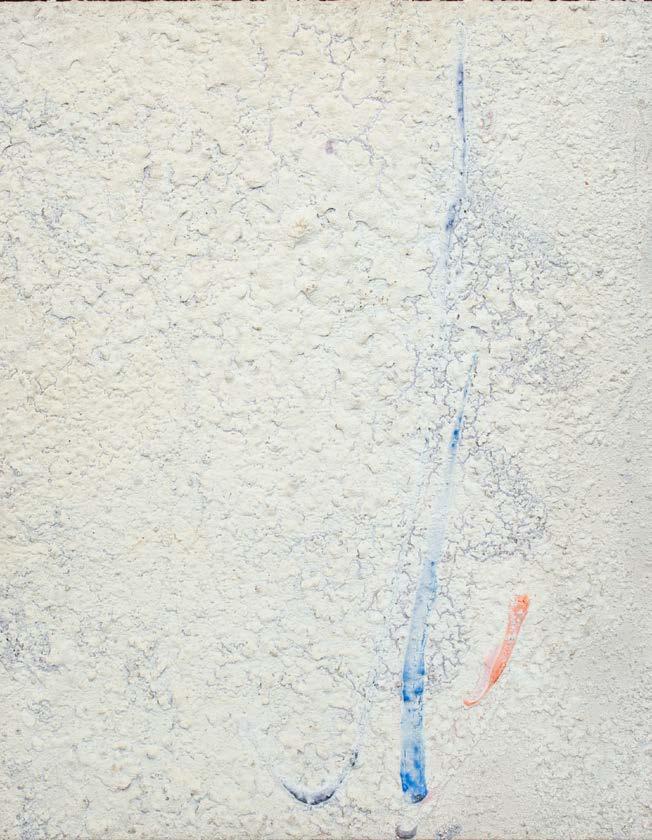
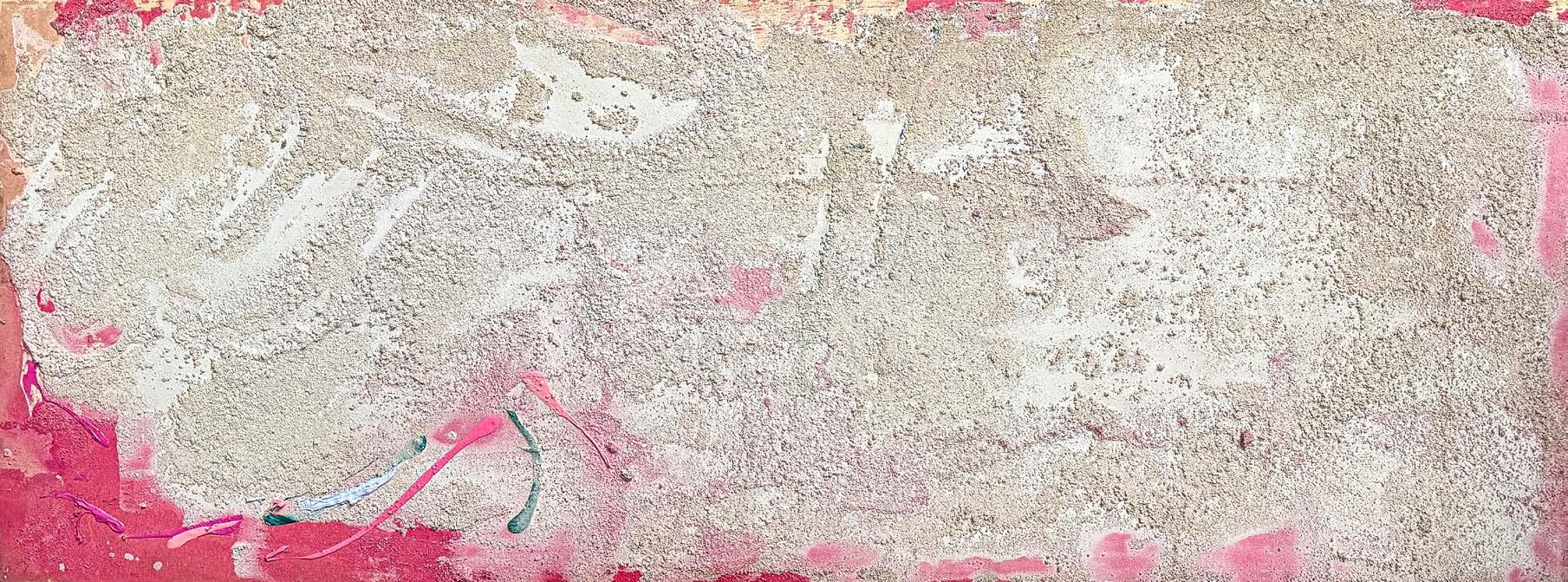
Unflinching in her usage of color, Francis’ untitled orange work from 1979 (p. 17) provides a counterpoint to her more ethereal canvases, its vibrancy punctuated with a ropy, impasto effect through the application of acrylic gel. This work was also presented at Tibor de Nagy shortly after its creation in a 1980 exhibition with sculptor Peter Reginato (Fig. 8). In the more subtle Zelda’s Veldt (p. 8), slashes of dark blue, red, and pink acrylic gel mingle with a swath of grainy, undulating white— the last vestiges of night giving way to a new day.
Francis’ interest in manipulating shades of white becomes apparent when looking at the works in Beyond the Stain. Typically used in a more supporting or figurative role, centering the color white as the primary mode of tonal exploration indicates a level of painterly maturity that comes with both professional growth and commitment to technique. By the late 1970s, Francis’ confidence had been stoked both by commercial success and acclaim amongst fellow creatives. Unlike the well-known white paintings executed by monoliths Kazimir Malevich or Robert Rauschenberg, Francis’ white paintings are animated by dimensional experimentation with mixed media. Her white paintings also infuse other colors in secondary and sometimes tertiary roles, skillfully dodging monochromatic classification.
Fig. 6: Sherron Francis, Coarse Aggregate, 1972, acrylic on canvas, 88 x 52 ¾ in.
Fig. 7 (right): Sherron Francis and her ceramic paintings on the cover of Visitors from the fall of 1980, exhibition brochure, Clayworks Studio Workshop, New York, 1980
Fig. 9: Sherron Francis, Untitled, 1977, acrylic and mixed media on canvas, 33 x 27 1/2 in.
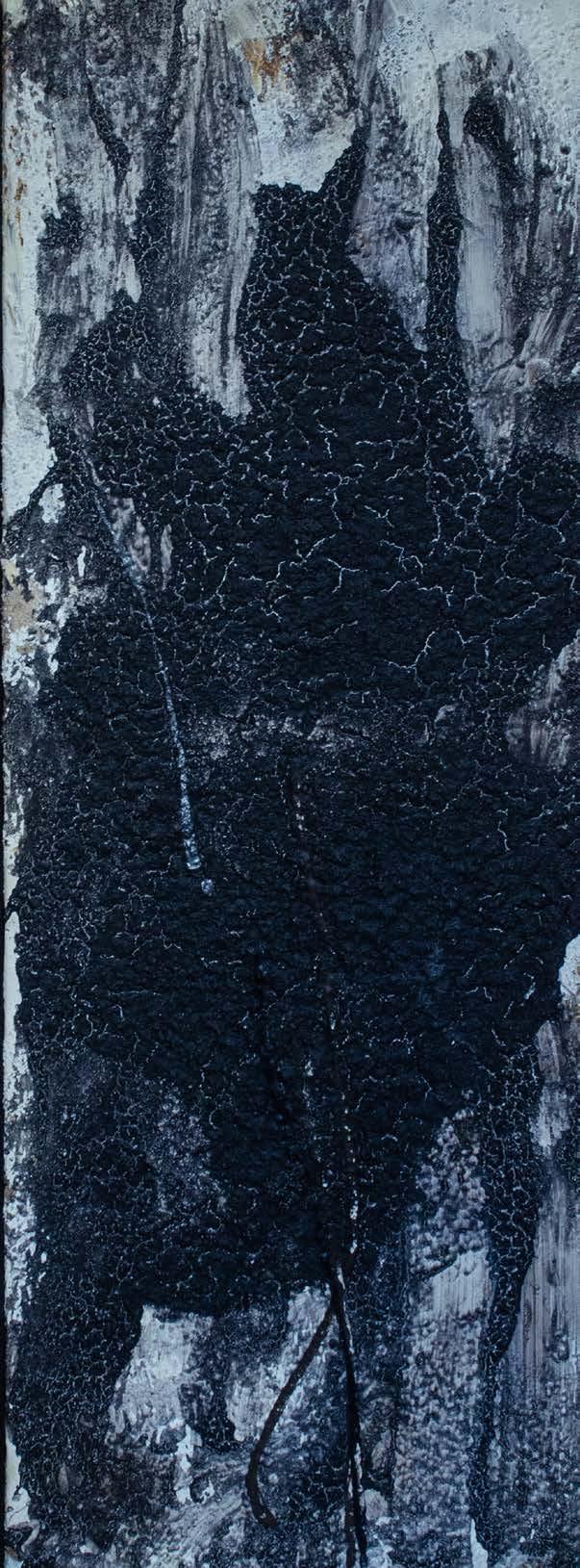
While the majority of works in the present exhibition were created in 1979, two outliers are also included: one from 1977, and the other from 1983. The red-toned 1977 painting (p. 13-14) provides an example of the artist’s development from works like Coarse Aggregate (Fig. 6) into more defined, mixed media investigations. An untitled white painting produced that same year (Fig. 9) shows a smaller, early investigation into white, implementing gravel and acrylic gel to give the piece a tactile appearance and subvert the standard flat, white canvas. When comparing these red and white works to the shadowy Noble O of 1976 (Fig. 10), one can start to delineate the care and craft that Francis employed in each painting as her skills and confidence developed. As the artist has proclaimed about her paintings: “They all have something to do with each other.”7
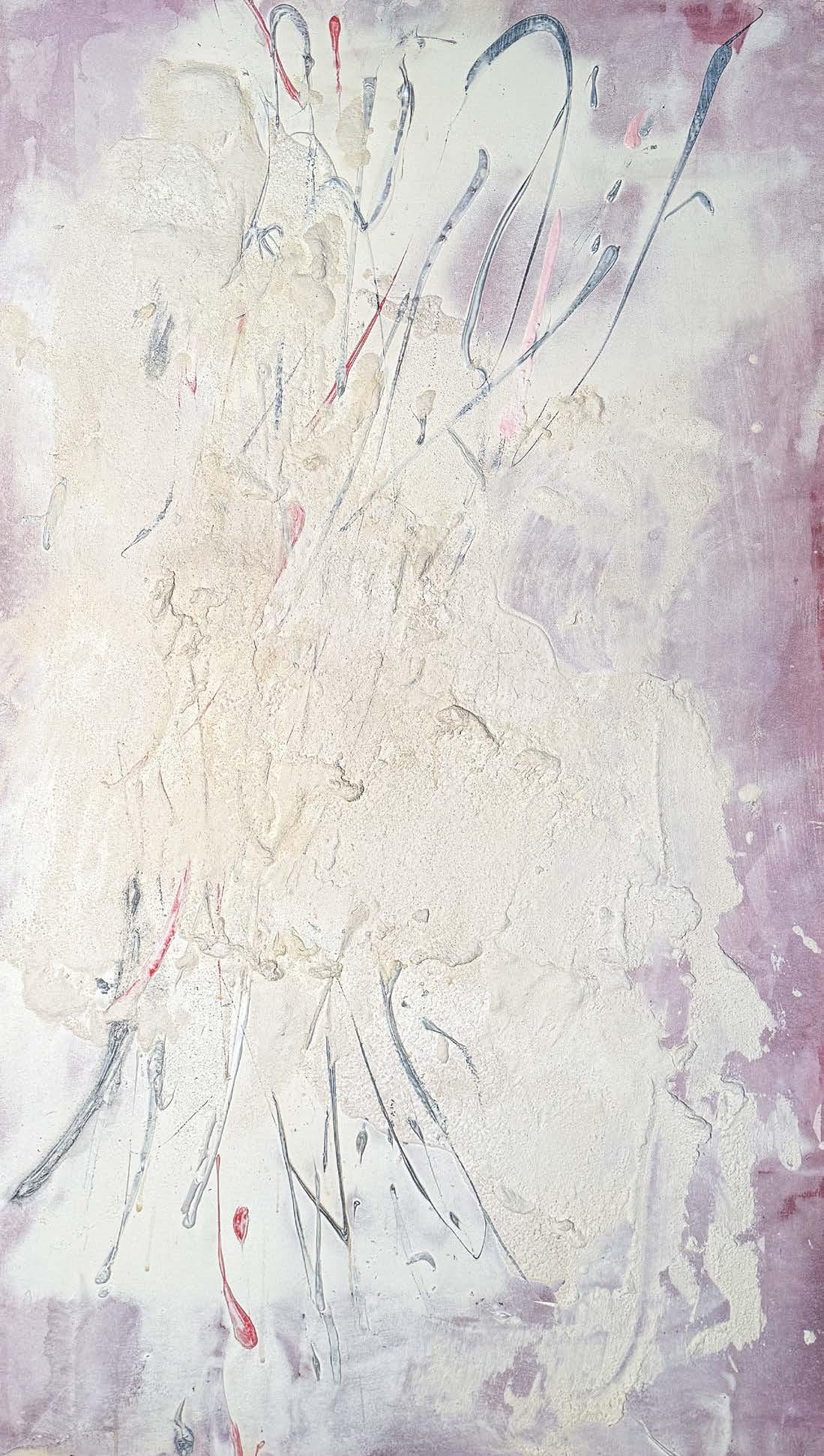
Francis’ daring investigations of color and material throughout the 1970s led her to a place of sophistication by the end of the decade, operating with a greater degree of comfort in her chosen aesthetic. In the later Doubling (p. 18), the exhibited work dating to 1983, a white mass comprises the central form, blending with mixed media to curl up around the edges against a sea of pink. The structural features present in Doubling show a more pronounced interest in three dimensional qualities that would eventually manifest in a subsequent sculpture practice. This work is emblematic of paintings that would follow in the mid-1980s, where she uses sweeping strokes of acrylic against different colored backgrounds.
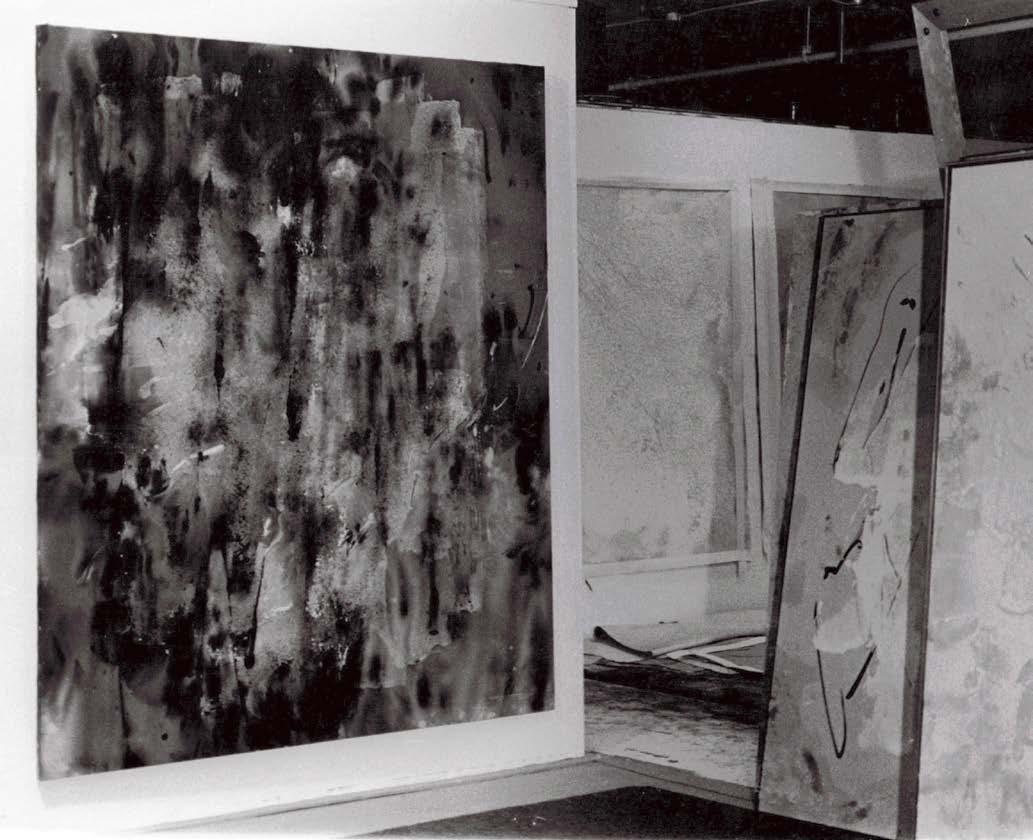
Fig. 8: Pre-installation image for her two-person exhibition with Peter Reginato at Watson/de Nagy, Houston, 1980, featuring Befit, 1979 on the left and partial view of Untitled, 1979 (p. X), on the right
The paintings in Beyond the Stain give insight into Francis’ careful consideration of material and color. The presence of sand within the paintings, sourced from beloved Long Island beaches, offers a unique connection to the artist, a palpable link to her lived experience. Her handling of white, not just as a color but as its own field of dimension to be expanded and contracted, places many of these works into a league of their own. Francis truly trusted her intuition when approaching her work, letting a piece take shape organically while experimenting with the intrinsic possibilities of texture and tone. Through dedicated, focused practice and a natural eye for beauty, Francis’ work is embedded with the esoteric spirit of exploration found in only the most imaginative abstraction.
10: Sherron Francis, Noble O, 1976, acrylic and mixed media
Endnotes
Lisa N. Peters, “Sherron Francis: A Color Field Artist Rediscovered—Paintings, 1972–81,” in Sherron Francis: A Retrospective, exh. cat. (Larchmont, NY: Lincoln Glenn, 2022), 2-9.
Peter Schjeldahl, “Abstract Painting—The Crisis of Success,” NewYork Times, February 4, 1973. Douglas Gold (Co-Founder, Lincoln Glenn Gallery) in discussion with the author, July 2026. Eli Sterngass (Co-Founder, Lincoln Glenn Gallery), digital transmission to author, July 29, 2026. Ibid.
Visitors from the Fall of 1980, exhibition brochure, Clayworks Studio Workshop, New York, 1980. LMC Media Productions, “LMC Media Community Story: Sherron Francis Art Gallery,” 2:51, September 19, 2022, https://www.youtube.com/watch?v=VKjE2uaNaIw
Fig.
on canvas, 57 x 21 in.
Zelda's Veldt, 1979
Acrylic and mixed media on canvas 67 x 38 1/4 inches
Signed, titled and dated on the reverse
Untitled, 1979
Acrylic and mixed media on canvas 65 x 31 1/2 inches
Signed and dated on the reverse
Untitled, 1979
Acrylic and mixed media on canvas
28 1/2 x 75 inches
Signed on the reverse
Pete's Neck, 1979
Acrylic and mixed media on canvas
69 1/2 x 43 inches
Signed, titled and dated on the reverse
Untitled, 1977
Acrylic and mixed media on canvas
56 1/4 x 28 1/4 inches
Fog Bank, 1979
Acrylic and mixed media on canvas
40 1/2 x 23 inches
Signed, titled and dated on the reverse
Acrylic and mixed media on canvas 66 x 52 inches
Signed, titled and dated on the reverse
White Shade of Pale, 1979
Untitled, 1979
Acrylic and mixed media on canvas 66 x 30 1/4 inches
Signed, titled and dated on the reverse
Doubling,
1983
Acrylic and mixed media on canvas 68 x 36 1/2 inches
Signed, titled and dated on the overlap
Selected Solo Exhibitions
Indiana University, Bloomington, IN, 1966
Bowery Gallery, New York, NY, 1970
André Emmerich Gallery, New York, NY, 1974, 1973
Janie C. Lee Gallery, Houston, TX, 1974
B. Kornblatt Gallery, Baltimore, MD, 1977
Tibor de Nagy Gallery, New York, NY, 1978, 1980
Bell Gallery, List Art Ctr, Brown Univ, Providence, RI 1979
Watson/de Nagy & Co., Houston, TX, 1980, 1984
Douglas Drake Gallery, Kansas City, MO, 1981
Clayworks Studio Workshop, New York, NY, 1982
Rubiner Gallery, Detroit, MI, 1985
Lincoln Glenn, Larchmont, NY, 2022
Lincoln Glenn, New York, NY, 2024
Selected Group Exhibitions
Speed Museum, Invitational Exhibition, Louisville, KY, 1964
Evansville Museum, Midstates Exhibition, Evansville, IN, 1965-1966
University of North Dakota, North Dakota Annual, Grand Forks, ND, 1966
Bowery Gallery, New York, NY, 1969
Galleria 11 Fante Di Spade, Rome, Italy, 1972
André Emmerich Gallery, New Talent Show, New York, NY, 1972
Whitney Museum of American Art, Whitney Biennial, New York, NY, 1973
Janie C. Lee Gallery, Houston, TX, 1973, 1975
Gallerie André Emmerich, Zurich, Switzerland, 1973, 1975
Museum of Fine Arts, Houston, Three Young American Painters, TX, 1974
Dootson/Calderhead Gallery, Seattle, WA, 1975
Museum of Fine Arts, Houston, Modern Painting: 1900 to the Present, 1975
Edmonton Art Gallery, New Abstract Art, Edmonton, Alberta, Canada, 1977
American Academy & Institute of Arts and Letters, New York, NY, 1978
Traveling Exhibition, Clayworks, Squires Art Gallery, Virginia Tech, Blacksburg, VA, 1981
Douglas Drake Gallery, Abstract Paintings, Kansas City, MO, 1981
Watson/de Nagy & Co., New Work New York, Houston, TX, 1981
Clayworks Studio Workshop, Visiting Artists, New York, NY, 1981
Traveling Exhibition, Broken Surface, Virginia State, Bennington College, Tibor de Nagy, 1981
Rubiner Gallery, Selected Paintings of Contemporary Abstractionists, Detroit, MI, 1982
C.D.S. Gallery, Artists Choose Artists, New York, NY, 1983
Watson/de Nagy & Co., Clayworks, Houston, TX, 1984
Douglas Drake Gallery, Toot, Kansas City, MO, 1985
Douglas Drake Gallery, Wood, New York, NY, 1989
Douglas Drake Gallery, Small Paintings: Big Issues, New York, NY, 1993
Columbia Museum of Art, Columbia, SC, 2001
Portland Art Museum, Clement Greenberg: A Critics Collection, Portland, OR, 2001
Art Museum of South Texas, Modernism of the 1970s, Corpus Christi, TX, 2008
Art Museum of South Texas, Looking Back and to the Now, Corpus Christi, TX, 2020-21
Selected Public Collections
Museum of Fine Arts, Houston, Texas
Denver Museum, Denver, Colorado
Art Gallery of Alberta, Edmonton, Canada
Everson Museum, Syracuse, New York
Museum of Southern Texas, Corpus Christi, Texas
Parrish Art Museum, Watermill, New York
Portland Art Museum, Oregon
Power Gallery of Contemporary Art, Sidney, Australia
Western Michigan University, Kalamazoo, Michigan
Teaching Experience
Indiana University, Bloomington, Indiana, 1964-1966
Eastern Michigan University, Ypsilanti, Michigan, 1966-1968
Connecticut College, New London, Connecticut, Guest Lecturer, 1974
Ridgewood School of Art and Design, Ridgewood, New Jersey, 1972-1985
The Cooper Union School of Art, New York City, New York 1978-1985
Metropolitan State College, Denver, Colorado, Visiting Artist, 1987