
“IN ANY GIVEN MOMENT WE HAVE TWO OPTIONS: TO STEP FORWARD INTO GROWTH OR STEP BACK INTO SAFETY.”
- ABRAHAM MASLOW

“IN ANY GIVEN MOMENT WE HAVE TWO OPTIONS: TO STEP FORWARD INTO GROWTH OR STEP BACK INTO SAFETY.”
- ABRAHAM MASLOW
LifeStraw was founded on the principle of humanitarian entrepreneurship with the belief that business can and should have a role to play in creating social impact globally.
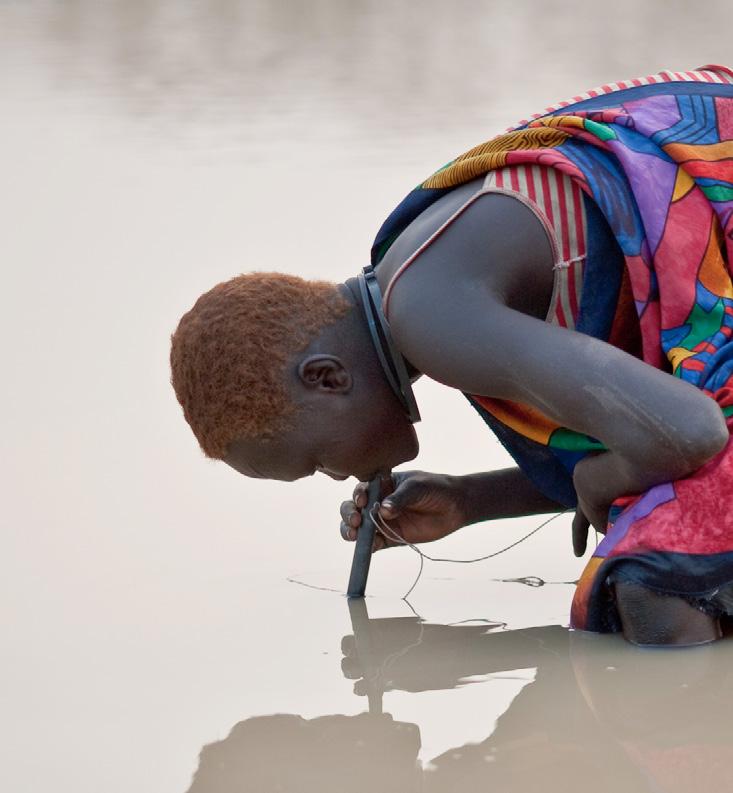
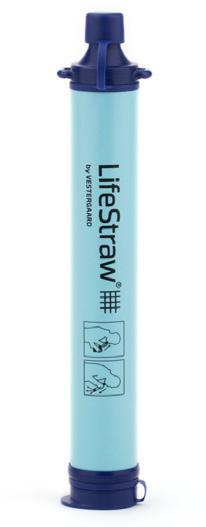
The award-winning portable LifeStraw personal water filter evolves from the Guinea worm filter. It removes bacteria and parasites, the main causes of waterborne illness.
The LifeStraw Carbon for Water campaign uses carbon financing to provide 4 million people in Kenya with sustainable access to safe drinking water.
LifeStraw wins an outdoor industry inspiration award for achievement of over 1 million kids reached with a year of safe water.

LifeStraw begins working with The Carter Center, creating a simple mesh filter to remove Guinea worm from drinking water.
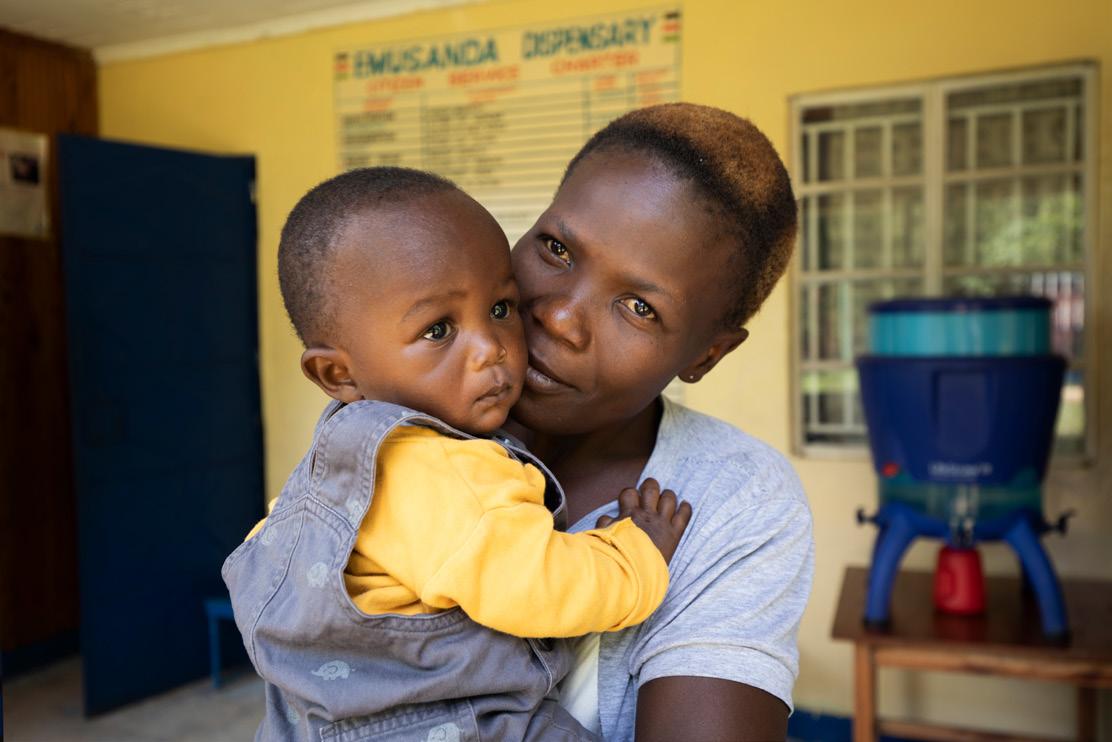
LifeStraw’s parent company, Vestergaard, builds and finances the Emusanda Health Center to ensure access to health services, including HIV/AIDS treatment.
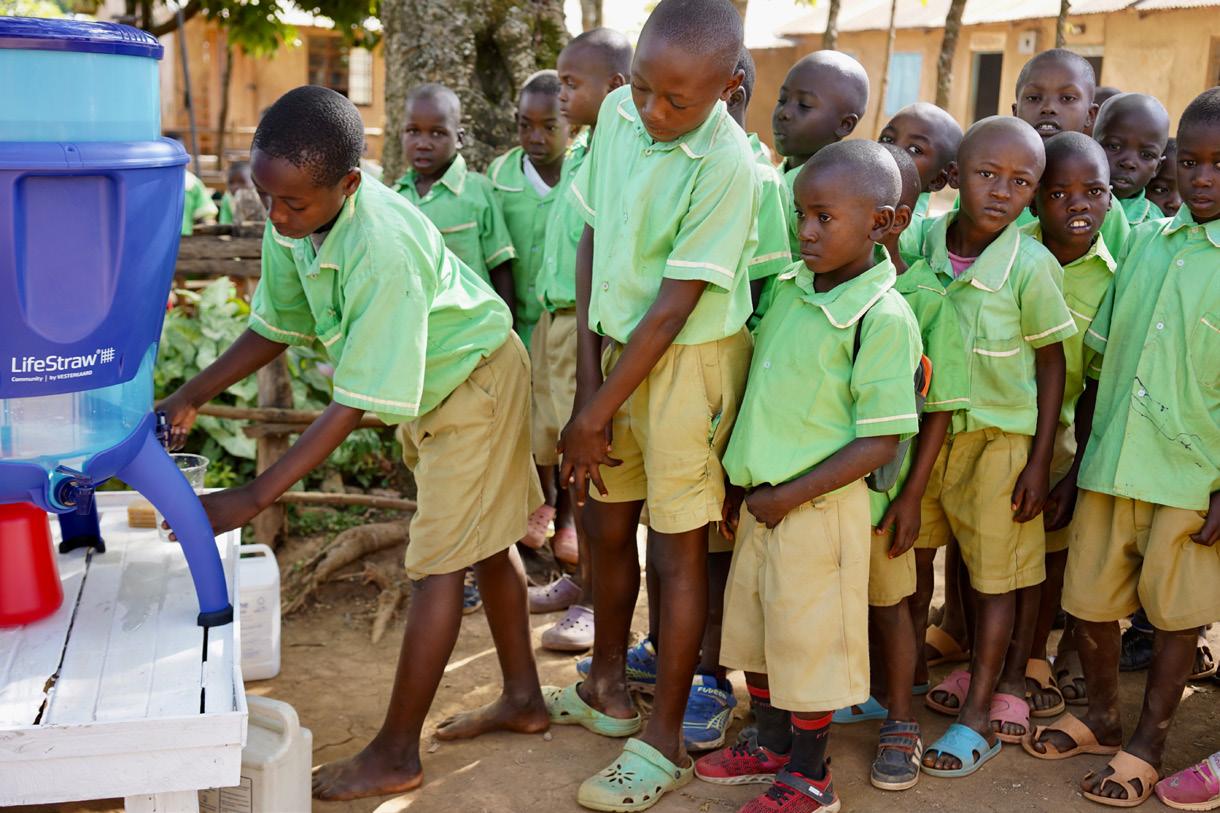
LifeStraw launches a Give Back program through which, for every LifeStraw sold, one school child in need receives safe water for an entire school year.
LifeStraw Home, a water filter pitcher that addresses serious tap water quality issues is introduced. It is the first LifeStraw product to enter home, lifestyle market.
LifeStraw becomes a Carbon Neutral company, offsetting all annual greenhouse gas emissions. Our Give Back program reaches over 4.6 million kids with a year of safe water.
2021
LifeStraw officially becomes a B Corp!
Did you know?
LifeStraw started over 26 years ago as a partnership with The Carter Center, in a collective effort to eradicate Guinea worm disease through the design of a simple mesh filter that removes the parasite from drinking water. This partnership eventually led to the development of the personal LifeStraw in 2005, which addresses a broader range of water contaminants including bacteria, parasites and microplastics.
LifeStraw continues to innovate technology to address diverse water needs across the globe – including the removal of viruses, heavy metals like lead, chemicals and other emerging contaminants that impact people in every country. We have become a market leader in water filtration and purification for the outdoors and emergency preparedness, and in 2019 expanded to the in-home water filtration space.
Our continued growth has allowed us to reach new markets and address emerging water concerns in communities across the world. Every aspect of our business is informed by our goal to positively impact the planet and its people. By expanding our product portfolio, we empower an even larger audience to give back and play a vital role in addressing global water crises
HISTORY OF LIFESTRAW
A LETTER FROM OUR CEO
COMMITMENT SCORECARD
WE BELIEVE
B CORP CERTIFICATION
2021 HIGHLIGHTS
2021 IMPACT MAP
IMPACT: PEOPLE
GUINEA WORM ERADICATION
GIVE BACK PROGRAM
OPERATING IN SCHOOLS DURING COVID
SAFE WATER PARTNERSHIPS
COLOMBIA DISASTER RELIEF
MIGRATION, CLIMATE CHANGE + WATER
WATER + INDIGENOUS LANDS
SAFE WATER PROJECTS FUNDED BY PARTNERS
A FOCUS ON WOMAN + GIRLS
EMPLOYEE VOLUNTEERISM
COMMUNITY VOLUNTEERISM IN KENYA
DIVERSITY, EQUITY, INCLUSION + JUSTICE
IMPACT: PLANET
RESPONSIBLE PRODUCTS + PACKAGING
RESPONSIBLE PRODUCTION
GLOBAL STANDARDS + TESTING
CLIMATE CHANGE
2022 COMMITMENTS
2021 was a year of growth for LifeStraw — for us as a business, as a company focused on people and planet and as a team of passionate individuals. The accomplishments of LifeStraw in 2021 — setting extremely ambitious sustainability and social impact goals, being accountable for our responsibilities as a quickly growing company, and expanding our humanitarian reach — could not make me prouder.
than 6 million kids with a year of safe water and health education. Despite school closures and shutdowns, our team in Kenya showed up. They put themselves on the front lines and continued to provide safe water and support to these kids and their families throughout the year.
together to support each other and her family, establishing a trust for the three children she left behind.

“We faced each new challenge with an unwavering commitment to doing what is right by planet and people.” ALISON HILL

Looking back on the past year, what strikes me most is what we were able to accomplish, not the hardships we faced. It is the wins, despite continued global disruptions. It is the fact that this team dug in and continued to drive change, even as the COVID pandemic, natural disasters and political crises remade the world around us.
Last year Lifestraw became a certified B Corp. As part of that pledge, we’ve demonstrated a commitment to social and environmental justice, we’ve made a promise to be accountable to all our stakeholders, and we’ve committed to even more transparency into our company and our performance on sustainability goals.
We retained our Climate Neutral certification and scored among the top companies of the REI product impact assessment. We committed to setting climate targets across our operations and manufacturing that are aligned with science and started a long journey of making systemic changes to become a climate positive company. We did these things in spite of global logistics delays, raw materials increase, production disruptions and production slowdowns.
We faced each new challenge with an unwavering commitment to doing what is right by planet and people. And that’s not all.
LifeStraw continued to invest in our Give Back program, driven by retail sales, which has to date provided more
In 2021, we responded to natural and humanitarian disasters in 23 countries, reaching over half a million people with safe water. We stepped up to the political atrocities in Tigray and worked to amplify the voices of those fighting to make change. We did this with a strong community of committed partners working on the ground.
We’ve identified local and grassroots partners around the globe – from Navajo Nation to the borders of Mexico, to Haiti, Ethiopia and Sudan. And we did this with the help of LifeStraw customers. We saw more than 21,000 customers step forward with us to contribute to our safe water programs. In fact, there were more individual safe water contributions than any other single product sold on LifeStraw.com.
But for all there is to be proud of in 2021, I can tell you the year was the most difficult I’ve encountered during my time in this job. The business headwinds have been significant. We’ve been frustrated at the slow progress government officials have made on the growing climate crisis. And its more and more concerning to see the ways climate change is exacerbating inequities. We had uncomfortable conversations and faced hard realities on the work needed to be a truly inclusive company. And, like so many, we lost family and friends to the virus.
In June 2021, Lifestraw mourned the death of our beloved colleague Viola Adeke, whose remarkable work you will read about in this report. She spent the last decade running our school programs in western Kenya and was a core part of the heart and soul of our team. She was a champion of women’s empowerment and a gifted educator and orator. She was family and our team rallied
Viola’s life serves as a reminder to me that we have to make our work count, to find a path forward even in dark days. I know the path ahead will have hurdles. I know it will be marked with sadness and frustration, but also with joy. The path we build next will be one of grace and gratitude and optimism and fight. Just like the path that Viola walked.
As we move forward into 2022, I want to acknowledge the power of a passion-driven team, of collective action and of community. Our community has continued to push us further in our climate commitments, challenged us to be more inclusive, and supported our Give Back program. Thank you to the community that helped us identify organizations on the ground working to get safe water and food to Ukraine. We are thankful and proud to have this support of innovators, change makers, social justice warriors, and humanitarians.
Thank you to every single one of you that has supported our work – those who have challenged us to do better, have asked the hard questions, and have voted with your voice and your dollars to support both people and planet. This community lifted us up in 2021 and showed us what we are all capable of. We are so immensely proud of the work laid out in this report, and everyone who helped us accomplish it. We also know we have so much further to go, and we are so grateful for our community who will be there along the way.
We look forward to taking these next steps with you in 2022, whatever it may throw at us, as we continue to fight for good; as we continue to fight for people and planet.
LifeStraw will donate over 350,000 Guinea worm filters to The Carter Center. LifeStraw is committed to supporting The Carter Center through eradication.
LifeStraw will launch community safe water programs in three new locations.
LifeStraw will reach more than 175 new schools and provide over 1.3 million kids with a year of safe water.
LifeStraw will establish and implement new COVID protocols and educational materials for its school-based programming. We will also donate over 300 handwashing stations to schools to support hand hygiene and COVID-19 prevention.
LifeStraw will implement a health impact study of our safe water programming.
LifeStraw donated 540,000 Guinea worm filters to The Carter Center, which were distributed to the five remaining endemic countries.
LifeStraw implemented new community safe water programs in Guatemala, Haiti and Brazil (delayed until Jan. 2022 due to COVID), and responded to emergencies and humanitarian crises in 20 additional countries.
LifeStraw reached 175 new schools and provided safe water to over 1.4 million kids.
LifeStraw developed new protocols for LifeStraw Community purifier use at schools during COVID, to ensure social distancing & proper sanitation. We also designed & distributed new posters & stickers with COVID & hand hygiene messaging, & distributed 300 handwashing stations to 123 schools.
LifeStraw (in partnership with a UMD graduate student) designed a mixedmethods health impact study to look at the health and school attendance outcomes of waterborne disease and point of use water purification; baseline data was collected in Jan. ‘22 in the Sertão, Brazil with 5 schools, 3 Community Health Workers and 114 households.
LifeStraw will scale-up domestic safe water programming with indigenous communities, people experiencing homelessness and other areas in the US and Canada facing water insecurity.
LifeStraw will continue to respond to humanitarian and natural disasters and emergencies. LifeStraw will develop a humanitarian working group with other brands.
LifeStraw will continue to promote the advancement of women and girls through support of Emusanda Health Center, as well as through a continuation of thought leadership for women in the outdoor space.
LifeStraw will measure and offset all 2020 company greenhouse gas emissions.
LifeStraw received grant funding and launched a youth-led safe water program in Navajo Nation (in partnership with Rez Refuge). We also assembled care packages and distributed filters for people experiencing homelessness across the US; provided safe water to indigenous land protectors in Canada; and provided safe water in response to ten natural disasters in the United States and Canada.
LifeStraw responded to natural and humanitarian emergencies in 23 countries. In response to Hurricanes Eta and Iota, we partnered with other outdoor brands to carry down critical supplies to impacted families in Providencia, Colombia. However, we did not yet form an official humanitarian working group.
LifeStraw continued to support Emusanda Health Clinic in western Kenya, reaching over 5,500 clients with comprehensive HIV care and over 6,900 clients with maternal, newborn and family planning care. We continued our sponsored series, Her Voice, in partnership with Outside Business Journal, to examine gender biases that exist in the outdoor industry and encourage diverse voices in the space. The six video interviews spotlight women breaking barriers and changing the status quo in the industry
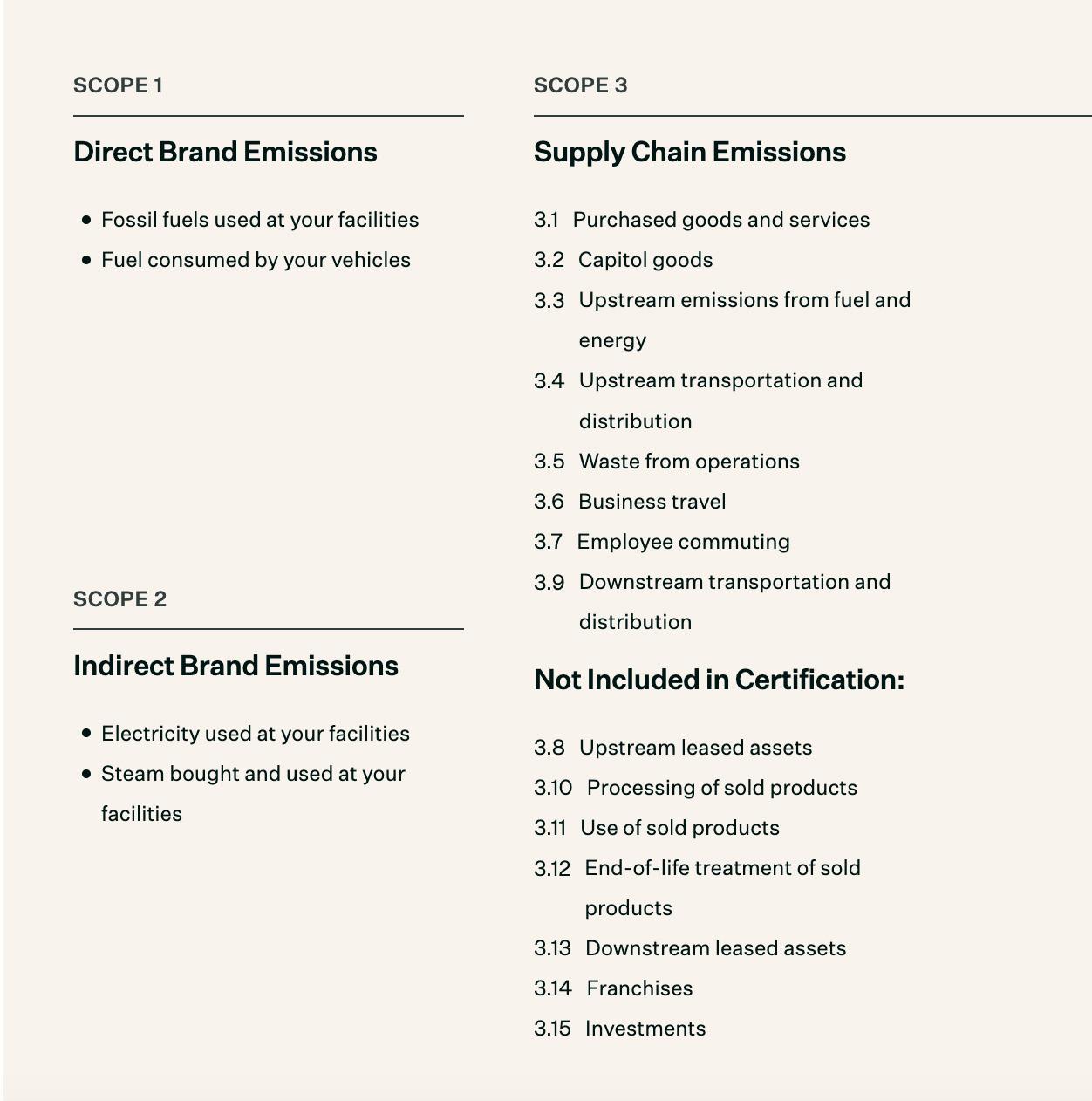
LifeStraw measured and offset 8,438 tCO2e emissions from scopes 1, 2 and 3 and continues to be a Climate Neutral company.
WE BELIEVE IT IS OUR DUTY TO HOLD OURSELVES ACCOUNTABLE FOR OUR COMMITMENTS
LifeStraw will recommit to our internal Think Globally, Act Locally initiative to support employee volunteerism beyond LifeStraw programming. We will afford each employee at least one workday per quarter to support local volunteering projects, and will provide volunteer opportunities for each respective LifeStraw office. We will continue to volunteer on Giving Tuesday.
LifeStraw will implement quarterly company-wide DEI trainings; we will launch inclusive recruiting efforts with a diversity mandate. All annual performance reviews will include evaluation against the core value of diversity; we will develop a set of five-year diversity targets for our internal organization.
LifeStraw will benchmark our current vendor portfolio and track progress of our new vendor policy to ensure procurement of women-owned, BIPOCowned, persons with disabilities-owned, and other diverse vendors.
LifeStraw will continue to expand our tracking and reporting of diversity, inclusivity and representation in marketing. In 2021, we will expand our reporting to include print media, video, and content creators. We will also expand the categories we track to also review our work to promote diversity in body size and ability.
LifeStraw will establish Science Based Targets to responsibly grow our business aligned to the 1.5 degree pathway.
LifeStraw will measure and track effluent water and establish a waterrecycling strategy.
LifeStraw will certify five vendors for ISCC, to continue to ensure sustainability across our supply chain.
LifeStraw staff engaged in a variety of community outreach and volunteering initiatives each quarter. Additionally, we implemented a company-wide Giving Tuesday campaign to collect donated household supplies, hygiene kits, food and other resources to donate to people in need across our respective communities, and spent days volunteering at shelters and cleaning local parks.
LifeStraw implemented six DEI, antibias and emotional intelligence workshops and trainings for all staff. We also identified new methods and platforms to increase the diversity of candidates and hires, and launched new performance reviews to include the core value of diversity. We are in the process of onboarding an external DEI consultant, to support a company-wide diversity audit, target setting and roadmap.
LifeStraw finalized and launched a new vendor policy to ensure continued procurement of diverse vendors. We have yet to put full tracking in place and will complete this step in 2022.
LifeStraw continued to track and report on diversity, inclusivity and representation in static social posts, video shoots, and brand photography. We did not complete a full analysis of creator talent in 2021, but it remains our goal to contracts and hire diverse creators, including at least 50% women or non-binary identified, over 50% BIPOC, and that we ensure diversity in body size and ability.
LifeStraw has onboarded a climate consultant and is in the process of developing science-based emissions reduction targets and a roadmap to reach them.
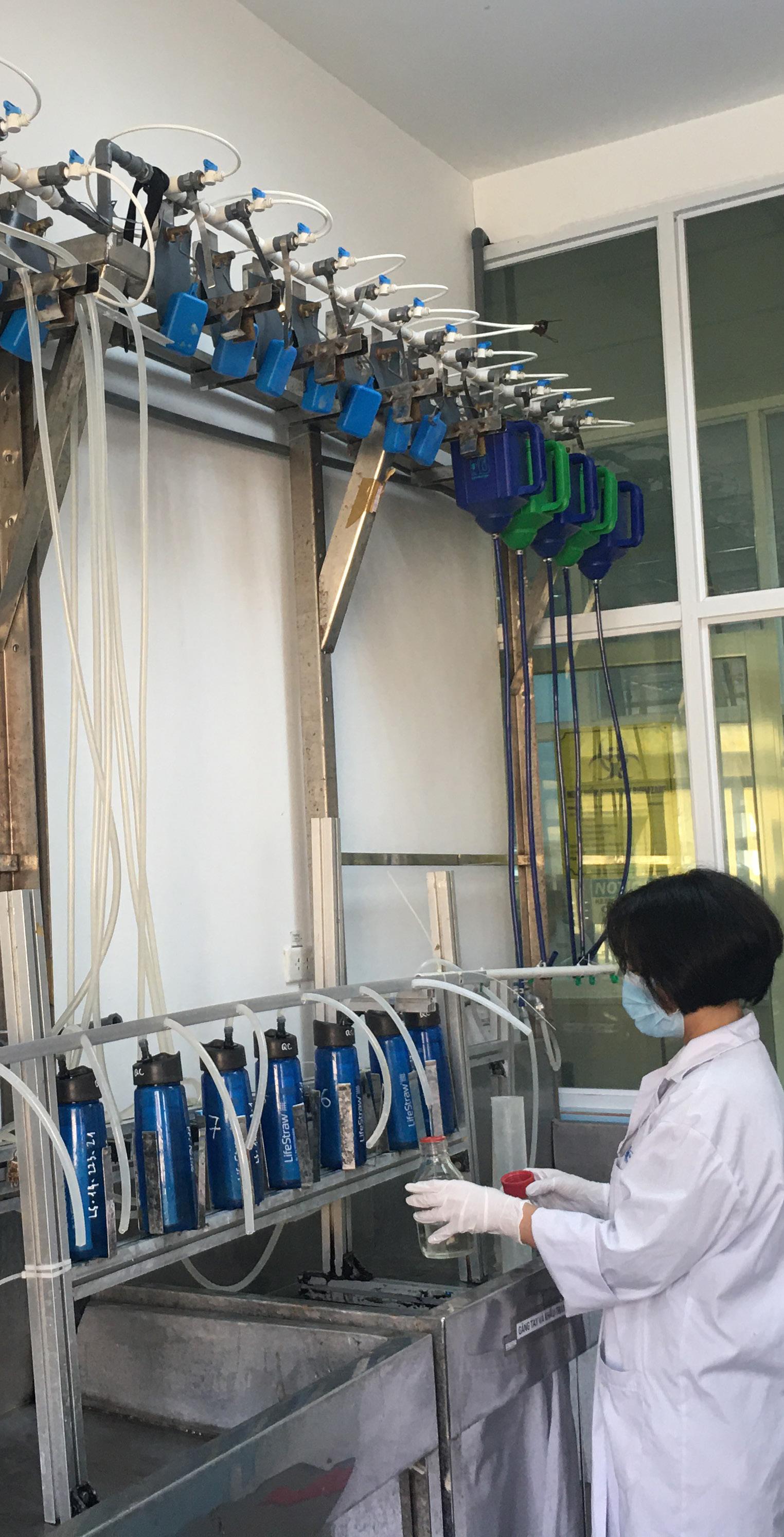
LifeStraw recycled over 400K liters of test water at our Vietnam lab. LifeStraw also continued to ensure tracking and reporting of all Tier 1 and 2 water usage; in 2021, our Tier 1 supplier reduced water consumption by 35%, and all effluent water is tested and treated to ensure no environmental pollution.
LifeStraw certified seven vendors for International Sustainability and Carbon Certification, and completed Sedex SMETA ethical audit with Tier 1 supplier to ensure adherence to standards for social and ethical compliance
LifeStraw will launch a full set of packaging sustainability guidelines, and will eliminate all plastic from our packaging.
LifeStraw will continue research on low-pressure virus removal technology.
LifeStraw launched new sustainable packaging guidelines and developed packaging for our new outdoor line that is 100% recyclable and 100% plastic free. We continue to research recyclable or reusable options for existing products where plastic is currently required to maintain integrity of technology.
LifeStraw continued ongoing research on low-pressure virus removal technology, as well as other filtration and purification technology to address water contamination issues in low-resource and humanitarian settings.
Research, science and public health principles and institutions.
AT LIFESTRAW, WE BELIEVE...
That everyone should have equitable access to safe drinking water, and that our goals of providing safe drinking water cannot be accomplished without also supporting and believing in:
Climate change — that it is real and disproportionately affects under-resourced communities.
The responsibility to reduce our environmental footprint and our accountability to be transparent about our greenhouse gas emissions and our efforts to mitigate them.
The rights of women and girls across the world.
The rights and inclusion of BIPOC, LGBTQ+, people of various abilities, body types, income levels, and geographic backgrounds.
The importance of diversity, equity and inclusion in our marketing, in our company and in our impact work.
Black Lives Matter, and that we as a company must strive to be actively anti-racist.
The rights of people to seek asylum in other countries when they are fleeing persecution at home, and the rights of families to stay together.
Human rights, human equity and human compassion.
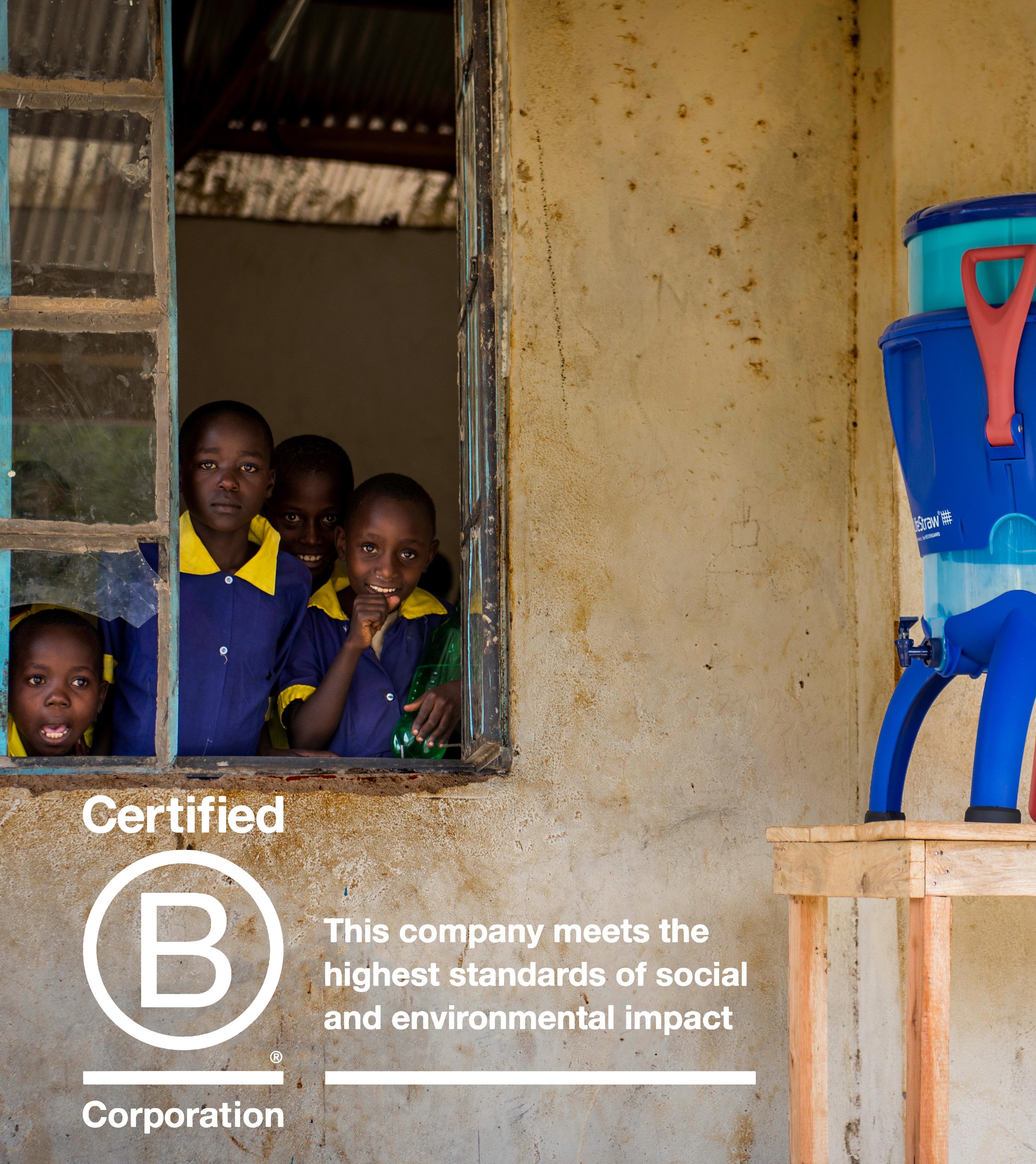
In 2021, LifeStraw proudly became a Certified B Corp and joined a community of businesses that are transforming the global economy to benefit all people, communities, and the planet. While doing good has always been part of our DNA, as a B Corp we are even more committed to accounting for the impact of our decisions on all our stakeholders – our workers, customers, suppliers, communities and the environment.
And where we fell short in the assessment, we have committed to bettering our practices, to improve our score and ultimately our impact.
OUR B CORP SCORE IN 2021 WAS 96.5
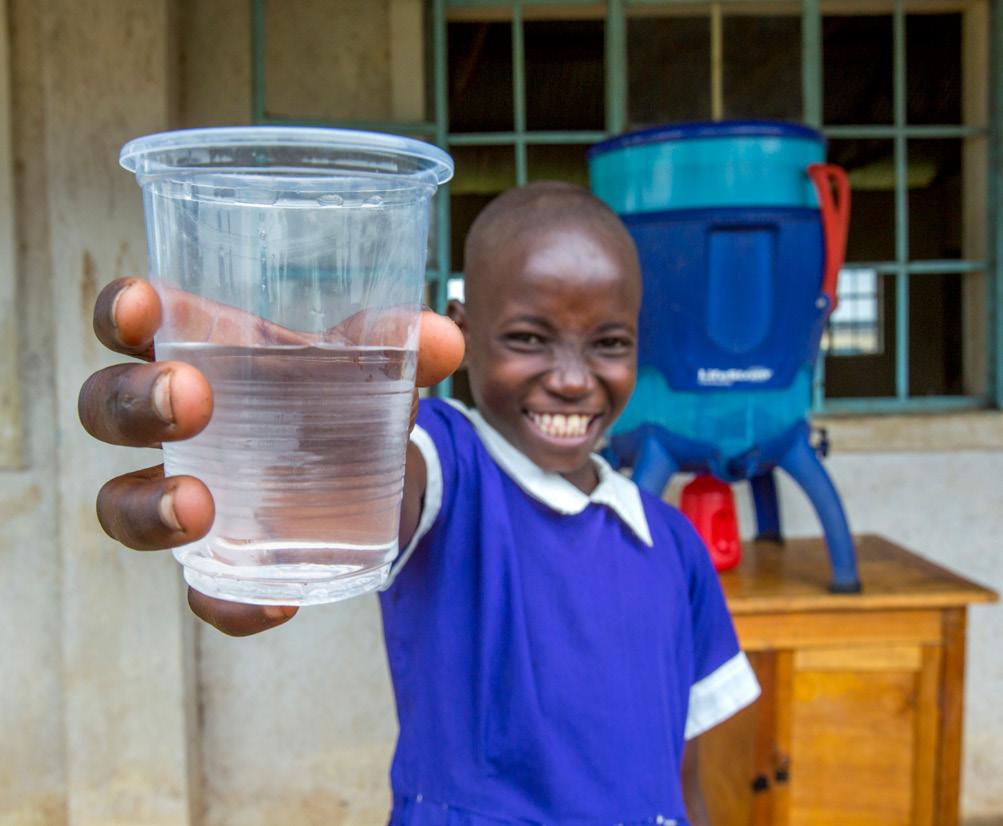
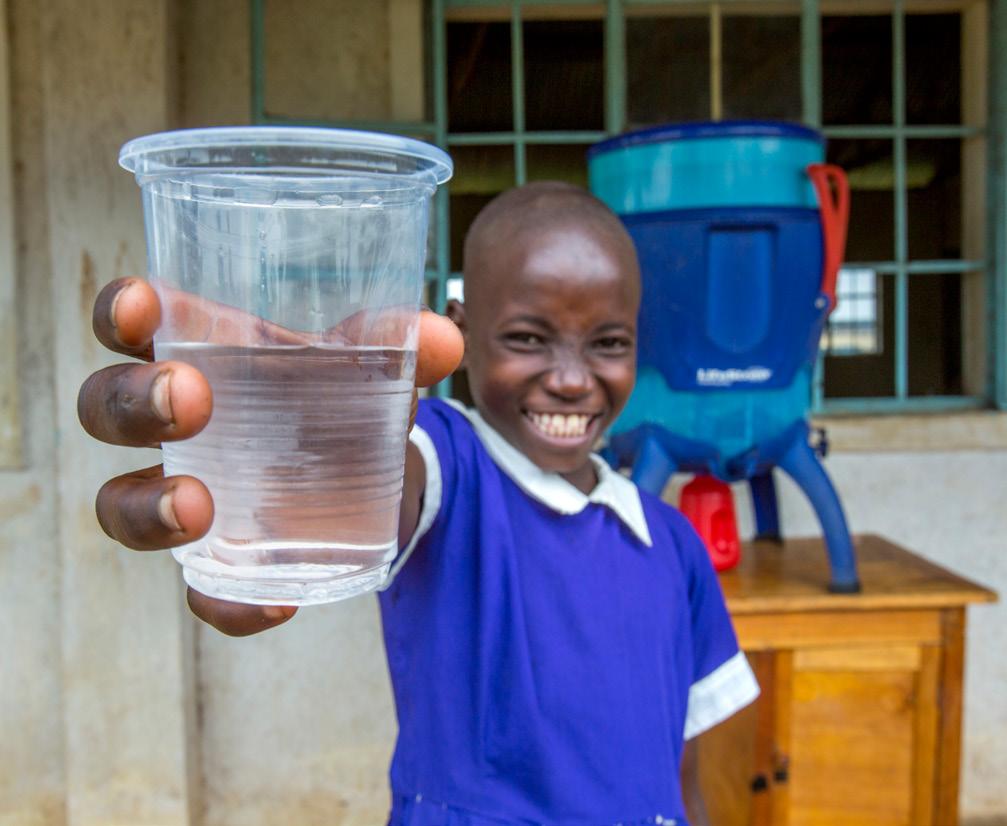
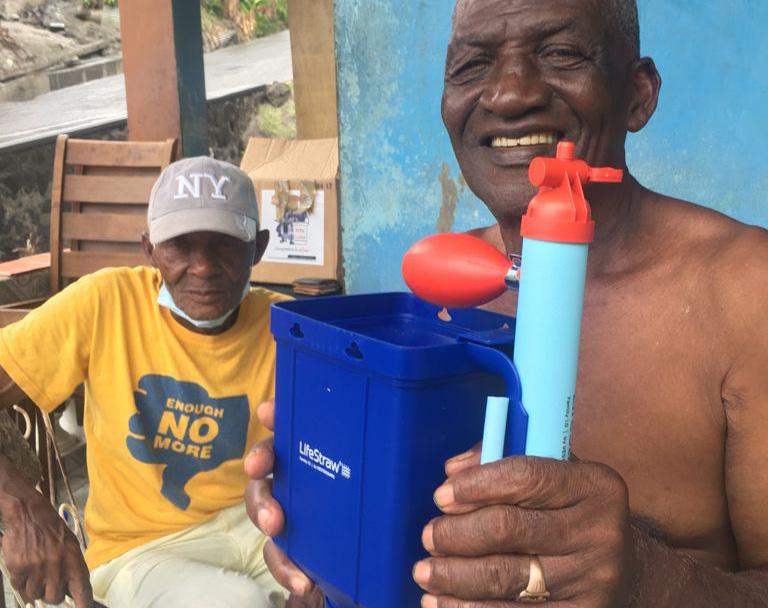
GIVE BACK PROGRAM PLASTIC WASTE GUINEA WORM ERADICATION CLIMATE RECYCLING NATURAL + HUMANITARIAN DISASTER RESPONSE WATER CONSERVATION EMPLOYEE VOLUNTEERISM
6,096,729 kids with a year of safe water since 2014
540,000 Guinea worm filters donated to The Carter Center
508,165 people reached with safe water in 23 countries
Every quarter, our teams engaged in local community service.
129 million plastic water bottles offset by the purchase of LifeStraw bottle, pitcher + dispenser products
We recertified as Climate Neutral and pledged to be Climate Positive by 2030
400,000 liters of water saved through recycling of test water at our lab in Vietnam
2,140 kgs of used LifeStraw products in Kenya upcycled to make handwashing stations
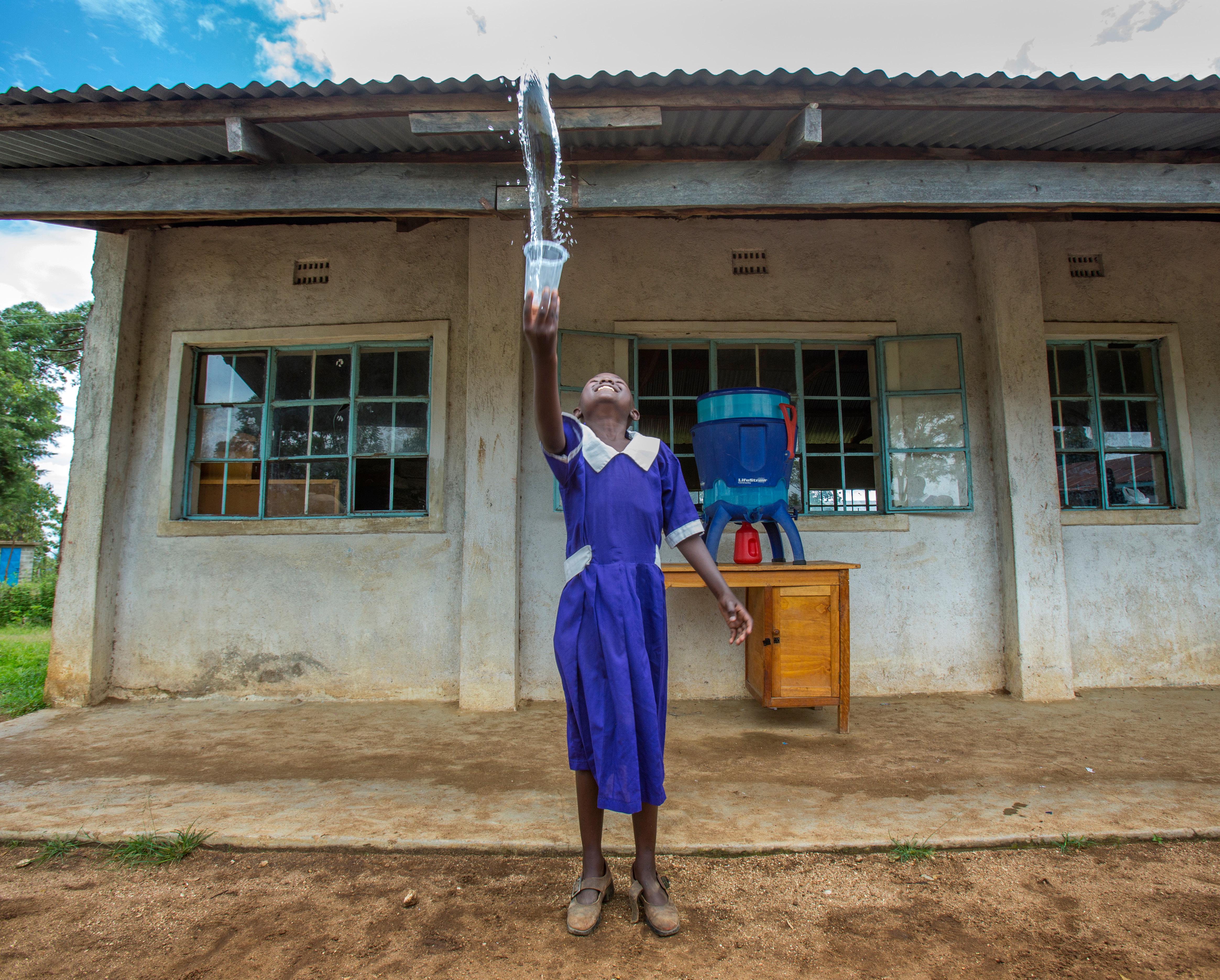
WE BELIEVE THAT SAFE WATER IS A HUMAN RIGHT, AND FOR OVER 20 YEARS, WE HAVE BEEN IN BUSINESS TO ENSURE THAT RIGHT IS REALIZED ACROSS THE GLOBE.
540,000
LIFESTRAW GUINEA WORM FILTERS DONATED TO THE CARTER CENTER IN 2021.
39 MILLION
LIFESTRAW GUINEA WORM FILTERS PROVIDED TO THE CARTER CENTER SINCE 1994.
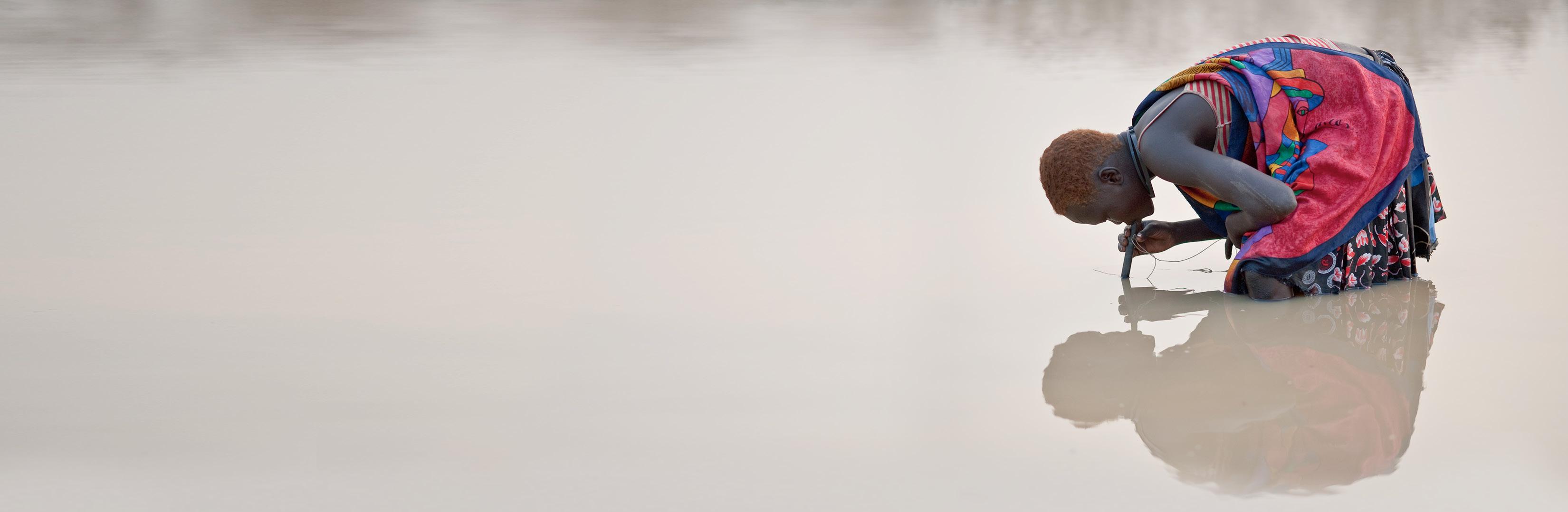
1986
3.5M CASES 21 COUNTRIES
In 1986, The Carter Center Guinea worm eradication program was established. The center has worked with ministries of health to stop the spread of the disease by providing health education and community - based interventions.
In 1994, LifeStraw partnered with The Carter Center to design a simple mesh filter to remove Guinea worm larvae from drinking water.
In 2021, LifeStraw donated 540,000 LifeStraw Guinea worm filters to The Carter Center. There were only 14 reported cases globally – a 48% drop from the previous year.
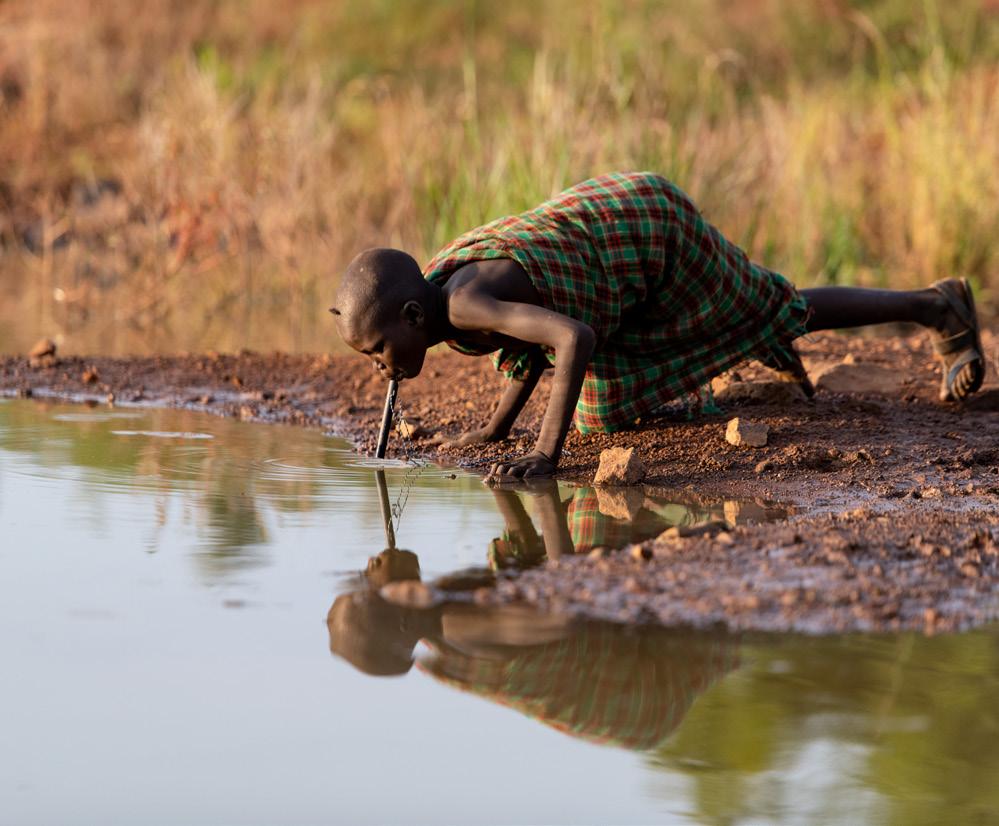
Guinea worm is a painful, parasitic infection that is contracted when people consume water from stagnant sources contaminated with Guinea worm larvae. Inside a human’s abdomen, Guinea worm larvae mate and female worms grow. After a year of incubation, the female Guinea worm (now three feet in length), slowly emerges
from the human body, creating an agonizingly painful lesion on the skin. Guinea worm incapacitates people for extended periods of time, leaving them unable to care for themselves, work, grow food or attend school, further exacerbating the impact of the disease.
“ERADICATION IS AN APPROACHING REALITY.”
- CARTER CENTER CEO PAIGE ALEXANDER
When Guinea worm is eradicated, it will be the first disease to be removed from the planet without the use of a vaccine.
LifeStraw is committed to supporting The Carter Center through eradication.
EVERY PRODUCT PURCHASED MAKES AN IMPACT.
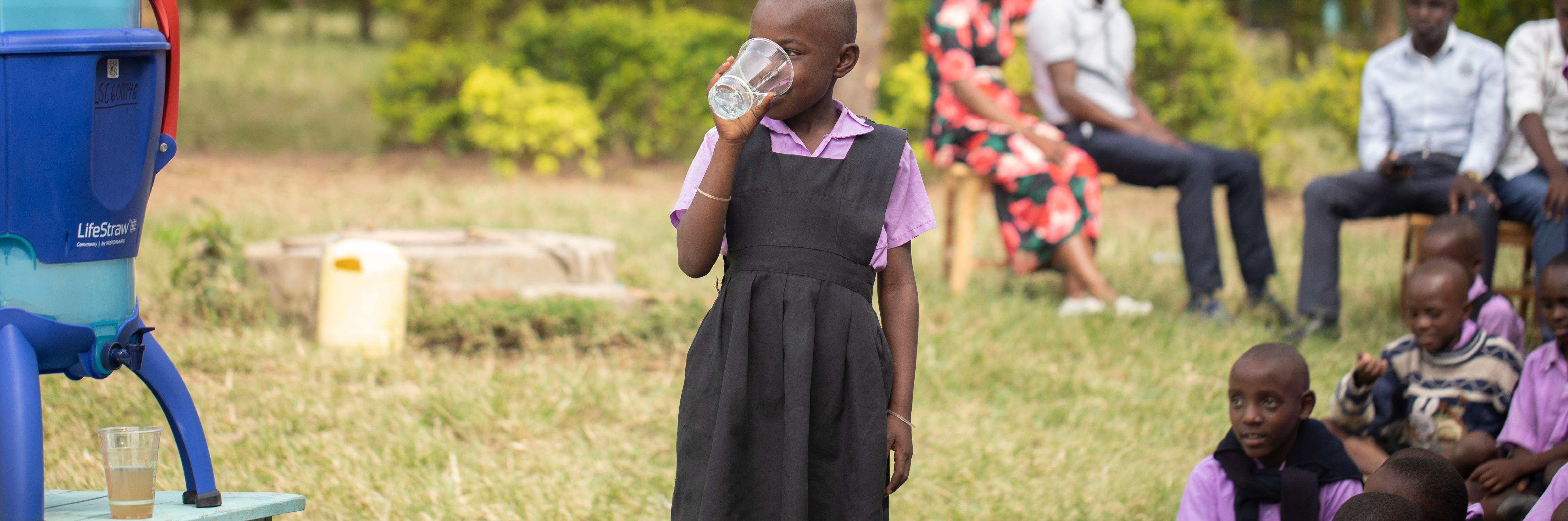
LifeStraw’s internal Give Back program ensures that for every product sold through retail, a child in need receives safe water for an entire year.
How does the program work?
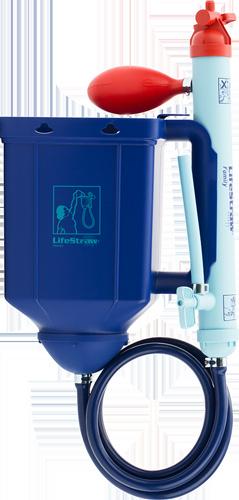
One LifeStraw Community purifier provides approximately 100 kids with safe water for an entire year. When a consumer purchases any LifeStraw product, a portion of that profit helps to fund the distribution of a LifeStraw Community to a school, as well as training, education, maintenance, and spare parts.
How is our program unique?
We’re not a one for one, and there’s a reason. Not every product serves every context or water need! We have a portfolio of products designed specifically for low-resource settings.
We don’t just drop off products. We provide onsite education and training, and year-round support to build and maintain relationships with our schools and communities, and to ensure the purifiers are properly maintained and used.
We make a five-year commitment to every school. We commit dedicated staff and resources to ensure our program is sustainable for the long-term. We renew the five - year commitments until schools themselves are able to provide safe water to all students.
We hire locally. In western Kenya, we employ 40 full-time staff to ensure year-round training and education, implementation, and product maintenance and support. All programs are managed by local staff that come from the communities they support.
IN 2021, THE GIVE BACK PROGRAM REACHED:
2,225 SCHOOLS
1,447,579 KIDS WITH A YEAR OF SAFE WATER
SINCE ITS INCEPTION IN 2014, THE LIFESTRAW GIVE BACK PROGRAM HAS PROVIDED
6,096,729 KIDS WITH A YEAR OF SAFE WATER.
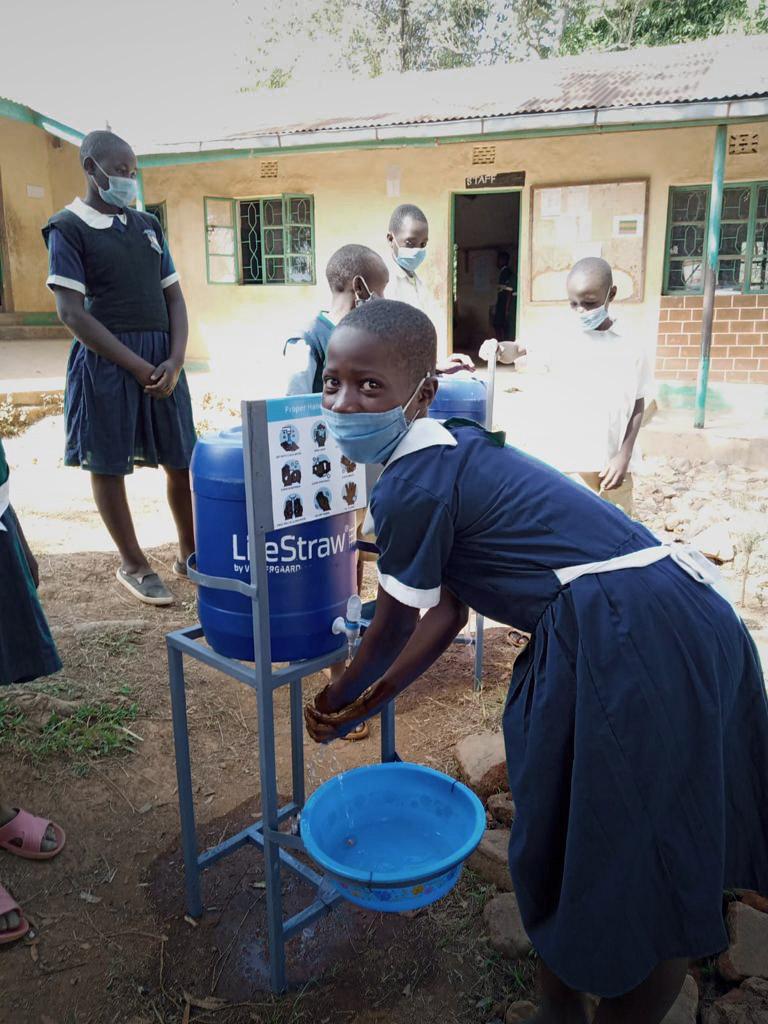
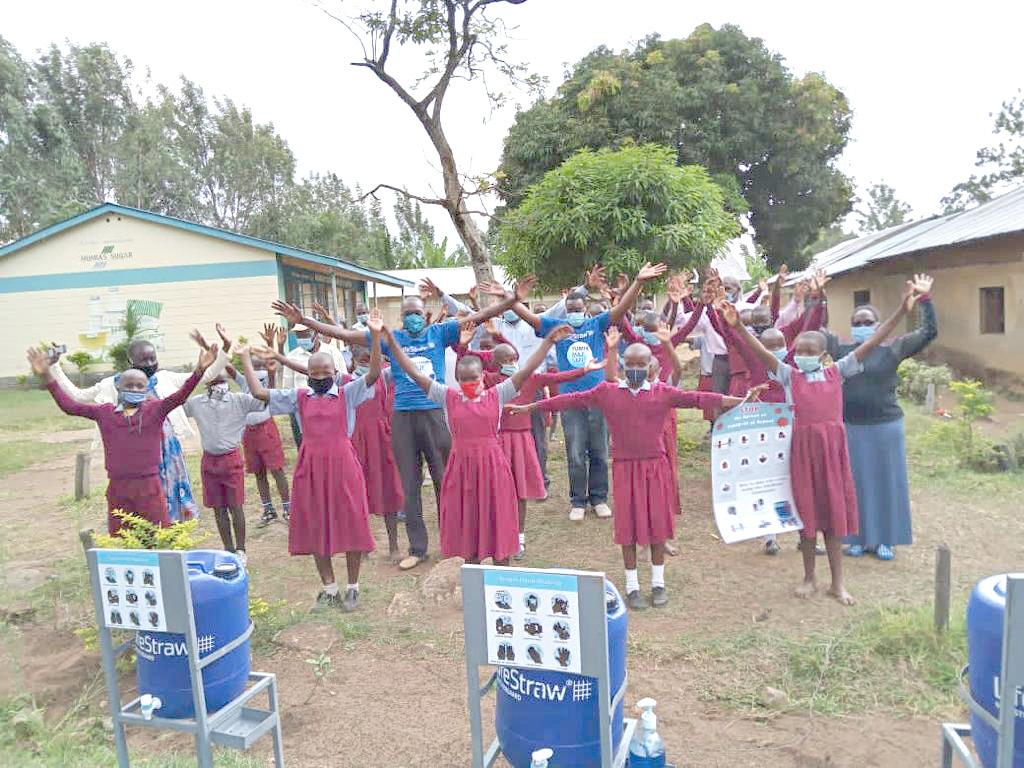
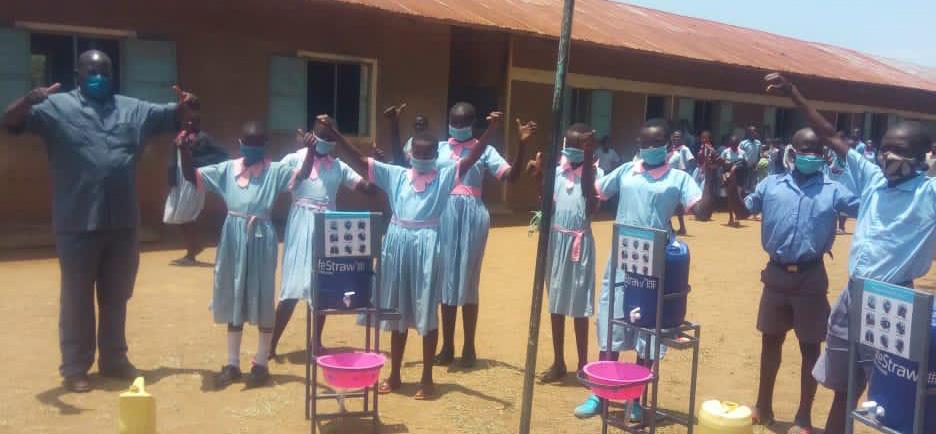
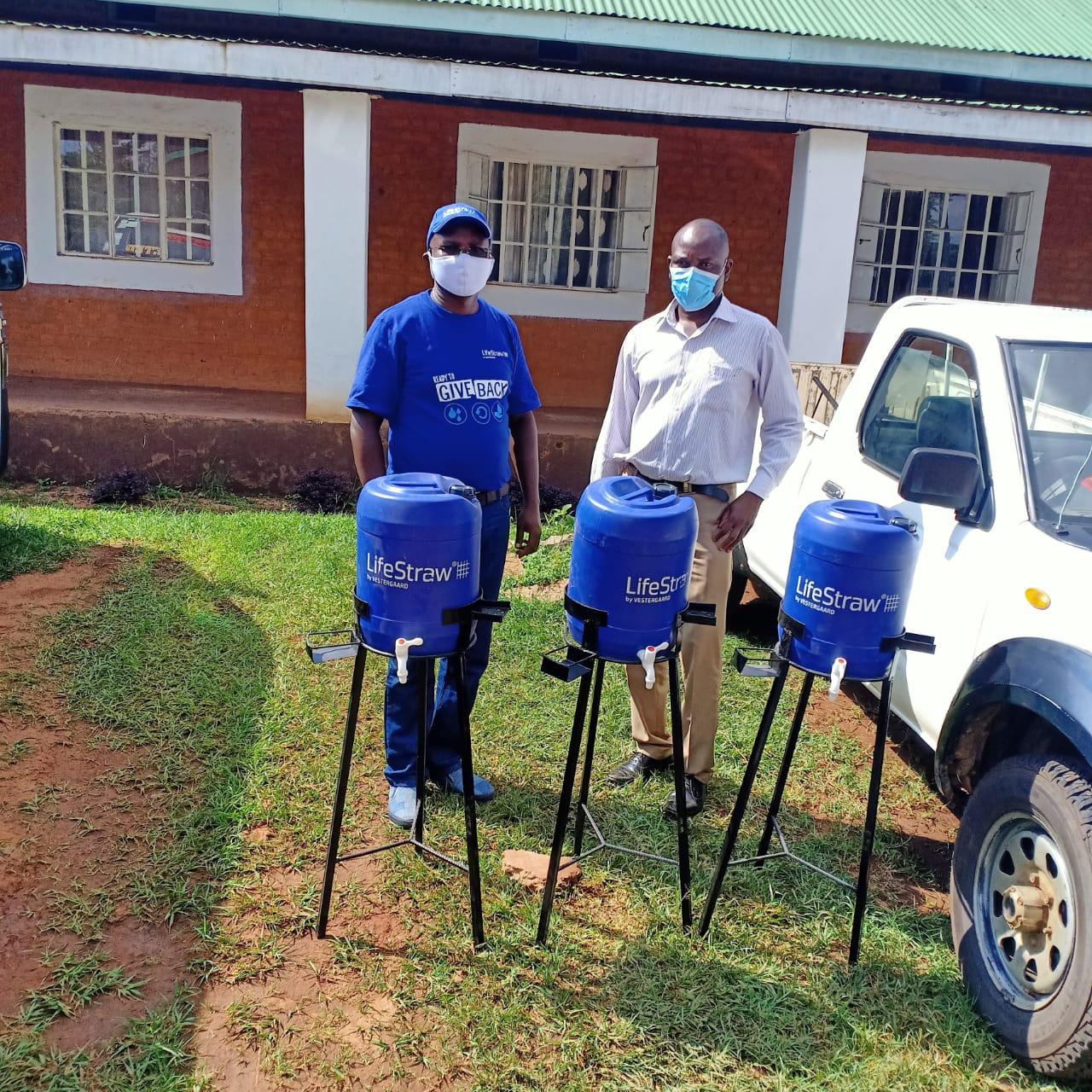
“THE JERRY CANS WERE MADE FROM 2,140 KGS OF RECYCLED LIFESTRAW COMMUNITY PARTS.”
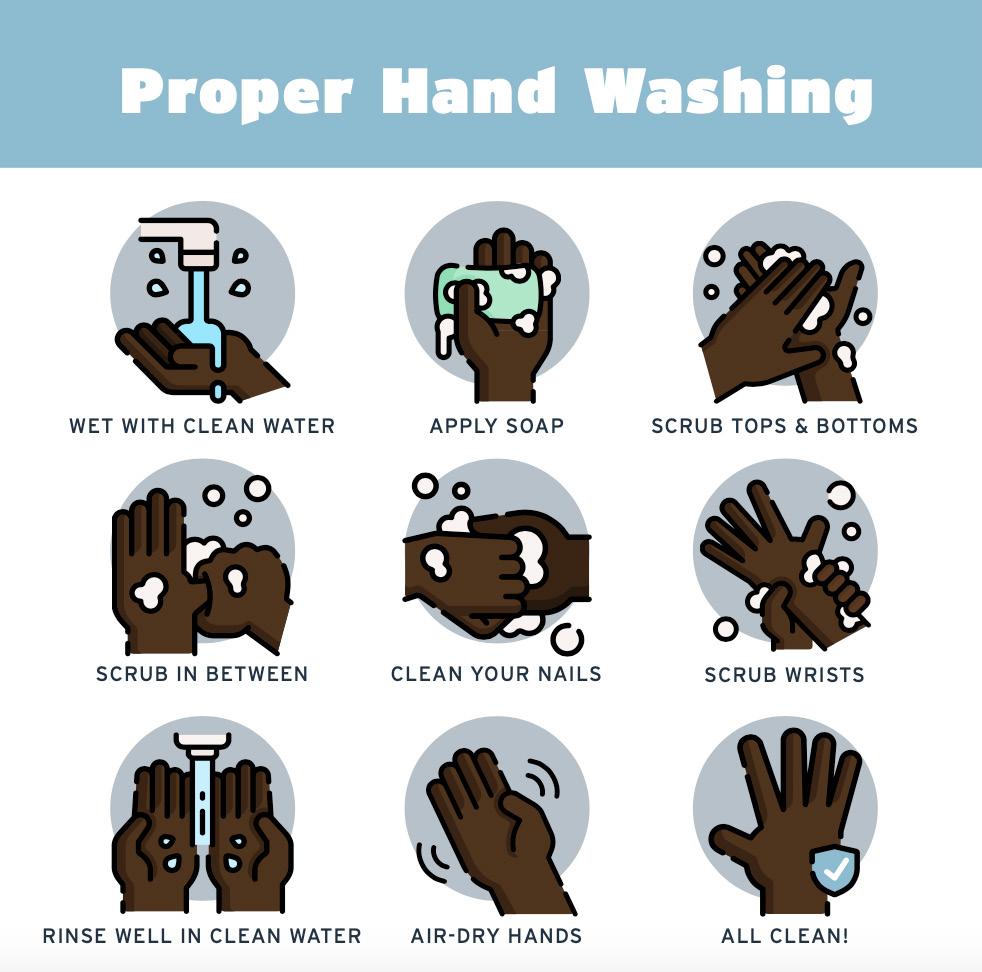
At the onset of the COVID-19 pandemic, the LifeStraw Give Back team was given special permission by the Ministry of Education to enter the schools — allowing them to continue their work when many other organizations had to pause indefinitely. In addition to the provision of safe water, the team continued to support local COVID prevention and education measures. We developed and implemented new protocols for proper use of the LifeStraw Community purifiers during the pandemic, to ensure proper social distancing and sanitation. We also designed and distributed new posters and stickers with COVID and hand hygiene messaging, and distributed 300 handwashing stations to 123 schools. The handwashing station metal stands were produced by local artisans, and the jerry cans were made from 2,140 kgs of recycled LifeStraw Community parts.
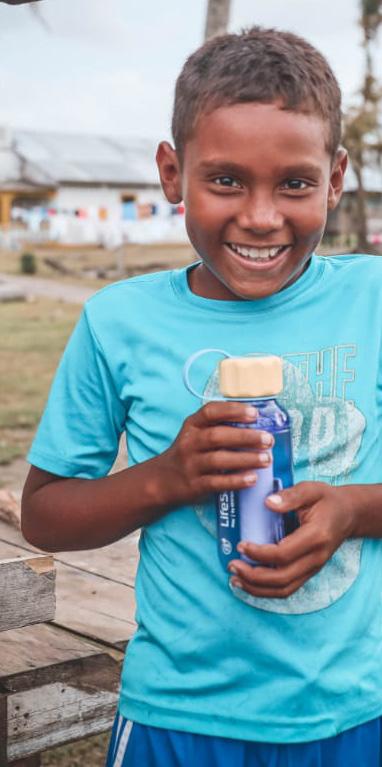
LifeStraw partnered with nonprofit Feed the Hungry to donate filters to families in Nicaragua impacted by Hurricanes Eta and Iota. The Feed the Hungry team traveled for two days in trucks, and an additional 15 hours in conga boats to reach the indigenous community of Wauhta Bar who did not have access to safe drinking water
LifeStraw partners with nonprofits and grassroots organizations across the globe to provide safe water to those who need
it most during natural and humanitarian emergencies. Through our 501(c)3 fiscal sponsor, we crowdsource funding from
likeminded individuals, corporations, foundations, and brands to reach thousands of people with safe drinking water.
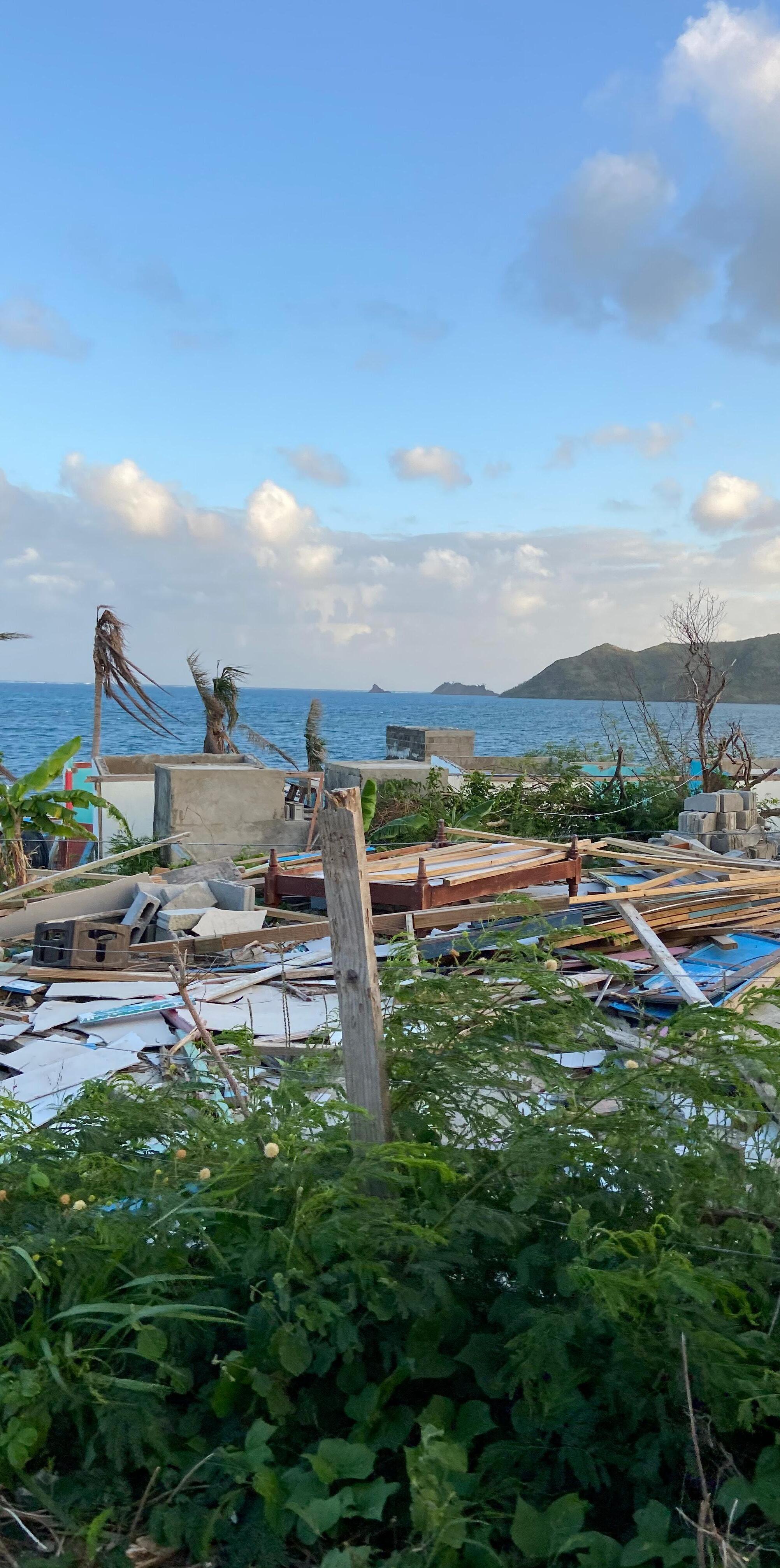
In November 2020, Central America was hit by two of the strongest hurricanes ever recorded, leaving hundreds of thousands of families without food, water or shelter. They drove thousands to shelters with limited health security capacities for preventing the spread of COVID-19.
In total, an estimated 9.2 million people have been affected by the storms, and hundreds of thousands displaced.
Immediately, LifeStraw partnered with responding stakeholders to ship thousands of filters to affected areas in five countries, to ensure access to safe drinking water and to help prevent waterborne disease outbreaks.
Providencia Island, a small Colombian island off the coast of Nicaragua, was pummeled by the second storm, destroying 98% of its infrastructure and leaving its 5,000+ residents in critical need of relief. Due to its small size and remote location, the island was missed by larger NGO relief efforts, and much of the support for Providencia has been at the grassroots level.
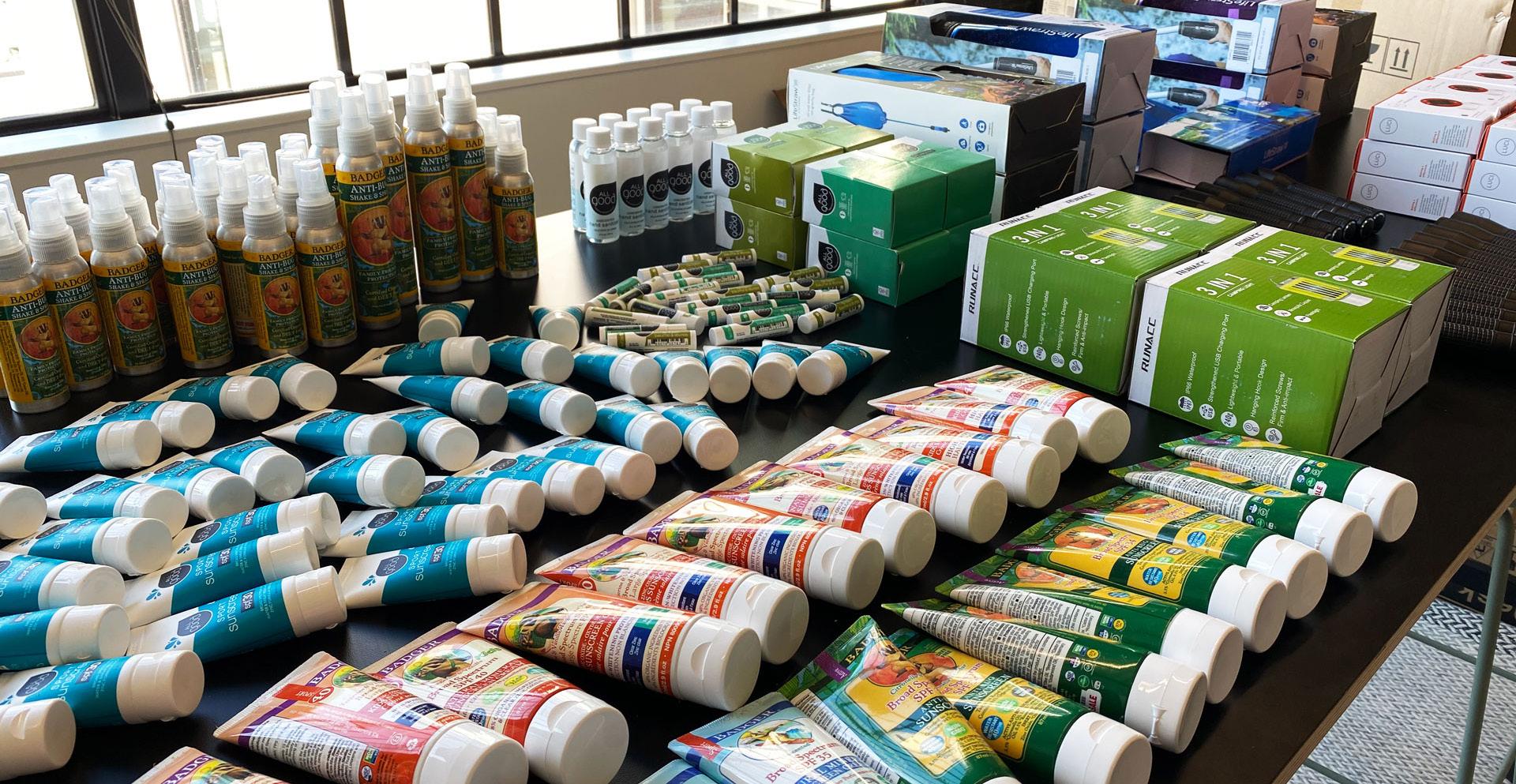
OUTDOOR BRANDS RESPOND. Many outdoor brands have the unique value of manufacturing products most needed in the immediate and short-term aftermath of a disaster. In Providencia, the destruction of infrastructure meant exposures to unsafe drinking water, lack of light and energy at night, lack of sun protection due to the destruction of buildings and shelters, and exposure to mosquitoes and pests. When
LifeStraw was contacted by Daniel Jackaman, a founder of local design studio Manawar and lifetime resident of Providencia’s sister island, San Andres, requesting donations of water filters, we saw it not only as a way reach more with safe water, but to initiate a coalition of brands willing to step up when a disaster strikes. Several brands
– including MPOWERD, Nite Ize, Badger and All Good – responded immediately, and expedited shipments of solar lighting, flash lights, repellent and sunscreen down to LifeStraw’s Baltimore headquarters.
In January 2021, LifeStraw’s Social Impact and Engineering Managers traveled to Providencia with suitcases of donated products to distribute to hundreds of impacted families, children, shelters and schools.
LifeStraw and its partners continue to support the island and its recovery efforts.
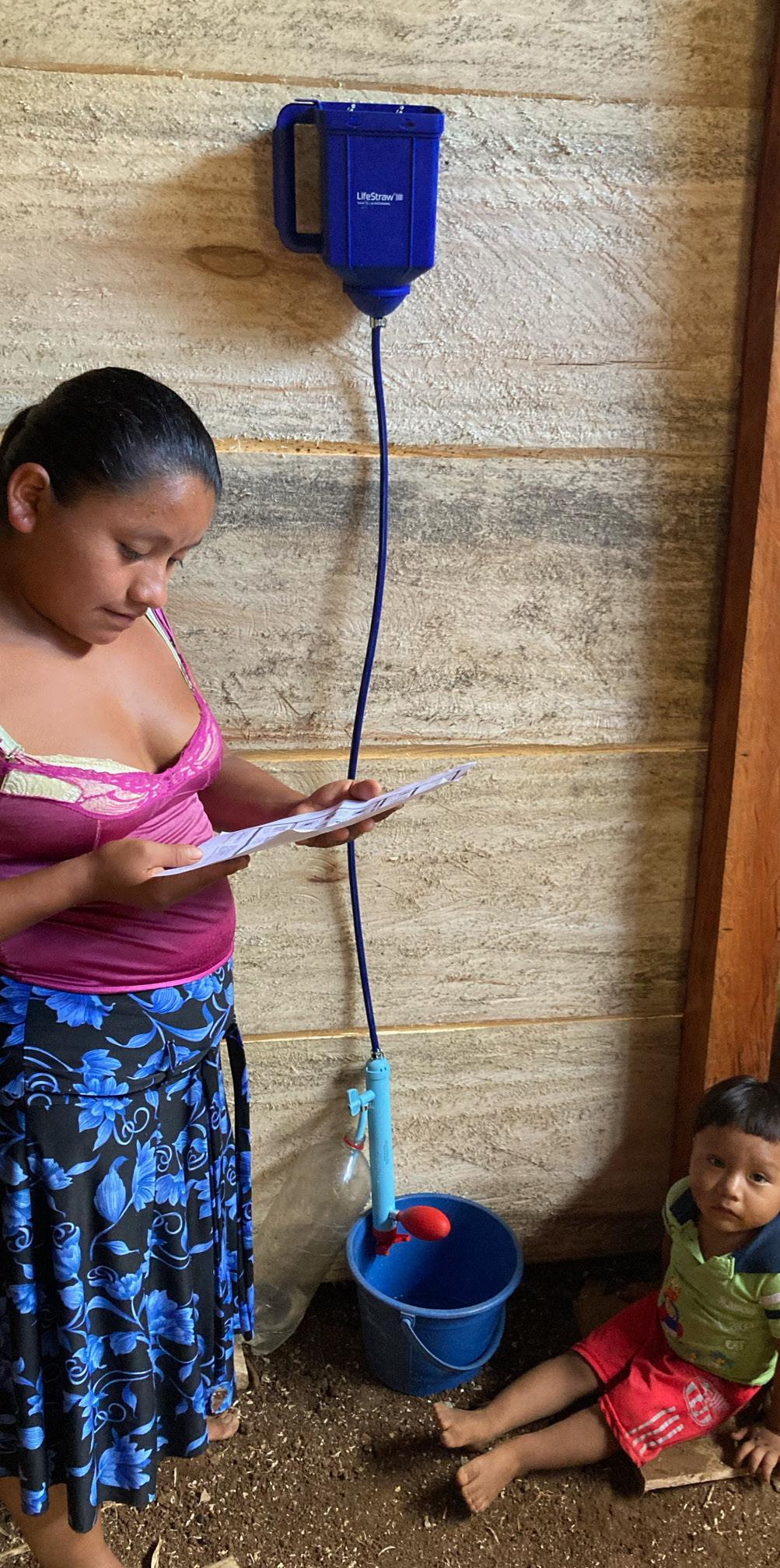
In 2021, LifeStraw partnered with Solidarity Engineering – a womenfounded and led WASH nonprofit that works at the intersection of climate change and migration – in order to support the distribution of safe water in several of their programs across Central and North America.
In March 2021, a team member from LifeStraw traveled to the Alta Verapaz region of Guatemala with Solidarity Engineering, carrying hundreds of filters, soap and menstrual hygiene products in tow. The region had been hit by category 4 Hurricane Eta in November 2020, and then category 5 Hurricane Iota less than two weeks later. Gale force winds and extreme flooding devastated communities and left hundreds dead. In Guatemala, Solidarity Engineering has continued to support the distribution of donated LifeStraw household and community purifiers, and implemented menstrual hygiene and reusable pad workshops.
Sadly, extreme weather is not unfamiliar to the area. A relentless confluence of droughts and flooding has led to crop death and chronic hunger and malnutrition. With climate change rapidly and drastically impacting communities, more and more families are facing the same excruciating decision – to stay and risk starvation and extreme poverty,
or leave, and chance the dangerous journey to asylum in the US. In fact, climate change is now found to be the key factor accelerating forced displacement and migration. For families that make the difficult decision to leave their homes, Solidarity is present along the entire journey.
In the southern Mexican border city of Tapachula, where many asylumseekers stop for periods of weeks or months, Solidarity is there to distribute hygiene kits, complete with donated LifeStraw filters, and other critical items needed for the remainder of their journey. And in the northern border town of Reynosa, thousands of asylum-seekers from around the world are stranded in squalid conditions while they await their cases in the US due to the administration’s inhumane ‘remain in Mexico’ policy. Solidarity has implemented safe water, sanitation and hygiene programs and education. LifeStraw continues to partner with Solidarity Engineering to ensure access to safe drinking water along the entire migrant trail.
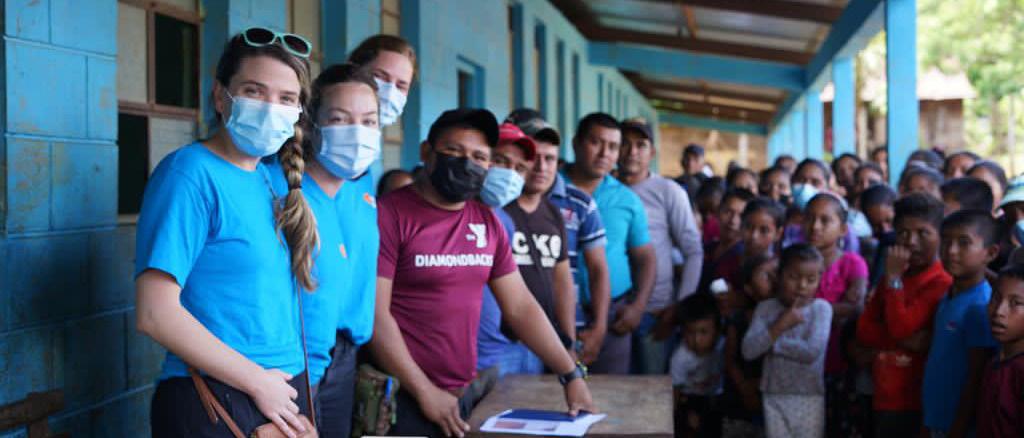
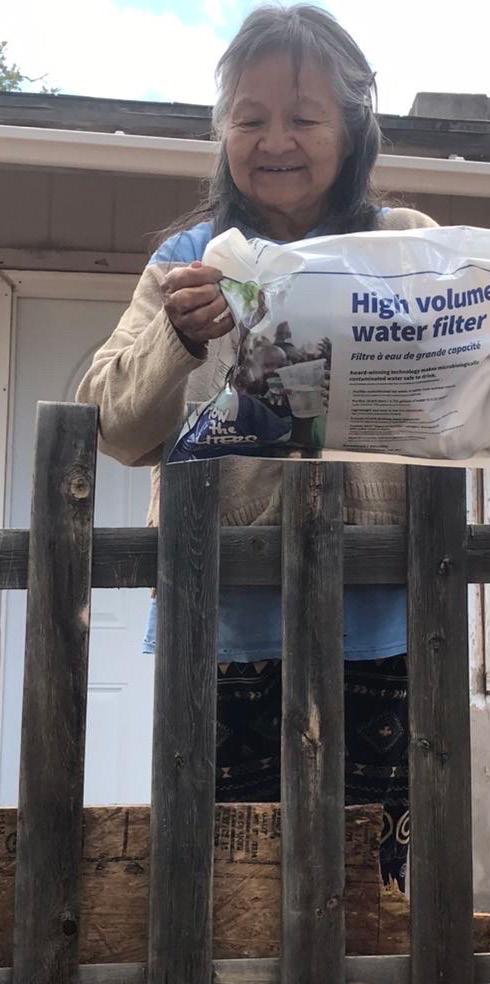
Water insecurity for indigenous communities in the United States is complex and vast and has been significantly worsened by the COVID pandemic. Today’s water crisis is rooted in settler colonialism and has been perpetuated by a system of structural racism, including federal and institutional policies and practices.
Throughout the 20th century, mining companies blasted 4 million tons of uranium out of Navajo land to sell to the federal government for atomic weapons manufacturing. Today, over 500 abandoned uranium mines remain, which seep into drinking water causing high rates of kidney disease, cancer, birth defects and other morbidities. Additionally, more than one-third of families lack running water and indoor plumbing facilities, and many resort to hauling drinking water from unsafe sources like unregulated livestock wells which are susceptible to both microbiological and chemical contamination.
Company, we supported the launch of a youth-led safe water program, to address issues of water insecurity and WASH education for families with young children and elders. This program will be scaled-up in 2022.
DearTara from LifeStraw,
Rez Refuge is a local nonprofit in the Fort Defiance region of the Navajo Nation. What began in 2007 as a community center has grown to an expansive organization that supports youth development, cultural identify, self-sufficiency and social responsibility. During the pandemic, they expanded their work to include emergency relief efforts. LifeStraw has partnered with Rez Refuge for two years, to support the provision of safe water. In 2021, with funding from nonprofit DigDeep and the Kohler
I would like to thank you and the staff at Rez Refuge for providing LifeStraw filters to families in need on the reservation, along with the LifeStraw filter that I received as well. It is very useful and comes in handy especially now because we are putting up a log-cabin in The Chuska Mountain for my Nalii’ (paternal grandparent) and her brother. The filter is very helpful because we are not wasting plastic bottles or having to deal with recycling/ trashing the bottles. Also, the location of The Cabin is miles away from any stores but there are nearby spring water sources that the LifeStraw filter can filter out to make it drinkable and safe.
I am very thankful and appreciate the filter, thank you again LifeStraw.
Sincerely, Tieron Johnson
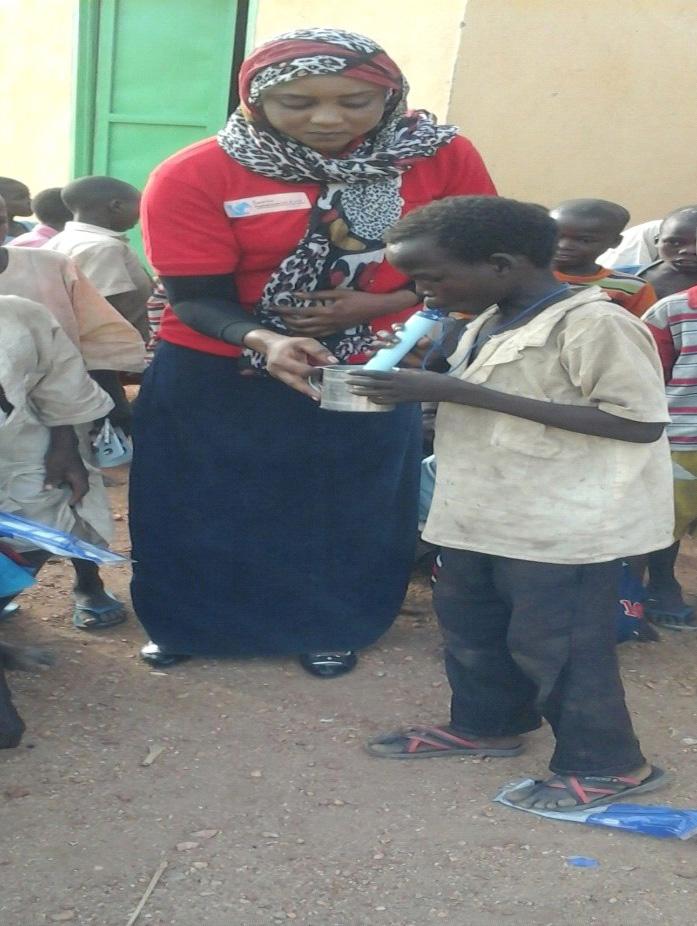
SAVE THE CHILDREN
In 2021, Save the Children partnered with LifeStraw, to procure and distribute 11 LifeStraw Community purifiers to primary schools and 950 LifeStraw personal filters to the school children living in IDP camps in Darfur, Sudan providing safe drinking water to over 2,050 kids.
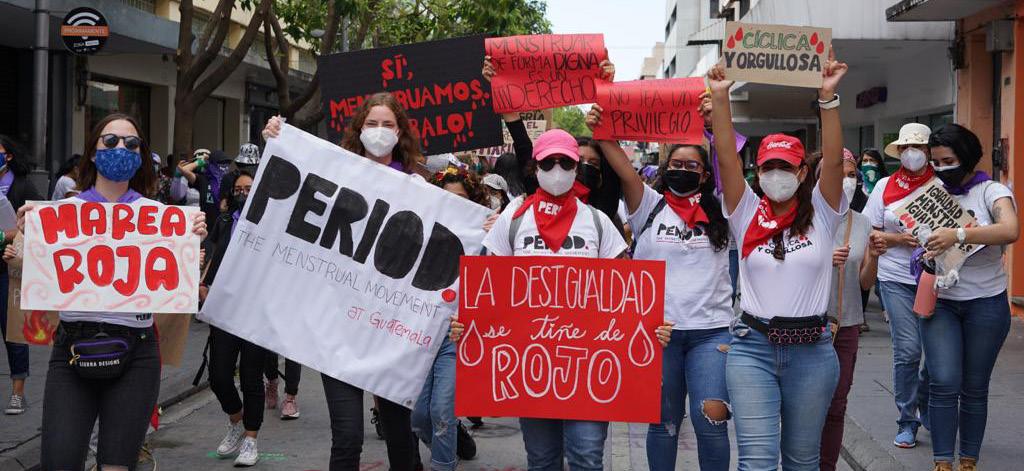
Water inequities disproportionately impact women and girls. In eight of 10 households, women are charged with water collection, and often face violence along the far routes. Moreover, women and girls require safe water, sanitation and additional resources to address their menstrual hygiene management needs and are at higher risk for waterborne diseases and bacterial infections transmitted by contaminated water and poor sanitation and hygiene practices.
Since 2008, LifeStraw and former parent company, Vestergaard, have supported Emusanda Health Center in Lurambi, Kenya. The clinic provides primary, maternal, newborn and pediatric care, as well as comprehensive HIV testing, counseling and treatment to the local community. In 2017, we supported the construction of a 12-bed maternity ward, equipped with technologies previously unavailable in the region.
LifeStraw is dedicated to supporting and empowering women and girls in our programming through:
• Employment of local women and creation of women leaders.
• Empowerment of local women’s groups.
• Support of menstrual hygiene management through resource distribution and reusable pad workshops.
• Emphasis on shared responsibilities among all genders for water collection and purifier care and maintenance at schools.
In 2021, LifeStraw continued to support Emusanda staff, supplies (including PPE, sanitizers and disinfectants) and medications, which has allowed the clinic to operate 24 hours a day, 7 days a week. The clinic reached 5,533 patients with comprehensive HIV care, and 6,984 women and children with primary and perinatal care.
We continued our sponsored series, Her Voice, in partnership with Outside Business Journal, to examine gender biases that exist in the outdoor industry and encourage diverse voices in the space. The six video interviews spotlight women breaking barriers and changing the status quo in the industry. Topics included:
Almost everyone is burnt out right now. Here’s what your company can do about it.
The maternity ward also saw a jump in facility-based deliveries (from 158 in 2020 to 182 births in 2021) due to increased community outreach efforts by community health volunteers. Thanks to Emusanda’s community services, more and more women are moving away from risky at-home deliveries with traditional birth attendants, which can have a significant impact on maternal mortality and morbidity. Women that deliver at the facility are also provided with anti-malarial bed nets and LifeStraw Family household purifiers.
Climate justice starts in our communities.
Diverse talent pipelines start with culture.
Sam Ortiz is making climbing more body inclusive.
Meet Kara Richardson Whitely, a plus-sized adventurer pushing for body inclusivity in the outdoors.
Why representation matters in adventure travel and how brands can do better.
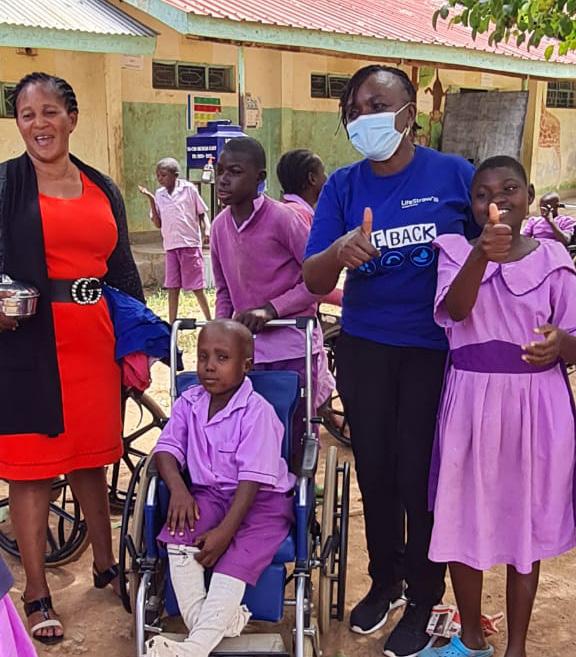
HELPING @ RISE + SHINE
SPECIAL SCHOOL WESTERN KENYA
WESTERN KENYA distributed food, clothing and other supplies, and spent the day with kids at the Rise and Shine Special School – a center for children with disabilities.
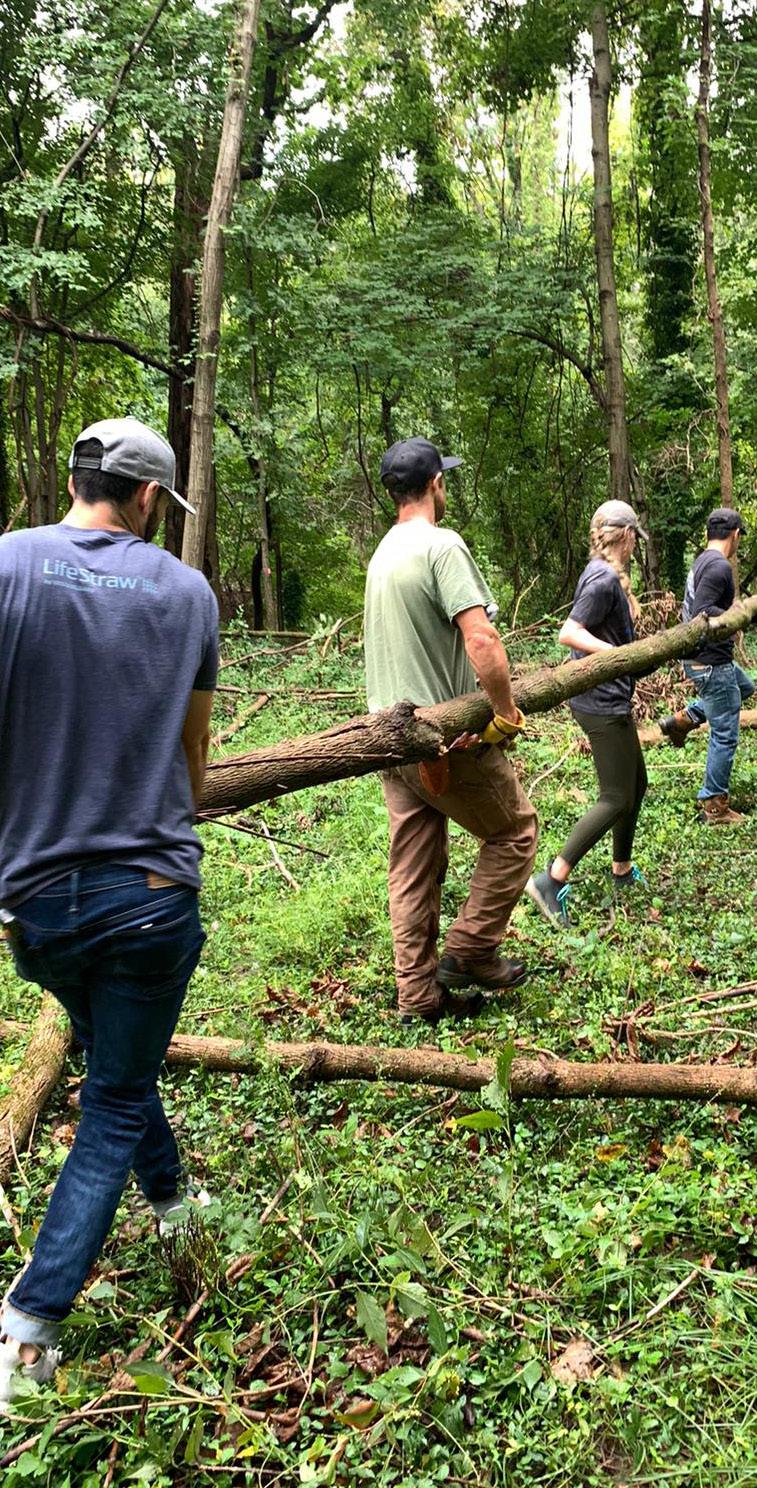
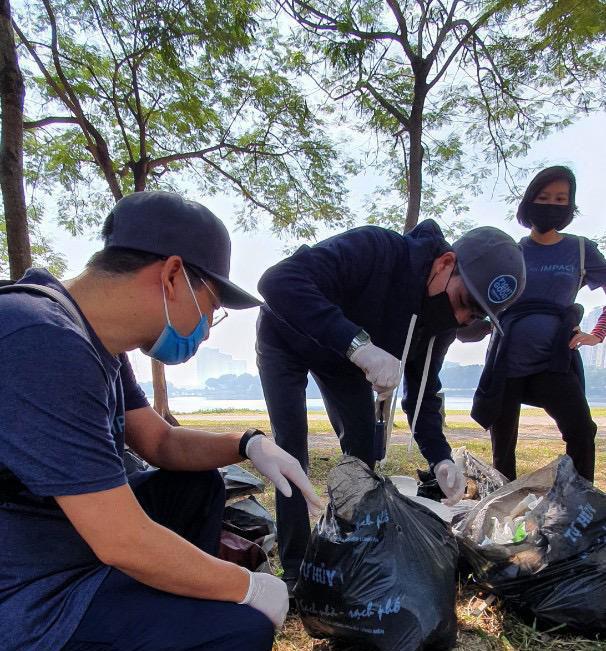
On Tuesday, November 30, our teams from all around the world worked in parallel to better the communities we live and work in.
Doing good is central to LifeStraw as a company and extends far beyond our safe water programming. All employees are encouraged to give back to their local communities and are provided one day of paid leave per quarter to volunteer.

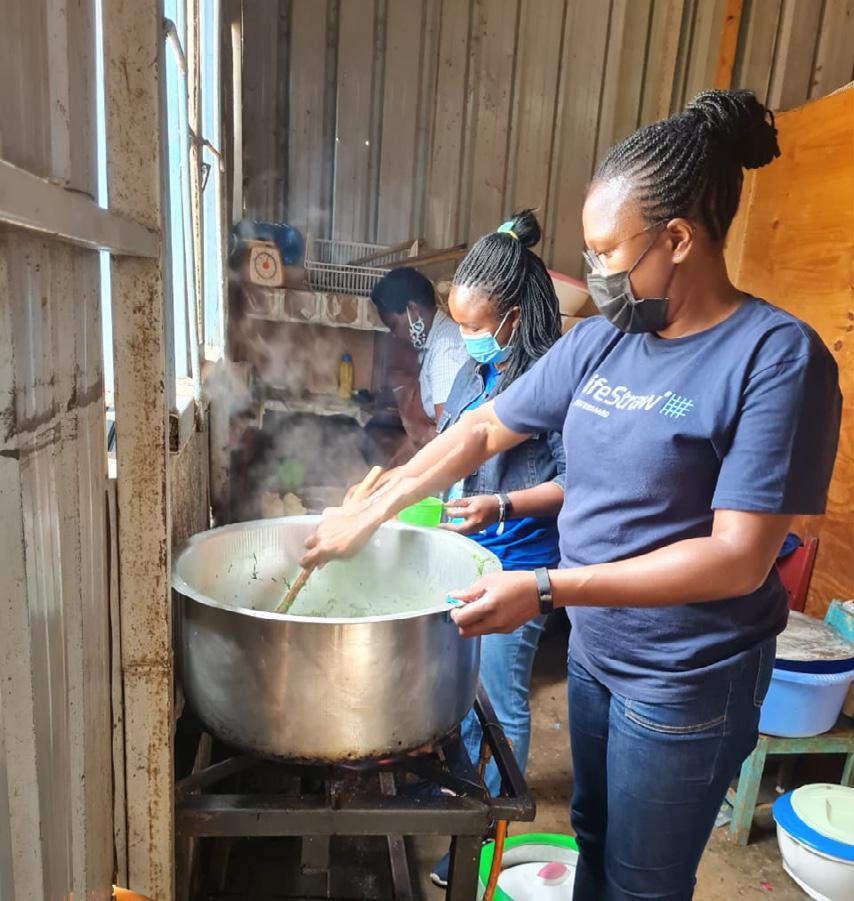
PREPARING + SERVING FOOD NAIROBI, KENYA
NAIROBI, KENYA spent the day distributing supplies, playing, and preparing and serving food at a local center for kids with special needs from low-resource communities.
FOOD BANK DISTRIBUTION
GENEVA, SWITZERLAND

GENEVA, SWITZERLAND
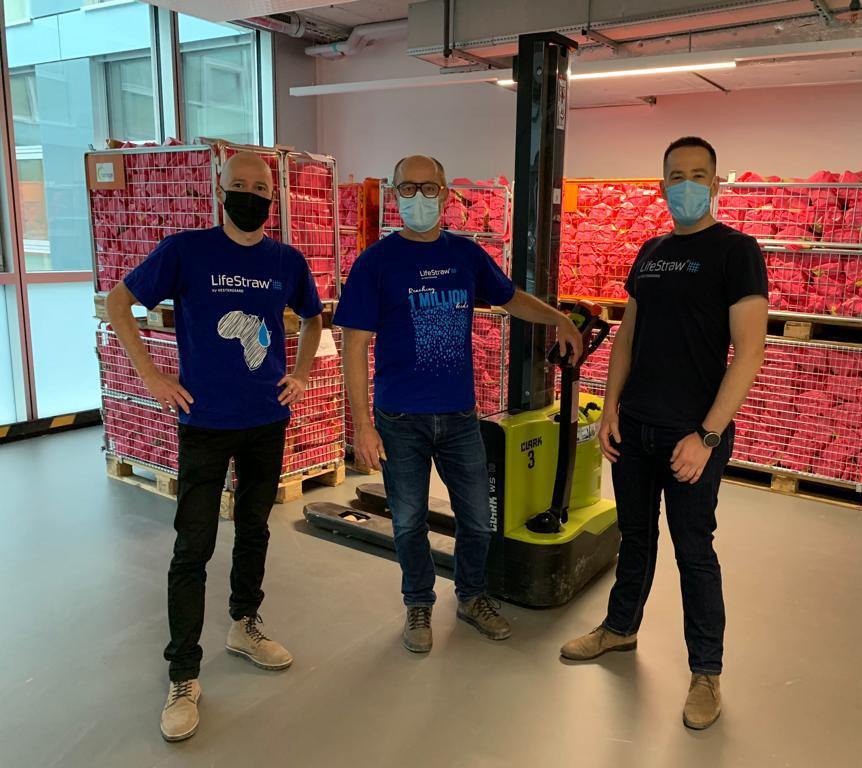
prepared food bags at Geneva’s largest food bank, to distribute to families facing food insecurity.
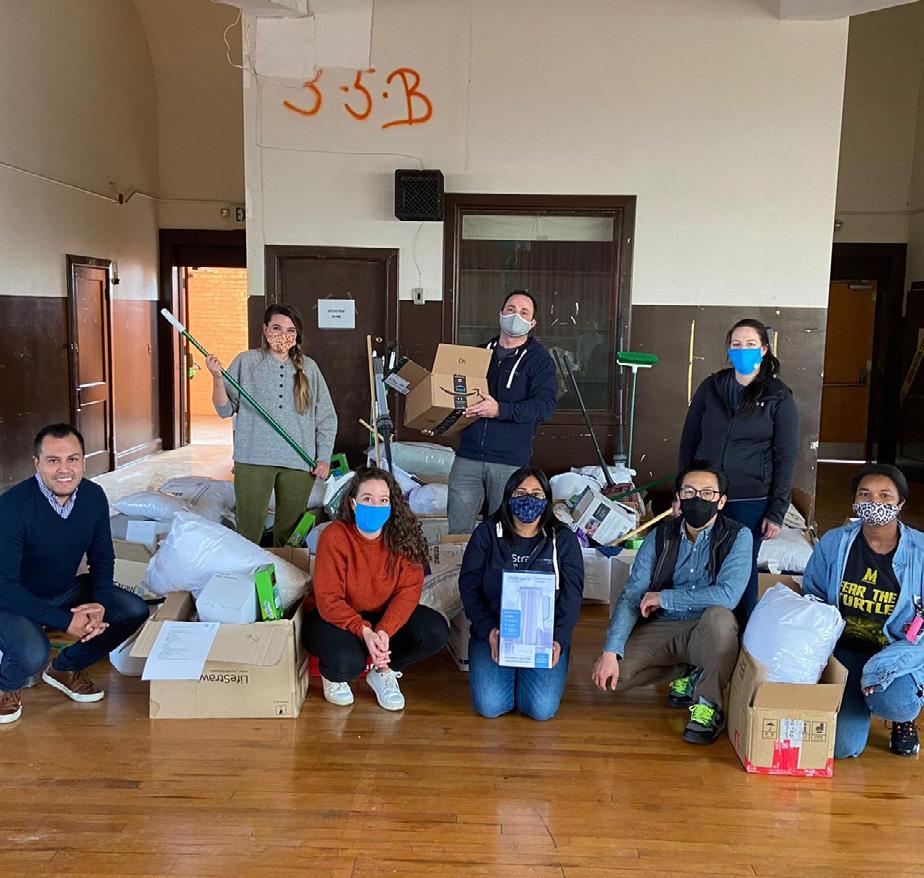
CLEANING PROJECT PLASE
BALTIMORE, MARYLAND
BALTIMORE, MARYLAND collected donations, cleaned up and decorated for the holidays at Project PLASE shelter, to support Baltimore residents experiencing homelessness.
QUARTERLY VOLUNTEER ENGAGEMENT
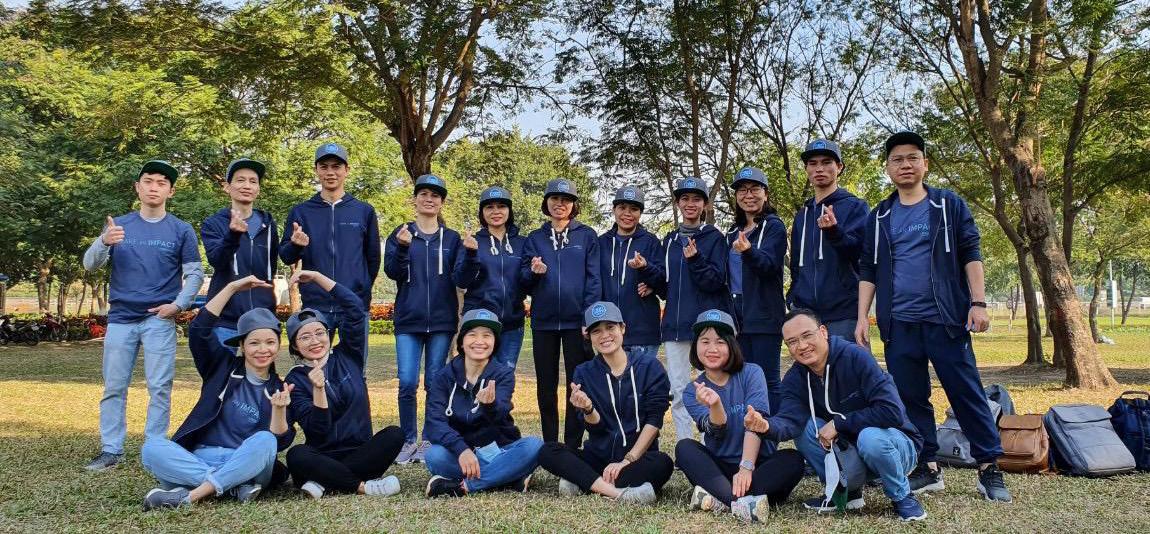
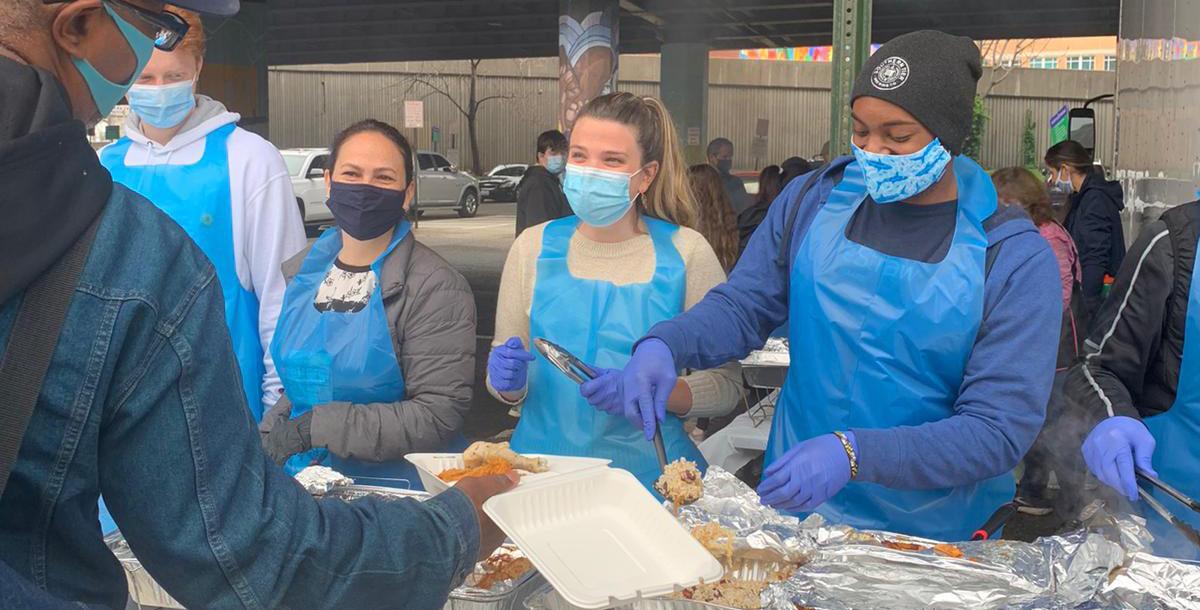
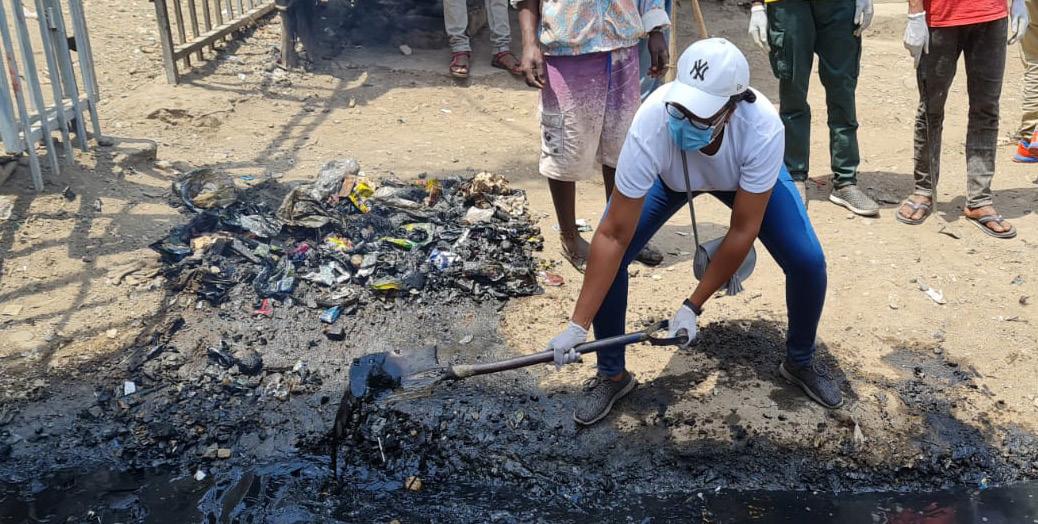
Beyond Giving Tuesday, the teams volunteered quarterly to serve food to unsheltered communities and street kids; support families impacted by gender-based violence; plant trees; clean local waterways, city parks and other urban greenspaces; assemble and distribute holiday stockings to asylum-seeking children in Mexico, and much more!
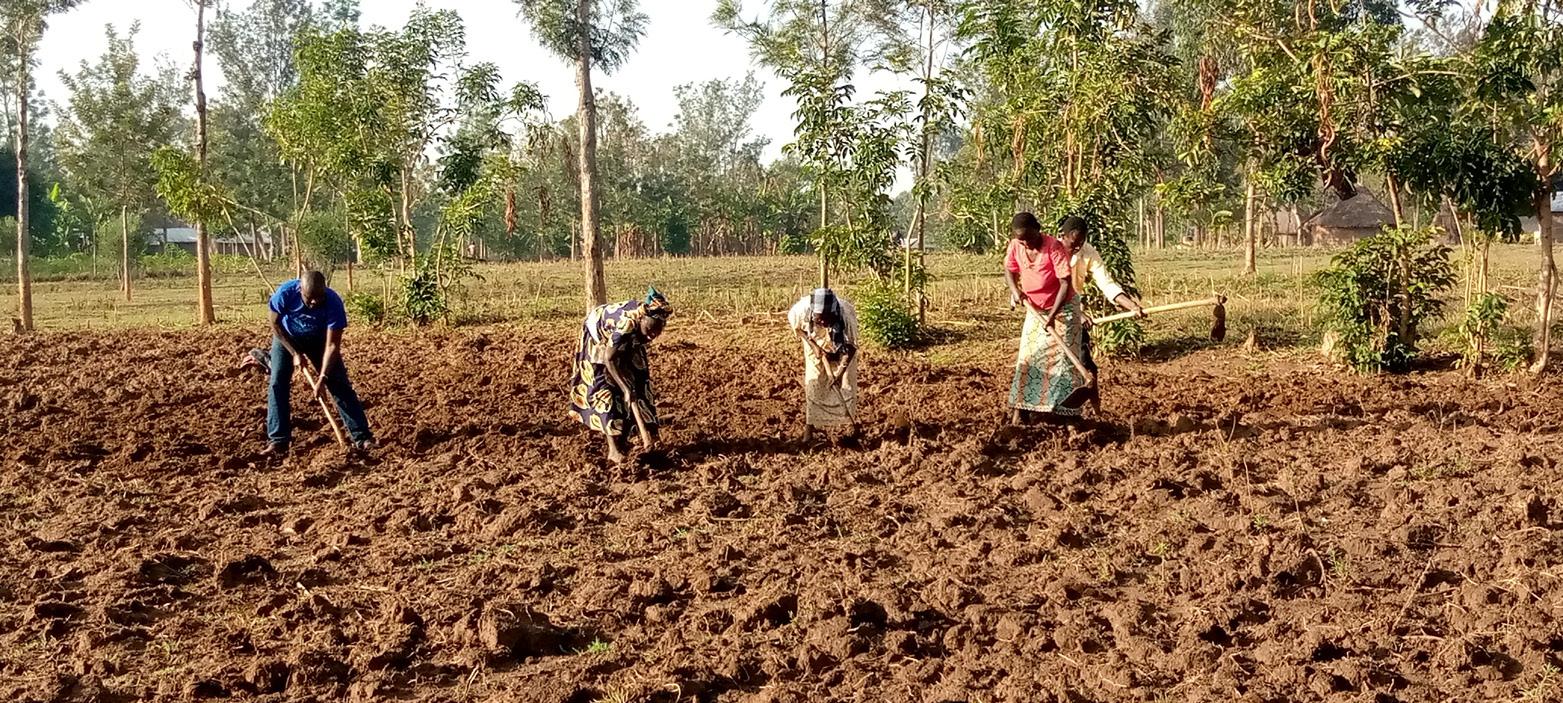
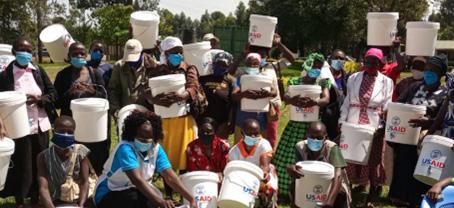
ABEL WAMALWA spent his year educating farmers on the importance of safe water and proper sanitation; volunteering at community events, including funerals, to encourage handwashing, mask wearing and social distancing; participating in the Community Health Volunteers ‘Action Day’ to conduct house visits and inspect WASH infrastructure and educate on safe water and hand hygiene; and attending a women’s group where he provided education on safe water and sanitation.
In western Kenya, LifeStraw employs 34 subcounty coordinators, four area coordinators and one logistics coordinator, who are charged with the implementation, monitoring, follow-up and maintenance of our Give Back program across thousands of schools. But most of them also support their communities in so many other ways.
Here is just a small glimpse…
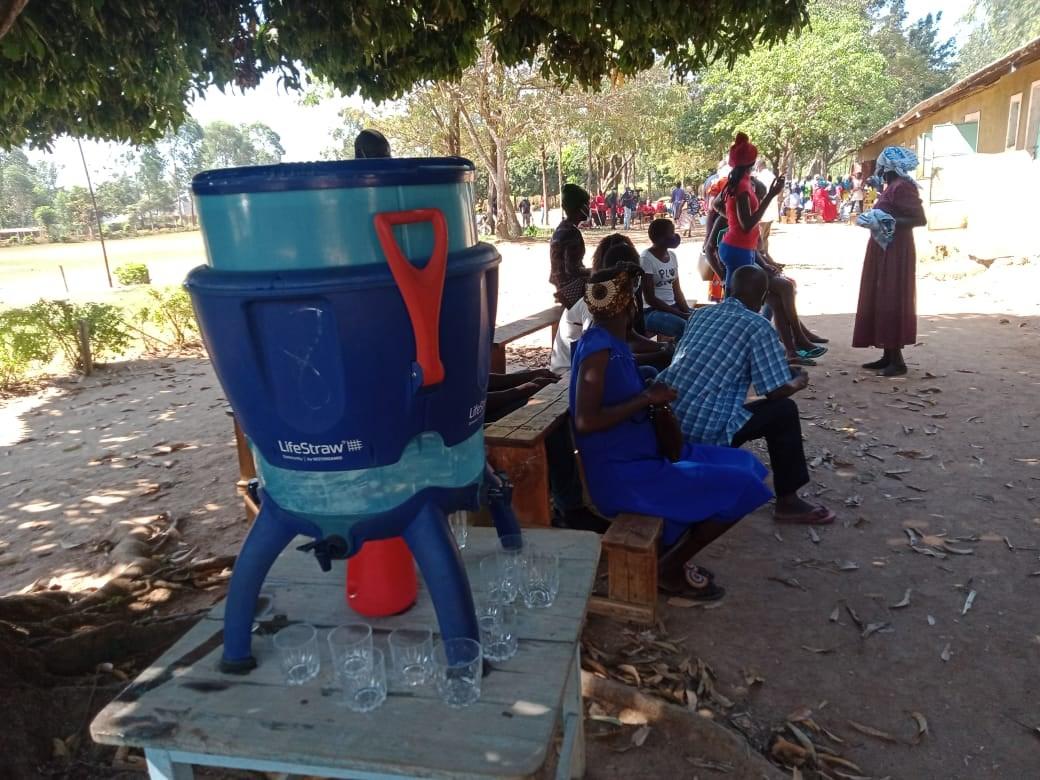
DANCAN ORARO assisted the Matete Public Health office in distributing handwashing stations to households in need and educated families on the importance of handwashing during the pandemic.
BERNARD ALEMU supported community mobilization efforts to encourage COVID-19 vaccination and community training on the importance of food security and proper childhood nutrition, to help reduce local malnutrition rates.
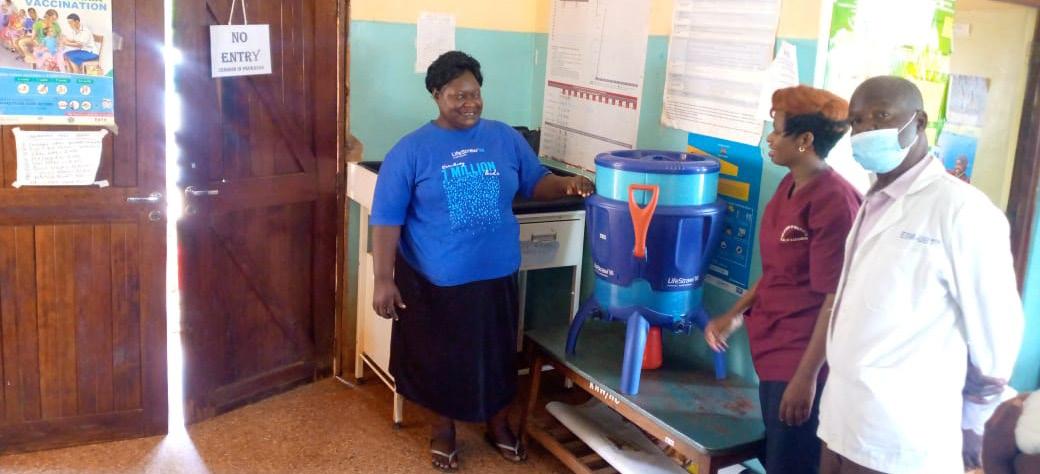
DORICE CHENGO supported the opening of the Khwisero Maternity Ward, where she installed a LifeStraw Community purifier and educated women on the importance of safe water.
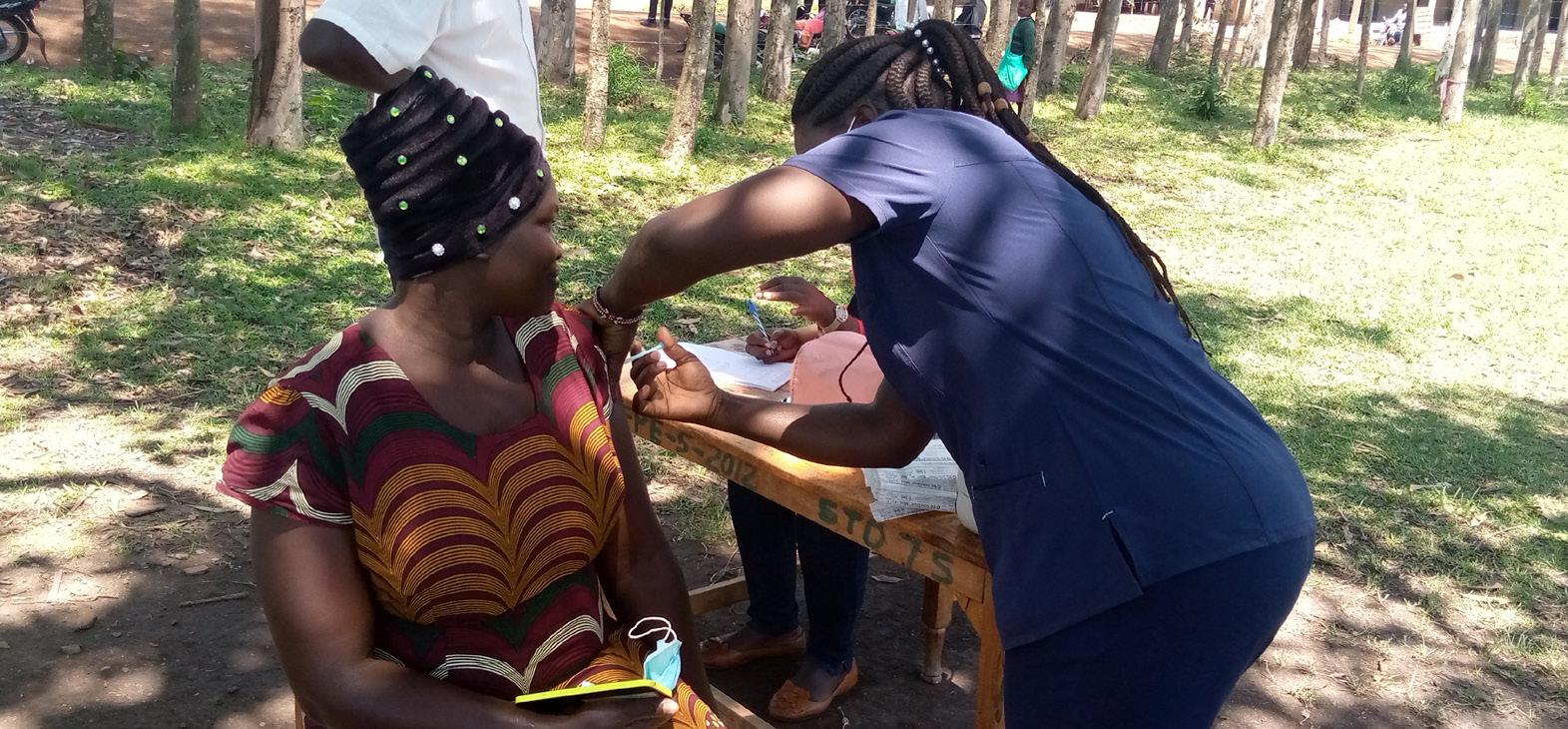
PAUL OTITI spearheaded a mobile medical camp for marginalized communities living a long distance from health facitlies. He and his team mobilized physicians, pharmacists, nurses, lab technicians, nutritionists, social workers and Community Health Volunteers, who all provided free services for the community members. They also distributed food and clothing, dispensed medications, and provided COVID vaccination to 520 patients.
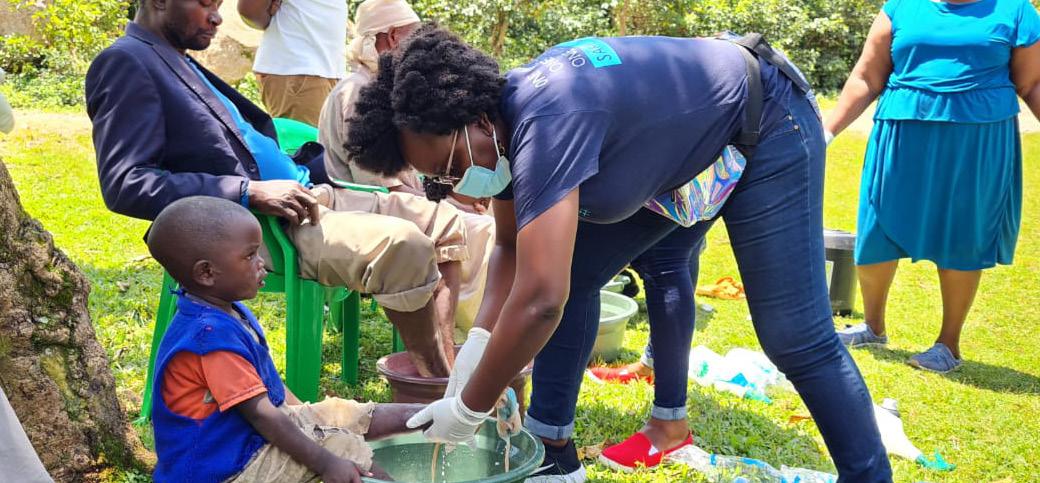
JULIE OCHIENG participated in two jigger campaigns in partnership with the County Government of Kakamega and a local community-based organization. They treated a total of 79 patients, by cleaning their infected feet, providing antibiotics and pain killers, and disinfecting local areas to prevent reinfection.
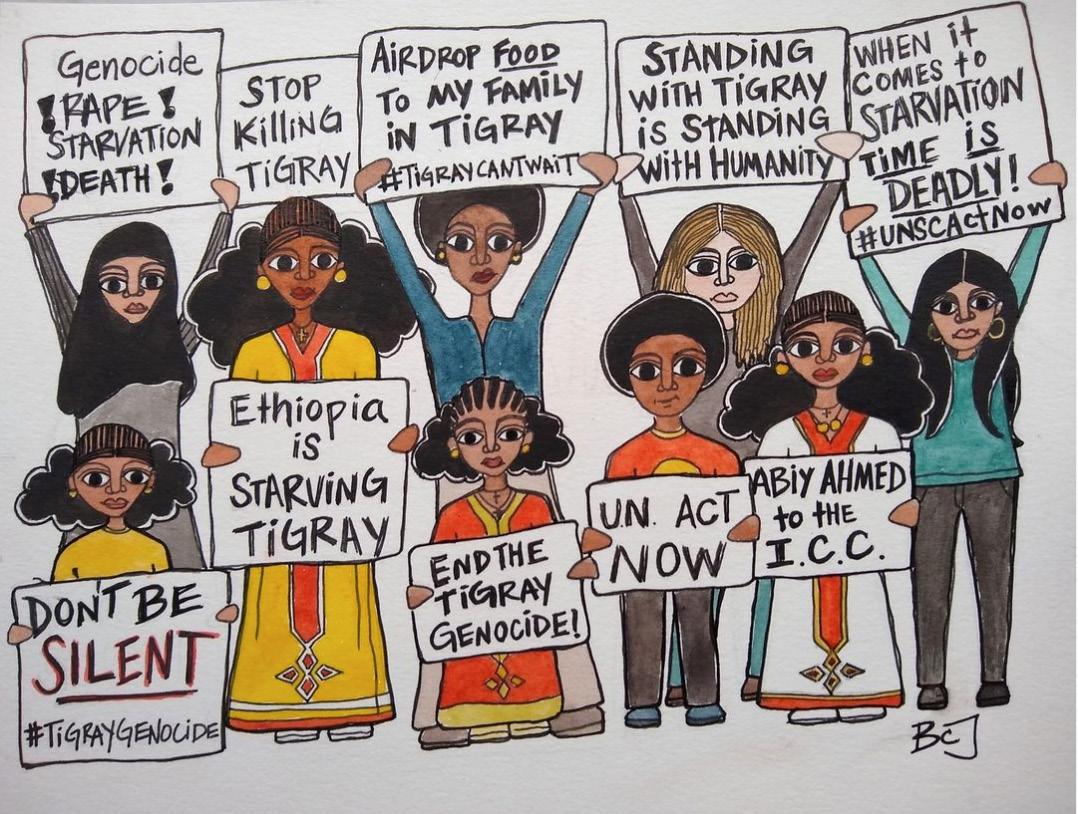
We believe that brands can and should play a critical role in overcoming our country’s systemic racism and injustices and supporting a more equitable society. Over the last two years, we have dedicated ourselves to understanding these legacies of white supremacy and how they impact our company, the outdoors, our impact work, and ourselves.
We are actively listening, learning and coursecorrecting, and committed to being transparent about the process. We continued to look closely at the language we use, the marketing and brand we represent, the organizations we partner with, the people we employ and the vendors we give our business to.
IN 2021, WE:
Implemented company-wide trainings and workshops to help employees understand, prevent and address microaggressions and biases and improve emotional intelligence, to develop fluency around topics related to diversity, equity, inclusion and justice.
Supported Black, BIPOC, and LGBTQ+-led organizations, content creators, and entrepreneurs.
Focused our advocacy and storytelling on the rights of women, refugees, asylum-seekers, indigenous peoples, and other marginalized communities.
Enlisted the guidance of a racial equity, diversity and inclusion consultant, who in 2022 will lead internal audits and help implement a DEIJ roadmap and strategy.
EMPLOYEES BY LOCATION
We know that a diverse team, where everyone’s voice is heard and respected, is critical to our company culture and our ability to push the boundaries of design, innovation and impact.
We are fiercely proud of the global diversity of our team, and also recognize that we can continually improve.
Our hiring practices are ever-evolving. In 2021, we expanded our recruitment efforts to include platforms like Diversity for Social Impact and HBCU job boards, to identify and attract more diverse talent. We also continue to ensure that at least one female-identified and one member of an underrepresented minority group are included as final candidates in every hiring process.
We understand that climate change often disproportionately impacts the very same underserved communities that we work with. As our company rapidly grows, we are committed to ensuring that we do so responsibly. In addition to the inherent environmental value of our products (by offsetting single-use plastics), we are continuously looking for new innovative ways to more responsibly impact our planet, while still providing products with cutting edge technology to address global safe drinking water concerns. We work to build an ethical supply chain; we carefully consider our raw materials and work with our production partners to reduce waste; and we limit our greenhouse gas emissions and offset the rest so our footprint is neutral.

WE KNOW THAT BUSINESSES PLAY A CRITICAL ROLE IN CLIMATE CHANGE; MUCH OF THE CO2 EMISSIONS CAUSING THE EARTH’S WARMING COME FROM BUSINESSDRIVEN ECONOMIC ACTIVITY.
129
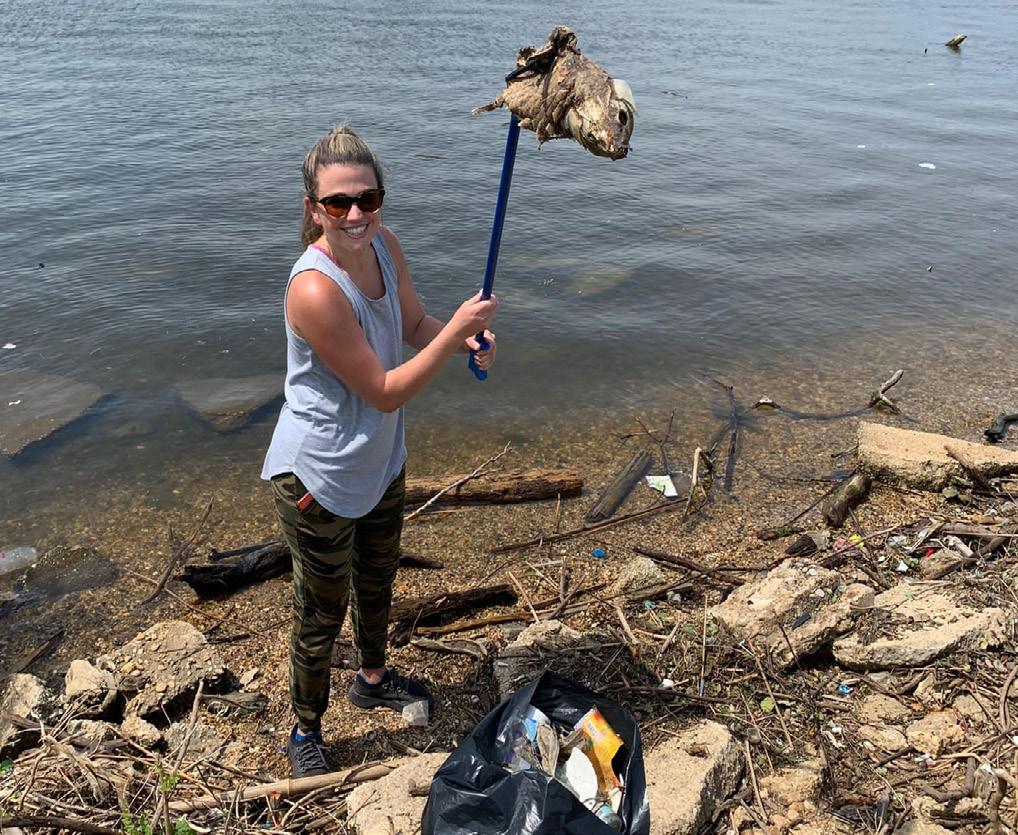
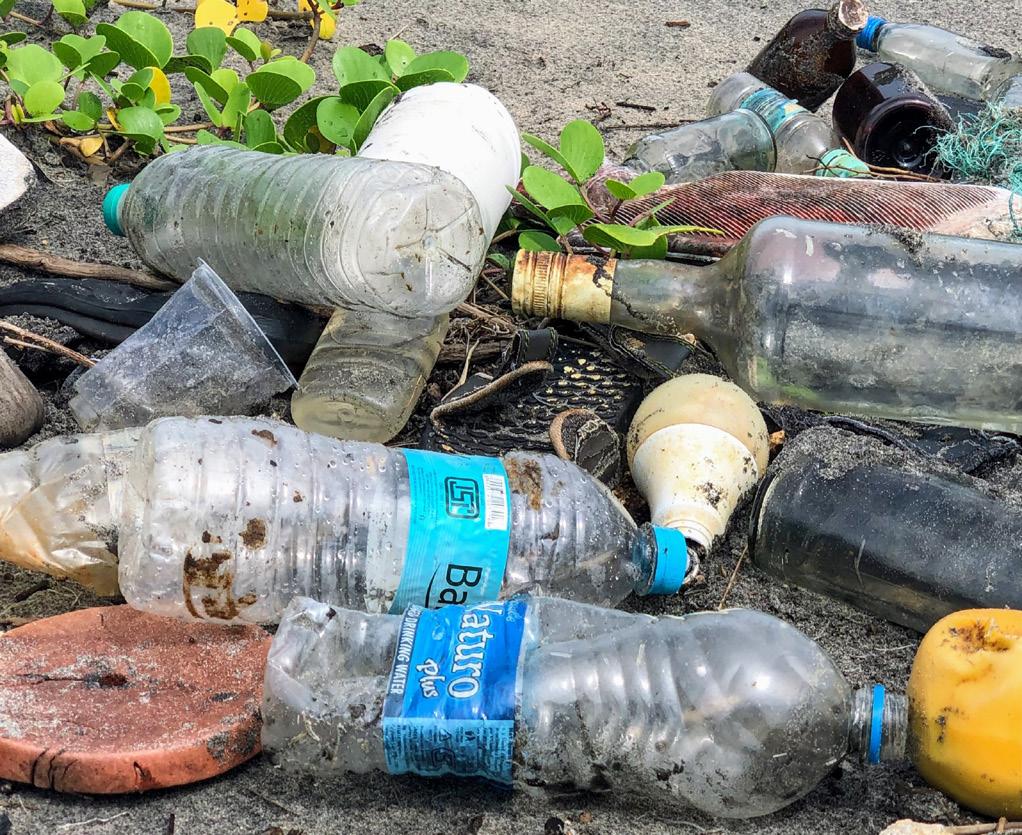
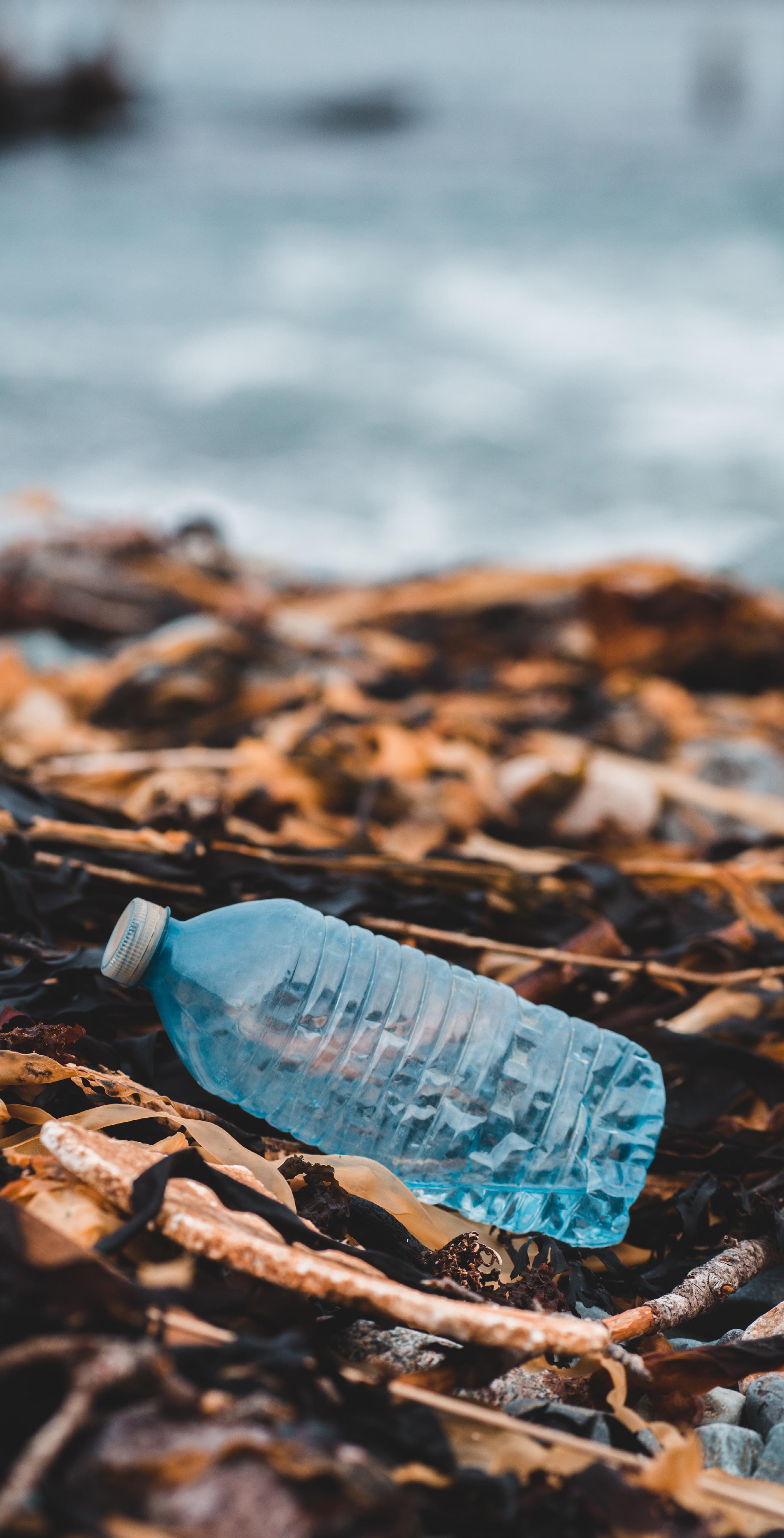
Did you know? In the US alone, Americans buy an estimated 50 billion single-use water bottles a year, and according to the EPA, only 8.4% of plastics are recycled*. That’s millions of plastics that end up in our parks, our oceans, our communities and our bodies. Through responsible packaging and strategic product design, we are committed to combating the tons of plastic waste that plagues our environment.
99.999%
plastic water bottles offset by the purchase of LifeStraw bottle, pitcher and dispenser products. liters of water saved through recycling of test water at our lab in Vietnam. of microplastics removed from drinking water by all LifeStraw filters and purifiers.
Packaging is critical to protecting the integrity of our products, but we are determined to ensure that it has minimal environmental impact. The packaging of our products is evaluated from design to production to ensure that we are aligned with our sustainability and health principles.
HOW2RECYCLE: We continued our partnership with How2Recycle, to use their simple, standardized labeling system on all of our packaging that clearly communicates recycling instructions to consumers.
400,000 (*in 2017)
We continue to research recycled and compostable options for products that currently require plastic to maintain filter functionality.
PRANA PARTNERSHIP: We are members of prAna’s Responsible Packaging Movement, a network of like-minded brands with a mission to remove plastic and virgin-forest-fiber packaging from all consumer products.
OPTIMIZATION
• Optimize products to eliminate the need for packaging materials
• Eliminate unnecessary packaging material and avoid empty space
• Use recycled material where available or choose materials from sustainably managed and renewable sources (ie. FSC)
RESPONSIBLE SOURCING
• Work with suppliers that comply with environmental best practices
• Source local where available in order to reduce shipping distance for packaging material
• Control secondary and tertiary packaging practices, such as overboxing at warehouses or internal shipping of components for final assembly
MATERIAL HEALTH
• Select materials that are nontoxic, produce less waste and go through less hazardous chemical processes
• Ensure material transparency: all packaging material substances are declared, compliant with regulation and documented, including inks, coatings and adhesives
RECYCLING
• Select materials with high recycling rates
• Ensure that coatings, inks and material combinations are consistent with recycling technology
• Apply appropriate labeling for how to recycle each packaging component
• Where possible, only use a single packaging material to help simplify customer recycling or reuse
• Avoid plastic packaging materials whenever possible

SMETA (Sedex members ethical trade audit) is designed to help auditors conduct high quality audits that encompass all aspects of responsible business practices, covering Sedex’s four pillars of labor, health and safety, environment and business ethics. In 2021, LifeStraw completed SMETA audits for our two largest Tier 2 supplies (which account for 60% of all LifeStraw products). Our Tier 1 suppliers already have passed SMETA audits.
LifeStraw is committed to ensuring responsible manufacturing, from sourcing sustainable materials, to ensuring ethical working conditions throughout our supply chain, to chemical and water management and beyond. We carefully evaluate all suppliers and manufacturers to ensure that they share our standards for ethical working conditions, and social and environmental sustainability practices.
LifeStraw is committed to supply chain transparency through formal, industry recognized certifications. All current suppliers are ISO 14000 compliant (which means they’ve met standards set to minimize how operations negatively affect the environment) and our primary supplier is also ISO 45000 compliant (ensuring they’ve met all occupational health and safety standards). In 2021, we also certified seven vendors for International Sustainability and Carbon Certification (ISCC), a system established to ensure an international, practically viable, and transparent system for certifying biomass and bioenergy.
The quality of our products is the foundation of our supply chain. All products, components and materials that are in contact with drinking water are FDA compliant as food grade materials and BPA-free. In addition, we conduct comprehensive chemical testing to be aligned with emerging regulations including Prop 65 and other industry and retailer standards. We maintain and publicly share our Restricted Substances List to ensure that specific substances are limited or eliminated from our products and comply with all FDA and EU regulatory requirements. Our chemical standards specifically take into account: The Food and Drug Administration US FDA 21CFR177, FDA 21CFR181, FDA CPG SEC. 545; European Regulation (EC) No. 1935/2004, Plastic regulation (EU) No. 10/2011, European Directive 84/500/EE; French decret No. 2007- 766, French decret No. 92-631, French Arrete Du Novembre 1992, French Law 2012-1442; German 1 September 2005 (LFBG), DIN 51032:2017 and their amendments.
LifeStraw maintains a strict Code of Conduct that we require our production facility, all supply chain vendors and Tier 1 vendors (which supply direct product components) to sign and adhere to. This includes our expectations for environmentally responsible manufacturing and sourcing. The complete Code of Conduct is available on our website.
Our products meet or exceed global standards and are routinely tested, both internally and by independent labs, to ensure product claims.
WE USE THE MOST CURRENT DRINKING WATER PROTOCOLS FROM US EPA, NSF, AND ANSI
In accordance with the United States Environmental Protection Agency (US EPA) drinking water standards, American National Standards Institute (ANSI), and NSF International (NSF) protocols, LifeStraw filters are tested against challenging water standards including high levels of microbiological contaminants, such as enteric bacteria and protozoan parasites. Relevant products are also tested against NSF standards for aesthetic impurities such as taste (NSF 42), and heavy metal contaminants with health effects (NSF 53).
LifeStraw’s new Home and Dispenser water filter pitcher have been tested and certified for both.
LIFESTRAW HOME IS ONE OF THE FIRST FILTERING PITCHERS TESTED TO REMOVE PFOA AND PFOS
LifeStraw Home and LifeStraw Dispenser
also meet standards for NSF 473 for reduction of PFOS and PFOA, as well
NSF 401 for the removal of emerging drinking water contaminants such as pharmaceuticals and BPA.
OUR HUMANITARIAN PRODUCTS MEET THE HIGHEST WHO INDEPENDENT TESTING STANDARDS
An independent 2016 WHO study evaluating the performance of household water treatment technologies gave three LifeStraw products – LifeStraw Family 1.0, LifeStraw Family 2.0 and LifeStraw Community – high performance results, deeming each with “comprehensive protection”.
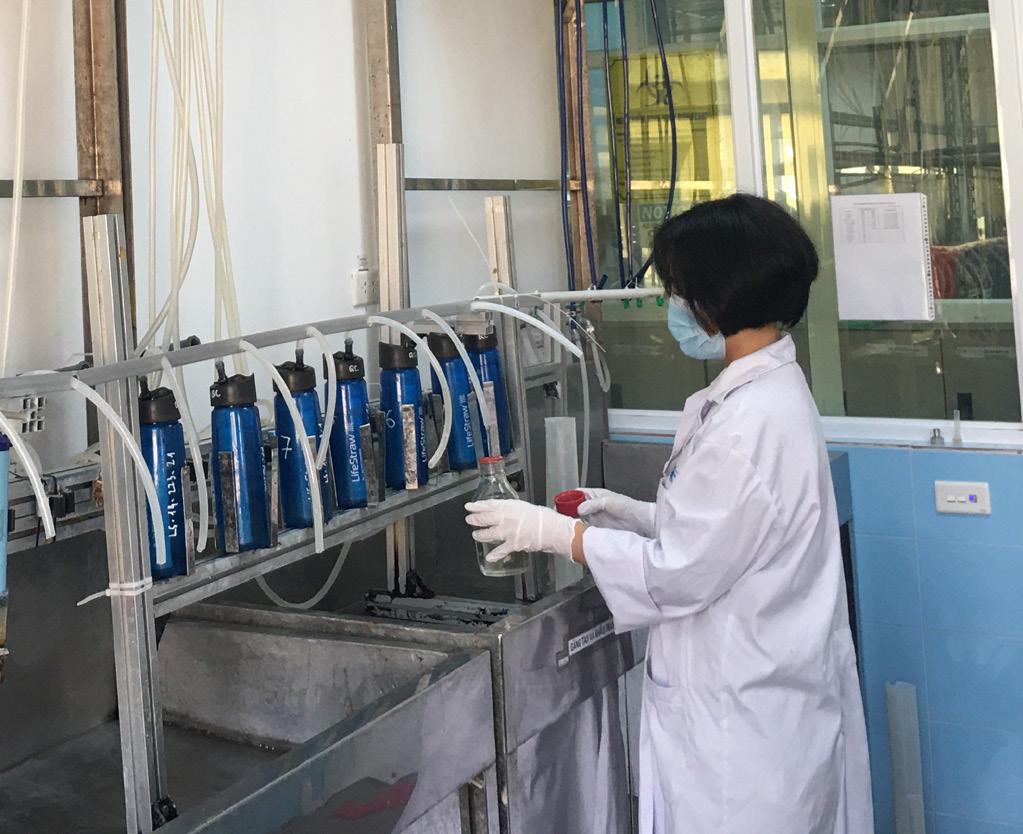
We operate an ISO/IEC 17025 accredited water laboratory with a dedicated team of scientists based in Vietnam. This team provides feedback during product design, conducts quality validation and testing of all new and existing products, provides ongoing, long-term microbiological, chemical and heavy metal product testing, and coordinates external testing with other accredited international labs.
In 2021, the UN released its most comprehensive climate report yet and the outlook is dire. In short, global warming is dangerously close to spiraling out of control, and there’s only a short window left to take immediate, large-scale action to reduce global emissions in order to avoid the most harrowing impacts.
also being part of an industry causing a large part of climate change. We are committed to ensuring that the growth of our company does not result in an exponential impact on our planet.
8,438
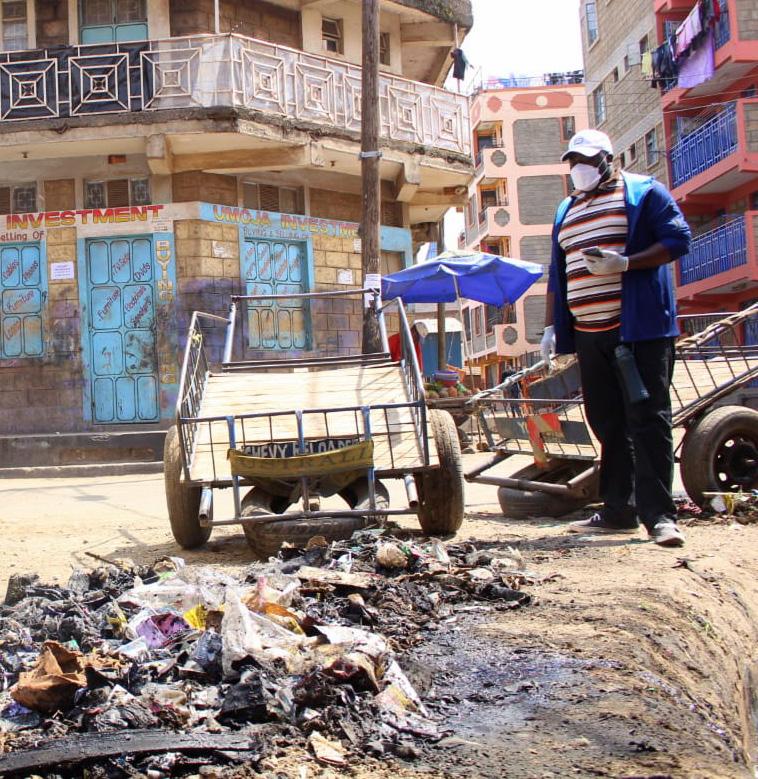

But the average global citizen did not require a 90-page document to recognize the effects that climate change is having on all of us. In 2021, communities across the world were impacted by weather-related disasters at startling rates. And underserved communities, who are least at fault for climate change, have been most severely affected. We acknowledge the paradox of being a company focused on disaster response, while
Since 2019, we have partnered with nonprofit Climate Neutral to measure and offset our total carbon footprint – the estimated sum of our greenhouse gas emissions – which are the main cause of climate change. We gather the most accurate data available, and rely on EPAapproved estimates when primary data isn’t available. In 2021, our carbon offset purchases supported wind energy, forestry, biomass and cookstove projects.
In 2021, we made a public commitment to reduce our greenhouse gas emissions in line with the Paris Agreement 1.5 C warming pathway and to become climate positive by 2030. We are working with climate experts to more accurately capture our emissions and design a roadmap to set interim and long-term targets for reduction.
In 2021, we launched our first annual ‘Sustainability September’, a month-long company-wide competition to encourage staff to take actions in their daily lives that help fight climate change. Staff planted trees, cleaned up parks and waterways, walked places when they’d normally drive, switched out single-use products, and much more. We also launched a new recycling program for our headquarters office and procured more sustainable cleaning, food and beverage options.
1. LifeStraw will donate over 350,000 Guinea worm filters to The Carter Center. LifeStraw is committed to supporting The Carter Center through disease eradication.
2. LifeStraw will launch three community safe water programs, including in at least one country within the top five highest global rates of waterborne disease.
3. LifeStraw’s Give Back program will reach more than 378 new schools and provide over 1.6 million kids with safe water.
4. LifeStraw will implement an anti-jigger campaign in 14 schools in western Kenya, including disinfection, treatment and shoe distribution.
5. LifeStraw will design and implement a health impact study within a select group of schools of our Give Back program.
6. LifeStraw will continue to scale-up domestic safe water programming, including with indigenous communities, people experiencing homelessness, communities impacted by natural disasters, and other areas in the US and Canada facing water insecurity.
7. LifeStraw will continue to respond to natural disasters and emergencies and emerging and ongoing humanitarian crises.
8. LifeStraw will continue to promote the advancement of women and girls through support of Emusanda Health Center, menstrual
hygiene management projects, and through a continuation of providing voice and discussion for those that identify as women or non-binary in the outdoor space.
9. LifeStraw will recommit to our internal Think Globally, Act Locally initiative to support employee volunteerism beyond LifeStraw programming. We will afford each employee at least one workday per quarter to support local community projects, and will provide volunteer opportunities for each respective LifeStraw office. We will continue to volunteer on Giving Tuesday.
10. In consultation with an external racial equity, diversity and inclusion consultant, LifeStraw will conduct an internal cultural audit and needs assessment and implement a DEIJ roadmap and strategy. LifeStraw will also relaunch our internal DEI committee.
11. LifeStraw will set targets, measure and report on the progress of our new vendor policy to ensure procurement of women-owned, BIPOC-owned, persons with disabilities-owned and other diverse vendors.
12. LifeStraw will continue to track and report on diversity, inclusivity, and representation in our marketing; we will ensure that over 50% of influencers and content creators identify as BIPOC, women, LGBTQ+, persons with disabilities, different body sizes, and other historically underrepresented groups.
1. LifeStraw will measure and offset all 2021 company greenhouse gas emissions.

13. LifeStraw will launch a content and storytelling series on water justice issues across the globe.
2. LifeStraw will finalize its science-based targets and roadmap for reductions of greenhouse gas emissions from Scopes 1, 2 and 3, in alignment with the outdoor industry goal of climate positivity by 2030.
3. LifeStraw will launch a water conservation and stewardship initiative, to set targets for and report on water use and protection across our entire supply chain.
4. LifeStraw will certify all Tier 2 suppliers for Sedex SMETA certification.
5. LifeStraw will launch a new outdoor line with 100% sustainable, plastic-free packaging. For products that currently require plastic to maintain filter integrity, we will continue to research 100% recyclable or reusable alternatives. We will also establish an internal Sustainable Packaging Task Force to push through roadblocks.
6. LifeStraw will launch a new product line made with post-consumer recycled material.
7. LifeStraw will continue to research low-pressure virus removal technology, as well as removal of lead, heavy metals and other emerging water contaminants. We will continue to work on developing new humanitarian products.
8. LifeStraw will launch implementation of the new LifeStraw Max purifier in at least ten low-resource, humanitarian and disaster relief settings.
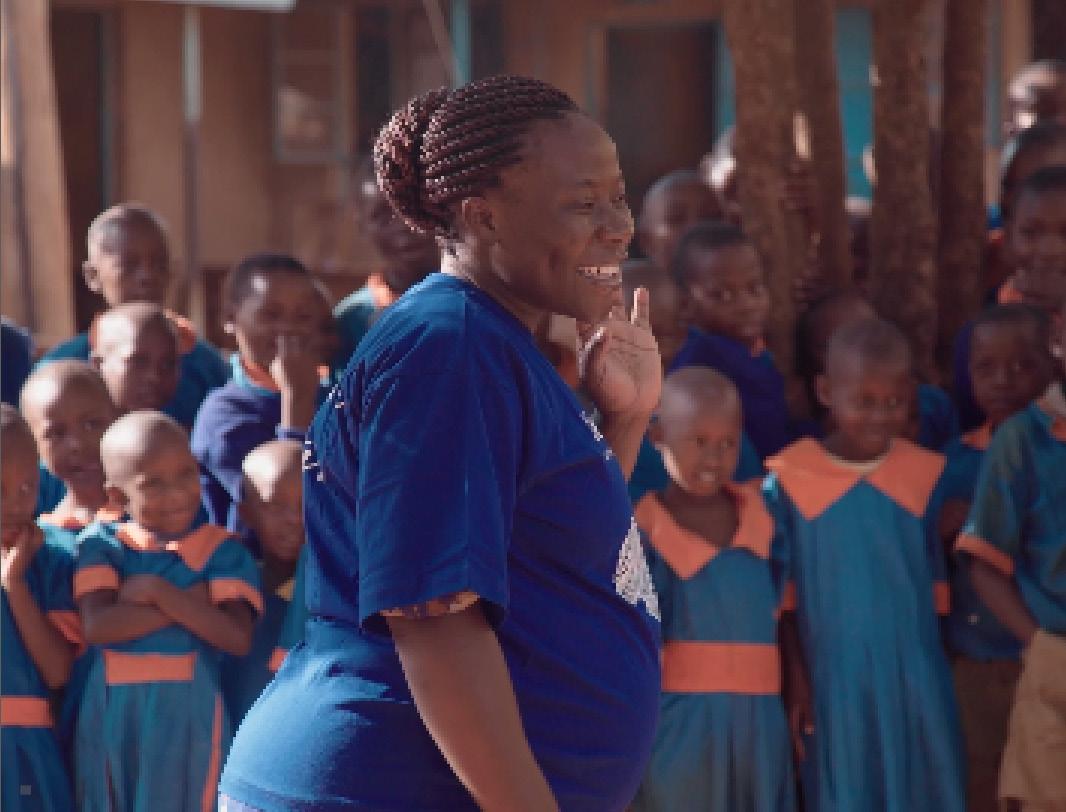
OUR FRIEND AND COLLEAGUE, VIOLA ADEKE, PASSED AWAY ON JUNE 6, 2021 AFTER LOSING A HARD-FOUGHT BATTLE WITH COVID-19.
Viola had been a LifeStraw Area Coordinator in western Kenya for over a decade. She was a leader, an advocate for female empowerment, a champion of safe water and an amazing teacher. Viola had a presence and a power that is rare and magnificent to behold. Her voice and her words had the ability to both energize and calm and she could mesmerize a crowd of 1,000 school children with her incredible energy and poise. Viola cared deeply about her work, her community and everyone around her. She touched and impacted so many lives and we are deeply saddened and sorry for all that knew her and for the world that lost one of its brightest stars. Her legacy and inspiration live on within our entire LifeStraw family and all of the impact work we support across the world. Viola was 36 years old when she died, and left behind 3 children.
In 2021, LifeStraw established a fund for her 3 children to ensure they are supported in their growth and educational pursuits.