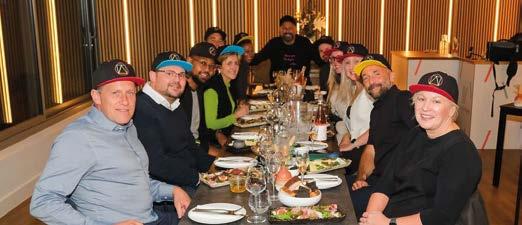
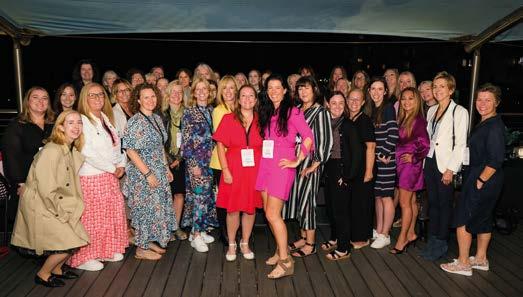
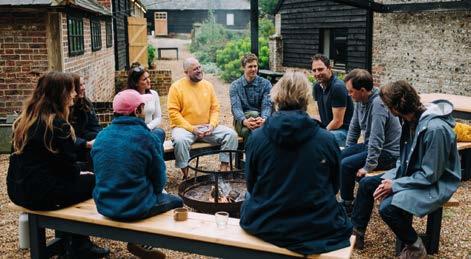
You can be inspiring your peers one day, learning from them the next.
In the end, people buy people.
That makes sharing our stories the most compelling way to connect with one another.
What’s needed is a platform to embrace and empower our regional business ecosystem. Where varied backgrounds and perspectives provide new context.
Harnessing potential, enabling growth.
And at the heart of it, a dedicated term of curators unlocking insights for the good of us all.
So we’re changing the way people think of connecting.
Because we believe in self-reflection, rather than self-promotion.
By demystifying the art of storytelling, we deliver authentic thought leadership through events, publishing and broadcast media.
We come together to discover, share and grow.
But we won’t be limited by geography, or our imagination.
Instead, we’ll seek out local leaders, visionaries and experts, wherever great businesses thrive.
Growing communities, in partnership with the businesses that power them.
And nurturing the enterpreneurial spirit in everyone.
SBTWelcome
Welcome to another edition of SBT
Overcoming the initial challenges that threaten every start-up is the aim of all new businesses. Those that manage to navigate early difficulties often go on to become established brands. Here, in Sussex, we have seen a succession of good news stories - local businesses marking significant milestones in their journeys so far.
In this issue, we highlight a decade of creative agency MOREVER. It is refreshing to see its journey honestly charted from those early challenges to ongoing success.
Becoming an established business is what every start-up should be aiming for. There are distinct advantages that come with longevity. Having years of trade under its belt often means a business has a solid reputation for quality, reliability and customer service. And that sort of reputation attracts new customers and fosters loyalty among existing ones.
One of the biggest advantages of being established is that there is a customer base, which can provide a stable revenue stream and reduce the need for constant customer acquisition efforts. A well-known brand can also command a premium price and attract customers who are willing to pay more for products or services they trust.
Other benefits include long-standing relationships with suppliers, which can lead to better deals, more reliable supply chains and reduced costs. There’s also the matters of having a strong financial foundation, access to financing and an experienced team.
Nobody wants to fail in business, so having the right support and people around you, if you are starting from scratch, is pivotal. We may be approaching the spooky season, but there’s nothing frightening in the advice you will find from qualified professionals in this issue of the magazine - from tax to B Corp certification.
With the right advice, at the right time, you can overcome challenges and reach milestone after milestone to achieve ‘established’ status - just like MOREVER has.
Sam Thomas, Managing Director
Front cover photography by Tom Windsor, Morever
Joint Managing Director/Publisher
Sam Thomas sam@thebusinessgroup.co.uk 07894 762304
Joint Managing Director
Lee Mansfield lee@lifemediagroup.co.uk
Production & Design
Kim Butler kim@lifemediagroup.co.uk
Accounts Clare Fermor clare@lifemediagroup.co.uk
Published by
The Business Group Sussex Ltd.
Licenced to TBG by Pixel Publications Ltd Unit 1a Swan Barn Business Centre, Swan Barn Road, Hailsham, BN27 2BY
Printed by
MCR Media Solutions LTD Unit 35
Bolney Grange Industrial Park Haywards Heath East Sussex RH17 SPB
01273 233558 www.mcrmedia.co.uk
Monthly News
What employers need to know before October 26 about new sexual harassment laws, Servo Private Wealth heralds major achievement, there’s a national award for the University of Sussex, a new branch opening for Mansell McTaggart and some helpful advice on how to get back to ‘inbox zero’ now that summer is a fading memory.
Value Added Partner Stories
This month, meet Stephanie Prior and find out why and how she started Prior Media & Marketing.
Finance
Thinking of selling your business? The Numbers Studio explains the things to consider, including the best time to sell.
Legal
Mayo Wynne Baxter has some advice on how to approach tax law changes with clients, while 365 Employment Law outlines the best way for employers to deal with grievances. Cognitive Law, meanwhile, celebrates its 10th anniversary.
Mental Health Special
“You Alright Mate?” - Sam Thomas writes about being open and honest, and announces a special event being held to coincide with International Men’s Day.
Creative agency MOREVER marks a decade in business and looks at how it all started and how far it has come.
Motoring
It’s Tyre Safety Month and Rivervale is here with advice to ensure you stay safe on the road. We also share some news about mobile vehicle servicing for businesses and organisations.
The Starr Trust recognises its business supporters and we hear from and Rockinghorse Children’s Charity.
How SMEs can unlock the potential of AI to empower teams and bring in new business.
Networking & Events
Latest news from the Big Business Breakfast Club, Gatwick Business Show, Sussex Business Show, Best of British Events and Sussex Cricket.
Business conditions stall as tax anxiety grows, says Sussex Chamber of Commerce in a special survey results feature.
Lifestyle
Surrogacy demystified by The Agora Clinic. We also have the hottest Autumn Styles from Velvet, a B Corp expert joins BOXLESS and we hear how storytelling at Top Table events is building authentic relationships through community. We also feature the relaunch of the Ladies Lunch Club and a two-feature special on ‘Your Away Day’ and why we are ‘working all wrong’.
Wine of the Month
This month’s offering from wine expert Michael Yeoman. What has he chosen for October?
CHRISTMAS CELEBRATIONS
FROM £39.5
Our celebrations menu brings together delish seasonal food with a festive flair. Perfect for more intimate gatherings in our Bar & Grill, where you can eat, drink and be merry with your besties. And the best part is it can be offered as a sit down meal if you’re feeling fancy or as a buffet or bowl food for a less formal group.
FROM WEDNESDAY 20 NOVEMBER TO TUESDAY 24 DECEMBER
Our private dining rooms are perfect for family celebrations, intimate gatherings, big bashes and anything else you’d rather keep behind closed doors
CELEBRATE LIKE SANTA'S WATCHING
FROM £45
Includes: Room hire, 3 course celebrations menu and Christmas crackers
FROM £54.5
Includes: Room hire, 3 course celebrations menu, glass of fizz, half bottle of house wine and Christmas crackers
MALMAISON BRIGHTON Brighton Marina, Brighton, BN2 5WA 01273 041482 | events.brighton@malmaison.com SCAN FOR THE
New sexual harassment laws: what employers need to know before the 26th October
Partner and Head of Employment Law, Nigel Targett shares insights into the new sexual harassment laws coming into effect in England on the 26th October, 2024, which will place stricter obligations on employers to prevent sexual harassment in the workplace.
Monthly News
In response to a series of high-profile incidents and growing public awareness, new sexual harassment laws came into effect in October. These laws mark a significant shift in workplace protections, aiming to hold employers more accountable for preventing harassment and ensuring safer environments for employees. With these changes, businesses must now take proactive steps to address and prevent inappropriate behaviour, reflecting the increasing emphasis on safeguarding workers’ rights and dignity in the workplace.
Under the Worker Protection (Amendment of Equality Act 2010) Act 2023, businesses will be legally required to take ‘reasonable steps’ to stop sexual harassment before it occurs, reinforcing the employer’s responsibility to maintain a safe environment for all employees.
This duty specifically applies to sexual harassment, extending beyond just workplace behaviour to work-related events like conferences or social gatherings. Failure to comply could result in severe financial penalties, including a 25% uplift in compensation for employees if an employer is found in breach of these duties.
However, the precise definition of ‘reasonable steps’ has not been explicitly outlined, leaving it up to employers to assess risk and implement preventive measures effectively.
Employers should also be aware that these new laws revive conversations around third-party harassment, where employers may be liable for the actions of clients or other external parties.
As the law approaches implementation, companies should review their policies and ensure comprehensive training and risk
assessments are in place to protect their workforce and mitigate the potential risks.
For more information regarding the new sexual harassment laws and for any legal advice regarding this matter, please don’t hesitate to contact Coole Bevis LLP’s Employment Law team
www.coolebevislaw.com
nigel.targett@coolebevisllp.com
Nigel Targett
Servo Private Wealth achieves CISI Chartered Firm™ status
Servo Private Wealth, a specialist independent financial planning business, is proud to announce that it has been awarded the prestigious CISI Chartered Firm™ status by the Chartered Institute for Securities & Investment (CISI). This recognition marks a significant milestone in the firm’s commitment to professionalism and ethical standards within the financial services industry and within the local community.
Only 20 firms in the UK have achieved CISI Chartered Firm™ status. This designation is granted to firms that meet rigorous eligibility criteria, including regulatory recognition, a commitment to professional development, and adherence to the CISI Code of Conduct. Importantly, at least 50% of a firm’s staff in core areas must be individually chartered with the CISI.
Servo Private Wealth has successfully established comprehensive qualifications and Continuing Professional Development (CPD) programmes to meet these standards.
James Mallinson CFP™ Chartered FCSI, Director of Servo Private Wealth, commented: “We are thrilled to have achieved CISI Chartered Firm™ status. This recognition underscores our commitment to being among the best in the industry and delivering the highest standards of service to our clients nationwide.
“We invest in our staff’s development and foster long-lasting relationships built on trust and integrity, which this achievement reinforces.”
Based in West Sussex, Servo Private Wealth specialises in working with business owners and their families
across the South-East. The firm’s expert team is dedicated to guiding clients through their financial journeys with confidence and expertise.
Kevin Moore, Chartered FCSI, Executive Director of Membership and Business Development at CISI, remarked: “We are delighted to welcome Servo Private Wealth as a CISI Chartered Firm™. This accreditation highlights their commitment to professionalism, integrity, and clientfocused outcomes.”
To learn more about Servo Private Wealth and its services, please visit www.servoprivatewealth.com
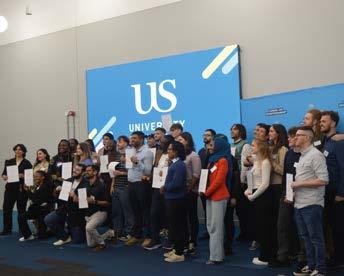
University of Sussex wins 2024 National Enterprise Educators Award
The University of Sussex has won the ‘Entrepreneurship Catalyst’ trophy at this year’s National Enterprise Educators Awards, in recognition of its delivery of exceptional entrepreneurship education.
The focus of the award is on enabling pre-starts, start-ups and growing ventures, and the judges look for exceptional initiatives that support individuals to develop the capabilities they need for an entrepreneurial future.
The judges praised the scale, impact, inclusiveness and social impact focus of the Sussex programme, which provides end-to-end support for student entrepreneurs at all stages –from the entrepreneurially curious to graduates growing existing businesses. Engagement has been rising since the programme was introduced in 2020, and more than 800 Sussex students and graduates took part last year.
Students from all years and all academic schools take part, and inclusiveness is designed in – with startup stories, Entrepreneurs-inResidence, speakers and mentors carefully chosen to represent a wide variety of entrepreneurial starting points, backgrounds, drivers and achievements. One of the chief programme aims is to help change the face of entrepreneurship, and this was recognised at the awards with the Sussex programme receiving a ‘highly commended’ under the NEEA’s ‘Inclusive Enterprise Education’ category.
In line with Sussex 2035 Drivers for Change, social impact and environmental sustainability are also front and centre in programme design. Training, inspirational speakers and incentives help enable
students to consider how they can maximise the positive and limit the negative impacts of their business.
“A lot of careful thought has gone into our programme, which was co-created with students,” said Emily Huns, Head of Careers and Entrepreneurship.
“It is fantastic to receive this sector recognition! Students generate and test ideas, collaborate on new projects and take action to solve problems.
“You don’t have to identify as an entrepreneur to take part: absolutely everyone is welcome. Developing entrepreneurial mindset and skills is part of becoming world ready and students are essentially creating their own work experience. Whether they end
up founding or joining a business, the process of exploring what is possible helps students become more confident, connected and employable.”
After participating in the University’s early-stage enterprise support programmes, more established entrepreneurs are selected to transition onto a 12-month incubator, run by Sussex Innovation. The first session of the 2024/25 incubator took place on 1st October, welcoming 20 new founders who will gain a year’s membership and regular mentoring with members of the Sussex Innovation team.
Getting back to ‘inbox zero’
With autumn now in full swing, many of us are still feeling the effect of the post-summer blues. Whether you took a holiday abroad or some time for yourself, regaining your working momentum in the stretch between August and December can be tough, says the Sussex Innovation.
Monthly News
A recent survey conducted by Reed revealed that 78% of UK workers found returning to work stressful after a period of time off. But there are a few simple productivity tricks that can help you to maintain balance in the final part of the year.
1. Understand your productivity golden hours: Making note of when you feel most energised and motivated throughout the day can really help when scheduling for productivity during the changing seasons. By scheduling your day based on your energy levels, you may find it easy to build a working routine and get those ‘harder to shift’ tasks out of the way early.
2. Block task-specific focus time into your schedule: By dividing your day
into multiple sections, you can work more methodically, prioritise tasks, and avoid distraction. It can also help you allocate more focused time for urgent tasks by preventing surface-level multitasking between different activities. For example, a great starting point for returning to work is setting aside time to catch up on emails. This allows you to address urgent messages, plan your week, and alleviate the stress of an overwhelming inbox. However, don’t be tempted to spend all day answering emails – block out the time and move on when it’s up!
3. Plan short breaks between tasks: Taking a break between tasks can enable you to recharge and process information. Small breaks between activities have been shown to reduce the risk of decision fatigue and help you maintain more consistent
performance levels. Build time into your schedule to get up and walk around, rest your eyes or switch off for a moment.
4. Refresh your desk space: Whether you are working from home or in the office, keeping your space clean and tidy is really important for creating a positive and productive work environment. A clutter-free workspace not only removes the potential for distraction, but helps boost mental clarity, creativity, and concentration.
5. Communicate with your team: Effective communication with your team is crucial for getting up to speed on new projects, delegating tasks, and ensuring that urgent matters are addressed promptly. Make regular appointments to meet as a team and discuss priorities, responsibilities and actions.
Mansell McTaggart expands with a new branch in Hove…. Actually
The new branch brings expertise closer to home and increases Mansell McTaggart’s presence in the area.
Monthly News
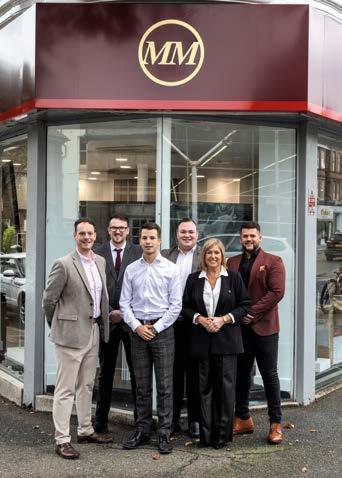
Mansell McTaggart, one of the region’s leading estate agencies, is again expanding with the opening of a brand-new branch in the heart of Hove. This exciting development marks another milestone in the agency’s growth journey and commitment to providing exceptional service to clients.
A new chapter in Hove
The jewel in the crown of Sussex’s beautiful coastline, Hove is known for its charming seaside atmosphere, diverse community and bustling property market. With its unique blend of historic architecture and modern amenities, Hove has long been a desirable location for homebuyers and investors. The new branch is strategically positioned to offer a comprehensive range of property services tailored to meet the needs of this dynamic market.
“We are incredibly excited to open our new flagship branch in Hove,” said Tom George, Director of Mansell McTaggart sales and lettings for Hove, Brighton and Steyning.
“This expansion is a testament to our continued success and growth. We have always been committed to offering outstanding service, and with this new location, we are well-positioned to serve the vibrant community of Hove more effectively.”
As an owner-run business powered by the Mansell McTaggart brand, Tom took over the Brighton branch in early 2020, bringing over a decade of experience in the property industry with him.
Despite having to navigate a very tricky pandemic market and the challenges of opening a new business, thanks to the help of his now co-director Matt Thoburn and long-standing Brighton and Hove agent Fenton Scott, the trio grew
the Brighton branch from a handful of properties for sale to one of the market leading agents in the area in its first year.
Following Brighton’s success, Tom teamed up with Ross Margetts, an esteemed colleague with whom Tom has an incredible working relationship, together they launched Mansell McTaggart Steyning in 2022. Since then, they have built the Steyning branch into a market leader having already helped over 150 Steyning (and surrounding areas) residents move. “The key to assisting as many home movers as possible is having the right team. A blend of experience and youthful passion for the profession has been crucial to Steyning’s success,” said Ross, Director of the Steyning office.
The lettings side of the business was simultaneously launched in both locations in 2022 with Wendy Tolfrey at the helm of the expansion who brought with her 25 years of experience and has overseen the vast, continued growth of the lettings department.
“The strength of our sales and lettings success is abundantly recognised in our local communities and reflected in our impeccable online 5* reviews. I look forward to bringing the same service to the Hove office”, said Wendy, Lettings Director.
Tom added: “A new chapter begins in Hove in late September after a significant office refurbishment. The team and I are incredibly excited to get started. We can’t wait to assist as many people as possible on their property journey along with supporting other local businesses and integrating into the wider community.”
Why choose Mansell McTaggart in Hove?
Buying or selling a home is more than
just a transaction; it’s a significant life decision. That’s why the team of experienced agents at Mansell McTaggart provides a personalised and professional service to our clients. The new branch in Hove will offer a full suite of services, including:
• Residential Sales and Lettings: Helping you find your dream home or the perfect tenant.
• Property Valuation: Expert market appraisals to ensure you get the best market value for your property.
• Property Management: Comprehensive services to take the hassle out of managing your investment.
• Mortgage and Financial Advice: Guiding you through the financial aspects of buying or selling a property from an independent whole-of-market broker.
Meet the team
The Hove branch is staffed with a team of seasoned professionals who are not just experts in the local property market but hold the highest standard
of work ethics. Oliver Spackman will be managing the branch after successfully running it for the previous occupiers, Mishon Mackay. Every team member is committed to making your property journey as smooth and successful as possible. Mansell McTaggart brings a wealth of knowledge about the Hove area, as a huge portion of sales and lettings at our Brighton branch are for Hove properties. Now it is even closer to home, on your doorstep and dedicated to helping clients navigate the local market with confidence.
A commitment to the community
As Mansell McTaggart opens its doors in Hove, it is bringing its expertise in property and a commitment to the local community. This is an estate agency that passionately believes in building strong, lasting relationships and being a positive force in the communities it serves. The team looks forward to supporting local events, schools, charities, and initiatives that make Hove a special place to live and work.
www.mansellmctaggart.co.uk
Value Added Partner Stories
This month, the spotlight falls on Stephanie Prior.
Tell us your story
I founded Prior Media & Marketing one year ago, with the aim of helping brands elevate their presence and connect with their audiences. With a background in the spotlight as former Miss Sussex 2014, I transitioned from modelling to entrepreneurship, leveraging my experience in media, PR and marketing to launch my own agency.
Prior Media & Marketing offers tailored marketing strategies, content creation, social media management, and PR services designed to build powerful, authentic brand narratives. My insight into personal branding, gained from my time as Miss Sussex, combined with over 12 years’ experience in marketing and business development, has shaped my approach to crafting compelling stories for clients, from small businesses to established brands.
My passion for helping others succeed in today’s competitive market has supported a reputation as a trusted consultancy for businesses. I love to empower businesses and individuals
through marketing initiatives and this has provided me with great opportunities to build good client relationships and grow my business.
What has been your greatest or proudest business achievement to date?
I have created some great PR opportunities for clients this year, which I am very proud of. Within the last six months, I have supported one client to win their first ever business award at regional level, while four of my clients have been shortlisted for industry-related awards on two national platforms and two regional platforms. We await the results in coming weeks, which is exciting. These businesses are leaders in their fields and it is an absolute pleasure to support them as they gain recognition for this.
What type of clients do you currently work with and who are you looking to meet?
Prior Media & Marketing works with a range of clients in different sectors including retail, professional services,
technology, legal services, coaching and training, charity, marketing, and events. I aim to continue to build a network of clients where, in addition to creating great marketing and PR opportunities, collaboration, business and support can be shared within this network, adding extra value to my clients.
Tell us a story/fact about yourself that people might not know
I studied for a BA (Hons) Degree in Anthropology at Goldsmiths, University of London. I loved exploring a subject that allowed me to delve into a wide range of fascinating topics, including politics, culture, human rights, psychology, and media.
How do you define success?
I would say, success is about creating meaningful impact; achieving personal and professional goals, and helping others grow. It’s measured by the positive influence we make on those around us, the strength of the relationships we build, and the ability to stay true to your values while driving long-term results.
Thinking of getting out? Make your exit strategy count
Let’s face it, the new Chancellor has business owners well and truly spooked.
Like a Halloween horror film, we’re peering out from behind the sofa to catch a glimpse of the Capital Gains Tax monster which is yet to be fully revealed in the budget on 30th October!
Halloween jokes aside, over the past couple of months The Numbers Studio has had a ridiculous number of conversations with business owners, prompted by looming tax changes, who are questioning whether they should sell their businesses - and more crucially how they even go about doing so.
How to decide if now is the right time
Timing is everything when it comes to selling your business. Here’s what to consider if you’re a business owner thinking about making your move:
1. Know your market: Is there growing demand for businesses like yours in the local area? Are buyers actively seeking opportunities? If the market is strong and stable, it could be the ideal moment to sell.
2. What’s your goal? Are you looking to retire, start a new venture, or simply move on to a new phase in life?
Knowing what you want from this sale will guide your decision and help you plan for your next steps.
3. Valuation: It’s easy to get emotionally attached to your business, but understanding its current true market value is crucial. A professional valuation can help you set a fair price that attracts serious buyers.
4. Seasonality and local economics: If your industry is on the upswing or local economic conditions are favourable, selling during a peak in demand can boost your business’s value.
What
Selling a business isn’t just about handing over the keys; it’s a journey that requires careful planning. Here’s what you can expect:
1. Get prepared: Organise your financial records, legal documents and relevant records to present a clear picture to potential buyers. The more prepared and transparent you are, the smoother the process.
2. Find your buyer: Target the right buyers and present your business as a solution to their needs. You could develop a marketing strategy but your best buyers are probably already in your LinkedIn network. Specialist brokers can also help with this.
3. Agree heads of terms: This is where the initial terms of the deal come together. This is just the start of the process, like having an offer accepted on a house. There are many things which could cause the deal to abort, most of which will come to light during due diligence.
4. Due diligence: Buyers will deep dive into your business details during this phase, checking for any red flags and reasons to reduce the purchase price or walk away. Be prepared to answer questions about profitability, customer base, and growth potential with full transparency.
5. Final negotiations: After due diligence, this is when either party might look to negotiate on the purchase price or change the terms of the deal. Before you engage in these negotiations, make sure you know what you want…don’t be afraid to walk away still.
6. Sale & Purchase Agreement (SPA): This is the main contract which will cover all aspects of the deal. Using a quality commercial lawyer is essential.
7. Signing the contract: This is the final step, where all parties sign on the dotted line, officially transferring ownership. Pop those champagne corks and start planning for the future!
Life after selling: what comes next?
Once the deal is done, what’s next for you? Here’s how to handle the transition after selling your business:
1. Filling the void: Whether it’s a new venture, investing your time in hobbies, or mentoring others, having a plan helps fill the void left by selling your business.
2. Smart financial planning: With the proceeds from the sale, it’s crucial to plan your finances wisely. Consider using a good financial advisor to help with investing, saving for retirement, or exploring new opportunities that align with your future goals.
3. Stay connected: Staying active in the local business community through networking or investments can help maintain your sense of purpose even after the sale.
Looking to sell your business? How The Numbers Studio can help
At The Numbers Studio, we understand that buying or selling a business is a huge decision that can shape your future. Our mission is to empower entrepreneurs to create a more fulfilling future for themselves, so whether you’re planning your exit or exploring new business opportunities, we’re here to guide you every step of the way.
For more information about how The Numbers Studio can help you through every step of your buying or selling journey, visit their website at www. numbers.studio You can also contact them at 01273 973 741 or hello@numbersstudio.com
How to approach changes in tax law with clients
By Holly Maxwell-Gumbleton, Solicitor, Mayo Wynne Baxter.
Legal
Did you listen to Rachel Reeves’ speech at the Labour Party Conference?
The semantics were interesting. She mentioned the word ‘tax’ countless times, as would be expected from the Chancellor of the exchequer - tax avoidance, tax evasion, tax loopholes and more tax compliance officers. The language that Reeves adopted was hoping to foster agreement with Labour’s very
reasonable argument: if we sniff-out the tax dodgers and scrap the nondoms tax status we may just generate enough funds to mend the ‘broken NHS’, not to mention the rest of the UK’s ailing infrastructure.
Interestingly, Reeves did not make any direct references to inheritance tax which she is, of course, saving up for the actual budget at the end of this month. At the time of writing, we are now expecting a watered-down
version of the non-dom tax status, but also reforms to the current IHT regime with special focus on pension pots being brought into the orbit of IHT. It will be particularly galling for those who have carefully planned their retirement based on the current set of tax rules; they will need to urgently review their investments and dig out their carefully written wills.
Although I write this from the perspective of a private client lawyer,
all professionals have to consider potential risks and pitfalls based on the information that we are given with the backdrop of the ever-changing tax legislation. But every new Budget brings on the recurring headache of how to address updates to the previous advice we have given to our clients.
I have been a solicitor for over 20 years and during that time witnessed many budgets, dealt with the incremental IHT thresholds, add-on exemptions as well as the escalating complexities of the Trust Regime, the latter of which means that any first-rate firm of solicitors now has a dedicated Trust Department. Over this period, I have guided new and returning clients with simple tweaks to their Wills through to total rewrites. The clients seeking advice due to a change in family dynamics and increasing extent of their assets happily accept that this advice is chargeable. When they return for advice because IHT law has changed, they are slightly less tolerant, and so they should be, their autonomy has just been jettisoned. To cope with the upcoming influx of enquiries following the budget we should take stock of how to approach our clients in order to cultivate long-term relationships.
1. Set realistic expectations.
• It is important to lay the foundations that we can only advise the client based on the current tax legislation. Provide them with working examples so that they can see how the current tax rules will affect them and their loved ones.
• Don’t scare the client but certainly point out that dying having not updated their wills and legal affairs will be at a much greater cost than spending funds now on updating such documents.
2. Be transparent with the cost.
• Clients are much more able to accept the costs if they know why they are paying it.
• Taking instructions should take a minimum of an hour to ensure that all the relevant information is obtained as well as taking the time to consider the person’s mental capacity, undue influence and probing any areas that they may have considered irrelevant. Preparing a will or indeed any document that is tailored to the client’s objectives and extent of their estate should take a minimum of an hour. Preparing the letter of advice to ensure that the client properly understands the documents should also take an hour or so. Not to mention writing up every interview in case it is required in the future as Court evidence if the Will is challenged by a disappointed beneficiary. That’s three hours minimum for just one well thought-out Will and although that may cost more than an off the shelf Will the client will appreciate that it is money well spent.
4. Recommend that your client has a Property and Financial Affairs Lasting Power of Attorney (LPA) ensuring the inclusion of 2 important clauses:-
• Allow the Attorneys to delegate investment responsibilities to financial advisors on a discretionary basis. In this way investments, such as pensions, can be reinvested if necessary to lessen any tax bombshells.
3. Put the Onus on the client to review their wills and other legal documents not only when life throws a curve ball but also at every budget.
• Remind the client that this ‘will’ may be the first of many. If a client ever grumbles about this, I remind them that we all pay annual house insurance and to think of the Will like a house insurance policy, you are keeping your house in order to look after ‘future you” and your future family.
• Give them back their autonomy by reminding them that they have the power to plan their future.
• Allow the Attorneys to view the will during the donor’s lifetime. Although an Attorney has no legal power to make changes to a will, at least they will be forewarned and if the Attorney does seek to reinvest assets, they will know which assets to avoid if they have been earmarked in the will as gifts.
With these tools in our kit, we are lessening the risk of messy tax problems for our clients. Although we cannot predict what the budget has in store for us, Reeves’ semantics indicate that it will be a punitive year ahead.
www.mayowynnebaxter.co.uk
Holly Maxwell-Gumbleton
Employment Law: what is the best way to deal with a grievance?
By Alex Jones, Managing Director of 365 Employment Law.
If an employee has a problem at work it is usually a good idea for them to raise it informally first.
A grievance procedure is a formal way for an employee to raise a problem or complaint to their employer.
The employee can raise a grievance if:
• raising it informally has not worked
• they do not want it dealt with informally
• it’s a very serious issue, for example sexual harassment
Following a formal procedure
When an employee raises a formal grievance, their employer should follow a formal procedure.
Employers should have their own grievance procedure. Otherwise, they must follow the Acas Code of Practice on disciplinary and grievance procedures. The procedure they’ve followed will be taken into account if the case reaches an employment tribunal.
Regardless of the size of the organisation, all employers should follow a full and fair grievance procedure.
The employee should always raise the grievance as soon as they can and take any actions expected of them as soon as possible.
The employee should check their organisation grievance policy to find out the full grievance procedure and who they should send their grievance to. The grievance should be put in writing to
whoever is most appropriate. This could be their line manager or HR manager.
Responding to a grievance
The employer should keep written records of what takes place during the grievance procedure. This includes:
• what the grievance is about
• any decisions and actions taken, and why
• whether the employee appeals the grievance outcome
The employer should keep all personal information confidential.
Before getting more information and evidence, the employer should avoid assuming anything about the grievance or the people involved. They should be sensitive to the circumstances and
needs of the person the grievance is about, as well as the person who raised the grievance.
The employer should investigate the grievance so that they can make a fair decision about the grievance. If the grievance could be a criminal matter, for example it’s related to an assault, the police might need to be involved.
If more than one person in an organisation has the same grievance, it might be best to raise it collectively.
The grievance meeting
When an employee raises a formal grievance, the employer should hold a meeting with them. A grievance meeting is sometimes called a ‘hearing’. The employer should hold the meeting ‘without unreasonable delay’ – ideally within 5 working days.
To keep the procedure fair, the employer should consider information or evidence from all sides. If a similar grievance has happened before they should aim to follow the same fair procedure
The employee, employer and any companions should make every effort to attend the meeting on the date set.
The meeting is the chance for the person who raised the grievance to explain and show any evidence they have. It’s also the chance for the employer to ask questions, so that they know what steps to take.
The employer should remain impartial and do their best to understand the feelings of the person raising the grievance. They should take notes or appoint someone else to take them
The employer will go through the evidence and consider if they need to investigate further. They might
need to take some time to investigate so they can make a fair decision. If necessary they can set up another grievance meeting once they have found out more information.
At the end of the meeting the employer should give the employee copies of the meeting record and notes taken, ask the employee to confirm the notes are accurate and tell the employee when they will get a decision.
The amount of time needed for a decision should be in line with the organisation grievance policy, if there is one.
Deciding the outcome
After following a fair grievance procedure, the employer should decide on the best outcome based on:
• the findings from meetings and investigations
• what is fair and reasonable
• what their organisation has done in similar cases before
The employer should tell the employee of the outcome as soon as possible and put it in writing.
If the grievance involved other people in the organisation and it was upheld, the employer might need to start a disciplinary procedure.
The employer should offer the employee the right of appeal.
After the grievance
The grievance outcome and details must remain confidential. However,
where appropriate, it can be a good idea for the employer to talk privately with any staff who were directly involved in the grievance.
No matter what the outcome, employers should keep a written record of all grievance cases to help with any questions or similar cases in the future.
If the employee feels they’ve tried everything and their problem is still not resolved, they could in some cases make a claim to an employment tribunal.
Employers should always take advice at the earliest opportunity.
365 Employment Law Solicitors Tel: 01903 863284 www.365employmentlaw.co.uk
Alex Jones
Cognitive Law celebrates 10 years in business
Thriving consultancy firm marks landmark event after a decade of collaboration and transparency.
This month marks a major milestone for consultancy law firm Cognitive Law as it celebrates its 10th anniversary.
Legal
What began as a humble vision of providing expert legal services has blossomed into a thriving consultancy firm.
Starting as a one-woman initiative, led by Managing Director Lucy Tarrant,
Cognitive Law has grown into a flourishing business with a dedicated team of solicitors operating across the UK and abroad.
Over the past decade, the team has built a reputation for offering tailored legal solutions, developing strong client relationships, and fostering a culture of collaboration.
From its early days to the expansion into new sectors, Cognitive Law
has stayed true to its mission: to offer exceptional legal services at transparent, reasonable prices.
Congratulations! Here’s to the next decade!
www.cognitivelaw.co.uk
“You Alright Mate?”
By Sam Thomas, of Different Hats.
How often have you been asked “Are you alright, mate?”and how often have you automatically replied, “Yeah, I’m fine” even when the truth is far from it?
Mental
Health Special
For most men, this has become a default response — a shield we use to protect ourselves from vulnerability. The reality is that, sometimes, we’re not fine at all. We’re struggling, overwhelmed, and yet we find it so hard to say those words out loud, even to the people we trust the most.
I know this first-hand because I’ve been there myself. For years, I hid behind a smile, afraid that showing my true feelings would mean losing the positive, upbeat image I’d built. But
through my own battles with mental health and countless conversations on my podcast, I’ve realised something profound: it’s okay not to be okay. Life has its dark moments, and pretending otherwise only deepens the struggle.
It’s in those moments of vulnerability that we need to reach out and ask for help. Recently, on World Mental Health Day, I shared photos of myself at different times — pictures that show me beaming, looking like I’ve got it all together. But behind those smiles, I was often hiding, pretending everything was fine when it wasn’t.
I was reminded of this during my experience at Talk 24, where I faced the darkest chapter of my life — a time when I didn’t want to be here anymore. I remembered those
moments at events, smiling for the camera while secretly feeling lost and broken inside, too afraid to show my pain for fear of appearing weak.
But here’s the truth I’ve come to embrace, captured so beautifully by Charlie Mackesy in The Boy, The Mole, The Fox and The Horse: “Asking for help isn’t giving up,” said the horse. “It’s refusing to give up.”
Now, when someone in my circle asks, “You alright, mate?” I’ve learned to answer honestly: “Not really, I’m struggling.” Because being open about our struggles is the first step to breaking the cycle of silence that surrounds men’s mental health.
Despite our progress, stigma and outdated narratives still dominate
conversations around mental health. Suicide remains the leading cause of death among men in the UK, with rates rising instead of falling. Last month, I took part in suicide prevention training with Rose Rowkins, and the statistics were devastating: 57% of suicides are linked to economic pressures — an issue deeply rooted in the relentless pressure society places on men to measure their worth by financial success.
This is why I’m committed to helping the world see success differently. We must create spaces where men can talk openly, honestly and vulnerably — we build connections that are real and supportive, not masked by societal expectations.
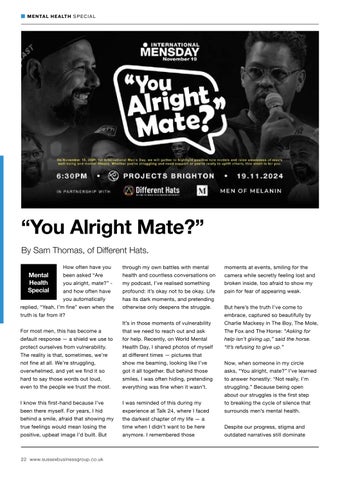
I’m excited to announce a new event, in collaboration with my friend and mental health advocate Bud Johnston, called ‘You Alright Mate’ . Taking place at Projects in Brighton on International Men’s Day, Tuesday 19th November , this event is designed to create a safe space for men to support each other, to speak without judgement, and to listen with compassion.
The title, ‘You Alright Mate’ , serves as a reminder of how far we still have to go to normalise conversations about men’s mental health. Together, we aim to chip away at the stigma, to raise awareness, and to push back against the unacceptable suicide rates that continue to claim too many lives.
Change won’t happen overnight, but if we can transform even a small corner of our world, the ripple effects could be enormous. We owe it to ourselves, to each other and to those we’ve lost to never stop fighting for a future where no man feels he has to face his struggles alone.
Scan here to book
Bud Johnston
Sam Thomas
10 years of MOREVER: a journey of creativity, charity and change
Founded a decade ago, MOREVER, a creative agency, has been on an extraordinary journey, helping purpose-led brands and charities create compelling narratives that drive meaningful change. Cover Story
The agency’s cofounders, Dan and Abi Mellor, have built a reputation for delivering impactful stories, particularly in the charity and health sectors. As they celebrate this milestone, they reflect on the challenges they overcame, their biggest achievements and their aspirations for the future.
What led Abi Mellor, Managing Director of MOREVER, to start the agency?
I spent the first year or so of my career working for charity heavyweights such as The British Heart Foundation. Eventually, I moved into the agency world, in account handling roles, firstly at Worth and then at iCrossing. In these roles, I looked after high profile clients such as GlaxoSmithKline and
the Department of Health.
My husband, Dan, meanwhile, was developing a deep well of experience in senior creative roles within production companies and agencies.
We were two sides of the same coin.
We already had one young child, and another on the way, when I reached my
career crossroads. We had experienced a difficult road to parenthood and the sacrifice involved in working as a parent is huge. Since returning to work would mean sacrificing so much time with my children, I wanted to do something meaningful, and something where I could have control over the shape of my role. Something I would be proud of and that they would be proud of in the future too. I wanted to help drive change for good and have a positive social impact. Getting my teeth into something that could grow alongside my children just made way more sense than giving that time away to someone else.
Dan and I decided to pool our talents and take the plunge into business together. We co-founded MOREVER in October 2014, just a few months before the birth of our son.
Starting MOREVER: challenges and determination
Looking back at the early days, the
founders recall how challenging it was to move from an idea to a profitable business. “The second client was the hardest to land,” they explain. With no portfolio to showcase and only individual work to rely on, they had to knock on doors, relying on goodwill and clients taking a leap of faith.
The first year, in particular, was the toughest, testing whether their dream could become a reality. However, their determination to over-deliver on projects secured testimonials and helped them grow.
Highlights from a decade of storytelling
Over the last 10 years, MOREVER has achieved numerous successes. One of the most notable moments was winning Gold at the Charity Film Awards for their work on “Ken’s Story” with Blind Veterans UK. This project allowed them to develop a niche in working with
veterans’ charities, telling sensitive stories that require a great deal of trust and skill. More recently, they won three EVCOM Clarion Awards for their work with the charity Walking with the Wounded, solidifying their reputation for authentic and meaningful storytelling.
A personal influence on professional values
The personal backgrounds of the founders, especially Abi’s family history, have deeply influenced the agency’s mission and values. Abi’s mother, who left Iraq and arrived in the UK in her mid-20s, inspired her to work hard and make a positive impact. This desire to do something their family could be proud of has driven both Dan and Abi, particularly in their focus on health and charity sectors. Their upbringing, with parents in the medical profession, also shaped their passion for health-related work, which has become a cornerstone of MOREVER’s offerings.
Scaling to high-profile clients
From the outset, MOREVER aimed high, boldly approaching large charities such as Diabetes UK and Crohn’s & Colitis UK. They believed in their ability to deliver and make a significant impact from day one. This confidence, combined with a relentless focus on learning and improvement, helped them attract high-profile clients.
Culture of compassion and creativity
MOREVER has always been about more than just business; it’s about fostering a supportive, compassionate and creative environment. Given the sensitive nature of many of the subjects they deal with, such as PTSD, suicide and stroke survival, the team has cultivated a culture of openness and support. This ensures that their mental well-being is protected while delivering topnotch creative work. Dan’s leadership in fostering creativity has also been instrumental in keeping the agency at the cutting edge of the industry. His relentless attention to detail has become something of a trade mark with clients.
Lessons learned and advice for the future
Reflecting on their journey, the founders acknowledge that siloing roles in the early days was a mistake. They’ve learned the importance of understanding all aspects of the business and ensuring that processes, especially in finance, are robust. Their advice to their younger selves? Always remember you can’t ever know it all but you can find and nurture great people.
Crafting campaigns that drive change
One of the most important lessons MOREVER has learned is the value of relationships. Building trust with clients, being honest, and having meaningful conversations are what drive great work. The agency takes pride in its ability to tell stories that have a social impact, especially in the charity sector, which has set a high standard for storytelling across all industries.
Looking ahead: MOREVER’s next chapter
As they look to the future, MOREVER is
more than just an agency; it’s becoming a community. They are launching a podcast called ‘Leading Lights’, where women CEOs of charities, such as those from MIND and BEN, will share their stories. Supporting women in business is a key focus, especially given that only 1% of creative agencies are led by women.
Looking forward, MOREVER aims to explore TV advertising and is building out it’s experiential offering into dynamic interactive applications for all sizes of screen, nurture new talent from diverse backgrounds, and work with educational bodies. It’s ultimate goal is to continue to grow its work with ‘changemakers’ the purpose-led organisations that make the world a better place.
In celebrating 10 years, MOREVER shows no signs of slowing down. With a passion for storytelling and a commitment to making a positive impact, the agency is set to continue its legacy of creativity and change for years to come.
www.morever.co.uk
MOREVER is launched by its three co-founders - Abi and Dan Mellor, and Larry Chan, the first managing director.
MOREVER secures its first client - the Global Health Innovative Technology (GHIT) Fund, based in Japan. With development projects all over the world, this client’s projects take its film crew to far flung locations such as Japan, Myanmar and Sudan. Today it is still working closely with the GHIT Fund.
The team moves into its first studio, Clifton Mews, Brighton. The MOREVER team starts to grow.
Unilever comes on board as a client. A real coup for the agency! MOREVER also won its first charity client, Crohn’s & Colitis UK, soon followed by the MS Society. The team starts to realise it has unique skills in working with contributors and human storytelling to deliver powerful and impactful films, and starts to niche into the charity, health and global health sectors.
MOREVER’s marketing starts to take shape as Abi Mellor speaks at Charity Comms about the power of authentic storytelling. MOREVER offers advice sessions to charities at the event.
The agency gains momentum, winning film work for The Met Police, Greenpeace and Breast Cancer Now.
In this year, MOREVER began work on a landmark film - Ken’s Story, for Blind Veterans UK. This film goes on to win Gold at The Charity Film Awards. MOREVER starts to develop specialist expertise in working with veterans charities, which leads to projects with other veteran charities such as Walking With The Wounded, SSAFA and Combat Stress.
Having grown to a team of nine, MOREVER kicks off an exciting campaign for Tommy’s which includes hosting a research workshop and developing the insights generated into a series of creative content, featuring Giovanni Fletcher.
2019
MOREVER adds another string to its bow as it starts creating ‘experiences’ for organisations in the charity sector. One of which is the entire on-booth experience for Uniting to Combat Neglected Tropical Diseases for its presence at the Women Deliver show in Canada. The project includes design and creation of an interactive exhibition stand - including an unforgettable ‘smell wall’, microsite, flyers and giveaways, and a shoot in Ethiopia to capture images and footage to illustrate the educational experience.
The pandemic hits, everyone starts to work from home, and in-person filming is not possible due to social distancing. Charity clients need video content that cuts through noise more than ever, to talk about new services and to fundraise. After securing The Coast to Capital Backing Business Grants for 15 self-filming kits, MOREVER develops a process for securing ‘user-generated content’ so that film creation can continue.
During the pandemic, MOREVER continues to support charities who need more help than ever with brand awareness and fundraising activities. It delivers the film and photography work for several large integrated campaigns for the Stroke Association.
Realising there’s a big need for the creation of a community to support female marketers in the charity sector, MOREVER launches the MOREVER Meetups, a quarterly get together for women in the sector.
MOREVER builds on its experience of working with organisations such as British Red Cross and Cure Parkinson’s, in health and charity sectors, by being part of the agency mix that deliver Dementia UK’s largest ever brand awareness campaign.
MOREVER works with clients such as Iford Biodiversity Project and The Kings Foundation, adding the ecology sector to its range of expertise. The agency strapline evolves to: ‘an independent creative agency for charities and changemakers’.
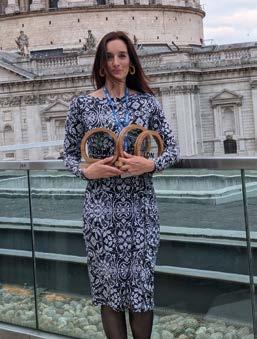
Abi was honoured to be a judge at this year’s Purpose Awards, organized by Campaign, Third Sector, and PR Week, which celebrated impactful campaigns and initiatives that drive social and environmental change through purpose-driven work across advertising, PR, and the non-profit sector.
Abi seen here with head judge Sarah-Jane Rumford.
MOREVER celebrates its 10th year in style by scooping 3 EVCOM awards, delivering experiences for clients like Google and launching the Leading Lights podcast. Hosted by Abi, the podcast will feature women chief executives from the charity sector, as they talk about their own journeys to leadership.
Tyre Safety Month: how to check your tyres
Your tyres are the only part of your vehicle in constant contact with the road. Rivervale explains how to give them some TLC (Tyre Loving Care) they deserve this Tyre Safety Month.
Motoring News
October is Tyre Safety Month - and there’s no better time to make sure your tyres are in top condition. Whether you’re a seasoned driver or a newcomer, here’s a quick guide to help you stay safe and legal.
Why tyre safety matters
It’s easy to overlook tyre maintenance, but worn or underinflated tyres can cause serious problems. Not only can they lead to longer braking distances and poor fuel efficiency, but they can also result in dangerous blowouts.
In the UK, driving with tyres below the legal tread depth of 1.6mm can land you a fine of up to £2,500 per tyre, not to mention penalty points on your licence.
The 20p tread test
One of the easiest ways to check your tread depth is the 20p test.
Simply insert a 20p coin into the grooves of your tyre. If you can see the outer band of the coin, your tread may be too low, and it’s time to replace your tyres.
Remember to check across the width of the tyre. If the wear is uneven, it could signal alignment issues that need addressing.
Checking tyre pressure
Tyre pressure is key to safety and performance. Underinflated tyres can overheat, while overinflated ones wear unevenly. Both scenarios can affect handling and fuel consumption.
You can find the recommended tyre pressure for your vehicle in the owner’s
manual or on a sticker inside the driver’s door.
Check your pressure monthly, and especially before long trips. Don’t forget that colder weather can cause tyre pressure to drop, so a quick topup might be necessary during winter.
Spotting damage
Aside from tread depth and pressure, you should also inspect your tyres for visible damage. Look for cuts, bulges, or cracks—these can lead to blowouts if ignored.
Bulges, in particular, indicate that the internal structure of the tyre has been compromised, so a replacement is essential.
Sealant kits vs. spares
Newer cars often come with a tyre sealant kit instead of a spare tyre. These kits can be handy, but they’re a temporary fix for small punctures.
Make sure the sealant isn’t past its expiry date and remember to get the tyre checked by a professional after using it.
If you have a spare tyre, don’t forget to check its condition too. After all, it’s no use having one if it’s flat when you need it!
Rotate and balance your tyres
Rotating your tyres regularly—around every 6,000 miles—helps them wear evenly and extends their lifespan. Front tyres, especially, wear out quicker as they bear more of the vehicle’s weight.
Balancing your tyres is equally important. If you’ve noticed your car vibrating at higher speeds, it’s a sign that your tyres may need balancing or aligning.
Don’t forget professional checks
While it’s great to know how to check your tyres yourself, don’t skip the professional inspections.
Tyre specialists can spot issues you might miss and can advise on when it’s time for a replacement.
This Tyre Safety Month, take a few minutes to inspect your tyres. From checking tread depth to ensuring proper pressure, these simple steps can make a huge difference.
Stay safe, save money, and keep your vehicle running smoothly all year round.
Are you Brighton based? Pop into our BOSCH servicing department at Rivervale House, get your tyres checked and enjoy a coffee whilst you wait.
For more information or to book a tyre health check, visit Rivervale’s website rivervale.co.uk or call 01273 433 480
Mobile vehicle servicing: hassle-free car maintenance by Rivervale
Rivervale’s mobile vehicle servicing is designed to make car maintenance effortless. Whether you’re a private car owner, lease customer, or managing a fleet, Rivervale brings expert servicing and repairs directly to you – no more garage visits or wasted time.
For local customers within a 15-mile radius, Rivervale’s mobile service handles everything from routine maintenance to repairs like brake checks and replacements.
Motoring News
Whether you own or lease your vehicle, the mobile service allows you to continue with your day while Rivervale’s team handles the rest.
Fleet customers, however, can benefit from an even broader reach. Rivervale offers mobile services to businesses with multiple vehicles, ensuring that large volumes of work can be completed efficiently in one day.
Perfect for fleet managers or businesses
with company cars, this service minimises downtime and keeps your vehicles on the road.
Supporting schools with minibus checks
Rivervale also offers essential minibus safety checks and repairs for schools.
These checks ensure that school vehicles remain safe and compliant, without the need to take them off-site.
It’s all part of Rivervale’s commitment to providing flexible, expert services to organisations that rely on their vehicles every day.
Professional service you can trust No matter the size of the job, Rivervale’s team of expert technicians delivers the
same high-quality service you’d expect from their service centre.
From oil changes to diagnostics, they’re fully equipped to handle a range of servicing and repairs, all on your doorstep.
Ready to book?
Whether you’re looking after a single vehicle or a whole fleet, Rivervale’s mobile vehicle servicing offers flexibility, convenience, and professional care.
Skip the garage visits and keep your day on track with Rivervale’s mobile service.
For more information or to book your mobile vehicle service, visit Rivervale’s website rivervale.co.uk or call 01273 433 480
The Starr Trust recognises its incredible business supporters
Charity names some of the brands who have gone out of their way to make a difference to young people’s lives.
Charity
The Starr Trust removes roadblocks for young people to help them succeed and thrive in whatever they put their minds to, by supporting individuals and groups with financial grants, sharing connections and encouraging success. Without the support of generous businesses it would not be able to reach so many disadvantaged local young people who desperately need support.
Just a few of the businesses Starr Trust would like to thank for their kind support…
Best of British Events, Webtrends Optimize, Evergreen Waste Management, Acumen Law, Brighton CCTV, IT Document Solutions and SBT Magazine.
Don’t miss the Starr Trust Winter Extravaganza Ball!
Billed as ‘the’ pre-Christmas night out to remember… Bring your clients, friends and colleagues to kick start the festive season!
When? Saturday 9th November, from 6pm until late.
Where? DoubleTree by Hilton Brighton Metropole.
A sensational evening of entertainment featuring live music from the UK’s best funk band ‘Oomphf’, as seen on
BBC Radio 1 Live lounge. The band has previously performed with Adele, Jools Holland and Amy Winehouse!
There will also be a Highweald English Sparkling Wine Reception and a threecourse meal included.
Tables of 10 from £900 or £810 by quoting SBT Magazine on booking.
To find out more and get involved please scan here:
www.starrtrust.org
Rockinghorse Relay makes a splash at the first overnight swim in Brighton
The very first Rockinghorse Relay took place at Sea Lanes on Bri ghton seafront, with over 70 swimmers splashing through the night to raise money.
The Rockinghorse
Relay saw swimmers take on a sponsored one-hour swim anytime during the 12-hour event, which started at 7pm and finished the following morning, at the stunning open air swimming centre on Madeira Drive.
Charity
It was a great opportunity for the participants to fundraise for the beloved local charity - and swim in the pool during the night when it’s normally closed to the public.
The event was kicked off by pupils from the nearby Roedean School’s swimming team taking to the water. The swimmers ranged from Year 7 to Year 13, all of whom had lots of experience of outdoor swimming, and they did a wonderful job to get things going.
Then it was time for the other swimmers to take on their challenge, some with colleagues from work and others just for the love of the sport. Among the participants was a team from Galloways accountancy firm. Team members took in turns to swim several slots during the night.
Gemma Wall, one of the team, who together raised £1,740, really enjoyed herself. She said: “It was an amazing experience – freezing cold but well worth it because it’s such a great cause.”
A pair from local tea specialists Bird & Blend, Georgina Webb and Shona McDonald, raised £580 and kindly donated a range of delicious teas for swimmers to warm up with after they finished.
And a team of four swimmers from Bennett Christmas Insurance Brokers
managed to raise an amazing £2,313the top fundraisers for the event, so far.
Amanda Hetherington, Head of Partnerships at Rockinghorse, who took to the water herself at 3am, said: “It was so wonderful to be able to swim in this glorious pool in the middle of the night. It made it feel really special, and although it wasn’t very warm, it felt great to be part of a team of people all swimming for the same cause.”
Whilst the majority of swimmers took part for an hour, one amazing fundraiser decided to take on the whole 12 hours in half-hour chunks. Hildi Mitchell is a seasoned swimmer, having recently completed a channel swim, so the idea of swimming for long periods of time outdoors held less fear. However, it was still a challenge to swim for half an hour, then try and warm up for another half an hour, before getting back into the water.
At the end of her swim she said: “I started at sunset and finished at a beautiful sunrise, and it’s been a lovely, lovely night supporting Rockinghorse.” Another team of swimmers from Roedean came along to complete the last hour of the swim at 6am, which was a great way to round off the event.
As a thank you to all the participants, everyone was given a Rockinghorse badge and a congratulations medal picture, coloured in by children from Hurst School Prep, Brighton College Pre-Prep and St. Christopher’s School in Hove.
Emma Henderson, Supporter Engagement Manager at Rockinghorse, was thrilled with the way the event went. She said: “We’ve never organised anything like this before and it’s gone brilliantly. We are so thankful to all the wonderful people who came out to swim and raise money for our Wellbeing Service at the Royal Alexandra Children’s Hospital. This money will make such a difference to so many children and their families.
“We would also like to thank Sea Lanes for their amazing space, Bird and Blend for donating all the wonderful tea, and to the Real Patisserie for providing some delicious pain au chocolats for the swimmers to refuel with after their swim.
“Watch this space for details of our next swim!”
To find out more, or to sign up for any of the charity’s other events, just visit the Events page on their website at www. rockinghorse.org.uk or contact Emma directly at emma@rockinghorse.org.uk
Unlocking the power of AI for SMEs: boosting ROI and empowering your team
In today’s fast-paced world, we’re all looking for ways to work smarter, not harder.
You’ve probably heard a lot about Artificial Intelligence (AI) lately — did you know that 79% of business leaders say it’s essential for future success? But if you’re running a small or medium-sized enterprise (SME), you might be wondering how to tap into AI without getting overwhelmed by costs, complexity, or fears about automation replacing your awesome team.
Here’s the good news: AI isn’t about replacing humans; it’s about making our work lives better. By integrating AI into daily tasks, you can help your employees work faster, smarter, and more efficiently. Let’s dive into how AI can bring real value to your business, tackle common concerns, and show you practical ways to see a solid return on investment — all while keeping your team engaged and empowered.
Making work faster and easier with AI
Think of AI as that helpful colleague who’s always got a shortcut or a clever hack up their sleeve. It’s all about enhancing your team’s abilities. For example:
• Operations: AI can quickly analyze data and generate insights, freeing your team to focus on strategic moves like optimizing stock levels or negotiating better deals with suppliers.
• Human Resources: AI takes over repetitive tasks like scanning resumes or scheduling interviews. This lets your HR folks spend more time connecting with candidates and nurturing a great workplace culture.
By reducing the mundane workload, AI allows your team to dive into the creative and impactful work that truly makes a difference.
Breaking down barriers to AI adoption
We get it — embracing new technology can be a bit daunting. Let’s tackle some common concerns:
1. Job security worries
It’s natural to worry about jobs when automation is mentioned. But AI is more about collaboration than replacement. By handling routine tasks, AI gives your team more time to focus on activities that can advance their careers and benefit the company.
2. Cost fears
Think AI is only for big corporations with deep pockets? Think again! Scalable AI solutions are available for SMEs. Starting with small, targeted projects can lead to quick wins and immediate ROI. For instance, businesses in our AI training programs have reported annual savings of over £4,000 per employee after just one hour of training.
3. Tech overwhelm
AI might sound complex, but it’s more accessible than you think. It’s less about the tech itself and more about empowering your people. When your team sees that AI can enhance their skills and open up new opportunities, they’ll be excited to get on board. It’s amazing what happens when everyone feels supported rather than threatened.
Real stories: AI in action
Let’s look at how AI is already making a splash in the real world:
1. Small business tender triumph
A small company that customises fleets of vans had never bid on large contracts because it seemed too time-consuming. Enter AI: they used it to craft detailed proposals aligned with their values. They didn’t win their first tender but came within 2% of a major national brand’s score! Plus, in every section where they used AI, they outperformed the competition. Now, tenders are a viable — less daunting — path for growth.
2. HR heroics: slashing resume review time
Meet Barry, an HR manager swamped with 270 resumes for a job opening. Normally, this would take over 22 hours to sort through. By partnering with a Virtual Assistant using a GPT model, Barry narrowed the list down to the top five candidates in just 30 minutes. That’s a 50x improvement in efficiency! This freed him up to focus on interviewing and enhancing the recruitment process.
These stories show that AI isn’t just theoretical—it’s delivering real, tangible benefits right now.
Wrapping it up: your next steps with AI The future is knocking, and it’s time to open the door. Embracing AI isn’t just a fancy option; it’s becoming essential for
staying competitive, boosting efficiency, and fueling growth. As we’ve seen, AI can elevate your team’s roles, ramp up productivity, and offer clear returns across various areas of your business.
So, how do you get started?
• Start small: Begin with manageable projects that can show quick results.
• Invest in your team: Provide training to empower your employees — they’re your greatest asset.
• Create a clear plan: Align AI initiatives with your business goals for maximum impact.
Let’s get the ball rolling!
Ready to see what AI can do for you?
We’ve got a short video that shows how anyone, in any role, can tackle a realworld business problem, discover expert solutions, and create a detailed action plan — with a little help from AI.
Go to simplerwith.ai/plan to see how it can have an immediate impact and kick off your AI journey. Let’s embrace the future together!
UpFix sponsors Big Business Breakfast Club’s October meeting
The event is taking place at the Leonardo Royal on Friday, October 18, from 8am.
Networking & Events
The special guest for the October Big Business Breakfast Club meeting has yet to be confirmed , but will be followed by marketing guru Alex Ryan, who will offer valuable hints and tops. Alex is from Marketing 101 and is the club’s resident marketing expert.
Be assured, there will be plenty of time to meet like-minded business people in the room.
Sponsor - UpFix
Lorraine and Kausar Ali founded UpFix in 2022. They have worked extremely hard to upscale their Brighton operation to now cover the southeast of England, reaching into London and
M4 corridor. UK domination is the plan for this couple!
They repair white goods (domestic kitchen/washing appliances) for a fixed fee (rather than those outrageous insurance policies from retailers).
Sponsor’s nominated charity –Dreams Come True
The charity’s mission is to make dreams come true for children who are living with a disability, serious illness, or lifelimiting condition from the highest areas of deprivation in the UK.
This charity’s belief is that every young person has the right to dream, no matter who they are, or where they live.
Over the years, it has supported thousands of children and young people living with a disability, serious illness, or life-limiting condition, bringing moments of magic and delivering lasting impact to not only them, but also their families, friends, carers and communities.
We look forward to seeing you on Friday, October 18 at the Leonardo Royal. Tickets will sell out, so book in advance.
Book here now: https://www. bigbusinessbreakfastclub.co.uk/
If you are interested in learning more about becoming a sponsor of the breakfast club, then get in touch with the team at team@ bigbusinessbreakfastclub.co.uk
Sussex Business Show: geared up for tech-fuelled extravaganza
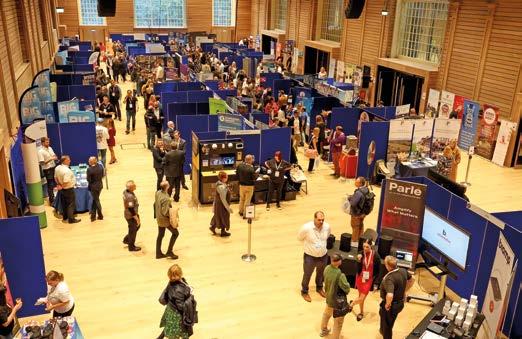
The Sussex Business Show arrived with a bang on September 26th in the Corn Exchange at Brighton Dome. Event organiser Sonny Cutting explains how the day went.
Networking & Events
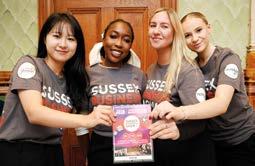
This year, we expanded our event offering by taking over the studio theatre for the keynote talks and masterclasses, the Foyer Bar and the Founders Room for the new speed networking with musical chairs, and the casino was given its own dedicated space with entry only by golden ticket for prizes and gifts in the grand draw, which was ace.
They say a picture paints a thousand words, so here’s 9 from our event - all wrapped up in a bundle for you. Preevent success at the Royal Pavilion, The Tiger’s Pen was a roaring success.
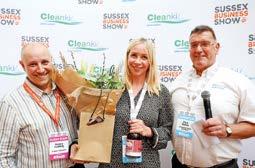
Well done to Clearline Recruitment, which won the ‘Best Stand Award’ for Innovation with the Human Fruit Machine, and a very well done to Vicki Nicol and her team, of Victoria Health Management, who won the ‘Best in Customer Service’ Award with the mystery shopping.
Cake maker, Fay Millar, of Gingerbread World, created the Palace Pier and it was live auctioned on the day with Matt Turner, of Creative Hub, winning it, and he also won the special heart sculpture, designed by Simon Shepherd, with all proceeds going to Rockinghorse Children’s Charity
- £600 being raised to support this amazing Children’s charity.
A spectacular day of business had by all, and a huge thanks to our team of students and volunteers and to Martin Leppard, of H2 Productions, and Bethany Oates for event support.
Sussex Business Show will be back on September 25th, 2025, at Brighton Dome.
Thank you to all our Sponsors, Exhibitors and Attendees for supporting us.
Please look at our website for more details - www.sussexbizshow.com
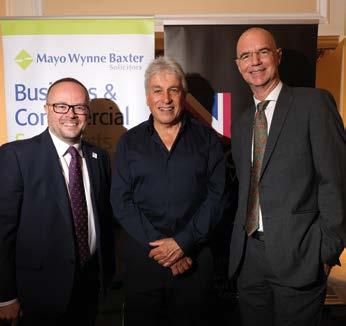
John Inverdale joins business leaders at Best of British Eastbourne in support of the Children’s Respite Trust
Over 160 business leaders came together at the iconic Grand Hotel for the annual Best of British Eastbourne event.
Networking & Events
Best of British Events is a multi award-winning regional events company, based in Sussex and specialising in corporate fundraising lunches and dinners. Since 2009, with the support of the business
community and celebrity guests, these events have collectively raised hundreds of thousands of pounds for a range of worthy causes.
At this latest event, guests were joined by ITV and BBC broadcasting royalty, John Inverdale.
He is a well-known British sports broadcaster, recognised for his extensive career in presenting major sporting events. He is most famous for his work with the BBC, where he covered a wide range of sports, including rugby, tennis and the Olympics. In particular, Inverdale became a familiar face for his coverage
of the Wimbledon tennis championships and his long-standing involvement with BBC Radio 5 Live, where he hosted programmes covering major sporting events. His authoritative and versatile broadcasting style has made him a prominent figure in British sports media.
During the event, John delivered a series of compelling and thought-provoking stories from his journey as one of the UK’s foremost sports presenters. Drawing from his experiences interviewing some of the world’s greatest sports icons, he highlighted the profound impact of sport in uniting people across the globe. John’s reflections underscored the unparalleled ability of sport to transcend boundaries, foster connections, and inspire individuals and communities alike.
Attendees included leaders from awardwinning Sussex based law firm Mayo Wynne Baxter, as well as Plummer Parsons Accountants, Extech and Sussex Business Times magazine.
This prestigious networking event was held in support of the Children’s Respite Trust, a local charity dedicated to assisting families with children who have complex medical needs or significant physical or learning disabilities. The charity offers much-needed respite by providing inhome care support or funding external activities, allowing families to take a break from the demands of 24-hour care. Their goal is to give families the time to recharge, enabling them to provide the best care for their loved ones.
With the support and generosity of guests and sponsors, this event raised over £10,000 on the day.
Ryan Heal, CEO of Best of British Events, said: “As a leading business event platform, we are dedicated to creating opportunities for business leaders to connect while gaining inspiration and insight from some of Britain’s most respected figures.
“It was an absolute privilege to have John Inverdale as our guest speaker. His wealth of experience and captivating stories from the world of sports left a lasting impression on all attendees, offering unique perspectives on leadership, resilience and success.
“We are immensely grateful to our guests, whose generous contributions during this event have helped us raise thousands of pounds in support of The Children’s Respite Trust, ensuring they can continue their vital work with families across the region.”
Best of British Events hosts a range of leading business networking events and fundraisers across Sussex and London. For more information regarding up-and-coming events, please visit: https://bestofbritish.org. uk/public-events
Sussex Cricket: a new era
After a nine-year absence from the top flight of domestic cricket, Sussex secured promotion to Division One of the Vitality County Championship last month and there are plenty of reasons to be optimistic about the club’s future, both on and off the pitch.
Networking & Events
At the time of writing, Sussex County Cricket Club has secured promotion to the top division of the domestic pyramid and are within 4 points of winning the Division Two title going into their final game of the season against Middlesex.
In recent years, performances on the pitch have been a far cry from what many who follow the club call the ‘golden era’ of the early 2000s - but that has all changed.
The club’s decision to bring in former England and Sri Lanka front man Paul Farbrace has arguably been their most important call in their recent history.
Financially, the club is arguably in a better position than the vast majority of their 17 first-class counties, however many would say that came at the cost of success on the pitch.
In an unforgiving economic climate postCovid, tough decisions had to be taken
by the hierarchy, switching to a policy of promoting youth into the first-team and allowing many of the stars of previous team’s to move on to bigger counties.
Fast-forward three years the club is now beginning to see the benefits of those difficult decisions and is thriving in so many ways.
The new Chief Executive, Pete Fitzboydon, is leading a brand-new commercial strategy that will see the club seek to make even more use of the prime real-estate that they own in Hove, primarily by expanding the club’s noncricketing events over the winter.
The new Tate Residents and commercial outlets, a project led by the former Chief Executive, Rob Andrew, have safeguarded the club’s finances for many years to come and that in itself presents Sussex Cricket with even more opportunities for commercial expansion.
Pete Fitzboydon spoke of the investment the organisation is making: “We are
investing a lot in the staff team to make sure we capitalise on the on-field success, getting into a positive cycle of growth rather than the slightly stagnated picture I saw when I took over.
“On-field success does not guarantee off-field commercial growth – nor vice versa – but in the well-run organisation we are developing I am confident that the two will live off each other and help the club reach new heights.”
As well as thriving Men’s First-Team, the recent announcement that the club will now have a Women’s FirstTeam based at The 1st Central County Ground, alongside the men, on equal footing, is yet another reason for the local community to be excited about the journey the organisation is on.
A new team brings a new audience and with that more sponsorship opportunities and a chance for local partners and companies to join the journey.
It is undoubtedly a new era for Sussex Cricket.
You’re invited to Gatwick Business Show on October 17
Entry and parking is free, and you are promised a day of unlimited networking.
Networking & Events
It’s free to attend Gatwick Business Show, taking place at the Felbridge Hotel and Spa on Thursday, October 17.
With just days to go until this inaugural event, you don’t have to register for a visitor pass in advance - simply turn up on the day. The event, which will run from 10am to 3pm, has been organised by Mike Monk Events in partnership with Gatwick Diamond Business. The latter is hosting a breakfast networking event ahead of the show with Mo Kanjilal, of Watch This Sp-ce, the guest speaker.
“Business shows are vitally important for professionals looking to network, learn and grow,” says Mike. “At Gatwick Business Show, you can connect with industry leaders, potential clients and like-minded professionals. In fact, you can build relationships that can last a lifetime.
“It’s an event where you can discover the latest trends, technologies and best practices across multiple fields, and learn how to stay ahead of the competition. What I’m particularly looking forward to are the educational seminars because, at Gatwick Business Show, you can attend informative seminars, led by industry experts, and gain valuable knowledge and skills.”
About the venue
Crowne Plaza® Felbridge Hotel and Spa is on the outskirts of East Grinstead, near Gatwick Airport and the M23. It is renowned for its manicured gardens and luxury spa facilities. It is considered one of the most tranquil locations in West Sussex.
Car parking during Gatwick Business Show is complimentary. EV charging points are available.
Coming by train? Follow the one-way system and continue down London
Road. The hotel is on the right hand side, past a set of traffic lights.
Driving? Join the M23 until Junction 10. Follow signs to East Grinstead. This will take you onto the A264. Follow the road until you reach a T-junction. You will see the Star Inn to your left. Turn right onto the A22 and the hotel is 50 yards down the road on the left.
Sponsors
Gatwick Business Show is sponsored by Data Mail Solutions Limited, PBS Group and County Business Clubs Sussex. Brand ambassador is Chris Mansfield, Founder of Fusion, The Business Catalyst.
Exhibitors
See who is exhibiting and plan your day - visit https:// brightonandhovebusinessshow.uk/ other-shows/gatwick/exhibitorslist/?turqtick_venue=gatwick
10.40am - Keynote Speaker, Gail Porter, television personality and charity ambassador
Gail will be at the show thanks to leading local loneliness charity Together Co. In an exclusive interview, conducted by April Baker, CEO of Together Co, Gail will discuss her extensive work with charities across the UK, including high-profile collaborations on issues like homelessness.
The seminar is aimed at those who want to discover the critical importance of engaging with the charity sector and learn how such partnerships can significantly enhance a business. This is a unique opportunity to gain valuable insights.
11.30am - Emma Pearce, marketing consultant and owner of Pearce Marketing
Emma is recognised as a specialist in marketing strategy and customer research. In this seminar, she will show you how to power-up your presence on LinkedIn to boost lead generation.
This session will help you raise the profile of your business and personal brand, as well as identify leads and nurture business relationships.
Emma says: “LinkedIn is so underutilised by many business people, yet it is a fantastic platform for marketing and business development.”
Expect to gain insights and practical tips that you can implement immediately. As well as showing you how to optimise your personal profile, Emma will offer content ideas and best practice advice. She will also explain how to use LinkedIn for lead generation, both for free and paid.
12.30pm - Rachael Dines, founder of Shake It Up Creative
SEO isn’t just for Google! Social SEO is here and it’s evolving. This seminar will help you to understand what Social SEO is and how to benefit from it.
Rachael is a Chartered Marketer and approved small business advisor with Enterprise Nation, BIPC Sussex, West Sussex County Council and on various funded business support programmes.
Shake It Up Creative is award-winning and this is a great opportunity for you to learn from an industry leader.
When it comes to securing your long-term financial well-being, there are many factors to consider. If you are feeling overwhelmed, this session will offer helpful insights.
Wellesley works with clients at each stage of their journey to create flexible plans that allow them to grow in line with financial ambitions. It guides clients through the decision-making process to help them navigate life’s challenges.
If you want to feel confident and in control of your money, this session is a no-brainer.
Gail Porter
Emma Pearce
Rachael Dines
Samantha Kaye
Business conditions stall as tax anxiety grows
By Ana Christie, CEO, Sussex Chamber of Commerce.
Vital insights from the UK’s largest independent business survey, conducted by the British Chamber, have been shared with the Government. The latest figures show that, on the domestic front, many businesses are increasingly anxious about the direction of economic policy, and taxation has now become their primary concern. The major escalations in the Middle East conflict will also be a significant factor.
This month’s Budget will be a critical juncture. Businesses will need to see
action on solving the investment puzzle, supporting global trade, particularly with the EU, and easing tax anxiety.
Some key survey findings:
• Following improvements to business conditions in the first half of 2024, key indicators stalled or declined in Q3 –with manufacturing suffering the most.
• Taxation is now more of a concern than inflation for business, cited by nearly half of firms (48%).
• Business confidence has declined slightly, with 56% of firms expecting an increase in turnover in the next
twelve months.
• The proportion of firms expecting to put up prices has levelled off (39%) after falls earlier in the year.
• Most firms (77%) are still not increasing levels of investment
Taxation now the primary external concern
Forty-eight percent of responding firms say taxation is now more of a concern than three months ago, compared with 36% of businesses in Q2, with the professional services (53%) and construction sectors (51%) more likely to cite this.
Chamber News
5,152 business respondents from across the UK
Responding businesses employ over one million people
75% are in the service sector, 25% in the manufacturing sector
Around 38% are exporters
Methodology
Fieldwork took place between 19 August –16 September 2024
Concern about other external issues continues to ease. Forty-six percent of firms say they are more worried about inflation compared to last quarter.
of respondents believe their profits will fall (compared with 17% in the previous quarter).
is more significant for transport, logistics or storage with 76% reporting it as a challenge, and 74% of firms in construction and hospitality sectors.
QES asks businesses if they have seen an increase, decrease, or no change in a range of metrics such as domestic sales, cash flow, and investment
QES results are often presented as balance figures – the percentage of firms that reported an increase minus the percentage that reported a decrease If the figure is above 0, it indicates overall expansion of activity and if the figure is below 0, it indicates overall contraction of activity.
Business conditions struggling
Most firms still not increasing investment
For example, if 50% of firms told us their sales increased and 18% said their sales decreased, the balance for the quarter would be +32% (an overall expansion). If 32% told us their sales increased and 33% said their sales decreased, the balance would be -1% (an overall contraction)
For more information:
The percentage of respondents reporting increased domestic sales has fallen to 35%, compared to 38% in Q2. 43% reported no change and 21% of firms said they had seen a decrease in sales.
d bharier@britishchambers org uk
Only 23% of responding businesses say they increased investment levels (new plant, machinery or equipment bought or rented) over the last three months. That’s down from 25% of firms in Q2. 59% say investment has remained the same, 18% reported a decrease.
Contact David Bharier, Head of Research at the British Chambers of Commerce for any queries or to understand how your organisation may benefit from the BCC Insights Unit
There were some sectoral differences with 27% of firms in manufacturing and retail reporting a fall in sales in Q3. Meanwhile, 42% of marketing, media and advertising businesses said they
Business confidence flatlines
Fifty-six percent of companies expect to see their turnover increase over the next 12 months, a slight decrease from 58% in Q2. Twenty-nine percent expect no change and 15% expect to see turnover decline.
Profitability confidence has also fallen, with 48% of businesses expecting profits to increase in the next year. That compares to 51% in Q2. 32% expect no change and 20%
Considerable sectoral disparities exist, with retailers least likely to report increased investment (21%). While 30% of production and manufacturing firms say they have increased investment over the last three months.
If you would like to enquire about local data, you can find your local Chamber of Commerce here https://www britishchambers org uk/page/join-a-chamber
Expectation of price increases is levelling off
The proportion of firms expecting to raise prices remains the same as last quarter at 39%, after a rise earlier in the year. 58% of businesses say they expect prices to stay the same, and just 3% are expecting a decrease.
Labour costs continue to be cited as the main pressure for businesses, cited by 66% (67% in Q2). The issue
The national business survey is a timely reminder of the real challenges businesses across our Chamber network are facing. With speculation rife about the tax impact of this month’s crucial Budget, businesses are clearly anxious. They understand the fiscal backdrop the Chancellor is facing and the need for the Government to address public finances. However, that must not be at the expense of investment and growth. While most firms are still expecting increased turnover over the next 12 months, confidence has dipped slightly. Sales and cashflow are also being hit, with the impact on manufacturers particularly concerning. Our message to the Government is clear. Business stands ready to work in partnership to overcome challenges and help grow the economy. But an effective industrial strategy and a competitive tax landscape are essential to getting Britain booming again.
Surrogacy demystified: supporting employees on their journey to parenthood
By Carole Gilling-Smith, CEO and Medical Director of the Agora Clinic.
Surrogacy is becoming an increasingly common option for people wanting to start or grow their families. Whether it’s same-sex couples, heterosexual couples facing infertility, or single individuals, the surrogacy journey can be complex, emotional and filled with important decisions. For businesses, understanding this process and offering support and information to employees going through it is vital. In this article, I will start by delving a bit deeper into the surrogacy pathway and then share my top tips on how employers can provide practical and emotional support to their staff.
Lifestyle
What exactly is surrogacy?
Surrogacy is when a woman, known as a surrogate, carries and gives birth to a child for someone else. This route is often chosen by:
• Individuals with medical conditions that prevent them from carrying a pregnancy safely.
• Same-sex male couples wishing to become parents.
• Heterosexual couples struggling with fertility issues or recurrent miscarriages.
• Single individuals who desire to have children.
The parent(s) who commission the surrogate are called the intended parents (IPs) as, under UK law, they will only become the legal parents of the child after it is born and a parental order has been granted.
There are two main types of surrogacy:
• gestational (or host) surrogacy, where the surrogate has no genetic connection to the baby (the embryo is created using the intended parent’s sperm and eggs or donor sperm and/or eggs),
• traditional surrogacy, where the surrogate’s own egg is used to create an embryo with one of the IPs sperm.
At the Agora Clinic, we support both types of surrogacy and have a specialised team dedicated to help couples navigate their way through this complex multi-step process. It’s a journey we find incredibly fulfilling to support and, as one of the most inclusive fertility clinics in the UK, we are proud to be recognised as national experts in this field.
The surrogacy journey is very structured but can feel overwhelming at first. We always start with an initial free Q & A session to help IPs understand the complexities of the journey, find their ideal pathway and signpost to additional educational resources such as the video on our website. We then arrange an initial consultation, where IPs meet with me or one of our other medical consultants to explore their options and map out the best pathway for them to follow.
For those undergoing gestational surrogacy, the next step is usually to create embryos which are frozen and quarantined for a period of at least 3 months before they can be safely transferred into a surrogate. The quarantine period is legally necessary
How the surrogacy process works
to ensure all the sexual health screening tests are done before the embryos are created and repeated after 3 months. The final stage takes place once the surrogate is ready, and we arrange the embryo to be transferred into her womb or in straight surrogacy for insemination of the male IP’s sperm into her uterus.
The IPs, surrogate and donors undergo medical assessment and psychological screening before starting to ensure they are physically and emotionally prepared for the process and then complete full sexual health screening.
What are the legal issues around surrogacy?
In the UK, surrogacy is an altruistic arrangement with no commercial gain allowed. That is why we only work with accredited not-for-profit surrogacy agencies such as Surrogacy UK alongside specialist family lawyers. We ask that IPs and surrogates take independent legal advice for two reasons:
1. The surrogate is considered the legal mother of the child until a Parental Order is granted after the birth when transfer of legal parenthood to the IPs can take place.
2. IPs and surrogates should draw up a Surrogacy Agreement which is not legally binding but sets out the road map between the parties and considers the unique issues that might occur during that journey and how each party agrees to handle it.
All IVF processes, including surrogacy and egg or sperm donation are also highly regulated in the UK by the Human Fertilisation and Embryology Authority (HFEA). At The Agora Clinic, we ensure all IPs, donors and surrogates undergo the rigorous medical and sexual health screening required to ensure the highest safety standards are met.
How can employers help?
For businesses, understanding the surrogacy journey and offering the right support can help create a more inclusive, familyfriendly workplace. Here are a few tips:
• Parental leave policies: Ensure your parental leave policies are inclusive of surrogacy. This may include time off for both the intended parents and the surrogate, with clear guidance on maternity/paternity leave for those welcoming a child via surrogacy.
• Flexibility: Employees involved in surrogacy may need to attend medical appointments, meetings with legal professionals, or counselling sessions. Offering flexibility in working hours or remote working options can significantly reduce stress during this time.
• Mental health support: Surrogacy can be emotionally taxing. Providing access to counselling or mental health services can help employees manage the psychological and emotional demands of the process.
• Open communication : Encourage a culture of openness where employees feel comfortable discussing their surrogacy journey without fear of judgement. The Agora offers training such as webinars and educational resources about surrogacy to HR and management teams as well as employees.
What are some of the myths or misconceptions surrounding surrogacy?
Surrogacy is a poorly understood route to family creation and sadly a lot of myths and misconceptions persist: Here are just a few:
Myth 1: Surrogacy is only for same-sex couples. While surrogacy is a popular route for same-sex male couples, many heterosexual couples and single individuals also choose surrogacy due to fertility issues or other medical reasons.
Myth 2: Surrogates often change their minds and decide to keep the baby. In reality, this is rare. The legal framework in the UK, combined with thorough screening and support for surrogates, ensures that all parties enter into the agreement with clear expectations. Surrogates are often highly motivated by the desire to help others build their families.
Myth 3: Surrogacy is prohibitively expensive. We spend time with IPs to clearly outline costs and offer advice on where to get financing options, ensuring that surrogacy is accessible to as many people as possible
What sets the Agora Clinic apart when it comes to surrogacy?
At the Agora we offer a bespoke, patient-centred approach to all fertility journeys and offer IVF and all the other laboratory procedures required, including pre-genetic testing of embryos for aneuploidy (PGT-A), so that you can be assured that only chromosomally normal embryos are replaced in your surrogate. For further information, please visit the dedicated surrogacy page on our website: Surrogacy info.
Autumn style from Velvet
Is your wardrobe in need of an upgrade?
We sell a selection of carefully curated affordable fashion, accessories and lifestyle over 2 floors, with new styles arriving every day.
We pride ourselves in offering a warm welcome with the very best customer service.
We are ready to help you with all your Autumn fashion needs with on-the-spot styling advice in store, the Velvet team are always on hand to help you with colour options, sizes and advice.
Personal Shopping
Why not let us help you? - for inspiration, a specific occasion, or a wardrobe re-fresh.
A friendly relaxed environment with no pressure to buy and no minimum spend, available by appointment.
You can book with Sarah, our stylist free of charge and enjoy the following:
• Recommendations, inspiration, and advice
• An opportunity for you to explore new styles and shapes.
• Browsing time on the shopfloor with your stylist to find your perfect pieces
Choose our group styling option and enjoy exclusive access to our lower floor changing rooms, where privacy is
You’ll also receive a complimentary bottle of prosecco to share, whilst your dedicated expert will be on hand to assist with your individual style preferences, wardrobe needs, and any other fashion tips they can help you with.
Velvet Hove, 66-68 Church Road, Hove BN3 2FP
Unboxing potential: B Corp expert joins BOXLESS
The BOXLESS crew all agree: adding B Corp expert Mica Janiv to the team was ‘a total no-brainer’. Mica tells us why going BOXLESS is the way forward, and gives us the inside scoop on B Corp.
The BOXLESS ethos is, as the name suggests, to move businesses away from ESG and DE&I box-ticking exercises and onto a holistic, purpose-driven journey towards being stronger, better, more resilient and happier. So, how does that line up with B Corp?
Lifestyle
B Corp and BOXLESS share a common vision: creating workplaces and outcomes that are inclusive, equitable, and focused on long-term regenerative growth for all businesses.
Mica Janiv, who has helped upwards
of 35-plus businesses navigate the tricky terrain of B Corp certification, has seen first-hand how the process puts companies on a strategic path towards being a force for good.
“Of all the sustainability frameworks I’ve seen,” Mica says, “ the B Corp Impact Assessment is the only one that sparks genuine excitement and commitment at every level, in every department. Once complete, it doesn’t go back in the drawer, it becomes a roadmap.”
That’s key to the way BOXLESS operates.
“When I first met Bud,” Mica continues, “he said BOXLESS won’t work with any
business looking for short-term quick fixes. I knew I had found my tribe!”
As a strategic consultancy, BOXLESS supports organisations navigating their social and environmental responsibilities by aligning these with brand values, mission and vision. It’s about setting up a long-term game plan and driving organisational success through the power of culture and community.
Why B Corp and BOXLESS are good for business
In today’s world, consumers and employees are increasingly making values-based decisions, choosing
brands that prioritise sustainability, transparency, and social responsibility. As businesses evolve to meet these expectations, one certification has emerged as a gold standard for companies wanting to prove their commitment to doing good: B Corp.
Administered by the nonprofit B Lab, this certification assesses businesses across five key areas: governance, workers, community, environment, and customers. In short, it’s a holistic way to measure a company’s impact beyond just its financial performance.
According to Mica, there’s growing awareness around what B Corp is, but still a veil of mystery around how to navigate the process and actually get certified.
Here, Mica shares her most commonly asked questions about B Corp:
How long does it take to get B Corp certified?
The short answer is 6-10 months.
The long (and more honest) answer is that this process is complex and different for each business. Mica’s advice is to map out a timeline before you invest.
If you’re looking at a timeline, it’s helpful to know that all B Corps must recertify after three years and show improvement in order to keep their B Corp status.
How much does it cost?
B Corp fees are on a sliding scale based on a company’s revenues, starting at £1,000 per year.
But there’s good news for any UK entrepreneurs facing systemic barriers. A 40% equity discount is applied each year to all B Corps with an annual revenue under £5m that are majority-owned ( >50% ) by people of colour and underrepresented
ethnicities, women-owned, LGBTQ-owned or disabled person owned.
There are also one-off submission and verification fees (again, on a sliding scale) to pay for the third party evaluation and verification process.
There’s a fee calculator on The B Corp UK website https://bcorporation. uk/ and of course BOXLESS crunch the numbers for all their clients to fully understand the investment.
Is B Corp worth it?
According to Mica, if it’s just the B Corp logo you’re after then you might find the investment of time and money overwhelming.
However, if you are in it for the journey; if you want to grow your purpose-driven business, learn how to measure your triple bottom line and want to be part of a strong movement for change, then it’s a total bargain.
Mica says: “I’ve seen the process give back in many ways, but in particular, it feeds a company’s marketing with valuable content. I often tell clients to
draw their B Corp spend from their marketing budget because that’s where they’ll see clear ROI.”
Will we definitely get certified?
No. B Corp is hard to get, which is one of the reasons it’s become so popular. And, in Mica’s opinion, that’s what makes it worthwhile.
The B Corp certification process is rigorous and data-driven, which aligns well with the structured and outcomeoriented nature of D&I and ESG programs and the BOXLESS way of working, ie helping their clients establish, measure, and improve their social and environmental impact initiatives to create strong, lasting cultural change.
In today’s fast-evolving business landscape, companies that lead with their values are the ones that will thrive.
www.boxless.uk info@boxless.uk
Building authentic relationships through community
“Community is the foundation to success” - Kirsten Jones.
Lifestyle
At County Business Clubs Sussex 100, we believe that our community is the bedrock upon which everything else is built. It’s not just about networking or business connections; it’s about creating a space where people can come together, share their stories and forge relationships that are grounded in authenticity and trust.
For nearly two years, I’ve had the privilege of hosting our Top Table storytelling dinners, and each event reinforces one fundamental truth: when people are given the space to be open, honest and vulnerable, something truly magical happens. It’s in these moments of shared experience that the real power of storytelling reveals itself. People are not just talking; they are connecting on a deeper level, finding common ground in their struggles and triumphs.
This sense of connection was beautifully highlighted at our recent gathering at
Ridgeview Wine Estate. Watching our guests share their journeys with such raw honesty and genuine vulnerability was a powerful reminder of why we do what we do. Every story shared, every moment of authenticity embraced strengthens the bonds between us, transforming a room full of individuals into a true community.
Building this kind of environment didn’t happen overnight. It took time to realise that we might not be for everyone, and that’s okay. When you are clear about your values and your mission, you naturally attract people who resonate with that vision. It’s not about trying to appeal to everyone; it’s about finding those who share your passion and are willing to join you on that journey.
Through storytelling, we are not just building connections; we are creating a legacy of trust and understanding. When people open up and share their authentic selves, they lay the foundation for relationships that go beyond surface-level
interactions. These are the relationships that last, built on mutual respect, empathy, and the shared human experience.
The value of these storytelling dinners goes beyond the moment. They create lasting ripple effects, fostering a culture where openness is celebrated and authenticity is the norm. By prioritising these kinds of connections, we are cultivating a community that supports and lifts each other up, both personally and professionally.
If you believe in the power of storytelling, if you value real conversations that lead to meaningful connections, we invite you to be part of our journey. Together, we can create a space where every story matters and every voice is heard — a community where lasting relationships are built on the simple act of sharing who we truly are.
By Sam Thomas, Co Founder, County Business Clubs.
www.countybusinessclubs.co.uk
Ladies Lunch Club relaunch is a huge success
On Wednesday, 18 September, 45 businesswomen came together at Malmaison for the relaunch of the Ladies Lunch Club, enjoying a beautiful, sunny evening overlooking the sea.
Ladies Lunch Clubs have been successfully running since 2005. Originally founded by Lara Squires, of Consortium marketing, the Ladies Lunch Clubs’ membership is made up of professional women from all sectors and stages of professional life, offering a community for women to learn, share and encourage one another in a supportive environment. Whether you’re working for a company or are self-employed, surrounded by staff or working alone, we feel sure that you’ll enjoy and benefit from the networking opportunities that the Ladies Lunch Clubs offer.
Lifestyle
County Business Clubs is delighted to have been asked to take over such a successful networking event and bring
it into the CBC Sussex 100 family. For this amazing opportunity, we are truly grateful to Lara and what she built - and for her trusting us to keep it going.
We will be officially launching the 2025 calendar of events in November, which will be based across Brighton, Worthing and Eastbourne.
What you can expect
Good company - The attendees of Ladies Lunch Clubs are women who are business owners or decision makers who enjoy meeting, supporting and proactively networking with likeminded women.
Sharing stories - The Ladies Lunch Club, now under the banner of CBC Sussex 100, believes in the power of
storytelling and knows that you can be inspiring your peers one day and learning from them the next. In the end, people buy people. That makes sharing our stories the most compelling way to connect with one another.
Relaxed lunches - When we have inperson events, each of our venues are chosen for their location, atmosphere and the quality of food and beverages that they serve. What better way to get to know fellow professionals, swap experiences and discuss business opportunities than over a relaxed lunch and a glass of wine?
Our sponsors
Events like this cannot happen without sponsors. A huge thank you for your backing, belief and support:
Eastbourne:
Crown Wealth Management
“At Crown Wealth Consultants our number one priority is to offer clients confidence that they are in the best possible financial position for their longterm future. Our approach is simple; from matters ranging from the very straightforward to the very complex, we leave no stone unturned in providing all our clients with no-nonsense, plainspeaking, but highly professional, advice. Our clients work hard for their money and we help their money work hard for them.
“We provide personalised, face-toface financial management advice to individuals and businesses from
a comprehensive range of Wealth Management products and services, from companies within St. James’s Place Wealth Management and also from a range of carefully selected organisations.”
Brighton: Rix & Kay Solicitors LLP
Rix & Kay Solicitors is a full service law firm with offices in Brighton & Hove, East Sussex (Uckfield) and West Kent (Hadlow). We retain a strong regional presence across Sussex, Kent, Surrey and London and work with business owners, entrepreneurs and individuals, providing expert legal advice across a wide range of legal services.
“We also work with some of the most
successful organisations in the UK both on national and international projects.
“Our mission is to ‘make law easy for you’ by providing legal services through dedicated, highly trained, teams that engage deeply with clients.”
Join the Ladies Lunch Club
To become a member, it is just £195 per year and comes with a host of great benefits:
Member benefits
• Quarter page feature in the Sussex Business Times (worth £395)
• Member ticket price at all events
• Member profile on website
• Link to company website
• Link to LinkedIn profile
If you would like to become a member, please contact us at Jackie.ashwood@ countybusinessclubs.co.uk
Your Away Day – why we are working all wrong
By Sam Thomas, of Different Hats.
Lifestyle
We have all heard the saying “You need to work on your business, not in it”. As a man who wears many ‘Different Hats’, pardon the pun, this can sometimes become very difficult to do. We are running around at 100 miles an hour, wearing our busyness as a badge of honour. I know I have been extremely guilty of this in the past.
Therefore, when a good friend of mine, Joel Lawton, invited me to ‘Your Away Day’, the day you promise yourself but never take, I was in, and I didn’t take much persuading.
Joel’s message is all about encouraging founders to work differently and believes that how we are working is all wrong, highlighted by his brilliant blog on the opposite page.
After experiencing an incredible day at the fantastic The Field Food Barn near Lewes, I couldn’t agree with him more.
I spent the day in nature, connecting with other founders, eating great food but also allowing myself some focused time to work on a project I have been
putting off for a long time. I started writing and just couldn’t stop. The creative juices were flowing - and it was exactly what I needed.
I left that day and my cup was full; full of joy, fulfilment and true human connection. All this along with the fact I had a super productive day working ‘ON’ my business.
Needless to say, I have booked to go again next month already and plan to attend every month, treating myself to a day I know I deserve and, hopefully, I can start to work differently.
To find out more contact Joel Lawton: joel@lawtonknill.com www.inyourcorner.co
We are doing work all wrong
By Joel Lawton, founder of the Work Different
We are doing work all wrong and here’s the solution.
The signs are clear, yet we continue to ignore them. Consider just a few examples:
• Sickness rates in the UK have risen by 55% since 2019.
• 63% of organisations report that mental ill health is the leading cause of long-term absence.
• 88% of UK workers report experiencing some level of burnout.
In response, people are trying to self-medicate, seeking ways to restore balance and reclaim their human experience. The surge in wellness retreats speaks to this - between 2016 and 2021, there was a 1,500% increase in such offerings in the UK.
Businesses have tried to apply quick fixes, offering lunchtime yoga, mindfulness courses and training mental health first-aiders. While valuable, these approaches are reactive and don’t address the root causes of the problem.
My solution is simple: we must centre the human experience.
This means creating work environments, practices and experiences that put the well-being of the person doing the work first, trusting that this will lead to better
and more impactful outcomes.
By focusing on the mind, body, nervous system, and soul, we can drive meaningful change through:
• Human connection
• Time in nature
• Nutrition
• Movement
• Breathwork
• Rest
I am launching a movement: Work Different.
My first step is the creation of ‘Your Away Day’, a unique experience integrating these elements alongside five hours of time for focused work. I am 100% confident this approach is more impactful than spending eight hours in a traditional office or working from home.
The most significant change? People leave feeling energised and fulfilled, no longer needing to selfmedicate. They go home excited to spend time with loved ones and friends, and they look forward to another day of meaningful work.
www.inyourcorner.co
movement.
County Business Clubs’ Wine of the Month October 2024
Clavis Orea St Emilion Grand Cru 2019.
In August, a couple of close friends and I arranged a day trip to France via Bordeaux from Shoreham Airport in a friend’s private plane. We left at 7.30am and had to return before the airport closed at 8pm the same day, but were able to fit in three wine tastings and lunch.
The focus of the trip was to visit the area known as the ‘right bank’, or St Emilion, which produces some of the world’s finest and well-respected wines. St Emilion itself is a charming medieval town which borders on the equally famous Pomerol. Both areas have a focus on producing Merlot based wines, sometimes with the addition of Cabernet Franc and Cabernet Sauvignon to add more structure to the wine.
For many years, I have appreciated wines from St Emilion and its satellite villages which are great on their own but also a match made in heaven with a variety of foods.
Our guide for the day was the wonderful Lahcene, who started his career at The Ritz Hotel Paris as Sommelier before moving to California to Deutz Winery, and finally ending up working with winemaker Franck Jugelmann to help grow the brand Clavis Orea Grand Cru Saint-Émilion at Vignobles Rollet.
In his own words, Lahene explains a bit about the brand and it’s wines: “Clavis Orea meaning is ‘golden key’ in Latin, the symbol of welcoming in the hospitality industry. The golden keys represent high quality, hard work and passion, as we both come from restaurateur families. We wanted to reflect that in the name and quality of the wine, service, and dedication leading to high satisfaction.
“Clavis Orea Saint-Émilion Grand Cru is a wine that represents the right bank at his best, with great varietal definition Merlot-Cabernet, with good pedigree, well crafted, balanced, spices, fruit driven, with good backbone, fleshy, and very digest, moreover we wanted to make a great Grand Cru wine accessible palate wise and refined, that can be enjoyed once bottled but also can be aged up to 7-10 years before moving into secondary and tertiary stage.”
Michael’s tasting notes for the 2019 vintage
• Rich ruby in colour.
• Initially tar, tobacco, earthy notes and smokiness.
• From a fruit perspective, we have blackcurrant, sour black cherry and a hint of violet.
• Smooth, light in body but with good tannins and minerality.
Food pairing - A great pairing for all types of roast lamb
Where to buy?
This wine retails at between £28 and £35 a bottle, depending on vintage (2015/18/19), and can be bought online from a variety of UK vintners but also purchased from Spirit of the Downs Distillery at Bolney.
Written for County Business Club by Michael Yeoman, English wine specialist and producer of Spirit of the Downs, award-winning local artisan Sussex brandies and grape vodka.