Confident Learners
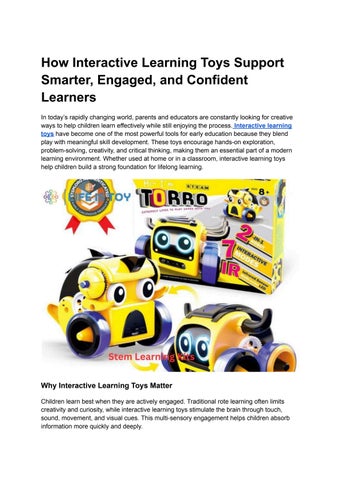
In today’s rapidly changing world, parents and educators are constantly looking for creative ways to help children learn effectively while still enjoying the process. Interactive learning toys have become one of the most powerful tools for early education because they blend play with meaningful skill development These toys encourage hands-on exploration, problem-solving, creativity, and critical thinking, making them an essential part of a modern learning environment. Whether used at home or in a classroom, interactive learning toys help children build a strong foundation for lifelong learning
Why Interactive Learning Toys Matter
Children learn best when they are actively engaged Traditional rote learning often limits creativity and curiosity, while interactive learning toys stimulate the brain through touch, sound, movement, and visual cues. This multi-sensory engagement helps children absorb information more quickly and deeply
These toys support early childhood development by enhancing:
● Fine and gross motor skills
● Logical thinking
● Memory and recall
● Language development
● Social and emotional skills
● Creativity and imagination
Because interactive toys encourage exploration, children become more confident in their ability to solve challenges on their own
Encouraging Hands-On Learning
One of the biggest advantages of interactive learning toys is their ability to promote hands-on experiences When children physically manipulate objects building, sorting, matching, or assembling they develop stronger neural connections This improves not only their motor skills but also their understanding of how things work
For example:
● Building blocks teach balance, structure, and early engineering concepts
● Interactive puzzles help children recognize shapes, patterns, and problem-solving strategies
● STEM-based kits introduce scientific concepts through experimentation and play
These tactile experiences help children develop curiosity and confidence as they discover the world around them
Boosting Cognitive Development
Interactive learning toys play a major role in developing cognitive skills. Toys that incorporate colors, numbers, letters, and sequences help children recognize essential concepts in an enjoyable way Activities that require decision-making, reasoning, and strategy support brain development by challenging children to think and analyze
Examples of cognitive-building toys include:
● Memory games
● Coding toys
● Math puzzles
● Sequence-based challenges
● Interactive books with sound and touch features
These toys keep young learners mentally active while providing a fun and stimulating learning environment
Promoting Social and Emotional Growth
Interactive learning toys are also a great way to help children develop communication and social skills. Toys that involve group participation such as board games, role-playing kits, and cooperative building sets encourage children to work together, share, express ideas, and solve problems as a team
Emotion-based toys, such as storytelling sets, dolls with expressive features, or role-play scenarios, help children understand empathy, emotions, and interpersonal interactions These experiences build emotional intelligence, which is essential for future social success
Encouraging Creativity and Imagination
Creativity is a crucial part of a child’s development. Interactive learning toys often allow kids to explore different outcomes and create their own ideas Art sets, magnetic tiles, pretend-play kits, musical instruments, and open-ended building toys inspire children to express themselves freely.
By engaging in imaginative play, children develop confidence, storytelling skills, and the ability to think outside the box qualities that support creative learning throughout life
Technology and Interactive Learning
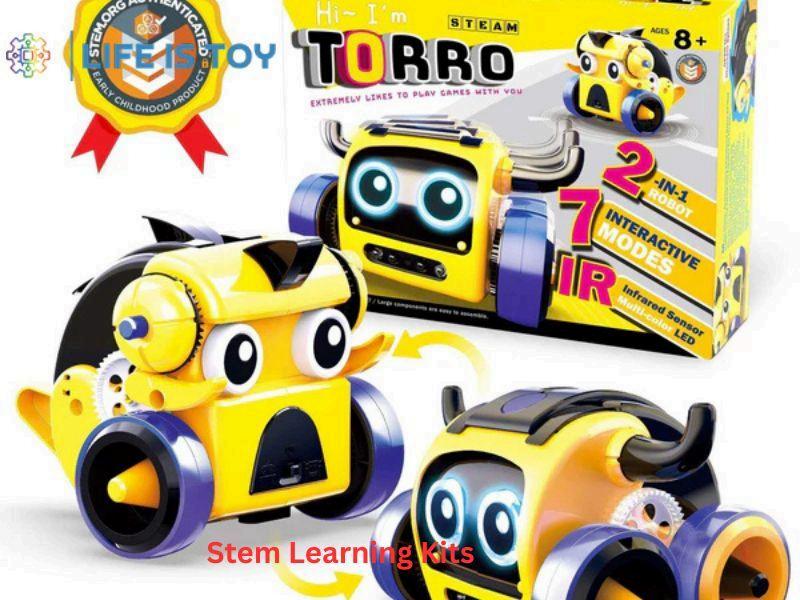
Modern interactive learning toys often incorporate technology, offering innovative ways to learn Digital toys, coding robots, app-connected games, and electronic learning systems provide personalized learning experiences These advanced toys teach:
● Early coding
● Logic and sequencing
● Digital literacy
● Interactive storytelling
When used responsibly, technology-based toys create engaging, educational environments that prepare children for a tech-driven future.
Choosing the Right Interactive Learning Toys
When selecting interactive learning toys, always consider:
● Age-appropriate features
● Safety and durability
● Educational value
● Opportunities for creativity and exploration
● Long-term engagement
Toys that combine fun with educational benefits help children stay motivated and interested in learning.
Final Thoughts
Interactive learning toys offer far more than simple entertainment they open the door to a world of creativity, problem-solving, communication, and discovery. By blending play with learning, these toys help children grow intellectually, emotionally, and socially. They support early development in a natural and enjoyable way, empowering children to become confident learners who are curious about the world As technology and innovation continue to evolve, interactive learning toys will remain an essential part of childhood education, shaping brighter, smarter, and more capable young minds