20 minute read
MONEY MATTERS


SHOPPING FOR YOUR NEW HOME
The purchase of a new home may be the largest investment you make in your lifetime.
CHOOSING THE RIGHT PRICE
Four areas to consider in determining the right price for you are: • Down Payment Available • Monthly Mortgage Payment • Other Debts • Price Range of Suitable Homes
DOWN PAYMENT
A minimum of 5% of the purchase price of the home is required. When a home is purchased with a down payment between 5% and 20% of the purchase price, this is referred to as a NHA Insured Mortgage or a “high ratio” mortgage. Mortgage loan insurance is required for this type of mortgage. A down payment of 20% or more, along with an appraisal, is usually required to qualify for what is called a Conventional Mortgage. Mortgage loan insurance is usually not required with 20% down. Examples of non-traditional sources of a down payment are: Personal loans, lines of credit, credit; any source that is arm’s length to and not tied to the purchase or sale of the property.
MONTHLY MORTGAGE PAYMENT
The general rule of thumb is to allow approximately 32% of your gross household monthly income (before deductions) to cover your monthly mortgage payment (including reduction of property taxes, heating costs and 50% of condominium fees). The 32% guideline is known as the Gross Debt Service (GDS) ratio. (Allowable GDS/TDS may vary based on mortgage type and reviewed on a case by case basis). This calculation will assist you in determining what you can afford.
Example (using monthly amounts):
Gross Monthly Income Spouse’s Gross Monthly Income Other Income Total Income
Total Income $ $ $ $ x 32%
Less: Property taxes, heating costs and 50% of condominium fees $
Equals: Maximum principal and interest payment $
OTHER DEBTS
Another rule of thumb is to allow approximately 40% of your gross monthly income (before deductions) to cover your monthly mortgage payment (including property taxes, heating costs and 50% of condominium fees) plus any payments you may be making on other debts, such as loans from financial institutions, credit cards, or other regular monthly debt commitments. This 40% guideline is referred to as the Total Debt Service (TDS) ratio.
PRICE RANGE
By knowing the amount of your down payment and your maximum payment (taking into account your other monthly payments and the amount of the property taxes), you can determine the maximum price range of homes that you can look at.
WRITING THE OFFER
When you make an offer, you should have the full amount of the down payment available as well as a percentage of the purchase price to cover your land transfer tax (typically between 0.5% and 2%). In addition, you will need funds available for legal fees and adjustments for prepaid property taxes, utility bills, etc.
MORTGAGE OPTIONS
Open - Gives the borrower the option to repay any amount of the balance owing, at any time, without penalty Fixed - Gives the borrower peace of mind because their mortgage payment and interest rate will remain unchanged for the term chosen. It allows the borrower to repay portions of the mortgage amount through extra payments called “prepayment privileges” without an interest penalty. Closed - Does not allow extra payments or early repayment. Interest rates are usually lower on closed mortgages. Variable - Potential for significant savings of interest costs and improved flexibility. The interest rate varies during term of mortgage. A capped variable rate mortgage means the payment is fixed based on an agreed rate and term. The interest rate is based on the prime rate and fluctuates with rate changes, however, your payment remains unchanged. The rate cannot exceed a maximum rate which has been agreed upon (the capped rate). The borrower has the advantage of the lower interest rate and the mortgage is paid down sooner as their payment does not reduce. An adjustable or uncapped variable rate mortgage means that the payment amounts fluctuate in direct correlation with changing interest rates. In both of these products, the borrower, generally, has the option to lock-in to a fixed mortgage at any time. Home Equity Line of Credit - is a collateral mortgage whereby a line of credit is secured with a property, unlike a conventional mortgage. This is not popular with first time home purchases, but is often used for borrowers who want to use the equity in their home. For additional information about various alternatives, see a lender at Access Credit Union.
MORTGAGE PAYMENT OPTIONS
Access Credit Union offers a variety of different mortgage payment options: weekly, bi-weekly or lump sum payments. Making additional or weekly payments can substantially reduce the cost and life of your mortgage.
It’s a good idea to apply for a pre-approved mortgage at Access Credit Union. This will determine the amount you can borrow, the interest rate, your level of payments and your payment schedule before you buy. visit: accesscu.ca/homes
ACCESS
C REDIT UNIO N
Home is where you need to be.
Invest in a home away from home this summer. Talk to our Mortgage Lenders about your home equity options.
1.800.264.2926

Schnell Industries
The story of Schnell Industries is a perfect example showing how the biggest breakthroughs in life often follow the greatest disappointments. It’s a story of incredible changes in momentum, while following the very relatable journey through the joys and hardships that come from taking a risk and pursuing the dream in your heart.
Fred Dueck founded Schnell Industries with the hope of creating a better life for him and his family through taking his expansive mechanical understanding and answering the call for help when it came knocking. His first working experience came from the oil fields of both Oklahoma and Texas, a job he pursued after he moved with his family from Mexico to Oklahoma. While Fred fell in love with his work, he was willing to lay it down to move to Canada and marry his girlfriend Dolores. For Fred, this meant looking for a new line of work when he moved to Arborg, Manitoba in 1981. He found a job building barges and ferries on Lake Winnipeg, where he would work for the next four years, until the work started to dry up. During this time, he had begun dreaming of starting his own business in the realm of machining and manufacturing. However, being convinced that Arborg was not the right location for his future business, Fred looked elsewhere to move his growing family, and re-located to the Plum Coulee area.
He found work at local manufacturing companies in Winkler, although the shift-work was not ideal while raising a young family. Throughout the years, he would continually be reminded of his dream to become his own boss, and in 1994, nine years after moving to the Plum Coulee Area, Fred felt ready to leave the security of his position and see what he could accomplish on his own, even if it wasn’t everything he had hoped for in the past. “My initial vision setting out was only to do repairs for farmers” said Fred, believing that this was the only work that the area could support. He worked out of a rented bay in a building on Peters Street in Plum Coulee, a workspace not much bigger than a single car garage, with a table in the corner for a desk.
My initial vision setting out was only to do repairs for farmers
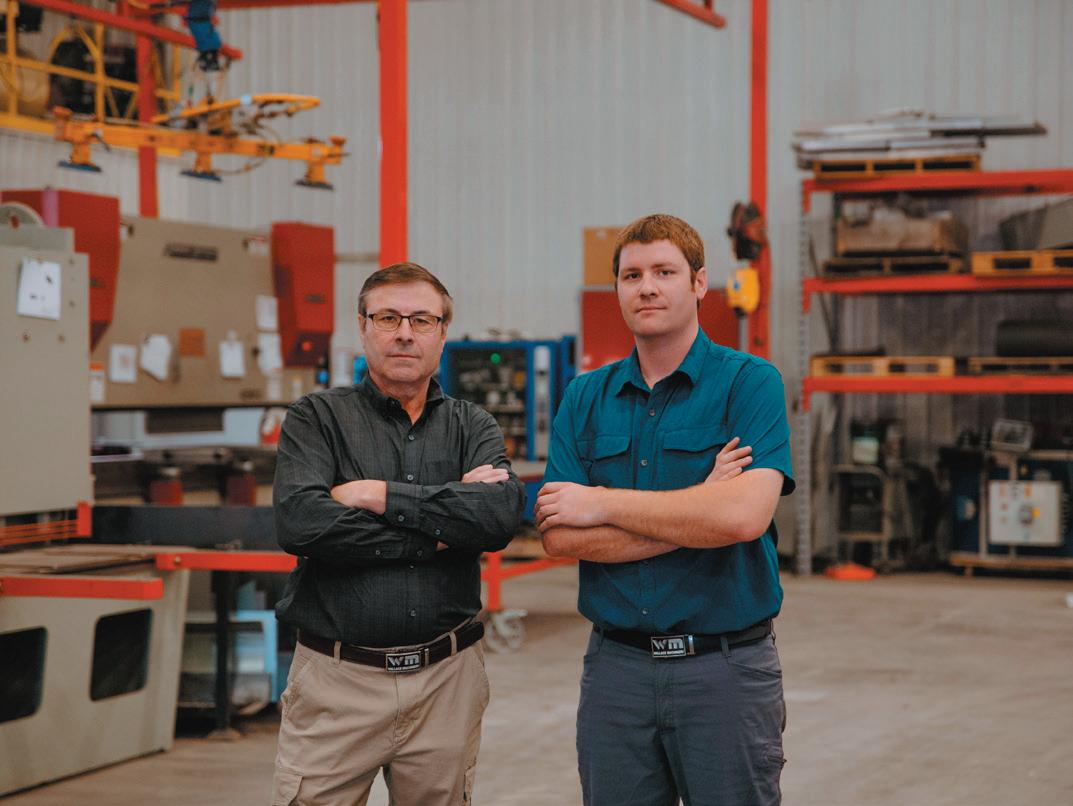
Though the small garage lacked size, it more than made up for it in location, which was a real key for getting Fred’s new business off the ground. “We were right between the post office and the coffee shop” explained Fred, as all three locations were in close proximity to each other. “The senior farmers would go to pick up mail and go for coffee. To do this, they would have to walk right by my shop.” On the way, the farmers would stop in and chat with Fred, who they deemed to be a likable guy. With this favourable set up, he received all the free advertising he could have asked for.
The new business was birthed that year under the name Dueck Machining, and with the support of his wife Dolores, Fred’s dream was becoming a reality. After four months, they hired their first employee, and being equipped with the attitude of never saying no to a job, no matter how small or dirty it seemed, Fred was able to build trust with the farmers in that area. They knew that no matter what hour of night it was, Fred was willing to come on location and do the repairs needed on their equipment, which was especially necessary during harvest season. Fred also recruited the services of a bookkeeper who had worked just down the road, someone who was instrumental in bringing a real business vision to the company while also helping them become organized. Dolores played a crucial role in the company moving forward, as she eventually took over the books and was an insightful business partner besides her responsibilities as a wife and mother of four.
The young company had been built upon a foundation of values that Fred and Dolores were persistent in sticking to, with the unwavering belief that God was the source of their success and that doing business which pleased God was of first priority. This showed up through always looking to go the extra mile for customers and keeping the bills paid and accounts current. The culture of the business was based on the golden rule of doing unto others as you would have them do unto you; a belief that did not leave room for unacceptable behavior or unethical business practices.
Like any successful venture, timely help and some favorable circumstances are usually needed in order to survive and grow. This story is no different. There were many instances that could have gone one way or another, either bringing the young company to its end, or propelling them on to greater things. One such incident came early on when a combine was brought to Fred for repair, only there was no yard or space on which to park it, and it certainly did not fit inside. “I had to work on the street” said Fred, “everything from cutting stuff apart to welding it together.” The town of Plum Coulee was lenient and helped them out by giving Fred permission to do repairs on the street, as long as the machines did not stay there overnight. Not only did this serve as entertainment to those passing by, but it allowed Fred to work on combines and equipment that would otherwise never fit on their small property. This would go on for three years, until they bought their first shop, a building just down the road that was four times their initial space.
It was at this time that the demand for edible beans had started to take off in Southern Manitoba as a replacement to the sugar beet crop that farmers had depended on for years. This meant that many modifications and new equipment needed to be developed to accommodate the fragile bean crop. In 1998, a local bean farmer approached Fred and asked him to develop an unloading conveyor for his combine that would not crush or smear the beans like the traditional augers did. Fred had always enjoyed innovation and happily accepted the job of designing and building such a product. The innovative idea caught on and soon many farmers were placing orders for a Schnell unload conveyor. This period was marked with a wave of growth for the family business and would set in motion a true direction and identity for the company, as they now entered the realm of production and product lines. Along with this new step, Fred had gained a reputation for being able to do customized specialty projects for farmers, while continuing to provide the customer service and repairs that he was known for. “I never wanted to go away from local service opportunities” said Fred of their continued support of the local farmers, despite new found success in manufacturing.
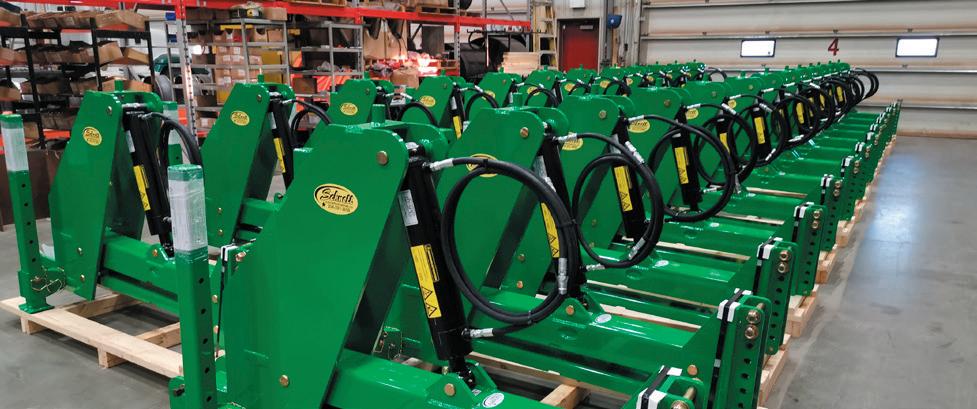
The growth that came with their line of conveyors forced the company to move to their third location in 2002, a shop located just across the tracks from their previous building. It was also around this time that another product line was birthed when a farmer came to Fred about a problem he needed solved. He had upgraded to a larger planter, however, the planter was of no use to him yet, as his tractor did not have a hitch compatible with the piece of equipment. The farmer wanted a new hitch built with the mechanisms required to make it more versatile and compatible with his
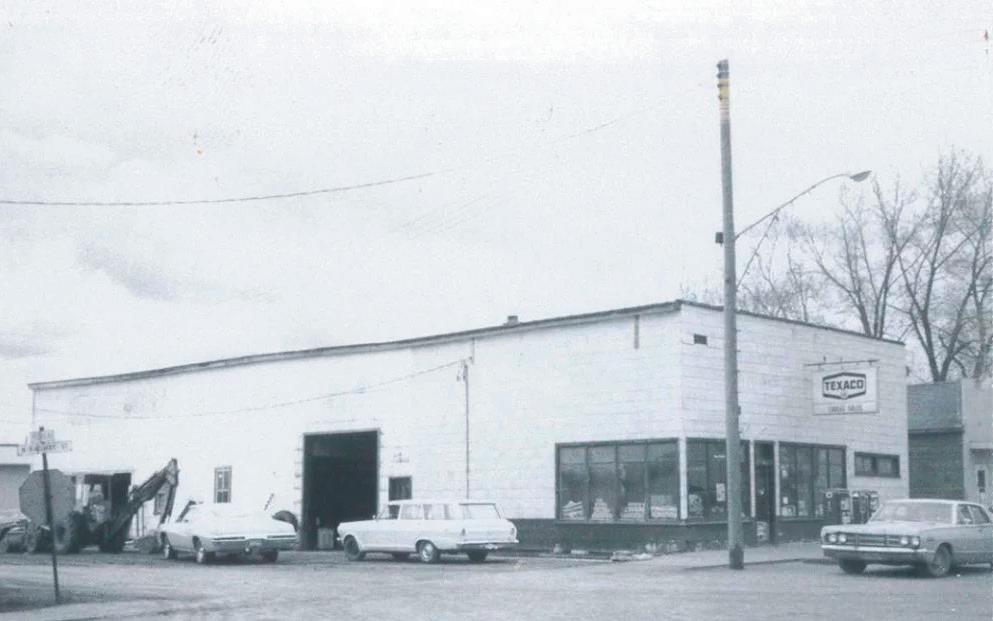
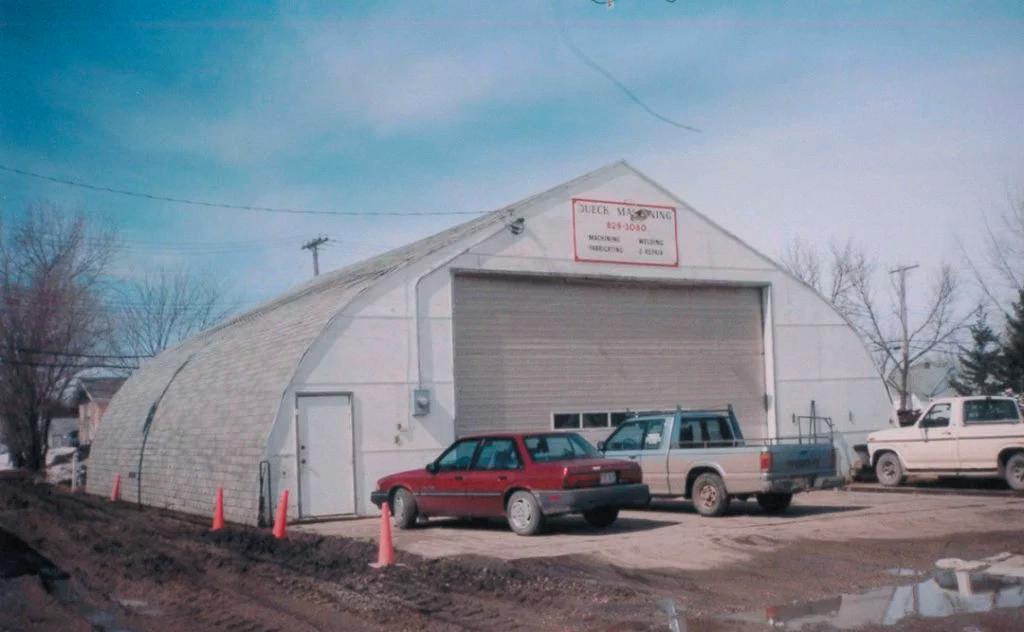
1994
600sq. ft. Bay Rental
1997
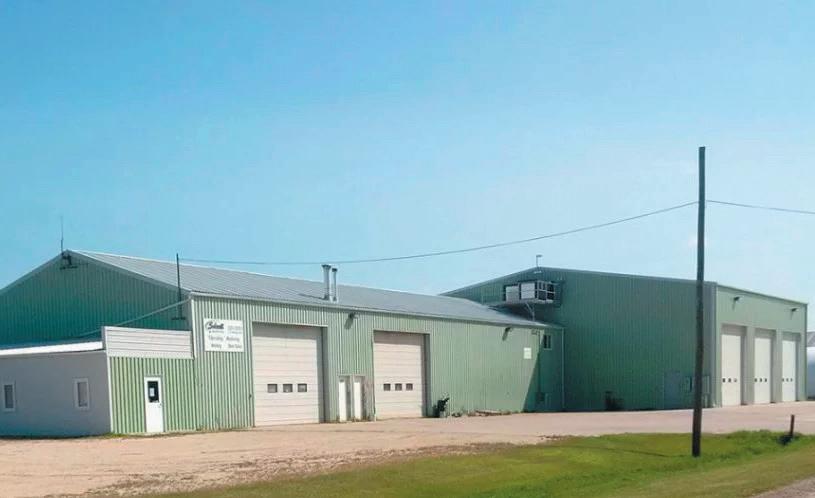
2,400sq. ft. Shop
existing machinery. Again, Fred was up for the challenge and designed a conversion hitch, thinking it was only a one-time project. At that same time they had started to build their website, and needing content to fill it with, Fred uploaded a picture of the new conversion hitch along with a short description.
The first year brought very little interest and after a long period of time with no inquiries about the product, they received a call from Russia, as a farmer had somehow come across their website and was in urgent need of three hitches in fourteen days. He had imported planters from America, only to find out they were not compatible with his tractors, leaving him in a helpless situation with seeding time right around the corner. Fred and his team were up to the challenge and, “on the fourteenth day, he was driving from the airport to his farm, with his new hitches” said Fred. “This confirmed to us that there must be a demand for this product” said Fred’s daughter Vinita, “our website wasn’t good, and it was almost by fluke that he even found us.” They decided to take their new product seriously and patent and market it. After putting in the effort to get the word out, the hitch has now become their most consistent source of revenue over the years.
2002
4,000 sq. ft. Shop
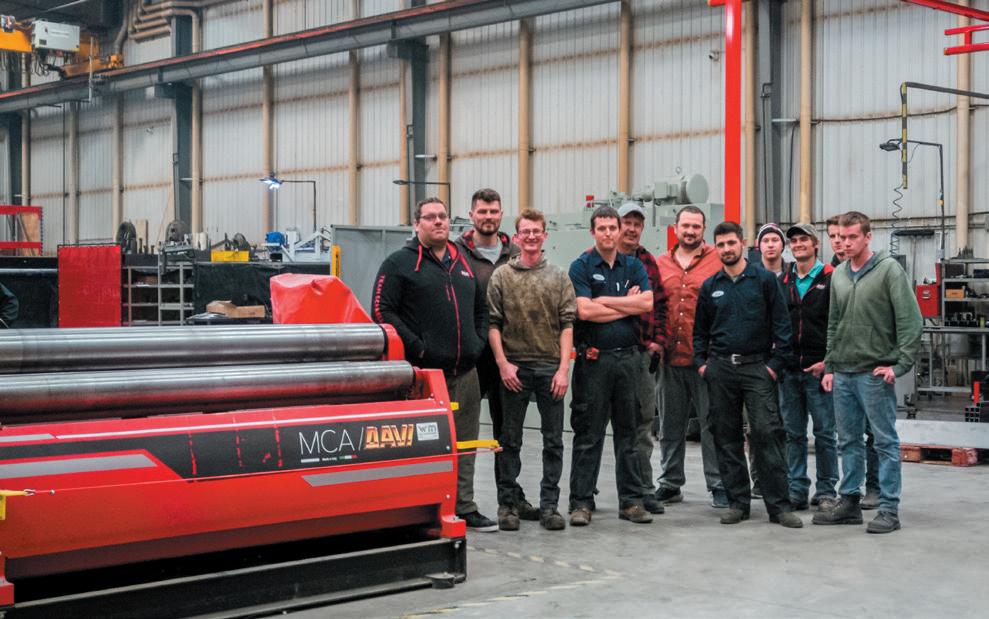
2013
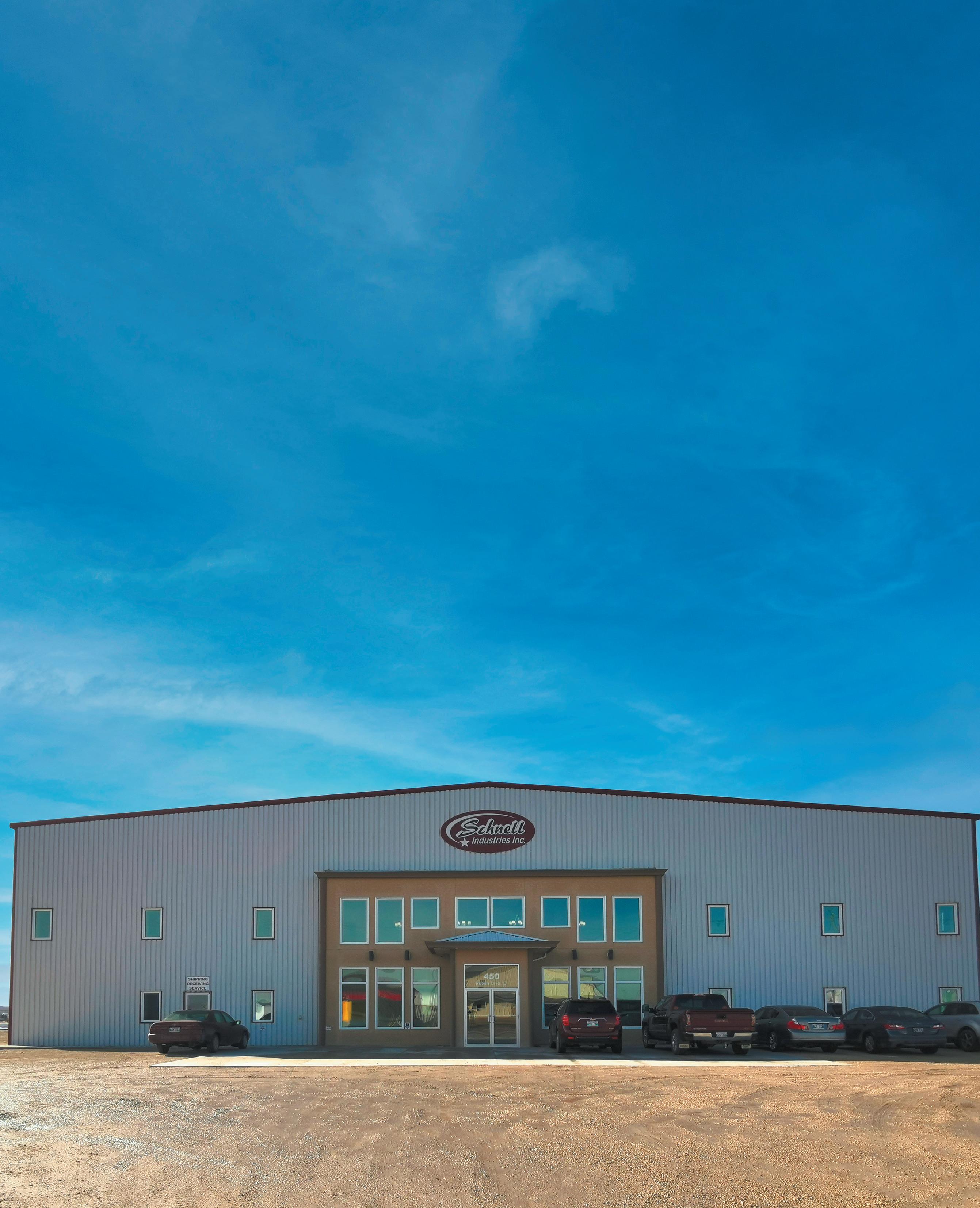
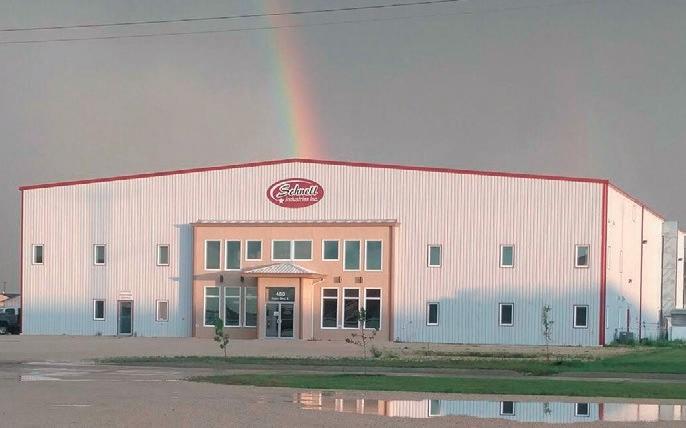
20,000 sq. ft. Shop
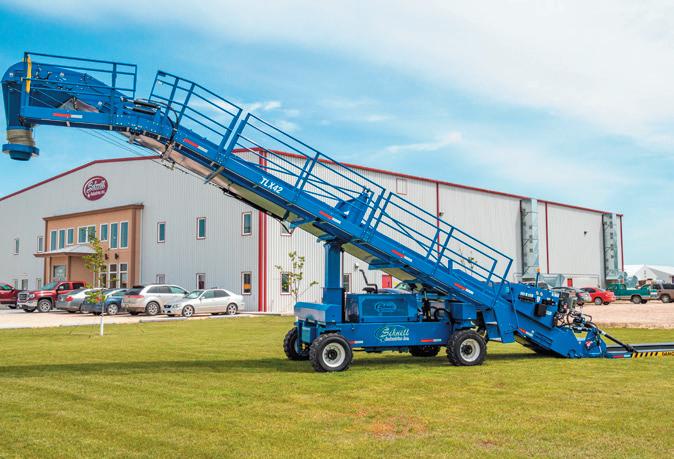
The boom of agricultural conveyor sales had come upon the company quickly in the late nineties, but was starting to wane following their move in 2002, until sales seemed to disappear altogether. A large number of employees had to be laid off as everything had been ramped up for the steep demand. The business had officially fallen on hard times and Fred was in the place of owing money which he could not repay, a reality he was painfully aware of, as every day seemed to go by without a sign of work. One day, Fred went to visit a business friend of his whom he owed money, now needing to buy more parts on credit. “I told him I was prepared to head out to Alberta to check out the oil field and hopefully bring back work” said Fred, as there was an oil boom going on at the time. The hope in going would be to bring some work home with him. It just so happened that his friend had recently received an email inquiring about a conveyor to be built for frac sand, a crucial component in the oil industry. “He pulled up a picture and asked me if I could build it” said Fred. The shop would be just long enough to build the conveyor inside, although he foresaw a problem in getting it out of the narrow building, since the overhead doors were on the side of the building. “I figured even if we had to knock down a wall in order to get it out, we had to take the opportunity” said Fred. While they didn’t need to take out any walls, they did have to coat the floor in dish soap, while lifting up one end with a fork-lift, and skidding the other end towards the opening of the door. “It was almost like giving birth” said Fred’s son Brenton, who described the great effort it took to get that first conveyor out of the shop. All things considered, this has proven to be the most appropriate metaphor to explain the outcome of that event, as their willingness to go through this difficulty not only saved their company, but propelled them to their highest level yet in the world of business. The door had been opened to building many conveyors like this throughout the oil industry, prompting them to expand their building and enjoy a time of incredible growth and prosperity like never before. The name of the business was also changed at that time, from Dueck Machining to Schnell Industries Inc, matching the name of the business with the name of their product line. And while some would look at the fortunate timing of events and be tempted to call it a fluke or good luck, Fred and his family are very aware of the role that God has had in their success. “We give God the glory for any success we’ve had” said Fred, as the family has continued to put their faith in God during both the good times and the hardships that have come.
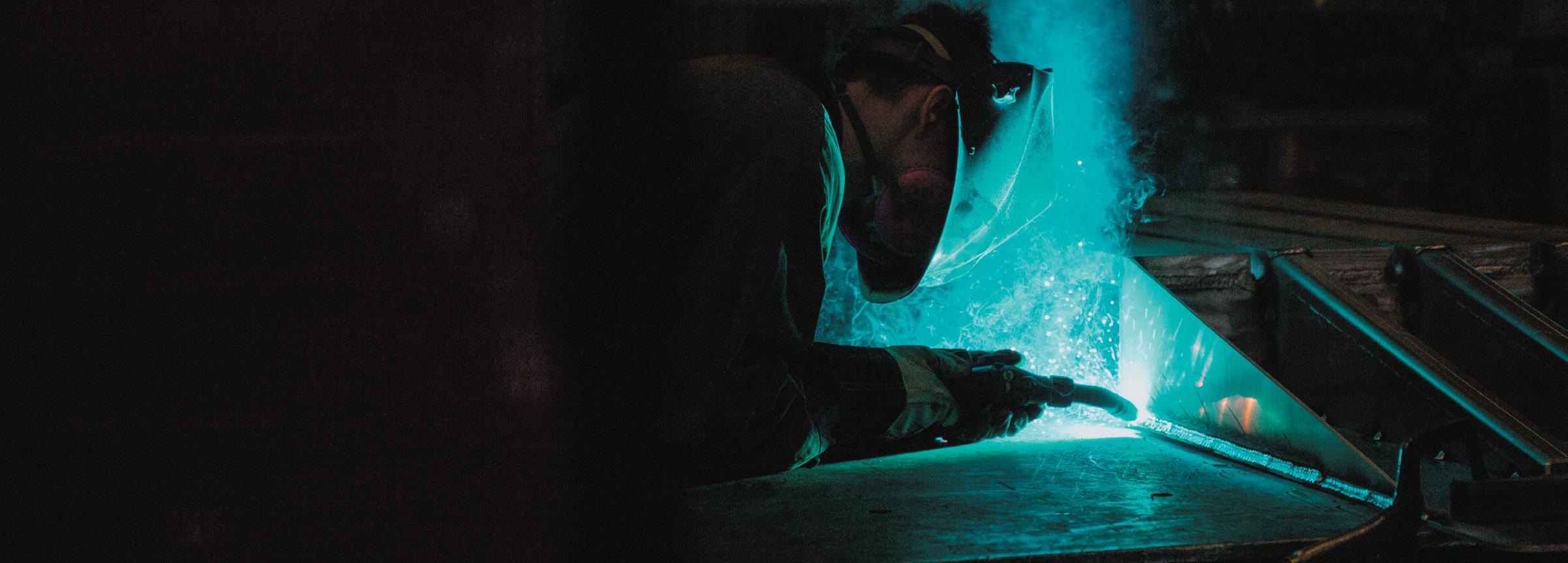
The sudden growth of the company prompted the company to make plans for building a new shop; however, it was becoming more and more clear that there may be some risk involved, as the once roaring oil economy was fading. “We knew that we had all our eggs in one basket” said Brenton, explaining the lucrative contract they had agreed to which had demanded all of their efforts go towards building the frac sand conveyors. The foundation for the new building had already been poured when their work almost completely dried up. “We were facing the question of whether we go ahead and build” said Vinita, as they had laid-off almost everybody and did not have work to justify building their largest building yet. In 2013 it was decided that they had already gone too far in the process to turn back, and continued building their new shop, this time located in the industrial park of Winkler. The state-of-the-art shop would allow them to take on any project, with its high ceilings and built in crane system, as well as more than adequate size at 20,000 square feet. An added difficulty during this time was the tragic news that Dolores had been diagnosed with ALS, a severe neurological disease, prompting doctors to give her only two more years to live. Fred chose to prioritize time with his wife, and spend some time travelling while health still permitted, leaving Brenton to run the day-to-day affairs of the business. “There were some really tough
years in there” said Vinita, who recalled the exceptionally stretching time for the family, as they fought to keep both Dolores and their business alive. Brenton was forced into the position of leading the company, despite his own admission of having little experience in business management. It was a huge level of commitment for him to learn everything that was required, but with no other options, and his family depending on the success of the business, he drew from his many years of experience at the company and the lessons he learned from his father and did whatever it took to stay afloat. Vinita had been working outside the family business for a few years, but eventually decided to re-join to help ease the load of financial management from her parents’ shoulders.
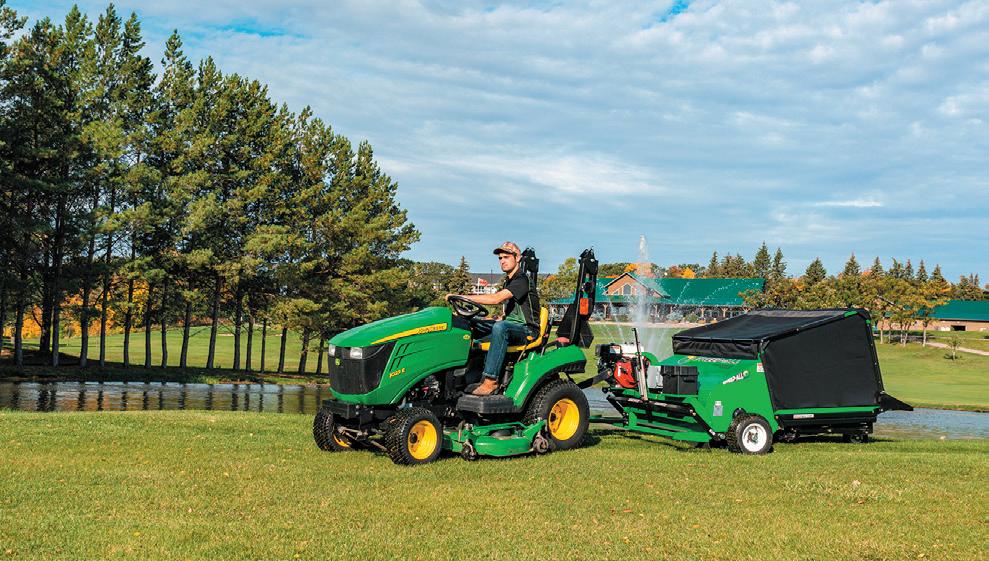
Slowly the business began to make a comeback. The goal moving through the difficult years had been simple; create a healthy diversity of work, return to their original product lines and the servicing of local farmers and their machinery, while also being prepared to take on the custom projects that come up. They developed a rail car to truck transloading conveyor, which is used mainly in the frac sand industry but also to move high volumes of other granular products as well. In 2016 they bought Turfmaster, a local company that was building heavy duty lawn sweepers. They rebranded the product as Sweep-All and built up the product line. Today there are units world wide, with the US being the largest market. Selling steel to local farmers and businesses has been another example of diversifying and has become a big part of what Schnell Industries has to offer. This process of refocusing on their original identity has paid off greatly and brought balance into all areas of the business.
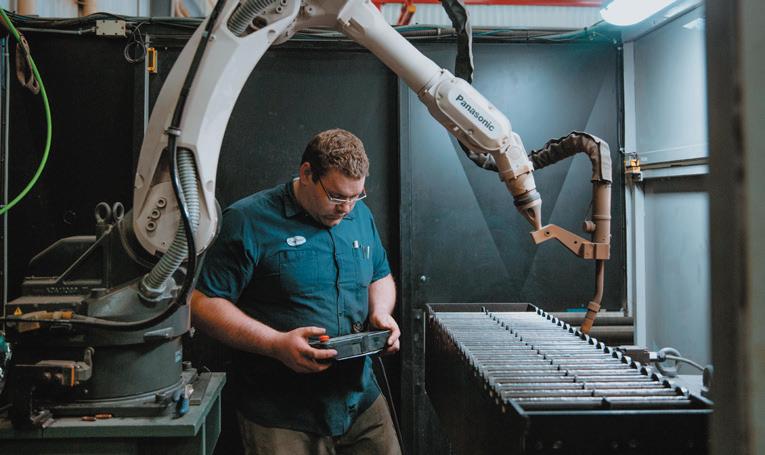
Through all the ups and downs, the dedicated team at Schnell Industries has been able to gain tremendous experience in multiple fields of manufacturing, putting them in a position to design and build just about any custom project imaginable through their combined expertise in design, hydraulics, machining, and 3-D printing. In the last few years they have added CNC forming, plate rolling, and robotic welding equipment to the production floor in order to be able to offer a wider range of services and to accommodate their growing product lines. They also utilize the excellent network of laser cutting shops and powder coating facilities in the area as well as the outstanding work force available, making it possible to be competitive in the industry. “We have large companies coming to us and asking us to help them design and build new concepts. We are big enough to offer a wide range of expertise in manufacturing and design services, but yet small enough to pay attention to detail and get their concepts off the ground quickly,” Brenton says. They also excel at modifying existing equipment, which offers a cheaper alternative to buying something new. “We’ve now had multiple years in a row that have been much more stable” said Brenton. “We still cater to the oilfield industry but we don’t rely solely on it, so we haven’t had the crazy up and down swings of previous years.” This success could not have happened without the excellence and dedication shown by the members of the team at Schnell, all of whom are deserving of recognition.
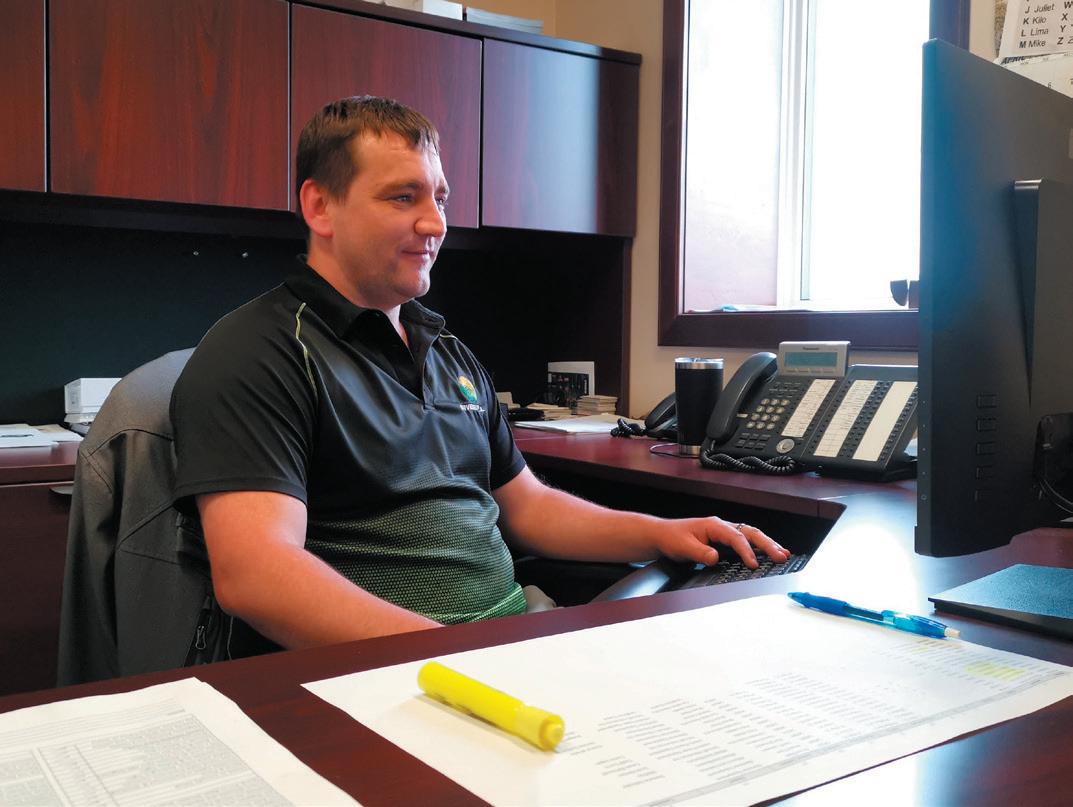
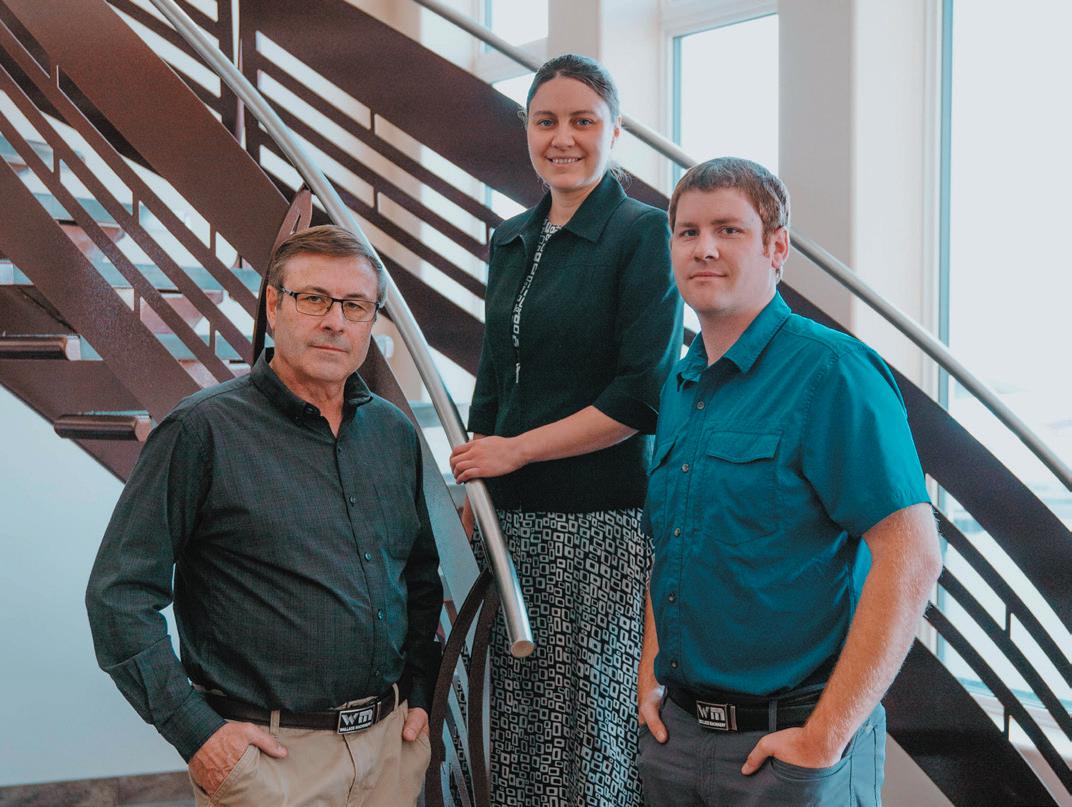
Today if you walk into the Schnell Industries office you will most likely be greeted by Vinita at the front desk, and she will be able to direct you to the team member who can best help you with your repair job, custom build, or metal purchase. Brenton is busy managing the company, and while other staff are doing most of the customer service these days, he is still happy for a chance to say “hi” and help the customers who are a big part of the Schnell story. Dolores has also continued to pull through, now on year eight since being diagnosed with the terminal disease, and greatly defying the initial expectations for her life. Fred has returned to having a larger role with the company, getting to do what he loves best in designing and prototyping new products, while also preparing his family for the day that he fully hands over the reins. Now, after starting at the very bottom, Fred and his family can look back on their hard work and realize that they really did have a dream worth fighting for.