www.progressivejudaism.org.uk
of Progressive Judaism Voices
Making the dream a living reality
By Rabbis Josh Levy and Charley Baginsky, Co-Leads of The Movement for Progressive Judaism
On 1 January 2026 something extraordinary happened. A dream that had been spoken about, argued over, refined, resisted, re-imagined, prayed for and worked towards for decades finally became real. The Movement for Progressive Judaism came into being and you, our communities, came with us.
Across cities, towns and regions, from large, long-established synagogues to small congregations holding Jewish life with creativity and care, communities chose to step into the future together. They chose partnership over fragmentation, shared purpose over separate histories, and hope over fear. That choice is no small thing in Jewish life. It is, in fact, profoundly Jewish.
Today, we are the largest Jewish Movement in the UK by number of communities. More importantly, we are a Movement that reflects the full breadth of Progressive Jewish life.
Students and elders, families and single people, lifelong Jews and those who have joined our people by choice, LGBTQI+ Jews, mixed faith/heritage families, regional communities, urban centres, and everything in between – this is what a living Movement looks like.
Now the real work begins... In the months ahead, change will be felt in visible and practical ways. New programmes will be developed. New leadership pathways will open. Young adults and students will sit at the heart of our vision. Communities will be supported in deeper and more connected ways. Progressive Judaism will show up in British society with confidence, clarity and moral seriousness.
We are proud of the foundations already laid. Thanks to the extraordinary generosity and belief of donors and partners, we have secured record levels of fundraising (see page 2). That support gives us the confidence to build something that is sustainable and ambitious. It allows us to plan for growth, creativity and impact.
Our public presence will continue to grow. We will be heard more often and more clearly in national conversations. We will bring a Progressive Jewish voice to civic spaces, to interfaith work, to education, to the media, and to moments when Jewish values need to be articulated with courage and care. We will draw from our tradition to build for a future we want to help shape.
It is important to be honest about what this moment requires.
The Movement for Progressive Judaism did not simply launch; it came into existence. That means there is significant work underway.
We are recruiting staff, aligning systems, creating new processes, developing governance structures, and learning how to work together in ways that have never existed in quite this form. There are databases to integrate, policies to write, teams to grow and ways of communicating to refine.
Jewish tradition teaches that the world is not completed in a single moment but shaped over time through human responsibility and care. That is where we are now, building something real and lasting, piece by piece.
What gives us the greatest sense of confidence is that we are doing this together. Clergy, chairs, educators, youth leaders, trustees, volunteers, donors, staff and congregants are all shaping what this Movement will become.
This is not a project owned by a central office. It is a shared endeavour and a collective responsibility.
The Movement for Progressive Judaism is not simply a new structure but a renewed commitment to Jewish life that is serious, joyful, ethical and alive. We are proud of what has been built, grateful for the trust that has been placed in us, and excited by the responsibility that rests in our hands. And what we have begun together is already shaping Jewish life in this country in ways that will endure.
The work ahead will take patience and care, but it will also bring new energy, new leadership and new possibility.
We look forward to building it together, step by step, community by community, with confidence in the future we are all shaping.
MPJ is a constituent of the World Union for Progressive Judaism
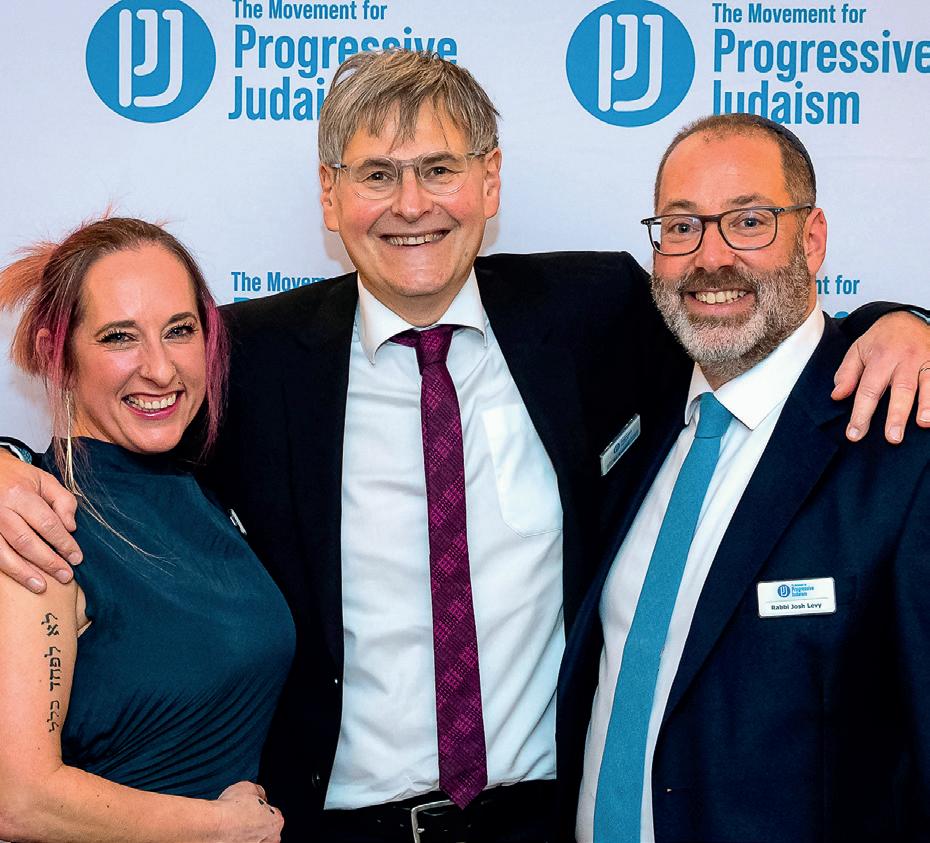
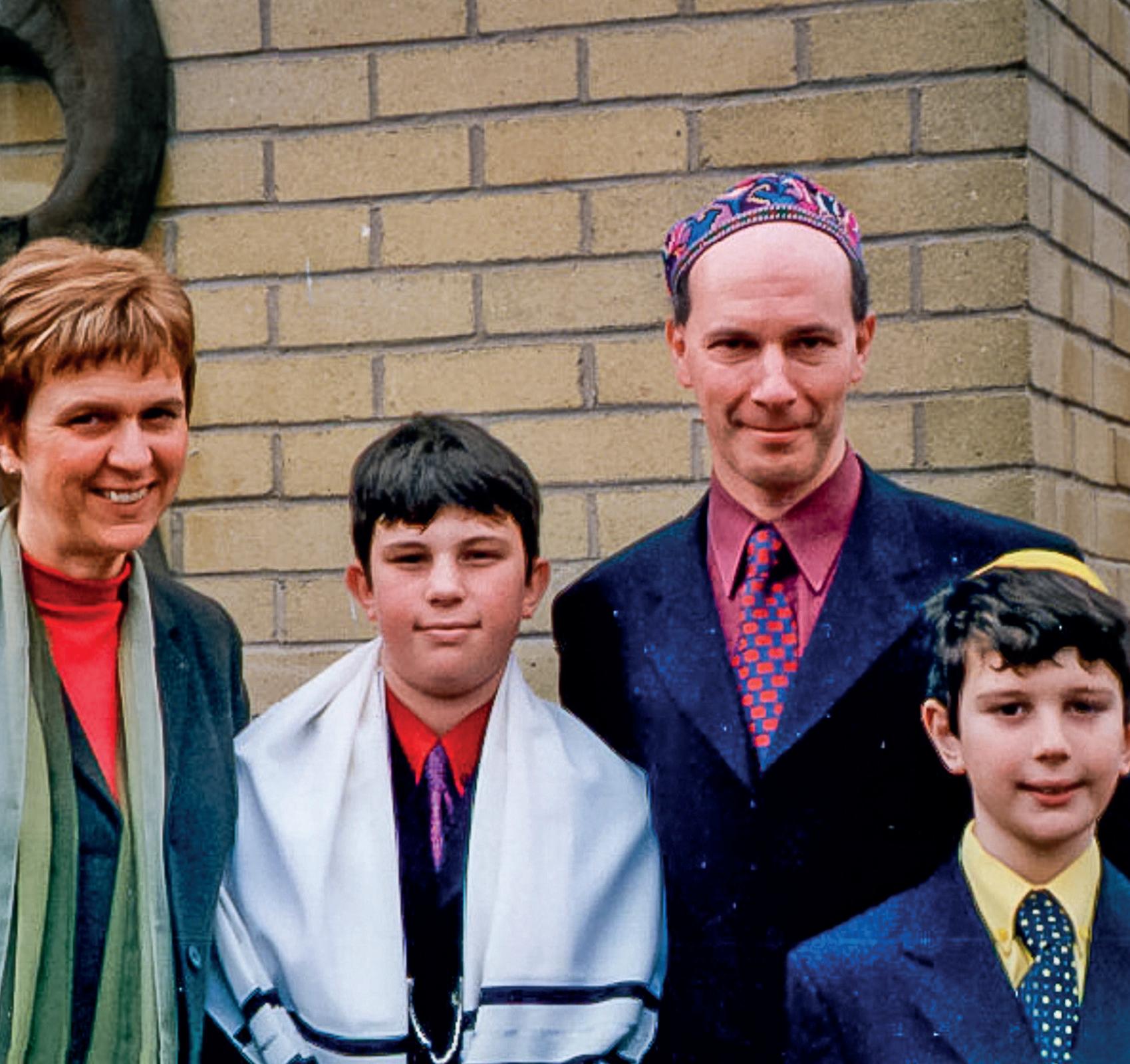
Rabbi Charley Baginsky, Movement for Progressive Judaism Chair Dr Ed Kessler and Rabbi Josh Levy at the MPJ launch
MPJ launch event raises £2.2 million
AROUND 400 people gathered in London to celebrate the launch of The Movement for Progressive Judaism (MPJ) – representing the communities, partners, clergy, donors, students, youth leaders and friends who together form the heart of what we do.
Rabbi Charley Baginsky and Rabbi Josh Levy, Co-Leads of our new Movement, began the evening by speaking passionately about the dedication and partnership of so many. They said: “Tonight is not simply a celebration. It is a moment of history, a moment when the vision, courage and optimism of so many people come together to create something bold, hopeful and essential.”
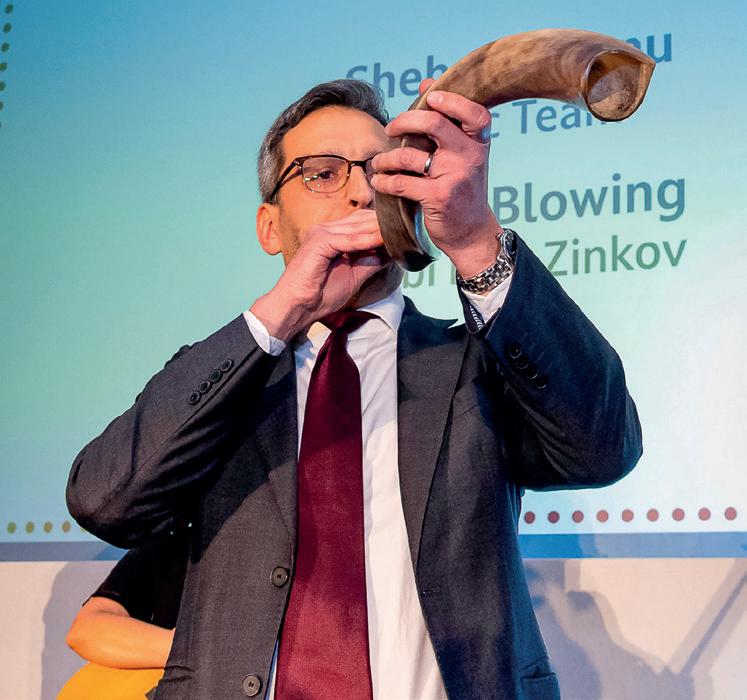
Another special moment came when Rabbi Shulamit Ambalu and Rabbi Igor Zinkov – the Chairs of the two Progressive clergy bodies – led the whole room in hamotzi, the blessing for bread, with Rabbi Igor then blowing the shofar to herald the start of a new era.
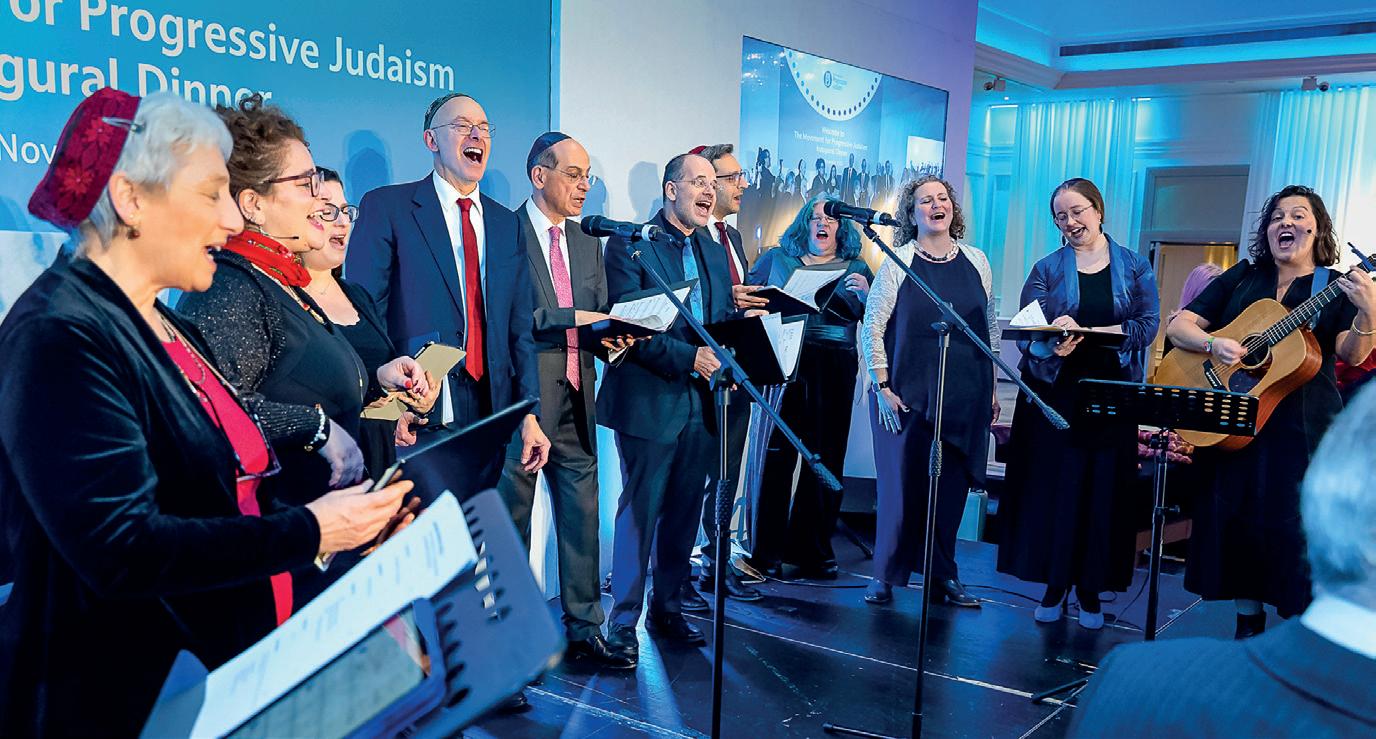
Throughout the night, guests heard incredible music and song from a clergy choir, comprising cantors, rabbis and musicians from across our communities.
Grace after meals was led by Movement Workers from both LJYNetzer and RSY-Netzer together.
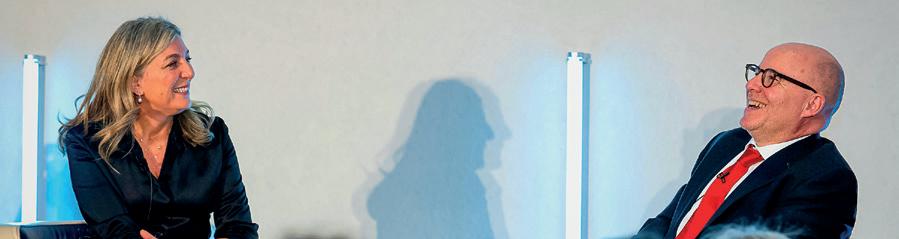
The set piece of the evening was a conversation between Rabbi Rebecca Birk and Attorney General Richard Hermer. The Attorney General, a member of Alyth, told of the transformative impact of growing up in RSY-Netzer –explaining how the Progressive Jewish youth movement profoundly influenced his sense of ethics and obligation.
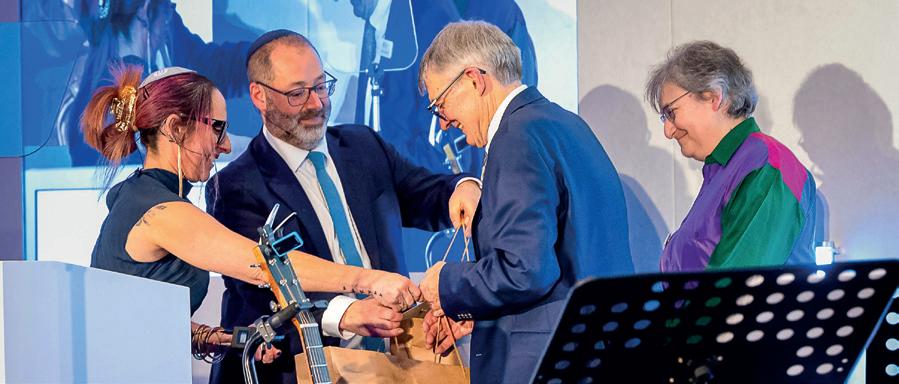
The event also provided a chance to honour Paul Langsford and Karen Newman, the outgoing Chairs of Reform Judaism and Liberal Judaism, whose work on the merger did so much to create our new Progressive Movement.
The dinner saw the announcement of the Launch Board for The Movement for Progressive Judaism. Alongside new MPJ Chair Dr Ed Kessler MBE will be Karen and Paul as Legacy Trustees, Rabbi Paul Freedman and Rabbi Lev Saul representing the clergy bodies, Noeleen Cohen, Nigel Cole, Jonathan Lewis, Jack Lubner, Richard Reuben, Michele Saffer, Tania Townsend and Tommer Spence.
Ed, speaking for the first time as Chair of MPJ, made the evening’s fundraising appeal. He said: “Your support will strengthen communities, sustain our clergy, develop leadership, secure our youth work, and ensure that our Progressive voice is present where it is needed most. This is not simply philanthropy. It is participation in building a Jewish future.”
Thanks to the commitments made in advance and in the room, The Movement for Progressive Judaism has now secured an extraordinary level of new support –raising £2.2 million. Donations can still be made via our website.
Congratulations came in from Britain’s most senior political and faith leaders. Prime Minister Sir Keir Starmer said: “The Movement for Progressive Judaism is a powerful voice of moral conscience, dialogue and partnership.”
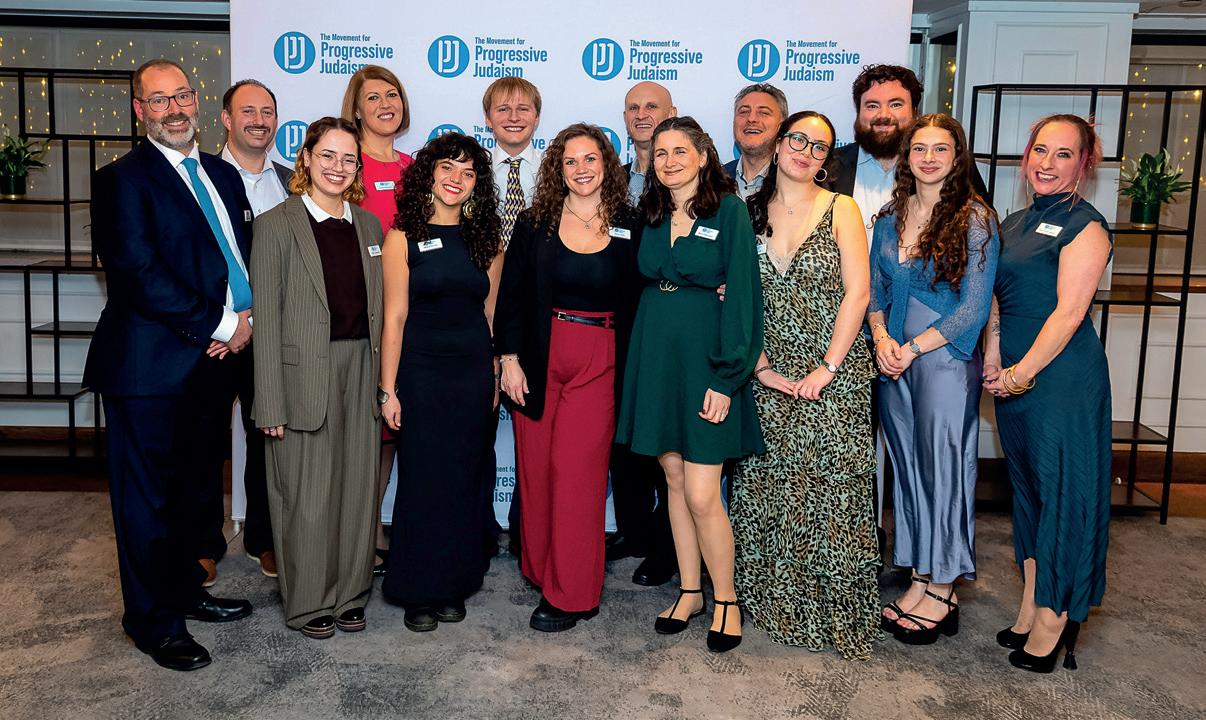
The evening ended with thank yous to all who helped make the night a success, especially the organising team of Amit Handelsman, Noeleen Cohen and Penny Beral, and the professional staff of The Movement for Progressive Judaism.
Pictures by Graham’s Photos
Rabbi Igor Zinkov’s shofar blast marked the start of The Movement for Progressive Judaism
The wonderful clergy choir of cantors, rabbis and musicians provided the night’s music
The keynote conversation between Rabbi Rebecca Birk and Attorney General Richard Hermer captivated listeners
Paul Langsford and Karen Newman received gifts from Progressive Judaism’s Co-Leads in honour of their work
The Movement for Progressive Judaism staff team ensured the event’s success
Radlett and Elstree synagogues to merge and form one Hertfordshire community
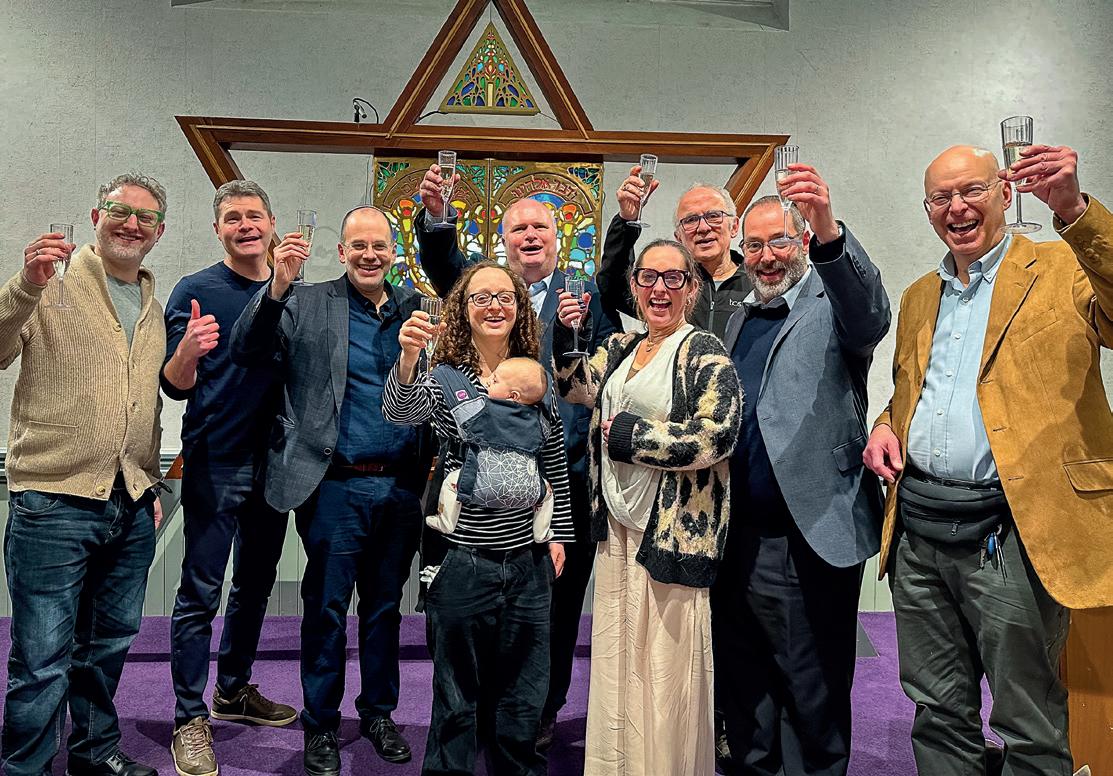
MEMBERS of The Liberal Synagogue
Elstree (TLSE) and Radlett Reform Synagogue have approved a plan for the two Hertfordshire communities to merge and form what will become one of the largest Jewish communities in the UK.
The decision brings together two well-established synagogues serving Progressive Jews living in Bushey, Elstree, Borehamwood, Shenley, Radlett, Watford, St Albans and across the wider county and its surroundings.
By merging, Radlett and TLSE aim to create a Progressive Jewish centre that blends the traditional strengths of synagogue life with the energy and inclusivity of a modern community hub.
The new community will boast a membership of over 1,100 households.
It will initially operate as one congregation across two campuses. There is a long-term ambition to create a single site that will also act as a centre for Jewish and Jew‘ish’ life in Hertfordshire – offering opportunities for daily engagement, learning, culture and connection.
The vision is to serve Jews of all ages and backgrounds, regardless of how they choose to engage with their Judaism, and offer multiple pathways into Jewish life.
A mix of Shabbat and festival services will use both the Liberal and Reform prayer books, so that members can choose which to attend.
Spencer Grant, Chair of Radlett Reform, said: “Pooling resources, expertise and leadership will enable greater reach across the region and allow engagement with those who may not currently belong to a synagogue or who feel disconnected from communal life. We have been successfully collaborating for over six months, so formally merging is the next logical step. We are at the start of an exciting journey.”
The merged community will bring together a diverse rabbinic and professional team, offering depth of leadership, enhanced pastoral care and expanded educational and cultural programming. This includes supporting Progressive Jewish children attending Orthodox schools, ensuring they feel affirmed and connected to their home community.
The new entity will also create a stronger, more visible voice for Progressive Judaism in Hertfordshire, both within the Jewish world and in wider civic life. Plans include increased interfaith engagement, deeper involvement in social action and sustained connections with students while they are at university.
Leigh Renak, Chair of TLSE, said: “Our area of Hertfordshire is recognised as having one of the fastest growing Jewish populations in the UK. The region continues to attract young Jewish families as well as grandparents relocating to be closer to their families and this gives us a unique opportunity to evolve how we meet the needs of Progressive Jews.”
It is envisaged that the merger will formally be completed by January 2027, with final ratification to come at two AGMs in May 2026. During this time legal formalities will be completed, a name for the community will be chosen and the building committee will continue to explore options for a single site.
Harlow and Chelmsford combine into new congregation
THE Jewish communities of Harlow and Chelmsford have merged to form the new Harlow and Chelmsford Jewish Community (HCJC), creating an open, caring and growing synagogue for Essex and East Hertfordshire.
The new congregation will have a membership of more than 300 adults/ families and serve a number of areas, with members already coming from Harlow, Epping, Bishop’s Stortford, Chelmsford, Braintree, Dunmow, Saffron Walden, Maldon and their surroundings.
The history of Harlow Jewish Community stretches back to its formation in 1952, just a few years after Harlow was designated a New Town. It has been affiliated to Reform/ Progressive Judaism since 1960. Chelmsford Jewish Community was established in 1974. It was not previously affiliated to any Movement.
Shabbat and festival services will be held both online and in the synagogue building, based in central Harlow. Popular Chelmsford events –including an annual festival celebration at Essex County Cricket Ground – will continue.
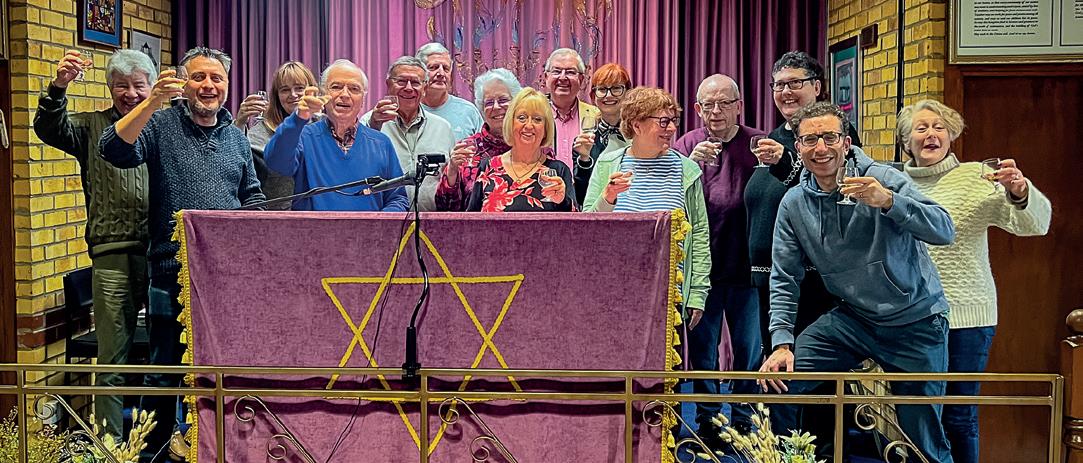
Jon Kaye, Chair of Harlow and Chelmsford Jewish Community and previously Harlow Jewish Community, said: “From the very beginning, everyone continued to be enthusiastic about coming to an arrangement where we could provide a synagogue, a rabbi, cheder, services and social occasions for the combined community – reaching members wherever they live.”
Stan Keller, Chair of Chelmsford Jewish Community and now Vice President of Harlow and Chelmsford Jewish Community, added: “With a combined history of over 125 years, HCJC builds on very strong foundations and relationships. Our new community will pride itself on offering a warm and welcoming atmosphere for its members, and a high level of engagement with local society and other faith groups.”
Progressive educators enjoy an ‘electrifying’ conference
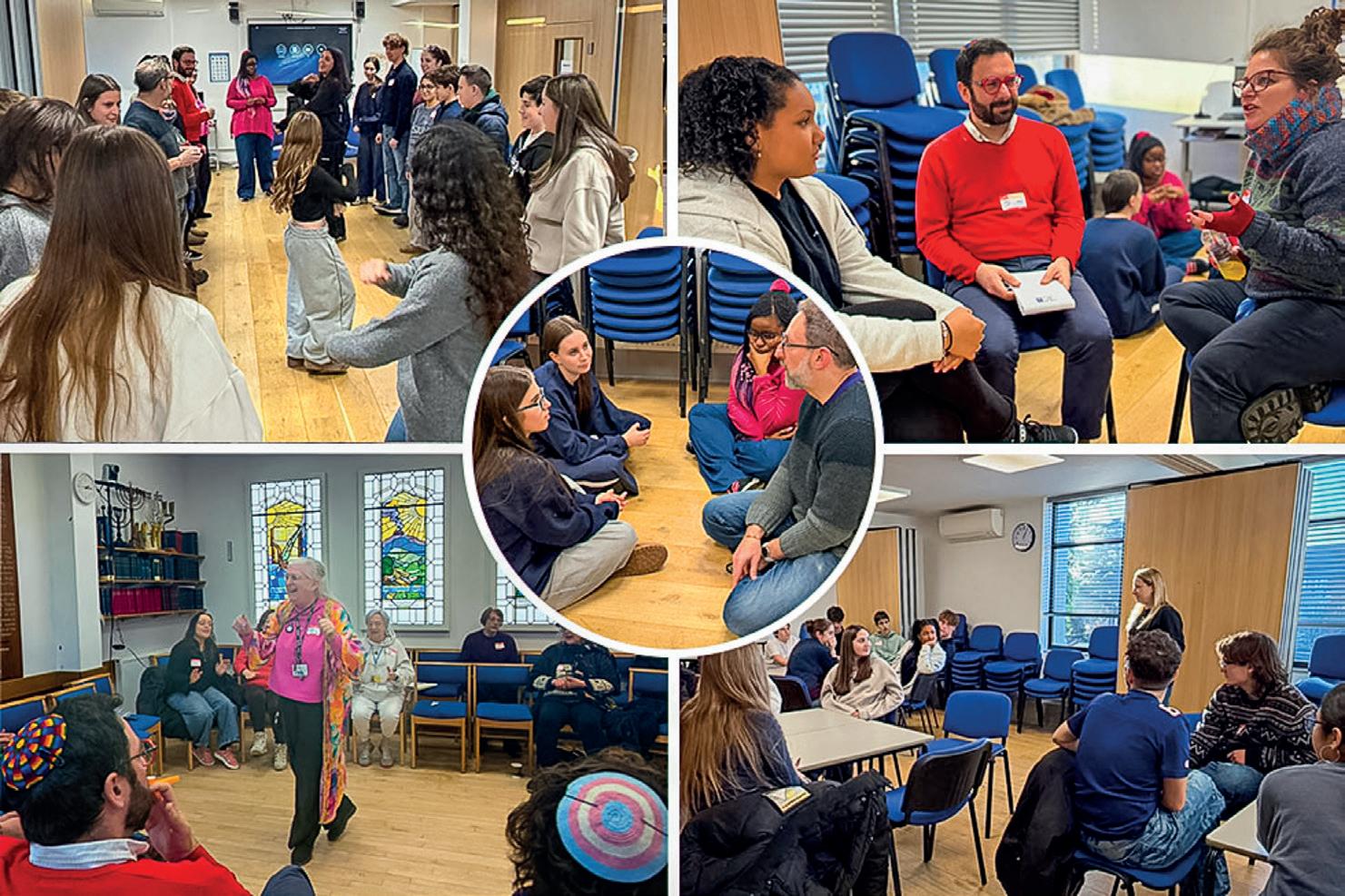
MORE than 80 educators from Progressive synagogues across the country came together for the Progressive Educators Conference 2026.
The annual event plays a vital role in supporting Progressive Jewish education – giving heads, teachers, teaching assistants, rabbis, cantors and all involved in cheder and community learning the chance to strengthen their skills, explore contemporary challenges and share best practice.
The day opened with remarks from Rabbi Josh Levy, Co-Lead of Progressive Judaism, followed by an inspiring keynote from Rabbi Debbie YoungSomers and Rabbi Sandra Kviat, who spoke about the central role of education within our new Movement.
Participants chose from 12 sessions delivered across four educational tracks – Teaching Assistant 101, Kef (Fun), Deeper Issues, and Hebrew and Torah. Fourteen experienced presenters led sessions on topics ranging from Classroom Behaviour Management to Contemporary Antisemitism to Teaching the Torah as One Story.
Attendees described the event as “electrifying” and “hugely helpful”.
Reflecting on the day, MPJ Community Youth and Education Lead Emma Rich said: “The conference provided a fantastic opportunity to connect with people and communities from across the country. The presenters were informative and engaging, and the atmosphere throughout was incredibly positive.”
Education Hub podcast launches

THE second season of the Progressive Judaism Education Hub – titled Principles of Progressive Judaism – is now a full Spotify Podcast and YouTube Series, thanks to funding from the NLPS Trust. You can find it by searching for its title on Spotify or on our new YouTube page: youtube.com/@ProgressiveJudaismUK
Over 11 episodes, leading Progressive rabbis and educators deliver fascinating sessions on topics including God and belief, liturgy, Jewish law, egalitarianism, marrying in, Jewish status, Zionism and, most recently, disability.
Whether you’re new to Jewish studies, seeking to deepen your understanding or just interested in finding out more about the 200+ year history of Progressive Judaism, this series illuminates the shared ideals and transformative journeys that have shaped the Judaism we know and love today.
Further information on future seasons of the Education Hub will follow soon.
Celebrating a transition
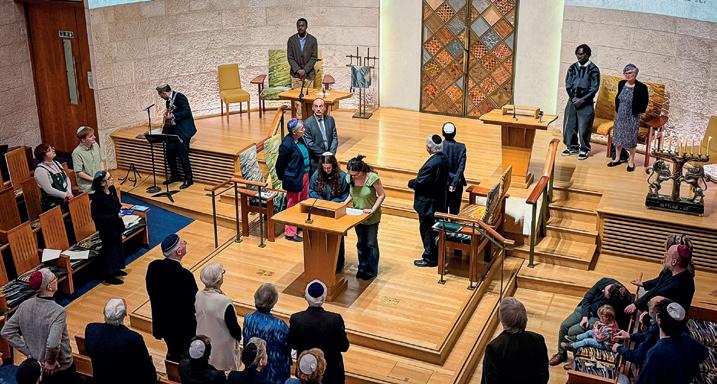
THE Liberal Jewish Synagogue (LJS) hosted a special celebration service and tea to mark the transition from Liberal Judaism to the new Movement for Progressive Judaism.
Central to the service was a unique Havdalah ceremony and moving multigenerational candle lighting ceremony, alongside reflections from Liberal Jewish leaders, past and present, to honour a 124-year legacy and look ahead to a new chapter of collaboration and growth.
Rabbi Alexandra Wright, Senior Rabbi of the LJS and the last President of Liberal Judaism, opened and closed the afternoon, thanking the many people who contributed to the event – especially Rabbi Dr Margaret Jacobi, who worked so hard on its planning.
The service honoured the architects of Liberal Judaism. Rabbi Richard Jacobi recounted its history from the 1902 founding of the Jewish Religious Union through the rebranding to the Union of Liberal and Progressive Synagogues in 1944 and the change to Liberal Judaism on its 100th anniversary in 2002. Rabbi Elli Tikvah Sarah spoke about its core values. Rabbi Danny Rich shared the wisdom of the late Rabbi John Rayner.
The service was further enriched by prayers, readings and contributions from Rabbi Anna Wolfson, Penny Beral, Jonathan Bromfield, Levi Adusei and LJY-Netzer Movement Workers Tali Ehrlich and Jess Spanier. The spiritual atmosphere was lifted by the music of Rabbi Igor Zinkov and Joseph Finlay.
Progressive Judaism Co-Lead Rabbi Charley Baginsky led the kaddish de Rabbanan (memorial prayer for our leaders) for all those whose work built and sustained Liberal Judaism.
The day also featured a celebration for Sharon and Rabbi Dr Andrew Goldstein on their diamond wedding anniversary.
A final song reminded all, in the words of Pirkei Avot: “You are not required to complete the task, but neither are you at liberty to abstain from it”.
Karen Newman, the last Chair of Liberal Judaism, said: “We will carry the best of Liberal Judaism into our new Movement for Progressive Judaism.”
A summer of Progressive Judaism
Hineinu and Shirei Chagigah: Thursday 18/Friday 19 –Sunday 21 June 2026
COME to Hineinu – the inaugural flagship conference of The Movement for Progressive Judaism.
Taking place from 18/19 – 21 June, at a gorgeous hotel in Northamptonshire, this is your chance to be at the heart of the new Progressive Judaism we are creating.
With the theme of Bereshit (beginning), Hineinu will be filled with a spirit of creation, imagination and possibility.
Come from Thursday 18 June and step straight into Shirei Chagigah, our music conference. Blending the traditional and the new, we’ll spend our time singing, and learning about prayer-leading, song-leading and new melodies with harmonies aplenty. Above all, we’re using music to create community.
Or join us on Friday 19 June when Hineinu begins.
Darkeinu: Thursday 25 –Sunday 28 June 2026
JOIN US for Darkeinu and celebrate 100 years since the founding of the World Union for Progressive Judaism. Organised by the European Union for Progressive Judaism (EUPJ) together with The Movement for Progressive Judaism (MPJ) – and taking place on the weekend after MPJ’s own flagship Hineinu conference – Darkeinu will bring together Progressive Jews from all over the globe for a landmark gathering of learning and celebration.
Learning and workshop sessions, celebratory services and keynote addresses will be led by rabbis, cantors, educators and community leaders from all around the world.
Attendees will have a choice of lectures, panels, workshops and discussion groups throughout – being able to follow one or more of the six strands of the conference: Progressive Jewish History of the Past Century; Israel and Progressive Jews; Our Next Generations; Progressive Judaism Beyond our Gates; Innovations and our Response to New Technology; and Affinity Groups.
Across three days and six programme tracks – including specific Shirei Chagigah music sessions – you can explore leadership, learning, social justice, Israel–Diaspora encounter and the craft of community building.
Programming will be led by dynamic and inspiring rabbis, cantors and teachers from the UK and abroad.
You can dip in as deeply or lightly as you wish: there will be ideas to stretch you, skills to take home, and plenty of time simply to be together at Shabbat tables, in late-night conversations, over coffee and on the dance floor.
Hineinu is family-friendly with a full youth programme run by RSY/LJYNetzer, a families track that all ages can take part in together, and a crèche for the little ones. We are also working on an evening babysitting service.
The hotel has a swimming pool, spa facility and lovely country walks, for those who wish to refresh body as well as mind.
Your ticket includes a hotel room, all meals, the full programme, and the option to switch between tracks.
Most sessions will take place at a central London synagogue, with Friday night services held in Progressive communities across London and the Home Counties. Highlights will include a gala opening evening, Shabbat services and dinners, Jewish walking tours and a celebratory Havdalah.
For those wishing to enjoy a full week of Progressive Judaism, there will be a fascinating series of trips bridging the gap between Hineinu and Darkeinu (23-25 June). These will include visits to the British Library, British Museum, Wiener Holocaust Library, Waddesdon Manor, Houses of Parliament and Leo Baeck College – as well as tours to discover the Jewish history of Brighton and Cambridge.
Darkeinu Co-Chairs Rabbi Mark Goldsmith and Rabbi Lea Mühlstein said: “The WUPJ started in London in 1926 with the first ever conference of Progressive Jews from around the globe. Now we invite you back, 100 years later, to celebrate a century of connection, courage and creativity.”
BOOK HERE: events.eupj.org
• Darkeinu is non-residential. For accommodation options, or any other questions, email events@eupj.org
Rabbi Josh Levy and Rabbi Charley Baginsky, CoLeads of The Movement for Progressive Judaism, said:
“Our new Movement is opening its first chapter, and we are gathering at Hineinu to ask what kind of Progressive Judaism we want to bring into being and how we will carry it back into our own communities.
“But come, first of all, because Jewish life is meant to be joyful and shared – to meet people, make friends, sing, laugh and remember why we fell in love with this tradition. One day you’ll tell your grandchildren you were there at the beginning.”
BOOK HERE: ti.to/MRJ/hineinu-2026
• If you need any further information, including about booking, please email hineinu@progressivejudaism.org
Wilkenfeld Leadership Seminar: Sunday 21 –Tuesday 23 June 2026
IF YOU are a Jewish woman or nonbinary person interested in being a leader on a global level, then between Hineinu and Darkeinu is your opportunity to take part in a transformative experience.
Women of Reform Judaism (WRJ) is offering an intensive education programme designed to enhance your leadership and World Jewry experience in practical ways.
The WRJ Wilkenfeld Leadership Seminar gives the opportunity to join peers from all around the world and learn more about articulating vision, the power of community, defining supports and barriers, effectively working with volunteers, fundraising, and creating genuine partnerships.
Previous participants have called the Wilkenfeld International Leadership Seminar “an important and empowering moment for learning” and “a life-changing experience”.
BOOK HERE: wrj.org
My journey as a patrilineal Jew
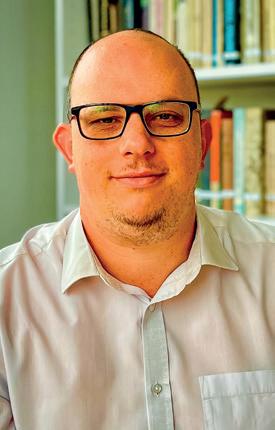
Rabbi Dr Elliott Karstadt on the importance of Progressive practice on inherited status
GROWING up as a patrilineal Jew and now serving as a rabbi in one of the country’s largest synagogues is a journey that is only possible in Progressive Judaism.
But before I tell my own story, first an older one (you may have heard it before).
An elderly Jewish woman goes to the travel agent one day and announces her intention to visit India.
“But it’s such a long journey!” they tell her, “and those trains, how will you manage? The food is too hot and spicy for you, and you won’t be able to drink the water. You’ll get sick – the plague, hepatitis, cholera, typhoid, malaria, God only knows. Why torture yourself?”
But she insists. So the necessary arrangements are made, and off she goes to India.
When she arrives, undeterred by the noise, the smell, and the crowds, she makes her way to an ashram, where she joins the seemingly never-ending queue of people waiting for an audience with the guru. The attendant tells her she will have to wait at least three days to see the guru.
“That’s ok,” she says.
Eventually she reaches the hallowed portals. There they tell her firmly that, because there are so many people there to see him, each person will be allowed to say only three words to the guru.
“Fine,” she says.
She is finally ushered into the inner sanctum, where the guru is seated, ready to bestow spiritual blessings upon eager initiates. Just before she reaches the holy of holies they again remind her that she has just three words. As she approaches, she does not prostrate at the feet of the guru. Instead, she stands right in front of him, crosses her arms, fixes a stern gaze, and says: “Sheldon, come home.”
This story of Sheldon and his mother took on a nuance for me a number of years ago, as I was embarking on my journey to become a rabbi.
I was about to travel up to Manchester to lead my first High Holy Day services as a student rabbi, and I was going to begin with this story. In preparation, I told it to my own mother, who isn’t Jewish.
She shared the joke, but as we laughed together at the punchline, it dawned on me that this situation might so easily describe the two of us.
Here I was, reading my Rosh Hashanah sermon to my mum. Me, a student rabbi; my mum, a non-Jew who felt that making a commitment to any religion at that point in her life would be insincere. She could so easily have been marching down to Leo Baeck College and demanding that I ‘come home’.
Fortunately, nothing would be more unlikely – both of my parents have been nothing but supportive and encouraging
throughout my journey to the rabbinate and beyond. A journey, as I said at the start, that is only possible in Progressive Judaism.
That’s because in 1955, Liberal Judaism adopted a policy of accepting children of Jewish fathers but not Jewish mothers – patrilineal Jews – into the community, on the proviso that they have a Jewish upbringing and identify as Jewish. Reform Judaism introduced a similar policy in 2016 and it has therefore become a founding practice of our new unified Progressive Judaism in the UK and Ireland.
Today – just as when my parents started looking for a place for me to go to cheder and prepare for a Bar Mitzvah in the early 1990s – parts of the Jewish world will not accept patrilineal Jews like me, my brother and my sister, as Jews, demanding instead that we ‘convert’.
And this is a shame – as there are so many Jews who are lost to Judaism. Today, I go online and find groups on social media populated by patrilineal Jews who feel a great sense of Jewish identity and an inextricable pull towards our wonderful tradition, but are unable to find community, shut out because the matrilineal principle is so embedded in so many communities.
It is only in Progressive communities that patrilineal Jews will be accepted. Because at the cornerstone of our Judaism is the task of expanding this inclusive community, of continuing to develop, to bring more people into our Jewish home, and to make more people feel at home.
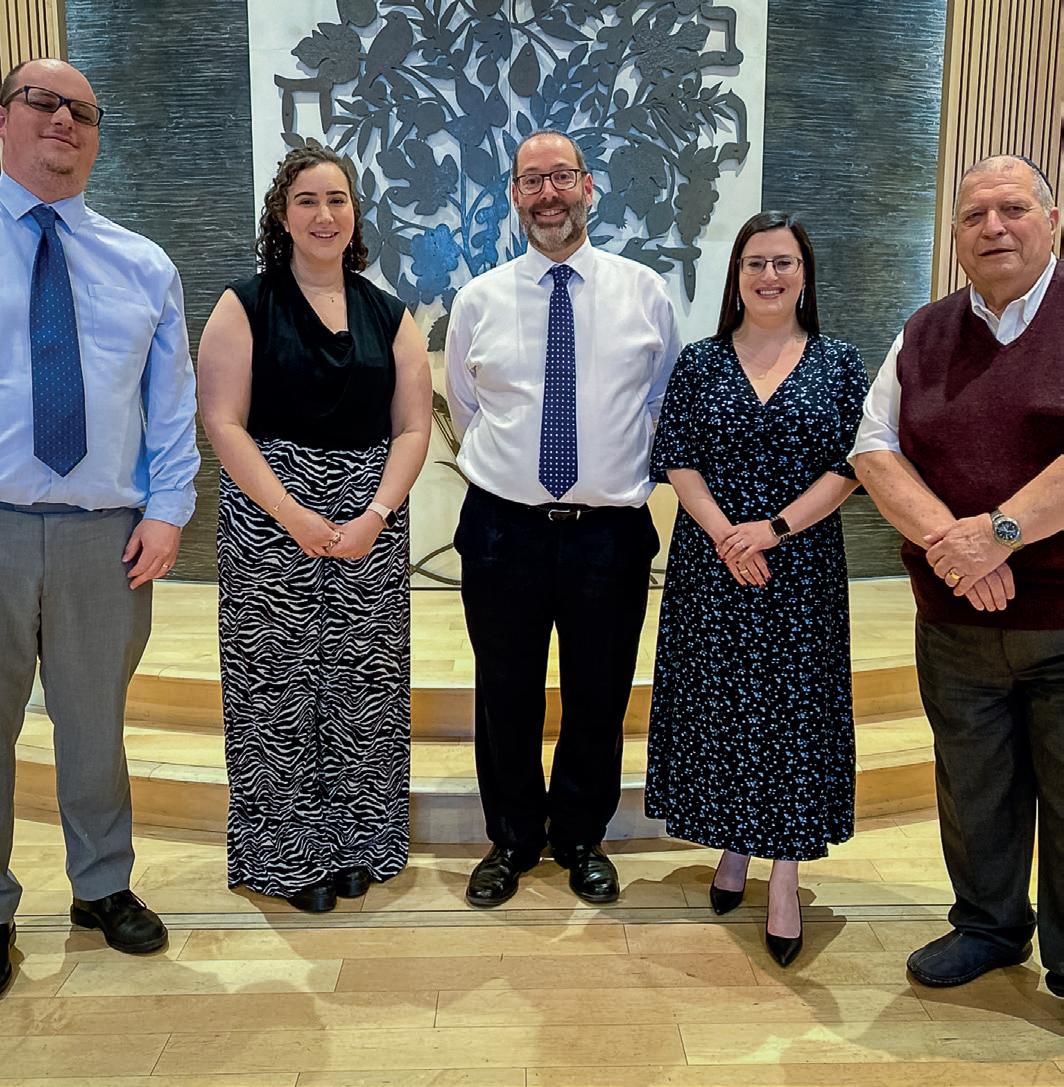
Rabbi Elliott with his parents and brother at his Bar Mitzvah at Finchley Progressive Synagogue, and then joining the Alyth clergy team in 2020
Sorry, rabbi, I’m not a believer
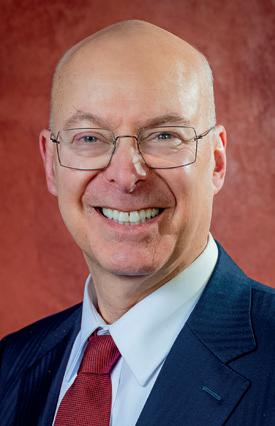
Rabbi Gershon Silins on how the real Jewish story of our life is one of encounters
WHEN people I meet find out that I’m a rabbi, they will sometimes say, “Sorry, rabbi, I’m not a believer,” thinking, I suppose, that the statement lets them off the hook for being involved in Jewish life. But (like most things Jewish) it’s not so easy.
My Christian friends tell me that belief in the divinity of Jesus, his resurrection, and eternal life after death for those who believe, is crucial to their religious identity, and loss of such belief is a crisis of faith for them that can lead them away from their religion. I have heard Muslims say something similar about their beliefs.
But, in Judaism, this is much less the case. Unlike Christianity and Islam, we don’t tend to follow the notion that belief is at the centre of our religion.
The first question I’d ask of someone who says that they aren’t a believer is, “What don’t you believe in”? It may be that I don’t believe it either, and maybe most of us don’t!
Not only has our concept of God changed since the biblical era, the character of God changes throughout the Hebrew Bible. We are no longer comfortable investing our belief in a God who would harden Pharaoh’s heart and then punish him for hard-heartedness, nor a God who is pleased by nothing so much as the odour of roasting meat offered as a sacrifice in the Temple.
Who wouldn’t be sceptical of that God? And as Rabbi Daniel Gordis says, Judaism does not look unkindly at the sceptic. Judaism does not require faith statements as a sign of legitimacy. Judaism does not ask Jews to give up their questions or to deny their doubts about what God might be, and why an all-powerful God who created the world would care whether someone turned on an electric oven on Friday evening instead of on Friday morning.
In Jewish spiritual life, faith is not the starting point of the journey. Uncertainty is not the enemy of religious and spiritual growth. Doubt is what fuels that journey.
Fundamentalists of other religions may regard anything short of absolute faith as religiously insufficient; Jewish tradition does not share their reliance on certainty.
It’s true that Judaism’s great medieval philosopher, Maimonides, thought that Judaism should have a faith statement that would clearly define what Jews ought to believe, so he wrote the Thirteen Principles of Faith, which he thought every Jew ought to believe with perfect faith. But they weren’t accepted by the rabbis of his time. Nor since.
Although Maimonides insisted that anyone who didn’t believe these “principles” was a heretic, they aren’t particularly persuasive to modern people, whether they are rabbis or Jews of any description, nor do they address the inconsistencies of the characterisation of God in the Hebrew Bible. Because even though we are a monotheistic people who believe in one God, the God that is described in the Hebrew Bible appears to be a human creation that changes depending on human needs.
When we needed to be saved from slavery in Egypt, God was there (though a few hundred years late) and when we needed God to reject thousands of rams and rivers of oil offered as sacrifices and instead be concerned about social justice, the prophets found that God.
For many of us, the real Jewish story of our life is one of encounters, moments that seem like accidents. One of those encounters occurred for me when I was fourteen; a classmate found out that I liked to sing. He suggested that I join the High Holy Days Choir at one of the local synagogues. From that came years of singing in synagogues, becoming more engaged in Jewish life through Jewish music, eventually becoming a cantor in 1990. My undergraduate studies in philosophy had made me a sceptic; singing in the synagogue brought me into Judaism.
And then, my encounter with my late wife Deborah led to our marriage, which brought me to the United Kingdom.
Here in Britain, my Jewish connection increasingly expressed itself as a rabbi, and my studies at Leo Baeck College were transforming.
Thus one encounter after another, leading to a life deeply invested in Judaism.
You may have a similar path, of unpredictable encounters leading you to the life you lead now; when you put enough encounters together, what develops is the life we actually live.
What binds these encounters together for me is some kind of meaning and purpose that goes beyond synagogue attendance, and beyond any of the commonly held markers of religious life. It begins to suggest a connection with the divine that is beyond explanation.
For Rabbi Neil Gilman, it was the accidental encounter of taking a class with Will Herberg, a philosopher who in the 1950s began studying and teaching Jewish philosophy and reworking it in terms of Buber, Rosenzweig, and existential thought.
Gilman’s book, Sacred Fragments: Recovering Theology for the Modern Jew, is a very good starting point for anyone interested in modern Jewish theology.
And what if the sceptic remains a sceptic about matters of faith? There are many ways to be Jewish.
When they ask Shlomo why he goes to synagogue with his friend Moishe, given that Moishe is a believer but Shlomo is not, he says: “Moishe goes to synagogue to talk to God, and I go to the synagogue to talk to Moishe.” And that’s a very good, very Jewish reason to engage with Jewish life.
There are many religions, but for many of us, it is Judaism that provides the language we use for some kind of understanding of our life and our relationship to aspects of the world that we can sense but never truly know.
Throughout one’s life, there will be moments of connection to a force in the world we feel but can’t express, sacred fragments, as Gilman calls them.
Even for those who say, “I’m not a believer,” Judaism nonetheless provides a home for that inexpressible awareness of the divine, which is as good a sense of God’s presence as we can hope for in this world.
Each week, our Progressive rabbis and cantors write insightful and in-depth commentary on the Torah portion, as well as thought-provoking articles on a variety of topics. Find them at progressivejudaism.org.uk/latest-thought
Multiple celebrations at Finchley Reform Synagogue
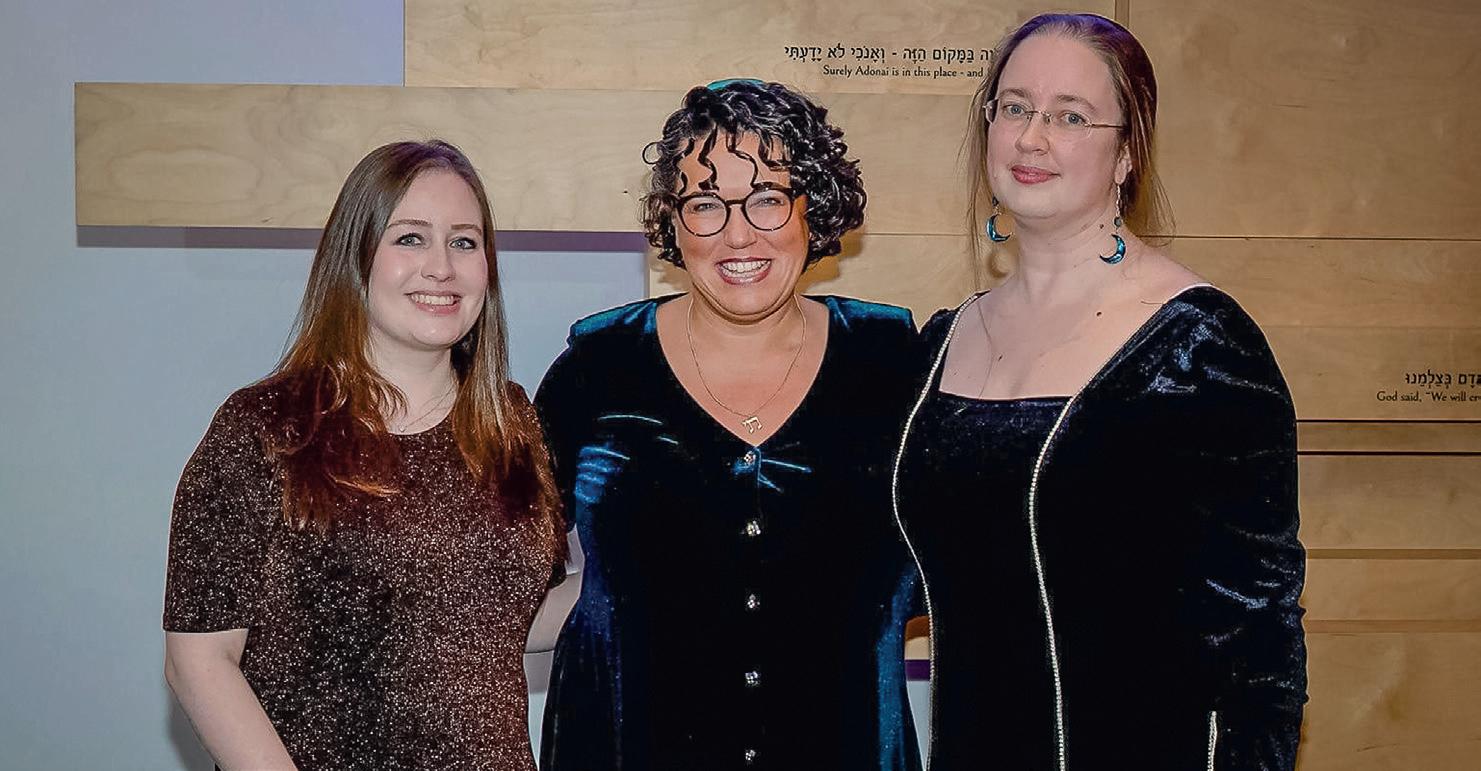
FINCHLEY Reform Synagogue (FRS) held a whole day of beautiful celebrations.
The Shabbat began with the induction of Rabbi Eleanor Davis and ended with a very special concert celebrating both FRS’ Principal Clergy Cantor Zöe Jacobs and 50 years of women in the cantorate.
Rabbi Robyn Ashworth-Steen gave a sermon, sharing some words of Torah and reflection to celebrate Rabbi Eleanor, her love of all things lunar, and her commitment to teaching, Judaism, community and divinity.
Rabbi Robyn said: “Clergy, at their best, are moonlit infused leaders. The work they do mostly goes unseen, in the shadows, whether that is sitting by a hospital bed, sitting with the bereaved, standing by a graveside, reflecting, preparing and writing words/shiurim that can empower others and weave Judaism into the lives of their community members.”
Rabbi Eleanor then delivered her sermon, telling the FRS congregation: “I’m looking forward to continuing with you the work of building the daily Jewish life and community that is a blessing to each of us. This community has something so out of the ordinary; I am beyond grateful to be here day after day, working with you as we try together to make the mundane our masterpiece.”
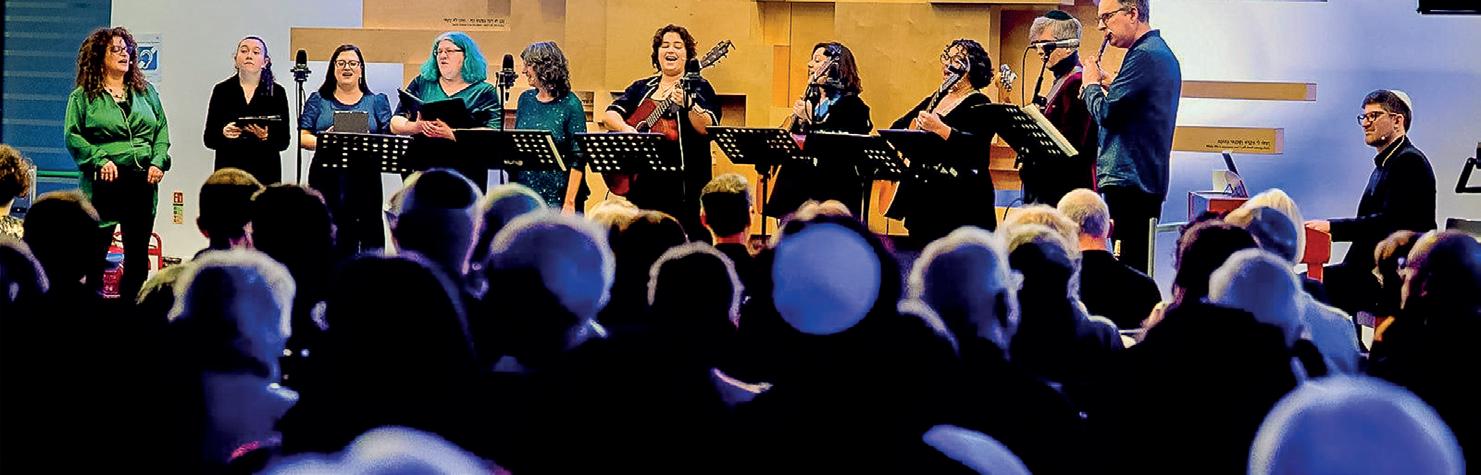
That evening, the synagogue was transformed into a concert hall for Voices of Light: A Cantorial Celebration, a fundraising event celebrating 50 years of women in the cantorate, and Cantor Zöe’s role as Principal Clergy of FRS.
A star-studded performance of cantors and musicians included Cantor Zöe Jacobs, Gareth Malone, Theo Travis, Daniel Cainer, Cantor Sarah Grabiner, Cantor Tamara Wolfson, Cantor Rachel Weston, Student Cantor Chessy Weiner, Judith Silver, Mich Sampson, Rhiannon Humphreys and Leo Nicholson.
One special moment was the allwomen choir singing the shehecheyanu (blessing for something new or special).
Cantor Zöe was interviewed by The Jewish Chronicle, talking about her background, the incredible people she works with, the importance of music to Jewish services, and the shoulders she is standing on. She said: “The concert honours the fact that I have the privilege of leading this team, that FRS have been brave enough to let a cantor lead a clergy team. That is where the honour is.”
Speaking after the event, she added: “The whole evening was a total joy. I am so grateful for the gift of fabulous colleagues and friends who helped to celebrate 50 years of women in the cantorate.”
Menorah holds inspiring induction
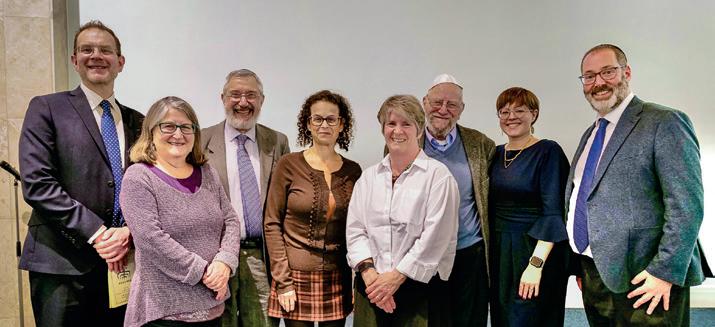
MENORAH Synagogue celebrated the induction of Rabbi Kath Vardi.
The service was led by Rabbi Josh Levy, Co-Lead of The Movement for Progressive Judaism, and Rabbi Robyn Ashworth-Steen. There was a strong ‘Menorah’ theme with the congregation delighted at the participation of three former ministers of the community –Rabbi Jeffrey Newman, Rabbi Dr Michael Hilton and Rabbi Fabian Sborovsky.
Guests included Lord Mayor of Manchester Cllr Carmine Grimshaw, Principal of Leo Baeck Rabbinic College Rabbi Professor Deborah Kahn-Harris, Rabbi Lisa Barrett, and leaders of Jewish communities and organisations from across the North.
Rabbi Kath said: “I am honoured to be able to serve this amazing community where my husband, Meir, and I have brought up our family.”
Alyth welcomes new Senior Rabbi
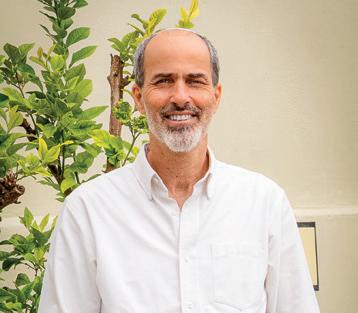
RABBI Greg Alexander (pictured) has been appointed as the new Senior Rabbi of Alyth. Rabbi Greg shared his
excitement at becoming part of the thriving and welcoming community. He said: “Alyth’s commitment to courageous, compassionate Judaism and engaging community life speaks powerfully to me.”
Alyth Chair of Trustees Gary Lipman added: “I am absolutely delighted that Rabbi Greg is joining Alyth this July. I look forward to seeing him work in close partnership with our wonderful clergy team; together, their combined talents will ensure our community continues to flourish and grow.”
Rabbi Greg currently serves as Senior Rabbi at Temple Israel in Cape Town, where he has built a reputation as a visionary leader, soulful educator and champion of social justice.
Finchley Reform’s Rabbi Deborah Blausten, Cantor Zöe Jacobs and Rabbi Eleanor Davis
The incredible Voices of Light: A Cantorial Celebration concert in the packed FRS sanctuary
Rabbi Kath Vardi celebrates with fellow clergy
A new purpose-built centre for our mental, physical and spiritual needs
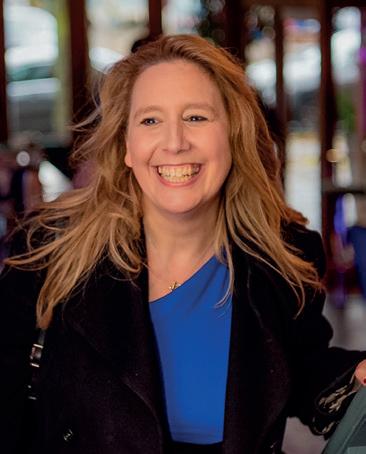
WHEN Rabbi Miriam Berger (pictured) took a family holiday to Boston, Massachusetts, in 2017, she had no way of knowing that the trip would alter the course of her own life and sow the seeds for a significant development within British Jewry.
The big holiday was a way of ‘drawing a line’ under years of unsuccessful fertility treatment as she and her husband Jonni had failed to conceive a sibling for their son Ben. It included a trip to the mikveh Mayyim Hayyim, a gift from Rabbi Miriam’s Finchley Reform Synagogue colleague Cantor Zöe Jacobs.
“It was an incredibly powerful moment for me,” Rabbi Miriam says. “But it wasn’t until I gave a Kol Nidre sermon about it – and was overwhelmed by the response – that I realised other people wanted access to this thing. That set me on the path to creating Wellspring.”
Wellspring defines itself as a centre of wellbeing. At its heart will be a beautiful mikveh open to people at all stages of life and of all genders.
Rabbi Miriam says: “All religions were designed to support people through the milestone moments of life – birth, marriage and death. But we have so many more of these moments now.
“Religions have stopped evolving and creating rituals to deal with times like retirement, relationship breakdowns, receiving a terminal diagnosis or facing miscarriage or infertility.
“Our rabbis of old did not have the language for these moments because some of them did not exist in the way they do now.
“In 18 years as a congregational rabbi, I witnessed the quiet suffering of people navigating difficult times.
“Jewish ritual has the power to help us mark these transitions, but we have had no dedicated place to make space for it.”
Wellspring will reclaim mikveh from years of negativity where it was seen mainly as a ritual undertaken by Orthodox women at the end of their menstrual cycle and by Progressive Jews as being only for their converts.
Rabbi Miriam envisages that people marking a particular moment in their lives will be able to devise their own ritual with the help of trained mikveh guides and access to a library of resources both religious and secular.
While immersion will be entirely private, mikveh users can be supported by family or friends in an adjacent room –for example with poetry or music.
“Every individual has a different response to life events,” explains Rabbi Miriam. “For example, I have a friend who gave birth to very premature twins and felt huge grief when they got to their due date because she grieved the rest of the pregnancy and the delivery she had been denied. Another mother might have seen the due date as a celebratory milestone.”
She hopes that people who do not live in London will travel to Wellspring and make the journey part of the ritual, just as a pilgrimage to the temple was about the travel as well as the destination.
She says her own visit to Mayyim Hayyim in Boston was given added significance by the distance she had travelled to be there.
Wellspring is in talks about a potential site in Finchley. When open it will include consultation rooms, outdoor immersion pool, lounge and studio spaces. As Rabbi Miriam concludes: “We aim to provide an innovative, purpose-built centre which addresses mental, physical and spiritual health in one space.”
• For more details, visit wellspringuk.org
Grants to support your community
FOR more than 20 years the NLPS Trust has been making grants for the advancement of Progressive Judaism.
The Trust was established following the closure of the North London Progressive Synagogue in Stamford Hill in 2004. Since that time, more than a million pounds has been awarded to a wide range of organisations.
The available income is typically about £60,000 per annum, which is used to provide grants to a variety of applicants.
Most of the financial support has gone towards the development of new projects in communities, usually ones of a small-scale ranging from a few hundred to several thousand pounds. The Trust does not contribute to expenditure which is considered to be the general running costs of a community, the exception being a contribution to the start-up costs of new communities.
The Trust’s website nlpstrust.org.uk includes the form to be used when applying, and details of recent grants.
Over the past few years, examples of projects supported by the Trust include:
• Equipment to enhance live streaming of services and synagogue meetings
• Repair of Torah scrolls and siddurim
• A portable ark
• Specially adapted siddurim to meet the needs of the community
• Small-scale building improvements
• Electronic organs and keyboards
• Increasing physical access to the bimah
• Workshops to improve congregants’ singing in services
• Equipment such as additional chairs required for the High Holy Days and kitchen storage for smaller communities without their own premises
Synagogues have also benefitted indirectly from grants that have been made to support children’s attendance at LJY-Netzer holiday schemes and programmes aimed at supporting Progressive Jewish university students.
Successful applications to the Trust have enabled cohorts of service leaders to develop their skills on Ba’alei Tefillah and Emerging Leadership programmes. More recently, the Trust was pleased to sponsor the South-West Chagigah.
Traditionally, the majority of applications came from the former Liberal Judaism and its constituent communities. With the establishment of The Movement for Progressive Judaism, the Trust has recently awarded some grants to Reform communities.
Trustees meet twice a year, in the spring and autumn. They decide whether to support a request in full, make a partial contribution towards the project, or not to provide a grant. Decisions are based on trustees’ views about the merits of the projects put forward at each meeting, while taking account of the funding available for allocation. All applicants receive feedback.
Enquiries about the Trust can be sent by email to chairman@nlpstrust.org.uk
Take part in our National B’ Mitzvah programme
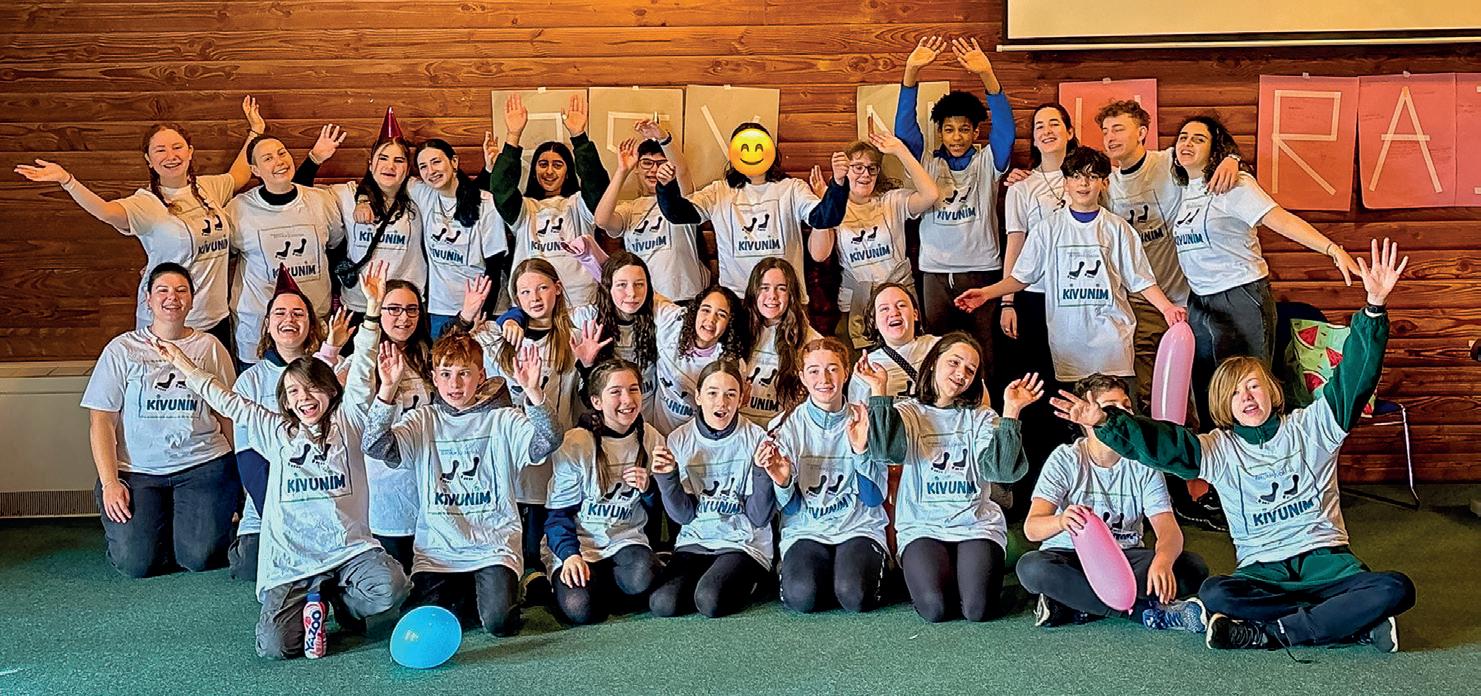
KIVUNIM (meaning Directions) is The Movement for Progressive Judaism’s National B’ Mitzvah Programme designed for children in school years 7 and 8 from small and medium-sized communities –bringing fun, friendship, adventure and lifelong memories.
Over the course of the programme, participants enjoy four residential weekends, year-round challenges and activities and, at the end, a celebratory theme park trip.
To find out more or apply for a place for your child to take part, please email EmmaR@progressivejudaism.org.uk
Empowering our bereavement volunteers
THE Movement for Progressive Judaism’s Doing Death Jewishly has given bereavement volunteers, lay readers and community care teams a chance to explore how we can use Jewish tradition to support people in times of grief.
It features a nine-part course – with sessions led by Rabbi Miriam Berger, Rabbi Kathleen de Magtige-Middleton, Lynette Chazan, Hannah Jacobs, Stuart Linke, and Miriam Grabiner – and takeaway resources, including a tohorah (preparing the body for burial) manual and a bereavement guide tailored to each community.
By engaging deeply with the rituals and values of Progressive Judaism, volunteers are learning how to provide emotional and spiritual support that resonates with each mourner’s needs.
Rabbi Miriam said: “Judaism is a gift for supporting people through transitional moments. This course has shown how ready our members are to support others when they need it most.”
There are still three sessions left. Book via progressivejudaism.org.uk/events
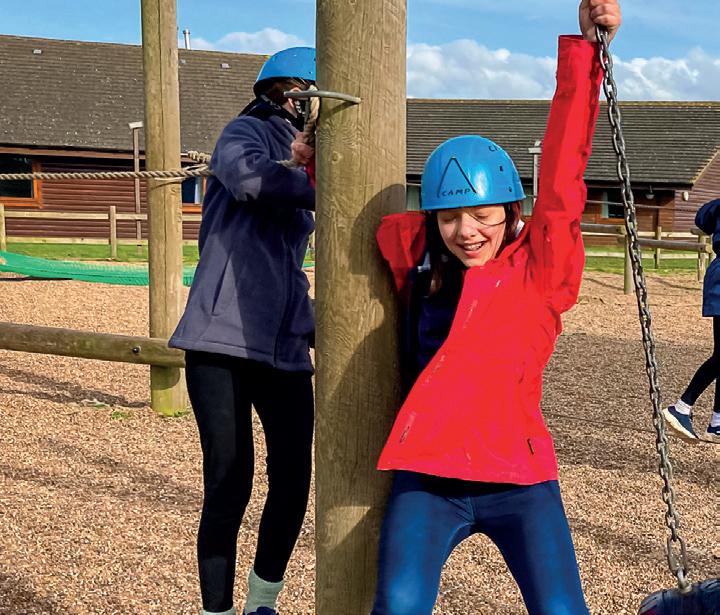
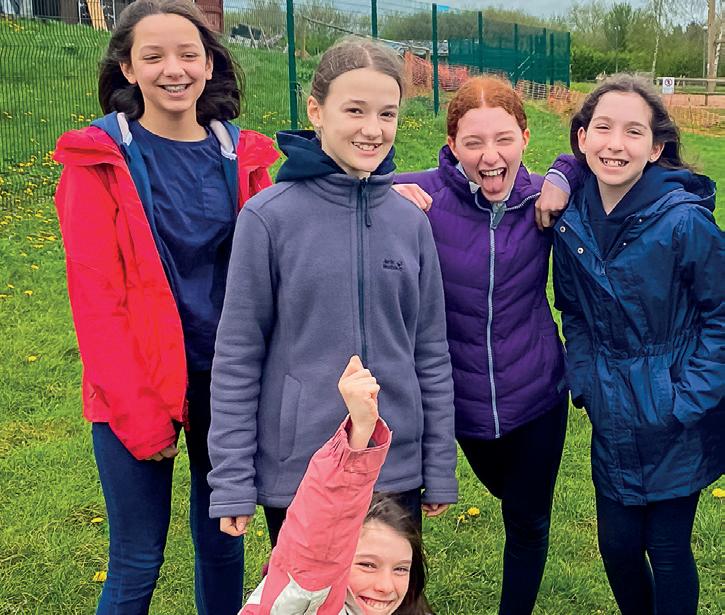
‘Limmud is a gift’
THE Limmud Festival 2025 brought together an incredible lineup of Progressive Jewish clergy, thinkers, teachers and creatives from Britain and around the world.
More than 2,000 people from all parts of the Jewish community join together each year for Limmud.
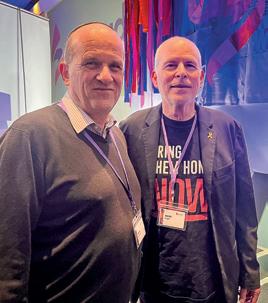
Rabbi Mark Goldsmith has attended for the past 25 years. One of his highlights this time was hearing from Keith and Aviva Siegel, who had been held hostage in Gaza.
Rabbi Mark (pictured with Keith) said: “Their session was deeply moving, both because I heard them with hundreds of others and because the atmosphere of Limmud made it possible to subsequently speak with them in person.”
He added: “There are so many things I love about the Limmud Festival experience. It is the gift of a cross-communal Jewish space, with no barriers to attendance, where we can truly learn from each other.”
Join our Trustee Training in May
AT the start of this year we ran our online Trustee Training – a four-part professional development course delivered by subject specialists –for small and medium Progressive communities, and have been delighted by the hugely positive feedback it has received so far.
As one delegate put it: “This course highlighted many aspects of what it means to be a trustee, with the presenters covering a lot of ground in a short time. It was easy to understand with a lot of useful information, went at a good pace and used break out rooms really well.”
Another said: “This was one of the best training courses I have ever attended. It was extremely thought provoking and helpful. Whether you are an experienced or new trustee, this is a must-do.”
We are now running the training again in May for large and very large Progressive synagogues, as well as for anyone from any community who did not take part in our February course (or missed any of the sessions).
To book your place for May, please visit progressivejudaism.org.uk/events
Updates from LJY and RSY
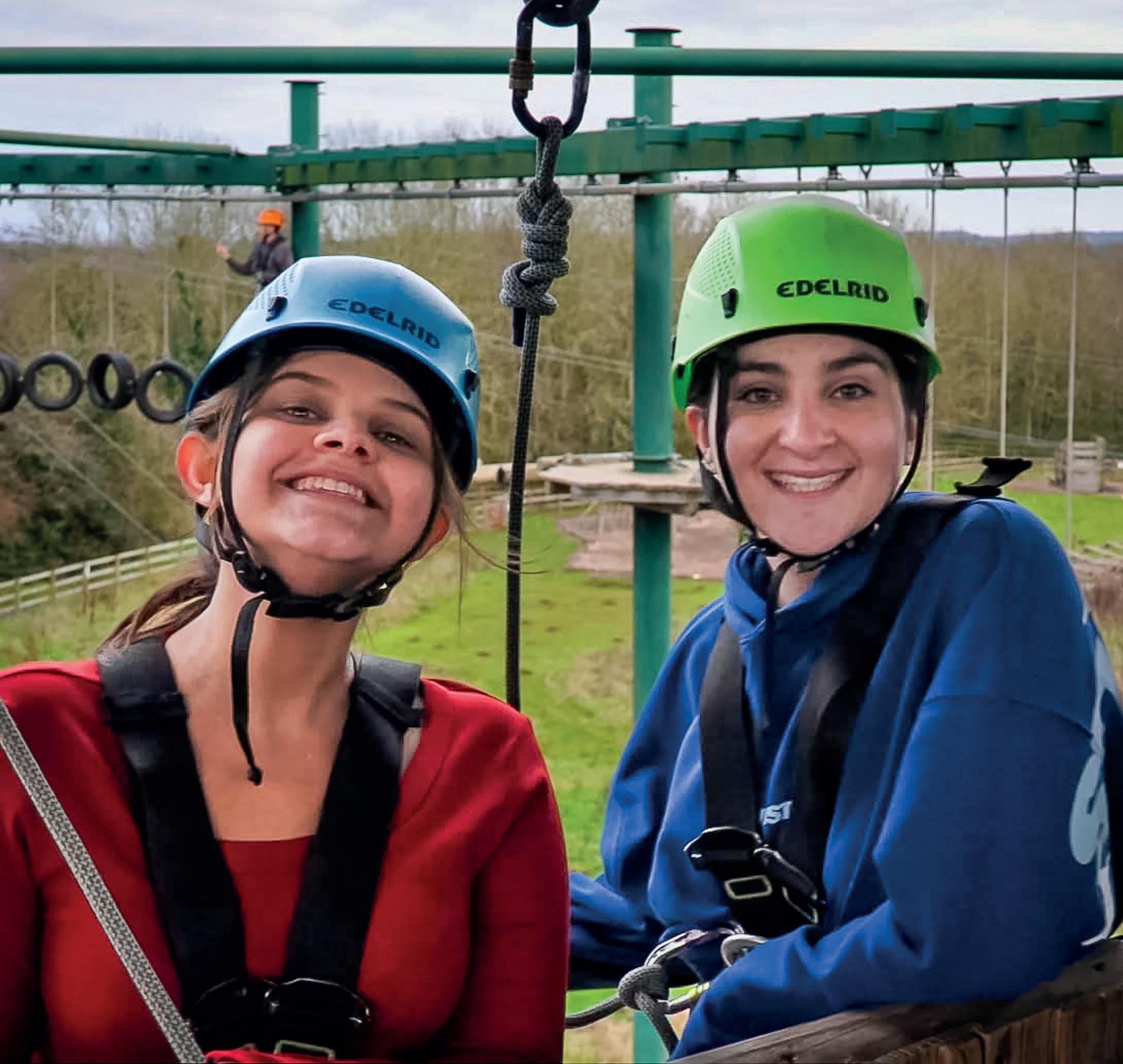
PROGRESSIVE Jewish youth winter camp Choref was four magical days of singing, playing, learning and laughing.
The RSY-Netzer camp provided a unique environment for chanichimot (participants) of all ages to connect, explore their Progressive Jewish identity, and share experiences with friends old and new.
Highlights included an Alice in Wonderland-themed mega-kef (fun immersive experience), on-site adventure activities, creative learning sessions, and a New Year’s celebration.
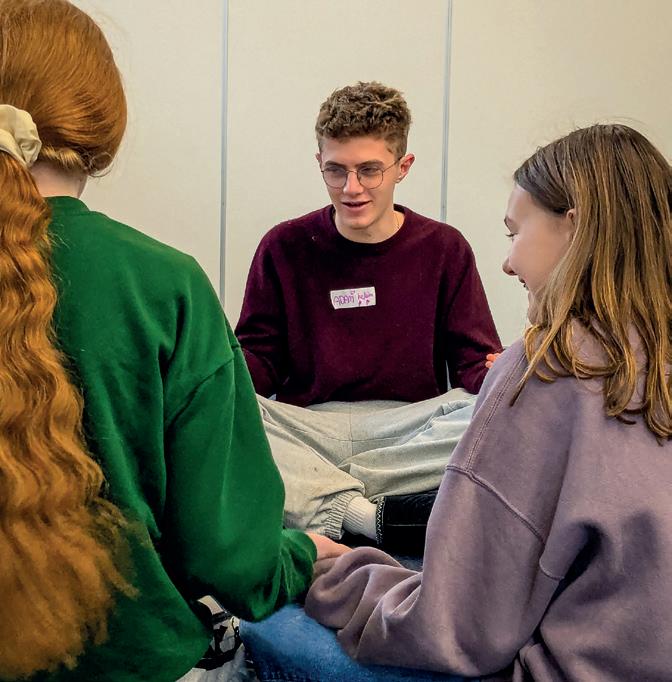
RSY-Netzer Movement Worker Katie Freedman said: “We had the best time ever on Choref. The energy, creativity and sense of community throughout the camp was just amazing.”
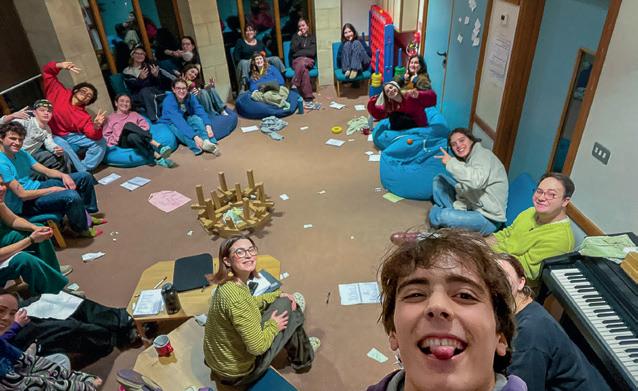
IN January and February, RSY-Netzer held two amazing sleepovers –Shabbaton Darom in the south, and Netzafon in the north (pictured).
Participants on both events had an incredible time celebrating Shabbat together, making new friends, playing games, doing arts and crafts, singing and dancing, and having loads and loads of kef (fun)!
RSY-Netzer Movement Worker Dan Feldman said: “Everyone got a great taste of RSY and we can’t wait to see them again on Shemesh this summer, and at next year’s shabbatons.”
VEIDAH, LJY-Netzer’s annual decision-making event for members aged 16+, saw young Progressive Jews put forward, debate and decide on the changes and policies they want to see.
A key decision was the adoption of a new Educational Theme of the Year, Lo Alecha – the Jewish teaching that “you are not obliged to complete the work, but neither are you free to desist from it”.
Participants also agreed a new Tikkun Olam Project of the Year, which will focus on wealth inequality, and a mandate for climate justice sessions to be included on all camps.
LJY-Netzer Movement Worker Saskia Marrett said: “Veidah is youth empowerment in action and we are excited to see all these changes come to fruition over the next year.”
UPCOMING CAMPS:
8-12 April: Machaneh Shamayim (LJY-Netzer Spring Camp). Sign up closes on Sunday 8 March
28 July-9 August: Shemesh (RSYNetzer Summer Camp)
11-23 August: Machaneh Kadimah (LJY-Netzer Summer Camp)
SUMMER TOURS:
2-23 July: RSY-Netzer Israel Tour
26 July-16 August: Netivim (LJYNetzer Israel Tour)
• More information and booking via ljy-netzer.org and rsy-netzer.org.uk
Progressive communities
GREATER LONDON
Alyth (Golders Green) alyth.org.uk
The Ark Synagogue (Northwood) arksynagogue.org
Beit Klal Yisrael (Fitzrovia) bky.org.uk
Bromley Reform Synagogue bromleyshul.org.uk
Crouch End Chavurah crouchendchavurah.org
Ealing Liberal Synagogue ealingliberalsynagogue.org.uk
East London & Essex Liberal Synagogue elels.org.uk
Edgware & Hendon Reform Synagogue ehrs.uk
Finchley Progressive Synagogue fps.org
Finchley Reform Synagogue frs.org.uk
Kehillah North London kehillah.org.uk
Kingston Liberal Synagogue klsonline.org
Kol Chai: Hatch End Jewish Community kolchai.org
The Liberal Jewish Synagogue (St John’s Wood) ljs.org
The Liberal Synagogue Elstree tlse.org.uk
Makor Hayim (Willesden) makorhayim.org
Mosaic Liberal Synagogue (Stanmore) mosaicliberal.org.uk
Mosaic Reform Synagogue (Stanmore) choosemosaic.org/reform
North West Surrey Synagogue nwss.org.uk
Oaks Lane Reform Synagogue swesrs.org.uk
Radlett Reform Synagogue radlettreform.org.uk
Sha’arei Tsedek: North London Reform Synagogue shaarei-tsedek.org.uk
The South London Liberal Synagogue southlondon.org
South Bucks Jewish Community sbjc.org.uk
Southgate Progressive Synagogue sps.uk.com
Sukkat Shalom Reform Synagogue (Wanstead) sukkatshalom.org.uk
The Wimbledon Synagogue wimshul.org
Tikvah Chadasha: Brentwood Reform Synagogue tikvahchadasha.com
SOUTHERN ENGLAND
Bournemouth Reform Synagogue bournemouthreform.org.uk
Brighton and Hove Progressive Synagogue bhps-online.org
Brighton and Hove Reform Synagogue bh-rs.org
Bristol and West Progressive Jewish Congregation bwpjc.org
Crawley Jewish Community
Eastbourne Liberal Jewish Community eljc.org.uk
Isle of Wight Jewish Society
Kehillat Kernow: The Jewish Community of Cornwall kehillatkernow.com
Kent Liberal Jewish Community kljc.org.uk
Maidenhead Synagogue maidenheadsynagogue.org.uk
Milton Keynes and District Reform Synagogue mkdrs.org.uk
Oxford Jewish Congregation ojc-online.org
Reading Liberal Jewish Community readingljc.org.uk
South Hampshire Reform Jewish Community southhantsreform.wordpress.com
Southend and District Reform Synagogue southendreform.org.uk
Swindon Jewish Community
Thanet & District Reform Synagogue tdrs.org.uk
Three Counties Liberal Jewish Community (Gloucestershire, Herefordshire and Worcestershire) 3cljc.org.uk
Totnes Jewish Community
Wessex Liberal Jewish Community (Bournemouth) wessexliberaljudaism.org.uk
EASTERN ENGLAND
Bedfordshire Progressive Synagogue bedfordshire-ps.org.uk
Beth Shalom Reform Synagogue, Cambridge beth-shalom.org.uk
Harlow and Chelmsford Jewish Community harlowjewishcommunity.org.uk
Norwich Liberal Jewish Community norwichljc.org.uk
Peterborough Liberal Jewish Community pljc.org.uk
Stevenage Liberal Synagogue stevenageliberalsynagogue.org.uk
Suffolk Liberal Jewish Community (Ipswich) suffolkljc.co.uk
MIDLANDS
Birmingham Progressive Synagogue bpsjudaism.com
Coventry Jewish Reform Community coventryuk-jrc.blogspot.com
Leicester Progressive Jewish Congregation lpjc.org.uk
Lincolnshire Jewish Community lincolnshirejewishcommunity.co.uk
Nottingham Liberal Synagogue nottinghamliberalsynagogue.com
NORTH WEST
Blackpool Reform Jewish Congregation brjc.co.uk
Liverpool Reform Synagogue lrshul.org
Manchester Reform Synagogue jacksonsrow.org
Menorah Synagogue (Cheshire) menorah.org.uk
Sha’arei Shalom (Whitefield) shaareishalom-mcr.co.uk
Southport and District Reform Synagogue southportreform.org.uk
NORTH EAST
Bradford Synagogue bradfordsynagogue.co.uk
Darlington Hebrew Congregation dhcreform.org
Ne’ve Shalom (Hull) hull-reform.co.uk
Sinai Synagogue Leeds sinaileeds.uk
Newcastle Reform Synagogue newcastlereformsynagogue.co.uk
Seven Hills Shul (Sheffield) shef-ref.co.uk
York Liberal Jewish Community jewsinyork.org.uk
WALES
Cardiff Reform Synagogue cardiffreformsyn.org.uk
SCOTLAND
Glasgow Reform Synagogue grs.org.uk
Sukkat Shalom: Edinburgh Liberal Jewish Community eljc.org
IRELAND
Dublin Jewish Progressive Congregation djpcireland.com