www.progressivejudaism.org.uk
of Progressive Judaism Voices

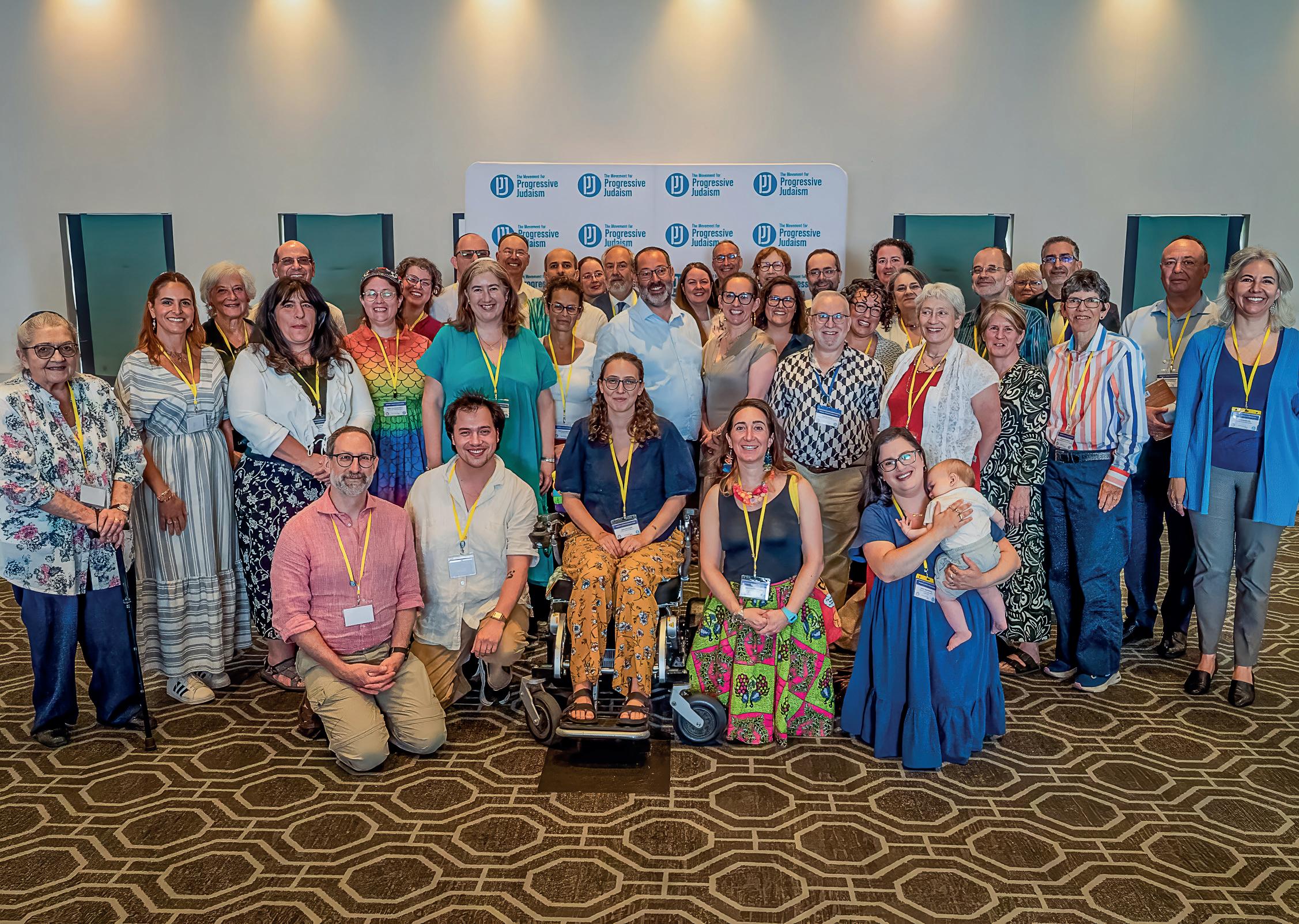
HINEINU – the inaugural conference of The Movement for Progressive Judaism (MPJ) – and Shirei Chagigah, MPJ’s specialist music and prayerleading conference, brought together 300 people for four inspiring days of song, prayer, learning, fun and, above all, community.
Attendees represented 53 Progressive Jewish congregations and included more than 50 rabbis, cantors and student rabbis (many pictured above).
Read all about this landmark event on pages 2, 3, 4, 5, 6 and 7.
Starting as we mean to go on
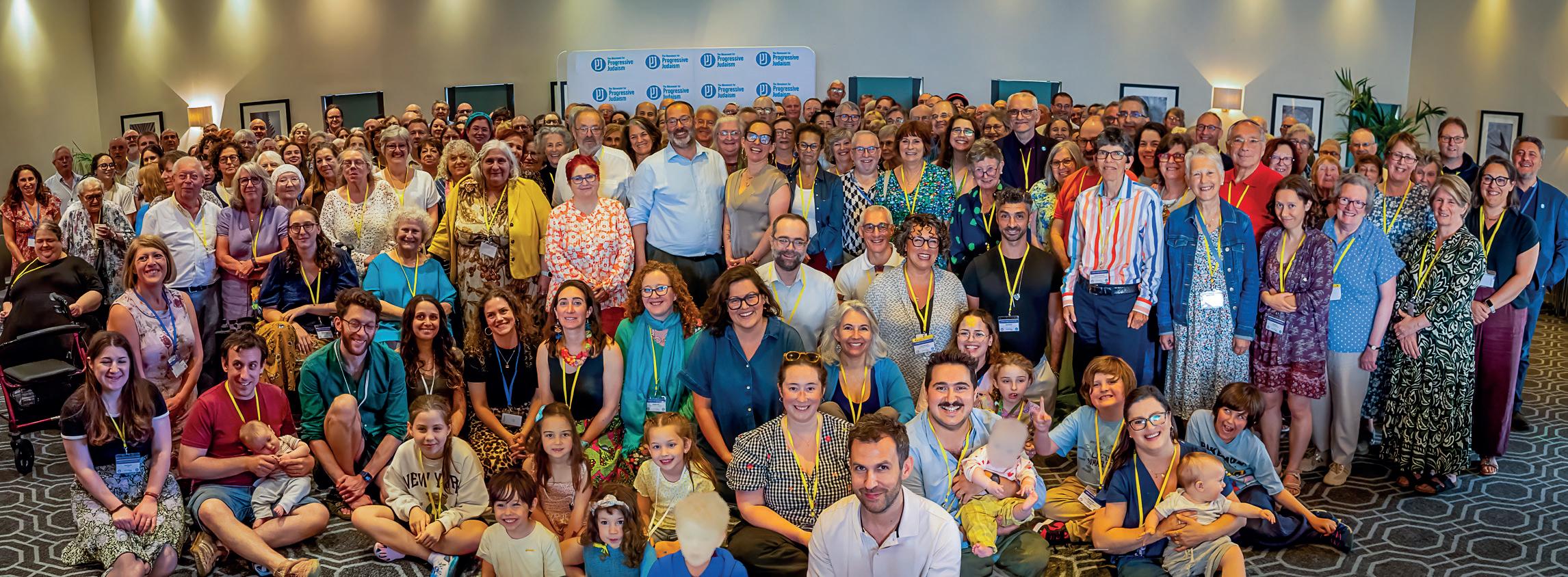
PROGRESSIVE JEWS of all ages came from all over the UK, Ireland and beyond for the sold-out Movement for Progressive Judaism (MPJ) Hineinu and Shirei Chagigah event.
Opening the conference – the first since the merger of Liberal and Reform Judaism – MPJ Co-Leads Rabbi Charley Baginsky and Rabbi Josh Levy spoke about the poignancy of the moment and the huge potential of what lies ahead.
Rabbi Josh said: “We have been reflecting on just how emotional this is for us to be here, in this space, not as two Movements but as one.
“Today, The Movement for Progressive Judaism really is able to say ‘Hineinu, here we are’ together.”
Rabbi Charley added: “Here we are ready to study, sing, explore, dance, renew and refresh. Here we are because we are stronger together. Here we are, inheritors of a remarkable legacy, ready to build upon it. Here we are, ready to help shape Jewish life, British society and the world our children will inherit.”
A packed programme included more than 80 sessions – ranging from Shirei Chagigah’s spaces for joyful harmony, illuminating liturgy through song and exploring non-Ashkenazi melodies from around the world to Hineinu panels and discussions exploring liturgy, identity, practice, prayer, Israel, LGBTQI+, social justice, leadership, activism, community building and the future of Jewish life.
There was also a dedicated crèche and full children’s programme – run by LJY-Netzer and RSY-Netzer – including sessions for kids and adults together.
Joyful, spiritual and musical services harmonised all the different traditions and tunes within Progressive Judaism and its communities, allowing them to sit side by side with special liturgies created to lift everyone’s voices together.
Cantor Zöe Jacobs, Founder of Shirei Chagigah, said: “It is a gift to be together, and we can hear it in the beautiful harmonies we are singing.
“We know there are going to be moments when we pray differently together. Please know that your voice, and your minhag (custom) is always going to be welcome even, or especially, when you do something different to us.”
A Kabbalat Shabbat service on Friday night – led by Rabbi Aaron Goldstein, Cantor Sarah Grabiner and Cantor Rosalie Will – mixed old favourites and newer harmonies showing the many different ways to lift one’s body and soul.
Saturday morning saw seven prayer options to suit all tastes, before the whole conference came together as one in a service led by Rabbi Rachel Benjamin, Cantor Josh Breitzer and Cantor Zöe Jacobs with many poignant moments and contributions from Progressive clergy, congregational leaders, student rabbis and youth movement workers.
Inspiration throughout the conference came from wonderful rabbis, cantors, songleaders and educators – including guests from North America and Israel.
Rabbi David Saperstein – Director Emeritus of the American Reform Movement’s Religious Action Center and the first rabbi to be designated a U.S. Ambassador – discussed why it matters that Progressive Judaism seeks to put its values into action and make a difference in the wider world, and how to balance being political without being partisan.
Rabbi Dr Michael Marmur – Professor of Jewish Theology at Hebrew Union College Jerusalem – delivered the Shabbat sermon.
He and Lesley Sachs – the Chair of the Israel Movement for Reform and Progressive Judaism – also led a number
of sessions throughout the event and took part in a panel discussion on finding hope in a time of challenge for the State of Israel.
Cantor Josh Breitzer, Cantor Rosalie Will and Noah Aronson brought together decades of experience in leading worship, training songleaders and performing all around the United States to work with their British counterparts as part of the Shirei Chagigah faculty – creating a joyful singing community throughout the event, an incredible Saturday night concert led by Noah and a magical Havdalah to close out Shabbat.
Hineinu’s keynote address was given by MK Rabbi Gilad Kariv, who made history by becoming the first ever Progressive rabbi elected to Israel’s Knesset (Parliament) and who was introduced to the conference as “the most important rabbi in the world right now”.
He said: “The creation of this new united movement places British and Irish Progressive Judaism at the very heart of our global Jewish Progressive Movement.
“At a time when we need to strengthen the voice of Progressive Judaism, both in Israel and all around the Jewish world, I want to thank you for carrying out this important, important process.
“I hope that many others learn from you so that we all find ways to work together and to create one Progressive Jewish force that will help us to guard our fundamental values, both in Israel and around the world.”
Hineinu also saw the presentation of the first MPJ Awards (see next page).
As the conference came to a close, participants were given packets of seeds to take back and plant – to signify a commitment made by all those present to go home and grow their communities and Progressive Judaism in their region.
Your first MPJ Award winners
THROUGHOUT Hineinu and Shirei Chagigah, we celebrated the remarkable successes and stories of what is happening in our Movement for Progressive Judaism communities.
This culminated in a final day awards ceremony where each congregation was able to nominate a project of which they were particularly proud, with a panel of judges selecting four special winners.
All entries reflected the very best of Progressive Judaism in action – supporting those most in need, championing inclusion, building interfaith relationships, engaging with local schools, tackling difficult issues and strengthening community life.
Below we list all the winners and runners-up who were honoured at Hineinu and thank everyone who entered – making our judges’ job so difficult.
LARGE COMMUNITY:
5th: The Memory Café by Radlett Reform Synagogue
4th: Additional Needs Support by Alyth
3rd: Israel–Palestine Listening Group by The Ark Synagogue
2nd: Homeless Action Night Shelter by Edgware & Hendon Reform Synagogue
1st: Betty’s Bike by Finchley Reform Synagogue
This café has transformed the synagogue atrium into a thriving social hub, welcoming members and non-members alike. Run entirely by volunteers, it provides a warm, inclusive space for people to meet, work, learn and connect. It has offered barista training to FRS teenagers, members of Kisharon Langdon and guests of the FRS homeless shelter and refugee groups, helping them to develop skills and confidence.
MEDIUM COMMUNITY:
5th: Eco-Judaism Green Team by Brighton & Hove Progressive Synagogue
4th: Bereavement Café by Kol Chai: Hatch End Reform Jewish Community
3rd: Schools Engagement Programme by Wimbledon Synagogue
2nd: Deaf Shul
1st: Rainbow Lunch Club by Finchley Progressive Synagogue
A joint project with Alyth, the Rainbow Lunch Club provides a monthly meal for LGBTQI+ refugees and asylum seekers in a welcoming and inclusive environment. Guests enjoy a home-cooked vegetarian lunch, practical support and, above all, a sense of community and friendship.
SMALL COMMUNITY:
5th: Old Jewish Cemetery Heritage Project by Suffolk Jewish Community
4th: Community Listening Circles by Kehillah North London
3rd: Interfaith by Seven Hills Shul
2nd: Tikkun Olam by York Liberal Jewish Community
Joint 1st: Kehillah Derech Echad by Wessex Liberal Jewish Community
Through lift-sharing, accessible online services and leadership training, more members – both new and old – can now attend, connect and contribute to the community with confidence.
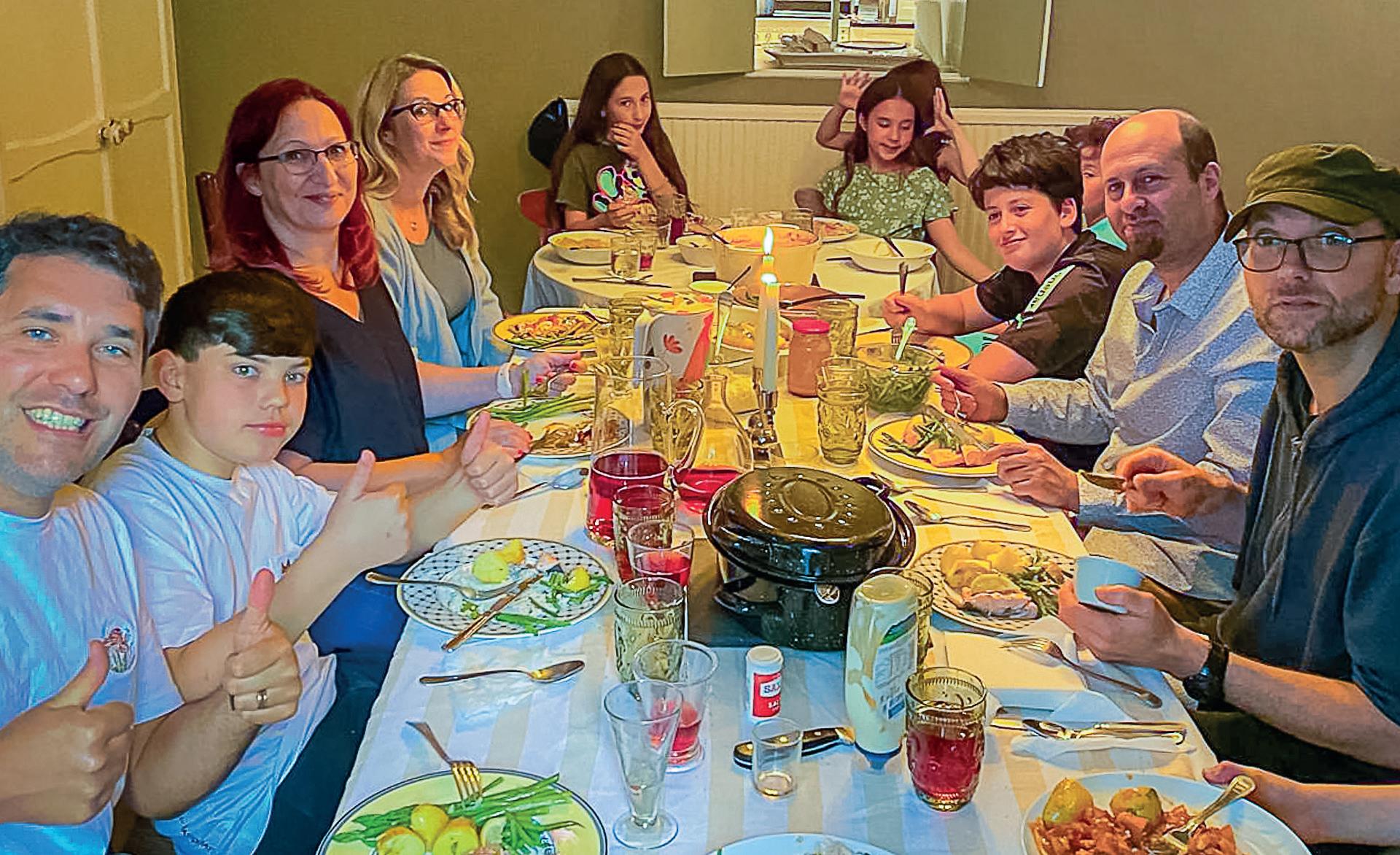
Joint 1st: Friday Night Dinners by Three Counties Liberal Jewish Community Bringing members together in homes across the community, this annual initiative fosters lasting friendships, strengthens community bonds and encourages wider participation.
Lay service leadership programme
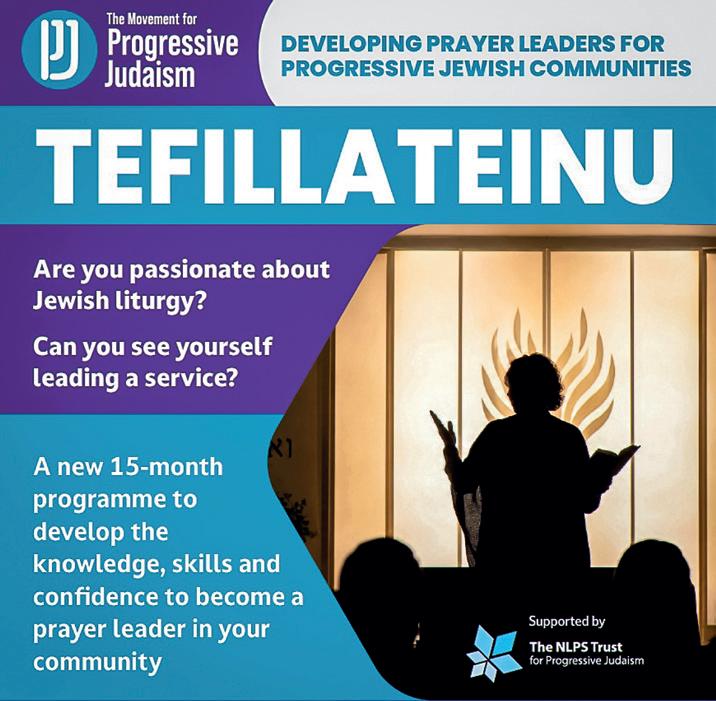
DO you want to deepen your knowledge of Jewish liturgy and acquire the skills and confidence to become a prayer leader in your community? Does your congregation need to cultivate new lay readers to lead Shabbat services?
Tefillateinu, which launched at Hineinu, is the new service leadership programme for members of MPJ communities, designed to develop confident, knowledgeable and inspiring Progressive Jewish prayer leaders.
Over 15 months, participants will: learn to lead Friday night and Shabbat morning services; understand and navigate Progressive liturgy; write and deliver meaningful sermons; and develop leadership and public speaking skills.
Rabbi Anna Gerrard, who has developed the programme in collaboration with a steering group from across our communities, says: “This is a real coming together to create a new programme for our new Movement. It will be an amazing learning journey for those who participate and an enormous support to our communities, especially those without full time clergy.”
The first Tefillateinu cohort will run from January 2027 to April 2028 and will include an in-person launch day, community-based mentoring, online modules, and a residential study weekend in February 2028.
Rabbi Anna added: “We are delighted that Tefillateinu is subsidised by The Movement for Progressive Judaism, in partnership with the NLPS Trust, making it affordable for our communities and their members.”
Join our taster sessions on Wednesday 14 and 21 October 2026 (19:00–20:30).
To find out more, please visit progressivejudaism.org.uk/tefillateinu
One of Three Counties Liberal Jewish Community’s award winning Friday Night Dinner evenings
Facing up and doubling down on our values
Rabbi Dr Michael Marmur delivered a sermon
on the nature of Movement
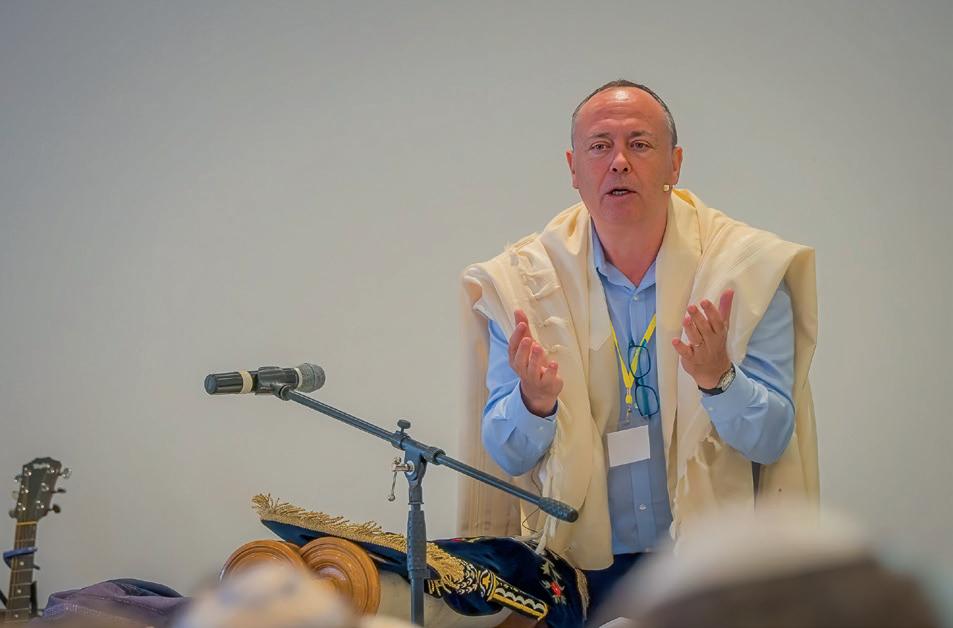
HINEINU, here we are. But where are we?
Most people call the town that we’re near ‘Daventry’ (referring to Anglo-Saxon roots – the tree of Dafa) or pronounce it Daintry (from Viking roots – the tree of the Dane). Surprisingly, Wikipedia does not cover the obvious Yiddish source, that people come here to daven!
It does, though, tell us another potential origin for the name of this place, which I find particularly resonant with the nature of this gathering. The theory is that it might come from a Brythonic and Celtic root, which translates as a town of two rivers – the place where two streams meet, the place where different rivulets come together.
A few miles from here is a site of local interest known as the Holy Well of Braunston. This is useful for my purposes, because this morning we will be reading of an ancient well.
The words we’re about to hear include what, by all accounts, is one of the most ancient layers of our biblical tradition, the Song at the Well: “Ali ve’er enu lah”. Translated something like, “Spring up, O well; sing to it.”
The most magnificent well I know, is in Orvieto: Pozzo di San Patrizi – an unbelievably beautiful well from the 16th century. The well is constructed in a double helix formation, so that you can be both going down and walking up. It meant that your mule would not be stuck in front of or behind the mule of someone going in the other direction. I want to suggest that the image of a double helix well, going to the foundations and moving up to the surface as well, is a pretty good image for a Movement.
A well is a symbol of something radical. It means going to the base of something, looking at the core issues as they are. There has always been, in the traditions of Liberal Judaism and Reform Judaism, a radical element, a willingness to look at things in a radical
way: to ask uncomfortable questions, to tease out the core principles by which our Judaism ought to be lived, facing up to that which is challenging and wrong and demands our response.
Radical thinking also means facing up to the enormity of the challenges we face. Even at this cheerful moment, we need to appreciate how deep this well goes, what a hole we are in. In the 15th century, Abraham Saba read the verse that we’re about to read as a call to look at how bad things are and to remember, “ali ve’er,” things will get better. He wrote that “for now the people of Israel is in a downward spiral, but the day will come when it will be raised up”.
In this reading of the well, I think of the radical tradition of innovation which has characterized our movement over the years. We are creating a double helix well. Part of the meaning of that image is a radical tradition, philosophically, intellectually, in terms of scholarship, in terms of a capacity to look at things at their root and at their base.
Another dimension is also present as we think about the well: the well is each one of us. This movement represents using all the tools of spiritual growth and search, of psychology and personal development. It invites us to find ways, each of us, to go into and emerge from ourselves. We bring all that we are –our achievements and our frailties, our capacities and our incapacities – and we come to the well in search of drawing up from it renewed energy with which to carry on our lives.
Here’s a third reading of the well: the well is our resources and our sources. A movement such as this is enjoined to go ever deeper into these sources. The founding address of what was later to become the Leo Baeck College was given by a brilliant intellectual by the name of Leon Roth. He called upon those present to be true to the spirit of midrash, which, he argued, yields fresh insights, and from that fresh insight, fresh direction. Fresh insight and fresh direction – these insights and directions are yielded by a serious, intense approach to the deep wells of our tradition.
There’s a recent poem by Rabbi Rachel Barenblat: “Will I too be a wellspring of Torah, a source of living waters, or will I stagnate here?”. The well we stand before is the well calling us to be radical
in our philosophy, in our theology, in our politics. It’s a well which calls upon us to be compassionate, and to understand that what we’re all trying to do, each in our different place on the double helix, is to go down to the roots of ourselves and emerge with something more of ourselves.
“Ali ve’er enu lah.” We rise, we sing. The commentator Bachya ben Asher has a beautiful comment on this verse – “Ascend to the place from which you were hewn”. Go up in this paradoxical, double helix, to your origin. Move up to the place you come from. Not a bad slogan, not a bad motto for a Movement.
This Movement can be at its best like the well in Orvieto - standing in a particular place with a set of traditions and an ethos and an approach, but broad enough to allow a double helix to be created within, so that one can go deep and aim high. We look to the foundations and aspire for the firmament. We bore down within the particular, as we rise up in the universal.
“Alei ve’er enu lah.” We rise, we sing. We dig into tradition, and we draw up innovation.
The water we bring up is, in Hebrew, mayim, and that’s plural. When you say it in English, it’s a thing called water. Mayim, when we say it in Hebrew, is a constantly changing and evolving and multifaceted thing. A movement moves in this plurality, in the double helix, facing up and doubling down.
We face enormous challenges. We are, as a world and as a Jewish people, in crisis. It’s a crisis of security, a moral crisis, ideological, technological, ecological, theological, existential. The only appropriate way to respond to it is to move within the double helix, facing up and doubling down.
There are within us differences of approach and ideology. They are like the plural water which is to be drawn up. Any of us at any given time will be at different places on the double helix. We may be going down in some aspects, and rising up in others. That’s okay. That’s why one wants to be in community and in a movement, to be invested in the notion that other people are at different points in their helix than I am at any given moment. Some more traditional, some more liberal, some more radical, some more consensual. That’s how the world gets made.
Let us then draw together from the well, heading both deeper and higher. Here in dwy-avon-tre, the place where two streams meet.
Reclaiming Israel’s democratic and Jewish future
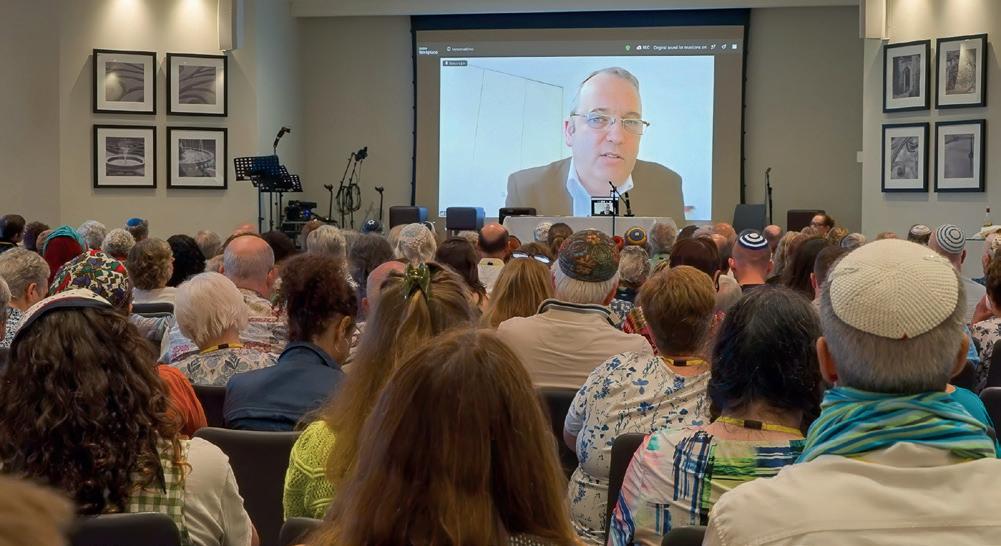
MK Rabbi Gilad Kariv used his keynote speech to outline the critical threats and sources of cautious optimism for Israel and global Jewish relations
I WOULD like to address two things today: first, the current situation in Israel – the reasons for concern as well as a few sources of cautious hope – and second, the role of our relations in this challenging moment.
I will start with four negative developments that demand us all to think about our moral, public, educational and political roles.
1. The regional threat and national security: It is clear that current developments in the regional arena of the Middle East – especially regarding Iran – place a severe challenge to Israel’s national security. Even those who criticize our government (a political group to which I belong) should be deeply concerned by this development. It enables the radical regional alliance led by Iran to recover from previous damage caused by the joint operations of Israel and the US. Alongside the existential threat that Iran places on Israel, we must remember that this jihadist alliance is the worst enemy of a two-state solution.
2. The stagnation in Gaza: The current Israeli government, unfortunately, is preventing any real progress in implementing the proposed plans for the region. Hamas has no interest in the full implementation of a political plan for the future of the Gaza Strip, and unfortunately, our extreme government is also placing serious obstacles against the implementation of such plans.
3. The escalation in the West Bank: This situation is placing a serious moral challenge before Israeli society and, I think, the entire Jewish people, as well as a national security threat. It looks like the extreme forces in Netanyahu’s government, with his permission, are doing whatever they can to create a major crisis in the West Bank that will lead to the collapse of the Palestinian Authority and a serious, violent clash.
4. Domestic political aggression: We are heading toward national elections this coming October, and our government is not willing to set aside the judicial coup. In different ways, it was fully renewed after being temporarily set aside due to the wars in Gaza and the north. They went back to all elements of the judicial coup in a very aggressive way, and it is being done in a manner that will impact the upcoming national elections.
So how can we maintain a serious level of optimism? I would like to suggest a few reasons to hold onto the belief that Israeli society will be able to recover from the current crisis and change its course.
1. A shift away from extremism: The next Israeli government will be much less extreme than the current one. I am not suggesting that my political camp will certainly be able to establish the government, but even if we cannot declare a total political shift, the next government will not lean on the most extreme political players in Israel. This is due to domestic developments as well as international pressure.
5. Reframing the debate around Judaism: In the last four years, Israelis have learned that the main debate is not only about democratic values, but fundamentally over the nature of Israeli Judaism itself.
2. Learning the limits of military force: After two and a half years of war across different fronts – and keeping in mind the tragic loss of four grieving Israeli families in South Lebanon over the last 48 hours – Israeli society is learning the limits of the use of military force. This is a very important and painful lesson, but it is a necessary one if we want our political leadership to find the courage and wisdom to move from the military stage to the political stage.
3. The link between democracy and security: A growing number of Israelis understand the deep connection between the strength of our democracy and our national security. For many years, the notion was that the Israeli centre-left was responsible for democracy, while right-wing forces led by Netanyahu were better at national security. After four painful years, a growing number of Israelis see the linkage between a vibrant democracy, a strong economy, and the nation’s capacity to defend itself.
4. The power of civil protest: We cannot discount the importance of the Israeli democratic civil protest. It is completely unprecedented in terms of numbers and duration. In one hour from now, I will join a group of citizens in Jerusalem – as I do every motzei (post) Shabbat – to protest the situation in the West Bank and the judicial coup. This protest has helped two million liberal Israelis recapture the public arena.
6. Strengthening global Progressive Jewish bonds: This is where our Jewish forces in Israel have a major duty and a major opportunity. There is a growing awareness among secular and traditionally-minded audiences of the vital role Progressive Judaism must play. We must build stronger ideological and communal bonds. These bonds will help us remind the younger generation of Progressive Jews worldwide that while we can – and must – stand against policies of the Israeli government that legitimise ultra-nationalist forces, we have many Israelis to work with.
While I am deeply concerned by the growing wave of full delegitimisation of Zionism, and by the fact that major political forces challenge not just Israel’s policies but its basic right to exist as a sovereign homeland, this wave is also helping us shape our philosophy, theology, and public standing. It enables us to clearly separate ourselves from those who totally delegitimise Jewish sovereignty, while simultaneously differentiating us from those who suggest that a sovereign expression of Judaism can survive without being fully democratic and engaged in peacemaking. I am calling on all of us together –Israelis, British and Irish Jews, and our brothers and sisters around the world – to move forward and turn these curses into blessings.
Through joint efforts, I truly believe we can make it. Israeli society is strong enough to recover. We will do it with your help and with your commitment to our Progressive Zionist values.
Thank you all.
Hineinu and Shirei Chagigah
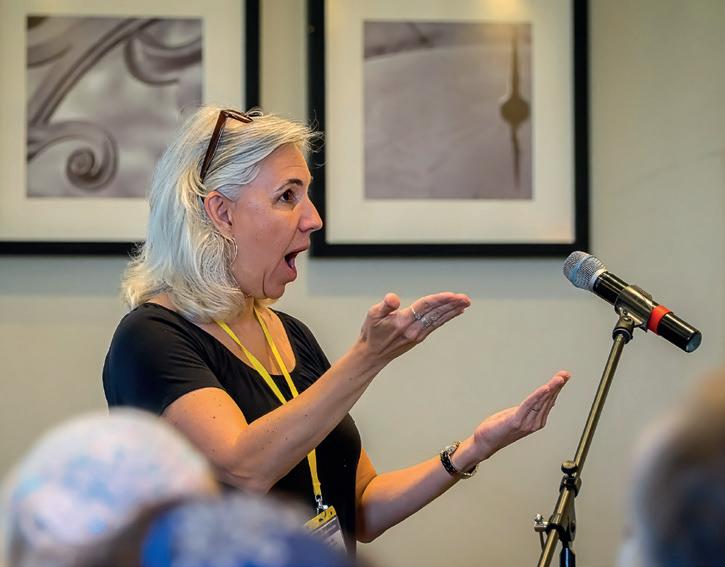
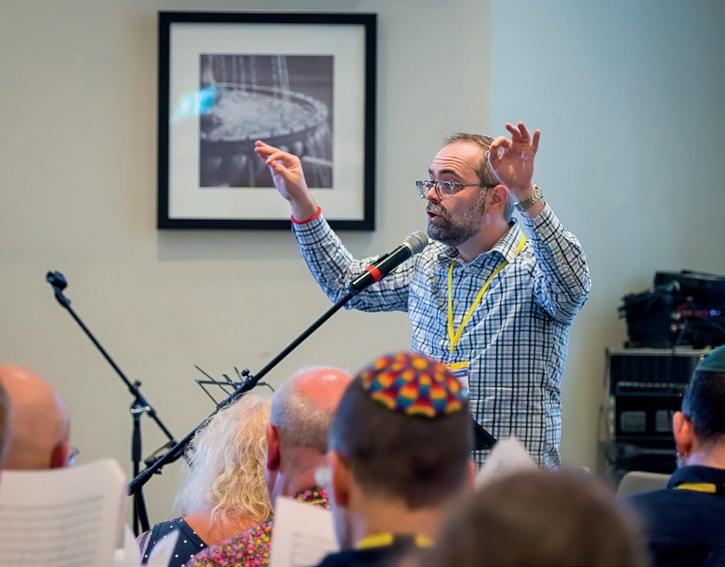
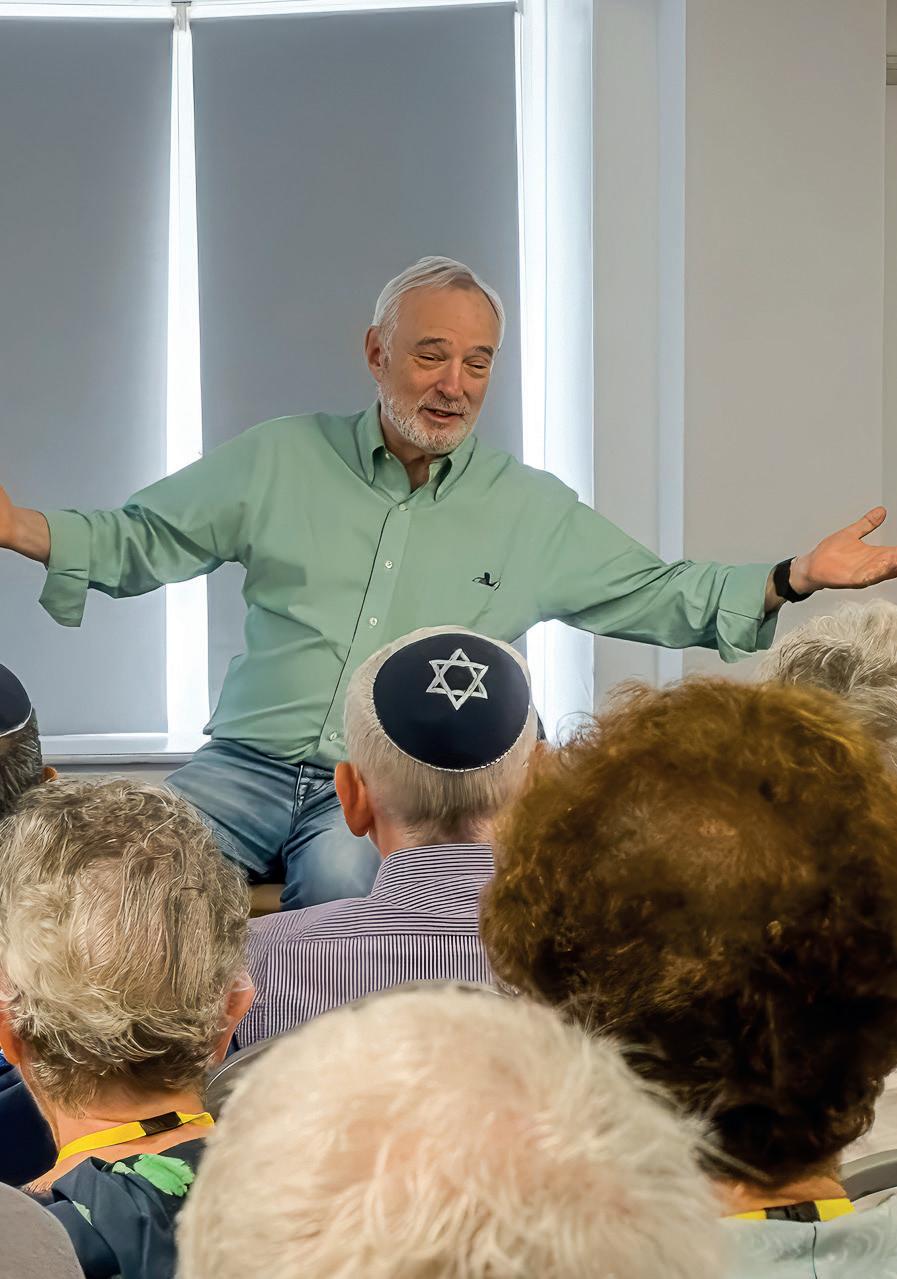
Rabbi
discussed how we can best have impact on the world around us
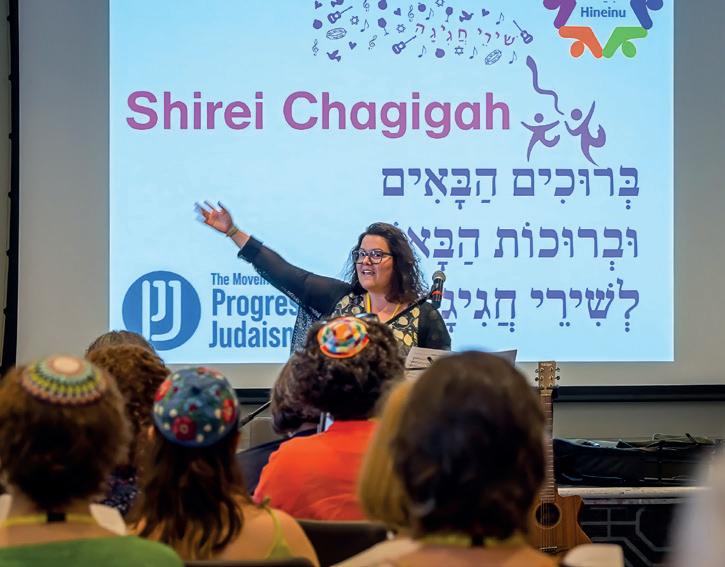
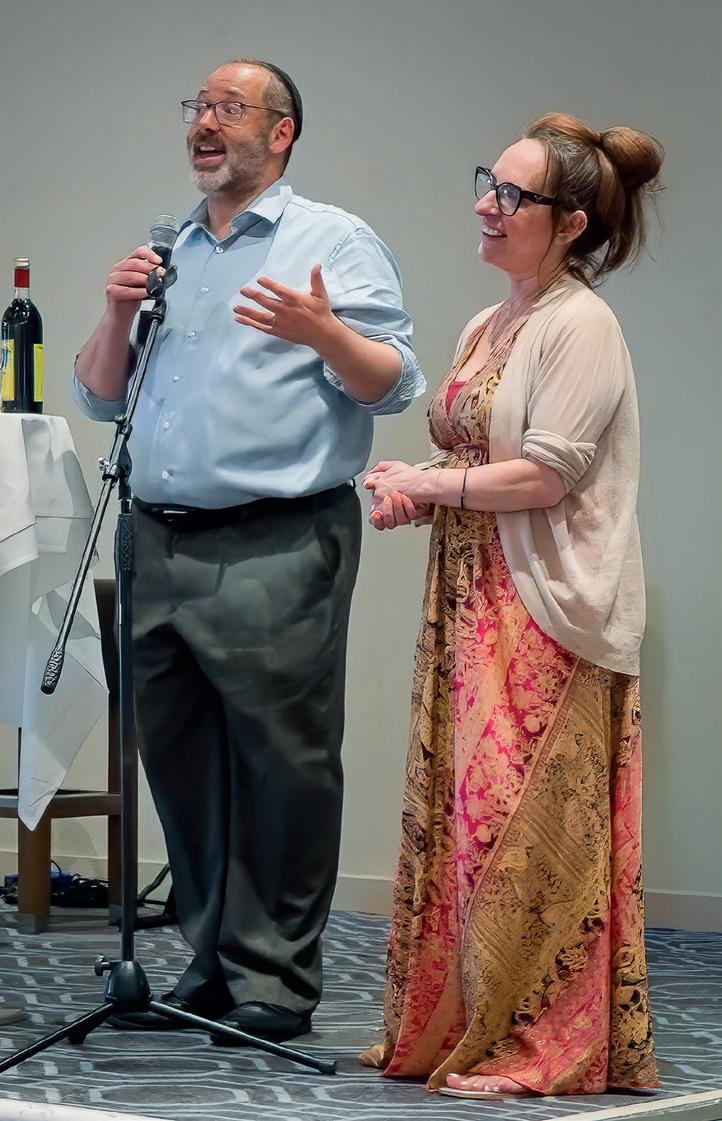
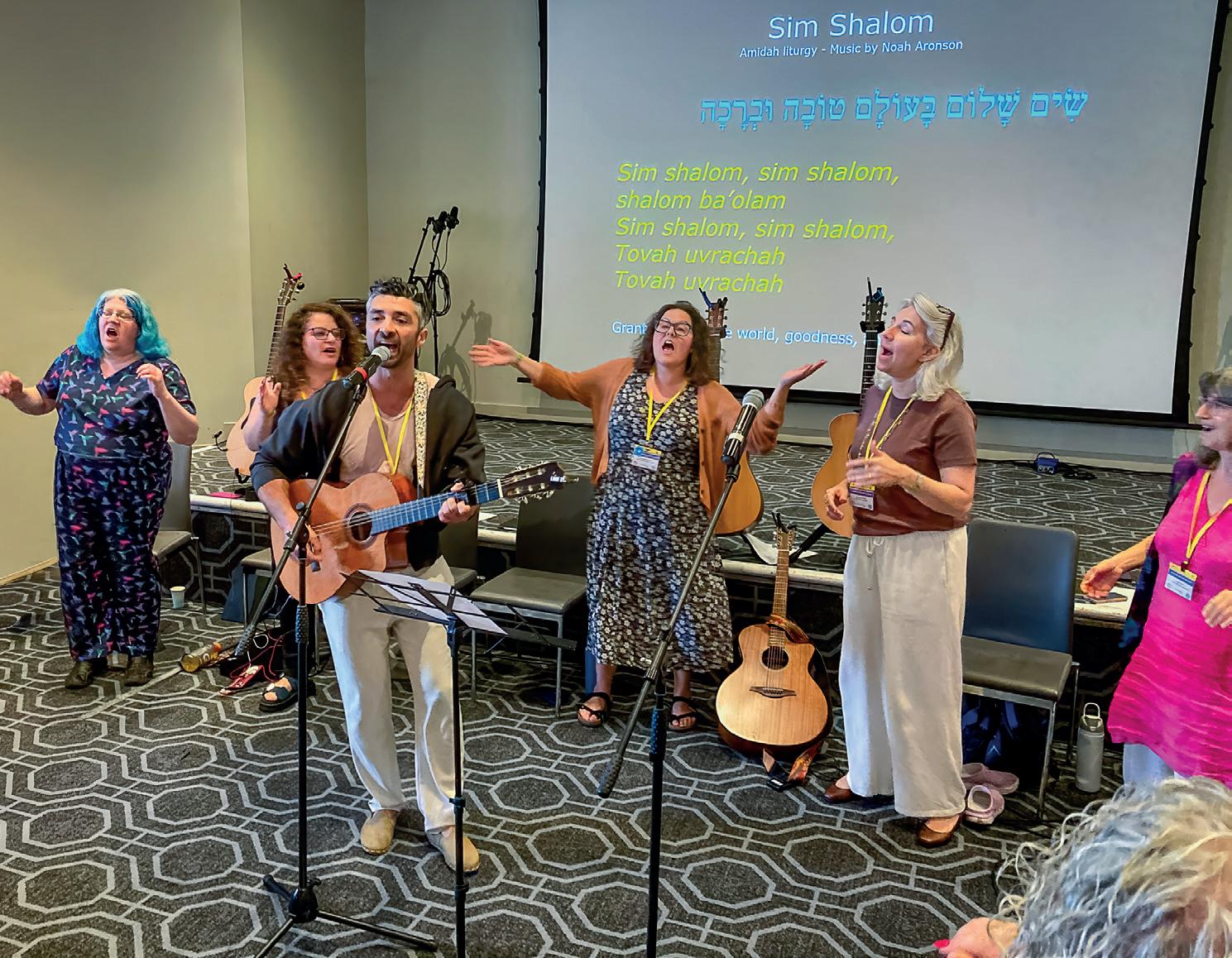
Rabbi Josh Levy and Rabbi Charley Baginsky welcome attendees before Shabbat begins Noah Aronson and members of the Shirei Chagigah faculty lead a round-robin of melodies
Shirei Chagigah leaders – including Cantor Rosalie Will, Cantor Joshua Breitzer and Cantor Sarah Grabiner – used music to create community
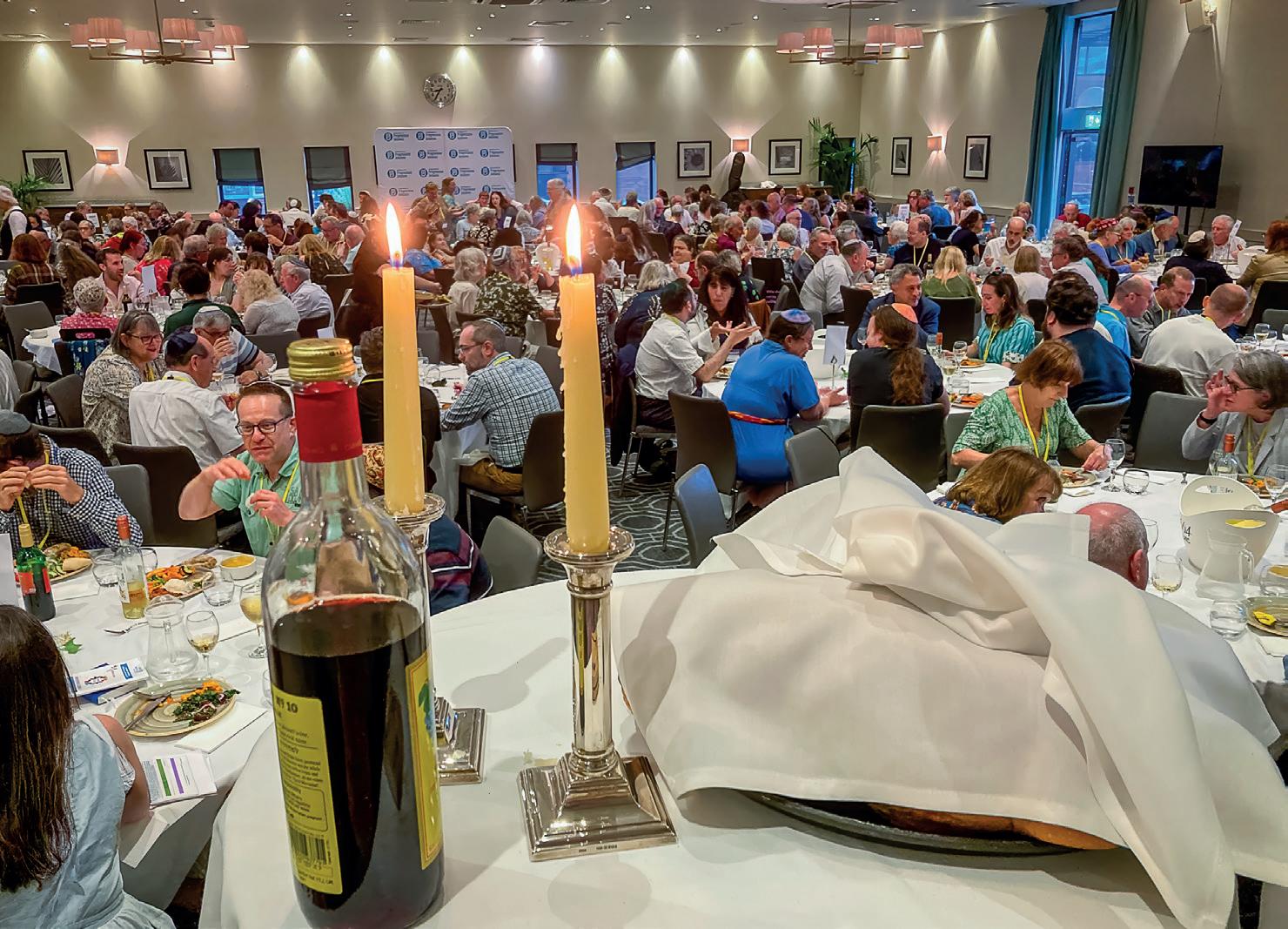
The whole conference came together for a very special Erev Shabbat dinner on Friday night
David Saperstein
Chagigah 2026 in pictures
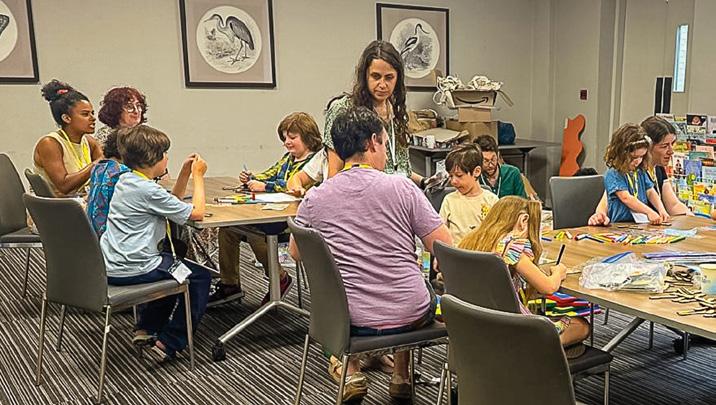
RSY/LJY-Netzer youth programming included engaging sessions for children and their adults
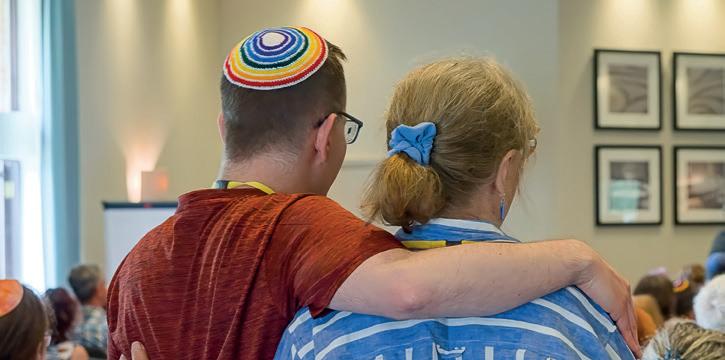
Coming together at the end of an incredible conference – the first of many more to come
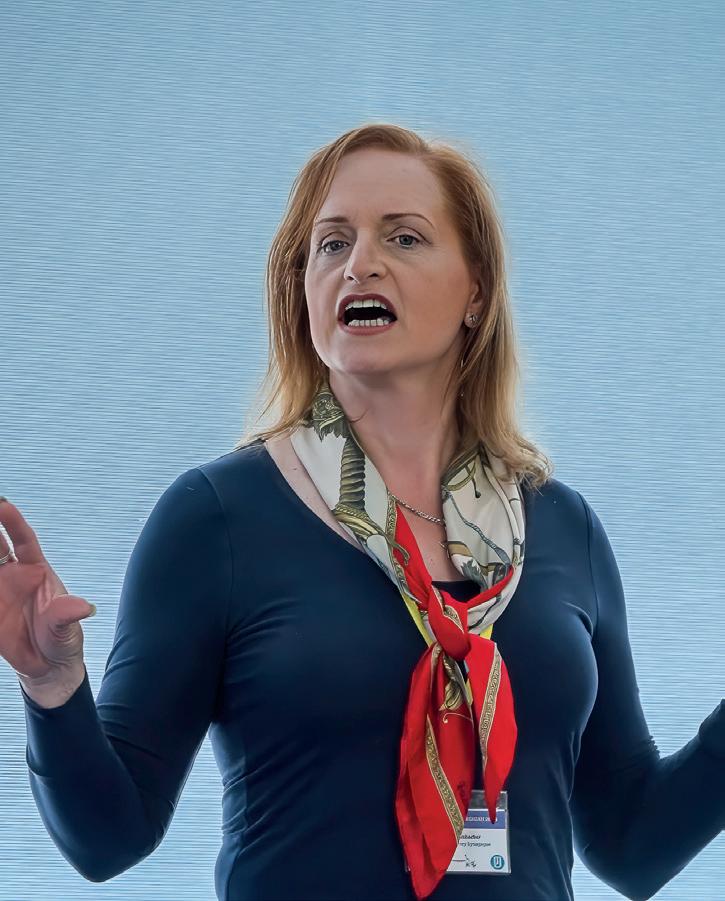
Dr Lynette Nusbacher led a session on World War 3.0 and the conflicts in Ukraine and Iran
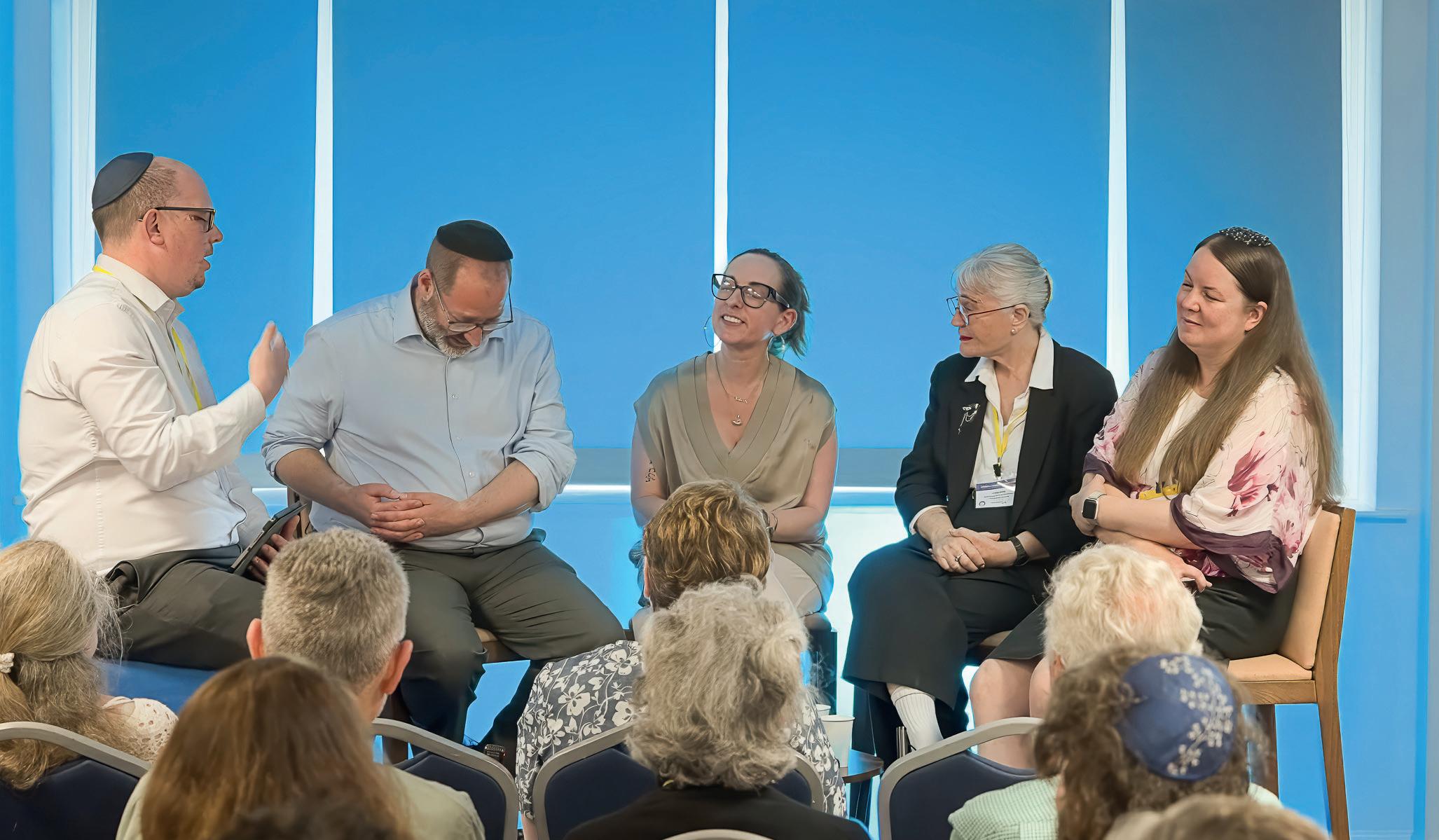
Rabbi Elliott Karstadt hosted a live All Else Is Commentary podcast on The Future of Progressive Judaism with international Progressive Jewish leaders Rabbi Josh Levy and Rabbi Charley Baginsky (UK and Ireland), Lesley Sachs (Israel) and Rabbi Lea Mühlstein (Europe)
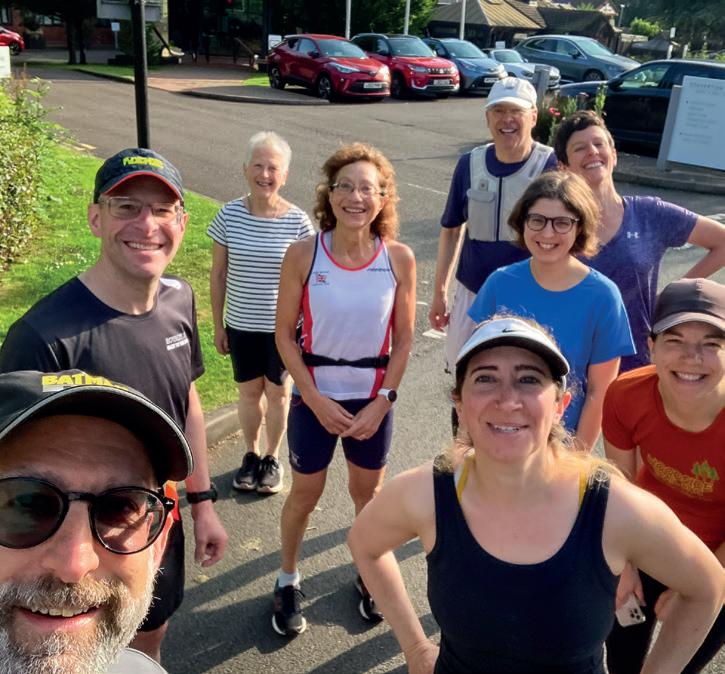
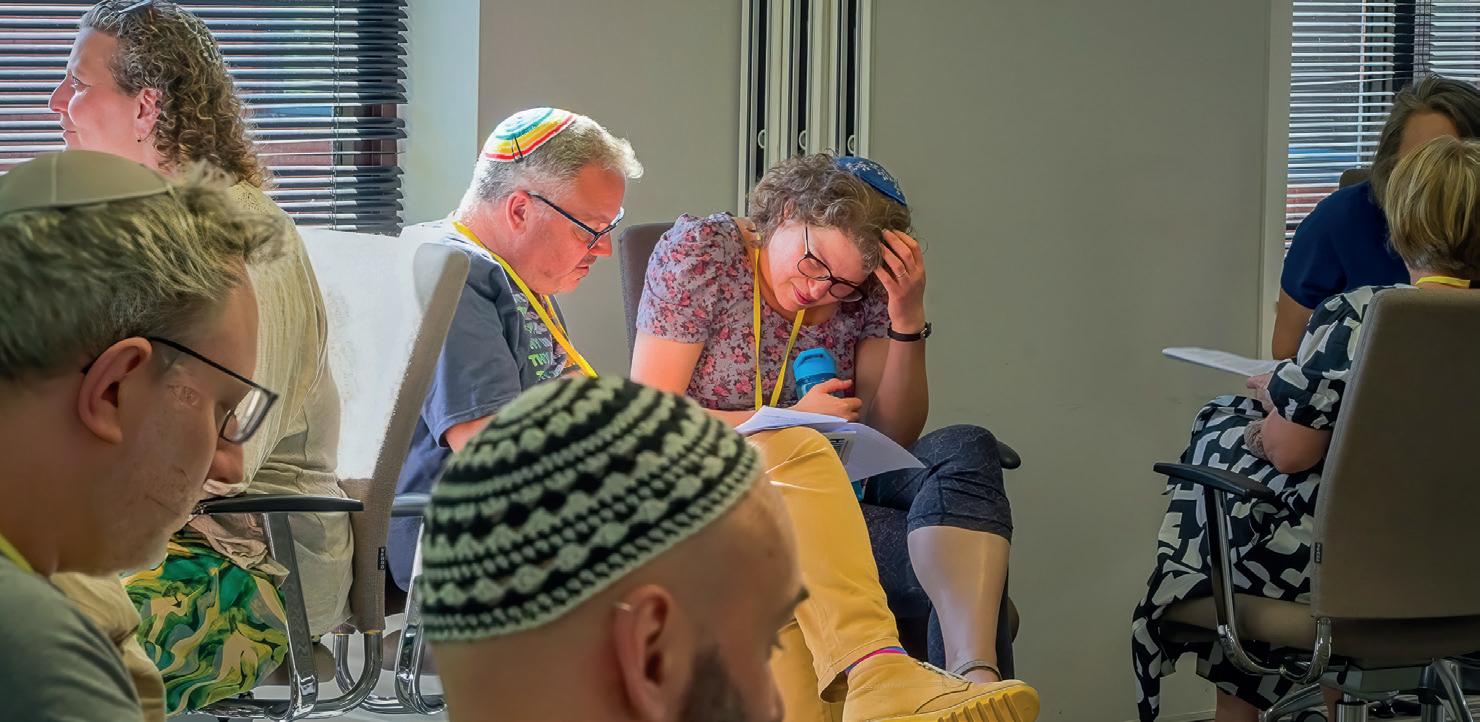
The Early Morning Run Club – led by Student Rabbis Dr Stacy Hackner and Richard Greene Participants, including clergy, form chavruta partnerships at one of Hineinu’s study sessions
The Hineinu and Shirei Chagigah pictures in this issue were taken by Si Marcus (Addictive Media) with additional photos from Student Rabbi Richard Greene and the MPJ staff team
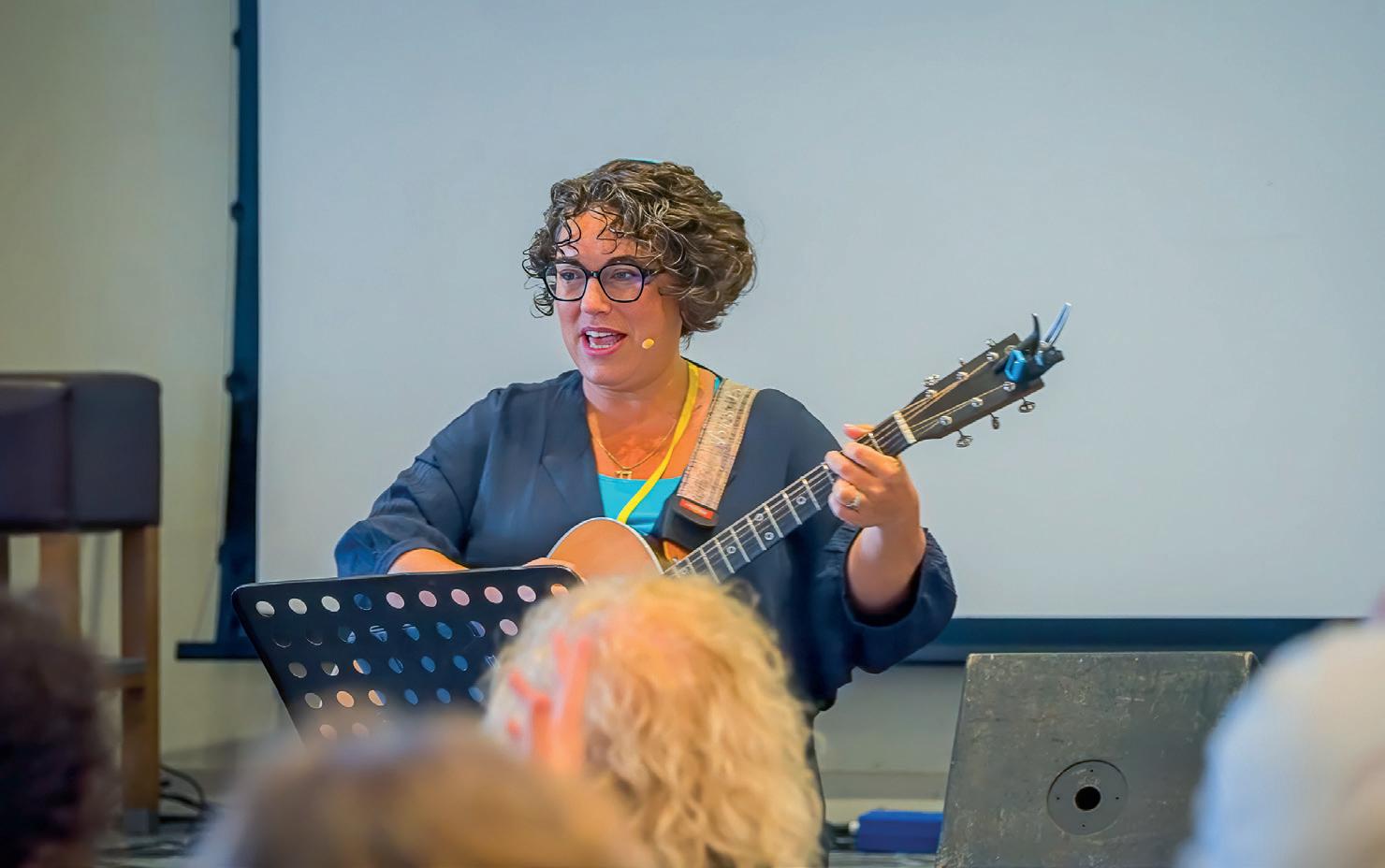
Cantor Zöe Jacobs leads a final song during the Hineinu and Shirei Chagigah closing ceremony
Archbishop pledges support on MPJ visit
THE Archbishop of Canterbury, the Most Revd Dame Sarah Mullally, pledged the Church of England’s solidarity with the UK’s Jewish community during a visit to the headquarters of The Movement for Progressive Judaism.
The Archbishop and her team –including Bishop of Edmonton Dr Anderson Jeremiah – were hosted by MPJ Co-Leads Rabbi Charley Baginsky and Rabbi Josh Levy.
Rabbis Josh and Charley told her about the challenges facing the Jewish community in the wake of rising antisemitism, and the importance of working together to promote interfaith dialogue and solidarity.
She then visited Leo Baeck College, where she met with and addressed Progressive Jewish clergy and student clergy including College Principal Rabbi Professor Deborah Kahn-Harris.
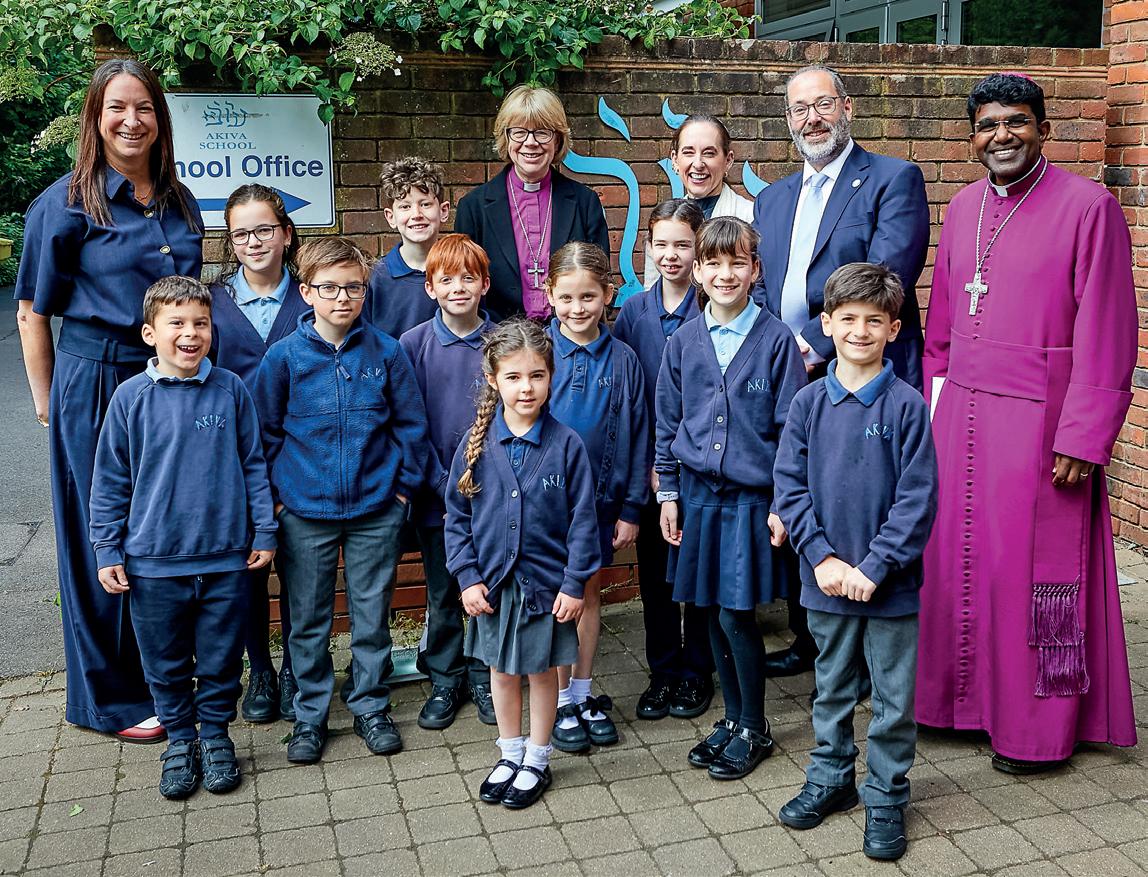
The Archbishop also spent time with pupils and teachers at Akiva Primary, dropping in on several classes to speak to pupils about the friendship between Christian and Jewish communities
Supporting our communities
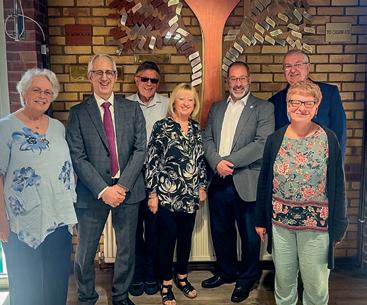
ONE of the four key missions of The Movement for Progressive Judaism is to strengthen and support communities.
As Co-Lead with responsibility for community engagement, Rabbi Josh Levy spends time visiting congregations across the UK and Ireland, ensuring they remain at the heart of our Movement.
Recently, Rabbi Josh has delivered sermons at Harlow & Chelmsford Jewish Community (pictured) and North West Surrey Synagogue, as well as speaking at the Stevenage Liberal Synagogue AGM and Milton Keynes & District Reform Synagogue Council meeting.
During all four visits, he was delighted to talk about the opportunities Progressive Judaism provides and how it truly flourishes when the Movement and our communities work in partnership.
Alongside Rabbi Josh’s community work, MPJ Co-Lead Rabbi Charley Baginsky and members of the wider professional team also regularly visit congregations, events and gatherings.
To arrange a visit, contact Diana on execassistant@progressivejudaism.org.uk
Praising The Movement for Progressive Judaism and the wider Jewish community, Archbishop Sarah said: “From charity work and healthcare, to education and the arts, your flourishing community enriches society and embodies the best values of this country.”
Speaking about the visit, Rabbi Josh and Rabbi Charley added: “We are living through a time when loud voices are trying to deepen divisions between communities, and especially between faith communities.
“Her visit also pointed to a better vision of public life, one in which faith communities recognise one another’s dignity and work together.”
Launch Board in Birmingham
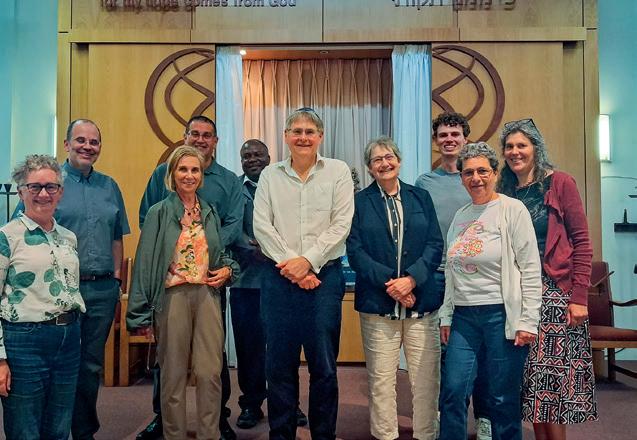
THE Launch Board of The Movement for Progressive Judaism hosted their most recent meeting at Birmingham Progressive Synagogue, reflecting our Movement’s commitment to being a national organisation rooted in communities across the UK.
As part of the day, the Board met with synagogue members, as well as local faith leaders and partners.
MPJ Chair Dr Ed Kessler MBE said: “The visit was a valuable reminder of the strength, leadership and commitment found in Progressive Jewish communities across the UK and Ireland. We were pleased to learn more about the history of the community and to hear about the challenges and opportunities facing faith communities in the region.”
Bringing the Israeli Embassy to Manchester
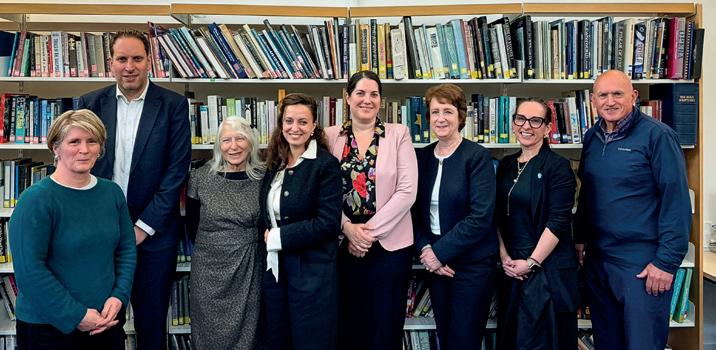
REPRESENTATIVES of Manchester’s Progressive Jewish communities met with senior figures from the Israeli Embassy during a special visit hosted by Menorah Synagogue and attended by Rabbi Charley Baginsky, MPJ Co-Lead with responsibility for public affairs.
Daniela Grudsky, Chargé d’Affaires, and Efrat Perri, Director of Public Diplomacy, met with leaders from Menorah, Sha’arei Shalom and Manchester Reform Synagogues, together with Rabbi Charley and Marc Levy of the Jewish Representative Council of Manchester.
The discussion explored the current situation in the Middle East, its impact on Progressive Jewish communities in the UK, and the importance of hearing a wide range of voices from both Israel and the British Jewish community.
Rabbi Charley said: “It was deeply meaningful to be in Manchester, listening to local voices and seeing that same commitment from the Embassy to engaging with the breadth of Jewish life.”
Archbishop of Canterbury Sarah Mullally, Rabbi Charley Baginsky, Rabbi Josh Levy, Bishop of Edmonton Reverend Dr Anderson Jeremiah and Akiva Head Claire Silver with children from the school (photo by Zoe Norfolk)
Ark members hold first service in Wittlich since Kristallnacht
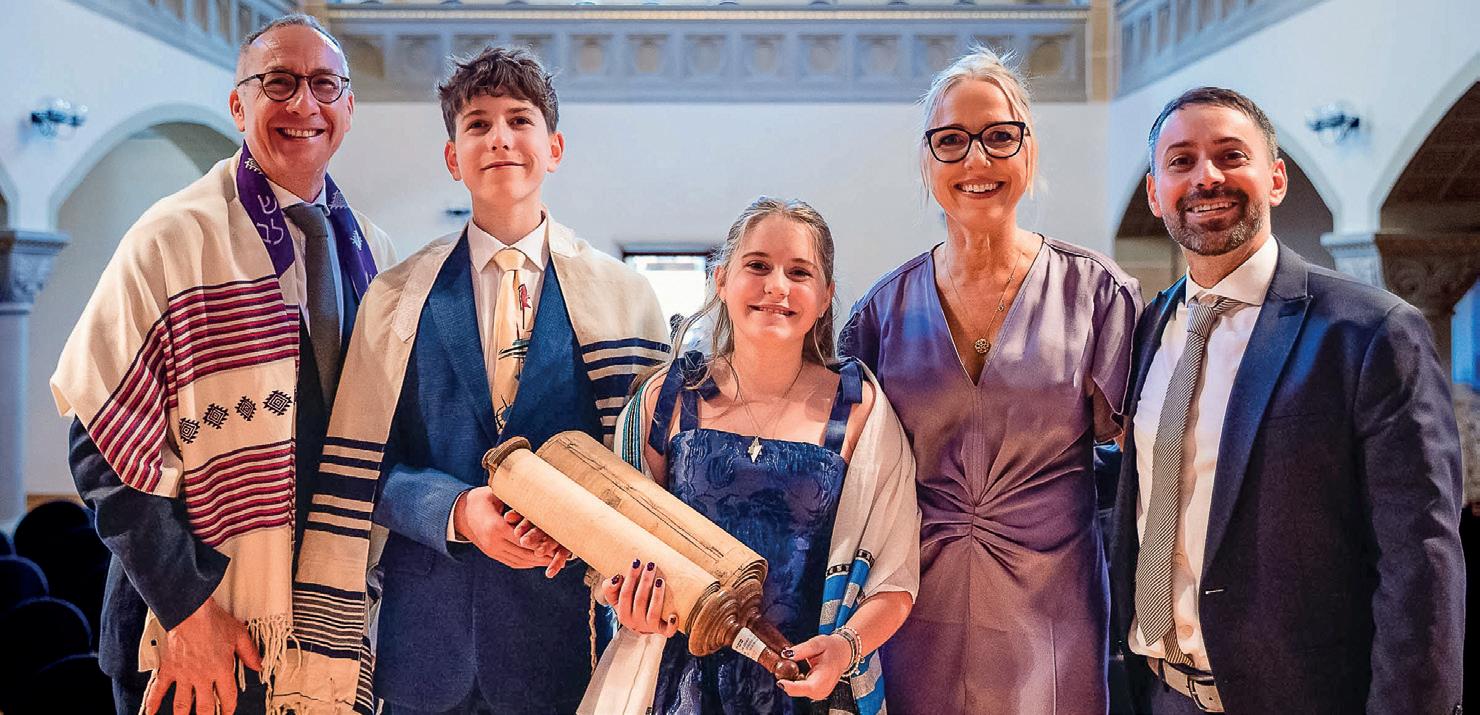
THE first synagogue service since Kristallnacht in the German city of Wittlich was a Bnei Mitzvah celebration for two Ark Synagogue members.
Jack and Ida Levy marked their Bar Mitzvah and Bat Mitzvah in the restored Wittlich Synagogue in a joyous service led by The Ark’s Rabbi Aaron Goldstein, The Movement for Progressive Judaism’s Community Youth and Education Lead Emma Rich and Rabbi Alexander Grodensky, of the Liberal Jewish Community of Luxembourg.
The original synagogue was active from 1910, before it was destroyed by the Nazis in 1938.
Eco winners
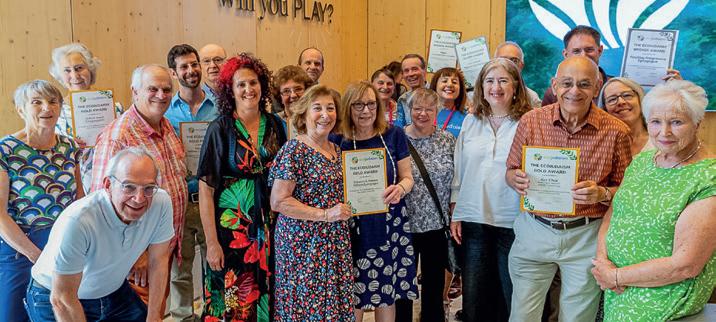
Movement for Progressive Judaism communities and members won prizes at EcoJudaism’s Community Awards.
Edgware and Hendon Reform Synagogue, Kol Chai: Hatch End Reform Jewish Community, Newcastle Reform Synagogue and Oxford Jewish Congregation achieved Gold Awards
A Silver Award went to Southgate Progressive Synagogue with Bronze prizes for Alyth, Leicester Progressive Jewish Community: Neve Shalom and Finchley Progressive Synagogue.
Benita Matofska of Brighton and Hove Progressive Synagogue picked up EcoJudaism’s Honorary Ambassador Award, with JCoSS and Alma Primary winning the Junior Advocacy prize.
Since 1979, the building has been used as a cultural and conference centre with a small museum inside – run by the city council and Emil-Frank-Institut.
The family live near Trier, about an hour from Wittlich, and are weekly participants in The Ark’s hybrid services, as well as its online learning, social and cultural activities. Dad Ben is English and Jewish and mum Ines is German and Catholic. They are bringing their children up as Jewish, with their older son having his Bar Mitzvah at The Ark.
Ida and Jack said: “It was very special for us to be the first Bar and Bat Mitzvah here in almost 90 years.”
A Synagogue of Sanctuary
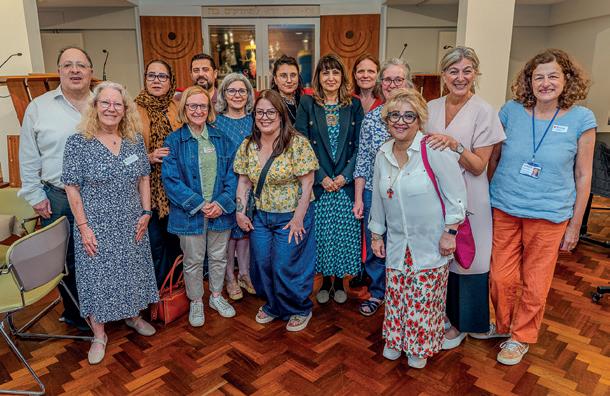
Finchley Progressive Synagogue (FPS) has been awarded the UK’s first Synagogue of Sanctuary status by Jewish refugee support charity HIAS+JCORE.
This prestigious new award –developed in partnership with City of Sanctuary UK – celebrates Jewish communities who are fostering a culture of welcome and inclusion for all.
FPS has long worked to support refugees and people seeking asylum, including delivering several practical support projects. Rabbi Rebecca Birk said: “The Deuteronomy call to pursue justice is part of our DNA at FPS and has a central place in our Jewish practice and values. We couldn’t be prouder of this award and long may this work continue.”
Rabbi Lev Saul inducted at KLS
It brought together members, friends and prominent civic leaders to welcome a vibrant new chapter for the congregation.
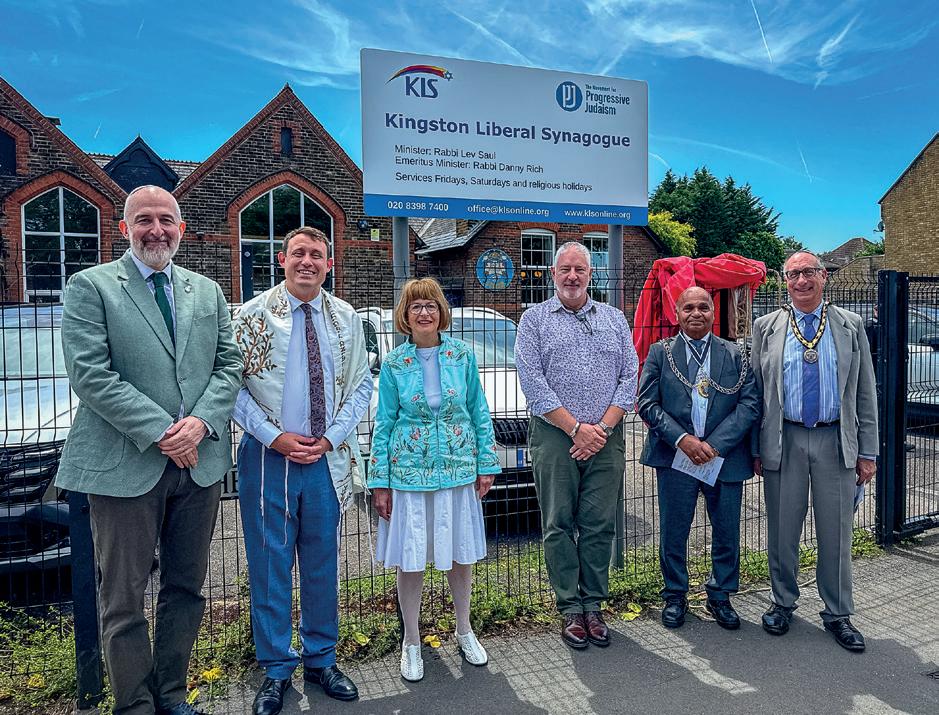
To commemorate the installation, Mayor of Kingston Thay Thayalam and the Deputy Mayor of Elmbridge Simon Leifer jointly unveiled the synagogue’s newly updated exterior sign, which reflects its new rabbi, as well as its affiliation to The Movement for Progressive Judaism.
KINGSTON Liberal Synagogue (KLS) celebrated a milestone for the community with the formal induction of its new spiritual leader, Rabbi Lev Saul. A celebratory service was led by Rabbi Nathan Godleman and the KLS choir.
KLS Chair Steve Farrer said: “This civic service underscores our synagogue’s role as a cornerstone of local interfaith relations, cultural heritage and community cohesion.”
Rabbi Lev added: “I am delighted to join Kingston Liberal Synagogue, which is such a warm, inclusive and intergenerational community.”
Rabbi Nathan Godleman, Rabbi Lev Saul, Sandra Webber, Steve Farrer, Mayor of Kingston Thay Thayalam and Deputy Mayor of Elmbridge Simon Leifer with the new sign
Rabbi Aaron Goldstein with Jack, Ida, Ines and Ben Levy (photo by www.engelfotografie.com)
Milestones: My love affair with Israel
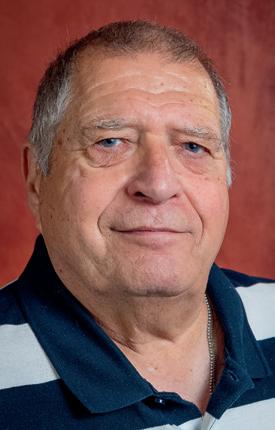
Rabbi Colin Eimer presents a shortened version of his introduction to MPJ’s first book
ISRAEL didn’t mean much to me in my north-west London childhood.
My parents donated to the (then) ‘Joint Palestine Appeal’ and we had a JNF Blue Collecting Box. They had bought some land in Jerusalem before the war because I remember them talking, in the late 1950s, about selling it. “Just a small orchard in Bayit v’Gan,” they said. If only they hadn’t sold that ‘small orchard’!
My father was German, my mother Polish and though not directly refugees from Nazi Germany, they lost all their families in the Shoah. Now – though not then – I can see how big the influence of the Shoah was on me, in particular on my subsequent relationship with Israel. I might have felt that influence, but didn’t have the insight, and certainly not the vocabulary, to articulate it.
In retrospect, putting together these and other fragments of memory adds up to something more consequent about the place of Israel in the family home.
My conscious journey with Israel began in the early 1960s. I had signed up for a walking holiday with Habonim, and thought I should meet some of my fellow walkers beforehand. There I encountered Zionist ideology for the first time and we had intense debates about making aliyah. But there came a point where it felt dishonest to remain in a movement whose raison d’être was aliyah, if I was not, ideologically or temperamentally, prepared to make that commitment.
I was also involved with the youth club at West London Synagogue, becoming chair of the group the year Hugo Gryn started there as rabbi. He became very much a mentor, which led me to get more involved with Jewish learning.
‘Israel’ was present but not with the centrality it now occupies in Jewish life
I began to appreciate more fully what devastation the Shoah had wreaked and how Jewish life on the Continent was trying to reestablish itself. These and other influences led me to apply to Leo Baeck College.
In my first year (1967), rhetoric from Arab broadcasts promising ‘seas of fire and rivers of blood’ seemed very real, as if another Shoah was in the offing and war seemed inevitable.
I phoned the Jewish Agency in London and volunteered to go to Israel. Two weeks later, war began.
By then, I was involved with fellow students at Leo Baeck coordinating young peoples’ support for Israel. I eventually went the day after the war ended. It was my first time there and, while I didn’t kiss the tarmac on arrival, I fell in love with Israel instantly.
I was a civilian worker on a small army base. Volunteers were given army uniform and the commander took us all over Israel and the captured areas.
I returned to London full of euphoria –Israel had survived a potential Shoah and the world loved us. But I did not forget the almost palpable enmity, especially as I was in uniform and especially on the West Bank.
That November, Leo Baeck College students organised the first JewishChristian-Muslim conference in Berlin. Among the delegates was a young Egyptian whose brother had been killed in the Six Day War and he spoke about how it had devastated his mother. That previous euphoria took on a darker shape and was one of those critical moments where my thinking about Israel became more nuanced.
In 1968, Golda Meir was in London and met with young Jewish leaders including some of us from Leo Baeck College. Somebody asked about the Palestinians. “There is no such thing as the ‘Palestinians!’” she exclaimed. How, I wondered, might Israel arrive at a peaceful settlement with her neighbours if they were seen with such disdain?
Many Israelis and many of Israel’s friends worldwide urged her to take advantage of victory and make peace with the Arabs. Sadly, other voices prevailed there which only saw the shortterm gains of victory while much of the Arab world was opposed to any peace.
I was rabbi in Paris during the 1973 Yom Kippur War when Israel’s existence seemed to hang on an even thinner thread than in 1967. The necessity of finding other ways of living in peace became even more pressing.
A two-state solution seemed the only way forward. However benevolent Israeli propaganda proclaimed it to be, it was an ‘occupying power,’ with all that implied. I could no longer argue that occupying a people for what is now nigh on half a century is consistent with the values and teachings of Judaism. I became involved with Shalom Achshav (Peace Now) when it set up a branch.
Anwar Sadat’s 1979 visit to Jerusalem and the subsequent peace treaty with Egypt seemed to augur a brighter future.
Anybody who criticised the Israeli government was branded as disloyal, colluding with antisemites or, worse, wishing that Israel ceased to exist. The 1982 Lebanon War polarised attitudes even further. Various monitoring groups developed at this time: Rabbis for Human Rights; B’Tzelem, the IsraeliPalestinian Bereaved Parents’ Forum and so on. They all argued that loving Israel and being supportive of all that its government did were not one and the same thing.
The values of some parts of the Settler movement became increasingly unpalatable religiously as well as politically, reflecting an expansionist way of thinking, often linked with Messianic ideology. Their ideas and actions have become increasingly outrageous.
I watched with tears in my eyes as Yitzchak Rabin and Yasser Arafat shook hands at the White House in 1993. The Oslo Accords seemed to fulfil Abba Eban’s memorable phrase, “people do make peace when they have exhausted all other possibilities.”
Things just fell apart thereafter. Intifadas. The Hebron Mosque massacre (1994) and Yitzhak Rabin’s assassination (1995), perpetrated by religious rightwingers, spoke of attitudes and positions becoming ever more extreme. Whatever hopes for a positive outcome of the Israel-Arab conflict seemed to have slipped through our fingers like sand.
Many of my friends in Israel were on the streets demanding change in the government – until 7 October 2023.
Israelis are in despair.
While I think it nonsense to describe what has happened in Gaza since as ‘genocide,’ even the Israeli military does not now contest that some 70,000 have been killed, which is appalling. Hamas is evil and must be neutralised. But invoking “you can’t make an omelette without breaking eggs” is not acceptable. Reducing Gaza to look like Berlin in 1945 cannot simply be compared to “breaking a few eggs.”
How to conclude writing about this long journey, this love affair with Israel, at such a time when it has sadly acquired pariah status in so many quarters.
I continue to be one of the prophet Zechariah’s assirei ha’tikvah, “a prisoner of hope”; I continue to grasp that rabbinic phrase gam zeh ya’avor “this too will pass”; I continue to believe in the affirmation of life and the decency of human beings – those Jewish values that have accompanied me on my journey.
• The book Progressive Judaism, Zionism and the State of Israel is out now.
Putting my Progressive Judaism into practice
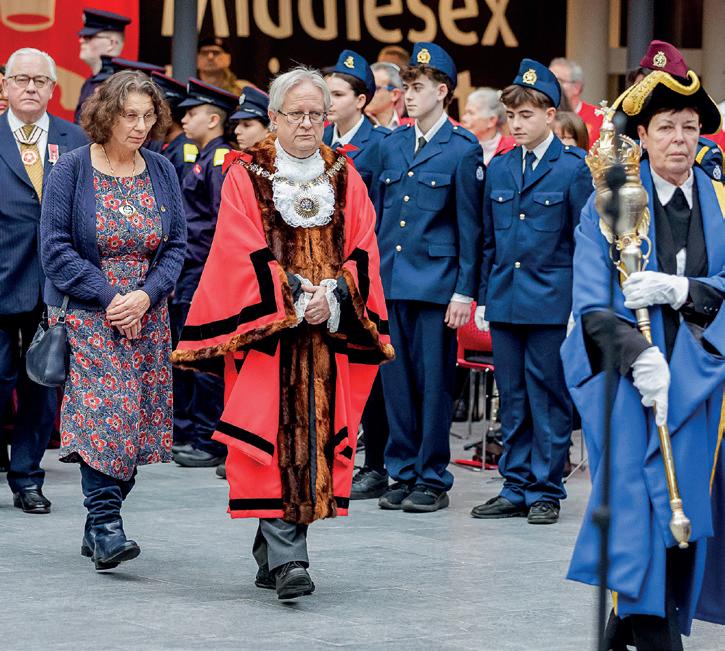
Rabbi Danny Rich writes as he ends his 2025/26 term as the Mayor of Barnet
THE London Borough of Barnet was formed in 1964 as an amalgamation of Finchley, Hendon, East Barnet and Friern Barnet Municipal Borough Councils. It is large by area and population, exceeding 400,000 residents.
Of more relevance to Voices readers, it is host to 56,000 Jews, making up some 14% of Barnet’s residents – the largest Jewish community in the UK.
My own ward, West Finchley, is home to Finchley Progressive and Finchley Reform Synagogues, and prominent Progressive Jewish communities include Edgware and Hendon Reform and Sha’arei Tsedek, but not the shul at which I am the Senior Rabbi, Southgate Progressive Synagogue, which is just in the London Borough of Enfield!
The Office of Mayor is an ancient one, originally commanding wide executive authority including running courts, regulating prices and managing the local jail. In the middle of the 19th century mayors were stripped of their executive judicial powers and were, as most are today, ceremonial.
Ceremonial Mayors are volunteers who must be elected Councillors and receive most votes of all Councillors in a particular locality, although, more recently, salaried, executive Mayors (e.g. London and Manchester) have been directly elected by a population to oversee regional matters including transport and strategic planning.
On my election in May 2025, I offered three main objectives: to visit and thank volunteers without whom the Borough’s residents’ lives would be poorer in so many aspects; to traverse and enjoy the landscape and communities of a rich and diverse Borough; and to raise a modest sum for those whose voices are often not heard (through UNITAS Youth Zone, Jewish Deaf Association and Home-Start Barnet, which supports young families).
Although my salaried vocation has been as a congregational rabbi, I have always undertaken additional voluntary community work including 30 years as a Justice of the Peace and the first CoChair (with the then Bishop of Durham) of the National Committee of the United Kingdom Welcomes Refugees.
I have sometimes been asked whether I involve myself in these and similar activities ‘because you are Jewish’ or ‘in spite of your being Jewish’.
My response includes my memories of the South London Liberal Synagogue (SLLS), of which my family were founders. I was raised in a religious, classical English Liberal Jewish family in which kashrut was irrelevant, kippah unimportant, and Zionism unmentioned. I never went to a Jewish burial but plenty of cremations until I became a student rabbi, and the first family Bar/ Bat Mitzvah I attended – plenty of ‘Confirmations’ – was of my own son.
Judaism was, however, a serious endeavour with weekly Erev Shabbat services in my parental home and Shabbat morning attendance, usually at The Liberal Jewish Synagogue where I was a pupil in the religion school. Festivals were for shul and study.
Judaism was, therefore, associated with both home and synagogue but particularly with what is now called social action.
I recall two regular experiences. On one Sunday morning a month I would accompany my maternal grandmother to help run the shop at the Nightingale Home for Aged Jews. It was staffed by volunteers, and relatives could buy treats for the elderly residents.
On a further Sunday in the month, I was taken to a large house situated by Tooting Bec Common by one of my unmarried aunts and two or three of the four Raphael sisters.
I remember two aspects: I ran around offering homemade cakes from my aunt’s kitchen, and being given a magazine which my aunt always took away from me. It was only years later that I realised that the magazine was the Salvation Army’s ‘War Cry’, and that the place was a gentle form of institution for ‘single women who had fallen on hard times!’
It was through these members of SLLS, and many others, that I discovered Judaism was as much about their neighbours as it was about their congregants. Thus, and unconsciously, I was imbued with perhaps Progressive Judaism’s greatest principle that ‘the welfare of our neighbour should be as dear to us as our own’.
As I matured, I came to understand that the mission of Progressive Judaism was to strengthen our own Jewish lives by study and practice, but of at least equivalent importance was to contribute to the betterment of society.
There are many ways to fulfil this task. I was elected as a Labour Councillor on Barnet Council in May 2018 and reelected in 2022. My colleagues of all parties elected me as Mayor.
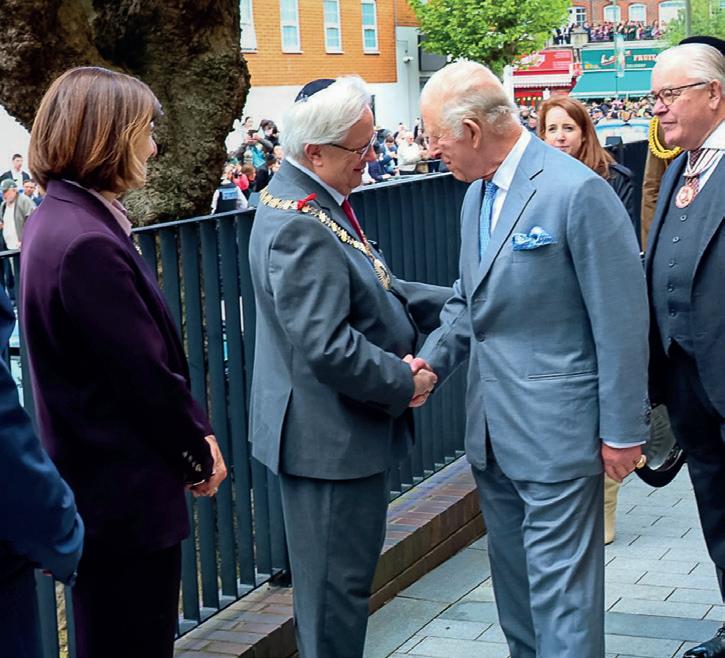
When I was elected Mayor, I met Barnet’s Deputy Lieutenant, the King’s representative for the area, who informed me: “Sir, there are no royal visits to your Borough planned in your mayoral year.” It was, therefore, a pleasant surprise that one of my final duties in office was to welcome His Majesty The King to Golders Green when he came to meet the victims of an antisemitic stabbing and to provide reassurance for the Jewish community.
I have sought in my life to give of my best to both the Jewish community I have served and to the local communities where I have lived. This is what I understand to be Progressive Judaism in practice.
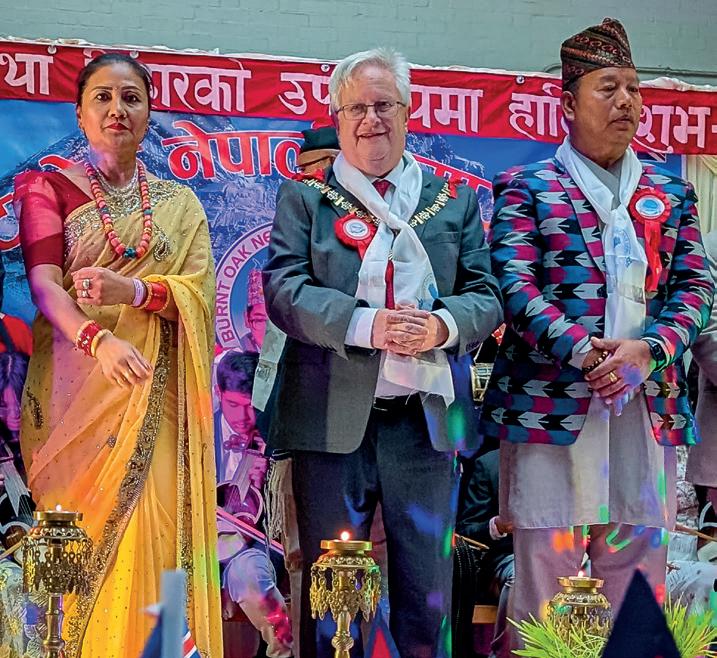
Rabbi Danny Rich greeting King Charles in Golders Green, attending Holocaust Memorial Day and marking Dashain with the Nepalese Community
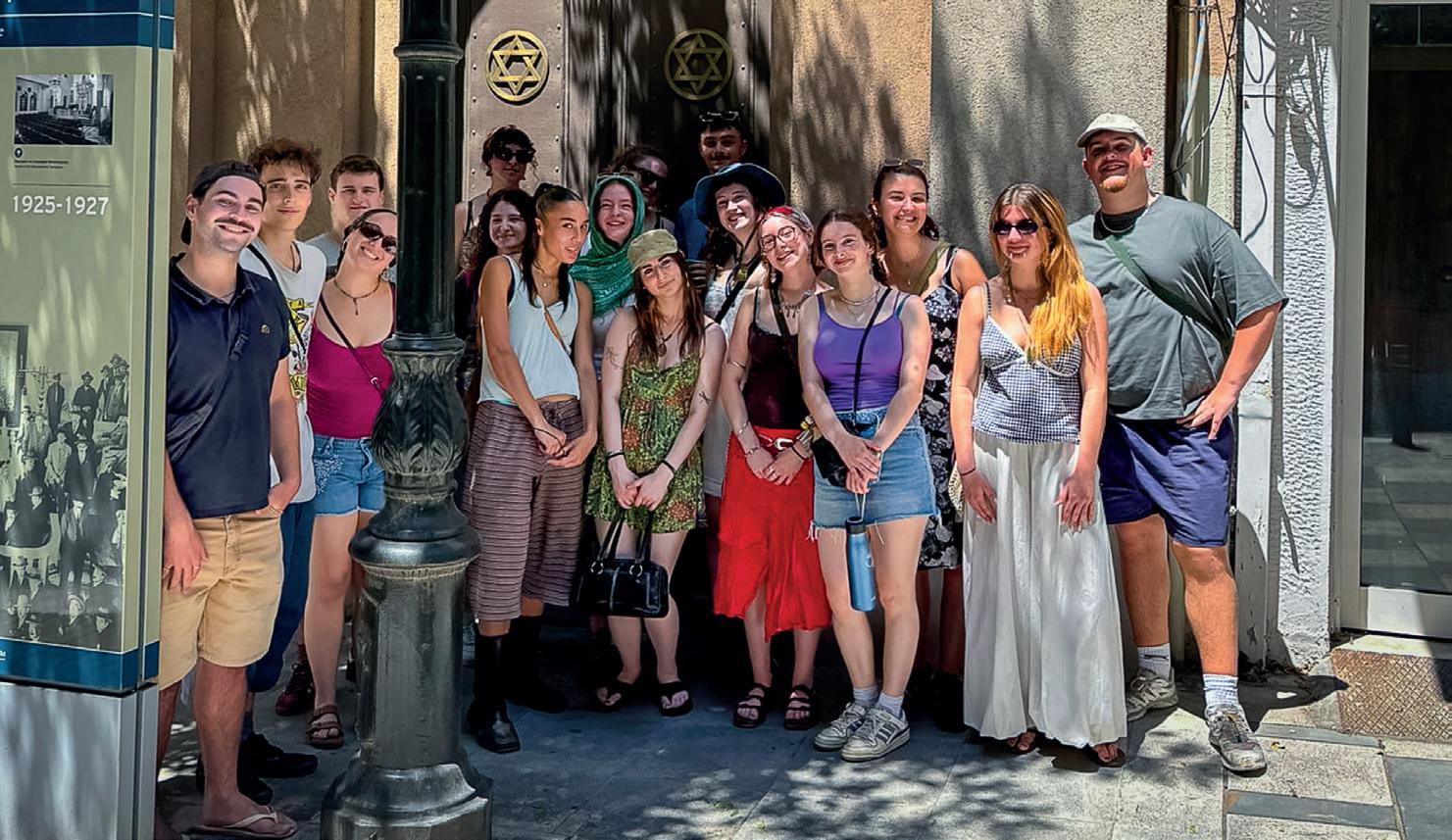
Five days living and learning together
RSY
updates
• WE ARE still empowering Jews around the world, and we want to talk a bit about a special opportunity to help build resilience in Israeli children. Research shows that messages of solidarity from global Jewish communities significantly raise feelings of resilience, especially among Israeli youth. RSY wants to help bridge this connection, and so we’re gathering solidarity letters from our alumni. We want to ease things for people who are having a really tough time at the moment, and we’d love it if some of our community were interested in taking part. If this sounds like something you’d like to do, write a short letter, send a copy to admin@rsy-netzer.org.uk, and we’ll do the rest. English or Hebrew, text or handwritten, just be yourself.
• SHEMESH (summer camp) prep is going swimmingly! We’ve got all hands on deck at the moment, and our Madabimot (senior leaders) and Movement Workers have been working hard at our London training to make this summer amazing. They are brushing up on everything from big-picture ideas like inclusivity and group work, to practising chants and learning fun, new games. Ultimately, everybody at RSY-Netzer is looking forward to summer and Shemesh. If you have any questions, let us know at admin@rsy-netzer.org.uk
• RSY Shabbat in May was a huge success. Thanks to all who took part.
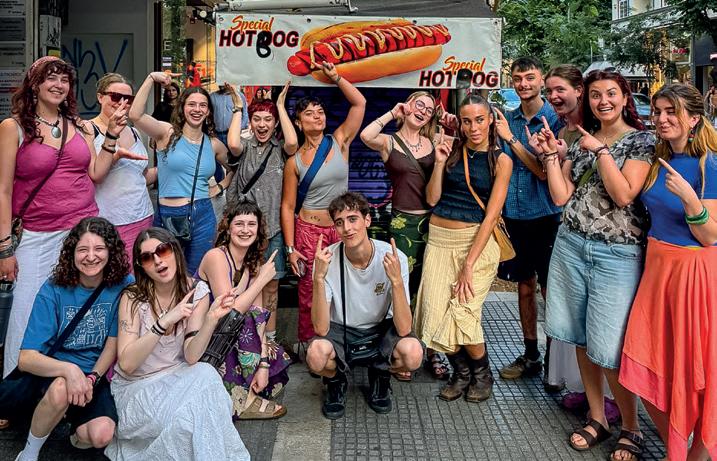
LJY-Netzer bogrimot (over 18s) had an amazing time on Bog Tour exploring Thessaloniki, Greece. They enjoyed a Jewish walking tour of the old town, trips to the Modern Art Museum and Jewish Museum, swimming at the beach, delicious dinners, shopping and learning about Greek poetry, music and culture.