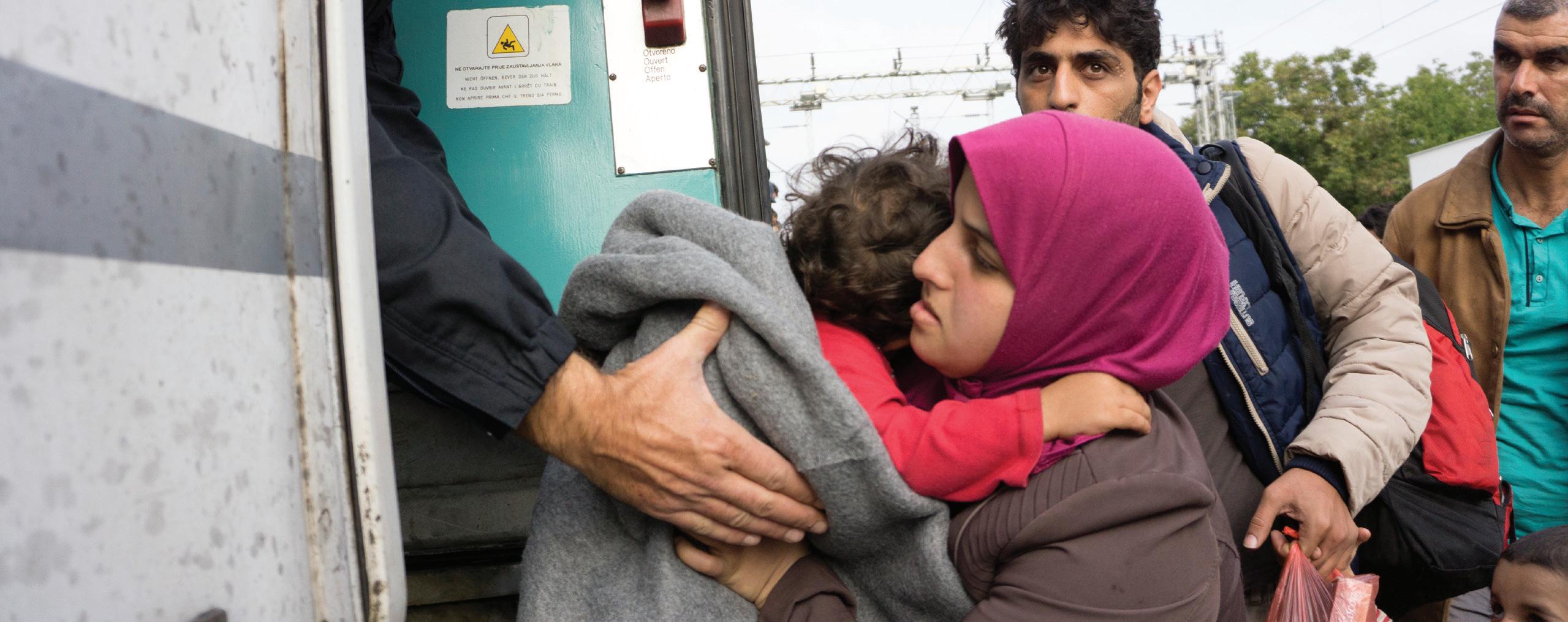

Watching the terrifying scenes from Afghanistan unfolding, Yvette began to mentally prepare. Soon there would be a flood of Afghan families arriving in her area, and she needed to be ready to speak their language. So she contacted the Lutheran Heritage Foundation.
As the Washington D.C. area director of a Christian mission organization – one that seeks to share the hope of Christ with Muslim immigrants – Yvette has had 12 years’ experience in making connections with people from an Islamic background.
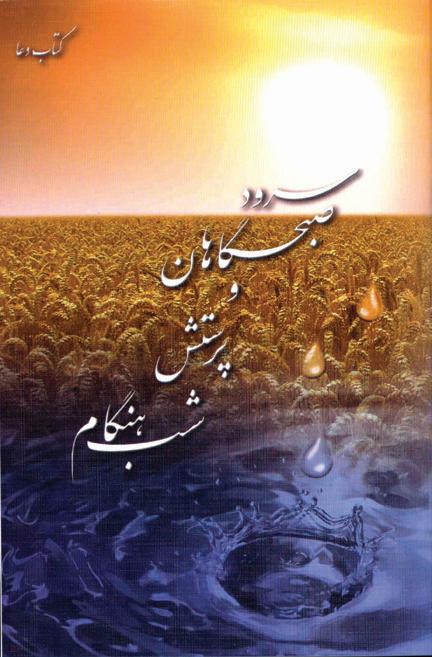
“Sometimes that’s connecting people to services; other times that’s being available to Muslim friends, discipling new converts or praying with them. But it has to be in their heart language,” Yvette said. “That’s why as soon as I saw what was happening in Afghanistan, I thought, ‘I’m going to look on the LHF website and see if they have Dari [language materials].’ And oh goodness, you had prayer books and catechisms in Dari!”
According to the most recent numbers available, the
United States evacuated more than 65,000 Afghans, and about a third of those families have already arrived on American soil (with the remaining 40,000 either waiting at U.S. military bases abroad or in other countries).
“It’s an evolving situation,” Yvette explained. “Three weeks ago, 1,000 people arrived. Then at the Dulles Expo [in Chantilly, VA], 8,600 more arrived! We have no access to these immigrants until they’re processed, but we’re working the other end, finding sponsoring people in our churches, who need to be ready to circle around as a community for these folks.”
cont. from page 1
As relationships begin to form with the new arrivals, opportunities to share the Good News arise.
“When I saw that the Dari prayer books were available from LHF, I thought: ‘This is how God is going to speak to people who have suffered great trauma and great wounding in their lives,” Yvette shared.
For Muslims or people from an Islamic culture, prayer is deeply respected. Thus, LHF’s Catechism and Prayer Book is highly effective for introducing new believers to Jesus, as it invites readers to pray through Luther’s Small Catechism. Ten dozen of those prayer books now have been shipped to the Washington D.C. area.
“God is going to use these prayers to heal them and come alongside them in this new journey in the United States,” Yvette said. “My prayer is that Christians will witness to them: ‘You will know them by their love.’ Pretty simple, right?”
Another great need: Spanish
Halfway across the nation, Natalie Valle was also checking the LHF Publications Database (www.LHFmissions.org/publications), this time for children’s materials in the Spanish language.
An email from her homeschooling group had alerted Natalie to large numbers of Spanish-speaking children from the U.S. southern border arriving at a nearby facility in her home state of Michigan. Donations of clothing, balls and toys to play with were requested, but Natalie thought of something else that would be needed.
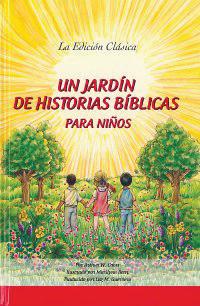
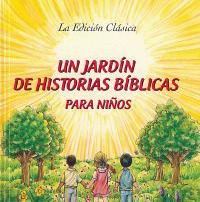
“I thought of LHF right away because I knew A Child’s Garden of Bible Stories, which I used for devotions with my own children, was available in Spanish,” she said. “I was also familiar with LHF’s ‘Jesus Never Fails’ booklet, because we’d given that out at community suppers. It’s a wonderful little booklet with a message that might be good for older kids.”
Soon, 100 Spanish Bible storybooks and 75 devotion booklets were on their way to the facility.
“It touches my heart,” Natalie reflected. “I’ve been told most of these children will be going to family members, but some will go to foster families. All over the country, wherever they go, these children will take the books with them! We have no idea what the outcome will be, but we know that the Holy Spirit is going to use His Word. God uses these things beyond ways we could even imagine.”
Twenty years ago, there was no Lutheran church body in Cambodia, a country in Southeast Asia just west of Vietnam.
It’s been an amazing journey over the past couple of decades, but today, Lutheran church leaders there are celebrating a historic moment in the life of the Cambodia Lutheran Church (CLC): the translation and publication of the Book of Concord in the Khmer language.
“It’s exciting to see how God, through His Word and the Holy Spirit, is using us and LHF materials to bring His teachings and faith to the Khmer people,” said Rev. Ted NaThalang, LHF’s coordinator for Southeast Asian projects. “This is what mission work is really about, and I am sure that Martin Luther is looking down on us with a smile, seeing God’s Word translated for His children in Cambodia.”
Sopha Korn, LHF’s translation coordinator in Cambodia, said that the Book of Concord will be essential for helping to train up faithful pastors in his country, where there are no Lutheran seminaries.
“For Lutheran churches in Cambodia, it has been a challenge to get a theological education, due to the lack of Lutheran classes and shortage of confessional Lutheran instructors who are Cambodian nationals,” he explained.
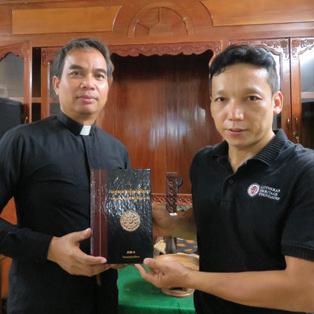
Rev. J.P. Cima, an LCMS missionary to Cambodia who

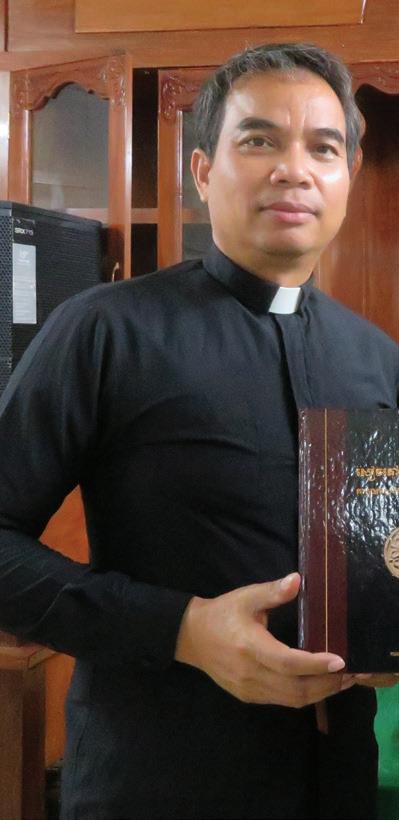
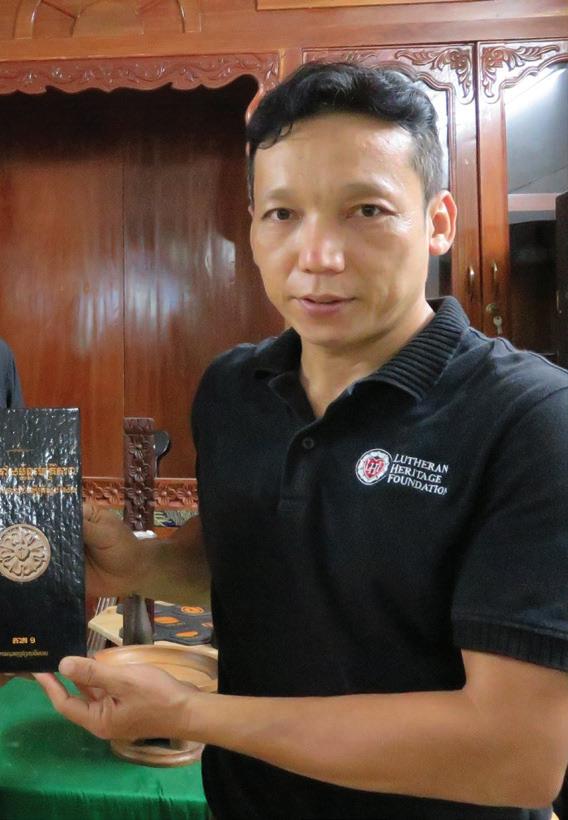
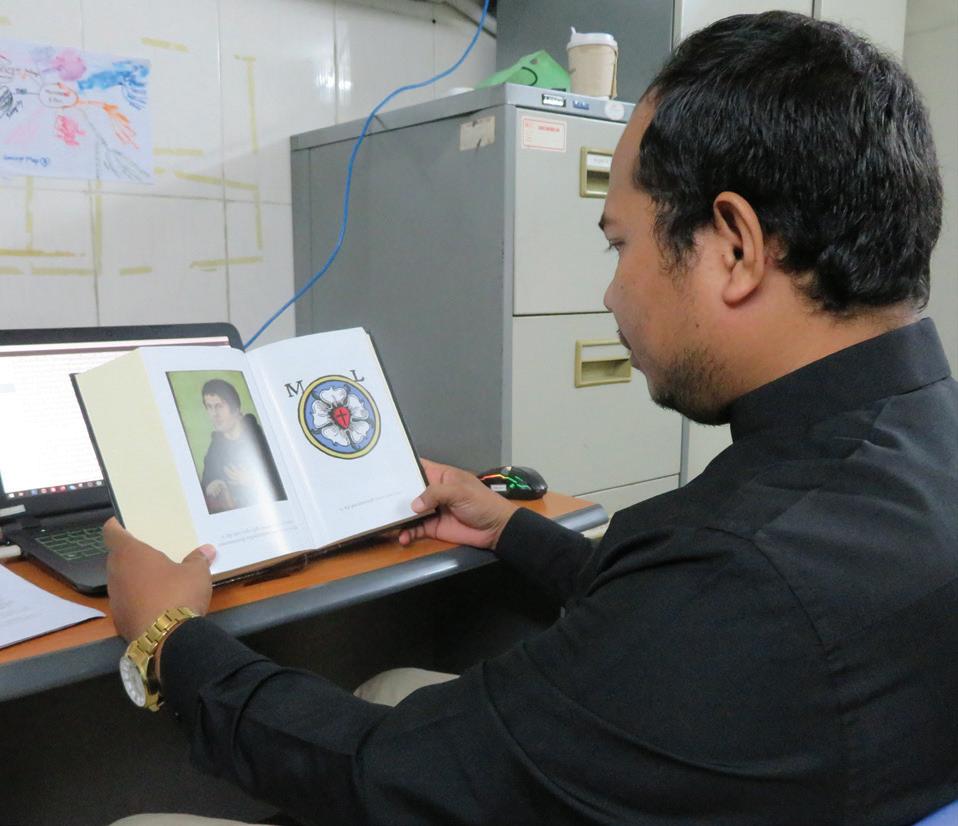
right above, has diligently been delivering LHF’s Khmer-language Book of Concord to Cambodian pastors.
assists in theological education there, agrees. “This Book of Concord is so crucial because it’s an opportunity for the pastors and deaconesses, as well as other church leaders, to have access to a really important resource where they can say, ‘THIS is why it’s important to be a Lutheran.’ In terms of the Lutheran identity, it’s the key historical document.”
During his three years in the country, Rev. Cima said that this understanding of what it means to be a Lutheran has been an area of great growth for the CLC.
“There is a core of pastors and leaders who have been very well trained,” Rev. Cima reflected, “but many are still growing in their knowledge of what it means to be a Lutheran. This is a concept that is sometimes difficult for Americans to understand, because in the United States, people think of religion in terms of Truth: ‘What is Truth?’

“But in Southeast Asia, groups form more on the basis of relationships, rather than truths. So in this culture in Cambodia, people may become members of the CLC less because they’ve immediately discovered the amazingness of Lutheran teachings, but more likely because they had a relationship with someone else who was a Lutheran.”
When Scripture’s clear teachings are laid out in an organized way, as in Luther’s Small Catechism and the Book of Concord, people get excited about what they are learning, Rev. Cima said.
“When I’ve taught them the catechism, they react very strongly when we start to study the Sacraments,” he said. “They mean something; they do something in our hearts and lives. That’s always a big ‘Aha!’ moment.”
LHF is actively translating the Book of Concord in several other Southeast Asian countries, including China, Korea, Vietnam, Thailand, Indonesia and Myanmar.
“The most important thing that we as Lutherans have to do is to equip Lutheran leaders and pastors in Southeast Asia well,” said Rev. NaThalang. “If we don’t, we will not have many Lutheran churches to carry on good and Scripturally-based teaching in the near future. The needs of the mission field have changed, and unless we try to fulfill the needs of God’s people for the complete and true Word of God, we will regret it later.”

Immigrants and refugees aren’t the only people coming to America who need to be introduced to Jesus. Another fertile mission field waits at our nation’s colleges and universities, where more than 1,000,000 international students are enrolled this year.
“These students come to learn at our universities, and it’s the perfect time to teach them about something even more important: the Gospel story of their Savior,” said LHF Executive Director Rev. Dr. Matthew Heise.
It’s a mission field The Lutheran Church-Missouri Synod has committed to by establishing 250 chapters of the LCMS–U (locations of LCMS chapels and ministries on college campuses across the United States). At these Lutheran centers, many international students are first drawn to free English as a Second Language (ESL) lessons. TALKING ABOUT JESUS FOR THE FIRST TIME
Openings to talk about Jesus come up through those very same conversational lessons. For the first time, students from countries where it’s danger-
ous or even impossible to learn about the Savior can hear the Gospel.
At the International Friendship Center at the University of Wisconsin –Madison (pictured above), that’s exactly their approach to sharing the Gospel with people from all around the world, especially China. While it’s not technically illegal to be a Christian in China, those who profess their faith in Christ face persecution by their families, friends, coworkers and even (unofficially) the government. But while they study in the United States, they have the opportunity to freely ask questions.
“We use LHF publications like the Chinese Small Catechism and A Child’s Garden of Bible Stories [to teach the ESL classes],” Wayne Weiss, a volunteer at the International Friendship Center, explained. As students reference between their copies of the book in their own language and the English version, they are exposed to Scripture, perhaps for the first time.
Recently, two Chinese-speaking women became believers during the course of Wayne’s classes at the Inter-
national Friendship Center. Wayne and his wife invited the women to church with them, and now both are interested in being baptized and taking Holy Communion!
For another family from the Friendship Center, one moment of outreach has touched multiple souls.
“There was a woman from Beijing who ended up being baptized here in secret [in order to avoid persecution],” shared Wayne. “She had a ten-year-old son with her, so I’d given him one of the Bible story books from LHF, which he devoured in one evening – he loved it!
“Then her sister came to visit from China a few weeks later. She saw the book and wouldn’t give it back to the boy because she enjoyed it so much! She had never been exposed to Christianity before. These materials just keep blessing others over and over and over.”
Looking for a book about the Savior for someone who doesn’t speak English as a first language? Go to: www.LHFmissions.org/publications