





It is a genuine privilege to present this year’s Awards for Excellence finalists and winners.
Each represents an achievement worth celebrating, and this yearbook stands as a tribute not only to what has been achieved, but to the people whose ideas, effort, and leadership continue to shape our sector.
These awards are grounded in a clear purpose: to recognise and elevate outstanding practice across local government. But again, more than just a record of achievement, this publication helps bring that work out into the spotlight. A cornerstone of what we do at LGPro, it helps us connect, sharing examples for our professional community to learn from and, importantly, to help us improve outcomes for the communities we serve. This yearbook invites all of us to reflect, adapt, and keep raising the bar.
While these awards acknowledge individual and team accomplishments, their value extends far beyond recognition. The stories captured throughout this yearbook provide practical insight into what is possible when innovation is paired up with commitment. They are a powerful reminder that progress is rarely isolated but built through shared learning. I encourage you to connect with the teams behind these initiatives and consider how their approaches might inform and strengthen your own work.
My sincere thanks go to everyone who has contributed to what you see in these pages. In particular, I would like to recognise our volunteer judges whose thoughtful and considered work ensures the integrity and credibility of these awards. Reviewing such a high calibre of nominations is no small task and deserves a celebration in its own right. I also acknowledge the council leaders who continue to invest in their people and support participation in initiatives like this, reinforcing a culture of excellence across our sector.
On behalf of the LGPro Board, congratulations to all finalists, high commendations, and award recipients. I also extend this congratulations to the graduates of our leadership programs featured at the close of this yearbook. Your commitment to learning and growth is a positive signal for the future of our profession.
As you read through these pages, I encourage you to go beyond observation. Consider how these ideas might translate into your own context, and don’t hesitate to reach out, collaborate and build on the work of others. When we actively share knowledge and support one another, we strengthen not just our organisations, but the sector as a whole – and ultimately deliver better outcomes for the communities that rely on us.
Sue Wilkinson President, LGPro
First Nations Community Partnership
Lenka Vanderboom Ballarat City Council
Sharina Ladharam Melbourne City Council
Mozma Tate Baw Baw Shire Council
Brent McAlister Northern Grampians Shire Council
Community Assets and Infrastructure:
Projects under $5 million
Liz Johnston Macedon Ranges Shire Council
Philip Wilson Wyndham City Council
James Rouse Latrobe City Council
Kristen Munro Banyule City Council
Community Assets and Infrastructure:
Projects $5 million – $20 million with a population of under 50,000
Bryan Wee Boroondara City Council
Tania Treasure Nillumbik Shire Council
Sasha Lord Hume City Council
Indivar Dhakal Merri-bek City Council
Community Assets and Infrastructure:
Projects $5 million – $20 million with a population of over 50,000
Tanya Scicluna Monash City Council
Patrick McNamara East Gippsland Shire Council
Vicky Guglielmo Yarra City Council
Bridgette O’Brien Hepburn Shire Council
Community Assets and Infrastructure:
Projects over $20 million
Liz Chapman Brimbank City Council
Bruce Marshall Mitchell Shire Council
Mary Agostino Mitchell Shire Council
Renee Hodgson Melbourne City Council
Community Partnerships
Lisa Morrison Glen Eira City Council
Matthew Morgan Moira Shire Council
Carrie Lindsay Manningham Council
Luciana Andriani Port Phillip City Council
Digital and Technology
Adrian Garner Banyule City Council
Nathan Islip Yarra Ranges Council
Kealey Lush Mildura Rural City Council
Ashlee Milich Hume City Council
Disaster Readiness and Recovery
Kate Heissenbuttel Monash City Council
Paul Wood Port Phillip City Council
Andrew Tenni Colac Otway Shire Council
Holly Sawyer Wangaratta Rural City Council
Diversity and Inclusion
Matthew Wilson Hume City Council
Kirsty Phillips Greater Bendigo City Council
David Power Hobsons Bay City Council
Jen Bednar Casey City Council
Environmental Sustainability
Cheryl Casey Mornington Peninsula Shire
Ron Torres Hepburn Shire Council
Rebecca Stockfeld Macedon Ranges Shire Council
Vishal Gupta Frankston City Council
Innovative Leadership
Amy Luck Whitehorse City Council
Helen Havercroft Glenelg Shire Council
Thomas Meek Yarra Ranges Council
Tony Rocca Maroondah City Council
Service Delivery
Matt Bradley Knox City Council
Danielle Penna Melbourne City Council
Rachelle Quattrocchi Strathbogie Shire Council
Numair Farooq Whittlesea City Council
Special Projects
Matthew Tulloch Southern Grampians Shire Council
Maria Weiss Macedon Ranges Shire Council
Petra Croot Hindmarsh Shire Council
Janak Bharati Greater Dandenong City Council
Outstanding Small Rural Council
Mark Eversteyn Moyne Shire Council
Tania Triantafilopoulos Knox City Council
Kim Marshall Kingston City Council
Dan Nichols Latrobe City Council
Young Achiever
Ella Edwards Whittlesea City Council
Scott Bourne Gannawarra Shire Council
Brian Doyle Strathbogie Shire Council
Emma Little Central Goldfields Shire Council
First Nations Community Partnership
WINNER
Mornington Peninsula Shire Council
Ngawak Biik – Briars Junior Ranger project
HIGH COMMENDATION
Banyule City Council
Marrageil Strategy: Victoria's first Self-Determination Strategy
FINALIST
Kingston City Council
Derrimut Weelam Gathering Place, Mordialloc
Community Assets and Infrastructure: Projects under $5 million
WINNER
Merri-bek City Council
Michelle Guglielmo Park – 260 Sydney Road –Park Close to Homes Project
HIGH COMMENDATION
Bass Coast Shire Council
Phillip Island Neighbourhood Batteries
FINALISTS
South Gippsland Shire Council
Leongatha Rail Precinct Reimagined
Swan Hill Rural City Council
The Robinvale Riverfront Nature & Adventure Play Precinct
Yarra Ranges Council
Chirnside Urban Park
Community Assets and Infrastructure: Projects $5 million – $20 million with a population of under 50,000
WINNER
East Gippsland Shire Council
Eagle Point Foreshore Hub Development
HIGH COMMENDATION
Swan Hill Rural City Council
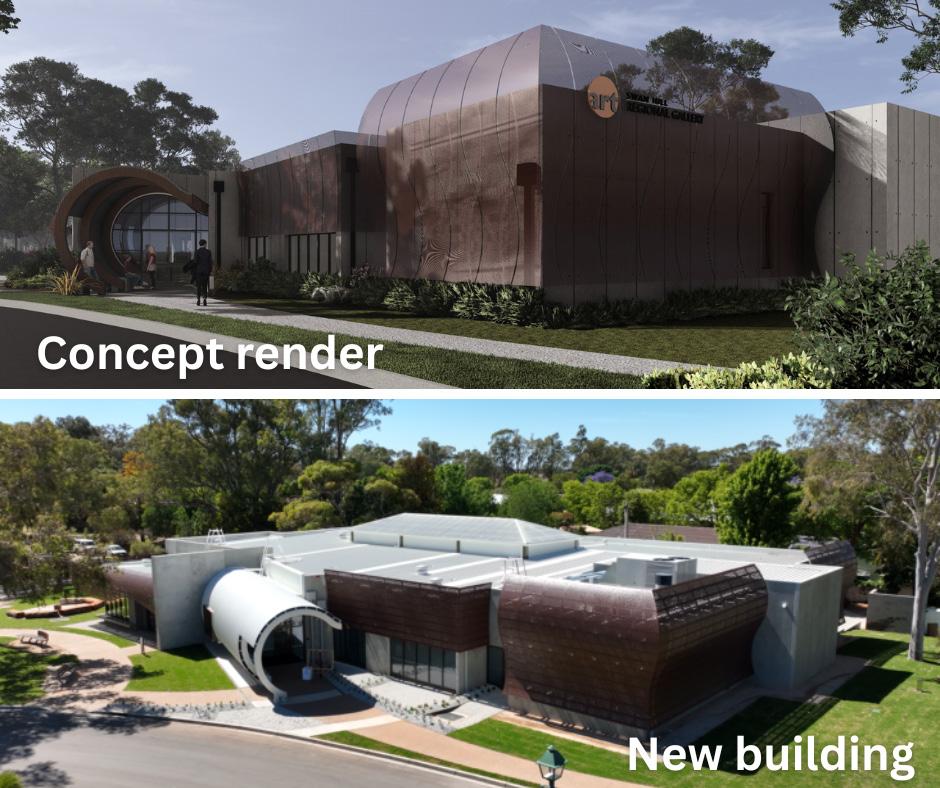
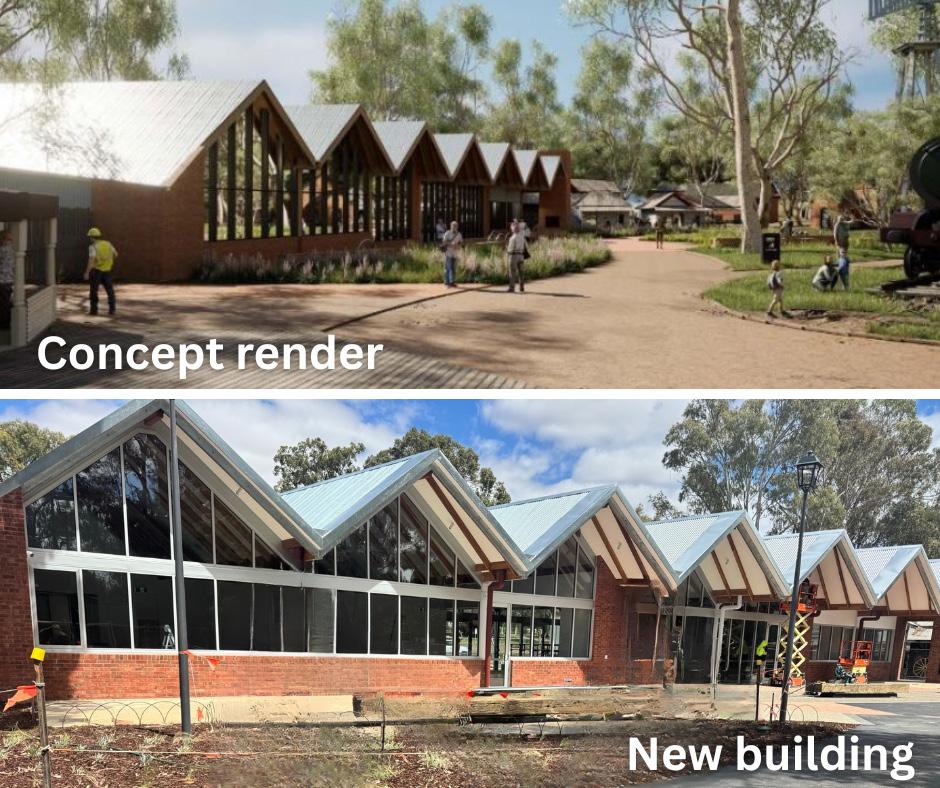
Our Region, Our River – two new buildings
FINALISTS
Loddon Shire Council
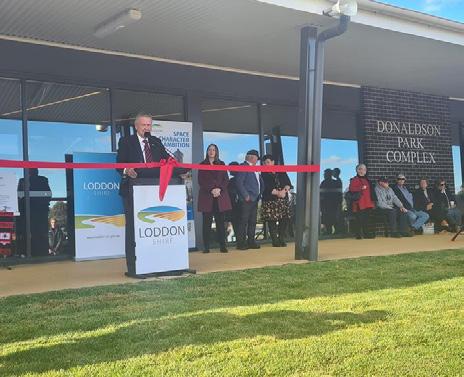
Donaldson Park Sporting Pavillion
Moorabool Shire Council
Bald Hill Activation Project
Community Assets and Infrastructure: Projects $5 million – $20 million with a population of over 50,000
WINNER
Whittlesea City Council
Aboriginal Gathering Place (AGP)
HIGH COMMENDATION
Whitehorse City Council
Building the Plaza: A Model for Cross-Government Innovation
FINALIST
Port Phillip City Council
Port Phillip EcoCentre
Community Assets and Infrastructure: Projects over $20 million
WINNER
Merri-bek City Council Balam Balam Place
HIGH COMMENDATIONS
Casey City Council Clyde Recreation Reserve Redevelopment
Greater Geelong City Council
The Biyal-a Armstrong Creek Library
Community Partnerships
WINNER
Swan Hill Rural City Council Leading Housing Challenges Together
HIGH COMMENDATION
Yarra City Council
Yarra Youth Services/Neighbourhood Justice Centre Partnership
FINALIST
Mornington Peninsula Shire Council Radio Western Port
Digital and Technology
WINNER
Wyndham City Council Smart Technology Driving Smarter Land Management
HIGH COMMENDATION
Bayside City Council BayBot
FINALISTS
Maroondah City Council Maroondah Chat GPT
Mitchell Shire Council My Mitchell App – Driving Innovation and Service Delivery
Disaster Readiness and Recovery
WINNER
Bass Coast Shire Council Energy Resilient Community Hubs
FINALISTS
Maribyrnong City Council Flood Recovery Program
Yarra Ranges Council Resilient Yarra Ranges Team
WINNER
Mornington Peninsula Shire Council
All Abilities Boating – Hastings Pontoon Hoist
HIGH COMMENDATION
Boroondara City Council
Social Inclusion Co-design with Autistic Young People
FINALISTS
Glen Eira City Council
Basketball Unlimited
Greater Dandenong City Council
HOME25
WINNER
Kingston City Council
Emission Reduction with Local Businesses
HIGH COMMENDATION
Wyndham City Council
Not Yet a Park, Still a Priority – Protecting Victoria’s
Critically Endangered Grasslands
FINALISTS
Monash City Council
Actions for Earth
Moira Shire Council
Target 80 by 2030
Nillumbik Shire Council
Vehicle-to-Load (V2L) Power Trials for Zero-Emission Events and Emergency Resilience
Innovative Leadership
WINNER
Wellington Shire Council & East Gippsland Shire Council
Shared Services Initiative Rural Councils Records Management Transformation
HIGH COMMENDATION
Swan Hill Rural City Council Tower Hill Housing Development
FINALISTS
Boroondara City Council Housing Trend Tracker
Kingston City Council Kingston Sustainability Business Awards
Yarra Ranges Council Yarra Ranges Council Cultural Literacy Program
Service Delivery
WINNER
Swan Hill Rural City Council Development Advisory Service
HIGH COMMENDATION
Ballarat City Council PopCon 2025
FINALIST
Hume City Council Keep Hume Clean
Special
WINNER
Campaspe Shire Council
Ripple Fest
HIGH COMMENDATION
Horsham Rural City Council
Skate Bowl Anti-Graffiti Art Project
FINALIST
Murrindindi Shire Council
Kerbside Reform – Campaign to community with Musical Jingles
Outstanding Small Rural Council
WINNER
Golden Plains Shire Council
Inverleigh Active Youth Space
FINALISTS
Central Goldfields Shire Council
Video Storytelling for Community Impact
Hepburn Shire Council
Hepburn Together
Horsham Rural City Council
Skate Bowl Anti-Graffiti Art Project
WINNER
Abby Eager
Mitchell Shire Council
FINALISTS
Jordy McIvor-Clark
Greater Geelong City Council
Benjamin Petkov
Greater Geelong City Council
Melissa Rushton
Swan Hill Rural City Council
This award recognises initiatives that demonstrate exceptional collaboration and dedication in fostering meaningful relationships and outcomes between councils, First Nations people and the general community. This could include, but is not limited to, initiatives in:
– Professional development and education (both from a council officer perspective and/or the First Nations community)
– Business and economic development

– Leadership in the community
– Recreation and events
– Governance and decision making
– Environment and sustainability
• Clear description of approach adopted
• Community involvement and collaboration: Active participation and engagement of First Nations people in the planning, implementation and long term commitment of the initiative or program.
• Evidence of courageous leadership in the face of opposition or adversity
• Clarity and delivery of outcomes within the organisation and the community/municipality
• Measurable benefits to the organisation, Indigenous community, and the broader community/municipality
• Cultural Sensitivity: Respect and incorporation of First Nations cultural values and practices in the initiative or program.
Mornington Peninsula Shire Council
NgawakBiik–BriarsJuniorRangerproject
Banyule City Council
MarrageilStrategy:Victoria’sfirstSelf-DeterminationStrategy
Kingston City Council
DerrimutWeelamGatheringPlace,Mordialloc

NgawakBiik–BriarsJuniorRangerproject
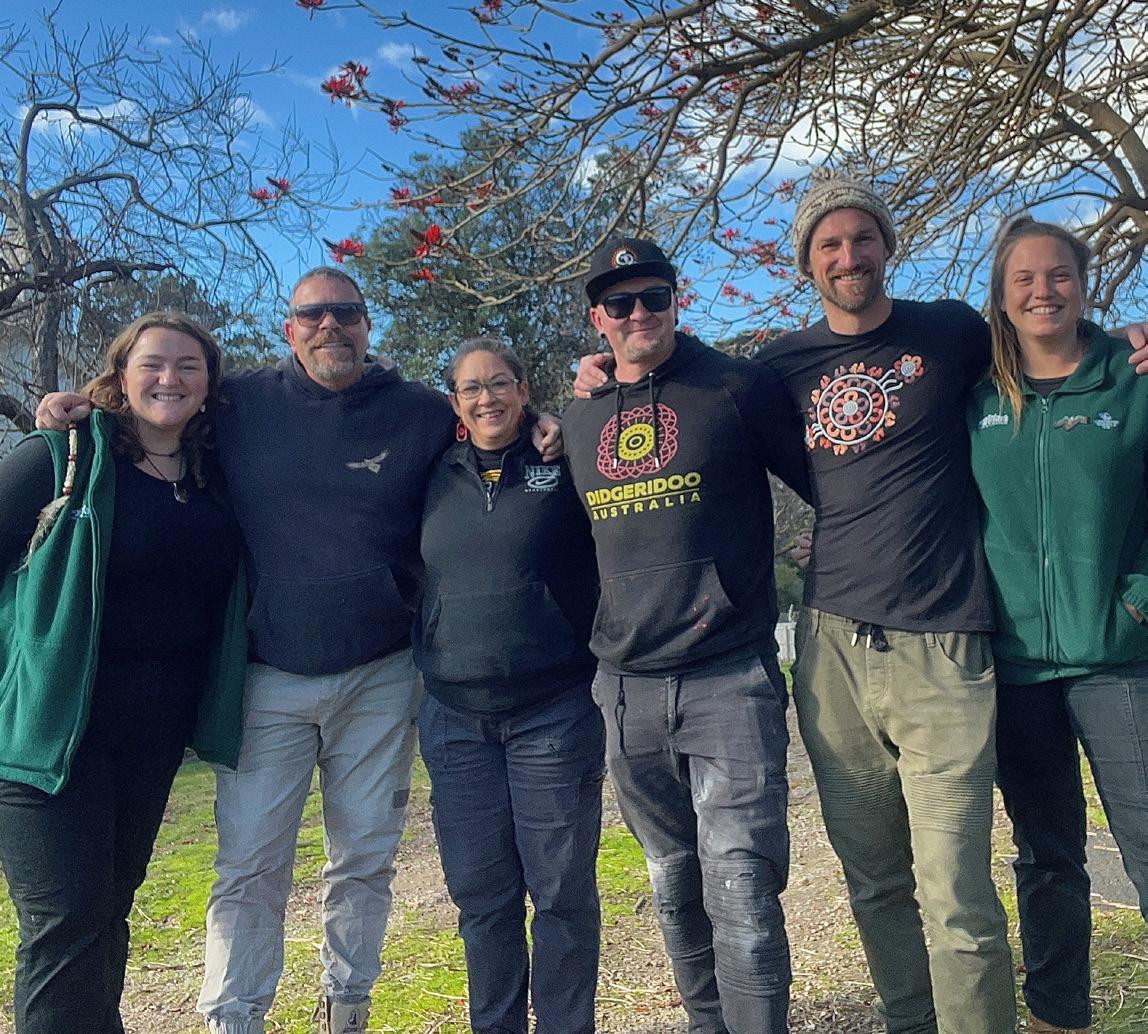
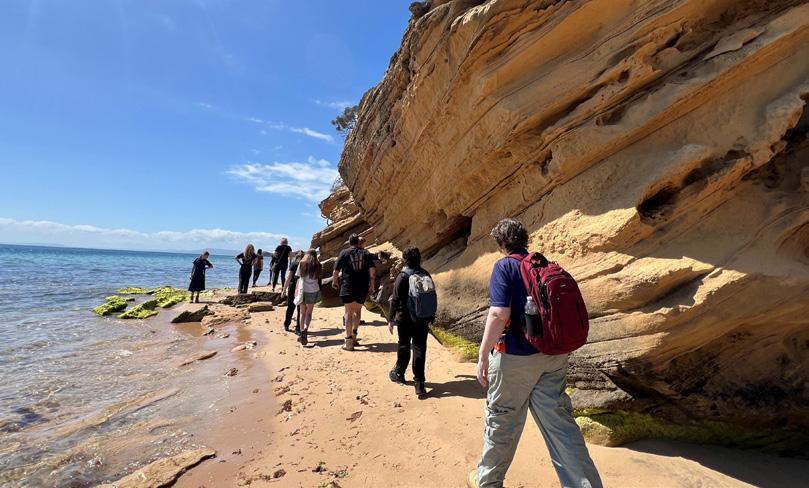
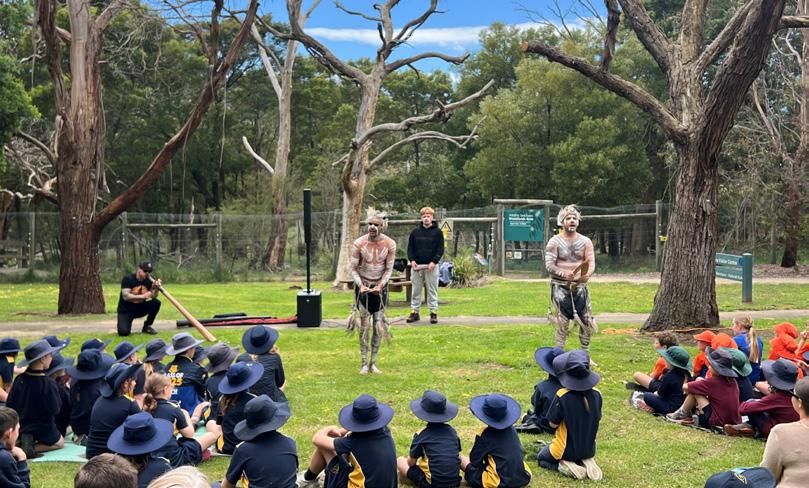
Ngawak Biik – Briars Junior Ranger project is a culturally grounded, place-based education program that connects First Nations young people with Country, heritage and environmental stewardship through sustained on-Country learning. Led by Mornington Peninsula Shire and co-delivered with Bunurong Land Council, Elders, First Nations facilitators and schools, the initiative embeds Traditional knowledge into curriculum-aligned experiences at two culturally significant Bunurong sites, The Briars and Police Point. By centring cultural authority and youth engagement, the program is helping young people strengthen identity, confidence and connection while also opening pathways into conservation, land management and cultural heritage careers.
The program was designed to provide accessible, school-aligned learning that honours Bunurong knowledge and custodianship while strengthening partnerships between Council, schools and First Nations communities. Mornington Peninsula Shire consulted with primary and secondary schools across the municipality to shape a flexible delivery model, resulting in fortnightly sessions for secondary students and quarterly sessions for primary schools. The employment of identified First Nations Program Leads has ensured cultural authenticity across planning and delivery, while yarning, school visits, family conversations and continuous dialogue with Bunurong Land Council have embedded First Nations voice in every stage of the initiative.
The results in the first year have exceeded expectations. The original target was to engage 20 First Nations students, yet the program supported 80 participants, including 20 secondary students attending regularly and more than 60 primary students each term. Teachers have reported improvements in student confidence, engagement, behaviour and relationships at school, while the program has also strengthened cultural pride and belonging among participants. Emerging partnerships with local TAFEs are creating VET-aligned pathways into conservation and land management, extending the program’s impact well beyond its initial goals and contributing to longer-term education and employment opportunities for young people.
This demonstrates how local government can support selfdetermination, reconciliation and environmental learning through long-term, culturally led partnership. Mornington Peninsula Shire has created more than an education program: it has built an enduring framework for cultural knowledge transmission, youth empowerment and shared responsibility for caring for Country. The initiative stands out for its authenticity, demand and transformative outcomes, offering a powerful model for other councils seeking to work differently with First Nations communities and young people.
MarrageilStrategy:Victoria’sfirstSelf-DeterminationStrategy
Marrageil Strategy: Victoria’s first Self-Determination Strategy is a landmark, community-led framework that places Aboriginal leadership, cultural authority and self-determination at the centre of Banyule City Council’s work. Meaning ‘Powerful’ in Woi-wurrung, the strategy was developed alongside the Wurundjeri Woi-wurrung Cultural Heritage Aboriginal Corporation and guided by Elders, Barrbunin Beek and Aboriginal staff. Rather than operating as a traditional reconciliation plan, Marrageil is designed to reshape how Council works across governance, culture, health, truth-telling and economic participation by ensuring Aboriginal voices guide decisions that affect Aboriginal people and Country.
The first year of implementation focused on building relationships, formalising cultural governance and turning community priorities into practical action. Banyule adopted culturally respectful approaches including yarning, On Country learning and relational governance, supported by regular engagement with Wurundjeri Elders and Aboriginal organisations. The establishment of the Banyule First Nations Advisory Committee has embedded Aboriginal voices in Council decision-making for the long term, while CEOto-CEO meetings and formal engagements with Wurundjeri have strengthened alignment with Traditional Owner aspirations. Programs such as Mums & Bubs, the First Nations Employee Network, cultural walks and the Spirit Trail have been shaped directly through Aboriginal leadership and community knowledge.
The outcomes show meaningful structural and cultural change. Marrageil has supported more than $500,000 in external funding for Barrbunin Beek, launched a First Nations Traineeship Program in partnership with AFL SportsReady, expanded culturally safe maternal and child health support and significantly increased participation in events such as National Reconciliation Week. Attendance at some cultural events rose by up to 150 per cent, while youth engagement reached its highest level yet through targeted outreach. The strategy has also shifted organisational practice through cultural safety audits, staff learning directly from Elders and stronger visibility of Aboriginal culture across public events, communications and community spaces.
This moves beyond symbolic commitment and demonstrates how local government can support self-determination through shared power, cultural respect and long-term accountability. Banyule City Council has created a living strategy that is grounded in Aboriginal leadership and already delivering tangible benefits across governance, wellbeing, culture and opportunity. Its strength lies in the depth of trust it is building and the way it is transforming Council practice from within, making it a sector-leading example of community-led change.
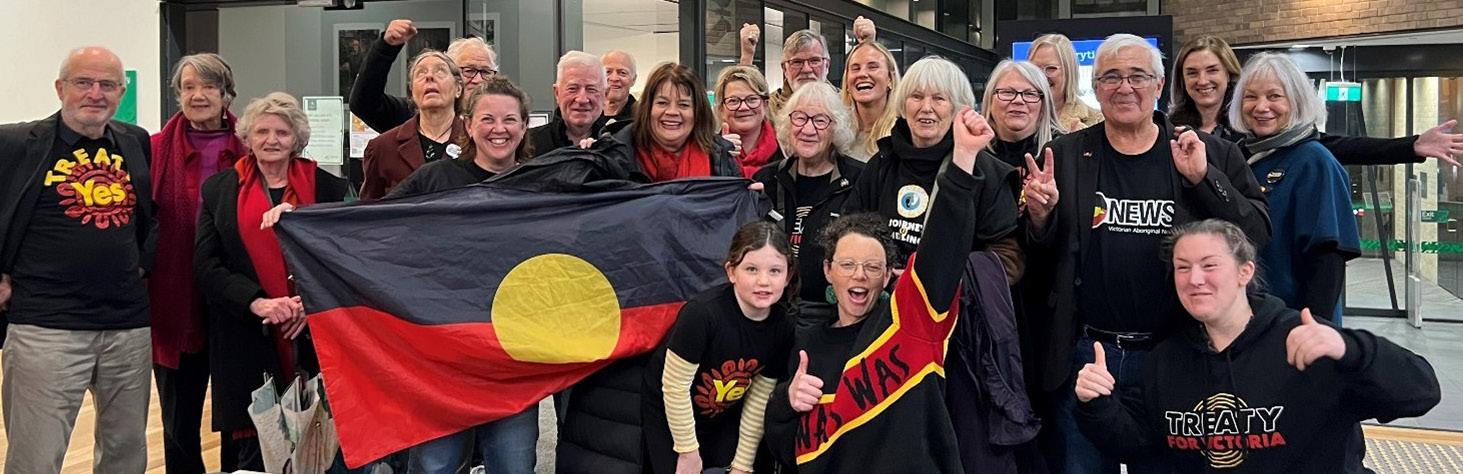
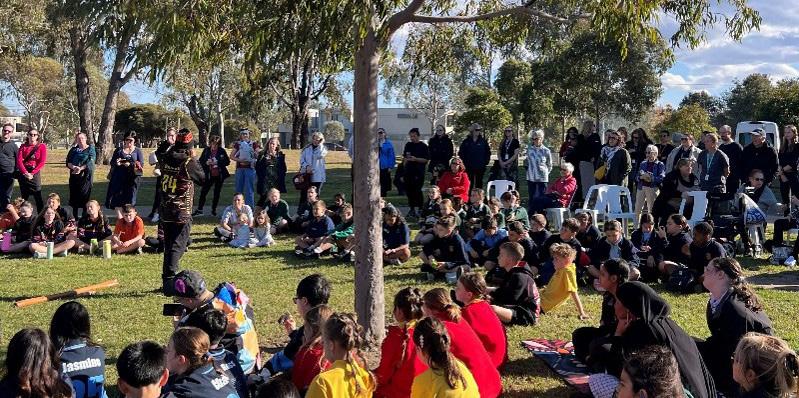
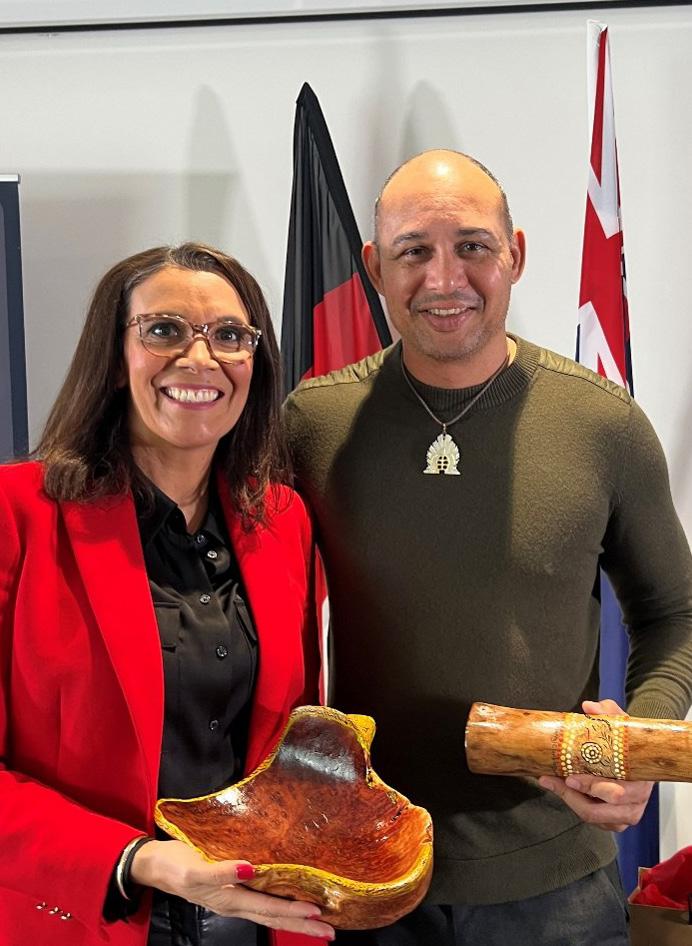
Derrimut Weelam Gathering Place, Mordialloc is a culturally safe community space created through partnership with local Aboriginal and Torres Strait Islander communities to strengthen cultural identity, leadership and self-determination in Kingston. Established by Kingston City Council, the gathering place supports cultural connection, storytelling, education, wellbeing and employment pathways while ensuring First Nations voices shape the design and delivery of programs. More than a facility, it represents a significant shift in how Council works with community by embedding Indigenous leadership into governance, reconciliation and long-term decision-making.
The initiative was co-designed through yarning circles, community consultations and ongoing dialogue with Elders, Aboriginal organisations and local community members, ensuring the place responded directly to community aspirations. Kingston established the Reconciliation Action Plan Advisory Group, made up of First Nations representatives with genuine decision-making authority, to guide implementation and ensure community voice remained central. Programs in cultural education, wellbeing and sustainability have since been delivered through partnerships with organisations including Bunurong Land Council Aboriginal Corporation and Dandenong & District Aborigines Co-Operative Limited, while opportunities for cultural competency training have also helped engage non-Indigenous community members respectfully and constructively.
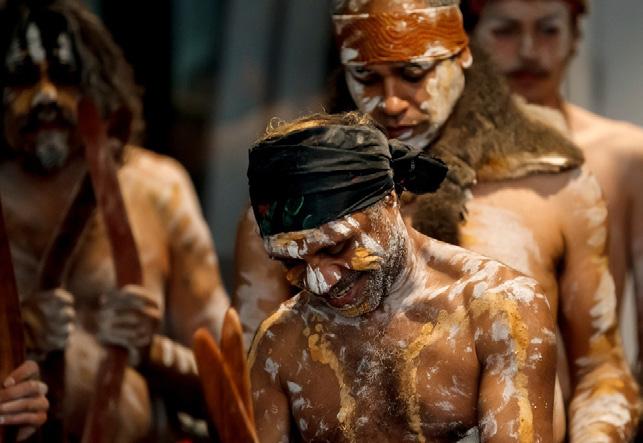
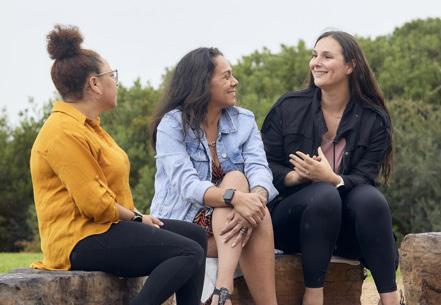
The Gathering Place has delivered strong benefits for First Nations community members, Council and the wider Kingston community. It has provided a safe space for Aboriginal and Torres Strait Islander people to connect, share knowledge and access support, while also creating more leadership opportunities and culturally informed employment and training pathways. Monthly lunches, Elders gatherings and leadership programs such as Kingston Kickstarters have strengthened community engagement, while the initiative has also lifted Council’s cultural capability and increased awareness of Indigenous culture among non-Indigenous residents through events and shared learning opportunities. These outcomes are helping build a more culturally aware, connected and inclusive municipality.
This demonstrates what genuine partnership with First Nations communities can look like when cultural safety, shared governance and self-determination are built in from the outset. Kingston City Council has created more than a place for gathering: it has laid the foundation for long-term cultural preservation, stronger relationships and community-led development. The initiative offers a meaningful model for other councils seeking to move beyond consultation and create structures that truly support First Nations leadership and community empowerment.

This award recognises initiatives that maximise benefits to the community and showcase partnerships in developing and managing community assets. This section is for projects that cost under $5 million that are new and a one-off activity of a capital nature.
• Clarity of the initiative’s outcomes
• Innovative features
• Demonstrated leadership
• Cost benefits
• Size and complexity of initiative relative to funding and resources
• Transferability/key learnings
• Demonstration of sustainability
Merri-bek City Council
MichelleGuglielmoPark–260SydneyRoad–ParkClosetoHomesProject
Bass Coast Shire Council
PhillipIslandNeighbourhoodBatteries
South Gippsland Shire Council
LeongathaRailPrecinctReimagined
Swan Hill Rural City Council
TheRobinvaleRiverfrontNature&AdventurePlayPrecinct
Yarra Ranges Council
ChirnsideUrbanPark
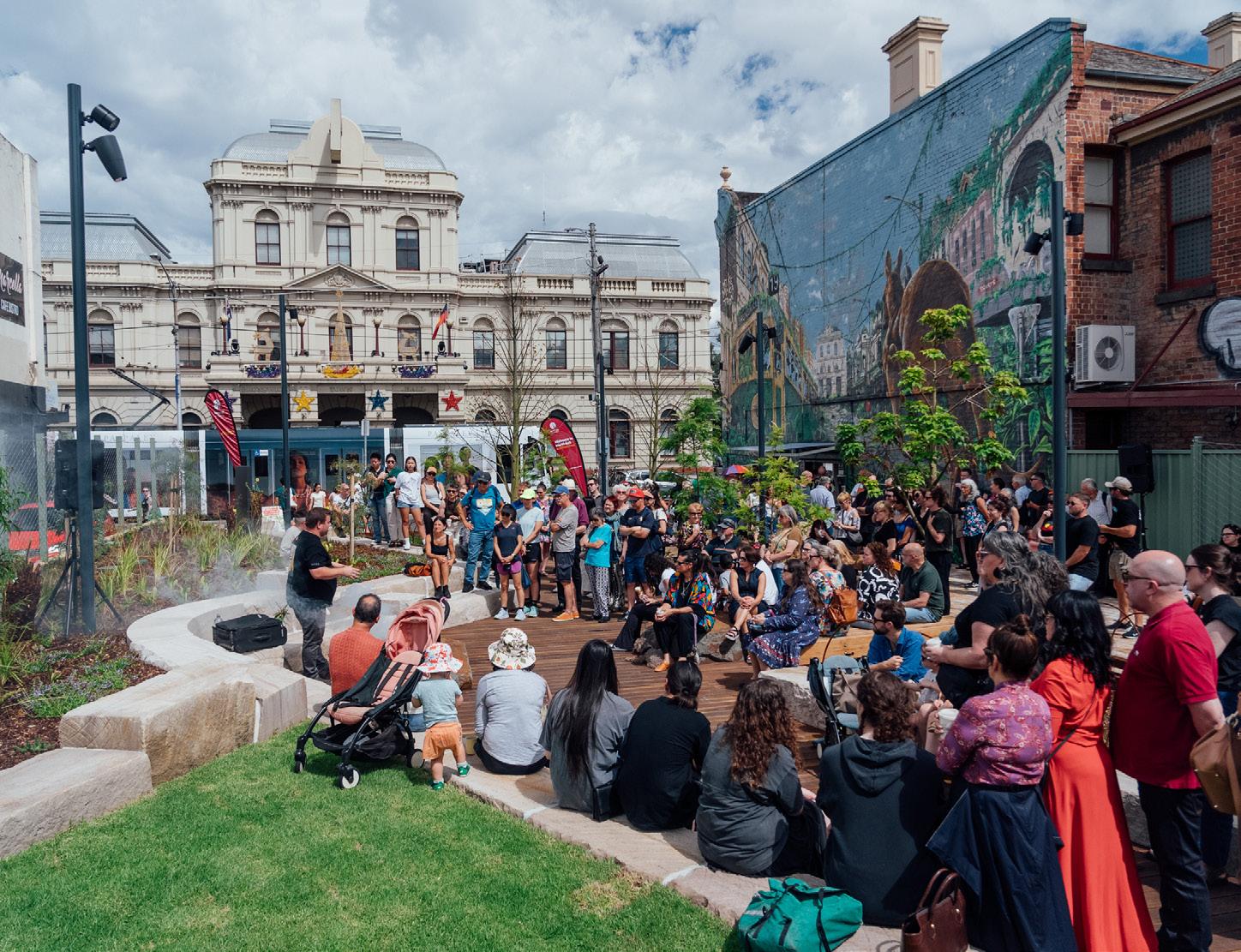
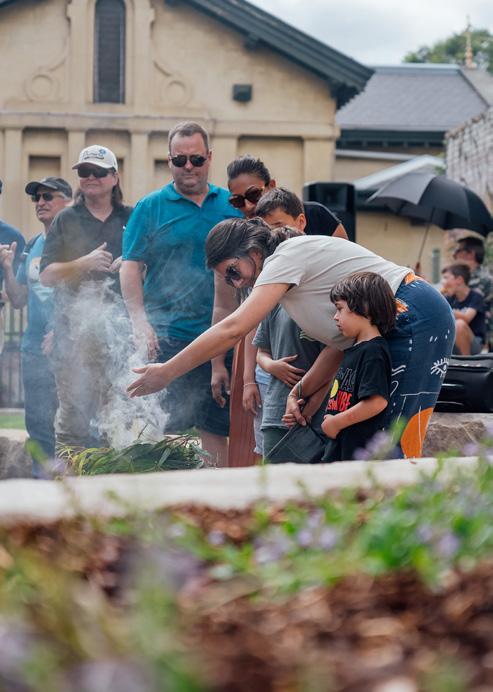
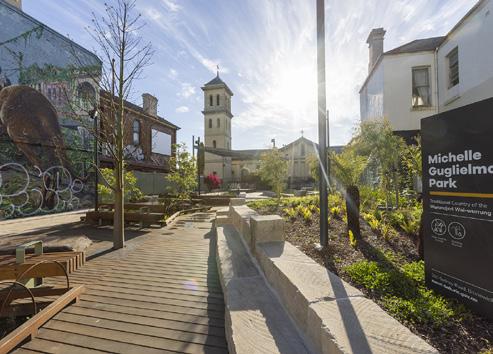
Michelle Guglielmo Park has transformed a former car yard in Brunswick into a vibrant urban park that delivers much-needed green open space in one of Merri-bek’s densest neighbourhoods. Delivered through Council’s Park Close to Home program, the project created a welcoming place for residents to meet, relax, play and connect with nature within walking distance of home. The park combines environmental resilience, public life and cultural activation in a compact footprint, with canopy trees, deep soil planting, stormwater swales, flexible gathering spaces and integrated public art shaping a park that is both practical and distinctive.
The project set out to deliver equitable access to open space, strengthen social connection and cultural expression, and improve environmental performance in Brunswick’s civic precinct. Merribek City Council led the planning, land acquisition and delivery, supported by Glas Landscape Architects, ARUP and a broad network of community and cultural partners. Residents helped shape the outcome through co-design workshops, multilingual engagement, night safety walks and virtual reality tools that allowed people to experience the design before construction. Interim activation programs also brought the site to life before works began, building trust, momentum and a sense of community ownership.
The completed park has delivered strong social, environmental and economic outcomes. Around 2,500 residents now have improved access to quality open space, while 70 per cent permeable surfaces, deep soil planting and a projected 60 per cent canopy cover strengthen water absorption, reduce heat and support biodiversity. Native species have already returned to the site, while dynamic lighting, integrated artworks and flexible event spaces have reinforced the park’s role as a civic and cultural destination. Nearby businesses have also benefited from increased visitation, demonstrating the broader value of investing in small but high-impact public spaces.
This project stands out as a benchmark for people-focused urban design because it shows how underutilised inner-city land can be reshaped into a place of lasting public value. By combining strategic land acquisition, community-driven design, cultural storytelling and climate-responsive infrastructure, it has delivered more than a park: it has created a greener, safer and more connected heart for the neighbourhood. Its success offers a strong model for other councils seeking to provide equitable access to open space while delivering long-term environmental and community benefits.
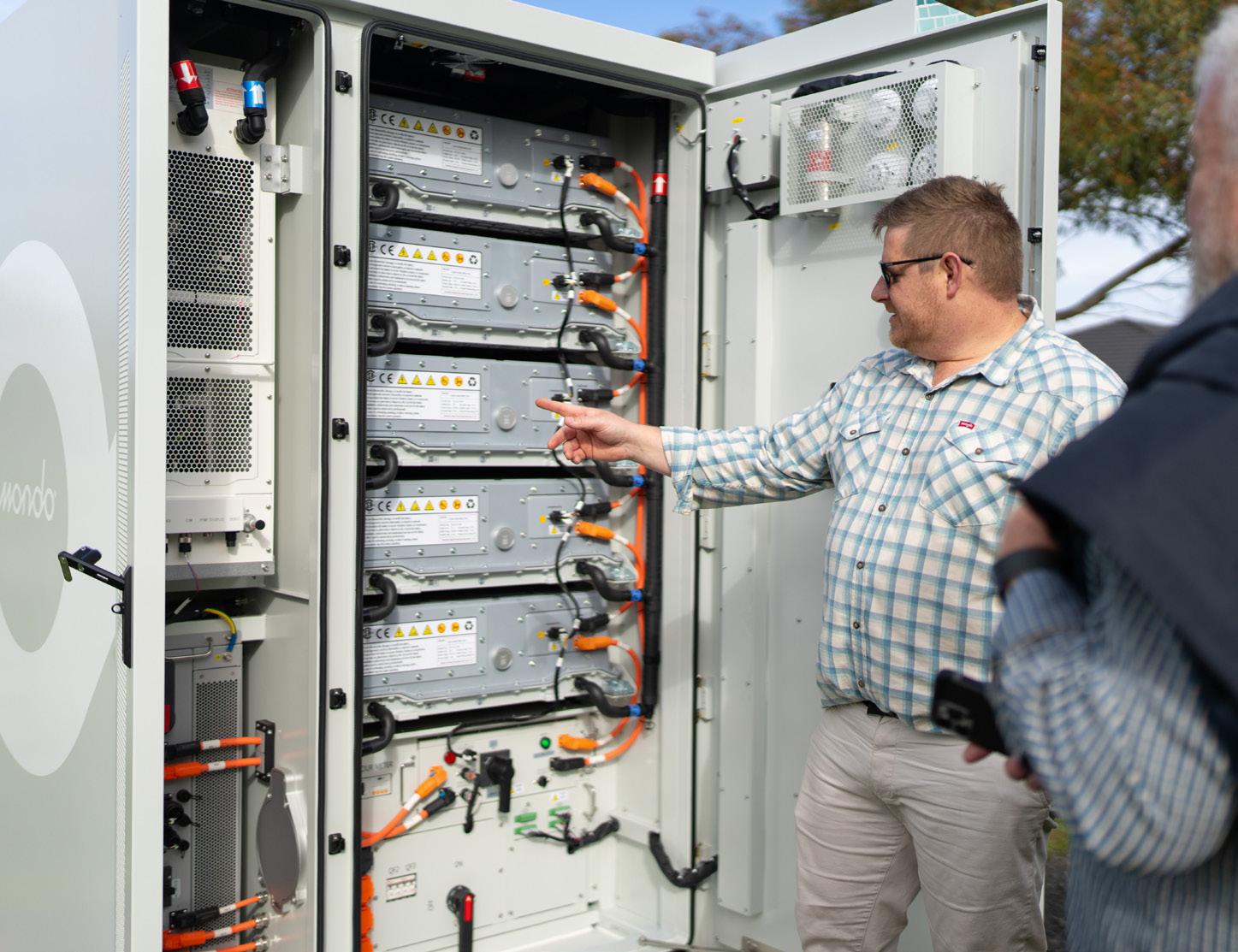
Phillip Island Neighborhood Batteries is a pioneering community energy initiative that demonstrates how councils, industry and local communities can work together to accelerate the renewable energy transition. Delivered through a partnership between Bass Coast Shire Council, Mondo, Totally Renewable Phillip Island and the Energy Innovation Co-op, the project installed seven neighborhood batteries across Phillip Island to store excess solar energy and support greater uptake of rooftop solar. Backed by substantial Victorian Government funding, the initiative lays the foundations for a broader network of local energy storage and future microgrid opportunities across the region.
The project set out to increase renewable energy use, reduce reliance on fossil fuels, improve local grid stability and create a scalable model for regional energy innovation. Council provided land, planning and project coordination, while community partners ensured local values and aspirations were embedded throughout. Mondo contributed technical expertise in battery deployment and network connections, and the Energy Innovation Co-op supported governance planning. Community co-design, robust engagement and a unique revenue donation model helped shape the project as a genuine community asset, rather than simply a piece of technical infrastructure.
Beyond the batteries themselves, the initiative has created a platform for long-term environmental, social and economic value. The system supports storage of excess solar energy for evening use, improves voltage stability and enables more rooftop solar connections across the island. A seven per cent revenue donation model will return funds to the community for future renewable energy projects, while performance dashboards and annual reporting will provide insight into battery operation and help other communities assess viability. The project has also helped simplify future battery connection processes in the AusNet distribution area, offering broader sector benefits well beyond Bass Coast.
This initiative shows how community-led infrastructure can respond to the scale and urgency of climate change in a practical, collaborative and locally relevant way. It combines technical innovation with shared governance, local benefit and strong public engagement, creating a replicable model for other regional communities. By helping to unlock more renewable energy, build resilience and return value to the community, it positions Bass Coast as a leader in the transition to a cleaner and more connected energy future.
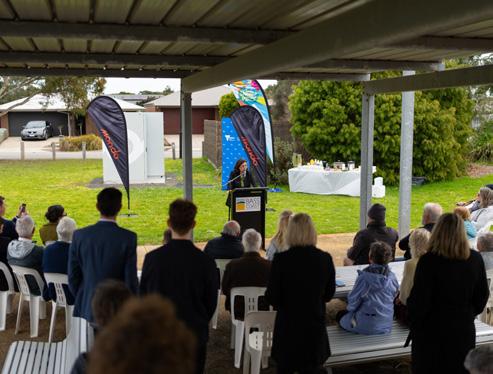
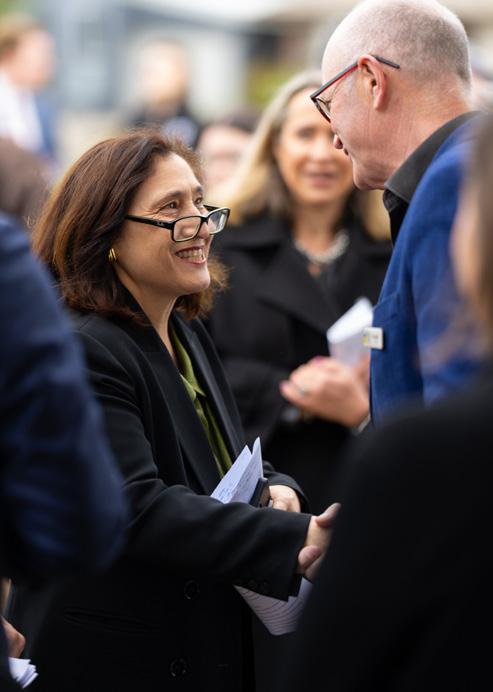
LeongathaRailPrecinctReimagined
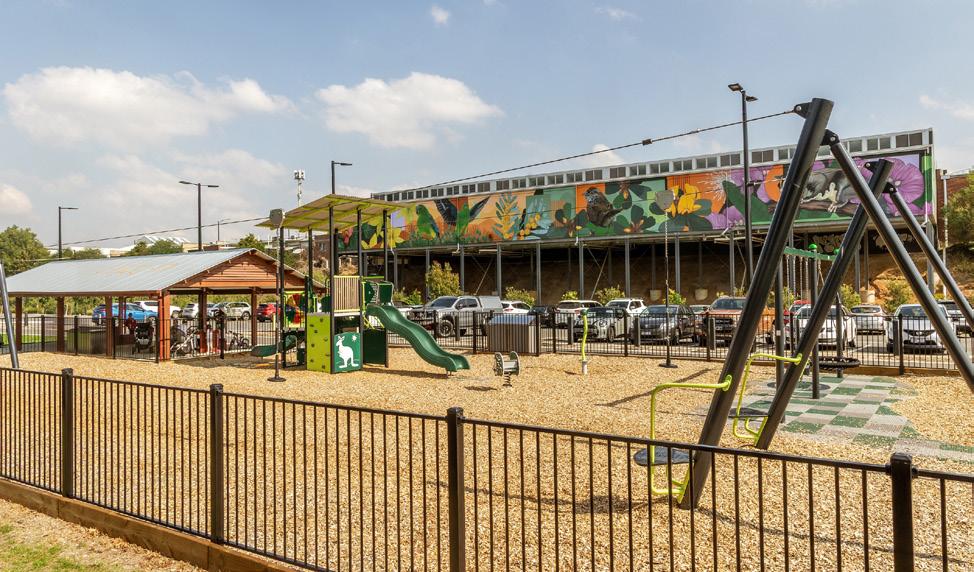
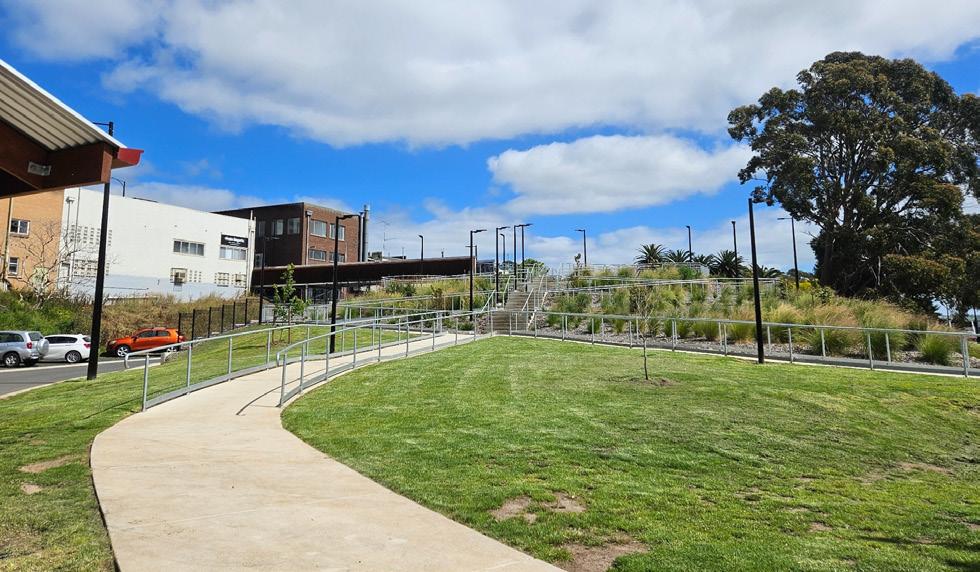
Leongatha Rail Precinct Reimagined has turned a neglected parcel of disused railway land into a vibrant, multifunctional community destination that reconnects people, place and movement through the heart of Leongatha. Delivered through a $3.4 million investment, the precinct now links the Great Southern Rail Trail and V/Line coach interchange with the town centre, while also providing improved parking, visitor facilities, a playground, public amenities and flexible spaces for events. What was once underused land is now an activated civic asset that supports everyday use as well as larger gatherings of local and regional significance.
The project was driven by a clear objective to improve connectivity, accessibility and amenity across the precinct while supporting local business activity and creating a flexible community space. South Gippsland Shire Council brought together strategic planning, infrastructure, open space, arts and grants expertise to shape and deliver the project, supported by community and business input, state and federal funding, and collaboration with VicTrack as landowner. A Community Reference Group and public engagement process helped guide decisions, including the selection of a largescale mural that has given the precinct a stronger cultural identity and local sense of ownership.
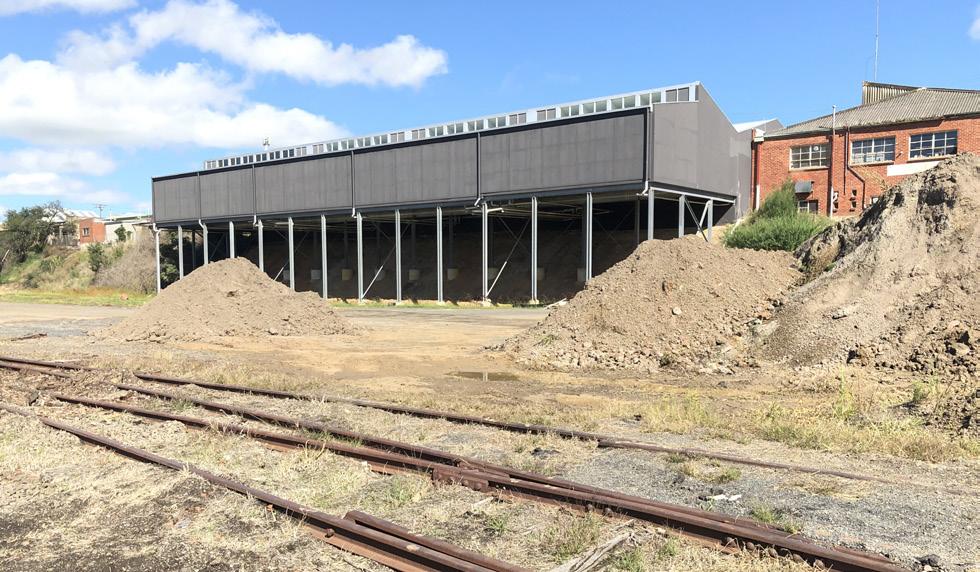
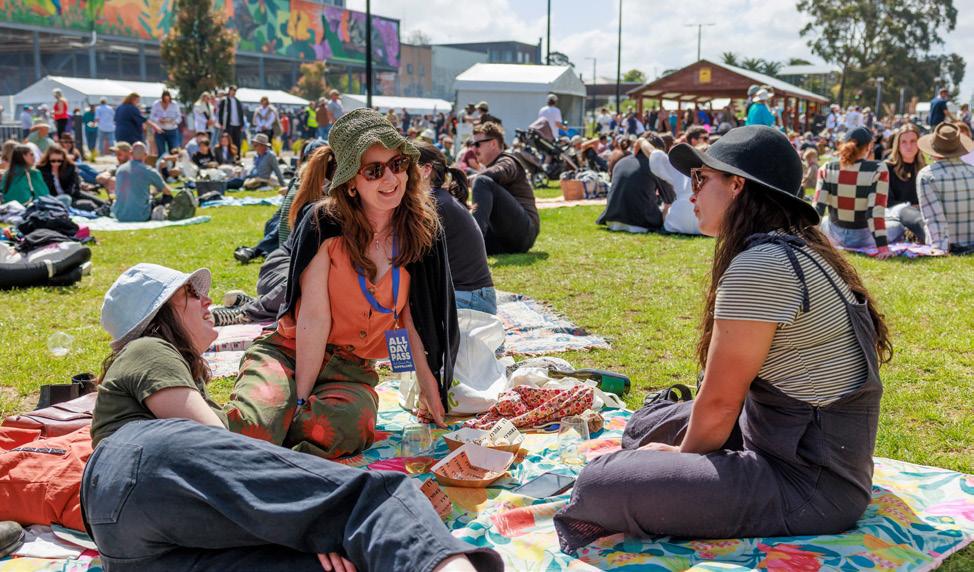
The transformed precinct is now delivering social, economic and environmental benefits for Leongatha and the wider region. Fifty new car parks, improved pedestrian links and dedicated long-vehicle spaces have increased access to the retail area and supported local business activity, while the monthly community market, Southern Rail Trail Run and Eat Drink Play festival have demonstrated the precinct’s value as an event and gathering space. Water-sensitive urban design, drought-tolerant planting and the reuse of local storm-recovered timber and mulch have also reduced environmental impact and contributed to a resilient and appealing public realm.
This project shows how integrated planning, strong partnerships and thoughtful design can unlock the value of constrained and complex sites. By working through challenges including land tenure, contamination, heritage requirements and poor servicing, it has created a welcoming, flexible and highly functional community space that strengthens both the town centre and regional visitor experience. Its combination of transport connectivity, placemaking and sustainable design makes it a compelling model for other councils seeking to revitalise underused land for lasting public benefit.
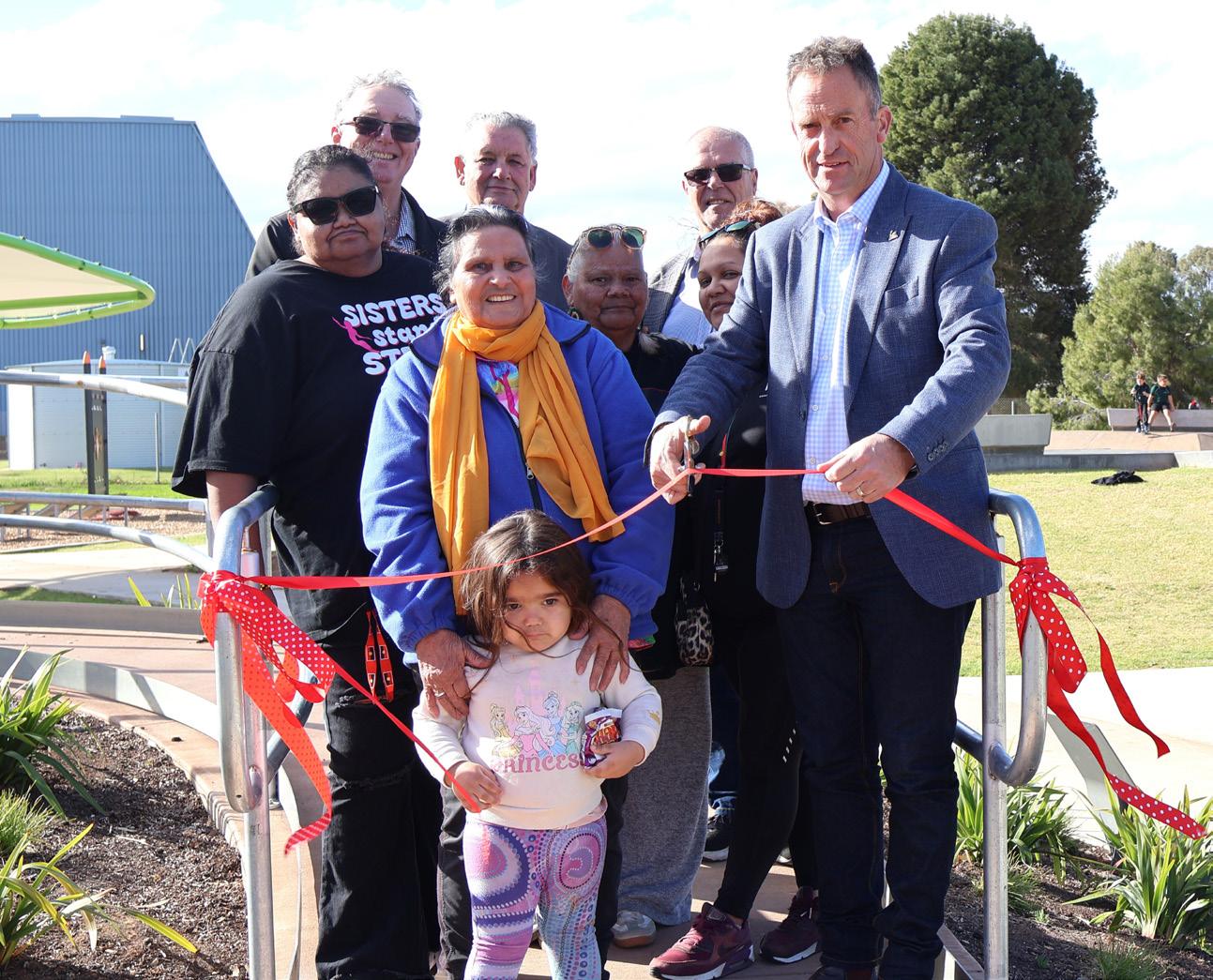
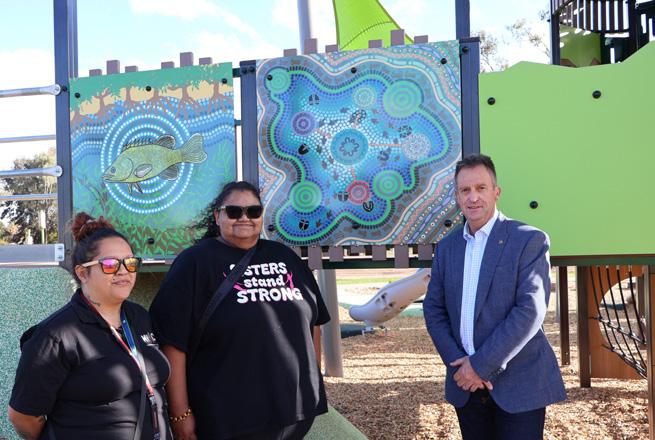
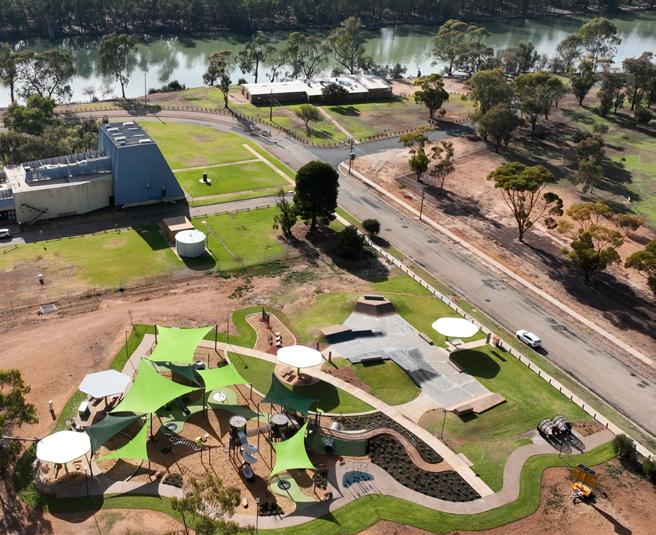
The Robinvale Riverfront Nature & Adventure Play Precinct is a flagship project within Swan Hill Rural City Council’s broader Riverfront Masterplan, transforming underutilised riverfront land into a vibrant, inclusive and culturally responsive destination for play, learning and connection. Designed to reflect Robinvale’s unique identity, the precinct combines adventure play, water and sand elements, shaded rest areas, accessible pathways and river-inspired design in a way that invites exploration by children, families and visitors of all ages. Its blend of recreation, storytelling and environmental design has created a new focal point for the community while reinforcing the value of the riverfront as a shared civic space.
The project was developed to create a safe and engaging all-abilities play environment that would support active recreation, strengthen social connection and celebrate local culture and ecology. Swan Hill Rural City Council worked with landscape architects, designers, playground specialists, First Nations artists, schools, Youth Inc. and community representatives to shape a precinct that responds to both practical and cultural priorities. A staged delivery model allowed the project to manage funding constraints while still delivering immediate benefit, and early cultural heritage assessment ensured the site could be developed respectfully and without avoidable delays.
First Nations artwork, educational elements and local themes such as the Murray Cod-inspired play space have helped ground the precinct in place and identity.
The completed precinct is already delivering strong social, cultural, economic and environmental outcomes for Robinvale. It has activated previously underused land, encouraged high visitation across age groups and created a welcoming place for families, schools and youth groups to gather. The integration of First Nations artwork and multicultural input has strengthened local pride and recognition of Robinvale’s diverse identity, while nearby businesses and event organisers have reported increased activity linked to the revitalised riverfront. Sustainable features such as solar lighting, drought-tolerant planting, retained trees and water-sensitive design have further improved the site’s long-term value and resilience.
This project shows how regional councils can translate a long-term masterplan into a high-quality public asset that is inclusive, culturally meaningful and deeply connected to local place. Swan Hill Rural City Council has created more than a play space: it has delivered a precinct that supports wellbeing, celebrates identity and strengthens the riverfront as a destination for everyday use and community events. Its success offers a strong model for other councils seeking to combine recreation, culture and environmental care in a single, lasting civic investment.
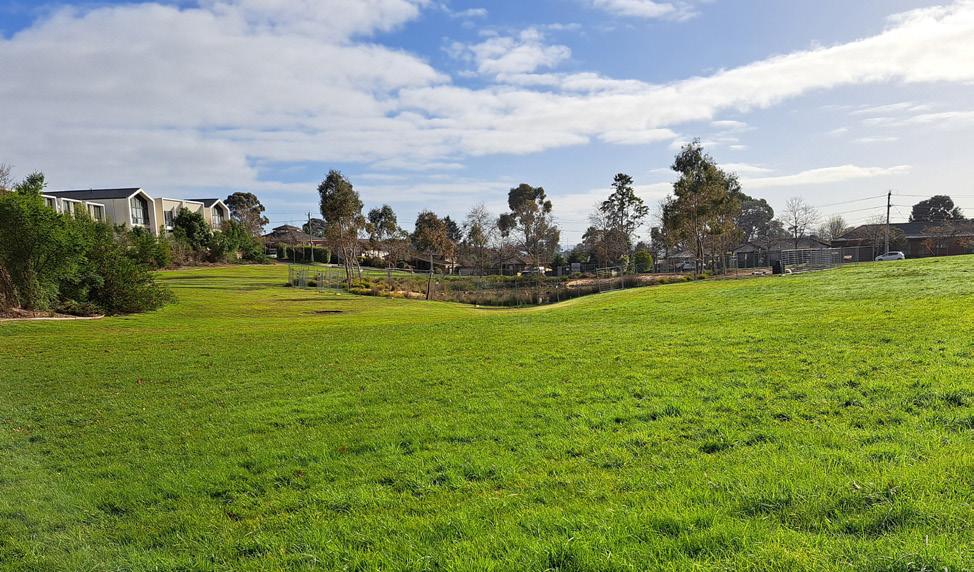
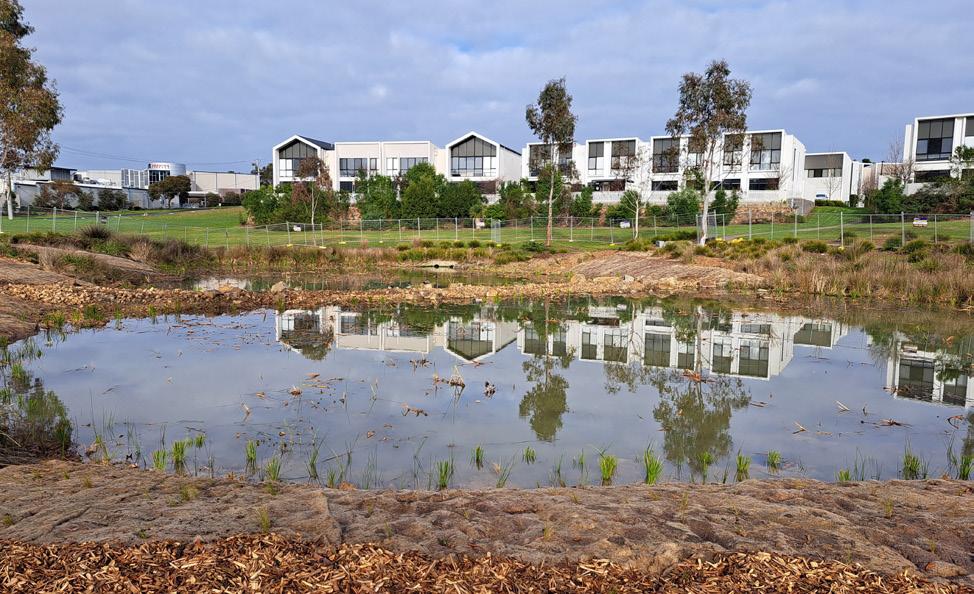
Chirnside Urban Park is the realisation of a decade-long vision to create a regional-scale urban park in one of Yarra Ranges’ growing communities. First identified in the Chirnside Park Urban Design Master Plan, the project has transformed a vacant reserve and wetland area into an inclusive, culturally expressive and ecologically responsive public space. The completed park combines sensory play, discovery trails, fitness and recreation infrastructure, flexible event spaces and a strengthened wetland landscape, all anchored by the striking balloon-inspired structures that pay tribute to the Yarra Valley’s long association with flight.
The project set out to create a multifunctional urban park that could respond to future population growth while protecting and enhancing the site’s wetland ecology. Yarra Ranges Council brought together its Design and Place, Major Projects, Procurement, Recreation, Property, Planning and Indigenous teams, alongside consultants, contractors, local schools and community groups, to shape and deliver the park. The design integrates universal access, inclusive play and cultural storytelling, with advice from Wurundjeri Elder Aunty Doreen GarveyWandin helping embed Indigenous symbolism throughout the site’s artwork, paths and interpretive elements.
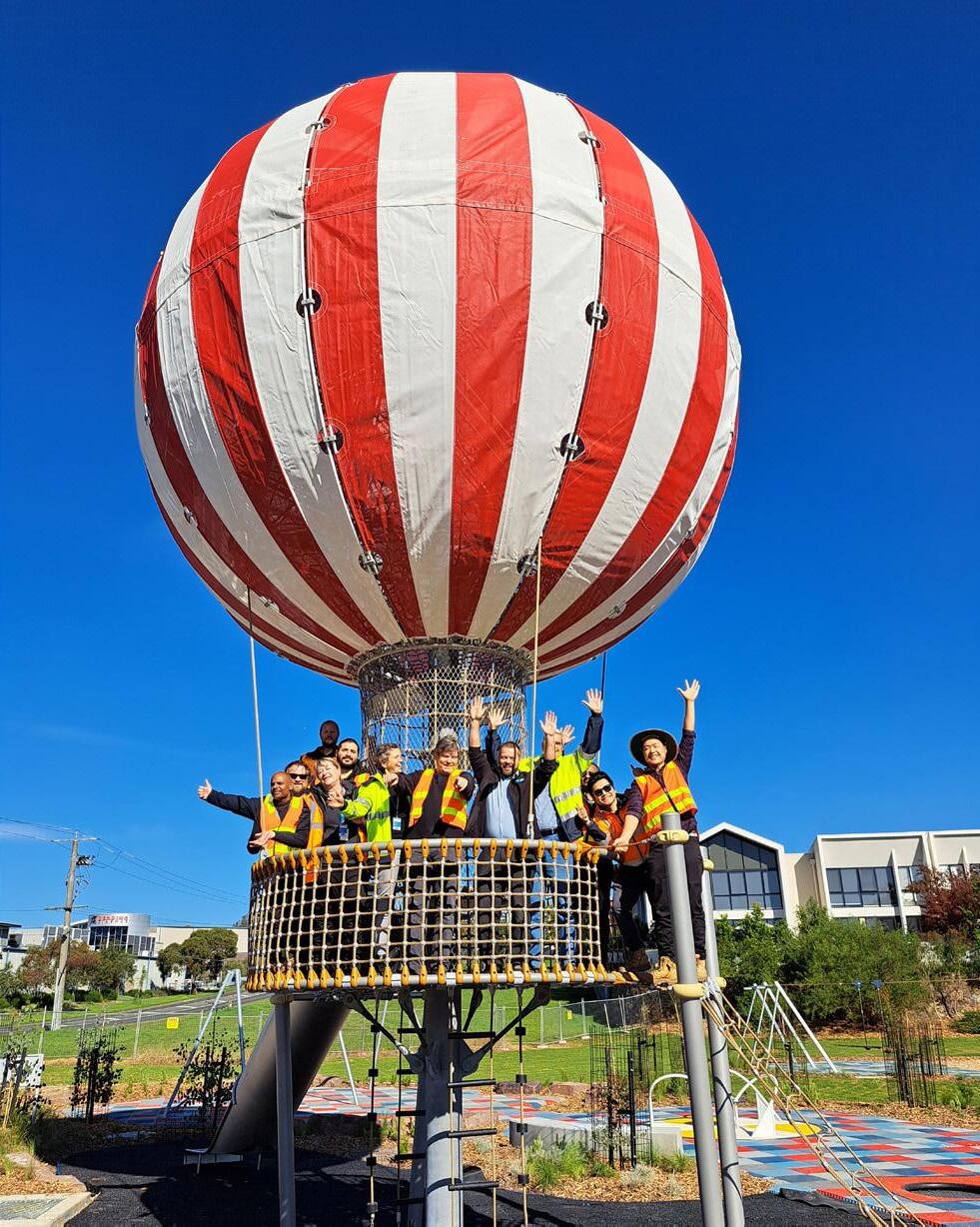
The completed park is now delivering broad community benefits. High visitation confirms its popularity as a destination for unstructured play, physical activity and social connection, while inclusive equipment, accessible paths, amenities and seating have made the space welcoming for all ages and abilities. Native planting, permeable surfaces, bio-retention swales and structural soil systems strengthen environmental performance, support biodiversity and improve long-term resilience. The park has also created a stronger local identity, with its sculptural balloon forms, murals and storytelling features turning the site into a recognisable and muchloved community landmark.
This project balances ecological care, inclusive recreation and cultural placemaking in a way that feels both ambitious and grounded in community need. It overcame challenges including land acquisition, community concern about wetland impacts and the complex delivery of imported signature play elements, yet remained true to its vision throughout. The result is a generous and distinctive public space that strengthens wellbeing, supports biodiversity and offers a replicable example of how thoughtful long-term planning can create enduring value for growing communities.
This award recognises initiatives that maximise benefits to the community with a population less than 50,000 and showcase partnerships in developing and managing community assets. It is for projects that cost $5 million – $20 million and are new and a one-off activity of a capital nature.
• Clarity of the initiative’s outcomes
• Innovative features
• Demonstrated leadership
• Cost benefits
• Size and complexity of initiative relative to funding and resources
• Transferability/key learnings
• Demonstration of sustainability
East Gippsland Shire Council
EaglePointForeshoreHubDevelopment
Swan Hill Rural City Council
OurRegion,OurRiver–twonewbuildings
Loddon Shire Council
DonaldsonParkSportingPavillion
Moorabool Shire Council
BaldHillActivationProject
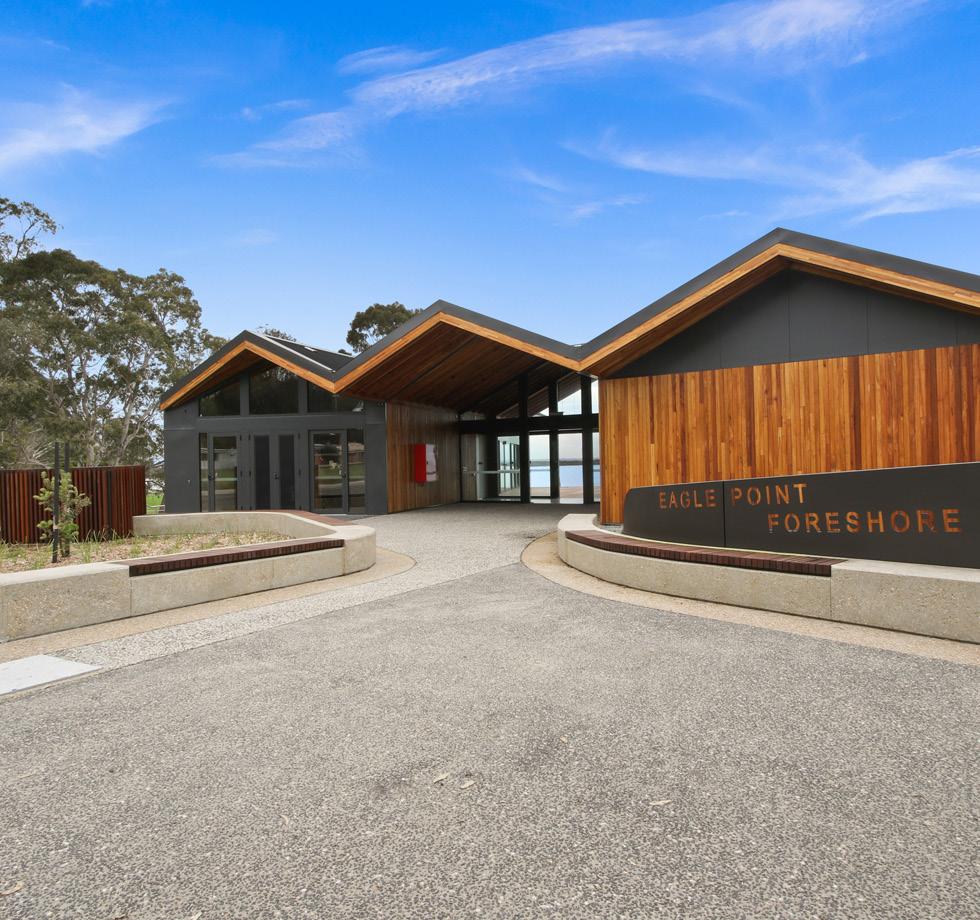
Eagle Point Foreshore Hub Development has transformed a cardominated foreshore into a vibrant waterfront destination that better reflects the spectacular natural setting of Lake King and the needs of the Eagle Point community. Led by East Gippsland Shire Council, the project has delivered a multi-purpose community hub, café, upgraded play areas, safer pedestrian access, modern amenities and a more welcoming public realm. By removing vehicles from the foreshore edge and prioritising people, the development has created a safer and more inviting place for recreation, gatherings and everyday community life.
The project set out to improve accessibility, safety and environmental sustainability while creating a contemporary hub for residents and visitors alike. A strong project control group brought together East Gippsland Shire Council, DELWP, Parks Victoria, Gippsland Ports, GLaWAC and community stakeholders to guide the work from concept to completion. Extensive consultation over two years ensured the design responded to the needs of children, older people, people with disability and First Peoples, while universal design principles and cultural input helped shape a place that is inclusive, practical and deeply connected to its local context.
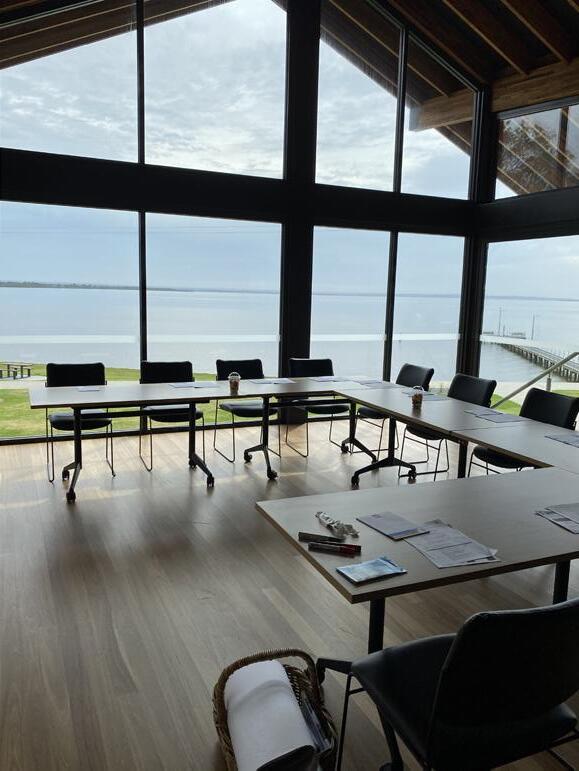
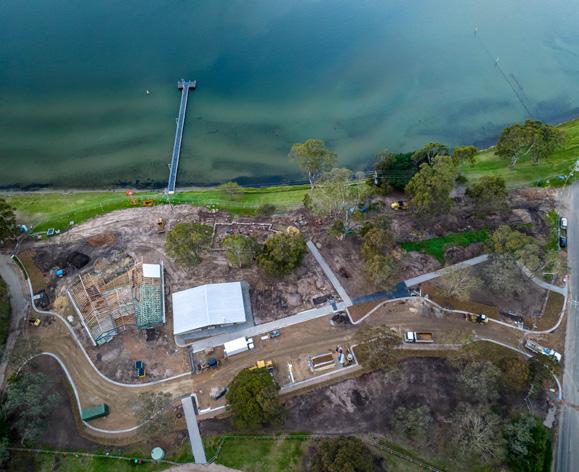
The completed Hub is already delivering broad benefits. It provides a formal meeting place and expanded opportunities for classes, functions and community events, while the café and water-based activity hire have created local jobs and strengthened tourism potential. The project has also improved caravan park patronage and business activity in the surrounding area. Environmentally, erosion control measures, sensitive landscaping and education opportunities linked to the adjacent flora and fauna reserve have strengthened stewardship of the foreshore and helped future-proof the site against climate impacts.
This development shows how thoughtful place-based planning can turn constrained and ageing infrastructure into a resilient, inclusive and community-loved destination. It balances practical improvements with environmental care, cultural respect and strong local engagement, resulting in a facility that strengthens connection, supports tourism and delivers lasting value for the region. It stands as a compelling example of how regional infrastructure can elevate liveability while celebrating place.
MILLION – $20 MILLION WITH A POPULATION OF UNDER 50,000
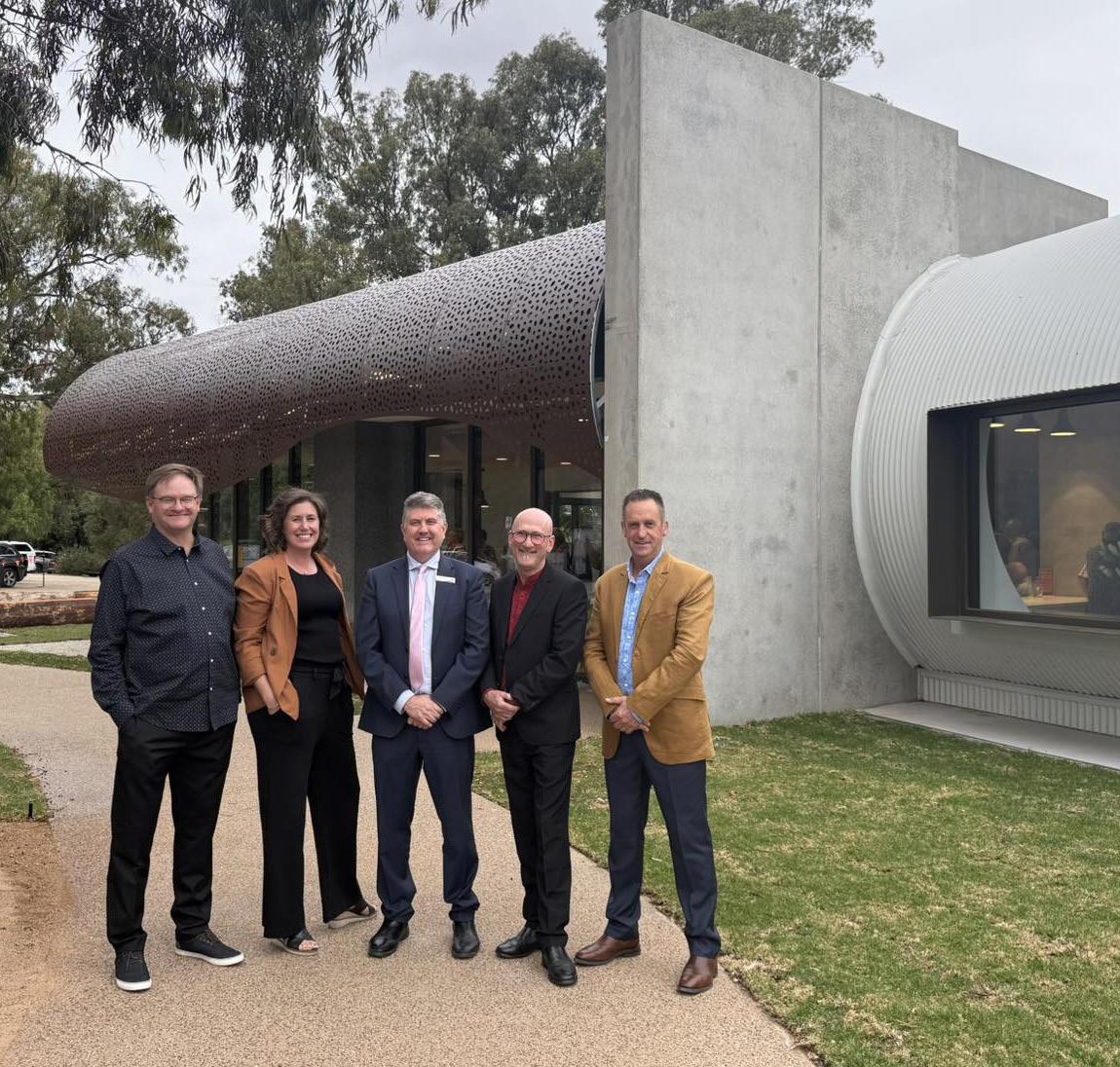
Our Region, Our River is a significant cultural and tourism investment that has reshaped Swan Hill’s riverfront precinct through the delivery of two architecturally designed community assets. As part of a broader cross-regional initiative, the project has created a renewed Art Gallery of Swan Hill and a Cultural and Tourism Experience Centre that together strengthen the city’s role as a regional cultural destination. The development combines gallery, visitor information, cultural tourism and community functions in a way that improves the visitor experience while expanding opportunities for local arts, education and storytelling.
The initiative was designed to revitalise the Murray River corridor through landmark infrastructure that would support liveability, tourism, cultural development and economic growth. Swan Hill Rural City Council led the local component in partnership with Heritage Victoria, project consultants and a newly established First Nations Advisory Committee. When strong community concern and a heritage listing challenged the original two-storey proposal, Council responded with transparency and adaptability, redesigning the project into two integrated single-storey buildings that retained all major benefits while respecting the heritage significance of the Pioneer Settlement precinct.
The result is a pair of enduring public assets that improve accessibility, expand exhibition and workshop space, support Aboriginal tourism and storytelling, and create a more cohesive and welcoming destination for residents and visitors. The project is expected to boost visitation, encourage longer stays and support local business growth, while also creating new opportunities for artists, educators and First Nations community members. Sustainable design choices, shared operational efficiencies and the retention of key heritage elements further strengthen the long-term value of the development.
This project demonstrates how persistence, genuine engagement and adaptive design can turn a contested development into one with broad community support and lasting regional benefit. By balancing heritage conservation, cultural inclusion and economic ambition, Swan Hill Rural City Council has delivered infrastructure that celebrates place while strengthening the future of the region. It offers a powerful model for heritage-sensitive development driven by collaboration rather than compromise.
– $20 MILLION WITH A POPULATION OF UNDER 50,000
LODDON SHIRE COUNCIL
Donaldson Park Sporting Pavillion has transformed Wedderburn’s ageing and fragmented sporting precinct into a modern, inclusive and multi-purpose community hub that better supports recreation, health and social connection. The redevelopment delivered a contemporary sports pavilion, universal-access changerooms, an all-abilities playspace, improved parking, safer circulation and upgraded landscaping, creating a future-ready precinct for football, netball, hockey and broader community use. What was once a series of outdated and duplicated facilities is now a unified destination that serves both organised sport and informal community life.
The project’s objectives were clear: replace non-compliant facilities, improve accessibility and safety, support growing participation across all ages and genders, and reduce long-term asset renewal pressure through shared infrastructure. A user-group steering committee, Council’s Community Support team and its internal Project Management team worked together to shape and deliver the hub, supported by 11 funding sources and strong community input. An important feature of the process was the commitment that no group would be worse off, which helped build trust, align competing priorities and strengthen local ownership of the final outcome.
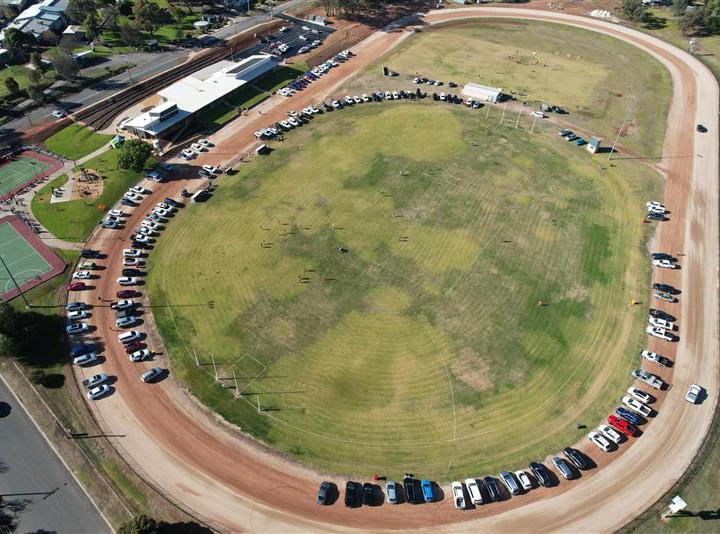
The redeveloped precinct is now delivering strong social, economic and environmental outcomes. Gender-inclusive amenities and universal access pathways are supporting wider participation, while the consolidated layout has improved club operations and reduced maintenance burdens. The hub has also strengthened Wedderburn’s capacity to host larger events, including the 2025 North Central Football and Netball League grand final, which drew a record crowd. Solar installation, sustainable landscaping and the rationalisation of older buildings have further improved environmental performance and reduced long-term operational costs.
This project shows what is possible when long-term vision, collaborative leadership and community resilience come together around a shared goal. It not only delivers better sporting and social infrastructure for today, but also strengthens Wedderburn’s reputation as a destination for regional events and community activity. It offers an excellent model for small rural councils seeking to maximise impact through consolidation, partnership and sustained local commitment.
$5 MILLION – $20 MILLION WITH A POPULATION OF UNDER 50,000
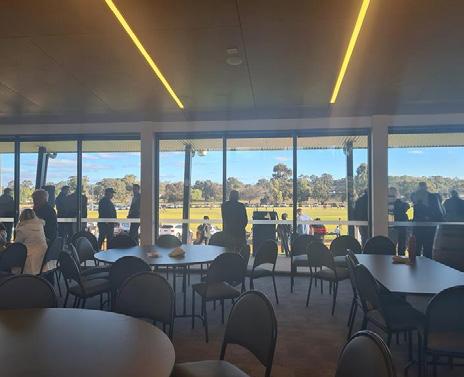
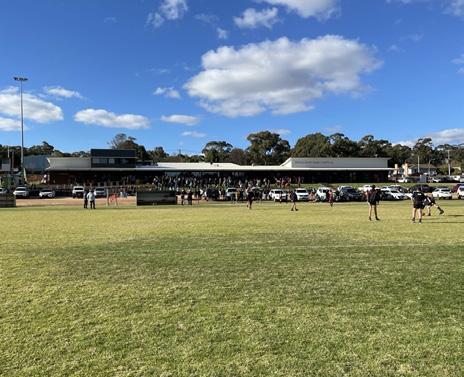
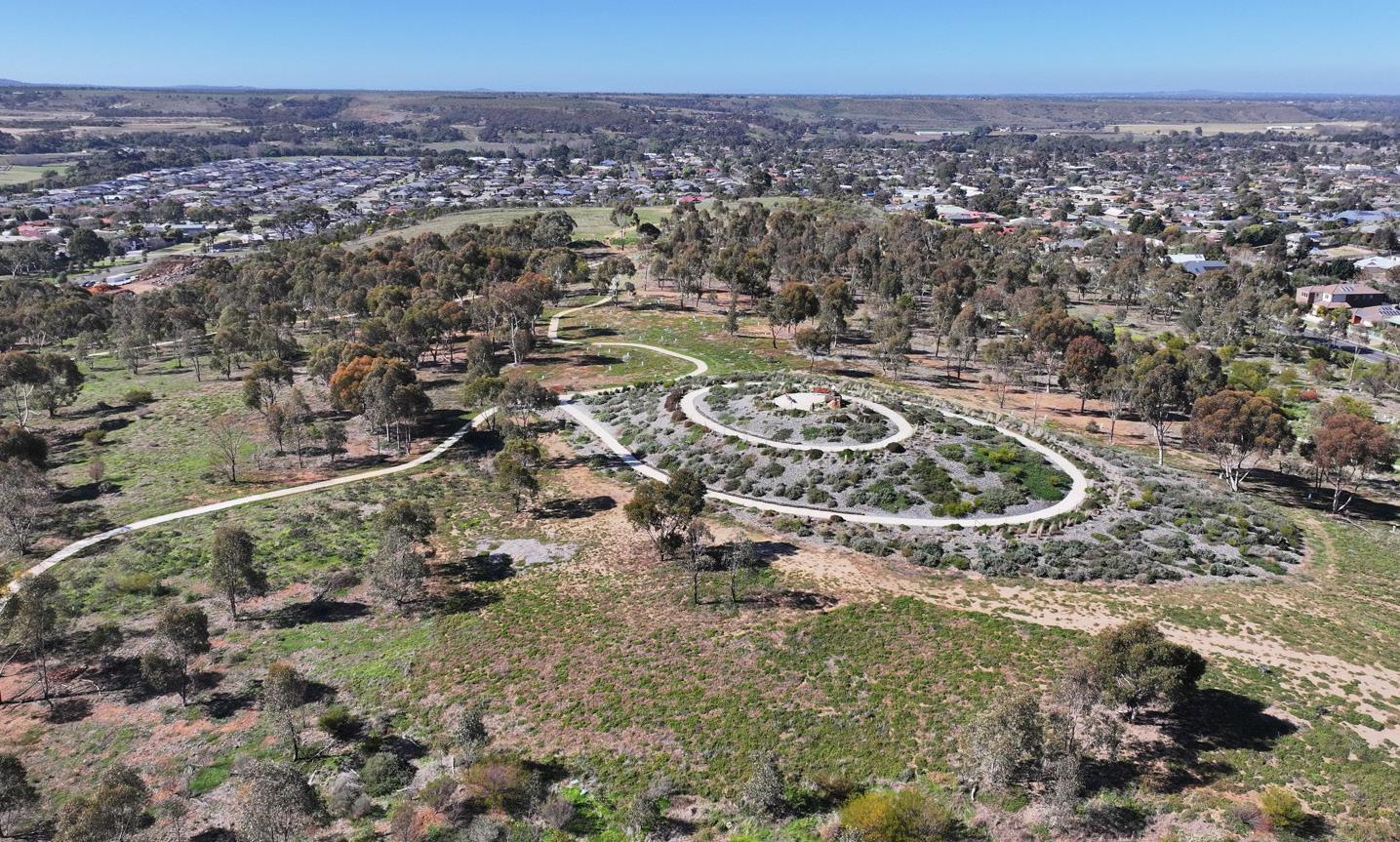
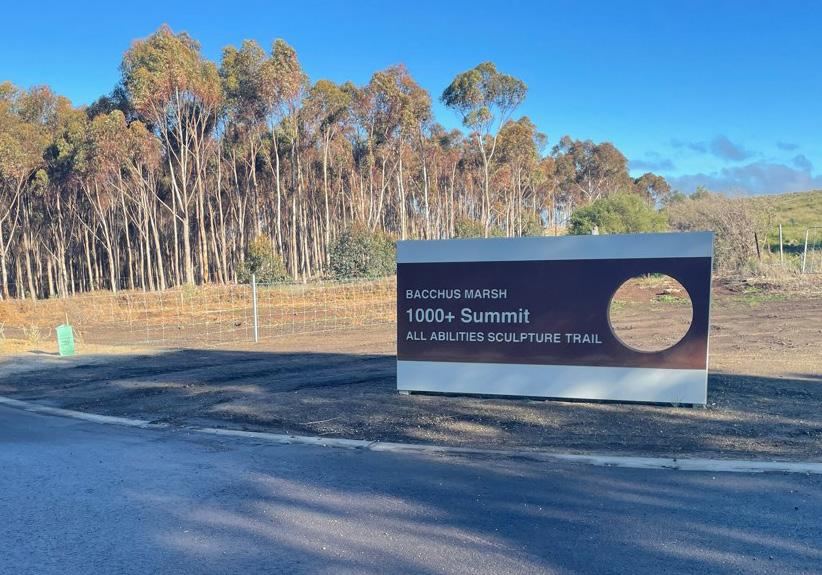
The Bald Hill Activation Project has transformed 134 hectares of reserve land in Darley into a high-quality regional park that balances recreation, accessibility, cultural recognition and environmental stewardship. Delivered across three stages, the project introduced the iconic 1000+ Steps trail, all-abilities sealed paths, summit facilities, parking, landscaping and integrated public art. Together, these upgrades have turned Bald Hill into a landmark destination for recreation and community use, offering new opportunities for walking, fitness, events, sightseeing and connection to Country within a rapidly growing part of Moorabool Shire.
The project set out to create an inclusive and distinctive destination park that would support community wellbeing, tourism, cultural storytelling and future recreation opportunities. Moorabool Shire Council’s Environment and Waste, Engineering Services, and Arts and Economic Development teams worked closely with Regional Development Victoria, local consultants, contractors and artists to guide concept development, design and delivery. Internet of Things sensors, solar-powered toilet security, integrated artwork and strong cultural collaboration added long-term value, while a structured Project Control Group ensured the project remained coordinated and responsive across all three stages.
The completed precinct is now heavily used and delivers broad social, economic and environmental benefits. Community feedback, direct observation and sensor data confirm consistently high visitation, with people of all ages and abilities using the steps, paths and summit facilities. The project has also supported local industry by directing design and construction spending to regional contractors and suppliers, while preserving mature trees, improving weed management and enhancing biodiversity across the reserve. Cost-saving decisions, such as switching from concrete to asphalt and using solar-powered door systems, have further improved the project’s long-term operational sustainability.
This is an ambitious and highly distinctive piece of public infrastructure that has created lasting value for Moorabool’s growing community. It demonstrates how strategic investment, strong internal leadership and creative problem-solving can turn underused open space into a celebrated destination. By blending recreation, art, environmental care and universal access, the project provides a compelling and replicable example of how regional councils can deliver major open space upgrades with enduring community benefit.

McArthur
McArthur



This award recognises initiatives that maximise benefits to the community with a population over 50,000 and showcase partnerships in developing and managing community assets. It is for projects that cost $5M-$20M and are new and a one-off activity of a capital nature.
• Clarity of the initiative’s outcomes
• Innovative features
• Demonstrated leadership
• Cost benefits
• Size and complexity of initiative relative to funding and resources
• Transferability/key learnings
• Demonstration of sustainability
Whittlesea City Council
AboriginalGatheringPlace(AGP)
Whitehorse City Council
BuildingthePlaza:AModelforCross-GovernmentInnovation
Port Phillip City Council
PortPhillipEcoCentre
PROJECTS $5 MILLION – $20 MILLION WITH A POPULATION OF OVER 50,000
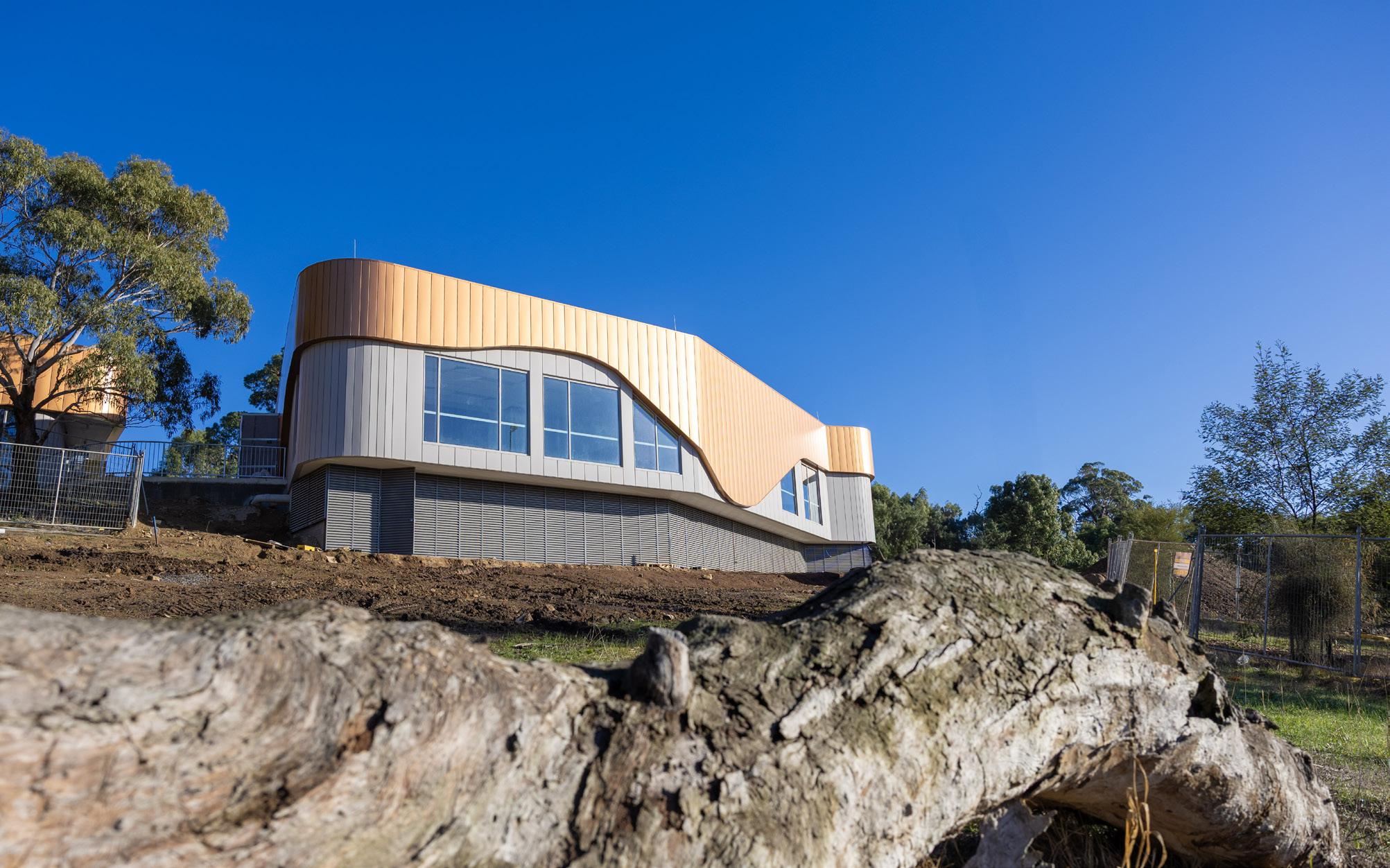
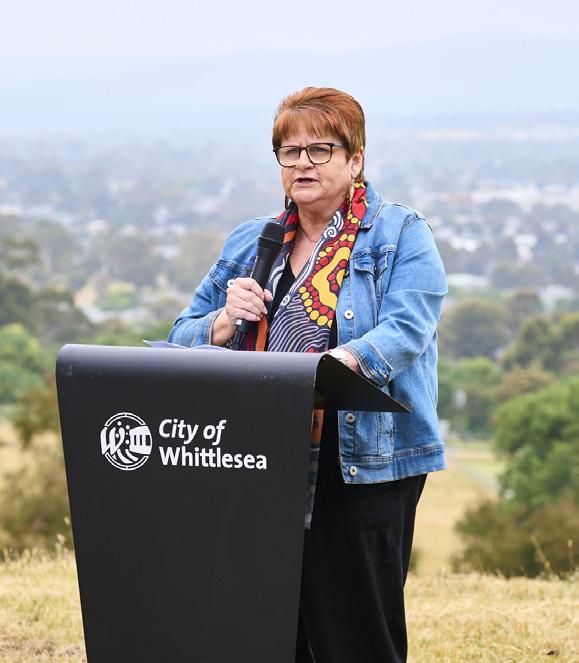
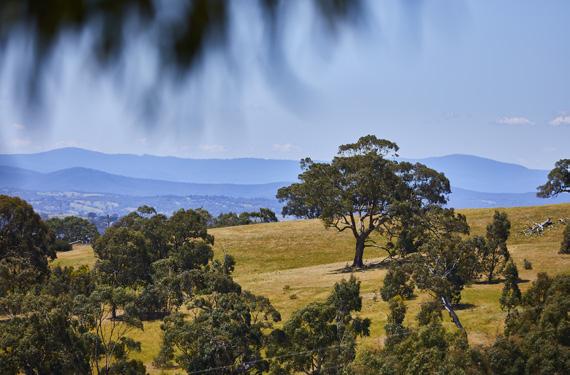
Aboriginal Gathering Place (AGP) is a landmark community-led project that reflects more than two decades of advocacy from local Elders and First Peoples in the City of Whittlesea. Located at bunjil nganga Parkland Quarry Hills, the AGP is a culturally safe, permanent gathering place where First Peoples can meet, heal, learn and celebrate culture on land of deep significance to the Wurundjeri Woi-wurrung People. Fully funded by Council, the project stands as a powerful statement of reconciliation, self-determination and sustained partnership with community.
The project aimed to establish a dedicated place that supports holistic health and wellbeing, connection to culture and Country, and access to culturally specific services and programs. City of Whittlesea worked closely with the Whittlesea Aboriginal Gathering Place Advisory Group, Elders, the Whittlesea Reconciliation Group and Aboriginal Community Controlled Organisations to shape the design, governance and operation of the facility. Cross-functional collaboration across Community Wellbeing, Capital Delivery, Facilities Management, Public Affairs and Creative Communities helped ensure the AGP was both culturally grounded and technically robust, while also positioning it for future community management.
The AGP now hosts a growing range of programs focused on health, employment, family support, yarning and cultural connection, while also acting as a conduit between local First Peoples and service providers. It is already strengthening cultural identity, reducing isolation, supporting cross-generational connection and creating paid opportunities for artists, facilitators and businesses. Sustainability measures including material reuse, rainwater harvesting, solar energy, native restoration and zero net export of excavated material also reflect a thoughtful commitment to stewardship of Country and long-term environmental care.
This is a project of profound social and cultural significance that shows how local government can enable self-determination through trust, persistence and community-led design. More than a building, it is a place of belonging, knowledge-sharing and healing, created through genuine partnership and shaped by local First Peoples every step of the way. Its impact will continue to grow as the AGP evolves into a central hub for culture, connection and leadership in Whittlesea.
PROJECTS $5 MILLION – $20 MILLION WITH A POPULATION OF OVER 50,000
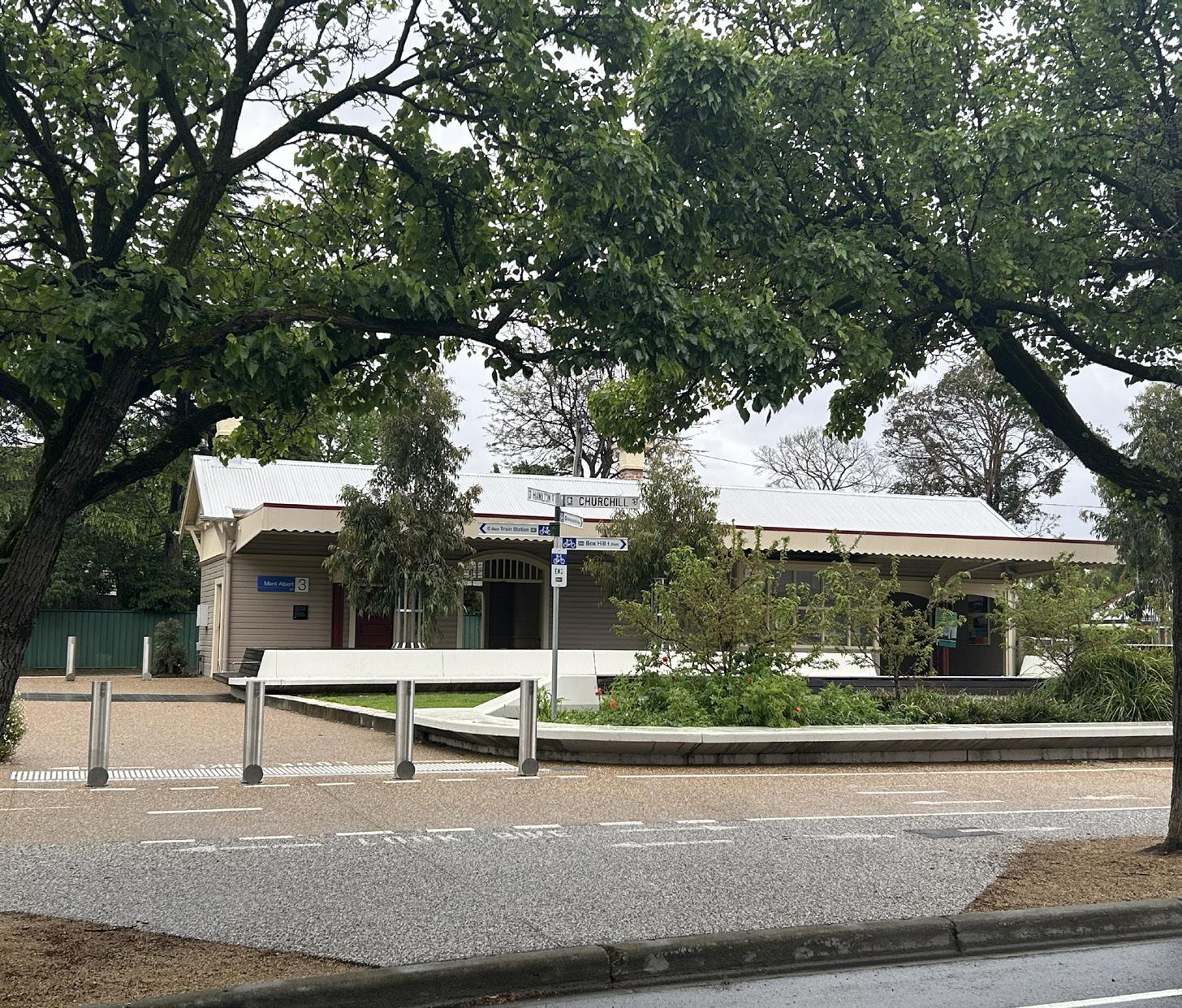
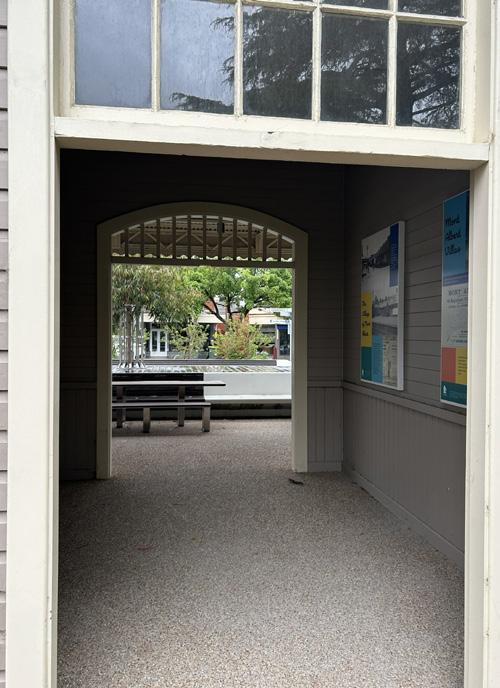
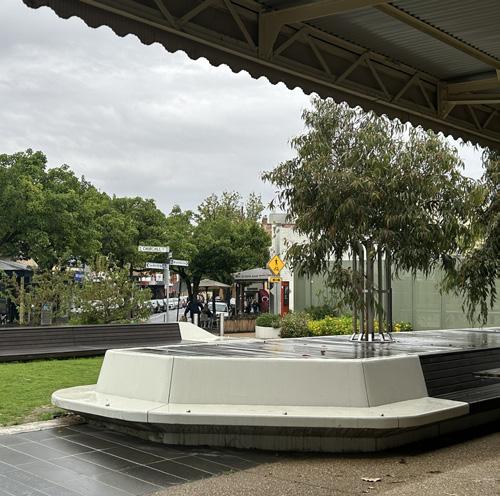
Whitehorse City Council has shown how a major transport infrastructure project can be shaped into a lasting community asset through early visioning, strong advocacy and genuine collaboration. In response to rapid changes to the Mont Albert and Surrey Hills Level Crossing Removal Project, Whitehorse City Council developed an Urban Realm Vision that set out a clear blueprint for high-quality public space outcomes. That Vision ultimately informed the delivery of the Mont Albert Village Plaza, a heritage-rich civic space that has become the new heart of the village.
The Vision set out to embed community priorities early, strengthen village vitality, integrate accessibility and sustainability, and secure the adaptive re-use of the historic Mont Albert station building for community benefit. Council’s Major Transport Projects team led the process in close collaboration with community representatives, traders, technical specialists and the State Government’s Level Crossing Removal Project team. What began as a resident’s concept sketch was translated into a pragmatic and community-supported design framework that guided the eventual construction of the plaza and surrounding public realm with remarkable fidelity.
The completed plaza now delivers significant social, economic and environmental benefits. It has created a safer, more activated and more welcoming village centre, where community gardens, pop-up events, passive recreation and local storytelling all contribute to a stronger sense of place. The adaptive re-use of the station building as a future social enterprise café preserves a valued heritage asset, while re-used bricks, bluestone and interpretive paving embed the village’s history in the public realm. Increased foot traffic and improving trade have also reinforced the project’s positive economic effect on local businesses.
This project offers a highly transferable model for how councils can lead with clarity and confidence when working alongside major state-led infrastructure programs. By developing a shared vision early and using it to align design, advocacy and delivery, Whitehorse City Council helped secure an outcome that is both technically sound and deeply valued by the community. The result is a heritage-rich plaza that honours local identity while setting a benchmark for collaborative urban transformation.
MILLION – $20 MILLION WITH A POPULATION OF OVER 50,000
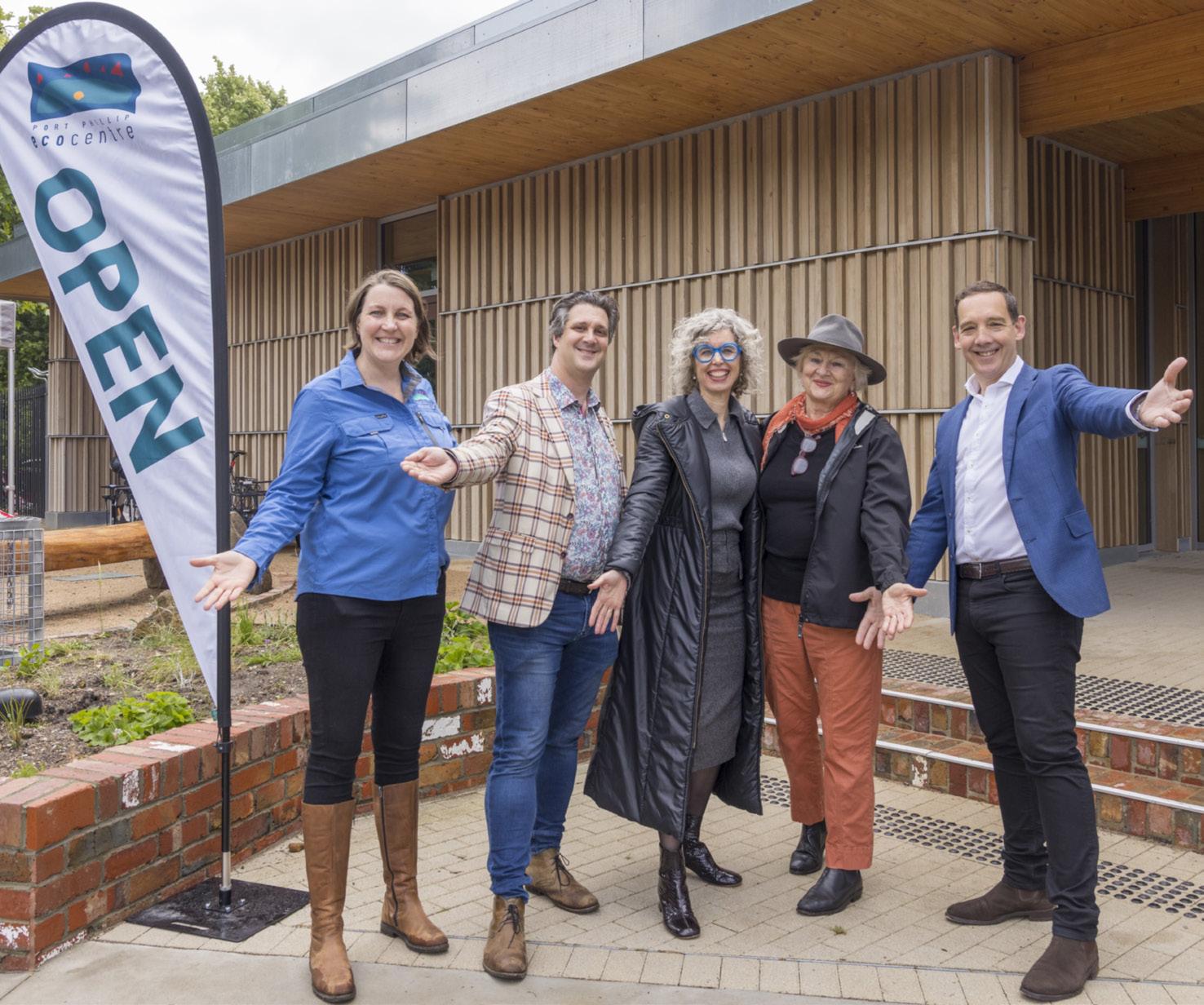
Port Phillip EcoCentre is a purpose-built, world-leading sustainability facility that has redefined what a community environmental hub can be. Delivered through a partnership between Port Phillip City Council and the Victorian Government, the $6.7 million redevelopment has created an all-electric building in the St Kilda Botanical Gardens that is designed to achieve a 6 Star Green Star Design and As Built rating. Within the footprint of the original building, the project has tripled the capacity of community spaces while creating a highly efficient, accessible and inspiring place for environmental education, volunteering and action.
The redevelopment was driven by a desire to create a living example of sustainable design while giving the EcoCentre room to expand its role in supporting community understanding of climate, biodiversity and waterways. Designed by Bourke+Bouteloup and delivered by Green Staraccredited builders Stosius Constructions, the project combines a highperformance thermal envelope, solar generation and battery storage, rainwater harvesting, cross laminated timber and low-impact materials with purposeful spaces for community learning and collaboration. The inclusion of Australia’s first Citizen Science Lab is a standout feature, alongside larger meeting and learning areas that support more school groups, volunteers and public programs.
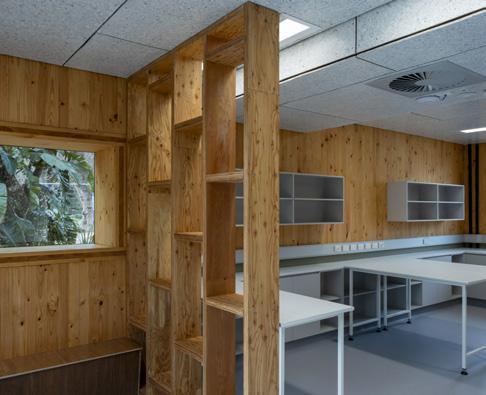
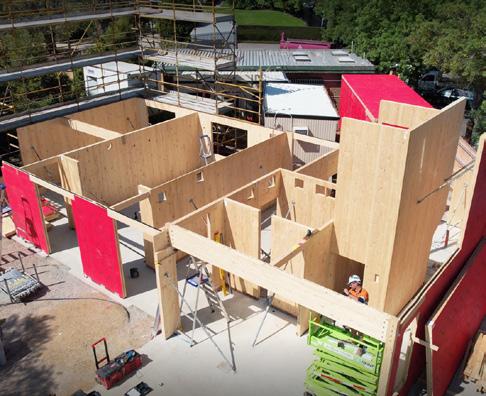
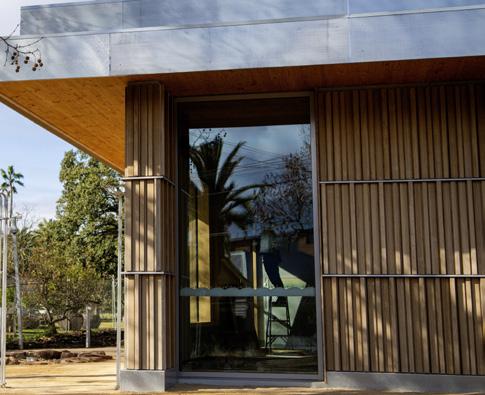
The project’s sustainability credentials are exceptional. The building is designed to be energy positive, producing more renewable energy than it consumes, while 97 per cent of materials from the previous building were re-used and 90 per cent of demolition waste was recycled. Locally sourced and low-carbon materials, native planting, a rain garden and improved biodiversity outcomes strengthen its environmental performance further. Community response has been overwhelmingly positive, with weekend participation increasing by 400 per cent and new events, exhibitions and tours already demonstrating the building’s value as a public destination and demonstration site.
This project proves ambitious sustainability targets can be achieved in a practical, beautiful and deeply community-focused way. It has created a new landmark for St Kilda and a blueprint for the next generation of public buildings, showing how design excellence, circular construction and community purpose can work together. As both a high-performing building and a catalyst for environmental engagement, the EcoCentre will continue to influence and inspire for many years to come.
This award recognises initiatives that maximise benefits to the community showcasing partnerships in developing and managing community assets. It is for projects that cost over $20 million and are new and a one-off activity of a capital nature.
• Clarity of the initiative’s outcomes
• Innovative features
• Demonstrated leadership
• Cost benefits
• Size and complexity of initiative relative to funding and resources
• Transferability/key learnings
• Demonstration of sustainability
Merri-bek City Council
BalamBalamPlace
Casey City Council
ClydeRecreationReserveRedevelopment
Greater Geelong City Council
TheBiyal-aArmstrongCreekLibrary
Balam Balam Place is a $30 million creative and community precinct in Brunswick that responds to growing demand for affordable, accessible and flexible space in a high-density urban area. Named from the Wurundjeri word for ‘butterfly’, the project reflects renewal, creativity and transformation. Initially established through temporary site activation, it has evolved into a permanent facility bringing together creative industries, community services, public green space and cultural infrastructure, including the Blak Dot Gallery and Maternal Child Health services.
The project was designed to deliver social, cultural, economic and environmental outcomes while preserving the site’s history and creating space for new stories. It provides flexible, low-cost access for creatives and community groups at a time when such space is increasingly limited in Brunswick. A strong First Nations focus underpins the development, with cultural storytelling embedded through naming, public art and partnerships with the Wurundjeri Woi-wurrung Cultural Heritage Aboriginal Corporation.
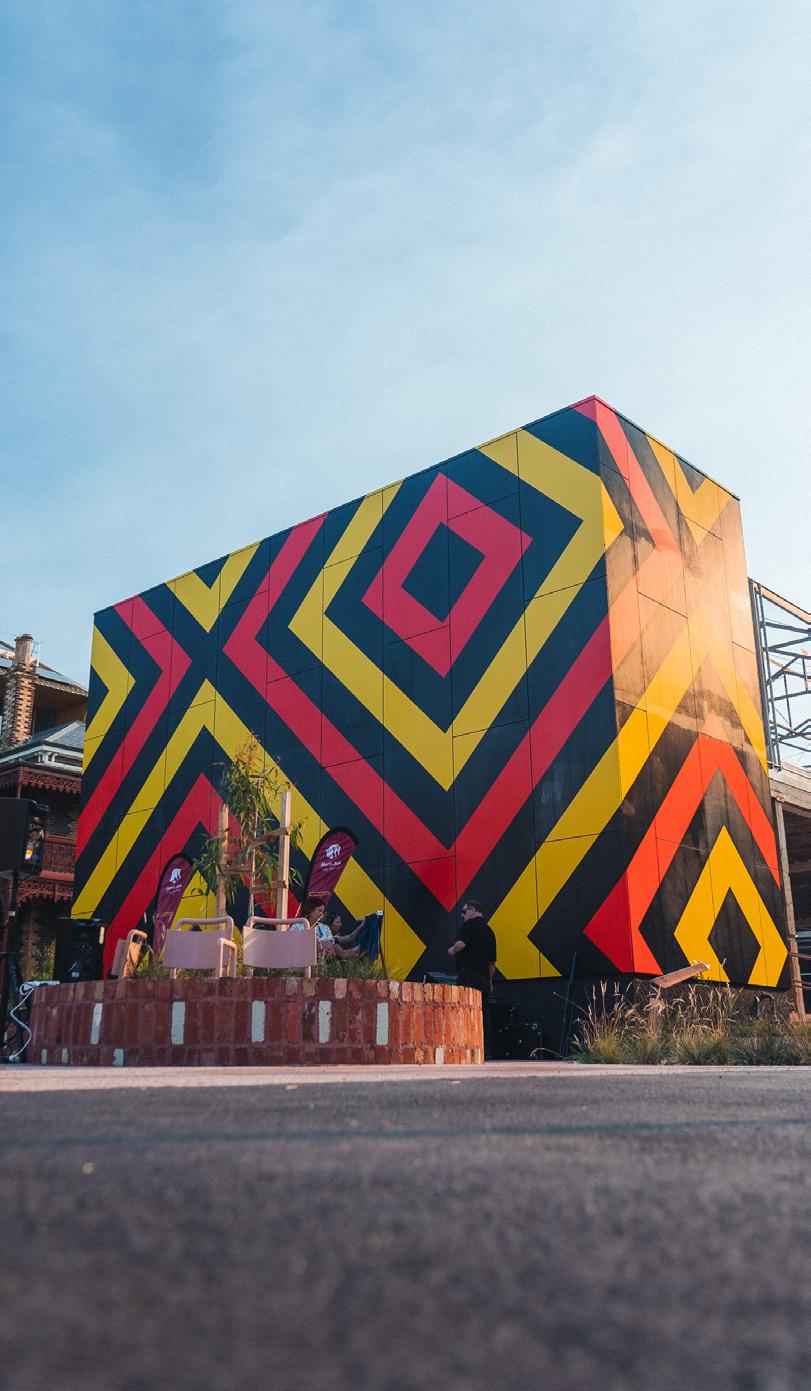
A defining feature of the project is its staged “early activation” approach, which tested demand, built community ownership and informed longterm design. The final precinct integrates creative studios, community spaces, green open space and commercial tenancies, supporting a financially sustainable operating model while maintaining strong community focus.
Since opening, Balam Balam Place has rapidly become a key destination for community, cultural and economic activity. It supports local creative industries, which contribute significantly to Merri-bek’s economy, while also improving liveability through accessible green space and community services. The project demonstrates how thoughtful design, cultural leadership and long-term planning can transform a site into a vibrant, inclusive and sustainable civic asset.
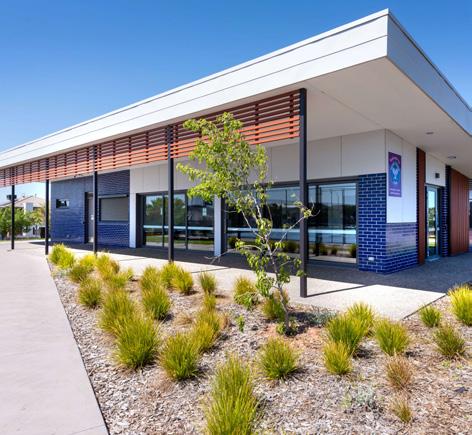
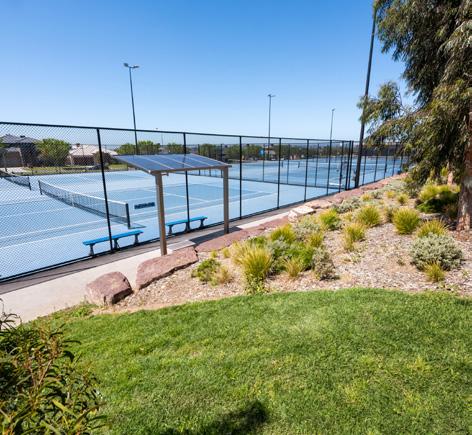
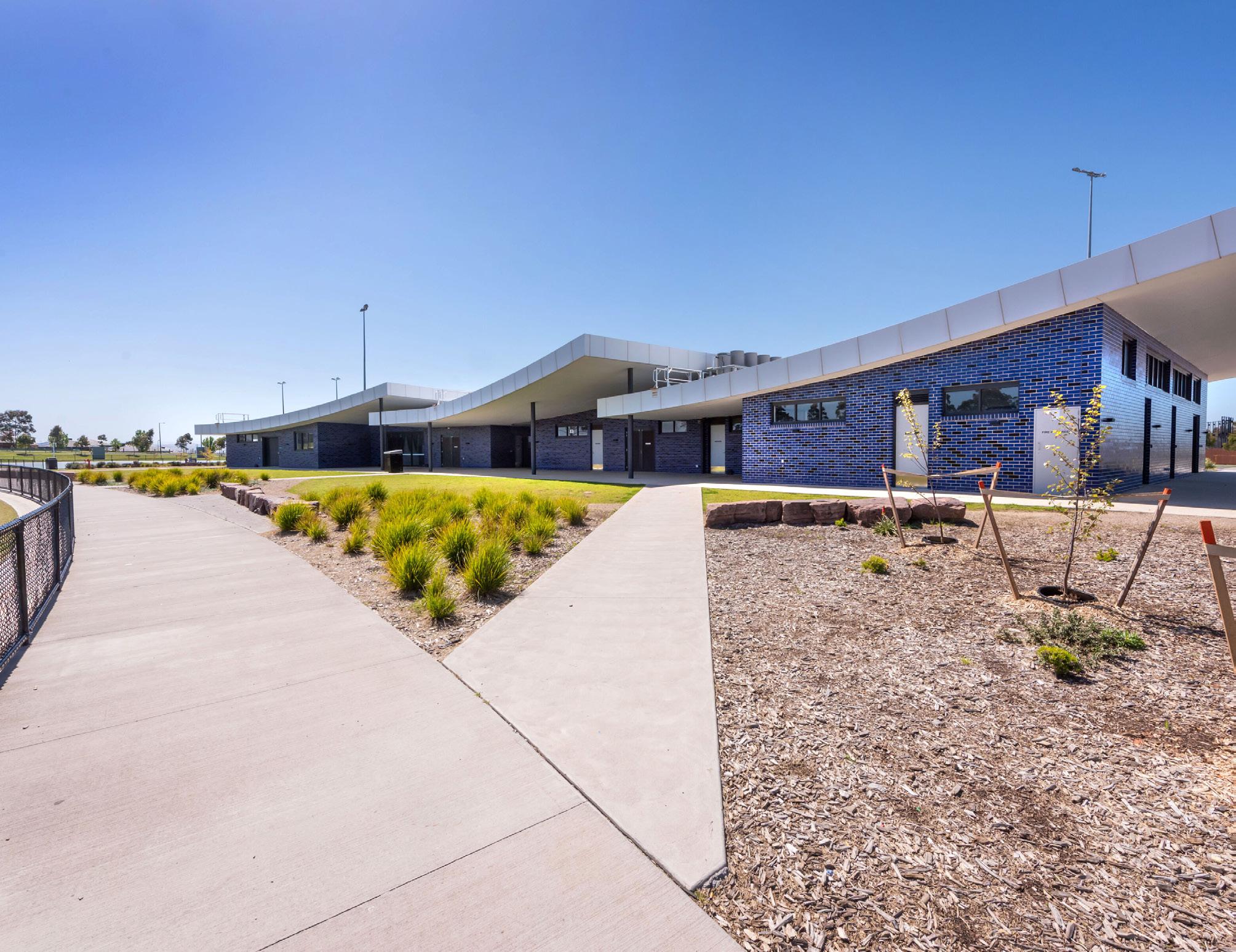
The Clyde Recreation Reserve redevelopment is a $21.7 million investment that has transformed a modest facility into a vibrant, multi-sport community hub for one of Victoria’s fastest-growing areas. The upgraded precinct includes three full-sized ovals, eight tennis courts, two netball courts, pavilions, cricket nets and a large playground, supporting a wide range of sports and recreational activities.
The project aimed to increase participation in sport, support local clubs and deliver inclusive, accessible infrastructure that meets the needs of a rapidly growing and diverse community. Designed using participation data and demographic forecasting, the precinct enables shared use across multiple sporting codes while incorporating female-friendly changerooms, accessible pathways and sustainable design features.
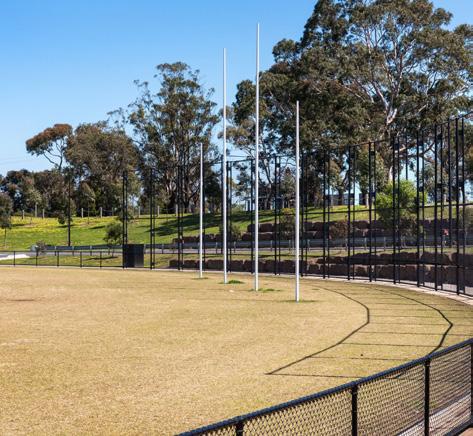
Outcomes have been significant, with strong growth in participation across all sports, particularly among women and girls. The facility now hosts seven local sporting clubs, with new teams established and increased membership driving ongoing activation. The Clyde Cougars Football Club alone recorded 86 new participants, including 44 female members, enabling the creation of new girls’ teams.
The redevelopment has delivered broad social, economic and environmental benefits. It has strengthened community connection, increased local activity and created a focal point for sport and recreation. By combining inclusive design, sustainability and strategic planning, the project provides a strong model for delivering high-quality community infrastructure in growth areas.
TheBiyal-aArmstrongCreekLibrary
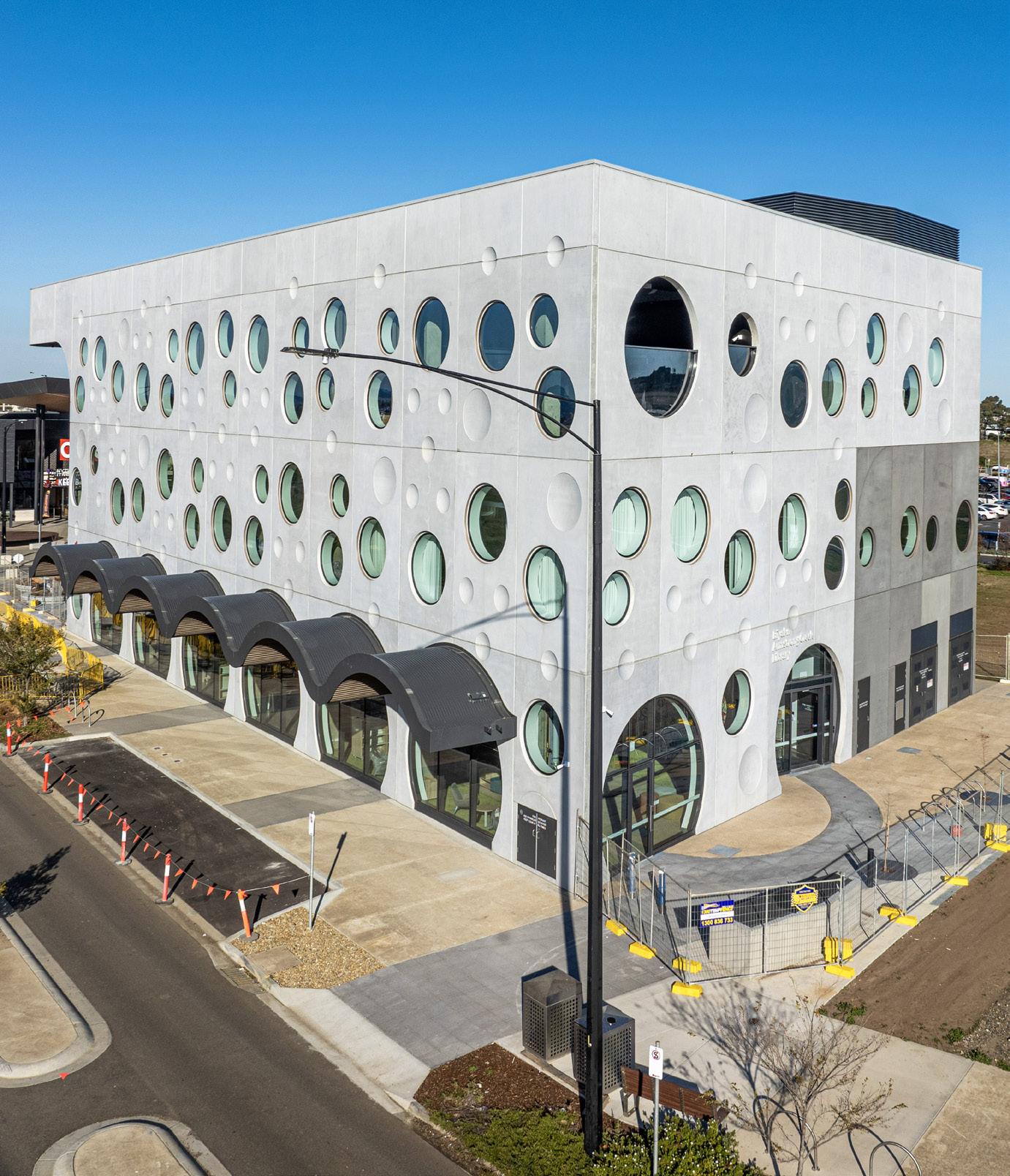
The Biyal-a Armstrong Creek Library is an almost $22 million civic facility that serves as the first major piece of social infrastructure for the growing Armstrong Creek community. Designed in partnership with Wadawurrung Traditional Owners, the library reflects a ‘living water’ narrative and provides a welcoming place for connection, learning and creativity.
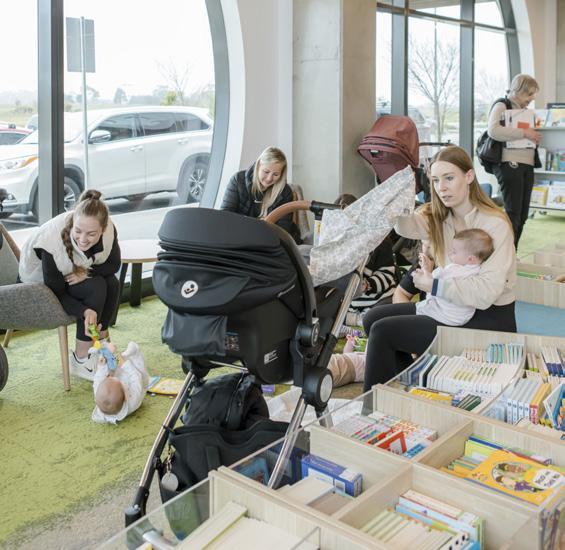
The library was developed to address a significant service gap in a rapidly expanding growth area, providing access to education, technology and community space. It offers flexible co-working areas, creative studios, meeting rooms and a collection of more than 30,000 resources, supporting learning, innovation and social connection.
Innovation is central to the project, including biophilic design, strong cultural integration and the introduction of an “Out of Hours” access model, allowing users to access facilities outside standard operating times. Sustainability is also a key feature, with a five-star Green Star rating, reduced energy consumption and extensive use of low-impact materials and water-sensitive design.
The library has quickly become a vital community hub, with high visitation, strong program participation and broad community use. It supports social inclusion, economic activity and environmental sustainability, while providing a model for delivering accessible, culturally responsive and future-focused civic infrastructure in growth communities.

This award recognises initiatives that demonstrate a commitment to working with and/or in the community to achieve positive outcomes.
• Clarity of outcomes and impact on the sector and community
• Level of innovation
• Inclusive contribution and gender equality
• Demonstrated leadership
• Effectiveness of collaboration
• Transferability of the initiative
• Size and complexity of initiative relative to funding and resources
Swan Hill Rural City Council
LeadingHousingChallengesTogether
Yarra City Council
YarraYouthServices/NeighbourhoodJusticeCentrePartnership
Mornington Peninsula Shire Council
RadioWesternPort
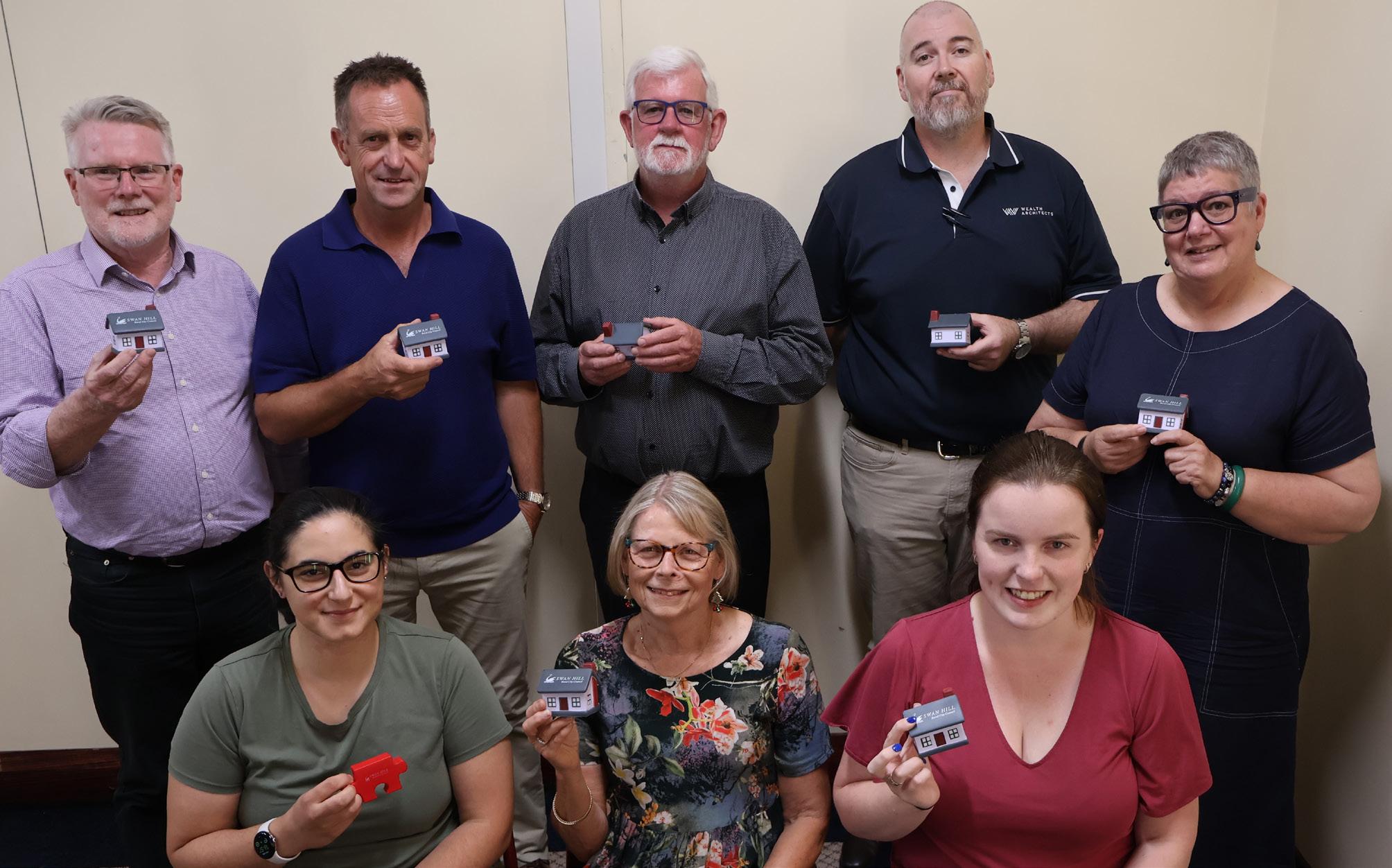
Leading Housing Challenges Together is a bold, partnership-driven response to one of regional Victoria’s most pressing issues: the shortage of diverse, affordable and workforce housing. Faced with near-zero rental availability, land banking and a lack of housing options to support economic growth, Swan Hill Rural City Council moved beyond advocacy alone and began actively shaping the local housing market. Through planning reform, collaborative governance and targeted development support, the initiative has positioned housing as essential enabling infrastructure for the region’s future prosperity.
The initiative set out to unlock housing supply, enable affordable and social housing, and provide accommodation for essential and seasonal workers. Council convened its 2023 Housing Summit with 125 stakeholders, formed the Housing Action: Greater Swan Hill Committee, introduced a Development Advisory Service and worked with partners including Haven Homes Safe, Robinvale District Health and Aboriginal Housing Victoria. This structured and inclusive approach ensured that planning, investment and service delivery were aligned with real workforce and community needs, while also creating shared responsibility for long-term solutions.
The results have been significant. Council has rezoned 214 hectares of land, delivered more than 200 new lots and enabled 457 homes at Tower Hill Estate, while also initiating a major future precinct with capacity for 1,360 dwellings. Additional achievements include securing $5 million for rural worker accommodation and $500,000 for social housing, creating eight dwellings in Robinvale and improving investor confidence across the municipality. These outcomes are already reducing rental pressure, supporting local employers and strengthening liveability in a region experiencing strong growth in agriculture, health, mining and renewable energy.
This initiative demonstrates how regional councils can lead transformational change through persistence, planning and partnership. Swan Hill Rural City Council has treated housing not as a passive market issue, but as a strategic lever for social inclusion, economic resilience and long-term regional success. It provides a strong and transferable model for other councils facing similar challenges, proving that local government can play a central role in shaping practical and lasting housing solutions.
YarraYouthServices/NeighbourhoodJusticeCentrePartnership
Yarra Youth Services/Neighbourhood Justice Centre Partnership is a deeply integrated cross-sector initiative that brings youth work and therapeutic justice together to support young adults who are overrepresented in the justice system. Recognising that standard court responses are often ineffective or harmful for people aged 18 to 25, the partnership has created a more developmentally appropriate model that addresses the underlying causes of offending while strengthening long-term connection to support. It combines direct court-based intervention, preventative programs and practical pathways out of justice entanglement in ways that are both responsive and humane.
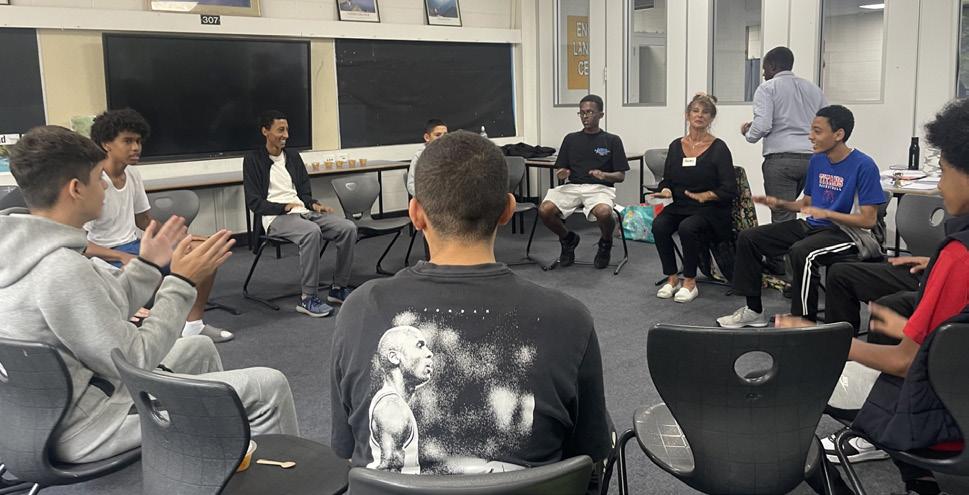
The partnership operates through three connected streams: youth support within the Neighbourhood Justice Centre’s Young Adult List, preventative programs such as Project Salaam and Future Peacemakers, and facilitation of the Work Development Permit scheme. Yarra Youth Services, the Neighbourhood Justice Centre, Carlton Fitzroy Financial Counselling Service and community partners each bring distinct expertise, with youth workers embedded into the court setting and justice staff contributing to community-based prevention work. This structure allows young people to receive support that is practical, culturally responsive and built around their lived experience rather than around institutional process.
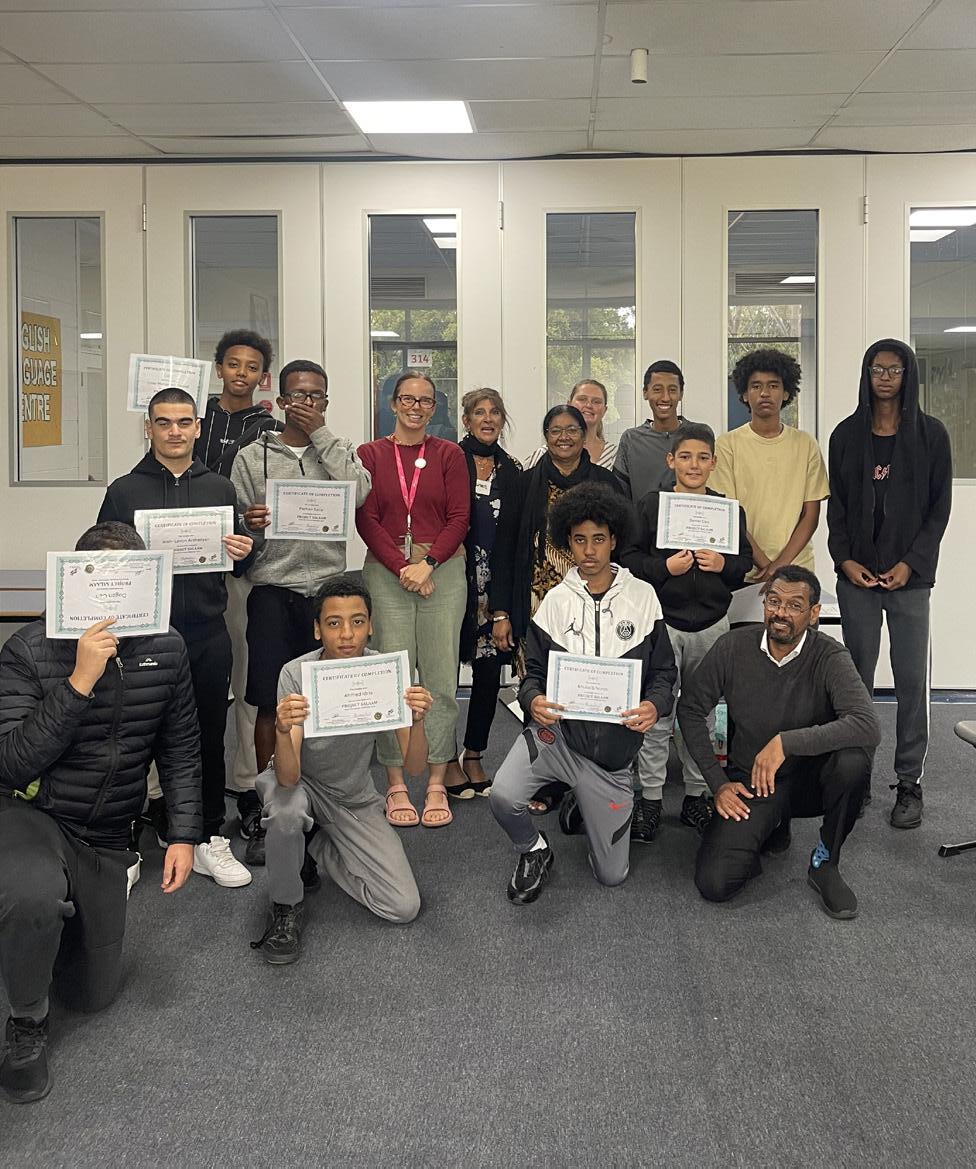
The outcomes are tangible and meaningful. Since July 2021, Yarra Youth Services has made 83 contacts through the Young Adult List, while 27 young people have worked off more than $23,000 in fines through 465 hours of Work Development Permit participation. Preventative programs have built confidence, communication and conflict resolution skills, with participants reporting stronger selfawareness and more constructive responses to anger and tension. Magistrates, lawyers and police have also recognised the value of Yarra Youth Services’ presence, noting that its support leads to fairer outcomes and a more positive experience for young people navigating the court system.
This partnership offers a powerful blueprint for how local government can work with justice agencies to create safer, more supportive and more equitable outcomes for young adults. It moves beyond siloed service delivery and instead builds a model based on trust, early intervention and genuine responsiveness to complex need. In doing so, it strengthens community safety while giving vulnerable young people better opportunities to heal, grow and reconnect.
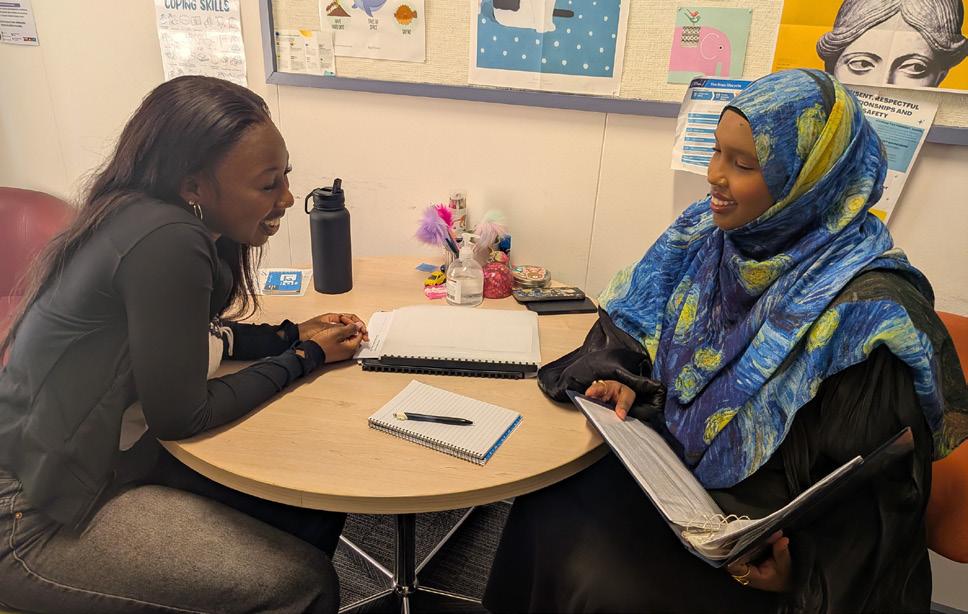
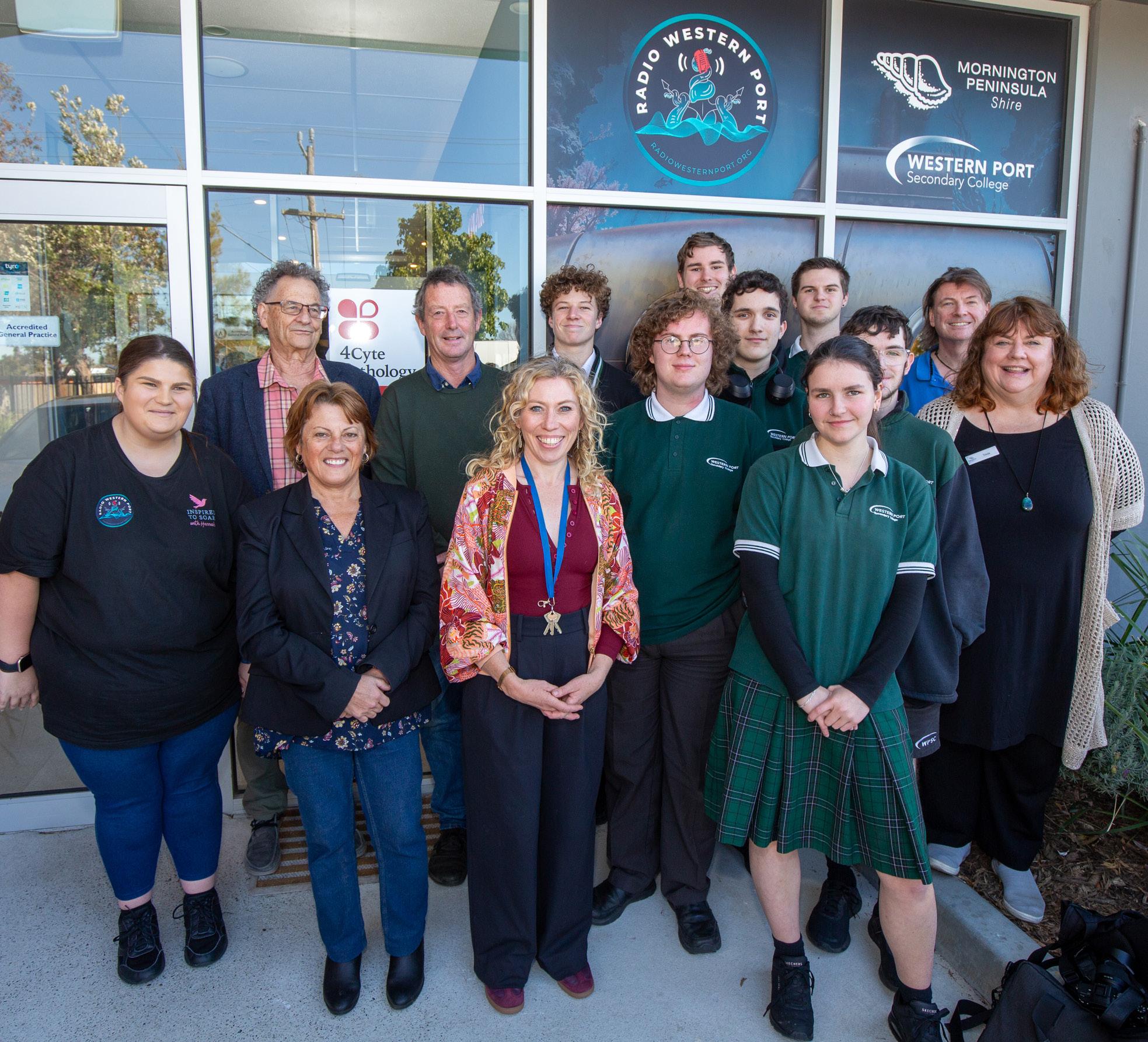
Radio Western Port is a distinctive community broadcasting initiative that has brought together health, education and local government in an unexpected but highly effective partnership. Established by Atticus Health, Western Port Secondary College and Mornington Peninsula Shire, the project transformed a former consultation room in Hastings into a purpose-built internet-based studio that now hosts a growing range of local programs. The station creates space for public health information, community storytelling and student-led learning, while strengthening social connection and participation across the wider Western Port community.
The idea began with a vision to share key health information in a more engaging and accessible way than brochures or pamphlets could offer. Mornington Peninsula Shire’s Community Development team helped translate that idea into a formal three-way partnership, supported by a $34,000 Council grant to fund the studio fit-out and equipment. The project was carefully scoped around shared outcomes: real-world media experience for students, stronger community connection and a local platform for conversations about health, wellbeing and local identity. Its accessible design and volunteer-supported model have made the initiative both welcoming and financially sustainable.
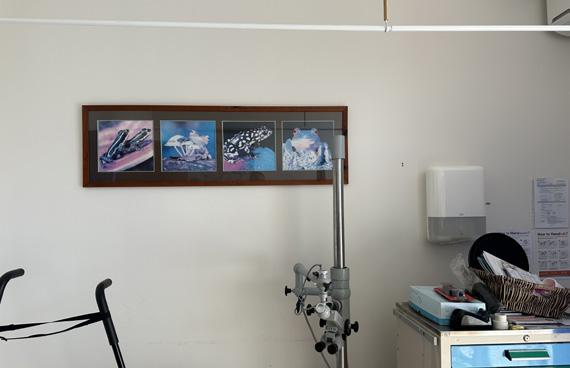
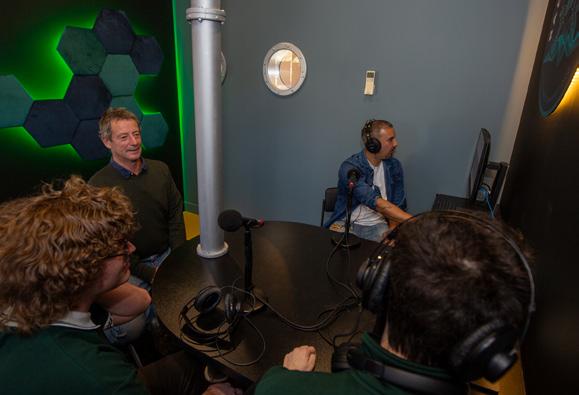
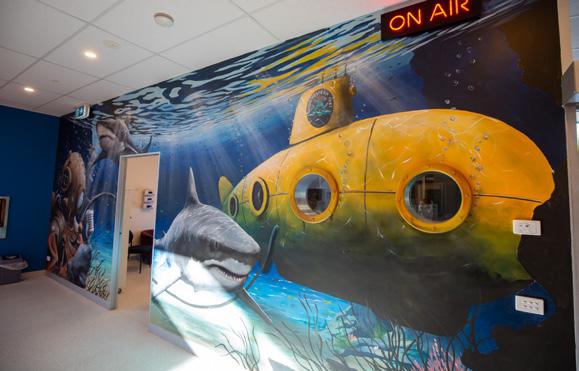
Since launching in May 2025, Radio Western Port has delivered 14 regular programs featuring students, community members, civic leaders and health professionals. The content is broad and locally relevant, ranging from mental health, cancer care and ageing to homelessness, creative pursuits and the history of Western Port. Students have developed communication, production and teamwork skills, while the broader community has gained improved access to local stories, services and public health messages. The station has also attracted presenters from all three tiers of government, demonstrating its reach and value as a trusted community platform.
This is a leading place-based partnership that uses low-cost digital media to build a more connected, informed and resilient community. It shows how councils can help seed innovative local infrastructure by working across sectors and backing local vision with modest investment and strong facilitation. In doing so, it has created a replicable model for community broadcasting that amplifies under-represented voices, supports youth development and makes health and local life more visible, relatable and shared.
This award recognises excellence in innovation and expertise in utilising electronic tools, devices, systems and resources to enhance the work of councils, from generating, storing or processing data to improving engagement and streamlining administrative processes. It celebrates outstanding commitment to leveraging digital solutions for the betterment of communities, fostering efficiency, transparency and inclusivity in governance.
Initiatives can include those that increase safety and responsibility online or those that increase effectiveness of professional messaging and communication online.
• Clarity of objectives and outcomes
• Innovative technological solutions
• User-centric design and the ability to meet specific target group needs
• Impact on citizen engagement
• Collaboration and partnerships
• Extent of leading practice
• Sustainability and transferability
Wyndham City Council
SmartTechnologyDrivingSmarterLandManagement
Bayside City Council
BayBot
Maroondah City Council
MaroondahChatGPT
Mitchell Shire Council
MyMitchellApp–DrivingInnovationandServiceDelivery
ECO:SENSE is a highly innovative environmental technology project that has changed how Wyndham City Council detects and manages Artichoke Thistle across thousands of hectares of land. Through the development of ECO:SENSE, a bespoke GIS plugin powered by drone imagery and machine learning, Council has replaced slow and labour-intensive weed surveying with a faster, more accurate and more sustainable approach. The project represents a major step forward in digital ecology, giving land managers the ability to make better decisions while reducing ecological harm and operational strain.
The initiative was driven by a need to move away from reactive, manual weed control and towards a proactive model based on evidence and precision. Wyndham’s Environment team worked with GIS specialists, drone pilots, Firetail Environments, DEECA and local landholders to define the problem, shape the solution and test it across real landscapes. The resulting tool identifies individual plants, measures canopy size and maps exact locations within existing GIS workflows, allowing staff to decide quickly whether a site requires ground crews, drone spraying or no action at all. User feedback from field staff and landholders helped ensure the system remained practical and intuitive at every stage.
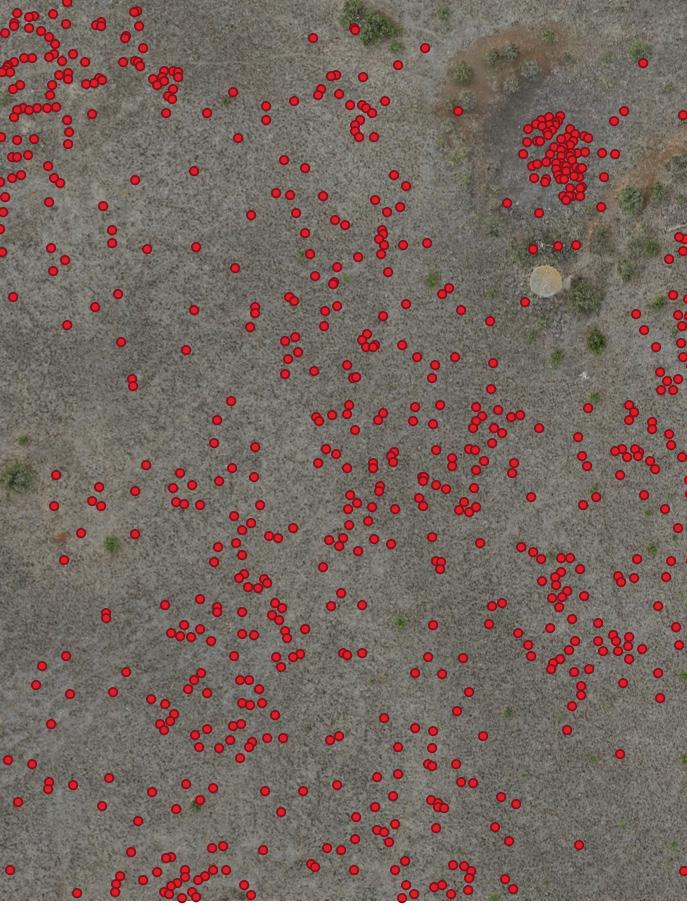
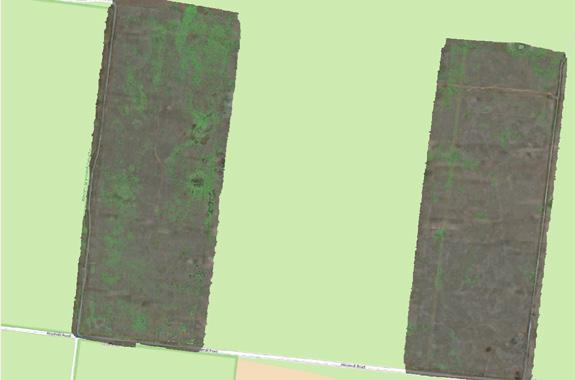
The results have been impressive. ECO:SENSE has achieved detection accuracy of up to 90 per cent and cut survey time by more than half, dramatically reducing fatigue, safety risks and unnecessary fieldwork. It has improved contractor quoting, treatment planning and long-term trend analysis, while targeted control has reduced herbicide use and improved grassland health. The tool also strengthens collaboration with farmers and landholders by providing clear, reliable and transparent data through the Land Protection Grant Scheme, helping build trust and shared responsibility for landscape stewardship across the Western Grassland Reserve.
This project demonstrates the real-world potential of digital innovation to solve complex environmental challenges. Wyndham City Council has not simply adopted new technology for its own sake; it has built a tool that is precise, scalable and deeply grounded in local ecological and operational need. The result is a leading-practice model for councils seeking to protect biodiversity, improve land management and use data more intelligently to support resilient landscapes.

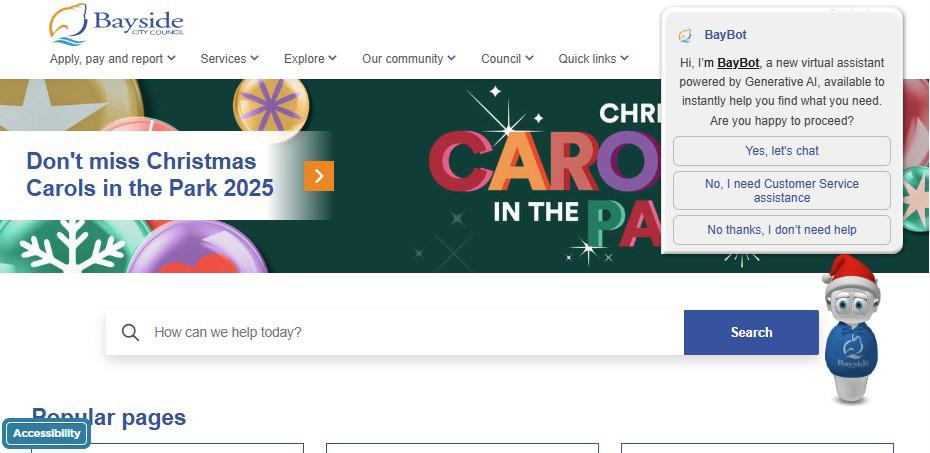
BayBot is Bayside City Council’s generative AI chatbot and a standout example of how emerging technology can be applied ethically to solve a clear and persistent customer problem. Developed in response to poor website navigation and low satisfaction with previous digital support tools, BayBot delivers fast, plain-language answers that help residents find information without friction. What began as a customer experience initiative has since evolved into a broader AI framework that is improving both public-facing service and internal capability across the organisation.
The project aimed to improve customer satisfaction, reduce manual triage and demonstrate that generative AI could be adopted safely and transparently in local government. Bayside’s Customer Experience team worked with Powerfront and stakeholders across Council to analyse live chat data, identify common queries, configure ethical guardrails and test responses iteratively with both staff and community users. Designed within strict business rules and using limited sources of information, BayBot was refined to feel intuitive and trustworthy, while also reducing barriers by removing unnecessary form requirements for simple information requests.
The outcomes have exceeded expectations. BayBot has handled more than 14,000 interactions, lifted satisfaction from 1.6 to 3.95 out of 5 and reduced submissions to Bayside’s general contact form by 23.5 per cent, relieving pressure on manual triage. Its plain-language and bilingual design has improved accessibility, especially for users with lower digital confidence, while strong internal oversight has maintained accuracy and trust.
The success of BayBot has also led to Staff Assist and OttoAssist, extending the same AI capability into internal knowledge access and future CRM workflows, multiplying its value across the organisation.
This shows that responsible AI adoption in local government can be both ambitious and practical. It has not only improved the customer experience, but also created a scalable and sector-leading model for safe, inclusive and user-centred digital transformation. By embedding transparency, accessibility and continuous improvement from the outset, Bayside City Council has turned a new technology into a trusted service channel that is already influencing practice well beyond its own municipality.

Maroondah Chat GPT is an ambitious internal AI platform that moved Maroondah City Council from caution to confident adoption in a matter of months. At a time when many organisations were concerned about the risks of large language models, Council created a private, secure version of ChatGPT within its own Azure environment, allowing staff to explore the benefits of AI without compromising privacy, compliance or trust. The project not only delivered a functional tool in production within 90 days, but also laid the groundwork for a broader culture of innovation across the organisation.
The project emerged from a clear challenge: staff wanted access to AI tools to improve efficiency, while leadership needed assurance that private Council data would remain protected. Using user-centred design and agile delivery, Council worked with Arinco to define a single problem statement, gather insights from diverse user groups and translate those insights into a secure platform with real operational value. The resulting product gave end users access to familiar generative AI functionality while also enabling them to create their own custom bots for internal policy advice, IT support and customer service use cases.
The measurable outcomes have been strong. Council achieved around 300 active monthly users, annual consumption costs of just $5,700 and a private AI system that complies with stringent internal security and information management requirements.
Compared with an organisation-wide rollout of CoPilot, the platform delivers substantial avoided cost while also supporting innovation across service areas. The introduction of dashboards, cost monitoring and user communities of practice has ensured the tool remains transparent, manageable and adaptable, while pilot projects continue to show how AI can support everyday decision-making and reduce repetitive administrative burden.
This demonstrates how local government can rapidly innovate with emerging technology while still upholding its obligations around privacy, cost stewardship and public trust. The project has delivered much more than a single tool: it has created a secure AI environment, a foundation for future automation and a more confident and capable workforce. Its transferability and influence across the sector also show its importance as a leading-practice example of practical, well-governed AI adoption.
The My Mitchell App is a user-friendly digital platform that has made it easier for Mitchell Shire residents to connect with council services from their phones. Launched in August 2024, the app brings together bin collection reminders, recycling information, issue reporting, capital works updates, local news and location-based service information in one simple interface. Rather than adding another layer of digital complexity, the project has streamlined everyday interactions with Council and created a more accessible, responsive and convenient experience for residents.
The initiative aimed to simplify access to council services, improve communication and reduce reliance on traditional customer service channels. User experience guided the design from the outset, with a strong emphasis on mobile optimisation, intuitive navigation and the consolidation of multiple functions into a single platform. Led by Council’s Digital Implementation Officer in partnership with Simple Integrated Marketing, the app was built using Mitchell Shire’s existing content management system, enabling real-time updates while avoiding duplicated data and unnecessary overheads. This practical design approach helped ensure the platform was both cost-effective and easy for residents of all ages and digital confidence levels to use.
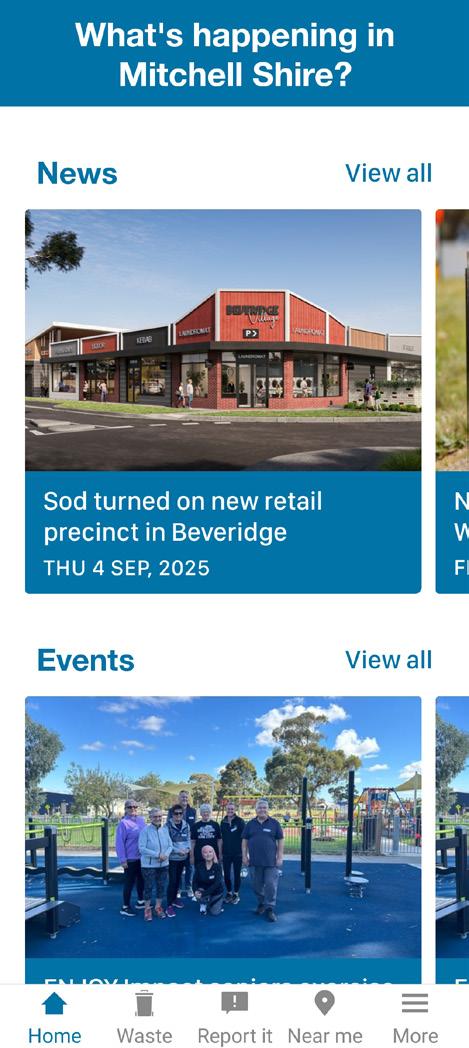
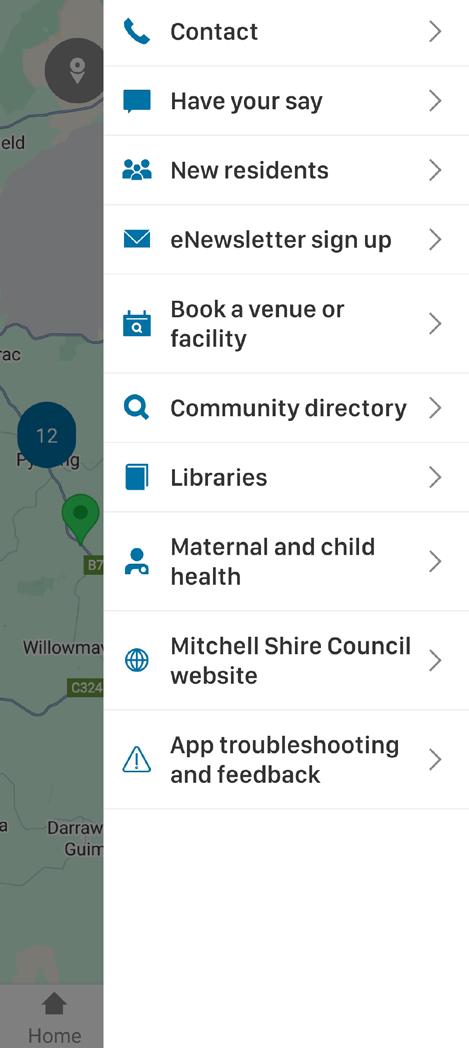
The app has delivered strong results since launch. Downloads exceeded projections by more than 57 per cent, engagement has remained consistently high and feedback has been overwhelmingly positive, with residents praising its clarity and convenience. The app has also supported better service delivery by reducing pressure on traditional customer service channels and improving awareness of Council services such as the four-bin system. With a total project budget of only $15,000 and low annual hosting costs bundled into existing infrastructure, My Mitchell App demonstrates how even modest investment can produce lasting benefits when grounded in clear user need and thoughtful implementation.
This shows how digital transformation can be practical, affordable and genuinely useful when it starts with what residents actually need. Mitchell Shire Council has not only delivered a high-performing customer tool, but also created a scalable model that other councils can readily adapt. By combining simplicity, accessibility and efficient use of existing systems, the project sets a strong benchmark for mobile-first service delivery in local government.
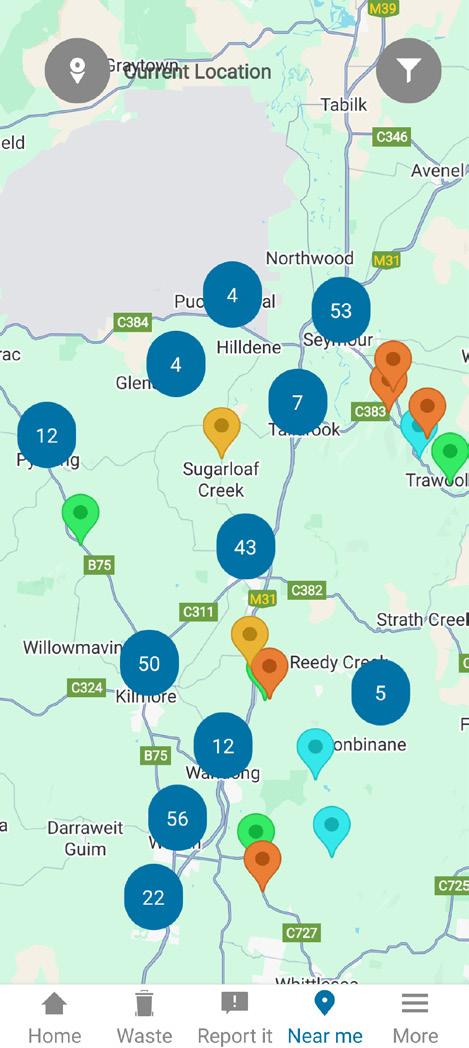
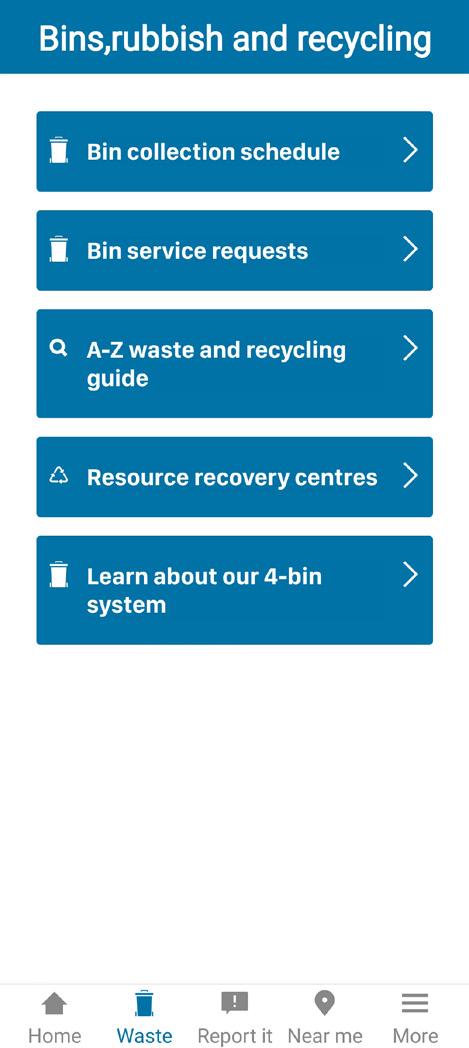

This award recognises initiatives that help to prevent disasters and mitigate climate change, that support recovery and preparedness, and/or that increase capacity to protect lives and livelihoods while reducing infrastructure damage or loss. This includes initiatives that reduce the impact of disasters, support the identification of risk and increase response capacity.
• Level of disaster risk reduction
• Level of innovative thinking in decision-making and consideration of diverse voices
• Level of community engagement
• Collaborative and coordinated approach
• Sustainable outcomes resulting in more resilient communities and enhanced capacity to prepare for and recover from emergencies
• Transferability

Bass Coast Shire Council
EnergyResilientCommunityHubs
Maribyrnong City Council
FloodRecoveryProgram
Yarra Ranges Council
ResilientYarraRangesTeam
Energy Resilient Community Hubs is a practical and community-centred initiative that has strengthened disaster resilience across Bass Coast by creating a network of 10 upgraded facilities designed to support communities before, during and after emergencies. Led by Bass Coast Shire Council, the project equipped community halls, neighbourhood houses, visitor information centres and a sports pavilion with solar panels, battery systems and other energy resilience upgrades. By pairing physical infrastructure with local engagement, the initiative has helped communities better understand local risks, identify valued assets and strengthen their capacity to respond when power outages and isolation occur.
The project was built around a clear objective: to support a more community-centric approach to disaster resilience by recognising that communities are the first responders in the immediate aftermath of an emergency. Bass Coast Shire Council’s Sustainable Environment and Emergency Management and Resilience teams worked together to identify priority sites in areas most prone to natural hazards and isolation, using criteria such as remoteness, community proximity, available facilities and solar and service capacity. A cross-functional reference group supported delivery, while community workshops in Kernot, Cowes and Cape Paterson, facilitated by disaster resilience expert Anne Leadbetter OAM, ensured local residents helped shape how the hubs would operate and which community assets should be prioritised for restoration after emergencies.
The outcomes have been both immediate and long term. The upgraded hubs provide communities with access to running water, device charging and a safe place to reconnect during the critical first 72 hours following an emergency, while also giving Council a more decentralised and community-accessible model for relief and recovery coordination. The installations have increased renewable energy use, reduced emissions and are expected to deliver substantial electricity savings at key high-use sites. The project has also strengthened social capital by creating forums for local groups to plan together, and it has influenced other community facilities across Bass Coast to pursue their own energy resilience upgrades.
This initiative demonstrates how local government can integrate infrastructure uplift, climate action and community resilience into a single, highly transferable model. Bass Coast Shire Council has delivered more than upgraded buildings: it has created an energy resilience ecosystem that strengthens self-reliance, builds local relationships and improves preparedness for future shocks. The project stands out for combining renewable energy infrastructure with genuine community involvement, creating a model of disaster resilience that is practical, sustainable and deeply grounded in local need.
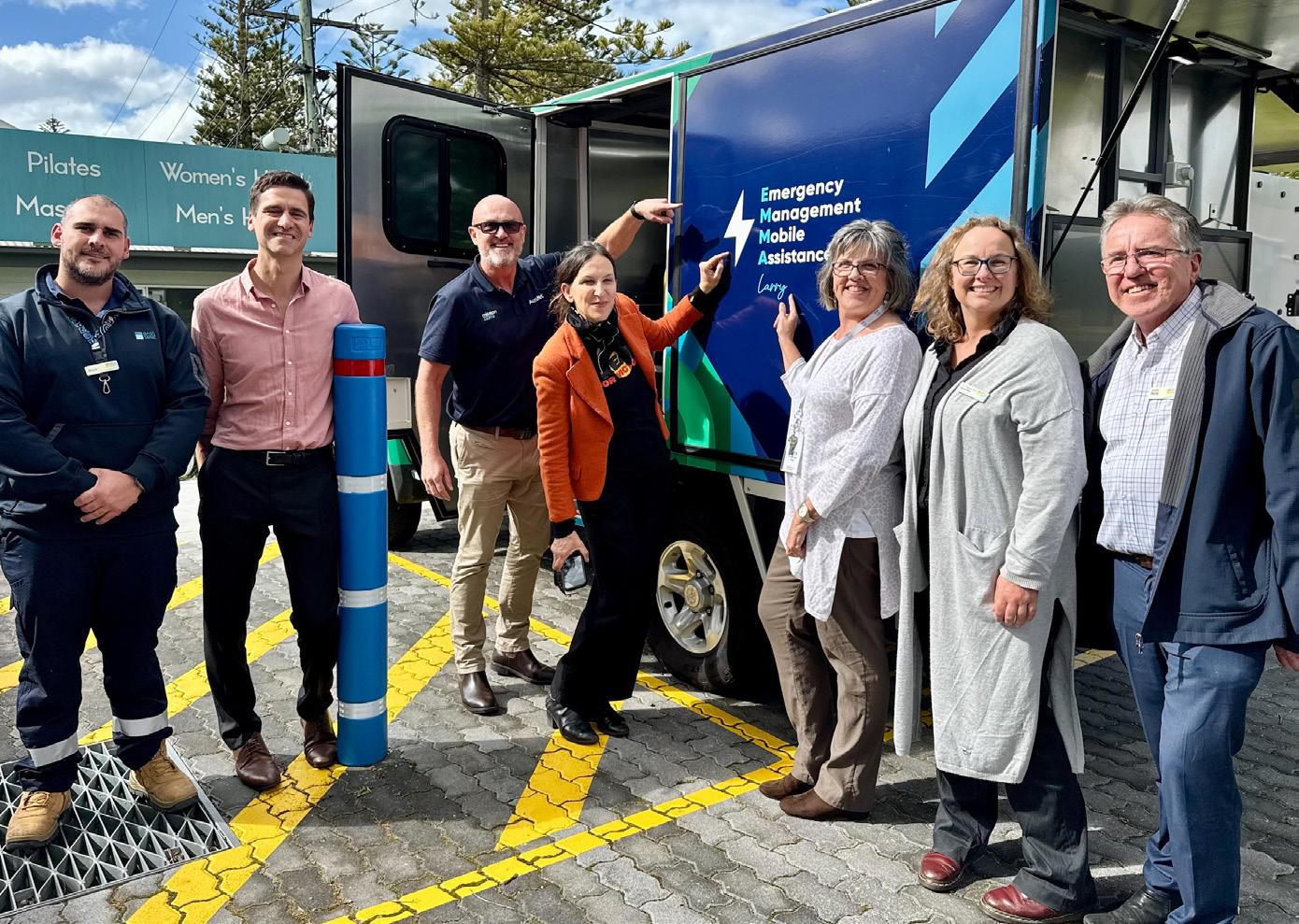
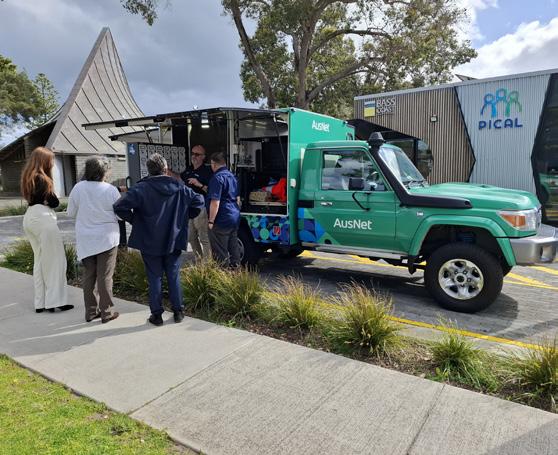
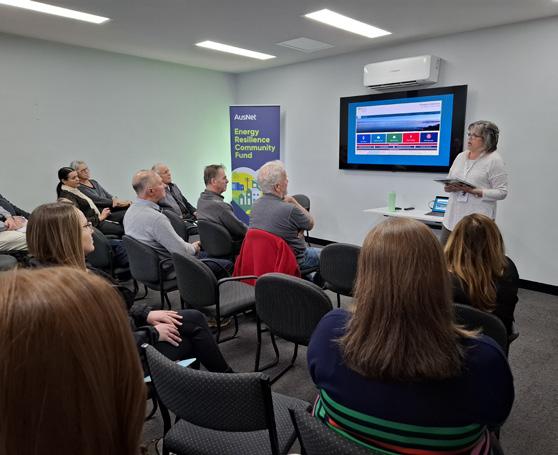
Maribyrnong's Flood Recovery Program is a deeply community-led response to the long tail of the Maribyrnong River Flood of 14 October 2022, which impacted around 500 homes and left some residents displaced years later. Guided by a Community Recovery Committee made up of flood-affected residents and supported by Council’s recovery team, the program has delivered a wide range of initiatives that support wellbeing, preparedness, insurance and advocacy. Rather than treating recovery as a short-term task, Maribyrnong City Council built a model that recognised lived experience, local leadership and social connection as essential parts of building long-term resilience.
The program was structured around four priority areas identified through a Community Strengths and Opportunities Workshop: social recovery and young people, insurance and financial recovery, preparedness, health and safety, and advocacy. Community members nominated themselves to lead projects aligned with their own interests and skills, while a Social Recovery Sub-Committee of agencies and service providers helped coordinate collaborative responses. This approach led to projects such as the Maribyrnong Insurance Project, which produced accessible insurance guides and webinars in English and Vietnamese, property-specific flood risk cards for 477 homes, and a Neighbourhood Flood Network that equips local leaders to share preparedness information and strengthen street-level connections.
The outcomes show the breadth and depth of the program’s impact. Around 340 households have been engaged, with residents accessing material aid, recovery support, psychologist-led wellbeing conversations and practical workshops in home maintenance, gardening and car care. A children’s book developed through play therapy and a partnership with 100 Story Building and Cohealth has helped young people tell the story of the flood in their own way, while free weekly tai chi, guided walks, music events and Maribyrnong Aquatic Centre memberships have supported social connection and wellbeing. Accessibility has been central throughout, with translated materials, interpreter services and bicultural outreach helping ensure diverse parts of the community could participate meaningfully in decision-making and recovery support.
This shows how recovery can become a platform for stronger local leadership, better preparedness and more inclusive systems change. Maribyrnong City Council has not only supported residents through the immediate and ongoing impacts of disaster, but also created practical resources, community networks and advocacy pathways that will continue to reduce vulnerability into the future. The initiative stands out for its commitment to lived experience, grassroots participation and long-term resilience, offering a valuable model for councils supporting communities through complex recovery.
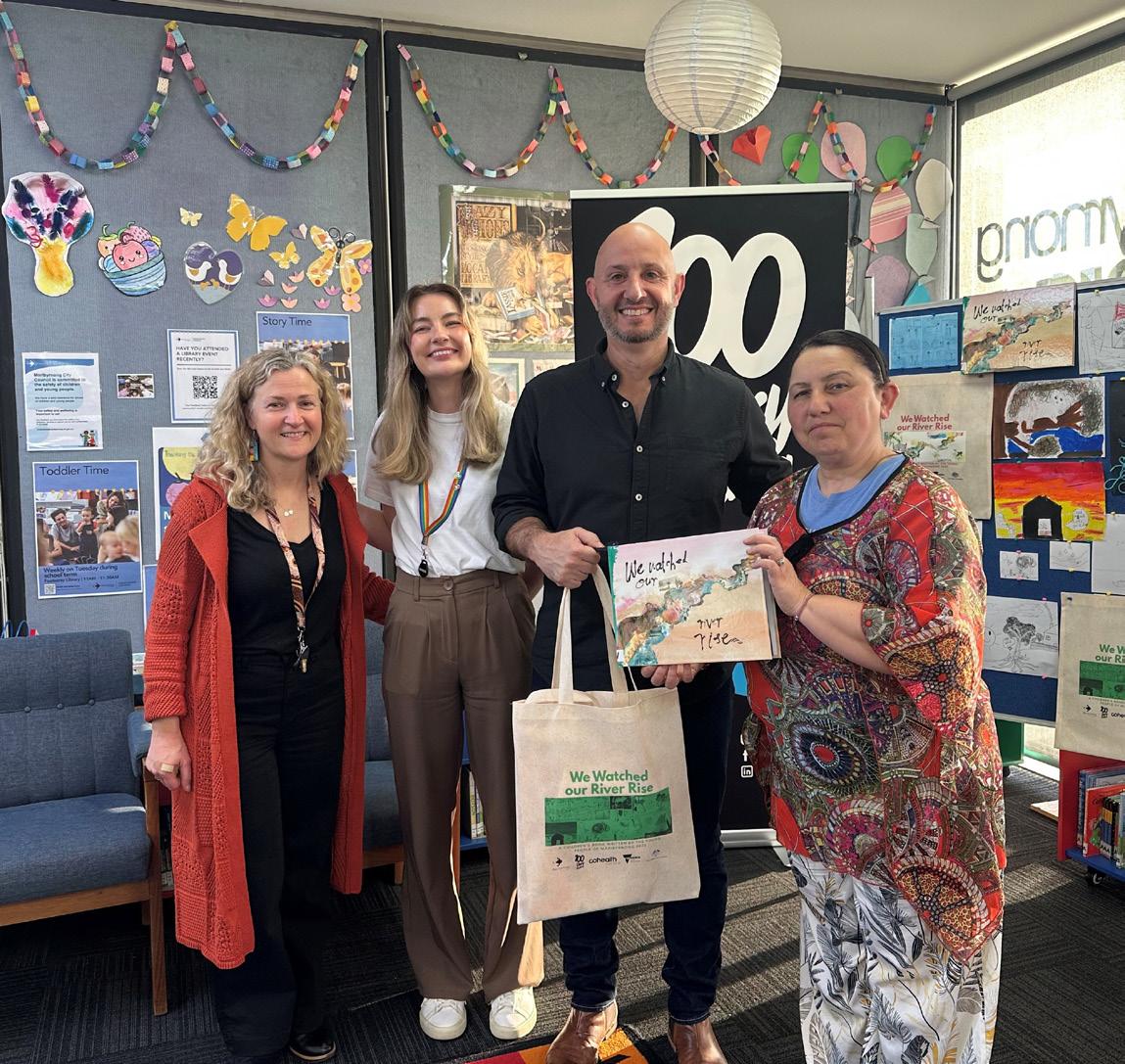
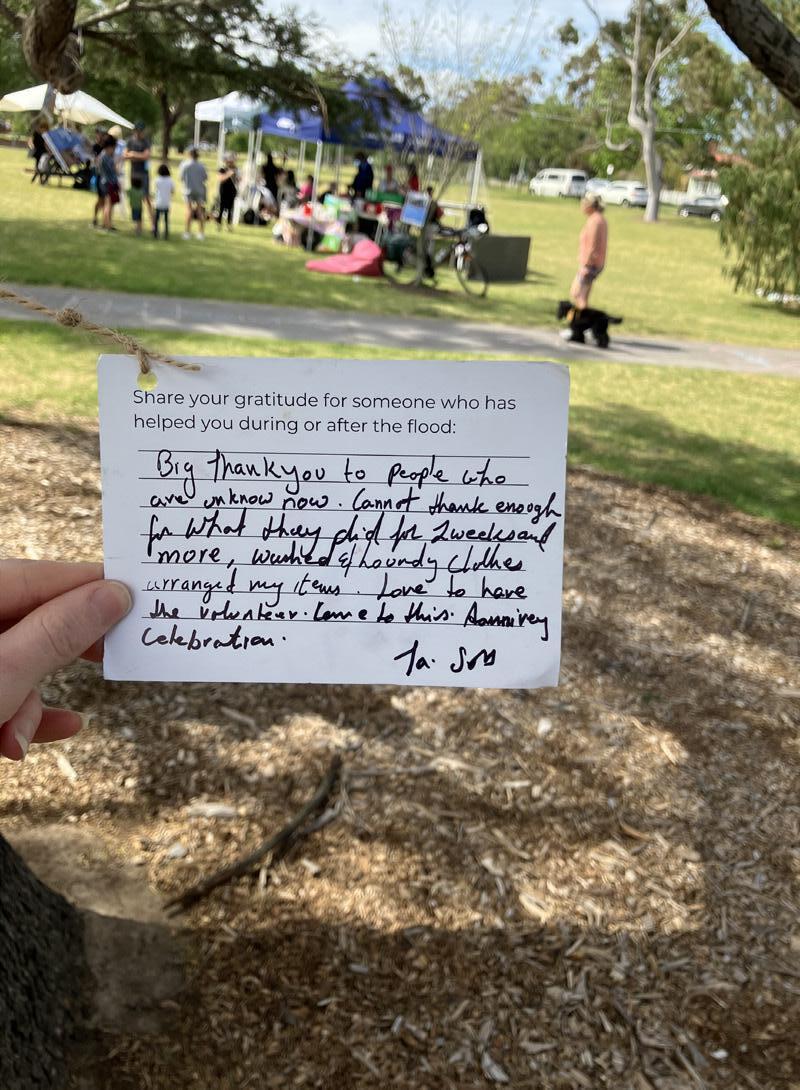
The Resilient Yarra Ranges Program is a large-scale, place-based resilience program that responds to the reality that Yarra Ranges is one of Australia’s most disaster-impacted municipalities. Delivered between 2022 and 2025, the $13.6 million initiative brought together seven connected project streams spanning prevention, preparedness, response and recovery. Led by Yarra Ranges Council and funded through Australian Government grants, Victorian Government contributions and Council investment, the program strengthened resilience across social, built and natural environments through bushfire risk reduction, resilient energy and buildings, emergency relief networks, township-level planning and improved hazard mapping.
The program was structured through a formal governance framework, program plan and risk management approach, with dedicated project managers leading each stream and regular reporting to Council and funding bodies. Community participation was central throughout. Township Action Groups in Monbulk, Healesville, Yarra Junction and Mt Dandenong/Kalorama helped shape local adaptation planning and fuel management, while co-design workshops, focus groups and surveys brought community knowledge into decisionmaking. Cross-functional collaboration across Council’s Emergency Management, Infrastructure, Planning, Environment, Community Development, Finance and Communications teams ensured resilience was embedded into core systems and everyday operations rather than treated as a stand-alone project.
The program has delivered substantial outcomes. It upgraded 19 Council facilities with solar, batteries and generator plug-in points to support resilient power and community activation during disasters, formalised the Yarra Ranges Emergency Relief Network linking more than 70 community organisations, and introduced a Changing Places facility co-designed with the Disability Advisory Committee to support high-needs residents during relief centre activation. It also reduced bushfire risk through extensive roadside vegetation inspection and tree treatment, and pioneered the use of LiDAR technology for landslip and erosion risk mapping, improving planning controls and development assessment. Independent evaluation confirmed the program increased adaptive capacity, reduced vulnerability and strengthened community and Council capability across the municipality.
This demonstrates what is possible when disaster resilience is approached as a connected system rather than a series of isolated projects. Yarra Ranges Council has created a model that combines advanced risk data, inclusive community engagement, infrastructure investment and long-term governance into a single, highly transferable program. Its legacy is not only the physical works delivered, but the way resilience has now been embedded into local planning, asset management and community practice across the municipality.
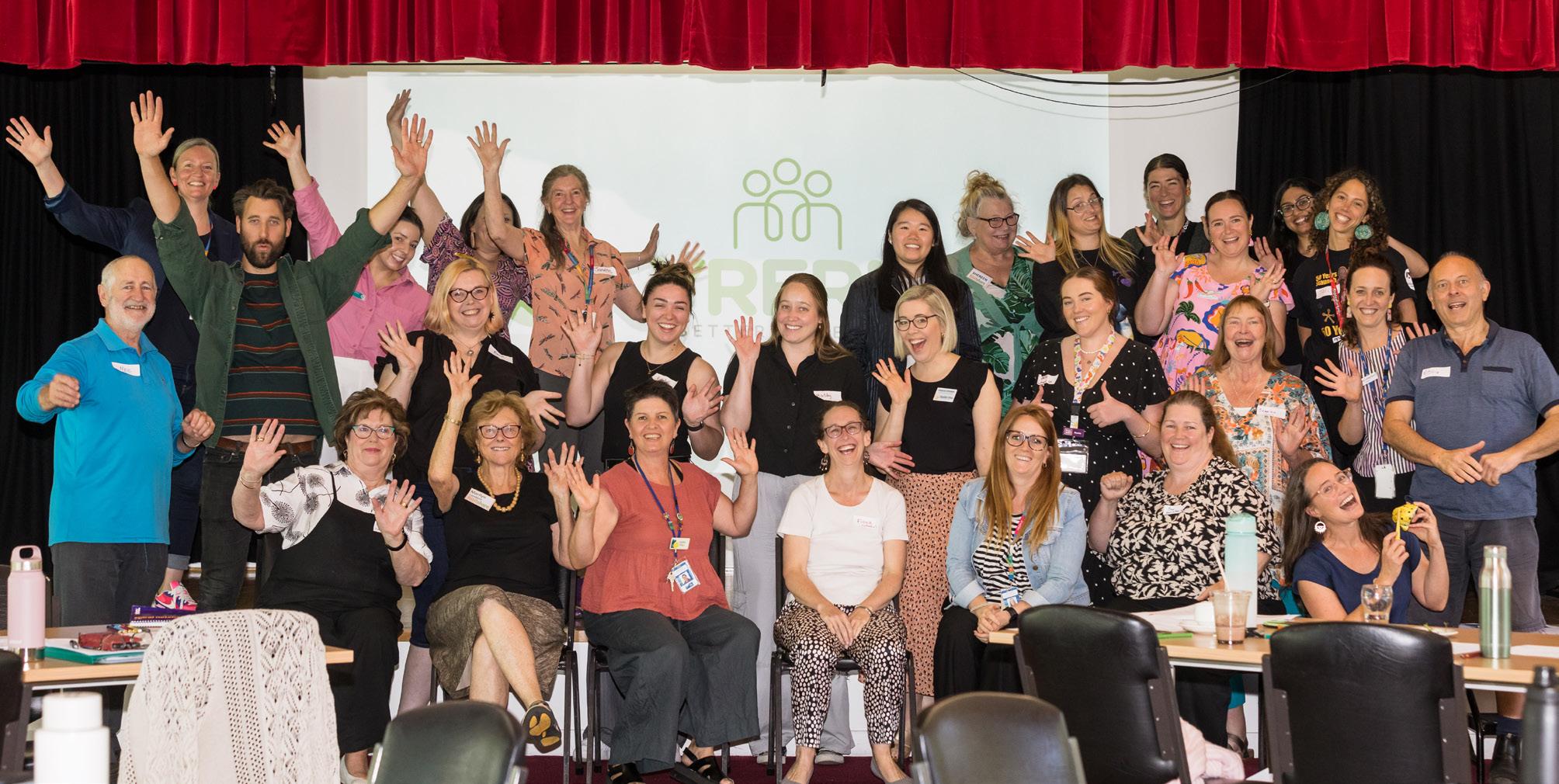
This award recognises initiatives that acknowledge, support and celebrate diversity and inclusion in relation to internal practices and/or within the broader community context. This includes, but is not limited to ethnicity, language, ability, sex, gender, sexual orientation, age, class, education level, personality, political beliefs and other ideologies.
It is about understanding and respecting each other and moving beyond simple tolerance to embracing and celebrating the rich dimensions of diversity within each individual – whether it be in an organisational or community context.
• Commitment to diversity and inclusion
• Influence and originality
• Capacity for establishing and maintaining partnerships
• Benefits to the organisation and/or community
• Outcomes achieved within the organisation and/or the community
• Establishment of cross functional working relationships
Mornington Peninsula Shire Council
AllAbilitiesBoating–HastingsPontoonHoist
Boroondara City Council
SocialInclusionCo-designwithAutisticYoungPeople
Glen Eira City Council
BasketballUnlimited
Greater Dandenong City Council
HOME25
The Hastings Pontoon Hoist is a groundbreaking partnership that has opened Western Port Bay to people who previously faced major barriers to boating and fishing. Led by Mornington Peninsula Shire, the initiative brought together Better Boating Victoria, Hastings Yacht Club, Wallara Disability Support Services and Westernport Marina to install an all-abilities hoist and accessible pontoon infrastructure at Hastings. By combining universal design, lived experience and a free-hire model, the project has created a safer and more dignified way for people using wheelchairs or mobility aids to access the water.
The project was designed to put Mornington Peninsula Shire’s We All Belong Strategy and Universal Design Policy into action by embedding accessibility into coastal infrastructure planning, procurement and delivery. Cross-functional collaboration between engineering, coastal operations and community wellbeing teams ensured that technical requirements were balanced with lived experience and inclusion goals from the outset. Wallara Disability Support Services played an especially innovative role by co-designing a site-specific instructional video featuring people with disability using the hoist, helping reduce risk and build confidence for first-time users and staff alike.
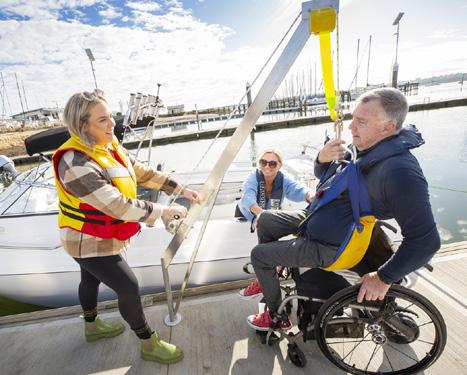
The community impact has been immediate and significant. The hoist now provides safe, dignified transfers for adults aged 28 to 83 with varying mobility needs, while wide non-slip decking, accessible gangways, gradient indicators and accessible parking improve safety and confidence for all ramp users. Families and carers report reduced physical strain and greater confidence planning outings, knowing the equipment is available and free to use. The visibility of the hoist at a busy public ramp has also helped normalise disability inclusion in recreational spaces, and the project’s success has already influenced the inclusion of an accessibility hoist in the Mornington Schnapper Point Boat Ramp upgrade.
This demonstrates how local government can move beyond compliance and create genuinely inclusive public infrastructure that changes who feels welcome in shared spaces. Mornington Peninsula Shire has delivered more than an accessibility feature: it has created a visible, practical and transferable model for all-abilities recreation. By combining strong partnerships, universal design and lived experience, the initiative sets a new benchmark for inclusive coastal infrastructure across Victoria.
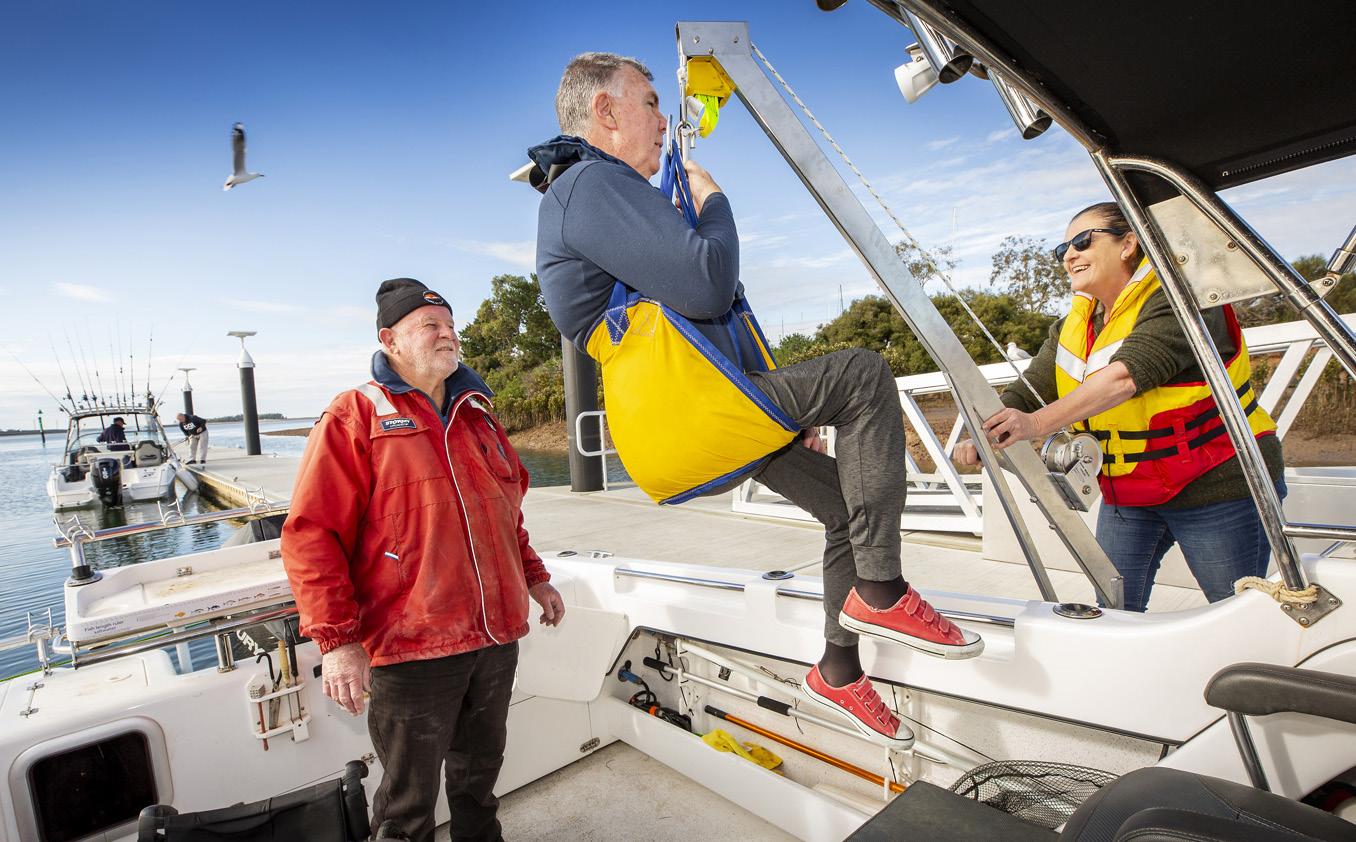
SocialInclusionCo-designwithAutisticYoungPeople
Social Inclusion Co-design with Autistic Young People is a thoughtful and highly inclusive pilot that brought Autistic young people, disability organisations and Council staff together to design a social event that genuinely responded to lived experience. Led by the City of Boroondara, the project addressed the high risk of social isolation among Autistic school leavers by creating a series of sensoryconsiderate workshops where participants could build trust, share ideas and shape future programming. One of the five event concepts developed through the process was delivered as a Special Interest Trivia Night, attended by 43 Autistic young people and allies.
The initiative was grounded in the principle of ‘nothing about us, without us’, with Autistic young people recognised as experts in their own experience. Workshops were designed to remove common barriers to participation through low lighting, quiet spaces, flexible seating, snacks, movement breaks and multiple modes of communication including speaking, typing, writing, drawing and observation. Pronoun badges, gender-neutral facilities, ‘What to Expect’ guides and sensory supports were also used. Strong partnerships with Learning for Life Autism Centre, Rossbourne School and Swinburne University supported recruitment and trust-building, while 15 staff across Council received co-design training that has strengthened long-term organisational capability.
The outcomes have been powerful for both participants and Council. Co-design participants reported feeling welcomed, understood and respected, with the multi-session structure allowing deeper relationships and stronger insights to emerge over time. The trivia night provided a joyful, low-pressure environment where participants could connect over shared interests, while feedback across both the workshops and event was overwhelmingly positive. Internally, the project improved staff confidence in neuro-inclusive facilitation and influenced broader engagement practice across multiple departments, creating a reusable model supported by workshop templates, facilitation scripts, accessibility protocols and five future event concepts shaped directly by lived experience.
This demonstrates how inclusive design can be transformative when it is built from lived experience rather than adapted after the fact. Boroondara City Council has created more than an accessible event: it has developed a practical, transferable model for neuro-inclusive co-design that reduces isolation, builds confidence and strengthens representation for a cohort that is often under-engaged. The project stands out for its care, creativity and lasting organisational impact.
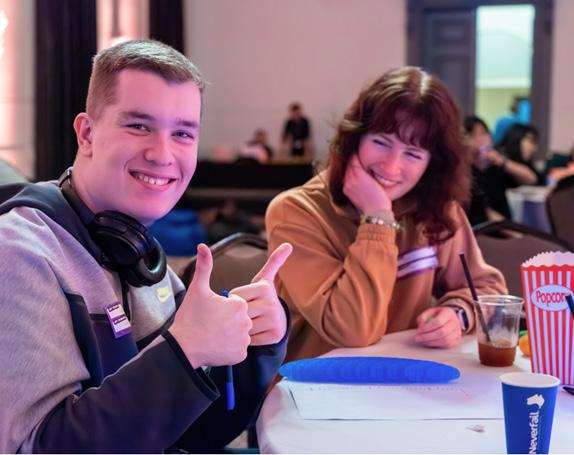
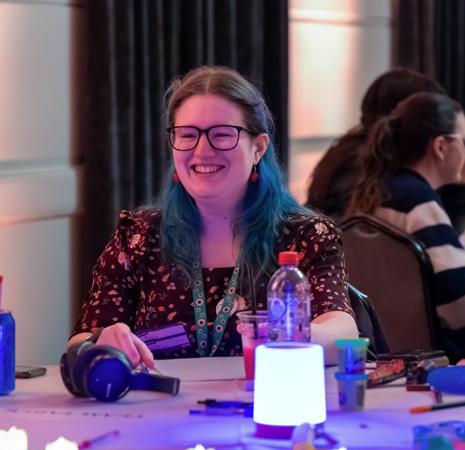
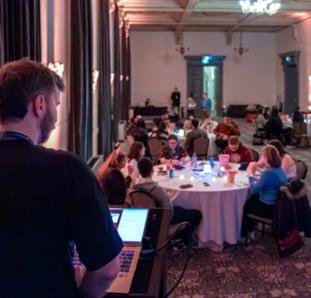
Basketball Unlimited is an inclusive sport program that has created a genuine sense of belonging for people with disability through accessible, participant-led basketball. Run by Glen Eira Leisure, the program brings together participants from local disability services, the Glen Eira and Bayside communities and existing members in a safe, supportive and competitive environment. Its two-tiered structure, expanded team numbers and development of a representative squad competing in all-abilities tournaments demonstrate how rapidly the initiative has grown in response to community demand.
The program was designed to ensure people of all abilities could participate in meaningful ways, whether on court, at the scorer’s bench or in coaching roles. Glen Eira Leisure provides a physically and financially accessible stadium, clean uniforms in a range of sizes, and staff trained through the Everybody Active 1:1 Support Program, including lived-experience staff and mandatory disability education. Strong partnerships with Bayley House, Marriott Support Services and MECWA Care have helped shape the competition’s rules, code of conduct and support structures, ensuring the experience remains inclusive, enjoyable and sustainable for players and support networks alike.
Basketball Unlimited has delivered strong organisational and community benefits. Participants have improved physical activity, confidence and social connection, with feedback from allied health professionals confirming that individual goals around wellbeing and interaction are being achieved. The program has become a preferred weekly activity for local day services and has fostered deep community investment from families and participants. Its affordability and integration with other Glen Eira Leisure initiatives, including Everybody Active and International Day of People with Disability events, have strengthened broader pathways into recreation, community life and health-promoting activities beyond basketball itself.
This shows how inclusive sport can become a powerful vehicle for dignity, connection and long-term participation in community life.
Glen Eira City Council has created more than a competition: it has built a trusted and growing community where people with disability are supported to belong, contribute and thrive. The initiative stands out for combining practical accessibility, participant choice and strong partnerships into a model that is both impactful and sustainable.
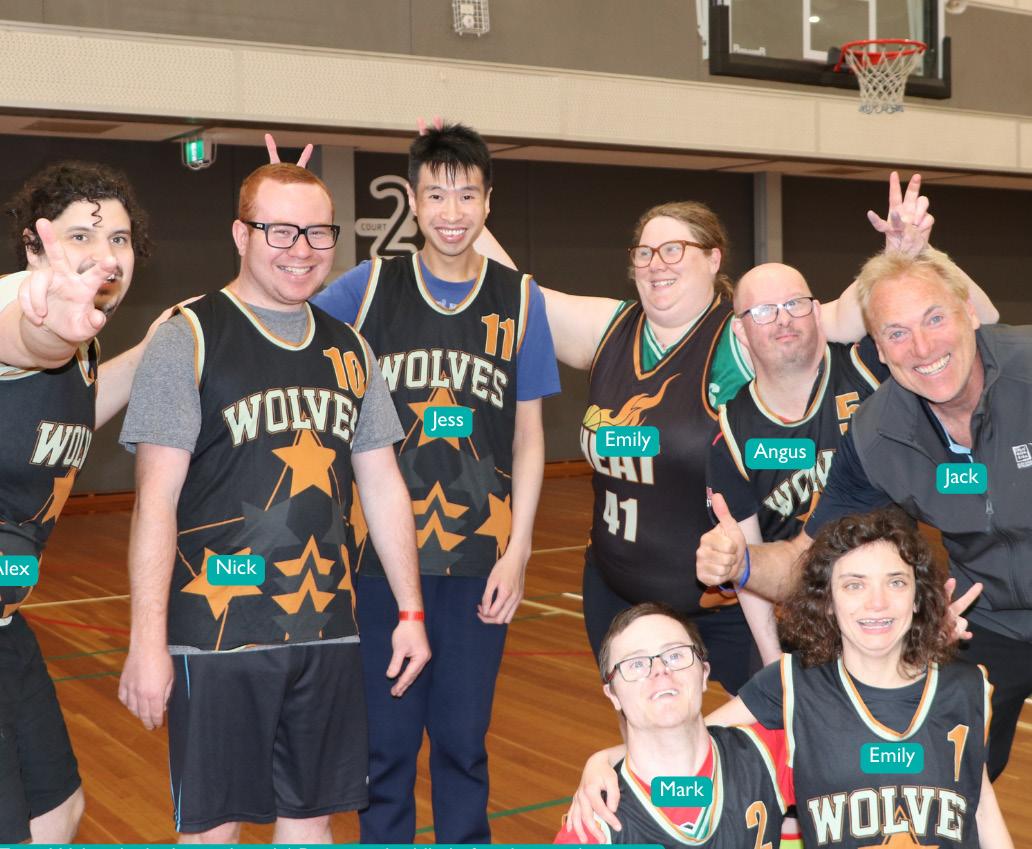
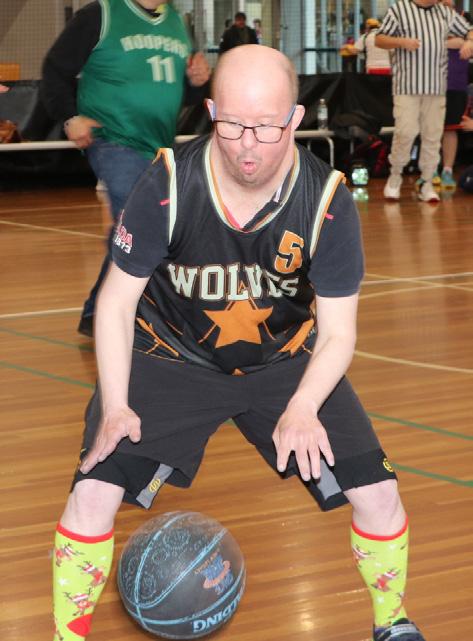
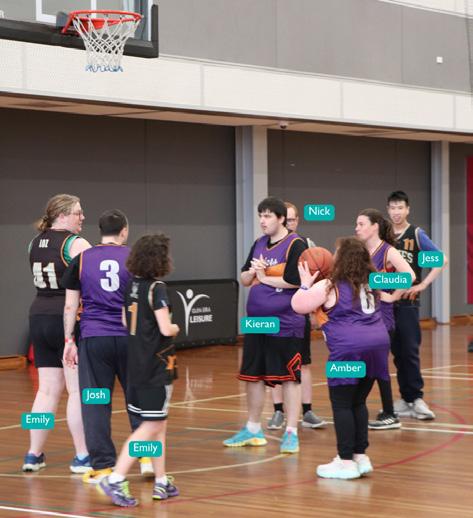
HOME25 was a landmark city-wide exhibition that transformed Greater Dandenong’s everyday civic spaces into platforms for storytelling, belonging and cultural visibility. Featuring works by 16 refugee, asylum seeker, First Nations and migrant artists, the exhibition extended across libraries, markets, streets, civic squares and gallery spaces, reaching audiences well beyond traditional arts venues. With more than 300,000 visits across all locations, HOME25 demonstrated how local government can lead large-scale cultural inclusion by embedding diverse voices directly into the public realm.
The exhibition was designed to address inclusion across culture, language, migration experience, age, ability and socioeconomic background by reducing barriers to participation in the arts and creating highly accessible points of connection. Greater Dandenong City Council coordinated the initiative through a whole-of-Council model involving 12 internal teams and a broad network of partners including Dandenong Market, Holiday Inn, Liquid Architecture, RMIT, Cornerstone, Bunurong Land Council Aboriginal Corporation, Refugee Resource Hub and the Interfaith Network. Community-led programs such as Hakaya of Home, Market Memoirs and Punjabi Cypher created multilingual, intergenerational opportunities for residents to share stories and see their identities reflected in public space.
The project delivered strong organisational and community benefits. It strengthened Council’s capacity for inclusive programming, accessible design, partnership development and placemaking, while also creating new internal systems that will inform future activations. For the community, HOME25 provided a platform for marginalised and emerging artists to be seen alongside established practitioners, and enabled residents to engage with stories of migration, displacement, identity and memory in familiar civic settings.
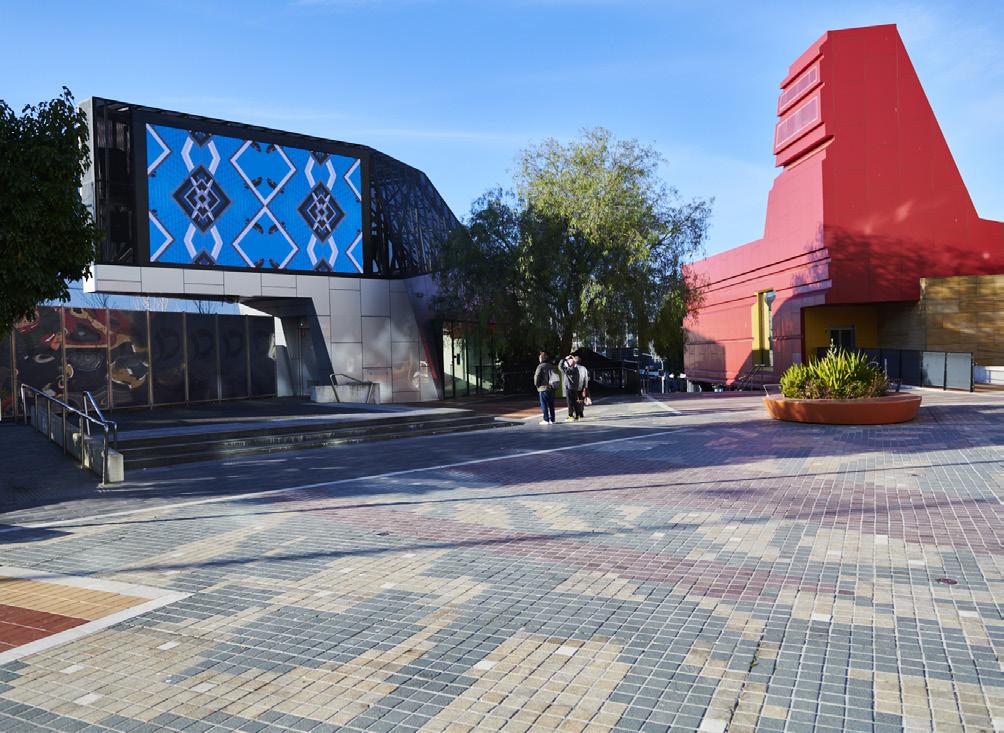
Works such as Barat Ali Batoor’s A Journey of Survival offered validation and visibility for refugee-background communities, while also encouraging empathy and cross-cultural understanding among broader audiences.
This shows how cultural inclusion can be meaningfully embedded into civic life when local government works with artists and communities in ways that are ambitious, decentralised and community-led. Greater Dandenong City Council has created more than an exhibition: it has activated public space as a site of pride, healing and dialogue, while building stronger partnerships and more inclusive systems within the organisation itself. The project offers a compelling model for place-based cultural programming that celebrates difference and strengthens community cohesion at scale.
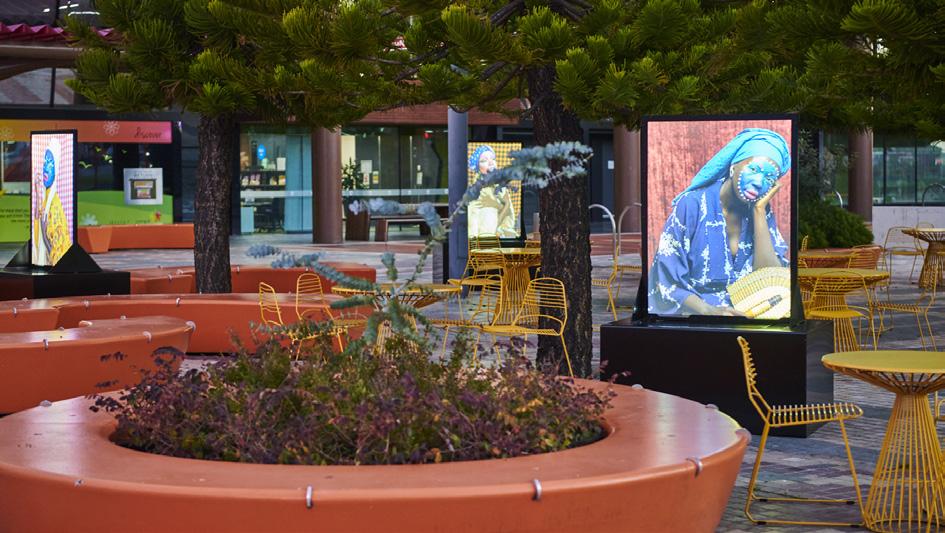
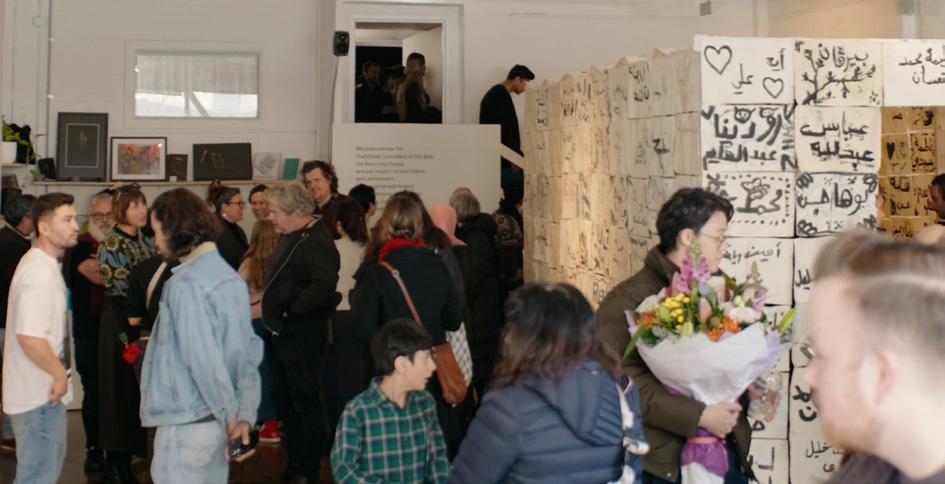
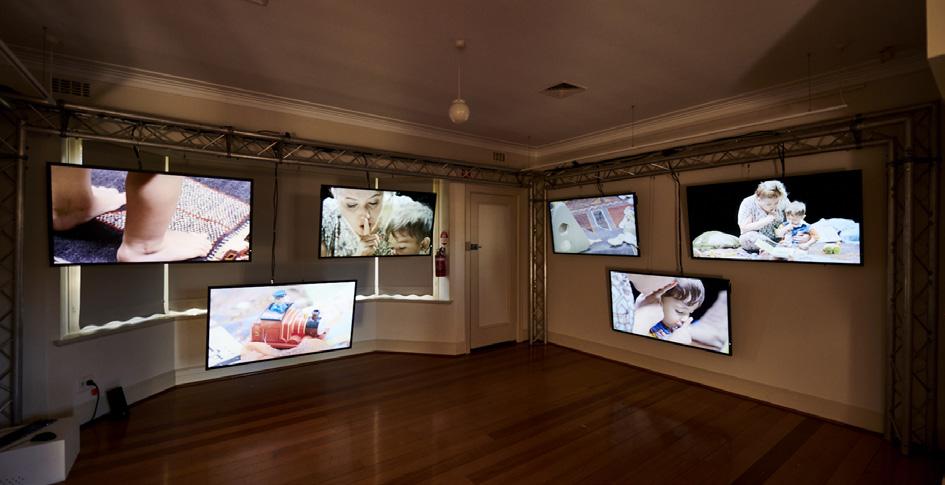
This award recognises initiatives that demonstrate excellence in the delivery of environmentally sustainable processes or projects. These provide a new way of ensuring programs, projects and developments meet present needs, without compromising future generations.
• Clarity of the initiative’s outcomes
• Innovative features
• Size and complexity of initiative relative to funding
• Cost benefits
• Sustainability of project
Kingston City Council
EmissionReductionwithLocalBusinesses
Wyndham City Council
NotYetaPark,StillaPriority–ProtectingVictoria’sCriticallyEndangeredGrasslands
Monash City Council
ActionsforEarth
Moira Shire Council
Target80by2030
Nillumbik Shire Council
Vehicle-to-Load(V2L)PowerTrialsforZero-EmissionEventsandEmergencyResilience
Emission Reduction with Local Businesses is a strategic decarbonisation initiative that tackles the largest source of Kingston’s community emissions by helping local businesses and industry transition to efficient, electrified operations powered by renewables. Recognising that industrial businesses are the municipality’s primary emitters, Kingston City Council designed a practical, partnership-led program that combines technical assessments, business-case development and ongoing reporting to accelerate change. Since commencing in 2022, the initiative has supported participating businesses to identify and implement high-impact measures such as heat pumps, waste-heat recovery, renewable energy procurement and efficiency upgrades.
The program was designed to reduce operating costs, improve competitiveness and achieve measurable emissions reduction at scale, while future-proofing local industry against climate and energy-price risks. Council established municipality-wide energy baselines, mapped high-emitting sites through geospatial analysis and developed a structured delivery model that begins with desktop assessments and progresses to site visits and detailed business cases. A dedicated Zero Emissions Business Lead, supported by the Climate Emergency Lead, Kingston Business team, environmental health staff, geospatial specialists and external technical organisations, has ensured the work is rigorous, consistent and aligned with Kingston’s Climate & Ecological Emergency Response Plan.
The outcomes already demonstrate the initiative’s value. Kingston has engaged 113 businesses across 150 sites, delivering verified savings of $595,000 and 1,740 tonnes of carbon dioxide equivalent, while identifying a further 21,600 tonnes of potential future abatement through developed business cases. Energy-efficiency upgrades across Council facilities are also delivering annual savings of about $70,000 and 430 tonnes of carbon dioxide equivalent. Ironbark Sustainability has recognised Kingston as one of the most advanced councils in Australia in effectively tackling community emissions, particularly for its rare ability to connect specific program outcomes to municipality-wide emissions trends through six-monthly reporting and the Kausal climatetracking platform.
This demonstrates how local government can move beyond awarenessraising and deliver deep, measurable decarbonisation through targeted business support, strong governance and data-driven leadership. Kingston City Council has built a scalable and transferable model that strengthens both environmental and economic resilience, while helping industry participate confidently in the transition to a low-carbon economy. Its combination of technical sophistication, partnershipbuilding and practical business benefit makes it a leading example of local climate action.
NotYetaPark,StillaPriority–ProtectingVictoria’sCriticallyEndangeredGrasslands
Not Yet a Park, Still a Priority is a large-scale ecological restoration initiative that is helping prepare one of Victoria’s most significant future conservation landscapes for long-term protection. Led by Wyndham City Council, the program supports private landholders across Wyndham and the Western Grassland Reserve to restore critically endangered volcanic plains grasslands through regenerative land management, ecological restoration and precision weed control. What began as Wyndham’s Land Protection Grant Scheme has evolved into the Western Grassland Reserve Interim Management Partnership with DEECA, creating a coordinated and highly innovative approach to biodiversity protection, climate resilience and sustainable land stewardship.
The initiative was designed to address decades of ecological decline caused by overgrazing, weed invasion and land-use change, while also supporting landholders navigating the uncertainty of future public acquisition. Wyndham structured the work across three streams: on-ground ecological restoration, innovation and technology, and community engagement and capacity building. Ecological burns, targeted weed control, flora surveys and native revegetation have been coordinated at landscape scale, while Council’s custom ECO:SENSE GIS plugin and drone-assisted weed detection and spraying have improved accuracy, reduced herbicide use and lowered emissions.
At the same time, the grant scheme and one-on-one support have helped landholders adopt regenerative practices and participate meaningfully in shared conservation outcomes.
The measurable outcomes are substantial. More than 9,000 hectares of weed control and 5,400 hectares of vegetation surveys have been completed, 33,000 native plants established and 136 hectares of ecological burning delivered. The project is improving habitat for threatened species including the Golden Sun Moth and Striped Legless Lizard, while also contributing to soil carbon improvement and lower chemical use. Just as importantly, it has strengthened trust with private landholders through a relationship-led approach in a challenging acquisition context, and its methods have already been adopted by other councils including Melton and Geelong. This combination of ecological science, precision technology and community stewardship sets the initiative apart.
This demonstrates how councils can lead transformative environmental work by combining ecological knowledge, emerging technology and respectful partnership with landholders. Wyndham City Council has created a model that is both practical and visionary, improving biodiversity outcomes today while preparing the landscape for future public conservation. Its success lies not only in hectares restored and species protected, but also in the trust, capability and innovation it has built across community and government.
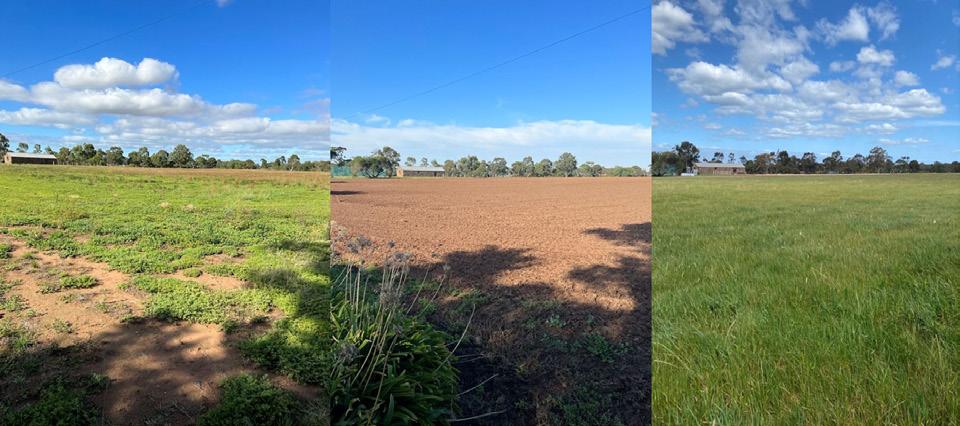
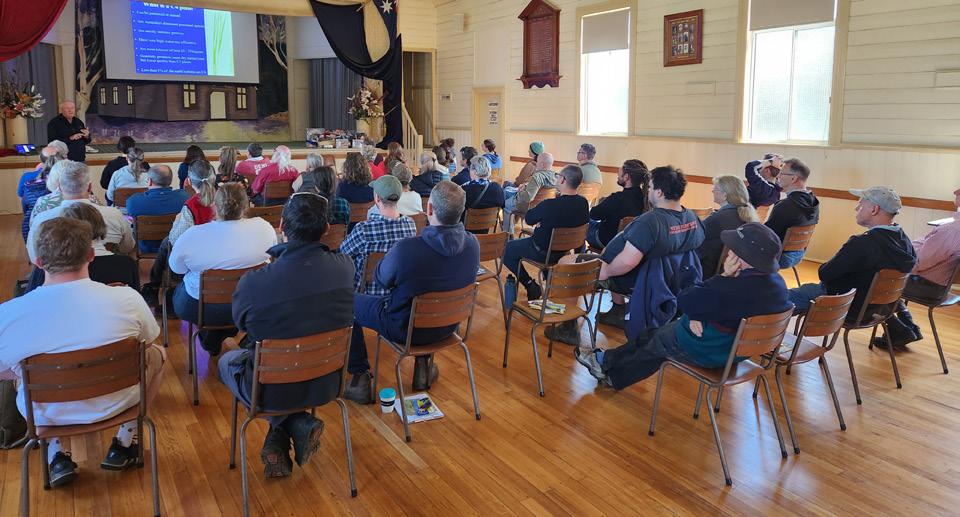
Actions for Earth is a simple but highly effective school engagement initiative that is helping Monash schools take practical action on sustainability while building a culture of environmental responsibility across the community. Launched in 2024 by the City of Monash, the challenge removes common barriers faced by teachers who often take on sustainability leadership without formal support. Schools register through an easy online process, choose from a practical checklist of actions and need only complete one action each year to participate. This accessible model has made it easier for schools of different sizes and capacities to get involved and be recognised for their efforts.
The initiative was designed to strengthen engagement with schools and increase participation in waste and recycling education, while supporting Monash Council’s Environmental Sustainability Strategy. Council built the challenge around clear objectives: to increase uptake of waste education sessions, support schools to adopt sustainability practices suited to their capacity and inspire broader ownership of environmental action among students and staff. A structured delivery model, including ready-to-use resources, term-based outreach, follow-up templates and recognition through mayoral certificates and councillor visits, ensured the program was both easy to administer and meaningful for participating schools.
The results have exceeded expectations. Since inception, 22 of Monash’s 57 schools have completed 449 actions, and school engagement in waste education sessions has grown from 37 in 2023 to 55 in 2025. Thirteen schools participated in education sessions for the first time in more than five years, expanding Council’s reach and enabling tailored recycling programs and infrastructure improvements at new sites. The challenge has also generated broader positive outcomes, with six schools joining the ResourceSmart Schools program and biodiversity actions aligning with Gardens for Wildlife. Across 2024 and 2025, around 800 parents and teachers and 7,500 students aged 5 to 17 were involved.
This shows how small, well-designed interventions can create substantial environmental impact when they reduce barriers and empower local leadership. City of Monash has created a practical and scalable model that celebrates school action, increases environmental literacy and strengthens the long-term pipeline of sustainability participation across the municipality. Its strength lies in making climate action feel achievable, visible and rewarding for schools and the wider community.
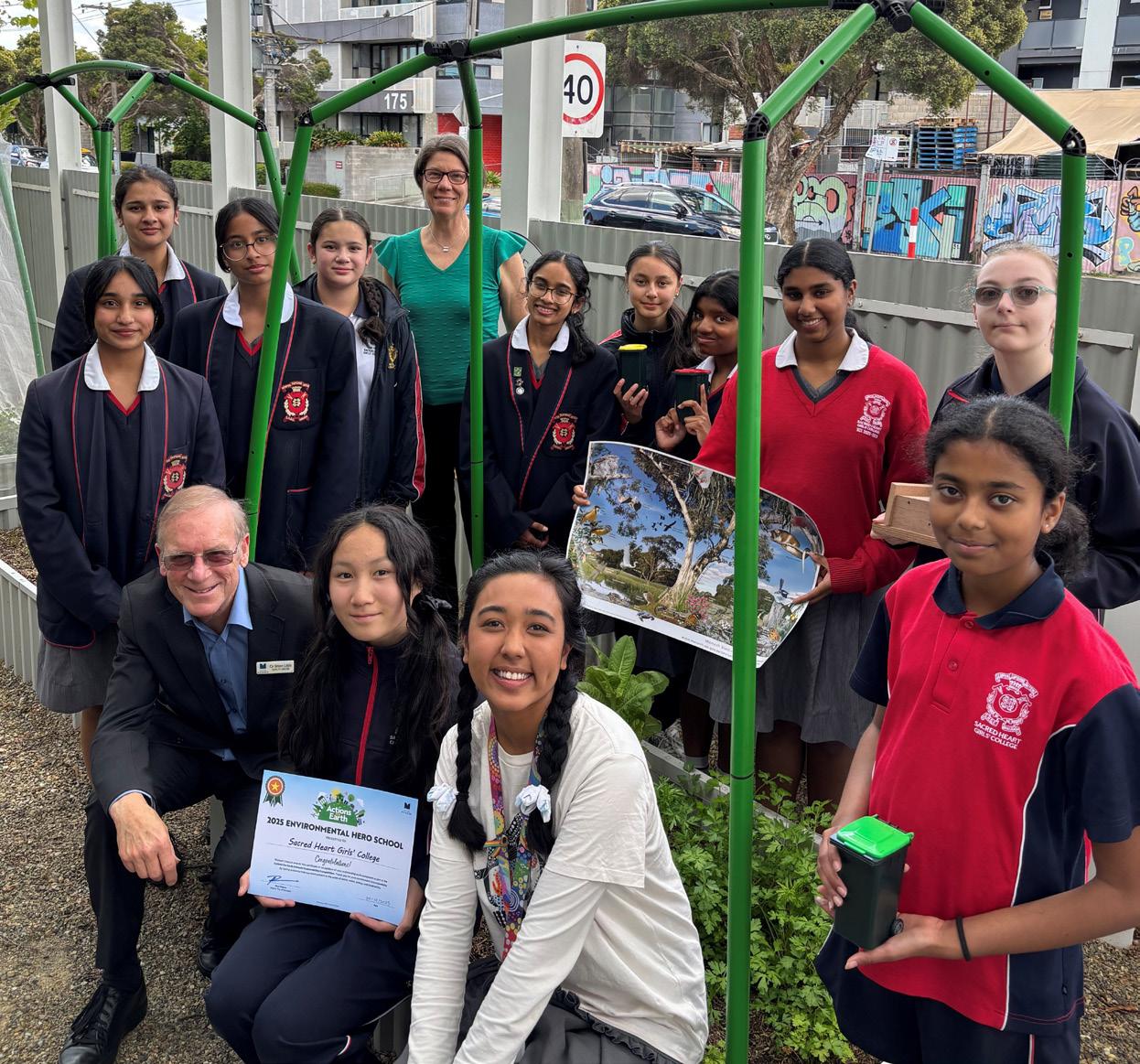
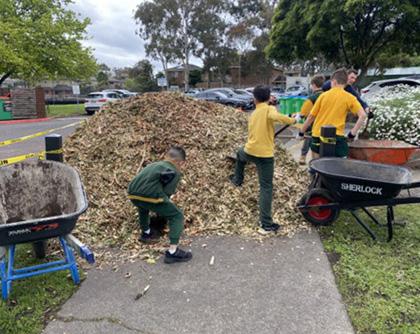
Target 80 by 2030 is a major kerbside reform initiative that has transformed waste collection for more than 14,000 Moira households while demonstrating how service redesign, strong community engagement and circular economy thinking can work together at scale. Led by Moira Shire Council’s Waste and Sustainability team, the project introduced weekly organics collection, fortnightly landfill collection, a dedicated four-weekly glass bin service and two resale sheds at Cobram and Numurkah Resource Recovery Centres. Within eight months, the initiative lifted waste diversion from 55 per cent to 69 per cent, reduced landfill by 690 tonnes, increased organics recovery by 766 tonnes and maintained contamination at just 1 per cent.
The initiative was developed to deliver measurable environmental outcomes while remaining financially sustainable and community supported. Council recognised that achieving the State’s 80 per cent diversion target would depend not only on infrastructure and service design, but also on securing the social licence needed for people to change long-established disposal habits. The project was delivered through six structured phases, including planning, options assessment, quantitative evaluation, community consultation, preparation and rollout, followed by ongoing monitoring. A four-stream model with source-separated glass was selected after detailed analysis and extensive engagement, with a crossdepartment working group and strong support from executive leadership ensuring a disciplined and evidence-based approach.
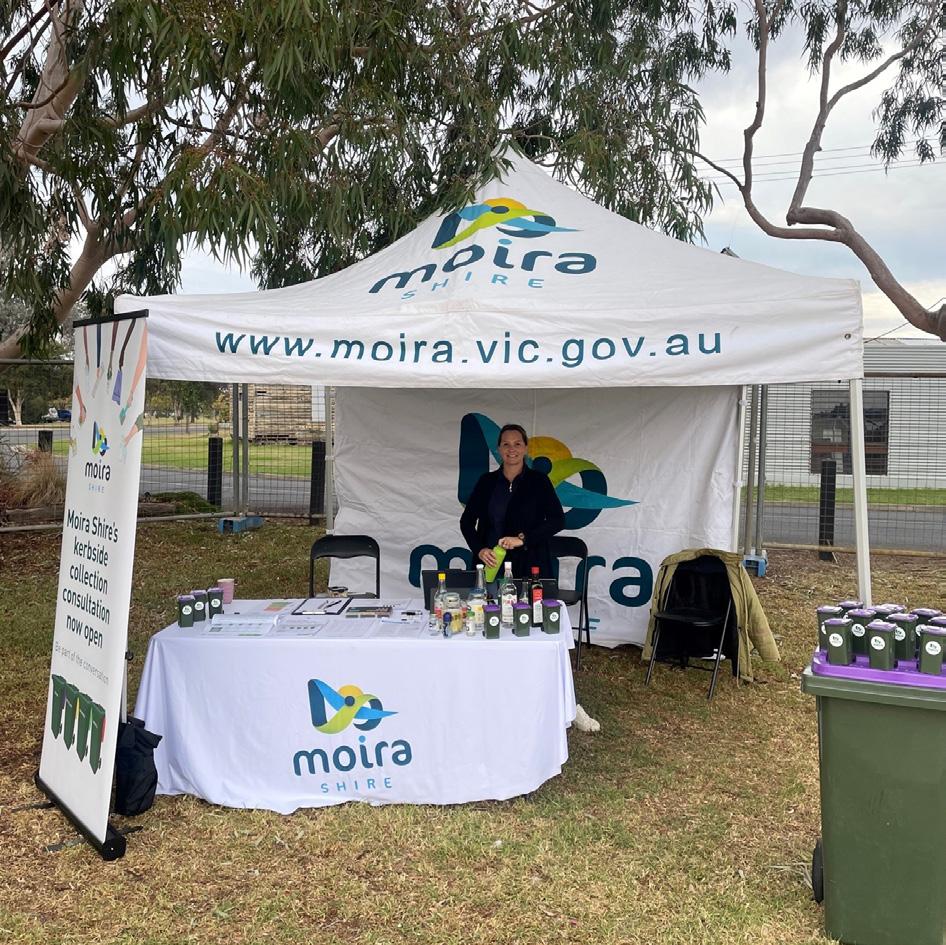
The results show both environmental and broader community value. The new system has generated ongoing landfill levy savings, improved household confidence in sorting waste and strengthened local circular economy opportunities. The resale sheds are diverting reusable goods from landfill while creating community pride and practical benefits, including partnerships with local schools such as Cobram Secondary College’s bicycle restoration program. Grants from DEECA and Sustainability Victoria significantly reduced the burden on ratepayers, while ongoing monitoring of diversion rates, contamination and bin presentation provides a strong platform for continuous improvement. High levels of participation, including more than 600 survey responses and 419 face-to-face conversations, have helped build trust and literacy around waste management across the municipality.
This demonstrates how regional councils can deliver meaningful and measurable environmental reform when service redesign is matched with clear engagement, rigorous planning and long-term circular economy thinking. Moira Shire Council has created a practical and scalable model that reduces landfill, supports community participation and strengthens resilience across local waste systems. Its success lies not only in the tonnes diverted, but in the way it has combined environmental ambition, financial responsibility and community confidence to position Moira as a leader in sustainable waste management.
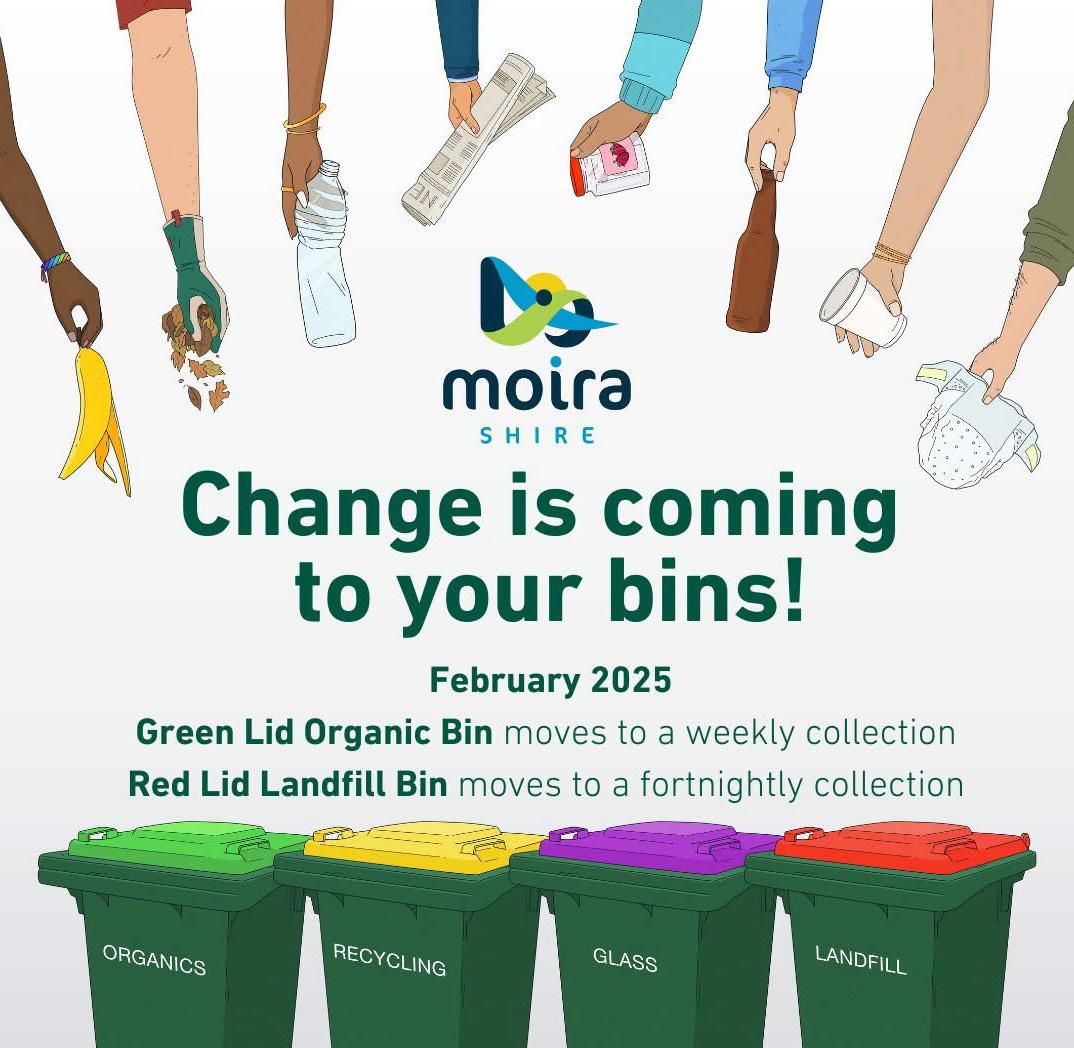
Vehicle-to-Load (V2L) Power Trials for Zero-Emission Events and Emergency Resilience is an inventive local government initiative that has repurposed Council electric vehicles as clean, mobile power sources for events and emergency scenarios. Led by Nillumbik Shire Council, the project is believed to be the first Victorian local government use of Vehicle-to-Load technology to replace diesel generators at community events. By powering stage equipment directly from fleet electric vehicles, Council has shown that zeroemission, quiet and reliable event energy is not only possible, but practical, scalable and directly relevant to the needs of a high bushfirerisk municipality.
The trials were designed to reduce emissions from Council events, improve safety and amenity, and test whether V2L-enabled vehicles could also strengthen emergency resilience. Nillumbik’s Environment & Sustainability team led the technology assessment, safety planning and performance monitoring, while the Community Development team coordinated event integration and stakeholder communication. The first deployment took place at the Hurstbridge Wattle Festival in August 2025, where the V2L system powered a small stage for seven hours with uninterrupted performance and only about 11 per cent total battery use including travel. A second repeat trial confirmed the same results, giving Council confidence to expand the approach.
The project delivers strong environmental, operational and community benefits. It eliminates generator fumes, fuel handling and noise, improving local air quality and making family-friendly spaces more pleasant and safer. Because Council already owns four MG4 electric vehicles with V2L capability, the trials required no major new capital investment and instead maximised value from existing fleet procurement. Monitoring of battery use, load stability and technician feedback has helped refine operational guidance, while community curiosity about the vehicles has created a visible and engaging demonstration of climate-aligned technology in practice. Council is also exploring the use of V2L for emergency response and relief centre operations.
This turns a relatively new technology into a highly practical local government solution with immediate and transferable value. Nillumbik Shire Council has shown how clean fleet assets can do more than move people: they can power community life, reduce emissions and strengthen preparedness. The initiative stands out for its simplicity, visibility and strong potential for replication across other councils as public fleets continue to electrify.
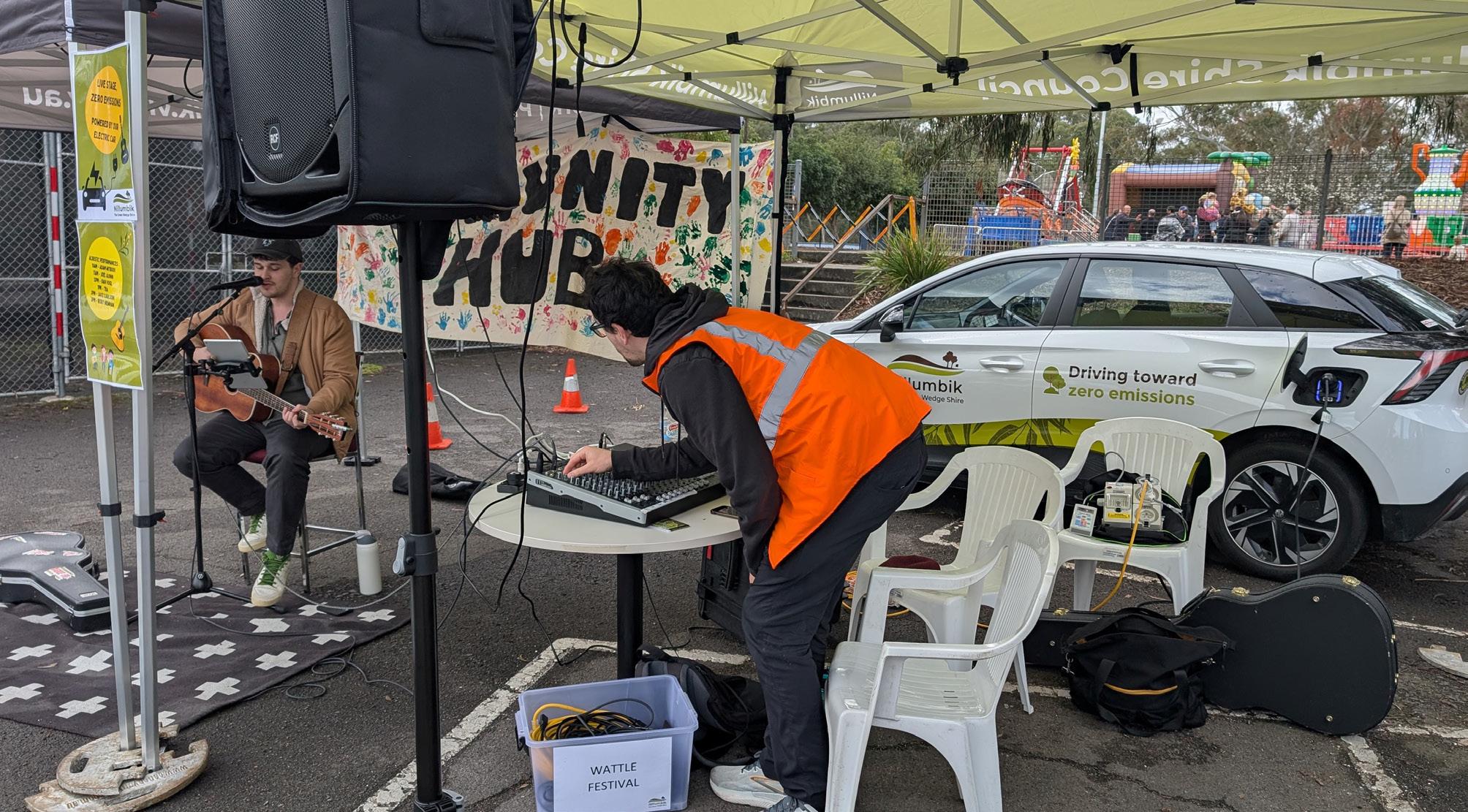
This award recognises initiatives that demonstrate new ways of leading, facilitating, administering, controlling or ensuring a particular outcome is achieved and that make positive changes to management of an organisation’s practices or projects.
• Clarity of program/project objectives and outcomes
• Originality and effectiveness of the initiative
• Achievement of project versus intention
• Sustainability/transferability of the initiative
• Demonstrated leadership
• Size and complexity of initiative relative to funding and resources
Wellington Shire Council & East Gippsland Shire Council
SharedServicesInitiativeRuralCouncilsRecordsManagementTransformation
Swan Hill Rural City Council
TowerHillHousingDevelopment
Boroondara City Council
HousingTrendTracker
Kingston City Council
KingstonSustainabilityBusinessAwards
Yarra Ranges Council
YarraRangesCouncilCulturalLiteracyProgram
This shared services initiative is a pioneering partnership between Wellington Shire Council and East Gippsland Shire Council that has reshaped how two rural councils manage information, compliance and digital risk. Through a shared cloud-based Electronic Document and Records Management System, the councils have delivered what they describe as a first for Victorian local government: a common records platform that standardises core processes while preserving each council’s separate identity and governance. The initiative builds on a broader ICT shared services relationship established in 2015 and demonstrates how collaboration can unlock major efficiencies, stronger security and a foundation for future transformation.
The project emerged from shared challenges around outdated legacy systems, increasing compliance demands, manual processing and cybersecurity risk. The councils responded with a formal shared services model supported by a Project Control Group, Joint Steering Committee, subject matter experts and independent external review. A Project Charter, SMART objectives, enterprise risk assessment and regular reporting to executives, councillors and audit committees ensured strong governance from planning through implementation. By aligning project delivery with each council’s broader strategic goals, the initiative created a structured and scalable model for digital modernisation that could extend beyond records management into other shared business systems.
The measurable outcomes are substantial. Each council has reduced manual processing by more than 358 hours per week and together they have achieved around $500,000 in procurement savings, with projected combined efficiency gains and cost avoidance of $8.877 million over five years. Project implementation costs totalled $1.32 million, offset by $500,000 in Local Government Victoria grant funding. The initiative has also improved protection of sensitive information, reduced reliance on paper, strengthened business continuity and laid the groundwork for emerging capabilities such as automation, digital twins and e-governance. The councils estimate that their broader shared services relationship has generated approximately $20 million in combined benefits and cost avoidance since 2015.
This demonstrates how innovation in local government can be driven through trust, shared governance and practical collaboration rather than scale alone. Wellington and East Gippsland have created a sector-leading model that addresses rural capability constraints while improving efficiency, resilience and long-term sustainability. Its value lies not only in the system itself, but in the mature partnership behind it and the blueprint it offers to other councils seeking to modernise services together.
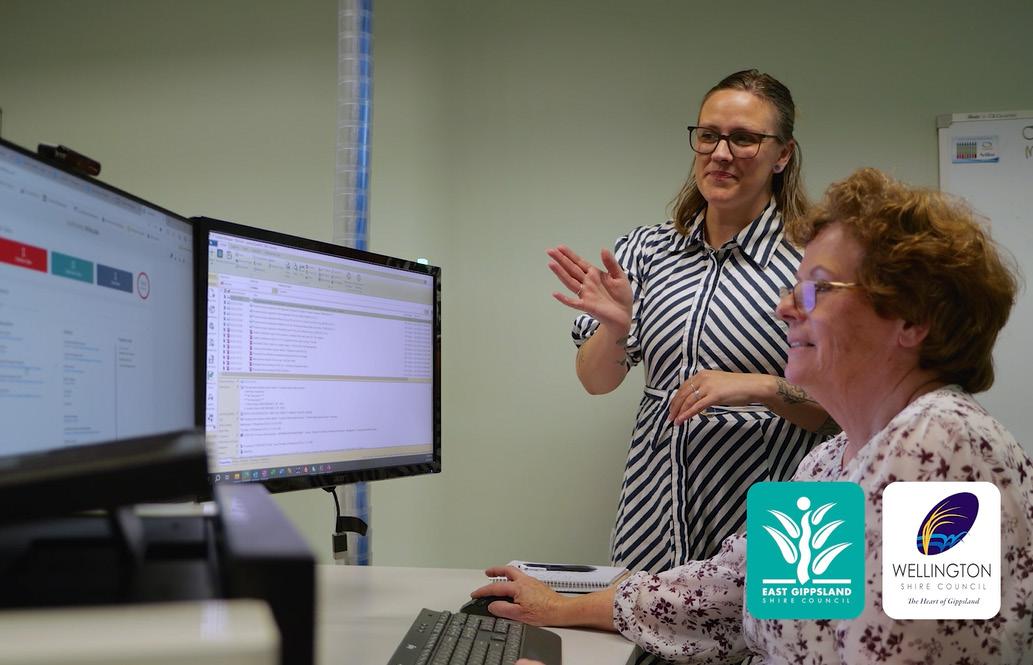
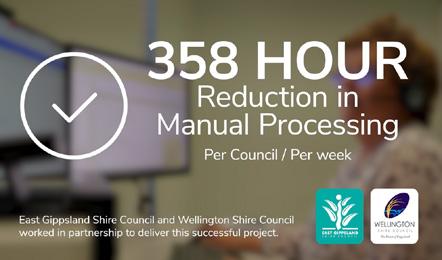
The Tower Hill Housing Development is a long-term, council-managed residential project that has demonstrated how local government can successfully lead complex urban growth without relying on private developers. Since 2005, Swan Hill Rural City Council has transformed a 150-hectare council-owned site into Tower Hill Estate, delivering 457 residential lots across 15 stages and creating a thriving new neighbourhood that balances liveability, sustainability and financial performance. The project stands as a powerful example of placebased leadership, showing how strategic land stewardship can generate both community benefit and an enduring revenue stream for local government.
The estate was conceived as a response to housing demand and growth pressures in Swan Hill, with objectives that included responsible land use, environmental stewardship, financial sustainability and the creation of a community residents would be proud to call home. Council applied a structured yet adaptive project management approach, using feasibility studies, engineering assessments, environmental considerations and long-term financial modelling to guide each stage. Internal cross-department collaboration has been central, with development and planning, engineering, infrastructure, finance, governance and corporate services teams all contributing to a model of whole-of-Council delivery that keeps decisions transparent, community-focused and fiscally responsible.
The project has delivered both measurable and long-term outcomes. Over the last five years, Council has sold lots worth $7.62 million against development costs of $7.24 million, with surpluses reserved for future stages and no need for external borrowing. Across two decades, the average of 21 lot sales annually has provided steady income for reinvestment into infrastructure and community projects, while the estate itself has added housing supply, stimulated local employment, supported the construction sector and attracted new residents to the region. Features such as solar-oriented lot design, open space, walkability and environmentally responsible stormwater management further strengthen the development’s value as a model of sustainable regional growth.
This redefines what is possible for regional councils in shaping housing outcomes and managing public land strategically. Swan Hill Rural City Council has not only delivered a successful housing estate, but also created a replicable model of self-funded, place-based development that combines accountability, innovation and long-term community return. The project’s legacy lies in the neighbourhood it has built and in the confidence it gives local government to lead ambitious development with quality and purpose.
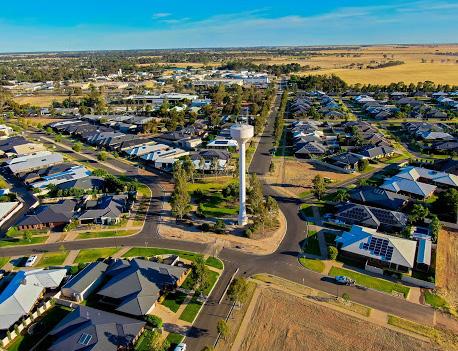
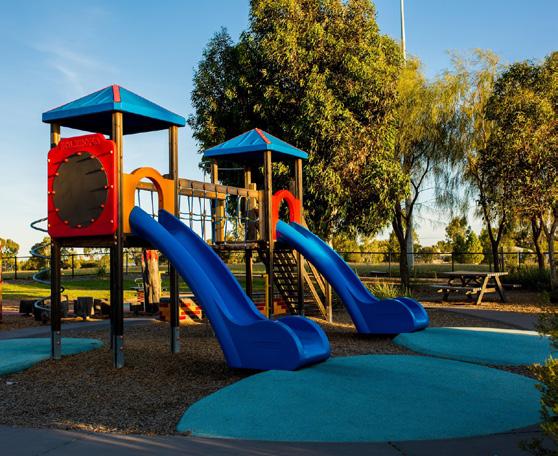
Housing Trend Tracker is an inventive planning data solution that has filled a major gap in how councils understand housing delivery. Developed by the City of Boroondara, the project created Victoria’s first known internal system to track residential development from planning approval through to construction completion. By building custom fields into the council’s existing Property and Rating system rather than developing an entirely new platform, the initiative has turned an overlooked data problem into a practical and highly transferable innovation that supports stronger strategic planning, advocacy and accountability.
The project originated during the 2022 Boroondara Housing Strategy, when Council recognised that existing sources such as Planning Permit Activity Reporting and ABS datasets could not answer a critical question: how many approved dwellings are actually being built? Using the Innovation Academy methodology, the team scanned the issue, consulted 13 internal staff across planning, IT and transformation, and tested solutions with external stakeholders including other councils, industry and the Department of Transport and Planning. A six-month pilot confirmed that linking planning approvals with Building Occupancy Permits inside the existing TechOne system offered the most feasible and scalable way to collect reliable, real-time completion data.
The system is now embedded in standard workflows and already providing insights that were previously unavailable. Council has identified that of 2,321 dwellings approved since August 2019, only 292, or 12.5 per cent, have actually been completed, fundamentally shifting understanding of local housing delivery and highlighting a 2,472 dwelling shortfall against future targets. The tool also captures finer-grained information such as dwelling type, storeys and bedroom numbers, improving infrastructure and open space planning. Costs have remained low, with around 40 hours of design work, 50 hours of IT enhancement and less than $7,000 for dashboard development, making the model both financially sustainable and attractive for other councils already using similar systems.
This shows how innovative leadership can emerge from tackling an unsolved but practical problem with clarity, discipline and modest means. Boroondara City Council has created a simple yet transformative tool that strengthens evidence-based planning, supports more credible state advocacy and offers a blueprint for improving housing transparency across the sector. Its importance lies in its real-world usefulness and in the cultural shift it is helping drive toward more data-informed local government decision-making.
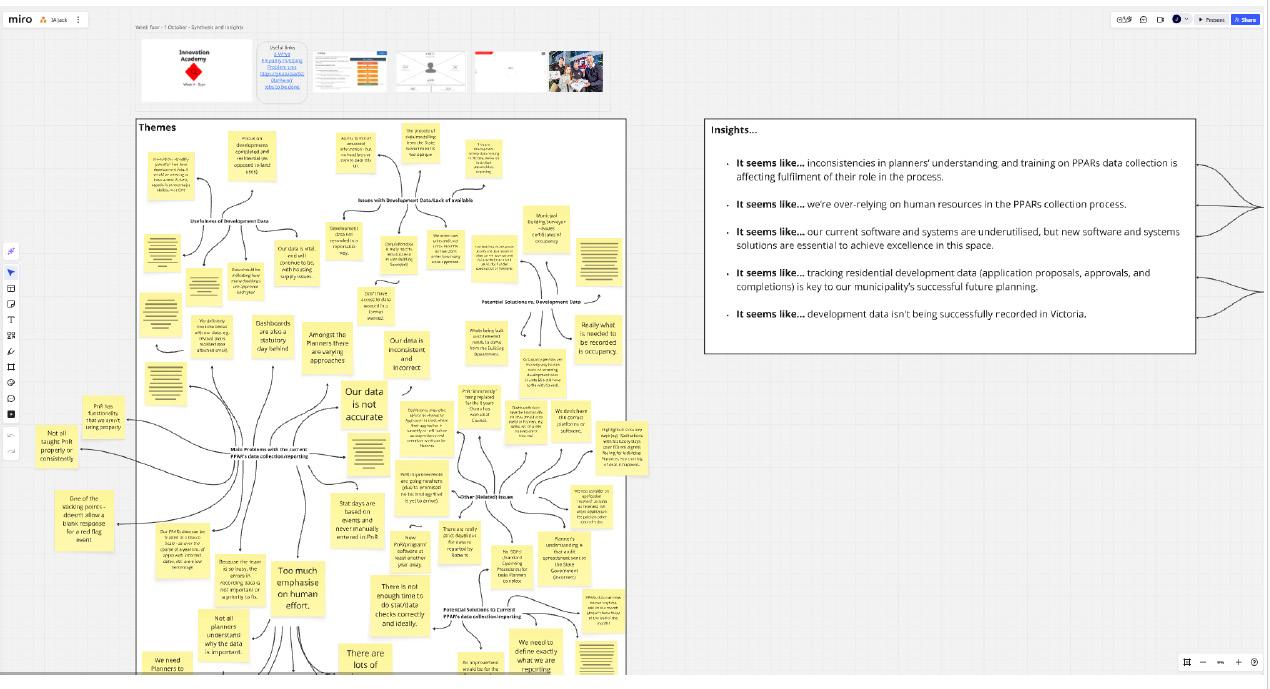
Kingston Sustainability Business Awards is a distinctive and nationally recognised program that has repositioned local business awards as a catalyst for sustainability leadership, peer learning and economic resilience. Launched by Kingston City Council in 2023, the awards are described as Victoria’s only and Australia’s first council-run awards program where every category focuses exclusively on sustainability. By combining recognition, education and robust governance, the program has created a platform that both celebrates and accelerates sustainable business practice across the municipality.
The program was developed to address a gap left by the closure of the Melbourne Business Awards and to build momentum around local business-led sustainability following pandemic disruption. Kingston designed the awards through benchmarking, stakeholder consultation and cross-department collaboration, drawing expertise from economic development, environmental planning, diversity and inclusion and youth services. A fully digital nomination process, independent judging through the Banksia Foundation and a zerowaste gala event supported by sustainable local suppliers ensured the initiative aligned with council priorities around climate action, inclusion, ethical practice and a thriving local economy. Documented judging protocols, compliance checks and a clear plan–do–review cycle have underpinned credibility and continuous improvement.
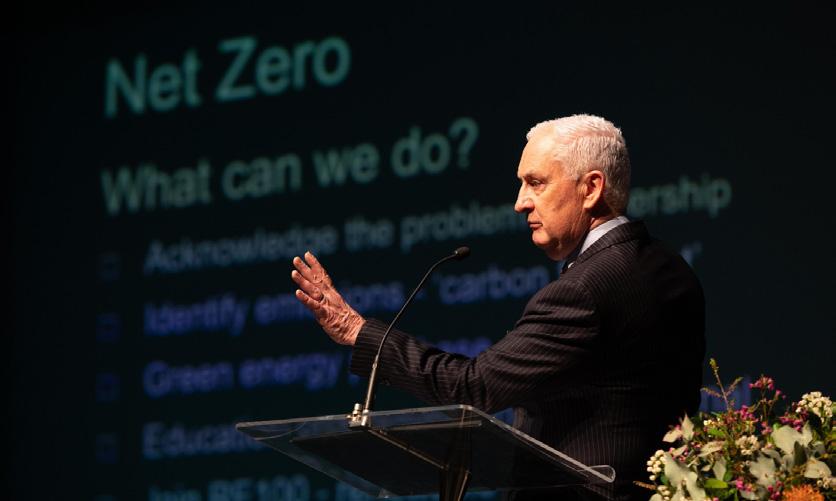
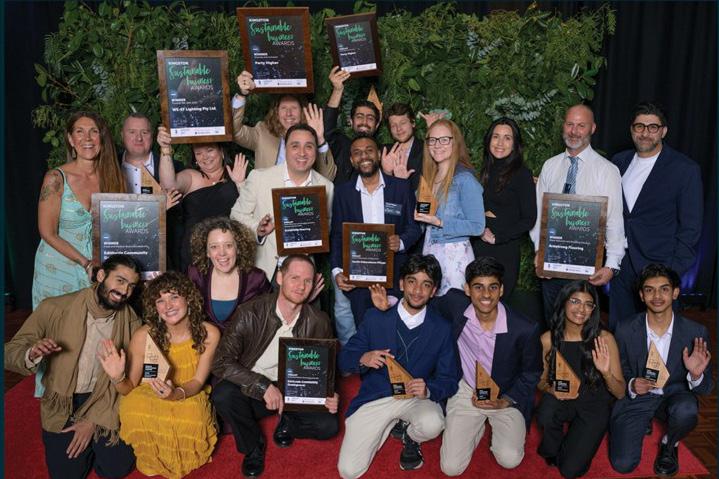
In its first three years, the awards have engaged more than 500 business representatives, celebrated 72 finalists and generated 60 business-to-business connections. Through associated council sustainability programs, more than 50 businesses have cut costs, improved efficiency and reduced environmental impact, together saving $1.6 million and 12,000 tonnes of carbon emissions over 18 months. The initiative has also elevated Kingston’s national profile, with the inaugural program recognised as a finalist in the National Economic Development Awards. Financially, the model remains sustainable through a combination of council investment, sponsorships, ticket sales and digital efficiencies that reduce waste and administration.
This shows how local government can use recognition programs not just to reward good work, but to shape culture, build networks and drive measurable change. Kingston City Council has created a scalable and highly transferable model that embeds sustainability into local economic development in a way that is visible, credible and community-building. Its blend of innovation, governance and practical business benefit sets a strong benchmark for councils looking to foster sustainable leadership in their own local economies.
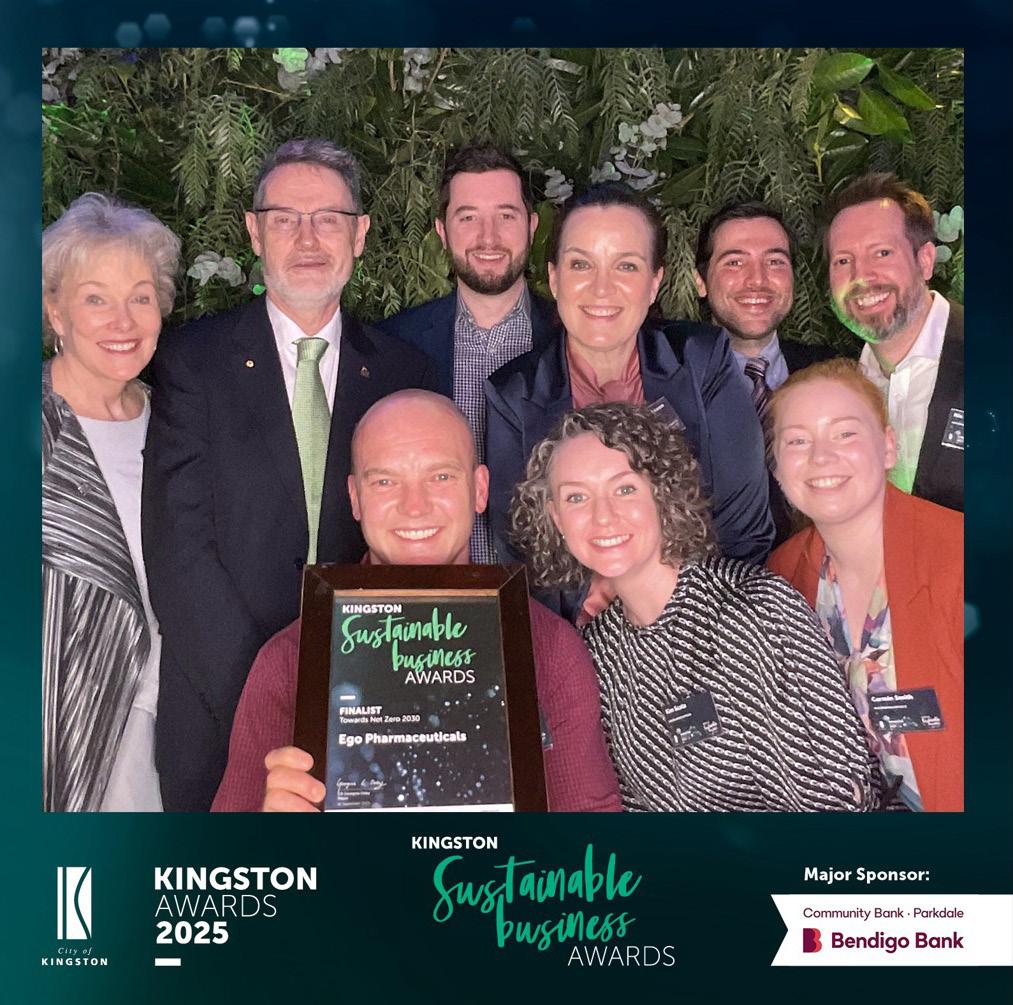
Yarra Ranges Council Cultural Literacy Program is a transformative, First Nations-led organisational development initiative that has reshaped how council staff understand Country, culture and their responsibilities in relation to local Aboriginal history and community. Designed and delivered by Council’s Indigenous Development Team with Traditional Owner and Aboriginal partner involvement, the program moves beyond conventional training by offering immersive, place-based and experiential learning. Through truth-telling induction, on Country walks, firestick education, deep listening and workshops on writing personal Acknowledgements, the initiative has embedded reconciliation and cultural safety into everyday council practice.
The program was launched in response to a clear need: staff often lacked the knowledge, confidence and cultural understanding required to engage respectfully with First Nations people, local stories and places such as Coranderrk. Council responded with a structured initiative grounded in Indigenous Ways of Knowing, Being and Doing, with objectives that included establishing a consistent cultural baseline, improving practical engagement skills and embedding Indigenous knowledge into strategy and service delivery. Executive sponsorship, a cross-departmental steering group, dedicated Indigenous Development FTE and integration into mandatory induction have ensured the program is not an optional add-on but part of council’s core operating model.
Over three years, the program has delivered nine courses across 75 sessions to around 1,200 participants, with evaluation showing 98 per cent positive feedback and significant growth in cultural awareness.
Staff report increased confidence, deeper empathy and stronger understanding of local Aboriginal history, while the learning has influenced major projects such as the Draft Heritage Strategy, Climate and Environment Strategy, Indigenous Design Protocol, Cultural Burning Program and Ngurak Barring trail project. The direct investment over that period has been relatively modest at $42,780 excluding staff wages, yet the qualitative benefits include safer frontline practice, stronger relationships with Traditional Owners and a visible shift in how Council approaches policy, planning and stewardship of Country.
This demonstrates how reconciliation can be embedded institutionally through sustained First Nations leadership, thoughtful governance and experiential learning that changes practice rather than simply awareness. Yarra Ranges Council has created a culturally led model that is measurable, repeatable and deeply grounded in local place and relationships. Its legacy is a more culturally safe organisation, stronger community trust and a sector-leading example of how local government can undertake meaningful organisational transformation in partnership with First Nations people.
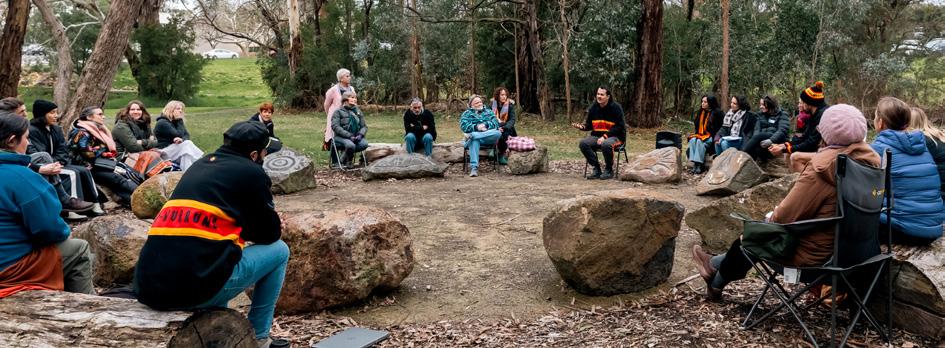
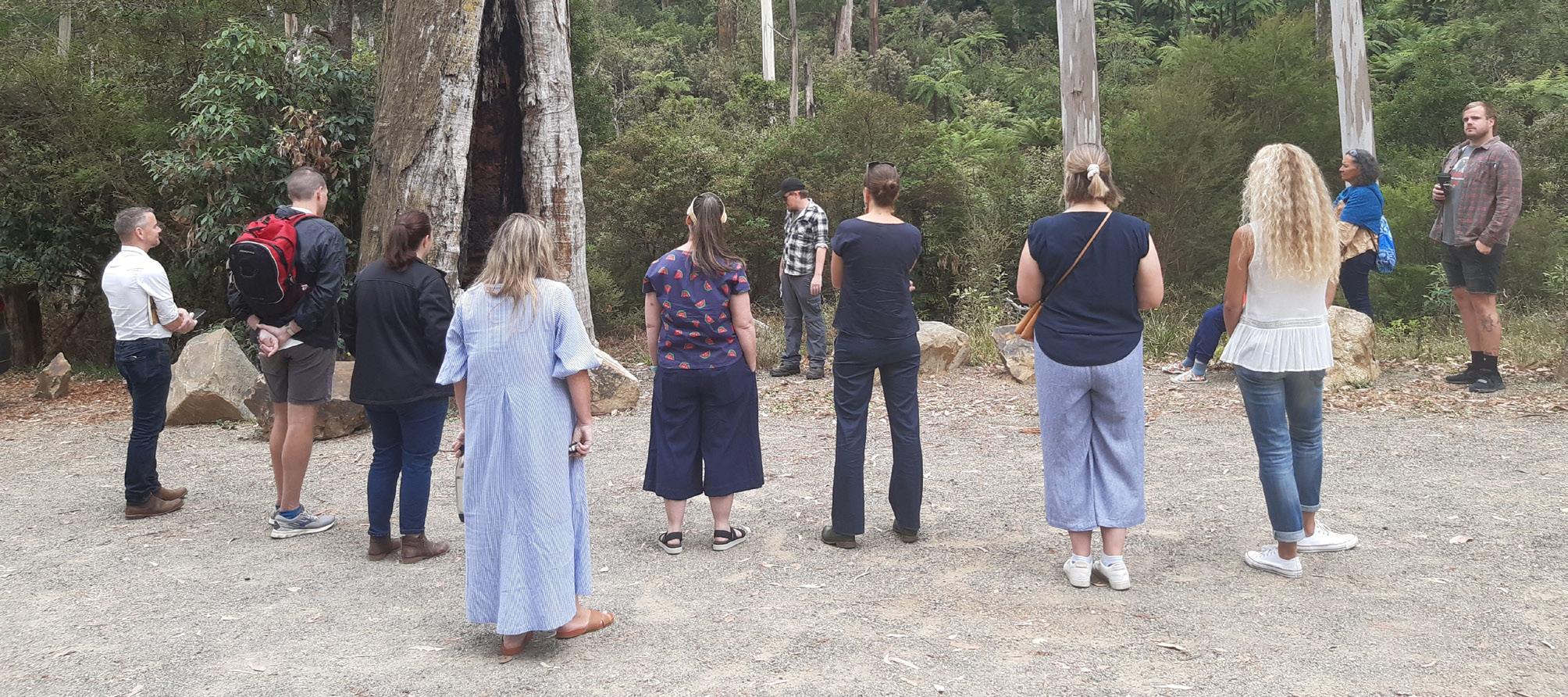
This award recognises initiatives that demonstrate best practice (outstanding action), or the pursuit of excellence in service/s delivery to the community or specified target market and that will continue.
• Clarity of demonstrated outcomes
• Benefits relative to cost
• Innovative and defining features
• Effectiveness/transferability
• Financial sustainability
• Size and complexity of initiative relative to funding and resources
• Ability to meet specific clients/target group needs
Swan Hill Rural City Council
DevelopmentAdvisoryService
Ballarat City Council
PopCon2025
Hume City Council
KeepHumeClean
Development Advisory Service is a practical housing initiative that has helped Swan Hill Rural City Council improve the quality of planning applications and accelerate the delivery of much-needed homes. In response to a critical housing shortage and a backlog caused by incomplete or poor-quality submissions, Council introduced a free advisory service that gives eligible applicants up to four hours of expert advice from architects, planners or engineers before they lodge. By supporting applicants early, the service has reduced avoidable delays, lifted application quality and helped rebuild confidence in the planning process.
The initiative was designed to address one of the key barriers to Council’s goal of delivering 500 new homes in five years: the time and effort lost assessing incomplete applications. Swan Hill approached the problem in stages, first diagnosing internal capacity issues and market barriers, then rebuilding planning team resourcing and workflows before introducing the advisory panel. Regional Housing Victoria and the Housing Action: Greater Swan Hill Committee helped shape the service, while architects, engineers and planners were engaged through an expression of interest process to provide independent advice tailored to regional development conditions. This structured model has created a more collaborative and customer-focused planning service without compromising statutory rigour.
The measurable outcomes have been strong. Council is now processing more than 86 per cent of applications within statutory timeframes, well above the sector benchmark, and recorded its highest quarterly number of processed applications in the review period with 52 determinations in the first quarter of 2025.
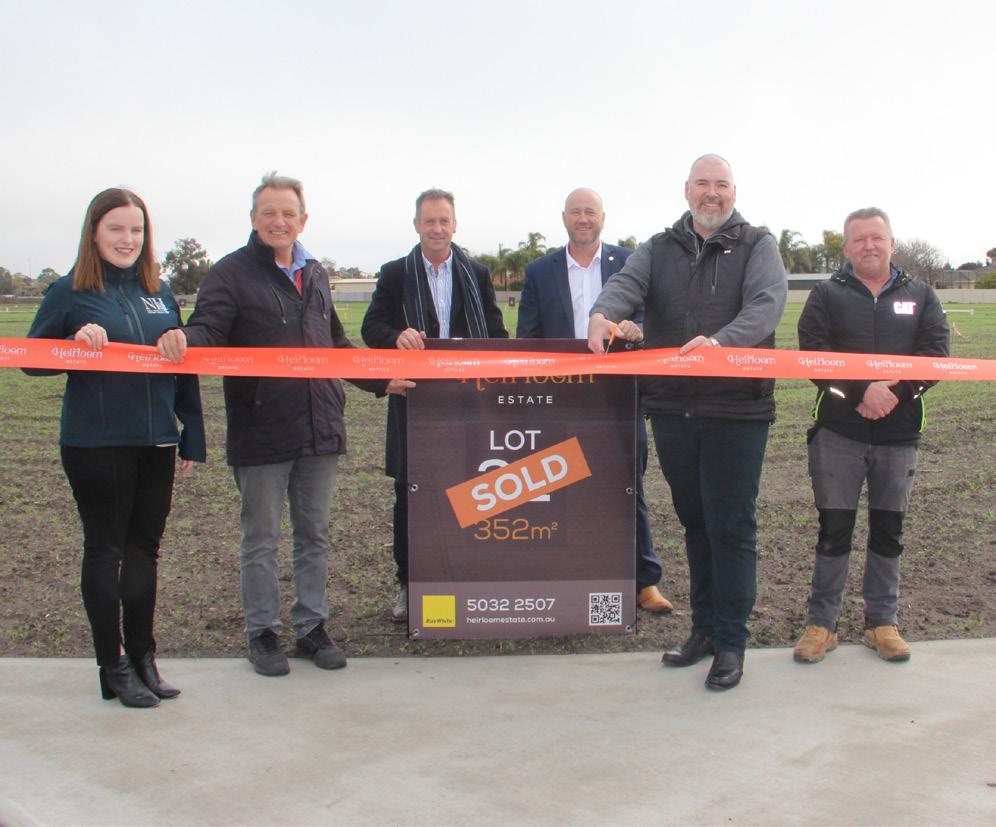
The service itself operates on a modest budget, with around $10,000 allocated in 2024/25 and expert advisory costs of about $1,000 per project. In return, Council has seen fewer requests for further information, higher approval confidence and stronger trust from applicants who now receive practical support earlier in the process. The model is already being considered for expansion to larger and more complex developments.
This shows how local government can move beyond reactive regulation and become an active enabler of better housing outcomes. Swan Hill Rural City Council has created a low-cost, high-impact service that improves development quality, supports economic growth and restores trust in the planning system. Its success offers a highly transferable model for other regional councils seeking to tackle housing supply challenges through early guidance, internal reform and stronger collaboration with industry.
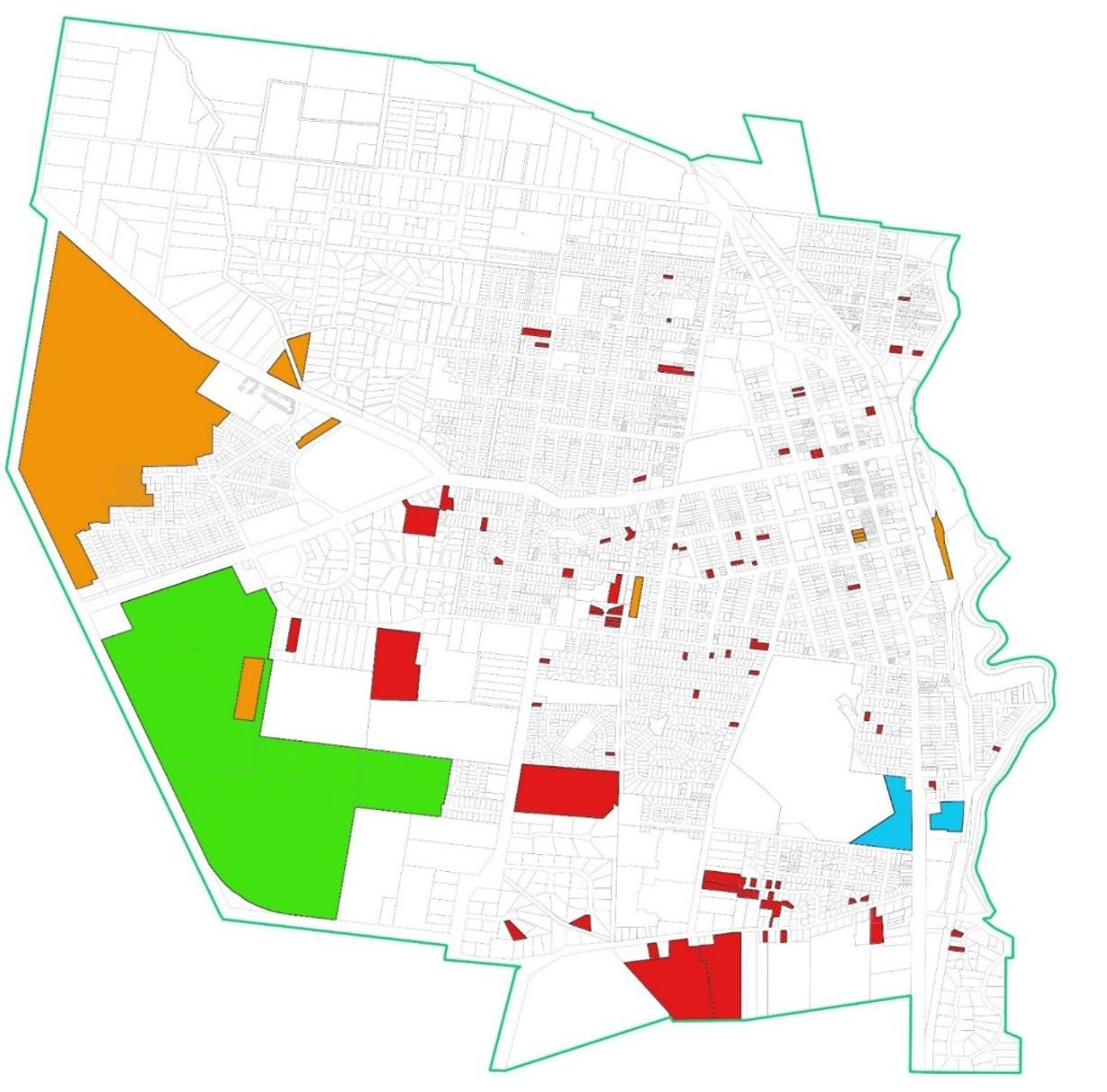
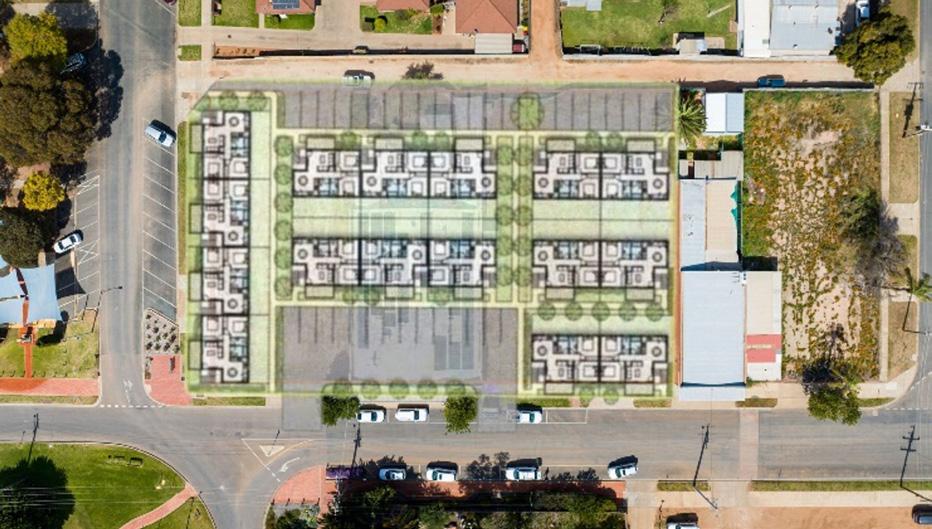
PopCon 2025 is a youth-led cultural event that has grown into Ballarat’s largest pop culture gathering while giving young volunteers a genuine role in shaping and delivering a major community experience. Produced by the City of Ballarat’s Sonika youth volunteers, the event attracted more than 2,500 attendees to a free, inclusive and family-friendly program of market stalls, cosplay competitions, fan communities and live demonstrations. What sets PopCon apart is that it is not simply designed for young people, but by them, with volunteers leading the concept, planning, promotion and delivery over six months.
The initiative was established to create a safe and creative space for community connection while also building youth leadership, employability and event management skills. Sonika volunteers formed working groups across logistics, marketing, programming and vendor coordination, supported by one Youth Development Officer working 0.31 full-time equivalent. The project followed a structured six-month timeline covering concept development, budgeting, venue selection, permits, vendor recruitment, promotion, risk management and volunteer preparation. This approach allowed young people to move beyond consultation and become genuine decision-makers, with council staff providing light-touch support to ensure governance and safety requirements were met.
PopCon has exceeded its original targets and demonstrated clear value for Ballarat. Attendance surpassed the initial target of 2,000, reaching more than 2,500 people, while the volunteer cohort expanded from 14 to 16. Thirty-eight vendors participated, most of them young local entrepreneurs, and social media engagement rose by 40 per cent, broadening Council’s reach with young audiences.
The event now spans two sites due to growth in demand and has earned strong community feedback for being free, safe and welcoming to young people who often feel excluded from mainstream events. Supported by recurrent Amplify funding until 2027 and delivered on a modest budget, the model is both sustainable and scalable.
This demonstrates how local government can create high-impact cultural experiences by genuinely trusting young people to lead. City of Ballarat has built an event that strengthens community connection, supports local enterprise and provides meaningful pathways for youth development, all with minimal staff input and strong volunteer ownership. It offers a compelling model for councils seeking to move from youth consultation to youth leadership in the design and delivery of community events.
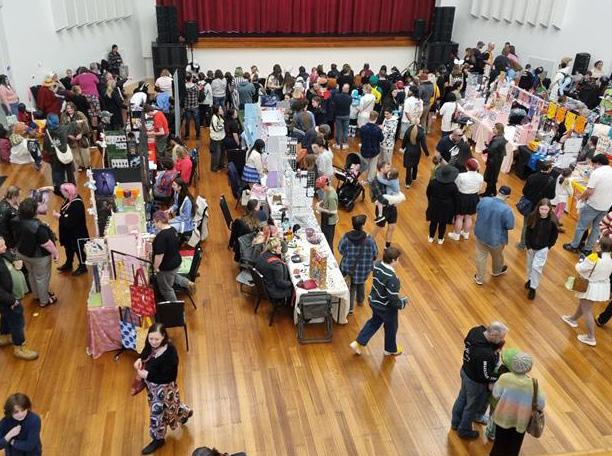
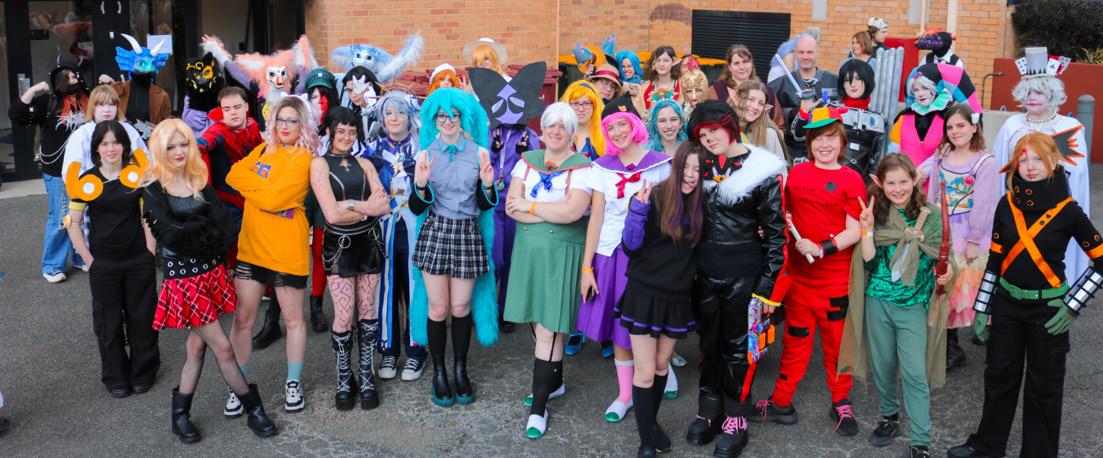
Keep Hume Clean is a large-scale behaviour change initiative that has helped Hume City Council tackle one of its most persistent service delivery challenges: illegal dumping. Launched in 2023, the campaign combines direct resident engagement, more flexible waste services and a broad education program to encourage cleaner streets and more responsible disposal habits. Rather than relying solely on enforcement, Hume adopted a practical and communityfocused approach that meets residents where they are, helping them understand and access existing waste services while also improving trust in Council’s presence and responsiveness.
The initiative was driven by a clear objective: reduce illegal dumping in one of Australia’s fastest-growing and most culturally diverse municipalities. Council structured the program around three pillars: increasing awareness and accessibility of waste services, driving measurable behaviour change through direct engagement, and reducing the financial and environmental cost of dumped rubbish. Hotspot mapping identified the suburbs most affected, while a dedicated Waste Response Team used door knocking, letterbox drops and multilingual education without infringement notices to support residents directly. In parallel, changes to the voucher system and a broad communications program using social media, hero videos, popup events and educational games reinforced the message at scale.
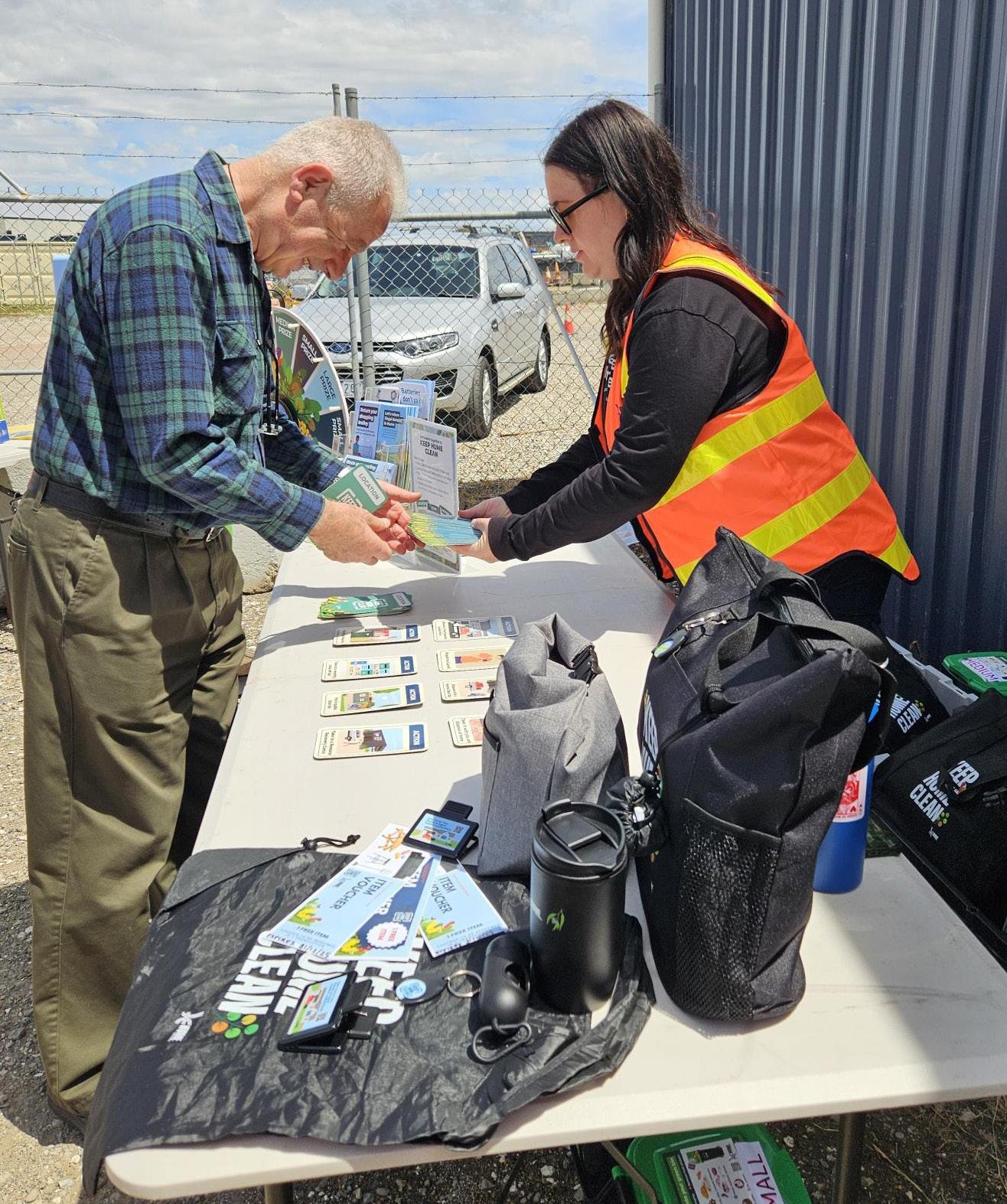
The outcomes have been both measurable and highly visible. The Waste Response Program has engaged 44,000 households and resolved 80 per cent of attended dumping incidents without escalation, while Council’s dumped rubbish costs have dropped by about $400,000 annually. Use of waste vouchers has increased by more than 50 per cent, and the broader education campaign has already reached more than 100,000 people. Although the initiative involved substantial new resourcing, including eight Waste Response Officers and a team leader, the investment is being offset through lower dumping costs and better use of existing services. Residents have also responded positively to officers visiting their neighbourhoods and discussing amenity in person, which has strengthened perceptions of Council’s commitment and care.
This shows that service delivery challenges rooted in behaviour and amenity can be addressed more effectively through education, accessibility and visibility than through punishment alone. Hume City Council has created a highly transferable model that combines operational reform with community trust-building, achieving both cost savings and cleaner neighbourhoods. Its success lies in the way it brings together practical service changes, strong data and positive face-to-face engagement to deliver lasting local impact.
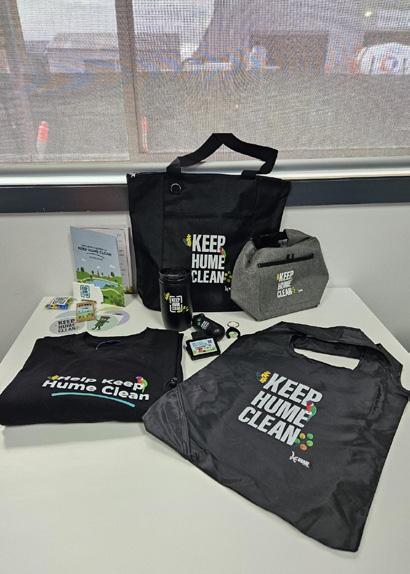
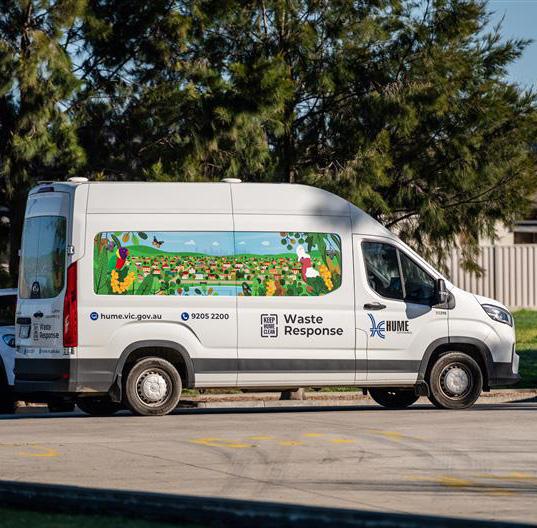
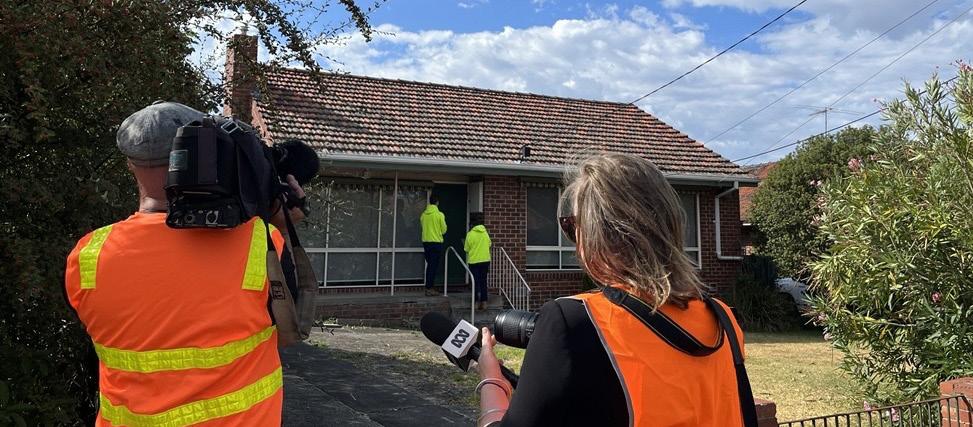
This award recognises initiatives that are exceptional and one-off. Projects entered in this category must be original and assist the community over and above Council’s day to day activities.
• Clarity of program/project objectives and outcomes
• Demonstration of an effective/innovative approach and outcomes
• Impact of the initiative
• Size and complexity of initiative relative to funding and resources
• Extent of leading practice
• Cost benefits of the initiative
Campaspe Shire Council
RippleFest
Horsham Rural City Council
SkateBowlAnti-GraffitiArtProject
Murrindindi Shire Council
KerbsideReform–CampaigntocommunitywithMusicalJingles FINALIST
Ripple Fest is a creative recovery festival that has helped Campaspe communities reconnect, heal and celebrate local identity following the 2022 floods. Developed through a Creative Co-Design process, the festival was shaped by community voices from Rochester and Echuca, including local artists, First Nations participants, young people and people with disability. Across exhibitions, performances, workshops and public activations, Ripple Fest brought everyday spaces to life while creating paid opportunities for artists and building a stronger place for arts and culture in community recovery and future placemaking.
The initiative was designed to celebrate creativity, strengthen social connection, support local artists and activate public space in ways that would contribute to long-term resilience. Campaspe Shire Council’s Arts and Culture team led the work with support from a Creative Producer, Administration Officer, First Peoples Engagement Officer, Youth Development Officer and Flood Recovery staff. A ten-month delivery period required agile planning and strong collaboration, but the co-design process ensured the program remained grounded in local stories, aspirations and recovery needs. Lead-up initiatives including the Pump House Artist in Residency Program, the Unearthed youth arts program and First Nations weaving workshops extended the impact well beyond the festival weekend itself.
Ripple Fest exceeded expectations in both reach and depth of impact. It attracted 2,670 attendees, engaged 117 artists across 30 activities and supported 21 artists through the residency program. Seven young artists were mentored to develop the Unearthed Exhibition, while First Nations weaving workshops created culturally safe spaces and seeded future public art outcomes. Community feedback pointed to improved wellbeing, pride and a renewed sense of belonging, while local businesses reported increased visitation and hospitality spending. The festival also strengthened internal capacity within Council, establishing a strong model for annual arts programming and embedding creative approaches into future community engagement and recovery planning.
This demonstrates how local government can lead recovery not only through infrastructure and services, but through culture, creativity and shared ownership. Campaspe Shire Council has shown that the arts can strengthen connection, confidence and civic identity when they are shaped collaboratively and supported properly. The festival offers a highly transferable model for other councils seeking to embed creativity into community recovery, place-making and cultural development in ways that are inclusive, meaningful and lasting.
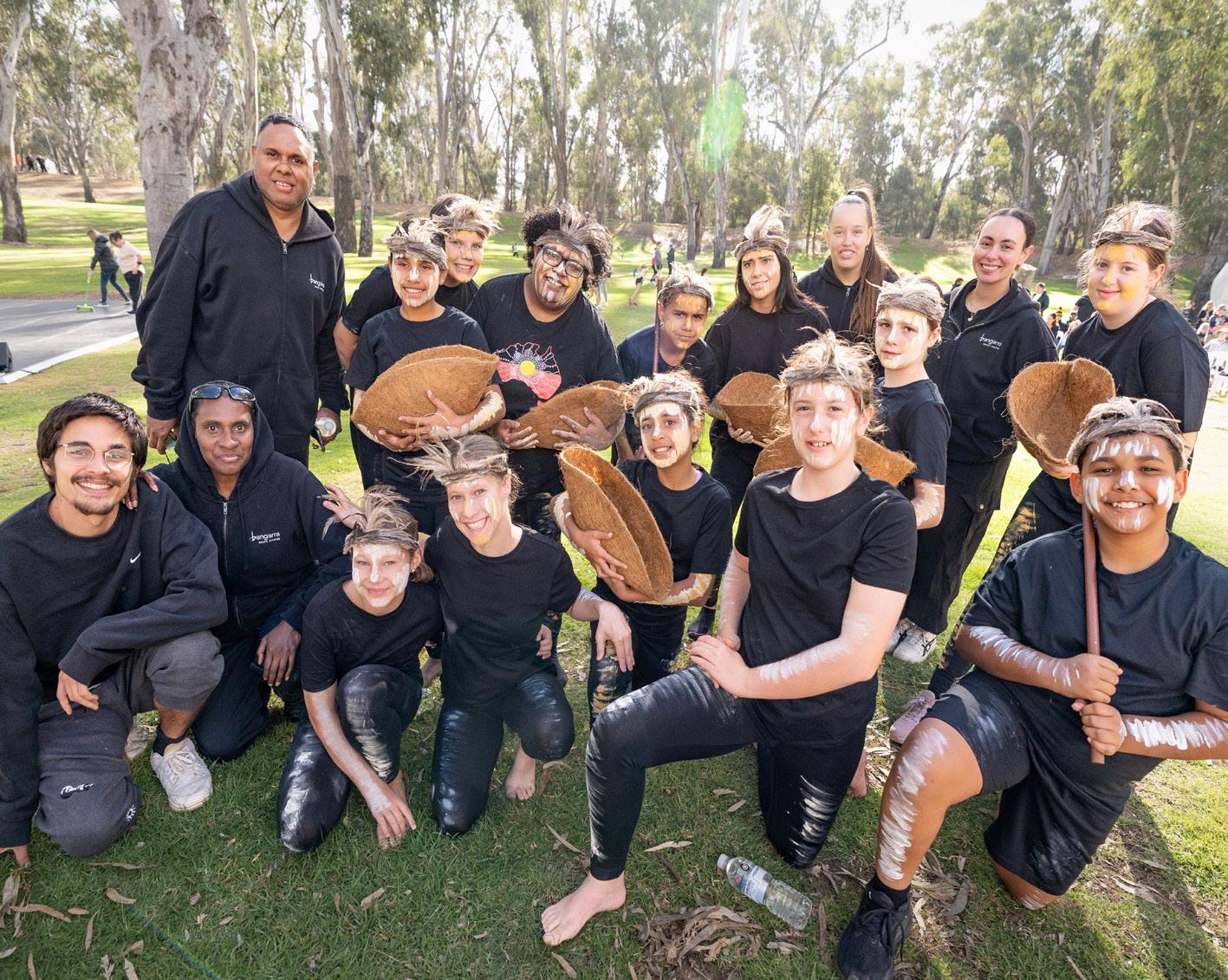
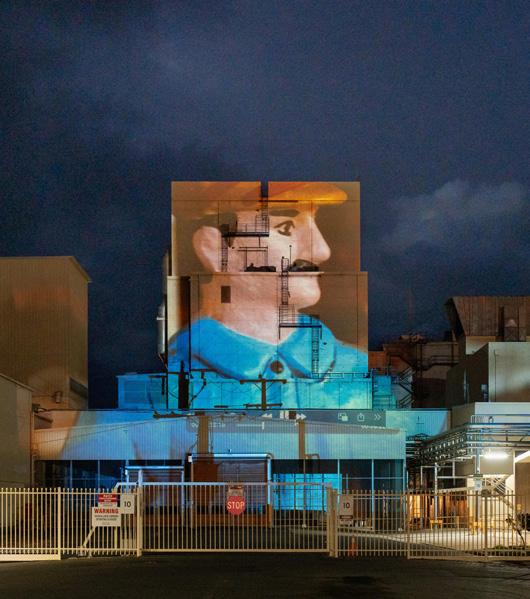
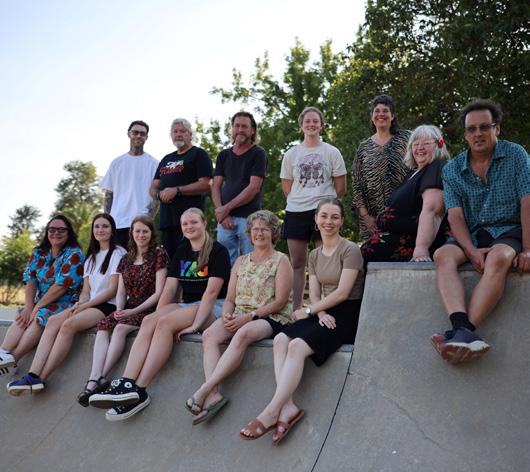
Skate Bowl Anti-Graffiti Art Project is a youth-led public art initiative that has transformed a persistently vandalised skate bowl in Horsham into a vibrant and respected community space. Led by Horsham Rural City Council’s Youth Services team, the project responded to years of recurring graffiti and negative perceptions of the site by using a strengths-based, creative solution rather than relying solely on removal and enforcement. In partnership with Blender Studios and more than 30 young people, Council commissioned and installed a large-scale mural that now stands as both a deterrent to vandalism and a symbol of local pride.
The project’s primary objective was to reduce graffiti through a sustainable, community-led intervention that also improved safety, amenity and belonging. Council applied Crime Prevention Through Environmental Design principles, recognising that high-quality public art can discourage tagging, create ownership and shift how a place is perceived. A multidisciplinary Project Control Group brought together Youth Services, Public Art, Recreation and Open Space, Operations, Waste and Parks and Gardens to manage design, safety, risk and maintenance. Young participants were central to the process, contributing to workshops and the installation itself, while even those with past involvement in informal graffiti became part of a more positive creative pathway.
The outcomes have far exceeded the original objective. Before the project, graffiti damage in the skate bowl cost up to $6,700 over six months; in the 12 months after completion, only one minor tag was recorded, requiring less than one hour to remove. The mural has strengthened youth confidence, skill development and community pride, while also improving perceptions of safety and making the space more welcoming for young people, families and visitors. The project’s success has been recognised at the statewide FReeZA Summit and has opened up further opportunities for youth-led public art and place activation in Horsham.
This shows how councils can address long-standing amenity and safety issues by trusting young people to be part of the solution. Horsham Rural City Council has delivered a cost-effective, evidence-based and highly transferable model that combines youth engagement, public art and crime prevention in a way that strengthens both place and community. It is a compelling example of creative service delivery that turns a problem site into a valued local asset.
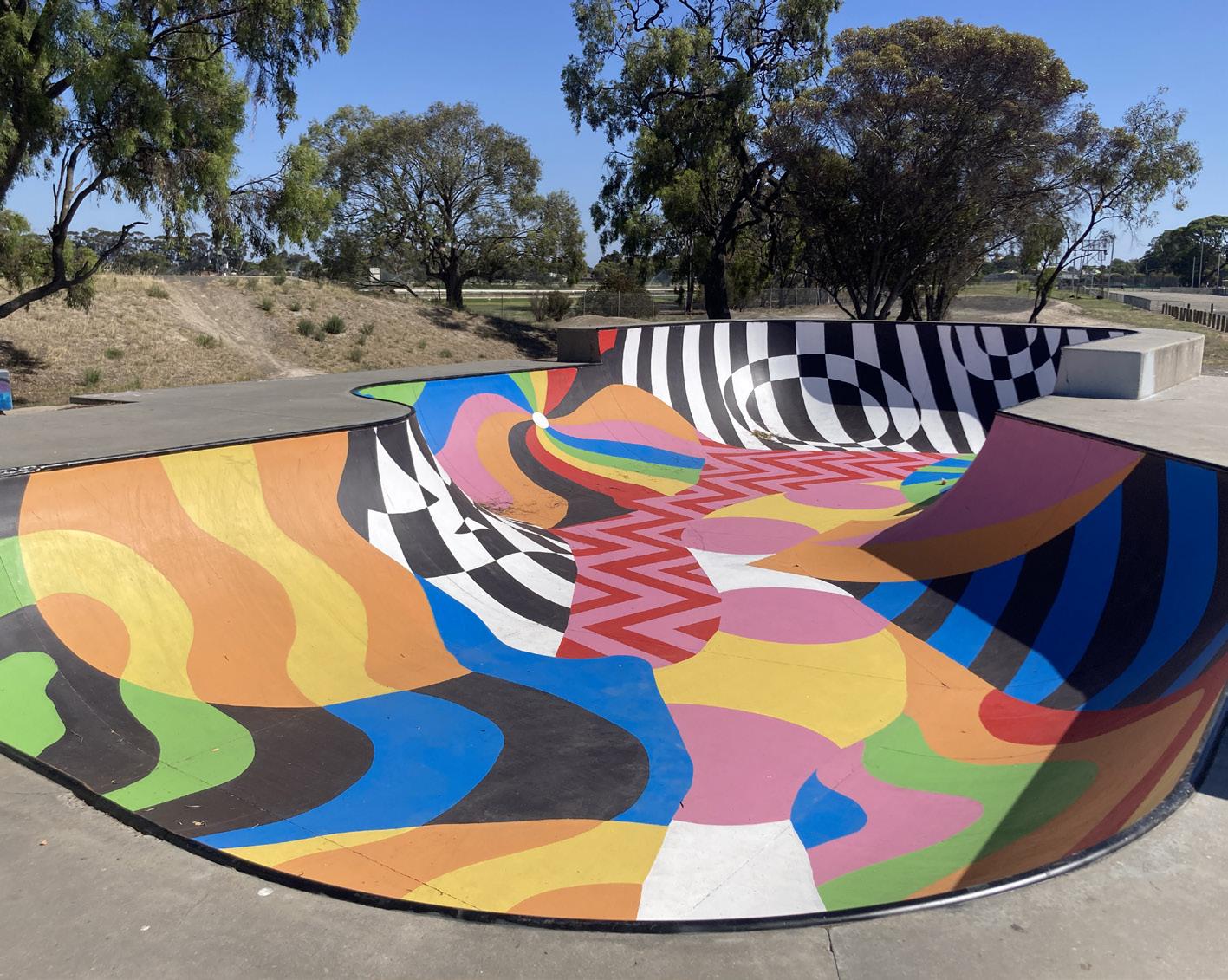
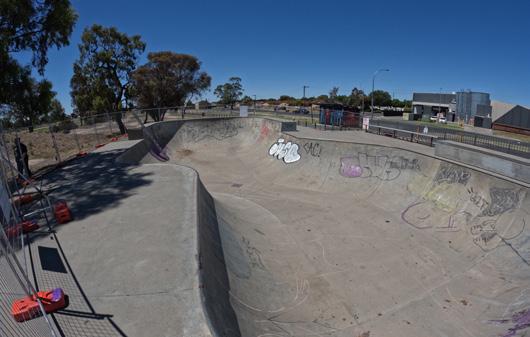
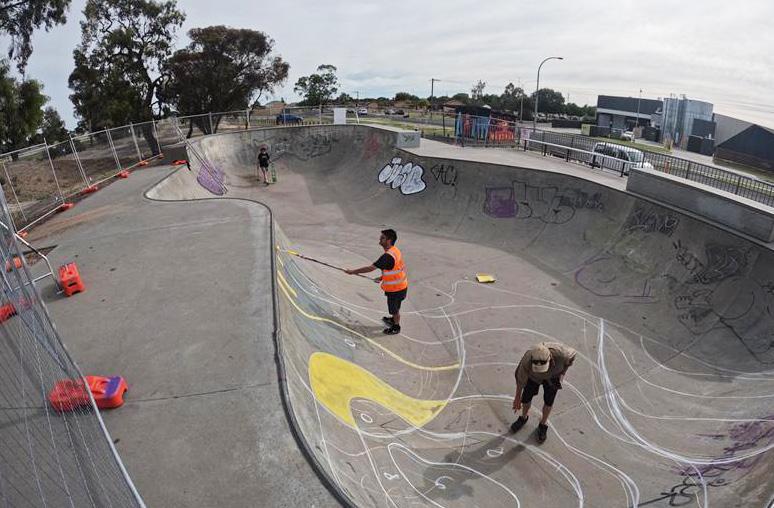
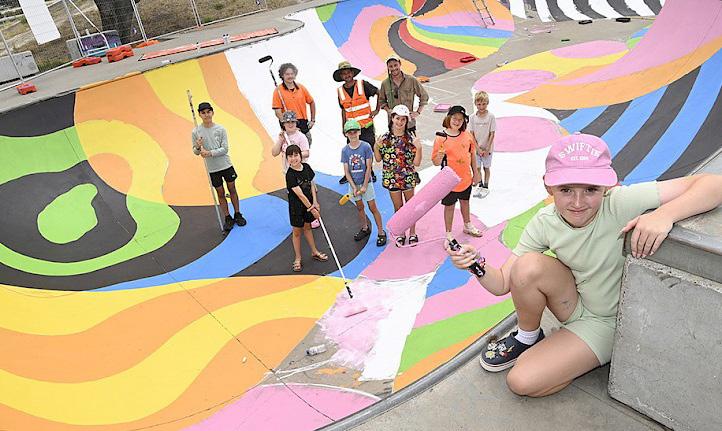
Murrindindi's kerbside reform campaign was an inventive communications project that helped Murrindindi Shire Council introduce a four-stream kerbside recycling system in a way that residents could easily understand and remember. To support the rollout of FOGO and glass services, improve recycling behaviour and increase battery safety, Council developed a series of original musical jingles and broadcast them through community radio, social media, on-hold phone messages and events. Combined with practical flyers and face-to-face engagement, the campaign turned a complex service change into an engaging and highly memorable community conversation.
The campaign was structured in four phases covering battery safety, recycling rules, new kerbside services and ongoing reminders, with clear objectives to build awareness, encourage behaviour change and reduce contamination and fire risks. A Project Officer identified music as a powerful educational tool and worked with a local musician to create six tailored jingles that could speak to all age groups. Recycling Services ensured technical accuracy, Customer Service handled the resulting rise in enquiries and the Communications team integrated the jingles across channels including community radio UGFM, Facebook live streams, newsletters and educational events. This multi-sensory and locally grounded approach helped overcome rural communication challenges and political scepticism around mandatory reform.
The campaign exceeded expectations. Battery recycling increased by more than 300 per cent across the Shire, with some sites recording growth of up to 740 per cent, and the rollout generated more than 1,000 enquiries from residents wanting to understand battery disposal, FOGO and the new four-bin system. Schools and community groups requested visits and educational sessions, and the jingles became a talking point across Murrindindi. Delivered with a relatively modest budget and around 250 staff hours, the initiative also helped lower disposal costs, reduce greenhouse emissions and build a stronger sense of environmental responsibility and community pride.
This shows how creativity can radically improve public understanding of complex service reform. Murrindindi Shire Council has delivered a highly original and transferable communications model that combines local partnerships, low-cost production and clear behavioural outcomes. By turning practical waste messages into something engaging, memorable and community-owned, the project sets a new benchmark for local government education campaigns.
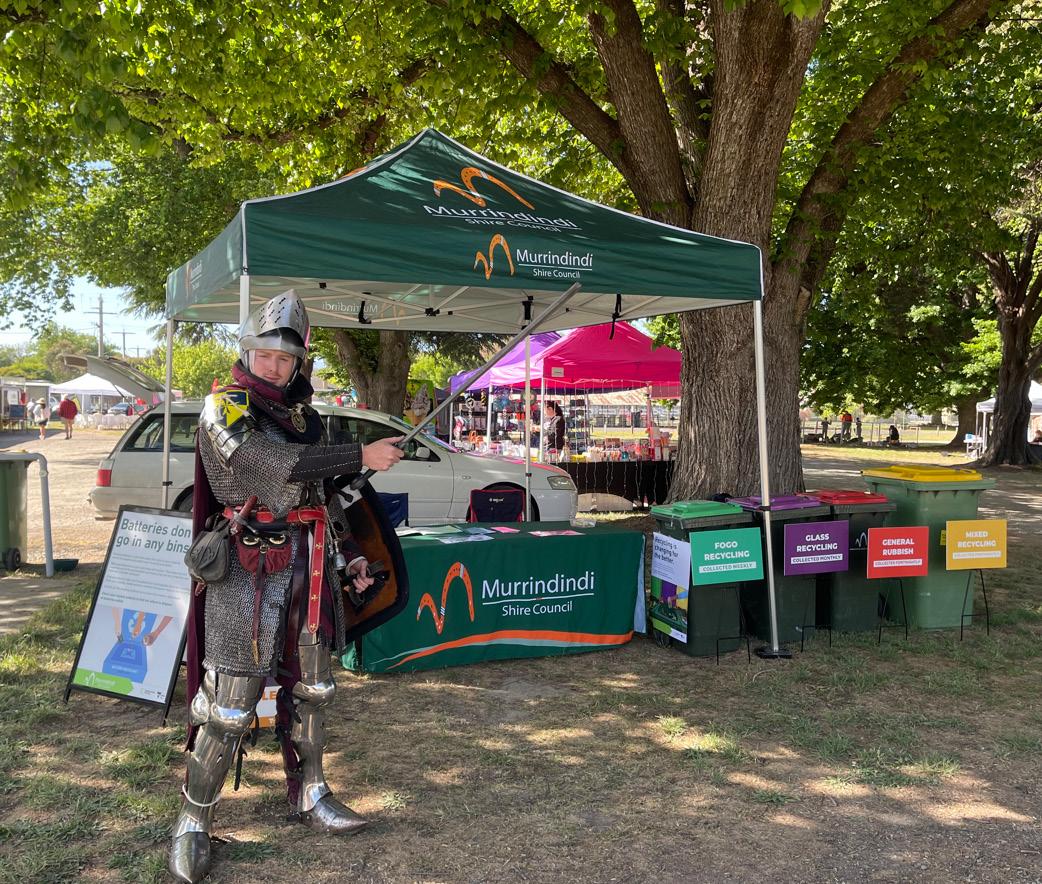
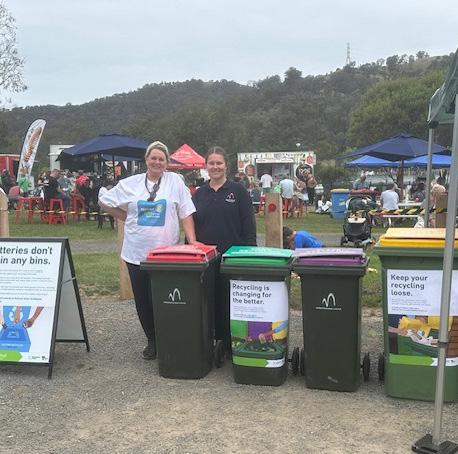
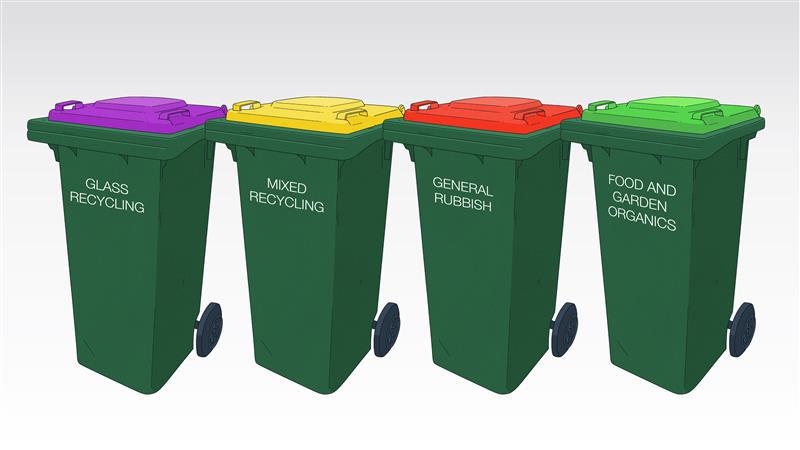
This award recognises the resource challenges faced by smaller rural councils. Nominations received by eligible councils in the existing categories (except for Young Achiever) are automatically entered into this new category without a separate submission having to be made.
• Demonstration of program/project objectives and measurable outcomes
• Demonstrated innovative approach
• Size and complexity of initiative relative to funding
• Impact of initiative on community/organisation, relative to resources and cost
• Transferability of initiative
Golden Plains Shire Council
InverleighActiveYouthSpace
Central Goldfields Shire Council
VideoStorytellingforCommunityImpact
Hepburn Shire Council
HepburnTogether
Horsham Rural City Council
SkateBowlAnti-GraffitiArtProject
Inverleigh Active Youth Space reflects Golden Plains Shire Council’s commitment to creating inclusive, healthy and future-focused places for young people in regional communities. The project has transformed a local recreation area into a more dynamic and welcoming youth destination, with upgraded facilities designed to encourage social connection, physical activity and everyday use. By investing in infrastructure that responds directly to young people’s needs, Council has strengthened liveability in Inverleigh while providing a visible example of how small rural councils can create meaningful impact through targeted place-based investment.
The initiative sought to provide a safe, engaging and contemporary outdoor space where young people can gather, be active and feel a stronger sense of belonging within their township. In a rural setting, where access to dedicated youth infrastructure can be limited, this kind of investment carries added significance. The project’s physical improvements, including active recreation elements and landscape enhancements, suggest a structured approach to placemaking that balances functionality, local character and long-term community use. It also reflects a recognition that youth wellbeing and recreation are central to the strength and resilience of small communities.
Projects of this kind deliver value well beyond the built outcome itself. They help young people feel seen in local decision-making, create opportunities for informal recreation and support healthier, more active lifestyles. They can also strengthen community pride and provide families with another reason to stay connected to local public space. For a small rural council, delivering a visible and high-quality youth project demonstrates confidence, responsiveness and an understanding of how modest but well-targeted infrastructure can shape everyday quality of life in lasting ways.
This project highlights how small rural councils can deliver highly visible community value through focused, youth-centred placemaking. Golden Plains Shire Council has created an active space that supports wellbeing, inclusion and local pride while reinforcing the importance of investing in young people’s everyday experience of place. Its strength lies in its clarity of purpose and its contribution to a more connected and vibrant rural community.
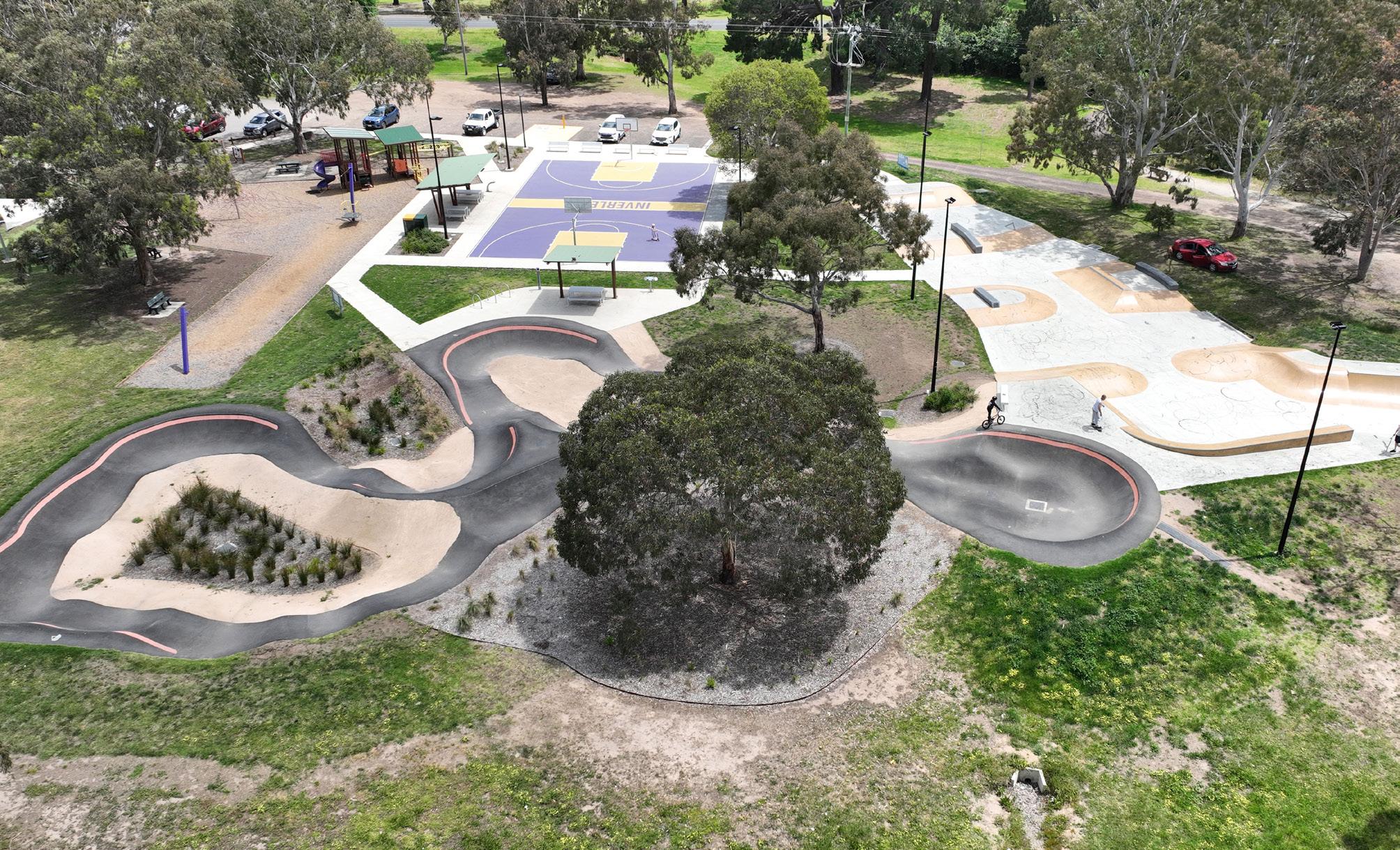
VideoStorytellingforCommunityImpact
Video Storytelling for Community Impact demonstrates how Central Goldfields Shire Council has used creative, low-cost communications to strengthen engagement, improve understanding of local issues and connect more directly with its community. Through short-form video featuring local residents, council staff and everyday settings, the initiative has turned routine service messages into relatable stories that feel distinctly local. In a small rural context, where trust, visibility and accessibility matter deeply, this approach shows how communications can become a strategic tool for community connection rather than simply a channel for announcements.
The initiative is all about making council messaging more engaging, human and effective by grounding it in the realities of local life. By using storytelling, humour, familiar characters and recognisable community faces, Council has created a format that feels more authentic and memorable than conventional information campaigns. This is especially important in a rural municipality, where direct and community-centred communication can influence behaviour, increase understanding and build stronger relationships between council and residents. The project suggests a strategic use of creativity to improve service communication without requiring large-scale production or resources.
The broader benefits of this work include stronger public awareness of local laws, safer behaviours, improved service understanding and greater trust in council information.

It also gives local people an opportunity to see themselves reflected in council messaging, which can increase relevance and encourage participation. For a small rural council, this kind of innovation shows that communications can be practical, accessible and distinctly placebased, helping stretch limited resources while still delivering strong local impact.
This initiative shows how small rural councils can use creativity and authenticity to build stronger connections with their communities. Central Goldfields Shire Council has demonstrated that effective communication does not need to be complex or costly to be influential. By turning local stories into practical civic engagement, the project offers a compelling model for rural councils looking to communicate with more clarity, warmth and impact.

Hepburn Together reflects Hepburn Shire Council’s effort to bring community, council and local priorities into closer alignment at a time when shared understanding and collective direction are especially important. The initiative represents a whole-of-community approach to planning, engagement and service connection, grounded in the idea that stronger outcomes come from collaboration rather than fragmented decision-making. For a small rural council with diverse townships, competing priorities and limited resources, this kind of unifying framework plays a vital role in strengthening trust, improving transparency and shaping a more sustainable local future.
This initiative was developed in response to complex local challenges that required clearer communication, broader community input and a renewed focus on working together across the shire. In rural municipalities such as Hepburn, where tourism, agriculture, township identity and financial sustainability can all intersect, structured collaboration is not simply desirable but necessary. Hepburn Together appears to have created a mechanism for bringing those voices and tensions into a more productive shared process, helping Council build legitimacy and resilience while guiding long-term planning and service decisions.
The value of this initiative sits in both process and outcome. It creates space for community members to better understand council realities while also allowing Council to make decisions with a stronger local mandate. For a small rural council, that kind of shared ownership can improve implementation, reduce conflict and strengthen the relationship between governance and everyday community life. It also provides a platform for more coherent prioritisation and a clearer pathway through difficult trade-offs, which is essential in financially and operationally constrained settings.
This initiative demonstrates how small rural councils can lead with honesty, collaboration and long-term community focus when navigating complexity. Hepburn Shire Council has shown that bringing people together around shared understanding can itself be a powerful form of leadership. Its significance lies in the way it strengthens local trust, supports better decision-making and creates a more cohesive foundation for the future of the shire.
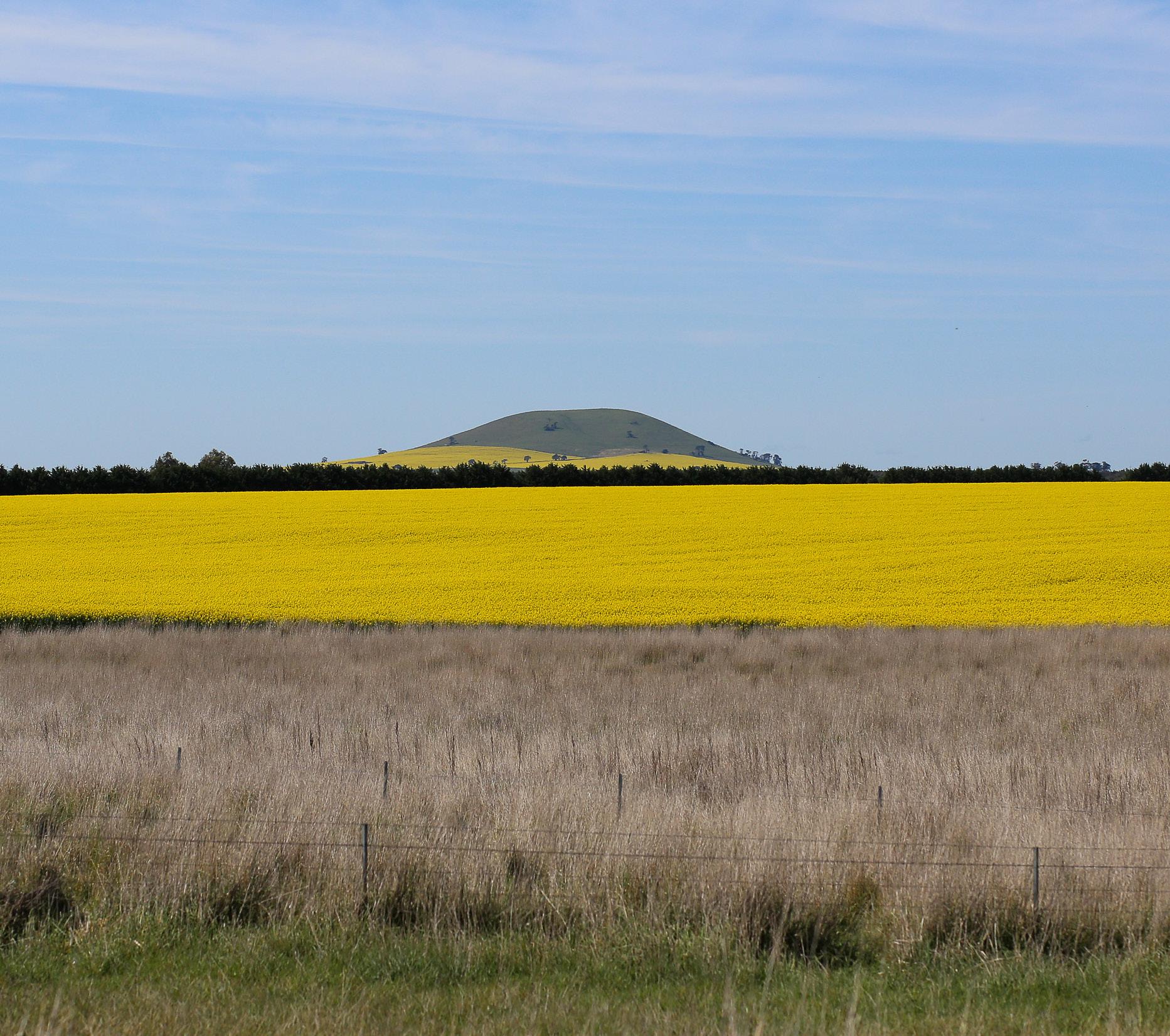
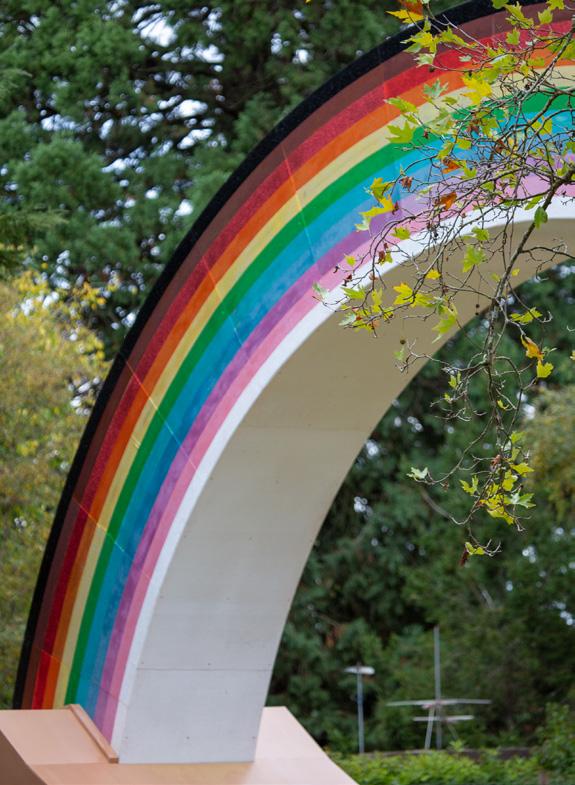
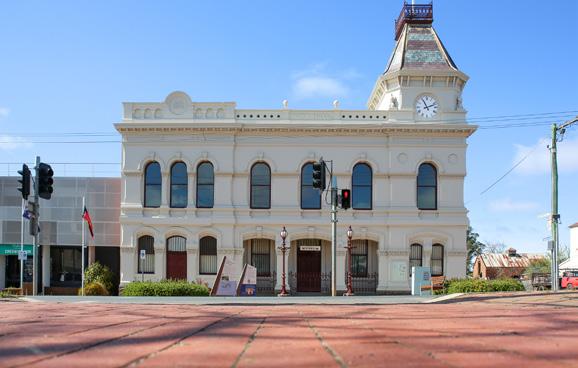
Skate Bowl Anti-Graffiti Art Project demonstrates how Horsham Rural City Council has used creativity, youth leadership and cross-council collaboration to turn a long-standing local problem into a source of pride and positive identity. By transforming a vandalised skate bowl into a vibrant public artwork through the involvement of young people, the project has improved amenity while also reshaping how the space is used and perceived. It reflects the kind of practical, community-based innovation that small rural councils often lead so effectively when they work closely with local people and place.
The project was driven by a clear local objective: reduce recurring graffiti and improve safety and ownership in a youth-oriented public space by involving the very community most connected to it. Rather than relying solely on enforcement or repeated clean-up, Council adopted a more constructive and long-term solution that combined public art, youth participation and place activation. This kind of approach is especially powerful in a rural context, where relationships, trust and visible community contribution can have a strong influence on behaviour and local pride.
The project’s broader value lies in the way it delivers both social and operational benefits. It improves the look and feel of the skate bowl, reduces the likelihood of repeat vandalism and creates a stronger sense of belonging for young people who have helped shape the outcome. It also demonstrates how a council can use cultural and creative tools to solve practical service challenges in ways that feel locally relevant and sustainable. For a small rural council, this kind of initiative shows how limited resources can be leveraged for significant place-based impact when partnerships and community ownership are central to delivery.
This project shows how small rural councils can respond to persistent local issues with imagination, collaboration and trust in young people’s capacity to lead change. Horsham Rural City Council has delivered a solution that is practical, positive and community-building, while also strengthening the identity of a well-used local space. Its significance lies in showing that creative placemaking can be both a preventative strategy and a catalyst for stronger community connection.
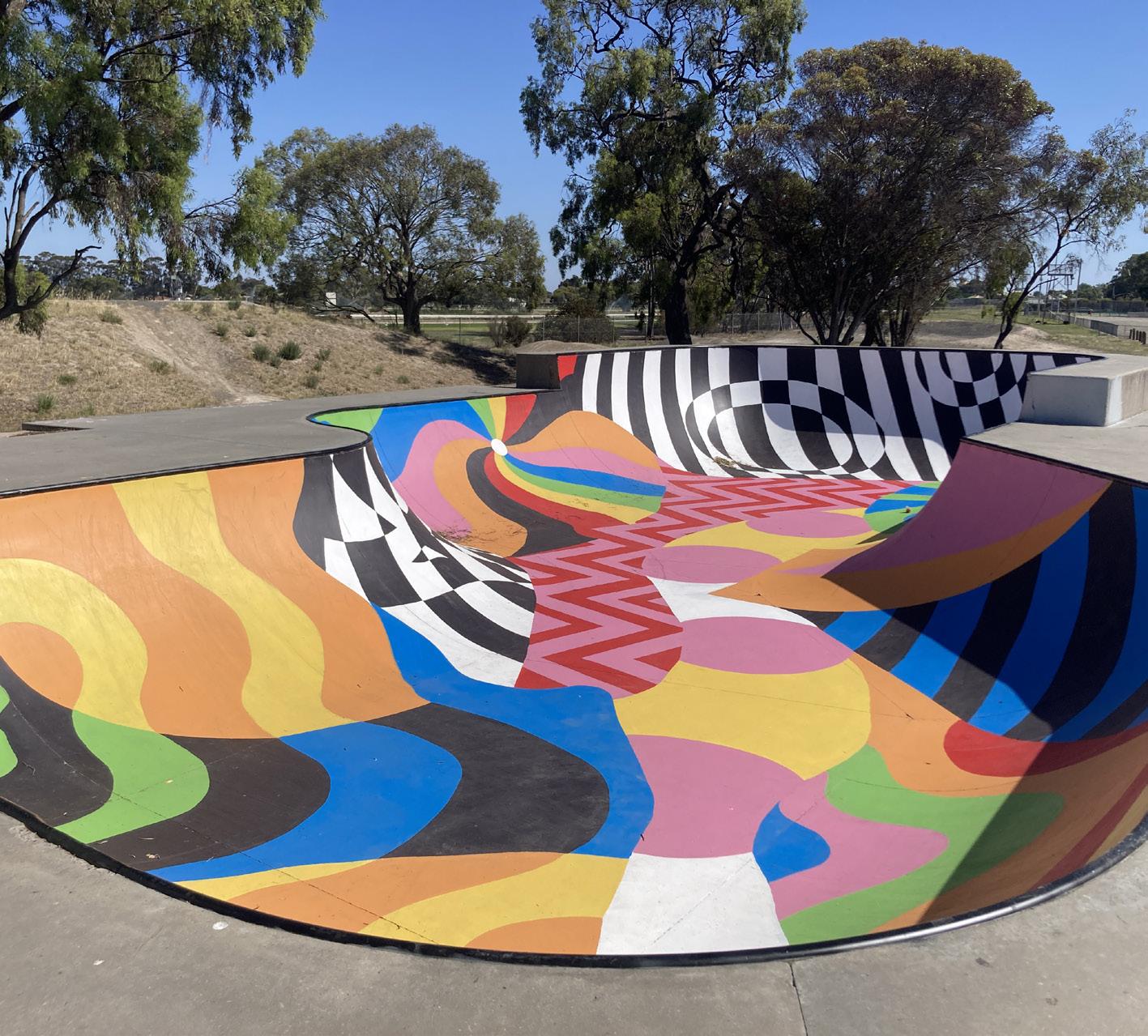
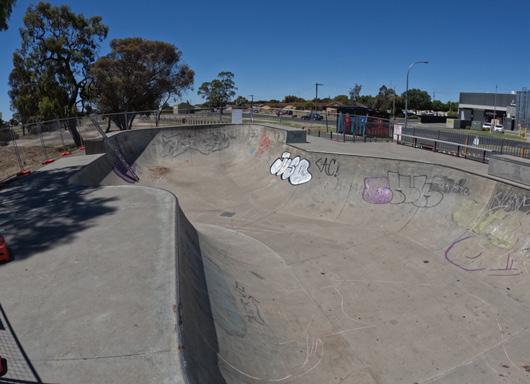
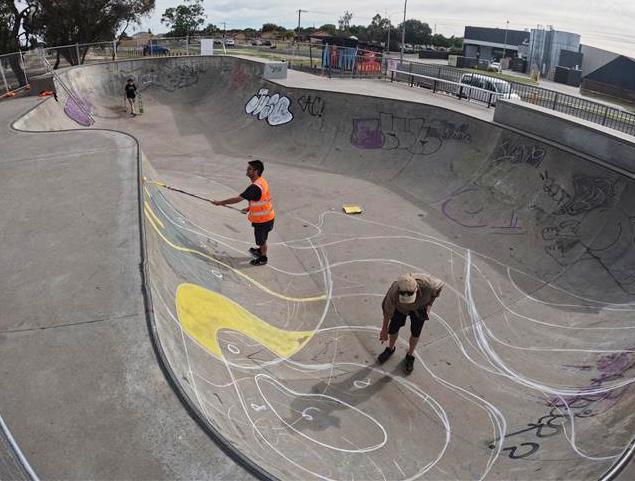
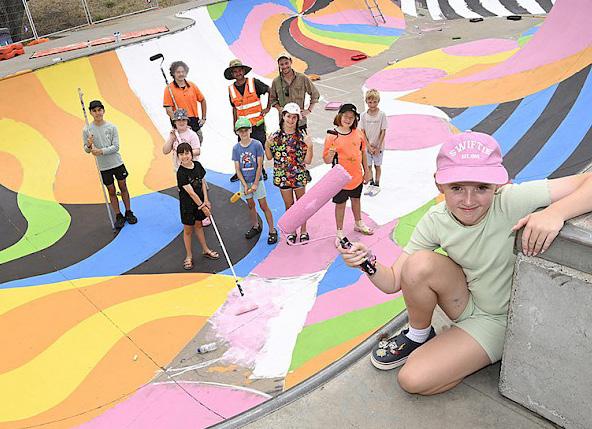
This award acknowledges recognisable achievements in the sector by people up to 30 years of age (as of 31 December 2025) and working in Local Government. Nominations were accepted from both LGPro Members and Non-Members.
• Major achievements of the nominee
• Demonstrated leadership qualities
• Level of commitment to driving change
• Specific individual contribution made to Council and/or sector
• Commitment to self-development
AbbyEager Mitchell Shire Council
JordyMcIvor-Clark Greater Geelong City Council
BenjaminPetkov Greater Geelong City Council
MelissaRushton Swan Hill Rural City Council
Abby Eager has quickly become a powerful force for gender equality and violence prevention in Mitchell Shire, demonstrating leadership, initiative and influence far beyond the scope of a single officer role. Since joining Council in 2022, Abby has worked across the organisation and region to strengthen prevention of family violence, elevate lived experience and embed gender-responsive practice into both internal systems and community-facing work. Her achievements include co-designing community resources, leading campaigns and training, expanding regional partnerships and helping position Mitchell Shire as a leader in this space across Victoria.
Abby’s work has been marked by both practical delivery and sector-wide influence. She strengthened the Lower Hume Collaboration Group from 19 to 26 partners, supported regional 16 Days of Activism initiatives, and co-designed resources such as the Community Resource Guide to Family Violence, the This is NOT a healthy relationship poster series and the EmpowerHER booklet. Internally, she developed the Equity Essentials newsletter, chairs the Gender Equality Action Group and helped Mitchell refine its Gender Impact Assessment App, which has since been shared with more than 65 per cent of Victorian councils as well as hospitals, water authorities and education providers.
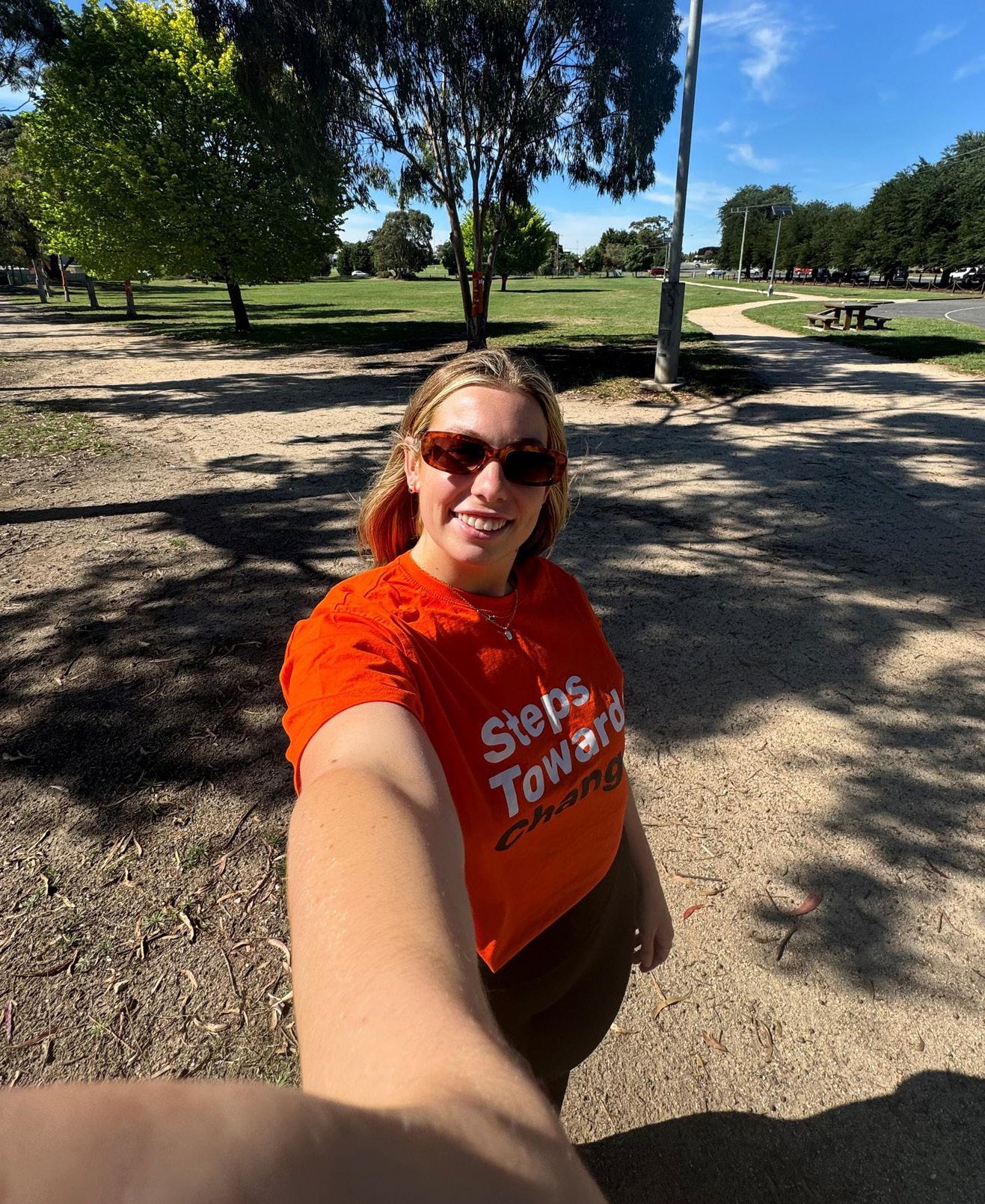
What stands out most is Abby’s capacity to drive change despite limited resources. Working in a single full-time role with modest financial support, she has led internal reforms, delivered tailored gender equality initiatives for outdoor and depot staff, and co-designed youth consent resources with Youth Councillors, schools and Victoria Police. She has also presented widely across the sector, contributed to a nationally and internationally published article on the GIA App, and has been invited onto statewide advisory groups because of the strength of her practice. Abby’s work reflects resilience, ethical leadership and a strong commitment to building safer, more equitable communities.
This combines strategic insight, practical action and deep care for community in a way that is already shaping organisational culture and broader prevention practice. Abby’s ability to build partnerships, influence systems and elevate lived experience has delivered meaningful outcomes for Mitchell Shire while also informing work well beyond the region. She represents the next generation of local government leadership at its most thoughtful, courageous and impactful.

Jordy McIvor-Clark is an emerging change leader whose work has fundamentally strengthened how the City of Greater Geelong approaches organisational transformation. Over a short period, Jordy progressed rapidly from Project Support Officer to Change Lead, helping establish change management as a core discipline while driving major initiatives such as the Pulse Software Implementation and the Service Review Pilot Program. His mix of technical skill, peoplecentred leadership and calm delivery under pressure has made him a trusted adviser to senior leaders and a standout contributor to the City’s Strategy and Performance function.
Jordy’s major achievements include rescuing a business planning software rollout that had been at risk and turning it into a highly successful and engaging implementation. More than 300 users were trained, with 97 per cent reporting they felt well informed, 100 per cent understanding the benefits and 91 per cent accurately using the software after training. In the Service Review Pilot, Jordy stepped into a critical delivery role, simplified complex methodology, rebuilt stakeholder confidence and guided the program back on track. He has also established a Change Champion network and designed the ‘Leading through Change’ program, which significantly lifted leadership capability across the organisation.
What distinguishes Jordy is the way he works beyond formal role boundaries while maintaining a strong focus on people. He has taken on tasks that sat outside his defined remit, strengthened project governance, coached leaders and peers, and consistently balanced technical outcomes with trust-building and inclusion. In a resource-constrained environment where change management was still being embedded, he helped shift organisational culture by demonstrating that change can be managed deliberately, respectfully and effectively. His participation in leadership development programs and communities of practice also reflects a strong commitment to selfdevelopment and long-term sector contribution.
He has already delivered lasting value to the City of Greater Geelong while helping establish a stronger organisational foundation for future transformation. His leadership is values-driven, technically capable and deeply focused on supporting others through complexity. He is not only helping implement change, but also building the confidence, structures and culture that make meaningful change possible across local government.
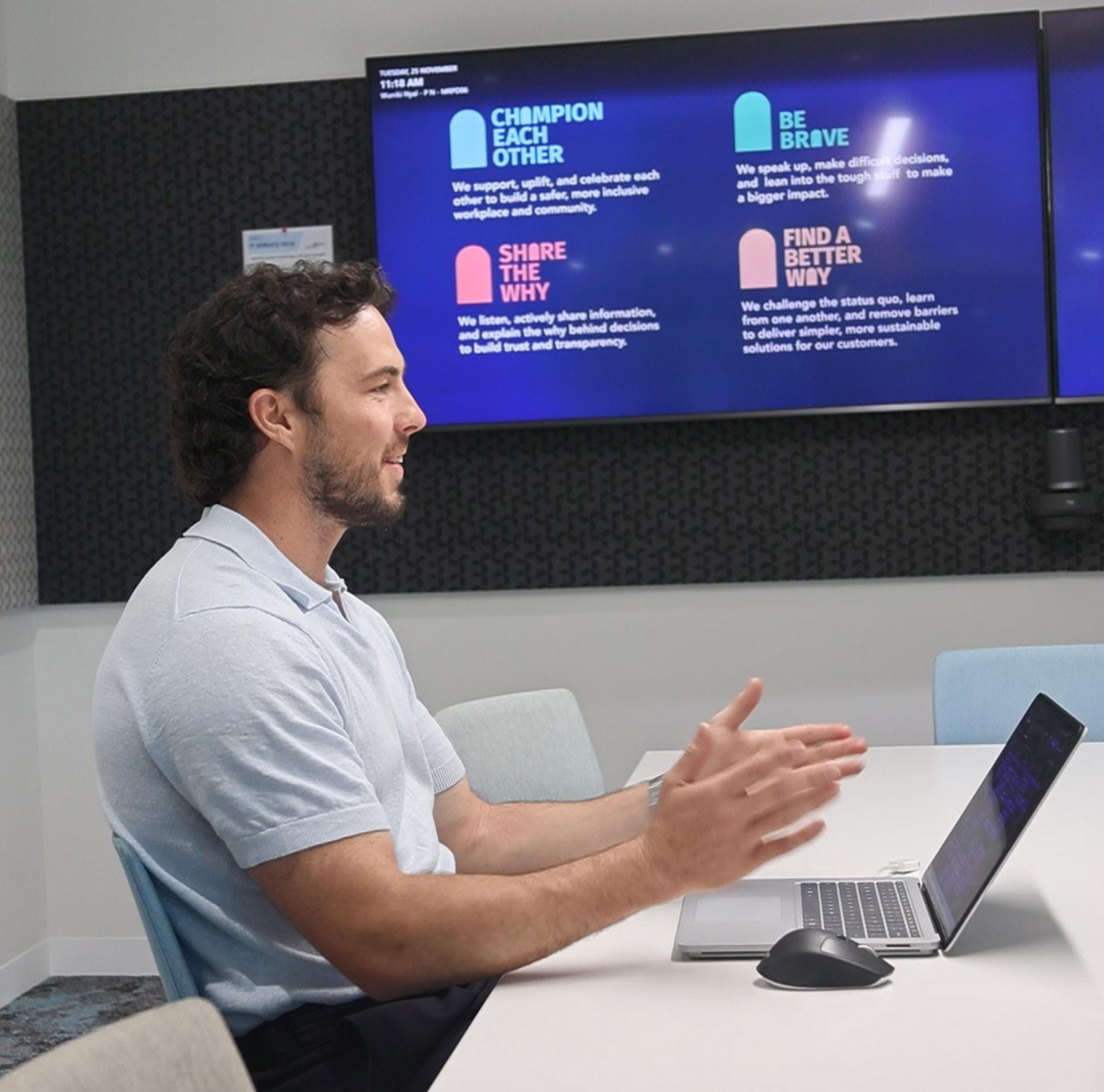
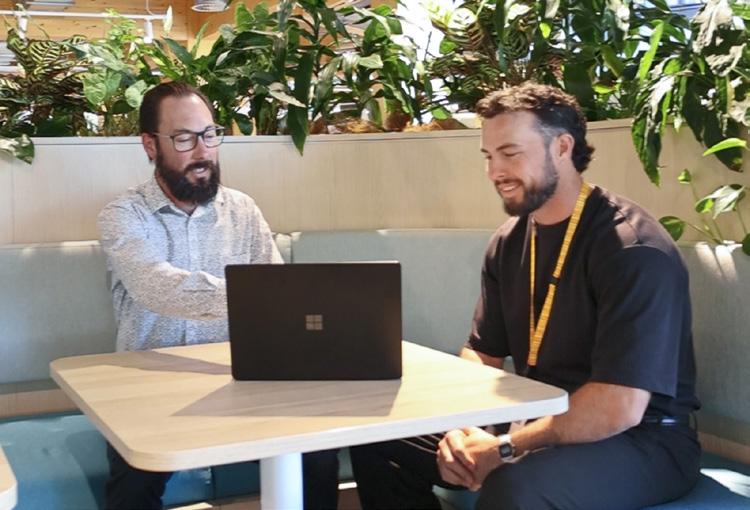
Benjamin Petkov is an exceptional young heritage practitioner whose work is helping the City of Greater Geelong understand, protect and celebrate its built history in more nuanced and contemporary ways. As Heritage Project Officer, Benjamin combines rigorous assessment with storytelling, research and community engagement, making heritage both technically robust and publicly meaningful. His work is notable not only for its quality and detail, but for the way it broadens what counts as heritage by identifying overlooked themes and ensuring they inform planning, placemaking and public understanding.
Benjamin’s major achievements include work on the Outer Areas Heritage Assessment Study, where he undertook pioneering research into post-war migration to Geelong’s northern suburbs and recognised the heritage value of Eastern European Orthodox churches. He also completed the Market Square Quarter pilot for the Central Geelong Heritage Review, helping shape how heritage values can support urban renewal across 352 properties. His identification of previously unrecognised drystone walls across the municipality has already influenced strategic planning, while his fieldwork, technical advice and process improvements have strengthened internal confidence in heritage assessments and their consistency.
What sets Benjamin apart is his ability to connect technical expertise with accessible communication. He presents to advisory committees, local history groups and staff, leads heritage walks and uses social media and internal channels to help people see heritage as a living part of Geelong’s identity rather than as a planning constraint. His commitment to self-development is equally strong, with active involvement in ICOMOS and other heritage committees that connect local practice with national and international standards. In doing so, he is already shaping contemporary heritage practice beyond his own organisation.
He brings rare depth of insight, warmth and vision to a complex field that is essential to the way places understand themselves. His work at Greater Geelong is already influencing planning outcomes, community awareness and sector thinking, while also inspiring colleagues and residents to value heritage in new ways. He represents an outstanding new generation of local government professionals who are both technically accomplished and deeply committed to place.
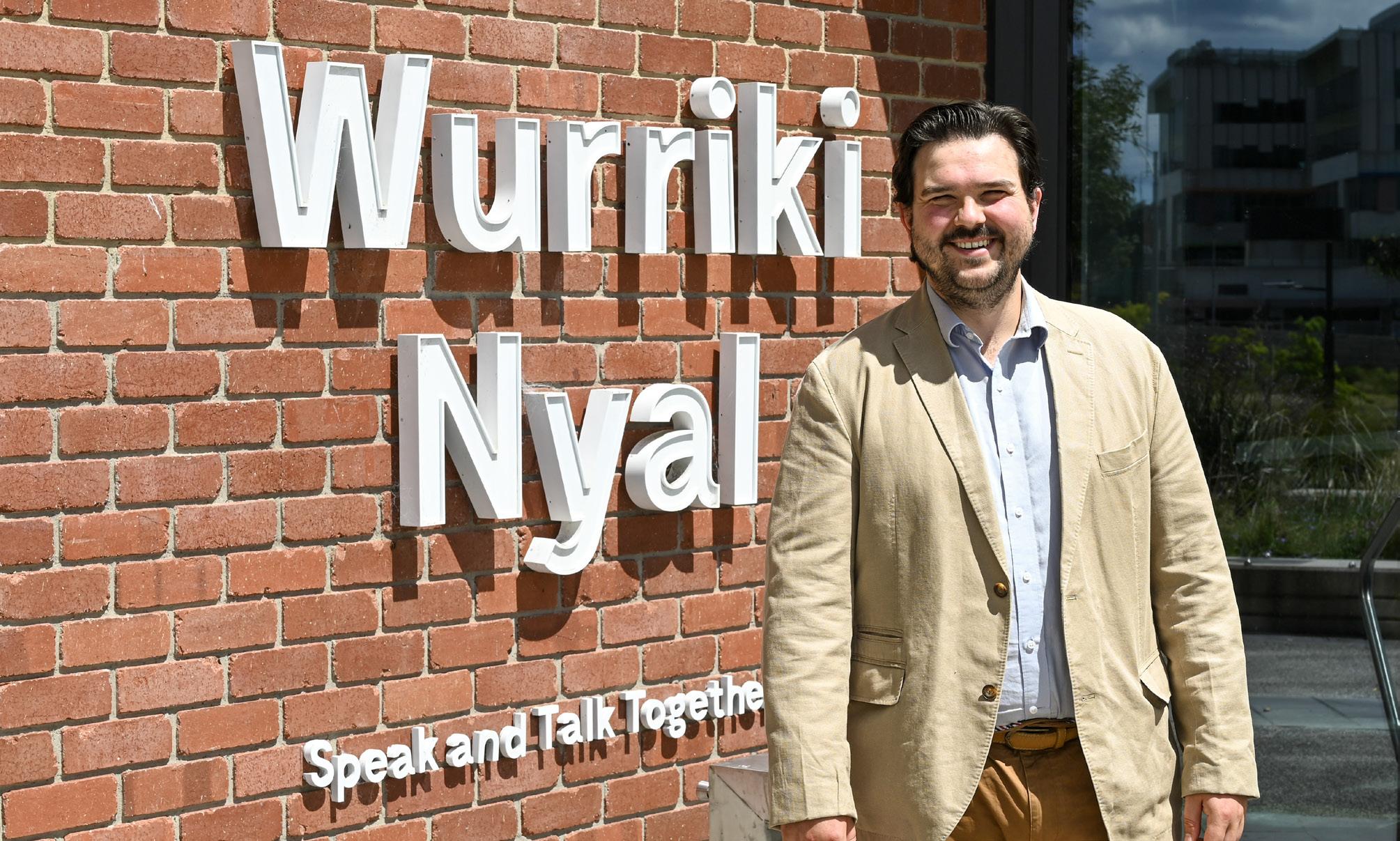
Melissa Rushton is a proactive and highly capable young professional whose work has already delivered lasting improvements to finance systems, cross-department collaboration and operational efficiency at Swan Hill Rural City Council. In a relatively short time, she has become known across the organisation as a trusted source of advice, a practical problem-solver and a calm, solutions-focused contributor to major corporate projects. Her ability to identify inefficiencies, design better processes and support others through change has made her an influential and respected emerging leader well beyond the boundaries of her formal role.
Melissa’s achievements have centred on improving systems that many staff had long found frustrating or error-prone. She redesigned banking journal processes for departments including the Pioneer Settlement and Performing Arts by introducing spreadsheets with in-built checks and balances, significantly reducing recurring errors and saving time for both Finance and operational teams. She also improved reconciliation practices by helping staff extract and use data from their own software systems more effectively. During the Altitude upgrade, Melissa took ownership of the Accounts Receivable and Accounts Payable setup and testing, advocating strongly for thorough preparation and helping prevent costly issues before they emerged.
Her influence is evident in the way she supports change across the organisation despite limited resources and competing priorities. Melissa has gone well beyond her defined Finance responsibilities by guiding other teams such as Rates and Procurement through system configuration and becoming a key contact for Altitude-related queries. Her reliability and systems knowledge also led to her selection for the Project Control Group for Council’s new Records Management System, where she helped review tenders and shape requirements. At the same time, she contributes positively to organisational culture through fundraising activities including support for MRI and MND causes, strengthening staff engagement and community-mindedness.
She combines technical skill, initiative and generosity in a way that has already improved how Swan Hill Rural City Council works. She does not simply respond to problems as they arise; she redesigns systems to prevent them, supports colleagues to build confidence and capability, and contributes to a stronger workplace culture at the same time. Her thoughtful leadership, practical mindset and willingness to take ownership of complex challenges mark her as a standout young local government professional with a bright future ahead.
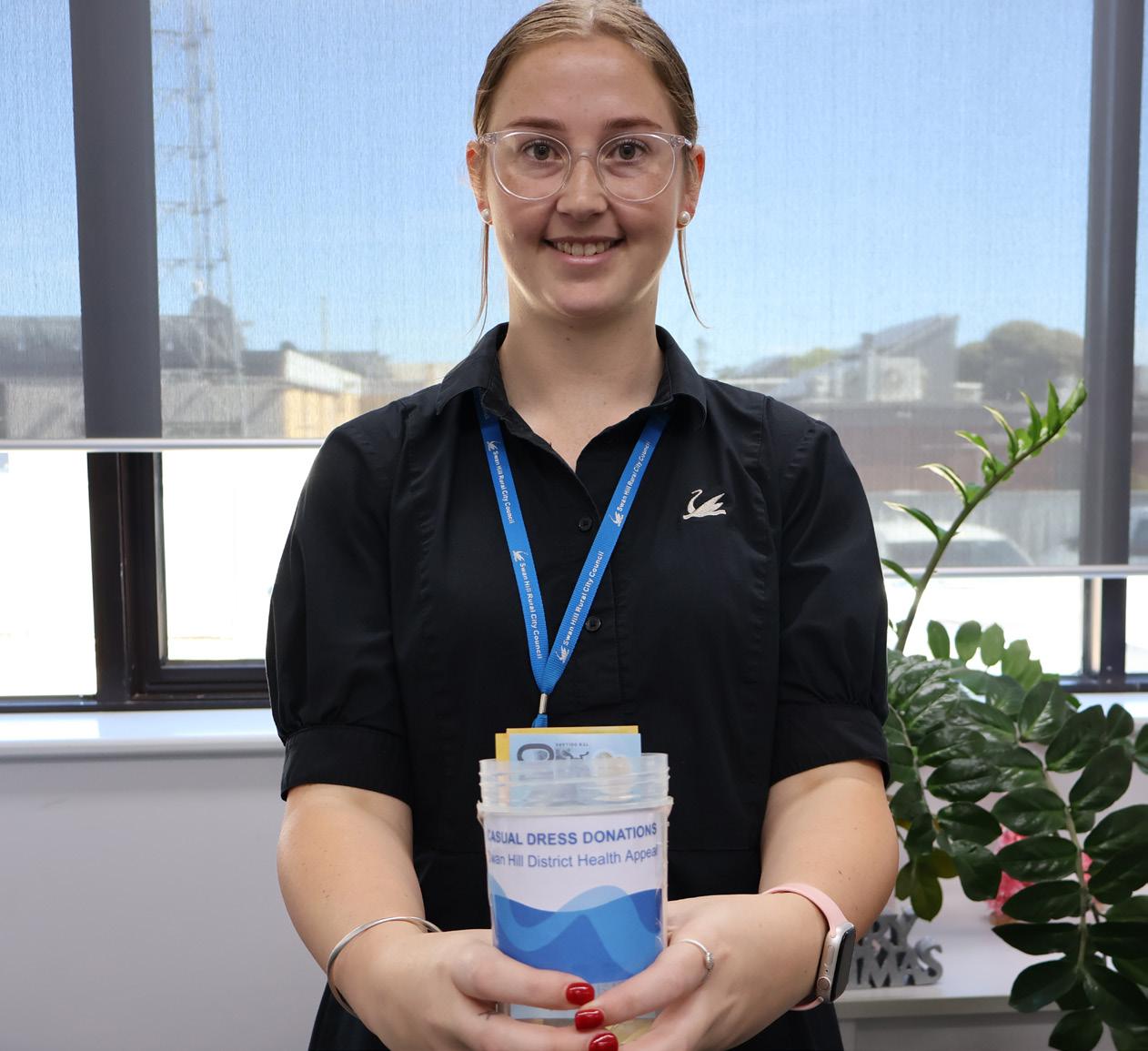
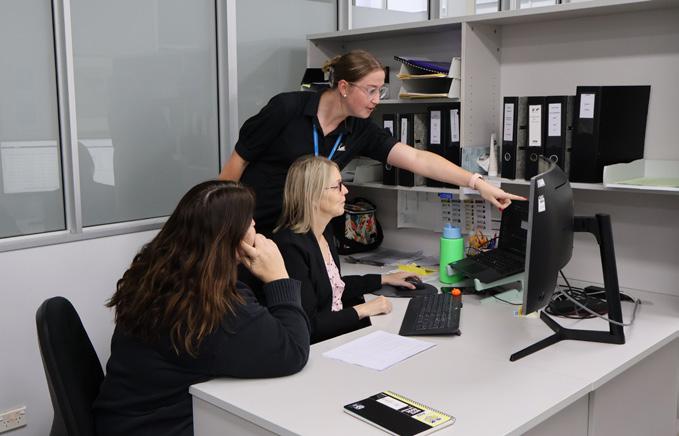
The Executive Leadership Program is designed exclusively to equip and support senior executives in Local Government, particularly Chief Executive Officers and Directors, to expand and develop their skills and knowledge to assist them in becoming confident and capable leaders in the sector.
Aaron Moyne Glenelg Shire Council
Angela Hays Melton City Council
Cheryl Casey Mornington Peninsula Shire Council
David Power Hobsons Bay City Council
Emma Appleton Whittlesea City Council
James Rouse Latrobe City Council
John Brockway Warrnambool City Council
Julie Landy Mount Alexander Shire Council
Kate Heissenbuttel Monash City Council
Kate Waters Kingston City Council
Matt Wilson Ballarat City Council
Maria Weiss Macedon Ranges Shire Council
Michael Sharp Campaspe Shire Council
2025's Executive Leadership Program was proudly sponsored by
Michelle Jorgensen South Gippsland Shire Council
Nathan Islip Yarra Ranges Council
Paul Wood Port Phillip City Council
Petra Croot Hindmarsh Shire Council
Rory Neeson Southern Grampians Shire Council
Scott Williams Moira Shire Council
Sharyn Cox Moonee Valley City Council
Tania Asper Casey City Council
Tennille Bradley
Greater Geelong City Council
Trenton Fithall
Northern Grampians Shire Council
Vicky Guglielmo Yarra City Council
Vishal Gupta Frankston City Council

Brett Jackson Glenelg Shire Council
Donna Taylor Bass Coast Shire Council
Kate Henschke Mildura Rural City Council
Jacinta Stevens Whittlesea City Council
Melissa Crane Mansfield Shire Council
Jacinta Erdody Pyrenees Shire Council
Julia Jenvey Manningham City Council
Vicki Blackman Monash City Council
Angela Morcos Yarra City Council
Tim Rose Yarriambiack Shire Council
Justine Kingan Horsham Rural City Council
Rachel Dapiran Hume City Council
Jonathan McNally Knox City Council
Erin Clark Brimbank City Council
Simone Nolan Wangaratta Rural City Council
Leanne Manton Moorabool Shire Council
Tammy Beauchamp Frankston City Council
Amber Ricks Central Goldfields Shire Council
Christian Stefani South Gippsland Shire Council
Bronwyn Saffron Casey City Council
Dana Pritchard Port Phillip City Council
James Robinson Baw Baw Shire Council
Allison Southwell Cardinia Shire Council
Nicole O’Donnell Maribyrnong City Council
Arthur Vatzakis Hobsons Bay City Council

The Emerging Leaders Program provides a year of unique leadership-focused activities and experiences designed to develop and inspire emerging leaders or those aspiring to positions of leadership in the sector.
Kristen Munro Banyule City Council
Alex Stewart Nillumbik Shire Council
Alison Treloar Bass Coast Shire Council
Amy Luck Whitehorse City Council
Awais Sadiq Swan Hill Rural City Council
Brian Doyle Strathbogie Shire Council
Bridgette O’Brien Hepburn Shire Council
Bruce Marshall Maribyrnong City Council
Carrie Lindsay Manningham City Council
Courtney Harrison Casey City Council
Ella Edwards Whittlesea City Council
Holly Sawyer Wangaratta Rural City Council
Janak Bharati Greater Dandenong City Council
Kealey Lush Mildura Rural City Council
Kim Marshall Kingston City Council
Kirsty Phillips Greater Bendigo City Council
Laura Crilly Mornington Peninsula Shire
Liz Chapman Brimbank City Council
Luciana Andriani Port Phillip City Council
Numair Farooq Mitchell Shire Council
Rae Power Frankston City Council
Reece Carroll Loddon Shire Council
Rhys Matulis South Gippsland Shire Council
Tania Triantafilopoulos
Knox City Council
Tom Meek Yarra Ranges Council

Diane Sneddon Port Phillip City Council
Bob Xu Knox City Council
Urmila Ravikumar Merri-bek City Council
Alicia Fitzgerald Cardinia Shire Council
Fabian Rukshan Hemantraj Mansfield Shire Council
Kate Ellett Wangaratta Rural City Council
Luke Bryant Bass Coast Shire Council
Lya Assef Ballarat City Council
Tilmann Sauer Campaspe Shire Council
William Burns Swan Hill Rural City Council
Freya Carlson Kingston City Council
Rachel Budgen Frankston City Council
Manshiel Chand Casey City Council
Vicki Poxon South Gippsland Shire Council
Melanie Sledge Whitehorse City Council
Sarah Doolan Wodonga City Council
Shalyce Eastwood Mornington Peninsula Shire Council
Ellie Hall Whittlesea City Council
Gemma Phillips Baw Baw Shire Council
Georgia Logan Glen Eira City Council
Jock Farrow Boroondara City Council
Sally Wright Greater Dandenong City Council
Haren Weerasiri Brimbank City Council
Rachael Giddens
Yarra Ranges Council
Rehan Majeed Horsham Rural City Council
Yasmin Silveria
Kingston City Council