


Dr. Marc F. Ott P'28 HEAD OF SCHOOL
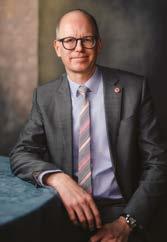

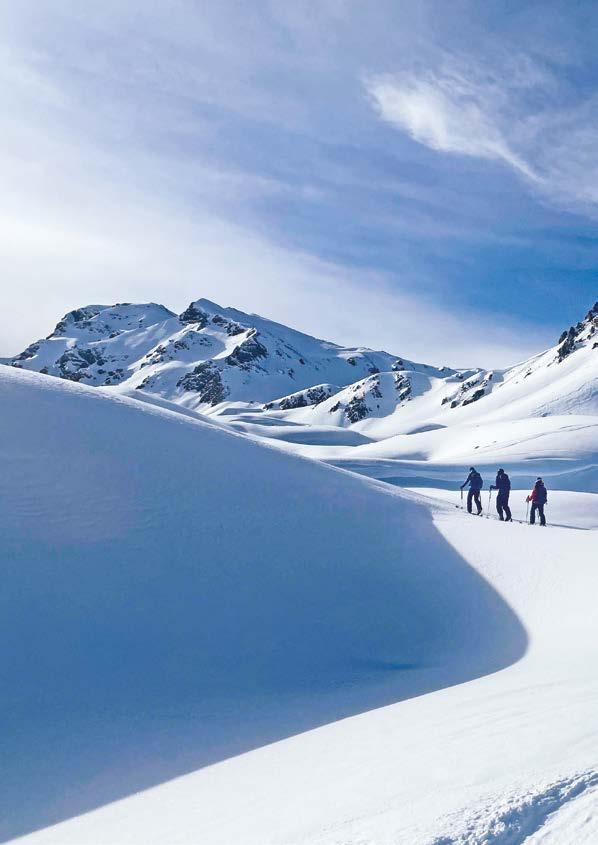
At first glance, the word adventure brings to mind mountains, alpine trails, and new horizons. At LAS, surrounded by the Alps, that image feels natural. But adventure here has always meant more than outdoor exploration. It also means having the courage to ask questions, try something new, and begin again when things do not go as planned.
This year’s issue of Panorama explores adventure in many forms. In these pages, you will meet alumni, parents, and students who have taken different paths and shaped their own journeys along the way.
At LAS, adventure is not separate from education. It is part of how we prepare students for life. Our setting encourages exploration, but our mission goes further by helping students think independently, engage with different perspectives, and take thoughtful risks. Today’s students are entering a world defined by rapid change and complexity. We cannot predict every challenge they will face, but we can help them develop the confidence and resilience to navigate them.
As you read this issue, I hope you see the many ways members of the LAS community are making an impact around the world.
And, as always, it begins here in Leysin!
VOL. 40 NO. 1 SPRING 2026
EDITORS MICHELLE TURNER & KATY MAGUIRE LUSHMAN
PROOFREADER EMMA DIXON
ART DIRECTOR MICAH PURNELL
PANORAMA IS PUBLISHED ANNUALLY FOR ALUMNI, FAMILIES, AND FRIENDS OF LEYSIN AMERICAN SCHOOL IN SWITZERLAND © 2026
THE OPINIONS EXPRESSED IN ARTICLES DO NOT NECESSARILY REFLECT THOSE OF LAS OR PANORAMA
LEYSIN AMERICAN SCHOOL ADVANCEMENT OFFICE
PHONE +41 24 493 4888
WEB LAS.CH
EMAIL ADVANCEMENT@LAS.CH
LAS HEAD OF SCHOOL
MARC F. OTT P'28
LAS SCHOOL BOARD
CHAIR STEFANIE OTT P’18, VICE CHAIR PASCAL STEFANI P’18, MARC OTT P'28, JEFF PAULSON
LAS FOUNDATION BOARD
PRESIDENT K. STEVEN OTT
DORIS OTT, STEFANIE OTT P’18, MAURIZIO FABBRI, PHILIPPE BAUDRAZ
JANE SMITH ‘98 IS AN LAS ALUM, CLASS OF 1998
JANE SMITH P’14, ‘16 JANE HAS TWO CHILDREN WHO ARE LAS ALUMNI CLASSES OF 2014 AND 2016
THE HEAD OF SCHOOL
Dr. Marc Ott P'28 | Head of School
FROM THE EDITORS
Michelle Turner P'22, '24 & Katy Maguire Lushman
MARIO HABERFELDP'26
PETER WALLENBERG'78, P'27
ERIN FOSTER'00
DYLAN HOLLOWAY
SIMON CURSON
VERONIKA RADINOVSKA'15
RAOUL MOORE '71
ERIC ILLICK'14 & ARSHIA SOLTANI'15
GUNILLA VON PLATENP'26, '28
MITCH YOUNGE '94
HOLLY RENDLE
LIZ '97 & CHRIS SAUCIER'96
TIM STUART
ALEX MAMIKONIAN'95
JACK SCANLAN'24
SARA BOSSHART'26

with Richard Campanaro'95
with Kepler Lafayette'11
with Kentaro Takayama'18
LESSONS LEARNED
Eric Turner P'22, '24 Director of Residential Life
Sophie McLeish Beau Réveil Dorm Head
Dottie Steward
Hiking Activity Leader and Former LAS Faculty
Mat Mcleod P'27
Science Teacher
Andie Flett Director of Alpine Institute
STUDENT ADVENTURES
ATHLETIC ACCOMPLISHMENTS VISITING SCHOLARS
Director of Institutional Advancement
KATY MAGUIRE LUSHMAN Associate Director of Institutional Advancement
Adventure, at its heart, is not a single thing. It doesn't require a summit to conquer or a wilderness to cross. It asks only that you step beyond the edge of what feels certain and that you trust what comes next.
That's the spirit behind this issue of Panorama. Adventure is a universal language, shared equally by the climber on the Matterhorn, the scientist making a new discovery, and the traveler with a one-way ticket in hand. The scale may differ, but the courage remains the same. It is a language the LAS Global Family knows well, one built on the shared willingness to leave the beaten path behind and strike out into the unknown.
Adventure has always been at the heart of the LAS experience because stepping outside your comfort zone, in any form, is how we grow.
The stories in this issue are as wide-ranging as adventure itself, and we hope you find something in these pages that moves you. Maybe it will inspire your next great expedition or give you the nudge to take a risk you've been considering. Either way, we hope you enjoy every page!
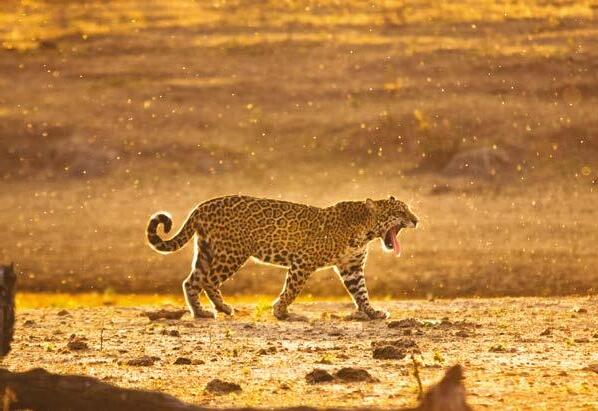
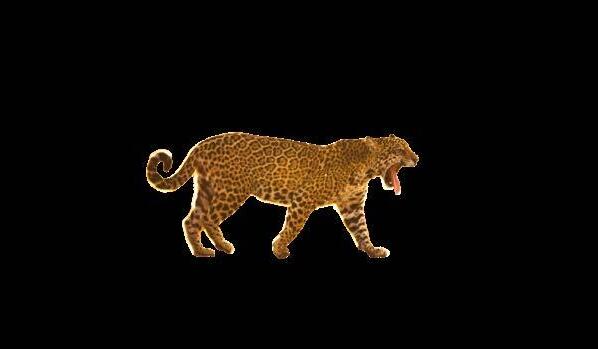
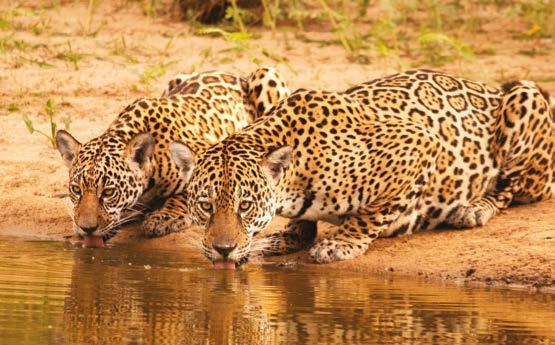
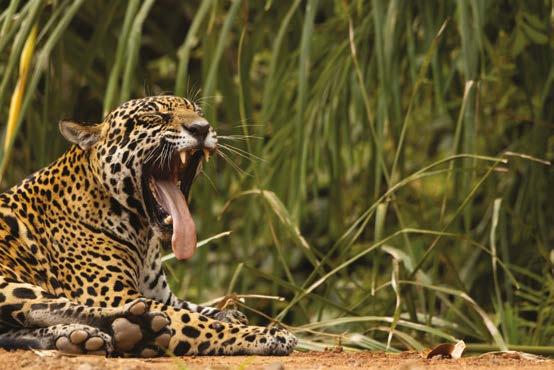
In the Pantanal wetlands of Brazil, a jaguar pads quietly through the lush vegetation of the Caiman Ecological Refuge. Here, within the protected wildlife corridor, it moves with a confidence born of safety— shielded from hunters, fires, and the ever-encroaching threat of deforestation. Years of effort and millions in investment have gone into ensuring that animals like this jaguar can thrive.
When it opens into a sprint, the jaguar can reach speeds of up to fifty miles an hour—a breathtaking burst of power. Yet even that pales in comparison to the velocity familiar to the man behind this project. Onçafari, the nonprofit organization that safeguards these big cats, is the labor of love of someone far more accustomed to racing at more than four times that speed.
There was a time when Mario Haberfeld believed he was already living his life's dream: racing in Formula 1 and INDYCAR. Competing around the world for teams like McLaren, Jordan, and Stewart, he lived a white-knuckle career that most would consider a full
and enviable life. But for Mario, that was only one chapter.
He retired from racing in 2008, the year his daughter, Mariana'26, was born. "She says I retired for her," he says with a smile. And while Mariana's influence may indeed have steered him off the track, so did something deeper—a sense of purpose that had taken root long before he ever set foot in a race car.
Mario remembers being captivated by the wilds—and the wild animals—of Africa from an early age. At twelve, his father took him on his first safari: a rustic Serengeti adventure spent riding in the back of a truck, sleeping in tents under the stars, showering beneath waterfalls, and seeing exotic animals in their natural habitat. The experience lit a spark in him that never faded. He has returned to Africa every year since, and Mariana joined him on those trips when she was just four.
After he retired from racing, Mario went on a two-year expedition to see a
bucket list of amazing animals: Indian tigers, gorillas in Uganda, giant pandas in China, Canadian polar bears… an exhaustive list that reads like an itinerary of a man joyfully, unabashedly obsessed. The goal wasn't just to observe the animals, though. It was also to see how those animals were being protected. With each encounter, Mario's passion deepened into a commitment to safeguard the species he had admired since childhood.
Mario's next endeavor was inspired by the pioneering work of the Varty brothers, whose approach to habituating African leopards transformed modern conservation. Through patient, respectful observation, they built a calm and trusting relationship with a female leopard, always maintaining a safe distance. Over time, that relationship evolved into something groundbreaking: South Africa's Londolozi Game Reserve became the first place in the world where humans could reliably observe wild leopards. As Mario notes,
the resulting ecotourism quickly proved far more lucrative for landowners than hunting ever was. The result was educational, enlightening, and thrilling. It was booming ecotourism business benefiting both people and leopards.
Mario wanted to bring that model home to Brazil. He chose the Pantanal biome— the largest wetland in the world—and began the long process of habituating a female jaguar he named Esperança ("hope" in Portuguese). "They said I was crazy," he recalls. "'You're a race car driver… why don't you start with a small rat?' But being called crazy only makes you stronger."
Past failures by other groups made it difficult to obtain government support, but Mario persisted. Learning from earlier missteps, he founded Onçafari, a nonprofit organization, research center, and refuge that has reshaped the economy of the entire region while helping protect and strengthen its extraordinary biodiversity.
When Mario first visited the Pantanal,
jaguar sightings were rare—perhaps twice a year. But after connecting with Esperança and expanding Onçafari's habituation efforts, the landscape transformed. Today, ecotourists travel from around the world to see these magnificent cats, with more than 1,200 jaguar encounters recorded annually.
Yet, as with his bucket-list expeditions, Mario's ambitions reach far beyond observation. Onçafari, named from onça (Portuguese for jaguar) and safari (the Swahili word for journey), operates across eight fronts to strengthen both biodiversity and the local community. Scientifically, it serves as a crucial base for studying jaguar behavior, sharing its findings globally through publications, lectures, and documentaries that spotlight wildlife conservation. Socially, the organization supports Indigenous communities and prioritizes local hiring, ensuring that conservation benefits those who call the region home.
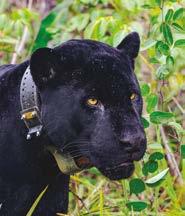
A cornerstone of their work is "rewilding," or rehabilitating jaguars rescued from traffickers or zoos and preparing them to return to the wild. "Big cats need to learn how to hunt," Mario explains. "Without the mother, we've
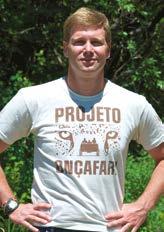
had to create an entirely new methodology." Onçafari now operates three rewilding centers, helping not only jaguars but also birds and monkeys reclaim their place in the ecosystem. The organization is also deeply involved in fire prevention and response, using satellites, technology, and even a private fire brigade to safeguard the region amid rising temperatures.
Mario is proud to share all Onçafari has
accomplished with his family, knowing it teaches them to follow their dreams as well. Mariana has done her share of helping vets with the jaguars, and it was she who first discovered LAS. Just as Mario knew as he pivoted from racing to conservation, Mariana could sense that LAS was the next chapter for her.
Advocacy is another crucial frontier for Mario and Onçafari—one where much of their forward-thinking energy is now focused. By purchasing land at risk of deforestation, they are creating expansive new wildlife corridors where jaguars can thrive. Their efforts have inspired neighboring landowners to join the cause, forming an alliance that now protects more than a million acres of vital habitat.
And that strategy is poised to expand beyond Brazil's borders. Looking further ahead, Mario recently announced his involvement in the Jaguar Rivers Initiative. Officially launched during Climate Week in New York City, this ambitious twenty-year plan brings together organizations from Brazil,
Argentina, Paraguay, and Bolivia to create the world's largest ecological corridor—a sweeping, multinational effort to restore ecosystems on a continental scale. "What started with me just wanting to see a jaguar is now making a huge difference all over South America," he reflects.
In many ways, Mario's life is its own kind of journey, propelled by curiosity, passion, and a willingness to accelerate toward the unknown. From the racetrack to the rainforest, he has shown that perseverance and a spirit of adventure can create a legacy far greater than he ever imagined.
Mario was born in São Paulo, Brazil, and has had two abiding passions since childhood: racing cars and wildlife. After a long career of nearly 20 years in motorsport, with stints in Formula 1 and INDYCAR, he decided to dedicate himself entirely to wildlife conservation. Mario established Onçafari to conserve Brazil’s biodiversity and to assist in the development of local communities through ecotourism and science. Mario’s daughter, Mariana, is a member of the LAS Class of 2026.
Learn more about Mario and Onçafari at Oncafari.org
“To MOVE from THE OLD to what is ABOUT TO COME is the ONLY tradition WORTH KEEPING-
Marcus ‘Dodde’ WALLENBERG
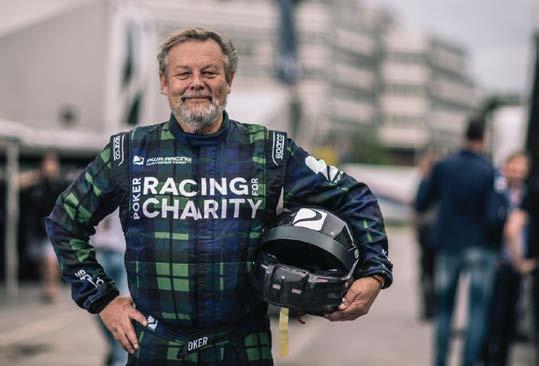
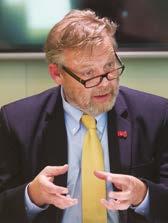
An entrepreneur, racing enthusiast, and passionate steward of Swedish innovation, Peter "Poker" Wallenberg is guided by the belief that “adventure exists anywhere if you remain curious.” His life has unfolded at speed—across racetracks, industries, and ideas—spanning elite motorsport competition, sustainability work, and leadership of some of the world’s most forward-thinking foundations. And, most fittingly for the pages of Panorama, Peter is also an alumnus of Leysin American School, where he earned his International Baccalaureate Diploma. Today, his son Rustan is an 11th grader at LAS, continuing a family connection grounded in curiosity, ambition, and a shared appetite for exploration.
Peter’s success is anchored in a deep sense of family. The Wallenbergs are among the most storied families in modern European history, with a legacy that began in 1856 when André Oscar Wallenberg founded SEB (Skandinaviska Enskilda Banken AB). From the outset, the family combined financial leadership with a strong sense of public responsibility. That tradition
continued through Peter’s grandfather, Knut Agathon Wallenberg, who served as Sweden’s Minister for Foreign Affairs during World War I. Together with his wife, Alice, he was deeply committed to supporting initiatives that strengthened
earliest job as a busboy. It sparked a fascination with hospitality and service, and soon a desire to study restaurant management. While the idea initially raised doubts within the family, his grandfather offered advice that would shape Peter’s
"You have TO DO SOMETHING THAT YOU REALLY LIKE, or you will NEVER do a GOOD job."
Swedish society, seeking out bold, forward-looking projects that could shape the nation’s future. Today, Peter serves as Chairman of the Knut and Alice Wallenberg Foundation, one of the largest private funders of scientific research in Europe. Since its inception, the Knut and Alice Wallenberg Foundation has distributed more than SEK 42 billion to support education and research. Like Knut and Alice before him, Peter remains steadfast in ensuring that the Foundation’s work benefits Sweden.
Long before Peter chaired boards or led global foundations, his first taste of adventure came in the form of work: his
path: “You have to do something that you really like, or you will never do a good job.”
That encouragement led him to the Grand Hôtel Stockholm, a landmark institution steeped in history. The hotel had been acquired by the Wallenberg family to ensure it remained a proud part of Swedish heritage as the country’s only member of The Leading Hotels of the World. Over decades at the Grand Hôtel, Peter rose steadily through the ranks, becoming President, then CEO, and ultimately Chairman of the Board. Along the way, he cultivated a business philosophy built on movement and diversification. Beyond hospitality, his interests extended into private equity
and engineering companies such as Atlas Copco. One guiding principle came from Marcus 'Dodde' Wallenberg himself: “To move from the old to what is about to come is the only tradition worth keeping.” Originally written to address the shift from railroads to aviation, the quote continues to resonate. Today, it underpins Peter’s work with the Foundations,
exemplified by the Knut and Alice Wallenberg Foundation's strategic grants on areas such as artificial intelligence, electrification, and sustainability.
After two decades of leadership in hotel management, Peter’s body forced an unexpected pause. “I collapsed in my office during a meeting,” he recalls. “Nothing serious, just my body saying enough is enough. The doctors told me to take three months off… so I got my racing license.”
It was not the restorative break his doctors had envisioned. Yet the racetrack offered something Peter hadn’t realized he needed: a high-speed release, a different kind of focus, and, true to form, an entirely new challenge to master. What began as an escape soon evolved into an ambitious venture. Together with Daniel Haglöf, Peter co-founded PWR Racing, not simply as a racing team, but as a development platform designed to push boundaries. The team offered sponsors far more than branding; it positioned motorsport as a proving ground for innovation.
Leaders in electrification and sustainability, PWR Racing launched Sweden’s first all-electric race series, including a three-year rallycross program for Volvo Construction Equipment that showcased
its transition away from fossil fuels. They were also the first in Sweden to place women in both pit crews and driver seats, including Mikaela ÅhlinKottulinsky, the first woman to win a race in Sweden’s premier touring car series, STCC.
A skilled driver himself, Peter also serves as Chairman of the Royal Automobile Club of Sweden and KAK Motorsport, the organization that hosted Sweden’s first-ever automobile race in 1904. For him, racing is not only about speed, but about precision, courage, and calculated risk.
Even today, racing remains an escape for Peter, a counterpoint to the intellectual intensity of his foundation work. That shared thrill of discovery drives his leadership of the Wallenberg Foundations, a network of sixteen private and public entities that form a backbone of Swedish innovation. Their reach spans technology, medicine, natural sciences, social sciences, and the humanities. Past and present projects include research into transparent wood and nontoxic glues, as well as climate expeditions to the North Pole dating back to the 1950s. “Winning a race brings the same excitement as hearing a researcher who can say, ‘We found something incredible,’” he reflects.
Established by members of the Wallenberg family—some as early as 1917—these foundations collectively account for more than SEK 44-50 billion in research funding. Peter serves as Chairman for half of them, helping guide bold new ideas from curiosity to impact.
Building on his lifelong connection to motorsport, Peter is also the founder of Poker Racing for Charity, an initiative that channels the energy of racing toward supporting charitable causes around the world. Giving back, staying curious, and continuing to move forward remain central to his outlook.
At the Knut and Alice Wallenberg Foundation’s 100th Anniversary Jubilee, Peter shared a video message from astronomer Sofia Feltzing, one of the pioneering researchers supported by the Foundation. In it, she reflected: “Because of the Foundation, we will discover things we didn’t even know we were looking for.”
For Peter, that moment captured everything. Whether on a racetrack or at the helm of a foundation, the impulse is the same: trust curiosity, commit fully, and take the next turn before the road is fully visible. Because true adventure isn’t about knowing what comes next—it’s about having the courage to move forward anyway.

48
HUMANITIES AND TOK TEACHER
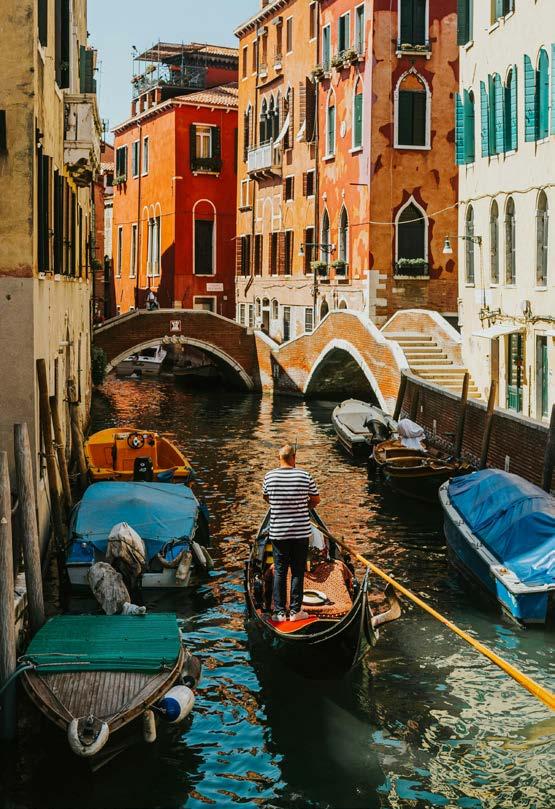
At LAS, adventure is often associated with incredible ski trips or summiting the mountains surrounding Leysin. However, adventure can also happen in less obvious ways—when a wrong turn becomes the right one, a narrow lane opens onto a quiet square that you never knew was there, or the moment you realize you’ve stepped out of the crowd and into someone else’s everyday life.
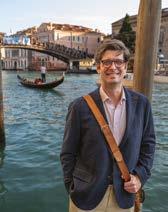
That’s the Venice Richard Campanaro wants students to meet. Venice isn’t treated as a checklist or a museum frozen in time, but as a living city, one that rewards curiosity, preparation, and the willingness to wander a little off course. Yes, students visit the places you’d expect. But Richard also builds in something less obvious and far more memorable: time to get lost. “Lost,” in this case, is intentional. Students head out in small groups with a simple goal: explore responsibly and pay attention. Venice makes this easy. Step away from the main routes and the noise thins out, the streets twist, and the signs disappear. Of course, the students always come back with stories. Richard’s rule is simple: if you get lost, you document it. Take a photo. Write about where you ended up in your class journal. What begins as free time quickly turns into reflection, and reflection turns into understanding. With a
bit of context, the city sharpens, and history stops feeling abstract and starts to feel personal. That context starts long before students arrive in Venice. In class, Richard trains them to slow down and look, sometimes spending 10 minutes with a single painting, such as a Venetian scene by Canaletto. They hear The Four Seasons by Vivaldi so often that it fades into the background...until the moment that they’re standing in Venice and hear it again, now with a greater appreciation for it because they understand its origins. Even the creative work carries weight: students make masks that encapsulate their experience of Venice in an assignment that is both creative and personal. What Richard loves most is watching the change in the students as they experience Venice together. The student who enters a gallery with crossed arms and low expectations. The pause. The moment they sit down “just to get the assignment done” and then don’t get back up right away. Those moments linger and they tend to resurface later, in journals, essays, and the way students move through unfamiliar places long after the trip is over.
THAT’S THE ADVENTURE AT THE HEART OF LAS CULTURAL TRIPS: DO A BIT OF HOMEWORK, WANDER WITH INTENTION, AND LEAVE ALREADY THINKING ABOUT THE NEXT TIME YOU’LL COME BACK.
You’re invited to experience Venice alongside Richard through video, a sample itinerary, and his personal must-sees, from the Peggy Guggenheim Collection to the Gallerie dell'Accademia. Consider this an invitation to slow down, wander a bit, and let learning lead the way.
48 Hours in Venice: Watch the video here!
RICHARD’S TIPS FOR PREPARING FOR VENICE (IF YOU’RE NOT LUCKY ENOUGH TO TAKE HIS CLASS FIRST!) :
READ ONE GOOD BOOK BEFORE YOU GO
A single, accessible history goes a long way in giving the city meaning. Richard recommends A Sketch of Venetian History by Sarah Pierroz or Venice: the basics by Giorgio Gianighian.
PRACTICE SLOWING DOWN WITH ART
Spend real time looking at art, especially Venetian scenes by Canaletto. Hearing The Four Seasons ahead of time makes encountering it in Venice far more meaningful. Recognition can be half the magic!
PREVIEW, DON’T PLAN, THE MUSEUMS
Browse the websites of places like the Peggy Guggenheim Collection and the Gallerie dell'Accademia to build curiosity, not a checklist.
LEARN A LITTLE ABOUT VENETIAN FOOD AND DRINK
Knowing what to look for—like cicchetti or a classic Select Spritz— helps you eat and drink with intention.
PLAN TO GET LOST
Step off the main routes, put the phone away, and let the city do some of the teaching.
CHOOSE THE RIGHT SEASON
Late October or just after Carnival offers fewer crowds and a more atmospheric Venice.
t’s a fantastic time to be a fan of Erin Foster. Few contemporary creators have built a career that so clearly reflects the spirit of adventure—leaping from acting to writing, from satire to sincerity, and from personal risk to creative reinvention. Her Netflix romantic comedy based on her own life, Nobody Wants This, is a critically acclaimed international hit, currently filming its third season and set to stream later this year. For more than 200 intimate episodes, she has invited listeners into her world alongside her sister on The World’s First Podcast with Erin & Sara Foster. Many first encountered Erin through her acting roles on shows ranging from CSI and House to Reno 911! Others got to know her through her own VH1 series, Barely Famous
But if you’re a member of the LAS Global Family—no matter how you know Erin Foster—you share something in common with her: Erin’s entertainment-industry adventure of glitz, wit, and romantic comedy once found its roots right here at LAS.
Long before Foster became a sought-after creator, she was a young woman still finding her voice. LAS is proud to be a place Erin credits with changing her trajectory. “Truthfully, going to LAS was a life-shifting moment for me. It absolutely sent me in a different direction in my life. I had pretty much failed the 10th grade and came to LAS hoping to find something that would connect for me… and I did.”
That same self-deprecating charm is easy to recognize in the voices of her characters, and it’s inspiring to see how far she has evolved from that younger self yearning for adventure and connection. The themes of cultural curiosity that would later shape Nobody Wants This were also among the aspects of LAS that surprised her most. “I had never been
exposed to so many different cultures merging together. Kids with purpose, speaking several languages, interested in each other. It was so cool to want good grades and aspire to big things. It completely shifted my cool-girl attitude. People were well-rounded instead of only focused on appearances or connections. It completely changed my confidence in myself.”
No matter how grounded Erin strives to remain, her career has demonstrated her ability to move effortlessly among the A-list—walking red carpets and acting in series from Gilmore Girls to NCIS
before choosing a new adventure altogether and reinventing herself as a writer. That pivot led to work on shows such as The New Normal, alongside Ali Adler and Ryan Murphy. Soon, however, a new chapter would emerge—one centered on family—because the Foster sisters were about to do it for themselves.
Though each has built a vibrant career, a certain sisterly superpower emerged when Erin joined forces with her sister Sara to create the faux-reality series Barely Famous for VH1. The show follows the sisters as they navigate celebrity, love, and surprise pregnancy in a sharp, self-aware satire of the entertainment industry—and themselves. That high-energy self-deprecation gave the series its winning tone and drew audiences back for a second season. But their
collaboration didn’t stop at the screen. The sisters’ partnership continues to thrive in the fashion world through Favorite Daughter, a clothing line they created with their sister Jordan, who serves as its style director. For all three, the brand is about timeless pieces that feel elevated yet accessible. “Neither one of us can wrap our head around spending $800 on a top. We just don’t do that. We weren’t raised that way. We’ve always considered ourselves outsiders. We always feel like we’re on the other side of the velvet rope.” That outsider perspective—navigating Hollywood without fully buying into it—runs through both the wearability of their designs and the sharp satire of Barely Famous, and reflects how Erin and her sisters approach their real lives as well.
The inspiration for Erin’s latest hit, however, came from a deeply personal place. In 2018, she met Simon Tikhman at the gym. They married the following year, and Erin—previously agnostic—converted to Reform Judaism. At first, she didn’t see the experience as fodder for comedy. “There’s nothing funny about being happy,” she explained on her podcast. “I had typically demolished my bad relationships in my writing. Then I realized there’s actually something very interesting about writing about an adult, healthy relationship—because it’s very hard to be in a healthy relationship. It means you have to be the best version of yourself.”
She has described Nobody Wants This as a love letter to both her marriage and her conversion—her story of finally getting to be with “a nice Jewish boy.”
But as Erin knows, great romantic comedy—and great storytelling—requires conflict. To create that, she imagined a fictional couple inspired by her own relationship, but amplified with added
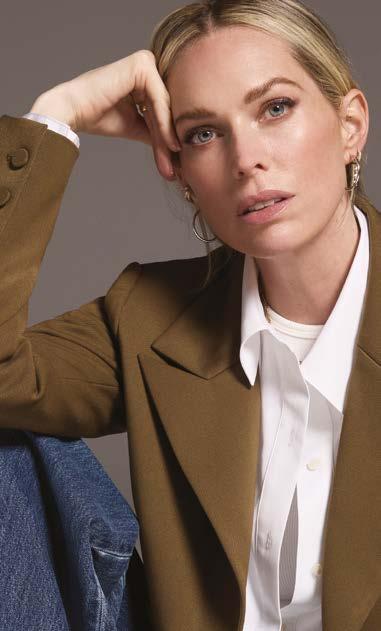
ADVENTURE, for Erin Foster, has ALWAYS meant stepping into the unknown and TRUSTING that something MEANINGFUL can be BUILT there.
friction, missteps, and emotional chaos. Thus were born Kristen Bell’s podcaster Joanne and Adam Brody’s rabbi Noah, alongside a vibrant supporting cast that includes Morgan, a clear stand-in for Sara. The show is a full-bodied expression of Erin’s signature blend of vulnerability, self-deprecation, and messy relatability, while also serving as a surprisingly nuanced exploration of faith and identity—always undercut with humor. As Erin puts it, “When you're in a bad relationship, everything is the other person's fault. When you get with a healthy person who’s well-adjusted, they force you to be a good partner. And Simon was my first time even attempting to be one.”
Adventure, for Erin Foster, has always meant stepping into the unknown and trusting that something meaningful can be built there. That instinct—first awakened at LAS—carried her from a student searching for direction to a creator unafraid to take risks, reinvent herself, and tell stories drawn from real life. Whether crossing cultures, changing careers, or transforming personal experience into work that resonates with millions, Erin continues to choose curiosity over comfort. In the worlds she builds on screen and in the life she continues to shape beyond them, her story reflects the enduring power of saying yes to changeand to the adventure that follows.

"WE’VE ALWAYS CONSIDERED OURSELVES OUTSIDERS . WE ALWAYS FEEL LIKE WE’RE ON THE OTHER SIDE OF THE VELVET ROPE."
Erin Foster ’00 is an American writer, actress, and producer best known for creating the hit Netflix romantic comedy series Nobody Wants This, inspired by her interfaith relationship with her husband, Simon Tikhman. The Los Angeles–born creative began her career acting in television before transitioning to writing and producing. Erin and her sister, Sara Foster, were formerly co-creative heads at Bumble and since 2021, the two have co-hosted The World’s First Podcast with Erin & Sara Foster, the real-life podcast highlighted in Nobody Wants This
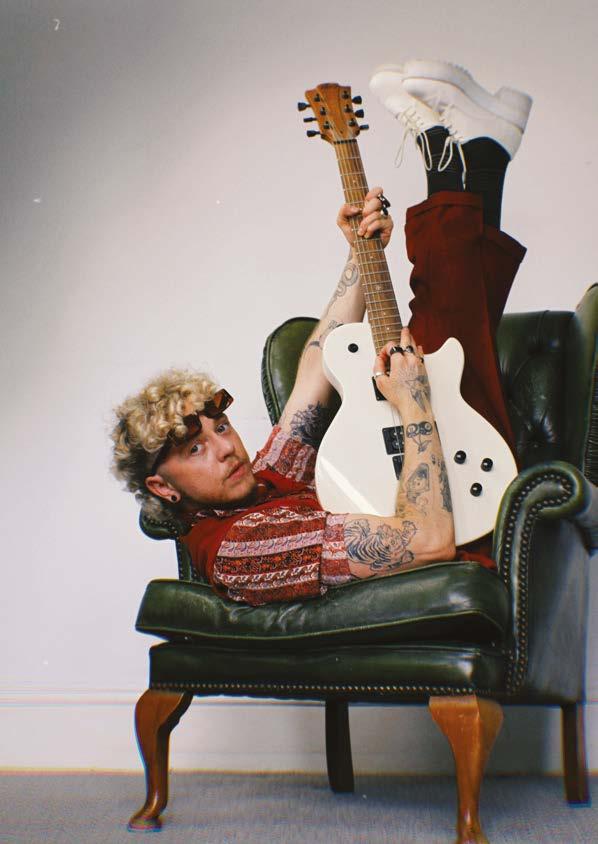

HOW ONE ARTIST LEARNED THAT THE GREATEST ADVENTURE LIES IN FOLLOWING YOUR CURIOSITY, EMBRACING THE PIVOT,
There’s a moment in Dylan Holloway’s life that captures his philosophy perfectly: standing on a dusty roadside somewhere in America, meeting a shy twelve-year-old trans boy before a film screening. The child was nervous, barely able to speak, clinging to his mother. But after watching Dylan's documentary Tomorrow’s Too Late, something shifted. The same boy returned, animated and hopeful, asking if he could stand on the red carpet. When he hugged Dylan, he squeezed so hard his mother had to playfully intervene. “I could just see this new aliveness in him,” Dylan recalls. “He didn't even have to say thank you. I could just tell that from watching the story he felt like there was maybe a different future for him.”
For Dylan—a musician, songwriter, and storyteller whose work is rooted in authenticity and connection—these moments are everything. Yet his path to becoming someone whose openness genuinely changes lives began in far more ordinary ways: parents who made Saturday chores joyful by blasting the Four Non Blondes and The Beach Boys.
“Music was involved in every aspect of our life,” Dylan explains. “It was very much always an element of joy and play. It just allowed freedom and fun to be in any kind of moment.” Growing up with parents who never suggested art was “just a pastime,” he absorbed a defining
belief: you can do anything you want. “My parents never once said to me, ‘this is a hobby and not a career,’” he reflects. “Instead, they said, 'you can do anything.'” That backing from his parents was foundational, and it allowed confidence to come more naturally. “It was like a video game, unlocking new levels just by being so confident about it.”
That confidence carried him into his first major pivot. When he auditioned as a drummer for a local band and no one else showed up, the record label owner asked if he could sing as well. “Not really, but I can give it a go,” Dylan remembers saying. One song later, he was told to put down the drumsticks and step up to the microphone—an unexpected beginning to a career built on embracing the unknown.
Dylan’s career has unfolded like a map of instinctive exploration. He has released music as Dylan and the Moon, written a children’s book (I Don’t Want A Werewolf Sleeping On My Sofa!, about kindness and seeing beyond differences), appeared on reality television, created a documentary (Tomorrow’s Too Late, about his gender journey), and spoken at schools and corporate events. To some, the range might seem eclectic; to Dylan, it is simply a life guided by curiosity.
“I just really find fun in the spice of life, doing things that are interesting,” he says. “If you were to look at the past

history of all the things I've done, they're quite random, really. But I just refuse to be a prisoner of the fear of failure.”
It’s a philosophy he shares often with young people. “People are so scared to fail at something that they won't even try. But for me, if I don't try it, that's a bigger failure because I didn't even bother.” His mantra captures it: “It’s never rejection, it’s just redirection.”
Despite maintaining a significant online presence, Dylan protects space for stillness. “I make sure that I protect areas in which I find great joy and peace,” he says. Real-life friendships, dinners, slow evenings away from the screen: these are essential.
His home is a sanctuary. Candles lit. Record player spinning. “I live here, and I’m safe here,” he explains. “Because if
you're chronically online, you just don't ever feel safe because you are reachable by so many people all the time.”
But his most transformative practice is what he calls the pause. “I've implemented this action of pausing before jumping into a response or behavior,” he says. “I assess what I was about to think and why I was about to think that, and then I see if there's another way I can look at the situation.”
Missing a train, nearly being hit by a car, arriving at a closed post office—moments that once might have sparked frustration now become invitations. “It just adds a level of curiosity about the world and situations,” he says. “I think it makes you more curious.”
His curiosity is fed by an eclectic mix of psychology, neuroscience, manifestation, and spirituality podcasts. “Every kind of modality has taught me to pause.”
Dylan’s willingness to share his journey—through music, documentary, and social media—comes from a place of empathy. “I know what it feels like to feel alone,” he says. “If you've ever felt like that, you don't want someone else to feel that way.” Even with growing visibility around diverse identities, he knows many young people still come from homes where being different is not welcomed. “I like to show an example that you can have a fantastic life,” he says. “There are ways around challenges, and there are people out there just like you, and they need you to be you.” Stories of impact accumulate: the shy boy who found his voice; a seventy-year-old woman who

felt brave enough to finally explore a long-hidden part of herself; countless messages from people who found courage through Dylan’s openness.
“It’s unfathomable to think that a little kid from my hometown could do that for other people,” he says softly. “So it's super special that I get to do that.”
Looking ahead, Dylan plans to release new music monthly, building toward a physical album. His documentary will receive a wider release. His children’s book is now out in the world. And he’s drawn to the idea of working behind the camera—writing or creating film rather than being the subject. But in truth, the specifics matter less than the spirit guiding them. He laughs, describing a personal motto: he’d rather try and fail than live with a “what if.” “I could go and do something else, but then I'll never know how this version of the story ended.”
Asked what he hopes people take away from his work, Dylan’s answer is simple. “I hope that people think to themselves, 'I can find somewhere where it is safe for me to be me. And I can be whoever it is that I want. There’s space for me in this world.’”
In a world that often feels divided and overwhelming, Dylan Holloway offers something quietly radical: permission to pause, to stay curious, to fail forward, and to take up space as exactly who you

are. His journey reminds us that the most meaningful adventures are not measured in miles or milestones, but in the moments when we choose honesty and compassion over fear. Perhaps that is Dylan’s true gift: not simply living authentically, but lighting a path for others by showing them that their stories and their voices all belong here. And in the glow of that truth, we remember something essential: the world grows larger, kinder, and more beautiful each time someone decides to show up as themselves.
Dylan Holloway is a musician, songwriter, and storyteller whose work spans albums, television, film, and children's literature. He has released music as Dylan and the Moon, recently published a children's book (I Don’t Want A Werewolf Sleeping On My Sofa!), and will release new music throughout the coming year. Tomorrow’s Too Late, his documentary about his life journey, will receive a wider release in 2026. Dylan visited Leysin American School and Summer in Switzerland to speak with students about authenticity and courage, and he created a song for the Summer in Switzerland promotional video.
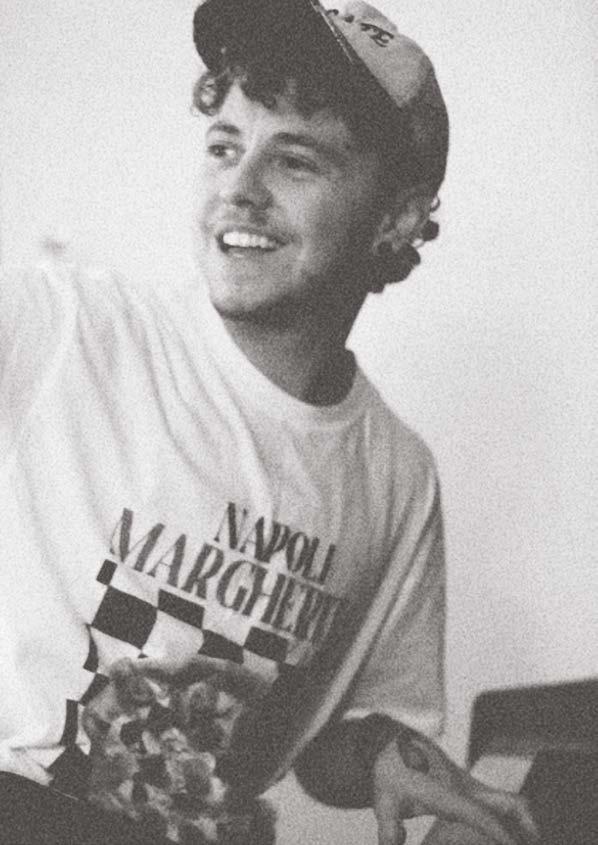
"I REFUSE TO BE A PRISONER OF THE FEAR OF FAILURE."
Science Teacher and Savoy Dorm Head
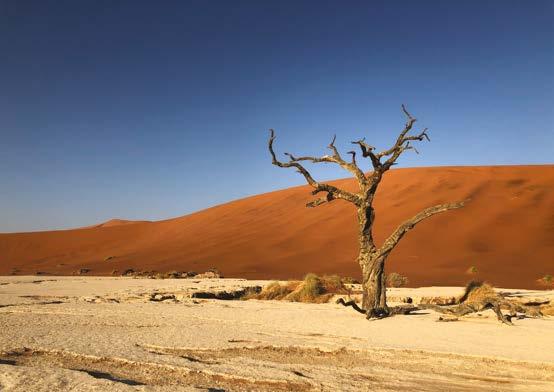
To be a chemistry teacher and dorm head at Leysin American School is a journey in itself. For Simon Curson, it is also a launch point. An outgoing adventurer with a passion for skiing, connection, and seeing the world, Simon brings his students far beyond the confines of the periodic table, encouraging them to search for meaning, purpose, and the courage to follow their own paths. It’s a philosophy shaped not just by the mountains that surround LAS, but by a life spent chasing the pull of adventure.
The Alps differ dramatically from the low, fog-covered Dartmoor hills where Simon grew up. As a child, his father taught him to step off the footpath and explore, pulling on welly boots to search for hidden wonders in the mist. “It’s misty and claggy and wet,” Simon laughs, “pretty much exactly what you imagine UK weather to be.” Early camping expeditions with Ten Tors, a demanding 35-mile outdoor challenge organized by the British Army, reinforced lessons in teamwork, resilience, and self-reliance that would stay with him for life. Yet it was a trip not taken that left the
deepest mark. At just ten years old, a knee injury kept Simon home from an outward-bound adventure to Skern Lodge in Appledore. Confined to the house, he watched his friends leave, cheering, bound for a week of ropes
courses and scavenger hunts.
“It became my life’s goal to go on that trip,” he says.
If you know Simon, it’s no surprise that
he far exceeded that goal. When he finally made it to Skern Lodge, his ambition shifted again, this time to become an instructor. He earned his red helmet and returned to teach climbing, kayaking, and confidence to campers embarking on the very journey he once had to miss. The boy who had been left behind made himself a promise: he would never simply “stay home” again. That promise would carry him far beyond England.
By his twenties, Simon could no longer resist the pull of the wider world. He moved to Thailand, feeding his wanderlust at every opportunity. One journey, however, changed everything: Nepal.
“I remember waking up, stepping outside, and just standing there, staring at the mountains,” he recalls. “I barely slept. I just wanted to be out there. I felt ignited.” That awe lit a fuse. Simon went on to lead student expeditions across South America, Mongolia, and Africa, weaving his work seamlessly into his love of exploration. “I’d hop between countries on month-long trips, put the students and teachers on a plane,” he explains, “then turn around, extend my ticket, and keep exploring for months.”
Eventually, even for Simon, it was time to find somewhere that could offer both roots and reach.
Amid all of this movement, Simon also found time to earn his degree in biochemistry. “I hate being in a lab for six hours,” he admits, “but I love chemistry, and yeah, I love blowing things up.” The early years were challenging for someone wired for the outdoors, and he even considered dropping out. Encouragement from his father helped him push through, and chemistry became the key that unlocked his next chapter.
In his thirties, another knee injury (sustained while guiding in the mountains this time) once again threatened to ground him. Walking became painful, echoing the childhood injury that had once kept him from adventure.
So Simon adapted. He returned to the UK and earned a PGCE, initially imagining a life as a “winter supply teacher” to stay connected to the outdoors. But while teaching in London, he discovered something unexpected.
“It’s going to sound cheesy,” he says, “but I fell in love with teaching chemistry.” That second calling would eventually lead him to Leysin American School.
Simon thrived in the classroom, and when his London school offered him a permanent role, his response was characteristically honest. “I said the only way I’ll stay is if you move the school to the Alps.” Instead, he found LAS.
After learning about the school, Simon sent off his CV, while his students attempted a playful sabotage of the video portion of his application, hoping to keep him for themselves. He kept LAS brochures and ski-area maps tucked into his desk drawer, though he admits he never fully believed it would happen. “I thought, surely I won’t hear back.” Sometimes, the unlikely paths are the right ones.
Now at LAS, Simon encourages his students to pursue lives shaped by curiosity and passion. At LAS, he’s found what he calls a “golden cage”: a place that holds him not still, but steady. His days often begin with dawn patrols on the slopes before class.Yet for someone shaped by movement, contentment doesn’t mean complacency. Simon already has his eyes on the next adventure at Yosemite’s El Capitan.
From the fog-covered moors of England to the high peaks of the Alps, Simon
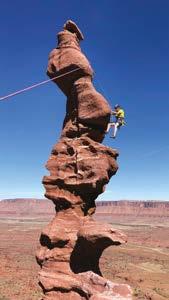
Curson’s life has been defined by the same choice, again and again: to step off the path, follow the pull of adventure, and keep climbing toward what comes next. Finding your Nepal isn’t about one place—it’s about never stopping the search.
"IF WHAT YOU WANT TO DO DOESN’T SCARE YOU AT ALL, MAYBE IT’S NOT BIG ENOUGH."
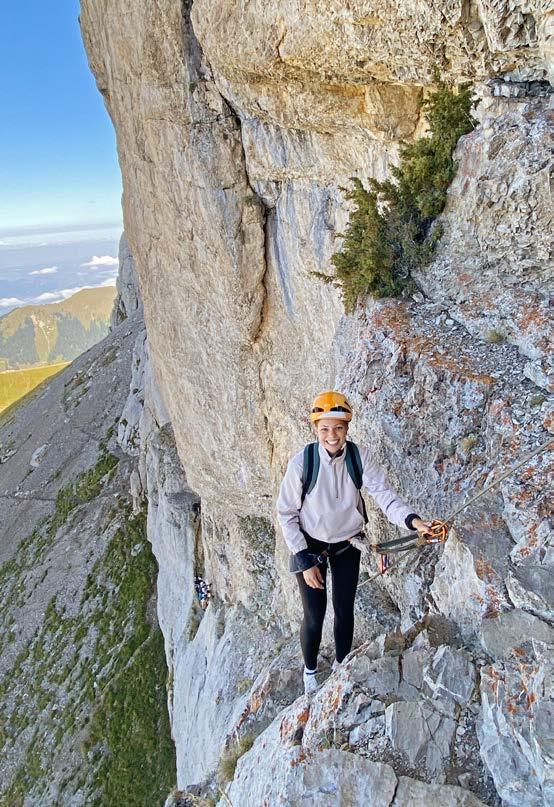
There was one LAS experience Veronika Radinovska never managed to check off her list while she was a student at LAS. While she filled her years in Leysin with academics, athletics, and the arts, the Via Ferrata above campus remained unfinished business. A decade later, she returned—this time as an alum—to finally climb the path she had missed.
During her years at LAS, Veronika Radinovska’s days moved at full speed, carefully balanced between academic focus and constant activity. “I was very much focused on doing my best in my studies to get into university,” she explains, “but I was also doing yoga, Pilates, and swimming.”
She also found a creative outlet in theater, channeling a different kind of discipline and expression on stage. “I really leaned into my creative side at LAS,” she says. “I loved working on The 39 Steps and Hairspray with Carolyn Swanson.”
And then there were the Alps. Veronika learned to ski during her time in Leysin, progressing quickly from beginner to confidently tackling red and black runs. The mountains left their mark; she still returns to Switzerland to ski whenever she can. With her days so full, one iconic LAS experience quietly slipped past her. The Via Ferrata remained unfinished business that lingered long after she left Leysin.

Rated K4, the Tour d’Aï Via Ferrata above Leysin is not a casual climb. It is an exposed iron path—ladders, cables, and chains fixed directly into the rock—rewarding those who commit with sweeping views over Lake Geneva, the Vaud Alps, and, on clear days, the Jura Plateau beyond. It is as demanding as it is spectacular. A finance professional in London, Veronika could scarcely believe that a decade had passed since her LAS graduation. Though her life carried her far from Leysin, one goal remained unchanged: the Via Ferrata sat at the top of her bucket list—unfinished, but never forgotten. The moment finally arrived on a visit to Leysin, when Veronika realized she only needed someone willing to climb with her. By chance, Simon Curson (LAS chemistry teacher and avid mountaineer) had just returned to campus and happily stepped in to join a fellow LAS Global Family member for a day in the mountains. It seemed that the timing was finally right.
The day began at Savoy, followed by a télécabine ride to the start of the climb. In August 2025, Veronika finally stood at the base of the Via Ferrata that had eluded her for a decade. “It felt serendipitous,” she reflects, “and quite symbolic to do it on my LAS ten-year anniversary.” The climb brought equal parts exhilaration and challenge. “It’s a full-body workout,” she says, “but the adrenaline and the bird’s-eye view—not
everyone gets to see that.” At the top, a long-missing perspective finally came into focus. “It was surreal,” she adds.
THE TANDEM OF MIND AND BODY
Veronika is quick to point out that Via Ferrata is not for everyone. “It’s not just about strength,” she explains. “You need physical preparation, but mental strength and attitude matter just as much.”
Fear, she says, is often the real challenge. “You know your body is capable, but then you look down and think, 'What if I fall?' That can throw everything off. You have to control the mindbody connection.” Learning to manage that balance became part of the reward. “If what you want to do doesn’t scare you at all,” she adds, “maybe it’s not big enough. So go bigger. Think bigger.”
Climbing with someone from the LAS community made the experience even more meaningful. Sharing memories along the way reinforced the sense of connection Veronika so strongly associates with the school. “It’s always better when you’re climbing with someone,” she says. “Sharing our LAS memories made it incredibly special. It was the highlight of my summer.”
When asked what advice she would offer anyone facing a challenge, her answer reaches far beyond the mountains. “Take it one step at a time. Focus where it matters. Step outside your daily life, even when it feels a little scary.”

AT 65, RAOUL MOORE'71
CHOSE THE LONG WAY ACROSS AMERICA
Fresh into retirement, he set out alone on a 35-year-old BMW motorcycle and rode more than 5,500 miles—not on highways, but on forgotten back roads to seek conversation, connection, and perspective at a slower pace. It was an unconventional journey, but not an unexpected one. It followed a path Raoul first stepped onto decades earlier, as a teenager navigating new languages, cultures, and independence at LAS. When Raoul returned to campus in November 2025, he wore his brother’s LAS ring. He had lost his own long ago, and his brother had since passed away, but both had been shaped here in the 1960s. Now retired, Raoul returns to Switzerland every five years, always stopping in Leysin—not just to remember, but to reconnect with the place that taught him curiosity, independence, and openness to the world. That same openness to uncertainty, difference, and the unfamiliar has guided every chapter of his life.
Raoul’s education in adaptability began early. At age five, his family moved to Paris, where his father completed the final years of his military career at SHAPE headquarters. Raoul attended a French school from first through third grade, where no English was spoken. “I had to learn French quickly,” he recalls. “It taught me adaptability and sparked a lifelong appreciation for other cultures.” At nine, after his father’s retirement from the military and a new position with Westinghouse Corporation, the family relocated to Bonn, Germany, where they would make their home for the next fourteen years. Raoul attended LAS from 1967
to 1971, then completed his freshman year of college at the American College of Switzerland.
At thirteen Raoul boarded a train alone in Germany for a ten-hour journey to Leysin. He learned to ski. He tried rock climbing in an effort to overcome a fear of heights—a fear he never quite conquered, he admits with a laugh. Most importantly, he lived among what he calls “a true mélange of cultures, backgrounds, and ideas.” “LAS taught me the value of curiosity, respect, and
connection across differences,” he says. “That foundation has influenced every major decision I’ve made since.”
Having spent most of his youth abroad, Raoul wasn’t sure where he belonged when it came time for university. Ultimately, he followed one of his strongest passions—skiing—and enrolled at the University of Denver. That choice led him to Breckenridge, Colorado, where he lived and worked for nine years. “My formative years in Leysin and my love of skiing deeply influenced where I chose to build my life when I
returned to the U.S.,” he explains. After college, Raoul built a 42-year career in real estate spanning nearly every facet of the industry, from residential and commercial property management to development, construction, and finance. For the final 25 years of his career, he focused on the financing, construction, and advocacy for affordable and low-income housing projects across the United States.“This phase of my career was especially meaningful,” he reflects. “It allowed me to combine professional expertise with a commitment to creating sustainable communities and expanding access to quality housing.” Even so, another passion quietly waited in the wings.
In his younger years, Raoul rode and owned several motorcycles, but he stepped away in his thirties to focus on family and career. In 2009, something called him back, and he began collecting, restoring, and riding vintage and classic BMW motorcycles. “I’ve always enjoyed working with my hands,” he says. “There’s great satisfaction in bringing something old back to life.” Since then, he has owned eight BMW motorcycles dating from 1967 to 2005. Several required extensive restoration work, which he completed piece by piece in his own shop. When he retired at the end of 2018, Raoul decided it was time to check off a long-held goal: riding solo across the United States. Though he had never ridden more than a few hundred miles at a time, he wanted to experience the country and its people at ground level. He chose a 35-year-old 1984 BMW R100RS for the journey. More importantly, he chose how he would travel.
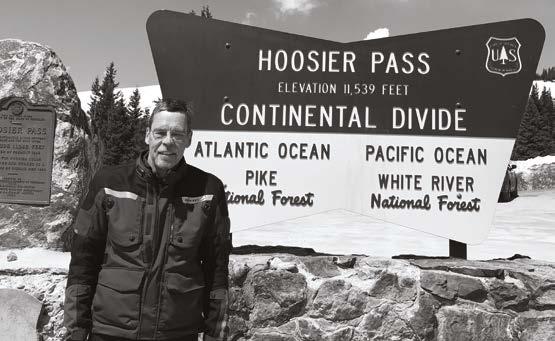
5,500 MILES OF CONNECTION
“I was determined to see the country at a slower pace,” Raoul explains. “I stayed off highways and rode only on small back roads, covering 5,500 miles over 30 days.” His route carried him through southern New England and the New York metropolitan area, through the Delaware Water Gap, and along nearly 600 miles of Skyline Drive and the Blue Ridge Parkway. He crossed the Great Smoky Mountains, continued through Birmingham, Alabama, and rode across Mississippi and the Deep South. From there, he traveled west through Arkansas, Oklahoma, Texas, and New Mexico. In Colorado, he climbed multiple 11,000foot mountain passes. He rode through Monument Valley, visited the North Rim of the Grand Canyon, crossed Nevada, and reached the California coast at Pismo Beach. The final stretch took him up Route 1 through San Francisco to Santa Rosa, California, where he ended his journey at the home of a close friend. “At that point, both the bike and I were ready for a rest,” he laughs. “So I shipped it home and flew back myself.”
The physical feat was significant. But what mattered most were the moments between the miles.
“My greatest takeaway from traveling the back roads is the importance of tolerance and understanding,” Raoul reflects.
“Meeting people whose backgrounds and views differ from your own reminds you how essential it is to listen and to seek understanding.” In diners, gas stations, and small towns, Raoul found echoes of lessons first learned decades earlier: curiosity matters. Connection matters. The unfamiliar becomes familiar when approached with openness rather than fear. “The journey reminded me of my years at LAS,” he says. “It had that same mélange of cultures, backgrounds, and ideas.” This guiding principle—learned in a French classroom, reinforced at LAS, and rediscovered across America—has defined Raoul’s life. Don’t fear the unknown. Engage it. Listen closely. Stay curious.
While he was apprehensive about taking on such a journey at 65, Raoul was equally excited to do something entirely new. “That’s what growing up abroad and attending LAS taught me,” he says. “Not to fear the unknown, but to embrace it.” He’s already planning his next ride: northern New England and Nova Scotia, scheduled for spring 2026. When Raoul visits LAS every five years, he walks familiar paths, remembers learning to ski on these mountains, and recalls the international community that shaped his worldview. Wearing his brother’s ring, he carries forward lessons they both learned here: the world
is vast, differences enrich us, and adventure builds character and connection. “LAS taught me to be comfortable with the unfamiliar,” Raoul reflects. “Every adventure since has reinforced that lesson.” As he plans his next journey, one thing is certain: the road ahead, like the roads behind him, will be taken slowly and intentionally—with openness to whoever and whatever he meets along the way. Because adventure, as he learned long ago in Leysin, was never about arriving. It’s about the perspective earned along the way.
Not the highway, but the back road. Not certainty, but curiosity. Not fearing the unknown, but choosing it.
Raoul attended Leysin American School from 1967 to 1971. After LAS, he studied at the University of Denver and spent 42 years working in real estate, with the final 25 years focused on affordable and low-income housing development and advocacy. He retired in 2018 and now spends his time collecting, restoring, and riding vintage BMW motorcycles. He visits Switzerland roughly every five years and always makes a point to stop by LAS.
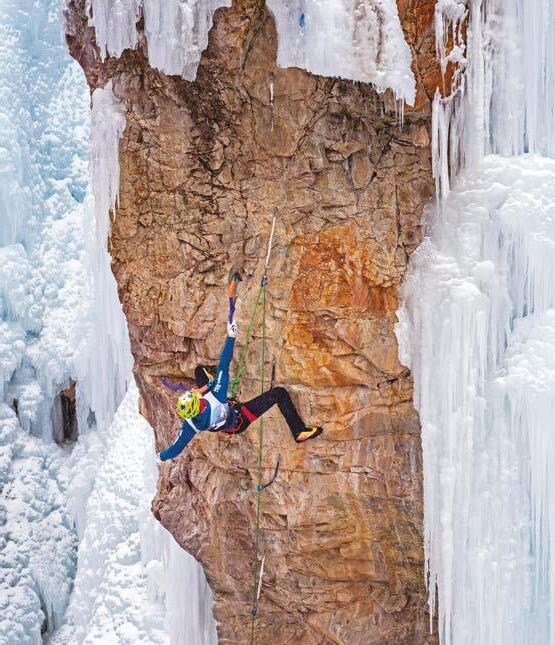
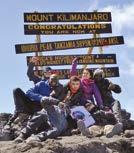
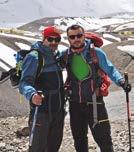
Eric Illick'14 and Arshia Soltani '15 first cultivated their love of adventure at LAS. What began here has carried forward, shaping the journeys they continue to pursue together and apart.
with ERIC ILLICK '14
From professional violinist to corporate tech worker to Team USA ice climber, Eric Illick has learned that the most rewarding path is the one that keeps you uncomfortable.
There's a bench somewhere in the Swiss Alps. Eric Illick is certain of it. Pristinely carved, perfectly lacquered, positioned at just the right spot with a magnificent view. “I am 99% sure there is a secret society in Switzerland dedicated to placing really nice benches in beautiful spots in the mountains,” he says with a laugh.
The turning point came when fellow LAS alum Arshia Soltani'15 asked if Eric wanted to join a team to climb Mount Kilimanjaro. At that moment, he needed it more than he realized. "Between leaving LAS and starting this training, I had forgotten my love of the mountains. Or perhaps, I had just pushed it aside for material things that brought little to no lasting joy."
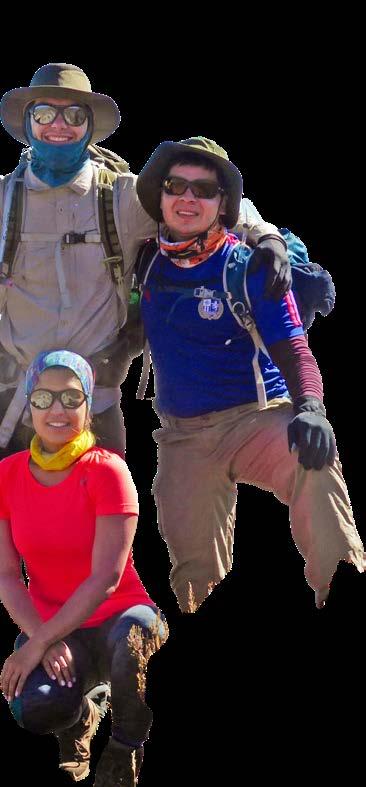
After nine months of preparation and a ten-day expedition in Tanzania, five LAS alumni (Eric, Arshia, Arshia’s sister Elnaz'10, Leandro Zarate'15, and Eduard Mazhinov'15) stood together on Uhuru Peak, the highest point in Africa. "That adventure reignited my love of the mountains. Alpine climbing became a focal point of my life."
That Christmas, Arshia gave Eric an ice axe. They moved to Leysin for the winter, teaching themselves to lead climb ice.
Later, while pursuing graduate studies in Colorado, a random Google search for indoor ice climbing led him to competitive dry tooling, a sport he'd never heard of. "The feeling was somewhere between a martial art and a dance." After three years of training, he earned a spot on the U.S. Ice Climbing team, traveling to South Korea and Canada to compete. "It was a dream come true, the culmination of a passion I'd first discovered at fourteen, in a way I didn't even know was possible."
The travel brought its own rewards, with new foods, cultures, and people. But the most significant growth was internal. "I have become better at assessing risk, more comfortable with being uncomfortable, and more excited by the possibility of making a new plan on the fly."
It was an LAS school trip to the Moiry Glacier with Sion Brocklehurst and Roger Payne in 2011 that first introduced Eric to ice climbing. In a fitting turn, he has since helped develop what is now the Alpine Leadership Program for Summer in Switzerland, inspiring the next generation as he was inspired. He's also pur suing a teaching credential in secondary computer science, with the goal of transitioning into international education full-time.
"I have yet to find a cooler feeling than having a student come back, excited to share an adventure they've been on because they were inspired to find their own."
His advice for anyone want ing to step outside their com fort zone: "Do it. Failure will happen. It's part of growth and part of life, and without that failure, there would be abso lutely no chance of adventure. Walking the knife edge and find ing out what you can achieve on the other side is what really makes us grow as people."
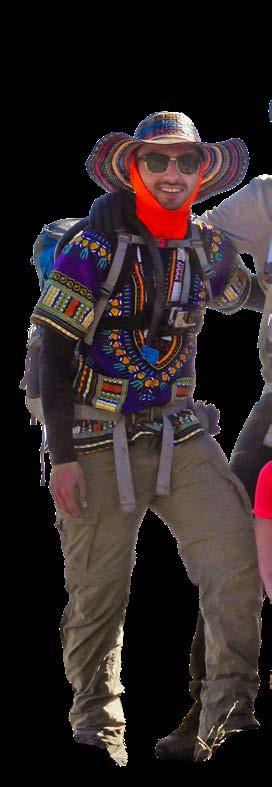
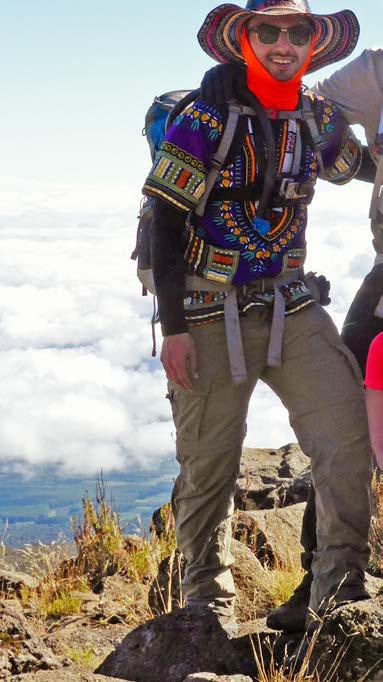
How mountains became home for an Iranian student at LAS, leading him from the Matterhorn to the Ibn Sina Expedition as an Iranian National Team athlete, to building a startup in the Colombian Andes.
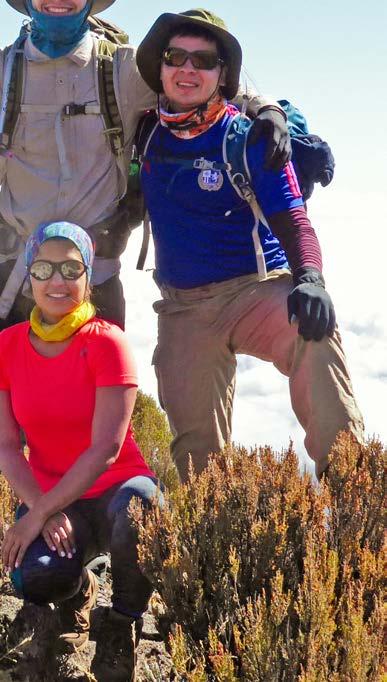
one by one, learning pace, managing pack weight, and figuring out what they were capable of. “When I commit to a project,” Arshia says, “I do so spiritually, mentally, and physically.”
When Arshia Soltani was six years old, his aunt gave him a canvas for his birthday, and he filled it with an image of Mount Damavand, the snowy, semi-active volcano that rises above Tehran. Something about the Alborz mountain chain called to him even then. By sixteen, he had made up his mind to summit it. He did, carrying the LAS flag, and he has returned five times since, from different approaches taken in summer and winter. It’s “a snowy, glorious semi-active volcano that I consider my Mountain Mama,” he says with affection. Decades later and thousands of miles from Tehran, Arshia lives in Bogotá, Colombia, surrounded once again by mountains. They still offer him the same things they always have: consistency, persistence, and the courage to approach the unknown with pure passion and intention. “Mountains make me feel at home wherever I am in the world.”
The idea for Kilimanjaro started with a challenge issued to Eduard Mazhinov'15 one night, a commitment so serious that Arshia had him sign a paper. He still has it. Eric Illick'14 also welcomed the idea. They all knew each other from LAS and were now living in Lausanne. They would stand by the lake and gaze toward the Alps, what Arshia calls “the entrance to a magical world,” with Leysin at its threshold and Valais stretching beyond. They began exploring those mountains
What followed was what Arshia calls “some of the best times of my life.” Three nights a week, they ran through a cemetery, sprinting the final stretch shouting “Kili” at the top of their lungs. The training was deliberate, and the philosophy behind it even more so: conquer the intimidating things in your mind first, and the mountain becomes possible. When they finally stood on Uhuru Peak, Arshia practiced the ritual he still keeps today: a heartfelt hug with his climbing partner at the summit. “I take that chance to express my genuine gratitude for my climbing friend, the mountain that welcomed us, and through that, for life as a whole.”
After Eric left for graduate school in the United States, Arshia kept climbing, joining a mountaineering email list and saying yes to every opportunity he could. The Matterhorn came through a chance connection, a fellow climber looking for a partner. They met in Zermatt at 11:30 p.m., took the Hörnli ridge to the summit, and after more than twenty hours on the mountain, Arshia had to sprint to catch the last train out of Zermatt. "Unplanned opportunities like that sometimes appear in life, but you have to be prepared to grasp them. I do believe that luck strongly favors the prepared."
For Arshia, the greatest adventures have always been shared ones. That belief has followed him from the mountains of Switzerland to the streets of Bogotá, where the friendship forged on Kilimanjaro became a professional partnership. He sees his LAS classmates not as former schoolmates but as fellow travelers, people bound together by shared summits and shared trust.
From a six-year-old painting of Damavand to building a startup in the Andes, his path has been defined by one principle: approach the unknown with pure passion and intention.
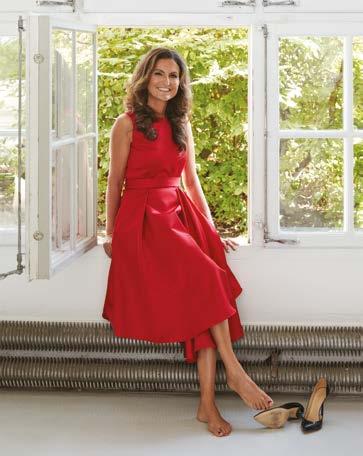
GUNILLA VON PLATEN is a Swedish entrepreneur, investor, and philanthropist best known as the founder of XZAKT KUNDRELATION AB, one of Scandinavia’s leading customer service companies. She is also a co-owner of Transcom Worldwide, which operates in 30 countries and has over 30,000 employees today. Born in Turkey, she arrived in Sweden as a refugee child, an experience that has profoundly shaped her resilience, work ethic, and lifelong commitment to giving back.
Gunilla has become a prominent public voice for entrepreneurship in Sweden, appearing on television as an investor on the Swedish version of Dragons’ Den and as the host of The Apprentice (Sweden), where she championed ambition, grit, and leadership. Alongside her business career, she is deeply engaged in longterm philanthropic work focused on sustainable impact, particularly initiatives that empower women economically, support vulnerable children, and ensure accountability and lasting change in the communities she serves.
When you think about the word “adventure,” what does it mean to you at this stage of your life?
Every day is an adventure for me. I love saying YES to things and daring to try. It pushes me to seek out exciting new challenges, experiences, and people every single day. In about a week, I’ll be flying the Saab Gripen, Sweden’s fighter jet, because I love pushing my own limits.
Your early life shaped you profoundly. Looking back, what early experiences gave you the resilience or perspective that later allowed you to reinvent yourself so many times?
When I started working at the insurance company Skandia at the age of 19, it was only supposed to be for one year during a gap year from my law studies. I began working in sales, and my managers quickly realized I had a talent for it. By the time I was 20, they made me a manager and tasked me with building their telemarketing department. I learned how crucial the numbers game is. You can never become the best unless you work harder than everyone else. Every “no” you get from a customer brings you one step closer to a “yes.” What isn’t measured doesn’t exist.
You have to put in your 10,000 hours to truly excel at something, and talent alone isn’t enough if you’re lazy. Hard work pays off—there are no shortcuts to success. At a very young age, I realized I had nothing to lose by taking risks and that failure simply taught me how to succeed better the next time. Failure can sting deeply, but it must never scare you away from trying again. I have always been fearless, and much of that is tied to my family’s history. I have never been afraid of hearing “no.” I even dared to email Jeff Bezos when my book was about to be released on Amazon. My husband laughed and told me I would never get a reply—but I did, within 48 hours.
Many people fear risk, but you seem to thrive in it. What do you think allows you to move forward even when the path isn’t clear?
I take risks—but often calculated ones—and I’ve learned through my life experiences how to be fearless. My entire life has been marked by
challenges and setbacks, and they must not define me; on the contrary, they strengthen me. The path is rarely clear, but what truly matters is daring to expose yourself to new and unfamiliar things, people, and environments. One opportunity often leads to the next— one you couldn’t have predicted or even imagined existed. The fact that I began working in customer service was pure coincidence. During that time, I saw how poorly companies treated their customers and recognized a market gap I could fill. It was pure luck and timing.
You’ve moved through so many distinct chapters—entrepreneur, business leader, philanthropist. What has guided you in knowing when it’s time to open a new chapter?
I rarely close one chapter before starting another—I tend to do everything in parallel. Philanthropy has been one of my company’s core principles from day one, and I continue to work on it and will never stop. Building companies is like air to me—it’s what I love, what I’m good at, and what I will always continue to do.
Is there a reinvention that felt particularly unexpected, even to you?
The most profound transformation came when I became a mother. That’s when I grew as a leader and gained a deeper perspective on life and what truly matters. Family and friends are the greatest wealth, not money.
How do you stay grounded when you’re in the middle of a transition?
I am still the same girl I was at six years old, selling ice creams. Just as spontaneous, and I always say what I think— whether I’m speaking to the King of Sweden or to a cleaner. I treat everyone the same and always stay true to who I am. You must always be authentic, and I will never change that.
Your philanthropic work is such a significant part of your identity today. What drives that commitment?
From day one of my entrepreneurial journey, philanthropy has been one of our core principles. Of course, in the beginning, I didn’t have much money to contribute, but as the company grew, so did my commitment. And it’s never been about just giving money.
I am deeply involved in the projects I support, and I expect accountability— the funds we donate must reach their intended purpose and not disappear into administrative costs. Nearly all my projects are long-term. I don’t believe in offering help only for the moment; I believe in helping people help themselves so that they have the long-term ability to build their own future. For example, I worked in India for ten years. There, my focus was on empowering women through microloans so they could start businesses and support themselves and their families. We trained them in finance, marketing, and all the essentials needed to run a company. During this period, we helped start several thousand businesses, and over time, the women became the primary breadwinners for their families. Giving back brings joy to the giver, and for me, it is an absolute necessity, especially considering my family’s history.
Many young people today feel pressure to have a clear plan. What would you want them to know about embracing uncertainty?
That everything works out in the end. What matters most is that you do your very best and truly apply yourself. You must keep an open mind and not lock yourself into preconceived ideas of how things should be. Things rarely turn out exactly as you expect—they can even turn out better if you dare to be open and take risks. But you must also be prepared to work hard, especially in the beginning. There is no work–life balance when you’re starting a company—only relentless hard work, filled with blood, sweat, tears, and joy.
When you imagine your next reinvention, what feels like it might be calling you?
Everything I’m already doing today— the things I love—will continue. But now I hope for more time with my children and family, because I have had to sacrifice an enormous amount during the years I worked so hard to build my companies. I want to reclaim some of that time before it’s too late. Careerwise, I’ve achieved goals I could never have dreamed of when I was young. I have accomplished everything I ever imagined, and more.
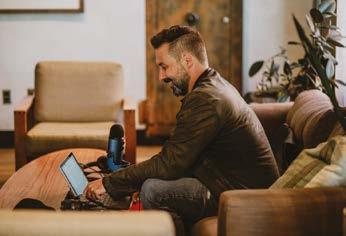
Dialing in from Tulum, Mexico, felt like the perfect way to connect with Mitch Younge, a man who has shaped his entire life around elite international excursions. By fully leaning into what he loves, Mitch has built a dream career as a lifestyle concierge for travelers who share his thirst for discovery, culture, and the extraordinary. “What I do is beyond just booking the hotel,” he explains. “I make the trip transformational. I learn from my clients, and it sharpens my approach. I help people embrace the unknown so they can experience it and then share it.” Younge’s journey has been anything but linear, filled with unexpected turns and
lessons learned the hard way. But his tenacity, fueled in part by his years in Leysin, has helped him turn his passion for exploration into a career centered on crafting adventure.
Growing up in Saudi Arabia, the beauty of Riyadh and its surrounding landscapes sparked Mitch’s early love of the Middle East. Childhood trips to South Africa deepened that wanderlust. “It builds character at the end of the day. It transformed me,” he says. After heading to Europe for LAS, Mitch imagined himself in the travel concierge world, but quickly discovered that the traditional
model wasn’t for him. “I don’t do ties,” he laughs. “It’s not me. I don’t dress up and pretend to be someone I’m not.”
His early break came with Bluefish, where he worked on everything from Formula 1 experiences to deep-sea expeditions and international fashion shows. “I build memories that lead to great stories and expand your understanding of other places,” he says.
He soon realized that his creativity was best used by taking clients even further into the experiences they dreamed of. He recalls a couple hoping to attend the Oscars. Instead of simply securing tickets, Mitch arranged something far more memorable for them: entry to Elton John’s legendary post-Oscars gala. For Mitch, adventure has never been about the obvious or the expensive. It’s about crafting personalized, imaginative journeys that feel deeply and uniquely lived. Now he’s preparing to elevate his presence in the industry with the launch of As-Sirr (named for the Arabic word for “secret”), an immersive travel venture “for people who want more than bragging rights,” he explains. “For me, it’s about transformation and the emotion behind the experience. I want to bring the fun factor back to the world. You need to experience a country to really understand the culture. You need to live it. Learn about it.”
LESSONS FOR ADVENTURE
Mitch applies that philosophy to every journey he designs, whether it takes clients to the bottom of the ocean, into the
atmosphere with SpaceX, or on a quiet hike in the mountains of Greece. The variety keeps him constantly inventing new, bespoke moments. “You can’t treat everybody the same. ‘One shoe fits all’ doesn’t work with what I do.”
Along the way, he has had to learn the nuances of cultural expectations, from gender norms to rules about drinking, public interaction, and etiquette.
"FAIL, RECOVER, MOVE ON."
But more often than not, the bigger challenge lies in educating his clients about what to expect and what to seek. Mitch avoids social media himself and is wary of the misinformation clients find online. “Everybody’s a travel agent these days,” he jokes. “You see a selfie that makes a cenote look remote, but there are tourists hiding all around. I tell people what’s legit.”
Rather than the “Instagram version” of a destination, Mitch uncovers VIP, culturally rooted, deeply personal experiences. “We customize until they’re happy.”
Sometimes that means introducing clients to the landscapes and cultures he loved as a child, such as the ancient city

of Al-Ula. Wherever they go, Mitch grounds the experience in local life and encourages people to push past their comfort zones. “Travel is education. You’re compelled to learn. Go to South America. Go somewhere you’re not comfortable. Stay in people’s homes so you can understand their lives, as I do in Peru. If I don’t know something about an area, I know the people who do.”
His most meaningful rewards come from the relationships he builds along the way. He’s been invited to weddings, called from honeymoons, and thanked by clients who return transformed. “That human touch means everything,” he says.
INSPIRATION FROM LAS ALONG THE WAY
Mitch credits his independence and curiosity to his time at LAS. “Leysin opened my eyes and changed me for the best. The spirit, the ambiance, the way teachers challenged you…I got into some debates with Fred Sharp that turned into really meaningful conversations. My teachers took the time to understand me and push me.”
He remains in touch with both alumni and faculty and fondly recalls LAS cultural trips and weekend trips alike: “The Hague for Model UN… the train to Germany to see Nirvana…, but my favorite was London. LAS didn’t treat us like children. No hand-holding. No coddling. It inspired my entire life.” On a cultural trip, he remembers being tasked with discovering five locations around London for a journal assignment,
which was a perfect early example of the importance of immersing himself in local culture, long before it became his profession.
When asked what he would tell today’s students seeking adventure, Mitch doesn’t hesitate: “Patience. I was a late bloomer who took a long time to find my career. Stop listening to everyone. Do your own thing. Fail, recover, and move on. Take the next step. Be accountable. Learn from your mistakes…and transform. You need the experience as much as the education. You have to be at ease with yourself at the end of the day—so don’t live somebody else’s dream. Live your own dream.” Wise words from someone who has been there—and by there, we truly mean everywhere.
To learn more about Mitch's luxury travel experiences, visit thefrillstyle.com and sirrlifestyle.com
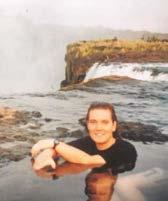
Holly Rendle, former LAS faculty, talks about her time at LAS—the classes she taught, the teams she coached, the mountains she climbed—as if she managed to live an entire lifetime of adventure in just two years. The way she tells it, every corner of the campus, every winding alpine trail, every bus ride to a tournament sharpened her sense that life is best when we step boldly into the unknown. But most people haven’t lived like Holly, and when she speaks more philosophically, it becomes clear why she keeps seeking new horizons. “In my experience, adventure is a powerful catalyst for connection. When we go out of our comfort zone, we become vulnerable. Being vulnerable means we lean on those around us. Leaning on those around us— whether our agemates or someone older or younger—leads to profoundly deep connections.”
It’s a testament to how wholeheartedly she embraced life at LAS that she considers it one of “the two most profound experiences I have had”—the other being her service as a Peace Corps Volunteer. That adventure began when she secured a
place in a Community Health Education program, packed a backpack and a suitcase, and made her way to Zambia, where she would spend the next two years of her life.
Alongside teaching and coaching at a rural boarding school in Zambia, Holly became deeply involved in a community health initiative to spread vital information to local villages. HIV and malaria prevention were among the chief goals, and Holly devised a creative way to share these messages. “I founded an afterschool club for students who were interested in the performing arts or health. Together, the students and I created original songs, stories, and role plays, and then went around sharing them at community meetings and events. It was a creative, interactive, grassroots way to use entertainment, art, and humor to get people talking about urgent health issues, and it was one of the most rewarding endeavors of my life.”
The project pushed her well beyond her comfort zone. The first challenge was a language barrier that would test even those who had grown up in multilingual communities. Although English is Zambia’s official language— selected to unify the country’s 70 local
"I FEARED I WOULD NEVER REACH PROFICIENCY... within a few months I WAS SPEAKING (AND DREAMING) in CHINYANJA."
languages—English wasn’t what villagers used day-to-day. In the province where Holly lived, literacy rates hovered around 50%, and the messages needed to be delivered in Chinyanja, a language spoken by the region’s Indigenous Bantu people. The language posed its own hurdles: unfamiliar syllables, consonant clusters, and a tonal system in which pitch changes meaning. “I was originally frustrated and had a difficult time stringing together the many consonant sounds that felt so foreign to my tongue. After a month of intensive language school, I was continuing to struggle with basic phrases such as ‘Ndipatsenkoni mchele’ (Please pass the salt), and feared I would never reach proficiency.”
What ultimately moved her forward was
the next brave step in the adventure: settling into her site and forming genuine relationships. “Something happened when I moved out to my site. The neighborhood women and children showed a grace and patience I will never forget, and within a few months I was speaking (and dreaming) in Chinyanja.”
Rural life brought other challenges. “My toilet was an outdoor pit latrine (a hole in
the ground surrounded by four bamboo walls), which was a good 50 feet from my house. For bathing, laundry, and washing dishes, I had to collect water from a community well every few days, strap the bulky containers on my bike with recycled tire-rubber straps, pedal them home, and make them last.”
Her reflections reveal one of the most fundamental truths about adventure: it teaches us not just about the world, but about our own resilience. Holly even takes pride in one unexpected new talent. “Learning to get oneself squeaky clean from a bucket bath using only a few liters of water is a skill I remain proud of to this day!”
Again and again, though, her story returns to the idea of adventure as a pathway to human connection. She learned a new language, saw extraordinary wildlife, and immersed herself in new cul-
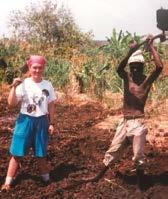
tures, but she still lists “making lifelong friends” as the single most important privilege of her Peace Corps experience. “When one intentionally chooses to live and learn in an international community—a place where they will learn a new language, have new experiences with new people, experience a novel culture and landscape—the connections they make are deep and lasting.”
Now teaching English and yoga on Martha’s Vineyard, close to her Boston roots, has Holly slowed down? Hardly.
Her next adventure is already underway, as bold and intentional as the ones that came before. As she explains it, “My next adventure involves a return to Zambia, where my husband and I bought a small farm and are in the process of establishing an eco-friendly agritourism resort consisting of glamping tents, an organic pool, a sauna/spa, tropical fruit trees, and a yoga pavilion overlooking the savannah. We look forward to helping visitors design vacations with their own custom combinations of self-care, wildlife viewing, adventure, agritourism, and community service. Sharing our love for Zambia with others will be a dream come true for us.”
Holly’s next chapter feels less like a new direction and more like a natural continuation of a life defined by curiosity, courage, and community. Her return to Zambia reflects everything adventure has taught her: landscapes shape us, cultures invite us to grow, and connection is the richest reward of stepping beyond what we know. In the end, Holly shows that adventure’s greatest reward isn’t the places we go, but the people and possibilities we discover when we dare to go.
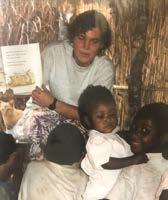
Holly Rendle was a beloved Beau Réveil dorm parent, boys volleyball coach, and English teacher at LAS from 2022-2024. During her time in Leysin, Holly launched the now-annual LAS Story Slam event, where students and faculty alike prepare and share personal stories of transformation. Although Holly returned to the United States to teach in 2024 in order to be closer to her family, she remains connected to the Leysin community, her former students, and the LAS Story Slam event.
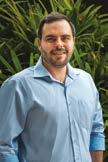
Pernambuco moves at a pace and rhythm all its own. This northeastern Brazilian state blends history, food, coastline, and culture in ways that reveal the breadth of what the region has to offer. In just 48 hours, you can walk through Recife’s colonial past, swim in some of the country’s clearest waters, and end the journey in the protected beauty of Fernando de Noronha.
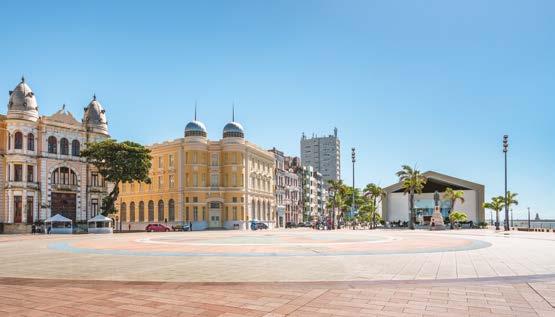
MAINLAND HIGHLIGHTS ART, HISTORY, AND COASTLINE
We begin with two of Pernambuco’s most distinctive artistic landmarks. First stop: the Instituto Ricardo Brennand, where a Neo-Gothic complex houses a vast private collection of armor, tapestries, and Dutch artworks that document a chapter of the region’s past. Then it’s on to the Oficina de Cerâmica Francisco Brennand , the life's work of the late ceramic artist. The outdoor studios and large sculptures create a striking mix of nature, clay, and architecture. It’s unlike any other cultural space in Brazil and sets the tone for the day.
LATE MORNING
At Marco Zero Square, the Capibaribe River meets the Atlantic. From here, a short walk leads into Recife Antigo,
where Rua do Bom Jesus is lined with restored colonial buildings in bright colors. Among them sits the Kahal Zur Israel Synagogue, the first synagogue in the Americas. A quick refuel: a strong cafezinho and a slice of Bolo de Rolo, Pernambuco’s classic rolled guava cake.
LUNCH
About an hour south, the scene shifts completely. At Porto de Galinhas, jangadas (traditional rafts) take visitors out to the natural tide pools. At low tide, the warm, clear water fills with small tropical fish and gives visitors an easy, low-effort immersion into the region’s marine life. Lunch is fresh shrimp and an ice-cold fruit juice. Cajá, acerola, or even mango are local favorites and are perfect for the heat of the day!
Down the coast sits Carneiros, one of Pernambuco’s best-known beaches. With calm water, soft sand, and coconut palms, it’s an easy place to settle into. The nearby São Benedito Chapel offers a quick, pleasant stop.
EVENING
A TRADITIONAL MEAL
Before heading to the airport, there’s

time for a comforting Northeastern dish: Cozido, a slow-cooked stew with beef and root vegetables like cassava and sweet potato. It’s hearty and won -

derful after a long day. Then it’s straight to Recife Airport for an evening flight to the archipelago of Fernando de Noronha.
From the moment you land, the island feels different. Noronha’s quiet nights and clear sky contrast sharply with the mainland. A simple dinner and a short walk close out the day.
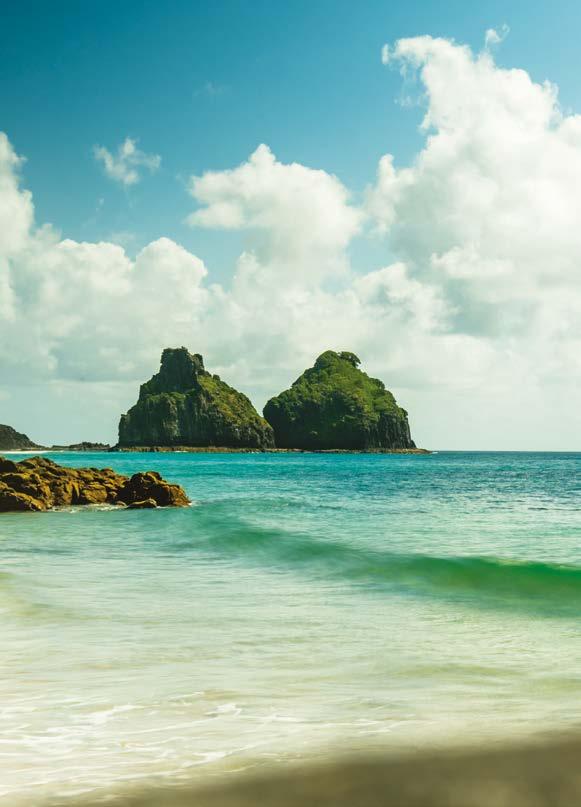


FERNANDO DE NORONHA PROTECTED NATURE AT ITS BEST
MORNING
DOLPHINS AND SANCHO BAY
A morning boat trip heads toward Baía dos Golfinhos, where spinner dolphins are often active at sunrise. Then comes Baía do Sancho, often named one of the world’s best beaches. Reaching it requires descending a narrow ladder between rock formations, which is an adventure that is rewarded with a stretch of sand and bright, clear water. A fresh juice—graviola, caju, or pitanga offers a quick boost after the swim.
MIDDAY SNORKELING & LUNCH
At Praia do Sueste, sea turtles feed close to shore, making it one of the island’s easiest and most rewarding snorkel spots.
Lunch is a made-to-order tapioca, filled with classic regional ingredients like
carne de sol or queijo coalho. It’s simple, quick, and perfect between activities.
LATE AFTERNOON THE TWO BROTHERS
A short hike leads to viewpoints overlooking Morro Dois Irmãos, Noronha’s most famous rock formations. Late afternoon is the best time to be there, with the peaks silhouetted by the setting sun.
EVENING
A SWEET FINISH
The final dinner should include local fish, but dessert is the standout: cartola —caramelized plantains topped with melted queijo coalho and dusted with cinnamon and sugar. It is a satisfying dish that sums up the region’s flavors. By the time you’re heading home, one thing is clear: Pernambuco brings together coastline, food, art, and nature in a way you won't forget.
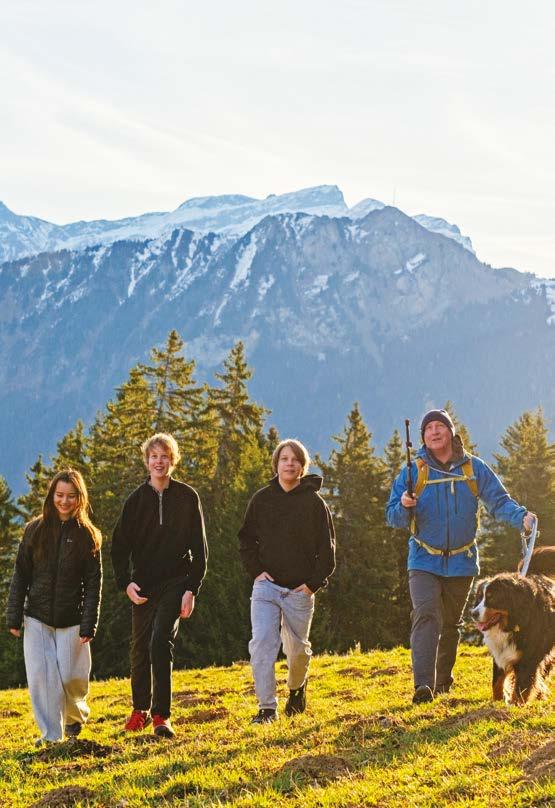
ERIC TURNER P'22,'24 DIRECTOR OF

Living and working near mountains in both the United States and Switzerland for the past thirty years, I have been able to harness the profound value of the outdoor environment for educational purposes. I see our access to the outdoors not just as a perk, but as a critical opportunity for student growth. When I look at the map and see the sheer number of 4,000-meter peaks in the Alps (with 48 in Switzerland and 38 in the nearby canton of Valais), I know we have an incredible chance to offer our students high-alpine adventures like no other.
This is the genesis of the 4000-Meter Club. I founded it to actively encourage our students to explore the Alps and to foster a lifetime of exploration and a deep appreciation for our natural environment. To make this possible for every interested student, we focus on affordability and developing fundamental mountaineering skills on routes that are technically less challenging, always rated AD (Assez Difficile, or 'fairly difficult') or below on the French mountaineering scale.
I have a specific memory from the very first 4000-Meter Club climb that has stayed with me. As we stood high up on the Breithorn, Giulio Sirchia '27 looked across the Theodul Glacier at the massive Matterhorn dominating the view and wondered aloud if the Breithorn
Five staff members reflect on what it means to guide, challenge, and connect with students against the backdrop of the Swiss Alps.
was just the beginning for him. Could he one day climb the Matterhorn? Everest someday? That is the spark the 4000Meter Club was founded to create.
When George Mallory famously said he wished to climb Everest "because it is there," he perfectly encapsulated the mountaineering spirit. We choose to challenge ourselves in these places because they teach us lessons about ourselves that we simply cannot learn when cushioned by the comforts of civilization. Students leave the mountains with so much more than technical climbing skills: perseverance, clarity of thought, critical decision-making, and the powerful knowledge that they can handle far more pressure than any math test or five-paragraph essay could ever present. Ultimately, I hope that alumni of the 4000-Meter Club leave us with a profound love for the wild places on our planet, and that their appreciation later turns into meaningful action to preserve these places for future generations to explore and enjoy.

I actively encourage our youngest students in grades 7, 8, and 9 to take part in outdoor trips, especially as for many it is their first experience hiking in the mountains. LAS is situated in one of the most incredible locations imaginable, with access to outdoor opportunities that inspire both adventure and wonder.
One moment that has stayed with me was watching a grade 9 student reach the summit of the Dents du Midi after a demanding rocky ascent to over 3,000 meters. Roped to a guide for the first time, she was visibly nervous at the start, but at the top she was overwhelmed by the views, feeling as though she had arrived in a different world and enormously proud of what she had achieved. Every day after that, she could look out her window and see the very mountain she had climbed. Moments like this reveal strengths that are not always visible in school, as students discover confidence, leadership, empathy, and determination in ways that tests and classrooms cannot fully capture. Watching students encourage and support each other through these experiences is always a joy, and the bonds formed often last a lifetime.
Equally special is seeing our youngest grade 7 students begin their journey with the Bronze International Award, map reading, camping overnight, learning to cook for themselves, and working together in ways simply not possible within the confines of a classroom. These experiences build a deep appreciation for the outdoors from an early age and provide the foundation for students to keep challenging themselves throughout their years here.

There’s the final bell at the end of a school day, a rush to change and get to activity meeting points on time, and then…for the students in the hiking activity, it’s time to slow down, breathe the mountain air, enjoy each other’s company, and explore the paths in and around Leysin.
One day we’re hiking through the forest to an overlook with sweeping views of the Rhône Valley. Another day we’re walking through farmland, passing cows, goats, sheep, chickens, donkeys, and horses. In spring, the meadows are full of wildflowers. We notice birds and insects, and occasionally spot a deer or a fox. We refer to maps, take a closer look at trees and flowers, learn about the village as we pass landmarks, and talk about whatever comes to mind.
During IB exams one spring, it took some convincing to get a group of stressed students to step away from their books. About twenty minutes later, one of them picked up a dandelion stem and began blowing musical notes. Soon all of us were trying to make music with grass, stems, and sticks. Exams were forgotten in the hilarity of the moment.
Someday, a former LAS student may step outside after a stressful meeting and remember these small moments. Some already have, sharing stories and photos of bigger mountains and grander adventures. Hopefully all of them will take steps, large or small, to help preserve the wild places on our planet.
Adventure? That depends on how you define it. Sometimes it’s simply noticing what has been there all along.
The well-rounded individual engages in a wide variety of experiences, but a developing child can only engage in what is made available to them. That is why it is vital that we, as a school, offer as many opportunities as possible to participate in unfamiliar activities.
Some years ago, a small boy arrived from China and experienced snow for the first time, standing outside Eden dormitory with a bowl of warm water to pour on his toes to keep warm. Then he learned to ski. Then to camp. Then he learned he hated climbing. He went from a cautious child who had rarely set foot outside the city to one of the most committed outdoor participants in the school—trying everything once, deciding what he liked and didn't like, and pursuing his interests with conviction. He even became an ambassador for outdoor trips, encouraging others to participate. All of this was possible because opportunities were presented to him in a manner suited to his developing abilities.
Having fun and having an experience are not the same thing. Outdoor adventure offers students something rare: the chance to operate outside their comfort zone and then, if it appeals, to pursue that challenge further. Climbing, caving, hiking, and biking all require different skill sets—but tenacity and perseverance run through all of them. These are the qualities students carry back with them, long after the mud has washed off.

The mountains are a big draw for many of our students and staff. Quite simply, they are so beautiful— and once you start to discover the landscape on foot, on skis, or by bicycle, you realize just how intricate and challenging the geography is to travel through. That challenge is a catalyst for learning. Navigating in poor weather, deciding what to pack, counting on your team when you're tired or lost—the learning that happens on an adventure is highly transferable.
One of the most profound experiences I've had with a group was on an International Award camping trip when the students could not agree on who would carry the food—so they decided to leave it behind. I asked every question I could think of, but they were immune to my suggestions. On the morning of day two of a three-day trip, they ran out. They had the option to return to school, but they chose to finish their challenge and live the experience of walking a full day without food. Afterward, they reflected with real compassion that they had never gone a day without eating in their lives—and that others do, and that it is so difficult. They also understood how their poor planning could have put them in genuine danger. The following year, they had the best-planned camping food I have ever seen.
Outdoors, students must manage unpredictability and discomfort, and push themselves to stay positive with a team even when exhausted—qualities that don't always emerge as clearly in the classroom. I hope they carry something else with them too: the sheer awe of the Alps, and a motivation not only to return to wild places, but to protect them.
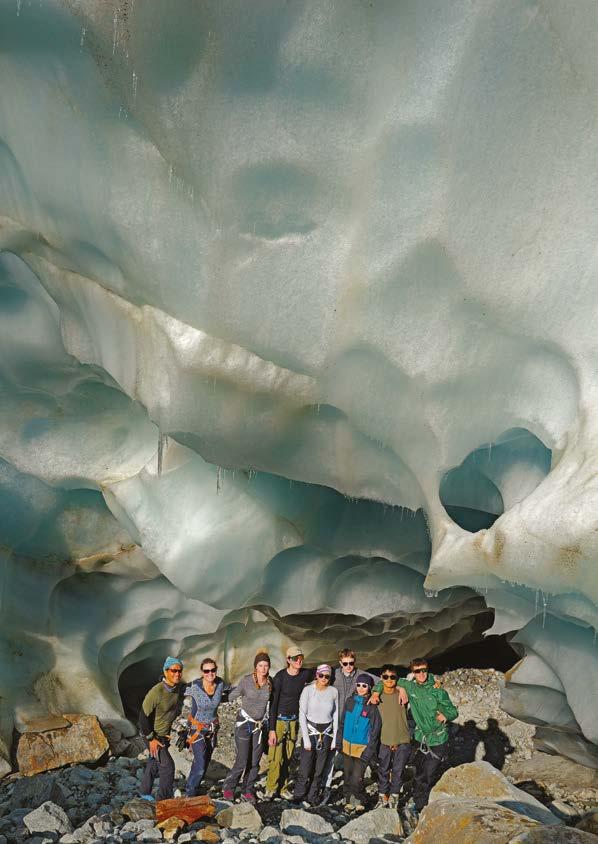
"As
we STOOD HIGH UP on the BREITHORN, Giulio Sirchia'27 looked across the THEODUL GLACIER at the MASSIVE MATTERHORN DOMINATING the VIEW and WONDERED ALOUD if the Breithorn WAS JUST THE BEGINNING for him."
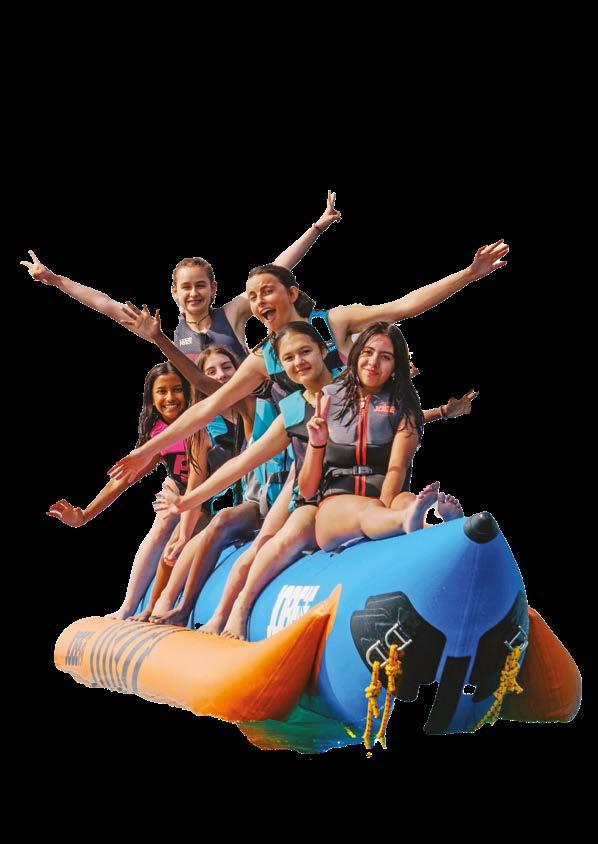
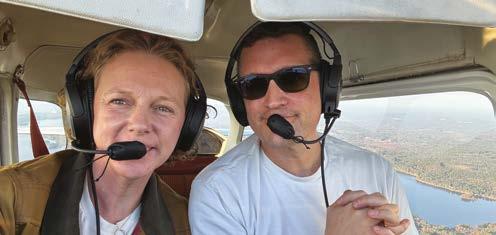
Two teenagers from a remote corner of northern Maine met by chance in the Swiss Alps. What followed was a lifetime shaped by curiosity, courage, and a shared instinct to say yes. Liz Bernier and Chris Saucier both arrived at Leysin American School from Fort Kent, Maine—a town of barely 4,000 people at the northern edge of the United States. Liz transferred in midway through her sophomore year, uncertain and new. Chris, already a junior with two and a half years at LAS behind him, noticed her name immediately. Bernier and Saucier—Acadian surnames from
the same tiny community, suddenly reunited halfway around the world. “It felt like fate,” Liz recalls. Instead of homesickness, she found familiarity and connection from day one.
More than three decades later, the Sauciers are coming full circle. After building careers, raising two children, and chasing adventure across Maine, Colorado, and the Swiss Alps, they are returning to Europe. Chris recently transferred from the U.S. Air Force to the U.S. Space Force and accepted an assignment in Germany. In the fall, they dropped their youngest child off
at college and began their next chapter together back in Europe, where their story began.
Both Liz and Chris credit LAS with expanding what they call their “aperture for adventure.” For Chris, that shift came during September Adventure Weekend in 1993, when he joined the late Jim Pope on the “Tour of the Towers,” an attempt to summit five mountains in three days. They reached four and a half. “Mr. Pope’s quiet
encouragement kept us moving,” Chris says. “That experience taught me what I was capable of when I stopped listening to the voice that said I couldn’t.”
Liz’s defining moment came on a class trip to Grindelwald two years later. Exhausted on the descent, the group felt finished—until Mr. Smith asked them to turn around and climb down the mountain backwards.
“He taught us to change perspective,” Liz says. “When you think you can’t go any further, sometimes you just need to see things differently.” Those lessons about resilience, perspective, and selftrust became foundational. Adventure, they learned, begins with believing you’re capable of more than you think.
After graduating from LAS and attending separate universities, Liz and Chris reconnected when Chris’s first military assignment placed him near where Liz was studying in Los Angeles.
Weekends were spent hiking and exploring California. When orders came for Cheyenne, Wyoming, Liz didn’t hesitate. “It wasn’t exactly postcard Wyoming,” Chris laughs. “Flat, windy, and unfamiliar.” Still, they made it home. Over four years, they skied in Colorado, camped in New Mexico, explored the Black Hills,
and discovered Yellowstone and the Tetons. Chris earned his pilot’s license. They became parents—first to Austin, then to Taylor—and aviation became a shared passion. Today, they still fly together, tracing the Maine coastline at sunset or meeting friends in the mountains for lunch. Their next chapter took them to Annapolis, Maryland, where Liz worked for a sailboat manufacturer and discovered a love for sailing through work trips to the Caribbean. Just as Chris found freedom in the air, Liz found hers on the water. In 2017, they returned to Maine, settling in Yarmouth and embracing four-season adven -
ture. Their home mountain became Saddleback, where Taylor earned her Ski Patrol certification at sixteen despite countless early-morning wake-ups.
Last summer, the family climbed Mount Katahdin together. Though smaller than the Alps or Rockies, Katahdin is unforgiving: exposed, unmarked, and relentless. “There’s something powerful about being in the middle of something you have to finish under your own strength,” Chris reflects. “That’s where growth happens.” He compares it to flying. “Getting a plane into the air
is easy. Getting it back down is the real work.” The flying Chris does in Maine often involves short, unmarked runways.
“Experience gives you the confidence to say ‘not today,’ without regret,” Chris says. “It’s knowing when to push— and when to pause.” That mindset has shaped their parenting and their choices. When COVID disrupted international plans, they stayed put for their children. When Chris’s Germany assignment arrived in late 2024, it meant months of family separation during Taylor’s senior year. “We’re resilient and adaptable,” Liz says simply. “And FaceTime helps.”
At their 2002 wedding, more than a dozen LAS classmates celebrated alongside them. Since then, they’ve stayed intentionally connected by reuniting on work trips, skiing together, and gathering wherever life takes them.
“These aren’t just old classmates,” Chris says. “They’re family.” Shared adventure, they’ve learned, is a powerful equalizer and is one that transcends background, nationality, or circumstance. It’s the same force that binds pilots at an airfield, sailors at sea, and LAS alumni across continents.
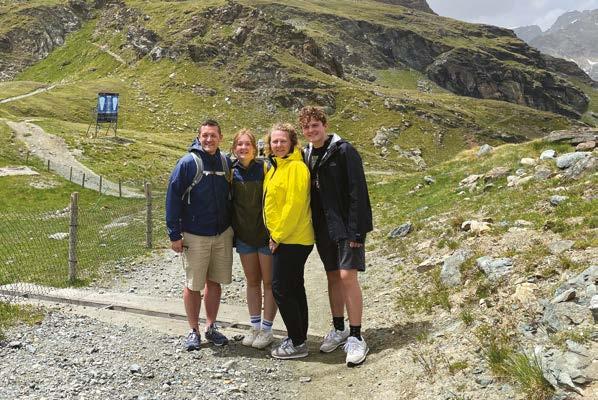
When asked what advice they’d give someone hoping to step outside their comfort zone, Chris is direct: “Take the first step. Don’t wait for certainty. Just begin.” Liz adds a note of realism. “Real adventure isn’t curated. It involves discomfort, uncertainty, and growth—not just the highlight reel.” Now, as they begin their next chapter in
Germany, the throughline is unmistakable: a life shaped by motion, curiosity, and the courage to choose the unknown over the familiar. Travel has never been incidental to them; it has been the classroom, the catalyst, and the constant. More than thirty years ago, two teenagers from northern Maine met in the Swiss Alps and said yes to each other, to uncertainty, and to a life defined by
adventure. Today, as they board a plane back to Europe, that choice no longer feels like a leap of faith. It feels like destiny, fulfilled.
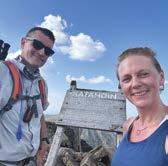
Chris & Liz Saucier met at Leysin American School in 1995 and graduated in 1996 and 1997, respectively. Liz is a creative professional specializing in photography and advertising productions for L.L.Bean. Chris recently transferred to the U.S. Space Force and is stationed in Germany, where he explores new technologies for U.S. and NATO partners. They have two children, Austin and Taylor, both of whom attended Summer in Switzerland in 2022.
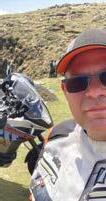
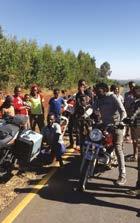
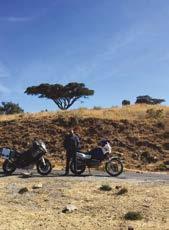
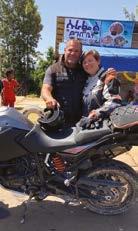
Acareer spanning five continents has taught Tim Stuart that adventure isn't about where you're going, it's about being fully present where you are–and that the most meaningful adventures are often the ones we never planned. Tim Stuart's life reads like a masterclass in adaptation. Born to American parents (his father Native American, his mother a blondehaired, blue-eyed hippie), Tim spent his formative years in the French school system after his family moved to France in 1973. When his parents realized their children couldn't read or write in English, they pivoted, bringing the family first to Philadelphia, then to Black Forest Academy in Germany. It was the first of many course corrections that would define his career in international education.
After graduating from university in the U.S., Tim moved to Tarsus, Türkiye, where he discovered his passion for teaching. Love eventually brought him to LAS—he wanted to be closer to his future wife, who was teaching at a school a few hours away from Leysin— and he spent eight years on the Magic Mountain, starting off as a teacher, then Athletic Director and ultimately becoming Director of Summer in Switzerland. He pioneered the outdoor adventure and leadership initiatives that still thrive today. His wife, Mona, founded the Red Frog Café in the Beau Site dormitory while serving as dorm head, and their three children Tyler, Ian, and Moriah were all born in Aigle, making Switzerland feel truly like home. But the Stuarts' adventure was only just beginning. Tim's career would later take the family to New Mexico's
Navajo Nation, Jakarta, Singapore, and ultimately Ethiopia, where he served as Head of School for five years. And perhaps nothing captures Tim's philosophy on adventure—and on life—better than a roadside breakdown in Ethiopia.
THE LESSON OF THE BROKEN BIKE: WHEN THE ADVENTURE BREAKS DOWN
"I'm a motorcyclist—an adventure motorcycle rider," Tim explains. "I had my adventure bike with me in Ethiopia. It wasn't typical for the area—probably among the most well-equipped bikes you'd see there, the closest thing to a 'Range Rover' of adventure bikes." He and a group of friends, their own bikes cobbled together from salvaged parts and held together with duct tape, were on a multi-day journey across remote Ethiopian terrain when disaster struck. "My bike dies. It just absolutely dies," Tim recalls. His sophisticated fuel filter—too refined for local gasoline—had clogged completely. They were truly in the middle of nowhere, surrounded by mud huts with thatched roofs and hours from the nearest town. "I was absolutely mortified. Now we have to call a truck to pick up my bike, and we're not going to get where we planned by nightfall."
Tim's friend Bruk looked at him, genuinely puzzled by his apology. "He said, 'What do you mean? Why are you sorry? We are here, and we're together. This is our adventure.'"
"I thought that destination was the adventure," Tim admits. "But this— spending our adventure by the side of the road, playing pool with twelve-yearold Ethiopian boys and losing all the money in our pockets—that was the real adventure." That roadside breakdown became an analogy for his entire career, a reminder that life rarely unfolds along our carefully plotted routes—and that the most meaningful experiences often appear when the plan falls apart.
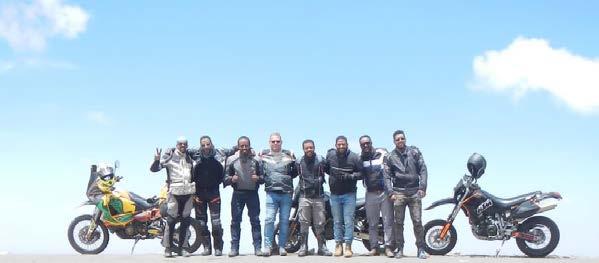
The realization that adventure lives in the present moment rather than at some distant destination has shaped Tim's approach to his career. After years at Singapore American School, Tim and Mona made the decision to move to Ethiopia. "People thought we were crazy," he laughs. "Why would you leave one of the most prestigious jobs in the world to move to Ethiopia?"
Their litmus test, however, had nothing to do with excitement or prestige. "It's peace," Tim explains. "When we can both look at each other and say we are absolutely 100% at peace with this decision, that's our test. We can get excited about all kinds of things—we're adventure seekers—but true, deep peace that surpasses understanding? That has been our guide." That same inner compass led Tim to leave a prominent leadership position when he realized it no longer aligned with his values. Mere minutes after submitting his resignation, he received a call from Search Associates inviting him to lead their executive recruitment division, matching schools worldwide with their future leaders. "I've made multiple career shifts that I never saw coming," he reflects. "But this grand adventure we're on is quite amazing."
Now helping schools around the world find their leaders, Tim carries with him a perspective shaped by decades in international education. His advice for navigating our interconnected world is simple yet profound: listen deeply, hold your convictions lightly, and understand the limits of your own perspective.
"As soon as you believe you have a corner on the truth, you're getting yourself in trouble," he says. "Have deep convictions about what you believe—about learning, about kids, about development—but recognize that's just a corner of the truth, not the corner on the truth."
This mindset has guided him through leadership positions spanning five continents. For students at schools like LAS, Tim believes international education is transformative precisely because the field has evolved so profoundly. "These schools are actually becoming more grounded in local culture, in local context," he explains, moving away from the old model of simply mirroring American or other systems abroad. "Teachers and students are being asked to engage in ways we never imagined thirty years ago, and that's a positive shift."
Throughout all these moves—across continents, careers, and cultures—Tim
Dr. Tim Stuart worked at Leysin American School from 1993 to 2000, serving as a teacher, Athletic Director and Director of Summer in Switzerland and establishing the leadership adventure programs that continue today. His three children were all born in Switzerland during the family's time in Leysin.
Tim would love to connect with members of the LAS Global Family on LinkedIn.
has come to see adventure as the thread running through every chapter of his life. Adventure is not just the physical adventures that unfold on a motorcycle or a mountain trail, but the intellectual, professional, and geographic ones that demand recalibration and growth. Each transition has brought its own "chrysalis" period, a stretch of discomfort and reorientation he views as essential to learning. For Tim, the journey—whether across a border, into a new role, or through a new way of thinking—has always held more meaning than the destination.
As Tim continues his work connecting schools with leaders across the globe, he carries with him the lesson learned on that dusty Ethiopian roadside: the adventure isn't some distant summit to be conquered. It's here, in this moment, wherever we find ourselves—even when it's not where we planned to be. Perhaps especially when it's not where we planned to be.
Captain Alex Mamikonian has spent 26 years navigating uncertainty—on open seas, in contested waters, and alongside crews drawn from every corner of the world. What he’s learned is simple: adventure isn’t about where you go. It’s about who you trust when the horizon is all you can see.
tanding on the bridge of a guided missile destroyer, Captain Alex Mamikonian is surrounded by nothing but horizon. The responsibility is absolute: the mission, the ship, and every sailor aboard rest on decisions made in real time. After 26 years in the United States Navy—including command of a destroyer and, most recently, leading the U.S. Navy’s forward-deployed destroyer squadron in Europe from Rota, Spain— Alex has come to understand something essential about adventure. It isn’t about geography or adrenaline. It’s about people, purpose, and trust. “There’s something humbling about being at sea,” Alex reflects. “You’re responsible for everything and everyone, but you’re also completely dependent on your crew. Adventure demands teamwork, calm under pressure, and trust.” That understanding began long before Alex ever set foot on a naval vessel. It started in the Swiss Alps at Leysin American School, where curiosity became a shared language among students from around the world.
“Living and learning in Switzerland opened my eyes early,” Alex says. “Traveling through Europe, skiing in Leysin, being surrounded by different
cultures—it taught me to be comfortable with the unfamiliar.” That lesson shaped everything that followed. After LAS, Alex studied Management at Purdue University, earned a Master’s degree in National Security from the U.S. Naval War College, and completed senior studies at the NATO School in Germany. Each step reinforced the same truth: global leadership requires cultural fluency, humility, and adaptability. Over more than two decades of service, Alex has operated across the Pacific, the South China Sea, and the Mediterranean, often coordinating closely with NATO allies. His missions require technical precision, coordination, and trust under intense pressure.
During a deployment in the Western Pacific, Alex’s ship navigated severe weather and some of the world’s busiest maritime corridors. “What made it unforgettable wasn’t the challenge, it was the unity,” he recalls. “People from nearly every U.S. state, from every background, came together to accomplish something bigger than themselves.” Adventure, Alex believes, strips away hierarchy and pretense. “When you’re navigating a mountain trail or open sea, everyone is adapting together,” he says. “Shared challenge creates shared
stories—and shared stories build trust.” That lesson mirrors what he first experienced at LAS, where cultural difference wasn’t an obstacle but a strength. It’s also something he carries into family life. Alex and his wife, Adrian, have taken their four children on global adventures, intentionally creating shared experiences that foster connection. “Adventure reminds you what matters,” he says. “The people beside you and the purpose you share.”
When asked what advice he’d give someone stepping beyond their comfort zone, Alex is pragmatic. “Start small. Say yes more often than no. Choose curiosity over fear.” He adds a lesson shaped by decades of leadership: “Not every decision works out. Failure isn’t defeat—it’s information. Every experience teaches you something if you’re willing to learn.” That mindset has guided his progression from junior officer to destroyer commander to squadron leader. “The comfort zone is comfortable for a reason,” Alex says. “But nothing meaningful happens there.”
As Alex looks forward, his focus remains clear: leadership, partnership, and mission-driven work. “Helping
organizations develop people, strengthen collaboration, and deliver impact—that’s what matters to me,” he says. After decades of navigating uncertainty, Alex understands that adventure isn’t a single journey. It’s a way of moving through the world with curiosity instead of fear, humility instead of certainty, and deep respect for those beside you. Standing on the bridge, surrounded by open water, Alex lives the lessons first learned years ago in the Swiss Alps: comfort with the unfamiliar is one of the most valuable skills we can develop; adventure is grounded in connection; and when we face the unknown together—with trust and purpose—we discover not only what we can do, but who we can become. From Leysin to the South China Sea, from international classrooms to crews representing every corner of the U.S., that truth has never changed.
And for Captain Alex Mamikonian, the horizon ahead remains wide open.
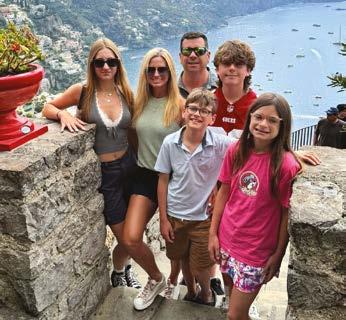
Captain Alex Mamikonian attended Leysin American School before studying Management at Purdue University. He has served in the United States Navy for 26 years, commanding a guided-missile destroyer and, most recently, leading the U.S. Navy's forward-deployed
destroyer squadron in Europe, based in Rota, Spain. He holds a Master's degree in National Security from the U.S. Naval War College and has completed senior studies at the NATO school in Germany. He and his wife, Adrian, have four children.
Ahuman rights and political science major spending his summer with the Chicago Cubs might sound like an unlikely pairing. For Jack Scanlan, it makes perfect sense. His path so far has been defined by curiosity, a willingness to pivot, and an instinct for finding connection in unexpected places. It’s a version of adventure that has carried him from LAS to the University of Chicago, and from the classroom to one of the most iconic franchises in professional sports.
We caught up with Jack as he headed into finals season at UChicago, happy to pause his studying and reflect on his summer with the Major League franchise. Even though he only left LAS in 2024, there was already plenty to catch up on, a sign of how quickly he continues to chart his own course.
After transferring to UChicago from the
University of Virginia and with just one year of college experience behind him, Jack landed a marketing internship with one of the world’s most valuable baseball franchises. At first glance, the contrast between UChicago’s famously rigorous intellectual culture and working at Wrigley Field, at the heart of an entertainment business, might seem stark. Jack doesn’t see it that way. He pushes back on the university’s tongue-in-cheek reputation of “where fun goes to die,” viewing both environments instead as places to explore and find his own version of fun.
The internship offered no shortage of opportunities for connection. Jack speaks animatedly about the Cubs’ “Lunch and Learn” sessions, which allowed interns to engage with leaders across the organization, from baseball operations and marketing to broadcasting and real estate development. Highlights included appearing as an extra in a corporate
sponsorship ad for Eero alongside Cubs outfielder and 2025 All-Star Pete CrowArmstrong, as well as contributing to planning for the 2026 All-Star Game announcement.
Jack credits his LAS experience, especially joining in the 11th grade and integrating into a new international community, with making his transfer to UChicago far less of “a scary risk” than it might have been otherwise. Like many of his choices, it became another opportunity to make his own adventure and find the fun in it.
At LAS, Jack served as student body president and was deeply committed to community engagement. Much of that work took the form of social media content he created with close friend Hyland Perkel’24, designed to bring people together and encourage participation across campus. Jack describes his Cubs
internship as the “macro” or “career” version of that same work. The creativity required to build engaging content at LAS made pitching ideas for youth outreach and fan promotions at the Cubs feel natural. His focus remained consistent: connecting people, reaching new audiences, and strengthening community. Themed experiences such as Girls’ Night Out and heritage nights, including a Native American night that Jack helped bring to fruition, were among the initiatives the Cubs ran during his internship. He takes particular pride in knowing his ideas were not only heard
but meaningfully used to engage an underrepresented community in the city. Some of that creative confidence grew out of the freedom Jack had to experiment with LAS social media. Some of what they produced here, he admits, was “outside the box for a high school’s page,” but it translated surprisingly well to a professional sports organization. That same adventurous spirit extended well beyond social media. One of Jack’s more traditional adventures at LAS was freeride skiing, where he competed on the Junior Freeride World Tour. Racing against peers aiming for professional careers was, he recalls, “a unique and humbling experience,” reinforcing the idea that there is no single path to success.
Not being afraid to pivot emerges as a recurring theme. Jack had not even considered studying human rights until Dr. Richard Campanaro’95, his global politics teacher and Extended Essay advisor, sparked his interest. “Dr. Camp,” as he’s
affectionately known, also encouraged Jack to look for connections between his academic interests and the things he loved, a mindset that would eventually lead him toward the sports industry.
At school, sports had simply been a pastime. Jack played soccer and tennis alongside skiing, seeing athletics as a source of joy, balance, and release. Working in the industry, however, revealed its broader impact. While sports may not “matter in the grand scheme of things,” he reflects, they sit at the center of many people’s lives and can unite even the most diverse communities.
That shift in perspective mirrors a broader mindset Jack absorbed at LAS. He points to Dr. Ajey Vemulapadu, his TOK teacher, as a model of lifelong learning and intellectual adventure.
“Watching him pursue new challenges, never backing down and always saying yes to growth, really inspired me to push myself,” Jack says.
So what’s next? Recognizing the global reach of sports and its intersections with human rights and law, Jack is keeping his options open. A chance meeting with the former commissioner of the Big Ten sparked conversations about how his interests could connect with legal work. He plans to build on opportunities from his Cubs internship while continuing to explore the human rights side of his studies. More physical adventures are also on
the horizon, including a month of skiing in New Mexico.
Much of Jack’s ability to embrace new adventures comes down to mindset. He fondly recalls a TOK trip to Florence as a highlight of his time at LAS, but is just as quick to note that friends point to Venice or other experiences as their own defining moments. For Jack, that difference is the point. “LAS is a school that really lets you decide what you want to do, as a student and as a person,” he says. “That freedom is what makes it so unique.”
When asked what every LAS student should do, Jack hesitates to single out any one experience. Beyond exploring Europe, he sees the greatest opportunity in saying yes to unexpected possibilities and embracing pivots along the way. At LAS, he learned that forging your own path can be an adventure in itself, sometimes just as thrilling as hurtling down a ski slope. “It’s more fun to make your own adventure than follow a preset one,” Jack tells us.
From transferring schools and stepping in front of a camera to crossing continents and connecting seemingly unrelated passions, Jack is doing exactly what LAS encourages: shaping an adventure that’s entirely his own.
TOKYO, CURATED — A CITY YOU EXPERIENCE LIKE AN ART MUSEUM
WITH KENTARO TAKAYAMA‘18



Picture Tokyo: bright signs, busy streets, and a constant sense of movement.
Beneath that surface, however, the city reveals something quieter. Art in Tokyo is not confined to galleries or museums; it appears in the small details you pass every day, often without signage or explanation. Buildings sit alongside greenery with intention. Meals are prepared with care. Daily routines follow an underlying sense of order. Spending 48 hours in Tokyo isn’t about seeing everything. It’s about slowing down and noticing what’s around you, letting the city unfold gradually rather than all at once.
Hidden in central Omotesando—a lively fashion district—Nezu Museum feels less like a gallery and more like a retreat. Inside, traditional Japanese art and craft are displayed alongside a garden, teahouses, and classical architectural
elements. The experience gently pulls visitors out of the city’s modern rush, offering a quiet immersion in older rhythms of Japanese life. There is no prescribed route, no formal introduction. The museum unfolds subtly, drawing you in without explanation or instruction.
A short journey from Nezu brings you to Meiji Jingu. Where Nezu offers intimacy, Meiji Jingu extends that calm across a much larger scale. Set within a broad woodland in the heart of Tokyo, the shrine feels remarkably removed from the surrounding city. Dense trees and stone paths create a clear boundary from the nearby roads, even though they remain just beyond the forest. People come year-round to walk, pray, or simply spend time quietly. The steady flow of visitors, the sound of footsteps, and the presence of ritual give the space a sense of life rather than stillness. Few places in Tokyo balance openness and calm as clearly as Meiji Jingu.
Near Tokyo’s more contemplative spaces, Shimokitazawa offers a different atmosphere shaped by everyday creativity rather than formality. Known for its underground culture, vintage fashion, and independent performance scene, the neighborhood is dense with thrift stores, small theaters, live music venues, cafés, and record shops. Here, creativity feels woven into daily life. Vintage clothing reflects personal style rather than trend cycles, while music, theater, and art coexist casually alongside ordinary routines. Walking through Shimokitazawa feels relaxed and unforced, less about arriving somewhere, more about observing how people live, gather, and express themselves.
Day two starts early, as the city shifts from stillness into motion. Running the loop around the Imperial Palace as the city wakes offers a familiar view of Tokyo in motion. Located at the city’s center,


the palace grounds are part of everyday life, passed by office workers, commuters, and residents. The 5-kilometer route is one of Tokyo’s best-known running paths, used daily by people who live and work nearby. Lined with trees and bordered by water, it feels surprisingly open for such a central location. The wide moats and greenery provide a rare sense of space within the dense city. Here, running isn’t an event. It’s simply one way Tokyo begins its day.
After the run, head straight to Tsukiji Outer Market. Once home to the world’s largest fish market, Tsukiji served for decades as a central hub for seafood and produce from across Japan. While the wholesale market has moved to Toyosu, the surrounding streets remain lively. Narrow alleys lined with long-standing shops and food stalls encourage eating while standing or walking. Grilled tuna skewers, freshly prepared seafood, and simple dishes are made quickly and with care. One spot worth returning to is Tsukiji Komoro Sushi. After a morning of movement, Tsukiji offers an easy, satisfying pause.
From Tsukiji, the experience shifts again. TeamLab presents digital artworks created through computer programming that respond to movement and presence.
While visitors follow a set path through the space, the artworks evolve continuously, reacting to where people stand and how they move. Light and form shift in real time as visitors pass through. The environment responds constantly, creating what teamLab describes as a “hyper-subjective” experience. This is art you don’t observe from a distance. You experience it by moving through it, and it is never quite the same twice.
As evening arrives, Ginza settles into a calmer rhythm. Long known as one of Tokyo’s premier districts, Ginza balances luxury shopping with refined dining and moves at a slower pace than much of the city. Beyond the polished storefronts are intimate bars, often tucked above street level. One favorite is Ginza Music Bar, a relaxed space shaped by thoughtful music, low lighting, and conversation. Nearby, the Kabukiza Theatre stands as a quiet reminder of how traditional performance continues to thrive within the modern city—present, but never overbearing.
Tokyo doesn’t demand attention. It rewards those who take the time to notice. You won’t understand the city in 48 hours. But you may begin to notice the care, balance, and quiet charm in everyday moments—and carry them with you long after you leave.
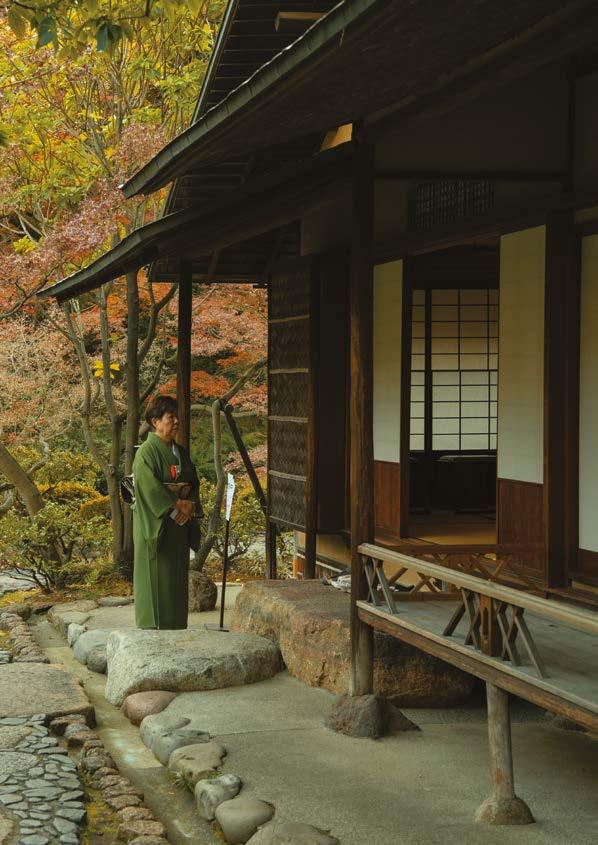
“You can’t control every aspect of your environment, but you can hold onto your relationships.”
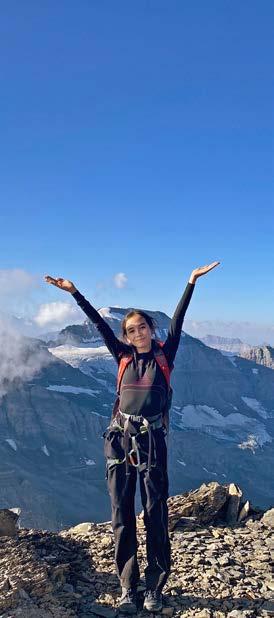
oming to Leysin American School is an adventure for any student. For Sara Bosshart, it was a complete crossing of worlds. At fourteen, she left behind the only city she had ever known—Shanghai—and arrived in the Swiss Alps to begin boarding life in an entirely new cultural landscape. Everything felt unfamiliar at once: the mountains, the rhythms of campus life, and sharing space with classmates from cultures she had never fully encountered before. For a creative student drawn to the humanities, writing became an instinctive refuge— not to produce anything polished or public, but to make sense of change as it unfolded.
She also made a point of calling her mother every day, speaking in Chinese, her first language and one she was determined not to lose. With each day bringing something new, there was always a story to share: a hike, an unfamiliar dish in the cafeteria, a Polish meme picked up from a classmate. Her mother encouraged her to write it all down, certain these moments would matter later.
At the time, Sara had no intention of writing a book. But gradually, her journal began to take on a shape of its own, weaving her new life in Switzerland together with memories of Shanghai. The transition was not easy. “My biggest dream as a frustrated fourteen-year-old,” she admits, “was to leave.” She worked through that feeling, and it became part of the story she was beginning to tell. What she missed most was studying in Chinese. At her bilingual international school
in Shanghai, half of her subjects were taught in her native language, with Chinese culture, history, and poetry woven throughout. Those elements found their way naturally into her writing, filling her journal alongside her new experiences in Leysin. By her first winter break, Sara realized she was no longer simply recording her life; she was shaping a narrative. A novel was beginning to emerge. Now, as she prepares for her final months at LAS, Sara is a published author who has negotiated her own book deals, reimagined her future path, and discovered more about herself than she could have imagined.
A POET IN THE ALPS
Sara’s novel, What If Li Bai Roamed the Alps, has already been published in mainland China. Its title references Li Bai, one of the most revered poets of China’s Tang dynasty. “Every kindergartener in China learns his poetry,” Sara explains. The story draws directly from her early experiences at LAS. The main character—Ling Feng in the Chinese edition and Maple in English—mirrors Sara’s own journey, leaving Shanghai for a Swiss boarding school while carrying a deep connection to Chinese culture and poetry. Sara estimates that the opening section of the novel is “about 85 percent autobiographical,” drawn straight from her diary.
As the narrative unfolds, realism gives way to imagination. The Alps are protected by a goddess whose poetic spells shield the mountains from harm, but climate change has weakened those defenses, casting her into a deep sleep. When Maple and her classmates go on a hike—based on Sara’s own trek to the Dents du Midi during her second week at LAS—they encounter the goddess’s assistant: a talking fox. Moved by the group’s sharing of poetry from their own cultures, the fox recruits them to help restore the mountain’s protective enchantments. Each ward is tied to the emotional power of poetry and to a different element of the Swiss landscape, from towering peaks to the stillness of Lake Geneva. Along the way, the group is joined by an ancient Chinese poet, drawn into the present through one of the fox’s time-traveling interventions. His amplified culture shock and initial resistance to collaborating with people
so different from himself become a heightened reflection of Sara’s own early adjustment to life at LAS. Cultural understanding emerges as the novel’s central theme, culminating in a final poem that captures his evolving view of Switzerland and the people he has come to know.
Sara saw the novel as a way to bridge her two worlds—sharing Chinese culture with her classmates at LAS while giving friends back home in Shanghai a window into her new life in Switzerland. “With everything going on in the world,” she reflects, “we focus so much on our differences instead of the ways we’re similar. A love for poetry and culture is something we all share.”
Once the idea took hold, she moved quickly. She outlined the novel and began writing in earnest, aware that her time would only become more limited. The process demanded the greatest self-discipline she had ever known—a benchmark she admits has since been surpassed by the IB and university applications. Her first draft totaled 213,000 Chinese characters, just under 100,000 words in English.
Equally comfortable writing creatively in both languages, Sara chose Chinese for the original manuscript. Poetry sat at the heart of the story, and publishing first in China felt essential to its purpose: bringing, as she describes it, “Switzerland to China.” She later began translating the novel into English, completing nearly two-thirds before pausing as academic commitments intensified. She hopes to return to the translation after graduation.
The novel is also set to be published in traditional Chinese following a book deal Sara negotiated independently in Taiwan. She strongly supports expanding access for diverse Chinese-speaking communities, particularly readers living abroad who use traditional characters. At just sixteen, navigating the process herself was daunting.
University is the next step. Sara arrived at LAS identifying firmly as a humanities student, but she will graduate with her sights set on STEM and medicine. She credits her teachers for encouraging her to explore new subjects, helping her uncover new strengths and reshape her ambitions. Sara hopes to

continue scientific research, building on work she has already undertaken at a Taiwanese university in integrative medicine. Her particular interest lies in combining traditional Chinese medical practices with modern biological science, bridging cultures through knowledge and experience.
Looking back, Sara sees a clear transformation from the fourteen-year-old who first arrived in Switzerland. Academically, socially, and personally, she learned to advocate for herself.
Beyond the classroom, she pushed her limits through dorm life, Model United Nations, cross-country running, cultural trips, night skiing, and speaking in front of hundreds at The Hague International Model United Nations. Each experience demanded confidence—and helped build it in turn. “LAS is what you make of it,” Sara says. Growing up reading adventure novels shaped her belief that the characters she admired sought out challenge rather than avoided it. Embracing that mindset opened doors she never expected.
When asked what advice she would give to a student like herself at fourteen, standing on the edge of a life-changing decision, she doesn’t hesitate.
“Develop and keep a strong support network around you,” she says. “You can’t control every aspect of your environment, but you can hold onto relationships with teachers, family, friends, and classmates.”
In the end, the most important lesson Sara learned at LAS was that she is more than her academic achievements. She discovered she is valued for who she is, not just what she accomplishes—a realization that will shape whatever path she chooses next.
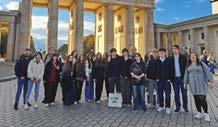
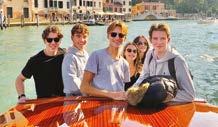
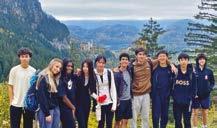
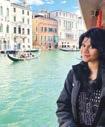
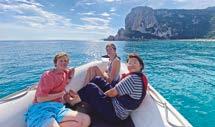
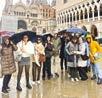
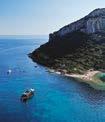
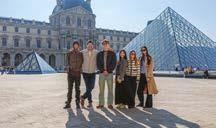
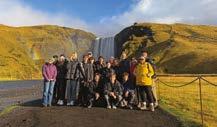

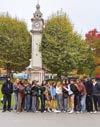
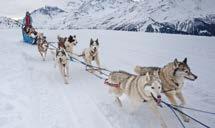
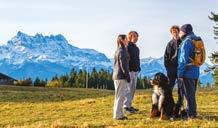
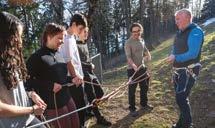
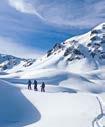
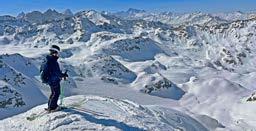

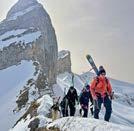
BOYS VOLLEYBALL
SGIS Champions
ADISR Champions
MLS Champions
ISSC Champions
GIRLS FOOTBALL
MLS Champions
BOYS FOOTBALL
MLS Champions
MLS CLIMBING COMPETITION AT LAS
PODIUM FINISHES FOR: Antonio '26, Thomas '27, Rustan '27, and Shriaansh '29
SGIS AND MLS FREERIDE COMPETITIONS
PODIUM FINISHES FOR: Nika '26, Samantha '26, Thomas '27, Gaspard '29, Luca '29, Isaiah '26
MLS FREESTYLE COMPETITIONS
PODIUM FINISHES FOR: Kaiser '29, Gaspard '29, Luca '29, Samantha '26, Luca '26, Daniel '28, Antonio '26, Elena '29, Mary '27
2025-2026
Leysin American School welcomes teachers, administrators, professors, artists, and entrepreneurs from around the world to share ideas with LAS teachers and students through the Visiting Scholar Program. Often, Visiting Scholars and LAS faculty collaborate on curriculum design, blogs, academic articles, and presentations at international conferences. Our instruction at LAS is amplified by their presence and their ongoing collaborative scholarship with us.
Aziza Ganieva, Barno Mukimova, Dilshoda Gafurova, and Zebo Sharipova International Education (Uzbekistan)
This delegation of Uzbek professors in business and finance spent time learning in LAS classes and leading a simulation of lean manufacturing. They also shared their culture and food in an informal dinner they prepared for students.
Christine Delp
Documentary Production and Direction (USA)
Christine is an award-winning documentary producer and director with a resume of films acquired by HBO, PBS, Al Jazeera, Sky, and National Geographic. She shared her experience with faculty and students in informal presentations.
Genevieve Blackwood Gary ‘15 Architecture (USA)
Genevieve shared her career experiences in architecture. She works on school, museum, and government projects for Annum Architects.
Ioanna Katsiavou Theater (Greece)
An artist and set designer from Athens, Ioanna worked with the theater department.
Joy Tsao
IB Programme (Taiwan)
Returning for her second visit, Joy
traded work stories in curriculum, instruction, and assessment based on her experience with the IB Programme at Dayuan International Senior High School.
Jon Nordmeyer
Multilingual Learning Research Consortium (USA)
As director of the MLRC, Jon is a frequent presenter on multilingual learning in international schools. His organization, based at the University of Wisconsin, assists school teams with action research to improve language programming.
Keegan Lee
Student at University of North Carolina, Chapel Hill (USA)
Keegan researched the impact of the LAS device policy implemented in the fall 2025 semester to better understand student use of screens, classwork with fewer screens, and social engagement in learning.
Konstantina Tsirimona
Arts and Science (Greece)
Konstantina, working in a science and theater on the island of Lesbos, visited classes and coached students in the LAS theater program.
Kristina Marie Darling
Author (Croatia)
A widely-published author and public speaker, Kristina shared her work with faculty and students in casual meetings and class visits.
Marty Fankhanel
World Language Instruction (USA)
A speaker of Albanian, French, German, Spanish, and Urdu, Marty is the curriculum director for the largest summer language immersion program in the United States.
Megan Wawro
Mathematics (USA)
Megan has worked in the past with the LAS Summer Program. She is a math professor at Virginia Tech and enjoyed an exchange with teachers in our math department.
Siena Harlin'14
Deloitte Consulting: Human Capital (USA)
Siena shared her experiences in the business program at Yale and her first year of consulting with companies supported by Deloitte.
Will Gardner
Corporate Finance for Funga: Forest Restoration and Carbon Credit (USA)
Will worked with science classes to explore issues of environmental sustainability.






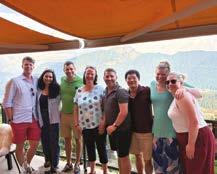

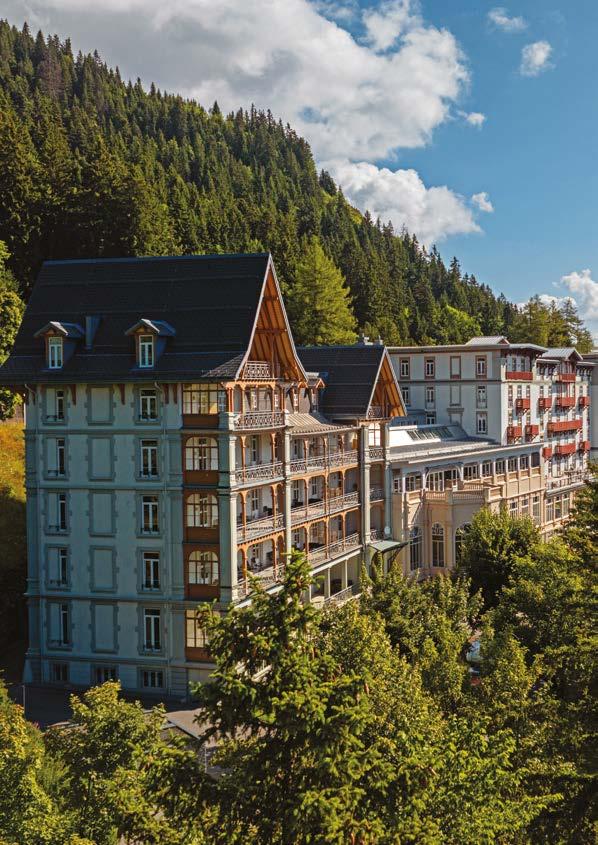
The LAS International Council and Global Family Council work with the LAS Board and External Relations team to strengthen engagement and enhance the LAS brand in key markets.




RAOUL MOORE ‘71

Raoul and his wife Libby visited for the sixth time since his graduation. Raoul was a student at LAS for four years and at the American College Switzerland for one year after which he transferred to the University of Denver, where he fell in love with Libby and they settled for some time. After living and working in the Boston area for many years, they are now enjoying retirement in Rhode Island. He calls Leysin his “happy place.”
PAMELA SZTYBEL ‘73


Pamela illustrated Dog Show: Poems, the recently published collection by former U.S. Poet Laureate Billy Collins. Oprah Winfrey featured the book on her 2025 “Favorite Things” list, calling it a “sweet gift for dog lovers.” Congratulations on this publication, Pam!
HADJHABIB ‘73

Esmail visited campus with his wife and was delighted to be back in Leysin, as he spent many years on the Magic Mountain at both LAS and the American College of Switzerland. He enjoyed going through his yearbooks and looking at his style and hair from his time as a student.
WENDY WIERZBOWSKI ‘76 & ANDERS VIK ‘76
Wendy and Anders recently reunited in Boston after not seeing each other since Thanksgiving 1977, making it a particularly special reunion. Wendy is a retired Hospice and
Palliative Care Registered Nurse and lives on the South Shore of Massachusetts with her husband, a retired engineer. Together they have two children and four grandsons, who bring great joy to their lives. Anders is the proud father of three children.

Amy visited campus recently with her husband and delighted the Alumni Relations team with her stories from her time as a student.

Veronica traveled to Leysin from Colorado where she works as a technical assistance consultant in special education for the American Institutes for Research (AIR)

Alan returned to Leysin recently with his wife and daughter, sharing the town and campus with them for the first time.
‘92
Andy, who currently works in the tech industry in Texas, visited Leysin as part of a larger European trip in summer 2025. He was joined by his wife, Alice, and two nephews.

While Krista’s day job is Vice President of Business Operations at the Kraken Community Iceplex (the practice facility of the Seattle Kraken and a hub for hockey in the Seattle region) she has found time over the years to work at the Olympic Games. Her Olympic journey
began as a volunteer at the 2006 Torino Winter Games and came full circle when she joined the Vancouver 2010 Organizing Committee, working in sponsorship servicing in Whistler. She later worked at London 2012, attended Rio 2016, and returned to support the Olympic Games in Milan this February—right after attending the LAS Alumni Ski Weekend!
Brian completed the Unbound Gravel cycling race in summer 2025. This 200-mile course takes riders on the gravel roads of Kansas and is one of the most challenging gravel cycling events in the U.S. and across the world. Congratulations to Brian on finishing!

During her four years at LAS, Amanda embraced life on the Magic Mountain—serving as Student Council President, singing in the choir, and studying IB Art. The cultural exposure and creative freedom she experienced in the Swiss Alps shaped both her artistic path and her guiding principle: leave every place better than you found it. Now based near Chicago, Amanda is a professional painter known for her vibrant, joyfilled canvases. After a varied early career, she built a successful art business rooted in generosity and purpose. Her beloved project, Angels Among Us, celebrates kindness and everyday heroism through small angel paintings now shared worldwide. Through her art, teaching, and community initiatives, Amanda continues to add light to the world.

Austin and Jordan were recently married after reconnecting in adulthood! They returned to Leysin as part of a special project to capture wedding
photos in meaningful places from their time as close friends and students at LAS. Congratulations!
The Class of 2005 organized a reunion in Leysin last summer! The alums had a great time reconnecting with each other and even had the chance to reminisce with Doris and Steven Ott. Happy 20-year anniversary, Class of ‘05!

Nasser describes his time at LAS as life-changing. During four years in the Savoy dorm, he embraced the school’s international community, developed lifelong friendships, and discovered a love for critical thinking through classes like history and Theory of Knowledge. After LAS, his academic path evolved from International Relations to Economics and Philosophy, shaping the creative and analytical mindset that defines his work today. Returning to Saudi Arabia, he first joined his family’s business before pivoting toward the arts during the country’s cultural renaissance. In 2019, Nasser launched Transcendence, Saudi Arabia’s first interactive audio-visual installation, later leading large-scale immersive projects and AI-driven exhibitions. Today, he is a sought-after creative consultant at the forefront of the Kingdom’s dynamic cultural scene.


Congratulations to Greg who married his wife, Shannon, in a beautiful ceremony in September! The wedding was held in Vevey on the shores of Lake Geneva and many of Greg’s LAS classmates (and even a few of his former teachers!) attended the weekend’s events.
Yung Chang Ko, Kerman Arriola, Pixie Rath Aitkenhead, Jakub Mardusinski, Gregory Marks, Shannon Lin, Mert Gundemir, Melani Meriloo, Christian Ehret, Caroline Canning, Jan Dröge, Ariel Engebretson, Mike Brinkmeyer, Lushman Family
ALEXIS DE LA FOREST DIVONNE '15
On his first return visit since graduation, Alexis traveled from Madrid and especially enjoyed revisiting the Savoy Dorm, taking in both the many changes and the familiar elements that still feel like home.
WELCOME BACK TO CAMPUS
IVAN RADAVSKYI ‘21
ASSAUR MUSSIN ‘21
Rishad stopped by LAS while he and his wife were in Montreux for a holiday. He is currently based in Spain and recently completed his training as a chef. Congratulations, Rishad!
VALE GOMEZ CAMARILLO ‘21
OLIVER HOLMES ‘22
Maja is in her final term of her law degree at the London School of Economics while also completing studies in Polish civil law, allowing her to qualify in both jurisdictions and potentially work on extradition cases. She credits Dr. Campanaro for encouraging her to choose LSE which she counts as one of the best decisions of her life. Alongside her legal training, Maja has been offered a place in the Master of Science programme at University College London (UCL) in Crime and Forensic Science, where her LAS chemistry foundation has proven especially valuable in understanding forensic evidence. On a personal note, Maja recently got engaged and adopted a Cavapoo puppy named Bambi, who brings tremendous joy to her life!
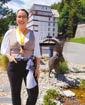
Muberra is currently based in Doha, Qatar, where she teaches IB PYP and MYP Music. Music has always been central to how she connects with people and cultures, and she is passionate about creating learning environments where students feel inspired to explore and express themselves. Her connection with LAS began when she came to campus as a LASER Visiting Scholar and she was deeply inspired by the school’s sense of belonging and commitment to experiential learning. Muberra was thrilled to return to LAS for the LAS Summer program in 2025 as the Performing Arts and Activities Leader. It was a summer filled with collaboration, performances, and meaningful connections with students and colleagues from around the world.
SEND US YOUR UPDATES OR SCHEDULE YOUR VISIT TO CAMPUS! EMAIL US AT: advancement@las.ch
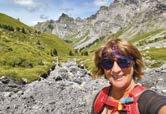
By Aaron Deupree P’28
Kim Oppenheim embraces life to the fullest—whether enjoying a late afternoon jaunt on the Leysin cross-country track, a summer sunset hike, or listening to the music at Cully Jazz Fest. Kim’s joie de vivre has been infectious to students and colleagues alike for the nearly four decades she has been at LAS.
Before beginning her LAS journey in 1990, Kim already had many adventures under her belt: teaching Haitian migrant workers in North Carolina and working at St. Johnsbury Academy in Vermont, as well as volunteering for the Peace Corps in the Central African Republic. Throughout her years in Leysin, Kim approached her diverse roles at LAS and her commitment to the local community with heart and soul.
Kim influenced the hundreds of LAS students she taught in her English classes, as well as the girls of Esplanade, where she served as dorm head for a decade. Her leadership on prestigious education committees laid the foundation for the LAS ELA (English Language Acquisition) Program, for which she served as department head for many years. Students and faculty alike benefited from her work—from supporting students studying literature in their home languages to teaching French to generations of LAS faculty, aiding their integration into the Leysin community.
Kim’s students will remember the canon of works they studied and how she helped them cultivate their analytical writing. Beyond the classroom, she ran cultural trips partnering with the Peace Corps in Morocco and led the LAS Community Service activity, giving students the opportunity to develop relationships with those near and far. Others will remember cross-country skiing with Kim and sipping hot chocolate at her Leysin chalet, where she has lived for over two decades raising her and Jamie Skove’s two daughters, Kera ‘20 and Jenna ’16 (who has followed in her parents’ footsteps and now teaches at LAS!).
With immense gratitude, colleagues and former students will miss Kim’s passion for languages and the written word, her devotion to the Leysin refugee community,
and her enthusiasm for the snow. However, we are happy to know that she will be just down the road—enjoying the magnificent views from her garden with a good book, playing tennis on the clay courts at Lower Sporting, dancing at the Montreux Jazz Festival, or gliding by on her skis, an image which so many students hold as one of their best memories of the Magic Mountain.
By Carmen Danescu
After 35 years of “bonjour,” after 35 years of “le café de 9 heures,” after 35 years of hard work, Svetlana is a model of perseverance and responsibility. She always knows how to bring a kind word or a touch of optimism to those around her. Thank you for every piece of advice, for your friendship, and for the many smiles you gave us, "LELEEEE." Svetlana, will return to her hometown Burovac, Serbia, but she will return regularly to visit her daughters and her grandchildren. We look forward to seeing Svetlana again soon. Congratulations on your retirement, Svetlana !

By Bruno de Brito Fagundes
To Goretti, an example of professionalism and friendship–your dedication and passion for your work will be remembered by all. May your retirement be filled with joy, health, and plenty of sports, something that has always driven you and brought you energy! And, of course, may your sporting continue to be champion-level!
Thank you for being an incredible colleague. You will always be remembered and we wish you all the best in this new phase of your life.
By Óscar Mota
After 20 years of dedicated service to our school, Carol Seymour has retired and is moving on to a new chapter in her life. She has always brought a positive energy and a caring, motivating attitude, looking after the well-being of everyone around her, particularly within the Accounting and Human Resources departments.
Her role as the insurance department representative was an essential 'function'. Carol was always attentive to the needs of those who came to her for information, guidance, or simply a listening ear.
For many years within the department, whenever Carol was called “Caroline” — with a strong French accent — by the former Head of Accounting, Maurice Felli, it usually meant that an important issue had arisen. After Maurice’s departure, some colleagues continued to call her “Caroline” affectionately, keeping alive the humorous and warm spirit of that tradition.
Originally from Brighton, England, Carol fell in love with Leysin after arriving in the 1980's. It was here that she met her husband, John, and decided to make this village her home. She will continue living in Leysin with her husband and will now have more time to enjoy precious moments with her grandchildren, Oscar and Leandre, as well as the loyal companionship of her dog, Molly. Carol, thank you for your many years of dedication, inspiration, and kindness. Our school will never be the same without you!
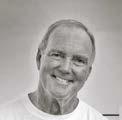
We are sad to share that we received word that Peter Shields passed away. Please let us know if you have more information to share with the LAS Global Family about Peter.
NARK '64
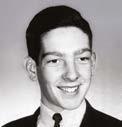
We are sad to share that we received word that Malcolm Nark passed away. Please let us know if you have more information to share with the LAS Global Family about Malcolm.
RAY ZURINSKY '64
A warm memory below from Judy van der Horst ‘64: I have a fond memory of Ray which happened at LAS in 1962. Influenza had spread throughout the school. Some of the teachers and most of the
students caught it. Somehow, Ray and our nurse were not affected by the flu, so the nurse put a nurse’s cap on Ray and he accompanied her on her rounds carrying a large box of medications. Ray was a tall handsome fellow, but looked quite ridiculous in the cap—which cheered up everyone immensely (although he didn’t seem as happy about the cap as everyone else)! That picture of Ray in the cap walking behind the nurse with all the medications has always stayed with me to this day. So whenever I think of this and think of Ray, I have a big smile.
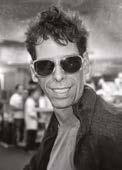
KENT GEIB '79
We are sad to share that we received word that Kent Geib passed away. Please let us know if you have more information to share with the LAS Global Family about Kent.
EDDIE LUPIEN '79
We are sad to share that we
received word that Eddie Lupien passed away. Please let us know if you have more information to share with the LAS Global Family about Eddie.
CHERYL ANN MIDYETT (FORMER
Cheryl Midyett passed away on 18 November 2025. A graduate of Southern Methodist University, she spent a year teaching mathematics at Leysin American School in Switzerland, an experience that reflected her love of education and international community. She will be remembered for her lifelong dedication to teaching, volunteer service, and her deep commitment to family.
AAKASH CHANDER ‘04
We recently learned about the passing of Aakash Chander. Beril Kemalbay ‘06 shared this remembrance: I remember that Aakash had the best hiphop dance moves. I was always so amazed by the way he made himself approachable—he was so kind and listened to us if we were in trouble, not just out of curiosity but because he truly cared about what we had to say.
He didn’t ever try to be funny but he had the best jokes. He truly will be missed. May his soul rest in peace.

EUGENIA MONTEMAYOR GONZÁLEZ ‘24
With deep sorrow, we bid farewell to Eugenia Montemayor González, who passed away in February. Her life, as brief as it was radiant, leaves an indelible mark on those who loved her.
“Life is either
KELLER