Prime Time
January 2026

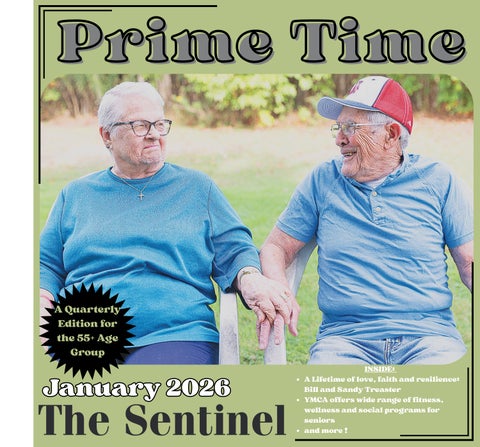
INSIDE: A Lifetime of love, faith and resilience: Bill and Sandy Treaster YMCA offers wide range of fitness, wellness and social programs for seniors and more ! Edition for the 55+ Age Group
January 2026
INSIDE: A Lifetime of love, faith and resilience: Bill and Sandy Treaster YMCA offers wide range of fitness, wellness and social programs for seniors and more ! Edition for the 55+ Age Group
BY GREG WILLIAMS Sentinel reporter gwilliams@lewistownsentinel.com
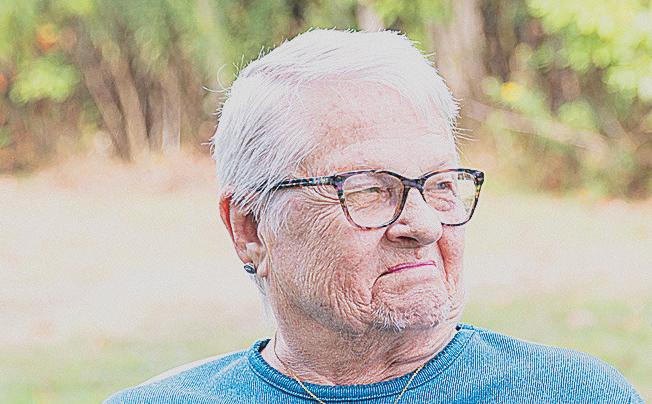
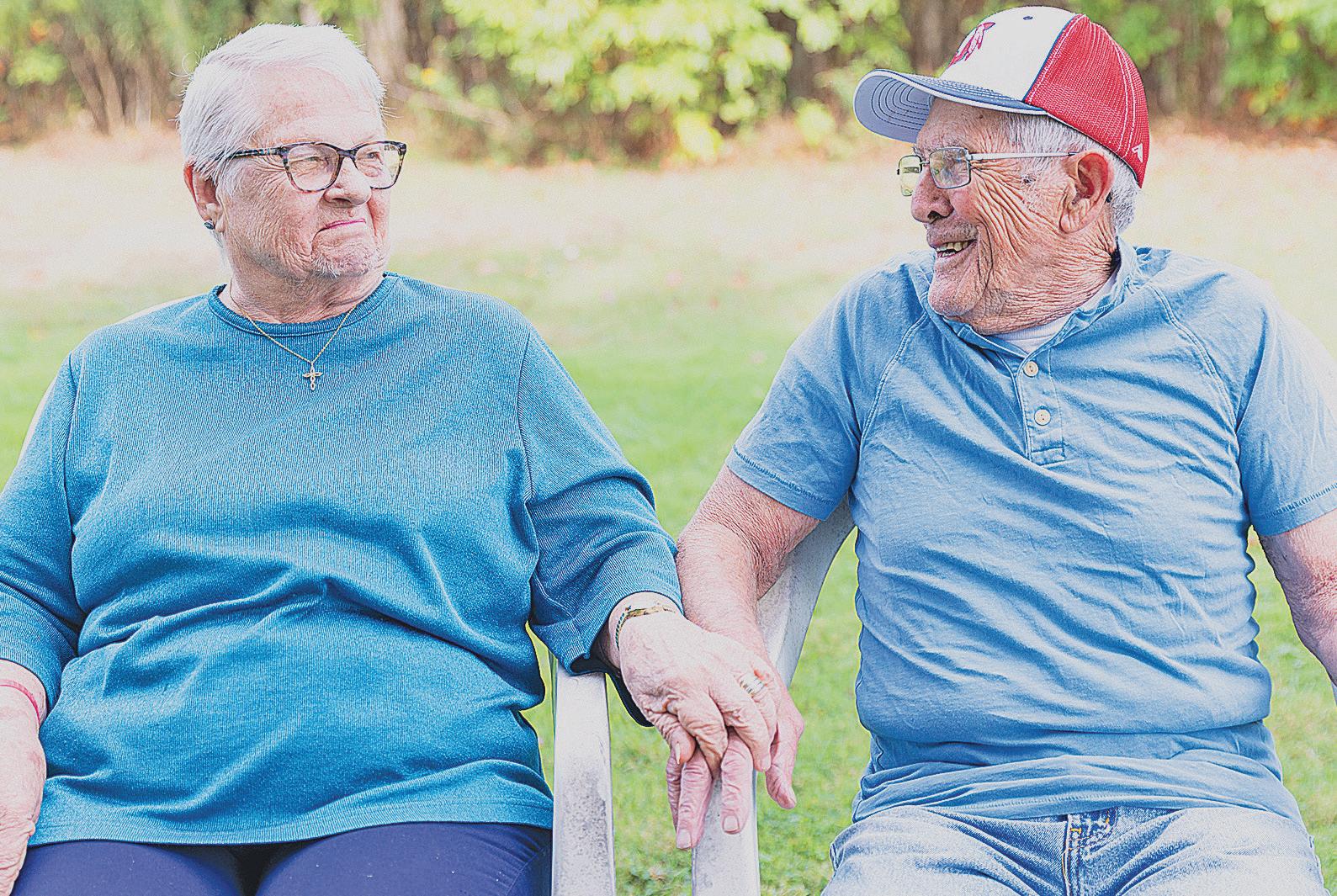
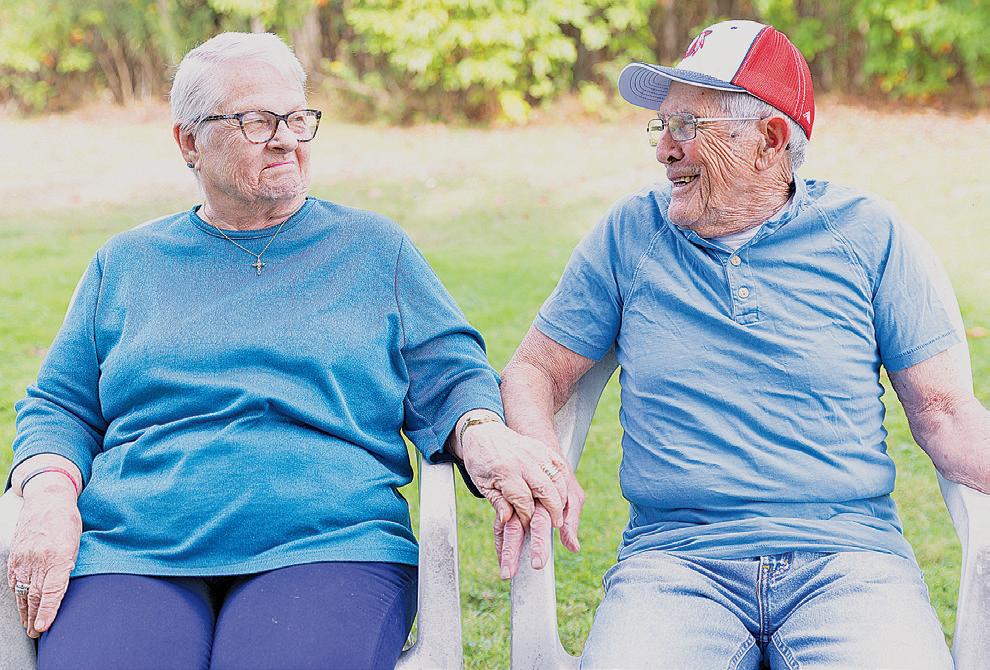
MIFFLINTOWN — Bill and Sandy Treaster have spent nearly seven decades building a life together in Juniata County — a life shaped by faith, family, hard work and the quiet resilience that carries people through both joy and hardship.
Now 85-years-old, the couple refects on their journey with gratitude, humility and a deep appreciation for the community that has supported them along the way.
Their story is one many seniors in the region will recognize: a long marriage, a lifetime of memories, health challenges that test one’s strength, and the steady comfort of family and familiar places.
The Treasters’ most recent challenge came in January 2025, when Bill suffered a stroke and was rushed to Penn State Health Milton S. Hershey Medical Center. He spent four days there, and Sandy remembers the fear and uncertainty of those frst hours. But she also remembers something else — the relief of knowing they had support.
“I’m so pleased with Geisinger Gold — it’s the gospel truth,” Sandy said. “We couldn’t be happier. Through the years, we’ve had great care.”
Bill’s recovery has been remarkable. Today, he’s back behind the wheel and back at work parttime at Regester Chevrolet in Thompsontown, where he retired two decades ago.
“He works Tuesday and Friday mornings,” Sandy said proudly. “It’s been a journey — good and bad days — but God is good, and we’re making it.”
Sandy knows something
about journeys, too. In 2004, she was diagnosed with breast cancer. After surgery and treatment, she has been cancerfree since 2005. Later, she had a stent placed in her artery — just
What they have, above all, is family. The Treasters raised three sons and now enjoy seven grandchildren and 13 great grandchildren. Their home is flled with photos, stories and the
tion to the Geisinger Miffintown Medical Clinic for helping them stay healthy and supported. Their primary care provider, Dr. Laurie Cox, has become more than a doctor — she has become a trusted friend.
“She’s so friendly, on top of our care, and amazing,” Sandy said. “She’s more like a friend than a doctor. I love her.”
Cox says the feeling is mutual.
“The most rewarding part of my profession is, and has been, caring for entire families like the Treasters over decades,” Cox said. “It’s truly a family practice — to be there for the joys and the pains and navigate the journey together. True blessings.”
medical care. Bill was born in Lewistown, and Sandy grew up in York County. They met in Dallastown, started dating in high school, and married young — a decision neither has ever questioned. A year after their wedding, they moved to Juniata County, where they built their life and raised their family.
“I love this county,” Sandy said. “Juniata County to me is a blessing. I’m so glad I’m here.”
Their days now are quieter but still full. Bill continues to ride his Harley motorcycle every day — a habit he has no intention of giving up — and he’s preparing for another hunting trip. “I’ve hunted every year since I was 12 years old,” he said, smiling.
beloved dog, a companion who had been part of their daily routine. Even so, they remain grounded in gratitude.
“We’re doing OK,” Sandy said. “We’re making it.”
For seniors across the region, the Treasters’ story is a reminder that aging is not just about challenges — it’s about endurance, love, and the strength found in community. It’s about the doctors who know your history, the neighbors who check in, the family who shows up, and the faith that carries you through.
in time to prevent a stroke of her own. She speaks about these moments not with fear, but with gratitude.
“It could’ve been worse,” she said. “I’m thankful for what I have.”
kind of laughter that only comes from a family that has weathered life together.
“My family is a blessing,” Sandy said. “They’re all there for us.”
The couple also credits their longtime connec-
Bill and Sandy’s roots stretch far beyond their
The couple recently experienced the loss of their
Bill and Sandy Treaster have lived a full life, and they continue to live it with grace. Their message is simple, but powerful: appreciate what you have, lean on the people who love you, and keep moving forward — one day at a time.
• INDEPENDENT LIVING designed for persons aged 62 & over and qualified persons with disabilities
• INDEPENDENT LIVING designed for persons aged 62 & over and qualifed persons with disabilities
• LOCATION conveniently located just off Rte. 22 between Harrisburg and Lewistown
• LOCATION conveniently located just off Rte. 22 between Harrisburg and Lewistown
• AFFORDABLE rent is based on 30% of income, new energy effcient windows
• AFFORDABLE rent is based on 30% of income, new energy efficient windows
• PET FRIENDLY small house pets are welcome (policies enforced)
• PET FRIENDLY small house pets are welcome (policies enforced)



• PEACEFUL quiet country setting with social activities.
• PEACEFUL quiet country setting with social activities, weekly grocery shopping trips, monthly “FUN” trips and more.












BY GREG WILLIAMS Sentinel reporter gwilliams@lewistownsentinel.com
BURNHAM – The Juniata Valley YMCA in Burnham continues to expand its offerings for older adults, providing a full slate of ftness classes, wellness opportunities and social programs designed to help seniors stay active, healthy and connected throughout the year.
With a mix of land-based and water-based classes, recreational activities
a rowing machine, stair steppers and a Peloton bike. For convenience, the facility includes one women’s locker room and two men’s locker rooms.
These amenities allow seniors to stay active year round in a safe, welcoming environment that encourages movement at every ftness level.
A major draw for older adults is the YMCA’s wide range of ftness classes tailored specifcally for seniors. Land-based classes are offered Monday
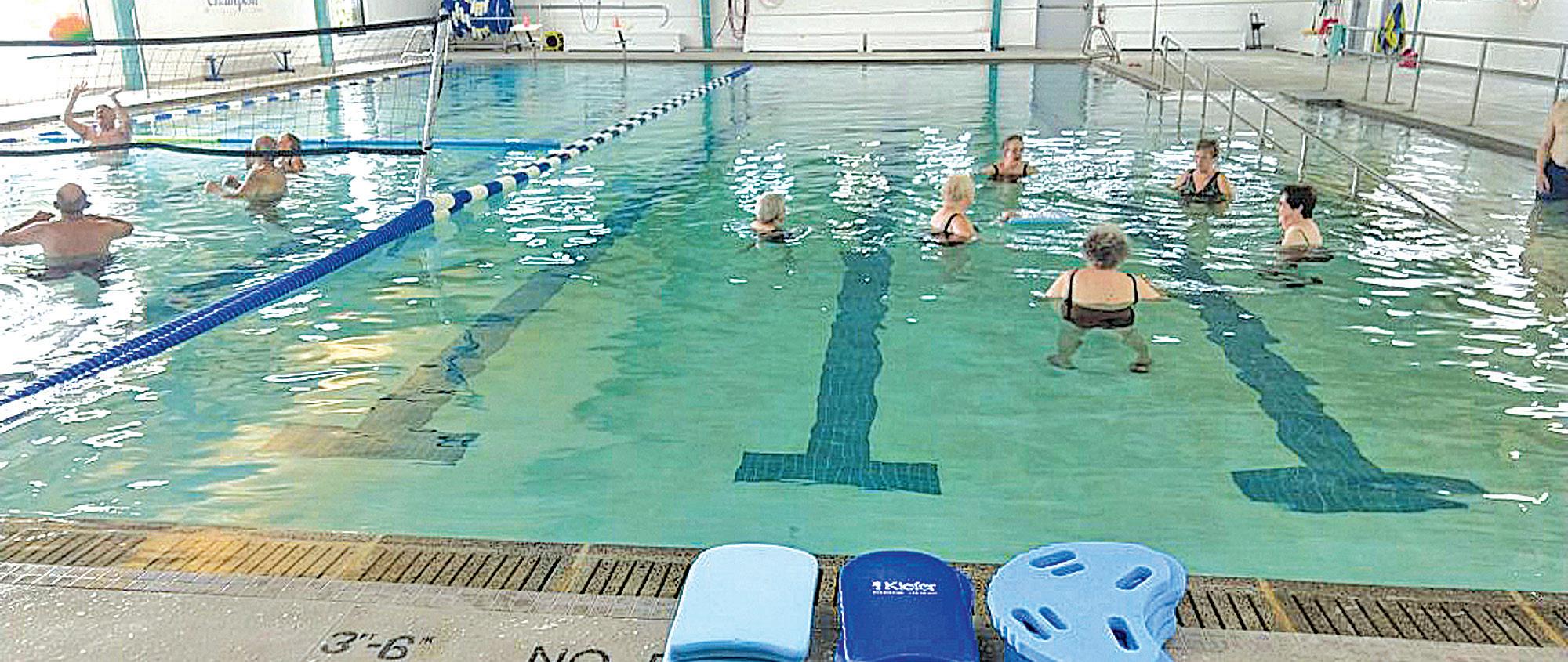
Patty also leads Aqua Fit on Wednesday mornings, a class that incorporates water weights, noodles and kick boards for a full-body workout.
The Splish Splash class meets four days a week and offers instructor-led exercises using weights and kick boards. In addition, the Active Older Adults Pool Time program provides a relaxed, social environment on Tuesday, Thursday and Friday afternoons, where participants can choose between water
seniors to explore membership options and check with their insurance providers about potential ftness benefts. Many insurance plans offer reimbursement for YMCA memberships or may cover the cost entirely.
The Juniata Valley YMCA partners with SilverSneakers, Silver&Fit and Renew Active to help
make membership more accessible. Senior memberships are available for $28 per month, and fnancial assistance is offered through the YMCA’s Open Door Policy for those who may need support. The organization emphasizes that no one should miss out on joining due to fnancial limitations. With its combination
of ftness, recreation and community-building programs, the Juniata Valley YMCA continues to serve as a vital resource for seniors seeking to stay active and connected. The staff encourages older adults to stop by, explore the facility and discover the many opportunities available to support their health and well-being.
and community building events, the YMCA has become a hub for seniors looking to maintain mobility, build strength and enjoy time with friends.
The facility itself offers a variety of amenities that support active lifestyles.
Members have access to a six-lane Olympic-style swimming pool, two fullsize gymnasiums and two racquetball courts. The gymnasiums are especially popular among seniors during the winter months, when many use the space for indoor walking.
The YMCA also features a fully equipped weight room with free weights and weight machines, as well as a dedicated cardio room that includes treadmills, ellipticals, stationary bikes,
through Friday from 10 to 11 a.m. and include SilverSneakers Classic, SilverSneakers Cardio Circuit, Senior Step Class and Senior Yoga. Each class can be adapted to meet individual needs, and participants may complete exercises either seated or standing. A full schedule is available at the front desk for those interested in trying different classes throughout the week.
Water-based ftness programs are equally popular and provide a low-impact alternative for those seeking joint-friendly exercise. Aqua Zumba is offered several times a week, with Patty leading sessions on Tuesday and Thursday mornings and Geovy teaching an evening class on Wednesdays.
volleyball or a low-impact ftness class.
Beyond structured ftness classes, the YMCA also offers a variety of recreational and social programs that help seniors stay engaged with one another. Pickleball continues to grow in popularity, with open play sessions offered most mornings and a dedicated beginners’ hour on Wednesday afternoons.
Line dancing, led by instructor Claudine, takes place every Tuesday from 10:45 to 11:45 a.m. and draws a lively group each week. The YMCA also hosts free senior luncheons periodically, giving older adults the chance to share a meal, play games and enjoy fellowship in a relaxed setting.
The YMCA encourages






























































BY JEFF WIRICK Integrated Communications Strategist
Capital Blue Cross
You’ve cut out cookies, candy, and soda. You’re loading up on yogurt, granola, and salads. So why isn’t your New Year’s healthy eating plan paying off?
The culprit might be hiding in plain sight: added sugar.
“People often think of sugar as something found only in sweets,” said Kaitlyn Miele, a registered dietitian and health promotion and wellness team lead at Capital Blue Cross. “But
many foods marketed as healthy – like flavored yogurt or granola – can contain surprising amounts of added sugar.”
The American Heart Association recommends limiting added sugar to about 25 grams per day for women and 36 grams for men. Consistently exceeding these limits can lead to weight gain, less energy, and increased risk of chronic illnesses such as Type 2 diabetes, heart disease, and high blood pressure.
It’s not that sugar itself is inherently bad. Miele said the problem is overconsumption. Added sugars are high in calories but
low in nutrients, making it harder to meet your nutritional needs without exceeding your calorie allotment.
What foods contain high amounts of sugars?
Flavored yogurt tops Miele’s list of sneaky sugar sources.
“Yogurt is often seen as a nutrient-dense choice, and it can be,” she said. “But flavored varieties frequently contain a lot of added sugar.”
Granola and breakfast bars are another sugar trap.
Oats themselves are great – they’re a source of fiber and healthy fats and protein. But Miele said store-bought granola is often sweetened with honey or syrups, which can quickly push you over your daily sugar limit.
Other foods that contain a surprising amount of sugar include:
- Condiments and sauces like ketchup and jarred pasta sauce
- Canned fruit, fruit preserves, or jams
Her advice? Choose plain yogurt and add your own flavor with whole fruits or spices in the fall and winter. Miele suggests chopped apples with cinnamon or fresh berries in summer, which adds fiber and flavor without the extra sugar.
- Flavored milk and coffee creamers
Read food labels to help find hidden sugar
The best defense against hidden sugar? Check the nutrition label.
Since 2016, the Food and Drug Administration (FDA) has required manufacturers to list “added sugars” separately from total sugars.
If you want to dig deeper, scan the ingredient list. Ingredients are listed by weight, so if sugar – or one of its many aliases like cane juice, dextrose, or molasses – appears near the top, that’s a red flag, Miele said.
Reducing sugar doesn’t
mean sacrificing flavor. Miele encourages creativity in the kitchen.
“Experiment with spices, herbs, and citrus,” she said. “A squeeze of lemon can brighten a dish without adding calories.”
For drinks, ditch sugary sodas for water infused with lime or lemon.
When you crave something sweet, reach for nature’s candy – fruit. Miele said frozen grapes can make a refreshing treat, and they come with fiber and nutrients that processed sweets lack.
While mental health challenges can affect virtually anyone living anywhere, there are certain populations that are at particular disadvantages for a variety of reasons. Rural areas in the United States have an estimated 17.58 million people in nonmetropolitan areas that experienced depression in 2024, according to microdata from the National Health Interview Survey, but these areas may not have enough support and treatment options.
To learn more about rural residents’ experiences with mental health and awareness of additional or alternatives to traditional treatments that may be effective in rural areas, Rural Minds, the only national 501(c)(3) nonprofit focused on advocating for rural mental health, conducted a survey among rural Pennsylvania residents. Nearly 7 in 10 participants (69%) indicated in the past year
they have either experienced symptoms of depression themselves or been concerned about someone close to them who is dealing with depression.
“While there are many effective depression treatments in use by mental health professionals, com-
mon barriers to mental health treatment for residents of rural areas include the lack of confidentiality in small communities, fewer providers and greater distance to access mental health services,” said Jeff Winton, founder and chairman of Rural Minds. “In
addition, many rural residents are either uninsured or underinsured.”
The poll also showed 3 in 4 rural residents (76%) are aware of talk therapy as a depression treatment or intervention, and more than two-thirds (68%) are aware of pharmacological





treatments. However, significantly less are aware of additional therapies. For example, only 17% indicated being aware of digital therapeutics and 11% reported awareness of eye movement desensitization and reprocessing.
“Depression is a significant challenge for people living in rural areas,”
See Digital / Page 9

BY BRIAN CARSON Sentinel reporter bcarson@lewistownsentinel.com
There was a time when sleep healed you. You could play a doubleheader, mow the lawn, move a couch, eat two chili dogs, and a good night’s sleep fxed everything. These days, sleep is the injury.
I pulled a muscle sleeping. Not climbing Everest. Not running a marathon. Sleeping. It’s the kind of sentence that used to be a punchline; now it’s a medical report. I woke up and something deep in my back muttered a sound like Velcro coming apart. I didn’t even dream of doing anything heroic. I was just there, minding my own unconscious business, and the body fled a complaint with HR.
You don’t know when it happens. One day, you’re young enough to sprint upstairs two at a time. The next, you make the same trip with a groan that sounds like a porch swing in a windstorm. Somewhere between thirty and “What’s the deductible again?” your body quietly switches sides. It’s no longer the team that wins you games. It’s management now, enforcing rules. “We don’t bend like that anymore,” it says. “Fill out this form.”
When you’re 20, you can sleep on a foor, a couch, the hood of a car, and wake up ready to run a 5K. When you’re 50, you need a mattress rated for orthopedic support, climate control, and NASA-grade foam, and even then, you wake up feeling like you fought crime in your sleep. Pillows used to be an afterthought. Now they’re a lifestyle choice. There are wedge pillows, contour pillows, cooling gel pillows.
The bedroom looks like a sports science lab. And no matter how you arrange them, one rogue neck muscle will still wake up with its own agenda.
The medical industry pretends to care. “Did you stretch before bed?” a doctor asked me once. Before bed. As if my bedtime routine now involves wind sprints and deep lunges. I can’t bend enough to tie my shoes some mornings, but sure, I’ll knock out a few pre-sleep hamstring drills. What’s next, a warm-up lap before brushing my few remaining teeth?
Then there’s the conversation with other middle-aged folks. They nod in quiet sympathy, like war veterans swapping stories from the front. “Neck,” one says. “Tuesday morning. Turned to look at the alarm clock. Done for a week.”
Another chimes in, “I sneezed in traffc and had to pull over.” These are not exaggerations. These are daily battle reports from the front lines of aging.
You used to wake up sore from doing things. Now you wake up sore from existing.
The language changes, too. You stop saying “hurt” and start saying “tight.” Tight is the polite version of broken. Tight means you’re pretending this is temporary. Tight means you’re negotiating.
Somewhere along the line, you realize you’ve become the person who injures himself horizontally. The vertical stuff is still mostly intact. Walking is fne. Standing is manageable. It’s the lying down that’s dangerous.
Other people don’t notice, which is insulting. If you’re going to be injured, the least the world can do is acknowledge it. Instead, you carry on while your body quietly fles paper-
work against you.
You begin to envy athletes again, not for the money or fame, but for the clarity. When they get hurt, everyone agrees they’re hurt. There’s a timeline. There’s a diagnosis. There’s ice involved. When you pull something while sleeping, the best you can do is say, “I think I tweaked something,” and hope nobody asks follow-up questions.
It’s strange how we mark our decline. There’s the year you compare your ailments like baseball stats. There’s the day your pharmacy knows your birthday by heart. There’s the frst time you throw your back out reaching for something you dropped. It’s not the thing you dropped that hurts. It’s the realization that this is who you are now: the guy who pulls a hamstring picking up a sock.
We talk about “peak performance” like it’s a moment in time, a banner year. But for most of us, peak performance was during a nap in our twenties. You weren’t even aware of it. Your body was a Swiss watch, fne-tuned, effcient. Muscles worked; joints didn’t click like typewriter keys. You could sleep in a chair and wake up refreshed. Now, you could sleep twelve hours on a memory-foam cloud and still need an ice pack. You start measuring life by what doesn’t hurt. Waking up is an audit. “Neck? Okay. Shoulder? Tight. Back? Don’t ask. Knee? Depends on which direction the wind’s blowing.” You used to jump out of bed. Now you test it, like a pilot checking instruments. “Engines on, faps down, let’s see if we can taxi to the kitchen.”
Once upon a time, you used to roll out of bed like
a highlight clip. Feet on the foor, mind already moving. Now you stage it like a military operation. First, you sit. Then you wait. Then you see if anything complains. Then you stand slowly, like you’re testing gravity for defects.
The worst part is you still think you can do things. You still have the same mental playbook as your younger self. You see a pickup basketball game and think, “I could run with those guys.” Then your hamstring reminds you it has other plans. It’s like living in a house where the upstairs and downstairs don’t communicate. The brain lives upstairs. The body’s downstairs, fling grievances. There’s always someone who claims to have the cure. Foam rollers. Yoga. Magnesium. A friend swears by something called “cryotherapy,” which sounds like therapy for your tears but apparently involves standing in a freezer. I tried it. The only thing it cured was my enthusiasm for cryotherapy. You could drop a wrench and watch me pull something, trying to dodge it. I envy kids. They can fall asleep in the backseat of a car, twisted sideways over a seatbelt, and wake up fne. If I so much as look at a couch wrong, I’m limping for three days. I once woke up with a kink in my neck so bad I had to turn my whole torso to look at people, like Batman. You learn to make it look natural. “Oh, I like to engage with my entire body when I talk,” I tell them. It’s not all bad, though. There’s humor in it if you squint past the pain. Every morning, your body’s like a surprise package. You never know what’s inside. Sometimes it’s stiffness, sometimes
it’s betrayal, but it keeps things interesting. You learn to appreciate the simple victories. Standing up without groaning is a small miracle. Finding a sleeping position that doesn’t require a chiropractor the next day feels like winning a championship.
There’s a humility in aging. It teaches you respect. You understand why old guys at the gym spend half an hour stretching. They’re not showing off. They’re trying to survive the treadmill. You also realize your parents weren’t complaining all those years. They were giving you a preview. We all joke about getting old, but there’s a truth under it. Your body may not be what it was, but it’s still yours. You adapt. You move slower, but you notice more. You lift less, but you laugh more. You value comfort, sleep, quiet. Maybe that’s what peak performance was: not a record-setting sprint, but the frst moment you woke up, stretched, and realized you had nowhere to be.
Still, I’d like to have one morning when I don’t wake up wondering what part of me rebelled overnight. I used to dream of fying. Now I dream of getting through the night without Advil. Progress is funny that way.
So yes, I pulled a muscle while sleeping. And no, it’s not tragic. It’s the new normal. We all reach the age
when the body stops sending postcards and starts sending bills. You can either curse it or laugh at it. I choose to laugh, though it hurts a little when I do.












Continued from Page 6
said Robert E. Nelson, MD, co-owner of DGR Behavioral Health, LLC, and medical director at Caron Counseling Center. “In some parts of the country, mental health services are nonexistent or very limited in rural communities. Additionally, the factors leading to depression can be different for those living outside urban and suburban communities.”
In areas where access to traditional services is limited, other options may help fll the gaps for individuals experiencing depression. For example, nearly half of survey participants (47%) would be interested in a digital app for depression as part of
their treatment plan. What are prescriptionzdigital therapeutics (PDTs)?
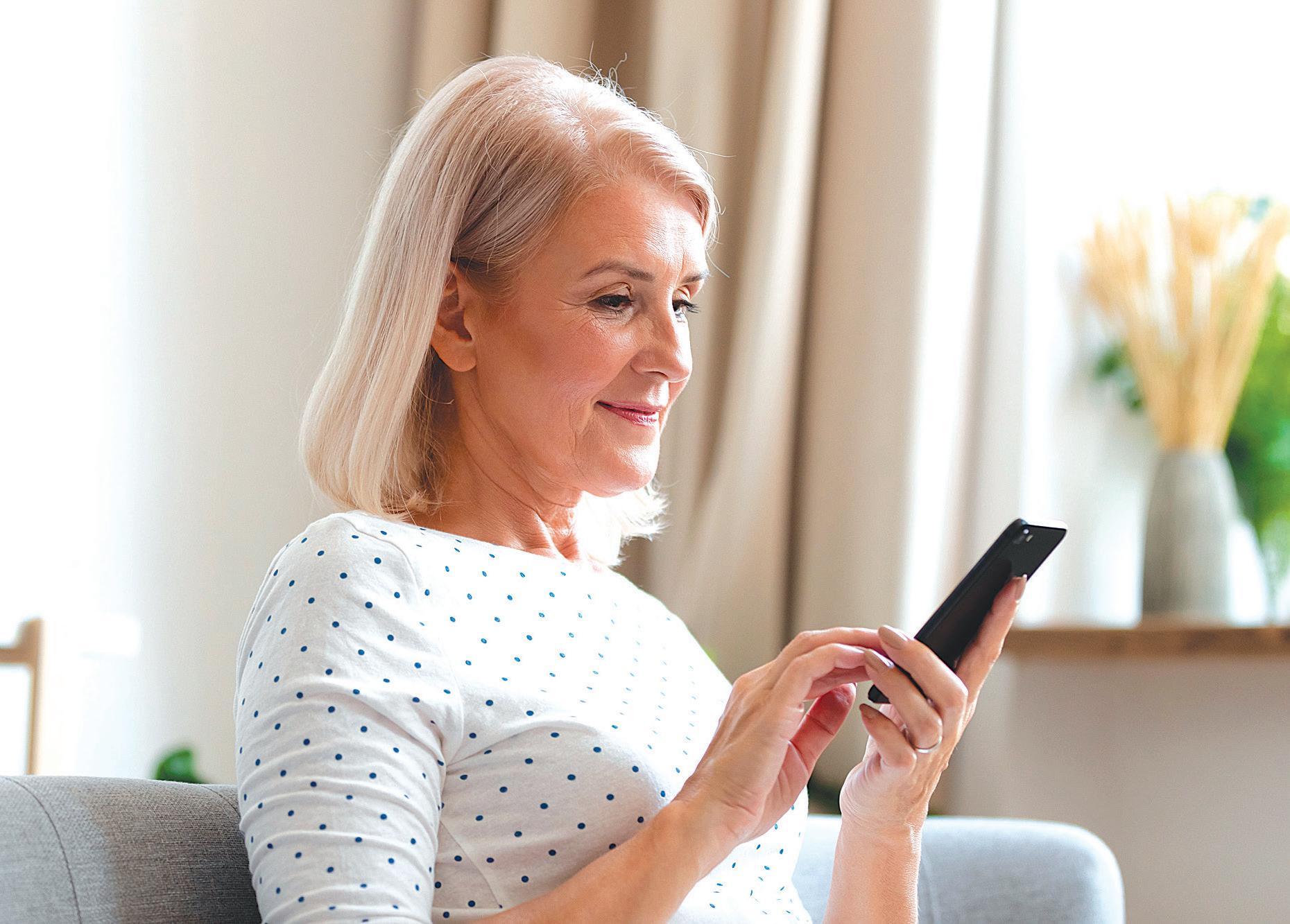
Technology is changing the way patients receive treatment in many aspects of medicine. That is also true when it comes to mental health. PDTs are health softwares, delivered using a device such as a smartphone or computer, to treat or alleviate a condition, disorder, disease or injury. This type of treatment may need to be paired with traditional forms of treatment to help address a variety of conditions, including mental health conditions.
Treatment delivered digitally can include brain-training exercises, cognitive behavioral therapy and behavioral reinforcement exercises. Some PDTs can also adapt based on usage.
To be considered a true prescription digital therapeutic, the software must be authorized by the Food and Drug Administration (FDA), which gives users greater confdence in its usage and outcomes.
Prescription digital therapeutics offer an additional or alternative treatment.
In addition to the potential positive implications for improving access to mental health treatment options among rural residents, there are some other potential advantages to prescription digital therapeutics:
• Less likely to cause side effects. Because there are no additional medications involved, this form of therapy doesn’t carry the same risk of medicine-related side effects or drug interactions with other medications that the user
may be taking.
• Studied for safety and effectiveness. In order to qualify for FDA authorization, they are studied in clinical trials to verify their safety and effectiveness.
• Convenient. Since PDTs are provided via a personal device, such as a smartphone or tablet, the patient can access treatment when and where it’s most convenient.
• Private. The nature of a PDT means it’s delivered remotely, and patients can pursue treatment within their own homes or other private locations without the need to make regular visits to a doctor’s offce.
Learn more about the mental health challenges facing Americans and fnd a prescription app at ruraldepressionoptions.com.



You approve a mortgage in minutes, your medical claim is processed without a phone call and an order that left the warehouse this morning lands at your door by dinner. These moments defne the rhythm of an economy powered by intelligent cloud infrastructure.
Once seen as remote storage, the cloud has become the operational core where data, AI models and autonomous systems converge to make business faster, safer and more human. In this new reality, the smartest companies aren’t looking up to the cloud; they’re operating within it.
Public cloud spending is projected to reach $723 billion in 2026, according to Gartner research, refecting a 21% increase year over year. At the same time, 90% of organizations are expected to adopt hybrid cloud by 2027. As cloud becomes the universal infrastructure for enterprise operations, the systems being built today aren’t just hosted in the cloud, they’re learning from it and adapting to it.
Any cloud strategy that doesn’t account for AI workloads as native risks falling behind, holding the business back from delivering the experiences consumers rely on every day.
After more than a decade of experimentation, most enterprises are still only partway up the curve.
Based on Cognizant’s experience, roughly 1 in 5 enterprise workloads has moved to the cloud, while many of the most critical, including core banking, health care claims and enterprise resource planning, remain tied to legacy systems. These older environments were never designed for the scale or intelligence

Once seen as remote storage, the cloud has become the operational core where data, AI models and autonomous systems converge to make business faster, safer and more human.
the modern economy demands.
The next wave of progress - AI-driven products, predictive operations and autonomous decision-making - depends on cloud architectures designed to support intelligence natively. This means cloud and AI will advance together or not at all.
The Cognitive Cloud: Cloud and AI as one system
For years, many organizations treated migration as a fnish line. Applications were lifted and shifted into the cloud with little redesign, trading one set of constraints for another.
The result, in many cases, has been higher costs, fragmented data and limited room for innovation.
“Cognitive cloud” represents a new phase of evolution. Imagine every process, from customer service to supply-chain management, powered by AI models that learn, reason and act within secure cloud environments. These systems store and interpret data, detect patterns, anticipate demand and au-
tomate decisions at a scale humans simply cannot match.
In this architecture, AI and cloud operate in concert. The cloud provides computing power, scale and governance while AI adds autonomy, context and insight. Together, they form an integrated platform where cloud foundations and AI intelligence combine to enable collaboration between people and systems.
This marks the rise of the responsive enterprise; one that senses change, adjusts instantly and builds trust through reliability. Cognitive cloud platforms combine data fabric, observability, FinOps and SecOps into an intelligent core that regulates itself in real time. The result is invisible to consumers but felt in every interaction: fewer errors, faster responses and consistent experiences.
Consumer impact is growing
The impact of cognitive cloud is already visible.
In health care, 65% of U.S. insurance claims
run through modernized, cloud-enabled platforms designed to reduce errors and speed up reimbursement. In the life sciences industry, a pharmaceuticals and diagnostics frm used cloud-native automation to increase clinical trial investigations by 20%, helping get treatments to patients sooner. In food service, intelligent cloud systems have reduced peak staffng needs by 35%, in part through real-time demand forecasting and automated kitchen operation. In insurance, modernization has produced multi-million-dollar savings and faster policy issuance, improving both customer experience and fnancial performance. Beneath these outcomes is the same principle: architecture that learns and responds in real time. AI-driven cloud systems process vast volumes of data, identify patterns as they emerge and automate routines so people can focus on innovation, care and service. For businesses, this means fewer bottlenecks and more predictive operations. For consumers,
as complementary forces, each amplifying the other.
This transformation is already underway. Self-correcting systems predict disruptions before they happen, AI models adapt to market shifts in real time and operations learn from every transaction. The organizations mastering this convergence are quietly redefning themselves and the competitive landscape.
it means smarter, faster, more reliable services, quietly shaping everyday life. While cloud engineering and AI disciplines remain distinct, their outcomes are increasingly intertwined. The most advanced architectures now treat intelligence and infrastructure
Cloud and AI have become interdependent priorities within a shared ecosystem that moves data, decisions and experiences at the speed customers expect. Companies that modernize around this reality and treat intelligence as infrastructure will likely be empowered to reinvent continuously. Those that don’t may spend more time maintaining the systems of yesterday than building the businesses of tomorrow.
Learn more at cognizant.




BY ADRIANA MORGA Associated Press
NEW YORK (AP) — The start of a new year usually brings new motivation to achieve goals like eating healthier or fnally cleaning your basement. Many resolutions also focus on fnancial goals, such as paying off credit card debt, saving for a new house, or simply getting more educated about money.
“New Year’s is a really good time to review and realign your fnancial goals overall,” said Erica Grundza, certifed fnancial plan-
in a savings account, or a bigger goal like saving to buy a house in the coming years. It’s all about your own journey.
The Associated Press spoke with people who are making fnancial resolutions for 2026. Here’s a look at what they’re planning and how you can draw inspiration for your own resolutions:
aged her clients to check their credit report with the three credit bureaus and, based on their credit reports, make an attainable plan to start a savings account. For example, adding $25 to their savings account every week.
several options to pay it off. Ultimately, Pelovitz and her husband chose to sell their house and work with a debt consolidation organization.
buy a house.
experts’ recommendations here.
Finding balance
ner at Betterment, an investing and savings app.
When building your goals for 2026, Grundza recommends focusing less on the past and more on an optimistic, yet realistic, vision for the future. She recommends that you focus on reestablishing the “why” behind your approach to money and how you want to make it work for your life. This can be as simple as saving $10 each week
Resolutions can easily turn into unattainable goals that feel more like a dream, said MarieYolaine Toms, a coach and founder of Focused Fire, a fnancial coaching company. To avoid setting unrealistic expectations, Toms follows a “no resolutions” mindset and instead focuses on making an actionable plan.
Whether you’re trying to pay off debt or save for a vacation abroad, the frst step towards making a plan can be creating a budget. When making a budget, it’s best to fnd a technique that works for you, whether it’s the classic 50/30/20 plan or another budgeting style.
If you’re building a bud-
“Rather than rely on getting more debt, we are currently selling our house,” Pelovitz said.
Pelovitz’s main goal for 2026 is to pay off half of her credit card debt. And, with some of the money from selling the house, start investing moderately.
If you’ve also experienced a layoff, you can read expert recommendations to help you take care of your fnances and your

get for the frst time, you can fnd some expert recommendations here.
mental health here.
“What I say every year is that I am not making resolutions, I’m making plans that can be tracked forward, traced back, and tweaked until completion,” Toms said. Recently, Toms encour-
After losing her job as a magazine editor in September, Rachel Pelovitz, 33, had to take a closer look at her fnances. Having acquired a signifcant amount of debt over the last few years due to her husband’s yearand-a-half-long unemployment, Pelovitz explored
For Jenni Lee, 27, this is going to be the year when she gets strict about building her savings account. While Lee considers herself generally good with money, over the last six months she has overspent and wants to rein it in. The long-term goal for her savings journey is for Lee to
“I’m now in my late 20s, I’m starting to really think about where I pinch now so it won’t hurt later when I fnally decide to purchase and own a place,” said Lee, a tech worker and lifestyle TikTok creator based in Chicago.
As she saves for her future home and possibly a trip to South Korea, Lee wants to cut unnecessary spending on clothing items and eating out.
Social media microtrends are a common infuence on people’s shopping decisions, and this can lead to overspending. If you’re looking to avoid spending money on microtrends, you can fnd experts’ recommendations here.
Building an emergency fund
If you are in a position to do so, having multiple fnancial goals you’re working towards at the same time can be a great way to speed up your progress. For Worcester resident Melanie Duarte, 23, her New Year’s money goals include paying off her student loans and credit card debt while building an emergency fund.
“I made sure to include it in my budget, even if it’s something as small as like $50. I just want to make sure I still put something in (my emergency fund) so that it eventually multiplies,” said Duarte, who owns a marketing agency.
Duarte’s family didn’t speak openly about fnances when she was growing up. But, since she opened her own business, Duarte has been slowly working on rewriting her relationship with money.
If you’re looking to start an emergency fund or create better habits while you save, you can read some
Finding a balance between saving for your longterm goals while also making sure you enjoy your money is important, but it can also be challenging. After the death of her grandfather just a few years after retirement, Tiana Stewart, 26, felt that he didn’t get to enjoy the fruits of his labor. So, this past year, Stewart decided to enjoy her life and travel.
“I do understand saving for retirement is important, but I also want to enjoy my life and the money that I work for at this time, especially being in my 20s,” said Stewart, who lives in Maryland.
But now, as she refects on her fnancial future, Stewart wants to focus on paying off debt, saving, and investing. Having a healthy balance between enjoying life and saving for the future is what she wants to work toward.
For some, participating in budgeting challenges such as the no-buy year can be a great way to set boundaries on your spending and set aside money towards your fnancial goals. Many people start such challenges at the beginning of the year and commit to keep going until the end, but others start with a no-buy month.
•••
The Associated Press receives support from Charles Schwab Foundation for educational and explanatory reporting to improve fnancial literacy. The independent foundation is separate from Charles Schwab and Co. Inc. The AP is solely responsible for its journalism.
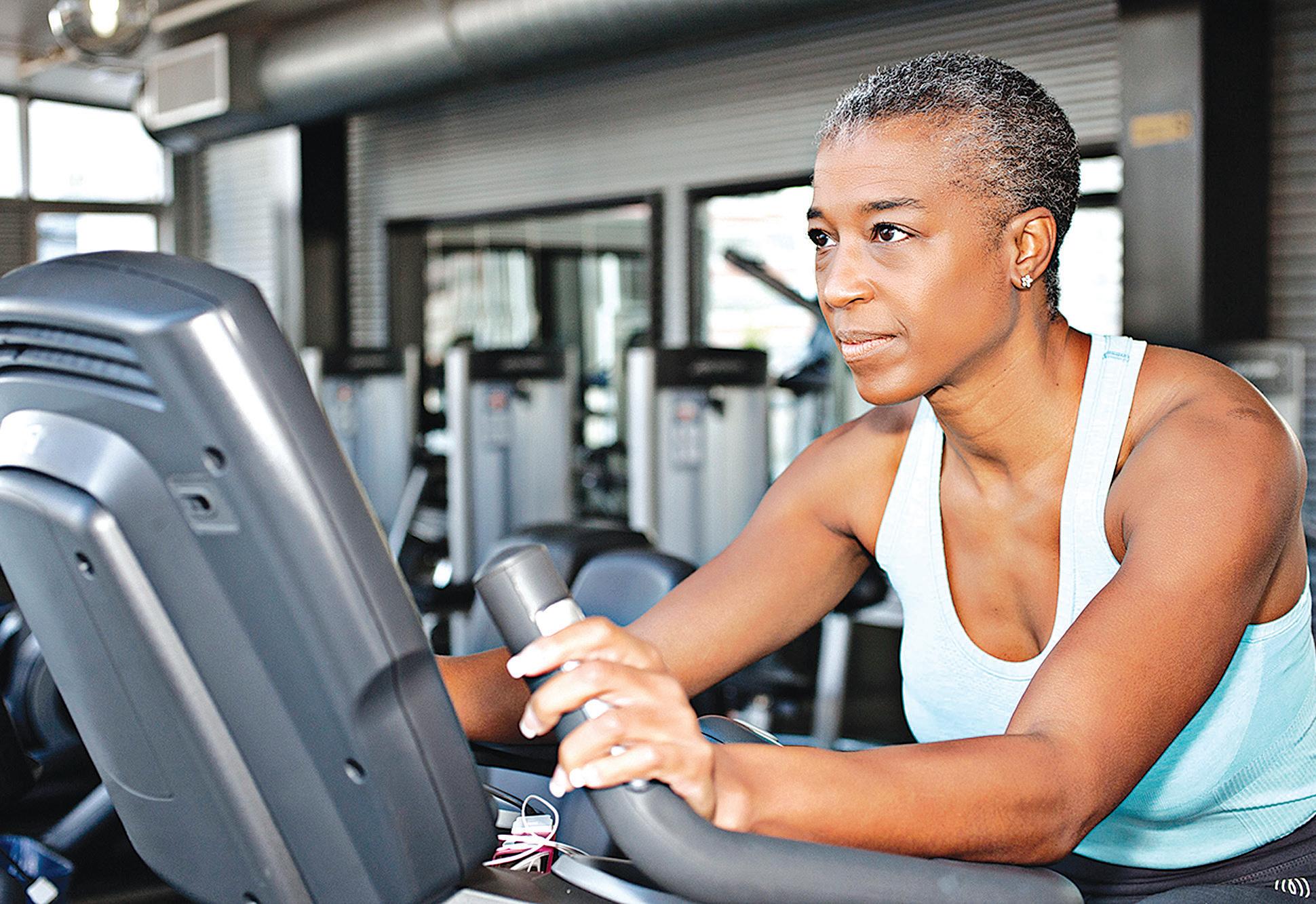
Exercise is an important component of healthy living at any age. Physical activity helps to maintain a healthy body weight and offers mental benefts like reduced stress and the potential to reduce risk for cognitive decline. But it’s important to point out that appropriate exercise for a person at age 20 may look quite different from the right exercise regimen for someone who is 50 or older. WebMD says exercise
is important for quality of life as one ages and is a key to independence. It is important to think of exercise as a tool, and as with all tools, the right ones should be used with a goal to avoid injury. Fitness after 50 should prioritize some practices and avoid others.
• Focus on resistance training. Cardiovascular exercise is important for heart health and general health, but strength training also is essential to counter some of the normal effects of aging.
Continuum Care, a private duty home care service, says aging results in a decline in bone density and muscle mass. Resistance exercise performed several times each week can help combat muscle loss and bone density decline.
• Opt for low-impact activities. Low-impact exercises that involve less jumping and pounding will be easier on the joints. A doctor, physical therapist or athletic trainer can help to customize or adapt activities based on a person’s limitations or medical con-
ditions.
• Warm up before working out. Older adults are advised to warm up muscles before exercising to avoid injury, particularly if it has been some time since you last exercised.
Harvard Medical School recommends fve minutes of brisk walking or time on an elliptical machine to get blood fowing to muscles and make them pliable. After working out, it’s advisable to stretch afterwards.
• Switch to interval training. Interval training, which alternates between
intense exercises and less demanding “rest” periods, offers greater benefts compared to a consistent exercise pace. Interval training helps burn extra calories and maximizes oxygen consumption. Interval training may allow for shorter workouts as well.
• Increase the number of rest days. Focusing on recovery after age 50 is important. Tissue takes more time to recover as the body ages, and that may require longer rest periods between workouts.
• Pay attention to what
your body is saying. Scripps Health says that even with a doctor or professional trainer guiding workouts, an individual is the best judge if physical activity is too much or too little. Everyone should pay attention to signs of overexertion, such as dizziness, excessive fatigue or chest pain. Other signs of discomfort, such as joint pain, may mean the intensity needs to be dialed down or other exercises chosen. An exercise regimen may need a reboot after a person turns 50. Modifed activities and a slowing of pace can promote a healthy, injury-free lifestyle.