NATHAN OLIVEIRA
BAY AREA EXISTENTIALIST (1928-2010)
This exhibition presents museum-quality works sourced directly from the Estate of Nathan Oliveira. This virtual tour functions as a companion to the LewAllen Gallery exhibition Bay Area Existentialist, offering an intimate gallery virtual walkthrough.
Consider these pages a guide for navigating highlights and essential points for close observation.
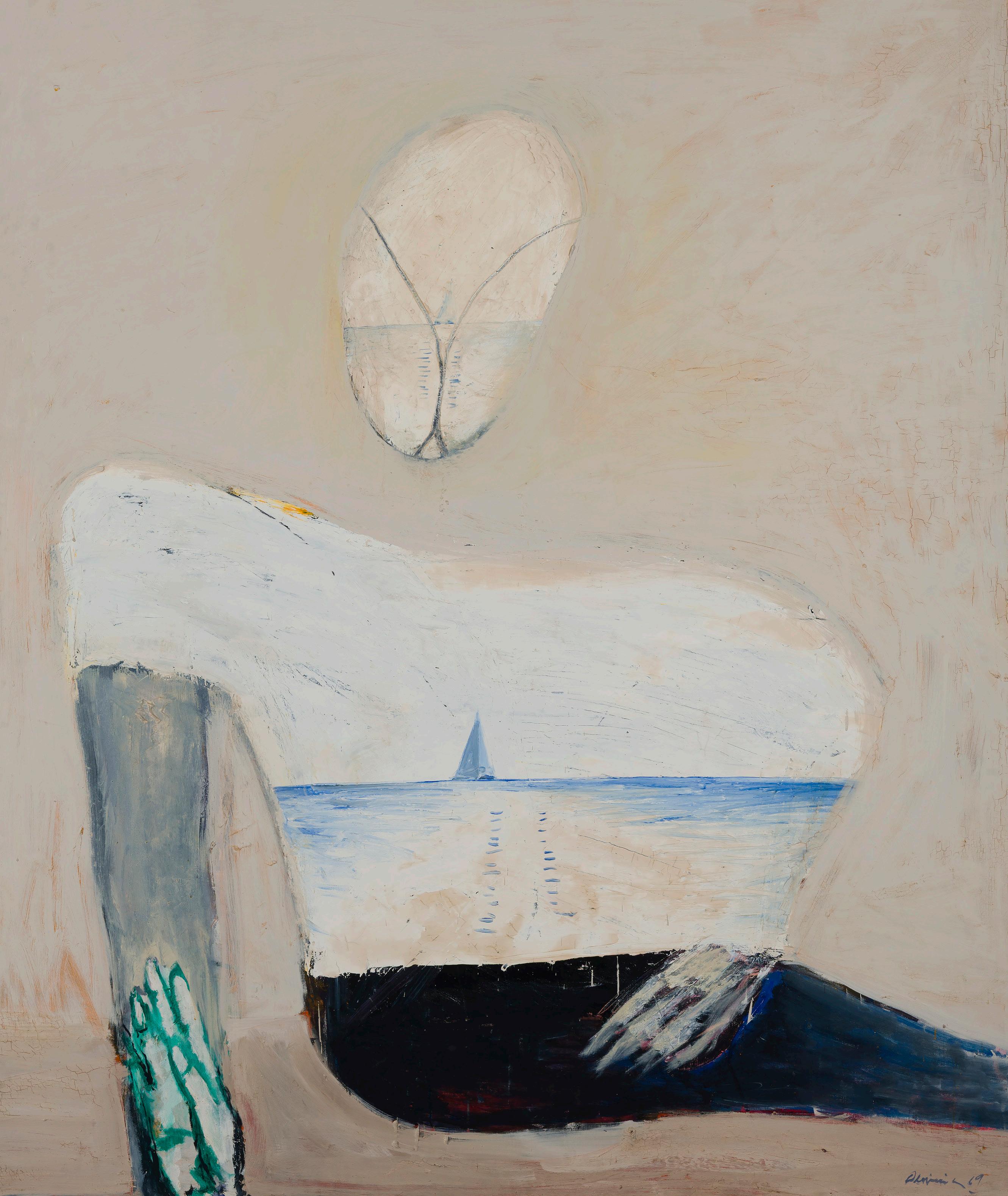
Cover: Ancient Figure Work 1969, oil on canvas, 78 x 60 in
BAY AREA EXISTENTIALIST NATHAN OLIVEIRA (1928-2010)
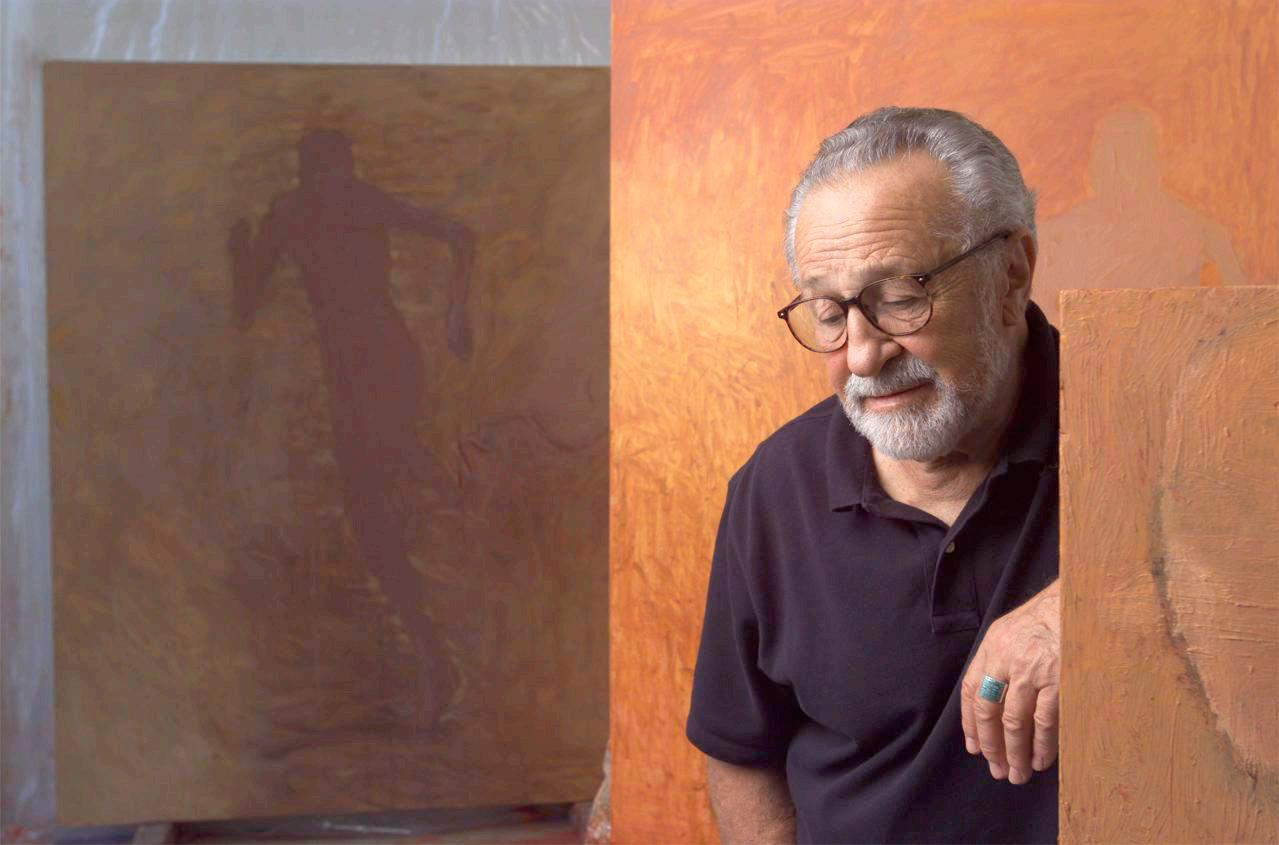
Nathan Oliveira (1928–2010), remarkably brilliant independent thinker, brought enduring universality to pictorial experience, images, and atmospheres that sustain ongoing revelations of existential mysteries. Renowned for extraordinary passion and mystery, Oliveira possessed genius for making brilliant figurative works using Abstract Expressionist gesture. Over time, the artist broadened the oeuvre to include objects—antlers, bones, birds, wings, and geometric shapes—extracting profound meaning. This exhibition invites close examination of the works of an American master.
The Portrait and the Self
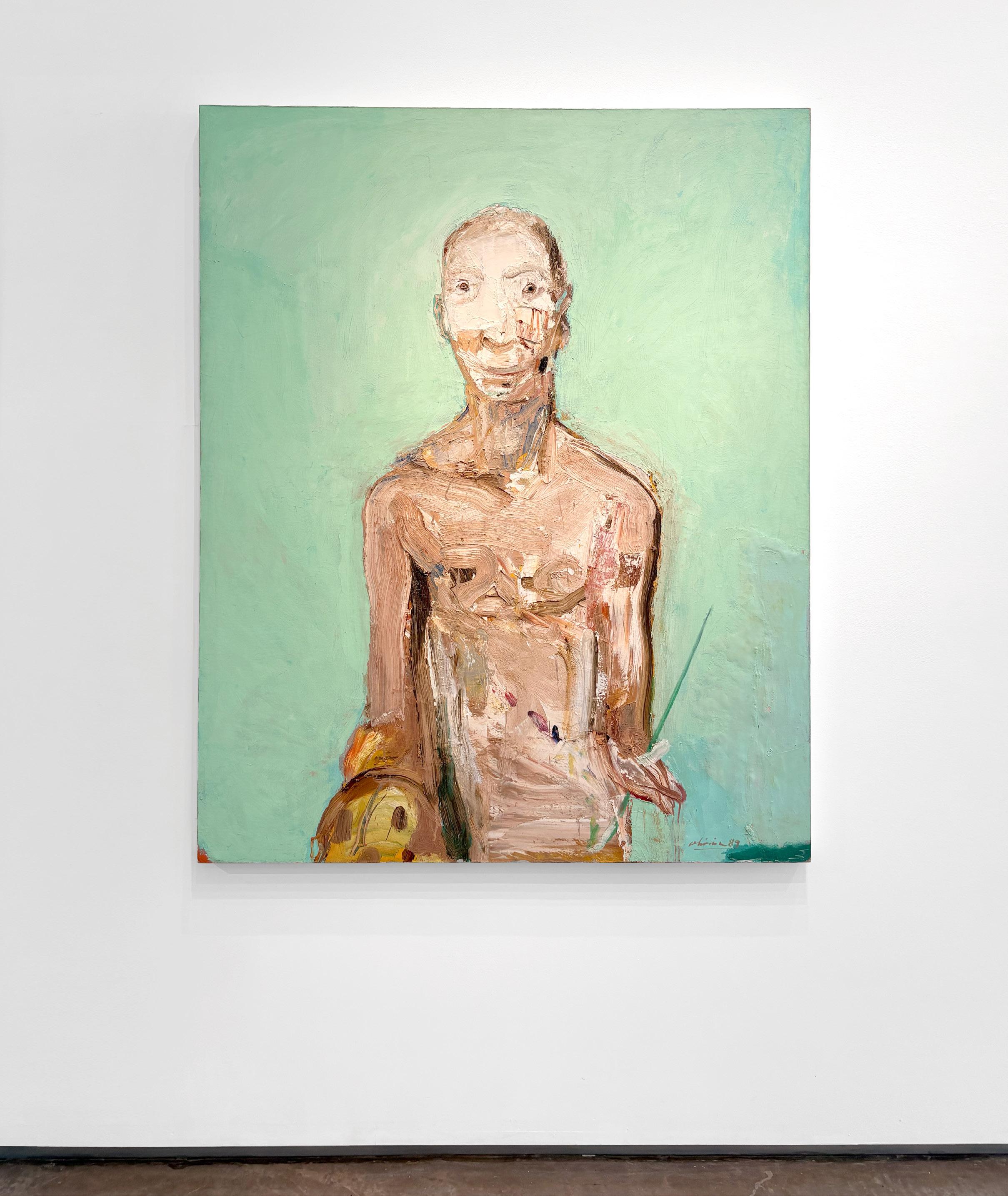
In Painted Painter (1989), a blanched body lifts from a sea of celadon, the face of the author abraded toward anonymity. The figure accrues and chafes in the same pass, wavering into view even as it weathers. This work reveals the artist’s view regarding the face: the location where another consciousness simultaneously offers and withholds itself. Oliveira internalizes this condition, suggesting encounters with an internal stranger.
Small panels Head 1 and Head 2 (1967) present storms of impasto from which a face surfaces and re-submerges. In Head 2, two blue eyes puncture the churn with a jolt of specificity amid the surrounding pigment. Troweled flesh registers the body as the truth of experience lodged in matter, the thickness of the pigment equaling the thickness of embodiment.
The Painted Painter 1989, oil on canvas, 66 x 54 x 2 in
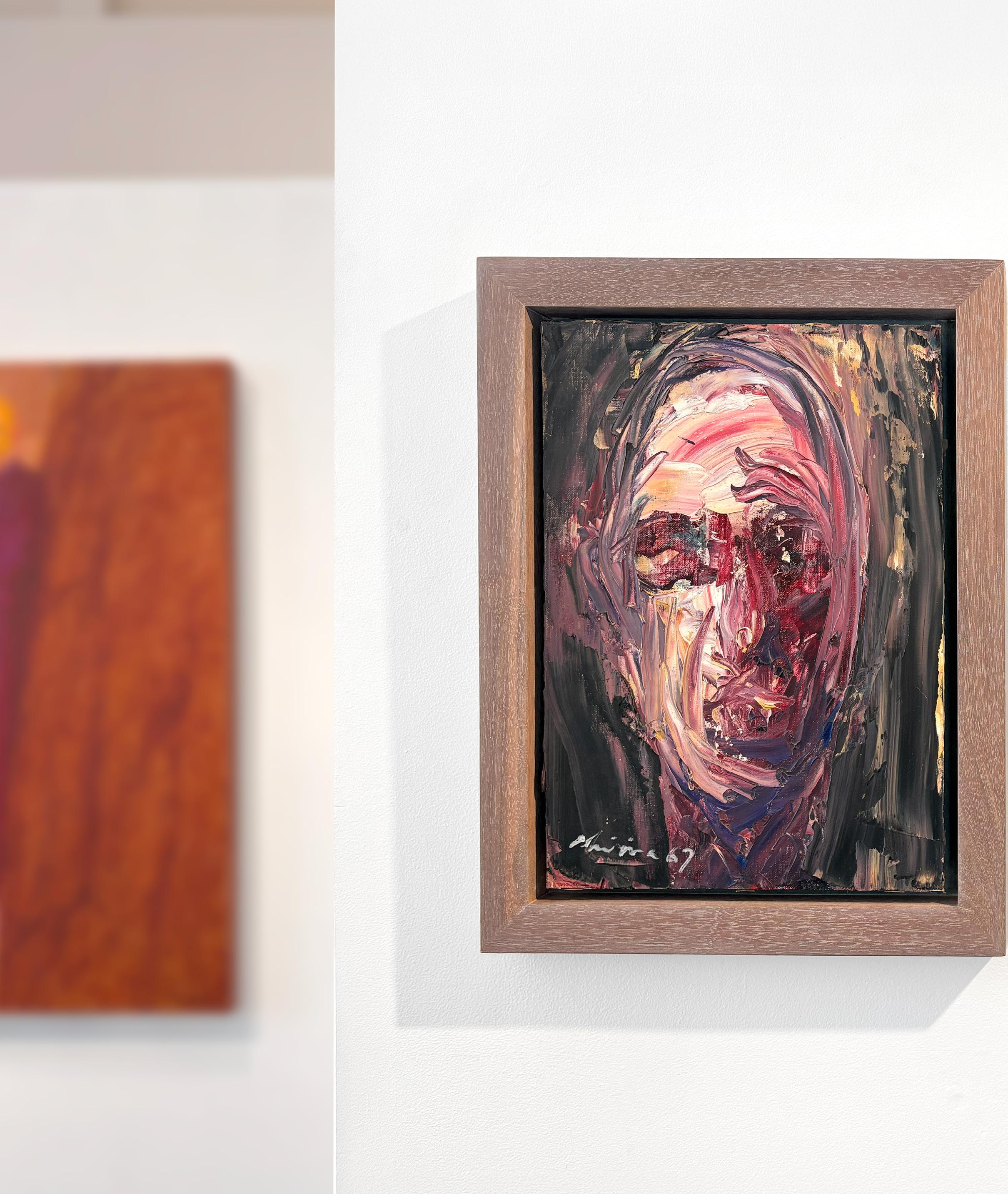
Head 1
1967, oil on art board, 13.75 x 10 in
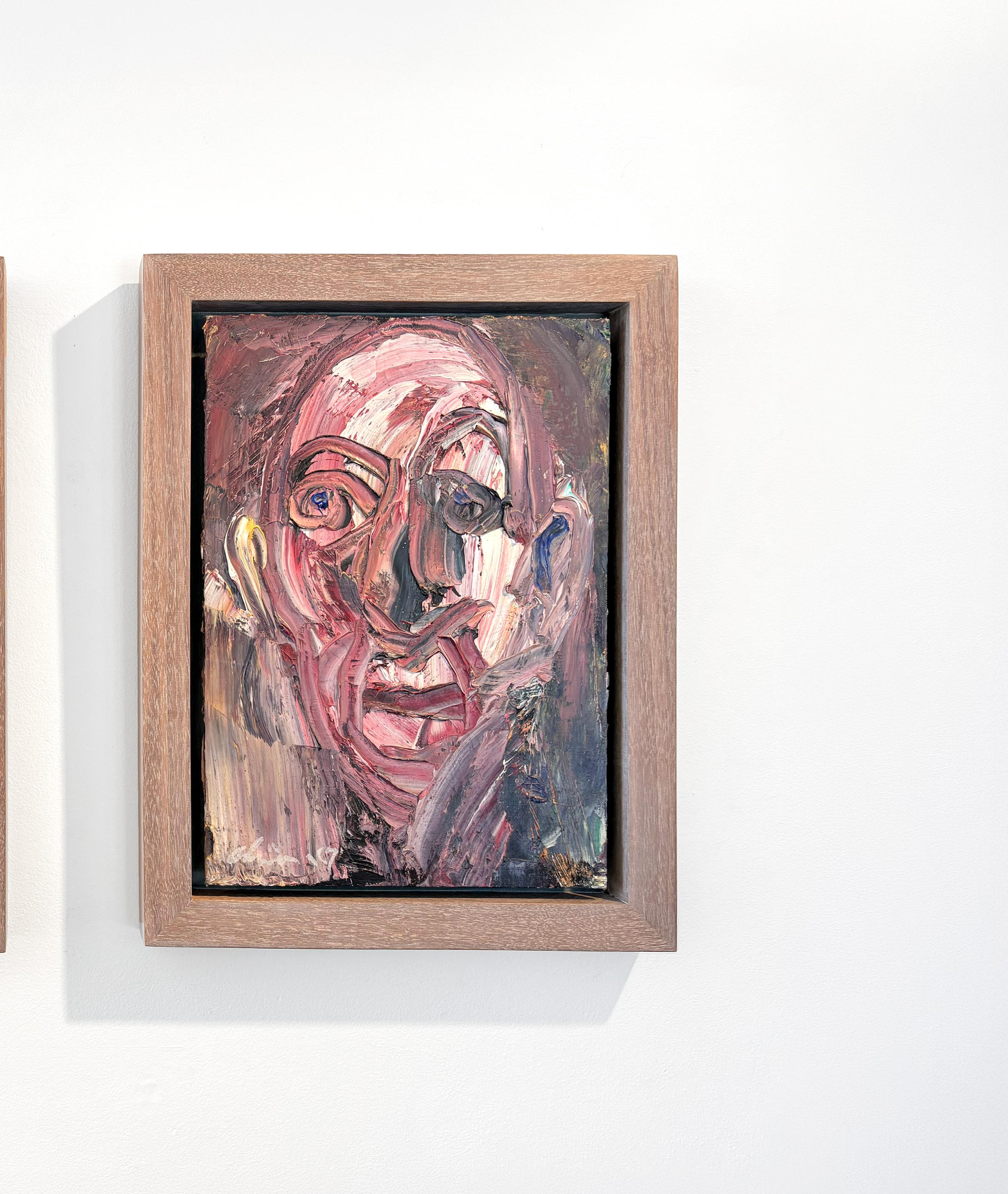
Head 2
1967, oil on art board, 13.75 x 10 in
Expansion and Interiority

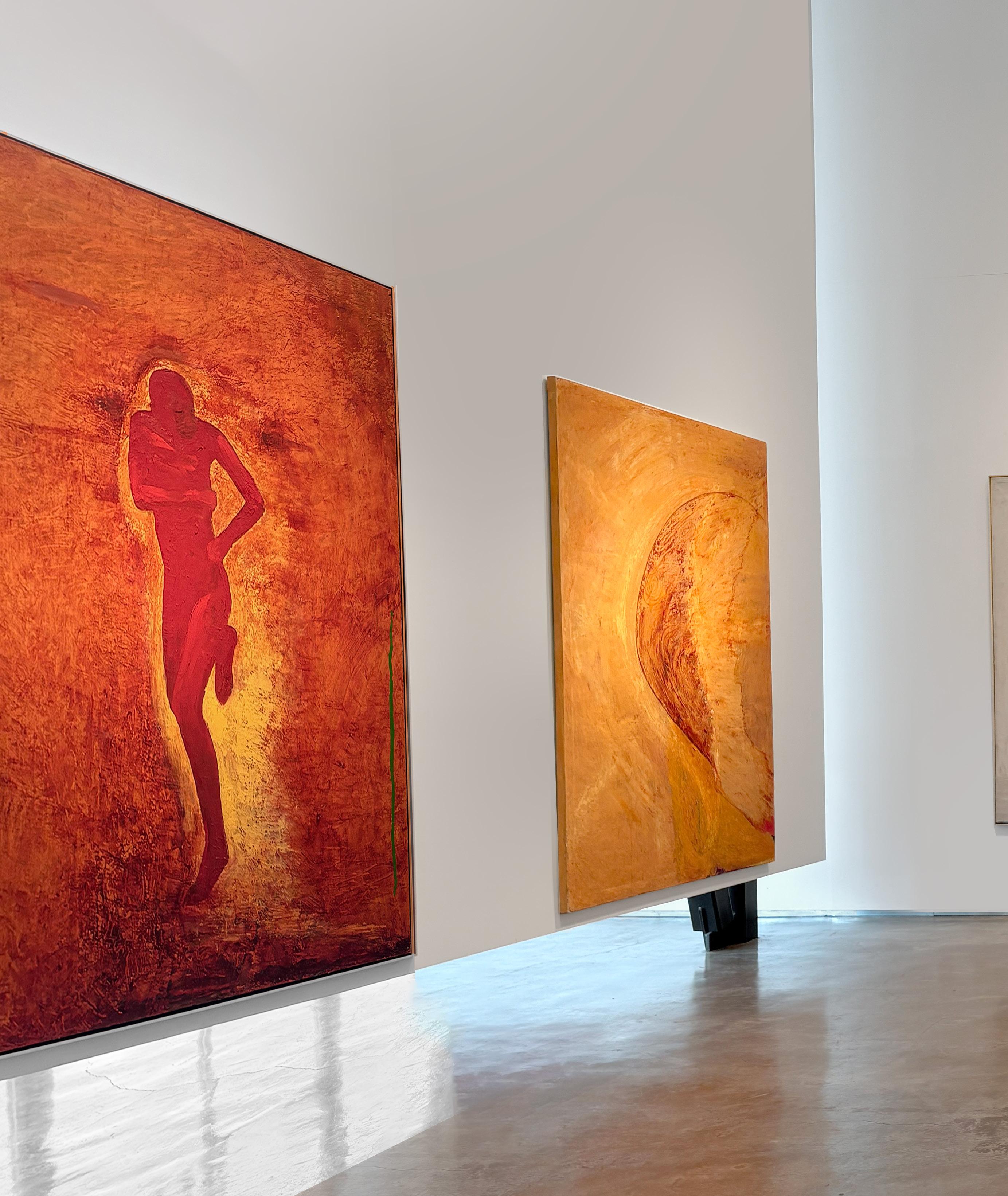
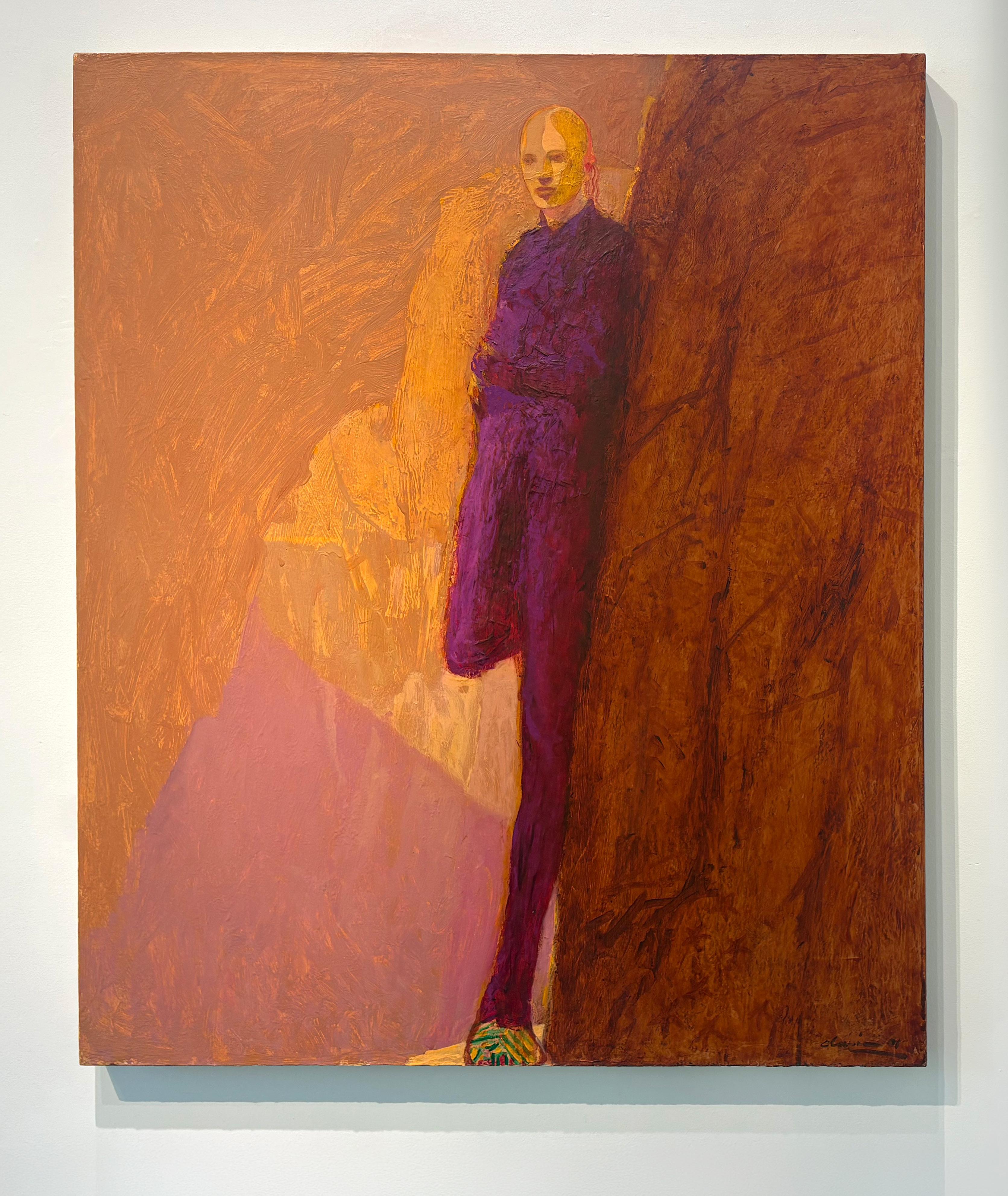
Oliveira’s larger works move from introspection to external intensity. These works are vast and consuming, creating an immersive experience for the viewer. Climber (2001) sets a slim violet figure against a wall of lit stone. Runner (2006), a towering eight feet of carmine smolder, melts the sprinting figure into the glowing heart of the surrounding color field. Hawk #11 resonates with the intensity of these larger works, positioning its object within a field of radiant energy. These works admit no outside, externalizing the passionate ordeal of being through vast proportions that burn into radiant air and join with the viewer’s vision.
Climber
2001, oil, alkyd & cold wax on canvas, 50 x 42 x 2 in
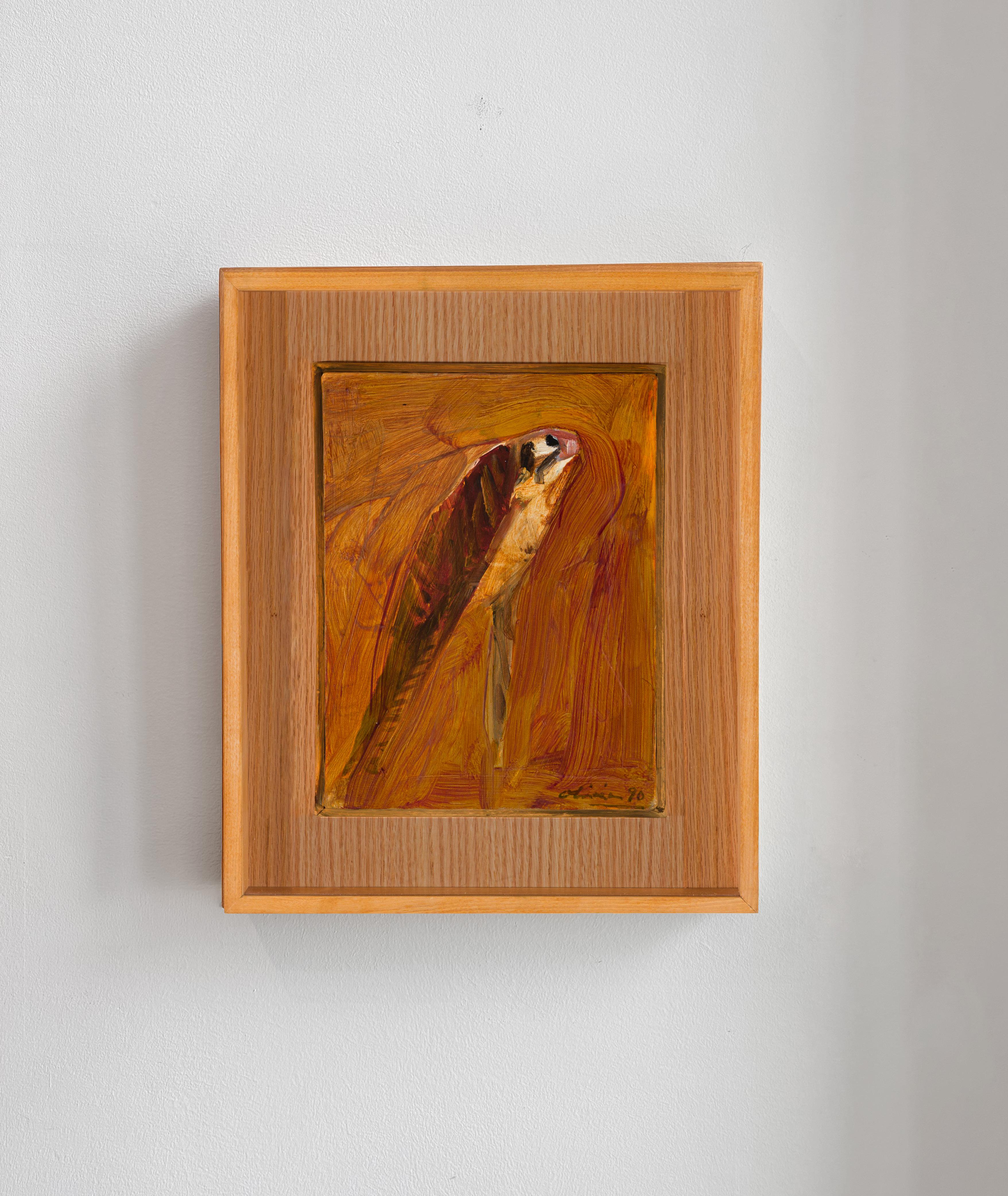
Hawk # 11
1990, oil on canvas, 11.75 x 14.5 in
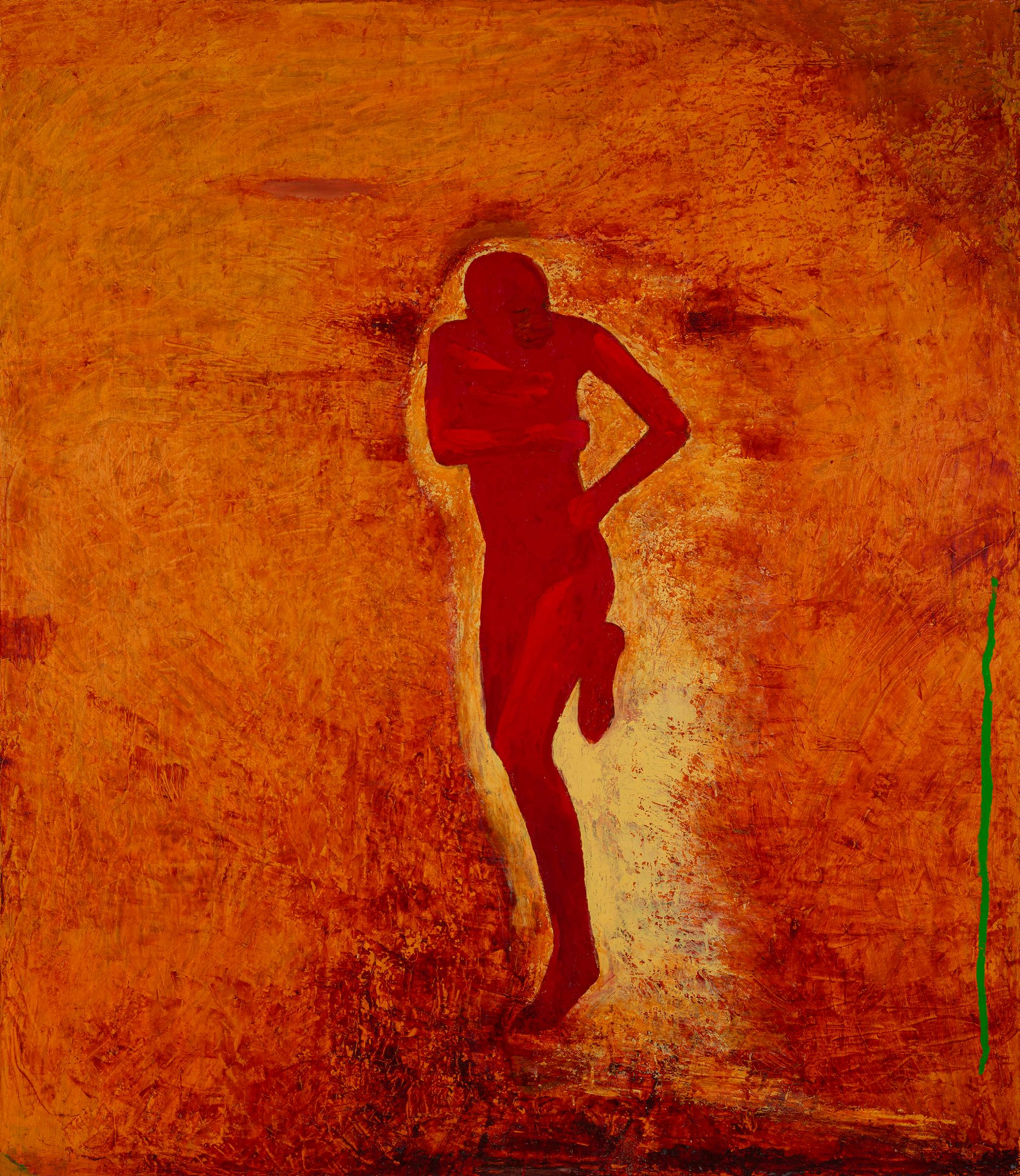
The Runner 2010, oil on canvas, 89 x 77 in
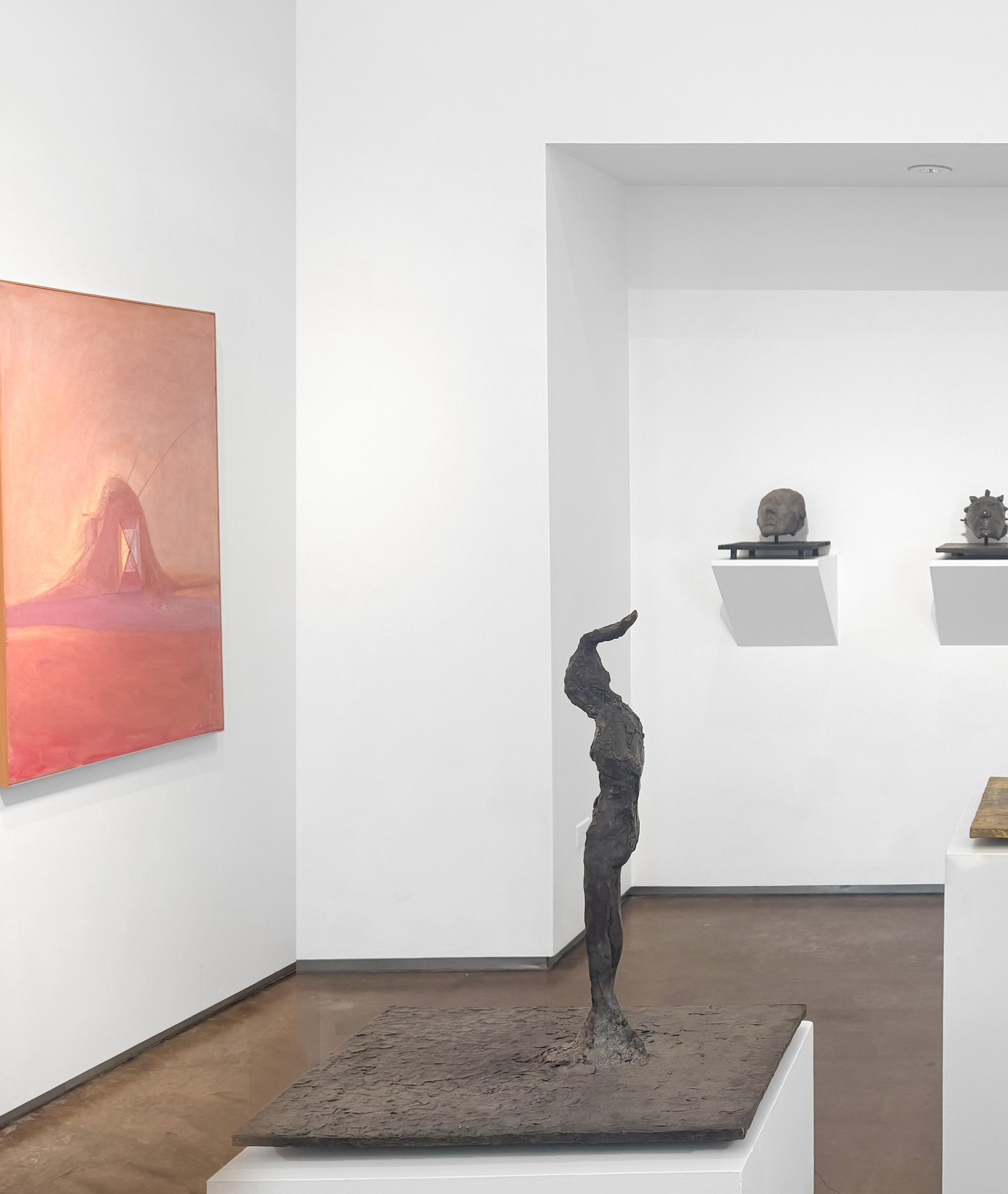
The Sculpted Solitary Figure
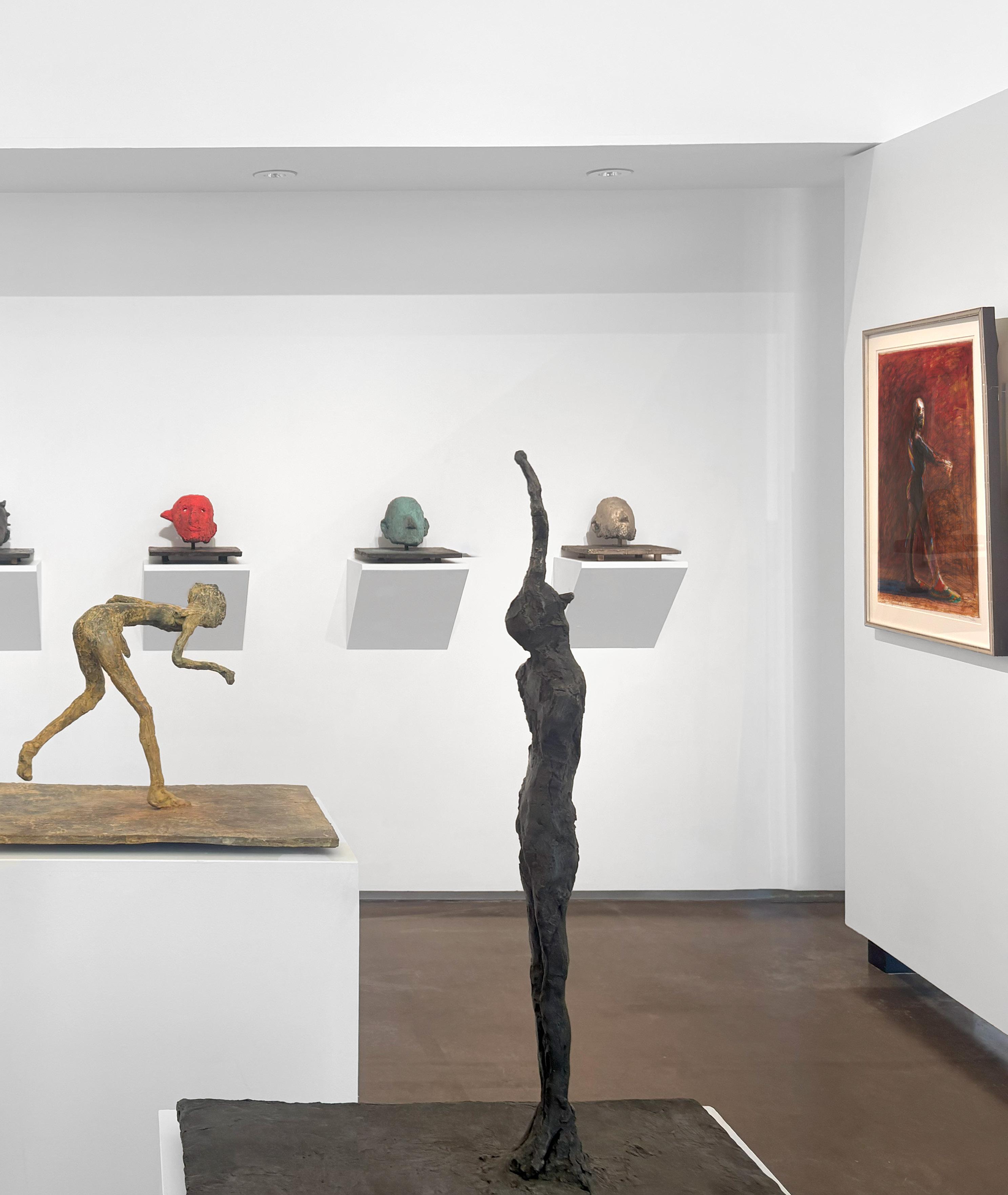
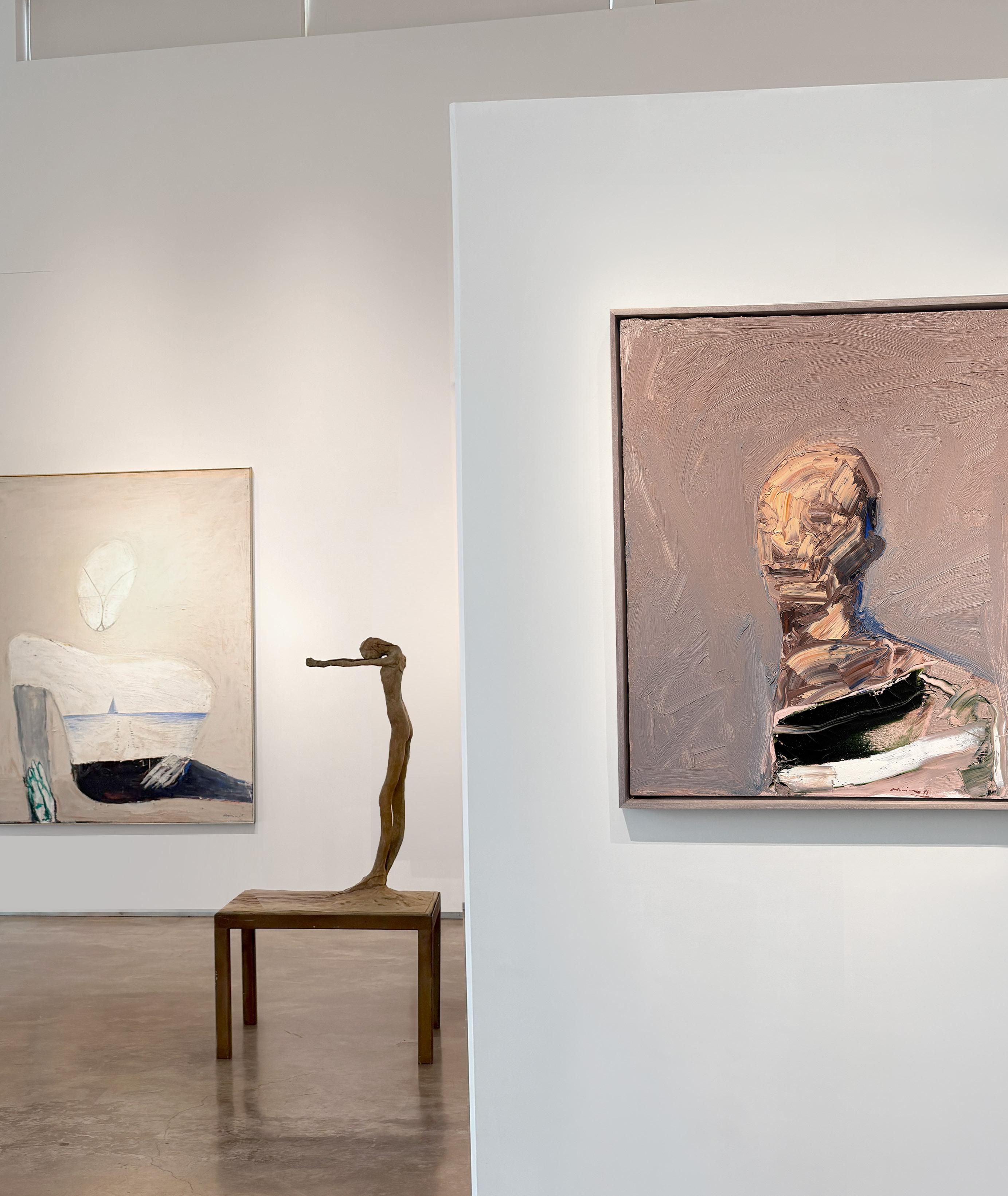
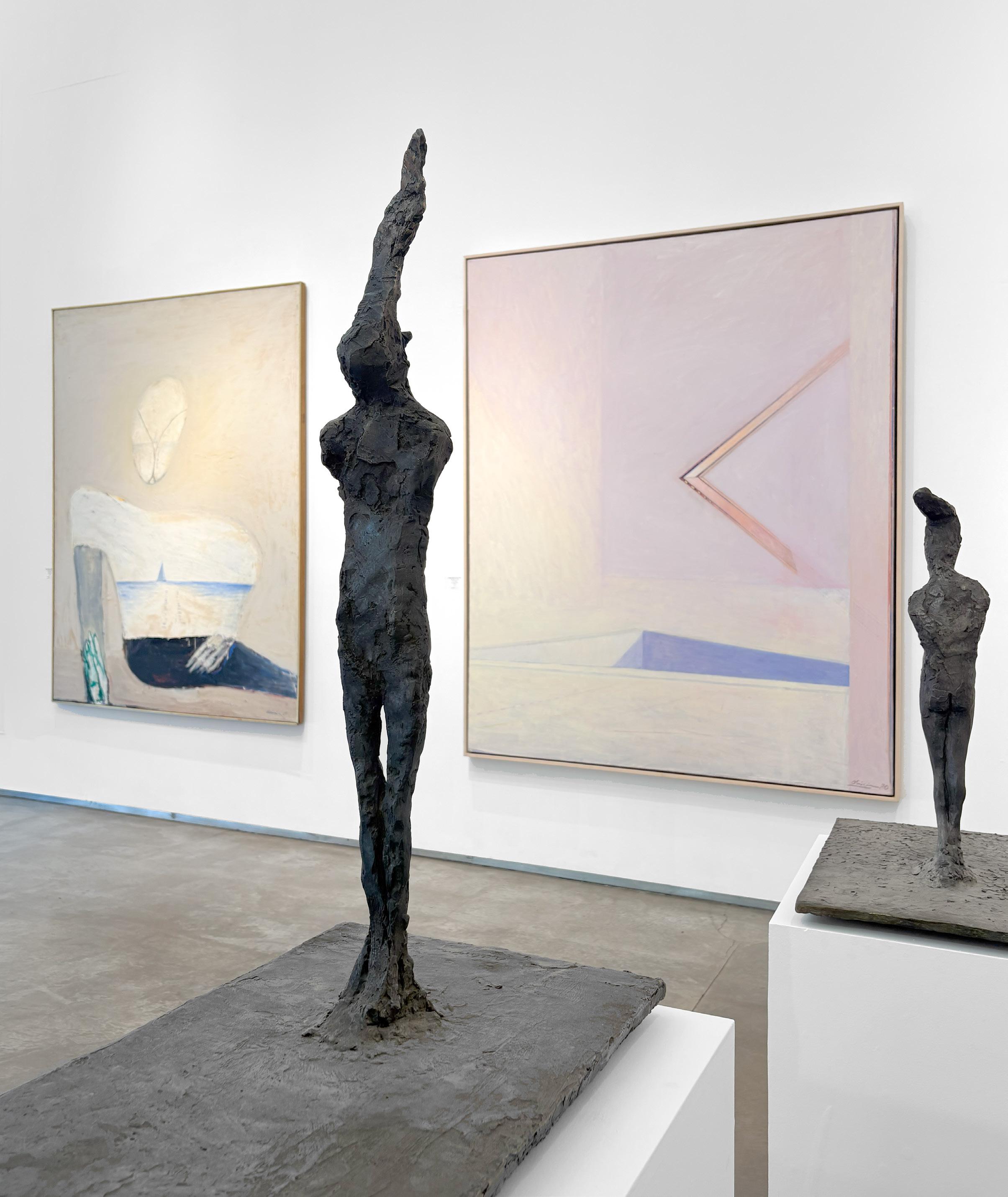
Throughout his career, Oliveira retained the figure to develop a visual analogue to existential thought: how finite consciousness confronts mortal contingency and the burden of self-awareness, placing a body in the reinvigorated context of its own existence. Space offers no consolation; narrative, no resolution; psychology, no stable interiority. The body, neither classifiable nor predictable, preserves the unquantifiable weight of a particular existence—an inquiry that remains at the crux of the artist’s work for over fifty years.
Standing Figure #1 (Ed. 2/9) 2007, bronze, 33 x 15.5 x 23.5 in
Standing Figure #2 (Ed. 4/9) 2007, bronze, 27 x 16 x 23.5 in
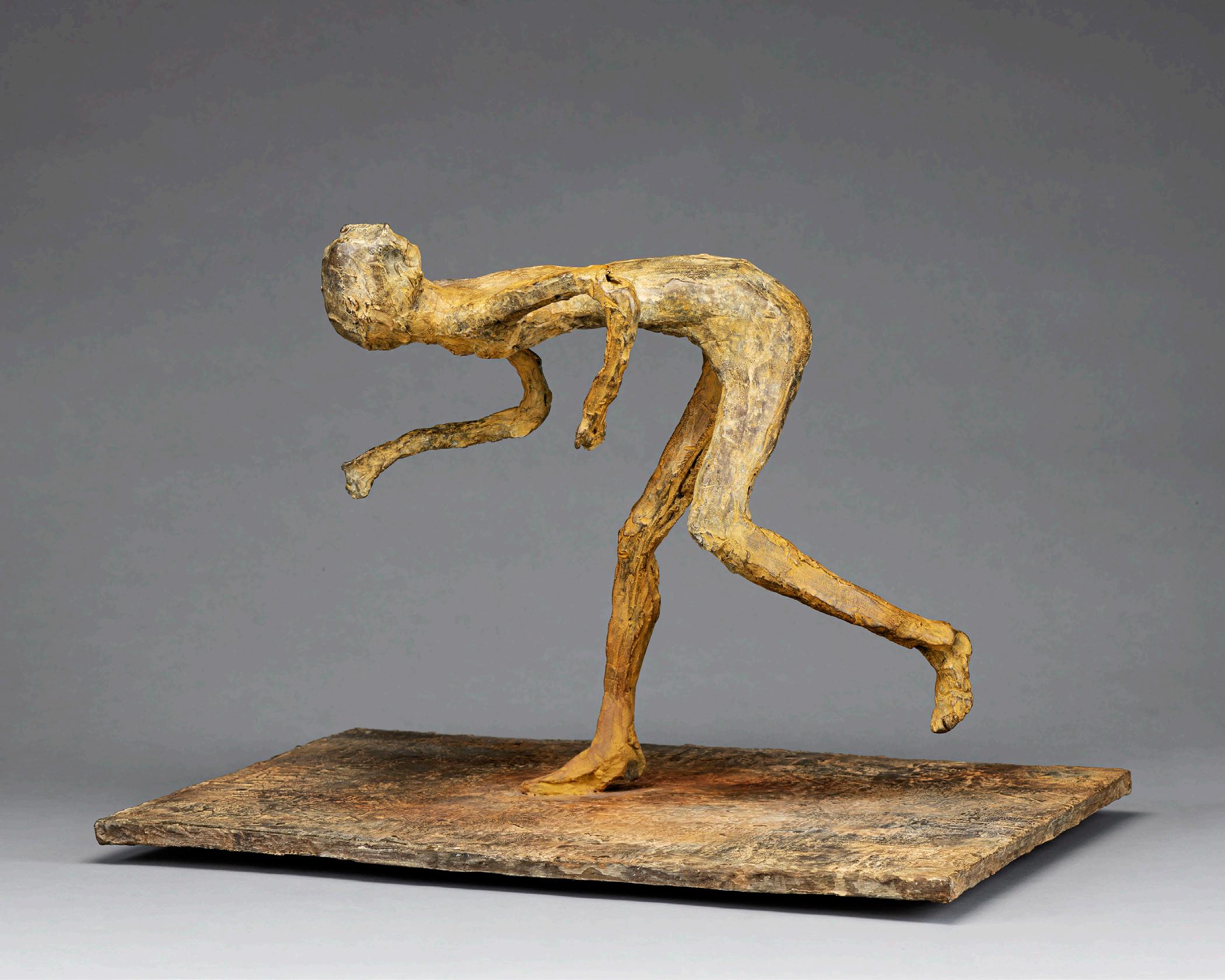
Runner (Ochre), (Ed. 1/9) 2007, bronze, 17 x 16 x 23.5 in
Figure #4 (Ed. of 7) 1983, bronze, 60 x 22.5 x 30.5in
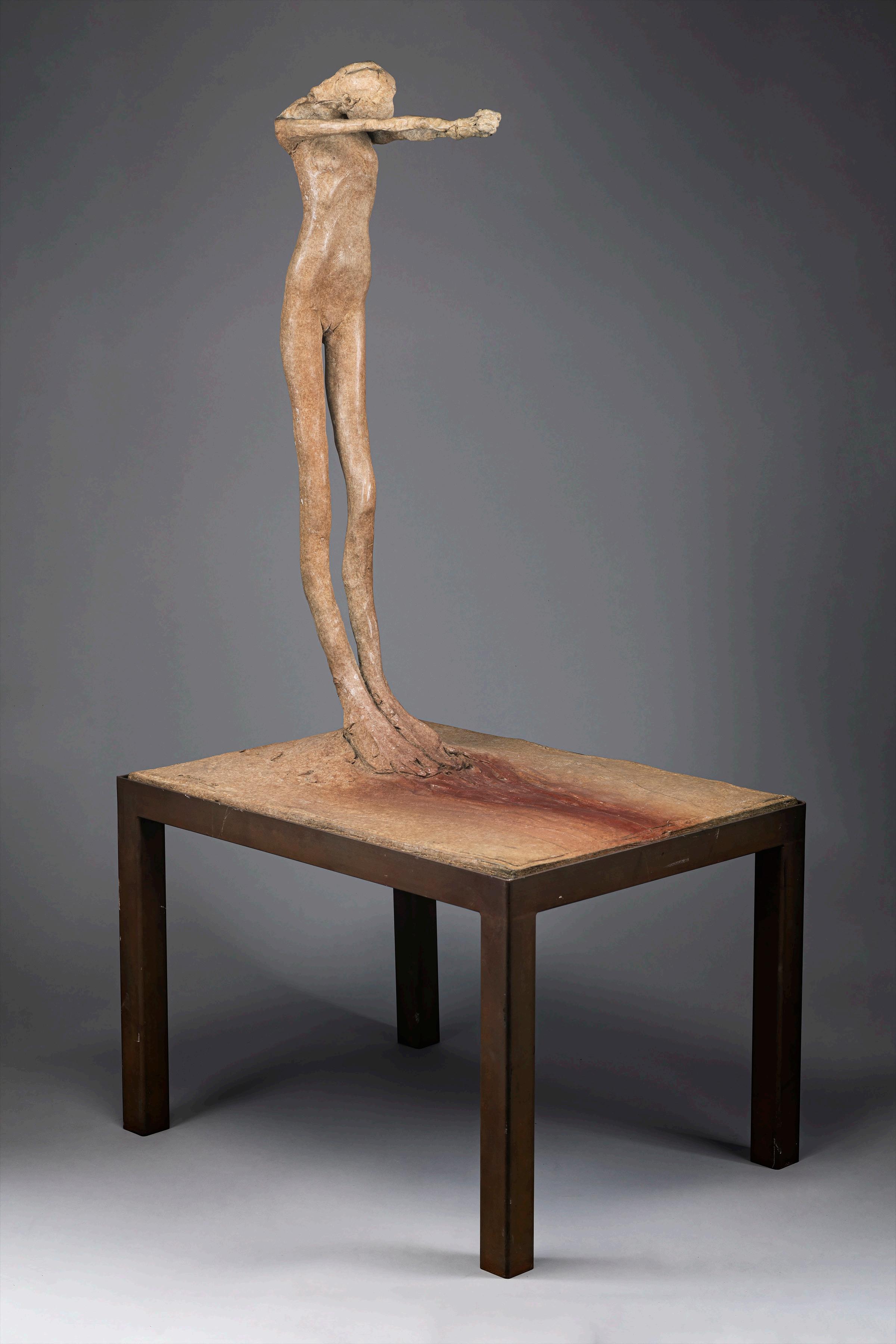
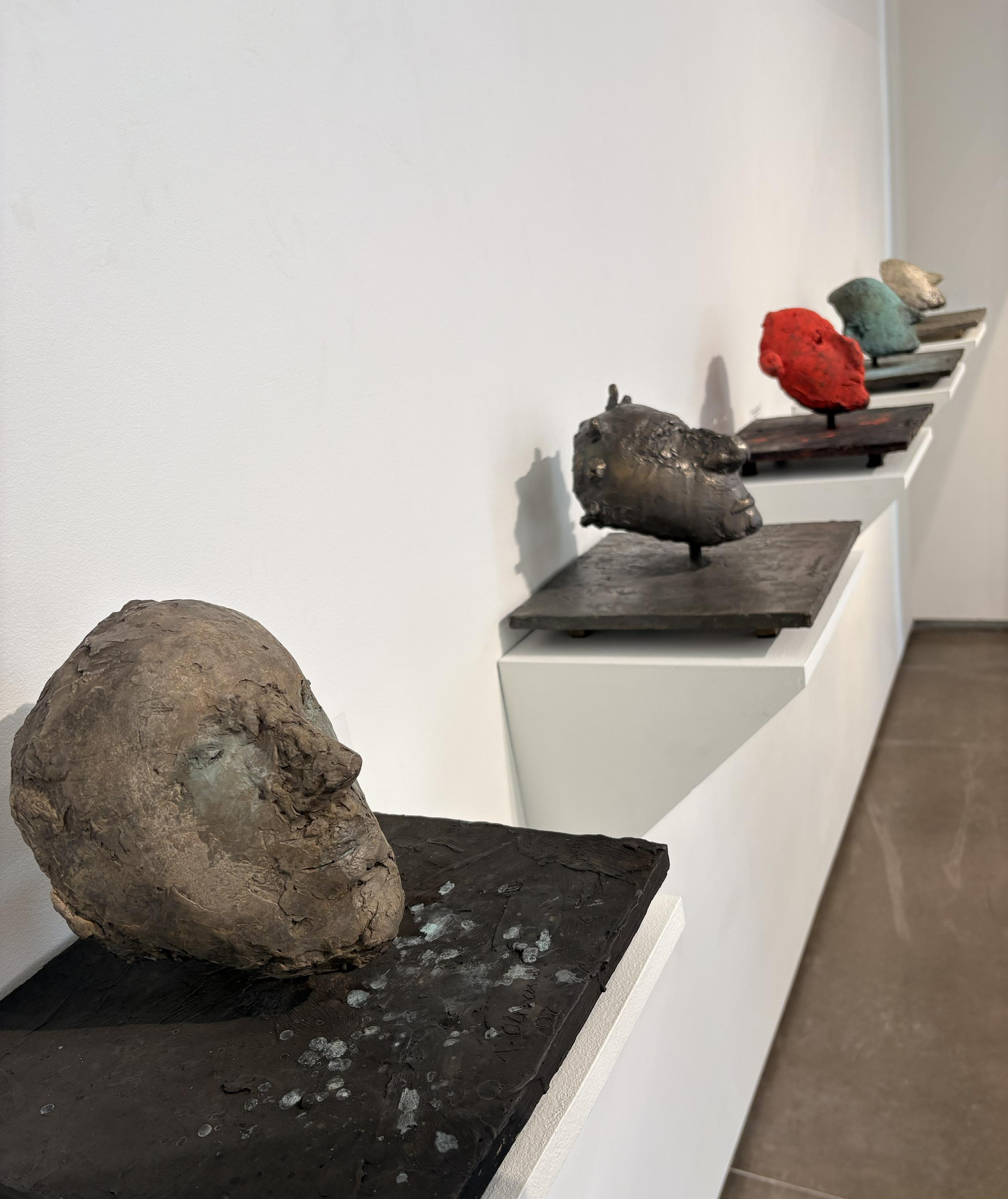
Oliveira found expressive resonance in sculpture, extending the passion for truth-telling explored in two-dimensional works into three dimensions. Working with bronze afforded a new medium to apply talent for reduction and abstraction, conveying deep emotional content. For the artist, the sculpted solitary figure possessed the power for revelation akin to drawn forms—an inquiry described as spiritual. These bronzes demonstrate the facility to use the figure to float, walk, or become boundless, conveying meanings universal rather than personal. This medium afforded new ways to utilize remarkable ability with gesture and amplify visual communication essential to the being of the artist. Oliveira stated of the work, “I do not look at modern art as a linear experience, continually in competition with itself, devouring itself ... I rather believe in an art that layers time upon time, an art that simply reaffirms our presence and the depth of our existence on this earth, our planet in the universe. Perpetual devotion to humanity is what it is all about.”
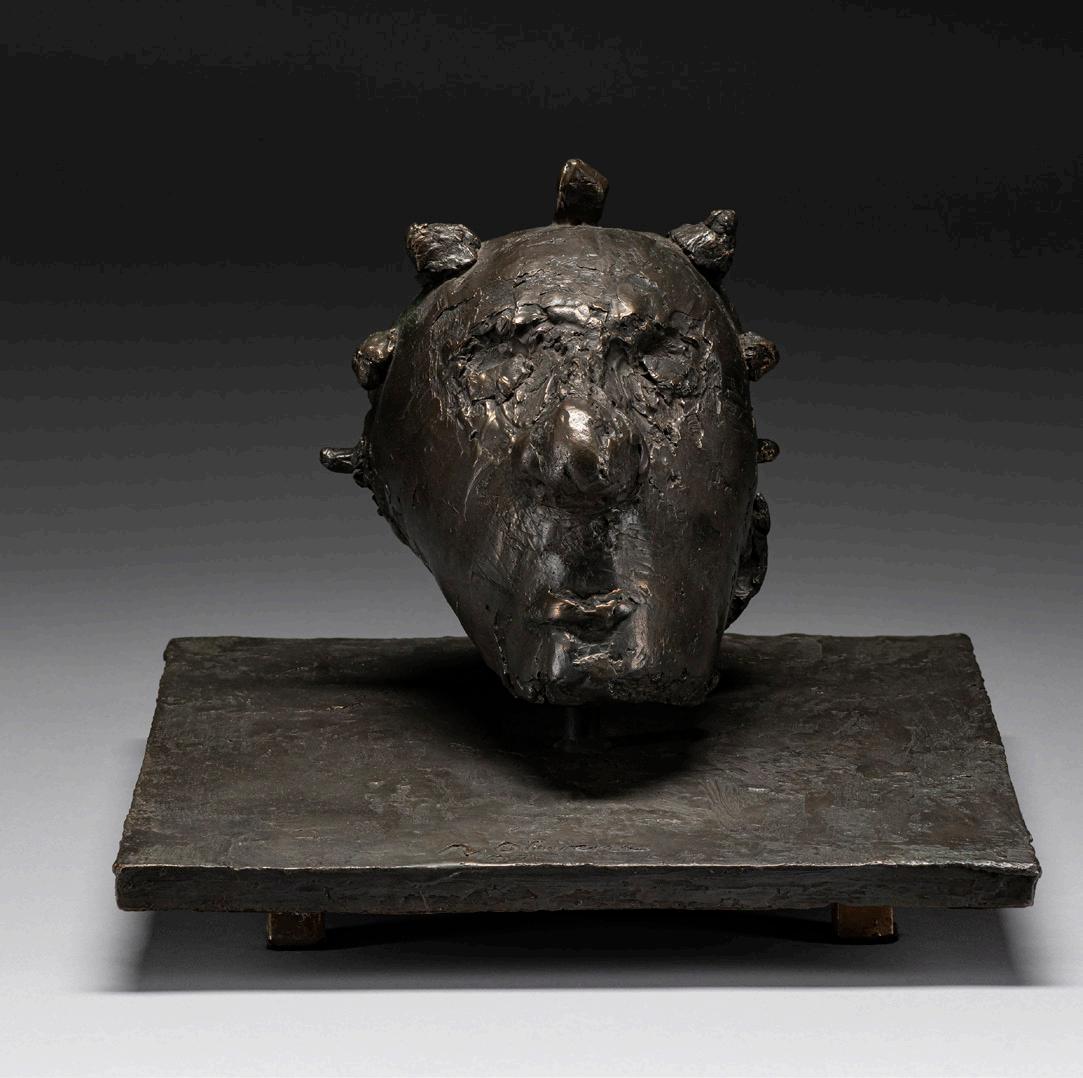
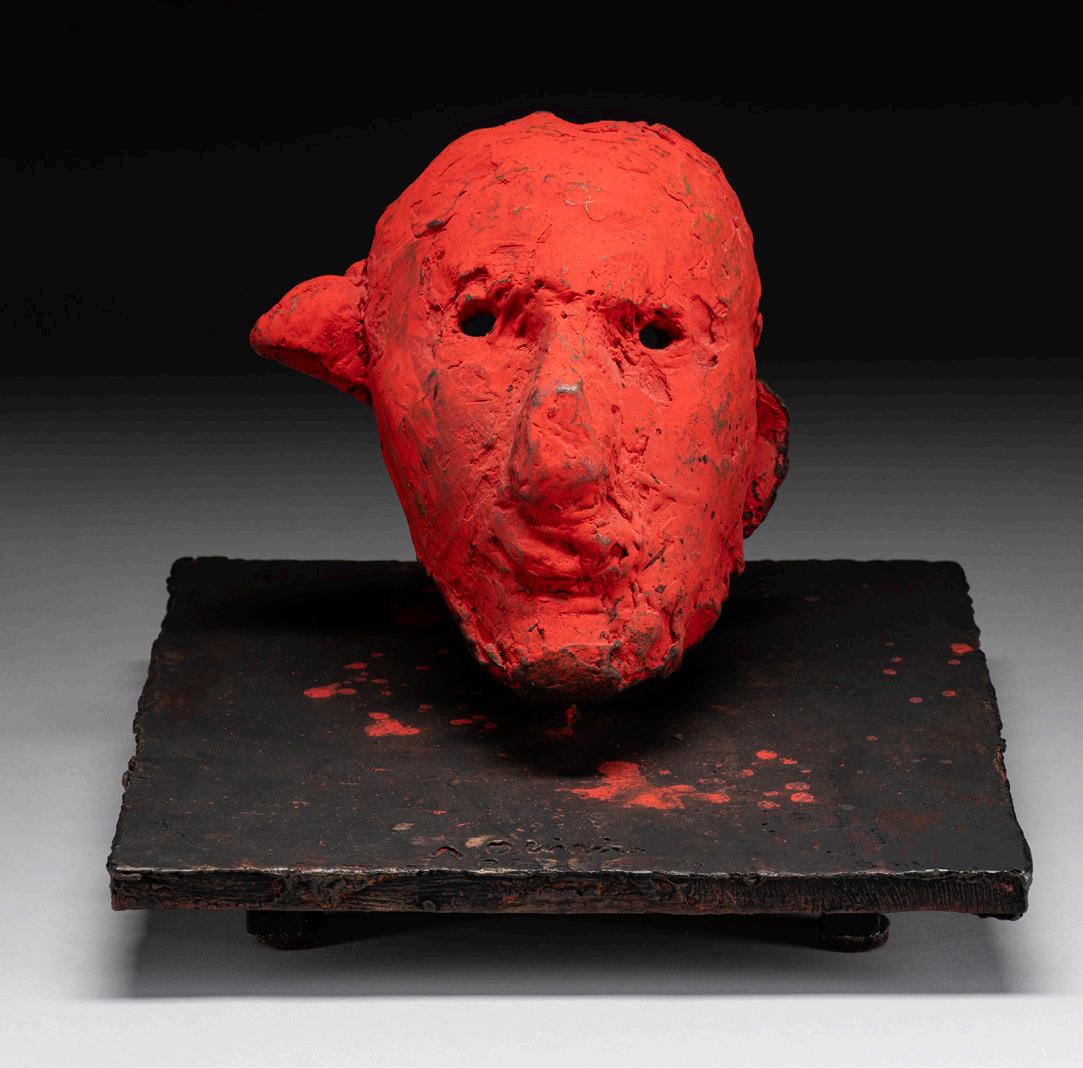
Mask VI (Ed. 7/9)
2007, bronze, 10 x 12 x 12 in
Mask VII (Ed. 6/9)
2007, bronze, 9.5 x 12 x 12 in
Previous Page, Mask V (Ed. of 9)
2007, bronze, 9.25 x 12 x 12 in
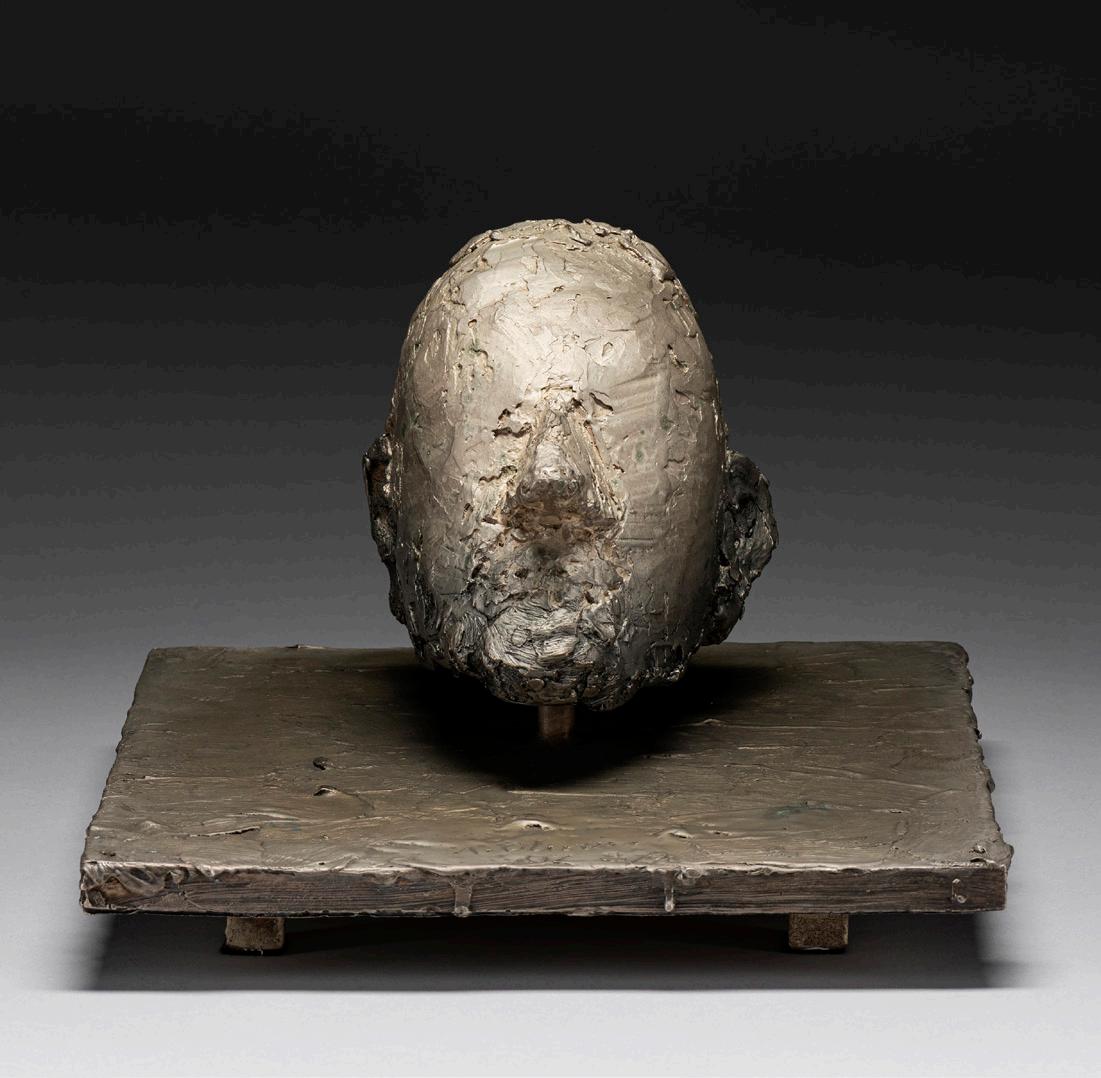
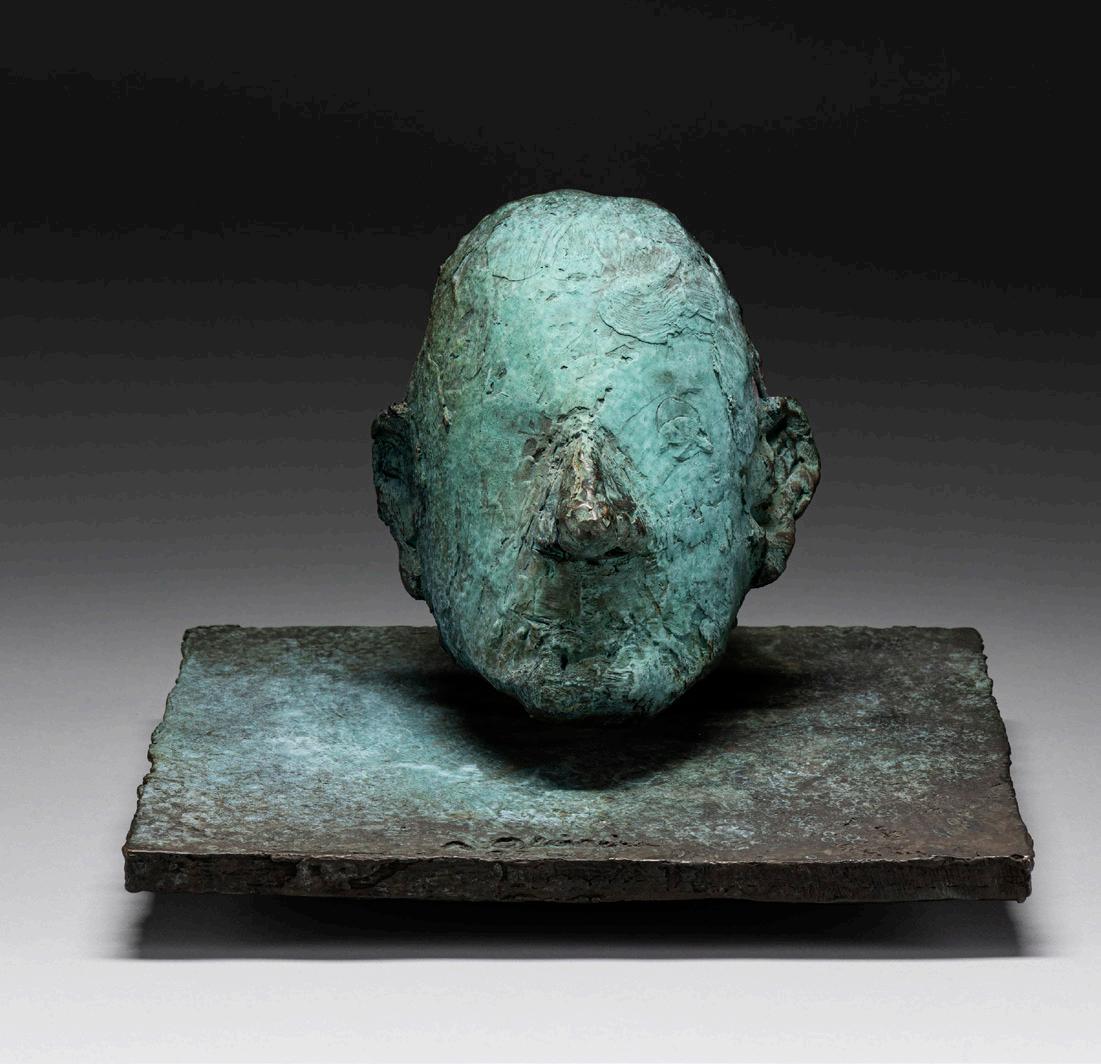
Mask II (Ed. 4/9)
2007, bronze, 9 x 11.75 x 11.75 in
Mask III (Ed. 8/9)
2007, bronze, 9 x 12 x 12 in
The Architecture of the Void

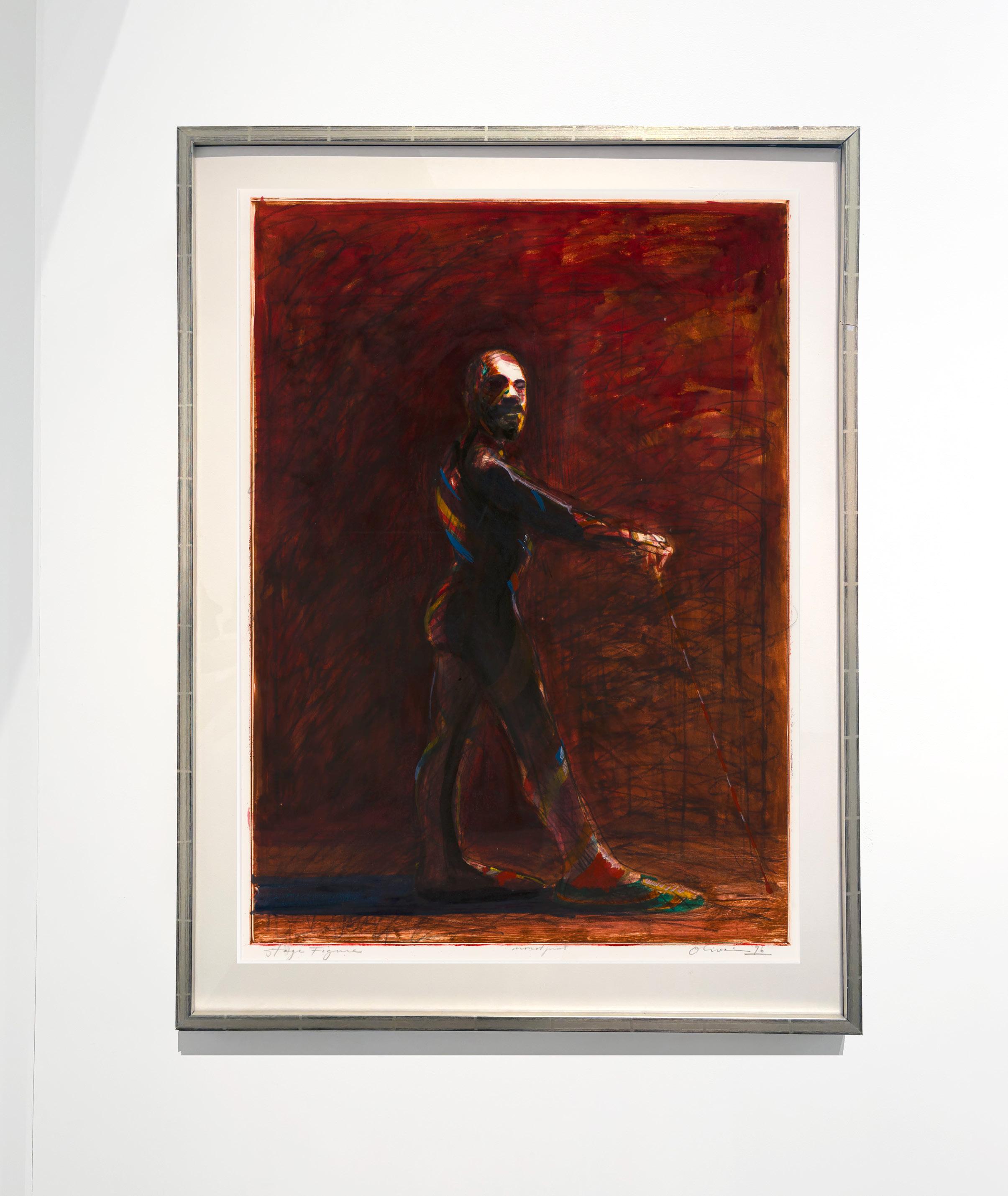
Oliveira’s “rooms” act as the spatial coordinates of an existential boundary—what the philosopher Karl Jaspers called Grenzsituationen, or limit-situations. In Stage Figure (1976), a lone figure sits over a deep vermilion monotype ground, suggesting a feeling of finality. Seated Man in Room (1969) rules off a perspectival box, a cell drawn with a draftsman’s restraint, within which the sitter’s bone-and-violet body is shot through with the roil of the inanimate, highlighting the tension between the body and the space it occupies.
Stage Figure 1976, monotype, 30 x 22 in
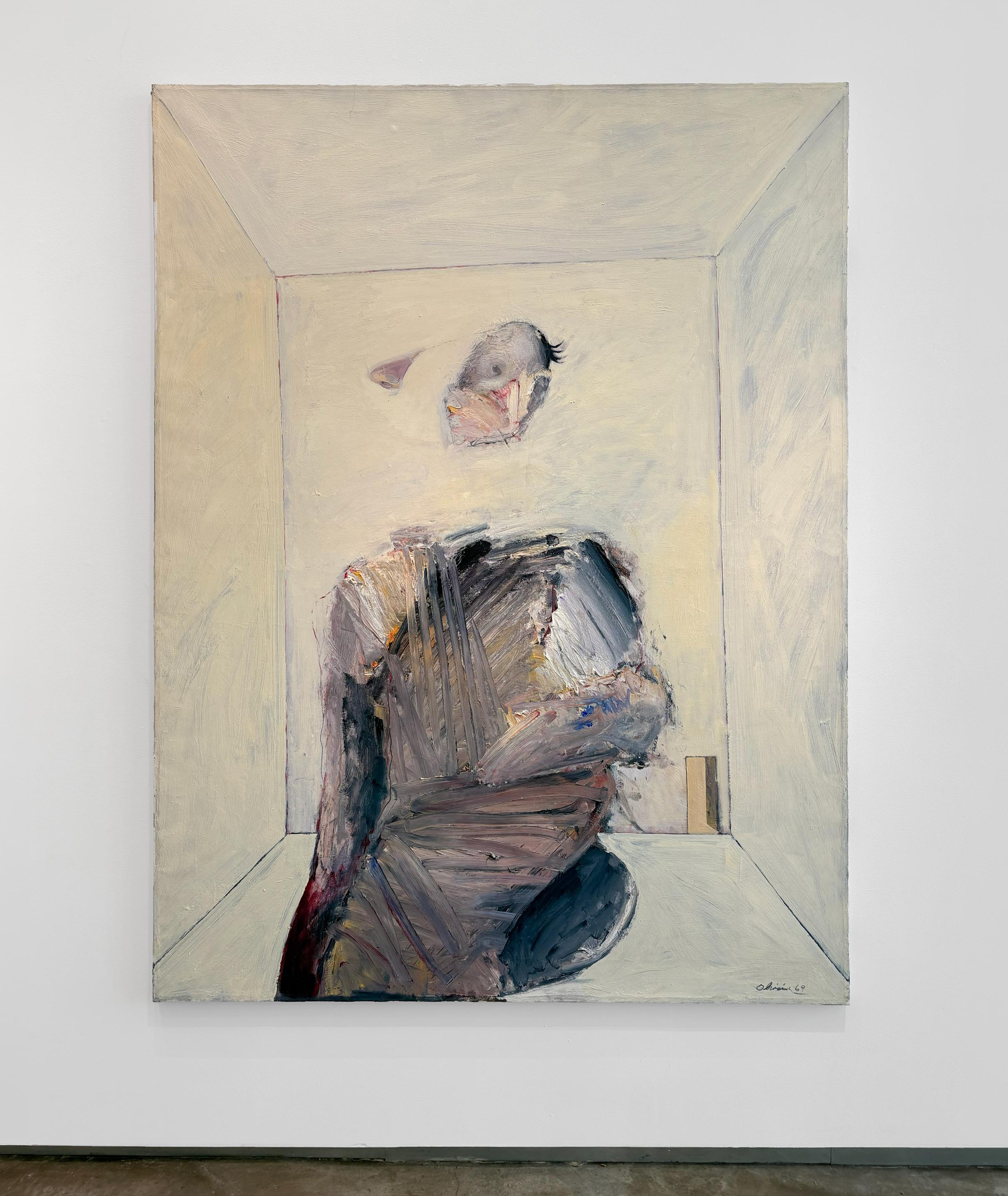
Seated Man in Room 1969, oil on canvas, 78 x 60 in Opposite Page , details
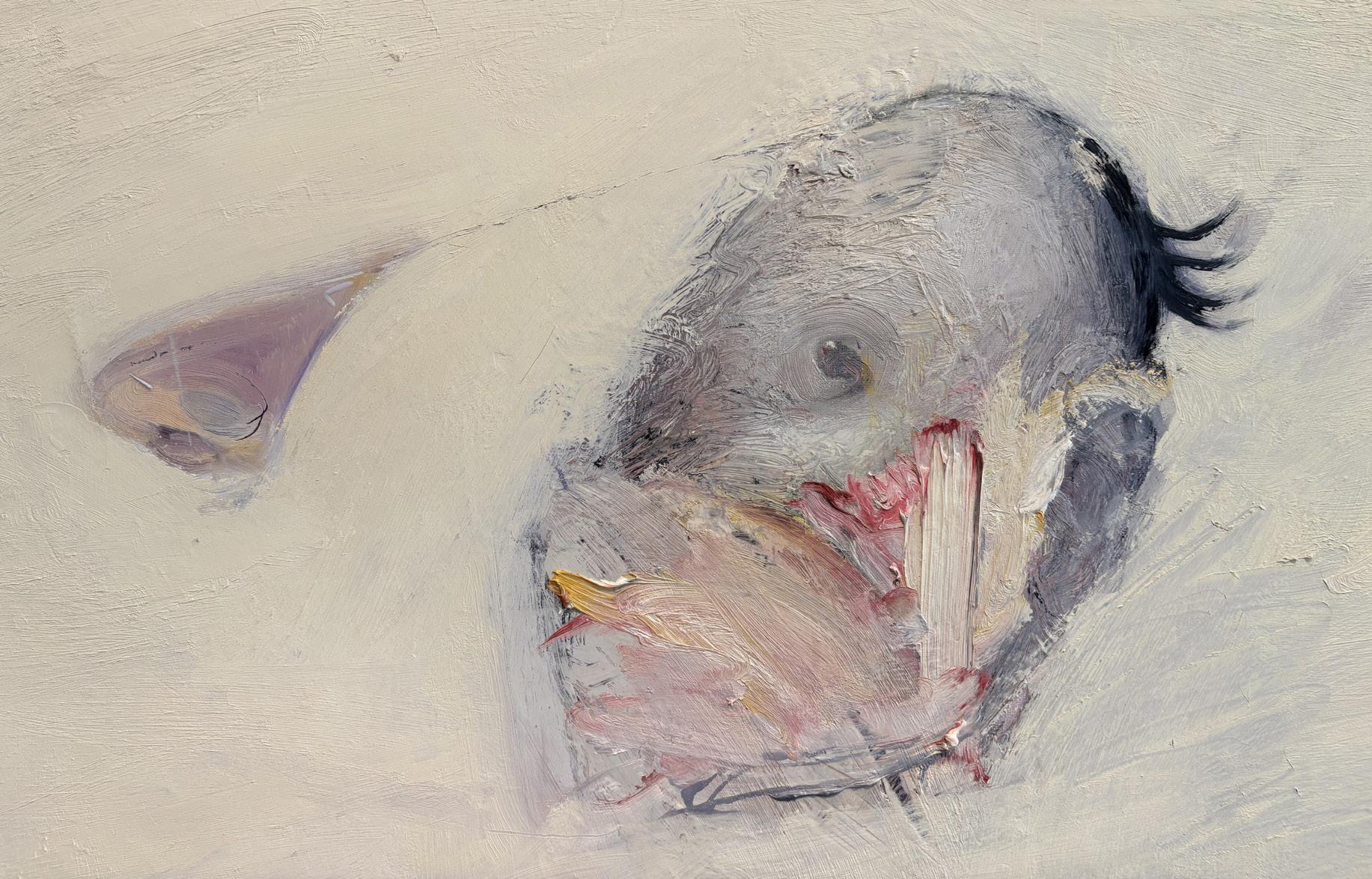
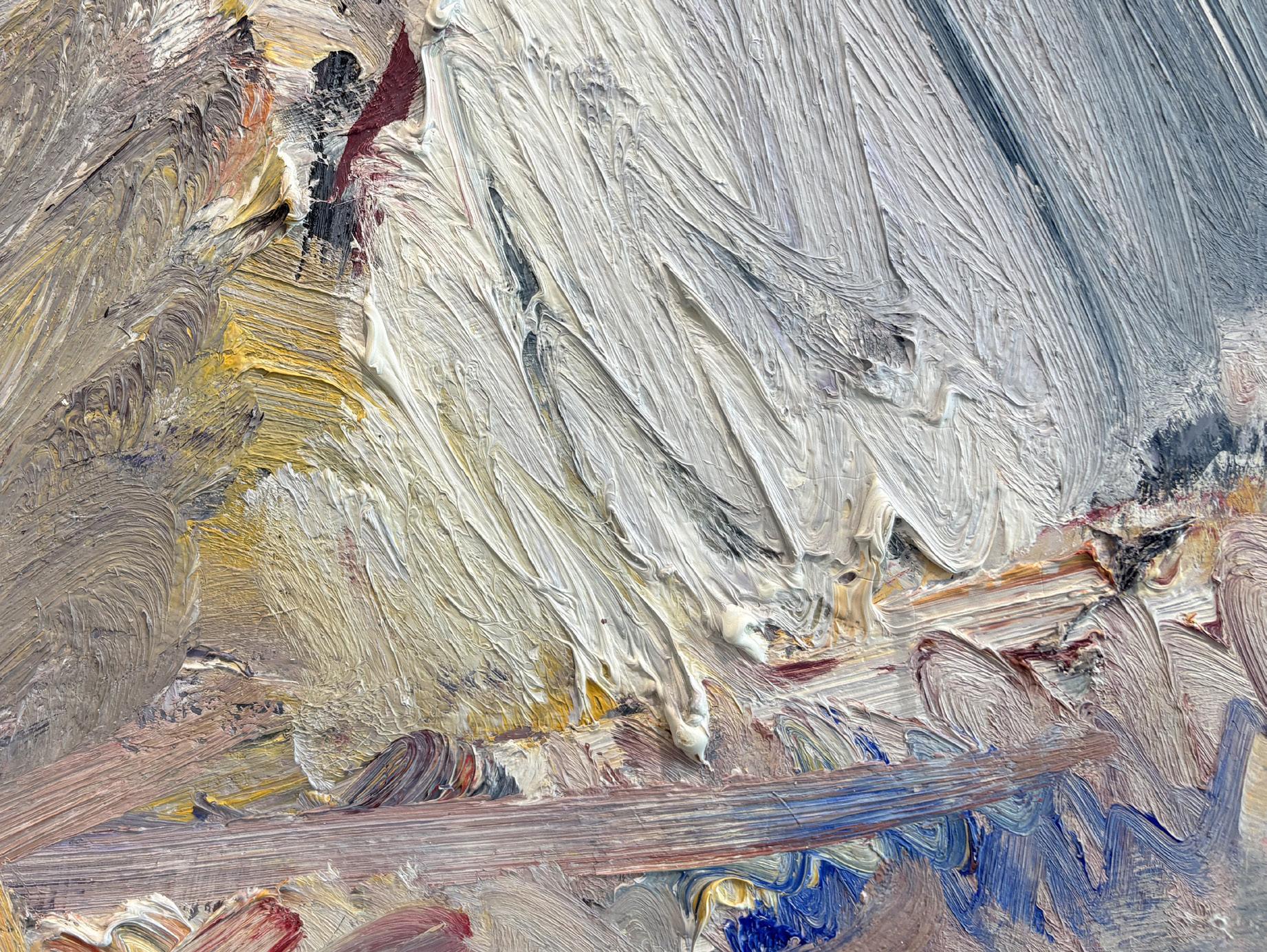
Nature as a vessel
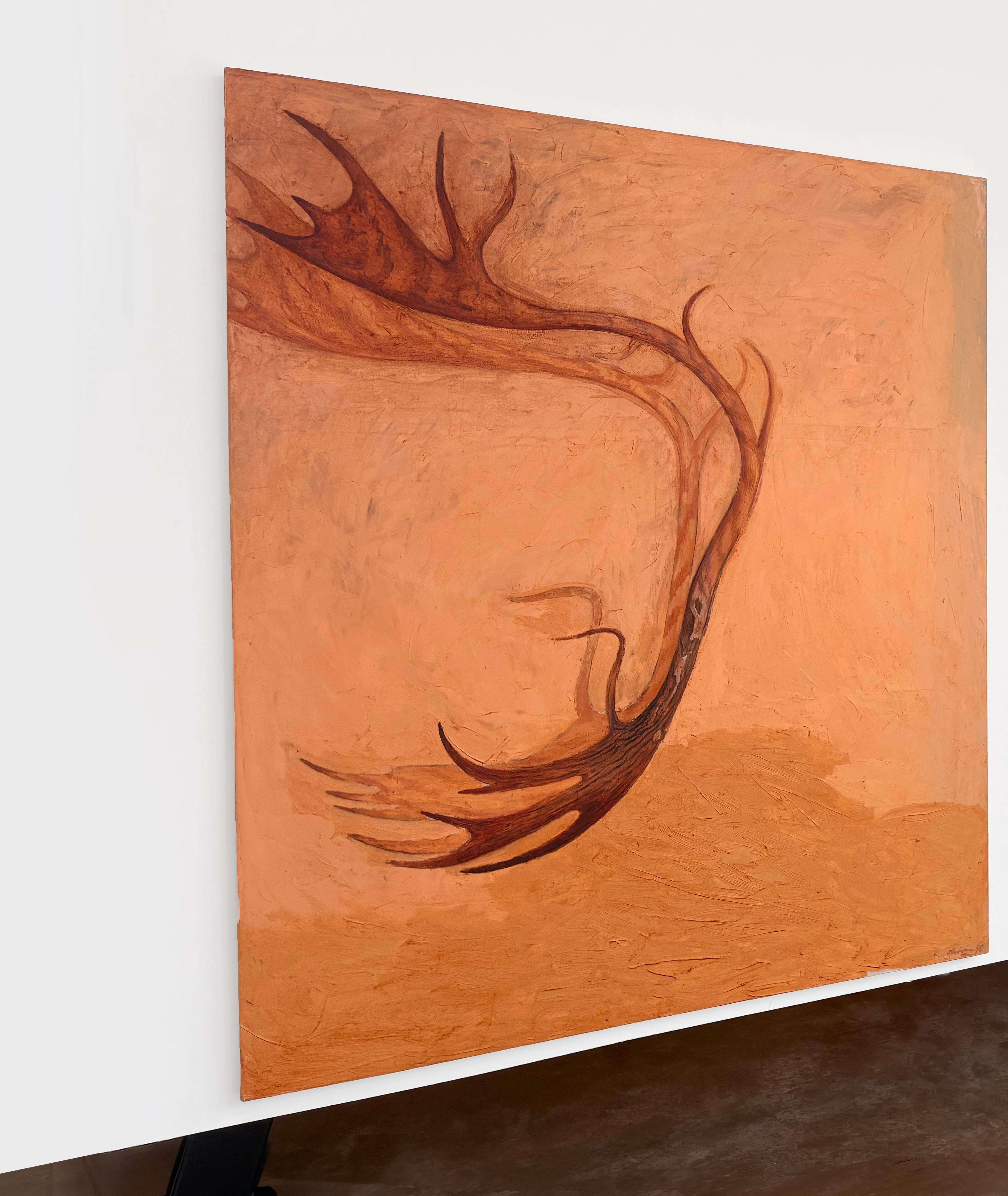
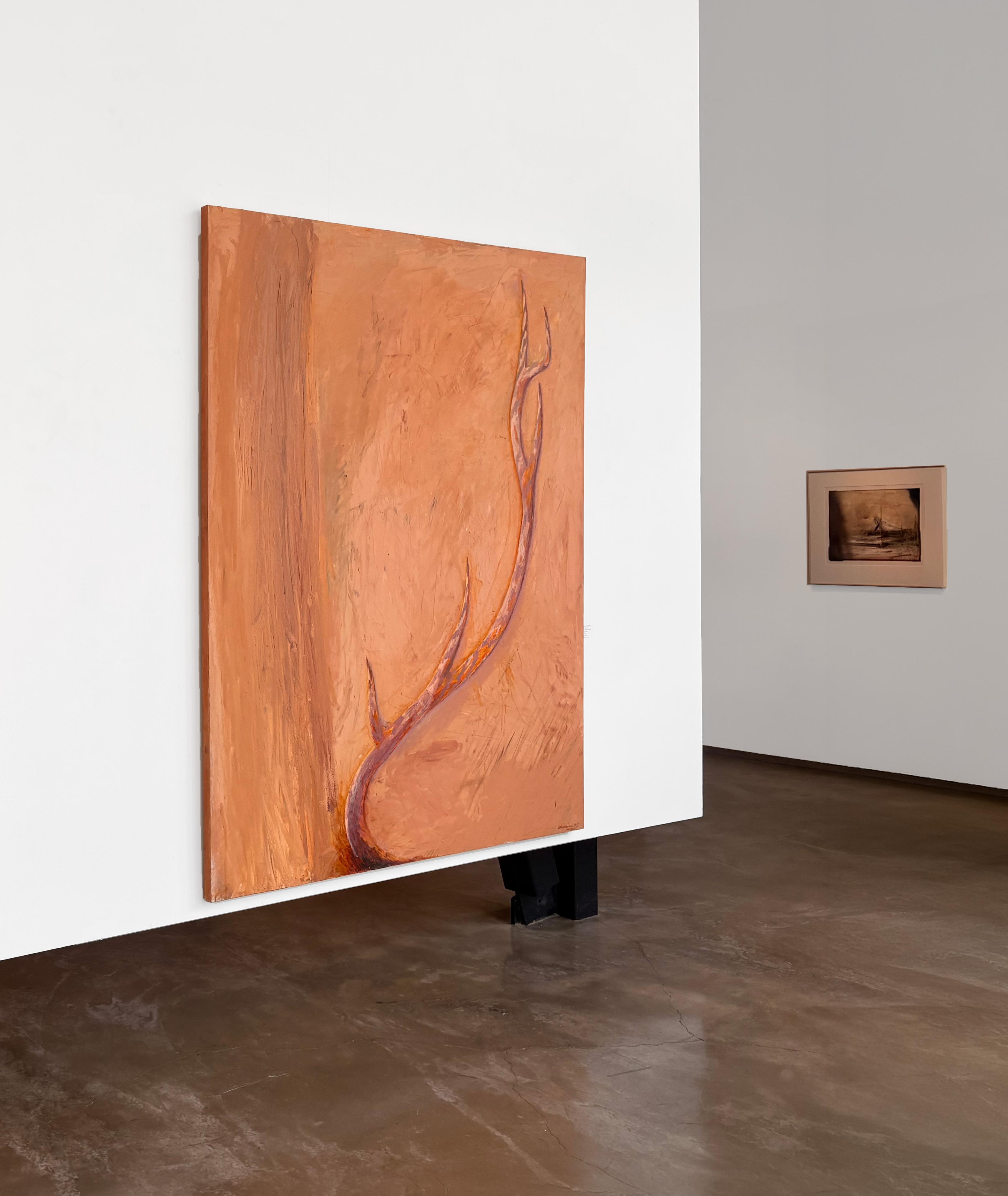
As the exhibition unfolds, consciousness diffuses outward into the world of things. Oliveira treats natural forms—such as the massive Antlers (1996)— as vessels for the same human emotions found in the figure. Works including Ryan Site #3 (1982) bridge nature and technology, reducing landscape to essential lines that suggest the often unseen forces—stray electrons, arcs of flight—that govern existence.
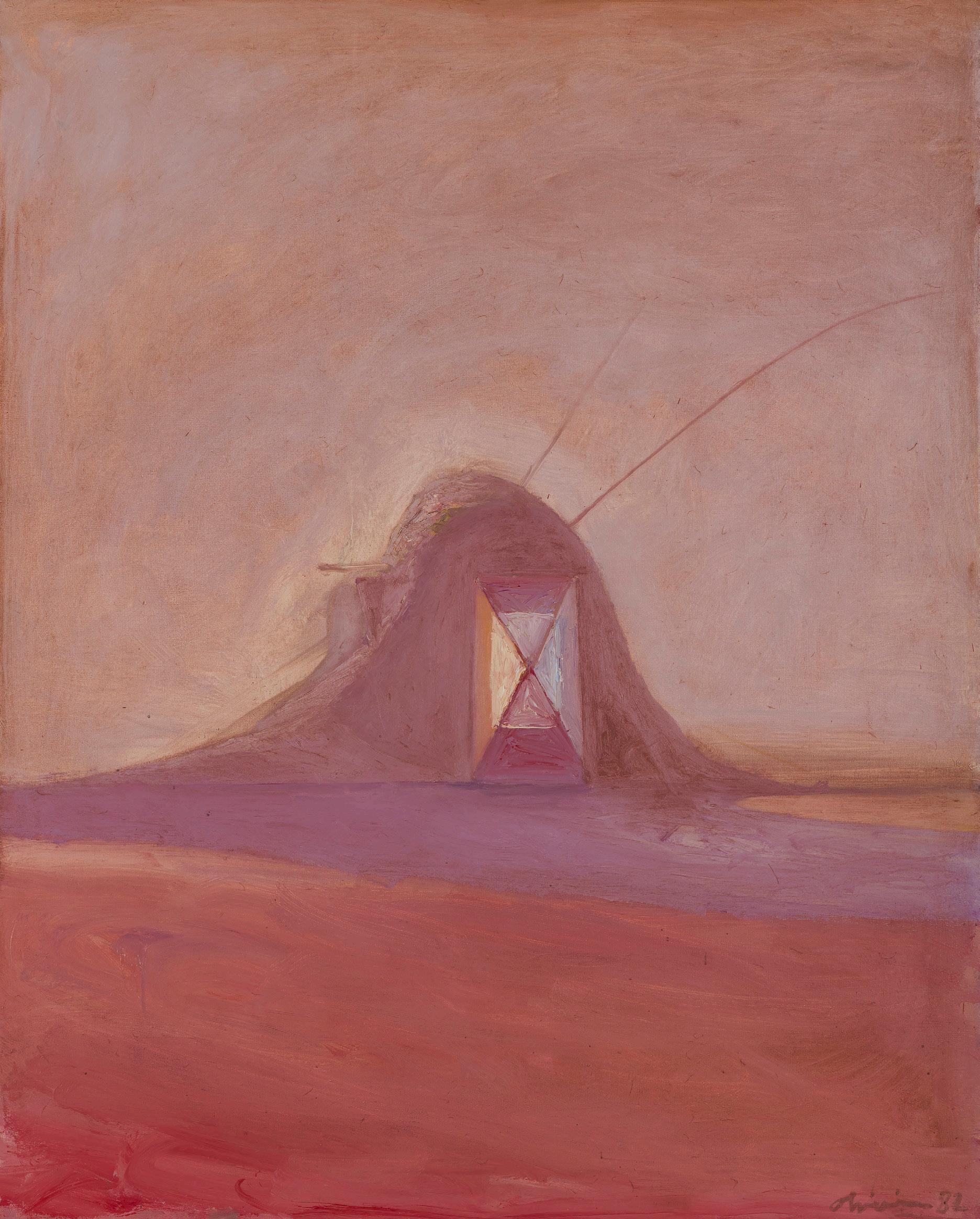
Ryan Site #3
1982, oil on canvas, 50 x 40 in
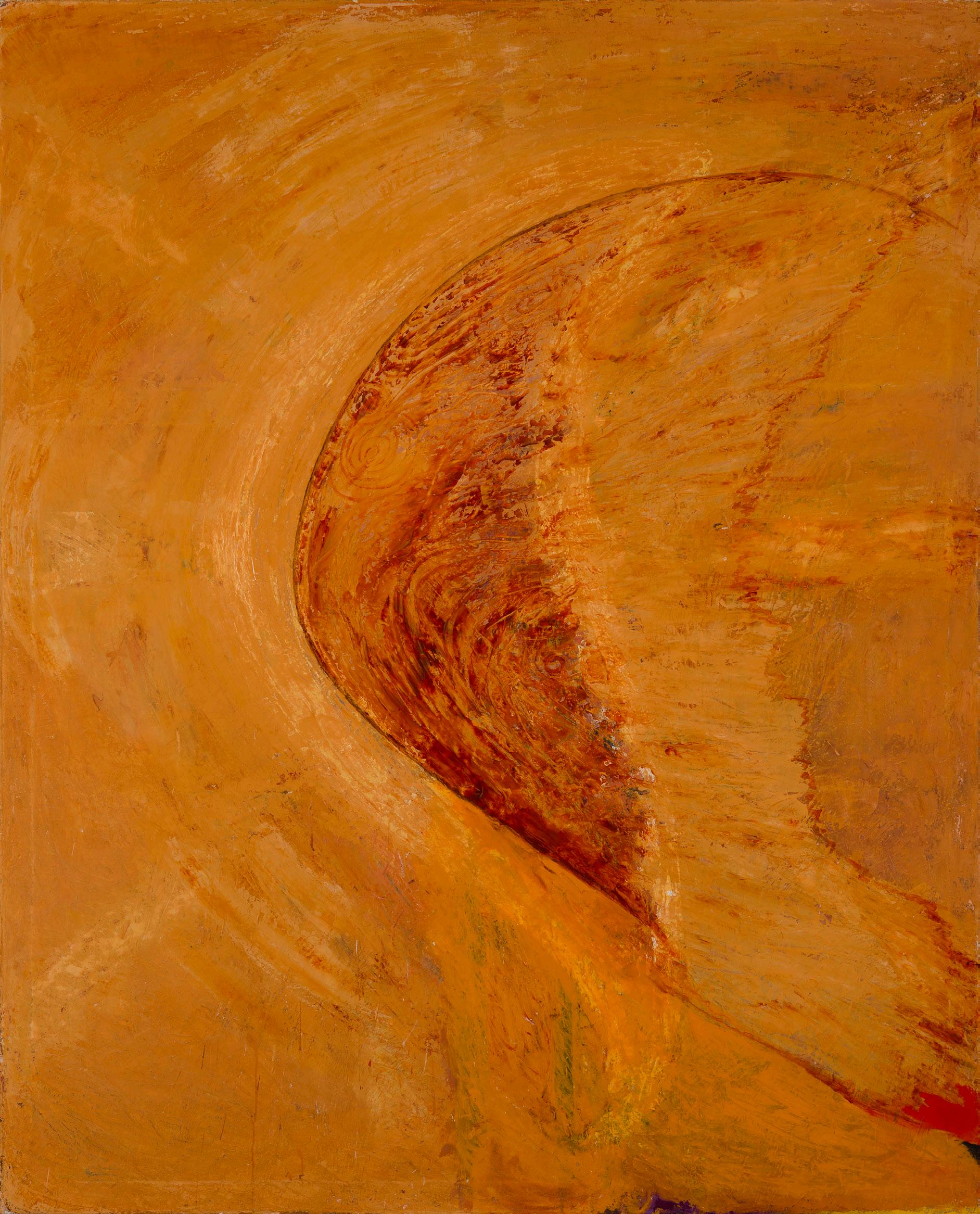
Wing V, 1994, oil on canvas, 84 x 68 in
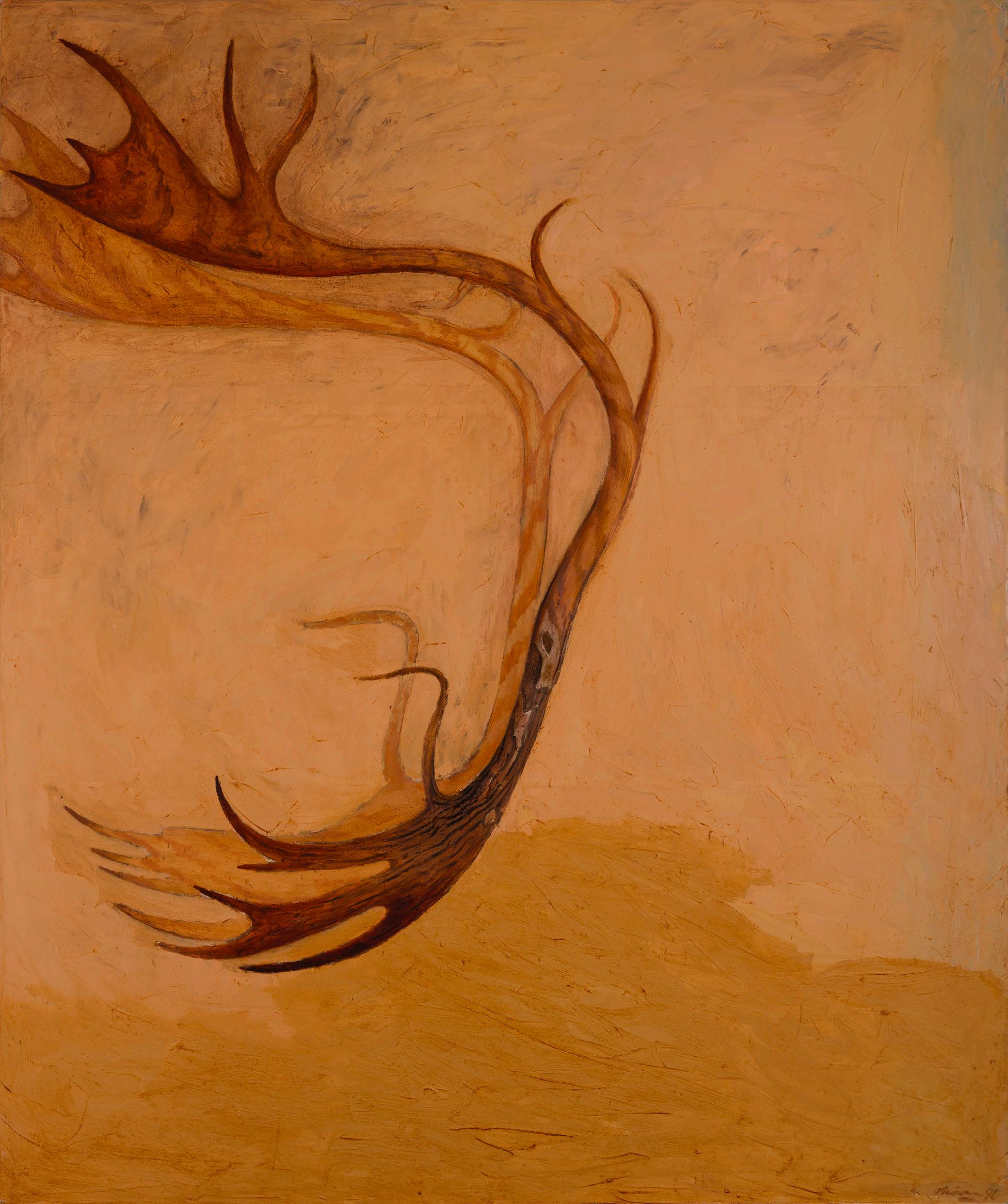
Antlers #1 1996, oil on canvas, 84 x 70 x 1.5 in