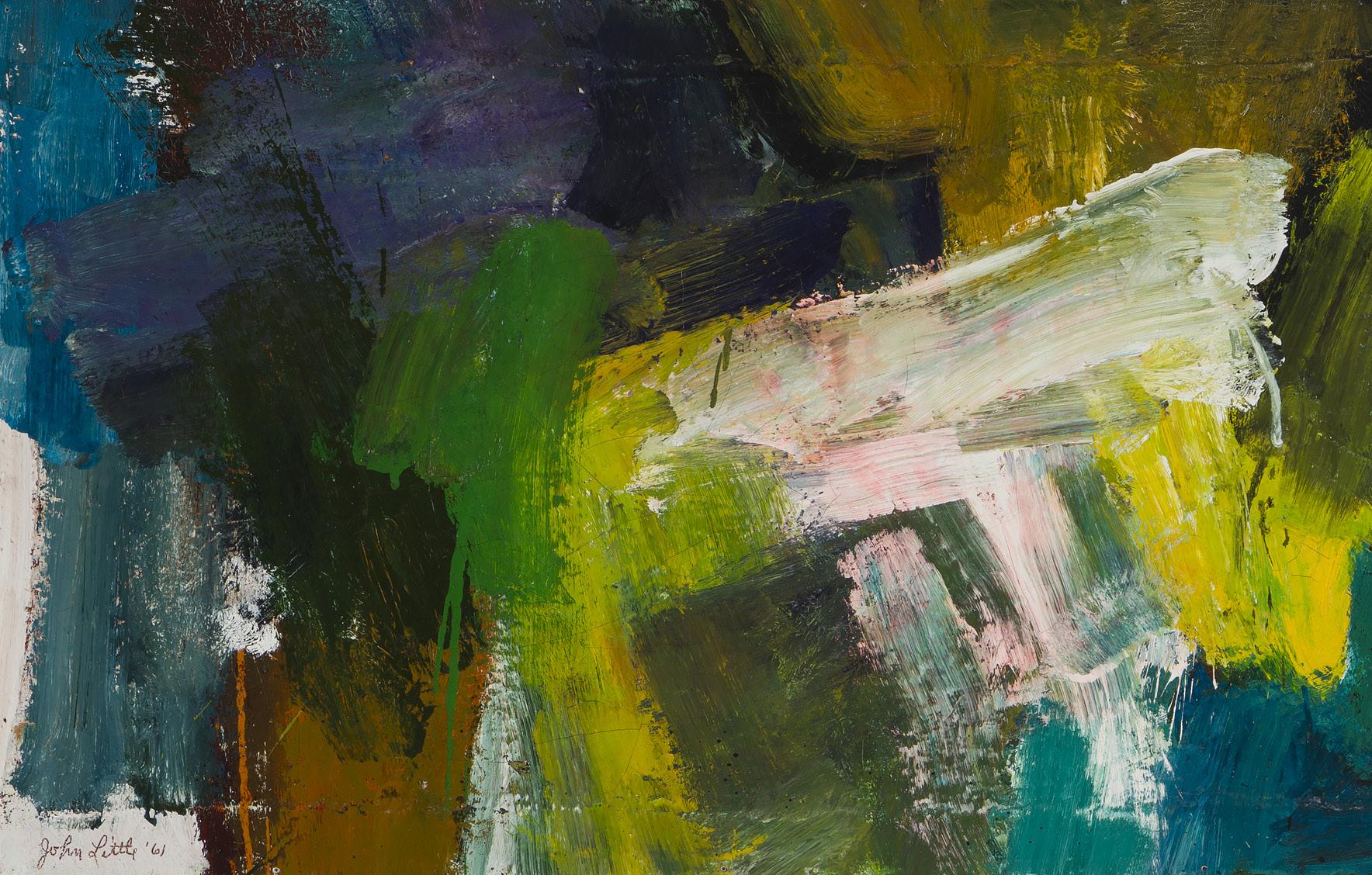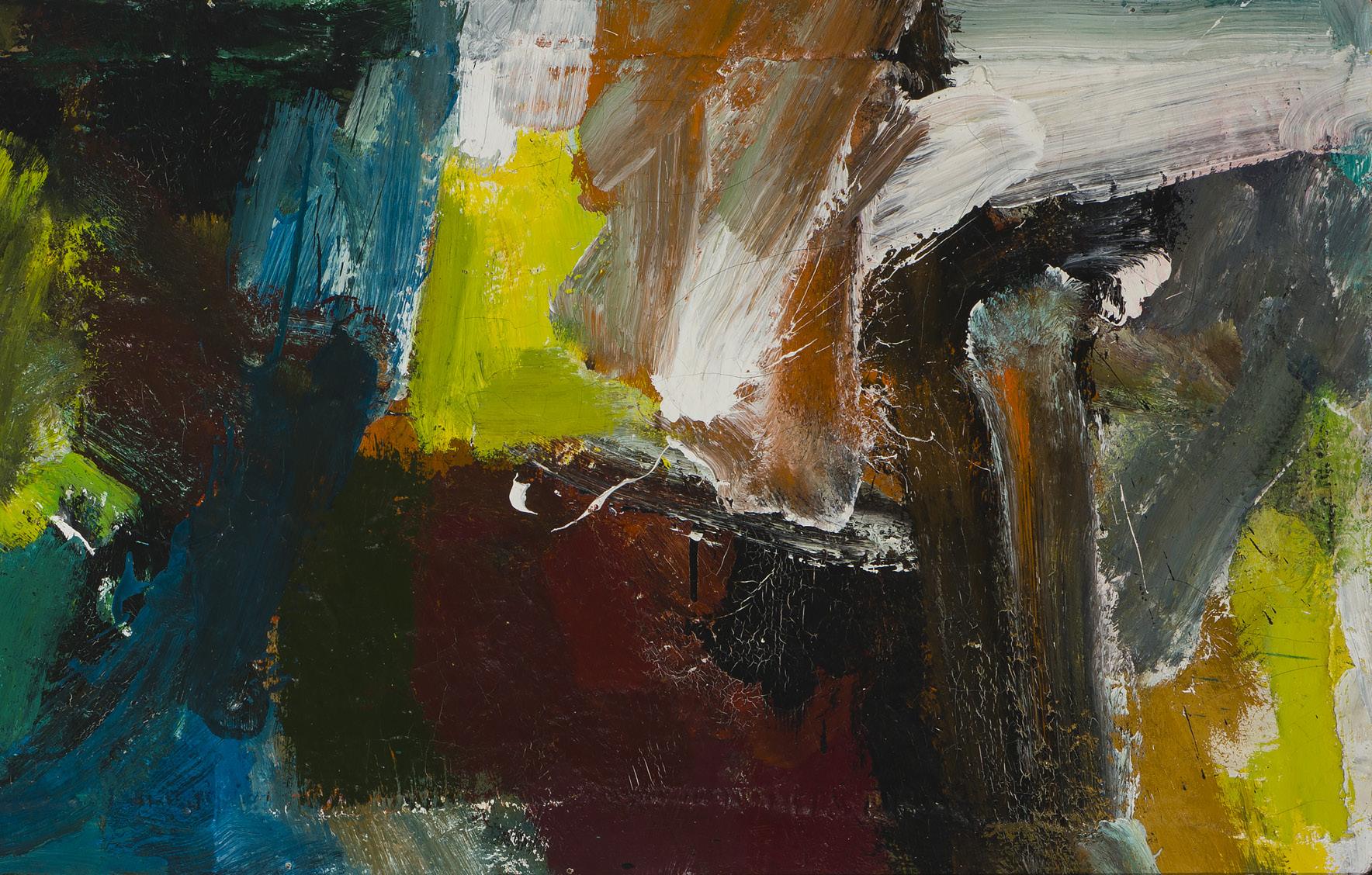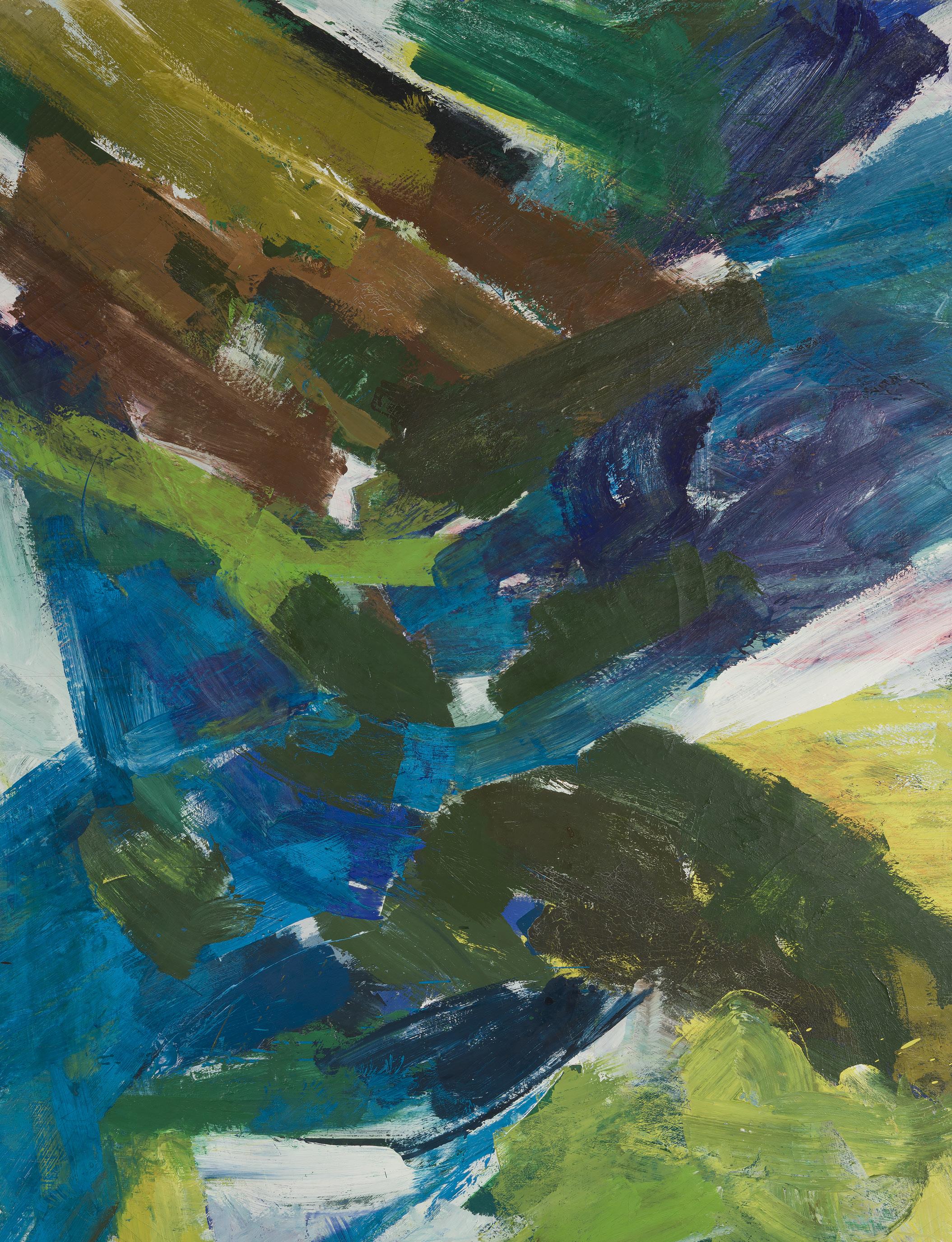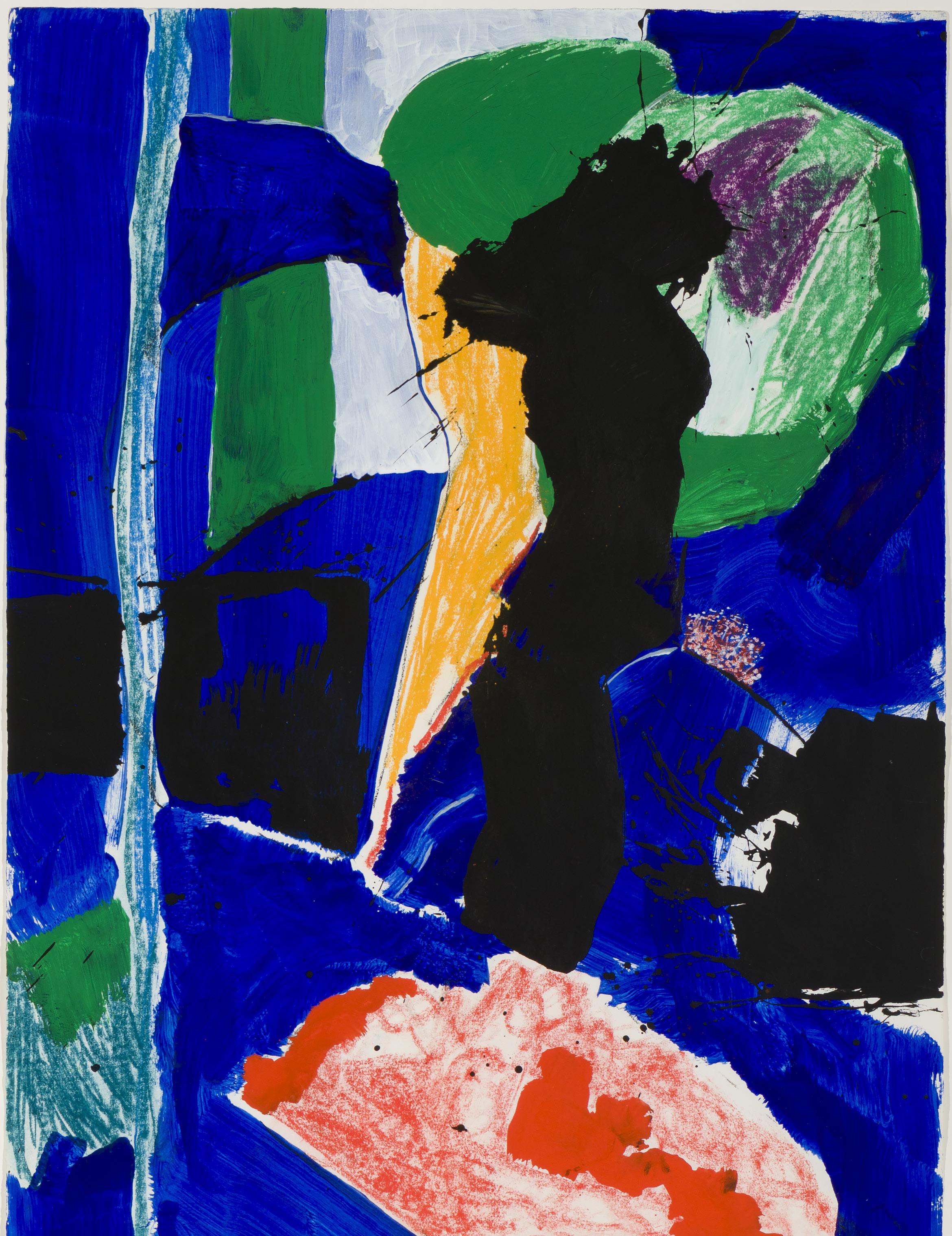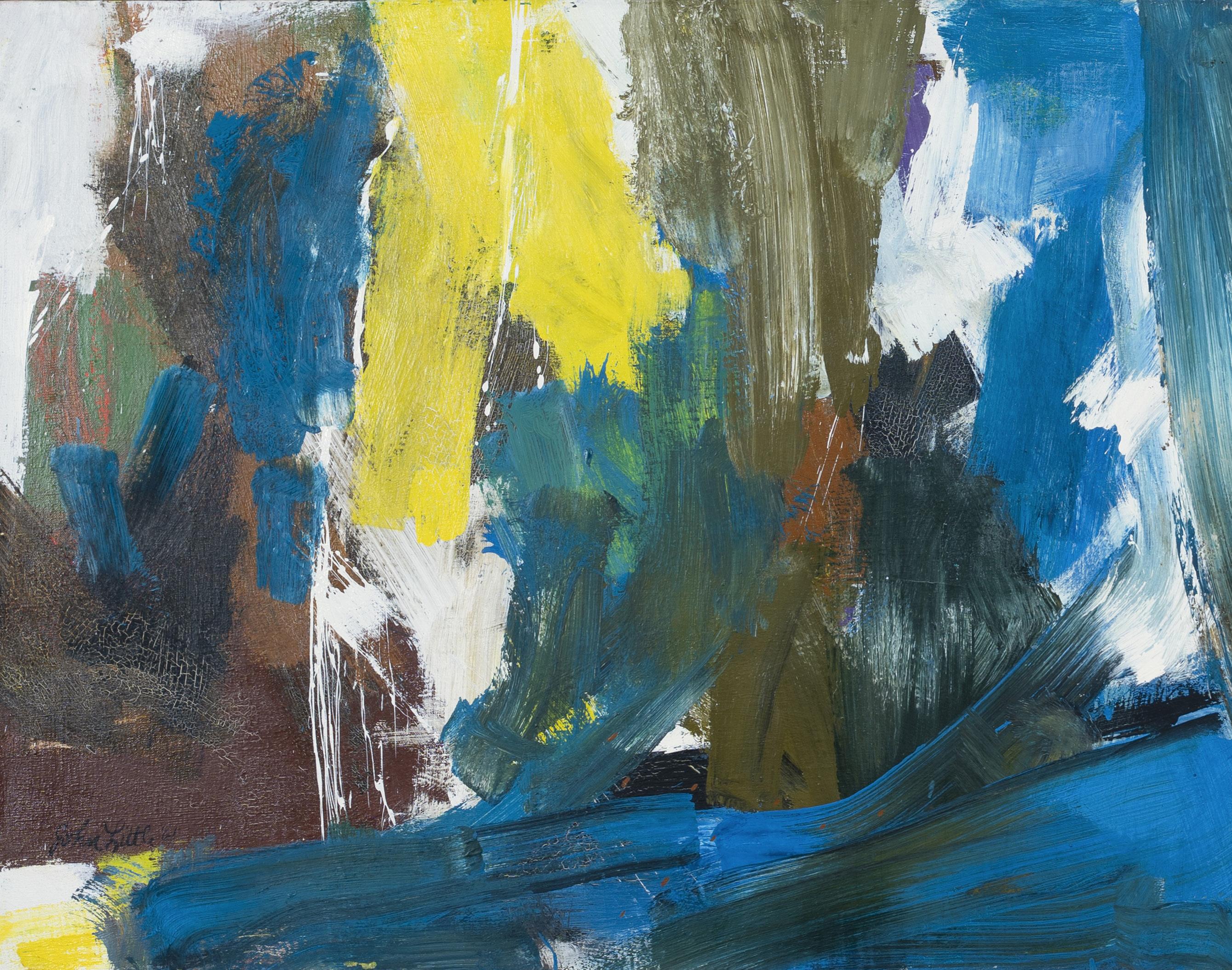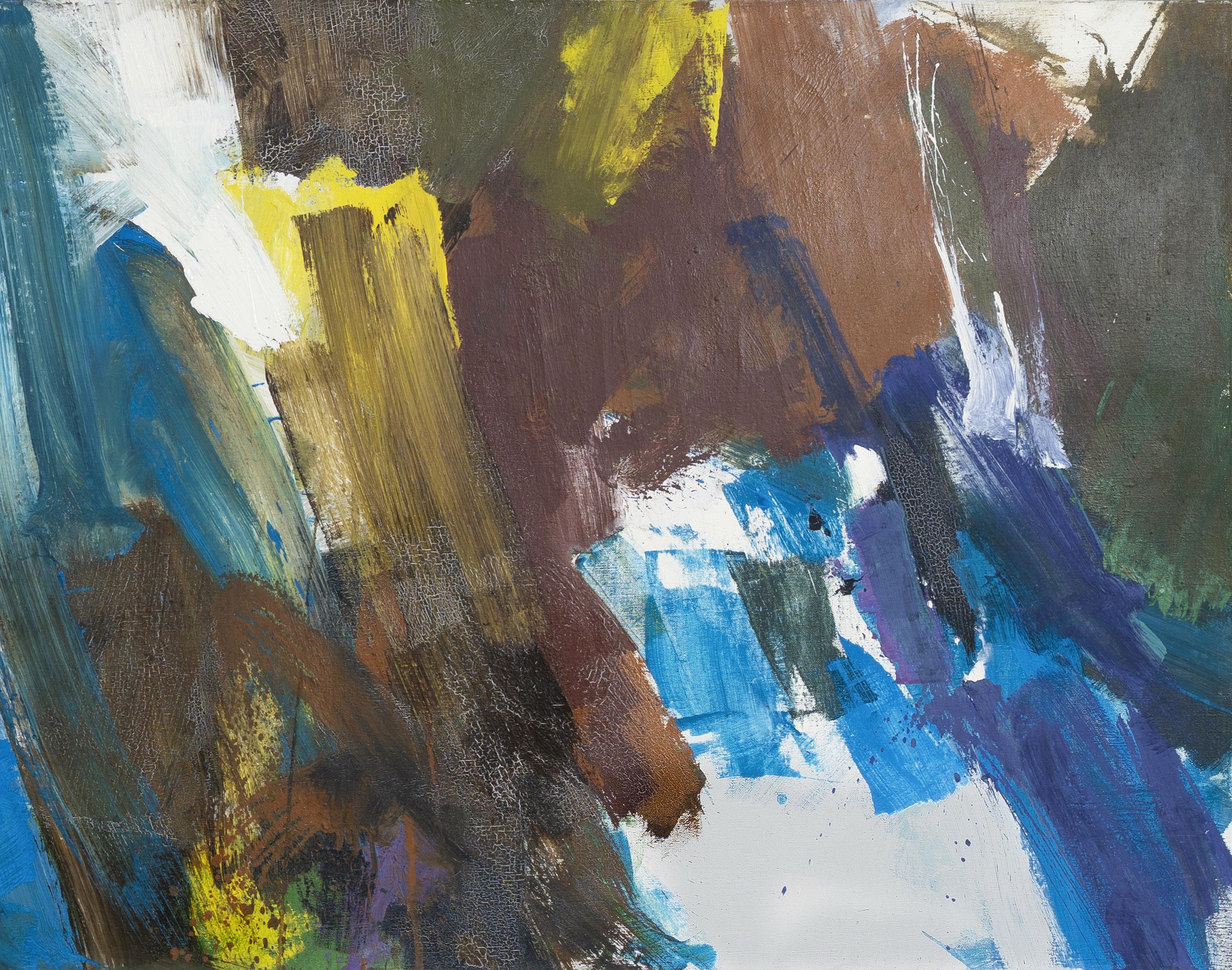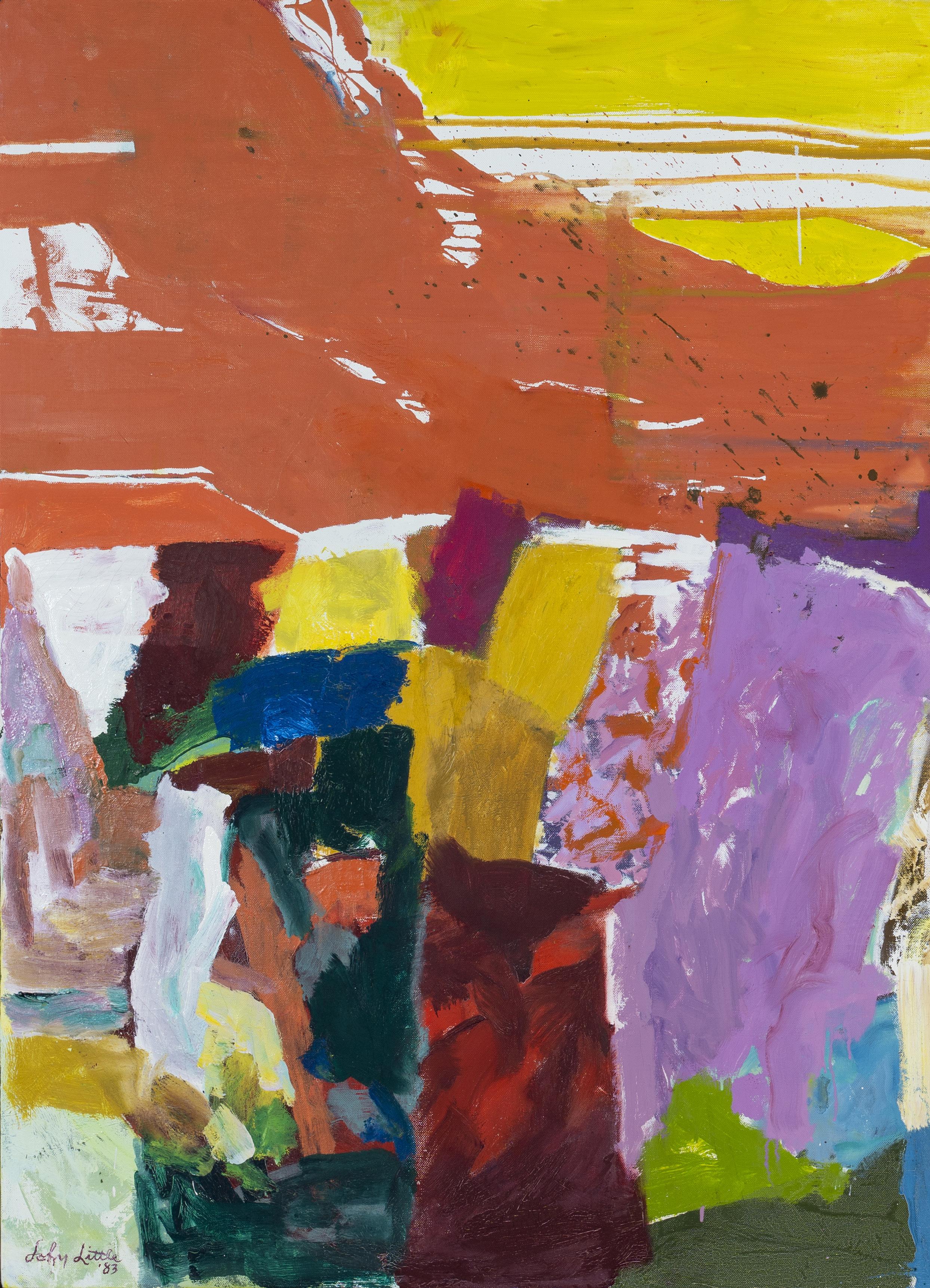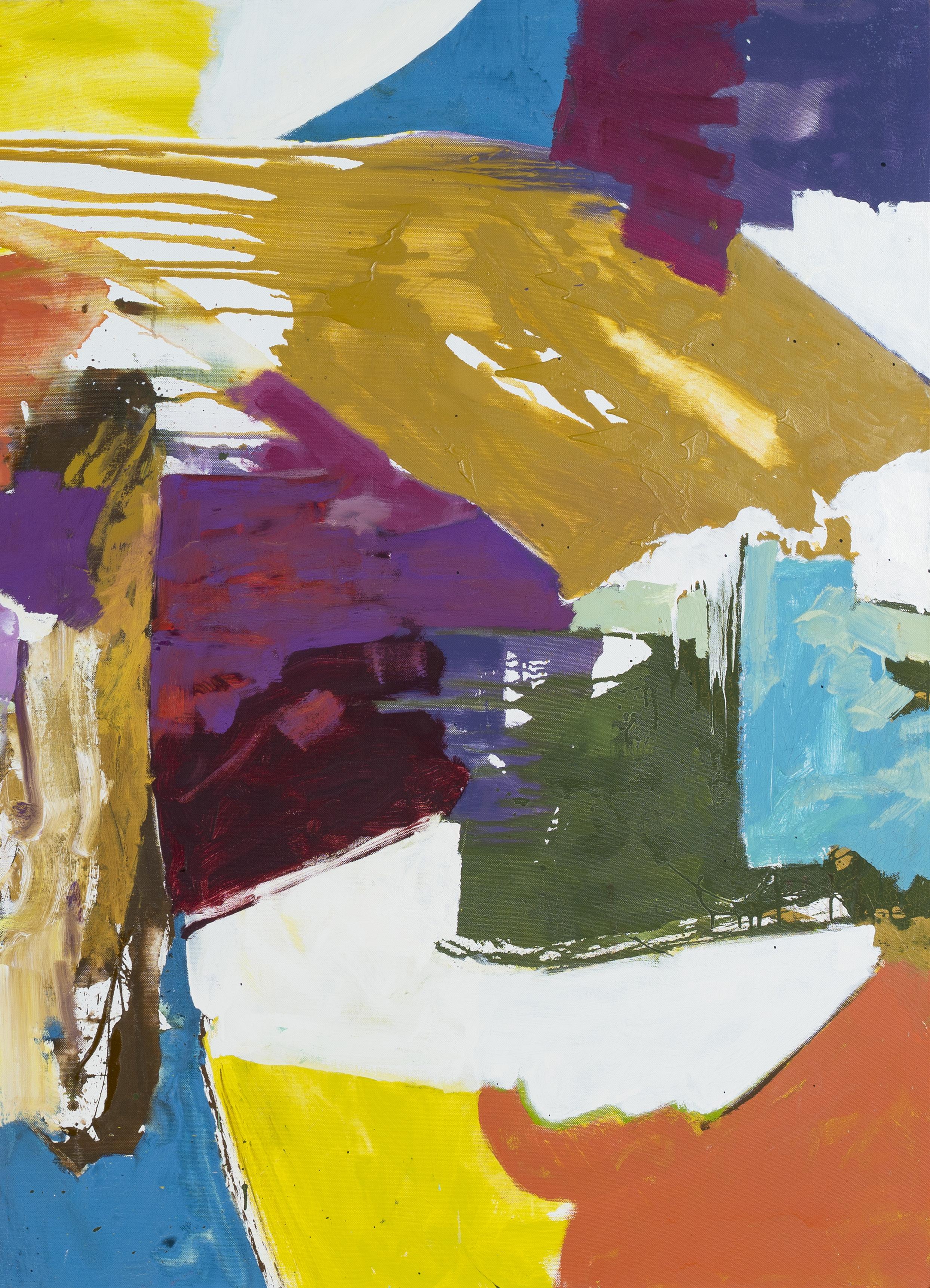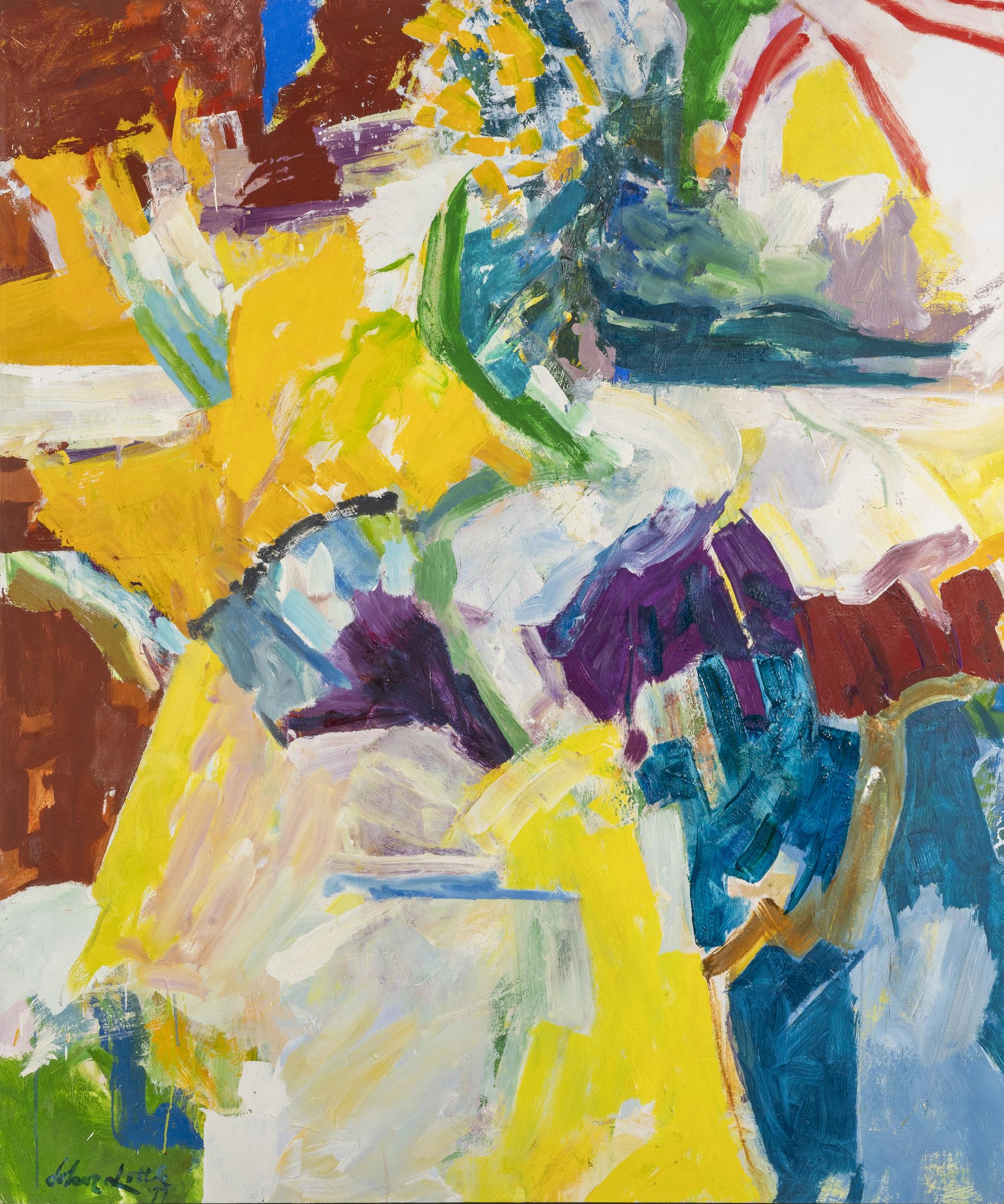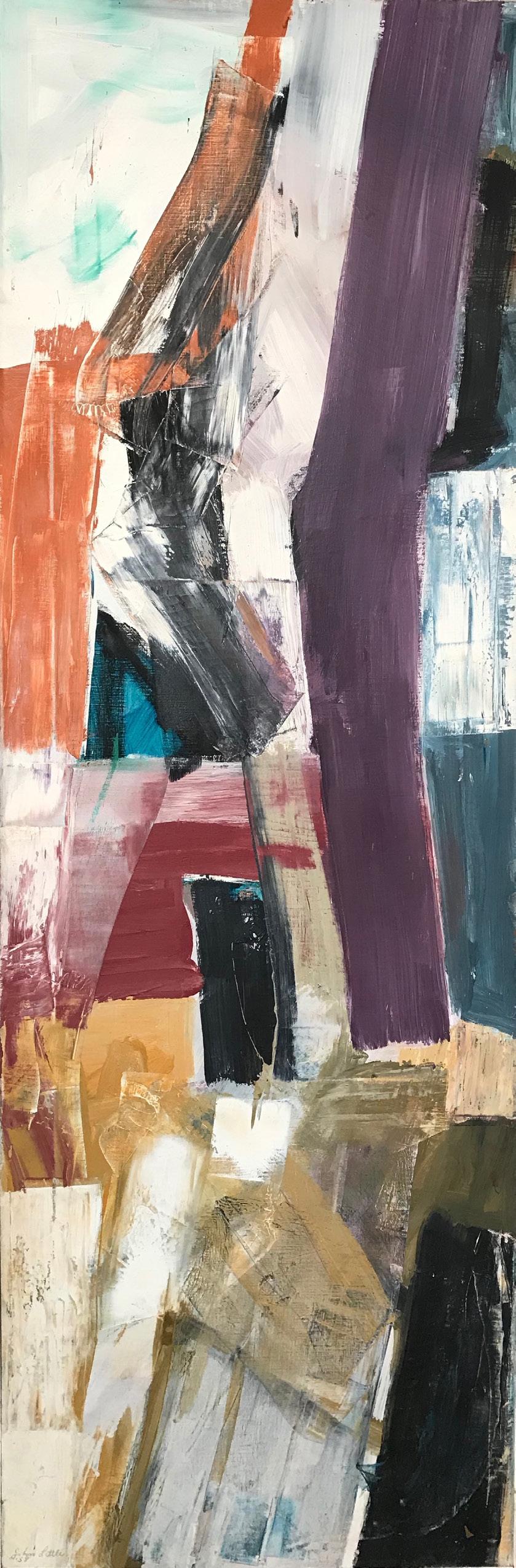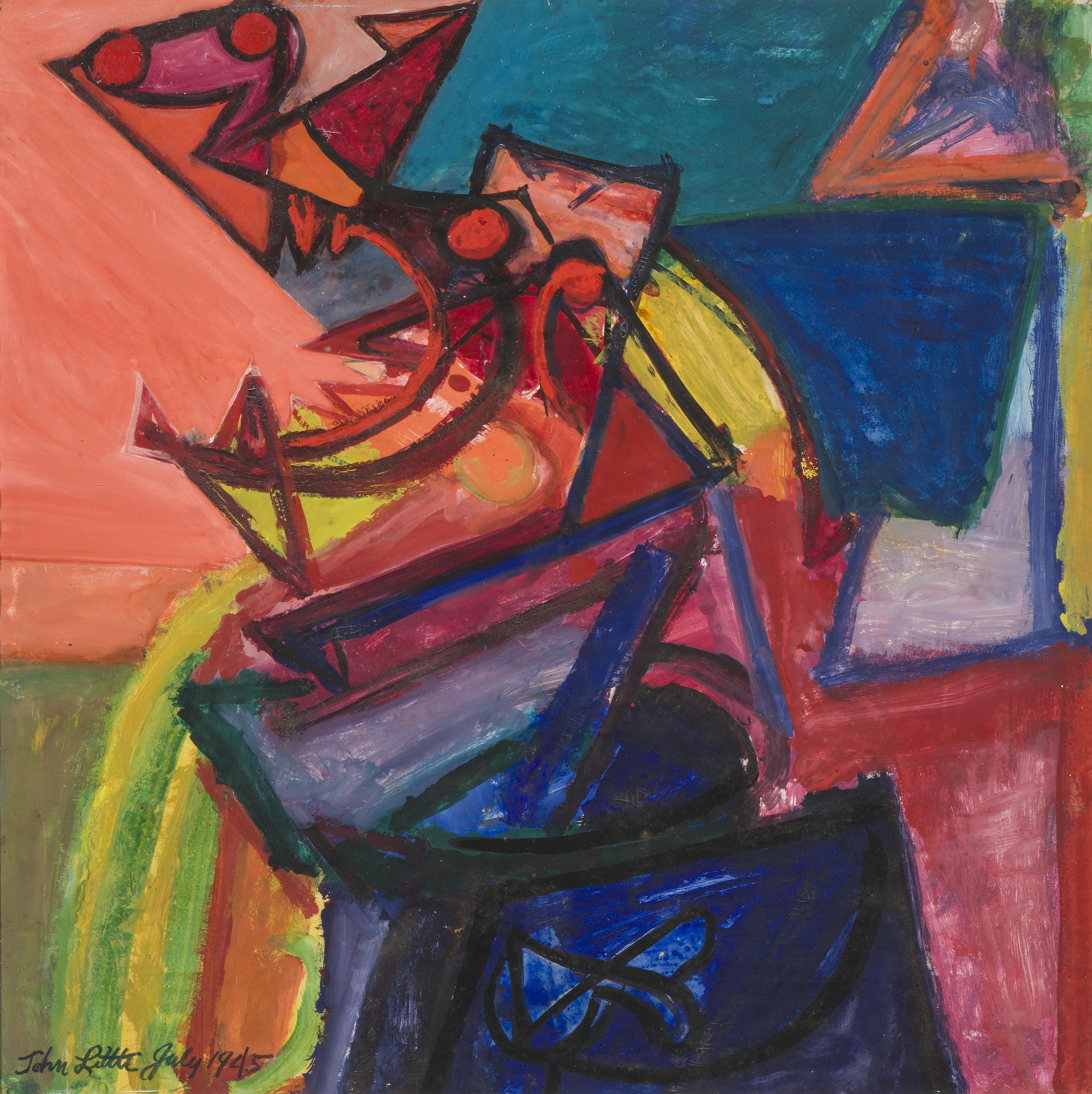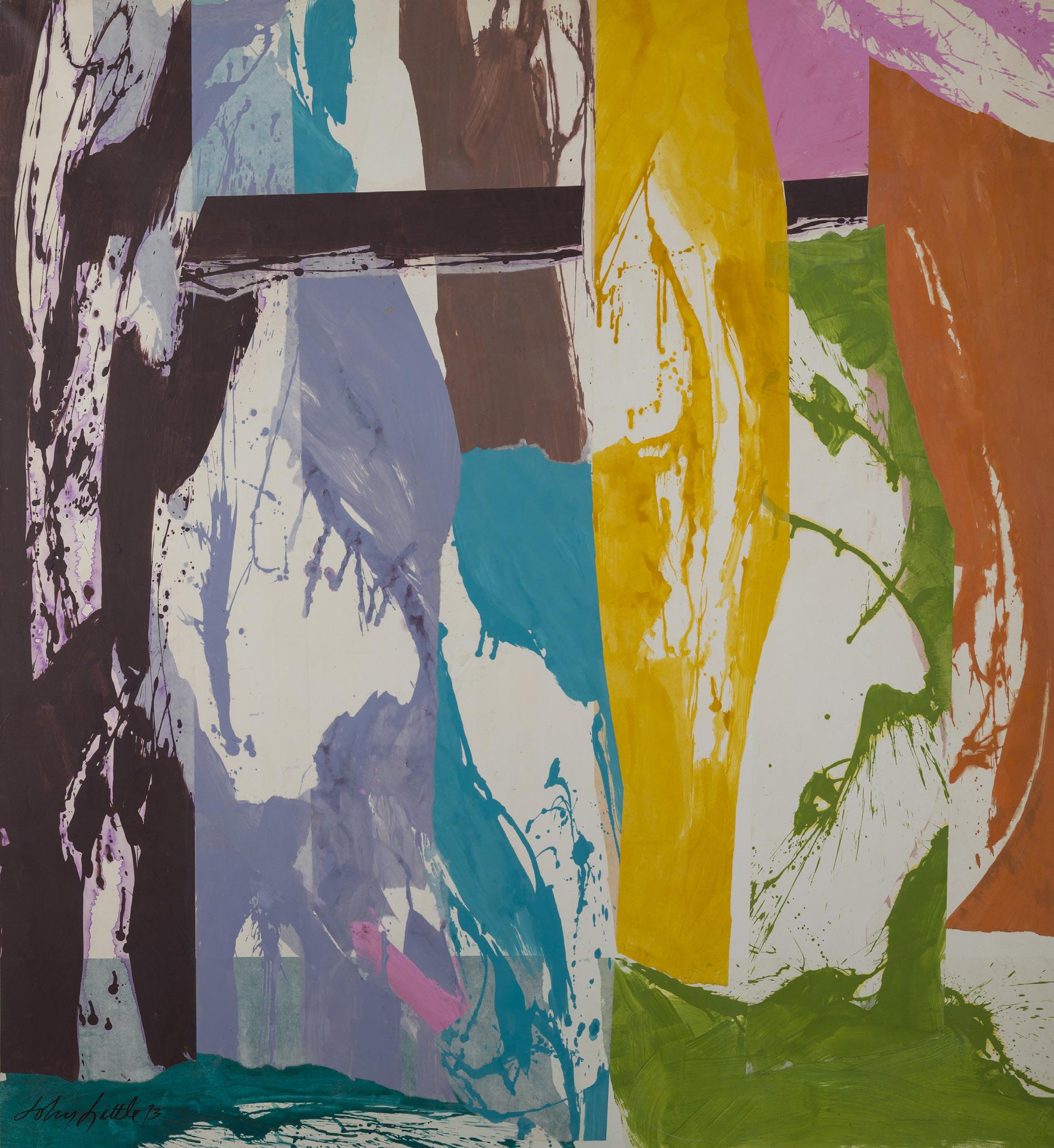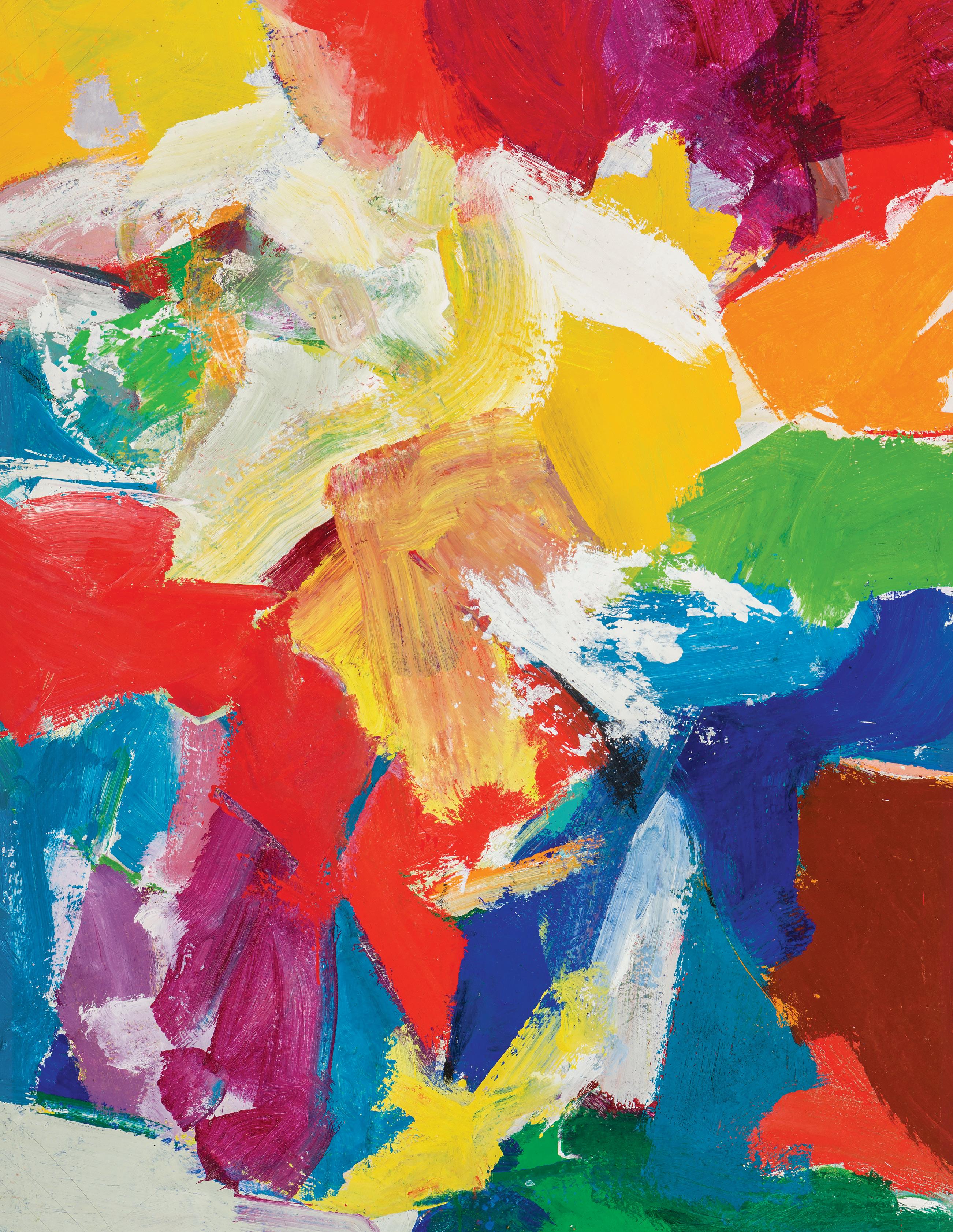
At the heart of LewAllen Galleries’ aesthetic ethos is the idea that the purest form of beauty is color. Kandinsky said that “Color directly influences the soul” and Oscar Wilde wrote that “Mere color, unspoiled by meaning, and unallied with definite form, can speak to the soul in a thousand different ways.” There is no doubt that these ideas were equally integral to the artistry of John Little, whose evocative use of color was animated, authentic, stirring, and profound. As we argue in our essay below, Little was truly one of the great American colorists of the 20th century and is central to the history of Abstract Expressionism. We are most pleased to present this extensive exhibition of a wide range of his chromatically exciting works.
— KENNETH R. MARVEL
COLOR SAYS IT ALL
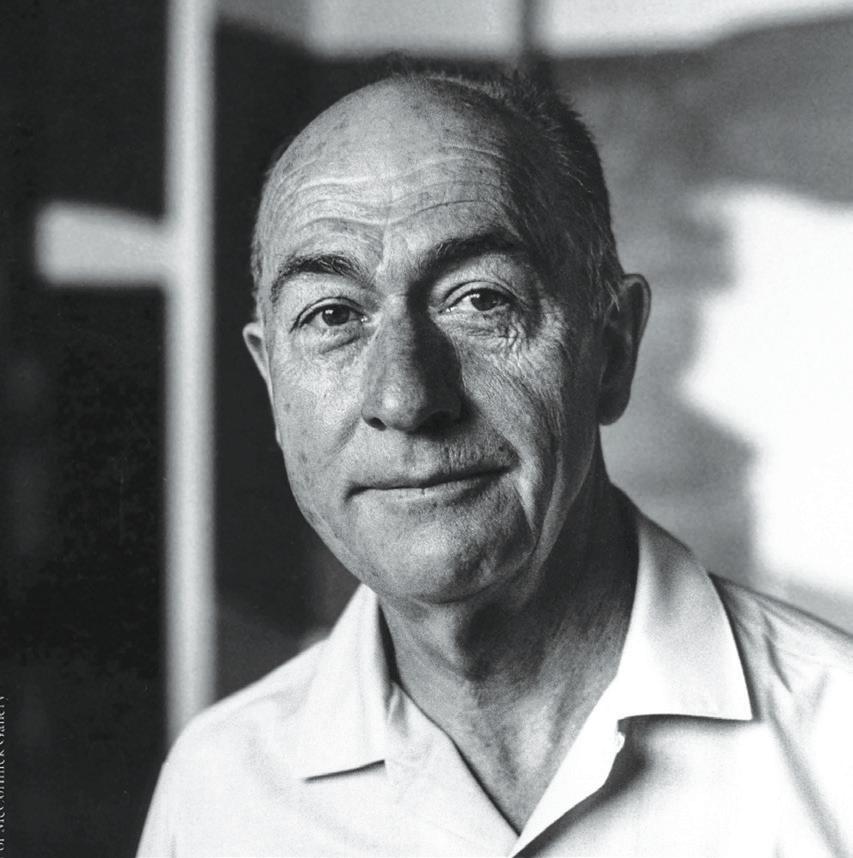
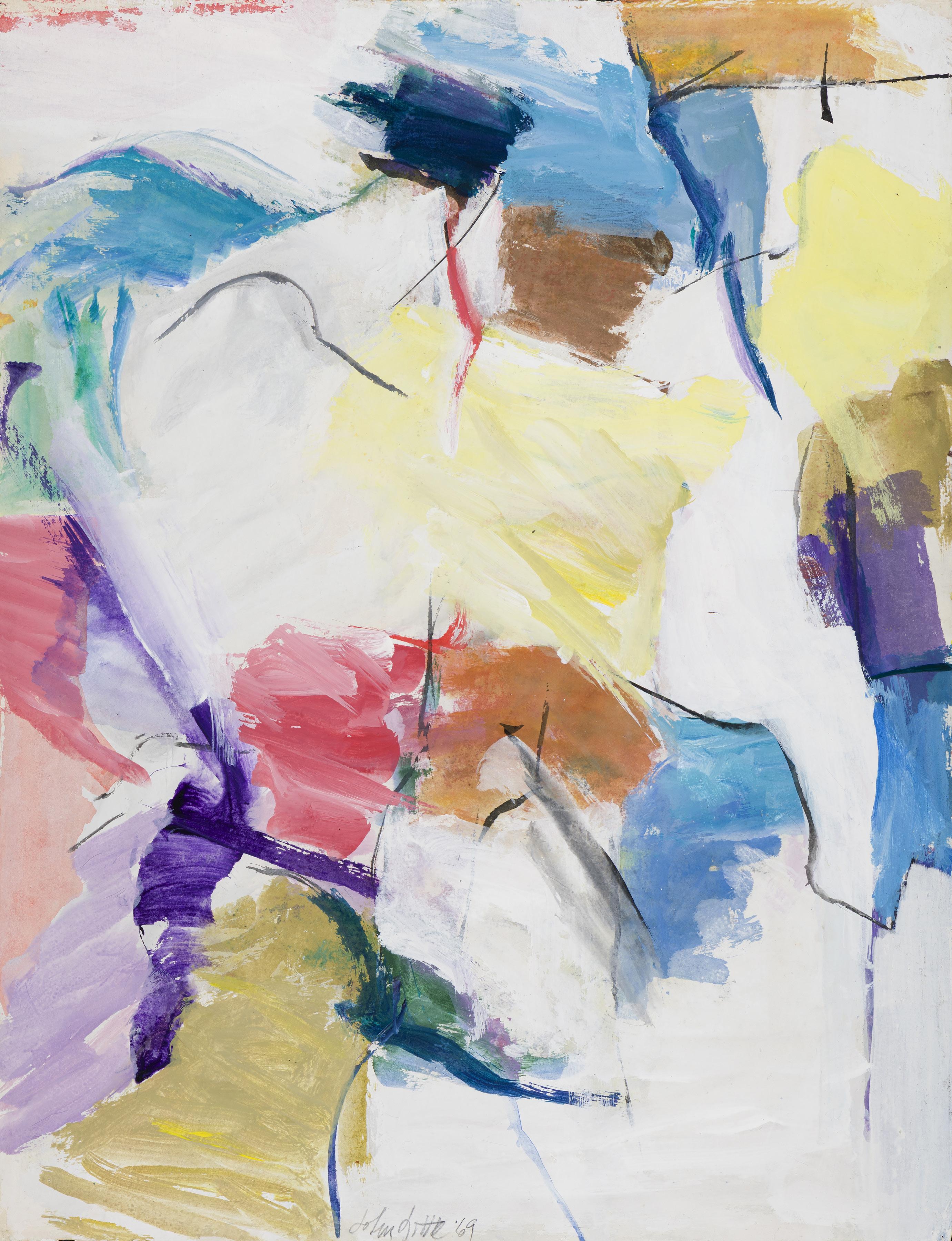
“A pigment is a pigment. Let it be what it is!” John Little (1907-1984) offered this remark to the journalist Marion Harmon in 1982, looking back across four decades of painting, and the exclamation carries a latent, axiomatic authority, affirming the essential terms under which his practice had long operated. Behind the sweep and collision of his abstract canvases lies the conviction that color is at once the medium and the grammar of his art, a principle to which he gave, over the long arc of a celebrated career, a chromatic range and structural continuity unmatched among his peers in the New York School.
Little is central to the history of Abstract Expressionism. He studied with Hans Hofmann in New York and Provincetown in the late 1930s and early 1940s; received his first New York solo exhibition at the esteemed Betty Parsons Gallery in 1948; settled the same year in Springs, the rural East Hampton hamlet that became the postwar capital of American abstract painting, where he was neighbor to Jackson Pollock and Lee Krasner; mounted a two-person show with Pollock at Guild Hall in 1955; lent his barn studio to Franz Kline through the summer of 1957; and showed alongside Willem de Kooning, Robert Motherwell, and Adolph Gottlieb across the decades that followed. His paintings have entered major collections on both sides of the Atlantic, including the Metropolitan Museum of Art, the Guild Hall Museum in East Hampton, the Greenville County Museum of Art, the Ball State University Museum of Art, and Galerie Beyeler in Basel. He was, throughout his life, regarded as a pivotal figure of the Abstract Expressionist movement.
Born in 1907 on a family farm in Alabama, Little took a long, deliberately wandering road to New York. He studied at the Buffalo Fine Arts Academy, where the incendiary 1927 exhibition of the Société Anonyme collection, assembled by Katherine Dreier, Marcel Duchamp, and Man Ray, blew apart any lingering assumptions about what a painting could be. He moved to New York, trained as an operatic singer, built a thriving textile design studio through the Depression, sailed to Paris to see Picasso with his own eyes, and taught at Pratt Institute, all before committing wholly to the canvas. When he did, first under George Grosz at the Art Students League and then inside the combative seminar of Hofmann's school, Little reached abstraction as an epistemological reckoning. A landscape was illusory; color alone could be trusted for objectivity. Matisse conveyed this faith into words earlier in the century: “When I put a green, it is not grass. When I put a blue, it is not the sky.” For Little the point reached past the polemical, grounding the very structure of his vision. Everything that followed
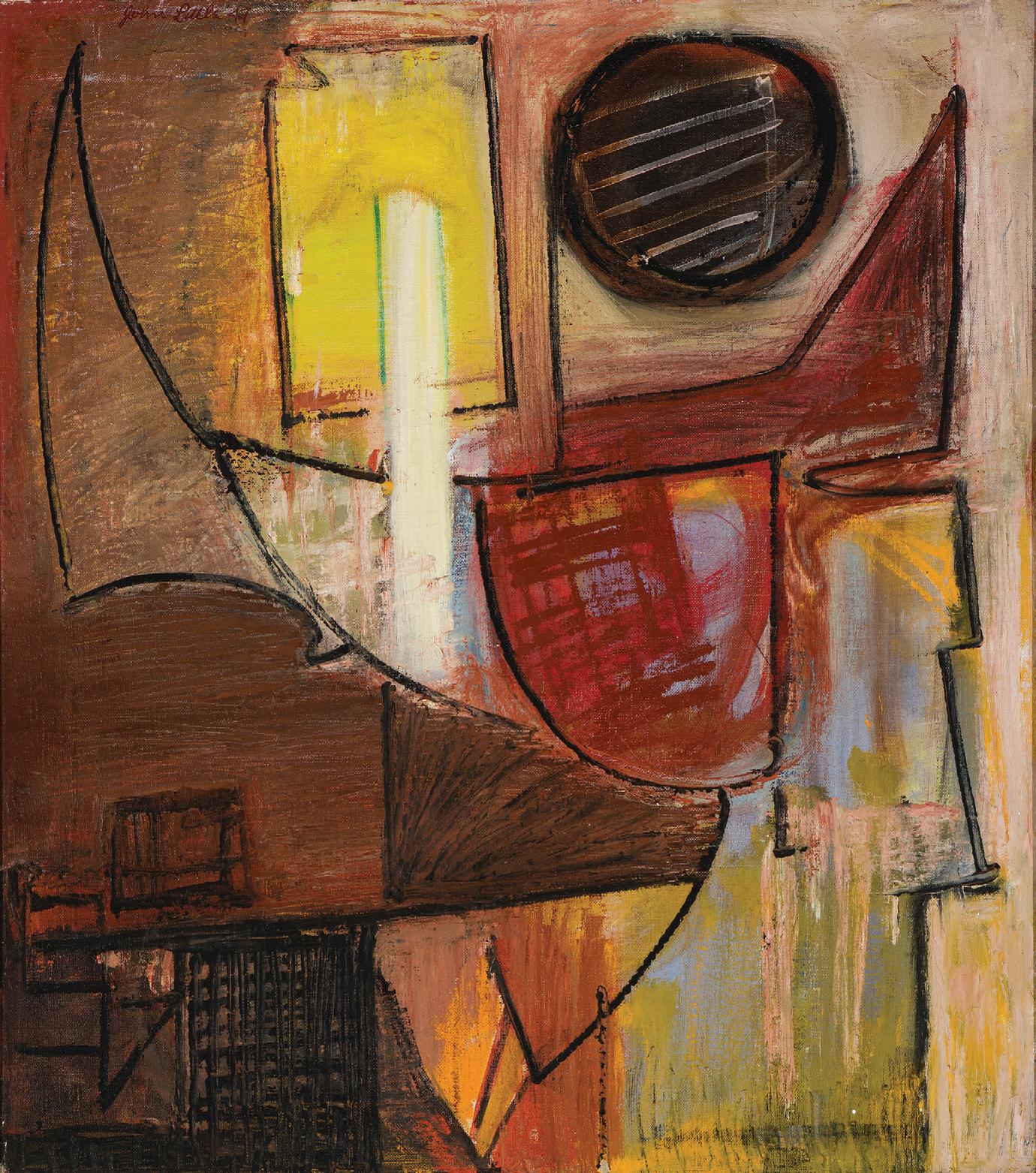
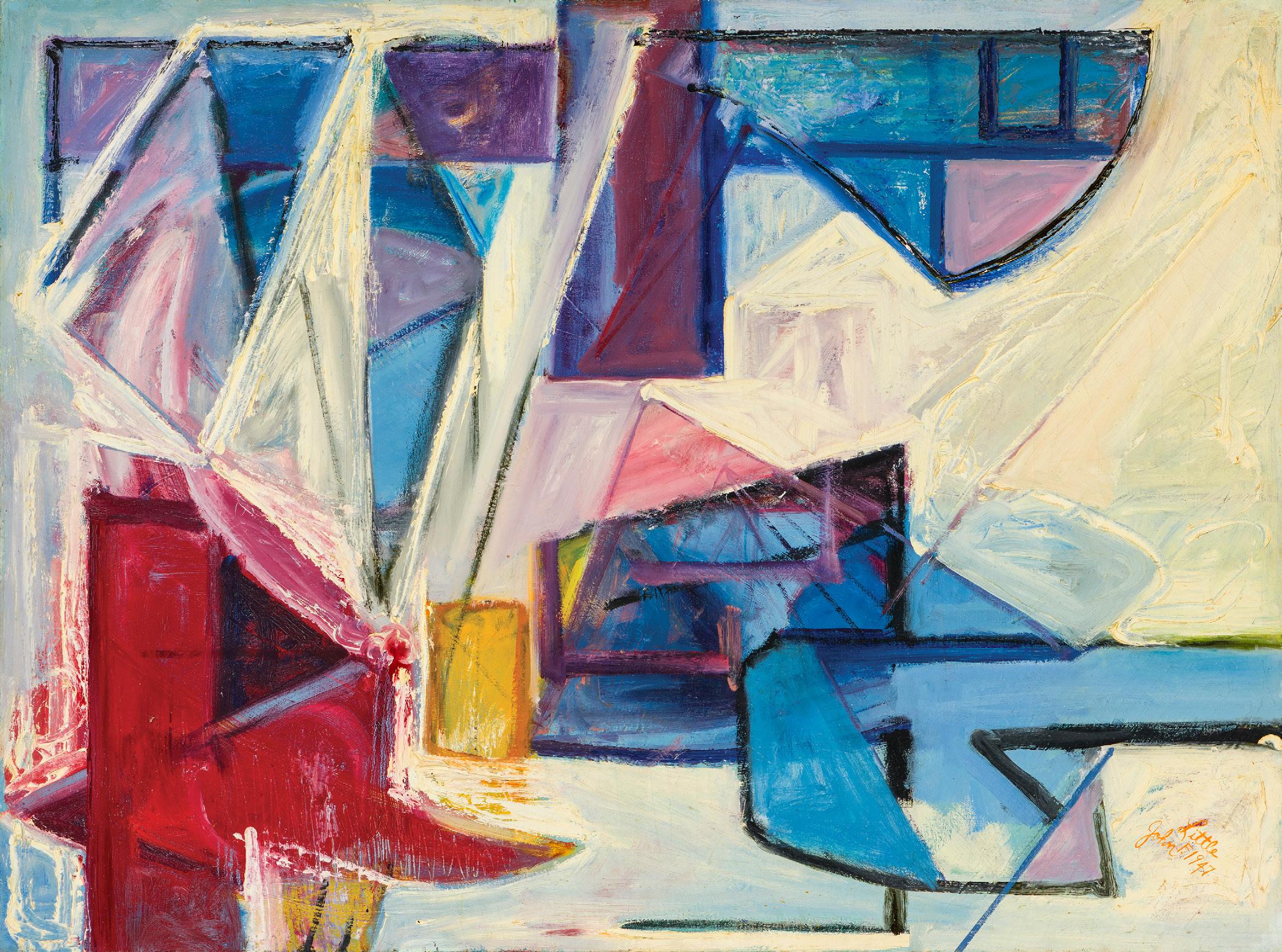
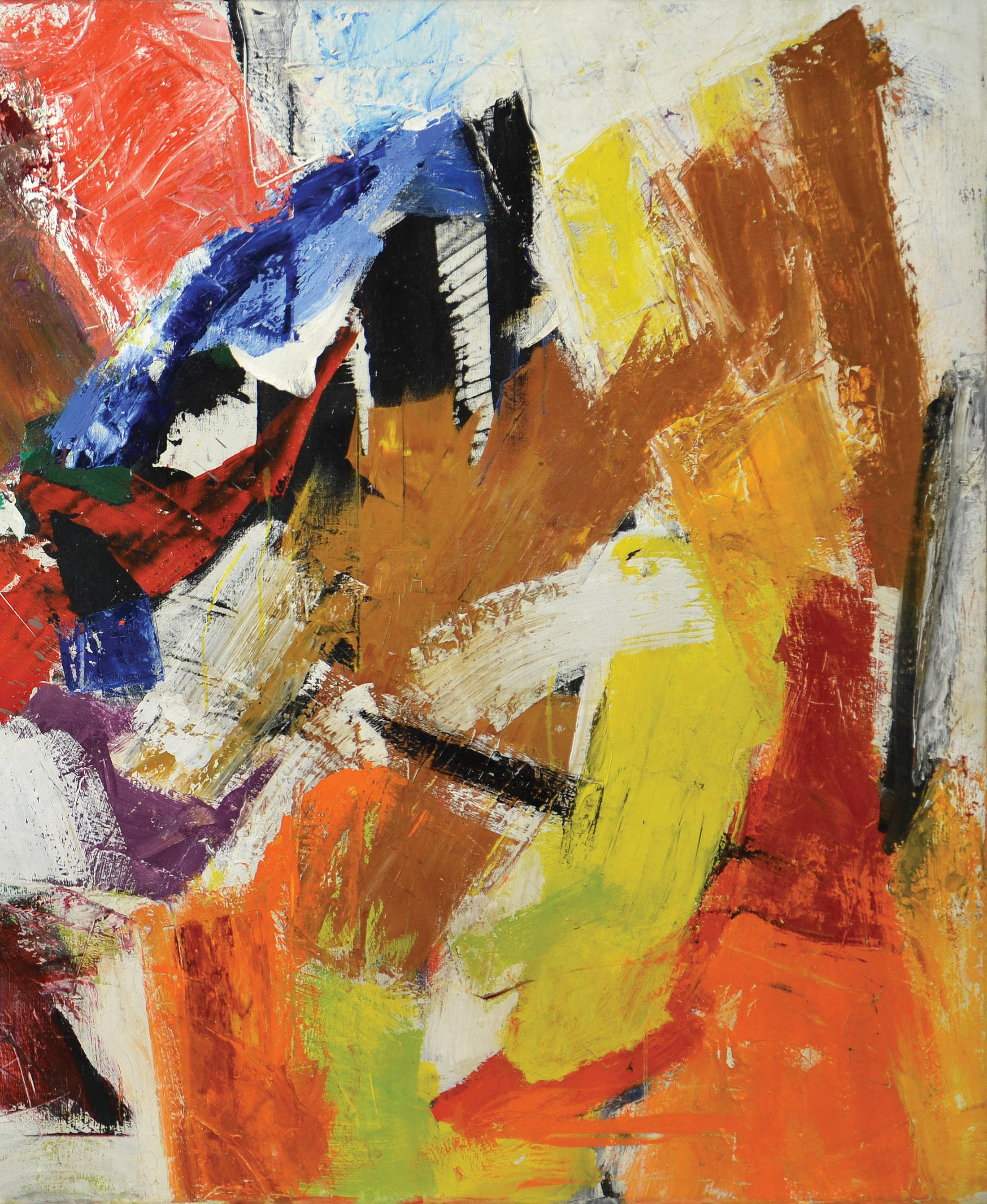
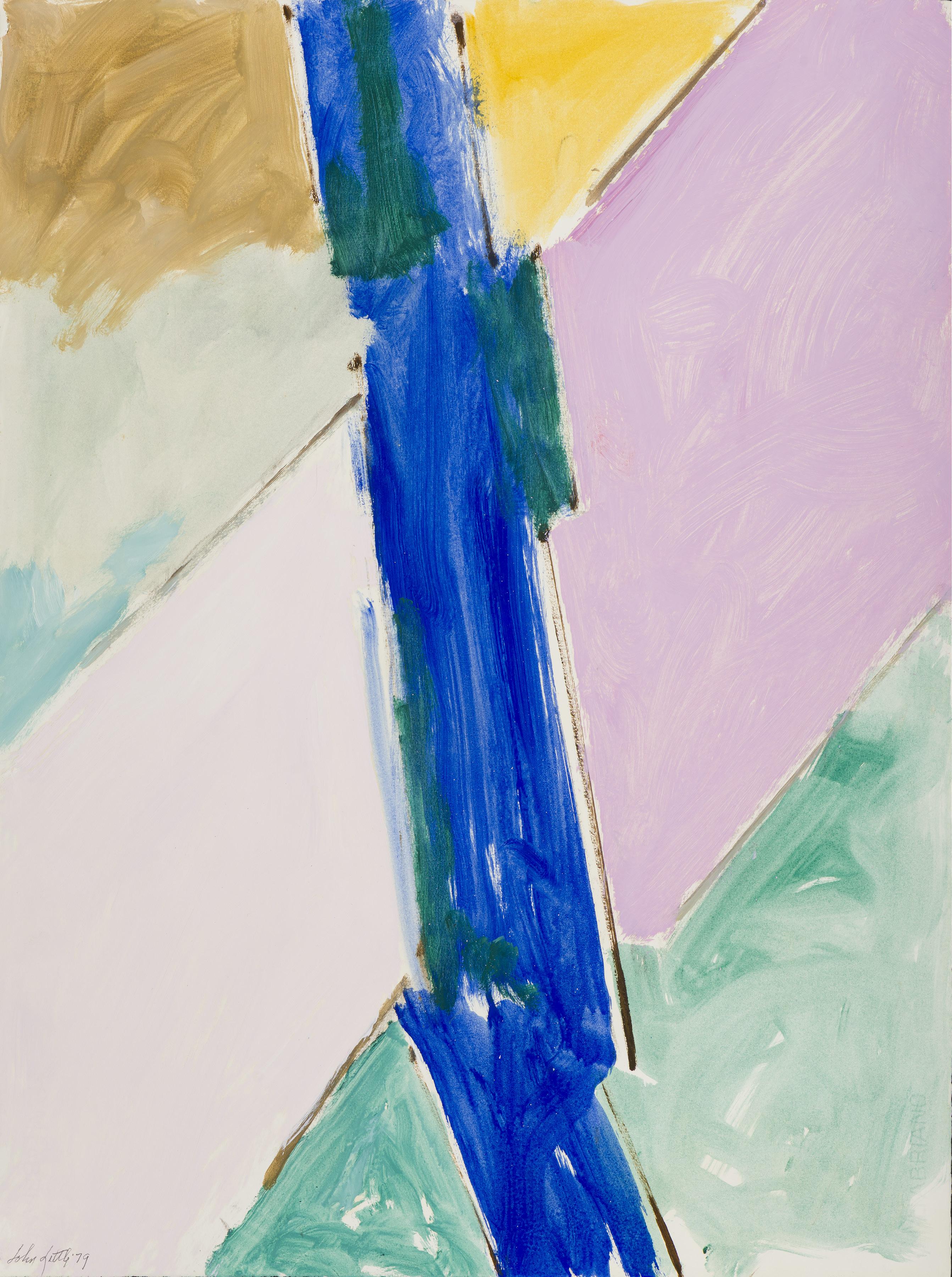
would be an increasingly radical attempt to honor this premise in paint. Hofmann's imprint was foundational, but Little quickly outgrew the role of student. He absorbed the push-pull dialectic of warm against cool, the insistence that pictorial depth arises from color rather than from vanishing points, and then spent forty years pressing the principle toward consequences the master himself had never foreseen. Where Hofmann cultivated reactive chromatic fields suggestive of elapsing durations, Little drove his hues toward assured, calibrated tempos, decisively disposed and untethered to illusionism. Where dutiful Hofmann students replicated their teacher’s optical tensions, Little pursued color toward structural certitudes in a manner that aligns him just as closely with his contemporary Louis Kahn, then reimagining architecture as a dialogue between material weight and light. Both men, in their respective mediums, constructed load-bearing walls while respecting the vestigial grid guiding interlocking frontal planes. This ambition evolves, lightens, across the exhibitions, from the densely troweled canvases of the late 1950s, oil laid on with a palette knife in weighty slabs of cerulean and alizarin, to the gravity-defying, nearly aerated compositions of the 1970s, in which broad chromatic expanses intersect and slide apart at edges deliberate as carpentry. Few painters of his generation thought as rigorously about what color, afforded compositional primacy, could be tasked to construct.
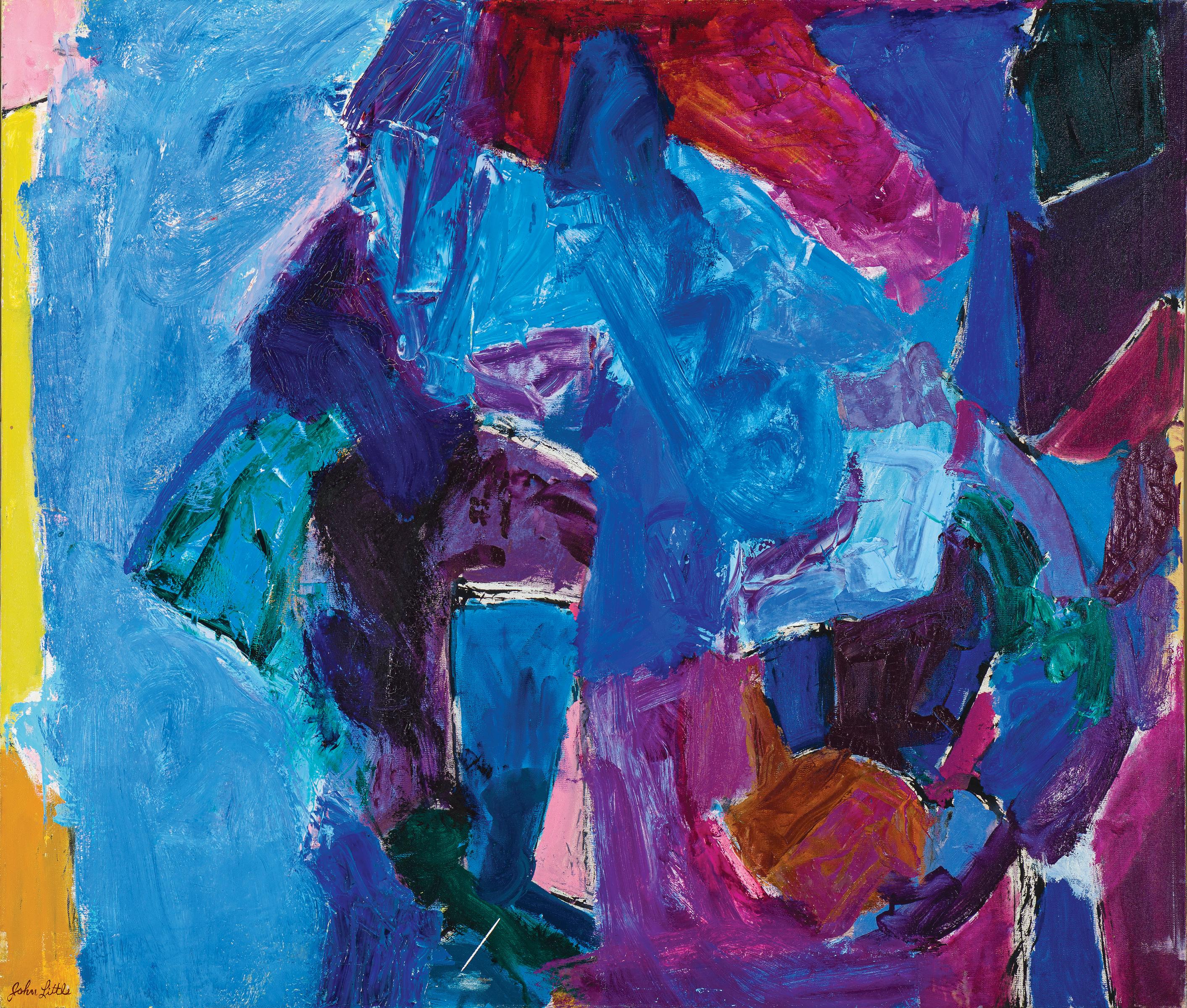
Color Architecture (1955) is a summative title, binding two terms as reciprocally defining principles. Thick, almost well-chewed passages of blue, cobalt shouldering into ultramarine, a violet haze pressing from below, lock against one another, generating depth by the compounding density of pigment against pigment. The painting conjures thoughts of masonry, coursed and fitted rather than drawn. Harold Rosenberg, the critic who had christened Action Painting only three years earlier, famously described the canvas as an arena for spontaneous activity; Little hews closer to a refined and analytic idea of classicism guiding design ideas reminiscent of plans for a construction site. Building, unlike acting, answers principally to gravity, to blueprint-precise proportions and the awareness that structure precedes expression, or there is nothing on which the latter may stand.
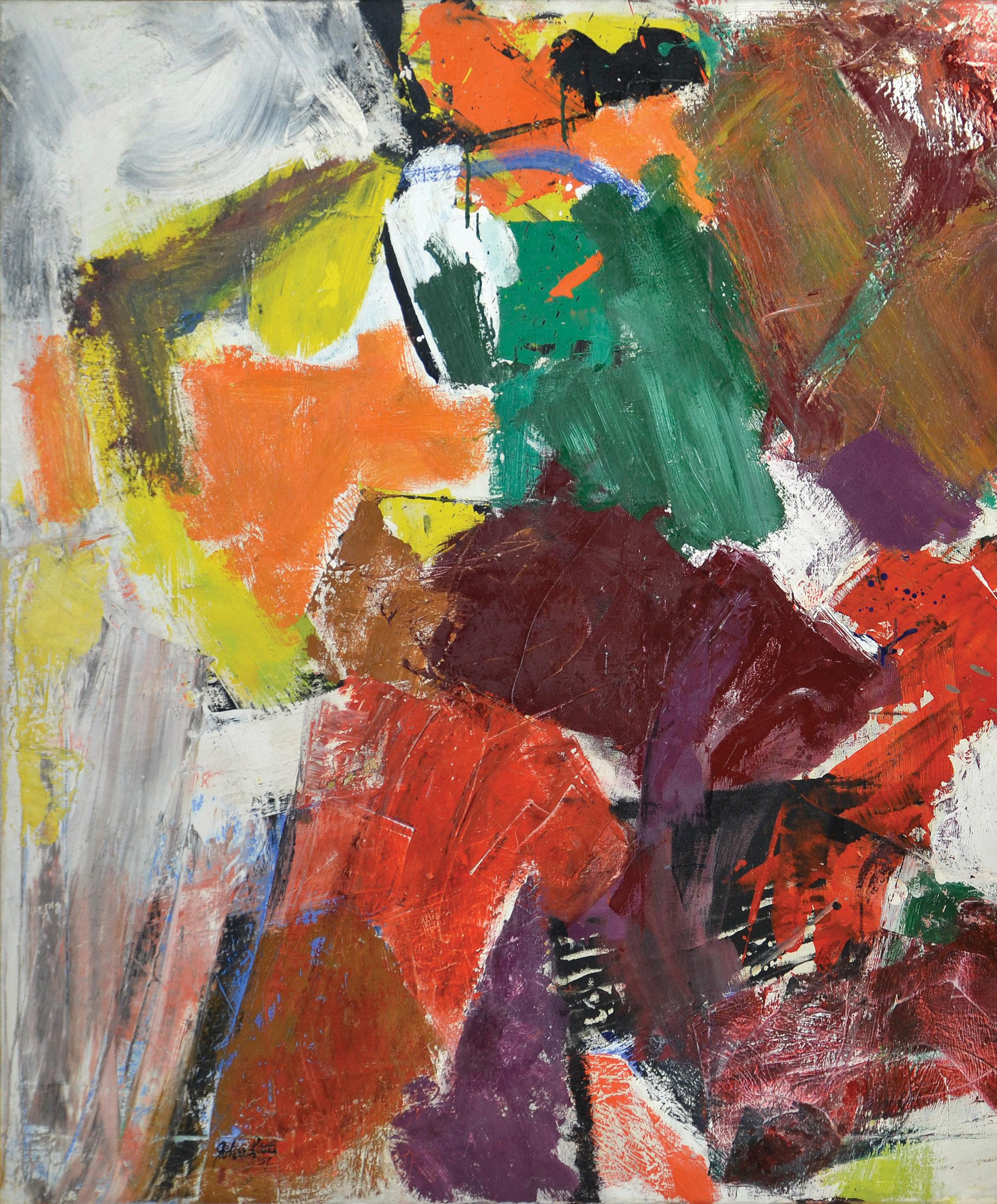
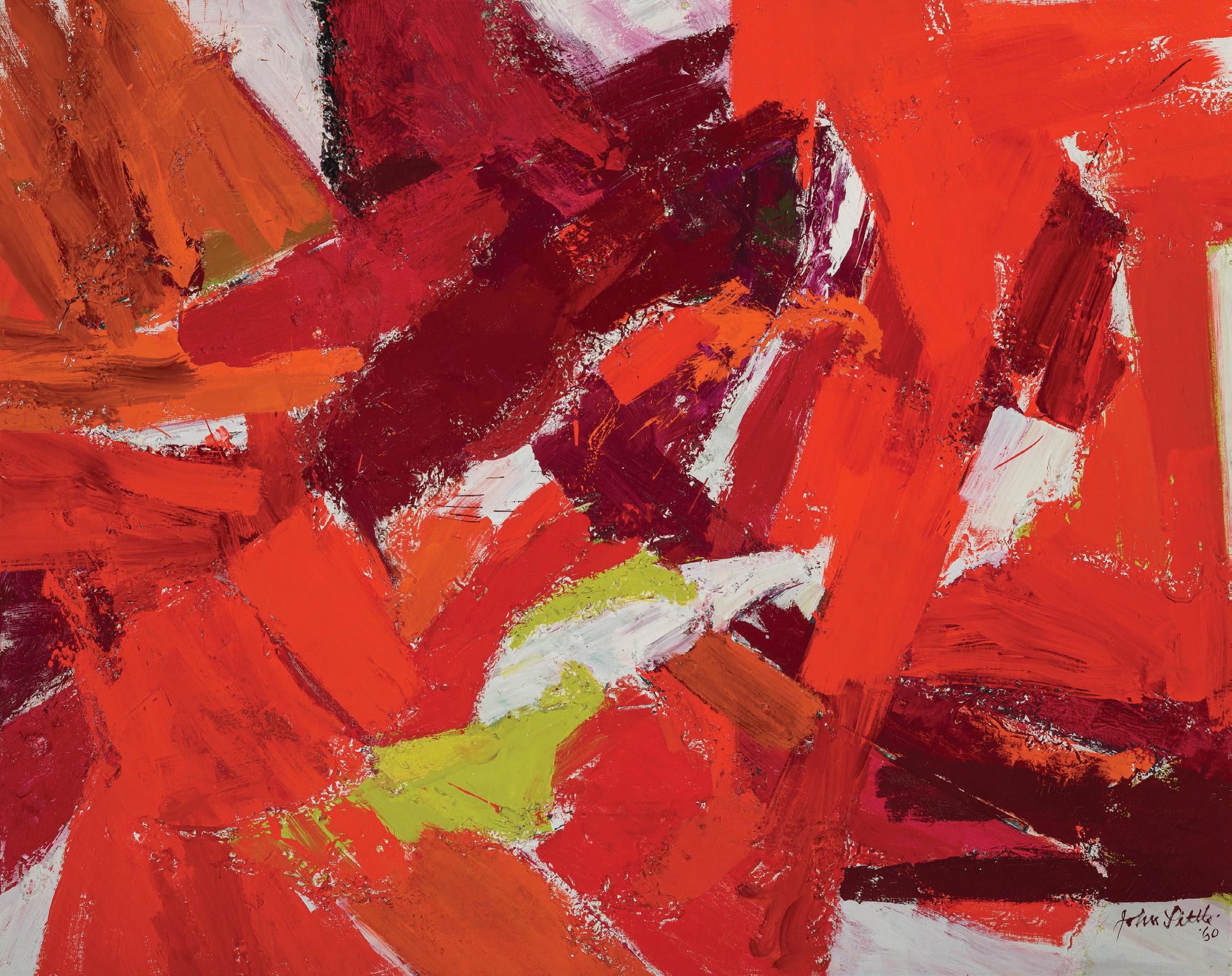
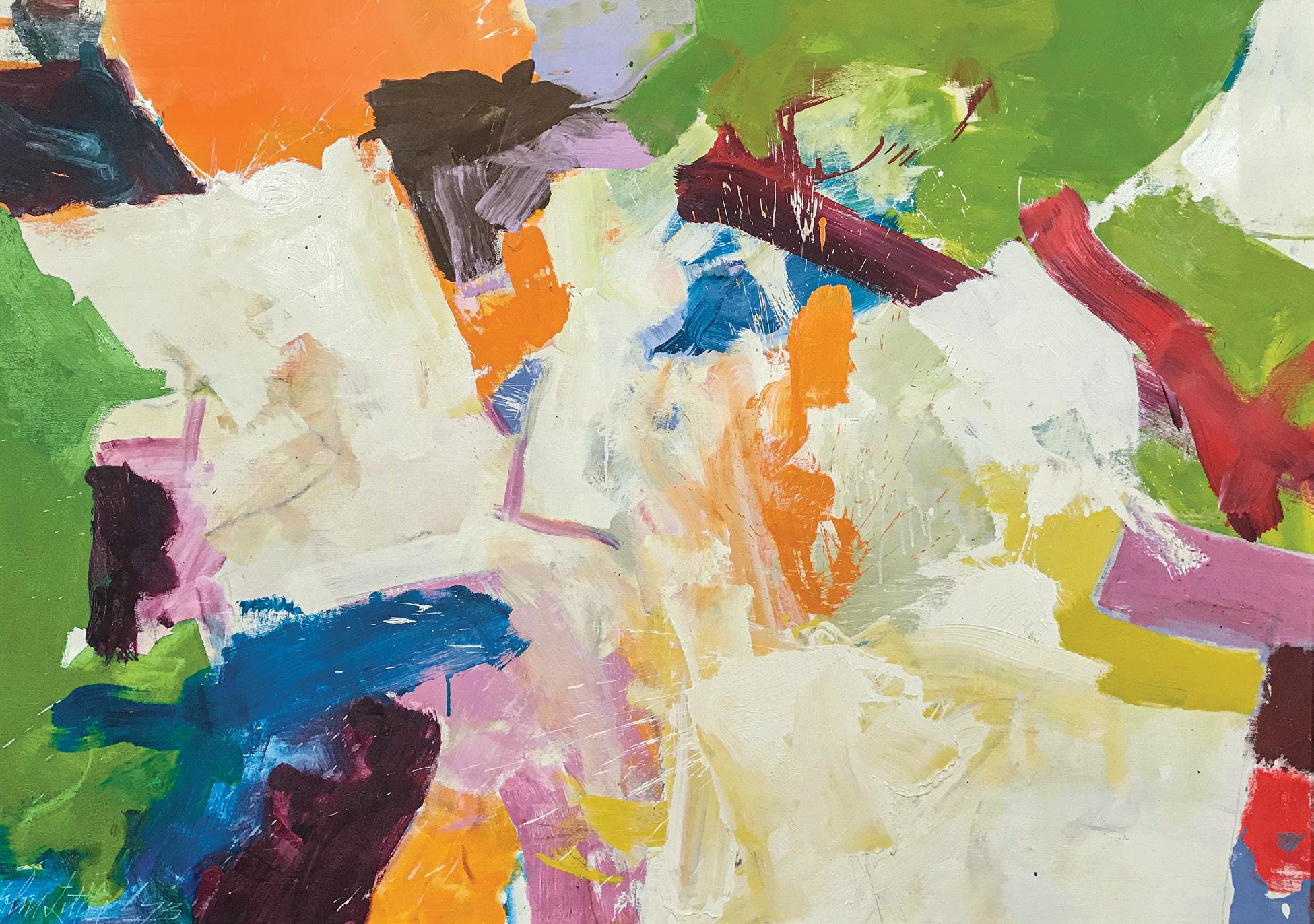
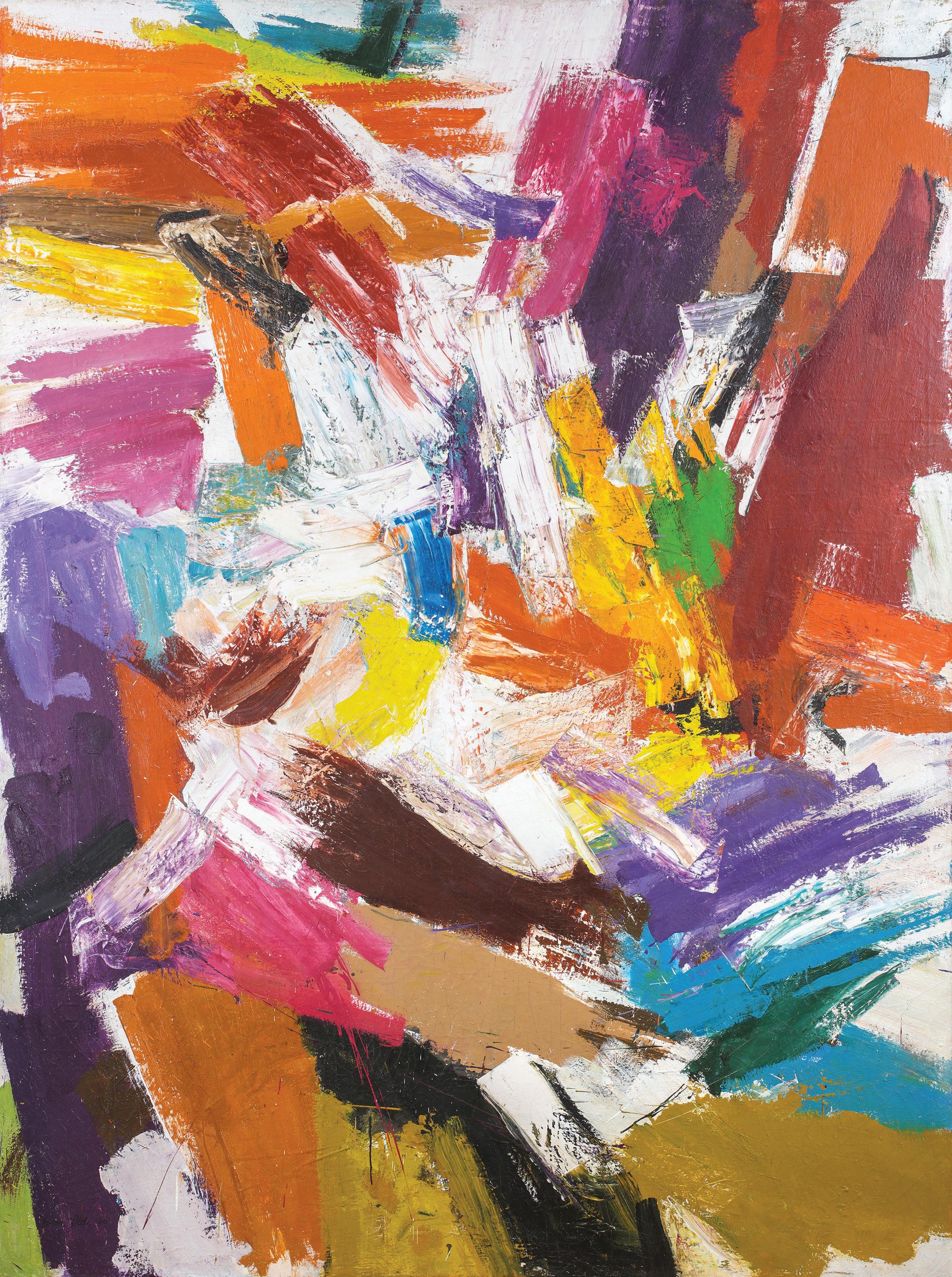
The monumental Untitled of 1959–60, eight feet of chromatic detonation, represents the summit of the artist’s most physically assertive period. It is a thrill to have it included in this exhibition. The brushwork is ferocious: swathes of orange, magenta, and raw white crash across the surface with the implacability
of weather, and without an automatist’s willing recourse to accident. Little sought what he told Judith Wolfe, author of the 1982 Guild Hall retrospective catalogue, was “control from the beginning… the formal unity in painting,” and his large oils deliver; what registers initially as storm and tumult resolves, on longer acclimation, into a deliberate distribution of chromatic mass. His stated aim, to allow color and form to carry the idea rather than line, places him closer to the post-painterly abstraction of the coming decade than to the heroic gesturalism of his own, even as he refused to surrender oil's density for the soaked, stained surfaces that some who followed would later prize.
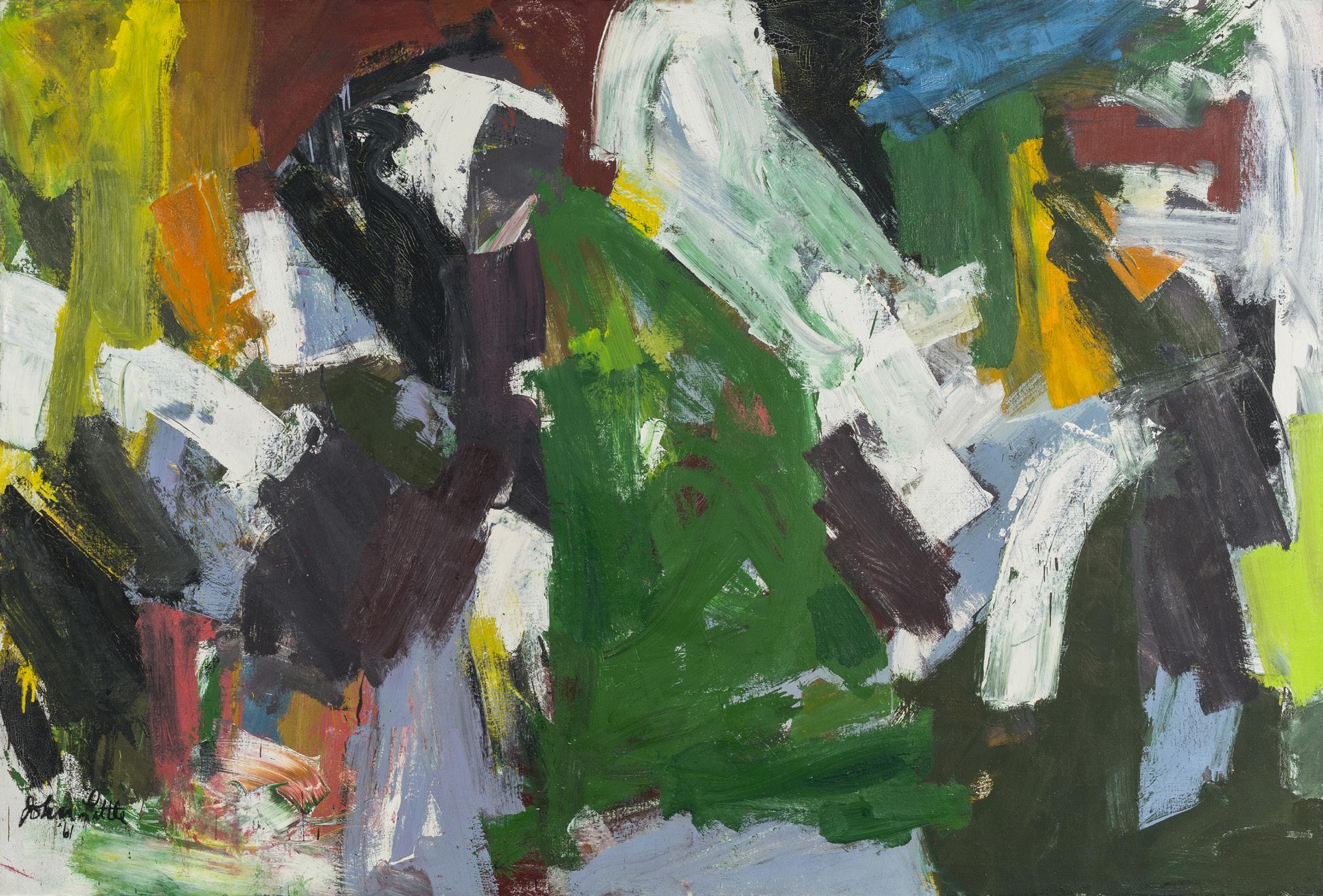
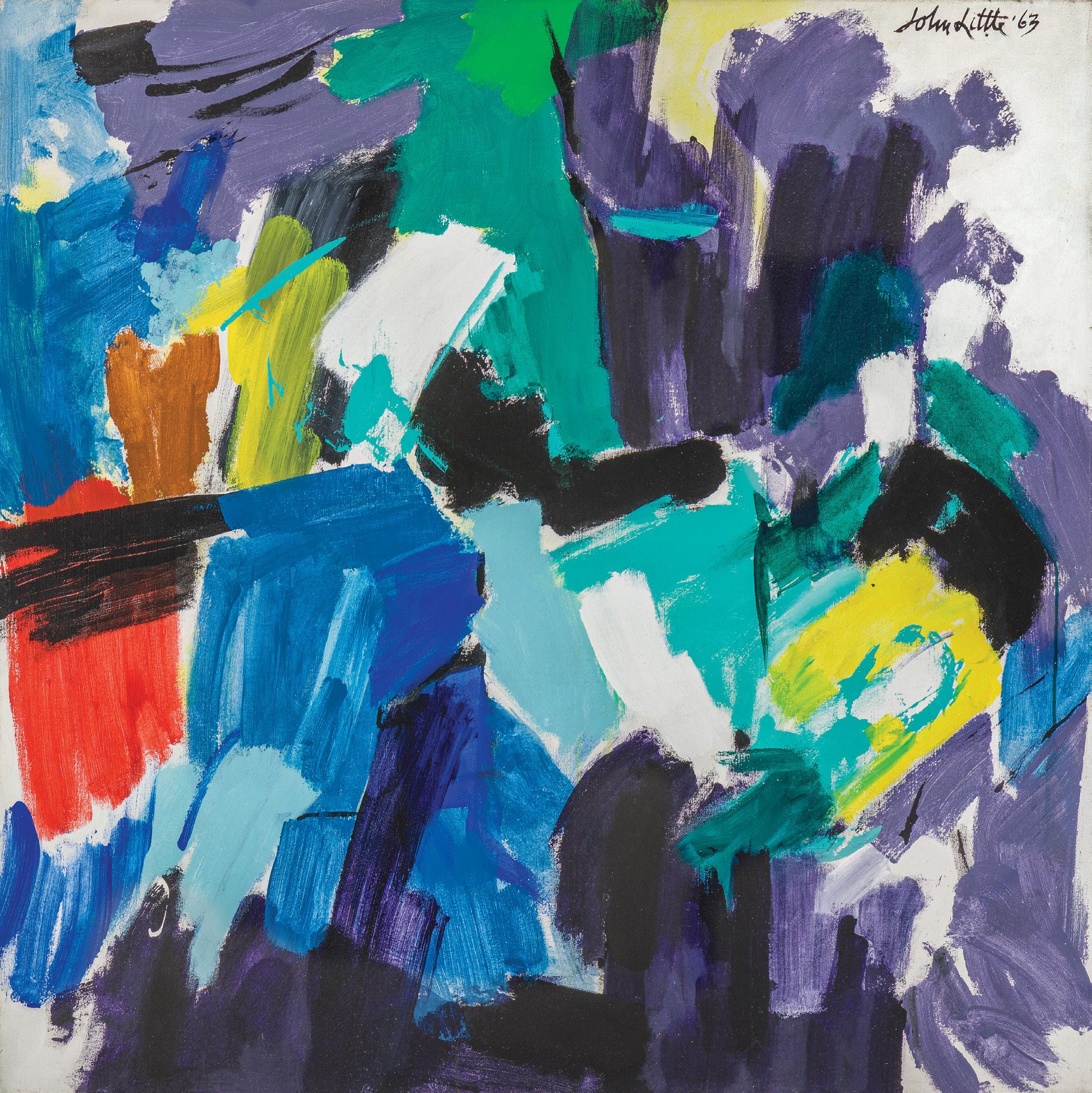
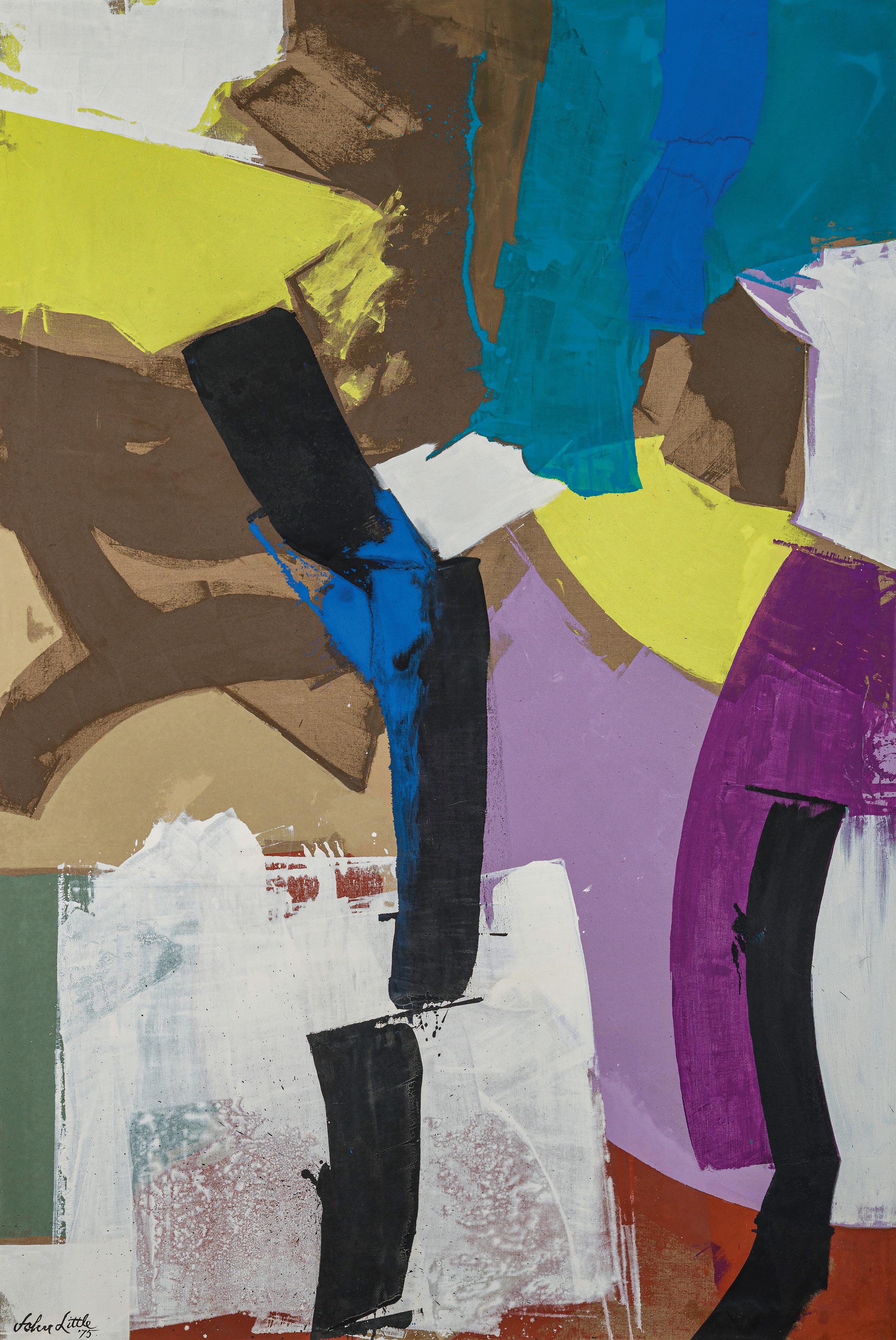
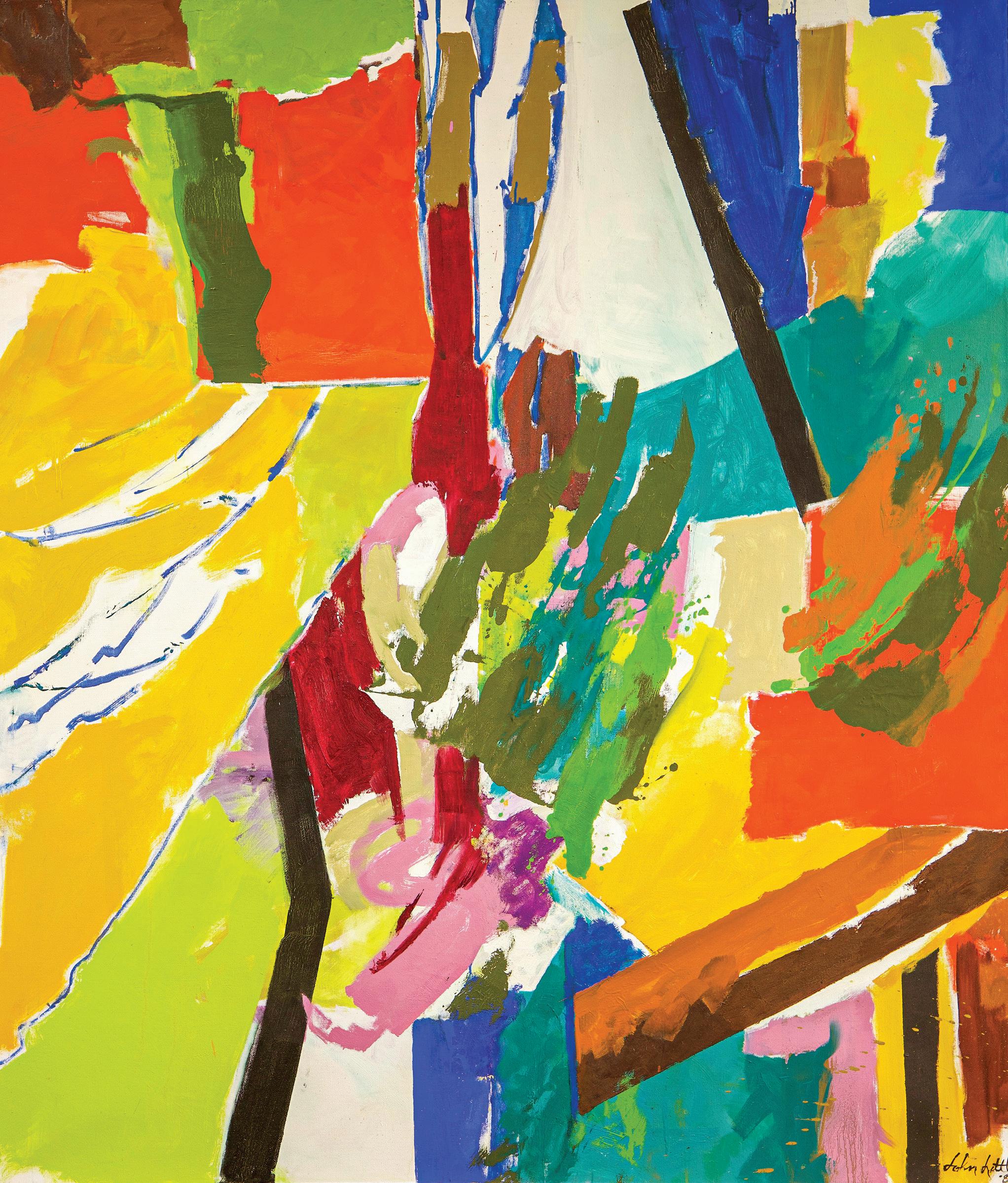
The sixties bore him out. He turned toward open, juxtaposed planes of saturated color, arriving at coordinates Clement Greenberg, art criticism's reigning arbiter of flatness and opticality, was simultaneously prescribing for the rest of American painting. Little had reached them on his own. His feel for adjacency, for the alchemical event that occurs when one hue is laid flush against another without the mediation of drawing, had been trained across decades of textile design, where the behavior of dye against dye on a flat woven surface was a problem of manufacture, made by hand, rather than of theory. What had been a question of expression for many was for Little closer to a tangible inquiry into a field of contact. See Arcata (1963): percussive slams of teal and indigo collide with cadmium yellow and burnt orange, each passage pressing its chromatic voltage against the next, the acrylic handled with a speed and industrial confidence that owe considerably to a designer’s training.
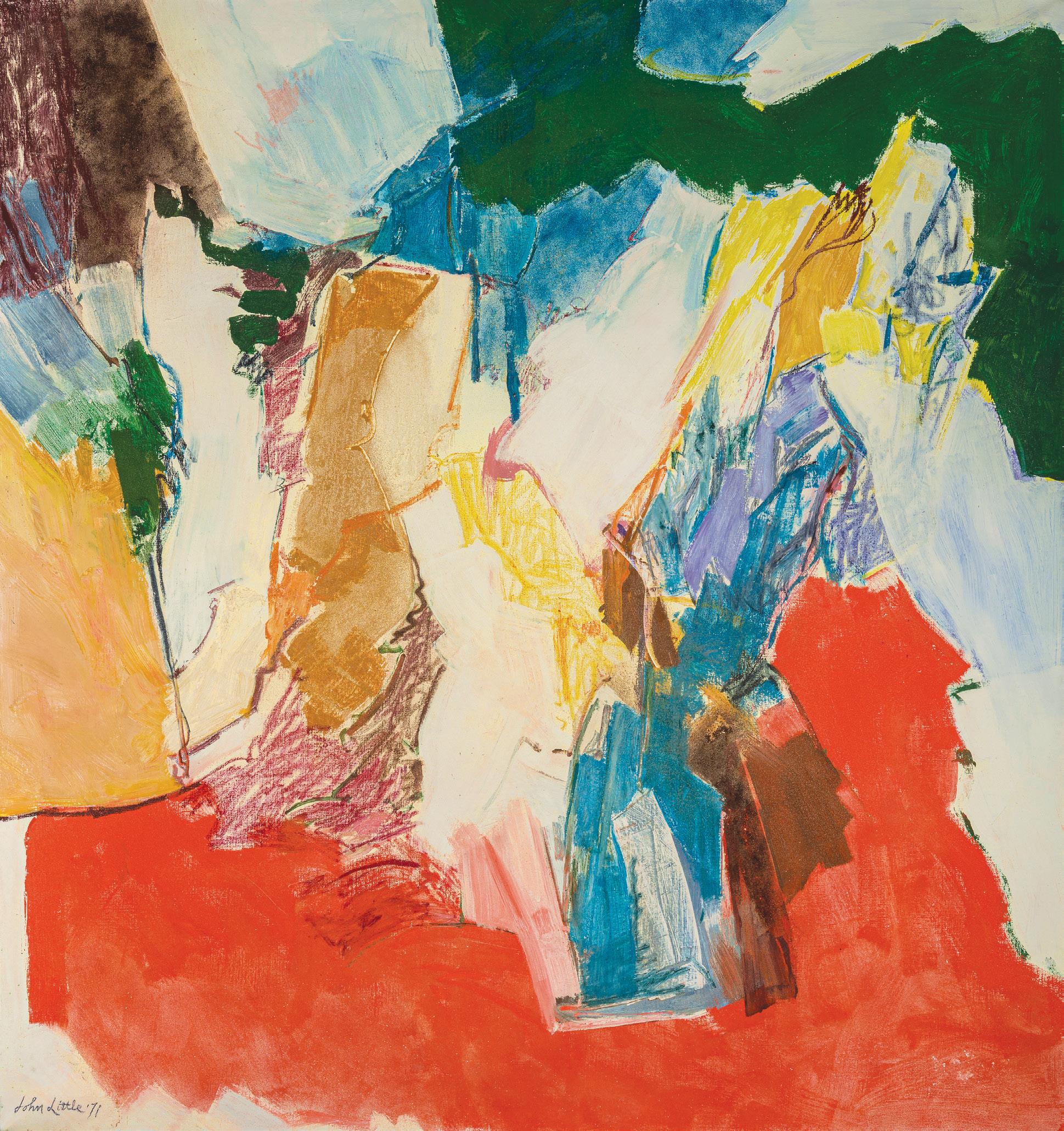
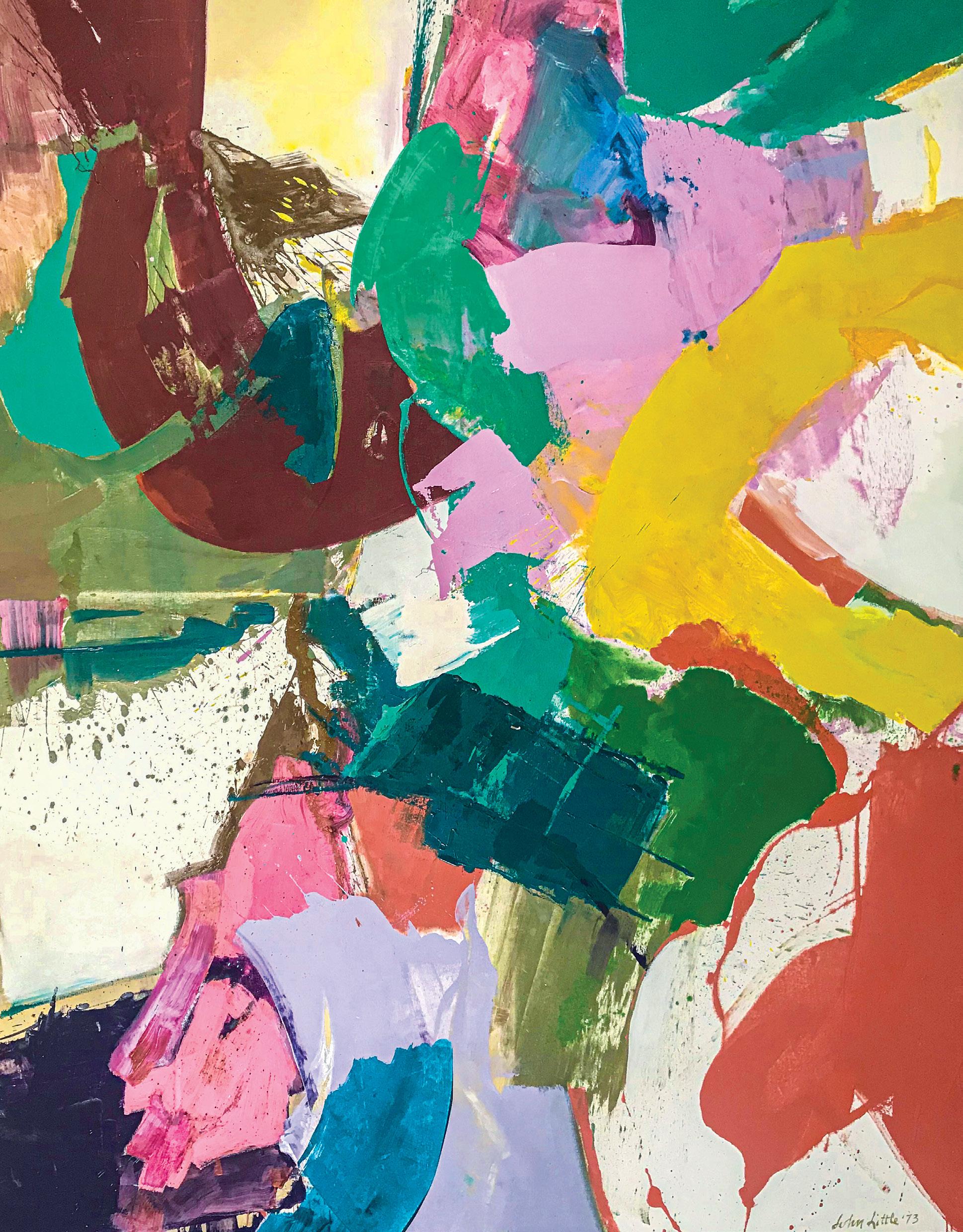
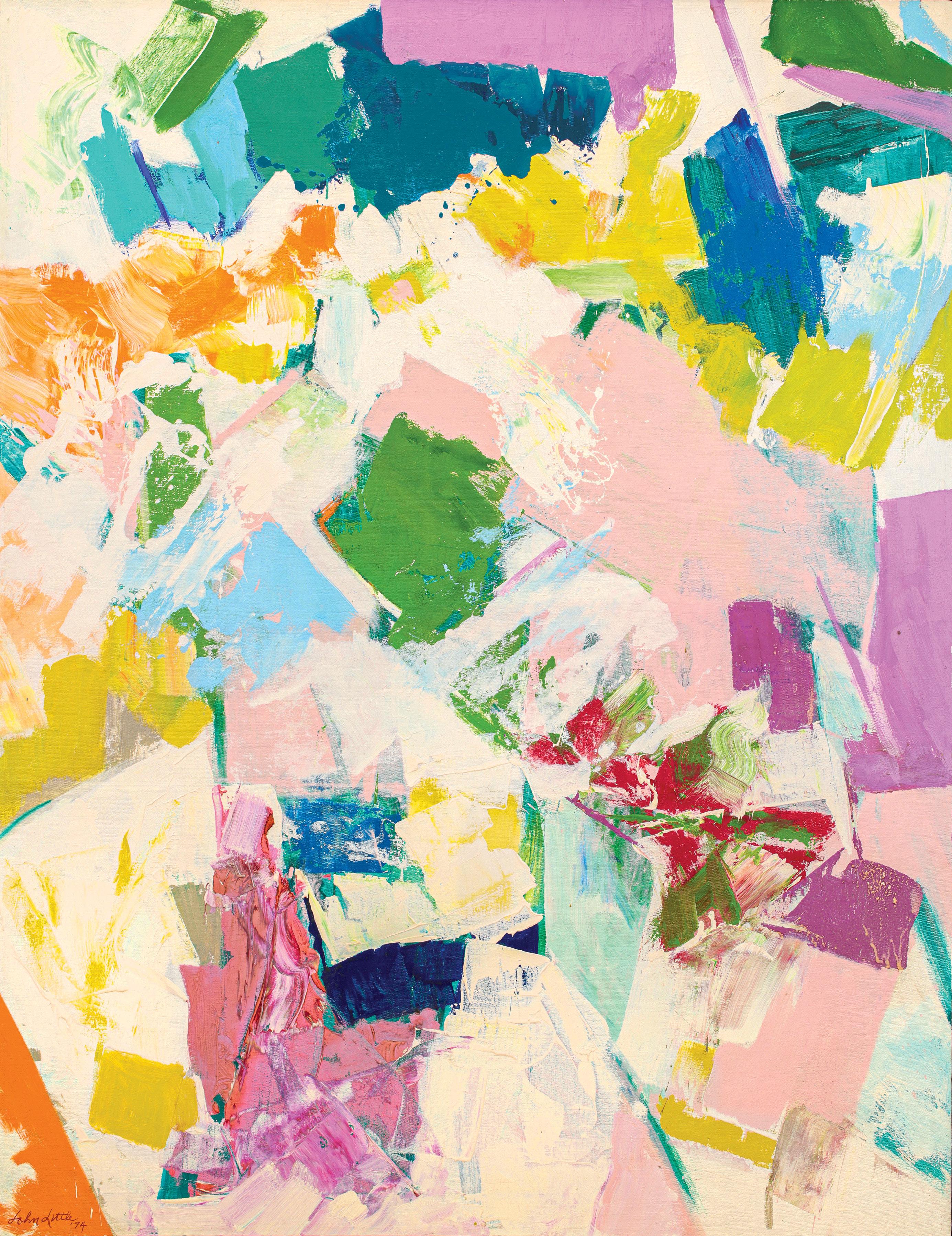
In the early 1970s the arc of the celestial entered the paintings. The moon’s scything curve bestows Maskelyne (Moon Crater near Equator) (1971) and Arago (1974) their compositional logic and their titles. The shapes that began to wheel through these compositions derived from Little’s absorption in NASA photographs of the lunar surface, whose silvered, inhuman expanses offered, to an eye schooled in the dialectics of figure and ground, a geometry of open space that was, in one sense, as new as the photographs themselves and, in another, as ancient as the pre-Socratic philosopher Anaximander’s concept of apeiron: the boundless origin of all things.
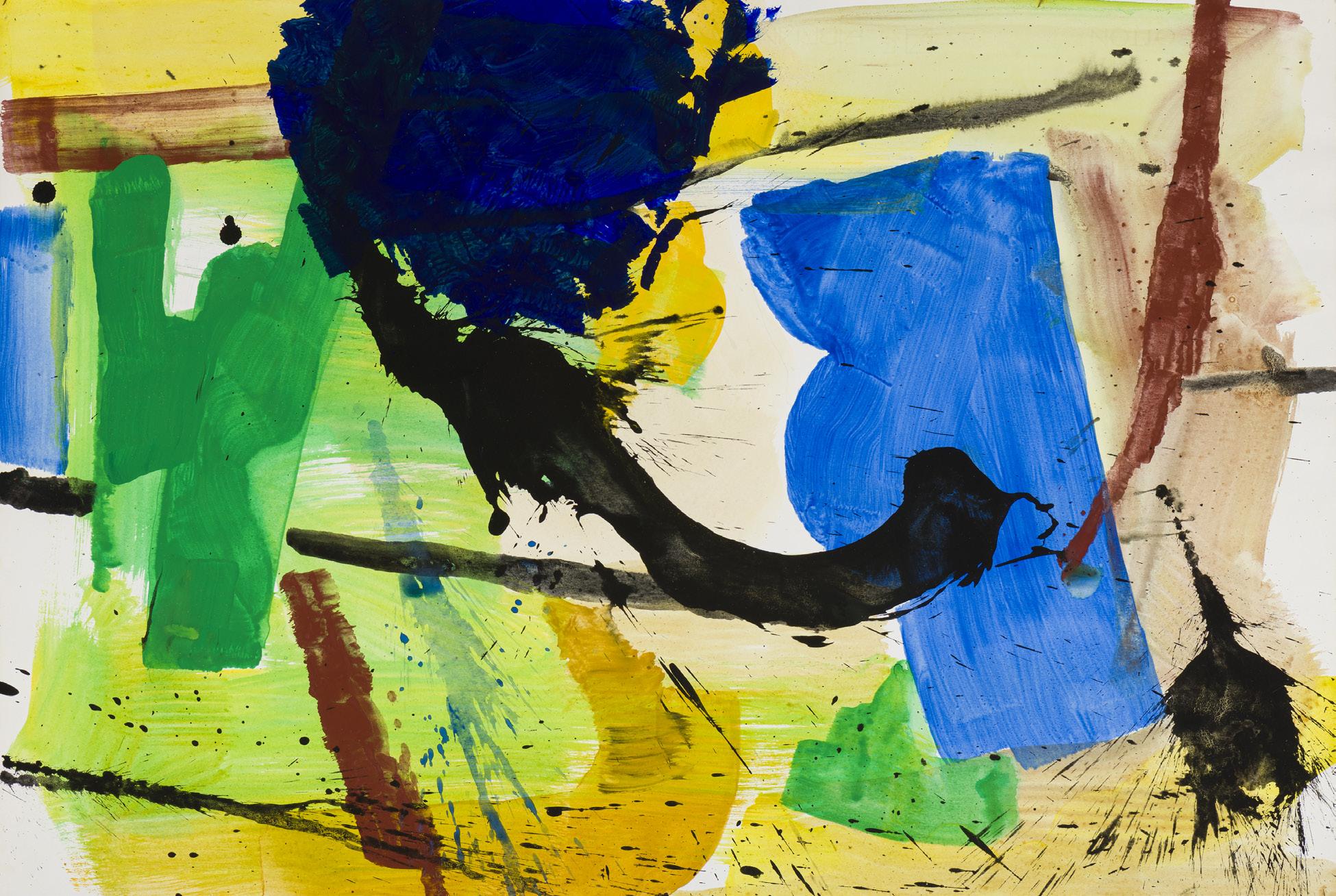
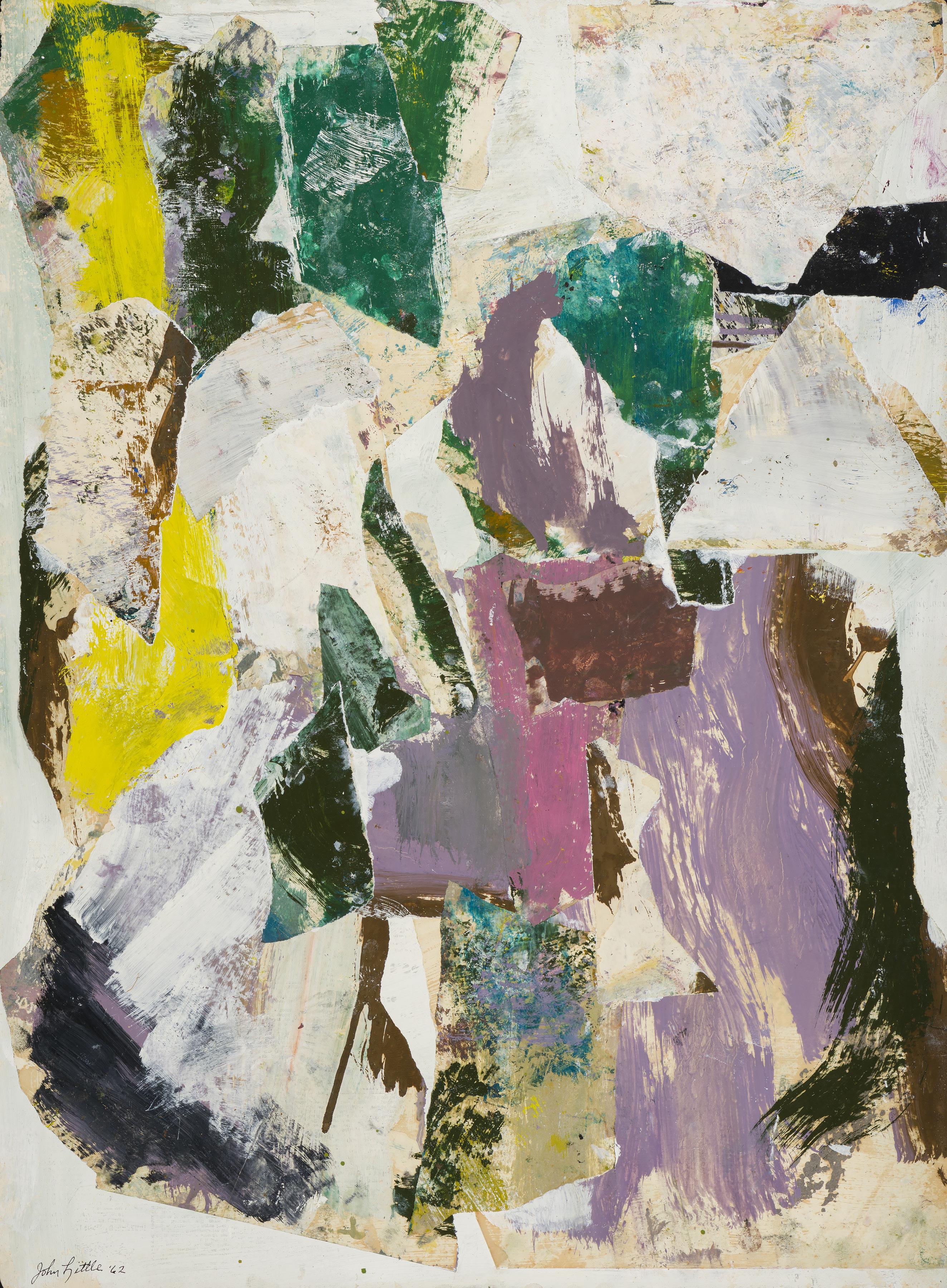
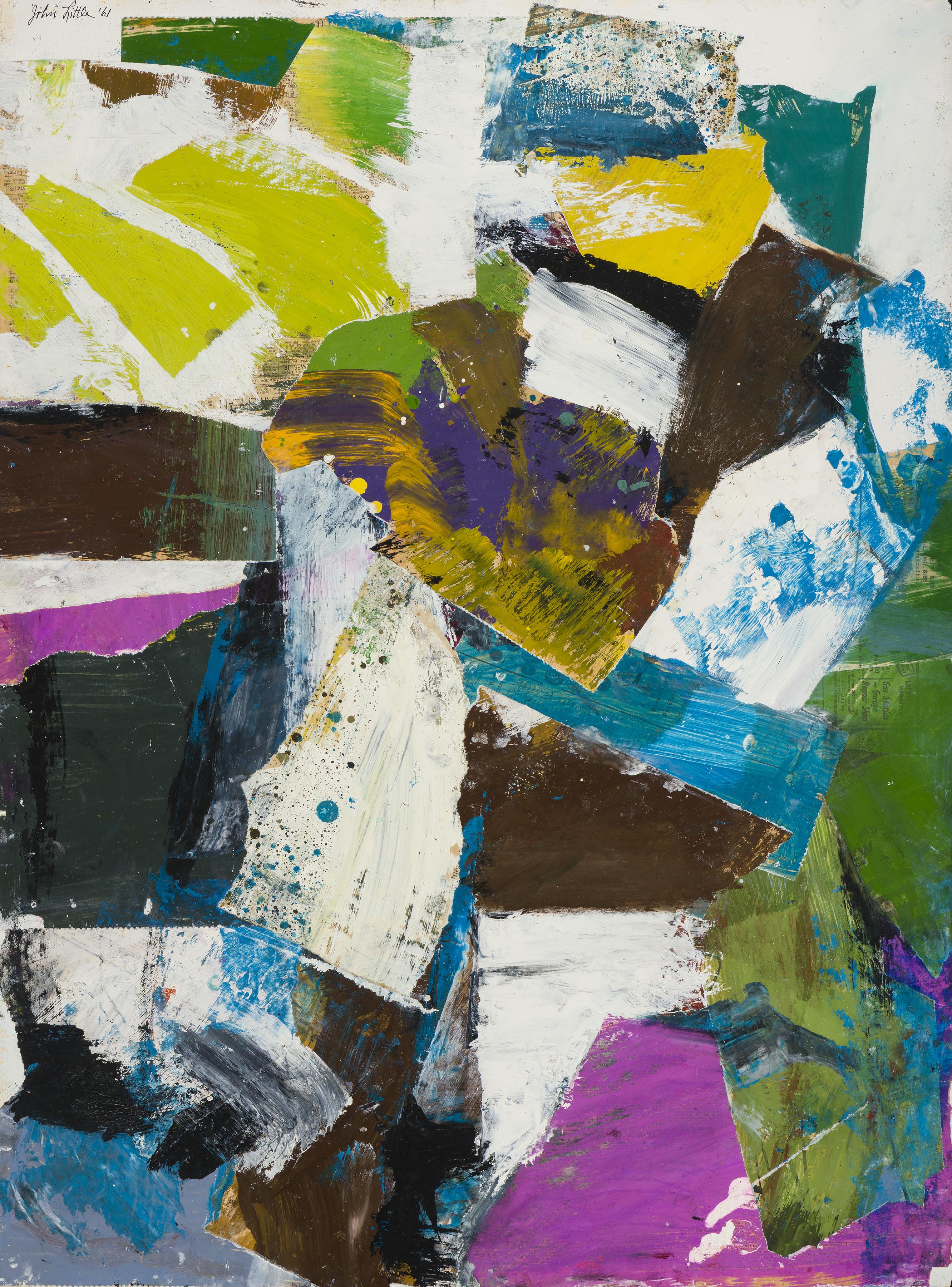
The collages and works on paper sound a quieter, more furtive note. Little layered torn paper, oil paint, and salvaged materials, including pages ripped from the New York Times and scraps of painted canvas, onto handmade sheets from the Long Island papermaker Douglas M. Howell. His Untitled (1959) collage, with its dense, excavated topography of overlapping fragments,
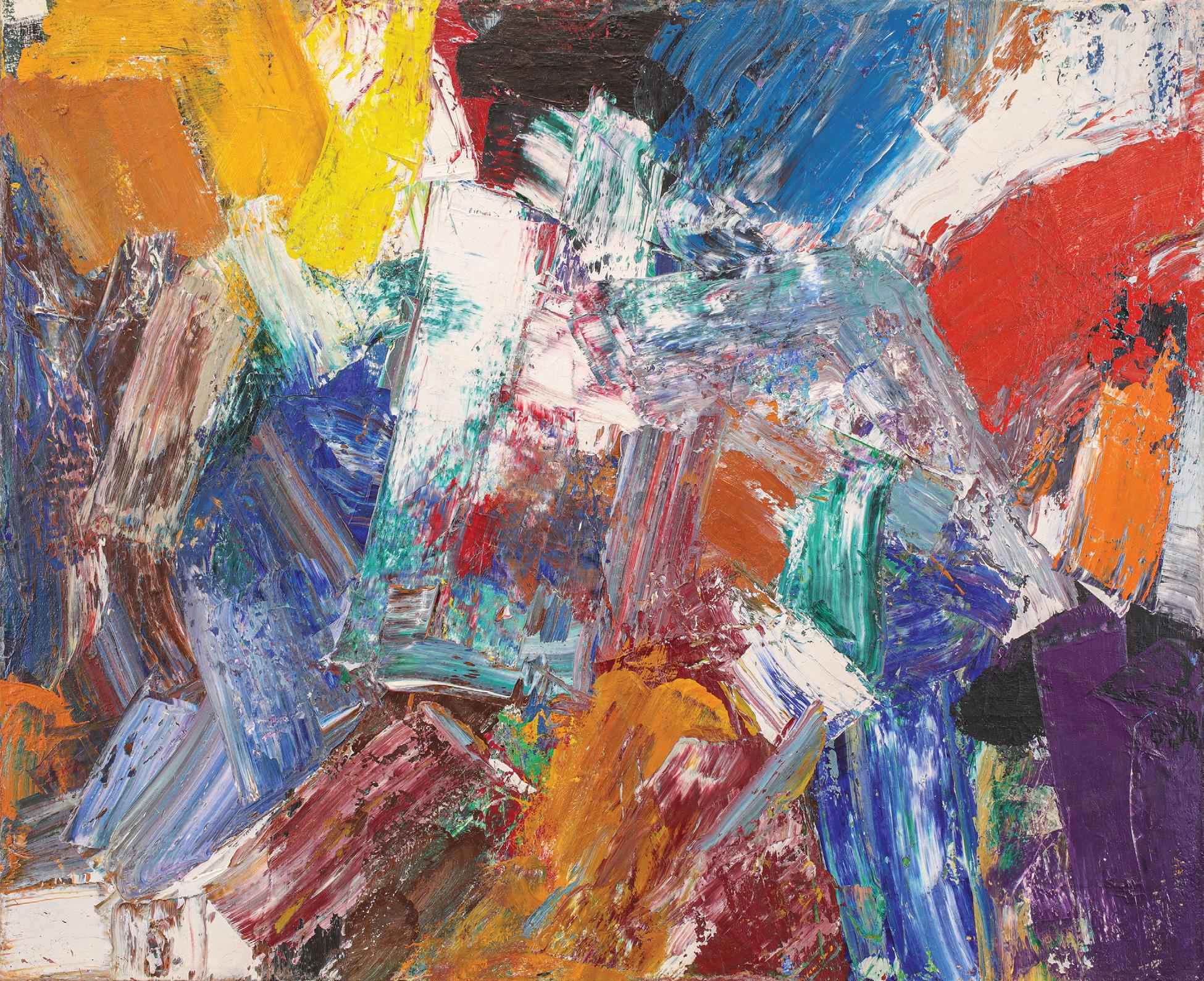
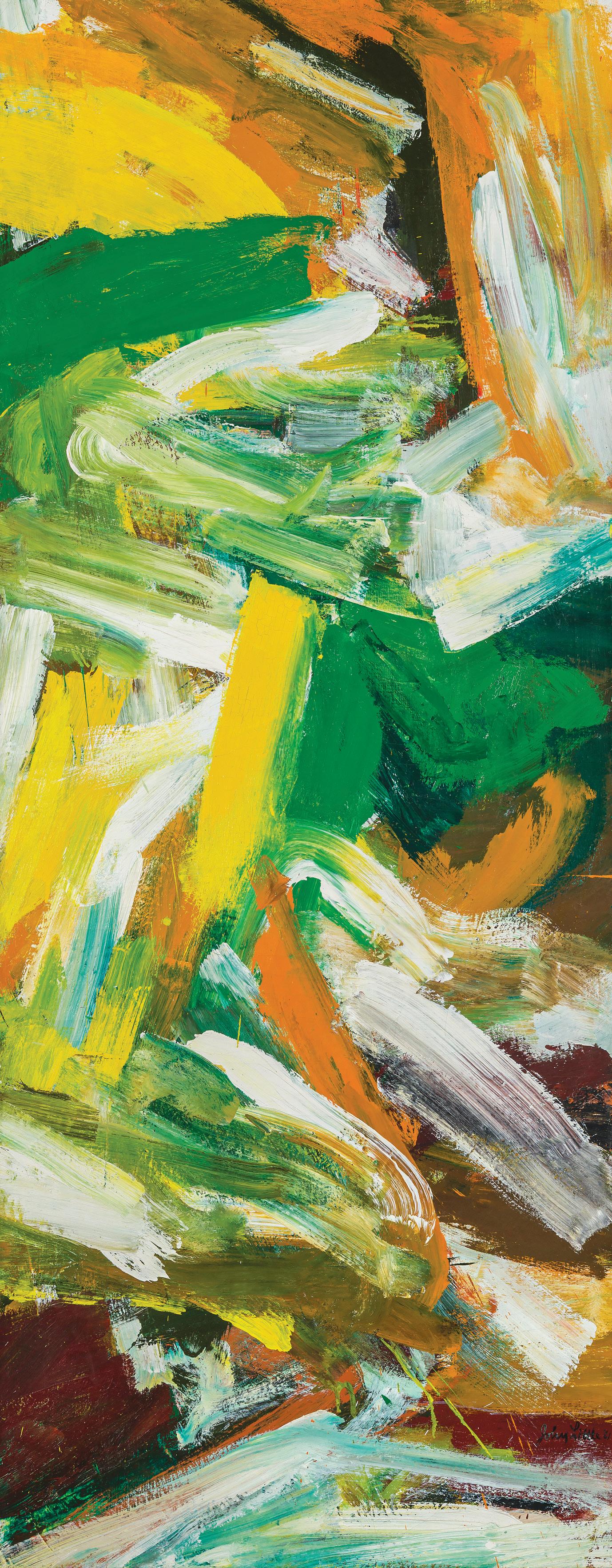
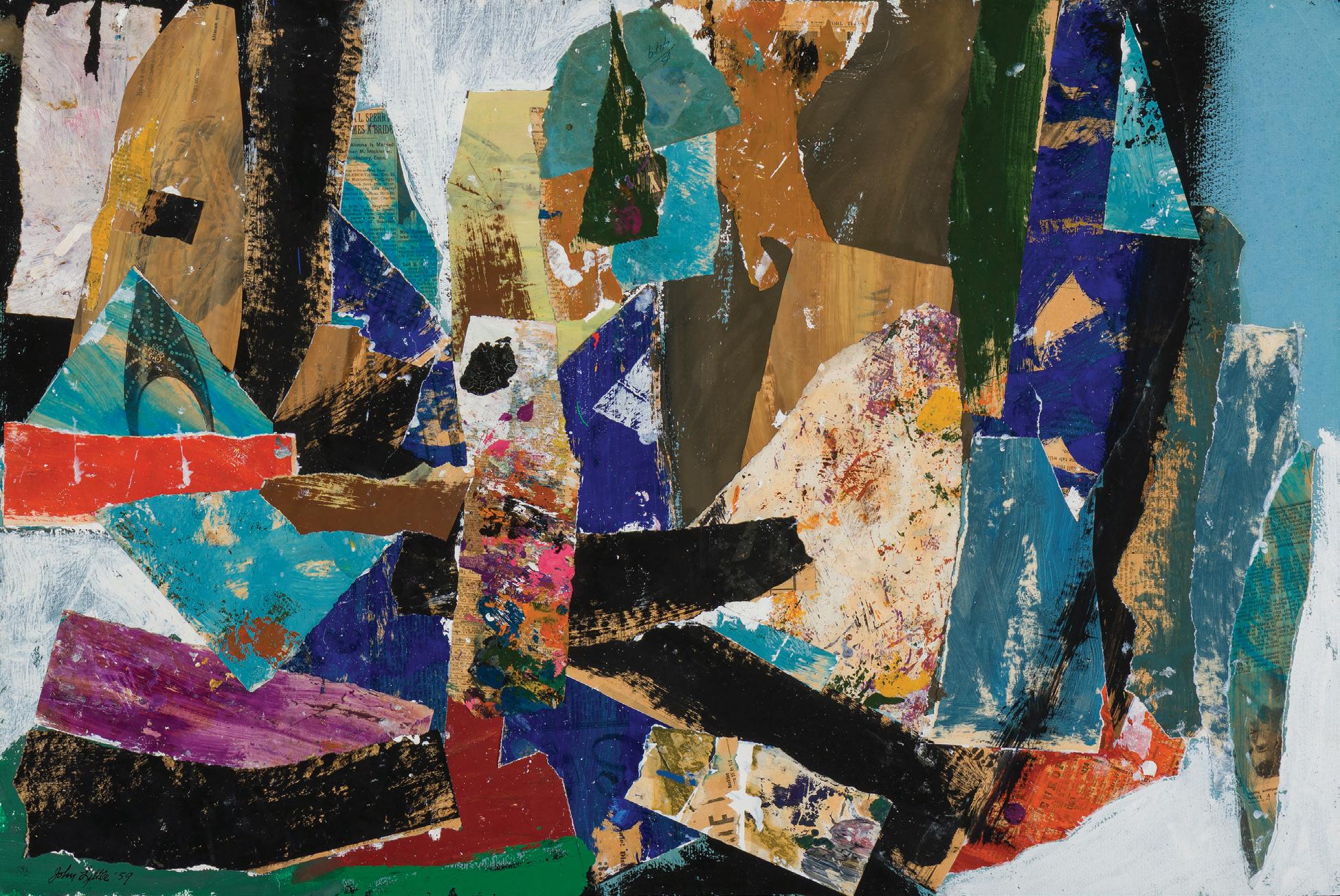
carries the same vigor as the large oils but in a tighter, more conspiratorial register. Where the oils trace color architecturally, the collages are almost archaeological, bearing visible strata that alternate between concealment and revelation, the torn edges as eloquent as any brushstroke, and as deliberate. Little also built institutions. The Signa Gallery he opened on Main Street in 1957 with Ossorio and Parker mounted vanguard exhibitions: across four seasons it presented Mary Abbott, Lee Bontecou, Philip Guston, Paul Jenkins, and Robert Motherwell alongside 128 painters and sculptors in all, gaining the consistent notice of eminent critics including Dore Ashton, Phyllis Braff, and Grace Glueck. Little and his partners had transplanted the innovations of the downtown scene, then thriving in cooperative galleries from the Tanager to the Hansa, to a village whose residents were, as he wryly recalled, not exactly thrilled at the prospect of a modern art gallery on Main Street. They opened the doors regardless.
The same uncompromising kind of ambition is everywhere apparent in the canvases now on view. What Little materialized exceeds the recognition that two adjacent hues generate, between themselves, a third optical event. He made of this principle a sustained pictorial language, building each canvas out of accumulated instances, granting it the inevitability, at once concussive and infinitely graduated, of waves arriving on the East End's shore. Helen Harrison, the East End's most authoritative chronicler of its art colony, wrote in the New York Times in 1981 that perhaps no living artist had carried Hofmann's color theories as far as Little, and the canvases shown here confirm her position. By that time, the assessment was widely shared among critics who had followed the East End scene from its postwar beginnings. He belongs to the small company of Hofmann students—Helen Frankenthaler, Joan Mitchell, and Wolf Kahn, among them—who moved beyond academic precedent and produced autonomous work that altered the landscape of Modern art.
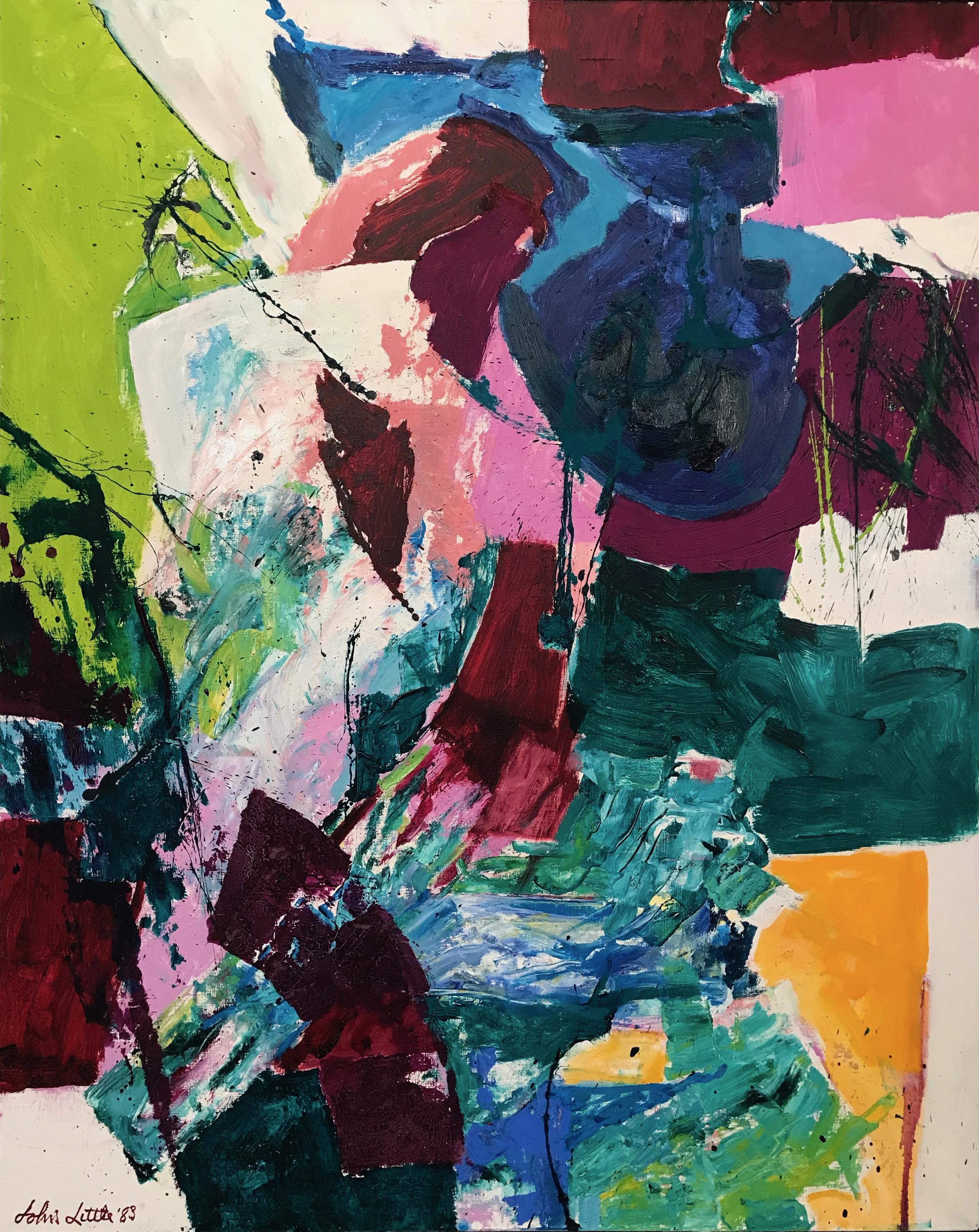
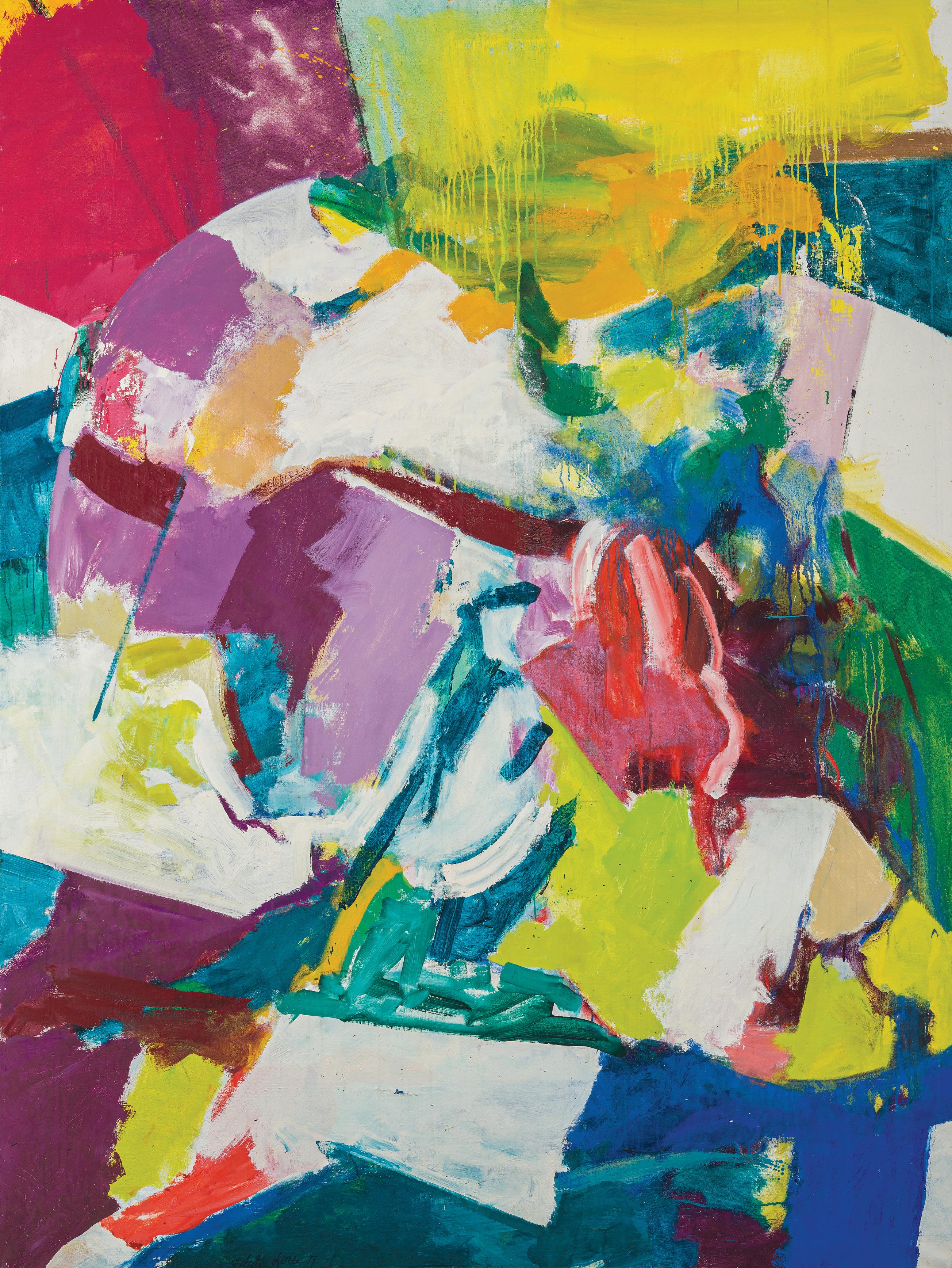
The color in Little's paintings continues to reorganize the environment in which a viewer perceives a work by him. Stand before the incandescent core of Alaska, (1959), the orbital arc of Rhysling (1971), the taut, latecareer lyricism of Vivid Bodies (1983), painted the year before Little died at seventy-seven. A pigment, he said, is a pigment. Standing here, forty years later, one perceives exactly what he meant. These works are the aesthetic architecture built by one of the great American colorists of his century, the culminating record of an art monumental in its reach, kaleidoscopic in its intelligence, and faithful, to the last canvas, to its conviction.
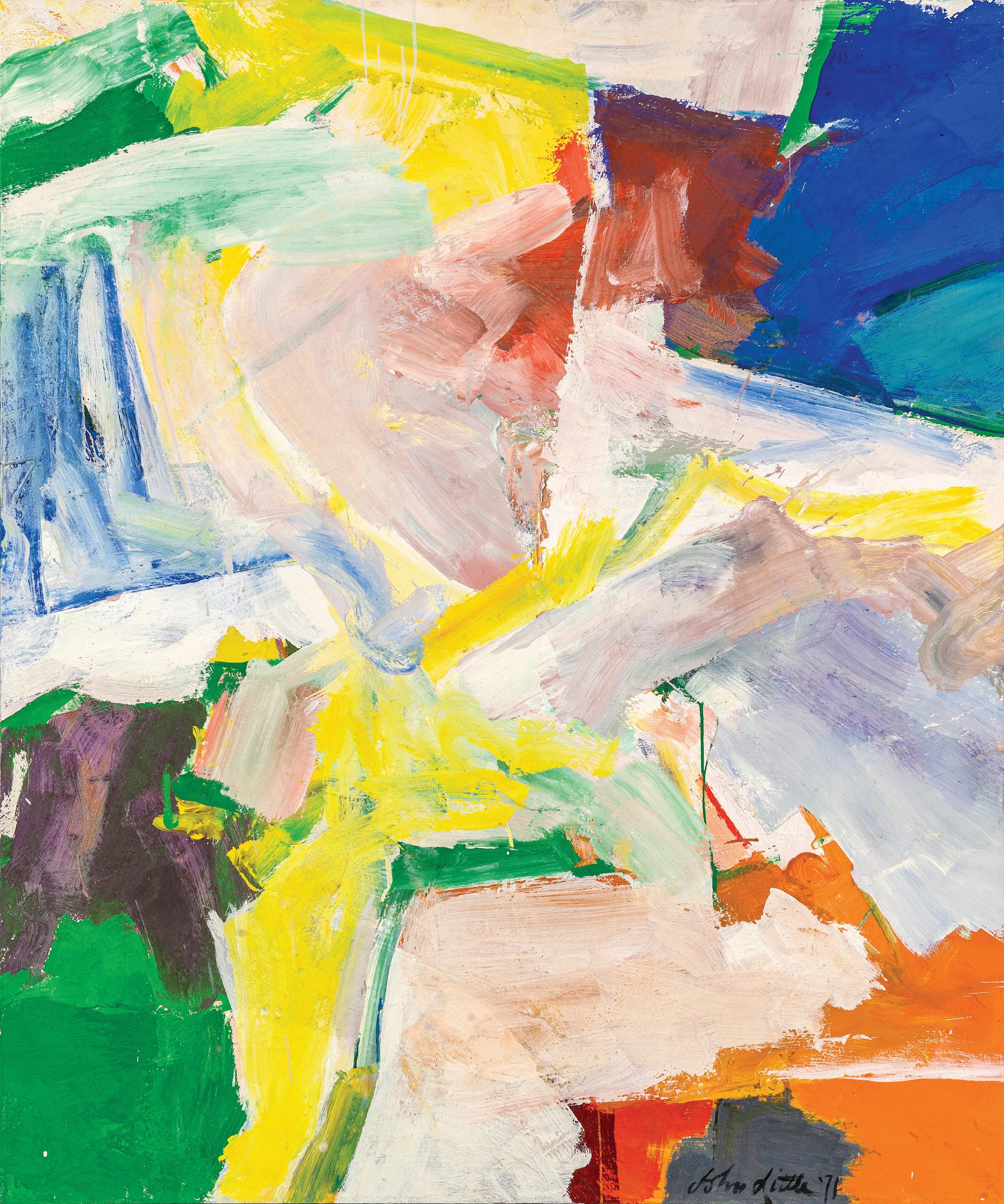
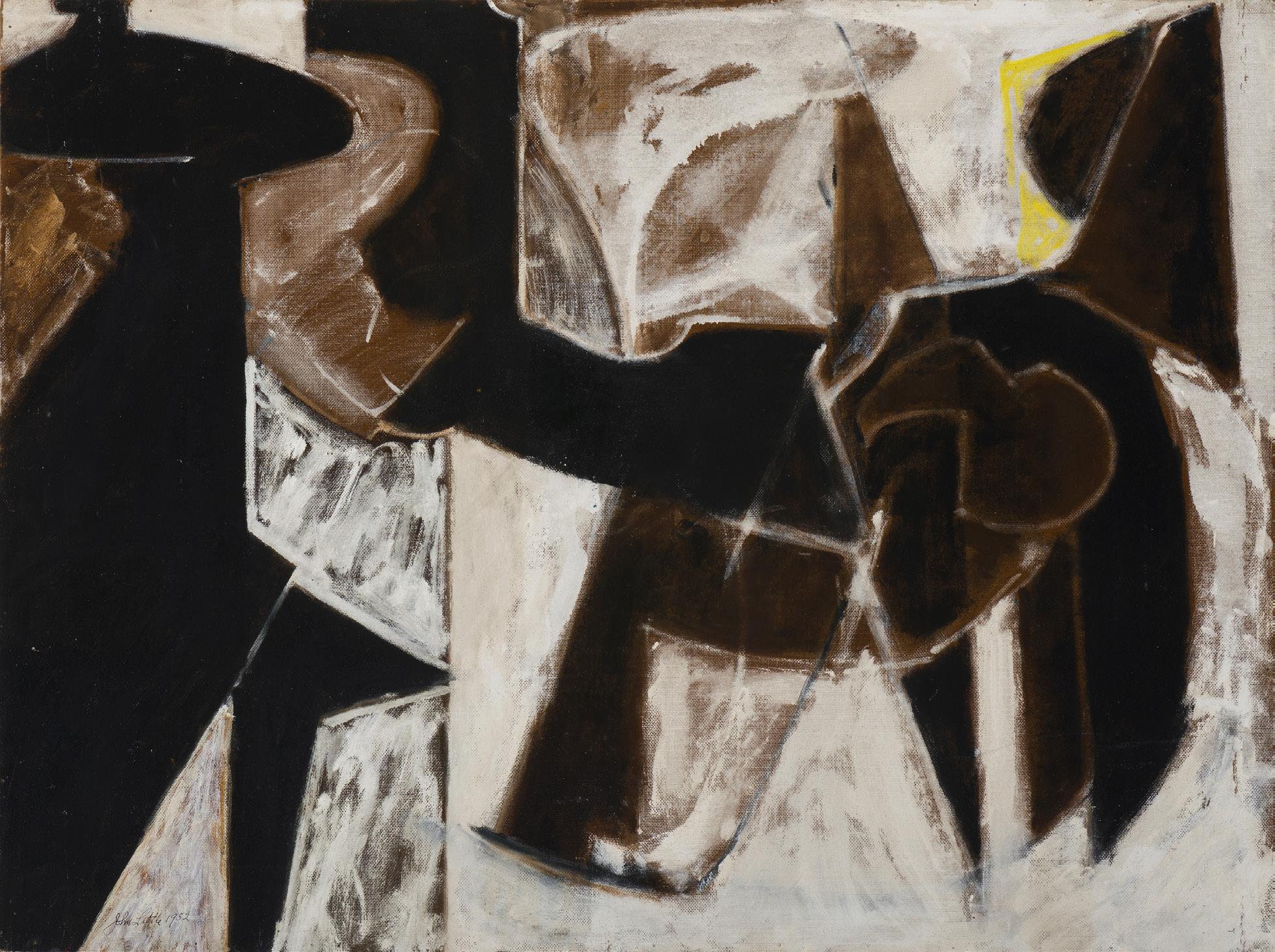
Suspended Form 1951-1952, oil on board, 36" x 48"