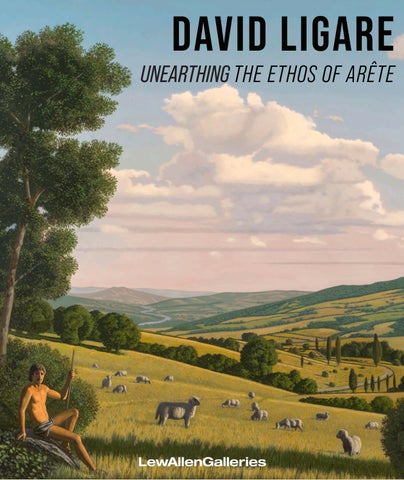
DAVID LIGARE
UNEARTHING THE ETHOS OF ARÊTE
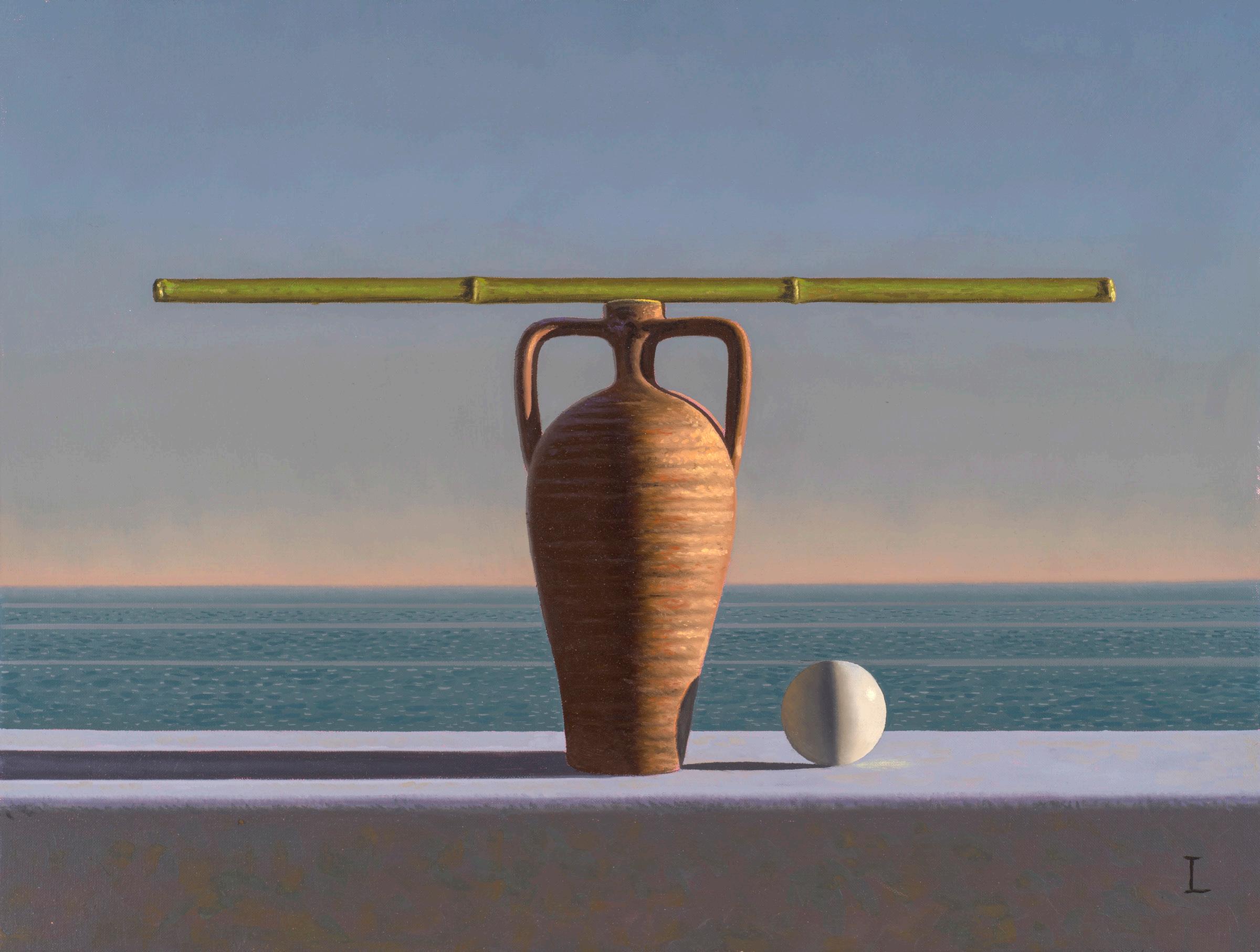
Pot and Cane
2021, oil on linen, 12 x 24 in
May 29 - June 27, 2026
It is with utmost pleasure and profound gratitude that LewAllen Galleries presents this exhibition of works by David Ligare, whose evocative contemporary paintings are inspired by themes of wisdom from ancient classicism and humanist ideals. Ligare has established himself as one of the nation’s leading proponents of allegorical paintings that, in turn, have become part of a larger ongoing narrative – promoting the promise of hope, truth and beauty in an ever uncertain world, and it is this extraordinary promise in his work that we write enthusiastically about here.
–Kenneth R. Marvel
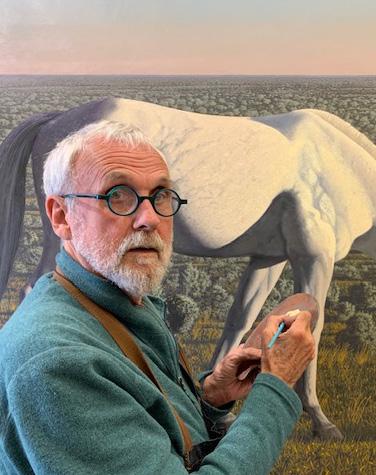
Introduction
DAVID LIGARE
UNEARTHING THE ETHOS OF ARÊTE
Following the remarkable 47-year career of David Ligare, it is both impressive and inspiring to see his continuing dedication to the creation of radiant paintings of classically inspired landscapes and allegorical narratives. One can observe with considerable admiration, and indeed, abundant appreciation, the artist’s ongoing quest for a single desideratum: the ideals of Humanism that have linked the aspirations and good will of people across the ages. At a time when so much of the pluralism in contemporary art seems to have subverted aesthetics by febrile and largely unavailing polemics concerning personal angst, grievances of endless kinds, and unresolved social commentaries more akin to propaganda than fine art – each shambolically striving for a reason for being – Ligare’s art demonstrates an unyielding quest for what Plato called the eros of the beautiful and Virgil considered the amor for humane virtues. Ligare possesses a truly remarkable capacity for bringing to life in his paintings through pictorial means the lucidity of these classical concepts – Humanist ideals such as promotion of rational knowledge, scientific investigations, empathy towards others, and social justice. In so doing they act to preserve and reveal cultural memory of these ideals while providing inspiration for contemporary viewers to ponder the importance of their content as foundational tenets of maintaining and creating a civilized society.
In Ligare’s works are ideas and stories emanating from the classics that remind and inspire viewers about timeless communal values—what Augustine spoke of as the ordo amoris, the “order of our loves,” the right order of the human heart. Greco-Roman allegories have been the wellspring shaping modern thinking about justice, freedom, civic duty, personal honor, and heroism, forming much of the character and sense of virtue in Western civilizations for three thousand years.
For all their intellectual and cultural significance, however, the visual tropology of the classics is equally compelling, as Ligare’s works profoundly illustrate. Many written classical allegories and parables are cloaked in language that can be oblique and metaphorical, though also deeply poetic in the way Shakespeare can be. As with any great poem, this is part of their artistry; they beckon study and contemplative thought, and reward with exhilaration and insight.
Ligare’s paintings provide pictorial versions of these stories, alluding to themes from classical mythology, interpreting them with sumptuous figures and landscape, and, most importantly, doing what mere reading often does not: enthralling the viewer, moving the spirit and the soul with the beauty of the expression as well as the import of its message. This is the genius of David Ligare’s “purposeful representational” art.
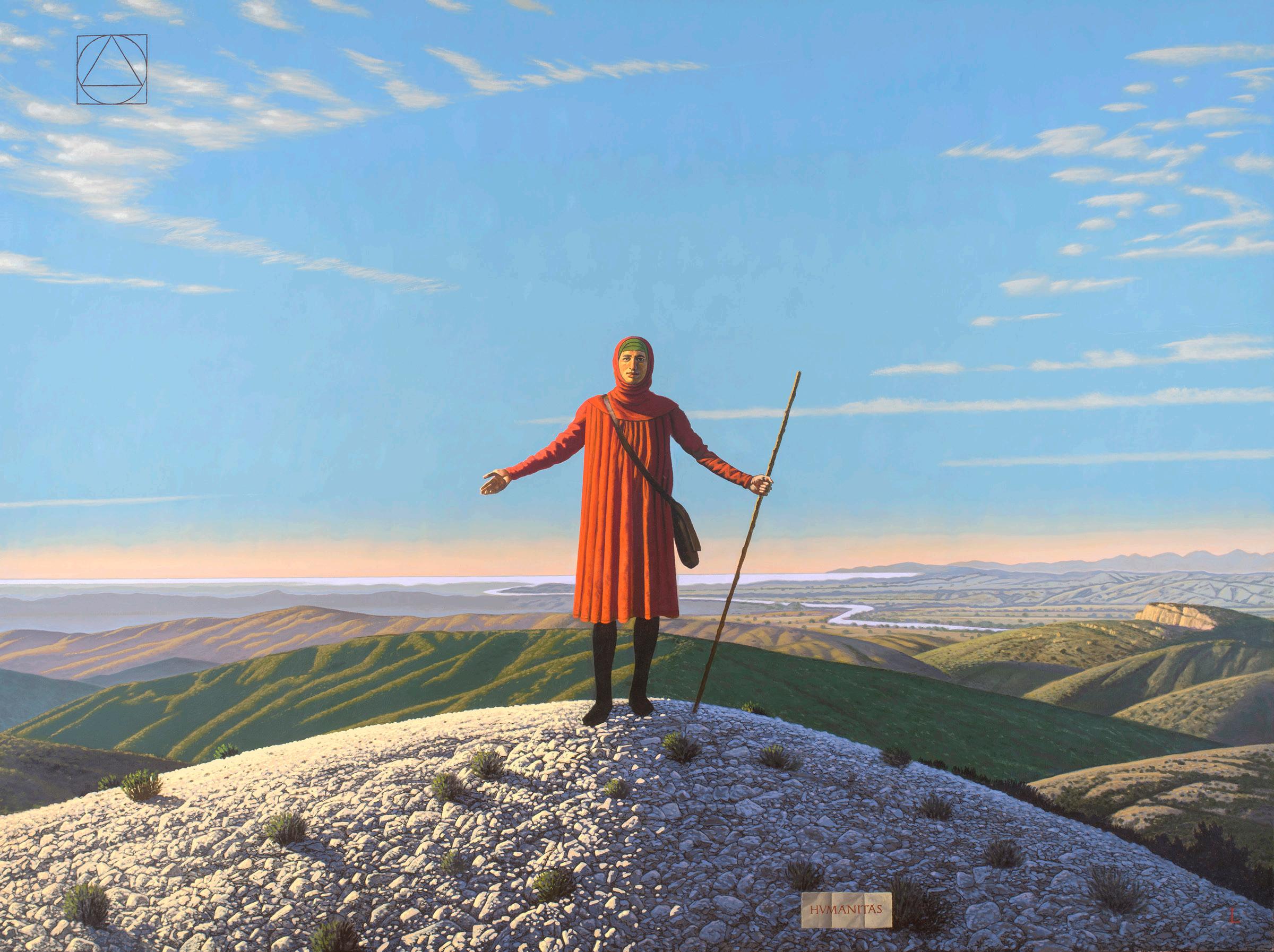
Francesco Petrarch on Mont Ventoux, (The First Modern Act) 2025, oil on linen, 60 x 80
About the Paintings of David Ligare
The sun sets over the Pacific and the sun sets over the Tyrrhenian Sea and these are not the same sun. Or they are. David Ligare has spent more than four decades painting as though this question were foundational. There is a particular quality of light along the central California coast in the late afternoon, a golden illumination that seems to clarify everything it touches, and for Ligare this luminosity operates with the force of an ancient conviction: that behind appearances lies an intelligible order the practiced eye can surface and the practiced hand reveal. The works in this current exhibition, his third solo showing at LewAllen Galleries, evince that commitment across landscapes, seascapes, and narrative compositions, each governed by the same sidelong lateafternoon light. The artist has made this light his medium as much as oil itself.
Born in Oak Park, Illinois, in 1945 and raised in Southern California, Ligare trained at the Art Center College of Design before moving to Big Sur in 1968. A trip through Europe put him face to face with Quattrocento and Roman painting, and, famously, inside Salvador Dalí’s studio at Port Lligat, where an afternoon’s conversation with Dali left a mark that would outlast prevailing enthusiasms for Pop and Abstract Expressionism. In the late 1970s, guided by the critic and painter Sidney Tillim, whose influential 1977 Artforum essay 'Notes on Narrative and History Painting' called for art to reclaim its narrative responsibilities, the artist committed to the pictorial discipline that has occupied him since, a reasoning through lines and forms that draws equally on the measured stillness of the early Renaissance Tuscan master Piero della Francesca and the philosophical rigor of the seventeenth-century French painter Nicolas Poussin. The practice is organized around what Ligare calls his "tripartite criteria:" structure (design and proportion), surface (the subject reverently recreated in paint), and content (the story whose purpose is to communicate a specific idea to the viewer).
The British philosopher Peter Osborne has argued that contemporary art is definitionally post-conceptual, that, following the Conceptual Art movement of the 1960s, no serious art practice can proceed without absorbing its legacy, the insistence that ideas matter as much as objects. By that measure, however, Ligare’s work accords with contemporaneity in unexpected ways. His paintings are composites, organized by proportional systems derived from the ancient Greek sculptor Polykleitos and the mathematician Pythagoras,
set in landscapes that exist most concretely on canvas: the Carmel Valley spliced with the remembered Mediterranean.
What might be misapprehended in his work as only realism is a carefully constructed image that declines, on reasoned grounds, to advertise its own construction. “To look at anything, analyze it and then recreate it,” Ligare has written, “is not just a reverence towards nature but is also an exercise in perceptual analysis.” The claim finds theoretical ground in the insistence of the contemporary California philosopher and physicist Karen Barad that knowing and being are indivisible, that the world is not made of things that subsequently relate but of relations that produce them. The act of observation cannot be separated from the world observed; it participates in shaping what is seen. In Ligare’s paintings, light is a vessel of thought, and every shadow a perceptual judgment. His surfaces refuse to declare their own making—the artist has spoken of wanting to be an invisible presence in his work—and as a result, the paintings seem to possess their own agency, as though the landscape had organized its own lucid coherence, which, in a sense, it has.
While the paintings thus assert themselves with apparent immediacy, Petrarch on Mont Ventoux (The First Modern Act) (2025), a key to the exhibition, discloses the deeper timescale for this group of work. The Italian poet, Francesco Petrarch, is thought of as the first Humanist and represented the rebirth of knowledge and culture of the ancient past. His climb in 1336, undertaken for the secular pleasure of the view, has been read since the nineteenth-century historian Jacob Burckhardt as an inaugural gesture of modernity, one of the most important moments in western history. Ligare has described Humanism as “a system of belief that we deeply need today” for a passion for knowledge and Humanist values. That belief is rendered in this painting as a passage between text and image. The robed figure stands on the Provençal summit, staff in hand, one arm extended toward a vast verdant expanse. The posture is commanding and receptive, sovereign yet porous to experience, typifying what the more recent Italian poet Patrizia Cavalli might designate, in all its doubled meaning, “the true sure gesture that possesses.” The sky is enormous, the figure exiguous. In the diminishing ridgelines, meaning precipitates as a bodily experience of scale that no Petrarchan sonnet can
Continues on page 10
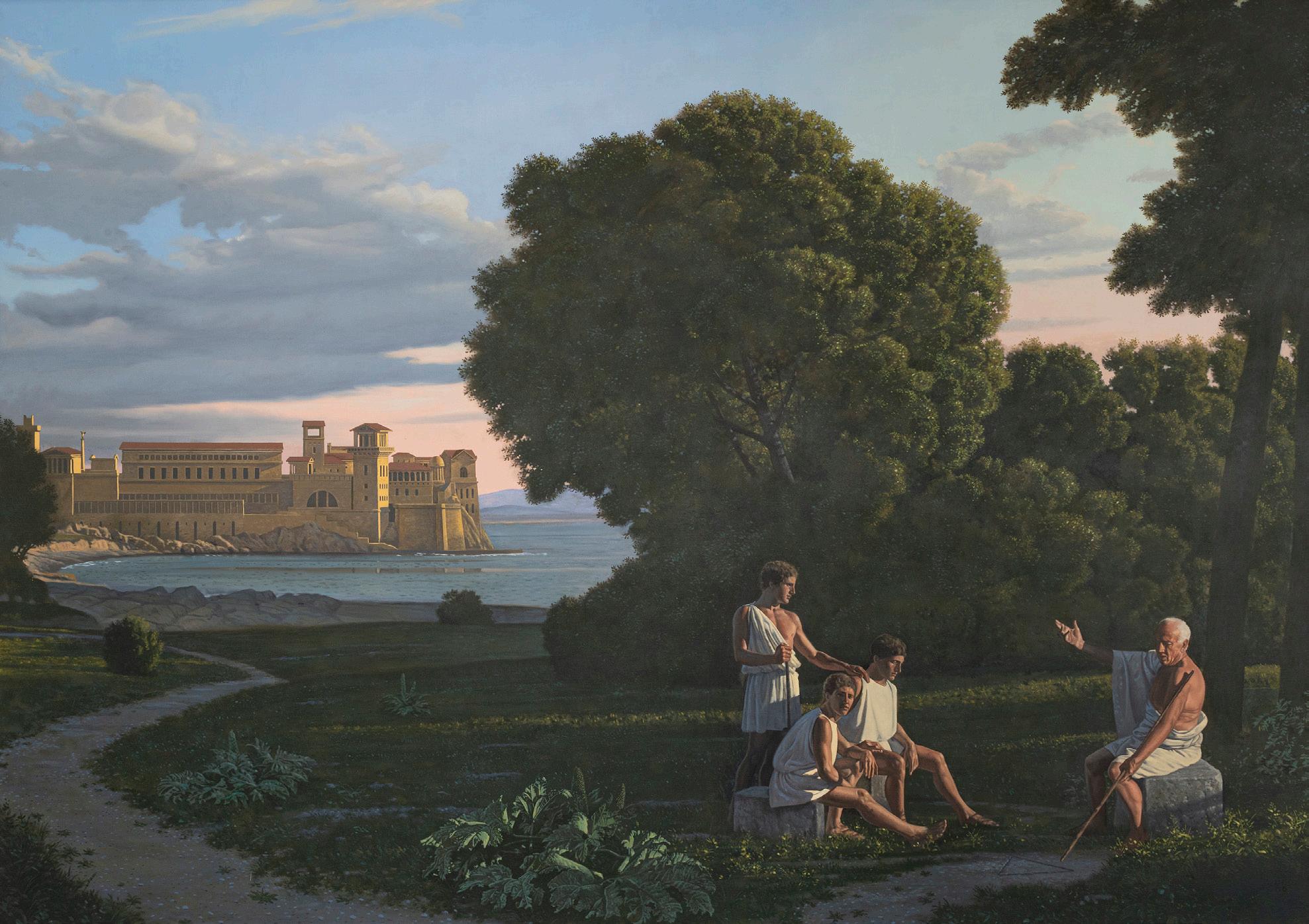
Allegorical Landscape (Philosopher Lecturing on Social Responsibility)
1986, oil on canvas , 78.25 x 110.25 in
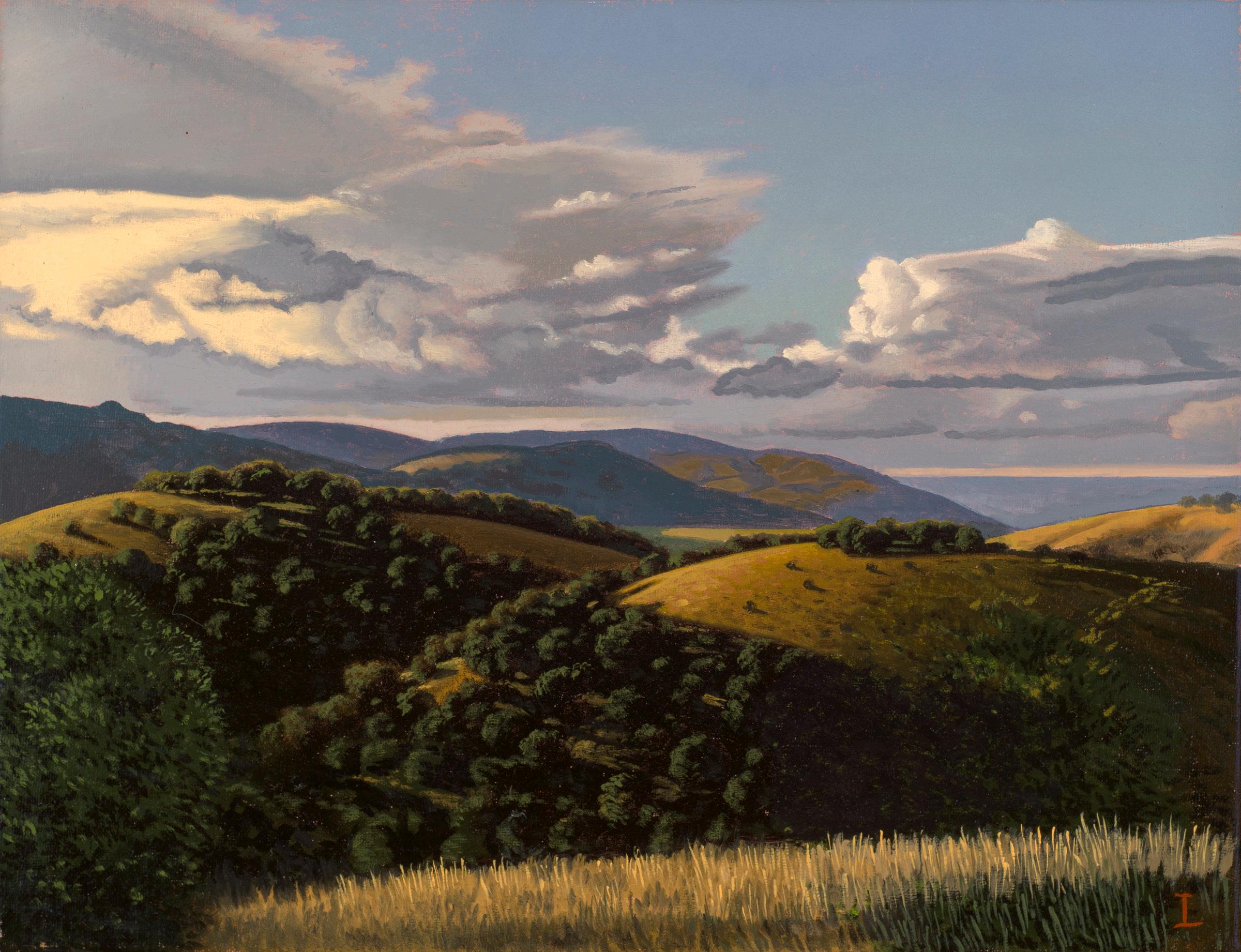
Vista del Toro 2024, oil on linen, 12 x 16
wholly convey, yet the subtitle names what the painting enacts: the first modern act restaged as painting.
The earlier painting, Allegorical Landscape (Philosopher Lecturing on Social Responsibility) (1986), a teaching scene akin to Raphael’s School of Athens transposed to the California coast, states the case directly. This is a masterpiece of Ligare’s narrative painting and what distinguishes the two paintings across three decades is where instruction occurs: in this stunning 1986 allegory it resides in the subject; in the image of Petrarch, it is embedded in the very structure of looking.
The California paintings Vista del Toro (2023) and View from San Juan Grade (2024) work terrain that Claude Lorrain, the seventeenth-century master of the harmonious and ordered Italian landscape, would have recognized across an ocean, with hills of verdant green and suffused with the honeyed light that in his era signified the ideal and in Ligare’s hands serves as its instrument. The atmosphere, for all its sensate warmth, operates allegorically; Ligare has described the pastoral as a contemplation of mortality, an awareness his compositions address by virtue of form. The light is late, going. Yet the paintings are alive with empirical specificities: cloud shadows mottling a hillside, grass catching the last direct sun while live oaks are already held in shadow.
In environmental scholar Jennifer Gabrys’s account, instruments of observation do not merely record ecologies but generate new environmental relations. Ligare’s landscapes operate by an analogous logic, constituting a mode of ecological awareness that shoulders the earth’s structure towards legibility. A Specific View (SCIENTIA, ARTE, VENUSTAS), (2024) makes this explicit. A monumental rock arch rises from a still sea, its geological surfaces articulated with forensic precision. The Latin inscription, SCIENTIA, ARTE, VENUSTAS, recasts the Roman architect and engineer Vitruvius’s triad of knowledge, skill, and beauty as a covenant between artist and world. The arch emerges as both geological index and philosophical symbol, a threshold between the near shore of perception and the far horizon of gnosis, or true knowledge.
Ligare's paintings hold the eye long enough to open onto the productive contradictions
the Greeks called aporias, questions that deepen the longer they are held. Brunelleschi & Donatello in the Ruins of Rome (The Great Paradox) (2026) depicts a real episode: Filippo Brunelleschi, the young Florentine architect and his friend the sculptor, Donatello, traveling from Florence to Rome in about 1410 to study and measure the ancient remains of that great city that would catalyze their revolution in art and architecture that helped to create the Renaissance.
The tale also demonstrated a real conceptual tension: the future is often made by looking backward. This is Ligare’s own paradox. Following the Greek concept of symmetria, (from sun, together, and metron, measure), a word that radiantly names the commensurability of parts within a whole, the idea of ruins, for Ligare, function as a unifying system: ancient architecture and Renaissance figures are poised in relativity with a crisp California sky. In Sun Worshiper (2026), a solitary nude at the ocean’s edge assumes the equilibrium of Stoic self-possession.
In Sun and Fire (2025), a blaze gleams on a headland, smoke pluming into an ambered sky. The sun hangs over the water, enlarged by its reflection. The painting is elemental in the Pre-Socratic sense, merging fire, earth, water, and air within a cogent visual field. Against the natural conflagration of the setting sun, the cultivated flame on the shoreline illustrates the painting’s own consequence: a deliberate production of light from fire, a tribute to man’s transformation of matter by his own hand.
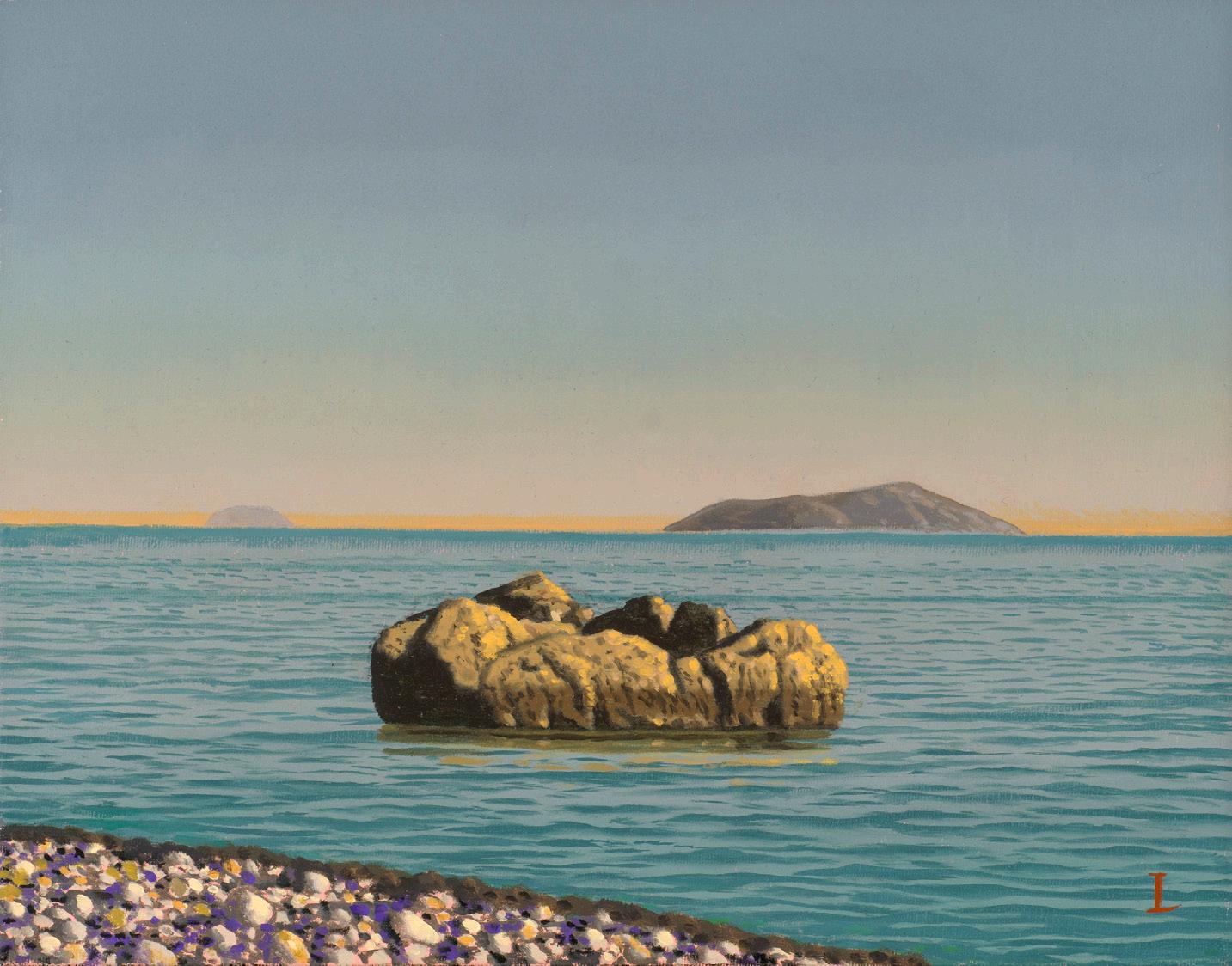
What these paintings share is the conviction that beauty can be and is cognitive, that visual order constitutes a form of knowledge at once specific and unifying. This is a classical position transmitted from Plato through the Enlightenment, offered as an indispensable counter-proposition to what the artist has called “the current decline of rational thinking.” Ligare’s paintings insist on the edifying value of the visible world and the belief that the considered rendering of sycamore branch, a rock formation, a shaft of late-afternoon sunlight affirms that ethics underlie aesthetics. They manifestly evince the relevance of Humanistic traditions, and rebut the impulse that has flattened so much contemporary art into catechistic position statements, by perceptibly and profoundly, attesting to it. The California light that falls on Salinas River View is continuous with the
light of Spain that falls on A Distant View (Cadaqués), and of Sicily on View of Filicudi –ergo, California, Catalonia, the Aeolian Sea, man’s past and present, linked by the same sun. These paintings have been structured by Ligare’s careful sedulity over a long and distinguished career to make this visible.
In the final analysis, a galvanic impetus that pervades the work of David Ligare and his resolute commitment to heralding though his art the enduring value of Humanistic ideals and classicism in the contemporary world emerges from the ancient Greek idea of arête. This is the notion of excellence and living up to one’s highest purpose. Ligare in an essay entitled “On Using History” described it by quoting the classical scholar J.J. Pollitt as a word that endows humans with “innate excellence of noble nature which gives them proficiency and pride in their human endeavors but humility before the gods.”
It is an idea that there is a constant opportunity for human achievement. Arête in its various iterations pervades Greek myths and philosophy, from Homer, Plato and Aristotle (much of which emphasized the notion that virtue was knowledge and viceversa), and emerges in the Bible and even in contemporary literature like Zen and the Art of Motorcycle Maintenance. It is an extraordinarily optimistic and even egalitarian Humanistic concept, called by the Greeks the “ethos of the extraordinary” and by Ligare “a constant potential lying dormant in all populations, no matter their geographic location, racial makeup or ethnicity.” As he notes, “Such a passion for skill and knowledge –and for an integrated society –drives any culture forward.” With arête as its animating spirit, is it any wonder that the art of David Ligare has continued to arouse interest in and passion about classicism and Humanistic ideals?
Ligare’s painting Rationalis Analysis 2025 is a wonderful ode to this idea, simple and poignant. It enacts the point, as Ligare has noted, that one of the functions of art is to make sense of the world through careful and rational analysis, perhaps in a way functioning to aid in the search for the symmetria of the world itself.
And, of course, as a coda to all this, it is no surprise that his paintings are held in the permanent collections of numerous important museums including the Museum of Modern Art, the de Young, the Wadsworth Atheneum, and the Uffizi, among others –not to mention in the hearts and minds of those who care deeply about the future of Humanistic ideals, beauty and excellence in the world.
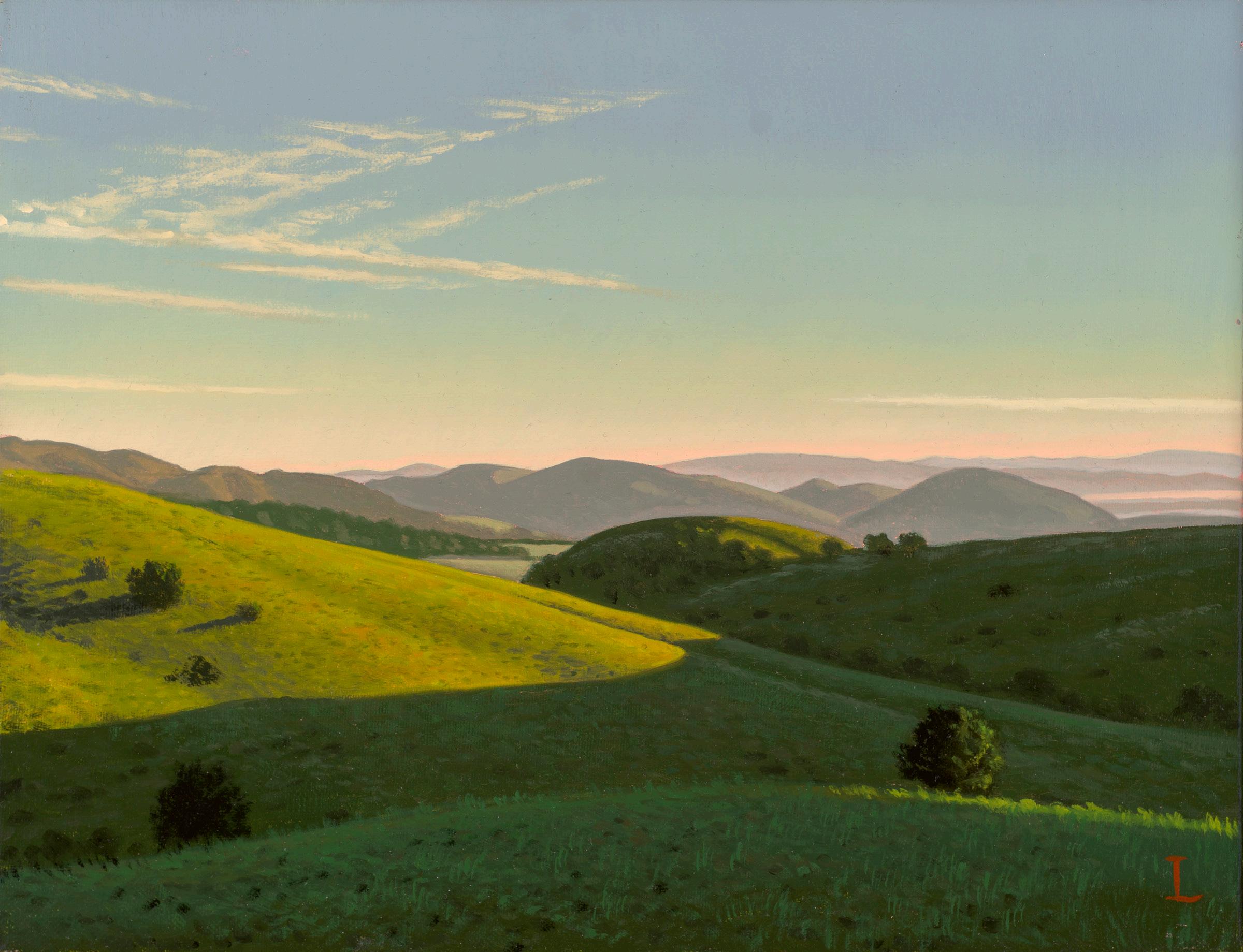
View from San Juan Grade 2024, oil on linen, 11.75 x 15.75
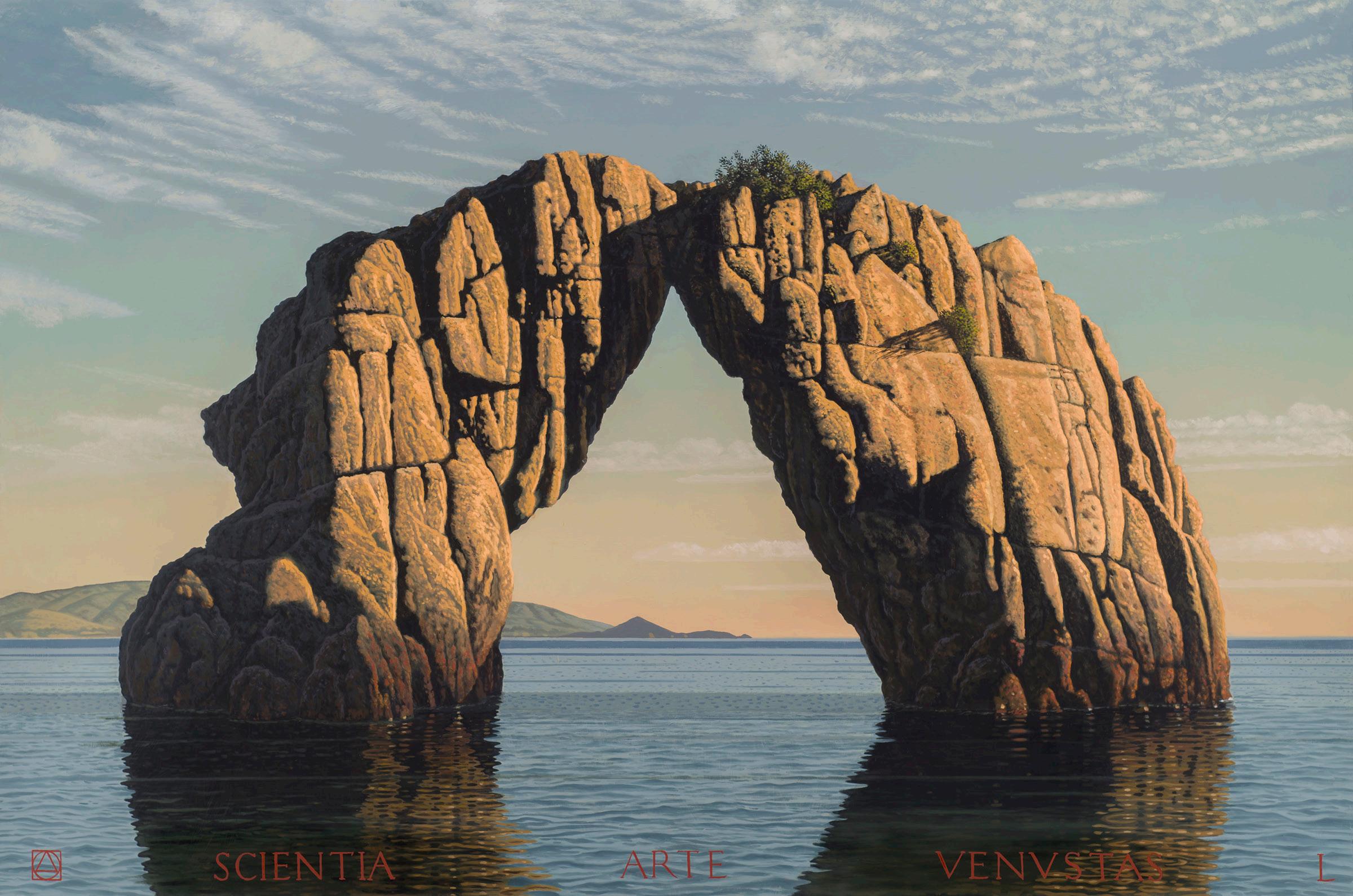
A Specific View (SCIENTIA, ARTE, VENUSTAS), 2024, oil on linen, 48 x 72 in
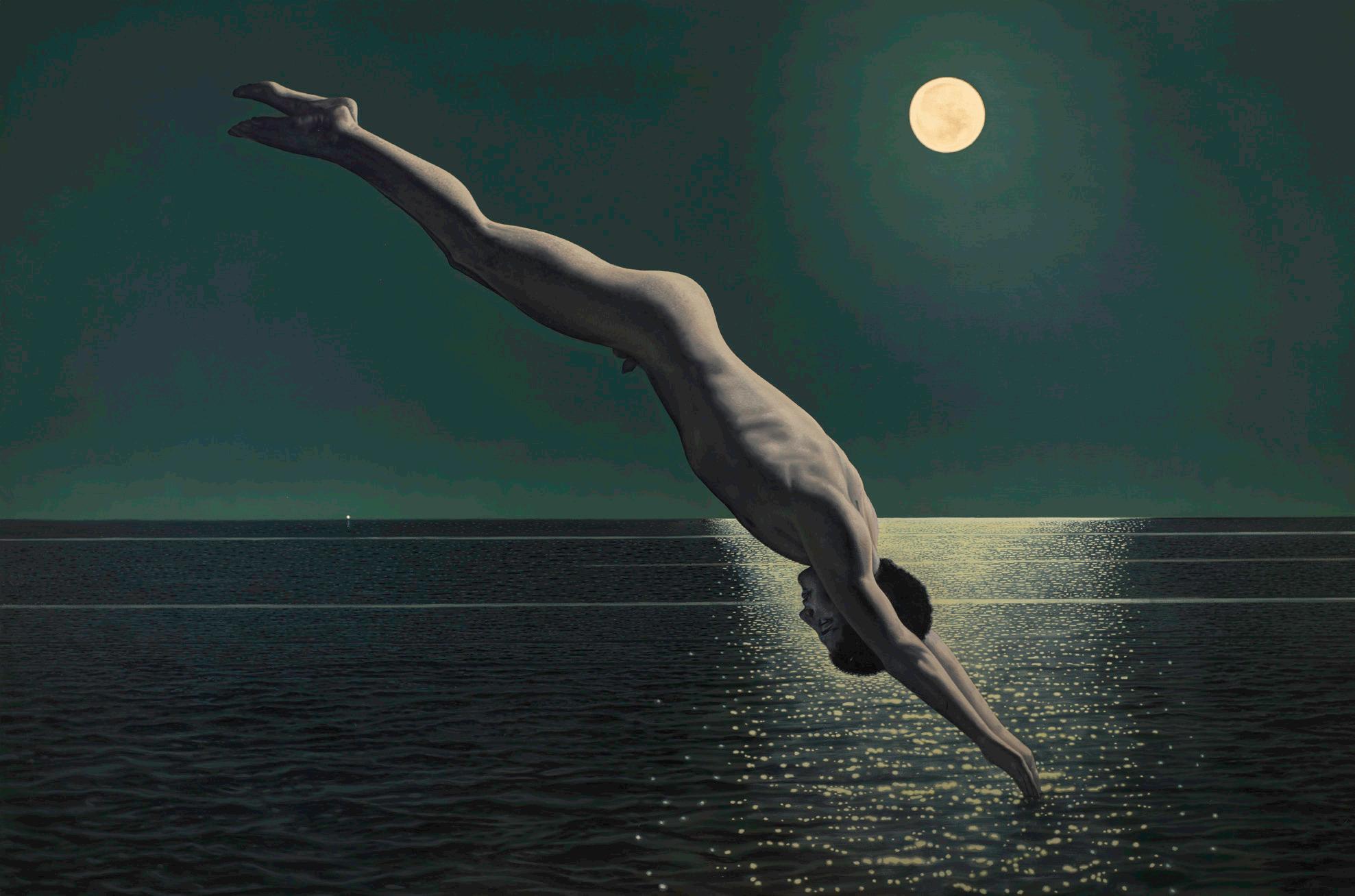
Night Diver
2019, oil on canvas, 60 x 90 in
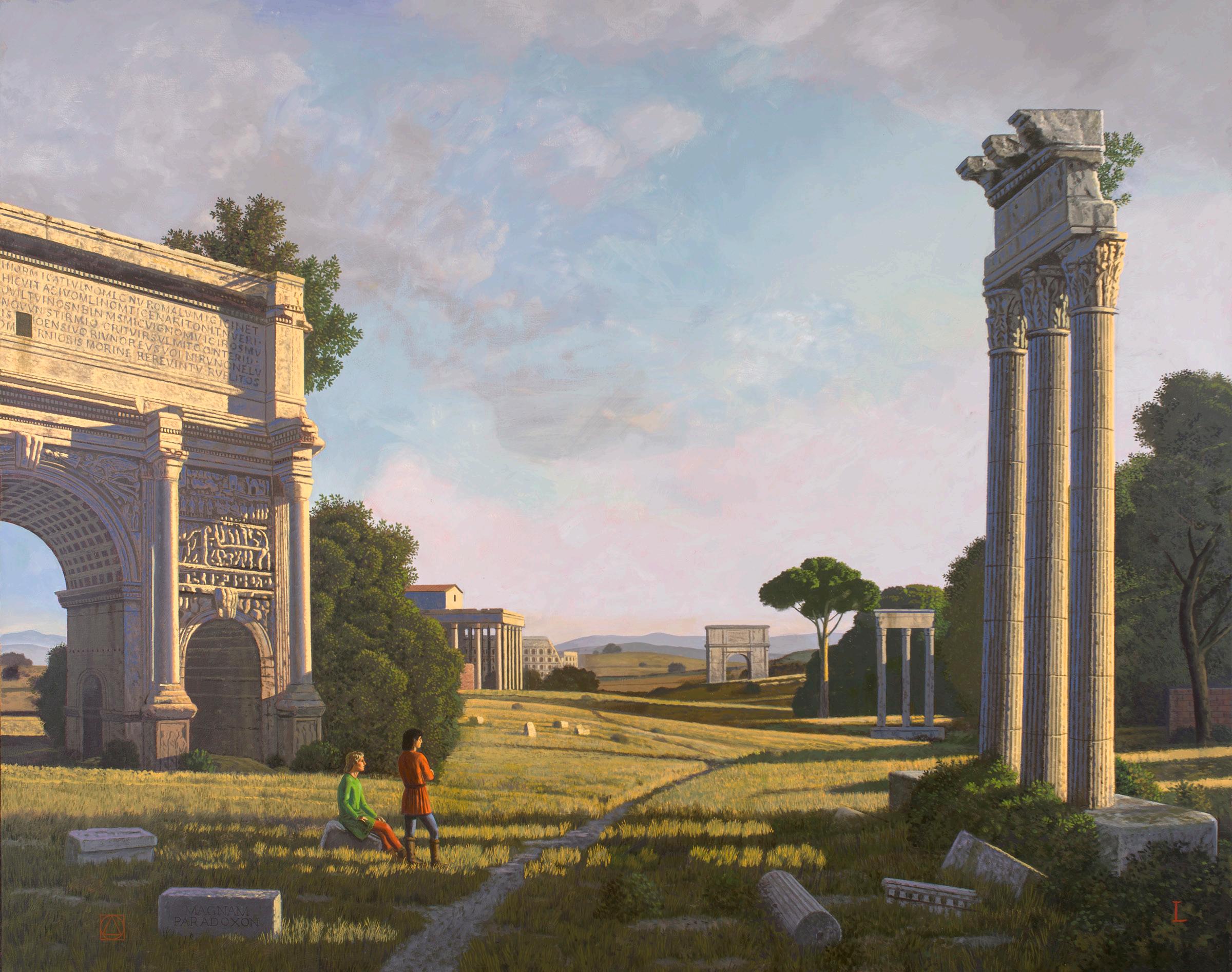
Brunelleschi and Donatello in the Ruins of Rome 2026, oil on linen, 48 x 60 in
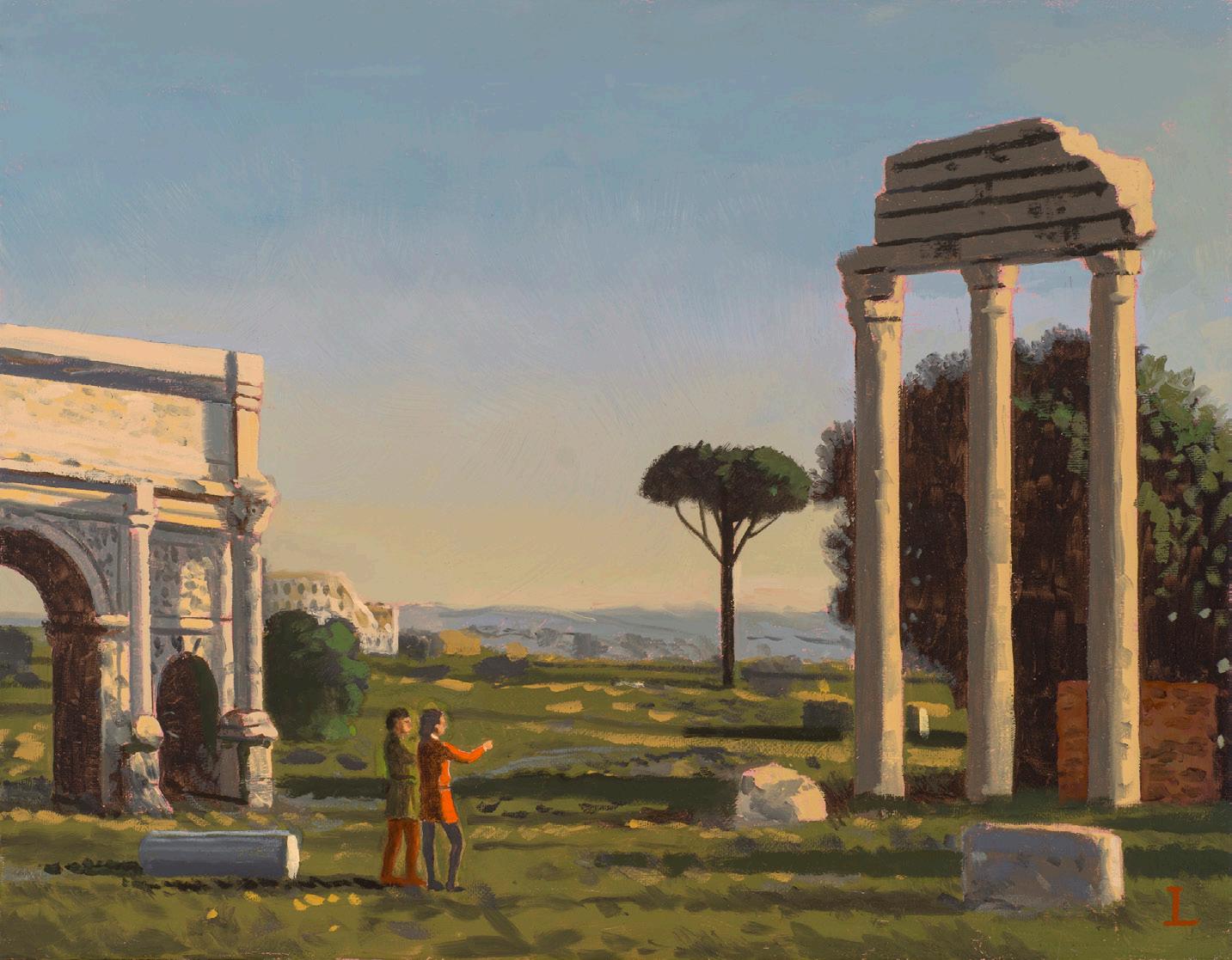
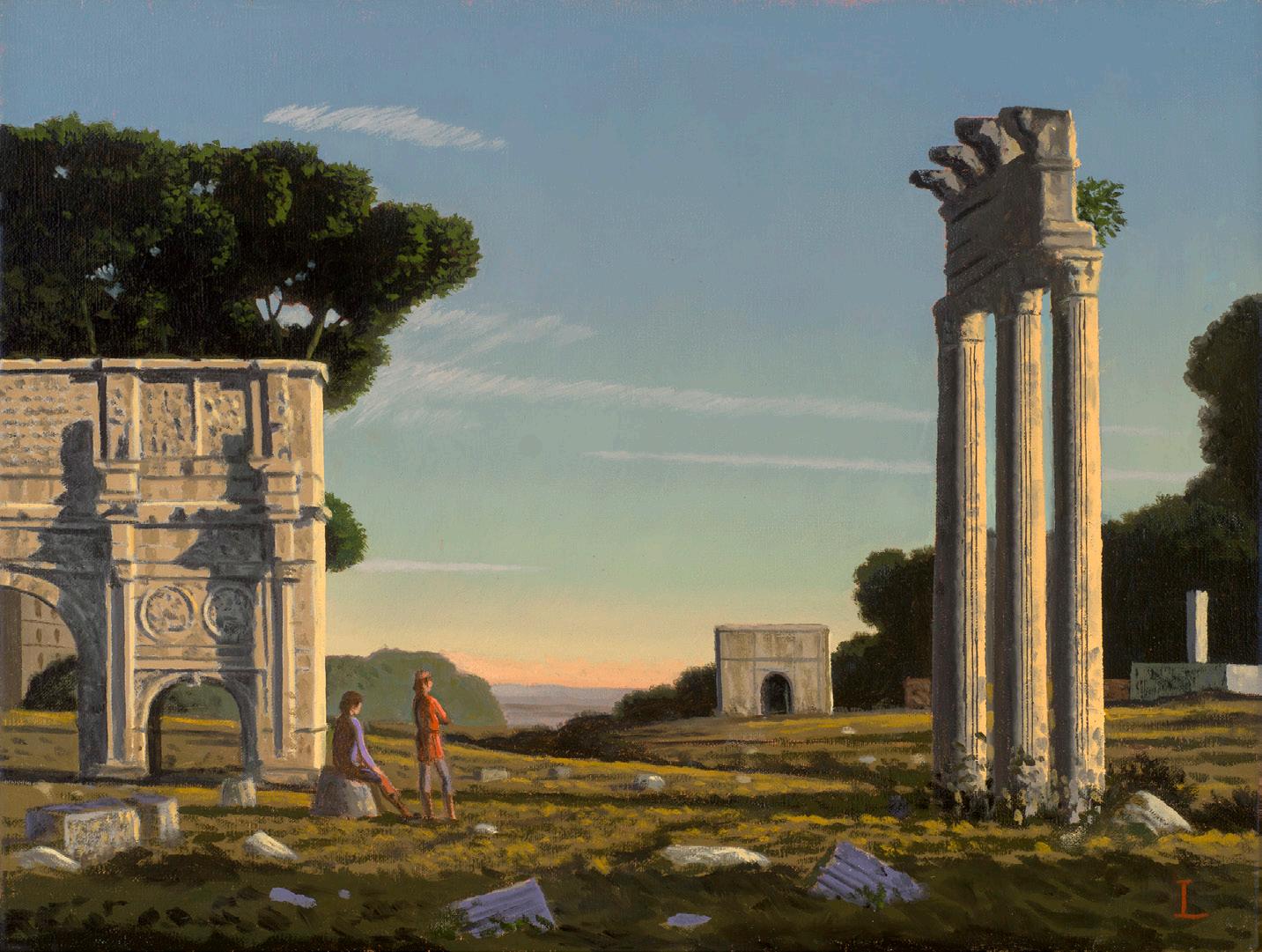
Below: Study 2 for Brunelleschi and Donatello in the Ruins of Rome
2025, oil on linen, 13.75 x 17.75 in
Above: Study 1 for Brunelleschi and Donatello in the Ruins of Rome
2025, oil on linen, 13.75 x 17.75 in
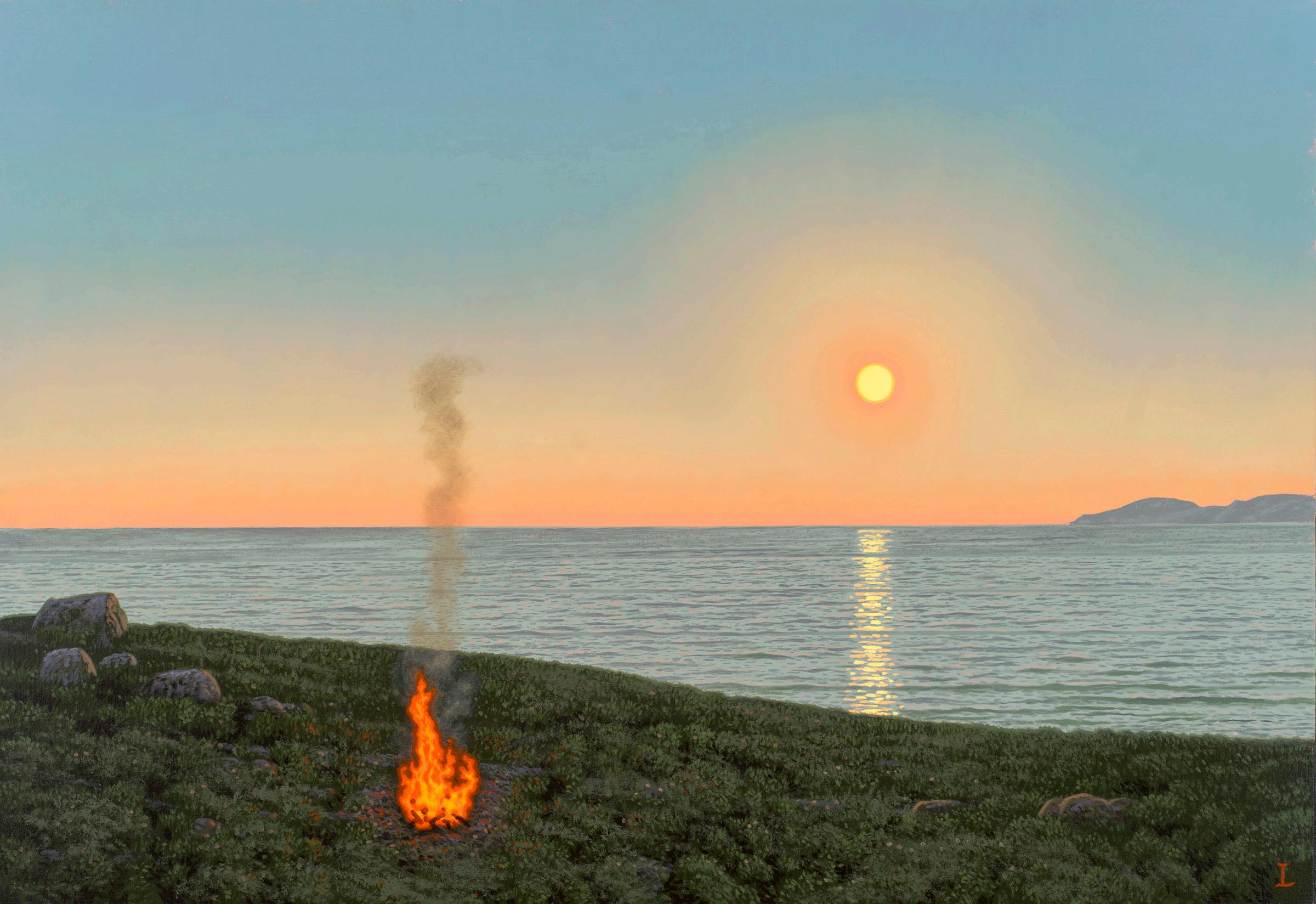
Sun and Fire
2025, oil on linen, 23.75 x 35.75 in
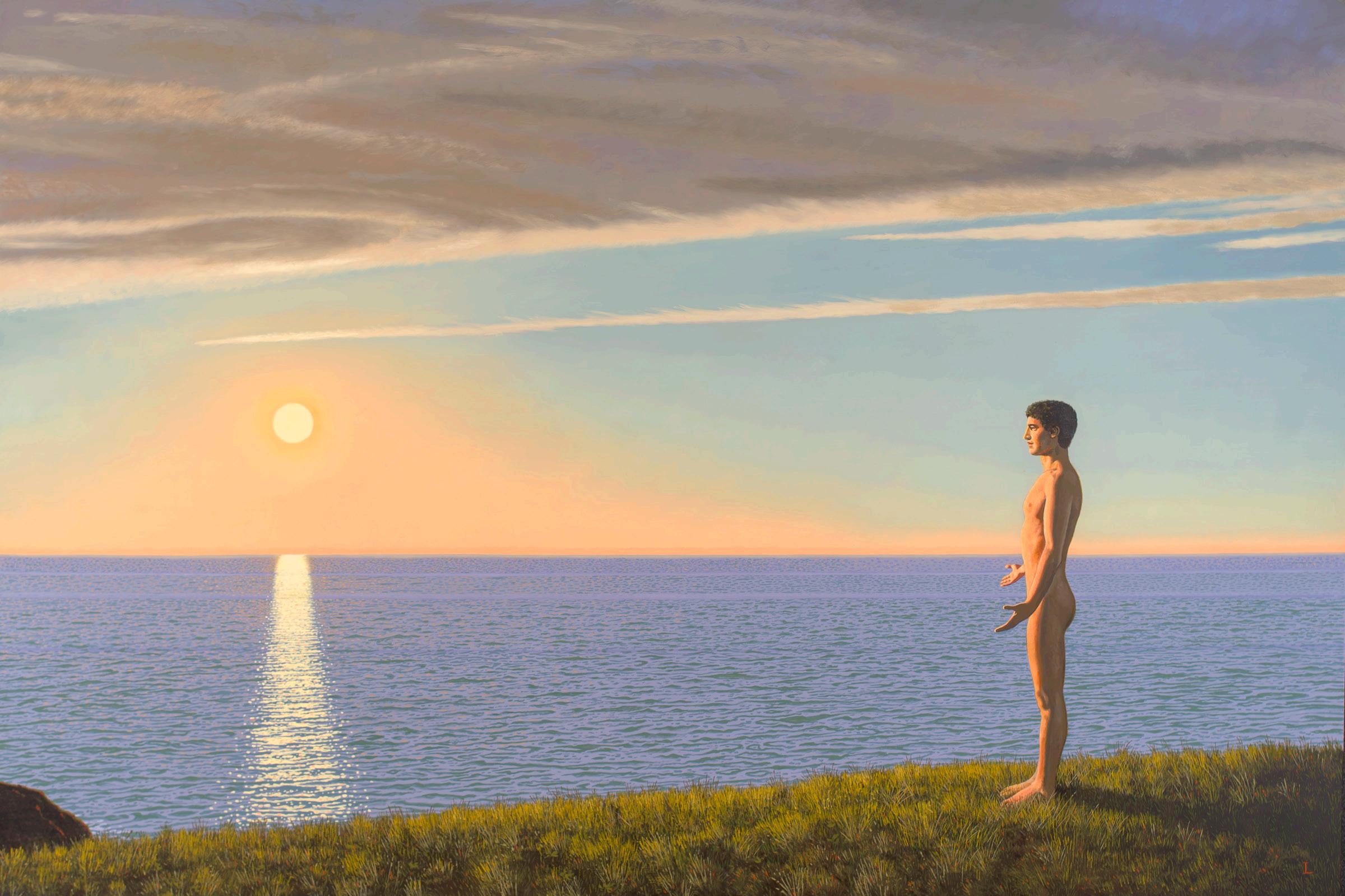
Sun Worshipper
2026, oil on linen, 48 x 72 in
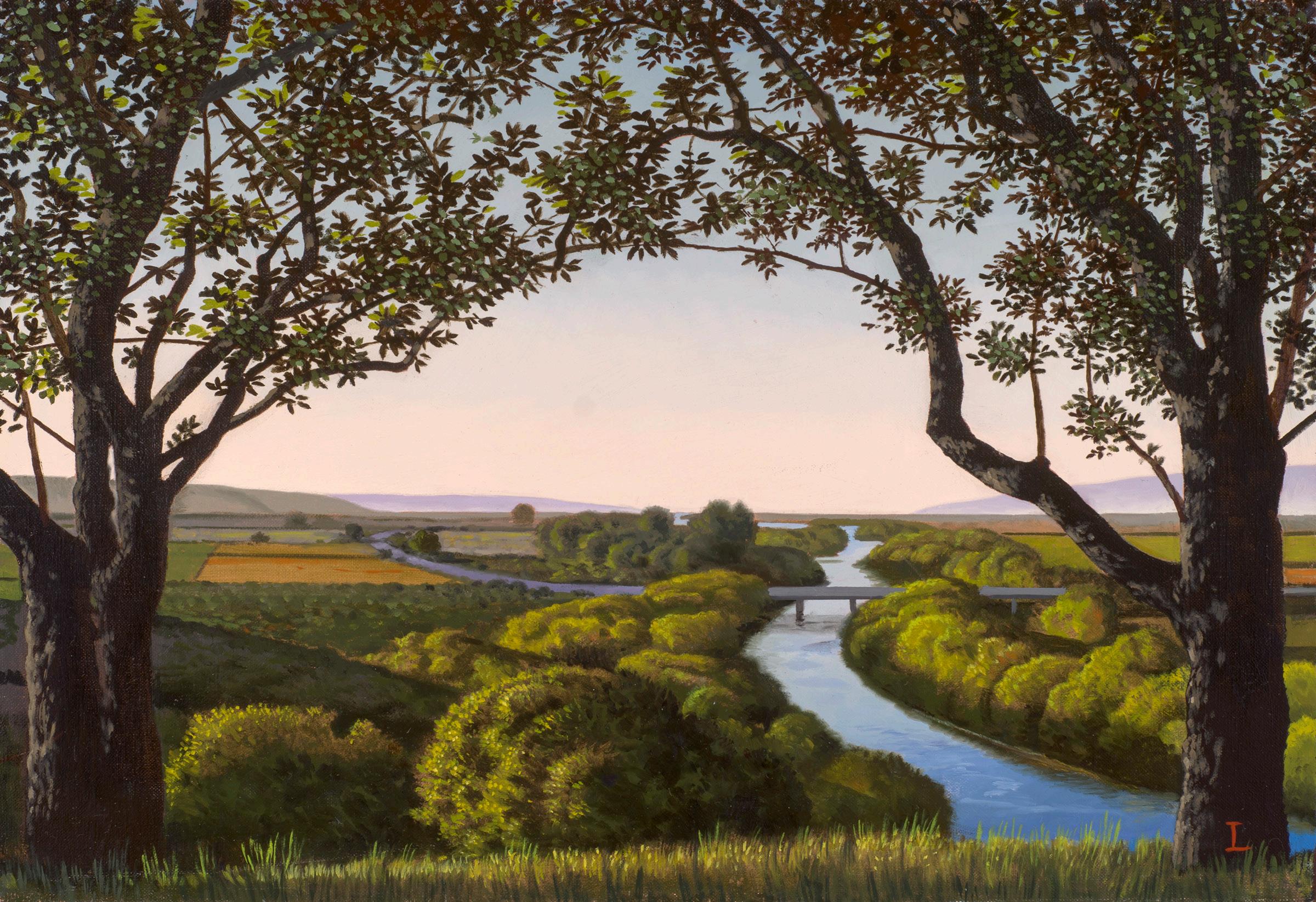
Salinas River
2020, oil on linen, 14 x 20 in
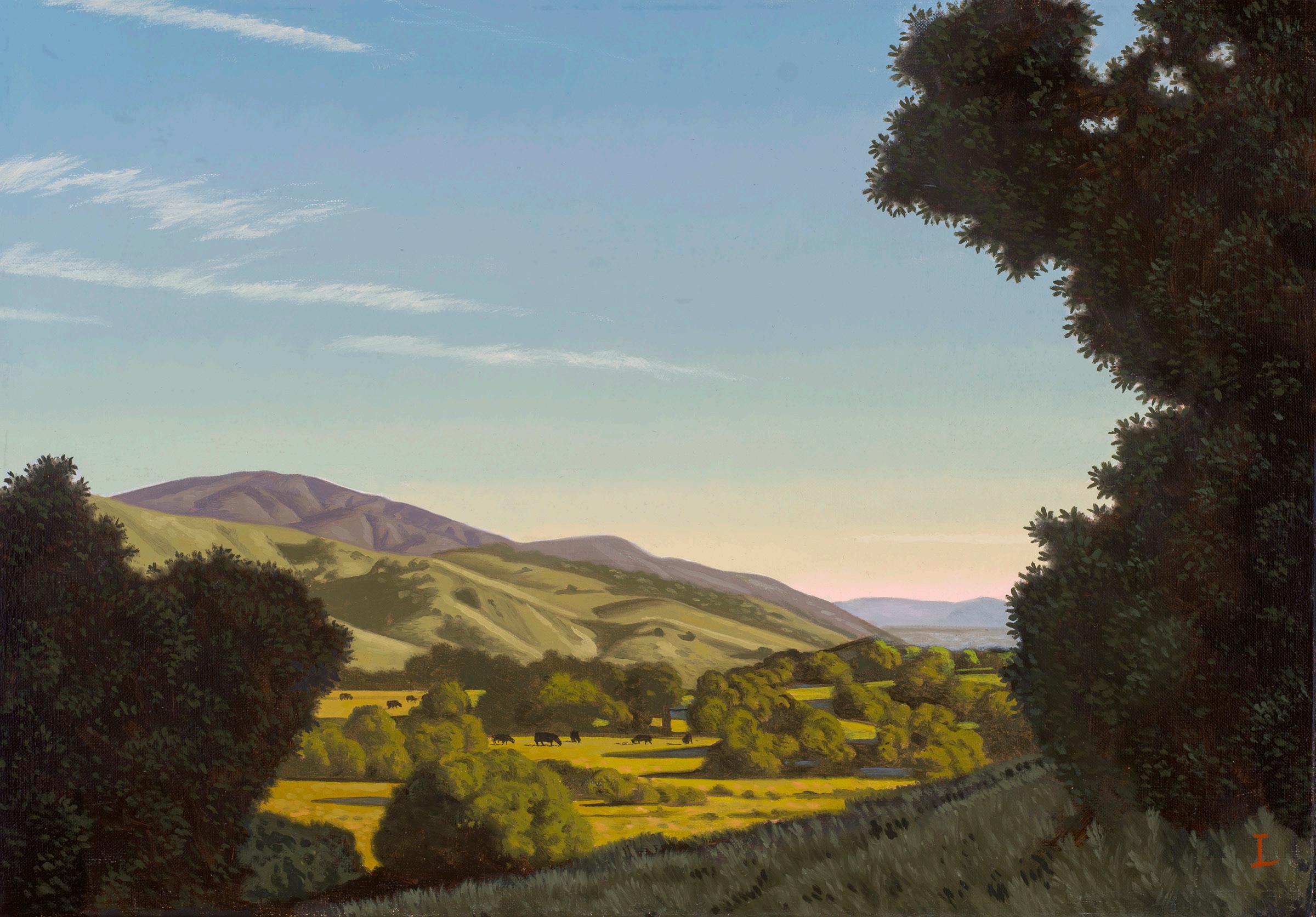
Mt. Toro 2018, oil on linen, 14 x 20 in
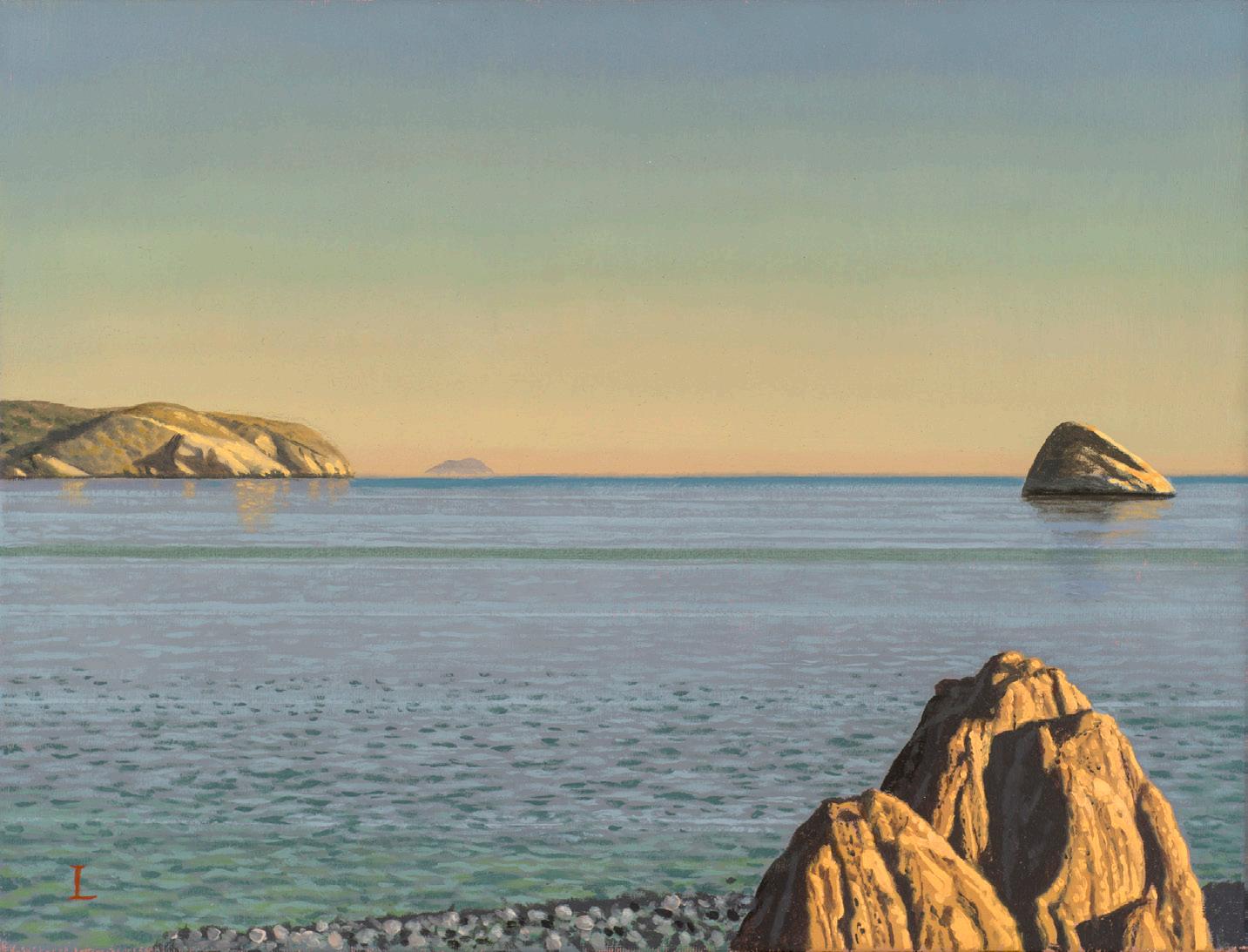
Above: A Distant View, (Cadaques) 2025, oil on linen, 12 x 16in
Below: View of Filicudi 2025, oil on linen, 11 x 14 in
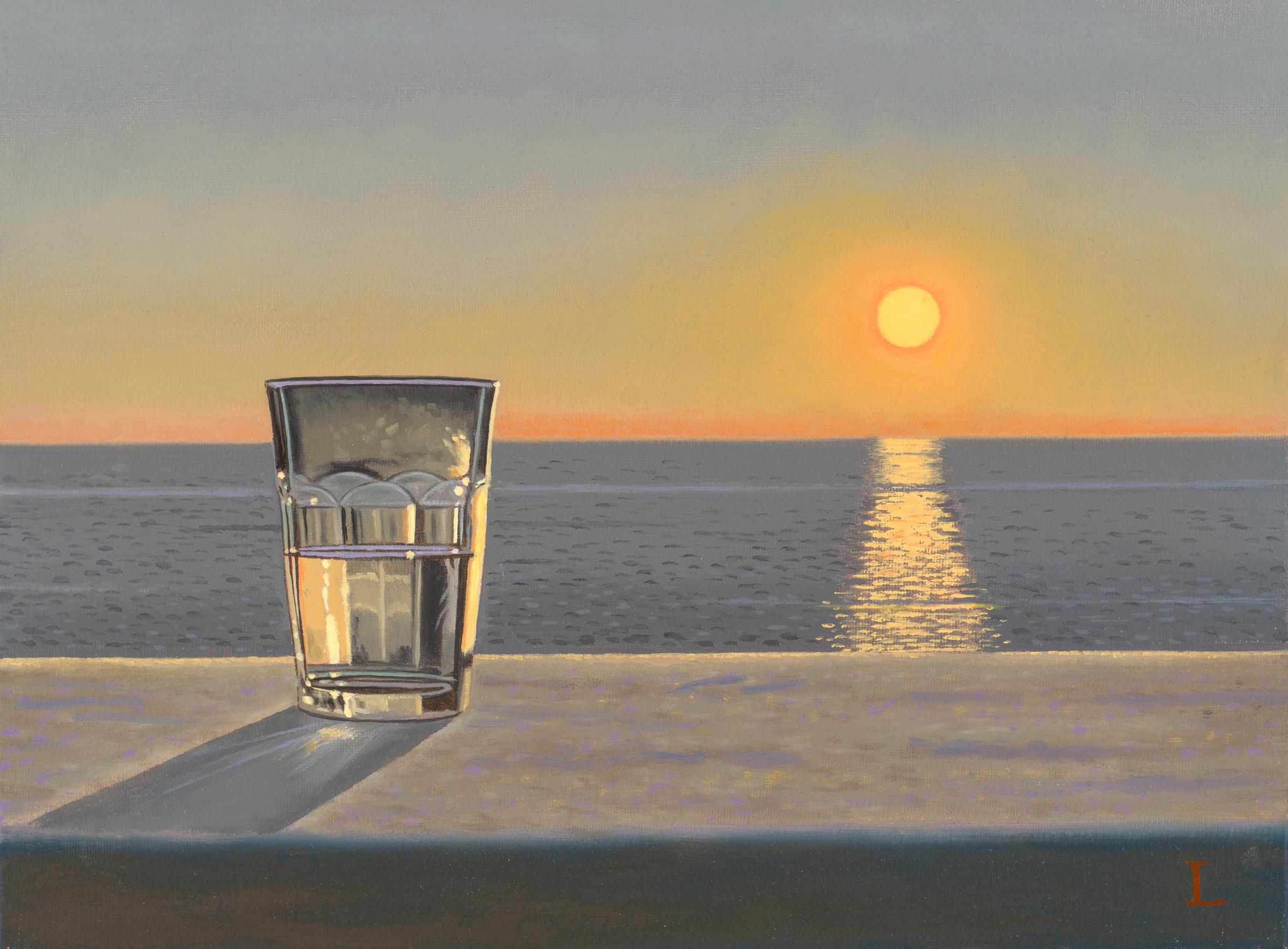
Glass and Sun 2022, oil on linen, 12 x 16 in
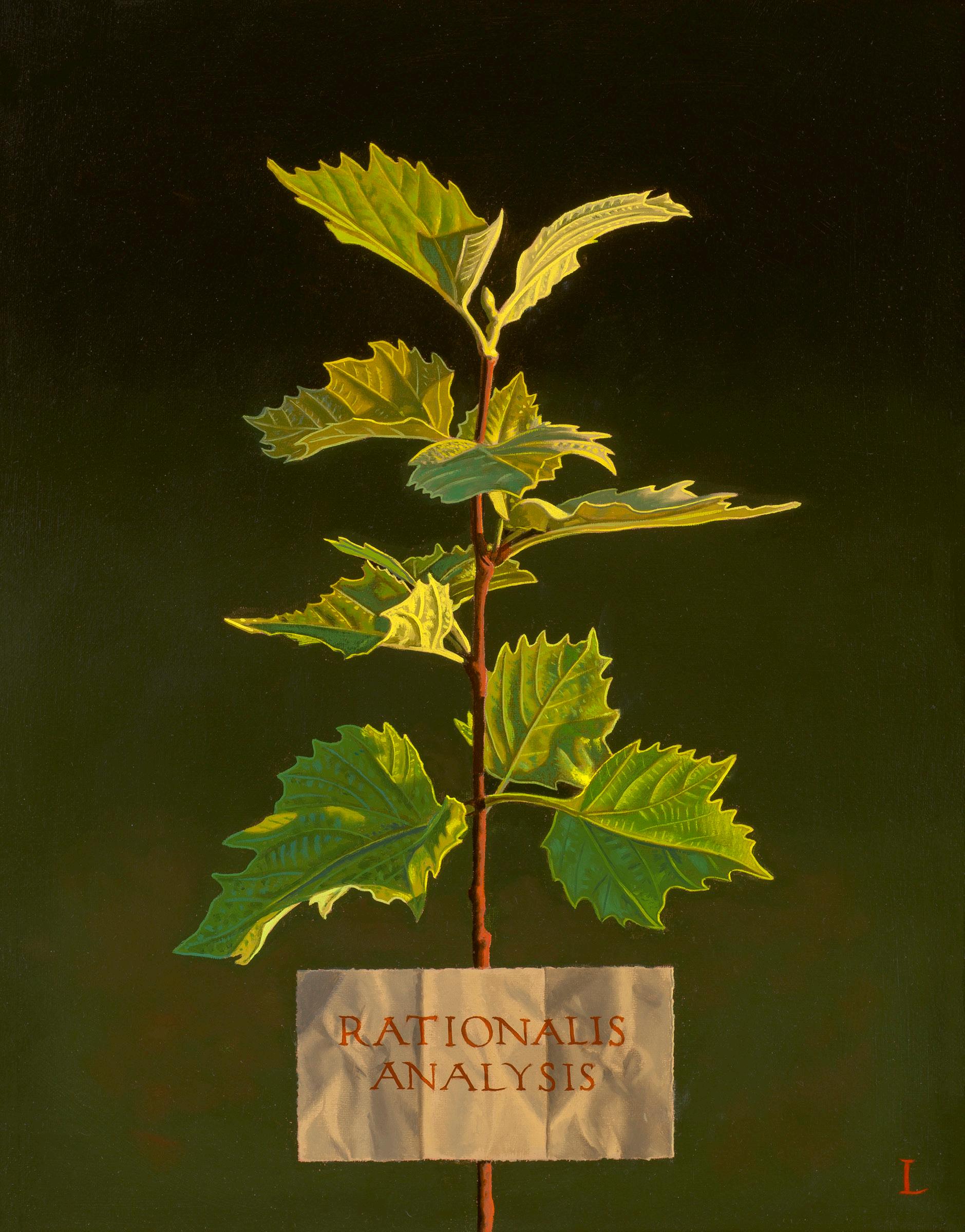
Rationalis Analysis (Ration Analysis)
2025, oil on linen, 20 x 16 in
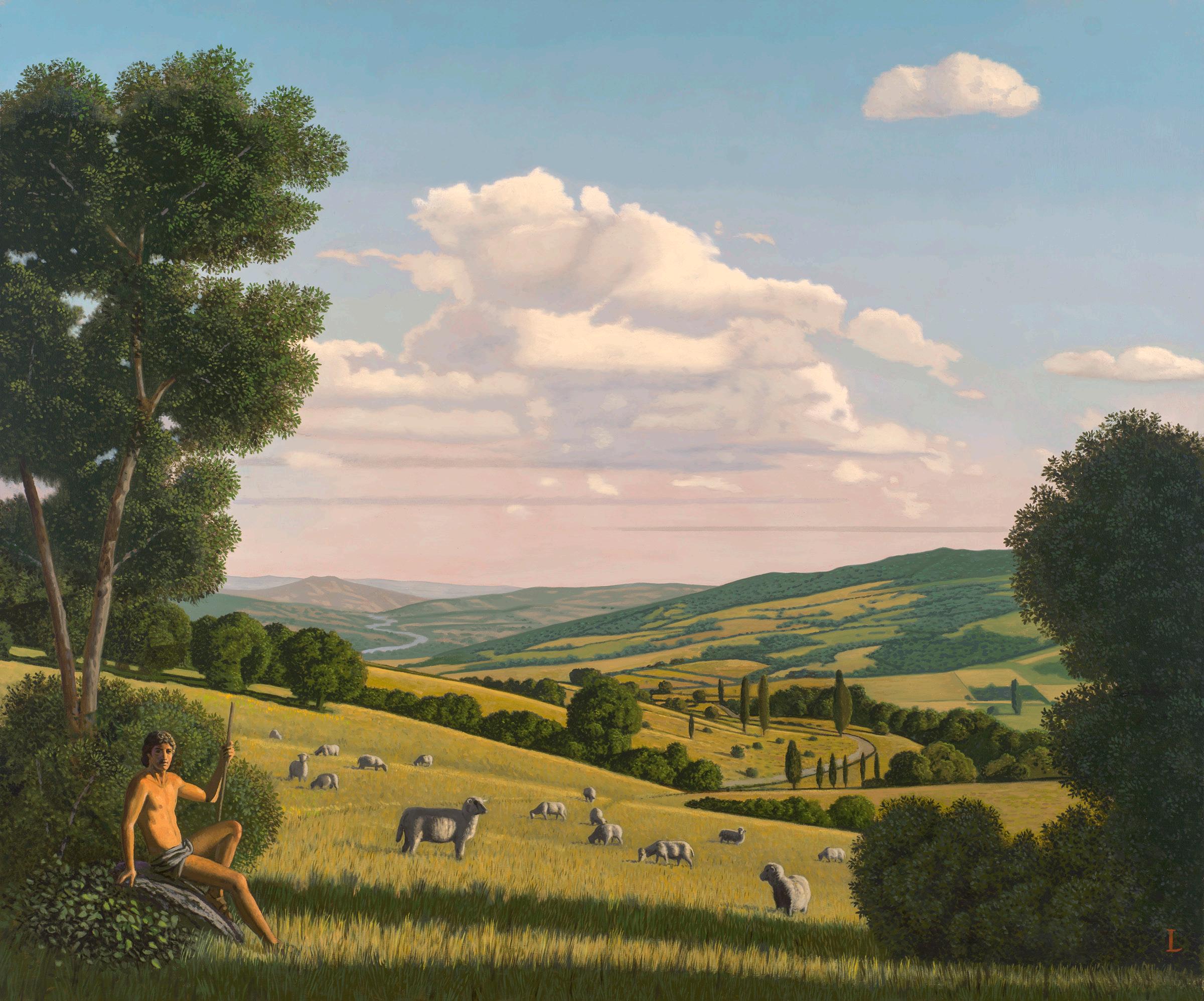
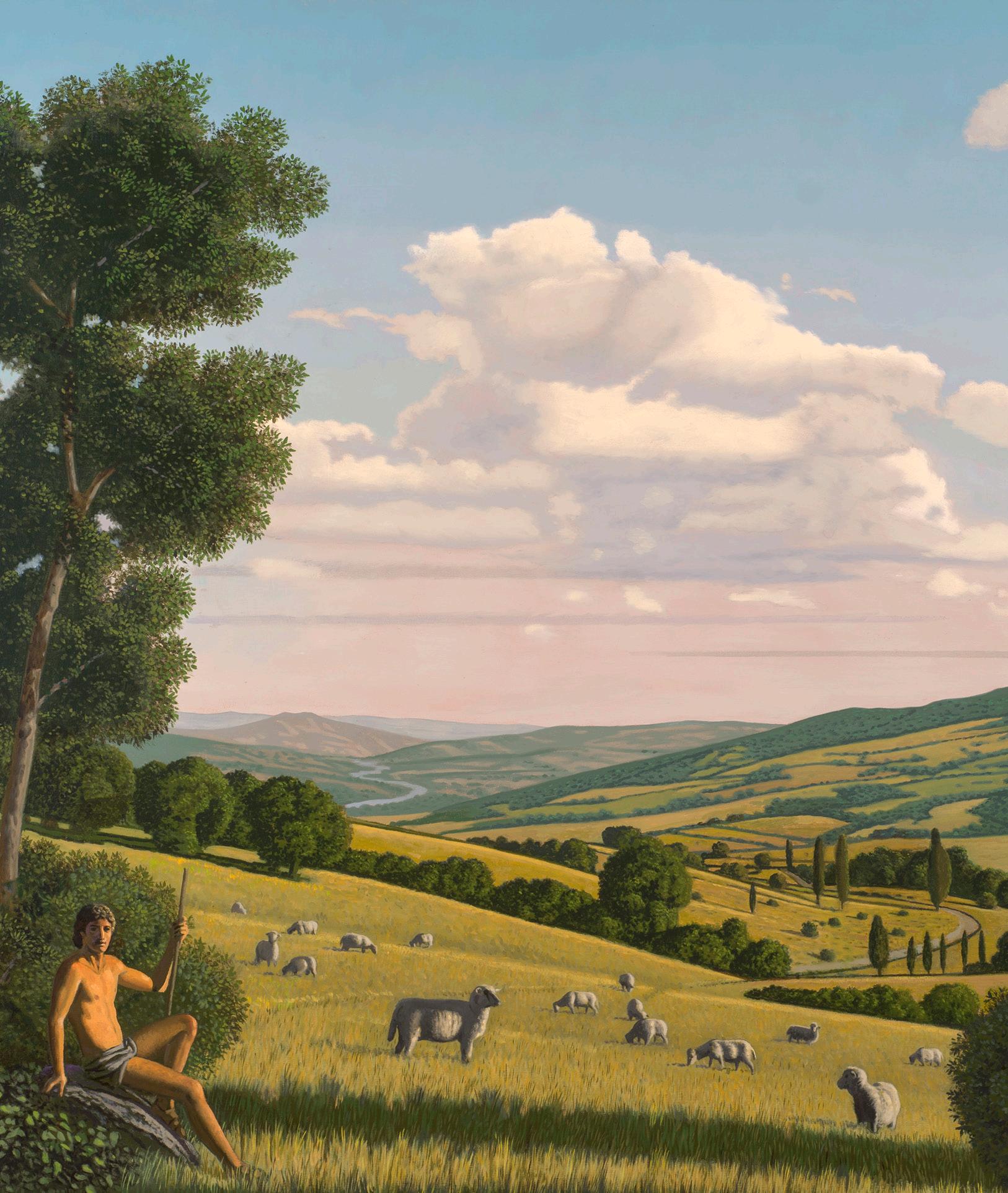
Landscape with a Shepherd, (The Pastoral Mode) 2026, oil on linen, 40 x 48in
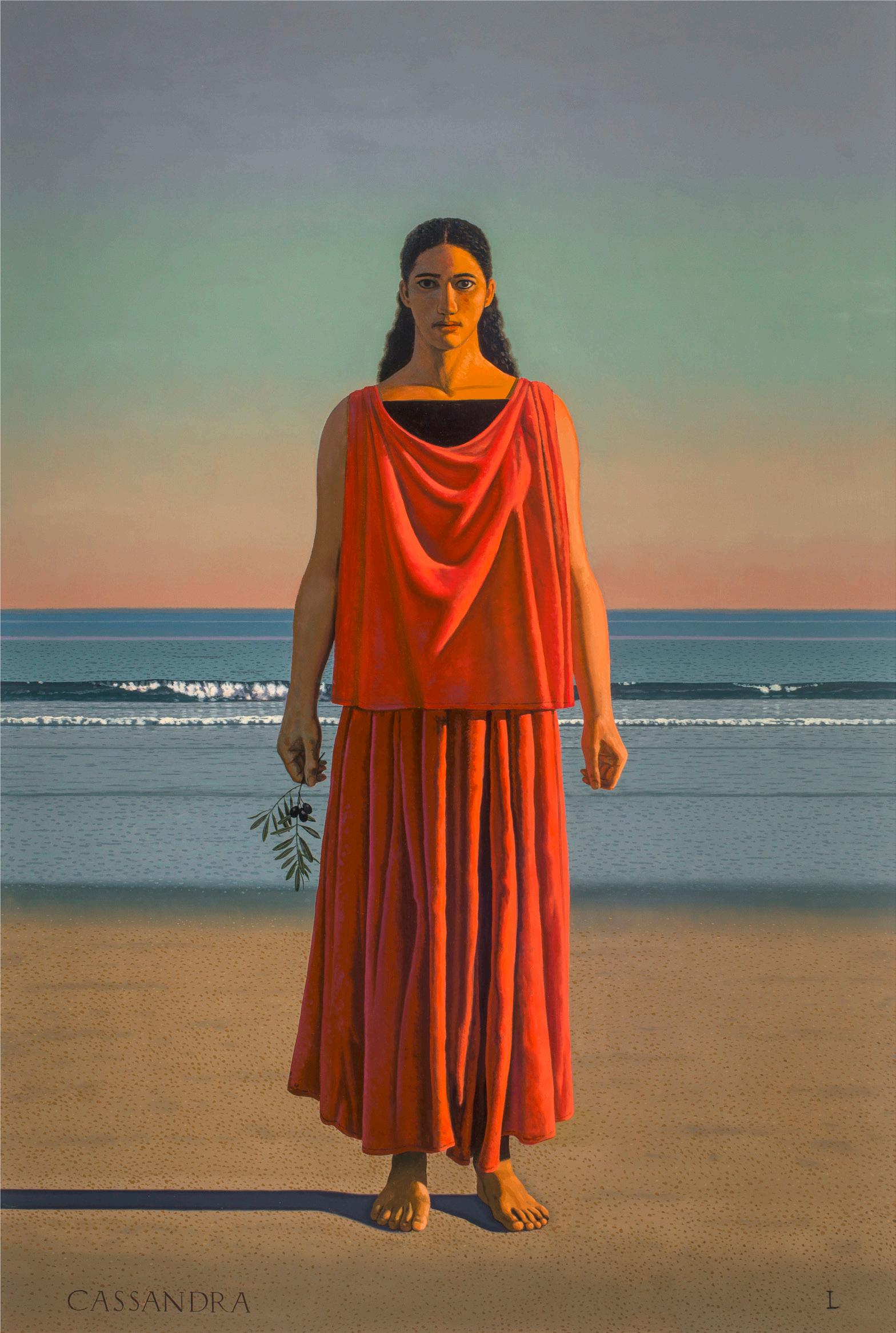
Cassandra
2021, oil on canvas , 72 x 48 in
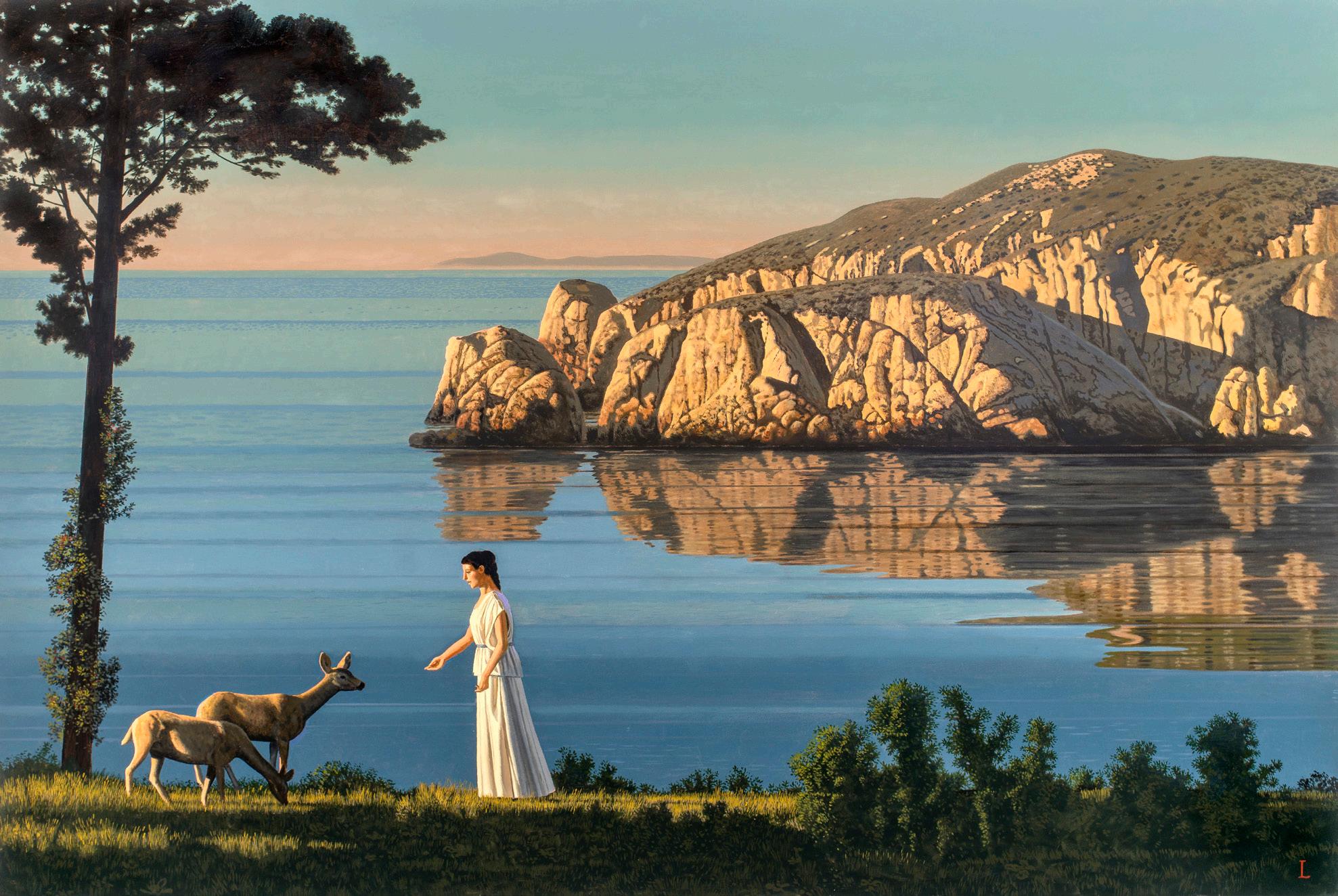
Legend, Woman with Deer 2020, oil on canvas, 48 x 72 in
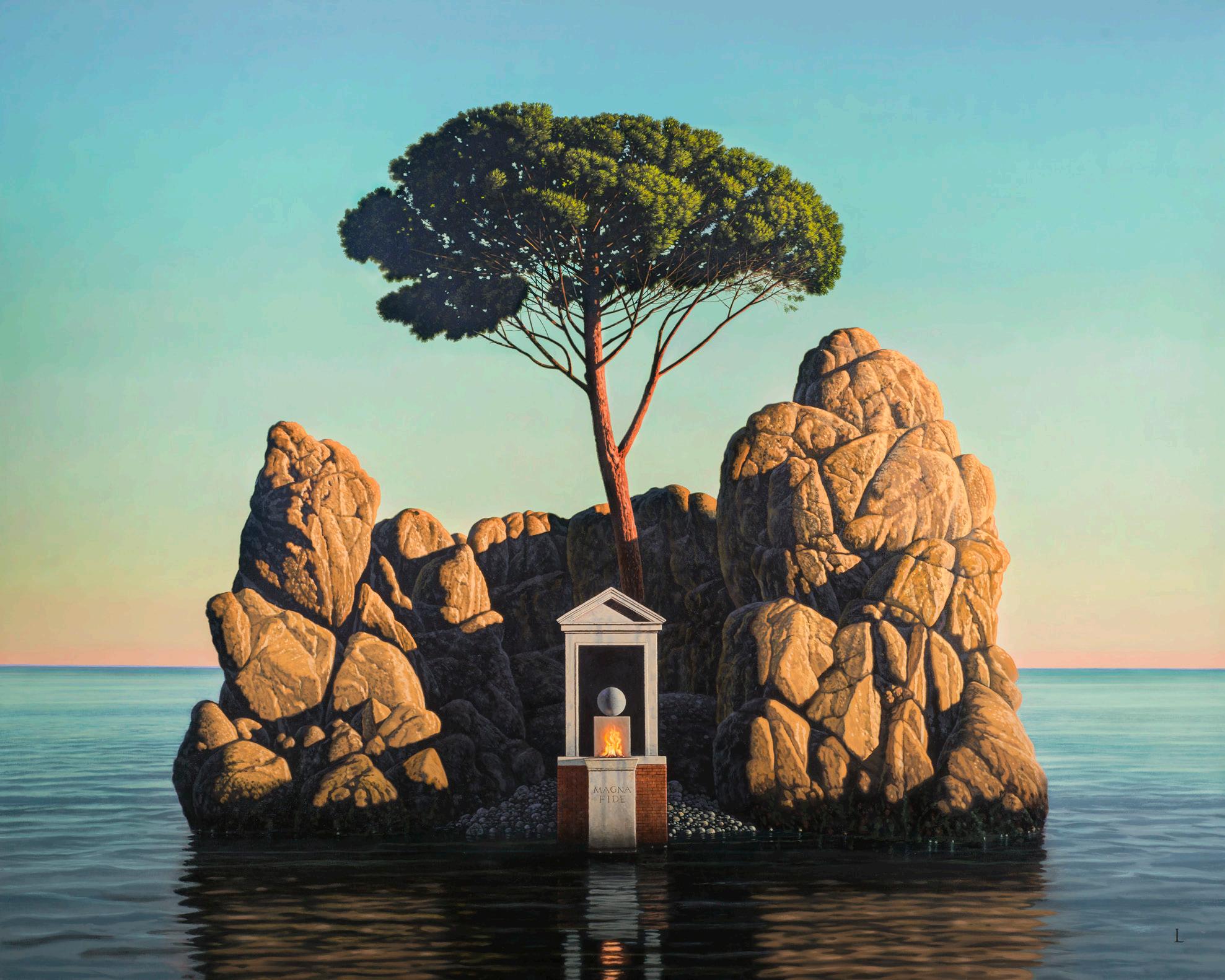
Magna Fide Study
2014, oil on canvas, 18 x 24 in
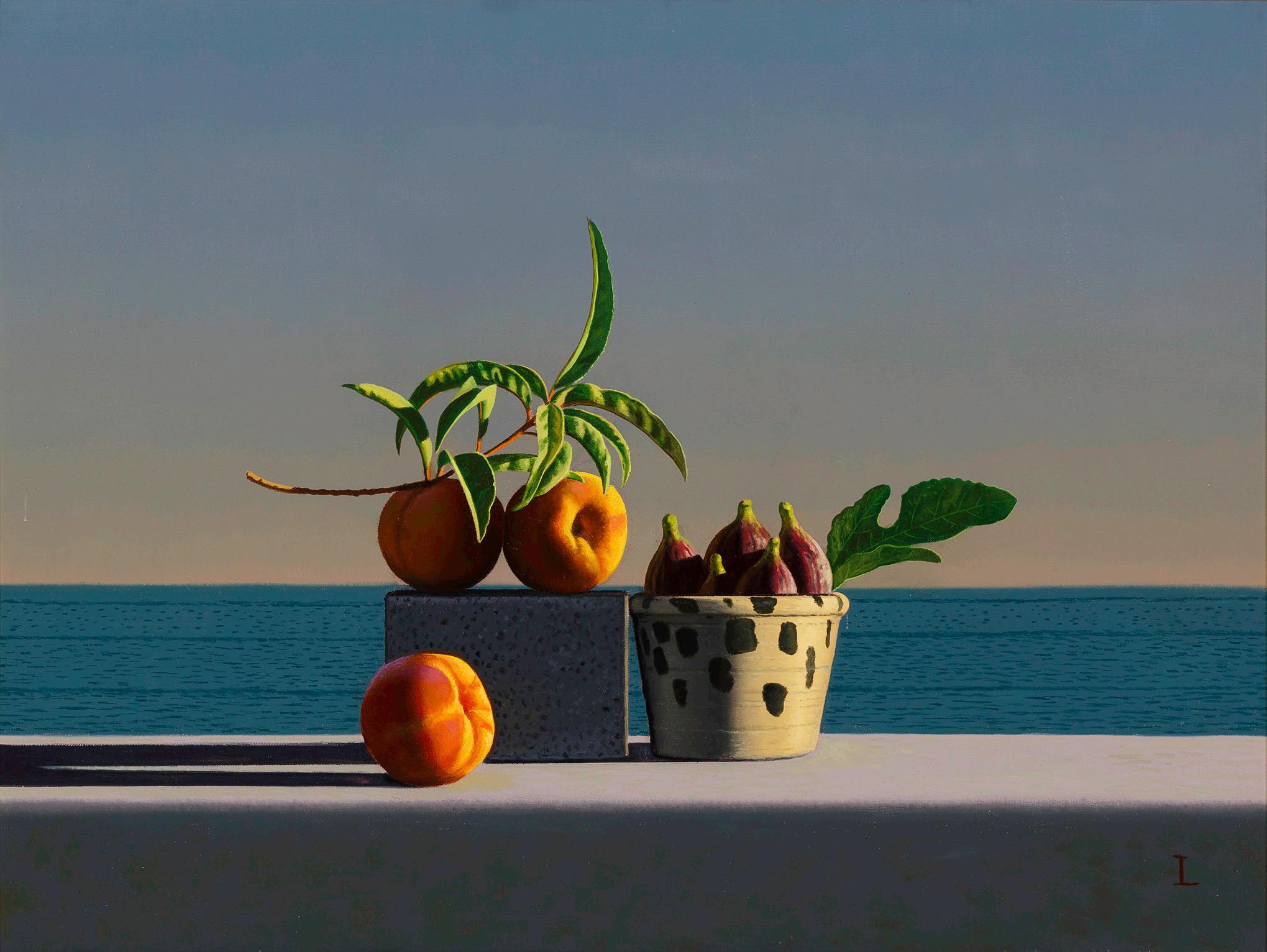
Offering: Peaches and Figs 2023, oil on canvas , 18 x 24 in
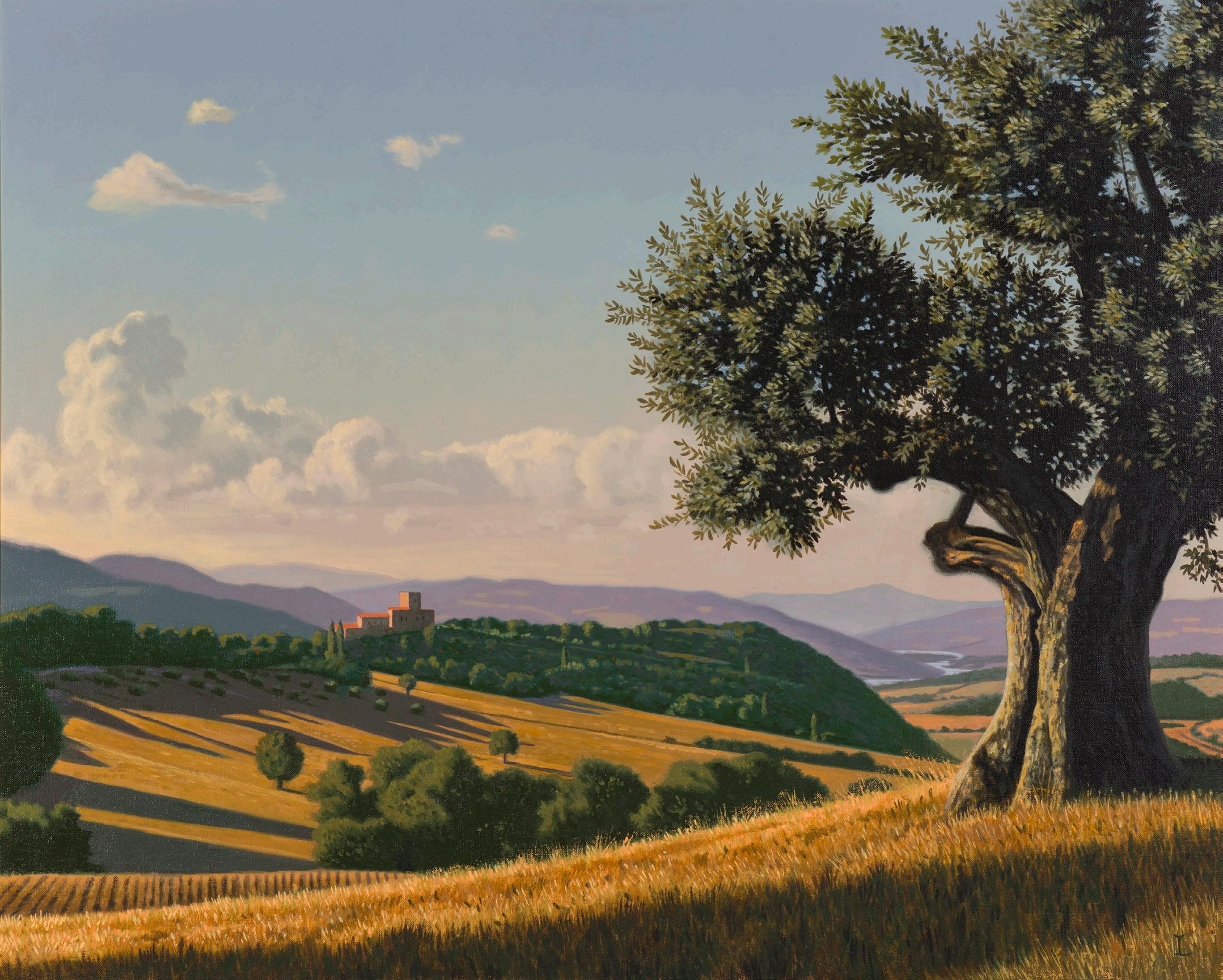
Georgic Landscape