Rural Living in
Lethbridge County
A magazine for producers and residents
Women in agriculture pg 4
Steel to break compaction: Making room for roots pg 22
Why start a fire to prevent one? pg 10
Controlling gophers with ecosysteminspired solutions pg 28
Spring/Summer 2026
Rural Living in Lethbridge County
Vol. 1 | Issue 2 | Spring/Summer 2026
Rural Living in Lethbridge County is a bi-annual magazine, written for and by County producers and residents, in association with the Rural Living & Ag Extension of Lethbridge County.
Previously known as the Rural Living & Ag Extension Newsletter, Rural Living in Lethbridge County is the evolution of the longstanding periodical. You’ll continue to enjoy local agricultural stories and innovations, alongside a fresh new style and some innovations of our own. All grounded in the rich and rooted agricultural community of Lethbridge County.
Readers who would like to receive an e-version of the magazine, comment on a story, change their address or remove their name from our mailing list should email the County at mwells@lethcounty.ca
Lethbridge County Where roots run deep and the future is bright.
Publisher: Lethbridge County
Editors: Matthew Wells & Mattie Watson
Art director/designer: Kelsey Janzen
Photographers: various
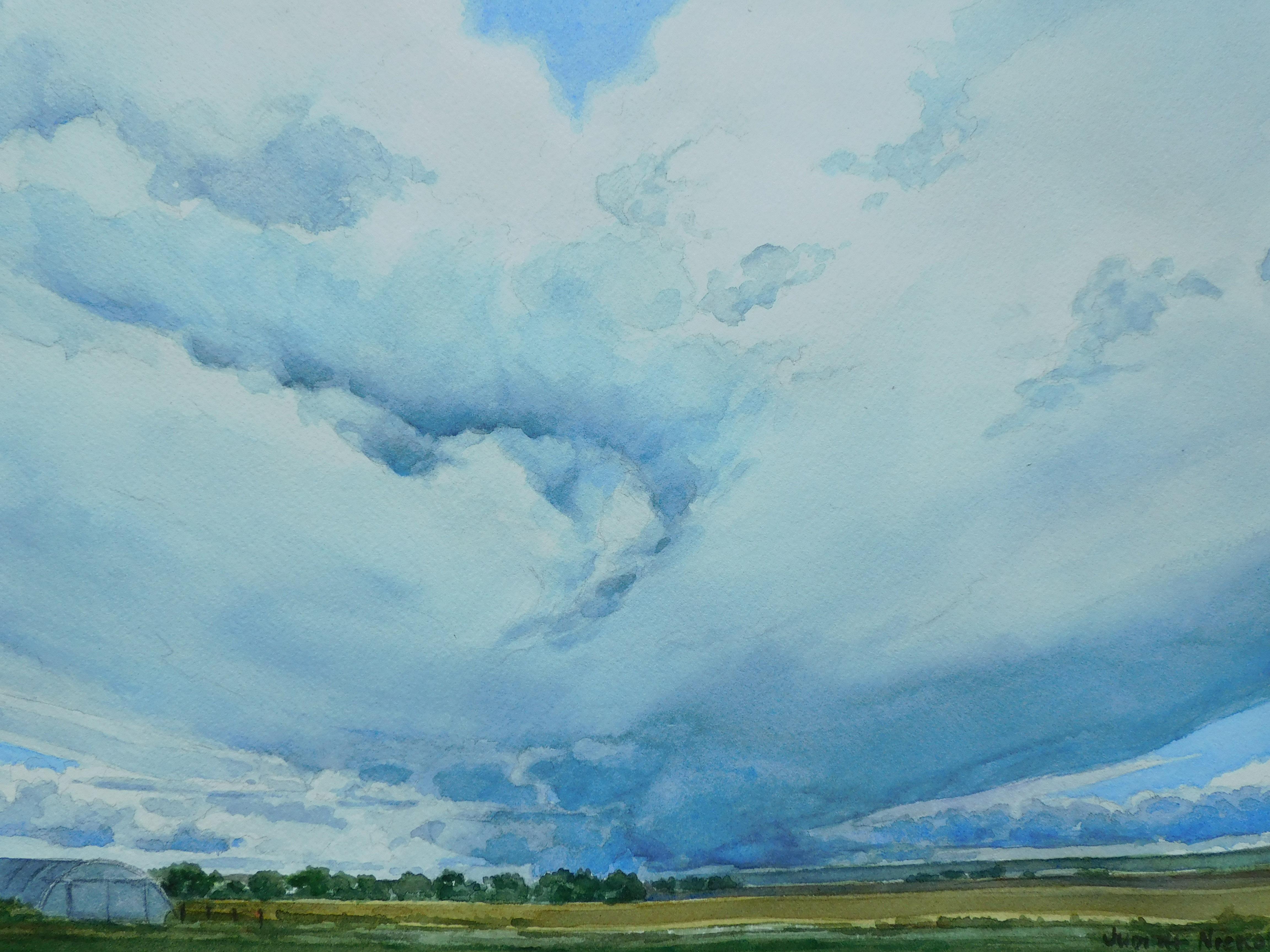
Cover image: Judith Nickol
Writers: Nancy Atkinson, Theo & Amanda Beijer, Doug Burke, Emma Cross, Belinda Crowson, Denise Faguy, Scott Gillespie, FWO Jacobson, Kate Lovsin, Jim Mitchell, Judith Nickol, Noble family, Harley Richards, Gary Secrist, Eric Van Essen, Jody Wacowich, Mattie Watson, Matthew Wells, Heath Wright, Alberta Agriculture & Irrigation, Alberta Grains, Alberta Health Services, Alberta Invasive Species Council, Clean Farms, Lethbridge Northern Irrigation District, Lethbridge Polytechnic, St. Mary River Irrigation District, ULethbridge
Proofreader: Mattie Watson

What is with this weather? As I currently type this on February 4, 2026, the high is seventeen degrees. There’s some wind, but not the typical blow-your-hairpieceoff variety. Looking at the trees, I can see they’re just as confused as some have begun to flower. It’s February, yet all indicators point to April. It’s ruffled my feathers enough that I went back to look up historical data for this area. Having only moved here in 2011, I don’t have firsthand experience to draw from, so I consulted some historical sources.
For the month of February, the highest temperature recorded was 21.8 °C on February 27, 1992. The lowest temperature recorded was -42.2 °C on February 9, 1939. The warmest average high for the month was recorded in 2016 at 9.2 °C, while 2019 saw the coldest average high at -13.9 °C.
The weather has always fascinated me. Especially when you learn that such extremes were occurring as far back as 1939 and 1992. Yes, we live in a Chinook region, but weather is such a finicky topic. Millions of variables that come together to shape the weather we experience each day, and even with all the technology at our disposal, it’s still difficult to predict. I bring this up not to spark debate, but to highlight the constant variability that impacts agriculture and rural life around us. It blows me away to think that, as a society, we know so much, and yet, in the grand scheme of things, we know so very little.

Rural Extension Specialist Lethbridge County
Matthew Wells
Fire prevention through prescribed burns. Page 10 Dust suppression season is here. + Policy updates for undeveloped road rights-of-way. Page 12

Advancing women, advancing agriculture Page 17
Roots & Reach
• Women in agriculture Page 4
• Local spotlight: artist Judith Nickol Page 5
• Women, work, and continuing education Page 6
• Breeding industry stands to benefit from ULethbridge fertility research Page 7
• Taking a stand against poaching Page 8
• Land access & regulations Page 9
• Cistern disinfection and cleaning Page 11
• Tree care, no-spray agreements and Dutch Elm Disease Page 13
• Upcoming events Page 13
Farm & Future
• ASB update Page 14
• Did you know? Rats Page 14
• Farm family spotlight: G.C. Noble Farms Page 15
• Nobleford Ag Society Page 16
• Join the Oldman Watershed Group Page 16
• Updates: LNID & SMRID Page 18
• Preparation makes perfect Page 19
• Funding & EFPs Page 20
• Equipment lending Page 21
• Tending your cyber farm Page 21
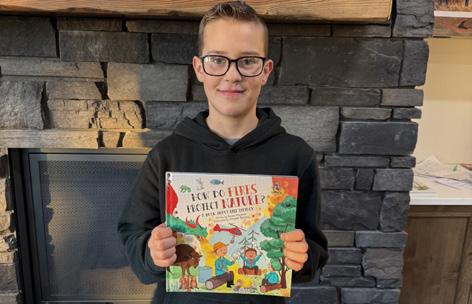
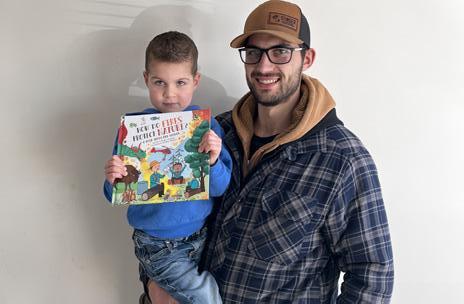
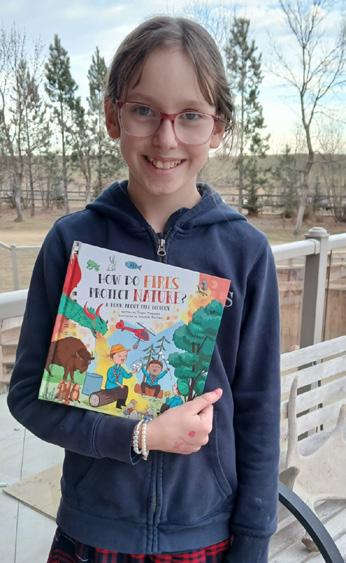
Congratulations to the wordsearch winners from the Fall/Winter 2025 issue!
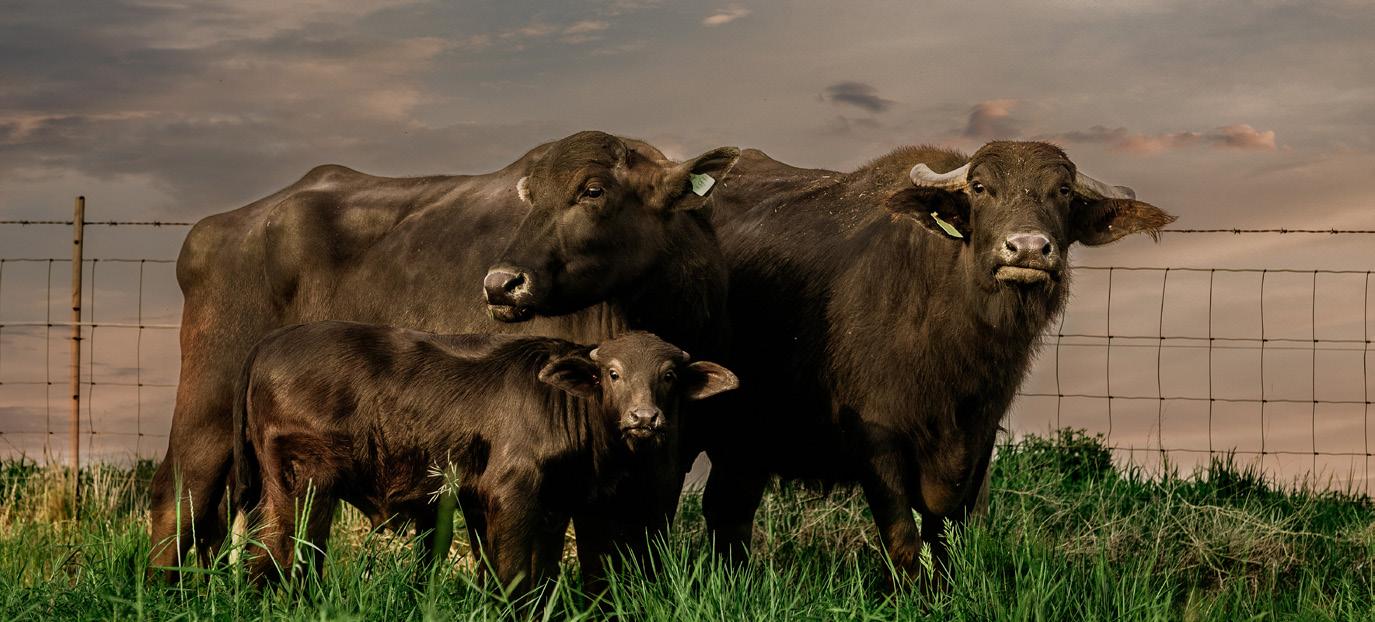
Spotted: water buffalo on the prairies. Page 30
Ready for the next puzzle? Head to page 31 to complete this issue’s wordsearch.
Land & Legacy
• Steel to break compaction: Making room for roots Page 22
• Nutrient Management webinar series Page 23
Crops & Conditions
• Understanding ergot outbreaks and how to manage them Page 24
• Wheat stem sawfly: survey and maps Page 27
Wildlife & welFare
• Controlling gophers with ecosysteminspired solutions Page 28
• 75 years rat-free Page 29
Women in agriculture
Women have always played a pivotal role in agriculture. It would be impossible to name all the women who worked in agriculture or describe all the jobs they did, so we focus instead on three stories.
Family farms require the work of the entire family, especially when growing crops such as sugar beets.
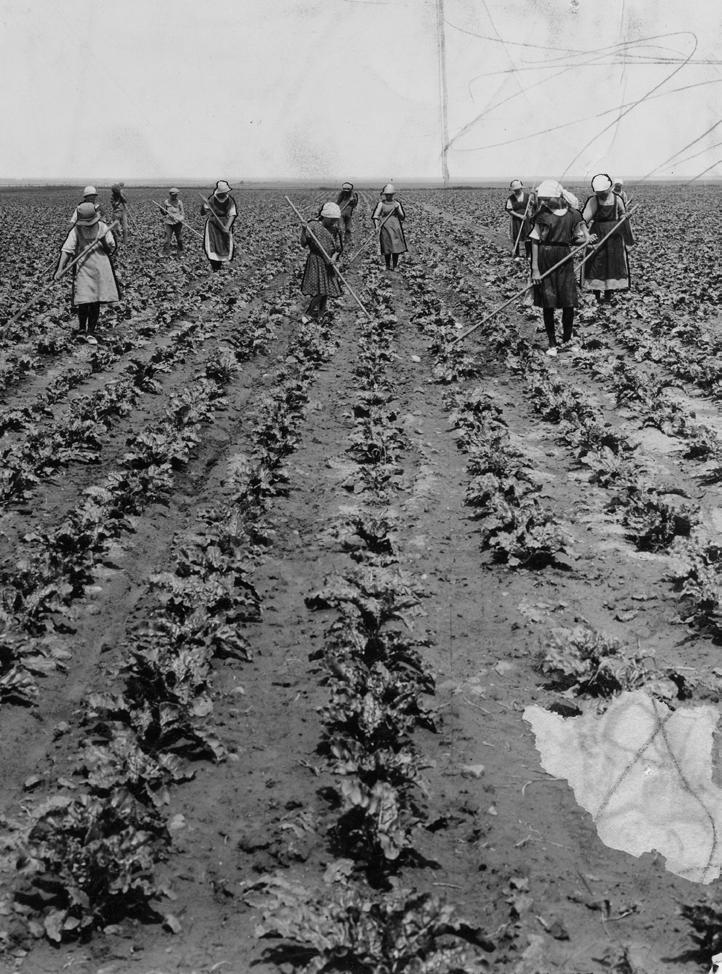
The Wieler family—Jacob Wieler and four daughters—arrived in the Coaldale/ Tempest area in 1926. That first year they worked twenty acres of beets. Maria Wieler, one of the daughters, shared the experience in Gem of the West.
In spring the beets needed to be thinned. As the older two sisters (Elizabeth and Maria) had found work as housekeepers, the younger, teenaged sisters – Lena and Anna -- worked with their father to thin the beets. Working with hoes and sometimes by hand, they removed extra plants so those left behind could grow. Summer meant a season of weeding. Then in fall, harvest. Elizabeth and Maria found time to work with their sisters and father to harvest the beets.
“At harvest time, Elizabeth and I were available to top beets. With the beet knife, which had a hook at the end, we pulled the beets out of the ground, topped the leaves off and threw them in a row. They were harrowed to shake the dirt clumps off. By hand and fork we threw them up on the beet rack.”
Many families from across the County likely have similar stories where anyone who could contributed to the working of the farm.
Outside of the physical day to day labour, farms are also a business. Books need to be kept. Advocacy and political work need to be done.
Joyce Templeton of Readymade was named the 1989 Alberta Farm Woman
of the Year. Templeton was involved in several aspects of farming. She was concerned about the state of farmers and noted cooperation was needed not only by farm families but to maintain farmers status in a democratic society. She was also worried about the loss of family farms and the reduced competition created by farm consolidation and corporate takeover in agriculture. Templeton said more women had to get involved in politics because that was where such issues were dealt with.
Templeton and her husband helped organize the Readymade 4-H Beef Club and she was a founding member and first secretary of the Readymade local FWUA (Farm Women’s Union of Alberta).
Agriculture is also an industry that requires research and innovation.
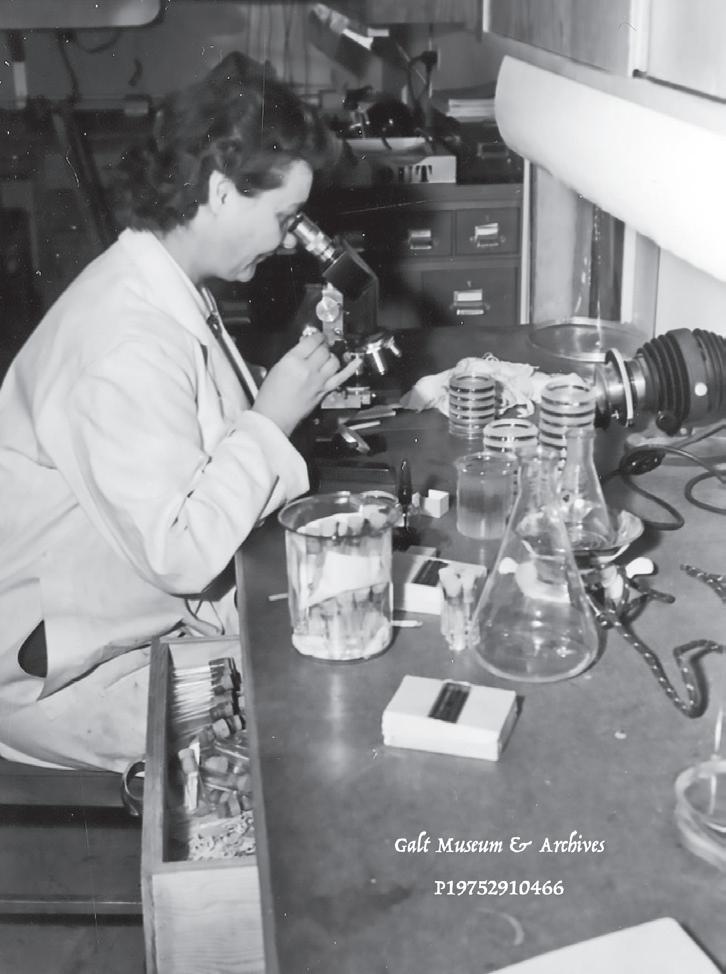
Ruby Larson was born at Hatfield, Saskatchewan, in 1914. She first became a schoolteacher but later returned to the University of Saskatchewan and then the University of Missouri where she obtained her Master’s and PhD, respectively.
Larson worked as a scientist at the Swift Current Research Station and then moved to the Lethbridge Research Station in 1952 where she worked until her retirement in 1979.
Her work was on the cytogenics of wheat (study of cells as related to heredity) and her research was primarily on ways
to make wheat more resistant to insect herbivores.
She became the second woman ever named a fellow of the Agricultural Institute of Canada (AIC) and received a special degree from the University of Lethbridge. The Ruby I. Larson Biological Research Aptitude Scholarship at the University of Lethbridge was established in her honour.
She was equally active as a community volunteer.
Among her contributions:
• Instrumental in founding the annual science fair.
• Led a children’s science group in the city for fifteen years. Members of the club went on to become medical doctors, engineers, teachers, entomologists, architects and more.
• Taught an elementary science enrichment class.
So, here’s to women in agriculture, past and present, and to finding and sharing more of their stories.

Submitted by Belinda Crowson Lethbridge Historical Society Photos courtesy of Galt Archives.
Belinda Crowson
Dr. Ruby Larson, 1953, at work in the laboratory
Hungarians at work in the sugar beet field in 1930
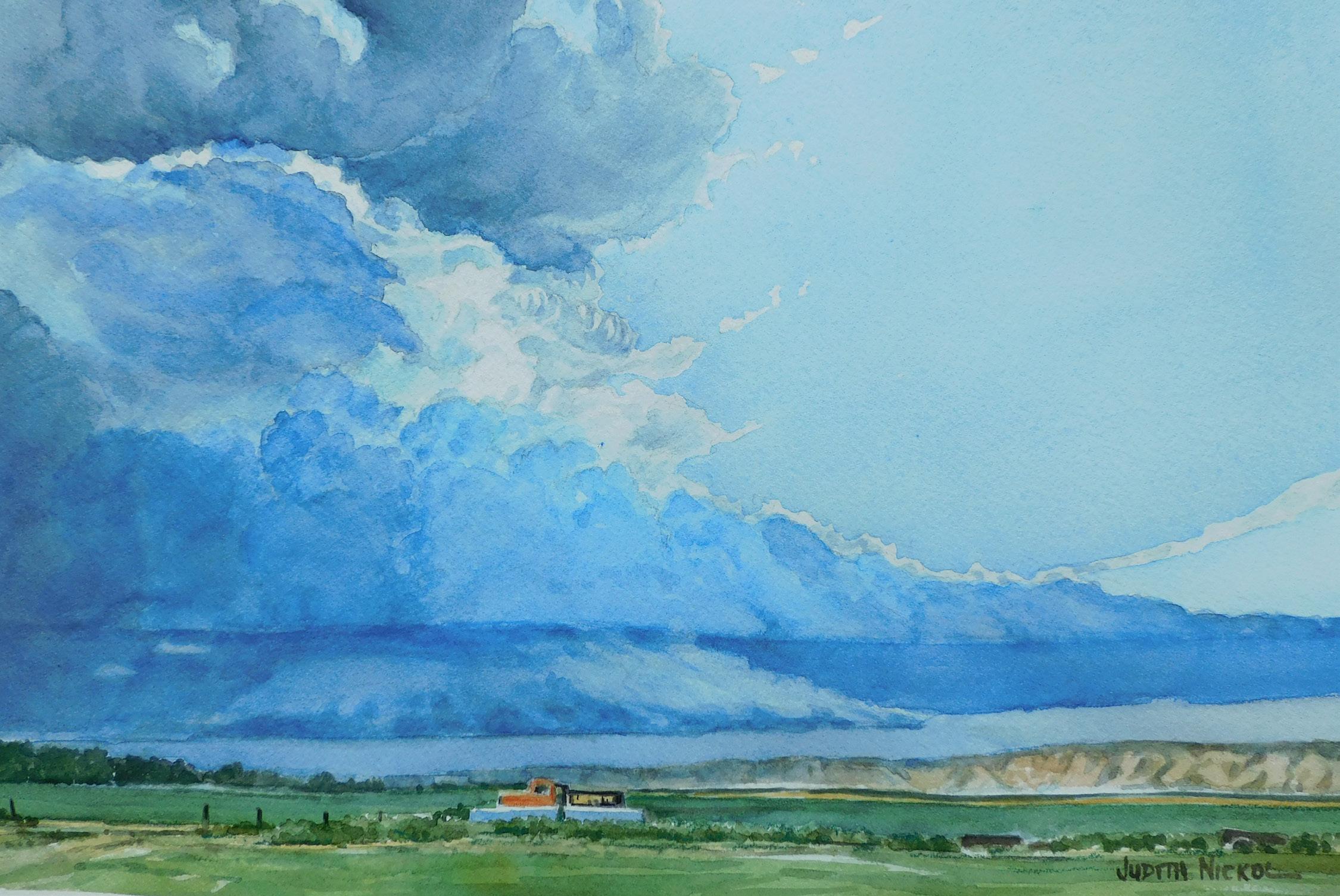
Local spotlight: artist Judith Nickol
I have been painting since I was a child, inspired by my mother, who was an artist herself. Both my mom and my dad taught me to appreciate the beauty of nature, and encouraged and supported my interest in pursuing art as a calling.
My parents arranged private lessons for me at school when I was nine, and I continued with that teacher until I graduated from high school. My favorite quote from those sessions: “I don’t care how long it takes you, it has to look like
you just dashed it off!” After that, I went to university and graduated with a B.A. in Fine Art.
For years, I worked in oils, pastels, and ink, but ultimately concentrated on watercolour. It is a challenging medium, but I found it to be the best for capturing the quality of light…and we have the best skies on the prairies.
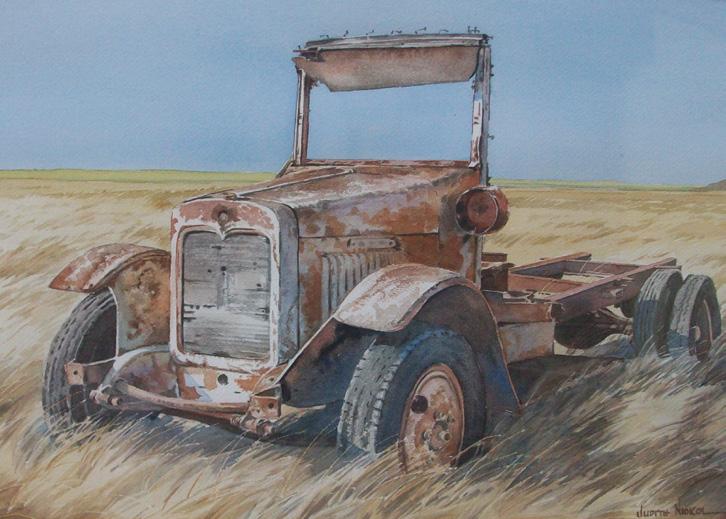
I am primarily a landscape painter, but I also enjoy working on images of old trucks, because each is unique in its own way, as well as some florals.
My work is available through Gust Gallery in Waterton Park and Desert Spring Bronze Gallery in Coaldale, AB.

Submitted by Judith Nickol Artwork property of and copyrighted to Judith Nickol.
Women, work, and continuing education
Lethbridge Polytechnic
Nearly twenty years ago, when Erin McIlwraith took Lethbridge Polytechnic’s Pesticide Applicator Tutorial course, she didn’t expect it to become a career—and she certainly didn’t expect to be coteaching it one day.
At the time, McIlwraith thought she would work in vegetation management only until a different opportunity came along. She struggled with feeling like she didn’t belong in the profession, and hesitated over whether to enrol. “When I signed up for the course, I was terrified I was going to be the only woman,” she said. “But I wasn’t.”
Not only were there plenty of other women, but Erin noticed that not all of them were at the beginning of their careers. Some were older, held senior roles, and had been working in the field for years. “I saw that and for the first time I thought, oh my gosh, this could be a career,” she said. Today, when she’s not working at her job in municipal parks operations, McIlwraith instructs the same Pesticide Applicator course that launched her career almost two decades ago.
Offered several times per year, the Pesticide Applicator Tutorial is one of Lethbridge Polytechnic’s Continuing Education offerings. These opportunities are aimed at those already in the workforce who want to upskill, renew a certification, or explore new career directions. “Con Ed is great for people with high-demand lifestyles,” said McIlwraith. “If


you can’t be away from your job for weeks or months to do a course, they can help you manage that.”
Twenty years later, flexibility was part of what drew Melisa Cormier to the Pesticide Applicator course in early 2024. As a busy professional arborist, she was looking for something that could suit her schedule and prepare her for the Pesticide Applicator exam. By the end of the course, she felt well-prepared to progress in her career. “I learned how to think through questions and develop solutions for realworld scenarios,” she said. “It gave me a solid foundation for writing the exam and working safely.”
Cormier agrees that seeing other women working in fields of interest can make a big difference. “Representation matters,” she said. “Seeing yourself reflected in others who have succeeded in the roles you aspire to is so powerful.”
For the last several years, the proportion of women working in land-based professions has been increasing. While they have not yet achieved parity in these fields, more and more women are starting to view them as a viable option.
Continuing education can be a valid entry point into land-based careers. Programs like the Pesticide Applicator Tutorial reduce barriers to entry, particularly in industries where women may not see a clear or traditional pathway in. For many learners, these courses become the first step in a longer learning journey, supporting advancement, certification, or movement into new roles.
McIlwraith is glad to see more opportunities for women. “We know we can do it now,” she said. “The men who raised their daughters on farms, taught them, included them—we’re seeing that generation of women who were treated as equals beginning to join the workforce.”
“It can take time to change old beliefs about gender roles,” said Cormier. “I suspect that there are women out there who simply don’t know there are fulfilling, well-paying opportunities for them in these industries.”
The first step toward a male-dominated career path can be intimidating for women. McIlwraith wrestled with that uncertainty 20 years ago, and many women still feel it today. But as McIlwraith and Cormier found, taking even one new course can plant a seed of change.
And, as any skilled arborist knows, even the smallest seed can grow into something breathtaking.

Lethbridge Polytechnic works with industry partners to develop applied learning opportunities in agriculture, horticulture, and greenhouse fundamentals, supporting workforce development and sustainable communities across southern Alberta. Learn more at https://lethpolytech.ca/departments/lcextension
Organizations interested in exploring collaboration are encouraged to connect with the Continuing Education team: training@lethpolytech.ca.
Submitted by Lethbridge Polytechnic
Breeding industry stands to benefit from ULethbridge fertility research
ULethbridge
The Alberta cattle industry has earned its reputation as a producer of some of the world’s highest quality, most tender and flavourful beef. Alberta beef resonates as the gold standard—a tradition of excellence that is respected both within the country and around the world. As such, a multi-million-dollar cattle breeding industry also serves as a major economic driver in the province.
Now, new transdisciplinary research between the University of Lethbridge and the University of Calgary could play a key role in further supporting the breeding industry by making it easier to identify the most virile bulls in the herd. The research team’s work has upended long-held beliefs about the biological process that sperm undergo while travelling through the female reproductive system—findings that could open the door to a much greater understanding of reproductive biology and fertility.
Male fertility is crucial in animal breeding systems and particularly integral to the cattle breeding industry where cryopreserved semen from an elite bull is distributed worldwide to breed numerous cows through artificial insemination.
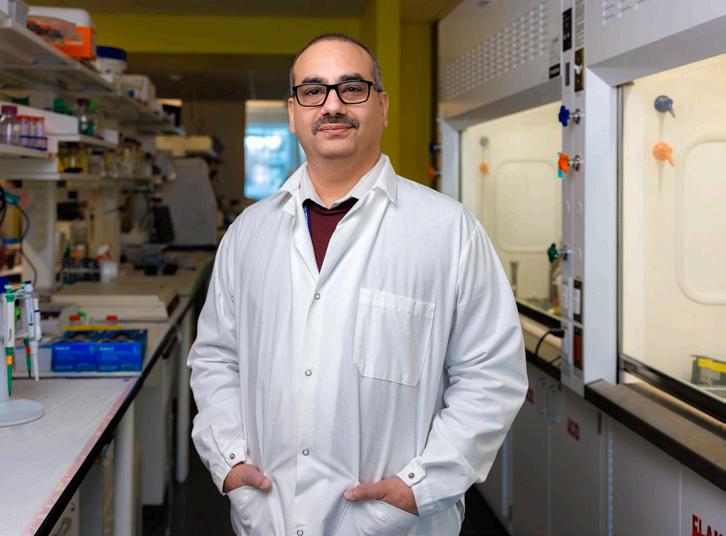
Dr. Nehal Thakor, a molecular biologist in the ULethbridge Department of Biological Sciences, and Dr. Jacob Thundathil,
a reproductive physiologist and veterinarian in UCalgary’s Faculty of Veterinary Medicine, have combined the expertise of their labs to examine the problem, utilizing bovine sperm samples.
Their paper, authored with PhD student Dr. Saurabh Tiwari (University of Calgary), Systematic mRNA interactome analysis reconceptualizes translational quiescence in bovine sperm, was recently published in the esteemed Nature Portfolio journal, Communications Biology.
“Currently, veterinarians try to assess how sound a bull is as a breeder by looking at its overall health and microscopic evaluation of sperm quality,” says Thakor. “But what our findings suggest is that we should not end there, rather we should be looking deeper and understanding the molecular mechanisms in place.”
Recognizing that over the past decade there has been a surge of interest in improving male fertility across species, Thakor (ULethbridge), Thundathil (UCalgary) and Tiwari (UCalgary) began looking beyond the accepted conventions of what makes sperm fertile.
“Male factors contribute to approximately half of infertility cases in humans, with unexplained infertility affecting one out of three couples, primarily attributed to these factors,” says Thundathil. “The clinical values of conventional semen analysis, such as sperm motility, concentration, and morphology, are inadequate in diagnosing male infertility as they do not account for sub-microscopic or molecular-level differences in sperm.”
Through their work, the group discovered that as sperm undergo capacitation

in the female, a biological process required to gain fertilization capabilities, mRNA translation (protein synthesis) is activated, and new proteins are made. It was previously thought that sperm were translationally quiescent (in a dormant state) during capacitation.
“What this means is that mRNA is not just being carried along by the sperm, waiting to activate when fertilization begins, rather they are activated as part of the capacitation process and may play a role in that process,” says Thakor. “That’s telling us that for an improved evidence-based diagnosis and infertility treatment, we need to better understand the molecular mechanisms governing male fertility.”
He gives the example of a bull that produces a million sperm, all of which are motile, and yet during capacitation, most of them turn out to be infertile. On the other hand, another bull could produce half as many sperm but yield many more fertile sperm because the translation process is more successful. Their study lays the groundwork for a pathway to figuring out why.
“We have some idea of the different genes that are activated,” he adds. “Using biomarker identification, we think that there might be a chance for intervention to enhance fertility.”
The new approach offers great promise that by better understanding the reproductive biology and fertilization process, greater successes will be realized in achieving fertility, thereby transforming the breeding industry.

Submitted by ULethbridge
Students play a major role in the Thakor lab at the University of Lethbridge.
Dr. Nehal Thakor and his research team have partnered with University of Calgary researchers as they seek to better understand reproductive biology and fertility.
Taking a stand against poaching Jim Mitchell
Lethbridge County is incredibly diverse with wildlife. From rattlesnakes to large ungulates like moose, elk and deer. Included are endangered species like Swift Foxes, Burrowing Owls, Ferruginous Hawks and Whooping Cranes to name a few. All these species of wildlife are found within our county.
Three Alberta Fish and Wildlife Officers cover Lethbridge County in addition to other counties adjoining Lethbridge County. Their responsibilities encompass enforcing multiple provincial and federal statutes, including the Wildlife Act, which provides legal protection to wildlife,
Problem wildlife calls continue to make up a significant portion of Fish and Wildlife Officers’ responsibilities. In fact, these calls account for approximately fifty percent of their overall workload.
such as the aforementioned endangered species. Also included in their day-to-day duties are problem wildlife occurrences including cougars, black and grizzly bear occurrences and ungulate damage.
To give you an example of the top five offences encountered by officers in Alberta, they are: unlawful possession of wildlife, loaded firearm in a vehicle, hunting without a licence, failure to retain evidence of sex and species on animal carcass and failure to immediately tag.
In previous years, hunting on lands without permission was high on the list but respectful hunters are seeking permission prior to hunting on your land. Fines for hunting without permission are relatively low compared to other fines but along with the conviction these individuals are prohibited from hunting for a year which is a huge deterrence.
If you witness a violation, contact the Report a Poacher line at 1-800-642-3800. Information is eligible for a reward. Take a stand against poaching so we will always have wildlife for our children and grandchildren.
Among the many unusual violations
officers encounter each year, one particularly interesting case involved the use of social media to report illegal activity. Officers received information from a Facebook post about individuals who used a drone to chase Mule deer for several miles, leading to the animals’ exhaustion.
From viewing the Facebook video, it was clear that a violation had occurred and officers investigated and interviewed the suspect. Charges were filed, leading to a fine of several thousand dollars, confiscation of the drone, and a one-year suspension from hunting.
Problem wildlife calls continue to make up a significant portion of Fish and Wildlife Officers’ responsibilities. In fact, these calls account for approximately fifty percent of their overall workload. An example of some of the calls received are road injured wildlife (it may be noted officers do not pick up dead animals), livestock injured by bears and cougars, hawks dive bombing humans protecting their young, rattlesnakes and ungulates in feed stacks. The list goes on but I think you get the point.
Reports of cougar sightings appear to be
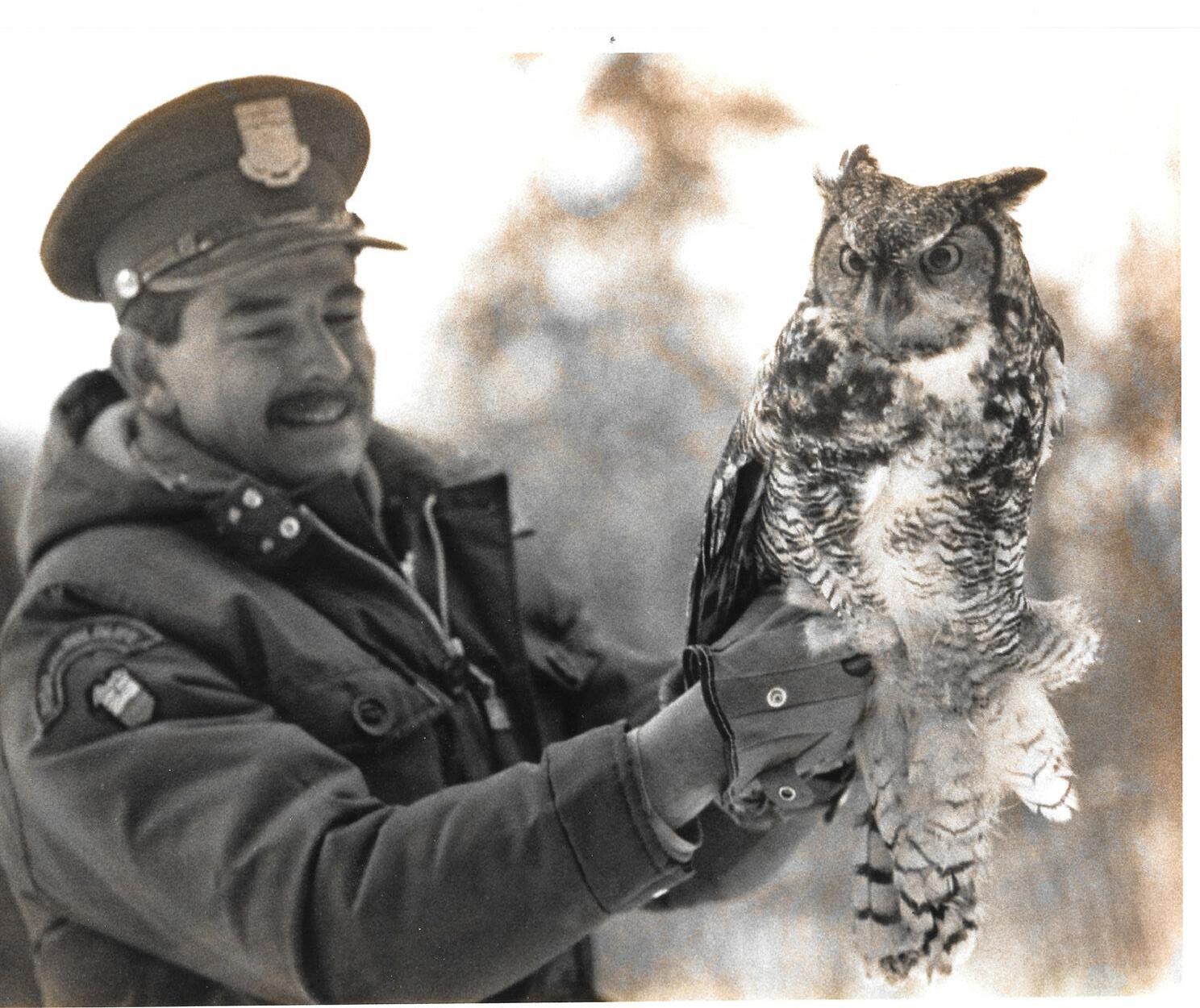
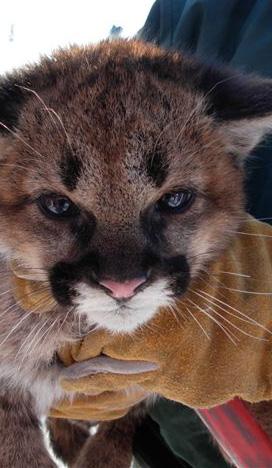
Left: Owl capture and relocation. Right: Orphaned cougar.
on the increase. These cats follow rivers where deer numbers are in abundance for sustenance and cover and water is readily available. Cougar tracks are large in size, often 9-12cm (3.5 -4.75 inches) wide. Under good conditions you will see a track and distinguish it from large dog type tracks as the track will show no claws. Cougars walk with their claws retracted.
Often calls received are just sightings and the cat hasn’t caused any injuries to livestock.
We often hear on the media about maulings from grizzlies. In Alberta, cougar maulings are extremely rare with only one death recorded.
Grizzly bears continue to be seen in the southern part of the province. They appear to be expanding their home ranges further east onto prairie lands. I’ve seen them travel quietly along small drainages just south of Lethbridge. A few years back I responded to a call of a bale truck that collided with a large grizzly, causing considerable damage to the front of the truck. The bear then ran off into a large area of scrub brush. Tracking a seriously wounded grizzly bear is no fun and fortunately we found him deceased from his injuries. The large male weighed over 550 pounds and died of traumatic internal injuries.
If you have any issues related to enforcement or problem wildlife, please contact your local Lethbridge Fish and Wildlife Office.
Land access and regulations
FWO Jacobsen
As southern Alberta’s communities continue to grow, more people are heading out to explore the land—whether for hunting, recreation or simply enjoying the outdoors. With that increased activity, questions around land access, trespassing and the rights and responsibilities of landowner and leaseholder are becoming more common.
At a recent county meeting, these topics sparked plenty of discussion. To help bring some clarity, Alberta Fish and Wildlife Enforcement Services (FWES) is sharing some helpful tips to provide clarification on what’s allowed, what isn’t, and what to do if problems arise.
Access to lease land
Leaseholders with an agricultural disposition—such as a grazing permit, cultivation permit, grazing licence, hay harvesting authorization, or head tax grazing permit—have a duty to allow reasonable public access on these lands. However, there are clear situations where access can be restricted to protect crops, livestock, and overall safety.
Access may be limited when:
1. Motorized vehicles are being used, or when more than one bicycle or animal is used for travel.
2. Someone wants to enter a fenced pasture currently occupied by livestock.
3. Crops are growing or have not yet been harvested.
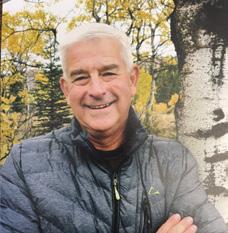
Submitted by Jim Mitchell
Retired Fish and Wildlife Officer of 38 years
Author of Alberta Game Warden: Behind the Badge of 172
Complete the wordsearch on page 31 to enter to win a copy of Jim’s book!
4. Fire bans are in effect under Alberta law.
5. Firearms or explosives are used unreasonably close to livestock.
6. Someone wants to use a firearm or explosives for target shooting.
7. Someone wants to camp.
8. A use conflicts with an approved Recreational Management Plan.

Restrictions for road allowances are governed in Lethbridge County by Policy 109.
Under Section 8 of Alberta’s Recreational Access Regulation, the holder of an agricultural disposition—including grazing permits, cultivation permits, grazing licences, hay harvesting authorizations, or head tax grazing permits—can only restrict recreational access in specific, legally outlined circumstances.
If you’re unsure whether access can be limited in a particular situation, call 310LAND (5263) on weekdays or visit: alberta. ca/recreation-on-agricultural-public-land.
Reporting trespassing and lease access concerns
If you’re a landowner or leaseholder who is dealing with trespassing issues— particularly related to hunting or the discharge of firearms—FWES encourages you to report it directly through the ReportA-Poacher line at 1-800-642-3800.
For an officer to respond and for a conviction to be possible, the following are required:
• A firsthand witness statement from the landowner or leaseholder.
• Willingness to testify in court if required.
• Copies of the land title or lease agreement.
Reports must be made directly by the landowner or leaseholder. When reporting, details make all the difference. Vehicle descriptions, licence plate numbers, and suspect descriptions can help officers respond more effectively.

Submitted by FWO Jacobsen Fish and Wildlife Officer
Fish and Wildlife Enforcement Services
Fire prevention through prescribed burns
Heath Wright
When we think about wildfire prevention, starting a fire to prevent one sounds counterintuitive, doesn’t it?
It’s actually a proven way to protect our communities.
The long grasses dancing through the coulees is one of the most recognizable images in Southern Alberta. But, despite its beauty, dry coulee vegetation is the ideal fuel for wildfires.
Minimizing dry ‘fuel loads’ is an important step in wildfire prevention—especially given how far our coulees stretch, and the impact a fast-moving fire could have on multiple communities, homes, and farms in Lethbridge County and beyond. One method to address excess vegetation is prescribed burning.
The science
Prescribed burning is a well-studied and effective method for mitigating wildfire risks in areas with excess vegetation (like our coulees). It is a planned ignition of natural grassland to reduce the chance an uncontrolled fire becomes dangerous, and is a proven, science-based tool used across Alberta.
In addition to reducing fuel sources for wildfires, prescribed burns:
• Renew and revitalize vegetation, making it less susceptible to wildfire
• Promote biodiversity
• Enhance wildlife habitats
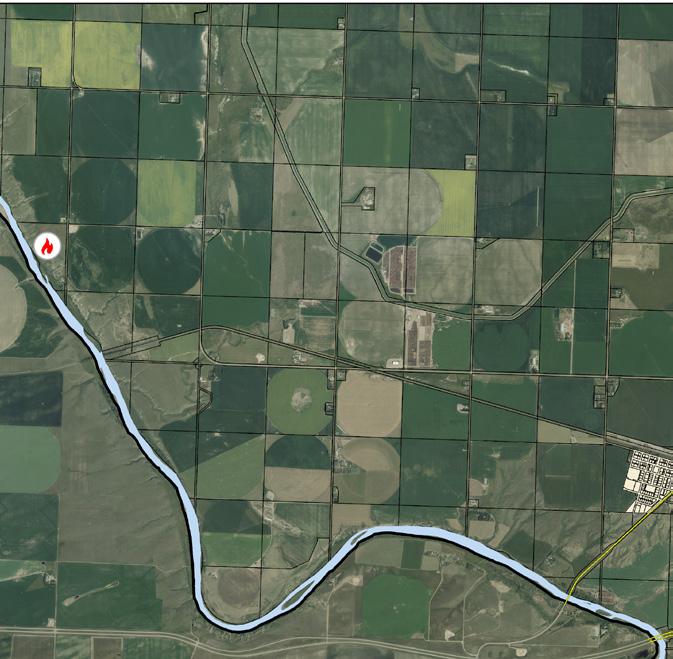
The planned prescribed burn in Lethbridge County
This spring, Lethbridge County aims to conduct a prescribed burn on our west side, near the Oldman River. The burn site is on a County-owned parcel within the
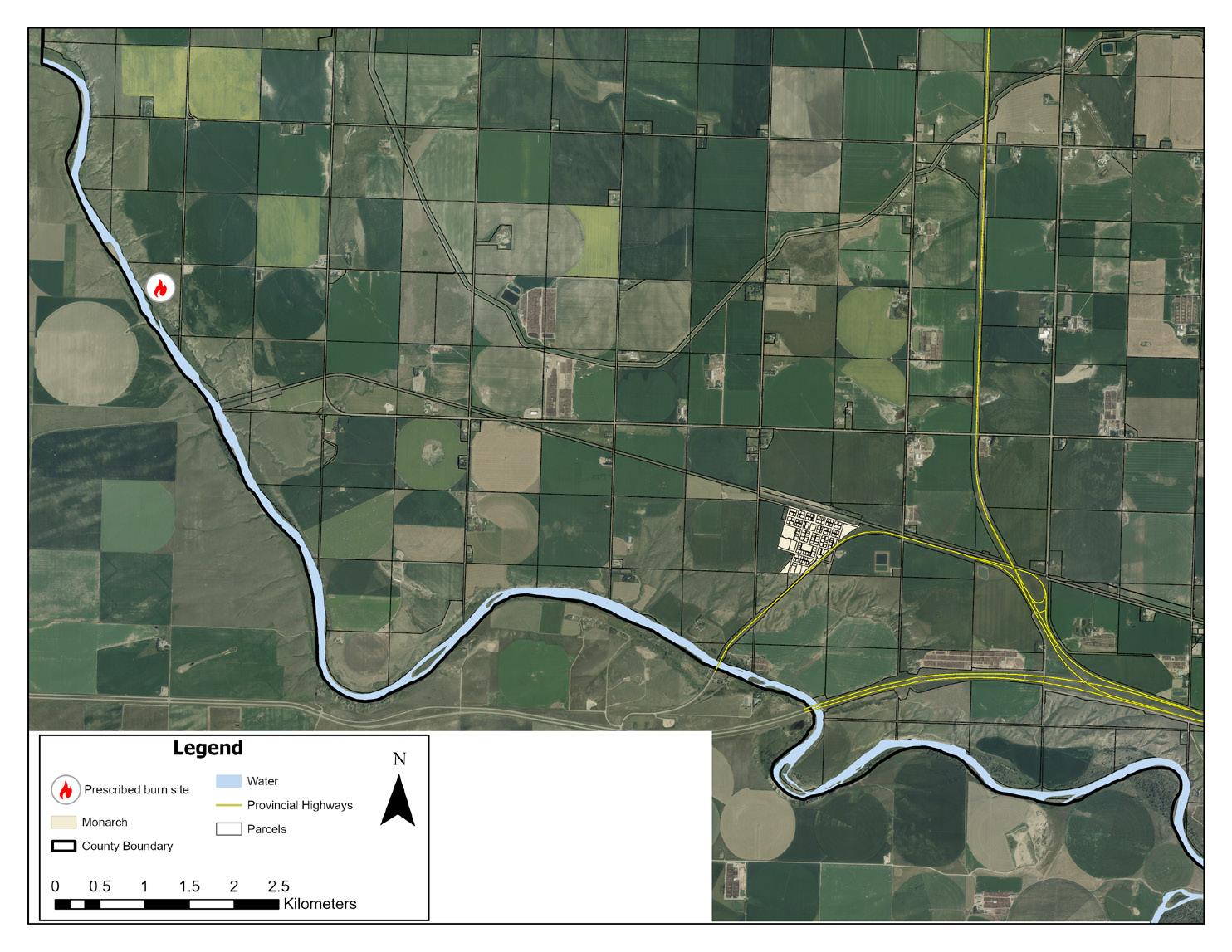
coulees. This project is intended to support a shift toward proactive land management rather than reactive response. Prior to colonization, fire functioned as an efficient natural control, and incorporating this metholodogy today requires appropriate training and expertise.
The County’s Agriculture Services and Emergency Services departments are collaborating with Picture Butte and District Emergency Services and Meewasin Valley Authority to ensure a safe, efficient burn. Our Ag Services staff will prep the site beforehand by mowing fire breaks and clearing vegetation along the borders to prevent accidental spread. The contractor, Meewasin has nearly 40 years of experience conducting prescribed burns and will be supported by the fire department to keep the ignition area under control.
The controlled burn is scheduled for late April or early May, weather permitting.
Safety first
Safety is our top priority. Extensive meetings were held this winter and will continue in advance of the burn to review safety protocols and finalize a burn plan, ensuring the safety of adjacent landowners, fire crews, and staff. The burn will only occur when strict conditions, including prevailing wind, temperature, moisture, and humidity, are met
You can help us ensure a safe burn by staying away from the area and keeping roads clear for emergency vehicle access. Keep drones away to avoid interfering with the drone being used for the operation.
This burn is being conducted under strict conditions, with experienced professionals, detailed planning, and close coordination between agencies.
After the burn: Ongoing monitoring
Following the burn, the site will be actively monitored for several days - longer if conditions require. Crews will check for hot spots, flare-ups, and lingering smoke. Monitoring ensures the burn remains fully contained and there is no risk to surrounding lands or infrastructure.

Submitted by Heath Wright and Mattie Watson Director, Emergency Services
Lethbridge County
Cistern disinfection and cleaning
Alberta Health Services
Water in a cistern may not necessarily be clean and potable. Hauled water may already be contaminated and even if the water has been treated, it can deteriorate during storage. Over time, the loss of chlorine residual can lead to microbial regrowth; sediments/sludge can accumulate in the cistern or animals or insects can fall in.
Water from a cistern should be sampled semi-annually for bacteriological quality. If test results show the presence of coliform bacteria both the cistern and distribution system should be disinfected with chlorine. Cisterns should also be pumped clean and chlorinated at least once per year to prevent sludge build up or biological fouling. This frequency may increase if water quality problems develop. Water testing and cistern cleaning should also follow any contamination incident (e.g. flooding, repairs) or following changes in water clarity, colour, odour or taste.
Confined space safety precautions
A cistern must not be entered until you are sure the cistern’s air quality is safe. No cistern should be entered unless the person entering the tank has been trained in confined space entry and follows the appropriate safety procedures as per Part 5 of the Province of Alberta Occupational
Water from a cistern should be sampled semi-annually for bacteriological quality... Cisterns should also be pumped clean and chlorinated at least once per year to prevent sludge build up or biological fouling.
Health and Safety Code. If you have any questions regarding confined space entry safety practices, refer to the Province of Alberta Occupational Health and Safety Code at whs.gov.ab.ca or call toll-free 1-866-415-8690. If in doubt, contact a professional trained in confined space entry for information regarding cistern cleaning.
Procedure for cleaning the cistern
• Make sure that confined space entry precautions are followed.
• Drain the cistern.
• Use a pressure washer or stiff brush to clean debris and sediment from all surfaces.
• Remove bottom sludge using a wetdry vacuum.
• After washing and pumping out the sludge begin refilling the cistern.
• During the filling add household bleach to make up a disinfection solution of 50 mg/L.
• Follow the procedures below for cistern disinfection.
Procedure for cistern disinfection
Calculate how much water is in the cistern.
For a box cistern, multiply the length (L) by the width (W) by the height (h), where height equals the depth of water.
For a cylindrical cistern, use πr²h where π = 3.14, r² = radius x radius, and h = depth of water.
• Measurements in cm divided by 1000 gives volume in litres
• Measurements in feet x 6.2 gives volume in imperial gallons
Water treatment devices should be bypassed during the disinfection procedure and the hot water heater power (or gas feed) shut off.
1. Add 1 L of bleach to every 1000 L of water in the cistern (adding while filling the cistern will ensure good mixing). This will provide approximately 50 mg/L of chlorine.
2. Run individual taps connected to the plumbing system until a chlorine odour is detected then close the tap.
3. Allow the chlorinated water to sit in
the cistern and plumbing system for at least 6 hours.
4. After 6 hours, the chlorinated water can be dumped to waste in accordance with safe practices. Flush cistern by filling and draining using water from a potable source taking care not to contaminate the cistern. Highly chlorinated water is unsafe for drinking, unsuitable for domestic or livestock use, and will cause problems if discarded into septic fields.
5. Run each tap for at least five minutes to flush the lines.
6. If the cistern is constructed from concrete, it may be desirable to use at least three loads of water prior to drinking the water. The water may still have a ‘chalky’ appearance and have a slight ‘cement taste’.
7. The cistern should now be ready for use and can be refilled with potable water from an approved source.
8. Restore power to the hot water system. Service any water treatment devices according to the supplier recommendations prior to bringing them back into service.
9. Resample if cistern was disinfected due to a failed water test. If the lab report indicates the water is still unsafe, the cistern should be emptied and cleaned.
Flooding
Cisterns that have been contaminated by floodwaters need to be properly cleaned and disinfected. Follow the above ‘procedure for cleaning the cistern’ and ‘procedure for cistern disinfection’ prior to bringing it back into service.

Sourced from Alberta Health Services
Technical Advisory Committee on Safe Drinking Water, Environmental Public Health, June 2010
Lethbridge Community Health 801 – 1 Avenue South Lethbridge, AB T1J 4L5 Phone: 403.388.6689 Fax: 403.328.5934
Dust suppression spring intake open until April 12
Lethbridge County
The County’s annual dust suppression program intake is now open and accepting applications until April 12.
What is dust suppression?
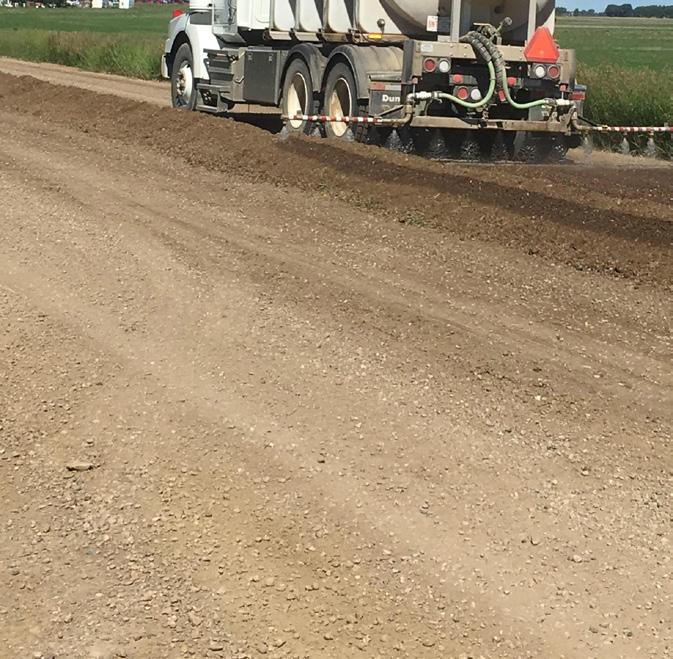
Dust suppression (formerly “dust control”) helps reduce dust on gravel roads during hot, dry periods and peak agricultural activity. Anyone can apply and pay a fee, and County crews will apply a specialized product (MG30) to the road. MG30 is water-soluble and intended to last 60 – 90 days. Performance depends on weather, traffic volume, vehicle speed, and heavy equipment use.
What’s changing in 2026?
After reviewing the 2025 program, we’re making improvements based on data:
• Compaction is no longer required at dust suppression sites. Our 2025 study showed it does not enhance dust suppression.
• Intersection and general dust suppression will not be done in the spring. It will start in August.
• We are now offering a second intake for the fall to address increased dust from harvest traffic and dry weather. As the MG30 product is only intended to last up to 90 days, a second intake allows for an extended coverage period. The fall intake will open in May, for application of product in August (timing subject to change).
Why we grade through dust suppression sites in fall
County crews expect to begin grading through dust suppression sites in mid to late October to prepare roads for winter. This repairs damage, smooths the driving surface for snow removal, and ensures our roads are safe.
“We know the dust suppression program is important to residents, landowners, and farm operations,” says Ryan Thomson, Director, Operations. “After a robust review of past years’ programs, we determined that offering a second intake during harvest would benefit for the community. We’ll keep evaluating our processes to ensure services are impactful, costeffective, and based on data.”
Apply online at lethcounty.ca/p/dustsuppression. If accessing the online form is not an option, visit our Lethbridge office at #100, 905 4 Avenue South, or call 403.328.5525. Full program details, costs, and timelines are on our website.
Scan the QR code for more information on dust suppression.
Submitted by Public Works Lethbridge County

Changes to undeveloped road rights-of-way policy
Lethbridge County
Undeveloped road rights-of-way (RoWs) exist throughout Lethbridge County. They are provincially owned strips of public land—typically 20 metres wide—located between private parcels and reserved for possible future road construction.
Even though they aren’t built or maintained as roads today, they remain public under Alberta’s Municipal Government Act (MGA) and must stay accessible to the public
For years, the County issued licences that allowed adjacent landowners to farm these undeveloped RoWs, as long as public access was maintained. A recent review showed the approach wasn’t working consistently: about 70% of RoWs were being used without licences, and many had fences or gates that blocked access, leading to frequent complaints,
and resulted in non-compliance with the provincial legislation. The licensing model also required ongoing oversight and didn’t clearly address disagreements between neighbours.
To bring clarity and consistency—and reduce red tape—the County has changed our policy around rights-of-way that keeps public access protected while creating a straightforward process for landowners who want to use an undeveloped RoW for agriculture.
What’s changing?
All existing RoW licences are cancelled as of April 30, 2026.
To use an undeveloped RoW, landowners must:
• Reach agreement with all adjacent landowners (even if you own land on both sides, you still must register).
• Register with the County (find the form on our website or visit our Lethbridge office)
• Maintain public pedestrian access at all times (walking or non-motorized mobility aids only).
• If fencing is present, keep gates unlocked and install a County-issued public access sign (available for a nominal fee).
If adjacent landowners can’t agree, the RoW must remain unoccupied and in its natural, unfenced state (you may fence up to your own property line at your cost). The registration form also includes an option to split use 50/50 between neighbours. Registrations remain valid unless a neighbouring parcel is sold (new agreement required) or the County revokes access for non-compliance or future municipal use.
By replacing licensing with a straightforward registration process, the County is reducing red tape and administrative burden while meeting Municipal Government Act requirements to keep undeveloped RoWs publicly accessible.
Submitted by Planning & Development Lethbridge County
Learn more about trees & tree care
Looking for valuable insights into shelterbelts, watering trees, how to prune, and more? Scan the QR code for links to our Rural Extension video library with Matthew Wells and arborist Grant, as they discuss and highlight tree care in southern Alberta.
Updates fRom the CoUnty
No-spray agreements
Lethbridge County’s Agriculture Services roadside spraying program for weed control will begin any time after May 1, 2026.
If you do not want roadside spraying done next to your property, you will need to:
• Sign an agreement with the County
• Put up a “No Spray Zone” sign (supplied by Lethbridge County) on your property
• Manage weeds in that area
These agreements must be renewed annually. The deadline to apply and pick up signs is May 1, 2026.
For more information or to apply, visit lethcounty.ca/p/no-spray-agreements, scan the QR code, or call 403.732.5333.
Scan the QR code for more information on no-spray agreements.
Submitted by Agriculture Services
Lethbridge County
Scan the QR code learn more about tree care.
Submitted by Agriculture Services
Lethbridge County
Dutch Elm Disease: Annual pruning ban April
1 to Sept 30
Alberta Agriculture and Irrigation
One of the largest spreaders of elm bark beetles that can carry Dutch Elm Disease (DED) is elm firewood.
Beetles can hitch a ride on infected elm firewood and be carried by unsuspecting campers and homeowners. It is illegal to bring elm material into Alberta from a DED infected province such as Saskatchewan. If you go camping, do not transport firewood.
To report suspect DED symptoms in a tree, or for more information, call:
STOPDED Hotline: 1.877.837.ELMS (3567)
For compliance and enforcement issues, contact the County’s Agriculture Services department at 403.732.5333.

Submitted by Alberta Agriculture and Irrigation
Scan the QR code to learn more and sign up for these learning opportunities. Or, call 403.732.5333.
Growing Opportunities Workshop
March 25, 2026 | 9 a.m. to 2 p.m.
Lethbridge Trade & Convention Centre | FREE (lunch included) Learn about risk mitigation and long-term management.
Shelterbelts and Resilient Landscapes Workshop
April 8, 2026* | 9 a.m. to 2 p.m.
Diamond City Community Hall FREE (lunch included)
Come learn from talented southern Alberta arborists. We’ll go over planting schematics and give you a change to practice proper pruning and planting techniques.
*In case of poor weather, April 15
Field Day
June 2026 | 10 a.m. to 2 p.m.
Watch for updates on our website and in the County Insider.

Stay connected. Sign up for the County Insider, your source for news, road construction and closures, and job notifications.

Roots & reach roots & reach
A message from your Agricultural Service Board (ASB) Eric Van Essen
I’d like to start by saying thank you for the opportunity to serve as Chair of the Agricultural Service Board for Lethbridge County. Along with that appreciation comes a real sense of responsibility. Ag Services matters to this county, and it deserves steady, thoughtful leadership.
I accepted the Chair role after serving on the board for several years. During that time, it became clear to me that the board needed clearer direction and a stronger sense of purpose. Taking on this role is about helping move the board forward, setting achievable objectives, and making sure our work adds value for residents and producers alike.
My connection to agriculture is lifelong. I was born and raised on our family farm and have been involved in the operation for more than 15 years. We farm a mix of irrigated and dryland land, with a focus on export timothy. Like many farms in the County, the work is year-round and involves far more than seeding and harvest. That experience keeps me grounded in the practical realities of agriculture and the ripple effects local decisions can have beyond our borders.
Ag Services itself carries out a wide range of important work, from ditch mowing and management to noxious weed inspections and providing information to producers. The board’s role is different. We are not operational. Our responsibility is to understand our legislated mandate, help set priorities, and bring clear, wellconsidered objectives forward to County Council.
The board is in a period of transition, with new members and fresh perspectives. We’re taking the time to better define what the Agricultural Service Board is—and just as importantly, what it is not. This work will continue through our spring sessions and is best described as a rejuvenation of a mandated service, not a sudden shift in direction.
Some recent topics have highlighted the importance of clear communication. The new undeveloped road right-of-way policy, for example, has raised questions. In many cases, this comes down to long-standing assumptions rather than new restrictions, and the board’s role is to support clear, accurate messaging around intent.
Pest pressure, particularly from Richardson ground squirrels, is another ongoing concern. With the recent federal decision to uphold the ban on strychnine, producers must continue to seek alternative methods on gopher control. One option is addressed further in this edition.
My approach as Chair is practical and collaborative, and I don’t believe in avoiding difficult conversations. Engagement with the board is welcome. As we gain clarity and direction, I’m confident the Agricultural Service Board can play a positive, constructive role in supporting agriculture across the County.


Manager, Utilities & Agriculture Services
Lethbridge County
Did you know?
Gary Secrist
The Lethbridge County Agriculture Services department is responsible for administering provincial legislation that includes the Agricultural Pest Act.
This enabling legislation provides the County with the legal authority to manage native and introduced pests that can affect agricultural production.
The related Pest and Nuisance Control Regulation lists the species that are a concern across Alberta. Of particular interest to all areas of the province is the Norway Rat, as the potential crop and other damage they can inflict is substantial. In the United States, it is estimated that annual damage from rats is close to $20 billion, with impacts on destroyed crops, spoiled grain, and damage to irrigation and electrical infrastructure.
It is the responsibility of the Agricultural Services department to investigate rat complaints and potential sightings. Fortunately, all recent reports we have received have been misidentifications of muskrats. Muskrats are similar in size but have a vertically flattened tail.
How to report: If you suspect a rat sighting, you should immediately:
• Email: rats@gov.ab.ca (attach a photo if safe to do so)
• Call: 310.FARM (3276)
• App: Use the EDDMapS invasive species reporting app
• Call Lethbridge County Ag Services (403.732.5333)
Scan the QR code to learn more about Alberta’s Rat Control Program and how to identify them.

Submitted by Eric Van Essen Councillor, Division 6 & Agricultural Service Board Chair
Lethbridge County
Submitted by Gary Secrist
Farm family spotlight: G.C. Noble Farms
Noble family
Michael (Mike) and Jessica (Jess) both come from long lines of farming, with Michael’s great-great-grandfather farming near Nobleford and inventing the Noble Blade, and Jessica’s great-grandparents homesteading a mixed farm of cattle and grain near Carmangay. Mike always played a significant role on his family’s farm, and after they met in 2004, he welcomed Jess into it. It wasn’t until 2020, however, that both of them began farming full-time while raising their son, Pace, and daughter, Halle.
While Jess has always loved agriculture, she took a different career path after her father, Scott Hoffarth, suddenly passed, and their family farm was sold. However, she was always ready and willing to lend a hand or take on grain cart duties when needed with Mike and his family. At the end of 2019, Mike’s father, Bryan Noble, passed away. In the wake of his loss, Jess stepped away from her other job, and Mike took what he had learned about agriculture from his dad, and together they committed to running G.C. Noble Farms.
Mike, Jess, Pace, and Halle often refer to themselves as a team, as the whole family participates in their farming operation.
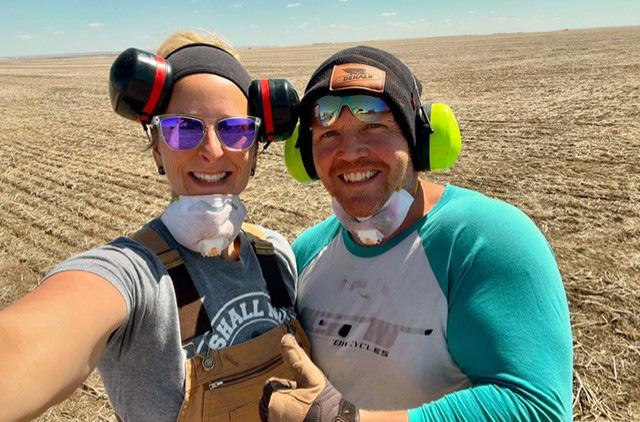
Both children can often be found helping out mom and dad with daily activities such as doing a parts run at the spur of a moment, riding along in the tractor or combine, helping lay out discs for the drill, working on pivots, and doing oil changes and other maintenance on equipment. Pace and Halle are learning the values of responsibility and hard work by taking an active role on this family farm team.
Last year was a very busy one for this family. Having both grown up on a farm, raising their children the same way was always a significant goal for Mike and Jess. This goal was fully achieved last spring, when they moved from Lethbridge to the farm just before seeding began. 2025 was the first season of seeding that Jess worked full-time, and also the season when it was just Mike and her. They tend to jump into things headfirst, so why should
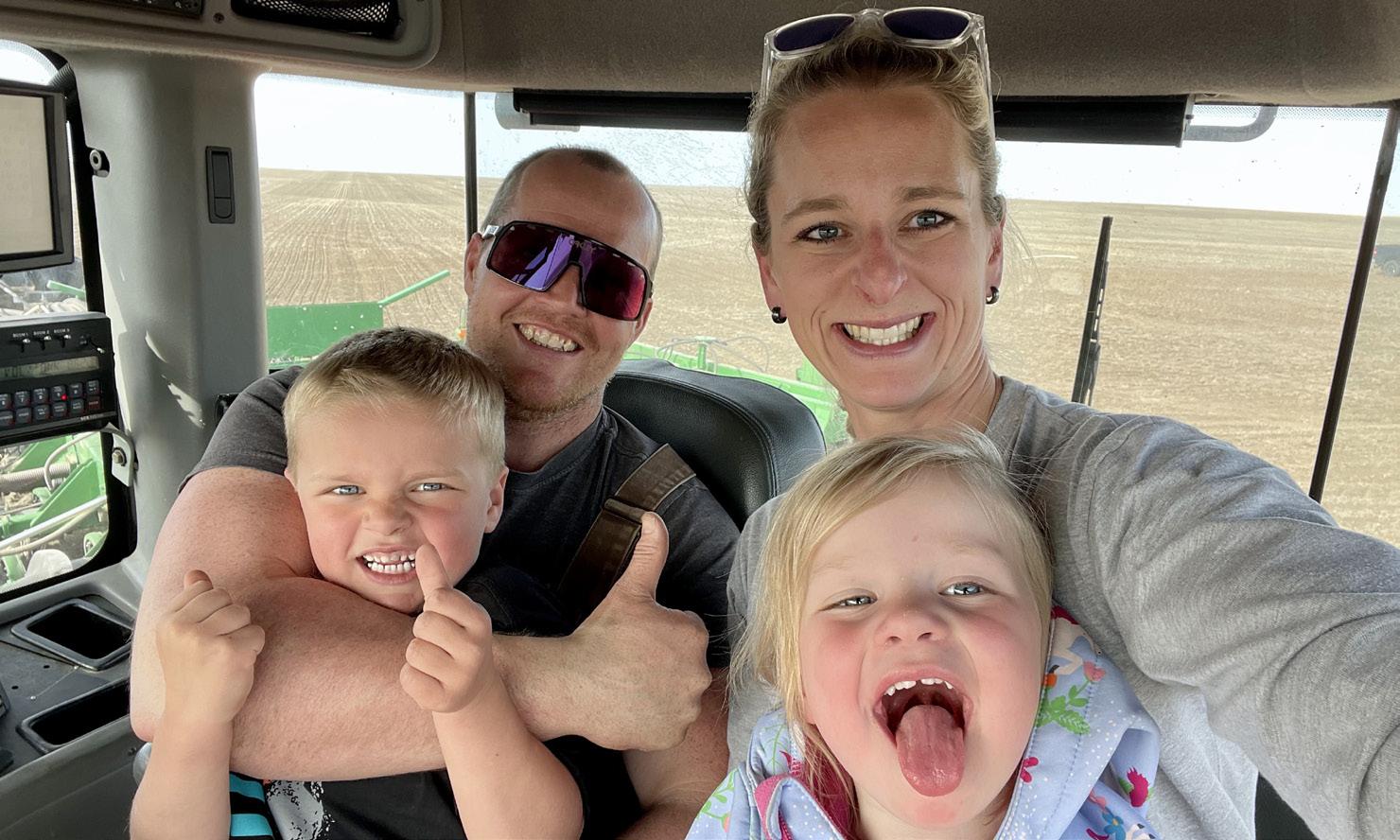
this be any different? The move to the country definitely made getting through the long days much smoother for them, without the travel back and forth to the city.
Harvest is another very busy time. Mike’s sister, Andrea, comes to help get the crops off efficiently and safely. She has always played a large role on the farm and has a wealth of knowledge when it comes to combining and swathing. When Mike and Jess’s children aren’t tagging along, they can be found spending time with either one of their Nanas, Carol or Lorelei. They make a hectic time a little calmer for everyone and are always there to assist with the kids when needed.
While the Nobles know how to work hard, they also enjoy playing hard. In their downtime, they can be found riding bikes (especially in the mountains), hiking, travelling to visit family, and doing anything else that involves outdoor adventure. They are all excited to see what 2026 will bring, both on the farm and in play.
Submitted by the Noble family
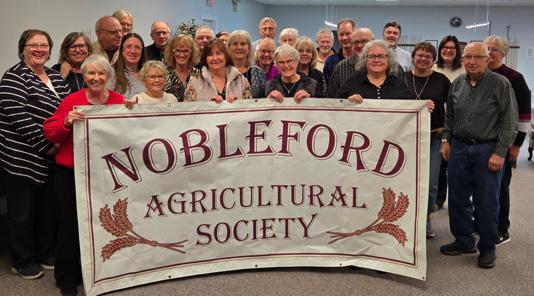
Nobleford Ag Society: A legacy of community and agriculture
For the past 45 years, dedicated volunteers have served to improve the quality of life in their rural community as members of the Nobleford Agricultural Society. The success of a society lies in its volunteers and their passion for its projects. Many of our early members were farmers and community workers. They knew the value of neighbours and community. This belief encouraged them to take on the project of completing a half-constructed community hall. It was a massive undertaking that took hours of volunteer labour and creative fundraising. The community hall provided an affordable venue for meetings and events. Spring fling dances and harvest suppers have gathered neighbours and friends together for years. Many members were avid gardeners and applied their passion to a spring plant sale and a summer horticultural show. These annual events continued for over 30 years.
After 25 years of operating the community hall, differing visions had it returned to the (then) Village of Nobleford. Pivoting away from facility management enabled creativity and flexibility in our society. The passions and values of new board members became reality, and collaborative partnerships were forged with local businesses and other community organizations. In recent years, our society has contributed to the community’s celebration of Heritage Day and Christmas in the Park. We facilitate
Nancy
Atkinson
agricultural tours and celebrate women in agriculture. We financially support the NCS breakfast program, Corn Maze trip, turkey bingo and post-secondary scholarships. We have helped the Nobleford Fire Department purchase new equipment. We host a Mother’s Day event and a fall Harvest Supper. We coordinate the annual Community Christmas Hamper program.
We are currently seeking to assist producers interested in updating their Environmental Farm Plans and to facilitate producer meetings.
We truly appreciate our members and volunteers, and we host a feast in their honour each year. New members and volunteers are essential to the society’s continued existence. The Nobleford Agricultural Society is compassionate, collaborative and seeks to engage with like-minded individuals as members and partners.
Agricultural societies receive funding from the province. If an ag society folds, this funding likely leaves a community permanently, as currently, a new ag society cannot be incorporated within 80 kilometers of any existing agricultural society.
You’re invited to join the
Oldman River Watershed Group
Harley Richards
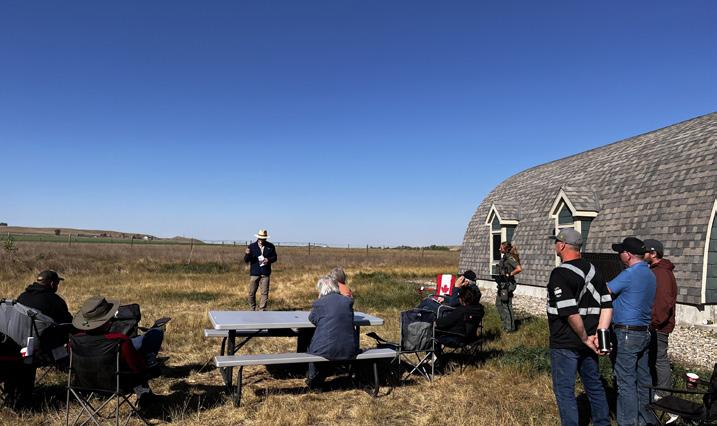
The Oldman River Watershed Group is an informal collection of landowners from along the Oldman River and Little Bow who meet periodically to discuss issues of common interest and receive information on watershed-related topics. Past presentations have focused on biocontrols for leafy spurge, co-existing with beavers, off-site watering, pastureland health assessments, regulations around land access, dugout treatment techniques, drone applications in agriculture, grant funding opportunities, and more.
Founded in 2016 through the efforts of Lethbridge County’s Rural Extension Specialist, the Oldman River Watershed Group continues to receive support from the County—including access for its members to flea beetles for the control of leafy spurge. It also benefits from affiliations with organizations like Cows and Fish, Oldman Watershed Council, Alberta Invasive Species Council, MULTISAR (Multiple Species at Risk), and Alberta Agriculture and Irrigation.
Anyone who owns or has an interest in riparian lands is welcome to join the Oldman River Watershed Group.
If you would like to receive notification of its activities, please send your name and email address to Harley Richards at tharleyrichards@gmail.com
Submitted by Nancy Atkinson Member, Nobleford Agricultural Society
Submitted by Harley Richards Oldman River Watershed Group
Advancing women, advancing agriculture
Denise Faguy
Why Canadian rural women need to connect in person
Across Canada, women are driving innovation, sustainability, and leadership in agriculture. With the number of female farm operators rising for the first time in 30 years—reaching 30.4% of all farm operators in 2021—the momentum behind female leadership in ag is stronger than ever.
Despite our growing influence, rural women continue to work within isolated geographic and social environments. This makes in-person connection not just beneficial—it is essential, which is why founder Iris Meck created the Advancing Women in Agriculture and Food Conference (AWC).
“I created AWC in response to a growing need within the ag sector. Women were increasingly taking on leadership roles, yet many lacked access to professional development and networks tailored to their experiences,” says Iris. AWC champions a powerful call to action: Listen, Learn, Network, and Grow!
• Canada recorded 79,795 female farm operators in 2021, the first increase since 1991.
• Women now run farms of every size, including a striking 86.3% increase in women operating farms with $2 million or more in annual revenue.
• Participation in ag-related jobs also increased by 19.4% for women between 2017 and 2021.
These numbers underscore a simple truth: women are not just supporting Canadian agriculture—they are leading it into its next era.
Despite progress, “Women are still less likely to be recognized as primary decisionmakers, even when doing equal

or greater work.” These barriers can feel especially heavy for women working in rural communities. That is why in-person networking is vital.
In-person connection matters
Canadian research makes the importance of connection clear:
• Community fights isolation. Rural women carry significant responsibilities, farm management, off farm employment, community roles, and family care. Connecting with peers who understand these realities is deeply validating.
• Mentorship accelerates leadership. Many women have a need for mentors and pathways into leadership roles. AWC provides direct access to leaders, innovators, and role models.
• Collaboration creates opportunity. Canada’s ag sector lost an estimated $3.5 billion in 2022 due to labour shortages—highlighting the need for more skilled and connected leaders. Women who build broader networks tap into untapped resources, partnerships, and career paths.
• Shared experiences build confidence. Canadian studies show that women’s roles on farms are often undervalued or invisible. In-person gatherings allow women to share stories, validate each other, and build collective strength.
Why AWC matters
The AWC Conference is a space to:
• Listen. Hear from women from across Canada—farm operators, agrifood
professionals, researchers, innovators, industry leaders, and students. Not just the speakers, but the exhibitors and attendees.
• Learn. Gain insights into a diverse range of topics: resiliency, working with a partner in a farm business, coping with menopause, preventing burnout, public speaking, creating opportunities, how to advocate for yourself, how to build a good team, and career growth.
• Network. Build relationships that cross provincial borders, agricultural sectors, and generations. Grow with diverse thinkers.
• Grow. Develop new skills and return home with renewed confidence and community.
“These four words—Listen, Learn, Network, and Grow! —perfectly capture the spirit of the event and the needs of women in ag nationwide,” concludes Iris.
AWC offers rural women the opportunity to grow professionally, build meaningful relationships, become catalysts for progress across the sector, and leaders for the future.
To learn more or register for the event, visit advancingwomenconference.ca

Submitted by Denise Faguy Farms.com
High-level operations update
Lethbridge Northern Irrigation District
Water supply update
LNID monitors snow pillow and District water reservoir information maintained by Alberta Environment and Protected Areas and shared weekly by the Water Infrastructure and Operations Branch of Alberta Agriculture and Irrigation. As of January 27, 2026, the Oldman Reservoir was at 64% of full supply level. Gardiner Creek, South Racehorse Creek, and Lost Creek South snow station accumulations track near or above upper quartile for this time of year.
Capital projects
The upcoming Annual General Meeting will have more details regarding proposed
SMRID Update: 2026
upcoming projects and the long-term infrastructure plan.
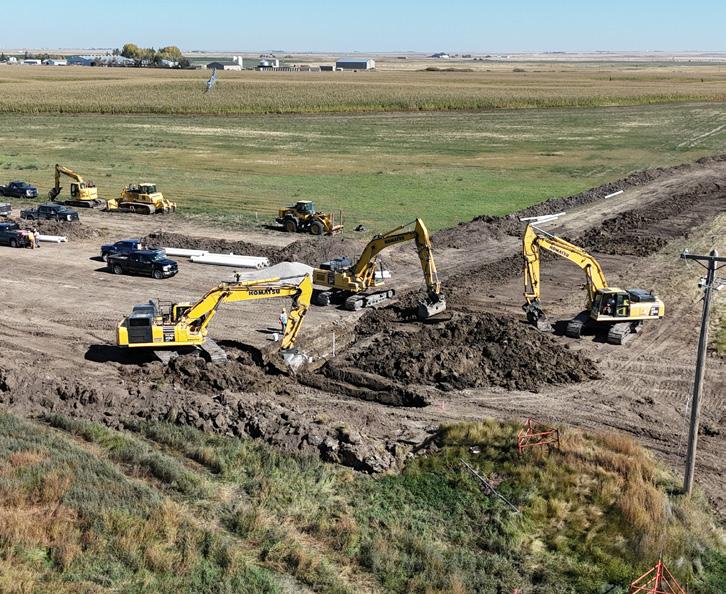
The Lateral A20 Gravity Pipeline (see photo), which will serve approximately 4,050 irrigation acres west of Nobleford, is nearing 80% completion as of January 28, 2026. The project will be completed and operational for the 2026 irrigation season.
Annual General Meeting
The District’s Annual General Meeting is planned for Thursday, April 16, 2026 at 1:30 p.m. at the Picture Butte Community Centre. Please contact the office or refer to the LNID website for details.
Board elections
Board elections will be held for Division 2 (Martin Van Diemen) and Division 4 (Calvin Konynenbelt). Nominations close 4:00 p.m. Friday, April 10, 2026. The election date is set for Thursday, May 7, 2026, if one is required. For additional information on the election process, contact the Office.
Martin Van Diemen, current LNID Vice
Chair, is retiring from the Board and welcomes interest from new candidates to represent irrigators in Electoral Division 2. The LNID would like to thank Martin for his dedication and many contributions over the last 18 years.
Stay up to date with LNID news at www. lnid.ca, and subscribe to the LNID email list by contacting the Office.

St. Mary River Irrigation District
Irrigators were allocated 12 inches in 2025, a 50% increase compared to 2024.
As of January 2026, combined storage is 78% of Full Supply Limit (FSL). Snowpack is slightly below average; however, the majority of snowpack typically accumulates from February–April and it is still too early to predict water allocation for the 2026 irrigation season.
Alberta Irrigation modernization
(AIM) projects continue in 2026. Capital projects through AIM in 2025/2026 include North Lateral Baczuk and Chin2-1. Projects funded by the Irrigation Modernization Program (IRP) in 2025/2026 include Forbes Lateral concrete, Chin 2-8, Bow Island 19 and the NE Lateral (Buffalo Ditch).
Horsefly Spillway
The Horsefly Regional Emergency Spillway began in 2020 and is being
administered by the MD of Taber on behalf of the Southern Regional Stormwater Drainage Committee (SRSDC). Phases 1 and 3 of the projects are complete. The maximum capacity of the spillway has been increased to 55 m3/s to handle flood flows and mitigate the impact of flooding on communities and farms. Phase 2 construction will span multiple years, and temporary works will be installed to support irrigation in 2026. Phase 2 also includes a constructed wetland component.
Asset management
SMRID is implementing a comprehensive Asset Management (AM) plan to systematically assess, prioritize, and sustain its irrigation infrastructure while ensuring reliable service delivery to water users. Asset management is critical for understanding asset condition, managing risk, optimizing maintenance investments, and extending the service life of key infrastructure. As part of SMRID’s Asset Management plan, detailed inspections were completed at Bow Island Lateral 12
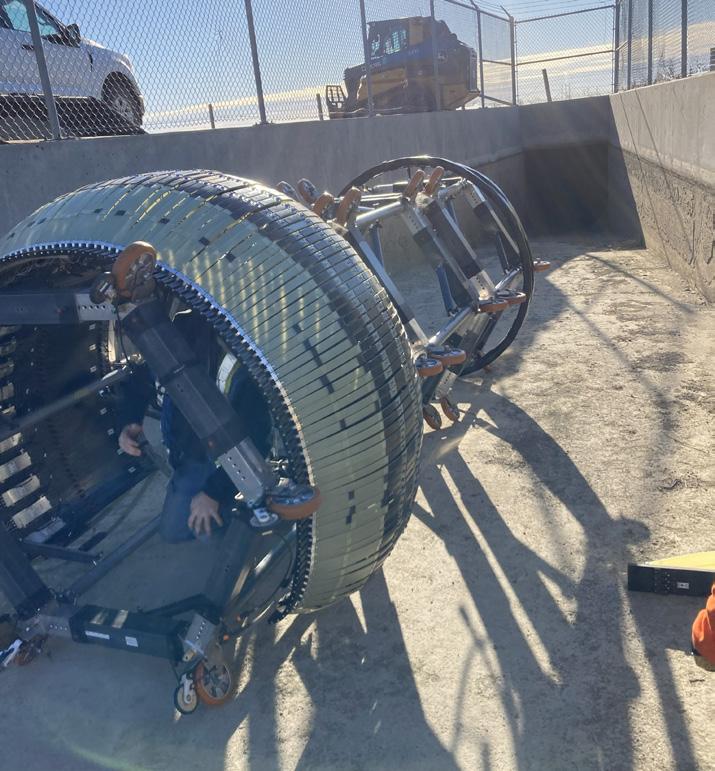
and the 40 Mile syphon, providing essential condition data to inform maintenance planning, capital decision-making, and long-term system resilience.
Allocation for the 2026 Irrigation Season will be announced in Spring 2026.

Submitted by Lethbridge Northern Irrigation District
Submitted by St. Mary River Irrigation District
Preparation makes perfect Jody Wacowich
Benjamin Franklin famously once said, “An ounce of prevention is worth a pound of cure.” This proverb is just as true today as it was back then, and it applies to all aspects of life, including farm safety.
Injuries and illnesses that result from farm work need to be looked at as avoidable rather than inevitable. All farm safety incidents are preventable if you are proactive with your planning. The more prepared you are for hazardous situations, the better you will be able to respond when those situations arise – avoiding injuries and saving lives.
Small, practical and consistent safetyrelated efforts can help the people working on your farm avoid pain and discomfort, including any potential visits to the emergency room or doctors’ office. The best way to achieve this is by having a farm-specific health and safety program in place where hazard identification, assessment and control are emphasized and efforts are made to ensure it is effective and continuously being improved.
Having a safety plan is crucial for farms and ranches. Not only is it part of running any business, it’s also part of your farm’s risk management, considering it can often be a matter of life and death. If you don’t have a safety plan in place or it’s been a while since you updated yours, a great place to start is our AgSafe Alberta FarmSafe Plan Learning Program. This free, online course will show you how to create a health and safety program that makes sense for your operation. You will also learn which occupational health and safety legislation applies to your farm or ranch, and what you should be doing in order to be compliant with it.
However, having a plan in place is only one part of the equation. Another is keeping safety top of mind in your day-to-day operations. As the snow starts to melt and preparations are being made for the spring season, now is a great time to ensure safety is not forgotten.
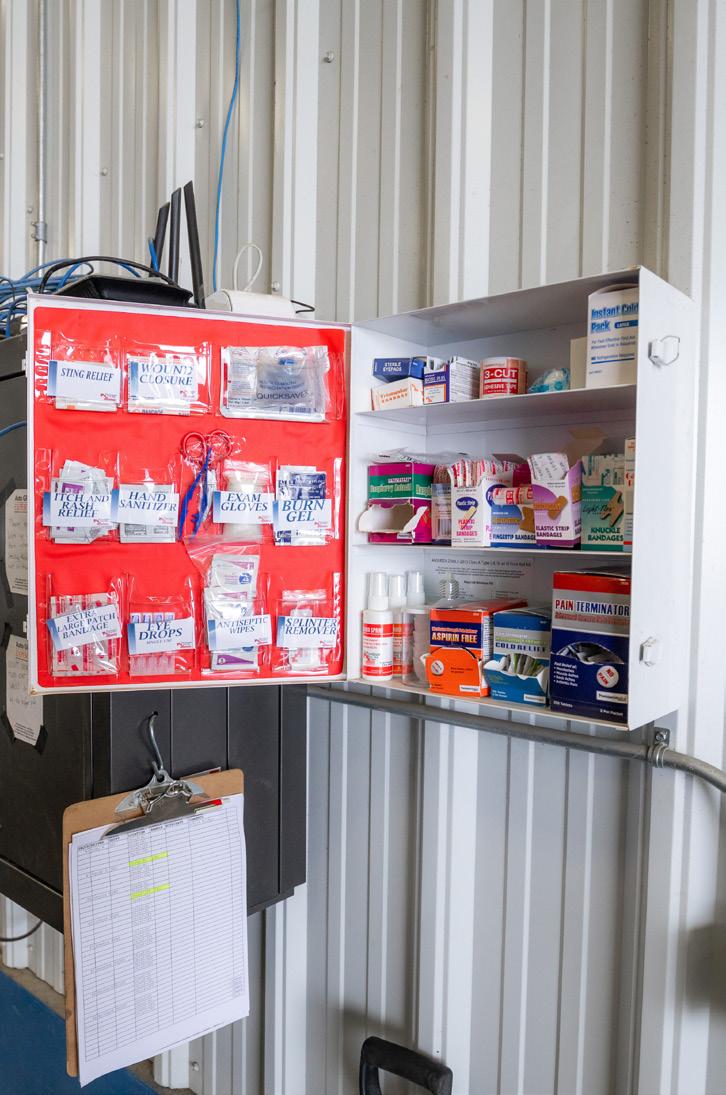
With that in mind, have you checked your safety equipment recently? Are your first-
aid kits stocked? Does everyone on the farm know what to do in an emergency? And if someone was to get injured, do you have a plan in place to transport them to a hospital?
Farming is a way of life in Alberta, and safety should be too. That’s why we believe in empowering farmers and ranchers through practical, self-paced online safety courses designed to make agricultural operations safer for everyone, from family farms to large-scale employers.
We know that many farmers and ranchers across the province are itching to get back out in the field, but before you or your employees do just that, consider refreshing your safety education with some of our diverse course offerings. All our courses are agriculture specific and provide practical examples relating to farming, making it easy to implement the knowledge and strategies you come away with on your operation.
No matter what aspect of farm safety you want to brush up on, we have a course to suit your needs. Our educational offerings include:
• Confined Space Awareness
• Respiratory Protection Equipment Awareness
• WHMIS, Pesticide, Veterinary Drug and Medicated Feed Awareness
• Effective Health and Safety Representative or Committee Training
However, if you only do one thing to improve safety on your operation as we head into the spring, consider completing FARMERS CARE. This free, introductory farm safety program will introduce you to the most common hazards that exist on farms and ranches, so you can manage risks and stop safety incidents before they happen. The program is also a great tool for onboarding or training employees at this time of year, introducing them to key safety concepts and scenarios so they are prepared when the busy season begins.
FARMERS CARE is fast, easy and a great way to ensure safety is always a priority for your farm, while protecting its most
important assets: the people who live and work there. The best part is no prior safety knowledge is needed, and you can complete the program at your own pace.
Remember that at the end of the day, your leadership and commitment to safety lays the foundation for your farm’s safety culture, and your farm’s safety culture has a significant impact on its safety outcomes, including injuries, illnesses, equipment damage and more.
If you need additional support, AgSafe Alberta is always here to help. You can contact us with any questions you may have or schedule an advisor visit for personalized assistance. To get started, send us an email at info@agsafeab.ca or visit agsafeab.ca.
the QR code to learn more about AgSafe Alberta.

Submitted by Jody Wacowich Executive Director, AgSafe Alberta

Wall-mounted first aid kit.
Funding opportunities for Alberta farmers
Sustainable Canadian Agricultural Partnership
The Sustainable Canadian Agricultural Partnership (Sustainable CAP) supports the country’s continued innovation, growth and prosperity. This 5 year (20232028), $3.5 billion investment by federal, provincial and territorial governments strengthens competitiveness, innovation and resiliency of the agriculture, agri-food and agri-based products sector.
Alberta producers, farmers, ranchers, processors and organizations can apply for these cost-shared grant programs.
Emerging Opportunities
For: Processors, organizations
Accepting applications.
On-Farm Value-Added Program
For: Producers, farmers, ranchers
Currently closed to applications for both streams.
Resiliency and Public Trust
For: Organizations
Accepting applications.
Resilient Agricultural Landscape
For: Producers, farmers, ranchers
Closed to applications.
Value-Added
For: Processors
Currently closed to applications for both streams.
Growing Greenhouses Program
For: Greenhouse Growers, Vertical Farms
Accepting applications until funding has been allocated.
Supports growth of the controlled environment agriculture sector by providing funding to projects that increase Albertan’s access to locally grown food such as fruits and vegetables year-round.
Water Program
For: Producers, farmers, ranchers Accepting applications.
The objective of the Water Program is to support primary producers enhancing agricultural water management to support continued growth and long-term success of the agriculture industry. The Program has two streams: the On-Farm Irrigation Stream, and the On-Farm Water Supply Stream. An applicant may apply to one or both streams.
On-Farm Efficiency Program
For: Producers, farmers, ranchers Currently closed *will re-open to applications 2026*.
The program aims to support the adoption of innovative technology that optimizes farm efficiency, minimizes agricultural waste, advances the digitization of an operation, and/or gathers information that will help the producer knowledgably enhance their operation. New technologies that are progressive, commercially available, and that have been successful in Alberta are most likely to be successful applications.
Alberta Environmental Farm Plan (EFP)
The Alberta Environmental Farm Plan (EFP) Program is here to help identify risks on farms and make individualized action plans to help manage those risks! The EFP is a self-assessment to meet producers where they are through the online workbook and is completely confidential between the producer and their technician.
Once approved, the EFP is valid for 10 years and qualifies producers for various grant programs during that timeframe!
Take it from Lethbridge County producer, Riolito Paildelan: “It’s a well put together online tool paired with other good online tools that will give a macro view of a farm’s operation.”
Matthew Wells is the local technician who supports farmers in implementing the EFP in Lethbridge County. If you have any questions, please feel free to contact him at mwells@lethcounty.ca or 403.634.0147.


Submitted by Kate Lovsin Alberta Environmental Farm Plan
Sourced from Sustainable Canadian Agricultural Partnership
Kate Lovsin
Scan the QR code for more on Sustainable CAP.

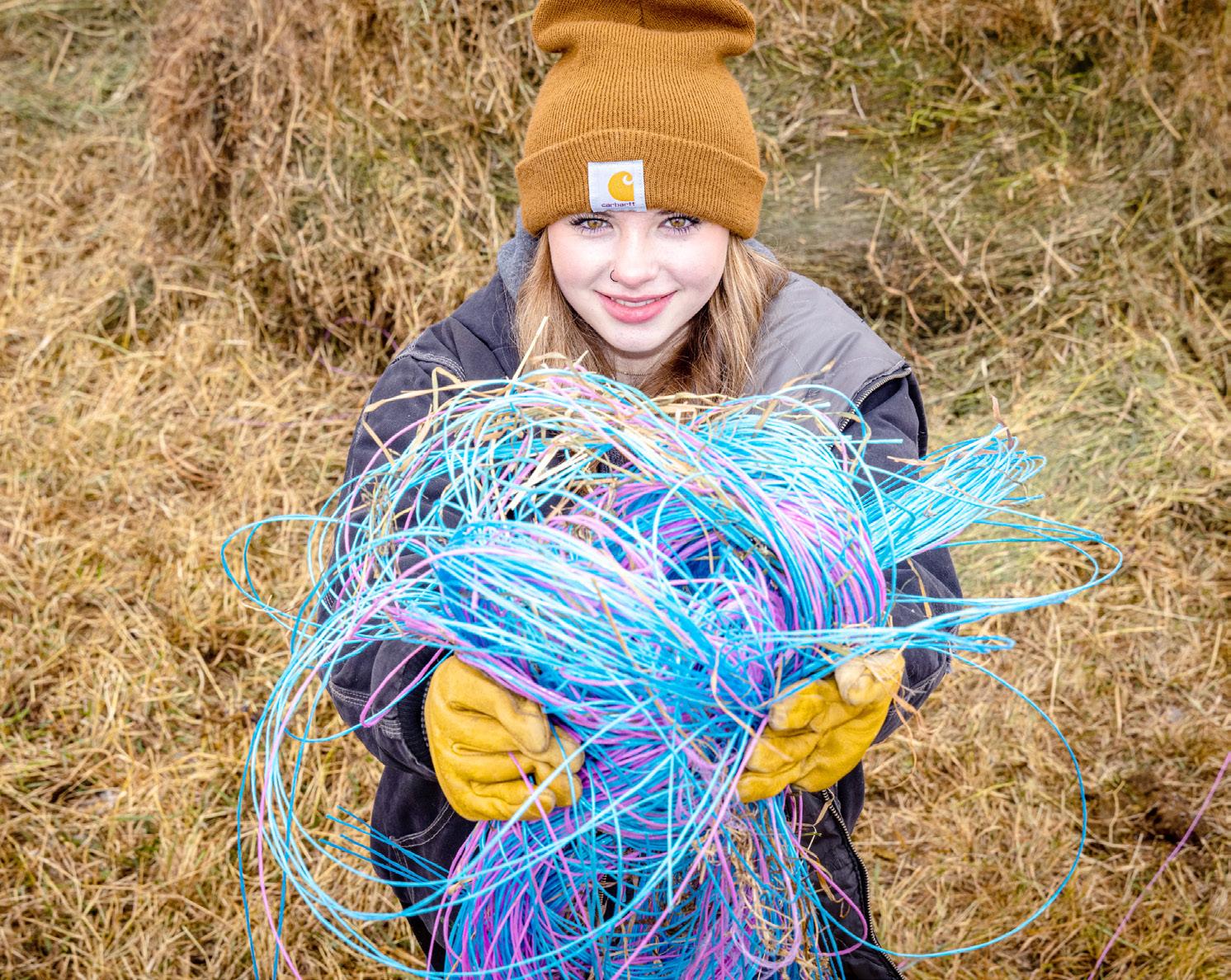


Your Chance to Win Big Cash by Recycling Used Plastic Baler Twine!
$12,000 in Total Cash Prizes!
Bring used plastic baler twine to a participating Alberta collection site for a chance to win a cash prize!
The more you round-up for recycling, the better your chances of winning. Alberta feeds the world, and plastic baler twine helps make it happen.
Recycling used twine protects our soil, water, and air— and creates a cleaner future for everyone, especially Alberta farms.
The Great Twine Round-Up rewards people who step up to make a difference. Don’t miss this chance to show the world what awesome Albertan farmers do—and maybe walk away with a cash prize!
Find out more at GreatTwineRoundUp.ca
Equipment lending & rentals
Lethbridge County
Did you know? County residents can rent or borrow equipment by contacting our Agriculture Services department at 403.732.5333. Some equipment is available for delivery.
Available to borrow
• Ag plastics roller
• Skunk and magpie traps
• Chisel plow
• Tree planter
• Plastic mulcher
• Mobile solar/wind turbine trough
Available to rent
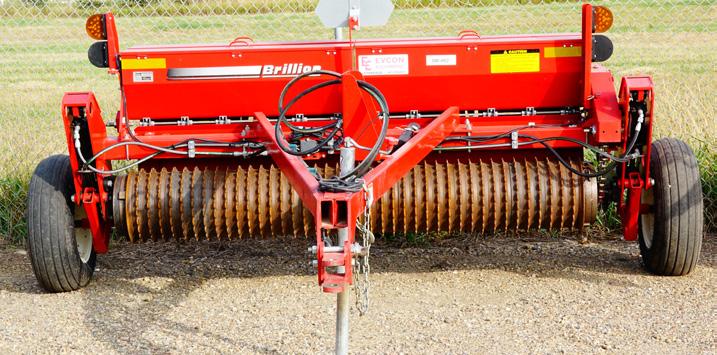
Brillion drills: 2x8 foot drills suitable for seeding grass and Alfalfa on previously worked land.
Cost: $210.00 minimum or $7.00 per acre over 30 acres.
Tending your cyber farm Doug Burke
A successful operation depends on good planning, regular maintenance, and early problem detection—and the same applies to your digital tools. As more farm business is handled online, cyber threats have become another risk to manage alongside weather and equipment.
Keep an eye on the fence line
Unexpected emails, texts, or pop-ups asking for urgent action are often signs of scams. Take time to confirm requests before responding.
Rotate your digital crops
Reusing passwords weakens security. Strong, unique passwords help prevent one breach from spreading to other accounts.
Lock the barn after chores
Always log out and lock devices when finished, especially shared or mobile equipment used in the field or shop.
Update your tools
Regular software updates patch security holes, much like routine maintenance keeps machinery running safely.
By building good cyber habits into daily operations, you help protect your data, your livelihood, and your community from digital threats.

Submitted by Doug Burke Manager, Information Technology Lethbridge County
Submitted by Agriculture Services Lethbridge County
Steel to break compaction: Making room for roots
This past fall I was home in Ontario visiting my dad. He had recently acquired a plow to match a restored 4020 John Deere openstation tractor, similar to one he once had, and was keen to have me run it. My brother ran a matching International tractor and plow—a rarity on our normally green farm— that a good friend of his was selling as he downsized and wanted it to have a good home.
It was a beautiful day, and the soil was flowing perfectly. My dad had regularly plowed the farm in the 1970s and 1980s and said he had almost never seen things work that well. By the time I was old enough to run a plow, he was no longer doing that. He and the guy who sold him the red plow were pioneers of no-till in the area.
There is just something about it that is satisfying. For as long as agriculture has existed, tillage has been a part of how farming was done. However, the agronomist in me could not help but notice the plow pan we were creating—a hard, compacted layer where the shovel rides about five inches below the surface.
We do not generally deal with this kind of compaction anymore, but our machines can still cause compaction. The slightly angled edge of a disc opener or the bottom of a hoe opener still pushes down on the
soil below. The impact of that equipment, running year over year at the same depth, adds up to a compaction layer over time.
What is new is the deeper compaction caused by the heavy machinery we run today. While older tractors were heavy for their time, they are no comparison to the behemoths we use now. You really cannot appreciate how large modern equipment is until you have spent time operating older machinery.
Measuring compaction
Headlands, field entrances, and low areas —places that are wetter and/or have heavier soil—tend to show compaction first. While you can use a compaction tester or run an infiltration test with steel rings and a bottle of water, the real measure is often observing the field after a heavy summer rain.
Poor infiltration limits oxygen, increases runoff, and forces roots to stay shallow. Once that happens, crops become more sensitive to both dry conditions and excess moisture. When its dry, shallow roots provide no buffer against extended periods without rain. When it is wet, water cannot drain deep into the soil, and roots are at greater risk of rotting.
Breaking compaction
Tillage may be your best option to deal with this. That may not be a popular opinion in regenerative agriculture circles, but I am going to put it out there anyway.
Cover crops are often promoted to do the compaction-busting work. But we need to be realistic about expectations. If a cash crop cannot push roots through a compacted layer, a cover crop will be no match for compacted ground. Cover crops do not have special abilities to overcome physical barriers that full-season cash crops do not.
Cover crops work best where there is a long shoulder season and ample moisture, such as in the eastern United States and southern Ontario. The classic compactionbusting species are radishes (brassicas) and fall rye (cereals). Here on the Prairies, cereals (wheat, barley, oats) and brassicas (canola, mustard) already form the foundation of our crop rotations. When these crops cannot root to their normal three, four, or five feet down, there is a problem that only steel will address.
Stabilize with a living root
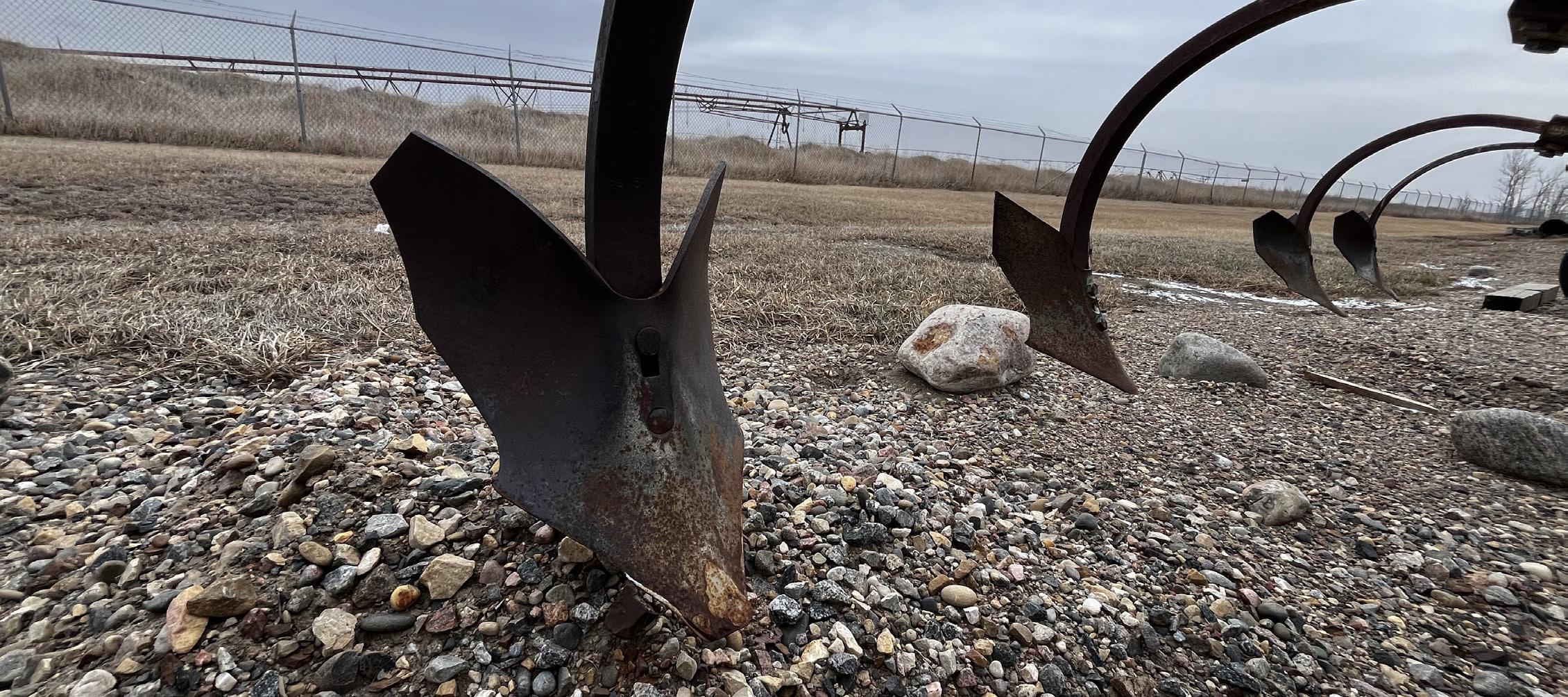
The key to making the effect last is to add a root as soon as possible. Use steel and diesel to do the work that roots cannot do,
Scott Gillespie
then get a root in place to scaffold the soil and prevent recompaction.
Roots are not only a physical structure. They actively exude sugars and other compounds that feed nearby microbes. All plants do this—cash crops, cover crops, and weeds. These microbes create the “glue” that binds soil particles into aggregates. Those aggregates give soil the familiar “coffee grounds” consistency that helps hold structure, improve infiltration, and allow future roots to move through the soil more easily.
I said earlier that you do not need a compaction meter to measure the compacted areas, but it is essential for identifying the depth of a compacted layer when looking to break it up. The best results from deep ripping come when the tool works just a few inches below that layer. If you are above it, you may simply compact it further. If you are too far below it, you are wasting diesel and may have little effect. To be effective, the layer needs to shatter from the action of the tips, not smear from the shanks.
Fall is generally the best time for this work due to machinery and labour availability. Do not just put anyone on the tractor. A skilled operator is just as important as the right machine.
Soil conditions matter. You need some moisture, but not too much. The soil needs to shatter. Too dry and it forms clods. Too wet and it smears. If conditions are not right, wait another year. Patience is key to making this work.
When beginning, don’t just do the entire field. Target the worst areas of fields first and observe the effect. The soil will
settle over winter, but with freeze–thaw cycles, larger clumps may fracture further, improving infiltration of late season rains and snowmelt in spring
The best roots to follow
The only crop I do not think is well suited to follow fall deep ripping is a pulse. Pulses do not root as deeply and do not leave much residue behind. Any cereal or brassica should take advantage of the newly created pore space.
Winter cereals, such as winter wheat or fall rye, work especially well. They may not have deep roots immediately, but they are the first crops growing in spring. The next best option is targeting deep-ripped fields for ultra-early wheat, seeded as early as March when conditions allow. For more details on this approach, see my Fall 2023 article, Making your moisture count: Crop management for low water availability
If you have a use for perennial forages, or a ready market, they are also worth considering. There is nothing like a perennial phase—three to five years—to mellow a soil and open channels to deeper moisture and nutrients. They may work on their own without deep ripping. However, in cases where the compaction is severe their roots will go deeper faster and have more time to do their work if deep ripping is done prior to establishment.
A word about “alkali” patches
Not every rooting problem is caused by compaction. If you are dealing with salinity, the solution may be salt-tolerant forages. If the problem is sodicity, there may be no economically justifiable solution. Sodicity is not a salt problem. It is caused by high
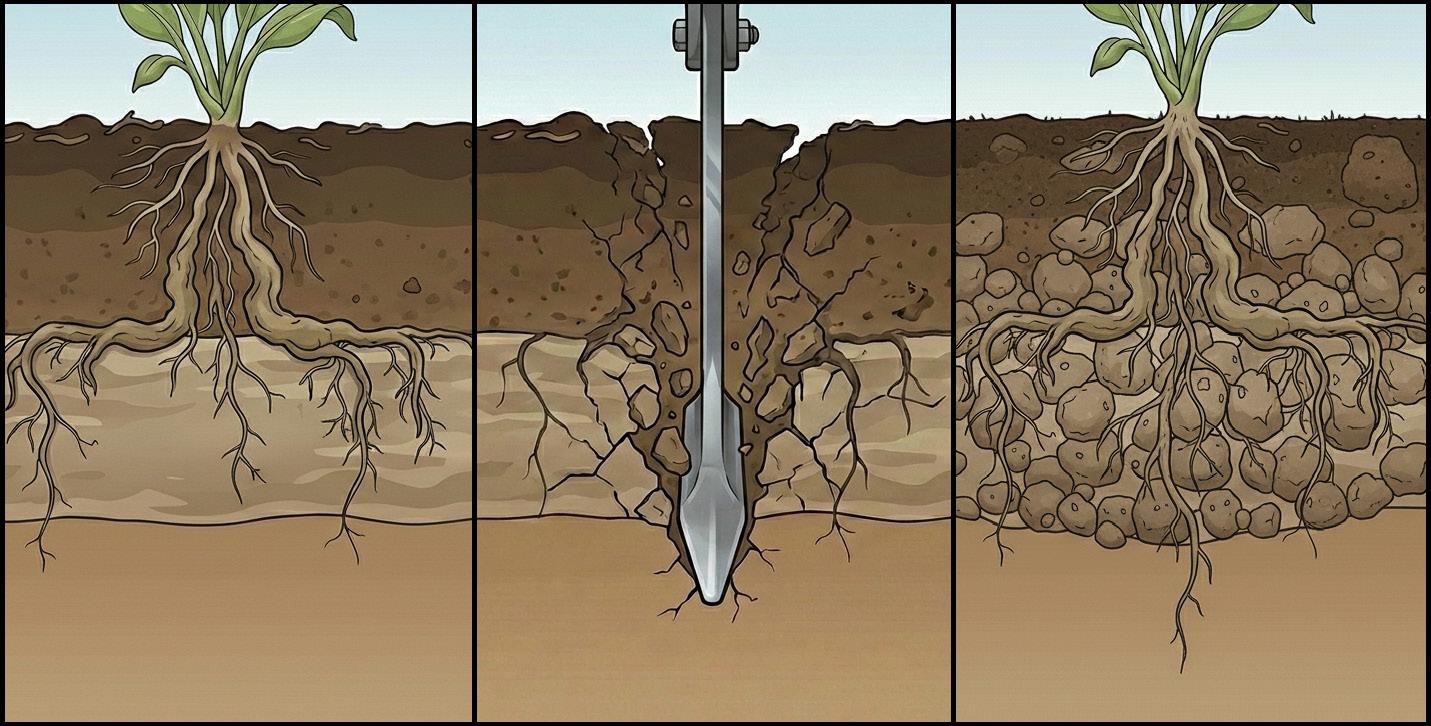
Depiction process of breaking compaction first with steel and then stabilizing with a root. Created by Google Gemini.
levels of sodium cations that prevent soil aggregates from holding together. To dig deeper into this, see my Summer 2024 article, Alkali patches are often not what you think.
M.Sc. P.Ag CCA Plants
Head to lethcounty.ca/p/newsletters to read the referenced articles.
5th annual Nutrient Management webinar series
Missed the Nutrient Management Webinar Series? No worries! Recorded sessions are available on our YouTube channel.
This year’s series focuses on weed management, improving biodiversity, and soil and nutrient analysis. We had 430 attendees from across southern Alberta and around the world. We’re grateful for all who tuned in and to our presenters for their time and expertise.
You can also explore past webinar recordings covering nutrient planning, soil health, manure management, and regulatory considerations.
Scan the QR code to watch the full library of webinars at your convenience.
Submitted by Matthew Wells Rural Extension Specialist, Agriculture Services Lethbridge County
Submitted by Scott Gillespie
Dig Soil Consulting Ltd.
Matthew Wells
Understanding ergot outbreaks and how to manage them
Alberta
Grains:
The Growing Point (October 20, 2025)
Some farms in Southern and Central Alberta experienced ergot outbreaks this year. The infection produces ergot bodies, which causes yield reduction, grain downgrading, and mycotoxin (alkaloids) contamination. In addition, infected grain needs to be cleaned to remove the ergot bodies before using as seed or livestock feed. Ergot bodies from previous years also increase the risk of ergot outbreaks in following years.
This article will dive into the reasons for the outbreak, management measures and considerations for the following year.
Which crops are affected by ergot?
Ergot can occur on cereal crops, including from least to most affected: oat, barley, wheat, durum, triticale and rye. In addition, tame and wild grasses are also hosts of ergot.
What are the risk factors causing ergot outbreaks?
1. Presence of ergot spores due to sclerotia at or near the soil surface.
2. Cereal crops with open flowers as a result of crop type or soil copper/ boron deficiencies.
3. Conducive weather for fruiting body development, spore production, spore germination and infection (precipitation or high humidity).
4. Insects vectoring ergot spores from grasses to cereal crops via ‘honeydew’.
Hard purple-black bodies called sclerotia survive the winter in soil. Soil moisture favours germination of sclerotia to produce the small “drumstick-like” fruiting structures and the ascospores within them. Once the ascospores land on the heads, moisture facilitates ascospore germination and the infection of cereal head. Cereal crops are most susceptible to ergot during flowering. A main driving factor is the weather before head emergence and shortly after head emergence when crops are flowering. Rainfall and/or high humidity during this window promotes the sclerotial germination, production and release of spores and is necessary for spore germination and infection.
Following initial infection of cereal ovary tissues, the ergot pathogen produces the “honey-dew” stage which is comprised of masses of conidia that are dispersed by rain droplets and are attractive to insects. These insects can spread the conidia (spores) to adjacent cereal heads leading to more infections. Eventually, cereal ovary tissues infected by ergot pathogen differentiates into hard blackish-purple sclerotial bodies, which are produced instead of seed.
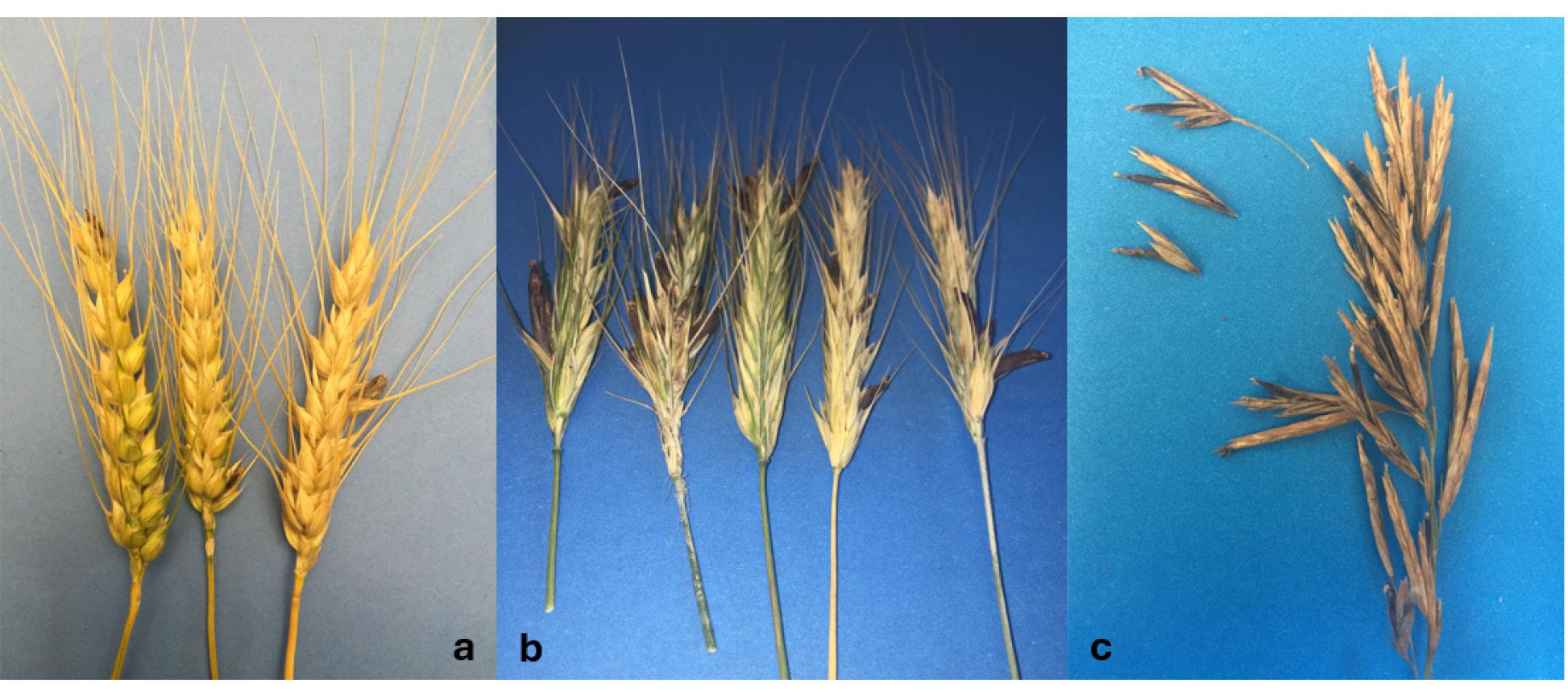
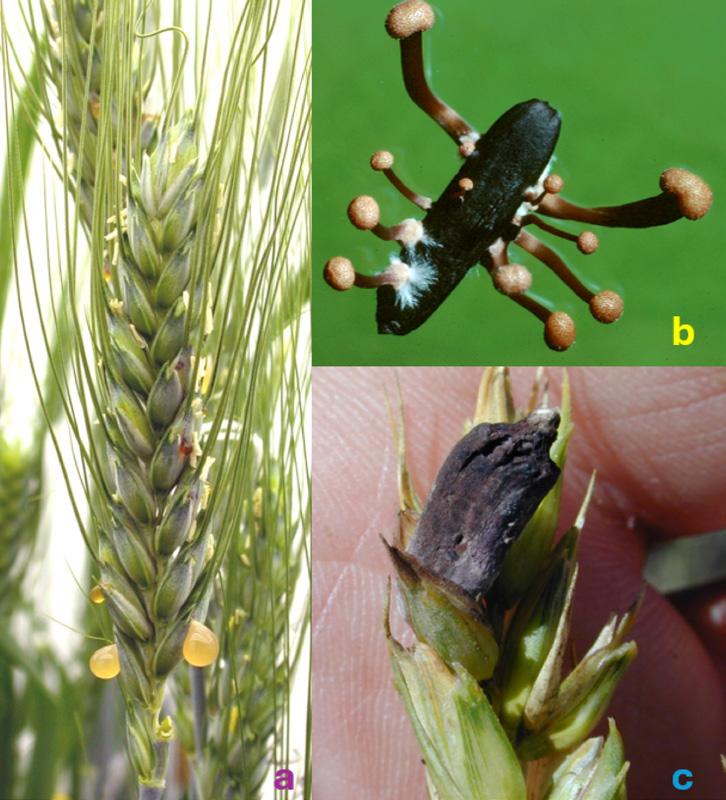
Often in outbreak years, ergot gets started early in wild and tame grasses around field margins, especially when abundant rainfall drives growth of the grasses. The disease can then easily spread via splashing or insect activity into nearby cereal crops that flower later.
Besides the field in question, one should also look at whether adjacent fields have wild or tame grassy areas and field margins, in the current or previous years. Grasses are also hosts and can serve as an important reservoir of ergot. They can be a source of ergot bodies and ascospores that infect adjacent cereal crops. Note sometimes the headlands of a field may be more affected by ergot as these areas are immediately adjacent to grassy areas which can act as sources of inoculum.
Additional risk factors related to the ergot outbreak this year?
Since cereal crops are susceptible during flowering, any factor that lengthens this susceptible window will increase the risk of ergot.
Additional risk factors are secondary tiller development and pollen viability. A few reasons contribute to secondary tiller development. One of them is lower seeding rates that pushes plants to compensate through tillering. The other is variable crop emergence due to dry spring soil moisture conditions. In some cases, spring drought followed by moisture later in the
Figure 1. Ergot bodies on hosts commonly seen in the Prairies. a. wheat; b. rye; c. grass.
Photo credit: Michael Harding.
Figure 2. a. Honeydew stage of ergot; b. ergot with drumstick structure; c. ergot body on cereal head. Photo credit: a&b- Dr. James Menzie; c - Dr. Kelly Turkington.
season may lead to variable crop stages and more secondary tiller development. Secondary tillers and more variable crop development result in a longer window for ergot infection compared to more uniform crop development.
Other factors, such as heat/drought stress and shading can create pollen viability issues, leading to greater cereal floret opening and thus more exposure to ergot ascospores.
Copper and or boron deficiency can also lead to pollen sterility/viability issues, making the wheat/durum or barley florets to open to a greater extent, thus exposing the ovary and associated tissues to greater risks of infection by ergot ascospores.
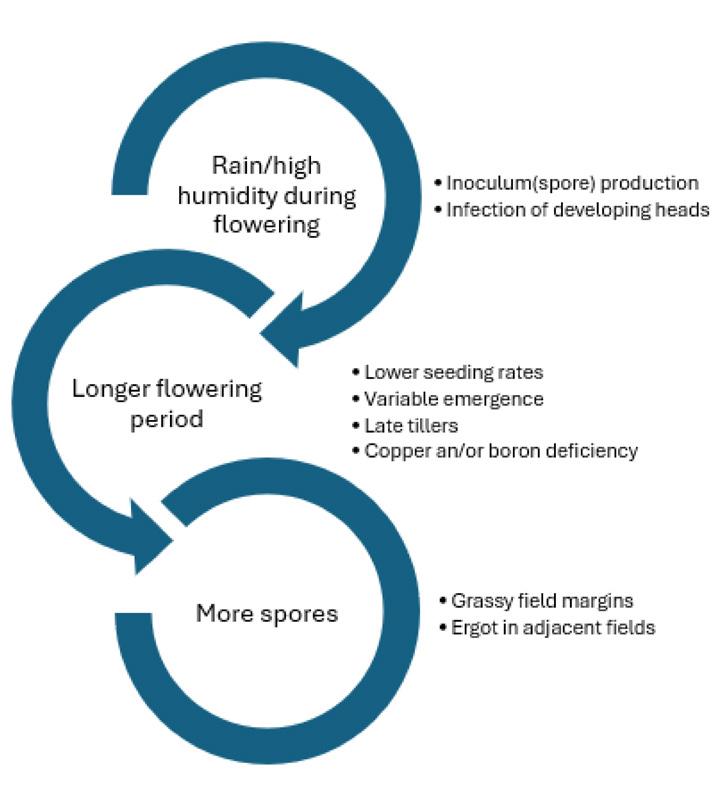
Are ergot outbreaks variety-related? Are certain crops/varieties more susceptible?
Crop species have an impact on ergot severity. Rye and triticale are considered the most susceptible among the cereal crops, followed by durum, wheat, barley and oats. The susceptibility of rye and triticale is due to their being crosspollinated crop species with more open florets versus wheat and barley, which are mainly self-pollinated and have more closed florets (Menzies and Turkington, 2015).
However, within the same crop species, ergot infections are unlikely to be variety related. Research by Dr. Jim Menzie found little consistency in terms of variety
effects. There may be subtle differences, but this may be more related to their flowering habits, and whether head emergence coincides with favourable weather and inoculum conditions for infection.
Currently, there are no consistent ergot resistance ratings established for western Canadian cereal varieties.
Can ergot-infected grains be used as seeds?
In general, yes, but actions are required to lower the risks.
Cleaning seed lots with ergot can help with grade but also improve quality of the seed.
Fungicidal seed treatments can help by limiting ergot sclerotia germination.
Planting the seeds >=2 inches in depth also lowers the risks of ergot. Ergot sclerotia need to be at or within 1/2 an inch or so of the soil surface to release spores that may cause in-season outbreaks. This allows the stalk of the ergot drumstick to reach the soil surface. If ergot sclerotia are planted with the seed, they typically are placed too deep. The risk of the “drumstick” stalks reaching the soil surface and releasing spores is limited.
Can grain cleaners remove the ergot in grains?
Grain cleaners/sorters can be quite effective at cleaning ergot-contaminated grains. They can open up marketing options by improving grade, addressing concerns related to alkaloid contamination of grain and the use of ergot-contaminated grain for seed.
Gravity tables and spiral cleaners are reasonably effective. Colour sorters are newer technology and are considered to be more effective, but cleaning costs and processing times may be increased. It is recommended to contact your local seed cleaning plant to discuss cleaning options and costs.
In some cases, certain parts of the field, such as headlands or low-lying areas, are more affected by ergot. One can harvest
and store the grain from these areas separately from the rest of the field. UK research also indicates that plants along tramlines may produce more secondary tillers, which can increase the risk of infection. This may be a consideration for irrigated production where you have wheel tracks.
Does it bring higher risks to a field that had ergot outbreak? What are the crop rotation considerations?
Yes. Fields that experienced ergot outbreak this year could become a source of inoculum for next year. The risks are higher in the same field, as well as in the adjacent fields.
A field that had an ergot outbreak should be rotated out of host crop for at least TWO years. Originally it was thought that a single year of a non-host would be sufficient. However, research and past experience suggests that with the common cereal/canola/cereal/canola rotations on the Canadian Prairies, a single year of a non-host crop is not sufficient for the natural destruction of ergot bodies. Growers are recommended to rotate the field out of host crops for MORE THAN one year. Triticale and rye have the highest risks and should be especially avoided in subsequent years.
How to manage ergot going forward?
As you might be aware, diseases occur when all three factors in disease triangle are met: susceptible host, presence of pathogen, and favorable environment. To manage ergot, one can look at minimizing risks from each of the three factors.
Minimize inoculum
• Use non-host rotation crops (e.g. pulses or oilseeds) for at least two years between cereals.
• Mow ditches, roadsides and headlands before seed set to reduce early season ergot infections and “honey-dew” spores in grasses and to reduce ergot body populations in subsequent years.
• Control grassy weeds and volunteer cereals.
• Bury infested crop residue 2 inches
Figure 3. Risk factors contributing to ergot outbreaks.
or more to prevent ergot bodies from releasing spores. (This may not eliminate the risk as subsequent tillage operations may bring the ergot sclerotia back to the soil surface. Avoid relying on tillage to manage ergot. Ergot outbreaks still occurred when conventional tillage was widely used. Keep in mind that excessive tillage can compromise soil quality and health and increase the risks of soil erosion.)
• Avoid planting seed containing ergot bodies.
• Clean grains to remove ergot bodies.
• Use seed treatment to reduce the viability of sclerotia.
• Timely fungicide application. (Recently ergot has been added to the labels on newer generation fungicides and applications around heading and anthesis may suppress infections due to ergot. However, past research from the UK suggests fungicides may not provide sufficient levels of control given fungicide active movement to ovary tissues is limited. Similar to the use of fungicides for fusarium head blight suppression, timing for ergot is critical and applications need to directly target head tissues, especially around anthesis, while variable crop development and head emergence may compromise suppression.)
Host
• Ensure adequate copper and boron availability to avoid excessive flower opening caused by pollen sterility, especially in more self-pollinated crops such as wheat and barley. Test soils for copper and boron and apply the right amount if supplementation is needed.
• Recognize the elevated risk associated with cross-pollinated crops such as rye and triticale.
• Try to avoid low seeding rates, while minimizing stand establishment issues that may affect the crop at seeding and seedling emergence.
• Options for genetic resistance to ergot are currently limited. Although ongoing breeding efforts in cereals are looking at reducing the susceptibility of host plants, favorable weather conditions and high levels
of inoculum may still result in ergot issues.
Environmental conditions, in dryland crop production, cannot be managed through agronomic practices. However, one can monitor the weather during flowering and take actions if the conditions are favorable and the risks are predicted to be high.
Irrigation management might be a potential option to consider. Limiting irrigation just prior to head emergence and soon after head emergence may help to lower sclerotial germination and ascospore production and subsequent host infection, respectively. Similar approaches have been used to reduce the risk of Fusarium head blight.
Ultimately, one may still have ergot development, and thus harvest strategies should be used including:
Harvest management
Harvest and bin headlands separately because they will likely contain most of the ergot bodies.
Delay swathing to allow wind to dislodge ergot bodies from infected heads. Please consider the risks of shatter or pre-harvest sprouting associated with this decision.
Takeaways
The main drivers of ergot infection are: 1) presence of ergot spores, 2) open flowers on cereal or grass hosts, 3) and rain events/humidity before head emergence and during flowering
To reduce the risks of ergot:
• Rotate away from cereal crops for fields that had previous ergot outbreaks.
• Ensure adequate copper and boron fertility to prevent excessive opening of cereal florets.
• Minimize tillering and shorten the flowering window by increasing seeding rates.
• Mowing of tame and wild grass around cereal fields before grasses flower can prevent ergot moving in from the field margins.
• Grain cleaning can improve the grade of the grains and reduce mycotoxin (alkaloid) contamination levels. It also reduces the risk of introducing ergot bodies if the grain is used as seeds.
Ergot outbreaks are not likely to be varietyrelated, although rye and triticale do tend to be more susceptible than other cereal crops.
Similar to Fusarium head blight management, an integrated approach is needed for successful ergot suppression.
Resources
Ergot of Cereals and Grasses – Alberta Agriculture and Irrigation
Menzies, J. G. (2004). The reactions of Canadian spring wheat genotypes to inoculation with Claviceps purpurea, the causal agent of ergot. Canadian Journal of Plant Science, 84(2), 625-629.
Menzies, J. G., & Turkington, T. K. (2015). An overview of the ergot (Claviceps purpurea) issue in western Canada: Challenges and solutions. Canadian Journal of Plant Pathology, 37(1), 40-51.

Submitted by Alberta Grains
Alberta’s crop protection guide
The Blue Book is a longstanding and trusted resource for Alberta farmers and agronomists, providing current pesticide application information. With over 700 pages of valuable crop protection information, spraying guidelines and farm safety, it’s a farming essential. The Blue Book is produced by: Alberta Canola, Alberta Grains and Alberta Pulse Growers.
Wheat stem sawfly: Survey and maps
Alberta Agriculture and Irrigation
Results from recent and past wheat stem sawfly survey work across Alberta.
This is not a forecast. It is a summary of the wheat stem sawfly situation in Alberta in fall 2025.
Overview
The area affected by sawfly cutting damage in 2025 has continued to decrease in Alberta. We are still seeing moderate to high cutting percentages in the traditional sawfly areas. The random nature of the survey means that individual fields may have higher wheat stem sawfly populations than are indicated in the survey map.
Producers are aware of sawfly in their fields. Cutting levels of 10 to 15% or higher in the previous crop year indicate the need to consider planting non-host broadleaf crops, oats, or solid-stem varieties to reduce sawfly losses. The risk in the traditional wheat stem sawfly areas still continues in 2026.
Methodology
The wheat stem sawfly survey is an afterharvest survey completed in the fall of 2025. The population map is based on 92 fields in 22 municipalities across southern Alberta and the municipalities along the Saskatchewan–Alberta border as far north as Bodo (MD of Provost).
In each field, the number of stems cut by wheat stem sawfly and the number of uncut stems is counted in one metre of stubble in 4 locations along the headland. The percentage of cut stems is then determined.
2025 survey findings
This image is an Alberta map showing the % of stems cut by wheat stem sawfly
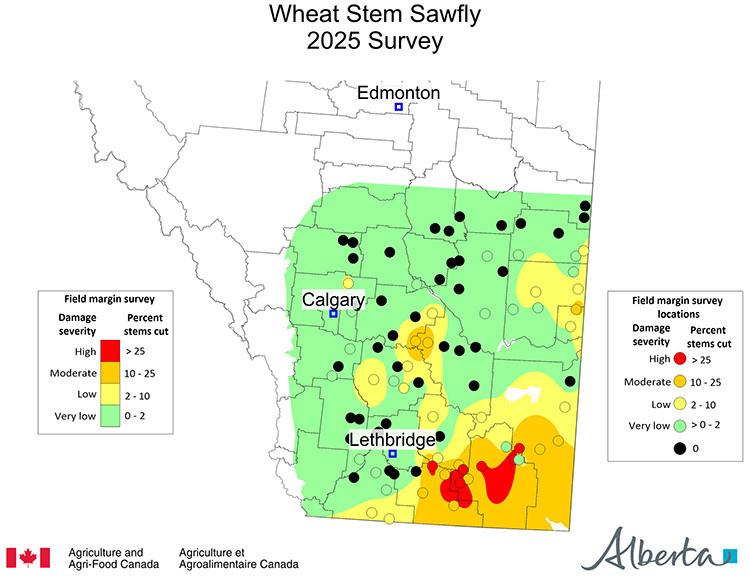
found in the 2025 survey. This map uses a 6 color gradient from light green (0 - 2% stems cut) to red (more than 25 stems cut). The survey area doesn’t extend further North than the M.D. of Provost in the East and Lacombe County in the West. The only red areas are 3 fields in the counties of Forty Mile and one in Warner. The areas in the southeast corner of the province are generally orange or yellow.
Field locations denoted by a black dot had zero sawfly found in the survey. While the overall area impacted by sawfly cutting decreased in 2025, the severity of damage increased slightly in Forty Mile and Warner Counties.
The percentage of stems cut by sawfly gives an indication of the number of reproductive adult sawflies that will emerge in late June through early July. Winter conditions have very little impact on sawfly populations and a high proportion of wheat stems cut in the fall will produce adults.
Female sawflies lay eggs inside grass and grassy crop stems, the eggs hatch and tunnel inside stems until the crop starts to dry down near harvest. As the crop starts to ripen the sawfly larva migrates to the stem base and cuts a notch most of the way through the stem, wind or wet weather cause the cut stems to break and the heads to fall to the ground. Feeding damage from the tunneling can result in hidden yield losses of 10 to 15% in each stem affected. Further yield losses occur from lodging at harvest.
It is possible that population hot spots still exist in areas of lower risk, producers need to be aware of the potential risks in their own fields. Cutting levels of 10 to 15% or higher in the previous crop year indicate the need to consider planting non-host broad-leaf crops or oats to reduce sawfly losses. When populations are low it is typical to have small, localized populations of sawfly that affect only one field or even just a portion of one field. At lower populations, wheat stem sawfly also tends to have a very strong edge effect where they migrate into the current year crop from the previous year stubble.
Parasitism can reduce populations and reduce the level of cutting. A parasitic wasp, Bracon cephi, has been shown to have significant impact on sawfly populations. The use of solid stem wheat varieties and the increase in parasitism are the major factors that lower sawfly populations in Alberta.
Scan the QR code to learn more about major crop insect pests.
Thanks to Jon Williams, Agriculture and Agri-Food Canada, for building the map.
https://www.alberta.ca/wheat-stem-sawfly-forecast
Sourced from Alberta Agriculture and Irrigation
The 2025 survey was completed by Agriculture and Irrigation, Plant and Bee Health Surveillance Section staff.
Controlling gophers with ecosysteminspired solutions
Emma Cross
Beef producers in Alberta are known for being stewards of the grasslands. While cattle are part of a greater ecosystem, species like gophers can pose management challenges to producers. Fortunately, solutions to gopher problems can be found within nature’s own patterns.
Richardson’s ground squirrels, more commonly known as gophers, are native to Alberta. While they can cause challenges, gophers are a keystone species, meaning they play a vital role in the prairie ecosystem. Besides being prey for grassland predators, gophers also dig burrows that provide habitat for other species, such as the endangered burrowing owl.
However, when natural patterns slip out of balance, gopher populations can grow out of control. Brad Downey, Senior Biologist at the Alberta Conservation Association, notes that we are currently seeing “an explosion of gopher populations”, particularly in southern Alberta. With several major predators listed as species at risk in Alberta, predation on gophers is limited, Downey explains. Extensive gopher populations can also threaten grassland birds because of predation on nests.
“Right now, we’re in the perfect storm for gophers,” says Graydon Garner, Environment and Climate Change Coordinator for the Canadian Cattle Association. “Drought conditions over the past 5 to 10 years have created shorter vegetation that offers more open spaces for gophers to come in. We have fewer managers out there on the landscape with less time and ability to manage the problem.”
When gopher populations reach extremes, producers experience greater losses that make control critical. “The main issue with gophers in the cattle industry is loss of forage,” says Garner. “Gophers, being
herbivores, will eat grass. At today’s calf prices, the value of every blade of grass that a gopher eats is so much higher.”
Research from the University of California, Berkeley determined that gophers eat an average of 119 grams of forage dry matter per kilogram of body weight every day. With just 32 gophers on a single acre, that translated to an eight per cent loss of forage. In drought-ridden areas where grass and hay are already scarce, gopher consumption can amount to huge losses for beef producers. With gopher populations on the rise in Alberta, beef producers are looking for ways to protect their precious forage resources. In 2020, the Pest Management Regulatory Agency began implementing a phase-out of liquid strychnine for gophers, with use banned as of March 4, 2023. The decision was driven by concerns around the poison being compounded in non-target predator species scavenging on poisoned gophers, such as hawks and even producers’ own working dogs.
Fortunately, several options for managing gophers lie in the natural patterns of grassland ecosystems. One of the main control methods available is encouraging natural predators to occupy pasture and hay land. Just by encouraging natural predators, producers can make a big impact. “A pair of ferruginous hawks will eat up to 500 gophers during the nesting season,” says Brad.
“If you don’t have great existing habitat for hawks, you can install hawk poles,” explains Garner. “These are small rectangular platforms mounted on telephone poles to provide nesting or perching spots for hawks, raptors, eagles, or other large birds that prey on Richardson’s ground squirrels.”
A pair of ferruginous hawks will eat up to 500 gophers during the nesting season.
Installing hawk poles comes with a few considerations. “Ideally, producers put up these nesting sites before March when hawks start coming back,” says Downey. “You can either put a pole into the ground or mount the pole to a corner post.” Downey explains that nesting platforms should be about 10-12 feet off the ground,

with poles at least a mile apart, since most hunting occurs within 800 metres of the nest.
Beyond managing gophers, creating good habitat for predatory birds is a success story for the beef industry. “Encouraging predator habitat is something the beef industry has already done a great job of,” says Downey. “In the early 2000s, our ferruginous hawk population was around 600 pairs, and thanks to the ranching industry and a lot of landowners, there are now more than 1,400 pairs in the province.”
Other land animals can also be effective controls for gophers, such as snakes and weasels. Downey encourages producers to maintain trees and shrubs along field perimeters to create corridors for these species.
Badgers are another major predator for gophers but encouraging them to burrow in pasture and hay lands comes with a few more challenges. “Badgers are a very effective predator,” says Garner. “However, they come with increased damage to the ground, which can be a real hazard for folks using horses, machinery, or for cattle themselves.”
If producers can tolerate the implications of badgers on the landscape, they can have a massive impact on local gopher populations. Research indicates that badgers will eat two to three gophers each day, reducing the local population by half before migrating to a new gopher colony. Badgers will even eat gophers over the
winter months while they are in torpor, similar to hibernation, underground. Like gopher holes, badger burrows also provide habitat for other grassland species, providing other ecosystem benefits.
As Downey explains, encouraging wildlife to stick around relies on more than just one parcel of land. “Maintaining connected corridors is important to attracting those natural predators,” he says. Working with neighbors to create wildlife habitat across a larger tract of land will create a more interconnected area of habitat that will better encourage wildlife to inhabit a target spot for gopher control.
Another method of gopher control involves managing the height of forages. “There have been a number of studies that show gopher numbers are reduced in taller grass (15cm, 30cm),” says Downey. “Gophers like to stand up and see what’s around them, so they need shorter grass to do that.” Producers can manage grazing or plant specific species to encourage a taller forage stand that discourages gopher colonization.
For producers experiencing gopher issues on cropland, Downey notes that growing a buffer of oats or wheat around the edge of a crop can “create a dense barrier” that discourages gophers from getting into a higher value crop like canola.
Of course, certain forages aren’t suited to maintaining taller forage stands, particularly on native grasslands. “It’s up to producers to decide if they see a value in this practice and determine if they can manage it on their unique landscape,” says Garner.
A final option for gopher control is shooting, although it is worth noting that this option requires the most time and effort for the producer. Downey notes that shooting can be effective, but timing is critical to ensuring its effectiveness.
“I always tell landowners that if they are shooting gophers, to make sure they do it in February or March,” says Downey. “In April and May, the gopher population is going to explode by roughly eight times when females have their litters. If you hunt in February and March, you will have much more of an impact.”
Both Downey and Garner encourage producers to use multiple methods to develop an integrated pest management strategy that supports population control year-round. The specific combination of strategies will look different for each producer, and Downey notes that producers will have the best idea of their own land to capitalize upon predators and other control options that are already present.
While stewardship solutions are an important part of an overall strategy for gopher control, they take time to be effective. Predators won’t inhabit land overnight, and producers need methods to control gopher populations in the short term as populations overrun their land. Garner explains that while there are some alternative poison options out there on the market, such as zinc phosphide, “specific scientific research on gophers in Canada is lacking”. Industry groups like Alberta Beef Producers and the Canadian Cattle Association are advocating for producers to have all options on the table, with a focus on methods that are scientifically proven to be effective in a timeline that is practical for producers.
Producers looking for more information on gopher control options are encouraged to engage with their local forage and grazing associations, which often host extension events on this topic. The Government of Alberta also offers a fact sheet on gopher control methods, including details about gopher life cycles to help optimize the timing of control. The Alberta Conservation Association can help producers with advice on how to set up infrastructure like hawk poles.
75 years rat-free
Alberta Invasive Species Council
For 75 years, Alberta has held a unique title: the only rat-free jurisdiction in the world, besides Antarctica. This achievement is thanks to the province’s longstanding Rat Control Program, launched in 1950 to stop Norway rats and roof rats from establishing breeding populations. Operating along the Alberta–Saskatchewan border, the program—often referred to as the “Rat Patrol”—has combined strict regulations, vigilant monitoring, rapid response, and public reporting to keep infestations at bay.
As Alberta celebrates its 75th year of rat-free status, the Alberta Invasive Species Council (AISC) continues to support awareness efforts and educate Albertans on how to spot early warning signs through the new Rat on Rats! campaign. Indicators of rat presence no matter the season include droppings shaped like dark, tapered grains of rice; gnaw marks on wood, feed, or plastic; shredded nesting materials; greasy rub marks along walls; unexplained burrows near buildings; and hitchhiking on vehicles and RVs.
If residents suspect rats, we want you to Rat on Rats! Report it immediately to the County or email rats@gov.ab.ca. Ongoing public awareness and early reporting remain key to ensuring Alberta stays rat-free.
This article was first published in Volume 5 Issue 3 of ABP Magazine (Fall 2025). For more content like this, head to Alberta Beef Producers’ news and information site: abpdaily.com.

Submitted by Alberta Invasive Species Council
Submitted by Emma Cross Alberta Beef Producers
Photo courtesy of Linda Danyluk
Water buffalo on the prairies: Exploring a rare Canadian livestock operation
Theo and Amanda Beijer
Peaks and Pasture Ranch is Alberta’s only operating water buffalo dairy. Established in May of 2024 by Theo and Amanda Beijer, water buffalo is a niche operation in Canada, with an estimated 10 water buffalo dairies located primarily in BC, Ontario, and Quebec.
So why water buffalo? The answer goes back 12 years, to when Theo, a passionate progressive farmer, was looking for a way to make milk better for consumers after watching his mother battle multiple sclerosis and how diet can affect the human body.
Theo took his research to his family’s Dairy farm, Crystal Springs Cheese, and found ways to make conventional dairy better with A2A2 genetics (instead of A1, which is the dairy protein most people are allergic to) and by cross-breeding his cattle for better health and higher-quality milk over quantity. Cross-breeding his dairy cows, focusing on body conditioning, and avoiding common issues with hips, joints, and genetic diseases. He was also focused on herd health, eradicating diseases that can be passed through milk, which eventually led to little to no antibiotics being required for the cows.
Theo also prioritized better feed for cattle. Getting rid of GMO corn or animal byproducts added to feeds, and starting regenerative farming practices focused on improving soil bioavailability for highquality crops, to get out of the cycle of spraying fields with unwanted chemicals, which he noticed affected herd health.
This unconventional view of farming and the many questions it raised left little room for Theo to continue improving things through his trials and experimentation, leading him to start his own farm. By this
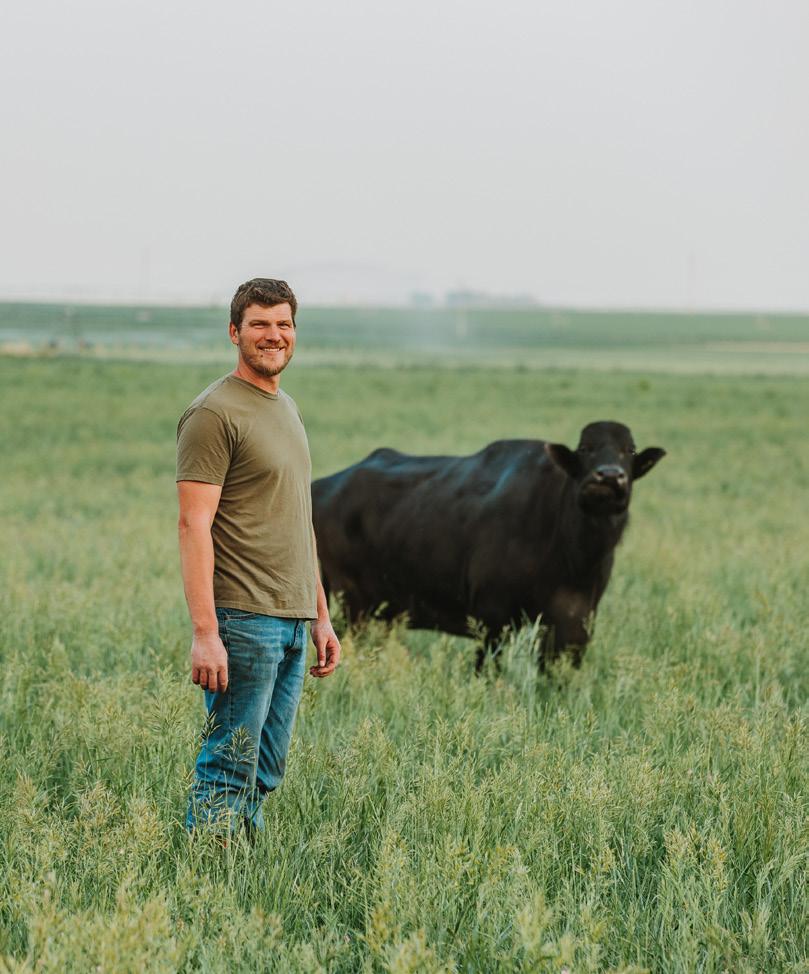
point, he was already looking into water buffalo milk and dairy. The fact that it is also A2A2 and butter fat is much higher, making the cheese yield higher per litre.
The dairy quota system is complicated to buy into as a young farmer with no return on investment, given the high price of quota. With water buffalo, you avoid this system and can produce as much milk as you need or want.
Water buffalo are also ruminant animals like cows, but they have an extra meter in the small intestine, allowing them to absorb more nutrients from grasses. Their diet is straightforward: they graze on grass, hay, weeds, or whatever they want to eat. It’s also very sustainable in our environment. The genetics of water buffalo are traditional; they are a hardy animal that does not need regular treatment or antibiotics. Water buffalo are all A2A2 in dairy proteins. Butter fat can be up to 9%. The milk is higher in calcium, protein, and vitamins. The only drawback is that they do not produce 30-40 litres a day like cows. However, 8L a day is enough quantity to work with.
What’s the temperament of water buffalo? Pretty chill! They are a gentle, intelligent, and curious animal. They love pets and scratches from people they are familiar with. They love routine and thrive with their herd. Moving or separating the large animal can be difficult because they tend to move as one unit. They are quick on their feet unless they don’t want to be. Basically, “the farmer sets guidelines; the buffalo make their own decisions”.
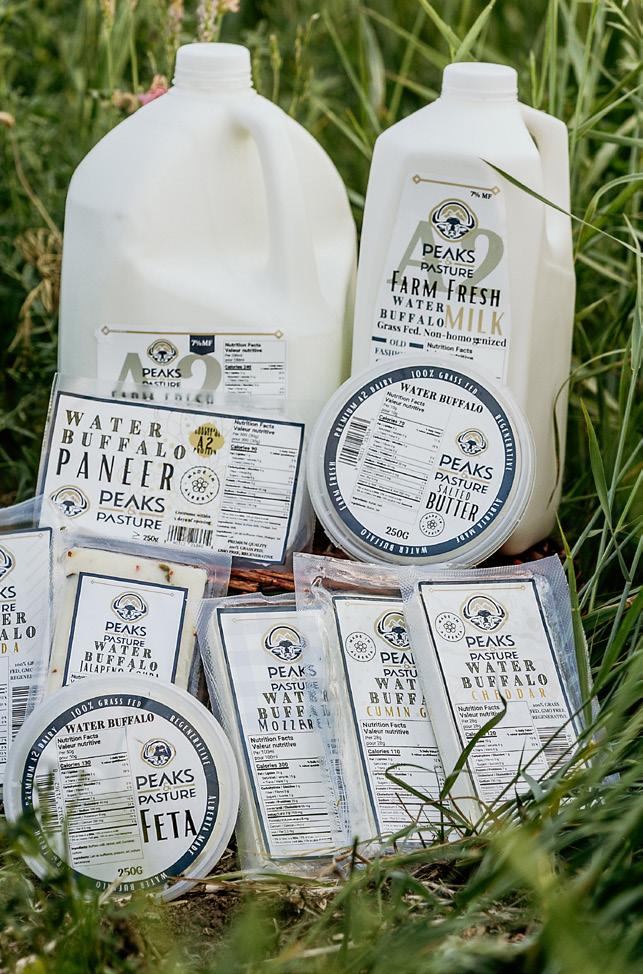
They average around 1,500 pounds as an adult and can be hard on gates or fences, having no trouble pushing boundaries. Despite this, keeping Water Buffalo in a calm, natural environment has worked well, even in the cold, as they carry their fat as insulation, like pigs, keeping them warm when the temperature drops.
Theo and Amanda have found water buffalo to be very low-maintenance animals; they need hay and proper bedding in the winter, graze the fields in the summer using rotational grazing, and are brought to the barn once or twice a day for milking. Keeping routines, the water buffalo are easy to maneuver into the barn, and they spend most of their days lounging and swimming in the pond in summer. At Peaks and Pasture Ranch, they also keep the new calves with their mothers for up to 6 months before the calves begin to nurse from adoptive mothers within the herd to continue getting milk, taking the chore of feeding them separately off their hands.
Nearing 2 years in operation, the Peaks and Pasture Ranch family has found a rhythm with the animals and are adjusting as needed. The biggest hurdle has been making and marketing products as they continue to grow into local health food stores and markets, as well as supplying stores in Calgary and Edmonton with even more growth potential!
Submitted by Theo and Amanda Beijer Peaks & Pasture Ranch
Theo and Amanda both grew up on traditional dairy farms. Dairy farming has been a passion for generations with their Dutch roots.
CoUnty wordsearCh: Game Warden edition
COMPLIANCE
CONSERVATION
ECOSYSTEM
ENFORCEMENT
HABITAT
INVESTIGATION
LICENSING MANAGEMENT MONITORING PATROL POACHING PROTECTION REGULATIONS REPORTING STEWARDSHIP WILDLIFE
Can you find all the hidden words? Send a picture of your completed wordsearch to mwells@lethcounty.ca or text to 403.634.0147 by August 4 to be entered for a chance to win 1 of 3 Alberta Game Warden: Behind the Badge of 172, a collection of true short stories written by Jim Mitchell. Good luck!
Submitted by Matthew Wells Rural Extension Specialist, Agriculture Services Lethbridge County

“I’ve always thought the sunsets in Alberta were gorgeous, so I attempted to create a piece that reflected the beauty of the evening skies. Overall, the process of creating this artwork was very enjoyable, and I hope I was able to do Alberta’s skies justice!”
Sarah Morrison, Grade 11
Coaldale Prairie Winds Secondary Medium: digital painting
Children and youth under the age of 18 are invited to submit artwork to be featured on the back cover of the Fall/Winter issue of Rural Living in Lethbridge County.
Art should be around the theme of: fall on the farm.
Submit digital artwork (scan/photo or image file) to mwells@lethcounty.ca by September 30, 2026.


