
Rural Living in
Lethbridge County
A magazine for producers and residents
How do fires protect nature? pg 8
Nutrient additives: sorting the value from the hype pg 22
The economic impact of the County pg 12
Get to know the Mountain Bluebirds that call the County home pg 26
Fall/Winter 2025
Rural Living in Lethbridge County
Vol. 1 | Issue 1 | Fall/Winter 2025
Rural Living in Lethbridge County is a bi-annual magazine, written for and by County producers and residents, in association with the Rural Living & Ag Extension of Lethbridge County.
Previously known as the Rural Living & Ag Extension Newsletter, Rural Living in Lethbridge County is the 2025 evolution of the longstanding periodical. You’ll continue to enjoy local agricultural stories and innovations, alongside a fresh new style and some innovations of our own. All grounded in the rich and rooted agricultural community of Lethbridge County.
Readers who would like to receive an e-version of the magazine, comment on a story, change their address or remove their name from our mailing list should email the County at mwells@lethcounty.ca
Lethbridge County Where roots run deep and the future is bright.
Publisher: Lethbridge County
Editors: Matthew Wells & Mattie Watson
Art director/designer: Kelsey Janzen
Photographers: various
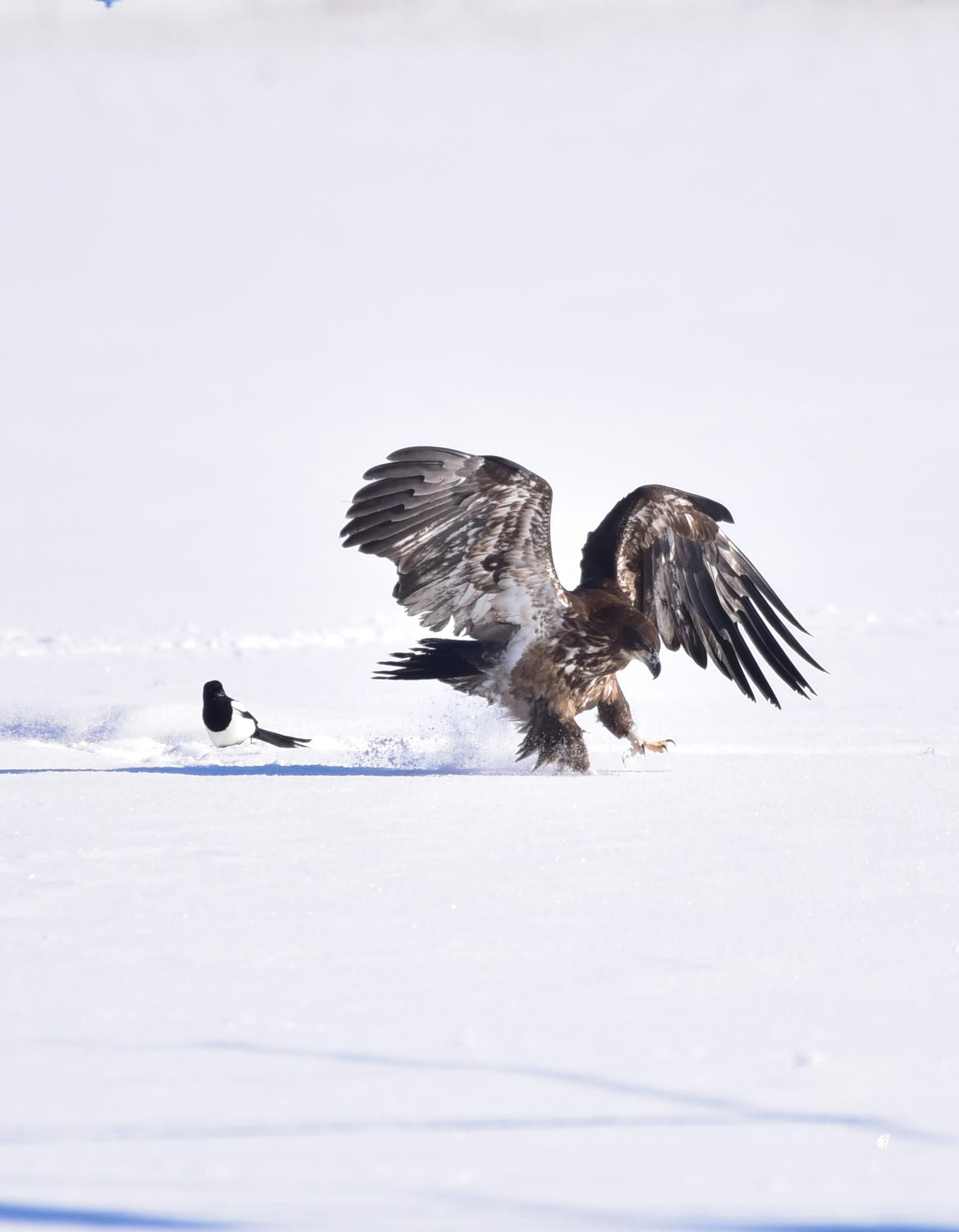
Cover photo: Linda Danyluk
Writers: Richard Arthur, Doug Burke, Barbara CadeMenun, Brenda Crowson, John Duynisveld, Scott Gillespie, Curtis Goodman, Len Hingley, Konynenbelt family, John Kuerbis, Taylor Merkley Doyer, Dinyar Minocher, Gary Secrist, Shaun Sharpe, Breea Tamminga, Maaike Van Kuilenburg, Jody Wacowich, Matthew Wells, Alberta Agriculture & Irrigation, Alberta Sugar Beet Growers, Lethbridge Polytechnic, NRCB, Sunshine Market Garden, ULethbridge, UCalgary
Proofreader: Mattie Watson
Printer: Warwick Printing

Welcome to a new chapter of Rural Living & Ag Extension! Within these pages, you’ll find quality articles that are relatable to all folks residing within the County.
The magazine is organized into five categories: Roots & Reach (community highlights), Farm & Future (funding and agriculture), Land & Legacy (soil and nutrients), Crops & Conditions (crop health), and Wildlife & Welfare (wildlife and livestock). Together, they progress from broad everyday topics to more specialized information for our agricultural community.
After several years of editing the newsletter and magazine, I’m astounded by the County’s uniqueness. The articles and ideas all stem from what goes on within the County, and it is endless. As much as the magazine is meant for you, the readers, I find myself learning just as much, which has been a hidden joy of mine.
I’m always interested in knowing what you, the reader, want to see within these pages. Your ideas help shape the magazine, so please don’t hesitate to reach out to me at mwells@lethcounty.ca with your suggestions.
Look for the next issue to come out in March. Until then, wishing you a wonderful Christmas and a happy New Year!

Rural Extension Specialist
Matthew Wells
Lethbridge County
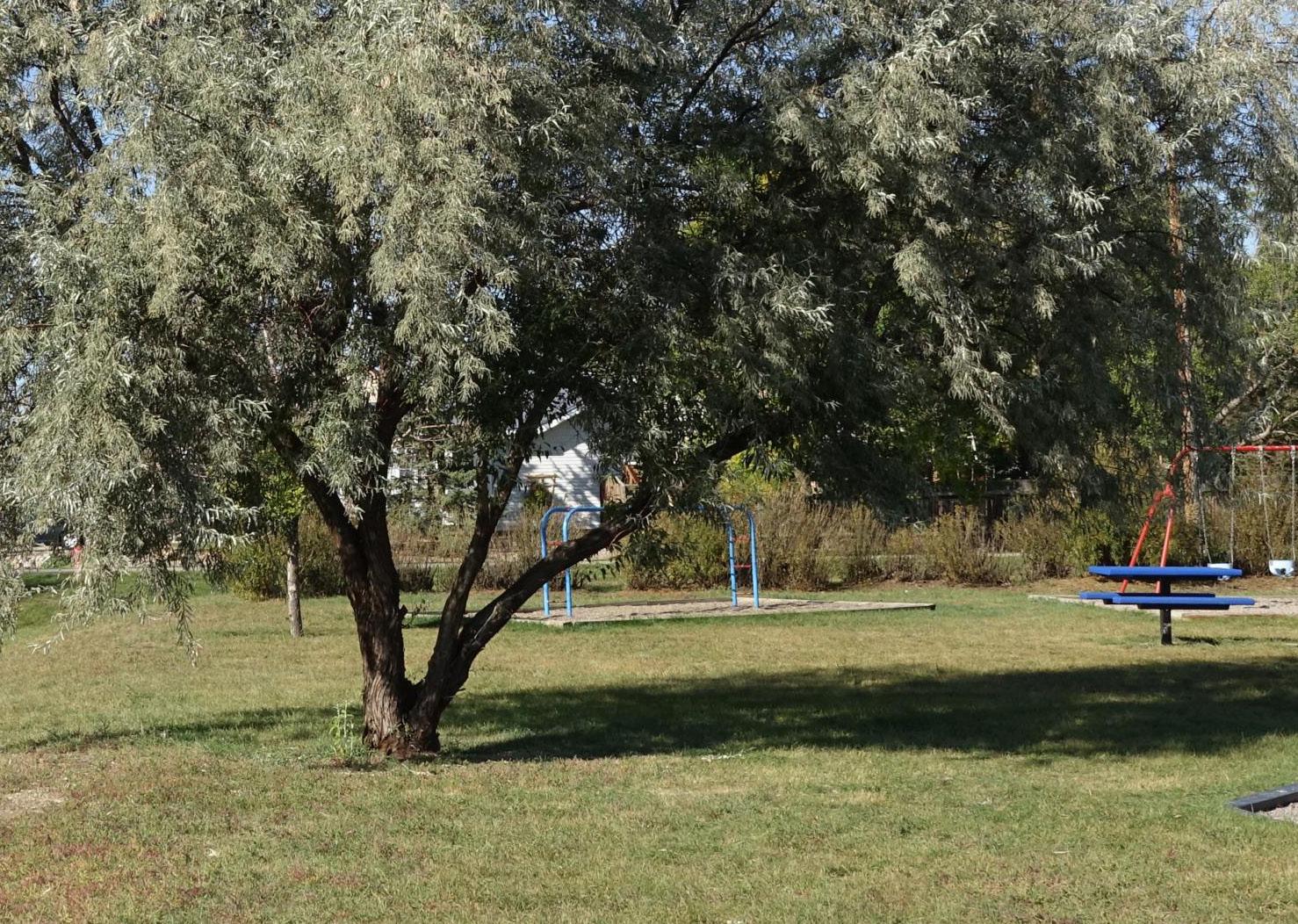
Russian Olive trees might be pretty, but are they the right choice? Page 10

Consider grant options to fuel innovation on your farm. Page 17
Agricultural confined space incidents are on the rise. Learn how to mitigate the risks. Page 16
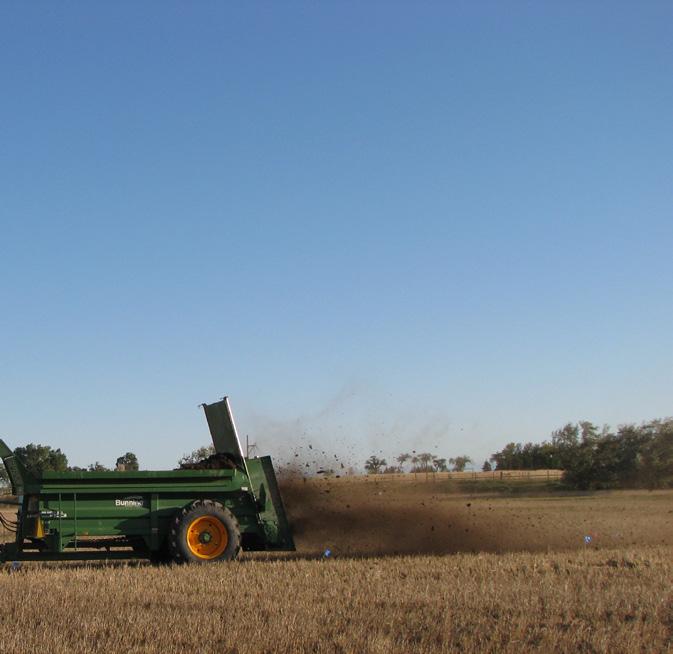
AOPA amendments open new doors for nutrient management on the farm. Page 18
Roots & Reach
• A look back in time Page 4
• Local Business Spotlight: Sunshine Market Garden Page 5
• Research that’s growing smarter greenhouses Page 6
• Southern Alberta medical program taking shape Page 7
• Is your farm ready to respond to an emergency? Page 8
• How do fires protect nature? Page 8
• The great fire of 1909 Page 9
• Protecting your trees from White Pine Weevils Page 10
• Playground updates & upcoming events Page 11
Farm & Future
• ASB update Page 12
• Economic impact of Lethbridge County Page 12
• Open Farm Days bus tour Page 13
• BMO Farm Family Spotlight: K-Belt Farms Page 14
• 100 years of Alberta Sugar Beet Growers Page 15
• Safeguarding your digital fields Page 15
Land & Legacy
• Soil: the foundation of agriculture Page 18
• What’s new at the NRCB? Page 18
• Soil acidification: an issue of concern Page 19
• Enhancing water-use efficiency Page 20
Crops & Conditions
• Nutrient additives: sorting the value from the hype Page 22
• Why soil test? Page 23
Congratulations to the wordsearch winner from the last issue of the Rural Living & Ag Extension Newsletter!
Ready for the next puzzle? Head to page 27 to complete this issue’s wordsearch.

• Mow, bury, conquer: a practical strategy for kochia management Page 24
Wildlife & welFare
• Considerations for bale grazing Page 25
• Disposal of dead animals regulation Page 25
• Bluebirds on the fenceline in Lethbridge County Page 26
Local spotlight: Sunshine Market Garden
Sunshine Market Garden is a family-run farm dedicated to growing fresh, local food for families across Southern Alberta. What began as a small experiment in vegetable growing has steadily developed into a family business that grows a little more each season.
The business began in 2021 with the construction of a 30’ x 100’ greenhouse on an acreage near Coalhurst. With the season already too far along to grow flowers, vegetables became the focus instead. That first summer, a modest harvest and farm-fresh eggs were sold through a self-serve stand at the farm gate. The support from the community was encouraging, and each year the gardens were expanded to provide more of what people were asking for.
By July 2022, the little self-serve stand could no longer keep up, and a full store was opened. This provided space not only
for homegrown vegetables but also for products from other local vendors, and it marked the start of staffing the store to welcome and serve customers in person.
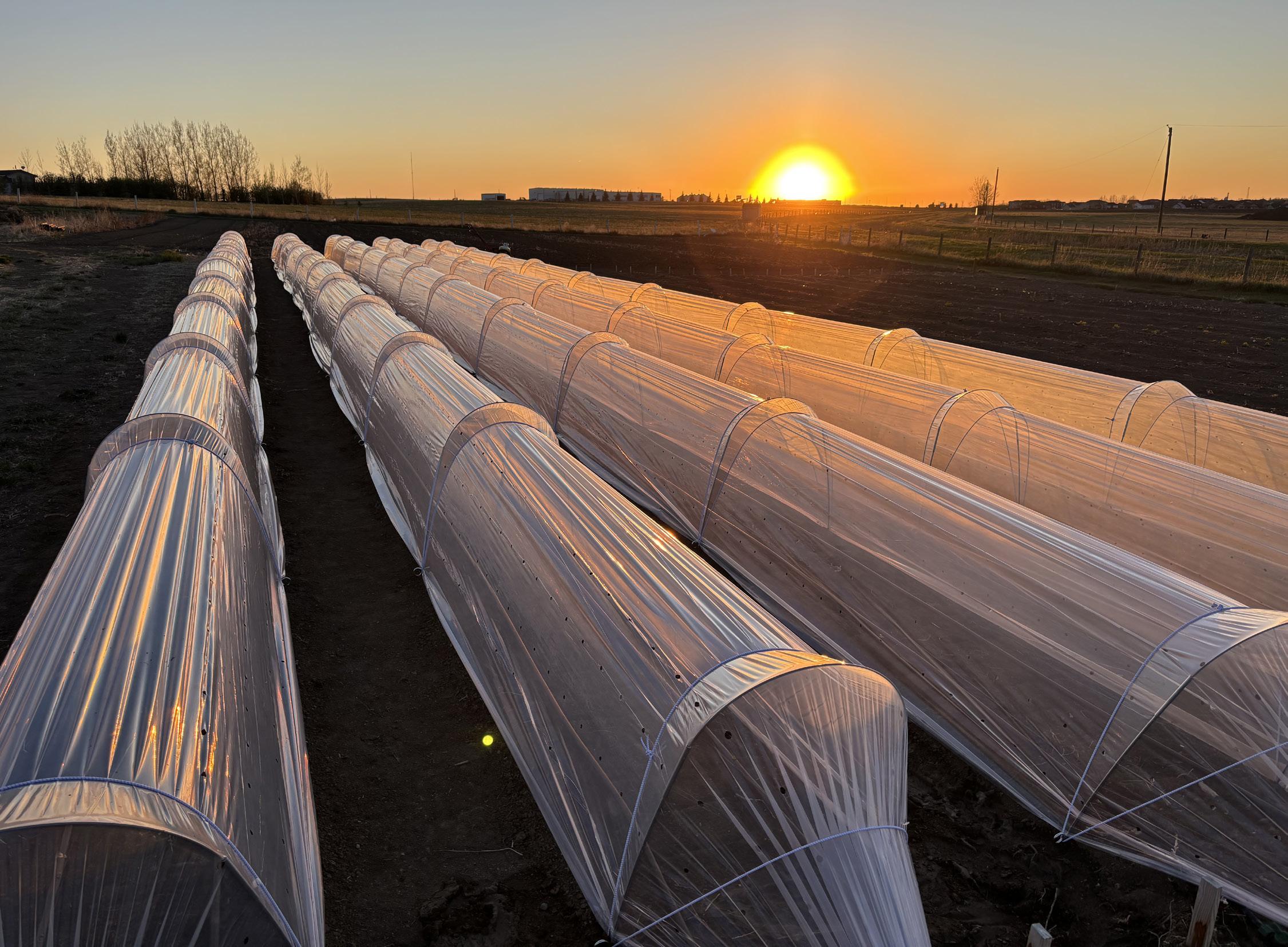
In the fall of 2024, Sunshine Market Garden grew again with the purchase of a greenhouse facility in the village of Barons. Originally designed for flowers, the facility was converted to vegetable production, making it possible to offer fresh, local produce for a longer part of the season. Alongside greenhouse crops, more than two acres of outdoor vegetables are also grown, supplying the store, farmers markets, and the Fresh Produce Program.
At the heart of Sunshine Market Garden is a simple philosophy: food should be grown in a way that’s good for both people and the land. All crops — even those in the greenhouse — are grown in soil for full flavor and nutrition. Sustainable practices such as beneficial insects, crop rotation,
Scan the QR code to visit their website or visit the store: 92022 RR 22-3 (just outside of Coalhurst)
compost, and cover crops help maintain healthy soil for the future.
Everyone is welcome to visit the Coalhurst store to shop fresh vegetables, discover local goods, and enjoy the taste of food grown close to home.


Bright ideas at Lethbridge Polytechnic: research that’s growing
smarter greenhouses
Taylor Merkley Doyer
Every morning, before heading into his office at Lethbridge Polytechnic, research scientist Dr. Seyed Hashemi takes a small detour. “I go out to the greenhouse and breathe in the fresh air for a minute,” he said. “In the winter, when you walk in there, it feels like summer. It really refreshes me.”
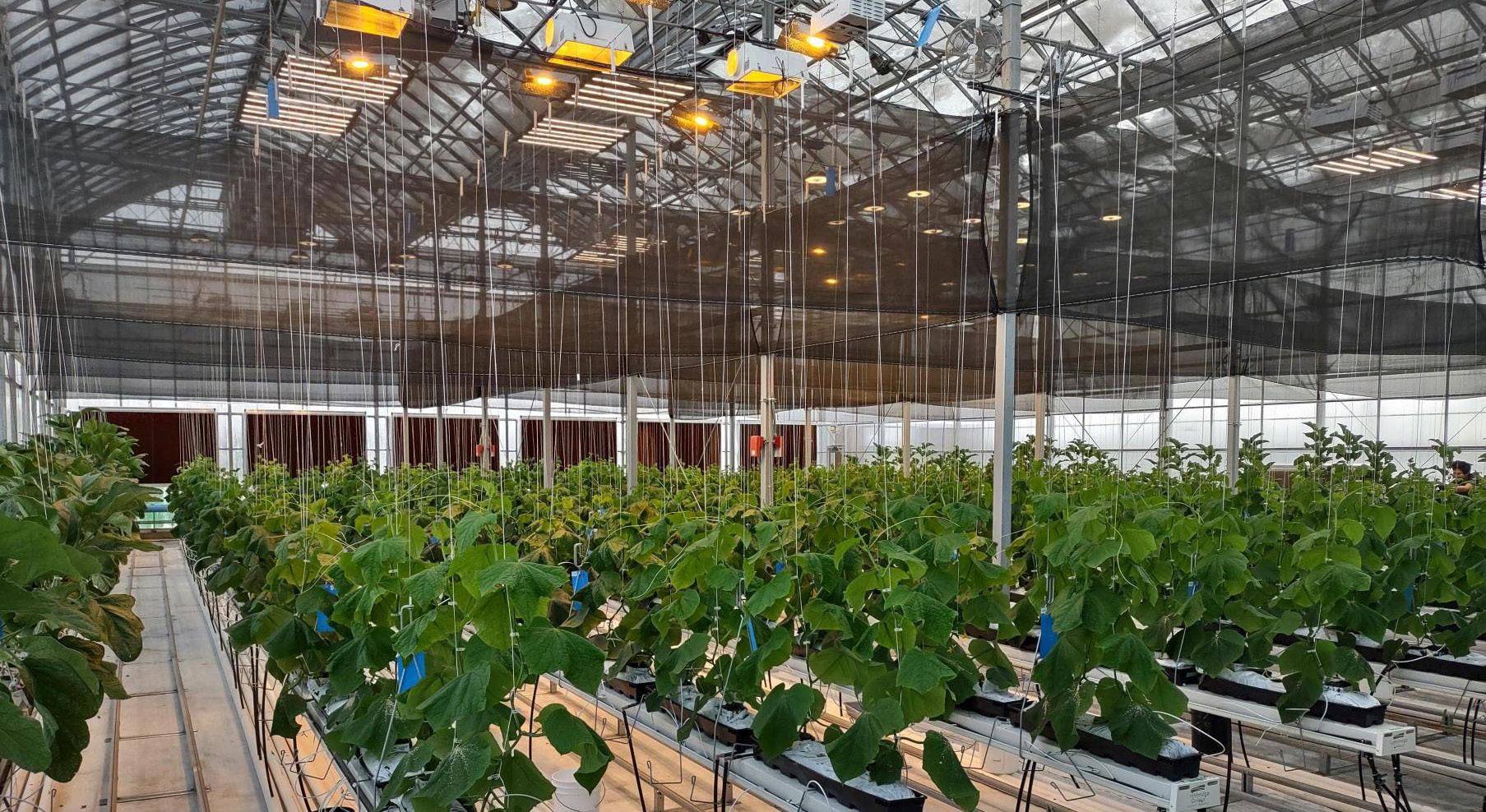
But it’s more than just a pleasant place to start the day; it’s also a hotbed of rural innovation. Lethbridge Polytechnic’s smart greenhouse is a state-of-the-art applied research facility that specializes in controlled environment agriculture (CEA).
It is currently home to a multi-year research project investigating how greenhouse lighting systems can boost crop productivity. With Dr. Hashemi at the helm as lead researcher, the project is midway through its second year and is set to conclude in December 2026.
Dr. Hashemi says lighting systems are crucial for growers. “In winter, when we have less natural light, the population’s need for food is still at the same level,” he said. “Supplemental lighting helps increase production and improve food security.” High-quality lighting systems essentially emulate the conditions of peak growing season eighteen hours a day, all year round.

But not all lights are created equal, and Dr. Hashemi’s research team is on a mission to find out which systems offer growers the best value.
The research compares three different types of light systems: high pressure sodium (HPS), horticultural LEDs (hLEDs), and industrial LEDs (iLEDs). By tracking the health and productivity of cucumber plants grown under each lighting system, the team was able to determine which lights gave growers the highest return on investment (ROI).
“HPS is the traditional system used in greenhouses,” said Dr. Hashemi. “In the experiment, the HPS produced bigger fruits than the LEDs, but it consumed much more energy, so the overall ROI was lower.”
For growers’ dollars, the cucumber trial showed that iLEDs were the best investment of the bunch. More durable and energy-efficient than its competitors, the iLEDs also performed well in terms of yield, and had the lowest upfront costs.
While choosing the right lights may seem trivial, the ripple effects of these choices can be far-reaching. “There is huge potential to bring down the costs of production so consumers can get more affordable and high-quality produce,” said Dr. Hashemi. “I believe consumers also want fruits that are produced in a sustainable way, which is what iLEDs can do.”
The team is midway through repeating the experiment with bell peppers, and will repeat it once more with tomatoes in 2026. Dr. Hashemi is looking forward to finding
out whether the promising first-year results will hold fast.
All CEA research initiatives at Lethbridge Polytechnic are managed by the institution’s Integrated Agriculture Technology Centre (IATC). With a research portfolio spanning hydroponics, pest management, and greenhouse technologies, the centre is well-equipped to tackle modern agriculture’s most pressing challenges. Dr. Hashemi believes AI and automation in agriculture may be among IATC’s future priority research areas. “There are many pieces to plant health besides just lighting,” he said. “In CEA, we consider soil pH, temperature, and humidity. Using AI to control these components can make a huge difference for productivity.”
When Dr. Hashemi pauses in the greenhouse each morning, he’s not only enjoying the fresh air on his face or the glint of leaves under buzzing lights. The ritual also reminds him of what’s possible. “Agriculture is incredibly advanced now,” said Dr. Hashemi, “but in 10 years, people are going to laugh at the way we’re doing things.” As CEA technologies continue to evolve, Hashemi and the team at IATC are proud to be part of what happens next.

The lighting trials project is funded by Results Driven Agriculture Research (RDAR) and supported by industry project partners Tamura Imports, Current Prairie Fishermen Corp., and Vivent Biosignals. To learn more about CEA research at Lethbridge Polytechnic, please contact iatc@lethpolytech.ca.
Submitted by Taylor Merkley Doyer, TMD Communications and Lethbridge Polytechnic
Dr. Seyed Hashemi, research scientist
Southern Alberta medical program taking shape
ULethbridge + UCalgary
What was once a dream is quickly becoming a reality as the Southern Alberta Medical Program (SAMP) continues to take shape towards welcoming the first intake of students in July 2026.
The Doctor of Medicine (MD) program, delivered through an innovative partnership between the University of Calgary’s Cumming School of Medicine and the University of Lethbridge, will offer students the opportunity to earn a UCalgary medical degree while completing their training in southern Alberta.
The key to the program is the focus on training doctors in rural settings, increasing the likelihood of doctors staying in areas in dire need of physician access.
“Training physicians in southern Alberta requires trust, relationships and longterm commitment,” says Dr. Rebecca Schiff, Deputy Provost at the University of Lethbridge. “Through this partnership, we’re helping students form ties to the people and places they’ll serve, beginning in medical school and continuing throughout their careers.”
Admissions for the first cohort of students opened in July, and the program’s Associate Dean, Dr. Richard Buck, MD, says SAMP has been intentionally designed to create student success through a rural lens.
“We’ve been building this program with students in mind from the very beginning,” he says. “From curriculum design to clinical placements, every element is centered around preparing future physicians for the realities of rural and regional care.”
Dr. Todd Anderson, MD, Dean of the Cumming School of Medicine, echoes Buck in describing how SAMP will impact underserved areas of the province.
“The launch of admissions marks a significant milestone in our quest to deliver education and training solutions for the health workforce in rural areas and Indigenous communities,” says Anderson. “This innovative distributed medical education program offers an exceptional opportunity for students, especially those with strong roots in rural and regional communities, to begin their medical journey closer to home.”
Course design will reflect the SAMP mission with students completing their degrees through an intensive, communityintegrated curriculum that responds to the growing need for sustainable, locally grounded approaches to medical education. Once up and running, the goal is about more than filling current gaps in the health-care system, it’s to create a stable supply of physicians that is sustainable over the long term.
For the University of Lethbridge, it means big changes on campus, including the need for a medical training facility. The Community Centre for Wellbeing, which formerly housed the Canadian Centre for Behavioural Neuroscience (CCBN) before it moved into Science Commons, will be reimagined as the new home of SAMP.


Planning and design for the updated building are now underway, with construction expected to begin soon and the facility set to open in July 2027. Renovations will create 5,000 square metres of purpose-designed space for medical education, including teaching areas, an anatomy lab, and a new clinic to support hands-on learning.
Design firm DIALOG has been retained to design the new space. The group brings extensive experience in large-scale health and community infrastructure, including Calgary’s Arthur J.E. Child Comprehensive Cancer Centre and the city’s new event centre, Scotia Place.
Lethbridge-based Ward Bros. Construction, a family-owned firm with experience delivering education and community infrastructure across southern Alberta, has been selected as the project’s lead contractor.
SAMP is one half of the Government of Alberta-funded Rural Medical Education Program Training Centre plan, which committed $224.8 million in 2024 to establishing centres in Lethbridge (University of Calgary partnering with University of Lethbridge) and Grande Prairie (University of Alberta partnering with Northwestern Polytechnic).
The impact of that investment will soon be realized as students begin the journey to physician training within Lethbridge and surrounding southern Alberta communities.
Submitted by ULethbridge and UCalgary
Is your farm ready to respond to an emergency?
not just a checklist—it’s a practical tool for protecting your operation when it matters most.
How Do Fires Protect Nature? A children’s book on fire ecology
Dinyar Minocher Breea Tamminga
In farming, unpredictability isn’t the exception—it’s the everyday reality. From windstorms to wildfires, power outages to animal disease, emergencies can strike at any time. The question is: is your farm truly ready to respond?
Lethbridge County has introduced a new Farm Emergency Plan template, a proactive and practical tool designed to help producers across the region enhance their preparedness and protect what matters most—their people, livestock, and operations.
This template walks producers through step-by-step planning before, during, and after emergencies. It starts with identifying key farm hazards and gathering essential information such as emergency contacts, livestock inventories, and onsite resources. It also provides space for custom farm maps, so muster points and evacuation routes are clearly marked.
When an emergency hits, clarity and coordination are critical. The template includes short checklists to start the response, tailored to various scenarios: whether you’re sheltering livestock in a barn, relocating them to an outdoor safe zone, or transporting them offsite. It also guides you to pre-plan when and how to deploy sprinklers, set up fire breaks, or operate backup power systems safely making emergency decisions faster, safer, and more effective.
The recovery phase is equally important. The plan encourages producers to document damage clearly, coordinate with insurers, and work with neighbours and local agencies. It even outlines how to build a recovery kit with essential veterinary and handling supplies.
Whether your farm is large or small, livestock-focused or diversified, the framework is adaptable to your needs. It’s
The Farm Emergency Plan isn’t just for large-scale disasters. Even smaller incidents—a downed power line—can quickly escalate without a plan. With this template, you’ll have everything at your fingertips: from strategies to reduce outdoor hazards, to a record of who’s agreed to lend you a livestock trailer—and who you’ve committed to support in return. It’s about building resilience through readiness, no matter the scale of the emergency.
As the release of the Farm Emergency Plan template draws near, now is the time to start the conversation. Are you ready? When an emergency hits, preparation can be the difference between chaos or control, and risk or resilience.
Scan the QR code to download the Farm Emergency Plan template.

Submitted by Breea Tamminga Coordinator, Emergency Management for Lethbridge County Regional Emergency Management Partnership
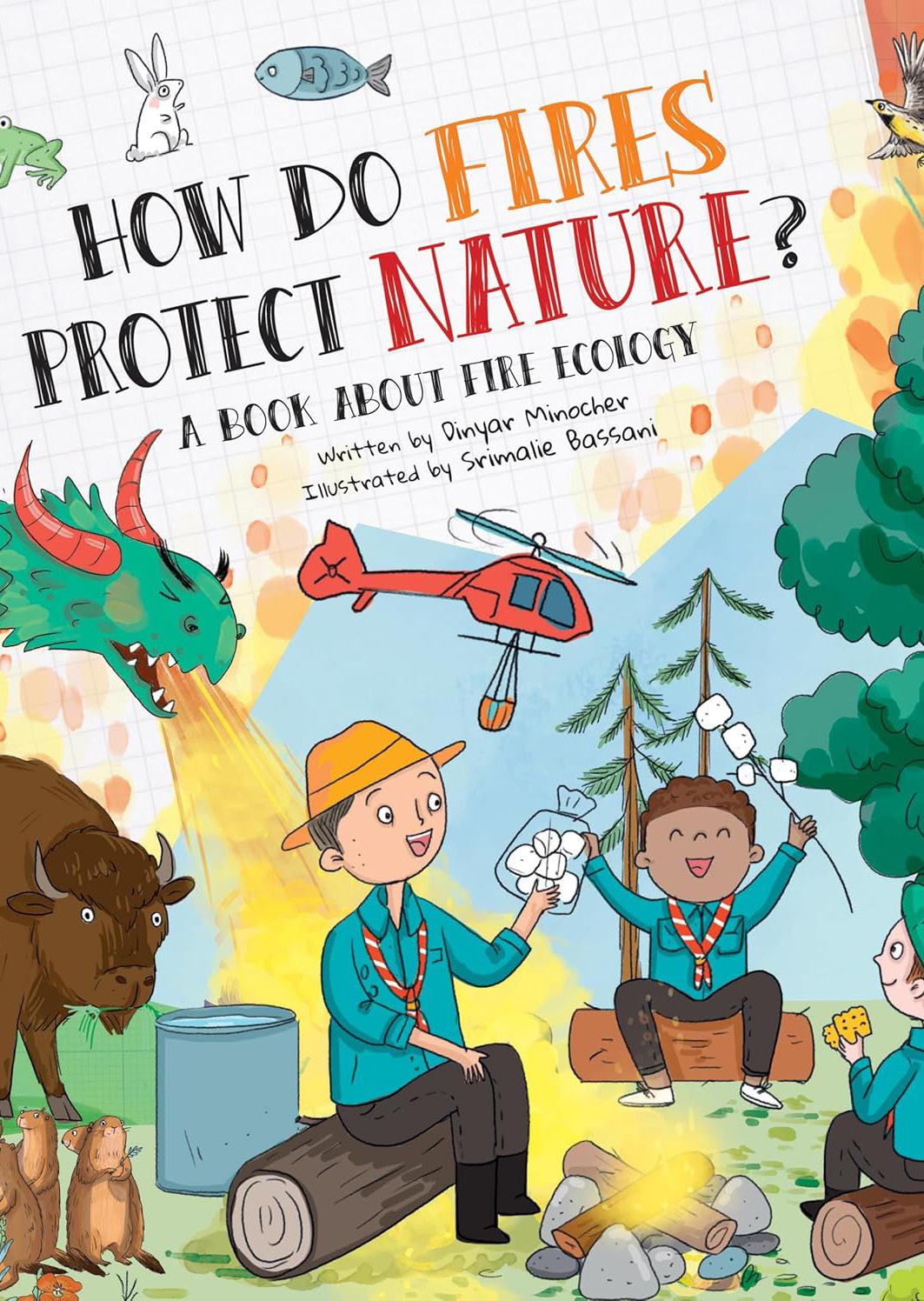
When I set out to write How Do Fires Protect Nature?, I wanted to tell a story about fire that kids, and their parents, could see themselves in. Fire has always been part of nature. It’s not the enemy of the forest, or something to be feared in isolation. It’s a process, as natural as rainfall or wind, that helps create the landscapes we live in and depend on.
The book is meant for kids aged 7 to 10, but I hope it sparks conversations in families, schools, and communities.
I worked closely with my wife, a species-atrisk biologist, to make sure the illustrations were ecologically accurate—from the burrowing owl habitats to the prairie birds and post-fire flowers. It was a fun and careful process, blending science with storytelling in a way that’s engaging but grounded.
In my own work, I’ve seen fire behave in surprising ways—like the time a lightningsparked fire in Grasslands National Park burned calmly through the night, only to be completely stopped by a two-inch-wide cattle trail. That small moment reminded me that the line between destruction and renewal is razor thin—and that fire can be guided, not just fought.
The most important message I hope readers take away is this: fire is nature. It’s not separate from the world we want to protect; it’s part of it. And when kids understand that, they can grow up to be part of the solution—helping to shape a future where fire is used to restore, not just feared.
Submitted by Dinyar Minocher Director, TRU Wildfire Research, Innovation and Education, Thompson Rivers University
Complete the wordsearch on page 27 for a chance to win a copy of this book!
The great fire of 1909
Richard Arthur
Before Europeans arrived in the late 1800s, massive herds of bison roamed the plains and played a central role in the cultures of many Plains Indigenous peoples. For thousands of years, the prairie grasslands were kept healthy through intensive bison grazing and the frequent, deliberate use of fire by the Indigenous peoples living on the prairies. The large herds of bison started to decline in the late 1800s. With the signing of treaties, most of the burning across the prairies came to an end.
By 1909, immigrants to Canada sought a new life through homesteading. southwestern Saskatchewan and southern Alberta were blanketed with lush native prairie grasses. In many areas, the grasses were thigh-deep on horses and covered the prairies like a thick carpet, having accumulated over roughly 40 years.
At the same time, the region had been enduring a “long drought” that began in the early 1890s and persisted through the 1900s. The drought severely impacted water supplies, with lasting effects on groundwater. Water supply issues remained a persistent problem in some areas. The fall of 1909 was unusually warm with very little precipitation. Grasses and other prairie vegetation dried out early, and by the end of September, most of the prairies had become a tinder box.
In early October, a fire ignited along Blood Indian Creek, about 5 miles north of where it flows into the Red Deer River. Driven by strong westerly winds, it roared eastward towards the Alberta-Saskatchewan border.
Grasses and other prairie vegetation dried out early, and by the end of September, most of the prairies had become a tinder box.
Settlers east of the firestorm quickly hitched horses and oxen to ploughs to establish fire breaks roughly 60 miles north of Empress. Women and children remaining on the homesteads lit backfires as the inferno approached them, saving most of the homesteads.
At sundown, the winds suddenly shifted from the southwest to the southeast. The western side of the fire lit up and rapidly expanded to the northwest. The fire’s glow was visible for 100 miles as it jumped rivers and trails with ease. Ranchers and settlers on the western flank joined in, armed with walking plows, water barrels, wet sacks, rag torches, and kerosene cans. The fire extended north along the Red Deer, following Bull Pound Creek, the Hand Hills, Dowling Lake, and Sullivan Lake. As the intensive efforts began to take effect, the fire’s spread westward slowed.
On the third day, the wind shifted back to the southwest, and the fire spread northeastward, burning north. As the winds eased, the fire’s progress slowed, allowing the settlers in the area to gain control of the northern perimeter.
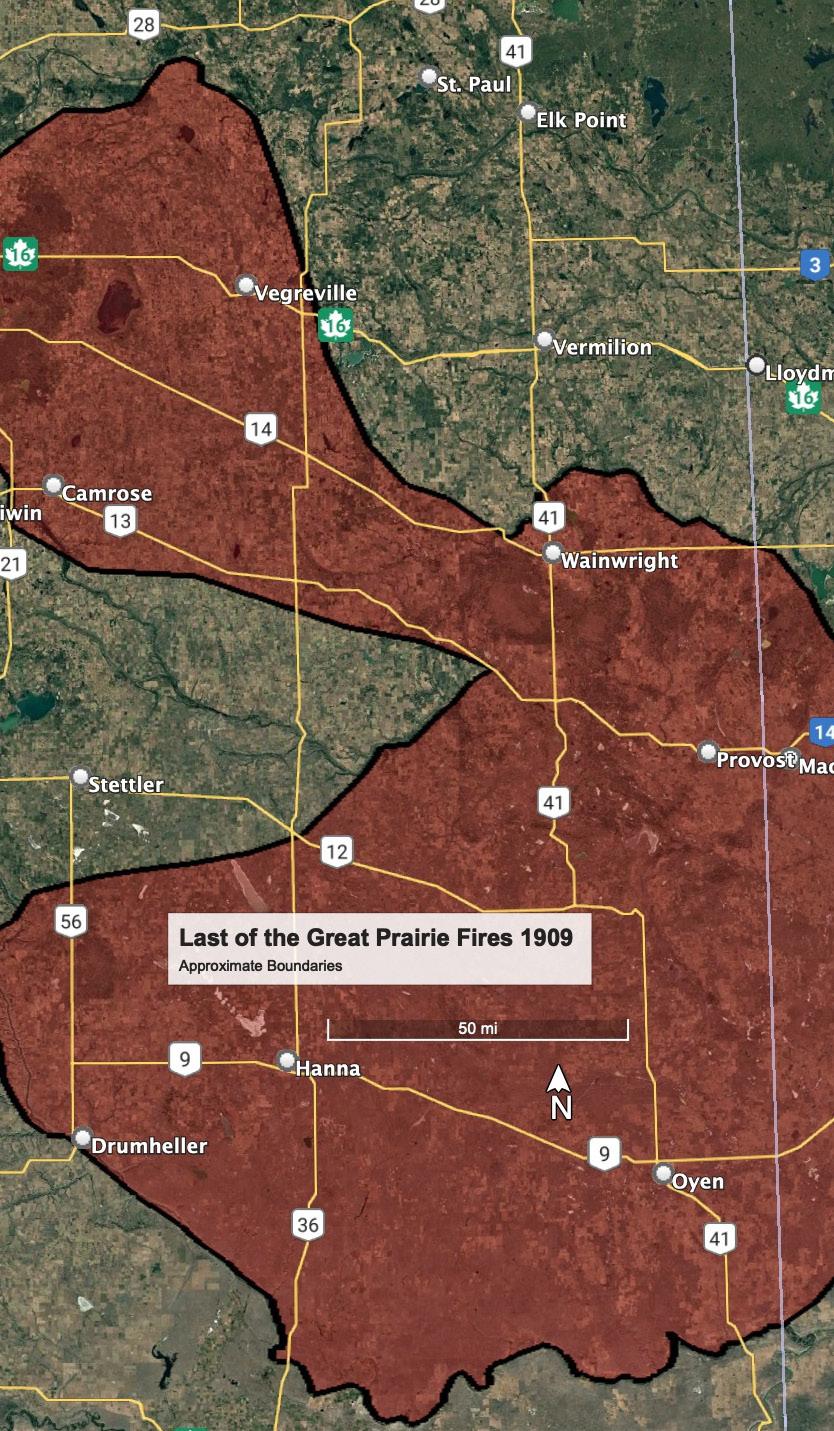
When the fire was finally brought under control, it had burned an estimated 14 million acres over three days. The southern boundary followed the north side of the Red Deer River. The western boundary was a line running north along Bull Pound Creek to Sullivan Lake. The eastern side of the fire extended northward approximately 6 to 12 miles east of the Alberta-Saskatchewan border. The northern edge of the fire roughly followed the current Highway 13.
The impacts on those early settlers were significant. Some lost everything, some were badly burnt, and others perished in the blaze. With no pasture or hay left, most settlers moved out of the area for the winter, returning in the spring. Settlers arriving in the spring of 1910 travelled for days without finding any grass for their livestock. In May, the grass briefly greened up but soon withered as the drought continued. The fires of 1910 along the foothills were devastating, with approximately 1 million acres burning within the Forest Reserves, from the Red Deer River south to just north of Waterton National Park.
The true extent of the losses from this fire may never be fully known, but it is unlikely that such a fire will occur across the prairies again. Road networks, municipal fire departments, water trucks, graders, and farm equipment can all be mobilized to contain a fire when it arises. However, the rapid spread of fire due to wind and the build-up of dried grasses means that significant losses can still happen.
Preparing for fire must be done well in advance. Keeping grasses in your yards short or grazed reduces fire intensity and spread. Removing all vegetation next to your homes and outbuildings and replacing it with gravel is necessary to minimise losses caused by fires. Keeping your yard clear of debris helps in reducing the chances of ignition which can spread to other structures.
Scan the QR code to learn more about fire services in the County.
Submitted
by
Richard Arthur CEO, Driptorch Consulting Inc.
Protecting your trees from White Pine Weevils
The White Pine Weevil is a native insect that targets the terminal leader of both spruce and pine trees. Adults feed on the juices of the terminal leader and lay their eggs beneath the bark. When the larvae hatch, they tunnel downward through the cambium, disrupting the tree’s nutrient flow. This causes the leader to wilt and curl into a “shepherd’s crook”.
If left unmanaged, white pine weevils can deform the tree and weaken its overall health - leaving it vulnerable to other pests and environmental stress.
Agriculture Services
Scan the QR code for easy identification tips, management strategies and prevention methods you can put into action right away. Whether you have a single tree in your yard or manage a shelterbelt, these tools will help you keep your trees healthy and thriving for years to come.
Your trees are an important part of our shared landscape let’s keep them strong!
Scan the QR code for easy identification tips, management strategies and prevention methods you can put into action right away.
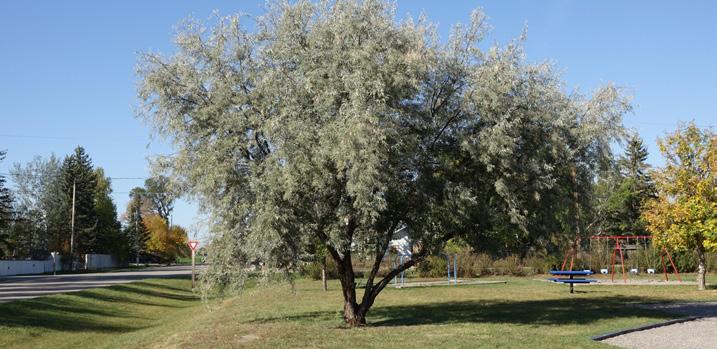
What’s the buzz around Russian Olive?
You may have heard the rumblings surrounding the Russian Olive (Elaeagnus angustifolia). Introduced from Europe and Asia, the tree was brought in the late 1800s as a windbreak for farmers’ shelterbelts. It has unique, deeply grooved bark, bright yellow flowers, and silver leaves that offer a view like none other. The olive-looking fruit it produces, attracting a variety of birds that add to the improvement and biodiversity of a farmyard or park. With its ability to grow and flourish in drought conditions, this tree was highly valued and has been utilized in many shelterbelts, as well as in rural communities. What isn’t there to love?
Unfortunately, the same traits that make
it hardy have also made it invasive in many areas, where it outcompetes native species, such as cottonwoods and willows. Because of the growing risk it poses to our native habitats and trees, many nurseries have stopped selling it.
Here are some alternatives we’ve noticed have been successful in this area.
Ohio Buckeye (Aesculus glabra) – A personal favorite of mine, this droughttolerant species has buds that swell to a vibrant pink the size of one’s thumb, and it grows clusters of five dark green leaves. Come fall, they turn a fiery orange and red. In spring, yellow flowers brighten the landscape and attract a variety of pollinators. It does produce non-edible nuts, which require additional cleanup in the fall.
Japanese Tree Lilac (Syringa reticulata) –This low-maintenance tree produces white, fragrant flowers in spring and has large, oppositely arranged green leaves. The tree is rarely affected by disease or insects, and is a smaller size, making it a good choice for yards with limited space.
Honey Locust (Gleditsia triacanthos) – If you’ve watched any of our shelterbelt

videos, you know the Honey Locust is one of Grant’s favorite trees. This lowmaintenance tree offers great shade, is highly drought-tolerant, and grows well within the County. It has green compound leaves that turn a stunning yellow in the fall. A great alternative to poplar trees, it grows quickly and can provide cover more rapidly than other trees.
Hackberry (Celtis occidentalis) – If you’re looking for a larger tree that reaches an impressive size at maturity, Hackberry is an excellent choice. It resembles the American Elm (Ulmus americana) but has distinct differences, characterized by narrow-tipped green leaves and creamgray, stippled bark that bring unique texture to the landscape.
The Russian Olive is undeniably a wonderful tree, yet the dilemma it presents for our environment remains. It can be difficult to grow and establish trees in this area, which makes the situation challenging. Nevertheless, there are many resilient, beautiful alternatives that thrive in our County and are worth planting.
Submitted by Matthew Wells Rural Extension Specialist, Agriculture Services Lethbridge County
Matthew Wells
Updates from Ag Services

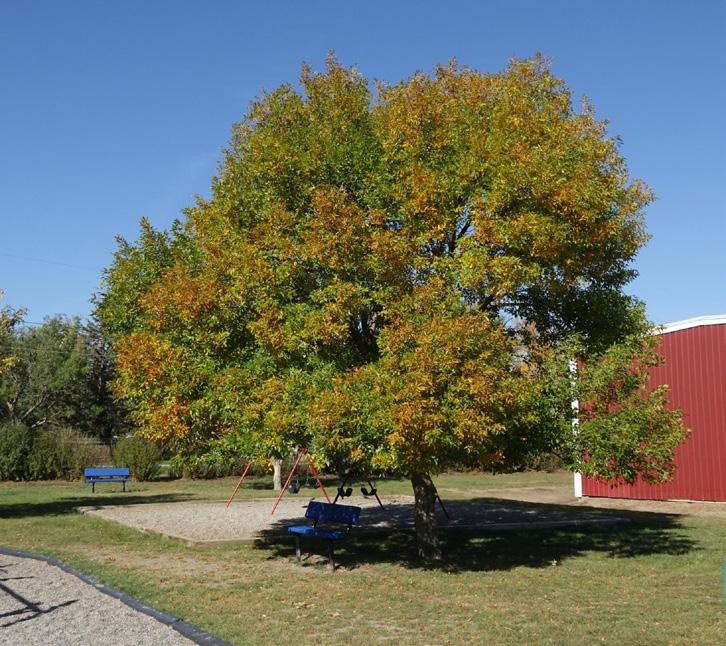
Revitalizing our Urban Forest
Each year, Lethbridge County staff plant trees within our parks to enhance or create an urban forest for residents to enjoy. In doing so, it improves the aesthetics and creates a healthy environment. Recently, staff have been planting a variety of trees to enhance the biodiversity and longevity of our tree canopy. This year, new plantings took place in both Sunset Acres and Fairview. Trees will continue to be added to our parks over the coming years to create various growth stages that ensure lasting shade and longevity of our urban forest.
Regular improvements of our parks keep these spaces vibrant and welcoming for all to enjoy! Be sure to stop by one of our parks in 2026 to enjoy the experience!
Turin gets a major upgrade!
This summer, a circuit-style play structure was built, offering fresh challenges and fun for kids to enjoy. In combination with the park, a basketball and pickleball court was constructed. We sincerely thank the Turin Community Association for their initiative and guidance during the development and planning of the site.
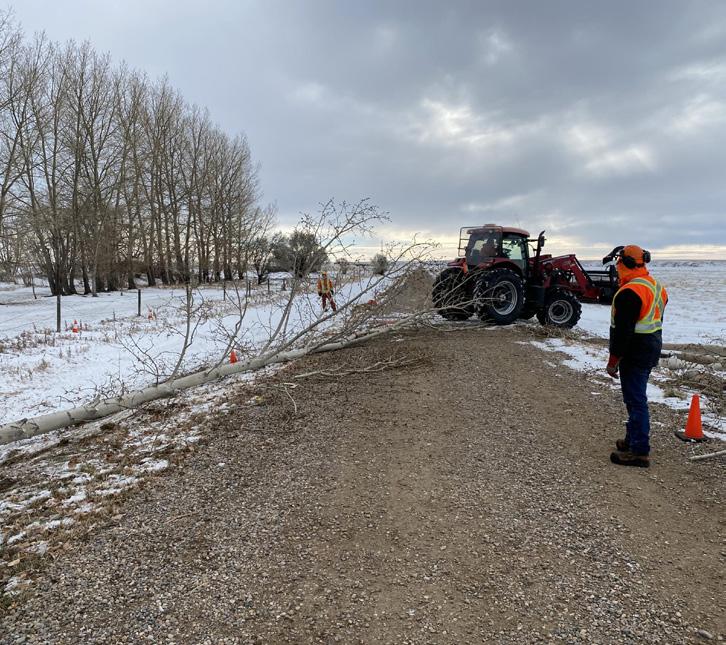
Roadside tree cutting notice
County personnel began tree cutting along County roadways in November. This helps ensure that sightlines remain clear for motorists.
For everyone’s safety, please be courteous, slow down and give them plenty of space to work. We thank you for your cooperation!
UpComing events Mark
Submitted by Matthew Wells
Rural Extension Specialist, Agriculture Services
Lethbridge
County
Scan the QR code or visit the Lethbridge County website for upcoming community events and learning opportunities.
2026 Nutrient Management Webinar Series
January 26, February 2, and February 9
Join these free sessions and earn CCA credits. Register online at lethcounty.ca/p/learning.
Growing Opportunities Workshop
March 2026
Watch for updates on the website and in the County Insider.
Shelterbelts and Resilient Landscapes Workshop
April 2026
Watch for updates on the website and in the County Insider.

Stay connected. Sign up for the County Insider, your source for news, road construction and closures, and job notifications.
your calendar! Roots & reach
& reach

A message from your Agricultural Service Board (ASB) John Kuerbis
Lethbridge County is a major economic and agricultural driver for the province and the country. Despite the challenges around the world, our producers continue to provide the highest quality beef, dairy, sugar, vegetables, forage, and cereals. They are adaptive and creative; producers are innovative and always looking for new ways to increase efficiencies and offer value-added services to their products. This legacy has not changed in 2025, and frankly, given the geopolitical environment we are currently in, it may be more important than ever.
On the weather front, overall temperatures were average this summer with rainfall higher than the past few years which is welcomed by producers. Hopefully, we are heading out of the dry cycle we have been experiencing for the last few years. Now, if we could get the rain to fall when we want it and not when the forage crews are trying to chop silage. Of course, global uncertainty around trade and tariffs has been a concern with producers and continues to be an active topic at coffee time; however, the overall mood seems to be optimistic for a good productive season.
On the long-term front, damage from Richardson Ground Squirrels continues to be a major issue in the region, and lobby efforts from the Local and Provincial ASB boards to bring back Strychnine continue. Most recently, this issue was brought directly to Premier Smith by a few producers in the region at a town hall meeting. She has committed to looking to see if something can be done to lobby for the reversal of the federal government’s wide ban.
As I write this article, we are just heading into harvest season, and I would be remiss in not reminding everyone to take care of their mental health. Agricultural producers continue to experience higher rates of depression, anxiety, and stress compared to the general population. Studies show that 35% of farmers report depression, 57% report anxiety, and 76% experience moderate to high levels of stress. Reports
suggest that one in four Alberta farmers has reported thoughts of suicide. For anyone struggling, I would encourage you to reach out to AgKnow (Alberta Farm Mental Health Network). They continue to be a valuable resource for producers seeking support. They are agriculturally centered and have counsellors and therapists who understand the unique stresses of the agricultural way of life.
I also know that overall producers are a resilient group and eternal optimists, but everyone has their breaking point, and harvest season has a way of bringing the cracks to the surface, so please take care of yourself and each other. We are a community after all, and it’s important.
Looking forward, I am optimistic for the future. A revived sense of patriotism has prompted a groundswell of buy local sentiment, and as this continues, it can only serve to solidify Lethbridge County’s position and an agricultural leader as a place where roots run deep and the future is bright.

Submitted by John Kuerbis
Former ASB Chair
Deputy Reeve, Councillor, Division 4
Lethbridge County
Did
you know?
Economic impact of Lethbridge County
Gary Secrist
Lethbridge County is home to the largest agricultural economy in the province.
Producers in our County are responsible for over $4 billion a year in economic impact, with a large portion attributed to intensive livestock operations and crops that support cattle production. There are also a significant number of pork, poultry, and dairy operations.
Well-established irrigation infrastructure also provides an exceptional environment for a large variety of important crops. Sugar beets, potatoes, pulses, flax, canola, rye, barley, and silage corn are some of the high-quality crops produced here, along with three cheese processing facilities and several greenhouses that produce a wide range of vegetables. This agricultural intensity and available irrigation have provided a unique situation where competition for irrigated land can bring prices exceeding $4 million per quarter.
The Lethbridge County Agricultural Service Board supports the local agriculture industry by administering services related to the following provincial legislations:
• Alberta Weed Control Act
• Alberta Soil Conservation Act
• Alberta Agricultural Pest Act
• Animal Health Act

Submitted by Gary Secrist
Manager, Utilities & Agriculture Services
Lethbridge County
Scan the QR code to find out more about the role of Agricultural Service Boards and the impact of agriculture in Lethbridge County.
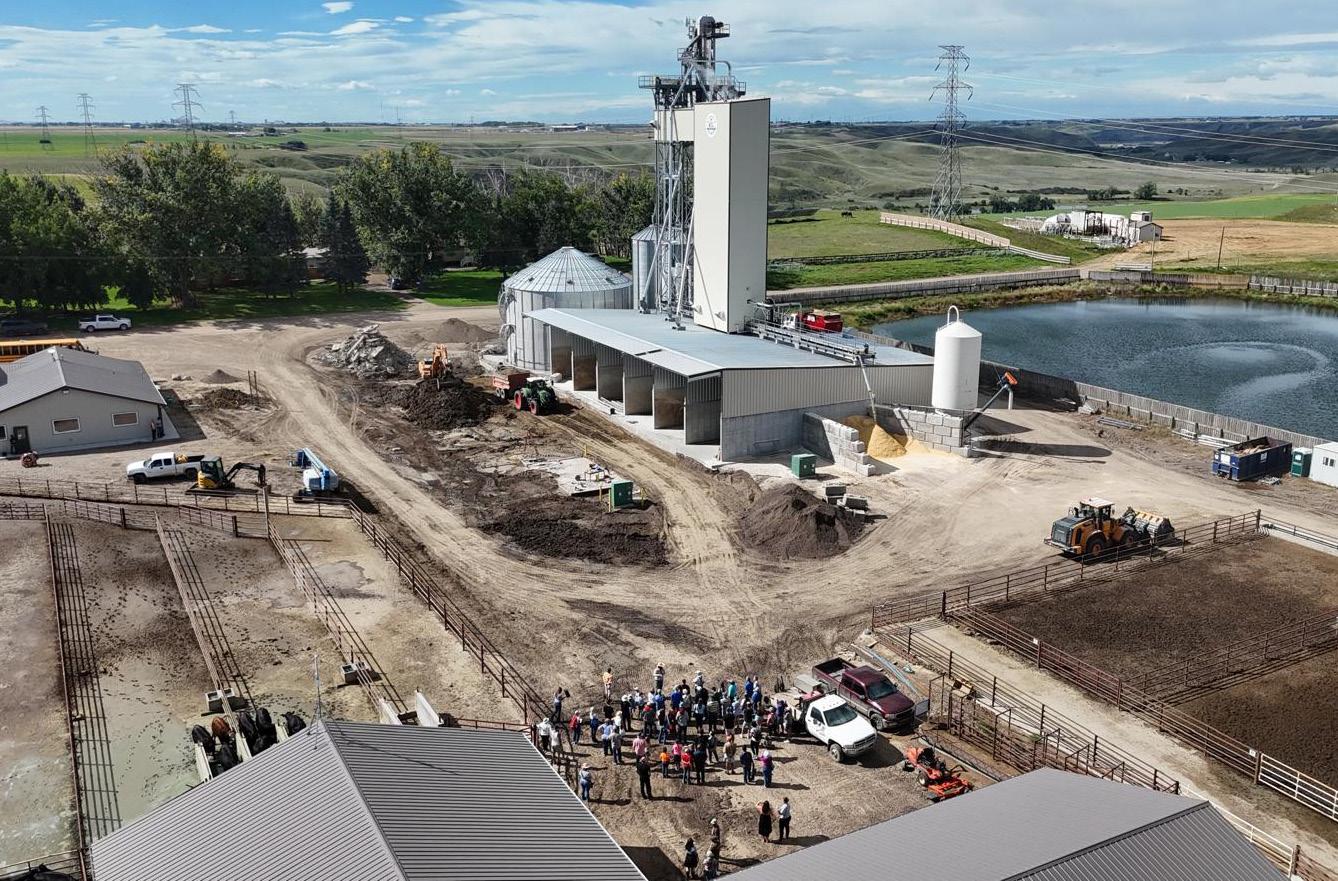
Coaldale & District Agricultural Society hosts third annual Open Farm Days bus tour Maaike Van Kuilenburg
On Saturday, August 16, 2025, the Coaldale & District Agricultural Society proudly hosted its third annual Alberta Open Farm Days bus tour — a highly anticipated event that once again brought the community together to celebrate and learn about local agriculture.
This year, 70 guests of all ages climbed aboard the tour bus for a scenic and educational journey through the beautiful countryside surrounding Coaldale. Among the attendees were visitors from Calgary and even a few from outside the County, all eager to gain a deeper understanding of how food is produced right here in Southern Alberta.
First stop was at KCL Cattle. The dedicated team kicked off the day by guiding guests through their state-of-the-art feed mill, cattle handling facility, and impressive farm equipment. It was an eye-opening look at modern livestock operations and the care that goes into raising healthy animals.
The second farm was Tokariuk Farms, where the family farm offered an insightful presentation on sugar beet farming, showcasing the vital role Alberta Sugar Beet Growers play in producing sugar locally. Guests left with a new appreciation for this often-overlooked crop.
Thirdly, 845 Spud Farms shared the story of their rapidly expanding potato operation. Their passion for the booming potato industry was clear, and visitors were fascinated by the technology and processes that support their success.
To wrap up the tour at Mans Organics, we welcomed everyone to explore their diverse organic farm, where they grow a variety of crops, including tomatoes, peppers, garlic, cantaloupe, and more, for markets across the province. The visit was a perfect way to end the day, showcasing the importance of sustainable and organic farming methods.
A heartfelt thank you goes out to all our generous hosts for opening their farms and sharing their knowledge with us. Your hospitality and dedication to agriculture left a lasting impression on everyone who attended.
We’re already looking forward to next year’s tour and the opportunity to introduce even more guests to the incredible producers that make Alberta’s agriculture industry so special!
Submitted by Maaike Van Kuilenburg Member, Coaldale Agricultural Society
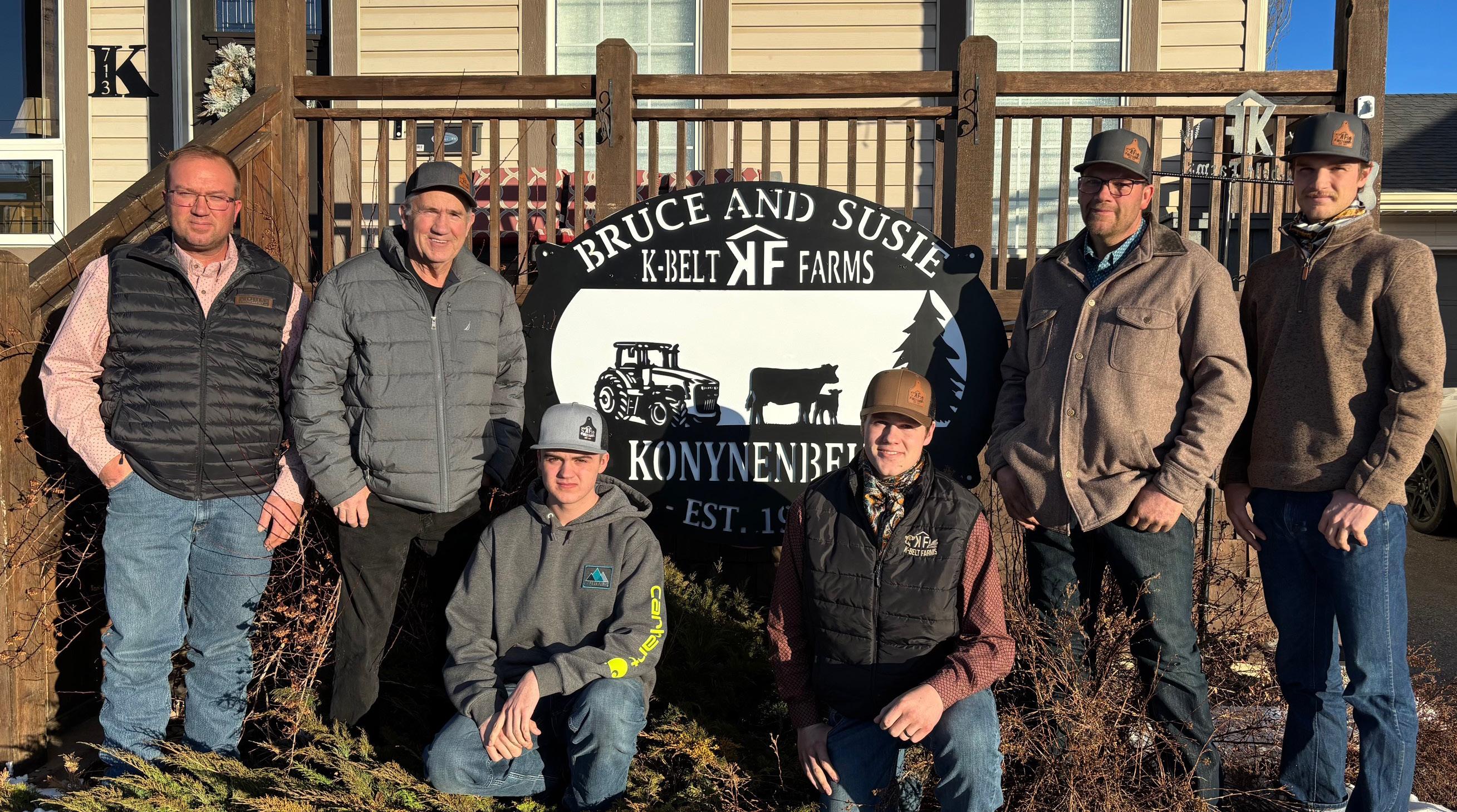
Farm family spotlight: Konynenbelt family | K-Belt Farms
Konynenbelt family
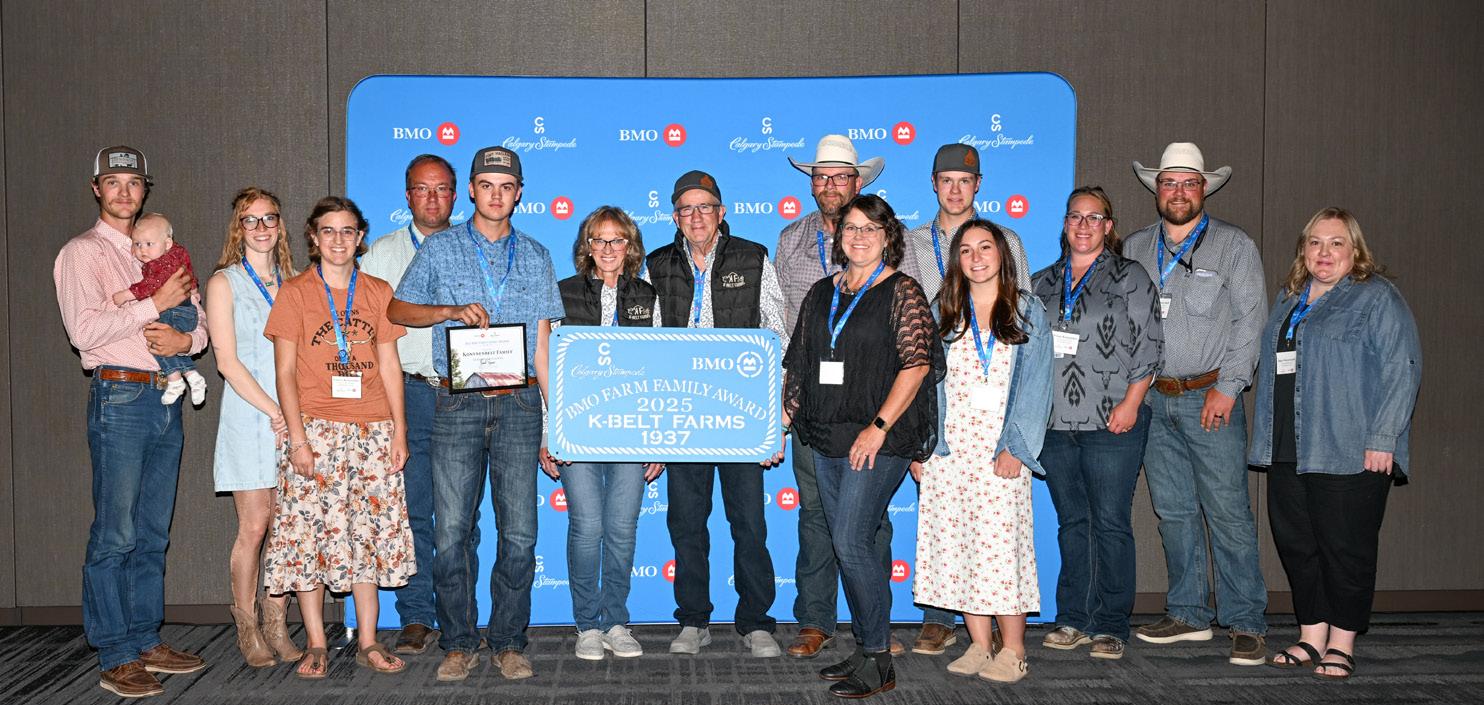
The Konynenbelt family from Lethbridge County feels fortunate for their farming lifestyle. “Being a born and bred farmer, I really appreciate the wonderful life it has provided five generations of our family” remarks Bruce Konynenbelt, member of the 2025 BMO Farm Family from Lethbridge County and co-owner of K-Belt Farms. “While it can mean long hours at all times of the year, and even waking up in the middle of night, we feel privileged to have raised our family this way and hope we can for the next few generations as well.”
Bruce’s father, Neal, grew up on his parents’ farm south of Nobleford, Alberta. He emigrated from Holland in 1912 with his family when he was 8 years old. Neal’s father was not a farmer by trade but decided to give it a try upon landing in Canada, which ultimately left a lasting impact on his family. In 1937, Neal and his wife, Minnie, purchased a farm north of Nobleford and operated a small, mixed farm – growing crops, selling cream, selling eggs and raising pigs – for over 30 years. In 1971, Bruce and his wife, Susie, took over the farm from his parents and continued to grow the operation and their
family. They had four children – Shauna, Stacey, Jason and Keith – who were all eager to help on the farm as they grew up. Jason and Keith both worked with Bruce on the farm until 2023, when Keith decided to step back from farming and sell farm equipment for Noble Equipment. Jason and his wife, Susy, continue to work with Bruce on the farm, along with their son Brendan and his wife, Madison. Jason and Susy’s other son, Ryan, works as an auctioneer and acts as a cattle buyer for K-Belt; their son, Logan, also works part-time on the farm while finishing his Mechanics degree; and their daughter Carmen, who graduated high school this spring, helps as well. Keith and his son, Colton, also still come to assist during the busy seasons. “It’s nice we don’t have to hire extra workers to help, as it is a true family effort,” Bruce explains. With two recent great-grandchildren added to the mix, it now marks five generations living on K-Belt Farms.
Originally, Bruce and Susie operated K-Belt Farms as a hog farm – starting off with 80 sows and then eventually fattening out 5,000 hogs annually in the latter years of the business. However, in 2000, they
decided to get out of pigs and focus more on the cattle business. “We kept losing money raising pigs,” recalls Bruce. “A lot of friends and people we knew were in the cattle business, so we decided to move more that direction. To be honest, none of us miss the pigs at all.”
The transition from hogs to cattle ended up being quite seamless, as they expanded on the cattle they already had. Today, they have a couple different facets of their cattle business, including a 3,500 head custom backgrounding feedlot and
“While it can mean long hours at all times of the year, and even waking up in the middle of the night, we feel privileged to have raised our family this way and hope we can for the next few generations as well.” Bruce Konynenbelt
breeding 250 heifers each year to sell as pairs later. To support the feeding of their cattle, they farm 540 acres of irrigated and 900 acres of dryland to grow hybrid fall rye, sorghum, barley, canola, alfalfa – mainly used for silage and feed. Everything comes full circle, as they utilize manure from the feedlot to implement a 4-year rotation of manure application on their fields to slowly increase organic matter and reduce use of synthetic fertilizers on their crops. They also operate a custom baling business where they bale approximately 20,000-30,000 bales of straw and hay in the surrounding area of Lethbridge each summer through fall. “There really isn’t a slow time of year at K-Belt Farms,” Bruce chuckles. However, he is especially appreciative of the multi-generational approach to the farm. “Sometimes it’s hard to convince ‘Grandpa’ to change his ideas,” shares Bruce. “But the younger generation has brought some new ideas to the farm and new ways of doing things that have been beneficial to the farm and its sustainability practices.”
The Konynenbelt family has remained active in the agricultural industry and Nobleford community for many generations as well. Bruce was director of Alberta Pork Producers for eight years while raising hogs and served as board member of the Little Bow Gas Co-op. Susie has helped with the Nobleford Ag Society for many years; Bruce was instrumental in building the Nobleford Curling Club; and they both recently joined the Nobleford Seniors Club. Jason is a board member of a local feeder association, deacon at Nobleford Christian Reformed Church and served as a leader of the Lethbridge Northern 4-H Beef Club along with his wife
Susy for several years. Keith served at the Nobleford and District Fire Department for 14 years and retired as deputy chief but is still involved in the fire society. The entire family is involved in various church programs within the community as well.
As the Konynenbelts look ahead, they realize that it may become harder to keep smaller family farms going. However, that is why they are committed to growing a more sustainable farming operation with high-quality crops and cattle. They hope many more generations of Konynenbelts can enjoy the same lifestyle that has been so special to them.
Submitted
by
the Konynenbelt family
Safeguarding your digital fields
Doug Burke
Just as we protect our crops and livestock from pests, our digital world also needs protection. Cyber threats are evolving rapidly, and rural communities are not immune. Whether you’re running a farm business, managing accounts, or simply staying connected online, strong cyber habits are essential.
1. Watch for “Fake Harvests” (Phishing Emails): Fraudulent messages often look real but are designed to steal information. Pause before clicking links or opening attachments.
2. Strengthen Your Digital Fences: Use unique, lengthy passwords for each account. Think of them as sturdy gates keeping intruders out.
3. Add Extra Locks: Enabling two-factor authentication (2FA) provides another layer of defense, much like locking both barn and silo doors.
4. Secure Your Equipment: Laptops, tablets, and phones should be locked when unattended—just as you’d never leave machinery running in the yard.
By making cybersecurity part of your daily routine, you help ensure your operation, community, and family remain safe in our increasingly digital landscape.

Submitted by Doug Burke Manager, Information Technology Lethbridge County
No way out Jody Wacowich
Avoiding confined space incidents starts with identifying these hazards on your farm.
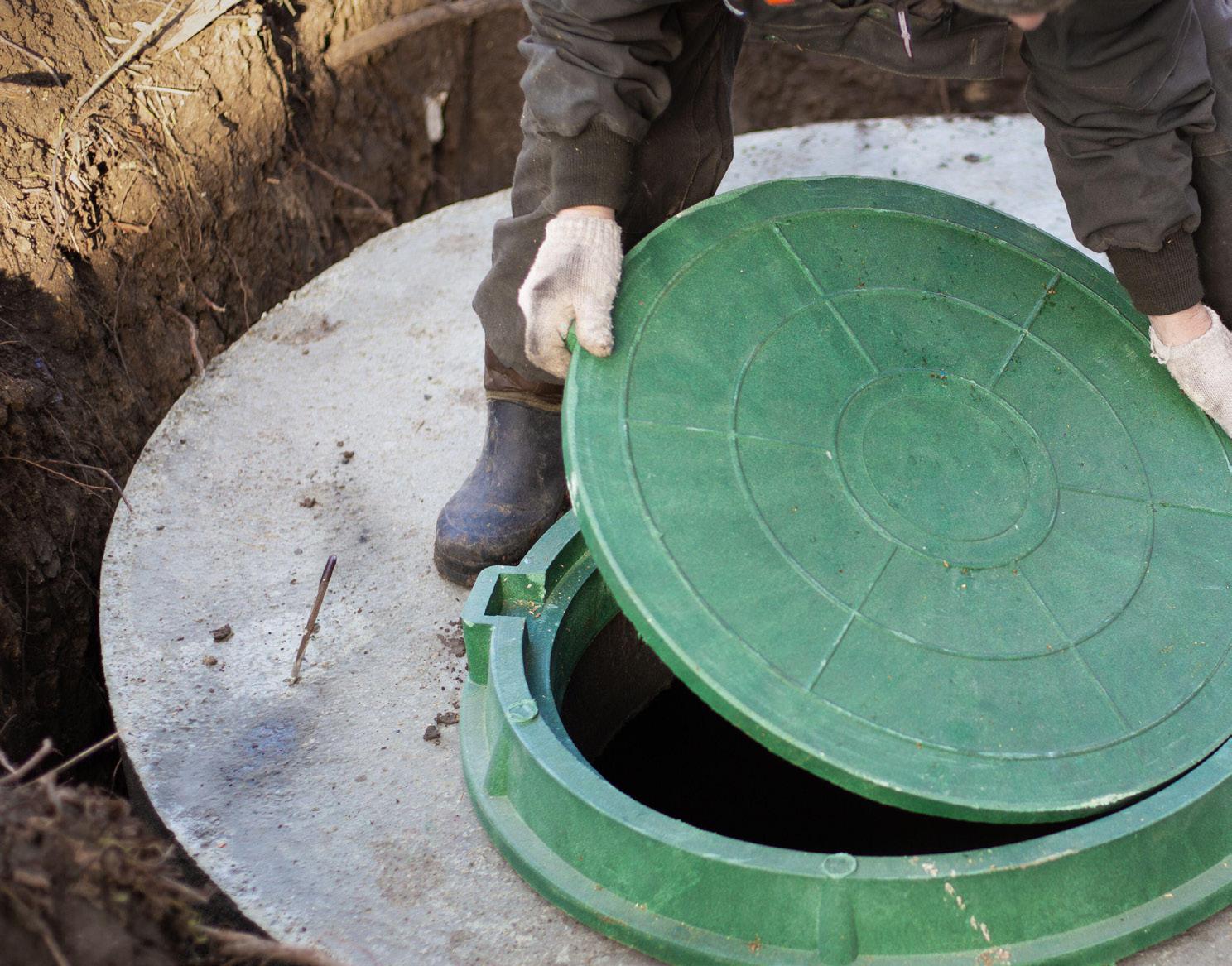
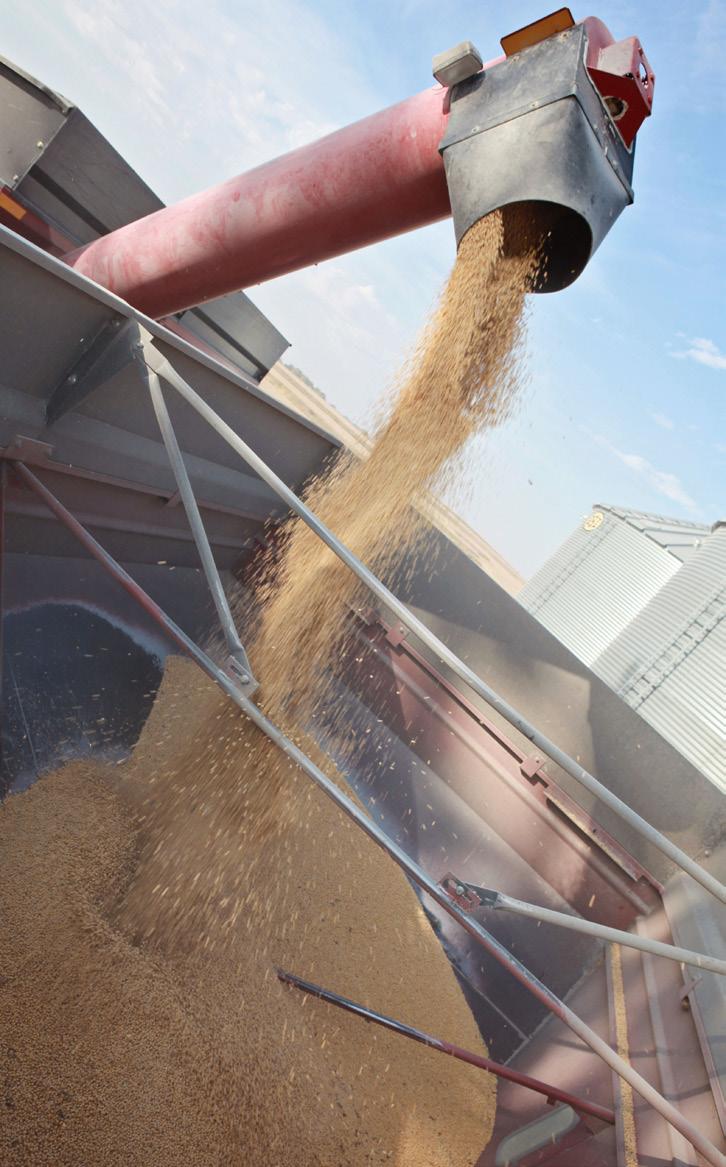
Do you know which one of these photos is a confined space? The answer is both of them, but if you were unsure, you’re not alone. Many of these serious hazards go unrecognized and unaddressed in farm safety planning, and this often leads to tragedy.
In August, one of these tragedies occurred at a Colorado dairy farm. It all started with a contractor performing routine maintenance on an underground manure pit, a common type of agricultural confined space. According to reports about the incident, the contractor may have mistakenly triggered a valve or pump during his work, instantly releasing highly toxic hydrogen sulfide gas. He collapsed immediately, prompting five other workers to rush into the pit to save him, despite warnings from an on-site supervisor not to enter. All six perished.
Agricultural confined space incidents are on the rise. Canadian statistics relating to confined space incidents on farms are limited, but statistics from the United States are troubling. A report published by Purdue University’s Agricultural Safety and Health Program found that in 2022, there were 83 recorded confined space incidents, up more than 40 per cent from the previous year, and 22 were fatal.
More than half of the incidents involved grain, the highest number of grain-related incidents in over a decade. Unfortunately, this doesn’t surprise me, as this is usually the time of year when I start hearing about people entering their bins and becoming trapped. Many do not survive. What surprises me is that we are all aware of this risk and yet it keeps happening.
Recognition of confined spaces is the first step in preventing fatalities. Restricted and confined spaces are much more common on farms than most people realize. These include storage or feed bins, septic tanks, manure pits, silos, wells and crawl spaces, among many others. Make a note of where these spaces can be found on your farm and start making plans as to how you and others can work safely if someone has to enter them. Involve your farm team in the planning and training and make sure everything is documented in detail.
Confined space deaths often result from an oxygen-deficient or toxic atmosphere that could easily have been caught through atmospheric testing prior to entry and continual monitoring afterwards. Deaths also result from poor or incorrect emergency response procedures – in fact, more than 60 per cent of people who die in confined spaces are would-be rescuers, according to the National Institute for Occupational Safety and Health.
The easiest way to learn more about confined spaces is to take AgSafe Alberta’s
Confined Space Awareness Course. The course will teach you what restricted and confined spaces are, how to identity them on your farm and how to navigate them safely. What makes our course unique is it is agriculture specific and provides practical examples relating to farming.
If you need additional support, AgSafe Alberta is here to help. You can contact us with any questions you may have or schedule an advisor visit for personalized assistance. To get started, send us an email at info@agsafeab.ca or visit agsafeab.ca.

Scan the QR code to access the Confined Space Awareness course.
Submitted by Jody Wacowich Executive Director, AgSafe Alberta
A Century in the Making: Celebrating 100 Years of the Alberta Sugar Beet Growers
Alberta Sugar Beet Growers
Long before Alberta officially became a province in 1905, sugar beets were already taking root in its soil. In 1902, Southern Alberta saw its first recorded sugar beet harvest, sparked by the establishment of the Knight Sugar Factory in Raymond. Farmers were eager to explore the crop, but early efforts met with stiff resistance. Despite being chemically identical to cane sugar, beet sugar faced strong consumer bias. Most of Alberta’s beet sugar was shipped to Winnipeg, as local stores remained reluctant to stock it. With wheat farming flourishing—and far easier to manage—many growers chose the simpler path. By 1914, the Knight Sugar Factory had closed, marking the end of Alberta’s first sugar beet chapter.
But the story didn’t end there.
A decade later, interest was rekindled. Wheat prices had plummeted after World War I, while improved irrigation methods made beet farming more viable. In 1924, an idle factory from Idaho was transported and reassembled in Raymond under the Utah-Idaho Sugar Company. After two brutal winters and early crop losses, local demand finally began to take hold. In 1925, the Alberta Sugar Beet Growers (ASBG) was officially formed, marking the beginning of a century of farmer-led advocacy and collaboration.
The industry grew steadily, with a second factory opening by 1930. But history repeated itself with another cold snap and economic downturn. Utah-Idaho Sugar exited Canada, leaving the industry’s fate uncertain—until B.C. Sugar Refining Co. Ltd. (now Rogers Sugar) stepped in. Despite fears of closure, the company not only kept operations running but reinvested in Alberta’s sugar beet sector. A third factory opened in Picture Butte in 1936, followed by a fourth in Taber in 1949. World War II further bolstered production as the government pushed for maximum agricultural output. In fact, Alberta’s beet harvest during that era remains unmatched.
Through booms and busts—including a complete shutdown in 1985 due to pricing disputes—the ASBG never stopped working for Alberta’s farmers. Today, Taber’s refinery is Canada’s last remaining sugar beet factory, and ASBG continues to represent the 200 farm families who supply it—Canada’s only source of 100% domestic sugar.
While Alberta’s farmers grow the only source of Canadian sugar, they continue to face steep challenges—mainly competition with cane sugar. Over 90% of Canada’s sugar is imported, despite local growers being ready and able to expand production.
“As we celebrate 100 years of the Alberta Sugar Beet Growers, we are not just reflecting on our history—we are looking ahead to the future,” says Gary Tokariuk, Chair of ASBG. “This industry has always been about resilience, innovation, and community. For a century, sugar beet growers have been building opportunities in Southern Alberta, and we are determined to ensure the next generation has the same chance to grow.”
As ASBG marks its 100th anniversary in 2025, the organization remains focused on a sustainable future.
One hundred years in, Alberta’s sugar beet story is still being written—rooted in the strength of Southern Alberta’s farm families, and as vital as ever to Canada’s food future.

Submitted by Alberta Sugar Beet Growers
How’s your Environmental Farm Plan (EFP) coming along? Scan the QR code for information & resources.
Sustainable CAP overview
The Sustainable Canadian Agricultural Partnership (Sustainable CAP) supports the country’s continued innovation, growth and prosperity. This 5 year (20232028), $3.5 billion investment by federal, provincial and territorial governments strengthens competitiveness, innovation and resiliency of the agriculture, agri-food and agri-based products sector.
Alberta producers, farmers, ranchers, processors and organizations can apply for these cost-shared grant programs.
Emerging Opportunities
For: Processors, organizations Accepting applications.
On-Farm Efficiency
For: Producers, farmers, ranchers Applications open in 2026.
On-Farm Value-Added Program
For: Producers, farmers, ranchers Applications open in 2026.
Resiliency and Public Trust
For: Organizations Accepting applications.
Resilient Agricultural Landscape
For: Producers, farmers, ranchers Applications open in 2026.
Value-Added
For: Processors Applications open in 2026.
Water Program
For: Producers, farmers, ranchers Accepting applications until funding has been allocated.

Scan the QR code for more on Sustainable CAP.
Soil: the foundation of agriculture
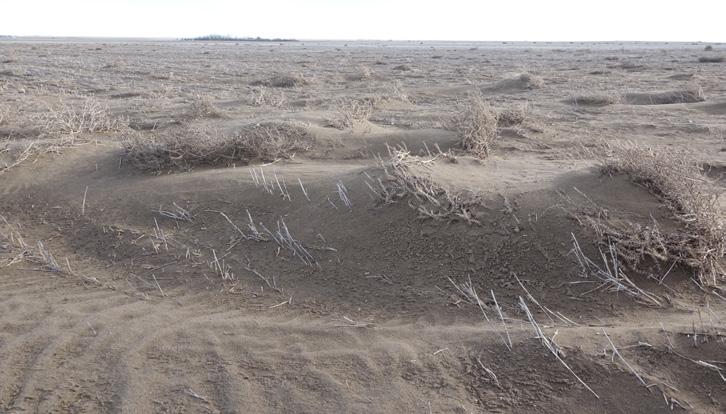
Agriculture is influenced by many factors, but none more so than our soil. Healthy soil is the foundation, the essential input, and the key difference between productive and non-productive land. When topsoil is lost, it is challenging to replace, as it can take 500-1000 years for one inch to replenish naturally.
AOPA amendments open new doors for nutrient management on the farm
Agriculture Services NRCB
Alberta Agriculture and Irrigation
In the early 1930s, soil erosion emerged as a significant issue that contributed to the phenomenon we know as the “Dirty Thirties”. Recognizing the importance of our soils, The Control of Soil Drifting Act was passed in 1935 and replaced by the Soil Conservation Act in 1962 at the request of local municipalities. Today, the legislation is utilized by municipalities to collaborate with landowners in addressing and preventing soil erosion.
Last year, Lethbridge County collaborated with various organizations and producers in southern Alberta to highlight the efforts being made to prevent soil erosion. If you want to learn more about the ways that farmers manage soil erosion in Southern Alberta, watch our video “Uncovering Soil Erosion: Voices From the Field”.
By working together, we can maintain healthy and productive soils for future generations.
Scan the QR code to watch “Uncovering Soil Erosion: Voices from the Field” on YouTube.
Submitted by Agriculture Services Lethbridge County
Alberta’s agricultural sector is set to benefit from recent legislative changes under Bill 44, which amended the Agricultural Operation Practices Act (AOPA) and related regulations. Effective June 23, 2025, these updates aim to reduce regulatory barriers, promote innovation and support environmentally responsible practices – including nutrient management, composting, and biogas production.
One major change is the inclusion of digestate, a by-product of renewable natural gas production, in AOPA. Previously managed under a Memorandum of Understanding, digestate can be stored in manure storage facilities or applied directly to land, provided it meets the new rules and the criteria in the On-Farm Storage and Land Application Code.
The amendments expand opportunities for agricultural operations and agri-processors to manage other allowable organic materials, such as food processing byproducts, for on-farm composting or land application.
These changes align with Alberta’s goals to enhance sustainability and create new opportunities in the agri-food and bioenergy sectors.
Producers are encouraged to review the updated rules to take advantage of new nutrient sources that support crop growth and soil health.
What’s new at the Natural Resources Conservation Board (NRCB)?
AOPA changes
As of June 23, 2025, the Government of Alberta has included new rules for managing digestate in the Agricultural Operation Practices Act (AOPA). If it meets the requirements outlined in the new OnFarm Storage and Land Application Code, digestate can now be stored in manure storage facilities or applied directly to agricultural land following the same requirements for manure application.
Grandfathering process streamlined
Do you own a confined feeding operation (CFO) that existed before AOPA came into effect in 2002? You may need a grandfathering determination from the NRCB to obtain the documentation you’ll need to sell, refinance, or expand. The NRCB has now streamlined the process to cut months off the timeframe for these requests.
Unauthorized construction
Unauthorized construction at CFOs is increasing. Building without a permit is a serious offence and may lead to prosecution. Contact the NRCB before starting any construction.
How to apply for a permit
Permit applications under AOPA can be submitted online, by email, mail, or through an NRCB approval officer.
Questions? Contact the NRCB. 403-381-5166 (Lethbridge regional office) info@nrcb.ca | www.nrcb.ca
Submitted by Alberta Agriculture and Irrigation
For more details, visit alberta.ca/manure-managementguidelines-and-legislation. For related inquiries, contact 310-FARM (3276).
Submitted by Natural Resources Conservation Board (NRCB)
Soil acidification: an issue of concern in southern Saskatchewan and Alberta
Healthy soils are key to sustainable agriculture, and pH is an important component of soil health because it influences all soil biological and chemical processes. Measuring hydrogen ion (H+) activity, the logarithmic scale for pH goes from 0 (acid) to 14 (basic). Soil pH generally ranges from 4 to 9, and the ideal soil pH for most crops is 6 to 7 (Figure 1). Closely related to pH are the concentrations of cations (positivelycharged ions), particularly base cations (calcium, magnesium and potassium) and cation exchange capacity (CEC; the ability of soils to hold and exchange base cations), because these help soils resist (buffer) pH changes. Soils are buffered against acidification by several processes: by carbonates/bicarbonates at pH 7-8, as carbonate minerals in the soil are dissolved; by the CEC buffer at pH 5-6, as base cations are replaced by H+ and aluminum (Al); and by the dissolving of minerals containing Al, manganese and iron, below pH 5.
Soil acidification is an increase in H+ activity, causing soil pH to decrease. It can be a natural component of soil weathering as base cations are leached from soil, the rate of which depends on underlying parent materials, rainfall, temperature and vegetation, but can be caused by human activities. In agriculture, soil acidification is most affected by fertilizers containing nitrogen (N) as ammonium (NH4-N), such as urea, ammonium nitrate, ammonium sulfate, and monoammonium phosphate (MAP). The main source of acidification from fertilizers occurs as NH4-N is converted to nitrate (NO3-N): NH4+ + 2O2 → NO3- + H2O + 2H+. Nitrate can increase soil acidification if base cations are bound to NO3-N and leached to lower soil depths. Harvesting crops also removes base cations, which contributes to soil
Acidic Soil Basic Soil
Ideal range for many crops
acidification, and is higher with haying than grain harvest, especially if grain residues and stubble are left in the field.
Soil acidification from fertilizers containing NH4-N has been widely reported in agricultural soils globally since 1928. However, in the northern Great Plains (NGP) of North America, including North Dakota, Montana, Alberta (AB) and Saskatchewan (SK), soil acidification was historically not expected to be a problem, because soils in the NGP have neutral to alkaline pH under native vegetation, high-calcium parent materials at relatively shallow depths for carbonate buffering, and low leaching of NO3-N and base cations because the climate is semiarid. However, with intensified crop production, reduced or no tillage and increased N fertilizer use, soil acidification has now been identified as a major threat to agricultural production in Montana, North Dakota, and semiarid eastern Washington state.
Soil acidification from N fertilizers was first reported in AB in the 1970s and in SK in the 1980s, and there were a number of studies in the 1980s and 1990s. However, interest in soil acidification in AB and SK soon declined, mostly because the risk of soil acidification was expected to remain low as long as application of NH4-N fertilizers remained low. However, all of the factors increasing soil acidification in the NGP in the USA are also relevant to the NGP in Canada, such as reduced soil mixing from a shift to no-till, intensified crop production, and increased N fertilization. Significant shifts in soil pH from long-term NH4-N application are now being reported in AB and SK, as well as
increases in crop root diseases associated with low-pH soils such as clubroot in canola.
Key management practices for soil acidification are careful monitoring and prevention.
Key management practices for soil acidification are careful monitoring and prevention. Acidification mostly occurs near the soil surface at the depth of fertilizer placement, so soil samples collected from no deeper than 10 cm (4 inches) should be analyzed regularly for pH and CEC, and monitored for changes. Practices that can reduce acidification include: diversified crop rotations with pulses, which reduces the application of N fertilizers; replacing acidifying fertilizers with less acidifying alternatives, such as MAP with triple superphosphate; replacing some chemical fertilizers with composted manures; leaving crop residues on fields; and strategic, occasional, tillage to mix soils and bring higher-pH soil to the surface. And liming may be required in highly acidified soils.

by Barbara Cade-Menun
Figure 1: Soil pH.
Barbara Cade-Menun
Enhancing water use efficiency: strategies and practices
Len Hingley
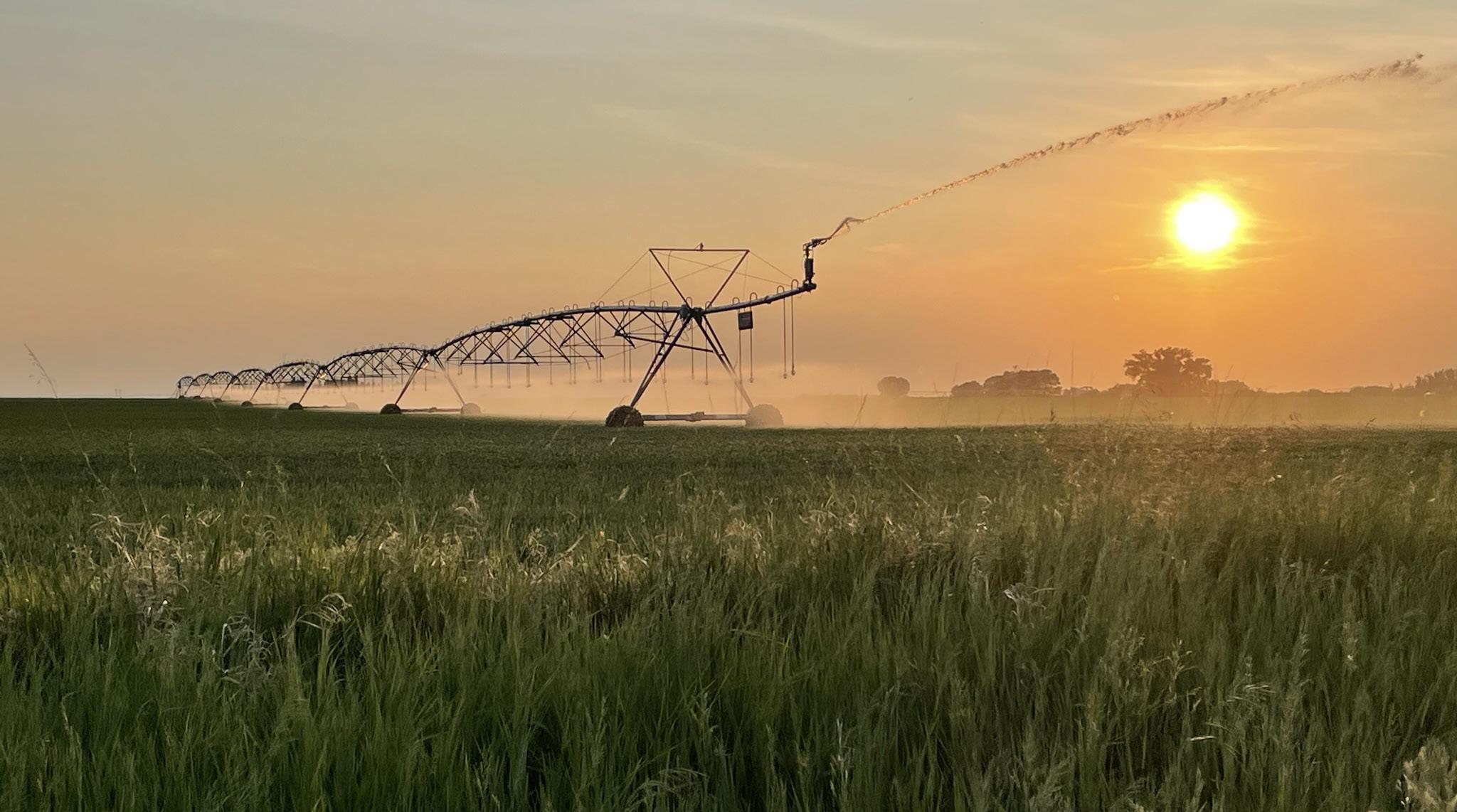
The irrigated areas of southern Alberta have experienced a series of years of below-average precipitation coupled with above average daily temperatures. These recent climatic extremes have generated renewed interest in improving water use efficiency (WUE) as producers have searched for ways to address reduced water allocations. This article examines five common strategies that are designed to improve water-use efficiency, while reviewing a deficit irrigation strategy effective to improve it.
Understanding water-use efficiency
Water-use efficiency is the ratio of yield over the water used to produce that yield. Therefore, to improve water-use efficiency, either factors such as plant growth, canopy characteristics, plant populations, degree of surface cover, plant-growth stage, and planting date on the top half of the ratio must be modified, or evaporation and transpiration from the bottom half of the ratio must be modified. This article will focus on the water use side of the equation, specifically strategies that can be used to minimize the evaporative component of evapotranspiration.
The term evapotranspiration is the combination of the terms evaporation and transpiration. Transpiration is the process of water loss to the atmosphere from the soil through the plant. Evaporation is the change of phase of water from a liquid to a vapour from an evaporating surface like water, soil, and vegetation. Evaporation and transpiration share four main drivers: air temperature, solar radiation, wind speed and relative humidity. As air temperature, solar radiation, and wind speed increase, so too, does evapotranspiration. Inversely, as relative humidity increases, evapotranspiration rates decrease.
Over time, irrigators have developed five common strategies to minimize the impact of wind, temperature, solar radiation, and relative humidity to reduce ET losses.
1. Stubble/residue management.
The first of these strategies is stubble or residue management. According to former University of Saskatchewan professor Philip Harder, increasing soil cover by ten per cent can reduce soil evaporation by five per cent. Similarly, a University of Nebraska study found that in research
plots with crop residue removed it would take 1.5-2.5 inches more irrigation to achieve the same yield as research plots that maintained crop residue. Additionally, the Nebraska study found at the end of the growing season, that plots with crop residues held 1.5 inches more water in the top four feet of soil than the plots with no crop residue retention.
2.
Minimal or no tillage.
The second of these five strategies, minimal or no tillage, is closely related to the first strategy in that it works to maintain surface residues in an effort to reduce evapotranspiration. According to retired agronomy research scientist Ross McKenzie, producers lose half an inch to an inch of water with every tillage pass. By incorporating no or minimal tillage practices on your farm, you can reduce soil evaporation while conserving soil moisture and increasing potential yield.
3. Crop rotation/crop mix.
The third strategy involves modifying your crop rotation to mine soil moisture from the previous year’s crop. This can
Figure 1
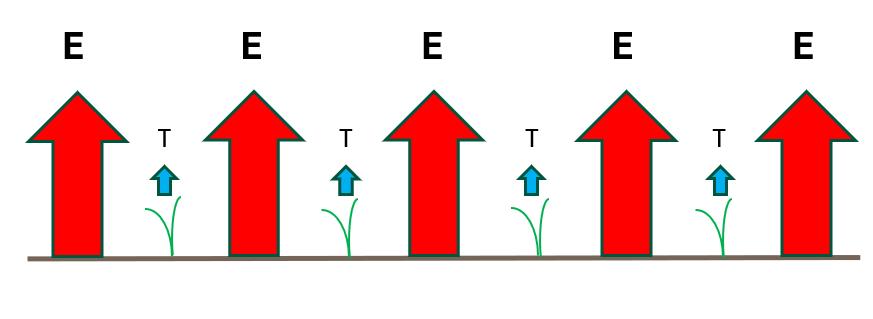
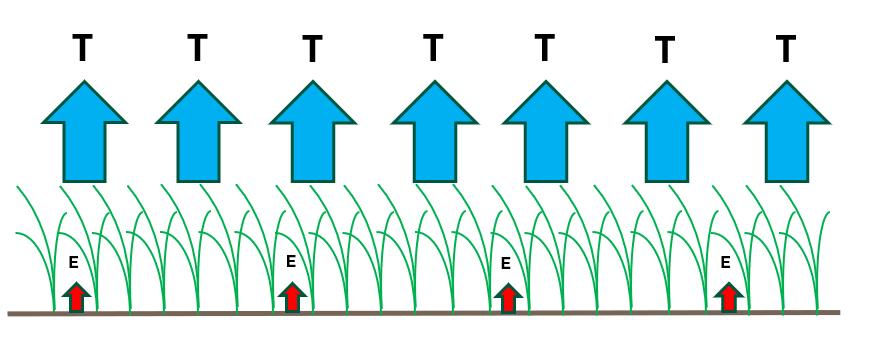
Bottom, Figure 2b. Relative magnitude of evaporation (E) and transpiration (T) after canopy closure. The middle of the growing season.
be accomplished by following a shortseason crop like peas, which have lower water use and shallow rooting depth, with a deeper-rooted crop, like corn or wheat. The deeper-rooted crop mines the residual soil moisture left in the soil profile by the previous year’s shallow rooted crop. A second aspect to crop rotation is selecting a crop mix that avoids heavy crop water users like alfalfa in favour low water users like dry peas. Both crop rotation and crop mix strategies will help in navigating potential reductions in allocation allotments.
4. Efficient irrigation systems.
The fourth strategy reduces the farm’s overall water requirement by adopting more efficient irrigation systems like low energy precision applications, low elevation spray applications, precision mobile drip irrigation systems and subsurface drip irrigation systems. Each of these systems have a range of application efficiencies that are measurably higher than the mid-elevation spray applications that currently dominate our irrigated acres. (Figure 1).
5. Varietal selection
The fifth and last strategy involves choosing a seed variety with a reduced crop water demand. Genetic improvements in varietal development can aid in keeping adequate soil moisture levels in your soil
profile, which is critically important during years with water allocation restrictions.
Regulated deficit irrigation
In addition to the common water-use efficiency strategies listed above, additional research has been done to take advantage of the seasonal changes in crop water use or evapotranspiration. Early in the growing season the largest portion of a field’s evapotranspiration is attributed to evaporation (Figure 2a), when water from wetted soil surfaces is released to the atmosphere in the form of water vapour. As the growing season progresses less water vapour is released from the soil surface to the atmosphere as evaporation and more water vapour is released to the atmosphere in the form of transpiration (Figure 2b). This change is directly related to plant growth. As plants grow, they gradually shade more of the soil surface, reducing the water vapour lost to evaporation. Inversely, as plants grow, they require more water for cooling, which increases the water vapour lost to transpiration.
Regulated deficit irrigation is a deficit irrigation strategy that takes advantage of these seasonal changes in evapotranspiration. Regulated deficit irrigation reduces water applications during periods characterized by less plant sensitivity to water stress with minimal effects on yield. In simple terms, the regulated deficit irrigation strategy modifies irrigation applications to minimize evaporation losses. A recent
research study in China demonstrated the promise of the regulated deficit irrigation approach. Chinese researchers found that by withholding irrigation on corn/maize between the seedling and V10 (ten-leaf) stages of crop growth and under normal precipitation conditions, the evaporative component of evapotranspiration was reduced by roughly 36 per cent. Future research on regulated deficit irrigation for other irrigated crops may help in identifying times when plant sensitivity is low, and crop evaporative demands are high, leading to a reduction in evaporation losses and an increase in WUE.
Conclusion
By adopting a combination of strategies and practices that include regulated deficit irrigation, residue management, minimal/ no tillage, crop rotations, drought resistant varieties, and more efficient irrigation systems, improvements to your on-farm water-use efficiency can be achieved. The addition of these practices not only reduce water-use, but they also lower energy and labour costs associated with additional water applications, improving the overall economic viability and environmental sustainability of the farm.
By adopting a combination of strategies and practices ...improvements to your on-farm wateruse efficiency can be achieved.

Submitted by Len Hingley
Irrigation Specialist Alberta Agriculture and Irrigation
Figure 2a Figure 2b
Left, Figure 1. Mid-elevation spray application.
Right, Figure 2a. Relative magnitude of evaporation (E) and transpiration (T) early in the growing season.
Nutrient additives: sorting the value from the hype
Scott Gillespie
If you could turn a waste product on your farm into a source of revenue, I’m sure you would. Manure is the classic example. Do you pay to get rid of it, or do you get paid for it to be taken?
Farming isn’t the only industry to generate organic by-products that need a home. Fishing, forestry, and food — from processing to consumption — all produce by-products that are usually considered disposal problems. Turning them into agricultural inputs shifts the equation from a cost of waste management to a source of revenue.
Viewed from a bird’s-eye perspective, this is a positive. It’s a small step toward a circular economy. In southern Alberta, we export nearly everything we produce. Those nutrients leave our land and go far away. While most may never return, some might — in the form of waste-derived products.
Economics drive it all
When synthetic fertilizers were cheap, it was hard to make a business case for bringing waste products back to the farm.
With fertilizer prices climbing and supply chains proving less reliable than we once believed, there is now an opportunity for new sources of fertility.
There’s another factor at play, too. Sustainability and regeneration targets — especially those set by corporations — are creating financial momentum. Even if this movement has reached its political peak for now, a lot of money is still chasing the next big “climate-smart” solution. Well-meaning people see these products as answers to climate goals, waste disposal problems, and farm demand.
The challenge for farmers, and for agronomists trying to give solid advice, is to sort the proverbial wheat from the chaff. Have you ever actually done that? We’re so used to combines doing it for us, but it’s a tricky process. I’ve done it while saving seeds in my garden: getting the seeds into the container without losing too many to the wind is an art. Evaluating new products is a similar challenge. A farmer once told me most of these products are snake oils — the problem is, some of them work.
Regulation and efficacy
One reason so many “biostimulants” are on the market in Canada is regulation — or the lack of it.
Fertilizers must prove nutrient guarantees.
Pesticides must prove pest control.
Biostimulants only need to show they’re safe.
That means a product can be sold if it claims to “improve plant health,” “increase stress tolerance,” or “stimulate roots” — without proving it actually works. It’s a lower bar than fertilizers or pesticides, and it explains why the market is crowded with products making broad promises but offering little independent data.
“Health” itself is a hard concept to pin down. Mick Jagger and Usain Bolt are both healthy in very different ways. A rock star needs the stamina for touring and performing, while a runner is measured by peak explosive power. When looking at a crop each farmer defines health differently. Some want dark green, weed-free fields;
others are content to see crops stress a little to build resilience.
The problem of reliable data
Independent data would be nice, but it’s impossible to test every product. By the time three years of replicated trials are completed, new products have arrived — or the old ones have been reformulated or dropped.
When these products do work, it’s usually in a specific time and place. To help with establishment, they might need to be applied on the seed or in the seed row. To reduce flower abortion in heat, they might need to be applied just before the stress event. Helping a crop recover from hail might require multiple applications during a critical window.
With insects, diseases, and weeds, we have thresholds and predictive models. With fertility, we have soil tests and rate trials. With biostimulants we do not have this level of study.
How to test them
The good news is that autosteer and coverage tracking gives every farm the ability to test products without the hassle of staking out treatment zones. The simplest method is to do a few skip passes with the product and then fill in check strips without it.
If a product claims to change plant health, you might see differences visually or in satellite imagery, but what really matters is ROI — return on investment. The product either needs to cut costs while maintaining yield or improve yield beyond its cost. Whether it uses nutrients more efficiently,
Use the tools you already have...to see if a product truly pays on your farm. In the end, it’s not about the story behind the product, but whether it delivers real value to your farm.
allows better stress tolerance, or wards off pests, it doesn’t matter. It just needs to return you more than you put in.
Take, for example, the common cost of $20/ac. If it goes in with an existing pass on the field the only additional cost is the labour involved. Big caution – always be sure it really is compatible. If there is crop damage the companies selling you the tank mix partners will not support you because you are adding something that they have not tested. Back to ROI – you should really see a 2:1 or 3:1 return. If you cut other costs by $40-60/ac and maintain yield, it’s a win. If you increase yield by $40-60/ac without cutting any other costs, it’s a win.
If you want to take it further, many grower organizations in southern Alberta will help set up field-scale trials with replication for more reliable results. In some cases, that support is free if your research question is shared with other growers — allowing the same trial to be replicated across multiple farms. If you’d rather keep the data private or test a unique question, you can often pay for customized trial support.
Final thoughts
The rise of nutrient additives and biostimulants reflects both opportunity and hype. Waste streams becoming farm inputs make sense in a circular economy, but the flood of products is driven as much by sustainability dollars and corporate climate goals as by agronomic need. With little regulation on efficacy, it’s up to farmers to ask hard questions and test products carefully. Use the tools you already have — from precision mapping to replicated strip trials — to see if a product truly pays on your farm. In the end, it’s not about the story behind the product, but whether it delivers real value to your farm.

Why soil test?
Matthew Wells
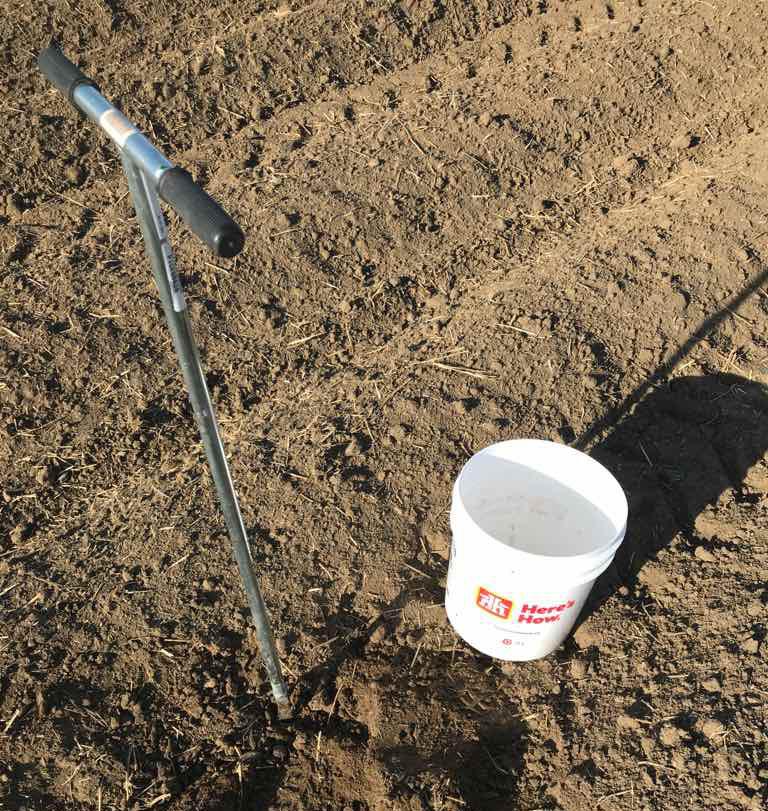
Without soil testing, how do you know what your soil really needs to produce high-yield crops next year?
Soil testing is a cornerstone of Best Management Practices (BMPs) and a proven tool for sustainable agriculture. While it can feel costly depending on the number of fields, the benefits far outweigh the investment.
Benefits of soil testing:
• Apply the right nutrients at the right time, place, rate, and source to boost yields.
• Optimize the use of fertilizers and manure for maximum efficiency.
• Reduce input costs by avoiding unnecessary fertilizer applications.
• Improve soil health by accurately addressing nutrient deficiencies and building organic matter
Soil testing eliminates guesswork and enhances your final result, leading to sustainable outcomes for generations.
Submitted by Matthew Wells Rural Extension Specialist, Agriculture Services Lethbridge County
Submitted by Scott Gillespie M.Sc. P.Ag CCA Plants Dig Soil Consulting Ltd.
Mow, bury, conquer: a practical strategy for kochia management
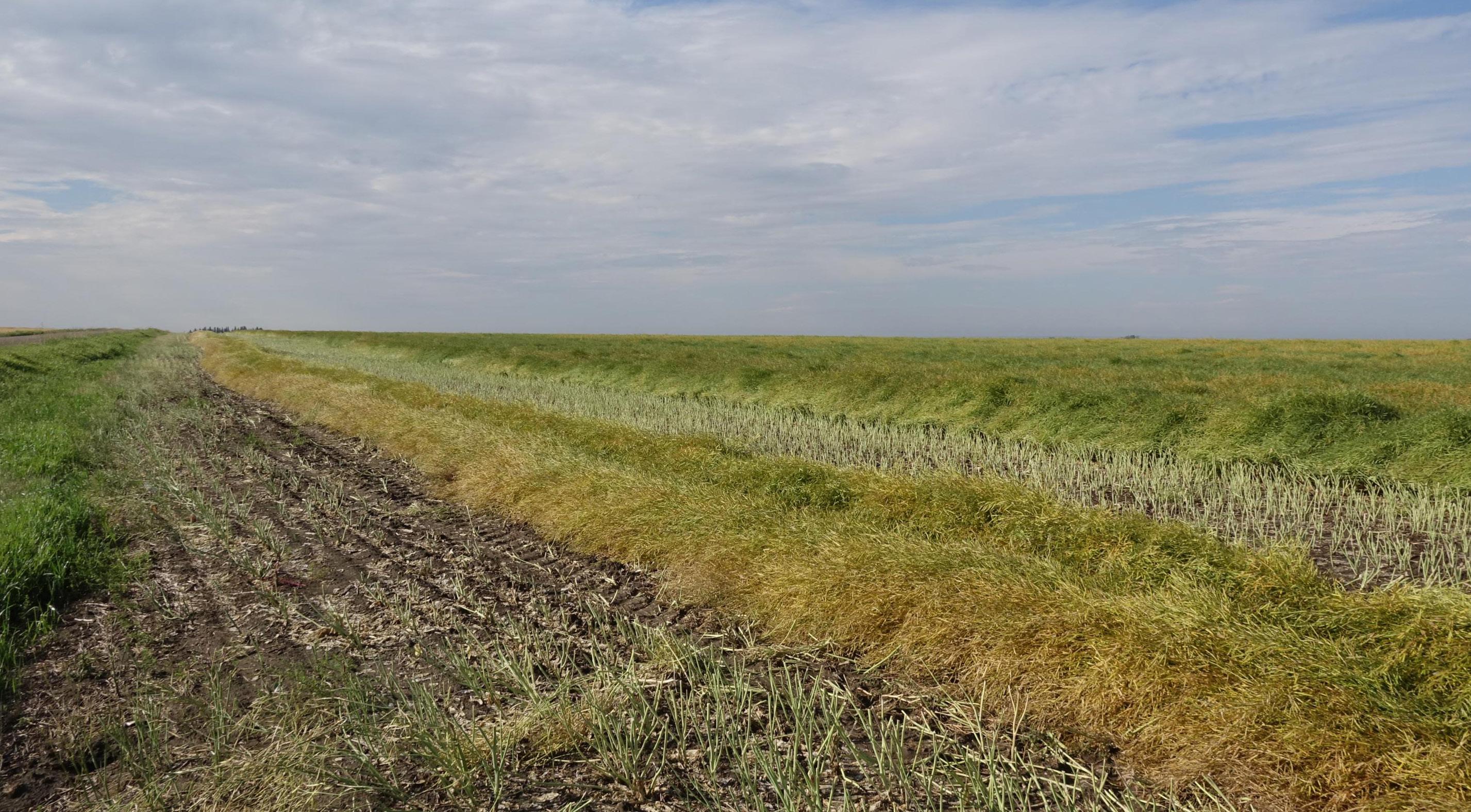
Kochia is an economically damaging tumbleweed in prairie field crops like wheat and canola. Kochia is damaging in several ways including: 1) reducing yield by using resources intended for the crop like water, nutrients, and space and releasing defence chemicals which affects the crop, 2) interferes with harvest efficiency with green fibrous stems remaining into the harvest, and 3) increased input costs due to herbicide resistance. Kochia has developed herbicide resistance towards groups 2, 4, 9, and 14 herbicides. Increased herbicide inputs increases off-target and environmental pesticide movement due to blanket spraying.
Kochia is patch-forming, typically forming dense infestations around field margins, sloughs, approaches, and depressions. Given that kochia is patch-forming, targeting kochia patches directly for physical management efforts should help suppress high density infestations. One hole in kochia’s proverbial armour is its seed does not tolerate burial. Its typical seed bank duration is one to two years. We aimed to exploit this weakness in its ecology to better manage it. The project objective was to evaluate physical management methods to suppress kochia and their effect on the soil.
Experiments (funded by SaskWheat and SK Ministry of Agriculture) were established on marginal kochia patches within six fields in collaboration with local growers in RM 250, Last Mountain Valley, Saskatchewan. The study was for the 2021 to 2023 growing seasons. The treatments were: 1) hydro-mulch (coconut-based
Shaun Sharpe
mulch), 2) black plastic mulch, 3) field chaff, 4) perennial grass establishment (green wheatgrass), 5) mowing, and 6) untreated. Each experiment had four replications. The hydro-mulch was applied at twice rates typically for hydro-seeding. Field chaff was composed of either wheat straw alone, mixed with kochia, or at one site: cattails. Chaff was piled up to about 7 cm depth. In the fall, we collected soil each year. Conditions were typically drought-like, and the perennial grass failed to establish.
Unmanaged patch densities reached a maximum of 10,000 plants m-2 in 2022. The best experimental treatment to suppress kochia was black plastic mulch. Kochia was unable to grow through black plastic mulch throughout the study term. Replacement of damaged mulch was necessary. The chaff treatment was effective over the three-year term, reducing kochia stands by 86 to 95% in year one, 78 to 95% in year two, and 44 to 78% in year three. Field chaff was a promising option to limit stand densities but additional study is required for compatibility within growing crops like wheat, barley, and oats. Mowing was very effective in 2021 to 2023 reducing kochia density down by 93 to 98%. Mowing may limit crop production options but be suitable where total crop failure may occur to prevent kochia reproduction. Coco mulch reduced kochia densities to 16 to 28% of the untreated control within year one, 37 to 73% in year two, and 22 to 64% in year three. Kochia suppression was limited with hydro-mulch.
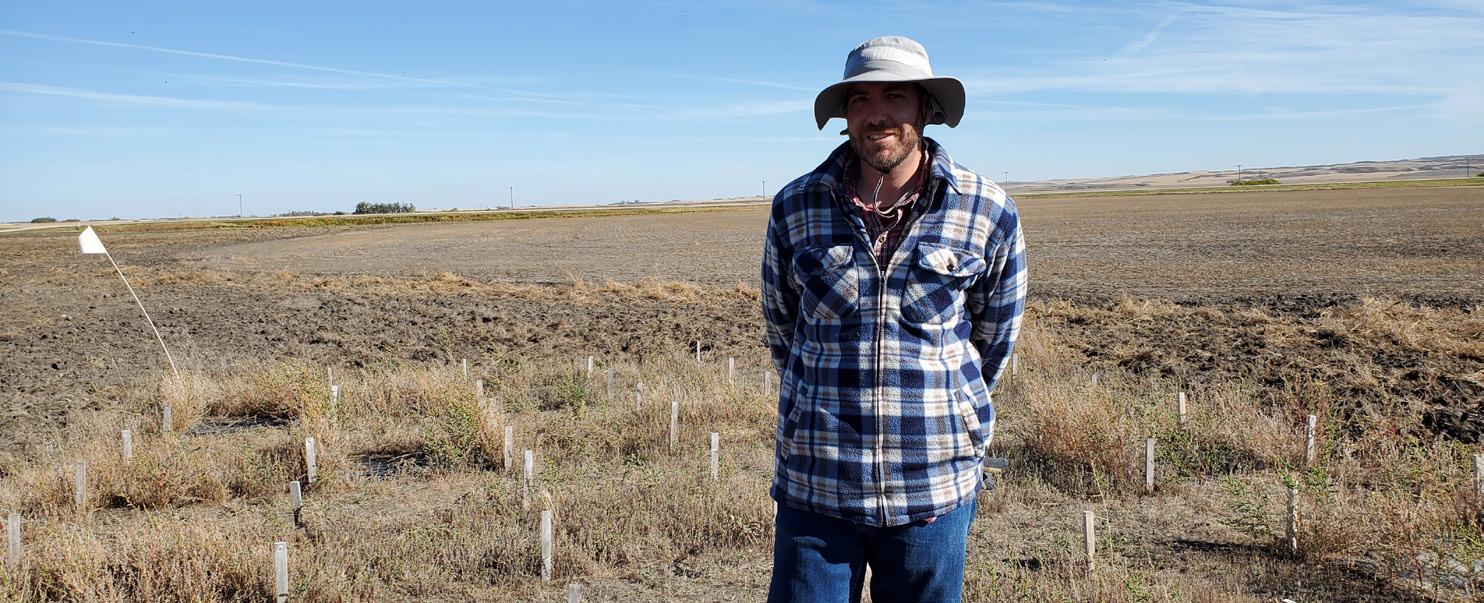
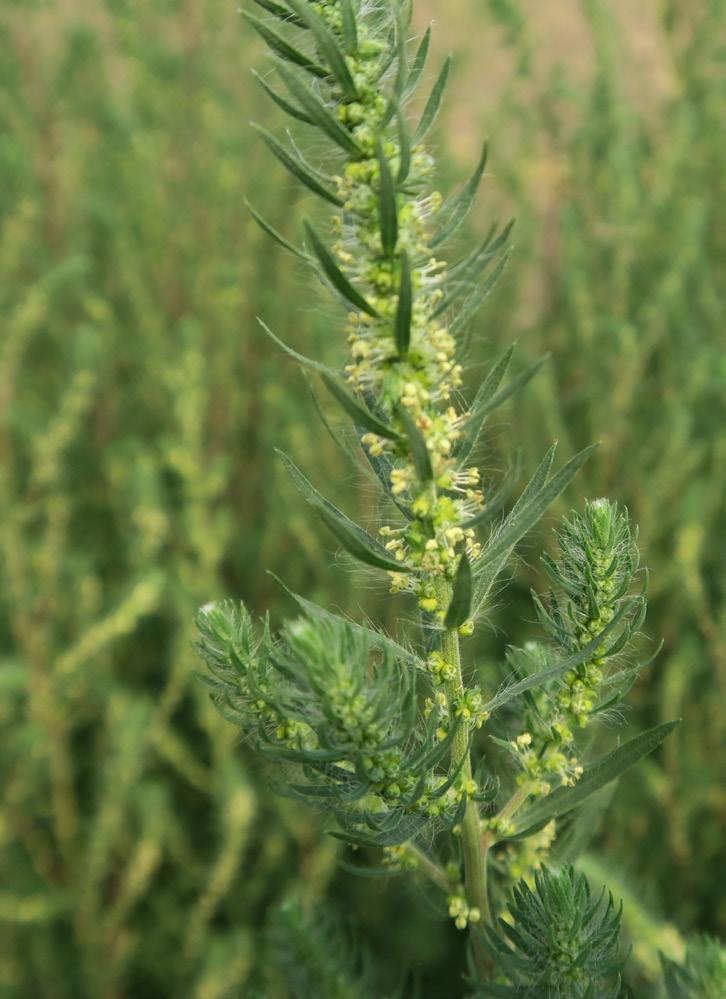
In the soil, microorganisms associated with kochia patches were highly variable between sites. This suggests kochia can recruit a diverse array of microorganisms. For bacteria: pedosphaeraceae and gemminicoccaceae were associated with more than one site. Gemminicoccaceae was previously associated with the Prairie Pothole Region while pedosphaeraceae has beneficial traits in other soils in the literature. Kochia defence compounds (allelochemicals) were rarely detected above thresholds in the soil, a promising result for restoring soil productivity after the kochia is managed. Electrical conductivity (EC) reduced each year of the study in the patch. Among experimental and soil parameters: EC, NO3-N, and SO4-S were the most important soil characteristics to explain kochia density across the study using machine learning.
Techniques like mowing or depositing chaff through bailing or a chaff cart are laborious but effective. Repeated monthly mowings were necessary to manage kochia. At the latest, kochia should be mowed to prevent flowering. Kochia is a community-level issue with its infestation of many rural areas including residential areas, naturally managed areas, oil wells, railways, road sides, sloughs, among other non-agricultural areas. These techniques also have applications in areas outside of agriculture to suppress kochia. All must be mindful of kochia.
Submitted by Shaun Sharpe Research Scientist
SK
Considerations for bale grazing
John Duynisveld
Bale grazing is a method of winter feeding that has been gaining popularity over the last 25 to 30 years. Producers that successfully bale graze find it a low-cost feeding method that minimizes the use of tractors and other equipment. In a nutshell an appropriate field for bale grazing is chosen, the bales are positioned on that field prior to the winter feeding period often in a grid pattern, and an electric fence is used to control access to the bales when they are fed. Research at the Nappan Research Farm in Nova Scotia demonstrated a 54% decrease in the overall cost of wintering cattle with bale grazing. The savings came from reduced handing of feed (labour and equipment), low bedding costs, and no manure to handle.
Choosing an appropriate field for bale grazing is important. There is potential for significant nutrients to be added to the field from manure, which is great for anywhere that needs increased fertility and organic matter. This also means bale grazing too close to riparian areas or sloped fields that drain into water sources is not a great idea.
Although there are exceptions to everything, bale grazing works best with dry beef cows or dry ewes. The potential for multiple days of winter storms can increase energy needs for calving cows or young cattle beyond what the hay alone may provide. Livestock to be used for any outdoor wintering system should be in good body condition heading into the winter with a good hair coat.
The day-to-day management of bale grazing is meant to be as simple as possible. The livestock need access to water and shelter (portable, permanent, or trees/bushes) of some form, so this tends to be the starting point for bale access. There is considerable variation in how frequently animals are moved to subsequent rows of bales. Similar to any “grazing” method more frequent
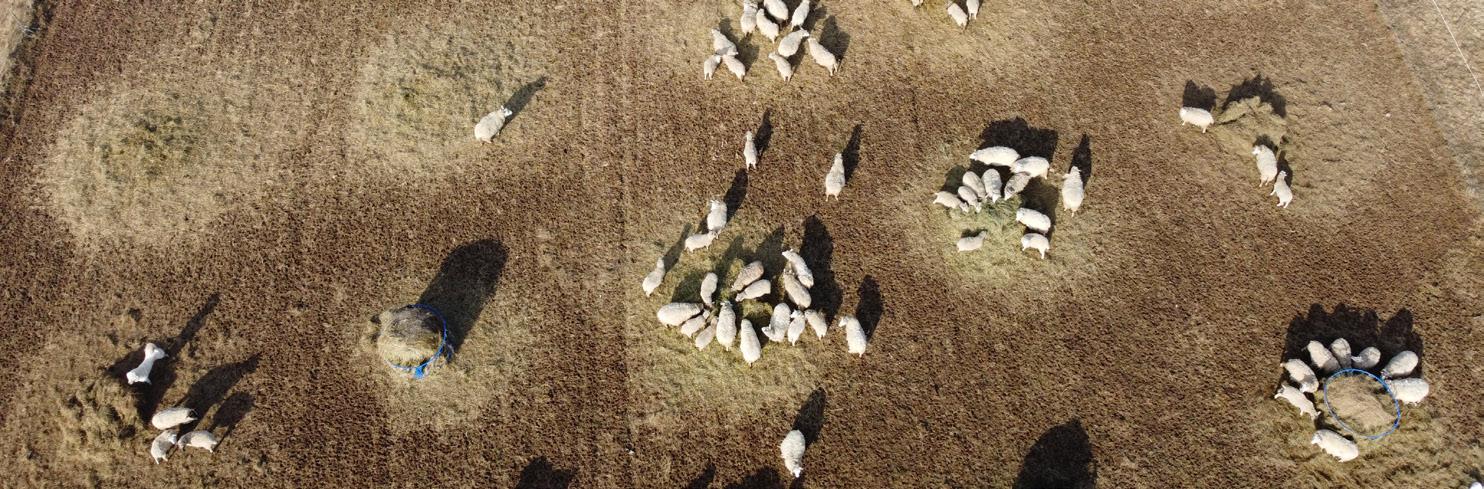
moves can make for more efficient use of available feed. I know of producers that move animals multiple times a week as well as some that use month-long paddocks for bale grazing. It depends on individual goals and circumstances.
More frequent move can lower feed wastage which is useful in drought years. Conversely with lower quality feed more animal selectivity may be desirable, leaving more hay behind to feed the soil. Research in the Western provinces and Mid-Western states show bale grazing losses between 7 and 21%, which curiously is not different from hay wastage in most round bale feeders.
Regardless of the management and efficiency of feed utilization there is a lot of fertility remaining in fields following bale grazing. Between 80 and 90% of the P and K in the hay will be recycled to the field, whether from the manure or residual hay. Research in Manitoba showed soil nitrate levels increase between1.25 and 213 lb/ acre. Increased soil organic matter near the bales shows itself when soil conditions are dry with the considerable increase in soil water holding capacity. This increased fertility can be cycled through pasture land to increase grass growth in subsequent years. It also can be used to in crop rotations.
In summary, bale grazing is an option for low-cost winter feeding option that can be used to increase soil fertility and organic matter with minimal equipment and labour. As a beef farmer and a researcher that has been bale grazing over 20 years I can say that I like it!
Disposal of dead animals regulation
Proper disposal of livestock carcasses is crucial for protecting wildlife, maintaining herd health, and preserving our water resources. Off-site contamination can have a profound effect. For this reason, Alberta regulates the manner and location of disposals. The Disposal of Dead Animals Regulation, under the Animal Health Act, governs owners’ responsibility and sets the timing, manner of disposal, and location.
For burial, carcass weight must not exceed either 2500 kg (as per Section 8(4)) or 100 kg (Section 8(6)). Based on both sections, requirements include location, pit depth, setbacks, soil considerations, and the type of covering needed.
This regulation exists to prevent contamination of groundwater and other water sources, reduce scavenger access, and protect wildlife, while ensuring the safe decomposition of waste. For details, please refer to the governing regulation available on the Alberta King’s Printer website.
Scan the QR code to read the regulation.
Submitted by John Duynisveld Beef Research Biologist
Submitted by Matthew Wells Rural Extension Specialist, Agriculture Services Lethbridge County
Matthew Wells
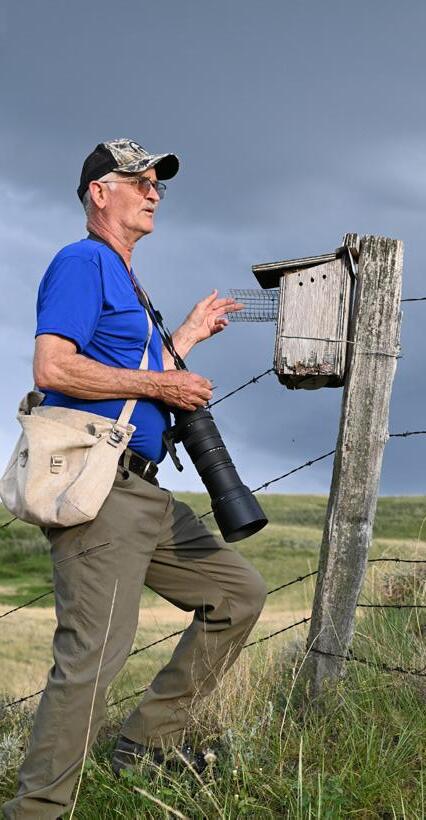
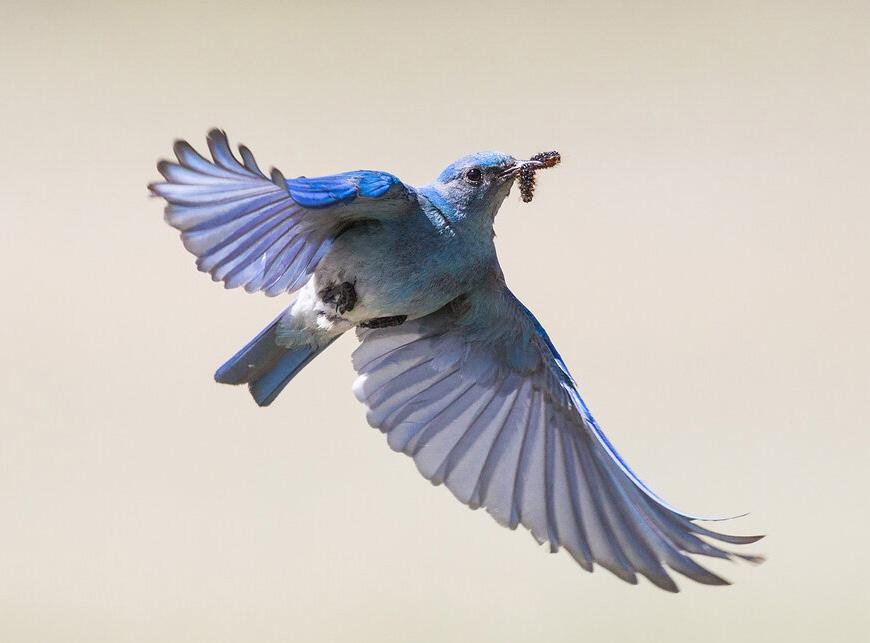
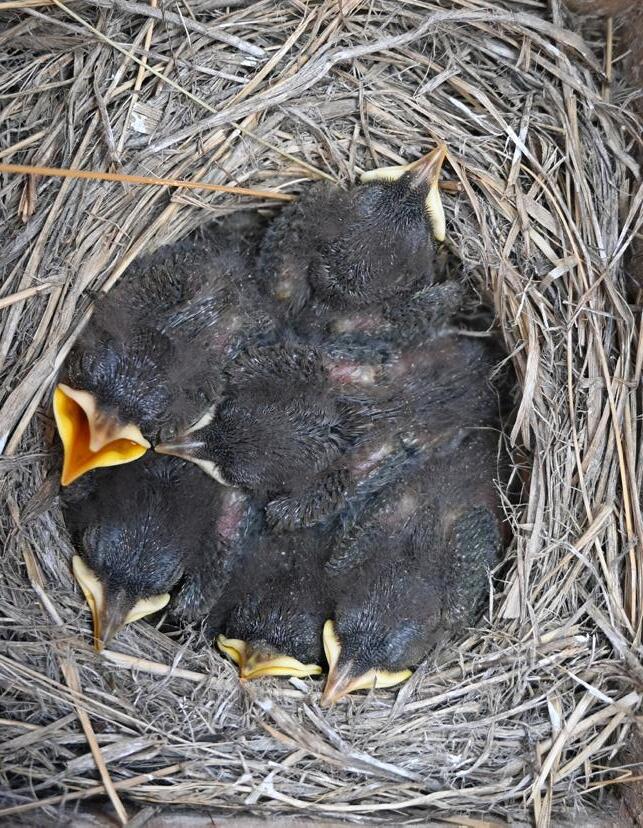
Bluebirds on the fenceline in Lethbridge County Curtis Goodman
Northeast of Coaldale, tucked between prairie grass and weathered fence posts, a bluebird conservation success story has soared for 25 years. Since 2001, Joe Michielsen has regularly walked the Skull Springs Trail, tending to nest boxes that have fledged more than 1,400 Mountain Bluebirds.
What began as a personal retirement project has become a model of what one volunteer can do for the land. Each spring, Joe checks and cleans boxes, tracks nesting activity and fine-tunes locations. Over time, this quiet, consistent work has helped restore vital cavity-nesting habitat for one of Alberta’s most iconic grassland birds.
“It’s amazing to watch the nests fill with eggs, hatch and then see the parents coax their young out for their first flight,” says Joe.
He’s not alone in this work. Joe is one of more than 100 volunteers with the Mountain Bluebird Trails Conservation Society (MBTCS). Together, they monitor over 2,700 nest boxes across southern Alberta, providing the cavity-nesting sites that bluebirds, swallows and wrens need to raise their young.
Mountain Bluebirds are more than a flash of colour on the fencepost. These insectivores are fast, agile hunters that help control pest populations in pasture, hayfields and shelterbelts. They’re also
indicators of healthy land. When bluebirds are thriving, the surrounding ecosystem likely is too.
Nest boxes bring those benefits closer to home. They invite families to spend intentional time outdoors – monitoring, learning and noticing life on the land. A trail of nest boxes becomes a way to mark time together with purpose.
Joe’s long-term observations prove that with proper placement and care, a simple wooden box can become home to generation after generation. 1,411 fledglings, and counting, on his one trail alone (Joe monitors multiple bluebird trails!).
If you live in Lethbridge County, you likely already have ideal bluebird habitat: pasture edges, fencelines and open fields with sparse trees for perching. Add a few nest boxes, and you’ve taken the first step.
Joe’s experience offers a few key lessons:
• Place boxes early. In southern Alberta, bluebirds return as early as late February. Having boxes in place by then supports more successful broods.
• Pick good spots. Choose open areas with clear sightlines and healthy insect activity. Avoid low ground and dense brush that invites predators.
• Maintain and monitor. Putting up a box means taking responsibility
for it. Without regular checks, birds can die from wet nests, parasites, or predators. Maintenance isn’t optional—it’s the most important part!
Nest boxes aren’t just for bluebirds either. On Skull Springs Trail, Joe has hosted tree swallows, house wrens, and more recently violet-green swallows.
“One of the best parts is just being out on the trail,” says Joe. “Every time I go, I see something I haven’t seen before. I’ve been able to share that with family and friends.”
Bluebird conservation doesn’t require much. Only a little care, curiosity and the willingness to give nature the space it needs. For 25 years, Joe has shown what’s possible when one person pays attention to a small patch of prairie. It adds up.
Whether you’re a producer, a 4-H parent, a retiree, or someone who simply enjoys seeing birds on the wire, you can be part of the next chapter of conservation.
For trail-building guides, nest box designs, or to connect with local volunteers, visit BluebirdTrails.org and explore MBTCS’ Essential Information for Trail Monitors. Start small. The birds will take it from there.
Read more in the upcoming edition of Nature Alberta.
Submitted by Curtis Goodman Mountain Bluebird Trails Conservation Society
CoUnty wordsearCh: Fire Edition
BISON
BURROWING OWL
FIRE
FIREFIGHTERS
GRAZING
LIGHTNING
LITTER
NATURE
NUTRIENTS PRAIRIE DOG REGROWTH SEEDS SOIL WATER WILDFLOWERS WIND
Can you find all the hidden words? Send a picture of your completed wordsearch to mwells@lethcounty.ca or text to 403.634.0147 by January 9 to be entered for a chance to win 1 of 3 How Do Fires Protect Nature? children’s books written by the one and only Dinyar Minocher. Good luck!
Submitted by Matthew Wells Rural Extension Specialist, Agriculture Services Lethbridge County
Children and youth under the age of 18 are invited to submit artwork to be featured on the back cover of the Spring/Summer issue of Rural Living in Lethbridge County.
Art should be around the theme of: spring time on the farm.
Submit digital artwork (scan/photo or image file) to mwells@lethcounty.ca by January 9, 2026.


