Private Entities, Public Authority: Eminent Domain in Texas
Good Fences Make Good Neighbors— Until They Don’t
Clarity Over Custom: Texas Real Estate Practice After SB 1968
PresideNT’s Message
A Personal Reflection on My Year as HBA President By daNieLLa LaNders
FroM THe ediTor
Turning the Page By Nikki L. Morris
VeTeraN sPoTLigHT
From the Cockpit to the Courtroom: How Military Service
Shapes Barney Dill’s law Practice By kiMBerLy seiLer
a ProFiLe iN ProFessioNaLisM
Dick Schwartz
shareholder, Munsch Hardt kopf & Harr, P.C. executive director, The garland r. Walker inn of Court
oFF THe reCord
Michael Hanover: Precision Under Pressure in the U.S. Practical Shooting Association By LaNe MorrisoN
CoMMiTTee sPoTLigHT
HBA Speakers Bureau Committee By aLaN raTLiFF
seCTioN sPoTLigHT
Juvenile law Section: Building Brighter Futures Together By JuLie rogers
LegaL TreNds
In re ExxonMobil: Intentional Tort Exception to workers Compensation Act is Narrow By sTaN Perry and WiLLiaM NguyeN
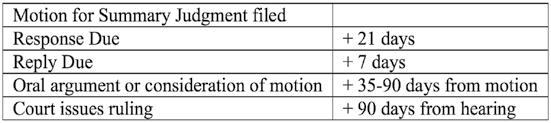
New Changes to Summary Judgment Practice in Texas By Nikki Morris
Media reVieWs “Puncture”: A Houston Cult Classic Starring Chris Evans and Mark lanier reviewed by JoHNNy day and Ciara PerriTaNo LiTigaTioN MarkeTPLaCe
By Daniella l an D ers
a PersoNal refleCtioN oN
My Year as HBA President
As I pass the HBA President’s gavel to my good friend, Greg Ulmer, I find myself reflecting with deep gratitude on this remarkable year. It has been a privilege to serve this organization and to work alongside so many dedicated members, leaders, volunteers, and partners.
When I began my term as HBA President, I centered my goals around three focus areas that felt especially important to me— and, I believe, to the future of our organization: People, Service, and Collaboration.
First, I begin with People because that means you, our members— the foundation of the HBA. I wanted this year to strengthen that foundation in lasting and meaningful ways.
One highlight was welcoming three new sections: the Solo & Small Firm Section, the Technology Section, and the Women in the Law Section. Each plays a critical role in expanding the HBA’s reach and relevance. I am excited to see these new sections continue to flourish in the years ahead.
Another milestone was extending free HBA membership to all law students, rather than limiting it to 3Ls. I was also proud to see us hold our first-ever New Lawyers Induction Ceremony, where judges from the First and Fourteenth Courts of Appeals swore in newly licensed attorneys. It was a special moment—one that brought judges and new lawyers together to celebrate an important milestone and welcome them into the Houston legal community. Investing early in the next generation of lawyers strengthens the pipeline of talent entering the Houston legal market.
This year, we also created more opportunities for connection by adding social events such as Wine Down Wednesdays and member invitations to sporting events. Relationships are built in those moments, and I hope we continue finding affordable, fun activities to bring members together.
We also remained committed to providing meaningful CLE opportunities. A standout moment was the half day CLE program cohosted with Texas’ metro bars at the 1910 Courthouse, focused on the inaugural year of the Texas Business Court and Fifteenth Court of Appeals. More than 300 people attended. This collaborative program showed what is possible when our profession comes together to learn and lead.
One issue I felt strongly about this year was our profession’s enduring commitment to the rule of law. The HBA published its
own reaffirmation and shared it with members by email, on our website, and in The Houston Lawyer. We also invited Houston attorneys to renew the Texas Lawyer’s Oath on Constitution Day. For me, it was a meaningful reminder of the important principles that unite us as lawyers.
My second focus was Service, which has always been an essential part of the HBA’s identity. Our commitment reaches beyond legal issues and reflects a broader responsibility to the community.
That spirit was on full display during our HBA Days of Service. In September and March, hundreds of HBA members and volunteers came together to serve thousands of Houstonians through over 18 legal and non-legal events held in partnership with local organizations. It was inspiring to see our legal community roll up its sleeves to help veterans, assist the homeless, support battered men and women, build our 28th Habitat for Humanity home, promote literacy, clean up blighted neighborhoods, and contribute in many other ways. In watching our members make a tangible difference in the community where they live and work. I was reminded of the strength, generosity, and heart of this Bar.
Finally, we focused on collaboration through partnerships across the legal and business community. This year, we reinvigorated the HBA Ambassadors Program with 20 individuals, including representatives of local affinity bar associations. The HBA serves as a central connection point for Houston’s legal community, and that role is strongest when we lead by building relationships across organizations.
We also cohosted several events with local bar associations, judges, and business leaders, including an event with the Greater Houston Women’s Chamber of Commerce to highlight women trailblazers in business and law. These engagements are essential, and I hope we continue building on these connections moving forward.
Overall, it has been a great Bar year. Thank you for allowing me to serve the Houston Bar Association. It has been an honor to serve alongside you, and I am deeply grateful for your service to the HBA, to the profession, and to our city.
And to Greg Ulmer—my warmest congratulations. I wish you a year filled with purpose, progress, and continued excellence.
BOARD OF DIRECTORS
President Daniella Landers
President-elect
Greg Ulmer
First Vice President Collin Cox
second Vice President
Robert Painter
secretary Kaylan Dunn
Treasurer Todd Frankfort
immediate Past President David Harrell
DIRECTORS (2024-2026)
Keri Brown Stephanie Noble
Seepan V. Parseghian Samantha Torres
DIRECTORS (2025-2027)
Carter Dugan Greg Moore
Colin Pogge Richard Whiteley
EDITORIAL STAFF
editor in Chief Nikki Morris
associate editors
Anna M. Archer
Sydney Huber Bateman
Jessica Crutcher
Lane Morrison Rinku Ray
Braden Riley
editorial Board
Anietie Akpan Mehrnoosh K. Andu
Jaclyn Barbosa Casey Minnes Carter
Hon. Natalia Cornelio Johnny Day
Corey Devine Teresa Hudson
Chandria Jackson Dave Louie
Andrew Pearce Ciara Perritano
Hon. Josefina Rendón Kimberly Seiler
Jennifer Smith Rachael Thompson
Carey Worrell Nicolette Zulli
Managing editor Maggie Martin
HBA OFFICE STAFF
executive director Vinh Ho
associate executive director Ashley G. Steininger
Community engagement and initiatives Coordinator Juliana Escobedo
staff accountant Elizabeth Delgado
director, Marketing and Communications Maggie Martin
digital Media and Communications specialist Briana Ramirez
CLe and Technology
Platforms Coordinator Alli Hessel
associate director of Community engagement and initiatives Georgina Peña
director, Membership and Technology services Ron Riojas
Publisher Leonel E. Mejía
Production Manager advertising Marta M. Mejía Mary Chavoustie
By n ikki Morris BakerHostetler assoCiaTe ediTors
TTurning the Page
he May/June issue marks the end of the Bar year and a time of transition for not only The Houston Lawyer, but also the Houston Bar Association as a whole. Daniella Land-
ers has wrapped up a fantastic year as HBA president, and incoming President Greg Ulmer is sure to continue the momentum. It is also a time when committee and section leadership within the HBA changes hands, and I have full confidence that Lane Morrison will continue to develop meaningful content for our readers as he takes over as editor in chief of The Houston Lawyer
this would be possible.
I also want to thank each of our contributors. Whether you authored a feature article or a shorter piece, your contributions are the foundation of this publication. The willingness of practicing lawyers to take the time to write about developing topics or trends in the law is what sustains The Houston Lawyer
I have been involved with many HBA committees since I joined the Houston legal community in 2015, but The Houston Lawyer Editorial Board has always held a special place for me. It always amazes me how the legal community is so willing to help. Every issue, we start with a blank slate. The board members help come up with a theme for each issue and article topic ideas, solicit authors, and edit and review articles. Then, we go to publication, on an almost entirely volunteer basis. Our board also tracks legal trends, finds lawyers with interesting hobbies and endeavors outside of the practice of law, reviews and provides recommendations on lawyer-themed media (often developed by Houston-based lawyers), and shines a spotlight on the HBA’s many committees and sections. I greatly appreciate each of our board members who have taken time to contribute to one or more of the issues this Bar year.
I am especially grateful to our associate editors this year, Lane, Sydney, Braden, Jessica, and Rinku, our podcast editor, Anna, and our managing editor, Maggie, for all of their work in developing the content we produced this year. Without you, none of
For the May/June issue, our focus is on real estate law. This issue features an interesting piece on the law of fences by Carey Worrell, which every homeowner will benefit from reading. John g. george, Jr. also provides an update on Texas real estate practices that both practitioners and prospective homeowners will find useful. Natalia Arizmendi and Lilli Metts wrote a primer on eminent domain law, which has an important tie-in with the growth of data centers in Texas. Kimberly Seiler wrote our veteran spotlight for this issue, which focuses on Barney Dill—an active member of the HBA and a veteran of the Texas Army National Guard.
We hope you enjoy this issue of The Houston Lawyer. It has been my honor to serve as editor in chief this year, and I am looking forward to seeing what comes next.
from the editor
In the March/April 2026 issue, the article beginning on page 18, “Perspectives, Women Aces Who Try Big Cases” by Ciara Perritano and Jessica Crutcher, contains an incorrect introductory paragraph. We sincerely apologize to the authors and to our readers for this oversight. The corrected version of the article can be read in full in the online version at hba.org/thehoustonlawyer
Jessica Crutcher Jessica Crutcher Law
Rinku Ray Ray & Fahys
Lane Morrison Bush Seyferth
Anna M. Archer Hicks Thomas
Braden Riley Gulf Coast Trial Attorneys
Sydney Huber Bateman Horne Rota Moos
Nikki morris, 2025-2026 editor in chief of The Houston Lawyer.
By NaTaLia arizMeNdi and LiLLi MeTTs
Private eNtities, PuBliC authority: Eminent Domain in Texas
Texas serves as a hub for establishing data centers in the wake of the artificial intelligence era. As a result, while 95% of land in Texas is privately owned,1 there continues to be an increased need for more land and resources. The power of eminent domain can potentially facilitate this increasing need, though simultaneously threatening to dwindle Texas landowner’s property rights. As most commonly known, eminent domain power allows a sovereign state to appropriate or condemn private property to promote the general welfare. However, state legislatures may also delegate this power to individuals or private corporations. In Texas, the Legislature has expressly delegated its eminent
domain power to electric corporations, electric utilities, and common carriers.2 Whether a governmental entity or private entity is exercising eminent domain powers, the Texas Constitution requires that the condemnation be for public use and that the landowner receives just compensation. But when does an entity qualify as an electric corporation, electric utility, or common carrier and what is the scope of their eminent domain powers? What is the condemnation process under the Texas Property Code? And when may the “paramount importance doctrine” be used as a defense to condemnation? This article explores these critical issues.
i. Who Can exercise eminent domain authority?
In addition to the government, certain private entities with delegated authority may exercise eminent domain powers. In Texas, an “electric corporation” or an “electric utility” has a broad power of eminent domain authority to enter on, condemn, or appropriate land to construct, maintain, and operate its lines. The exercise of this authority is via condemnation. Condemnation by these electric companies is only proper if the company can show there is a public use.
Similarly, “common carriers” may exercise eminent domain authority, provided that they can show that there is a reasonable probability that at least one unaffiliated entity will benefit from the use of the pipeline such that the pipeline is for public use.
A. Electric Corporations & Electric Utilities
Under the Texas Utilities Code, an “electric corporation” is defined as “an electric current and power corporation.”3
A “corporation” is defined more generally and includes a partnership, limited partnership, or master limited partnership; a limited liability company; a combination of business entities composed exclusively of corporations or in which a corporation is a general partner; and a gas utility or electric utility regardless of form of organization but not including a municipally
owned utility.4 Conversely, an electric utility includes “a corporation…that generates, transmits, or distributes electric energy” in Texas and whose operations are subject to the judicial and legislative processes of Texas.5
B. Common Carriers
Under the Texas Natural Resources Code, “a common carrier may enter on and condemn the land, rights-of-way, easements, and property of any person or corporation necessary for the construction, maintenance, or operation of the common carrier pipeline.”6 The Code delineates seven common carrier categories, which include owning, operating, or managing a pipeline or any part of a pipeline in the State of Texas for the transportation of:
1. “crude petroleum to or for the public for hire”;
2. “crude petroleum to or for the public for hire and the pipeline is constructed or maintained on, over, or under a public road or highway”;
3. “crude petroleum to or for the public for hire which is or may be constructed, operated, or maintained across, along, over, or under the right-of-way of a railroad, corporation, or other common carrier”;
4. “crude petroleum, bought of others, from an oil field or place of production within [Texas] to any distributing, refining, or marketing center”;
5. coal;
6. “carbon dioxide or hydrogen in whatever form to or for the public for hire” if the entity expressly agrees to comply with the duties and obligations of a common carrier; and
7. “carbon gasification, the products of carbon gasification, or the derivative products of carbon gasification... for the public for hire” if the entity expressly agrees to comply with the duties and obligations of a common carrier.7
While a private corporation could once succeed in establishing its common carrier status “simply b[y]...declar[ing] itself
a common carrier on [the proper] form,” in Texas Rice I, the Texas Supreme Court clarified that “[t]o qualify as a common carrier with the power of eminent domain, the pipeline must serve the public; it cannot be built only for the builder’s exclusive use.”8 In other words, if a pipeline company constructs and maintains a pipeline for the sole purpose of transporting its own gas to and from its own sites for its own use, the pipeline does not serve a public use, precluding common carrier status.9 Instead, to establish common carrier status, the entity must demonstrate “a reasonable probability [(i.e., more likely than not)] that the pipeline will at some point after construction serve the public” by transporting oil or gas “for one or more customers who will either retain ownership of their gas or sell it to parties other than the carrier.”10 Subsequently, in Texas Rice II, the Texas Supreme Court clarified that an entity satisfies this “reasonable probability” test with evidence establishing that the pipeline will serve even one
customer unaffiliated with the pipeline owner (and whose interest will not eventually return to the pipeline owner).11
ii. the Condemnation Process
If an entity can establish common carrier status or if the entity fits the definition of “an electric corporation” or an “electric utility,” the entity generally must follow three steps to initiate condemnation proceedings: (1) provide a bona fide offer and attempt to negotiate with the property owner directly; (2) if unsuccessful, file a condemnation petition in the district court where the property is located; and (3) attend a hearing by a three-commissioner panel.
While this article won’t detail what does or does not constitute a public use, on a broad scale, condemnation is proper only if it serves a public use.12 As explained above, the provision of power or other materials to at least one person has been deemed a public use.13 Moreover, if a statute provides the authority to “own, hold
and use such lands, right of way, easements...as may be necessary for the purpose” of the corporation, then in enacting the statute, the legislature has found “that electric power lines constitute a public use for which rights-of-way may be condemned.”14
In exercising its eminent domain authority, an entity has the right of entry to survey the property, provided that it gives proper notice and representations to the property owner.15 Based on this survey, the entity must provide a bona fide offer to the property owner which includes both the initial and final offer. At this point, the property owner should be made aware of their rights and may negotiate as they see fit. If the parties cannot come to an agreement, then the condemning entity may file a condemnation petition.16
The condemning party has two proper venues when filing its petition for condemnation, (1) the county court at law for the county in which the owner of the property resides if the property (in whole or in part) is also located in that county, or (2) the county court at law in any county in which the property is located.17 If the county has no county court at law, the condemnation petition should be filed with the district clerk.18 When the petition is filed, the judge has 30 days to appoint three disinterested real property owners who reside in the county and who are to serve as special commissioners to assess the damages of the property owner.19 This action is to determine the compensation the property owner will receive. At the conclusion, the commissioners issue written decisions as to damages, costs, etc., and the condemner may take possession of the condemned property.20
iii. the Paramount importance doctrine as a Possible defense to a Proposed Condemnation
One defense to a proposed condemnation is the “paramount importance doctrine.” Under the paramount importance doctrine, Texas courts “have long held that condemnees may prevent a condemnation” by showing “(1) the property is al-
ready devoted to public use; and (2) the condemnation would practically destroy or materially interfere with the use to which it has been devoted.”21 If the party makes that showing, “then the burden shifts to the proposed condemnor to establish that the necessity for the condemnation is so great as to make the new enterprise of paramount importance to the public, and it cannot be practically accomplished in any other way.”22 If the proposed condemnor succeeds in showing paramount importance but fails to show that its purpose could not be accomplished in any other practical way, then the proposed condemnor is not entitled to relief under this doctrine.23 Texas courts have consistently held that this doctrine does not present “a jurisdictional issue but an issue to be litigated during the merits because the doctrine ‘does not implicate the power of one unit to bring the other to court.’”24
Conclusion
Eminent domain in Texas illustrates the legal tension between infrastructure development and private property ownership in a rapidly growing state. Through statutory delegation, the Legislature has authorized certain private entities—such as electric corporations, utilities, and common carriers—to exercise condemnation powers traditionally associated with government. These delegated powers are structured around constitutional requirements of public use and just compensation and are implemented through a defined procedural framework under the Texas Property Code. Judicial interpretations, including those clarifying common carrier status and the limits of delegated authority, continue to shape how and when this power may be exercised.
As Texas’ economic and technological development drives increased demand for land and infrastructure, eminent domain will remain a central legal mechanism for facilitating that growth. Doctrines such as paramount importance and statutory procedural safeguards provide a means for evaluating competing public uses and
ensuring compliance with constitutional principles. Together, the statutory scheme and evolving case law reflect Texas’ ongoing effort to balance efficient development with legal constraints on the exercise of delegated public authority
endnotes
Natalia Arizmendi is a commercial litigation and international trade associate with BakerHostetler.
Lilli Metts is a litigation associate with BakerHostetler.
13. Id. at 884 (holding that a public utilities company condemnation for an electric power line for the provision of power to only one person was proper and considered for a public use).
14. See id
15. TEX. NAT. RES. CODE § 111.019(d)-(e).
16. TEX. PROP. CODE § 21.012(a).
17. Id. § 21.013(a).
18. Id. § 21.013(b)-(c).
19. Id. § 21.014(a).
20. Id. § 21.021(a).
21. Canyon Reg’l Water Auth. v. Guadalupe-Blanco River Auth., 258 S.W.3d 613, 617–18 (Tex. 2008); DCP Sand Hills Pipeline, LLC v. San Miguel Elec. Coop., Inc., No. 0419-00288-CV, 2020 WL 6748725, at *5 (Tex. App.— San Antonio Nov. 18, 2020, pet denied).
22. DCP Sand Hills Pipeline, 2020 WL 6748725, at *5.
23. City of Houston v. Ft. Worth & D. Ry. Co., 619 S.W.2d 234, 237 (Tex. App.—Houston [1st Dist.] 1981, writ ref’d n.r.e.).
24. Town of Westlake v. City of Southlake, No. 02-21-CV, 2021 WL 6069104, at *4 (Tex. App.—Fort Worth Dec. 23, 2021, no pet. h.) (citing State v. Montgomery Cnty., 262 S.W.3d 439, 445 (Tex. App.—Beaumont 2008, no pet.)); accord Harris Cnty. Fresh Water Supply Dist. No. 61 v. Magellan Pipeline Co., L.P., 649 S.W.3d 630, 647 (Tex. App.—Houston [1st Dist.] 2022, pet. denied).
Hon. Vanessa D. Gilmore (USDJ
Paul D. Clote, Esq.
Hon. Nancy Johnson (Ret.)
Hon. Russell Lloyd (Ret.)
Hon. Michael Massengale (Former),
By Carey WorreLL
Good Fences Make Good Neighbors— Until They Don’t
Texas began as an open range state, what lawyers often shorthand as “fence out.” Historically, the baseline assumption was that livestock could roam and that landowners who wanted protection had to build it. Over time, that baseline has been narrowed by statutes, local stock laws, municipal ordinances, and—just as importantly—simple necessity. Where people live closer together, the practical cost of “sorting it out later” rises quickly. In a place like Houston, where neighborhoods are dense, property values are high, and lot lines can be tight, fences stop being rural infrastructure and become everyday fault lines between neighbors.
That tension is why Texas fence law matters to Houston lawyers. Many of us will deal with
it personally—as homeowners, as neighbors, or as the friend who gets the inevitable “quick question” about whether someone can move a fence, raise it, or demand payment for it. A meaningful number of lawyers will eventually get a client with a fence or boundary dispute that is small on paper but urgent in real life. More broadly, fence disputes are a useful case study in the work lawyers do every day: translating counterintuitive rules into practical choices, managing expectations when “fair” and “enforceable” diverge, and helping clients choose off ramps before a conflict becomes financially irrational.
Why fence disputes Persist—and Why l awyers Keep seeing t hem Fence disputes endure not because people are unreasonable, but because the law frequently collides with common assumptions. People intuitively believe that paying for a fence, maintaining it, or relying on it for years should confer ownership and control. Texas law often says otherwise. From a practice perspective, fence disputes tend to share several characteristics familiar to most lawyers: emotional investment that far exceeds the monetary stakes; legal rules that frustrate client intuition; remedies that feel hollow even when legally correct; and a high likelihood of escalation if expectations are not addressed early. These cases are rarely about fencing materials or property lines alone. They are about control, perceived disrespect, and uncertainty—themes that resonate far beyond real estate law.
division fences and the limits of intuition
When a fence sits wholly on one parcel, that landowner owns it. When it straddles the boundary line, both neighbors share the benefit. But ownership generally follows who paid to build it, and neither neighbor has any obligation to maintain or contribute to repairs absent an agreement to do so. That distinction often surprises people. Many assume
that paying for a fence locks in shared upkeep, or conversely that benefiting from a neighbor’s fence carries a duty to chip in. Neither is true in Texas. Use and benefit can be shared; ownership and maintenance duties are not—unless the parties have agreed otherwise.1
One of the most common misconceptions in fence law is the “good side” myth—the widely held belief that whoever has the smooth, finished side of the fence facing them owns the fence and is on the hook to repair it. This isn’t true in Texas. The convention of installing a fence with the finished side facing outward is real, and many HOAs require it as a matter of subdivision aesthetics, but it speaks to neighborly courtesy and covenant compliance, not to ownership or maintenance duty. A “good neighbor” fence— where the pickets are arranged so each neighbor sees a finished face—is the practical answer to that aesthetic concern, but the design has no bearing on ownership or maintenance duties either.
‘‘ A meaningful number of lawyers will eventually get a client with a fence or boundary dispute that is small on paper but urgent in real life.”
When division fences are jointly owned, neither neighbor may unilaterally remove, relocate, or materially alter the fence without the other’s consent.
Actions taken in the name of “improvement”—changing height, materials, or alignment—can give rise to claims for trespass, conversion, or injunctive relief. Although Texas law presumes shared responsibility for maintaining a division fence, it provides no general mechanism to force contribution. One neighbor typically cannot compel another to pay for repairs or replacement unless a written agreement exists.2 Texas has no general statutory contribution scheme for division fences in most jurisdictions; the parties’ rights are governed by common law and any private agreement they have made. From a transactional perspective, fence issues underscore the value of
written agreements. Simple agreements addressing ownership, maintenance responsibilities, modification procedures, and cost allocation can avert years of resentment and litigation.
fence -in, fence -out, and the importance of l ocal l aw
As noted above, Texas’ historical default was open range—often described as “fence out.” But for modern practice, the key point is less that history than the exceptions: statewide doctrine is frequently displaced (or effectively reshaped) by local laws, municipal regulation, and private restrictions that reflect today’s population density and land use patterns.3 Many counties and municipalities have adopted stock laws imposing
fence-in obligations. As a result, liability can turn entirely on local regulation rather than statewide doctrine.
Stock laws are the local mechanism by which a Texas county or precinct converts from the historical open-range default to closed range. Adopted by local election under Chapter 143 of the Agriculture Code, they can be county-wide or precinct-specific and typically operate species by species—a precinct may be closed range for cattle but still open range for hogs. Where a stock law applies, livestock owners must fence their animals in or face civil exposure when animals run at large.
For most Houston practice this is academic—Harris County is heavily urbanized, and these disputes rarely reach a city desk. It matters quickly, though, when a client owns ranch property elsewhere in the state, inherits land in a county whose stock-law status is uncertain, or faces a vehicle-livestock collision case outside the metro area. As a
separate statewide rule, the rights-ofway of all U.S. and state highways are treated as closed range regardless of the local county designation.4
Boundary uncertainty, surveys, and adverse Possession
Fence disputes routinely expose outdated surveys and the mistaken assumption that a long-standing fence establishes the boundary. Lawyers know better. A fence even a short distance over the line can trigger immediate claims for encroachment, removal, or damages— and, more quietly, can seed an adverse-possession problem that takes years to surface. Adverse possession is famously hard to prove in Texas, and fencing alone almost never carries the day. But fences are recurring evidence in adverse-possession cases, and the way a fence is built and used can either insulate a record owner or quietly arm the neighbor. Given Texas’ long limitations periods, the exposure tends to build slowly while the parties think nothing is happening. The classic fact pattern is simple: a fence is built a few feet inside Owner A’s actual property line—sometimes by mistake, sometimes for convenience— and Owner B begins using the strip outside the fence as if it were B’s own. Years later, B (or a successor) claims title to that strip. The legal question is whether B’s use satisfies the standard elements: visible appropriation and possession; open and notorious; peaceable; under a claim of right; adverse and hostile to the record owner; and continuous for the applicable statutory period (three, five, or ten years, depending on which statute is invoked).5
‘‘
Fence disputes routinely expose outdated surveys and the mistaken assumption that a long-standing fence establishes the boundary. lawyers know better. A fence even a short distance over the line can trigger immediate claims for encroachment, removal, or damages— and, more quietly, can seed an adversepossession problem that takes years to surface.”
In fence cases, the friction point is usually “claim of right.” Texas courts have generally required the adverse claimant to designedly enclose the disputed strip—to take some affirmative step that puts the record owner on notice the land is being claimed, not merely used. Casual use, occasional grazing, or letting kids play on the wrong side of a fence is rarely enough. A neighbor who builds his own fence further out, enclosing the strip into his yard, is doing exactly the kind of unambiguous thing that gives the record owner notice and starts the clock running. Passive sharing of a strip is usually a slow problem; affirmative re-fencing changes the posture quickly. That dynamic also drives a useful drafting tip. When a person deliberately builds a fence off the property line—for landscaping, a tree, a slope, drainage— the cheap fix is a written boundary-line agreement, signed by both neighbors and recorded in the county deed records, confirming the fence is not on the line and that no party claims the strip. It disarms a much more expensive fight a decade later, especially when the property changes hands.
municipal ordinances, hoas, and l ayered authority
Texas cities can regulate fence height, placement, and materials, while many homeowner associations impose additional requirements through restrictive covenants. Compliance with one regime does not excuse noncompliance with another. HOAs are a defining feature of Houston-area residential life, and they typically have a great deal to
say about fences. Restrictive covenants commonly regulate height, materials, color, style, picket spacing, finish orientation (good side facing out), setbacks, hedges and screening plantings, and the use of barbed or electric wire. And many HOAs require architectural-committee approval before a fence is built, replaced, or repainted. Critically, these are not regulations imposed from outside. They are contractual obligations the homeowner accepted at closing, when title passed subject to the recorded deed restrictions. And the law treats them as a binding private agreement among everyone in the subdivision. A property owner is bound by those covenants whether or not they read them. The practical implication? Even when a fence dispute looks like a pure neighbor-vs-neighbor matter, the controlling document is often the CC&Rs, and the first call should be to obtain a current copy and confirm whether the proposed (or complainedof) fence complies.
first-Call Checklist: seven things to do Before the Client “does something” Most fence disputes are won or lost in the first week—before pleadings are drafted and before either neighbor has put a lawyer’s letter on the wall. The checklist below is a working framework for that first conversation—whether you’re taking the call from a client or you are the client—designed to slow the velocity, protect leverage, and surface the documents that usually end up being dispositive.
1. Stop self help. Do not tear down, move, cut, block access, or “improve” anything until facts are verified.
2. Get the documents. Obtain relevant deeds, plats, title policies and surveys from closing, HOA restrictions (if any), and any prior fence agreements or emails/texts about the fence.
3. Confirm the boundary. If there is no reliable, recent survey, discuss commissioning one early; most
good outcomes depend on knowing where the line is.
4. Check the authority layers. Identify applicable city fence ordinances, permitting requirements, and HOA rules; for rural matters, check whether a local stock law changes the fence in/fence out default.
5. Preserve evidence. Take photos and videos of the area from multiple angles; record relevant dates, and measurements; search for any proof of prior location (old photos, Google Street View, contractor invoices); and document a timeline of neighbor interactions.
6. Define the goal. Is the goal money, a moved fence, resale certainty, privacy, safety, or respect? The legal strategy should match the real goal, not the loudest emotion.
7. Make an off ramp easy. Before filing a lawsuit, propose resolution options (survey confirmed relocation, cost sharing with releases, boundary agreement/easement, or
an HOA/permit path). In fence disputes, a “win” that leaves both sides furious often functions as a loss.
Practice
takeaways— for every l awyer For lawyers who advise on real estate or neighbor disputes, Texas fence law provides a compact set of recurring rules that can be explained in plain English— especially the primacy of location, the limits on unilateral action, and the importance of local overlays. For everyone else, the value is the same value lawyers deliver in every contentious matter: turning outrage into a plan. Fence disputes highlight how quickly clients can confuse “I feel wronged” with “I have a remedy,” and how a lawyer’s steady insistence on facts, objectives, and options can prevent expensive escalation.
Good fences may not always make good neighbors—but good counseling can often keep fences from becoming legal battlegrounds. The lawyer who asks for the survey, checks the ordinance, identifies the client’s real goal, and of-
fers a credible off ramp is often doing more for the client than any courtroom victory could. In that sense, fence law is less about cedar pickets and property pins than it is about a lawyer’s daily craft: managing uncertainty, translating doctrine into decisions, and helping clients choose outcomes they can live with.
Carey Worrell is the owner of SimpleLawTX, a Houston law firm providing efficient and highquality legal services in the fields of business, real estate, estate planning, and probate. She is on the editorial board of The Houston Lawyer
endnotes
1. See Conner v. Joy, 150 S.W. 485 (Tex. Civ. App.—Fort Worth 1912, no writ).
2. See Griffin v. Sansom, 72 S.W. 864 (Tex. Civ. App. 1903, no writ).
3. See generally TEX. AGRIC. CODE §§ 143.001–.123 (governing fences and stock laws).
4. See TEX. AGRIC. CODE § 143.102.
5. See TEX. CIV. PRAC. & REM. CODE §§ 16.024–.026.
EMPLOYERS:
Find Your Next Great Hires
• PLACE your job in front of our highly qualified members
• SEARCH our resume database of qualified candidates
• MANAGE jobs and applicant activity right on our site
• LIMIT applicants only to those who are qualified
• FILL your jobs more quickly with great talent
PROFESSIONALS:
Keep Your Career on the Move
• POST a resume or anonymous career profile that leads employers to you
• SEARCH and apply to hundreds of new jobs on the spot by using robust filters
• SET UP efficient job alerts to deliver the latest jobs right to your inbox
• ACCESS career resources, job searching tips and tools
By JoHN g. george, Jr.
Clarity over Custom: Texas Real Estate Practice After SB 1968
For years, Texas real estate transactions often began the same way: a quick call, a few texts, and a meeting at the property. The conversation started casually. Questions were answered. Opinions were offered. Strategy began to take shape sometimes before anyone had stopped to define who represented whom, the scope of the representation, and how the agent would be compensated. The paperwork, if it came at all, often arrived later.
SB 1968 is a direct challenge to that way of doing business. Effective January 1, 2026, the bill reshaped The Real
Estate License Act (“TRELA”), found in Chapter 1101 of the Texas Occupations Code, in a way that is best understood not as a technical adjustment to agency law, but as a broader shift toward early clarity.1 The Legislature did several things at once: removing certain references to subagency, creating a defined framework for showing property without representation, and requiring written agreements before a license holder performs brokerage services for a prospective buyer of residential real property.
The combined effect is simple but significant. Texas real estate practice now has less room for assumption, less tolerance for ambiguity, and far less patience for “we’ll sort it out later.”
For lawyers, that shift should feel familiar. Many disputes are not born from dramatic misconduct. They are born from fuzzy beginnings, unclear roles, evolving conversations, and relationships that were never formally defined but were clearly relied upon. SB 1968 does not eliminate those disputes, but it narrows the space where they can hide.
two sections, two functions
The new statutory language makes more sense when two key provisions that SB 1968 added to TRELA are separated and understood as doing different jobs.
Section 1101.562 governs real property showings without representation.2 Importantly, this section is not limited to residential transactions. It creates a narrow lane where a broker may show property to a party without representing that party—but only under tightly controlled conditions.
The broker must not have agreed, orally or in writing, to represent the party, and must not otherwise be acting as that party’s agent. The broker must not provide opinions or advice regarding the property or real estate transactions in general. And the broker must not perform any other act of brokerage for the party. The broker may, howev-
er, confirm certain factual information such as the property’s size, price, and terms, and must provide the required disclosure under Section 1101.558 before the showing.
Section 1101.563, by contrast, applies only to prospective buyers of residential real property and governs when brokerage may begin.3 Before a broker performs certain brokerage services for such a residential buyer, there must be a written agreement in place. That agreement must address the services to be provided, the termination date, whether the relationship is exclusive, the role of the license holder, and the amount or rate of compensation and how it will be determined. It must also conspicuously disclose that broker compensation is not set by law and is fully negotiable. Taken together, the structure is clear:
• Section 1101.562 defines when a broker may show any type of property without representation.
• Section 1101.563 defines what must happen before certain brokerage services are performed for residential buyers.
That is not just a statutory tweak. It is a reorganization of the front end of Texas real estate practice.
the rise of Non-representation
One of the most important and unappreciated features of SB 1968 is that it expressly recognizes non-representation as a defined legal status. Before SB 1968, a license holder had to represent a party before they could perform any act of real estate brokerage, including showing properties.
That matters because, historically, confusion did not always arise from bad actors. It often arose from shared language that masked different legal meanings. Everyone involved believed they were “just helping,” but that phrase can cover everything from providing neutral access to properties to full-blown advisory conduct.
Consumers do not speak in agency
doctrine. They do not parse the difference between ministerial acts and brokerage services. They know only that someone showed them a property, answered their questions, and started sounding helpful. In everyday life, that feels like representation. In litigation, it becomes a fact issue.
SB 1968 responds by narrowing the gray area. If a license holder is operating without representation, the statute imposes real limits. Facts are allowed. Opinions are not. Access is allowed. Advice is not. The interaction is intentionally constrained.
Importantly, it is also temporary. Non-representation is not designed to be open-ended or exclusive. In practice, it is treated as a short-term arrangement that is often limited to a single property on a single day. SB 1968 requires nonrepresentation with residential buyers to be non-exclusive and to be limited to no more than 14 days.
That design choice is telling. The stat-
ute does not create a new category of “informal representation.” It creates a narrow exception for non-representation showings for customers, not clients, and maintains a short leash.
sequence is everything
Where SB 1968 becomes most impactful is not in what it prohibits, but in when it requires action. A broker may begin in a non-representation role and remain there only as long as the interaction stays within that lane. But once the conversation shifts into brokerage activity for a residential buyer, the law requires that a compliant written agreement already be in place.
That timing matters, because many disputes turn on sequence. When did the relationship begin? What had already been said or done before the agreement was signed? What did the consumer reasonably believe at that moment?
SB 1968 forces those questions earlier
in the interaction by requiring written agreements with residential buyers before showing property or, if no showing occurs, before submitting a contract on the buyer’s behalf. Additionally, if a non-representation agreement is used for a showing, a representation agreement must be executed before any additional brokerage services are performed.
These requirements do not eliminate ambiguity entirely, but they reduce it while at the same time reducing the industry’s reliance on reconstructing intent after the fact. The handshake is no longer the starting point. It is, at best, the prelude.
the open house Problem
If there is a setting where SB 1968 will be tested early and often, it is the open house. Open houses have always had a certain legal ambiguity. From the consumer’s perspective, the person standing near the front door is simply “the agent.” Whether that person represents the seller, the buyer, both the seller and the buyer, or no one at all is rarely front of mind.
From a legal perspective, however, those distinctions matter. If the open house is for the host agent’s own listing, the host agent represents and owes fiduciary duties to the seller. No written agreement is required simply because a buyer walks through the property. The host agent is opening the door on behalf of the seller.
If the open house is hosted by another agent in the same brokerage, the analysis is the same because the seller remains a client of the same broker and the host agent owes the same fiduciary duties to the seller. It is important to remember that sellers and buyers are clients of the broker, not of any single sales agent sponsored by the broker. In both scenarios, the host agent’s conduct and interaction with the buyer matters. Providing factual information to prospective buyers at the open house is appropriate. However, slipping into
personalized strategy or advice aimed at the buyer is where the risk begins and may, intentionally or unintentionally, form an agency relationship with the buyer. Ultimately, the issue is not the badge stating who the host agent represents; it is their behavior.
The most challenging scenario is when an open house is hosted by an agent who is not affiliated with the listing broker which is where, in application, the statute moves from theory to practice. Historically, the host agent in that scenario was a subagent who represented and owed fiduciary duties to the seller. In many cases, however, the agent’s motivation for hosting the open house was to prospect for buyers which often resulted in the formation of improper intermediary relationships with neither the agents nor the parties realizing it due to confusion and lack of knowledge about agency relationships.
SB 1968 addresses that issue by allowing an agent who is not affiliated with the listing broker to host an open house without representing the seller or prospective buyers. To limit confusion, SB 1968 makes the host agent’s ability to casually navigate the situation much harder by requiring them to secure a written agreement (which can be a non-representation agreement or a representation agreement) establishing the nature of the relationship with each prospective buyer before any showing begins. Picture signing contracts with complete strangers on the front porch.
What this means for l awyers
For lawyers advising brokerages, SB 1968 is not just a form update. It is a workflow problem. First, intake must happen earlier. Brokerages need to identify the moment when an interaction is about to become brokerage activity and act before that moment arrives. “We’ll sort it out later” is no longer a viable compliance strategy.
Second, training has to become more practical. Agents do not get into trouble
because they misunderstand statutes in the abstract. They get into trouble because they answer one more question, offer one more opinion, or “help out” in a way that crosses an invisible line. Effective training will focus on scenarios, scripts, and transitions between nonrepresentation and representation.
Third, written agreements must be usable. Section 1101.563 requires specific content, but compliance alone is not enough. If agents cannot explain the agreement clearly, and consumers cannot understand what they are signing, the goal of clarity has not been achieved.
Fourth, brokers need to pay attention to risk beyond documentation. SB 1968 has implications for implied agency arguments, supervision, access authorization, and Errors & Omission insurance coverage. The statute does not just change what must be signed; it changes what becomes defensible.
For lawyers representing consumers, the statute provides a sharper analytical framework. Was the license holder truly operating without representation? Did the conduct remain within the limits of that role? If brokerage activity had begun, was the required written agreement already in place? These questions are still factual, but they are now grounded in a more structured statutory scheme.
a shift toward transparency
SB 1968 also reflects a broader policy preference for earlier and clearer disclosure of compensation. In agreements with residential buyers, the statute requires conspicuous disclosure that broker compensation is not set by law and is fully negotiable, and it requires the amount or rate of compensation to be stated. That requirement is not incidental. It addresses concerns raised in national antitrust class action lawsuits4 and reinforces the Legislature’s broader goal of formalizing relationships and expectations earlier in the process.
Texas is not simply asking whether
Fr Sma-Town
OKLAHOMA TO LANDMARK VERDICTS
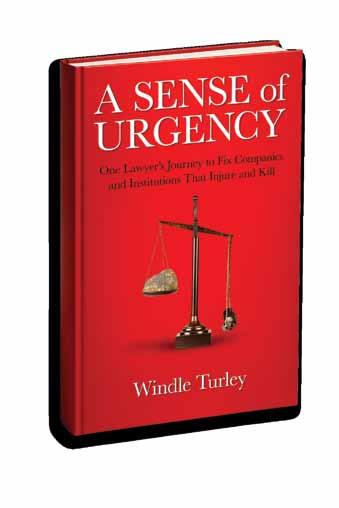
From crash fires to clergy abuse, Windle Turley has spent five decades forcing companies and institutions to fix what injures and kills.
A Texas Trial Legend and founder of one of the country’s leading personal injury firms, Windle Turley built his career taking on aviation giants, the firearms industry, and the Catholic Church itself. His precedent-setting verdicts and innovative trial strategies helped reshape how courts see corporate responsibility and product safety.
In his new memoir, A Sense of Urgency, Turley pulls back the curtain on the cases, tactics, and mindset that move juries, change policies, and protect the public.
a buyer was shown a property. It is asking whether the buyer understood the nature of the relationship, and the economics of that relationship, before substantive brokerage began. That is a meaningful shift.
from Custom to Clarity
Texas real estate will not lose its personality. It will remain fast-moving, conversational, and relationship-driven. Deals will still begin with phone calls, texts, and showings. Agents will
still build trust the same way they always have by being responsive, knowledgeable, and helpful.
SB 1968 changes the legal expectations that surround those interactions. It reduces the industry’s tolerance for beginning first and defining later. It creates a narrow, regulated space for non-representation while demanding discipline within that space. And it requires earlier, clearer agreement about when residential buyer brokerage begins.
At bottom, the message is uncomplicated:
• If you are representing a buyer, say so clearly and in writing before acting like it.
• If you are not representing the buyer, stay within role and do not blur the lines.
The law has not eliminated conversation, relationships, or trust. It has simply made it harder to rely on them as substitutes for clarity.
In a business long shaped by custom, SB 1968 marks a shift toward something more deliberate. It is not colder or more complicated, but it is more defined. For lawyers, that is where the most interesting consequences begin.
John G. George, Jr. is the founder of George PLLC and currently serves of counsel at SimpleLawTX. He is the co-chair of the TREC Broker-Lawyer Committee, CEO of Special Provisions, and serves as an expert witness on issues impacting brokers and agents.
4. See, e.g., Tuccori v. At World Props., No. 24 CV 150 (N.D. Ill.)
Equal Access Champions
The firms and corporations listed below have agreed to assume a leadership role in providing equal access to justice for all Harris County citizens. Each has made a commitment to provide representation in a certain number of cases through the Houston Volunteers Lawyers.
abraham, Watkins, nichols, agosto, aziz & stogner
akin gump strauss hauer & feld LLp
angela solice, attorney at Law
archie Law pLLC
Baker Botts L.L.p.
Bakerhostetler LLp
Baker hughes
Barron | pagel pLLC
Beck redden LLp
Blank rome LLp
Bracewell LLp
Centerpoint energy, inc.
Chamberlain hrdlicka
Chevron Usa
Coane & associates
dentons Us LLp
elizabeth s. pagel, pLLC
eversheds sutherland Us LLp
fleurinord Law pLLC
foley & Lardner LLp
gibbs & Bruns LLp
gibson, dunn & Crutcher LLp
gray reed
greenberg traurig, LLp
halliburton
hasley scarano, L.L.p.
haynes and Boone, LLp
hunton andrews Kurth LLp
Jackson Walker LLp
Jenkins & Kamin, L.L.p
King & spalding LLp
Kirkland & ellis LLp
Law Office of Cindi L. Rickman
Law Offices of Omonzusi Imobioh
Limbaga Law
LyondellBasell industries
Martin R.G. Marasigan Law Offices
mcdowell & hetherington LLp
mcgarvey pLLC
michael L. fuqua p.C.
morgan, Lewis & Bockius LLp
nelson mullins
northum Law
norton rose fulbright o’melveny & myers LLp
painter Law firm pLLC reed smith LLp
royston, rayzor, Vickery & Williams, LLp
sanchez Law firm
shell Usa, inc.
shipley snell montgomery LLp
shortt & nguyen, p.C.
sidley austin LLp
squire patton Boggs
the ericksen Law firm
the Jurek Law group, pLLC
troutman pepper Locke LLp
Vasquez Waite
Vinson & elkins LLp
Weycer, Kaplan, pulaski & Zuber, p.C.
Wilson, Cribbs, & goren, p.C.
Winstead pC
Winston & strawn LLp
Yetter Coleman LLp
from the CoCKPit to the Courtroom: How Military Service Shapes Barney Dill’s Law Practice
By kiMBerLy seiLer
Long before he entered the courtroom, Barney Dill developed a deep understanding of service, discipline, and responsibility—principles forged not in legal practice, but through his military service.
Dill’s commitment to service took root early. Growing up, he was surrounded by veterans, coaches, teachers, and scout leaders, whose examples left a lasting impression. Their service reflected a sense of honor, discipline, and purpose that resonated with him from a young age. He came to view military service as an opportunity to contribute to something greater than himself.
That sense of purpose led Dill to enroll in the Army Reserve Officers’ Training Corps at Texas State University in 2003. After graduating, he was commissioned in 2006 as an aviation officer in the Texas Army National Guard and reported to Fort Rucker, Alabama, for flight training. There, he learned to pilot the AH-64 Apache attack helicopter—an aircraft that demands precision, discipline, and unwavering focus. Dill served until 2020, ultimately resigning his commission at the rank of Captain.
they have earned. Those lessons in humility, discipline, and teamwork have stayed with me ever since.”
Following his military service, Dill found a new avenue for service: the legal profession. He was drawn to a practice that felt purposeful rather than purely transactional, ultimately focusing on personal injury law. His practice places him alongside individuals navigating difficult and often overwhelming circumstances, where his advocacy brings order, accountability, and justice. Dill continues to draw directly from his aviation training in his legal practice. In aviation, preparation and composure are paramount; even routine operations require vigilance and disciplined execution. He approaches legal proceedings— whether depositions, hearings, or trial work—with that same mindset: prepare thoroughly, remain steady under pressure, and avoid error.
As a National Guard attack pilot, Dill carried significant responsibility. Although the more dramatic aspects of his service often draw attention, Dill characterizes the day-to-day reality as defined by professionalism, preparation, and meticulous attention to detail. Among the most meaningful milestones of his service was earning his flight wings—a distinction that reflects years of rigorous training, persistence, and commitment to excellence.
Beyond technical skill, Dill’s military experience instilled enduring leadership principles, chief among them a mission-first mindset. As Dill explains, “it is about the mission. You learn not to let ego interfere with the task at hand. You also learn the importance of understanding your role within an organization, respecting the chain of command, and giving others the respect
Reflecting on veterans in the legal profession, Dill notes that military service instills qualities well suited to practice, including teamwork, maturity, reliability, and a mission-first mindset. He also emphasizes the importance of allowing time to adjust for those transitioning from active duty, as civilian legal practice is often less structured, less direct, and more nuanced than military service.
At its core, Dill’s approach—both in uniform and in legal practice—is grounded in honor, respect, and commitment to duty. His path from cockpit to courtroom marks not an end to service, but its continuation—carried forward with the same discipline and sense of purpose that first defined it.
Kimberly Seiler is a cybersecurity and data privacy associate at Constangy, Brooks, Smith & Prophete, LLP, where she advises organizations on operational resilience, regulatory compliance, and digital threat mitigation. She is a member of The Houston Lawyer’s editorial board.
A Profile
in p R o F ession A lism
diCk sCHWarTz
We all have key events in our life that shape who we are. Serving as a briefing attorney for U.S. District Judge Hugh Gibson in the Galveston Division for the Southern District of Texas between 1979 and 1981 was certainly one of mine.
That was not my first time in that court. In 1969, Ball High School kicked me out for having long hair. It wasn’t that long, particularly by today’s standards. My dad, who was then-state senator for District 17, including Galveston, asked me if I wanted to fight it. He said, if I did, we had to do it the right way. That meant first seeking relief from the school board. We did and lost.
Then, my father filed suit in federal court in Galveston, as my next of friend. We lost. After an evidentiary hearing, the court dismissed the case for failure to exhaust administrative remedies. We did not appeal, but the Fifth Circuit, in another case, commented that the ruling in my case was “estopped by one hundred years of litigation under 1983.”
So, I cut my hair and started an “underground” newspaper, which my mother and father helped me write and publish by using the mimeograph machine at our temple. All this caused my dad to receive hate mail, which I still have. Yet, through it all, he treated everyone with respect and dignity. And he never lost faith in the system.
This taught me more than I appreciated at the time–that civility matters. I was disappointed, of course, with the result in my case, but it led to me serving as a briefing attorney for an outstanding judge in that very court and to respect the system and people in it, even when I disagreed with the result
Shareholder, Munsch Hardt Kopf & Harr, P.C. Executive Director, The Garland R. walker Inn of Court
miChael ha Nover:
Precision Under Pressure in the U.S. Practical Shooting Association
By LaNe MorrisoN
As an eight-year veteran of the Harris County District Attorney’s Office and now civil litigator focusing on product liability defense, Michael Hanover knows that good legal work demands high attention to detail. So, outside the office, he chases the same kind of precision—but it’s measured in tenths of a second and proximity to targets. Hanover has become deeply involved with the United States Practical Shooting Association (USPSA), traveling across Texas and the country to compete against the sport’s best. Through it, he’s honed both his shooting skills and his legal acumen.
Hanover didn’t grow up around guns, hunting, or days spent at the shooting range. It wasn’t until 2020, when his work as a district attorney on various firearm-related cases and his experience with a threatening situation prompted a pragmatic decision: become a responsible, well-trained gun owner. He enrolled in a series of advanced courses adjacent to concealed carry. By the second or third class, he was surprised not only by how much measurable improvement there could be, but also by how much he enjoyed the practice itself. He also realized he could hold his own— sometimes even outperforming the instructors. He figured that there had to be another avenue to continue to work on these skills and enjoy shooting, without having to pay for a class all the time. He found it in competitive shooting. He discovered a local shooting club in northeast Houston that hosted weeknight USPSA matches. When he attended his first match, he was hooked: experienced shooters taught him the rules, made sure he felt safe, and were welcoming and kind. The community, paired with a sport that rewards obsession with detail, kept him coming back.
the most efficient blend of both.
Today, his involvement with USPSA is anything but casual. He competes in the Open Division with race pistols and estimates that he shoots about 20,000 rounds a year—ammunition he loads by hand. Hanover shoots local matches two or three times a month on weekends. Local matches are preparation for major matches, and he has been increasing the number of major matches he competes in each year. This year, he is registered for six major matches from Dallas to Mississippi to Ohio and Pennsylvania.
Results have followed Hanover’s commitment. Last year, he won the Open Division at the Texas State Open Championship and also won the Space City Classic, a match he considers the premier regional event in the area. He finished 25th at Racegun Nationals last year— a benchmark he hopes to surpass. This year, he reached USPSA’s Grandmaster classification, the highest level in the organization’s standardized system. If he can continue to improve his placement at upcoming national events, he hopes to then compete internationally—to one day represent the United States at a future World Shoot in Rome.
Hanover’s shooting has benefited his legal career in practical ways. While he was a district attorney, he became an informal in-house firearms resource for case evaluation, and the knowledge gave him an additional way to connect with law enforcement partners. In his current role as an associate at Bush Seyferth, the sport helps him step away from the intensity of the day. But even as an “escape,” it continues to provide confidence, perspective, and self-esteem—benefits he believes make him a better lawyer.
USPSA matches are built around variety. A single match typically includes seven to 14 stages, each presenting its own layout, target difficulty, movements. Competitors walk each stage beforehand, building a plan that blends speed and accuracy. Then the timer starts. Scoring, Hanover explains, is straightforward in concept and ruthless in practice: total target points divided by the time it took to complete the stage. The best performance is rarely just “fast” or just “accurate,” it’s
To Hanover, USPSA is more than competition; it is a demanding craft and a community. And whether he is chasing the next tenth of a second in Open Division or navigating high-stakes legal work, the through line is the same: the details matter, and the work shows.
Lane Morrison is a partner at Bush Seyferth PLLC, where he concentrates on product liability and class action defense, focusing on critical trial motions and appeals. He is the articles editor for The Houston Lawyer
hanover competes in the usP sa’s open division with race pistols.
Hunton Andrews Kurth LLP is a leading global law firm with nearly 900 lawyers and a broad range of market-leading capabilities, with emphasis on the energy, technology, financial services, real estate, and retail and consumer products industries.
As we celebrate 125 years, we recommit to the core values that serve as our guiding principles: exceptional client service, robust investment in our communities and our people, and continued dedication to delivering trusted world-class legal counsel.
By AlAN RAtliff
IHBA Speakers Bureau Committee
am the 2025-2026 chair of the HBA’s Speakers Bureau Committee, but my service as a volunteer speaker and teacher through the HBA dates back over 30 years. As an associate attorney in Weil Gotshal’s Houston office, I began volunteering through the newly-created Lawyers in Public Schools program in the early 1990s. Houston ISD and the HBA partnered to provide attorneys as substitute teachers during teacher in-service training days, enabling more teachers to obtain valuable continuing education and saving the district tens of thousands of dollars in substitute teacher fees every year.
Judge Eric Andell and future Texas Supreme Court Justice Dale Wainwright were the original co-chairs of the “LIPS” committee, and I was honored to succeed them as the committee’s second chair two years later. I thoroughly enjoyed teaching students at middle school and high school campuses across Houston ISD for more than a decade.
When the LIPS program ended, I was looking for a similar opportunity and discovered the Speakers Bureau. The HBA provides attorneys to speak on legal topics at schools, civic organizations, community centers, and other community groups without charge. In addition to responding to community speaking requests, the Speakers Bureau also assists with the Law Week and Lawyers for Literacy Committees on Constitution Day, and Law Week school readings, as well as the Texas High School Mock Trial Competition.
Looking at the last year of Speakers Bureau requests, frequently requested topics include consumer rights, criminal law, cybersecurity (including identity theft), elder law, estate & gift tax, family law (including child support, custody), govern-
ment/judicial law, healthcare law, how to hire an attorney, immigration law, labor & employment law, law as a career, living wills & advanced directives, Medicare & Medicaid, property law (including liens), real estate law (renter’s rights, property owner rights, eviction, purchase and sale agreements), and wills & estate planning (including probate).
One of my favorite topics that I enjoy copresenting with my colleague Ambreen Salters is the importance of jury service. This topic was incorporated into Speakers Bureau presentations 20 years ago by thenHBA President Randy Sorrells. We talk about the duty to serve and the privilege of serving on a jury, as well as qualifications and eligibility, and the importance of juries to the American justice system, sharing our own varied experiences in the courtroom.
In addition, I enjoy volunteering with my colleague Tiffany Lewis in the annual Teach Texas program for 7th graders, where students learn about Texas legal history and the court system. The two lessons cover events from the Spanish landing in Galveston in the 1500’s through the current members of the Texas Supreme Court. Have you heard about Judge Three-legged Willie or the furniture dispute between the first two Presidents of the Republic? I guarantee you’ll have fun and learn something too!
For more information on the Speaker’s Bureau, serving as a speaker, or requesting a speaker, visit the HBA’s Speakers Bureau page at hba.org/committees.
Alan Ratliff is a partner in the StoneTurn Group and a past president of the Federal Bar Association for the Southern District of Texas. He is the 2025-2026 chair of the HBA’s Speakers Bureau and a past chair of the HBA’s Lawyers in Public Schools.
JuveNile l aW seC tioN : Building Brighter Futures Together
By Julie RogeRs
The Houston Bar Association’s Juvenile Law Section’s members come from across the gamut of juvenile law practices. Section members include practitioners from private practice and public service sectors like the Juvenile Public Defender’s Office, Juvenile District Attorney’s Office, and juvenile court judges.
Juvenile law is a unique practice area at the confluence of family law, criminal law, and constitutional law. Practitioners frequently encounter cases that require familiarity with trauma, the child welfare system, education, disabilities, and mental health. The HBA Juvenile Law Section is a great place to connect with other professionals in the field and is replete with expert practitioners who are always willing to share their experience-gained knowledge and expertise with rising juvenile lawyers.
The section is dedicated to continuing education in this field. To that end, the section puts on a two-day Juvenile Law Conference annually. The 14th Annual Juvenile Law Conference will be held on November 12 and 13. Topics may include:
• Ethical Considerations in the Representation of Juveniles;
• Motions Practice in Juvenile Law;
• Sealing Juvenile Records;
• Dual-Status Youth: Unique Issues that Arise When Representing Youth Who are Dually Involved in Both Child Welfare and Juvenile Court;
• The Line Between Juvenile and Adult Proceedings: Determinate Sentence and Certification Proceedings;
• Legislative Updates;
• Case Law Updates;
• Practical Demonstrations;
• Detention Hearings;
• Adjudication Hearings; and
• The Arrests, Searches, and Confessions of Juveniles.
A juvenile’s first delinquency case is an inflection point in their life. The outcome of a juvenile case, and how it’s handled by the lawyers involved, influences the trajectory of the lives of our young clients, and shapes how they view and interact with law enforcement and the court system in the future. As a section, the goal is to achieve not just successful outcomes for our clients in the juvenile delinquency case at hand, but to improve overall outcomes in our young client’s future lives.
Through the Juvenile Law Section, lawyers on both sides of the bar who are interested in juvenile law can get to know like-minded professionals in the area and explore how other lawyers approach the unique issues that arise in juvenile law. The collaboration within and fostered by the HBA Juvenile Law Section improves outcomes of juvenile justice-involved youth and their families. The section encourages participation from law students and anyone interested in this niche, fascinating area of law.
The section is also committed to improving outcomes in our young clients’ lives. Each year the section donates money to the Criss Cole Children’s Fund to help kids coming off probation with school clothes and other expenses.
Our section has been faithfully served by its long-time program chair, Brian Fischer, to whom we offer many thanks for his years of faithful service!
Program Chair: Brian Fischer, Attorney at Law
Section Chair: Julie Rogers, J.B. Rogers Law
Secretary: Mitchel Nelson, SBC Global
Treasurer: Beverly Malazzo, Law Office of Beverly B. Malazzo.
Julie Rogers practices in the areas of juvenile and school law, specializing in the intersection of juvenile delinquency, special education, and school discipline. Julie is in private practice at J.B. Rogers Law, and directs the Juvenile Record Sealing Clinic at University of Houston Law Center
In re ExxonMobil: Intentional Tort Exception to Workers Compensation Act is Narrow
By stAN PeRRy and WilliAM NguyeN
Subscribers to the Texas Workers Compensation system are immune from workplace injuries with one exception—intentional harm.1 Texas courts have consistently ruled this intentional harm exception is narrow and recognition of workplace hazards does not satisfy this exception. Despite the clarity of the law, litigants have pressed the limits of Texas law regarding when a workplace hazard can satisfy the intentional harm exceptions.2
Recently, the limits of the intentional harm exception were addressed in In re ExxonMobil Corp., where the Fourteenth Court of Appeals granted a petition for mandamus, because the trial court denied ExxonMobil’s motion for summary judgment in response to an ExxonMobil employee’s lawsuit alleging intentional injury.3 In this decision, the court considered whether an employer’s awareness of dangerous workplace conditions was sufficient to trigger the intentional tort exception to workers’ compensation immunity. According to the court, the evidence showed that ExxonMobil knew the vessel contained flammable residue, oxygen, and an ignition source, yet the court held that such knowledge, without more, was insufficient to defeat statutory immunity.4 The court emphasized that intentional tort liability requires proof that the employer either desired the injury or believed, with substantial certainty, that its conduct would result in a specific injury to a particular employee, not
merely that it increased the overall risk of harm in the workplace. With this holding, the court strengthens predictability in employer liability while setting a clear burden on plaintiffs seeking to invoke the intentional tort exception.
This case first presents a threshold question: the clarity of Texas law defining the scope of the workers’ compensation bar. Texas law establishes that workers’ compensation provides the exclusive remedy for employees injured in the course of employment. The Texas Workers’ Compensation Act states that “recovery of workers’ compensation benefits is the exclusive remedy of an employee covered by workers’ compensation insurance coverage... against the employer.”5 To invoke this protection, the employer must show that the injured worker was its employee, and that the employee was covered by workers’ compensation insurance at the time of the injury.6 The statute recognizes only a narrow exception. Section 408.001 permits exemplary damages in wrongful-death actions when the employee’s death is caused by the employer’s intentional act or gross negligence.7 Courts have consistently emphasized that the intentional-tort exception is “narrow,” requiring proof that the employer believed its conduct was substantially certain to cause a particular injury to a particular employee.8 Absent these limited circumstances, the Act bars commonlaw claims against the employer.
The procedural posture of the case underscores the importance of this settled legal framework. Mandamus relief from a denial of summary judgment is rarely granted,9 as Texas courts consistently hold that such relief is unavailable “no matter how meritorious the motion” absent truly exceptional circumstances.10 By intervening at this stage, the court signaled that the scope of workers’ compensation immunity presents a legal question warranting immediate correction rather than post-trial review.11
Against this procedural backdrop, the ExxonMobil court drew a critical distinction between general workplace risk
awareness and the specific intent required to overcome workers’ compensation immunity. Here, the plaintiff was injured in a flash fire while performing hot work in a vessel containing residual naphtha. Despite evidence that ExxonMobil knew that residual naphtha, oxygen, and an ignition source were present and could combine to cause a flash fire, the court found this insufficient to establish the intentional-tort exception. The court reasoned that this evidence “only shows that ExxonMobil believed that a flash fire inside the vessel resulting in injuries to a worker at some point in time was possible.”12 Instead, the court requires evidence that the employer believed specific injuries would result to that particular worker with substantial certainty.13 The holding in In re ExxonMobil Corp. reinforces existing Texas law that the intentional harm exception to the Texas Workers Compensation Act does not include known risks of harm; rather, employees suing their employers must have evidence their employer intended to harm them.
In re ExxonMobil Corp. reaffirms the narrow scope of the intentional tort exception to Texas’s workers’ compensation scheme. By granting mandamus relief and reinforcing the substantial certainty standard, the court enhanced the predictability of employer immunity and confined common law liability to those injuries that are truly intentional. The decision signals that awareness of workplace risk, without specific intent to cause injury, remains insufficient to overcome the exclusive remedy bar.
Stan Perry is founding partner of Taylor Wellons Politz & Duhe’s Houston office.
William Nguyen is a law clerk with Taylor Wellons Politz & Duhe in Houston and will graduate from the University of Houston Law Center in 2027.
endnotes
1. Mo-Vac Serv. Co., Inc. v. Escobedo, 603 S.W.3d 119, 125 (Tex. 2020).
App.—Houston [14th Dist.] Dec. 18, 2025, no pet. h.).
4. I.d at *11 (plaintiff must prove Exxon believed specific injuries would result to plaintiff with substantial certainty).
5. TEX. LABOR CODE § 408.001.
6. Warnke v. Nabors Drilling USA, L.P., 358 S.W.3d 338, 343 (Tex. App.—Houston [1st Dist.] 2011, no pet.).
7. TEX. LABOR CODE § 408.001; Estate of Howard, 543 S.W.3d 397, 404 (Tex. App.—Houston [14th Dist.] 2018, no pet.).
8. Mo-Vac Serv. Co., 603 S.W.3d at 130.
9. In re Ooida Risk Retention Group, Inc., 475 S.W.3d 905, 913 (Tex. 2015).
10. In re McAllen Medical Center, Inc., 275 S.W.3d 458, 465 (Tex. 2008).
11. Ooida, 475 S.W.3d at 913; see also ExxonMobil Corp., 2025 WL 3672143 at *1 (mandamus relief is available only when (1) the trial court clearly abused its discretion; and (2) no adequate remedy by appeal exists).
12. ExxonMobil Corp., 2025 WL 3672143 at *9.
13. Id. at *11 (explaining that it is insufficient for plaintiff to show that all workers inside the vessel faced a constant risk due to the presence of an ignition source, even if such conditions made injury inevitable; instead, the plaintiff needed to present evidence that ExxonMobil believed, with substantial certainty, that these conditions would cause a specific injury to him).
New Changes to Summary Judgment Practice in Texas
By Nikki MoRRis
Recently, Summary judgment is a great tool to narrow the issues and better position the parties for settlement or trial, but often, in Texas state courts, summary judgments have been left undecided indefinitely. In 2025, the Texas Legislature took action to change that with the enactment of Section 23.303 of the Texas Government Code, which puts trial courts on a clock to decide these dispositive motions. More recently, effective March 1, 2026, the Texas Supreme Court completely reworked Rule 166a, imposing new deadlines and requirements for the actual filing, consistent with the legislative updates. Section 23.303 codifies certain proce-
dures for motions for summary judgment and requires annual reporting from the clerks of court. Under this new provision, all business courts, district courts, and statutory county courts are required to hear oral argument or consider the motion without oral argument no later than the 60th day after the motion was filed or the 90th day after the motion was filed, provided certain conditions are met.1 The date of consideration or hearing must be noted on the docket, and the clerks will be required to submit quarterly and annual reporting regarding compliance with these new deadlines.2 Written rulings are required within 90 days after the date the motion was argued or considered.3
To implement the changes in Section 23.303, the Texas Supreme Court completely reworked Texas Rule of Civil Procedure 166a. For all motions for summary judgment filed after March 1, 2026, new Rule 166a will govern the timing, procedure, and even titling of those motions. The key changes are as follows:
specific Briefing requirements
The rule now expressly allows parties to file traditional, no evidence, or combined motions for summary judgment, but the motion must use specific language set out in the rule to identify which type of motion is being filed.4 Parties must additionally state in the title of the motion or response whether an oral hearing is requested.5 Both parties are required to submit proposed orders.6
otherwise or obtain leave of court.9 Replies are expressly precluded from raising new or independent summary judgment grounds.10
hearings
One key change is that the hearing date is determined based on when the motion is filed rather than the other way around. After the motion is filed, the clerk must bring the motion to the court’s attention, the court must set it for hearing or submission, and then the clerk must send a notice of the submission or hearing date to the parties.11 Consistent with section 23.303, motions must be heard between 35 and 90 days after filing.12 Resets are permitted but only within the time constraints of the rule, and the court must record in the docket the date the motion was heard or submitted.13 Rulings are required within 90 days after the hearing or submission date.14
Assuming no agreed extensions, the new timeline for decisions on motions for summary judgments is as follows:
Thus, parties can now expect the court to rule between 125 and 180 days from when the original motion was filed.
evidence
Responses are due within 21 days after the motion is filed, but if additional time is needed to secure evidence, the non-movant must file an affidavit or declaration specifying the reasons why additional time is required.7 If the nonmovant seeks an extension, the court may extend the time to file a response, deny the motion without prejudice to permit additional discovery, or issue another appropriate order.8
Replies are due within 7 days after the response is filed unless the parties agree
New Rule 166a provides further guidance on what evidence parties may rely on to support their respective positions, including identifying specific categories of documents that parties may rely on.15 The rule further specifies when evidence may be produced by reference and how it should be incorporated into the filings.16 The rule also provides more guidelines for evidence in the form of affidavits or declarations and imposes a penalty for affidavits or declarations that are submitted in bad faith.17 Later-filed evidence may also be considered if the court notes it is doing so on the record.18
Continued on page 38
“Puncture”: A Houston Cult Classic
Starring Chris Evans and Mark Lanier
Reviewed by JohNNy DAy and CiARA PeRRitANo
Houston’s list of movie cult classics includes “Rushmore” (1998), “Urban Cowboy” (1980), and “Terms of Endearment” (1983). A hidden gem belongs on that list—“Puncture” (2011).
In “Puncture,” Chris Evans (who would later star in Captain America films) plays real-life Houston lawyer Mike Weiss. Set in a Shady Acres bungalow and other locations around Houston, “Puncture” is a legal drama based on real federal antitrust litigation. The film brings together two of the city’s defining industries, medicine and the law, and focuses specifically on medical devices (needles) used in hospitals and the legal fight over how retractable needles were marketed.
Houston is more than a backdrop. It shapes the film’s tone and ambitions. The Harris County Civil Courthouse is prominently featured, even though the case itself involves federal antitrust claims. While that detail is not technically precise, it is still striking to see Houston’s civil courtrooms on screen. Other Houston landmarks appear as well, including Warren’s downtown bar and what looks like the original Bernie’s Burger Bus. The film’s slow, considered shots and scenes ground the audience in the city’s everyday life.
At the center of the lawsuit is a young nurse and mother who contracts HIV after being stuck by a contaminated, non-retractable needle in an emergency room. At the time these events occurred,
among medical personnel.
The film captures Houston’s trial lawyer culture with notable realism. The stakes feel tangible: real injuries, real patients, and corporate systems resistant to change. Four lawyers feature prominently in the movie, functioning as archetypes and reflections of the real lawyers. One of those lawyers is Mark Lanier, which means these are no-limit stakes.
Many legal entrepreneurs will recognize a familiar dynamic as two of the film’s other lawyers, Evans’ character and his law partner, repeatedly argue about finances and the need for a referral lawyer.
Defense counsel, portrayed by Brett Cullen, is another standout. His performance presents the defense side with professionalism and restraint, avoiding caricature. It is one of the strongest portrayals of a civil defense lawyer in legal cinema, conveying both strategic confidence and institutional authority. It is hard to forget when he tells Evans
his “chicken salad” theory, a scene filmed at Tony’s near Greenway Plaza. Only the recently departed Robert Duvall in “A Civil Action” better convinces of the merits of the civil defense.
The film depicts the personal struggles of its star. Drug use is a recurring element and affects how others respond to Weiss, including a tense interaction with a U.S. Senator who provides Evans’ character with an ultimatum as he dabs blood from his nose. At times, the drug use in the film can feel overemphasized, and the director’s choice to be graphic may explain why “Puncture” never reached a broader audience. With a more restrained approach, the movie might appear on more “Best Of” lists. At the same time, these rough edges make the movie a cult classic.
Lanier approached his performance with that same realism in mind. “What I tried to do in the performance was pretend that this was really happening in life and there just happened to be cameras around, so it would look as natural as possible,” he explained.1 Having held countless press conferences on courthouse steps and knowing what it means to walk away from settlement offers in real life, Lanier treated his scenes as extensions of his everyday practice. “In my brain,” he said, “I was just doing my normal job.”
Lanier allowed the production team to use his home, with Lanier’s house serving as the residence of defense counsel. Several scenes were filmed there, and Lanier recalled one scene where viewers can see a kitchen towel stitched with one of his favorite Bible verses: “As for me and my house, we will serve the Lord.”2
For Weiss’ law partner, Paul Danziger,
who still practices mass tort law here in Houston at Danziger & De Llano, LLP, this was “more than a movie.” It grew out of a real case involving real nurses who were being injured. “We were young, idealistic lawyers taking on an entrenched system,” Danziger recalled via email. “It seemed like they had unlimited resources.”
Danziger remembers how he and Weiss were best friends at Bellaire High School before later forming their law partnership. “Writing the screenplay was deeply cathartic,” Danziger explained. “It was a way to process that chapter of my life and to pay tribute to Mike and the passion he brought to his life’s work. I’m proud the film keeps its focus where it belongs, on the people who were hurt and the lawyers who fight to protect them.”
When asked about the mechanics of writing a screenplay and seeing it become a movie on the big screen, Danziger
said he was an innocent, “I had never written one before. I just read a couple of other screenplays and copied the format. I simply started putting down what had happened. No one told me it is nearly impossible to write a screenplay and get it made into a movie! I didn’t know better, so I just tried.”
After Danziger had written the first draft, he found a screenwriter in New York who helped him shape the screenplay, then found producers who further refined it, and eventually Chris Evans signed on for “scale” or “Hollywood union minimum wage.” It took about seven years to bring it to life, but Danziger persevered until the movie was released.
Danziger offered no comment when asked about the movie’s theme, “The brightest light shines in the dark.” Emotional in his silence.
If your life has become unmanage-
able, the Houston Bar Association and your fellow lawyers understand. You can anonymously contact the Texas Lawyers’ Assistance Program (TLAP) 24/7 via call or text at 1-800343-TLAP (8527). For meetings go to: www.aahouston.org
Johnny Day is a trial lawyer at Sorrels Law. He specializes in catastrophic personal injuries and complex commercial litigation. He’s a member of The Houston Lawyer Editorial Board.
Ciara Perritano is a litigator at Winstead PC and is a member of The Houston Lawyer Editorial Board.
endnotes
1. Sarah Rufca, Attorney Mark Lanier Goes Hollywood in New Filmed-in-Houston Movie, Puncture, CultureMap Houston (May 2, 2011, 8:00 AM), https://houston.culturemap.com/news/ entertainment/04-29-11-mark-lanier-puncture. 2. Id
Office Space
EXCLuSIvE SuITE, gALLERIA INNER LOOP
Private attorney-only office space conveniently located inside Houston’s 610 Loop at San Felipe. Staffed with a receptionist/ office manager, with access to amenities, including high-speed internet, telephones, kitchen, two conference rooms, and covered parking. Several offices are available with window views.
Call Jerry at 713-237-0222.
HEIgHTS AREA LAW OFFICE SHARINg
2, furnished window offices (approx 14x14), and one support area available immediately. One large office space (15x14) available beginning January 1. Modern building with 24 hour security on North Loop near Shepherd with downtown views. Beautiful conference room with 60” TV/Whiteboard, color copier/fax/scanner available on network, internet, full featured VOIP phone system, Wi-Fi and wired internet, attached covered parking, room for your files. Kitchen in suite with microwave/pizza oven, coffee, soft drinks, water and snacks available. Contact Dianne or Teri at 713-529-2020 for more information.
from page 35
What has not changed
While it appears that much has changed with the new rule, there are many practical elements of the old rule that remain in effect, and the comment to the rule states that it is not intended to substantively change the law. Generally, the docket control order dictates the time for filing traditional summary judgment motions, but they may also be filed any time after the nonmovant has appeared or answered.19 No evidence motions for summary judgment may be filed after an adequate time for discovery.20 The well-established standards for summary judgment are also unchanged, and many of the rules regarding use of evidence that were previously understood are now expressly stated.21
Going forward, parties and the courts should consider Rule 166a when negotiating or establishing docket control orders and key deadlines leading up to trial. Ideally, these concrete deadlines will help parties plan and prepare their cases for trial or position themselves for settlement, while also keeping dockets moving forward. While these developments will hopefully enable the courts to dispose of these motions more efficiently, it remains to be seen how this will play out in practice and whether the anticipated effects will be realized.
Nikki Morris is a commercial litigation partner with BakerHostetler and the editor in chief of The Houston Lawyer endnotes
1. Tex. Gov’t Code § 23.303(a)(1).
2. Id. § 23.303(b), (c).
3. Id. § 23.303(a)(2).
4. Tex. R. Civ. P. 166a(a)-(b).
5. Id. 166a(b)(2)(B).
6. Id. 166a(g)(3).
7. Id. 166a(d).
8. Id
9. Id. 166a(e).
10. Id
11. Id. 166a(c).
12. Id. 166a(g).
13. Id
14. Id. 166a(j).
15. Id. 166a(j).
16. Id. 166a(j)(2)-(3).
17. Id. 166a(j)(4)-(5).
18. Id. 166a(j)(6).
19. Id. 166a(b)(3).
20. Id
21. Id. 166a(h), (j).
Join the hBa 100 Club!
the houston Bar Association 100 Club is a special category of membership that indicates a commitment to the advancement of the legal profession and the betterment of the community. the following law firms, government agencies, law schools and corporate legal departments with five or more attorneys have become members of the 100 Club by enrolling 100 percent of their attorneys as members of the hBA.
firms of 5-24 attorneys
Abraham, watkins, Nichols, Agosto, Aziz & Stogner
Adair Myers Stevenson Yagi PllC
Ajamie llP
Alvarez Stauffer Bremer PllC
Baker, Donelson, Bearman, Caldwell & Berkowitz, PC
Buck Keenan llP
Christian levine law Group, llC
Coats | Rose
Crady, Jewett, McCulley & Houren, llP
De lange Hudspeth McConnell & Tibbets llP
Dentons US llP
Dobrowski Stafford llP
Doyle Restrepo Harvin & Robbins llP
Ewing & Jones, PllC
Fisher & Phillips llP
Fizer Beck webster Bentley & Scroggins
Fogler, Brar, O’Neil & Gray llP
Frank, Elmore, lievens, Slaughter & Turet, l.l.P.
Funderburk Funderburk Courtois, llP
Germer PllC
Gordon Rees Scully & Mansukhani, llP
Hagans
Henke, williams & Boll, llP
Hirsch & westheimer, P.C.
Holm | Bambace llP
Horne Rota Moos llP
Hughes, watters & Askanase, l l.P.
Hunt law Firm, P.l l.C.
Husch Blackwell llP
Jackson lewis P.C.
Jenkins & Kamin, llP
Johnson Deluca Kurisky & Gould, P.C.
Jordan, lynch & Cancienne
Kean Miller
Kilpatrick Townsend & Stockton llP
law Feehan Adams llP
linebarger Goggan Blair & Sampson, llP
liskow
McGinnis lochridge
McGuirewoods llP
McKool Smith
Mehaffyweber PC
Morris lendais Hollrah & Snowden
Murrah & Killough, PllC
Nathan Sommers Gibson Dillon PC
Ogletree Deakins Nash Smoak & Stewart, P.C.
Paranjpe Mahadass Ruemke llP
Peckar & Abramson, P.C.
Phelps Dunbar llP
Pillsbury winthrop Shaw Pittman llP
Ramey, Chandler, Quinn & Zito, P.C.
Rapp & Krock PC
Reynolds Frizzell llP
Roach & Newton, l l.P.
Ross Banks May Cron & Cavin PC
Royston, Rayzor, Vickery & williams, l l.P.
Rusty Hardin & Associates, ll
Schirrmeister Diaz-Arrastia Brem llP
Schwartz, Page & Harding, l.l.P.
Scott, Clawater & Houston, l.l.P.
Shannon Martin Finkelstein Alvarado & Dunne, P.C.
Shearman & Sterling
Shellist | lazarz | Slobin llP
Shipley Snell Montgomery llP
Smith Murdaugh little & Bonham llP
Sorrels law
Spencer Fane
Sponsel Miller Greenberg PllC
Stuart PC
Taunton Snyder & Parish
Thompson & Horton llP
Tindall England PC
Tracey & Fox law Firm
ware, Jackson, lee, O’Neill, Smith & Barrow, llP
west Mermis
weycer, Kaplan, Pulaski & Zuber, PC
williams Hart & Boundas, llP
wright Abshire, Attorneys, PC
wright Close & Barger, llP
Ytterberg Deery Knull llP
Zukowski, Bresenhan & Piazza l.l.P
firms of 25-49 attorneys
Adams and Reese llP
Andrews Myers, P.C.
Beck Redden llP
BoyarMiller
Bradley Arant Boult Cummings llP
Bush & Ramirez, PllC
Cokinos | Young
Gibbs & Bruns llP
Hogan lovells US llP
Kane Russell Coleman & logan PC
littler Mendelson P.C.
Martin, Disiere, Jefferson & wisdom llP
McDowell & Hetherington llP
wilson Cribbs & Goren PC
Yetter Coleman llP
firms of 50-99 attorneys
AZA law
BakerHostetler llP
Brown Sims, P.C.
Chamberlain Hrdlicka
Greenberg Traurig, llP
Haynes and Boone, llP
Jackson walker llP
Morgan, lewis & Bockius llP
Susman Godfrey l l.P.
winstead PC
firms of 100+ attorneys
Baker Botts l l.P.
Bracewell llP
Hunton Andrews Kurth llP
Norton Rose Fulbright
Porter Hedges llP
Troutman Pepper locke llP
Vinson & Elkins llP
Corporate legal departments
CenterPoint Energy, Inc.
EOG Resources, Inc.
MAXXAM, Inc.
Plains All American Pipeline, l.P.
Quantlab Financial, llC
Rice University
S & B Engineers and Constructors, ltd.
law school faculty
South Texas College of law Houston
Thurgood Marshall School of law
University of Houston law Center
Government agencies
Harris County Attorney’s Office
Harris County Domestic Relations Office
lone Star legal Aid
Metropolitan Transit Authority of Harris County, Texas