Emergency Care, Civil Enforcement, and Workplace Rights: The Evolving Legal Framework Affecting Texas Women
Reconsidering Glass Ceilings and the Meaning of Success
Perspectives: Women Aces Who Try Big Cases
HBA Gender Fairness Committee Participates in Women’s History Month
Houston Bar Foundation Recognizes Excellence and Legacy at 2026 Annual Luncheon
WOMEN IN THE Law
By Casey
Minnes Carter
and Colleen Migl
Reconsidering Glass Ceilings and the Meaning of Success By anna arCher
Perspectives: Women Aces Who Try Big Cases By Ciara Perritano and JessiCa CrutCher
HBA Gender Fairness Committee Participates in Women’s History Month and International Women’s Day Events By THe HousTon Lawyer editorial Board
Houston Bar Foundation Recognizes Excellence and Legacy at 2026 Annual Luncheon
HBA’s Eikenburg Fun Run Raises Vital Support for Houston’s Pursuit Center
PresideNT’s MessAge Honoring the “First” Women in Law Who Forged a Path for Others By dANieLLA LANders
FroM THe ediTor
Women Leading the Law By Nikki L. Morris
VeTerAN sPoTLigHT
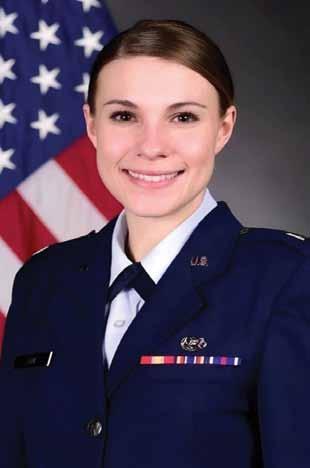
Kaylee Gum: Service Before Self By Nikki Morris
A ProFiLe iN ProFessioNALisM
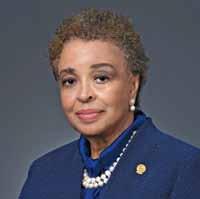
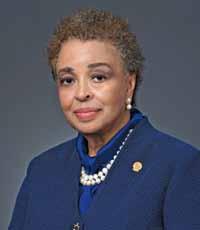
Hon. Alice A. Wilkerson Bonner
First African American woman state judge in Harris County, Texas
oFF THe reCord
Lauren J. Harrison: Jumping for Joy By JoHNNy dAy
CoMMiTTee sPoTLigHT
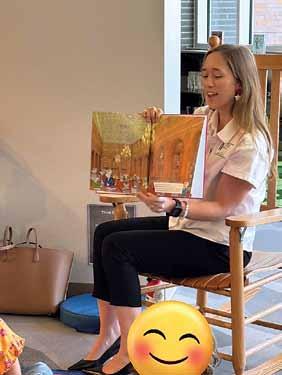
Spotlight on the HBA Lawyers for Literacy Committee By LiNdA HesTer
seCTioN sPoTLigHT
A Time for Resolution: Spotlighting the HBA ADR Section By JessiCA L. CruTCHer
LegAL TreNds
Renaissance Medical Foundation v. Rebecca Lugo, Individually and as Next Friend of I.B.: A Law Meant to Protect Doctors Now May Work Against Them By sereNA M. MArTiN
MediA reViews
The Law of the Sea: A Legal Thriller Lawyers Will Love reviewed by CArey worreLL
Will-O’-The-Wisp reviewed by CHANdriA T. JACksoN LiTigATioN MArkeTPLACe
By Daniella l an D ers
honoring the “First” WoMen in
laW
Who Forged a Path for Others
When we honor “trailblazers,” it’s important to recognize the depth of their achievements. Being a “first” is not simply about holding a title—it’s about breaking through longstanding societal and professional barriers, often at great personal cost. These pioneers carved out space in places where women were once excluded, opening doors for those who would follow. Whether you’re reading this from a law firm, a corporate office, a law school, or a courtroom, take a moment to reflect on the women who paved the way— and on those who continue to shape our profession today.
The history of women in Houston’s legal profession is a testament to resilience, progress, and the ongoing pursuit of equality. In the early 20th century, women confronted formidable barriers—ranging from exclusion from law schools to societal expectations that discouraged professional ambition. Despite these obstacles, pioneers like Hortense Sparks Ward, who became the first female lawyer in Texas in 1910, forged a path for others to follow. Their determination laid the groundwork for the many ‘firsts’ that would shape Houston’s legal community.
Houston’s legal community has been shaped by the vision and perseverance of pioneering women who have broken new ground and inspired future generations. Among them, Justice Ruby Kless Sondock stands out as the first woman to serve on the Supreme Court of Texas and as Harris County’s first female District Court Judge, achievements that have left an enduring legacy on the profession. Judge Alice Bonner, highlighted in this edition’s Profile in Professionalism, made history as the first African-American female district judge in Texas—a milestone that continues to motivate and empower others. That path was further expanded by former Justice Eva Guzman, a native Houstonian and the first Latina to serve on the Texas Supreme Court, and by U.S. Magistrate Judge Yvonne Ho, who in 2022 became the first Asian American federal judge in Texas—signaling continued progress toward greater representation and inclusion of women in the Texas judiciary.
Organizations like the Houston Association of Women Attorneys (AWA), established in 1976, have been instrumental
in advancing women’s roles in Houston’s legal community. Justice Sondock and other visionary women helped found the AWA during a pivotal era when more women were entering law schools and the profession. Now celebrating its 50th anniversary, the AWA remains dedicated to fostering professional growth, networking, and advocacy for women attorneys, judges, and law students.
To celebrate International Women’s History Month in March, I was honored to collaborate with the Greater Houston Women’s Chamber of Commerce and the Texas Business Court for “The Power of Precedent: Women History Makers & Trailblazers” at the historic 1910 Courthouse. This marked the first partnership between the HBA, the judiciary, and the business community to recognize women trailblazers in both law and business. A highlight was the special ceremony honoring Justice Ruby Kless Sondock—a true pioneer—as she approached her 100th birthday.
I am pleased to announce the launch of a new HBA section for the upcoming Bar year—the Women in the Law Section (formerly the Gender Fairness Committee). Building on the strong foundation of its predecessor, this section will continue to advance programs and initiatives that promote awareness of issues affecting women and gender equity in the legal profession, including through CLE programming and mentoring opportunities. I encourage you to get involved—whether with this new section or any of our other 27 sections—when you renew your membership at hba.org
As my term as Bar President draws to a close, I am reminded that our work to advance women in the legal profession—and in the broader Houston community—is ongoing. This commitment, echoed throughout our history, remains as vital today as ever. By honoring the “firsts” and the many women who have followed, we acknowledge that the pursuit of equality and representation is a continuing journey. The achievements of women in Houston’s legal community have not only transformed the profession but have inspired future generations to seek justice and leadership.
The first may ignite the spark of change, but the legacy is the enduring flame that sustains it.
BOARD OF DIRECTORS
President Daniella Landers
President-elect
Greg Ulmer
First Vice President Collin Cox
second Vice President
Robert Painter
secretary Kaylan Dunn
Treasurer Todd Frankfort
immediate Past President David Harrell
DIRECTORS (2024-2026)
Keri Brown Stephanie Noble
Seepan V. Parseghian Samantha Torres
DIRECTORS (2025-2027)
Carter Dugan Greg Moore
Colin Pogge Richard Whiteley
EDITORIAl STAFF
editor in Chief Nikki Morris
Associate editors
Anna M. Archer
Sydney Huber Bateman
Jessica Crutcher
Lane Morrison Rinku Ray
Braden Riley
editorial Board
Anietie Akpan Mehrnoosh K. Andu
Jaclyn Barbosa Casey Minnes Carter
Hon. Natalia Cornelio Johnny Day
Teresa Hudson
Corey Devine
Chandria Jackson Dave Louie
Andrew Pearce Ciara Perritano
Hon. Josefina Rendón Kimberly Seiler
Jennifer Smith Rachael Thompson
Carey Worrell Nicolette Zulli
Managing editor Maggie Martin
HBA OFFICE STAFF
executive director Vinh Ho
Associate executive director Ashley G. Steininger
Community engagement and initiatives Coordinator Juliana Escobedo
staff Accountant Elizabeth Delgado
director, Marketing and Communications Maggie Martin
digital Media and Communications specialist Briana Ramirez
CLe and Technology
Platforms Coordinator Alli Hessel
Associate director of Community engagement and initiatives Georgina Peña
director, Membership and Technology services Ron Riojas
Publisher Leonel E. Mejía
Production Manager Advertising Marta M. Mejía Mary Chavoustie
By n ikki Morris BakerHostetler
AssoCiATe
Women Leading the Law
When planning out this year’s issue themes, I was excited when we settled on women in the law for the March/ April issue. Not only does this issue encompass Women’s History Month, but if you’ve been following along, it should come as no surprise that as a mother to three little girls, women’s issues have a special place in my heart. In this ever-changing legal, political, and technological landscape, it feels increasingly daunting to raise the next generation of women. These sweet little girls will grow up in a world that is vastly different from the one I grew up in (90s kid here!), and we are all learning how to navigate it together.
However, when I look around the metaphorical room, I am grateful to find I am surrounded by women leaders, mentors, and friends. There are so many women in our legal community that are leading legal organizations, spearheading committees, and championing new initiatives—all while providing great service to their clients and navigating their own person challenges.
In this issue, we spotlight many of these talented and inspiring women. I am also very excited to report that in this issue every article and column in this issue either features a woman or was written by a woman lawyer—and often both! Board member Ciara perritano and Off the Record column editor Jessica l . Crutcher teamed up to write an article featuring three fantastic women trial lawyers— Chante Westmorland of Sheppard, Assistant AUSA Ariel Wiley, and Tracy leRoy of Yetter Coleman. Anna Archer, a long-time contributor to The Houston Lawyer and former editor in chief, challenges readers to consider what is the true measure of success. Board member Casey Minnes Carter and Managing Shareholder of Quadros Migl & Crosby Colleen Migl provide an important update on the changing legal landscape for women’s rights in Texas.
Former chair of the Houston Bar Foundation, linda Hester, provides an update on the HBA Lawyers for Literacy Committee, and Jessica l . Crutcher, who serves as the section’s secretary, spotlights upcoming events in the HBA’s ADR Section. For our Legal Trends columns, board member Teresa D. Hudson gives insight into the developing law around name, image, and likeness (NIL), and newly-licensed attorney Serena M. Martin provide key updates on changes in the law affecting nonprofit health organizations based on a recent Texas Supreme Court decision. Our Off-the-Record column this issue focuses on l auren J. Harrison, who is not only an accomplished, competitive equestrian but is also the founder and co-managing partner of Signal Peak Partners. Our miliary spotlight features Kaylee gum, a veteran US Airforce Judge Advocate, who tried 50 cases while in the service. Finally, our media reviews were written by board members Carey Worrell and Chandria T. Jackson —both of whom are frequent contributors to the magazine and the local legal community.
Our fearless HBA President, Daniella l anders, has also achieved great success in putting on not only one—but two!—days of service for the Houston legal community during her tenure as president. The most recent of which provided volunteers with eight opportunities, both legal and non-legal, to give back to the community.
In short, the women in the Houston legal community are incredibly talented, multi-faceted, and truly awe-inspiring. We hope you enjoy this issue of The Houston Lawyer
From the editor
In the January/February 2026 issue’s Veteran’s Spotlight, Matt Allen was identified as a clerk for Judge Kazen. For clarification, this is in reference to the late Judge George P. Kazen, not Judge John Kazen who currently serves as a U.S. district judge in Laredo, TX.
Jessica Crutcher Jessica Crutcher Law
Rinku Ray Ray & Fahys
Lane Morrison Bush Seyferth
Anna M. Archer Hicks Thomas
Braden Riley Gulf Coast Trial Attorneys
Sydney Huber Bateman Horne Rota Moos
By CAsey MiNNes CArTer and CoLLeeN MigL
The Evolving Legal Framework Affecting Texas Women
The story of the past year in the development of Texas women’s rights is not confined to a single bill or a single case but is rather the interaction of all the branches of government in changing the landscape. During the 2025 Texas legislative session, the Legislature amended statutes and enacted new regulations, even as courts clarified key standards that govern how these laws operate. Judicial interpretation informed legislative drafting; legislative changes recalibrated liability standards; and federal mandates continued to operate alongside new state protections.
The result is not a series of isolated enactments, but a more integrated regulatory structure—one in which emergency medical judgment, civil enforcement mechanisms, workplace protections, and administrative classifications intersect. Together, those developments will shape the evaluation of medical decisions, the enforcement of reproductive regulations, and the application of protections for all women. For practitioners advising healthcare providers, employers, governmental entities, or individuals navigating these systems, the interaction between legislation and interpretation now defines the landscape.
Clarifying s tandards for Women’s Medical Care
State v. Zurawski1 continues to guide abortion care in Texas—in the courts and in the
state capitol. Examining Texas’ Human Life Protection Act, the Texas Supreme Court confirmed that Texas physicians may perform an abortion if the physician, exercising reasonable medical judgment, determines the patient has a life-threatening physical condition with risk of death or serious physical impairment absent such care. The court rejected the notion that a condition must be “imminent” in the colloquial sense but declined to catalogue qualifying medical scenarios, leaving physicians and institutions navigating the boundaries of the statute.
Senate Bill 31—often referred to as the “Life of the Mother Act” and enacted on June 20, 2025—represents the Legislature’s response to the court’s interpretation.2 Intending for exceptions to otherwise prohibited abortions to be construed consistent with Zurawski, S.B. 31 amends Chapter 170A of the Health & Safety Code to clarify the scope of the medical emergency exception found in § 170A.002(b)(2). It removes language that the life-threatening condition be “imminent” before a physician may intervene, which allows physicians to exercise reasonable medical judgment to address conditions “capable of causing death or potentially fatal.”3 S.B. 31 also refines related statutory definitions—including “reasonable medical judgment” and “ectopic pregnancy”—and clarifies provisions governing treatment affecting an unborn child and unintentional fetal death.4
Beyond changes to the Health & Safety
Code, S.B. 31 also amends § 165.152 of the Occupations Code, which criminalizes the illegal practice of medicine, to include an exception if the physician performs, induces, or attempts an abortion due to a medical emergency under Health and Safety Code § 170A.002(b)(2). S.B. 31 further seeks to align professional-discipline provisions with the clarified exception and confirms that the Texas Medical Board may not discipline a physician for performing a lawful abortion under the statutory exceptions.5
From a civil liability perspective, S.B. 31 also amends the Civil Practice and Remedies Code to classify civil claims arising from abortions performed under the medical exception as healthcare liability claims, thereby subjecting them to the procedural requirements applicable to medical malpractice actions.6 And as of January 1, 2026, all Texas-licensed physicians must complete a one-time continuing medical education course from the Texas Medical Board on laws relating to pregnancy-related medical emergencies. Physicians already licensed to practice here must complete the course to renew their license, and the course will be required for initial licensure.7 The bill also obligates the State Bar of Texas to develop and offer a comprehensive continuing legal education program regarding regulation of abortion in Texas.8
Beyond the Life of the Mother Act, the Legislature also passed Senate Bill 1084, which amends Health & Safety Code § 86.013(a), effective September 1, 2025. Seeking to align Texas mammography disclosure requirements with federal amendments to the Mammography Quality Standards Act (“MQSA”),9 S.B. 1084 now requires that all medical professions performing mammograms must (1) explain dense breast tissue can both increase the risk of breast cancer and make detection more difficult and (2) disclose if the patient has dense or non-dense breast tissue. Patients with dense breast tissue will receive disclosures advising additional imaging may assist in detection. In short, S.B. 1084 reduces divergence between state and federal standards, reinforces uniform patient notifications, and empowers Texas women with this vital information.10
Civil enforcement as a regulatory a rchitecture
If S.B. 31 reflects legislative clarification in response to Zurawski, much of the 2025 reproductive legislation reflects a different structural choice: amending and relying upon civil enforcement as a primary regulatory mechanism.
Effective September 1, 2025, Senate Bill 33 amends Texas Government Code § 2273.001 to expand the definition of who qualifies as an abortion provider and creates a new definition for “abortion assistance entity.”11 Enacted against the backdrop of litigation involving San Antonio’s Reproductive Justice Fund, S.B. 33 amends §§ 2273.003(a) and 2273.0031 to further restrict and prohibit a governmental entity from offering “logistical support,” which includes transportation, lodging, childcare, food, counseling that encourages abortion, or any other service facilitating the provision of an abortion.12 And it expands on the Texas Attorney General’s powers under § 2273.004 to bring an action, though not against the woman receiving care.13
House Bill 7 enacted the “Woman and Child Protection Act” effective December 4, 2025, which creates Chapter 171A of the Health & Safety Code and adopts a similar enforcement posture as to abortioninducing medication.14 The statute imposes additional restrictions on the distribution, prescription, and delivery of such drugs, including through telemedicine and mail. The Attorney General has already sought to hold out-of-state providers delivering abortion medication to Texans liable, which will likely continue and invite further clarification and interpretation from the courts. Further, H.B. 7 creates a private, qui tam cause of action permitting recovery of up to $100,000 per violation and granting standing to any person to bring suit against anyone who violates or intends to violate § 171A.051.15
But the Texas Legislature did not stand alone in issuing these new enforcement mechanisms. Municipal ordinances in several jurisdictions, aimed at restricting abortion-related travel, add further complexity. Though geographically limited and subject to legal challenge, such measures contribute to a patchwork environment in which
obligations may vary from one jurisdiction to another while underscoring how enforcement authority may operate at multiple levels of government. Organizations operating across Texas must now consider not only statutes enacted in Austin, but ordinances adopted at city hall.
As with earlier private-enforcement frameworks, the practical reach of these provisions will depend substantially on judicial interpretation. These enactments illustrate a deliberate regulatory design: civil remedies—whether initiated by the state or private litigants—will function not merely as supplemental tools, but as central enforcement mechanisms. In this structure, compliance is shaped as much by anticipated and pending litigation as by statutory text.
Federal Courts Continue to examine Workplace Protections for Women
While the 2025 Texas legislative session focused primarily on medical and enforcement frameworks, workplace protections continue to evolve through federal litigation and regulatory interpretation. The federal Pregnant
Workers Fairness Act (“PWFA”) requires covered employers to provide reasonable accommodations for known limitations related to pregnancy, childbirth, or related medical conditions, unless doing so would impose undue hardship.16 Although the statute became effective in 2023, its implementation remains subject to legal challenge in Texas.
A federal district court in the Northern District of Texas issued an injunction prohibiting the enforcement of the PWFA against the State of Texas as an employer, but the fight continued in the Fifth Circuit.17 After initially reversing the trial court’s decision, the Fifth Circuit vacated the panel opinion and granted rehearing en banc for summer 2026. The outcome will likely determine whether the case proceeds to the Supreme Court, whose decision could impact Texas and the private employers conducting business in this state. Thus far, federal courts have only enjoined enforcement of the PWFA and its related regulatory provisions against specific litigants—not all employers. For most employers, the broader PWFA framework remains operative.
These federal developments operate alongside Texas’ recent expansion of statelaw protections for reproductive decisionmaking, reinforcing the layered compliance environment facing employers.
gender data Classification
Effective September 1, 2025, House Bill 229 requires governmental entities collecting vital statistics to designate individuals as male or female based on biological sex as defined in the statute. While it expounds upon the definition of female or woman as an “individual whose biological reproductive system is developed to produce ova,” practically, the statute provides no guidance as to how intersex persons will or should be classified.18 While framed as a data-classification measure for anti-discrimination and public health reporting, it carries practical implications for how public agencies structure documentation systems and maintain records. Administrative determinations regarding documented sex may intersect with broader civil and employment considerations. At the same time, the statute does not alter existing provisions allowing correction of birth certificates in cases of clerical error or omission.
new survivor Protections
House Bill 47 expands protections for sexual assault survivors, including enhanced access to medical care within 30 days of a forensic examination, greater flexibility in early lease termination, and required sex offender registry checks for rideshare drivers.19 Like H.B. 229, H.B. 47 illustrates how healthcare, housing, and transportation regulations increasingly converge in practice. Thus, even here, the thread continues: legal changes in one domain ripple outward into others.
the Practical l andscape a head
Taken together, the 2025 legal developments reveal an increasingly layered framework. Legislative amendments, judicial interpretation, and expanded civil enforcement mechanisms now operate together. Documentation and internal process must be (or quickly become) central safeguards for all Texans—whether it is
medical providers offering emergency obstetric care, governmental employees making funding decisions, employers evaluating pregnancy accommodation requests, or landlords who are involved in lease termination disputes.
The expanded civil-enforcement tools amplify the importance of proactive risk management. Geographic variability adds complexity, and municipal ordinances supplement statewide statutes and require organizations to understand local developments as well as state law. Private causes of action and expanded individual and governmental authority mean statutory interpretation may occur not only in agency guidance, but in active litigation. And employment and reproductive regulations now intersect more visibly. Decisions that once appeared confined to healthcare settings may now implicate workplace policies and civil rights frameworks.
For practitioners advising clients, and for Texas women navigating these systems, the key insight is structural: the law no longer operates in discrete compartments. Emergency medical standards, civil enforcement tools, workplace protections, and governmental reporting requirements are increasingly interdependent, and attorneys must remain apprised of these developments to competently advise their clients of these intersecting issues.
Conclusion
The developments of 2025 do not represent a single policy shift so much as an ongoing recalibration. Legislators amended statutory text in response to judicial interpretation. Courts continue to define the scope of these amendments. Enforcement mechanisms have expanded, while liability standards have been clarified. The regulatory arc that once existed only in clinical care now extends into workplace governance. And as courts continue to define statutory, constitutional, and regulatory contours that will affect Texas women, legal practitioners must stay informed and understand the medical decision-making, civil enforcement, workplace governance, and administrative classification intersection to properly advise clients on these everchanging frameworks.
Casey Minnes Carter litigates complex, high-stakes disputes as a shareholder in the Houston office of Munsch Hardt Kopf & Harr, P.C., where she also serves as co-chair of the Women’s Initiative Group.
Colleen Migl is the managing shareholder at Quadros Migl & Crosby PLLC and an experienced business attorney based in Houston, Texas, focusing on mergers and acquisitions across the Houston area and is known for handholding “baby boomers” into the next phase of their life. When she is not practicing law, she is engaging with her two boys, 2 and 4 years old, both born via IVF.
endnotes
1. State v. Zurawski, 690 S.W.3d 644, 671 (Tex. 2024).
2. See S.B. 31, 89th Leg., Reg. Sess. (Tex. 2025) (enrolled), available at https://capitol.texas.gov/tlodocs/89R/billtext/pdf/SB0 0031F.pdf.
3. Id. §§ 3, 5 (amending TEX. HEALTH & SAFETY CODE §§ 170A.002, 171.002(b)(2)); id. § 15 (citing Zurawski and In re State, 682 S.W.3d 890 (Tex. 2023)).
4. Id. §§ 4, 6, 9 (adding TEX. HEALTH & SAFETY CODE §§170A.0021 to 170A.0023 and amending TEX. HEALTH & SAFETY CODE §§ 171.046(a), 171.046(b), and 245.002(4-a)).
5. Id. §§ 8, 10–13 (adding TEX. HEALTH & SAFETY CODE §171.2011 and amending TEX. HEALTH & SAFETY CODE §§ 164.052, 164.055, 165.152, and 245.016).
9. See 42 U.S.C. § 263b; see also 21 C.F.R. 900 et seq. (codifying Food and Drug Administration’s final rule).
10. See S.B. 1084, 89th Leg., Reg. Sess. (Tex. 2025) (enrolled), available at https://capitol.texas.gov/tlodocs/89R/billtext/ pdf/SB01084F.pdf.
11. See S.B. 33 § 1, 89th Leg., Reg. Sess. (Tex. 2025) (enrolled), available at https://capitol.texas.gov/tlodocs/89R/billtext/ pdf/SB00033F.pdf.
12. Id. §§ 2–3.
13. Id. § 4.
14. See H.B. 7 § 2, 89th Leg., 2d Spec. Sess. (Tex. 2025) (enrolled), available at https://capitol.texas.gov/tlodocs/892/ billtext/pdf/HB00007F.pdf.
15. See id. (creating TEX. HEALTH & SAFETY CODE § 171A.101).
16. See 42 U.S.C. § 2000gg et seq
17. See Texas v. Garland, 719 F. Supp. 3d 521 (N.D. Tex. 2024), rev’d and vacated sub nom, Texas v. Bondi, 149 F.4th 529 (5th Cir. 2025), reh’g en banc granted, opinion vacated, 164 F.4th 446 (5th Cir. 2026).
18. See H.B. 229, 89th Leg., Reg. Sess. (Tex. 2025) (enrolled), available at https://capitol.texas.gov/tlodocs/89R/billtext/ pdf/HB00229F.pdf.
19. See H.B. 47, 89th Leg., Reg. Sess. (Tex. 2025) (enrolled), available at https://capitol.texas.gov/tlodocs/89R/billtext/ pdf/HB00047F.pdf.
Hon. Vanessa D. Gilmore (USDJ
Paul D. Clote, Esq.
Hon. Nancy Johnson (Ret.)
Hon. Russell Lloyd (Ret.)
Hon. Michael Massengale (Former),
By ANNA ArCHer
Reconsidering Glass Ceilings and the Meaning of Success
What does it mean to be a successful lawyer in 2026? Traditionally, the answer to that question has centered around notions of prestige or financial reward. However, the evolving view of work in modern society has caused many lawyers to reassess what matters to them. This reconsideration of life goals is especially prominent among women lawyers, who, as a group, have been trying for decades to find the path to “having it all” by acquiring all the tools to shatter the glass ceiling and at the same time be perfect wives, daughters, and mothers. This has resulted in women lawyers placing what are often unrealistic demands upon themselves so that they can finally reach that elusive pinnacle— “success”—in work and in life. This article considers how we develop our definitions of “success,” looks at how these definitions impact women in the legal profession, and questions whether women, and in fact all lawyers, should reconsider their personal definitions of the concept.
the Meaning of “success”
Our understanding of what words like “success” mean begins to develop from a very young age and is colored by our en-
vironment, including the media. When children watch portrayals of “successful” people on television, it impacts their views of what the concept means—their “schema” of “success.” As they mature and gather more information, they refine their “success” schemas. However, the older they get, the more set their understanding of the concept becomes.1
The media has provided “gendered” views of success for generations. Examples potentially impacting Baby Boomers and Gen Xers abound, including Ward and June Cleaver in Leave It to Beaver2 and Carol and Mike Brady in The Brady Bunch. Ward, June, Carol, Mike, and their contemporaries contributed to generations of children’s ideas of what success means for men—suit, tie, briefcase, and going to work—and women—cooking, cleaning, handling the children, and always looking perfect.3 Today, traditional gender roles in the media are not as strong, but they unfortunately and stubbornly still persist.4 And on top of the traditional idea of needing to cook dinner, clean the house, and look perfect while doing it, which June Cleaver, Carol Brady, and other “perfect” moms taught Baby Boomers and Gen Xers, younger women learned from women lawyers on shows like The Good Wife and Suits to also strive to meet Ward Cleaver’s and Mike Brady’s standards of suit, tie, going to work, and making enough money to support an idyllic lifestyle as well, in flawless style.5 This leads to complex schemas of success for women that may at times seem impossible to achieve.6
the impact of the Feminist Movement
Notwithstanding exposure to the media’s portrayals of successful women as perfectly groomed homemakers, women who grew up in the second half of the twentieth century also had models of successful women who went to work and climbed the corporate ladder, though most of these role models were not on television. They were their mothers, aunts, and neighbors, and girls of
this era witnessed these women, likely inspired by activists from the Second Wave of Feminism like Betty Friedan and Gloria Steinem,7 fighting for the rights of the next generation to be whatever they wanted to be. These women may have participated to some degree in the third and fourth waves of feminism, which were sparked by Anita Hill’s testimony during Justice Clarence Thomas’s confirmation hearings and by the #MeToo movement, respectively 8 Children learn a lot by watching the adults in their lives, and these lessons that women deserve equal opportunities free from gender-based harassment undoubtedly have contributed—and continue to contribute—to notions of success that each generation of currently practicing women lawyers holds.9 The idea that successful women must break gender barriers, which is no doubt important, adds another layer of complexity to the “success” schemas.
‘‘ Our understanding of what words like “success” mean begins to develop from a very young age and is colored by our environment, including the media.”
Finding “success” by Breaking glass Ceilings
For more than 50 years, women who have fought for equality have focused on shattering the “glass ceiling.” The ubiquitous term was originally coined in 1978.10 Around this time, fewer than 10% of lawyers were women.11 Then, in 1981, Sandra Day O’Connor took a giant pickax to the glass ceiling of the legal profession when she became the first woman appointed to serve as a United States Supreme Court Justice.12 She inspired countless women to take out their metaphorical hammers and pursue careers in law.
Since then, the profession has made significant progress. According to the most recent survey conducted by the American Bar Association (“ABA”), women currently outnumber men in law schools, with 15,000 more female than
male students in 2023.13
Forty-one percent of lawyers are women, 43% of all state high-court justices are women, and nearly onethird of federal judges are women.14
Yet, the percentage of women in senior leadership roles in law firms is not as encouraging. In 2023, women made up 50.3% of the associates at law firms but only 28% of all law firm partners were women, and the percentage who were equity partners was even lower.15 In 2021, the pay for female associates was 91% of their male counterparts’ pay, and a 2020 survey revealed that male partners outearned female partners by 44%.16
While these numbers demonstrate that there are still barriers in place, a
pre-pandemic ABA report indicated that the reasons experienced women decided to leave their firms were complex and not based solely on the glass-ceiling obstacles. Pay disparities play a role, but women also cite hyper-competitive environments, isolation, sexist or racist behavior, a desire for more fulfilling work, being passed over for promotion, or long hours and unpredictable schedules.17 Some of these reasons seem directly attributable to women being treated differently because they are women, which is infuriating (and illegal),18 but some of the reasons indicate that the corner offices perhaps were not measuring up to the pictures of success that society and the media have painted.19
Building a new Metaphor
Many of the places that women lawyers are seeking to go—the ceilings they have been trying so hard to break through— are places that the men established as markers of achievement. The men who
were in charge of the boardrooms, political offices, and courtrooms during their grandmothers’ lives decided where “the top” was.20 Perhaps it is time for each woman to reconsider whether that is where she wants to be. Does she need to bring a hammer to shatter the ceiling former generations built, or would she prefer to pick up some boards and start building a structure that does not have ceilings that purport to confine her?
This is not a suggestion that one’s gender should dictate one’s goals. Indeed, as Justice Ruth Bader Ginsburg famously said, “women belong in the places where decisions are being made.”21 But, women should not define their success by the algorithm that the men and women before them have set or by the schemas that they developed as children and had no control over. Thus, instead of burdening oneself with breaking the glass ceiling, being the perfect mom and wife, making a million dollars, and all the other images of success, which— while perhaps desirable—are thrust upon us, each person should build his, her, or their own version of success.
evolving societal views
“to open doors to flexibility,” as “emotional well-being, strong relationships, and impact outrank titles and salaries.”22 As these new lawyers increase in number and thrive in a post-pandemic world that has a more pliable view of work, perceptions of “success” will continue to evolve.
‘‘ Notwithstanding exposure to the media’s portrayals of successful women as perfectly groomed homemakers, women who grew up in the second half of the twentieth century also had models of successful women who went to work and climbed the corporate ladder...”
A more workable concept of “success” has begun to emerge due to changing views brought about by the pandemic and the entry of Gen Z into the legal workforce. The pandemic helped lawyers of almost every generation realize that a daily trip to the office in a business suit is not a necessary component of zealous representation. Some have consequently abandoned goals of a corner office in the city for dreams of working remotely while sitting on a beach or mountaintop. This shift has been more than welcome to Gen Z lawyers, who often see money as a means
equal opportunity remains essential
Evolving perceptions of success do not diminish the need to address the barriers women still face in reaching traditional ideals of career success.23 There must be equal access to those goals that is based only on how much skill and talent the person who desires a specific position has. Progress on this front is far too slow. Thus, while this article challenges readers to reconsider their own success schemas, it does so with a caveat: it is still extremely important to fight for equality and speak up for the next generation— lest we lose the ability to choose our own definitions.
Finding the s tructures that Work for you
Women who dream of the corner office and milliondollar paychecks should absolutely continue to bring their ladders and hammers to work and chip away at that ceiling. The thinner the glass gets, the more opportunities for others who have those same dreams. This article does not question the validity of those personal goals. But women should also think about how they have developed their own notions of “success” so that each one can evaluate whether she is pursuing the right goal for herself or instead following expectations that need to be reconsidered. “Success” should not be an artificial indicator set by previous
generations. While many amazing women lawyers have broken through the proverbial glass ceiling, other equally amazing women lawyers have followed entirely different paths.24 There is no need for a mass abandonment of glassbreakers, but, rather, an expansion of the toolbox. Consider building a place in this profession where you, as an individual, can learn, grow, and be fulfilled. That, no matter the room or composition of the ceiling, is success.
Anna Archer is senior counsel at Hicks Thomas LLP, a member of the editorial board of The Houston Lawyer, and host of Behind the Lines: The Houston Lawyer Podcast. This is a condensed and updated version of an article that was originally published in the Women’s Rights Law Reporter.
endnotes
1. TCf. Brae Anne McArthur et al., A Longitudinal Investigation of Cognitive Self-Schemas Across Adolescent Development, J. YOUTH ADOLESCENCE (Mar. 2019), https://www.ncbi.nlm.nih.gov/pmc/articles/ PMC6391197/.
2. See LEAVE IT TO BEAVER (ABC, accessed Feb. 14, 2026); THE BRADY BUNCH (ABC, accessed Feb. 14, 2026).
3. E.g., Douglas E. Abrams, References to Television Shows in Judicial Opinions and Written Advocacy, 75 J. MO. BAR (2019), https://scholarship.law.missouri. edu/cgi/viewcontent.cgi?article=1960&context= facpubs.
4. See Caroline Knorr, What Media Teach Kids About Gender Can Have Lasting Effects, Report Says, CNN HEALTH (June 29, 2017, 7:36 a.m.), https://www. cnn.com/2017/06/29/health/gender-stereotypesmedia-children-partner/index.html; Brittany Smith, UNIV. ARK., Graduate Thesis: Gender Representation and Occupational Portrayals in PrimeTime Television 13 (Aug. 2016), https://scholarworks.uark.edu/cgi/ viewcontent.cgi?referer=&httpsredir=1&article=321 2&context=etd.
5. See Suits (USA Network, accessed Feb. 14, 2026); The Good Wife (CBS, accessed Feb. 14, 2026).
6. See BARBIE (Warner Bros. Pictures 2023) (satirizing the impossible expectations society places on women).
7. See Sarah Pruitt, What Are the Four Waves of Feminism?, HISTORY (Mar. 2, 2022, updated Mar. 11, 2022), https://www.history.com/news/feminism-fourwaves.
8. See id
9. See, e.g., Johanna Sundag et al., Are Schemas Passed on? A Study on the Association Between Early Maladaptive Schemas in Parents and Their Offspring and the Putative Translating Mechanisms, 46 BEHAVIORAL & COGNITIVE PSYCHOTHERAPY 738 (2018) (finding that the early maladaptive schemas of parents were passed on to their children).
10. Scottie Andrew, Marilyn Loden, A Workplace Advocate Who Popularized the Term “Glass Ceiling,” Dies at 76, CNN (Sept. 2, 2022, 11:40 AM), https://www. cnn.com/2022/09/06/business/marilyn-lodendeath-glass-ceiling-cec.
12. SANDRA DAY O’CONNOR, Preface to THE MAJESTY OF THE LAW xiii–xv (2003) (“The appointment of a woman to the Supreme Court of the United States opened many doors to young women all across the country.”).
13. See AM. BAR ASS’N, PROFILE OF THE LEGAL PROFESSION 2024: WOMEN IN THE LEGAL PROFESSION, https://www.americanbar.org/news/ profile-legal-profession/women/.
14. Id
15. Id
16. AM. BAR ASS’N, Gender Pay Disparity Still Looms Large in Law Firms (Oct. 21. 2022), https://www. americanbar.org/groups/litigation/resources/litigation-news/2022/gender-pay-disparity-still-loomslarge-law-firms/.
17. Joyce Sterling & Linda Chanow, AM. BAR ASS’N COMM’N ON WOMEN IN THE PRO., IN THEIR OWN WORDS: EXPERIENCED WOMEN LAWYERS EXPLAIN WHY THEY ARE LEAVING THEIR LAW FIRMS AND THE PROFESSION (2021), https://www.americanbar.org/groups/diversity/ women/initiatives_awards/long-term-careers-forwomen/in-their-own-words/.
18. See ON THE BASIS OF SEX (Focus Features 2018); see also Title VII of the Civil Rights Act of 1964, 42 U.S.C. §§ 2000e–2000e-17 .
19. See generally Alissa Rubin Gomez, The Mismeasures of Success, 94 ST. JOHN’S L. REV. 927 (2020) (“[T] his Article explores the idea that solutions proposed by big law firms to retain women miss the mark because they are still framed from the viewpoint of a
white man.”).
20. E.g., id. at 934 (“The measure of success continues to be the male ideal.”).
21. Joan Biskupic, Ginsburg: The Court Needs Another Woman, USA TODAY (May 6, 2009) at 1A, https:// usatoday30.usatoday.com/news/washington/ judicial/2009-05-05-ruthginsburg_N.htm.
22. Nick Lichtenberg, Employers, Beware: Gen Z Is the ‘Pragmatic Generation’ Redefining Success, Seeing Money as Just a Means to an End, Landmark EY Sur-
vey Says, FORTUNE (Jul. 27, 2025), https://fortune. com/2025/07/27/gen-z-pragmatic-generation-redefining-success-ey-survey/.
23. See, e.g., Judith S. Kaye & Anne C. Reddy, The Progress of Women Lawyers at Big Firms: Steadied or Simply Studied?, 76 FORDHAM L. REV. 1941, 1954 (2008).
24. For inspiration, see ANGELA HAN, WOMEN IN LAW: DISCOVERING THE TRUE MEANING OF SUCCESS (2022).
By CiArA PerriTANo and JessiCA CruTCHer
PersPeCtives: Women Aces Who Try Big Cases
Every March, we celebrate women, including the women of the law who are shaping courtrooms, firms, and often families all at once. As part of this issue’s focus on women in the law, The Houston Lawyer interviewed three inspiring trial lawyers: Chante Westmoreland of Sheppard, Assistant U.S. Attorney for the Southern District of Texas Ariel Wiley, and
Tracy LeRoy of Yetter Coleman. By the end of these interviews, we realized something reassuring: although their careers have taken different paths, all three women arrived at success with remarkably similar philosophies: Know your case. Do the work. Be yourself. Adapt. Repeat. Still, even the best advice must eventually yield to a word count. So rather than reprint three unanimous treatises on how to be excellent, we’ve highlighted portions of each interview that showcase not only what these trial lawyers have in common, but what makes each of them uniquely effective. And fun fact, two of these lawyers were actively in trial as these interviews were conducted—a true testament to their work!
Chante WestMoreland, sheppard
Take opportunities early and often: “Take the opportunities,” Chante says. “If partners trust you with a task, get your reps in. The people ahead of you trust you, so you need to trust yourself. There are no shortcuts. You have to do the work.” For the last several years, she was the most junior lawyer on her trial teams, yet she was entrusted with substantial roles in each. She represents another evolving dynamic in litigation: young women not just present at counsel table, but actively trying cases. As a senior associate, she is looking forward to supporting and empowering the next generation of young women trial lawyers.
Recalibrating after motherhood:
Before her daughter turned two, Chante had already attended two trials. She has tried cases both before and after becoming a mother. While most of her trial experience occurred before she became a mother, Chante came back from parental leave ready to jump back in. The experience of trying cases both before and after becoming a mother reshaped not only her preparation, but her perspective. Trial work, as litigators know, is allconsuming. Anyone who has prepared for a jury trial knows the feeling: the hard stop on your calendar, the late
nights, the mental rehearsal that follows you home. Before becoming a mom, Chante could give herself entirely to that rhythm. But when a human being depends on you to feed them, comfort them, and love them, preparation requires recalibration. “You learn that work can become your entire personality if you let it,” she reflects. “But you have to let other parts of your life in.”
Within two months of returning from maternity leave, she went to trial in Orange County, California, for a monthlong high-profile proceeding. Less than a year later, she tried another monthlong case in Arkansas. In both instances, her support system mobilized. Her husband used paternity leave and worked remotely. Grandparents helped. A nanny traveled with them in Arkansas. There were logistics unique to new motherhood, shipping breast milk, coordinating childcare across state lines, layered on top of witness outlines and crossexaminations.
Importantly, no one told her she had to try these cases. She wanted to. She did not want to miss the case. But she did not want to miss her family either. “There’s no such thing as balance,” she says. “You’re just doing the best you can.”
Having trial experience before becoming a mother helped steady her confidence when she returned. She knew the case. She knew the courtroom. Even while catching up after parental leave, she reminded herself that her knowledge had not disappeared. Her team reinforced that confidence by including her as though she had never missed a beat— a reminder, she notes, of how important it is to treat colleagues like people and to give them the opportunity to make decisions about their careers, lives, and families for themselves.
On the invisible labor of presentation: And then there is the unspoken reality of trial work that’s rarely discussed in CLEs: presentation; that is, the everpresent scrutiny of a woman’s appearance. Women in trial must consider
hair, nails, suits (skirts or pants), shoes (heels or flats), tights or no tights—and more. Jurors notice everything. The time and mental energy required to appear polished is real. It is an additional, often invisible, calculation layered onto substantive preparation. While male counterparts may not debate heel height the night before opening statement, many women do, aware that credibility can be influenced by the smallest visual cues. When male colleagues set their alarms the night before trial, rarely do they have to account for the additional time to prepare hair and makeup. A detail that may seem trivial, but women know all too well adds an extra layer to the job.
a riel Wiley, united s tates attorney’s o ffice for the southern district of texas Early in your career, what skills or habits proved most critical to earning credibility in the courtroom?
Early on, you are likely to be trying cases with or against attorneys who have
more experience than you. However, what you can control is your knowledge of the facts and your knowledge of the rules of evidence. I would read the Federal Rules of Evidence over and over again until it stuck, and I would go through all the facts and evidence in extensive detail. Even when you’re feeling unsure about your skills, if you are the master of the facts of the case, and you understand the rules of evidence, you will have some foundation for your trial. Eventually, the court and the jury will look to you when a question needs to be answered, and you will gain credibility as a reliable source of information. Your credibility and reputation are everything with the judge and jury. It is difficult to gain and easy to lose so hold yourself to a high standard.
Trial work often requires decisiveness and confidence. How did you develop your voice and courtroom presence over time?
You really have to play to your strengths in a way that makes you feel comfortable. It is likely that you will have several senior attorneys where you work. If you can, work on a case with each one because there is probably something that they do very well; it’s why they’ve practiced so long. Not every courtroom personality will feel genuine to you, and you don’t want to feel as though you are insincere. But don’t be afraid to try out different styles. You will make mistakes but much of your voice will be developed by your mistakes and how well you manage to recover from them. If you’re anything like me, that one mistake you made with one witness nine years ago will haunt you for the rest of your life, and you will never do that again. But you will gain competence and then confidence, and your voice and presence will be developed through that competence. Soon, you will look up and you will have a voice, and a distinct style that is entirely a reflection of your personality, and you’ll have no idea how you got there.
What advice would you give young lawyers, particularly women, who aspire to lead trials early in their careers?
First, I would say there is no role that is too small in a trial. Maybe your office has a trial team that doesn’t need a second chair. But maybe they need a third chair, or someone who can take a deposition or two, or someone who needs to argue one of the pre-trial matters. Early in your career, especially if you’re young, is such a great time to make mistakes because judges and juries know that you’re learning and are much more forgiving. So, offer to provide whatever assistance you can because your willingness to take a small role will be remembered in the future.
Second, look for pro bono opportunities, or smaller cases. No one wants their first trial to be a multimillion-dollar class action lawsuit, or a death penalty case. You build up your skill set in smaller less stressful cases, which will
inevitably lead to bigger opportunities. Third, do not wait for opportunities to just fall into your lap. It was recommended to me when I was in law school that if I had the time, I should go to the courthouse and just watch trials. So, while I was waiting for exam results, I did just that. I had an entire notebook of notes, and the judge would allow me to do voir dire strikes along with the attorneys. By the time my results came out, I had several small firms telling me, if I did not have a job in a month, to call them. Skills can be taught. Initiative cannot. Attorneys at your job will appreciate any attorney who is taking the initiative to learn what they do not already know.
t raCy l eroy, yetter
Coleman
Early in your career, what skills or habits proved most critical to earning credibility in the courtroom?
Credibility with a jury requires keeping your promises. With a jury, if you promise them in opening statement that they will hear a certain story from the witnesses, and that you won’t waste their time with irrelevant issues or needless repetition, you must follow through.
Credibility with a judge is all about candor. Your job is to get the judge the information she needs to make the right decision under the law. If there is bad precedent out there for your client’s position, you need to be prepared to explain how it can be distinguished as opposed to pretending it doesn’t exist. And if a judge asks you a question about caselaw that you can’t immediately answer, don’t guess. Say you need to reread the case and ask to update the judge by letter later that day. Judges understand that sometimes you need to think about a question.
No matter what, preparation is key. You have no credibility if you’re not prepared.
Trial work often requires decisiveness and confidence. How did you develop your voice and courtroom presence over time?
My confidence comes from preparation. I don’t make promises in voir dire or opening statement that I can’t keep. I build the story and the presentation of evidence around what I know I can prove, and not around what I hope a witness might say.
I also respect the jury’s and judge’s time. My goal is for the jury and judge to trust that if I am spending time on an issue, it’s because that issue is critical to the case. I don’t engage in needless repetition or waste time on side issues that don’t move the story forward or help answer the questions the judge or jury ultimately have to decide.
In your view, what distinguishes an effective advocate from a great one?
Great advocates go beyond poking holes in the other side’s theory of the case. They tell a clear, compelling story. They are intentional about how they craft examinations so that each witness fills in a piece of the story. They resist the temptation to chase rabbit trails and focus on evidence that directly shows why the jury or judge should find in their client’s favor.
What misconceptions do you think exist about women in trial roles, and how have you seen those perceptions change over the course of your career?
Early in my career, I was told that clients worry that a jury would be harder on and less likely to trust women trial lawyers. I have not found this to be true in practice. Jurors sometimes exhibit a little more curiosity about me—when I’ve spoken to them after a trial, they often ask my age or how long I’ve been a lawyer, and I don’t think many men get those questions—but if the trial
lawyer is doing her job right, the juror is focused on the witness and the story of the case, not the lawyer. I’ve also found that jurors notice when opposing counsel treats me differently than they treat male lawyers. A few years ago, I tried a case where my opposing counsel consistently referred to me by my first name and everyone else—all men— as Mr. So-and-So. Our jury was seven women and one man and, after the trial, several of the jurors told me they noticed how impolite it was that opposing counsel didn’t utilize my last name like he did with the other lawyers.
For lawyers balancing demanding trial schedules with personal responsibilities, what guidance or perspective would you offer?
I’m married and have two teenage sons. The advice I always give to people on work/life balance is that just as you should not apologize to your firm when you have to miss work for a kid’s doctor’s appointment or a school play, you also should not apologize to your kids when you have to work. My job is not optional for my family or for me. I reject the idea that I should feel guilty for having a busy job or that working means I’m not a dedicated parent. I think it’s important for my sons to see their mom happy and fulfilled in her work and taking on complex and large cases.
Ciara Perritano is a litigator at Winstead PC and is a member of The Houston Lawyer Editorial Board.
Jessica Crutcher is a AAA arbitrator and mediator panelist, founder and principal of Jessica Crutcher Law PLLC, and Off the Record Associate Editor for The Houston Lawyer
By THe HousTon Lawyer editorial Board
HBA Gender Fairness Committee Participates in Women’s History Month and International Women’s Day Events
Women around the world celebrate International Women’s Day on March 8 every year. This is a day that has been devoted to celebrating women’s achievements, raising awareness about discrimination, and taking action for gender parity for over one hundred years. The day was first celebrated in 1911, but it was not officially recognized by the United Nations until 1977. Even though this official recognition was almost 50 years ago, the impetus for such a day of reflection is still of utmost importance to women around the world. Currently, women and girls have 64% the legal rights of men worldwide, 44% of countries do not guarantee equal pay for equal work, and countless women and girls around the world face violence and abuse without any hope for justice.
International Women’s Day goes hand-inhand with Women’s History Month in the United States. In fact, the month grew out of “Women’s History Week,” a 1978 event that was structured to correspond with International Women’s Day. Then, in 1980, President Jimmy Carter issued a Presidential Proclamation officially recognizing the week as National Women’s History Week. In 1987, Congress designated March as
Women’s History Month.
occupy. Those attending then had ample time to network and socialize with other attendees and enjoy beverages and snacks provided by Beck Redden.
The committee also co-hosted a local International Women’s Day celebration, along with the Association of Women Attorney’s Houston and the Houston Lawyers’ Association. HBA Gender Fairness Committee member Glenda Duru, who is also
The HBA Gender Fairness Committee celebrated Women’s History Month and International Women’s Day with two events this year. The first, “Reimagining the Road to a Rewarding Legal Career,” was held on the evening of March 3 and focused on the beginning of Women’s History Month. The committee partnered with the Federal Bar Association, Southern District of Texas Chapter and the Association of Women Attorneys, Houston, to plan this event, which was sponsored by Beck Redden. The event consisted of a CLE panel featuring Hon. Yvonne Ho (Southern District of Texas), Professor Alissa Rubin Gomez (University of Houston Law Center), Jessica Gonzalez (Abbey Partners), and Anna Archer (Hicks Thomas). Ms. Archer moderated and participated on the panel, which addressed, among other topics, the bends and turns in the career paths of the panelists, where they ended up, and how each person’s path varied based on individual goals and life circumstances. After the panel discussion, author, speaker, therapist, and social media influencer KC Davis inspired the participants with her keynote address about letting go of guilt associated with the plethora of roles that women attorneys
the president of the Association of Women Attorneys, Houston, was the primary planner of the local event. The event was part of a statewide celebration coordinated by the State Bar’s Women in the Law Section, and the Houston event was one of 12 events throughout the state. Houston attendees, who wore purple or white in honor of the significant day, enjoyed a beautiful luncheon and delightful conversation at Postino. They also had the opportunity to earn CLE credit for a program entitled “Breaking Tradition and Building Legacy.”
Next year, the HBA Gender Fairness Committee will become the Women in Law Section, and it plans to continue providing programs that celebrate women and working towards the goals associated with International Women’s Day and Women’s History Month.
endnotes
1. THE ORIGINS AND HISTORY OF INTERNATIONAL WOMEN’S DAY, BBC.COM (Mar. 8, 2024), https://www.bbc. co.uk/newsround/56267543 (last visited Mar. 13, 2026).
2. INTERNATIONAL WOMEN’S DAY 2026: RIGHTS. JUSTICE. ACTION, U.N. WOMEN, https://www.unwomen.org/en/get-involved/international-womens-day (last visited Mar. 13, 2026).
3. Women’sHistoryMonth,NAT’LWOMEN’SHISTORYMUSEUM, https://www.womenshistory.org/womens-history/womens -history-month (last visited Mar. 13, 2026).
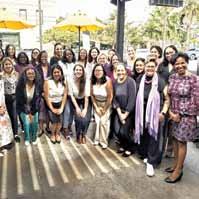
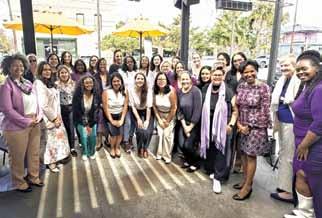
the hBa’s gender Fairness Committee co-hosted a local international Women’s day Celebration. hBa President daniella landers joined the event (third from right).
Equal Access Champions
The firms and corporations listed below have agreed to assume a leadership role in providing equal access to justice for all Harris County citizens. Each has made a commitment to provide representation in a certain number of cases through the Houston Volunteers Lawyers.
abraham, Watkins, nichols, agosto, aziz & stogner
akin gump strauss hauer & feld LLp
angela solice, attorney at Law
archie Law pLLC
Baker Botts L.L.p.
Bakerhostetler LLp
Baker hughes
Barron | pagel pLLC
Beck redden LLp
Blank rome LLp
Bracewell LLp
Centerpoint energy, inc.
Chamberlain hrdlicka
Chevron Usa
Coane & associates
dentons Us LLp
elizabeth s. pagel, pLLC
eversheds sutherland Us LLp
fleurinord Law pLLC
foley & Lardner LLp
gibbs & Bruns LLp
gibson, dunn & Crutcher LLp
gray reed
greenberg traurig, LLp
halliburton
hasley scarano, L.L.p.
haynes and Boone, LLp
hunton andrews Kurth LLp
Jackson Walker LLp
Jenkins & Kamin, L.L.p
King & spalding LLp
Kirkland & ellis LLp
Law Office of Cindi L. Rickman
Law Offices of Omonzusi Imobioh
Limbaga Law
LyondellBasell industries
Martin R.G. Marasigan Law Offices
mcdowell & hetherington LLp
mcgarvey pLLC
michael L. fuqua p.C.
morgan, Lewis & Bockius LLp
nelson mullins
northum Law
norton rose fulbright o’melveny & myers LLp
painter Law firm pLLC reed smith LLp
royston, rayzor, Vickery & Williams, LLp
sanchez Law firm
shell Usa, inc.
shipley snell montgomery LLp
shortt & nguyen, p.C.
sidley austin LLp
squire patton Boggs
the ericksen Law firm
the Jurek Law group, pLLC
troutman pepper Locke LLp
Vasquez Waite
Vinson & elkins LLp
Weycer, Kaplan, pulaski & Zuber, p.C.
Wilson, Cribbs, & goren, p.C.
Winstead pC
Winston & strawn LLp
Yetter Coleman LLp
BHouston Bar Foundation Recognizes Excellence and Legacy at 2026 Annual Luncheon
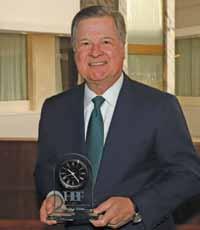
enny Agosto Jr., Managing Partner at Abraham, Watkins, Nichols, Agosto, Aziz & Stogner, assumed the role of Chair of the Houston Bar Foundation (HBF) during the Foundation’s Annual Luncheon on February 17. Agosto succeeds Sara Keith, Senior Legal Counsel at Shell USA, Inc.
Under Keith’s leadership, the Foundation awarded $100,000 in grants to 15 Houston-area projects addressing critical legal and community needs, including domestic violence services, civic education in grade schools, and stipends for law students participating in legal internship programs; hosted a highly successful Harvest Party, which raised nearly $1.1 million for Houston Volunteer Lawyers, the Foundation’s primary beneficiary; and this year’s luncheon’s net establishes the Houston Bar Foundation Scholarship Fund, which will provide a scholarship to each of the three area law schools. (Learn more about the Foundation’s work and how Fellows play a vital role to support the HBF’s charitable programs and recipients in the greater Houston area at www.houbf.org.)
tion, President of the Hispanic National Bar Association, and as President and Founder of the Mexican American Bar Association of Texas Foundation, which raised more than $750,000 in scholarships for Hispanic law students attending Houston-area law schools.
Agosto said that as Chair of the Houston Bar Foundation, he intends to lead by example.
“Giving back and supporting our community and the Houston Bar Foundation comes naturally to my wife, Nikki, and me. We come from humble families, and our parents taught us the importance of service. We have been blessed, and we believe it is our responsibility to pay it forward. Working together, the Foundation Board and I will continue to grow the Houston Bar Foundation and expand its reach by providing legal services to those in need and supporting scholarships for students. There is no better way to serve our community. It is a genuine honor to serve as Chair of the Houston Bar Foundation for 2026.”
Agosto devotes his career to representing individuals and families harmed by the negligence of others, handling cases involving catastrophic injury and wrongful death, including premises liability, workplace and industrial accidents, products liability, and commercial vehicle litigation. He is board certified in Personal Injury Trial Law by the Texas Board of Legal Specialization and is admitted to practice before the United States Supreme Court and the Supreme Court of Texas. He donated more than $4 million to establish The Agosto Justice Center for Leadership and Empowerment at South Texas College of Law Houston, dedicated to expanding diversity and opportunity in legal education. His leadership service includes serving as President of the Houston Bar Associa-
The Foundation’s board includes 2024-2026 directors Jennifer A. Hasley, Hasley Scarano, L.L.P; Stephanie Noble, Vinson & Elkins LLP; and Krisina Zuñiga, Susman Godfrey L.L.P.; 2025-2027 directors Sejal Brahmbhatt, Williams Hart & Boundas, LLP; Angela Daniels, Kinder Morgan; Andrew Edelman, LyondellBasell; and Denise Scofield, O’Melveny; and 2026-2028 directors Alison Chen, Akin Gump Strauss Hauer & Feld LLP; Hon. Eva M. Guzman, Wright Close Barger & Guzman, LLP; Grace Ho, Chevron Corporation; and John Zavitsanos, AZA. Sara Keith will serve on the board as Immediate Past Chair. HBA President Daniella Landers will serve as Ex Officio, as will HBA Executive Director and HBF Board Secretary Vinh Ho.
The Foundation’s keynote speaker, restaurateur Johnny Carrabba, shared his journey through his life and the restaurant business and the importance of customer service to staff and clients, a message he hoped attorneys, many of whom are his clients, will pay it forward in their daily lives.
The Foundation also presented the 2026 James B. Sales Pro Bono Leadership Award to Travis J. Sales. The award, established in 2009 in his father’s name, recognizes the excellence that has been the hallmark of the Foundation’s leadership.
Travis has shown unwavering dedication to promoting access to justice. A community leader with a passion for legal industry development, Travis has served in various leadership positions, including as President of the Houston Bar Association, Director of the State Bar of Texas, Texas Delegate to the American Bar Association, House of Delegates, and Chair of the Houston Bar Foundation. He is an HBF Life Fellow, Chaired Houston Volunteer Lawyers, supported the Kay Sim Endowment, and in his year as HBA President, began the Veterans’ Legal Initiative which became the example for the State Bar of Texas.
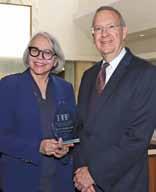
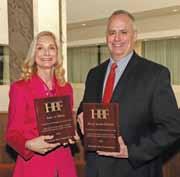
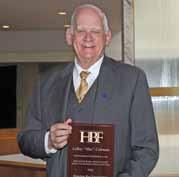
Additional awards presented at the luncheon were the Houston Volunteer Lawyers (HVL) Pro Bono Awards, as well as recipients of awards from the Harris County Dispute Resolution Center (DRC) and The Houston Lawyer magazine. Additional information about the awards can be found at www.houbf.org.
Photos by Deborah Wallace, Barfield Photography
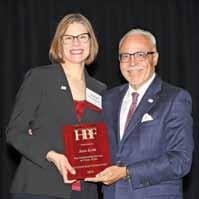
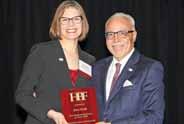
2026 HBF Chair Benny Agosto, Jr.. presents Immediate Past Chair Sara Keith with a plaque recognizing Keith’s leadership of the Foundation.
The 2025 HBF Board of Directors. (L to R, front row) Mindy Davidson, Sejal Brahmbhatt, Benny Agosto, Jr., Sara Keith, Krisina Zuñiga, and Daniella Landers. (L to R, back row) Christopher Northcutt, Vinh Ho, Jennifer A. Hasley, Stephanie Noble, Andrew Edelman, Linda Hester, and Denise Scofield. (Absent: David Harrell and Holly Chastain Nini).
The 2026 HBF Board of Directors. (L to R, front row) Grace Ho, Angela Daniels, Sejal Brahmbhatt, Benny Agosto, Jr., Krisina Zuñiga, Alison Chen, and Daniella Landers. (L to R, back row) Vinh Ho, Sara Keith, Jennifer A. Hasley, Stephanie Noble, Andrew Edelman, John Zavitsanos, and Denise Scofield. (Absent: Hon. Eva Guzman).
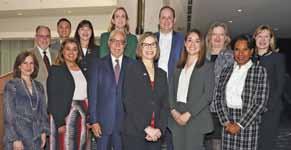
(L to R) Hon. Eva Guzman, Vinh Ho, and State Bar of Texas President Santos Vargas.
Restaurateur Johnny Carrabba (left) served as this year’s luncheon keynote speaker.
2026 hvl Pro Bono award Winners
The
LeRoy “Mac” Coleman received the DRC’s Outstanding Contribution to the DRC award for a second year in a row.
Chevron received this year’s award for Corporate Law Department. (L to R, front row) Jennifer Welshons and Grace Ho. (L to R, middle row) Olimar Silva, Kristie Tice, Sharon Perez, and Ryan Gum. (L to R, back row) Shannon Stokes, Dan Brink, Shaun Cassin, and Christopher Northcutt.
Alamdar S. Hamdani and Lucy Porter of Bracewell LLP received this year’s award in recognition of their article, “In the Crosshairs of Cybercriminals–Houston’s Infrastructure Industries Are Under Attack,” from the March/April 2025.
This year’s recipients of the Longevity of Exemplary Service to the Dispute Resolution Center, June A. Mann and David Aaron DeSoto.
Travis J. Sales received the 2026 James B. Sales Pro Bono Leadership Award in recognition of his unwavering dedication to promoting access to justice.
Representing Hunton Andrews Kurth LLP as a law firm recipient, (L to R) Emma K. Sajdak, Victoria Lioliou, Michael D. Morfey, Kaylan Dunn, and Joe Barron.
(L to R) Jackob Ben-Ezra, John Zappia, Erin Brewster, Kathleen Medrano, Illeana M. Blanco, Gray Stratton represent DLA Piper LLP (US) as a law firm recipient.
Jeremy Berman was this year’s recipient of the Individual award.
Nick H. Sorensen and Shelby Shanks represent Porter Hedges LLP as one of this year’s law firm recipients.
FHBA’s Eikenburg Fun Run Raises Vital Support for Houston’s Pursuit Center
or 41 years, the HBA Eikenburg Fun Run has brought together the Houston community as a charity race benefiting Pursuit Center. The Houston nonprofit serves individuals with intellectual and developmental disabilities and autism. This year’s event welcomed hundreds of runners to Sam Houston Park in downtown Houston on February 21, featuring the popular 8K portion of the event and the 1-mile family walk.
The race is named in honor of the late HBA Past President John J. Eikenburg, who created the event during his Bar Year
(1985-1986). Upon Mr. Eikenburg’s passing in 1997, the HBA Board of Directors voted to rename the run in his honor. His son, John J. Eikenburg, Jr., participates with his family nearly every year.
Special thanks to the co-chairs of this year’s Fun Run Committee: Rick Anderson, Husch Blackwell LLP; Maine Goodfellow, Phillips 66; and Adam Weaver, Pillsbury Winthrop Shaw Pittman LLP. The HBA also thanks Harris County Precinct One Constable Alan Rosen for his long-time support of the Fun Run.
Photos by Anthony Rathbun Photography
Congratulations to t his y ear’s Winners
overall Male open Jonathan robbins
overall Female open angela neira
overall Male Masters david alber
overall Female Masters Zahra Fenelon
overall Male veterans Chris robbins
overall Female veterans erika Park
See the full list of this year’s winners at hba.org/funrun
(L to R) HBA Fun Run Co-Chair Maine Goodfellow, Ben Roberts, Lawrence Winsor, Fun Run Co-Chair Adam Weaver [with his daughters] and HBA President Daniella Landers.
Participants with Morgan Lewis, one of this year’s Fun Run sponsors.
HBA President Daniella Landers with John J. Eikenburg, Jr. and his sister, Huntley Platt.
President’s trophy
Clark hill MarB
This award is presented to the fastest Houston legal team with at least 1 attorney. HBA President Daniella Landers congratulates this year’s winning team, (L to R) Angela Neira, John Spiller, and Oscar Beltran.
seymour lieberman l aw school team trophy Billable Miles, south texas College of law houston
This award is given to the fastest law student team. Runners Cole Lindhorst, Victoria Ramirez, and Bryce Wiley pose with HBA President Daniella Landers.
Helping our Neighbors in Need
bakerlaw.com
We support the Houston Bar Foundation and its commitment to ensuring pro bono legal representation for those in need and a deeper understanding of our justice system. is
By Nikki Morris
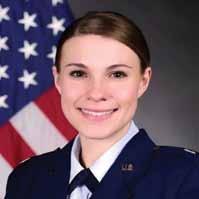
Kk aylee guM : Service Before Self
aylee Gum, a daughter of a retired member of the United States Air Force (USAF), knew at an early age that she wanted to follow in her father’s footsteps. “Moving every two to four years meant I grew up around different places, people, and communities. I loved those experiences and knew early on I wanted to follow a similar path; military service was not only meaningful to me, it was the life I knew best.” She took her first steps on that path by earning an Air Force ROTC scholarship, which funded her undergraduate degree.
After law school, she joined the USAF as a Judge Advocate (JAG) where she was on active duty from November 2016 to February 2022. During that time, she worked as a prosecutor handling alleged violations of the Uniform Code of Military Justice and then as an Area Defense Counsel, representing individual service members in courts-martial, adverse administrative actions, Equal Opportunity investigations, and other administrative hearings. She also advised commanders on operations, government contracting, and provided legal assistance on general civil law matters to individual service members.
Kaylee is now an associate in the Litigation Group of Boyar Miller. She acknowledges the difficulty of transitioning from military service to civilian practice, noting that at times her experience did not fit neatly within the commercial litigation environment she found herself in. However, when it comes to oral advocacy and courtroom experience, that is where Kaylee has been able to shine as she has already developed the courtroom experience that many young associates do not get early in their careers. By the end of her service, which spanned a little over five years, Kaylee had tried more than 50 cases!
As Kaylee explains, her military experience impacts her daily practice in a few key ways, including “instilling a strong sense of professionalism, accountability, and commitment to core values” and “reinforcing the importance of working as part of a team toward a shared mission”—both of which directly translate to a litigation practice “where success rarely comes from any one person and instead depends on coordinated effort, clear communication, and trust across the team.”
As a JAG, Kaylee was no stranger to high-stakes litigation. She recalls feeling the “weight of representing the United States” when she delivered her first opening statement in a case involving allegations of child abuse. Kaylee was also given real responsibility early in her career and was able to lead and mentor others sooner than she anticipated. “Being trusted to support junior teammates while still learning the job myself was both challenging and rewarding, and those combined experiences played a big role in shaping how I approach my profession today.”
Kaylee encourages HBA members to “recognize that veterans often bring more than what is immediately visible on a resume. In my experience, veterans have a deep understanding of what it means to put service before self, and that mindset will serve you and your clients well.”
Kaylee, we thank you for your service.
Nikki Morris is the editor in chief of The Houston Lawyer and a commercial litigation partner at BakerHostetler.
A Profile
in p R o F ession A lism
The Honorable Alice A. Wilkerson Bonner is truly one of Houston’s quiet legal giants. She often shares that when she was young girls were encouraged to pursue a career to become a secretary or a nurse. However, witnessing protests and sit-ins during the Civil Rights Movement of the early 60’s increased her desire to help uphold the law. Judge Bonner wanted to make a difference and a difference she has made. She has opened doors for women lawyers and judges in Harris County and throughout Texas for many years.
Judge Bonner has carved an incredible path in the legal profession. She has been a champion for many families in her family law and probate practice, as well as while serving on the bench. Licensed to practice in 1967 after graduating from Texas Southern University and receiving her law degree from Thurgood Marshall School of Law at Texas Southern University, Judge Bonner began her journey. As the one black woman in a law school graduation class of six students, Judge Bonner began walking the path that she continues to walk almost 60 years later.
We usually don’t try to just provide a resume of one’s accomplishments, but hers are worth listing. With less than a decade of practice, she was appointed to serve as judge in the City of Houston. This appointment made Judge Bonner the first black woman judge in Houston, Texas. In 1977, she was appointed to the County Court of Harris County and then ran for reelection. In her county-wide reelection bid, Judge Bonner defeated six white male opponents. This was a significant defeat at that time such that she later received an appointment to the 80th District Court of Harris County, Texas. As a result of her appointment to the District Court in 1979, Judge Bonner became the first black person, male or female, to serve as judge in the Civil District Court of Texas. Upon running for the office in the next election, Judge Bonner accumulated more votes in the Harris County election than then-President Jimmy Carter. These votes showed the strong degree of confidence in her that was held by the citizens of Harris County.
Although Judge Bonner has long retired from the bench, she continues to practice and make a difference. She often talks about retirement but then a potential client needing a champion comes her way and back to court she goes.
“We can’t let our citizenry down because they’re poor, uneducated and have no hope.” – Alice Bonner
As long as Judge Bonner sees someone needing her assistance, this quiet legal giant will be found in their corner advocating for their rights and the hope that we will do better as a people.
HoN. ALiCe A. wiLkersoN BoNNer
First African American woman state judge in Harris County, Texas
By JoHNNy dAy
Al auren J. harrison: Jumping for Joy
s a trial lawyer, Lauren J. Harrison found that litigation required a balance of analysis and intuition. She says the same is true of riding horses. Like trial work, horseback riding demands the ability to stay calm when stakes are high and your heart starts racing. Competitive horse jumping requires decisive leadership of your half-ton horse while maintaining exquisite sensitivity to your horse’s pace and mood. “Don’t forget, horses are prey animals. They recognize us as predators with our binocular vision,” Lauren explained with a laugh. “It’s a miracle they let us on their backs!”
Today, Lauren is a co-founder and managing partner of Houston-based litigation finance firm Signal Peak Partners, where she helps fund complex commercial cases across the country. Signal Peak is in the midst of a $100+ million fund raise while underwriting and managing an active pipeline of litigation investments.
distinct competitive categories with different judging standards. “Jumpers (not Lauren) are scored objectively—how fast did you go and did you knock anything down,” but “Hunters are more like figure skating. There are technical elements, but judges score the overall impression you create, looking for consistency and grace in your performance.”
Outside the office, Lauren can often be found in a riding arena guiding her horses Hudson or Oswald “Ozzy” van de Leeuwerk over a series of fences—an endeavor she describes as both exhilarating and deeply grounding.
Horses have been part of Lauren’s life since childhood. She competed throughout her youth and teenage years before stepping away from riding to focus on education, career, and raising a family. For decades, riding remained a fond but distant chapter of her life. Then came the pandemic.
Like many people, Lauren sought relief outdoors during lockdown. Riding once again became part of her routine, and soon, she was paired with Hudson, her distinctive partner with a bright white diamond star marking his face. The return to competition felt like reclaiming something she had once set aside. “When I started riding again, it felt like rewriting part of my life story,” Lauren says. “I had the chance to become the person I imagined I’d be when I was a little girl.”
Show jumping is unfamiliar territory to many outside equestrian circles. Lauren explains that “Hunter/Jumpers” are actually
Once she returned to the arena, Lauren’s competitive drive quickly resurfaced. Within three years of returning to the sport, Lauren achieved a personal goal: earning a #1 ranking in Texas within her division! But rankings are only part of the appeal. “It’s the process— the meditation and focus,” she explains. “When you’re jumping a horse, it’s impossible to think about anything else in that moment. Or at least, it’s illadvised.”
The sport is not without fear, and Lauren admits that’s part of the draw. “You recognize the fear and tell it to sit down over there,” she says. “Regularly overcoming mental and physical obstacles is incredibly empowering.” When asked whether the sport’s inherent danger gives her pause, Lauren is thoughtful but resolute. “How can we know ourselves if we don’t face challenges and take risks?”
Still, competition and adrenaline form only part of Lauren’s connection to horses. “There is pure joy in having horses in my life again—the smell of hay and the camaraderie and the velvet noses.” Lauren mentions studies showing that being around horses has an inherently calming effect. She notes that “a horse can detect your heartbeat from several feet away, and when horses live in a herd, their heartbeats synchronize.”
“When I ask myself why I’m doing this—as I sometimes do!—it all comes back to the horses,” Lauren said. “I would like this article to be as much about them as me.”
Johnny Day is a trial lawyer at Sorrels Law. He represents catastrophically injured and financially defrauded clients. He is a member of The Houston Lawyer Editorial Board.
l auren competing aboard oswald van de l eeuwerk (aka ozzy) in traverse City, Michigan.
Spotlight on the HBA Lawyers for Literacy Committee
By LiNdA HeSteR
“Does everyone have to follow the Constitution?”
“What does the Constitution say about my school?” “Have you ever broken the law?” “Do you like being a lawyer?” “How long do you have to go to school to be a lawyer?” “Do lawyers make a lot of money?” and this year, “Are there really mice on the Supreme Court?” These and many other questions were asked when lawyers volunteering with the Lawyers for Literacy Committee fanned out across Houston area elementary schools to share a book with students and to answer their questions about the Constitution, the law, and being a lawyer. For many of the students, this was the first time they had met a real lawyer and they bubbled with questions about the reading and being a lawyer.
On Constitution Day, September 17, 2025, the HBA Lawyers for Literacy Committee coordinated area lawyers to read Marshall the Courthouse Mouse by Peter W. Barnes in local elementary schools. This engaging book introduced students to the U.S. Constitution and the role of the judicial branch through the antics of Marshall J. Mouse, Chief Justice for the Supreme Court of the United Mice of America. The book centers on the Court’s grappling with the constitutionality of laws restricting what cheese could be eaten on what days. Faced with the weighty question of “Should mice be allowed to eat any cheese they want?”, the book provided an engaging platform to explain how the U.S. Supreme Court receives cases, listens to arguments, and makes decisions that affect everyone. The story combines rhyming text and whimsical illustrations that kept local students engaged while introducing basic civic concepts. A cute “find the turtle” activity on each page promoted active attention until the end of the book when the Mice Supreme Court announced its decision invalidating the restrictive laws and freeing mice to consume whatever cheese they
wanted whenever they wanted.
Guided by the curriculum provided by the Lawyers for Literacy Committee, volunteer lawyers read the book aloud to classrooms, discussed the story, and answered students’ questions about the Constitution, courts, and being a lawyer. Teachers reported high engagement and enthusiasm, particularly as students recognized that the visitors were practicing lawyers taking time to read with them. Lawyers reported that many students expressed a desire to become a lawyer at the end of every session. We are delighted that the 2025 HBA Constitution Day Reading Program was able to reach approximately 3,459 students in 49 schools, and 12 districts and private schools!
Lawyers for Literacy is a long-standing HBA committee focused on promoting literacy and strengthening civic understanding among area students. In addition to the Constitution Day readings, the committee coordinates the HBA’s annual book drive with law firms, corporations, and individuals. The committee has also sponsored the installation of Free Little Libraries in the Houston area. This year, the committee was proud to participate in HBA President Daniella Lander’s Days of Service on March 27 and 28 by coordinating an opportunity to sort donated children’s books for distribution to partner schools and by stocking Little Free Libraries.
HBA members looking for a fun way to give back to our community need look no further than the Lawyers for Literacy Committee as a way they can help promote civic understanding and literacy in our community. Just be prepared to respond to enthusiastic, probing questions about being a lawyer!
Linda Hester is a retired lawyer who now focuses on pro bono representation and community service. She is a former chair of the Houston Bar Foundation and an active participant in several HBA committees, including the Lawyers for Literacy Committee.
hBa member a nne h. evans l éniz reads to students at Mission g len elementary during the 2025 Constitution day readings.
a tiMe For resolution: Spotlighting the HBA ADR Section
By JeSSiCA L. CRutCHeR
Statistics vary but generally indicate that more than 90% of civil cases settle before trial. Similarly, there has been a steady global growth in arbitration during the last several years. It is no surprise, then, that the Alternative Dispute Resolution (ADR) field is more important to civil litigation than ever before.
The HBA’s ADR Section has spent this Bar year working on increasing its presence in the Houston legal community. This year, the section council created three new liaison positions—a Judicial Liaison, an International Arbitration Liaison, and a Litigation Section Liaison, to increase communication among these groups. The section council also created a new section book club, led by Megan Daic, which any committee member can join.
tion, held its annual Post-Holiday Party in January at B&B Butchers, which was well attended by neutrals, practicing attorneys, and judges alike. This annual party presents a great opportunity to network, catch up with old friends and business contacts, and make new ones in a casual, low-pressure environment.
The section is comprised of several committees: the Monthly CLE Committee, the annual HBA ADR CLE Conference Committee, the EDR Committee, the Scholarship Committee, the Communications/Outreach Committee, and the Post-Holiday Party Committee (which is co-sponsored by the HBA’s Litigation Section). Any ADR Section member can join one of these committees.
This year, the Section has presented two lunch-time CLEs through the HBA: in October 2025, “The Yays and Nays of AI Today: What Lawyers and Neutrals Need to Know,” presented by Susan Guthrie, the immediate past chair of the ABA Section of Dispute Resolution; and in February 2026, “Understanding and Managing High Conflict Disputes,” presented by Bill Eddy, co-founder and director of Innovation International Trainer and creator of High Conflict Personality Theory.
The section, in cooperation with the HBA’s Litigation Sec-
The section’s annual allday CLE is taking place on May 1 at South Texas College of Law Houston. This year, the CLE will feature a diverse group of speakers and topics, including discussions of mediation agreements, hands-on workshops on the personality driven approach to mediation and on deep listening, an ethical discussion of ABA Rule 18, and discussions about the similarities and differences between domestic and international arbitration. Anyone interested in advancing their ADR skills or serving on one of the section’s committees can join the section. You can find more details on the annual CLE or how to join the ADR Section at hba.org/sections
The 2025-2026 section officers are Michael Hawash (Chair), Charles Peckham (Chair-Elect), Archangela DeSilva (Treasurer), Jessica Crutcher (Secretary), and Felicia Harris Hoss (Immediate Past Chair). At-large members of the section’s council are W. Daryl Bailey, Dominique Bartholet, Jessica Beinart, Alan Bush, Wiley George, Sherra Gilbert, Judge Erin Lunceford, Mark Kritzer, and Sasha Vaikhman. The Committee’s Judicial Liaison is Judge Ravi Sandill, the International Arbitration Liaison is Marieke Witkamp, and the Litigation Section Liaison is Luke Gilman.
Jessica L. Crutcher is a AAA arbitrator and mediator panelist, founder and principal of Jessica Crutcher Law PLLC, and Off the Record Associate Editor and editorial board member of The Houston Lawyer.
Renaissance Medical Foundation v. Rebecca Lugo, Individually and as Next Friend of I.B.: A Law Meant to Protect Doctors Now May Work Against Them
By SeReNA M. MARtiN
ATexas statute designed to shield physician autonomy is now a sword for nonprofit health organizations, cutting away their vicarious liability and possibly leaving physicians exposed. In May 2025, the Texas Supreme Court addressed the extent to which a nonprofit health organization (NPHO) may be held vicariously liable for the torts of its employee physicians in Renaissance Medical Foundation v. Rebecca Lugo, Individually and as Next Friend of I.B 1
In Renaissance, a mother filed a lawsuit against an NPHO, the Renaissance Medical Foundation (“Renaissance”), and a neurosurgeon, Dr. Michael Burke. The mother not only claimed Dr. Burke’s negligence caused permanent physical and mental injuries to her child but also alleged that Renaissance was vicariously liable for Dr. Burke’s negligence as his employer. Renaissance filed summary judgment claiming Dr. Burke was
an independent contractor and emphasized how its status as a corporation cleared them from liability. The trial court denied Renaissance’s motion after finding Dr. Burke was an employee of Renaissance based on common law vicarious liability and review of their employment agreement. Renaissance then filed a permissive interlocutory appeal, which was accepted by the Court of Appeals in Corpus Christi—Edinburg. After the appellate court affirmed the trial court’s holding, Renaissance filed a petition for review.
The Texas Supreme Court first discussed how, historically, corporations were prohibited from having physician employees and receiving fees for their services in order to “prevent possible abuses resulting from lay control” of medical care.2 Rather, physicians served as independent contractors. However, in 1999, the Texas Legislature enabled corporations to hire physicians as employees by creating organizations, such as NPHOs. NPHOs are nonprofit
was an employee after implementing the traditional vicarious liability test set forth in Limestone Prods. Distrib. v. McNamara 5 Per the employment agreement, Renaissance agreed to provide Dr. Burke with all equipment necessary to perform his job, required Dr. Burke to provide medical services to patients as directed and in accordance with Renaissance’s policies, required him to work at least forty hours a week, paid him a salary, and retained discretion to change his practice sites.
Renaissance argued that, because a corporation cannot be licensed to practice medicine in Texas, entities cannot control physicians’ practice and therefore cannot be liable. The court had previously considered and rejected this contention in St. Joseph Hosp. v. Wolff. 6 Renaissance also argued Dr. Burke’s “right to exercise independent medical judgment,” impedes the right of control required for vicarious liability. The court already rejected a similar argument in Murk v. Scheele, holding professional judgment did not vitiate the employment relationship between a government hospital and a physician.7
corporations licensed by the Texas Medical Board and organized solely by physicians.3 Although the Legislature allows NPHOs to employ physicians, Section 162.0021 estops NPHOs from “interfer[ing] with, control[ling], or otherwise direct[ing] a physician’s independent judgment.”4
The court reiterated that Dr. Burke
Although the court emphasized “the right to control remains the supreme test,” the court agreed with Renaissance’s main contention: The language of Section 162.0021 limits the right to control for NPHOs, thus also their vicarious liability. The court relied on precedent that modified the traditional “right-of-control” test. In Exxon Corp. v. Tidwell, the court found the unique structure of the oil company service station relationship required focusing on “who had specific control over the safety and security of the premises” rather than general operations.8 Like in Tidwell, the analysis under Section 162.0021 questions whether exercising control over the specific
negligent conduct would interfere with independent medical judgment, instead of just applying the traditional, general right of control approach.9 The court further noted that the statutory language of Section 162.0021 prevents NPHOs from interfering with “a physician’s professional judgment,” rather than prohibiting NPHOs from controlling “all medical care.”10
The court then set forth a new standard: In addition to proving negligence and traditional vicarious liability, “when an NPHO is sued because of an employee physician’s alleged negligence, its vicarious liability will depend on whether the plaintiff can prove that an exercise of control over the alleged negligence would not interfere with the physician’s exercise of independent medical judgment.”11 Essentially, Texas courts will now inquire (1) whether the NPHO had a right of control regarding the physician’s negligent actions and (2) whether exercising such control would interfere with the physician’s medical judgment.
By applying this standard, the court contended Renaissance failed to establish their entitlement to summary judgment. While the employment agreement stated Dr. Burke would provide services “as directed” and according to Renaissance’s “protocols, policies, and procedures,” the statute explicitly states its “requirements may not be voiced or waived by contract.” Renaissance argued Section 162.0021 wholly prevents NPHOs from controlling physicians’ medical care; however, the statute does allow control, so long as it does not interfere with medical judgment. The court affirmed denial of Renaissance’s summary judgment because the record does not address the standard’s second prong: whether Renaissance’s control over Dr. Burke’s alleged negligence would interfere with his medical judgment.
The court’s standard set forth in Renaissance has the potential to revolu-
tionize medical malpractice claims in Texas. Health organizations may be more inclined to classify themselves as non-profit health organizations to benefit from the robust limited liability shield of Section 162.0021. Patients will have to overcome higher burden to reach into the deep pockets of certain healthcare institutions and may be limited to only suing individual doctors. The court’s holding safeguards physician independence while simultaneously surrendering physicians’ protection to liability exposure.
Serena M. Martin is a medical malpractice litigator at Horne, Rota, Moos LLP. Having recently passed the bar exam, she looks forward to advocating for her clients and getting involved in the Houston legal community.
6. St. Joseph Hosp. v. Wolff, 94 S.W.3d 513, 539–540 (Tex. 2002).
7. 120 S.W.3d 865, 867 (Tex. 2003).
8. 867 S.W.2d at 23.
9. Id
10. TEX. OCC. CODE § 162.0021.
11. Renaissance, 918 S.W.3d at 516.
The Law of the Sea: A Legal Thriller Lawyers Will Love
By Dave Gerard
Independently published
Reviewed by CARey WORReLL
Suspicious death. Lost treasure. Shipwreck. Law firm politics. Larger-than-life judges. Dave Gerard’s The Law of the Sea packs all of this into a legal thriller that works for any reader, and lands with particular force for those who have actually lived the law. Practicing attorneys will find more than entertainment in these pages; they’ll find recognition. The young associate desperate to prove himself in Big Law, the litigator at the mercy of an unpredictable judge, the lawyer who knows the easier path and chooses the harder one anyway—Gerard renders all of it with authenticity, humor, and just enough absurdity to make it feel like it might be true.
The novel opens with Jack Carver, an underprepared Houston associate reluctantly pulling a shift at a mandatory pro bono clinic—not exactly where he imagined his legal career taking him. There, he meets Ashley Marcum, who needs help probating her late brother’s estate. Straightforward enough. But when Ashley produces an envelope full of gold coins her brother sent her before his death, Jack senses there is far more to the story. All Ashley knows is that her brother David died in a workplace accident at Rockweiler Industries. Jack agrees to take the case and quickly finds himself swept into a scandal of international proportions,
one rooted in a centuries-old shipwreck and the arcane but fiercely contested laws of salvage. For Houston lawyers, there is an added layer of enjoyment—this is our backyard. The book is set in the legal world most of us know, with a Houston firm, a Galveston federal courthouse, and the kind of local color that makes the setting feel lived-in rather than borrowed. What makes the novel work as well as it does is how fully Gerard populates it with characters any practicing attorney will recognize. Judge Graves, the federal judge presiding over the Galveston docket, seems to be drawn from the real-life personality of impeached Galveston Judge Samuel Kent; though Gerard is careful to frame him as Kent’s fictional successor rather than a direct portrait. As a former clerk of Judge Kent’s, I recognized him immediately, which made Judge Graves all the more entertaining. Bob Kruckemeyer is the partner every associate dreads. He is the rainmaker whose book of business earns him a permanent pass to be as difficult and dismissive as he pleases. The lawyers of Badden and Bock, opposing counsel flying in from New York, bring exactly the kind of big-city arrogance that local practitioners have learned to expect. Gerard rounds out the cast with fellow associates who are collegial enough on the surface, though anyone who has come up through a large firm will recognize the quiet competition underneath.
Beneath the adventure and courtroom drama, The Law of the Sea tackles themes that resonate beyond the legal world. The little guy taking on a powerful corporation is a classic setup. Rockweiler Industries feels genuinely threatening, not just a cardboard villain. The book also doesn’t shy away from the ethical gray areas that
real lawyers navigate every day: when to push, when to settle, and what you’re willing to sacrifice to win. Running through all of it is a quiet story of perseverance. Jack loses, stumbles, and doubts himself in ways that feel honest rather than dramatic. The law in this novel is neither a guaranteed path to justice nor a rigged game; it’s something in between, which is probably the most accurate portrayal of all.
If there are quibbles to be had, they are minor. Lawyers may occasionally stumble over Gerard’s habit of defining legal terms mid-narrative, dropping a word and then immediately explaining it, rather than trusting the context to do that work. It’s a reasonable concession to non-lawyer readers, but it can feel a little clunky to those already fluent in the language. Similarly, a few procedural moments may stretch credibility for practicing attorneys. That critique applies equally to every courtroom drama ever put on television, so it hardly seems fair to hold it against the book. The length may give some readers pause. At nearly 500 pages, it’s a commitment. But The Law of the Sea reads faster than it looks. Gerard keeps things moving, and the pages have a way of turning themselves.
For attorneys looking for a beach read that doesn’t require them to completely turn their brain off, The Law of the Sea is an easy recommendation. It’s funny, it’s clever, and it captures the practice of law in ways that most legal fiction never bothers to try. Non-lawyers will find a fast-moving adventure story with enough courtroom drama to keep things interesting. Lawyers will find all of that, and a mirror.
Carey Worrell is the managing attorney of SimpleLawTx, a Texas law firm offering efficient solutions in the areas of business transactions, real estate, estate planning, and probate. She is a member of The Houston Lawyer Editorial Board.
Will-O’-The-Wisp
By Jenna Gillingham
Published by Archway Publishing
Reviewed by CHANdRiA t. JACkSON
After more than a decade as a litigator, I left the traditional practice of law to work in the career development office of a local law school. Because of my work I am intrigued by how legal training shapes rewarding careers, and how the skills adapt to roles outside of the courtroom and the deal room. With this perspective in mind, when I read that the main character of Will-O’-The-Wisp pivoted from a career as a public defender to private investigator—and her first solo assignment involved investigating her high-school best friend’s disappearance—my interest was piqued. I wanted to understand her career choices as much as I wanted to see how the underlying mystery was solved. Although the novel did not fully satisfy my curiosity about her career choices, the mystery overcomes a slow start to reach a satisfying conclusion.
where the author attended law school, but most of the action unfolds in Penn’s Point, Wisconsin—a place I suspect resembles the author’s hometown. Anna Fischer, our protagonist, is only a few weeks into her post public-defender career at an elite private investigation firm when she is assigned to investigate the circumstances surrounding the decade-old disappearance of her best friend, Betsy. Anna last saw Betsy the night she disappeared when a group bike ride was cut short by a sudden and extensive downpour. Without disclosing her connection with the case or knowing the identity of her client, Anna returns to her hometown with 30 days to determine what happened to her friend.
For readers who value clear, evolving revelations in mysteries, this style of suspense may detract from the reading experience and limit investment in the story’s resolution. That said, the novel has some strengths. The explanation of the will-o’-the-wisp phenomenon—and its metaphorical connection to uncovering the truth of Betsy’s mysterious disappearance—was thoughtful and effective. Gillingham painted her characters’ world with vivid scenery. Her portrayal of small-town Wisconsin, with its gravel roads, cornfields, tree-shaded houses, and clusters of lakeside cabins, simultaneously reminded me of my Indiana hometown and the Wisconsin camp my in-laws have attended for more than 50 years.
Will-O’-The-Wisp is a self-published novel by a Texas attorney with deep Midwestern roots (like me!). The story begins in Chicago
The novel’s central conflicts revolve around Anna’s need to rebuild the relationships she distanced herself from as she dealt with the pain of losing her friend and her hesitancy to reveal all that she knew during the original investigation. While the book attempts to build suspense by repeatedly stating that Anna was not candid with the police, the tactic creates more frustration than tension. The persistent secrecy made Anna feel like an unreliable narrator and undercut my engagement with the narrative.
Will-O’-The-Wisp overcame a slow start and a curious plot choice with a few reliable tropes that, once revealed, propelled me to complete the book. Its imaginative setting and thoughtful metaphors will make an appealing comfort read to those who enjoy mysteries.
Chandria T. Jackson is the director of employer relations and development at the University of Houston Law Center’s Career Development Office. Contact her if you would like to help a law student gain legal experience or if your organization has a need for early-career legal talent. She is also a member of The Houston Lawyer Editorial Board.
EXCluSIvE SuITE, gAllERIA InnER lOOp
Private attorney-only office space conveniently located inside Houston’s 610 Loop at San Felipe. Staffed with a receptionist/ office manager, with access to amenities, including high-speed internet, telephones, kitchen, two conference rooms, and covered parking. Several offices are available with window views. Call Jerry at 713-237-0222.
HEIgHTS AREA lAW OFFICE SHARIng
2, furnished window offices (approx 14x14), and one support area available immediately. One large office space (15x14) available beginning January 1. Modern building with 24 hour security on North Loop near Shepherd with downtown views. Beautiful conference room with 60” TV/Whiteboard, color copier/fax/scanner available on network, internet, full featured VOIP phone system, Wi-Fi and wired internet, attached covered parking, room for your files. Kitchen in suite with microwave/pizza oven, coffee, soft drinks, water and snacks available. Contact Dianne or Teri at 713-529-2020 for more information.
lARgE FuRnISHED OFFICES FOR lEASE
In Houston, TX on Washington Ave. Full Kitchen. Giant balcony. High speed internet. Conference rooms. Minutes from Courthouses. Lauren@bl.law, 713-429-8050
Join the hBa 100 Club!
the Houston Bar Association 100 Club is a special category of membership that indicates a commitment to the advancement of the legal profession and the betterment of the community. the following law firms, government agencies, law schools and corporate legal departments with five or more attorneys have become members of the 100 Club by enrolling 100 percent of their attorneys as members of the HBA.
Firms of 5-24 attorneys
Abraham, Watkins, Nichols, Agosto, Aziz & Stogner
Adair Myers Stevenson Yagi PLLC
Ajamie LLP
Alvarez Stauffer Bremer PLLC
Baker, Donelson, Bearman, Caldwell & Berkowitz, PC
Buck Keenan LLP
Christian Levine Law Group, LLC
Coats | Rose
Crady, Jewett, McCulley & Houren, LLP
De Lange Hudspeth McConnell & Tibbets LLP
Dentons US LLP
Dobrowski Stafford LLP
Doyle Restrepo Harvin & Robbins LLP
Ewing & Jones, PLLC
Fisher & Phillips LLP
Fizer Beck Webster Bentley & Scroggins
Fogler, Brar, O’Neil & Gray LLP
Frank, Elmore, Lievens, Slaughter & Turet, L.L.P.
Funderburk Funderburk Courtois, LLP
Germer PLLC
Gordon Rees Scully & Mansukhani, LLP
Hagans
Henke, Williams & Boll, LLP
Hirsch & Westheimer, P.C.
Holm | Bambace LLP
Horne Rota Moos LLP
Hughes, Watters & Askanase, L.L.P.
Hunt Law Firm, P.L.L.C.
Husch Blackwell LLP
Jackson Lewis P.C.
Jenkins & Kamin, LLP
Johnson DeLuca Kurisky & Gould, P.C.
Jordan, Lynch & Cancienne
Kean Miller
Kilpatrick Townsend & Stockton LLP
Law Feehan Adams LLP
Linebarger Goggan Blair & Sampson, LLP
Liskow
McGinnis Lochridge
McGuireWoods LLP
McKool Smith
MehaffyWeber PC
Morris Lendais Hollrah & Snowden
Murrah & Killough, PLLC
Nathan Sommers Gibson Dillon PC
Ogletree Deakins Nash Smoak & Stewart, P.C.
Paranjpe Mahadass Ruemke LLP
Peckar & Abramson, P.C.
Phelps Dunbar LLP
Pillsbury Winthrop Shaw Pittman LLP
Ramey, Chandler, Quinn & Zito, P.C.
Rapp & Krock PC
Reynolds Frizzell LLP
Roach & Newton, L.L.P.
Ross Banks May Cron & Cavin PC
Royston, Rayzor, Vickery & Williams, L.L.P.
Rusty Hardin & Associates, LL
Schirrmeister Diaz-Arrastia Brem LLP
Schwartz, Page & Harding, L.L.P.
Scott, Clawater & Houston, L.L.P.
Shannon Martin Finkelstein Alvarado & Dunne, P.C.
Shearman & Sterling
Shellist | Lazarz | Slobin LLP
Shipley Snell Montgomery LLP
Smith Murdaugh Little & Bonham LLP
Sorrels Law
Spencer Fane
Sponsel Miller Greenberg PLLC
Stuart PC
Taunton Snyder & Parish
Thompson & Horton LLP
Tindall England PC
Tracey & Fox Law Firm
Ware, Jackson, Lee, O’Neill, Smith & Barrow, LLP
West Mermis
Weycer, Kaplan, Pulaski & Zuber, PC
Williams Hart & Boundas, LLP
Wright Abshire, Attorneys, PC
Wright Close & Barger, LLP
Ytterberg Deery Knull LLP
Zukowski, Bresenhan & Piazza L.L.P
Firms of 25-49 attorneys
Adams and Reese LLP
Andrews Myers, P.C.
Beck Redden LLP
BoyarMiller
Bradley Arant Boult Cummings LLP
Bush & Ramirez, PLLC
Cokinos | Young
Gibbs & Bruns LLP
Hogan Lovells US LLP
Kane Russell Coleman & Logan PC
Littler Mendelson P.C.
Martin, Disiere, Jefferson & Wisdom LLP
McDowell & Hetherington LLP
Wilson Cribbs & Goren PC
Yetter Coleman LLP
Firms of 50-99 attorneys
AZA Law
BakerHostetler LLP
Brown Sims, P.C.
Chamberlain Hrdlicka
Greenberg Traurig, LLP
Haynes and Boone, LLP
Jackson Walker LLP
Morgan, Lewis & Bockius LLP
Susman Godfrey L.L.P.
Winstead PC
Firms of 100+ attorneys
Baker Botts L.L.P.
Bracewell LLP
Hunton Andrews Kurth LLP
Norton Rose Fulbright
Porter Hedges LLP
Troutman Pepper Locke LLP
Vinson & Elkins LLP
Corporate legal departments
CenterPoint Energy, Inc.
EOG Resources, Inc.
MAXXAM, Inc.
Plains All American Pipeline, L.P.
Quantlab Financial, LLC
Rice University
S & B Engineers and Constructors, Ltd.
law school Faculty
South Texas College of Law Houston
Thurgood Marshall School of Law
University of Houston Law Center
government agencies
Harris County Attorney’s Office
Harris County Domestic Relations Office
Lone Star Legal Aid
Metropolitan Transit Authority of Harris County, Texas