Insid e Thi s Issue: A relationship-focused Admission process P. 3 Excellence in Academics, Jewish Learning and Global Citizenship P. 4 Expanding our horizons— by 10,000 square feet P. 14
baeck+call is published once a year through The Leo Baeck Communications Department and is distributed to 3,000 Leo Baeck parents, grandparents, alumni and friends of the school.
Editors
Lisa Richler & Janis Seftel
Design/Layout www.snack.is
Printing Incredible Printing
Photography Elie Landesberg
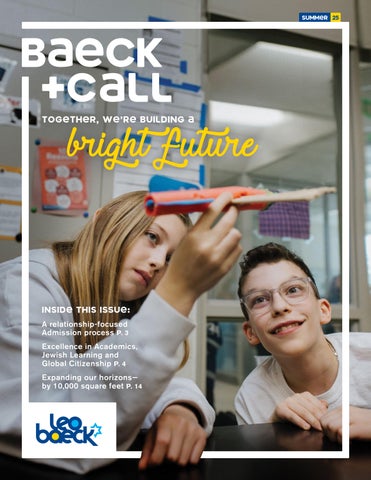
Front Cover: Grade 6 students soar into the science of flight.
Special Thanks
Janice Prazoff
THE LEO BAECK DAY SCHOOL
501 Arlington Avenue
Toronto, ON M6C 3A4
Phone: 416.787.9899
General Inquiries info@leobaeck.ca
@leobaeckds
Sta y u p t o dat e wit h what' s happenin g at Le o Baeck
OU R MISSIO N I N ACTION
A year ago, we celebrated the 50th anniversary of our school. We did so with a slate of incredible events and experiences and even the publication of a book chronicling our first five decades. But October 7th happened right before we began our first celebration event, and each gathering we held from then on had a different feel, a changed outlook. There were those who said we shouldn’t be celebrating in such difficult times, that it was inappropriate to gather as a community for happy moments during such darkness. Each of those occasions, however, reminded us why we have existed for 50 years, the centrality of our mission and the reason that our school plays a more vital role now in the community than it has at any point in our history.
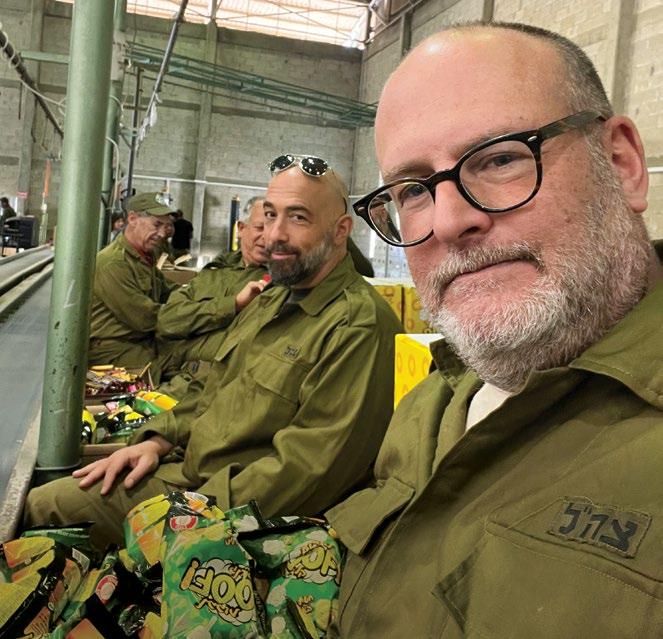
For me personally, that message hit home, and made me examine closely both our mission as a school and my own mission as a Jewish educator. I decided to get on a plane (and then another, and then a bus) and spend a week on a desolate IDF base in the desert just south of Be’er Sheva packing boxes of food to be sent to soldiers in the field, along with Chanukah candles and a chanukiyah. My hope was that this small contribution would spare a reservist from having to spend their precious time away from work and home and family, just to stand on that conveyor belt line for eight hours a day. Returning home, both exhausted and amazed that I had managed to sleep on metal cots in a tent in the desert for a week, I felt a sense of pride and a reinvigorated sense of mission. I was reminded that I have been lucky enough to never live through an Israel at war, nor be exposed to the type of antisemitism which my children will now have to see on the streets of Toronto, or their university campuses, or their workplaces. And that day school education, and the mission of The Leo Baeck Day School, is more important now than ever before.
Eric Petersiel, RJE Head of School
Buildin g
Righ t fro m th e Start
BY JANICE PRAZOFF, DIRECTOR OF ADMISSION
The admission process at Leo Baeck marks the beginning of a journey rooted in connection and understanding.
“Leo Baeck feels like home. I saw that through my boys’ experience, I feel it in my own experience, and I feel privileged to share it with you.”
JANICE PRAZOFF, DIRECTOR OF ADMISSION
When a prospective family inquires about our school, they are invited into a warm and intentional admission process designed to truly get to know them—their values, goals and hopes for their child’s education. Rather than Open Houses, we make time to meet families for a personal visit. This approach affords us the opportunity to listen and learn about what matters most to families, tailoring the visit to meet their needs and address their questions. Prospective families hear about our mission and vision, see our facility, and perhaps most importantly, visit classrooms, talk with teachers and hear from students about what life and learning feels like for them.
Our admission process isn’t a first-come, first-served model; we encourage families to visit before applying and paying their application fee. Our admission cycle focuses on prospective JK families approximately two years prior to entry, and on prospective SK to Grade 7 families, a year ahead. In all cases, we allow a long runway for families to inquire, visit, and complete the admission steps, and remain dedicated to ensuring that families are tracked and supported so they don’t miss deadlines.
If you’ve come through our doors, you can count on us to guide you through the process.
In addition to a personal visit, we offer multiple opportunities for prospective families to see the school in action and meet the people who make it special. Our community events enable them to meet current and incoming families, ask questions and hear about their experiences at Leo Baeck, all while participating in activities that showcase in-class experiences led by our incredible teachers.
Our relationship-centred approach has a powerful impact. Whether or not a family pursues Leo Baeck, we feel confident that we have supported their journey in understanding their goals for their children, the learning environment that speaks to them, and the community they would like to be a part of.
For those who do apply, the parent interview is a cornerstone of our process. These one-to-one conversations are at the heart of our approach, offering a meaningful opportunity to truly learn about families, and they are central to the admission committee’s review.
Our admission process is more than a series of steps; it’s the careful cultivation of relationships that form the foundation to a thriving school community. For the families who choose to embark on their children’s education with us, this initial connection shapes a decade of shared growth, learning and belonging within the vibrant tapestry of Leo Baeck.
“From the moment we connected with Janice during the admission process, we felt genuinely supported—with warmth, integrity, and deep knowledge. What followed only confirmed it: a school community that welcomed us with open arms, offering support, friendship, and inclusion at every turn. The teachers have been nothing short of spectacular—nurturing, attentive, and deeply committed to our children’s growth. Most of all, it feels like we’ve become part of a truly caring community—one that embraces our family, nurtures our children, and makes us feel deeply at home.”
TANYA COTLER AND WARREN SMULOWITZ
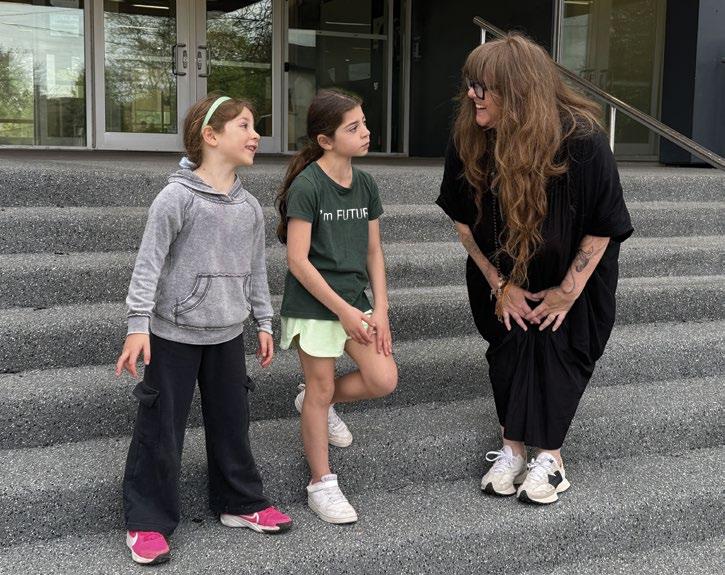
Janice greets new students with a warm Leo Baeck welcome.
The Bringin g Learnin g t o Life
BY DANIEL ABRAMSON, DIRECTOR OF THE TIKKUN PROJECT
At Leo Baeck, we envision a student who has the understanding and skills needed to make a positive difference locally and globally, and who has a deep commitment to their Jewish identity and the Jewish community.
Students develop the confidence and inclination to help them achieve our vision of an excellent Jewish education; they carry these lessons with them beyond graduation.
The Tikkun Project helps us achieve this vision by integrating Jewish values, critical thinking, and authentic action across the curriculum in K-8 classes.
Our commitment to academic excellence, progressive Jewish learning, and global citizenship is evident in every grade in the school. In the Primary Years Program (PYP), students learn how to treat others with kindness and respect in units of inquiry focused on concepts rooted in Jewish text, including caring for oneself and others, creating welcoming and accessible communities, and protecting the environment. In the Middle Years Program (MYP), students work with experts and organizations to explore the challenges of poverty, food insecurity, waste and pollution.
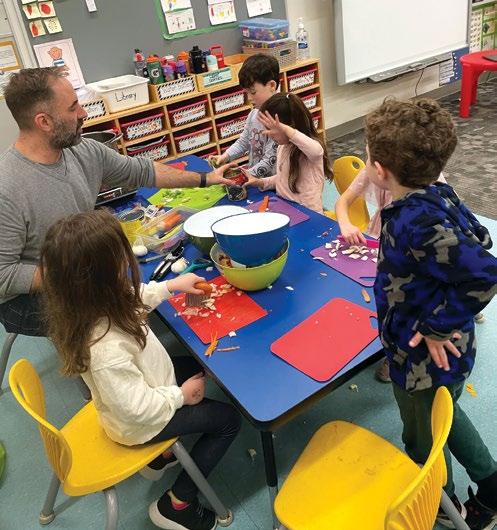
Moreh Dan works with students to make soup for the Ve’ahavta Community Poverty Relief van.
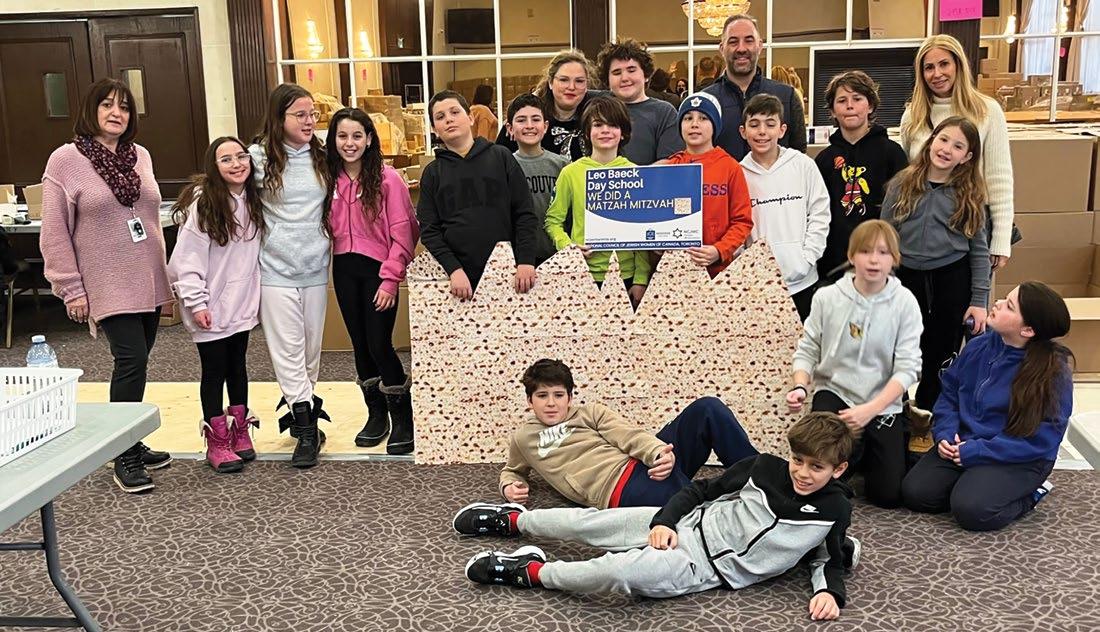
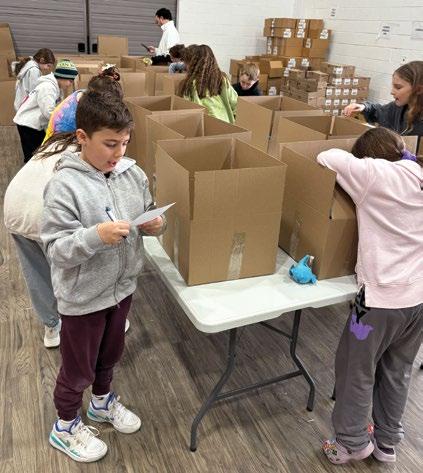
Grade 4 students at a National Jewish Council of Women (NJCW) gathering, packing Kosher-for-Passover food for people in need.
solution from among the diverse strategies they learned about, to choose an action that is feasible for them to take and that has a long-lasting positive impact.
Similarly, our Grade 6 students explore immigration in Canada through a Jewish lens. Jewish tradition teaches that “When a stranger resides with you in your land, you shall not wrong them. The stranger who resides with you shall be to you as one of your citizens; you shall love the stranger as yourself, for you were strangers in the land of Egypt” (Leviticus 19:33-34). The students wonder, “How can our own cultural and historical experiences inform our decisions about the most beneficial ways to integrate immigrants into our communities?” Through interviews with family and with recent newcomers to Canada, students gain a deeper understanding of what is required for us as individuals and as a society to meet the challenge of welcoming the stranger in a way that benefits both newcomers and the communities who welcome them.
Deep learning happens best when it is purposeful and relevant to students
Tikkun learning presents students with rich, authentic challenges that require creative and critical thinking. In Grade 2, students learn about the water cycle through a Jewish lens. In Judaic studies, they explore the story of creation and consider the best ways to meet our obligation to be Shomrei Adamah, stewards of the earth. Grade 2 students are tasked with identifying an action to ensure wise use of water at home or at school. They conduct water audits to identify feasible ways to reduce water consumption. This year, students also had a chance to learn with experts from the Toronto and Region Conservation Authority to consider different ways to conserve water and protect the living things that rely on clean water.
We see evidence of critical thinking skills when students use criteria to select the best possible
Tikkun learning fosters the development of a strong Jewish identity. And when Leo Baeck students consider how best to engage with complex problems, they draw on Jewish wisdom and values to inform their actions. When we help students make connections with concepts like environmental stewardship at Tu Bishvat, or caring for the needy at Purim, students learn that Reform Judaism has lessons to teach about how communities can approach important issues.
Incorporating authentic action into the core curriculum is an important aspect of the IB Program. Students get excited when they know they can take what they’re learning and do something positive with it. They gain a sense of confidence in their ability to be drivers of positive change as they practice taking action in each Tikkun unit. By making explicit connections between Jewish values and challenges that are important to students, Tikkun units model how traditional cultural and religious texts can be relevant and purposeful today.
Tikkun learning brings important issues, like food insecurity, into the classroom.
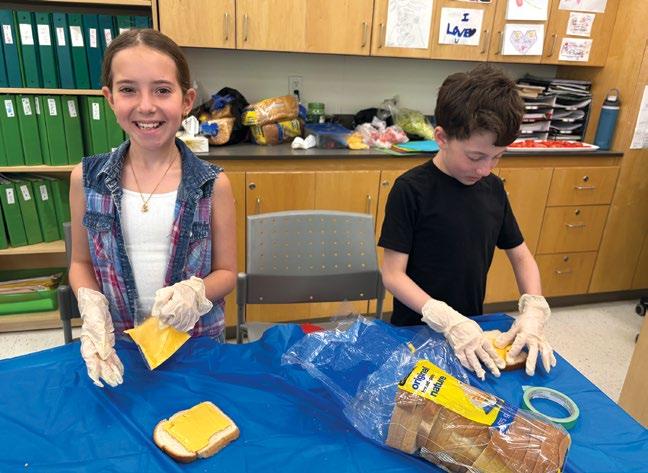
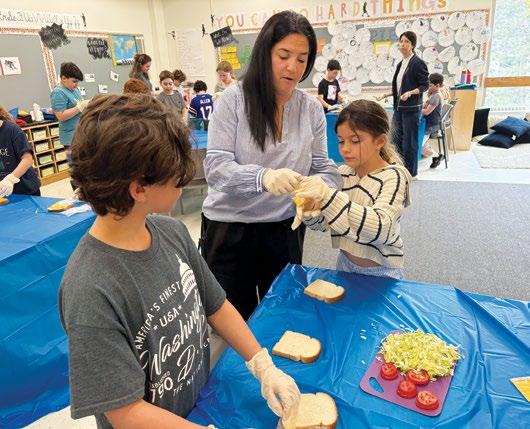
Students prepare sandwiches for people experiencing homelessness.
Students get hands-on opportunities to explore water conservation.
INSPIRE D &
Students share what inspired them at school this year.
“Israel’s birthday. That was my favourite day at school, and it was the day that I was also picked as a superstar. I got to be a line leader, I picked a slinky from the treasure box and I played with my friend Blake.”
PARKER, JK
“There are so many different clubs here, each with its own unique community. I really enjoy supporting my friends in the clubs I'm part of, and I think they feel the same way. Just showing up for one another and offering encouragement is something that's truly valued here. All these smaller communities— whether they're built around sports, clubs, or shared interests—come together to form one strong, connected whole.”
ELLA, GRADE 8
“My friends inspire me just by being my friends.”
JACKSON, GRADE 1
“I feel inspired by my teacher because she always helps us, like if we don’t know a word or if there’s an argument.”
LILY, GRADE 1
“When we did times tables for the first time and I got the question right—it was three times three which is nine. That made me feel good. I also like Titanic Math. And we have a challenge folder in Grade 2 that has 110 pages in it!”
KEATON, GRADE 2
“How it was really smooth when I started at Leo Baeck at the beginning of the year. I was really welcomed and I realized all the amazing things that Leo Baeck has. I like ‘tech time’ and also going to Kabbalat Shabbat—I love all the songs and how everyone sings enthusiastically.”
BRIELLE, GRADE 3
“I love how you never know what cool thing is going to happen at Leo Baeck. There is always something new going on. It was great how Middle School Science was introduced to us when we entered Grade 6. That made me excited for the year.”
LEO, GRADE 6
“I felt really special on my birthday at school. I got to look in the birthday box and I chose the bouncy ball. I still have it. And everyone sang to me.”
ELLA, SK
“The way that people in the 1400s to 1600s literally went off to find the other side of planet earth. Those people went through a very risky life with no proper medicine. The Explorers unit is a great memory of mine from this year. I also think studying ancient cities is very cool.”
ZACH, GRADE 4
“Learning that there is always someone in any time of history who can help someone else. There were some non-Jewish people who helped us during the Holocaust. Because of this, those Jewish people went on to live very full lives. The Holocaust unit in Social Studies has had a big impact on me.”
MIA, GRADE 5
“My family, my teachers and my friends at school who support me in my everyday life. I love to write, and getting good feedback makes me feel great and keeps me going. But also, getting a not-so-good mark makes me want to aim higher as well!”
RACHEL, GRADE 7
a t Le o Baeck
BY SHERYL FAITH, DEAN OF ACADEMIC DEVELOPMENT AND IB COORDINATOR
We often turn to the International Baccalaureate (IB) Learner Profile as a guide for shaping not only our students, but every member of our learning community. We believe the 10 essential attributes of the IB Learner Profile are crucial for lifelong learning, and we strive to cultivate them in everyone who contributes to our students’ development.
One powerful attribute in particular has become a central theme in our growth and evolution, shaping our students’ experiences, driving our professional development, and deepening our understanding of who we are and where we’re going as a learning community: “reflective.”
OUR REFLECTIVE SCHOOL:
Influential education researcher John Hattie asserts that “a passion for evaluating impact is the single most critical lever for instructional excellence— accompanied by understanding this impact, and doing something in light of the evidence and understanding.” Like Hattie, educational leaders around the world understand the profound impact of pairing reflective practice with data-driven decisionmaking in a learning organization. At our school, this reflective practice underpins both student and teacher learning, incorporating data-driven inquiry, collaborative lesson studies, and the integration of student insights into their work.
Reflection drives growth in our students, our teaching, and our community
In education, “data” refers to a collection of observations, grades, feedback, products and conversations that provide multifaceted snapshots of a learner’s journey. This guides our curricular and pedagogical decisions—the “what” and “how” we
teach. While “data-driven” might not immediately conjure images of enthusiastic, collaborative discussion, for us, it fuels dialogue among educators dedicated to improving student achievement through reflection and evolving practice.
For the past few years, our professional learning has centred around reflecting on why, how and what we use to evidence learning and inform instruction. This year, we worked with Kelly Armitage, a highly experienced educational leadership consultant, to explore how our work as a reflective, data-driven institution can become even more intentional, collaborative and impactful. We took a deep dive into reviewing our current data collection tools and methods, learned about discussion models for effectively analyzing and reflecting on data and explored how to apply our insights. This data-driven reflection has profoundly impacted us, leading to new assessment tools, a deeper understanding of student needs, and meaningful opportunities for collaborative professional learning for both teachers and
Grade 8 Community Project.
SHERYL FAITH
OUR REFLECTIVE TEACHERS:
The lesson study is a powerful professional development tool that fosters a culture of thoughtful, collaborative teaching. Through a structured cycle of goal setting, lesson planning, observation, debriefing, revision, and reflection, educators refine their practice with student learning at the centre. The reflection component is especially impactful, enabling honest dialogue about what worked, what can be improved, and how to make the lesson even stronger. Instead of seeing challenges as failures, we see them as opportunities to grow. These discussions are where the real learning happens, as they allow for deep analysis of our teaching practice and meaningful discussions that lead to growth and improvement. Student reflection is equally vital—when students have the opportunity to articulate their thinking, ask questions, and make connections, their learning deepens. Documenting their conversations and ideas provides us with valuable evidence of their understanding, informing future instruction. Ongoing collaboration and evaluation ensure inquiry-based learning remains intentional and effective, supporting both student and teacher growth.
OUR REFLECTIVE STUDENTS:
Every year the Grade 8 students complete the Community Project, a five-month-long independent project where students research and identify a need in a community and then take action to meet that need. The final step is for students to reflect on their successes and challenges throughout the process. Students assess the quality of the community service performed and how that action has enhanced their understanding of the importance of helping others. They also discuss the difficulties encountered and the steps taken to navigate those obstacles. They evaluate their use and development of the Approaches to Learning Skills, which include Communication Skills, Social Skills, Self-management Skills, Research Skills, and Thinking Skills. It is remarkable to watch the growth of our Grade 8 students throughout this process as, through reflection, they deeply understand the difficulties in making lasting change, but how rewarding the process can be.
Rooted in both IB and Reform Jewish values, our educators and students embrace reflective practice as a vital thread in our learning culture. As Hattie predicted, we have witnessed its positive impact on every “learner”–teachers, administrators and students alike. This spring, we began an intensive,
year-long self-study in preparation for our upcoming IB evaluation. We are excited to engage deeply in this process, which will not only strengthen our practices but also empower us to grow, innovate, and move confidently into the future.
ILANA WALDERMAN
Preschool Lesson Study.
ILANA CYNA
A th e Shabba t Experience a t Le o Baeck
BY RABBI NOAM KATZ, DEAN OF JEWISH LIVING
Rabbi Katz empowers students to take the lead in Shabbat services.
“More than the Jewish people have kept Shabbat, Shabbat has kept the Jewish people.” – Ahad Ha’am
This quotation, attributed to one of the foremost Zionist thinkers of the early 20th century, could easily be rewritten to describe the experience of celebrating Shabbat at our school: “More than the students, alumni, families and staff of Leo Baeck have kept Shabbat… Shabbat has shaped our school community.”
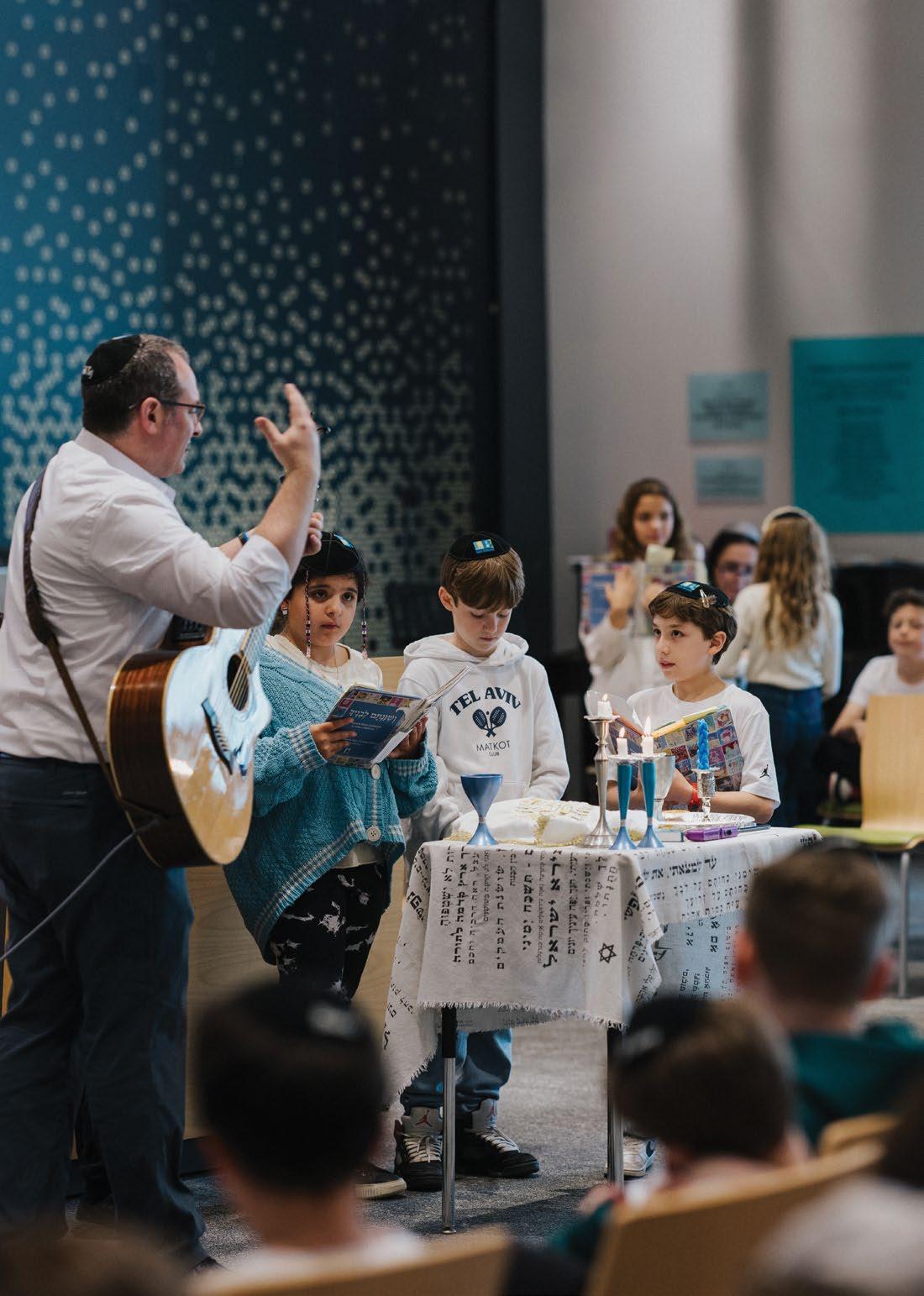
Over our first half-century, The Leo Baeck Day School has followed the rhythms of the Jewish calendar, from sukkah visits to Pesach seders, Purim spiels to Yom Ha’atzmaut parades. But the constant that allows us on a weekly basis to gather, pray, sing and elevate ourselves spiritually is Kabbalat Shabbat.
The Shabbat service provides an opportunity for student leaders to get up in front of their peers, teachers and families, and not only demonstrate their mastery of the traditional Hebrew prayers, but also share personal and relevant connections to the weekly Torah portion. It is a time to rest and reflect, to review and rejoice, to educate and to inspire.
But as we all know, Kabbalat Shabbat doesn’t really begin until sundown on Friday evening, when many of us are seated around our dinner tables with our loved ones, eager to light the candles and take the first bite of challah. The blessings, melodies and reflections that are shared during the school day are truly intended to be a “practice” in two senses of the word: (1) a chance to practice the skills and words that form the foundation of Jewish literacy, and (2) a sacred ritual that informs a student’s current and future Shabbat practice. Like most subject learning, our school’s Kabbalat Shabbat time succeeds most when the knowledge of prayer (keva) and the meaning and intention behind it (kavanah) are transferable to the rest of one’s Jewish life.
One hallmark of a Leo Baeck Shabbat service is the music, a blend of traditional melodies and more modern compositions that represent the breadth of Reform worship over the past century. From the music of Debbie Friedman z”l to Dan Nichols, our students are developing a repertoire that will make
them comfortable walking into any Reform synagogue, youth event or summer camp on a Friday night or Saturday morning and participating enthusiastically in prayer.
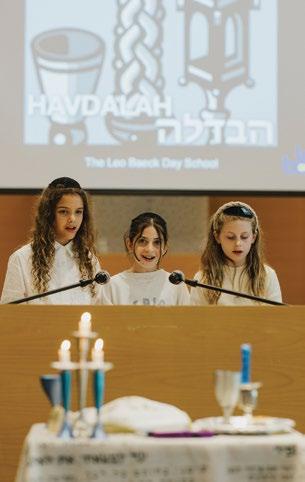
Moreover, the way they engage in timeless Jewish rituals−singing the full Kiddush, proudly wearing their kippah, learning the Havdalah blessings and symbols to mark the end of Shabbat−helps them to feel like an indelible part of something larger than themselves, a vital link that will keep strong our shalshelet kabbalah, our chain of tradition, for years to come.
In addition to the familiar songs and prayer choreography, we also strive to design Shabbat experiences that incorporate a diversity of themes and modalities. Throughout the school year, our students may hear guest speakers or participate in special programs related to Jewish Disabilities Awareness and Inclusion Month, Refugee Shabbat, and Arts Shabbat, the last of which highlights the incredible visual and musical talents of our elementary students. Our Middle School students often utilize Shabbat gatherings to discuss pressing issues about Israel, antisemitism and what Jewish identity means to them as emerging young adults. In this way, Kabbalat Shabbat becomes ritualized but not a routine. It invites each leading class to put their “spiritual fingerprints” on a service, to choose the songs, liturgy and Torah teachings that most captivate them.
Finally, Shabbat at school mirrors exactly what Shabbat is supposed to be for the Jewish people−a time for rest and renewal. To take a brief respite from the bustle of classes and homework and clubs and sports. To take a breath and reflect on all that we have accomplished over the past week, and look forward to the “Shabbat angels” we are eager to welcome in the hours to come. Shabbat is our weekly chance to unite with and strengthen our community.
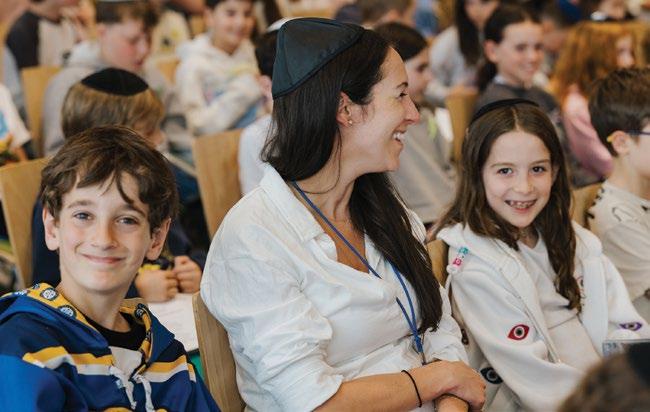
Every Kabbalat Shabbat is a chance to reflect, connect, and belong
Shabbat is the gift that keeps giving. Shabbat, as Rabbi Abraham Joshua Heschel once taught, is “a palace in time.” And each generation of Leo Baeck students adds their own unique story to the continued building of that magnificent palace.
Our Grades 2-4 Kabbalat Shabbat—always a joyful and vibrant experience to end the week.
Fostering inclusive, egalitarian Jewish values.
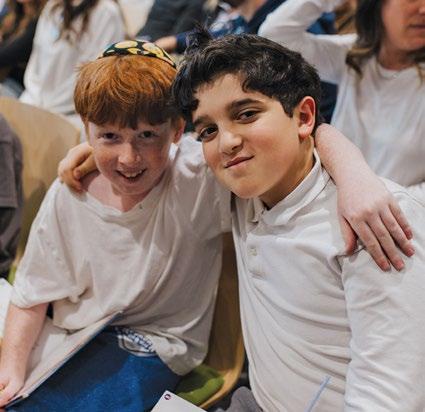
A time for togetherness.
Bi g storie s fro m ou r Grad e 1 editors
BY JANIS SEFTEL, COMMUNICATIONS SPECIALIST
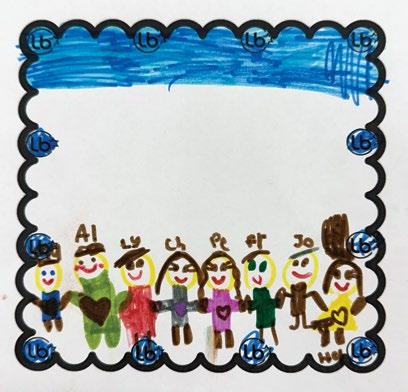
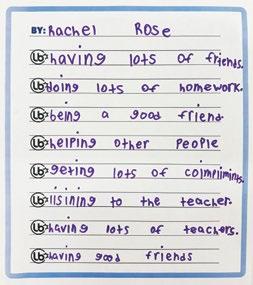
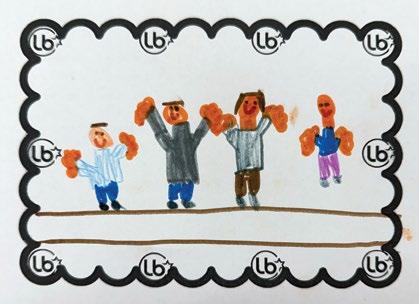
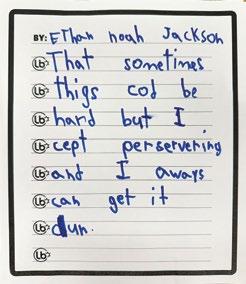
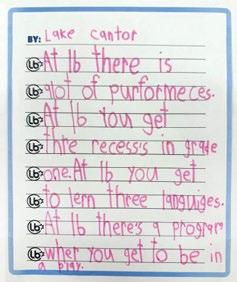
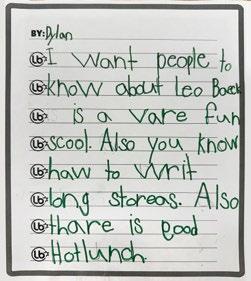
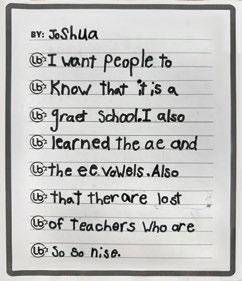
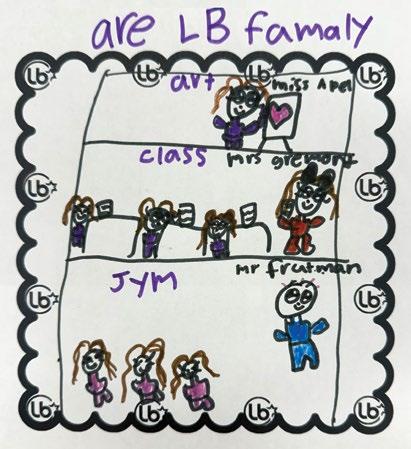
What would Grade 1 students tell families about if they were the magazine editors?
Back in the fall of 2024, the Communications team met with Grade 1 students as part of their “Roles and Responsibilities” unit of inquiry. They had a lot of important questions for us about our jobs at school. How do we decide which stories and pictures go on the website? How many assemblies do we go to in one year? And, crucially, are staff allowed to order hot lunch?
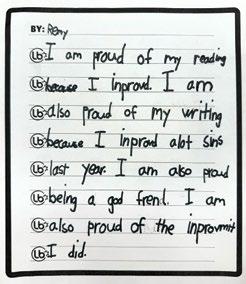
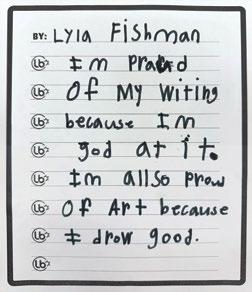
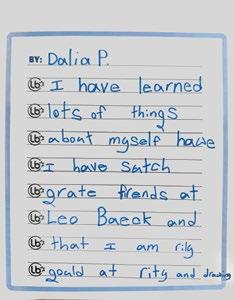
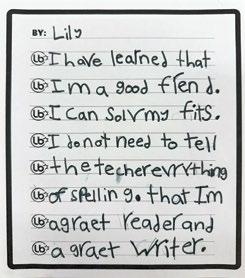
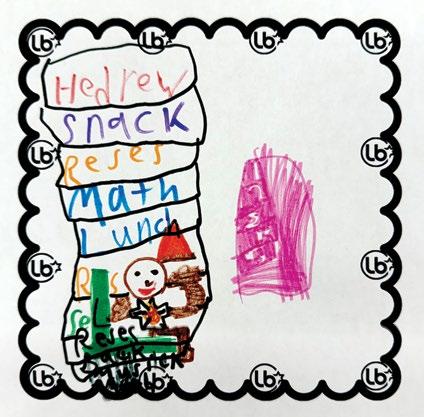
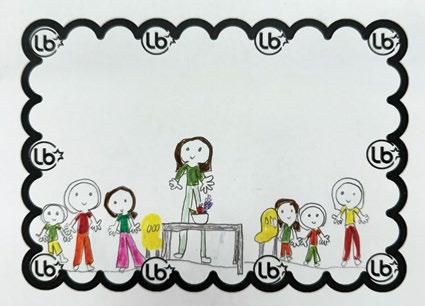
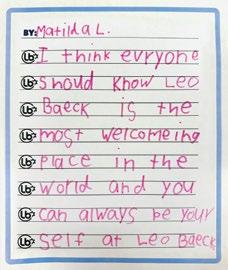
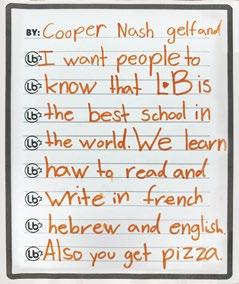
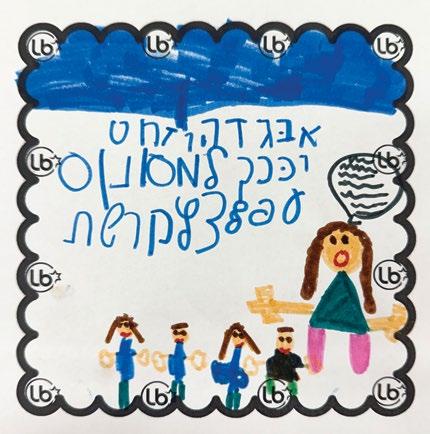
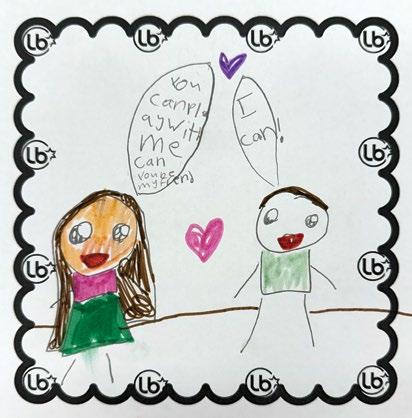
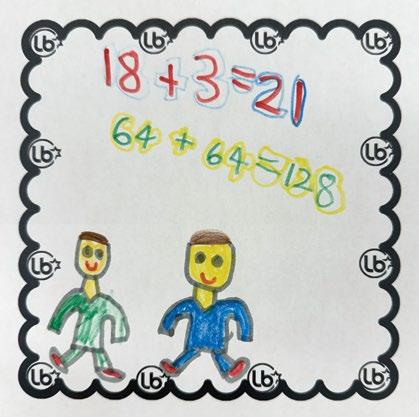
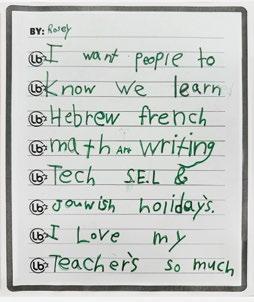
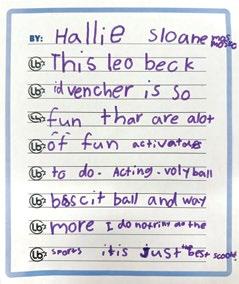
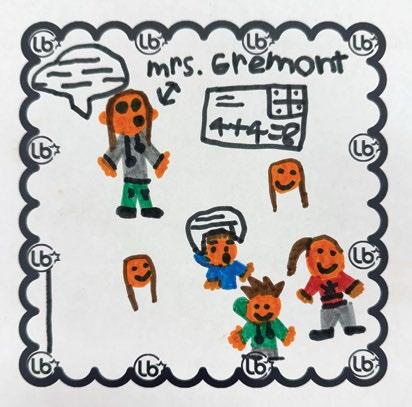
Enter the Grade 1 “mini-magazine”—a place for students to reflect on what they are most proud of at school this year, how they have grown and changed, and what they believe is essential for people to know about The Leo Baeck Day School.
When yo u thin k abou t bein g a studen t a t Le o Baeck , wha t make s yo u th e mos t proud?
Wha t ha s Le o Baec k helpe d yo to lear n abou t yourself?
▲ BROOKS
▲ PERRI
▲ NYAH
Wha t d o yo u wan t peopl e aroun d the worl d t o kno w abou t Le o Baeck?
“This new writing exercise, developed collaboratively by our Communications team and Grade 1 teachers, helps students to develop traits of the IB Learner Profile, like reflection, communication and care for others.”
JENNA SOBEL, VICE-PRINCIPAL JK-GRADE 4
▲ ZOE
▲ LILY
▲ HALLIE
▲ YALE
▲ WES
Prou d History,
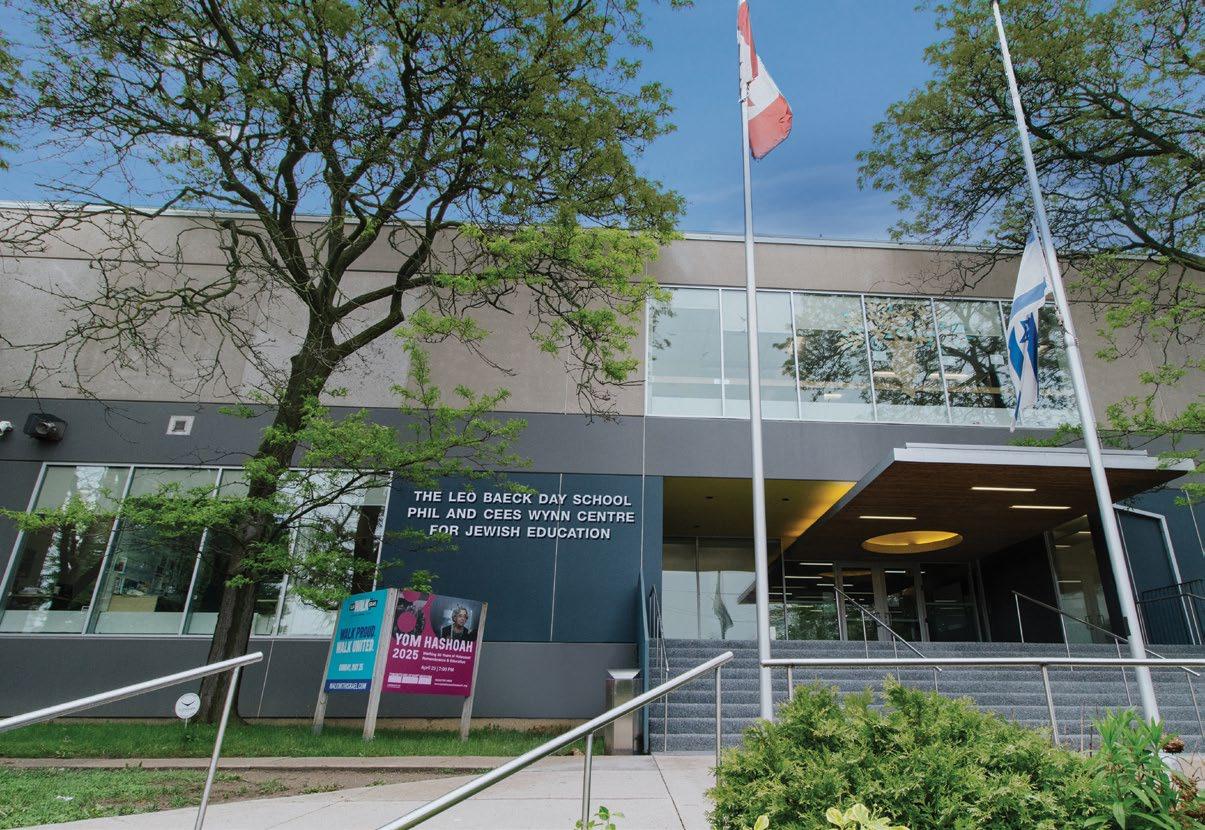
The school building at 501 Arlington Ave. will be referred to as the Phil and Cees Wynn Centre for Jewish Education.
We are thrilled to share exciting renovation plans that will provide a superior school experience for current and future generations of Leo Baeck students.
Beyond meeting demand, we’re expanding to create vital spaces for wellness and community
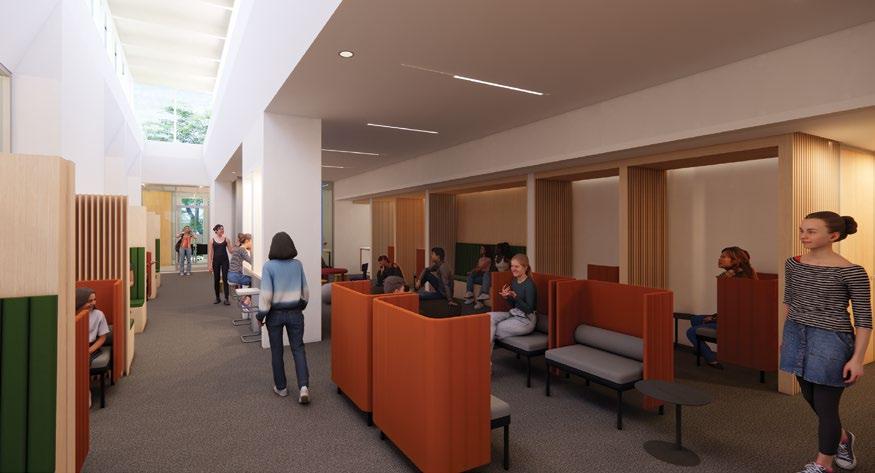
Since opening in 2012 with 450 students, our Arlington Campus has grown beyond its intended capacity of 500. Today, we serve over 600 students—exceeding optimal capacity by more than 25%. With record application numbers, we’re nearing our building’s maximum of 30 classes and 650 students from JK to Grade 8. To support this growth, Leo Baeck must reclaim essential spaces like the lunchroom, library, and private meeting rooms that have been repurposed over time. Our planned 10,000-square-foot expansion will accomplish four key goals:
Support Student Well-being
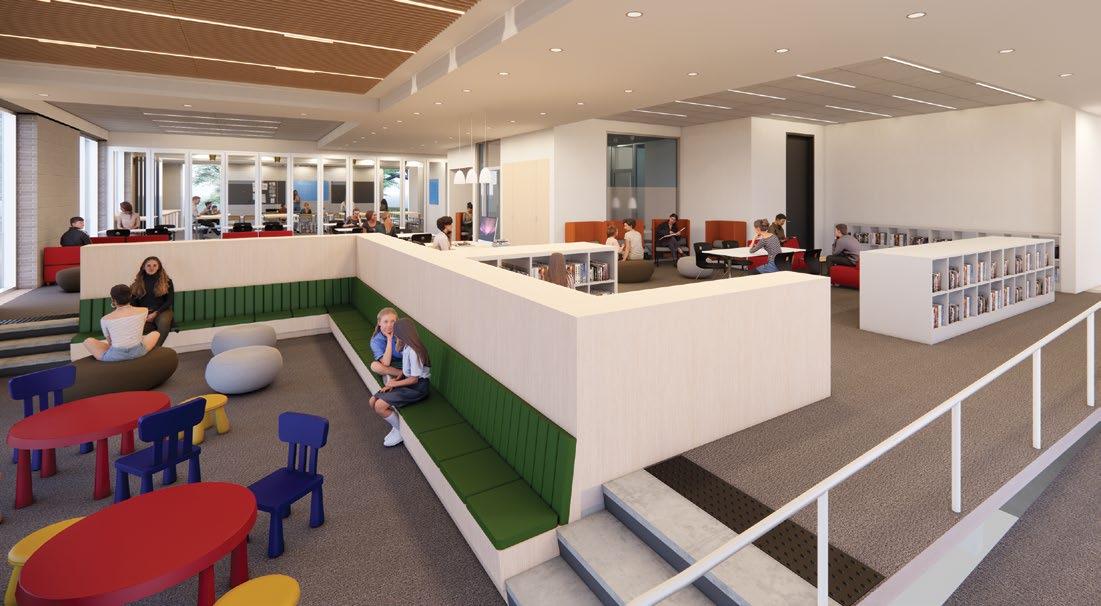
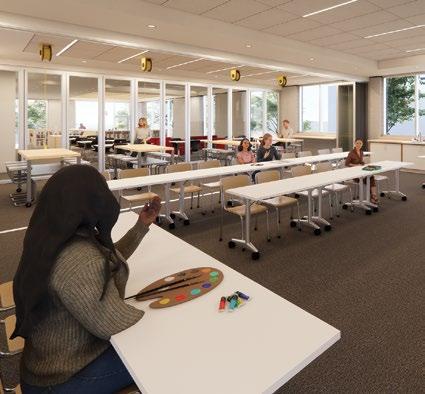
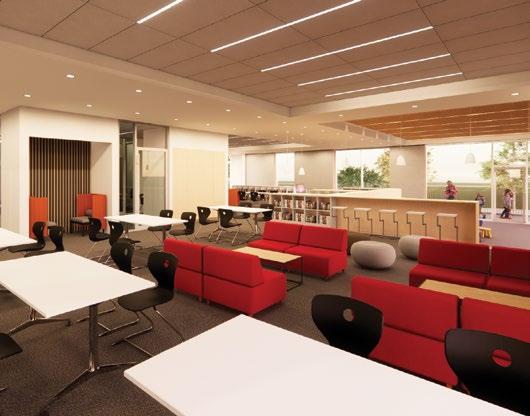
A new Wellness Centre will centralize student services, including one-on-one support rooms, a Student Resource Centre, small group teaching spaces, a modernized Library, an expanded Art Studio, a technology and innovation hub, and an additional classroom.
Enhance Physical Education
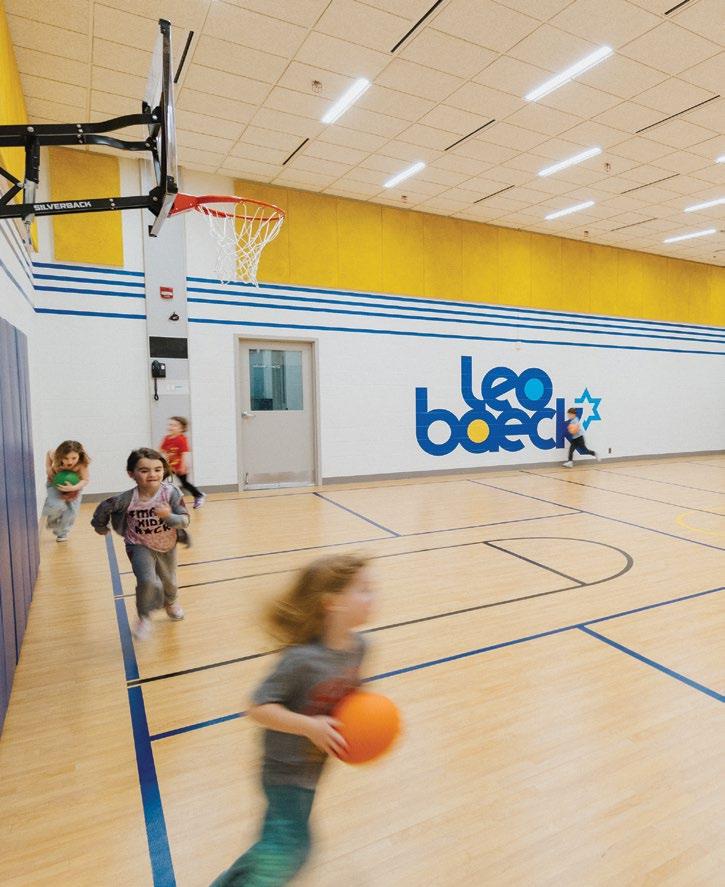
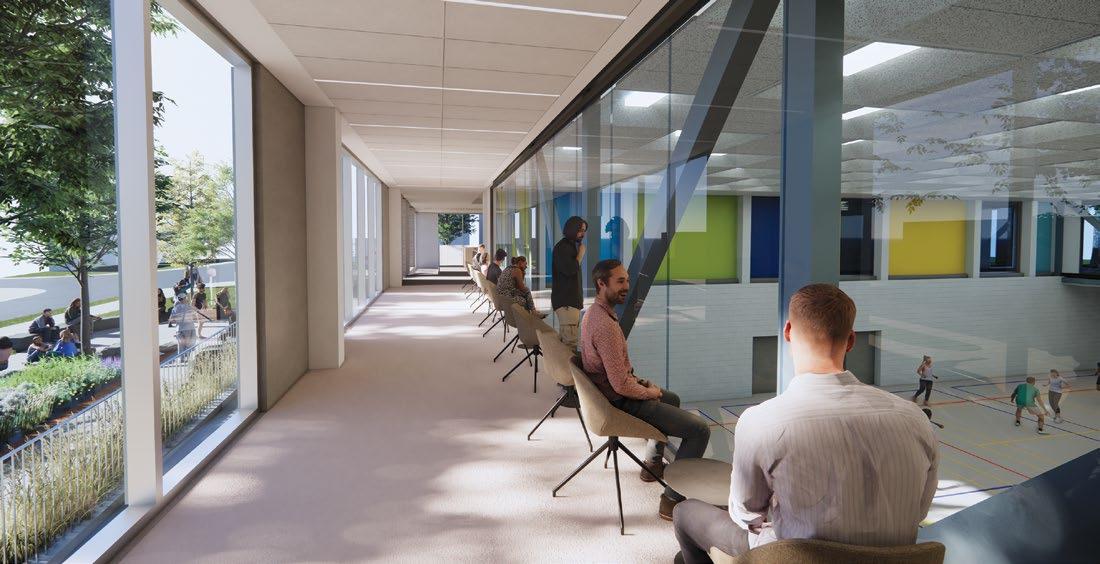
A dedicated Junior Gym will meet curriculum requirements and free up the Main Gym for Middle School use.
Improve Accessibility
A new ramp and elevator will ensure full accessibility for the school community.
Reintroduce Communal Spaces
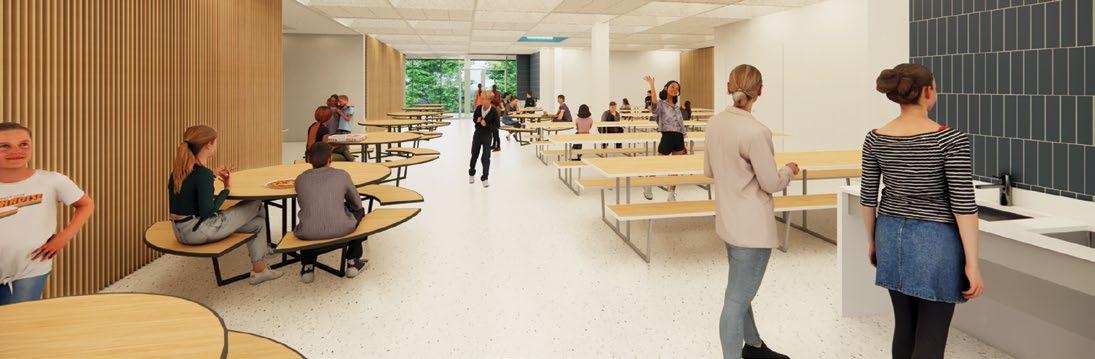
A proper Dining Hall and Multi-purpose Room will allow older students to eat and socialize together, while also serving as flexible space for clubs, group work, and activities.
This renovation is being made possible, in part, through an extraordinarily generous contribution from the Wynn Family. We are deeply grateful to the Wynn family for their unwavering commitment to Jewish education and the future of the Jewish community. To honour their leadership, the school building at 501 Arlington Avenue will be referred to as the Phil and Cees Wynn Centre for Jewish Education, a lasting legacy that will enhance the educational experience for generations of Leo Baeck students.
Newly modernized library Dedicated Junior Gym
The Goldie Feldman and Karen Green-Fischer Art Studio
Student Resource Centre
Scan here to learn more, including how we will ensure maximum safety and minimal disruption to our students and families while school is in session
Bissell/Shemesh Viewing Gallery
Spacious new Dining Hall
Allan and Susan Fenwick Centre for Wellbeing
2024-2 5 campaig n donors
Gifts received from June 1, 2024 - May 30, 2025
Karen Kollins and Daniel Abramson
Neil and Cindy Abramson
Act One Productions
Sam Gershkovich and Jonathan Ain
Marla and Lorne Akler
Altberg Family
Pam and Elliott Altberg
Jillian Altman
Judi and Jeff Alter
Risa, Richard, Alexa and Shawnee Amar
Adam Anklewicz
Alexandra Bongard and Elijah Antflick
Michelle Burke and Jordan Antflick
Lissa Antflick
Applebaum Family
Gwen Appleby
Appotive Family
Lauren Diamond and Michael April
Association of Hebrew School Educators
Elaine and Mark Atlin
Sandra Atlin
Avante Security
Axler Family
Axmith Family
Azevedo-Wise Family
Azrieli Foundation
Michelle Bader
Cheryl Balla
Naomi Ballon
Tamara Sussman and Dror Balshine
Aubey and Marilyn Banack
Banack/Mogil Family
Henry and Barbara Bank
Michael and Marilyn Bank
Bank Potash Family
Barr Family
Sarah and Rory Barrs
Batalion Family
Baum Family
Rhonda Wilansky and Israel Ben-Ishai
Laura Bennie
Ayelet Bercovich
Gillian and Barry Berens
Berg Family
Cindy and Michael Berg
Dani Seligman and Jeff Bernstein
Magi Binyamini
Birenzweig Family
Esther and Shuki
Birenzweig
Birman Family
Eric and Naomi Bissell
Morli Shemesh and
Marc Bissell
Nicole Black
Dana Blufarb and Family
Dr. Russell and Christine Blumer
Amy and Chuck Boddy
Natalie and Ian Bookman
Borenstein Family
Susan and Abraham Born
Esther and Allan Bortnick
Donald and Sarah Borts
Bossin Family
Eve Halpern and Jerome
Breslin and Family
Bunni and David Bresver
Brick Labs Inc.
Kathey Brizeli
Brody Family
Brown Posluns Family
Robyn Buchman
Budd Family
Susan and Marvyn Budd
Yvette and Randy Burke
Burns Family
Stephen and Erica Burns
Carson-Kaplan Family
Frank and Marlene Cashman
Garry and Cindy Cass
Graeme Casson
Roger and Bernice
Chaplin
Chaplin Family
Charyk Family
Chester/Horwitz Family
Casie Brown Cohen and Michael Cohen
Howard Cohen and Alpha Textbooks
Leslie Michaels and Kevin Cohen
Ron and Ellen Cohen
Ryan and Lauren Cohen
Trevor and Andrea Cohen
Cohen Family
Sandra Cohn
In memory of Dennis Colt
Condor Security Inc.
Jerry and Sharon Cooper
Marlie Cooper
Robert and Sylvia Cooper
Harvey and Maura Cooperberg
Irwin and Ariela Cotler
Laura Crangle
Crowe Soberman LLP
Nancy and Joe Dack
Dack Family
Leslie and Anna Dan
Janice Prazoff and Steve Dankoff
Jesse and Miri Davidson
Allan and Elaine Davis
Stan and Gail Debow
Marvin and Judy Demone
Detsky Family
Ari and Carly Diamond
Tina Urman and Carey
Diamond
Shelby Gold and Cole Diamond
Janette and Michael Diamond
Nina Diamond
Carol and Sheldon Diamond
Karen and Stephen Diamond
Ditkofsky Family
Paula Dodick
Draper Family
Beth and Allan Eckhaus
Debby and Gerald Edberg
Karen and Tom Ehrlich
Suzanna Elster
Ezer Family
Paul and Isabel Faibish
Engel Faigan Family
Sheryl Faith
Stacey Farber
Jessica and Zach Farber
Jodi Farber-Ludmer
Barbara and Peter Farkas
Rochelle Feldberg
Howard and Marcia Feldman
Michael and Samantha Feldman
Robert and Helene Feldman
Fenton Family
Daphne and Kyle Fenwick
Miriam and Stanley Fienberg
Wendy Fine
Leanne Campbell and Ken Fishman
Roni Fishman
Raizi & George Fleischmann Fund at the Jewish Foundation of Greater Toronto
Melannie Axler and Rob Flicht
Gary and Barbara Fogler
Garry and Joanne Foster
ES Fox
Mitch and Jodie Fox
Julie Michaels and Joe Frankel
Lisa and Mark Freed
Jaclyn Jacobs and Adam Freedman
Julie and Andrew Freedman
Jo-Anne Freeman and Family, in loving memory of David Freeman
Kelly and Josh Freeman and Family
Erica Freiman
Joey and Linda Friedlich
Allison Cepler and Michael Friedman
Ben and Erin Gailor
Galante Family
Ian and Celine Garry
Gelfand Family
Aggie and Joel Geller
Syndie Geller
Eleanor and George Getzler
Wendy Goldman Getzler and Matthew Getzler
Gladstone Family
Stephen Glazer
Shawnee Slan and Hersh Glickman
Glickman / Feinberg Family
Janice and Abe Glowinsky
Sharon and Steven Gold
Elaine and Morty Goldbach
Leon Goldenberg
Eran and Ronit
Goldenberg
Rachel and Avi Goldfarb
Harry and Gayle Goldgut
Marty and Avra Goldhar
Wilf and Joni Goldlust
Donna and Cal Goldman
Jonathan Goldman
Howard and Janet Goldstein
Jessica and Ira Goldstein
Goldstein-Lipetz Family
Carol and Lorne Goldstein
Seth and Amy Goldsweig
Nicholas and Natasha Goodman
Haviva Levstein and Robert Goodman
Goodman Family
Phil and Susan Gordin
Cindy Freeman Gordon
Ashley and Bradley Gordon
Debby and Jeffrey Gordon
Lisa Gordon
Kayla Goren
Brenda Gottlieb
Matthew and Aviva
Gottlieb
Gottlieb Family
Grad Family Foundation
Honey and Sam Grant
Eric Green
Green Family
Simmy and Sid Green
Terry and Mimi Green
Jerrold and Doreen
Greenspan
Lorry and Ari Greenspan
Robyn and Saul Greenspan
Avi and Irina Greenspoon
Jennifer Ehrlich and Jonathan Greenwald
Lorne and Linda Greenwald
Gremont Family
Denny and Debby Grubbs
Ruth Halperin
Beth Abramson and Andrew Hamlin
Dario Savio and Michelle Hanna
Edie and Robert Harlang
Elaine Harris
Gary and Diane Harris
Debbie and Michael Hartzman
Hartzman Family
Hauser Family
Cheryl and Philip Hayman
Jo Ann and Mike Heale
Suzanne Heft
Joan Starkman and Aaron Hendler
Dr. Paul Herbert
Rosalie and Sender Herschorn
Allison Boman and Joel Herscovitch
Herskovits Family
Holy Blossom Temple
Community
Hoppe Family
Horwitz Family
Flory and Abel Ickowicz
Incredible Printing
Isaacman Family
Neville and Jacqi Isaacman
Jillian Jackson
Joel Jackson
Robert M. Jacobs
Sid and Ellen Jelinek
Rebecca Slan Jerusalim and Craig Jerusalim
Greg and Robin Joffe and Family
Seymour and Elaine Joffe
Jessica Elie and Joel Kadish
Corinne Kalles
Janice and Ken Kallish
Daniel and Yael Kanter
Julie Kanter
Kapalka Family Foundation
Carole and Gary Kapelus
Alana and Matthew
Kaplan and Family
Karpel Family
Robyn Feldberg and Jarred Katz
Miriam and Jerry Katz
Rabbi Alan and Rabbi Jan Katz
Rabbi Noam Katz
Paulette and Amnon Kestelman
Michael and Chloe Kimel
Ari Kirshenblatt
Carol and Mark Klaiman
Klass Foundation
Klausz Family
Alexandra and Brett Klein
Eden and Benjamin Klein
Francie and Stuart Klein
Shelley Klugman
Tom and Anna Koffler
Michael and Gabriela Kogan
Melanie and Ron Kohn and Family
Michelle Gordon and Josh Koziebrocki and Family
Kraus Family
Alexa Lewis and Jacob Kriszenfeld
Shelley Kudlats
Esther and Irving Kulik
Robin Senzilet and Jeffrey Kulik
Michael and Diana Kutner
Deborah and Frank Lambert
Toby Landzberg
Danielle Lapedus
Jan and Mark Lapedus
Lasko Family
Nicole and Cory Lastman
Steven and Lynda Latner and Family
Mark and Talia Laurie
Law Family
Michael T. Lax
Susan Lambert and Mike Lazarovits
Miriam and George Lazarovits
Lefebvre Family
Diane and Eric Leith
Julia Starr and Simon Leith
Leopold Family
Levin Family
Maish and Maxine Levin
Michael, Lorraine, Jamie and Cara Levinson
Linda Levstein
Lewis Family
The Joseph Lebovic & Dr. Wolf Lebovic
Charitable Foundation
Libenson Family
Laila and Avremi Lipetz
Amanda Steiman and Nathaniel Lipkus and Family
Elizabeth and Phillip z"l Litowitz
Litvack Family
Lili Litwin and Family
Baila and Marvyn Lubek
Isaiah Bien and Orli Lubinsky
Esther Schwartz Luft
Lyons Family
Tima Steinberg, Jason and Jonny Machtinger
Eva and Mark Madras
Lionel and Nancy Mandell
Sherry Mandell
Mandell Family
Mansoor Family
Sandra and Ryan Mapa
Richard and Shauna Markowitz
Marks Family
Rachel and Mick Markus
Linda Mashaal
Masters Family
Wendell and Brenda Mazelow
Maureen and Gerry Mazin
Karen McFarlane
Shelly and Sema Mecklinger
Lauren Bondar and Elliot Medoff
Ronald Medoff
Carol Crystal and Jeff Meilach
Sheldon Meingarten
Lauren Meisels
Shayna and Matthew Menkes
Sean and Sunny Menkes
Marilyn and Saul Merrick
Sheldon and Rocky Meslin
Barry and Susan Michaels
Lucian and Audrey Michaels
Leanda Miller
Susy and Murray Miller
Faye Minuk
Susan Mogil
Andrew and Dara
Moncarz
Moness Family
Steven and Sandy Moranis
Florene and Seymour Moskovitz
Brandon Munden
Nefsky Family
Neiman Family
Bonnie and Harold
Newman
Vicki and Michael Northy
Debbie and Henry Nuremberg
Kim Kozloff, Jeremy Nusinowitz and Family
Nyquist Family
Karen Rosen and Mark Opashinov
Cindy and Michael Opler
Otto/Mitchell Family
Jerry and Joanne Ovsey
Jayme Ozier
Randolph, Julia and Genevieve Paisley
Rosie and Paul Parnass
Kim Pasternak
Payne Family
Peck Family
Wendy and Ronnie Peck
Perelshtein-Brown Family
Tami Moscoe and Eric Petersiel
Pichosky Family
Clare Hutchinson, Brian Pinchuk, Mairead and Conor
Carol and Steve Pinkus
Dr. Amy Platt
Alison and Gary Polan
Alexander Lightstone and Nina Politzer
Daniel and Jennifer Pollack
In memory of Lloyd J. Pollack QC
Rebecca Cooper, David Poster and Family
Greg Poster
Prazoff Family
Aly Premji
Caryn Markman, Peter Puzzo and Family
Adrienne Fine-Furneaux and Brian Radnoff
Jerry and Shannah
Radowitz and Family
David Rashkovan
Raskin Family
Susan Lieff and Joel Raskin
Jonie and Terry Reiber
Geraldine Rendon
Reputation.ca Ltd.
Phyllis and Marty Resnick
Rezmovitz-Kapelus Family
Lisa Richler
Rifkin Family
Nina Rothman and Eric Riz
Alex Robins
Rachel Goldman
Robinson and Marc Robinson
Irma and Morris Robinson
Robinson Family
Larry and Jodi Rodness
Richard and Sheila
Rodney
Rosen Family
Susan Jackson and Larry Rosen
A. Rubenstein and M. Rosenberg
Ashleigh Rosenthal
Lauren Switzer and Rahmiel Rothenberg
Matthew and Meredith
Rudin
Janet and Michael Ryval
Rzeznikiewiz Family
Moira Sacks
Donna Sorbara and David Sadowski
Joanna Sadowski
Karen Salom
Vivienne Saltzman
Elizabeth and Daniel Sauder
Hilary and Max Sauder
Marcia Gilbert Schachter and Rabbi Shalom
Schachter
Sarit and Ari Scheer
Brenda Bader and Phillip Scheim
Adena Scheer, Adam and Abbie Schon
Debra and Richard Schon
Jordanna and Jon
Schwartz
Julie and Larry Schwartz
Samantha and Erik
Schwarz
Shelby Draper and Kurtis Scissons
Janis Seftel
Peter and Dianne
Seligman
Masha and Gil Shcolyar
Gillian and Jason Shedletsky
Janice and Phil Shedletsky
Ralph and Anita Shedletsky
Khiyel and Asya
Shekhman
Alison and Todd Sheriff
Sherrard Kuzz LLP, Employment and Labour Lawyers
Dani Shields
David and Fran Shields
Shiff Family
Janet and Norman Shiner
Laura Shiner
Joan Shnier
Jennifer Minuk and Kevin Shnier
Simmy and Robert Shnier
Amanda Silcoff
Jordana Silver
Margo and Judah Silverman
Iris Glaser and Eli Singer
Singer/Kahn/Janks Family
Skinner Family
Miriam and Michael Slan
Ronna Rubin and Philip Smith
Andrea Goldfarb and Steven Smurlick
Jenna Sobel and Family
Randi and Jeremy Solomon
Gary and Janice Soren
Lauren and Rob Spanier
Jody Spegel
Spegel Family
Fern and John Spencer
Carol Lou Spiegel
Jamie and Ali Spinner
Spinner Family
Standil Family
Judy and Igor Steiman
Stein Family
Julie Goldstein and Daniel Steinberg
Diana Shedletsky and Daniel Steinberg
Cheryl and Mark Steiner and Family
Steinhauer and Otto Families
Denise Stivelman
Mona Strasberg
Evelyne and David
Suchter
Etta and Alan Sugarman
Blake Sversky and Family
Sari and Jerold Switzer
Alina Tabak
Marilyn and Allan Taitz
Alisa Siegel, Benjamin
Tal, Noam and Daniel
Tanbark Ltd.
Mayta and David Tannenbaum
Sara and Jordan
Tannenbaum
Tarr Family
Tassone Family
Ellen and John Taylor
Gene Teeger and Family
Shari and Lyle Teichman
Tishman Family
Stephen and Carole Title
Miriam and James Toste
Turk Family
John and Rosie Uster
Mark and Tami Uster
Stacey and David Vernon
Doris Vernon
Vernon Family
Wit h gratitude
Waisglass family
Melissa and Daniel Walderman
Linda and David Walderman
Ilana Walderman
Hannah Walsh
Walsh Family
Robin Hacker Teper and Sammy Waxman
Jack Weinbaum Family Foundation
Dora Ennis and Barry Weinberg
Karen and Joey Weinberg
Faigie and Joe Weinstock
Weinstock Family
Well Grounded
Real Estate
Jared Weltman
Marvin and Lynda Wenger
What a Bagel
Michael White
Eric and Jayme Wilson
Trish Title, Stu Wilson and Family
Wilson Family
Thank you to our retiring Leo Baeck Parents' Association (LBPA) co-chairs, Kyle Gordon and Jayme Goldfarb, whose vision, dedication, and countless hours behind the scenes have strengthened the Leo Baeck community in powerful ways.
In addition to community building, the LBPA raised $90,000 this year through initiatives including the lunch and challah programs. Kyle and Jayme have set an inspiring example of what parent involvement can do— and we are so grateful.
Want to make a difference?
Whether you have an hour or a whole day, you can make an impact.
Your support helps us provide critical programming to advance our mission. To discuss your gift, contact the Development Office at: development@ leobaeck.ca or donate online at leobaeck.ca/donate.
Donate now!
Kyle Gordon (left) and Jayme Goldfarb (right) in action.
way s o f
Honourin g a Legacy:
Th e Rosann e Ai n Legacy
Gif t fo r Tuitio n Assistance
In March 2025, we mourned the loss of Rosanne Ain—beloved mother of former Board President Lisa Dack and of David Ain and Jonny Ain. Rosanne was a passionate and dedicated member of the Leo Baeck community, first as a parent and later as a grandparent to six students.
Her contributions helped shape the school we know today. As a parent, she served on the Board in its early years and played a pivotal role in launching our technology program. When she returned to Leo Baeck as a grandparent, Rosanne became the inaugural co-chair of the Nachas Club (now the Grandparents and Special Relatives Committee), where she helped build bridges between generations and share the joy—shepping nachas—in our students’ accomplishments.
Now, Rosanne’s commitment to Leo Baeck will continue to shape future generations through the first planned Legacy Gift to our school—a foundational endowment that will provide tuition assistance to support families and ensure that more children can benefit from a Leo Baeck education.
We are deeply grateful for Rosanne’s vision and generosity.
Contribution s t o Capital Campaign
“When we first stepped into Leo Baeck 12 years ago, we were blown away by the bright classrooms and common spaces−it felt like a magical learning environment, one we knew we wanted for our children. Over time, as Leo Baeck’s success led to a growing school community, many of those common areas were transformed into additional classrooms. The plans for a new 10,000-square-foot expansion will ensure that every family entering the school will be able to experience the same sense of wonder we felt 12 years ago. This new addition, along with the extensive renovations to the existing facilities, will ensure that the school continues to provide an exceptional Jewish day school experience that meets the needs of our students for many years to come. We are incredibly proud to support the capital campaign as a way of expressing our gratitude and establishing a lasting connection with Leo Baeck.”
Hol
y Blosso m Temple
Proudl y Support s The Tikku n Projec t a t The Le o Baec k Da y School
Holy Blossom Temple gives members the opportunity to make voluntary contributions to like-minded Reform Jewish institutions through the membership renewal process. In this way, congregants are able to easily extend their generosity to the Reform community at the same time as renewing their annual Temple membership.
This year, Holy Blossom Temple members made voluntary contributions of over $11,000 that were put toward the Tikkun Project at Leo Baeck, a powerful student-led initiative rooted in the Jewish tradition of Tikkun Olam—the sacred responsibility to help repair the world. This project embodies the spirit of compassion, justice, and community action that Holy Blossom Temple holds at the heart of its values.
At Holy Blossom Temple, we believe that education and activism are inseparable from Jewish life. We are committed to nurturing thoughtful, socially conscious leaders who carry forward the work of Tikkun Olam with integrity and passion. Leo Baeck’s Tikkun Project is a beautiful reflection of our shared vision of Reform Judaism, and we are honoured to support students and educators as partners in this important work. Together, we are planting seeds of kindness, justice, and hope—and helping to shape a brighter future for all.
Morli Shemesh and Marc Bissell
A record-breakin g Day o f Giving
Day of Giving 2025 was Leo Baeck’s most successful campaign to date, raising an extraordinary $858,640—a truly remarkable achievement. These funds directly support the school’s essential programming, from cutting-edge technology and the arts, to athletics, socialemotional wellness, the library, and Tikkun Olam, enriching the educational journey of every student.
Thanks to the unwavering dedication of the Leo Baeck community, the school continues to nurture a new generation of well-rounded Jewish leaders— young people equipped not only to thrive, but to make a meaningful impact on the world.
Monthl y Giving , monthly support
“The Community welcomed and supported me in ways too many to count. My monthly contribution reminds me every month that belonging to any community requires every member to support and contribute to our future in any way we can.”
Anonymous Monthly Donor
$858,640 raised—the most successful campaign at Leo Baeck!
Importance
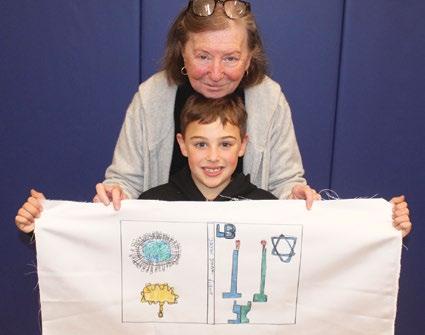
The phrase L’dor V’dor—“from generation to generation”— motivates us to pass down wisdom, values and stories. Intergenerational programs help students develop empathy, consider different contexts for growing up and strengthen their sense of community. For our Grade 7 students, two initiatives in particular highlight the meaningful and eye-opening benefits of engaging in activities with older adults.
GRANDPALS
“There is a natural cultivation of mutual respect and an increased sense of belonging that has come out of the GrandPals program. Many of the students forged real connections with their GrandPal, looking forward to the next time they would be together.”
ANDREW
HOWARD,
VICE-PRINCIPAL GRADES
5-8
Back in the fall, Grade 7s had a unique opportunity to take part in The GrandPals Program at Baycrest, which connects generations through the power of storytelling, companionship and creativity.
For one month our students and their GrandPals engaged in weekly conversations about home, family, learning, work, and travel. Sessions were paired with ice breakers, thought-provoking questions, and sharing of lived experiences. The goal was to foster a haimish home environment by developing a meaningful connection between residents and students. The result? Each student gained insight into their GrandPal’s perspective on quality of life, life in long-term care, and age-friendly communities.
The stories from the participating residents at Baycrest and their lived experiences expose Leo Baeck students to diverse world views. The visits help to anchor our Middle School students and inspire creativity and imagination. The result is enriched learning and lasting pieces of work, of which both the students and their GrandPals can be proud.
INTERGENERATIONA L SEDER
Before the Passover holiday break, Grade 7 students again stepped out of the conventional classroom and participated in Leo Baeck’s annual Intergenerational Pesach Seder, which focuses on the students and their special guest.
Students are asked to invite a grandparent or special relative to accompany them to the seder. Older relatives enjoy the new tunes and modern perspectives shared, and our students are able to bask in one-on-one time with their guest and the wisdom and memories their guest brings to the experience. Often, guests are asked to share their personal experiences of seders as a child or to explain a treasured custom from their own family-oforigin seder.
Guided by Rabbi Katz and our teachers, we became a brand new cross-generational group for one special morning in the Kimel Family Chapel, fostering new memories that our students won’t soon forget.
We thank all the special relatives who have joined us this year for meaningful moments at The Leo Baeck Day School.
“It was a great experience bringing together different generations and celebrating our Jewish identity. It meant a lot to me to have my grandma with me to celebrate Passover.”
RORY M., GRADE 7
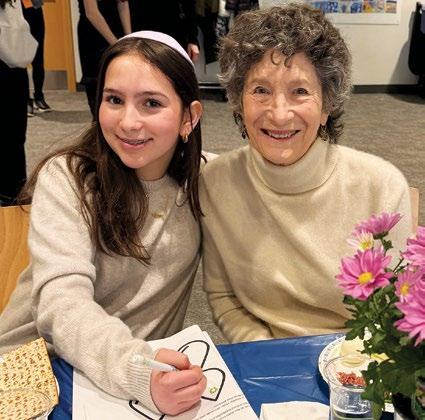
A Grade 7 student and her grandmother at the Intergenerational Seder
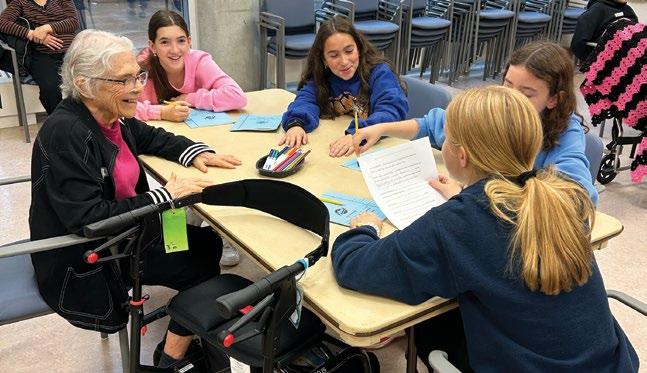
Grade 7 students connecting with their Baycrest GrandPals.
grandparent s and
“GPSR” is integral to community life at school.
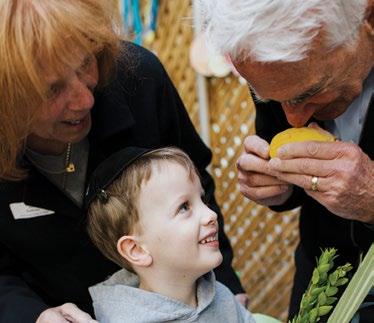
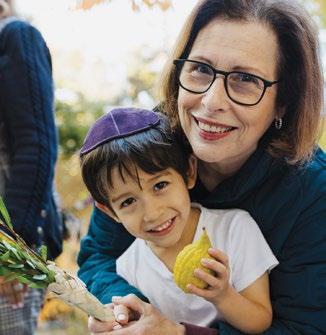
On Sukkot and throughout the year, we practice the mitzvah of “hachnasat orchim”—welcoming guests.
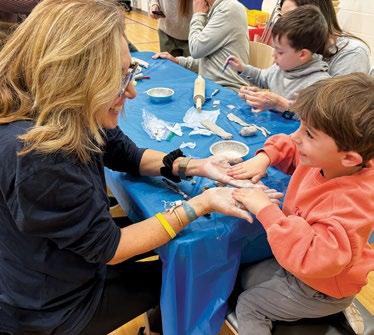
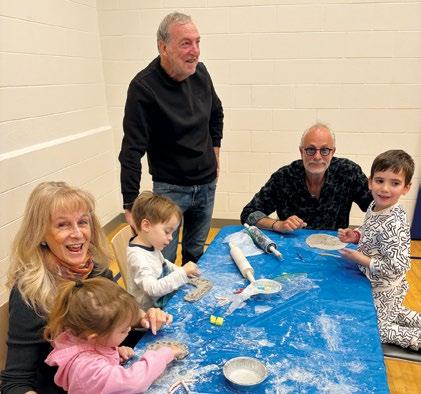
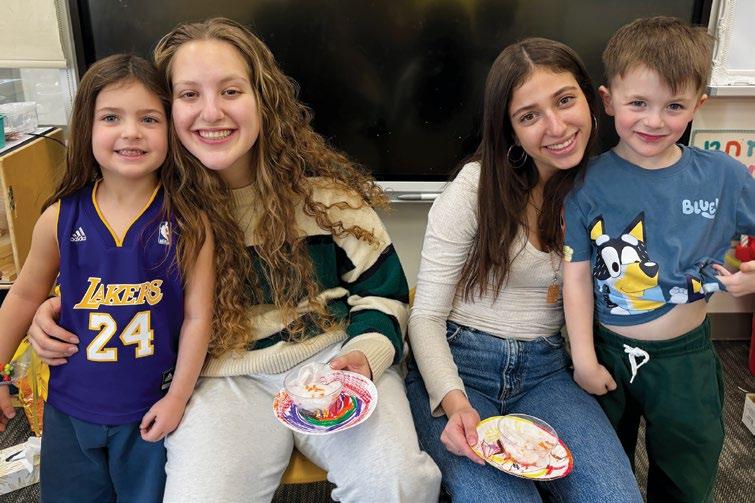
Coming together for Chanukiahmaking and memories.
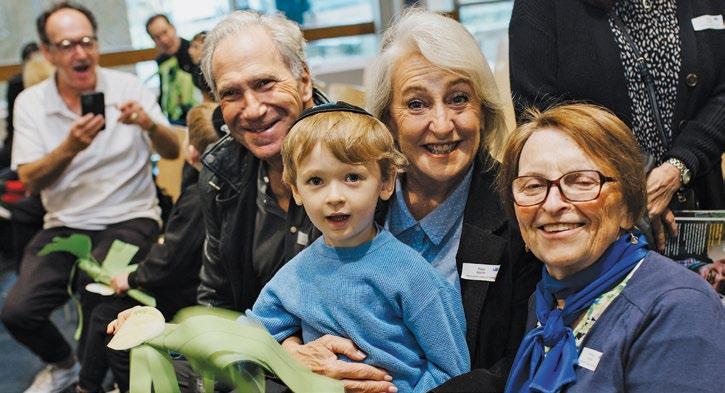
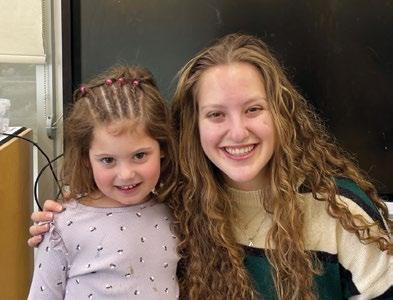
We are honoured to have special guests visit us at school during Jewish holidays.
Gatherings for Jewish holidays build community and togetherness.
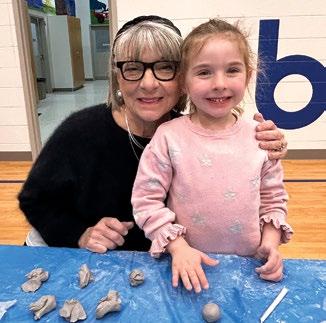
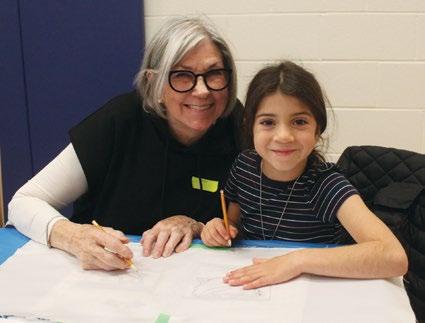
Siddur Cover workshops are a highlight of the Grade 4 Visual Arts calendar, featuring special guests to help with our design.
Planning the artistic vision for the cover of each Grade 4 student’s Senior Siddur.
Sharing the experience of Sukkot through all the senses.
Creating a Jewish heirloom together.
Israe l Connection
Experiences with our ShinShiniot
In 2007, we became the first Jewish day school to welcome UJA ShinShinim, remarkable young Israeli emissaries who dedicate a year of service in diaspora communities before their military service. Their presence and contribution is an opportunity for day schools, synagogues and community organizations around the world to forge personal ties with Israel and to profoundly strengthen our collective sense of identity and connection to heritage. Quite simply, the ShinShinim bring Israel to life for our students.
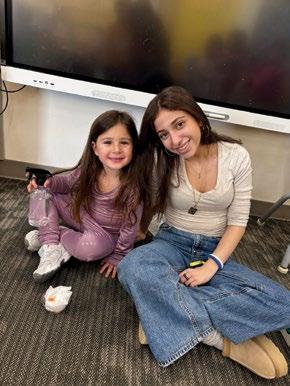
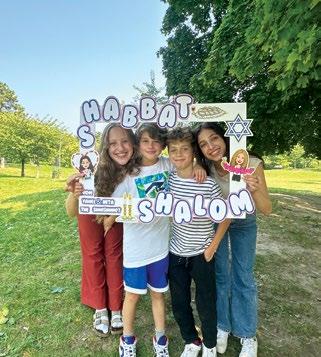
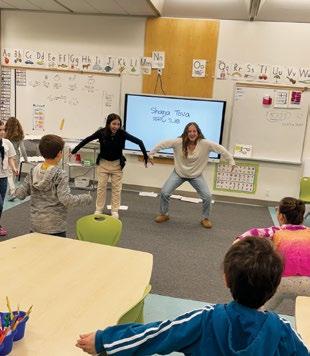
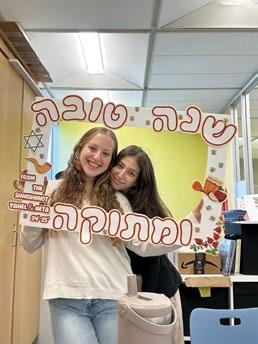
Our 2024-25 ShinShiniot, Yahel and Neta, have been more than just visitors—they are connectors who offer our students and staff countless insights into Israeli culture, society and daily life. Sharing an activity or a holiday program with Yahel and Neta has created opportunities to go beyond books and news stories and discover what young Israelis think and feel. Yahel and Neta have juggled their responsibilities to Leo Baeck with their role in two Reform shuls in Toronto—Holy Blossom Temple (Neta) and Temple Sinai (Yahel).
ShinShinim are deeply integrated into our local community due to the generosity of community members who open their homes to host these young adults. The unique hosting model fosters special, multigenerational relationships that continue many years into the future. Thank you to our generous host families for your hospitality and support.
Throughout the year, Yahel and Neta have faced extraordinary challenges with courage and grace. We are inspired by their strength and resilience during the Israel-Hamas war, choosing to remain in our community even while their families faced uncertainty at home. Our ShinShiniot also navigated the challenge of Yahel’s ski accident, which meant months of rehabilitation time and Neta pivoting to take on the bulk of the programs they had collaboratively planned out. We are full of gratitude for their impact on our school and their warmth and friendship in times of great turmoil in Israel.
We wish them both continued success—b’hatzlacha. We hope to see you in Israel!
“From the very first moment that Yahel and I arrived at Leo Baeck, we were welcomed with open arms, warm hugs, and endless smiles. There’s no better feeling than walking into school every morning with a huge smile and being met with so much love from the students and staff.
We’ve built a deep and meaningful connection with the children. Together, we explored important figures in Israeli history, got to know Israeli music, tasted Israeli food, and shared laughter, games, dancing, and unforgettable moments.
ShinShiniot
There is a quote in Hebrew that I truly love:
From all my teachers I have learned, but from my students I have learned the most.
I’ve learned so much from these amazing children—about patience, kindness, openness, and connection. I honestly feel that I have received more from this experience than I could ever give.
We are so thankful for all the love, support, and warmth that have made Leo Baeck our second home. Being far from our families for a whole year hasn’t been easy, but this incredible community embraced us like family and made us feel like we truly belong.”
NETA WIJSBOOM
Scan to visit Neta and Yahel’s Instagram page
Enjoying a sweet Rosh Hashanah activity to start off the new year with Neta and Yahel.
“When we started the ShinShinim program in 2007, I was told to think of the ShinShinim as artifacts. Since not everyone can go to Israel, the best thing is to bring ShinShinim (young emissaries) to make the connection with our community and strengthen our ties with Israel. Over the last 18 months this has been even more important. Our students realized how closely their Jewish identity is tied with Israel. The ShinShinim play an essential role in making Israel come alive in the classroom. Neta and Yahel worked tirelessly to bring fresh, fun and educational activities and experiences. Just as we learn from them, they learn from us.”
IRITH ROSEN, MYP TEACHER AND SHINSHINIM COORDINATOR
We loved following along on Yahel and Neta’s Leo Baeck journey @yahel.neta.shinshiniot
Teache r planner
These IB@LB highlights reveal how the IB’s emphasis on inquiry-based learning is brought to life in our classrooms, reflecting the deep connection between the IB philosophy and our values as a Reform Jewish day school.
Guided by the Ontario curriculum, our teachers and the IB Coordinator explore timeless, universal, and transdisciplinary concepts to enrich and expand student learning.
Through the IB lens of student agency, our teachers prioritize voice, choice, and ownership in the learning process. This focus on empowerment, coupled with the IB’s dedication to fostering global citizenship, strongly aligns with our Tikkun Project.
OF UNIT
Grade 6 teachers: David Nepon (Phys. Ed) and Lawrence Axmith (Drama)
Statement of inquiry: A presentation of controlled movement can express and communicate an impactful message.
Global context: Personal and Cultural Expression
Inquiry questions (MYP):
Factual questions
• What are the elements and origins of yoga, Krav Maga, and hip hop? (Phys. Ed)
• What is tableau and what are its elements? (Drama)
Conceptual questions
• How do you create tension with no movement?
• How do various movement types communicate different messages?
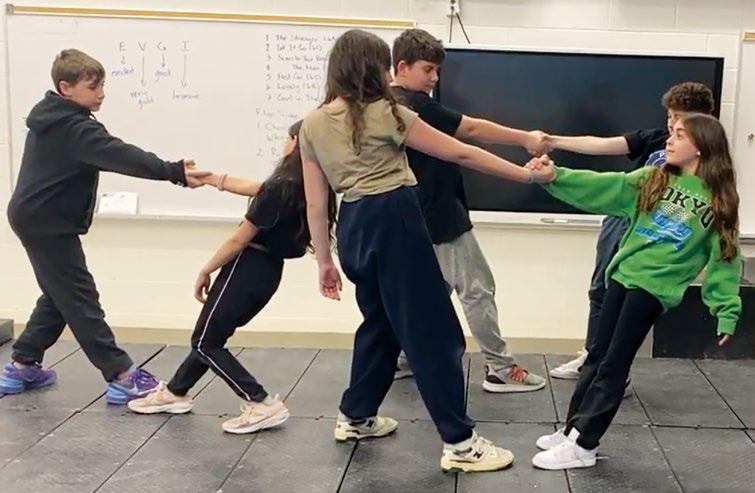
Grade 8 students express powerful messages through movement and stillness.
Students explored how stillness and motion can speak louder than words
Debatable questions
• Is tableau effective in engaging a modern audience?
• Is movement alone effective in communicating a message?
Unit highlights:
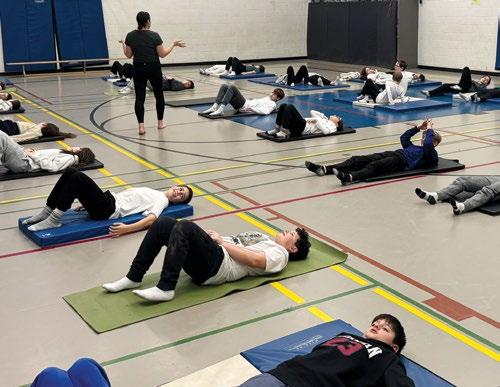
In Phys. Ed., students explored movement through yoga, hip hop, and Krav Maga, while in Drama, they practiced tableau—using stillness and body language to convey meaning. These disciplines came together in a summative tableau performance, where students selected songs and created a series of silent scenes to express powerful messages. Themes ranged from world peace to anti-bullying and ending violence. As the students transitioned between scenes, their visual storytelling combined with the music’s lyrics invited the audience to interpret the message in their own way.
Teacher reflection:
We often associate power with strength, and strength is usually represented by action. This unit shows students that there can be power in stillness, too. It’s amazing to see how students craft a story when you remove dialogue and action, and use the elements of tableau instead. In both Drama and Phys. Ed, the participants’ first and primary “tool” is their body. Learning control helps them to master the use of this tool.
DAVID NEPON
LAWRENCE AXMITH
NAME
Grade 5 teachers:
Miriam Toste (Math and Science) and Randi Solomon (Technology)
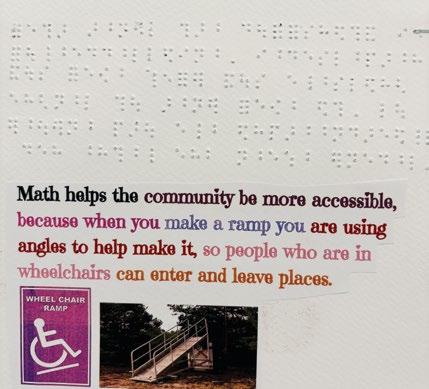
Central idea: Mathematics can be used to improve equity and further social justice.
Lines of inquiry:
• Types of patterns and their components
• Using our thinking skills to create and predict patterns
• How patterns are used in the real world to improve accessibility for others
Unit highlights:
This unit demonstrates strong transdisciplinary connections that weave across multiple areas of learning. In Science and Mathematics, students apply their understanding of pattern types and pattern prediction to explore mathematical concepts in a meaningful context. In Language Arts and Social Studies, students learn about Louis Braille, and explore themes such as resilience and agency. The Language Arts and Social Studies teacher connects this to the Government unit, where students examine social systems and consider how they can support greater equity.
NAME OF UNIT
Students use tools such as Braille slates and styluses to create tactile patterns for communication. In technology class, they also design their Braille initials using Tinkercad and bring them to life with the 3D printer.
Teacher reflections:
This unit offered a meaningful exploration of how math can support equity and accessibility. Students used patterning skills to understand and replicate the Braille system, showing strong engagement, empathy, and curiosity, especially during hands-on work with slates and styluses. Cross-curricular learning enriched the experience, as students deepened their math skills, explored Louis Braille’s life, and expressed their understanding creatively through 3D-printed Braille initials.
Scan to read the blog post
Grade 4 teachers:
Margaux Janks and Danielle Lapedus (Language Arts and Social Studies)
Central idea:
Poverty’s effects on people and communities can be examined from different viewpoints.
Lines of inquiry:
• The root causes and impacts of poverty
• Diverse perspectives on poverty
• Strategies that are most effective for supporting the well-being of people experiencing poverty
Unit highlights:
This unit of inquiry integrates financial literacy, social studies, language arts, and Judaic Studies through the Tikkun Project and examines how poverty impacts people and communities from various perspectives. Going beyond the “what” (essential needs in a city, local food costs), students investigate the “so what” (the impact of food costs on family budgets and living standards) and the “now what” (potential actions to assist individuals and families facing high grocery costs). This approach empowers students to connect knowledge and Jewish values to real-world consequences and solutions.
VP of JK-Grade 4 Jenna Sobel and Grade 4 students take action to address the needs of families facing high grocery costs.
Teacher reflection:
Teaching a unit on poverty alongside the novel Front Desk has had a profound impact on our Grade 4 students. Through Mia’s fictional journey, students connected deeply with real-world challenges, sparking empathy, meaningful conversations, and a growing awareness of how their own actions can foster kindness and drive positive change.
MIRIAM TOSTE
RANDI SOLOMON
MARGAUX JANKS
DANIELLE LAPEDUS
Witness
Grade 8 Students premiere the 2025 Names, Not Numbers® documentary
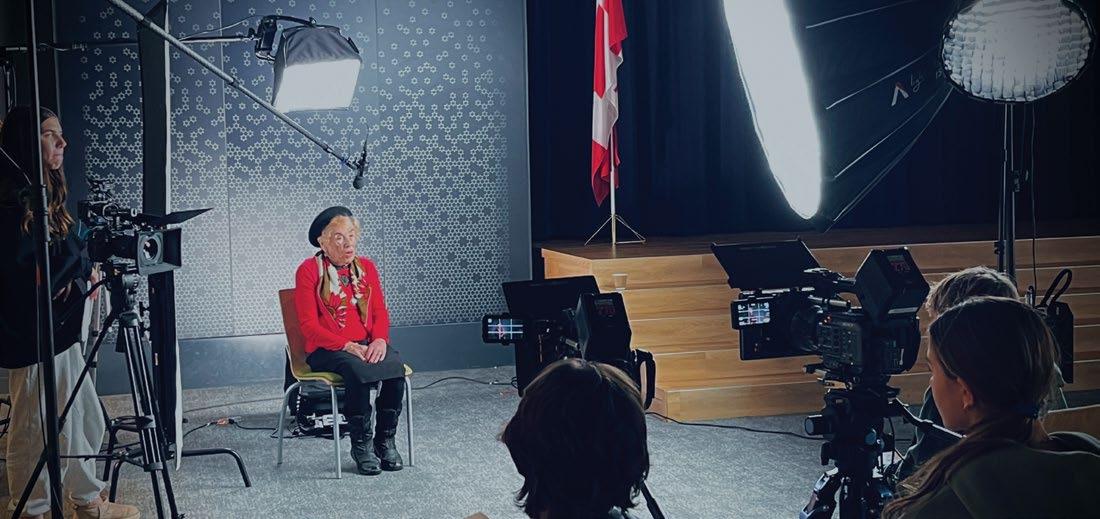
On Yom HaShoah, our community came together for a profoundly moving morning as our Grade 8 students premiered their 2025 Names, Not Numbers® documentary, directed by Josh Winker.
This powerful project represents months of meaningful work, as students conducted, filmed, and edited interviews with Holocaust survivors from our own community. Through this hands-on process, they brought survivors’ testimonies to life—preserving stories that might otherwise be lost.
The experience was transformative. Beyond learning the technical aspects of filmmaking and interviewing, students came to understand the deep responsibility that comes with bearing witness. They listened, learned, and engaged with history on a personal level, gaining insight into the lives of survivors and the loved ones they lost in the Shoah.
In the film, the students share their reflections on the interview process and the lasting messages they carry with them. Their voices are filled with respect, maturity, and a clear sense of purpose.
“The legacy that we carry is extremely important. I want to go into high school knowing that I was part of something powerful and that I took on the responsibility of remembering their stories.”
SOPHIA B., GRADE 8
For families, the impact of the program was just as profound.
“We were deeply moved and incredibly impressed by the entire production. The opportunity to hear first-hand accounts from Holocaust survivors is becoming increasingly rare. It was a profound honour for the kids to engage in such a meaningful and intimate experience with these courageous individuals.
We are comforted knowing that this journey will leave a lasting impact on our daughter and her classmates. The students gained invaluable skills—both technical and emotional—and played a hands-on role in shaping a project that became deeply personal to them.”
JEFF BIRMAN AND LORA SLOAN, GRADE 8 PARENTS
The resulting documentary is more than a film—it is a living memorial and a vital educational resource. Through Names, Not Numbers®, our students have ensured that these stories, and the lessons they hold, will continue to resonate for generations to come.
We are deeply indebted to Irene Kurtz and the seven other Holocaust survivors whose testimonies form the basis of the 2025 Names, Not Numbers® documentary.
Scan to watch the film
Learnin g wit h
BY EMMA COHEN AND LAUREN MEISELS, RSWS
Supporting students shapes a kinder, stronger school community
Scan to read the blog post
Providin g Individua l and Grou p Studen t Support
As school social workers, we are here to meet with students who may need additional support. Whether they are navigating a personal challenge, experiencing conflict with peers, or feeling overwhelmed, we provide a safe and confidential space for students to share their concerns, and, in turn, support their success at school. Sometimes, our work involves helping students build coping strategies or improve their social skills. Other times, we collaborate with teachers and families to develop individualized plans that address specific needs. By being present and approachable, we ensure that students know they have someone they can turn to in moments of difficulty.
Supportin g Teacher s with TH E Social-Emotiona l Learnin g Curriculum
In addition to student individual support, we also support teachers in delivering the Social-Emotional Learning (SEL) curriculum. SEL helps students develop critical skills such as self-awareness, emotional regulation and effective communication. We collaborate with educators to create lessons that address topics like empathy, resilience, and conflict resolution. By working together, we aim to foster a positive classroom environment where every student feels valued and supported. SEL is an ongoing initiative where we offer strategies and activities to engage students, ensuring that lessons resonate with different learning styles. Whether it’s guiding a classroom discussion or facilitating interactive games, our goal is to empower teachers and students alike to build strong relationships and navigate challenges with confidence.
Advocatin g fo r Mental Healt h an d Individual Support
Mental health awareness is an integral part of our role. During Mental Health Awareness Month in May and beyond, we organize events and activities to reduce stigma and promote open conversations about mental well-being. Through educational workshops, buddy activities and resources, we encourage both students and staff to prioritize mental health and seek support when needed.
Promotin g Kindnes s and Communit y Initiatives
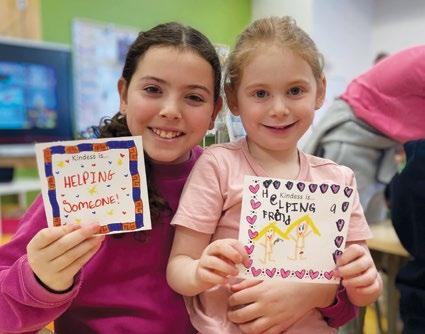
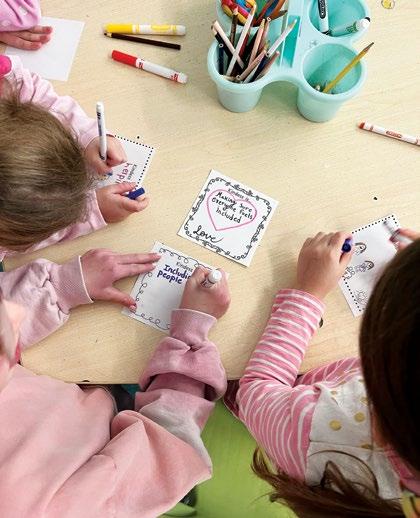
We are proud to lead initiatives such as Pink Shirt Day in February and World Kindness Day in November, which foster a culture of inclusivity and respect at Leo Baeck. These special days remind our school community of the importance of standing against unkind behaviour and practicing kindness in everyday interactions. From organizing kindness jars to facilitating activities that celebrate empathy and compassion, we aim to create moments that inspire students and staff to be their best selves. These events not only highlight the values we want to nurture but also bring our community closer together through shared purpose and positivity.
EMMA COHEN
LAUREN MEISELS
Quiet moments to reflect on what kind of community we want to build.
Social-Emotional Learning happens daily through a variety of programs.
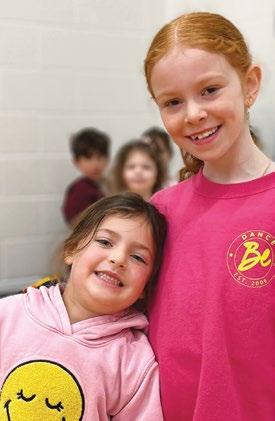
A moment to enjoy Pink Shirt Day with our Buddies.
fro m the class o f 2025/5785
“The mitzvah and Jewish value that I have chosen is Ometz Lev— (courage/risk-taking).
At Leo Baeck, I have built a community where I feel comfortable taking risks. One example is during Kabbalat Shabbat, when I have courage to raise my hand and lead parts of the service. Additionally, throughout the years, I have participated in Student Council, where I speak in front of Middle School to lead different activities. I am able to take all of these risks and step out of my comfort zone because I feel safe in this community. This will help me in the future because I know what it is like to take risks. The value of being a risk-taker has shaped my behaviour because I can go up in front of different people and speak to them. After these experiences, I will be able to take this skill with me to high school where new opportunities await me.”
“A moment that was really meaningful to me during my time at Leo Baeck was my SK Graduation. I put a lot of work into it by memorizing the entire thing. It’s the first project in school that I remember doing. At the time, I knew where everybody was standing, all of their parts, and all of the songs. I remember exactly where on the stage I was, and that my song was ‘Eretz Yisrael Sheli’. When the graduation service was over, I remember the feeling of all of our work paying off. I hope to experience the same feeling again after my Grade 8 Graduation. If SK Graduation was my first real ‘project’, then I’ve completed over 100 projects in my time at Leo Baeck. These have helped prepare me for my Bar Mitzvah, Community Project, and next year in high school. I know that I am ready to take the next steps of my learning journey because of how Leo Baeck prepared me.”
“From a young age, I have been taught to love and be proud of Israel. I was not aware of all the struggles that the Jewish people–my family–face daily, such as hate and antisemitism. It became apparent to me as a teenager when I started to feel the hatred radiating from around the world. I had heard about anti-Zionism and antisemitism, but in my mind, that was something that felt far away. Slowly over the last few years, it began to affect me more, and on October 7th, I was astonished by the world we were living in and overwhelmed by the horror. Since October 7th, Leo Baeck has educated me about the past and how to prepare for the future. It has shaped my love and appreciation for the Jewish homeland and for being a proud Jew. This is what it means to me to have a love of Israel, Ahavat Yisrael— . ”
Grad reflection
Each year, our graduating class celebrates their time at Leo Baeck by creating a Legacy Gift—a meaningful contribution that reflects their commitment to giving back.
Building on this tradition, the Legacy Fund was established three years ago as an endowed initiative to ensure the impact of these gifts is felt for generations. Today, it raises over $40,000 annually, with the interest supporting key school priorities chosen by the graduates. Rooted in the school’s values of responsibility, generosity, and community engagement, the Legacy Fund is a powerful expression of our graduates’ ongoing connection to Leo Baeck.
To support The Class of 2025 Legacy Fund, please scan the code. Thank you for your generosity.
NOAH USTER
NOA VERNON
KYLIE JERUSALIM
Grade 8 students with our Principal, Adina Lubek.
Le o Baec k Grad s have a
We surveyed our most recent grads and their parents on their transition to high school to help us continue to strengthen the Leo Baeck experience. We are proud of the results.
“A lot of the concepts that are new to most students are review for me.”
“Even without being at a Jewish school, I feel very connected to the Jewish community through connections I made at Leo Baeck.”
“Leo Baeck really helped me with my English skills (especially public speaking), which has been very helpful!”
When parents were asked, on a scale of 1 to 5, how prepared their kids were for high school in different categories, this is how they answered: of Grade 9 marks were the same or higher than in Grade 8
“The critical thinking emphasized in IB was a huge help in preparing for high school. Even amongst a very exceptional group of peers this year, my son still stands out in his ability to do deeper thinking and analysis of the work at hand.”
“A big thank you for all that LB did (for both my kids!) over the years. It is a wonderful community for parents and students alike and I feel blessed that we were able to provide our kids with the opportunity to learn and grow in the LB environment.”
“Our children walked into their Grade 9 math and science classes not just ready, but excited. The way Leo Baeck makes these subjects accessible and engaging from an early age, focusing on hands-on learning and conceptual understanding, truly sets them apart. They built a strong understanding of core principles that made the leap to high school coursework feel much more manageable. We couldn't be happier with their readiness and continued success.”
CHANGE MAKERS
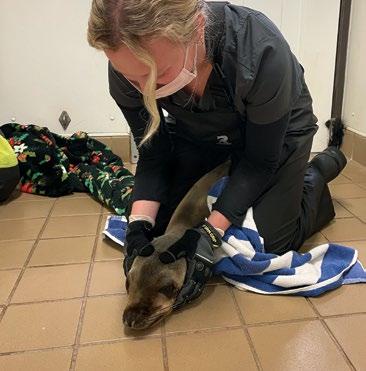
SAMANTH A SHINDER: Marine Biologist, Class of 2011
Samantha is focused on protecting ocean life from pollution and disease. Her research explores how contaminants and viruses affect marine mammals, using advanced chemical analysis to better understand and address threats to ocean ecosystems. She recently connected with Grade 8 Leo Baeck students, sharing how curiosity and compassion can lead to meaningful change. With a Master’s in Marine Mammal Science and international recognition for her research, Samantha continues to live out the values that shaped her at Leo Baeck—leading with knowledge, purpose, and care for the planet we all share.
Studying cancer markers in sea lions.
“Leo Baeck planted the seed for Tikkun Olam the very first day I started. Whether I’m mentoring students, volunteering, or rescuing sea lions, I see science as a way to care for both people and the planet. My goal is to contribute to research and policies that reflect compassion, responsibility, and a shared future.”
Learn more about our LB ChangeMakers!
Book a personal appointment: admission@leobaeck.ca 416.787.9899 x 224