



Cape Girardeau


Cape Girardeau
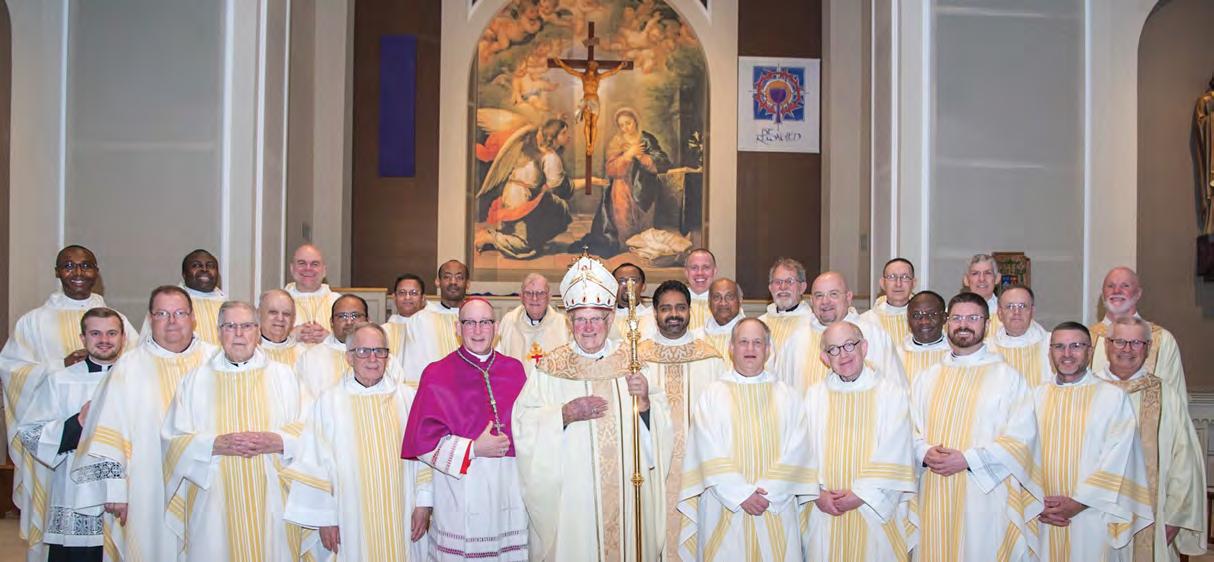
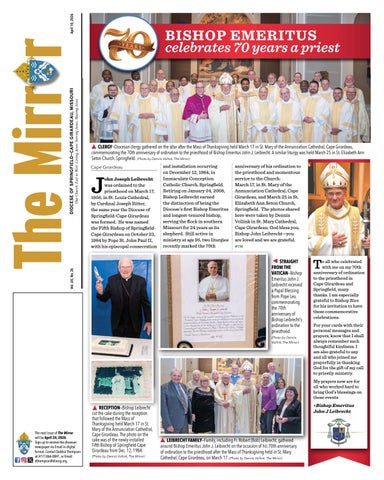
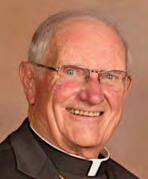
ohn Joseph Leibrecht was ordained to the priesthood on March 17, 1956, in St. Louis Cathedral, by Cardinal Joseph Ritter, the same year the Diocese of Springfield-Cape Girardeau was formed. He was named the Fifth Bishop of SpringfieldCape Girardeau on October 23, 1984 by Pope St. John Paul II, with his episcopal consecration
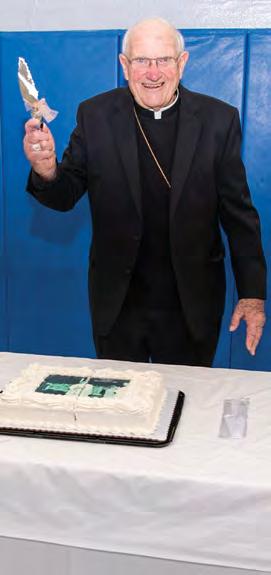
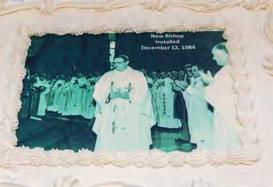
and installation occurring on December 12, 1984, in Immaculate Conception Catholic Church, Springfield. Retiring on January 24, 2008, Bishop Leibrecht earned the distinction of being the Diocese’s first Bishop Emeritus and longest-tenured bishop, serving the flock in southern Missouri for 24 years as its shepherd. Still active in ministry at age 95, two liturgies recently marked the 70th
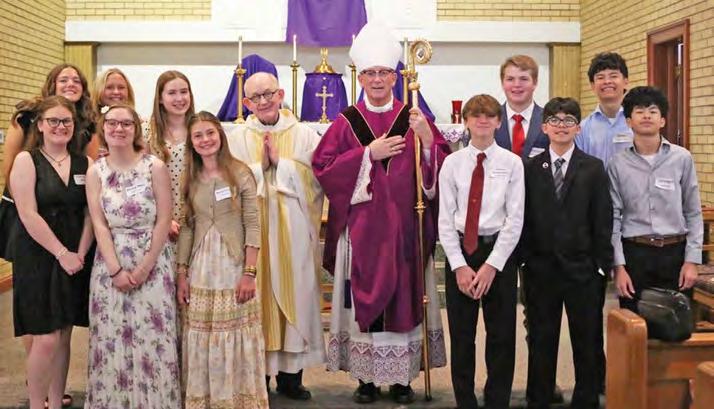
anniversary of his ordination to the priesthood and momentous service to the Church: March 17, in St. Mary of the Annunciation Cathedral, Cape Girardeau, and March 25 in St. Elizabeth Ann Seton Church, Springfield. The photos shared here were taken by Dennis Vollink in St. Mary Cathedral, Cape Girardeau. God bless you, Bishop John Leibrecht—you are loved and we are grateful.
©TM
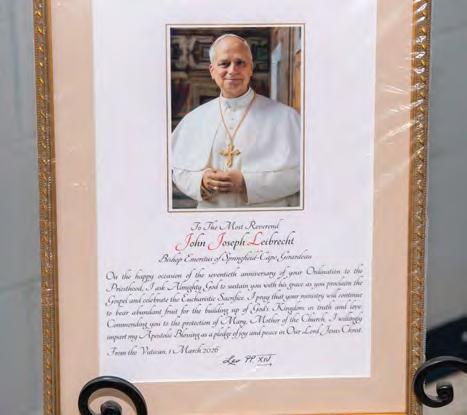
STRAIGHT FROM THE VATICAN—Bishop Emeritus John J. Leibrecht received a Papal Blessing from Pope Leo, commemorating the 70th anniversary of Bishop Leibrecht’s ordination to the priesthood.
(Photo
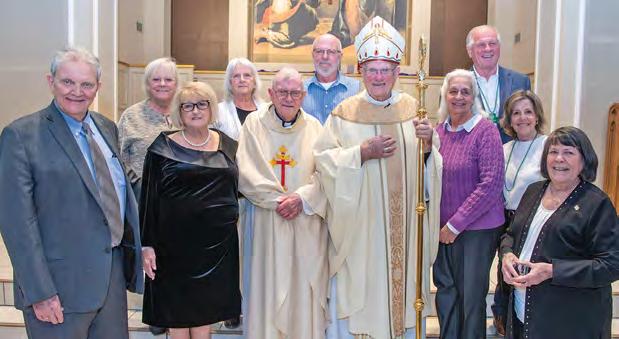
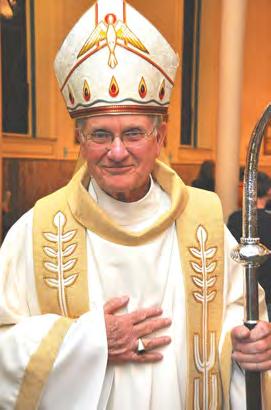
To all who celebrated with me on my 70th anniversary of ordination to the priesthood in Cape Girardeau and Springfield, many thanks. I am especially grateful to Bishop Rice for his invitation to have these commemorative celebrations.
For your cards with their personal messages and prayers, know that I shall always remember such thoughtful kindness. I am also grateful to any and all who joined me prayerfully in thanking God for the gift of my call to priestly ministry.
My prayers now are for all who worked hard to bring God’s blessings on these events.
+Bishop Emeritus John J Leibrecht
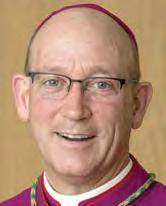
Bp. Edward M. Rice
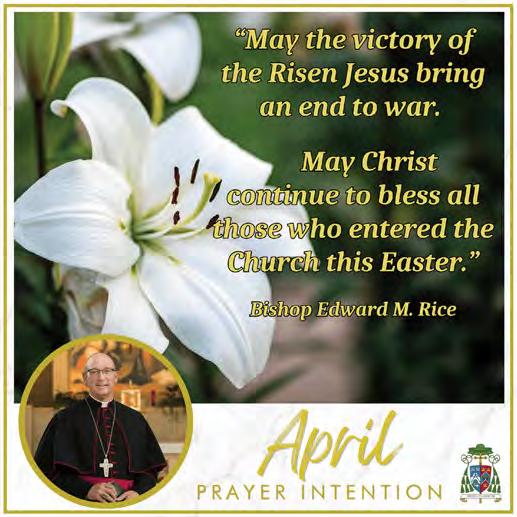
n the 2nd Sunday of Easter (April 12), from the Gospel of John, we are in the Upper Room with the disciples, behind locked doors, gathered in fear. In the midst of that fear, Jesus comes into their midst with the beautiful proclamation, “Peace be with you.” It is then that He shows them His hands and His side. His wounds are ever-present but now glorified! He then pours out the Holy Spirit and the forgiveness of sins. It is at this Gospel for the 2nd Sunday of Easter where Thomas is missing that Easter evening, but then a week later, he is present, touches the wounds of Christ, and gives us that beautiful proclamation, “My Lord and my God!” I’ve reminded people of that little quote to be whispered in the silence of our hearts at the elevation of the host at the consecration of Holy Mass. While some in the Hispanic tradition actually pray it out loud, that prayer is typically offered in the silence of our hearts, “My Lord and my God.” Of course, the 2nd Sunday of Easter is also Divine Mercy Sunday, where we ponder those beautiful words, “For the sake of His sorrowful passion, have mercy on us and on the whole world.” We pray for peace in our world and we certainly need
the mercy of Jesus.
The Gospel for the 3rd Sunday of Easter (April 19) comes from Luke, his account of the Road to Emmaus. I’ve always thought one of the most tender details of the Gospel is how “Jesus himself drew near and walked with them.” It is so matter of fact, nonchalant. Trying to run away from their disappointment, it is a good reminder for us that Jesus walks with them—and us—today. And of course, they finally recognize Jesus “in the breaking of bread.”
The 4th Sunday of Easter (April 26) is traditionally called “Good Shepherd” Sunday, highlighting Our Lord as the Good Shepherd who lays down His life for the sheep. It is also considered World Day of Prayer for Vocations. The Good Shepherd comes that the sheep “might have life and have it more abundantly.” How beautiful: Jesus wants to give to us abundant life but sometimes we simply settle for less. We are challenged to recognize the voice of the Good Shepherd in the midst of so many poisonous voices contrary to the Gospel. Some say sheep are dumb because they will mindlessly follow the shepherd, even to the edge of a cliff. Some say sheep are smart because they can discern the voice of their shepherd amongst all the other voices. Let’s take the best of both arguments. Let us be smart and discern the voice of Jesus calling to us in our hearts and then let us follow him because we know he will lead us to green pastures.
The Gospel for the 5th Sunday of Easter (May 3) gives us the beautiful words of Jesus: “do not let your hearts be troubled. You have faith in God; Have faith also in me. In my father’s house there are many dwelling places.” That particular Gospel is often used
at funerals and is a great reminder that as much as we are attached to this world, God has prepared a better place for us in heaven. May 3 also has another significance in the Diocese of Springfield-Cape Girardeau: it is DDF Sunday, launching the Bishop’s Annual Appeal, the Diocesan Development Fund.
Have you heard that we are having a Diocesan Eucharistic Congress in West Plains, MO on August 15th? I don’t think we can repeat that information enough and invite people to register to participate. There’s the old phrase, “Tell them what you are going to tell them; tell them; then tell them what you told them.” In other words, in this busy world of distraction and information overload, we need to be clear in our communication. To commemorate the 70th anniversary of the diocese, we will have a Diocesan Eucharistic Congress on August 15, at the West Plains Civic Center, in West Plains MO. Please access the diocesan Website and register. Be assured of my prayers during these 50 days of the Easter season.
O Sacrament Most Holy, O Sacrament Divine, all praise and all thanksgiving be every moment Thine. ©TM
Before his retirement in 2008 as the Fifth Bishop of the Diocese of Springfield-Cape Girardeau, Bishop John Leibrecht wrote a standing column in The Mirror entitled, “Walking Together.” At the end of each article, Bp. Leibrecht would normally share a funny story referencing his travels to the schools, or time with friends, family, or other bishops. The Mirror has decided to share a few of these in an ongoing series entitled, “Another walk through: ‘Walking Together.’” We hope you enjoy them.
February 10, 1995 Adult Education—what happens when adults are raising their teenagers.
February 17, 1995 Trying to explain himself to a friend, a man said: “What do you mean that I should learn to live within my income? I can’t even live within my credit!”
February 24, 1995 “Lord, wash away my iniquity and cleanse me from my sin,”
says the priest inaudibly while the server washes his hands. Recently, horrendous weather kept almost everyone from coming to Sunday Mass. The pastor was totally surprised when a young boy, who was assigned to serve, showed up in spite of the bad weather. “I can hardly believe you made it here,” the priest said. “You really did not have to come.” The boy asked, “But if I wasn’t here, Father, who would wash away your iniquity?”
By Pope Leo XIV OSV News
Brothers and sisters, Christ is risen! Happy Easter!
For centuries, the Church has joyfully sung of the event that is the origin and foundation of her faith: “Yes, Christ my hope is arisen / Christ indeed from death is risen / Have mercy, victor King, ever reigning” (Easter Sequence).
Easter is the victory of life over death, of light over darkness, of love over hatred. It is a victory that came at a very high price: Christ, the Son of the living God (cf. Mt 16:16), had to die— and die on a cross—after suffering an unjust condemnation, being mocked and tortured, and shedding all his blood. As the true immolated Lamb, he took upon himself the sin of the world (cf. Jn 1:29; 1 Pet 1:18–19) and thus freed us all—and with us, all creation—from the dominion of evil.
But how was Jesus able to be victorious? What is the strength with which he defeated once and for all the ancient adversary, the prince of this world (cf. Jn 12:31)? What is the power with which he rose from the dead, not returning to his former life, but entering into eternal life and thus opening in his own flesh the passage from this world to the Father?
This strength, this power, is God himself for he is Love who creates and generates, Love who is faithful to the end and Love who forgives and redeems.
Christ, our “victorious King,” fought and won his battle through trusting abandonment to the Father’s will, to his plan of salvation (cf. Mt 26:42). Thus he walked the path of dialogue to the very end, not in words but in deeds: to find us who were lost, he became flesh; to free us who were slaves, he became a slave; to
give life to us mortals, he allowed himself to be killed on the cross.
The power with which Christ rose is entirely nonviolent. It is like that of a grain of wheat which, having rotted in the earth, grows, breaks through the clods, sprouts, and becomes a golden ear of wheat. It is even more like that of a human heart which, wounded by an offense, rejects the instinct for revenge and, filled with compassion, prays for the one who has committed the offense.
Brothers and sisters, this is the true strength that brings peace to humanity, because it fosters respectful relationships at every level: among individuals, families, social groups, and nations. It does not seek private interests, but the common good; it does not seek to impose its own plan, but to help design and carry out a plan together with others.
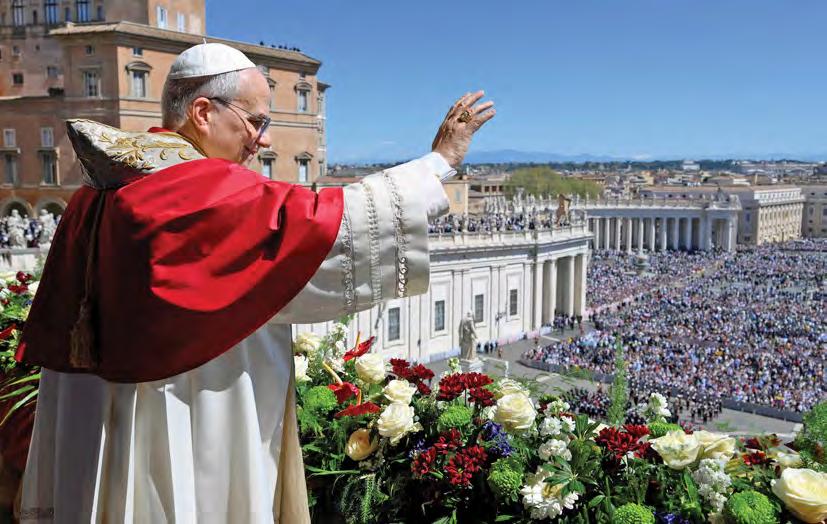
weapons lay them down! Let those who have the power to unleash wars choose peace! Not a peace imposed by force, but through dialogue! Not with the desire to dominate others, but to encounter them!
Yes, Christ’s resurrection is the beginning of a new humanity; it is the entrance into the true promised land, where justice, freedom, and peace reign, where all recognize one another as brothers and sisters, children of the same Father who is Love, Life, and Light. Brothers and sisters, through his resurrection, the Lord confronts us even more powerfully with the dramatic reality of our freedom. Before the empty tomb, we can be filled with hope and wonder, like the disciples, or with fear like the guards and the Pharisees, forced to resort to lies and subterfuge rather than acknowledge that the one who had been condemned is truly risen (cf. Mt 28:11–15)!
In the light of Easter, let us allow ourselves to be amazed by Christ! Let us allow our hearts to be transformed by his immense love for us! Let those who have
We are growing accustomed to violence, resigning ourselves to it, and becoming indifferent. Indifferent to the deaths of thousands of people. Indifferent to the repercussions of hatred and division that conflicts sow. Indifferent to the economic and social consequences they produce, which we all feel. There is an ever-increasing “globalization of indifference,” to borrow an expression dear to Pope Francis, who one year ago from this loggia addressed his final words to the world, reminding us: “What a great thirst for death, for killing, we witness each day in the many conflicts raging in different parts of the world!”
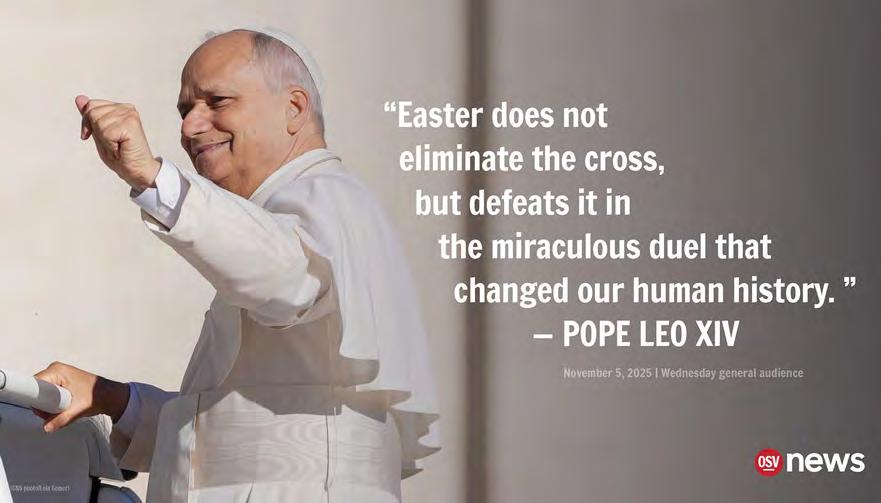
On this day of celebration, let us abandon every desire for conflict, domination, and power, and implore the Lord to grant his peace to a world ravaged by wars and marked by a hatred and indifference that make us feel powerless in the face of evil.
been defeated by the Risen One. He passed through death to give us life and peace: “I leave you peace; I give you my peace. Not as the world gives it, I give it to you” (Jn 14:27). The peace that Jesus gives us is not merely the silence of weapons, but the peace that touches and transforms the heart of each one of us! Let us allow ourselves to be transformed by the peace of Christ! Let us make heard the cry for peace that springs from our hearts! For this reason, I invite everyone to join me in a prayer vigil for peace that we will celebrate here in Saint Peter’s Basilica next Saturday, April 11.
(Urbi et Orbi Message, 20 April 2025).
The cross of Christ always reminds us of the suffering and pain that surround death and the agony it entails. We are all afraid of death, and out of fear we turn away, preferring not to look. We cannot continue to be indifferent! And we cannot resign ourselves to evil!
Saint Augustine teaches: “If you fear death, love the resurrection!” (Sermon 124, 4). Let us too love the resurrection, which reminds us that evil is not the last word, because it has
On this day of celebration, let us abandon every desire for conflict, domination, and power, and implore the Lord to grant his peace to a world ravaged by wars and marked by a hatred and indifference that make us feel powerless in the face of evil. To the Lord we entrust all hearts that suffer and await the true peace that only he can give. Let us entrust ourselves to him and open our hearts to him! He is the only one who makes all things new (cf. Rev 21:5).
Happy Easter! ©OSV

By Jenna Marie Cooper OSV News
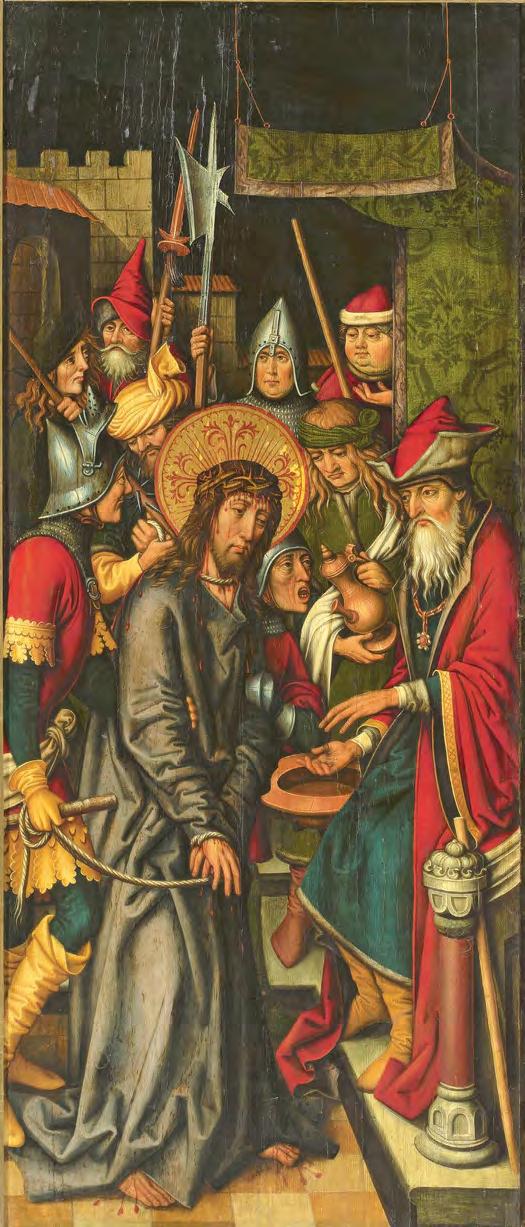
Q:One thing about which I’ve always been curious, especially this time of the year, is why in the various Gospel accounts of Jesus before Pilate, Jesus never directly answered, “Are you the king of the Jews?” Instead of simply saying “Yes,” full stop, Jesus gave what many consider to be sidestep answers like “If you say so” or “Is that what you heard?” Could you comment? Is there a greater understanding of this exchange that I’m missing? (Indiana)
A:Of course, I personally don’t know exactly what Jesus was thinking, nor do I think this is something that anyone can absolutely know for sure this side of heaven.
That being said, I think we can gain some insight by looking at the specific scriptural passage you seem to be referencing. In Chapter 18 of St. John’s Gospel we read the exchange between Jesus and Pontius Pilate:
“Pilate went back into the praetorium and summoned Jesus and said to him, ‘Are you the King of the Jews?’ Jesus answered, ‘Do you say this on your own or have others told you about me?’ Pilate answered, ‘I am not a Jew, am I? Your own nation and the chief priests handed you over to me. What have you done?’ Jesus answered, ‘My kingdom does not belong to this world. If my kingdom did belong to this world, my attendants [would] be fighting to keep me from being
handed over to the Jews. But as it is, my kingdom is not here.’ So Pilate said to him, ‘Then you are a king?’ Jesus answered, ‘You say I am a king. For this I was born and for this I came into the world, to testify to the truth. Everyone who belongs to the truth listens to my voice’” (Jn 18:33-37).
On a straightforward surface level—albeit a level that is still meaningful—it looks like Jesus and Pilate are essentially talking past each other.
Pilate, as a pagan Roman, was asking questions from a very prosaic and earth-bound perspective. Jesus, on the other hand, had full supernatural insight into the great cosmic, spiritual scope of what was actually occurring.
Pilate was asking Jesus if he was an earthly king in a political sense, whereas Jesus was communicating that his kingship went far beyond this, in the sense that Jesus is ruler and Lord of all time and creation. Jesus’ answer was simply too big to fit into the limited question Pilate understood himself to be asking.
My own impression is that when Jesus at first responds with what might be seen as a dodge (i.e., “Do you say this on your own…?”), this might actually be Jesus’ attempt to clarify the question with Pilate or even, in a manner of speaking, to “catechize” him.
That is, Jesus may have been asking Pilate the equivalent of “Are you asking if I am
a ‘king’ according to your secular definition?” And Jesus may have meant to ask this in such a way so as to introduce the idea that there is indeed a spiritual level of authority that transcends the visible world and its merely human governing structures.
I suppose in theory Jesus could have spelled all this out even more explicitly, but one thing that always strikes me about the broader dialogue with Pilate in St. John’s Passion narrative is how Pilate does seem to have an inkling that something more profoundly spiritual is playing out before him (for example, see Jn 19:7-8).
Perhaps Pilate was in that moment given sufficient grace to realize to whom exactly he was speaking. And Jesus, knowing this, might have concluded that more detailed answers to Pilate’s questions would not have benefited the reluctant Pilate any further.
So one of the many insights we might take away from this passage of the Gospel is the importance of being sensitive to the voice of the Lord however He comes to us in our own lives. ©OSV
Jenna Marie Cooper, who holds a licentiate in canon law, is a consecrated virgin and a canonist whose column appears weekly at OSV News.

DURING THIS EUCHARISTIC REVIVAL, FR. DAVID COON OFFERS THE FOLLOWING QUOTE FOR THE REFLECTION ON THE EUCHARIST:
“The Blessed Sacrament is the ‘Living Heart’ of each of our churches and it is our very sweet duty to honor and adore the Blessed Host which our eyes see, the Incarnate Word, Whom they cannot see.”
— POPE ST. PAUL VI
Father Coon is Pastor of Sacred Heart Parish, Dexter. He serves the Diocese as Priest Minister for Spiritual Deliverance & Exorcism and the Confraternity of Priest Adorers of the Eucharistic Face of Jesus.

Maple Mount, MO
SSeoul, South Korea—Join the Diocese as it participates in the world’s largest gathering of Catholic youth and young adults at World Youth Day 2027, in Seoul, South Korea! Visit our World Youth Day Website, built by Verso Ministries at: https:// versoministries.com/departures/wydseoul-2027-diocese-of-springfieldcape-girardeau/ to view the day-today itinerary, pricing, registration information, and more. Registration is now open! Register now and save your spot: Registration submissions and initial deposit must be submitted by June 1, 2026.
Buffalo—St. William Parish Council of Catholic Women will have its 47th annual indoor Rummage, Plant, & Bake Sale on Thu., May 7 & Fri., May 8, 8am-4pm, inside the church hall.
LIFE with your prayers and presence. Diocesan-chartered buses are available and departing from Springfield. Cost is $7/person. For those who wish to drive, mileage reimbursement will be available for all vehicles transporting 3 or more people. Additional information, including bus registration, mileage reimbursement, and T-Shirt orders may be found at https://dioscg.formstack.com/forms/ midwestmarchforlife.
Kimberling City—Our Lady of the Cove Catholic Church will have its Spring Garage Sale, Fri., May 8, 8am-4pm & Sat., May 9, 8am-Noon. Clothing, furniture, appliances, tools, and much more-there is something for everyone! For more information, call the church office, (417) 739-4700.
Leopold—St. John Parish Council of Catholic Women will have its Rummage Sale, Thu., May 7, 7am5pm; Fri., May 8, 7am-5pm, and Sat., May 9, 7-11am, in the Knights of Columbus Hall. Saturday is $5 bag day. Merchandise is priced to sell! For information, contact Geri Geringer, (573) 208-6445.
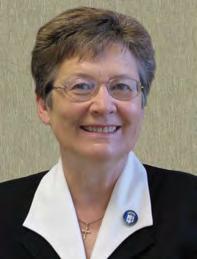
ister Amelia Stenger, 77, an Ursuline Sister of Mount Saint Joseph and native of Glennonville, MO, died March 28, 2026, at Mount Saint Joseph, in her 58th year of religious life. May she rest in peace.
Sister Stenger was the first female Superintendent of Schools for the Archdiocese of Louisville from 1991-97, as she also was for the Diocese of Owensboro (1984-91). She was congregational leader of her community from 2016-22. She
taught and served as principal in the Diocese of Owensboro, and served her community as Director of Development and in quilting ministry.
Survivors include the members of her religious community; siblings Mary Teder, of St. Charles, MO, John Stenger, of Poplar Bluff, MO; and Frank Stenger, Campbell, MO; nieces and nephews. She was preceded in death by her parents, John and Mary Stenger; and siblings Teresa Reale, Ben Stenger, Al Stenger, and Genevieve Siebert.
The funeral Mass was Tuesday, April 7, at Mount Saint Joseph. Glenn Funeral Home and Crematory, Owensboro, oversaw arrangements.
Donations in memory of Sr. Stenger may be made to the Ursuline Sisters of Mount Saint Joseph, 8001 Cummings Road, Maple Mount, KY 42356. ©TM

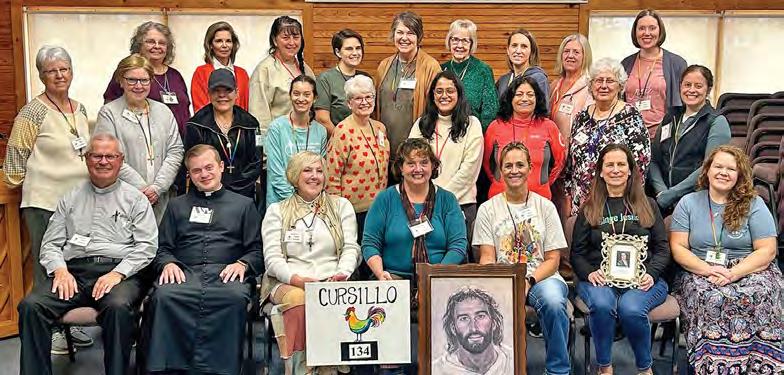
Carthage—The Cursillo® Movement pursues two purposes or objectives: to provide a conduit for living what is fundamental for being a Christian, namely, the on-going and total conversion of the person. The end purpose is to vertebrae Christianity in society by means of these persons who live what is fundamental for being Christian (the love of God and neighbor) in their daily lives. Simply explained, the purpose of the Cursillo Movement is that we become the Good News, and that our actions naturally turn out to be evangelical in our daily lives. The next Cursillo Weekend in the diocese is a Women’s Weekend, April 23-26, in Carthage Find more information and Register Online: https://dioscg.org/cursillo/.
Glennon—St. Anthony Mission Church will have its annual Spring Dinner, Sun., May 3, 11am-1:30pm. Menu includes kettle beef, dumplings, dressing, all the trimmings, dessert & drink. Cost: $15-adults; $8-children, ages 6-12yrs.; ages 5 yrs. and under-free.
Jackson—St. Ann’s Sodality/CCW will have its Rummage, Plant & Bake Sale, Fri., June 5, 7am-5pm & Sat., June 6, 7am-1pm, in the multipurpose building/school gymnasium at Immaculate Conception Catholic Church.
Jefferson City 2026 March for Life: Join with us as we March for Life in Jefferson City, Thu., April 30! Make plans to attend and support
Marshfield—The St. Vincent de Paul Society at Holy Trinity Catholic Church will have a Treasure Trove Sales Event, Fri., May 1, 8am-2pm & Sat., May 2, 8-11am. Vintage glassware, furniture, jewelry, and religious items. In conjunction, on Sat., May 2, the Knights Council #10844 will host a pancake breakfast, 8-11am.
Monett—St. Lawrence Parish Council of Catholic Women will have its annual Salad Luncheon, Wed., April 22, 11am1pm, in the St. Lawrence Parish hall. Cost: $10 at the door. Shop with local vendors. Dine-in or carry-out available. Proceeds to benefit Monett Historical Museum and St. Lawrence Catholic School.
Springfield—Sacred Heart Parish will host a Trivia Night, Sat., May 16. Cost is $15 per person and includes food. Eight people to a table; purchase an entire table, save $10. Doors open at 5pm and trivia play begins at 6pm. Proceeds benefit the Parish School of Religion. For more information, contact the parish office at (417) 869-3646.
Parishes and organizations are invited to submit notices of future events to be printed on a spaceavailable basis. There is no fee.


By Paula Wright Webb City, MO
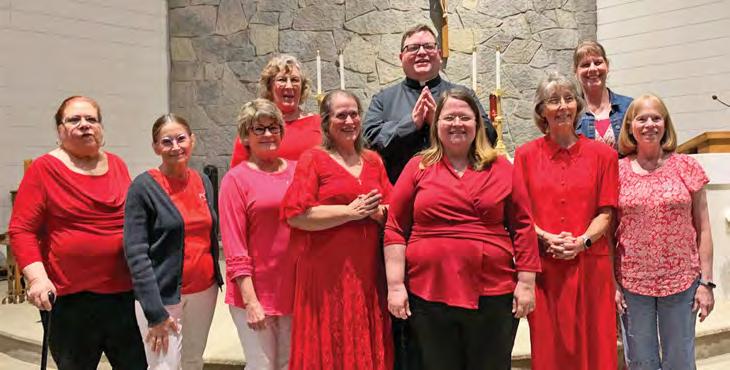
Since 2016, the Seven Sisters Apostolate of Sacred Heart Parish, Webb City, has offered a daily Holy Hour prayer for their parish priest. Four founding members continue to this day, including Stephanie Attaway who is the current Anchoress, or group coordinator, for the local apostolate.
“When we first heard about the apostolate, we all jumped on board,” Attaway said. “Our group was the very first to sign up in the state of Missouri. Each lady prays one day a week, for one hour, for our priest. In 2018, we were able to add a second Seven Sisters Apostolate, so we were praying not only for our parish priest, but also for the bishop. We have also prayed for seminarians and for the former parish priests.”
The Seven Sisters Apostolate, which started in 2011 in the Cathedral of St. Paul, St. Paul, Minnesota, is “a call to strengthen the Church by ensuring that a Holy Hour is prayed each day of the week for the sole intention of a specific priest or bishop—a ‘holy wasting’ (cf. Mt. 26:10) or lavishing of prayer for his deeper conformity to Christ.”
To establish a Seven Sisters Apostolate group, at least seven women need to commit to the apostolate mission. If more than seven women wish to participate, a core group of seven is designated and the additional participants may establish a new group, serve as substitutes, or offer extra hours of prayer. The coordinator of the group is known as the Anchoress. The group prays for the parish priest and the office of the shepherd. Each member commits to a Holy Hour on a distinct day of the week, thus covering a complete week. Ideally, the Holy Hour is prayed in the presence of the Blessed Sacrament, but the Holy Hour prayer is not limited to praying only within the parish of which
the Seven Sister is a member.
Through their Holy Hour of prayer, the Seven Sisters Apostolate offers tremendous spiritual support to the priest in their ministry.
“Priests are the first targets of the devil, looking for ways to discourage us and attacking us,” said Fr. Rahab Isidor, current pastor of St. Lawrence Parish, Monett, and Sacred Heart Parish, Verona. “This group comes in to support us in their prayer, to pray for us, they are there if we need to reach out asking them for support. And that happened to me several times where I would feel discouraged and I would contact them asking for prayers, asking them to pray for my bishop, for another priest or deacon or sister. This is a wonderful group. They support us priests in their prayers.”
Fr. Isidor was pastor of Sacred Heart, Webb City, when the Seven Sisters Apostolate first began in that parish.
“I was able to feel their prayers,” Fr. Isidor said. “They will still remember me in their prayers; I can feel that. And also, we pray for them, these ladies, for their needs too.”
The apostolate also offers spiritual benefits to those who commit to one Holy Hour of prayer each week.
“Personally, and in listening to other sisters, where before we might not have understood the power of [Eucharistic] adoration, now it’s something we can’t live without. I mean, we need it!” Attaway said. “The Holy Hour gets you in front of the Blessed Sacrament and the offering of prayers. You start to build a closer relationship, being able to sit in silence. There is no prescription for the Seven Sisters Holy Hour—you could literally just sit and offer up Father, or you could pray a rosary for him. You could do spiritual readings that might help him. Through Seven Sisters, you also build a relationship where Father
can reach out to ask for specific prayer intentions. We also build a wonderful camaraderie among the Seven Sisters, too.”
Every year on the Feast of the Sacred Heart in June, the apostolate renews its annual commitment.
“It is a challenge and big commitment: during Lent we usually have new people commit to the weekly prayer. At the end of Lent, they determine if they can continue on or not. Some will stay and some won’t,” Attaway stated.
The Apostolate sends out a monthly newsletter with prayers and other content aligned with the liturgical season.
“They make you feel a part of something bigger, beyond what you’re doing individually and within your church,” said Attaway. “It’s a worldwide apostolate now with Seven Sisters groups all over the world. They even offer mission trips to connect with other women joined in prayer.”
“Every parish in the diocese should have a Seven Sisters Apostolate,” Attaway said. “The priests need it now. Not too long ago, there was an article in The Mirror that talked about the burdens priests have, the weight they carry, the things they can’t tell anybody else. Knowing they have prayers
to strengthen and lift them up on a daily basis would be such a blessing. Hopefully parishes will be encouraged to find out more about the Seven Sisters and begin an apostolate within their parishes.”
For more information about the Seven Sisters Apostolate visit https:// sevensistersapostolate.org/. ©TM



WOMEN’S WEEKEND : April 23-26, 2026
CARTHAGE, MO
The Cursillo® Movement pursues two purposes or objectives. The immediate purpose is to provide a conduit for living what is fundamental for being a Christian, namely, the on-going and total conversion of the person. The end purpose is to vertebrae Christianity in society by means of these persons who live what is fundamental for being Christian (the love of God and neighbor) in their daily lives.

SCAN QR CODE for more info and to register online!
You can also contact Dale Gerecke at (573) 450-3335 or dale@gereckelaw.com, contact a Cursillista in your parish, or search “Cursillo” on the diocesan Website: dioscg.org
By D.D. Emmons OSV News
The Church makes use of three holy oils: the oil of the sick, the oil of the catechumens, and the holy chrism oil. The first two are blessed, and the bishop consecrates the third, ordinarily during the annual chrism Mass. Each has a distinctive purpose in the Church.
Each year the local bishop blesses enough new oils for every parish during the chrism Mass. The annual chrism Masses in the Diocese of SpringfieldCape Girardeau were held Mon., March 30, in St. Mary of the Annunciation Cathedral, Cape Girardeau, and Tue., March 31, in St. Elizabeth Ann Seton Church, Springfield. The holy oils blessed during the chrism Mass are then transported to individual parishes, where they are available for use during that year. Though the bishop cannot be physically present at every baptism or confirmation in his diocese, he can be symbolically present through the holy oils he blesses.
After the Liturgy of the Word, the blessing of the oils takes place. In a formal procession, olive oil is brought forward in special urns; the oil of the sick is presented first, next the oil of the catechumens, and finally oil for the holy chrism. The bishop prays over and blesses each oil individually.
The ritual for creating and consecrating the holy chrism is different from the others. To make it, the bishop mixes oil from the balsam plant with the olive oil, breathes on the mixed oil to
signify the presence of the Holy Spirit, and then says a prayer to consecrate it.
Once blessed in this way, the chrism and the other oils are no longer ordinary ointments. Instead, they are a holy, precious gift from God to the Church, signifying cleansing and strengthening, healing and comfort, and the life-giving grace of the Holy Spirit.
The oil of the sick, which is pure olive oil, is used for the sacrament of the anointing of the sick. While ideally celebrated with the community during the Mass for the anointing of the sick, this sacrament can be administered any time and in any place. The priest lays hands on the sick or elderly person, says special prayers, and anoints the person by placing oil in the form of a cross on the forehead and hands.
anointing often takes place during a special initiation ceremony when the person begins to prepare for the sacrament of baptism. At the beginning of the process known as the Order of Christian Initiation for Adults (OCIA), each person preparing for
to help the child ward off evil, avoid temptation and possess the faith necessary to carry the cross of Christ throughout life.
The third oil, holy chrism oil, is olive oil mixed with balsam. The oil symbolizes strength, and the fragrant balsam represents the “aroma of Christ” (2 Cor 2:15). Anointing with chrism oil signifies the gift of the Holy Spirit. It is used to consecrate someone or something to God’s service.
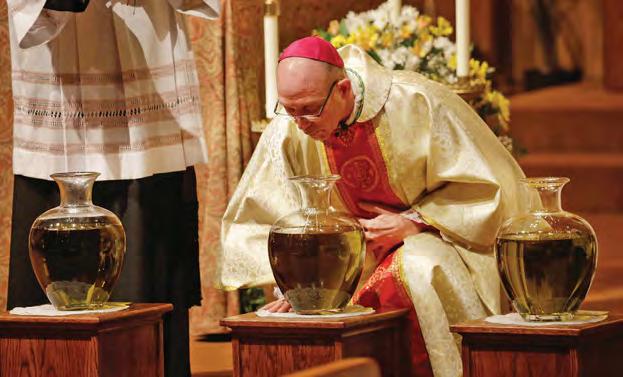
CHRISM Bishop Edward Rice mixed oil from the balsam plant with olive oil and breathed on the mixed oil to signify the presence of the Holy Spirit. Anointing with chrism oil signifies the gift of the Holy Spirit. It is used to consecrate someone or something to God’s service.
Through this sacrament, God gives the sick person grace and strength to bear the illness or infirmity. In addition, many Catholics have witnessed the power of this anointing to bring spiritual, emotional and even physical healing.
Both adults and infants prior to baptism are anointed with the oil of the catechumens, which is also pure olive oil. For adults, this pre-baptismal
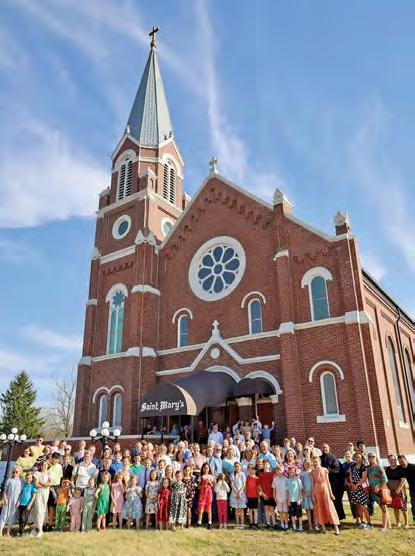
INTERFAITH NEIGHBORS— It was a beautiful day with a great turnout as St. Mary Catholic Church, Pierce City, hosted the March 22 Interfaith Easter Celebration held with local Baptists, members of First Congregational Church, Catholics, Methodists, Lutherans, and Latter Day Saints facilitated by Fr. Sanoop Thomas, OSB. Father Thomas also serves St. Agnes Parish in Sarcoxie. (The Mirror)
initiation is anointed with the oil of the catechumens.
This rite most often takes place during Mass, prior to holy Communion. The priest or deacon anoints the catechumens. Then he prays that God will instill them with wisdom for discernment and with the strength necessary to avoid evil during their inquiry into the Catholic faith and their preparation for a life with Christ.
In a similar way, an infant is anointed just before receiving the waters of baptism. This anointing is
Each year we witness the use of the holy chrism when young people are confirmed, and at the Easter Vigil when adults are confirmed after baptism. The bishop traces the sign of the cross with chrism oil on the forehead of the one being confirmed and says, “(Name), be sealed with the gift of the Holy Spirit.”
Chrism oil is also part of the baptismal rite. Following an infant’s baptism with water and before he or she receives the white garment, the cross with chrism oil is traced on the crown of the child’s head, marking him as a Christian. Anointing on the head is also administered at the baptism of an adult if the person does not immediately receive the sacrament of confirmation. Holy chrism oil is used as well during the ordination of a priest (the sacrament of holy orders) and the consecration of a bishop. It is the anointing used in the consecration of a church and the blessing of an altar and the vessels used at Mass. ©OSV
D.D. Emmons writes from Pennsylvania.

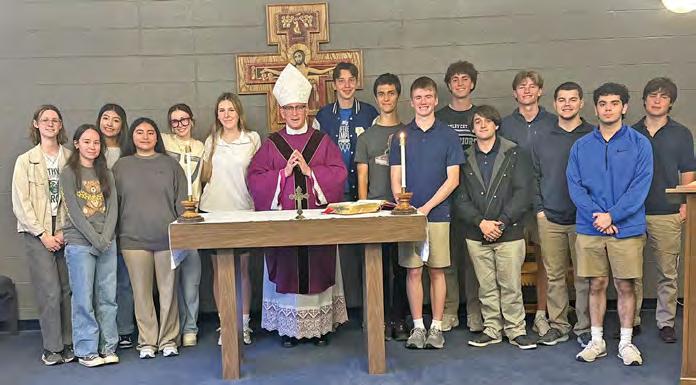
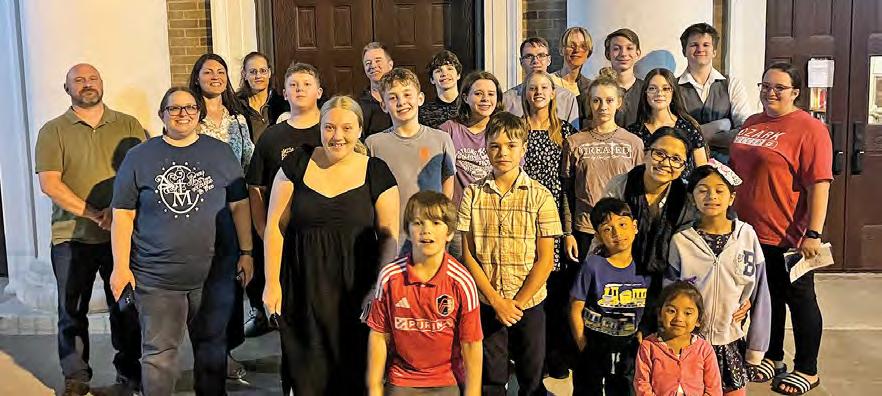
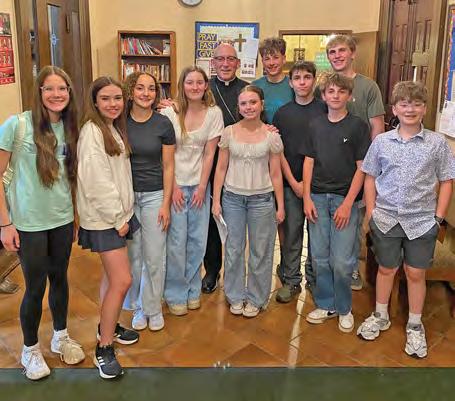
Youth from the Springfield area participated in the second annual 7 Churches Pilgrimage on Holy Thursday this year, April 2. Youth Groups in the Cape Girardeau-area of the Diocese have held their own 7 Churches Pilgrimage for several years and the idea has caught on. Youth groups from Springfield’s St. Agnes Cathedral, St. Joseph, Holy Trinity, and St. Joseph the Worker, in Ozark, visited Jesus in the Altars of Repose at Springfield-area churches late into the night. These included St. Agnes Cathedral, St. Elizabeth Ann Seton Church, St. Joseph Church, Sacred Heart Church, Holy Trinity Church, Immaculate Conception Church, St. Joseph the Worker, Ozark; St. Francis of Assisi, Nixa, and the O’Reilly Catholic Student Center on the campus of MSU, Springfield. At each church, the groups prayed a short “station” prayer, then went into the Altar of Repose chapel to pray and sit with our Lord. Thank you to the Knights of Columbus of St. Joseph for hosting the pizza break for all the groups. ©TM (Photos by Vanessa Coleman)



ATTENTION: CATHOLIC MEN
You are invited to the Southeast Missouri...
Wednesday, May 6 | 6:30-9:00 pm Sacred Heart Parish, Dexter, MO
An evening of Adoration, Confession, & a Manly Meal with discussion to follow.
To help plan for food, please RSVP to SEMOCatholicManNight@gmail.com ‘SEMO Catholic Man Night’ on Facebook or text to 573-275-5214
Prices are all inclusive w/airfare from anywhere in the continental US.
Several trips to different destinations: Holy Land, Italy, Greece, France, Portugal, Spain, Lourdes & Fatima, Ireland & Scotland and much more...
We specialize in custom trips for Bishops, Priests & Deacons! Currently hiring Deacons to promote our many pilgrimages ATTRACTIVE compensation.
For more information contact: Karen@proximotravel.com
To register call 855-842-8001 or at www.proximotravel.com.
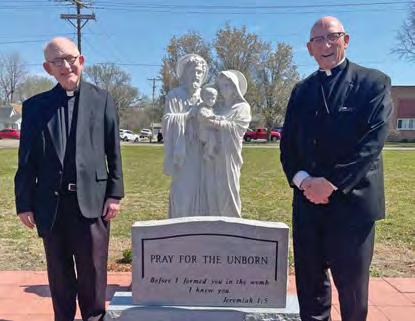
Bishop Edward M. Rice celebrated the Solemnity of the Annunciation of the Lord on March 25 with a liturgy held in Holy Trinity Parish, Springfield. The date coincided with the Missouri bishops launching a statewide effort to highlight the safety of the unborn and women’s health.
“Today we celebrate the power of the simple word, ‘yes,’ ‘fiat,’ united to the will of God,” said Bishop Rice.
With Mary’s ‘yes,’ the Savior came into the world.

“In November, Missourians will be asked to restore meaningful safeguards for the abortion industry, with a ‘Yes’ vote on Amendment 3,” said Bishop Rice. “Let us echo Our Lady’s ‘yes to life!’” ©TM
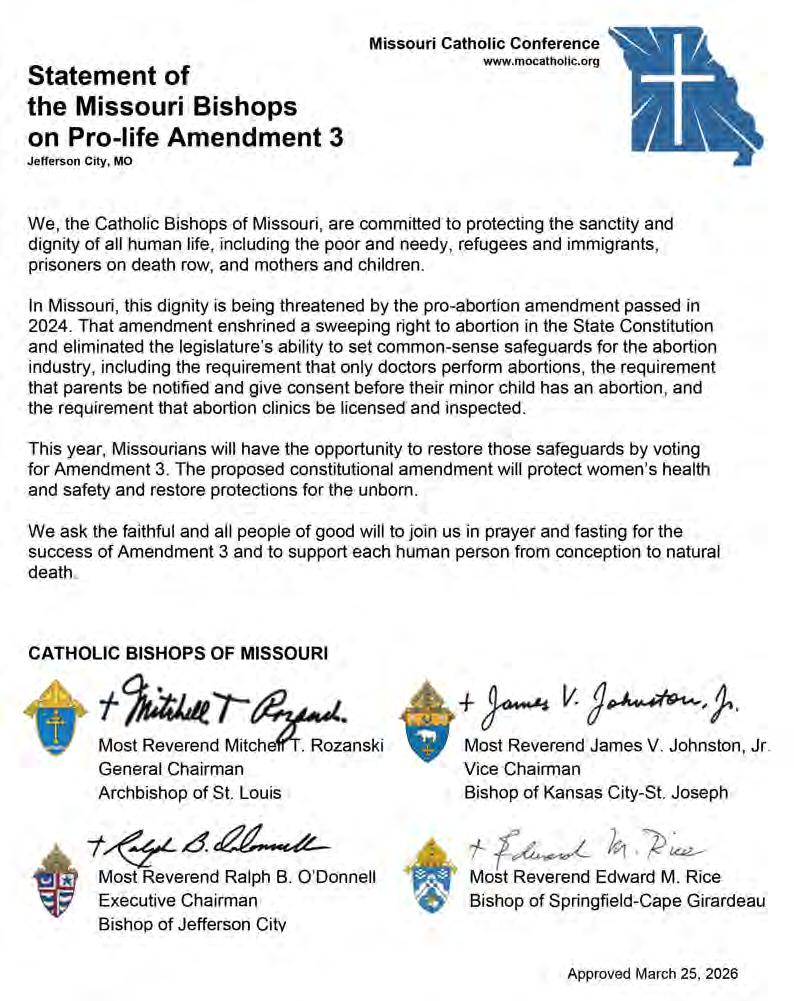

Nov. 2024
What Was Lost:
• Requirements that only doctors perform abortions.
• Requirement that parents be notified and give consent before their minor has an abortion.
• Requirement that abortion clinics be licensed and inspected.
• In addition, because the amendment provided a broad and nearly absolute right to “reproductive health care,” it likely opens the door to constitutional protection for surgical or medical gender transition on minors.
Nov. 2026
What We Will Restore:
• Severely limit the number of abortions in the state.
• Require abortion clinics to meet high standards for safety and cleanliness.
• Ensure parental or judicial consent for minors.
• Prohibit gender-altering procedures for minors.
• Severely limit public funding for abortion services


By The VIRTUS® Programs
Every April, many organizations and communities observe Child Abuse Prevention Month, a time devoted to renewing our shared commitment to safeguarding children and youth. For churches, schools, sports programs, and other youth-serving environments, this month serves as a tangible reminder that keeping young people safe is not just about “checking off a box” for compliance or meeting minimum standards. Rather, it’s about cultivating and maintaining cultures of safety within each program serving children and youth. Even if you’re reading this outside of April, the message of Child Abuse Prevention Month remains just as important every single day— protecting children and youth from harm is an ongoing privilege for all adults, regardless of our individual roles.
Child Abuse Prevention Month matters because it highlights the reality that abuse is often hidden or overlooked. Awareness efforts during April (and beyond) bring needed attention to the behavioral indicators of abuse in children and youth, the warning signs of inappropriate behavior of adults (which may be part of a grooming process), and the responsibility adults share in recognizing and reporting concerns. While April shines a spotlight on these efforts, the need for vigilance extends far beyond a single month. Abuse does not

follow a schedule, and children require safe, attentive adults throughout every day of the year.
This month can also be an opportunity for all adults to pause and reflect on their own behavior, and whether it contributes to a safe environment for children, the vulnerable and anyone else we may serve in our ministries. Even if your role does not involve directly teaching, coaching, mentoring, or supervising children and youth, you still play a vital part in creating and maintaining a safe environment. Every adult within an organization—whether an employee or a volunteer—helps shape the culture that protects children. Children are safer when all adults understand the importance of boundaries, recognize signs of concerning behavior and most importantly communicate when they have any concerns or when something seems amiss. All adults can also serve as role models for healthy and appropriate behavior. When adults
act appropriately by maintaining appropriate boundaries, children and youth learn what safe behavior looks like, and how it feels to be around a safe person. Appropriate conduct not only protects young people, it also shows, through consistent behavior that follows the rules, that the adults around the children can be trusted. If you are unsure of what types of behaviors are healthy and appropriate, refer to your organization’s policies and procedures, or ask someone in leadership for guidance. It’s not enough just to have policies and procedures in place, it’s up to all adults to not only be aware of them, but to implement and follow them. Policies alone cannot keep children safe; people who follow the policies do.
For additional information regarding what you can do to help protect children and youth during April and all year long, please visit:
• Prevent Child Abuse America1
• Child Welfare Information Gateway2
• Thorn3
• National Children’s Alliance4
• The National Center for Missing and Exploited Children5 (NCMEC)
Conclusion
Ultimately, Child Abuse Prevention Month is far more than a once-a-

year reminder. It is an invitation to strengthen a community-wide commitment to protecting children and youth. Whether it is April or any other month, every adult—whether directly involved with youth or not—has an essential role to play in fostering a culture of safety and accountability. By staying vigilant, maintaining boundaries, supporting one another, and speaking up, we contribute to an environment where children can grow, learn, and thrive without fear. ©VP
1 https://preventchildabuse.org/
2 https://www.childwelfare.gov/ preventionmonth/
3 https://www.thorn.org/
4 https://www.nationalchildrensalliance.org/ national-initiatives/
5 https://www.missingkids.org/home
This copyrighted VIRTUS® article by VIRTUS Programs originally appeared on www.virtus. org, and is shared/republished here with their kind permission.

Diocesan personnel who regularly engage in activities involving minors or vulnerable adults are required to report any known or suspected abuse or neglect of a minor to the MO Child Abuse and Neglect Hotline 800392-3738, or for known or suspected abuse or neglect of an adult to the MO Adult Abuse and Neglect Hotline 800-392-0210.
A report may also be made to law enforcement in addition to making a report to the MO CAN Hotline.
• Failure to Report Abuse or Neglect is a Class A Misdemeanor for any person who is required under the law to report.
• No supervisor may interfere with or impede the reporting of suspected abuse.
• Filing a False Report is a Class A Misdemeanor.
All diocesan personnel are required to also report violations of The Code of Conduct for Clergy, Employees and Adult Volunteers of the Diocese, Parishes, and Schools to the Director of the Office of Child and Youth Protection at childandyouthprotection@dioscg.org or (417) 866-0841 or through the TIPS Online reporting system, which is available on the diocesan Website www.dioscg. org.


Preregistration is necessary: If you are a new registrant please go to www.virtus.org and click on “first time registrant” on the left, and follow the prompts to register for Online training. Instructions for the registration process can also be found on the Child and Youth Protection Page of the diocesan Website.
Before engaging in activities involving minors and/or vulnerable adults, new volunteers or employees are required to complete the VIRTUS Protecting God’s Children training for adults, submit a current Background Disclosure and Authorization Form, and read, sign and submit the annual Code of Conduct, which are available on the VIRTUS Website and the Diocese of Springfield-Cape Girardeau Child and Youth Protection Webpage: www.dioscg.org/childyouth-protection/
For more information, please contact the Office of Child and Youth Protection, childandyouthprotection@dioscg.org; or Bill Holtmeyer, billholtmeyer@dioscg.org; or Shelly Ferry, sferry@dioscg.org, (417) 866-0841. www.dioscg.org/wp-content/uploads/How-to-Register-for-a-VIRTUS-withOnline-Option.pdf