Inquiries about membership, upcoming events, replacement Viewfinder issues, and special orders should be directed to:
Colin McKinley, Executive Director Leica Society International 14070 Proton Road, Dallas, TX 75244 info@leicasocietyinternational.org (972) 233-9107 Ext. 211
Viewfinder is the official publication of the Leica Society International, a nonprofit organization incorporated in the state of Delaware. Copyright 2025. Reproduction or use of any material contained herein without permission of the Society if forbidden.
Leica is a registered trademark. It and other trademarks pertaining to the Leica System are the property of LEICA CAMERA, USA, INC or LEICA CAMERA AG.
ISSN 1543-8732
PRESIDENT
William Fagan Dublin, Ireland
EXEC.VICE PRESIDENT Robert Levite Coral Gables, FL
VP / TREASURER
Amitava "Chats" Chatterjee Manassas, VA
IMMEDIATE PAST PRESIDENT David Knoble Charlotte, NC
PRESIDENTS EMERITUS
James L. Lager
Rolf Fricke, dec. Bill Rosauer
EXECUTIVE DIRECTOR Colin McKinley Dallas, TX
SENIOR DIRECTORS
Gary Hough Woodinville, WA
Douglas Drumheller Pittsburgh, PA
Alan Weinschel Roslyn Heights, NY
Brad Husick Medina, WA
ELECTED DIRECTORS
Class
Sandra Eisert Redmond, WA
Tom Fey Oxford, Ohio
Wayne Goodman United Kingdom
Jonathan Slack United Kingdom
Class of 2027
Ayash Basu Austin, Texas
Marke Gilbert Royal Oak, MI
Wilbur Norman Sante Fe, NM
John Pegouske Dearborn, MI
Maura Allen Abiquiu, NM
David Koppel Montreal, Quebec
Class of 2028 Continued
Hari Subramanyan Heidelberg, Germany
Kirsten Vignes Minneapolis, MN
VIEWFINDER EDITOR
Bill Rosauer Buffalo Grove, IL lhsaeditor@yahoo.com
VIEWFINDER STAFF
Kirsten Vignes Graphic Designer Minneapolis, MN
Francesca Delaney Graphic Designer Rochester, NY
Richard Rejino Associate Editor Dallas, TX
Ed Schwartzreich
Associate Editor Waterbury, VT
Amitava "Chats" Chatterjee
Associate Editor Manassas, VA
James L. Lager
Contributing Editor Closter, NJ
A LETTER FROM THE EDITOR
by BILL ROSAUER
This is the fi rst issue of Viewfinder with the help of our new layout person, Francesca Delaney. I think you will agree that Kirsten and Francesca have done an amazing job with this issue of Viewfinder
Several new products from Leica made a big splash recently, the Leica M EV1 and the 35/1.2 Nocitlux-M ASPH, and we bring both of these exciting new products to you in this issue of Viewfinder
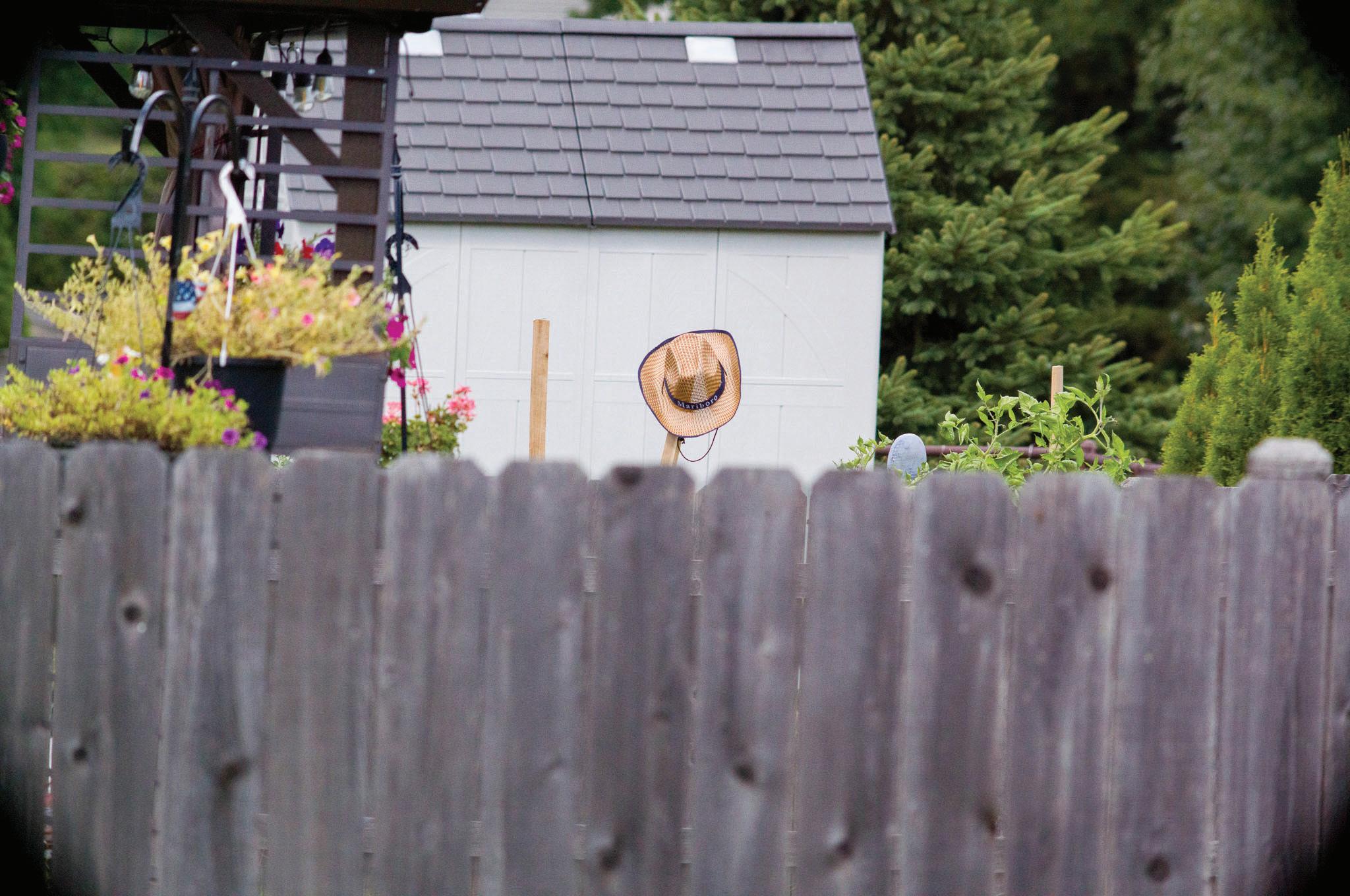
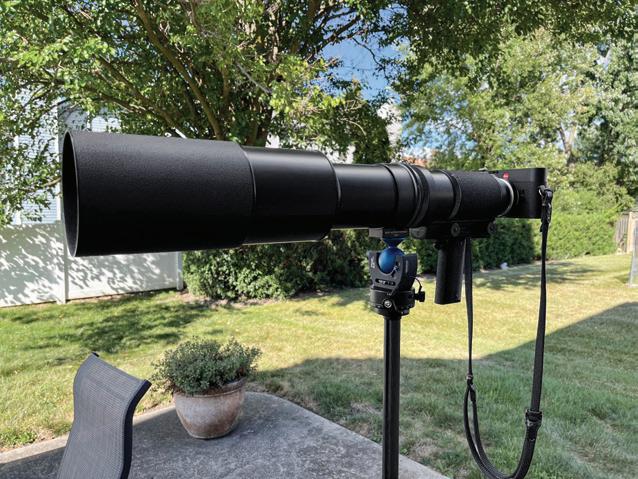
In this issue, we have the article I teased in the last issue of Viewfinder. Chats and I wrote our article based on our interview with Stefan Daniel about this exciting new product from Leica. The M EV1 is a break in the long tradition of the optical viewfi nder-based cameras from Leica. It is certainly the most polarizing new product introduction ever from Leica. I was able to use a prototype of it at the 100th Anniversary celebration at Wetzlar in June. Unfortunately, I had to return it when we left Wetzlar at the end of that week, so I didn’t get much time with it. I was then able to get another advance copy about a month later and spend some quality time with it. I shot sports with it, macro, street, and even tried it out on my 560/5.6 Telyt V. Th is camera was actually engraved M11-V, and just goes to show that even the name of the camera was up in the air up until the last minute. (Jono shows this engraving on the camera he used to test the 35 Noctilux!) Chats and I introduced the camera to North America at our annual meeting in Montreal. I think you will fi nd our interview with Stefan quite illuminating! Of course, we also have Jono Slack’s very thorough review on the M EV1 in this issue.
We also have Jono’s review of the highly anticipated 35/1.2 Noctilux-M. As Jono points out, this new lens is important for several reasons. It is the fi rst 35mm lens from Leica to break the f/1.4 barrier, and it is also only the fi ft h Noctilux lens since the very fi rst one, the 50/1.2 Noctilux M of 1966. It has also been some time since the last Noctilux intro, that being the 75/1.25 Noctilux ASPH in 2017. Jono contends that this is also the best 35mm lens Leica has ever made, with the exception of the current 35mm APOSummicron-M! It also bucks the trend of the other Noctiluxes since the original 50/1.2, being much smaller than these successor lenses. After reading Jono’s article, it might be time to start saving up for this new superstar lens to add to your kit!
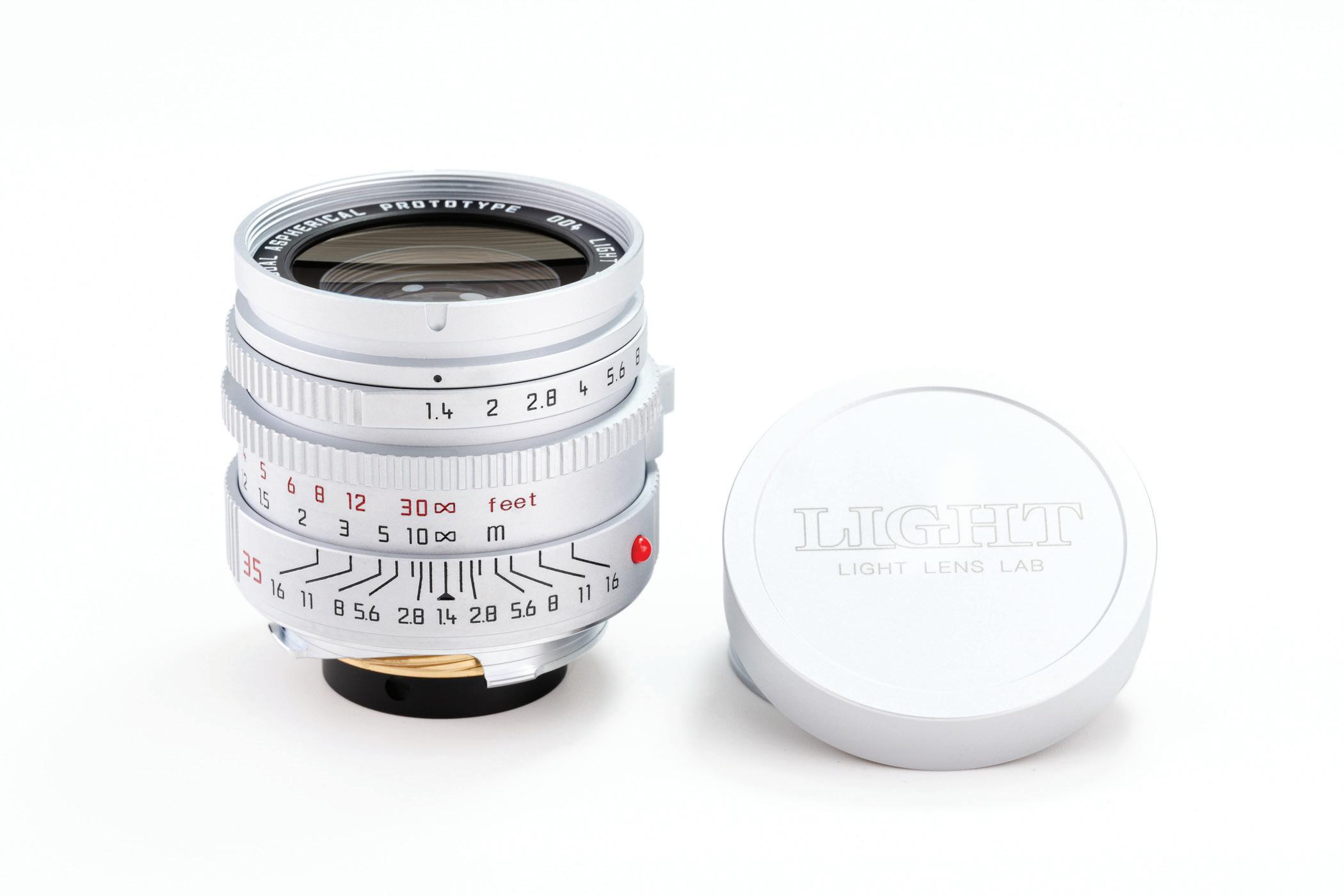
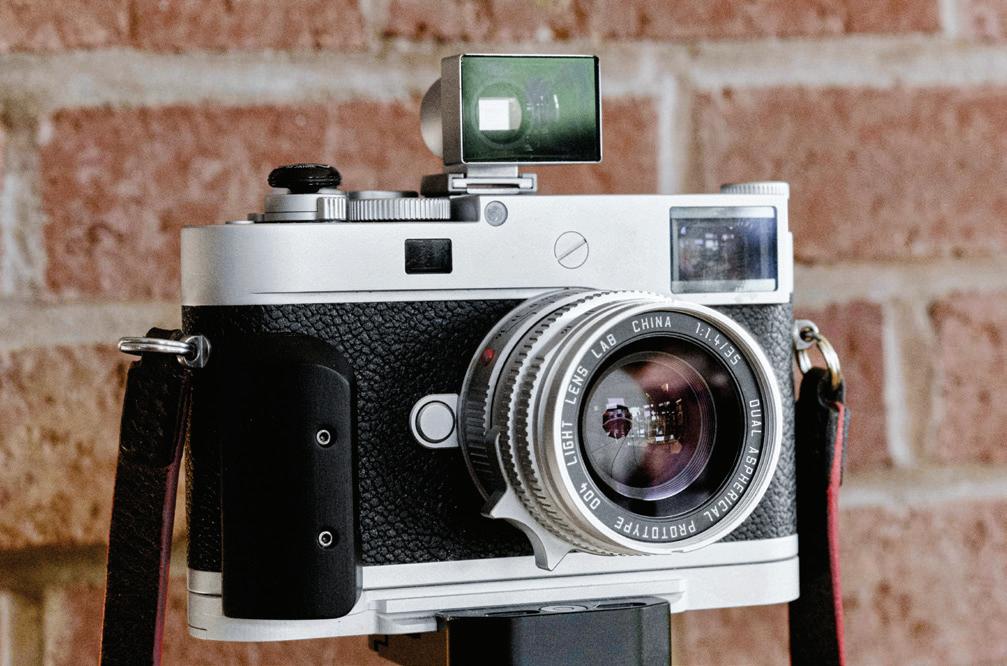
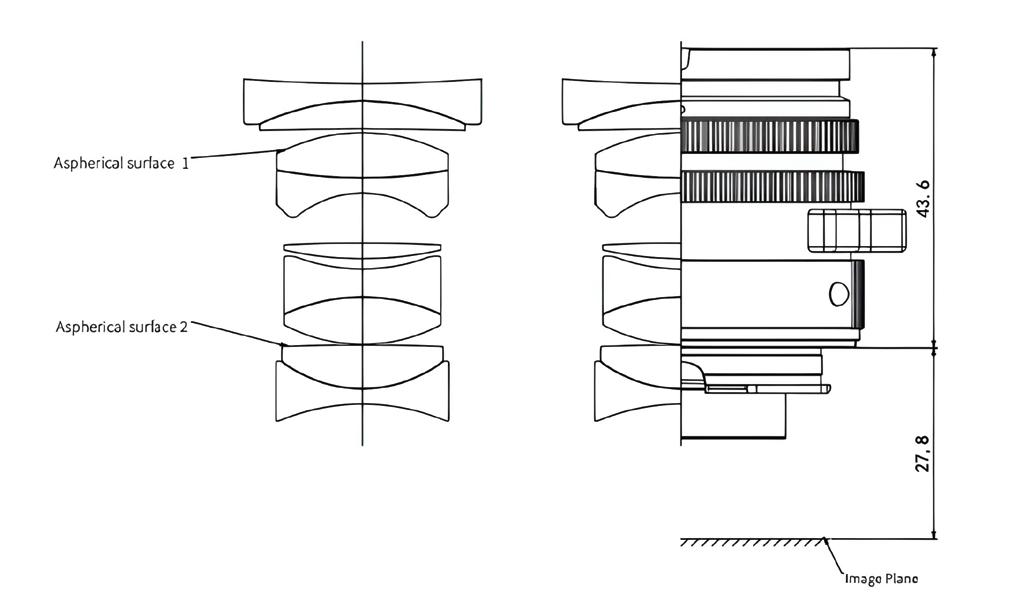
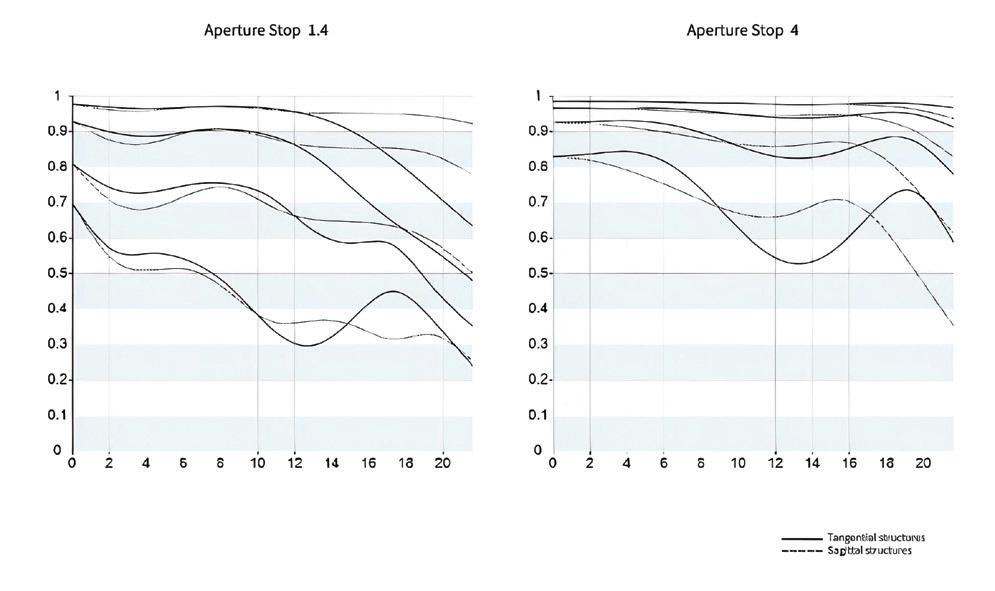
Ed Schwartzreich brings us his review of the Light Lens Lab 35/1.4 Double Aspherical replica lens. As many of you know, Light Lens Lab has made quite a name for itself in reproducing classic Leica
lens designs, with their fi rst one being the replica of the original 8 element 35 Summicron M. Ed reports that this fi nal production lens is an improved version of the original LLL 35/1.4 Double Aspherical lens. Ed certainly is very familiar with the Double Ashperical as he owned one of the original Leica versions for many years. As Ed points out in his article, it was worth the wait for this fi nal version of the current lens.
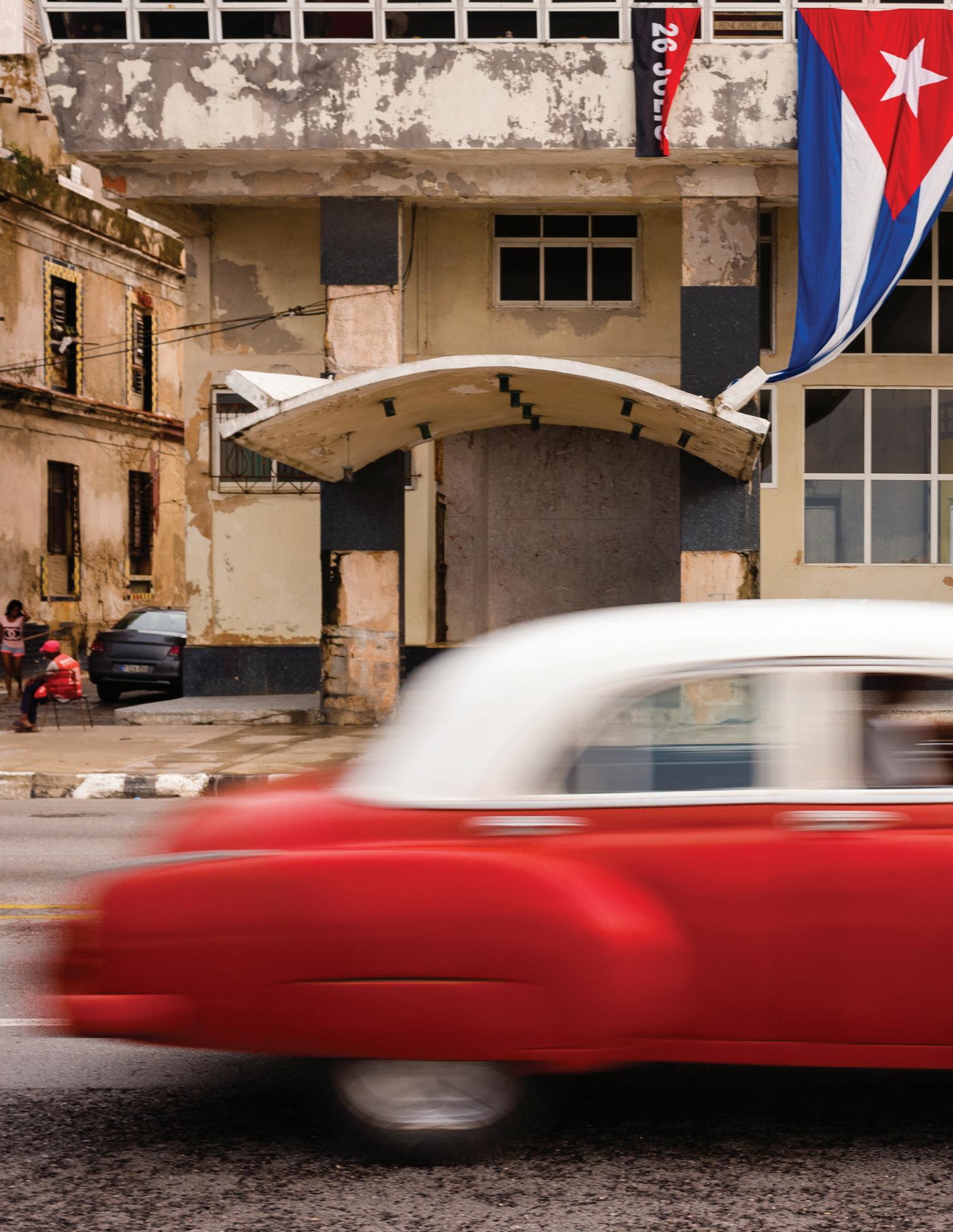
In this issue we also have two new board members writing for the fi rst time for Viewfinder. Ayash Basu brings his very unique take on Cuba and the Cuban people in their island home and how they cope with the daily challenges of their lives. In his article, in frame, Cuba through the Rangefi nder, Ayash sees many parallels to his early years in Calcutta, and has developed a strong appreciation for the people of Cuba. Our other new board member, Maura Allen, has written her fi rst article for Viewfi nder with coverage of the annual meeting in Montreal. I was able to spend some time with both Maura and Ayash in Montreal, and look forward to them both making valuable contributions to the Society and Viewfinder!
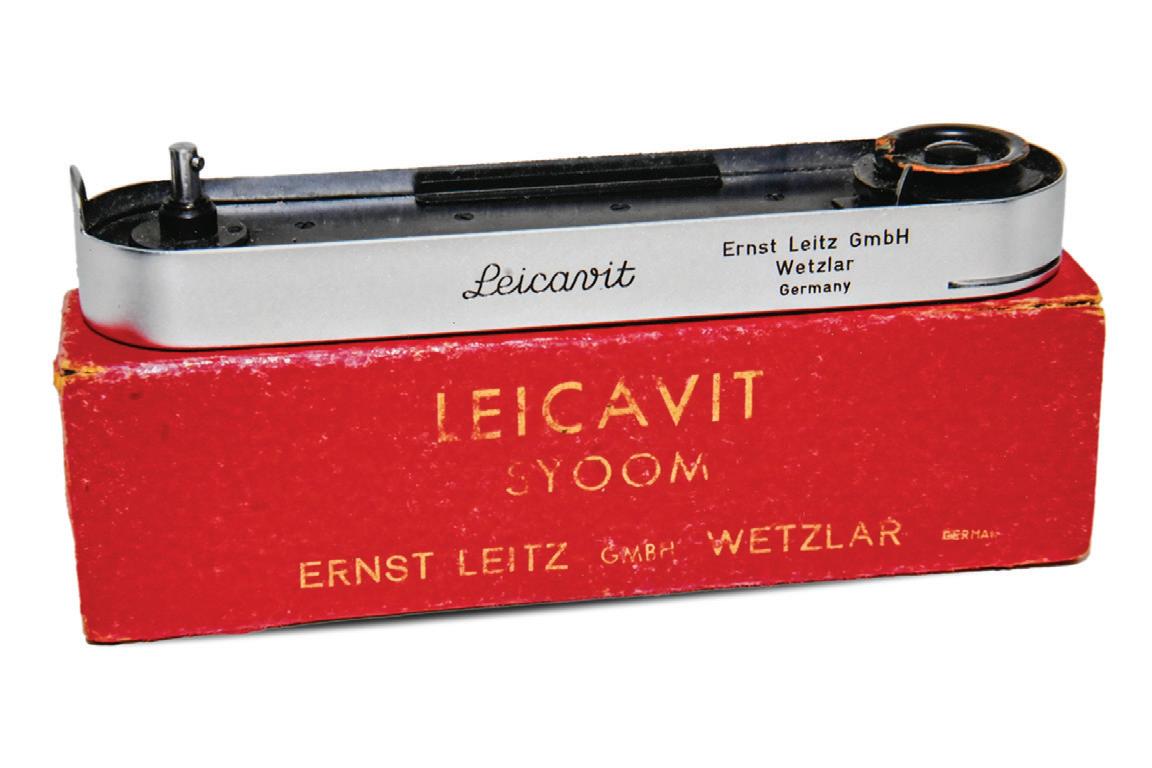
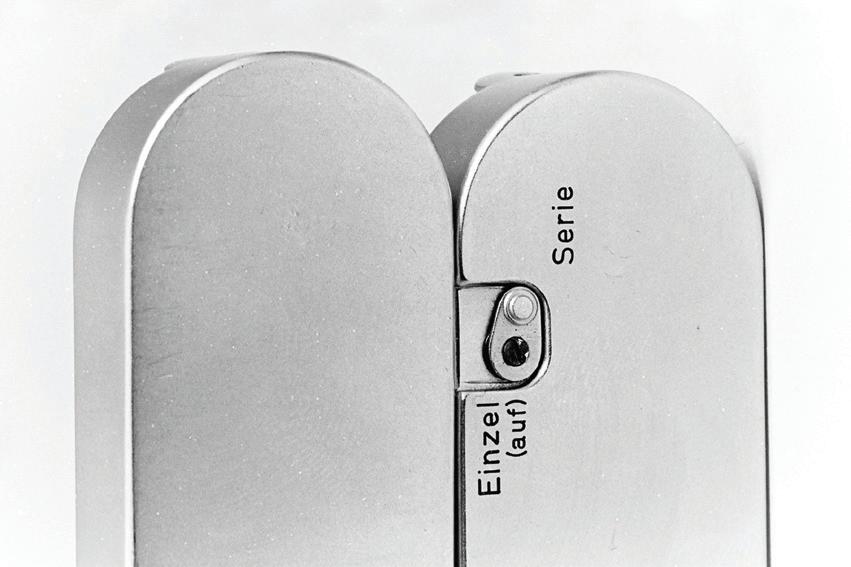
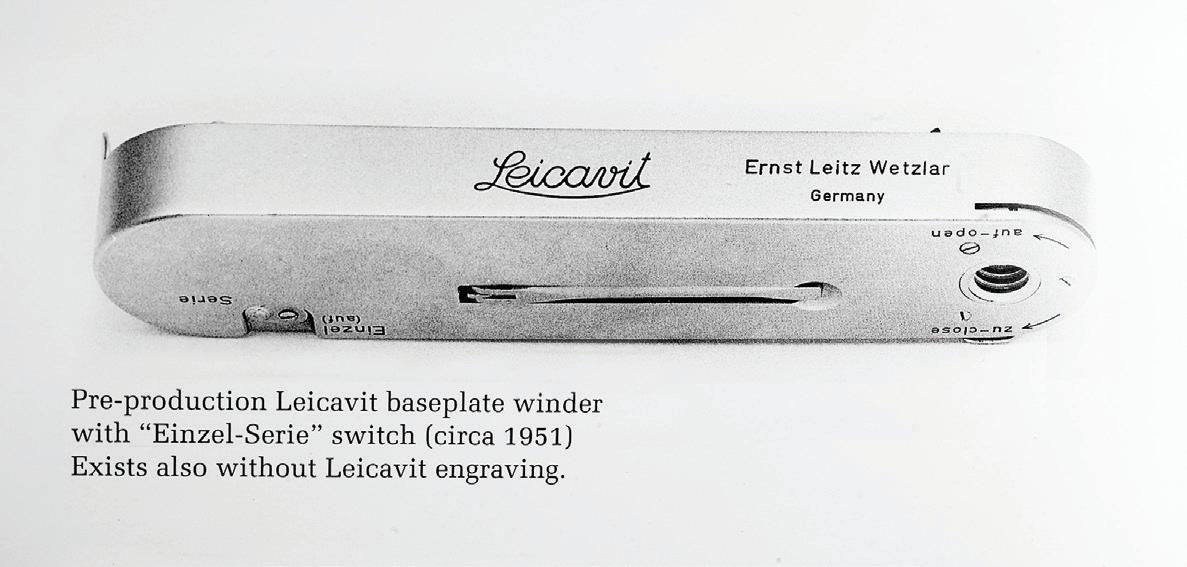
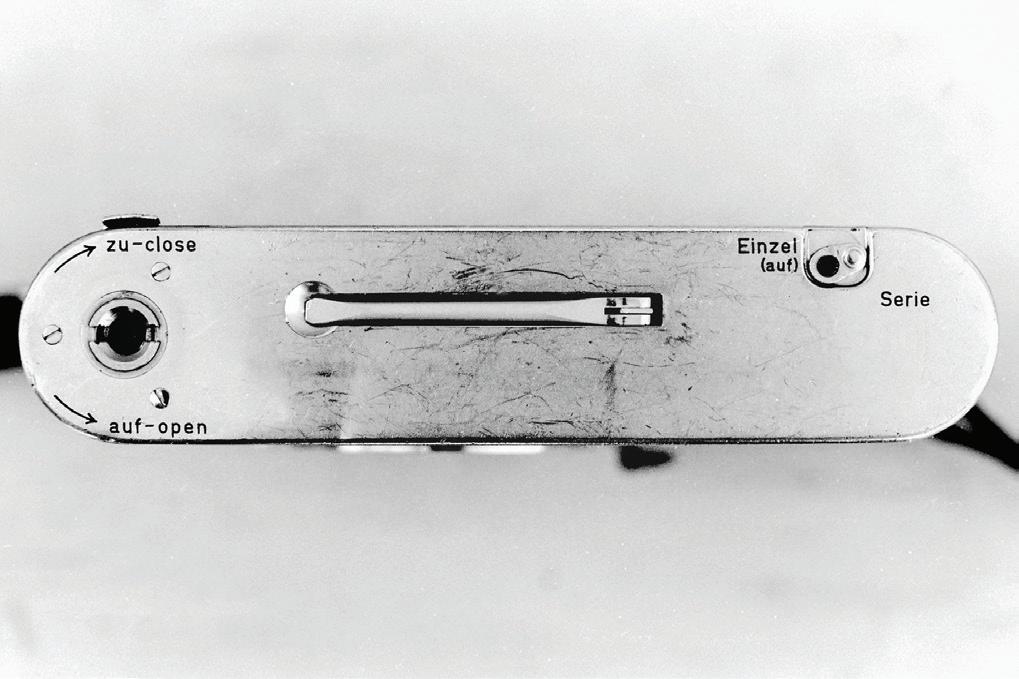
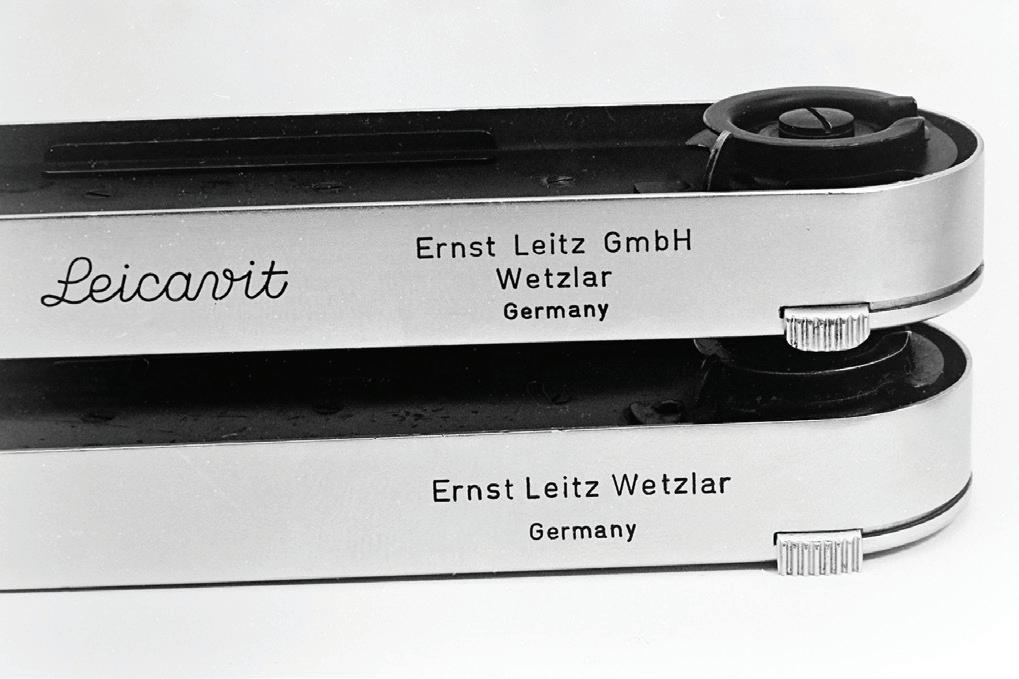
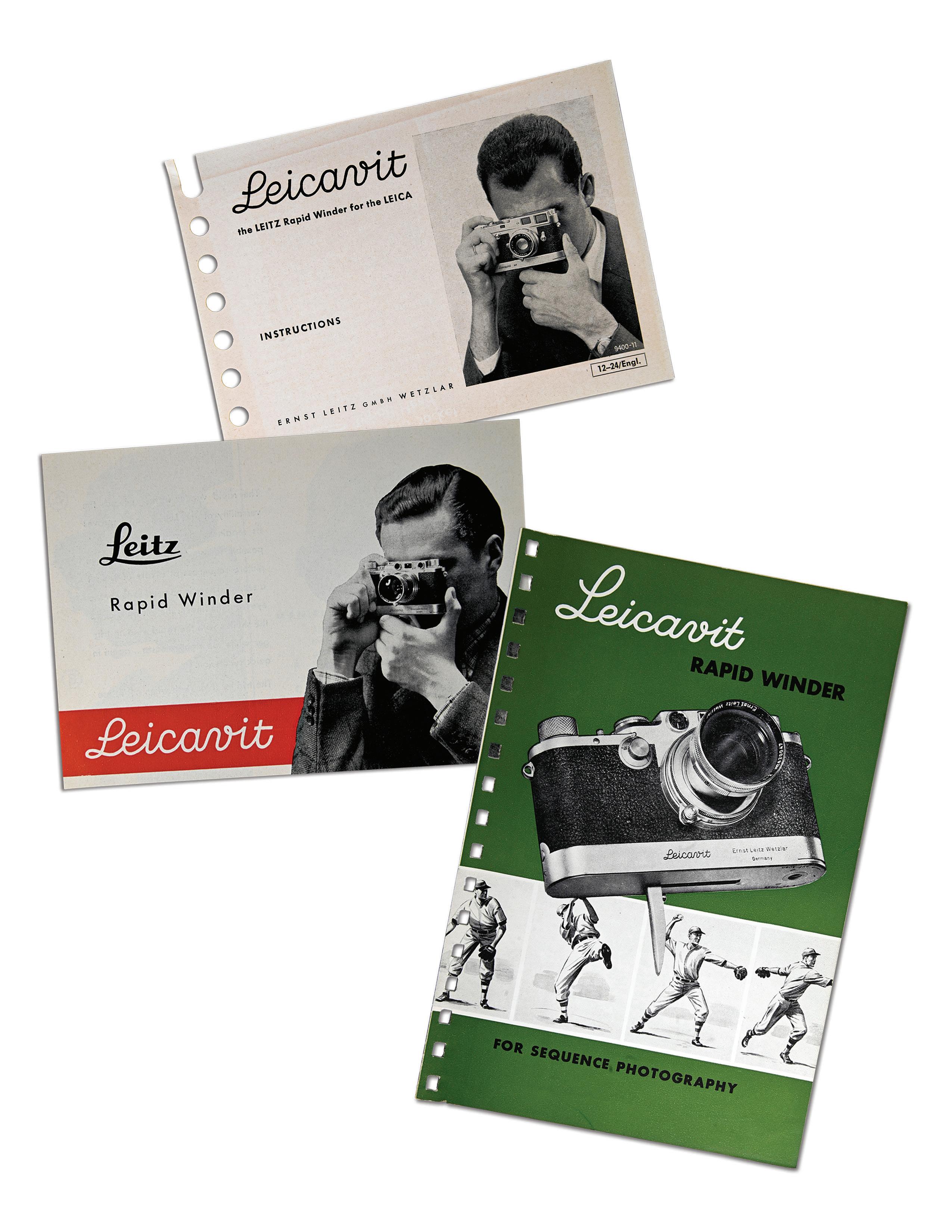
Of course, we also have an article from our other President Emeritus, Jim Lager, on the original rapid wind accessory for the screw-mount Leica, the Leicavit. Th is same accessory later became available for the Leica M, and is still available for the current fi lm Leica M cameras. Those attending the Montreal meeting learned from Lars Netopil’s presentation on the development of the original Leica MP how important the Leicavit was to one of the most influential Leica photographers of the 20th century, Alfred Eisenstaedt. Eisie was reluctant to embrace the Leica M3, as it lacked the rapid wind capability of the Leicavit he used on his screw mount cameras. In developing the MP prototype for Eisenstaedt, the M3 E, Leica eventually caved in to his demand to incorporate the Leicavit in its design. I used a Leicavit myself for many years on my M2, and our good friend Tom Abrahamsson came out with his own version of the Leicavit for use on the M before Leica reintroduced it years later. I miss the mechanical wonder of the Leicavit on my modern digital M camera!
Bill Rosauer
Editor, Leica Society International
A LETTER FROM THE PRESIDENT
by william fagan
Dear Leica Friends, I hope you are all enjoying using your Leicas in 2026. Where I live in Dublin, the weather so far has not been kind to photographers, but in the past week some green shoots have appeared in the ground and some nice rays of sunlight are starting to emerge.
In January I visited Leica HQ in Wetzlar where I met up with Stefan Daniel, Leica’s Senior Global Brand Ambassador and several of his senior colleagues to discuss various ways that LSI can work with Leica and about matters where we can mutually support one another. Stefan has already done an exclusive Zoom presentation for LSI members about the ‘Monochrom’ cameras and that was followed, more recently, by a similar presentation by Peter Karbe about Leica’s M lens range. I spent some time in Wetzlar discussing the M lens range with Peter and the new 35mm f 1.2 Noctilux lens which was introduced shortly afterwards.
In the weeks following my visit to Wetzlar we fi nalised the programs for our Tucson meeting in April and our London meeting in May and these are now available for booking on the LSI website.
Another exciting thing is that we have a team, headed by VP Amitava ‘Chats’ Chatterjee, working on a new Competitions Module, designed exclusively for LSI members, which should appear over the next two months. Th is will be designed specifical-
ly for Leica camera users and will have exciting features not seen elsewhere, which will enable you to maximise your enjoyment of using the features of your wonderful Leica cameras and lenses. These will be developed over time into various categories, and we will have listings of the category winners with their photos shown on our website. We will also have top class judges and curators such as Jono Slack, British Leica Tester, and Sandra Eisert, former White House Picture Editor. We are hoping that our competitions will not only improve the standards of photography of our members but will also be great community builders.
Finally, this month I show on the following page an interview which I did with Lea Helsper of the Corporate Communications Department of Leica while I was in Wetzlar in January. Th is has now been circulated to all 2,300 Leica employees worldwide. You will see in this that I specifically referenced local liaison between LSI members and Leica entities. If you feel that you can do something for us on the ground in your country or region to enable liaison between local Leica bodies and LSI members please contact me at info@leicasocietyinternational.org
William Fagan
President, Leica Society International
INTERVIEW WITH WILLIAM FAGAN — PRESIDENT OF THE LEICA SOCIETY INTERNATIONAL ( LSI )
by LEA HELSPER, CORPORATE COMMUNICATIONS DEPARTMENT OF LEICA
The Leica Society International (LSI) is far more than a traditional collectors' association. It is a vibrant, worldwide community of Leica enthusiasts spanning more than 70 countries. With William Fagan as its current President, the LSI underlines its clear commitment to internationality and global exchange.
"My
objective is for the LSI not only to be international, but also to be perceived as in-
ternational—and as a very active
organisation."
In conversation with Leica, William Fagan shares his vision for the future of the LSI, reflects on the close collaboration with Leica, and outlines how both organisations can work together to strengthen local communities and engage new audiences.
An International and Active Community
Originally founded as the Leica Historical Society of America, the LSI has evolved significantly over time. Today, it brings together approximately 2,300 members worldwide, with strong communities both inside and outside the United States.
"We are present in more than 70 countries. That global reach is one of our greatest strengths."
Alongside meetings in various locations, such as Tucson, London and Detroit in 2026, the LSI is increasingly focusing on local initiatives and digital connectivity.
"Not everyone can travel long distances, so we are creating more opportunities to connect locally and digitally—through regional activities and virtual formats."
Strengthening Local Connections— Together with Leica
A key priority for William Fagan is to further deepen collaboration between LSI and Leica at local level. In several markets, close cooperation between Leica organisations, Leica Stores and LSI members already creates strong community experiences.
"When Leica and the LSI work closely together, members feel connected and that benefits everyone involved."
The shared vision includes:
• local LSI contact persons acting as community connectors,
• close cooperation between Leica Stores and LSI organization representatives,
• joint events, exhibitions and community-driven activities.
"Personal relationships matter. Knowing each other locally makes collaboration stronger and more meaningful."
Broadening Perspectives and Reaching New Audiences
The LSI is also consciously working to broaden its reach and appeal to a more diverse audience including younger photographers and new community formats.
"Photography today is as much about shared experiences as it is about equipment. Social interaction and creativity play a key role."
To support this, the LSI is developing new activity-driven formats such as photo walks, informal meet-ups and digital community spaces, making participation accessible and engaging for different generations and backgrounds.
LSI also holds two annual global photo contests for photographers who may not be LSI members already. These are the Annual Women in Photography Grant and the Annual Grant. These are designed to support developing and early career photographic artists, some of whom have gone on to very successful careers, such as Ana Maria Arevalo Gosen who won the LSI Annual Grant in 2020 and the Leica Oskar Barnack Award (LOBA) in 2021.
Photography at the Core—Analog, Digital and Monochrome
While community building is essential, photography remains at the heart of the LSI. Currently, the organisation is developing an online photography initiative exclusively for members, designed to encourage exchange, visibility and creative dialogue.
"Our aim is to give members a platform a space where their photography can be shared, discussed and appreciated."
The initiative will include categories such as street, documentary, portrait and wildlife photography, as well as a dedicated monochrome category, reflecting the strong interest in black-and-white photography within the community.
Another cornerstone of the LSI is the award-winning magazine "Viewfi nder", which has received multiple recognitions in the United States.
"Viewfinder represents the quality and passion of our community—it's something
we're very proud of."
In addition, William Fagan has introduced a new series of monthly President's Newsletters, highlighting personal stories and photographic work from LSI members around the world.
"Above all, we want to be a welcoming and open community, regardless of where people come from."
A Message to All Leica Employees
To conclude, William Fagan addresses Leica employees worldwide with a clear and collaborative message: "For every Leica colleague, there are passionate LSI members around the world. We see ourselves as local ambassadors who genuinely care about Leica. By staying connected, sharing information and meeting locally, we can strengthen the Leica community together. We look forward to connecting with the Leica Team in all parts of the world."
The Leica Society International is a strong, global link between brand, photography and community. With a clear focus on local engagement, international exchange and inclusive formats, it offers significant potential for even closer collaboration with Leica worldwide.
Bonjour Hi Montréal Delivers Magnificently for the Fall Annual Meeting
by MAURA ALLEN
Montréal, founded in 1642, was the venue for the 2025 annual LSI meeting. The gathering marked the end of David Knoble’s presidency and the installation of our new president, William Fagan from Dublin, Ireland—and presented members with a valuable opportunity to connect and learn. Here’s a recap of key highlights.
A RARE PREMIERE
The meeting proper started with an LSI first – the much-heralded M-EV1 was announced and demonstrated by “Chats” Chatterjee and Bill Rosauer to all in attendance, providing an opportunity to have a few seconds with Leica’s revolutionary new baby. Amid the oohs and aahs, we learned the development of the camera was, in no
Photo by Marke Gilbert.
small part, the result of feedback from LSI members, particularly at the Dublin meeting. This news, of course, underscored the important role LSI plays in the wider Leica family—and provided the perfect start to the gathering.
BONJOUR HI MONTRÉAL SHINES
The three-day meeting followed the established format of presentations interspersed with plenty of time for photo expeditions throughout Montréal, a diverse and culturally rich city.
A comprehensive guide to the city with curated self-guided photowalks, suggested themes, including Leonard Cohen, architecture, nature, and diversity curated by David Koppel (a newly appointed LSI board member). To ensure nobody went hungry the guides also included multiple restaurant and food options—showcasing one of the city’s greatest assets, its dining scene. Much of
the chatting during meeting breaks centred on comparing watering holes. While the meeting offered all the opportunity to practice French, the use of “Bonjour Hi” as a shortcut to “do you want me to speak French or English?” was generously shared at the start.
LOCAL CREATIVES AND MORE SHOWCASED
Overall, the mix of program elements provided inspiration and spark for the 100+ in attendance—technical, emotional, historical and essentially the ways in which photography can touch us all, as photographers, viewers and subjects.
A defining element of LSI gatherings is a tie to the locale; the Fall meeting delivered with Canada and Montréal well represented. Storytelling emerged as a strong throughline of each presentation, while a new Leica projector purchased by LSI (at cost from Leica) ensured rich image quality.
• Montréal photographer Gaëlle Leroyer shared her photographic journey and how she uses film for the majority of her commercial and personal work. Gaëllehas made film—and her Leica look—a defining difference of her client work.
• David Knoble, LSI’s immediate past president, an Associate Chartered Accountant (ACA) and award-winning photographer shared insights into how a meeting and connection can evolve into a life-changing pursuit. With his book, “A Fly in the Donkey’s Eye” based on his stay in Bayonnais Haiti, David shared a wealth of information on starting, managing and launching a photobook project. It was an inspiring and invaluable masterclass on engaging with people, locations and narrative elements to tell a memorable story.
• The Gardens of Light show at the Montréal Botanic Gardens provided the ideal forum for magic and night image-making— along with a test of equipment and gear in the cold. With tickets
secured by LSI, all who ventured out proved how one location offers many (many!) creative outlets.
• The story telling theme continued Day 2 with a moving presentation from Emanuel Lowi, an academic at Concordia University, journalist and life-long Leica user. His “My 50 years with Leica” presentation offered LSI members an invitation to travel with him through his compelling images and storytelling to the indigenous communities of Northern Canada, his spellbinding work as the Dali Lama’s official photographer, and more.
• Leica history (and intrigue!) came to life with Lars Nepotil at the podium. One of the pre-eminent experts in the field, Lars presented an illustrated history of the development of the original MP, complete with the twists and turns of corporate product development, pro photographers’ feedback, and determined and dedicated Leica team members.
Photo courtesy of Colin McKinley.
• Colin McKinley, LSI Executive Director, took us on two epic journeys, each with unique technical challenges and milestones. What started as 480-mile solo trek on the Colorado Trail and the most scenic and remote parts from Denver to Durango, Colorado, finished as a moving adventure and connection between brothers (Colin’s younger brother joined him part way.) One shoe size larger post-trek, Spain’s Camino de Santigo Trail was up next with equally challenging elements, albeit a bit more social. I’m gonna be (500 miles) by the Proclaimers came to mind!
But I would walk five hundred miles
And I would walk five hundred more
Just to be the man who walked a thousand miles
To fall down at your door.
• Two Canadian speakers wrapped up the photographer's presentations. Fred Ranger, photographer and videographer based in Montréal, leveraged his background in marketing and communications in his interactive presentation: The Power of Storytelling in Photography. Leica ambassador Gajan Balan, based in Toronto (or Torono as the locals pronounce it), also a photographer and videographer, spotlighted the human connections at the core of photography.
POINTS OF CONNECTION
The curated, self-guided photo walks provided opportunities for everyone to pursue their own photographic journey around the city, culminating in the traditional sharing and review session of submitted photos made during the Montréal meeting. Chaired by Tom Smith, director of Leica Akademie North America and assisted in by Gajan Balan and Jean Bardaji (owner of Camtec and the local Leica boutique), the constructive critique was high energy, engaging and educational.
Digital Silver Imaging, a long-time LSI sponsor and supporter through co-founder Eric Luden, provided the opportunity for LSI members attending Montréal for a print at no cost. The prints were displayed at a lively reception hosted at Camtec Photo. Incredibly, the store and team’s welcome and hospitality extended well beyond the cinq à sept function, with Jean, his wife and daughter, as well as all the staff, providing a warm welcome to LSI members.
Leica North America continued its wildly popular “Leica on Loan” tradition, giving attendees the opportunity to borrow and use choice pieces of Leica equipment for 24 - 48 hrs. For many (especially those early risers!) this proved to be an enticing test drive.
The prophets Ezekiel and Jeremiah. Photo by Tom Fey.
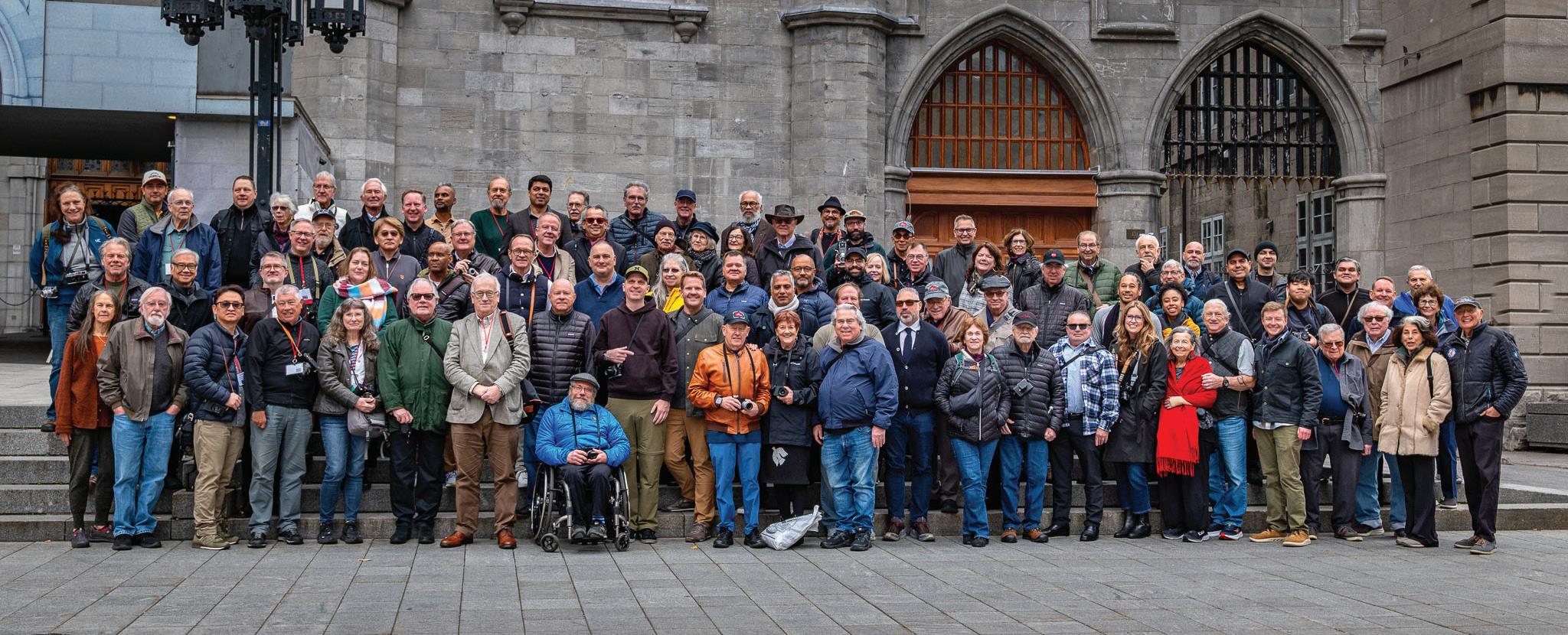
A group photo was organised by Colin McKinley and Tom Smith in the chilly Place des Armes in front of the Notre Dame Basilica. Interestingly it was photobombed by a Hungarian Leica user Zelig who must have thought everybody in Montréal has a Leica!
BUSINESS COMPLETED
As the Annual General Meeting of the Society, a few official business items were completed as well. The Board Meeting was held on the Wednesday afternoon and was open to all members— a number of whom attended and contributed positively. The formal Annual General Meeting on Saturday marked the end of David Knoble’s successful term as president and the induction of William Fagan as the new president, the fi rst from outside the United States. William presented his exciting vision for the future of the Society to both the board and the AGM, challenging all to fi nd ways to connect and contribute to make LSI even stronger. New board members were elected – including Maura Allen, Ayash
Basu and David Koppel; outgoing board members Bill Royce and Chris Herbert acknowledged and thanked for their service.
Montréal delivered on many fronts, both photographic and social, two key components of the in-person gatherings—and between the smoked meat, poutine and bagels, a few pounds were gained. New and renewed friendships were made, with the closing banquet Saturday evening offering a fi nal point of connection and exchange. As goodbyes were shared, many attendees commented they would be visiting Montréal again tout de suite.
The society is ever grateful for the sponsorship and support it receives from its sustaining members and its industrial partners particularly Digital Silver Imaging, Camtec Photo, KEH Camera, and Westborn Camera Co who attended the meeting through Eric Luden, Jean Bardaji, Phil Kaplan, and John Pegouske respectively.
Photo by Marke Gilbert. Iroquois Statue, one of the four corners on the fountain in front of Montreal Cathedral. Photo by Wilbur Norman.
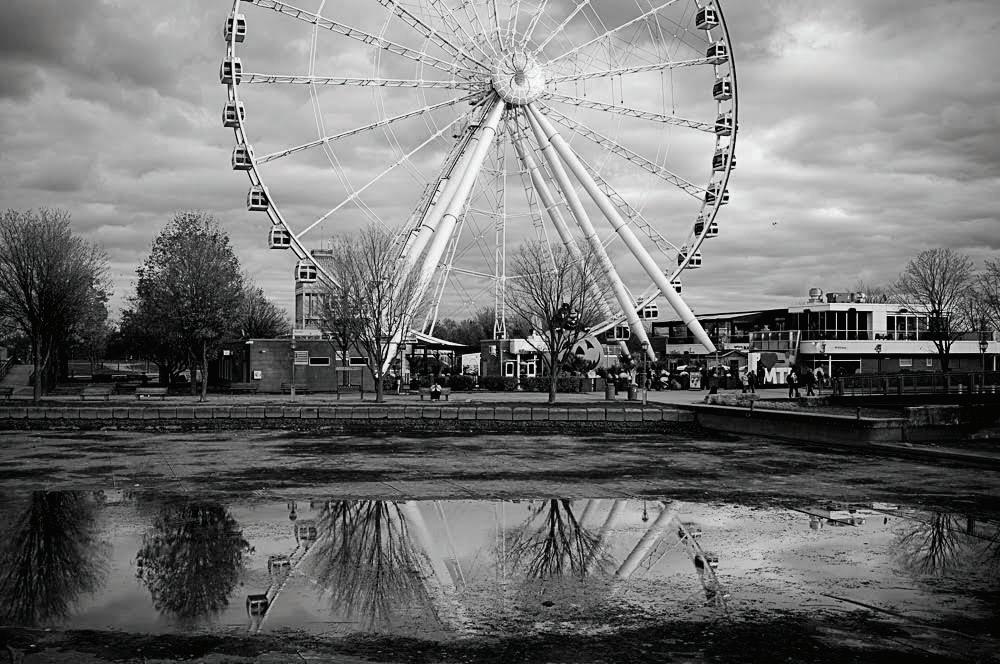
La Grande Roue de Montréal
Photo by Wilbur Norman.
STEFAN DANIEL ON THE LEICA M EV1
by BILL ROSAUER & AMITAVA "CHATS" CHATTERJEE | October 23, 2025
Stefan Daniel mit "Elsie" in Wetzlar, June 24, 2025 mit Leica M10 Monochrom und Leica Noctilux-M 1:0.95/50mm ASPH.
TL/DR: Leica Camera's digital electronic viewfinder (EVF)-equipped Leica M EV1, the newest member of the M family announced October 23, 2025, "combines the benefits of an EVF with the traditional values of the M-System, making it easier to enter the world of M photography" (Leica Camera AG, Germany Press Release) was released with a 5.76M internal EVF.
Today, October 23, 2025, Leica Camera AG announced an interesting variant based on the successful Leica M11 platform introduced on January 13, 2022, equipped with an EVF that offers significant ease of use. Images straight out of the camera are lovely and just what you would expect from a camera of this caliber. This is an extremely easy way to get into the Leica M experience without the rangefinder learning curve.
Atthe LSI Fall Shoot in Montréal , Canada, LSI Viewfinder editor, Bill Rosauer, and associate editor, Amitava “Chats” Chatterjee, sat with Stefan Daniel, Vice President, Photo & Design, Leica Camera AG, to get his perspective on the just-launched Leica M EV1. Read on to learn Stefan’s thoughts on how this camera came about, why Leica decided to build it, and more. Those who attended the Montréal gathering also received a special preview of the newly announced Leica M EV1.
BACKGROUND
When we were in Wetzlar in late June 2025 to celebrate the Centennial celebrations of the Leica I, Stefan gave Bill a loaner M EV1 which he graciously passed on to Chats for the duration of our stay. Bill and Chats spent a good amount of time with “Elsie.”
This article came about as an idea from Chats who wanted to do a unique writeup of the Leica M EV1 because it is “different” from the traditional opto-mechanical rangefinder M cameras. It is important to note that Leica remains passionately committed to the seventy-year-old rangefinder and is not doing away with it. Rather, Leica Camera AG is giving its patrons another choice. In Stefan’s words, and we quote verbatim, “This is NOT the end of the road for the Leica rangefinder”… and that is a beautiful thing. On to the interview!
THE STARTING POINT
When you first heard of the idea to replace the optomechanical rangefinder what went through your mind?
SD: “Abandoning the rangefinder for an EVF was never in question, but the Leica M11 was conceptualized so that a version with EVF would be feasible some day.
A couple of years later, at the LSI meeting in Dublin, Ireland, I was grilled by many attendees, all asking for an EVF-equipped camera based on an M camera body, capable of utilizing M lenses. I came back to Wetzlar and relaunched the initiative to bring this to life, and our decision-making was further aided by LUF and LSI through surveys and inputs.
However, the Leica M11 architecture had been laid out to accommodate an EVF at some point, but it wasn’t followed up. This allowed us to have a ready launch platform if the concept proved viable. The Leica M EV1 is exotic–such cameras typically offer auto-focus, but Elsie would continue to rely on manually-focused Leica M lenses, which is a clear differentiating factor for Leica.”
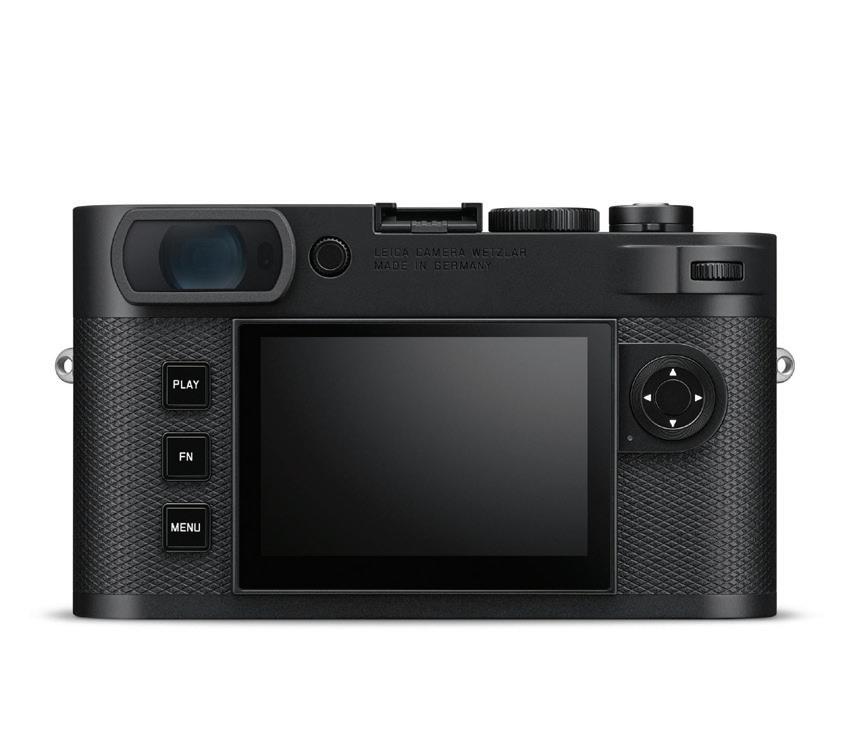
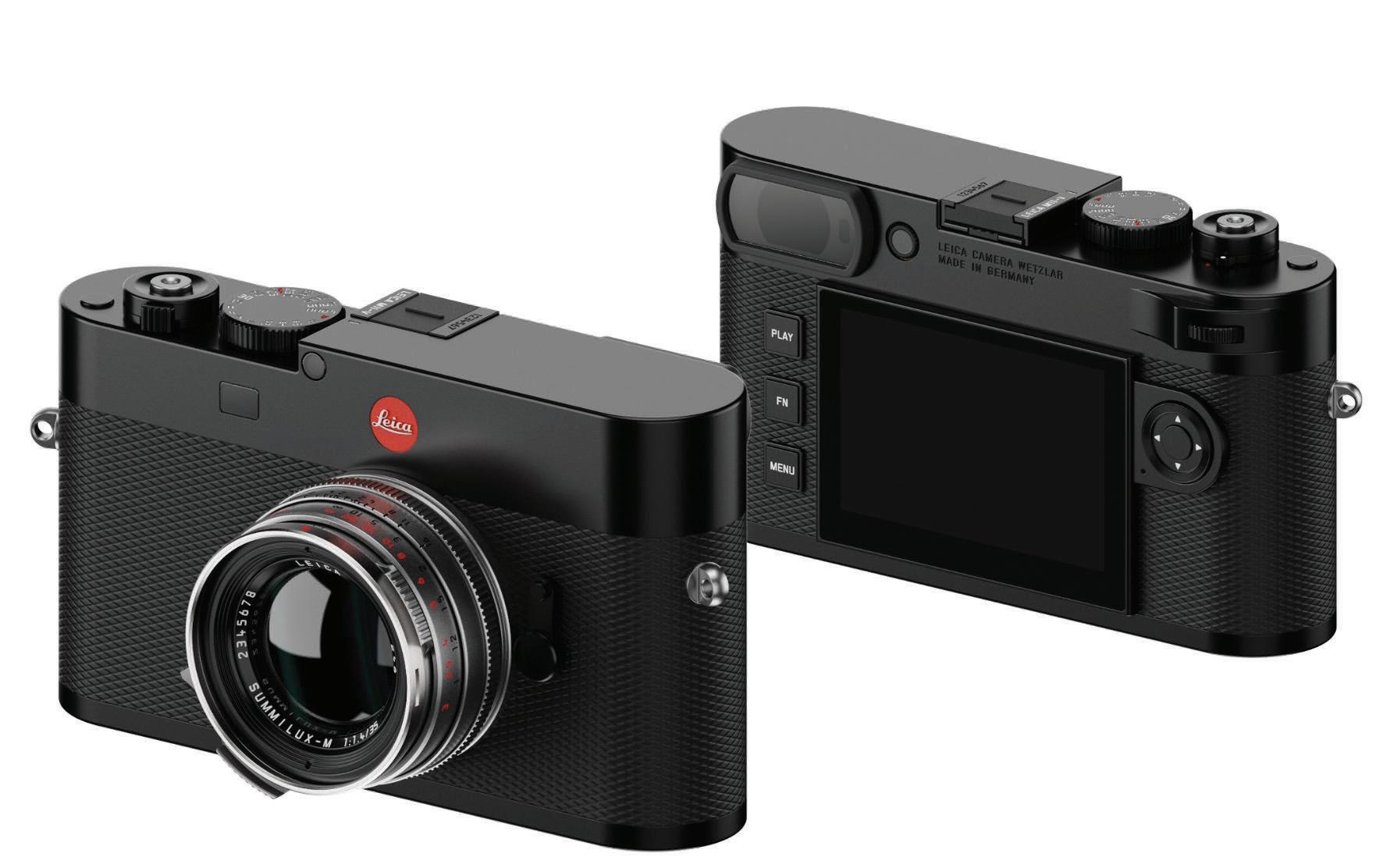
Leica M EV1 with the 5.76M dot EVF. Images Courtesy Leica Camera AG.
HYBRID
VIEWFINDER NO GO
Did you think about a hybrid viewfinder as an option?
SD: “We certainly did. A hybrid viewfinder was a predevelopment concept, but it very quickly became clear that it would not be a good user experience owing to the low magnification and low field of view. It was a solution based on compromise. Remember, in addition to the optical and electronic view there is the third light pathway for rangefinding – we just could not make it work effectively so we gave it up. People often tend to think of another company that offers hybrid viewfinders, but it is important to bear in mind that their cameras possess optical viewfinders and NOT rangefinders with their opto-mechanical complexity. It just did not make sense, and we will not touch that again.”
POWER TO THE PEOPLE
So, the driving force was…?
SD: “As I said, the Dublin LSI meeting really catalyzed us into action, owing to the discussions while I was on stage with folks grilling me to build this for them. This sentiment forced a rethink of our initial decision to shelve the idea. In some respects, the Dublin LSI meeting feedback was the catalyst that “re-sparked” the idea. Based on surveys coordinated and conducted by LUF and LSI, we decided to develop this. (Editor’s Note: Leica listens to its customers, and LSI has played a role in helping bring the Leica M EV1 to life–all of our members should be proud).”
POLARIZING: IN AND OUT
An M-like camera without a rangefinder is a polarizing concept, is it not?
SD: “To be honest, this camera is a polarizing concept outside and inside Leica (at least initially). Let’s be realistic–the Leica M EV1 is another tool, perhaps not primary and maybe secondary.
“We are aiming for people who have difficulty focusing correctly with a traditional M body because of issues with their eyesight, or those who have difficulty with wide-angle lenses or wide-open lenses. Also, this camera is a great solution for people who want the M experience but are not as confident with manual focusing using an opto-mechanical rangefinder mechanism.
“Here is an analogy–getting to Mount Everest requires effort… training, acclimating to high altitudes, breathing bottled air, and more. Our new EVF-equipped Leica M EV1 is an “assistant” that will help a user get to base camp. It will allow her or him to be a member of the Leica M owners’ group without learning to be a rangefinder user.
“Another target user group is our Leica SL users who would like a second body and the Leica M experience. An interesting observation for us is that the most popular lenses in our portfolio are 28mm, 35mm and 50mm. Leica M EV1 will allow users to boldly take advantage of a variety of lenses of varying focal lengths, and they can be assured that those lenses will operate effectively with this new camera, thereby giving them the confidence to step outside their comfort zone. Our new Leica M EV1 becomes a new tool in the toolbox.”
CHALLENGES WHILE DEVELOPING LEICA M EV1
What challenges did you encounter while developing the Leica M EV1?
SD: “Since we had already thought about this in the design and build of the Leica M11 platform architecture, it was not that difficult, however, we did grapple with the choice of EVF.
“Initially we considered the Visoflex 2 as the basis for the EVF, but we ultimately decided on the same tech used in the Leica Q3. This however caused another challenge because an M is thinner than a Q. Solving this became a mechanical challenge, but we found an
Leica M EV1 with the 5.76M dot EVF. Image Courtesy Leica Camera AG.
elegant solution, despite having much less thickness to play with in a Leica M body.”
NOW TO WHAT NEXT?
Now that the Leica M EV1 is out, will you continue providing your customers with a choice of options as new models come to market?
SD: “Let me be clear–if it succeeds in the market and our customers ask for it, we will provide options. However, I reiterate: the Leica M EV1 or any possible successor is NOT a substitute of the rangefinder.
Leica is currently working on new evolutions of the opto-mechanical rangefinder. We are merely listening to our valued customers and responding, but we will never give up on seventy years of storied Leica M history.”
(Editor’s Note: This is the new Leica that listens to its customers while making decisions based on financial logic. So glad to see this transformation.)
LEICA M EV1 SPECIFICATIONS
Before we end, we want to share that Stefan detailed some of the Leica M EV1 specifications including the fact that it is based on the M11 platform with 64GB of internal storage. Despite this, it
offers Leica Content Credentials, which will give users the best of both worlds.
Our take? Leica M EV1 brings a slew of benefits to the global Leica community customers who start using one:
Effortless use with long and wide lenses - the EVF will render an image as the sensor sees it. This was not possible using a rangefinder alone - you had to use Live View or the External EVF.
Precision focusing with ease - Leica M EV1 very smartly utilizes the frame selector lever to toggle magnification and focus peaking and allows for precision in those situations where critical focus accuracy is super-important.
Effortless focusing in dim environments. The EVF does a great job attenuating or maximizing available light in dim situations, allowing a user to focus.
There are other benefits such as Leica Content Credentials based on the Content Authenticity Initiative, less weight and a lower price point compared to Leica M11 and its variants. For Chats personally, it helps users with bad eyesight. For photographers apprehensive about rangefinder focusing, Leica M EV1 provides an M experience without the labor (and missed focus on initial images).
We are grateful to Stefan for his openness and willingness to talk to us about this exciting camera. Thank you so much!
Leica M EV1 with the 5.76M dot EVF. Image Courtesy Leica Camera AG.
AUTHOR NOTES:
Since I received a pre-production camera, images shot with Leica M EV1 shown herein may not fully represent final image quality.
Three continents, five sites, three languages – In addition to this article, our interview with Stefan has been published on additional sites:
• Japan: Fukui-sama's blog, for the Japan Leica Users Group (JLUG) communityin Japanese
• UK: MacFilos, for the UK and worldwide community in English
• Global: Leica Society International (LSI) in English
Superb in dim environments mit Leica M EV1 und Leica APO-Summicron-M 1:2/50mm. Images courtesy of Amitava "Chats" Chatterjee
• Vietnam: Leica Vietnam, for the Vietnam Leica User community in Vietnamese
As expected, several very good reviews have been published. I recommend Jono Slack’s superb review (found in this issue of Viewfinder) and Sean Reid’s take (paywall).
One more thing: Jono is a personal friend, and he, along with Dr. Andreas Kaufmann, Stefan Daniel, Bill Rosauer, Craig Semetko, Hari Subramanyam, Milan Swolfs, Evris Papanikolas, Marke Gilbert, John Pegouske, David Stephens and countless others are why I feel blessed to be in our global Leica Camera Family.
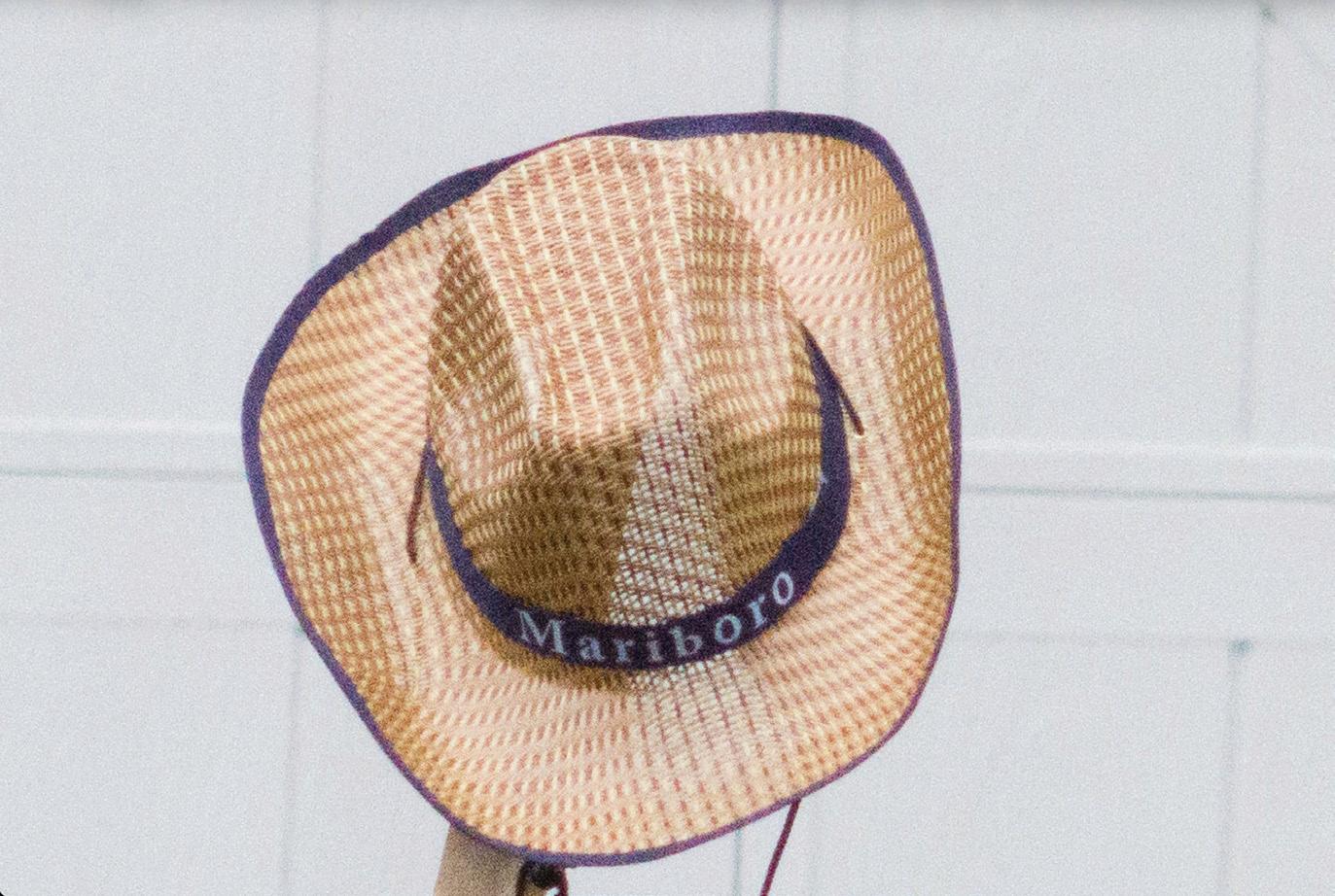
Precision Focusing with Ease. Hat mit BIG GUN und Leica M EV1.
Images Courtesy Bill Rosauer.
I was thrilled to meet many of you at the Leica 100 Year Celebrations in Wetzlar this past June, and look forward to chatting with others at the LSI Montréal meeting this week.Last but not least, gratitude to Mike, Keith and the excellent MacFilos team for editing and hosting coordination in the UK (read this article on MacFilos here), and Fukui-Sama in Japan with the Japan Leica Users Group (read this article in Japanese here).
mit freundlichen grüßen,
Chats aka Chatsphotog // Bill aka der LeicaMan
Amitava “Chats” Chatterjee ("Chatsphotog") is very active in the global Leica community. A Leica Society International Executive Committee board member (come join us!), he is published in The Viewfinder and serves as Associate Editor/proofreader-at-large. He frequents various Facebook Leica Photography groups and believes he is the founder of the IG hashtag #ChasingLeitz. You can find him at www.chatsphotog.com, Facebook(@ Chatsphotogpilot), Instagram (@Chatsphotog) or Medium (@Chatsphotog). You can also buy him a coffee!
Bill Rosauer is a lifelong Leica user, President Emeritus of Leica Society International, designer of three Special Edition Leica Cameras and three Special Edition Leica Lenses, Chief Editor of The Viewfinder since 2000, and dear friend who runs fantastic tours to Wetzlar - reach out to me or him!
Elsie THE LEICA M EV1
by JONATHAN SLACK
Introduction
Off we go! I’ve been looking forward to writing this for a long long time. The very concept of an ‘M’ camera with an EVF has provoked real passion among the Leica internet forums. Perhaps the arguments now aren’t quite as furious as they were five years ago, but there are still some pretty firm opinions.
I’ve always been in favour of the concept–not to replace the existing M rangefinder, of course, but as another way of shooting M mount lenses. Opinions have changed at Leica over the years, and by making this camera a ‘lifetime extender’ for the Leica M11 range of cameras they have very sensibly treated it as a toe in the water. If it isn’t a success then they can draw a line under it.
It has been in beta testing for a long time with various firmware iterations; the test forums have been full of interesting observations, both for and against the camera. This article is, to a large extent, a result of those discussions and insights, so a big thank you to everyone (you know who you are!) I feel if we weren’t already friends then we have become friends after the six months of testing.
The M EV1 has led me to spend a lot of time considering how one operates a camera, between analogue and digital focusing, and contrarily between symbolic and representational information. I’m not sure that it has a huge bearing on the actual photographs, but it is an interesting subject, especially today when there is so much concentration on user-experience with respect to the user interface.
Those who have been advocating such a camera have often thought it would be valuable for long-time M users whose eyesight is not what it used to be, and for whom rangefinder focusing is getting problematic.
I also thought there was a big potential market for younger photographers who have fallen in love with the iconic image of the M cameras, but who, when presented with a rangefinder, are rather dismayed.
So, although I hope to cover all the bases in this article, rather than a direct review, it is more a discussion about the idea of an EVF based M, how it is to operate, and who it is actually for.
Note: When I say ‘Viewfinder’ I mean the M EV1, and when I say ‘Rangefinder’, then I’m talking about the traditional M Rangefinder (at least, that’s the intention!)
What’s in a
name?
If you google it, you’ll find that M stands for Messsucher which is the German name for a rangefinder. This probably was the case (although Leica has always kept its head down) but it could just as well refer to the M mount of the M cameras.
At any rate, times change, and there has clearly been some serious consideration about what to call the new camera. It was rumoured to be called the M11-V, not the M EV1. Personally I thought E11 would have been a good name, and perhaps it wouldn’t have antagonised the traditionalists quite as much. On the other hand it does rather disconnect it from the M history, which is obviously a bad thing. So, perhaps M EV1 is a good name–implying it’s the first of a new branch of M camera. Let’s hope that it is.
While talking of names, the prototype name for the M EV1 has been Elsie, after Elsie Kuhn-Leitz (1903-1985) the daughter of Ernst Leitz II, she was imprisoned by the Gestapo after she was caught helping Jewish women cross over into Switzerland. She was released after some tough questioning, and later on in the war was again in trouble with the authorities for helping to improve the living conditions of 700 or so Ukrainian slave labourers who had been assigned to work at the plant during the 1940s.
More than that (well, perhaps less than that!), Elsie was the name of my paternal grandmother; sadly, I don’t remember her, but she was a powerful and much loved woman with a mass of curly red hair. It’s nice to be reminded of her existence every time I pick up the camera.
What is it?
There have been rumours predicting a Leica Q with an M mount ever since the Q arrived on the market in June 2015, but there simply isn’t room within the Q body for a shutter (the Q uses a leaf shutter in the lens, and the flange distance for the M would make for a very fat lens mount!
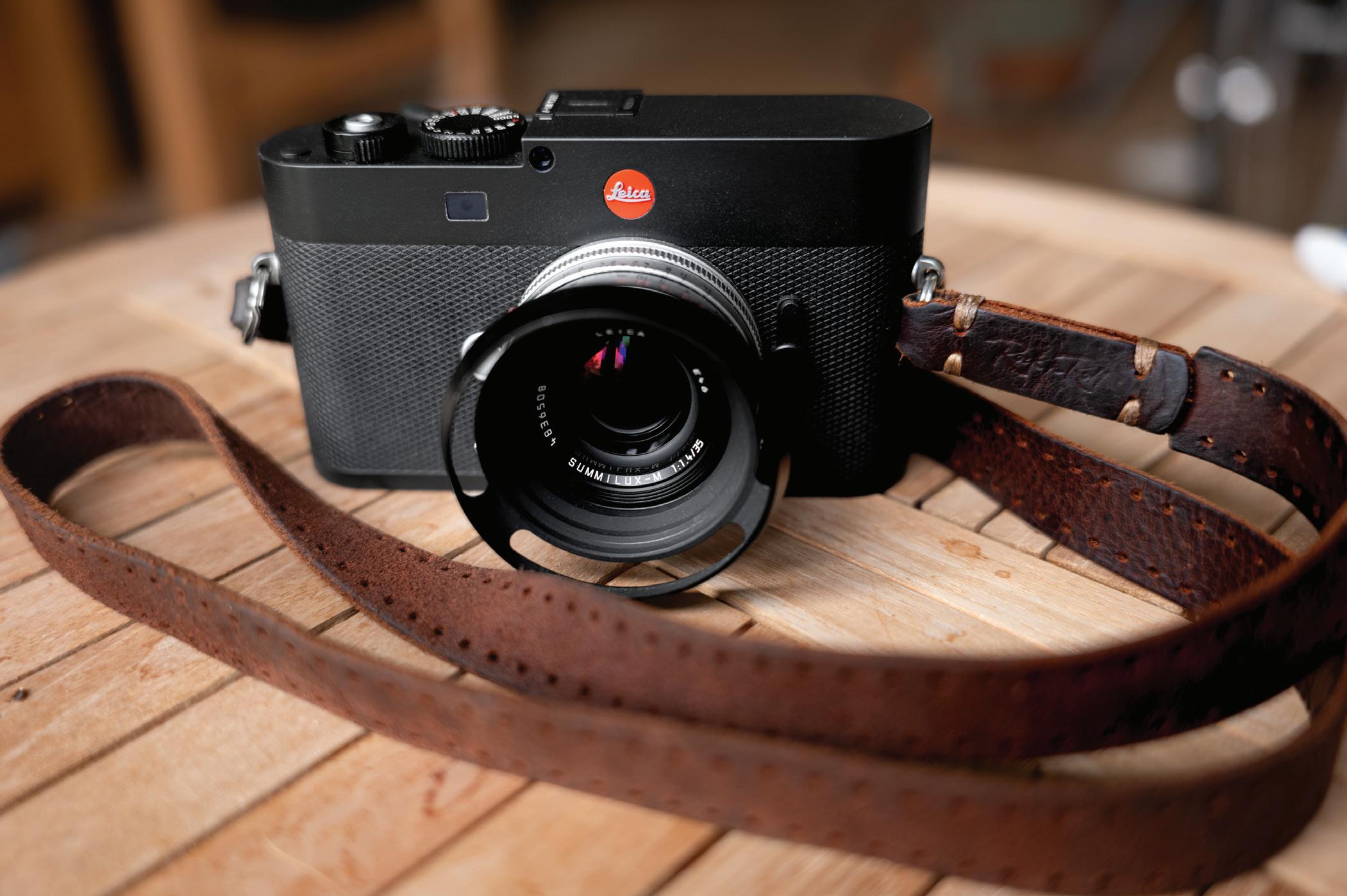
So this still isn’t a Q with an M mount, it’s an M camera with an EVF in the place of the rangefinder, otherwise it’s fundamentally identical to a standard M11.
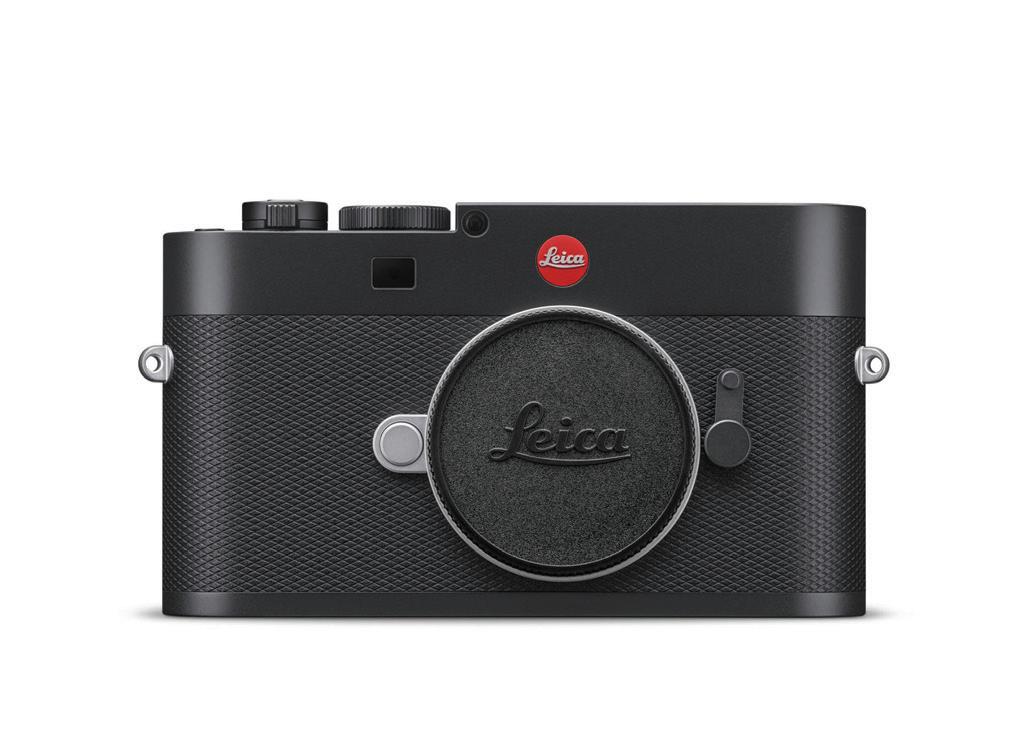
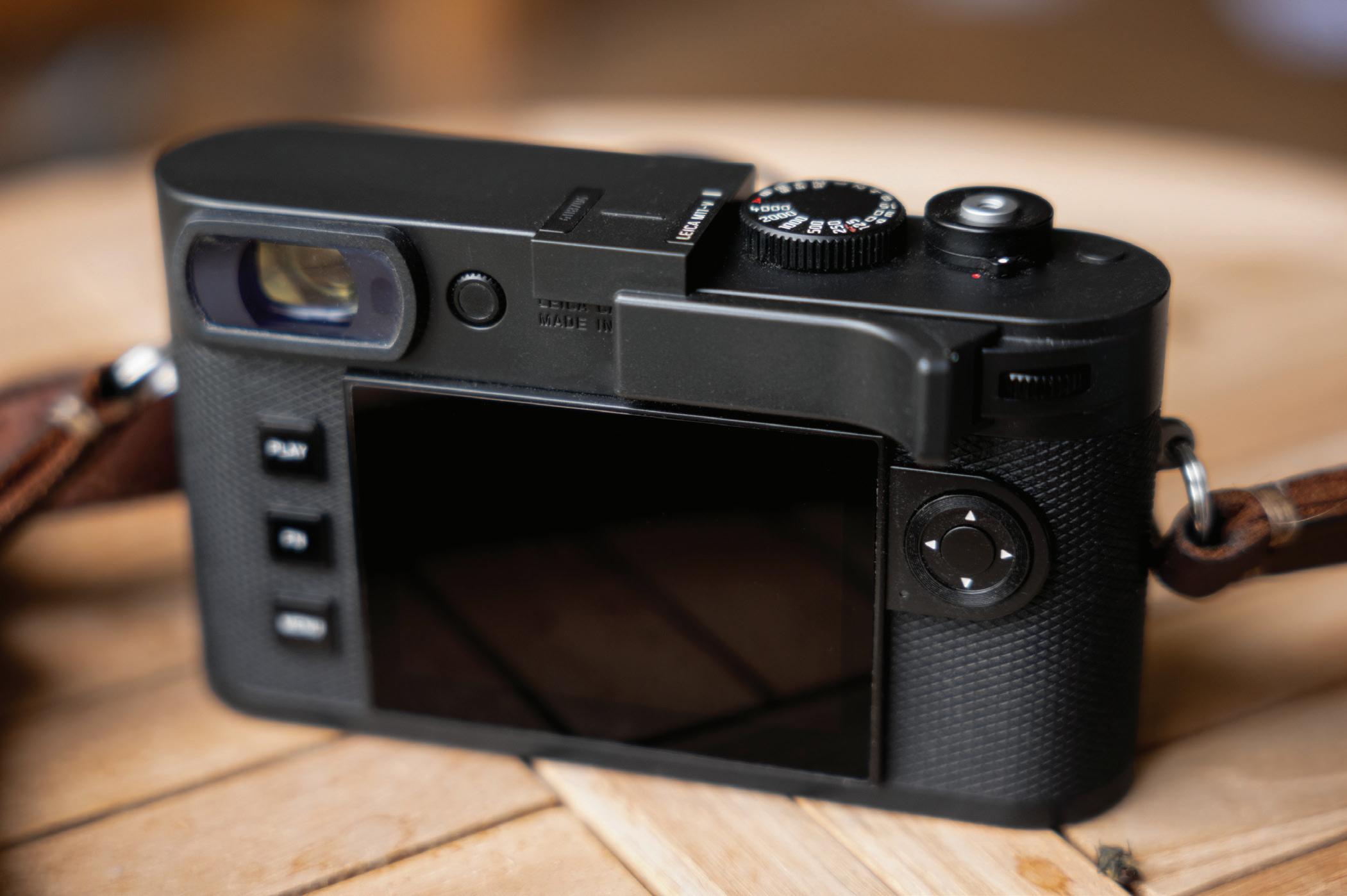
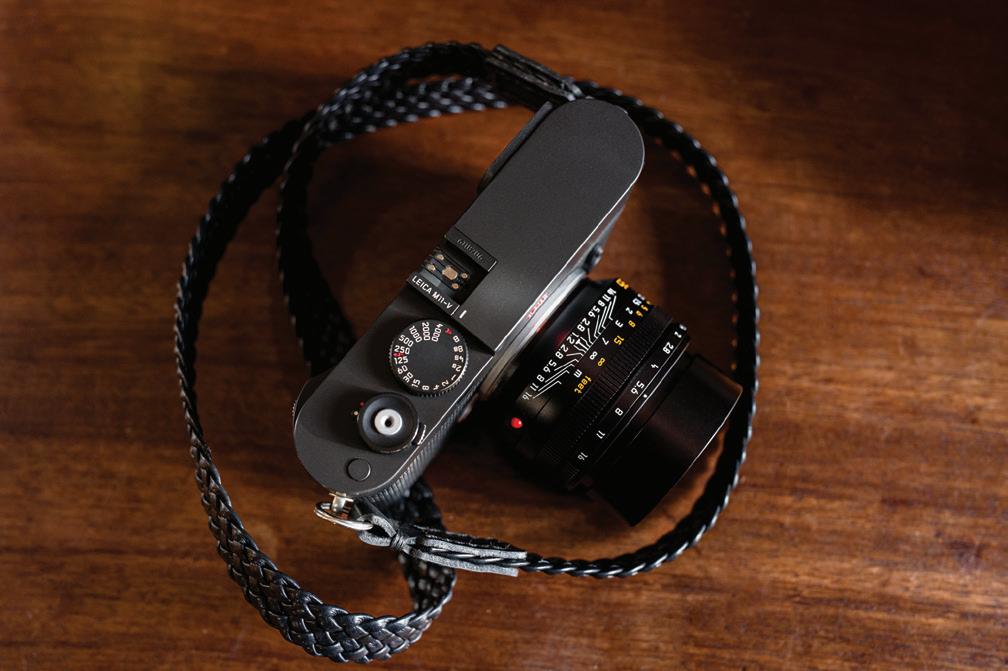
Leica has resisted putting a faux viewfinder window or a logo–or anything else–so the place where the rangefinder window is on the front of an M11 is simply blank. More than that, because of the space needed for the EVF, the ISO dial had to be removed, which will perhaps upset some people. The ISO dial does look lovely with it’s nod back to the old MP re-wind knob, but honestly speaking, auto ISO with careful settings is always the way to go, making the dial a little superfluous. If you must be all manual, then setting the ISO in the quick menu is, well, quick! You can also set ISO to the thumbwheel.
The camera weighs about 45 gms less than a standard black M11, clearly EVFs are lighter than rangefinders. This isn’t a huge amount, but it’s noticeable and significant and, as with all M cameras, it still feels wonderfully solid and well made.
I think it’s beautiful–simple and pure. Everyone who I’ve talked to about it thinks it’s a lovely thing. The blank front doesn’t sound perfect, but actually it looks really good. There is the red dot, the round window, which estimates the aperture, and the square red window for the self-timer.
The only other difference is the frame line lever which has been converted into a double function device. This can be configured each way for either Focus Peaking, Magnification or Digital Zoom–or it can be turned off. As with the other functions, holding it down for a period allows you to select which of the available options becomes the default; this can also be saved in the user profiles.
The M EV1 has Content Credentials like the Leica M11-P, but is otherwise more like the standard M11, with 64Gb of internal memory and a normal Gorilla glass toughened rear screen (it seems pretty tough to me, six months of my use and there are no scratches or scuffs on the screen).
If you would like more information about the M11 in general, as well as on the M11-P and Content Credentials, read my articles at https://www.slack.co.uk
The EVF
The Visoflex 2 has an OLED monitor with 3.68 million dots and a 0.73x magnification, whilst the EVF of the M EV1 has 5.76 million dots and a 0.76x magnification. The refresh rate is 60 fps.
The specification of the electronic viewfinder makes it seem likely it is the same as found in the Q3. At any rate, apart from the tilting of the Visoflex 2, the monitor in the M EV1 is better in every way.
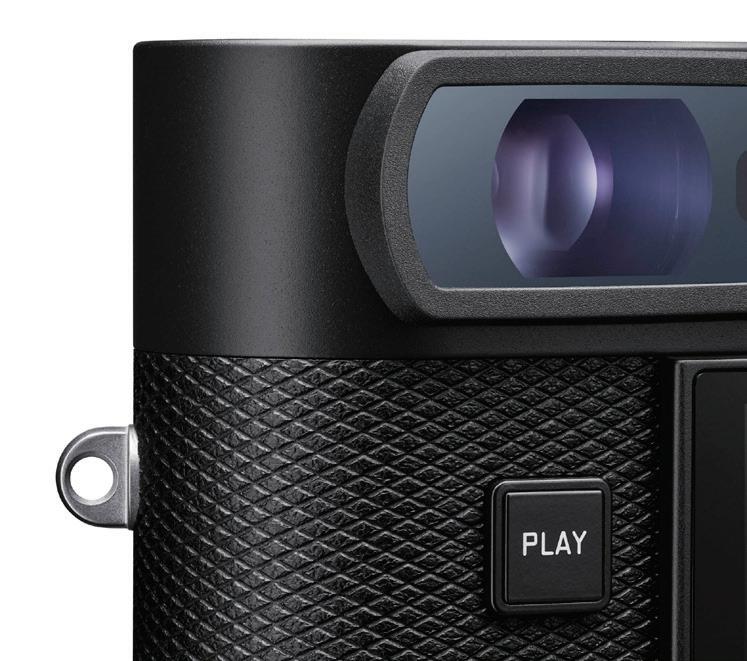
The viewfinder window and the dioptre adjustment button/dial look like the Q3 although the housing had to be adjusted to fit the M camera. The dial pops out for adjustment when you give it a push. It has a range from -4 to +2 and will be a very welcome addition for those who wear glasses.
New in firmware v2.6.0
The M EV 1 comes with firmware version 2.6.0 this update doesn’t just relate to the M EV1, but will be available today in a firmware update for all the M11 variants.
This firmware has a number of bug fixes, mostly to do with stability. In addition there are three important changes:
Dust protection via Leica FOTOS app
This is something that can now be activated via FOTOS;it had been requested by a number of users, especially those using the M11-D.
Lens list editing
You can now edit the lens list even if you have a coded lens attached (which you could not before).
In addition to this, if you edit the lens list it will be available to all profiles. There has been a bit of heart searching about this, because most camera settings can be assigned to profiles individually (so you could assign a different list to each profile.) Trouble was that’s a bit of a balls-ache if you add a new lens and need to update all the profiles. So Leica decided (quite rightly) that one would want all the uncoded lenses available in all of the presets. Better than this, if you save the user profiles to disk, then the lens profiles are also saved.
Turning
your grey skies blue
(Or your magenta skies green or yellow!)
There have been some complaints about magenta tint with all the M11 variants. Although I thought it would be good to have a solution to this problem, I also felt very strongly you can’t just change the colour on a camera three years after it’s been released.
Most photographers (even if they were not sure in the first place) will have developed a workflow to make the colours they like. Personally I’m really happy with the colours–I accept there is more magenta in grey skies than is usual with competitive cameras and feel Leica is closer to the truth and other cameras have too much cyan!
(top) Faster. Faster. Leica
Leica has come up with a really elegant solution to this problem. The white balance in your camera will not change–unless you decide to change it!
There two new options in the White Balance menu: White Balance Adjustment . . . on/off White Balance Adjustment
Choosing the second option with the first switched on allows you to move between green and magenta on the vertical axis and yellow and blue on the horizontal (reflecting the tint option in Lightroom). You can use the touchscreen to move the sliders and a double tap centres it again.
Using Daylight (sunny) and changing white balance 15 clicks towards green (from magenta) will change the tint value in Lightroom from +22 to +15.
This change is applied to both fixed white balances (daylight, for example) and Auto White Balance. Better than this, you can make specific changes for different User Profiles. I have one for Landscape and one for Portrait (where the original base WB values are such a triumph).
Of course this also allows you to create your own colour profiles, which are transferred to DNG and Lightroom whether you want vivid or muted (or something wild). You could even save different sets of profiles for different circumstances, export them to disk and re-import them when required.
Although the initial impetus for this change might have been dissatisfaction from users about the magenta, Leica has taken this seriously and produced a really useful new feature
White Balance Adjustment will also be available via FOTOS.
Focusing with an EVF vs a Rangefinder
This is a really big subject! What is certain is that in different circumstances the different methods have different advantages (or disadvantages).
SYMBOLIC OR REPRESENTATIONAL?
Normally one would think of the traditional rangefinder as being ‘analogue’, the actual focusing is done by maths and mirrors, mechanics and machining, and is very much symbolic. It will always give you a result, with any lens, but without reference to the aperture.
The Flower Jug. Leica M EV1 + 35mm Summilux-M FLE ASPH
THE RANGEFINDER
While it always seems almost miraculous how accurate it is, using a rangefinder can become challenging with very fast lenses when wide open (the Noctiluxes for instance). Generally speaking as you stop down and the depth of field gets greater, the rangefinder becomes more and more reliable.
The other issue is wide angle lenses where the rangefinder window doesn’t cover the whole of the image area, as well as telephoto lenses where the image is only a tiny part of the rangefinder window. However, with longer focal lengths, this allows you to ‘see around’ the subject outside the framelines.
THE EVF
The EVF on the other hand is a proper representation of what is and what is not in focus. What’s more, it shows you exactly what you are going to get in the final image; you have an accurate representation of the exposure and also the depth of field (unlike most mirrorless cameras, with the M EV1 you have stopped down metering).
Also, there are the focusing assistants: Focus Peaking, Magnification, and if you want to ‘look around the subject’ for a small sacrifice in megapixels you can use the digital zoom to put framelines in the viewfinder. Full frame: 60mp 1.3x crop: 39mp 1.8x crop: 18mp. For those of us with aging eyes, there is a diopter adjustment for the viewfinder.
It seems like a bit of a no-brainer.
EVF ADVANTAGES
1. Seeing the whole image
2. Seeing the depth of field
3. Seeing what is in focus
4. Seeing the exposure
5. Dioptre adjustment
6. Ability to use framelines in crop mode
7. Focus peaking
8. Magnification
9. Focusing accurately wide open
The same with all M mount lenses
RANGEFINDER ADVANTAGES
1. Seeing around the subject
2. Fast, easy focus confirmation
3. Seeing the natural light
4. The Wonderful Heritage
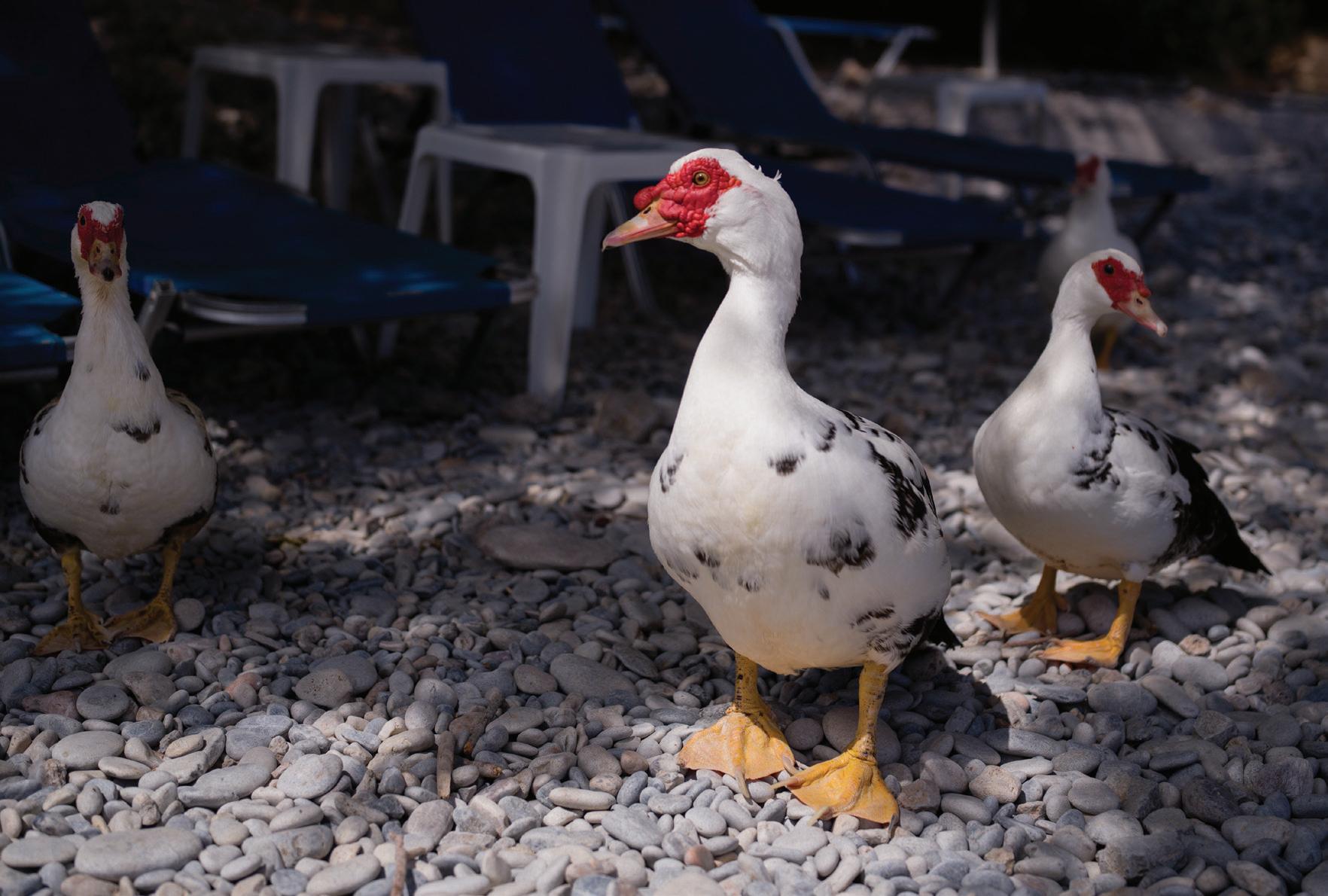
Beach Muscovies. Leica M EV1 + 35mm APO-Summicron-M
THE DEATH OF THE RANGEFINDER?
In the face of all that, it’s hard not to believe that M users will all quickly get themselves M EV1 cameras and that will be the beginning of the end for the traditional rangefinder.
Will those on the forums who are so steadfastly opposed to an EV M be quickly converted?
Of course, like most things, nothing is that simple; the reason the rangefinder is still popular after nearly 75 years is not just a function of nostalgia or a desire for beautiful objects.
SEEING AROUND THE CAMERA
That’s it–with a rangefinder you see around the camera, not through it. I guess some would call it ‘getting the camera out of the way’. With a rangefinder M you feel involved with your subject, not with your camera.
Before the M EV1 I might have imagined the reason for this was because the viewfinder window was on the top left, so (if you are ‘right eyed’) you can look at the subject with your left eye, which, indeed, you can, with both cameras. But it isn’t the same–using one eye to look through a magnified (or de-magnified) image in the M EV1 and the other to look at the world just doesn’t really work.
SPEED OF FOCUSING
There is more to it than that:
While getting accurate focusing wide open is easier with the electronic viewfinder, you will generally need to zoom in (one button press) to confirm the focus. In lots of situations, that isn’t too much of a problem, but it isn’t quick and it disturbs the bit of one’s brain which is doing the composing.
That’s wide open–if you stop down a bit with the M EV1 it can be very hard to see what is in focus and what isn’t, whereas with the rangefinders symbolic rectangles this is still just as fast and easy.
John in Blue. Leica M EV1 + 35mm Summilux-M FLE ASPH
Lovely Ladies of Brane Moor. Leica M
Hydrangea. Leica M EV1 + 35mm Summilux-M FLE ASPH
(above images) Blowing up a tempest. Leica M EV1 + 35mm APO-Summicron-M ASPH
In fact, the focusing is always faster with the rangefinder. This is especially the case with wide angle lenses with a big depth of field when it can be really hard to see where the optimal point of focus is with the EVF. But it’s also true of standard lenses, again, especially if you stop down a bit.
Of course, you can always zone focus with either camera, perhaps interestingly this is not something I ever do with the traditional rangefinder (I always think it’s easier to do it ‘properly’). I have found myself using it a bit with the M EV1, probably because it’s hard to focus when the lens is stopped down.
Testing Elsie, and talking about it among the other testers has made me really understand what a wonderful thing the rangefinder is. It is fast, involves you with the subject and it gets the camera out of the way. Although you can focus more accurately with an EVF, it certainly takes longer and has an effect on the spontaneity.
It’s an interesting thought that SLR cameras which quickly outsold rangefinders in the 1960s disappeared almost completely as soon as decent mirrorless cameras came on the scene–but I’m sure that the optical rangefinder is here to stay.
So, what about the M EV1?
Well, in fact it’s a fantastic camera, with lots going for it, but the one thing it is not is a replacement for a rangefinder camera.
I guess perhaps it’s not the right camera for street photography or for photojournalism with situations where things happen fast and your subject is moving about.
On the other hand, when things aren’t happening fast and you have time to take advantage of the excellent focus assistance options, then the M EV1 really comes into its own.
I’ve been using it a lot with the WATE (Wide Angle Tri-Elmar 1618-20) the 35mm APO Summicron and my 90mm f2.8 Elmarit M. This is a nice tidy kit covering all the bases–and of course the image fills the viewfinder, whatever the focal length.
Real World shooting with the M EV1
For our recent visit to Crete, I shot almost exclusively with the M EV1, using the WATE, the 35 APO Summicron and my all-time favourite lens, the 75mm APO Summicron.
It was a really good experience, and, for this kind of shooting, better than using an M11, and that’s even with my years of practice with a rangefinder. I used the 75 a lot for close up images, and also for people in restaurants and bars. Considering you can crop so well with 60MP, it effectively gave me a focal range from 16mm to 135mm in 3 lenses.
I also used it at a wedding, and for some family group photographs; it performed really well in both circumstances (although
there were fast moving situations where an M11 would certainly have been better.)
I’ve also been using it for close up photography, notably with the lovely 35 APO Summicron, where the rangefinder of the M11 is limited to 0.7 metres and the lens will focus to 0.3 metre.
Elsie and the SL3 for M lenses
I spent a weekend shooting the SL3 with M lenses to see how the experience compares to Elsie.
Of course, the SL3 is almost 400 gms heavier than the M EV1, which is certainly not insignificant (indeed, nearly twice as much). Being able to use the joy stick is a positive advantage and the eye point of the viewfinder means that the image looks bigger than the M EV1. You can always stick on an AF lens…and you save a couple of grand as well!
The SL3 has image stabilisation, but I really haven’t found this a problem with either the M11 or the M EV1. If there might be an issue then I use auto-ISO, Aperture priority and set the shutter speed limit to 1/(4f) so that it’s 4 times the focal length. I really don’t have an issue with camera shake.
I use the SL3 quite a lot, but truth be told I almost never use M lenses under normal circumstances, because–why? There are so many good Auto Focus lenses for the SL system.
This has been an interesting experiment, but it hasn't changed my opinion of the M EV1, which I think is a great idea and which lots of people will really love.
So - who is it for?
A couple of years ago I wrote a memo to Leica about the possibility of a Leica with an EVF and identified two demographics. The obvious groups were oldies (like me) who find rangefinder focusing difficult (not me yet!), and for younger photographers who fancied an M, but were not enamoured of the idea of getting to grips with a rangefinder.
After six months, my feelings have changed a bit–I think it’s much more complicated. Certainly I’m still sure it will be popular with new Leica users who don’t feel like learning how to use a rangefinder.
I’m not so sure it’s the right answer for those who are finding it difficult to focus a rangefinder. I guess if they have found the Visoflex 2 to be easier, then this will be better still, but I’m not so convinced there is a way to make manual focus easy with poor eyesight; maybe it’s time to buy a Q3? (Or better still a Q3 43)
On the other hand, I think it’s a wonderful camera for travelling with a diverse set of M lenses, fantastic for portraits and perhaps wedding photography as a companion for an M11.
The future
Clearly this is a first step. Leica has taken existing technology and created a new camera. It’s a great deal more than just an M mount camera with an EVF and, as I hope you’ve gathered from all this blathering, it really is a different thing from a traditional M camera.
There are lots of things that could be included in such a camera in the future, the obvious thing being some form of focus confirmation. The technology certainly exists for this, but how to do it is much more interesting and complicated. Perhaps a rectangular section like the existing rangefinder or maybe a confirmation light or arrows.
I hope there will be further Leica M EV cameras, but I also hope they will stay close enough to the rangefinder versions to be used as complementary cameras rather than as competitive ones.
The same . . . but different
So while using the M EV1 is quite different from using a normal M, it is useful in different circumstances. Of course, the image quality and the menus are all the same, so the obvious thing is to have both an M11 and an M EV1!
Although that sounds flippant, I do feel the most important use of the M EV1 is as a second camera to use with wide angle and telephoto lenses alongside an M11.
At any rate I’m certain it’s another brave experiment from Leica. While Christoph Mueller, the M product manager, tells me “it’s not an experiment, but a bold and well-considered decision to expand the M experience”. Hard to argue with that!
Elsie is a camera that will be loved by lots of travel photographers as a primary camera and many more Leica photographers as a second camera.
It’s a great addition to the M portfolio and a new chapter in the history of the M, but of course, the rangefinder will always be at the heart of the M system, no matter what.
Refreshingly, it’s also a bit cheaper than an M11. •
Aghios Pavlos. Leica M EV1 + Wide-Angle-Tri-Elmar at 16mm
Acknowledgements
First of all, the bunch of great characters who have been arguing and joking about the M EV1 for the last six months–it’s been fun and you have all contributed to this article in one way or another:
Elmar Streyl, Alex Uehlinger, Huw John, Siegfried Günther, Olivier Touron, Samuel Gillilan, Milan Swolfs and of course Leon Baumgardt; always the coolest compere!.
At Leica, Stefan Daniel has, as always, been wonderfully helpful and enthusiastic. Christoph Mueller has put so much effort and attention to this project and if it’s a success then it will be very much a feather in his cap!
Thanks are also due to Marke Gilbert for helping me not sound like AI!
Most important is Emma, who not only puts up with me testing the cameras and complaining about them, and complaining about having to sit down and write the articles, but also proofreads them, makes valuable comments and turns my ramblings into something sensible.
Further Reading
Elmar Streyl has an excellent report up at: https://www.l-camera-forum.com/
My friend Sean Reid has published articles about the M EV1 on https://www.reidreviews.com
by AYASH BASU
frame in
Cuba Through the Rangefinder
For most Americans, Cuba exists in a fog of myth and mystery— caught somewhere between Cold War propaganda and Instagram filters. The first time I boarded a flight to Havana, I felt a quiet tension tugging at me. Was this allowed? Was it safe? It felt like crossing an invisible border of history. I was apprehensive, unsure of what awaited on the other side of the Florida Straits. What I found surprised me, made me look closer, and calmed a restlessness I didn’t need.
Cuba was not the dark, dangerous place the embargo-era imagination paints. Instead, it opened itself with warmth and color, rhythm and resilience. It’s a place where contradictions don’t cancel each other out—they coexist. It’s visually rich in a way that feels curated by time rather than design. And for a photographer, especially those who see through the deliberate, meditative frame of an M rangefinder, Cuba is intoxicating.
Each visit has chipped away at the distance between me and the island. It has grown more familiar, more intimate. Almost. And yet, it always finds new ways to astonish.
A FAMILIAR STRANGER
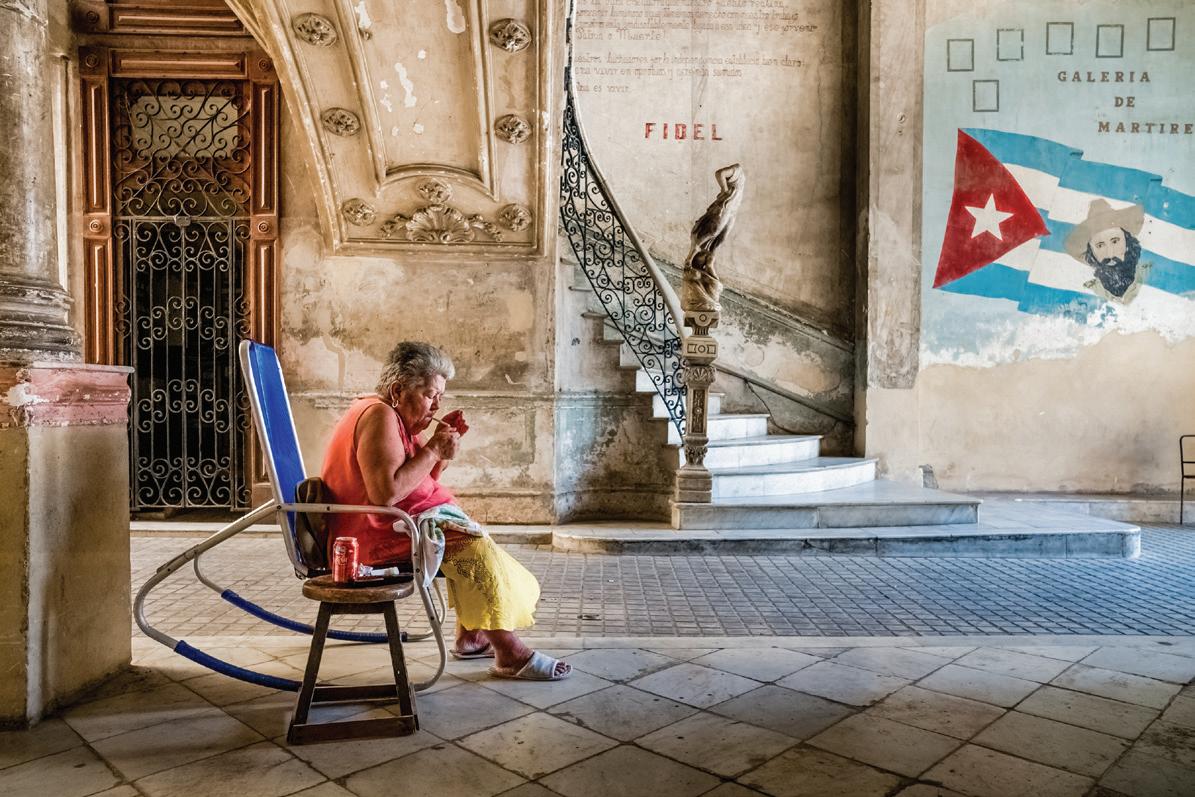
I was born in Calcutta, a city which, like Havana, breathes history through its streets. For much of my childhood, it was steeped in leftist ideology. The red flags, the student marches, the rhetoric of revolution—these were part of daily life. Images of Fidel Castro and Che Guevara weren’t just foreign icons; they were household names, revered in murals, magazine covers, and campus posters. The Cuban revolution, though distant in geography, felt oddly close in spirit.
So when I first arrived in Havana, it felt less like discovering a new place and more like returning to something half-remembered. The only real difference was the language—Spanish instead of Bengali, but the echoes of Calcutta were everywhere—not in landmarks, but in the mood, the conviction, the defiant pride of a people shaped by endurance. Two cities, shaped by revolution and struggle, seemed to recognize each other in me.
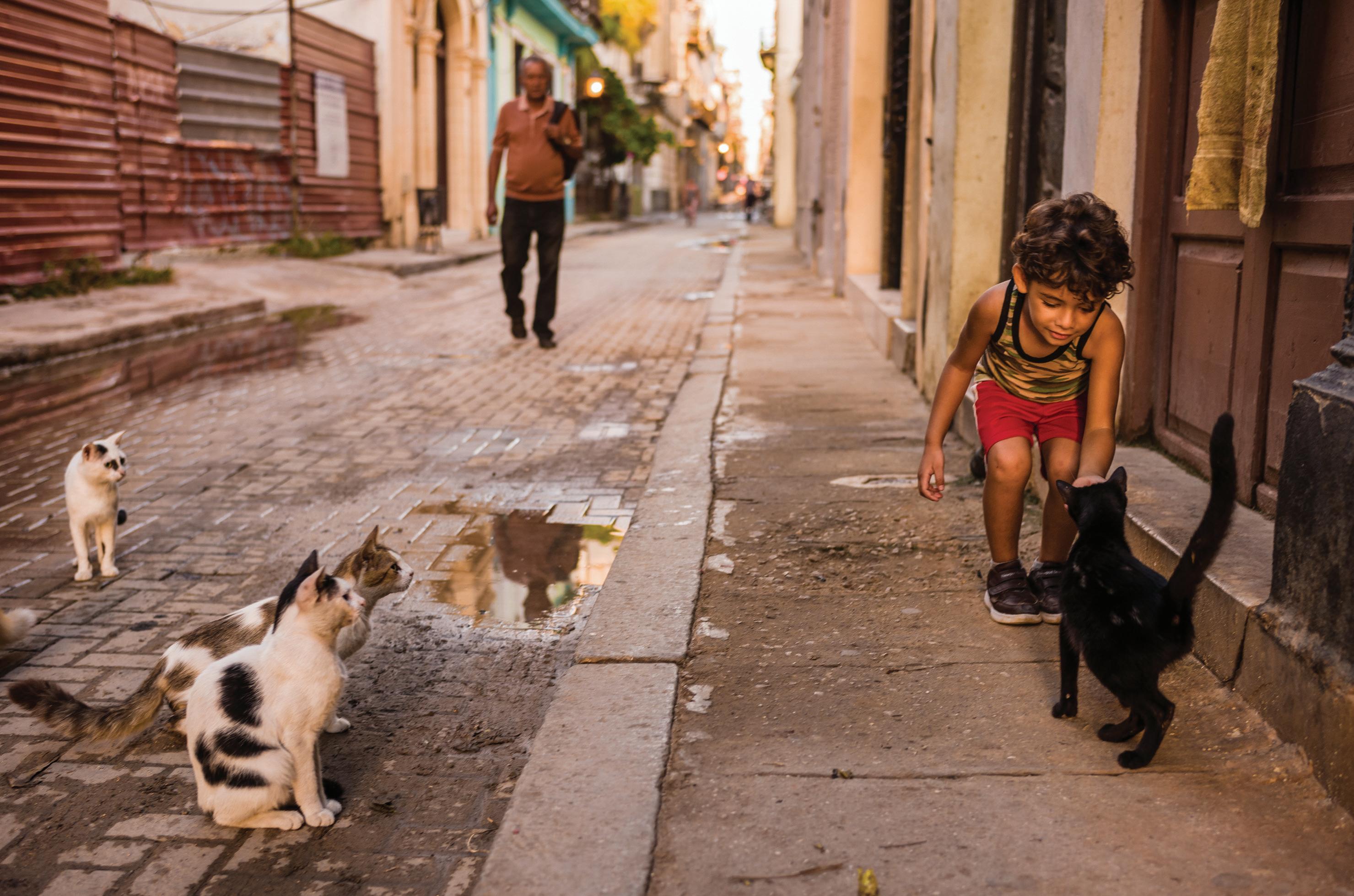
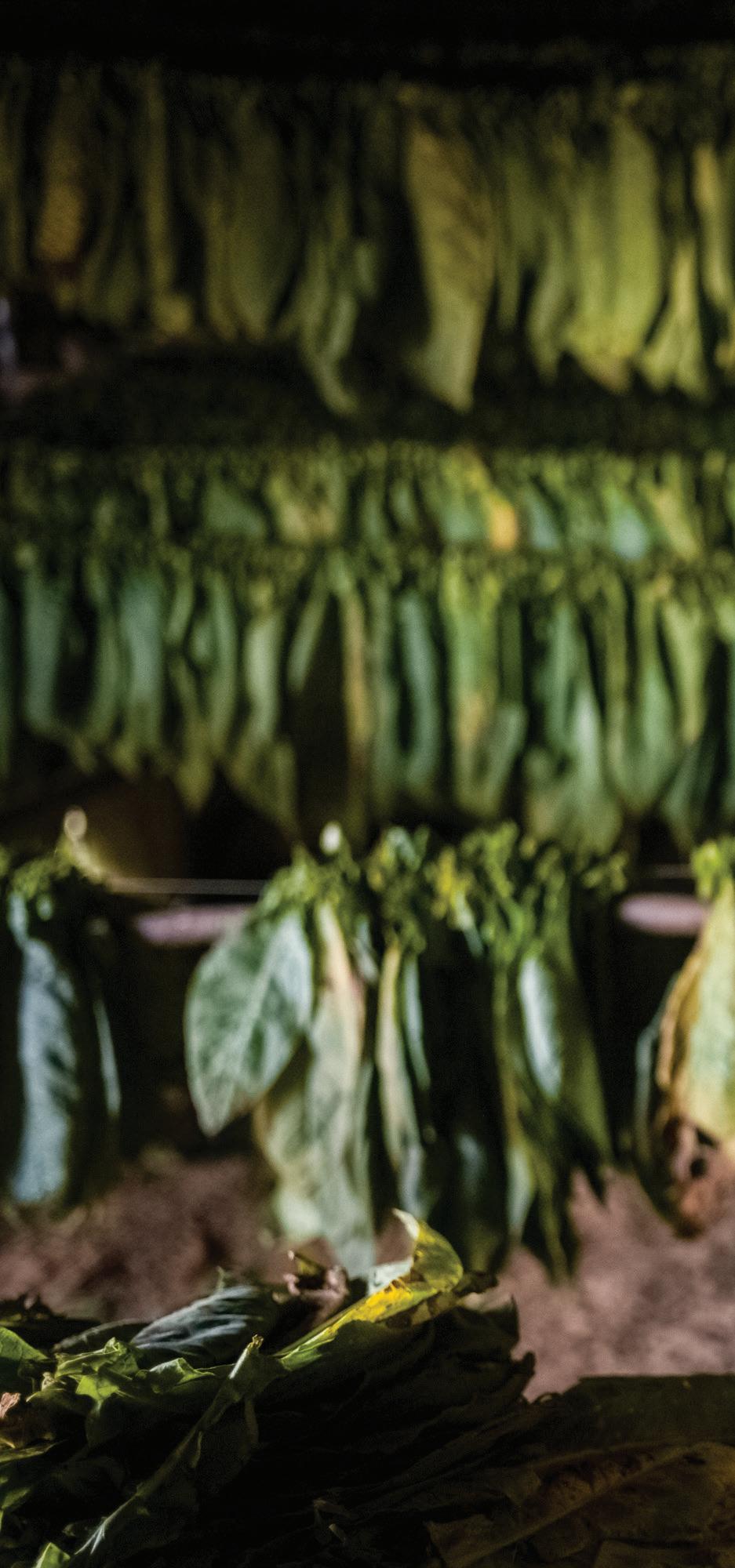
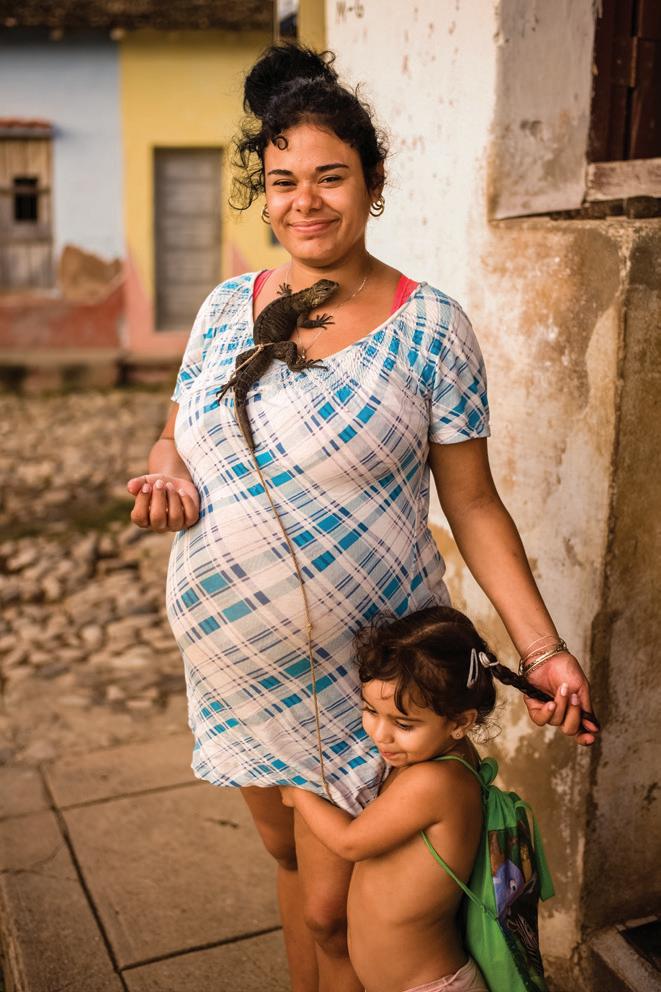
I don’t speak Spanish beyond a few pleasantries and survival phrases, but that’s rarely been a barrier. In Cuba, conversation is more than words. It’s in the cadence of music drifting from a balcony, the lift of an eyebrow, the echo of a domino slap in a sunlit alley. It’s in the quiet generosity of a tobacco farmer offering coffee, or the way a child poses—half shy, half bold—when I raise my camera.
Cubans are warm and effortlessly hospitable. They’re quick to laugh, quick to connect, and endlessly curious—about you, about the world, and especially about what exactly you're doing wandering their streets with an old-fashioned camera. More than once, my friendships here have started with a smile, a question, or the sight of a wide-eyed American fumbling with manual focus in the midday sun.
THE GIFT OF SLOWNESS
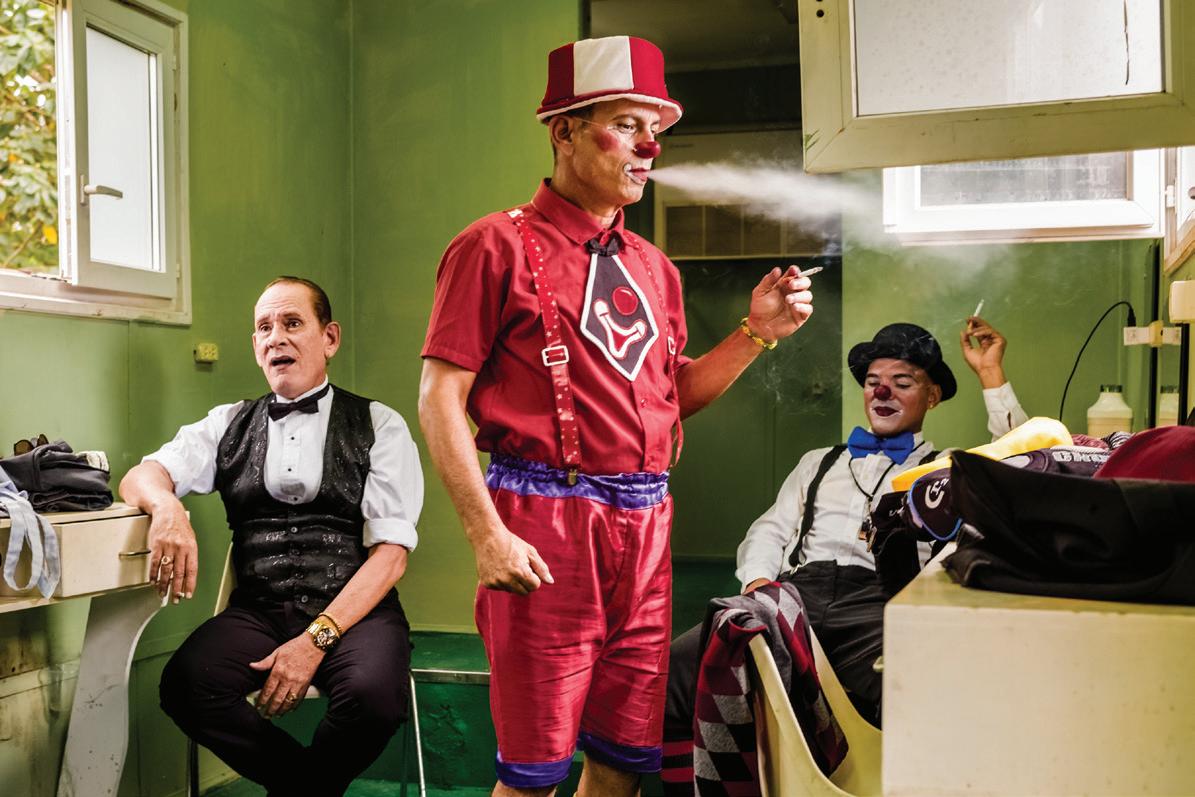
Photographing this is a challenge. It’s easy to aestheticize hardship. But Cuba demands more than that. It asks you to see not just the textures, but the lives they contain. The mother on the balcony hanging clothes in the morning sun. The boxer’s sweat-streaked face in a makeshift gym. The priest blessing a tiny procession under faded political slogans. There’s dignity in these moments, and honesty in their imperfection.
Cuba invites slowness, possibly even invented it. Not the enforced kind that comes from scarcity or bureaucracy, but a soulful kind—the kind that teaches you how to look. Time doesn’t run on digital precision. It meanders. Conversations stretch. Nothing happens quickly, but everything happens fully. For someone used to the fast shutter speed of modern life, this is both disorienting and liberating.
That’s why manual focus feels so natural here—no automation to get in the way. It forces you to be present, to anticipate, to listen with your eyes. In Havana’s Centro neighborhood, I can spend hours just walking, watching light fall on peeling colonial facades, children chasing soccer balls barefoot, vintage Chevrolets gleaming under stray sunbeams. Cuba teaches patience; if you’re patient, it rewards you.
DECAY AND DIGNITY
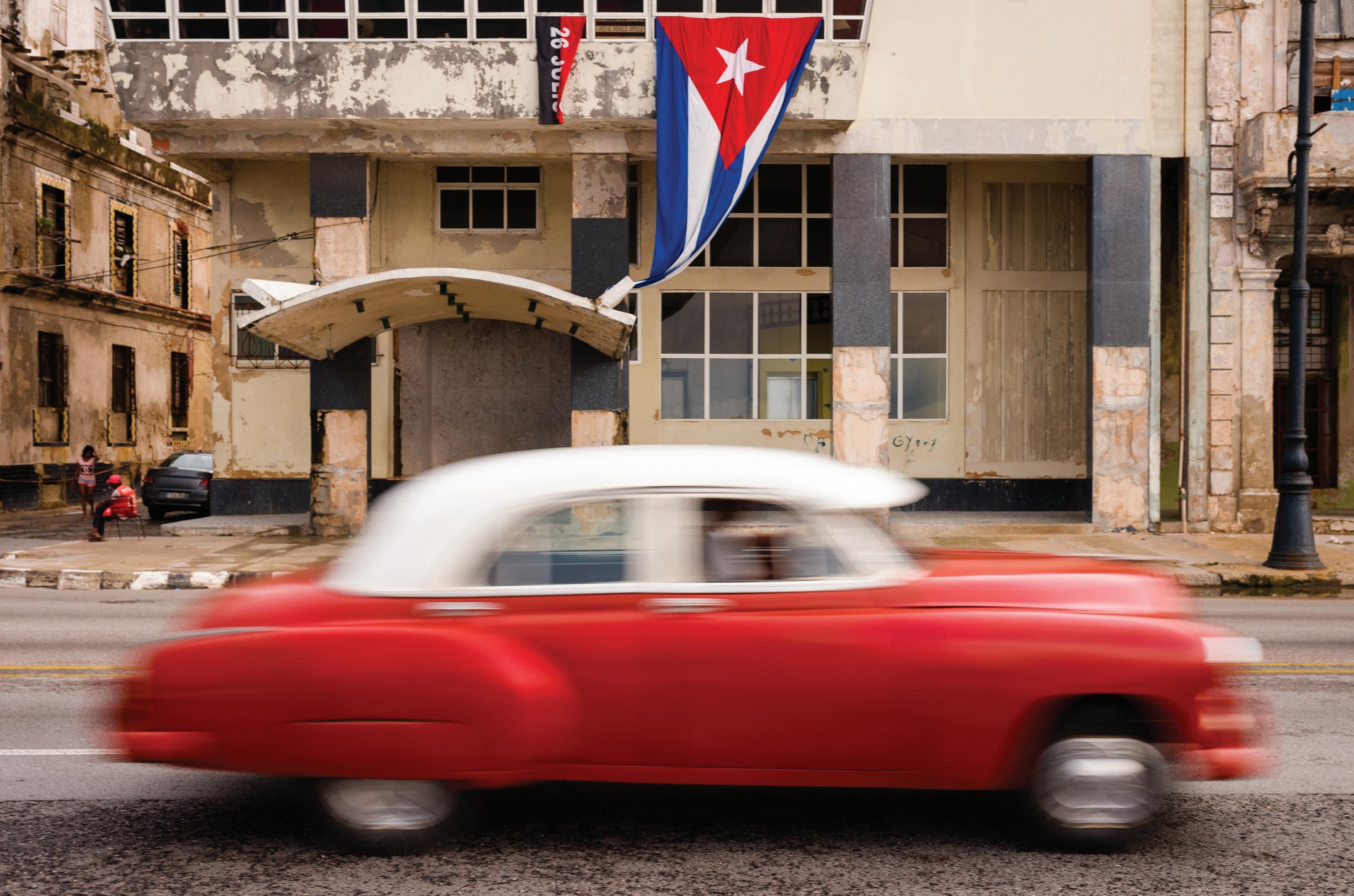
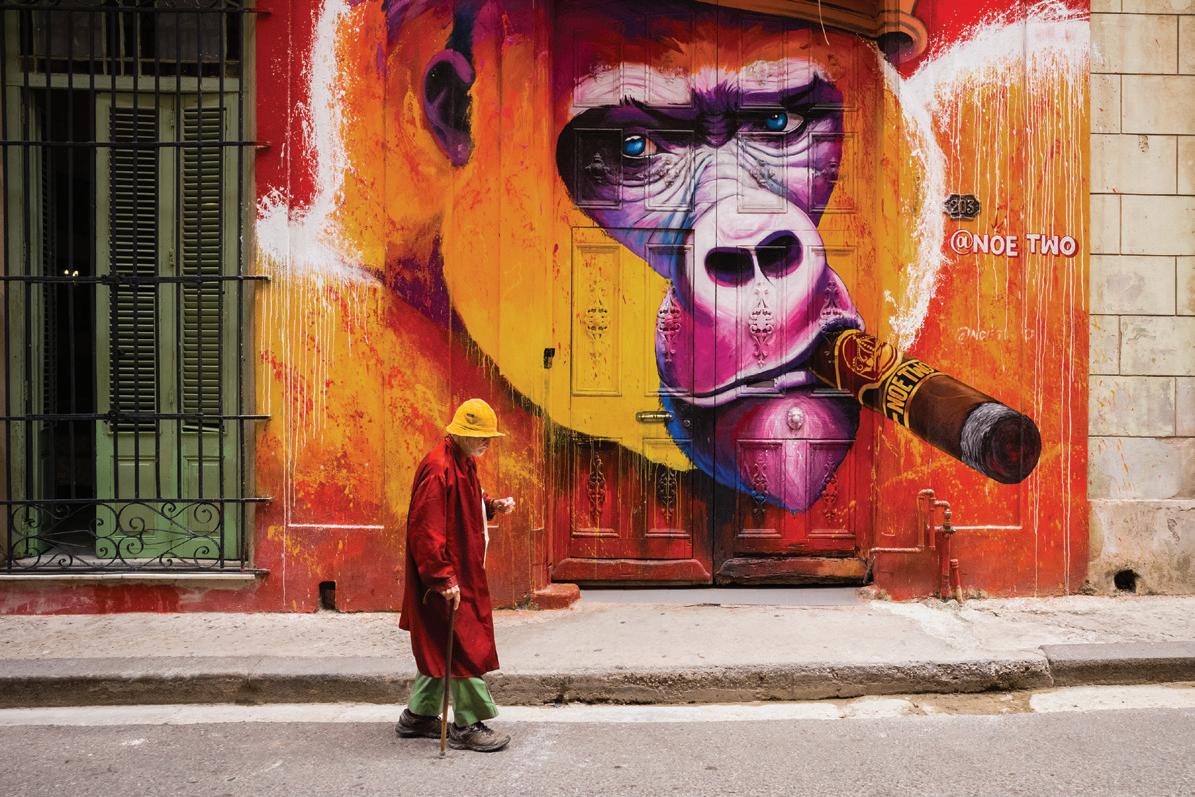
There’s undeniable beauty in Cuba’s decay. Walls crumble but stand tall. Paint peels in pastel layers. Stairwells spiral into shadows. You see the struggle, but also the pride. Homes are cared for with what little people have. Cars from the 1950s rumble by, kept alive with ingenuity and love. It’s not nostalgia—it’s necessity.
THE MUSIC OF THE ISLAND
Cuba is music, even when it’s silent. On any given day, you’ll hear bolero from a courtyard, reggaeton pulsing from a scooter, a saxophone drifting through Old Havana’s alleys. Music is everywhere, not as performance but as presence.
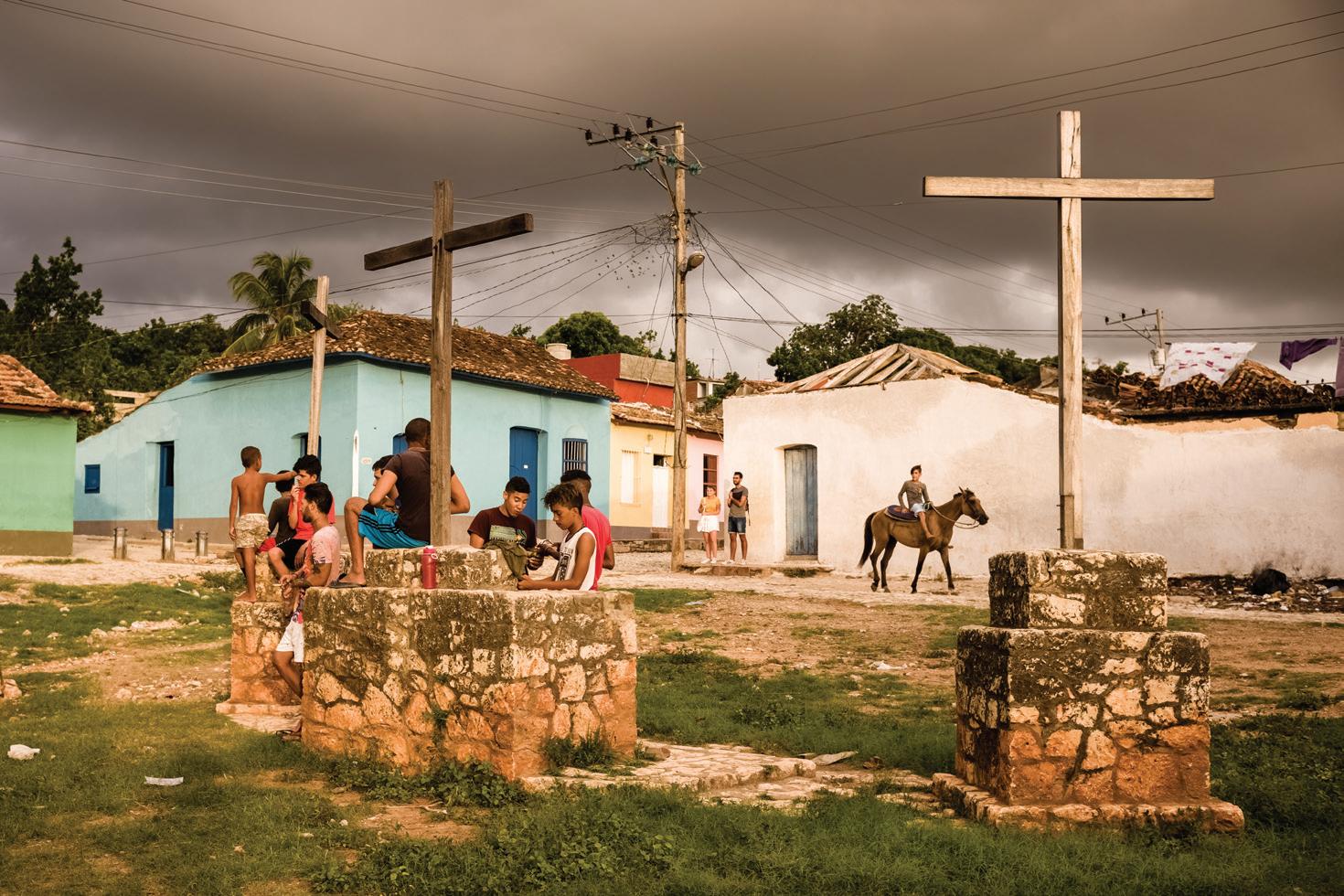
Once, in Trinidad, I watched a group of farmers on horseback making their way home as the sun dipped behind the hills. They moved slowly along the cobblestone streets, their wide-brimmed hats tilted back, clothes marked by the day’s labor. One of them began to hum an old 'son' tune—low and familiar—and the others joined in, their voices rising gently above the sound of hooves on stone. It wasn’t a performance, just a shared rhythm at the end of a long day. I stood there, taking it in, feeling the quiet beauty of the moment.
When I finally lifted my camera, it wasn’t to take a photo, but to hold something sacred still—just for a moment. (above) Leica M10-P & 35mm Summilux-M
Leica M10-P & 50mm Voigtländer Nokton f/1.2 VM • 1/250 sec, f/4.0, ISO 400
A NATION IN THE SHADOWS AND IN PAUSE
Cuba’s energy crisis isn’t background noise—it shapes daily life. Electricity fl ickers unpredictably, sometimes vanishing for 15 hours at a time. As you walk through Havana, the strain of economic hardship is palpable. Foreign currency earnings have plummeted (down roughly 30%) shrinking access to food, medicine, and fuel. Inflation in the informal economy only deepens the peso’s instability.
Amid the blackouts, Cuba is betting on sunshine—literally. In partnership with China, the government is building dozens of solar parks, with 55 planned by late 2025, aiming to stabilize daytime power and lessen dependence on imported fuel.
Meanwhile, the U.S. has moved to reinstate hardline policies— once again banning tourism, tightening remittances, and blacklisting even cultural and educational exchanges. As a visitor, you feel the thrum of contradiction and hope. Cuba remains a living testament to survival, creativity, and adaptation under pressure.
HOME AND DEPARTURE
Each time I leave Cuba, I feel like I’m leaving a place I’ve only just begun to understand. I carry back images—SD cards and fi lm rolls thick with shadows and gestures—but also stories. Moments that never make it to the frame but linger in memory: the boy who asked what snow feels like; the taxi driver who knew more about New Orleans jazz than I did; the old woman in a church who pressed a rosary into my palm and said, “You’ll come back.”
And I do. Because Cuba, for all its contradictions and complexities, keeps giving. It tells you to slow down, to see, to connect. It reminds you that beauty doesn’t require perfection—only presence.
For a photographer, that’s everything. And for me, as someone who sees the world in fragments of light, shape, and human truth— Cuba remains one of the most generous places I know. Its soul is alive and accessible, just harder to reach.
Leica 35mm Noctilux-M f/1.25 ASPH
INTRODUCTION
This is an important release for Leica–it’s the first new Noctilux since the 75 f1.25 was announced in November 2017. In fact, it is only the 5th Noctilux Leica has made since 1966. A big deal indeed!
It is also the first 35mm Noctilux, something which has been rumoured ever since the f0.95 was announced in 2008. I think there will be some people who are upset that this lens isn’t also f0.95, and it was clearly a difficult decision for Leica–something I will address in this article.
I’ve been lucky to have this lens for nearly a year in three different iterations. I’ve had a full production lens since just after Christmas. I shot it on the Leica M11, the M EV1, the SL3 and SL3-S, it’s been a lot of fun!
First of all, it’s worth having a look at the history of the Leica Noctilux lenses.
HISTORY
The history of the Noctilux is fascinating.
In the early days, film was slow and shooting in low light was quite a different experience from current day cameras with their perfectly usable 100,000 ISO (and more).
by JONATHAN SLACK
The Nikkor 5cm f/1.1
Nikon had brought out the 5cm f/1.1 rangefinder lens in February 1956, developed by Murakami Saburo after years of design work, apparently only using an abacus. It featured 9 elements in 7 groups, but while very fast, it suffered from serious coma and field curvature and was relatively soft wide open. The lens only remained in production until about 1959 but remained the fastest lens in Nikon’s range for many years.
In the 1950s and 1960s, Leica rangefinder cameras were very much the equipment of choice for photojournalists and documentary photographers. Better low light performance was always welcomed, so fast lenses became increasingly important for Leica to keep their dominance in the market.
In 1957, Leica started work on aspherical elements in an attempt to solve the problems associated with spherical aberration in fast lenses (causing blurring, reduced contrast and coma). In 1958, they produced the first prototype which was a 35mm Summaron f/2.8 Asph (it had two aspherical elements, but never came to production).
In 1959, Leica made a prototype of a 52mm f1 Asph also with two aspherical elements, but this was never produced due to poor image quality wide open.
The Noctilux 50mm f/1.2 Asph
In 1964, the first prototype of the Noctilux 50mm f/1.2 Asph was produced. This lens was designed by Helmut Marx and Paul Sindel. Marx was generally considered to be the successor to Professor Max Bereck at Leica (Bereck had died in service in 1949).
The Noctilux 50mm f/1.2 Asph was finally released in 1966 at Photokina, where it was the star of the show. It had two aspherical elements which had to be ground by hand, an extremely difficult procedure. The story has it that Gerd Bergman is the only Leica employee who could actually do it, and even then there was a high failure rate. Despite the difficulty of manufacturing, the lens stayed in production until 1975 with a total production of some 2,450 units.
In January 2021, Leica announced a reissue of the f/1.2 Noctilux using modern manufacturing techniques and tolerances. I reviewed this lens on its release. (You can read about it at https://www.slack.co.uk/leica-noctilux-f1.2.html ) This is one of my favourite and most used lenses (I have the black paint version).
It is relatively small and light, wonderfully dreamy wide open, but very sharp when stopped down a bit.
The Noctilux 50mm f/1
Dr. Walter Mandler was working at the Leitz factory in Midland Canada and was tasked with producing a fast lens which would be easier and cheaper to manufacture than the double aspherical f/1.2. He used highly refractive lanthanum glass instead of aspherical elements and created a slightly larger but even faster lens, but one which was easier to produce.
The lens had seven elements in six groups, and was in production from 1976 until 2008, There were four different versions, all principally manufactured in Canada.
This lens is still very popular today and might be considered to be responsible for the “Mandler Glow.”
The Noctilux-M 50mm f/0.95 ASPH
Introduced at Photokina in 2008, the replacement for Mandler’s Noctilux was designed by Peter Karbe in Wetzlar. It has eight elements in five groups including an aspherical element and elements with anomalous partial dispersion (to reduce chromatic aberration).
This lens is a favourite of many of my photographer friends. I was lucky to test it and used it extensively for a few years. As Peter Karbe says:
“The shallow depth of field made possible by the high lens speed–combined with incomparable colour rendering, rich contrast and exceptional detail–gives rise to images with truly unique aesthetics.”
The Noctilux-M 75mm f/1.25 ASPH
In 2017, Leica announced the new 75mm Noctilux. I had been testing various iterations of this lens over the previous 18 months. When it was released, I bought one, and it was a mainstay of preparation photography for weddings and much else. I wrote about it https://www.slack.co.uk/75-noctilux-m.html
This lens was also designed by Peter Karbe who said, “We pulled out all the stops we had at our disposal for this lens”. It has nine elements in six groups including two aspherical elements and lenses with anomalous partial dispersion. It has an extremely shallow depth of field and combines wonderful detail with lovely bokeh.
It even reduced the minimum focusing distance (one metre with previous Noctiluxes) to 0.85 metres, so it is also excellent for close up photography as well as portraits.
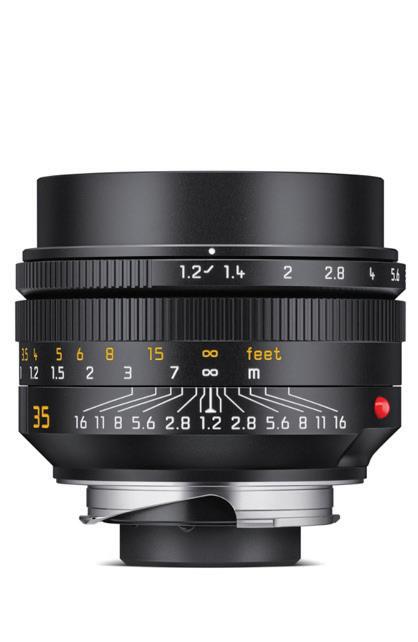
The Noctilux-M35 f/1.2 Asph
So, now we come to the new lens which is made from ten elements in five groups of which three are aspherical.
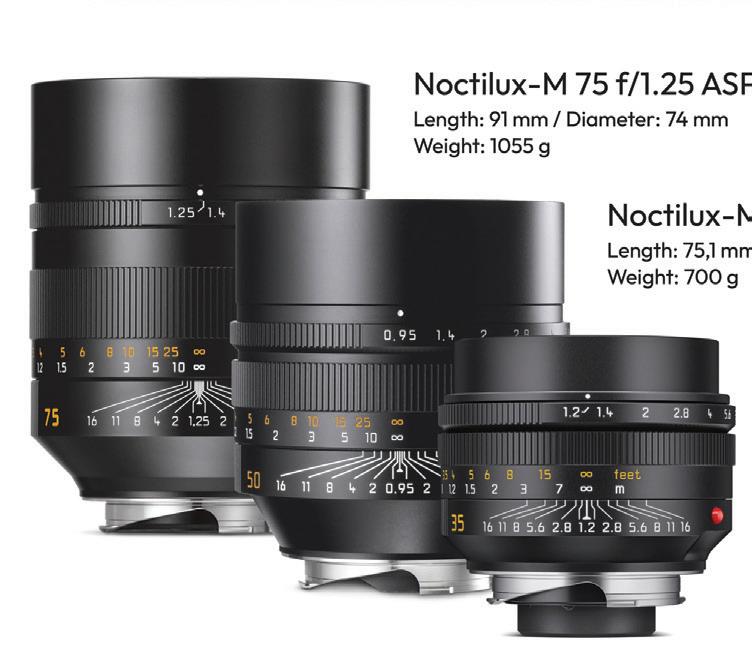
The lens is a compact 50.2 mm and a chunky 64.6mm wide, but it only weighs 416gm just 10 grams more than the 50mm f/1.2 Noctilux reissue, for reference the 75mm Noctilux weighs 1055 gm and the f0.95 700 gm.
Better than that it focuses down to 0.5m, perfect for those close up shots.
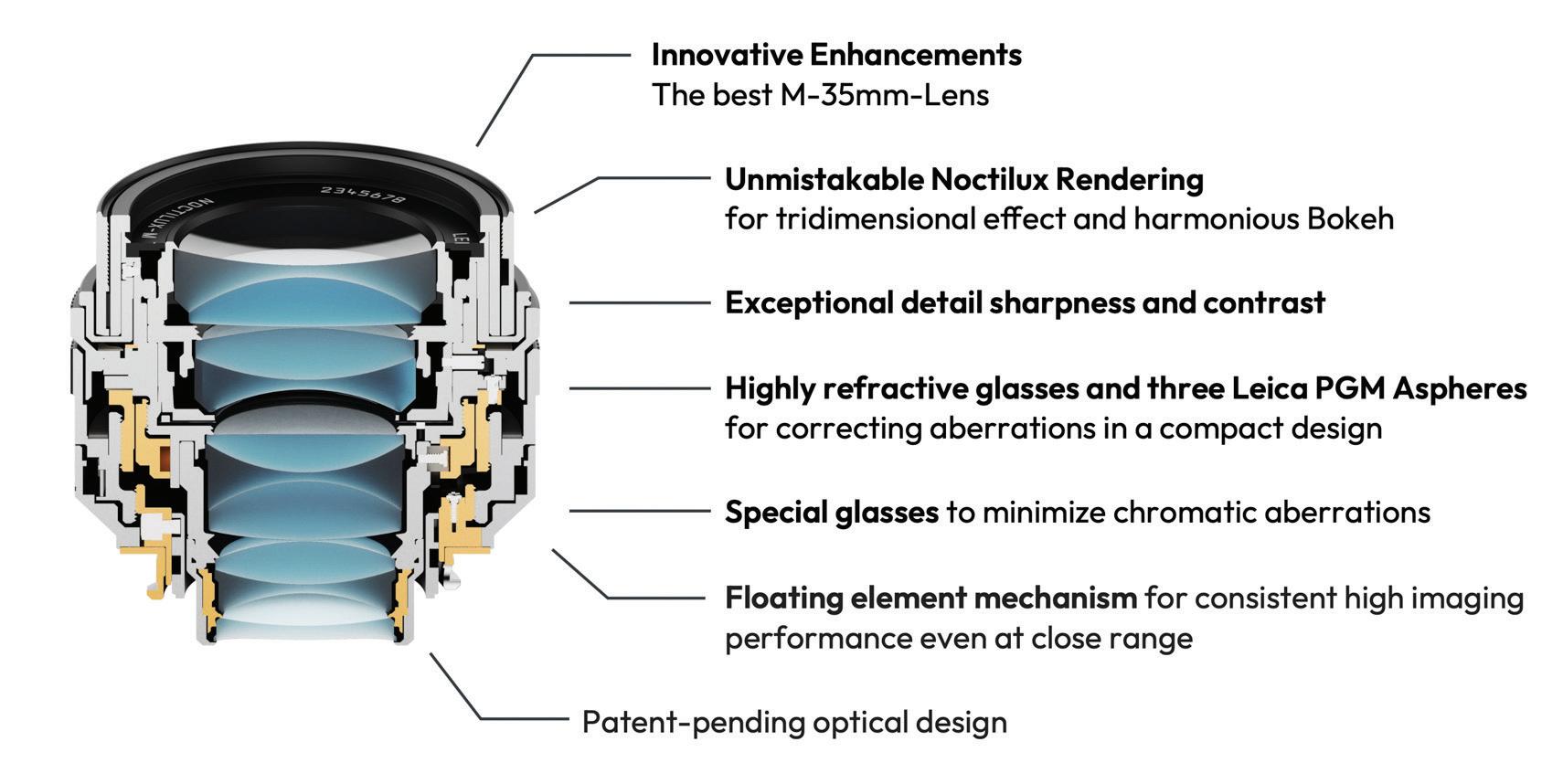
New technical developments include a revised floating element mechanism to keep consistency through apertures and to ensure there is no focus shift, and three aspherical elements which are made by a new in-house Precision Glass Moulding (PGM) technique.
The mould inserts are made from ultra pure tungsten carbide, which is one of the hardest materials in the world. The elements are pressed at temperatures up to 700 C and with tolerances of no more than three nanometers per millimetre of diameter.
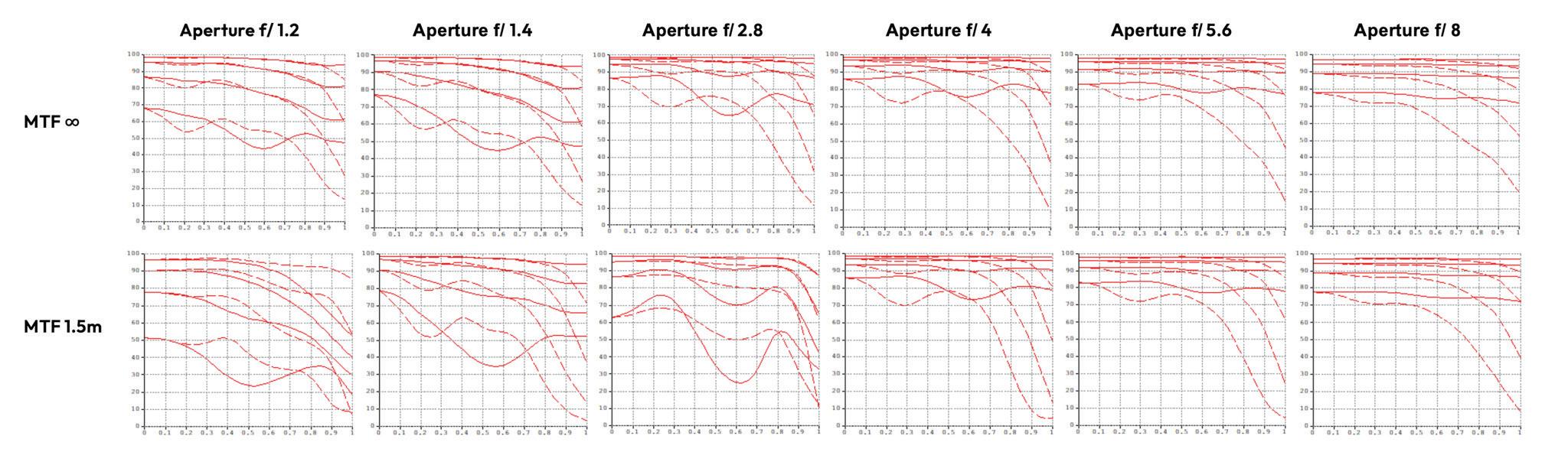
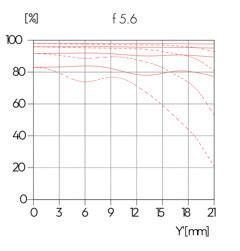
So, despite being faithful to the dreamy history of the Noctilux lenses, at heart this is a thoroughly modern lens, and the MTF figures certainly bear this out. As Peter Karbe famously said “Stop Down for What?”
The lens feels beautifully made and very solid. Indeed, looking at this cutaway lens you can see that like its big brother (the 75 Noctilux) it is mostly made of glass.
Although the lens is quite wide, it is also short, so it doesn’t occlude much of the frame when used with a classic rangefinder camera; the compact slide out lens hood is absolutely functional, but also helps to keep the rangefinder clear.
Like many recent M lenses it has a close focus option, and will focus down to 0.5 metres.
Although the focus throw is quite long, and the lens is missing a focus tab, handling is lovely. The aperture ring has definite clicks and no play. The focusing ring is wonderfully smooth with just the right amount of firmness.
Leica M11-D, 1/320, f/1.4, ISO 400
Peugeot Pepper. Leica M EV1, 1/1000, f/4 ISO 64
Spring Posy. Leica M 11-D, 1/640, f/1.2 ISO 64
NOCTILUX-M 50 F/1.2 ASPH.
COMPARISONS
NOCTILUX-M 50 F/1 ASPH.
NOCTILUX-M 50 F/0.95 ASPH.
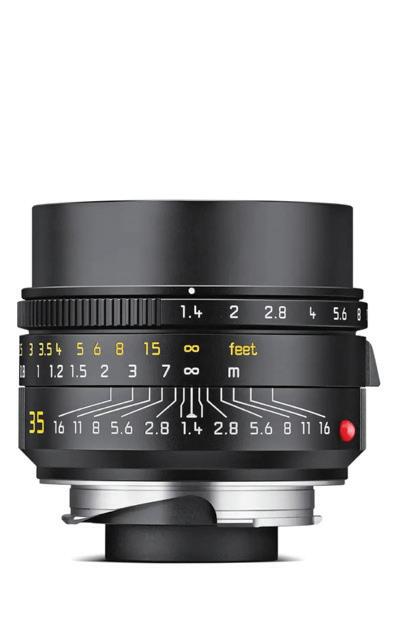
Anybody considering buying this lens is going to be thinking about what it has to offer in comparison to the other Noctiluxes. Perhaps even more relevantly in comparison with the other current 35mm options.
I was talking to one photographer about this and he said “Is it worth the extra money for just over 1/3 stop advantage?” I suppose if that was all there was to it, then it wouldn’t be worth it, but as we will see, that is not the whole story.
NOCTILUX-M 35 F/1.2 ASPH. Length: 50.2mm Diameter: 64.6 mm Weight: 415 g
NOCTILUX-M 75 F/1.25 ASPH.
NOCTILUX-M 35 F/1.2 ASPH.
Comparisons with the other Noctiluxes
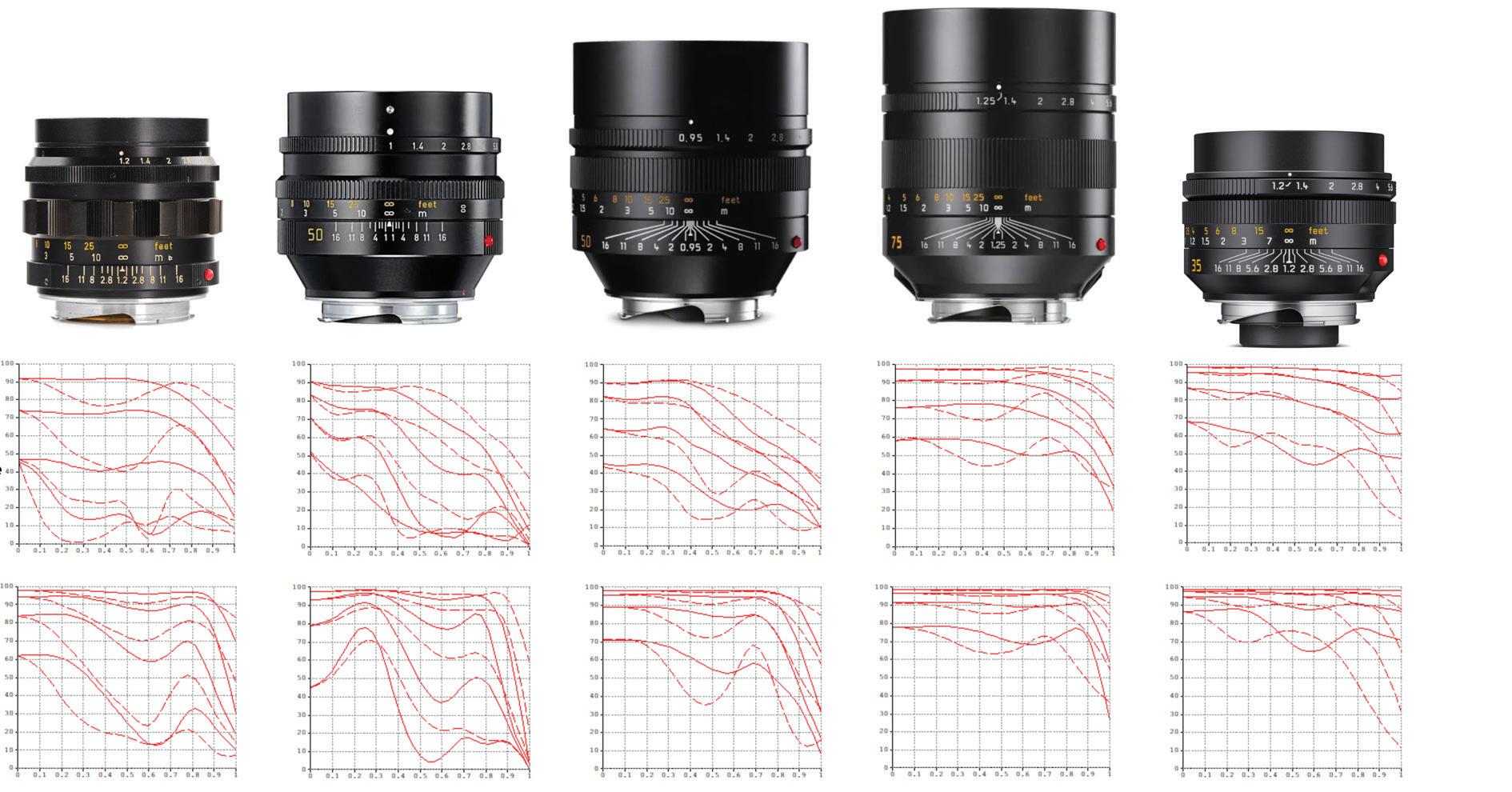
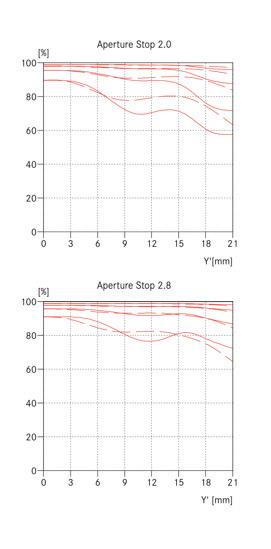
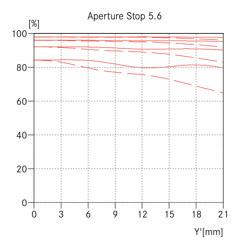
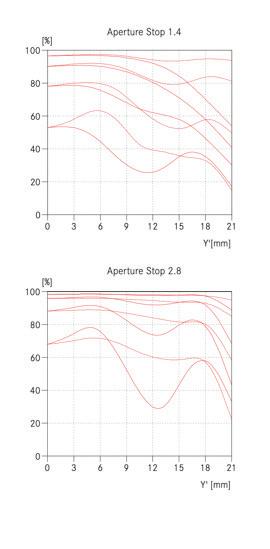
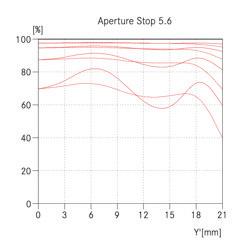
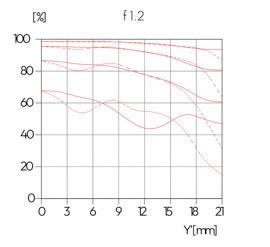
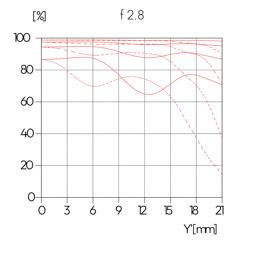
Above is a comparison of the sizes of the different Noctilux lenses and below are their MTF figures.
This comparison shows very clearly how the Noctilux lenses have improved over the years since 1966, but also how they have got bigger - until the 35mm f/1.2 that is!
The 35mm Noctilux-M on the Leica M EV1.
Comparisons with the other 35mm enses
Particularly interesting is the comparison between the above MTF figures of the the three current 35mm lenses.
We can see that the new Noctilux is clearly better at f/1.2 than the current Summilux is at f/1.4, and although it isn’t quite a match for the APO-Summicron it comes pretty close when stopped down slightly.
Sadly, I don’t have a current 35 mm Summilux or I would have done a thorough comparison, but I did spend a long time with it before its launch in September 2022 and you can read my article
SUMMILUX-M 35 F/1.4 ASPH.
Length: 46mm
Diameter: 58mm
Weight: 338 g
NOCTILUX-M 35 F/1.2 ASPH.
Length: 50.2mm
Diameter: 64.6 mm
Weight: 415 g
on it at https://www.slack.co.uk/. My feeling is the new lens is both better wide open and considerably better when stopped down.
The 35mm APO-Summicron, however, is one of my most used lenses. I love its calm precision and lovely bokeh. It is better than the Noctilux at f/2, but when stopped down to f/2.8, they are comparable (except at the corners where the APO shines). However, the APO cannot do the dreamy look that the Noctilux manages wide open.
Of course the Noctilux is bigger than the current Summilux, but not so much!
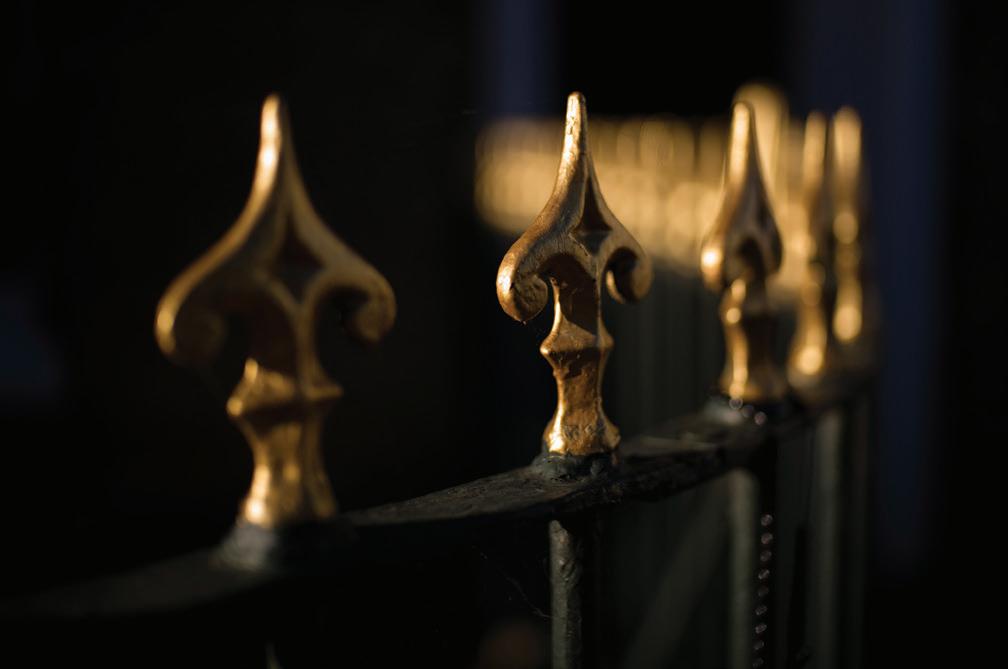
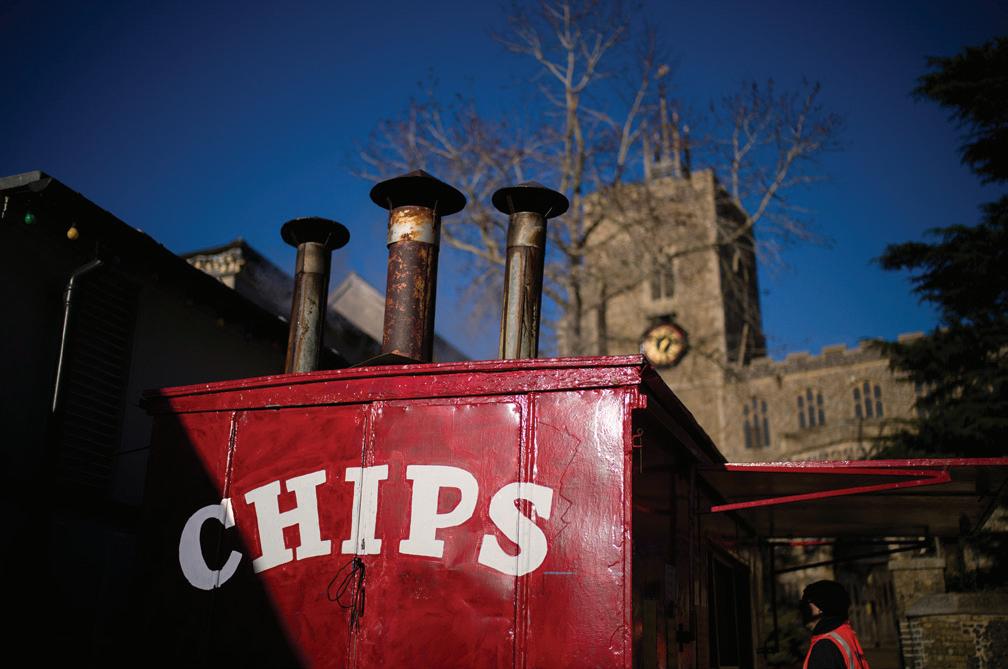
Chips & Church. Leica M EV1, 1/16000, f/1.2, ISO 64
Railings. Leica M EV1, 1/2500, f/1.2, ISO 64
IMAGE QUALITY
Well, MTF curves aren’t everything! Over the last year, I’ve been shooting everything with the lens, from still life to landscape, portraits and urban. I’ve shot it wide open and I’ve stopped it right down.
Like the other Noctiluxes, it is possible to get Chromatic Aberration in very high contrast situations. In addition the lens is slightly prone to flare; vices to which the APO Summicron is less subject (but flare is still possible). Stopping down quickly reduces the problem with CA (it’s almost gone by f/2.8).
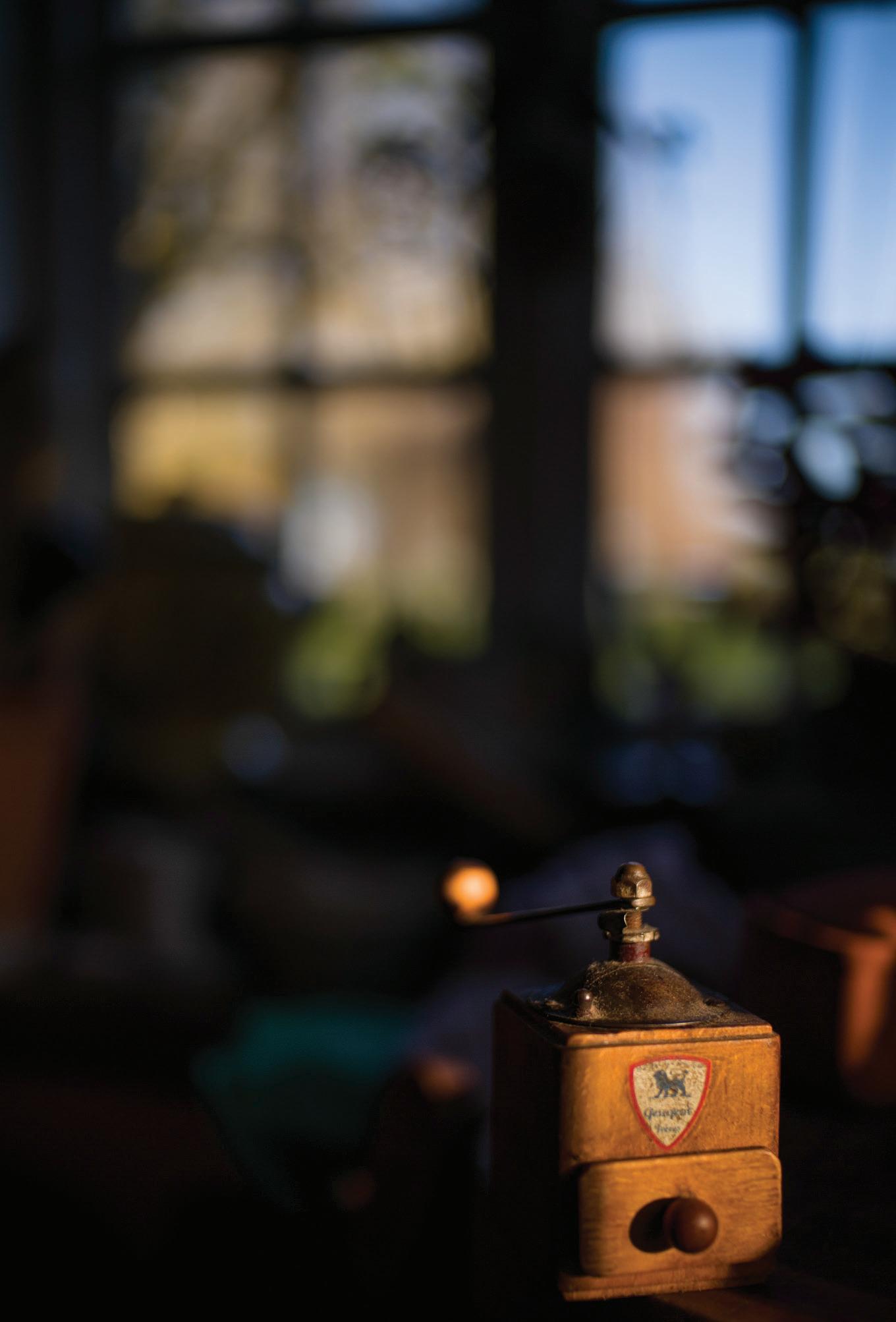
Wide open it is every bit a Noctilux, with dreamy bokeh, but also with excellent detail where it is in focus.
Stop down a little and the detail is incredible. It doesn’t feel “crunchy,” but simply excellent precise detail (indeed, very reminiscent of the APO Summicron).
WHICH CAMERA?
I’ve shot the new Noctilux with the M11, the M EV1, the SL3 and the M9. There is an argument for using the cameras with an EVF when shooting wide open, especially using the close focus range. However, I’ve found the focusing extremely good using a traditional rangefi nder. Leica has improved the floating element, and I couldn’t detect any focus shift . Of course, you need to use the display on the back of the camera (or the Visoflex) if you want to focus closer than 0.7m. .
On the other hand, I’ve had a lot of fun shooting with the SL3 and the EV1. It might have been good to release this lens together with the EV1, and while I wouldn’t suggest buying an M EV1 just for this lens, they do go together extremely well. It’s perhaps worth mentioning that I was equivocal about actually buying an M EV1, but this lens was probably what pushed me over the edge.
CONCLUSION
I was talking with an American photographer friend and he shared that under normal circumstances he went shooting with an M body, the 35 APO Summicron, the remake of the Noctilux 50 f/1.2 and the 75mm APO Summicron. Th is setup has, coincidentally (or not) been my favourite setup for the last couple of years. It gives you absolute precision and detail, the dreamy Noctilux option and (to my mind) the perfect portrait lens, all in three small and easily managed lenses.
The 50 and 75 Noctiluxes, brilliant as they are, are speciality lenses and are too heavy to carry around with you just on the off-chance
you might need them. If the 35mm Noctilux had been f/0.95 then it too would be a specialist lens (and at a specialist price as well). Leica’s decision to sacrifice aperture bragging rights in favour of usability must have been a difficult one, but to my mind it has paid off magnificently.
Not only is the 35mm Noctilux f/1.2 a worthy new member of the select band of Noctilux lenses, it is also an eminently useable “do anything” lens which could arguably replace our trinity of the 35 APO, the 50 f/1.2 and the 75 APO, especially with the 60mp sensors of the M11 and the M EV1. It is equally capable of dreamy still life, sparkling landscapes and characterful portraits, it would also be a fi ne lens for street photography, reportage and documentary. One lens to rule them all!
See more images and read more of Jono's reviews at https://www.slack.co.uk
Dawn. Leica M11, 1/1250, f/1.2, ISO 64
Bosky Morning. Leica M EV1, 1/125, f/16, ISO 400
Eggs, Butter & Tinned Sardiness. Leica M EV1, 1/1250, f/2.8, ISO 64
A Review of the New-Iteration Light Lens Lab
35/1.4 Double Aspheric Replica
by ED SCHWARTZREICH
Two years ago, I reviewed a replica of the famed Leitz double Aspheric 35/1.4 lens (11873). Although I was very satisfied with the lens, such issues as chromatic aberration and lens flare prevented Light Lens Lab from commercially issuing the lens. And since LLL had other products in its pipeline, it has taken until now for them to remedy this situation. I was just now lent a prototype of the NEW 35/1.4 AA replica for testing. Many people have told me they are anxiously awaiting this lens! Me too!
I found what Mr. Zhou, LLL’s owner, had to say about this situation quite interesting, so here are some of his thoughts, filtered through North American LLL rep David Yu-Heng Chen’s translation and then my editing. Mr. Zhou had commented that his company was to be making two different lines of lenses: first, replicas or remakes / updates of classic lenses (where one expects similar period imaging characteristics to the original), and new, SOTA lenses that show the best that their company can do.
“One lens that I will have to say that combines both lines is the 35mm f/1.4 Aspherical (11873), which will be our next release. I believe it is a good mix of vintage rendering with its "Leica Glow", and a very contemporary product in terms of rendering line-to-line performance.
In more specific terms, the (11873) has the vintage rendering that consists in the highly-elusive "Leica Glow" in its out of focus bokeh, while at the same time it is much, much more corrected than its predecessor (11869 / 11870). It still has a very lovely and classic out-of-focus character, yet in terms of its modern performance, it is still in some way the best-performing 35mm f/1.4 lens that Leica has ever made. The optical design of the original shows its 40-year-old
age with fringing and diffraction in its line-to-line rendering. We have remade the lens in part to be optimized on modern digital sensors, where all purple fringing / chromatic aberrations are mostly removed.”
I am informed of three changes: the two aspheric elements are now molded rather than hand-ground, and the rear element is slightly longer than on the original double-aspherical; this is due to the improvements in terms of spacing between aspherical / spherical elements during assembly. And finally, “a high-refractive low-dispersion and achromatic element was introduced alongside the new aspherical elements to reduce distortion, diffraction, and chromatic aberration. At the same time, it maintains the legendary character of the lens through the use of lanthanide elements”.
I take Mr. Zhou’s thinking to mean that the 35/1.4 AA falls between the categories, but clearly, mostly trends SOTA. And from lens diagrams, there is no added element in the new LLL lens over
the Leica original, so an element present in the original must have been replaced with the achromat referenced above.
Below left (figures 1-3) are the curves / graphs I received. And for comparison, wide open, below right (figure 4) are the curves from the Leica original and LLL’s first attempt.
The prototype lens I received for testing was a bit of a surprise in a few ways. First, it was chrome, not black; secondly it had no shade, and I had to find one in my collection, an E46 screw in, to mount for testing. It seemed slightly larger than the original, likely due to the new lens element configuration. Lastly, its rangefinder coupling focused minimally too long, so that for critical focus at f/1.4 I had to use a Visoflex. However, focus was close enough so that for the average shot, in the f/4 – f/5.6 – f/8 range I simply used the rangefinder.
David had written that the appearance of the front of this prototype was slightly different from what will be commercially available.
Figure 1: Lens diagram of the LLL 35 f/1.4 Double Aspheric Replica Figure 3
Figure 2: MTF curves of the LLL 35 f/1.4 Double Aspheric Replica
Figure 4: MTF curves at f/1.4 of the original Leica 35 f/1.4 Double Aspheric (left) and LLL's first attept at a replica.
First off, I wished to determine if the alleged improvement in chromatic aberration would be easily seen, so I took identical images of tree branches at f/2.0 with both the new replica and with an APO Summicron 35/2 Aspheric. Here at about 100x, I can see no major differences. Impressive.
Next up is behavior shooting into the sun. First is wide open, then at f/5.6. Some internal reflections, but better suppression of veiling flare than I had expected.
Figure 5: LLL 35 f/1.4 Replica at f/2
Figure 6: Leica 35mm APO-Summicron-M at f/2
Figure 7: LLL 35 f/1.4 Replica wide open.
Figure 8: LLL 35 f/1.4 Replica at f/5.6.
Wide open and focused with the Viso, the lens is quite sharp. Up top is my obligatory shot of my brother-in-law, then the center portion, which has a wonderful roundness. (figures 9-10)
And above is a repeat of the little birdfeeder shot that I made with the earlier prototype for edge sharpness / field curvature: focus on the feeder, than swinging so that the feeder was nearer the edge of the frame. Not quite as sharp as with the earlier prototype, but very very close. There is some CA on the wires. From the MTF curves, we would expect fall off of fine and very fine detail in the field. (figures 11-12)
Right is the same birdfeeder from the original replica. (figure 13)
Figure 9 & 10: LLL 35 f/1.4 Replica wide open (full frame and crop).
Figure 13: Field curvature test from LLL's first version prototype.
And so, onto a couple of scenics, taken at f/5.6. The bottom one was previsualized then cropped. These images have great presence and Leica glow. (previous page)
The lens was then taken to the Montreal LSI Annual Meeting. Above are a few images taken at around f/4 to f/5.6, most cropped.
The lens performs much as the excellent prior attempt, which is to say very reminiscent of the Leica original, but better on my digital sensor. Without appreciable CA and flare. I would have been quite satisfied owning the earlier version, but this is better still.
It is everything we have been waiting for.
by JIM LAGER
Rapid fi lm advance came to the Leica in 1935 with the introduction of the SCNOO baseplate winder for the short base models. During the early 1940's the SCNOO was manufactured for the long base IIIc and IIId. After World War II Leitz Wetzlar introduced an improved unit to be marketed as the Leicavit.
Earliest samples were equipped with a base switch permitting single and series advance. Some specimens lack the engraved name Leicavit. E. Leitz, Inc. New York literature dated January 1953 (figure 8) is titled Leicavit Rapid Winder. Leitz Wetzlar publication dated February 1954 (figure 7) is written Leitz Rapid Winder Leicavit. August 1959 instructions 12-24 are written Leicavit the Leitz Rapid Winder for the Leica. These instructions are for the Leicavit MP. (figure 6)
Figure 2: Production sample versus E-S model
Figure 3: Pre-production Leicavit with E-S switch
Figure 4: Well used E-S sample from 1951
Figure 1: Leicavit (SYOOM) with box
Figure 5: Engraving variations
Figure 6: August 1959 instructions for Leicavit MP
Figure 8: January 1953 insert for Leitz New York Leica Binder