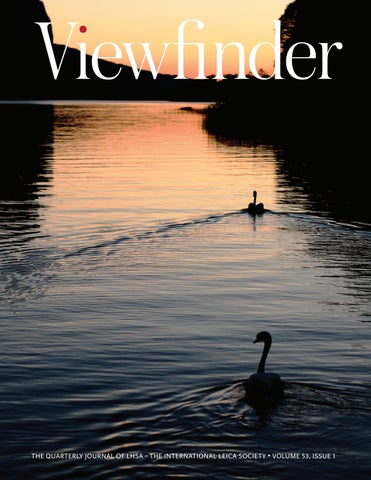
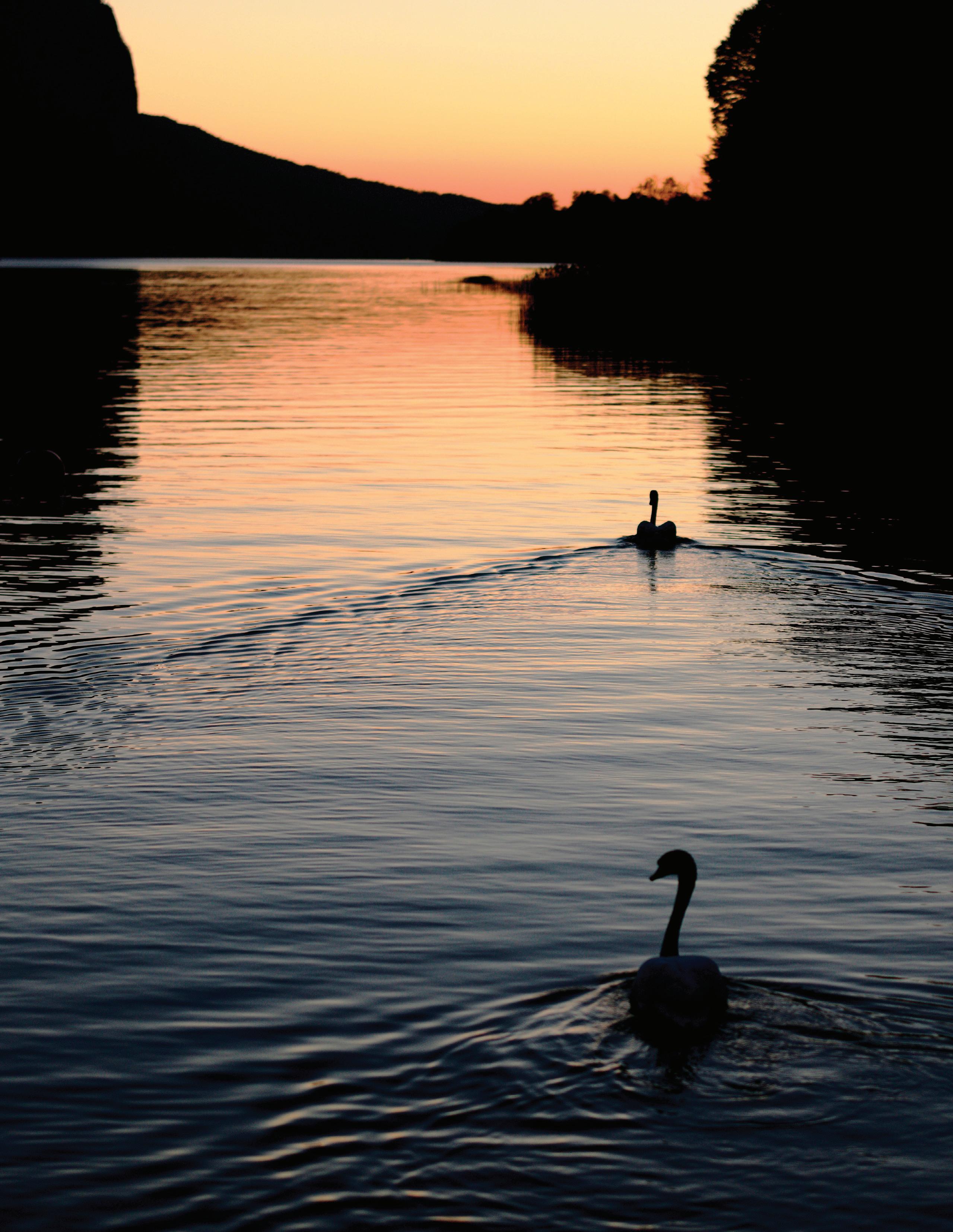
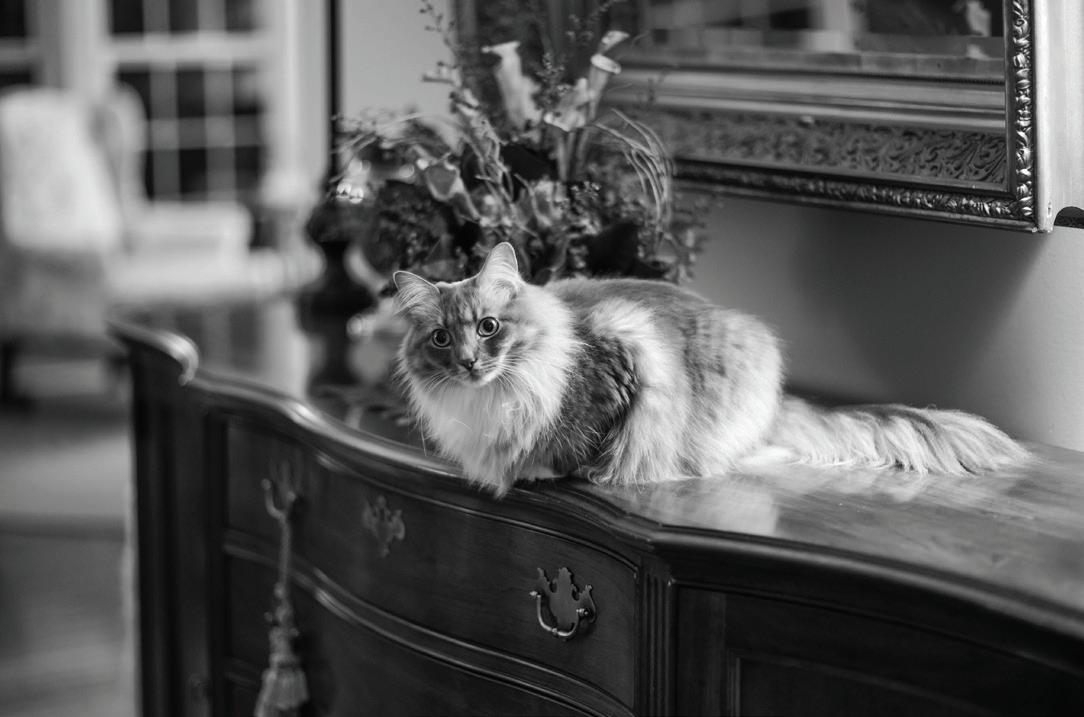
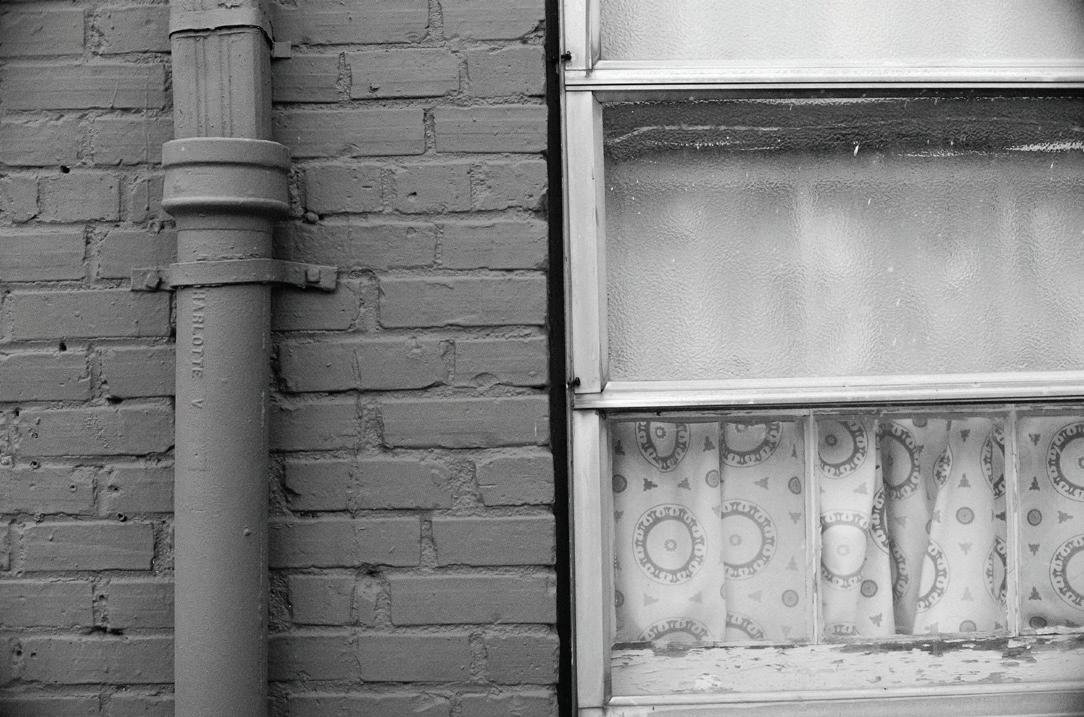
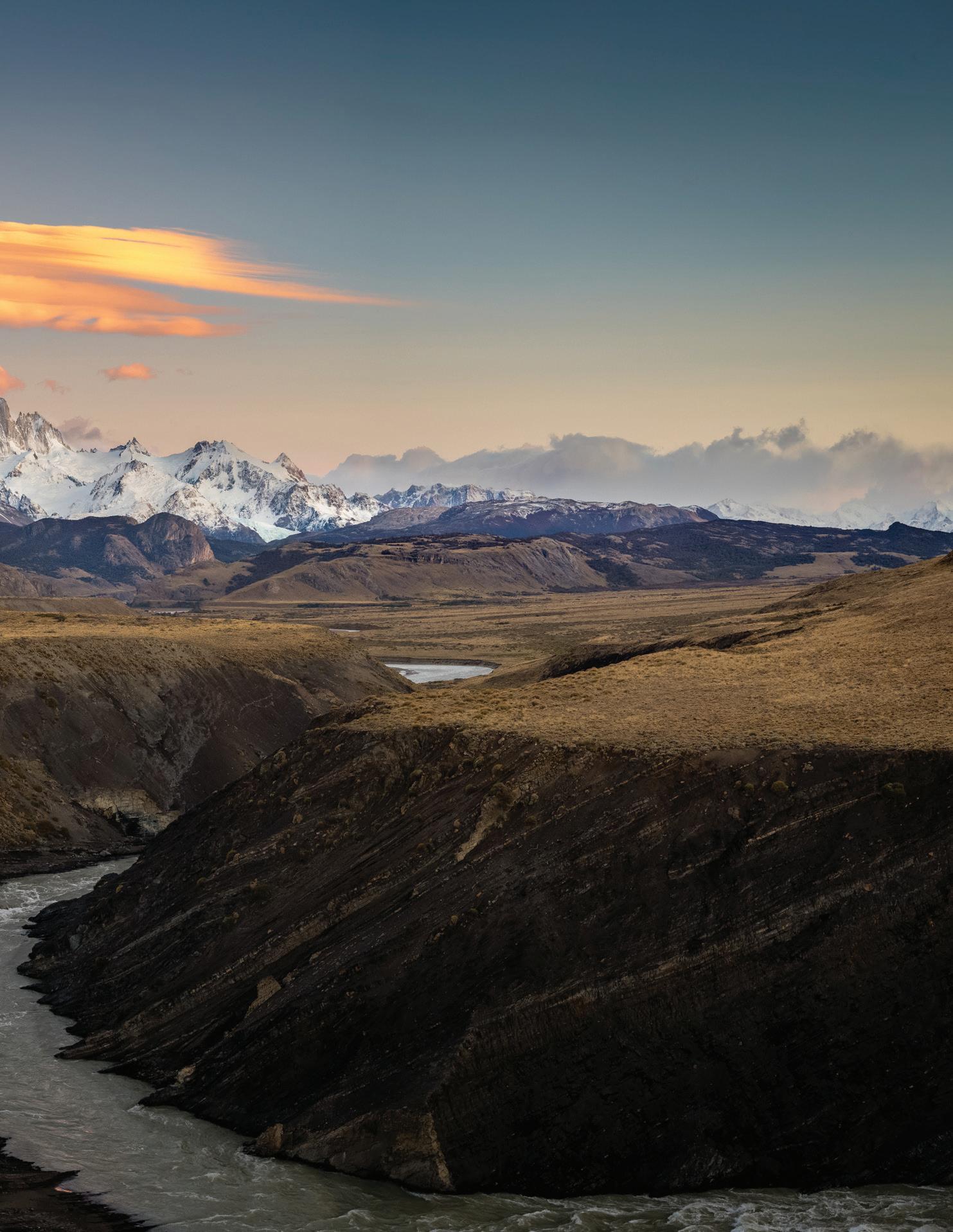
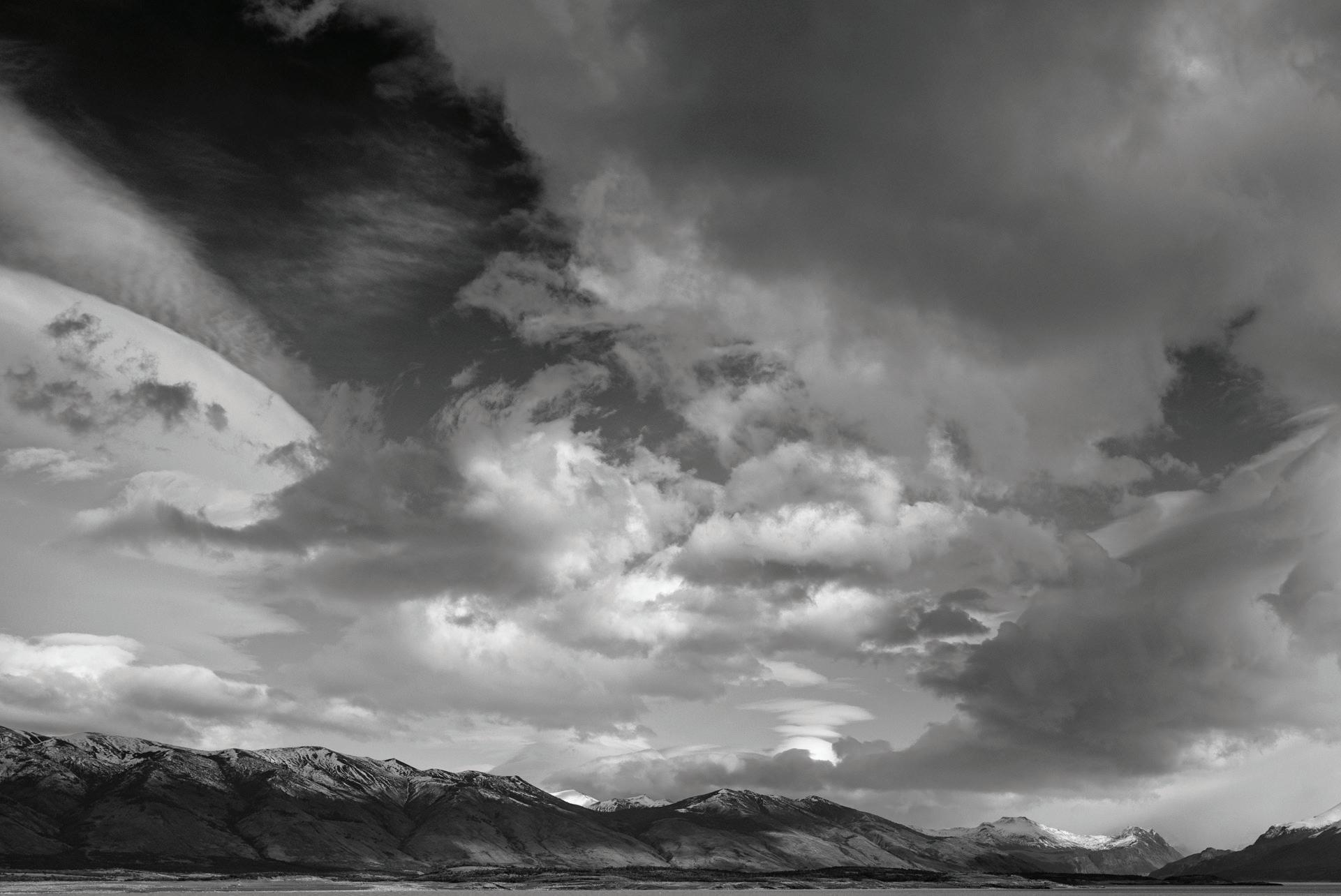
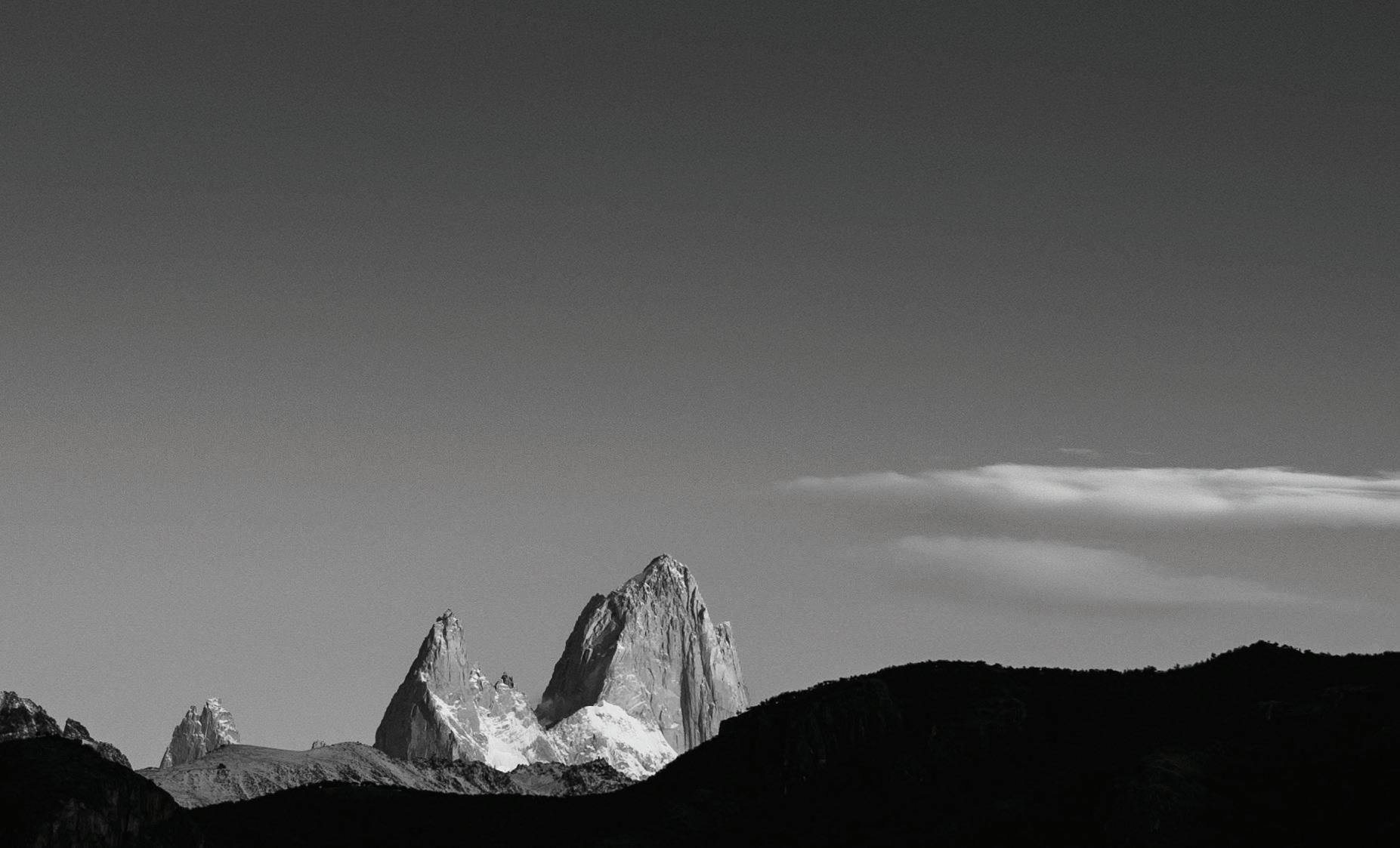
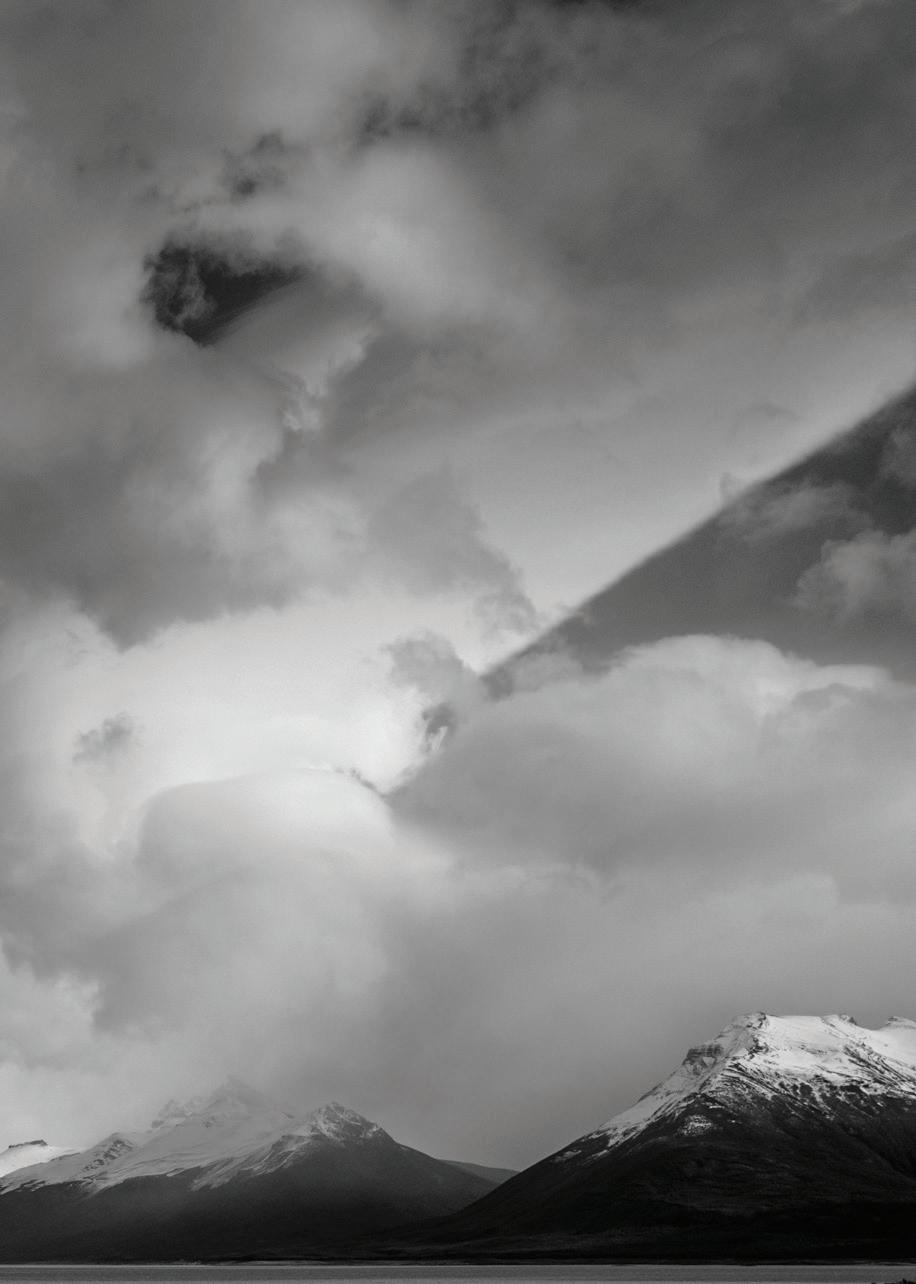
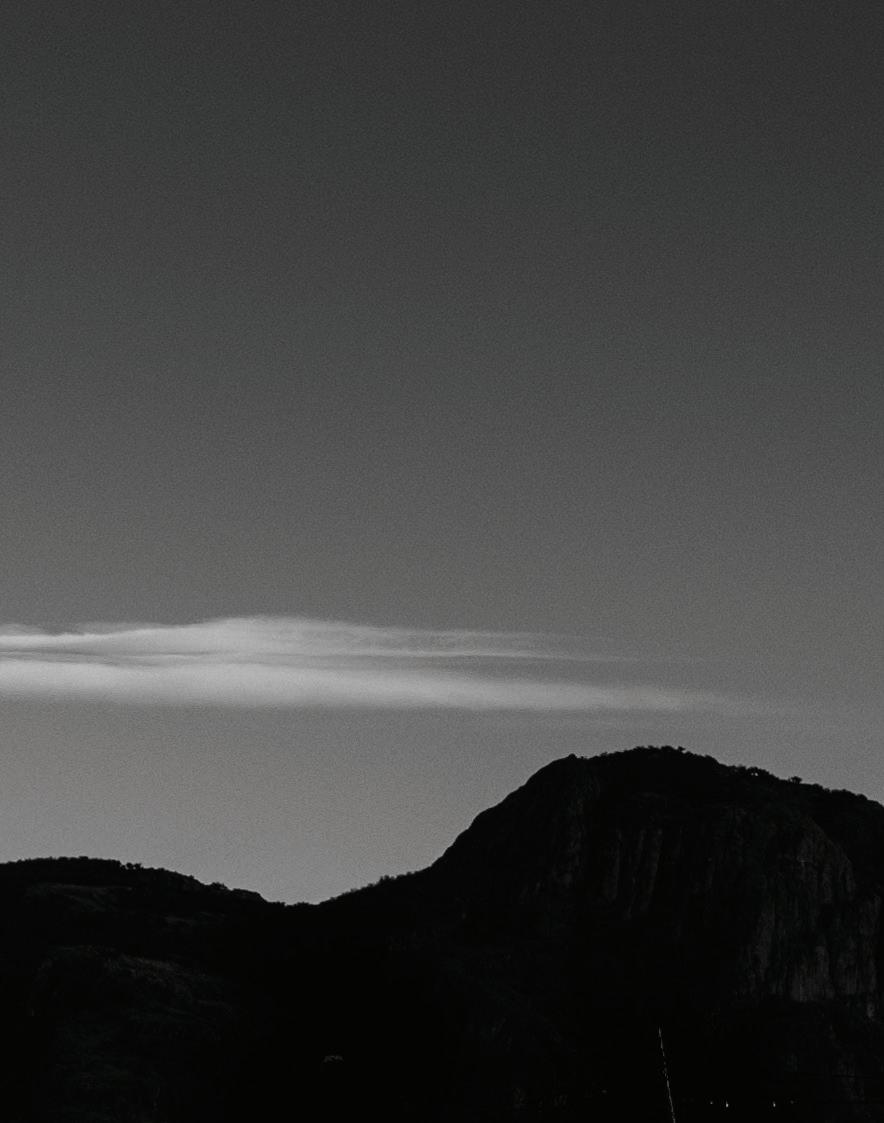
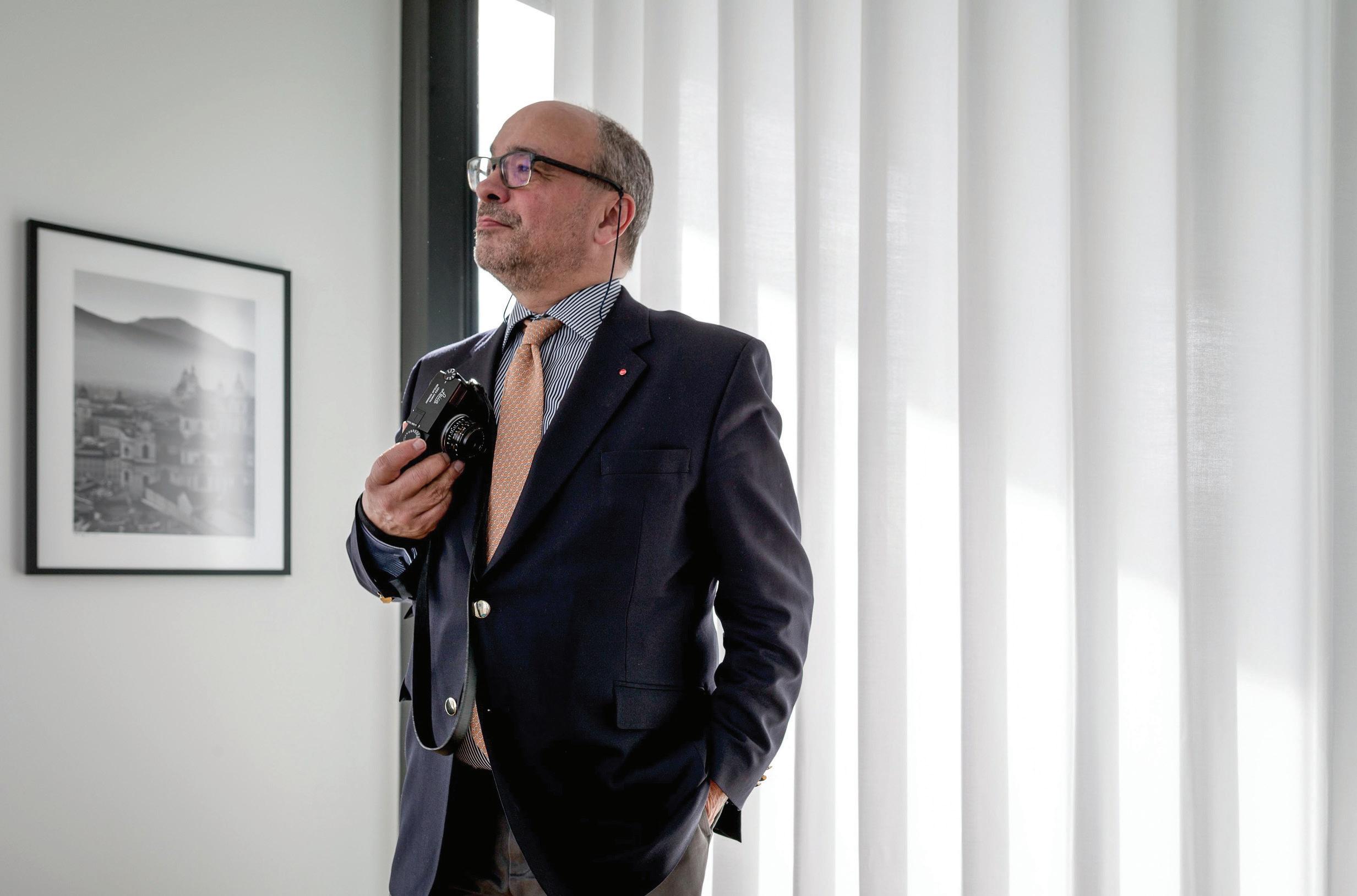
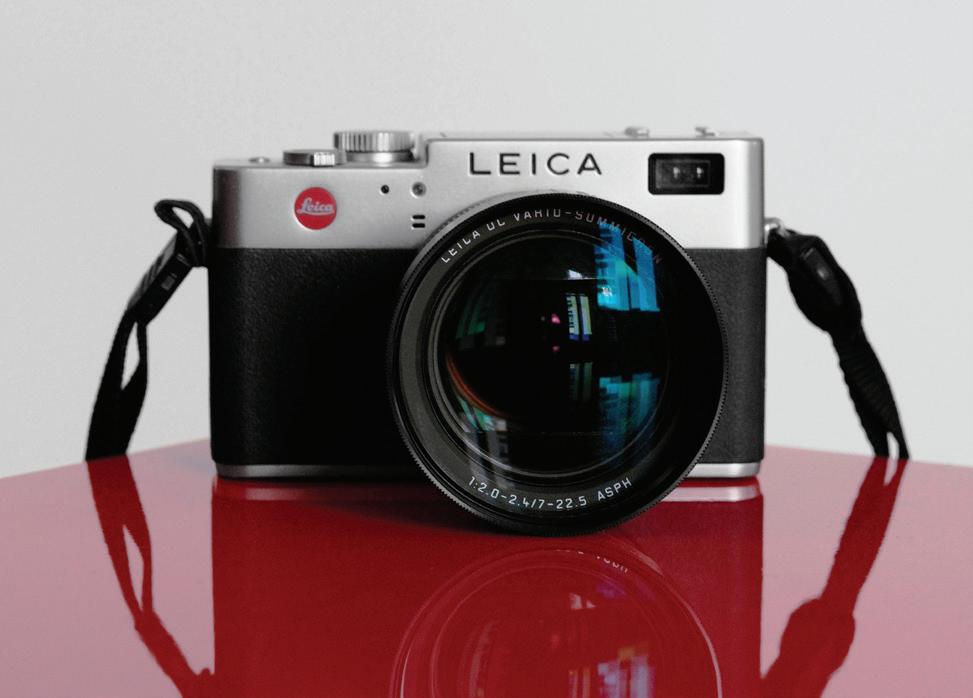
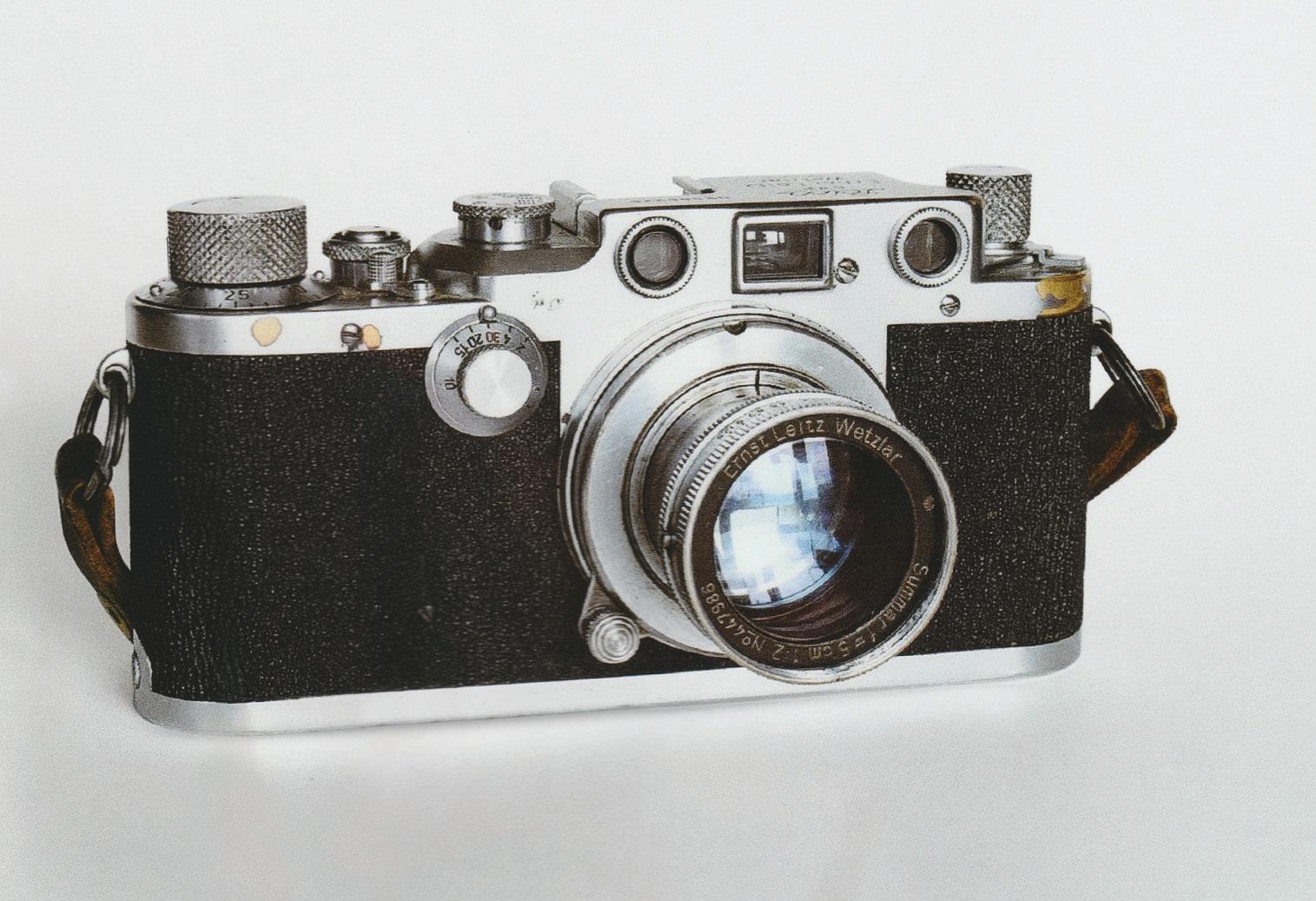
ISSUE SPRING 2020 FRONT COVER From Dr. Andreas Kaufmann's article "Photography: My Journey To & With Leica." (pp. 20-25).
2 a letter from the president by Alan Weinschel
3 a letter from the editor by Bill Rosauer
4 pixel peeping in 2020 by David M. Knoble 12 in patagonia by Ruth Oratz, MD & Albert B. Knapp, MD
20 photography: my journey to & with leica by Dr. Andreas Kaufmann
26 35mm apo-summicron-sl: a single lens setup in the boundary waters by Kirsten Vignes
OFFICERS & DIRECTORS
Inquries about membership, upcoming events, replacement Viewfinder issues, and special orders should be directed to:
Richard Rejino, LHSA Executive Director 14070 Proton Road, Dallas, TX 75244 info@lhsa.org, (972) 233-9107
Viewfinder is the official publication of the LHSA, The International Leica Society, a nonprofit organization incorporated in the state of Delaware. Copyright 2014. Reproduction or use of any material contained herein without permission of the Sociey if forbidden.
Leica is a registered trademark. It and other trademarks pertaining to the Leica System are the property of LEICA CAMERA, USA, INC.
ISSN 1543-8732
PRESIDENT Alan Weinschel alan.weinschel@lhsa.org
VICE PRESIDENT
Keith R. Sbiral krs@reddotbluedot.com
SECRETARY/TREASURER
David Knoble dmknoble@gmail.com
IMMEDIATE PAST PRESIDENT Gary Hough gary.hough@lhsa.org
PRESIDENT EMERITUS
James L. Lager
Rolf Fricke Bill Rosauer
APPOINTED OFFICERS
Viewfinder Editor Bill Rosauer lhsaeditor@yahoo.com
Associate Viewfinder Editor Ed Schwartzreich ed.schwartzreich@imagere.com
38 leica s3 by Milan Swolfs
44 in which we see three iiic's at work by Dick Gilcreast
46 at the sales counter & lens in a rug by Jim Lager
46 omifo for you 9cm elmar by Jim Lager
48 where art thou oubido by Jim Lager
50 an inelegant (but not completely tacky) solution to an old, vexing problem by Ed Schwartzreich
ELECTED DIRECTORS
Class of 2020
Thomas Campbell leicar7@aol.com
Douglas Drumheller dougdrum@comcast.net
Dan Tamarkin dan@tamarkin.com
Class of 2021 Wilbur Norman coupdefoudrellc@gmail.com
Jay Paxton jaypax@mlhs.net
David Spielman david@davidspielman.com
Class of 2022
Andrew Godlewski harley772@yahoo.com
Brad Husick husick@gmail.com
Bill Royce wfroyce@gmail.com
CONTRIBUTING
EDITORS
S.R. Gilcreast, Jr. (603) 381-8293
James L. Lager jlager100@yahoo.com
S. Willis Wright beoon@aol.com
A LETTER FROM THE PRESIDENT
by ALAN WEINSCHEL
I write this note, most of the world is shuddering under the plague of SARS-CoV-2 also known as COVID-19. With no cure or vaccine yet, many of us are living in isolation, practicing the mandated “physical distancing” that gives us the best chance to slow down the spread. No gatherings, no sporting events and no timetable as we are beholden to forces beyond our control. The LHSA 2020 Spring Shoot was a casualty; it will, God-willing, take place in May 2021. Our annual meeting in Seattle in October seems a long way off but planning and preparation are well underway. We hope by October we will be back to something close to “normal” but we are keeping our fingers crossed.
Social isolation is far from normal and indeed, quite strange. Most photography without other people would also be strange. Images of people are important to our ability to tell a story, whether street photography, or portraits. Moreover, people come into play who aren’t in our images. Don’t we all, deep down, want to please not only ourselves but others? When somebody else says “nice shot,” or “I really like that one” don’t we all find that encouraging? Don’t we also need sometimes to hear constructive criticism about our images to make us think about how to do better the next time? This is where the Leica community fits in.
The Leica community goes beyond people who happen to own the same brand of camera. There is a shared bond among us that is hard to describe. I am a firm believer that our meetings are the best way to share our Leica journeys and learn from each other. But not everyone can come to meetings and, of course, at this time none of us should be at meetings of any kind. Hence, we now need to work a bit harder to maintain our connections to each other. We at LHSA are going to try to fill some of the gaps that “physical distancing” creates.
First, of course, is Viewfinder itself, which has always been and continues to be a way for us to connect (including an article in this issue from Dr. Kaufmann), look at great images, and get information and instruction too.
Second, we will continue to exchange ideas on how to use our time at home in ways that enhance our creativity. Working on an old image, whether on your computer (or even in a darkroom) is one way to do this. Along those lines, LHSA
will be offering members some online teaching sessions covering Lightroom basics, travel photography, and other subjects. Watch your in-box for when they will occur and how to sign up.
Third, it is important for us to stay positive and focus on what we can do and not on what we can’t. In addition to photooriented learning, something we can all do is keep up those important connections to others, whether Leica or photography or family or friends. Pick up the phone and call someone to whom you haven’t talked in a while. Send somebody an email with one of your images and ask how they like it – or what they would do to improve it. Or just send someone an email to check up on them. We may be socially distanced but we can and should still stay connected.
Stay well, everyone. I hope to see you soon.
Alan Weinschel
A LETTER FROM THE EDITOR
by BILL ROSAUER
issue of Viewfinder comes at a very difficult time for all of us while dealing with effects of the COVID-19 virus. It has upended many lives and families, and at this time we still don’t know what the final outcome of this scourge will be for us. As our president Alan reports, we have had to cancel the Spring Shoot and still to be determined what the impact will be on our other events for us this year. We hope you are all staying well and safe, and that the world will be in a better place when the next issue of Viewfinder appears. Hopefully this issue of Viewfinder will be a welcome distraction for you, and a small way to communicate with and think about your Leica Family.
In this issue, we are featuring an article and images by someone in the Leica World who needs no introduction, Dr. Andreas Kaufmann. His article, “My Journey To and With Leica”, is not the usual interview or article you would see in other Leica publications or on-line venues. These kinds of articles about Dr. Kaufmann have been done hundreds of times. Instead, I asked Dr. Kaufmann to talk a little bit about himself and whatever he would want to about Leica, how he uses them, and how he came to the brand we all love. I think you will find his article very
personal, interesting and entertaining by our good friend of the LHSA.
For Leica users, we have an article by Kirsten Vignes with the SL2 and the 35mm APO-Summicron SL lens in the Boundary Waters Canoe Area. Kirsten has taken the concept of “one camera, one lens”, to the remote wilds of BWCA, on the border of Northern Minnesota and Canada. It’s very interesting to see how she does with the latest in Leica camera and lens design in such a remote environment. I think Kirsten and the Leica did quite well, and she came back with some unforgettable images. As a child, I spent many summers at our family lodge in the BWCA, back when private hunting and fishing lodges were still allowed there. Kirsten’s article brought back a lot of memories for me of my dad documenting our own adventures there with his Leica.
Of course, we have a report on new Leica product, the new Leica S3 medium format camera by Milan Swolfs, master of the Thambar. Milan was a beta tester of the S3, and was one of the first to receive the new camera on March 6th. Milan’s masterful technique shows us a little of what can be done with this new 64 megapixel wonder. I think you will find his timely article on this impressive new camera quite interesting.
In this issue we are able to vicariously travel to another remote area of the world, Patagonia in an article by Albert Knapp and Ruth Oratz featuring their stunning photography. This couple has shared many of their globe-trotting adventures with us here in Viewfinder, and during this time of stay-at-home lock down, provide us with a way to see and experience the world while we can’t do so ourselves.
We also have a T&T article by Dick Gilcreast, “In Which We See Three IIIc’s at Work”, where he shows us some interesting solutions using Barnack cameras with the Visoflex reflex accessory for studio work. Excellent results can still be had with such “antiquated” equipment, even by today’s standards. It also offers some insight into how a thorough mastering of photography was needed to achieve this type of photography to overcome the “shortcomings” of the Leica screwmount rangefinder cameras. As a humorous counterpoint to Dick’s article, a recent commercial seen on TV has a mother using a screwmount Leica camera with an unextended collapsible lens as a point and shoot camera to take close up pictures of her little girl holding a butterfly! You have to see it to believe it!
Pixel peeping by David Knoble’s article “Pixel Peeping in 2020” offers us some interesting insight and perspective into the incredible resolution offered by the digital imaging revolution. In less than twenty years, we have gone from 4-6 MP cameras to 40 MP in the new M10 Monochrome, 47 MP in the SL2 and an incredible 64 MP offered by the new S3. Leica is caught up in the Megapixel Wars just as all of the other camera manufacturers
are, and David’s article explains what this all means to us as Leica users.
"The Scrunchie" by Ed Schwartzreich tells us about his interesting solution for the very common problem of accessory finders sliding out of the shoe of your Leica camera, at best getting lost in your camera bag or at worst being broken in the fall to the ground or just plain lost. We have all had this happen at one time or another using our Leicas. Ed has come up with in ingenious solution to this problem which SLR and mirrorless users will never comprehend or have to deal with.
In this issue we have four articles by Jim Lager. Jim always has great stories to tell about his encounters with various interesting pieces of Leica equipment while at Leitz New Jersey, in a retail shop environment and at camera shows. In this issue, he recounts witnessing the sale of the last of the limited issue M2-R camera ever made. In another article, a close encounter with a very interesting and very rare Leitz ELCAN prototype lens, the 450mm f/5.6 made for the US Navy as a test unit. The lens was presented to Jim in a rather unusual fashion, being wrapped up and transported in an old area rug! In “Where Art Thou OUBIO”, Jim recounts the lack of availability of the OUBIO accessory adapter when first introduced in 1959, and the solution offered to the waiting masses by E. Leitz New York with the in-house machined extension rings. Jim also reports on the OMIFO close up accessory for the very popular 9cm Elmar lens introduced in 1939.
I regret to have to tell you about the passing of Ted Grant, Leica photographer, on April 19th at the age of 90. Ted has been called the father of Canadian Photojournalism. Ted was a good friend and contributor to many on the LUG (Leica Users Group) and Facebook. Ted was a featured speaker at the LHSA Annual Meeting in Vancouver. Also in attendance and featured at the same meeting was another one of our sorely missed good friends, Tom Abrahamsson. We will have more on Ted in an upcoming issue of Viewfinder.
Lastly, I have news of the retirement of Roger Horn, president of Leica USA, this coming June. Roger has been a good friend of mine and to the LHSA for many, many years. We go back to 1983, when I opened my Leica store and Roger was the head of accounting at Leica USA. After Roger became president, I worked with him on the LHSA Special Editions and also other benefits for LHSA members, including the member repair discount (please take advantage of it!), membership materials inserted in Leica product (years before the current program with Germany), and other behind the scenes work to benefit our members. Roger, you have been a good friend, and we will all miss you!
Bis nächste zeit! - Bill
Pixel Peeping in 2020
What to do with the extra megapixels?
by DAVID M. KNOBLE
first
came the 4-6 megapixel cameras and everyone was happy that they had instant pictures without waiting for the 1 hour drug store negative development (The D-lux was created in 2003 with 3.6 effective megapixels). Then came the 9-12 megapixel cameras and pixel peeping was born. With the increased picture quality everyone wanted to know just how much detail they could capture (The D-lux 3 had 10.2 megapixels, the M8 had 10.3 megapixels). Finally, the 18-24 megapixel cameras arrived and everyone again wanted to know how much more detail their lens would capture in an image (Think M9, M240, M10).
Today, with 40 megapixels in the new M10 Monochrom, 47 megapixels in the SL2 and 64 megapixels in the upcoming S3, pixel peeping has changed to resolution limits. We have started to realize that we can capture more detail than we need. Discussions on various forums are beginning to surround two concepts: image noise, and lens resolution. I see questions about the image noise resulting from using 25,000 or 50,000 ISO. I also see questions about whether the image will be “sharp” enough from a classic lens.
These are both interesting questions to consider, because the answers require looking at the pixel level, which is irrelevant for most images from these new cameras. Leica has adjusted the pixel pitch very slightly over the years. The pixel pitch, or distance between the center of two adjacent pixels, is 6.9 microns for the M8 and M9. The M240 and M10 both have 6 micron pixel pitches. However, the new generation of sensors from Leica are now using 4 micron pixel pitches, which translates to almost a 50% reduction in area per pixel.
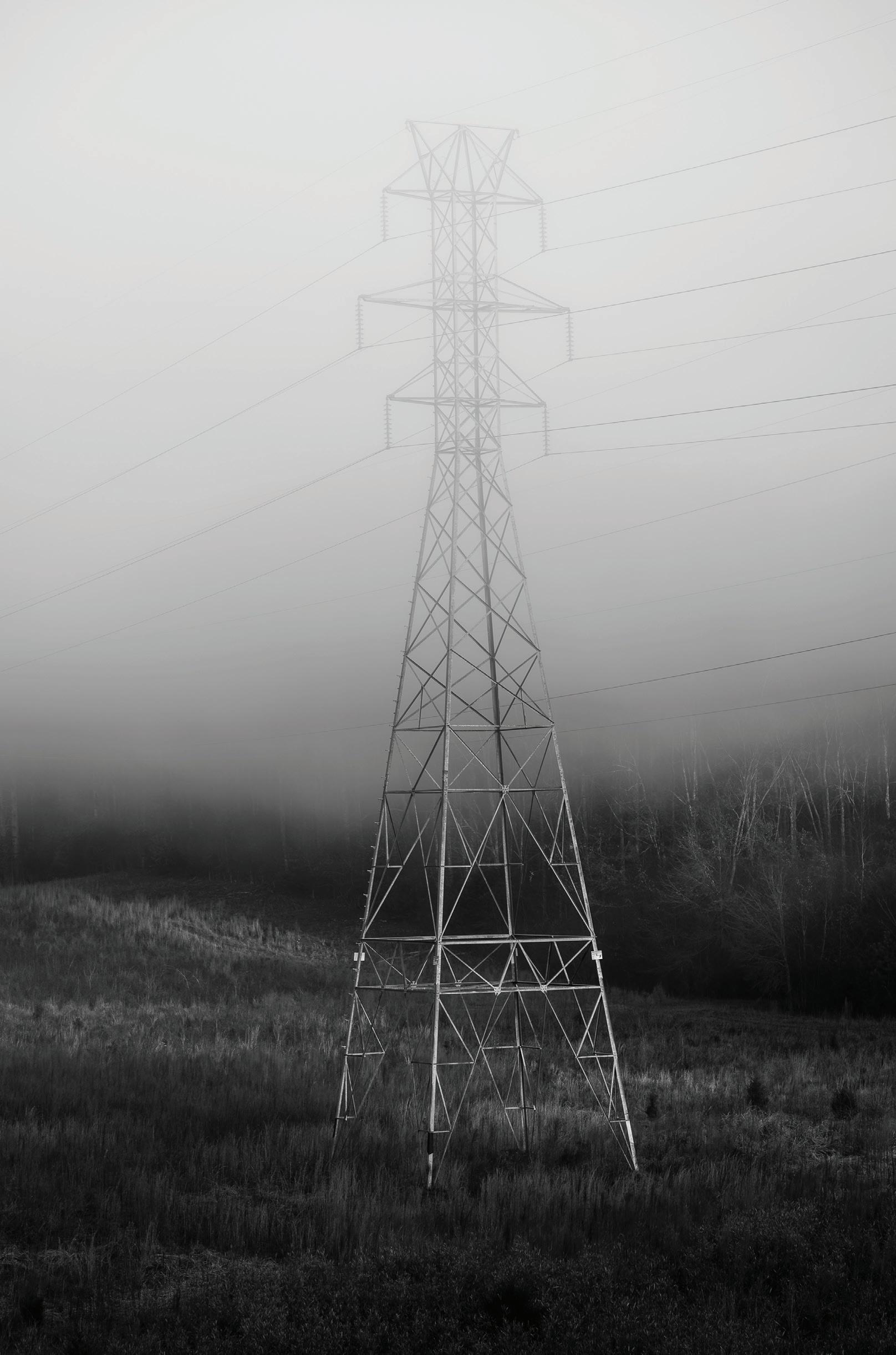
M10 Monochrom, Elmarit-M f/2.8 90mm, ISO 160
(top) M10 Monochrom, Elmarit-M f/2.8 90mm, ISO 160 (bottom) M10 Monochrom, Elmar-M f/2.8 50mm Collapsible, ISO 160
Noise Noise is part of every digital image. However, noise is created at the pixel level. Pixel size determines the size of the noise in the final output - digital and print - and smaller pixels are less visible given the same size output. Understand that noise is still present and except for technology advances, noise is essentially the same regardless of pixel size. The next question might be, if an image created with smaller sized pixels appears to have less noise, why not make 35m sensors with 100 megapixels? The answer lies in dynamic range.
Think about the grain size in black and white film. Grain of the Ilford FP4+ film shot at ISO 125 is not easy to see compared to Ilford 3200. Larger grain is more sensitive to light (ISO 3200) and smaller grain needs more light (ISO 125). In addition, negatives from the Ilford FP4+ have a wide range of tones and the Ilford 3200 has very high contrast with much fewer tones. The same is true for sensors, noise is still there, but it is represented in much smaller sized dots, much like silver halide grain. Yet, it takes advances in technology to maintain the same dynamic range between sensor sizes.
Thus, at equivalent ISO’s, it appears like the noise is much lower at the same viewing size. Said another way, it may take twice as much noise to be visible in ways we are used to viewing images, so we can use higher ISO’s. Some of the images here were taken at ISO 50,000 and I considered very usable for enlargement with smooth tones throughout.
Side Note: At ISO 50,000 I recommend exposing for the midtones, letting some of the highlights blow in unimportant areas. The images come out with significant tonality and there is much less noise in fine details for enlarging the image later. The images at ISO 50,000 here were exposed in that manner.
Not accounted for yet are the advances in CMOS sensors which reduce the electronic noise compared to earlier sensors.
An article published May 3, 2015 by Richard Butler at Digital Photography Review discusses sensor noise at a very deep level using some sophisticated math. Butler discusses read noise of different sized sensors, which is the noise generated by reading the data from the sensor. His conclusions show that most camera companies will not use sensors with higher pixel counts until they can control the read noise, which can produce a system with overall lower noise and hence, higher ISO’s. This seems to be exactly what Leica have done moving from 24 megapixels to the over 40 megapixel range and adding one to two stops of additional ISO capabilities.
Resolution In terms of lens resolution, I have continued to indicate the M10 Monochrom produces film-like results on the classical M lenses, or lenses that do not contain aspherical elements. I call these lenses “classical” but there are others. In fact, the images included here are all labeled with the lens used and all were taken with the M10 Monochrom. The lenses used were a) version 1 of the Noctilux-M f/1.0 50mm, b) the German made Summilux-M f/1.4 75mm (as opposed to the Canadian version) and c) the chrome Elmarit-M f/2.8 90mm
– all non-aspherical lenses designed by Walter Mandler. One image was taken with the newer version of the Elmar-M f/2.8 50mm Collapsible (chrome) lens with only 4 elements, none aspherical.
I have found images shot at low ISO’s on the M10 Monchrom show much more shadow tonality than previous Monochrom models (Type 246 and CCD). The increased pixel count allows standard viewing sizes to show the appearance of much smoother graduations between tones even with some of the more classical lenses. The high resolution approaches the visible contrast levels of these older style lenses wide open. In different terms, as the limits of lines drawn by the older lenses approaches the size of lines drawn with the pixels, the maximum image recording has been reached.
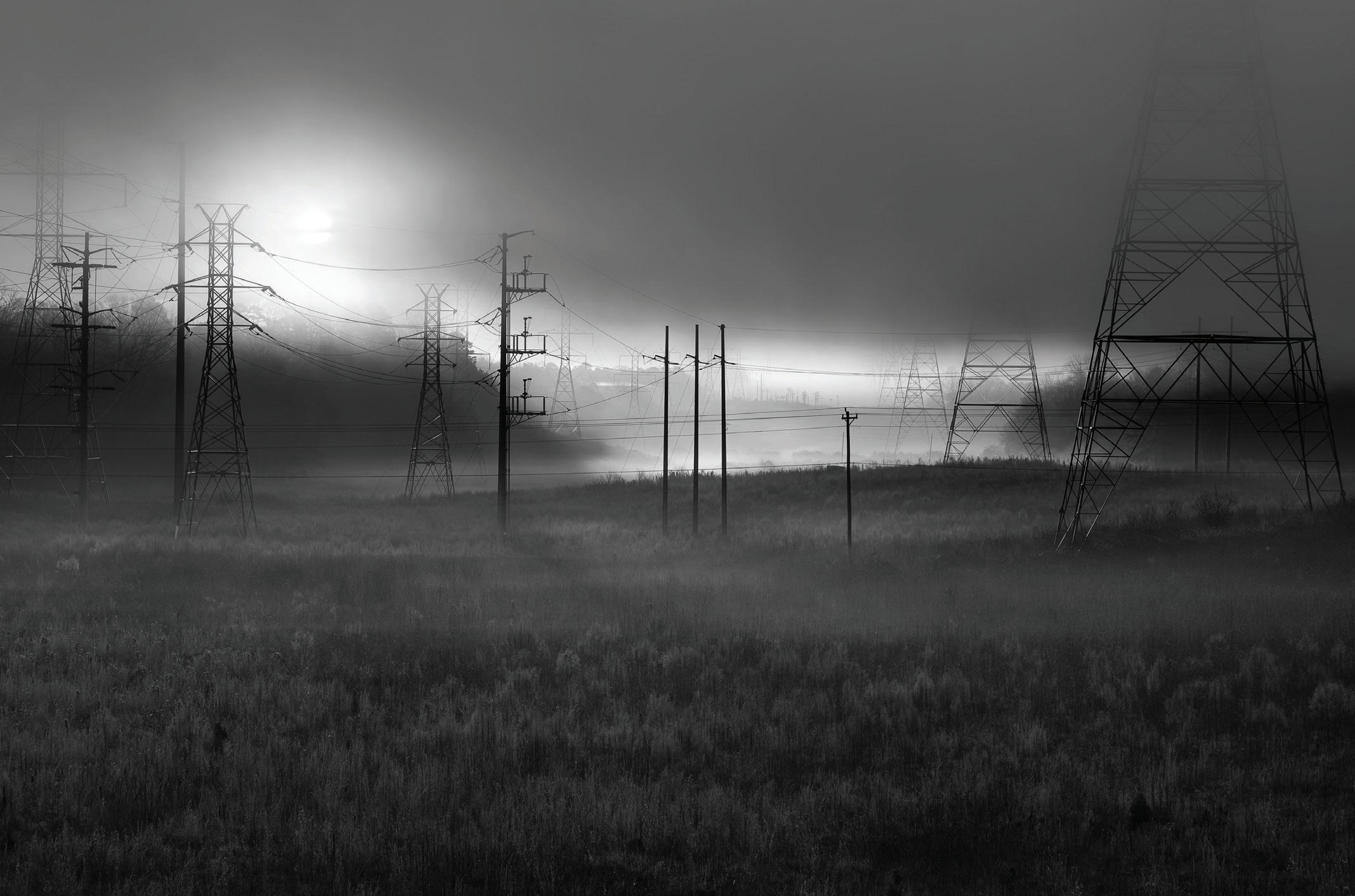
M10 Monochrom, Noctilux-M f/1.0 50mm, ISO 3200
M10 Monochrom, Noctilux-M f/1.0 50mm, ISO 12500
(top) M10 Monochrom, Noctilux-M f/1.0 50mm, ISO 50000 (bottom) M10 Monochrom, Noctilux-M f/1.0 50mm, ISO 50000
I would argue that, stopped down, the classical lenses frequently have higher resolution capacity and clearly the newest APO ASPH lenses have even higher resolution, like the LHSA special edition APO Summicron 50. However, the classical lenses still have a place in producing quality images with these new high resolution sensors. I would also note, however, that in order to produce medium format prints, the classical lenses would typically require some cropping to remove aberrations at the image edge. The more modern APO lenses win here as well and typically produce fine details throughout the image and to the very edges.
As a comparison, think about images produced by 1949 Summicron Collapsable screw mount lenses from a 24 megapixel sensor on an M9 or M240. Wide open, even on film, the lens produces soft images. The contrast capability of these lenses is less than the sensor resolution making the image appear soft. We have clearly reached another plateau with the new 40+ megapixel sensors on non-ASPH lenses wide-open. At the same time, Leica have told us that the newest APO M lenses have yet higher resolution limits, so there may be room to grow!
What to do with the extra pixels? The question remains, what to do with the extra pixel resolution in these digital files? Some have suggested they can crop plenty and still end up with a 24 megapixel image. They may use a 35mm lens and crop to a 50mm lens (think Leica Q2). I create 13 x 19 prints from 24 megapixels with great success. Personally, I like the ability to shoot on a tripod and create images that I can print at 17 x 22 inches in native resolution with a small sized camera body. Also, the increased dynamic ranges of the new generation of sensors starts to compete with dynamic ranges of my black and white films and the S3 should provide a whole
new level of color creativity. I have never worried about grain in black and white film - my two favorites being Ilford FP4+ and Kodak Tri-X 400 and I loved the boost in dynamic range and detail from the M9M and the M246 compared to the color brethren. Now the M10 Monochrom is my favored grab because the upgraded CMOS and resolution effectively eliminate the noise for most applications and provide incredible tonal ranges, especially in the shadows.
Yet, all this talk about noise and resolution takes away from the primary purpose, which is to create images. Each of these new high resolution cameras has a place in taking photographs. Clearly given the choice, pressing the shutter is better than thinking about whether the image will be sharp enough and missing the shot. Interestingly, this discussion about whether the tool is sufficient technologically speaking, versus using the tool to create images has been around for over half a century.
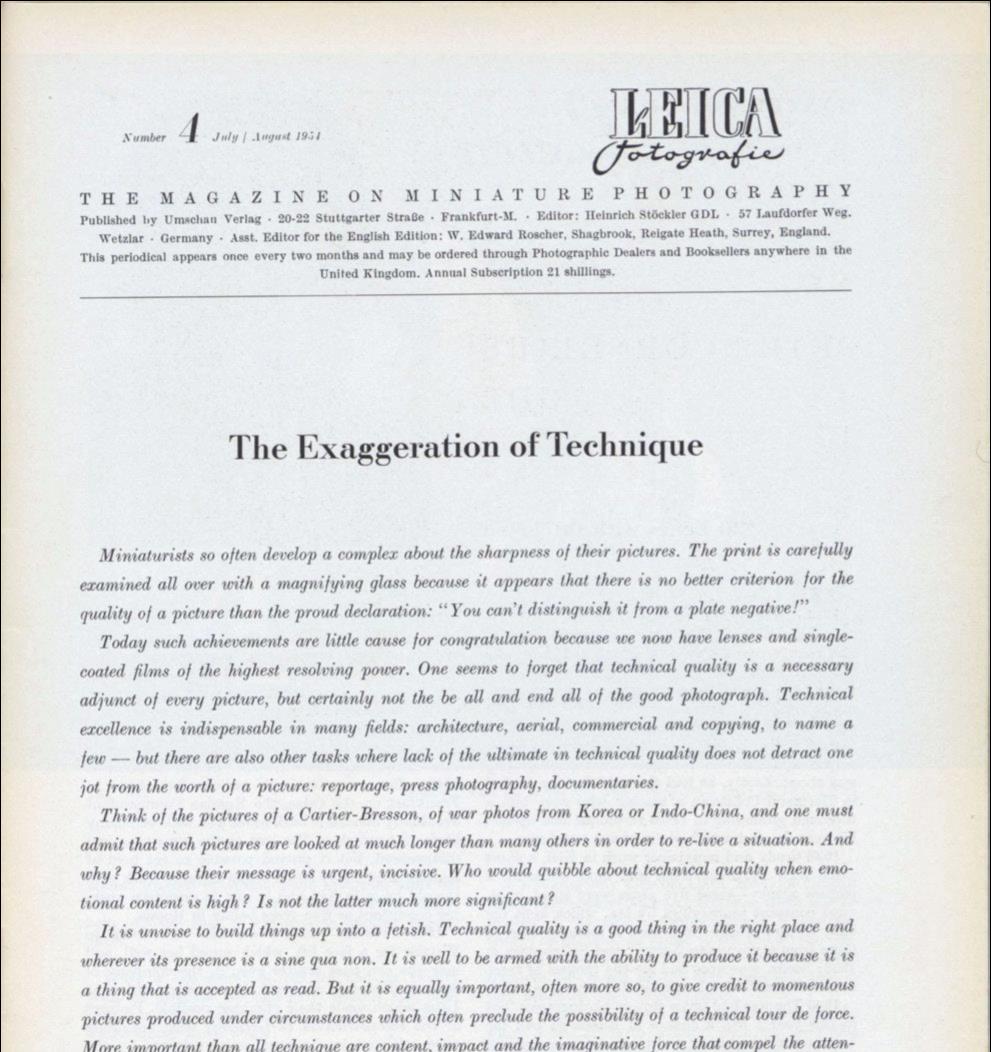
A 1954 Perspective I recently ran across a unique piece of history. I enjoy history and the uncovering of some important wisdom or new concept that remains relevant today always piques my interest. The June/July 1954 issue of LFI Fotographie contains one such relevant reminder on page 121 and its relevance here is startling.
Titled “The Exaggeration of Technique,” the editor points out to the readers the reliance on technique. To put the article in perspective, the Leica IIIF screw mount body was the forefront of technology. Made from the 1950 to 1957, the IIIF was the second to last design before the M series. Thank you to Bernd Luxa of LFI Photographie GmbH for granting me permission to share what the editor says in this article and for providing an image of the original article.
M10 Monochrom, Summilux-M f/1.4 75mm, ISO 6400
M10 Monochrom, Noctilux-M f/1.0 50mm, ISO 50000
Miniaturists so often develop a complex about the sharpness of their pictures. The print is carefully examined all over with a magnifying glass because it appears that there is no better criterion for the quality of a picture than the proud declaration: ‘You can’t distinguish it from a plate negative!’
Today, such achievements are little cause for congratulation because we now have lenses and single-coated films of the highest resolving power. One seems to forget that technical quality is a necessary adjunct of every picture, but certainly not the be all and end all of the good photograph. Technical excellence is indispensable in many fields: architecture, aerial, commercial and copying, to name a few — but there are also other tasks where lack of the ultimate in technical quality does not detract one jot from the worth a picture; reportage, press photography, documentaries.
Think of the pictures of a Cartier-Bresson, of war photos from Korea or Indo-China, and one must admit that such pictures are looked at much longer than many others in order to re-live a situation. And why? Because their message is urgent, incisive. Who would quibble about technical quality when emotional content is high? Is not the latter much more significant?
It is unwise to build things up into a fetish. Technical quality is a good thing in the right place and wherever its presence is a sine qua non. It is well to be armed with the ability to produce it because it is a thing that is accepted as read. But it is equally important, often more so, to give credit to momentous pictures produced under circumstances which often preclude the possibility of a technical tour de force. More important than all technique are content, impact and the imaginative force that compel the attention of the observer. This is a plea — not a plenary indulgence for the inept!
How interesting that the same concept applies today. With the flat digital sensor and current digitally refined lenses, the pixel peeping reports of slight aberrations in the extreme edges of the image remain relevant in new camera evaluations. With the ease of stumbling on such information, I too fall prey. A more important aspect of photography would be long studies of iconic or important images made by very successful photographers - understanding the why behind the image. With these new sensor sizes, perhaps we can forgo the pixel peeping and make more images. The quality of the digital images is clearly present in these new sensors.
The next time you see an image that captures your attention, study the photographer’s message and try to discern how and why they took the image from the specific angle and with specific content or context. The next time you look at a camera review, try not to worry about the pixel level detail, but think about the possibilities and the images you can produce with the camera - even if you have to crop the image. And by all means, think about what you will do with all these extra pixels!
IN PATAGONIA
by RUTH ORATZ MD & ALBERT B. KNAPP MD
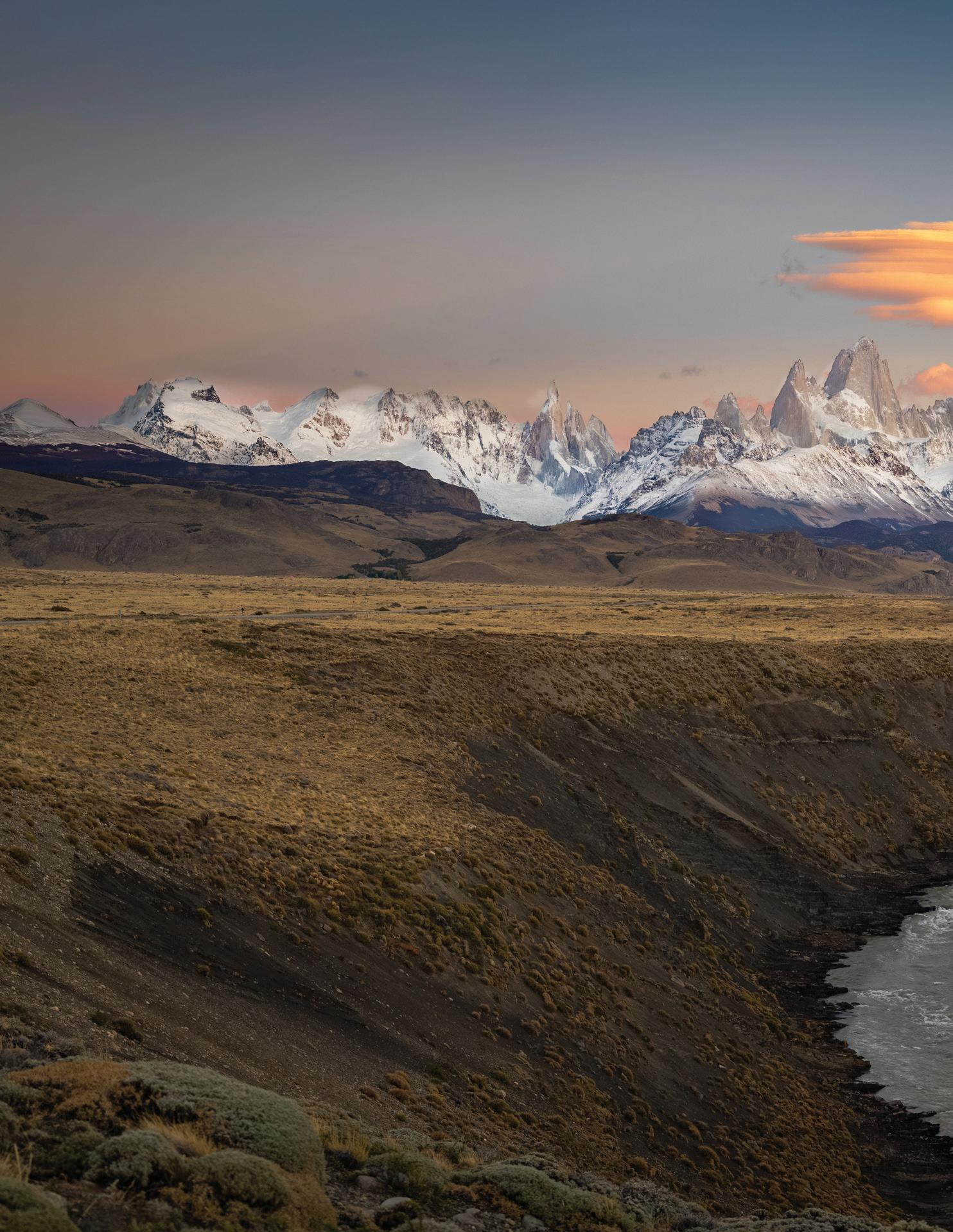
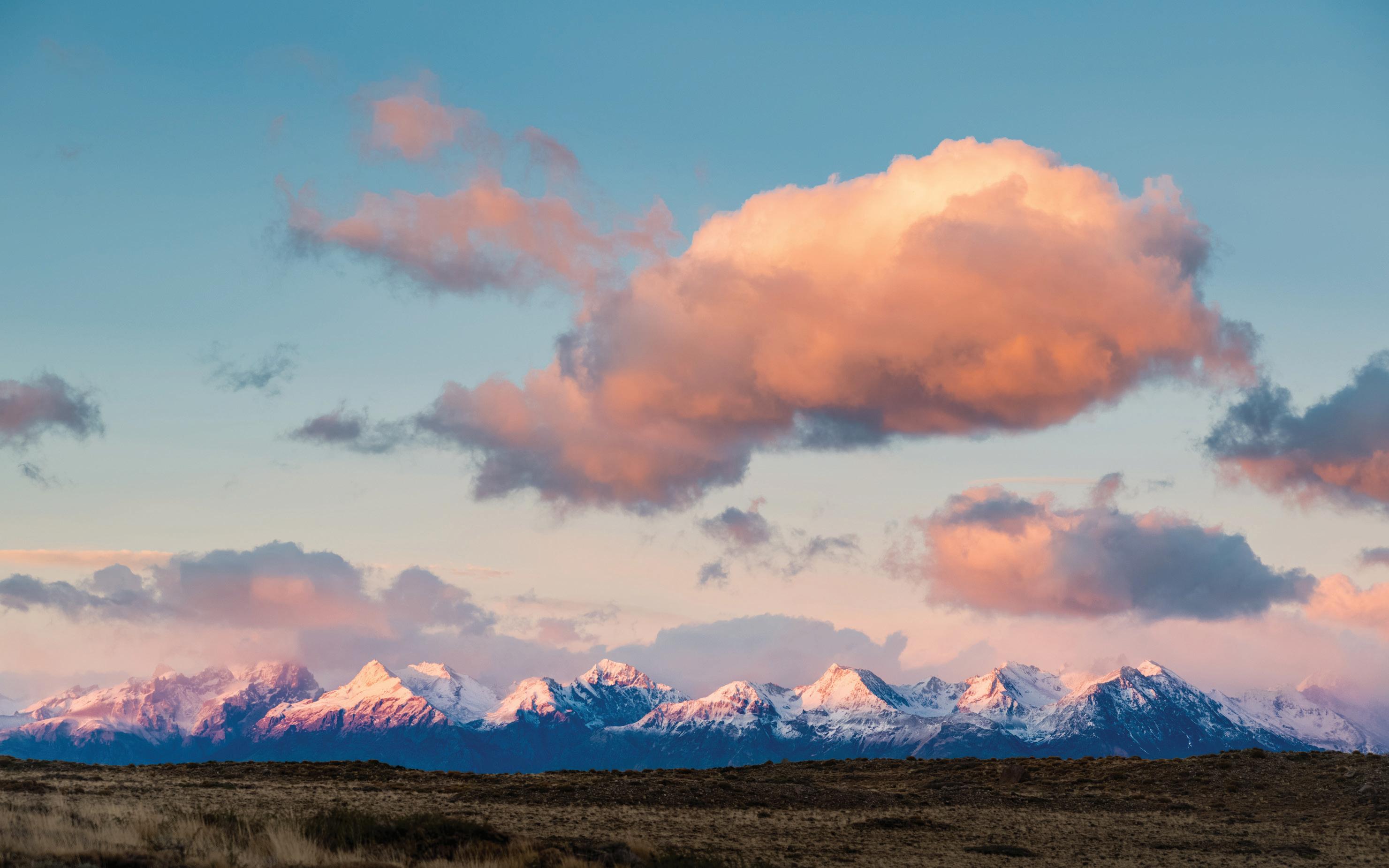
Sunrise, Fitz Roy Mountain Range, Glacier National Park, Argentina. Leica S (007) & Vario-Elmar-S 30–90mm (52mm) at f/4.6, 1/125th sec, ISO 800.
In Patagonia the wind blows relentlessly endlessly never-endingly.
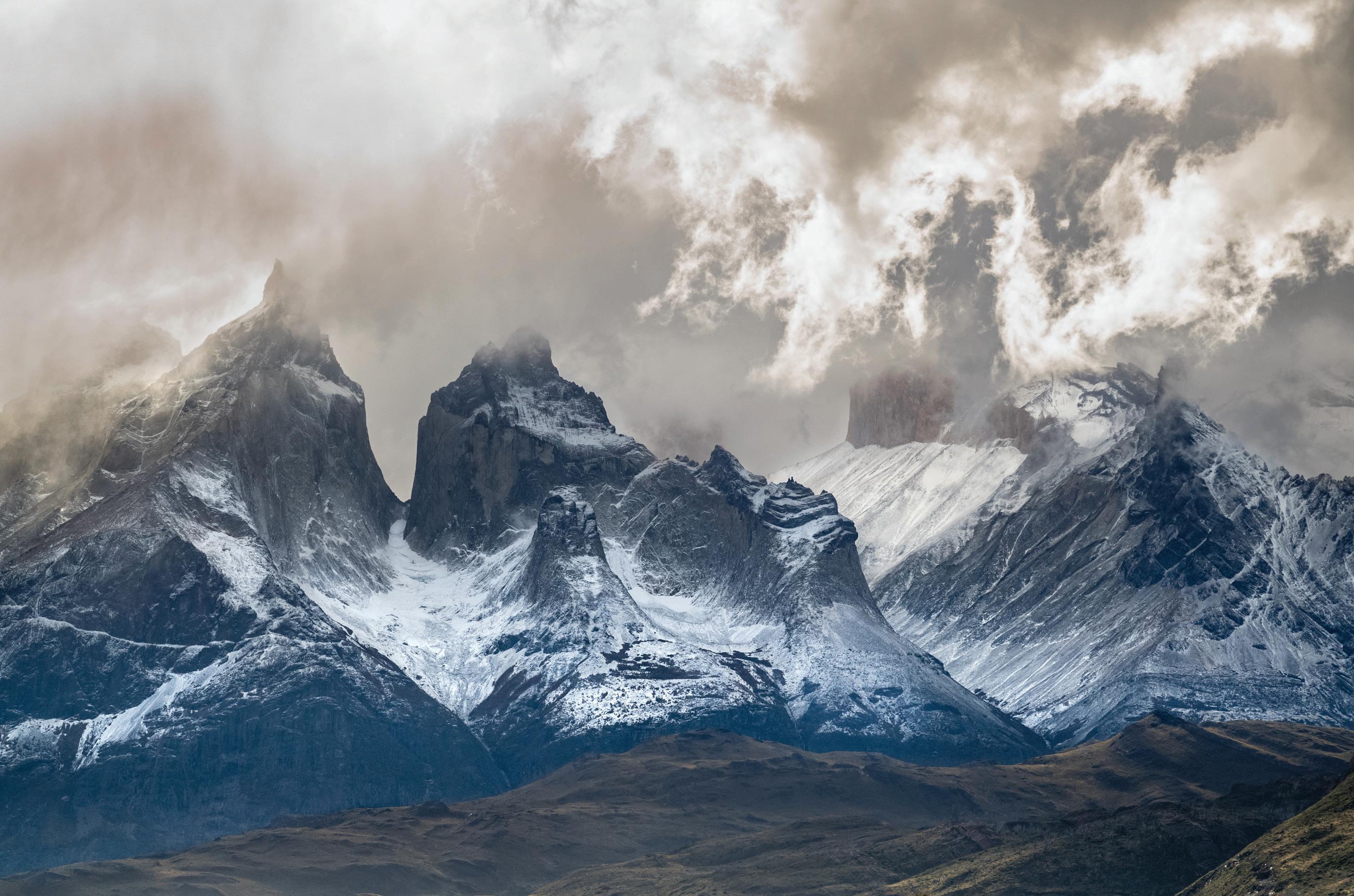
"Blow, winds, and crack your cheeks! Rage, blow!” cries Shakespeare’s Lear, a king subjected to the superior power of nature as any man. In Patagonia the winds howl and whistle and sweep up from the west, diminishing us before the majesty of the grand Andes and wild open ranges of the pampas. The wind blasts great billowing clouds across the Andes peaks, shrouds their mythical mounts in mist, and when shot through by a sunbeam illuminates their craggy caps.
Our first destination is Torres del Paine in Chile. We arrive after a day’s drive up from Punta Arenas across flat dry plains until the mountains begin to peek up above the horizon.
It is early autumn, the grass is golden, the foliage has taken on a subtle russet hue and the sky is blue blue blue.
Designated as a UNESCO World Biosphere Reserve, the 700 square mile Torres del Paine National Park encompasses mountains, glaciers, lakes, forests and rivers. Imposing granite peaks are the centerpiece of the Torres Massif, with the Grande rising more than 9,000 ft. above the Patagonian plain. Further along the ridge are the distinctive Cuernos, named for their horn like shape. The wind carries clouds and brume to cloak the mountains. We are out at sunrise and sunset, bracing ourselves against the gusts and waiting for a glorious moment when light will break through the overcast sky revealing the sapphire spires. Paine means "blue" in the native Tehuelche language as indeed these stunning towers appear.
We shoot at the most splendid locations – Lago Pehoe and Rio Serrano and we hike from the Salto Grande waterfall out through an eerie landscape of dead white trunked trees to get closer and closer to the Torres del Paine. Signs warn us along the way: Peligroso: Ventas Fuertes! (Danger: Strong Winds!) But the experience and the images we capture compensate for any discomfort.
We move on, cross to Argentina on the far side of the Cordillera. The landscape changes to dry tawny pampas grass, wind shorn, desolate open steppe, gusts shrieking across wide-open uninhabited space. Only a few animals are spotted in this forsaken place, some grazing guanaco and a red fox. Puma lions live here well camouflaged in the low vegetation. We stop for the sunset, but again the danger of wind tipping over the tripods makes the effort ever more challenging.
(top) Fitz Roy Mountain Range, Glacier National Park, Argentina. Leica Q2 with 28mm Summilux at f/5.6, 1/250 th sec, ISO 400.
(bottom) Glacier National Park, Argentina. Leica Q2 with 28mm Summilux at f/5.6, 1/250th sec, ISO 400.
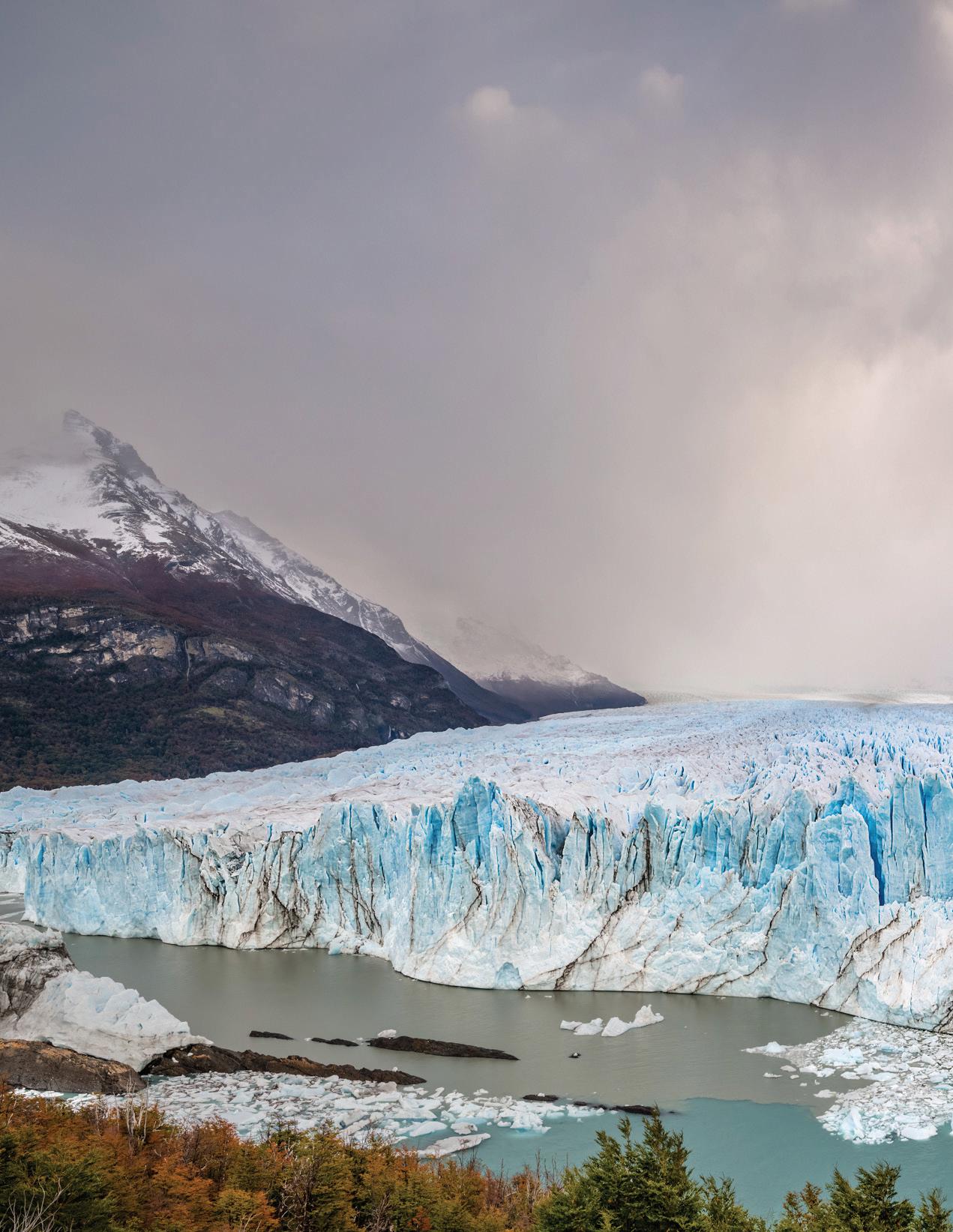
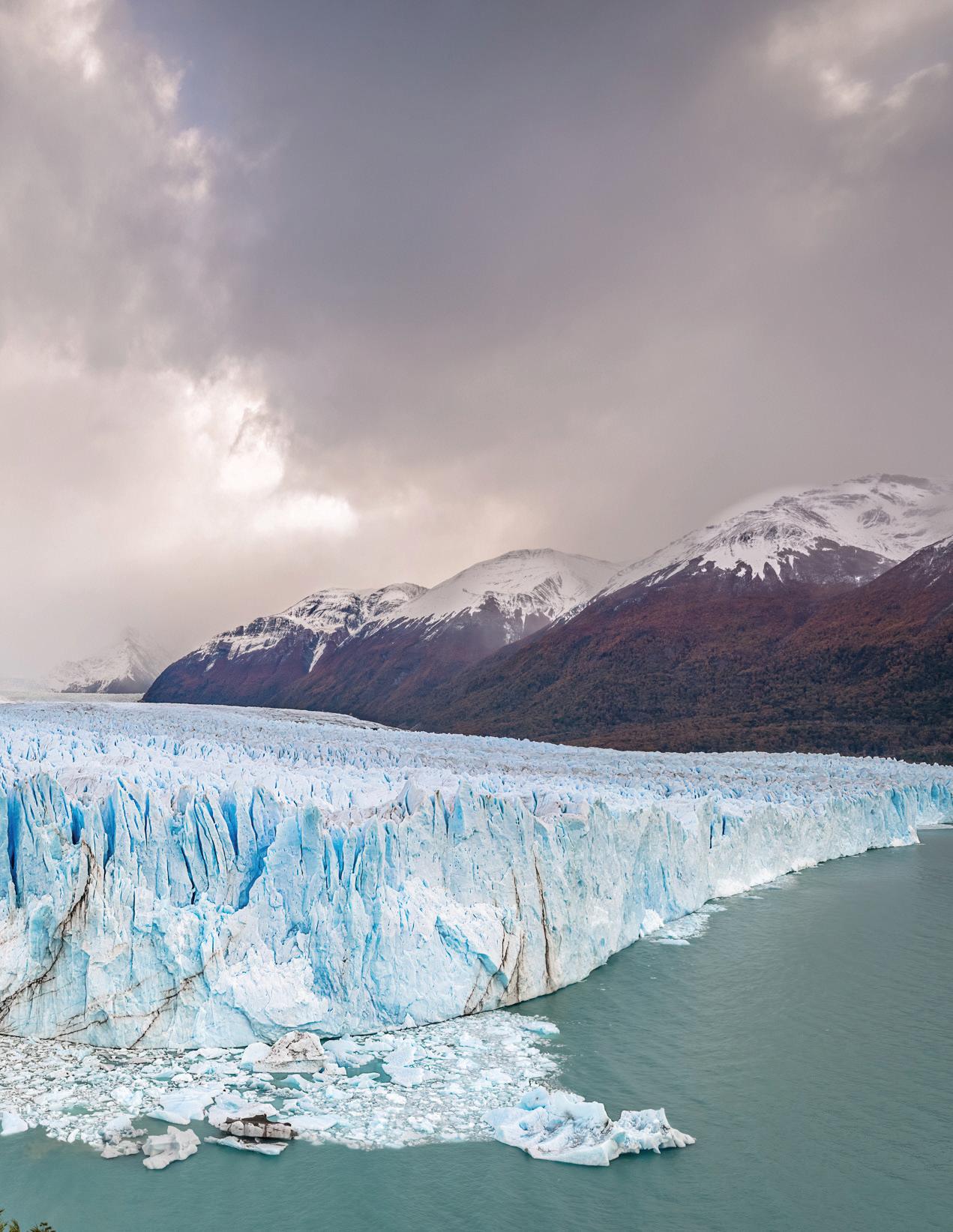
Perito Moreno Glacier Glacier National Park, Argentina
Leica S (007) & Vario-Elmar-S 30–90mm (42mm) at f/6.8, 1/350 th sec, ISO 400.
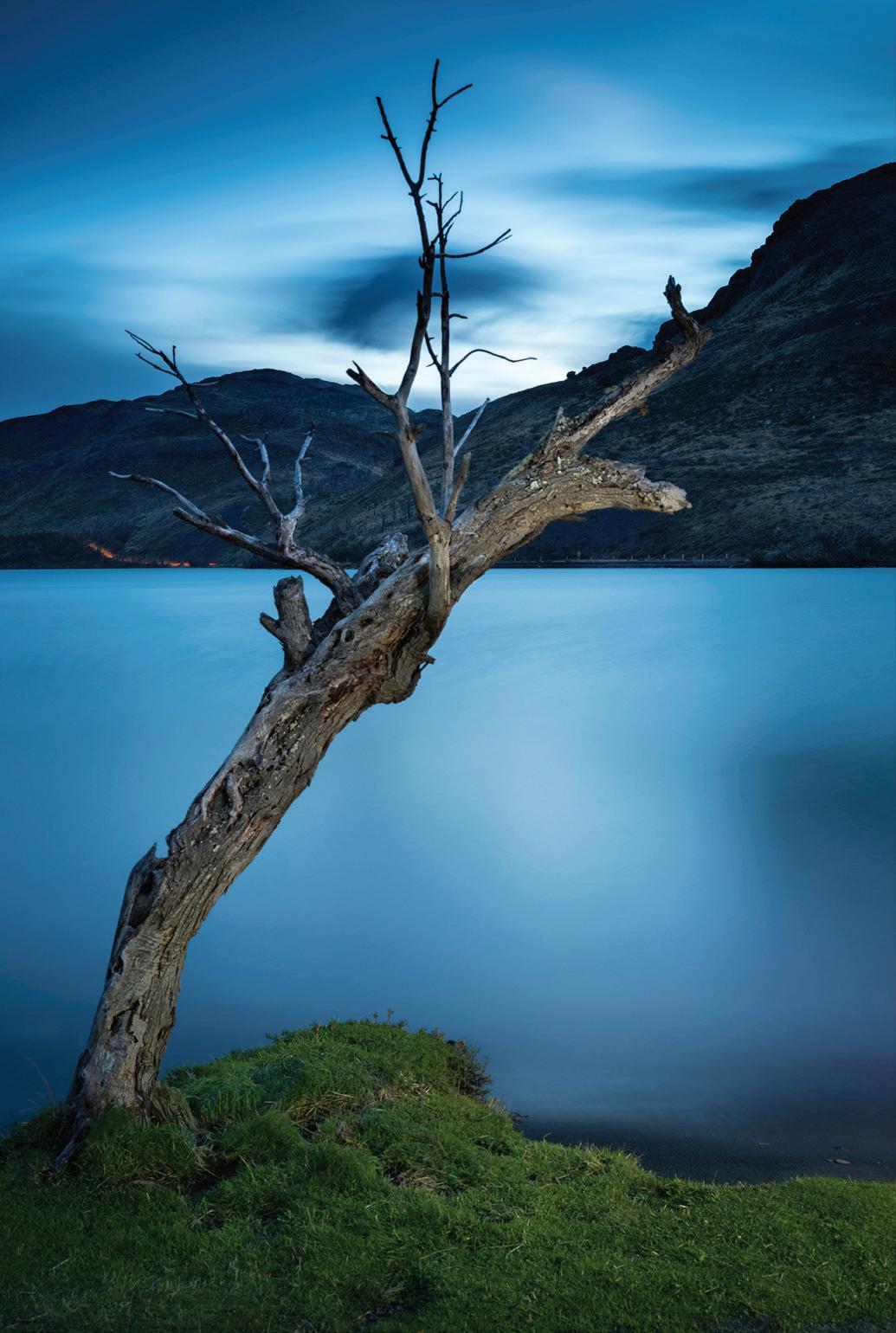
(top) Lake Pehoe, Torres Del Paine National Park, Chile. Leica S (007) & Vario-Elmar-S 30–90mm (84mm) at f/9.5, 1/125th sec, ISO 100.
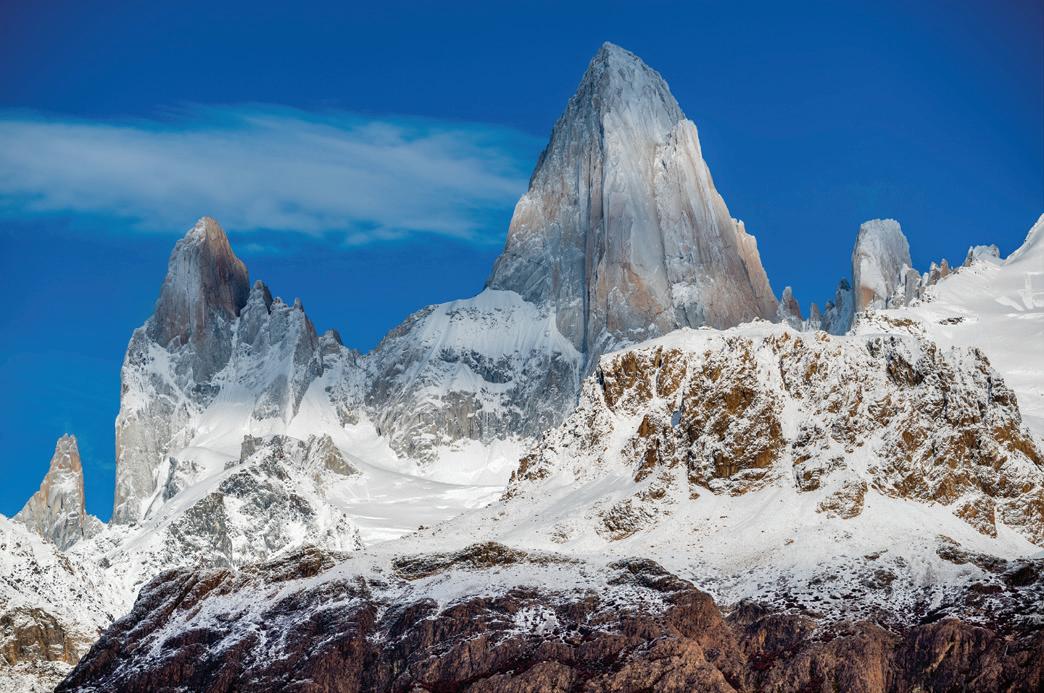
(bottom) Summit, Fitz Roy Mountain Range, Glacier National Park, Argentina. Leica S (007) & Apo-Elmar-S 180mm at f/8, 1/750th sec, ISO 100.
(top) Sunrise, Glacier National Park, Argentina. Leica S (007) & Vario-Elmar-S 30–90mm (85mm) at f/4.6, 1/125 th sec, ISO 800.
(bottom) Torres Del Paine Mountain Range & Lake Pehoe, Chile. Leica S (007) & Vario-Elmar-S 30–90mm (87mm) at f/5.6, 1/3000 th sec, ISO 800.
From our base in the tiny town we head out early before sunrise. The goal is Mount FitzRoy, a noble summit on the border of Chile and Argentina and rising to 11,171 ft. Usually covered by low lying clouds its name in Spanish is El Chalten, the “Smoking Mountain”; in English named for Robert FitzRoy the captain of the HMS Beagle who with Charles Darwin aboard explored much of Patagonia. The god of the winds, Aeolus who has momentarily locked away the gales, has blessed us and FitzRoy gleams brilliant and imperial against the blue sky, ruling royally over the entire region. We are breathless.
The last leg of our trip takes us to the Perito Moreno glacier. This glacier, named for the Argentinian explorer Francisco Moreno, is unusual in that it continues to grow and advance, rather than recede and diminish as so many other glaciers around the globe. We approach the massive face on a beautifully laid out walking trail, raised above the ground with well-positioned viewing platforms. The glacier is very active. Large chunks of striated blue ice calve continuously into the turquoise lake below, creating an apron at its base.
The reverberating roar of ice cracking echoes in the canyon. Cold air blows from the frozen surface and here we feel the chill wind as clouds skitter above.
Photography in Patagonia requires preparation for the wind and cloud cover. Along with the wind comes dust and the possibility of rain. First we dress in layers to stay warm and dry – with the outermost layer always a waterproof, windproof shell. Hat and gloves are highly recommended. The weather in Patagonia is as changeable as the wind is fast, so being prepared for any and all conditions is necessary. Camera equipment should be properly protected from the elements. Tripods are essential in the low light of sunrise/sunset conditions and under overcast skies – but the wind presents hazard to even the sturdiest and heaviest set-up. Always keep an eye, or better yet, a hand on the tripod.
Albert brought his two Leica S (007) along with the 24mm, 30-90 mm, 100mm, 120mm and the 180mm lenses and RRS TVC-43 tripod. Ruth works with the Q2 and finds that black and white captures the drama of the sky and the solid mass of the earth below.
At last we must leave. Farewell Patagonia…. you will always be blowing our minds!
PHOTOGRAPHY MY JOURNEY TO & WITH LEICA
by DR. ANDREAS KAUFMANN
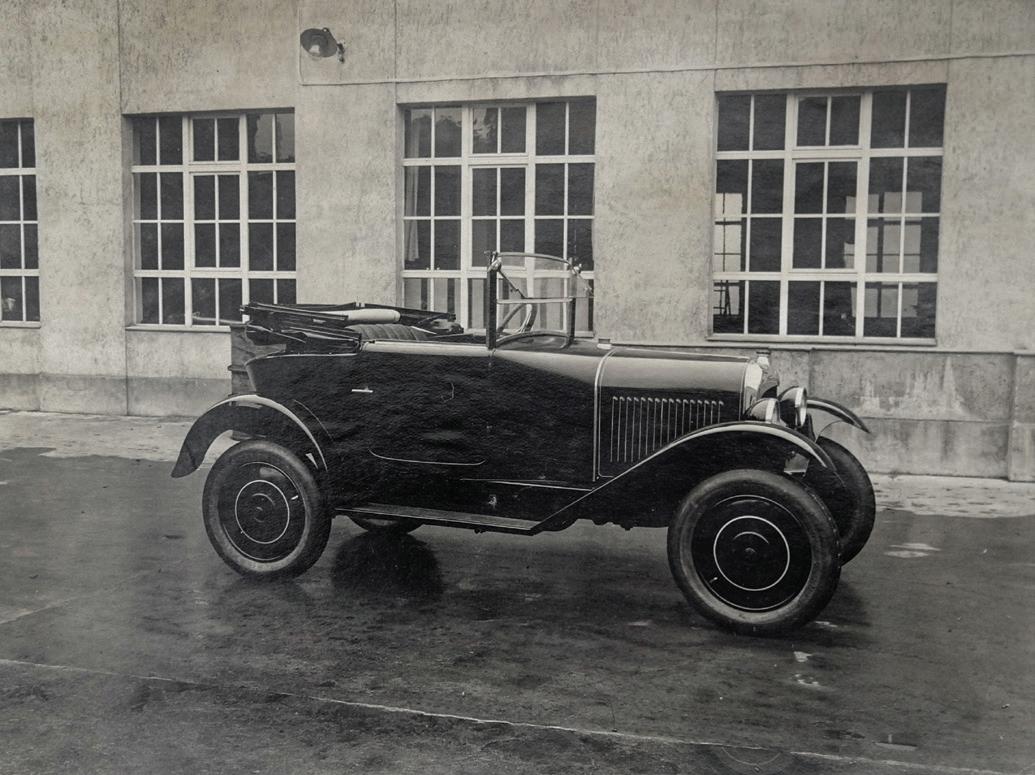
Photography always had a role in my family, during the analogue 20 th century and even into the 21 st century. One of the earliest pictures we still have is a print of the first car my then 18-year-old aunt received as a Christmas gift in Berlin in 1925 – a Citroen (image 1) . Definitely not shot with a Leica!
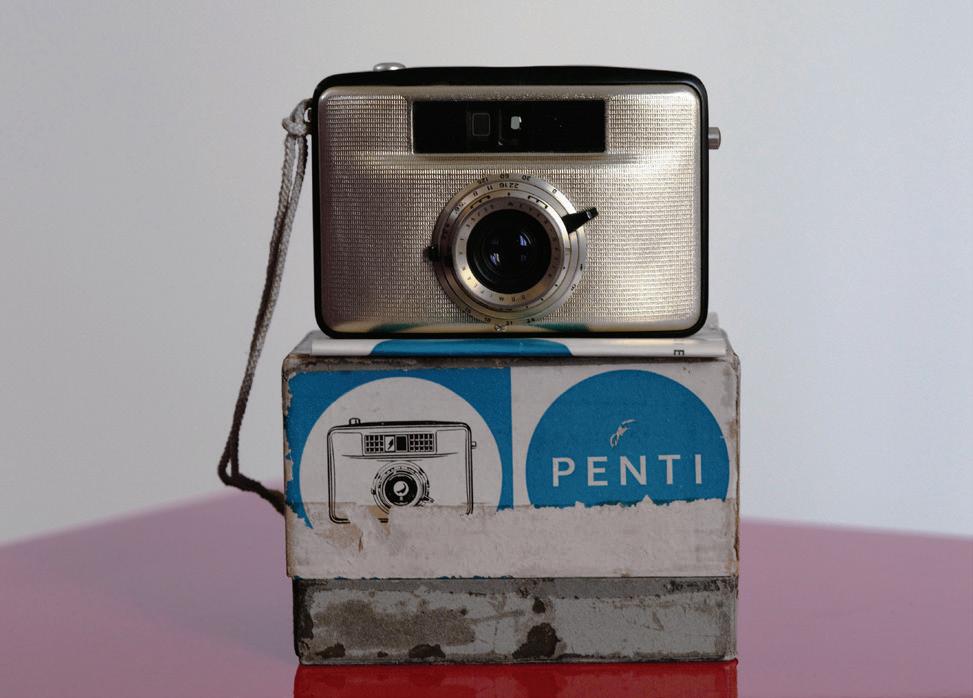
Therefore, around the time of my confirmation, like a good German boy in those days, I was gifted a camera – and it was not a Leica! Instead, it was a frugal Penti by Pentacon Optische Werke Dresden, produced in the German Democratic Republic, but sold mainly in Western Germany (image 2)
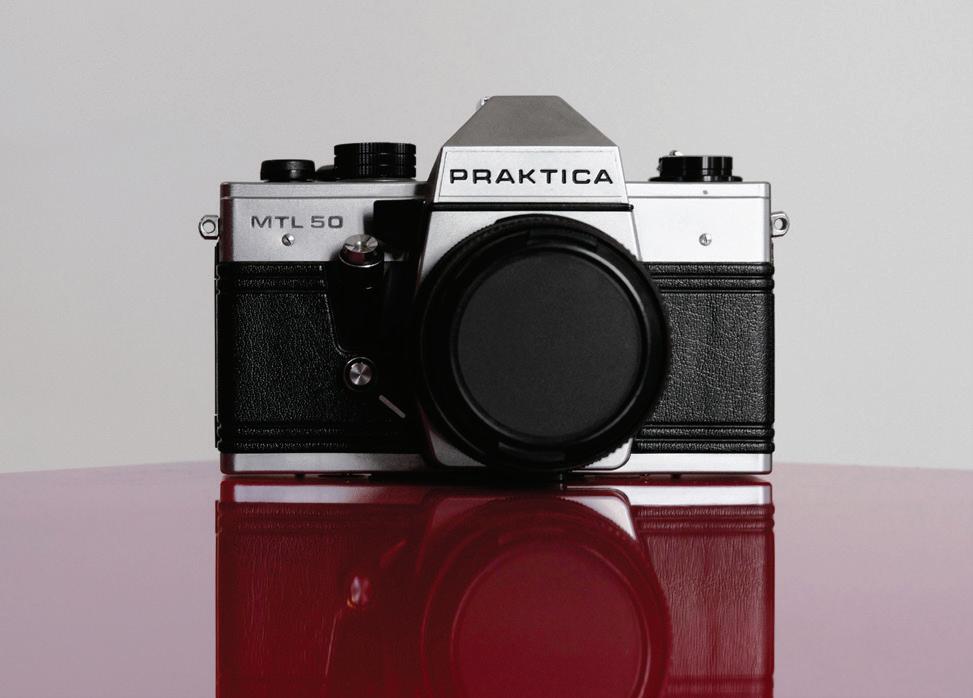
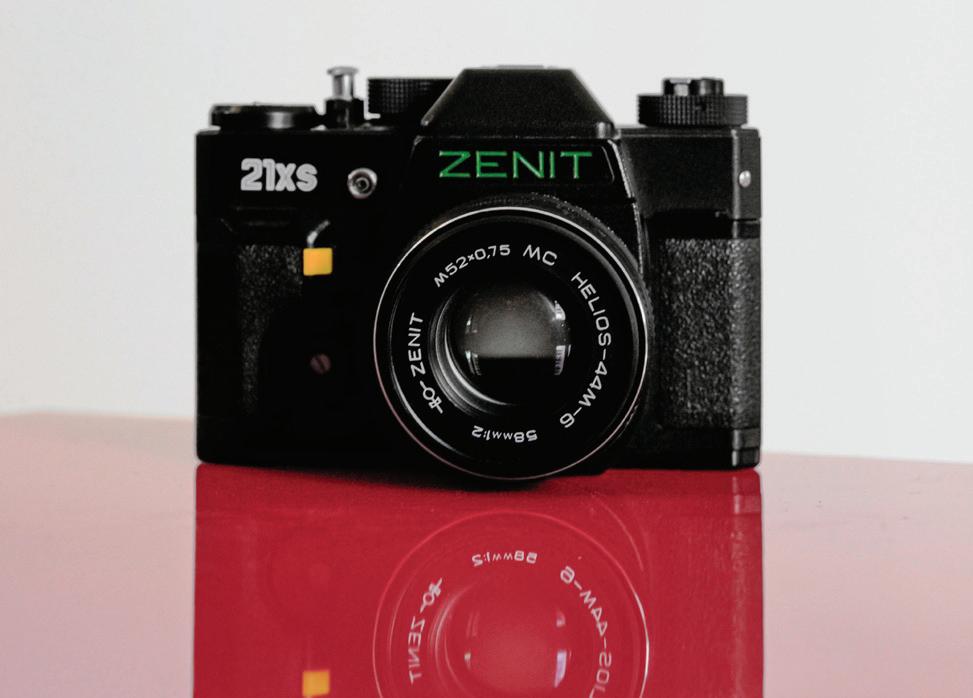
When I was around 19, I was engaged to a girl who was doing her apprenticing as a “Fotografenmeister,” which in those days meant three years working with a photographer who also owned a camera store. She bought a Japanese SLR with her first paycheck and showed me how to use it. One day she came home and said “Look at what I’ve got!” Without much interest I replied, “It’s a camera!” She spoke again, with greater intensity “No, look what I’ve got!” to which I replied “It’s still a camera!” She then said in a different tone of voice, almost reverentially, “It’s a LEICA.” That is when I realized that Leicas are probably very special! However, it took me several years before I obtained my first Leica. In between, I had two rather simple and sturdy SLR’s – a Pentacon Practica with a 50mm f/2.8 (image 3) and a Zenit with a Helios lens (image 4)
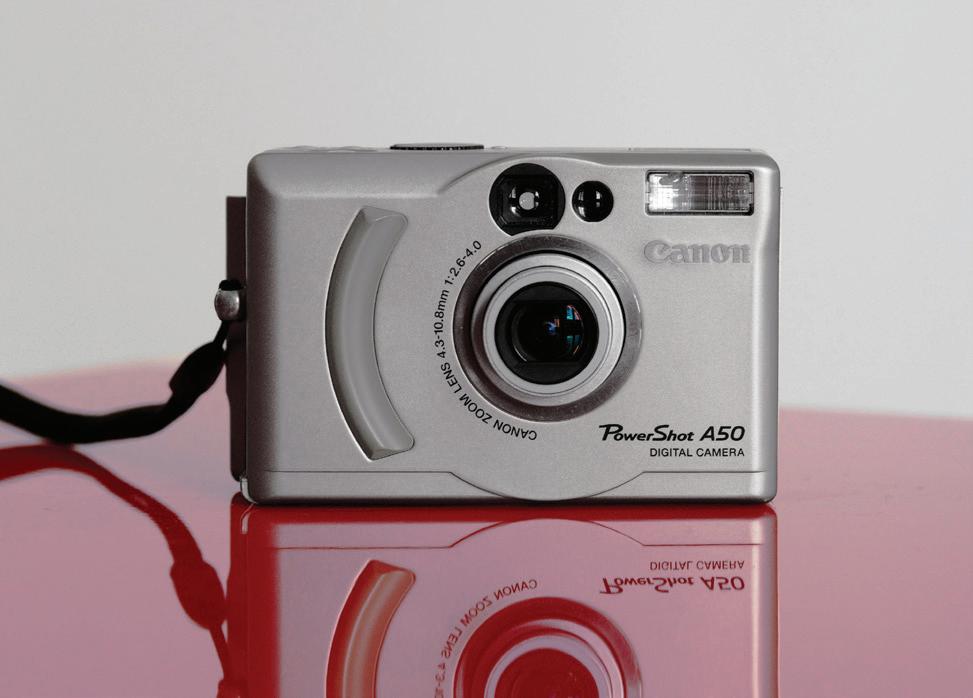
My first foray into digital photography began with the Canon Powershot, my first digital camera that I bought from a Staples store in Massachusetts, while I was involved with WebPark, an e-commerce company (image 5) .
I bought my first Leica, a Leica MP, in 2004. A lovely analogue film camera that is now owned by my son Max. Soon after came the Digilux 2, which I still consider one of the best digital cameras we ever made (image 6) .
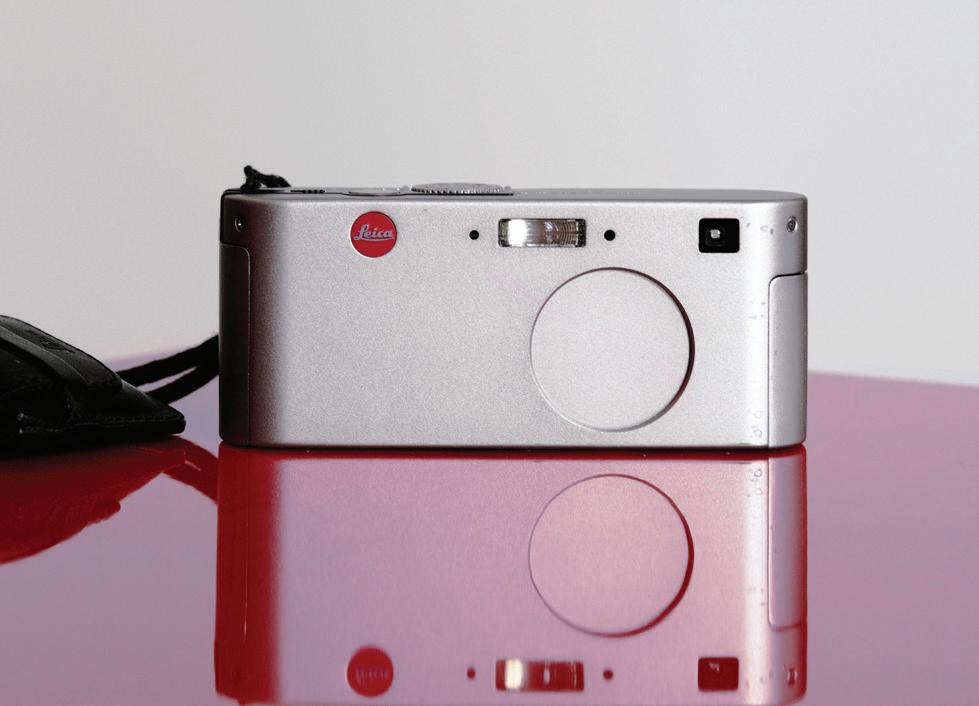
The D-Lux, still a great little camera with a superb design, quickly followed, awarded the iF Design Award 2004 (image 7)
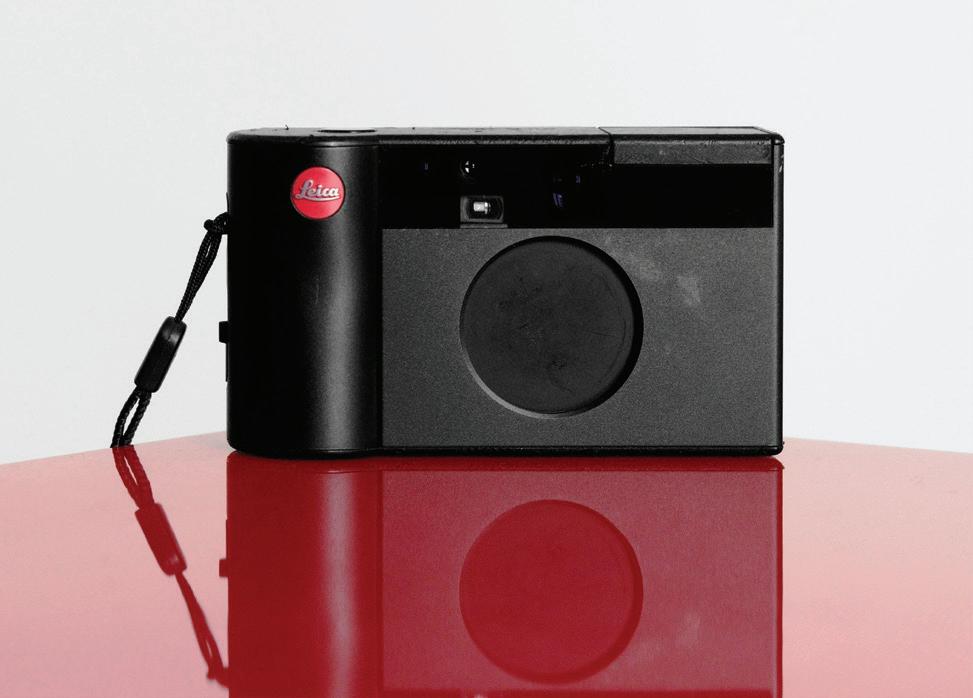
In between, I bought a very odd Leica camera for the Kodak APS-system, probably best forgotten today (image 8)
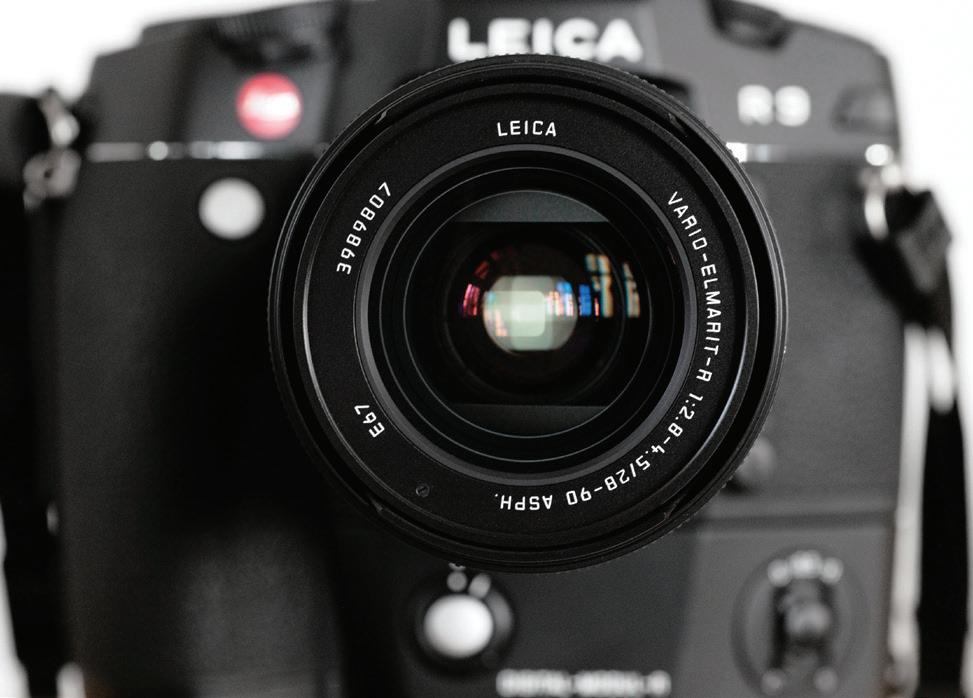
Then I acquired the Leica R9 with the digital back (produced by Imacon, taken over in 2004 by Hasselblad) with the VarioElmarit 28-90 – still a great combination, but the intended output from Imacon never reached the planned production figures (image 9) .
After 2005, when I became really involved with Leica Camera, I sometimes tested new cameras, and helped develop some concepts such as the Monochrom, Leica T, and a few others. I also began to develop my photography which for me is mainly my digital diary. I always remember Henry Cartier-Bresson’s quote, “The first ten thousand pictures are bad anyway!” However nowadays, thanks to digital, you probably have to multiply this ten-fold.
I usually carry a Leica M with me on my frequent travels. In recent years, this has been mainly the M10-P or the M10-P ASC. I’m used to the way you shoot with an M, which is perfectly suited for travel - the lenses are small and the weight is low, a necessity for traveling. Sometimes I use the Q in between, but I always come back to the M. Well, in Leica that’s “DAS WESENTLICHE!”
After all, you can see it was a long journey which brought me to Leica, and this journey with Leica is now going on for nearly 16 years. I think during my Leica journey, apart from a few other things, at least I learned to focus better, but I still doubt if I ever will be a good photographer – but I’m trying every day, with every shot. Let’s see where this will lead to!
(top left) Venice 2019, M10-P and 1.4/50mm Summilux-M.
(bottom left) Leica M10-P ASC and 2/90mm Summicron-M.
(top right) 2019, M10-P and 2/50mm APO-Summicron-M.
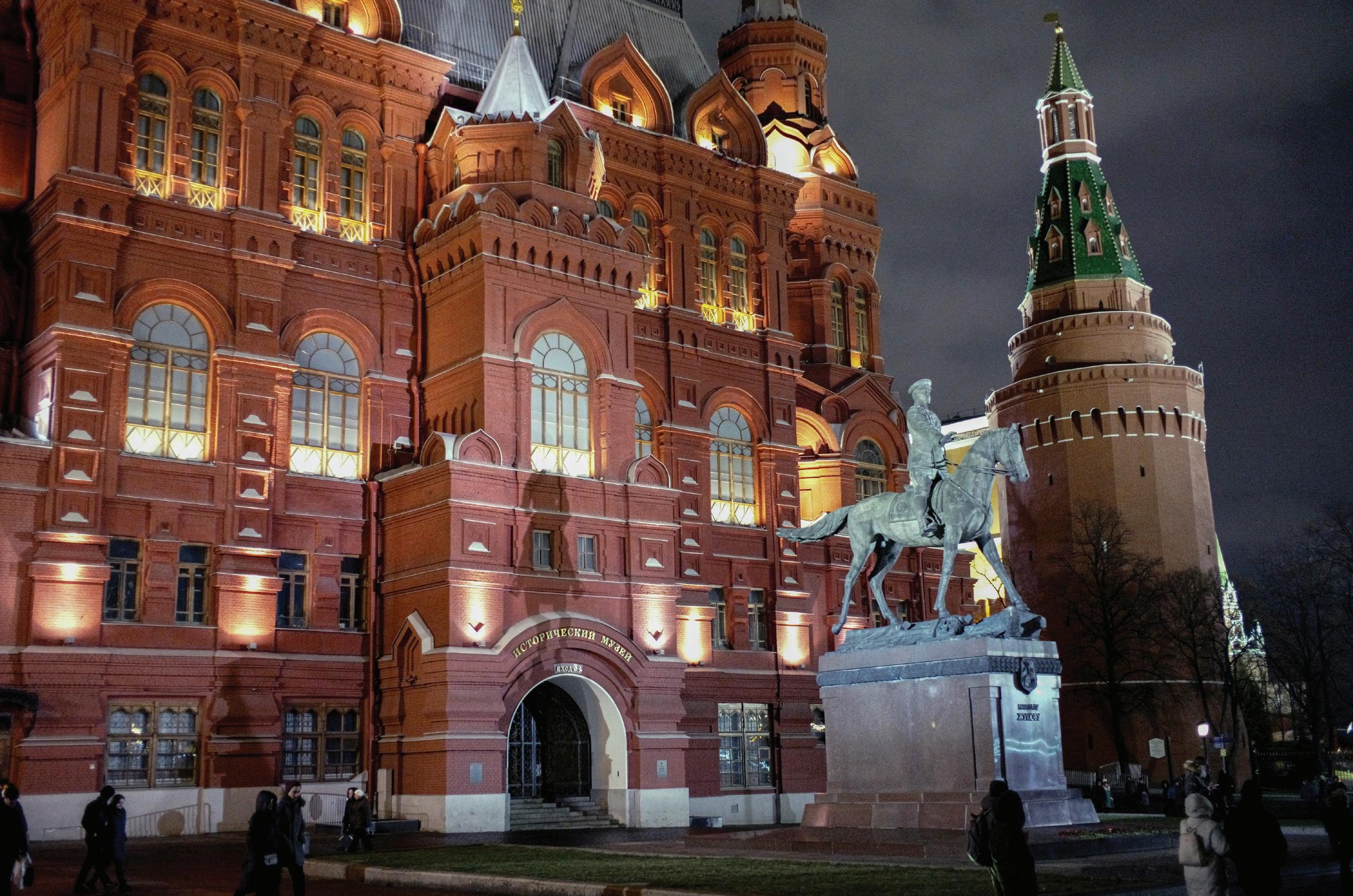
(bottom right) Kremlin in Moscow, December 2019, Leica M10-P ASC and 2/35mm Summicron-M ASC using ASC Classic Film Mode.
left
(top) 2015, Pre-production SL2 and 24-90mm Vario-Elmarit-SL.
(bottom) Near Salzburg, 2019, S (Typ 006) and 30-90mm Vario-Elmar-S.
THE 35MM APO-SUMMICRON-SL A Single-Lens Setup in the Boundary Waters
by KIRSTEN VIGNES
It’s no secret: I like to travel light. If you read my previous article in Viewfinder, Two Weeks in India with the Leica CL: Getting Out of My Comfort Zone , you’ll know that I’m a one-camera, one-lens (maybe two) kind of girl. Making small cameras with big image quality has been one of Leica’s core guiding philosophies ever since they introduced the world’s first 35mm still camera over 100 years ago. It’s what has attracted so many to the brand through the decades, and one which continues to make Leica a favorite amongst travel photographers.
So when I first picked up the Leica SL (Typ 601) with its native Vario-Elmarit-SL 24-90mm f/2.9-4.0 ASPH standard zoom mounted on the front, I could see that Leica had chosen to go a different direction from its iconic, and compact, M system. While the professional mirrorless SL offered ultimate flexibility with its autofocus L mount, a class-leading feature set care of cutting-edge electronics and image quality to spare, I honestly didn’t see how it was going to be an option for my bare-bones adventures and minimalist approach.
But clearly Leica made the right move with the system. Released in 2015, the groundbreaking full-frame professional mirrorless SL quickly rose to the top of the MILC (Mirrorless Interchangeable Lens Camera) market, out-performing its competitors and creating a benchmark for future generations. Optically, the range of Vario-SL lenses offered up razor-sharp, prime-lens quality in versatile zooms.
While these Vario lenses became the bread-and-butter solution for many photographers over the last five years, they were always just a tad too big for my compact travel bag. The SL body, on the other hand, has accompanied me on several around-the-world adventures, but almost always with M lenses using the M-Adapter-L. Weighing only 6.6 oz more than the Leica M10, the Leica SL has proven to be a great alternative for Leica M glass. In fact, in some cases I’ve found the SL more capable over shooting with a native M body, especially with larger, exotic optics. With its better-balanced and steadier grip, along with the expansive, built-in high-resolution EVF (Electronic Viewfinder) with focus assistance, challenging and often hard-to-focus lenses such as the Noctilux-M 50mm f/0.95 ASPH are now that much more manageable and useful.
But despite the endless combinations of SL, M and even R glass available to SL users, the system still pined for a weather-sealed, compact prime of its own to complement its impressive zooms and have a lightweight option for the lessis-more traveler like myself.
Then along came the Leica APO-Summicron-SL lenses, and everything changed.
At Photokina in September 2016, Leica unveiled a new lens roadmap. Prominently featured, the new line-up of APOSummicron-SL f/2 ASPH lenses were significantly more compact than their Vario siblings. At the time, Leica outlined plans for focal lengths of 75, 90 and 35mm, with the possibility of more to come. Mounted on the Leica SL, the mock-up 75mm on the tradeshow floor glimpsed a future where the SL with its native prime lenses could make for a viable, compact kit. All Summicron-SL lenses would share many internal components like the Dual Synchro Drive AF system, have identical outer lens barrel dimensions both in length and the 67mm front filter thread, along with similar weights of 700750g across the range. Even more exciting, Leica’s lead optical designer, Peter Karbe, touted that this forthcoming generation of lenses would set a new standard in optical quality. “These primes redefine everything,” he gushed during an interview with my colleague David. He went on to explain that the new Summicrons would have a sharper point-of-focus area, while simultaneously yielding more separation between focus planes with a faster transition from in focus to out of focus. Simply put, Leica optical engineers found a way to bend physics and make an f/2 lens feel more like an f/1.4, resulting in an overall more three-dimensional look. Smaller, lighter, better quality and gorgeous bokeh. Sign me up!
In early 2018, the first of the Summicrons, the 75mm and 90mm, hit the market. And they did not disappoint. Testing of the 75mm confirmed that the optical performance Peter
Karbe had promised wasn’t just talk or marketing jargon. However, as the 75mm and 90mm made their way into the camera bags of many an SL shooter, they didn’t offer a solution for a compact one-camera-one-lens kit. Few shooters use anything longer than a 50mm as a primary lens, meaning SL-System shooters still had to lug around one of the heavier Vario lenses or the 50mm Summilux to round out their kit.
So, when the APO-Summicron-SL 35mm f/2 ASPH did make its debut in the spring of 2019, it marked a new era for the Leica SL. For the first time ever, the SL with one of its own system lenses made for an easy-to-carry single-lens setup. On paper, the 35mm assured the same optical performance and “ooooh”-inducing bokeh as the 75 and 90mm. In fact, according to the numbers, the 35mm APO-Summicron-SL looked to be one of the highest performing lenses to ever come out of Wetzlar.
Of course, tech specs only ever tell half the story. Each lens has its own personality. Its performance has as much to do with sharpness as it does the way it renders colors, how it transitions from out-of-focus areas to in-focus, what it looks like wide open, and, in the case of the SL, the behavior of the autofocus. To truly understand a lens, the only way is to actually shoot with it in a real-world scenario.
I was lucky enough to do just that.
"WHEN THE APOSUMMICRON-SL 35MM F/2 ASPH [MADE] ITS DEBUT IN THE SPRING OF 2019, IT MARKED A NEW ERA FOR THE LEICA SL."
(left) The Leica SL (Typ 601) and 35mm f/2 APO-Summicron-SL.
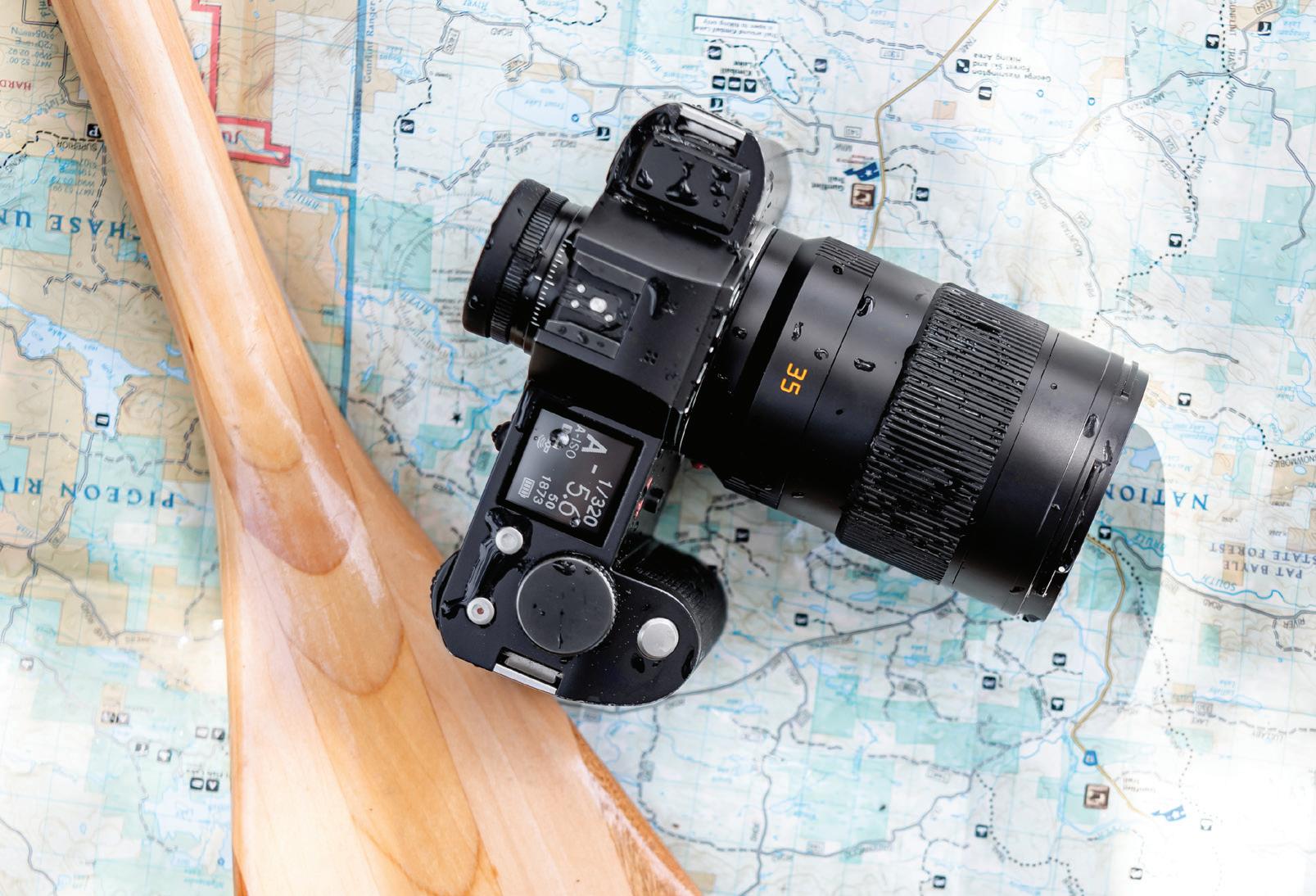
Even though copies of the freshly-minted APO-SummicronSL 35mm f/2 ASPH were, and still are scarce, I was lucky enough to secure a loaner for a four-day canoe trip through the Boundary Waters Canoe Area Wilderness (BWCA) in Northern Minnesota. Canoeing, for anyone who’s unaware, involves being around a lot of water, and my best options for such a trip would be one of two rugged, weather-resistant full-frame Leicas currently on the market: the Q2 or the SL (Typ 601) (This was pre-SL2) . Normally, I wouldn’t have hesitated to grab the Q2, but curious to try the new, travel-friendly 35mm Summicron-SL, I opted for the latter. When better to step out of my boundaries than in the Boundary Waters? Cheesy, I know.
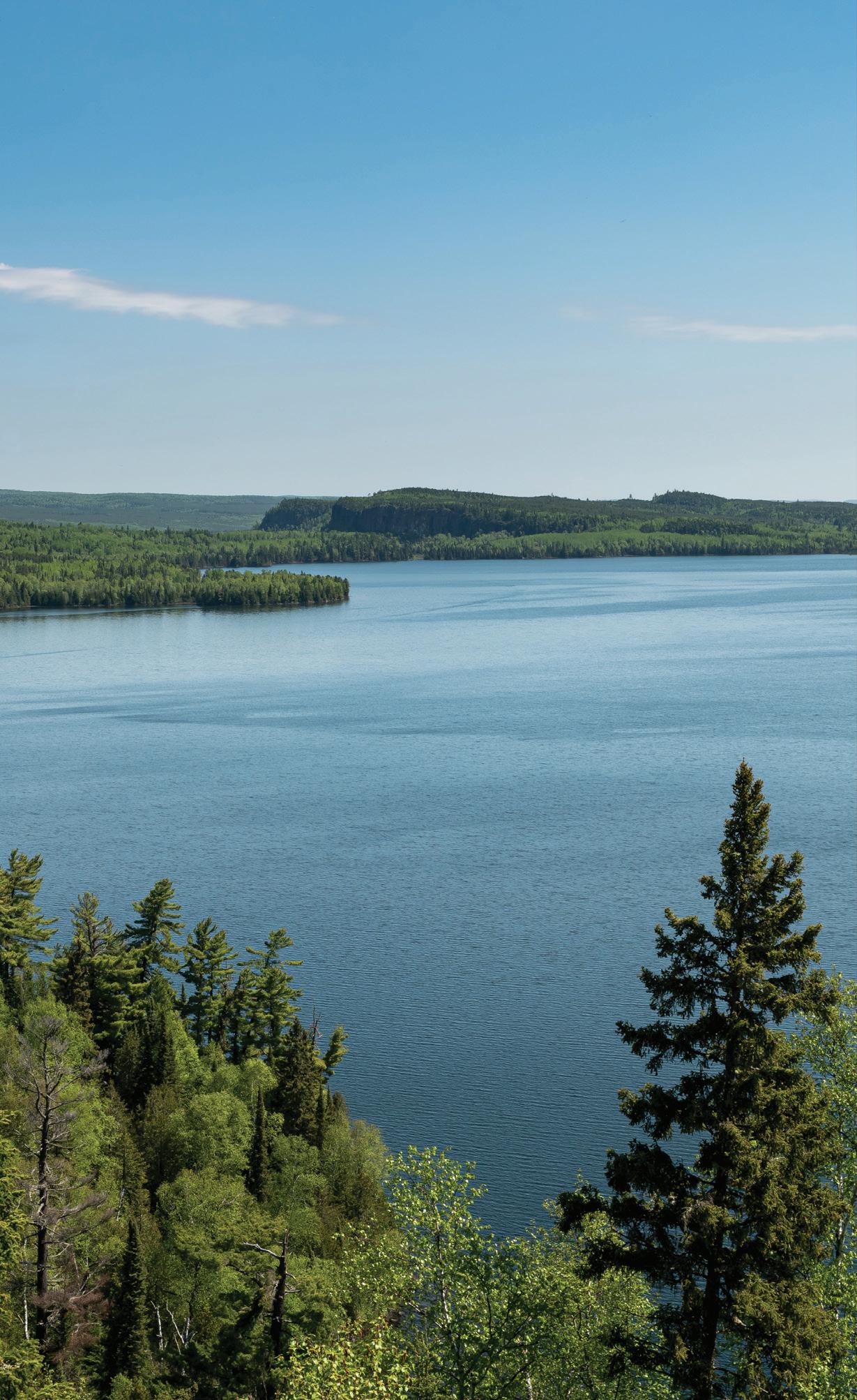
The Boundary Waters is to Minnesotans *raises hand* a revered place, feared and respected. “People get lost. They die up there, ya know,” my mom assures me any time it’s mentioned. The 2,700 square miles of glacially-carved wilderness is traversable only by combination of foot and canoe. To say it’s remote is an understatement. With 1,100 lakes and hundreds of miles of waterways and hiking trails, it’s easy to see how someone could get lost (and die) as my mother has warned. It’s also easy to see why those seeking adventure and solitude *raises hand again* are drawn to explore it.
My adventure-seeking self couldn’t turn down an invitation to tag along on a Boundary Waters trip last June with my longtime friend Angie and her family. Her parents, Paul and Lydia, were seasoned BWCA-ers. They knew the lay of the land (or should I say lakes?) , how to navigate, where to camp, what to pack – the list goes on. It would be a perfect chance to get a taste for the Boundary Waters, all the while catching up with close friends, and using the SL and 35mm Summicron to document the excursion.
PREPARATIONS // Spending four days in the wilderness comes with its own set of challenges, but as a photographer, there are certain added hurdles. How would I charge my camera batteries? How much SD card storage should bring? I’m generally a risk-taker and almost always a minimalist, but when it comes to having extra batteries and SD cards, I make an exception. Between borrowing and begging, I was able to rally up a total of four batteries, one for each day. I also brought along a Nitecore USB SL battery charger and a couple of external USB power packs, each good for a at least one full charge, with one featuring a solar panel to keep topped up when left out in the sun during the day.
In case of choppy waters or harsh landings, I also mocked up my own waterproof “camera bag” – a Domke wrap tossed into an 8L Sea to Summit dry bag. The SL is water resistant, but not submersible. Better safe than sorry.
With the camera gear sorted out, I had only to worry about the actual trip – ya know, the whole canoeing, hiking, and camping part. As outdoorsy as I might be considered – a frequent rock climber and hiker – I had actually never canoed extensively, and the only camping I had done was at a driveup site with shower facilities. This was going to be real deal.
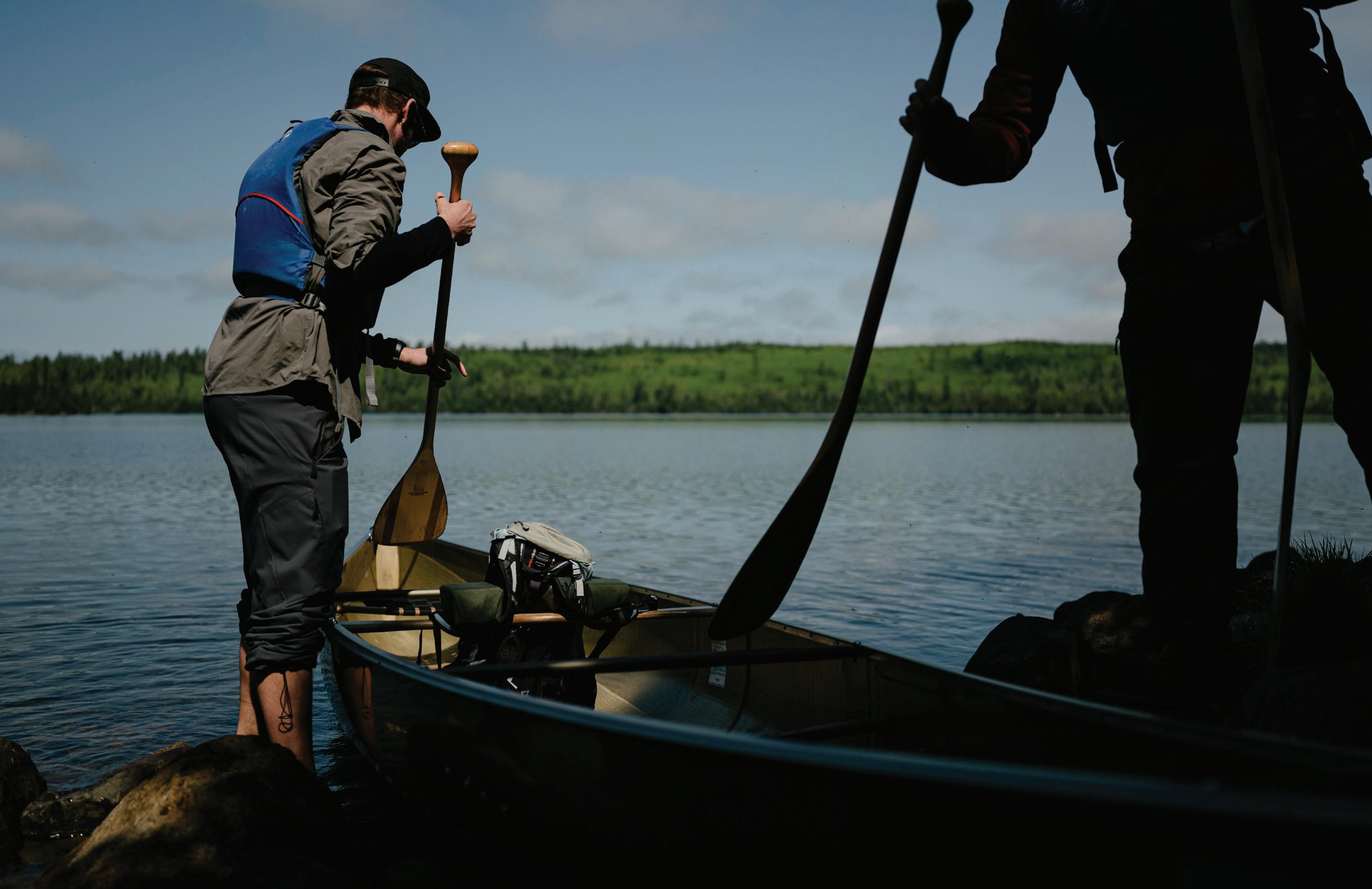
My biggest fear, aside from running out of coffee, was portaging. Those one-thousand-odd lakes don’t all connect. At some point you have no choice but to lift the canoe over your head and carry it between waterways. Some portages are short, only a couple hundred feet; others can be well over a mile. Keep in mind, there’s still your canoe pack to carry.
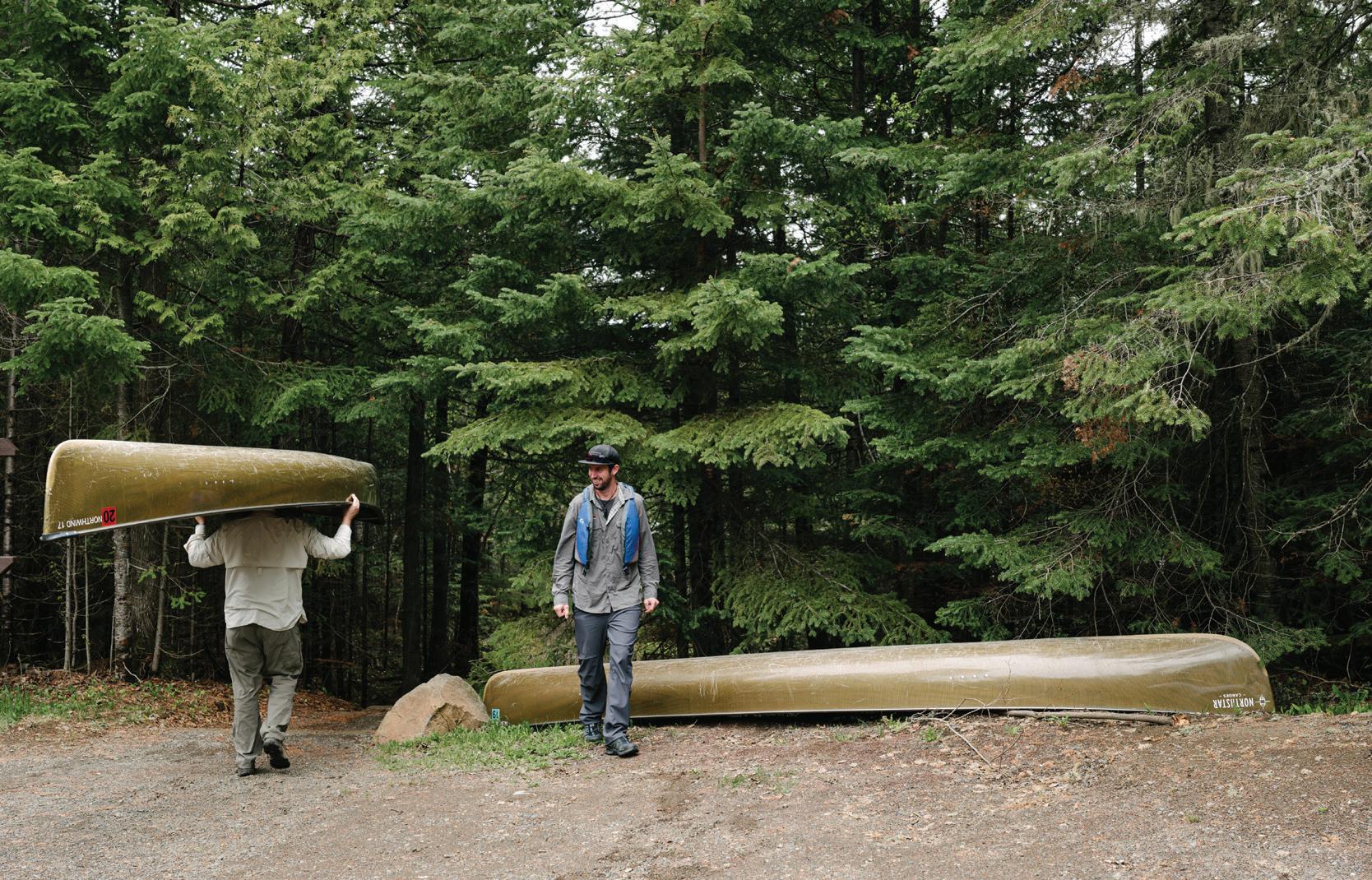
These fears were quickly put to rest. The Made-in-Minnesota canoes we were provided with from Clearwater Outfitters in Grand Marais were engineering marvels. With Kevlar hulls and sleek lines, they were featherlight, roughly 40 lbs, and perfectly balanced – a far cry from the bulky aluminum canoes we had at summer camp 20 years ago.
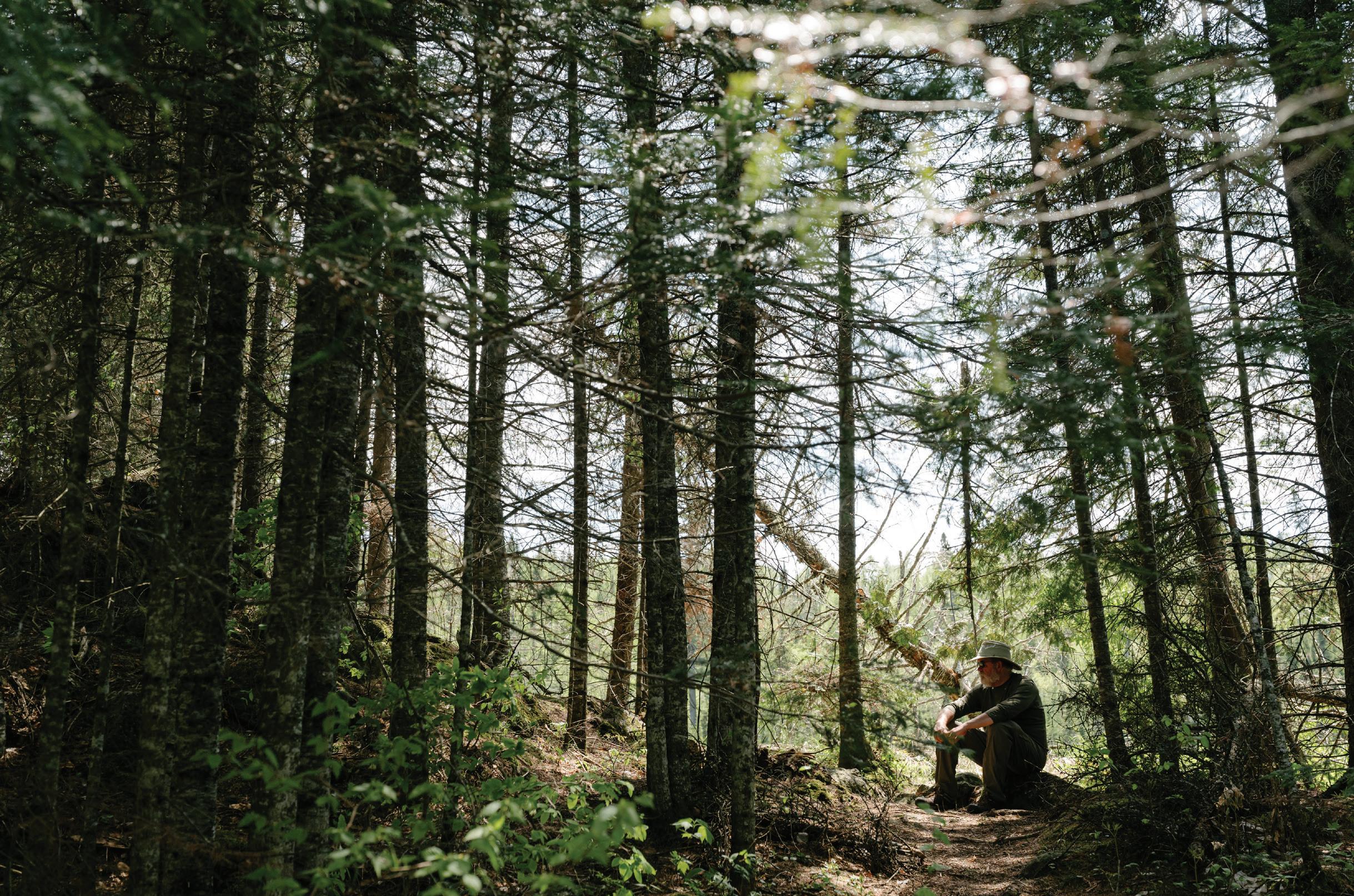
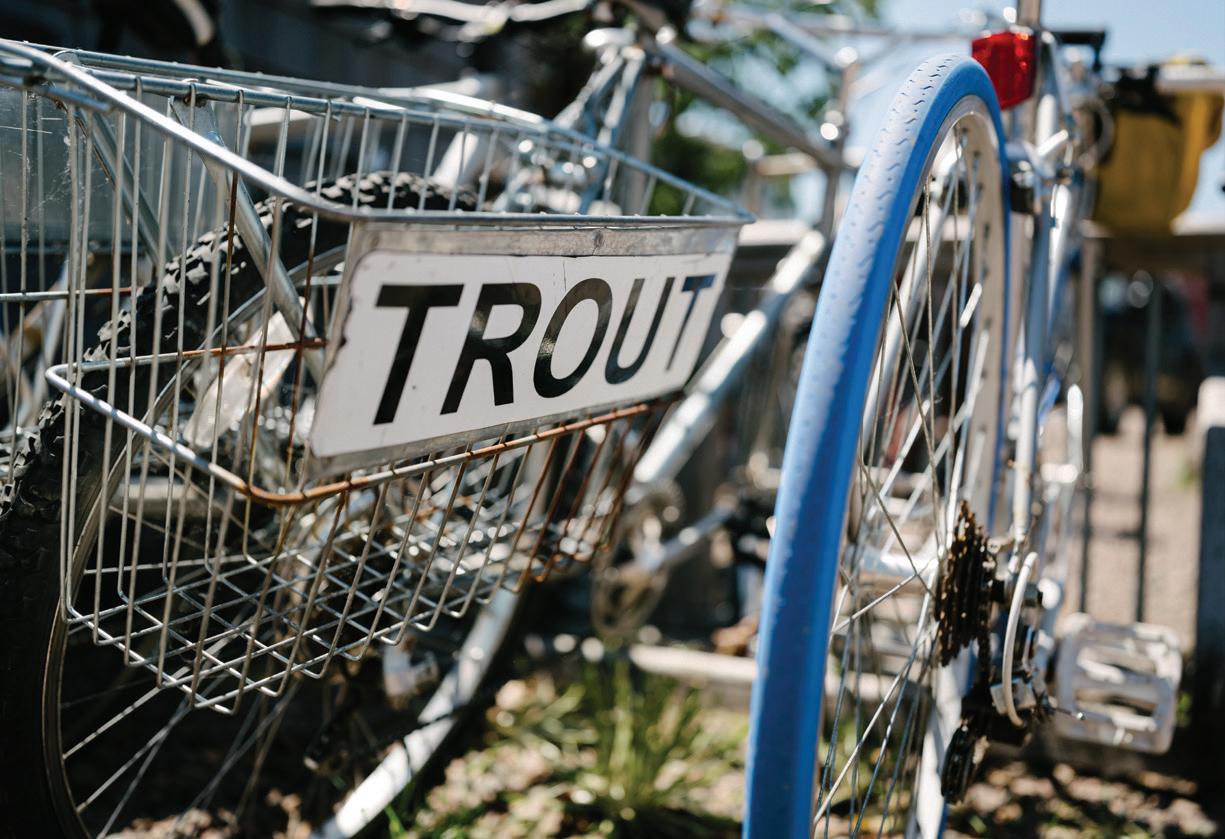
I also lucked out. The boys ended up carrying the canoes at every portage. We were six in all: three boys and three girls, one of each to a canoe. My paddle partner was Dan, Angie’s little brother. The last time I had seen him he was a blonde, shaggy-haired Luke Skywalker lookalike darting across our high school soccer field. Now, he was a Seattleite, worked for an electric bike startup, and, like any good Scandinavian, had a full red beard.
In the BWCA, paddlers choose their own adventure. A route can be as casual or as aggressive as desired. Our approach was a simple one: make camp in a single site then take day trips to explore the surrounding lakes and trails. This strategy allowed us to canoe, hike and portage unencumbered by our camping gear. We weren’t out to cover great distances or break any records; we simply wanted to take in the pristine beauty of the Boundary Waters and get a little closer to nature.
INTO THE WILD // After months of planning and anticipation, it was finally time to set paddle. We were entering the Boundary Waters via Bearskin Lake. All the lakes have great names like that. “Elbow” and “Disappointment” are a couple of my favorites. After making the four-hour drive up from Minneapolis, picking up the canoes, and sorting out our fishing licenses, we simply wanted to make it to camp with enough time to settle in and catch dinner.
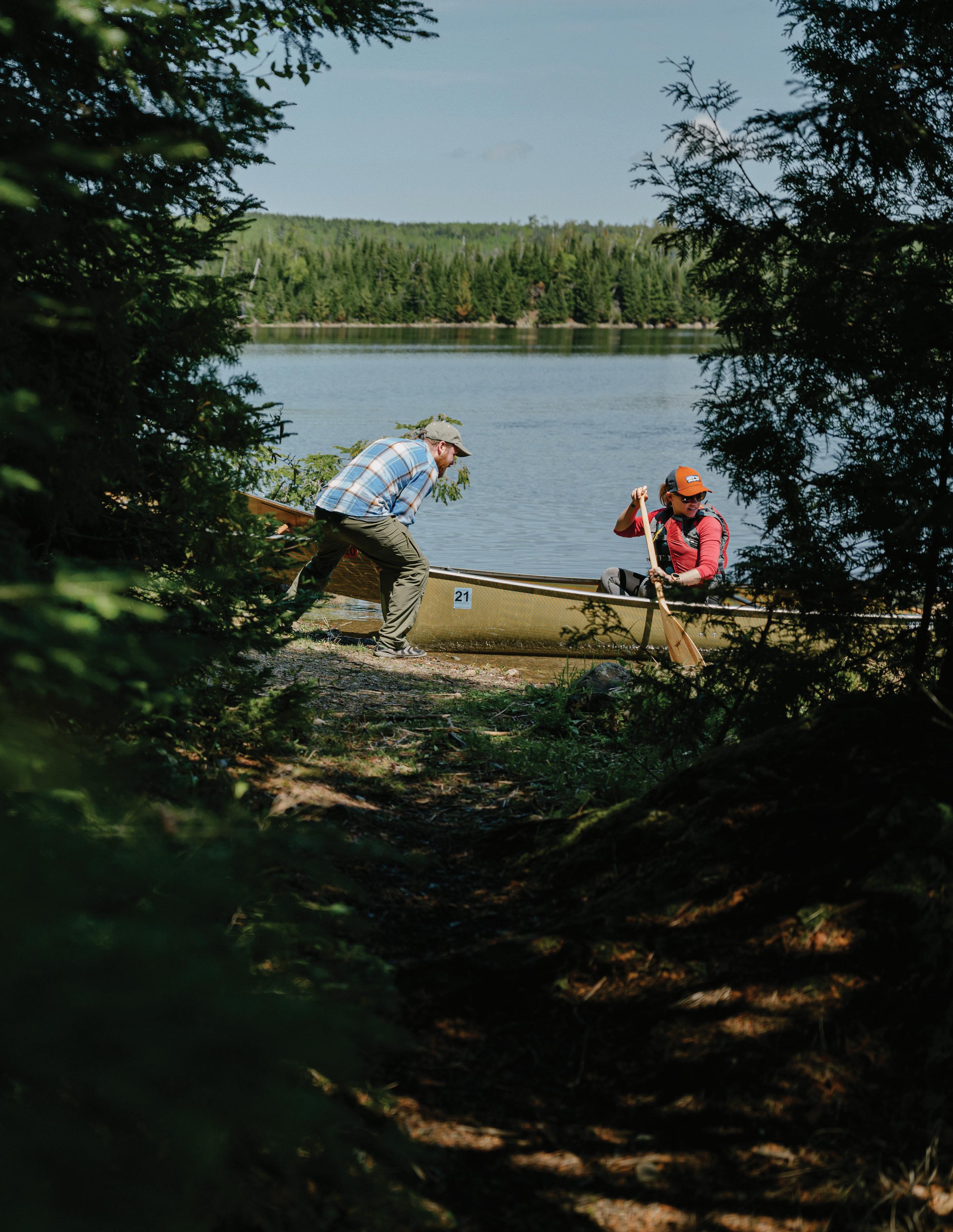
“Do you have somewhere you can put your camera so it doesn’t get wet?” Dan asked as he steadied our canoe and I climbed into the bow.
The Leica SL was slung across my chest. I forget that most people panic anytime they see a camera near water.
“It’s okay. It’s weather-sealed. It could be pouring rain and it’d still be fine.”
“Well, that’s cool.” Sure is.
The initial trek to our campsite wasn’t far – only two paddles and one portage away. As we pushed off with our canoes fully loaded, I pictured us from the shoreline, fading into the that distant space where the lake meets the sky.
The canoe cut through the water like a knife, silent and quick. I tried to match my strokes to its rhythm, angling my paddle to break through the glassy surface just right, becoming part of the water’s movement rather than interrupting it. I was reminded of an essay by Boundary Waters conservationist Sigurd Olson where he describes: “The way of a canoe is the way of the wilderness, and of a freedom almost forgotten.” Looking out, knowing that the direction in which we were headed held nothing but a vast, intimate wilderness, I could feel that freedom almost forgotten.
"I THOUGHT BACK TO PETER KARBE’S COMMENT ABOUT HOW THE NEW SUMMICRONS AT F/2 WOULD HAVE THE THREE-DIMENSIONALITY OF AN F/1.4. I NEEDED NO FURTHER CONVINCING."
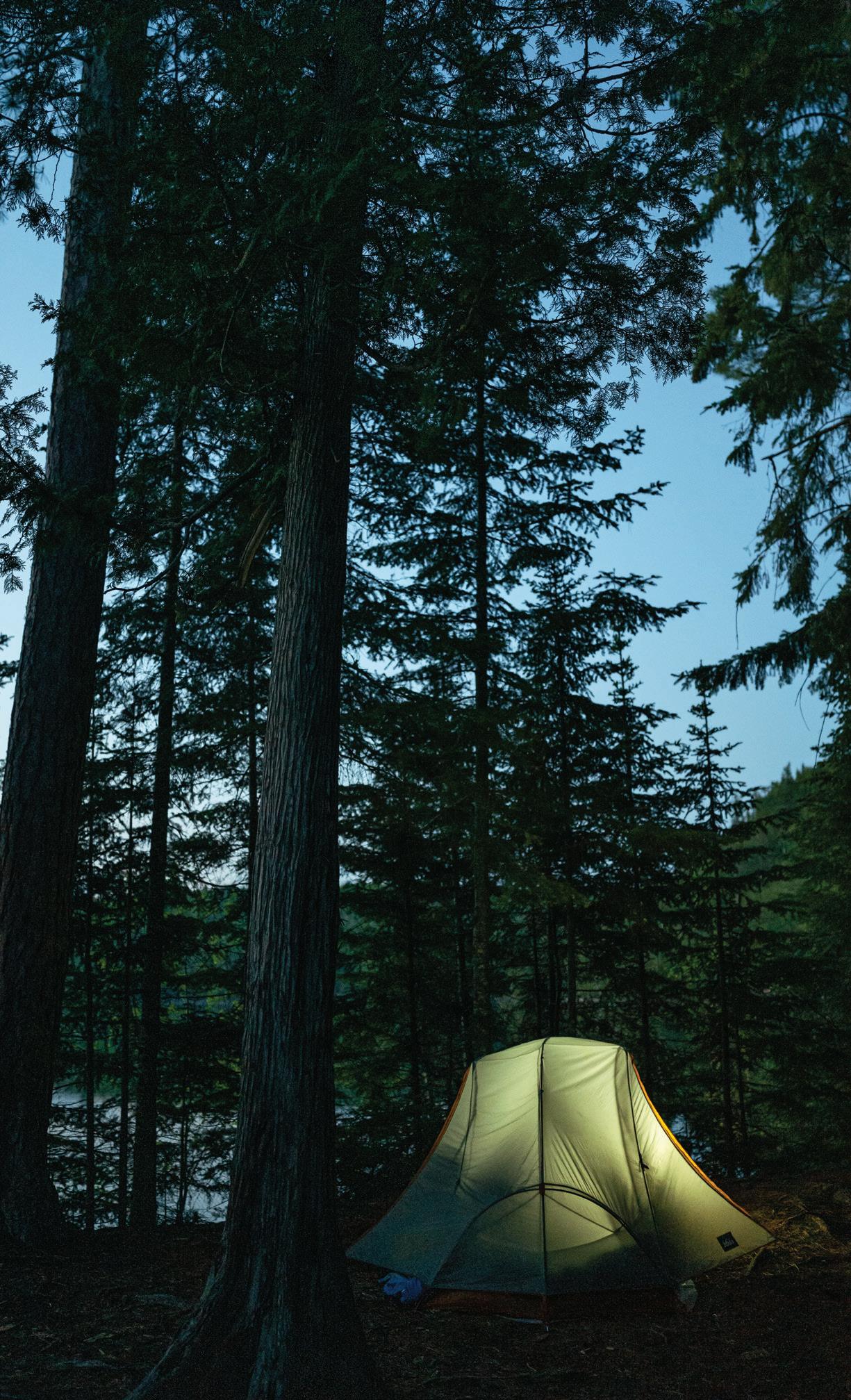
Our campsite was situated on a forested point that jut out into the lake. As we pulled in our canoes and ambled up the bank, we were greeted by a chorus of birdsongs. With spring creeping into summer, our feathered friends were in peak breeding season and were showing off their sweetest ballads and most striking plumage. Their orchestra accompanied us as we set about our chores: raising the tents, kindling a fire, and filtering drinking water from the lake. Periodically, the sharp poor-sam-peabody-peabody-peadbody call of a White-throated Sparrow would pierce through the chorus and keep us all on pace.
Of course, I wasn’t going to be caught in a boreal forest during breeding season without a pair of binoculars. I had brought along my mom’s Leica 8×32 Trinovid HD’s, a compact,
no-nonsense optic perfect for birding. It just so happened that Lydia, Angie’s mom, had also become quite an avid birder over the years and brought her binoculars too. I had a fellow bird nerd and a partner in crime. Throughout the trip, Lydia would share with me her expertise of the area’s breeding birds and their distinct calls.
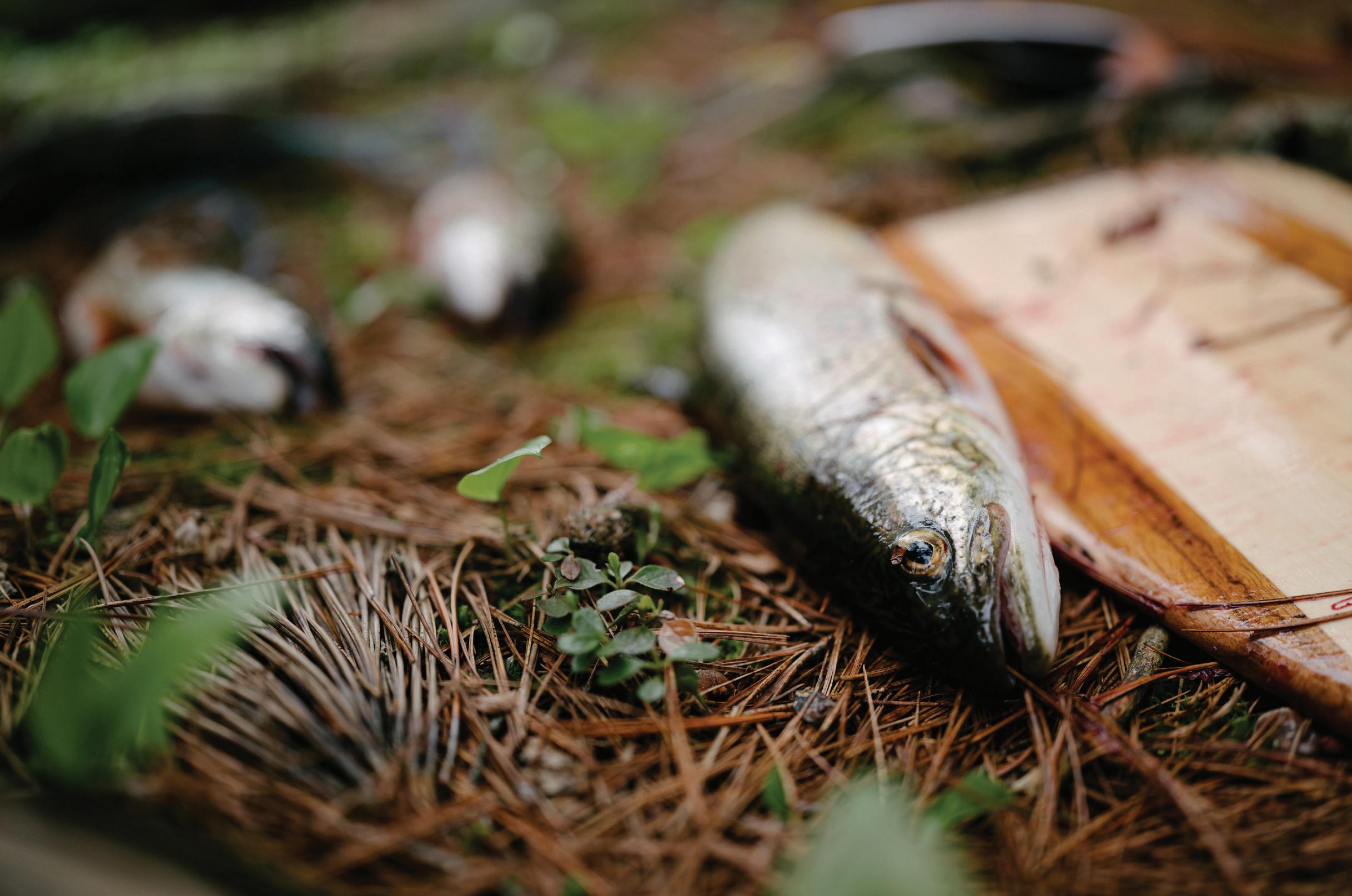
After settling in, a few of us took to the water to try our hand at fishing. Duncan Lake was quaint, only a mile long at best. Its water was cold and clear, and allowed us see straight through to scan the bottom for fallen trees and rocky hideaways where fish like to congregate. We reeled in three beautiful Lake Trout. (None of which I caught – too busy taking photos I guess.)
A lot can be learned from fishing: patience, self-sufficiency, wildlife conservation and identification. What I didn’t expect it to teach me, though, was how incredibly close the new 35mm APO-Summicron-SL could focus. While the boys cleaned our freshly-caught dinner, I snapped away and awed at the lens’ ability to get up close and personal. Wide open at its minimum distance of 0.27m (10.6in), the 35mm’s incredible bokeh and soft transitions made even our dead trout look strikingly beautiful. I thought back to Peter Karbe’s comment about how the new Summicrons at f/2 would have the three-dimensionality of an f/1.4. I needed no further convincing.
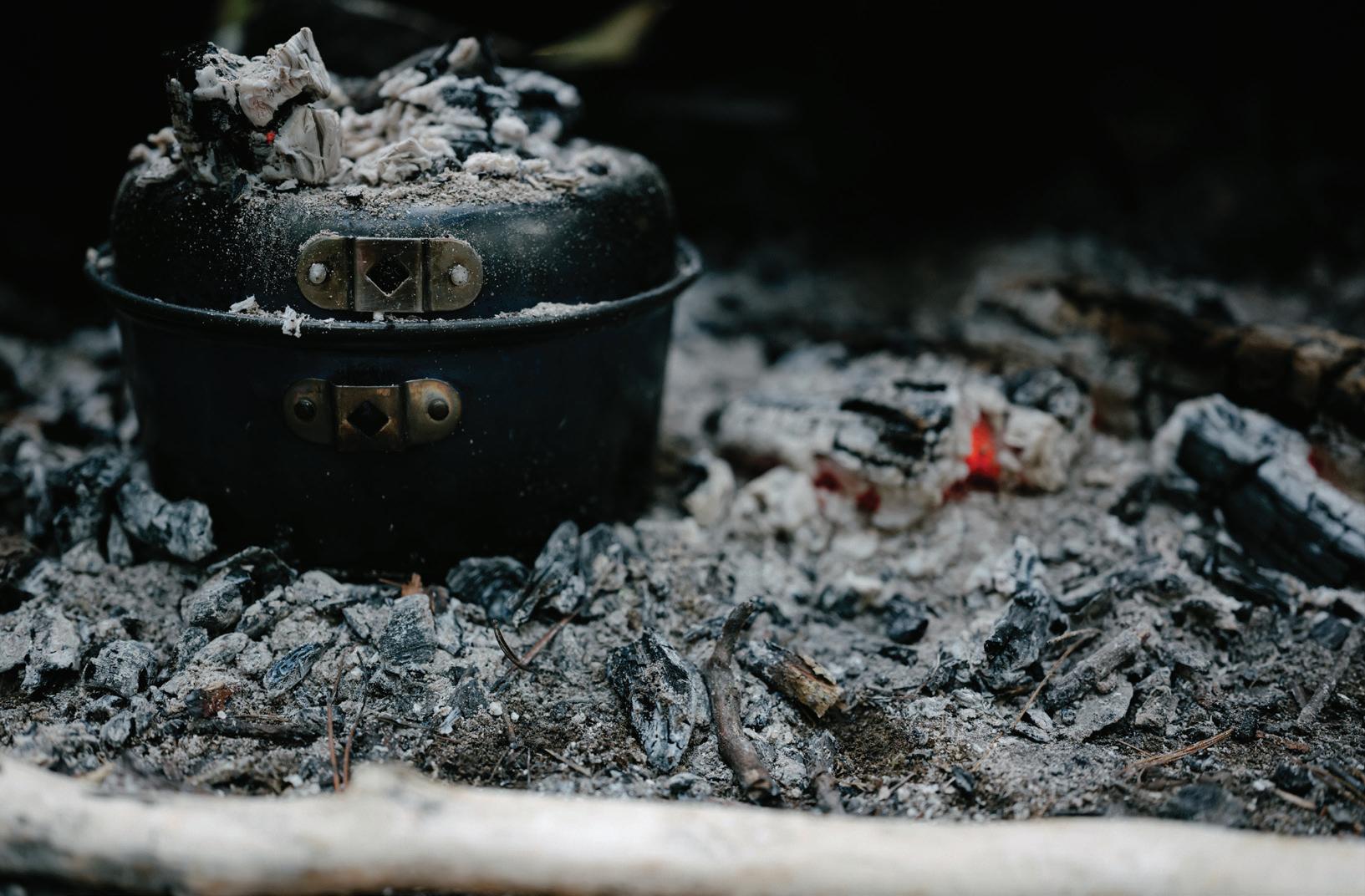
For dessert, Lydia made a gingerbread cake. I was baffled. Baking is a precise science. Ingredients need to be exact and your heat source even. This was not a venture for ill-equipped campers in the woods. Yet, I watched as she eyeballed measurements of water and vegetable oil, poured the finished batter into a greased camping pot, and nestled it into the glowing embers of the camp fire. How could this possibly turn out?
It did turn out. Sure, there were some overdone edges, but overall it was a perfectly-baked, moist cake. Whatever I thought I knew about baking, I now know I know nothing.
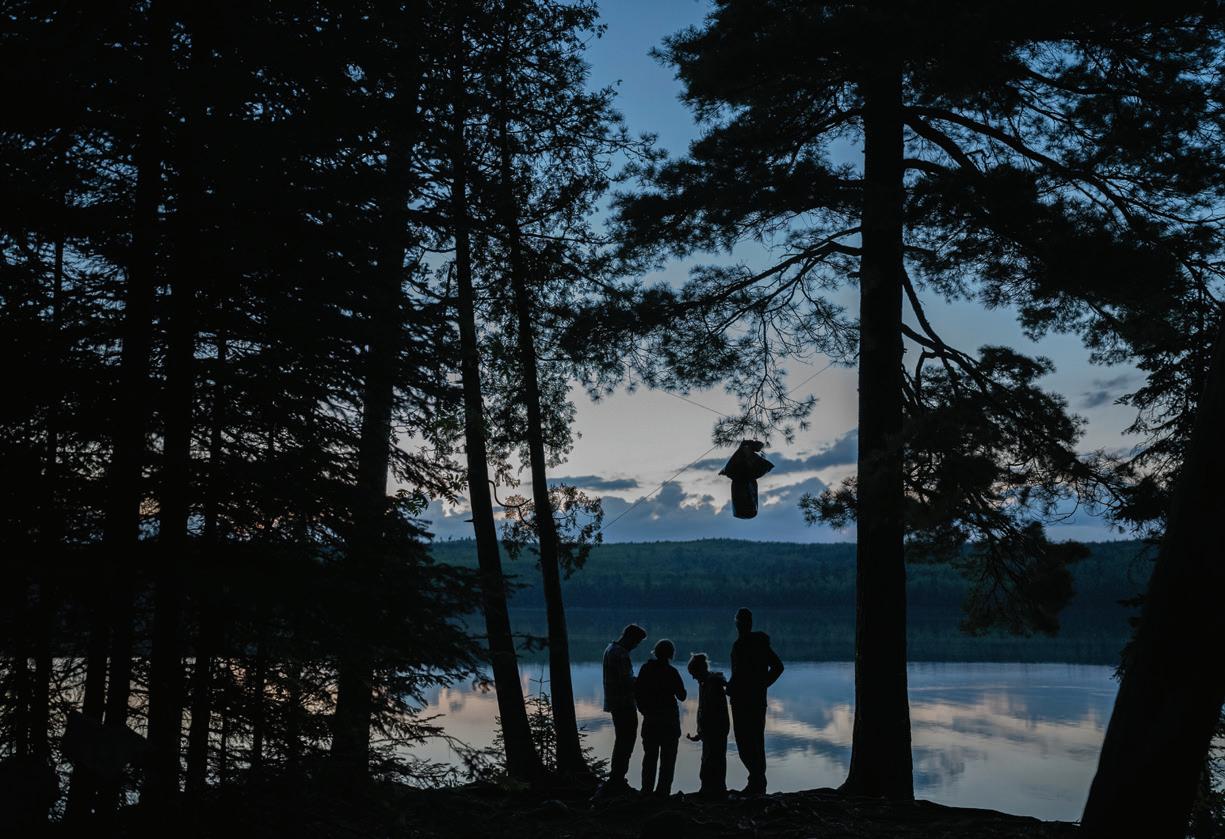
In the evenings after dinner, we’d share a drink and line up along the shoreline, our eyes either traveling across the pages of a good book or taking in the ever-changing colors of the eternal summer dusk. I forgot how long the days were up north this time of year, and was a little disappointed upon realizing that any astrophotography would have to be done at the wee hours of the morning.
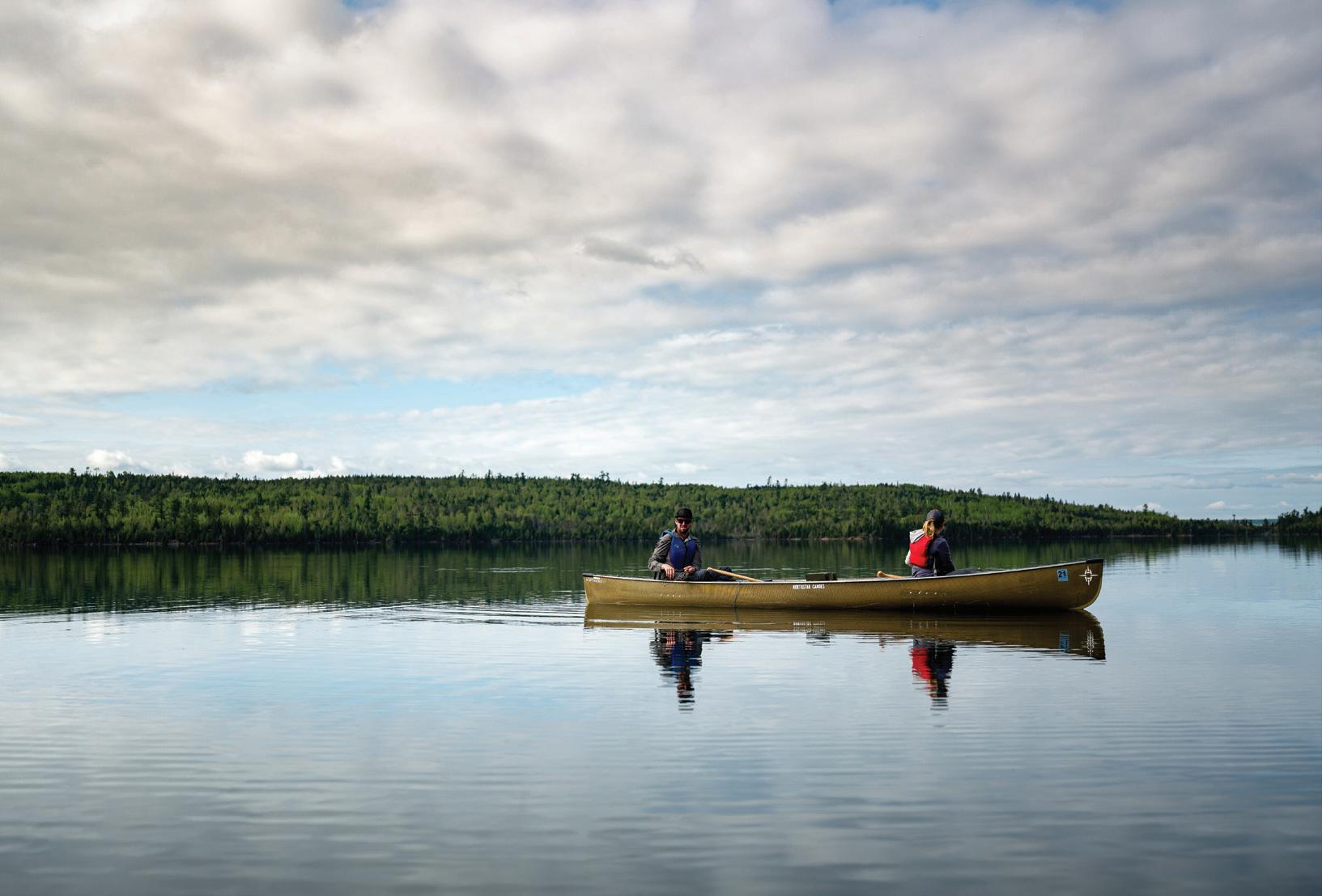
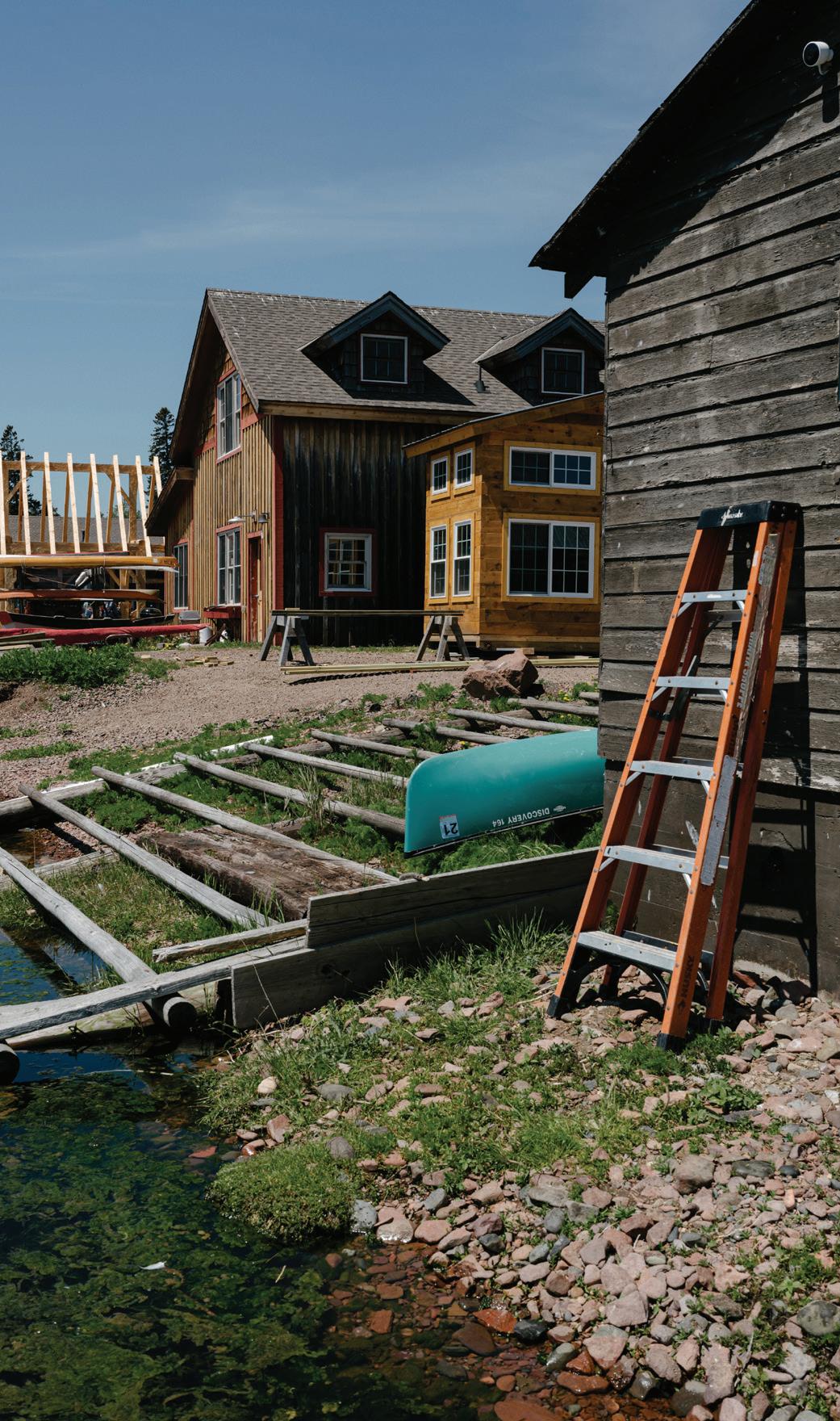
(top) Lake Trout a.k.a Dinner - 1/250th sec, f/2, ISO 50 (bottom) Two Paddlers - 1/5000th sec, f/2, ISO 50
One evening, I set my alarm for 2 AM. It seemed a shame to come all this way only to miss the stars in a pure night sky, unpolluted by city lights. Although the moon was too bright for any astrophotography, experiencing the lake at night was thrilling. Beavers chattered and splashed on a nearby shore, loons echoed their infamous, eerie calls across the water, and an anthology of frogs drummed a deep rhythm in the background.
We spent two full days exploring the surrounding lakes and trails. Even though I was a Minnesota-native, this part of the state was new to me, and I was eager to take it all in. My friend's family has a deep appreciation for nature, and I was awed at their knowledge of everything around us. “What’s this?” I’d ask at almost every turn. And without fail, an answer would bounce back. “Marsh Miracle, or at least that’s what my grandmother used to call it.” From false morels to alpine lakes, I discovered new pieces of the landscape that I called home.
On the third day, we got an early start and paddled to the opposite side of Duncan Lake to hike the aptly named Border Route Trail, which snakes along the border between Minnesota and Canada. Towards the beginning of the trail, we opted to take a quick detour down to the Canadian water’s edge and discovered a lovely little fall along the way. Ordinarily, I’m not big into photographing waterfalls. This cascade, however, poured into a small moss-covered ravine that had something Tolkien-esque about it.
"LEICA HAS NIGH REACHED OUTOF-CAMERA PERFECTION WITH THIS SENSOR-LENS COMBINATION."
“You guys keep going. I’m going to stay here awhile.” I’d catch them on their way back up.
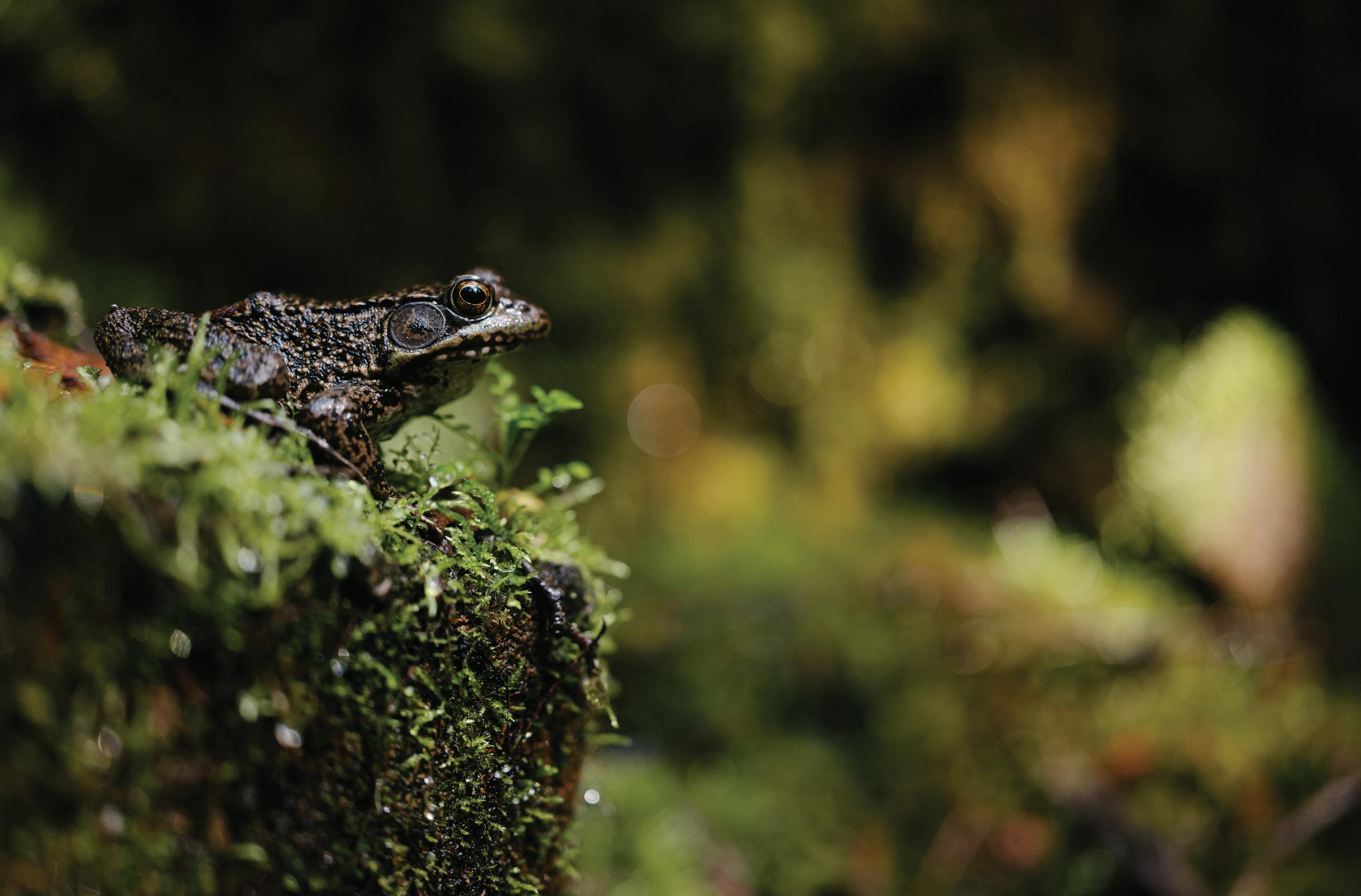
I lowered myself into the tiny Eden and promptly set to capturing its wonder with the Leica SL. At first, I tried to frame the whole scene, but it didn’t take long to realize that its true magic was hidden in the smaller details: light undulating over the ravine walls, dew drops glistening on green moss, portraits of the oasis’ tiniest residents.
The group doubled back around after what felt like only a few moments but was probably a half hour in non-photographer time.
“Did you get anything good?” I showed them the picture of the frog and a “wow” echoed throughout the group.
“It’s the lens, not the photographer.” I joked.
By the time we finished our hike and got back to the canoes, the wind had picked. Up until then, the water had been calm and the paddling easy, but now the current was against us and we had to fight our way back across Duncan. Dan and I found a necessary rhythm. Our paddles and determination were in perfect sync. If we let up for even a moment, the canoe would drift backwards. When we finally returned to camp, we rewarded ourselves to a well-deserved beer and a refreshing (~60° F) cool-down in the lake.
On the fourth and final morning, we took our time packing up. We made a hearty breakfast, paddled the long way back and took the scenic drive home. We even made a stop in Grand Marais to have lunch on Lake Superior. Without speaking, we knew that each of us wished we had just one more day. For me, I was already planning when I’d be back.
(previous pages, left to right)
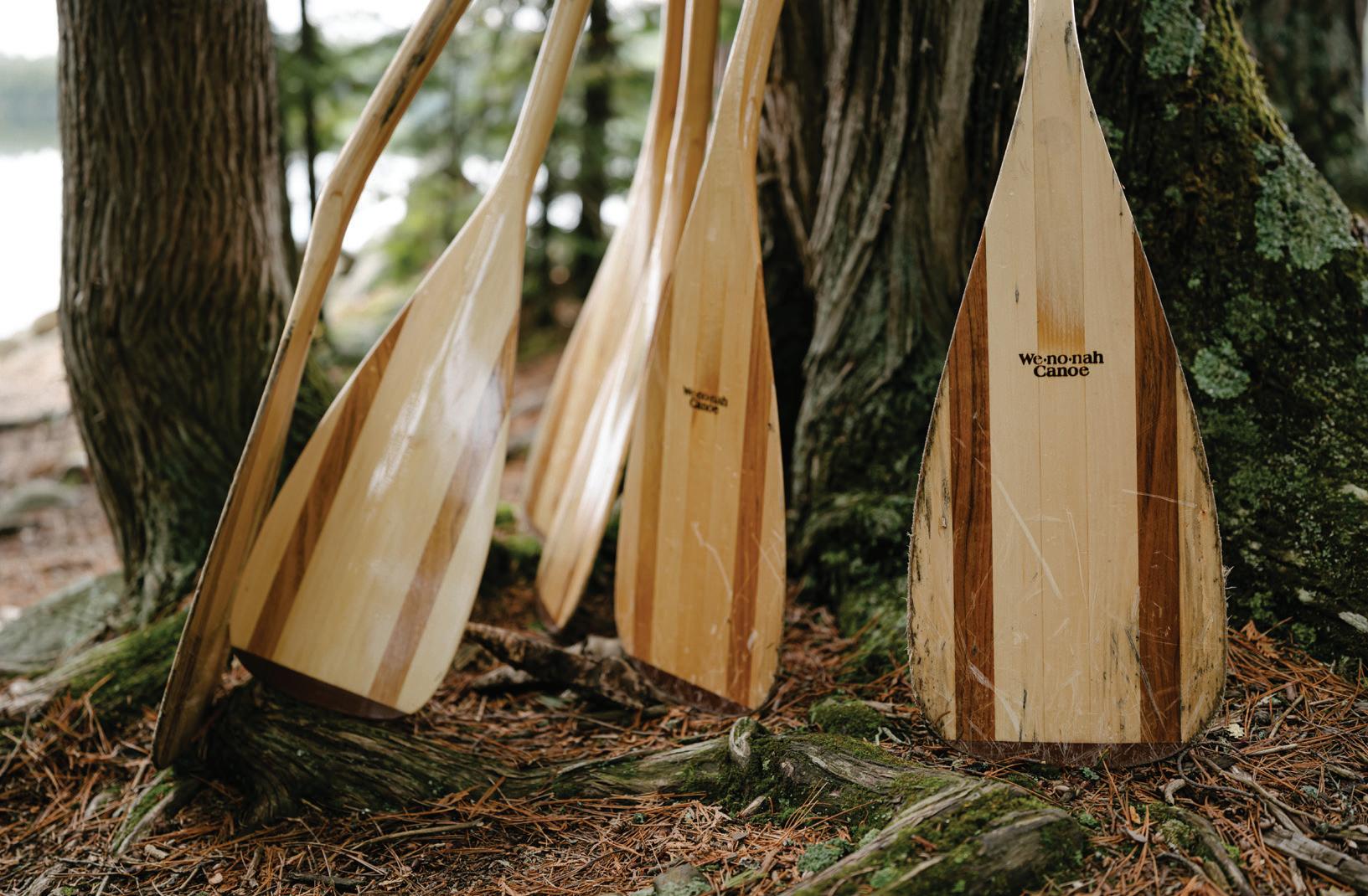
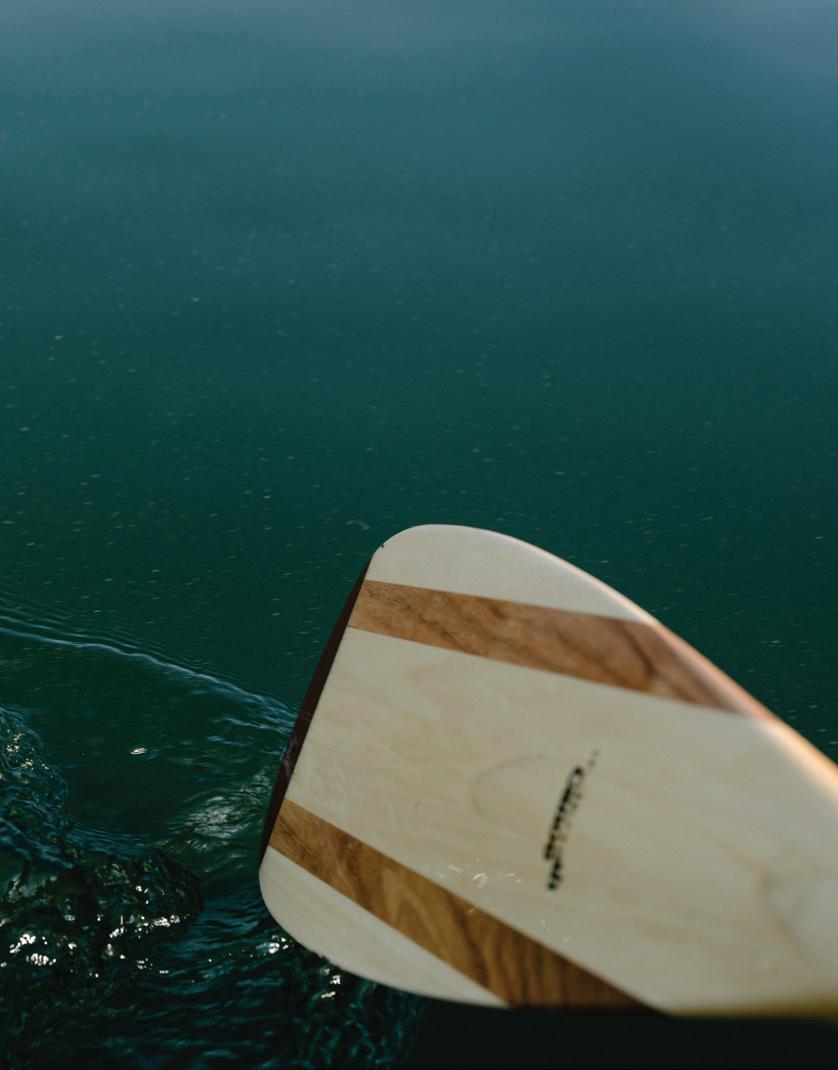
Paddles - 1/250th sec, f/2, ISO 50
Technique - 1/250th sec, f/4, ISO 80
Portaging - 1/125th sec, f/4, ISO 125
Catching Dinner - 1/2500th sec, f/2, ISO 50
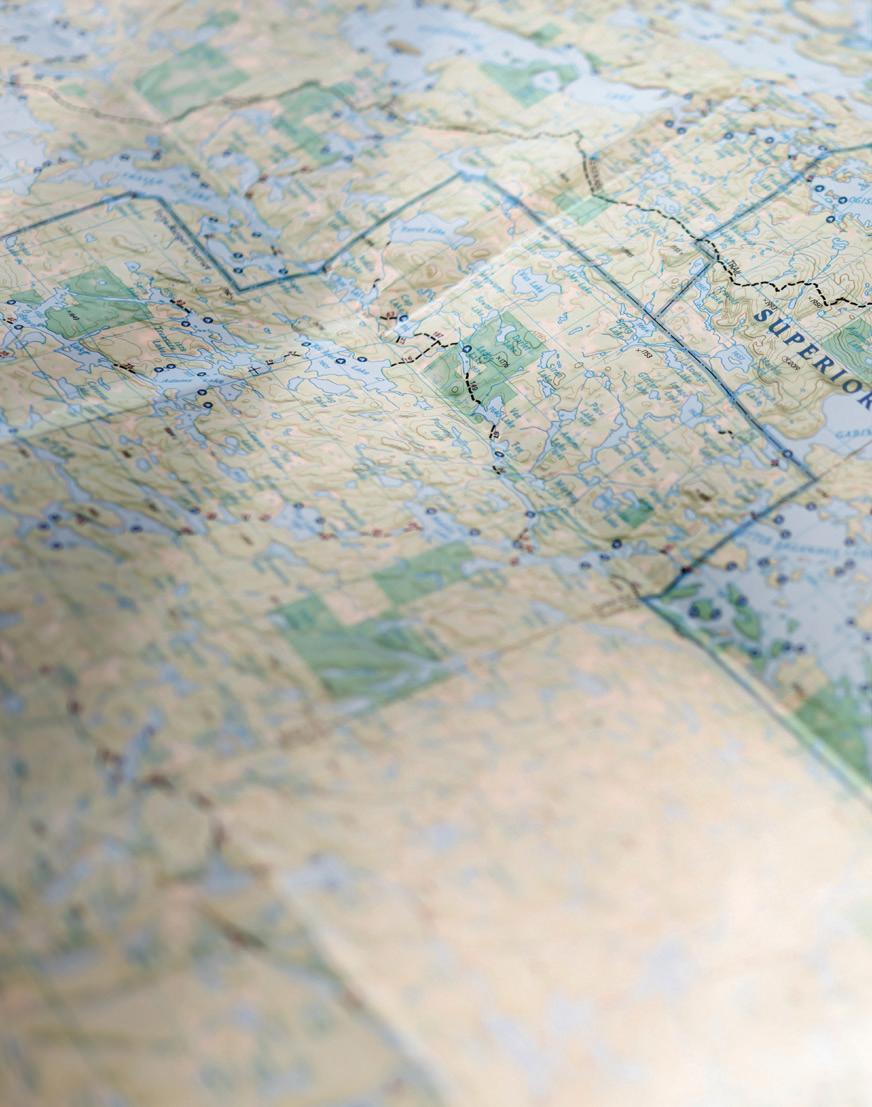
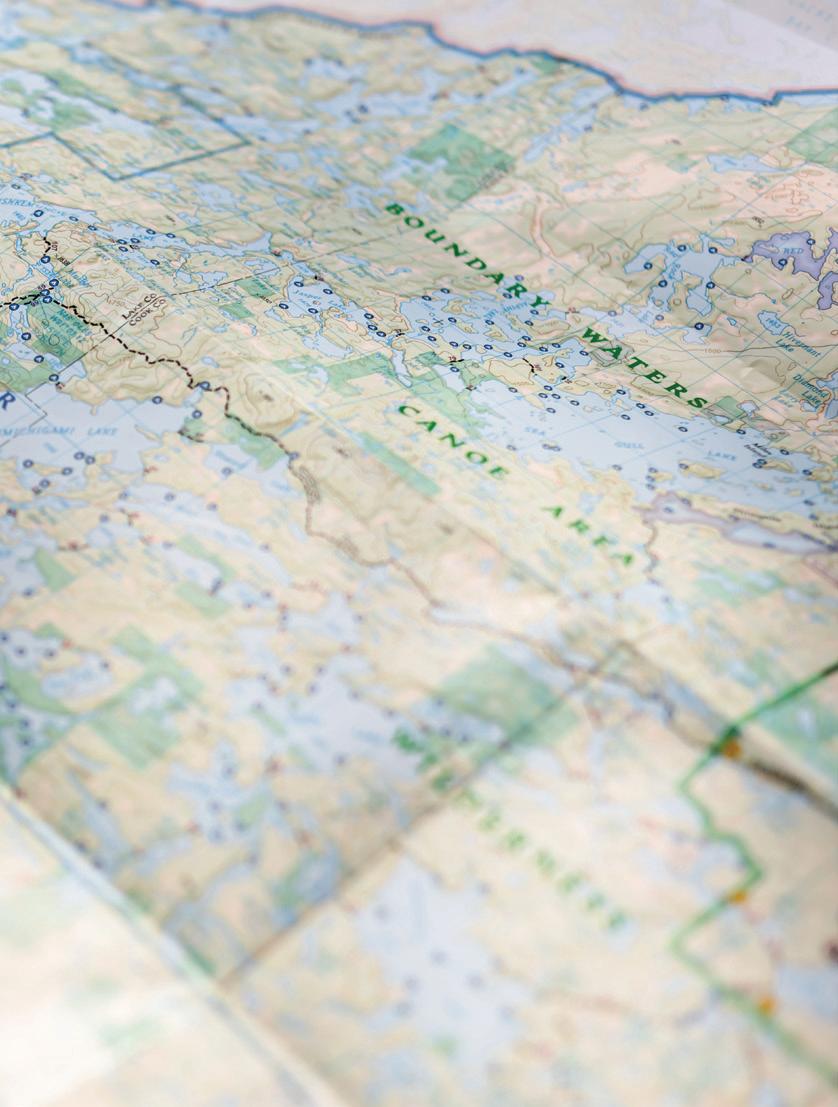
The Map - 1/160 th sec, f/2, ISO 100
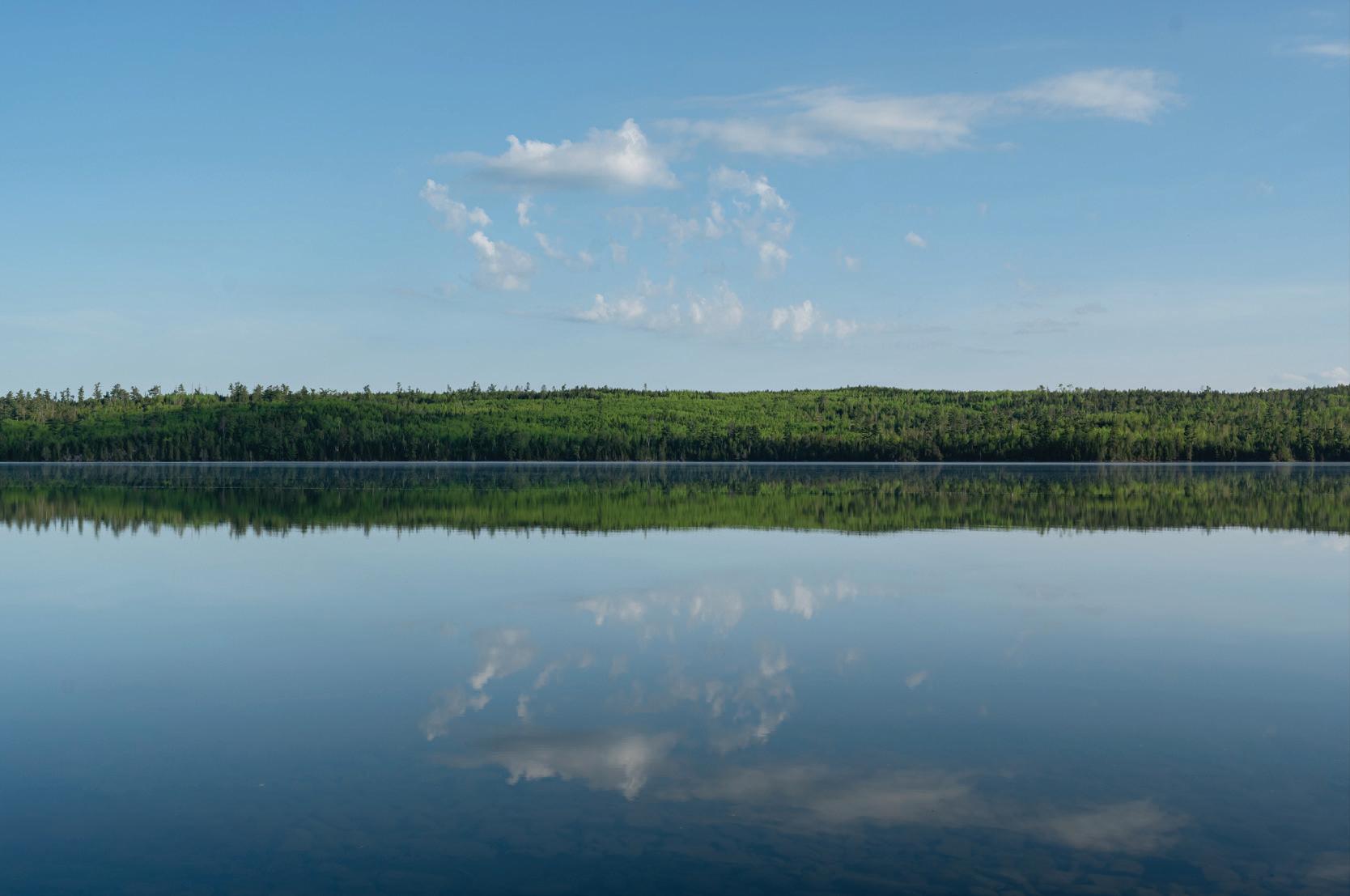
Duncan Lake - 1/320th sec, f/11, ISO 200
Campfire Baking - 1/125th sec, f/2, ISO 400
Bokeh - 1/2000th sec, f/2, ISO 50
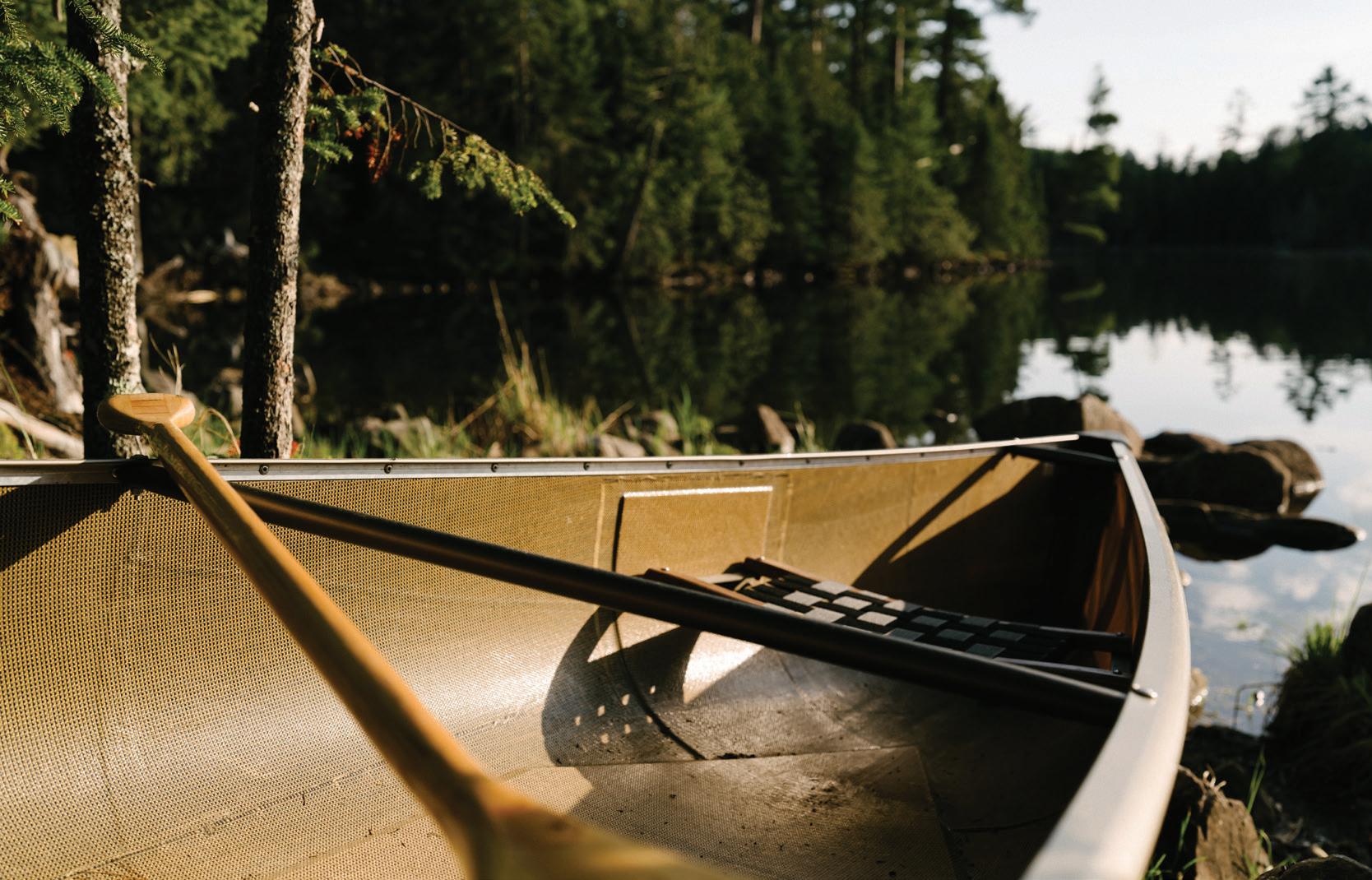
The Canoe - 1/500 th sec, f/4, ISO 50
(right) along the border route trail
(top) Macro Friend - 1/250th sec, f/2, ISO 160
(bottom) Paul - 1/250th sec, f/4, ISO 100
PART III - IMAGE PROCESSING & FINAL THOUGHTS
Processing the images was both incredibly easy and mindnumbingly difficult. Easy, in that the images didn’t really need much processing at all. Difficult, in that I couldn’t just leave an image alone, unprocessed. No photograph can really be perfect out-of-camera, can it? Peter Karbe probably wouldn’t disagree in my saying that Leica has nigh reached out-of-camera perfection with this sensor-lens combination. Other than some minor white balance adjustments and highlight recovery, all the photographs in this article have little to no processing.
As for the experience of shooting the Leica SL and 35mm APO-Summicron-SL f/2 ASPH as a one-camera-one-body lens setup, I was far from disappointed. The SL is solid; it’s built to be taken off the beaten path and endure harsh weather. Though a bit bulkier than what I normally carry, the extra durability and ruggedness offered a welcome measure of reassurance. In fact, once home, it felt strange going back to shooting with my Leica CL and Q again. Compared to the SL, the smaller cameras both felt a bit toy-like, despite knowing the exceptional image quality they offer.
With the new Summicron-SL lenses offering the possibility of a more travel-friendly kit, the SL is set to become a goto for adventure-seeking photographers. Pair a 35 or 50mm APO-Summicron-SL with the 75 or 90mm, along with a Q2 with its 28mm f/1.7 for a fast wide-angle, and you’ve got yourself a complete rugged, weather-sealed kit that barely fills half of a backpack. Heck, I might have to start looking at used SL’s – especially now that the SL2 has hit the market and used SL (Typ 601)’s have settled in at an affordable price.
The bottom line is that the APO-Summicron-SL 35mm is simply an incredible lens which pairs beautifully with the Leica SL. It lives up to the hype and has convinced me take a fresh look at the SL System for my adventure-focused photography.
To view more photos, visit www.reddotforum.com.
(this page)
(top) Beneath the Bear Bag - 1/30th sec, f/2, ISO 3200
(bottom) Dusk - 1/30th sec, f/2, ISO 3200
(opposite page, clockwise)
grand marais - 1/250th sec, f/2, ISO 50
trout delivery, grand marais - 1/2000th sec, f/2, 50
rose lake - 1/100th sec, f/11, ISO 50
"THE SL IS SET TO BECOME A GO-TO FOR ADVENTURESEEKING PHOTOGRAPHERS. PAIR A 35 OR 50MM APO-SUMMICRON-SL WITH THE 75 OR 90MM, ALONG WITH A Q2 WITH ITS 28MM F/1.7 FOR A FAST WIDE ANGLE, AND YOU’VE GOT YOURSELF A COMPLETE RUGGED, WEATHER-SEALED KIT THAT BARELY FILLS HALF OF A BACKPACK."
LEICA S3
The 64mp Red Dot Medium Format Camera with The Versatility of a 35mm DSLR Camera
by MILAN SWOLFS
Friday 6th March 2020 Leica officially shipped the S3, the latest model in the Leica medium format line. The S3 was officially announced at Photokina 2018 and, I had the opportunity to test a pre-production prototype in the beginning of 2019. The S line was first released in 2008 and it’s a very mature system with a lens portfolio of 10 focal lengths from 24mm up to 180mm, from which 6 lenses have a leaf shutter, which Leica calls Central Shutter lenses (CS).
I work as a fine art portrait photographer specializing in burlesque and vintage styled photos, trying to bring back the memorable Hollywood glamour of the 20's and 30's. I have used all previous versions of the S line and currently work with the S (Typ 007), which was released in 2015.
In these days with the rise of mirrorless medium format systems, Leica remains faithful to the DSLR concept and they have good reasons to do so. Some of the advantages of the S compared to other medium formats are:
• The dual shutter, you can switch between focal plane shutter 1/4000th and Central Shutter (CS) up to 1/1000th of a second
• The outstanding battery life - you can shoot almost a full day with one battery
• Wonderful robust dust and waterproof body and lenses
• Gorgeous optical viewfinder with 98% coverage
• No heating issues
• The wonderful Leica lenses
• Leica offers adapters with full AF and Aperture control for the Contax 645 and Hasselblad H series.
Unlike the upgrade from SL to SL2, the S3 body remains completely the same as it’s predecessor the S007. So for me the camera feels very familiar and I didn’t need to read the manual to work with the camera. What I love about the S system, true to the Leica DNA, is that it delivers the essence of photography, no extra bells or whistles, just aperture, shutter speed and ISO at your fingertips. The S3 has the same 4 button layout as the previous versions and since it’s a DSLR format it has an optical viewfinder but once you have tried the big and crystal clear optical viewfinder of the S3, it’s difficult to go back to even the lastest electronic viewfinder. I do wish Leica had upgraded the camera with a new LCD screen with a touchscreen for swiping through and zooming in images.
The Leica S3 sports a 30 x 45mm ‘Proformat’ sensor with 64 megapixel resolution. This means a 71% resolution increase compared to the 37.5 megapixels of the Leica S (Typ 007).
The new CMOS sensor was specially developed for the S3 and offers 15 stops of dynamic range, obviously to say the files coming out of the S3 are very malleable in shadow and highlights in post-production. Since I shoot mostly portraits, I prefer the 3:2 aspect ratio over the 4:3 aspect ratio of other medium format systems.
The Leica Maestro II processor handles the large files very well and allows shooting at 3 FPS at full resolution. The files can be stored on both SD or CF card.
The CMOS sensor of the S3 offer high sensitivity up to 50,000 ISO. With the S (Typ 007) I could easily go up to 3200 ISO,
Christmas with Ma Chérie D Leica S3 & Summarit-S 70 CS at f/2.8, 1/45th sec, ISO 200
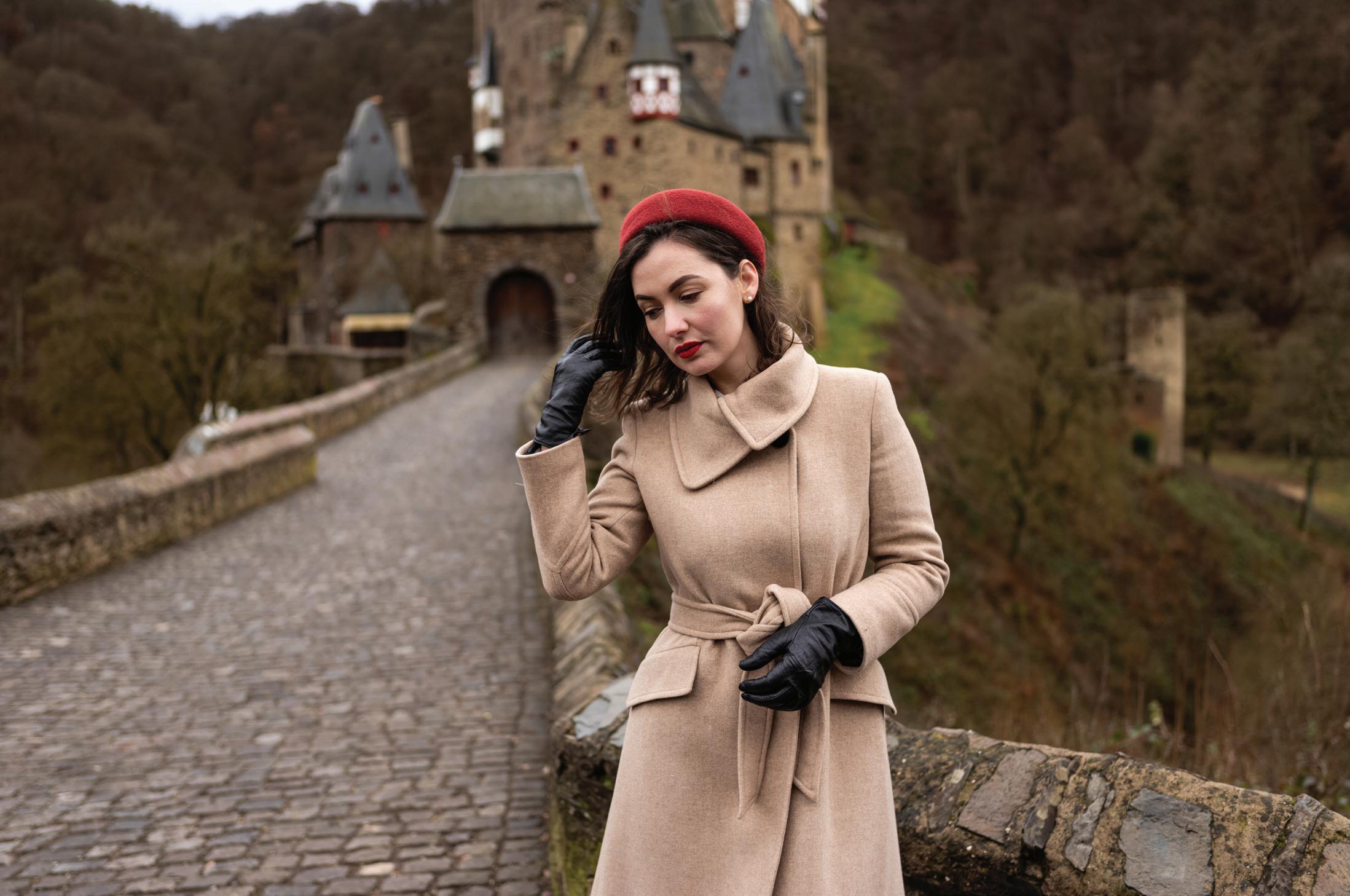
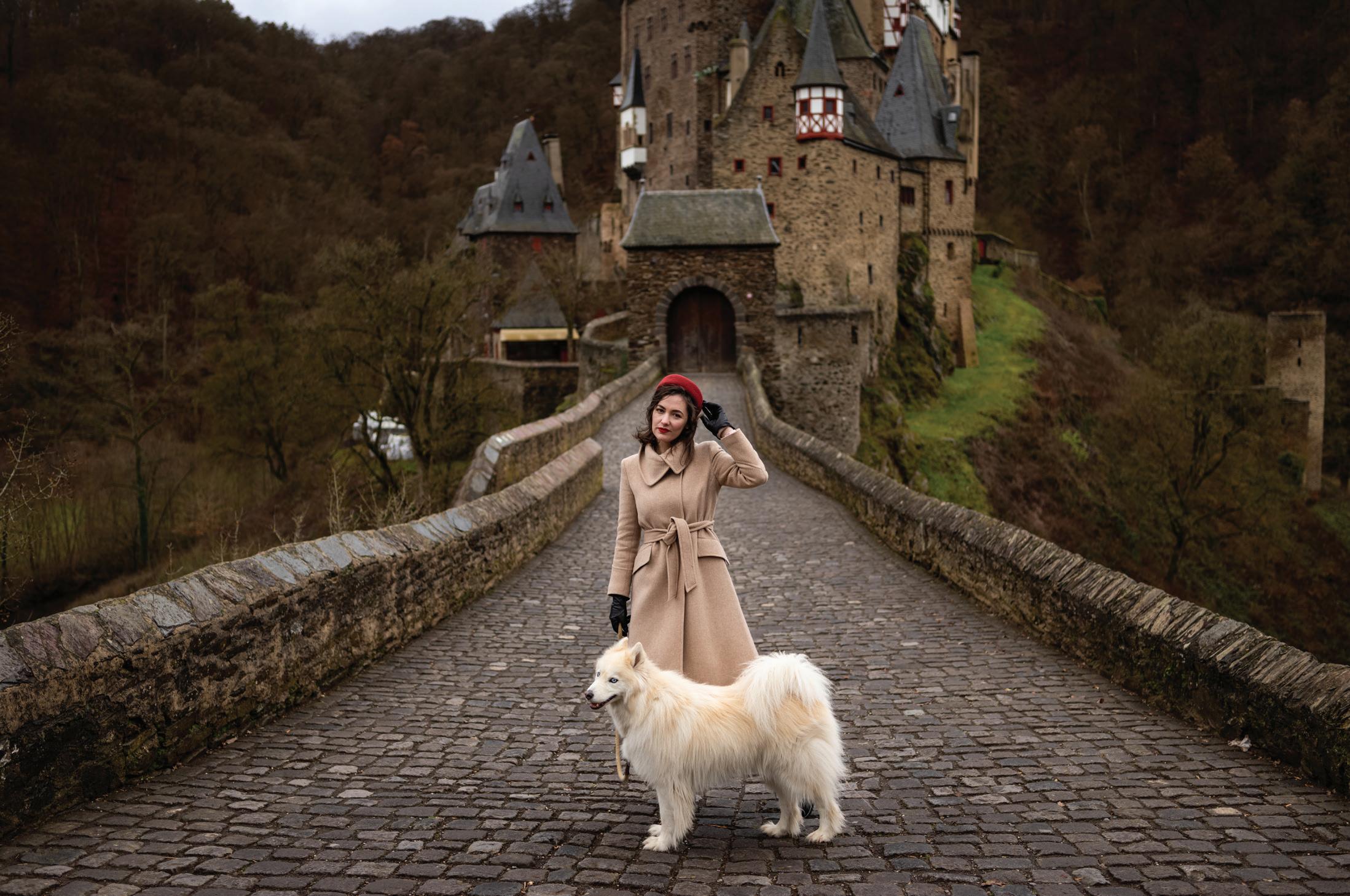
(left) Burg Eltz - Leica S3 & Elmarit-S 45mm at f/2.8, 1/350th sec, ISO 200
(right) Burg Eltz with Yuki - Leica S3 & Elmarit-S 45mm at f/2.8, 1/350th sec, ISO 200
which was already very impressive for this system when it was released back in the day, but with the S3 I could go easily up to 12,000 ISO. The grain is not comparable with film grain, but it’s a very fine grain which is wonderful in black and white photography.
The camera offers liveview via the back screen and for the video fans it has Cine 4K video with all the benefits of the full lens coverage.
The files of the S (Typ 007) often needed tuning in post production for the skin tones - the photos tended to have a greenish/orange tint. I see a big improvement in the way the S3 handles skintones. Leica claims the newly designed color filter array (CFA) offers the highest color fidelity to any Leica camera to date and I think they absolutely got this right.
The single point AF is not the fastest but it is very consistent and accurate. With the very fast Summicron-S 100mm f/2 ASPH, I often set the focus to manual and activate the autofocus using the back button focus technique. In the beta version I had, the S3 was a little faster to focus compared to the S007. Don’t expect to capture fast paced photography; it’s more for static poses and objects. I do wish Leica would offer an external electronic viewfinder (EVF) as they offer for the M series, for very precise focusing and in lower light situations.
While the S lenses might not be as perfect as the newer Leica SL lenses, I do feel the S line combined with the new sensor offers a wonderful cinematic look with a unique output system. The S lenses handle the 64 mp very well and my clients often prefer the files of the S compared to photos taken with other camera systems. With a price tag of $18,995 USD, the S3 is higher priced then some of the mirrorless competitors but still much lower than other DSLR medium format systems. The S3 might not offer the latest bells and whistles but I would definitely recommend the S3 over any other medium format camera because it combines the best lenses in a very robust and easy to handle package and I do believe that 64 mp is a sweet spot for this type of medium format system. The camera is a great tool for portrait or landscape photographers who request only the best file quality, which differentiates you from other photographers.
Follow me on Instagram: @milanswolfsphotography https://www.instagram.com/milanswolfsphotography/ www.milanswolfs.com
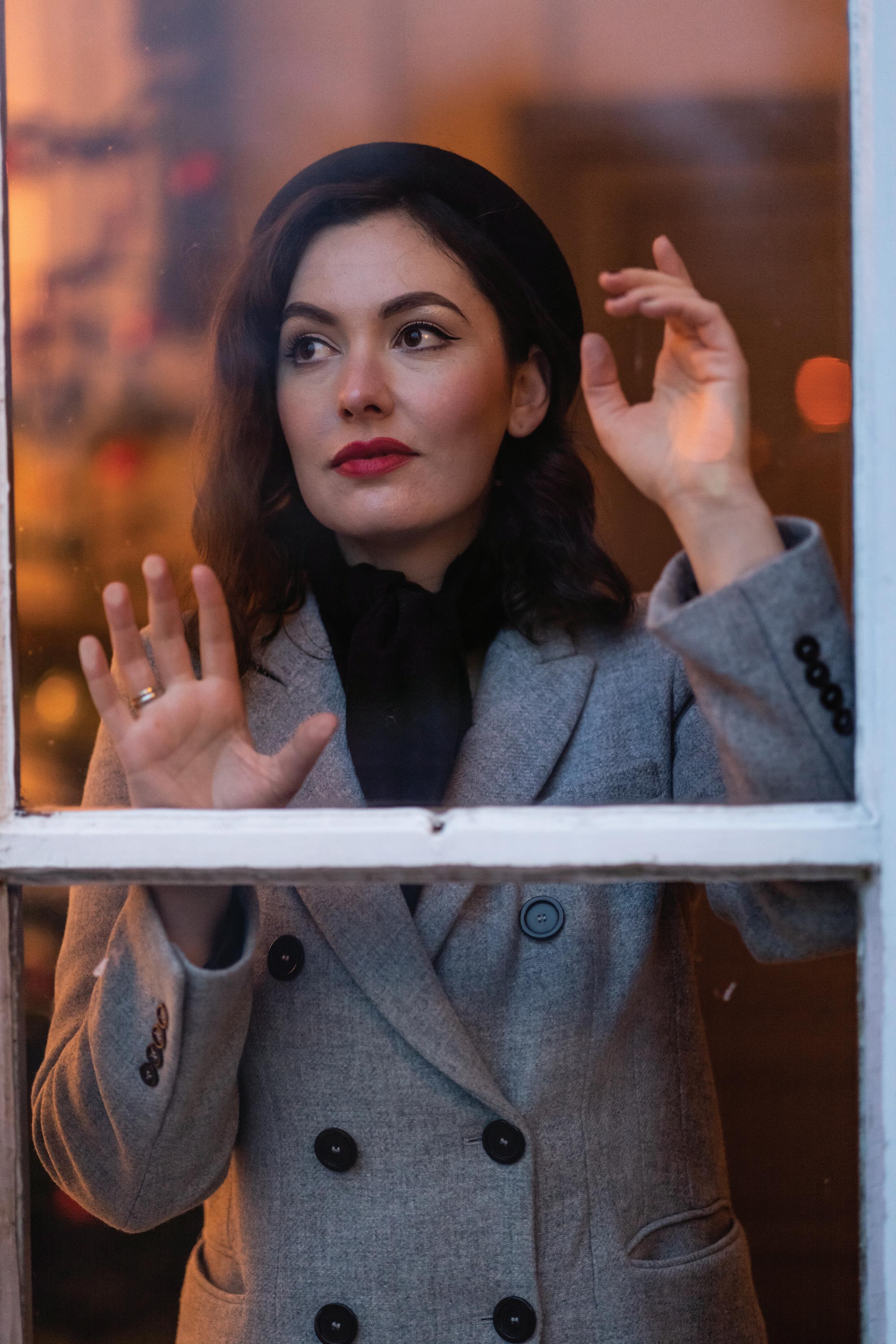
(opposite page) Rear Window - Leica S3 & Summicron-S 100mm at f/2.0, 1/250 sec, ISO 3200
(above) The Vintage Style - Leica S (Typ 007) & Apo-Macro-Summarit-S 120mm at f/5.6, 1/1000 sec, ISO 100
In Which We See Three IIIc's At Work
by DICK GILCREAST
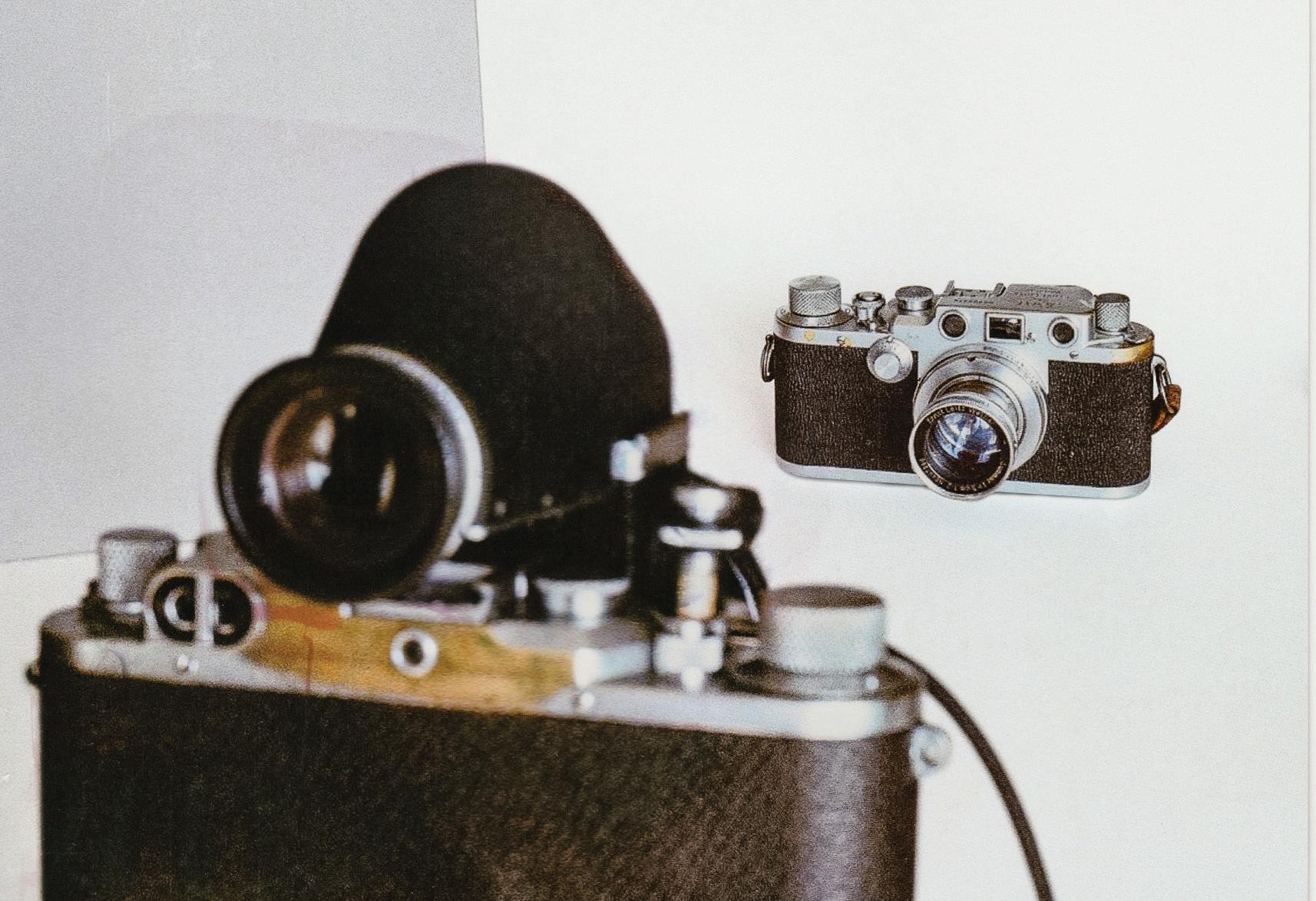
Leica Illc with collapsible 50mm f/2 lens can be a compact and capable personal camera, very usable even with its built-in viewfinder's 0.5x minified image. The illustrated camera's 50mm f/2 Summar has a small front flange like the previous 50mm f/3.5 Elmar, neither of which cut into the viewfinder image the way all the larger later-model 50mm f/2 and f/1.5 lenses do. So, using ISO 200 or 400 color negative film, this small camera can work anywhere with no other accessories needed. 1/1000th at f/12.5 will handle the brightest snow scenes, while using the extra speed of the Summar's f/2 at a handheld 1/30th it can work in low living room ligh. Or, in even more extreme low light, with a braced hand held 1/10th at f/2 it can equal what I used to get with my big old M3 and 50mm f/1.0 Noctilux combination at 1/30th! However this little Illc can be carried in a belt case or a pocket and pulled out anywhere at a moment's notice.
Photo #1 is a portrait of a Leica Illc from 1950 with a 50mm f/2 Summar from 1938, which had been coated at some point. This picture was made with a second Illc mounted on a screw-mount Visoflex II using black 65mm f/3.6 Elmar-V and chrome OZFO mount on a tripod. The setup was put together on a card table facing a large window, lit by skylight, with a white cardboard backdrop. Exposure was 1/10th at f/16 on ISO 400 color negative film. A cable release attached to the Visoflex tripped the mirror and released the shutter in correct sequence.
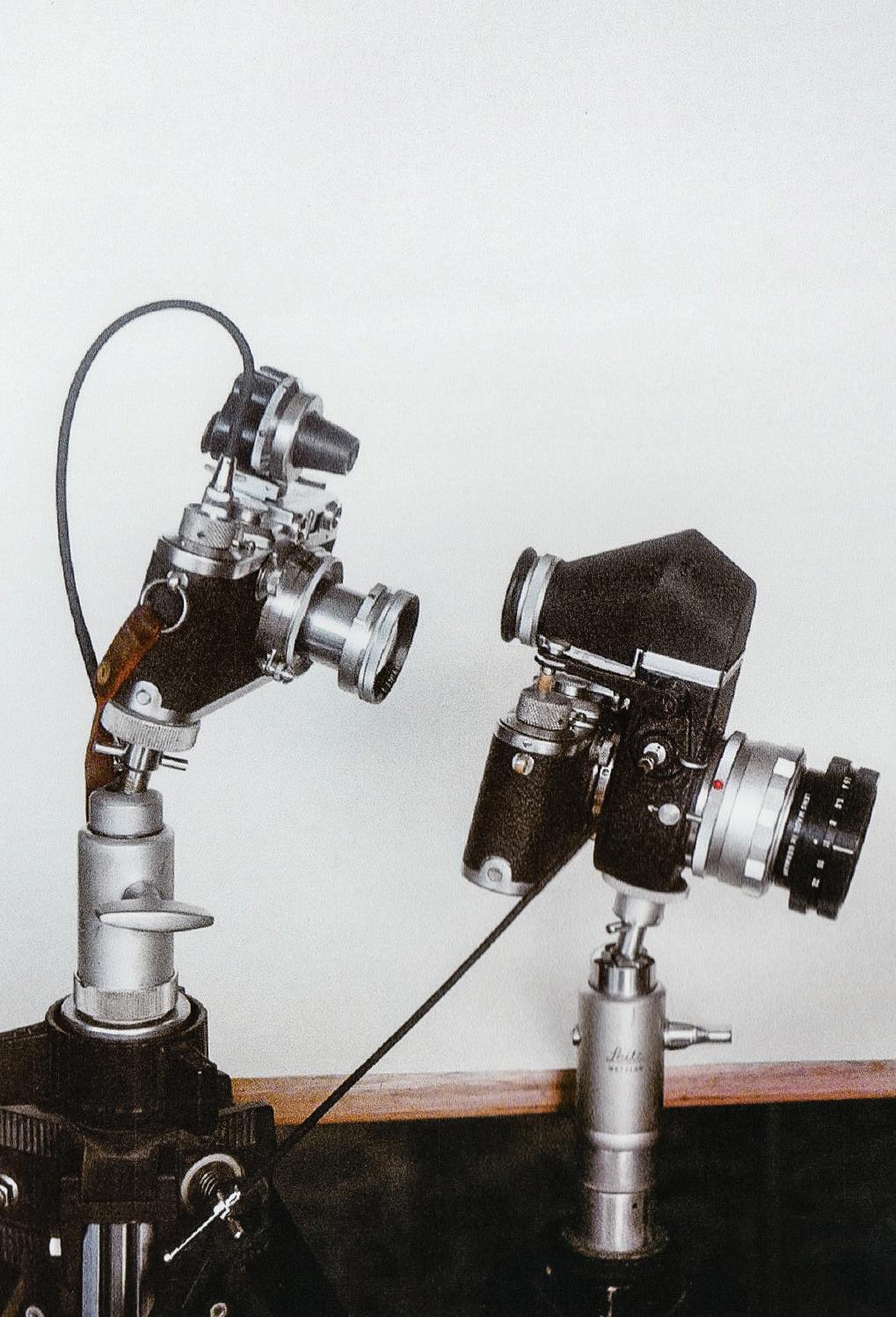
Photo #2 shows the setup while making the portrait of the camera. The second camera with Visoflex is on a tripod lined up for the shot, as seen from behind. The Illc on the Visoflex is an ex-Luftwaffe camera from 1940, evidently liberated during the war, showing the filed-off brassy backplate where the original "eigentum" engraving was obliterated, but the telltale "FL No. 38079" on the top plate remains. The camera also shows it had received Leitz flash synch at some later date. The picture of this setup was made using a third Illc from behind and looking over the top of the Visoflex rig. This third Illc, also from 1950, was mounted on a second tripod with elevator feature, and used a 1946 50mm f/2 Summitar lens and lmarect viewfinder. Rangefinder focus was used at closest one meter distance. A Kodak grey card for a reflected exposure reading is seen at the left side.
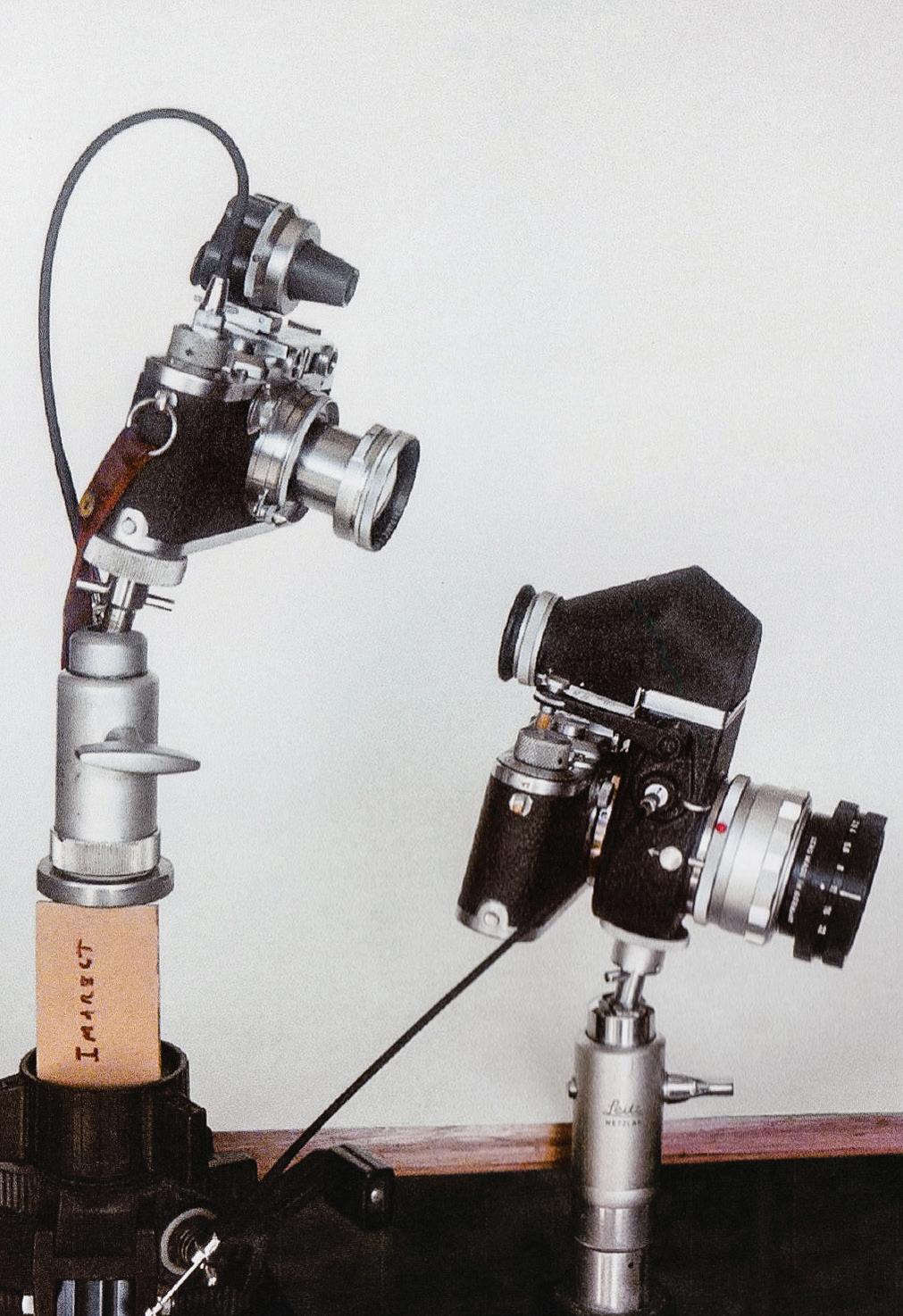
Aligning this picture was made complicated by having to compose the frame with the nearby Visoflex rig seen correctly in relation to the more distant subject camera. Ordinarily, with a rangefinder camera at closest focus, the shoe-mounted viewfinder is corrected for parallax by tilting it down slightly using its built-in control. However that method would not allow for properly aligning the two cameras at different distances, so parallax correction was made by the following alternative method. The lmarect finder had its parallax correction set at infinity, and the view in the finder was set up exactly as wanted in the final picture. Then the camera was raised by the elevator tripod 59mm (the distance between centers of finder and camera lenses) so that the camera's lens was then elevated into the exact same position as the finder's lens had been, and the exposure made with a cable release, also 1/10th at f/16.
A previous use of his same technique can be seen in Viewfinder Volume 32, #4, 1999, pages 32-33, showing a ground-level view of an architect's table-top model of a proposed boarding school dorm building. This photo was made using a close-focusing 21mm f/4 Super-Angulon-M. It is then compared to a subsequent ground-level view of the actual building after completion, made with the same lens. This elevator parallax correction technique can be used for other closeup scenes like model train layouts, etc. Any rangefinder normal or wide angle lens that can be made to focus close enough with extension or additional diopters (usually also needing a measuring tape) can give results just like those from a modern single lens reflex. But the 21mm S-A used in the above pictures came out in 1958, well before SLR cameras became popular.
Photos #3 and #4 show the third Illc with Summitar and lmarect in the two positions - viewing and shooting - behind the second camera with Visoflex. A measured cardboard spacer marked "Imarect" was used to raise the tripod elevator to the correct 59mm level for the picture to be made. These two pictures were made with the Illc seen in picture #1, using its 50mm Summar at closest one-meter focus by rangefinder, and handheld at 1/100th at f/5.6. All three camera bodies played their parts in this project, using all three of the lenses.
by JIM LAGER
the
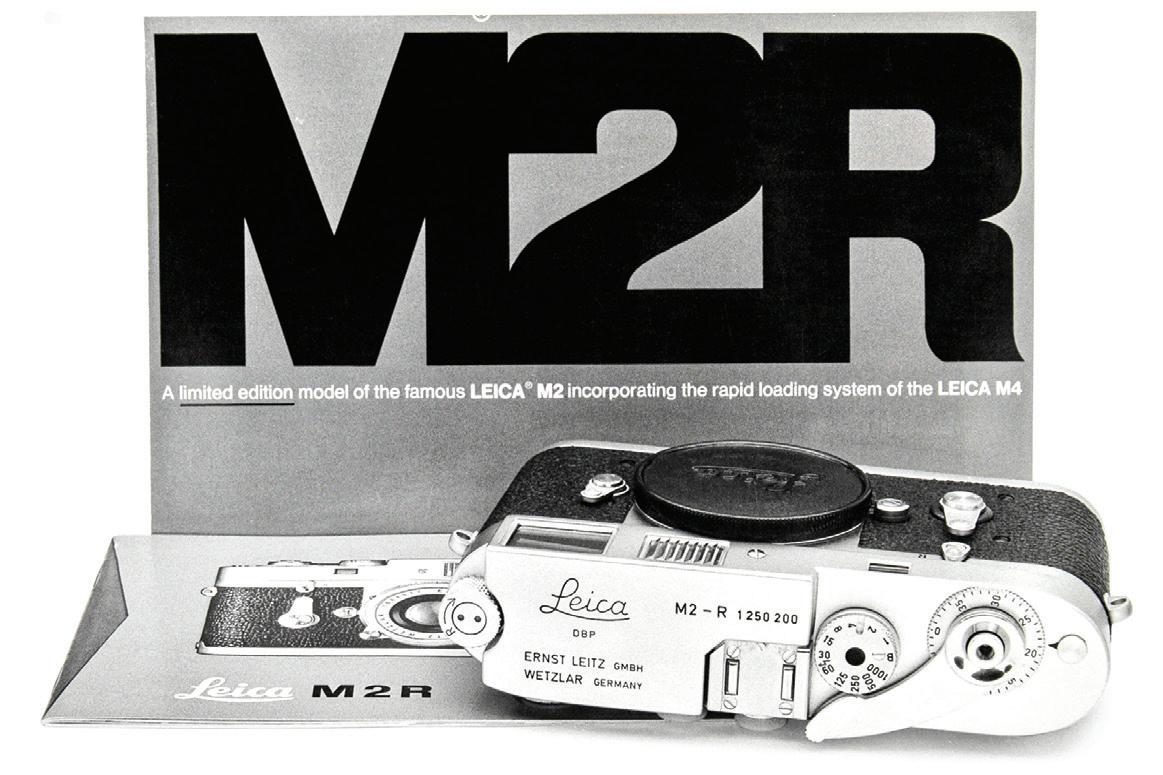
Leica rested on the cushioned counter mat and was being inspected by the customer. The shop owner was handling the sale in a masterful manner. I was busy with another customer but did notice the Leica as I strode by. An M2-R, new in the box, with all of the appropriate papers. Just another M2-R until I looked at the serial number. The number was 1250200...the last M2-R produced. The sale was finalized. The customer delighted. Neither the shop owner or the proud new owner recognized the significance. The last one made.
AT THE SALES COUNTER NYC 1983-1994 THE LENS IN THE RUG
by JIM LAGER
the late 1960's into the early 1970's the U.S. Navy used Leitz equipment. In the Proceedings of the Society of PhotoOptical Instrumentation Enginers Vol. 58 titled Small-Format Camera Systems dated March 17-18, 1975 (page 8) several unusual ELCAN-R lenses are mentioned. All featured apochromatic correction.
The ELCAN-R lenses mentioned are the 75mm f/2, the 180mm f/3.4, and the 450mm f/5.6. During my ongoing Leica research I had handled the 75mm and the 180mm but the 450mm eluded me. As my Volume II - Lenses was in the final layout stages in 1993, I received information that a 450mm had been obtained at a government auction. Further contacts were made and the owner said he was coming to a camera show in New Jersey. I asked if I could inspect the lens. Of course came the answer yes!
At the camera show I waited and finally the owner arrived carrying a rather dilapidated rug about three feet long wrapped around something. The contents were exposed, some dust and unidentifiable rug debris blown off, and the lens handed to me. I had NEVER seen this lens. I managed to get photos. The lens was cobbled together with what appeared to be a massive 180mm Elmarit focusing mount. This was a test unit for the U.S. Navy. It did not have to be pretty but it had to deliver the images required.
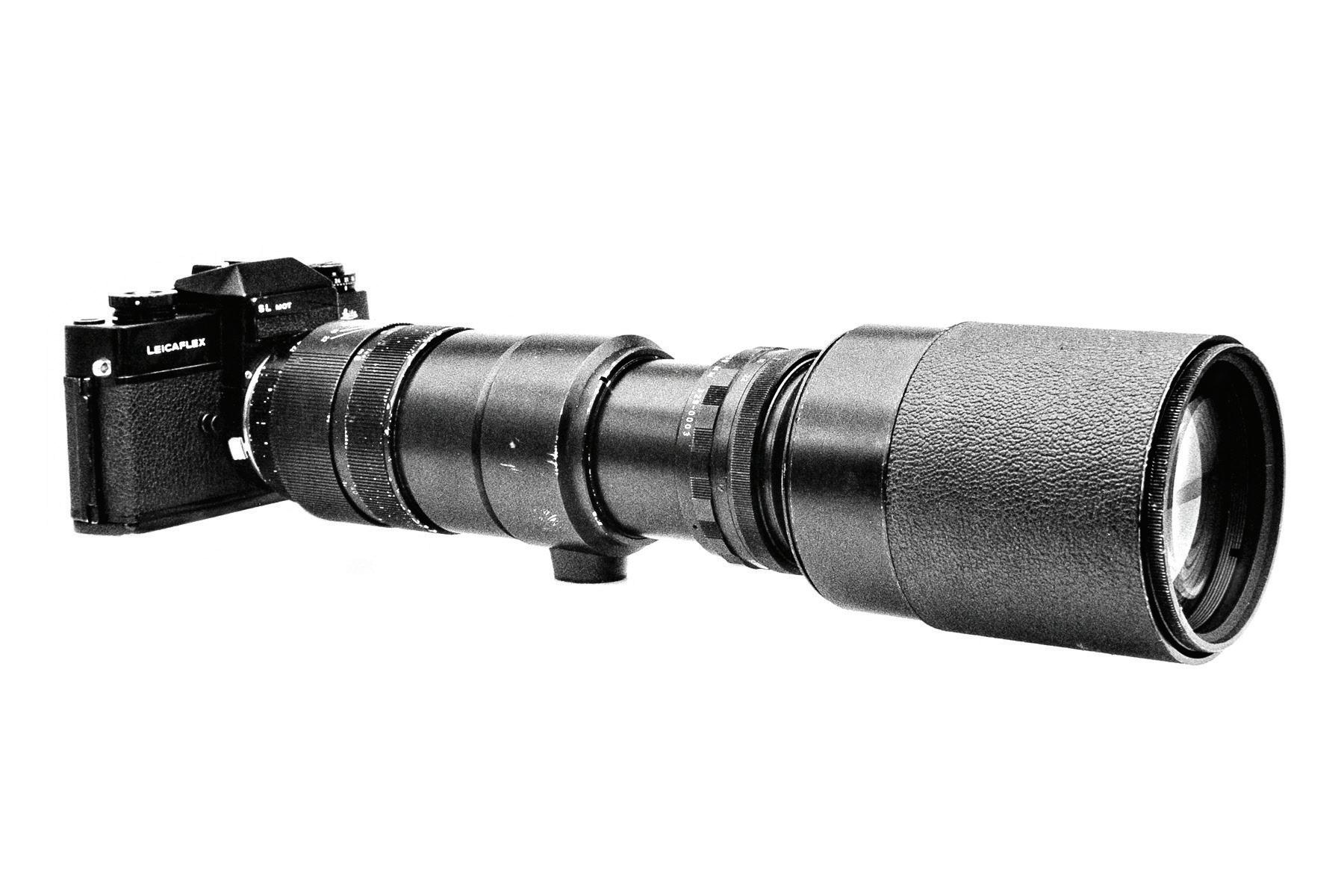
How many were prepared? I can guess probably less than ten. I can only guess as no official information has surfaced to my knowledge. The lens illustrated is formula 329, lens number 0003. The 450mm and 75mm did not reach commercial production. The 180mm f/3.4 ELCAN-R became the 180mm f/3.4 Apo-Telyt-R in late 1975.
OMIFO FOR YOUR 9CM ELMAR
by JIM LAGER
catalogued
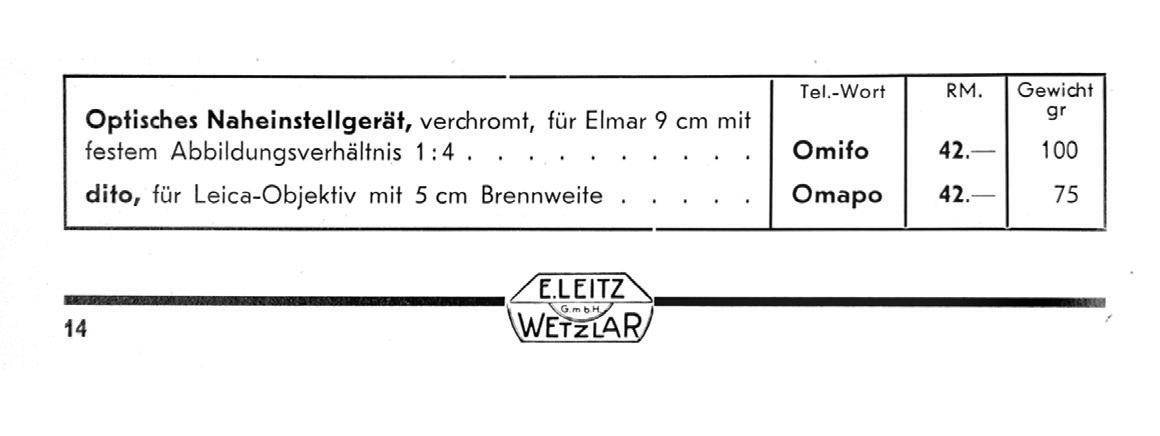
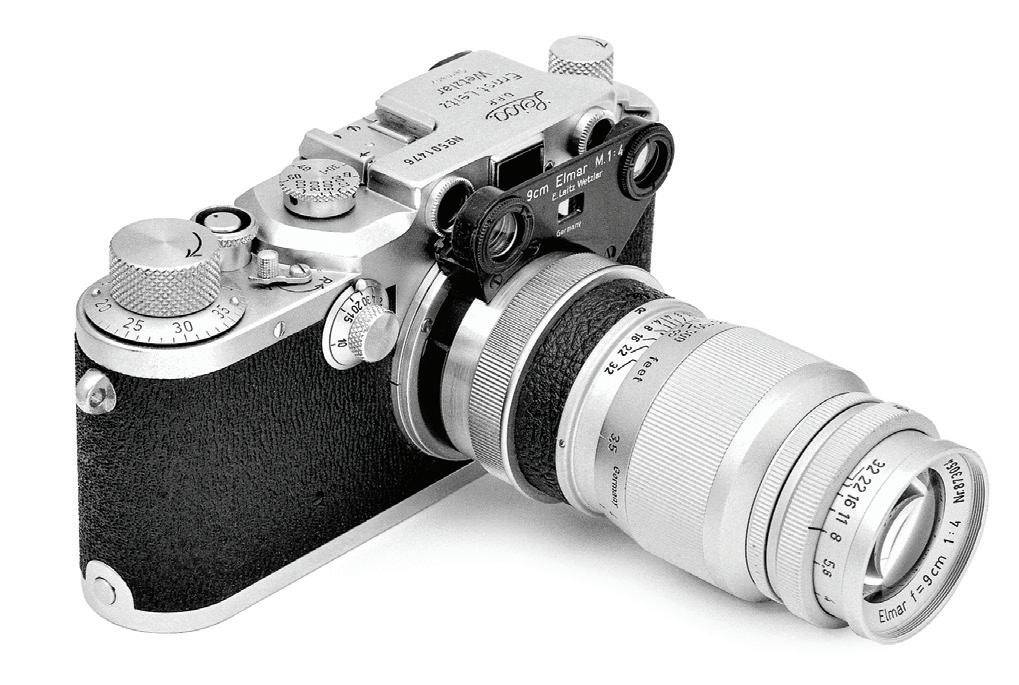
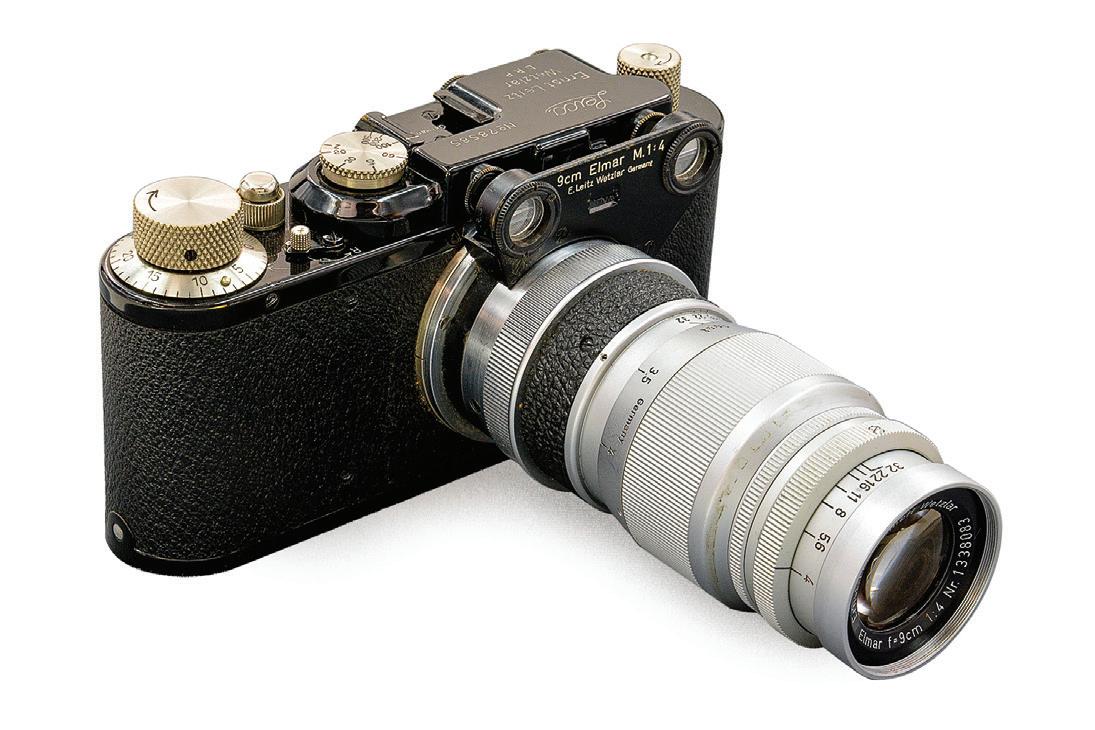
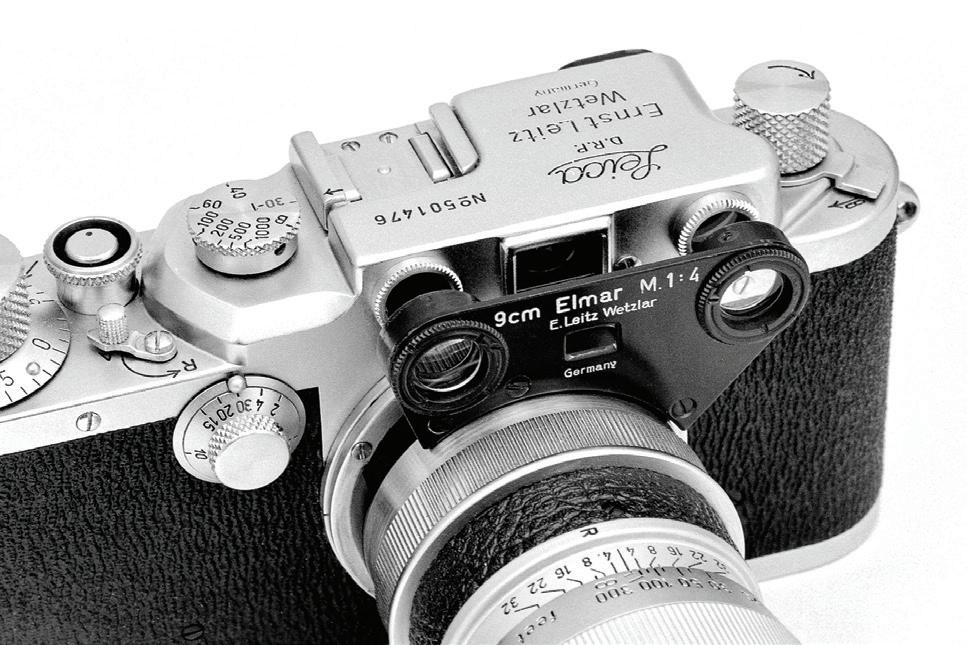
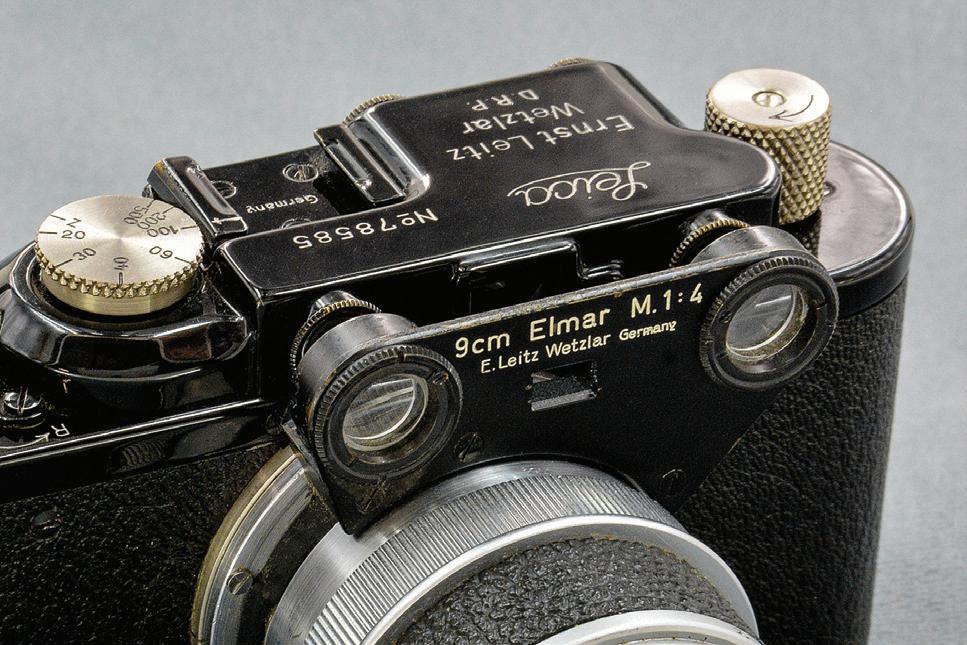
as early as 1939 the OMIFO close up accessory permitted fixed 1:4 ratio ( 1/4 th life size) photos with the rangefinder coupled 9cm Elmar. The OMIFO was listed along with the OMAPO for the 5cm lenses. As far as I can determine the OMAPO never reached series production.
Post World War II the OMIFO appeared in E. Leitz, Inc. New York price lists in June 1951. In May 1952 the OMIFO is listed as discontinued.
listing in 7754a.
OMIFO-OMAPO
October 1939 Leitz Wetzlar publication "Leica in Wissenschaft und Technik" (The Leica in Science and Industry) Liste Mikro-Leica.
Leica IIIc with 9cm Elmar and OMIFO.
OMIFO on Leica IIIc 501476 (1950). Note sharkskin covering.
Leica II with OMIFO and 9cm Elmar.
OMIFO engraving detail.
WHERE ART THOU OUBIO?
by JIM LAGER
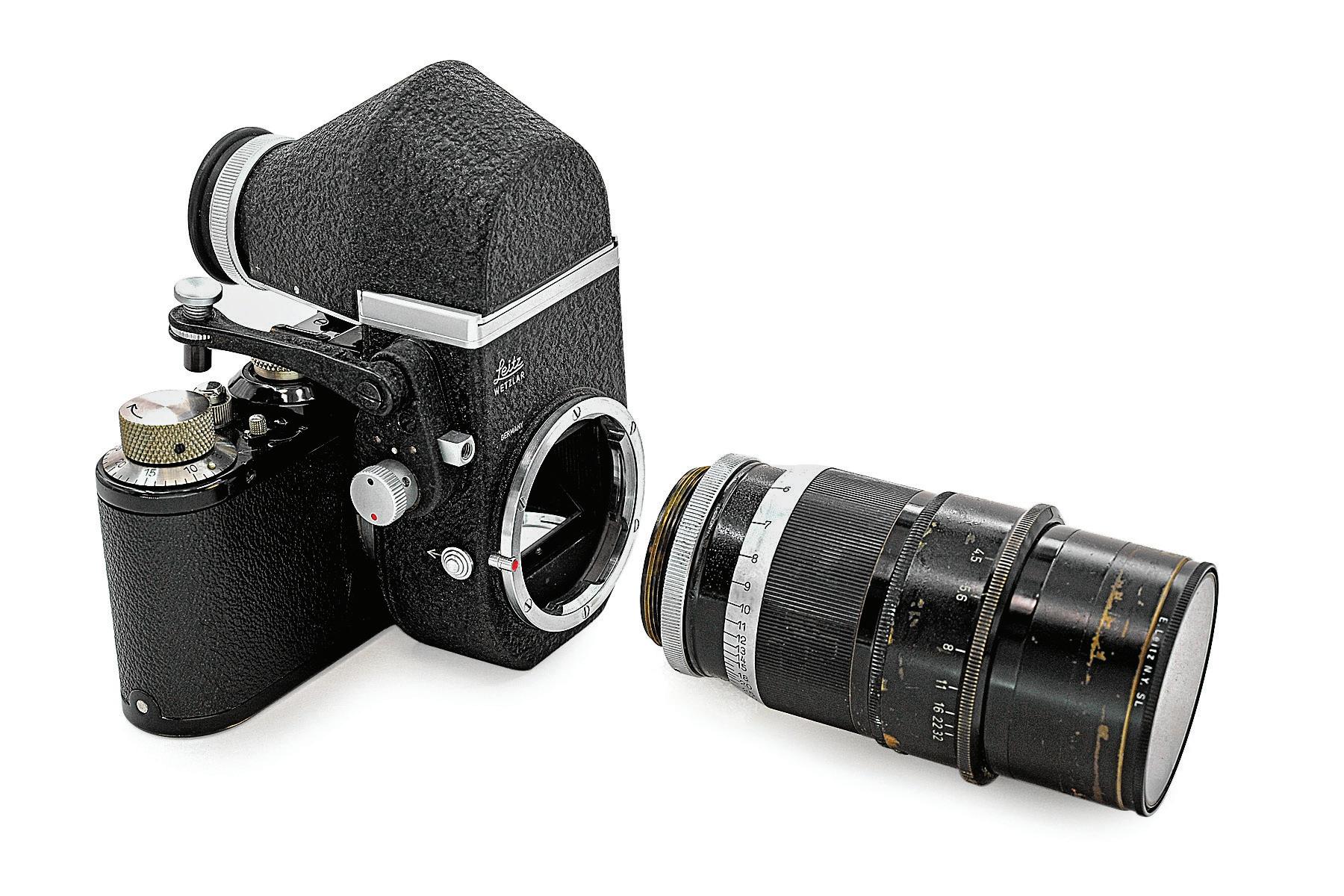
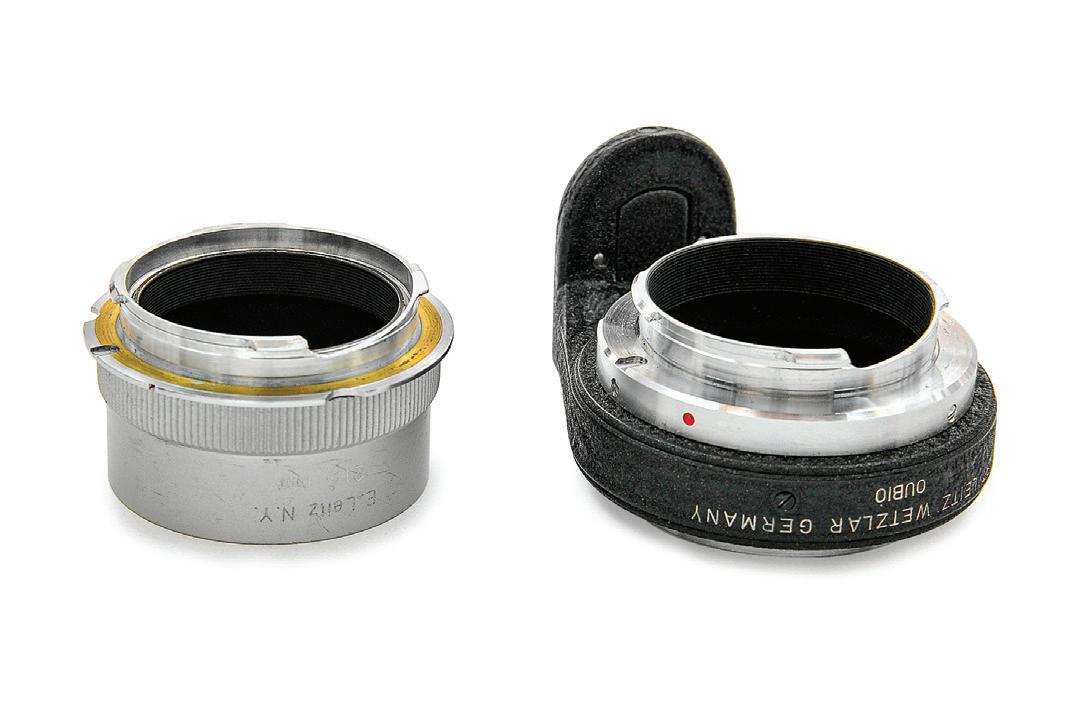
Visoflex II reflex housing was officially introduced at Photokina 1958. The new unit, much smaller than the previous Visoflex I, began to reach the market in 1959. Limited quantities of the OUBIO (11090) adapter were available by September 1959. By August 1960 the catalog number had changed to 16466. LHSA members know that the 22.5mm long OUBIO permitted use of Visoflex I lenses on the Visoflex II.
Demand for the Visoflex II was high and E.Leitz, Inc. New York had considerable difficulty in filling orders.In the case of the OUBIO adapter deliveries were basically non-existant. Leica enthusiasts with Visoflex I lenses could not get this critical adapter. They, and the network of franchised Leica Dealers, were unhappy to say the least.
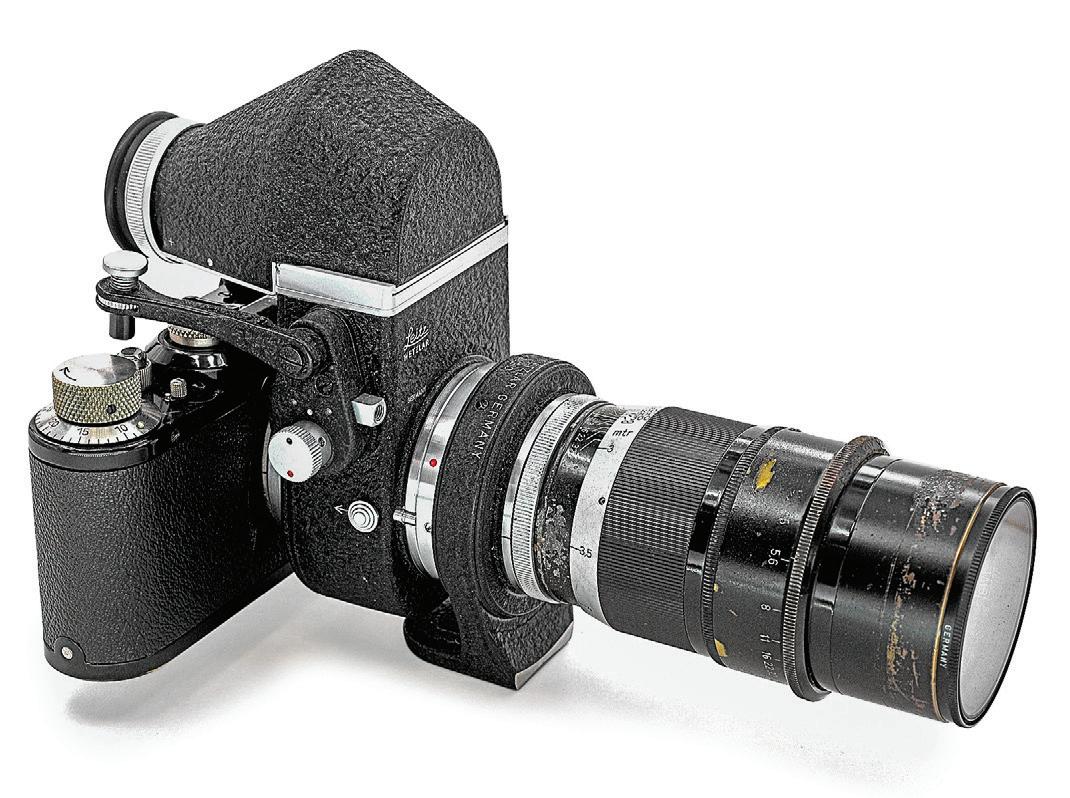
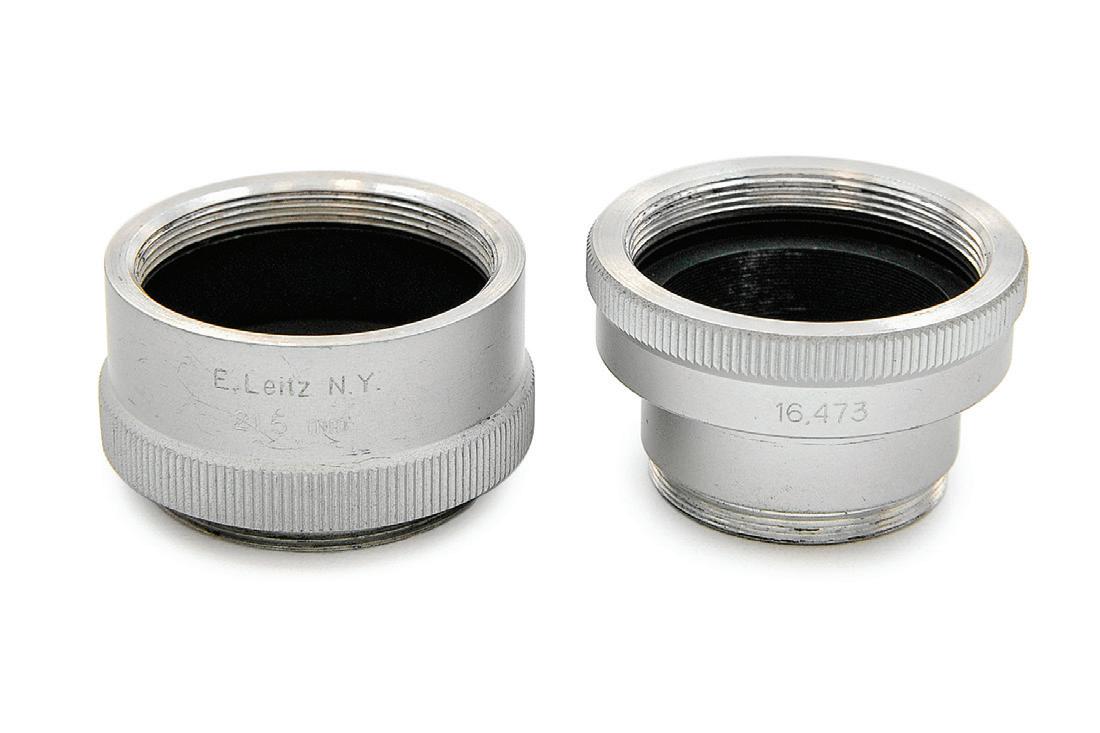
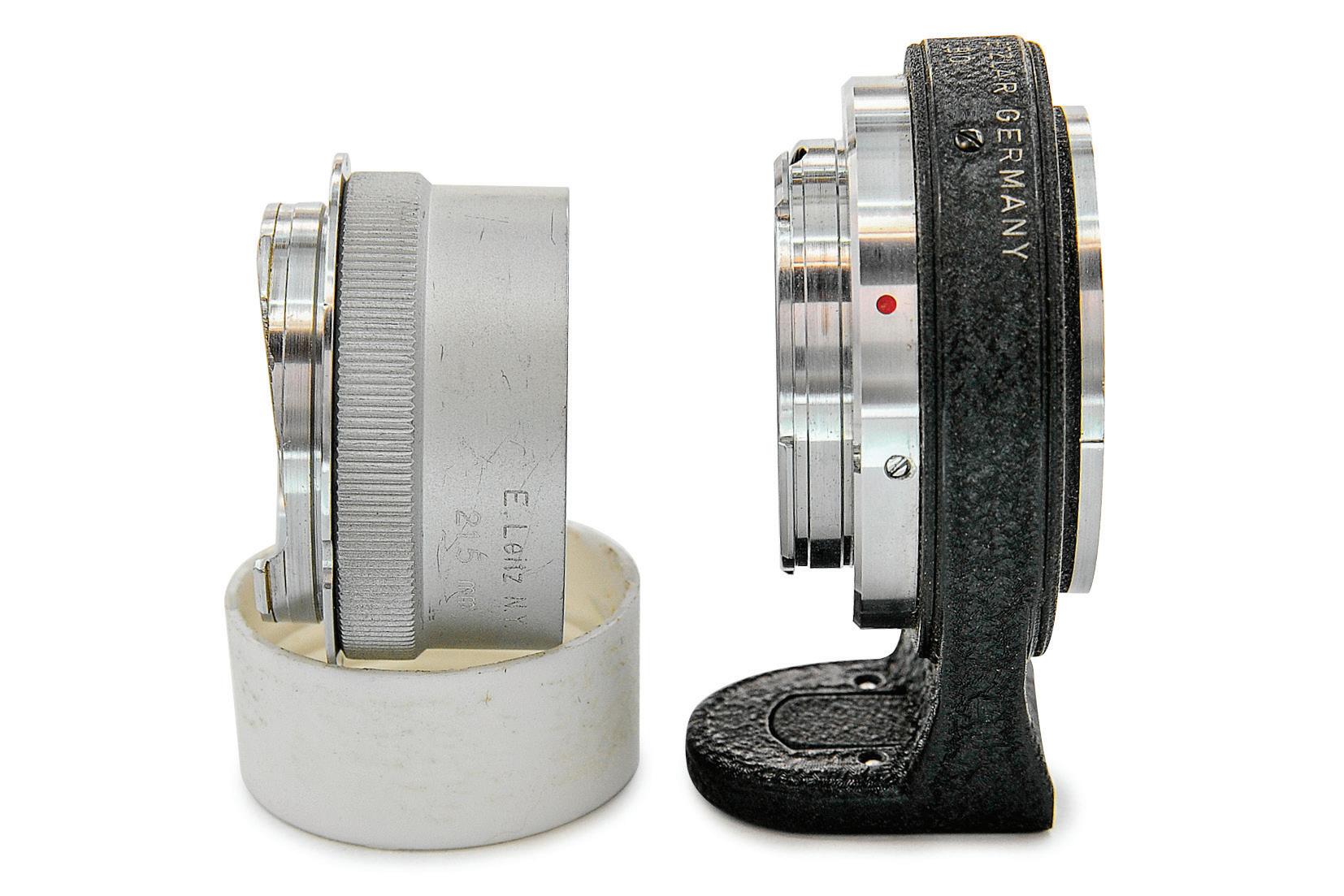
Finally in 1962-1963 the E. Leitz, Inc. New York machine shop manufactured a Leica threaded aluminum extension tube 21.5mm long. Addition of a 1mm thick Leitz screw to bayonet adapter yielded the required 22.5mm thus matching the OUBIO dimension. The 16476 tube is lightly engraved E.Leitz N.Y. 21.5mm. As OUBIO deliveries increased 16476 production ceased.
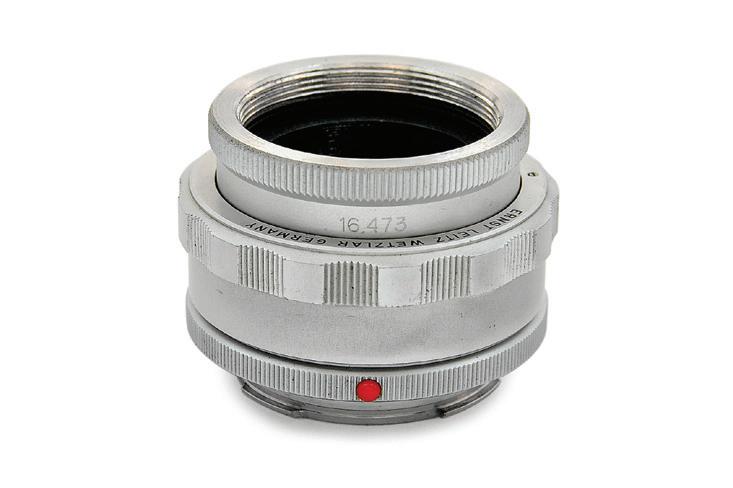
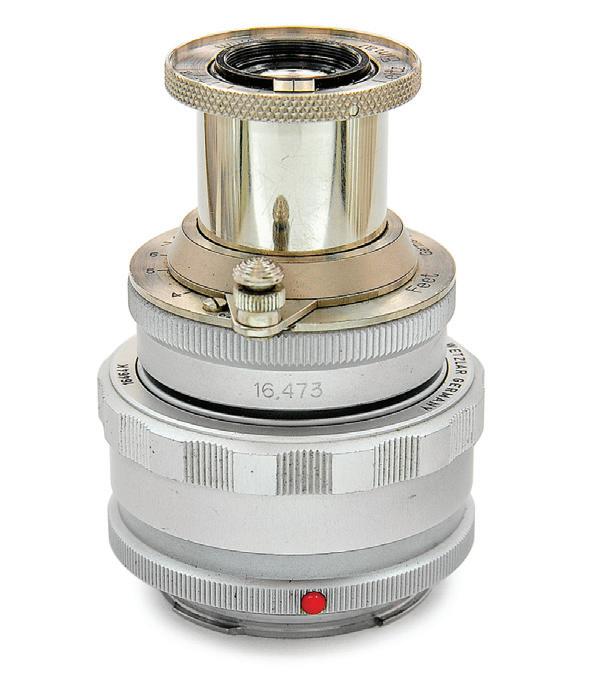
Another New York tube was manufactured in the early 1960's. It was the 16473 permitting screw mount lenses (typically 50mm) to mount onto the 16464 (OTZFO) universal focusing mount for extreme close-ups. By the mid 1960's the 16476 and 16473 New York tubes were gone.
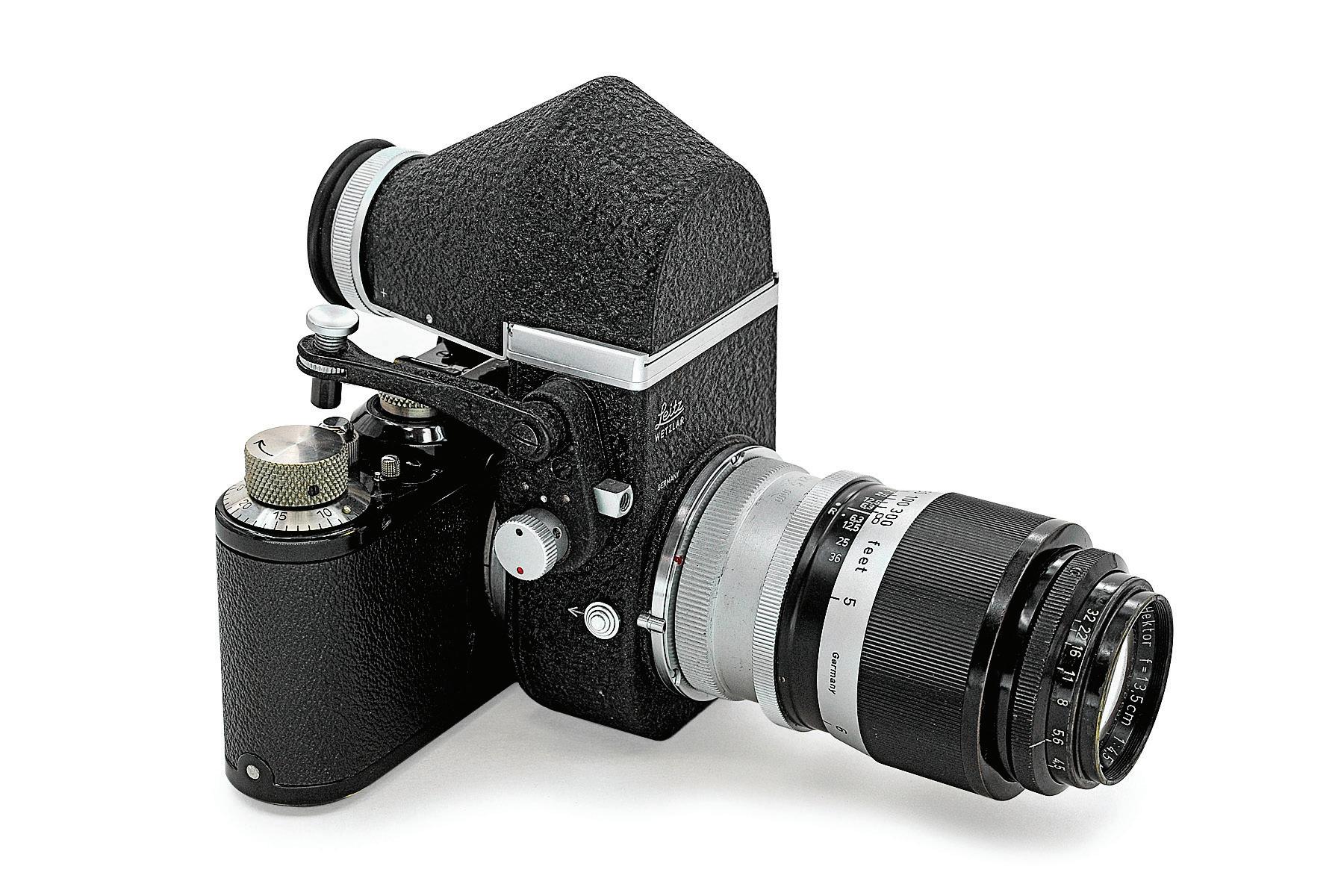
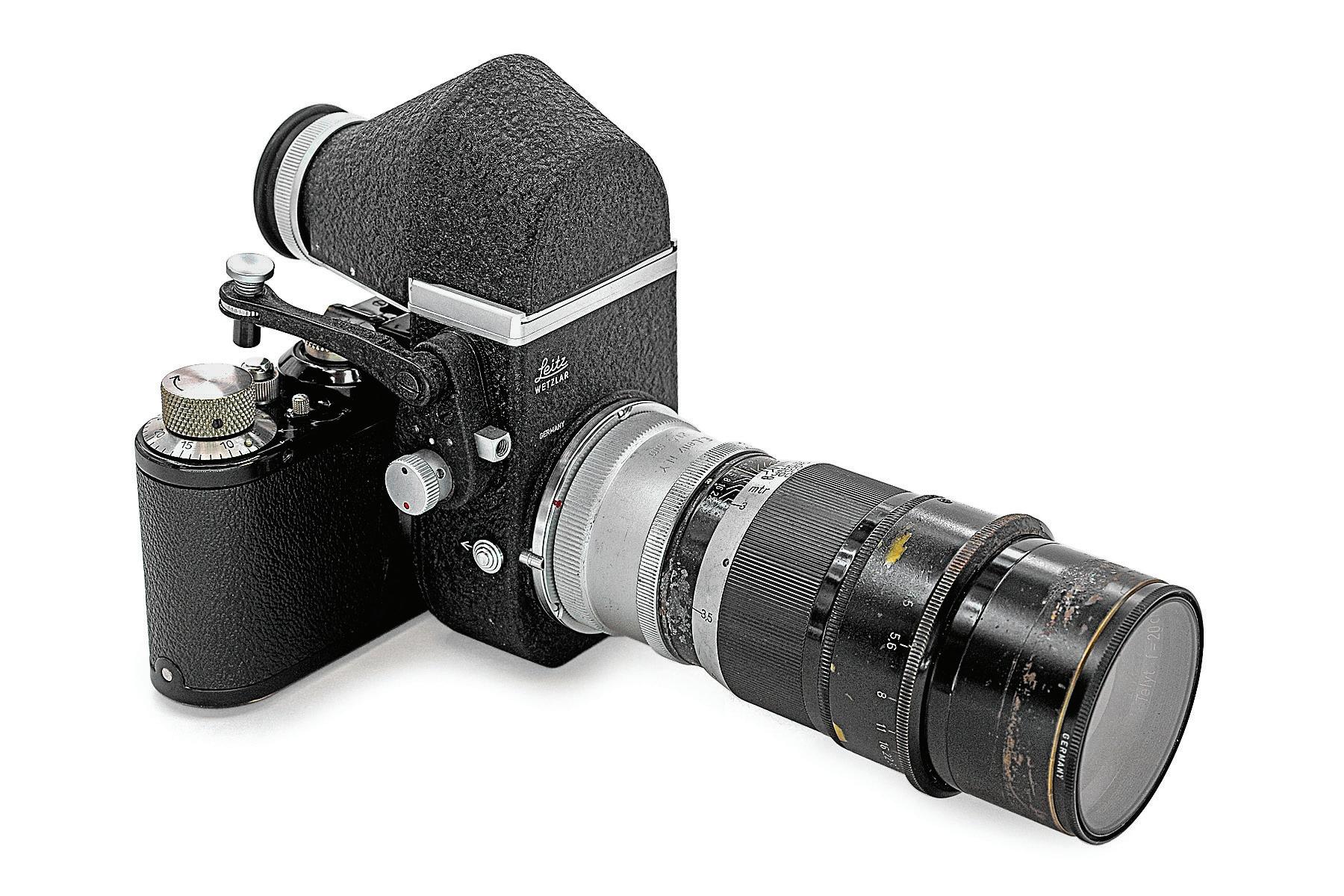
13.5cm Hektor in ZOOAN short mount with tube 16476.
AN INELEGANT (BUT NOT COMPLETELY TACKY) SOLUTION TO AN OLD, VEXING PROBLEM
by ED SCHWARTZREICH
winter I planned to take pictures of a local nighttime festival and parade with my M10 and 21mm lens. I slipped an external 21mm viewfinder into the accessory shoe and off I went, only to discover that in walking from my car to the event I had lost my viewfinder! Very luckily, I found it the next day in the light. I had not been so lucky in the past. Back when we were using film Leicas, the dropped or lost viewfinder (or other shoe- fit accessory) was an old, sad story. Perhaps today with Live View, people use these viewfinders less, but I don’t.
Through the years, I had spoken at length with such people as Tom Abrahamsson, Don Goldberg, and Stefan Daniel about possible solutions to this, all to no avail. My best idea was to have some sort of swing-up thingy mounted just behind the accessory shoe, to lock the accessory in place. This would entail drilling a mounting hole in the back of the top plate, which thought made all of these fine gents shudder. Suggested to me was simply to put tape in the shoe, so things fit tightly, which is what I had been doing already, and which did not prevent what happened last winter.
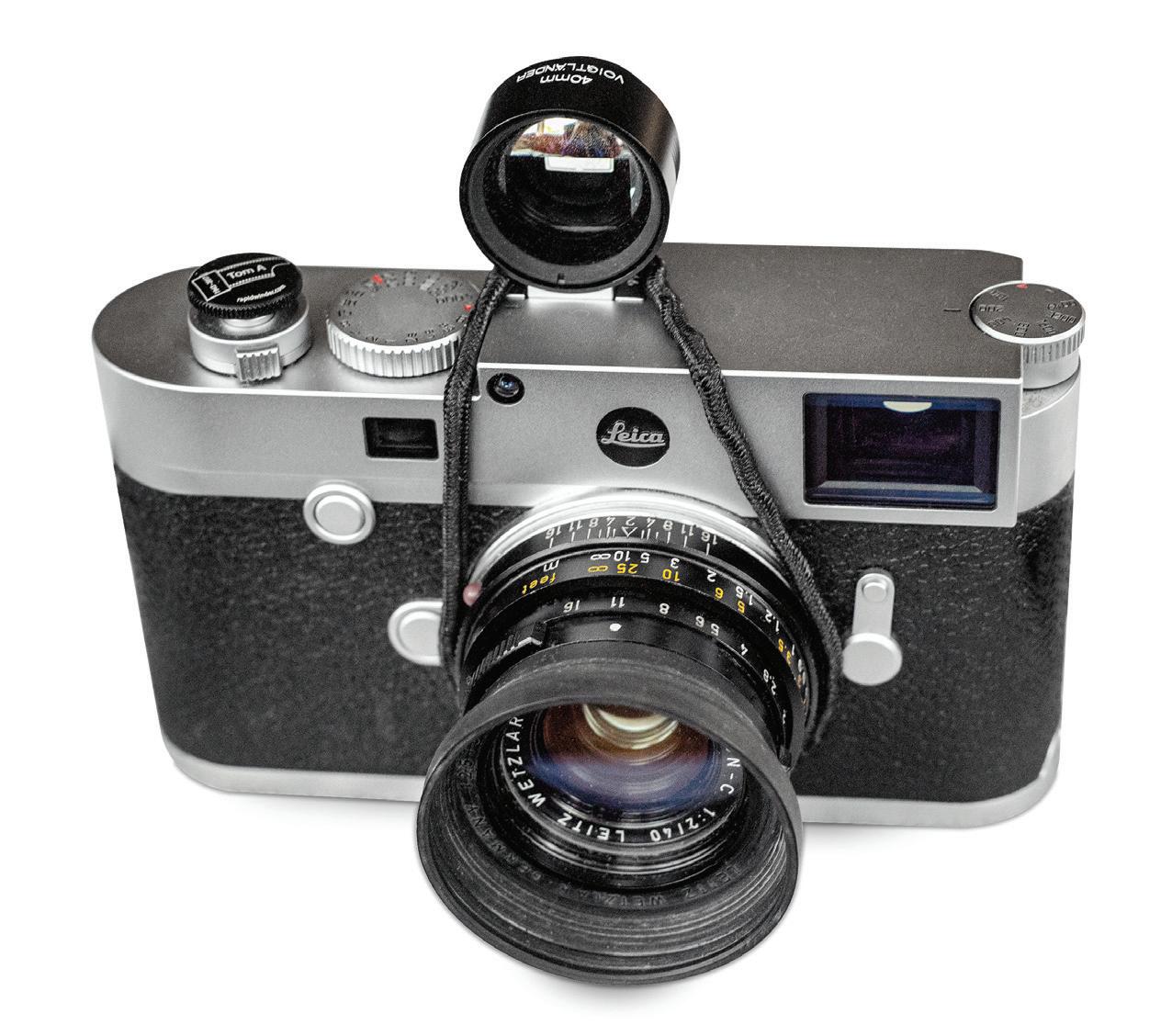
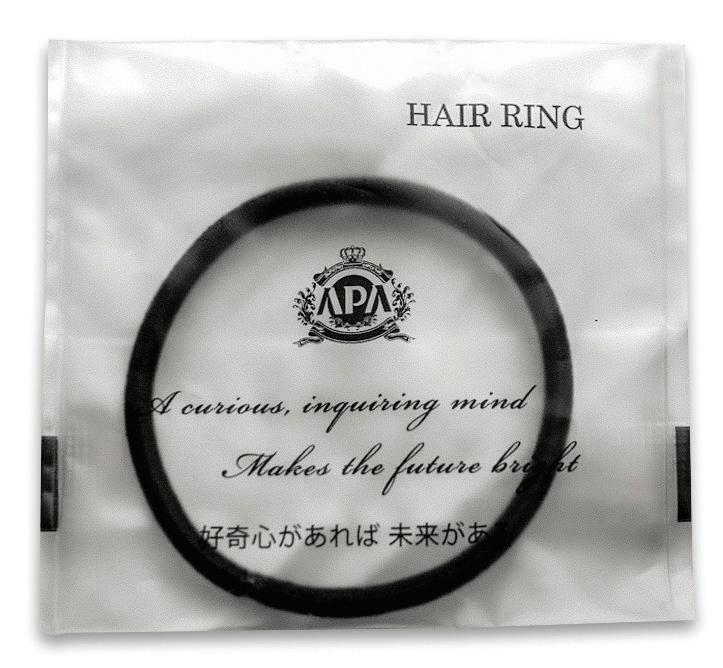
Then, in a parking lot last summer I spied on the ground one of those black cloth-covered elastic rings that women use to secure their pony tails. I think they are called scrunchies. I know it is almost tacky, but suddenly I had a solution! I washed off and dried the scrunchie and found it fit quite well around the back of the viewfinder and then under the lens.
Why do I say this is “not completely tacky”? Completely tacky would be one of the thick purple rubber bands from the supermarket that hold stalks of broccoli, although this would work in a pinch. At least the cloth-covered scrunchie is less likely to degrade quickly and snap. And for $3.99 one can buy a pack of 18 of them! And they come in many colors to match the photographer’s camera or mood. Apparently, some hotels in Japan supply them to customers as well!
Above: 40/2 Summicron and 40mm CV Viewfinder secured on an M10. Inelegant perhaps, but better safe than sorry. For the record, this is a brand new scrunchie.
Below: Tuulikki Abrahamsson told me that at various hotels in Japan, along with soap and shampoo, they supply high-end hair rings, with typical wacky Japanese labeling, as here: “A curious enquiring mind Makes the future bright”. Photo courtesy of Tuulikki.