Inquiries about membership, upcoming events, replacement Viewfinder issues, and special orders should be directed to:
Richard Rejino, LHSA Executive Director 14070 Proton Road, Dallas, TX 75244 info@lhsa.org, (972) 233-9107
Viewfinder is the official publication of the LHSA - The International Leica Society, a nonprofit organization incorporated in the state of Delaware. Copyright 2020. Reproduction or use of any material contained herein without permission of the Society if forbidden.
Leica is a registered trademark. It and other trademarks pertaining to the Leica System are the property of LEICA CAMERA, USA, INC or LEICA CAMERA AG.
ISSN 1543-8732
PRESIDENT Brad Husick Medina, WA
EXEC.VICE PRESIDENT
David Knoble Charlotte, NC
VP / TREASURER William Fagan Dublin, Ireland
IMMEDIATE PAST PRESIDENT
Keith R. Sbiral Chicago, IL
PRESIDENT EMERITUS
James L. Lager
Rolf Fricke
Bill Rosauer
APPOINTED OFFICERS
Viewfinder Editor
Bill Rosauer Buffalo Grove, IL lhsaeditor@yahoo.com
Associate Viewfinder Editor
Ed Schwartzreich Waterbury, VT
q2 monochrom & the day of the
EXECUTIVE DIRECTOR
Richard Rejino Dallas, TX info@lhsa.org
ELECTED DIRECTORS
Class of 2022
Andrew Godlewski Middletown, RI
Bill Royce Kirkland , WA
Kirsten Vignes Minneapolis, MN
Philiip Blair Kenmore, WA
Class of 2023
Sandra Eisert Redmond, WA
Ashwin Rao Seattle,WA
Robert Levite Coral Gables, FL
Class of 2024
Wilbur Norman Sante Fe, NM
David Spielman New Orleans, LA
Amitava "Chats" Chatterjee Manassas, VA
SENIOR DIRECTORS
Gary Hough Woodinville, WA
Douglas Drumheller Pittsburgh, PA
Alan Weinschel Roslyn Heights, NY
CONTRIBUTING EDITORS
James L. Lager Closter, NJ
S.R. Gilcreast Jr. Peterborough, NH
S. Williis Wright Port Washington, NY
A LETTER FROM THE PRESIDENT
by BRAD HUSICK
Dear Colleagues, There are lots of great things happening in your International Leica Society that I’m happy to report for this issue of Viewfinder. First, we are just about to join each other in Colorado Springs for our annual Spring Shoot. This year we have a recent record number of registered attendees - more than 75 at the time of this writing. This should be a special event, with a focus on getting to know each other and building new friendships. Now that Covid is mostly endemic, there appears to be a strong appetite to see each other face-to-face, and that’s heartwarming. We will be visiting the Garden of the Gods and Pike’s Peak, along with exploring the downtown area on foot. If you haven’t attended a Spring Shoot, I highly encourage it no matter what your experience level. This is not a “pro” event, it’s for all of us. Thanks go to board member David Spielman, our event chairman, and Spring Shoot leadership veteran.
Second, I’d like to offer special thanks to our growing list of Sustaining Members. We now have more than 120 Sustaining Members who are enjoying special benefits including discounts on events, special logo merchandise, and more. If you’d like to join them, please click the link on the website under the “about” section – it’s easy to upgrade from a regular membership to Sustaining levels.
WHY PHOTOGRAPHY IS LIKE GOLF
by BRAD HUSICK
Idon’t play golf – not because I don’t like the idea of golfwalking around beautiful outdoor spaces with friends while getting a little exercise sounds quite appealing. But from what my friends tell me, starting to play golf can often be a frustrating experience that requires time and practice to achieve.
Next, your exec team has been hard at work planning the annual meeting and conference in Dublin, Ireland on October 13-15, 2022. Our local man in Dublin, VP William Fagan, is our event chairman and he’s exactly the right man for the job. We’re queuing up a wonderful list of speakers and we’ll be touring the Guinness brewery for a little refreshment – after all, taking photos is hard work.
I am especially excited to say that after more than a year of working together, Oberwerth bags and your International Leica Society are ready to announce a set of unique Leica photo bags of an entirely new design. These logo bags will be available starting in June and the first batch will likely sell quickly. It’s not a limited-production edition, but it still takes time to make these special leather bags so get your orders in early. Initially, Leica Store Miami and Leica Store San Francisco will be carrying them, with more to come. A portion of the proceeds funds the society, and we thank Oberwerth CEO Stefan Immes for his generosity. I will be writing a review article for Viewfinde r for a future issue.
We recently introduced a new Corporate Sustaining Member program for companies who play a special role in our Leica experiences, and we’re thrilled to say that we already have several member companies in the program. We’ll make special announcements about them at the Spring Shoot and you’ll see them in our member communications both online and in print.
There are great things happening in your society, and I am privileged to be of service.
Cheers - Brad
If you get to the point where most of your swings actually hit the ball, and that ball goes in the general direction of the hole, I hear that golf can be fun to play. Short of this skill, golf can be a frustrating time-sink. That basic level of proficiency is required to get to “fun.”
With all of the other things I have chosen to do, I don’t have the time to get up to speed in golf and stay at a level that makes it fun. I’ll have to stick to mini-golf for now, where my kids can laugh at me when my ball hits the windmill.
Some golf players move beyond this basic proficiency level and take their game to the next level. I understand this can be time-consuming and requires playing more than once a week under the tutelage of a “pro.” I admire people who get to that next level in any of their chosen fields.
Even fewer have the drive, skill, and talent to make money playing golf. Pros work very hard at it and still enjoy walking around beautiful spaces.
Most golfers are pretty happy at the basic level, enjoying time with friends, drinking beer, and getting some exercise. According to the National Golf Foundation, one out of every three Americans age 6+ played golf, watched the sport, or read about it in 2020, and 36.9 million of them played golf in 2020.
No matter what level of play, golfers love their gear in the same way that photographers love their equipment. There are always new toys to buy. Sometimes using better equipment makes the game more enjoyable or the outcomes better. Sometimes it’s just fun to use what the pros use.
Photography is like golf. The vast majority of photographers do it because it brings them happiness. They like documenting their lives, the lives of their families and friends, and sharing the moments. Some like spending time with others who do photography, comparing experiences, talking about gear, and building friendships.
A few have the drive, skill, and talent to make money making photos. A rare few make a name for themselves making photographs.
Photography offers a broad spectrum of experiences for nearly everyone. Billions of people take mobile phone snaps, and many share these on social media for others to see for a second or two. If that brings joy or connection to the world, we should encourage it. Others buy a camera and document the experiences in their lives. Fewer make an effort to produce images to share with others that last longer than social media swipes. And even fewer make it to the point of offering images worthy of sale and collection.
Genuinely great photos are like golf’s hole-in-one. According to the National Hole-In-One Registry (yes, there is such a thing) , here are the odds of getting an “ace”:
• Tour player making an ace: 3,000 to 1
• Low-handicapper making an ace: 5,000 to 1
• Average player making an ace: 12,000 to 1
• Only 1-2% of golfers score a hole in one during the year
Photographers are probably similarly situated. An average photographer probably needs to make 12,000 photographs to make one truly special image that deserves public display.
Are any of these levels of photography more “worthy” than the others? I think not. Photography can inform, inspire, entertain, enlighten, document, memorialize, and more. It’s okay for photography just to be fun. By the way, golf courses are often beautiful places to take photographs. But remember, most amateur golfers don’t ask strangers to watch them play every hole, so share thoughtfully.
A LETTER FROM THE EDITOR
by BILL ROSAUER
Unfortunately, with this issue of Viewfinder, we have some sad news to report. Dick Santee, LHSA Past President and good friend, passed away in February. Jim Martin, our long-time Secretary-Treasurer and a good friend as well, passed away a short time later. I am sure that many of our long-time members remember Dick and Jim. They were attendees at virtually every LHSA event for years, and devoted many years of service to the Society. We will miss them. I also just heard that Gűnter Osterloh, one of the luminaries of the Leica World, has also passed away. Gűnter was associated with Leica and the Leica Academy in Germany for many years. He was also a prominent author on the subject of Leica. You will know the titles of many of his Leica books, among them, Excellence in Photography: Applied Leica Technique, several editions of the Leica M: Advanced Photo School, 50 Years Leica M and Leica M, From 1954 Until Today. I last saw Gűnter in Wetzlar in 2018 for the dedication of Leitz Park III. The Leica World will surely miss Gűnter.
Dick Gilcreast brings us part 2 of his bridge replacement story. Anyone who has lived with major road work being done in the area where they live, can certainly understand well the process that Dick has documented here. In the Chicago area, we like to joke that there are two seasons: Winter and Road Work! Ed Schwartzreich takes an interesting look at two Japanese Leica books from the 1930’s. This was an interesting period in the world of photography. The Leica, followed closely by the Contax, was sweeping the world of photography, and the Japanese were incredibly enamored by the German technology the Leica camera represented. Japan was emerging on the world stage after many years of self-isolation, and what better tool than the Leica to document this transition of Japanese society. As Ed points out, traditional Japanese houses were not suited to hanging pictures on the sliding Shoji screens that divided their living spaces. Hence, the preeminence of the books of photography featuring images made by the Leica. This is a world we have forgotten, being so used to the post-War dominance by Japan of the photo industry and 35mm photography.
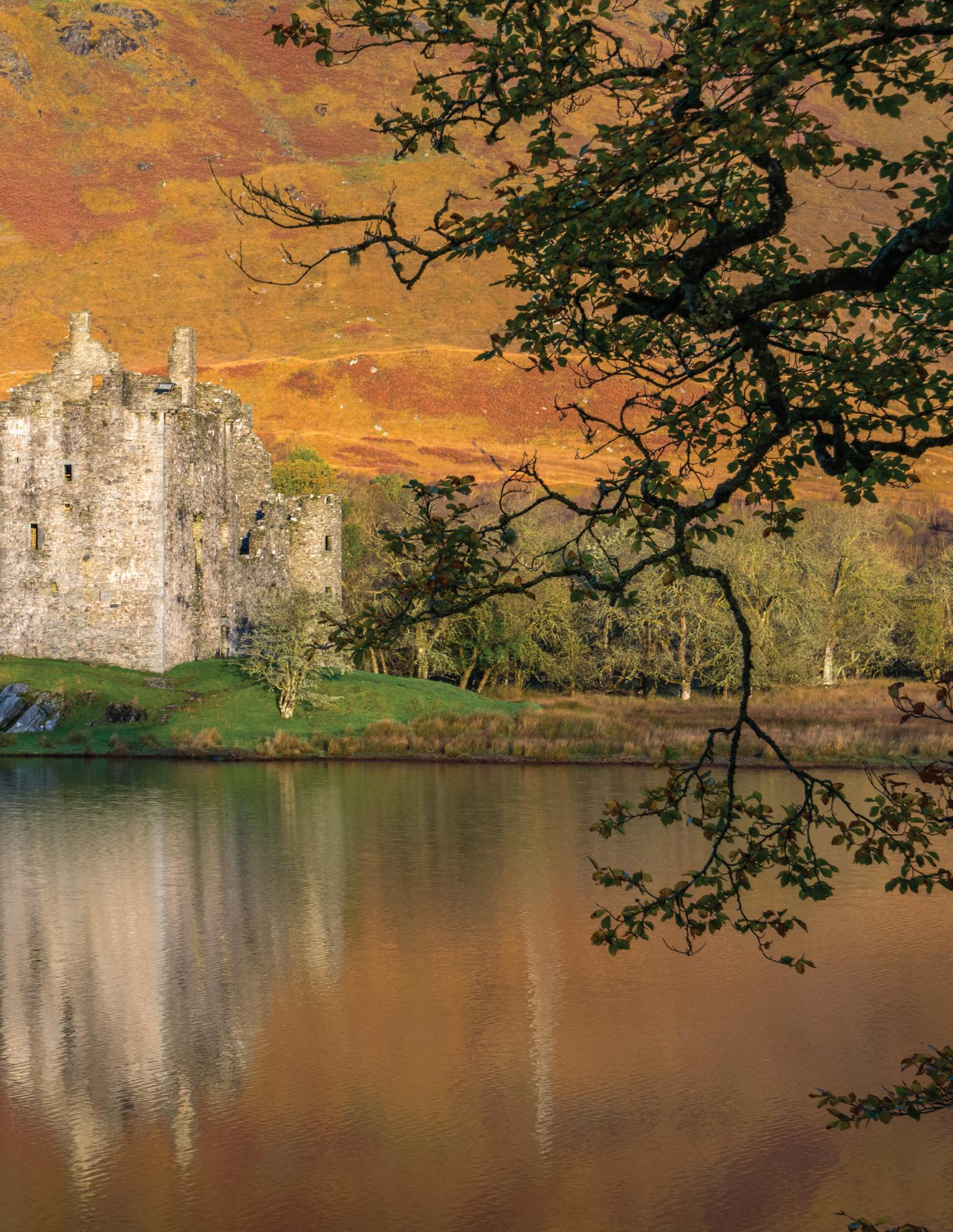
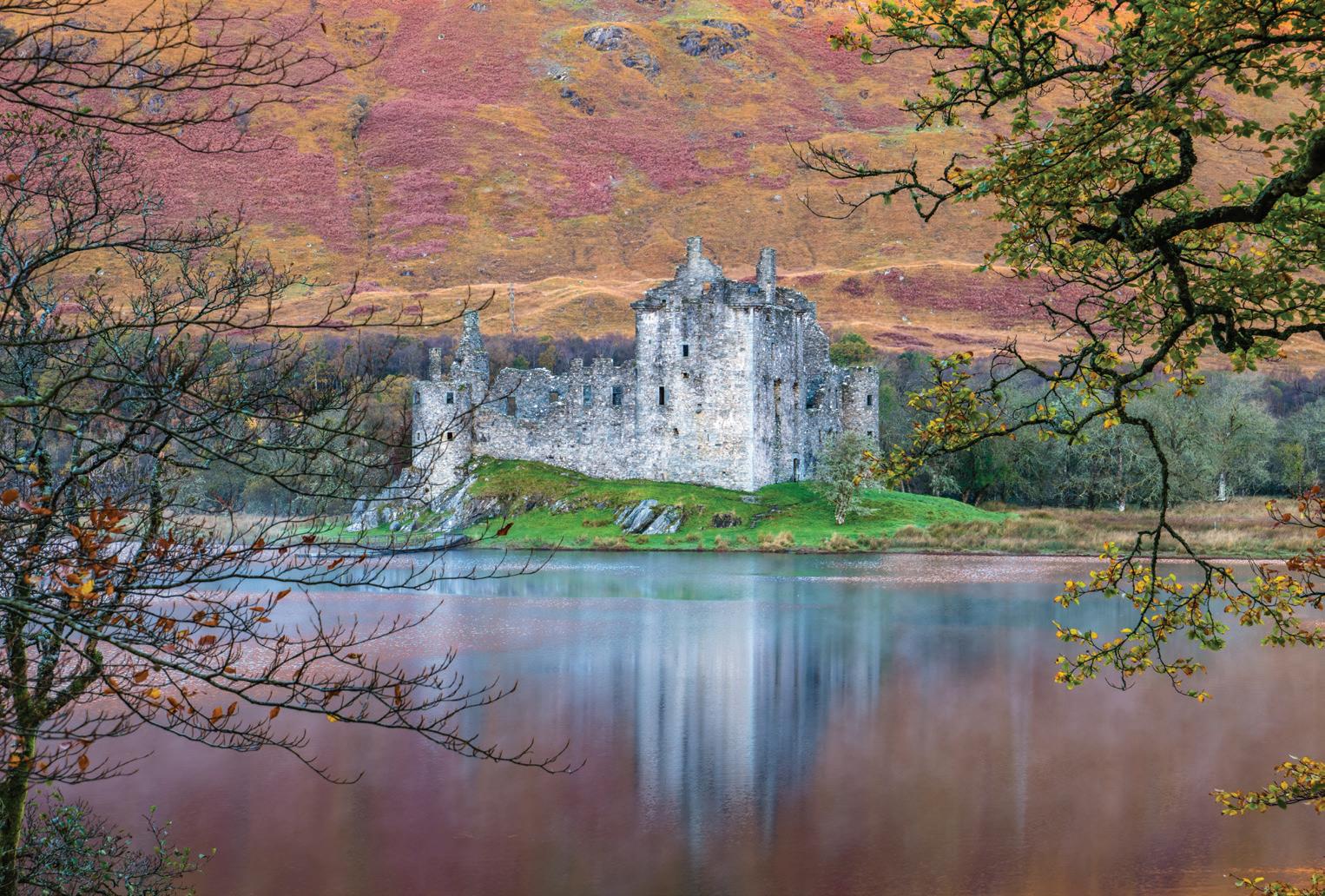
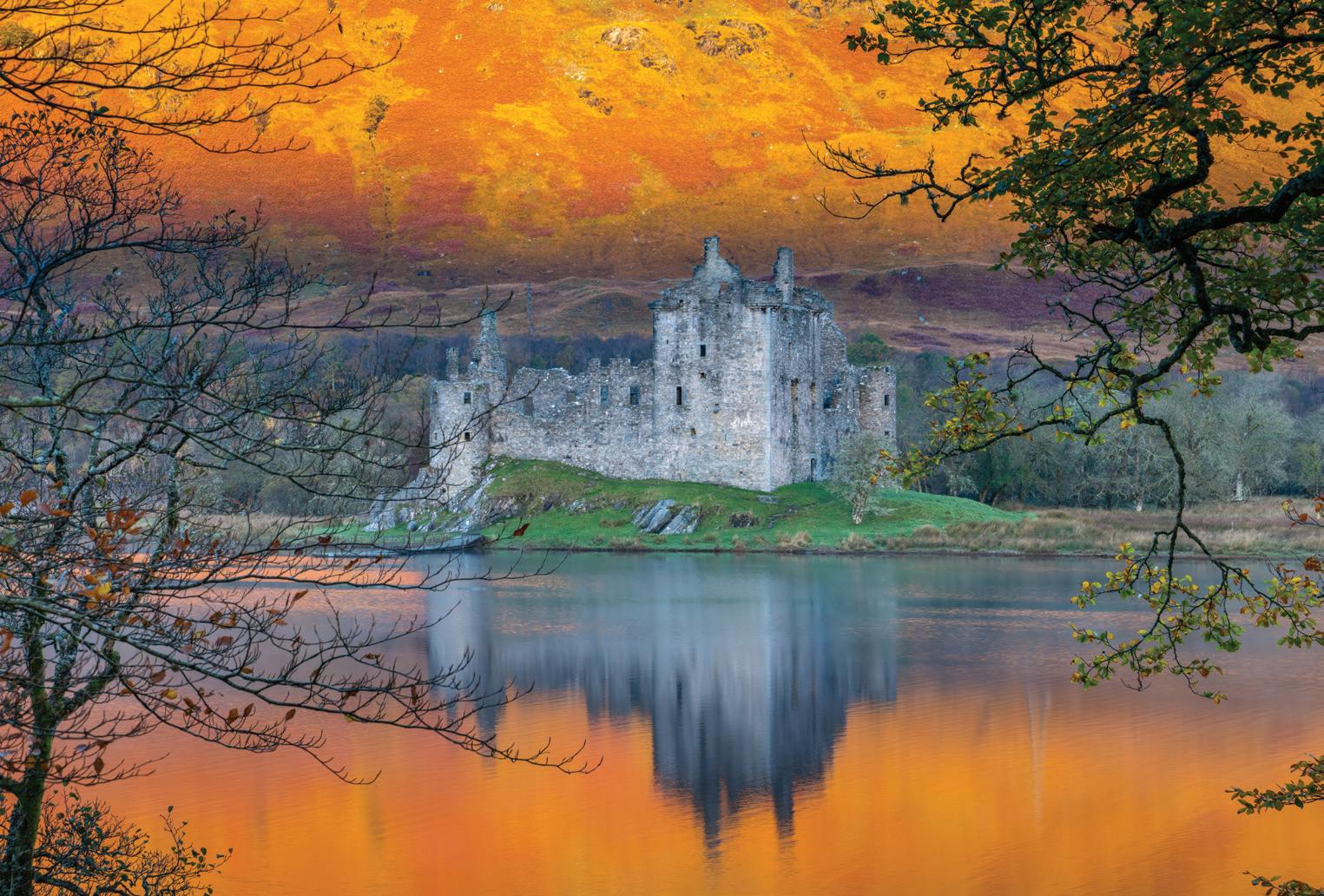
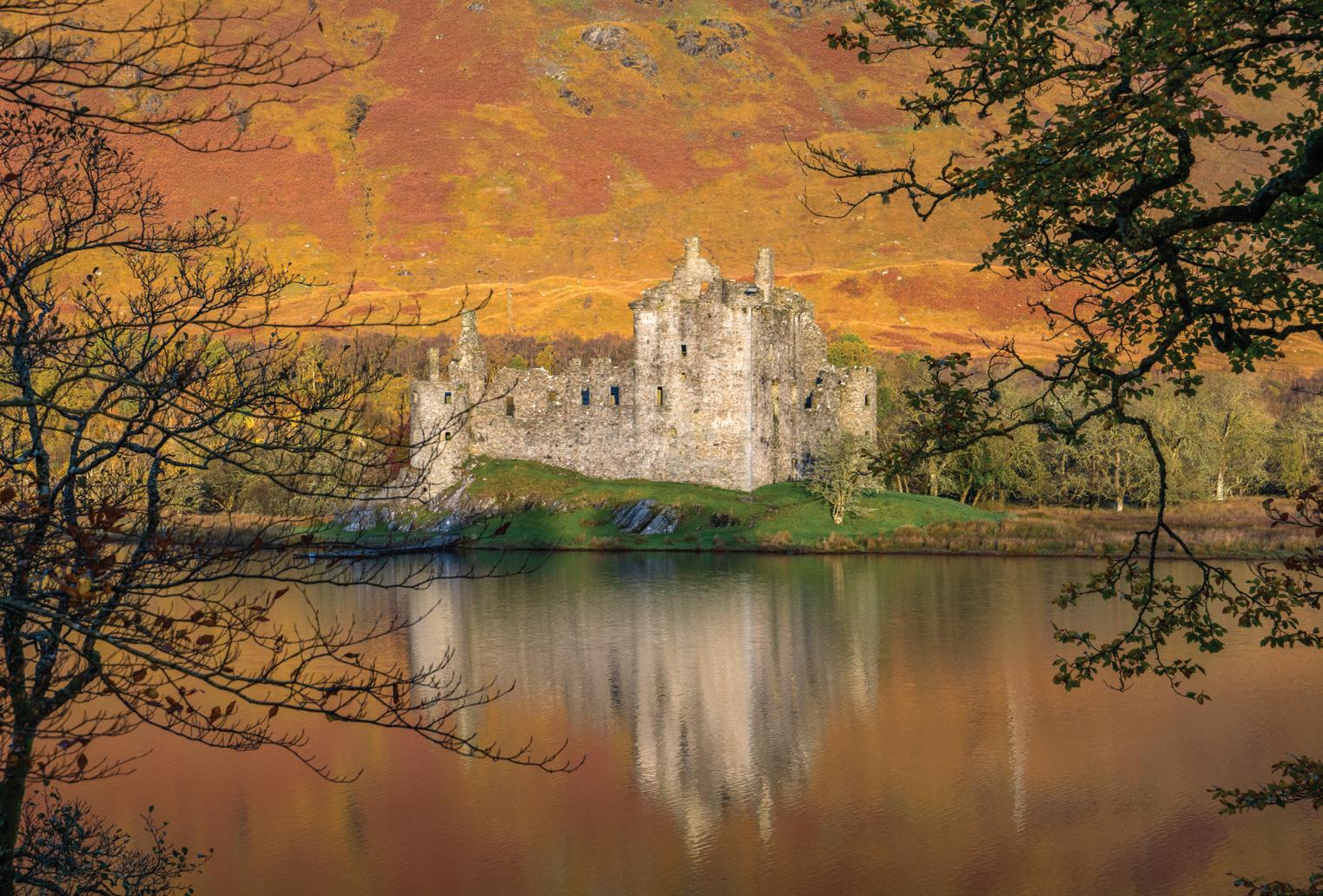
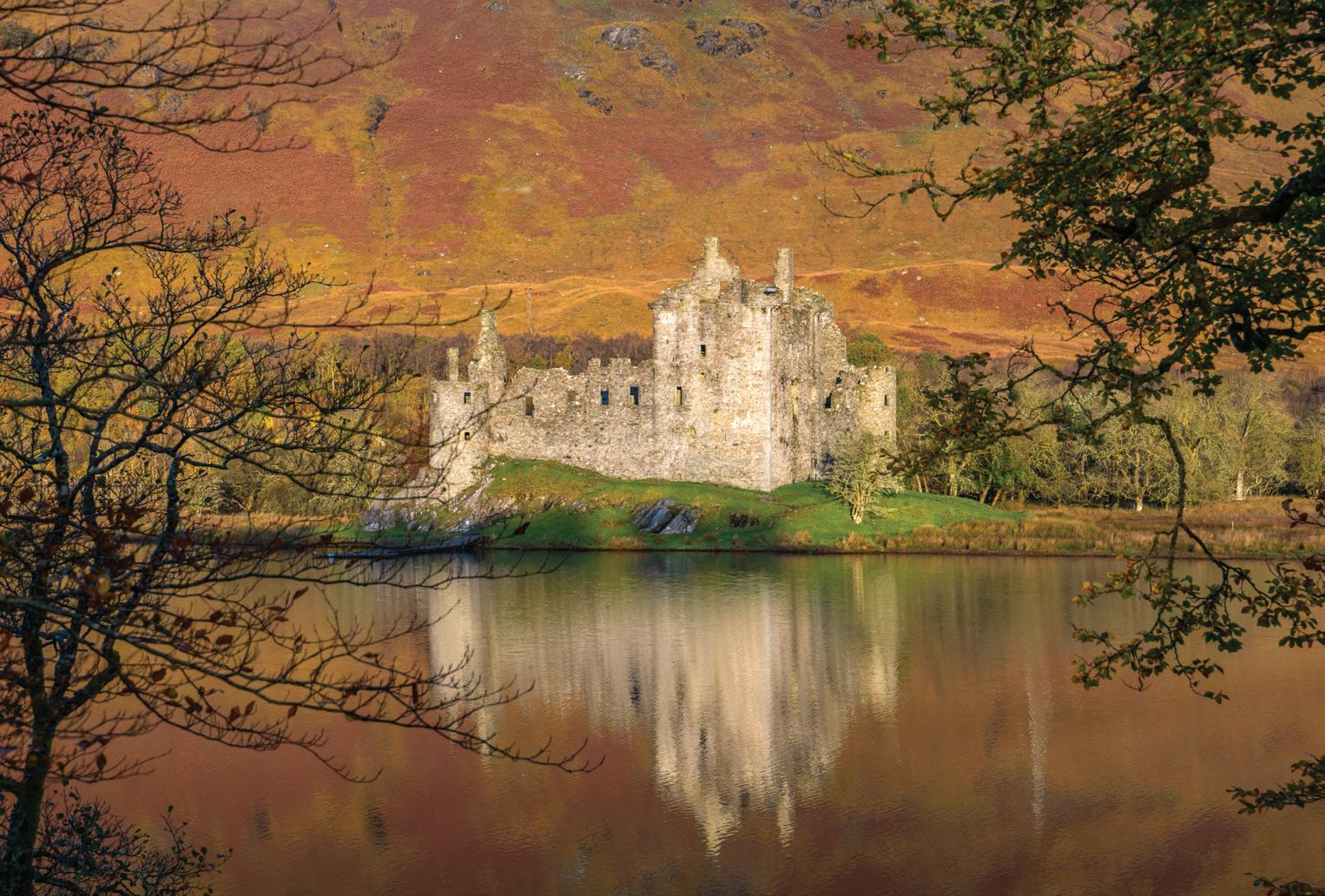
Albert Knapp and Ruth Oratz return to Viewfinder with some extraordinary images of Kilchurn Castle in the Scottish Highlands. In this series of photographs, we see the changing light from subdued tones at dawn, to the light shifting to the mountain in the background, and then to the lake. Moments later, the light shifted again as the sun rose and the light intensifies, lighting the entire scene in blazing colors. Very few photographers have the patience to document the subtle changes lighting brings to a scene. But such patience can bring incredible rewards!
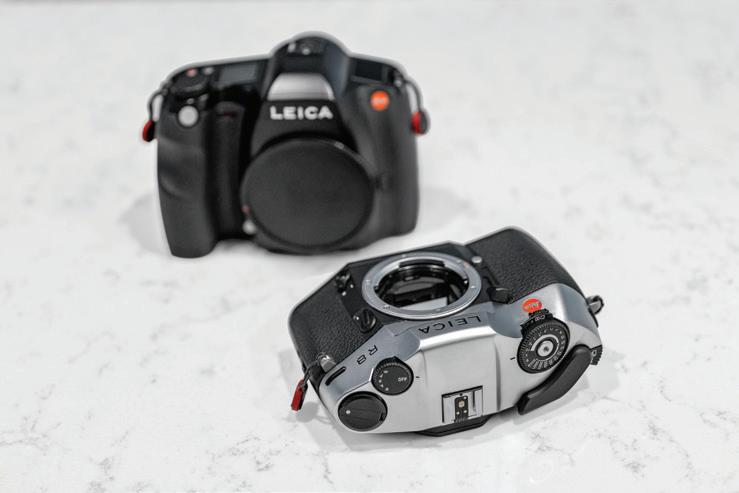
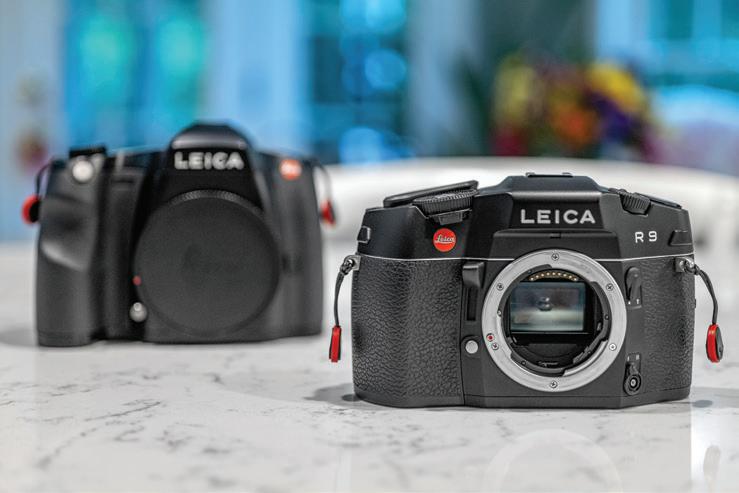
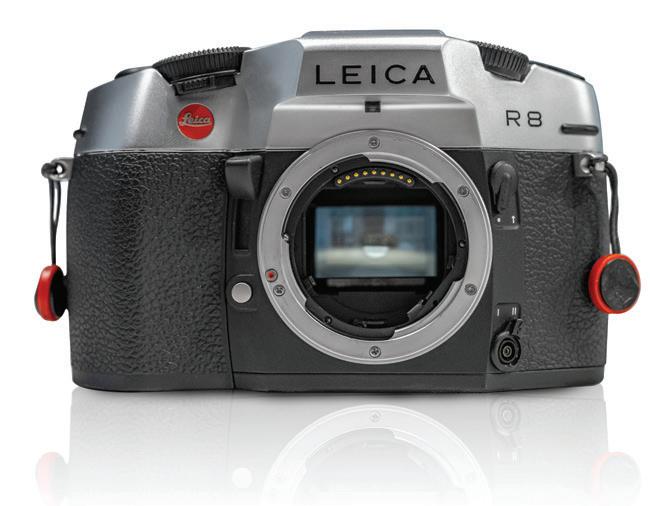
David Knoble traces the evolution of Leica SLR cameras from the R8/R9 to the SL series. The R8 was a complete break with the previous line of R cameras, from the R3 to the R7, the SL and SL2 going all the way back to the original Leicaflex Standard of 1964. I remember attending the Photokina that saw the introduction of the R8 to the world. It was quite an event, as Leica had placed R8 cameras strategically in local camera shop’s display windows. They were wrapped in brown craft paper and twine, leaving everyone to wonder what the new Leica looked like. All was revealed on the first day of the show, and needless to say, it was something very new and different for Leica, that looked nothing like any previous Leica or any other 35mm camera! On the Leica stand, there was an ice sculptor carving a large-scale model of the R8 from a block of ice with a chain saw! That Photokina was also the one where I met
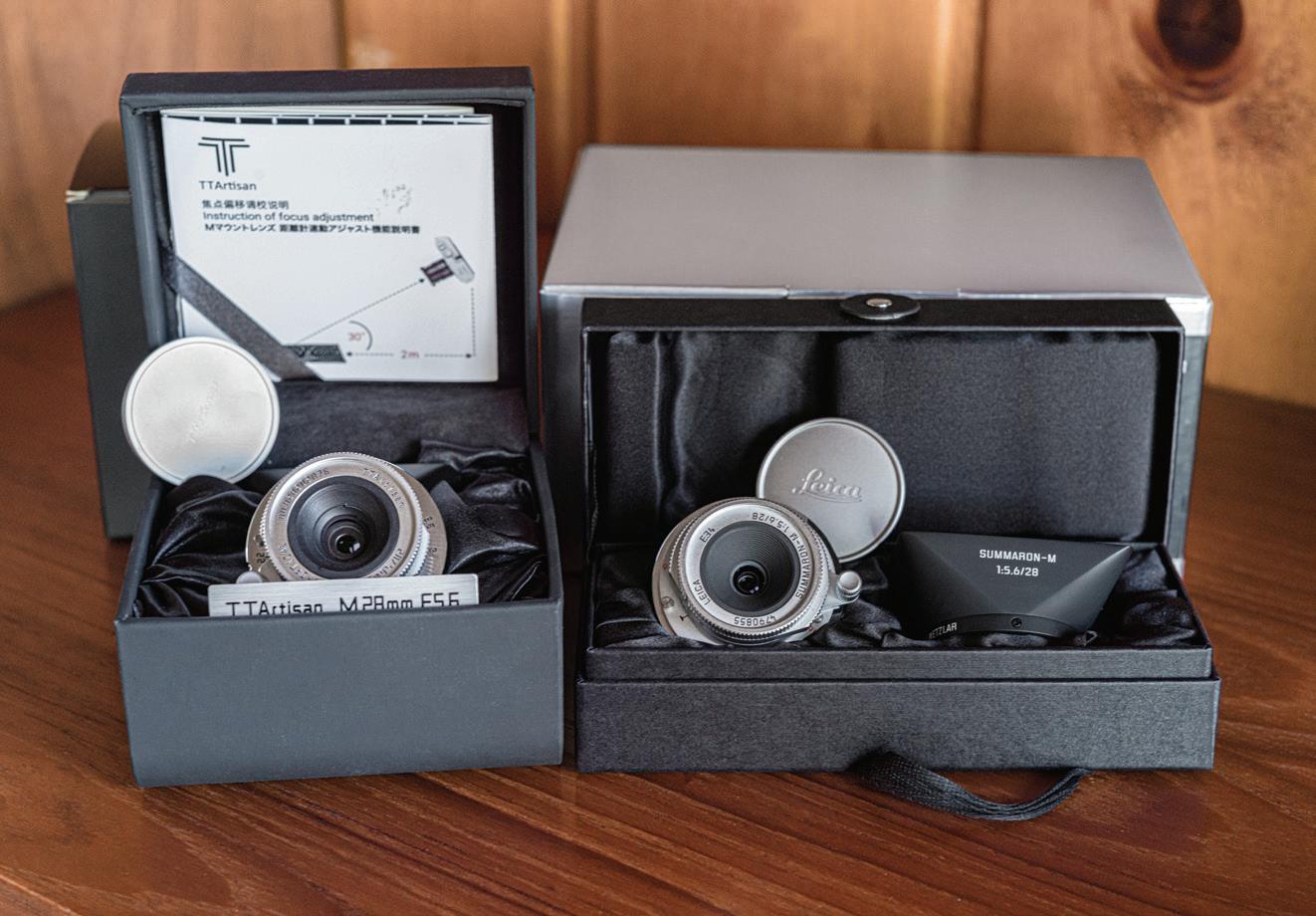
Stefan Daniel for the first time! The R8/R9 may be long gone, but thank goodness for the Leica world Stefan is still around! Marke Gilbert writes for the first time for Viewfinder in this issue with a comparison test of the 28/5.6 TT Artisans lens with the Leica Classics Line 28/5.6 Summaron-M. The TT Artisans lens has been causing quite a stir in the Leica world, and Marke puts them both through their paces in his comparison of the two. I’m sure you will be interested in his report.
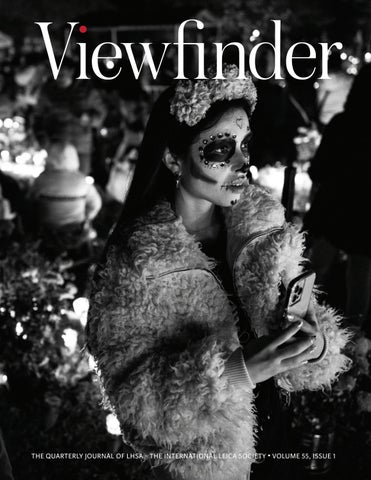
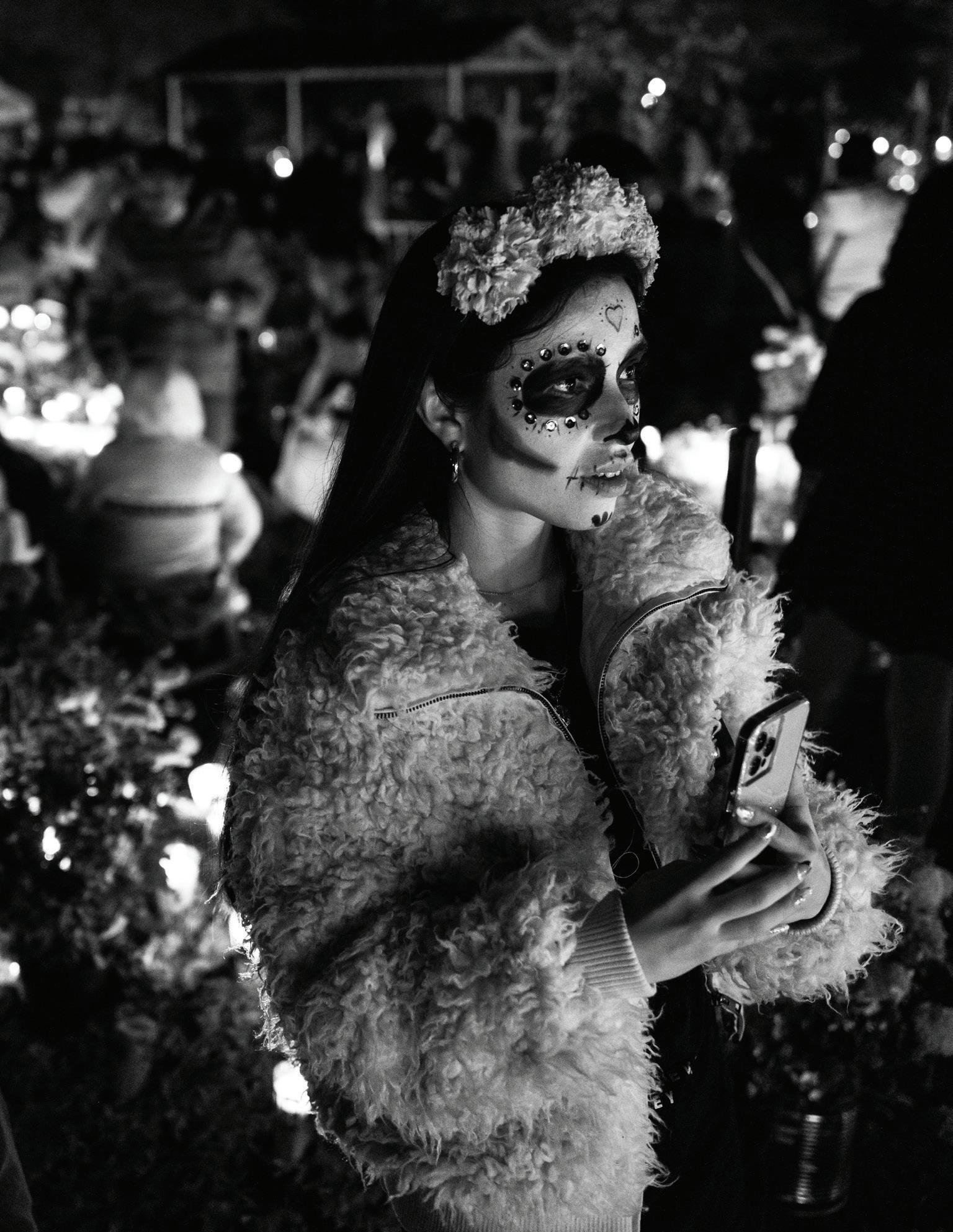
Dennis Berti writes about his recent road trip through Mexico with his Leica Q2M observing the celebration of both Halloween and the Day of the Dead with some amazing images. You may remember Dennis’ first article for us, photographing weddings with an M Leica. As Dennis says, he likes being a bit different, and felt that Black and White images from the Q2M would give him an interesting take on these celebrations. I’m sure you will agree that Dennis’s images are quite something.
President Brad Husick has an interesting article in this issue, Why Photography Is Like Golf. Brad points out the many comparisons between the two pursuits, and I think you will find his observations quite interesting. Jim Lager brings us the story of a very unusual Leica collectible, the Leica Gun (RIFLE), and his adventures photographing it for the cover of his Leica Illustrated Guide II.
Finally, for the first time in Viewfinder, I have images of my tour of the Leica Factory Portugal last November. Tours of the factory are seldom given, but we were fortunate to visit this amazing facility in Vila Nova de Famalicão, about 25 miles north of the city of Porto. Photography is not allowed, but I was given permission to do so by Wetzlar for the pages of Viewfinder. I will be visiting again in October after the Dublin meeting. Please contact me if you are interested in seeing it for yourself!
Bis nächste Zeit - Bill
A Tour of Leica Portugal
by BILL ROSAUER
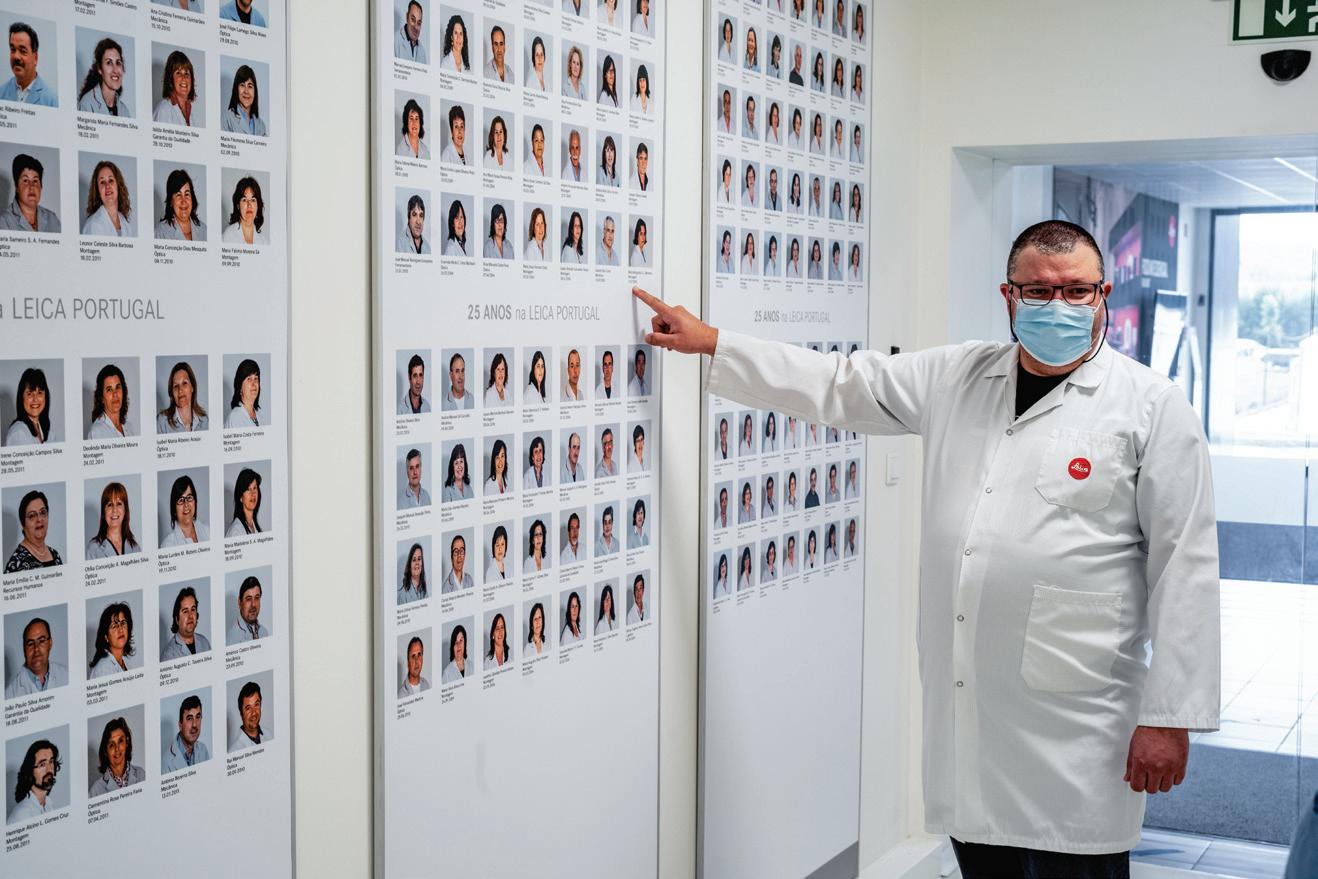
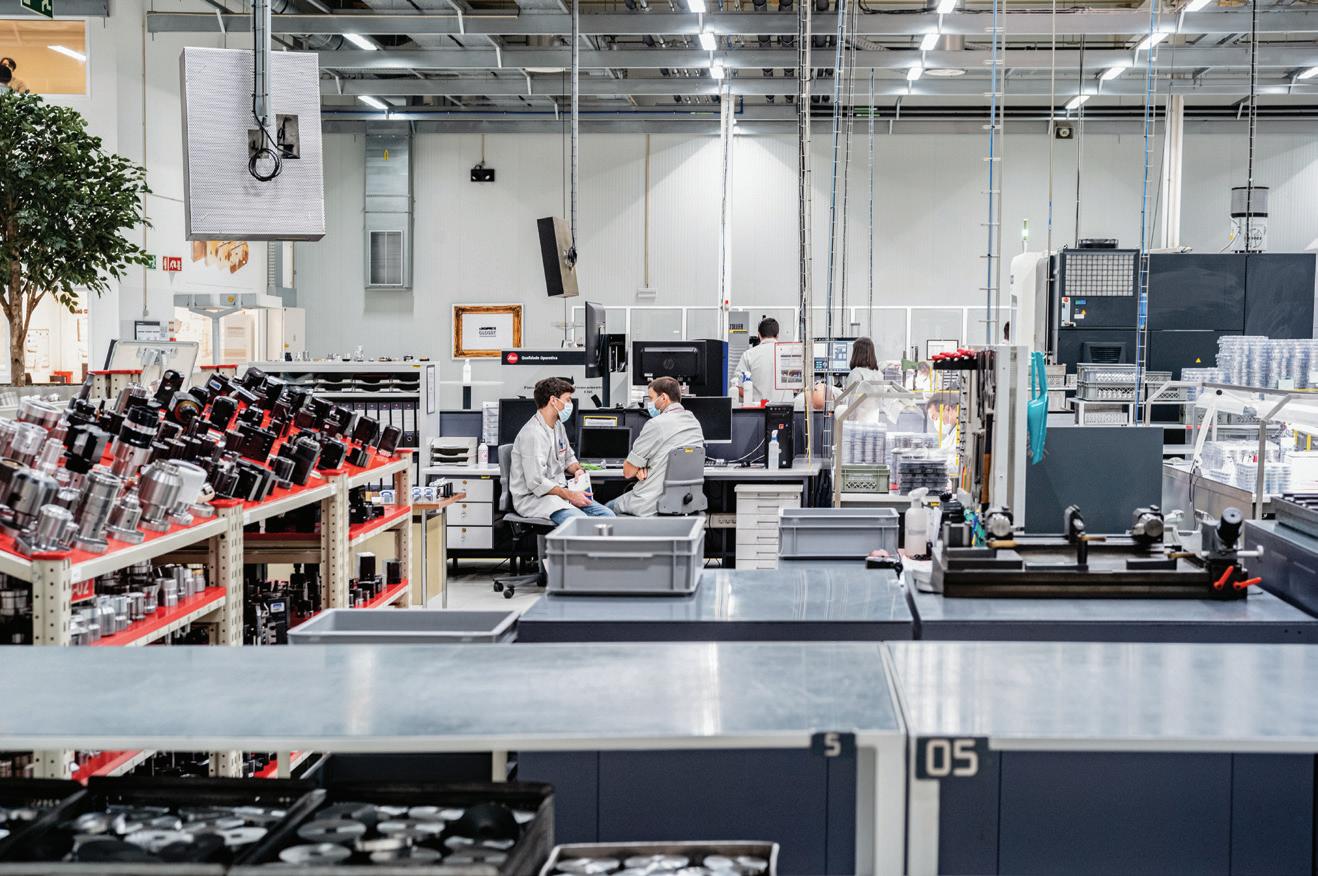
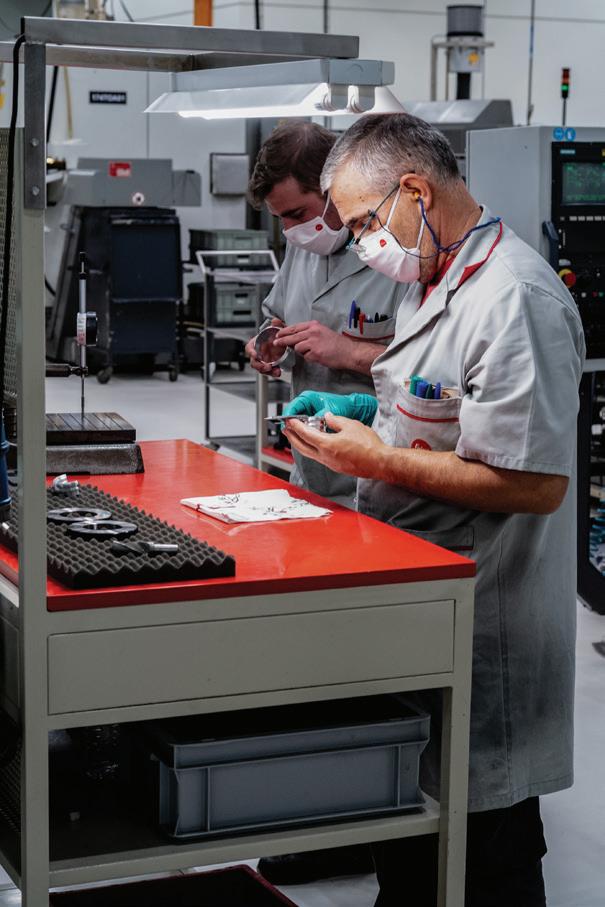
(above) Wall of fame :) on this wall we show all workers that have achieved 25 years working in the factory, some have 40 years of service with Leica. (below) Engineering and master
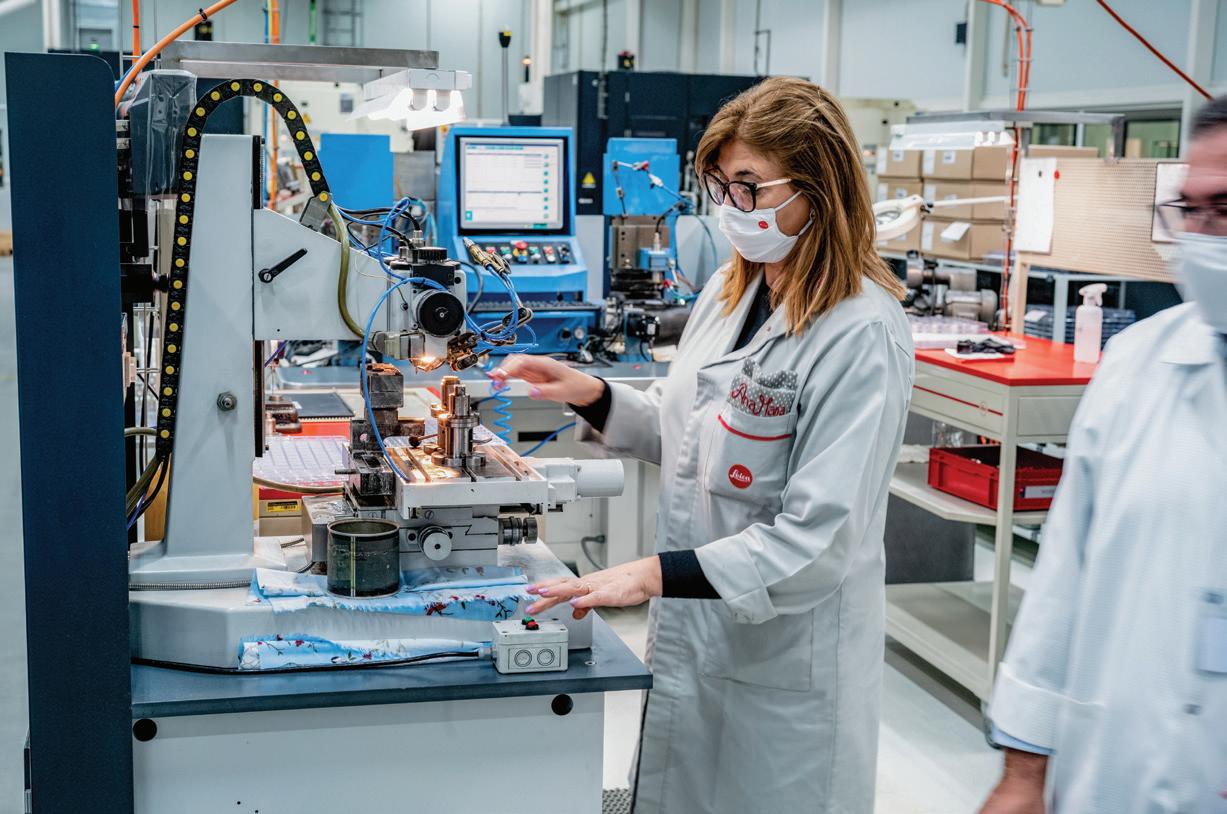
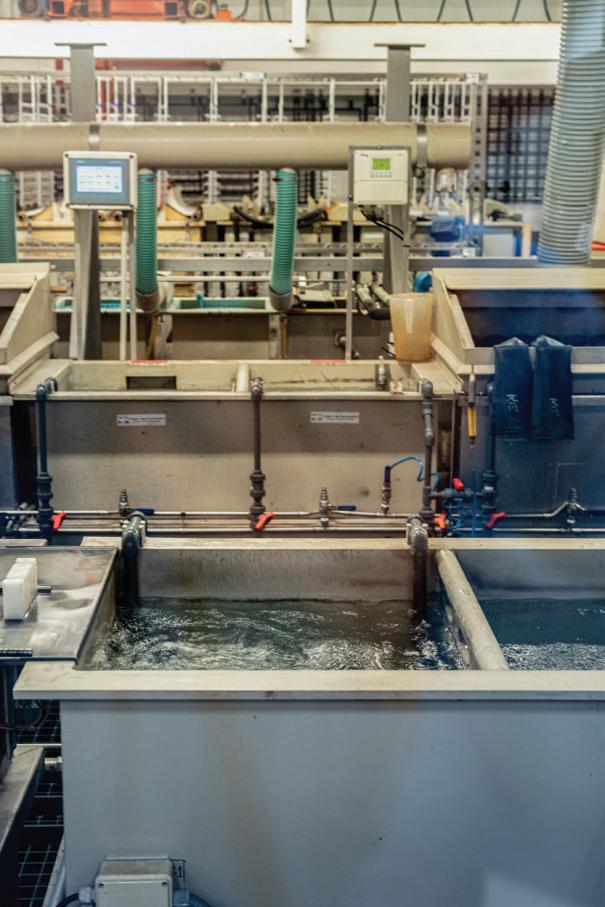
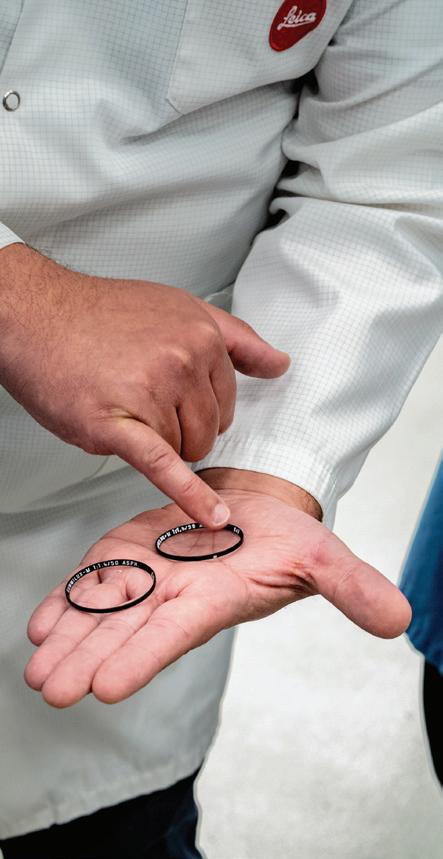
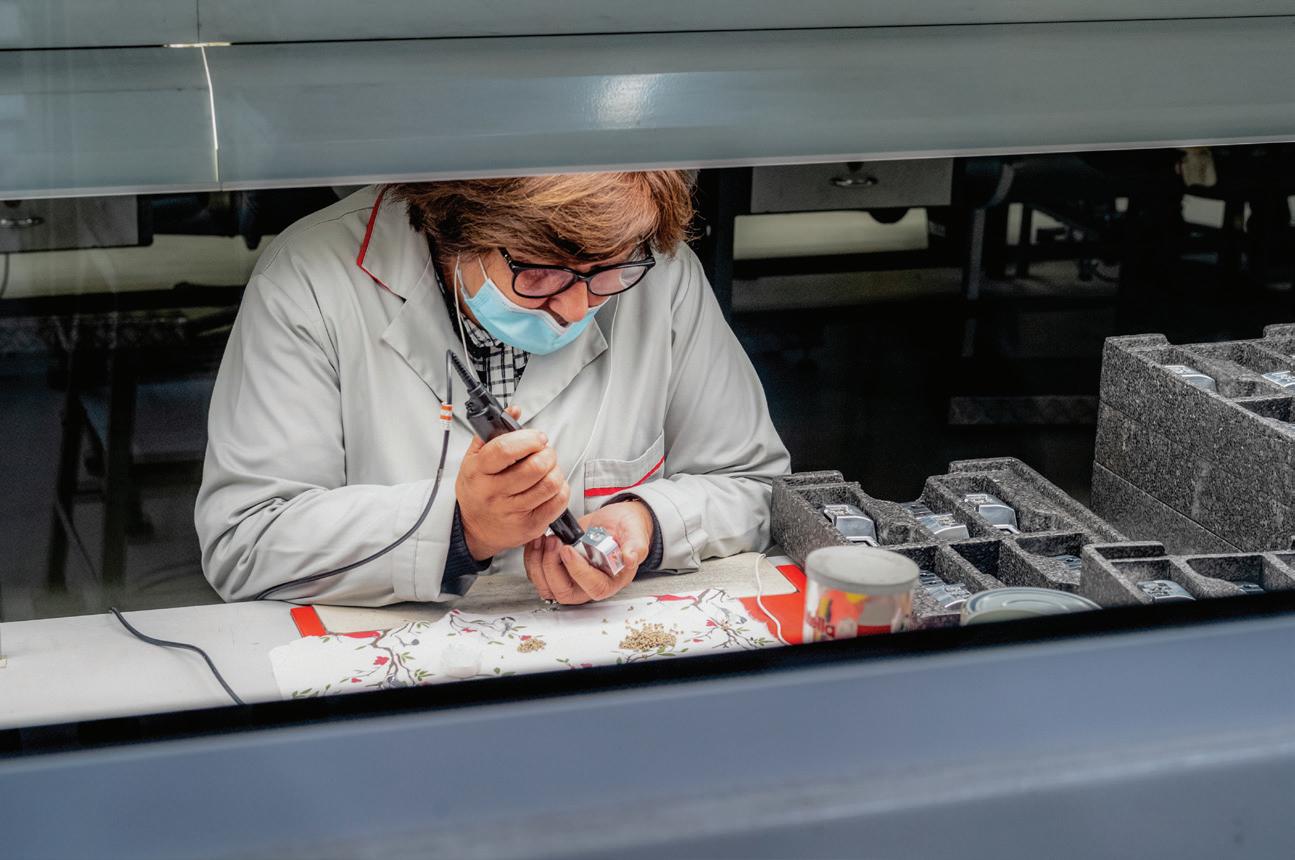
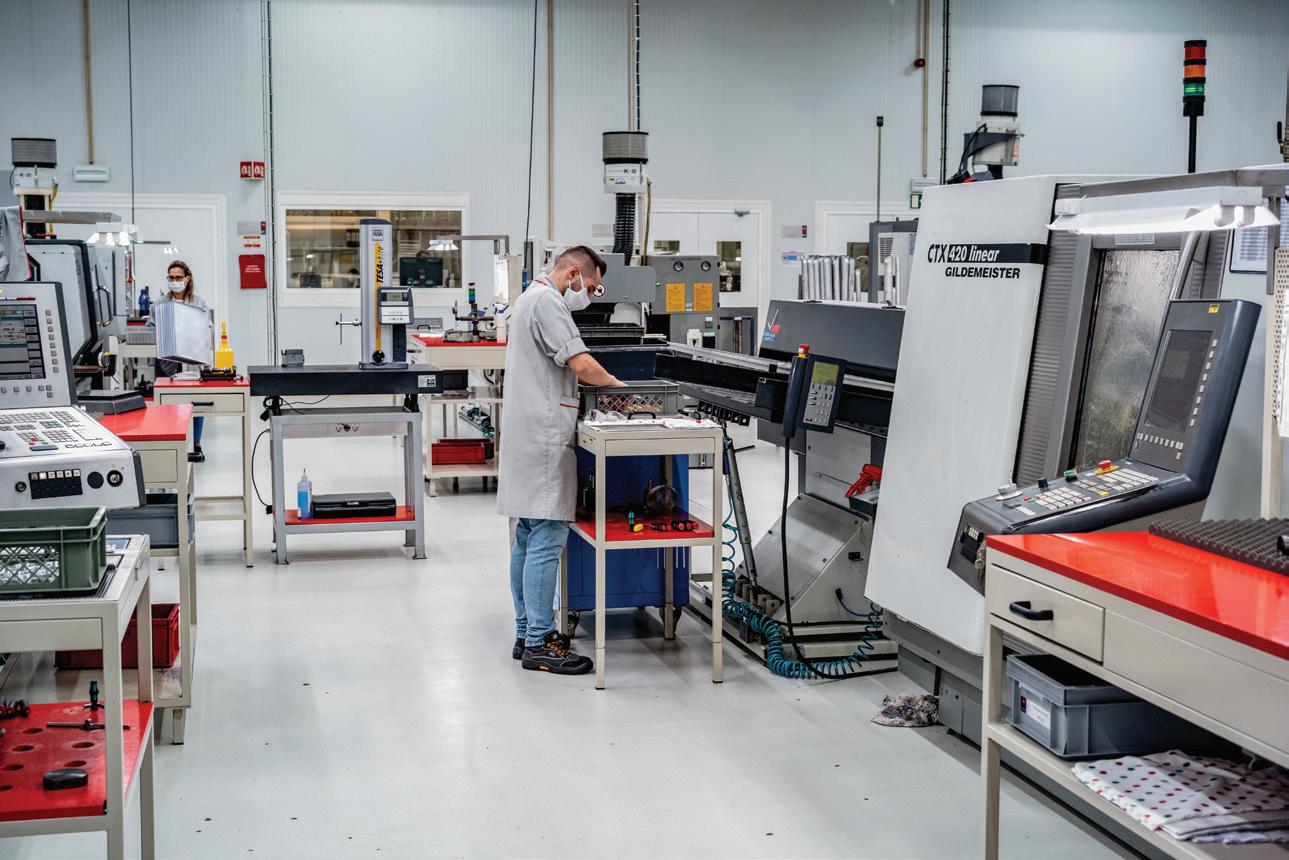
(above) Engraving process of lens components, in this operation, the front bezel (left) Galvanic anodizing process line (right) Part of the quality control process, checking measurements after CNC machining.
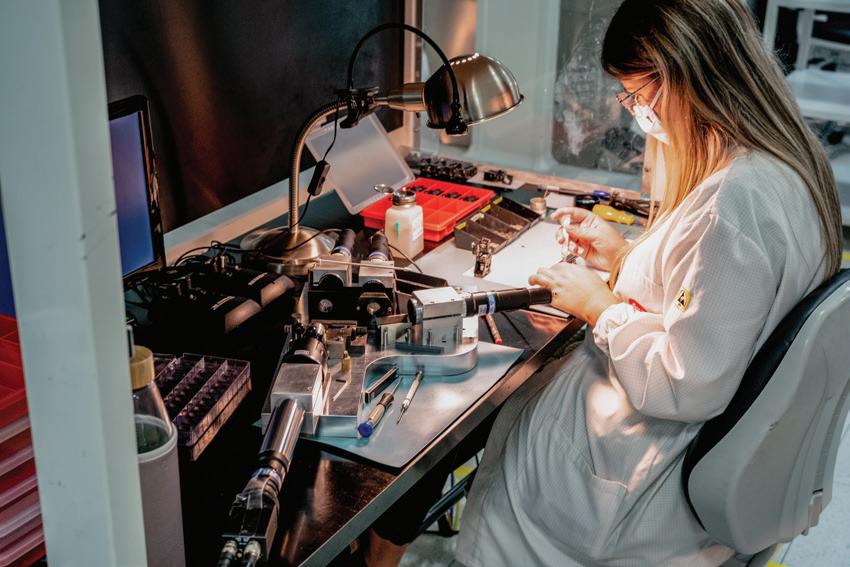
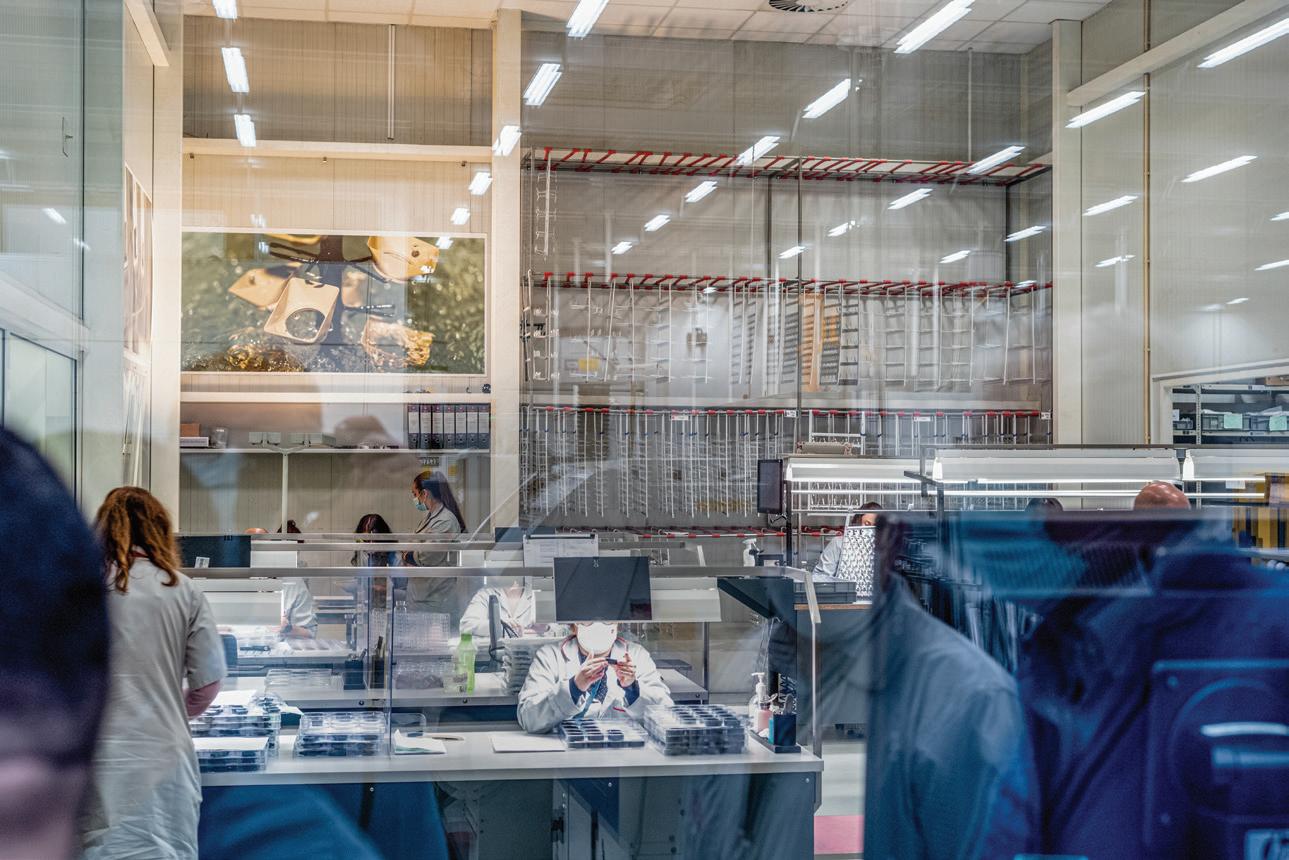
This past November, my group was granted an exclusive opportunity to tour the Leica Portugal factory in Vila Nova de Famalicão, about 25 miles north of the city of Porto, Portugal’s second largest city. Leica’s original factory was built in this same little town in 1973. Forty years later, the new 52,000 m² (about 10 football fields) facility was opened in 2013. It is about 30% larger than the original facility. Many of the approximately 750 employees have been with the company for 30 to 40 years. Our host and guide, Paulo Silveira, was very proud to point out the employee portraits with years of service indicated in one of the factory's hallways.
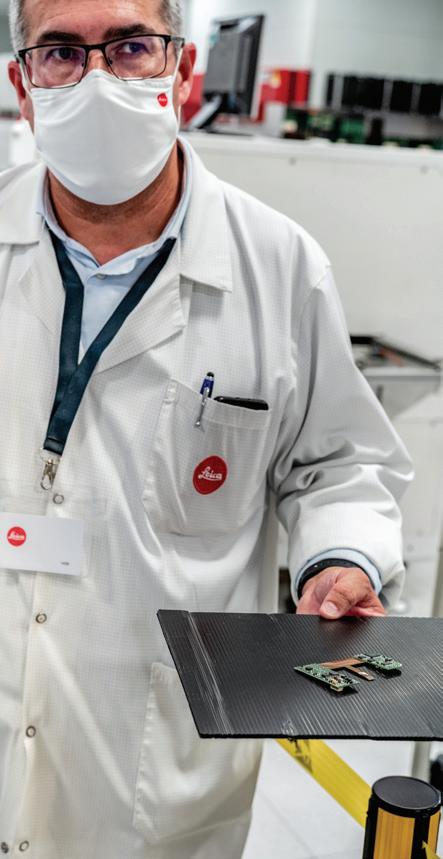
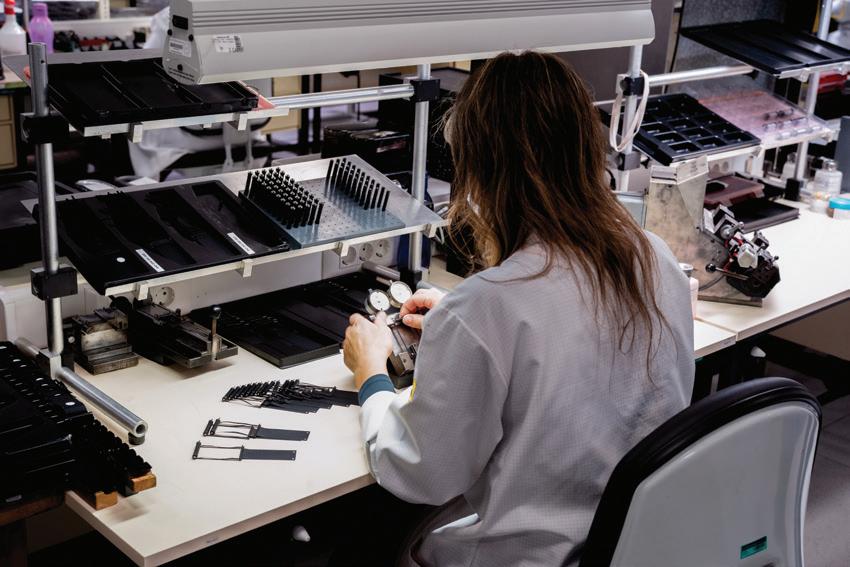
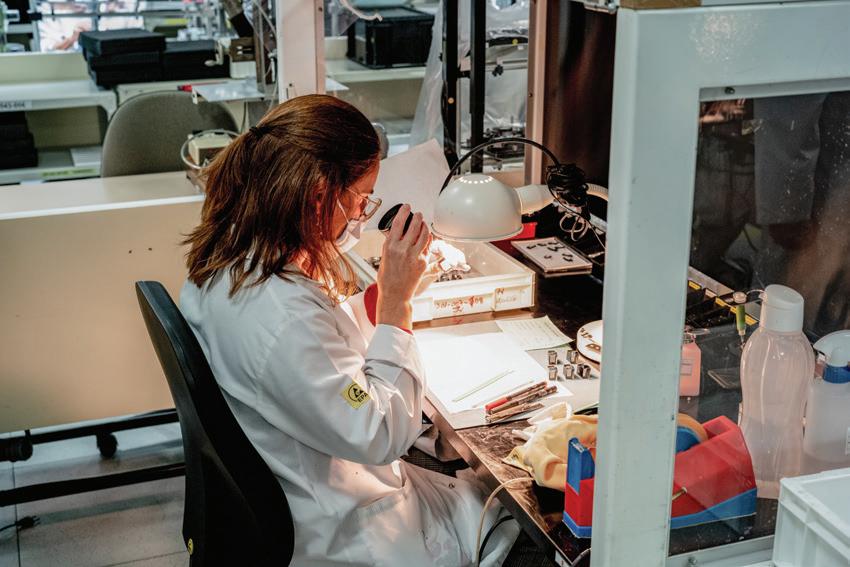
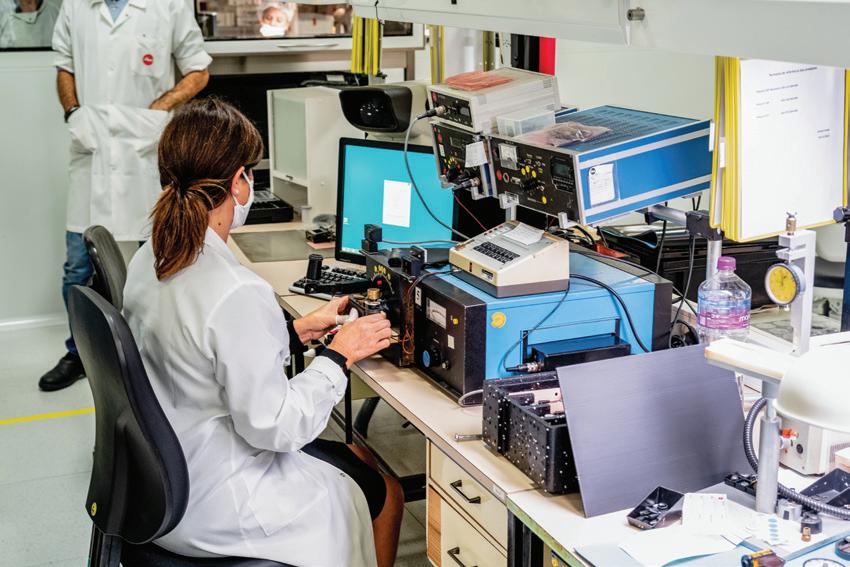
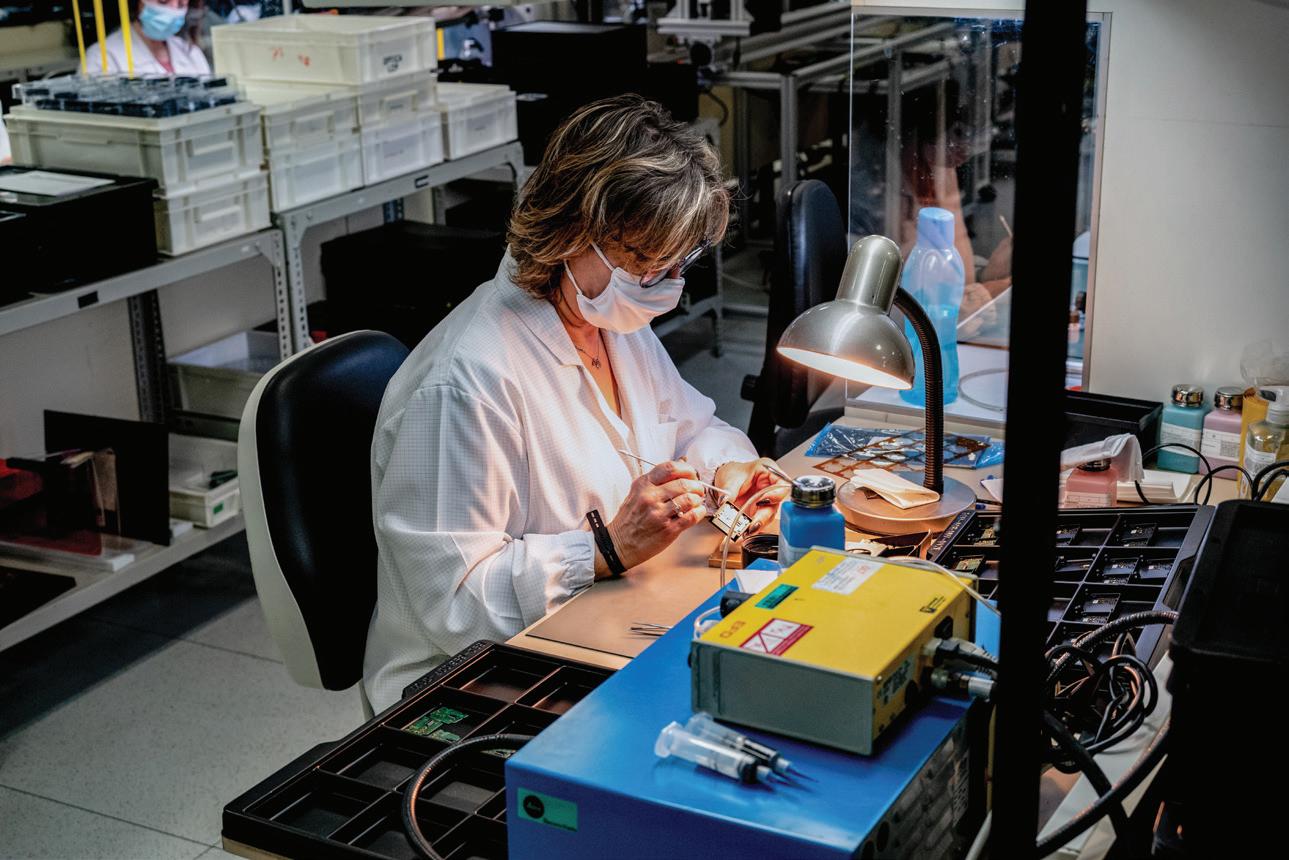
After donning anti-static lab coats and surrendering our cell phones and camera bags, we were brought into the immaculate production areas. I had obtained special dispensation from Wetzlar to take photos during our visit. The Leica factory has to be one of the cleanest facilities I have ever visited. Everything looks well-maintained and virtually brand new. It brought to mind the old saw, “You could literally eat off the floor!” Our visit was just before the Omicron variant surge, and face masks were required of everyone working and visiting the facility. As you can see in the accompanying images, everything in the factory is incredibly neat and well organized. The people working in the factory are highly dedicated and very well trained. You get the sense that everyone here knows their job and knows how to do it well. The majority of the machinery is virtually new and spotless, yet there are many of the older machines required for producing parts for the analog M cameras, such as punch presses and industrial sewing machines for the MP and MA cameras. Some of these machines date back to their original home in Wetzlar, then were moved to the original factory in Portugal and are now still being productive in the new factory in the 21st century! Many of the sub-assemblies for the M and SL2 cameras are assembled here. Lenses and prisms are ground and polished here. Circuit boards for the cameras are made in-house. Plating and the new Paint finishes such as the one on the new M11 camera is applied here. As the official introduction of the M11 was pushed back from the original launch date in November, no mention was made of the new camera, as it “officially” did not yet exist. We were shown some unfinished M top plates prior to applying the new paint finish, but our questions as to what camera these were meant for went unanswered.
One begins to understand the complexity of the M camera when we were shown the assembly process for the rangefinder mechanism itself. Over 140 individual parts go into this complex mechanical marvel, and it is amazing to see the assembly process in real time. Incredible dexterity is required as the rangefinder is assembled and continually tested and calibrated along the way.
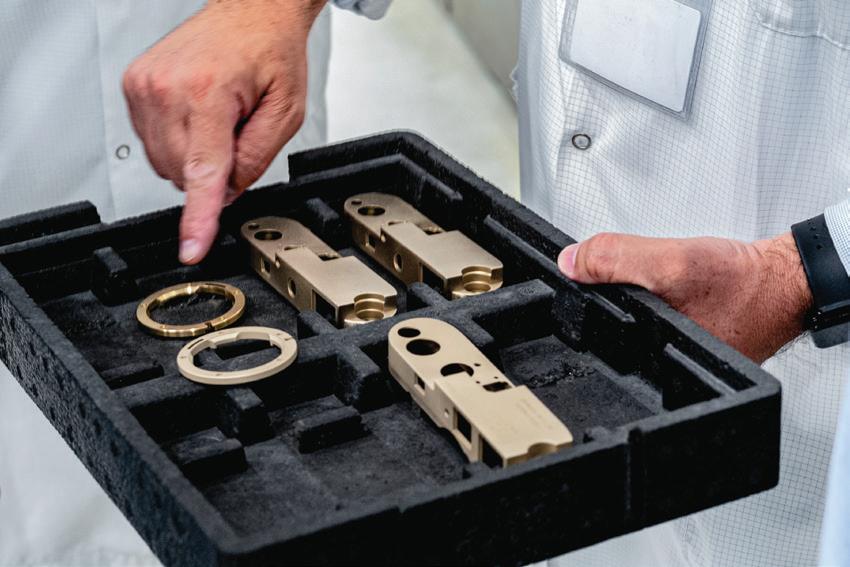
Leica Portugal produces many of the metal components for Leica lenses, such as the lens barrels, lens hoods and focusing helicoids. Many of these components are fabricated from solid billets of light weight alloys. High-tech lathes and milling machines are computer-controlled and monitored by the highly experienced operators. It is an amazing process to witness. Some of these parts are assembled into complete lenses with the made in Portugal label (28/5.6 Summaron, the Black Chrome 50/1.4 Summilux ASPH Classic, the 50/1.4 Summilux ASPH Black and Chrome, the 35/2 Summicron ASPH Black and Chrome, the 28/2.8 Elmarit ASPH and the 50/2 Summicron Black), while lens barrels and other components are shipped to Wetzlar for final assembly. Camera top covers and chassis for the M and S and SL-2 cameras are manufactured and finished here as well. Leica binoculars are manufactured here as well. Leica Camera would not be able to produce the wonderful products they are well known for without the Leica Portugal factory.
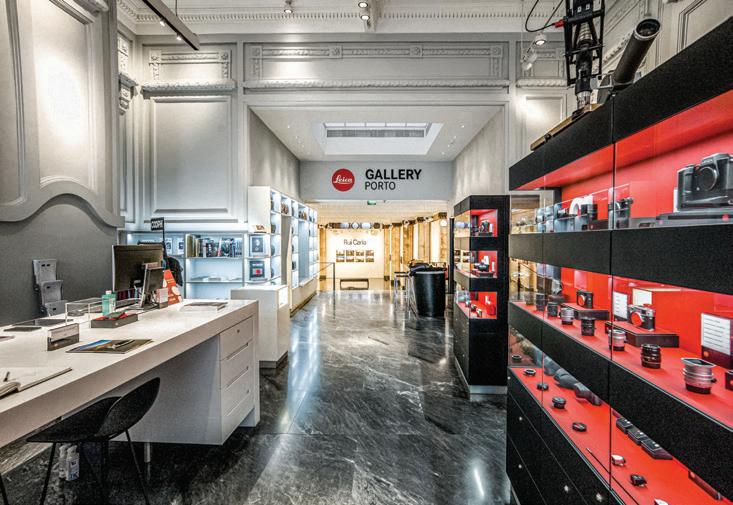
We also had the opportunity to visit the Leica Store in Porto. Portugal’s first Leica Store was opened on December 1, 2016. It is located in the building once occupied by the ornate Excelsior Café in the 1920’s. As an homage to the building’s history and original occupant, the store has a coffee bar named the Excelsior Café. As you can see from the accompanying picture, the 150m² facility is quite impressive. It is managed by our good friend Paulo Silveira, and there is almost a Leica Museum feel to the store, as well as having an impressive stock of new Leica equipment.
If you like what you see here and would like to experience Porto, the Leica Portugal factory and the Porto Leica Store for yourself, please contact me at derleicaman@gmail.com. We are planning another trip to Portugal and Wetzlar this October.
Leica Store Porto
opposite page, clockwise
(top left) Eduardo Sousa shows an electronic circuit board made in the factory in Portugal
(top right) Rangefinder assembly line. There are over 140 pieces alone in the Rangefinder mechanism.
(middle right) M analog shutter curtain assembly line
(bottom right) Rangefinder assembly, checking and inspecting the prisms
(bottom left) Eduardo Sousa shows some engraved lens bezels with the engraved letters and numbers (hand painted) on the bezel
(top) Eduardo Sousa shows a finished brass M11 top cover and the brass raw material shell that the craftsman begins with.
(center) M body parts before and after surface polishing preparation
(bottom) Making shutter speed adjustments on the analog M cameras
(top) Galvanic preparation room, prior to anodizing. Hanger racks for the parts to be finished can be seen in the background. (bottom) Worker preparing SL top cover for anodizing. She is putting plastic screws in order to protect the holes from anodizing, the screws will then be removed after this process. Very meticulous work!
(top) Eletronics parts preparation process (bottom) Worker taking finished machined parts from the CNC machine
Bridge Replacement Story the Middle Stage
by DICK GILCREAST
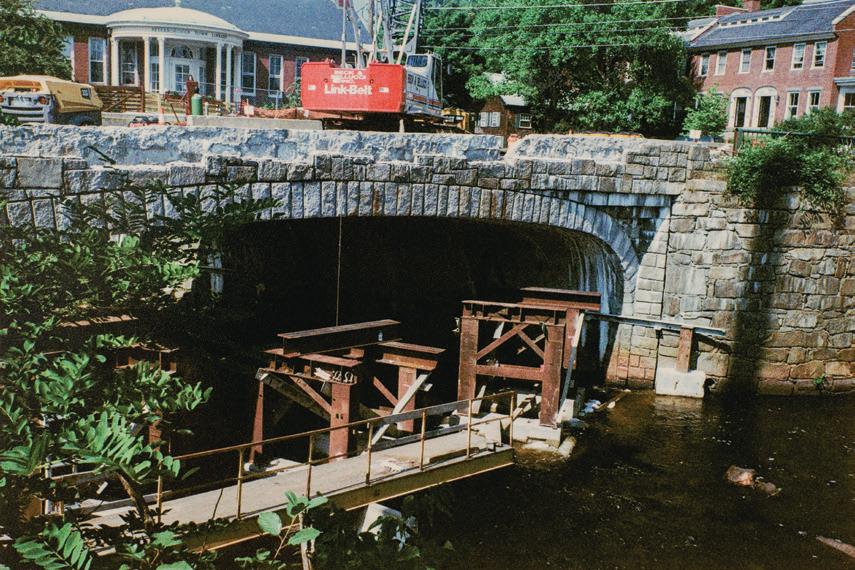
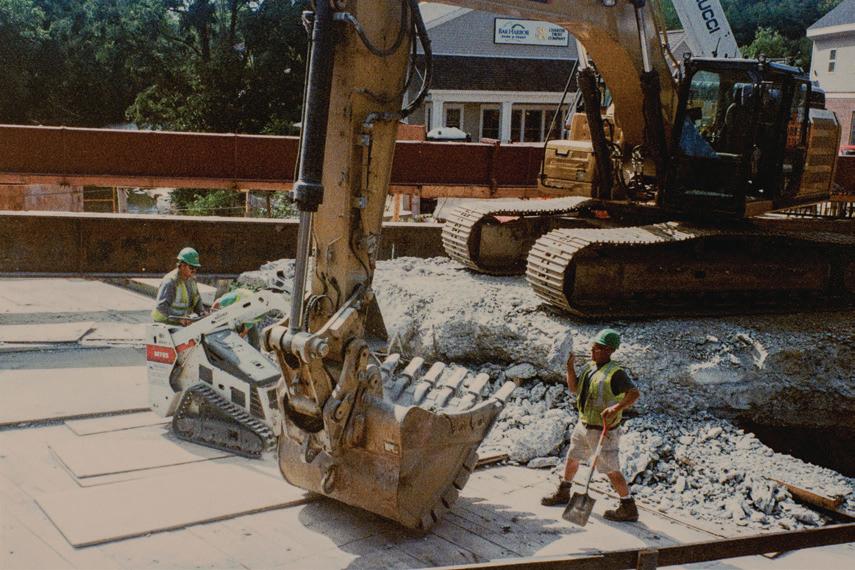
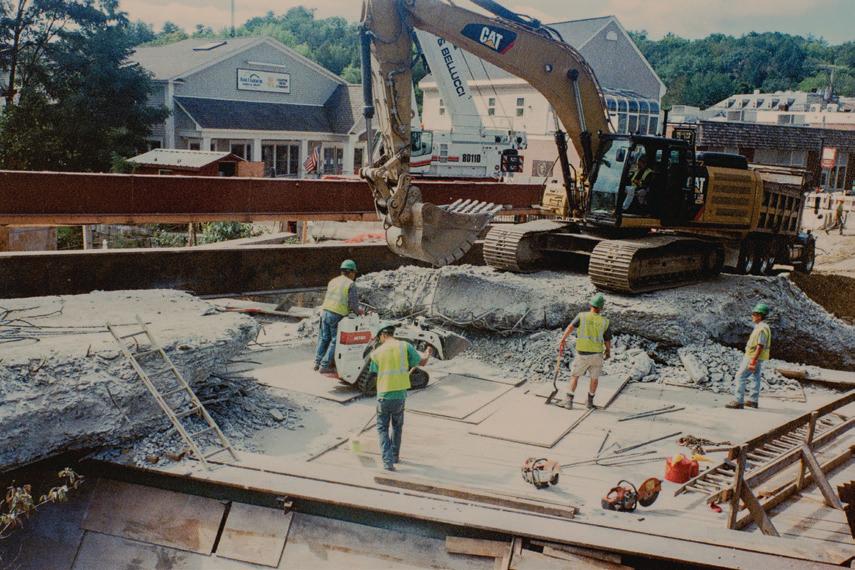
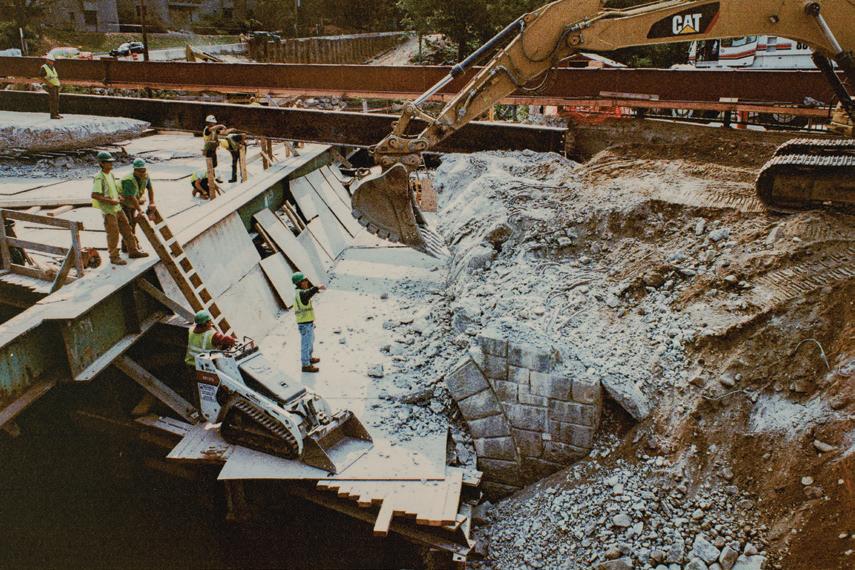
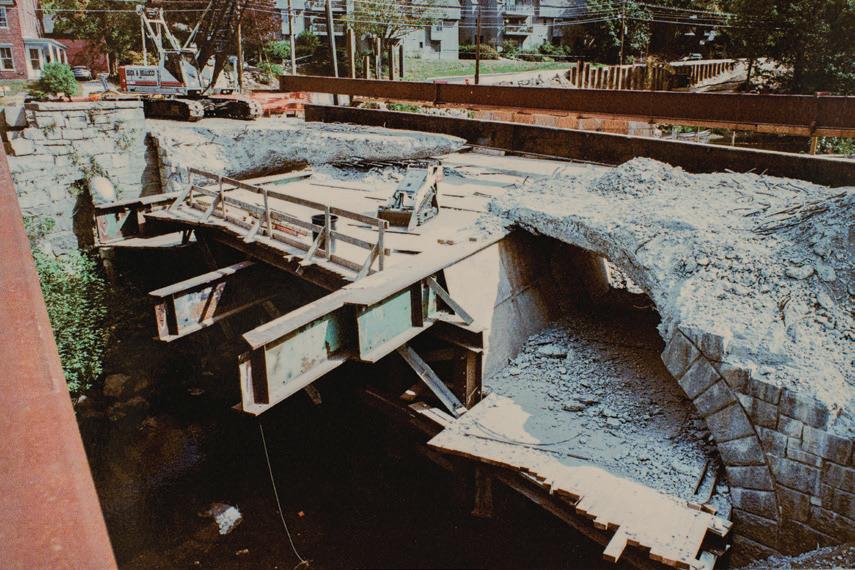
The elderly stone-sided Main Street bridge in Peterborough, New Hampshire, USA is being replaced, the very beginning of the project seen in VF Vol. 53 No.
3. The complete tearing down process shown here took several months. The final rebuilding stage, to take place in the fall & winter of 2021, is just starting as this is being written. The bridge is planned to be ready for traffic early next year, with all detail work finished by April.
These photos were made as the work progressed using the two Leica Illc cameras with 35 and 50mm lenses that reside in my small traveling bag, as described and shown in the previous article. Occasionally I found an Imarect finder useful for better control of maximum width using the 35 on some shots, such as the last one (figure 8 - with the finder frame slightly cropped in to agree better with slightly cropped machine-made prints such as these) where I wanted maximum coverage along with everything being kept straight and level in the frame. But I still prefer the brightline finders for action and general coverage, especially when using glasses. The 50 has good reach for middle-distance action, while the 35 is useful for both its wider angle and greater depth of field.
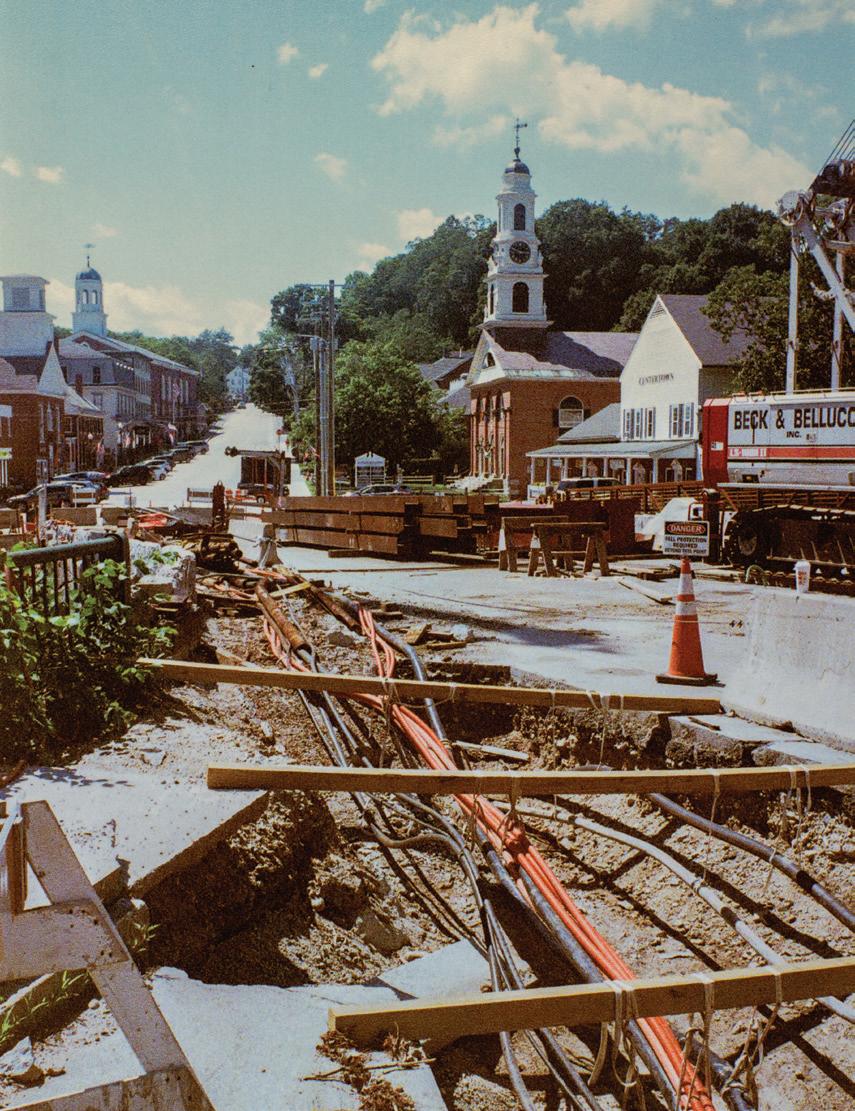
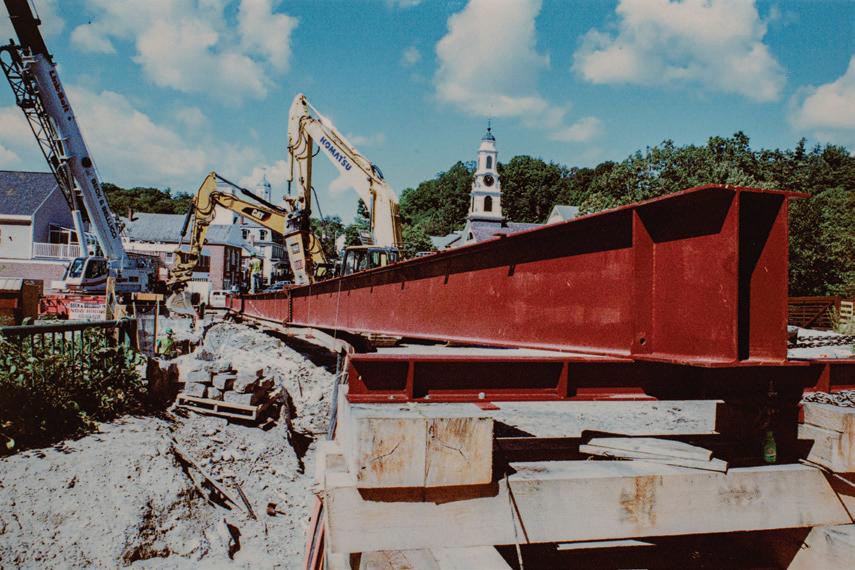
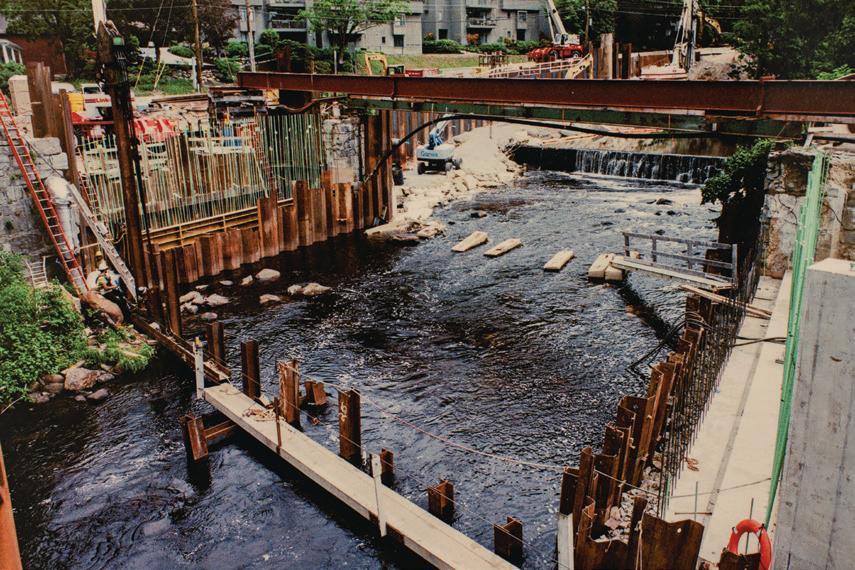
THE PHOTOS First, as shown in figure 1 , by town request the larger top stones in the bridge's siding were removed and stored for replacement in the new bridge. Second (figure 2) the many cables that were channeled under the sidewalk of the bridge ready to be lifted out and attached to a massive red I-beam (figure 3) that spanned the river during the removal of the bridge. Then, after steel staging was placed in the river to support the
machinery, the old concrete structure was broken apart the by jack hammers and shovels mounted on tractors (figures 4, 5, 6) Figure 7 shows the span nearly gone, and the temporary support structure underneath, which also had to be removed before the new construction could begin.
The final figure 8 shows the clear span of river water after the old bridge's complete removal, ready for the rebuilding to begin. Supports of concrete with steel re-bar are in place at both ends, while a new support system in the river is seen just being started. The new bridge will be of concrete poured into a form built over the span of water, and will look very like the old one, but will be wider to accommodate the increased traffic, and much stronger to help carry the increased weight of today's trucks and fire-fighting vehicles.
THE STORY TO COME Rebuilding will require a whole new steel support system built into the river to hold a huge arched mold in place for the new concrete to be poured into, including a complex internal steel re-bar system which the old 1939-1940 bridge did not contain. Then, after the support system in the river is removed, and the new bridge and its end sections paved and side walls completed, the bridge is predicted be open for its first traffic some time after January in the new year.
figure 3
figure
figure
figure 6
figure 7
figure 8
Two Leica Books of the 1930's by Japanese Photographers
by ED SCHWARTZREICH
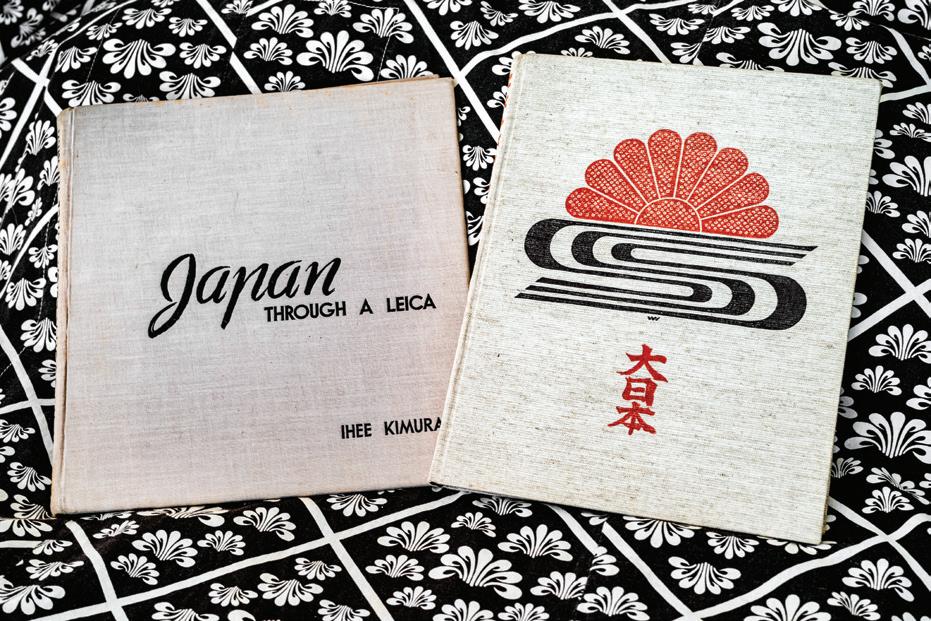
(above) The two books, side by side. Both books, as originally supplied, had dust jackets. Kimura’s book also had a slip case. Natori’s book cover says Dai Nippon in kanji, under an abstract rising sun.
there have been several Viewfinder articles through the years touching on the sizeable popularity of the Leica camera in 1930’s Japan. The Japanese are enamored of photography in general, and in the 1930’s were looking to Germany with admiration and close to obsession for technological and even artistic guidance (i.e. Bauhaus influences), not to mention the military and political / cultural currents.
In the 1930’s, there were as well several trends that pushed photobooks to an ascendancy. In Japan specifically, due to classic home construction, there was a lack of interior walls to hang photographs - one could not readily hang framed images on sliding screens1. Photobooks took their place, and could be stored in closets or chests. In addition, in the 1930’s one saw growth in the publication of books with images of towns, cities, and countries to which one might travel, and, as a subset, the occasional book with photographs of “exotic” locales. The Leica camera was well suited to produce such books, and in the late 1930’s color Leica photographs started to fill such offerings as well. That Leica photobooks were an implicit advertisement for what the Leica camera could do was not to be overlooked either.
At that time, those few books of far-off places had text and photography by European authors who had traveled there with their Leicas. The books under consideration in this article, however, showcase the efforts of two homegrown Japanese Leica pioneers in portraying their homeland to outsiders, and deserve further scrutiny as to their backstory. We will see that there may well have been several motivations at work here: tourist promotion, cultural or political propaganda, artistic promotion, and Leica commercialism.
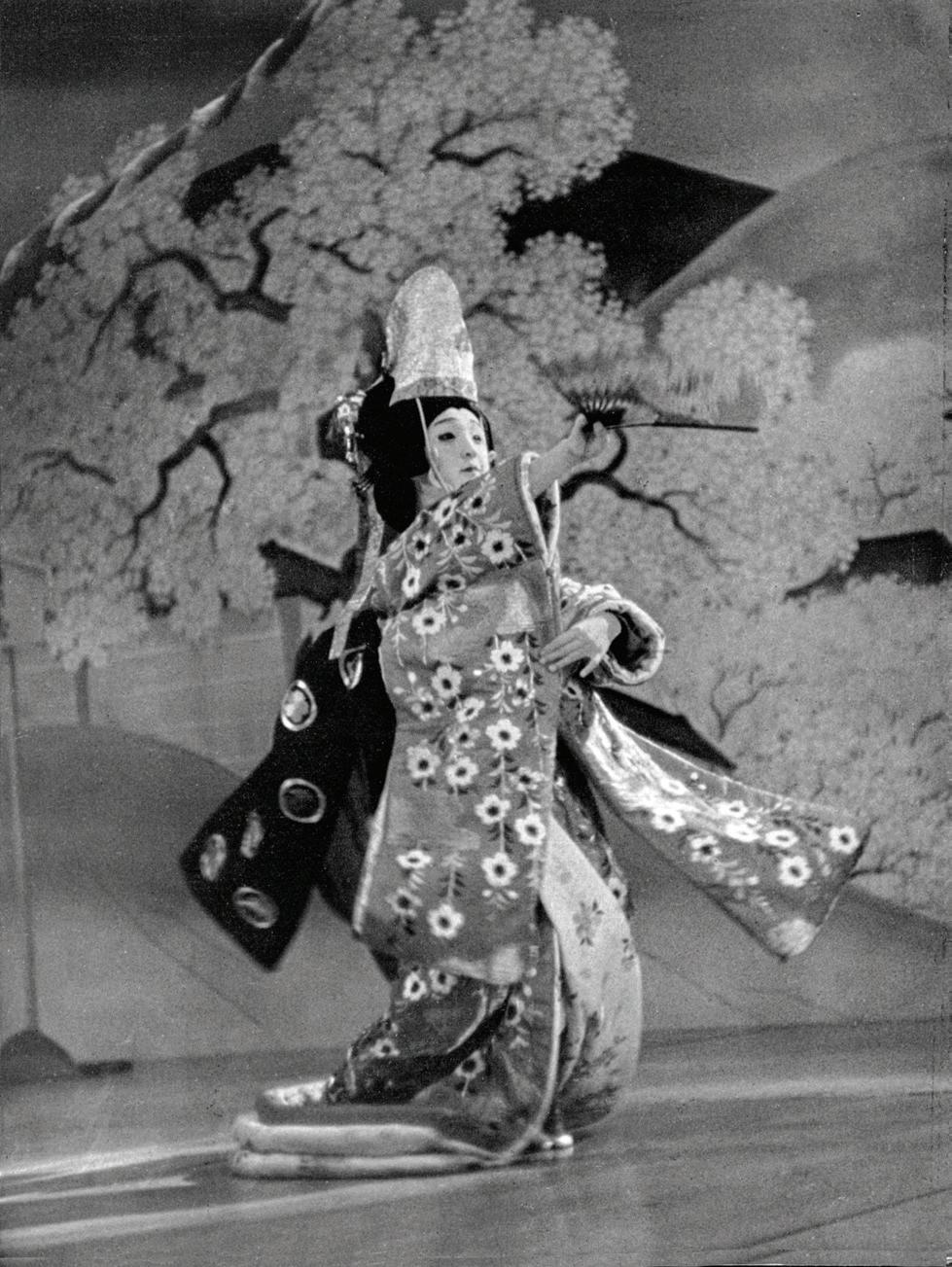
Starting in the early 1930’s, a fairly small grouping of Japanese photographers started using the new Leica camera to take unposed images of Japan for reportage or photobooks. Natori Yonosuke (1910-1962), a Leica photographer since 1931, was quite connected with Germany and had a German spouse; his book “Grosses Japan (Dai Nippon)” was published there by Karl Specht Verlag, Berlin in 1937, with a German text. Kimura Ihei (1901-1974) had not yet visited Europe when his 1938 book “Japan Though a Leica” was published in English by Sanseido, Tokyo, but he had been taking pictures with a Leica since possibly 1930, with a Leica image exhibition as early as 19332 Wikipedia tells us that he had originally joined Natori and others in forming the group Nippon Kōbō ("Japan workshop"), which employed 35mm cameras and their abilities for realism in photography.
The 1930s saw the advent of Japan’s first freelance cameramen, Kimura Ihee, Horino Masao, and Watanabe Yoshio, who sold to newspapers and
did commission work for article illustrations. Also prominent was Natori Yonosuke, who when he returned from Germany, in 1932, was more of an editor than a photojournalist, although he did directly employ the photographer Dômon Ken. Post-1945, illustrated journalism and illustrated books were indebted to Natori, whose work was the prewar and wartime precursor of what after 1945 became a specific form of Japanese mass-image merchandising: one between art photography and photojournalism3
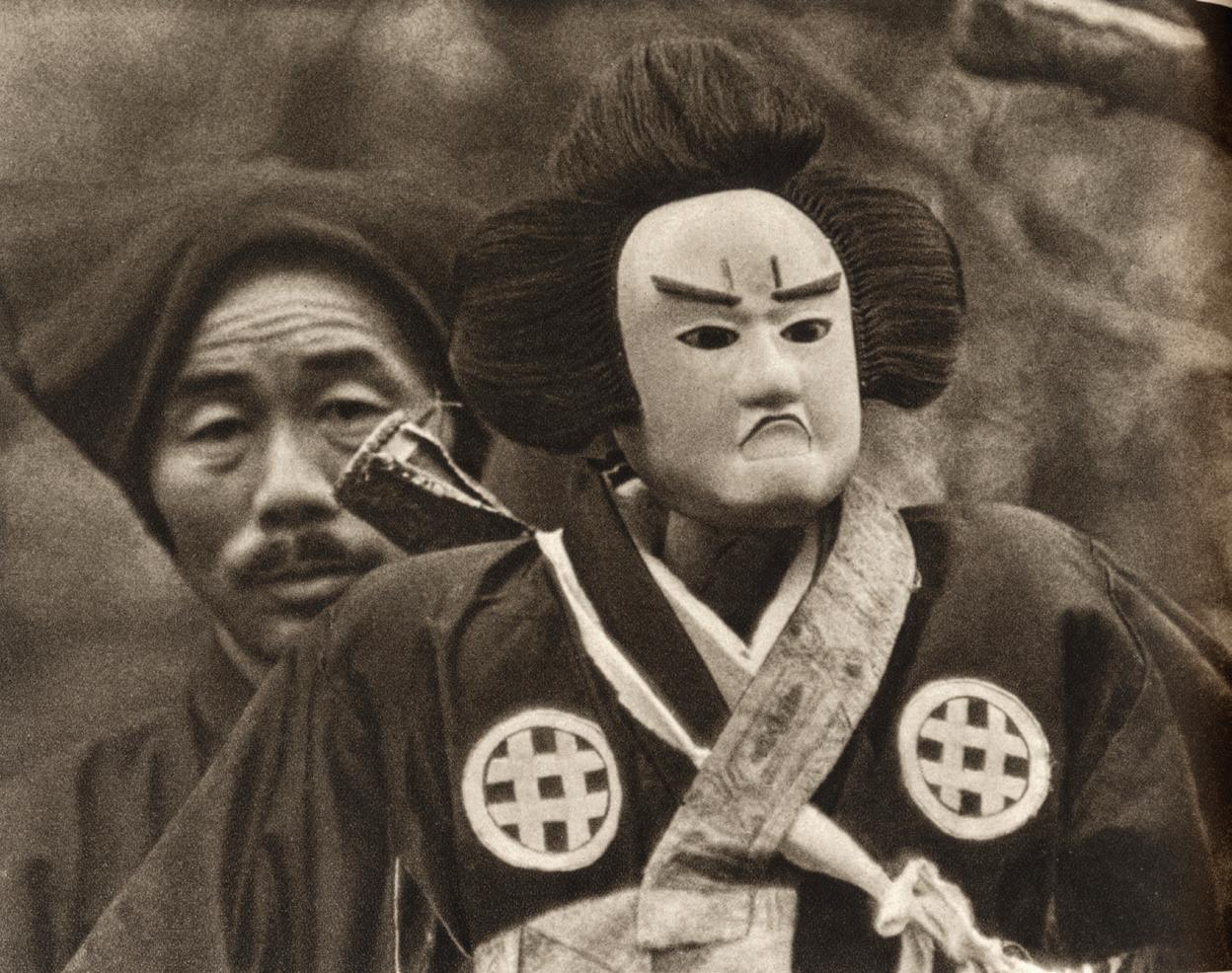
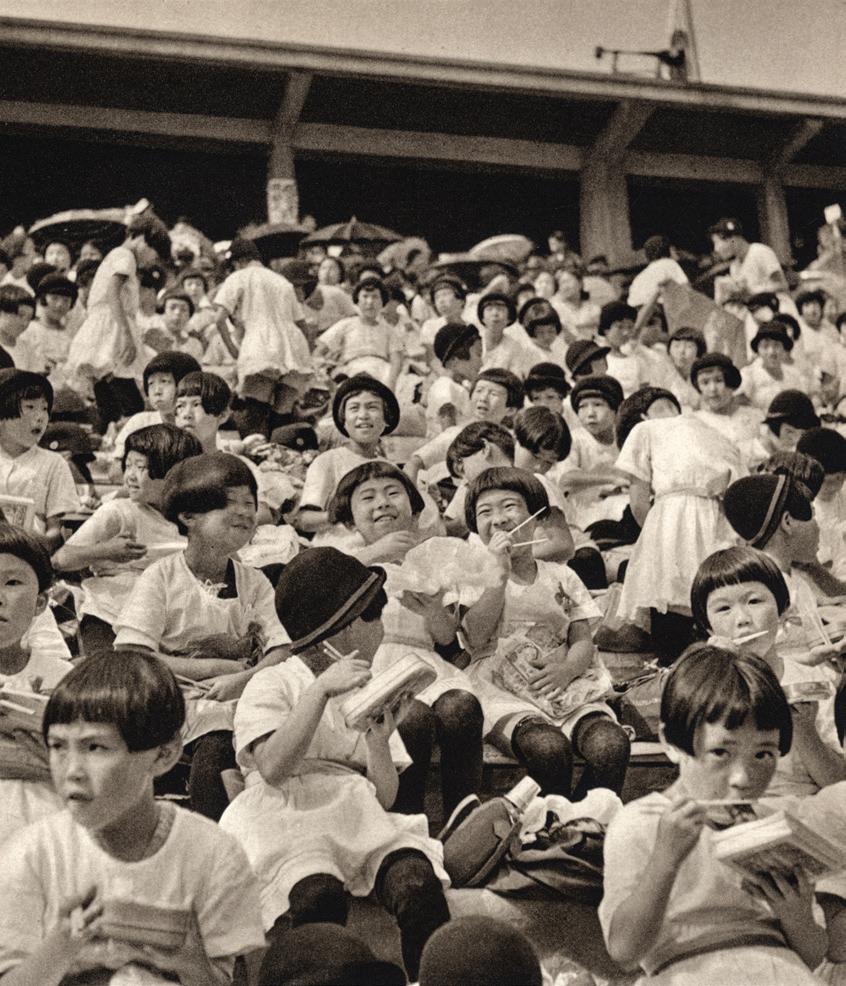
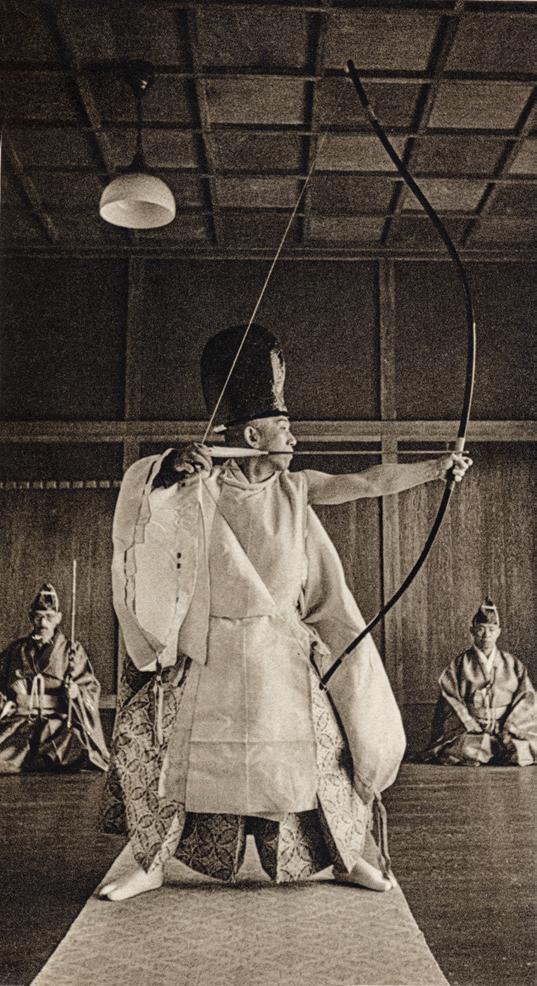
Natori’s and Kimura’s images in their books here are broadly similar, covering various aspects of contemporary Japanese culture, both traditional and modern. To the author’s eye, Kimura shows more people, closer up, than does Natori, and the latter has more ‘militaristic’ images; one cannot present here more than a few images from the books themselves, so that comparing and contrasting is best accomplished from the actual books. The author has chosen three images from each book.
The main differences between the books appear to be their intended audiences and what the books’ sponsors hoped to evoke. Natori’s book has a chosen title emphasized in a foreword by Count Mushakoji Kintomo, the Japanese Imperial Ambassador to Germany, which portends its flavor: “Greater Japan” -think analogously Großdeutschland / Anschluss . The text is in German, translated by the author.
“Dai Nippon” is our usual constitutional name for our country and means something like “Greater Japan”. One is used to speaking of Nippon abroad without realizing that this word is an abbreviation. To say something worth knowing about our homeland … is the task of all of us, and I am pleased to be able to recommend the present pictures of Japan "Dai Nippon" to the public as I warmly welcome everything one can contribute that leads to an understanding between Japan and Germany. Relations between the two great nations can only succeed if one is made known to the other, because only knowledge of the other country forms the basis for a sincere and cordial friendship. Our compatriot, Mr. Natori, has studied many years in Germany, and, with his deep understanding of German nature, seems to me to be particularly suited to highlighting everything that interests Germany in his photographs: the images shown here, depicting the landscape, the culture, the modern social development and the life of the today's Japanese people show a very fond view of our home in its diversity. A certain difficulty in understanding today's Japan, which seeks a way between the desire to preserve the ancient culture and yet to unite it with the requirements of modern life, cannot be overlooked; but Germany in particular, where special attention is paid to its own culture as the most valuable asset of the people, has the greatest possible understanding for this Japanese attitude. Dr. F. Rumpf, the outstanding and widely respected expert on East Asian history and culture, has collaborated by writing a very interesting introduction to this book, which will be of general interest to readers…
1 Leo Rubinfien, “My Eyes are Infamously Greedy”, NY Review of Books Volume LXVIII, No. 2; Feb. 11, 2021
2 Heiting, Manfred et al. “The Japanese Photobook 1912-1990”, Steidl, Gottingen, 2017
3 From TransAsian Photographic Review TAP Volume 7, Issue 1: Self and Nation, Fall 2016
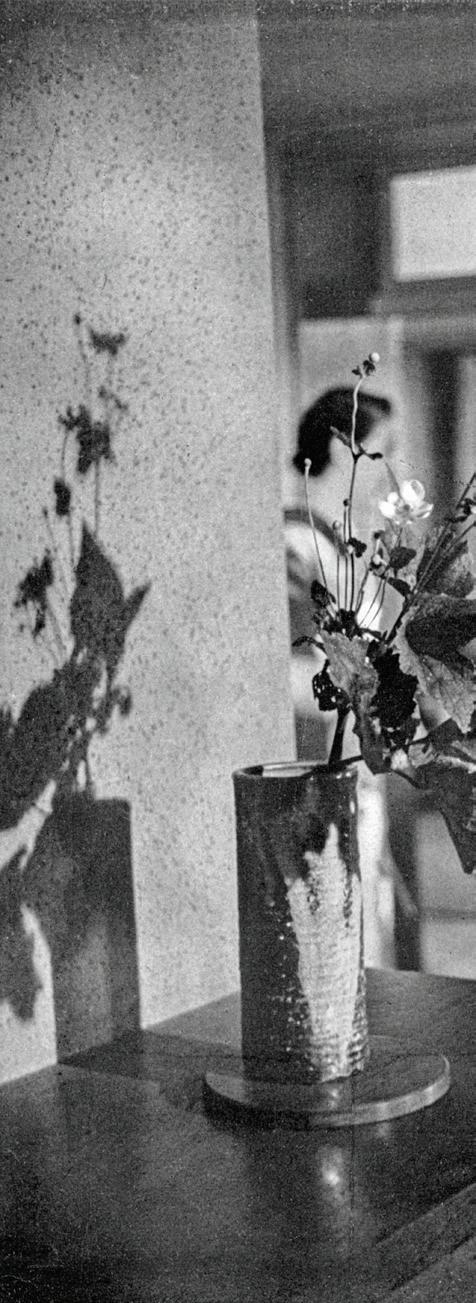
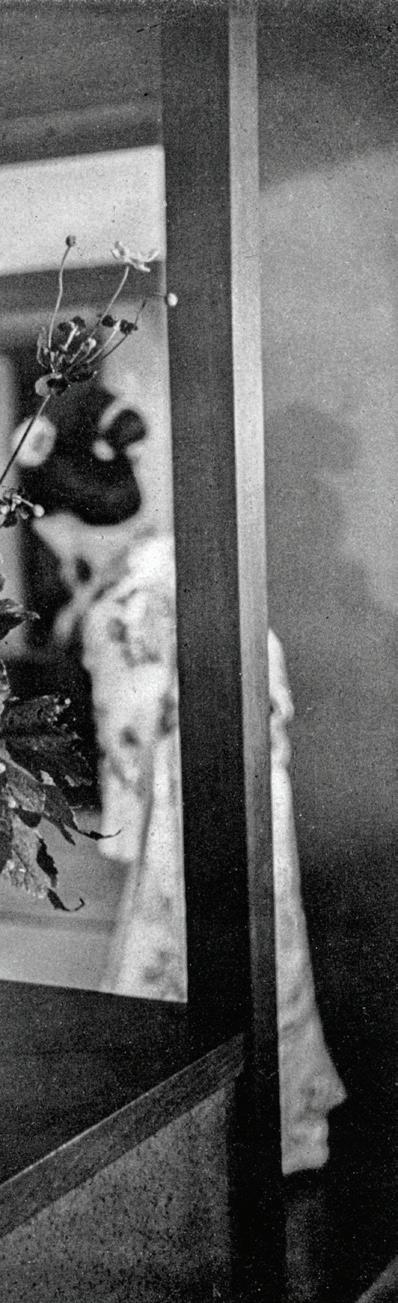
(left) Kimura - Primary Schoolgirls, 1937. Kimura mentions the increased education for girls which was taking place. Hektor 13.5cm/4.5, wide open. (center) Kimura - Flower Arrangement, 1937. An art which dates from the 14th Century. Hektor 7.3cm/1.9, wide open. (right) Kimura - Kabuki Dancer, 1937. Xenon 5cm/1.5, wide open.
The book’s lengthy introduction is by Dr. Fritz Rumpf, about whom the author could find very little. Ulf Richter, who also has an interest in these books, managed to find on-line biographical information, and kindly shared it with the author. Dr. Rumpf (1888-1949) was an illustrator and published art historian with a knowledge of Japanese language and culture from both friendly (art studies in Japan) and unfriendly (he had been a Japanese POW in WWI following the siege of Tsingtao) sources. He was a politically useful scholar in the era of this book because of his deep ethnological knowledge and his linguistic skills. Rumpf writes here about Japan’s emergent nationalism from several vantagepoints - culture, religion, language, history. He is clearly trying to make Japan seem less alien and more like Germany, and to "sell" Japanese culture to the Germans; one readily grasps how this all then dovetails with the Nazi zeitgeist. The passages below, as an example, touch on how Japan had to overcome its prior isolation, send its youth to other countries to learn, and then become the rising power that defeated China, and then in 1905 Russia. Only then was Japan respected in the rest of the world.
[After the first Sino-Japanese War], from that moment on, the rest of the world saw Japan as the equal of the European-American states, and thus the goal which … the young emperor had once set for himself was achieved. Now the government saw it as a new goal to give the people an ideology. Every Japanese person soon realized that all peoples of non-European origin saw Japan as a most successful military power ...
The Japanese do not see their position in the world from our perspective. For them, Japan, their homeland, is the country that was the last of all independent countries to become acquainted with European civilization and precisely for this reason was able to oppose it with its own cultural values. Now that it has become acquainted with the cultures of the West …, Japan is, in its own eyes, the only country in the world that combines not only the entire Chinese and Buddhist tradition, but also Western culture. Yet, it has understood how to keep its own culture of its ancestors undiminished. Today every Japanese schoolchild knows what role Japan plays in the world. But we Europeans
should be careful not to see Japan as only a "land of coexistence" where the contrasts of the most modern technology and the medieval remain in a colorful jumble. Japan's strength and greatness are anchored in this juxtaposition…
Contrast Natori’s book’s introductory text with Kimura’s brief foreword in English, which tells the tale of his exposure to images from some of the pioneers of Leica photography, and then adds: “not only were their works instructive from the technical point of view, but they were to confirm the view I had always held of the future of photography as one of the most effective media of mental intercommunications between peoples”. He goes on to extoll the technical and artistic capabilities of the Leica, but adds that it took time for the available films to catch up to the camera’s potential. Also mentioned is his own need to refine his photographic thinking into a rigorous scientific mode, so as to take full advantage of what the miniature camera offered. He concludes:
If…this small volume…can only succeed in giving an outline of the progress which Japan has been making both in culture and industry, and in sketching some phases of the strange atmosphere of the Old Japan which still survive even among the bustle of the city life, I shall be satisfied.
Kimura’s book, akin to those Leica pictorial compendia from Dr. Paul Wolff, has tables at the end covering each of his images, with all the photo-technical data. Not for nothing does Kimura subtitle his book “100 Glimpses: Sceneries, Life and Art”. Kimura has made his book appear purely about the Leica, his own artistic expression, and a wish to showcase Japanese culture; we are left to guess whether there were additional subtexts. In Natori’s book, there seem to be no words of intent from the pen of the photographer himself, but there are many detailed descriptive photo captions that mirror the tenor of the book’s introduction. Pretty obviously those who published the book had their aims, whether or not these were also Natori’s. German censorship of the era likely also had a major role here. Putting the two books side by side, from their texts one might well think: bad cop, good cop.
The E. Leitz Company and its many agencies worldwide in the 1930’s found that Leica photobooks were both popular sellers and also an entrée into the marque for new customers of the camera. The author has not been able to determine whether Leitz marketed either of these two books. Certainly, the Leitz agency in Japan, Schmidt Shōten, was well placed to do so for Kimura’s book. Even without any direct connection, Leitz would benefit from a book which featured its camera, not to mention one where its camera’s name was used in the book’s title!
Natori’s book is quite robust and handsomely printed in gravure, as is typical for German photobooks of the 1930’s. It contains a plethora of sepia-toned images (206) in its pictorial section of 144 pages, often several shots to a page. The organization and breadth of the subject matter depicted is comprehensive. The book is readily available on the second-hand market.
Kimura’s book, on the other hand, is quite delicate (the author’s copy needed repairs) and seems like other Japanese books of its time in that regard. The images have a softer-toned feeling about them than those in Natori’s German book, and they are printed in letterpress on coated stock. Kimura’s photobook contains 100 images, as indicated in the subtitle. They do cover much of the same subject matter as Natori’s book, but less rigrously, more personally. The intended audience for Kimura’s work seems somewhat less clear than that for Natori’s. While both books are ‘propaganda’ in the broadest sense of that term, Kimura’s text is in neither Japanese nor German. There is a history of older Japanese books in English, and this probably has to do with the fact that the United States was the first foreign power to “open” Japan after many years of isolation. However, by the 1930’s, Japan’s focus was much more on Germany than any of the English-speaking countries, and there was also covert struggle with the U.S. over raw materials and issues from the ongoing second Sino-Japanese War. Perhaps there was some notion that the English-language and a purely personal / technical
foreword to the images was “kinder and gentler” for a photobook illustrating Japan to foreigners; however, the fragility of Kimura’s book would not have leant it to the rough handling of the typical American home library of the time. Currently available copies are likely to show some damage.
Kimura’s book is quite rare today. The authority on Japanese photobooks, Manfred Heiting2, unfortunately does not state the size of the print run on “Japan Through a Leica”, but it was likely not large. Some of the First Edition books say Copyright 1938, and others 1939; it is not clear why the 1939 ones do not say “Second Edition”. Other issues: the book came out rather shortly before Pearl Harbor and American entry into WWII, so it was unlikely to be seen in the U.S. market. Both sold and unsold copies left in Japan may well have been destroyed in the War. The book’s negatives were also reputedly lost during wartime, but in 2006 a small edition (400 only) was reprinted in facsimile by Kokushokan, Tokyo. That reprint is also very uncommon.
Both books are essential for the Leica historian to understand how the use of this then-novel photographic device, as its popularity swept the globe to include Japan, changed the way people visualized and made photographs. To expand on what Kimura wrote, it was specifically the Leica as new technology that encouraged and facilitated “mental intercommunications between peoples” because it allowed life to be depicted realistically as it was being lived, not as something contrived or static. Kimura’s Leica vision went towards making him one of Japan’s most celebrated 20th Century photographers. Natori also had a varied and distinguished photographic career, including being a contract photographer for Life Magazine near its beginning, and founding similar periodicals in Japan after the War. He also edited the Iwanami Shashin Bunko series of Japanese photo-technical books in the 1950’s.
(left) Natori - Samurai Puppet with its player. Such puppets can be in the puppeteer’s family for well over 100 years.
(center) Natori - At a compulsory sports festival for children ages 6 - 12 years; in the stands, they react and laugh.
(right) Natori - Ready for the shot. Practicing Kyûdô - “the old, formerly warlike Japanese archery”.
S u Nri se AT KILCHURN CASTLE
by ALBERT B. KNAPP MD & RUTH ORATZ MD
EACH day dawns as the sun peaks just above the horizon, glorious golden rays illuminating the earth. Every human heart is lifted at sunrise as a marvelous spectacle of light and color unfold.
Standing absolutely still and just gazing, our eyes take in swift changes in hue, tones and luminosity, at first barely perceptible and then all at once, combined with shifting shadows and brighter light, the visual spectrum goes from subtle to sublime. The Impressionist painters of the 19th Century were obsessed with capturing these fleeting qualities of light, color and mood with their short brush strokes, fluid compositions, and spontaneous expressions. Their work forever changed the way we depict the natural world. For the photographer, such rapid changes in the light and atmospheric conditions pose particular artistic and technical challenges but may result in glorious opportunities.
Ruth and I recently traveled to the Scottish Highlands. One early morning shoot brought me to the ruins of Kilchurn Castle on the edge of Loch Ewe in the western province of Argyll & Bute. Once the seat of the powerful Campbell clan, the 15th century castle was captured by the English and used as a garrison in the second Scottish uprising in 1745 (for those Outlander fans!) It was abandoned soon after the failed Scottish rebellion when the Campbell clan moved their seat to the larger Taymouth Castle in Perth & Kinross. Kilchurn Castle promptly fell into disrepair with the coup de grace brought on by extensive lightning strikes in 1760. By 1770 it was completely unroofed and abandoned. Today Kilchurn is an impressive landmark managed by Historic Environment Scotland and open to intrepid visitors.
The traditional photographic view of the castle is from the northeast, affording a side view of Kilchurn at the edge of Loch Ewe buttressed by the mountains. I decided to find an alternative approach and after a careful pre-dawn exploration settled on a commanding spot in an elevated copse of woods to the north, providing a direct frontal view of the castle ruins with Loch Ewe in the foreground and the mountains receding into the background. The composition was both innovative and pleasing but what intrigued me most was the potential interplay between the foreground (loch), the mid ground (ruins) and the background (mountains) when the sunrise came up.
At first light the hues were subdued, soft ochre and mauve on the mountainside, the castle chalky stones obscured by shadow, the tips of the foreground leaves just touched with brilliance.
In the next moment all was ablaze - bright orange sunbeams bathing the hills reflected in the Loch as if the water were burning.
Deep violet shadows lurked behind the now grey castle.
The background lit up the entire view.
And then within minutes everything shifted again. The scene was then awash in golden luster, shadows opened up, highlights glistening on the far-off trees in the background, while the foreground leaves almost recede into somber obscurity. In the third exposure the bright sunlight bathes the entire scene and then a minute later, we experience the decisive moment in the fourth exposure when the sunlight focusses directly on the castle ruins themselves bringing them to life, while all else settled into flatter and less radiant tones.
I used my new Leica SL2 with a Vario-Elmarit-SL 24-90mm f/2.8-4 ASPH @ 90mm securely atop my Gitzo 1127 Mk2 travel tripod and Kirk BH1 ball head. The four pictures were recorded over an intense 17 minute period in Aperture priority. The f stops ranged from 13, 14, 11 and 9 with the respective speeds of 1/5, 1/8, 1/50 and 1/100. The ISO remained constant at 400.
Each moment was extraordinary for me as a photographer, but the entire series feels more meaningful than any single view: While each individual photograph presents a singular instance of light and time, I feel that the four pictures displayed as a quadriptych, produce a more powerful impressionistic rendering of sunrise.
I will leave it to you dear reader to assess the dramatic changes experienced during this memorable and brief interval.
8:54 AM -
9:00 AM -
(left)
Kilchurn Castle, Loch Ewe, Scotland.
Leica SL2 Vario-Elmarit-SL 24-90mm f/2.8-4 ASPH at 90mm, f/13, 1/5 sec, ISO 400.
(right)
Kilchurn Castle, Loch Ewe, Scotland.
Leica SL2 Vario-Elmarit-SL 24-90mm f/2.8-4 ASPH at 90mm, f/14, 1/8 sec, ISO 400.
(left) 9:10 AM - Kilchurn
(right) 9:11 AM - Kilchurn
Castle, Loch Ewe, Scotland.
Leica SL2 Vario-Elmarit-SL 24-90mm f/2.8-4 ASPH at 90mm, f/11, 1/50 sec, ISO 400.
Castle, Loch Ewe, Scotland.
Leica SL2 Vario-Elmarit-SL 24-90mm f/2.8-4 ASPH at 90mm, f/9, 1/100 sec, ISO 400.
THE EVOLUTION OF
THE LEICA R8 R9
TO THE LEICA S
by DAVID KNOBLE
Evolution implies moving forward, but my journey was the reverse - I used the Leica S system for several years prior to using the Leica R system. Being a Leica M fanatic for not quite 20 years, the R system always seemed too big to consider. It’s ironic, then, that I even considered the Leica S (Typ 007) four years ago, but the Leica S system is a medium format system and had incredible dynamic range. For a landscape photographer, those specs are quite a draw and I was quickly hooked.
After four years of mounting large glass Leica S lenses on the large S007 body and mounting it on a Series 3 Gitzo tripod, the R system no longer looked so large or heavy. I found an R8 that was in incredible shape and had a fresh CLA (Thank you Josh at the Leica Store Miami) . I already had a small collection of R lenses that I used on the SL system with the R-Adapter-L: the APO-Elmarit 180mm f/2.8, the APO-Elmarit 280mm f/2.8 and the APO-Vario-Elmarit 70mm-180mm f/2.8. Adding a Summicron R 50mm f/2 and an Elmarit R 90mm f/2.8 to my inventory gave me the opportunity to see what the Leica R system was all about. What I found were incredibly interesting similarities to the Leica S007 and soon I began hunting lenses adding a few more primes and two more zooms, including the Macro Elmarit R 60mm f/2.8 which was used to take all of the images here.
At first glance it seems rather improbable comparing a 35mm film camera to a medium format digital camera. Ignoring the digital DMR back that converted the Leica R8 or R9 to a digital camera, what seems to be the evolutionary process from the R to the S? From a user’s perspective, more than
just a replacement line as the R system was removed from the Leica catalogs.
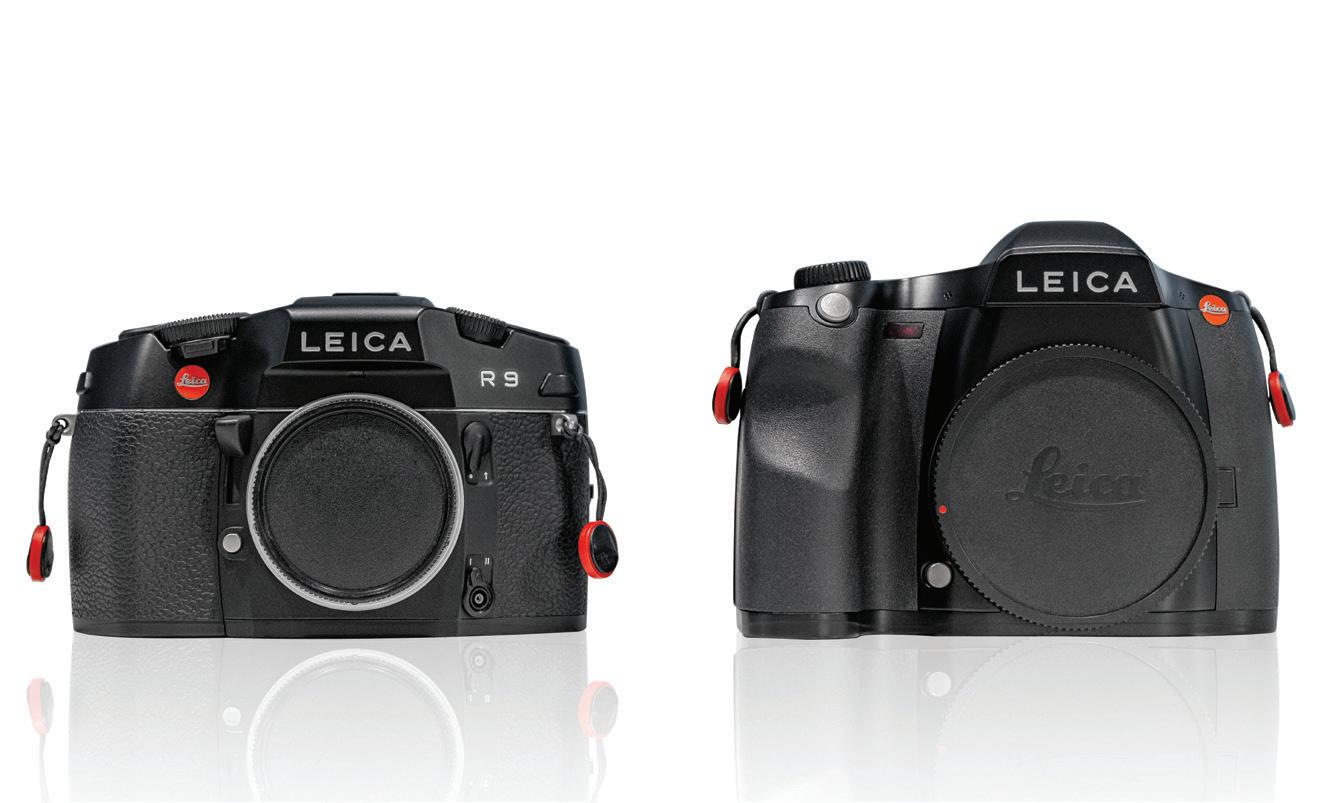
Arguably, except for the Visoflex system from the 1950’s that adapts the rangefinder system to a quasi SLR system, the Leica R and the Leica S are the only SLR systems in the Leica lineup. I’m including the Leicaflex and SL film systems in the R category because of the direct lineage and the shared lens mounts. With the design changes from the R6 and R7 bodies that created a large behemoth called the R8, the musing of the Leica S body seems to have begun.
According to the late Erwin Puts, the Leica R8 was created by an entirely new design team as the previous design team of the R series was dismantled (https://photo.imx.nl/ styled-10/camera/camera/page46.html) . Why is that relevant? Beginning with the R3 (there is no R2 or R1) , the camera technology was shared and adapted from Minolta bodies of the same era. Some people flinch when there is another camera brand connected to a Leica camera product, but there has been a long line of Leica technology shares. The perspective control lenses of the Leica R system and the Leica S system were outside technology. Several Leica R zooms were made either with outside designs or outside lens computations, but this camera system was different and Leica maintained control of some of the programming in the automatic modes. I’ll save that discussion for a future article.
The R8, the first in a new concept from the ground up, had two design requirements: 1.) stay with the Leica tradition and 2.) simplify the design process. Leica tradition in the M series
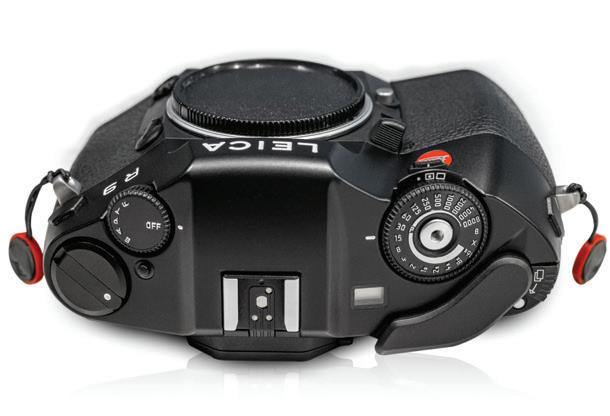
included a flat, smooth top cover with controls that did not protrude over the top but provided intuitive use for manual exposures. In the R8, Leica designed the smoother top case with flush manual controls compared to the square bodies of the Leica 6.2 and prior where the shutter dial and rewind cranks were noticeable knobs. The R8 is sleek and the controls are few on top but efficiently placed and cannot easily be seen from the front profile.
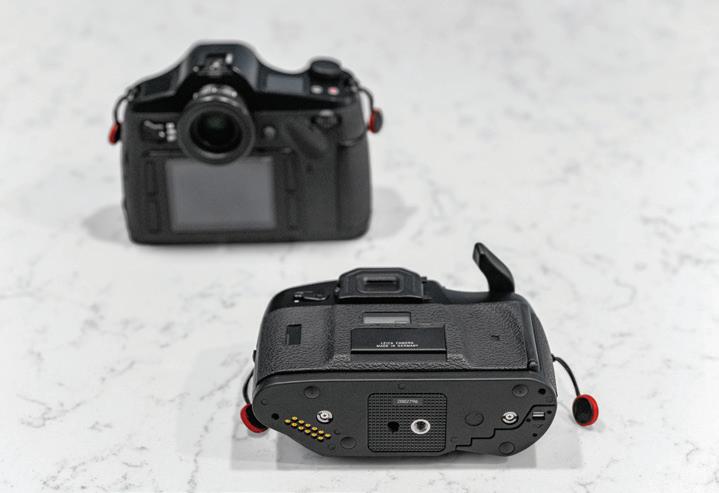
Assembly was a different challenge. Puts indicated the R8 had over 800 mechanical parts and 400 electronic parts. Each part was new, causing design and outsourcing requirements to be formalized and new quality control procedures were necessary. Clearly looking at the R8 body one would not think it so full of pieces. The controls are smooth and feel solid. The R8 was also the heaviest SLR made by Leica at 890 grams (The R7 was 670 grams ) using steel for the bottom plate. Part of the thinking behind the weight went along with some new Leica R zoom lenses under development with high weights and balance is important in the entire system. As with many Leica cameras, reliable use in the field is a trademark (Leica MP film cameras can have the lubrication replaced to operate in Arctic temperatures, for example) . While steel was used in the baseplate of the R8, it is also sprayed with a covering. Jonathan Eastland tells us in his book, R8, that the covering of the baseplate is a glass reinforced plastic.
During development, another Leica first was performing stress analysis on the design using computers. The results of this kind of testing, Puts tells us, is the refinement of gear systems and other components that lower the noise. This is
due to the tight tolerances and provides a camera system that still works at that spec level today. It is reported that over 80 engineers spent 6 years on this stress testing before final production. Parts for the R8 were made all over, but controlled by Leica. For example, the multi-meter mode was a Japanese design, but the algorithms that determine the resulting exposure were controlled by Leica. This allows Leica to retain control of results and let them tune the exposure for what they believe is best. Ironically, there are 20 controls on the outside of the R8 but when I glance at it I see about 5 and they are the most important.
The R9, the last of the iconic R lineage, many have called the R8.2 because so few changes were made. However, true to Leica, the changes were smaller details that made an impact on the user experience. Besides the most obvious weight reduction through the use of magnesium and aluminum replacing steel, the on/off switch that controls the exposure mode now had a lock button. This prevented accidental changing in the camera bag and during use. I would occasionally pick up my R8 and find it had been turned on, so that became a welcome addition for me. The metering modes were updated in the software, like tuning a CMOS sensor with a Maestro chip today. In fact, Eastland indicated the Mitsubishi CPU in the R8 had 60k of ROM holding the 50k software which presumably got updated in the R9. Finally, the shutter could be held half-pressed in more exposure modes to save the metered exposure while re-composing the image. I have no doubt that an R10 would have had more improvements.
Using the R8 and R9, my hands no longer held a camera body,
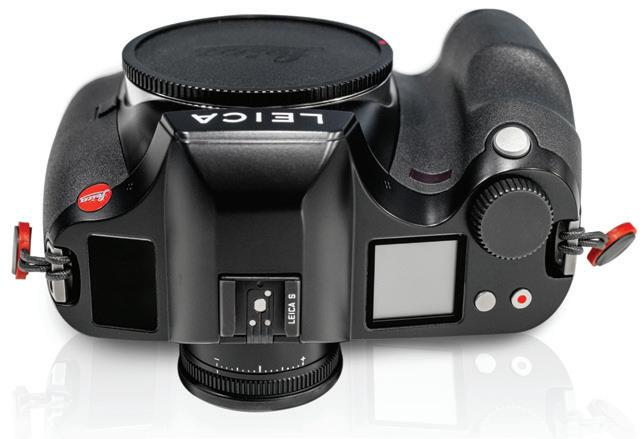
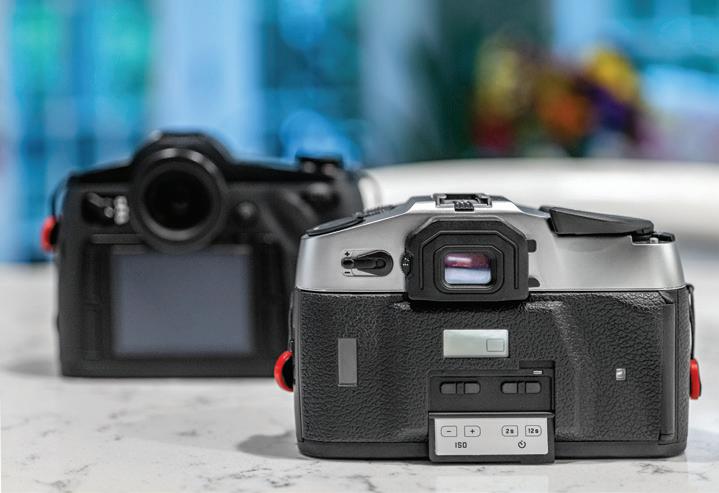
they wrapped themselves around the camera body. No longer were my fingertips the only contact, but my entire hand encased the body. The same experience is had when holding the S007. The more I used these R bodies, the more I grew to like the sleek rounded top. Lenses mount on sturdy bayonets and click into place much like the S007 lenses. The selection of exposure modes is easily done with the off switch. Shutter speed and metering mode are on the same dial and fingertip controllable. The back of the R8 has an LCD display with the film speed and exposure number. Similarly, looking at the back of the S007, the four button menu system on the camera back remains simple and without wasted space and without clutter. The S007 has a simple dial on top that is used to change exposure modes and change the shutter speed all confirmed with a simple small display.
The focusing screens are also incredibly similar. Many other 35mm SLR brands used changeable viewfinders and the focusing screens were thick glass with metal frames that dropped into the camera above the mirror. My Nikon F2 works like this as does the Canon F-1. However, the Leica R8 has a latch on the inside and a hinged frame drops down where tweezers find their way to remove the tabbed screen and drop a thin one in its place. Latching the focusing screen door back to the top of the inner chamber, the swap is complete. The S007 focusing screens change in exactly the same manner, albeit the screens are larger. I quickly found that I liked the full micro prism screen in the R8, the same as I do in the S007.
True to Leica form, the R8 does not have too many controls. The EV adjustment is a simple lever beside the eyepiece, and
the front contains a depth of field lever and a switch to hold the mirror up for long exposures to avoid camera shake. The flash timing is adjusted with a switch and the exposure metering mode is a locked selector, but otherwise there is a simple shutter speed dial and a program mode dial. Digital cameras do not normally mix double exposures in camera, but the R8 does have a switch to allow that in film. One could easily argue that the SL and M digital cameras also keep controls to a minimum, but the body style with the controls sleekly embedded is most reminiscent of the S007.
The most interesting similarity is the one that made me think about this entire comparison. I have used a variety of film cameras including the Nikon F2, the Canon A1, the Leica M3, M2R, M4, M6, M6-ttl, MA and MP. Clearly the Leica M bodies are rangefinders and the shutter system is simple and very different from an SLR like the Nikon and Canon. However, the R8 has the quietest, quickest, and least vibrating shutter system of any SLR I have ever used. The mirror flip is undetectable and the sound is eerily like that of the S007 without the short whirl to re-cock the shutter. I am utterly convinced that the mirror flip and shutter system in the Leica S came from ideas out of the Leica R8 and R9. There is no miracle here, and the rangefinder shutter contains a lot less vibration allowing for very slow handholding. Based on my experience with the S007, a small movement during exposure causes pixel movement and blur the image. After using a tripod for many slow exposures, I am sensitive to the R8 and any movement.
If the idea still leaves some convincing, consider the lenses of the Leica R system. In no other system from Leica have the
lenses needed to be corrected to look through before an image was taken. Lenses in the Leica R stable typically have very low distortion and f/stops ranging from 1.4 to 2.8, letting in plenty of light to manually focus well. The Leica S system adopted the same approach and the lenses have f/stops typically in the 2.4 to 2.8 range. Focusing through the S007 is an incredible experience and the same is true of the Leica R8. The viewfinder is very bright, easy to focus, and what you see is what you get. If you have never experienced a really bright viewfinder through incredible glass lenses, it is certainly worth a chance to look.
Leica R lenses come in a wide variety of image quality. Some have design roots in conjunction with Minolta and other Japanese manufacturers. Some have been designed solely by Germany. A few less expensive lenses that provide high quality images include the Summicron R 50mm f/2.0 version 2 and the Elmarit R 90mm f/2.8 version 2. Both are very similar or identical to the M lenses of the same types and are available used for under $1,000 US. There are more expensive lenses that have not jumped to cult status, but are still so relevant that Leica SL and SL2 users have adapted them to digital workflows. This includes the Vario APO Elmarit R 70-180mm f/2.8 which I use on both the SL2 and the R8. Also unique to any of the Leica systems are the 1.4x APO extender and
2.0x APO extender. I use both of these with the APO Telyt R 280mm f/2.8 to effectively have up to a 560mm f/5.6 APO lens. Of course, the longer focal lengths in the R lenses require better technique and the use of tripods to get the most detail that the lenses offer. However, after doing this consistently with the S007, adapting it to the R8 was no problem.
Even from film to digital, there are so many concepts that found their way into the Leica S system from the R system, the evolution was clearly intentional. After several decades of improving the SLR film system, the best pieces were used to build a digital SLR system. The body style has been almost exactly the same in the Leica S system, proving the R8 and R9 were great advances in the body design. In addition, my work with the Leica S007 has provided me with some mental tools enabling me to get the most out of the Leica R8.And so, my journey is still in progress as I enjoy the results of great lenses and 35mm film, with a camera that causes me to be deliberate and take my time for producing an image.
In a future article I’ll discuss a variety of the R lenses and their use on both the R film bodies and the more modern SL-2. While the lenses are not weatherproof like the current L mount lenses, they still retain the character from when they were produced and can provide great imagery.
the Leica Q2 Monochrom & Day of the Dead
by DENNIS BERTI
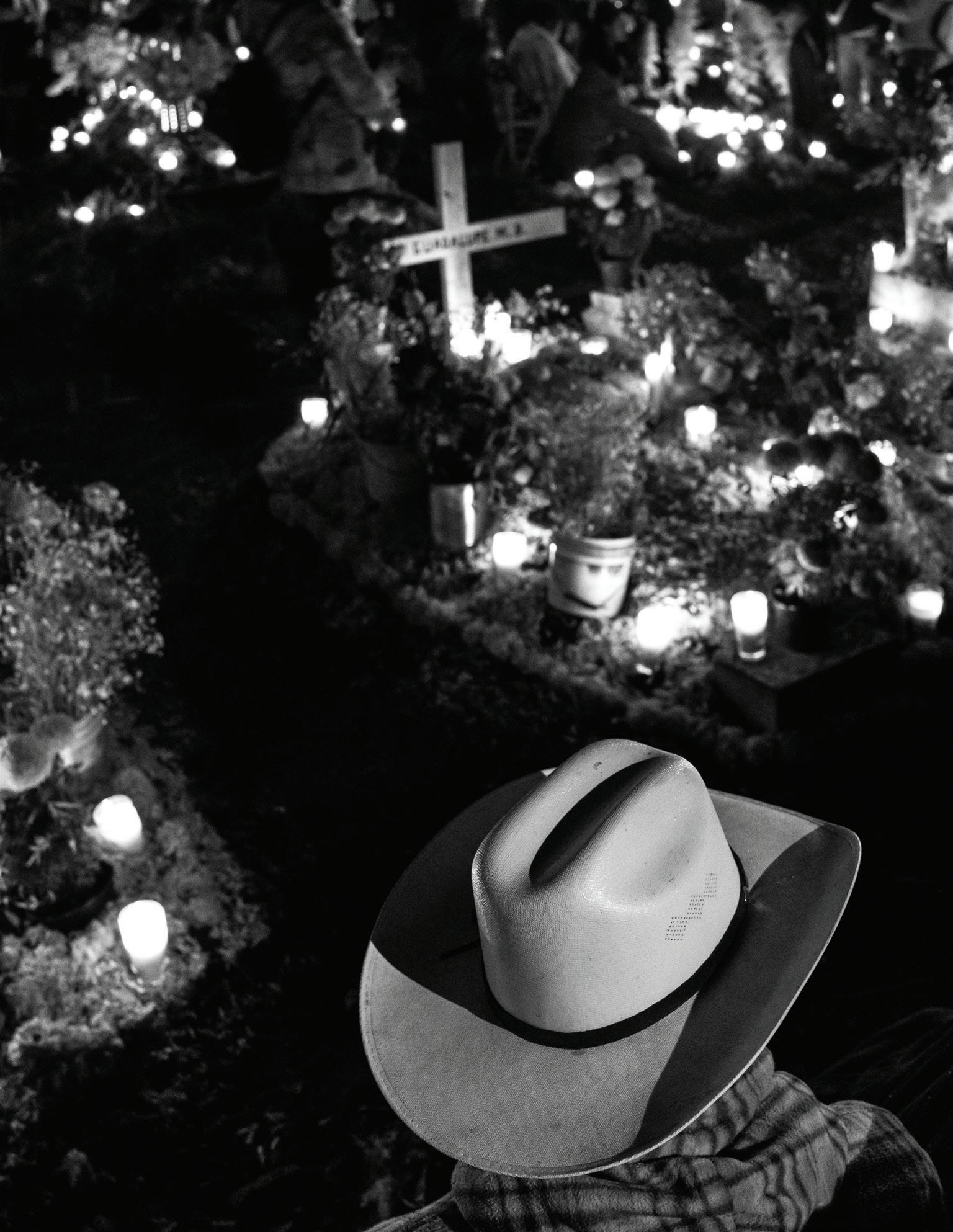
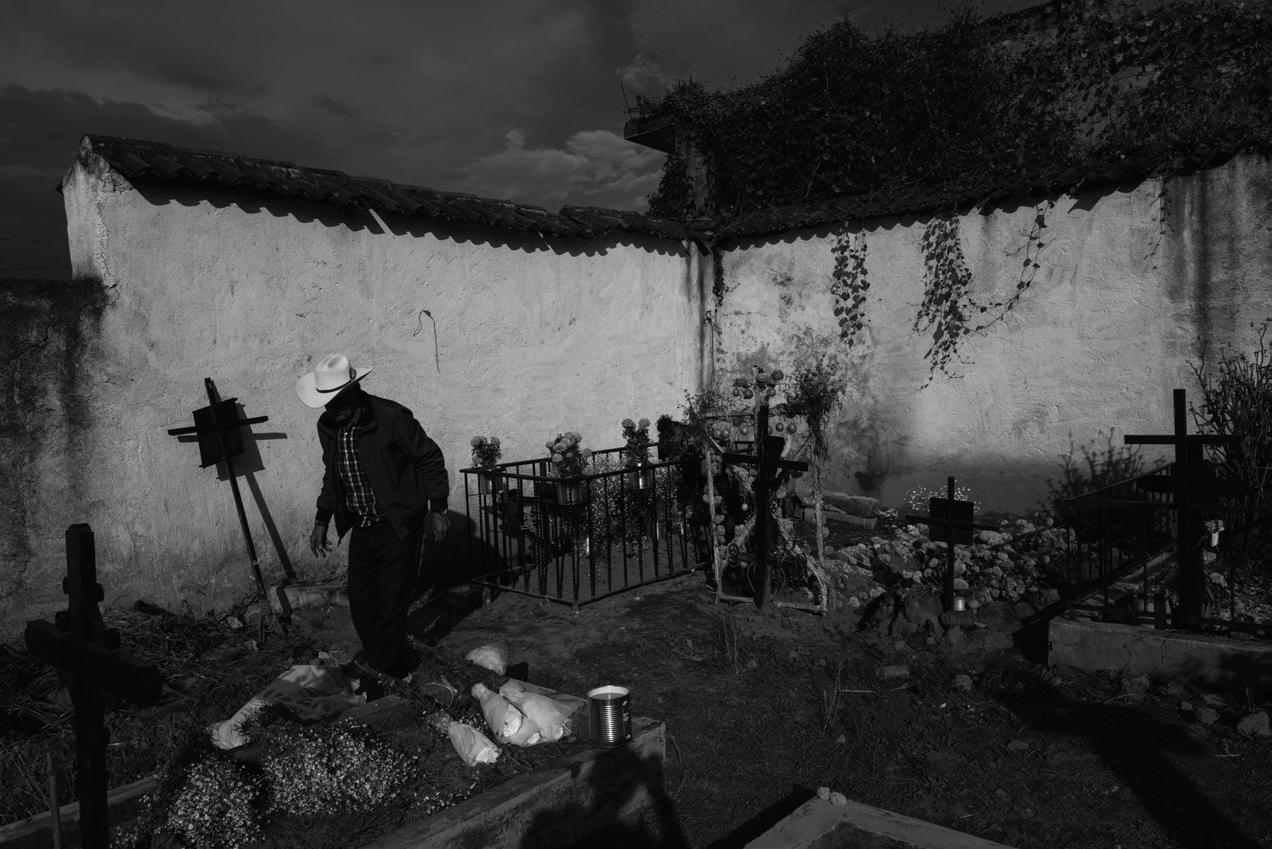
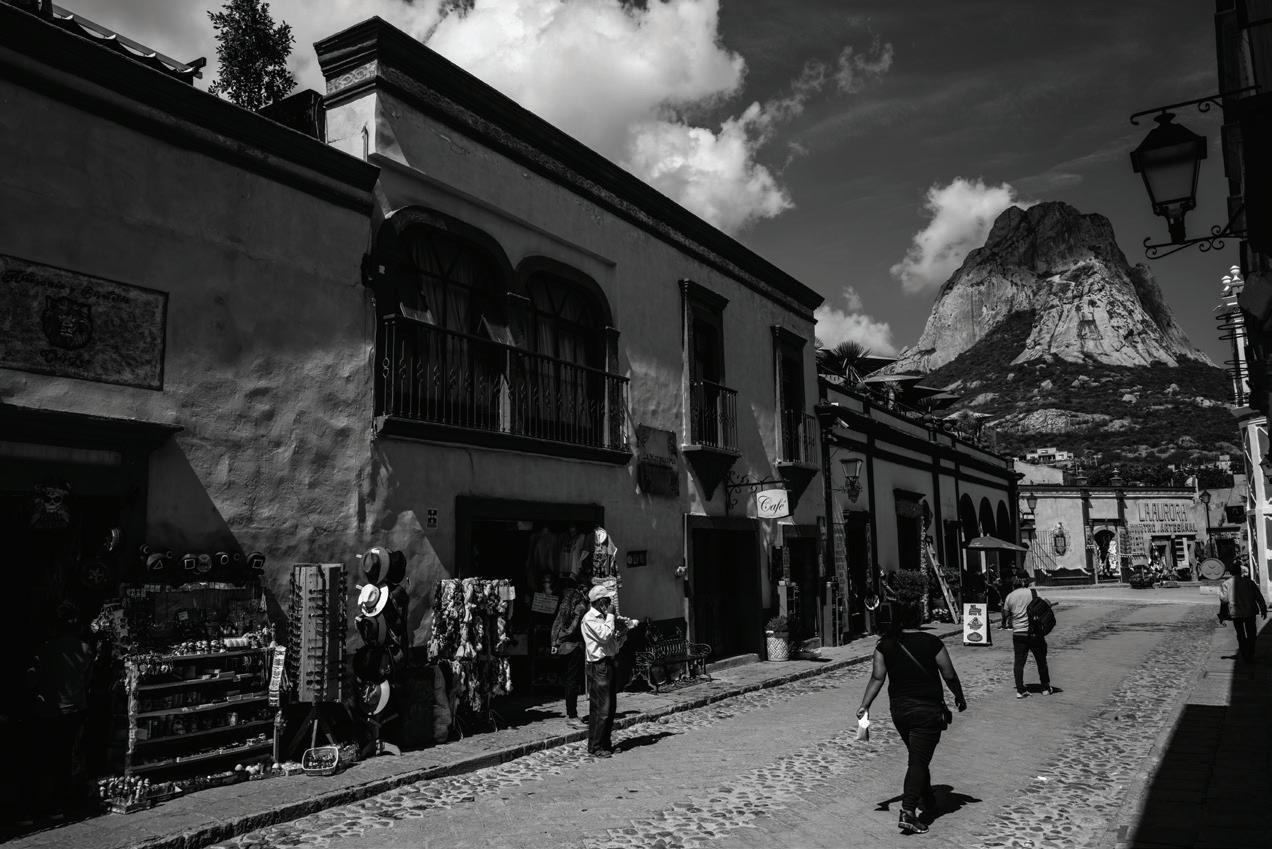
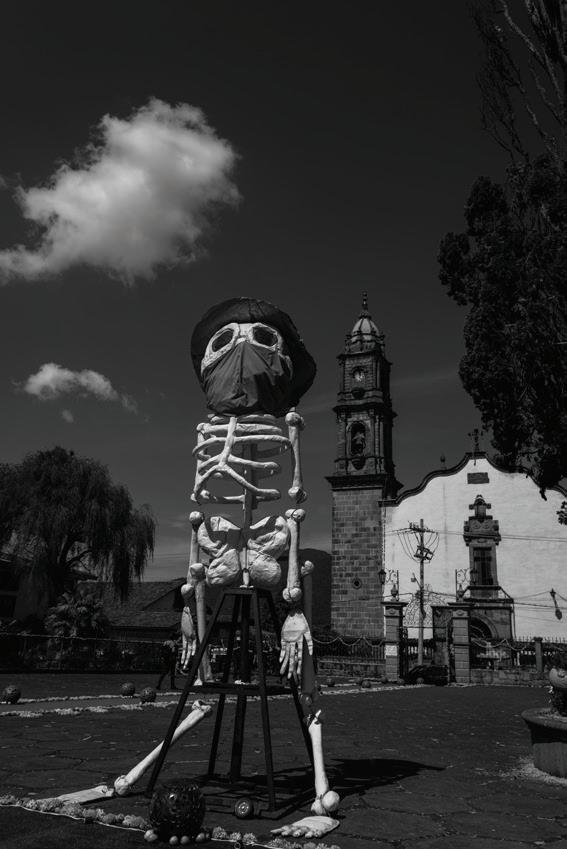
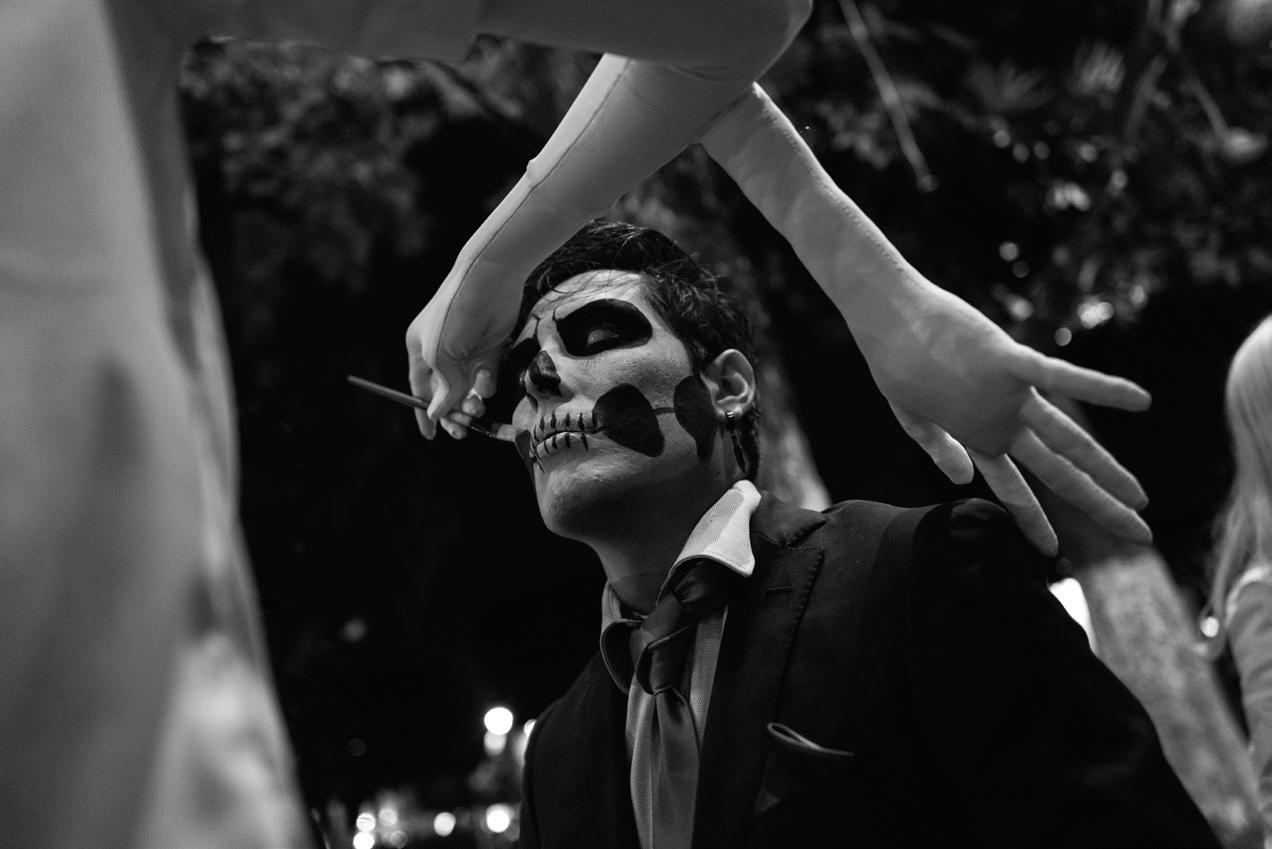
(top) Daytime cemetery visit in Patzcuaro, Michoacán. 1/2500 at f/11, ISO 200. (bottom) Bernal's peak/monolith, Queretaro. 1/2000 at f/8, ISO 200.
It's all LHSA's fault :-) I was lucky enough to be part of their last conference and annual meeting in Seattle. First time in Washington state, my first time attending any kind of Leica event, and more than anything, my first time visiting a Leica Store! Can you imagine my happiness? I felt like a boy in Disneyland for a day, and I can assure you I enjoyed every moment of the few hours I was there. I entered the Leica world in 2018, and I'm a proud owner of an M10 plus some M lenses, including multiple 35's. Yes, this has always been my favorite and most-used focal length: the quintessence of a Leica system. I believe the magic in the Leica rangefinders happens between 28mm and 50mm. The 35mm is my reference focal length (the normal) , my best storytelling, and desert island lens. If I want a more intimate and closer look at the world and frame a smaller portion of the scene, I switch to a 50mm (my version of a telephoto) . But if I need more context, more information, and details of a given scene, I will use a 28mm. I consider it the perfect wide-angle lens. Because of its very low distortion, it’s wide enough for profound storytelling, and it is ideal for environmental portraits - but not too wide as a 21 or a 24 lens would be.
I often shoot in color, and most of the time it is just what I need. But I have always loved black & white. I firmly believe some pictures are meant to be (and to exist) in B&W only. Many people think it is 'smarter' to shoot in color because you can always convert the images to B&W during post-production, right? And if you shoot in B&W, you can't have a picture in color. It makes sense logically, but the truth is beyond this. Shooting the world in monochrome requires a different approach and vision. I always felt comfortable seeing the world in grayscale: I particularly love layering, complex compositions, high contrast moods, drama, the immediacy and the easiness of a picture. And B&W, I believe, checks all the (my) boxes. So, taking advantage of being in a Leica Store, I decided to pull the trigger and buy a monochrome camera. The choice was between an M10 Monochrom and a Q2 Monochrom. Already having a few M lenses, the rational choice was to go with another M body, but after trying and shooting with both, I finally ended with the Q2M. Why?
There are many reasons, and I will try to resume them in a few points, in no particular order.
1.) All in one solution. The camera, with the fast and outstanding Summilux lens and battery, weighs less than 750 grams, making it a super light but powerful combo. It's a also super compact considering its high potential
2.) Having an actual monochrome sensor, it lacks the Bayer color array and low pass filter, which gives me about two stops advantage in low light ISO performance and more crisp details. The files are so rich, really impressive.
3.) The Menu operation, settings, and modus operandi are modern and life-changing. Intelligent, fast, and straight to the point. There are only three main buttons, and the custom wheels' flexibility really makes the difference. I can do whatever I want without removing my face from the viewfinder. Of course, after one gets used to the buttons and decides on a proper configuration.
4.) You can switch from MF to AF with just a click, and the same happens for macro. With the Q2M, it looks like you can do whatever you want because everything is effortless to access. As long as your vision and goals are clear in your mind, there is nothing you can't do with this gem of a camera. The sky is the limit once one embraces the beauty and simplicity of a fixed lens camera and the "restriction" of a monochrome sensor.
Now comes the best part. The exciting plan was to fly back from Seattle to Mexico and meet my wife in Queretaro, stay a few days there with the family, and then travel to the state of Michoacan. Then, spend at least a night (on Nov. 1st) at one of the most beautiful, touching, and iconic nights of the year of the Mexican culture: the Day of the Dead celebration. In a cemetery.
"Shooting the world in monochrome requires a different approach & vision."
My wife and I have never fully witnessed the actual experience in such a unique place. We have seen photos and heard stories, but it's not the same as being there, living, breathing, listening, and smelling the magic atmosphere of this transcendental adventure. It was the perfect plan, and with a new camera to play with, even better. I had a few days along the way to try out the Q2M for some genuine street photography and get used to my new camera. Let me tell you a secret: my Raw files are usually in color, but when I shoot street photography exclusively, it doesn't matter what camera I'm using, I set it up for monochrome DNG. No matter if the final picture will be in B&W or color, I've always preferred to 'read' and see the light in grayscale. Color, in some way, is distracting to me. Coming from my DSLR and with a preference for B&W, I was very excited to discover this new way to preview the world and shoot monochrome with the EVF.
Let's come back to the best part: The Day of the Dead. For people who don't know what the celebration is about, let me try to explain it to you in a few words.
page
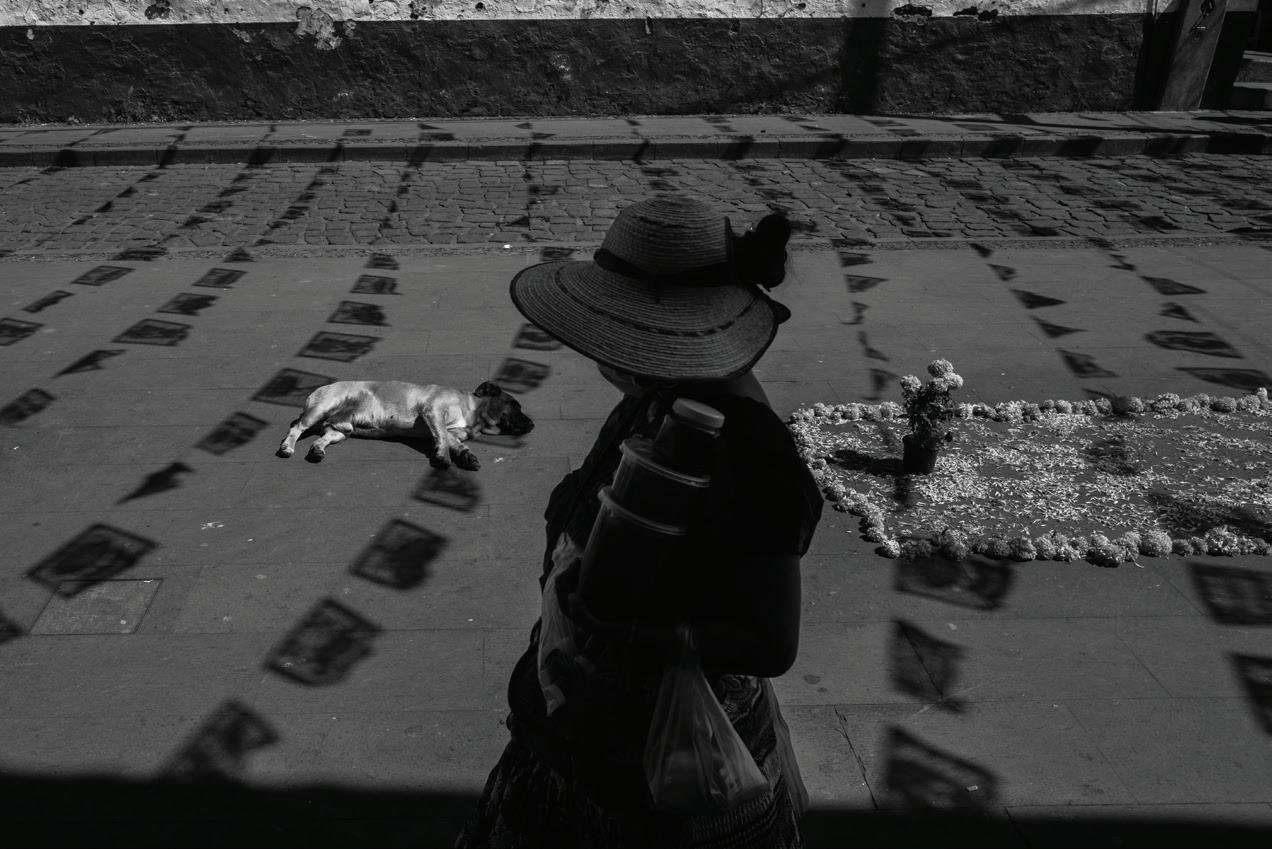
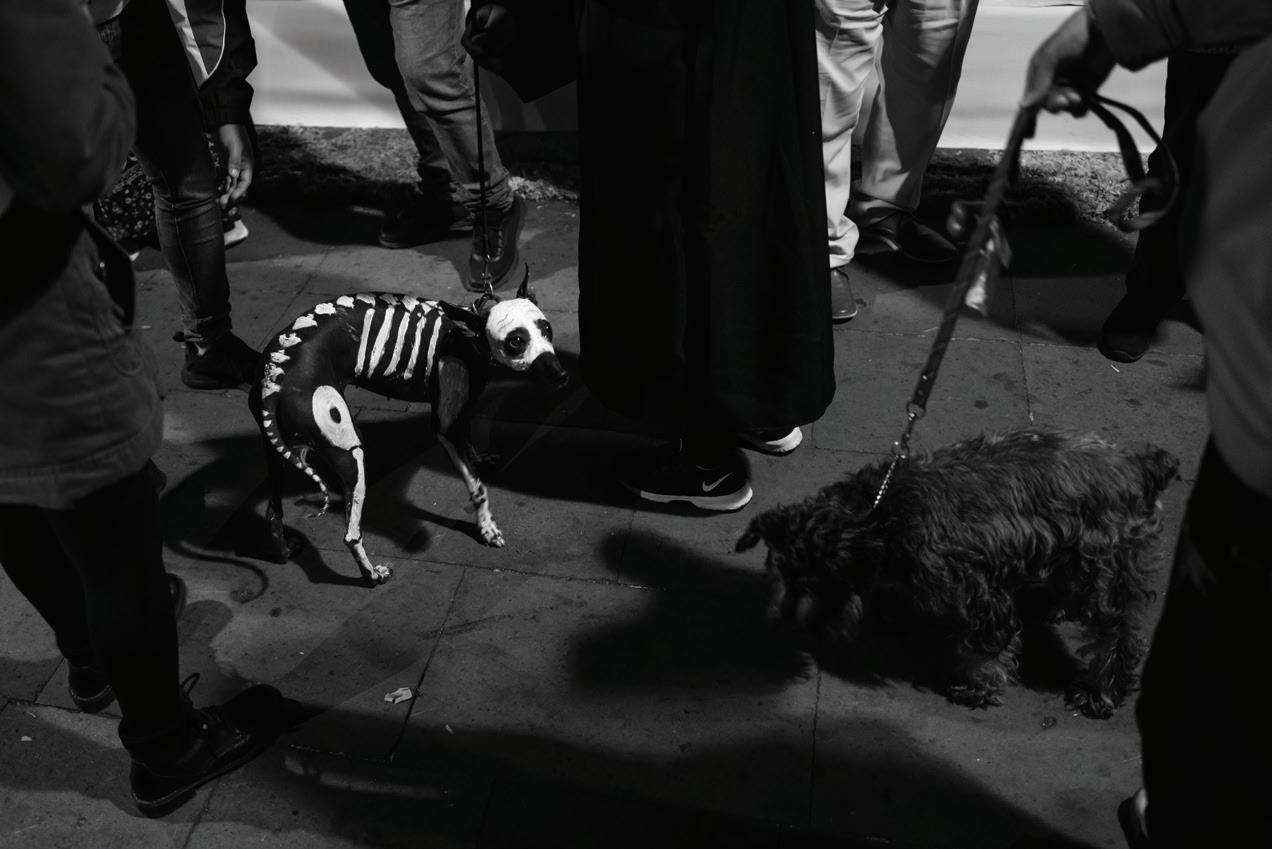
(top) Food, Siesta, and Tradition. 1/1000 at f/8, ISO 200. (bottom) Calavera costume doggy-body-painting. 1/125 at f/2, ISO 6400.
opposite
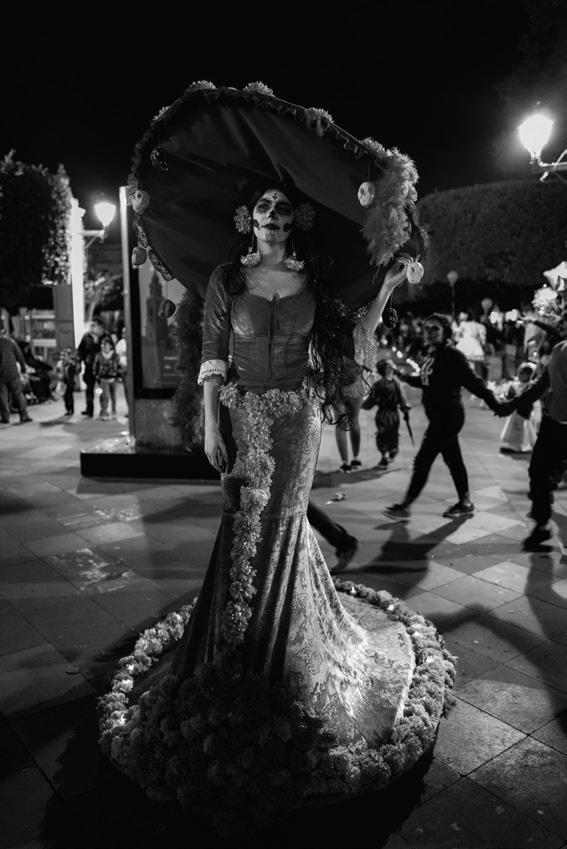
(top) 1:22 pm at Santa Maria del Cobre, Michoacán. 1/10000 at f/4, ISO 200. (bottom) Traditional catrina in Morelia, Michoacán. 1/60 at f/2, ISO 12500.
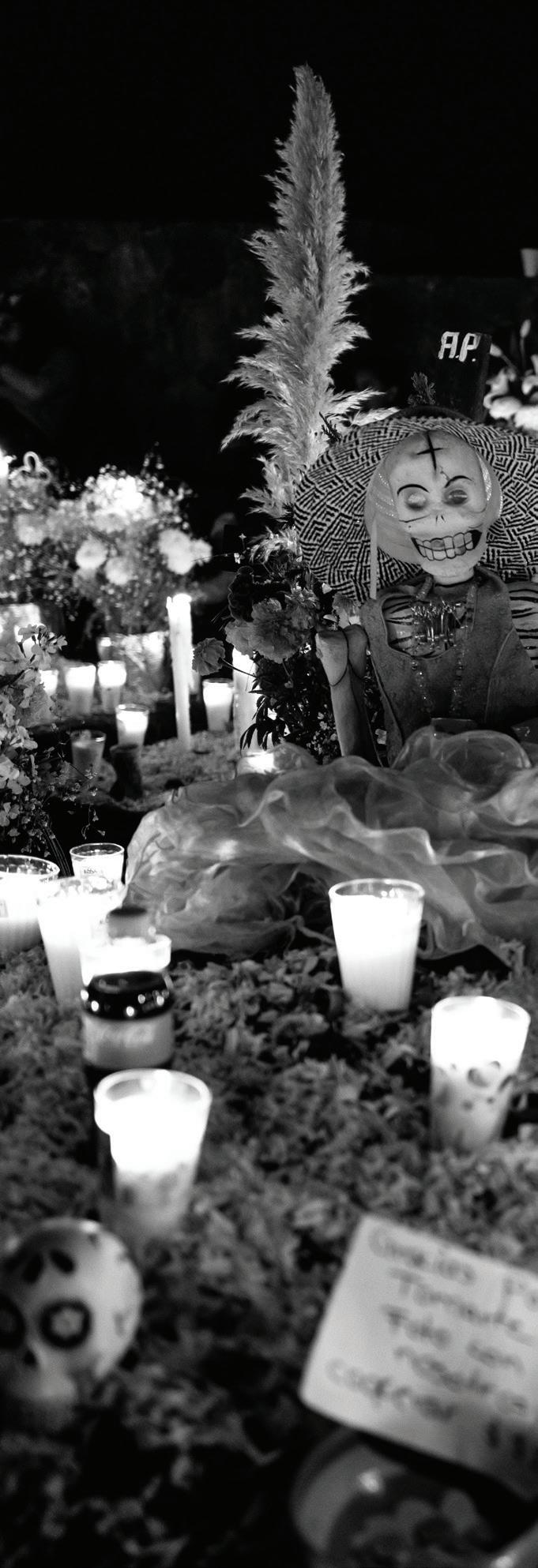
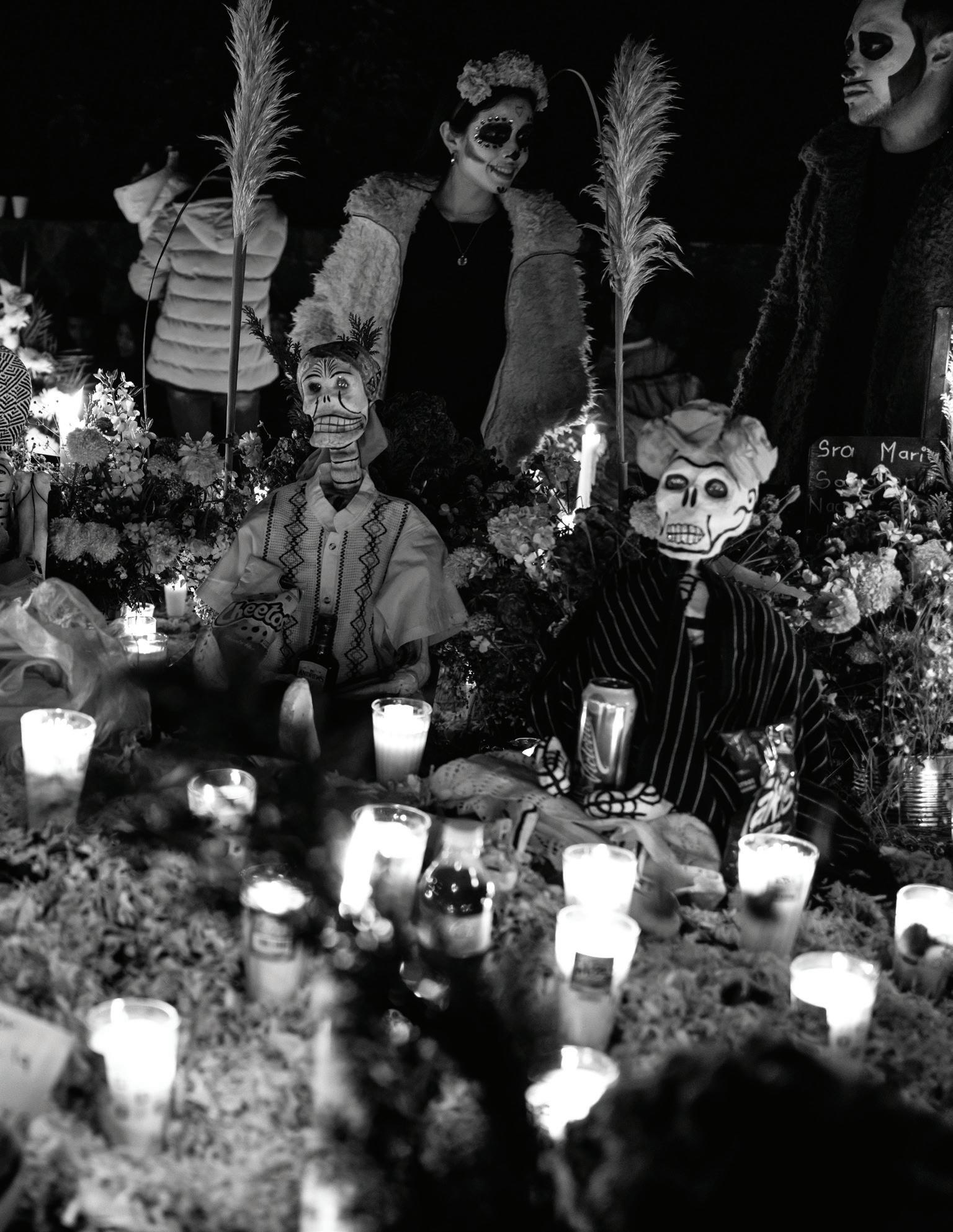
El "Día de Muertos" (as it’s called in Spanish) is a holiday tradition happening around all of Mexico, from October 31st to November 6th, with November 1st being its peak. Family and friends gather together in homage and celebrate their relatives and friends who are no longer with us. It's common to remember them with a humorous approach, funny anecdotes, and unique stories. There is no place for sadness. According to tradition, everyone decorates their relatives' graves with candles, Aztec marigold flowers (known as cempazúchitl) , and build small (and even monumental ) altars to honor them. They bring the dead's favorites; food and drink, gifts, candies, and whatever they appreciated most when they were alive. Family and friends gather around the graves, having a really good time. It's a celebration, a time for joy and to pay their respects with happiness. On November 1 st and the following days, it's expected to see the cemeteries full of people. One has to live the experience to capture the whole essence. And even for a stranger, it's an experience you must have. The cemetery entrance is, of course, open for everyone.
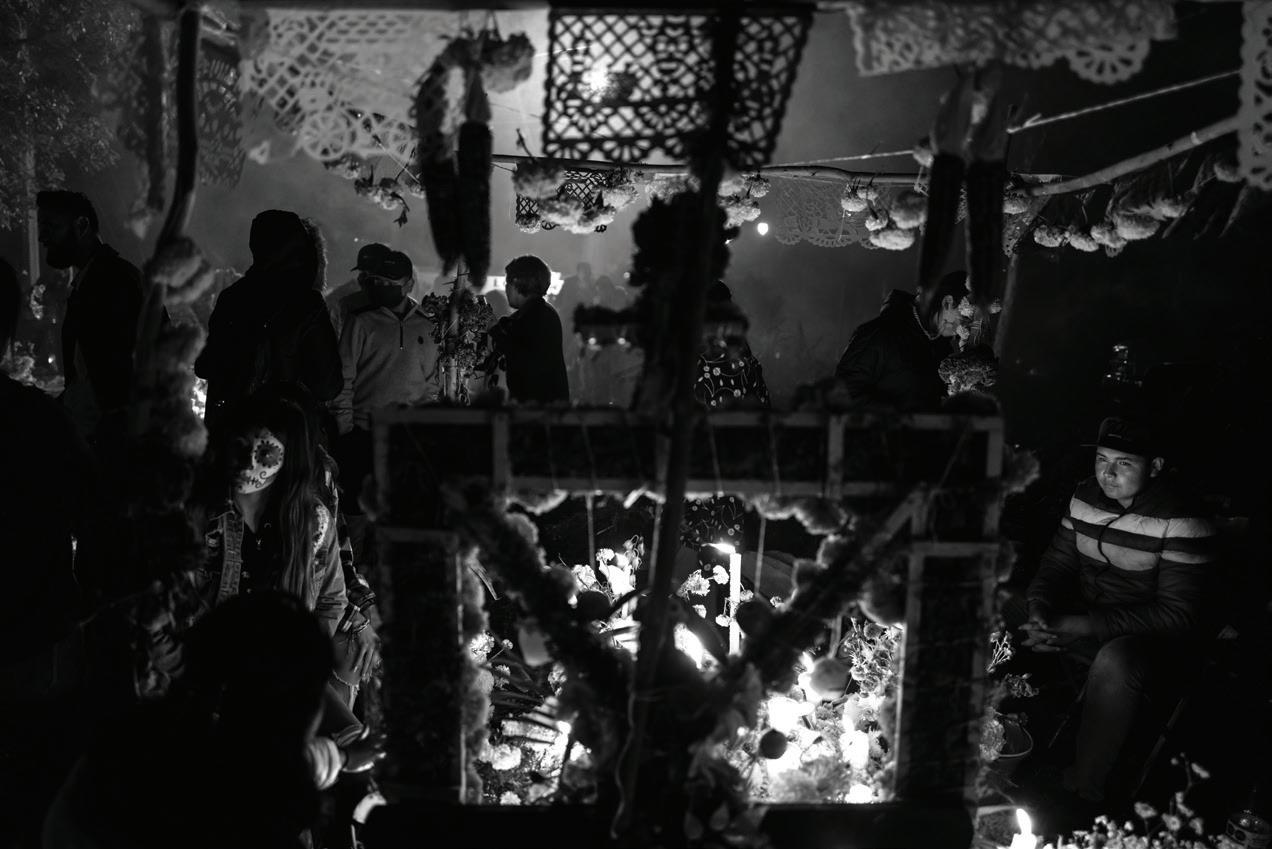
The night of November 1st is an incredibly colorful atmosphere to photograph: full of candles and orange flowers are absolutely everywhere. Literally, people must be careful where they step.
So the dilemma comes up. To be or not to be? Color or B&W? I had my M10 with some 35-50 lenses, and I guess it was the more logical choice to shoot in color, right? Well, I'm not always rational, lol. I do believe in the authenticity and the unique-
"One has to live the experience to capture the whole essence. And even for a stranger, it's an experience you must have. "
ness of the moment. I love minimalism. And I like challenges, so…I decided to tell the story in my own way, as I have never seen before. I had a new camera, with just a few hundred pictures already taken and a few days of experience, so what better opportunity to believe in my Q2M and tell the story of the Day of the Dead celebration with a monochrome approach and POV? Why not!
So, my wife Pily and I refined the details of our road trip: leaving Queretaro on October 30th, spending Halloween on October 31st in the capital Morelia, and the night of November 1st in a cemetery for the "Día de los Muertos." As I said before, it occurs all over Mexico, but Michoacán is definitely the cradle. And in this state, two of the most visited cemeteries are Pátzcuaro and Tzurumútaro. And for the twists of fate, we ended in the latter.
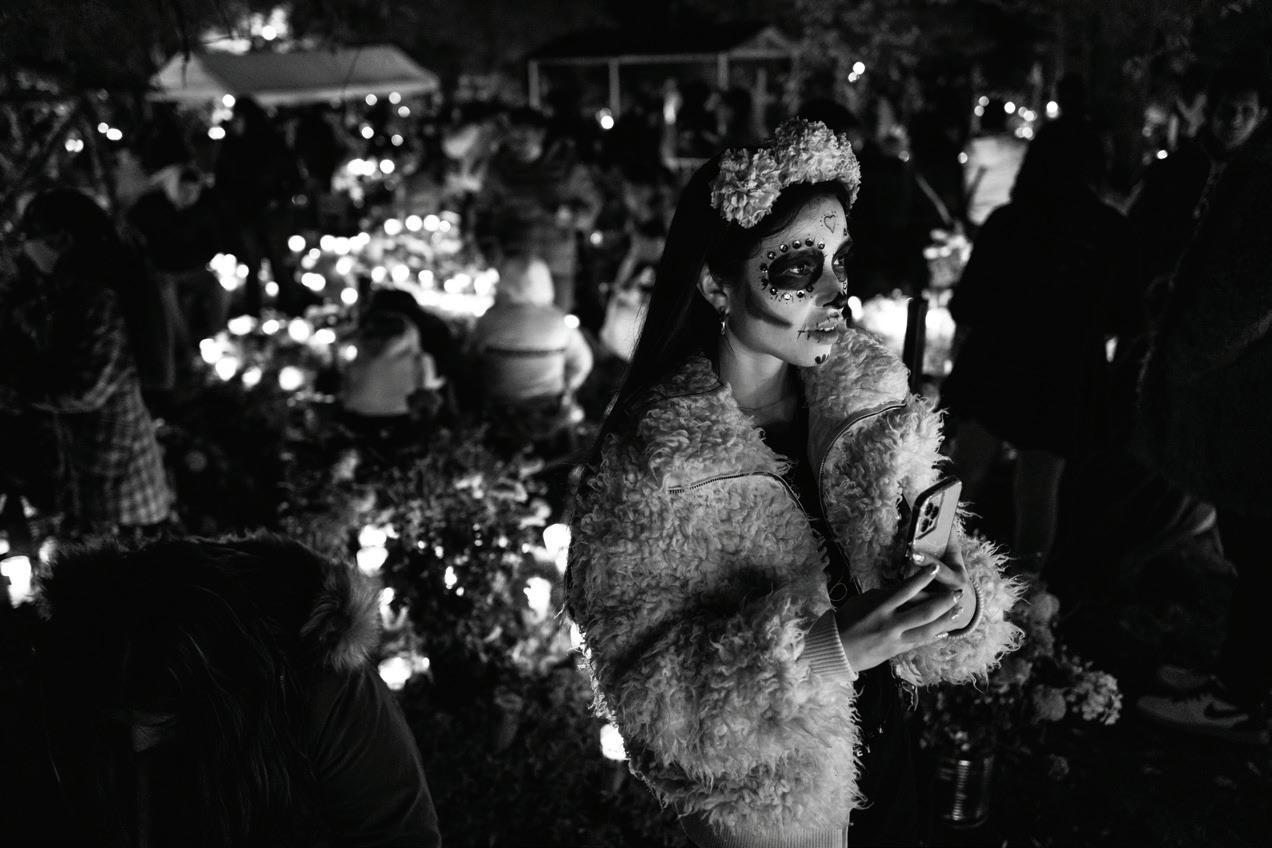
(top) Night of the dead, Tzurumútaro, Michoacán. 1/125 at f/2, ISO 4000. (bottom) Baby Venom poses for a snapshot. 1/125 at f/1.7, ISO 4000.
(top) Halloween night celebration, Morelia, Michoacán. 1/125 at f/2, ISO 12500. (bottom) Chats during a cemetery candlelight ceremony. 1/60 at f/1.7, ISO 3200.
Our priority and desire were to spend the night living the cemetery's unique experience, and for me, it was to shoot many fascinating and unforgettable monochrome memories along the way. We were not really interested in Halloween shots. Still, when we realized that a few hundred thousand people were celebrating in the city of Morelia downtown, with costumes, and a lot of music (and alcohol) , we thought it was an excellent addition to the trip. I had a new camera to try (and set up) , and Halloween night was the perfect excuse for it. I was aware that the night of November 1st's shooting conditions was challenging: consider that all the available light was by candles light ONLY. But after shooting some Halloween night shots at 12500 and 25600 ISO that looked like my M10 at 3200 and 6400 ISO, I was confident and sure that my new Q2M wouldn't have any issues for the following critical day.
I'm an OVF (Optical Viewfinder) advocate. I always shoot in manual, and I don't care what the camera exposure meter says. Because with a lot of practice and experience, I know how my photographs will look, I don't need a preview. That's why I enjoy shooting with my M10. I tried mirrorless cameras, and to be honest, I didn't like the EVF (Electronic Viewfinder). I thought it was not for me. Well, until I found the Q2M :-) For monochrome shooters, previewing in B&W is a true advantage. Especially if one uses color filters to add more contrast or bias more towards high-contrast scenes with deep shadows, as I do and like. To be honest, I'm happy I chose the Q2M over the M10M. For my work, storytelling, and documenting daily life (sometimes for weddings ), I use my M10, and I shoot in color. Until I want to see the world in B&W, that is where I take my Q2M. And the good thing is that I don't need to pick up a particular lens, clean the sensor, or use some accessories. I just carry the camera, and this is all I need. It already includes it all. So, the M10 became my color camera, while the Q2M is my standard for B&W.
Some final technicalities: for the Day of the Dead shots pictured in this article, my average exposure was 1/60 (with image stabilization) and 6400 ISO.
Except for a few shots where we can appreciate more DoF (depth of field), the chosen average aperture was f/1.7-2.8. I was amazed by the image quality (IQ) of the 28 Summilux and how well it performed wide open, even in challenging situations. Absolutely no complaints about the lens too. The Q2M is definitely the best all-in-one solution I have ever tried. I really hope they don't make a Q3M variation with a 50mm Summilux because it would be dangerous for my bank account, but a must-have companion for the Q2M :-)
If you have any questions or doubts, please don't hesitate to contact me.
WTWO FOR THE SHOW
by MARKE GILBERT
hen tasked with comparing the 28mm Summaron f/5.6 and the TT Artisan 28mm f/5.6, I decided to approach it as exactly that, an objective comparison rather than a review, as these lenses do not necessarily dovetail well into my photographic style—I am generally a near wide open shooter, and I generally shoot details rather than scenes. However, in using the lenses for a month, inevitably subjectivity creeps in, and I have tried to apply it where best.
HISTORY The 28mm Summaron was introduced in the mid 1950’s, fitting cleanly into Leica’s raison d'être — small, light and unobtrusive. Despite being produced only in screw mount, in the 65+ years since it appeared, the Summaron remained a popular lens for street and travel, achieving borderline cult status for its unique signature, and clean copies became highly sought after.
This popularity did not go unnoticed and made the Summaron a perfect candidate for an updated rebirth as the debut lens of Leica’s Classic Range series in 2016. The current edition of the 28mm Summaron stays true to the optical design of the original, adding an M mount, updated coatings, 6-bit coding and some minor mechanical improvements.
TT Artisan was established in 2019, and has hit the ground running, introducing lenses in a head spinning variety of lens mounts, sensor formats, and focal lengths, ranging from an 11mm APS-C fisheye to an exotic full frame 90mm f/1.25.
Rumors began to appear in the late summer of 2021 of an impending 28mm f/5.6 M mount lens from TT Artisan based on the 28mm Summaron, and these proved true with its announcement in November of 2021. Speculation was that it would be a copy of the Summaron, and initial photos of the TT Artisan lens revealed an obvious cosmetic reference to the Summaron, however the TT Artisan boasts a completely different optical design.
SPECS SUMMARON TT ARTISAN
WEIGHT (UNCAPPED)
165g
151g
FILTER SIZE E34 E36
APERTURE RANGE f/5.6 - f/22 f/5.6 - f/22
APERTURE BLADES 8 6
OPTICAL 6 elements / 4 groups 7 elements / 4 groups
MINIMUM FOCUS 1 meter 1 meter
IN THE HAND - TACTILITY & ERGONOMICS Both lenses are f/5.6 and share a minimum focus distance of 1m, as well as full aperture click stops and an infinity lock. Both are supplied with rectangular clamp-on hoods and are chrome-on-brass construction.
Both are rangefinder coupled, although most users (myself included) will likely be using hyperfocal or zone focusing.
Both lenses are essentially identical in ergonomic function, with similar feeling aperture and focus rings as well as a vintage inspired infinity lock, which can be polarizing, with both fans and detractors. Both lenses share a DOF scale on the front plate of the lens parallel to the face of the camera body as opposed to on the barrel of the lens—while I can see the necessity of this design to maintain the compact dimensions of the lens, in practice I found it to be slightly annoying, as one is required to tilt the camera up to view it. Granted, experience with the position of the infinity lock as it relates to the focal distance and a good idea of DOF largely mitigates the inconvenience, but it is still worth consideration. In appearance, both lenses could easily be mistaken for the other at without a close look.
On the camera, the lenses operate identically, and both are among the smallest M mount optics, (when mounted without hood) making the camera nimble and coat-pocketable. Large hands may find the operation to be cramped, but I experienced no difficulties.
The TT Artisan lens in the hand feels solid and remarkably well built, with a reassuring heft from the chromed brass construction. The chrome is nicely finished, however the front plate of the lens mount is a more polished finish, and appears a bit mis-matched against the rest of the lens. The aperture ring clicks at full stop detents, and will hold position at intermediate positions although not surely. The focus ring is nicely damped and smooth from infinity to minimum with no sense of stacking or binding.
Of note, the infinity lock on the TT Artisan could best be described as…coy, flirtatious even. Is it locked? Who knows? It will never reveal the secret. In the locked position, occasionally it would feel locked in solid, but the majority of the time it could be brushed out of locked position quite easily and unintentionally.
The TT Artisan 28mm also comes with an adjustable mount to fine tune focus calibration, a useful feature, but one perhaps more suited to long and/or fast lenses, where shallow DOF would easily reveal inaccuracies—at 28mm, f/5.6, and 1m the DOF already can cover a multitude of sins.
The 28mm Summaron weighing a bit more, feels like a solid unit—there is the sense that is built for a lifetime of use. The satin chrome is superb, and the front plate is finished identically to the rest of the lens. The aperture ring clicks in at full stop detents with conviction, and will hold intermediate positions solidly. The focus ring glides across the range, but with perceptibly more dampening that the TT Artisans, and the additional leverage provided by using the infinity lock as a focus tab is welcome.
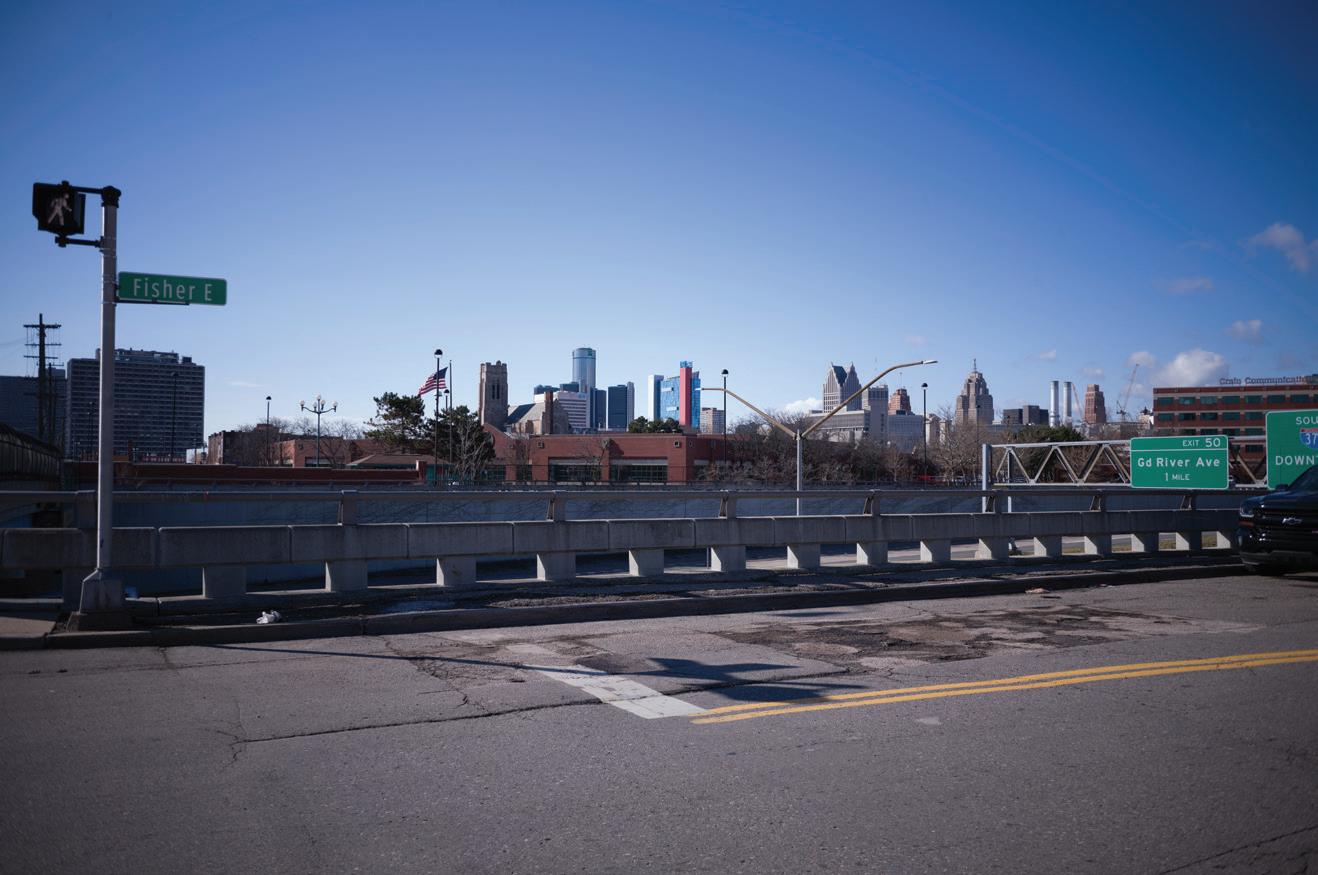
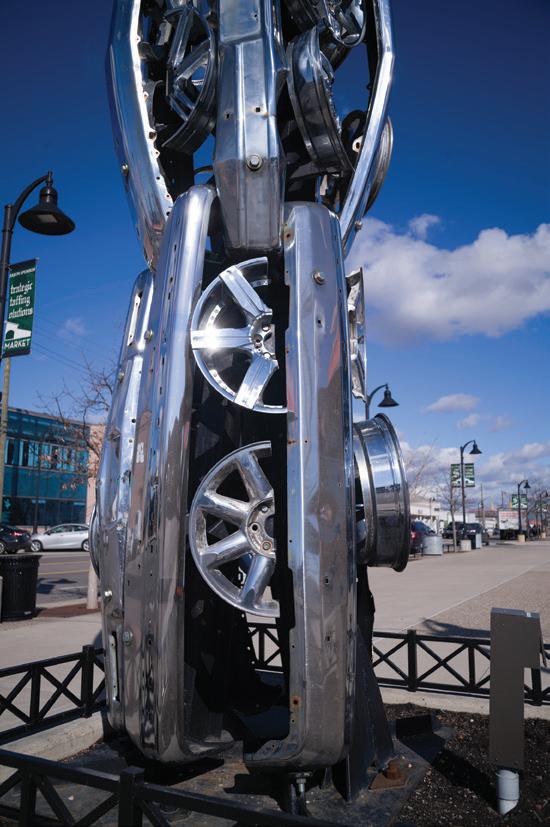
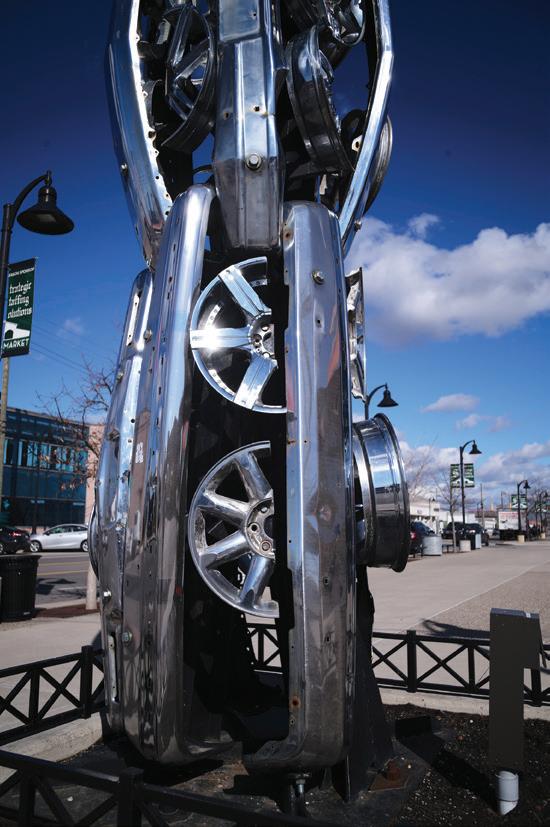
SHARPNESS Leaving aside any debates about what constitutes “sharpness” (contrast versus resolution etc. ) and instead proceeding with jurist Potter Stewart’s “I shall not attempt today to define…But I know it when I see it…” analysis, both lenses are well fit for their likely uses.
Both lenses are sharp on center, both wide open and stopped down to f/8, without being jarring or brittle. At extremely high magnification, the Summaron shows a slight edge, but not to the degree that it would appear in normal size prints.
(Figures 1-4. Image crops at 150%)
Both lenses suffer off axis, especially on the edge, with the TT Artisan not only softer, but displaying more “glow” in the outer
areas. The differences become more apparent upon stopping down to f8, where the Summaron cleans up significantly more than the TT Artisan, but with neither lens ever reaching across-the -frame sharpness.
(Figures 5-8. Image crops at 150%)
FLARE Both lenses proved adept at handling out of frame light sources, presumably not owing solely to their optical designed, but also because the front elements of both lenses are fairly well recessed.
I tried to provoke flare with an in frame light source, and differences are clearly visible.
Wide open, the Summaron produced flare that could be somewhat cleaned up by stopping down to f/8. The TT Artisans produce more flare, that in turn added veiling flare by stopping down.
(Following Page. Figures 9-12.)
CHROMATIC ABERRATION Both lenses were steadfast in their refusal to produce chromatic aberration. I tried all the classics—tree branches silhouetted under an azure sky, window frames
1. Summaron at f/5.6, Center
3. Summaron at f/8, Center
2. TT Artisans at f/5.6, Center
4. TT Artisans at f/8, Center
5. Summaron at f/5.6, Corner
7. Summaron at f/8, Corner
6. TT Artisans at f/5.6, Corner
8. TT Artisans at f/8, Corner
exposed for interior lighting against bright daylight, spectacular highlights on chrome. Both lenses performed admirably.
(Left. Figures 13 & 14.)
VIGNETTING Both lenses produce significant vignetting that persists even when stopped down, with the Summaron showing a higher degree. Given the nature and uses for these lenses, I do not see this as a bad thing, but rather a contributing factor that helps define the look. In fact, even if the vignetting were absent, I would probably add it in post!
(Figures 15-18.)
CONCLUSIONS, INTANGIBLES & THE ELEPHANT IN THE ROOM For street work and travel especially hyper-focal and zone focus shooting, both lenses are more than capable performers. If you are looking for character, you’ve found it. If you’re looking for an all-around 28mm, there are a number of issues that probably limit their suitability—1m minimum focus distance, slower aperture of f5.6, vignetting, lack of corner-to-corner sharpness.
When examining each individual aspect tested, the Summaron largely edges out the TT Artisans in the areas they are not equal--it has more character, cleans up better with regards to edge sharpness and flare, feels substantially better in the hand. However, the TT Artisans performs well, and has a build quality that belies its price…which leads us to the elephant in the room.
The Summaron retails for $3,095.00 USD (German) and $2,795.00 (Portugal) at the time of writing, (low priced for an M lens) , the TT Artisan for about $300.00, literally an order of magnitude difference in price. If you had handed me a TT Artisans 28mm f5.6 with no foreknowledge, I never would have guessed it at a price point so low.
Is the performance worth the price disparity? Obviously, that depends on the user—Is it a daily use lens? How much is a particular unique and impossible to imitate signature worth? Are the (mostly) subtle tactile differences enough to justify spending the extra?
Is the TT Artisans 80% of the Leica for 10% of the cost? Without question.
Ultimately, we all benefit from having the option of choice— ultimate quality or affordability with good performance!
13. Summaron at f/5.6
14. TT Artisans at f/5.6
9. Summaron at f/5.6
11. Summaron at f/8
10. TT Artisans at f/5.6
12. TT Artisans at f/8
15. Summaron at f/5.6
17. Summaron at f/8
16. TT Artisans at f/5.6
18. TT Artisans at f/8
SPRINGTIME IN COLUMBUS
by JIM LAGER
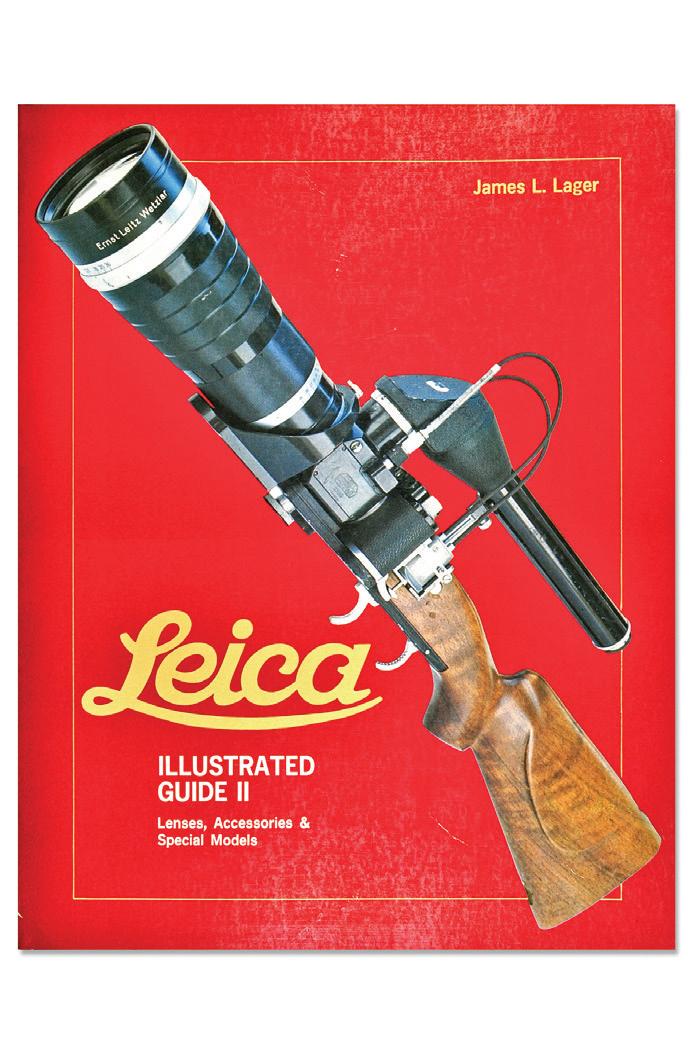
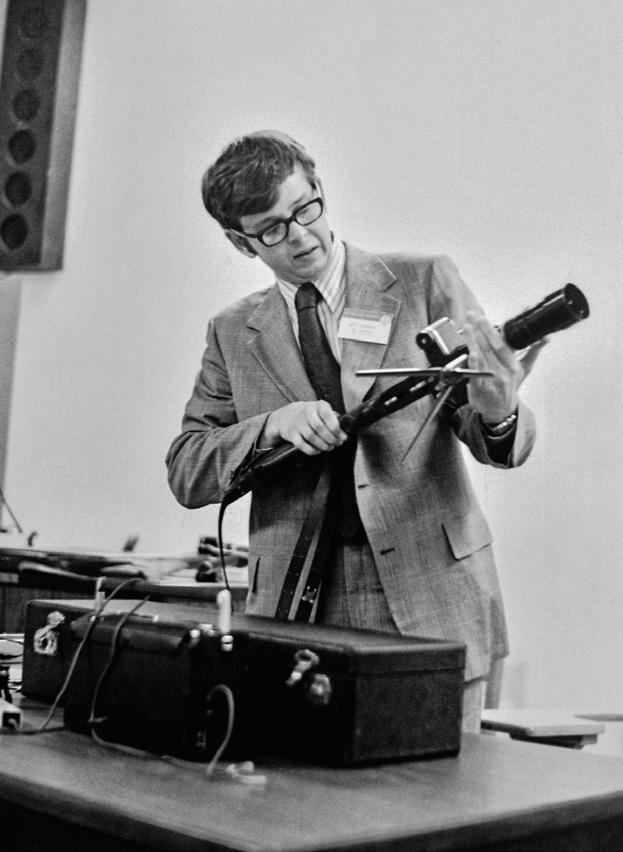
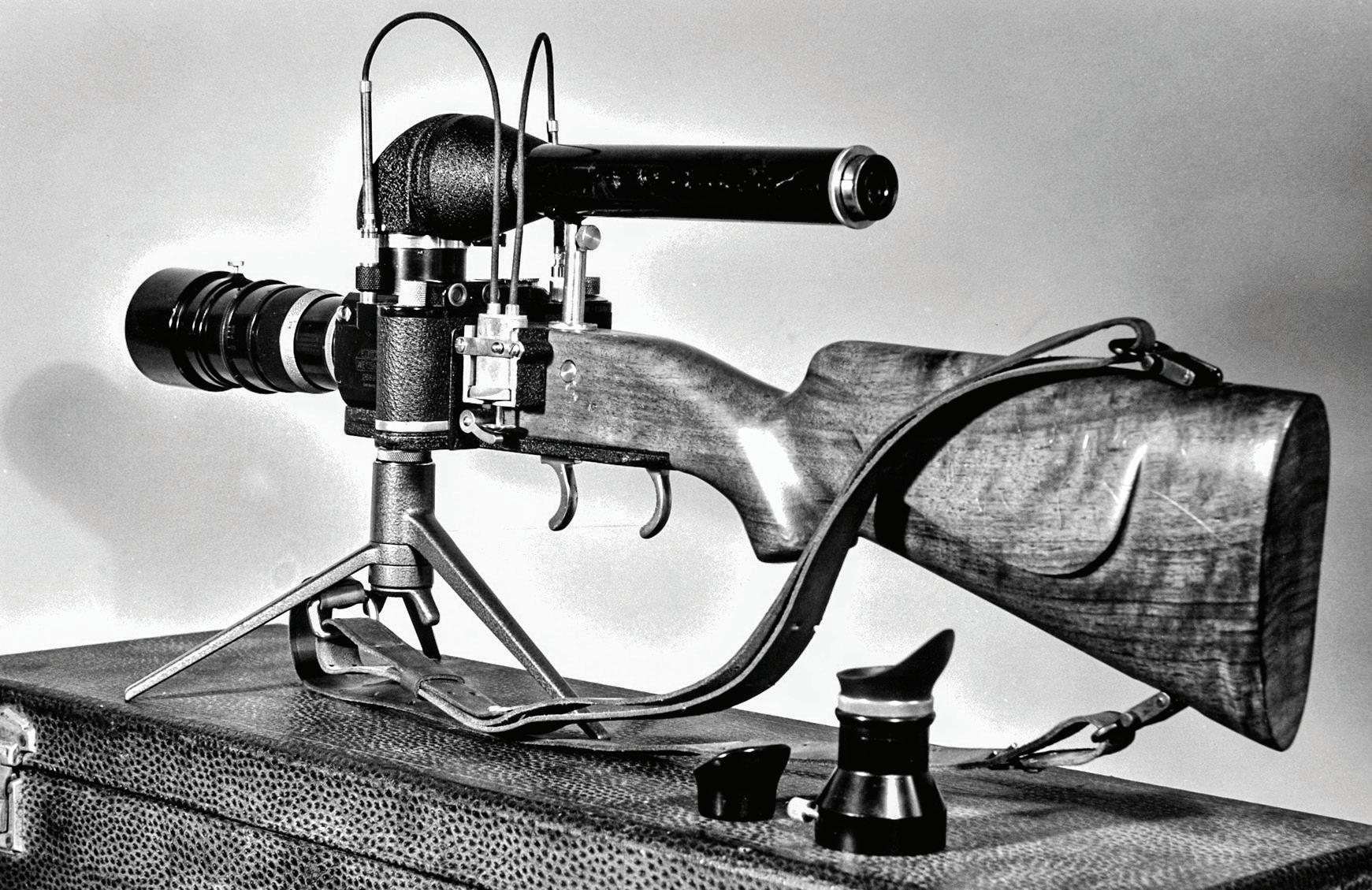
During the preparation of my 1978 book Leica Illustrated Guide II a front cover illustration was considered. I wanted the cover to be eye-catching and of interest to all Leica enthusiasts. Something unusual. The E.Leitz, Inc. New York Leica gun RIFLE was appropriate.
A Leica gun (RIFLE) was located near Columbus, Ohio. Arrangements were made to photograph the artifact under soft outdoor lighting. With the massive 40cm 1:5 Telyt mounted
the assembly was placed on a white background and Ektachromes were shot with a Hasselblad. Publisher Morgan & Morgan requested this format to make their job easier.
During the photo session, I operated the camera and the owner of the RIFLE positioned the assembly to best effect. It was Spring in Columbus and the nearby trees were in full bloom. As the first shots commenced, a strong gust of wind blew tiny pink petals onto the background. I watched this as I looked through the waist level viewfinder. Suddenly the RIFLE was surrounded by a background covered in pink spots.The petals had to be removed.
The owner, Professor Alfred Clarke at Ohio State University, and I got on our hands and knees to remove the unwanted spots. As we continued the photo shoot I remember requesting Dr. Clarke to shift the RIFLE slightly to produce a reflection on the Telyt’s front element.
And so it was during the Spring in Columbus. The lighting, the wind, the petals, and two Leica enthusiasts photographing an extraordinarily-rare Leica accessory. It was the first RIFLE we had ever seen.
The RIFLE in hand at 1972 LHSA annual meeting.
RIFLE on the cover of Leica Illustrated Guide II 1978.
Gatti to Use Camera Gun to ‘Bag” African Animals
Chicago- Commander Attilio Gatti, the African explorer and photographer, has stopped worrying, about wild animals that refuse to pose for their pictures. He has solved the problem, he said yesterday,with the development of a powerful speed camera capable of taking two pictures a second at ranges up to 400 yards.
Built Like a Rifle
Built like a rifle and operated like one, the camera can record the charge of an elephant or the flight of a butterfly with equal accuracy, the Italian adventure said. He will take two of them on his 1938 safari into the forests of the Belgian Congo.
“Photographs impossible heretofore will be taken easily now, even of the most shy and difficult animals’ Gatti said.
The rifle camera, developed by Gatti with the assistance of Leica engineers, weighs about five pounds and costs $700.
Telescopic Camera
It is, essentially, a candid camera with a telescopic lens and a special telescopic finder, mounted on a stout wooden stock. The “gun” is “fired” from the shoulder , the right hand squeezing the trigger and the left keeping the object in sharp focus. One trigger, when held back, will take 12 photographs at half second intervals.A second trigger will reload the film chamber . Two prisms within the telescopic sight present a natural image.
From the Decatur Herald (Decatur, Illinois) Friday the third, December 1937, page 5. Associated Press Article
Courtesy of Oscar Fricke via E-Mail July 20th, 2020.
Leica gun with 20cm 1:4.5 Telyt and case. Clarke photo.