Perineural Injections: A Clinical Guide to Diagnosis and Treatment
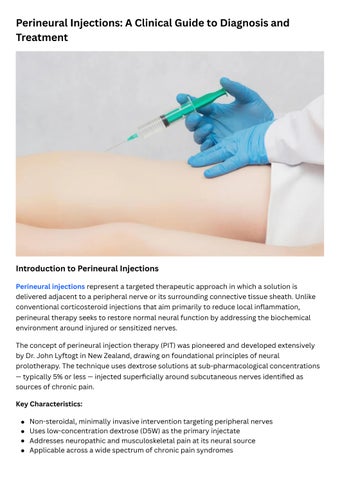
Introduction to Perineural Injections Perineural injections represent a targeted therapeutic approach in which a solution is delivered adjacent to a peripheral nerve or its surrounding connective tissue sheath. Unlike conventional corticosteroid injections that aim primarily to reduce local inflammation, perineural therapy seeks to restore normal neural function by addressing the biochemical environment around injured or sensitized nerves. The concept of perineural injection therapy (PIT) was pioneered and developed extensively by Dr. John Lyftogt in New Zealand, drawing on foundational principles of neural prolotherapy. The technique uses dextrose solutions at sub-pharmacological concentrations — typically 5% or less — injected superficially around subcutaneous nerves identified as sources of chronic pain. Key Characteristics: Non-steroidal, minimally invasive intervention targeting peripheral nerves Uses low-concentration dextrose (D5W) as the primary injectate Addresses neuropathic and musculoskeletal pain at its neural source Applicable across a wide spectrum of chronic pain syndromes