



It is abundantly clear from recent news stories and insights from experts that AI has clearly moved past experimentation at enterprises. The conversation is shifting to how they can deploy it reliably, securely, and at enterprise scale. The emphasis is no longer on individual models or isolated use cases, but on building the operational foundations that allow AI to deliver measurable business value.
There is also the growing recognition that AI is fundamentally an infrastructure challenge. As organisations move larger AI workloads into production, attention is turning towards compute, data platforms, networking, storage, power, cooling and operational resilience. Infrastructure decisions are increasingly being made with AI requirements in mind, reflecting a broader shift from technology modernisation to AI readiness.
Data is seen as the defining factor in enterprise AI success. Many organisations are discovering that the greatest barriers to scaling AI are not the models themselves, but fragmented data, inconsistent governance and limited visibility across enterprise environments. This is driving renewed investment in modern data platforms, real-time data architectures, governance frameworks and trusted information management.
Another noticeable trend is the evolution of AI from an assistive technology towards autonomous execution. Agentic AI is becoming part of enterprise roadmaps, bringing with it new requirements around governance, observability, human oversight and policy controls. As AI systems begin taking action rather than simply generating responses, organisations are placing greater emphasis on accountability, security and auditability.
Cybersecurity and compliance are evolving in parallel. AI is introducing new attack surfaces while strengthening the case for sovereign cloud, trusted infrastructure and regional data residency. At the same time, partnerships across infrastructure, cloud, data and cybersecurity providers are becoming increasingly important as organisations seek integrated ecosystems rather than isolated technologies.
The next phase of enterprise AI will most likely be defined less by the sophistication of algorithms than by the strength of the infrastructure, data and governance that underpin them. Organisations that invest in these foundations today will be best positioned to translate AI ambition into sustainable business outcomes.
RAMAN NARAYAN
Co-Founder & Editor in Chief narayan@leapmediallc.com Mob: +971-55-7802403
Ali Raza Designer
R. Narayan Editor in Chief, CXO DX
SAUMYADEEP HALDER
Co-Founder & MD saumyadeep@leapmediallc.com Mob: +971-54-4458401
MALLIKA REGO
Co-Founder & Director Client Solutions mallika@leapmediallc.com Mob: +971-50-2489676
As organizations across Qatar move beyond AI experimentation, the focus is shifting towards the infrastructure, governance, cybersecurity and data foundations needed to scale enterprise AI
Sabya Sen, VP, IMEA & APAC at Alteryx, discusses how organisations are moving beyond AI experimentation by embedding trusted analytics, governed workflows and generative AI into everyday business decision-making.
Fares Asadi, Director, CRM Solution Consulting – EMEA South at ServiceNow, discusses how AI is reshaping customer relationship management by streamlining sales operations, accelerating the quoting process and enabling more personalised customer engagement.
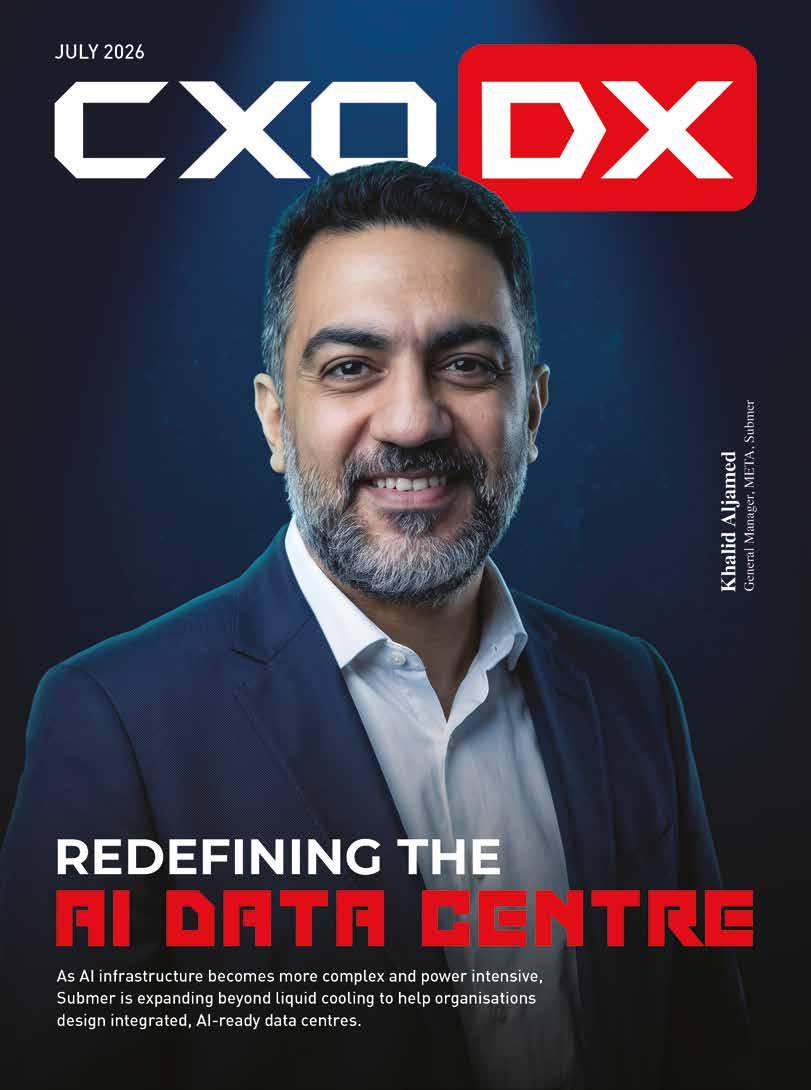
As AI infrastructure becomes more complex and power intensive, Submer is expanding beyond liquid cooling to help organisations design integrated, AI-ready data centres.
Salman Kazmi, AVP META, BMC Helix, discusses how the company's next chapter under new ownership will sharpen its focus on ServiceOps
Haider Pasha, Chief Security Officer, EMEA at Palo Alto Networks, examines how GCC organisations can strengthen cyber resilience by embracing AI-driven security, Zero Trust, threat intelligence and quantum readiness as cyber risks continue to evolve.
Jacob Chacko, Regional Director –MEA at HPE Networking, discusses how AI-native networking, edge-to-cloud architectures and Zero Trust security are enabling enterprises and smart infrastructure projects
Guru Sethupathy, GM of AI Governance at Optro, discusses why AI is creating new governance challenges across the enterprise and why organisations need to rethink how they manage risk as AI becomes embedded in everyday decision-making.
Mostafa Kabel, CTO, Mindware Group discusses how channel partners are driving the next wave of growth in MEA region.
Building on continued joint innovation with Everpure, the companies unveil next-generation Enterprise Data Cloud and Kubernetes integrations, plus Cyber Resilience Delivered as-a-Service
Veeam Software announced at Pure//Accelerate a major expansion of its global strategic alliance with Everpure, marking a series of joint innovations and unveiling the next generation of integrated cyber resilience and DataAI Resilience - the convergence of data protection, cybersecurity, and artificial intelligence to keep systems secure and recoverable against machine-speed threats, autonomous AI agent errors, and ransomware, while supporting compliance and data quality.
Historically, data resilience meant surviving human error or natural disasters. Today, organizations face compounded threats that move too fast for human IT teams to manually manage. Together, Veeam and Everpure are turning alliance momentum into an integrated resilience roadmap across Everpure’s Enterprise Data Cloud (EDC) and Kubernetes, combining anomaly-driven workflows available today, fleet-scale EDC integration planned in Veeam Data Platform v13.1, and Cyber
Resilience Delivered as-a-Service through trusted partners to reduce operational complexity and improve recovery confidence at enterprise scale.
“Resilience now requires more than recovery; it requires trusted recovery: restoring data that is clean, governed, compliant, and ready to use,” said John Jester, Chief Revenue Officer (CRO) at Veeam. “With Everpure, we’re advancing DataAI Resilience by combining deep platform integration with intelligent workflows that help customers detect threats earlier, limit blast radius, and recover precisely so they can operate confidently in an environment shaped by ransomware, machine-speed attacks, and the agentic era of AI.”
Led by the upcoming Veeam EDC Fleet Management Integration, this joint development between Veeam and Everpure extends resilience from single-system integration to fleet-level visibility and control, helping enterprises standardize protection,
The centre is designed to bridge the gap between hardware capabilities and real-world AI application demands

Omnix International, a leading technology solutions provider in the Middle East, has announced the launch of the HOT Systems Innovation and Research Centre in Dubai. Built around HOT Systems’ unique characteristics Hardware Optimization Technology (HOT), the centre is designed to bridge the gap between hardware capabilities and real-world AI application demands, creating an environment where engineering, creativity, and practical technology challenges come together.
The centre will serve as a strategic hub
for research, testing, and engineering advancement across high-performance computing, AI-optimized workstations, intelligent enterprise hardware, advanced thermal and power optimization, and next-generation mobile computing platforms. In a rapidly evolving digital landscape, this is an important step toward narrowing the gap between theory and real-world application.
Walid Gomaa, CEO, Omnix International, said, “Our understanding of the business landscape helps us anticipate future organizational needs. With HOT Systems, innovation has always been at the heart of our engineering philosophy. To strengthen our vision for the future of intelligent computing, we have established the HOT Systems Innovation & Research Centre, dedicated to developing next-generation hardware solutions for the AI era.”

John Jester Chief Revenue Officer (CRO), Veeam
reduce operational overhead, and improve recovery confidence as data estates scale –an essential foundation for precision resilience and consistent policy enforcement.
The Innovation and Research Centre will focus on developing solutions tailored to industries and technologies such as architecture, engineering, media and entertainment, AI/ML development, cybersecurity, simulation, healthcare, and enterprise digital transformation. The initiative also responds to growing regional demand for locally driven innovation, while reinforcing the UAE’s position as a global hub for technology and AI.
The centre will also collaborate with technology partners, software developers, system integrators, and industry specialists to explore emerging areas such as AI acceleration, edge computing, hybrid infrastructure, intelligent security platforms, and advanced GPU computing environments. These collaborations are expected to accelerate innovation, strengthen co-development capabilities, and enable faster deployment of scalable, high-performance, and secure computing architectures across enterprises.
Through continued investment in research and engineering, HOT Systems aims to accelerate the development of energy-efficient, AI-ready computing platforms that deliver enhanced performance, stability, scalability, and workflow optimization for modern enterprises.
Partnership brings together shared expertise in hybrid multicloud and infrastructure modernization
NTT DATA, a global leader in AI, digital business and technology services, and Nutanix, a global cloud computing company that specializes in hyperconverged infrastructure, have established a strategic partnership to accelerate hybrid multicloud adoption, infrastructure modernization and AI readiness in Middle East and Africa (MEA).
Across MEA, organizations are increasingly prioritizing infrastructure that can support longterm innovation. Hybrid cloud, AI and data sovereignty are no longer isolated trends, but interconnected pillars shaping the future of enterprise technology. NTT DATA and Nutanix work together to combine their expertise in systems integration and cutting-edge cloud software to help businesses modernize their infrastructure with confidence.
The collaboration also supports the adoption of AI by enabling organizations to deploy and test workloads in secure, private environments, helping address concerns
around cost, control and compliance.
The relationship aligns with NTT DATA’s broader growth strategy in MEA, enhancing its full-stack offering and expanding its position in large enterprises across the region.
“This partnership reflects our shared commitment to helping organisations modernize, deliver simplified, secure and scalable infrastructure that responds to the real challenges our clients are facing.” said Hani Nofal, Executive, Head of Technology Solutions Middle East and Africa, NTT DATA. “Together, we can co-create tailored solutions, strengthen regional ecosystems and advance AI initiatives that deliver clear business outcomes.”
“By combining Nutanix’s simplified, software-defined, one platform approach and NTT DATA's trusted client relationships, we aim to reduce complexity, lowers costs and accelerate innovation to deliver faster transformation outcomes at scale.” said
Regional headcount expected to be over 50 employees by the end of 2026
SCC, Europe’s largest privately owned technology provider, announced its expansion into the Middle East as part of a broader long term growth strategy across the region.
SCC will open a new office headquartered in the UAE to support organisations across the Middle East as they continue to scale digital transformation, cloud infrastructure and AI driven operational environments. SCC will deliver end to end technology solutions focused on infrastructure, integration and operational performance across complex real world environments.
Following the UAE launch, SCC plans to expand its regional presence over time, working with organisations across both government and enterprise sectors. The expansion reflects increasing regional focus on operational resilience, infrastructure maturity, AI readiness and long term digi-
tal capability. The new UAE headquarters will open as SCC ramps up its investment across all territories in key strategic areas such as applied AI, cyber security and the digital workplace.
The Middle East expansion comes at a period of unprecedented investment and momentum across AI, cloud and digital infrastructure. AI is forecast to contribute US$320 billion to the regional economy by 2030, including US$96 billion in the UAE alone, as governments and enterprises continue to accelerate long term strategies around operational capability, infrastructure performance, AI adoption and secure by design environments.
SCC Middle East will be led by CEO Daniel Valle, a senior technology executive with more than 20 years of international experience including leadership positions with global technology organisations.

By working together, NTT DATA and Nutanix are reinforcing a collaborative approach to infrastructure modernization, NTT DATA continues to position itself at the center of this transformation, supporting organizations as they modernize with confidence, scale efficiently and realize greater value from their digital investments

SCC plans to increase regional headcount to more than 50 employees by the end of 2026.
Robert Vassoyan, Group CEO, SCC, said, “The Middle East has developed into one of the most ambitious and strategically important technology markets in the world. We are excited to expand our presence in the region and support organisations as they continue to scale digital infrastructure, cloud capability and AI driven operational environments.”
Commitment to data privacy and sovereignty to help customers adopt AI agents with confidence
ManageEngine, a division of Zoho Corporation and a leading provider of enterprise IT management solutions, announced the rollout of Zia Agents, the company's proprietary AI-powered autonomous agent, across its digital enterprise management suite. Built within a secure and privacy-compliant framework, these agents can orchestrate and execute tasks without the need for intervention. This marks a milestone in the company's vision of enabling truly autonomous IT environments.
"The frontier models are great for all-purpose use but are not often efficient for specific areas like enterprise IT. We take great care in building AI technology that is not only purpose-built but also provides value in terms of cost and long-term use. We are excited to bring autonomous AI capabilities to our offerings and provide a reliable platform for our customers to achieve efficient outcomes," said Rajesh Ganesan,
CEO, ManageEngine.
These prebuilt agents can be deployed in a single click, while Zia Agent Studio lets users build custom agents from scratch or configure them through NLP. According to the company, agents are fully customizable; users control configuration, tools, and the knowledge base. For complex workflows, multi-agent orchestration lets a master agent coordinate specialized subagents, routing the right work to the correct agent seamlessly.
Customer data is not used to train any AI model. Administrators can define guardrails for agent behavior, and built-in observability provides a complete audit of agent actions. ManageEngine tools support standard MCP, which allows customers to make them work with third-party LLMs and agentic platforms.
New AI capabilities help customers implement and scale cloud ERP systems faster with less disruption
Epicor, a global leader in industry-specific enterprise software, has announced a major expansion of Ascend with Epicor, a program that offers a proven methodology, business planning support, advanced AI tooling and expert consulting guidance to help organizations navigate their cloud journeys. The expanded offering includes a 90-day go-live target for qualified ERP cloud implementations, leveraging new AI-driven capabilities that help accelerate time-to-value and ongoing business growth.
With this program expansion, Epicor is applying AI to automate and accelerate the most time-consuming parts of ERP delivery, giving customers a faster and more predictable path from decision to a working system while minimizing disruption to dJulyay-to-day operations.
“Innovation only creates value when customers can put it to work quickly inside their ERP systems,” said Vaibhav Vohra,
President and Chief Product and Technology Officer at Epicor. “That’s why Epicor is delivering industryfirst AI capabilities and applying AI across the implementation process. By working closely across our product and services teams, we’re reducing complexity, accelerating adoption, and enabling qualified ERP deployments in as little as 90 days, without compromising the security and rigor ERP demands.”
Ascend was introduced last year to support cloud migrations for existing Epicor customers. With this expansion, Epicor is extending it into a broader program that supports three customer scenarios:
• New customers replacing legacy or non-Epicor ERP platforms
• Existing Epicor customers moving from on-premises systems to the cloud
• Existing Epicor customers integrating acquisitions or new business units
In each case, the objective remains the

Rajesh Ganesan CEO, ManageEngine
With the launch of Zia Agents, the focus shifts from AI-enabled assistance to autonomous execution across IT service management, full-stack observability, endpoint management, and security operations. These agents are built on the same Zia agentic platform shared across the ManageEngine suite, making it easy to enable native cross-product intelligence without custom integration overhead.

Vaibhav Vohra President and Chief Product & Technology Officer, Epicor
same: reduce friction and accelerate timeto-value.
Ascend uses AI to audit a customer’s environment, extract and organize data, and generate a migration plan before implementation begins — removing much of the manual discovery work that slows projects. This also surfaces risks earlier, allowing teams to address issues before they affect timelines.
Ascend applies a structured approach to extraction and optimization, helping ensure that information is usable and aligned with the new environment from the start.
New independent SaaS solution enables organizations to build, deploy, and govern AI agents at scale
Liferay, a leading provider of Digital Experience Platforms (DXPs), announced the launch of Liferay AI Hub, a standalone SaaS product that enables enterprise organizations to build, deploy, and manage AI agents through a low-code environment. Grounded in an organization’s own data and governed by its existing security policies, Liferay AI Hub is designed to give enterprises the speed and flexibility they need to adopt AI at scale without rebuilding the security infrastructure they already have in place.
Enterprise AI initiatives often stall because of the complexity involved in deploying AI responsibly. As organizations in the Middle East move toward enterprise-wide AI adoption, many are facing challenges around governance, security, data access, and operationalizing AI at scale. Building governance from scratch can take months. Ensuring AI stays grounded in the right
data, and never surfaces what it shouldn't, requires infrastructure most organizations are still trying to build. And fragmented adoption across departments creates security gaps and redundant costs that often go unnoticed until it's too late. Liferay AI Hub is built to solve those challenges.
"Artificial intelligence is on track to contribute an estimated $320 billion to the Middle East economy by 2030. Given this, organizations across the Middle East are increasingly moving from pilot stage to an enterprise-wide deployment that delivers measurable business value. With AI increasingly embedded within business workflows and digital experiences, demand for solutions that enable innovation while maintaining governance, security, and control is growing exponentially, said Moussalam Dalati, General Manager, France, Middle East and Africa at Liferay. Liferay AI Hub is built to help organizations op-

Moussalam Dalati
General Manager, France, Middle East and Africa, Liferay
erationalize AI within the frameworks they already trust, accelerating adoption while maintaining accountability and business confidence.”
Liferay AI Hub is built on top of Liferay DXP’s existing security and access control framework.
UiPath’s Automation Cloud UAE Region certified under the DESC Cloud Service Provider Security Standard
UiPath, a leader in business orchestration and automation, announced it has achieved certification under the Dubai Electronic Security Center (DESC) Cloud Service Provider (CSP) Security Standard for its Automation Cloud Commercial UAE region. This milestone certifies the UiPath suite of automation and AI services against the highest cybersecurity standards mandated by the Emirate of Dubai, opening the full scope of UAE government and semi-government entities as eligible customers and reinforcing the commitment of UiPath to building trust-first, enterprise-grade automation infrastructure across the region.
The DESC, operating under the Digital Dubai Authority, serves as the primary regulatory authority for cybersecurity and digital infrastructure protection in Dubai. Its CSP Security Standard is grounded in international frameworks including ISO 27001, with additional controls designed specifically for the UAE’s regulatory and data sovereignty requirements. Under Dubai law, government and semi-government organizations are prohibited from
engaging cloud service providers that have not achieved DESC certification, making this designation not just a competitive differentiator, but a mandatory prerequisite for any cloud provider seeking to serve the public sector.
With this certification in place, UiPath becomes an eligible automation platform for Tier 1 enterprises and government entities across the UAE, enabling them to deploy agentic automation at scale with the confidence that their data handling, identity management, encryption, and business continuity protocols meet the most stringent local standards. For organizations that have previously been unable to deploy UiPath’s cloud services due to regulatory constraints, this certification removes that barrier entirely. The DESC certification covers the full breadth of automation and AI capabilities in the UiPath platform.
"As the UAE accelerates toward a future where agentic AI powers half of government services and operations, trust, security, and compliance are essential. Building

Karl Crowther Vice President, Middle East and Africa, UiPath
on our UAE Automation Cloud launch with Microsoft, DESC certification gives organizations a secure, compliant foundation to accelerate AI and automation while meeting local data sovereignty requirements," said Karl Crowther, Vice President, Middle East and Africa, UiPath.
Nutanix Unified Storage validated at enterprise level to support NVIDIA-powered AI infrastructure for production workloads
Nutanix, a leader in hybrid multicloud computing, announced the Nutanix Unified Storage (NUS) solution is NVIDIA-Certified at the enterprise level. NVIDIA-Certified Storage is designed to enable enterprises and cloud providers to confidently deploy storage solutions that support the performance, security, and scale required for large-scale production AI workloads. Nutanix is also advancing AI-native storage with planned support for NVIDIA Vera BlueField-4 STX, reinforcing its focus on faster data access, greater storage efficiency, and simpler AI operations at scale.
With this certification, Nutanix is providing enterprises and cloud providers with a validated configuration to support enterprise deployment of AI infrastructure. The certification helps ensure NUS is validated for full-stack interoperability with NVIDIA AI infrastructure, helping to reduce I/O bottlenecks and integration risk. By enabling linear scalability for the data-hungry demands
of AI workloads, it helps ensure an organization’s most valuable assets, its GPUs and data, are working at maximum efficiency in production environments.
Built on a 10-node, allNVMe cluster, NUS leverages enhanced parallel NFS (pNFS) and GPUDirect Storage over NFS with RDMA to establish a low-latency, high-throughput, and resilient data path directly between GPUs and storage—maximizing utilization while minimizing downtime.
The result is a scalable foundation for enterprise AI that helps customers move from targeted GPU deployments to larger production environments while keeping storage performance predictable as AI workloads expand.
“As organizations across the Middle East and Africa accelerate their AI ambitions, the conversation is rapidly shifting from
New platform capabilities introduce headless data management, autonomous agents, and a unified governance framework for AI-ready enterprises
Informatica from Salesforce has announced a comprehensive platform update designed to help enterprises operationalize AI at scale through autonomous, governed, and AI-ready data management. The announcement comes as enterprises accelerate AI adoption but continue to face challenges around fragmented data environments and governance frameworks that are not evolving at the same pace.
According to a 2026 CDO survey, 76% of data leaders acknowledge governance has not kept pace with AI adoption, while 61% report that higher-quality data is essential to move AI pilots into production. To address this, the updated platform introduces headless data management that exposes governed data services to any AI agent via native Model Context Protocol (MCP) support, autonomous data management agents that automate real-time data quality and enrichment, and a unified agent and context catalog that brings data assets and AI
agents into a single governance framework.
"The Middle East is at an inflection point as enterprises are moving fast on AI adoption, but many are constrained by legacy data infrastructure and governance gaps," said Yasser Shawky, Vice President – EMEA South at Informatica from Salesforce. "This update gives regional organizations the tools to modernize their data foundation and activate AI confidently, without the manual overhead that has slowed deployment elsewhere."
The platform now enables enterprises to invoke data operations directly from LLMs, IDEs, and business tools including Claude, Slackbot, and Cursor, without rebuilding existing infrastructure. CLAIRE, Informatica's AI intelligence layer, operates as a fully headless service, delivering governed data, quality checks, integration, and master data management capabilities across Salesforce, AWS, Microsoft, Databricks,

Ahmed Rashad
Sr. AI Specialist, Middle East & Africa, Nutanix
experimentation to production-scale AI deployments. To support this transition, enterprises need infrastructure that can deliver consistent performance, efficient data movement, and simplified operations at scale. The NVIDIA certification for Nutanix Unified Storage reinforces our commitment to helping customers across the region build resilient, high-performance AI environments that maximize the value of their AI investments while reducing operational complexity,” said Ahmed Rashad, Sr. AI Specialist, Middle East & Africa at Nutanix.

Yasser Shawky
Vice President – EMEA South, Informatica from Salesforce
Snowflake, and on-premises environments.
Informatica has expanded its integration and business context capabilities. The Data 360 Connector and Scanner enables real-time, bidirectional data flow between enterprise systems and Salesforce Data 360 with complete end-to-end lineage. Informatica Agentic Integration facilitates real-time structured and unstructured data flow across the enterprise, ensuring AI agents operate on complete business context.
Together, Censys and EVAD aim to accelerate the adoption of intelligence-led security operations across the Middle East and Africa
Censys announced a partnership with EVAD to expand availability of the Censys Platform across the Middle East and Africa.
Through the partnership, organizations in key regional markets, including the UAE, Saudi Arabia, Egypt, Kuwait, Qatar, and Bahrain, will be able to access Censys through EVAD’s established partner ecosystem, regional technical expertise, and in-market commercial support. EVAD will support customers and partners from evaluation through deployment, helping security teams adopt Internet intelligence as a foundation for stronger exposure management and security operations.
The Censys Platform brings Censys’ Internet intelligence into the security tools and workflows teams already use, enriching SOC operations with the data needed to triage, investigate, hunt, and defend more effectively. By providing continuously updated intelligence on Internet infrastructure, exposures, and threat context, Censys
helps security teams make faster, better-informed decisions across detection, investigation, and response. For organizations across MEA, this capability is becoming increasingly important as digital environments expand across cloud environments, subsidiaries, third parties, remote services, and critical systems.
“Organizations across the Middle East and Africa are investing heavily in digital infrastructure, but many security teams still lack the external Internet intelligence needed to make fast, accurate decisions during security operations,” said Meriam ElOuazzani, Vice President, Middle East, Turkey and Africa at Censys. “Censys Platform helps close that gap by enriching the workflows teams already rely on with the data they need to triage alerts, investigate threats, hunt across the public Internet, and defend with greater confidence. Partnering with EVAD allows us to bring that capability to more organizations across the region through a trusted local partner with deep

Meriam ElOuazzani VP, META, Censys
market knowledge.”
Censys integrates with widely adopted security tools and workflows, including Splunk, Microsoft Sentinel, CrowdStrike, and ServiceNow, helping organizations operationalize Internet intelligence across existing SOC, vulnerability management, and incident response processes.
Dataiku Cobuild closes the enterprise AI execution gap, transforming plain-language business intent into inspectable, governed AI projects that teams can trust from the start
Dataiku has announced the launch of Dataiku Cobuild, an AI building agent that enables any enterprise team to turn a business objective into a governed, production-ready AI project, without writing a line of code or bypassing the enterprise controls their organizations depend on.
The launch comes at a critical inflection point. Enterprises have spent years building modern data foundations and AI strategies, yet the gap between AI experimentation and operational deployment remains stubbornly wide. Code-generation tools have been rapidly adopted to speed software development, but their outputs are often beyond the skills or tools of most business and governance teams to properly review. Meanwhile, standalone agent builders create prototypes that live outside enterprise infrastructure. The result: AI backlogs grow, technical debt builds, and the business waits.
Cobuild starts with a business problem and turns it into a complete Dataiku project,
with governance baked in from the start. Using frontier AI models to identify the relevant data, design the right workflows, and generate the underlying components: data pipelines, machine learning models, agents, and applications. The result is rendered as a visual flow that every stakeholder can inspect, edit, and approve before anything reaches production.
“AI-assisted development only matters if the output can survive contact with the enterprise,” said Clément Stenac, co-founder and CTO of Dataiku. “That means it has to be understandable to the people closest to the business, governable by the teams responsible for risk, and production-ready for the IT teams that run it. Cobuild was built to that standard: AI brings the speed, while enterprise teams bring the business ingenuity, and IT keeps the control.”
Companies can power Cobuild through Dataiku AI Services or connect their own models via Dataiku LLM Mesh, with support for Snowflake Cortex AI, Databricks

Clément Stenac
Co-founder and CTO, Dataiku
AI Gateway, AWS Bedrock, Google Gemini, Microsoft Foundry, OpenAI, Anthropic, and others, ensuring model choice, data residency, and oversight requirements remain under enterprise control.
Middle East organisations outpace global peers on AI production rollouts, with data streaming emerging as the infrastructure priority to sustain momentum
The UAE and Saudi Arabia are among the global leaders in deploying agentic AI solutions, with 38% of organisations in both markets already running agentic AI in production. This figure sits among the highest recorded globally, according to Confluent's 2026 Data Streaming Report. The findings position the Gulf as a frontrunner in translating AI ambition into operational reality.
The report, which surveyed 4,625 IT leaders worldwide, also finds that Gulf organisations have identified clearly what is needed to sustain this momentum. In both the UAE and KSA, 95% of IT leaders believe data streaming platforms can accelerate AI adoption, and 95% expect data streaming to increase the impact of their AI investments. This reflects a region that is not just deploying AI, but thinking strategically about the infrastructure required to scale it.
Clarity on the road ahead
That strategic clarity is also evident in how Gulf IT leaders are prioritising investment. In both UAE and KSA, the vast majority of respondents rank data streaming as a strategic business priority, even placing it ahead of AI and machine learning technologies (90% in UAE, 88% in KSA). This signals a mature understanding that the value of AI depends on the quality and speed of the data that feeds it, and the actions needed to address this.
Gulf organisations are clear-eyed about the challenges that remain. Nearly three in four IT leaders in both markets report facing at least three major AI adoption challenges which is consistent with global peers. The three most commonly cited barriers include insufficient infrastructure for real-time data processing, uncertainty around data lineage, timeliness and quality, and insufficient AI and data skills and expertise. Just over 66% in both markets also identify data infrastructure and quality as specific challenges for agentic AI deployment. Rather than signals of stalled progress, these findings reflect the priorities of organisations that are already in production and managing the realities of scaling.
The research suggests Gulf organisations see data streaming as the mechanism to close these remaining gaps. Nearly all (95%) of UAE and KSA respondents believe data streaming platforms help unblock agentic AI progress by making data more trustworthy,

Karim Azar
AVP GM, Confluent Middle East
contextualised and discoverable.
Commenting on these findings, Karim Azar, AVP & GM at Confluent Middle East, said, “What the UAE and Saudi Arabia data tells us is genuinely encouraging. These are markets that have moved decisively from AI experimentation into deployment, and their IT leaders have a clear view of what comes next. The focus on data streaming as a strategic priority reflects an understanding that sustaining AI performance at scale requires the right data infrastructure underneath it. Backed by the commendable government investment and vision, I see the Middle East as well positioned to lead that next phase.”
The findings echo a broader global pattern identified in the research. “Most organisations do not have an AI investment problem, they have a data problem. AI systems depend on fresh, accurate and contextual information, but too many are still being built on fragmented data, batch processes, and infrastructure that was not designed for continuous intelligence,” said Shaun Clowes, Chief Product Officer at Confluent.
Experts expect local AI network traffic to more than triple within three years, with agentic AI having a particularly high impact
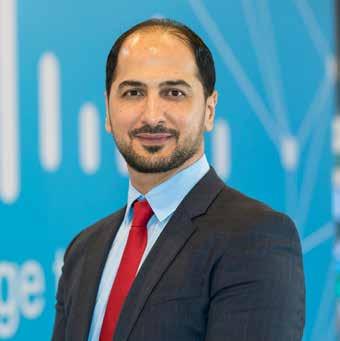
New research, released by Cisco in partnership with Foundry, reveals that organizations in the UAE have approximately three years before AI-driven network traffic increases significantly across key AI workloads, network capacity reaches its limit, and attack surfaces expand beyond what current defenses can manage.
The study, based on a survey of 200 IT leaders in the UAE (and 3,472 across the world), confirms that the rapid rise of large language models (LLMs) and the emerging wave of agentic AI are placing unprecedented strain on enterprise campus and branch networks. Alongside compute, the network is now a major factor in whether enterprise AI deployments succeed or fail.
Mohannad Abuissa, MD & CTO, Solutions Engineering, Cisco MEA–TRC, said, “Our study shows that while UAE enterprises display remarkable ambition to adopt AI, particularly agentic AI, and the networks to support it, the underlying network infrastructure must continue
to evolve at the same pace. As AI workloads increase traffic, latency sensitivity and security complexity, ongoing network modernization is becoming essential to help organizations unlock the transformative power of AI and ensure investments in this space continue to deliver measurable business value.”
More than a third (34%) of the organizations surveyed already have broad enterprise-wide AI agent deployments, and 99% expect an increase in agentic AI use within 24 months. Unlike human users, AI agents trigger dozens of API calls, database lookups, and model inferences in seconds, generating dense east-west traffic that legacy workplace networks were never designed to handle.
Those surveyed report that AI workloads are also more acutely vulnerable to networking issues than traditional applications. These include challenges related to reliability and uptime (78%), bandwidth availability (64%), latency (73%), and packet loss (62%).
Networks Under Growing Capacity Pressure as AI Traffic Expected To Triple
Only 32% of UAE respondents say their networks are fully prepared for projected AI growth (though they are ahead of the global average of 23%). Overall, 68% of respondents – compared to 76% worldwide – admit they need upgrades, 81% anticipate they will hit campus and branch capacity limits within three years, and 9% are already experiencing capacity con-
straints due to AI workloads.
Networking and AI experts in the UAE expect AI’s overall traffic impact to more than triple within the next three years, with the highest individual workload increase, around 126%, attributed to agentic AI. Wi-Fi is emerging as a major bottleneck for AI workloads, with half of the respondents listing it as the area driving the greatest increase in capacity requirements.
The findings also point to a disconnect between AI ambition and network readiness: 76% of IT leaders are more confident in their organization’s AI strategy than in the network's ability to deliver on it. While AI adoption has accelerated plans to modernize network infrastructure for 94% of respondents, budget remains a barrier. In the UAE, 42% say budget constraints limit their ability to modernize to a great extent, higher than the global average of 31%, while 51% say they are limited to some extent.
Attack surfaces are already expanding while observability is a challenge
AI has also created a challenging security environment, with 91% of respondents struggling to keep up and 89% saying AI is already causing damage. Two-thirds (66%) also believe that AI-related threats are evolving faster than their ability to adapt. Meanwhile, the observability gap is widening as 54% of UAE respondents say they lack adequate visibility into AI-related traffic flows across their network.
The findings make it clear that networking resilience, observability, and adaptive security are not supporting acts in the AI era, they are essential for functioning AI. Organizations that treat continued network modernization as a prerequisite to their AI strategy, rather than a parallel workstream, will define the next decade of enterprise AI.
Together, the two companies aim to help manufacturers align planned and real-world operations to reduce downtime and improve efficiency.
Siemens and IFS announced a strategic partnership to help manufacturers connect engineering intelligence with operational reality – increasing the value of their products and optimizing their production assets across the entire product lifecycle with industrial AI.
The collaboration brings together Siemens’ leadership in industrial AI, engineering, automation and manufacturing execution and IFS’s strengths in industrial AI, enterprise asset management and field service domains. Together, the two companies aim to help manufacturers close a persistent gap: the disconnect between how factory operations are designed and how they run in reality, where unplanned downtime, disconnected maintenance schedules, siloed production data and supply chain disruption continue to erode throughput, agility, and margin.
Manufacturers are under growing pressure to do more with their existing assets – produce more on the plant floor, protect margins, and extend the value of equipment across its full lifecycle and react to change with greater agility and adaptability. Yet many still operate with production, maintenance planning and supply chain management systems that don’t talk to each other, meaning engineering intent, real-world performance, and service strategy remain disconnected.
Industrial AI is central to the partnership’s ambition. Siemens and IFS share the belief that the next era of industrial performance will be defined by bringing the physical and digital worlds together to help manufacturers translate design intent into operational reality and connect that operational reality back into better design to accelerate innovation.
Siemens’ comprehensive Digital Twin brings the engineering, simulation and manufacturing context while IFS brings the service history, asset behavior and operational lifecycle data that show how those products and assets perform in the real world. Together, they plan to create a closed loop Digital Twin grounded in both design intent and field performance that is secure, governed and auditable across design, simulation, service records, factory execution and can be trusted to deploy at industrial scale.
Unlike generic AI models, industrial environments demand accuracy, reliability, regulatory compliance and adaptability to drive optimization and agility, as even small error rates are unacceptable when decisions affect safety, compliance and costly physical assets. The partners’ shared approach to industrial AI is built for this reality.

Mark Moffat CEO, IFS
“Industrial AI only delivers value when it is grounded in both engineering intent and real-world performance,” said Tony Hemmelgarn, president and chief executive officer, Siemens Digital Industries Software. “Together with IFS, we are bringing these domains together by connecting design, manufacturing and asset lifecycle data in a secure, contextualized data fabric. By converging our combined strengths in industrial AI, together we will empower our customers with our vision of an executable Digital Twin that will enable them to accelerate innovation with confidence.”
“Manufacturers need their factory floor to behave the way it was designed. This partnership with Siemens brings together two companies that each own a critical piece of the puzzle. Agentic AI is the critical frontier, and industrial leaders need solutions with closed loop models and data, and a rich set of context that will not hallucinate in active operations,” said Mark Moffat, chief executive officer, IFS. “By combining our collective strengths in Industrial AI, we can help manufacturers close the loop between design and reality, and unlock real, measurable performance gains.”
Sabya Sen, Vice President, IMEA & APAC at Alteryx, discusses how organisations are moving beyond AI experimentation by embedding trusted analytics, governed workflows and generative AI into everyday business decision-making.
In practice, how are AI-driven insights reshaping enterprise workflows and decisions, and where does Alteryx differentiate in enabling that shift?
AI-driven insights are fundamentally changing the speed and confidence with which enterprises operate. The biggest shift is happening within the workflow itself—analytics is no longer confined to end-of-process reporting, but embedded directly into how work is planned, executed, and refined. This is especially critical in areas like forecasting, customer operations, and compliance, where decisions must be timely, accurate, and grounded in trusted data.
However, many organisations still stop at visibility. Dashboards can highlight where pressure is building, but they don’t inherently drive the next action. Alteryx helps close that gap by connecting data preparation, business logic, automation, and AI into governed, repeatable workflows. This ensures AI outputs are contextualised, traceable, and aligned with how the business actually operates. By combining the creativity of AI with the precision of analytics, Alteryx enables organisations to move from insight to action—turning generative reasoning into reliable, scalable automation.
What role do no-code and low-code platforms really play in making AI accessible to business users?
The people closest to the business often understand the problems best. They know what data matters, where delays occur, and how decisions are actually made, even if they don’t write code. Nocode and low-code platforms give these users a practical way to contribute to analytics and AI without relying entirely on specialist teams.
This shift is already underway. Alteryx research shows business and IT leaders expect responsibility for AI workflows to move from centralized teams to individual lines of business by 11% over the next three years.
A visual, governed platform enables business users to prepare data, apply business rules, test assumptions, and automate repeatable processes, all within defined guardrails. At the same time, central teams maintain oversight through standards, security, and governance. The result is a more balanced model, with faster innovation at the edge and control at the core.
Markets like the UAE are accelerating this shift, supported by strong national AI strategies and a focus on practical, outcome-driven adoption.

Sabya Sen Vice President, IMEA & APAC, Alteryx
How is Alteryx bringing generative AI into its platform, and what real-world use cases are emerging from customers?
Alteryx is embedding generative AI directly into the flow of governed analytics, rather than treating it as a separate layer for experimentation. LLMs are highly effective at interpreting, summarising, and exploring information, and with 82% of Middle East employees reporting that AI has improved their productivity, the shift toward adoption is clear. However, enterprise decisions still depend on high-quality, trusted data, defined business logic, and a clear audit trail.
Alteryx gives users a natural language interface to build and refine workflows within Alteryx One. In many cases, a single prompt can generate a full workflow in under 90 seconds. At the same time, GenAI tools enable organisations to use enterprise-approved models such as OpenAI, Gemini, Anthropic, or their own custom models within governed processes.
This approach is already driving practical use cases across the business. Teams can quickly make sense of high-volume, unstructured information, including customer feedback, operational documents, invoices, contracts, and compliance reports. Work that was once manual and inconsistent can now be transformed into structured, governed outputs that are easier to review, reuse, and scale with confidence.
What are the most common barriers enterprises face when trying to operationalise analytics and AI at scale?
Alteryx research shows that fewer than one in four AI pilots reach production, underscoring a clear gap between investment and real impact. Organisations are often held back by low trust in AI outputs, poor data quality, and legacy systems that cannot scale, compounded by fragmented data and inconsistent governance.
That trust gap widens with higher-value use cases. While many are comfortable using AI for repetitive tasks, far fewer rely on it for strategic decisions. Only 28% trust AI for decision-making, and 27% for forecasting and planning.
In MENA, talent is an additional constraint, making upskilling in data and AI critical, particularly in fast-growing markets like the UAE and KSA. Many organisations also struggle with initiatives that lack clear alignment to business priorities, resulting in pilot fatigue.
At scale, success comes down to trusted data, the right skills, and governed workflows that can be continuously improved.
How do organisations move from generating insights to actually embedding them into day-to-day decision-making?
McKinsey estimates that AI adoption in the Middle East has reached around 84% of organisations, yet only 31% have scaled use cases and just 11% are seeing meaningful value. This highlights the real challenge, which is not access to insights, but embedding them into how decisions are made.
That requires designing analytics around action, not reporting. Organisations need to start with the decision itself: where it happens, who owns it, what information is needed, and what causes delays. Whether it’s spend visibility in finance, demand signals in supply chains, or exception detection in compliance, the focus should be on enabling better, faster decisions.
From there, insights must be built into repeatable, governed workflows with clear ownership and measurement. If insights rely on manual processes or individual interpretation, they rarely influence day-to-day behaviour. The most effective organisations deliver outputs directly into the systems where teams already work, turning insight into consistent, scalable action.
How important is data preparation and data quality to AI success, and is that becoming more complex with GenAI?
Data preparation and quality are foundational to AI success. AI is only as reliable as the data behind it, and if that data is incomplete, inconsistent, or disconnected from business context, the outputs can lead to poor decisions. Alteryx research shows that 49% of leaders see high-quality, accessible, and well-governed data as the most important requirement for AI to reach its full potential.
Generative AI adds another layer of complexity by introducing large volumes of unstructured data, including emails, documents, and reports. While this creates new opportunities, it also raises the bar for structure, lineage, and validation. Organisations need clear visibility into where data comes from, how it has been transformed, and whether it can be trusted.
Strong data preparation is what turns AI from a powerful interface into a reliable, enterprise-grade capability.
What trends are you seeing in the Middle East when it comes to analytics maturity and AI adoption?
Across the UAE, Saudi Arabia, and the wider Middle East, there is strong ambition backed by national digital strategies, cloud adoption, and growing investment in AI skills. The region is moving quickly beyond early awareness, with AI projected to boost Middle East economies by up to 34% by 2030.
Enterprises are also becoming more focused in their approach, asking sharper questions around data readiness, explainability, compliance, and business ownership. Demand for AI talent is rising, with roles in AI, data science, and leadership among the top hiring priorities in the UAE and KSA, where AI hiring is growing by 39% and 26% year on year.
At the same time, there is increasing demand for platforms that support both technical and business users, as responsibility for AI shifts closer to individual departments. This reflects a broader shift, where organisations are treating analytics and AI as core operating capabilities that drive performance, resilience, and decision-making.
“In MENA, talent is an additional constraint, making upskilling in data and AI critical, particularly in fast-growing markets like the UAE and KSA. Many organisations also struggle with initiatives that lack clear alignment to business priorities, resulting in pilot fatigue.”
As AI infrastructure becomes more complex and power intensive, Submer is expanding beyond liquid cooling to help organisations design integrated, AI-ready data centres.
Artificial intelligence may be transforming software, business models and public services, but scaling AI increasingly depends on the infrastructure required to power, cool and operate compute-intensive environments reliably.
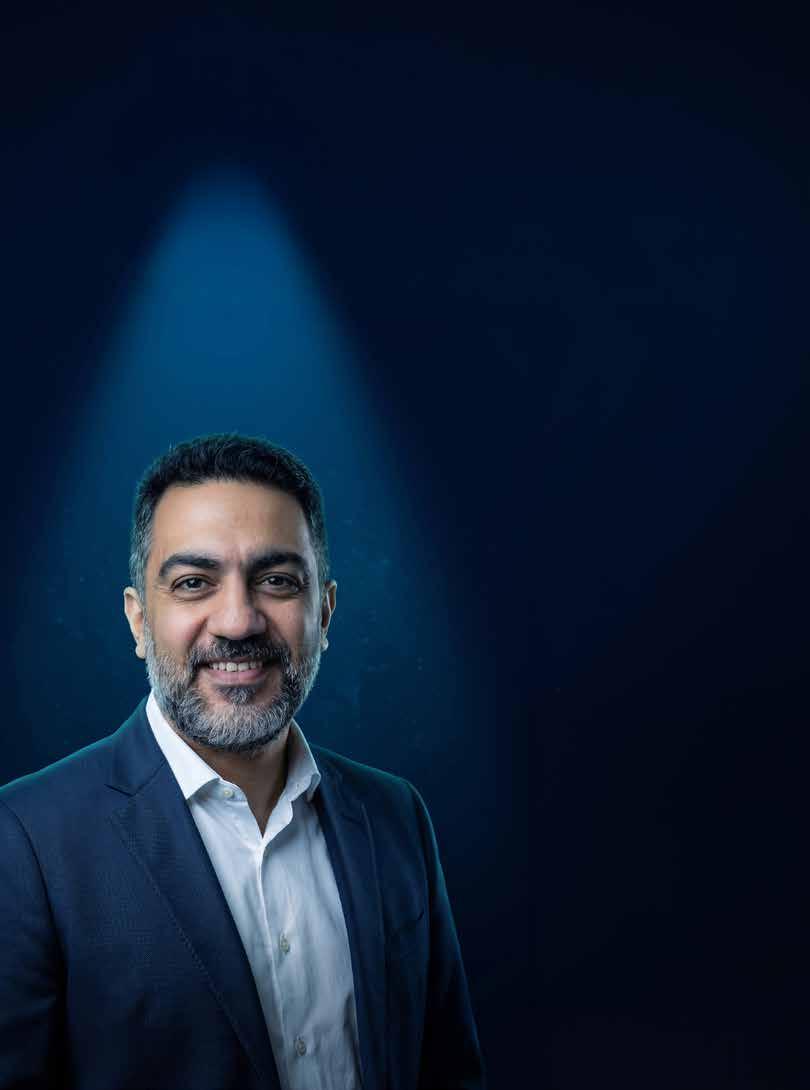
Khalid Aljamed General Manager, META, Submer
For Submer, AI represents an opportunity to broaden its role beyond liquid cooling. The company is positioning itself as an infrastructure partner, helping organisations build integrated, AI-ready data centres by bringing power, cooling, mechanical engineering and IT together through a unified approach.
According to Khalid Aljamed, General Manager, Middle East, Turkey & Africa at Submer, this integrated approach is becoming increasingly important as organisations move from experimenting with AI to building infrastructure capable of supporting strategic enterprise and national workloads.
“At Submer, we do not treat cooling as an afterthought bolted onto a rack. We build integrated AI environments that combine mechanical engineering, IT integration, and direct liquid cooling into a single execution model so operators can scale reliably.”
Submer’s proposition rests on the view that AI infrastructure cannot be designed as a conventional data centre expansion. The density, power consumption and thermal requirements associated with modern AI systems are fundamentally changing how facilities need to be planned, built and operated.
Compute is only one element. Power delivery, thermal management, facility architecture, networking and deployment processes must work together if the infrastructure is to deliver its intended capacity.
“The key point is that AI infrastructure needs to be designed as a complete system,” says Khalid. “Power, cooling, compute, and deployment processes all need to work together. If one element becomes a bottleneck, the entire AI environment is impacted.”
Submer’s role, he adds, is to help customers remove these constraints and build environments ready to support the next generation of AI workloads.
As organisations move from AI experimentation to production deployments, attention is shifting from compute alone to the infrastructure required to support it.
“Everyone focuses on securing GPUs, but they forget what it takes to actually feed and cool them. Adding compute without looking at the surrounding facility creates massive bottlenecks.
You can have the latest hardware available, but if the facility cannot support the power and thermal requirements, you cannot get the expected performance from that investment,” says Khalid.
Power availability is currently the biggest hurdle. In many markets, securing grid capacity takes longer than building the physical site. This changes the way organisations need to approach AI infrastructure planning.
“The conversation cannot start with the servers alone. It has to start with understanding how much power is available, how efficiently it can be delivered, and how quickly capacity can be brought online,” says Khalid.
Second is thermal management.
“Traditional air-cooling hits a hard physical wall once you push rack densities past high-kW thresholds. At that point, adding more cooling capacity does not solve the problem. The architecture itself needs to change,” says Khalid.
Finally, it comes down to integration. And this is where Submer, with its integrated approach, offers a distinct advantage. Buying compute, networking, and thermal systems from five different vendors leaves you spending more time troubleshooting interface points than running workloads. AI infrastructure requires a much more coordinated approach where all the pieces are designed to work together from the beginning, says Khalid.
“In a standard data centre, if a row overheats, the cooling vendor blames the server manufacturer, and the manufacturer blames the network layout. That approach falls apart under high-density AI workloads because the systems are no longer independent. Everything is connected. An integrated strategy treats thermal, mechanical, and IT layers as one system. When you design these elements together, you remove many of the challenges that appear later during deployment and operation.”
Submer has evolved beyond liquid cooling hardware into an endto-end infrastructure partner. According to Khalid, having one engineering vision and one accountable team from initial layout to final deployment eliminates friction, cuts commissioning time, and ensures the facility hits its designed capacity.
“This becomes even more important as AI environments scale. Customers do not just need infrastructure that works on day one. They need infrastructure that can continue supporting higher densities, new generations of hardware, and increasing workloads without requiring major redesigns.”
An integrated approach is also intended to improve predictability. Operators gain greater clarity over what is being deployed, how it is expected to perform and which organisation is accountable for delivering the final outcome.
This becomes particularly important as AI environments expand. Infrastructure cannot be designed only to function at its initial capacity. It must be capable of supporting higher rack densities, new generations of hardware and growing workloads without requiring major redesigns.
Storing data inside a border is just basic compliance. True AI sovereignty comes down to operational independence, the ability to build, operate and maintain the infrastructure needed to support critical AI workloads locally. That requires more than data residency. It depends on reliable power, resilient facilities, technology partnerships, supply chain access and the engineering expertise needed to keep national AI platforms running independently.
The Middle East is leading here because governments are not just buying cloud instances. They are building national AI platforms from the ground up. They are investing in the infrastructure layer that will support AI innovation for years to come.
Khalid says, “Submer supports this by providing the core infrastructure technology that lets cloud providers and public entities build self-sustaining AI sites locally. The objective is to create reliable AI environments that can operate at scale, with the performance and resilience required for national and enterprise-level workloads.”
As AI clusters become larger and more power-intensive, access to energy is beginning to determine where infrastructure can be built and how quickly capacity can be deployed.
“Power is the hard currency of AI today. The conversation used to be about how fast you could pour concrete. Now it is about how many megawatts you can draw from the grid. As AI workloads continue to scale, power availability is becoming one of the biggest factors determining where and how quickly new infrastructure can be deployed,” says Khalid.
To solve this, efficiency per watt needs to be looked into, not just total power draw. Every megawatt wasted pushing cold air
“An integrated strategy treats thermal, mechanical, and IT layers as one system. When you design these elements together, you remove many of the challenges that appear later during deployment and operation”
through a room is a megawatt that is not running compute. The challenge is not only securing more power, but making sure every available megawatt delivers maximum AI capacity.
“This requires a different approach to infrastructure design. Power planning, rack density, and thermal management need to be considered together from the beginning. You cannot solve these challenges independently. By moving to advanced liquid cooling, we drastically cut facility overhead load. That lets operators squeeze significantly more AI compute out of the exact same power allotment. The goal is to help organisations maximise their existing resources while building infrastructure that can support future AI growth,” says Khalid.
In oil and gas, manufacturing, or smart city grids, waiting seconds for a cloud response in another region is not an option. Decisions need to happen at the sensor level in milliseconds. As more industries integrate AI into real-time operations, processing data closer to where it is generated becomes increasingly important.
The challenge is that edge sites are harsh, constrained, and rarely have on-site IT technicians. You cannot just drop standard enterprise servers into a dusty shelter or remote substation and expect them to operate reliably without additional support.
Khalid says, “Edge AI requires compact, sealed, low-maintenance infrastructure that runs efficiently with zero reliance on chilled water. The infrastructure needs to be designed for the environment where it will operate, not simply adapted from traditional data center models. It comes down to building ruggedised, set-and-forget nodes that connect smoothly back into the core network. The ability to deploy AI closer to the point of decision, while maintaining reliability and operational simplicity, will be critical as industries across the region continue their digital transformation.”
“Customers do not just need infrastructure that works on day one. They need infrastructure that can continue supporting higher densities, new generations of hardware, and increasing workloads without requiring major redesigns”
Submer's approach to Edge AI combines purpose-built infrastructure with a growing partner ecosystem. The company provides modular, containerised infrastructure with immersion and directto-chip cooling designed for high-density GPU deployments. Earlier this year, Submer partnered with ZEDEDA to integrate it’s Edge Intelligence Platform, enabling customers to create, secure and operate Edge AI at scale through complete lifecycle orchestration. More recently, Submer's acquisition of Radian Arc has expanded its capabilities further, allowing it to provide telecom operators and industrial users with a carrier-embedded GPU platform capable of running low-latency AI inference directly at the network edge.
Traditional custom data centre builds take years, but AI demand scales in months. The speed of AI development is forcing organisations to rethink how infrastructure is designed and deployed. Waiting through long construction cycles can mean missing opportunities as workloads and business requirements continue to evolve.
Khalid says, “Modular design changes that timeline completely. By using pre-engineered, factory-validated modular blocks, you can deploy baseline capacity fast and scale incrementally as cluster demand grows. This approach also reduces uncertainty because much of the engineering and validation is completed before the infrastructure reaches the customer site.”
Submer enables modular data center design through a scalable, plug-and-play approach using self-contained immersion units like the MicroPod, SmartPod, and MegaPod. By integrating pre-engineered power, plumbing, and server chassis, this method allows for instantaneous, high-density, and incremental infrastructure deployment.
“Because these modules are engineered specifically for extreme thermal loads from day one, you get high-density capability without retrofitting old space or taking design shortcuts. You are not trying to force new AI requirements into infrastructure that was designed for a different era. The advantage is flexibility. Organisations can start with the capacity they need today while maintaining a clear path to expand as AI workloads increase. This creates a more predictable deployment model without compromising reliability or performance,” adds Khalid.
Sustainability and performance used to be treated as a tradeoff, but in high-density AI they align completely. Wasted energy is just lost margin. When infrastructure is inefficient, organisations are not only increasing their environmental impact, they are also reducing the amount of available power that can be dedicated to compute.
Khalid adds, “Operating at scale means managing heavy power draw and constant heat output. Designing for sustainability means capturing that thermal energy efficiently and minimising wasted power. The focus should be on optimising the complete infrastructure path, from power input to cooling efficiency and
workload performance.”
He adds further, “When you optimise the thermal path, you do not just lower your carbon footprint. You significantly cut your operational cost per TFLOPS. Efficiency becomes a business advantage because it allows organisations to achieve more AI capacity from the same resources.”
The future of AI infrastructure will be defined by how effectively power is used and the heat is managed. The most successful deployments will not simply be the largest ones, but the ones that deliver the highest performance with the greatest efficiency.
Water consumption is another emerging consideration, particularly in dry regions such as the Middle East.
“Traditional evaporative cooling can consume significant quantities of water, raising questions about its long-term viability as data centre and AI capacity expand. In dry regions like the Middle East, using millions of liters of potable water for evaporative cooling is not sustainable long term. Water scarcity is a strategic reality. As AI infrastructure continues to expand, organisations will need to consider not only how much power they consume, but also how they manage other critical resources,” says Khalid.
Cooling has always been one of the biggest challenges in data center design, but AI is changing the scale of the problem. Higher-density workloads generate significantly more heat, which means traditional approaches become increasingly difficult to sustain, especially in regions where water availability is limited.
Submer’s closed-loop liquid cooling achieves zero direct water consumption while handling extreme heat loads. This gives operators a more sustainable and predictable approach to managing high-density AI environments without relying on water-intensive cooling methods.
Khalid says, “As global regulations tighten and water becomes a key facility metric alongside PUE, zero-water thermal management will transition from a preference to a non-negotiable requirement for site permits. The future of AI infrastructure will require solutions that deliver both performance and resource efficiency, especially in regions where sustainability considerations are directly linked to long-term infrastructure planning.”
Increasingly, a partner who understands the entire path, from power input down to rack architecture and edge distribution, is preferred by clients. AI infrastructure has become too complex for individual components to be considered separately.
Khalid says, “The goal is to reduce complexity for customers. When infrastructure is designed and delivered as an integrated system, operators can move faster, reduce deployment risks, and focus on running AI workloads instead of solving integration challenges between different technologies. No single company owns every layer of the AI ecosystem. Building an AI-ready
facility requires tight coordination between chipmakers, OEM server manufacturers, software orchestrators, and mechanical infrastructure teams. The complexity of AI deployments means that collaboration is no longer optional. It is a requirement.”
Partnerships, such as Submer’s with orchestration specialists like ZEDEDA, help deliver fully validated platforms. For customers, validation matters because it reduces uncertainty during deployment. They want confidence that the infrastructure has been tested and designed to work together before it reaches production.
The Middle East may have an important advantage as it develops its next generation of AI infrastructure. Much of the capacity is being built as greenfield infrastructure rather than adapted from legacy facilities.
“The Middle East has a massive advantage: we are not bogged down by legacy data centre designs,” says Khalid.
This creates an opportunity to build facilities around high-density AI requirements from the outset, incorporating advanced thermal management, modular design, power efficiency and water conservation into the initial architecture.
According to Khalid, five foundations will determine which deployments succeed over the next three to five years: secured grid power, resilient high-density thermal management, local operational sovereignty, water-free sustainability and strong partner ecosystems.
Submer aims to play a broader role in that infrastructure buildout, not simply as a provider of liquid-cooling technology, but as a partner helping organisations engineer the complete environments required for AI at scale.
“By moving to advanced liquid cooling, we drastically cut facility overhead load. That lets operators squeeze significantly more AI compute out of the exact same power allotment.”
As organizations across Qatar move beyond AI experimentation, the focus is shifting towards the infrastructure, governance, cybersecurity and data foundations needed to scale enterprise AI securely.
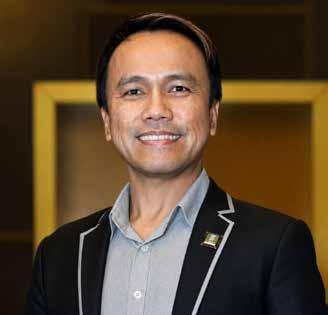
Ferdinand C. Guarin Head of IT, Qatar Plastic and Wooden Products Co. W.L.L. (QPPC)
Artificial intelligence is entering a new phase across Qatar's enterprise landscape. After several years dominated by experimentation and proofs of concept, organizations are increasingly focused on embedding AI into core business operations. Success is no longer measured by the number of pilots launched, but by how effectively AI can be deployed at enterprise scale while maintaining governance, resilience and regulatory compliance.
Technology leaders suggest that this transition is changing investment priorities. Infrastructure, data quality, cybersecurity, governance and operational readiness are becoming just as important as the AI models themselves.
For Areg Azarian, a senior AI and Data leader from Qatar's banking sector, the industry's attention is moving beyond individual AI use cases towards enterprise-wide AI platforms.
"The priority I see defining this period is the shift from AI models to AI platforms - infrastructure that lets organizations roll out agents with reusable skills for process automation at scale, rather than hand-crafting each use case."
Rather than viewing AI as a collection of isolated applications, organizations are beginning to build reusable platforms supported by governance controls, observability, structured knowledge repositories and hybrid cloud environments capable of supporting agentic AI across multiple business functions.
Enterprise AI moves into production
Across industries, AI initiatives are steadily crossing the gap be-
tween experimentation and production deployment.
In banking, Areg points to production deployments supporting credit analysis, enterprise-wide document review, intelligent document digitization, AI-enabled business intelligence and new digital lending propositions.
"Crossing that line is the real test of any AI programme."
He notes that the greatest business impact is emerging in productivity improvements across frontline operations and credit functions while simultaneously enabling entirely new digital products, with human judgement remaining central to decision-making.
Manufacturing organizations are following a different, but equally pragmatic path.
According to Ferdinand C. Guarin, Head of Information Technology at Qatar Plastic and Wooden Products Co. W.L.L. (QPPC), AI has already become part of day-to-day operations, supporting cybersecurity reviews, technical analysis, policy development and evidence correlation.
However, he stresses that AI remains an assistant rather than an autonomous decision-maker.
"AI supports analysis and interpretation in our workflows, but it does not independently authorize remediation, closure, or operational action. Conclusions remain tied to available evidence and human accountability."
That distinction, he believes, will become increasingly important as organizations deploy AI into business-critical environments.
While AI capabilities continue to improve rapidly, both executives believe the greatest challenges lie elsewhere.
For Areg, data readiness remains the single biggest obstacle to scaling enterprise AI.
"Agents don't just need clean tables; they need policies, procedures and registries that are structured, current and digitalised."
He argues that much of an organization's knowledge still exists in formats designed for human consumption rather than machine reasoning. Transforming that institutional knowledge into structured, retrievable information is becoming a foundational requirement for agentic AI.
The second challenge is organizational. Users often expect deterministic software behaviour from probabilistic AI systems, making education, expectation management and governance just as important as technical implementation.
Ferdinand sees similar challenges from an operational perspective.
Rather than focusing solely on algorithms, organizations need reliable operational evidence, clearly defined governance structures and accountability frameworks before AI outputs influence business decisions.
"AI can process information quickly, but it cannot make incomplete, inconsistent, or outdated evidence reliable simply by processing more of it."
In operational technology environments, where decisions may directly affect production, safety and business continuity, these governance disciplines become even more critical.
Sovereign infrastructure shapes AI strategies
As AI adoption accelerates, Qatar's regulatory environment is also influencing technology architecture.
Rather than viewing data sovereignty as a constraint, Areg believes clear regulatory frameworks are encouraging organizations to modernize with greater confidence.
"Sovereignty requirements are shaping architectures towards sovereign cloud and on-premises AI infrastructure."
For regulated industries such as financial services, hybrid architectures combining sovereign cloud and on-premises infrastructure are increasingly becoming the preferred model, balancing scalability with strict requirements around data residency and regulatory compliance.
He also points to Qatar's growing AI ecosystem, including sovereign cloud investments, partnerships with global AI technology providers and expanding digital infrastructure, as creating favourable conditions for enterprise AI adoption.
Cybersecurity enters the AI era
The expansion of enterprise AI is also reshaping cybersecurity priorities.
According to Areg, AI itself is becoming an entirely new attack surface. Organizations are increasingly investing in protections against prompt injection, model manipulation, data leakage, retrieval poisoning and AI-specific privilege management.
As AI agents evolve from answering questions to executing business processes, least-privilege access models will become as important for AI systems as they already are for human users.
For Ferdinand, cybersecurity priorities are evolving in a slightly different direction.
Rather than deploying additional security products, organizations are placing greater emphasis on validating whether existing controls continue to operate effectively.
"The real question is not simply whether the job ran, but whether the available evidence supports confidence that recovery objectives can still be achieved."
He explains that QPPC's Intelligent Security Orchestration & Assurance Framework (iSOAF) brings together operational evidence from backup, endpoint security, Microsoft 365, firewall and infrastructure environments to help validate whether reported condi-

Areg Azarian
Senior AI and Data leader, Banking sector, Qatar
tions accurately reflect operational reality.
Data becomes the competitive advantage
Both executives ultimately return to the same conclusion: enterprise AI is only as effective as the quality of the underlying data. Areg believes modern data platforms, real-time data availability and well-governed information assets increasingly determine whether AI initiatives scale successfully or stall after promising pilot projects.
"A pilot can succeed on a curated extract; production needs deep history, real-time availability, and the right formats."
He also expects technologies such as knowledge graphs, vector-native storage and real-time data streaming to play an increasingly important role in improving AI quality by providing richer business context.
Defining the next generation of technology leadership
As Qatar's digital transformation continues to accelerate, technology leadership itself is evolving.
For Areg, success over the next 12 months will depend on developing local talent, encouraging experimentation and treating governance and ethics as enablers rather than barriers to innovation. Ferdinand believes leaders will increasingly be judged not simply by how successfully they deploy AI, automation and cloud technologies, but by how effectively they demonstrate that these environments continue to operate securely, reliably and in alignment with business objectives.
Taken together, their perspectives suggest that Qatar's enterprise AI journey is entering a more mature phase. The conversation is moving beyond individual AI applications towards building resilient digital foundations capable of supporting AI at scale. Organizations that succeed are likely to be those that invest not only in intelligent systems, but also in the governance, infrastructure, operational resilience and trusted data required to turn AI into sustainable business value.
Salman Kazmi, Area Vice President – Middle East, Turkey and Africa (META), BMC Helix, discusses how the company's next chapter under new ownership will sharpen its focus on ServiceOps, why unified operational visibility is becoming critical for agentic AI, and how Middle East organisations are accelerating their AI ambitions.

Salman Kazmi
Area
Vice President –META, BMC Helix
BMC Helix has now become an independent company. How does this shape the company's future direction?
We now have capital, leadership attention and investment directed exclusively at us, at our ServiceOps strategy that we pioneered a few years ago, and everything that we're doing around Agentic AI.
As a single independent entity with a very clearly defined roadmap, we can choose where we want to move faster based on our customers' needs.
The other thing I look at is partnerships. Before, they needed to be balanced across a much larger organisation. Now they can be looked at exclusively from a Helix perspective.
Independence is also a commitment to both customers and talent. Helix is no longer a sub-brand. This is our entire ethos. This is our thesis. This is what we do. When people join us, they know exactly what they're coming in for. They're not joining a much
larger company. They're joining a company specialising in the ServiceOps domain and in AI.
Tell us about the ServiceOps vision and how it is shaping the deployment of Agentic AI.
When we talk about ServiceOps, it's a combination of two distinct areas. One is service management and the other is operations management. Together, you have end-to-end visibility across the entire lifecycle within an IT organisation.
If you're deploying Agentic AI, or AI generally, and you're only doing it across half of that environment, you're only seeing half the picture. With ServiceOps, you can see what's happening from a user perspective as well as what's happening from a system perspective.
If you have good data quality across both, then whatever Agentic capability you deploy is seeing the bigger picture, so the outcomes become much more accurate. Otherwise, you're simply creating confidence based on half the picture you have.
When you bring together service management and operations management, you're giving AI the broader context it needs to make better decisions.
Why is this broader operational context becoming so important as organisations adopt Agentic AI?
Today, AI and Agentic capabilities are becoming part of organisations' strategic plans for the financial year. Particularly within the public sector, we're seeing sovereign mandates around AI where organisations are expected to demonstrate progress.
Whether it's Saudi Vision 2030, the UAE's AI initiatives or other sovereign programmes across the region, organisations want to align themselves with those national ambitions.
If you're going to allow AI to make recommendations or autonomous decisions, then it needs access to complete and trusted information. Without that, you're making decisions based on an incomplete view of the environment.
That's why we believe ServiceOps becomes such an important foundation for Agentic AI. It's giving AI the visibility it needs across users, systems and services, rather than limiting it to isolated parts of the organisation.
How does BMC Helix differentiate its approach in this market?
Our focus has always been very clear. We're a ServiceOps company. Everything we do is centred around helping organisations manage complexity across their environments. Our role isn't to replace everything customers already have.
We're an open platform. Customers have technologies they've invested in over many years, and they're comfortable with those investments.
We're not asking them to replace everything with Helix. What we're asking for is the data, the metrics and the topology.
Once we have that, we can create the bigger picture. That's what allows customers to gain much better visibility across their environments and ultimately achieve better operational outcomes.
What are the major trends you're seeing as enterprises across the Middle East begin deploying AI and Agentic AI? What challenges are they facing, and how is BMC Helix helping address them?
The biggest challenge comes down to one fundamental issue, and it isn't unique to AI. It's data. Many organisations still don't fully understand the data they need in order to have honest conversations with the Agentic systems they're planning to deploy.
The first question is whether they know where their data is. The second is whether they understand the quality of that data. And finally, do they really know what outcomes they're trying to achieve?
If you have good data, you can achieve good outcomes. If you don't, you're making decisions with confidence based on only part of the picture.
Another challenge is helping organisations understand exactly what they're trying to accomplish. Are they looking for speed? Are they looking for accuracy? Are they looking for prediction? Do they need automation, or do they actually need Agentic AI?
There's an important difference between the two. Automation is a set of rules. Agentic is a set of outcomes.
Because everything is moving so quickly, organisations are having to define the outcomes they want first, understand what they already have internally that will help them achieve those outcomes, and then decide how much they should tackle in each phase.
Are organisations beginning to see measurable business outcomes from their AI initiatives?
My honest answer is that, overall, we're still in the experimentation phase. What we are seeing, though, is that the gap between the leaders and the laggards is widening.
Some organisations are embracing AI and Agentic capabilities very aggressively. They're making AI part of the lifeblood of their organisation. We have financial institutions that have developed very clear roadmaps. They've looked at all the use cases across the business, implemented them, and then they're continuously going back, reviewing what worked, what didn't, and identifying
what they should do next.
Other organisations like the idea of AI, but they haven't yet established a defined strategy, a dedicated working group or the right governance structure to drive measurable outcomes. They're moving because they know they have to, but they're not moving with the same clarity. That's why it's always better to begin with one successful use case. Once you've demonstrated success, the next use case becomes much easier. When organisations try to do too many things at once, the outcome becomes diluted because they're trying to change too many parts of the business simultaneously.
Measuring value also depends on the industry. Banking, telecommunications and government are moving very quickly from pilot projects into production. But they're doing it around very specific use cases. They're focused on solving specific operational challenges or improving particular user journeys. Whether that's incident triage, change risk or self-healing infrastructure, they're measuring success against clearly defined business outcomes.
I still think we're around 18 to 24 months away from the next major phase. That's when many of these sovereign initiatives begin requiring organisations to demonstrate real progress. Once that happens, we'll move into the next challenge.
If I've deployed hundreds or even thousands of AI agents, how do I manage them? How do I manage them across different functions? How do I measure their value? How do I coordinate them across the organisation? Those are the conversations that are coming next.
Which industries are driving demand for BMC Helix across the region?
BMC is a 46-year-old organisation. We originally started because there was a need to manage the complexity of mainframes in the oil and gas industry.
“If you have good data, you can achieve good outcomes. If you don't, you're making decisions with confidence based on only part of the picture.”
Five or six years ago, Helix was established as a separate platform. We took everything we knew, removed what we no longer needed and rebuilt the platform around modern technologies with AI at its foundation.
Today, we're very strong globally across a number of industries. We work extensively with banks, telecommunications companies, oil and gas organisations, governments, airlines, travel companies and many other sectors.
The common denominator isn't the industry. It's complexity. Any organisation that has complexity, whether that's on-premises, in the cloud or across hybrid environments, has users, services and demand that need to be managed, can benefit from ServiceOps.
Regionally, we have customers across virtually every major sector. We work with government organisations in education, healthcare, oil and gas and defence. We're present across many of the major telecommunications providers in the region. Many leading banks use our technology. We're also working with travel and transport organisations. For us, the focus has always been the same.
As organisations introduce more digital workers and AI agents, how should they manage them? What kind of governance and guardrails are required?
As enterprises begin delegating more operational decisions to AI agents, governance becomes extremely important. Whether you're managing digital agents or people, the principles are actually very similar.
The first thing is having very clear scope boundaries. You need to define exactly what an agent is authorised to do and what requires elevated approval. That's no different from how organisations have always operated.
Thirty years ago you had people and supervisors. Today you have digital agents and human approvals. You still need to define where those approval boundaries sit.
The second thing is audit trails. Every decision and every action needs to be traceable. You need to understand what happened, why it happened, what was triggered, and what the outcome was. That builds confidence. It also builds transparency.
The next area is confidence thresholds. When certainty drops below an acceptable level, the system should automatically escalate to a human. That's how you continue meeting your service level commitments, whether those are for internal users or external customers.
Role-based oversight is equally important. Different stakeholders should review different classes of actions depending on their responsibilities.
Finally, this isn't something you simply deploy and forget. You need regular calibration reviews. Agent behaviour needs to be assessed against business outcomes, not simply whether a task was completed. Once you have that operational feedback, you can continually refine the behaviour of the agents.
You can identify what worked, what didn't work and where changes need to be made. That's how organisations build confidence over time while ensuring AI continues delivering the right business outcomes.
Can you highlight some of the recent announcements from BMC Helix and what customers can expect from the roadmap going forward?
From a product perspective, we've defined a very clear roadmap around our Agentic framework and the agent fleet that we're continuing to expand. One of the biggest trends we're seeing across the industry is what we describe as human on the line and human off the line.
There's a very clear distinction between those two models, and that's an area we've continued to invest in. At the same time, many organisations are now developing their own AI agents. Through our Innovation Studio and our frameworks, we're now able to help customers manage those environments.
I think that's giving customers a great deal of confidence because they're not locked into Helix. That's one of the key principles behind our platform.
We're an open technology. We want to integrate with everything.
Collaboration platforms have become central to enterprise operations. How is Helix adapting to the way people work today?
What we've seen is that organisations don't want people jumping between ten or fifteen different portals every day. They want a single place where work happens.
That's the approach we've taken with Helix. We've built our Agentic capabilities to integrate directly into Microsoft Teams, Zoom and the collaboration tools customers already use. Where the user is working today is where they should also be able to access Helix.
“Banking, telecommunications and government are moving very quickly from pilot projects into production. But they're doing it around very specific use cases. They're focused on solving specific operational challenges or improving particular user journeys.”
Jacob Chacko, Regional Director – Middle East & Africa at HPE Networking, discusses how AI-native networking, edge-to-cloud architectures and Zero Trust security are enabling enterprises and smart infrastructure projects across the Middle East to support the next generation of digital transformation.
Jacob Chacko Regional Director –MEA, HPE
As countries like the UAE and Saudi Arabia accelerate smart city and giga project initiatives, how is the role of the network evolving from basic connectivity to a critical digital infrastructure layer, and how is HPE Networking aligning to this shift?
Across the UAE smart-city initiatives and Saudi Arabia’s giga-projects, the network is no longer just about connectivity, it is becoming critical digital infrastructure. It’s the nervous system of the modern city, supporting a wide range of functions, from AI-driven services to real-time citizen experiences. The direction we're seeing, and building toward, is self-driving networks. These
networks continuously learn, adapt, secure, and optimize themselves in real time, reducing the need for manual intervention and responding faster to changing conditions. Our AI-native platform is designed with this in mind, spanning from end-user devices through to cloud environments, and incorporating AI-based tools to help with things like anomaly detection, traffic optimization, and predictive maintenance The goal is to give cities and largescale projects the kind of network foundation that is truly intelligent and autonomous at scale, and can keep pace with what they're trying to build, without becoming a bottleneck.
As enterprises in the region move towards AI-driven operations, how is networking evolving to support this transition? How is HPE Networking AI-native approach addressing these emerging demands?
With more and more organization moving towards AI-driven operations, networking must evolve from a static transport layer to a high-performance, intelligent platform purpose-built for AI workloads. These workloads demand ultra-low latency, massive bandwidth, and real-time data processing across distributed environments – edge to cloud – handling unprecedented scale and complexity. HPE Networking addresses this shift by delivering AI-native, self-driving networks that integrate AIOps, real-time telemetry, and agentic AI. These capabilities enable networks to detect, diagnose, and resolve issues automatically, while continuously optimizing performance and strengthen security.
As organizations increasingly adopt AIOps and automation to improve network performance and user experience, how is this trend influencing the role of HPE Aruba Networking Central within their networking strategy?
HPE Aruba Networking Central is evolving from a traditional network management tool into a strategic intelligence and control platform. It now acts as the AI-driven brain of the network, leveraging real-time telemetry, analytics, and automation to optimize performance and enhance user experience continuously. Central detects anomalies, identifies root causes, and initiates automated remediation, often before users are impacted. By integrating AI, automation, and orchestration, Central enables autonomous op-
erations at scale, reducing complexity, improving reliability, and freeing IT teams to focus on innovation rather than day-to-day operations.
With hybrid work now a long-term reality, how are enterprises in the Middle East rethinking network architecture across campus, branch, and remote environments? Elaborate how HPE Networking is supporting this transformation?
Enterprises across the Middle East are fundamentally rethinking their network architecture from a location-centric model to a user-centric one. Instead of designing networks around a fixed campus or branches, organizations are adopting distributed, cloudfirst architectures that securely connect employees, devices, and applications, regardless of where they are. HPE Networking is enabling this transformation with a unified, AI-native edge platform that spans campus, branch, and remote environments.
Key components include HPE Aruba Networking Central, a cloud-native control plane that provides a single point of control, visibility, and AI-driven optimization across all sites. Additionally, the EdgeConnect Microbranch solution for remote work extends enterprise-grade connectivity and Zero Trust security directly to home offices and small sites, ensuring a seamless and consistent user experience anywhere. This approach allows organisations to deliver a secure, and high-quality connectivity at scale, effectively supporting the long-term adoption of hybrid work models.
“With more and more organisations moving towards AI-driven operations, networking must evolve from a static transport layer to a high-performance, intelligent platform purpose-built for AI workloads. These workloads demand ultra low latency, massive bandwidth, and real-time data processing across distributed environments – edge to cloud –handling unprecedented scale and complexity. ”
As demand grows for high-performance, low-latency connectivity in environments such as smart cities, large venues, and giga projects, discuss how HPE Networking is positioned to address this need?
As demand for high-performance, low-latency connectivity continues to grow in smart cities, large venues, and giga projects, the network is becoming a mission-critical platform. These environments require instantaneous data processing, seamless mobility, and always-on connectivity to support services like AI-driven analytics, smart mobility, public safety, and immersive digital experiences.
HPE Networking is uniquely positioned to address these needs by bringing compute and intelligence closer to where data is generated, whether across campuses, venues, and urban infrastructure. This enables faster decision-making and real-time experiences. By leveraging a single, cohesive platform that integrates Wi-Fi, switching, and SD-WAN , organizations are able to deliver consistent, high-bandwidth connectivity across dense, high-user and latency sensitive environments like stadiums, mega venues and smart cities. Furthermore, HPE’s self-driving network capabilities allow it to detect, diagnose, and resolve issues in real time, reducing latency impacts and maintaining service continuity for critical applications. This comprehensive approach transforms the network into an intelligent fabric capable of delivering the speed, reliability, and automation required for next-generation digital experiences.
How are networking requirements evolving across sectors like utilities, oil and gas, and smart infrastructure, and how is HPE Networking enabling scalable and secure edge connectivity in those sectors?
What we are seeing is, three common shifts are emerging across these industries: First, there is a need for real-time, low-latency operations at the edge. Second, these industries operate in harsh that demand highly reliable and rugged infrastructure. Third, there is a convergence of IT, operational technology (OT), and Internet of Things (IoT) which brings with it a heightened security needs. HPE Networking addresses these evolving demands with an AI-native platform purpose-built for industrial and critical infrastructure environments. This includes converged IT/OT networks that enforce Zero Trust security policies, enabling unified traffic management across multiple domains, while protecting critical infrastructure and ensuring compliance. Additionally, HPE Networking’s rugged, high-availability infrastructure products are designed for harsh environments, continuous uptime, and high reliability, supporting critical operations across factories, energy sites, and infrastructure projects. By enabling real-time data processing, industrial automation, and data-driven decision-making at scale, HPE helps industries transition from simple connectivity to intelligent, secure, and resilient edge networks.
As networking and security continue to converge, how are enterprises in the region approaching SASE architectures? How is HPE Networking helping organizations secure access
across distributed users, devices, and locations?
The traditional network perimeter has effectively disappeared. Users, devices, and partners now access applications from anywhere, campus, branch, home, or on the move, while data and workloads span multiple clouds. As a result, organizations are shifting from fragmented, siloed tools to cloud-delivered, unified architectures that enforce consistent security and network policies everywhere. Across the Middle East, where hybrid work, smart infrastructure, and cloud adoption are accelerating, enterprises are taking a phased approach to SASE architectures. Key priorities include Zero Trust access models based on identity, cloud-delivered security to protect SaaS and hybrid workloads, and unified visibility and control across distributed environments. Another priority is the simplification of multi-vendor stacks to further reduce complexity and cost. HPE Networking is helping organizations operationalize SASE through a unified, AI-native SASE architecture that integrates SD-WAN and SSE functionalities. This platform enables secure, high-performance connectivity across all locations, ensuring that users and devices – whether managed or unmanaged – are protected under a unified security framework. Features such as secure SD-WAN dynamically optimize traffic, while Zero Trust policies enforce strict access controls, reducing attack surfaces. HPE’s integrated security services, including Secure Web Gateway and Cloud Access Security Broker, provide visibility and protection against threats like malware and phishing. Ultimately, HPE Networking’s solutions empower organizations to operationalize SASE effectively, ensuring secure, seamless access for distributed users and devices.
With identity emerging as a core control point in modern networks, how are organizations in the Middle East adopting Zero Trust principles? Discuss how HPE Networking is embedding identity-driven security across its portfolio?
Driven by the region’s accelerated digital transformation, cloud adoption, and increasing cyber threats, Zero Trust principles are gaining significant traction in the Middle East. From conversations with our customer we know that many enterprises are either actively implementing or developing Zero Trust strategies, with a strong emphasis on identity governance as a critical component. HPE Networking facilitates this shift by embedding identity-first security throughout its entire portfolio. For example, Aruba ClearPass acts as the central decision-making engine, authenticating users and devices, and enforcing policies based on roles, device posture, and context consistently across wired, wireless, and WAN environments. It provides full visibility into “who and what” is connected, eliminating blind spots across IoT, BYOD, and guest environments. ClearPass applies granular, dynamic policies that adapt in real time, ensuring continuous verification rather than relying on static trust models. Additionally, dynamic segmentation extends identity-driven policies across the network, reducing lateral movement and limiting potential breach impact. This comprehensive, identity-centric approach ensures consistent, adaptive security across all layers – from the edge to the cloud – supporting the region’s digital resilience and security priorities.
“Enterprises across the Middle East are fundamentally rethinking their network architecture from a location-centric model to a user-centric one. Instead of designing networks around a fixed campus or branches, organisations are adopting distributed, cloud-first architectures that securely connect employees, devices, and applications, regardless of where they are.”
Can you elaborate on some of your recent focus areas in the Middle East, particularly around AI-driven networking, WiFi 7, and edge-to-cloud architectures, and how these are shaping your growth strategy in the region?
Across the Middle East, we’re seeing a structural shift in how networks are designed and consumed, driven by AI, cloud, and real-time digital services. At HPE Networking, three focus areas are shaping both customer demand and our growth strategy in the region: AI-driven networking, Wi-Fi 7, and edge-to-cloud architectures. We’re helping customers move to AI-native operations, where networks become self-optimizing and proactive, improving performance and reducing complexity at scale.
Wi-Fi 7 is enabling next-generation, high-bandwidth, low-latency connectivity that supports high-density environments like smart cities, campuses, and mega venues.
HPE’s edge-to-cloud architectures we provide a unified, secure platform that connects and manages infrastructure from edge to cloud, delivering real-time insights and scalable operations.
These strategic focus areas position HPE Networking as a foundational partner for digital innovation in the region, supporting enterprise transformation and fostering growth in the era of mobility, data-driven decision-making, and intelligent infrastructure.
Fares Asadi, Director, CRM Solution Consulting – EMEA South at ServiceNow, discusses how AI is reshaping customer relationship management by streamlining sales operations, accelerating the quoting process and enabling more personalised customer engagement.

Fares Asadi
Director, CRM Solution Consulting – EMEA South, ServiceNow
As Middle East countries pursue diversification programs to reduce their reliance on petrochemicals, B2B enterprises are taking center stage. And since, in the digital era, we cannot discuss the sales field without mentioning customer relationship management (CRM) systems, we should take time to consider how AI is evolving the CRM arena. A 2024 global report from LinkedIn and Ipsos claimed that by “[offloading] administrative tasks”, AI could “double every salesperson’s average selling time from 10 to 20+ hours per week”.
Any job role that finds 75% of its daily time swallowed by non-productivity tasks is a prime candidate for review. But when that review reveals that the non-productivity tasks are in many ways created by legacy CRM platforms, it is time to review CRM itself to find out what is going wrong. CRM is supposed to be a productivity engine for sales executives, but after a cursory examination, we can see that much of the performance bottleneck lies in the quoting process. Quoting workflows in digital CRM should be quick and accurate but current tools place many hurdles between the seller and the quote – obstacles that require the salesperson to consult with colleagues and comb through many different spreadsheets before manually preparing the quote.
Manual data entry seems out of place in the AI-driven present, as does screen-hopping and touring multiple systems. In a business that has access to AI, we would not expect to find such disconnected systems, and we certainly would not expect to be waiting for approvals from other humans. Meanwhile, the potential customer is either waiting and becoming more frustrated or has moved on to a competitor who can quote more rapidly. Additionally, in this legacy ecosystem, repeat customers may also churn when they grow weary of pricing inconsistencies. Lost opportunities and dwindling customer loyalty are the results.
A change is necessary within CRM, and it arrives in the form of an AI-native sales platform. The admin-bloated legacy system is replaced with an automated, frictionless experience. Embedded AI takes care of quoting; it oversees sales and order management;
it takes the admin away from sales teams so they can focus on building meaningful, lasting relationships with customers. AI helps sellers further by delivering pre-contact and real-time insights that allow human salespeople to understand the needs of the customer. Buyers remember impactful experiences, whether they are positive or negative. With the help of AI, sales professionals can deliver the right solution every time, which deepens the relationship and builds brand loyalty.
AI CRM empowers sales teams in multiple ways. Faster quotes come from the capability of AI to pull real-time pricing, including any relevant discounts or configuration options. There will be no need for a seller to sift through data manually because AI can link together CRM, ERP, and product catalogs in a unified workflow. AI is well known for handling complexity with ease; this allows it to use customer context to craft granular configurations and build solutions with far higher requirements fits. AI’s autonomy allows it to – within certain trust thresholds – accelerate approvals, either by making compliance-driven decisions itself or by instantly routing requests to the right authority.
The value-add of AI in CRM continues by reducing error rates along the entire pipeline, including the quote process. Additionally, configurations can be validated against margin and policy requirements in an instant. The customer experience has been overhauled. Quotes are an on-the-spot capability in many instances and they are more accurate, thereby building trust throughout the market. On top of this, the experience benefits from sellers having more time to dedicate to customer interaction.
The other side to AI CRM is the culture shift that occurs within the selling organization. AI-centric businesses have stopped automating old workflows and have pivoted to reinventing the sales process for an AI-native world. In the new paradigm, consistency and accuracy build trust. Most Middle East businesses will have direct experience of potential sales flaming out because of an inaccurate quote. AI always retrieves correct pricing and never applies expired discounts or configurations in breach of policy.
AI also routinely sidesteps other stumbling blocks, such as change orders, and is excellent at exception-handling and other delivery challenges. The culture shift that occurs when embracing AI as a native component of the sales function means the C-suite never has to worry about teams manually checking each line item against pricing rules and approval policies that may be scattered across many different spreadsheets, memos, and other resources. AI-native platforms remove guesswork from the quote-to-cash process. Policy, pricing, and configuration become the domain of AI – automated and verified without admin headache for the seller or frustration for the customer.
All of this leads to a more profitable business. Reps do not waste time chasing status updates; instead, they drive revenue. B2B
customers enjoy an experience often reserved for the B2C segment, which leads to longer-term relationships and higher lifetime value. AI-native CRM platforms bring personalization to the fore and allow sellers to close transactions more quickly and land more profitable deals. This is a sea change in the B2B sales arena because AI can do something that humans, despite all their ingenuity, cannot do accurately in real time: analyze transaction data to recommend further purchases.
In an AI-driven sales team, with pipelines resident on an AI-native platform, order fulfillment is a more efficient process, moving seamlessly from quote to delivery. With approvals now automated, waiting times are a relic of the past. AI-driven insights feed finance and legal teams, leading to more effective decision-making at all levels. Legacy systems created friction, but AI is here to lubricate the wheels of business and allow Middle East enterprises to switch up from the current grind. When a quarter of a sales executive’s work week is soaked up by administrative burden, it is time to reevaluate what it means to sell. AI-native CRM is purpose-built for this reimagining. It awaits your command.
“The value-add of AI in CRM continues by reducing error rates along the entire pipeline, including the quote process. Additionally, configurations can be validated against margin and policy requirements in an instant.”
Haider Pasha, Chief Security Officer, EMEA at Palo Alto Networks, examines how GCC organisations can strengthen cyber resilience by embracing AI-driven security, Zero Trust, threat intelligence and quantum readiness as cyber risks continue to evolve.
THaider Pasha Chief Security Officer, EMEA, Palo Alto Networks
he Gulf Cooperation Council (GCC) countries are home to some of the world’s most strategic infrastructure. From powering global energy markets to leading smart city and AI innovation, the region sits at the intersection of geopolitical significance and rapid digital transformation. But this progress also brings unintended exposure. As critical infrastructure becomes increasingly connected and grows in complexity, it becomes an attractive target for sophisticated threat actors, many of whom operate across borders with speed and precision.
While the Gulf region continues to advance digitally at remark-
able speed, this progress comes with heightened cybersecurity responsibilities. Threats are evolving, and today’s adversaries aren’t just after data, they are probing systems that support entire economies. In fact, the average cost of a data breach for an organisation in the Middle East stands at $7.2 million, the second highest globally, according to IBM’s 2025 Cost of a Breach report, a figure that puts into perspective the real-world business impact of not being fully prepared.
The financial, energy, and industrial sectors recorded the highest total breach costs in the Middle East in 2025. These industries form the backbone of national economies, making them high-value targets for both financially motivated cybercriminals and state-sponsored actors.
The trend is unlikely to abate in 2026. Unit 42, Palo Alto Networks’ threat intelligence unit, is tracking an increased risk of wiper attacks related to the current conflict with Iran. Unit 42 conducted an in-depth investigation into conflict-themed phishing lures identifying 7,381 related phishing URLs spanning 1,881 unique hostnames. Recent threat activity demonstrates a widespread wave of financial fraud, credential harvesting and illicit content distribution targeting both enterprise and consumer sectors.
While these attacks vary in scale, they share one common factor: the ability to ripple across borders. A ransomware strike in one country can affect supply chains across the region. That’s why the threat landscape today is a GCC-wide concern rather than just a national issue.
The infamous Colonial Pipeline ransomware attack, which disrupted fuel distribution across the East Coast of the United States, may have taken place outside the region and half a decade ago, but its lessons remain deeply relevant in the Middle East today: The incident revealed how a cyberattack on a single company could escalate into a national crisis. For the GCC, where energy production and distribution are more centralised, such an incident could have an even wider economic and political impact.
GCC organisations can no longer rely solely on perimeter defens-
es. Threat actors today are exploiting identity, cloud misconfigurations, and even third-party vendors to find their way in. Many are also leveraging artificial intelligence to scale phishing, write malware, and impersonate legitimate users. The region must therefore stay ahead not only in tools, but in mindset.
Artificial Intelligence is rapidly reshaping the cybersecurity landscape. On one hand, it equips defenders with faster detection and response capabilities, while on the other hand, it gives attackers new tools to scale their operations with automated phishing campaigns, shape-shifting malware, and the ability to impersonate legitimate users with alarming precision.
But while AI is today’s battleground, quantum computing represents the next big shift. Although still emerging, quantum capabilities could eventually break the encryption that secures everything from financial transactions to national infrastructure. Preparing for quantum disruption isn’t science fiction; it’s business continuity planning.
For GCC businesses, 2026 will likely mark the start of more structured planning for quantum resilience. This means reviewing which systems rely on vulnerable encryption, engaging vendors that support post-quantum cryptography, and mapping out phased migrations that don’t compromise performance or security. The organisations that start early will be better positioned to adapt when quantum becomes real. It is also vital for organisations to improve their protection of sensitive data now, given that cybercriminals are already harvesting data with the intention of decrypting it once they have access to the quantum computing tools to do so.
No organisation can face this threat landscape alone. Governments across the GCC are recognising this, investing in national strategies and forming partnerships with the private sector to enhance cyber resilience.
Saudi Arabia’s National Cybersecurity Authority has committed more than SAR 4 billion ($1.06bn) to national initiatives. The UAE’s Dubai Cyber Security Strategy is built around safeguarding smart infrastructure and national data. Qatar has released a comprehensive strategy through 2030, emphasising preparedness, threat response, and local capacity building.
These are more than just policy statements. Across the region, we’re seeing cross-sector cyber drills, real-time threat intelligence exchanges, and efforts to train and retain cybersecurity talent. These joint actions show that public-private collaboration is foundational. Meanwhile, cybersecurity spending across the Gulf is projected to surpass $32.6 billion by 2030, according to a report from Grand View Research.
To turn awareness into action, GCC organisations, especially
those managing critical infrastructure, should focus on these five strategic steps:
1. Embrace AI for smarter threat detection and response: Traditional, perimeter-based security alone can’t keep up with today’s threats. AI-powered tools are required to give security teams the visibility they need to spot unusual behavior across networks, endpoints, and the cloud before it escalates, and to protect the AI tools that organisations use as part of their business.
2. Start planning for a quantum future: Quantum computing could soon break today’s encryption standards. Now is the time to assess risks, identify and protect your most sensitive data, and work with vendors offering NIST approved post-quantum solutions.
3. Strengthen public-private collaboration: Cyber threats affect everyone, so collaboration is essential. Regular crisis simulations, information sharing, and coordinated efforts with regulators and industry peers can help organisations respond faster and more effectively.
4. Make Zero Trust the default approach: Trust nothing by default. In a world of increasingly sophisticated attacks, trusting everything inside your network is risky. Adopting a Zero Trust model with granular access controls and constant verification helps limit exposure, even when attackers do get in.
5. Take a proactive approach to managing identity security: With attackers exploiting the rapid proliferation of machine identities such as service accounts, APIs, and bots by targeting unmanaged or over-privileged credentials, it is essential for organisations to gain visibility of, and manage, their machine identities with the right tools. CISOs must take a comprehensive approach that includes strong provision for managing increasingly complex identity security, shortening lifecycle of TLS certificates, securing AI agents, and training teams to be vigilant against social engineering attacks.
6. Bring cybersecurity into the boardroom: Cyber risk isn’t just an IT issue, it’s a business issue. Leadership teams need to be regularly updated on threat trends, potential vulnerabilities, and the long-term security roadmap. Making cybersecurity a leadership priority ensures it gets the investment and attention it deserves.
The good news is that momentum is growing: Regional awareness is rising, budgets are growing, and more local talent is entering the cybersecurity workforce. But the threat landscape is evolving faster, and staying ahead requires not just vigilance, but vision.
Cybersecurity is now a strategic pillar for national resilience. By acting decisively through shared intelligence, proactive defense, and quantum preparedness, the GCC can secure its most critical assets and lead global conversations on what digital safety truly looks like.
Guru Sethupathy, GM of AI Governance at Optro, discusses why AI is creating new governance challenges across the enterprise and why organisations need to rethink how they manage risk as AI becomes embedded in everyday decision-making.
For the past two years, most conversations about artificial intelligence in the boardroom have centred on one question: Are we adopting it quickly enough? Executives have worried about falling behind competitors, missing productivity gains, or failing to unlock new business models. As a result, budgets have been unlocked and adoption has accelerated.
But as AI becomes embedded across the enterprise, a different question is quickly emerging. And it’s one that many leadership teams are far less prepared for. The issue is governance.
Consider how AI is actually entering the enterprise. Business units are under pressure to demonstrate tangible use cases and ROI. As a result, engineering teams are using AI to code. Marketing teams may be experimenting with generative tools to produce campaign content at speed. HR departments could be deploying AI-powered self-service assistants to handle employee queries. Finance teams are likely exploring forecasting models that analyse vast datasets in seconds.
Alongside these formal initiatives, another layer of adoption is unfolding. Employees are turning to AI tools on their own. Through unsanctioned channels, they are leveraging AI to summarise reports, draft emails, analyse spreadsheets or generate ideas. This phenomenon, commonly called shadow AI, is spreading quickly because it solves an immediate problem: it helps people work faster.
Furthermore, almost all vendor tools either have, or claim to have, AI embedded in their technologies.
Taken together, the variety of ways that AI can enter an organisation reveals something important. AI is no longer a tool that sits neatly inside a specific IT system or with just one particular team. It is increasingly embedded in the workflows where work actually happens across all corners of the organisation. And that subtle shift changes the nature of business risk.
For decades, organisations have managed technology risk by governing systems. New technologies are approved, deployed,

Guru Sethupathy General Manager - AI Governance, Optro
secured and monitored through structured processes. Policies define acceptable use, training reinforces expectations, and oversight sits across teams such as IT, risk management and compliance. This model has worked well because most enterprise technologies behaved predictably.
AI, however, adds additional complexity. AI can be a complex technology system or a simple predictive model. It can be the entire technology or a small feature in a product. The same AI tool can be used in a multitude of ways that vary from the mundane to the very risky. And AI agents can automatically execute tasks on their own in opaque ways.
In other words, the primary risk surface includes both the AI technology as well as related human behaviour and judgement. And point-in-time checks are not sufficient, continuous monitoring is crucial. This is why traditional governance approaches often fall short.
Policies typically sit in documents employees rarely revisit. Training often happens months before someone encounters a real-world scenario involving AI. By the time an employee is deciding whether to paste sensitive information into a generative model or rely on an automated analysis, those guardrails are far removed from the moment the decision is made.
When technology becomes embedded directly in the moment decisions occur, risk management also needs to evolve.
Complicating matters further is the way responsibility for AI is often structured. Because the technology touches so many aspects of the organisation, oversight tends to be distributed across multiple functions, including IT, security, legal, compliance and executive leadership.
While the intention is shared ownership, the outcome is often fragmented visibility. No single function has a complete view of how AI is being used across the business, and no single authority always has the ability to act quickly and decisively when concerns arise. Responsibility becomes diffused at the precise moment when clarity is most needed.
In boardrooms, the conversation around AI needs to evolve. Instead of asking, “Where should we deploy AI?” CEOs increasingly need to ask a different question: “How are we ensuring AI is being used safely and responsibly across the everyday flow of work?”
In practical terms, that begins with establishing clear authority when something goes wrong. This includes defining who has the ability to pause or shut down an AI system and ensuring escalation paths are understood before incidents occur.
It also means moving acceptable-use principles out of static documents and closer to where work actually happens, embedding guardrails within the systems employees use rather than relying
on guidance that sits outside the workflow.
Training must evolve as well. Instead of one-off programmes delivered long before employees encounter AI tools, organisations are beginning to explore ways of delivering guidance in context, at the moment decisions are made, when the risk of misuse is highest.
And perhaps most importantly, many companies are recognising the limits of manual oversight. Periodic reviews and fragmented reporting processes struggle to keep pace with how quickly AI usage evolves. Continuous controls, automated monitoring and integrated risk visibility are becoming essential to maintaining awareness across the enterprise.
All of this represents shifts in mindsets, capabilities, and technology around governance. For years, organisations have successfully governed technology deployments. However, AI cannot be treated in quite the same way. Instead, leaders must focus on understanding and addressing how technology augments human decisions inside the everyday flow of work.
The true differentiator moving forward is not an organisation’s AI — every organisation will have access to similar AI technology stacks — but rather, its capabilities around managing and governing its AI. Those organisations will move faster, while managing risk better, and that will be the winning formula.
“The same AI tool can be used in a multitude of ways that vary from the mundane to the very risky. And AI agents can automatically execute tasks on their own in opaque ways.”
Mostafa Kabel, CTO, Mindware Group discusses how channel partners are driving the next wave
Data has become one of the most valuable business assets in the digital economy. Across the Middle East and Africa (MEA), organizations are investing heavily in data modernization, artificial intelligence (AI), cybersecurity, and cloud transformation initiatives. Yet while enterprises often focus on the strategic value of data, a significant opportunity is emerging for the channel ecosystem itself.
For channel partners, data is no longer simply a technology conversation. It is becoming a powerful growth engine that is creating new revenue streams, strengthening customer relationships, and enabling long-term business sustainability. The partners seeing the greatest success today are those that have moved beyond product transactions and positioned themselves as trusted advisors capable of delivering measurable business outcomes.
Across the region, channel partners are generating meaningful revenue from solutions that help organizations unlock value from their data. Three areas in particular are driving significant demand: AI and analytics enablement, observability, and data security.
As enterprises accelerate their AI ambitions, many are realizing that successful AI deployment depends on having the right data foundations in place. This has created strong demand for services around data integration, governance, quality management, and AI readiness assessments. Organizations are increasingly seeking guidance on how to transform fragmented information into trusted, actionable intelligence that can support advanced analytics and AI-driven decision-making.
At the same time, observability has become a strategic priority. Modern businesses operate across increasingly complex environments that span on-premises infrastructure, multiple clouds, applications, and edge locations. Maintaining visibility across these environments is critical for ensuring operational performance, reliability, and customer experience. Channel partners that can deliver observability solutions alongside ongoing monitoring services are finding strong and recurring demand.
Data security remains another major growth driver. With cyber threats becoming more sophisticated and regulatory requirements becoming more stringent, organizations are investing heavily in data protection, backup, cyber resilience, and compliance initiatives. This is particularly true in highly regulated industries such as financial services, healthcare, government, and telecommunications, where the cost of data loss or operational disruption can be significant.

While technology projects continue to generate revenue, the most scalable business models increasingly revolve around services.
Across MEA, subscription-based managed services are proving particularly effective. Services such as continuous monitoring, governance management, backup administration, security operations, and compliance support provide predictable recurring revenue while creating long-term customer engagement.
This shift reflects a broader change in customer expectations. Organizations are no longer looking solely for technology deployment partners; they are seeking ongoing operational support that helps them maximize the value of their investments over time.
Another successful approach involves packaged solution offerings that combine multiple technologies into a unified business outcome. Rather than selling individual products, partners are bundling infrastructure, security, analytics, and governance capabilities into solutions designed to address specific business challenges. These outcome-focused offerings simplify purchasing decisions and accelerate customer adoption.
Many successful engagements also begin with advisory services. Short assessments, readiness workshops, and consulting engagements often provide a low-risk entry point for customers. These engagements can then evolve into larger implementation projects and ultimately transition into long-term managed services relationships.
This structured approach aligns particularly well with customer buying behaviour in the Middle East and Africa, where organizations often prefer phased transformation journeys that reduce risk while delivering measurable progress.
As the opportunity around data grows, the role of the wider technology ecosystem is becoming increasingly important.
Vendors are evolving their partner programs beyond traditional product training. Today, the most effective ecosystem support includes technical enablement, proof-of-value frameworks, reference architectures, and go-to-market resources that help partners accelerate execution.
Distributors also play a critical role in helping partners scale their capabilities. By aggregating technologies from multiple vendors, standardizing architectures, and delivering structured enablement programs, distributors help reduce complexity and accelerate service development.
At Mindware, we have seen firsthand how integrated solution stacks, predefined delivery frameworks, and comprehensive training programs can help partners transition from isolated technology sales to repeatable, scalable service models. The goal is to empower partners to focus on customer outcomes rather than product integration challenges.
Success also depends on clear role definition across the ecosystem. Systems integrators are often best positioned to align technology initiatives with business objectives and oversee implementation. Managed service providers typically take responsibility for ongoing operations, governance, optimization, and support. When these roles work together effectively, customers benefit from a seamless experience while partners create sustainable value.
One of the most important shifts taking place across the region is the growing focus on measurable outcomes.
Outcome-based contracts are gaining momentum, particularly within government entities, financial institutions, telecommunications providers, and other highly regulated sectors. These organizations increasingly want technology investments tied to business performance indicators such as service availability, compliance objectives, recovery times, and operational efficiency metrics.
While many organizations still approach data investments through separate projects - modernizing infrastructure first, introducing analytics later, and addressing security independently - the market is steadily moving toward more integrated operating models.
The transition to outcome-based engagements requires partners to adopt a different mindset. Success depends on clearly defining performance metrics, demonstrating quick wins, and maintaining consistent governance throughout the customer journey. Those that can articulate business value rather than technical specifications are increasingly winning strategic opportunities.
The future of channel growth in the Middle East and Africa will be shaped by the ability to convert data into measurable business outcomes.
As digital transformation initiatives mature and AI adoption accelerates, customers are becoming more sophisticated in how they evaluate technology investments. They are asking tougher questions about return on investment, operational impact, resilience, and business value.
For channel partners, this presents a significant opportunity. The organizations that build strong data practices, develop recurring service models, and align their offerings with customer outcomes will be best positioned to thrive.
Data is no longer just an asset for enterprises. It is rapidly becoming a strategic growth platform for the channel ecosystem itself. The partners that recognize this shift and invest accordingly will be the ones that transform data into sustainable competitive advantage and long-term business success.
“As enterprises accelerate their AI ambitions, many are realizing that successful AI deployment depends on having the right data foundations in place. This has created strong demand for services around data integration, governance, quality management, and AI readiness assessments.”
Shure now provides greater flexibility with the IntelliMix Collaboration Portfolio by offering the IntelliMix Room Kits and IntelliMix Foundation System for Zoom Rooms alongside Microsoft environments. Built to support the growing role of human-AI collaboration in meetings and learning, these offerings enable consistent, highquality audio capture to support more accurate inputs in Zoom AI.
Shure IntelliMix Foundation system includes a powerful compute with built-in IntelliMix Room DSP software, alongside an intuitive touch panel. The industry-first compute is designed to reduce or replace the need for external DSP components while delivering exceptional audio for very sophisticated AV rooms.
Built for sophisticated AV rooms and complex spaces, the IntelliMix Foundation System provides the flexibility AV professionals need to tailor rooms to unique environments. These are ideal for lecture halls, divisible rooms, hybrid or HyFlex classrooms, and enterprise spaces, including large boardrooms and high-impact collaboration environments.
Highlights:
• Reliable system performance and integration flexibility for deployment on corporate IT networks, AV networks or shared environments enable AV, IT professionals and installers to deliver tailor-made meeting room solutions that address unique user needs.
Dell Technologies introduced the Alienware 15, a gaming laptop that opens the door for more gamers to experience Alienware’s performance, quality, and design. This launch follows Dell’s commitment made at CES 2026 to expand the Alienware portfolio and reach a wider gaming audience. In April, Dell set this in motion with the launch of the Alienware 27 240Hz QD-OLED Gaming Monitor (AW2726DM), its most attainable QD-OLED monitor yet.
The gaming market has never been bigger, nor has the technology behind it. Dell aims to deliver that technology to a wider range of gamers. The Alienware 15 ensures smooth, consistent gameplay after hours in even the most demanding titles thanks to system-level engineering, with its thermals, power, materials, tuning, and software all working together in harmony.
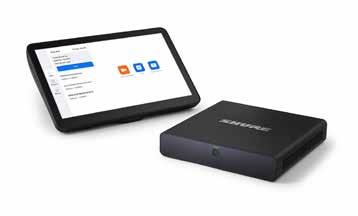
• Seamless compatibility with an unmatched range of Shure microphones and loudspeakers, easily configured with Shure Designer, supporting premium voice capture and reproduction in any space.
• Dante Inputs and Outputs allow to mix and match third-party Dante devices, enabling flexible system configuration and effortless scaling for all room types, sizes and applications.
• Now expanded beyond Microsoft Teams to natively support Zoom Rooms, allowing the built-in 8-channel IntelliMix Room DSP to optimize audio transcription for both Copilot and Zoom AI Companion
• The high-resolution Touch Panel now brings identical onetouch control and USB-C content sharing to Zoom Room environments, unifying the user experience across hybrid workplaces.
• Includes robust Microsoft security features for calls & collaboration and Shure Audio Encryption for secure audio connections between Shure devices.
• • The system can now be monitored via Zoom Device Management (ZDM) alongside ShureCloud.
Packaged in a durable design, Alienware 15 delivers the core gaming features that matter most.
Highlights:
• Gaming-first performance in two silicon flavors: AMD Ryzen 7 260 and Ryzen 5 220 or Intel Core 7 (Series 2) 240H and Core 5 (Series 2) 210H CPUs.
• Wide array of graphics options: NVIDIA GeForce RTX 5060, RTX 5050 and RTX 4050 graphics with support for NVIDIA DLSS.
• Built to game and beyond: Up to 110W of TPP to run any titles or tasks seamlessly.
• Fluid visuals: 15.3-inch, 16:10 WUXGA (1920x1200) panel and 165Hz refresh rate to deliver smooth gameplay.
DP5200 from Synology is a compact 1U ActiveProtect appliance that brings broad platform support, large-scale workload management, and AI-hardened protection to growing organizations and remote offices.
As part of the ActiveProtect lineup, the DP5200 delivers up to 36 TB of usable capacity in a compact 1U form factor and is equipped with all ActiveProtect Manager (APM) enterprise backup capabilities.
The DP5200 protects a diverse range of environments. This includes virtualization platforms (VMware vSphere and Microsoft Hyper-V), physical infrastructure (Windows and Linux servers, Windows PCs, and macOS), SaaS applications (Microsoft 365), databases (Oracle and Microsoft SQL), and file servers (support for SMB, NetApp, and Nutanix systems). More workloads will be supported in the upcoming APM 2.0 upgrade*, including Azure VM, Amazon EC2, Nutanix AHV, Proxmox VE, and Google Workspace.
The DP5200 can operate as a standalone backup server to protect all workloads within a local site, or function as a central man-
agement server that consolidates up to 120,000 workloads and monitors 1,000 servers across multiple locations through a single pane of glass.
The DP5200 strengthens security by combining MFA-backed access control with an AI-hardened architecture. It enforces the 3-2-1-1-0 protection standard through immutable WORM storage, logical air-gaps, and version-based tiering. With the upcoming APM 2.0, it will shift from passive recovery to active defense, using AI/ML to detect anomalies during backup and scanning for malware to ensure all future restorations remain malware-free.
• Space-efficient 1U rackmount design tailored for shared rack spaces and branch data centers.
• The new DP5200 further expands the ActiveProtect lineup with more deployment flexibility for enterprises.
• Up to 36 TB of usable storage space utilizing four 12TB 3.5" HDDs.
• Equipped with 16GB RAM and Synology 800 GB M.2 SSDs in a RAID 1 configuration.
• Advanced thermals: Cryo-tech cooling solution maintains system stability even during the most demanding sessions via 2 fans, 3 copper heat pipes, and a single rear exhaust that expels hot air from critical components.
• Precision cooled: Cryo-Chamber structure is designed for greater air intake, strategically focusing airflow to the core components where it matters most.
• Fully equipped: HD webcam with dual-array mic, 2Wx2 speakers, large fingerprint-resistant touchpad, backlit keyboard with full numpad.
• Ported up: 1x RJ45, 1x HDMI, 2x USB-A 3.2, 2x USB-C 3.2 (including a Gen 2 with charging capabilities), 1x 3.5mm Jack.

Gartner says service and support leaders should rethink standalone Chatbot investments
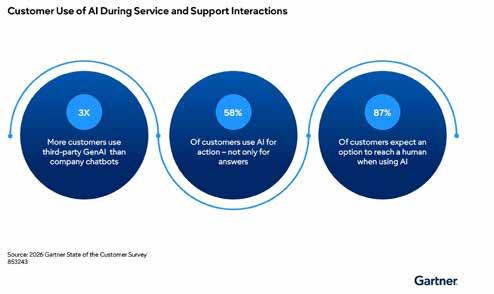
Customers are approximately three times more likely to use third-party GenAI tools than company-provided chatbots when resolving customer service issues, according to a survey by Gartner.
A Gartner survey of 3,566 B2B and B2C customers, conducted in February and March 2026, identified three key shifts in customer behavior: customers are far more likely to use third-party GenAI tools than company-provided chatbots; customers are using GenAI to complete tasks and take action, not only to get answers; and customers expect the option to reach a human agent when companies use AI in customer service (see Figure 1).
“Customers are embracing GenAI in both life and work, but so far, that has not translated into growth in the use of company-provided customer service chatbots,” said Eric Keller, Sr Director Analyst in the Gartner Customer Service & Support Practice. “Instead, GenAI is shifting some service interactions outside of company-owned channels.”
Customers Are Taking Service Issues Outside Company-Owned Channels
Use of third-party GenAI tools during service and support in-
teractions has nearly doubled in the past year, while use of company-provided chatbots has remained statistically unchanged since 2022. This lackluster adoption may help explain why many customer service organizations have yet to see financial returns from their AI investments.
According to a separate Gartner survey of 1,303 senior leaders across various industries, conducted in January through April 2026, service and support leaders invested a median of 12% of their 2025 budget in AI, the highest amount among the 10 business functions assessed. However, only 24% of service and support leaders demonstrated positive financial returns across their AI use cases.
“The disappointing impact of customer-facing GenAI investments has less to do with technology limitations and more to do with misalignment with customer expectations,” said Keller.
“Rather than investing primarily in standalone chatbots, organizations should focus on AI-enabled service journeys that help customers resolve issues across digital and voice channels.”
Customers also expect GenAI to help them complete tasks, not only answer questions. Among customers who use GenAI, 58% said they have used it to complete a task on their behalf. In B2B environments, this rises to 74%.
“Many company-provided chatbots are still designed primarily to answer questions, but customers increasingly expect AI to help them take action, such as booking an appointment, submitting documents or updating their account,” said Keller. “Service and support leaders should redesign digital support around conversational, action-Julyoriented experiences, rather than treating GenAI as a standalone chatbot.”