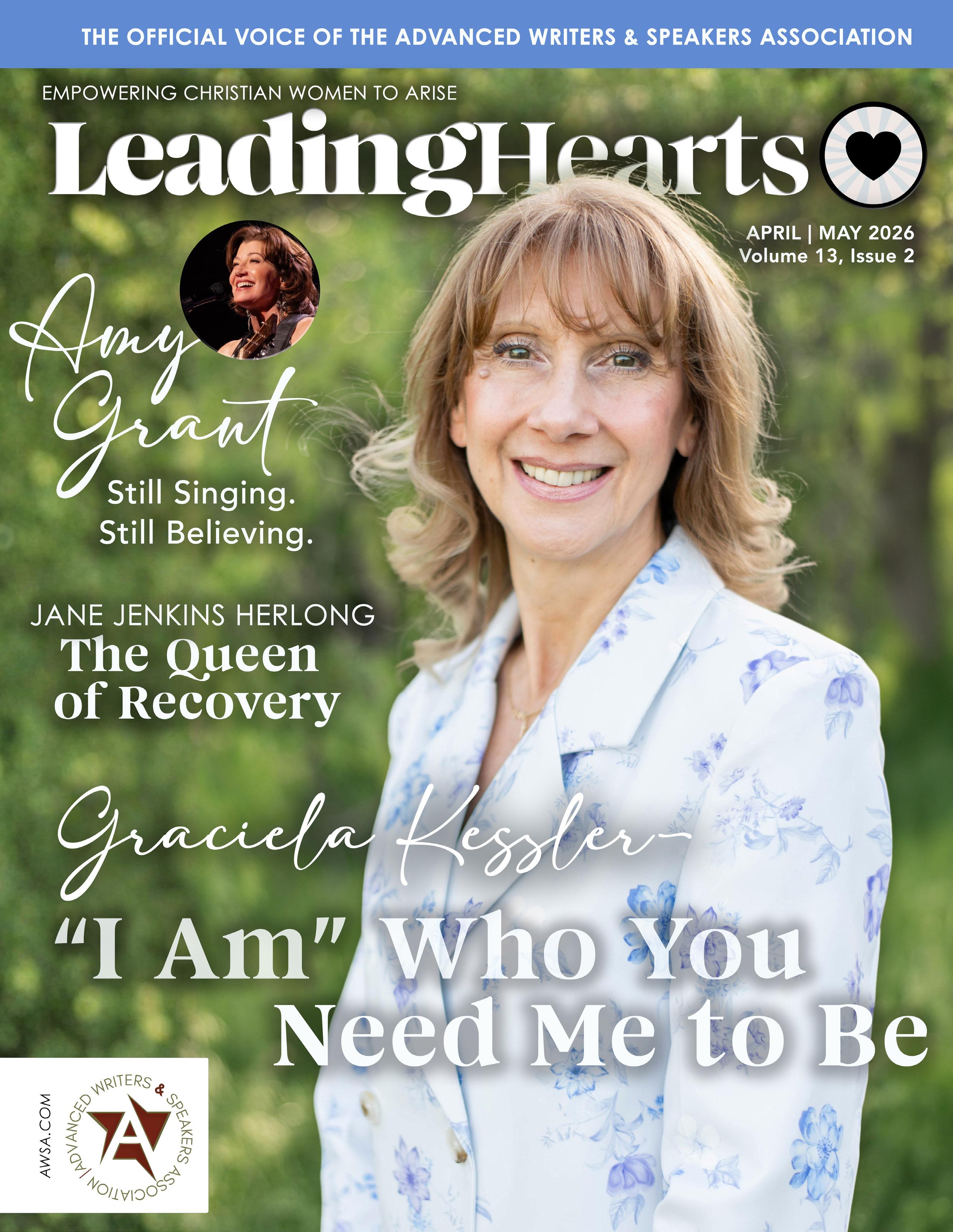
APRIL/MAY 2026 | VOL. 13, ISSUE 2
APRIL/MAY 2026 | VOL. 13, ISSUE 2
PUBLISHER/ADVERTISING Linda Evans Shepherd
EDITOR/ART DIRECTOR Amber Weigand-Buckley
LAYOUT EDITOR Tom Young

CONTRIBUTING EDITORS Joy Dunlap, Rebecca White, Tom Young PROMOTIONS Rebecca White
AWSA ADMINISTRATIVE ASST. Carla Wicks
CONTRIBUTORS Penelope Carlevato, Dr. Saundra DaltonSmith, Pam Farrel, Jane Jenkins Herlog, Edie Melson, Maureen Miller, Rhonda Rhea, Cynthia L. Simmons
ARISE DAILY Dr. Mel Tavares, Editor
Linda Evans Shepherd (President), Dawn Scott Damon, Edie Melson, Linda Goldfarb, Sharon Norris Elliott, Karen Whiting and Joy A. Schneider INFORMATION
Leading Hearts magazine for Christian Women is published bimonthly by Right to the Heart Ministries 2026. ISSN 2380-5455
ADVERTISING | Display rates are available at leadinghearts.com. By accepting an advertisement, Leading Hearts does not endorse any advertiser or product. We reserve the right to reject advertisements not consistent with the magazines objectives.
MANUSCRIPTS | Writers guidelines are available at leadinghearts.com.
Leading Hearts | PO Box 6421, Longmont, CO 80501 email: ReachOut2Linda@gmail.com

MEMBER | 2024 Evangelical Press Association. Award of Excellence 2014–2021, 2023 Evangelical Press Association Award of Merit Winner—Christian Ministry Digital | 2024 Christian Ministry Print Publication & 2022 Christian Ministry Digital Best in Class, 2025 Second Place Best in Class
Cover Photo Courtesy of: Graciela Kessler
Photos courtesy of: Ed Rode, Canva, Adobe
Copyright ©2026 Right to the Heart Ministries. All rights reserved. Copyrighted material reprinted with permission.
All Scripture quotations, unless otherwise indicated, are taken from the Holy Bible, New International Version®, NIV®. Copyright ©1973, 1978, 1984, 2011 by Biblica, Inc.™ Used by permission of Zondervan. All rights reserved worldwide. www.zondervan.com The “NIV” and “New International Version” are trademarks registered in the United States Patent and Trademark Office by Biblica, Inc.™

8. Discovering "I Am"—Graciela Kessler with Amber Weigand-Buckley
Twenty years of journaling the names of God through cancer, burnout, and a calling she kept trying to put down.



12. Time for an Engine Check—Pam Farrel
Three diagnostic questions to run when life breaks down—and what 46 years of marriage looks like in a parking lot at midnight.
14. Does Prayer Really Work?— Cynthia L. Simmons
What 1860s telegraph operators teach us about how God hears us — even when we don't have the words.
24. A Prayer Blast of Protection— Linda Evans Shepherd
Psalm 91, a windstorm that lifted her off her feet, and a friend whose house was the only one standing after the LA fires.
26. The Rule of Three for Women in Ministry— Edie Melson
Stop trying to post everything. Encouragement. Insight. Invitation—a simple rhythm that serves people instead of algorithms.
28. Does God Care About My Weight?— Dr. Saundra Dalton-Smith
His concern isn't a number on a scale—it's the patterns you turn to for comfort, and whether you're finding true rest or temporary relief.
7. From the Editor: When God Repeats Himself— Amber Weigand-Buckley
He wasn't being repetitive. He was being intentional.
16. Amy Grant: She's Still Here
Open-heart surgery. A traumatic brain injury. Relearning how to sing. And now her most honest album yet—The Me That Remains, out May 8.
20. When the Kettle Sings—Penelope Carlevato
The ministry of teatime, the generational gift of hospitality, and a Lemon Poppy Seed Glazed Scones recipe.
22. The Queen of Recovery— Jane Jenkins Herlong
She tumbled completely down the staircase in her designer gown. What she said into the microphone became pageant legend.
30. Redemption in the Empty Car Seat— Maureen Miller
A failed adoption, an empty drive home, and three words from God: Am I good?
32. Tired Is As Tired Does—Rhonda Rhea
Soul exhaustion, humor, and the only renewable energy that works when everything else runs out.




“When that person steps forward, something holy shifts. Shame loses its grip. Freedom rushes in.”
A few weeks ago, I was keynoting the Blue Lake Christian Writers Conference, reflecting on a remarkable revival sweeping through writers across our country.
There have been nine known revivals at Asbury University in Kentucky, and they’ve all started the same way—with one person confessing on stage, then fire sweeping through the crowd as others begin to confess as well.
My small band of writers experienced this firsthand on August 2, 2022. That evening, we stood on the Hughes Auditorium stage and confessed our burdens, our struggles, our shame. The Holy Spirit swept through our hearts. Not only did we feel His sweetness, we felt renewed.
Then, on March 1, 2023, a larger revival hit the Asbury student body and spread nationally. The writers’ revival didn’t stop either—it most recently ignited at Blue Lake a few weeks ago.
As Christians walk through life, we pick up stones from the road—stones of regret, shame, sin, burdens, and fear. Some are small pebbles we step on and pull from our shoes. Others are heavy rocks and boulders we stub our toes on. Before long, we’re carrying an enormous load, ashamed and embarrassed, convinced everyone else has perfect lives where nothing ever goes wrong. When someone finally admits to a burden they’re carrying, it gives others permission to say, “Me too.”
But here’s the truth: Everyone is carrying burdens. When someone finally admits to one, it gives others permission to say, “Me too.” And when we confess our sin, struggles, and shame to other sojourners, through the power of the Holy Spirit, we’re able to lay our burdens down and walk in freedom and renewal—with the people around us and with the Lord.
That’s where the three-minute revival begins.
Don’t wait for the next big conference. It can happen anywhere—your small group, your church, your circle of friends. All it takes is one person brave enough to confess. When that person steps forward, something holy shifts. Shame loses its grip. Freedom rushes in.
As you read this issue of Leading Hearts, prepare your heart to be honest, to confess, to pray with others, and to discover the fire of God’s presence in your own life.
Love,
LINDA EVANS SHEPHERD, PUBLISHER

I’ve been doing interviews for almost 30 years. I know how to ask the questions, how to listen for the thread, how to draw a story out. What I didn’t know‚ or maybe what I kept too busy to practice‚ was how to turn that same attention toward God.
It’s only been in the last couple of years that I started what I now call my interviews with God. I sit down, get quiet, and ask one question: Lord, what do you want me to know today? No agenda. No deadline. Just me, a legal pad and an open, prayerful heart ready to receive.
A week before I sat down to interview this month’s cover story subject, this was the answer I scribbled on that pad: You don’t have to be on. You don’t need to give every piece of yourself away to be pleasing in my sight. I don’t require your exhaustion, your toil, your worry, your carrying ability. Just your love. Your time. Your obedience. Relinquish the outcome.


“I’ve learned that hearing from God isn’t about being special. It’s about being still. Being wise in discerning His voice from all the other voices”
Then I got on a Zoom with Graciela ‚and she said it back to me in a completely different voice. The night before, I’d felt that same divine nudge listening to our speaker at an AWSA Connect gathering. God whispered. Truth was on repeat.
I’ll be honest ‚there have been seasons where I almost talked myself out of wanting to admit God speaks to us at all. When you live with a mental health diagnosis, saying “God spoke to me” can clear a room.
But I’ve learned that hearing from God isn’t about being special. It’s about being still. Being wise in discerning His voice from all the other voices in your ear. Everything He says is always confirmed in more than one way. His Word, His people and prayer put truth in front of our faces until clarity finally breaks through. And you realize He wasn’t being repetitive. He was being intentional. He knew how long it would take you to actually hear it.
This month’s cover story isn’t just a profile. It’s just another whispered answer. An answer that hit me right where the Father has been reaching into me all along ‚in the many ways He shares His heart and direction with His children. I pray this issue of Leading Hearts finds you right where he’s been trying to reach you.
Love,

BY AMBER WEIGAND-BUCKLEY LH EDITOR
Graciela Kessler spent 20 years journaling the names of God through cancer, burnout and a calling she tried to ignore. And when I sat down with her over Zoom for this 45-minute interview, I knew before we were done that it would forever change the way I pray.
In 2006, Graciela was making a new home in Texas— Argentine-born, far from family, with two young children and a breast cancer diagnosis that gave her very little reason for hope. The tumor was aggressive, growing four centimeters in three months. What followed was a mastectomy and nine months of chemotherapy. What emerged from it was something she hadn’t expected: a revelation.
“I went to the Lord,” she says, “and I said, Lord, I need you. And He said, ‘I am the Lord who heals you’” (Exodus 15:26). Even when fear came, I held onto that. His Word never returns void. I’m going to be healed.” She was. But the deeper healing was in how she came to understand the name itself. “His name became a revelation in my heart, not just knowledge in my brain. There was the application of His name in my own life, and I saw it in a completely different way.”
That moment launched a practice. In every new season—every diagnosis, career crisis, transition—she learned to ask one question: Lord, what is the name I need to know right now? During those years of private journaling, the answers accumulated. They became, eventually, a book: Divine Tapestry: An Alphabetical Journey Through the Names, Nature, Titles, and Attributes of God.
“It taught me a process,” she says. “It starts with knowledge, moves to revelation and creates a new
level of intimacy.”
By 2024, Graciela was a project manager overseeing eight simultaneous construction projects, working 16hour days, six days a week. Her body was breaking down. Her spirit was quietly starving. She felt God calling her out—no plan, no backup, no new job waiting. She wrote her resignation letter anyway. Next came an invitation to rest, something that many of us, like Graciela, don’ t truly know how to accept. God impressed these words o her heart:
“This season is not under your power. You are not driving.” So,
she rested.
One Sabbath at a time. Her son, who had watched her exhaustion up close, looked at her one day and said simply, “Now you can write a book.”
She brushed it off. But an old journal surfaced. A dream came. One sleepless night, she felt God say: If I say a letter, can you think of a name? They played an alphabetical game in the dark—God prompting, Graciela finding a divine name for each letter. By morning, she had a structure. A spreadsheet. An architecture. “If you ask how long it took me,” she laughs, “If I had put it all together, it would’ve taken 18 years. He took everything that I had already walked through and the book came together in four months.”
When I asked her which name discovery surprised her most—the one people overlook, the one that carries more than most realize—Graciela didn’t hesitate.
“I Am,” she says. “People know it; it’s what God said to Moses. (See Exodus 3:14.) But I don’t think people know the deep meaning.” She pauses. “I Am is not only I exist. I Am is: I Am who you need Me to be.”
continued on page 11
"The best I have read on the Names of God in my 50-year spiritual journey."
Janice Swinney, Sr. Pastor

A devotional journey through the names, nature, titles, and attributes of God.
Available wherever books are sold.


continued from page 9
That one declaration, she explains, encompasses every other name: Healer, Provider, Shepherd, Peace. Whatever the season demands, I Am is already that. It is the name that unlocks all names.
Graciela spoke candidly about a cycle she has struggled with in every season. God gives a gift, you grow into it, you get good at it, and then, quietly, you stop needing Him for it. “We start removing Him from the equation,” she says. “I got this. And that starts turning into your idol. You become your own idol.”
The internal shift she embraced came not from striving harder, but from asking a different question: Am I working from ownership or stewardship? “You know you’re in the right work,” she says, “because you have peace. And you work from joy.” Then she adds the line that made me press pause on the conversation to soak it in: “It’s the difference between ownership and stewardship.”
Stewardship means the pressure of results belongs to the owner, not to you. When her publisher raised marketing strategies and budget conversations, she went back to prayer. “Lord, this is your book. I’m just an instrument. If you want it to be successful, I trust you—one step at a time.”
“You do because you became, not to become. You don’t work for God to accept you. You work because you already are His.”
Today, the name God is revealing to her is Shalom— His peace. And she admits it is harder than it sounds. “I wake up with energy and ideas. And some days He says, “Just rest.” She smiles. “We don’t allow ourselves to go through that process. But rest is not the absence of calling. Sometimes it IS the calling.”

Divine Tapestry: An Alphabetical Journey Through the Names, Nature, Titles, and Attributes of God (WestBow Press) is available wherever books are sold. You can find out more about her at gracielakessler.com


BY PAM FARREL LOVE-WISE.COM
It had been a long day, at the end of a long weekend.
We had driven up into the mountains to stay on my brother’s cattle ranch, then teach at his church and meet with the leadership team over a country lunch created by homemade chefs that could rival the Pioneer Woman.
When we went to start up our new used car, it needed a jump even though Bill had just replaced the battery a few weeks before. My brother gave us a jump and the engine revved. Bill and my brother were confident that we could make it down the hill to the closest AutoZone. Bill wanted to run a diagnostic test to see if the issue was the battery or the alternator.
It was nearly sunset as we made the hour-long trek down the twisting single lane mountain road. Bill noticed our engine gage warning lights flickered on, so we prayed as we made our way into the parking lot.
When Bill ran the diagnostics, the news was a good news/bad news situation. Bad News, it was the alternator; Good news, the parts store had one—and Bill is not only a great preacher, but he can fix any car we’ve ever owned like he was a mechanic! As the non-mechanically inclined member of our marriage team, I began to run my own diagnostic test using a tried-and-true set of questions that have helped us navigate a wide variety of irritating emergencies:
right now?
I asked Bill if I could be of help by handing him tools or grabbing a snack at a nearby fast food or locating any information on the internet that might speed the task along. He replied, just as I thought, that he would be flying solo on the repair.
A few verses flew through my mind:
“Carry each other’s burdens, and in this way you will fulfill the law of Christ” (Galatians 6:2 NIV).
“Two are better than one, because they have a good return for their labor: If either of them falls down, one can help the other up …” (Ecclesiastes 4:9–10 (NIV))
I decided I would do work for our ministry on my phone—till the sun set and the phone battery ran low. I offered to pick up a snack for Bill, and I walked to a nearby Walmart to recharge my phone—and I prayed. My mind jumped to the next diagnostic question:
How can I protect the peace in this moment—even if that means choosing silence?
As I walked, I prayed, and when I returned to the car which had been wisely parked under a bright parking lot light in front of the neon-sign of the auto store. I repeated the offer of help to Bill as I handed him a protein bar. He was deliberately laser focused, a man of action and few words.
As the time ticked away, I knew asking a barrage of questions of Bill would slow his pace, so I prayed quietly. It has taken me (and Bill) 46 years to cultivate an atmosphere of peace.
The last book I wrote was a Bible study on the book of Proverbs, so its cautions permeated my mind as I prayed: for self-control when I wanted to voice my fears and frustrations:
“The one who has knowledge uses words with restraint, and whoever has understanding is even-tempered. Even fools are thought wise if they keep silent” (Proverbs 17:27–28, NIV).
Hours raced by. In hope, I walked to a close fast-food café and grabbed dinner we could eat once the problem was solved. As I walked, in my mind, I ran various scenarios.
Should we get a hotel? No, I had an oncology appointment early in the morning, which was giving Bill extra motivation.
Should we call friends in the area so I could wait at their home? No time for that had long past and I knew we would want to get right on the road.
continued on page 14
continued from page 13
As the clock edged toward midnight, Bill finally shut the hood and turned the key to the welcoming sound of a roaring engine.
Immediately, my mind shifted to the most vital question in the series:
How can I speak life and positivity instead of complaint right now?
I complimented Bill on his ability to fix anything from a car to a person’s heart or home. I sympathized with him and expressed my gratitude that he would be driving the final two hours home. I expressed my heartfelt feelings that I married well when I married him.
The ride home was actually a delight as we reminisced on how far we had come as a couple. Gone were the snappy words, accusatory tones, or irritating questions. We had learned to love and value silence, serenity and supporting one another. We had learned the value of applying verses like:
“Do not let any unwholesome talk come out of your mouths, but only what is helpful for building others up” (Ephesians 4:29 NIV).
“Do everything without grumbling or arguing, so that you may become blameless and pure” (Philippians 2:14–5).
As we pulled into the driveway about 2 am, we turned, smiled and simply whispered, “Thank You, Lord.”
Pam Farrel is the author of 60+ books including bestselling Men Are Like Waffles, Women Are Like Spaghetti. Together, the Farrels co-direct Love-Wise ministries. Love-wise.com


My, I see this question frequently online. The person asking probably wants proof that God heard — because she didn’t get what she requested.
However, as I research history, I find stories that indicate communication goes much deeper than that.
In the 1860s, telegraph wires connected sizable cities across our country. Primitive glass batteries provided the power for messages to sizzle from one city to the next. Glass batteries, brass keys, and wires seem impersonal—even callous. However, the operators could sense the “fist” of the sender. In other words, each person who typed in Morse code had a unique way of entering the information—their fist.
The telegraphers on the receiving end recognized the sender and could even sense their emotions. If the telegrapher was tired, the fist might be shaky or weak. If angry or depressed, the rhythm might be heavy. The fist revealed the operator’s heart.
How does this relate to prayer? We often feel as though we didn’t pray the right way or say the right words.
I recently wrote about six-year-old Kittie Snodgrass, who had to flee her home when a Civil War battle erupted at Chickamauga, Georgia. Doubtless, she cried out to God in that horrible situation—but she probably didn’t sound like her pastor as she huddled in that ravine
listening to bullets whiz by. When we are fearful, our spiritual Morse code might be fragile or even faint.
But our heavenly Father’s ability exceeds all the telegraph operators that ever existed. Romans 8:26 says, “…the Spirit helps us in our weakness. For we do not know what to pray for as we ought, but the Spirit himself intercedes for us with groanings too deep for words” (ESV). God can hear the fist of your soul even when you don’t know what to say. Once, when my husband was very ill, my entire prayer was two words: “Help, Lord!” Our heavenly Father knows the depths of our pain before we even speak.
Does prayer work? If you are worried about the connection, the answer is yes. The telegraph worked at the Battle of Chickamauga. A message traveled all the way from Georgia to Washington, D.C., roughly six hundred miles, a journey that would take a soldier around forty days on foot.
The telegraph officer in Washington received the news and understood how the telegrapher in Georgia felt, sitting in a dusty tent amidst the battle. Remarkable.
When you pray, don’t worry about the words. Just tell the Lord what’s on your mind. He knows your fist. The Spirit translates our words into groanings. And I can even imagine God holding your hand while you pray.
CYNTHIA L. SIMMONS is the mother of five grown children, past president of Christian Authors Guild, radio host, media coach. She writes both fiction and nonfiction and loves history. She ministers to women of all ages but has a special place in her heart for young mothers and homeschool mothers.

She nearly died twice in the span of a few years. First came open-heart surgery in 2020 to correct a rare congenital defect—something she’d been living with unknowingly her entire life, a ticking time bomb, as she put it, that was only caught during a routine checkup.
Then in the summer of 2022, a bike accident near her Nashville home sent her to the hospital unconscious, left her with a traumatic brain injury, and set off a cascade of complications that would keep her recovering for years. The impact caused a previously undetected cyst in her throat to go into hypergrowth, requiring a separate five-hour surgery — after which she had to relearn how to sing.
Now, at 65, Amy Grant is releasing her first album of original songs in over a decade. And it sounds nothing like someone trying to prove a point.
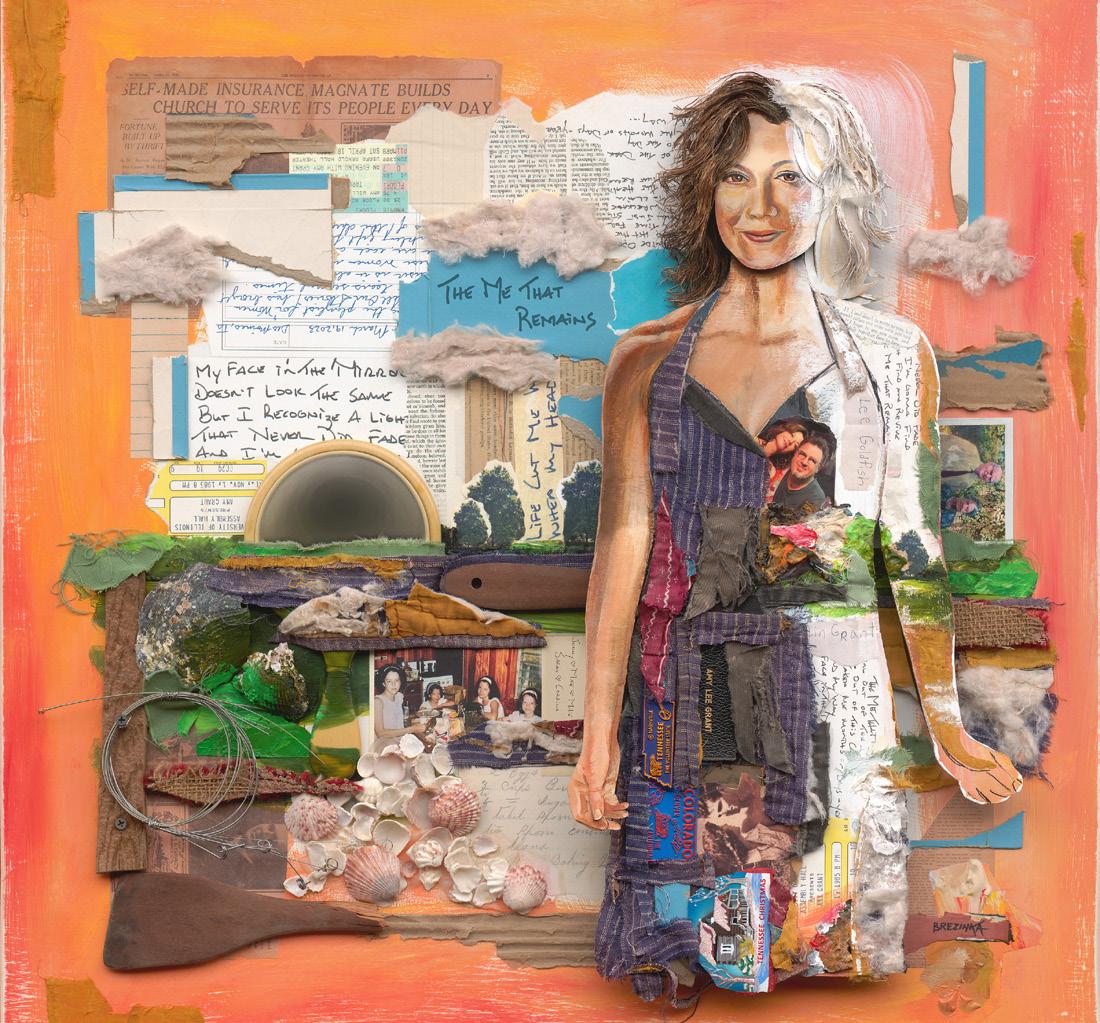
The Me That Remains, out May 8, is quiet in the way that only deeply lived experience can make something quiet. Produced by Mac McAnally—the kind of Nashville fixture whose understated touch is precisely the point—the ten-song collection strips away the production sheen that defined so much of Amy’s commercial peak and replaces it with something harder to manufacture: presence.
The title track sets the tone immediately. Co-written with McAnally, it addresses the health crises directly and without sentimentality. When she sings about her head hitting the ground, she’s not reaching for metaphor. The song moves from wreckage to gratitude in a way that feels earned rather than tidy — and the final image, a smile in the mirror reflecting a light that never faded, lands less like resolution than like a quiet daily commitment.
It’s worth noting that the road back wasn’t straightforward. As recently as late 2024, she was candid about the fact that her processing had been so slow after the accident that she sometimes felt present in a room but unable to fully participate,
before eventually feeling, in her own words, “fully in control” again. The album, in many ways, is the document of that return.
“The older I get, the more aware I am that we all live long enough to see versions of ourselves pass away.”
But to read it only as a recovery record would be to miss something. What the songs are really reaching toward is a question Amy has been sitting with her entire career, just with more weight behind it now: what does faith actually look like when the easy answers have worn away? She has spoken about having gradually moved away from the kind of organized faith-community culture that shaped her early life, arriving at something harder to name but, for her, more honest. She still anchors herself in Scripture—she’s spoken warmly about the verse from Acts, “In him we live and move and have our being,” as something she feels in her body, not just her head—but the framework around it has loosened and deepened. “God so loved us,” she has said simply. “There is no dividing line.” Not between races, not between cultures, not between faith traditions. It’s the kind of theology that doesn’t fit neatly on a Christian radio playlist, which may be exactly why this album isn’t on a Christian label.
What’s notable about the record is the company Amy keeps on it. Collaborations with Vince Gill, Ruby Amanfu, and longtime friend Michael W. Smith give it the feeling of a musician drawing her circle close—not as a marketing exercise, but as a natural reflection of how her life is actually structured. She and Smith have been close since the early 1980s, when they toured and wrote together as young artists just starting to figure out what they were doing. That the two are still making music together forty-plus years on says something, not just about loyalty, but about the kind of creative relationships that actually sustain a career over the long haul.
continued on page 19

Experienced Communicator -

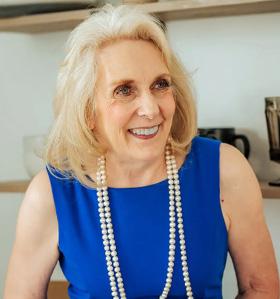
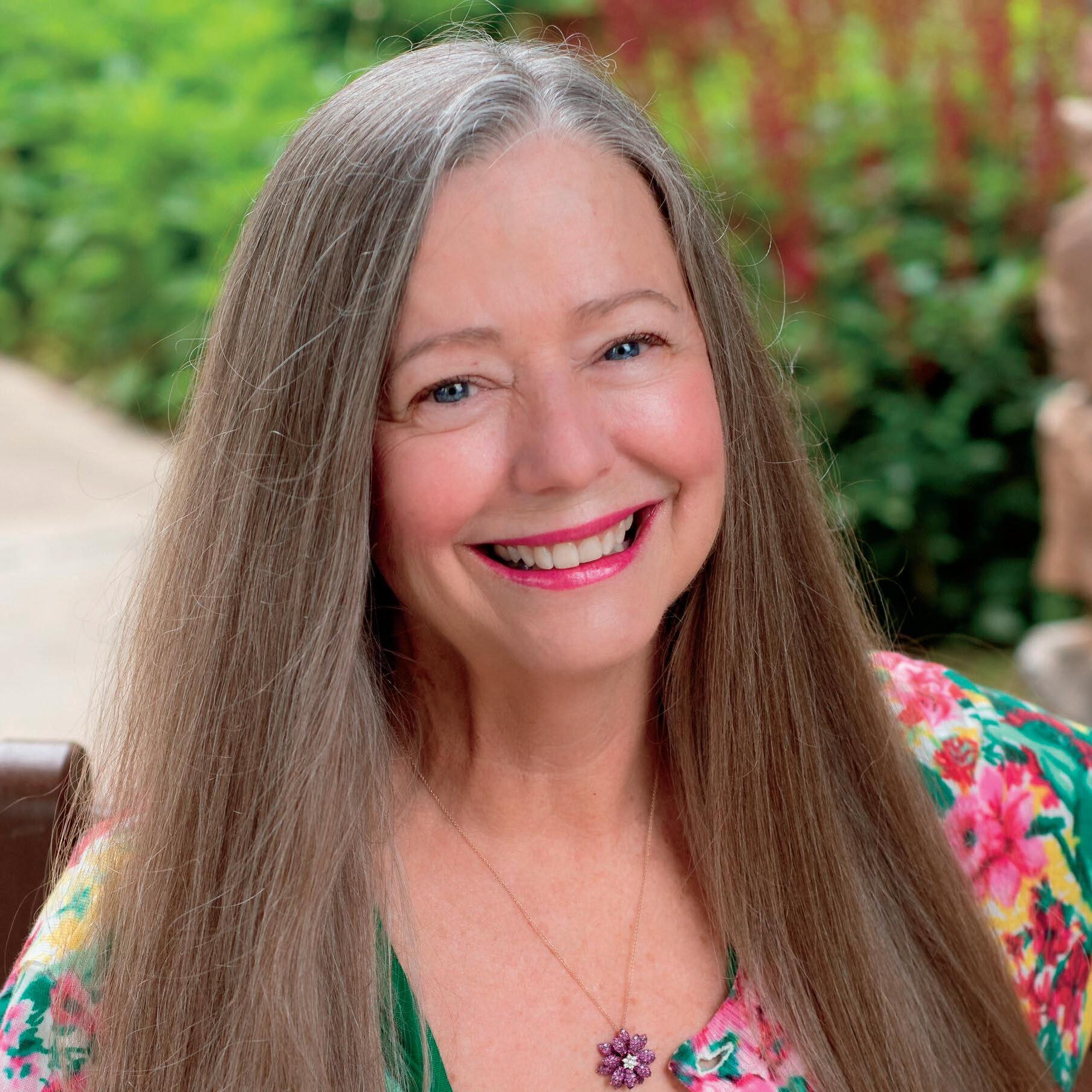
Joy Dunlap’s "Speaking Joyfully" messages always encourage and uplift, bringing hope and truth in each one. She takes everyday things we often overlook or coun as “that’s just the way it is” and turns them into opportunities fo her readers to experience more fulfilled lives.
Practical, thoughtful, and always applicable, Joy has a remarkable way of bringing biblical truth to light by sharing the observations she makes in daily life.
I marvel at how (Joy) has taken personal experiences and turned them into teaching moments...an most importantly kept it interesting and funny, albeit at (her) own expense in some cases
Award-winning Blogger - Speaking Joyfully
Certified P.O.W.E.R. Speaker - Advanced Writers and Speakers Association (AWSA)
Worked as VP, Radio Operations - National Association of Broadcasters (NAB) broadcast, print and podium
(Speaking Joyfully") is thoughtfu and fun, and always a reminder o our Loving God and His presence both the simple and the miraculo

p e a k i n g j o y f u l l y . c o m j o y d u n l a p . c o m

continued from page 17
Amy has spent more than 50 years in music—she recorded her debut album at 16, signed to a Christian label after a home demo tape fell into the right hands. Her 1982 album Age to Age became the first record by a solo Christian artist to go platinum, and she spent the rest of the decade methodically dismantling the walls between sacred and secular music. She scored her first Billboard Hot 100 number one in 1986 with a duet alongside Peter Cetera, and by the time Heart in Motion arrived in 1991, she was a full-blown pop star — “Baby Baby” and “Every Heartbeat” playing in malls and on radio stations that had never touched Christian music before.
She was a trailblazer, and she paid the price for it in some quarters, facing sustained criticism from parts of the Christian community who felt she was drifting too far from her roots.
None of that is what she’s writing about now.
“The older I get,” Amy reflects, “the more aware I am that we all live long enough to see versions of ourselves pass away.” It’s a thought that could easily tip into melancholy, but she doesn’t let it. Given the years she’s had—the surgeries, the recovery, the slow work of piecing herself back together—there’s something almost freeing in how she talks about it. The younger Amy Grant, the one who sold out arenas and rewrote the rules of Christian music, is someone she’s had to consciously remember and release. What’s left, she says, is a deeper curiosity. About connection. About purpose. About how, as she puts it, “the Love that made us all will emerge and express itself in and through me today.”
She’ll mark the release with a show at the Ryman Auditorium on May 8—which feels right. The Ryman is a room that rewards exactly this kind of artist: someone who has outlasted trends, survived the worst, and still has something worth singing.
The Me That Remains is out May 8 via Thirty Tigers, available on vinyl, CD and all streaming platforms.

Sometimes the simplest moments become the most meaningful ministries. For me, many of those moments begin when the kettle sings.
The sound of boiling water and the whistle of the kettle signals that something good is about to happen. But for me, it also carries the memory of special times with my English mum. She believed most of life's problems could be solved with a cup of tea. It could be a quiet moment with just the two of us, or something delicious coming out of the oven.
One spring afternoon not long ago, I set a small table in the garden. I put on a cute tablecloth, teacups, little pink napkins, and a small plate of scones. The grandchildren arrived excited for our first spring tea of the season.
My grandkids are naturally drawn to teatime — I have been serving them tea and scones since they could sit at the table in a highchair. I remind them that teatime is not just about drinking tea and eating. It's about sharing time together.
They carefully hold their cups, trying very hard to look grown-up. Of course, there were giggles at each other's hats — but as we sat together on that lovely spring afternoon, I was reminded again that hospitality
is not about perfection. It's about the joy of being together. And the added gifts of learning patience, kindness, and listening. At first, they come for the treats. But slowly, they begin to learn something deeper.
Some of those little girls are now mothers with children of their own, and they have carried on the tradition of teatime with their children. I continue to remind them that we are to "practice hospitality" as Romans 12:13 tells us. Throughout Scripture we are encouraged to make space for connection, encouragement, and love.
"Share with the Lord's people who are in need. Practice hospitality." (Romans 12:13)
Unlike rushed moments with drive-thru dining and coffee on the go, teatime slows us down and creates a pause in the busyness of life. Over the years I have discovered that many meaningful conversations begin over a teacup. Friends share burdens, children ask questions, and laughter flows more easily. We are often given the opportunity to pray with others.
Springtime and summer are the perfect seasons to begin small traditions like these. You don't need a grand and perfectly manicured garden or fine china. Just a small table on the porch, a few wildflowers in a jar, and a warm pot of tea are more than enough. Who Will You Invite?
Sometimes it begins simply when the kettle sings.
Invite a neighbor. Invite your daughter. Invite your grandchildren. Invite your grandmother. Invite a young mom who is worn out and needs encouragement. Invite a friend who might appreciate a quiet hour together — or another author who needs a break from her computer.
In our busy world that often feels rushed and noisy, a simple cup of tea can become a fountain of blessings and an unexpected place of peace. Watch how God uses the smallest moments of hospitality to bring joy, grace, and peace into the lives around you. Sometimes it may become the most meaningful ministry of your life.
My ministry revolves around a teacup, and I am always looking for new recipes to serve. I recently helped with an Afternoon Tea Baby Shower for my granddaughter Amanda, who requested Lemon Poppy Seed Glazed Scones. I tried this new recipe and they were delicious —perfect for little ones too. Make them child-size and they become an amazing two-bite treat. Lemon scones pair naturally with tea, and it's always handy to freeze a few for that impromptu teatime.
For the scones: 2 cups flour, 1/3 cup sugar, 1 Tbsp poppy seeds, 1 Tbsp baking powder, ½ tsp salt, zest
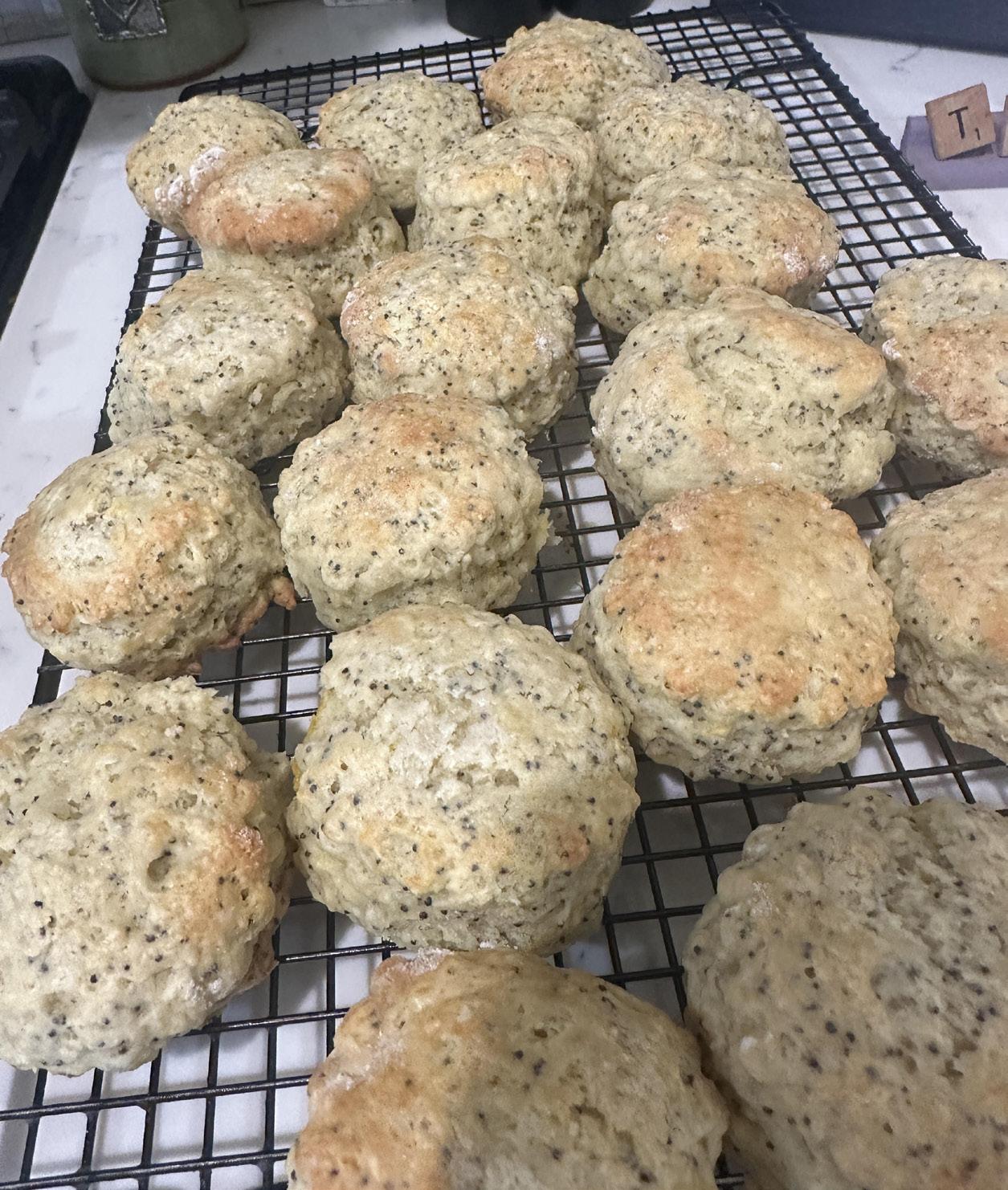
of one large lemon, 6 Tbsp cold butter (cut into small pieces), ½ cup heavy cream, 1 large egg, 1 Tbsp lemon juice, ½ tsp vanilla extract
For the lemon glaze: 1 cup powdered sugar, 1–2 Tbsp lemon juice, ½ tsp lemon zest
Instructions: Preheat oven to 400°F and line a baking sheet with parchment paper.
In a large bowl, whisk together the flour, sugar, poppy seeds, baking powder, salt, and lemon zest. Cut in the cold butter using a pastry cutter or fork until the mixture resembles coarse crumbs.
In a small bowl, whisk together the cream, egg, lemon juice, and vanilla. Pour into the flour mixture and stir gently just until the dough comes together. Do not overmix.
Turn the dough onto a lightly floured surface and pat into a circle about 1 inch thick. Cut into 8 wedges (or use a biscuit cutter) and place on the prepared baking sheet, leaving a little space between each scone. Brush tops with cream and bake 14–16 minutes until lightly golden.
Cool slightly before glazing.
For the glaze: Whisk powdered sugar with lemon juice until smooth. Add a little extra zest for flavor. Drizzle over warm scones.
PENELOPE CARLEVATO is the author of The Art of Afternoon Tea: From the Era of Downton Abbey and the Titanic as well as Tea on the Titanic, First Class Etiquette, and The Tea Lover’s Journal.


BY JANE JENKINS HERLONG JANEHERLONG.COM
Heard ‘Round the Auditorium
She took her first step. The heel of her shoe caught in the hem of her gown. She missed the next three steps entirely. And then … she tumbled. Completely. Down the staircase.
The audience gasped.
During pageant week, Susan Thomas knew she was right on the edge of the coveted Top Ten.
In the pageant world, the “top tenners” are the young women with the highest preliminary scores who get to compete on Saturday night for the crown. Trust me—if it helped, some girls would pluck the rhinestones out of their crowns with their teeth. The big announcement happens at the beginning of the Saturday night telecast before the final competitions in swimsuit, evening gown and talent—all in front of a six-state television audience.
From the Observer Section—the next year’s wannabequeen seating area—I watched Susan perform a footstompin’ tap dance routine and show off her perfect legs in swimsuit, complete with her dazzling smile. Now all that remained was evening gown.
On Friday during rehearsal, I watched her glide down a long flight of carpeted stairs. Her footing was impeccable. She floated with grace and confidence to the microphone and delivered her evening gown speech with precision. She had practiced for hours in front of the mirror. Her head swiveled like an oscillating fan as she made perfect eye contact with the audience and judges. She was good. Still, Susan whispered to me that she needed “a little something extra” to push her into the Top Ten.
I will never forget how she looked that night. She stood at the top of the staircase in her Stephen Yearick designer gown and Cinderella slippers, glowing like royalty. It was her moment to charm the judges and seal her fate. But what happened next made Susan a pageant legend.
In the Observer Section, we clutched each other like a flock of scared hens—cackling, squawking and carrying on—as Susan’s limbs flew in what looked like a slow-motion tumble. Then, by some miracle, she popped back up. Her gown was twisted, her hair was sticking straight up, and there she stood again— balanced bravely on those Cinderella shoes.
Susan walked to the microphone. She stopped. She looked out into the vastness of the auditorium. And for a moment … she said nothing.
My heart sank. Oh no, I thought. She has forgotten her speech.
But then, right there in the Greenville Memorial Auditorium on that hot July night, a beautiful girl in a twisted designer gown leaned into the microphone and said: “I’m Miss Upstate and I had quite a trip down here!”
There was a moment of silence. Then the place exploded. Applause. Laughter. Cheers. The kind of cheering that makes you want to hoist someone on your shoulders and parade them around the room.
And oh yes, ma’am—it sealed her fate. Susan earned her spot in the Top Ten.
I cannot tell you who won the preliminaries that Friday night. But I will never forget Susan—Miss Upstate—the Queen of Recovery.
JANE JENKINS HERLONG is a former Miss South Carolina, Hall of Fame speaker, Southern humorist and author. Her books include Bare Feet to High Heels and Sweet Tea Secrets from the Deep-Fried South, sold in Cracker Barrel stores nationwide.


BY LINDA EVANS SHEPHERD | GOTTOPRAY.COM
I was walking out of a medical building when a gust of wind swept down from the Colorado mountains and hit me at ninety miles an hour.
The sudden blast created a vortex in the corner of the building and lifted me clean off my feet. I knew I was no Mary Poppins, and it certainly wasn’t the rapture, because the next thing this swirling wind tried to do was throw me face first into the concrete.
I suddenly had a flash of what I would look like with a busted nose and no teeth. But then I heard the quiet voice of the Lord say to my spirit, “This is not a time to be passive.”
At that moment, I thrust my foot out and landed it in a big wad of bubblegum. Not only did I stop the fall— you could say I stuck the landing.
That experience taught me something vital: in a world where so many scary and difficult things are happening, we no longer have the option to be passive. We need to be proactive by taking a step of prayer and faith.
We can take our guidance from Psalm 91, often attributed to Moses, which talks about living in the safe place of the Most High, hiding in the shadow of the All-powerful—the Lord.
I love the list the psalmist created of what the Lord can do to protect us: rescue us from traps and deadly sickness, hide us in the safety of his wings, and protect us from the troubles of night or the arrows of the day. Many people pray this passage and find unusual
protection, like my friend during the LA fires. She told me,
“I prayed Psalm 91 over my home for a year.” And though her entire neighborhood burned down, her house was left standing, untouched by the flames.
I encourage you to read this passage yourself but let me take this opportunity to paraphrase some of the verses into a prayer of protection that we can pray together now.
Dear Lord, thank you for being my safe place. I hide in your shadow and under your wings. You rescue me from traps and deadly illness. You give me fearlessness and protection against the evils of the night, the attacks of the day, and the troubles at noon.
Though many will fall, I will stand because I have made you my safe place, Lord. Nothing will hurt me; trouble will not knock on the door to my home. You even call your angels to care for me and keep me on the path with you. The lion and the snake are crushed under my feet because of your power and might. Because you love me, you rescue me from trouble so I can dwell in you.
I call upon you and you answer me because you are with me in every trouble. You are my protector, giving me long life through your saving power. Thank you! In Jesus’ name, Amen.
LINDA EVANS SHEPHERD is publisher of Leading Hearts magazine. She is also a best-selling author, an in-demand speaker, YouTuber and president of Right to the Heart ministries.

For many women in ministry, social media feels like one more responsibility on an already full plate.
Between leading Bible studies, mentoring others, serving in church leadership, caring for family, and maintaining our own spiritual life, the idea of consistent online posting can feel overwhelming.
BY EDIE MELSON EDIEMELSON.COM
We know the digital world offers an opportunity to reach people beyond the walls of our church or ministry—but figuring out what to post and how to stay consistent is exhausting.
However, growing an online ministry doesn’t require complicated strategies or constant posting. Often, the most effective ministry accounts follow a simple rhythm that focuses on serving people rather than chasing algorithms.
One approach that can help simplify your social media efforts is what I like to call The Rule of Three.
"People are often more encouraged by honest reflections from someone walking the journey of faith than by perfectly polished messages."
Instead of trying to post everything, focus on three types of posts:
• Encouragement
• Insight
• Invitation
These categories create a balanced presence for nurturing your audience while keeping posting strategy manageable.
One of the greatest gifts we can offer online is encouragement.
Social media can be a loud and often discouraging place. Many people scrolling through their feeds are carrying unseen burdens. A short message, rooted in truth, can speak directly into someone’s day.
Encouragement Includes:
• A meaningful Scripture verse
• A brief devotional thought
• A reminder of God’s faithfulness
• A short prayer for your readers
These posts don’t need to be long or polished. Sometimes a simple sentence can have a powerful impact. Many people follow ministry accounts to find a steady source of hope. Our words may reach someone at exactly the moment they need to hear them.
Encouragement lifts people up, but insight helps them grow.
As a woman serving in ministry, God is continually shaping your heart through Scripture, prayer, and the experiences of serving others. Social media provides an opportunity to share what God is doing.
Insight Includes:
• A lesson from your personal Bible study
• A reflection on a passage of Scripture
• A story from ministry that revealed a spiritual truth
• Something God showed you during prayer
And remember, authenticity matters.
Invitations provide a way to engage more deeply with your ministry. While encouragement and insight provide spiritual nourishment, invitation helps build a stronger connection.
Invitations Include:
• Inviting readers to join your email list
• Sharing a new blog post or devotional
• Encouraging people to attend an event or Bible study
• Asking your audience to pray about something specific
Invitation isn’t about promoting ourselves. It provides pathways for people who want to grow in their faith.
When someone resonates with the message God has placed on your heart, they often appreciate knowing how they can stay connected.
The beauty of this approach is its simplicity.
Instead of feeling pressure to constantly come up with new ideas, we can use these three simple questions as our guide:
• Can I encourage someone today?
• Is there something God is teaching me that might help someone else?
• Is there a next step I can invite people to take?
Encouragement. Insight. Invitation.
These rhythms allow us to serve others faithfully while stewarding the message God has placed on our hearts. And sometimes, the post you almost didn’t share may be the very message someone needed to see that day.
EDIE MELSON’s top-ranked blog for writers, “The Write Conversation,” reaches thousands each month, and she’s the Director of the Blue Ridge Mountains Christian Writers Conference.


BY DR. SAUNDRA DALTON-SMITH | ICHOOSEMYBESTLIFE.COM
Does God care about my weight? It’s a question I hear often, and my answer is always the same: yes, I do believe God cares about your weight but not in the same way you care.
His concern is not rooted in a number on a scale or a clothing size. His perspective reaches far deeper, into the condition of your heart, your habits, and ultimately your relationship with Him.
I remember one particular patient who asked this question from a place of deep desperation. She was 5 feet 3 inches and weighed nearly 300 pounds. Before I could even begin her physical exam, she began listing all the reasons why she couldn’t lose weight. Her words came quickly, almost rehearsed, but what stood out most was her demeanor.
She carried a visible sense of defeat. This wasn’t just about her body. It was about the emotional and spiritual exhaustion she had been carrying for years.
She likely expected a standard medical response, something along the lines of “eat less and move more.”
While that advice is technically accurate, it often misses the deeper issue. Her struggle was not simply about food or physical inactivity. It was about how she coped with discomfort. Like so many others, she had learned to use food as a way to soothe emotions she didn’t quite know how to process.
It’s a struggle I understand personally. In my own journey, I’ve recognized that my weight often mirrors what is happening in my spiritual life.
During seasons of stress and fatigue, I find myself drawn toward foods that promise quick comfort. And as those patterns increase, so does my waistline. It raises an important question: why do we call them “comfort foods” in the first place?
Comfort foods are designed to create a sense of calm, joy, and satisfaction. They temporarily ease emotional tension and offer a quick sense of relief. In many ways, they are an attempt to fill a deeper need.
The challenge is that they are ultimately a poor substitute for the kind of comfort our souls are truly seeking. Scripture reminds us in Psalm 147:3 that God “heals the brokenhearted and binds up their wounds.” That kind of healing reaches places that food never can.
This is why I believe God cares about your weight— not because of the number you see on the scale, but because of what that number may represent. It can reflect patterns of where you are turning for comfort. Are you consistently turning to Him, or are you relying on other sources to manage stress, fatigue, or emotional pain?
Jesus extends a clear and compassionate invitation in Matthew 11:28 when He says, “Come to me, all you who are weary and burdened, and I will give you rest.” Yet many of us, often without realizing it, seek rest in things that leave us more depleted.
God’s concern is not about perfection—it’s about connection. He cares about whether you are living in freedom or quietly becoming mastered by habits that no longer serve you. As 1 Corinthians 6:12 reminds us, while we may have the freedom to make certain choices, we are not meant to be controlled by them. For many, food has subtly shifted from nourishment to dependency.
It’s also important to redefine what we mean by “healthy.” A healthy body is not simply a skinny body. As a physician, I’ve treated individuals who appeared thin but were metabolically unhealthy, as well as those who were overweight yet had stable vital markers.
True health is far more comprehensive. It includes physical strength, metabolic function, emotional stability, and spiritual alignment.
A healthy body is one that functions as it was designed. It has the resilience to fight off illness, the strength to support daily activity, and the energy to engage fully in life. It is not restricted unnecessarily, but instead allows for movement, joy, and purpose. Even more importantly, it is a body surrendered to God.
A Body Surrendered
Romans 12:1 reframes this beautifully by encouraging
us to present our bodies as a “living sacrifice, holy and pleasing to God.”
This perspective shifts the conversation from appearance to purpose. Your body is not simply something to manage; it is something to steward. It is the vessel through which you live out your calling, serve others, and reflect God’s presence in the worlh.
The human body is one of God’s
most intricate creations. When it functions well, it glorifies Him—not because it meets cultural standards, but because it operates in alignment with His design.
That alignment is not just physical; it is deeply spiritual. So yes, God cares about your weight, but His concern is rooted in wholeness. He cares about your emotional health, your spiritual dependence, and your physical well-being. He cares about the patterns in your life that either restore you or deplete you. He cares about whether you are experiencing true rest or settling for temporary relief.
The good news is that wherever you find yourself today, change is possible. Not through striving alone, but through surrender. Not through shame, but through grace.
Philippians 1:6 reminds us that “he who began a good work in you will carry it on to completion.” That includes the work being done in your habits, your health, and your heart.
So the next time you ask, “Does God care about my weight?” remember this: He cares about you—fully, completely, and compassionately. And when you begin to allow Him to meet your deepest needs, you may discover that the transformation you’ve been seeking extends far beyond the scale and into every area of your life.
DR. SAUNDRA DALTON-SMITH is an internal medicine physician, author, and speaker. She has been an adjunct faculty member at Baker College and Davenport University in Michigan. Dr. Dalton-Smith is the founder of the I Choose My Best Life ministry.

“You have turned my mourning into joyful dancing” (Psalm 30:11 NLT).
Nineteen years ago today, I returned home from the hospital without my daughter. Her empty car seat seemed to mock me from Columbia to Greenville, South Carolina — and had I listened to the voice of the enemy for the duration of that trip, I’d have returned home bitter. Instead, I crossed that threshold broken. And I believe there’s beauty in brokenness, because it’s there that we are most truly held.
I crossed that threshold broken. And I believe there’s beauty in brokenness, because it’s there that we are most truly held.
Devon Mara-Leigh was to be Ian’s baby sister. Only three months apart, they’d be more like twins. Dorian and Devon. Their names felt like a song on my lips.
A baby shower, prepared time off work, a plan for her presence in our space—all dancing steps toward bringing our daughter home. Ian didn’t understand what we were saying when we’d sing, “Your daddy and your mother are making you a brother. Your sister is a baby named Devon Mara-Leigh…” Ian would just smile, seeming to approve.
BY MAUREEN MILLER MAUREENMILLER.COM
But adoption is never easy—even if every jot and tittle of the legal part falls perfectly into place. There are hearts exposed. Love is discovered. Raw realities have to be faced.
When Devon was born on May 18th, there seemed to be no question. Her birth mother was certain. She was ours. This was right. All for the best.
But sometimes the brain gets ahead of the heart, and in matters of one’s flesh and blood, there aren’t always guarantees.
It didn’t matter that Devon had spent her first night with me in our hospital room, nor that I’d fed her her first few bottles, changed her first few diapers. Our time together was less than 24 hours total—a drop in the bucket to the nine months she’d been carried by, nourished by, brought to life by another.
And in the end, this woman couldn’t say goodbye. Could I blame her … really?
Still, the news hit me. Shook me. Broke me. What about our plans? What about all those little pink onesies? The handmade blankets? The dreams for our daughter?
I left the hospital alone. My husband, Bill, had come on Devon’s birth day but—in the throes of residency— had to return to the reality of work. Thus, he anxiously awaited our arrival home.
Carrying the nearly full baby bag and the empty car seat—loading them into the Nissan—took everything in me. The events of the last hour—our attorney’s commands, “Stay in the room…”, “Something’s happening…”, “Don’t leave…”—all were a blur. And then it seemed my dreams for a lifetime were shattered in one solitary moment. She was just gone— our daughter taken, leaving my arms empty.
The absence of Devon’s weight released me to flail, and how I drove that stretch of highway, I’ll never understand. I shook my fists and screamed and cried. Even a single pause for air left me susceptible to the enemy’s mockery—words of condemnation, reminders that, like the empty car seat and my empty arms, so was my womb.
“It’s a tomb,” the voice sneered, “and this is just one more death of your dreams—because YOU ARE NOT ENOUGH. Now you’ve lost her too.”
The lies flew—fiery darts—and for a time, perhaps measured in miles rather than feet or yards, I was pierced by them. Felt their sting, until—
It wasn’t shouted but loud enough for my heart to hear. Still, it surprised me. “What?”
“Am I good?”
His words—these three words—silenced the enemy’s accusations. I looked in the rearview mirror but the car seat was still empty, though the space felt suddenly full.
Again …”Am I good?”
It was as though my Savior, with this very question, was handing me a sword. My weapon to combat the mockery of the enemy was Scripture. Jesus asked me a question, and although He’s a gentleman, He
expected me to answer. He would persist, my heart feeling suddenly more at peace.
He’s not in the least uncomfortable with silence, and so He waited, aware that I was thinking. Finally …
“Yes.”
“What?”
“Yes.”
“’Yes’ what?”
“Yes. You are good.”
“Okay, then. Do you trust Me…?
Did I? I knew I did. So, I answered, “Yes. I trust You.”
“Okay, then. Let’s go home.”
And we did—Jesus and I. And when I could open my Bible to find the Scripture I knew my heart needed— the words it believed—this is what I read. “You are good and kind and do good” (Psalm 119:68 AMPC).
So, I said it again, through tears, ”Yes, you are good. I trust you.”
Heaven held her then.
Heaven holds her still.
We lost Devon Mara-Leigh on May 19th, twenty-eight years ago. And Heaven gained this precious one several weeks later—the cause of her death unknown. But not to God, who held her then. Who holds her still.
And He holds me. He has redeemed my life in ways too numerous to count. In ways I’m not even aware of, perhaps. What I do know is this—He works all things together for the good of those who love Him and are called according to His promises (Romans 8:28).
On Mother’s Day, several years ago, my daughter, Allie, gave me a gift. “All About My Mom” the title said. “The best thing about my mom is …” and Allie completed the sentence, “…she loves birds.” I hugged my daughter hard.
Then a little later, I sat out on our porch. Looking up, I saw a single bird on the wire above—a mockingbird. He sang a song. Then another. And another.
Mockery-made-melody. And I heard again—
“Am I good?”
I smiled, tears in my eyes. Yes, God truly redeems and restores—working all things together perfectly.
He IS good. Oh how I love Him!
Award-winning author MAUREEN MILLER lives and loves on Selah Farm—a hobby homestead nestled in the beautiful mountains of western North Carolina—with Bill, her husband of 32 years, and their three “born-in-their-hearts” children and three grandchildren.


BY RHONDA RHEA RHONDARHEA.COM
Have you ever counted the number of times in a week you talked about how tired you are?
Like a weekly “I’m so tired” tally? It’s almost like it’s a competition. A no-way-you-could-be-as-tired-as-I-am contest. Always an ugh of a pyrrhic victory, that.
Last week I was just sure I’d used up all the tired. My tired. Your tired. All the tireds. My tired was even tired of being tired. It was the kind of tired that feels really close to melting.
Does that ever happen to you? When you feel there’s no skip in your skippety and no zip in your zippety? Not even a smidge of zippety left for your whole doo dah day? You wonder if all the tired you’re currently tireding will require at least a week of recovery, by which time you’ll have a whole new slate of tired to deal with on top of the leftover tired you’re still tireding. A tired deficit.
Everyone talks about renewable energy. Maybe we could use a little more of that. Some renewable energy we could apply to all those tireds. Yes, an order of renewable life energy, please. To go.
I hope you know I’m mostly exaggerating a lot of my tired—just for joking’s sake. Mostly. But in all seriousness, whether I’m heading to Meltsville, or I’m hyperactively maintaining every skip and zip of my day’s skippety-zippety, I want to use every ounce of energy wisely and well.
Isn’t it amazing how often our energy begins to respark as we seek the God who renews? Connection to Him is life energy. It’s soul energy. We might as well confess it; He is not always our first go-to. I want to guard against any tendency to seek
first to refill energy reserves in some experience, or the latest book, or a plan or program, or even another person. All those can be great—even needed. But not first.
Lord, may I seek you first. Remind me. Renew me. Re-energize me.
I’m leaving a “note to soul” for myself, to hang onto this prayer. It’s a Psalm 62 kind of reminder.
“Rest in God alone, my soul, for my hope comes from him. He alone is my rock and my salvation, my stronghold; I will not be shaken” (Psalm 62:5–6 CSB).
Are you soul tired? True rest is God-generated. Only.
Guess what. That’s where joy sparks too. It doesn’t even matter if my body is tired. As long as my soul is God-seeking and Jesus-focused, there is a wonderful, steadfast joy energy that compares to nothing else.
Any other go-to plans (or even to-go orders) to reenergize a soul are weak, sad, fleshy—goofy. The God who adores you longs to regularly renew and energize your spirit. He invites you to come close. And then He lovingly holds you there. The very next psalm of David says, “I follow close to you; your right hand holds on to me” (Psalm 63:8 CSB). His right hand. His hand of power. There’s enough there to handle any and everything He wants you to accomplish.
Meanwhile, if you’re still struggling with a tired deficit on the physical side, hopefully it’s temporary. If not, take heart. You probably won’t melt. And at least you win the tired contest.
RHONDA RHEA is an author, humor columnist, and TV personality. Her book, with co-authors Monica Schmelter and Kaley Rhea, Messy to Meaningful—My Purse Runneth Over, is available wherever books are sold.