



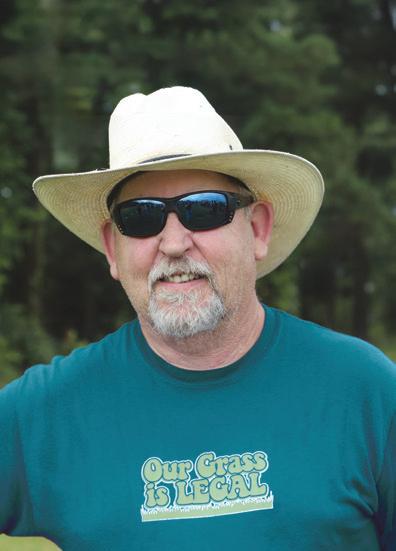
keep hearing people say I’m lucky because AI can’t do my job. Is that really true? I agree that there are many aspects of our industry that are protected — weed pulling, shrub pruning, planting, string trimming to name a few.
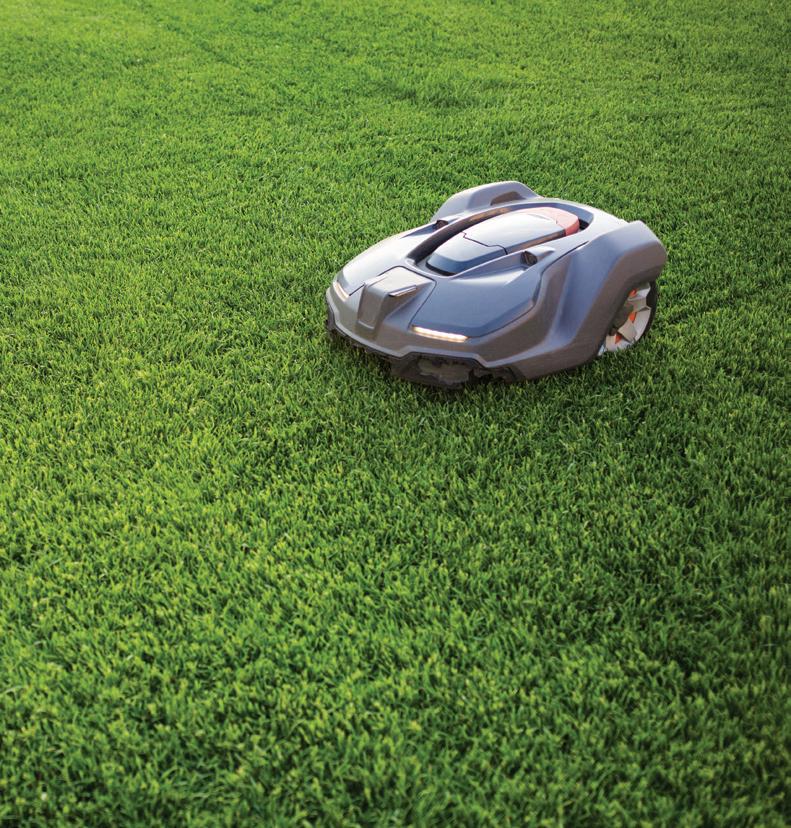
What about mowing? Have you been paying attention? Social media is full of reels demonstrating robotic mowers. The technology has greatly improved and for many property managers and homeowners, the idea of not relying on someone showing up for work makes the idea sound good.
Recently I had a conversation with a mower dealer who told me about someone who paid $5,000 for a computerized stand on mower. A one-person outfit and he unloads the mower, sets the program and it mows while he trims and blows. What a game changer. Think about what a crew of two or three persons could accomplish on a property in the same amount of time previously devoted to mow/trim/blow. Shrub trimming, weeding, or other valuable add-on services. Talk about force multiplier.
Paula often reminds me that after 36 years in business we never have had ‘’enough’’ employees. Most of us can see into the future and see it appears the good lord isn’t making too many more. Luckily many of us understand and invest in the best talent and technology we can afford.
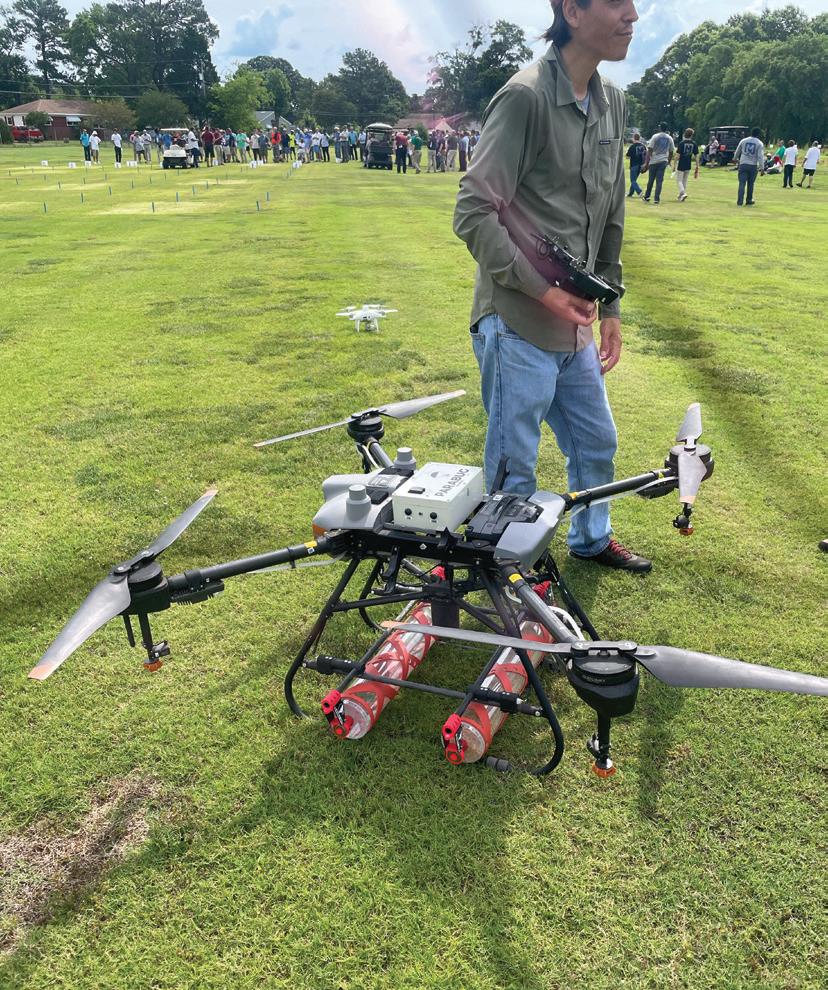
The June Field Day at Viriginia Tech’s Virginia Beach campus showcased the excellent research and resources available to VTC attendees. Past Field Days highlighted the many ways drones can be configured to apply fertilizers and herbicides. Thermal and advanced cameras to identify weeds, insects and soil conditions make drones an upcoming ‘’got to have’’ industry tool.
What a great time for our industry,
Wes Bray
VTC President
Virginia Turfgrass Journal is the official publication of The Virginia Turfgrass Council 140 Green St Salem, VA 24153 540-871-9001
beckallenstanley@gmail.com
PUBLISHED BY
Leading Edge Communications, LLC 206 Bridge Street, Suite 200 Franklin, Tennessee 37064 615-790-3718 info@leadingedgecommunications.com
VTC OFFICERS
President Wes Bray Lawns & Gardens Plus 757-422-2117
Vice President
Harris Wheeler, CTP
Richmond Public Schools (retired) 804-475-4561
Secretary / Treasurer Ray Funkhouser PBI Gordon (retired)
Past President
Phil Bailey, CGCS Isle of Wight County Parks & Recreation 757-572-1981
VTC DIRECTORS
Sam Burris
Jack Findling
Jesse Johnson
Richard Linsday
Bruce Sheppard
T.J. Skirsky
Craig Zeigler
VTC ADVISORY MEMBERS OF THE BOARD
Mike Goatley, Ph.D. (Chair)
Shawn Askew, Ph.D.
Alejandro Del Pozo-Valdiva, Ph.D.
Jeffrey Derr, Ph.D.
David McCall Ph.D.
Dan Sandor, Ph.D.
Cynthia Smith, Ph.D.
EXECUTIVE DIRECTOR / DIRECTOR OF PROGRAMS
Beck Stanley
VIRGINIA TURFGRASS FOUNDATION
Brandyn Baty
757-585-3058
Virginia Turfgrass Council (VTC) serves its members in the industry through education, promotion and representation. The statements and opinions expressed herein are those of the individual authors and do not necessarily represent the views of the association, its staff, or its board of directors, Virginia Turfgrass Journal, or its editors. Likewise, the appearance of advertisers, or VTC members, does not constitute an endorsement of the products or services featured in this, past or subsequent issues of this bimonthly publication. Copyright © 2026 by the Virginia Turfgrass Council. Virginia Turfgrass Journal is published bimonthly. Subscriptions are complimentary to members of VTC. POSTMASTER: Send change of address notification to VTC, P.O. Box 5989, Virginia Beach, VA 23471. Postage guaranteed. Thirdclass postage is paid at Jefferson City, MO. Printed in the U.S.A. Reprints and Submissions: Virginia Turfgrass Journal allows reprinting of material published here. Permission requests should be directed to VTC. We are not responsible for unsolicited freelance manuscripts and photographs. Contact the managing editor for contribution information. Advertising: For display and classified advertising rates and insertions, please contact Leading Edge Communications, LLC, 206 Bridge Street, Suite 200, Franklin, TN 370643394, (615) 790-3718, Fax (615) 794-4524. Deadlines are the first of the month prior to the following month’s publication. (Example: August 1 for the September issue.)








ummer is here and another successful June Field Day has passed, thanks to the hard work of Dr. Derr and his staff at the Hampton Roads AREC. This year, we hosted over a dozen vendors and sponsors, including several of our Diamond Level members. Thanks to everyone who attended and supported this important summer educational opportunity!
I also want to take a moment to applaud some other important partners for their hard work in the first half of the year. At the VTF, Brandyn Baty and her board accomplished one of the most successful research tournaments ever held. As always, we supported this effort and encourage our membership to support the Foundation in its efforts to bolster the research and science which makes our industry possible.
In this edition, you’ll get an early peek at Tribrook Club’s major renovation — formerly Lexington Golf & Country Club — where my good friends Lester George and Vinny Giles have put together something truly special that will lift up the game of golf for the region.
As a collective green industry, we are all in this together. And at the VTC, it is our duty to foster friendships and partnerships with all today, so that our industry may be here tomorrow.
Enjoy the Summer,
Beck Stanley VTC Executive Director
SAVE THE DATE AUGUST 24 – 25, 2026 VT Turfgrass Blacksburg Field
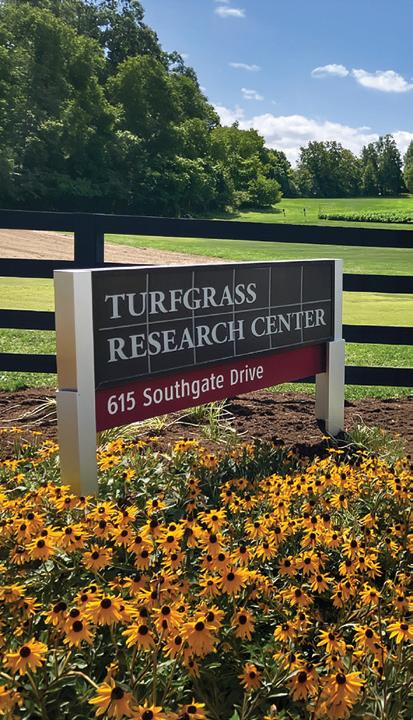
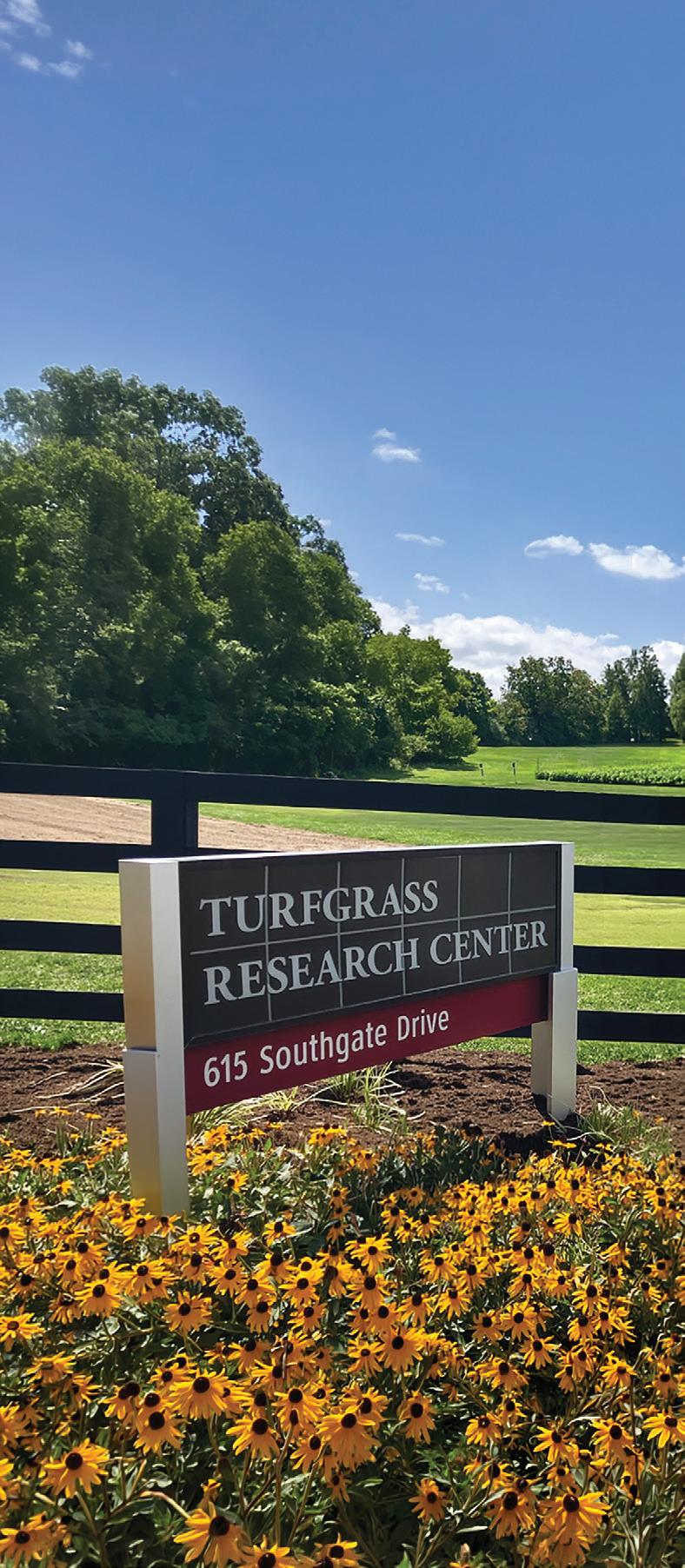
Virginia Tech and the Turfgrass Research Center
Blacksburg, VA
DETAILS ON PAGE 10
Shawn D. Askew, Ph.D. Virginia Tech 435 Old Glade Road Blacksburg, VA 24061 540-231-5807 askew@vt.edu
Alejandro Del Pozo-Valdiva, Ph.D. Virginia Tech
Hampton Roads
Agricultural Research Station 1444 Diamond Springs Rd. Virginia Beach, VA 23455 757-363-3900 adelpozo@vt.edu
Jeffrey F. Derr, Ph.D. Virginia Tech
Hampton Roads
Agricultural Research Station 1444 Diamond Springs Rd. Virginia Beach, VA 23455 757-363-3912 jderr@vt.edu
Mike Goatley Jr., Ph.D. Virginia Tech 420 Smyth Hall Blacksburg, VA 24061 540-231-2951 goatley@vt.edu
David McCall, Ph.D. Virginia Tech 435 Old Glade Road Blacksburg, VA 24061 540-231-9598 dsmccall@vt.edu
Dan Sandor, Ph.D. Virginia Tech 170 Drillfield Dr. 411 Price Hall Blacksburg, VA 24061 540-231-9775 dsandor@vt.edu
WITH SUPPORT FROM: Thomas P. Kuhar, Ph.D. Virginia Tech Dept. of Entomology 216 Price Hall 170 Drillfield Drive Blacksburg, VA 24061 540-231-6129
tkuhar@vt.edu


Virginia Turfgrass Journal allows you to get your message directly in the hands of your customers. The magazine is a key benefit of membership in the Virginia Turfgrass Council – providing valuable research, education, and industry information to each member. Readers can also access the Digital Edition through The Turf Zone website. Archived issues ensure that your advertising will be seen indefinitely, for long-ranging impact. VTC members include:
Are you looking for a refresher course in the principles of turfgrass management? Is there someone on your turf maintenance staff that you would like to provide an opportunity for professional development in turf management? The Virginia Tech Turfgrass Team offers an affordable virtual 13-week training program called VT-STEM that covers all areas of turfgrass management.
The School is primarily intended to serve the educational needs of those seeking professional advancement that have (or are interested in) jobs in the turfgrass industry, but don’t currently have the time or resources to pursue formal 2 or 4-year turf degrees. For 2026 – 27, School runs from November 7, 2026 through mid-February 2027.
New training topics are presented weekly by VT Turf Team faculty, through both synchronous and asynchronous formats. Written chapters and pre-recorded training lectures are provided each week, and the students are charged with taking both pre-training and post-training quizzes to assess their mastery of the subject matter. The VT Turf Team and invited industry guests meet with the students by Zoom every Wednesday night from 7 –9 p.m. eastern during the school year (all meetings are recorded for later viewing).
Students that complete all VT-STEM requirements receive the STEM badge and are eligible to sit for the Virginia Certified Turfgrass Professional exams, a credentialing program that is included as part of this tuition fee and is made available in virtual format from mid-February through March for all those that qualify.
The tuition cost for VT-STEM is $600 per student (there are discounts available for first responders and veterans – just let us know).
If you have additional questions, please contact either Mike Goatley ( goatley@vt.edu ) or Dan Sandor ( dsandor@vt.edu ).
Registration opens in July at https://tinyurl.com/VT-Turfgrass-School and School begins on Saturday, November 7
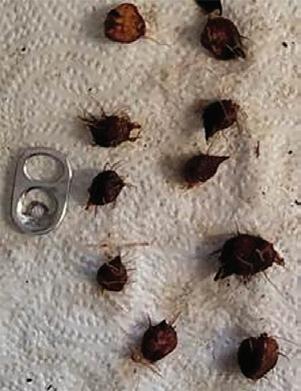
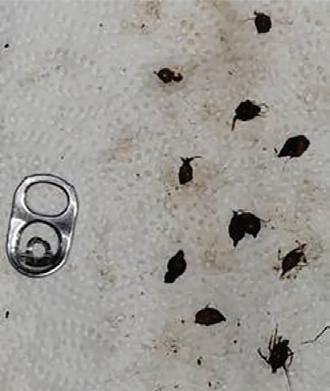
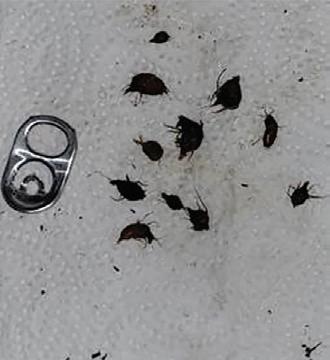
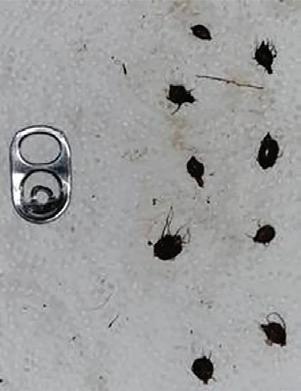
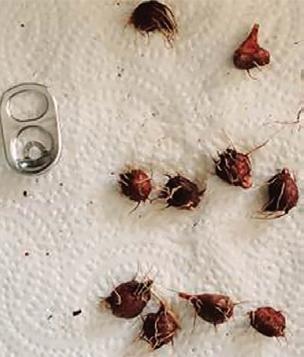
In Virginia Turfgrass Journal, May/June 2026 in the article “Give Yourself the Edge in Managing Sedges in Lawns and Landscape Beds” Figures 3 and 4 were improperly labeled. At right are the correct photos and captions. We regret the error.


The VTC is YOUR direct connection to lawmakers, regulators, and leading academic research.
August 24 – 25, 2026 at Virginia Tech and the Research. Education. Extension. Turfgrass Research Center in Blacksburg
his year’s event begins with an elevated kickoff at Blacksburg Country Club, where we are partnering to bring together the fun of Goatley Rules mixed with tradition golf fun for 9 holes of pure entertainment and camaraderie. The Monday program features a 3:00 PM shotgun start followed by a welcome happy hour and dinner at 6:00 PM.
On Tuesday, attendees will gather at the Turfgrass Research Center for breakfast and registration at 7:30 AM, field day tours at 8:30 AM, and a networking lunch at 12:30 PM. This annual event offers a chance to learn, network, and support turfgrass research, education, and extension in Virginia — while enjoying one of the most memorable traditions in the turfgrass community.
Your participation in Field Day helps the Virginia Turfgrass Foundation (VTF) continue supporting the Turfgrass Research Center (TRC) in meaningful ways. In 2025, that support helped fund a part-time TRC staff position, and in recent years VTF has also provided equipment matching funds for multiple pieces of critical equipment. As research needs continue to evolve, attendance at these events helps fuel the funding needed to keep the TRC moving forward and meeting those needs.
The Blacksburg Field Day is more than a showcase of research — it is an opportunity to build relationships, strengthen the turfgrass community, and support continued investment in the Turfgrass Research Center. With Goatley Rules returning in a bigger way this year, it’s also a chance to enjoy an unforgettable round of golf while celebrating Dr. Mike Goatley’s lasting impact on the turfgrass profession.

BLACKSBURG COUNTRY CLUB
• 3:00 PM – Goatley Rules Golf
• 6:00 PM – Welcome Happy Hour & Dinner (Free) MONDAY, AUGUST 24 th
TUESDAY, AUGUST 25 th
TURFGRASS RESEARCH CENTER
• 7:30 AM – Breakfast & Registration
• 8:30 AM – Research Field Day Tours
• 12:30 PM – Networking Lunch
• GOATLEY GOLF
• NETWORK
• LEARN
• GIVEAWAYS
REGISTER NOW @

REQUESTS for CGCS, CSFM & VA Urban Nutrient Management Planners CEUs Submitted

December 1 – 3, 2026
Belmont Recreation Center
Henrico, Virginia
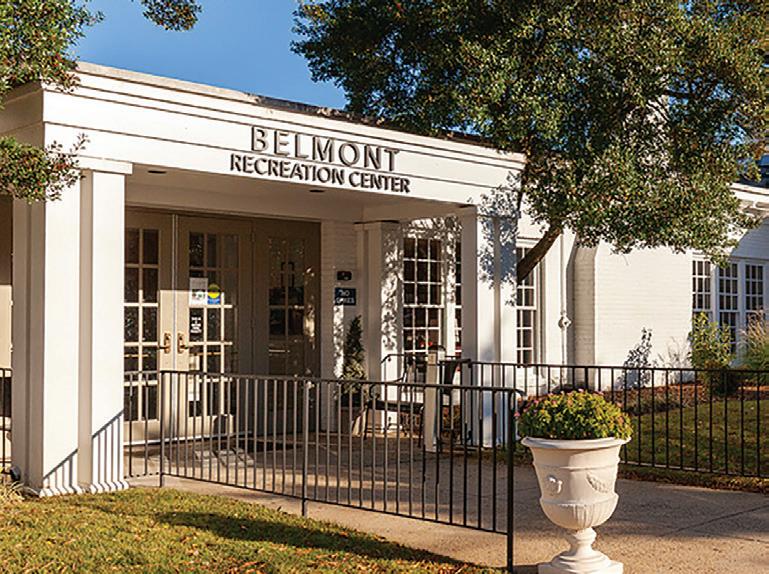
ews flash! VTC’s 2026 Lawn and Landscape Short Course will be held at Belmont Recreation Center (1600 Hilliard Road, Henrico, Virginia) December 1–3, with space limited this year due to demand. Attendees can expect to gain valuable knowledge from expert instructors and, in the words of Aristotle (probably), “those who attend the Belmont Short Course will make excellence a habit.” He totally, definitely said that.
But seriously, members and guest attendees applaud the high quality instruction and credit the course with enhancing their career growth and trajectory. Held on the sacred grounds of Sam Snead’s 1949 PGA Championship victory, Belmont Recreation Center (once the home of Hermitage Country Club) provides a fantastic venue for this annual gathering. Don’t miss this chance to get an upper hand on your competition and network with industry leaders and select vendors.
We value our member and guest attendee feedback on this event. If there is something you or your company would like to see added to this course or one of our many educational offerings, please do let us know. Contact Beck Stanley at 540-871-9001 to provide feedback or join the VTC today.
DID YOU KNOW? The VTC educates over 1,000 professional applicators each year.
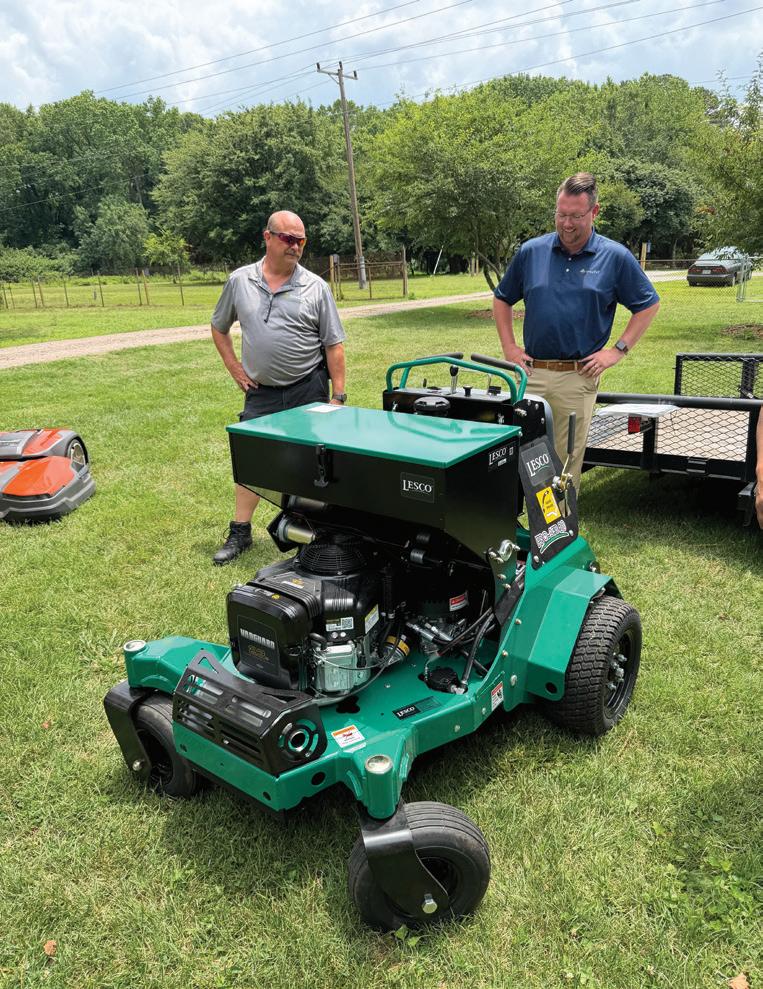
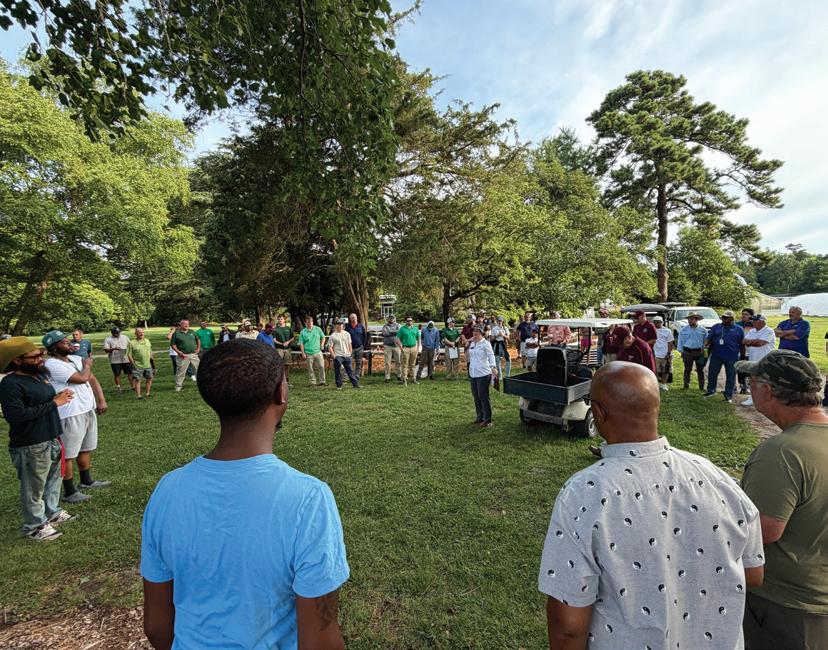
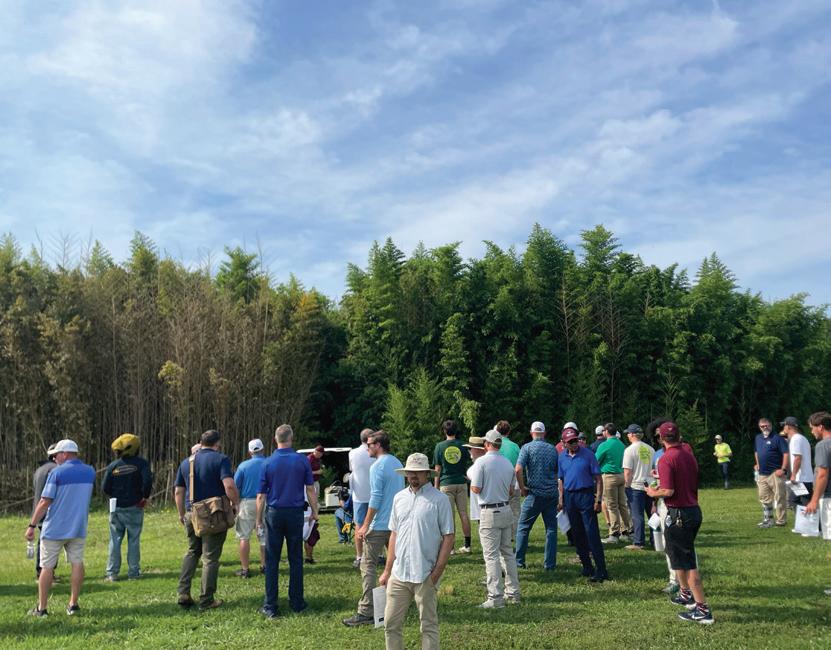
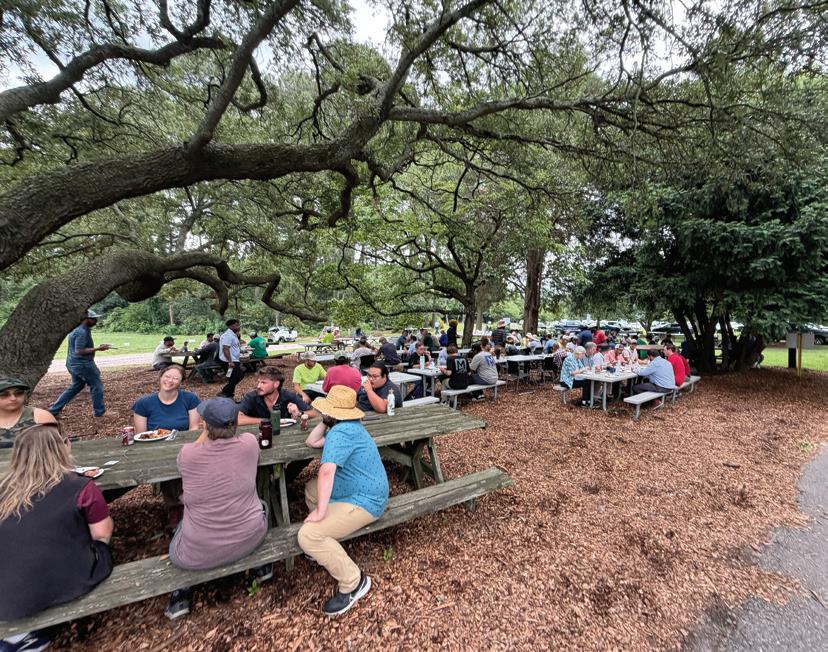
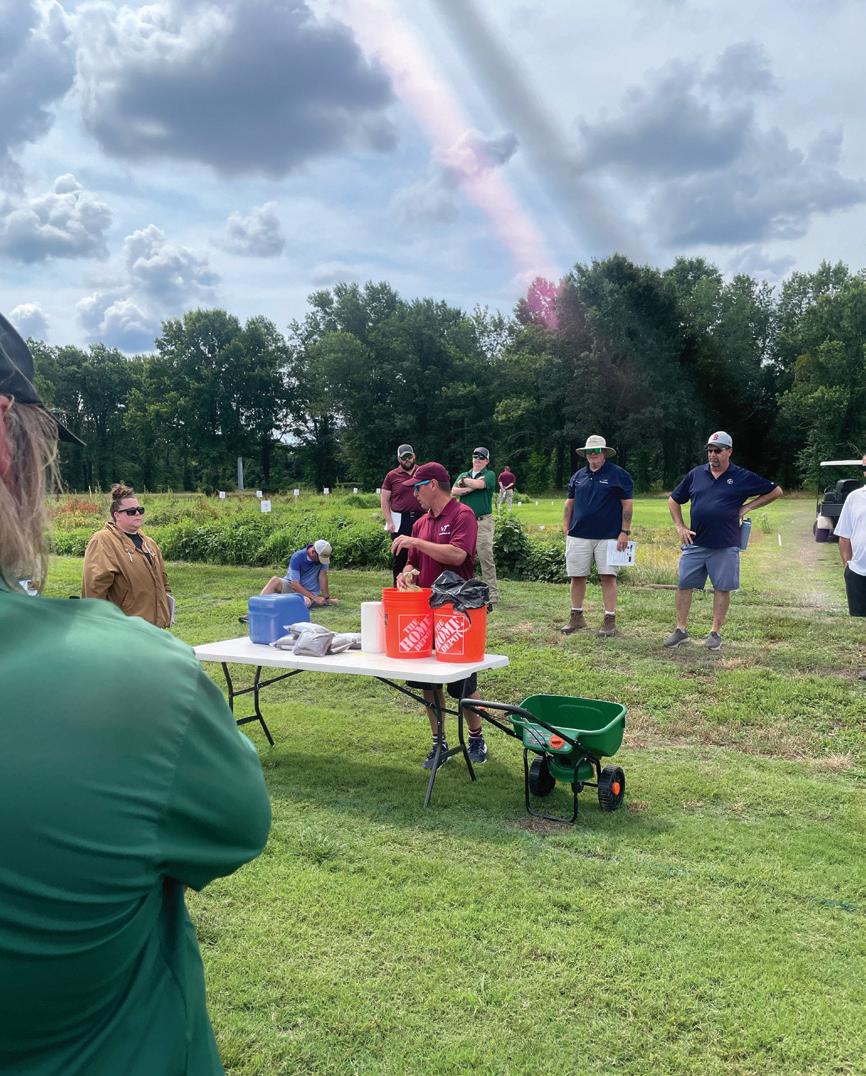
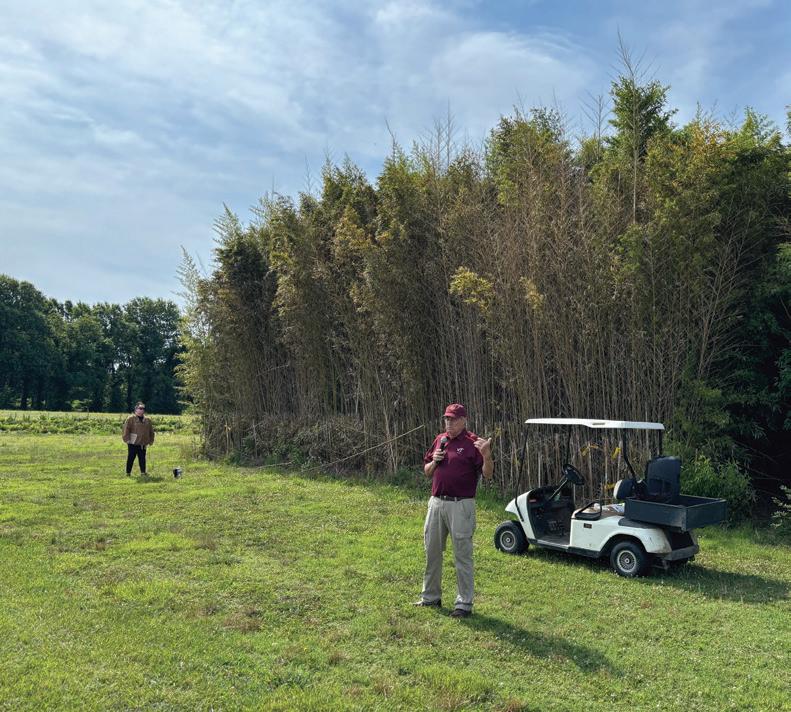
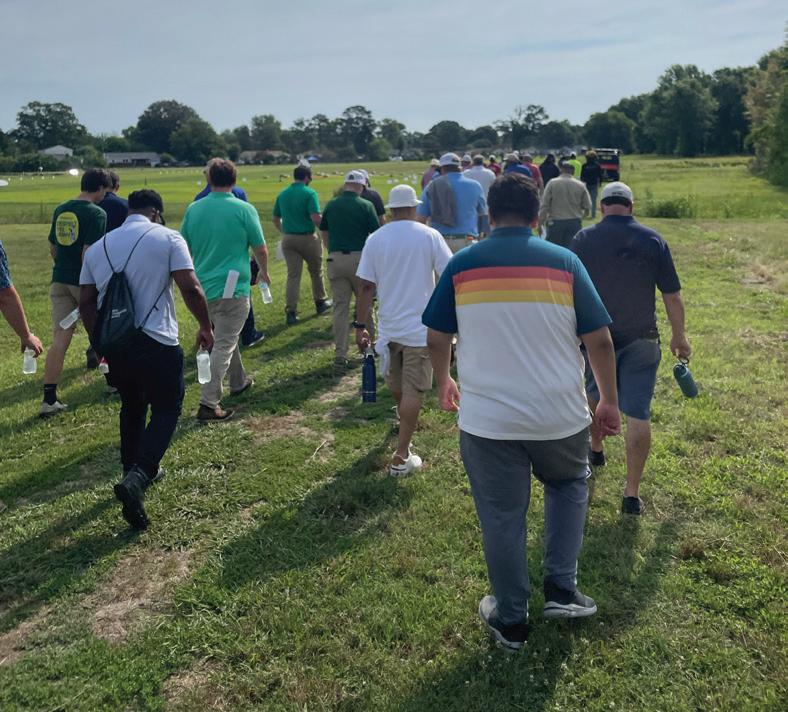
Over 150 applicators attended our 2026 Hampton Roads Field Day, where Dr. Jeffrey Derr of Virginia Tech led attendees on tours of the facility, new trials, and research plots. After a delicious lunch, VTC staff and Virginia Tech professors oversaw recertification classes for attendees.
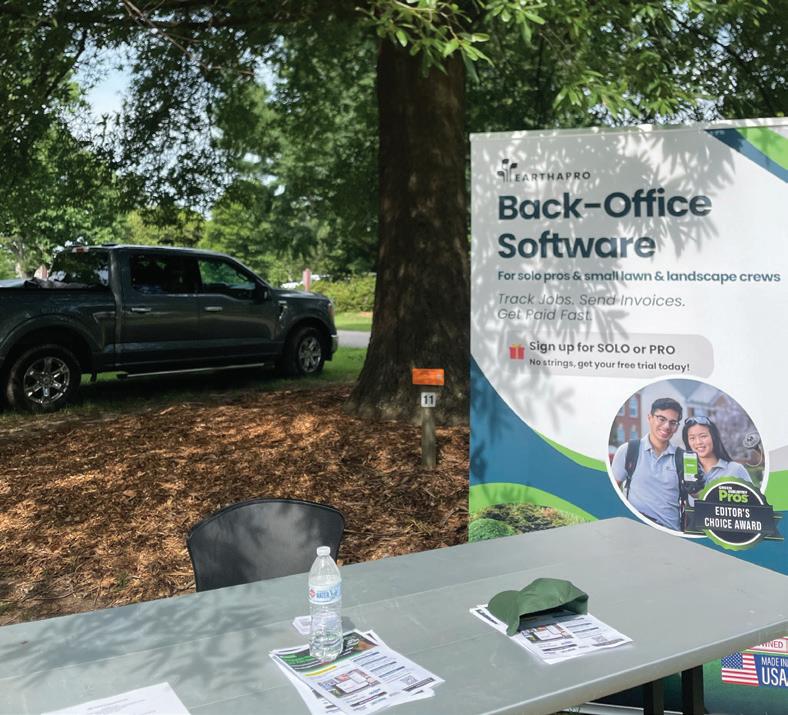
The VTC wishes to thank Lawns & Gardens Plus, Woods Rogers, Virginia Green, Corteva, Landscape Supply, EarthaPro, Harrell’s, Advanced Turf Solutions, Aquatrols, Luck EcoSystems, SiteOne, SynaTek, and MowCow for their generous support of this educational gathering.
“The weather was perfect, lunch was delicious, and everyone learned something new to help them advance in their careers,” said Beck Stanley, VTC Executive Director. “That’s what the VTC is all about. We are grateful to all who attended and sponsored and are especially thankful for Virginia Tech and these amazing educators whose dedication and research make our industry possible.”
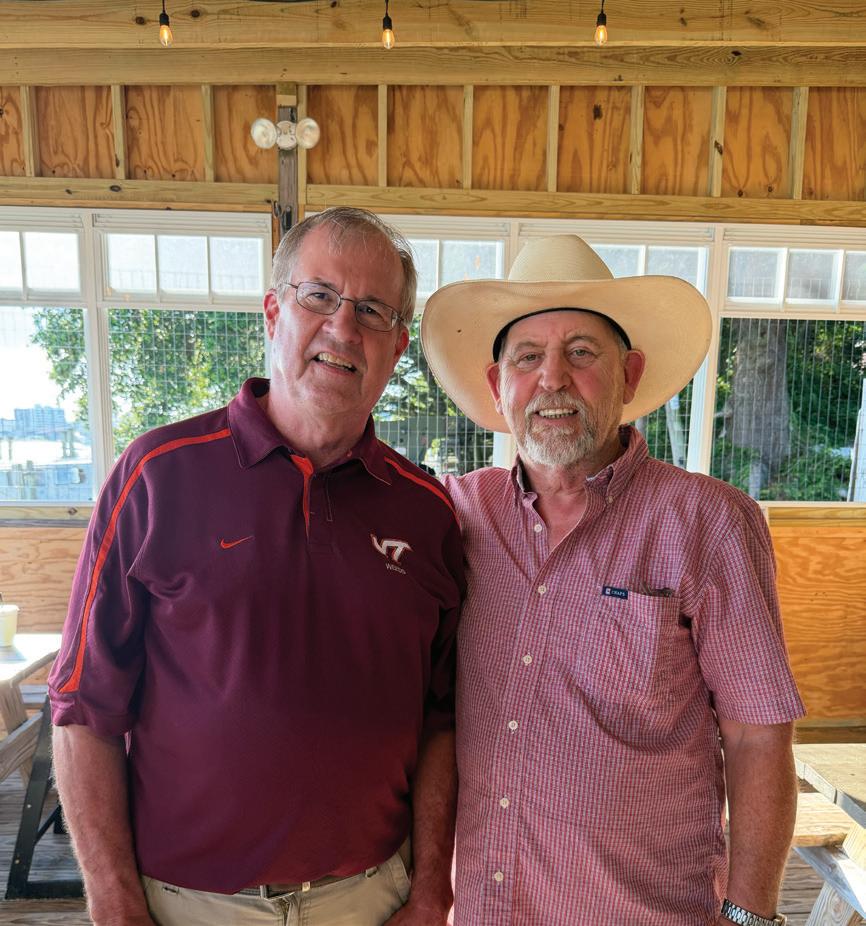
After the event, sponsors, speakers and board members gathered at Chick’s Oyster Bar for cocktails and local seafood.


linkedin.com/company/theturfzone
x.com/theturfzone

facebook.com/theturfzone
Virginia Tech Professor Emeritus Richard E. Schmidt passed on December 31, 2025 at the age of 94. Upon the passing of his wife, June, in 2022, Dick’s son, Stephen, asked me to please “keep Dad active and engaged by involving him in a project”. Well, the project I asked Dick to work on for me was to summarize what he considered to be some of the most significant findings of his research of biostimulants as compared to more traditional plant growth regulators. Dick literally continued to review articles and write from that point until he was prepared to pass, calling me on December 30 to let me know that he did not have much more time and it was up to me to complete this article. There was little that was needed for me to “complete” this article, but it was my pleasure to provide the final review and edits to Dick’s last scientific publication for the turfgrass industry. I decided I can’t give you everything Dick was exploring… he went into areas of literature review on gene regulation and expression in plant hormone production, the chemistry and production of phytosiderophores, and a host of other topics that I simply am not qualified to discuss. My effort focused on refining Dick’s article in a way that I felt would most benefit you, the turfgrass manager.
Dick is referred to by many as “the Godfather of turfgrass biostimulants,” but his recognition for his efforts in better understanding these compounds did not come without professional challenges. He was often confronted by scientific peers that he should not be wasting his time doing “snake oil research”. But Dick remained resolute that these compounds had the potential to play important roles in managed turfgrass, especially turfgrass that was likely to encounter environmental stress. Dick, along with research scientists like VT’s Dr. Xunzhong Zhang (and a number of graduate students such as myself studying under him at Tech) slowly but surely progressed in the understanding of why and how these compounds might work (or not) rather than just practicing the approach of “spray and pray”. VT Turfgrass alum and Purdue University Turfgrass Professor Dr. Cale Bigelow made a comment about Dick’s legacy that I thought was very astute: “I dare say that almost every highprofile golf course or sports field anywhere in the country likely has some formulation(s) of a biostimulant in their chemical room that the manager is applying as a standard tool in their management program.”
I hope you will take a few minutes to read Dick’s final article on this subject matter as a way to pay tribute to his lifetime of research efforts, and to learn a little more about how to use these compounds to improve your turfgrass management program.
Mike Goatley, Jr., Professor and Extension Turfgrass Specialist Virginia Tech
— What’s the Difference? AND
By Richard E. Schmidt, Professor Emeritus, Virginia Tech
re you confused concerning the use of plant growth regulators (PGR’s) or biostimulants? First a couple of basic definitions of these compounds to set the stage for this discussion. For the purpose of this paper, I will define a PGR as any compound that alters plant growth or development and a biostimulant as an organic substance derived from plants and animals that, when applied in small quantities, may enhance plant growth and metabolism to enhance turfgrass tolerance to environmental stress. There is definitely some overlap in these definitions, so it’s understandable if you are confused by the distinctions between these two classes of chemistry. Conflicting information concerning the efficacy of newly introduced materials occurs frequently. Dr. Bill Kreuser (2015) points out the advantages of using plant growth regulators for fine turf. Subsequently, VT alum Dr. Jordan Booth (2023) advocates managing bentgrass putting greens in the transition zone without plant growth regulators. Here are two highly regarded scientists with quite variable viewpoints on this subject, and I think both are correct in their findings and recommendations, depending on the situation.
To get a perspective on the subject let us briefly review the history of the use of compounds that fall outside the category of fertilizers but are known to affect the growth and development of plants. Prior to World War II, a growth hormone in the form of the herbicide 2,4-D, was introduced to selectively control broadleaf weeds in turfgrass populations. Reports of effectiveness varied. Its application for weed control did not become widespread until sufficient research was conducted to show that applications made during the winter months were not effective until warmer weather in the spring when broadleaf weeds were actively growing. Once it was established that this chemical effectiveness was influenced by the environment, its use became standard. This is a reminder that from the beginning of the use of synthetic chemicals that environmental condition must be considered in obtaining desired results when applying chemicals to turf. 2,4-D and similar compounds later became standard components in tissue culture research in the selection and development of new turfgrass cultivars through callus culture. This ‘positive’ growth response of 2,4-D clarifies something that we have long known for pesticides, hormones, fertilizers etc. –concentration is very important.
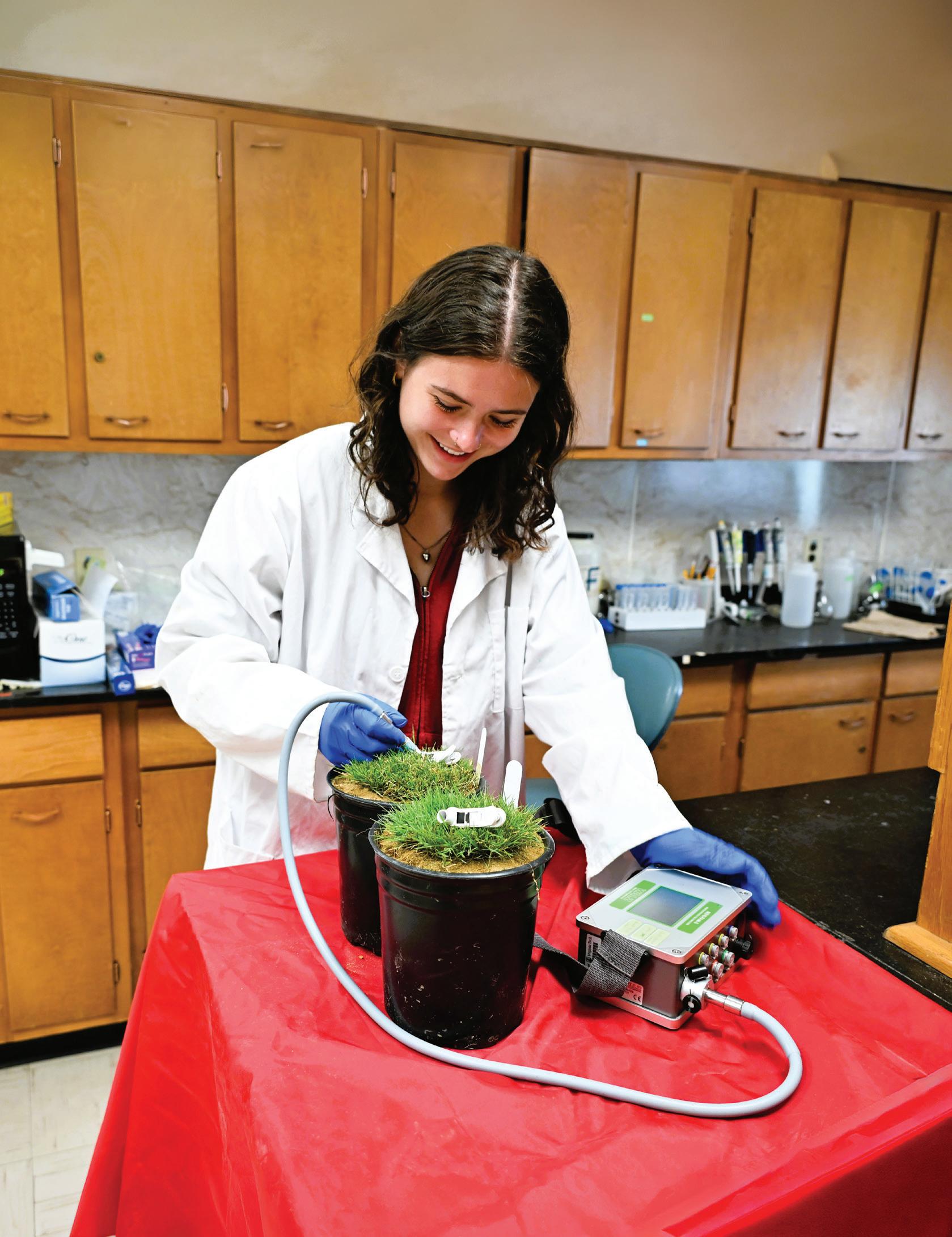
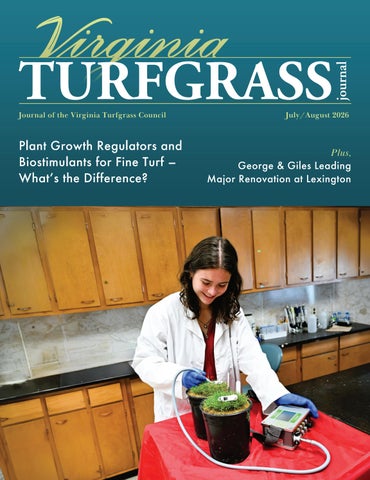
Taylor Motsinger, Schmidt Undergraduate Scholarship recipient, measures photochemical efficiency of creeping bentgrass treated with biostimulants under heat and drought stress
Other factors and compounds must also be considered when discussing the initial research into the possible use of these compounds. During the 1980’s the first synthetic gibberellic acid (GA) compounds became available. Research by Dr. Felix Juska (1958) detailed how gibberellic acid stimulates plant growth by elongation of stems between the nodes. This was originally thought to be a miracle compound for turfgrass culture. However, by the late 1980s use of GA as a plant growth accelerator was basically terminated except for specialty uses such as pregerminating perennial ryegrass seed for sports field surface recovery uses, a standard practice by many sports field managers still today. When delving into the reasons cited by scientists and turfgrass managers alike why GA use essentially ceased outside of seed treatments, it seemed that the general consensus was that once a dense turf was established, most managers desired that the grass grew more slowly to decrease maintenance cost!
To obtain slower turf growth, there was also a lot of interest in the 1980s in the development and testing of Plant Growth Regulators (PGRs) as a component of turfgrass management, with initial compounds mostly being used on unimproved turf for radical reductions in foliar growth or seedhead development. Emphasis for fine turf management was placed on synthetic gibberellic inhibitors, such as compounds still widely used today in paclobutrazol and trinexapac-ethyl, to control foliar growth of turfgrasses and improve turfgrass density and playability.
One common theme with their use that was first somewhat surprising to end users was the surge of foliar growth when the regulated turf was removed from the treatment program- a phenomenon often referred to as the “rebound stage” of growth and development. Clipping yields increased drastically during the rebound stage due to a buildup of carbohydrates and stored nitrogen in the plants that accumulated during the suppression phase. This is further evidence of response that is due to concentrations of hormones inside the plants (as well as the interactions with other compounds). I briefly mentioned before how 2,4-D is most commonly thought of as a broadleaf herbicide, but at low concentrations it can trigger very positive auxin hormone-based responses that promote cell elongation.
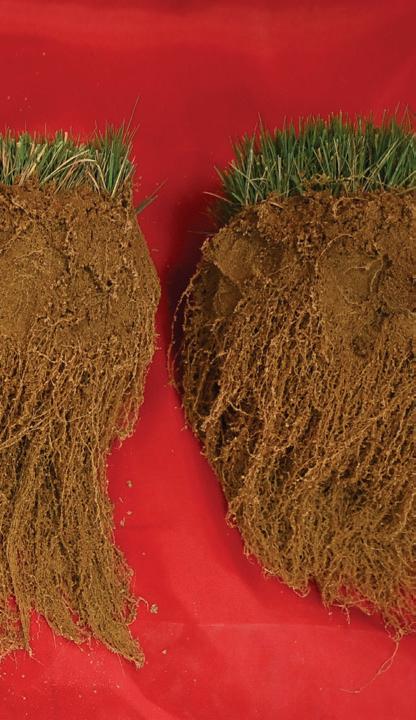
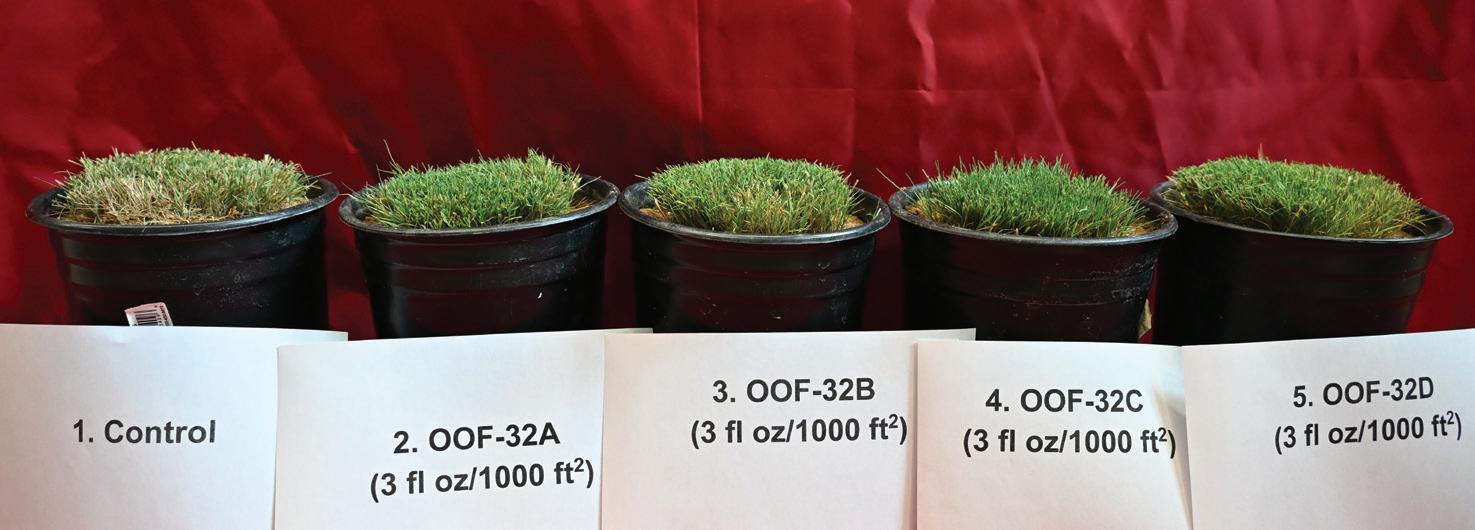
The late biochemical pathway suppression of GA by a Class A PGR like trinexapac-ethyl revolutionized how fine turf is managed with a PGR. The main beneficial claim for using gibberellic inhibitors is the reduction of clipping yield plus the enhancement of color, increased stress tolerance and reduced nutrient requirements. Because of the short growth suppression phase, frequent retreatments are required. It is impractical to visually determine the effectiveness of the gibberellic inhibitor treatment to ascertain when retreatment is necessary. One standard method in golf turf putting green management has been golf ball roll distance; when ball roll is slowed because of faster turfgrass growth rate (as measured by an increase in clipping yield), it is a signal to re-treat. Technology and smart devices have now made it common to have PGR-treatment prediction models that combine data collected over the years with varying rates and sources of PGRs with Growing Degree Day data. This is an example of how technology is helping the turfgrass manager further refine their PGR management programs and maintain consistent ball roll speeds for their golfing public. Creeping bentgrass root responses to various formulations of Ocean Organics seaweed extract biostimulants after 5 weeks of 95F day and 77F night temperatures
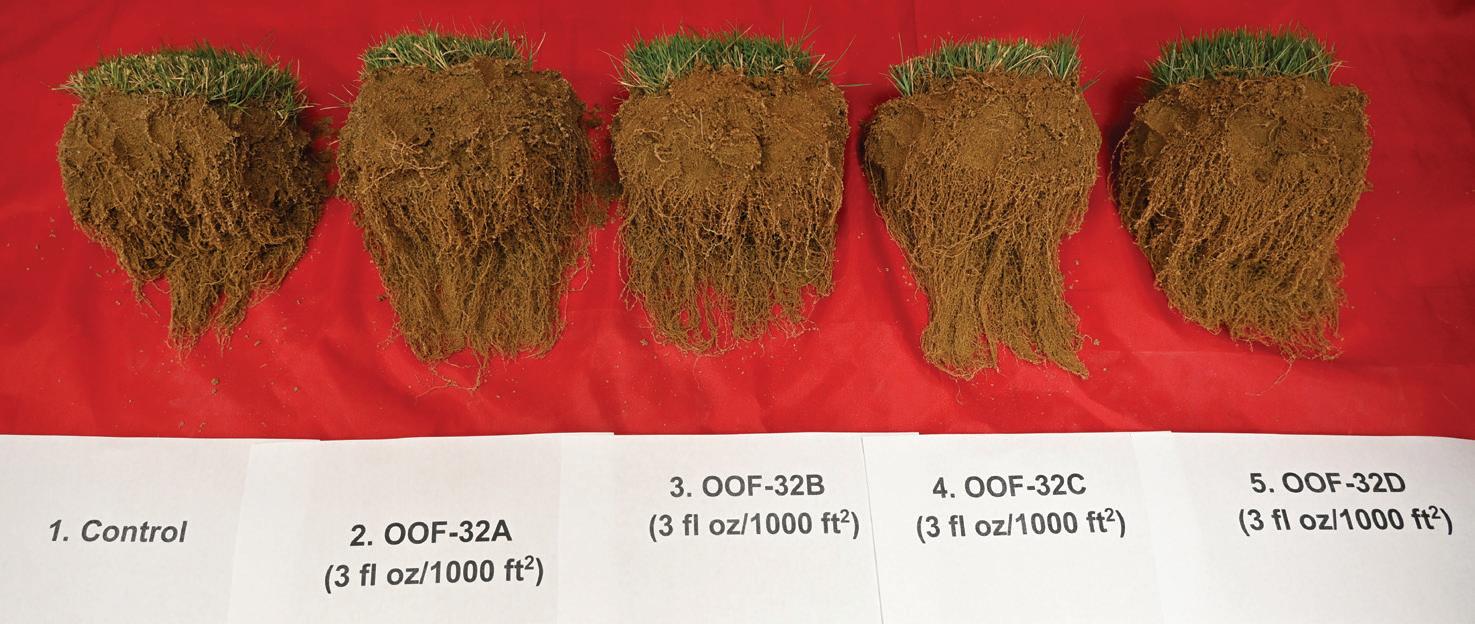
Although classified as a PGR, naturally occurring growth regulators such as seaweed extracts and humic acid are not discussed in the same ways as gibberellic acid inhibitors. This is because the main effect of the natural growth regulators is in metabolic enhancement, and these compounds are commonly referred to as biostimulants. By this definition, some PGR’S also may be classified as biostimulants as they also influence the metabolic activity of plants. Therefore, when a material is used to influence plant growth it often is being used primarily as a PGR. When it is used to affect the metabolism of the plant, it may be referred to as a biostimulant.
It has been well documented that turfgrasses under environmental stress have an internal increase at the molecular level in potentially phytotoxic oxygen species (called free radicals) within their cells. Simply put, the plant is incapable of utilizing all of the energy from the sun that it is receiving (something we generally associate with photosynthesis and think of as a “good thing” because it is leading to food production). Under conditions of excessive energy absorption, oxygen molecules accept electrons and become a highly reactive free radical form. These free radicals are capable of damaging cell membranes. Under normal conditions the plant has biochemical pathways in place to neutralize free radical formation, but under stress, the build-up of free radicals exceeds the plant’s capability of quenching that excessive energy by the production of compounds called antioxidants. It has been shown that supplemental applications of biostimulants (particularly before the most extreme periods of stress arrive) can enhance the development of the antioxidant compounds that can mitigate the toxic influence of the free radicals.
Whether materials are applied for growth control or development of antioxidants, environmental conditions must be considered.
For example, research has shown that adequate nitrogen fertilizers in the fall and early winter (when grass foliar growth is reduced by cooling temperatures), carbohydrate reserves increase and this ultimately favors root production. However, heavy spring nitrogen fertilization stimulates foliar growth at the expense of root production and places the plant under stress, particularly if the summer months prove to be hot and dry. In Booth’s 2023 article, he makes the case that applying PGR’s, such as those that inhibit gibberellin production, can add to the stress associated with the summer weather. Data, however, shows these products do influence the metabolic processes that are reported to negate the effects of environmental stress. Other interacting factors that influence the action of the biostimulant are nutrient balance and/or pest activity that negates the results of the treatment. It is difficult to visually observe changes associated with PGR’s and the opportunity to adjust programs is often missed. Again, one of the best (but time consuming strategies to adjust programs) is to take daily stimpmeter readings to assess ball roll and/or clipping yields to determine the level of plant growth effect of the supplemental PGR treatments.
As a means to hopefully better explain some of my earliest research findings in terms of PGR/biostimulant concentrations and turfgrass response(s) (and what I have found in my literature review beyond my time as an active faculty member at Virginia Tech), I turn to findings from a scientific publication from the work done by my successor in turfgrass physiology research at Virginia Tech, Dr. Erik Ervin. Ervin at al. (2004) published a paper on the seasonal influence of biostimulants on root growth, metabolic activity, and overall shade tolerance of creeping bentgrass, an article that covers both basic and applied research findings in this area.




Root development of bentgrass, as measured by physical root pulls of plugs grown under the first shade treatment sequence of 88% shade from June to 30 October 2001 (summer through early fall) was not enhanced by trinexapac ethyl, iron, or seaweed + iron treatments, but had an approximate 44% increase for treatment with a standard fungicide, propiconazole ( Table 1 ). When returned to light conditions for the next six months (November to April 2002, late fall through winter), all root pull measurements were much greater than before, with increases of 37, 41, 20, and 17%, respectively for trinexapac ethyl, propiconazole, iron, and seaweed + iron treatments compared to the untreated control. When shade was introduced again from April to November 2002 (spring to fall sequence), root strength once again declined due to the shade, but trinexapac ethyl, propiconazole (the active ingredient in a standard fungicide, shown to have hormonal-type activity in previous VT research), iron, and seaweed + iron treatments all provided root strength increases of 92, 33, 24, and 6%, respectively, as compared to the untreated control.
Two factors are at play here. Root development is obviously linked to the plants producing energy in the lighted conditions. Secondly, grass roots tend to develop during the late fall/winter months when foliar growth was impeded (Table 1). The bentgrass receiving the trinexapac ethyl treatments retained the most root development compared to the control when measured in Nov 2002. This indicates that the benefits of treatment that enhanced root development during the winter period when the bentgrass was exposed to light persisted. Although the treatments that had the largest root development (bentgrass treated with trinexapac- ethyl under full light in the winter, October 2001 to April 2002, Table 1) because of the root growth response, they also had the largest percentage root loss the following spring and summer when grown under shade. However, in terms of absolute root numbers as determined by root strength measurements, the bentgrass receiving these treatments still had significantly better root growth than the untreated control.
Now, how about metabolic activity? Two metabolic variables measured in this shade trial were photochemical efficiency (PE, a measurement of how efficiently plants are utilizing photosynthetically active radiation) and antioxidant activity (a measurement of how the plants were capable of quenching the potentially membrane-damaging energy of free radicals) by way of an increase in an energy-quenching compound, Superoxide Dismutase (SOD, Table 2). PE levels under shaded conditions increased slightly for all treatments compared to the untreated control, but the values only ranged from a 2% increase for Sea-
weed Extract + Humic Acid to a 9% increase for trinexapac ethyl (Table 2). While the dense shade drastically reduced all levels of SOD in shaded plants, the relative increases in SOD in the treated bentgrass compared to the untreated control was 39, 74, 78, and 86% greater for seaweed extract + humic acid, trinexapac ethyl, propiconazole, and FeSO4, respectively. Greater SOD levels in the plant impart improved stress tolerance to the bentgrass as it was moved from the shade to sunny conditions. Now, clearly the treatments were no replacement for growing grass in sufficient sunlight, correct? But under such extreme light deprivation, the treatments did trigger the plant’s metabolic responses to improve shade tolerance.
When combining the metabolic enhancement data (Table 2) from the bentgrass shade investigation trial with that of the root development under altering shade and light conditions (Table 1), it is evident that in general, there were positive responses to the PGR and biostimulant treatments. Determination of the antioxidant activity to ascertain turf health in “real time” is a wet laboratory process and would be impractical for the average turfgrass manager to use it to measure health of the grass. However, the remote sensing technologies that the research teams of Drs. McCall and Askew at Virginia Tech (and scientists at other universities) are evaluating, coupled with the expanding availability of these types of tools to golf course superintendents and sports field managers, and a summary/ evaluation of computations possible through artificial intelligence, I think it is likely that one day soon the turf manager will be determining the PE and SOD levels etc. to assess turfgrass health both rapidly and accurately. While ball roll speed, trueness of roll, and/or clipping yields will always give the turf manager very meaningful data in terms of management decisions that affect health and playability aspects, the use of electronic tools will provide the turfgrass manager real time data to tweak the metabolic activity of the turfgrass by way of a PGR or biostimulant application.
Although turfgrass ecology is a science, it also very much remains an art as well. Therefore, we should always respect the observations of dedicated turfgrass professionals that pay such close attention to their grasses on a daily basis. Their judgments and measurements reflect the ideal and the extremes in environmental conditions. And their exploration with the pros
and cons of PGRs and biostimulants have demonstrated the possibilities and pratfalls for how these tools can affect metabolic processes within the plant that may (or may not) promote better stress tolerance.
For as much progress that has been made in this area from the time I began studying biostimulants in the 1980s, there is no doubt that there is so much more we don’t know. There are an infinite number of plant hormone concentration possibilities inside plants that trigger plant responses, and with the application of the biostimulant the turfgrass manager is trying to effectively and safely manipulate that hormonal balance. Add to the equation the diversity of turfgrass species, climate, soils, pests, maintenance protocol, turfgrass use etc. and you can appreciate the challenges involved in gaining the desired plant responses. I have somewhat alluded to it, but I don’t think I have completely addressed this point: when Dr. Goatley first spoke with me about developing an article about biostimulants and PGRs he made the statement that “in particular one needs to know exactly what is in their biostimulant package if they are on a PGR program”. I agree and it’s a reminder that carefully reading and following the label is no different than for a pesticide. For instance, if a turfgrass manager is on a trinexapac-ethyl regulation program and is simultaneously applying a biostimulant that contains GA, their growth regulation is very likely being affected since they are applying the antidote to the PGR activity.
There always will be research that needs to be conducted in this area, and I am pleased that the lab of Dr. Xunzhong Zhang at Virginia Tech continues to expand knowledge in this area. Dr. Zhang has published research showing that turfgrass stresses such as drought, salinity, temperature, exposure to UV light, and shade can be reduced by elevating plant antioxidant levels by way of biostimulant applications. Biostimulants are not and will never be replacements for sound management strategies, but they are tools that when applied at the right time and concentration can enhance stress tolerance and improve the health and performance of your turfgrass system.
Booth, J.B. 2023. Managing bentgrass putting greens without plant growth regulators. United States Golf Association Green Section Record. 61(2).
Ervin, E.H., X. Zhang, S.D. Askew, and J.M. Goatley, Jr. 2004. Trinexapac-ethyl, propiconazole, iron, and biostimulant effects on shaded creeping bentgrass. HortTech. 14(4): 500-506.
Juska, F. V., 1958. Some effects of gibberellic acid in turfgrasses. July, 1958 edition of United States Golf Association Journal and Turf Management. pp. 25-28.
Kreuser, Bill. 2015. Effective use of plant growth regulators on golf putting greens. USGA Green Section Record Vol. 53 (7):1-10.



By Beck Stanley
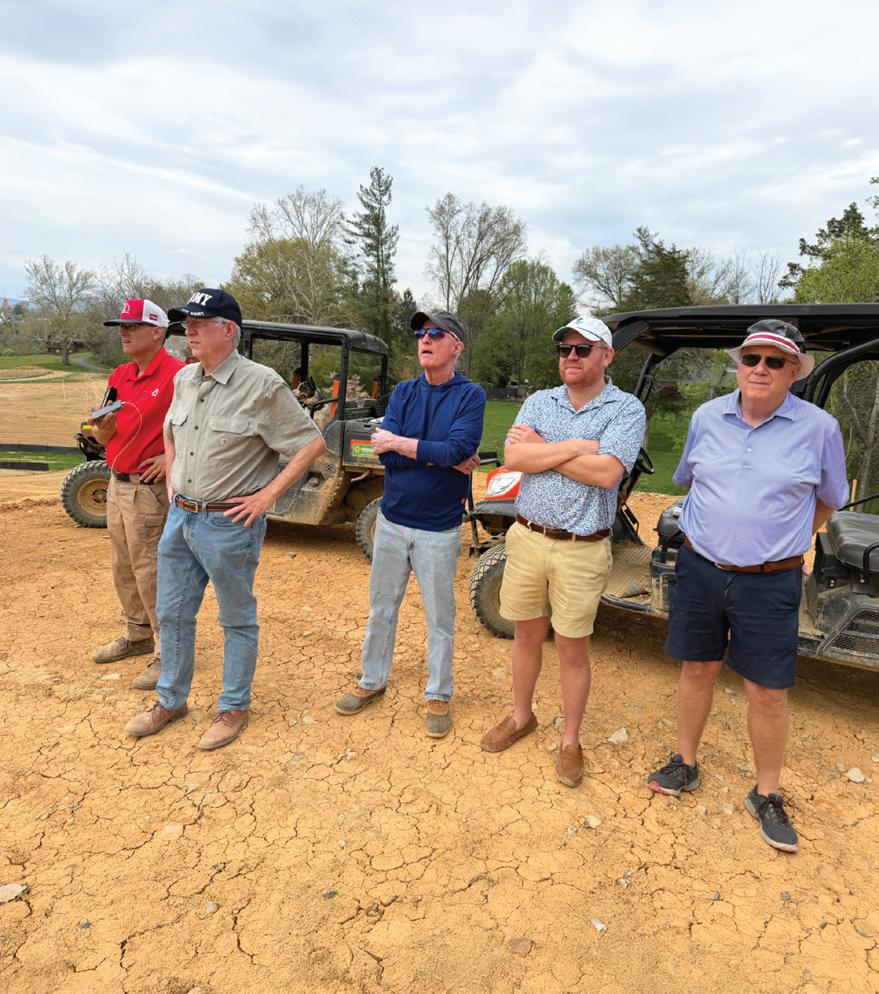
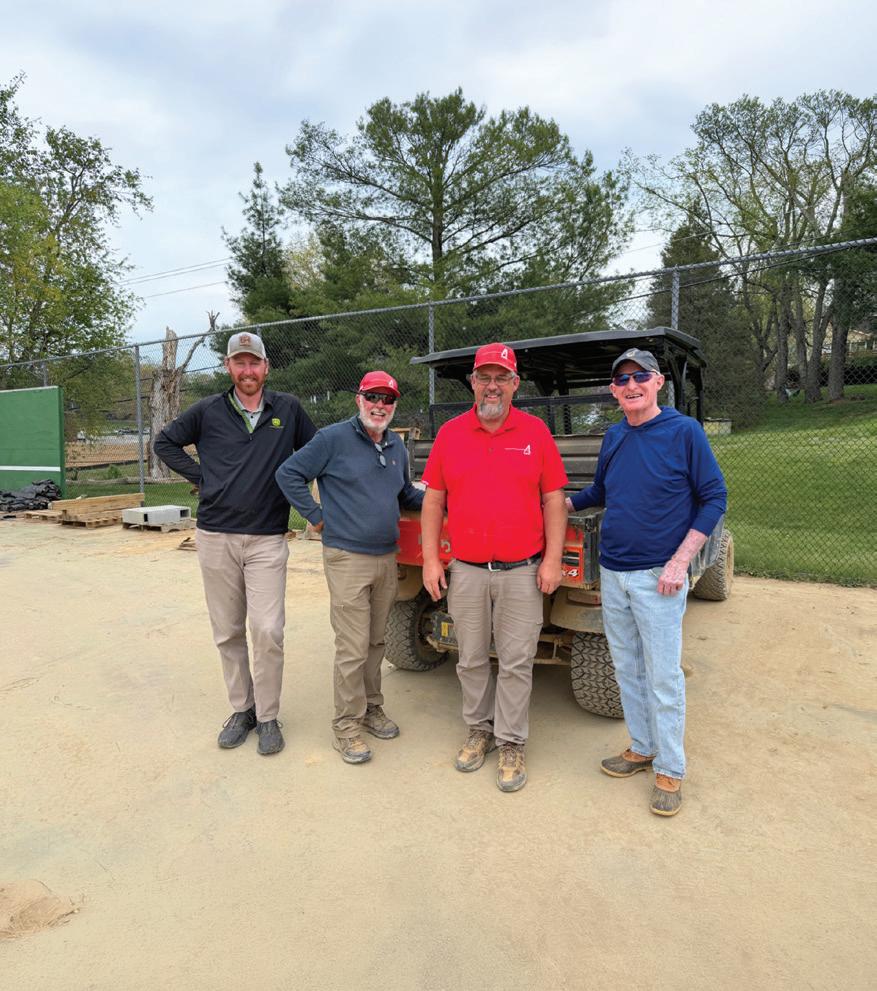
been more than two decades since Lexington, Virginia woke up to the good fortune of golf holes being crafted into its rolling mountain landscape. That drought is ending with the highly anticipated Lester George/ Vinny Giles renovation of Lexington Golf & Country Club, one of Virginia’s oldest clubs and certainly among its most beautiful layouts. George is following the iconic Ellis Maples, and the VTC was fortunate enough to visit the site in April to see the progress.
George inherits good bones at LGCC, better views than any of his previous Virginia projects, and an intact grounds staff that includes Peter Danaher and Kramer Johnson. The Club will unveil in 2027 a new clubhouse, practice facility, the renovated Maples course, and even a new name – Tribrook Club, an homage to its original farmland roots.
Tribrook will land in the realm of George’s other notable Virginia projects like Kinloch and Ballyhack, probably right between the two. I italicize these courses because they aren’t places. They are works of art, and although the former was better received, there is no question Ballyhack has had a major impact on golf tourism in the Roanoke region at the hands of traveling Dormie Club members hellbent on swiping plastic.
This Lexington renovation, on the other hand, is a thoughtful collaboration of resources between the Club and Washington & Lee University, mirroring how this is the first historic George/ Giles course renovation collaboration.
W & L’s men’s and women’s golf teams succeed in the top tier of Division III. Last year, the men’s team had the national player and coach of the year and finished fourth. This year, the men finished sixth, and two players tied for third place. The women finished fourth at the NCAA Division III championship, the best performance in the school’s history.

“We have to serve everyone with this design. That means a new look, a new excitement for past, present, and future members. Our changes have done that.”
— Lester George
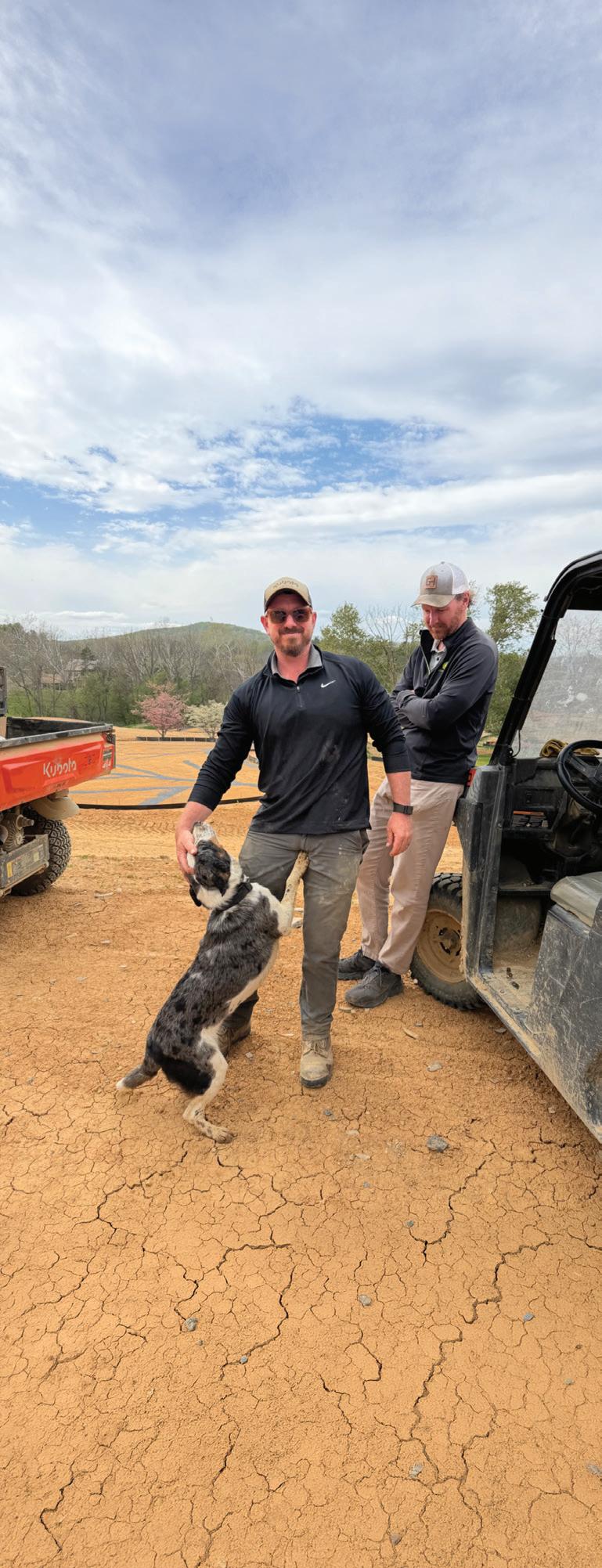
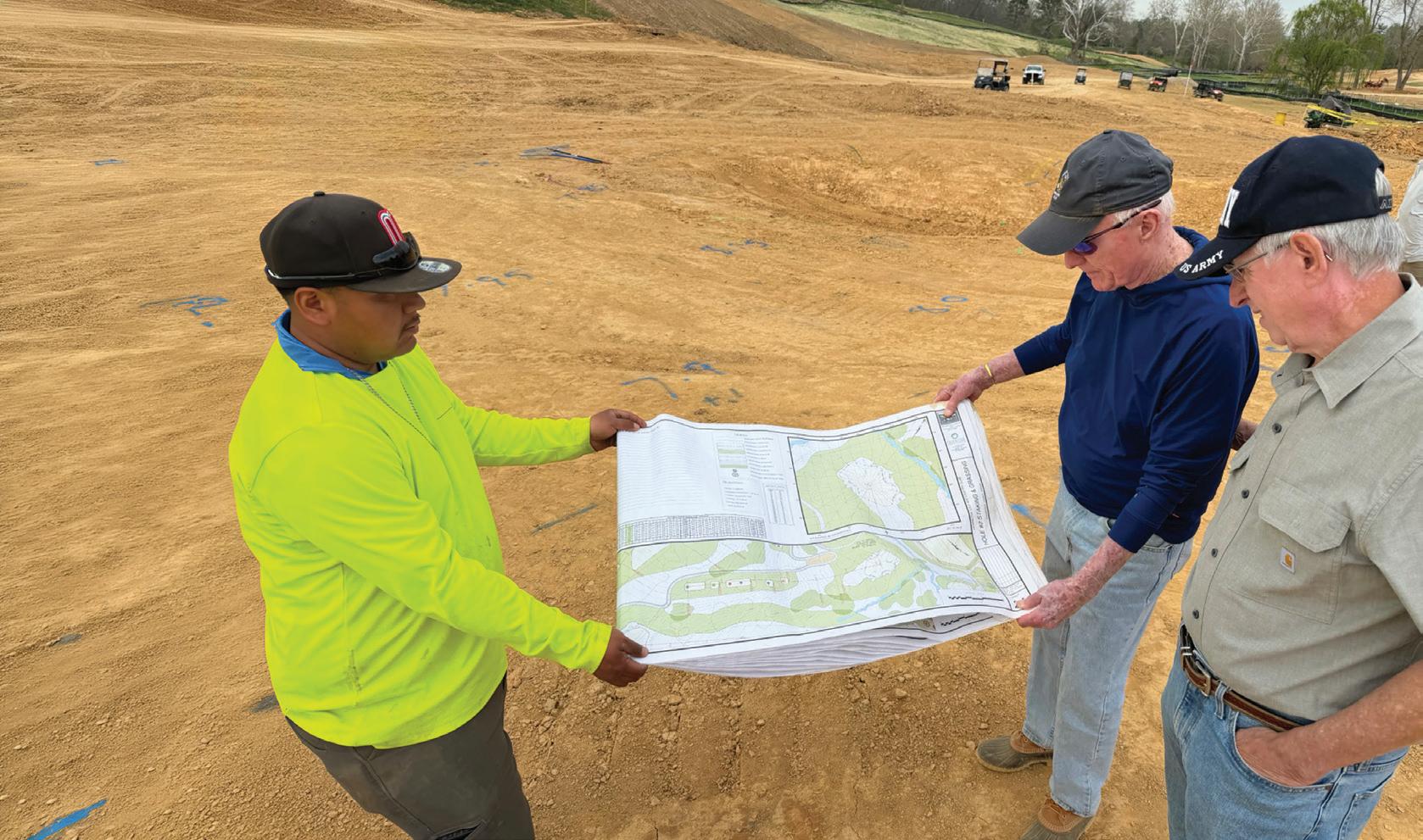
I sat down with George, Giles, and Superintendent Peter Danaher to discuss the progress, and how golf in Virginia continues to evolve to meet the needs of a growing, diverse game. At the VTC, we are certainly proud to be a part of that evolution as we continue to represent Virginia golf courses and golf professionals, both public and private, and to fight for the interests of the broader turf industry in the General Assembly. What drew us to Lexington’s renovation was its Maples history, George’s and Giles’ participation, and the chance to witness the shaping and renovation process firsthand in a mountainous terrain.
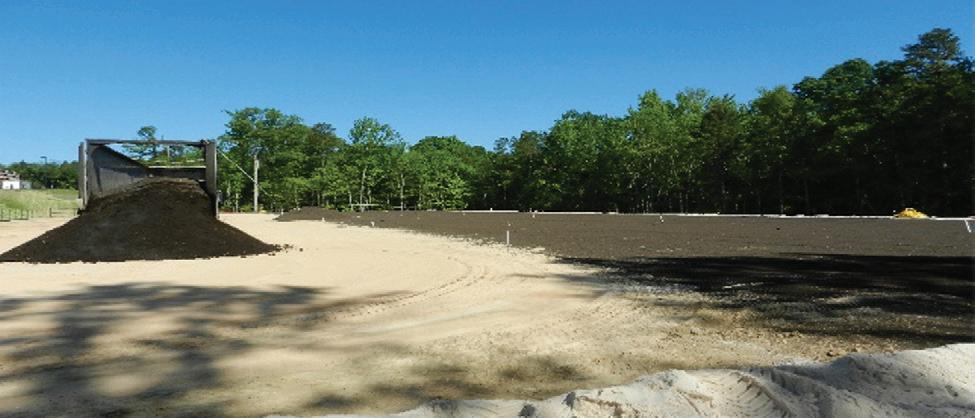
The first thing to notice is the tree removal - more than 2/3rds were removed to make way for higher, longer tee boxes and open up broad mountain vistas, but it also restores the original agricultural look of the property, and as so many legislators and industry outsiders forget, turf is agriculture. Golf courses protect land and natural environments, prevent erosion, and steward water resources in a way no housing or commercial development ever could.
George and Giles seem to enjoy the nuts and bolts of renovating golf courses, like a Twain character tricking everyone around into thinking that whitewashing a fence is fun. But in reality and beneath that appearance — and far separated from the benevolent forces making such projects happen — are two committed, serious minds collaborating, yearning for legacy, blending engineering and playability with how young players might see this game fifty, a hundred years from now. Of course, that all comes with making the course fun and playable for all skill levels. The many retiree members of Tribrook will appreciate the attention George and Giles have given to making the course adaptable. “The course will be enjoyable from 7,100 yards all the way down to less than 4,000,” George commented. At almost every turn of our tour, both murmured aloud thoughts on making shots longer, landing areas tighter, pushing both the game and the course to be more.
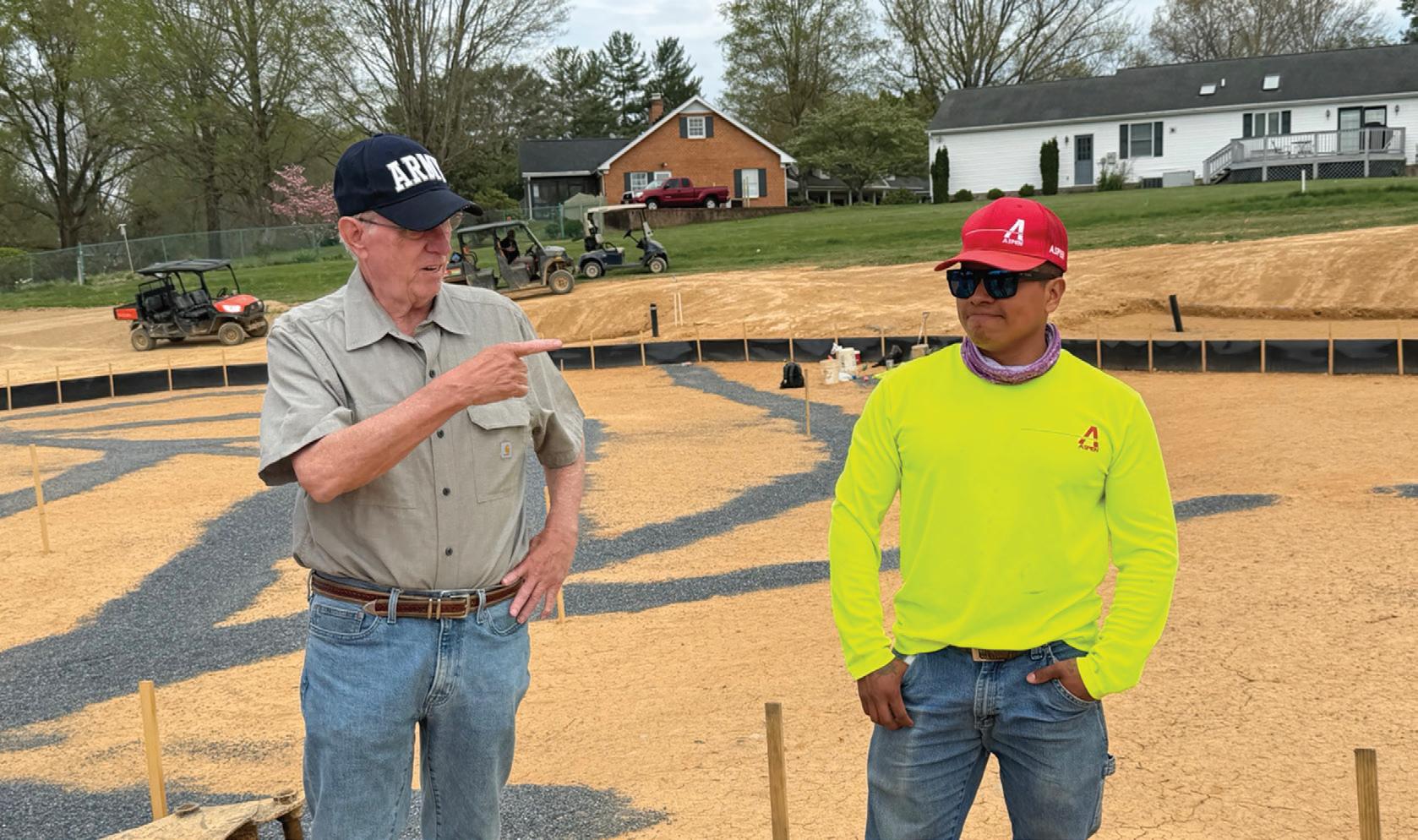
Their shapers and project managers from Aspen Corporation were on hand, furiously cutting bunkers with pickaxes and perfecting mounds and visuals. Their professionalism and obsession with detail did not go unnoticed, down to the inch on distance readings and slopes. Adam Bagwell of Aspen was especially tuned in, completely aware of every little nuance of the project and rapid to answer questions as they arose.
Giles, the Lynchburg native who played on four Walker Cup teams, captained a winning squad in 1993, won the U.S. Amateur, British Amateur, U.S. Senior Amateur, and countless other tournaments too many to list, has done as much for the game of golf in Virginia as any one man could in a lifetime. Aside from being the low
amateur at the Masters in 1968 and the 1973 U.S. Open, he still had all this time on his hands to accrue a valuable vault of stories, my favorites being those about Alvis Hylton, his instructor and head pro at Boonsboro Country Club who he claims, “could always fix my swing.” Hylton went from a worker on the N&W Railroad to golf professional following an accident that injured permanently his left arm, an unlikely sequence of events that led him to Vinny. Figures like Hylton may now be forgotten to most, but we would all be wise to remember him.
As we traveled over the raw earth, George immediately took us to the new 6th green. It’s a short par 3 with a 30-yard deep tee box, offering wide latitude for staff to set the hole up for competition. George began instructing his Aspen crew to fix minor details on the visual, the barely visible bunker line to the left of the green reminiscent of Seth Raynor’s style. “The new sixth hole was created to make room for the new practice facility. It gave us this great opportunity to build a Raynor/ McDonald template hole known as a Biarritz. The par 3 is surrounded on both sides by trench bunkers, with an amazing horizon view and swale in the center. The green is seventy paces deep,” George told us. “We have to serve everyone with this design. That means a new look, a new excitement for past, present, and future members. Our changes have done that.”
The sun began to set on our visit, and we wrapped up our tour of the grounds before I took the long walk back to where I had parked, by the old clubhouse at the back of a small neighborhood just outside of town. There was a kid in his front yard chipping balls into a small net, and a few had trickled down the road into the asphalt. I walked them back up the hill and asked him what he loved about golf. “It’s the best game there is,” he said. “And when I get older, I’m going to play at Washington and Lee.”
More info on the Architect: Lester George incorporates his creativity and passion for the game of golf in every golf course design. The blending of his terrain reading ability and his lively interest in the history of golf enables him to visualize imaginative course designs. With over 35 years’ experience in the design, renovation and restoration of numerous golf courses throughout the United States and Japan, Lester has been established as a leading golf course architect.
Serving as a design coordinator for Golf Services International, Lester worked with other golf course architects studying the intricacies of course design. During this time, he co-founded Virginia Golf Development. Then, in 1991, Lester opened his own firm, Colonial Golf Design, Inc., which has evolved into George Golf Design, Inc.
Stanley serves as Executive Director of the Virginia Turfgrass Council. He can be reached via cell at 540-871-9001.