TNLA would like to thank the following companies for being Membership Sponsors
GOLD Membership Sponsors
Barky Beaver BASF
Blankenship Farms and Nursery
Boyd & Boyd Nursery
BWI of Memphis
Cam Too Camellia Nursery, Inc.
Carpe Diem Farms
Douglas & Lanier Agency
Drees Plant Wholesalers
Farm Credit of Mid-America
Flower City Nurseries
H & R Agri-Power Farm & Turf
Haller’s Landscaping & Nursery, Inc.
Home Nursery, Inc.
Lawn Doctor Legacy Labor
Mid-South Nursery
Mike Brown’s Wholesale Nursery
Nashville Landscape Systems NYP
Pirtle Nursery, LLC
Randall Walker Farms
Riverbend Nurseries, LLC
RJV Equipment
Swafford Nursery
Tennessee Valley Nursery, Inc.
TN Wholesale Nursery
Triangle Nursery, Inc.
Warren County Nursery, Inc.
Youngblood Farms, LLC
SILVER Membership Sponsors
Botanico, Inc.
Dayton Bag & Burlap Co.
GreenForest Nursery
Kinsey Gardens, Inc.
Old Courthouse Nursery
Rusty Mangrum Nursery
Kinsey
I WHAT YOU WATER GROWS!
hope everyone had a wonderful and prosperous spring. I know it has been very busy around here. Hopefully everyone that made it out to the field day at NRC on May 7th found that event to be worthwhile. As we enter the summer season, we are very excited for the events we have coming up.
First on June 11th, we had the Green Industry Field Day at the UT Trial Gardens in Knoxville. This was an opportunity to get more pesticide points, tour the trial gardens, and learn about all the research that the university has been doing. We are always thankful for the staff at UT for putting this together.
Our annual TNLA Golf Classic will be on October 2nd. Get a team together or we can find you a team. Dust off those clubs and come enjoy a day of fellowship chasing that little white ball around.
Finally, we will have our annual tradeshow in Lebanon on October 15th and 16th. This year’s theme is TNGRO Rooted. In collaboration with MTNA, we have a lot of big ideas for the show and believe that this year will be the best yet. Don’t forget to send in your nominations for our annual awards. If you or you know of someone who would like to serve on the board, it is time to let that be known.
Remember that “What you water grows.” Spread the word about TNGRO Rooted and ask someone to join the TNLA. Like and share our new Facebook page TNGRO Rooted. Here is to a beautiful summer with just the right amount of sunshine and moisture.
Sam Kinsey TNLA President
The Tennessee Greentimes is the official publication of The Tennessee Nursery & Landscape Association, Inc.
115 Lyon Street McMinnville, TN 37110 (931) 473-3951
Fax (931) 473-5883
www.tnla.com
Email: mail@tnla.com
Published By
Leading Edge Communications
206 Bridge Street, Suite 200 Franklin, Tennessee 37064 (615) 790-3718
Fax (615) 794-4524
Email: info@leadingedge communications.com
Editors
Dr. Bill Klingeman
Dr. Amy Fulcher
Associate Editors
Dr. Karla Addesso
Dr. Becky Bowling
Dr. Midhula Gireesh
Dr. Nar Ranabhat
TNLA Officers
President
Sam Kinsey Kinsey Gardens
1st Vice President
Trista Pirtle
Pirtle Nursery
2nd Vice President
Jason Peace
Home Nursery, Inc.
3rd Vice President
Keith Youngblood Youngblood Farms, LLC
Secretary-Treasurer
Bryan Tate
Mid-South Nursery
Associate Director
Eli Eldridge
EBE Land Services
Ex-Officio
Ozzy Lopez
Ozzy’s Lawncare and Hardscape Services
Executive Director
Danae Bouldin
Assistant Director
Blake Higgins
Earth & TNLA Tree Day
TN FFA 98th Annual Convention
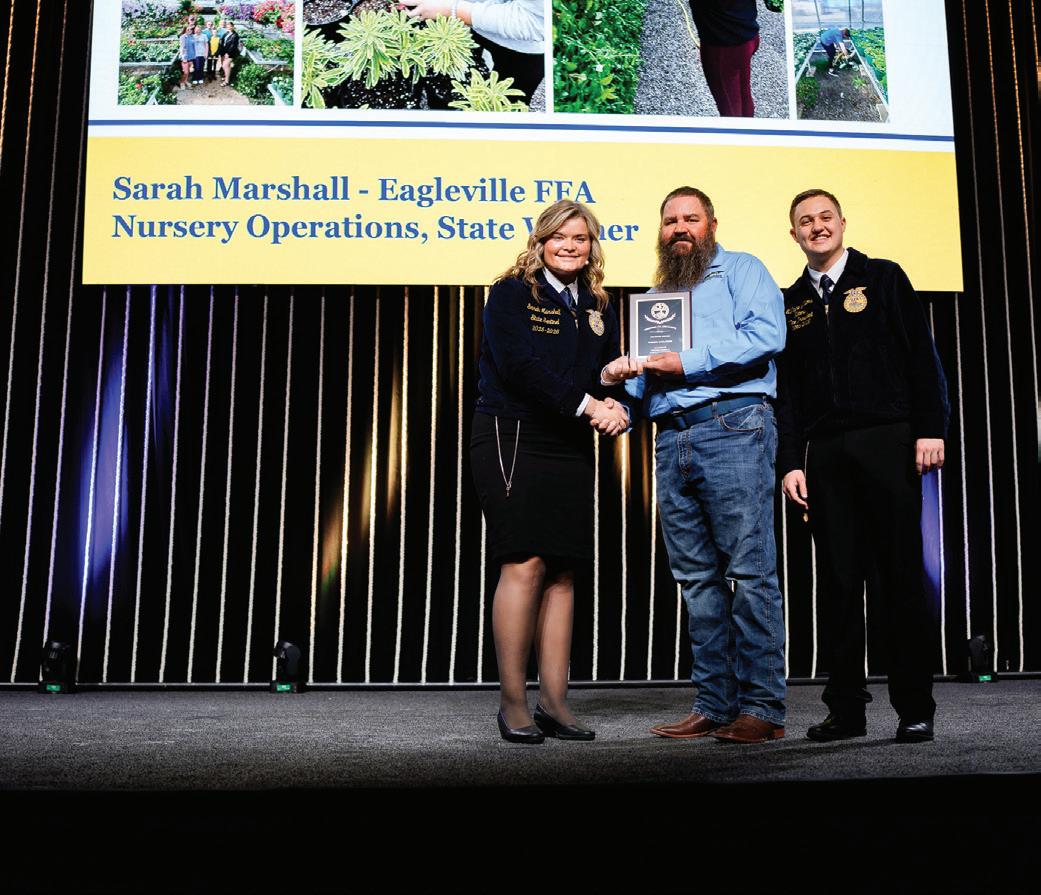
TNLA is proud to continue the sponsorship of the FFA Nursery Operations Award.
Pictured directly below is TNLA President, Sam Kinsey, presenting the Nursery Operations Award to Sarah Marshall, Eagleville FFA.
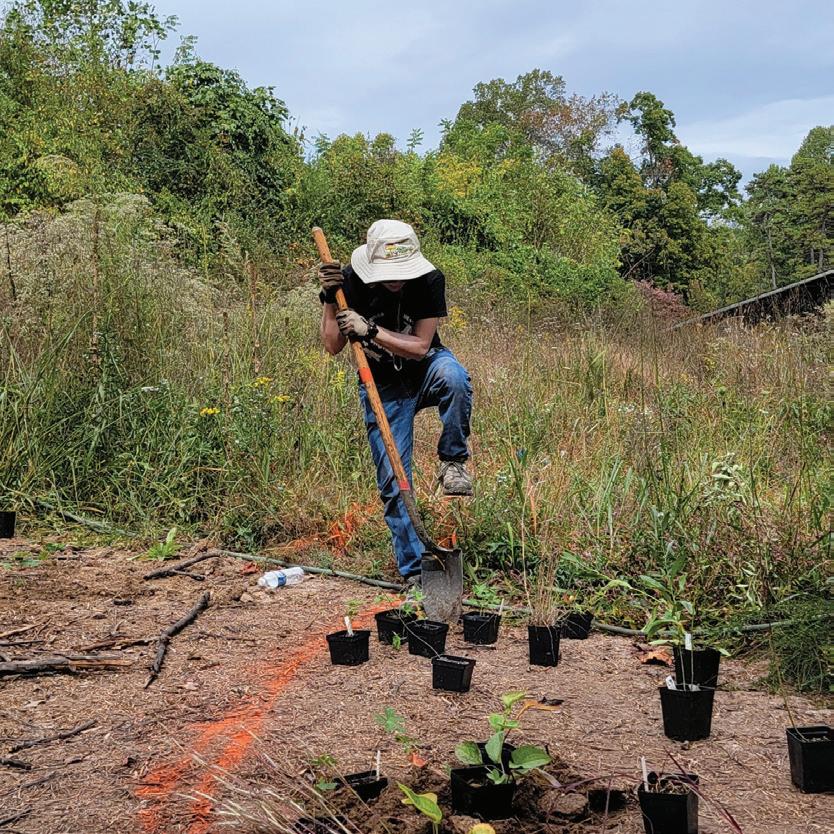
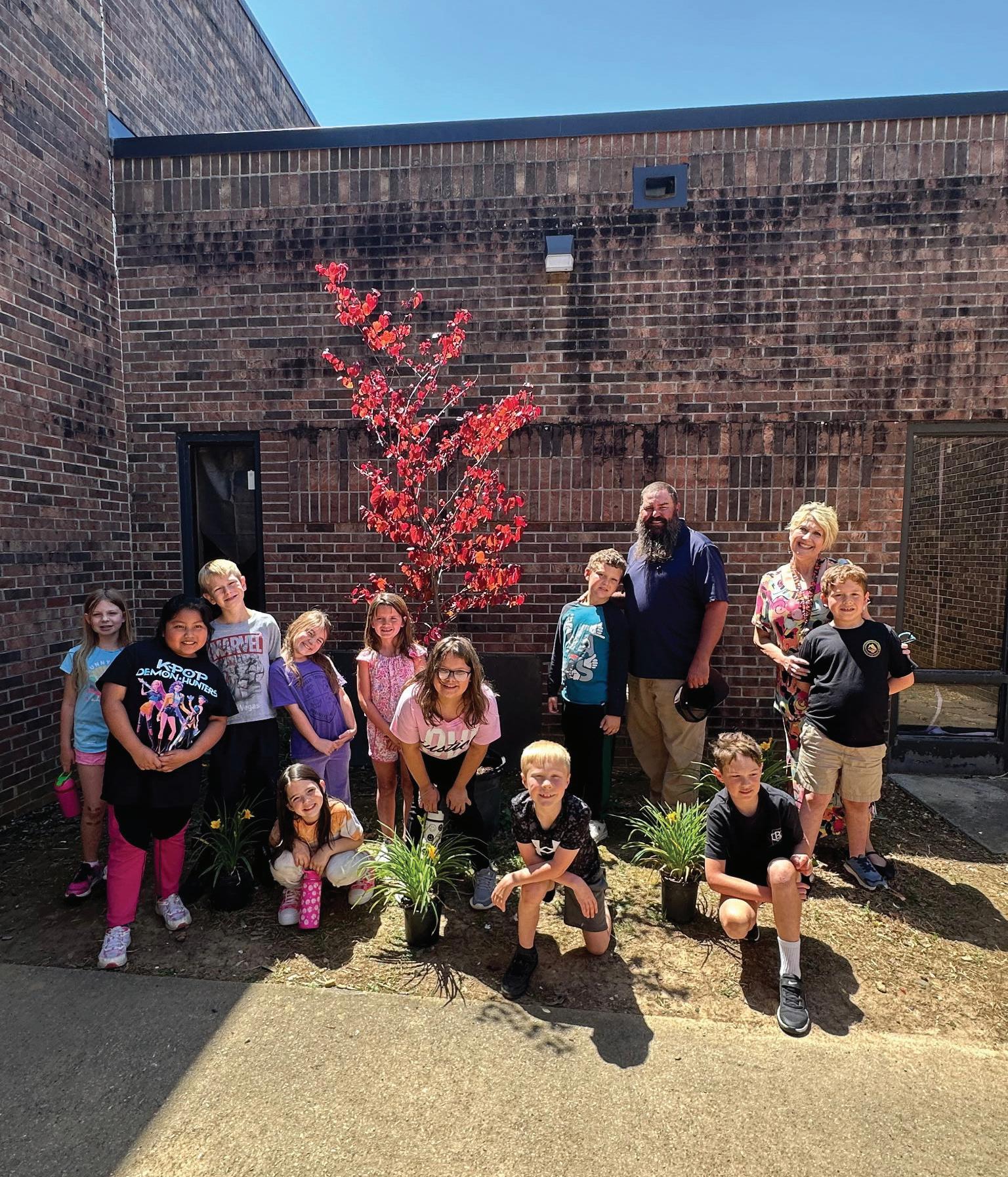
Kinsey Gardens sponsored East Knox County Elementary by donating a Forest Pansy Redbud and Daylillies.
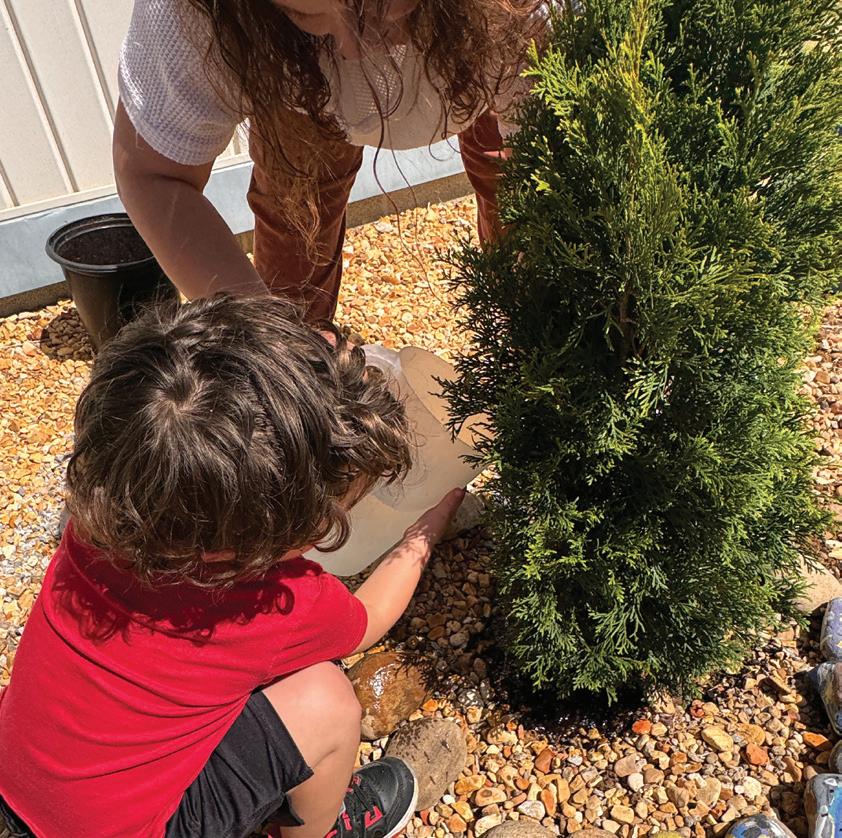
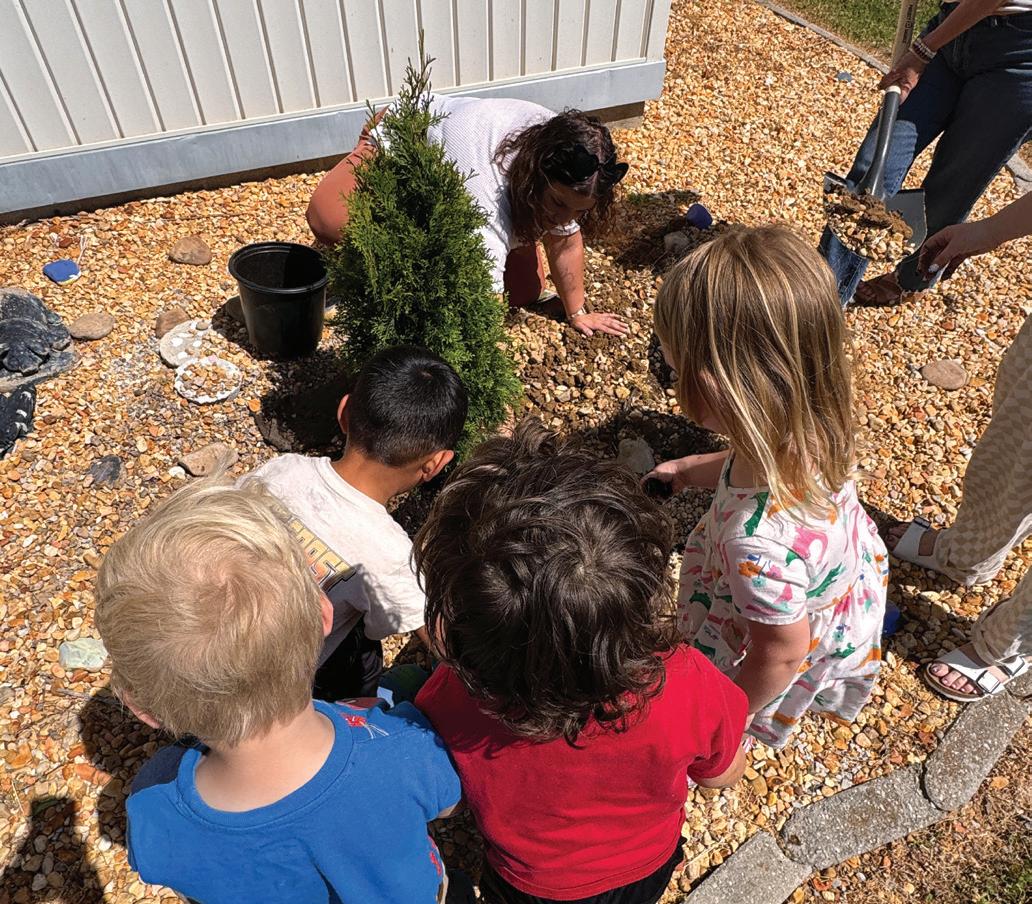
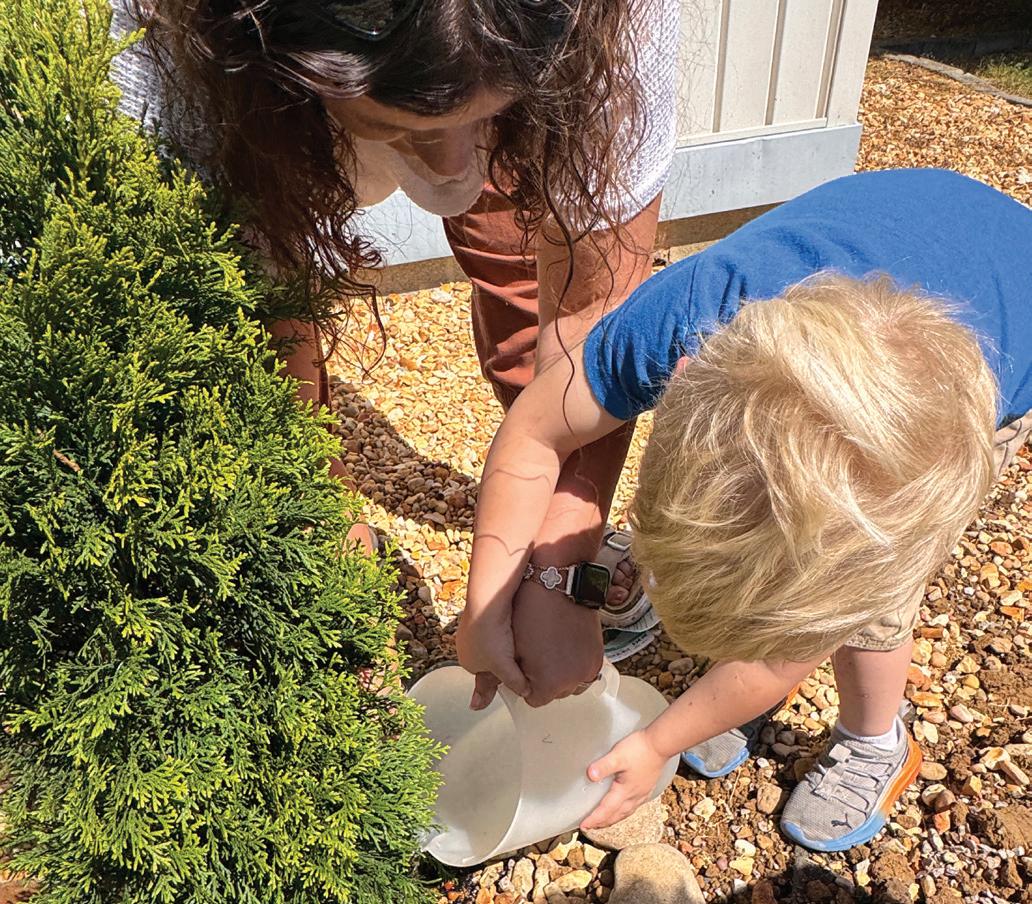
TNLA donated an evergreen and some shrubs to the Midway LBJ&C Headstart in Rock Island.
Art and Resilience:
The Pollinator Garden at the UT Arboretum
By Mike Ross, Associate Professor of Plant Sciences and Jakob Johnson, UT Plant Sciences / CoAD Master of Landscape Architecture Student
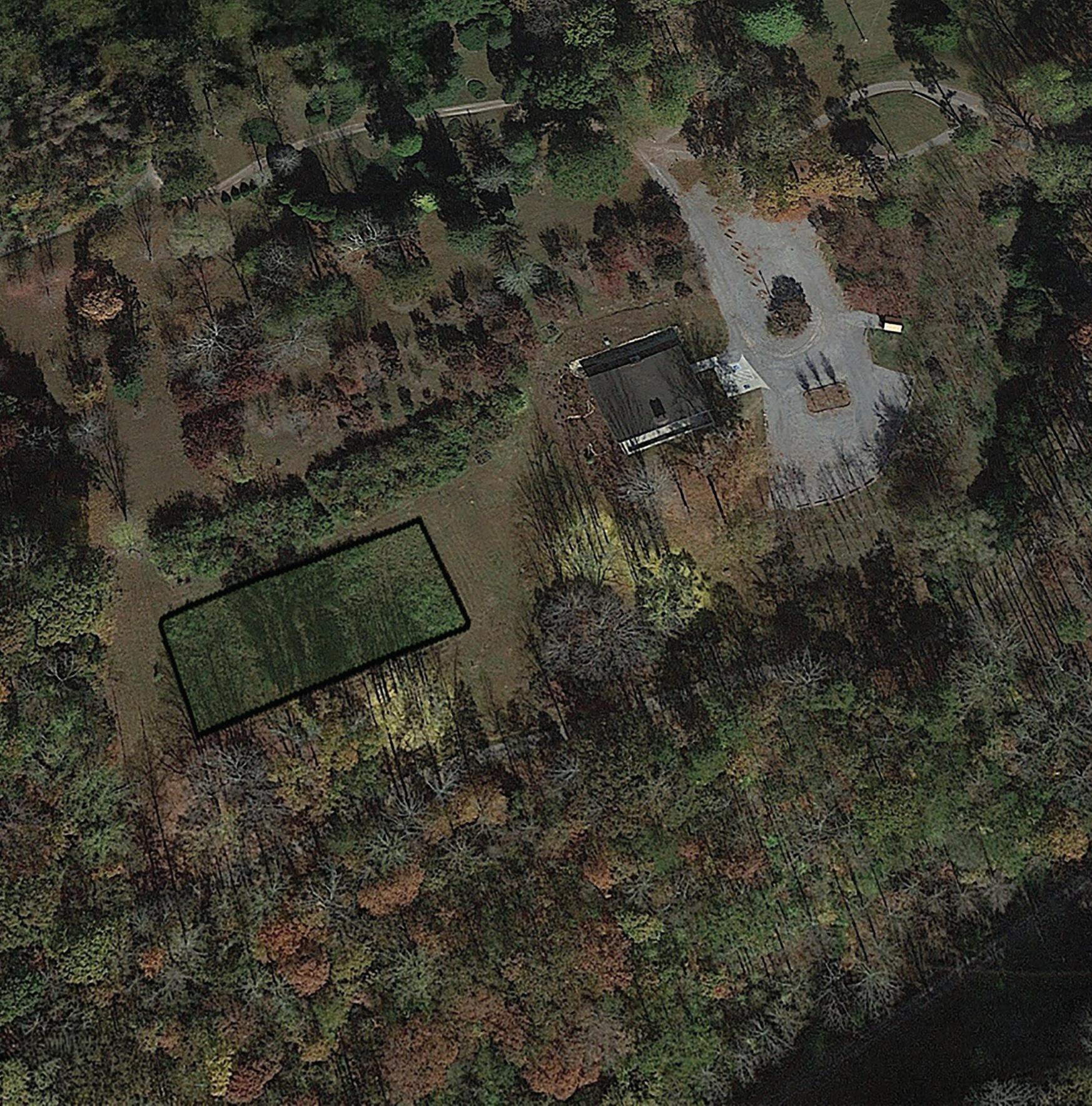
Figure 1. The plot of ground near the Auditorium selected for the Pollinator Garden. Image courtesy of Google Earth.
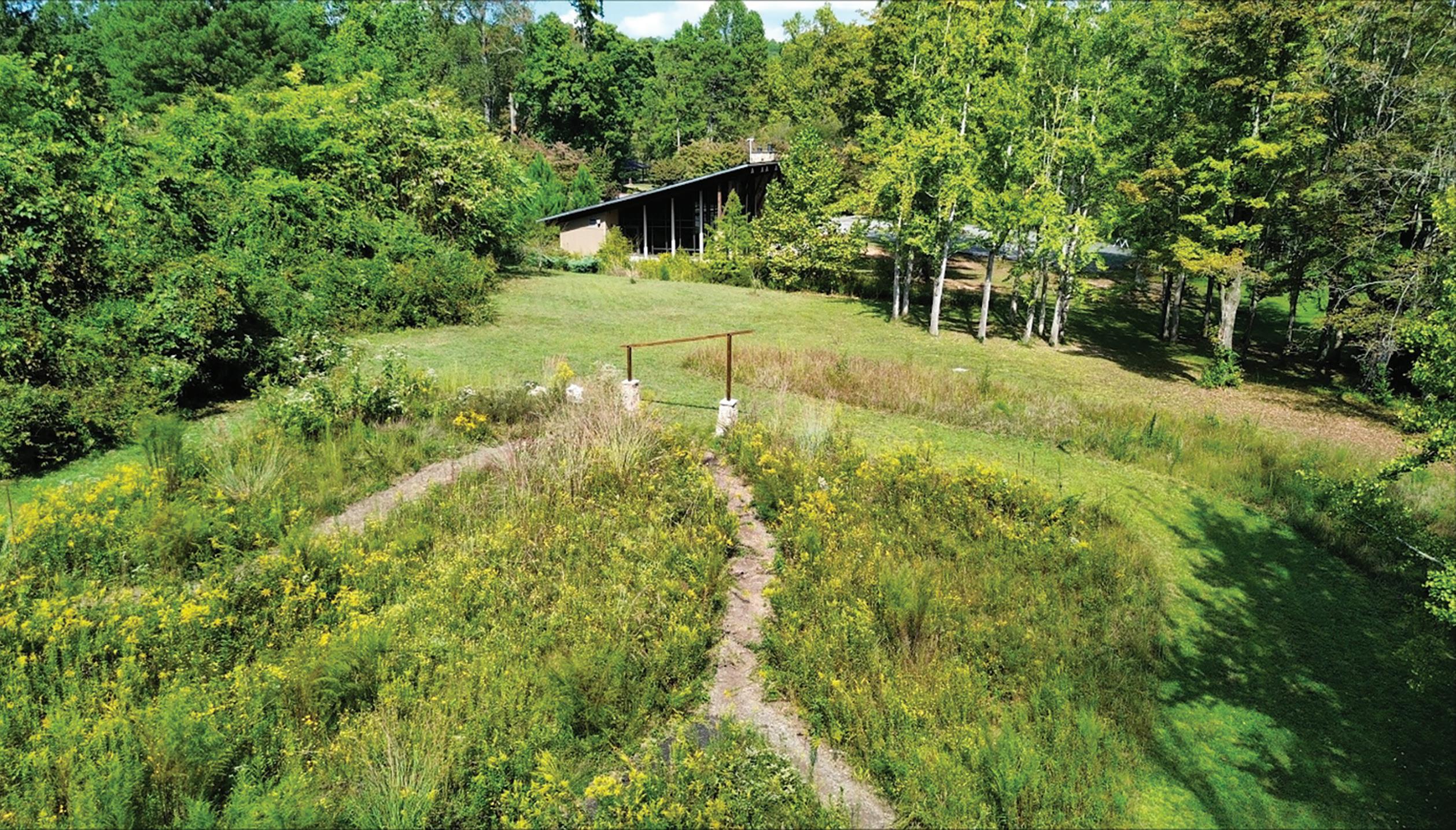
Figure 2. Aerial view of the Pollinator Garden and Visitor Center.
Asour relationship with Nature and access to natural spaces have become increasingly constrained by urban and suburban growth, we have seen a growing desire by homeowners, parks and municipalities for naturalistic landscapes that showcase plants as communities. This naturalistic planting design often seeks to abstract naturally occurring ecological habitats and put them in a context that, allows people to interact with the plants and their associates in more intentional ways.
Pocket prairies, urban meadows, pollinator gardens, even rain gardens can serve these naturalistic functions that whether in bloom or in winter dormancy, can inspire the heart and captivate the mind.
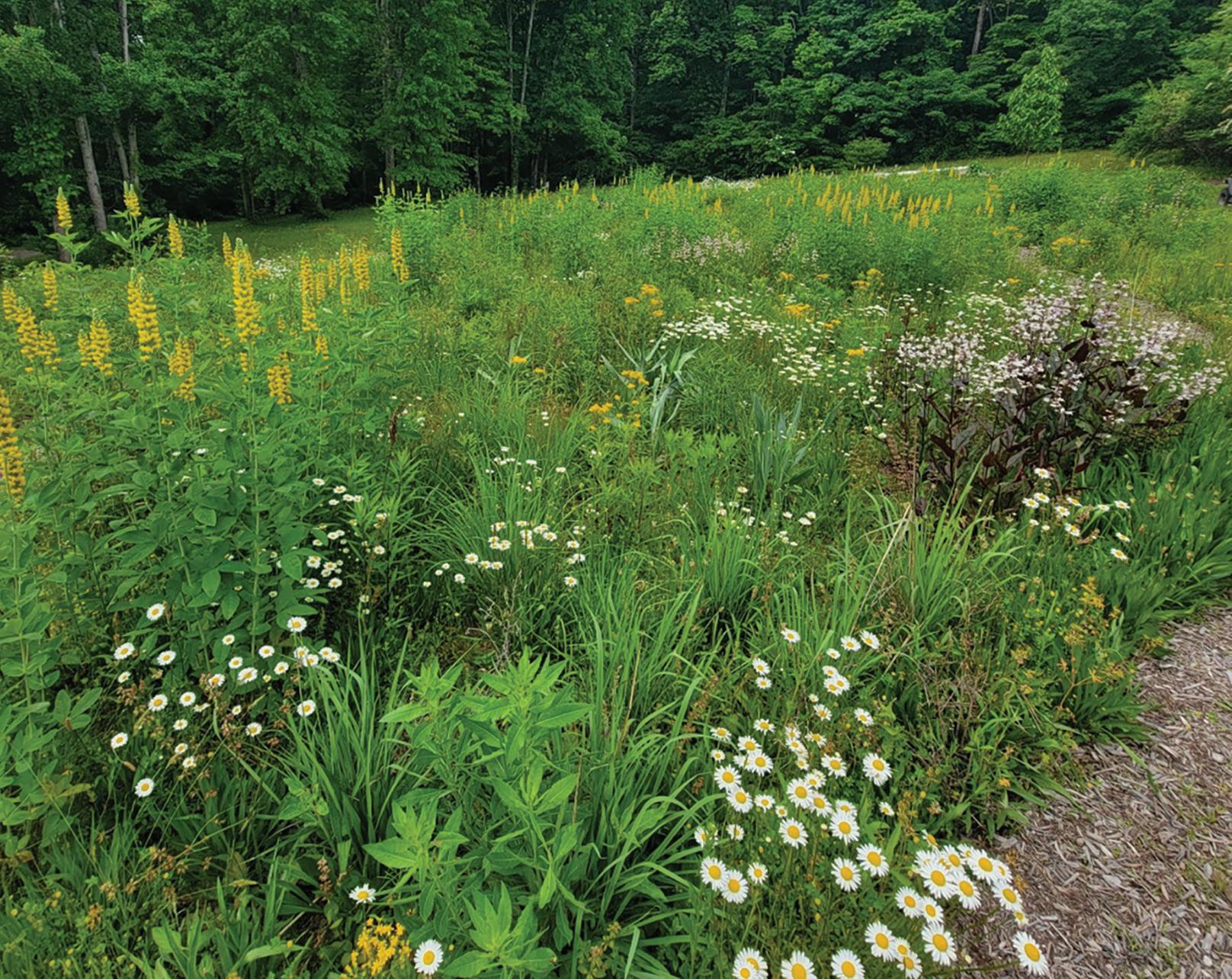
One such place is the Michelle Bradley Campanis Pollinator Garden at the UT Arboretum in Oak Ridge, Tennessee (Figure 1). The pollinator garden has developed into something really special during the last five years. In many ways this special garden resource serves as a prime example of resilience in design and the blending of that resilience with the art of landscape and planting design.
My involvement with this project dates back to June 2020. At the time I had been at the University of Tennessee for almost a year and with covid, all educational programs, field days, master gardener and outreach events had moved online. I had been asked by the UT Arboretum team to give a talk on ecological landscape design. During the presentation I mentioned that I thought there should be a wildflower center in every state. This was something I brought up during my job interview back in 2019. I still feel strongly about that need. At the talk in 2020, the idea of a wildflower center for Tennessee resonated with Michelle Campanis, who is the Education Coordinator at the UT Arboretum who was at the zoom meeting. She reached out and said they had an area at the Arboretum that would be a great place for a meadow (Figure 2)…would I be interested in helping to create it?
And so began a multi-year collaboration with the UT Forest Resources AgResearch and Education Center (REC), Tennessee Naturescapes, undergraduate PLSC students from the Sustainable Landscape Design concentration in the Herbert College of Agriculture, and graduate students from the School of Landscape Architecture in the College of Architecture and Design.
Brainstorming and Breaking Ground: Planning the First Steps
Our initial discussions centered around a stretch of ground that was next to the recently constructed auditorium and its extensive rain garden. The ground that was identified had become a field of invasive plants, weeds, and assorted woody shrubs and small trees. The team’s idea was to create a space that provided visual appeal from the auditorium and that also would contribute to future educational programs that, like the rain garden, could be focused on sustainable and resilient landscapes.
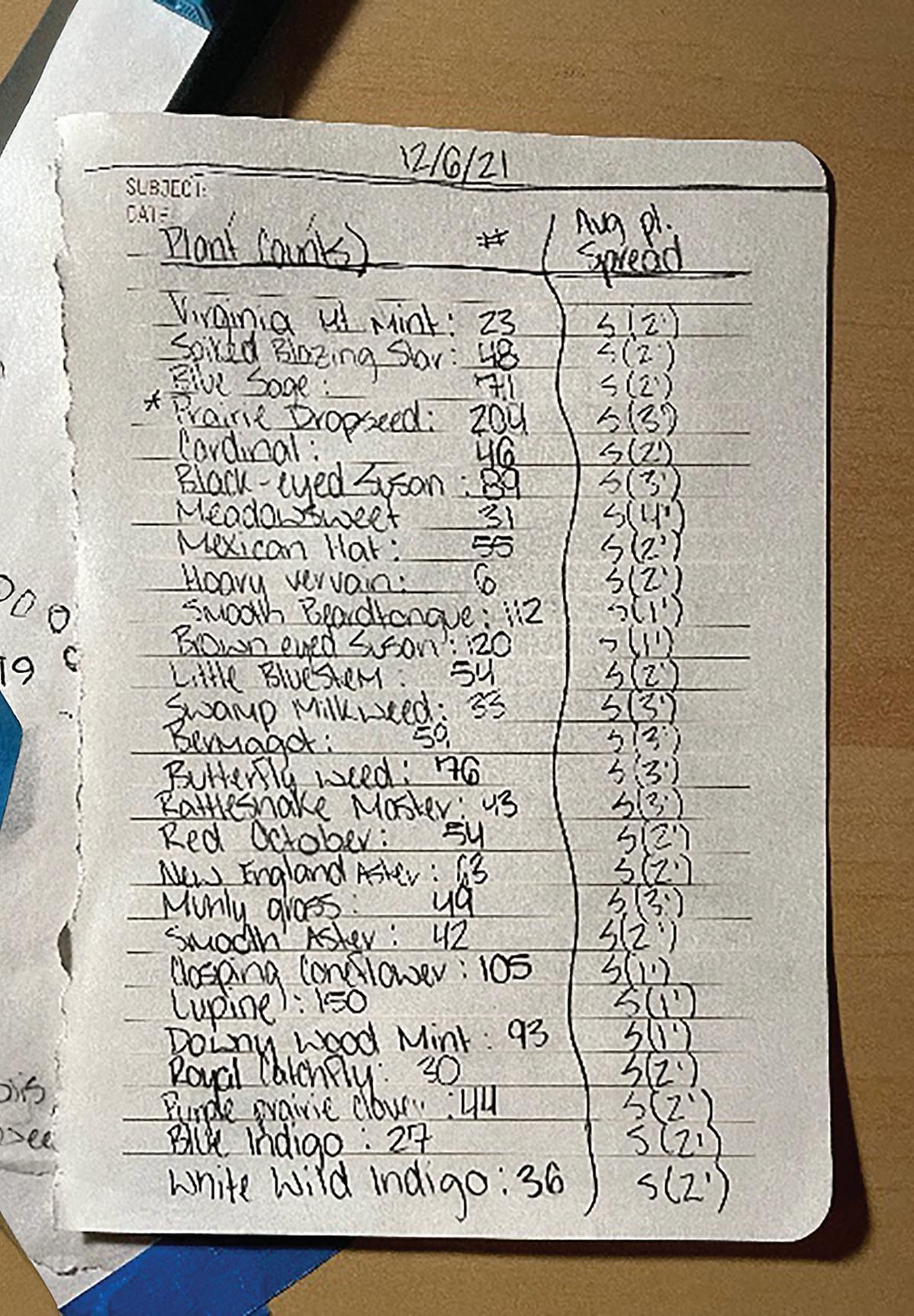
In keeping with that charge, it was determined that in addition to shedding the invasive field (Figure 1) we would use fire, herbicide, and solarization as ways to suppress the significant invasive species pressure on the site. Michelle led volunteers through weeding and prepping the site, Kevin Hoyt, the director of the UT Forest Resources AgResearch and Education Center and the Arboretum staff oversaw bush hogging, prescribed burns, and pesticide application. Don Williams and Tennessee Naturescapes provided the solarization material and I began working with students and research assistants to develop initial plant lists (Figure 3).
Figure 3. A data sheet records counts of plant species that reflects dynamic change in the pollinator garden compared with the list of initial installed plants.
The key to successful projects like this one that relies on using abstracted ecosystems is the ability to convey the concept across all collaborative partners. The effective control of invasive and weedy species in the selected site and the shared vision for the pollinator garden were essential for keeping the project moving forward across the last four years.
Art and Resilience in Landscape Design
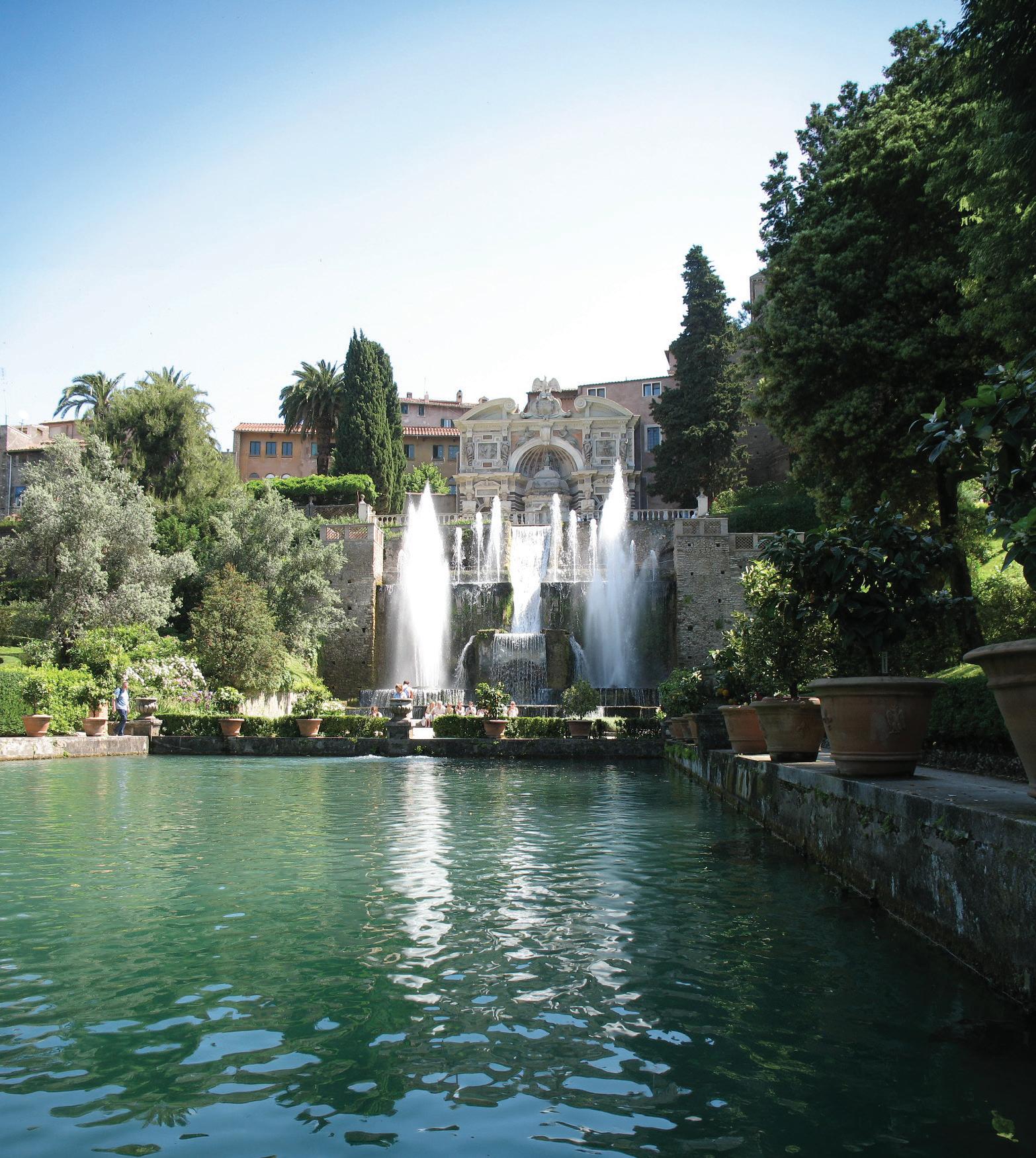
An intentional landscape plan is at its most evocative when it marries art and science to varying degrees to bring about experientially rich moments for people to interact with their designed surroundings. It can take the form of extravagant fountains and terracing like the Italian renaissance garden at Villa d’Este (Figure 4) or the over-the-top grandeur of French baroque landscape designs of master paysagiste, Andre Le Notre, or perhaps our more familiar works from Frederick Law Olmsted and Jens Jensen. However, as evocative as these landscapes are, they were not conceived within a conceptual framework that accounted for an understanding of ecology as a discreet science nor to anticipate disturbance regimes that included wildfire, site construction, drought or flooding.
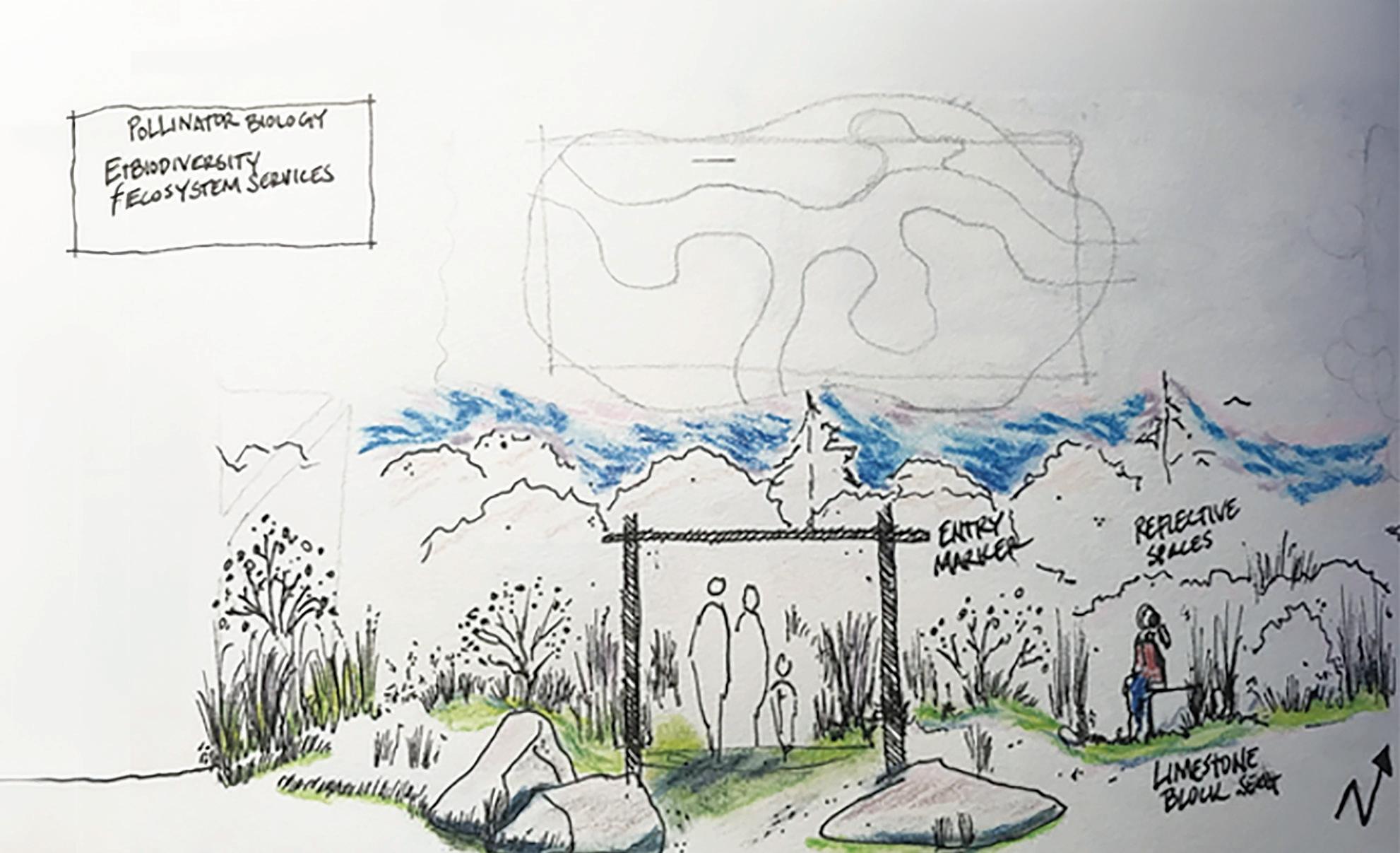
This is precisely where the pollinator garden fits into our contemporary sphere of landscape design practice (Figure 5). The art of planting design, the artful shape, color, and texture of the plants utilized balanced with the realities of ever-changing precipitation, management regimes, unpredictable weather and scheduling approvals for prescribed burn permits, and fluctuating volunteer schedules and knowledge bases. All impact the success and perception of the project.
At the end of the day, the pollinator garden must be both beautiful and functional. It must serve the educational and ecological goals of the REC, as well as benefitting the casual visitor to the Arboretum. It needs to support the well-attended annual Butterfly Festival and other University field days that are part of the education and outreach component of the land grant mission that the REC serves. It must above all support pollinators and their diverse life histories. The resilience and the art must be linked for the project to succeed.
Figure 5. An early concept sketch of the Pollinator Garden as a functioning ecological system and interactive space.
Figure 4. The fountain and gardens at Villa d’Este estate in Italy.
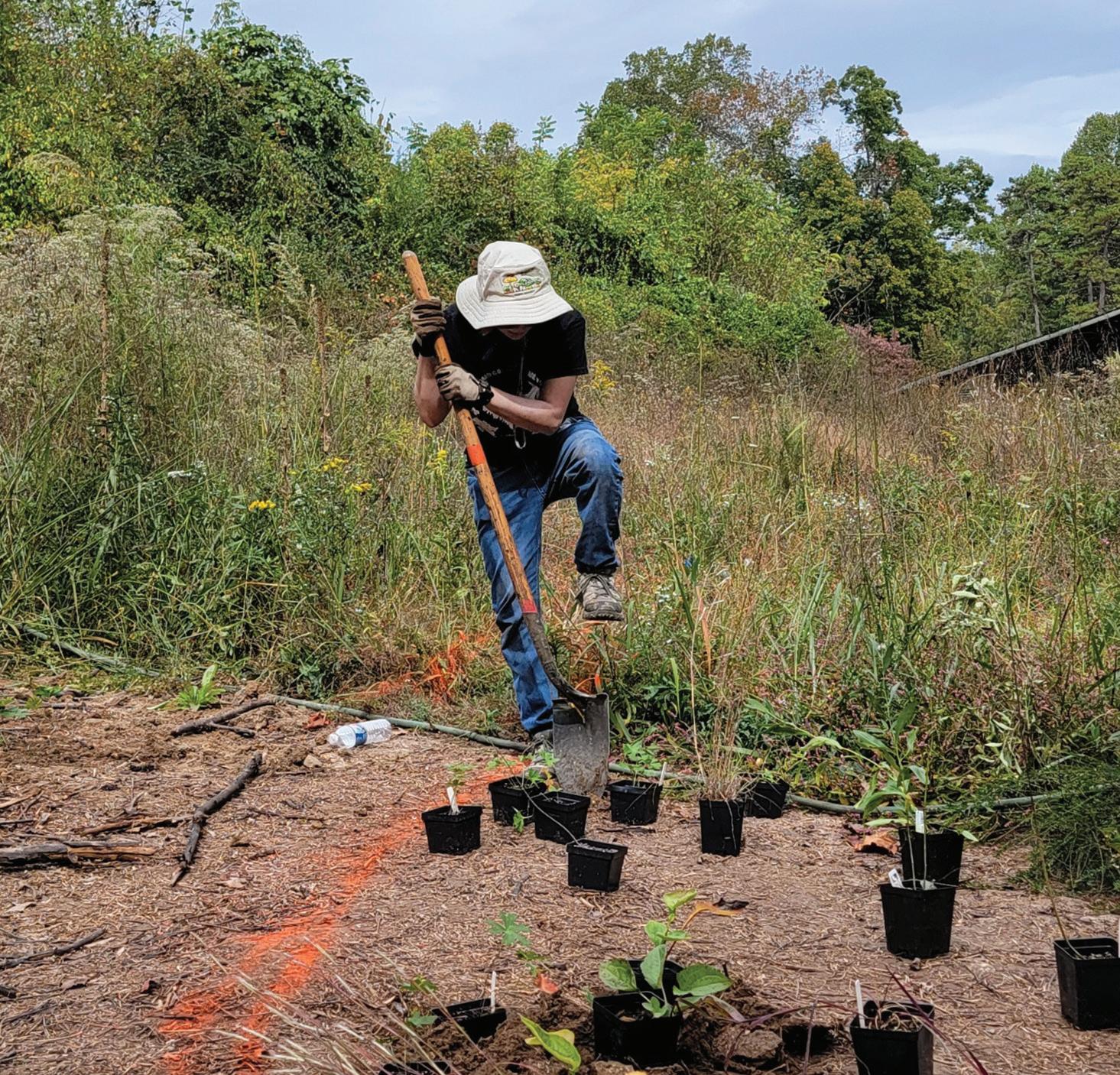
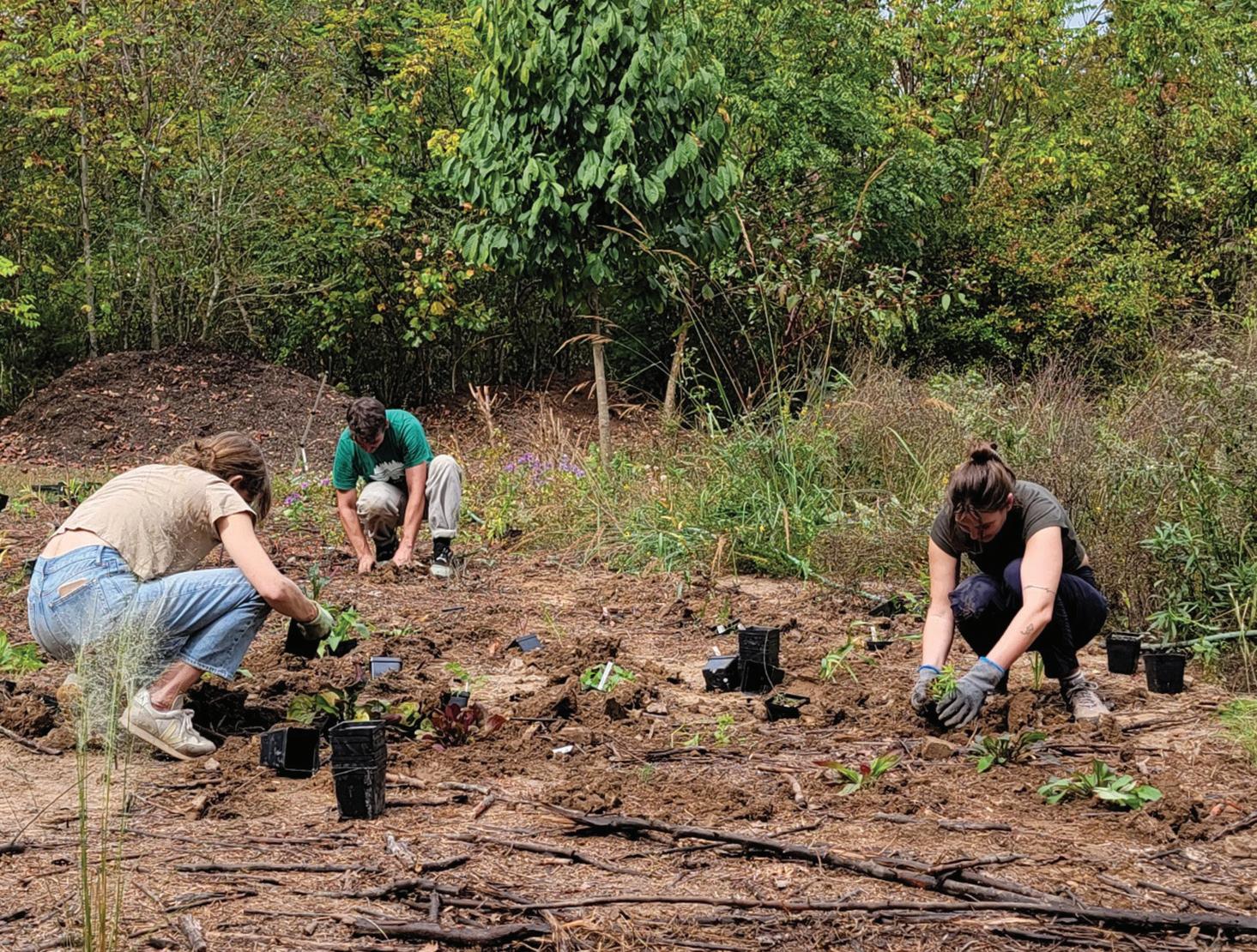
Figure 7. A group of students in Associate Professor Ross’s PLSC 480 Sustainable Landscape Design Synthesis and Application class gain first-hand experience in learning the in’s, out’s, and how to’s of transplanting native perennial plants into the pollinator garden. For some students, the opportunity was a first for getting their hands dirty as future Green Industry professionals.
The Significance of People as Part of an Informed Design Process
A key component in this project has always been the students and volunteers who have dedicated so much time and invested so much of themselves to this undertaking. Whether planting, weeding, constructing, maintaining accessible circulation, or controlling invasive plants; through their efforts we have been able to make this project happen. With that said, I think it is particularly meaningful when the work allows student interactions with the garden to reinforce and teach meaningful skills that can shape their own understanding of the profession of landscape design and management (see Jakob’s Experience sidebar, page 15). Students working as part of the Living Systems Design Group and the Ross lab developed plans, researched plant material, learned how to design on-site, set up and space plants, use technology, review spreadsheets, and managed the prairie and meadow ecosystem establishment.
In some cases, I would bring my graduate and undergraduate classes out to help with planting (Figure 6). More than once, I had the distinct honor of teaching a beginner student how to plant a plant. While this may seem small or trivial, it illustrates how even students who are drawn to landscape and horticulture may have had very limited past opportunity to plant, grow, and interact with vegetation beyond the occasional house plant.
The work we have undertaken at the UT Arboretum has shaped the professional practice and career aspirations of many students. This outcome is further evidence of the immense value that hands-on experiential learning has for future designers, landscape architects, professional gardeners, horticulturists, and landscape managers (Figure 7).
Ongoing Lessons Learned in Managing a Designed Ecological System
As the pollinator garden has continued to establish and grow, there have been key management and maintenance decisions that we have made that will shape its long-term success. First and foremost, controlling invasive and weedy plant encroachment is key to maintaining the structure and visual impact of the garden. Woody plants, even native ones, can markedly change the form and structure if allowed to establish in the meadow.
Figure 6. An undergraduate student has marked a plot and arranged several specimens of different plant species to “fit” within the architecture of the original as-planted design.
Student’s Perspective –
Jakob’s Experience
During my time at The University of Tennessee I have had the opportunity to work with professors who saw the value of engaging students in projects with real world implications. In our digital age the value of hands-on learning experiences is exponentially important. With the reality of the direction of education experiences that can now be fully gained online, the value of face to face or hands to dirt learning is something that can never be fully replaced. There is immense importance in actually seeing how hard work can lead to the physical manifestation of an idea.
As I was nearing the end of my undergraduate studies in Sustainability, I was still unsure of how I wanted to utilize the knowledge I had gained in the classroom. Through a series of experiences being on site and taking the classroom outside to the world I discovered my true passion. My first experience with the UT meadow began in April 2022, while I was pursuing my undergraduate degree in sustainability with a minor in plant sciences. During this first visit to the arboretum I didn’t know much about real world implementation of planting design…I knew how to dig a hole to its proper depth and to break up root bound plants, I knew how to identify certain plants that I was looking at, I knew the value in what these ecosystems provide, and I knew that I was excited to be a part of something bigger than myself. During this initial phase of the project I had the opportunity and guidance of Mike to mark out the boundaries for the planting zones, strategically stage the plants so there was structure, areas of reveal and lines of sight. Tasks that may seem minor to the average gardener, but these tasks would help jumpstart my pursuit of a career in Landscape Architecture.
The next visit to the UT Arboretum was as a class, we began the laborious process of digging hundreds of holes for the plugs and containerized plants with the hope that the site would become a place where people and nature can meet or reconnect. Getting the opportunity to work under someone that is so knowledgeable in a field of study which aims to build and support communities of people and plants
Above, inset: MLA student Jakob Johnson
was an honorable task. It taught me that it was much more than just placing plants in the landscape, it was conversations about the plant communities and the species they support, the structural variation creating moments of wonder and others of reveal, it was about the intentionality of having bursts of color in moments along the path, and conversations about how amazing this place will be. It was through these types of conversations I was ignited with an inspiration that I too could gain these skills and knowledge to create places that provide beauty to our world while creating opportunities for essential ecological services to be provided.
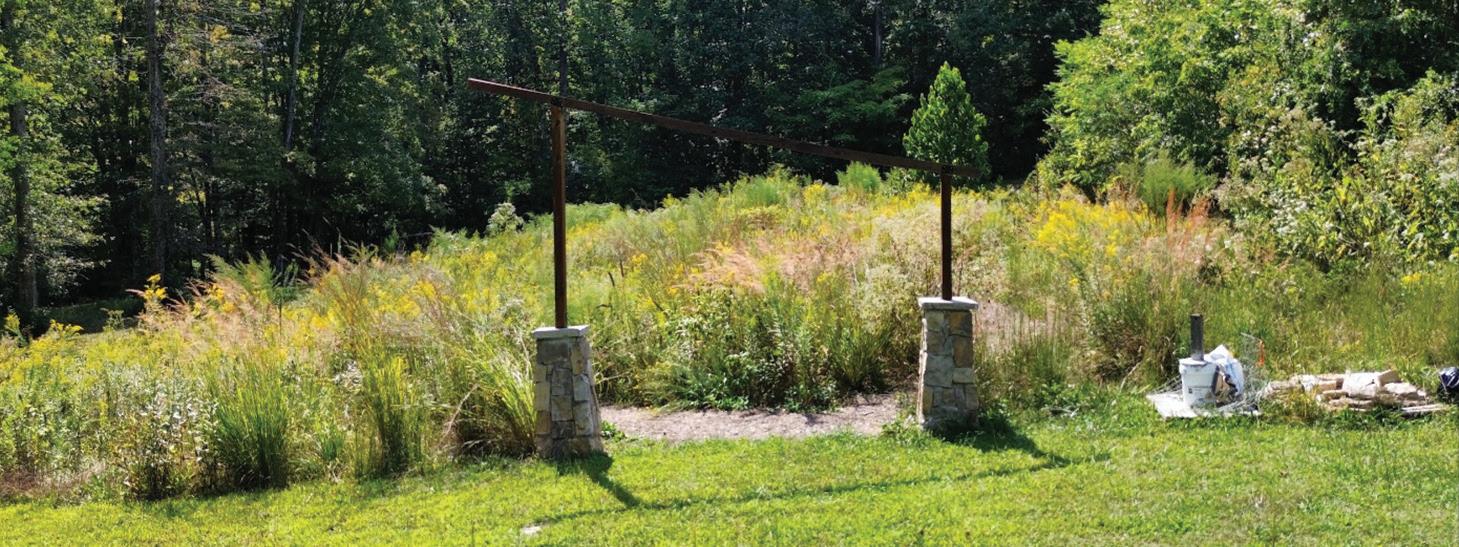
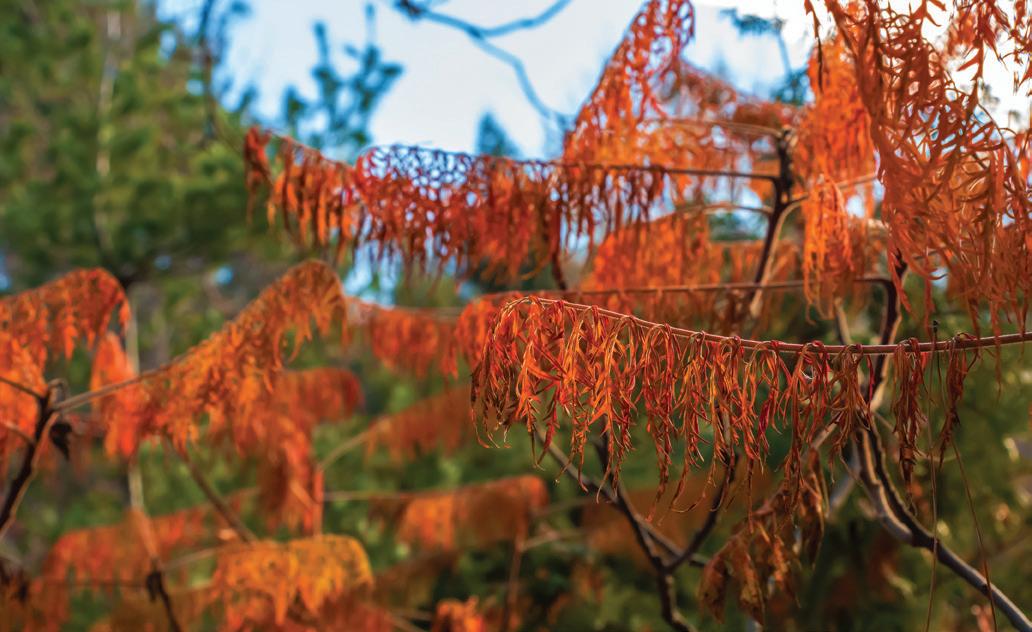
Upon graduating with my degree in Sustainability I began a summer job in landscape construction and that fall would begin my pursuit of my master’s in landscape architecture. After about 3 years from the time I first helped plant at the arboretum I was invited back, this time to utilize the skills and knowledge I had been gaining through graduate school. My task this time was to help establish formalities in the design that assist in creating a sense of arrival into the meadow, as well as create opportunities for gathering. Through the collaboration and support of Michelle Campanis and Kevin Hoyt and oversight of Mike Ross I was entrusted with my first stand-alone landscape construction project. With the use of recycled on-site stone, I constructed planter beds to support Tiger Eye Sumac specimens (Rhus typhina ‘Bailtiger’, pictured below) to create a gathering space in the middle of the meadow. The entrance for the meadow was designed by Mike Ross and Margaret Mando (a fellow UTK School of Landscape Architecture student) and I was given the opportunity to do detailed construction design, material selection and sourcing as well as the actual building of the entrance. It has allowed me to create, to problem solve and to feel the fulfillment of turning something from just an idea on paper into a physical manifestation in the landscape. From my first experience of walking into a barren field of dirt to walking through the meadow and seeing a diverse mix of Carolina lupine, rattlesnake master, columbine, bee balm, big blue stem, husker red penstemon, false blue indigo, milkweed, mountain mint, and many more plants, I have sharpened my skills and sensibility as a designer, I have built relationships with people and the land, I have deepened my appreciation for our natural world and more importantly found a cause that I want to dedicate my life to…. creating places where people can feel a sense of wonder, beauty, peace and learn with nature. Through the opportunity and foresight of people like Michelle Campanis, Kevin Hoyt, Mike Ross and many more I have realized the true power and impact that a single experience of hands-on learning can provide to someone that is still learning and developing their place in the world. For these experiences I am eternally grateful.
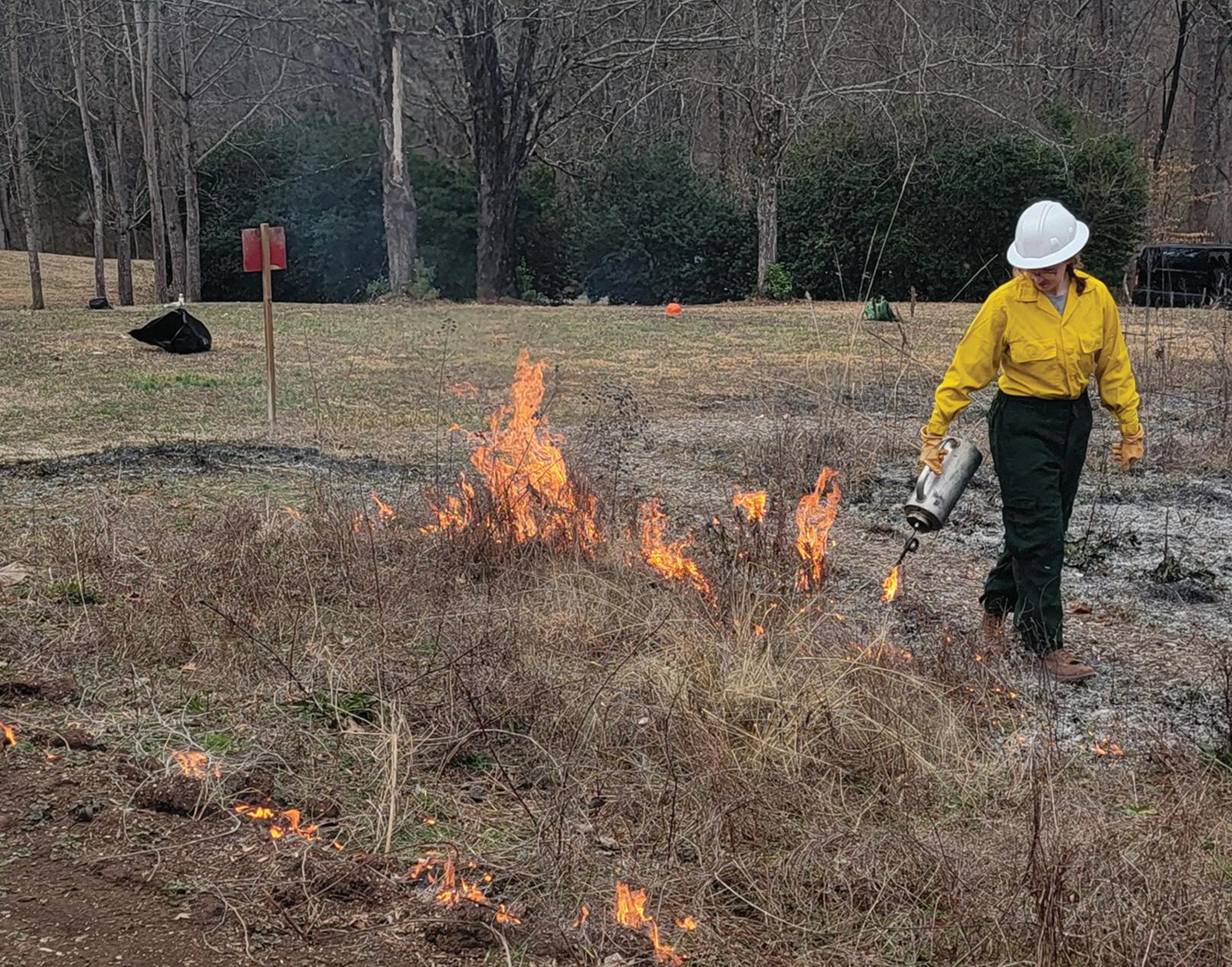
While intentional use of woody plants for their structural and aesthetic contributions must be maintained, careful removal of woody seedlings plus annual burning (Figure 8) has helped us keep the invasive and weedy plants in check. Fire, manual removal, ethical and judicious use of herbicides each contribute key roles in controlling plant compositions throughout the garden.
Some species, such as goldenrods (Solidago sp., dogfennel (Eupatorium capillifolium), and asters (Symphyotrichum and Eurybria sp.) were always planned to be intentional parts of the project, yet these plant species were not intentionally planted or purchased; we knew from past experience that these species would naturally find their own way into our meadow plots and could be expected to colonize on their own. By that same logic, our expectation has also meant that some individuals of these species can show up anywhere and can regenerate in great profusion if left unmanaged. For these plant species, proper thinning, selective removal, and well timed cutting all aid in keeping these important pollinator plants behaving as good neighbors to the rest of the meadow community.
Additionally, when plants are weeded and pulled up, native seed from flowering annual species that we intend to keep well represented in the design, are purposefully re-applied into areas of soil disturbance. In this way, there is propagule competition with the weedy species, and this interaction helps to offset the natural suppressive effect of longer-lived perennial plants on early colonizing annuals.
Finally, because the garden exists as an interactive educational space, maintaining and managing circulation and pathways is an ongoing task. Plants mature and spread, sometimes obscuring pathways or sprawling into areas that are intended for more contemplative experiences. Thinning and plant relocation are important tasks needed for keeping the structure and design vision in place.
All of this effort is dependent on volunteers and students who are coordinated by Michelle Campanis. Through continued effort and dedication, the garden is establishing nicely and keeping the vision flexible and resilient while not losing sight of the initial concept.
Figure 8. Undergraduate students in FORS 305 Prescribed Fire Management class work under direction of Dr. Jennifer Franklin, Professor in the UT School of Natural Resources to safely apply prescribed fire to manage invasive woody plant weeds and winter annual weed seedlings in the Pollinator Garden.
Figure 9. The Michelle Bradley Campanis Pollinator Garden at the UT Arboretum in Oak Ridge, Tennessee.
A Look Into the Future
As the project moves forward through the establishment and management phase, plants will continue to be added or subtracted. This is necessary to restate important design concepts, improve the aesthetic appeal, and keep up with the educational opportunities and needs of the UT Arboretum and REC.
Final Thoughts
The first formal discussions of this project that I was involved in began in June 2020 and this coming spring of 2026 the project receives its official name, the Michelle Bradley Campanis Pollinator Garden (Figure 9). While its official establishment date is attributed to 2022, the reality is that projects like this take years of dedicated work, advocacy, and commitment by many people, professionals, students and volunteers.
We would like to thank Michelle Campanis, Don Williams, Kevin Hoyt, Jakob Johnson, Hailey Wright, JD Zimmerman, and my students past, present, and future that have and will work on the pollinator garden to help care for it into the future.
Additional Reading
Ludwig, A., Ross, M., Roark, M., Choi, S. 2023. W1137 Rain Gardens for Tennessee: A Homeowner’s Guide. UTIA Extension Bulletin.
Ross, M., Zimmerman, J. 2023. Achieving Sustainability in the Landscape: The Sustainable SITES Initiative. Tennessee Greentimes, 24(4) Winter 2023
Ross, M., Roark, M. 2021. Cleaner Water Through Site-Specific Floating Treatment Wetlands. Tennessee Greentimes. 22(3) Fall 2021.
Ross, M. 2020. Restoring Client Experience with the Natural World. Tennessee Greentimes. 21(4) Fall 2020.
For Volunteer Opportunities at the UT Arboretum: Please contact Michelle Campanis, University of Tennessee Arboretum Education Coordinator, mcampani@utk.edu
Exciting New Perennial Varieties from Seed
maryv@jelitto.com
PERENNIAL SEEDS
Fertileeze…Please!
An Inexpensive Fertilizer Dispenser Reduced Application Time and Worker Strain
By Karl McKim, Margarita Velandia, Jareth Beeler, Amy Fulcher
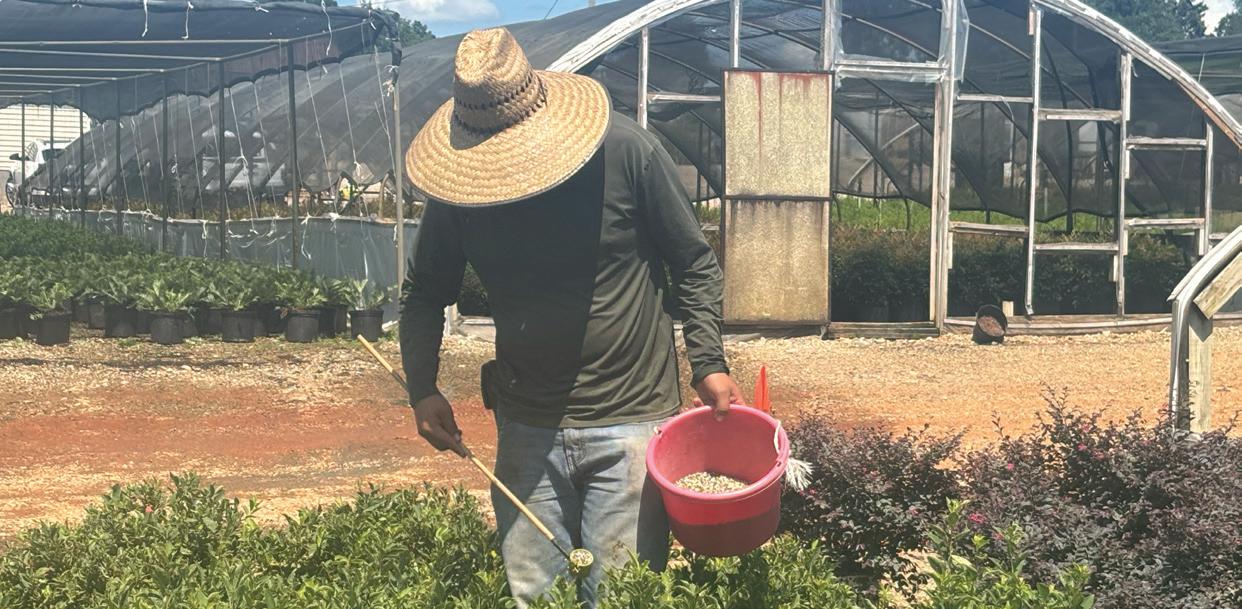
Producing nursery crops utilizes manual labor for many tasks such as applying pesticides, fertilizing (Figure 1), labeling, loading/unloading, planting, pruning, scouting, spacing, staking, and inventorying. Recently, when visiting a nursery in the Southeastern US, a worker shared that his least favorite task was fertilizing, due to the physical strain and discomfort of bending over. As part of the Labor, Efficiency, Automation and Production (L.E.A.P.) project https://www.nurseryleap.com, a team from UT began testing the Fertileeze Pro-35 manual fertilizer dispenser in partnership with Easy Tree Nursery in Rock Island, Tennessee. This UT team also conducted a comprehensive study of the Pro-35 at the UT Research Nursery Complex (Harrell et al. 2025).
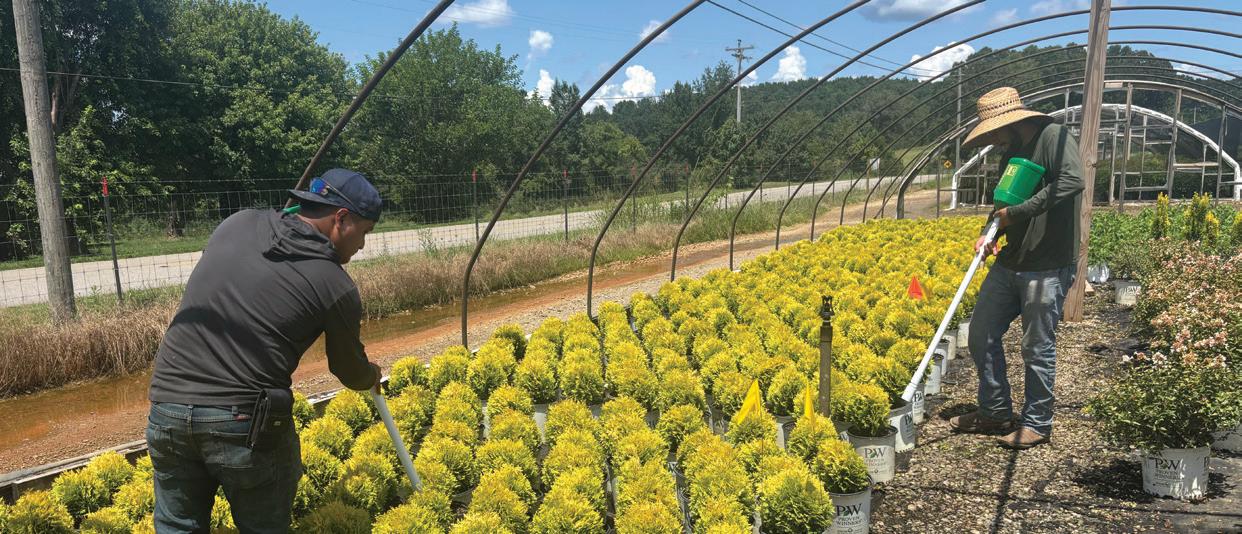
Two crop species of different sizes and growth habits were selected for experiments. First, Anna’s Magic Ball® arborvitae growing in #2 containers was fertilized with Florikan 18-6-8 and then ‘Merlot’ Virginia sweetspire in #3 containers was fertilized with Florikan 12-6-6. Before the experiments, the assistant production manager determined the type and target amount of fertilizer to apply. The Pro-35 was then calibrated for the fertilizer type, and the appropriate Pro-35 setting was selected for each crop. Two nursery workers fertilized the same number of plants per crop species using the manual method of a spoon and bucket and using a Pro-35 fertilizer dispenser (Figure 2). Application time and amount of fertilizer applied by weight were recorded for each worker and each application method. After using both methods, workers rated each method’s ability to accurately place fertilizer, worker comfort, as well as changes in worker energy and mobility levels using a 5-point Spanish language Likert scale (1 = low energy/mobility; 5 = high energy/ mobility) adapted from Harrell et al. (2025).
In the experiment with Anna’s Magic Ball®, fertilizer application averaged 2.24 seconds per plant with the spoon and bucket method. Application with the Pro-35 was 56% faster at 0.98 seconds per plant. Similarly, manual application averaged 2.55 seconds per plant for Virginia sweetspire ‘Merlot’ while the Pro-35 was 41% faster, averaging 1.51 seconds per plant.
Workers stated that using the Pro-35 to apply fertilizer reduced their energy level less than fertilizing the same number of plants manually and found the Pro-35 more comfortable than manual application with the spoon and bucket (Table 1). Workers felt the manual method left them feeling less mobile than applications using the Pro-35 and that applications with the Pro-35 were faster and more precise than manually applying with the spoon and bucket. Overall, workers perceived the Pro-35 to be more accurate in fertilizer placement and less physically demanding.
A partial budget analysis was conducted using data from the experiment described above to evaluate changes in revenue, costs, and net profit resulting from the transition from the bucket-and-spoon method to the Pro-35 fertilizer dispenser. A 10,000-container/ plan-unit production level was assumed for this analysis. Other assumptions included a $65 cost per 50-lb bag of fertilizer, two Pro-35 dispensers used to cover 10,000 plants priced at $154.5 per dispenser, and a $17.87 wage rate. Results from this analysis suggest labor savings of approximately $63 per 10,000 plants or containers for #2 containers and $52 per 10,000 plants or containers for #3 containers. Fertilizer cost savings from improved application accuracy when using the Pro-35 fertilizer dispenser vary widely across
Table 1. Worker perceived exertion, accuracy and speed from fertilizing with a Fertileeze Pro-35 and the manual spoon and bucket method.
Figure 2. (Below) Two nursery workers apply fertilizer to Anna’s Magic Ball® arborvitae using a manual fertilizer dispenser. (Photo credit: Amy Fulcher)
Figure 1. (Above) A nursery worker demonstrates the typical method of fertilizing container-grown plants at a nursery by using a spoon and a bucket. (Photo credit: Amy Fulcher)
#2 and #3 containers and are estimated at $5 for #2 and $168 for #3 containers. The partial budget analysis is described in full by Velandia et al. (2026).
These results are specific to Easy Tree Nursery, where the trials were conducted, and to the workers’ abilities, experience, applied fertilizer, and crop types. Overall, labor and fertilizer savings for both #2 and #3 container scenarios indicate that these savings will not cover the additional cost of purchasing two Pro-35 fertilizer dispensers ($309) in the year of purchase. Although the labor associated with applying fertilizer is reduced by approximately half when transitioning from the bucket-and-spoon method to the Pro-35 fertilizer dispenser, the reduction is measured in seconds per plant. Therefore, significant savings will be realized only when scale is increased, that is, if the number of plants or containers covered by the Pro-35 is increased. For the #2 container scenario with Anna’s Magic Ball®, Easy Tree Nursery will be able to cover the cost of two Pro-35 fertilizer dispensers in the first year when topdressing 45,663 plants (the breakeven number of plants) with two dispensers. For the #3 scenario using ‘Merlot’ Virginia sweetspire, Easy Tree Nursery will be able to cover the costs of two Pro-35 dispensers in the first year when topdressing 14,104 plants (the breakeven number of plants) with two dispensers. The scale or number of plants that the dispenser will be used to fertilize is a factor to consider, especially if the grower aims to pay for the dispensers within a specific period of time.
Workers of all ages in this study and others (Harrell et al. 2025) found fertilizing with the Pro-35 to be overall more comfortable than fertilizing using the spoon and bucket method. Economics aside, nursery owners and managers may consider that for a low input purchase price, a worker-friendly fertilization method could not only help fertilize plants faster but also retain workers by making the task less arduous. Other manual fertilizer dispensers will be evaluated in 2026.
The authors thank Easy Tree Nursery, James Hines, Ethan Johnson, César Martinez and Rodrigo Villegas. Their collaboration made this project possible. This research is supported by the Labor, Efficiency, Automation and Production: LEAP nursery crops towards sustainability project, USDA NIFA SCRI award no. 2024-51181-43291.
Diversity
Discover Diversity
Resources and Additional Reading
PH: 919-772-7255
PH: 919-772-7255
FX: 919-773-0904
FX: 919-773-0904
www.PenderNursery.com
www.PenderNursery.com
2620 Wall Store Road
2620 Wall Store Road
Garner, NC 27529
Garner, NC 27529
Harrell, W., Pietsch, G., Johnson, J., Velandia, M., and Fulcher, A. 2025. Dispensing with fertilization labor: An inexpensive labor-saving fertilizer applicator. University of Tennessee Extension Publication, W1368. https://utia.tennessee. edu/publications/wp-content/uploads/sites/269/2026/02/W1368.pdf
Velandia, M., A. Fulcher, and J. Beeler. 2026. The economic feasibility of adopting the Fertileeze Pro-35 fertilizer dispenser in container production: The Easy Tree Nursery case study. University of Tennessee Extension Publication, W1383. https://utia.tennessee.edu/publications/wp-content/ uploads/sites/269/2026/03/W1383.pdf