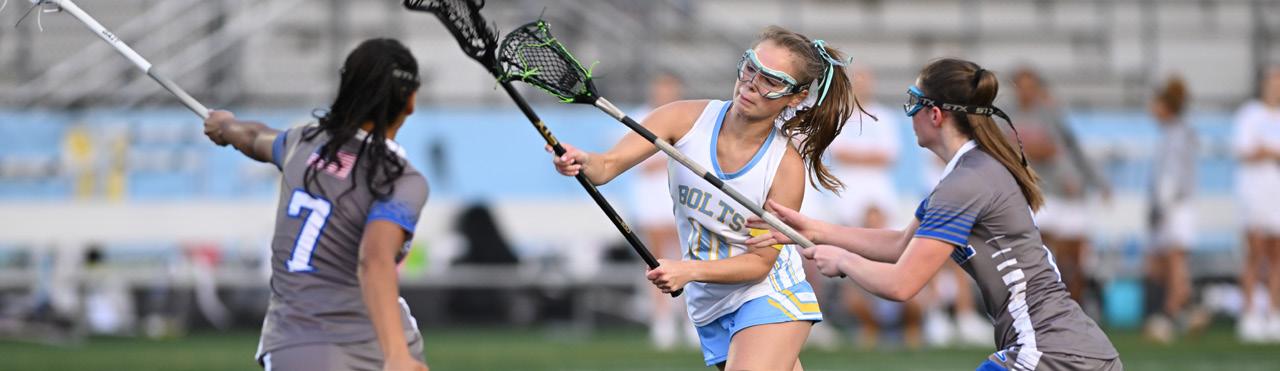
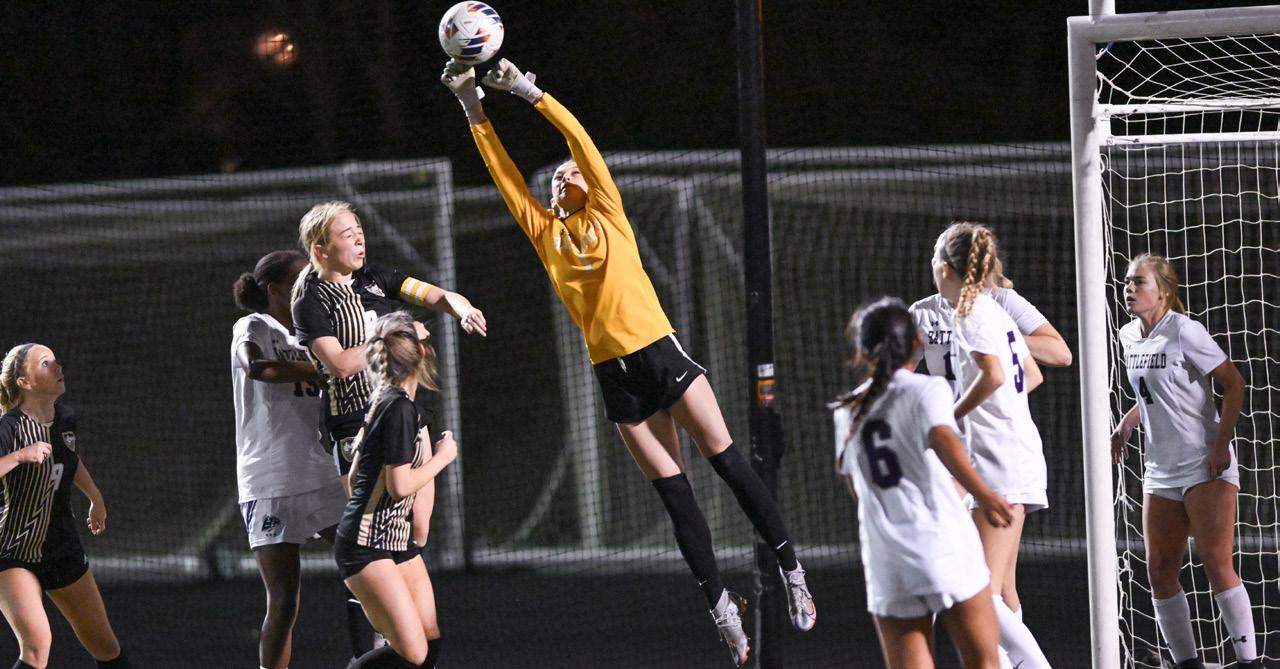
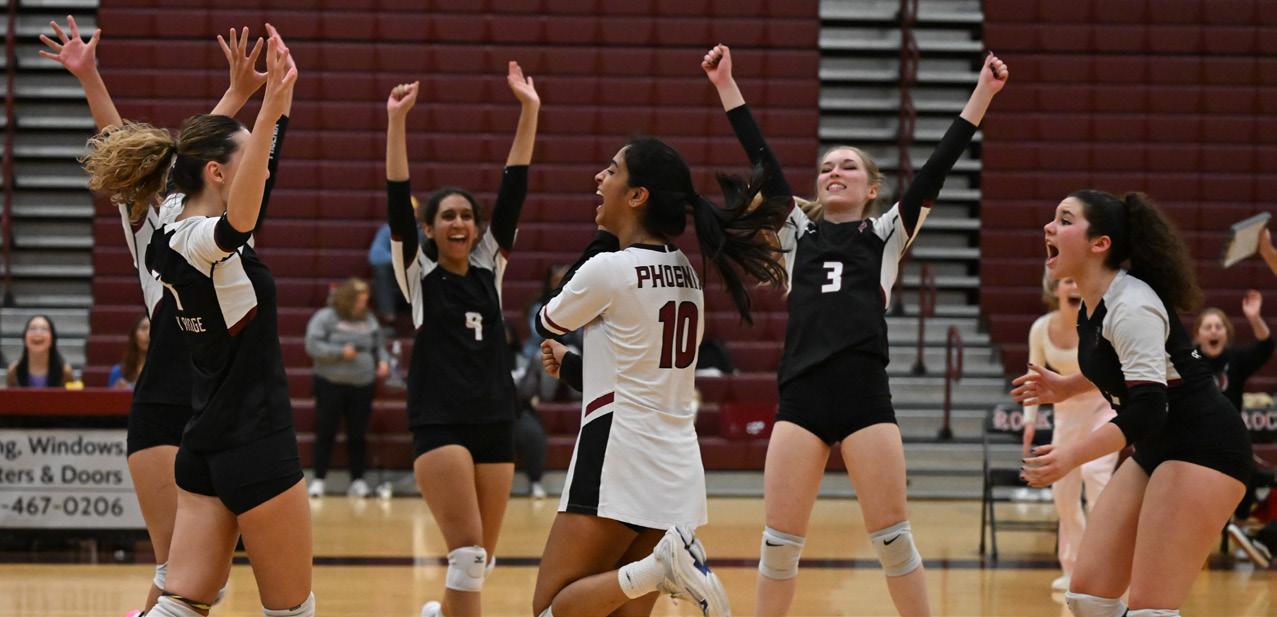
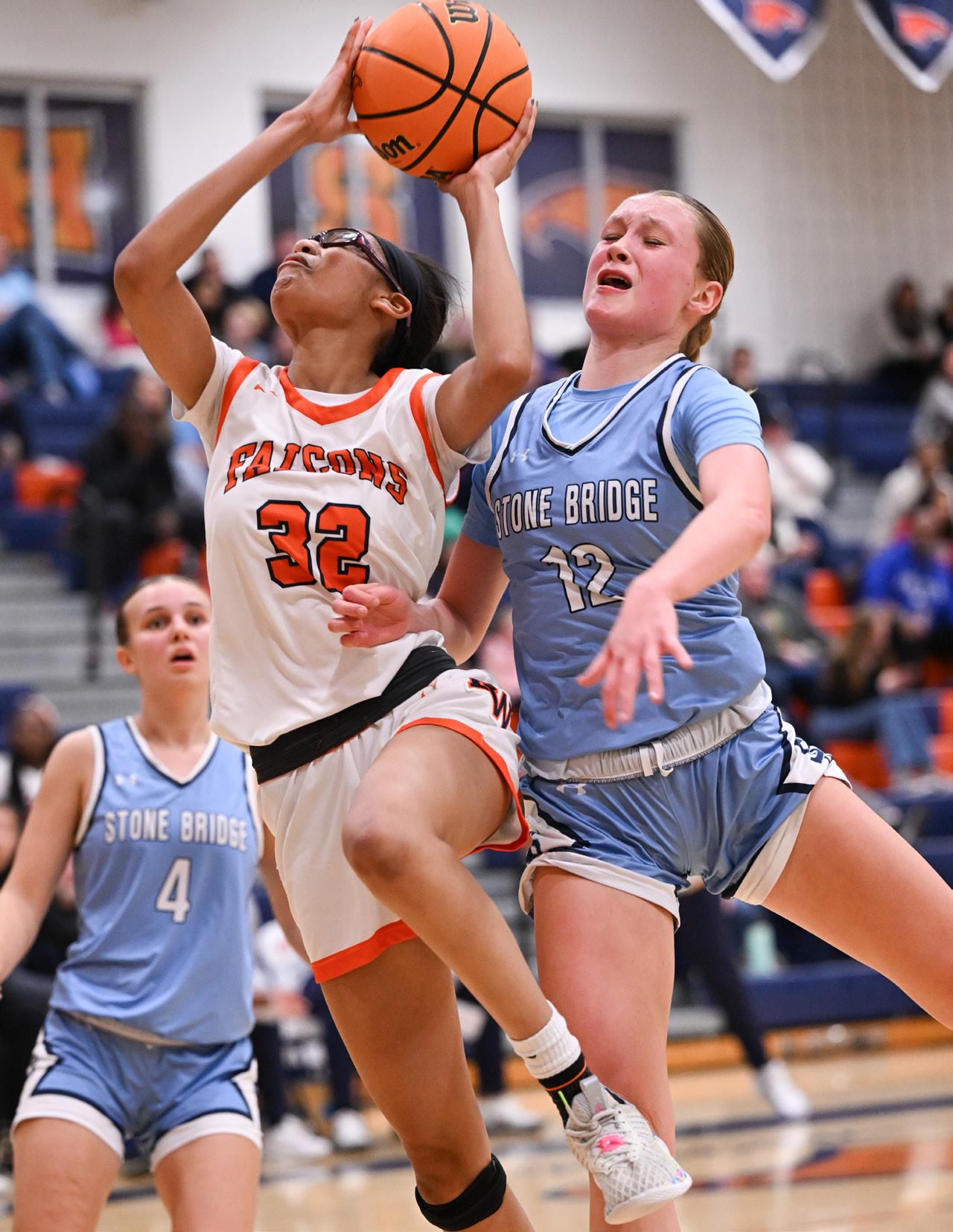
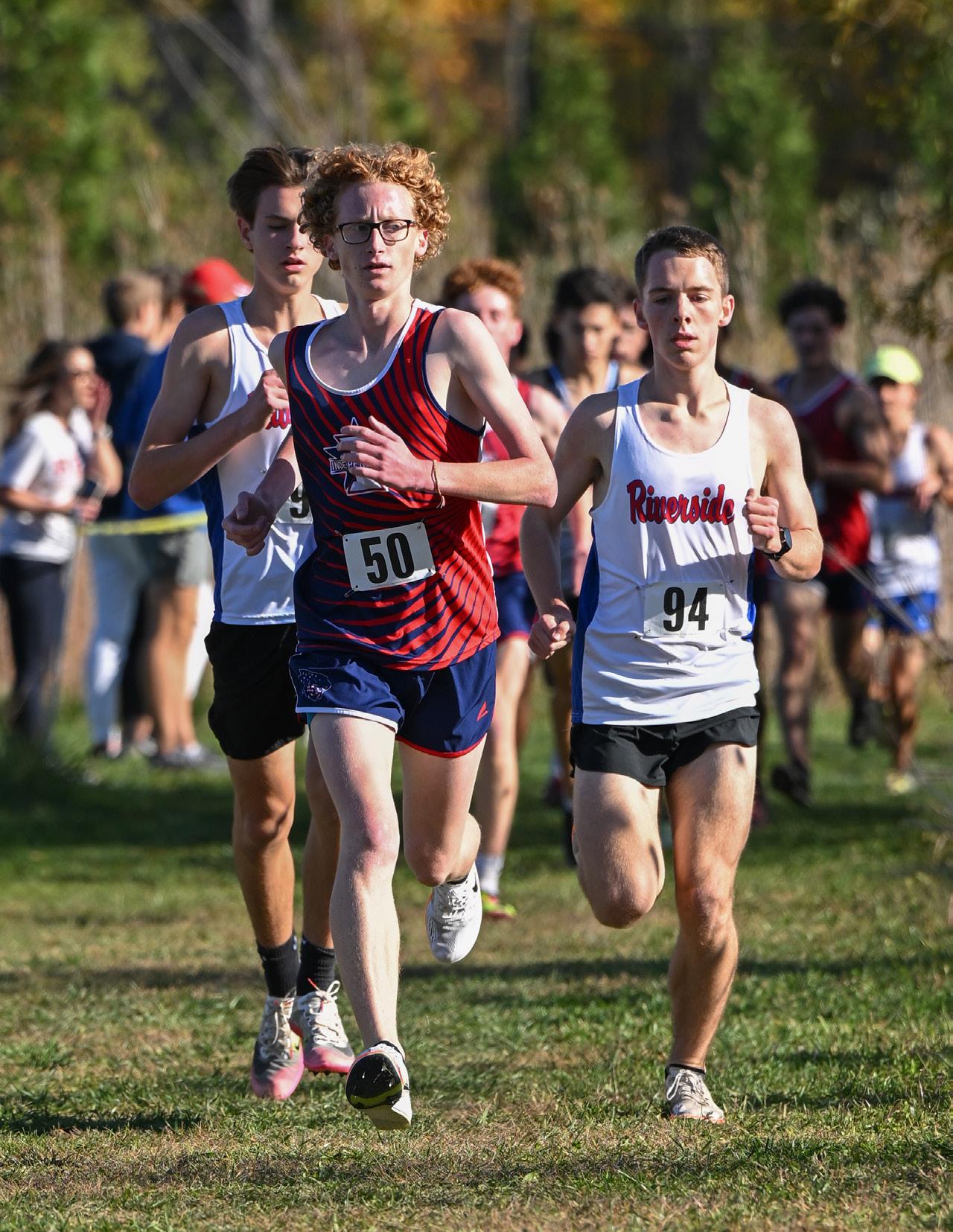
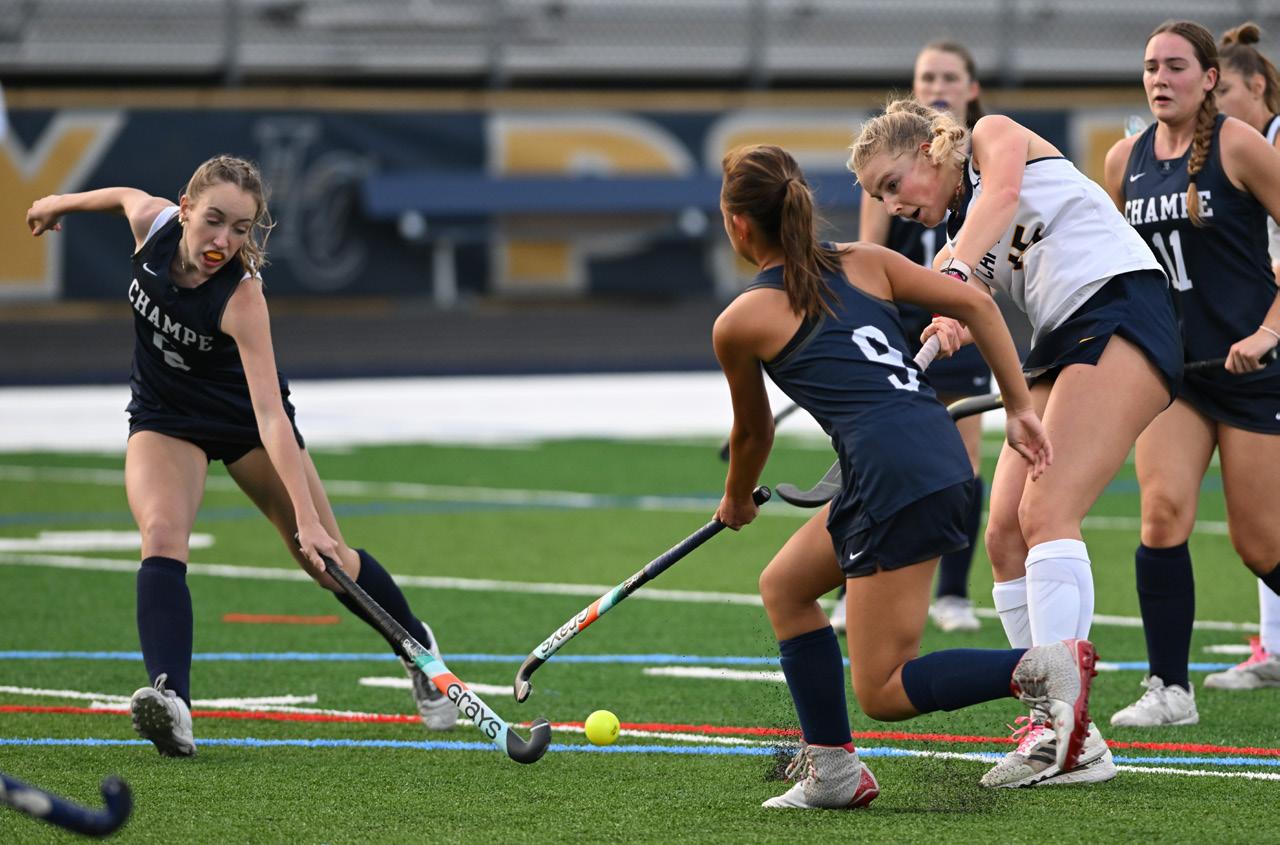
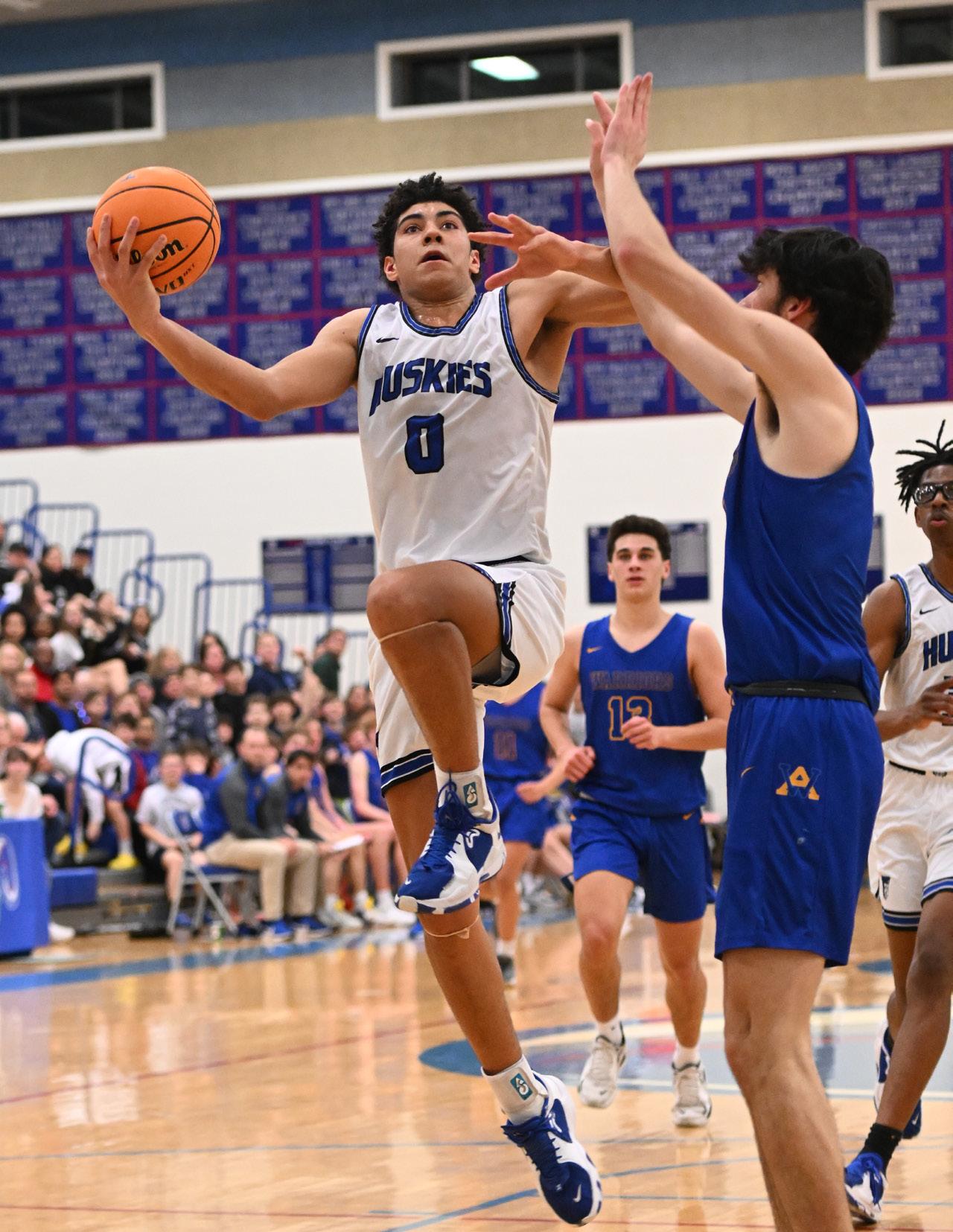
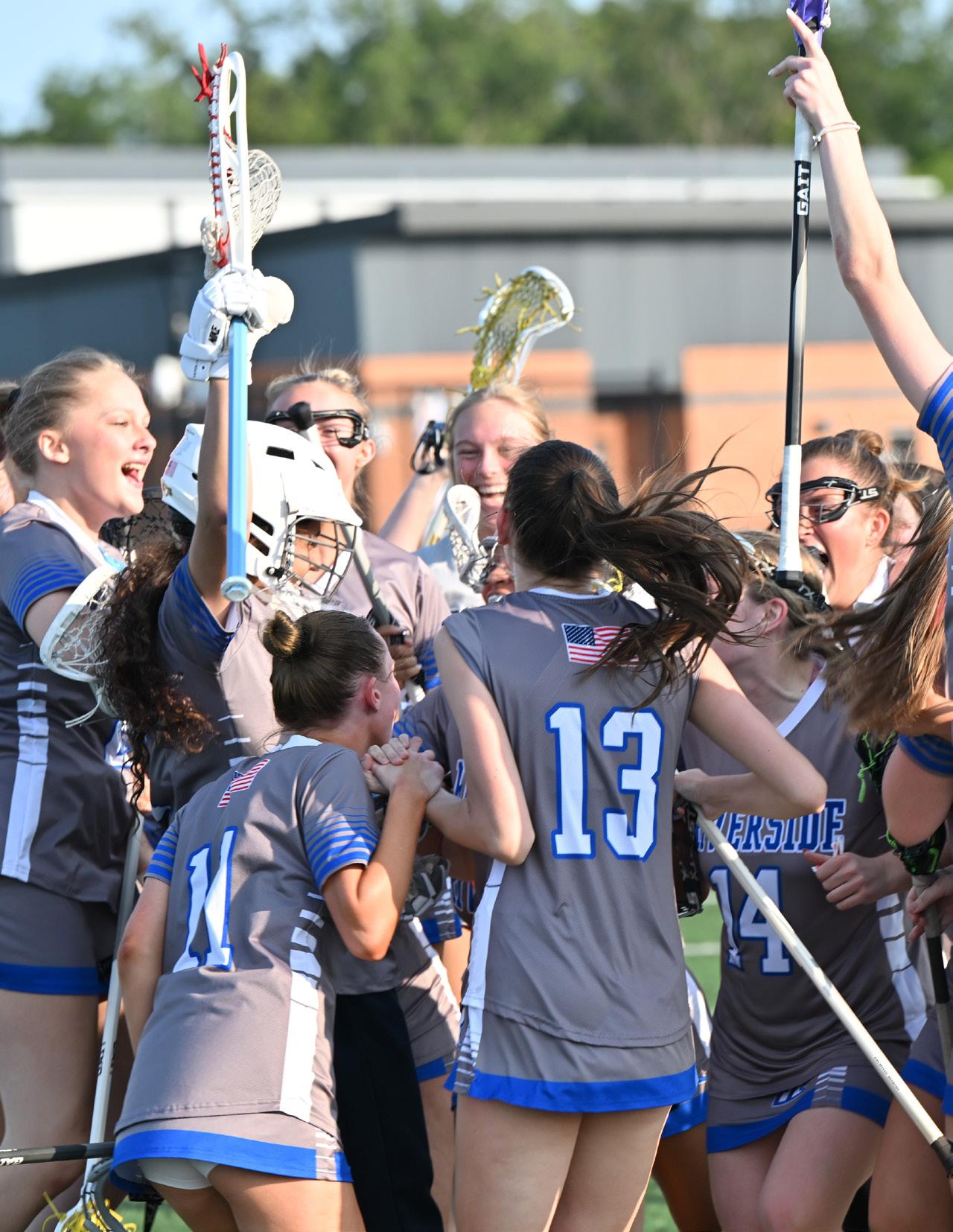
This publication is presented to you because your child has indicated a desire to participate in interscholastic athletics, cocurricular, or extracurricular activities and you have expressed your willingness to permit them to participate. By supporting policies and regulations that govern school competition, events, and the conduct and training of students participating in activities, parents, team or group members and coaches, directors, or sponsors can maintain a program with positive opportunities and experiences that foster the personal growth of all members.
High school athletics and activities are an extension of a student’s academic day. Education-based school activities provide an opportunity to learn valuable lessons that cannot be obtained in a classroom setting alone. A small percentage of high school athletes go on to play college sports. An outstanding education can help a student become successful in life. The student athlete should make attending classes every day, being prepared and earning satisfactory grades their priority.
Loudoun County Public Schools believes that student activity programs help meet students’ needs for selfexpression, mental alertness, and physical growth. Our obligation is to maintain a sound program to further students’ emotional and physical maturity. The staff is committed to provide adequate equipment and facilities, well-trained coaches, directors, sponsors and fair contests with skilled officials or judges.
Students who participate in one of our student activity programs commit to self-discipline, self-denial, and prescribed training habits. To remain on the squad, all students are expected:
• to comply with the rules of training and conduct, to discipline their minds and bodies for rigorous competition, events, and practices
• to attend all meetings, practices, performances and competitions
• to recognize the rights of other team or group members.
We appreciate your collaborative and cooperative efforts with members of the school staff.
Freshman and junior varsity athletics in Loudoun County provide the opportunity for a healthy and desirable attitude towards athletic participation. The program presents an environment in which students can begin to learn all of the positive elements that can be gained by participation in sports.
Freshman and junior varsity athletics provide the opportunity for students to prepare for participation on the varsity teams. Learning and refining skills, sportsmanship, strategy, teamwork, competition, conditioning, and maturity are necessary for athletes to advance to higher levels of competition.
Although participation by students is highly desirable, there are no guarantees that all athletes will participate in all games. Playing time for athletes is the sole decision of the Head Coach and their staff. Coaches are encouraged to give each student the opportunity to participate in as many games as practical.
Varsity athletics in Loudoun County encourages each team and school to represent itself at the highest possible standard at every level of competition. The varsity athletic program is intended to provide those students possessing a high degree of skill and talent in sports the opportunity to perform in the sport of their choice.
Loudoun County Public Schools Student Activities
Mission Statement and Objectives
Mission Statement: Loudoun County Public Schools Student Activity programs dynamically support the academic mission of the school system. Our Student Activity programs provide opportunities for lifelong lessons in the value of teamwork, empathy, work ethic, resilience, and sacrifice for a goal; all within the values of respect and honor. It is the hope that participation in the student activities within LCPS will promote positive attitudes that will empower students to make meaningful contributions to the world.
Objectives:
1. To promote an atmosphere that allows for students to be challenged to develop physical, mental, emotional, and social growth.
2. To provide a student the environment to develop their individual skill and potential.
3. To teach each individual how to function as a member of a team or group, with personal goals and accomplishments being held in high regard, but subservient to that of the team or group.
4. To teach each individual to strive for excellence, but only within the confines of acceptable sportsmanship and conduct.
5. To enable a community-wide sense of school spirit that is fostered by participation in student activities at each school.
6. To develop a life-long appreciation of physical fitness, wellness, and empathy.
WE ARE THEIR ROLE MODELS!
The critical factor in determining whether your child has a positive experience is the quality of their adult leaders – their parents and coaches.
PARENT – COACH RELATIONSHIP
It is the goal of everyone that each high school student-athlete will experience some of the most rewarding moments of their lives. It is important to understand that there may be times when things do not go the way you and your child wish. When this occurs, discussion with the coach is encouraged. It is the first and most integral step to understanding and resolution.
By establishing an understanding of each role, we are better able to accept each other’s actions and provide a greater benefit to our children. When your child becomes involved in LCPS Athletic programs, clear communication is a critical expectation from the coach of the program.
COACHES WILL COMMUNICATE THE FOLLOWING:
• Team requirements, special equipment, strength and conditioning programs
• Procedure if your child is injured during participation
• Game/practice schedule and updates
• Team rules, guidelines and consequences for infractions
• Team selection and tryout process
COACHES EXPECT THE FOLLOWING COMMUNICATION FROM ATHLETES AND PARENTS
• Any concerns expressed directly to the coach.
• Advance notification of any schedule conflicts.
• Advanced notification of illness or injury – when possible.
GUIDELINES FOR PARENTS TO DISCUSS CONCERNS WITH THE COACH
• Call or email the coach to set up an appointment.
• If the coach cannot be reached, call the Athletic Director. They will set up the meeting for you and the coach.
• Please DO NOT attempt to confront a coach or athletic department staff member before or after a contest or practice. These can be emotional times for both the parent and the coach. Meetings of this nature usually do not promote a positive resolution. Please use the 24 HOUR RULE.
THE NEXT STEP
What can a parent do if the meeting with the coach did not provide a satisfactory resolution?
• Call or email and set up an appointment with the Athletic Director to discuss the situation.
• At this meeting the appropriate next step can be determined.
• Examples of concerns to discuss with the coaching staff:
– Treatment of your child.
– Ways to help your child improve.
– Concerns about your child’s behavior.
It may be difficult to accept that your child is not playing as much as you expect. Coaches are professionals. They make decisions based on what they believe to be the best for the team and for all student-athletes involved. Parents should understand that the decision on playing time, team strategy and play selection are the sole discretion of the Head Coach and their staff.
B. Commitment and Goals for Athletes
Being a member of a Loudoun County Public Schools athletic team is the fulfillment of a goal. The attainment of this goal carries with it certain traditions and responsibilities that must be maintained. A great athletic tradition is not built overnight; it takes the hard work of many people over many years. As a member of an interscholastic squad of your high school, you have inherited a wonderful tradition: a tradition to win with honor. You are challenged to uphold this tradition and to bring honor to our athletes, our school, and our community.
It will not be easy to contribute to such a great athletic tradition. When you wear the colors of your school, you understand our traditions, and are willing to accept the responsibilities that go with them.
1. Responsibilities to yourself: These important responsibilities are to broaden yourself and to develop strength of character. You owe it to yourself to get the greatest possible good from your high school experiences. Your academic studies and your participation in other extracurricular activities, as well as in sports, prepare you for your life as an adult.
2. Responsibilities to your school: Another responsibility you assume as a squad member is to maintain the reputation of your school. Your high school cannot maintain its position as having an outstanding school unless you represent it well. Athletes are required to attend all practices and games except as noted on page 20, Section VI, c.
By participating in athletics to the maximum of your ability, you are contributing to the reputation of your school. You assume a leadership role when you are on the athletic squad. The student body and citizens of the community know you. You are on stage; the spotlight is on you. The student body, the community and other communities judge our school by your conduct and attitudes, both on and
off the field. Because of this leadership role, you can contribute greatly to positive school spirit and community pride. Make Loudoun County Public Schools proud of you, and your community proud of your school, by representing them well through positive performance and high character.
3. Responsibilities to others: When you have met all the training rules, have practiced to the best of your ability every day, and have given your best effort in the game, you have your self-respect, and your family can be justly proud of you. The younger students in Loudoun County Public Schools are watching you. They will copy you in many ways. Do not do anything to let them down. Set good examples for them.
C. Athletic Goals
LCPS places a high value on the importance of building positive student character through sports and activities and focuses on the following definitions in striving to reach this goal:
Moral Character - a person’s tendency to behave ethically, or in accordance with what’s right and good. It’s made up of a person’s values, beliefs, and behaviors.
Performance Character - a set of traits that help someone be successful in school, work, and other activities. These traits include self-control, perseverance, and optimism.
Education Based Athletics - a high school model that integrates sports and other activities into the academic experience. It’s based on the idea that sports can be an educational experience that teaches life lessons.
The student athlete shall learn:
1. To work with others – In society a person must develop self-discipline, respect for authority, and the spirit of hard work and sacrifice. The team and its objectives must be placed higher than personal desires.
2. To be successful – Society is very competitive. Learning to accept defeat comes by striving to win with earnest dedication and developing a desire to excel.
3. To develop sportsmanship – Accepting defeat with grace and dignity, a person learns to treat others as they would like to be treated. Through participation in athletics, a student may develop desirable social traits, including emotional control, honesty, cooperation and dependability.
4. To improve – Setting a goal and working to achieve is a characteristic of good citizenship. An athlete should establish personal goals to enhance skills and work to meet them.
5. To enjoy athletics – Athletes must enjoy participation, acknowledge all of the personal rewards to be derived from athletics, and give sufficiently of themselves to preserve and improve the school’s sports program.
6. To develop desirable personal health habits – To be an active, contributing citizen, it is important to obtain a high degree of physical fitness through exercise and good health habits and to develop the desire to maintain this level of physical fitness after formal competition has been completed. Physically and mentally fit individuals are better able to contribute to society.
II. GOVERNANCES
A. The Virginia High School League
All Loudoun County Public High Schools are voluntary members of the Virginia High School League and compete with member schools. As a member school district, the secondary schools of Loudoun County agree to abide by and enforce all rules and regulations promulgated by the League.
Success in education-based athletics refers to the holistic achievement of student-athletes, programs, and schools in ways that balance competitive performance with personal growth, academic excellence, and character development. It encompasses:
1) Athletic Achievement – Demonstrating skill development, teamwork, sportsmanship, and competitive success relative to ability and program resources.
3) Personal and Social Growth – Building leadership, resilience, responsibility, and positive relationships with peers, coaches, and the community.
4) Well-being and Inclusion – Supporting physical, mental, and emotional health while fostering an environment where all student-athletes feel valued and included.
5) Program Development and Sustainability – Creating a structured, ethical, and organized athletic program that develops future athletes, coaches, and school culture positively.
B. The National Federation of State High School Associations
The National Federation consists of the 50 individual state high school athletic and/or activities associations. The purposes of the Federation are to serve, protect, and enhance the interstate activity interests of the high schools belonging to state associations; to assist in those activities of the state associations which can best be operated on a nationwide scale; to sponsor meetings, publications, and activities that will permit each state association to profit by the experience of all other member associations; and to coordinate the work to minimize duplication.
C. The Athletic District/Conference
Loudoun County Schools are members of the Cedar Run, Catoctin, Dulles, and Potomac Districts for regular season competition. Post-season tournaments are governed by the VHSL district format. The districts were established for the primary purpose of promoting selected interscholastic activities among member schools.
These districts were established to encourage member schools to improve their cocurricular program in athletics. These district memberships facilitate the arranging of schedules, equalizing competition, and conducting district meets, and determining championships. The districts provide Loudoun County Public Schools the opportunity for competition without excessive travel and with schools of similar size and athletic philosophy.
Member schools are:
DULLES DISTRICT:
Region 4C
Dominion HS
Heritage HS
Loudoun Valley HS
Rock Ridge HS
Tuscarora HS
CATOCTIN DISTRICT:
Region 4C
Broad Run HS
Loudoun County HS
Park View HS
Woodgrove HS
POTOMAC DISTRICT:
Region 5D
Briar Woods HS
Freedom HS
John Champe HS
Lightridge HS
Potomac Falls HS
Riverside HS
Stone Bridge HS
CEDAR RUN DISTRICT:
Region 6B
Independence HS
III. STUDENT REQUIREMENTS FOR PARTICIPATION
A. Physical Examination
The VHSL Requires requires students to submit to the school principal or designee a signed Preparticipation Physical Evaluation form completely filled in and properly signed, attesting that the student has received a physical examination, was found to be physically fit for athletic competition no more than 14 calendar months prior to the date on which the health care official signed the report, and that the student’s parents consent to the student’s participation. A physical is required for all in-season and out of season sport activities.
In addition, the law requires new physicals completed July 1, 2025, or later must be completed on the new physical evaluation form, which can be found on appendix AE.
B. Emergency Medical Authorization Card
Each athlete’s parent or guardian shall complete an Emergency Medical Authorization Card giving permission for treatment by a physician or hospital when the parent(s) are not available. The card will be available at all practices and contests.
C. Parental Acknowledgment of Participation Rules and Guidelines
Each parent or guardian shall read the activity rules and regulation form and certify that they understand the athletic eligibility rules and policies of the school district, based upon the contents within the Student Activities Handbook, which is available online or on request in hard copy. The signed document must be submitted to the activity sponsor or coach prior to participating in the activity. Refusal to sign the form will result in student’s ineligibility to participate. See Appendix A for a copy of this form.
D. Insurance Bulletin
The school district does not carry insurance to cover student athletic injuries. Parents must sign an acknowledgement form stating they have purchased “Student Accident Insurance” for their athlete or possess a family insurance plan and have signed the insurance notification form.
E. LCPS Concussion Guidelines for Parents and Athletes
An information sheet regarding concussions, their long-term and short-term effects and permission to use the Impact Test will be provided by LCPS. The student athlete and a parent/guardian shall read this material and sign the form, stating that they understand the dangers of concussions and the treatment plan that will be followed by our Athletic Trainers. See appendix G for treatment plan and signature page.
F. Risk of Participation
All students and parents must realize the risk of serious injury, which may be a result of participation in various school activities. Loudoun County Public Schools will use the following safeguards to make every effort to eliminate injury:
1. A mandatory parent/athlete meeting prior to the first contest of the season to explain fully the athletic policies and to advise, caution, and warn parents/athletes of the potential for injury
2. A continuing education program for coaches to learn the most up-to-date techniques and skills to be taught in their sport
G. LCPS Sudden Cardiac Arrest Guidelines for Parents and Athletes
All student-athletes must complete the National Federation of State High School Associations (NFHS) Sudden Cardiac Arrest Course. This course will help student-athletes learn and recognize the warning signs and symptoms of Sudden Cardiac Arrest. Also included are guidelines for what to do in the critical moments after an individual suddenly collapses in order to save that individual’s life, such as calling 9-1-1, starting chest compressions, and sending for an AED. Course: https://nfhslearn.com/courses/sudden-cardiac-arrest See appendix AB for the LCPS Sudden Cardiac Arrest Guidelines.
H. Player and Parent/Guardian Contract
Integrity, fairness, and respect are the principles of good sportsmanship. These are lifetime values taught through athletics. You are the spokesperson for your school when you attend athletic events or participate in athletic events. Your actions are viewed by family and friends, opposing fans, the local community, and the media. Your display of good sportsmanship will demonstrate the most positive things about you and your school.
PLAYER
As a member of this team, I agree to follow this code of conduct:
• I will respect the game by playing fairly and to the best of my ability.
• I will lead by example, practice good sportsmanship and demonstrate self-control.
• I will not criticize calls made by officials and will allow my coach to handle any issues with them.
• I will always support and encourage my teammates and prioritize the team’s success over my own.
• I will represent my team with class, handle winning and losing with grace, and ensure that my behavior always reflects positively on my teammates, coaches and school.
• I will accept that mistakes are a part of sports and will use them as opportunities to grow.
PARENT/GUARDIAN
As a team parent/guardian, I agree to follow this code of conduct:
• I will encourage my child to play fairly and to the best of their ability.
• I will practice good sportsmanship by demonstrating positive support for all players, coaches, fans and officials.
• I will not criticize calls made by officials and will allow the coach to handle any issues with them.
• I will prioritize the emotional and physical well-being of my child above any personal desire to win.
• I will do my best to make high school sports fun for my child and help them enjoy the experience.
• I will remember the game is for the players and not for the adults.
We will always do our best to follow this code of conduct because we know it is meant to help students become better players, teammates and people.
I. Financial Obligations and Equipment
1. Uniforms - In general, uniforms are provided to all athletes. However, in some cases the athletes must purchase certain items. Such items become the personal property of the student.
2. Equipment - All athletes are responsible for the proper care and security of equipment issued to them. School-furnished equipment is to be worn only for contests and practice. Students must pay for all equipment not returned in good condition at the end of the season.
3. LCPS will furnish NOCSAE (National Operating Committee on Standards for Athletic Equipment) approved helmets for football, lacrosse, baseball and softball. All helmets are inspected for safety. You must get prior approval from the athletic department to purchase and use your own helmet. The helmet must be re-certified each year with the other school issued helmets.
J. Eligibility of Athletes
Prior to participation, athletes must adhere to the following scholastic eligibility requirements:
1. For the first semester, the student must be currently enrolled in not fewer than five subjects, or their equivalent, offered for credit and which may be used for graduation, and have passed five subjects, or their equivalent, offered for credit and which may be used for graduation the immediately preceding year of the immediately preceding semester for schools that certify credit on a semester basis.
2. For the second semester, the student must be currently enrolled in not fewer than five subjects, or their equivalent, offered for credit and which may be used for graduation, and have passed five subjects, or their equivalent, offered for credit and which may be used for graduation the immediately preceding semester.
3. Cannot receive money or awards for playing.
4. Cannot sign a contract to play professional sports while they still maintain high school eligibility.
5. Cannot be 19 on or before August 1st of the current year.
6. Must not have more than a total of eight consecutive semesters of eligibility after they enter the 9th grade for the first time.
7. Must abide by the school training rules.
8. May not repeat courses for eligibility purposes for which credit has been previously awarded.
9. In order to participate in an activity or practice on any given day, student must report to school on time and must remain in school that entire day. Exceptions may be made for doctor or dental appointments or reasons excused by the principal. ( A doctor/dental note is required for exceptions.)
10. Eighth grade students who become 14 years of age on or before August 1st are eligible for subvarsity athletics (including pre-season and post-season conditioning programs) at the high school they would attend. All other 8th graders become eligible upon meeting requirements for promotion to the 9th grade.
11. Any student that is academically ineligible for the winter sports tryouts will remain ineligible for the entire winter season.
12. Any student granted special permission must meet the criteria specified below.
SPECIAL PERMISSION AND HIGH SCHOOL ATHLETIC ELIGIBILITY FAQS ON VIRGINIA HIGH SCHOOL LEAGUE (VHSL) TRANSFER RULE
1. If I am a currently enrolled high school student and I voluntarily choose to attend a high school under the special permission provision of School Board Policy 8155 (School Assignment) different from my home school, will I remain eligible for VHSL athletics?
ANSWER: No. The VHSL Transfer rule (28-7-1) prohibits a current high school student from transferring without a corresponding change in their parents’ residence. This period of ineligibility lasts for 365 consecutive calendar days.
2. I heard that the school system can grant a “waiver” so I can remain eligible for VHSL athletics?
ANSWER: A waiver may be considered for transfers that are required or mandated by the school system for the welfare of the student or school system.
3. I am a rising 9th grade student and I would like to apply for special permission to transfer to a high school other than my home high school for next year. If I file during the period for filing applications, as provided by School Board Policy 8155, will I be eligible for VHSL athletics at the other high school?
ANSWER: A student entering the 9th grade for the first time by transition becomes immediately eligible if the student attended the feeder school for the preceding year before enrolling in 9th grade or is zoned to attend the high school.
4. What happens if a student is mistakenly allowed to play in VHSL athletics even though they are actually ineligible due to the Transfer Rule?
ANSWER: The high school that allowed the student to play when they were ineligible will forfeit all of the games in which the student played. Other sanctions are possible against the school depending upon the situation.
K. OFFICIAL START DATES FOR TRYOUTS
2026-2027
2027-2028
Cheerleading Football
Girls Flag Football
Boys and Girls Cross Country
Girls Volleyball
Boys Volleyball Golf
Field Hockey
Golf- July 27th
All Other Falls SportsAugust 3rd November 9th February 22nd
Golf- July 26th
All Other Falls SportsAugust 2nd November 8th February 21st
Boys Basketball
Girls Basketball Swimming
Cheerleading Gymnastics
Boys Wrestling
Girls Wrestling Indoor Track
Baseball (Boys)
Boys Soccer/Girls Soccer Softball (Girls)
Boys Tennis/Girls Tennis
Boys Track/Girls Track
Boys Lacrosse/Girls Lacrosse Rowing (Crew))
Ice Hockey and Parks and Recreation teams may be permitted to use LCPS school names, logos, and mascots for identification purposes. Such use does not imply any affiliation with, endorsement by, or sponsorship from Loudoun County Public Schools (LCPS). These teams operate independently and are not governed, supervised, or overseen by LCPS.
L. Squad Selection and Cutting Policies
Choosing the members of athletic squads is the sole responsibility of the coaches of those squads.
Prior to trying out, the coach shall provide the following information to all candidates for the team: dates of try-out period, criteria used to select the team, practice commitment for the team members, and game commitments. When a squad cut becomes necessary, all coaches must conduct a minimum of three (3) days of tryouts, beginning no earlier than the first allowable tryout date stated in the Virginia High School League Handbook. It is the responsibility of each candidate to attend each of these tryout days. All students trying out for the team will be informed by a letter if they did or did not make the squad. No cut list will be posted.
Coaches will discuss alternative possibilities for participation in the sport or other areas in the activities program.
A minimum of three days of tryouts must occur for teams with limited roster capacity and where cuts are made to fill team rosters. Athletes have up to the 10th day of a sport season to tryout for non-cut sports programs. An athlete may only tryout for one sport per season, unless they are cut from one sport and decide to participate in a non-cut sport in the same season. Exceptions for Transfers: to be eligible for a tryout after transferring, a student must have been an active member of their previous high school team before the transfer.
M. Promotion to Varsity Squad
Athletes on a sub-varsity squad may be moved up to the varsity squad for regular-season and post-season varsity games, pending approval by the Athletic Director.
N. Name, Image, and Likeness Guidelines (NIL)
Under VHSL Handbook Policy 28B-2-4, students are permitted to earn compensation for the commercial use of their personal name, image, and likeness, provided they comply with the following stipulations of the rule:
• Student may not receive an NIL contract as an incentive to attend a particular school
• Student may not receive compensation, endorsements or gifts for intellectual property (name, uniforms, logos, mascots, etc) of the VHSL or any member school
• Student may not make reference to a school team, district, region or VHSL as part of the NIL activities.
• Student may not appear in the uniform of the school or utilize marks or logos of the school during NIL activities
• Student may not endorse or promote goods or services during school-based team activities and events, including wearing third-party apparel or displaying third-party logos or brands (unless it is part of the school’s standard uniform for that sport)
• Student may not engage in NIL activities involving, displaying or endorsing any of the prohibited categories in 28B-2-4c (please review these carefully)
» Adult entertainment products and services
» Alcohol products
» Tobacco and electronic smoking products and devices
» Opioids and prescription pharmaceuticals
» Controlled dangerous substances
» Casinos and gambling, including sports betting
» Weapons, firearms and ammunition
No school or anyone employed by or affiliated with a member school, including booster clubs, coaches, administrators, alumni or an NIL Collective*, may solicit, arrange, or negotiate compensation for a student’s NIL , other than their own child.
*NIL Collective: A group of alumni, supporters parents, or other people who form a corporation, limited liability company, partnership, non-profit organization foundation, or other entity to provide NIL opportunities to student-athletes of a specific school.
Students must notify the Principal or Athletic Director in writing of the student’s school upon entering into any type of NIL contract within 72 hours of entering into the contract.
See Appendix AC for the VHSL NIL Contract Notification
IV. ATHLETIC CODE OF CONDUCT
A. General Conduct of Athletes
A firm and fair policy of enforcement is necessary to uphold the regulations and standards of the athletic department. The community, school administrators and the coaching staff feel strongly that high standards of conduct and citizenship are essential in maintaining a sound program of athletics. The welfare of the student is our major consideration and transcends any other consideration.
All athletes shall abide by a code of ethics, which will earn them the honor and respect that participation and competition in the interscholastic program affords. Any conduct that results in dishonor to the athlete, the team or the school will not be tolerated. Acts of unacceptable conduct, such as, but not limited to theft, vandalism, disrespect, immorality, violations of law, use of racial epithets or discriminatory remarks of any kind tarnish the reputation of everyone associated with the athletic programs and will not be tolerated.
B. Hazing
All athletes shall understand the definition of hazing, refrain from involvement in hazing, and report any incidents to the coach and Athletic Director immediately. Hazing means to recklessly or intentionally endanger the health or safety of a student or to inflict bodily injury on a student in connection with or for the purpose of initiation, admission into or affiliation with, or as a condition for continued membership in a club, organization, association, fraternity, sorority or student body regardless of whether the student so endangered or injured participated voluntarily in the relevant activity. Section 18.2-56 of the Code of Virginia prohibits hazing and imposes Class 1 misdemeanor penalty for anyone found guilty of this violation.
The following are examples of conduct that constitutes hazing. This list is not meant to be exhaustive or to limit the school’s ability to discipline any conduct that it determines to be inappropriate.
1. Subtle hazing includes initiations and the like that manipulate, coerce, or in other respects seek to deny the rights of the individuals. Typically, this involves psychological pressures on an individual to agree to certain action in order to be more fully accepted, whether or not performance of this action has any bearing on actual membership status.
2. Harassment hazing involves actions that cause mental anguish or physical discomfort. Typically, this involves persistent physical or verbal actions that threaten, irritate, demean, or inflict pain.
3. Hazardous hazing includes action that endangers life, or mental health, that has the potential of causing bodily injury, or that subject a person to severe mental stress.
The following list is provided for the purposes of clarifying what actions constitute an act of hazing. Hazing includes, but is not limited to, the following:
• Assigning pranks such as stealing, painting objects, harassing another group or club.
• Modifying one’s appearance such as partial or total haircuts, shaving of eyebrows, tattoos, and drawing on skin with magic markers.
• Engaging in public stunts and buffoonery.
• Consumption of undesired foods or liquids.
• Apparel that embarrasses or is lewd.
• Playing games where the loser must perform some humiliating action.
• Agreeing to do demeaning tasks for others (servitude).
C. Corporal Punishment
No employee of Loudoun County Public Schools (LCPS) shall subject a student to corporal punishment. Corporal punishment means the infliction of, or causing the infliction of, physical pain on a student as a means of discipline. Corporal punishment does not include physical pain, injury, or discomfort caused by participation in practice or competition in an interscholastic sport, extracurricular activity or participation in physical education. Staff shall not use extended physical activity as a form of disciplinary measures.
D. Individual Coach’s or Sponsor Rules
Coaches or sponsors may establish additional rules and regulations with the approval of the athletic director or principal for their respective sports or activities and will be communicated to students and parents.
These rules pertaining to a particular sport or activity must be given by the coach or sponsor in writing to all members and explained fully at the start of the season or event. Penalties for violation of team rules will also be in writing and shall be administered by the coach. Copies of all additional team rules by coaches or sponsors are on file with the coaches or sponsors.
E. Disciplinary Report during the Activity Season
Parents are required to pursue issues involving activities within the appropriate administrative channels. The first point of contact in such matters should be the coach or sponsor, followed, if necessary, by the Athletic Director or Assistant Principal.
The head coach or sponsor, in each activity, must keep a notebook of disciplinary actions taken (if any) on each athlete during the course of the season. The purpose of this notebook is to provide the Athletic Director or Assistant Principal with times, dates, and the nature of problems. This data can be used as supporting documentation should it become necessary to recommend a student’s suspension or dismissal.
1. Any time during the course of an activity season when a student’s behavior reaches a point of formal discipline short of dismissal from the team or group, the coach or sponsor must make telephone contact with the parent and notify the Athletic Director or Assistant Principal. If telephone contact cannot be made, a letter must be sent to the parent with a copy to the athletic director or Assistant Principal.
2. In the event that it becomes necessary to dismiss a student from a team or group, the following procedures are to be followed:
• The coach or sponsor will communicate with the Athletic Director or Assistant Principal to give the reason for recommending the student’s dismissal from the team, with the exception of activity rule violations which will be investigated directly by the Athletic Director or his/her designee or Assistant Principal.
• The Athletic Director or Assistant Principal will inform the student, explain the charges, and hear the student’s response to the charges. The Athletic Director or his/her designee or Assistant Principal may take a written statement from the student.
• The Athletic Director or their designee or Assistant Principal will make contact with the parent.
• The Athletic Director or Assistant Principal will then make a decision. If the student is to be dismissed, the student and the parents will be notified in writing.
The parent(s)/guardian or the student, if 18 years or older, may request a review, by the principal, of the decision of the Athletic Director or Assistant Principal within five (5) business days. The request for review will require the following:
• The written request must be presented to the principal within five (5) business days of the initial ruling.
• The principal shall render a decision in writing within five (5) business days, to the student and his/her parents or guardian and this decision is final.
In the event that the athletic director is unavailable and circumstances warrant prompt action on a recommendation for dismissal of an athlete, the Principal shall assign an Assistant Principal or the Assistant Athletic Director to be the designee for the Athletic Director. The point of authority for disciplinary actions is indicated in School Board Policy 8205. Exclusion of students from participation in activities must adhere to School Board Policy 8350.
V. BASIC ATHLETIC DEPARTMENT POLICIES
A. Participation
An athlete may participate in only one school sponsored sport per season. No student may enter a competition representing their school without a coach or advisor from that school.
B. Equipment
School equipment checked out by the student/athlete is his/her responsibility. They are expected to keep it clean and in good condition. Loss of any equipment is the athlete’s financial obligation.
C. Attendance/Missing Practice and/or Game
Each school will follow established Loudoun County Public Schools team rules regarding practice schedules and excused and unexcused absences from practice. Students are expected to abide by these rules established for each team and are required to attend all practices and games. In order to participate in an activity or practice on any given day, student must report to school on time and must remain in school that entire day. Exceptions may be made for doctor or dental appointments or reasons excused by the principal. (A doctor/dental note is required for exceptions.) At the time of notification, a determination will be made as to whether the absence will be considered excused or unexcused, based on the reason for the absence. Unexcused absences 1-3 may result in possible disciplinary action, as deemed appropriate by the coach or the Athletic Director. On the 4th unexcused absence, an athlete may be dismissed from the team.
D. Conflicts with Extracurricular Activities
The athletic department recognizes that each student should have the opportunity for a broad range of experiences in the area of extracurricular activities and, to this end, will attempt to schedule events in a manner that minimizes conflicts.
An individual student who attempts to participate in several extracurricular activities will, undoubtedly, be in a position of a conflict of obligations.
Students have the responsibility to reduce the likelihood of frequent conflicts by being cautious about joining too many organizations. If it becomes obvious that a student cannot fulfill the obligation of a school activity, they should withdraw from that activity.
When a conflict arises, the student must contact the sponsors/coaches who will attempt to work out a solution. If a solution between the sponsors/coaches cannot be found, the matter will be referred to the Principal who will make the decision based on the following considerations:
1. The relative importance of each event to the school
2. The importance of each event to the student
3. The relative contribution the student can make
4. When each event was scheduled
5. Input from parents
Once the decision has been made and the student has followed that decision, they will not be penalized in any way by either faculty sponsor/coach.
E. Vacation Policy
It is the expectation of the athletic department that athletes make a commitment to a team when they tryout.
Athletes are required to attend all practices/games. Vacations by athletic team members during a sport season are discouraged and each day missed may be considered an unexcused absence.
LCPS Obser vance / No Play Calendar 2026-2027
(in accordance with the adopted 26-27 school & employee calendar) No play dates do not apply to VHSL post-season (district, region, state) competition.
Designated non-practice/competition/ performance dates Please note exceptions in the notes area
3/25/27
3/27/27
5/31/27
LCPS Obser vance / No Play Calendar 2026-2027
accordance with the adopted 26-27
No play dates do not apply to VHSL post-season (district, region, state) competition
Designated non-practice/competition/ performance dates Please note exceptions in the notes area
Notes:
● Fine Arts Exceptions: Schools performing in special events that occur on holidays or holiday weekends Examples of these events include holiday parades, bowl games, and other performances associated with special performance opportunities and field trips for students
● Spring Break Special Exception Rule: LCPS varsity athletic teams may participate in tournaments and invitationals through the entirety of spring break week The tournaments and invitationals must be held outside of Loudoun County, and athlete attendance on Thursday, Friday, and Saturday is voluntary
● These dates do not apply to District, Regional, or State postseason events LCPS schools that manage district and regional calendars should avoid scheduling postseason events on observance days if possible
● These dates DO apply to school-wide events (SGA, prom, homecoming, etc)
● Field trips are PROHIBITED on full-day observance days
● No student may be denied participation or be penalized for missing a practice, competition, or performance due to religious or cultural beliefs, but they should communicate these dates to the coach, activity sponsor, marching band director, or theater director 10 days in advance
G. Travel for Activities and Competitions
At no time will students participating in school sponsored activities be transported to or from events in private cars unless prior arrangements have been made. Students may ride home from events with their parents/ guardians. The parent/guardian and student must tell the coach, director or sponsor, in person, when they are leaving. Students may ride with the parents of another student, pending approval by the school administration, along with written documentation of permission by their parent(s).
If at all possible, one coach, director, sponsor, or chaperone should be in the front of the bus and one in the rear to alleviate any problems. The coach, director, sponsor, or chaperone should have students remove all trash, etc. off the bus at the conclusion of the trip.
The bus driver has the authority to maintain proper discipline while on the bus. Additionally, the bus driver makes the final decision on route of travel, and is responsible for assuring all transportation procedures are followed.
1. Students will remain with their group and under the supervision of the coach, director, sponsor, or chaperone when attending away events.
2. Students that miss the bus will not be allowed to participate in the contest unless there are extenuating circumstances.
3. All regular school bus rules will be followed.
H. College Recruitment Policy
1. Selecting a college and making career plans are two of the most important decisions to be made by high school student-athletes and their parents. The student-athlete and their parents must mitigate the efforts, assert themselves, and work primarily on their own behalf.
2. In the event a college recruiter should contact an athlete personally, they have an obligation to work through their coach and the athletic department. The coach should be informed of such a contact as soon as possible. College recruitment information is available in the athletic office. NCAA recruiting calendar information for each sport is available at http://www.ncaa.org/student-athletes/future/ recruiting.
3. Since 1994-–95, students must go through the NCAA Eligibility Center. Applications for this process are located in the guidance office or may be processed online at www.eligibilitycenter.org.
4. NCAA eligibility requirements for each division are available at www.ncaa.org/student-athletics/future. Please see Appendix P for additional information.
I. Release from Class
Students must see their teacher the day before the classes they will miss because of participation in a school sponsored activity. All work shall be made up at the convenience of the teacher.
J. Reporting an Injury
1. Students who suffer an injury should report that injury to their parent/guardian, coach, director, sponsor, chaperone, school nurse, and/or Athletic Trainer to be properly evaluated.
2. The Athletic Trainer will evaluate the injury and determine the appropriate treatment plan. Treatments may include: ice, heat, whirlpool, rehabilitation exercises, taping/bracing or rest.
3. Appropriate use of tape for injury care will be determined by the professional opinion of the Athletic Trainer. Tape will often be used as a supplemental treatment but it is not a quick fix. It may be recommended that the student-athlete purchase a brace for ongoing injury management and prevention.
4. If deemed necessary, the Athletic Trainer will contact the parent/guardian to express concern, answer any questions, or to recommend referral to a physician.
5. An attending physician, Athletic Trainer or parent/guardian may withhold a student-athlete from participation if it is considered to be in the best interest of the student-athlete’s health.
6. Students that are evaluated by a physician must have written clearance (doctor’s note) on file in the Athletic Training Office and/or School Nurse’s Office before they can return to participation. A copy of this note must be given to the Athletic Trainer or school nurse if it also applies to PE.
7. Injured student-athletes are expected to report daily to the Athletic Trainer to update their signs and symptoms and/or to be re-evaluated. The Athletic Trainer will determine the student-athlete’s playing status and if necessary, relay that information to the coaching staff.
8. Injured student-athletes are expected to continue prescribed rehabilitation exercises from the medical staff (ie. Physician, Physical Therapist or Athletic Trainer) to speed recovery or reduce the chance for re-injury.
K. Skin Infections
1. Student-athletes with a diagnosed skin infection must present written clearance to return to participation, and the infected area must be covered during practices and competition for 14 days.
2. Fungal infections, such as ringworm on the skin, require a minimum of 72 hours for oral or topical treatment before return to participation is considered. Ringworm on the scalp requires a minimum of 14 days before returning to participation
3. Bacterial infections, such as impetigo, require oral antibiotics for a minimum of 72 hours without the development of new bacterial lesions. If new lesions continue to develop or drain after 72 hours Methicillin Resistant Staphylococcus Aureus (MRSA) should be considered.
4. Viral infections, such as herpes gladiatorum, will require oral antiviral treatments for a minimum of 10 days for a primary infection before return to participation is considered.
5. The culturing of lesions is recommended to differentiate between fungal, bacterial, and viral causes.
L. Energy Drinks/Supplements
1. Students are prohibited from consuming energy drinks during participation in VHSL practices and competitions.
2. Energy drinks, such as Red Bull, Monster, or RockStar should not be consumed by student-athletes who are attempting to rehydrate.
3. Side effects of energy drinks include: elevated blood pressure and heart rate, shakiness, diarrhea, cramping, and dehydration.
4. The main concern of nutritional supplementation use is safety. Just because anyone can purchase them over-the-counter at places like GNC, and the labels read “All natural” does not mean they are safe.
5. Nutritional supplements are not considered drugs and therefore are not regulated by the Federal Drug Administration (FDA). There has been very little research on the potential side effects and interactions with other medications or supplements.
6. Although research suggests that some supplements may enhance physical performance, such supplementation should only compliment a well-balanced healthy diet, not substitute for one. Buyers beware!
M. Emergency Medications
Students are responsible for having their emergency medications, such as asthma inhalers, epi-pens, and diabetic supplies within their reach at all times. Students must submit a form for authorization for medication administration. It is recommended that the student-athletes have duplicate medications exclusively for athletic use.
N. Oxygen Use in Emergency Situations
The LCPS Athletic Trainers are licensed and authorized to possess and use supplemental oxygen in the case of emergency medical situations with the following conditions:
1. Must have a written standing order signed by a physician.
2. Must have a written protocol included in their Emergency Action Plan.
3. May only be used on student-athletes.
4. Must notify parents that oxygen may be utilized and allow them to opt out.
5. If oxygen is going to be used:
Notify school nurse if during normal school hours, or
Notify EMS if outside school hours or a school nurse cannot be contacted
6. Activate EMS if a student-athlete’s injury or illness suggests the possibility of hypoxia or respiratory distress. (ie. shortness of breath, cyanosis, anxiousness, confusion, combativeness, drowsiness, excessive perspiration and inability to lie down or speak in full sentences).
7. The LCPS Athletic Trainer should initiate pulse oximetry and if the student-athlete’s blood oxygen saturation (SpO2) level is below 94%, supplemental oxygen therapy should be initiated.
8. High flow oxygen therapy should be administered at 15 liters per minute with a non-rebreather face mask.
9. Utilize continuous SpO2 monitoring with pulse oximetry. Oxygen flow should be moderated to achieve a target SpO2 level of 94-99%.
10. Monitor the student-athlete with AED present, and metabolic complications such as Exertional Sickling and Rhabdomyolysis.
11. When not in use, the oxygen cylinder tank should be stored in a high impact case or padded duffle back and locked in a secure cabinet that is properly marked with Hazardous Material and No Smoking signs for fire department safety.
Oxygen therapy should not be given to student-athletes with lung damage such as emphysema and pulmonary fibrosis, those suffering from Paraquat poisoning, or those with any other contraindication to oxygen use. Oxygen should also not be administered to infants.
O. Use of Electrical Modalities
The LCPS Athletic Trainers, under a written, standing order signed by a physician, are licensed and authorized to possess and use the following electrical modalities: Transcutaneous Electrical Nerve Stimulation (TENS), Electrical Stimulation (E-Stim), Therapeutic Ultrasound (US), and Compression Unit, for treatment and rehabilitation of sport related musculoskeletal injuries for LCPS student-athletes. The LCPS Athletic Trainers must also have a written and signed Parental Consent Form on file.
P. Lightning Guidelines
All students, coaches, directors, officials, sponsors, and spectators will be asked to seek immediate shelter based on the presence of lightning or thunder. This will be monitored by the Athletic Trainer, coaches, directors, and/or by School Administration. Practice and games may resume with permission from the Athletic Trainer or School Administration when 30 minutes have passed since the last detected lightning strike or sound of thunder.
Q. Concussion Guidelines
See Appendix G.
R. Weather Guidelines for Extreme Heat or Cold
See Appendices H and I.
S. Locker Room Regulations
1. Roughhousing and throwing towels or other objects are not allowed in the locker room. Hazing of other players is not allowed.
2. All showers must be turned off. The last person to leave the shower room is expected to check all showers.
3. No one except coaches and assigned players are allowed in the locker room.
4. No glass containers are permitted in locker rooms.
5. All spiked or cleated shoes must be put on and taken off outside of the locker room in extreme or muddy weather conditions. No metal or hard plastic spikes or cleats are allowed in any other part of the school building.
6. Athletes are required to secure their own personal items. Incidents of theft should be reported to the Athletic Director and the school will conduct an investigation.
T. Weight Room Regulations
1. Shirts and shoes are required at all times. Tank tops are acceptable.
2. No student is to be alone in the weight room.
3. All students must be under the supervision of the instructor or coach.
4. Lifters must work with a partner.
5. All weights must be replaced on racks immediately following use.
6. All students must work with the instructor to determine personal limits.
7. Lifts must be done correctly. It is better to use lighter weights for correct lifting than heavier weights and run the risk of injury.
8. Proper stretching exercises are used for warm up.
9. No student may chew gum or eat candy while lifting.
10. No food or drinks are allowed inside the weight room.
11. Horseplay and profanity are prohibited.
12. Equipment must not be abused. Any equipment that is broken must be reported to the Athletic Director immediately.
13. Eighth graders are allowed to participate in the high school pre-season or post-season program activities, provided they meet the LCPS age requirement. All other 8th graders become eligible upon meeting requirements for promotion to the 9th grade.
U. Track and Field and Swim/Dive Non-Offered Events
Non-Offered Events in Track & Field and Swim/Dive
While the Virginia High School League (VHSL) sponsors Swim & Dive as well as Indoor and Outdoor Track & Field, Loudoun County Public Schools (LCPS) limits participation in specific events. LCPS does not offer the pole vault event in either Indoor or Outdoor Track & Field, nor does it offer dive events in Swim & Dive. As a result, LCPS schools are not permitted to enter athletes in these events at any VHSL-sponsored competitions.
VI. ATHLETIC AWARDS POLICY
Requirements for earning a letter have been established. Athletes are to be informed of these requirements prior to the season. These requirements will add more meaning and significance to earning a letter and prevent many problems that arise after the awards program.
Special athletic awards may be given to those teams who win their district championship, regional championship, and/or state championship. The coach and the athletic director will determine the type of award.
A. Varsity Letter Requirements
The varsity award shall be presented to an athlete who satisfies the participation requirements, completes all team obligations, and receives the recommendation of the coach.
B. Lettering Criteria That Pertain to All Sports
1. An athlete who moves from one level of competition to another will letter at the level of the highest competition, provided the athlete has met lettering requirements.
2. A coach will have the prerogative to award a letter to a senior who has not met the seasonal requirements.
3. Any athlete who was a starter or played regularly and was thereafter injured may be awarded a letter, if in the coach’s judgment, they would have met the lettering requirements.
4. The athlete must complete the season in good standing with the school and coach.
5. Athletes are required to attend all practices unless there is an excused absence approved by the coach. The athlete must finish the season as a team member in good standing.
6. Athletes should realize that they are representing their school and community and shall conduct themselves in such a manner that they are an asset to the school and community.
7. Adherence to all training rules is required.
C. Specific Criteria in Meeting the Requirements for a Letter Team Sports
1. Basketball – Play in ½ of all Varsity regular season contests and must finish the season as a team member in good standing.
2. Baseball – Play in ½ of all Varsity regular season contests or 1/3 of all Varsity regular season contests if a pitcher only and must finish the season as a team member in good standing.
3. Cheerleading – Make the Varsity Squad and finish the season as a team member in good standing.
4. Crew – Participate in ½ of all Varsity regular season contests and must finish the season as a team member in good standing.
5. Field Hockey – Play in ½ of all Varsity regular season contests and must finish the season as a team member in good standing.
6. Football – Play in ½ of all Varsity regular season contests and must finish the season as a team member in good standing.
7. Girls Flag Football – Play in ½ of all Varsity regular season contests and must finish the season as a team member in good standing.
8. Lacrosse – Play in ½ of all Varsity regular season contests and must finish the season as a team member in good standing.
9. Soccer – Play in ½ of all Varsity regular season contests and must finish the season as a team member in good standing.
10. Softball – Play in ½ of all Varsity regular season contests or 1/3 of all Varsity regular season contests if a pitcher only and must finish the season as a team member in good standing.
11. Volleyball – Play in ½ of all Varsity regular season contests and must finish the season as a team member in good standing.
D. Team/Individual Sports:
1. Cross Country – Finish in the top 10 for your school in ½ of all Varsity regular season meets or qualify for the District Tournament and must finish the season as a member in good standing.
2. Golf – Compete in ½ of all Varsity regular season matches as a member of the top 6 or qualify for the District Tournament and must finish the season as a member in good standing.
3. Gymnastics – Compete in ½ of all Varsity regular season meets or qualify for the District Tournament and must finish the season as a member in good standing.
4. Indoor and Outdoor Track – Score team point(s) in ½ of all Regular season Varsity meets or qualify for the District Tournament and must finish the season as a member in good standing.
5. Swim – Compete in ½ of all Varsity regular season meets and finish in the top 2 for your school or qualify for the District Tournament and must finish the season as a member in good standing.
6. Tennis – Compete in ½ of all Varsity regular season matches as a member of the top 6 singles or the top 3 doubles or qualify for the District Tournament and must finish the season as a member in good standing.
7. Wrestling – Compete in ½ of all regular Varsity matches or qualify for the District Tournament and must finish the season as a member in good standing.
E. Special Situations
1. Manager—Be present at all practices and games and must fulfill the duties assigned by the coach.
2. Two Years in Same Sport—Any athlete, who has participated in the same sport during his 11th and 12th grades and did not meet the specific requirements for a letter, may be recommended for a letter by his coach.
3. At times, cases will arise which must be decided on the basis of extenuating circumstances. In such cases, the coach may recommend that a letter may be awarded.
4. The student-athlete must be a member in good standing with the team through the end of the last official contest.
VII. STUDENT PARTICIPATION RULES AND GUIDELINES
A. General Information
1. Rules and guidelines are available in the main office, student activity handbook, and on the LCPS athletic webpage.
2. Rules and guidelines apply to any students participating in school interscholastic, cocurricular, and extracurricular activities.
3. Loudoun County Public Schools are eager to have parents of students know the regulations governing their child’s participation in these activities. All interscholastic athletic teams will be required to have parents’ night programs for the following purposes:
Introduction of the coaches or sponsors.
Explanation of policies, regulations, and guidelines for a given activity by head coach or sponsor.
B. Club/Organization Proposals
LCPS schools continue to look for additional ways to allow students to become involved in campus life beyond the program of studies.
1. If students are interested in proposing a new club, organization, or group, the student must complete a proposal form obtainable from the Student Activities and Engagement Coordinator. Policy 8350: Student Activities applies in terms of all aspects of cocurricular and extracurricular clubs in LCPS.
2. Any student-proposed club, organization, or group needs a minimum of five involved student members and a committed school staff member willing to serve as the group’s advisor.
3. The club, organization, or group sponsor is responsible for working with the Student Activities and Engagement Coordinator to establish the appropriate procedures by which student officer roles are determined. Students who express interest in creating a club are not able to pre-determine officer roles on their own.
4. Students must recognize that all club, organization, or group special event proposals involve a process by which the sponsoring school staff member must obtain approval by school and central office administration staff members before proceeding.
5. Please see LCPS Policy 4020-REG in terms of student fees related to cocurricular/extracurricular activities.
I. INTRODUCTION
A. To the Parent
This publication is presented to you because your child has indicated a desire to participate in interscholastic athletics, cocurricular, or extracurricular activities and you have expressed your willingness to permit them to participate. By supporting policies and regulations that govern school competition, events, and the conduct and training of students participating in activities, parents, team or group members, and coaches, directors, or sponsors can maintain a program with positive opportunities and experiences that foster the personal growth of all members.
High school athletics and activities are an extension of a student’s academic day. Education-based school activities provide an opportunity to learn valuable lessons that cannot be obtained in a classroom setting alone. A small percentage of high school athletes go on to play college sports. An outstanding education can help a student become successful in life. The student athlete should make attending classes every day, being prepared, and earning satisfactory grades priority.
Loudoun County Public Schools believes that student activity programs help meet students’ need for selfexpression, mental alertness, and physical growth. Our obligation is to maintain a sound program to further students’ emotional and physical maturity. The staff is committed to provide adequate equipment and facilities, well-trained coaches, directors, and sponsors and fair contests with skilled officials or judges.
Students who participate in one of our student activity programs commit to self-discipline, self-denial, and prescribed training habits. To remain on the squad, all students are expected:
• to comply with the rules of training and conduct, to discipline their minds and bodies for rigorous competition, events, and practices
• to attend all meetings, practices, performances, and competition
• to recognize the rights of other team or group members.
We appreciate your collaborative and cooperative efforts with members of the school staff.
Loudoun County Public Schools Student Activites Mission Statement and Objectives
Mission Statement: Loudoun County Public Schools Student Activity dynamically supports the academic mission of the school system. Our Student Activity programs provide opportunities for lifelong lessons in the value of teamwork, empathy, work ethic, resilience, and sacrifice for a goal; all within the values of respect and honor. It is the hope that participation in the student activities within LCPS will promote positive attitudes that will empower students to make meaningful contributions to the world.
Objectives:
1. To promote an atmosphere that allows for students to be challenged to develop physical, mental, emotional, and social growth.
2. To provide a student the environment to develop their individual skill and potential.
3. To teach each individual how to function as a member of a team or group, with personal goals and accomplishments being held in high regard, but subservient to that of the team or group.
4. To teach each individual to strive for excellence, but only within the confines of acceptable forthrightness and conduct.
5. To enable a community-wide sense of school spirit that is fostered by the athletic teams at each school.
6. To develop a life-long appreciation of physical fitness and wellness.
II. STUDENT PARTICIPATION RULES AND GUIDELINES
A. General Information
1. Rules and guidelines are available in the main office, student activity handbook, and on the LCPS athletic webpage.
2. Rules and guidelines apply to any students participating in school interscholastic, cocurricular, and extracurricular activities.
3. Loudoun County Public Schools are eager to have parents of students know the regulations governing their child’s participation in these activities.
MIDDLE SCHOOL INTRAMURAL SPORTS PROGRAM
INTRODUCTION
To the Parent
This publication is presented to you because your child has indicated a desire to participate in a middle school intramural sports program, and you have expressed your willingness to permit them to participate. By supporting policies and regulations that govern school competition, events, and the conduct of students participating in activities, parents, team or group members and event coordinators, directors, or sponsors can maintain a program with positive opportunities and experiences that foster the personal growth of all members.
Loudoun County Public Schools Student Activities Mission Statement and Objectives
Loudoun County Public Schools Student Activity programs dynamically support the academic mission of the school system. Our Student Activity programs provide opportunities for lifelong lessons in the value of teamwork, empathy, work ethic, resilience, and sacrifice for a goal; all within the values of respect and honor. It is the hope that participation in the student activities within LCPS will promote positive attitudes that will empower students to make meaningful contributions to the world.
Program Philosophy: Intramural Sports promotes lifelong healthy and active lifestyles of all participants by creating positive experiences in recreational sports competitions through structured use of leisure time, which additionally creates opportunities for growth and development of all participants. The Intramural Sports Program supports the school and division’s mission by providing high-quality programs to enhance the quality of life for students.
Program Objectives:
1. To promote an atmosphere that allows for students to be challenged to develop physical, mental, emotional, and social growth.
2. To provide a student the environment to develop their individual skill and potential.
3. To teach each individual how to function as a member of a team or group, with personal goals and accomplishments being held in high regard, but subservient to that of the team or group.
4. To teach each individual to strive for excellence, but only within the confines of acceptable sportsmanship and conduct.
5. To provide friendly competition in a safe and structured environment
6. To develop a life-long appreciation of physical fitness, wellness, and empathy.
Program Participant Goals
All participants shall learn:
1. To work with others – In society a person must develop self-discipline, respect for authority, and the spirit of hard work and sacrifice. The team and its objectives must be placed higher than personal desires.
2. To be successful – Society is very competitive. Learning to accept defeat comes by striving to win with earnest dedication and developing a desire to excel.
3. To develop sportsmanship – Accepting defeat with grace and dignity, a person learns to treat others as they would like to be treated. Through participation in athletics, a student may develop desirable social traits, including emotional control, honesty, cooperation and dependability.
4. To improve – Setting a goal and working to achieve is a characteristic of good citizenship. An athlete should establish personal goals to enhance skills and work to meet them.
5. To enjoy athletics – Athletes must enjoy participation, acknowledge all of the personal rewards to be derived from athletics, and give sufficiently of themselves to preserve and improve the school’s sports program.
6. To develop desirable personal health habits – To be an active, contributing citizen, it is important to obtain a high degree of physical fitness through exercise and good health habits and to develop the desire to maintain this level of physical fitness after formal competition has been completed. Physically and mentally fit individuals are better able to contribute to society.
STUDENT REQUIREMENTS FOR PARTICIPATION
Eligibility for Participation
Students must be enrolled at the middle school participating in the LCPS Intramural Sports Program. Each student must be present and in good standing to participate on the day of each tournament. (The school administration determines a student in good standing.)
In order for a student to be deemed eligible to participate, all information listed below must be completed through the online activity registration website.
Preparticipation Physical Examination
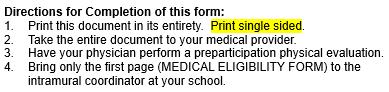
As a result of a change in Virginia law, all Intramural participants for 2025-2026 will be required to submit documentation of physical examination by a physician prior to participation by completing the required LCPS Intramurals Preparticipation Physical Examination Form (See Appendix AF). Participants must print the form, take it to a licensed physician for evaluation and signature, and then hand deliver the paper copy to the school’s intramural coordinator. This preparticipation physical will be valid for a period of 14 months from the date of completion.
Emergency Medical Authorization Card (Online)
Each athlete’s parent or guardian shall complete an Emergency Medical Authorization Card giving permission for treatment by a physician or hospital when the parent(s) are not available. The card will be available at all practices and contests.
Parental Acknowledgment of Participation Rules and Guidelines (Online)
Each parent or guardian shall read the activity rules and regulation form and certify that they understand the school district’s athletic eligibility rules and policies based upon the contents within the Student Activities Handbook, available online or on request in hard copy. The signed document must be submitted to the intramural sports coordinator or coach prior to participating in the activity. Refusal to sign the form will result in student’s ineligibility to participate. See Appendix A for a copy of this form.
Risk of Participation (Online)
All students and parents must realize the risk of serious injury, which may result from participation in various school activities. Loudoun County Public Schools will use the following safeguards to make every effort to eliminate injury.
Insurance (Online)
The school division does not provide student accident or health insurance for participants in LCPS Middle School Intramural Sports Programs.
Field Trip Permission Form (Online)
All parents of participants must complete the permission form allowing the student to travel and participate in the postseason tournament (LCPS Middle School Intramural Championships) if the team the student is associated with qualifies for tournament play.
Emergency Medications
Students are responsible for having their emergency medications, such as asthma inhalers, epi-pens, and diabetic supplies, within their reach at all times. Students must submit a form for authorization for medication administration. It is recommended that students have duplicate medications exclusively for athletic use.
OFFICIAL DATES FOR INTRAMURAL ACTIVITIES
GOVERNANCES
The LCPS Office of Athletics and Extracurricular Activities is responsible for organizing, executing, and providing the governance for each sport and season.
Flag Football (5 on 5)
The rules and procedures for playing 5-on-5 flag football will follow the NFL Flag football model.
1. Flag football will be played during the 1st Quarter of the school year.
2. All teams will play in a pool style tournament to seed the playoff tournament.
3. LCPS Middle School Flag Football 5 on 5 Rules (NFL Flag Rule Book) Online Link: https://drive.google. com/file/d/1GmBKmDyj7Ew7jZPmSD8S3FamnMcs2qMB/view
4. Roster sizes can not exceed 9 students
5. No Coaches
6. Games are 20 minutes in length (running clock) with no halftime. Overtime if required will be limited to a 5 minute overtime period)
Volleyball (6 vs. 6)
The rules and procedures for playing 6 vs 6 indoor volleyball are followed by the National Federation of High Schools (NFHS).
1. Volleyball (6 on 6) will be played during the 2nd and 3rd Quarter of the school year.
2. All teams will play in a pool-style tournament to seed the playoff tournament.
3. LCPS Middle School Volleyball Rules - Online Link: https://docs.google.com/document/d/1887BfXSLsfzLYCePDQUz-gdHJT_YQZn/edit?tab=t.0
4. Three-set matches are two sets to 25 points and a third set to 15 points. Each set must be won by two points. The first team to win two sets is the winner of the match.
5. Roster size can not exceed 9 students
6. No Coaches
7. The net height will be 7’ 4 ⅛”
Basketball (3 on 3)
The rules and procedures for playing 3 on 3 basketball are followed by the National Federation of High Schools (NFHS).
1. Basketball (3 on 3) will be played during the 3rd Quarter of the school year.
2. All teams will play in a pool style tournament to seed the playoff tournament.
3. LCPS Middle School 3 on 3 Basketball Rules - Online Link: https://docs.google.com/document/ d/1edaUoTE_ouGl6Ps10pIOOSymA7NAj_rE/edit?tab=t.0
4. Roster size can not exceed 5 students
5. Games are comprised of 1 period of 10 minutes (running clock). LCPS Championships may implement longer game structure.
6. No coaches
Soccer (7 vs. 7)
The rules and procedures for playing 7 vs 7 soccer are followed by the National Federation of High Schools (NFHS).
1. Soccer (7 on 7) will be played during the 4th Quarter of the school year.
2. All teams will play in a pool style tournament to seed the playoff tournament.
3. LCPS Middle School Soccer 7 on 7 Rules - Online Link: https://docs.google.com/document/ d/1IkM8DS8ZgeinPMHvE6MO_fwDX0VlSBfV/edit?tab=t.0
4. Roster Size can not exceed 11 students
5. No Coaches
6. Games are comprised of 2 (10 minute halves with 3 minute halftime; Overtime if required will be limited to a 5 minute overtime period)
PARTICIPANTS CODE OF CONDUCT
General Conduct of Intramural Sports Participation
A firm and fair policy of enforcement is necessary to uphold the regulations and standards for participating in the intramural program. The community, school administrators, and the supervisory staff feel strongly that high standards of conduct and citizenship are essential in maintaining a sound program of intramural sports. The welfare of the student is our major consideration and transcends any other consideration.
All student athletes shall abide by a code of ethics, which will earn them the honor and respect that participation and competition in the intramural program affords. Any conduct that results in dishonor to the athlete, the team or the school will not be tolerated. Acts of unacceptable conduct, such as, but not limited to theft, vandalism, disrespect, immorality, violations of law, use of racial epithets or discriminatory remarks of any kind tarnish the reputation of everyone associated with the intramural program and will not be tolerated.
Hazing
All student athletes shall understand the definition of hazing, refrain from involvement in hazing, and report any incidents to the school’s intramural coordinator or a school administrator immediately. Hazing means to recklessly or intentionally endanger the health or safety of a student or to inflict bodily injury on a student in connection with or for the purpose of initiation, admission into or affiliation with, or as a condition for continued membership in a club, organization, association, fraternity, sorority or student body regardless of whether the student so endangered or injured participated voluntarily in the relevant activity. Section 18.256 of the Code of Virginia prohibits hazing and imposes Class 1 misdemeanor penalty for anyone found guilty of this violation.
The following are examples of conduct that constitutes hazing. This list is not meant to be exhaustive or to limit the school’s ability to discipline any conduct that it determines to be inappropriate.
1. Subtle hazing includes initiations and the like that manipulate, coerce, or in other respects seek to deny the rights of the individuals. Typically, this involves psychological pressures on an individual to agree to certain action in order to be more fully accepted, whether or not the performance of this action has any bearing on actual membership status.
2. Harassment hazing involves actions that cause mental anguish or physical discomfort. Typically, this involves persistent physical or verbal actions that threaten, irritate, demean, or inflict pain.
3. Hazardous hazing includes action that endangers life, or mental health, potentially causing bodily injury, or subjecting a person to severe mental stress.
The following list is provided for the purpose of clarifying what actions constitute an act of hazing. Hazing includes, but is not limited to, the following:
• Assigning pranks such as stealing, painting objects, and harassing another group or club.
• Modifying one’s appearance, such as partial or total haircuts, shaving of eyebrows, tattoos, and drawing on skin with magic markers.
• Engaging in public stunts and buffoonery.
• Consumption of undesired foods or liquids.
• Apparel that embarrasses or is lewd.
• Playing games where the loser must perform some humiliating action.
• Agreeing to do demeaning tasks for others (servitude).
BASIC INTRAMURAL SPORTS POLICIES
Participation
Students must be enrolled at the middle school that is participating in the LCPS Intramural Sports Program. Each student must be present and in good standing to participate on the day of each tournament. (The school administration determines if a student is in good standing.)
Equipment
Each Participant must provide their mouthpiece, t-shirt, shorts, necessary protective equipment if required by the participant, and athletic shoes. The school will provide the necessary sports equipment, such as balls, cones, nets, goals, etc, to participate in regulation play in accordance with the organizational governance of the sport.
Sportsmanship
Integrity, fairness, and respect are the principles of good sportsmanship. These are lifetime values taught through athletics. You are the spokesperson for your school when you attend athletic events or participate in athletic events. Your actions are viewed by family and friends, opposing fans, the local community, and the media. Your display of good sportsmanship will demonstrate the most positive things about you and your school.
PLAYER
As a member of this team, I agree to follow this code of conduct:
• I will respect the game by playing fairly and to the best of my ability.
• I will lead by example, practice good sportsmanship and demonstrate self-control.
• I will not criticize calls made by officials.
• I will always support and encourage my teammates and prioritize the team’s success over my own.
• I will represent my team with class, handle winning and losing with grace, and ensure that my behavior always reflects positively on my teammates and school.
• I will accept that mistakes are a part of sports and will use them as opportunities to grow.
PARENT/GUARDIAN
As a team parent/guardian, I agree to follow this code of conduct:
• I will encourage my child to play fairly and to the best of their ability.
• I will practice good sportsmanship by demonstrating positive support for all players, fans, and officials.
• I will not criticize calls made by officials and will allow the coach to handle any issues with them.
• I will prioritize the emotional and physical well-being of my child above any personal desire to win.
• I will do my best to make intramural sports fun for my child and help them enjoy the experience.
• I will remember the game is for the players and not for the adults.
Conflicts with Extracurricular Activities
The middle school recognizes that each student should have the opportunity for a broad range of experiences in the area of extracurricular activities and, to this end, will attempt to schedule events in a manner that minimizes conflicts.
A student who attempts to participate in several extracurricular activities will, undoubtedly, be in a position of a conflict of obligations.
Students have the responsibility to reduce the likelihood of frequent conflicts by being cautious about joining too many organizations. If it becomes obvious that a student cannot fulfill the obligation of a school activity, they should withdraw from that activity.
When a conflict arises, the student must contact the intramural coordinator or club sponsor who will attempt to work out a solution. If a solution between the sponsor/coordinator cannot be found, the matter will be referred to the school principal who will make the decision based on the following considerations:
1. The relative importance of each event to the school
2. The importance of each event to the student
3. The relative contribution the student can make
4. When each event was scheduled
5. Input from parents
Once the decision has been made and the student has followed that decision, they will not be penalized in any way by either faculty sponsor.
Designated Non-Competition Dates
A schedule has been presented to all participating schools for the 2026-2027 intramural seasons. Intramural activities may not be scheduled on any LCPS student holiday.
Travel for Intramural Championship Tournaments and Related Events
At no time will students participating in school sponsored activities be transported to or from events in private cars unless prior arrangements have been made. Students may ride home from events with their parents/ guardians. The parent/guardian and student must “sign out” with the Middle School Intramural Site Based Coordinator, in person, when they are leaving. Students may ride with the parents of another student, pending approval by the school administration, along with written documentation of permission by their parent(s).
Open food and drink are not permitted on the bus at any time as per LCPS transportation policy.
The bus driver has the authority to maintain proper discipline while on the bus. Additionally, the bus driver makes the final decision on route of travel, and is responsible for assuring all transportation procedures are followed.
1. Students will remain with their group and under the supervision of the coordinator, sponsor, or chaperone when attending away events.
2. Students that miss the bus will not be allowed to participate in the contest unless there are extenuating circumstances.
3. All regular school bus rules will be followed.
Energy Drinks/Supplements
1. Students are prohibited from consuming energy drinks during participation in intramural competitions.
2. Energy drinks, such as Red Bull, Monster, or RockStar should not be consumed by student-athletes who are attempting to rehydrate.
3. Side effects of energy drinks include: elevated blood pressure and heart rate, shakiness, diarrhea, cramping, and dehydration.
4. The main concern of nutritional supplementation use is safety. Just because anyone can purchase them over-the-counter at places like GNC, and the labels read “All natural” does not mean they are safe.
5. Nutritional supplements are not considered drugs and therefore are not regulated by the Federal Drug Administration (FDA). There has been very little research on the potential side effects and interactions with other medications or supplements.
6. Although research suggests that some supplements may enhance physical performance, such supplementation should only compliment a well-balanced healthy diet, not substitute for one. Buyers beware!
Lightning Guidelines
All students, coordinators, officials, sponsors, and spectators will be asked to seek immediate shelter based on the presence of lightning or thunder. This will be monitored by the coordinators, athletic trainers (if available on site) and/or by School Administration. Play may resume with permission from the coordinator, athletic trainer or school administration when 30 minutes have passed since the last detected lightning strike or sound of thunder.
Weather Guidelines for Extreme Heat or Cold
See Appendices H and I.
Locker Room Regulations
1. Roughhousing and throwing towels or other objects are not allowed in the locker room. Hazing of other players is not allowed.
2. All showers must be turned off. The last person to leave the shower room is expected to check all showers.
3. No one except coordinators and assigned players are allowed in the locker room.
4. No glass containers are permitted in locker rooms.
5. All spiked or cleated shoes must be put on and taken off outside of the locker room in extreme or muddy weather conditions. No metal or hard plastic spikes or cleats are allowed in any other part of the school building.
6. Student athletes are required to secure their own personal items. Incidents of theft should be reported to the Middle School Intramural Site Based Coordinator and the school will conduct an investigation.
ATHLETIC AWARDS POLICY
Medals will be distributed to each participant of the championship-winning team. The school with the championship-winning team will receive a trophy for their display case.
APPENDIX A
LOUDOUN COUNTY PUBLIC SCHOOLS
RULES AND REGULATIONS FOR STUDENTS PARTICIPATING IN STUDENT ACTIVITIES
1. All rules become effective for each activity season on the first day of participation through the last scheduled event for that season.
2. Decisions concerning a student’s eligibility to participate in student activities will be made by the local school administration subject to the governing rules and regulations of the organization overseeing the activity such as the Virginia High School League Rules and Regulations, Virginia Music Educators Association, DECA, Fellowship of Christian Athletes, etc.
3. All students are to abide by all school rules for student conduct; they are to conduct themselves at all times in a manner that brings credit to themselves as students and as representatives of Loudoun County Public Schools.
4. The student and/or parents/guardians MUST REPORT all injuries to the coach, director, sponsor or Athletic Trainer immediately upon occurrence.
5. Students must travel to and from contests with their team/group, unless prior approval is given by the coach, director, sponsor or local school administration.
6. All students are expected to abide by the rules established by Loudoun County Public Schools regarding practice schedules (or related activities) and follow guidance on reporting excused and unexcused absences (from practice or related activities).
7. Any student who is participating in a co-curricular or extra-curricular activity and who becomes involved in a situation, which is detrimental to the team, band, ensemble, cast, club and/or school, can expect disciplinary action, in accordance with school rules for behavior of student, deemed appropriate by the coach, director or sponsor and/or local school administration.
8. In order to participate in an activity or practice on any given day, student must report to school on time and must remain in school the entire day. Exceptions may be made for doctor or dental appointments or reasons excused by the principal. A doctor/dental note is required for this exception.
9. Any student serving suspension or in-school restriction for violation of school rules will be ineligible to participate in a scheduled event on the day or days he/she is serving the punishment, including Saturdays and Sundays.
10. Any student who uses or possesses tobacco, electronic cigarettes, vapes, drugs, alcohol, or alternative nicotine products while participating in interscholastic, extracurricular, co-curricular activities during the season will be ineligible to participate for 30 calendar days in competitions on the first violation. During the 30-days suspension from competitions, the student may attend practices and events (not in uniform at competitions) unless the student is suspended from school or otherwise declared ineligible to participate. A second violation would result in a 45-calendar day removal of the student from all activities or until the end of the season, whichever is longer. If the 45-calendar day suspension extends into the next season, the student may still have the opportunity to tryout and/or participate for the next season and will have to serve the remainder of the 45-calendar day suspension after the conclusion of the tryouts. A third violation would result in a 365-day suspension from all interscholastic, extracurricular, and co-curricular activities. Each incident is cumulative over the student’s career and is not rescinded at the end of each school year.
11. Any student may resign from an activity any time before the final team, ensemble, cast, club or group is selected without sacrificing his or her availability to participate in any other activity during that designated season if the other activity has not made its final selections.
12. When a student resigns or is dismissed from a team, ensemble, cast, club or group after the first performance, game, match or meet, he or she will be ineligible to participate in other specific instructional team, ensemble, cast, club or group activities until the team, ensemble, cast, club or group from which he or she resigned or was dismissed has concluded all regular season activities. Students may attend weight-lifting sessions and conditioning open to the general school population.
13. A student may not participate in more than one sport per season.
Students and parents/guardians must sign and return this form to the coach, director or sponsor and should keep a copy for their records.
I have reviewed the Loudoun County Public School’s Student Activities Handbook online. I have read, understand and agree to abide by the Loudoun County Public School’s rules and regulations for students participating in high school activities. As the student’s parent/guardian, I agree to cooperate with school officials in managing my child’s conduct while participating in all activities.
Student (Please print)
Student (Signature)
Parent/Guardian (Please print)
Parent/Guardian (Signature)
Revised: 3/10/2026
Date Signed
Date Signed
APPENDIX B
LOUDOUN COUNTY PUBLIC SCHOOLS
DISTRIBUTION AND FITTING OF ATHLETIC PROTECTIVE EQUIPMENT
Protective equipment distributed by LCPS should fit the participant and be free from cracks, tears or other defects. To ensure compliance, the following procedures are recommended:
1. All equipment should be inspected prior to distribution.
2. Athletic Directors/Coaches or others who distribute protective equipment should be given specific instructions from the manufacturer/distributor on the safe and proper method of fitting equipment.
3. When equipment is distributed your staff should document in writing the identification number of the piece of equipment issued to the student and that it is in good condition. Proper documentation includes the identification number, the student’s name, date issued and signature of the staff member who distributed the equipment.
4. Students should be notified not to modify any equipment. This warning can be read to the student when the equipment is issued and documented by noting in a log when warnings were read and who read them. NOTE: If a student modifies equipment and an injury occurs, the school can effectively demonstrate that it complied with its responsibilities.
5. Headgears for sports such as football, baseball, softball and lacrosse should be inspected to ensure that National Operating Committee on Standards for Athletic Equipment (NOCSAE) WARNINGS are visible and proper.
6. Ensure that the re-conditioner of headgears and other protective equipment is NOCSAE approved.
7. Follow the manufacturer’s suggested guidelines for proper installation, maintenance, inspections and repair.
8. Equipment should be checked occasionally during its use by the student to be sure it continues to be safe and useable.
9. Equipment may be issued to student athletic team candidates for use in attending specialized sports camps. Please utilize the following Athletic Equipment Loan Acknowledgement form.
Dear Parent or Guardian:
APPENDIX C
ATHLETIC EQUIPMENT
LOAN ACKNOWLEDGEMENT
Your child has expressed a desire to participate in an extracurricular independent sports camp outside the auspices and supervision of Loudoun County Public Schools. Your child has further expressed the need to utilize school-owned protective equipment in order to participate in the independent sports camp. There are inherent risks of injury in sports activities including death, serious neck and spinal injuries (i.e. paralysis or brain damage) and serious injury or impairment to other aspects of the student’s body, general health, or well-being. Loudoun County Public Schools will not be responsible for any liability or injury to the student as a result of the use of school-owned sports protective equipment. Furthermore, school-owned equipment issued to your child for participation is his or her responsibility. The equipment must not be altered or modified and must be returned promptly upon request. Reimbursement from the student will be expected for loss or destruction of equipment beyond ordinary wear and tear. Please sign below acknowledging your understanding of the risks involved with participation and the athletic equipment loan agreement. We hope your child will have a safe, successful and rewarding athletic experience.
Student’s Name & Address: Date of Loan:
Type of Equipment:
Date of Return:
AGREEMENT TO UTILIZE LOUDOUN
I, ______________________________________ (participant’s printed name) understand that there may be serious risks of injury involved in participation in various sports camps and agree to save and keep harmless Loudoun County Public Schools and all of its employees from and against any and all liability arising out of, or injury in any way connected with, the use of school owned sports equipment. I also agree to be responsible for any modification, damage, loss, or destruction to the loaned sports equipment.
Participant’s Signature Date Signed
Parent or Guardian Signature, if Minor Participant Date Signed
APPENDIX D
PLAYER AND PARENT/GUARDIAN CONTRACT
Integrity, fairness, and respect are the principles of good sportsmanship. These are lifetime values taught through athletics. You are the spokesperson for your school when you attend athletic events or participate in athletic events. Your actions are viewed by family and friends, opposing fans, the local community, and the media. Your display of good sportsmanship will demonstrate the most positive things about you and your school.
PLAYER
As a member of this team, I agree to follow this code of conduct:
• I will respect the game by playing fairly and to the best of my ability.
• I will lead by example, practice good sportsmanship and demonstrate self-control.
• I will not criticize calls made by officials and will allow my coach to handle any issues with them.
• I will always support and encourage my teammates and prioritize the team’s success over my own.
• I will represent my team with class, handle winning and losing with grace, and ensure that my behavior always reflects positively on my teammates, coaches and school.
• I will accept that mistakes are a part of sports and will use them as opportunities to grow.
PARENT/GUARDIAN
As a team parent/guardian, I agree to follow this code of conduct:
• I will encourage my child to play fairly and to the best of their ability.
• I will practice good sportsmanship by demonstrating positive support for all players, coaches, fans and officials.
• I will not criticize calls made by officials and will allow the coach to handle any issues with them.
• I will prioritize the emotional and physical well-being of my child above any personal desire to win.
• I will do my best to make high school sports fun for my child and help them enjoy the experience.
• I will remember the game is for the players and not for the adults.
We will always do our best to follow this code of conduct because we know it is meant to help students become better players, teammates and people.
PLAYER SIGNATURE DATE
PARENT/GUARDIAN DATE SIGNATURE
APPENDIX E
National Federation of State High School Associations (NFHS) Sports Medicine Advisory Committee (SMAC)
POSITION STATEMENT ON APPEARANCE AND PERFORMANCE ENHANCING DRUGS AND SUBSTANCES
BACKGROUND
Appearance and performance enhancing drugs and substances, or APEDS, refer to products that can be either naturally or synthetically produced and used with the intention of enhancing appearance or improving athletic performance. This use of APEDS is often referred to as “doping,” and has unfortunately been a part of competitive sport since ancient Roman times. In 1999, the World Anti-Doping Agency (WADA) was formed, with the mission of creating a doping-free sporting environment. In the United States, the U.S. Anti-Doping Agency (USADA) is the national anti-doping organization. WADA publishes the World Anti-Doping Code, which is followed by most sporting organizations, including the International Olympic Committee.
WHAT ARE APEDS?
The spectrum of APEDS is very broad, encompassing many different substances and methods of improving physical performance. There are multiple substances and drugs that fall under the heading of APEDS, from caffeine, found in numerous beverages, to illegal and dangerous anabolic steroids. All APEDS have the potential for dangerous complications and side effects, if used improperly. However, to more reasonably discuss use and abuse, we can divide them into two broad categories:
1. Legal, not banned for competition, and may have some positive effects upon athletic performance:
a. Caffeine (upper limit set by NCAA; WADA currently monitors caffeine levels, but no ban for use)
b. Creatine
c. Protein powders and amino acids
An interesting distinction concerning APEDS is that except for prescription medications, none of the other products are regulated or routinely tested by the U.S. Food and Drug Administration (FDA). A dangerous side of this lack of regulation is the potential for the presence of contaminants in dietary supplements. Some studies have shown that 8-20% of tested protein supplements are contaminated with significant amounts of heavy metals, such as lead and mercury. In addition, 25% were found to be contaminated with anabolic androgenic steroids, and 11% were found to be contaminated with stimulants. Such “contamination” may be no accident as the manufacturer obviously benefits from a product that is effective, despite significant safety concerns for the consumer.
Caffeine has been shown to improve performance in endurance events. Its use is restricted, but not banned, by the NCAA. Caffeine can also have multiple side effects, some potentially dangerous, including headaches, increased blood pressure and increased heart rate. In 2011, almost 1,500 12- to 17-year-old children went to the emergency department due to caffeine toxicity. Caffeine is treated differently than other supplements by the FDA. While the FDA regulates the amount of caffeine allowed in foods and soft drinks, it does not regulate the amount allowed in energy drinks and supplements. This explains why the ingestion of multiple energy drinks can lead to dangerous levels of caffeine.
Creatine is a naturally occurring substance stored in fast-twitch muscle fibers, and serves as an energy source for muscle contraction. It works to increase strength, peak force and peak power when performing multiple sets of maximal-effort muscle contractions. Therefore, it is likely more effective for off-season weight training than for any specific sport or event. Creatine use is relatively safe, but there are risks of dehydration, muscle cramps and blood clots associated with its use.
Amino acids and protein powders are very popular and marketed as “muscle building” products. While there may be some benefits to the use of these products, amino acids and proteins are present in a variety of meats and other foods for much less cost.
2. Legal only when prescribed by a physician, illegal to possess without prescription, can have a positive effect upon athletic performance, banned for competition by NCAA, USADA and WADA.
a. Anabolic Androgenic Steroids (AAS)
b. AAS prohormones
c. Human Growth Hormone (hGH)
d. Stimulants (examples: Ritalin, Adderal)
The most commonly known category of APEDS is anabolic-androgenic steroids (AAS). The anabolic effect is what causes an increase in muscle tissue, whereas the androgenic effect leads to masculinization, the secondary sex characteristics that males experience during puberty. These steroids are very different from corticosteroids, which are used to treat inflammation in a joint, such as with a cortisone injection, or to treat illnesses like asthma. A prohormone is a precursor to the active hormone, and becomes converted to its active form once taken into the body. Prohormones are also included in the anabolic-androgenic category. AAS and AAS prohormones work by enhancing protein synthesis and decreasing the breakdown of muscle. The net result is an increase in muscle size, muscle strength and lean muscle mass along with a decrease in body fat.
Muscle-building steroids do work, but their use comes at a high cost. First, it is illegal to possess and use these drugs without a prescription. From a side effect standpoint, AAS use during adolescence can cause premature closure of the bones’ growth plates, leading to decreased final adult height. Acne, male pattern baldness, hypogonadism (shrinking of the testicles), gynecomastia (male breast overdevelopment) and violent behavior changes are all common side effects. There are also life-threatening side effects including cardiovascular disease, arrhythmias, blood clots, stroke, cancer and increased risk of suicide.
For more than a decade, the use of human growth hormone (hGH) by professional athletes has been in the spotlight. hGH promotes growth throughout childhood and adolescence, and is also involved in the regulation of multiple other hormones, such as insulin. Studies have shown that the use of hGH can decrease fat mass and increase lean body mass. However, there is limited evidence that its use improves athletic performance. Because it is normally a very important hormone in the regulation of other hormones and multiple body processes, the use of hGH can lead to multiple side effects, including altered fluid balance in the body, cardiovascular disease, diabetes and cancer.
Stimulants are a category of APEDS that have been used for centuries as a performance enhancer. We have already discussed caffeine, the most commonly used stimulant. Stimulants may enhance performance by improving reaction time and increasing alertness, decreasing fatigue, and improving concentration and memory. Side effects from the use of stimulants range from relatively mild effects to the dangerous, including inability to sleep, anxiety, tremors, panic attacks, tachycardia (a rapid heart rate > 100), hypertension, psychosis, heart attacks and stroke. Some stimulants can also predispose an athlete to heat illness and death.
Ephedrine was banned by the FDA in 2004 for use as a diet aid because of the increased risk of stroke and heart attack.
WHO IS USING APEDS?
The use of APEDS in high school students ranges from 3% admitting the use of AAS, to almost 40% reporting a history of protein supplement use. Eighteen percent of APEDS users in high school do not participate in sports, so it is considered that this group uses APEDS for appearance enhancement (weight loss or gain, body building). Girls report a higher use of nonprescription diet pills (considered stimulants) than boys, and a lower use of substances associated with gains in muscle mass and strength, such as AAS, prohormones, and creatine.
WHY IS THE USE OF APEDS AN ISSUE?
The use of illegal or banned APEDS by high school students is unfair, unethical and is considered a form of cheating. In addition, many of the products used as APEDS are not tested or regulated, and have been found to contain significant contamination with heavy metals, AAS and/or stimulants. Their use undermines the values of fair play, and can be a threat to the overall health and well-being of high school students.
The use of caffeine, creatine and amino acids/protein powders should not be taken lightly, but these substances are not dangerous if the athlete has first discussed their proper use with a knowledgeable healthcare provider and they are used as directed. As discussed earlier, the true purity of the product and potential for contamination must also be a consideration when deciding to use this category of APEDS.
PREVENTING STUDENTS FROM USING ILLEGAL OR BANNED APEDS
Education about APEDS and their use is the hallmark to any prevention program. Despite advances in APEDS detection, random testing does not appear to be an effective deterrent to the use of APEDS. The following are key educational points to prevent the use of APEDS:
• School personnel, coaches, parents and other family members can reduce APEDS abuse by educating students and speaking out against such use.
• Talk with your students about their concerns and frustrations related to how they look or how they are performing in their sport. Help them establish and reinforce healthy and realistic expectations of their bodies and athletic performance.
• Have your athletes focus on proper nutrition and hydration. If possible, have your athletes work with a registered dietician to develop a plan for appropriate weight gain and/or weight loss.
• Help your athletes understand that using illegal and banned APEDS is unfair, unethical and likely dangerous.
• Emphasize to your students that they should not trust internet marketing messages about quick fixes and enticing gains in athletic appearance or performance. Explain that the photos in these sites and in muscle magazines depict unrealistic pictures of male and female bodies.
• Discourage your athletes’ access to environments where APEDS use might occur and to people who are involved with APEDS.
• Consider initiating a formal APEDS education program to educate your students and athletes and to deter APEDS use, such as the ATLAS and ATHENA programs.
References/Resources:
LaBotz M, Griesemer BA, AAP Council on Sports Medicine and Fitness. Use of Performance-Enhancing Substances. Pediatrics. 2016;138(1): e20161300
American College of Sports Medicine. ACSM’s Position Stand, “The Use of Anabolic-Androgenic Steroids in Sports.” 1987. http:// www.acsm-msse.org
Anabolic Steroid Control Acts of 1990 (Pub L No. 101-647) and 2004 (Pub L 108-358).
Designer Anabolic Steroid Control Act of 2014 (Pub L No.113-260)
Maughan RJ. Quality assurance issues in the use of dietary supplements, with special reference to protein supplements. J Nutr. 2013;143(11): 1843S-1847S
Eisengerg ME, Wall M, Neumark-Sztainer D. Muscle-enhancing behaviors among adolescent girls and boys. Pediatrics. 2012;130(6):1019-1026
National Federation of State High School Associations. http://www.nfhs.org.
Taylor Hooton Foundation, http://www.taylorhooton.org.
ATLAS and ATHENA Health Promotion and Substance Abuse Prevention. Available at: http://www.ohsu.edu/xd/education/schools/ school-of-medicine/departments/clinical-departments/medicine/divisions/hpsm/research/atlas.cfm
The National Center for Drug Free Sport, Inc. http://www.drugfreesport.com.
United States Anti-Doping Agency. 2020, http://www.usada.org/ Revised and Approved May 2020
April 2017
DISCLAIMER – NFHS Position Statements and Guidelines
The NFHS regularly distributes position statements and guidelines to promote public awareness of certain health and safetyrelated issues. Such information is neither exhaustive nor necessarily applicable to all circumstances or individuals, and is no substitute for consultation with appropriate health-care professionals. Statutes, codes or environmental conditions may be relevant. NFHS position statements or guidelines should be considered in conjunction with other pertinent materials when taking action or planning care. The NFHS reserves the right to rescind or modify any such document at any time.
APPENDIX F
National Federation of State High School Associations (NFHS) Sports Medicine Advisory Committee (SMAC)
POSITION STATEMENT AND RECOMMENDATIONS FOR THE USE OF ENERGY DRINKS BY YOUNG ATHLETES
Background: Energy drinks are popular among adolescents and young adults and are the second most popular dietary supplement after multivitamins. The distinction between energy drinks and sports drinks is important. Energy drinks are drinks that contain stimulants and claim to “provide energy” while sports drinks contain electrolytes and sugar meant to rehydrate athletes after a workout. Energy drinks are marketed as a quick and easy way to maximize physical performance and mental alertness.
In addition to the regular-sized energy drinks, energy shots are a concentrated form of the same formulation containing caffeine, sugar and other substances. A notable study found that the number of people who visited an Emergency Room with energy drink-related complications doubled between 2007 and 2011, and that 10 percent required hospitalization. Despite efforts to educate consumers, a survey done in 2018 found that 40% of American teens had consumed an energy drink within the previous three months.
Energy drinks can contain up to 500 mg of caffeine, which is five times as much as a typical cup of coffee and 10 times as much as found in a 12-ounce soda. The effects of this can lead to abnormal heart rhythms and even death. After a period of increased alertness, symptoms of caffeine withdrawal predominate. The drinks also contain large quantities of sugar, which causes a spike in blood sugar levels that may be followed by a “sugar crash” with fatigue, shakiness and anxiety. The marketing of these beverages is targeted toward adolescents and young adults. Despite the decrease in the consumption of soft drinks, the sales of energy drinks continue to rise, increasing 47% from 2016 to 2021.
The NFHS SMAC strongly recommends that:
1. Water and appropriate sports drinks should be used for rehydration as outlined in the NFHS “Position Statement and Recommendations for Maintaining Hydration to Optimize Performance and Minimize the Risk for Exertional Heat Illness.”
2. Energy drinks SHOULD NOT be used for hydration prior to, during or after physical activity.
3. Information about the absence of benefit and the presence of potential risk associated with energy drinks should be widely shared among all individuals who interact with young athletes.
4. Energy drinks ARE NOT sports drinks and should not be used by athletes in training or competition.
5. Athletes taking over-the-counter or prescription medications are at increased risk for significant, potentially fatal complications, so they should not consume energy drinks without the approval of their physician.
WARNING: Energy drinks are not classified as dietary supplements or beverages. At this time, all of these drinks are completely unregulated. Therefore, the inclusion of different ingredients, their concentrations and their purity is unregulated. There is a significant risk for negative side effects (see below), potentially harmful interactions with prescription medications [particularly stimulant medications used to treat Attention Deficit Disorder (ADD) and Attention Deficit Hyperactivity Disorder (ADHD)], or positive drug tests due to contaminants containing banned substances.
Frequently Asked Questions
What is an energy drink?
An energy drink is a beverage marketed as a quick and easy means of relieving fatigue and improving performance. All energy drinks contain carbohydrates (sugar) and caffeine as their main ingredients. The carbohydrates provide nutrient energy while the caffeine acts as a stimulant to the central nervous system. These drinks may include a variety of other ingredients such as taurine (an amino acid), B vitamins and herbal extracts.
What are the differences between an energy drink and a sports drink?
Sports drinks are marketed to replenish electrolytes such as calcium, magnesium, sodium and potassium. These electrolytes are typically eliminated from the body during the process of sweating, leaving athletes dehydrated and susceptible to exertional cramping and heat illness. Sports drinks replace these electrolytes along with water, which rehydrates, and sugars, which are added to make the drinks more palatable. Most sports drinks contain a 6 to 8% carbohydrate solution and a mixture of electrolytes. The carbohydrate and electrolyte concentrations are formulated to allow maximal absorption of the fluid by the gastrointestinal tract. Energy drinks often contain a higher concentration of carbohydrates (usually 8 to 11%) and thus, a greater number of calories than sports drinks. They also contain high amounts of caffeine and, in some cases, other nutritional supplements. Additional ingredients with caffeine-like effects may be present, yet typically their caffeine content is not noted. Energy drinks are not appropriate for hydrating or re-hydrating athletes during physical activity and should not be used in such circumstances.
What ingredients are found in energy drinks?
• Sugars/Carbohydrates- Energy drinks are typically high in sugar. For example, a Monster Energy Drink has 54 grams of sugar, which is equal to 13.5 teaspoons. Other popular brands contain up to 21 teaspoons of sugar. The consequences of such high levels of sugar include weight gain and obesity, type 2 diabetes, dental decay and erosion, aggression and anxiety. The high carbohydrate concentration can also delay gastric emptying and impede absorption of fluid from the gastrointestinal tract.
• Caffeine- Nearly all energy drinks contain some quantity of caffeine. The caffeine concentration may range from the equivalent to an 8-ounce cup of coffee (90 mg) to more than three times that amount. The American Academy of Pediatrics (AAP) offers a guideline of no more than 100 mg of caffeine per day in adolescents; however, many of these drinks far surpass that. For example, a 16-ounce can of Monster Energy contains 160 mg of caffeine, while the Rockstar Energy Drink Original contains 160 mg of caffeine per 16-ounce can, and the Rockstar Punched energy drink contains 240 mg of caffeine per 16-ounce can.
• Herbs- Many energy drinks include herbal forms of stimulants such as guarana, yohimbe, bitter orange, kola nuts, green tea extract and Yerba mate leaves, in addition to synthetic caffeine. The “performanceenhancing” effects, safety and health benefits of herbs have not been established by scientific studies and these claims are unfounded.
• Vitamins- The top five most common ingredients in energy drinks includes the B vitamins, which play a role in converting sugars, fats and protein into energy. Athletes with balanced diets should be assured that they are at low risk for vitamin deficiency and typically do not need supplementation. Furthermore, there is no evidence to suggest that vitamin supplementation improves athletic performance. However, drinks can contain up to 8,000% of the recommended daily value of the B vitamins and unfortunately, most of it is excreted in the urine.
• Proteins and amino acids- Proteins and amino acids (the building blocks of protein), such as taurine, were added to the energy drinks as a way to boost sales. Carbohydrates are utilized as the primary fuel source and only a small amount of protein is used as fuel for exercise. To date, there is no definitive evidence that amino acid or protein supplementation enhances athletic performance, especially in young, healthy athletes.
• Other ingredients- With the hundreds of energy drink brands that are available, the potential ingredients which they may contain are virtually unlimited. Possible additions include pyruvate, creatine, carnitine, medium-chain triglycerides and even oxygen.
• An emerging practice among young people is to mix energy drinks with alcoholic beverages. This is specifically concerning for the potential abuse of alcohol and the resultant higher amounts of alcohol consumption. The stimulant effect of the caffeine in energy drinks masks the depressant effects of alcohol offering a false sense of security, keeping drinkers awake so they can consume even more alcohol, and they end up more impaired than they realize. This leads to elevated rates of binge drinking, impaired driving, risky sexual behavior, and an increased risk of alcohol dependence. In the short term, consumption of the combination places people at risk for alcohol poisoning, and drinkers may experience abnormal heart rhythms, hallucinations, seizures and death.
What are the possible negative effects of using energy drinks?
• Central nervous system- Caffeine often has the effect of making a person feel “energized.” Studies have shown some performance-enhancing benefits from caffeine at doses of 6 mg/kg of body weight. However, these and higher doses of caffeine may produce light headedness, tremors, impaired sleep, suppression of appetite, and difficulty with fine motor control. These effects become more pronounced at higher doses.
• Gastrointestinal system- The high concentrations of carbohydrates often found in energy drinks may delay gastric emptying, resulting in a feeling of being bloated. Abdominal cramping may also occur. Both carbohydrates and caffeine in the high concentrations found in most energy drinks may cause diarrhea.
• Dehydration- Energy drinks should not be used for prehydration or rehydration. The high carbohydrate concentration can delay gastric emptying and slow absorption from the gastrointestinal tract, and may cause diarrhea. Caffeine can act as a diuretic and, therefore, may result in increased fluid loss.
• Positive drug tests- Like all nutritional supplements, there is little or no regulatory oversight of energy drinks. The purity of the products cannot be ensured, and it is possible that they may contain substances banned by some sports organizations. Furthermore, the structure of some of the ingredients found in energy drinks are similar to banned drugs and can lead to a positive drug test result. Energy drinks can cause positive results for THC (the active ingredient in marijuana), barbiturates and cocaine.
• Consumption of energy drinks by adolescents and young adults has been linked to heart arrhythmia (irregular and/or rapid heart rate), other cardiovascular events such as high blood pressure and heart attacks, and liver problems.
Summary of Recommendations from Various Organizations:
• Sales of certain energy drinks have been banned in Denmark, Turkey, Uruguay, Germany and Austria. Some states in the United States have introduced legislation to restrict sales of energy drinks to adolescents and children. Recently, health-care providers have voiced increasing concerns about the consumption of energy drinks in association with alcohol because of the interaction of the stimulant effects of energy drinks and
the depressant effects of alcohol.
• American Academy of Pediatrics (AAP): Has published a position statement condemning the use of energy drinks by youths. Children and adolescents should never consume energy drinks.
• American Medical Association (AMA): Ban marketing of energy drinks to children and teens.
• American College of Sports Medicine (ACSM): Marketing and sales to individuals younger than 18-years old should not occur. Energy drink education should be a priority in school-based curricula related to nutrition, health, and wellness.
• American Beverage Association (ABA): Energy drinks should be marketed as separate from sports drinks. Energy drinks are not to be sold nor marketed in schools.
References:
American Academy of Pediatrics. Clinical Report. Sports drinks and energy drinks for children and adolescents: Are They Appropriate? Pediatrics 2011; 6:1182-1189.
Higgins JP, Babu K, Deuster PA, Shearer J. Energy Drinks: A Contemporary Issues Paper. Current Sports Medicine Reports. 2018; Feb;17(2):65-72.
Rodriguez NR, DiMarco NM, Langley S. Nutrition and Athletic Performance. Position Statement. Medicine & Science in Sports & Exercise 2009; 41(3): 709-731.
Azagba S, Langille D, Asbridge M. An emerging adolescent health risk: Caffeinated energy drink consumption patterns among high school students. Preventive Medicine, 2014; 62: 54.
Goldfarb M, Tellier C, Thanassoulis G. Review of published cases of adverse cardiovascular events after ingestion of energy drinks. Am J Cardiol 2014; 113(1):168-72.
Marczinski CA, Fillmore MT. Energy drinks mixed with alcohol: what are the risks?. Nutr Rev. 2014;72 Suppl 1(01):98-107. doi:10.1111/nure.12127
Marczinski CA, Fillmore MT, Stamates AL, Maloney SF. Desire to Drink Alcohol is Enhanced with High Caffeine Energy Drink Mixers. Alcohol Clin Exp Res. 2016 Sep;40(9):1982-90. doi: 10.1111/acer.13152. Epub 2016 Jul 15. PMID: 27419377; PMCID: PMC5390898.
Seifert SM, Schaechter JL, Hershorin ER, Lipshultz EL. Health effects of energy drinks on children, adolescents, and young adults. Pediatrics 2011; 127:511-28.
Terry-McElrath YM, OʼMalley PM, Johnston LD. Energy Drinks, Soft Drinks, and Substance Use Among United States Secondary School Students. Journal of Addiction Medicine, 2014; 8 (1): 6-13.
Visram S, Crossley SJ, Cheetham M, Lake A. Children and young people’s perceptions of energy drinks: A qualitative study. PLoS One. 2017;12(11):e0188668. Published 2017 Nov 30. doi:10.1371/journal.pone.0188668
October 2024
January 2021
April 2018
October 2014
October 2011
October 2008
April 2002
DISCLAIMER – NFHS Position Statements and Guidelines
The NFHS regularly distributes position statements and guidelines to promote public awareness of certain health and safetyrelated issues. Such information is neither exhaustive nor necessarily applicable to all circumstances or individuals and is no substitute for consultation with appropriate health-care professionals. Statutes, codes or environmental conditions may be relevant. NFHS position statements or guidelines should be considered in conjunction with other pertinent materials when taking action or planning care. The NFHS reserves the right to rescind or modify any such document at any time.
APPENDIX G Concussions in High School Sports— LCPS Guidelines for Parents, Athletes, &
Loudoun County Public Schools (LCPS)
Division of Athletics
Staff
Concussions in High School Sports—LCPS Guidelines for Parents, Athletes, & Staff
IMPORTANT INFORMATION—READ CAREFULLY
Sections 22 1-271 5 and 22 1-271 6 of the Code of Virginia directs Virginia school divisions to develop and distribute guidelines for policies dealing with suspected concussions in student-athletes. LCPS obtains written acknowledgment (from students and parents/guardians) of the information provided, regarding LCPS’s managing of, and identification of, suspected concussions in student-athletes. This Guideline details the “Return to Sports” and the “Student Support Plan” recommendations for safe return to school-day activities.
1 Concussion Facts:
● A concussion is a traumatic brain injury caused by a bump, blow, or jolt to the head, face, neck, or body which results in a rapid, short-lived impairment of neurologic function A concussion occurs when the brain is violently rocked back and forth or twisted inside the skull A student-athlete does not have to lose consciousness to suffer a concussion.
● Concussions can occur in any sport, not just contact sports All student-athletes are at risk A student-athlete does not have to sustain a blow to the head to suffer a concussion
● A concussion may have multiple signs and/or symptoms that may appear immediately after the injury or develop or evolve over several minutes, hours, or days.
● Concussion signs and/or symptoms may last a few days, several months, or longer
● A concussion can affect a student-athlete from a medical and educational perspective, altering their ability to do schoolwork and other activities. Student-athletes who have concussive symptoms and return to school without a plan for supporting learning, may be at risk for delayed recovery and ongoing setbacks with academic performance.
● A student-athlete may return to light physical and cognitive work while still having symptoms, if supervised by an approved LCPS healthcare professional.
● Concussions are treatable injuries. Most student-athletes who experience a concussion can recover completely if they do not return to play prematurely. Premature return to play may delay and/or impede recovery. After a concussion, there is a period in which the brain is particularly vulnerable to further injury. If a student-athlete sustains a second concussion during this period, the risk of prolonged symptoms increases significantly, and the consequences of a second concussive impact may be severe and potentially catastrophic (i.e., “Second Impact Syndrome”).
2 Concussion Signs and Symptoms May Include:
• Difficulty remembering
• Difficulty concentrating
• Confusion
• Feeling foggy
• Headache
• Blurry Vision
• Nausea/Vomiting
• Dizziness
• Sensitivity to light/sound
• Balance/Coordination problems
• Irritability
• Sadness
• Moodiness
• Crying more
• Anxiety/Worry
• Sleeping more
• Sleeping less
• Drowsiness
3. Concussion Event Action Plan (if a student-athlete suffers a suspected concussion): The student-athlete shall be immediately removed from play, be it a game or practice, and may not return to play or practice on that same day. The parent/guardian and school nurse will be notified of the suspected concussion incident. The Athletic Trainer may contact other members of the Concussion Management Team (CMT), based on each individual case. This may include a school administrator, counselor, psychologist, nurse, teacher, parent/guardian, or appropriate licensed health care provider Continuing to participate in physical activity after a suspected concussion that same day may lead to worsening concussion symptoms, increasing risk of further injury, and even a risk of death WHEN IN DOUBT, SIT THEM OUT.
● The student-athlete or parent/guardian must contact the school athletic trainer as soon as possible, and, if deemed necessary, have a follow-up evaluation performed by an approved healthcare professional. If signs and symptoms increase in severity and/or number, and the condition continues to deteriorate, then the student-athlete should be transported to the nearest hospital.
● The student-athlete must be evaluated by an approved healthcare professional and be cleared before returning to play or practice: https://concussion gmu edu The healthcare professional’s written diagnosis indicating the student-athlete’s status shall be provided to the Athletic Trainer for further clearance Approved healthcare professionals include MD-Medical Doctor, DO-Doctor of Osteopathic Medicine, PA-Physician Assistant, CNP-Certified Nurse Practitioner, ATC-Certified Athletic Trainer, and/or Neuropsychologist. A multi-disciplinary team approach will be taken during the concussion recovery, utilizing all members of the CMT to ensure efficient and timely communication, care, and monitoring of the student-athlete
● The CMT will provide support recommendations to teachers/staff in the form of a Student Support Plan as the student progresses to recovery If the student-athlete is three (3) to four (4) weeks’ post-injury without significant improvement, a referral to a concussion specialist may be recommended and a 504 plan should be considered
4. Post-Concussion Assessment and Neurocognitive Testing:
● To safeguard our student-athletes, LCPS offers the Immediate Post-Concussion Assessment and Cognitive Testing (ImPACT) program as a tool to assist in the evaluation and management of concussions ImPACT is widely used and the most scientifically validated computerized concussion evaluation tool Given the inherent difficulties in concussion management, it is important to manage concussions on an individualized basis and to perform baseline testing and/or post-injury testing. This type of concussion assessment can help to objectively evaluate the concussed student-athletes’ post-injury condition and track recovery towards appropriate return-to-learn and safe return-to-play, thus preventing the cumulative effects of a concussion. The decision and timing for proper post-injury testing will be determined by the supervising athletic trainer. A “baseline” ImPACT evaluation shall be conducted by the LCPS athletic trainer with assistance from the coaches trained to administer baseline testing.
● To more accurately assess the extent of the injury and determine the appropriate course of action, the athletic trainer may use tools such as a sideline evaluation (e g , SACVNI, SCAT5, Modified BESS), vestibular-ocular motor screening (VOMS), a thorough and relevant history, and input from necessary stakeholders
5 What Must Be Done by Student-Athletes, Parents, and Coaches?
● Concussion Education/Prevention: At the beginning of the athletic season, coaches, student-athletes, parents/guardians, teachers, and administrators will be educated on recognition, prevention, and management of suspected concussions and their possible short- and long-term effects (including acute mental health changes). Please refer to the “LCPS Concussion Documents for Coaches, Parents/Guardians, and Teachers.”
● All Student-Athletes, Parents/Guardians, Coaches, Teachers, and Administrators must be aware of the “Signs and Symptoms” of a concussion as listed above
● Direct student-athletes to immediately inform the athletic trainer and/or coach if they experience such sign and/or symptoms.
● Instruct student-athletes to tell the athletic trainer and/or coach if they suspect that a teammate has a concussion.
● Ask teachers to monitor any decrease in grades or changes in behavior that could indicate a concussion.
● Report concussions to the athletic trainer and coaches to help monitor injured student-athletes as they move to the next sports season
7. Supporting Safe “Return to School-Day Activities” for Student-Athletes:
● The student-athlete’s return to school activities should be supervised by the entire LCPS CMT team, which may include school administrators, counselors, teachers, school nurses, and athletic trainers.
● The student-athlete may receive informal academic supports recommended by the CMT in the Student Support Plan The student-athlete's teachers are encouraged to make adjustments in the classroom as needed to reduce or prevent symptoms, while engaging with the Medical Accommodations and/or EHS team prior to making these adjustments
8. Supporting Safe “Return to Sports Activities” for Student-Athletes:
No member of an LCPS athletic team shall return to participate in an athletic event or training after the student experiences a concussion, unless all the following conditions have been met:
● The student-athlete attends all classes, maintains a full academic load, and requires no instructional modifications, except for extra time allotted to complete previous assignments (missed because of suspected/confirmed concussive incident)
● The student-athlete no longer exhibits signs, symptoms, or behaviors consistent with a concussion, (at rest or with exertion), that were not present before the concussion
● The student-athlete is asymptomatic during or following periods of supervised exercise that is gradually intensifying
● The student-athlete receives a written medical release from an appropriately licensed healthcare professional
Affirm your agreement by signing below and returning the signed form to your student’s school. Keep a copy for your records.
I have received and read the Loudoun County Public Schools Student-Athlete Concussion Guidelines and grant my consent and permission for the Student-Athlete to participate in the Post-Concussion Assessment and Cognitive Testing (ImPACT) program, including Baseline and Post-Concussion Cognitive Testing. Furthermore, I acknowledge, understand, and certify by my signature below that I agree to the protocols of the LCPS concussion program for the student-athlete’s best welfare and safe participation in sports for Loudoun County Public Schools.
Student-Athlete Name (print):
Student-Athlete Signature: Date:
Parent/Guardian Name (print):
Parent/Guardian Signature: Date:
APPENDIX H
LCPS GUIDELINES
FOR EXTRACURRICULAR ACTIVITY DURING EXTREME COLD WEATHER
RECOMMENDATIONS:
• Have a communication plan between administration and health care team before situations arise.
• Use on-site weather tracking devices for most accurate measurement; otherwise, use cellular applications such as Perry Weather, Weather Channel or WeatherBug.
• When there is precipitation, advance modifications to the next “LEVEL”.
• For wind chill temperatures under 32°F, officials, administration and medical staff can discuss game modifications (shortened time, rewarming, etc.).
• Remove wet clothing and replace it with dry clothing when possible.
• Encourage proper hydration and nutrition.
• Be alert for signs and symptoms of cold injury.
• When rewarming, gradually apply heat to the affected area with warm (not hot) water or ambient temperature. For extreme cold injuries, do not rub affected areas.
Note: These recommendations reflect best practice for the Loudoun County School District. Visiting school districts are encouraged to consider them as guiding principles.
APPENDIX I
GUIDELINES FOR EXTRACURRICULAR ACTIVITY DURING EXTREME HOT AND HUMID WEATHER
(Sources: NATA, VHSL, and Korey Stringer Institute)
RECOMMENDATIONS:
• Replace fluids at a rate of 24 fluid ounces for every pound of body weight lost following exercise.
• Encourage athletes to wear light-colored, loose-fitting clothing during activity in hot weather.
• Encourage the use of sunscreen on all exposed skin during hot, sunny conditions.
• Ensure an adequate supply of fluids is readily available to athletes at all times during activity in hot environments.
ATHLETES AT HIGHER RISK FOR HEAT ILLNESS:
The following athletes should be closely monitored or placed on a modified participation plan:
• Student-athletes who are not heat-acclimatized or are poorly conditioned.
• Student-athletes who are dehydrated, recently ill (fever or stomach illness), or have a history of heat illness.
• Student-athletes taking certain medications: diuretics, antihistamines, beta blockers, or anticholinergic medications.
• Student-athletes who are overweight.
SUPPLEMENT & CAFFEINE WARNING
The following products may cause an increase in dehydration and heat related illness and/or injury.
• Student-athletes are strongly discouraged from using caffeine, energy drinks, ergogenic aids, or dietary supplements (including creatine or ephedra).
WEATHER MONITORING
• When a Kestrel Heat Stress Device is not available, Perry Weather or WeatherBug app should be used as the primary source for WBGT readings.
APPENDIX J
LCPS ATHLETICS ELECTRICAL MODALITIES
PROTOCOL AND PARENTAL CONSENT FORM
The Loudoun County Public Schools (LCPS) Athletic Trainers are licensed and authorized to possess and use the following electrical modalities: Transcutaneous Electrical Nerve Stimulation (TENS), Electrical Stimulation (E-Stim), Therapeutic Ultrasound (US), and Compression Unit, for treatment and rehabilitation of sport-related musculoskeletal injuries for Loudoun County Public Schools’ (LCPS) student-athletes.
When not in use, the electrical modalities shall be stored in a locked area to prevent unsupervised tampering. All modalities shall be in accordance with current manufacturer guidelines. The specific electrical modality protocols available are as follows:
TENS — This modality will be used in an effort to decrease pain and muscle spasm of musculoskeletal injuries.
Treatment Length: Not to exceed twenty (20) minutes per session or three (3) sessions per day.
Treatment Duration: Not to exceed two (2) weeks without referral from physician.
Contraindications: Possible nerve damage or loss of sensation.
• Over areas of skin irritation or infection.
• Patients with extreme or severe pain.
• Any area of the face or head above the cervical spine.
• Patients with known heart conditions.
• Evidence of worsening conditions.
Electrical Stimulation — This modality will be used in an effort to decrease pain and muscle spasm of musculoskeletal injuries.
Treatment Length: Not to exceed twenty (20) minutes per session or three (3) sessions per day.
Treatment Duration: Not to exceed two (2) weeks without referral from physician.
Contraindications: Possible nerve damage or loss of sensation.
• Over areas of skin irritation or infection.
• Patients with extreme or severe pain.
• Any area of the face or head above the cervical spine.
• Patients with known heart conditions.
• Evidence of worsening conditions.
Therapeutic Ultrasound — This modality will be used to produce an increase in tissue temperature, which may help to stimulate tissue healing, increase tissue elasticity, decrease tissue adhesions, and reduce muscle spasm.
Parameters: One (1) megahertz (MHz) frequency to be used when treating tissue depths of three (3) to five (5cm) centimeters. 3 MHz frequency to be used when treating tissue depths of 1-2 centimeters. Intensity not to exceed 2.5 watts per centimeter squared. Must be used in conjunction with a coupling gel.
Treatment Length: Not to exceed 10 minutes per session or 2 sessions per day
Treatment Duration: Not to exceed 2 weeks without referral from physician
Contraindications: Possible nerve damage or loss of sensation
• Over areas of skin irritation or infection.
• Patients with extreme or severe pain.
• Any area of the face or head above the cervical spine.
• Patients with known heart conditions.
• Patients that display signs of acute inflammation.
• Directly over the spine.
• Over open epiphyseal areas.
• Over the site of a possible fracture.
• Over areas of impaired circulation.
• Over ischemic areas.
• Near the heart.
• Evidence of worsening conditions.
• On patients that display any signs of cancer.
Compression Unit — This modality will be used to produce a movement of swelling from the interstitial space of the injured extremity by increasing external pressure with the use of an inflatable boot or sleeve. This modality helps the movement of fluids to return to the venous and lymphatic channels in order to reduce swelling and encourage healing. Some compression units are designed to create a simultaneous cold and compression treatment. This will have an added benefit in reducing acute swelling and inflammation, muscle spasm and pain.
Parameters:
Upper Extremity: do not exceed the diastolic blood pressure of 40-60 millimeters of mercury (mm Hg).
Lower Extremity: do not exceed the diastolic blood pressure of 40-70mm Hg
Cryocompression unit temperature range: 32-60 degrees Fahrenheit
Treatment Length: Not to exceed 30 minutes per session or 4 sessions per day
Treatment Duration: Not to exceed 2 weeks without referral from physician
Contraindications:
Acute pulmonary edema
• Congestive heart failure.
• Possible nerve damage or loss of sensation.
• Over areas of skin irritation or infection.
• Any area of the face or head above the cervical spine.
• Over the site of a possible fracture.
• Over areas of impaired circulation or peripheral vascular disease.
• Raynaud’s disease.
• Over ischemic areas.
• Evidence of worsening conditions.
The LCPS Athletic Trainers, under a written, standing order signed by a physician, are licensed, and authorized to possess and use the following electrical modalities: Transcutaneous Electrical Nerve Stimulation (TENS), Electrical Stimulation (E-Stim), Therapeutic Ultrasound (US), and Compression Unit, for treatment and rehabilitation of sport related musculoskeletal injuries for LCPS student-athletes. The LCPS Athletic Trainers must also have a written and signed Parent/Guardian Consent Form on file for each specific case.
Parent/Guardian Consent and Permission: I have carefully read this information about electrical modalities, acknowledge that there may be serious risks involved, and understand that use of these treatments on my student-athlete are voluntary at my request and not required. I acknowledge, understand, and certify by my signature below that I have received a copy of the LCPS Athletics Electrical Modalities Protocol and that I give my consent and permission to the school LCPS Athletic Trainer to use electrical modalities on my student-athlete for the purpose of treating and rehabilitating sport related musculoskeletal injuries.
APPENDIX K
LOUDOUN COUNTY PUBLIC SCHOOLS (LCPS) SUPPLEMENTAL OXYGEN PROTOCOL AND PARENT/GUARDIAN CONSENT FORM
In accordance with Section 54.1-3408 of the Code of Virginia, the Loudoun County Public Schools (LCPS) Athletic Trainers are licensed and authorized to possess and use supplemental oxygen in the case of emergency medical situations, with the following conditions:
1. They must have a written standing order signed by a physician.
2. They must have a written protocol included in their Policy and Procedure manual.
3. They must only use it on Student-Athletes.
4. They must notify parents/guardians that oxygen may be utilized and allow them to opt out.
5. If oxygen is going to be used:
a. They must notify the school nurse if administered during normal school hours; or
b. They must notify EMS (Emergency Medical Services) if administered outside school hours or a school nurse cannot be contacted.
6. They must activate EMS if a Student-Athlete’s injury or illness suggests the possibility of hypoxia or respiratory distress. (i.e., shortness of breath, cyanosis, anxiousness, confusion, combativeness, drowsiness, excessive perspiration, and inability to lie down or speak in full sentences).
7. They should initiate pulse oximetry, and, if the Student-Athlete’s blood oxygen saturation (SpO2) level is below ninety-four percent (94%), supplemental oxygen therapy should be initiated.
8. They should administer high flow oxygen therapy at fifteen (15) liters per minute with a nonrebreather face mask.
9. They must utilize continuous SpO2 monitoring with pulse oximetry. Oxygen flow should be moderated to achieve a target SpO2 level of ninety-four (94) to ninety- nine percent (99%).
10. They must monitor the Student-Athlete with an Automated External Defibrillator (AED) present.
11. When not in use, the oxygen cylinder tank should be stored in a high-impact case or padded duffle bag and locked in a secure cabinet that is properly marked with “Hazardous Material” and “No Smoking” signs for fire safety.
Oxygen therapy should not be given to Student-Athletes with pre-existing lung conditions, (i.e., emphysema, pulmonary fibrosis), those suffering from Paraquat poisoning, or those with any other contraindication to supplemental oxygen use. Oxygen should not be administered to infants.
Parent/Guardian Consent: I have carefully read this information about the Supplemental Oxygen Use Protocol. I acknowledge, understand, and certify by my signature below that I have received a copy of the Loudoun County Public Schools Supplemental Oxygen Use Protocol and that I give my consent and permission to the LCPS Athletic Trainer to use Supplemental Oxygen on my Student-Athlete in an emergency situation. Print Student-Athlete Name
APPENDIX L
LCPS EXERTIONAL HEAT ILLNESS PROTOCOL
Introduction
Exercise-Associated Muscle Cramps are sudden or sometimes progressively and noticeably evolving, involuntary, painful contractions of skeletal muscle during or after exercise. Signs and symptoms include tics, twinges, stiffness, tremors or contractures.
Heat Syncope, or orthostatic dizziness, often occurs in unfit or heat-unacclimatized persons who stand for a long periods of time in the heat or during sudden changes in posture in the heat, especially when wearing a uniform or insulated clothing that encourages and eventually leads to maximal skin vasodilation. It is often attributed to dehydration, venous pooling of blood, reduced cardiac filling, or low blood pressure with resultant cerebral ischemia.
Exertional Heat Exhaustion (EHE) is defined as an elevated core body temperature lower 103.9° F with the inability to effectively exercise in the heat, secondary to a combination of factors including cardiovascular insufficiency, hypotension, energy depletion and central fatigue. This condition is often associated with high rate of volume of skin blood flow, heavy sweating and dehydration and most often affects heatunacclimatized or dehydrated individuals.
Exertional Heat Stroke (EHS) is an elevated core body temperature above 104° F. This is typically a product of excessive heat production, inhibited heat loss or both. EHS is associated with central nervous system (CNS) dysfunction (see symptoms below). EHS can progress to a systematic inflammatory response and multi-organ system failure unless promptly and correctly recognized and treated.
Prevention
1. Because the effects of heat are cumulative, athletes should be encouraged to sleep at least 7 hours per night in a cool environment; eat a balanced diet; and properly hydrate before, during, and after exercise. Individuals should also be advised to rest in a cool environment during periods of inactivity to maximize recovery.
2. Individuals who may be particularly susceptible to EHI must be identified. They should be closely monitored during stressful environmental conditions, and preventive steps should be taken. In addition, emergency supplies and equipment (tubs for CWI, TACO supplies, rectal thermistor, etc) should be onsite, easily accessible, and in good working order to allow for immediate intervention and treatment if needed.
3. Rest breaks should be planned and the work-to-rest ratio modified to match the environmental conditions and the intensity of the activity. Breaks should be in the shade or in a predetermined cooling zone and should allow enough time for all athletes to consume fluids. Additionally, players should be permitted to remove equipment (ex. helmets) during rest periods.
Evaluation/Recognition
It is important that other potentially serious medical conditions (exertional sickling, exertional rhabdomyolysis, head trauma, shock, drug reactions, diabetic, cardiac and respiratory episodes, etc.) should be ruled out because of the complex overlap of signs and symptoms between those illnesses and exertional heat illness.
Signs and Symptoms
• Exercise-Associated Muscle Cramps
Visible cramping Localized pain Dehydration
Thirst Sweating Fatigue
• Heat Syncope
Dizziness Tunnel vision Pale/sweaty skin
Decreased pulse rate After vigorous activity
• Exertional Heat Exhaustion
Headache Confusion Dizziness Weakness Vomiting
Nausea Lightheadedness Low blood pressure Impaired muscle function
• Exertional Heat Stroke
Disorientation Confusion Dizziness Loss of balance Low blood pressure
Irritability Hyperventilation Apathy Aggressiveness Loss of consciousness
Delirium Collapse Coma Staggering Irrational/unusual behavior
Hot/wet skin Dehydration Hysteria Core body temp over 104o F
The assessment of rectal temperature is the clinical gold standard for obtaining core body temperature of patients with EHS and the medical standard of practice and accepted protocol. No other field-expedient methods of obtaining core body temperature (ex. oral, axillary, tympanic, forehead sticker, temporal) are valid or reliable after intense exercise in the heat, and they may lead to inadequate or inappropriate treatment, thereby endangering a patient’s health. Parents, administrators, coaches, and student-athletes should be educated ahead of time that this procedure will be used for heat-illness emergencies, especially in patients suspected of having EHE or EHS. Under all circumstances in which EHS is possible, a rectal temperature assessment should be able to be obtained.
Rectal Temperature Procedures
When more serious suspected heat illness (EHS & EHI) is suspected, based on CNS dysfunction, rectal temperature should be taken to determine course of action. Instructions:
1. Drape athlete appropriately with towels or sheets for privacy.
2. Position athlete on their side with top knee and hip flexed.
3. Pull down patient’s pants enough to properly insert rectal probe or cut a hole in patient’s pants around anal sphincter.
4. Before using: put on new probe disposable liner (if applicable) and lubricate, attach probe to thermistor.
5. Turn on thermistor.
6. Insert probe 6 inches (or as directed by device) past the anal sphincter (if you feel resistance, remove probe and try again).
7. Cooling the student-athlete will be initiated immediately after insertion of rectal thermistor.
8. Probe should remain in entire time during cooling process.
Emergency treatment should be activated when body temperatures reaches 104° F. In the event of serious heat illness, Emergency Medical Services must be contacted. Follow your site-specific Emergency Action Plan which should include immediate, rapid, whole body cooling and monitor student-athlete. Vital signs (blood pressure, oxygen saturation, body temperature, respiratory rate, heart rate, etc.) should be taken and recorded at regular intervals (every 5-10 minutes). During treatment parents/guardians should be contacted. Retrieve emergency care card and other pertinent medical records for EMS.
2. Elevate legs above level of heart, cool the skin, rehydrate
3. Monitor vital signs
• Exertional Heat Exhaustion
1. Patient should be moved to a cool or shaded area.
2. Further cooling can be performed using ice towels or fans.
3. Patient should be supine with legs elevated above heart.
4. Monitor vital signs and core temperature at regular interval (5-10 minutes)
5. If recovery is not rapid (within 30 minutes of treatment initiation) fluid replacement should begin and patient care should be transferred to a physician. If the condition worsens during or after treatment, EMS should be activated and rectal temperature should be obtained and treated for EHS, if appropriate.
• Exertional Heat Stroke
1. Place student-athlete in CWI up to the neck in a pool or tub at 35°-59° F. Help may be needed to assist with entry and exit from pool/tub.
a. Tarp-Assisted Cooling (TACO) can also be used when a tub is not available.
b. Other appropriate methods of cooling include cold shower or rotating ice/wet towels over the entire body.
2. Ice should cover the surface of the water at all times. Water should be stirred continuously to maximize cooling.
3. Wrap a towel across the chest and beneath both arms to support head and neck.
4. Remove excessive equipment and clothing before CWI/TACO if possible but CWI/TACO should begin immediately and removal is secondary and can be done while providing cooling treatment.
5. Provide seclusion using towels, tarps or human shields to ensure privacy.
6. Continue monitoring vital signs and core temperature at regular interval (5-10 minutes).
7. Patient should be removed from CWI/TACO when body temperature reaches 102° F.
8. If mental status does not improve or declines assess for other causes.
9. Transport patient to nearest appropriate medical facility via EMS.
Follow Up
• Following EHS, the student-athlete must refrain from exercise for at least 7 days following the acute event.
• Student-athlete must then have written clearance by a licensed physician to begin a gradual increase in exercise and heat tolerance under the direction of the athletic trainer.
• If return to exercise is difficult, consider a laboratory exercise-heat tolerance test before resuming exercise. This test monitors body core temperature and heart rate during mild exercise to see if studentathlete has fully recovered.
Reminders
• Have a venue-specific heat illness treatment plan, including a communication strategy for off-campus conditioning such as cross country or off-season conditioning.
• Practice EHI situations with “heat illness team” and include in Emergency Action Plan.
• Ice water tub should be prepared for EHS before practices or competitions in hot and humid conditions (WGBT above 82° F), especially during the first two weeks of preseason, when student-athlete may be unacclimated to environment or unconditioned.
• Discard rectal probe liner and clean rectal probe thoroughly with sterilization solution after each use.
Disclaimer
Individual responses to physiologic stimuli and environmental conditions vary widely. Therefore, these recommendations do not guarantee full protection from exertional heat-related illnesses but could mitigate the risks associated with athletic participation and physical activity. These recommendations and prevention strategies should be carefully considered and implemented by certified athletic trainers and the health care team as part of an overall strategy for the prevention and treatment of EHIs.
References
Casa, D., DeMartini, J., Bergeron, M., Eichner, E., Lopez, R., Ferrara, M., Miller, K., O’Connor, F., Sawka, M., Yeargin, S.. National Athletic Trainers’ Association Position Statement: Exertional Heat Illness. Journal of Athletic Training. 2015; 50(9): 986-1000.
APPENDIX M Sudden Cardiac Arrest—LCPS Guidelines for Parents, Athletes, & Staff
Loudoun County Public Schools Division of Athletics
Sudden Cardiac Arrest—LCPS Guidelines for Parents, Athletes, & Staff IMPORTANT INFORMATION—READ CAREFULLY
Sections 22.1-271.8 and 22.1-271.9 of the Code of Virginia directs Virginia school divisions to develop and distribute guidelines on policies dealing with the nature, and risks of sudden cardiac arrest, including procedures for removal and return to play, and the risks of not reporting symptoms The guidelines shall also be posted on the Athletic Division’s website and are intended to inform and educate coaches, student-athletes, and student-athletes’ parents/guardians
Sudden Cardiac Arrest Facts:
● Sudden cardiac arrest (SCA) is a rare, but tragic event that claims the lives of approximately seven thousand (7,000) children each year in the United States, according to the American Heart Association
● SCA is not a heart attack It is an abnormality in the heart’s electrical system that abruptly stops the heartbeat SCA may affect students of any age in any sports or activities
● SCA in young athletes is typically caused by a structural or electrical abnormality of the heart Most of these abnormalities are inherited but remain undiagnosed and may be unknown to the athlete.
● Exercise can be a trigger for SCA in individuals with an abnormal heart condition
● The majority of activity-related cardiac arrests are due to congenital (inherited) heart defects However, SCA may also occur after a person experiences an illness (which has caused inflammation to the heart), or after a direct blow to the chest.
● In some cases, a hard blow to the chest (ie , from a baseball or lacrosse ball or from physical contact with another player) can trigger SCAt When this happens, it is called “commotio cordis”, which accounts for approximately 20% of sudden cardiac deaths in young athletes
Cardiac Emergency Preparedness
LCPS schools maintain Cardiac Emergency Response Plans (CERPs) or Athletic Emergency Action Plans (EAPs) that specifically address sudden cardiac arrest. These plans include: identify trained responders and assigned roles, clearly identify AED locations, outline emergency communication and medical response procedures, and annual practice of emergency response drills These emergency procedures apply to any individual experiencing sudden cardiac arrest on school grounds or during school-sponsored athletic events, including students, staff, coaches, officials, volunteers, and spectators
AED Availability/Emergency Medical Services (EMS) Coordination
Automated External Defibrillators (AEDs) are strategically placed throughout LCPS facilities and athletic venues AEDs are clearly marked, accessible to allow retrieval and use within three (3) minutes in the event of a sudden cardiac arrest, and routinely inspected and maintained LCPS works directly with local EMS to ensure cardiac emergency response plans are coordinated with community emergency response protocols and that timely medical care is available when needed
Education Course Requirement: All student-athletes must complete the National Federation of State High School Associations (NFHS) Sudden Cardiac Arrest Course. This course will help student-athletes learn and recognize the warning signs and symptoms of SCA. Also included are guidelines for what to do in the critical moments after an individual suddenly collapses in order to try and save that individual’s life, such as calling 9-1-1, starting chest compressions, and using an AED. Course: https://nfhslearn.com/courses/sudden-cardiac-arrest
1 Assessing Risk
Pre-participation physical examinations (PPE) play a critical role in identifying potential risk factors for sudden cardiac arrest Health care providers may evaluate personal and family cardiac history, episodes of fainting, chest pain, or shortness of breath, other medical conditions that may increase risk. Health care providers may use several tests to help detect risk factors for SCA. One such test is an electrocardiogram (ECG). An ECG is a simple, painless test that detects and records the heart's electrical activity. It is used to detect heart problems and monitor a person’s heart health. There are no serious risks to a person having an ECG test. ECGs are able to detect a majority of heart conditions more effectively than a physical exam and health history alone. However, it is not a universal standard right now because of cost, physician infrastructure, and sensitivity and specificity concerns.
2. Warning Signs and Symptoms
Student-athletes may experience warning signs and symptoms such as fainting or passing out during exercise, chest pain, excessive shortness of breath, palpitations, or unexplained seizures, and these signs and symptoms can vary among male and female athletes Common symptoms include chest, ear, or neck pain, intermittent chest pain, headaches, lightheadedness, breathlessness, discomfort, dizziness, nausea, fatigue, and pain in various areas of the body
3 Removal from Play/Return
to Play
Any student-athlete who is experiencing symptoms that may lead to sudden cardiac arrest must be immediately removed from play. A student-athlete who is removed from play shall not return to play until they are evaluated and cleared to return to physical activity by an appropriate licensed health care provider.
4. Recognize and Respond: 911, CPR and AED
If a student-athlete collapses, assume it is an SCA until proven otherwise The most important factor determining whether a person survives SCA is how quickly that individual receives a shock from an Automated External Defibrillator (AED) A few minutes’ delay can be the difference between life and death Responding to SCA includes:
● Immediate activation of Emergency Medical Service (EMS).
● Early Cardiopulmonary Resuscitation (CPR) with an emphasis on chest compressions.
● Immediate use of the onsite AED; and
● Integrated post-cardiac arrest care
5. Risks of Practicing or Playing After Experiencing Warning Symptoms
There are risks associated with continuing to practice or play after experiencing warning symptoms of sudden cardiac arrest. When the heart stops, so does blood flow to the brain and other vital organs Death or permanent brain damage follows in just a few minutes When CPR is provided and an AED shock is administered within the first three (3) to five (5) minutes after a collapse, reported survival rates from cardiac arrest are as high as seventy-four percent (74%) Most people who experience SCA die from it However, when SCA is witnessed and an onsite AED is deployed in a timely manner, survival rates approach fifty percent (50%)
6. Preventive Measures from Experiencing Sudden Cardiac Arrest
Daily physical activity, proper nutrition, and adequate sleep are all important aspects of lifelong health Additionally, parents can assist students to prevent death from SCA by:
● Ensuring your child has a thorough preseason screening exam prior to participation in an organized athletic activity.
● Asking if your school and the site of competition have AEDs that are close by and properly maintained.
● Asking if your child’s coach is CPR/AED certified.
● Becoming CPR/AED certified yourself.
● Ensuring your child is not using any non-prescribed stimulants or performance-enhancing drugs.
● Being aware that the inappropriate use of prescription medications, energy drinks, or vaping increases the risk.
● Encouraging your child to be honest and aware and report symptoms of chest discomfort, unusual shortness of breath, racing or irregular heartbeat, or feeling faint.
INDICATE YOUR ACKNOWLEDGMENT AND UNDERSTANDING OF THIS INFORMATION BY SIGNING BELOW AND RETURNING THE SIGNED FORM TO YOUR STUDENT’S SCHOOL. KEEP A COPY FOR YOUR RECORDS.
I have received and read the Loudoun County Public Schools Student Sudden Cardiac Arrest Information and Guidelines and have completed the NFHS Sudden Cardiac Arrest Course found at this link: https://nfhslearn com/courses/sudden-cardiac-arrest
Student-Athlete Name (print):
Student-Athlete Signature: Date:
Parent/Guardian Name (print):
Parent/Guardian Signature: Date:
APPENDIX N
LOUDOUN COUNTY SCHOOL BOARD/LOUDOUN COUNTY PUBLIC
SCHOOLS
Sports/Activities/Emergency Card
SCHOOL YEAR: 20_____ – 20_____
SEASON (Choose One) ________________________ SPORT/ACTIVITY: _______________________________
Student’s Name: Birth Date:
Parent/Guardian Address:
Parent/Guardian 1 Name:
Parent/Guardian 2 Name
Parent/Guardian 1 Email Address:
Day Phone: Cell Phone:
Parent/Guardian 2 Email Address:
Day Phone: Cell Phone:
If parent/guardian cannot be reached call: Phone:
MEDICAL DATA: Family Doctor Name Business Phone:
Any medications student is allergic to:
Any medications student takes on a regular basis:
Any special physical or medical problems student has:
INSURANCE DATA:
Name of Family Medical Insurance Company:
Have you purchased Student Accident Insurance? Choose Y or N
Including football coverage? Choose Y or N
TRANSPORTATION: The following persons have my authorization to transport my child:
EMERGENCY AUTHORIZATION: In the case of an emergency, injury, or serious illness involving the abovenamed student, I request LCPS personnel contact me. Furthermore, I authorize LCPS personnel to call 911 for Emergency Medical Services and I give permission for my student to be transported to the hospital. In the event I cannot be reached in an emergency, I hereby authorize and give permission to physicians selected by the coaches and staff of ________________________________High School to hospitalize, secure proper treatment for, and to order injection and/or anesthesia and/or surgery for the abovenamed student. I agree that I am responsible for paying all medical expenses incurred.
Signature of Parent/Guardian
Date
APPENDIX O
ATHLETICS DIVISION ACKNOWLEDGMENT OF RISK
Loudoun County Public Schools (LCPS)
Division of Athletics
Parent/Guardian Consent and Student Agreement to Participate
WARNING AND ACKNOWLEDGMENT OF RISK READ CAREFULLY BEFORE SIGNING
I, (Print student name)
, understand that participation in the LCPS Athletic Program is voluntary and not required. I am aware and agree that participating in athletics can be dangerous and involve MANY RISKS OF SEVERE INJURY. I understand that the danger and risks of participating in the athletic program include, but are not limited to, death, serious head, neck and spinal injuries which may result in complete or partial paralysis, brain damage, concussions, serious problems to virtually all internal organs, bones, joints, ligaments, muscles, tendons, and major injury or impairment to other aspects of my body, general health, and well-being. I further understand that the dangers and risks of participating in the athletic program may result not only in injury, but in a serious impairment of my future abilities to earn a living, to engage in business, social and recreational activities, and to generally enjoy life.
Because of the possible dangers of participating in the LCPS Athletic Program, I recognize the importance of following the applicable instructor’s, coach’s, and trainer’s instructions regarding the relevant athletic program techniques, training, rules of participation, etc., and I agree to obey such instructions.
In consideration of Loudoun County Public Schools permitting me to participate in the athletic program and to engage in all activities related to the program, including, but not limited to, transportation and travel off school premises, and practice and competitions at LCPS Facilities and non-LCPS facilities, I hereby acknowledge and accept the severe risks associated with participation.
Signature of Student Date
I, (Print parent/guardian name)
, am the parent/legal guardian of (Print student name) I have carefully read the above Warning and Acknowledgment of Risk statement and understand its terms. I understand that participation in the athletic program is voluntary, not required, and can involve MANY RISKS OF SEVERE INJURY or death, including, but not limited to, those risks outlined above. I further understand that Loudoun County Public Schools does not provide medical or accident insurance for student injury or illness and that proof of insurance coverage is required for my child/ward’s participation in the LCPS Athletic Program. In consideration of this understanding, I hereby consent and grant permission for the above-named student to participate in and to engage in all activities, including transportation and travel off of school premises, and practices and competitions at LCPS facilities and non-LCPS facilities involved with the Loudoun County Public Schools Athletic Program.
I have read and kept a copy of this Parent/Guardian Consent and Student Agreement to Participate and the accompanying LCPS Athletic Program documents and handbook. Therefore, I acknowledge and accept the potential risks of severe injury and the responsibilities of my child/ward while participating in all activities of the LCPS Athletic Program.
I also consent and authorize for my child/ward to receive first aid, emergency medical care, and all other medical treatment deemed reasonably necessary to their health and well-being in case of injury or illness while participating in LCPS Athletic Program activities and understand that I will be responsible for any medical related expenses incurred.
Signature of Parent/Legal Guardian Date
3/10/2026
APPENDIX P
STUDENT ACCIDENT INSURANCE BULLETIN
Loudoun County Public Schools
Department of Business & Finance
Procurement & Risk Management Services
21000 Education Court, Ashburn, VA 20148 (571) 252-1270**(571) 252-1432 Fax
IMPORTANT INSURANCE NOTICE-READ CAREFULLY
Loudoun County School Board/Loudoun County Public Schools does not provide medical or accident insurance for students injured while participating in school athletic activities.
Dear Parents/Guardians and Athletes:
Please note that proof of medical or accident insurance coverage is required for students' participation in LCPS Athletic Programs Participation in athletic activities can be dangerous and lead to serious injuries requiring very costly medical attention.
Proof of Insurance Coverage: You will be required to provide the name of your insurance carrier on the LCPS Sports Emergency Card. If you don't already have insurance coverage, you may purchase coverage from any source you desire. There are resources that can be found on-line or through local insurance agents.
In addition, LCPS provides a resource for you to voluntarily purchase coverage for accidental injuries only (there is no coverage for illness or medical conditions).
The Voluntary Student Accident Insurance offers various options on benefit plans of coverage from which you may choose. If you already have insurance coverage through another policy, these accident plans pay benefits for those eligible expenses in excess of and not paid by your primary insurance.
If there is no other available insurance to you, the purchase of the Voluntary Student Accident Insurance coverage will provide primary accident insurance protection for the student athlete.
Your voluntary enrollment in one of these plans should be carefully considered. For further details and to enroll in the K&K Student Accident Insurance coverage please go on-line to this link: www.studentinsurance-kk.com or call 1-855-742-3135.
5/8/26 edition
STUDENT ACCIDENT INSURANCE BULLETIN -
Escuelas Publicas del Condado de Loudoun
Departamento de Negocios y Finanzas
Servicios de Adquisiciones y Gestion de Riesgos 21000 Education Court, Ashburn, VA 20148 (571) 252-1270**(571) 252-1432 Fax
AVISO IMPORTANTE SOBRE EL SEGURO: LEA CUIDADOS AMENTE
La Junta Escolar del Condado de Loudoun/Escuelas Publicas del Condado de Loudoun no proporcionan seguro medico o de accidentes para los estudiantes lesionados mientras participan en actividades deportivas escolares.
Estimados Padres/Tutores y Atletas:
Por favor tengan en cuenta que se requiere prueba de cobertura de seguro medico o de accidentes para la participaci6n de los estudiantes en los Programas Atleticos de LCPS. La participacion en actividades deportivas puede ser peligrosa y provocar lesiones graves que requieren atencion medica muy costosa.
Prueba de cobertura de seguro: Se le pedini que proporcione el nombre de su compafiia de seguros en la Tarjeta de Emergencia Deportiva de LCPS. Si aun no tiene cobertura de seguro, puede comprar cobertura de cualquier fuente que desee. Hay recursos que se pueden encontrar en linea o por medio de agentes de seguros locales.
Ademas, LCPS proporciona un recurso para que usted pueda de forma voluntaria comprar cobertura solo para lesiones accidentales (no hay cobertura para enfermedades o condiciones medicas).
El Seguro Voluntario de Accidentes para Estudiantes le ofrece diversas opciones de planes de beneficios de cobertura entre los que puede elegir. Si ya tiene cobertura de seguro a traves de otra p6liza, estos planes de accidentes pagan beneficios por esos gastos elegibles en exceso y que no son pagados por su seguro primario.
Si no hay otro seguro disponible para usted, la compra de la cobertura del Seguro Voluntario de Accidentes para Estudiantes proporcionara proteccion primaria de seguro de accidentes para el estudiante atleta.
Su inscripcion voluntaria en uno de estos planes debe ser considerada cuidadosamente. Para mas detalles y para inscribirse en la cobertura del Seguro K&K de accidentes para estudiantes, por favor consulte en linea el siguiente enlace: www.studentinsurance-kk.com o llame al 1-855-742-3135.
Edicion 5-8-2026
APPENDIX Q
MUSIC DIVISION ACKNOWLEDGMENT OF RISK
Loudoun County Public Schools
21000 Education Court, Ashburn, Virginia 20148 (571) 252-1000
PARENTAL PERMISSION, AUTHORIZATION, AND ACKNOWLEDGEMENT OF RISKS
Instructions: Each Student’s Parent/Guardian shall complete this form and return it to the Activity/Event Organizer to be used for documentation and emergency information purposes.
Organize
School Name:
Date(s) & Time(s) of Event:
Activity/Event Organizer Name & Title:
Name & Purpose of the Activity/Event:
Activity/Event Transportation: Parent/Guardian of Student will be responsible for transportation to and from event.
Other: (Explain)
Risks Related (check all that apply to the Activity/Event):
Amusements-Inflatables/Mechanical Rides, Parks Water Activities-Creeks, Ponds, Etc.
Physical Activity or Sporting Event Participation Entertainment/Concert Event Participation/Attendance
Other (Specify Activity or further explain above risk):
Student Participant and Emergency Information (PLEASE PRINT):
Student Participant’s Name:
Parent/Guardian Name(s):
Full Home Address:
Cell Phone:
Emergency Contact Names & Relationship:
Emergency Phone Numbers:
Any Student physical/medical/allergy issues?
E-mail:
Student Agreement: While participating in this Activity/Event, I will act responsibly, follow directions, maintain good conduct and appearance, safeguard personal property, and understand that School Rules will apply at all times.
Student Signature: Date:
Activity/Event Parental Permission, Authorization, and Acknowledgement
of Risks
I understand that my child’s participation in the above Activity/Event is voluntary and that it is not required. I acknowledge that there will be exposure to activities involving risks of serious injuries or illnesses including COVID-19. I have read and understand the description of the Activity/Event and give permission for my child’s participation.
I understand that LCPS will not be responsible for any personal property that may become lost or damaged during this Activity/Event. I understand that LCPS does not provide medical or accident insurance for student injuries/illnesses involved with this Activity/Event. I authorize and give permission for my child to receive first aid, emergency medical care and transport, medical treatment, and all other care deemed reasonably necessary for my child’s health and well-being in case of accident, injury, or serious illness during the Activity/Event. I understand that I will be responsible for any related medical expenses incurred.
I understand that all school rules and regulations apply during this Activity/Event, and further understand that parents/guardians may be responsible for transportation to and from the Activity/Event at the above noted time.
Parent/Guardian Signature:
Date:
APPENDIX R OVERNIGHT AND FOREIGN FIELD TRIP –STUDENT PARTICIPATION & PERMISSION FORM
Sec on I – To be completed b Trip Organi er: FIELD TRIP INFORMATION – SEE ATTACHED DESCRIPTION AND ITINERARY
School Name: Today’s Date: Permission Due Date:
Class/Grade/Club(s) Par cipa ng: Des na on(s)(ci es/countries):
Purpose of Trip:
Ac vi es (Check all that apply):
☐ Amusement/Theme Parks
☐ Athle c/Spor ng Event Par cipa on
☐ Home Stay with Foreign Family
☐ Outdoor Ac vi es/Walking/Hiking
☐ Swimming, Boa ng, Water Ac vi es
☐ Other (Specify):
Name of Travel or Tour Company: Date, Time, and Place of Departure: Date, Time, and Place of Return:
RISKS INVOLVED WHILE ON THIS TRIP
Transporta on (Check all that apply):
Commercial Plane Flight
Charter Bus
Charter Cruise Boat
Public Bus/Taxi/Rail Transporta on
Private or Leased Vehicle
Other (Specify):
Trip Organizer Name and Job Posi on: Email Address: Phone #:
Trip Organizer’s Signature:
Sec on II – To be completed b Parent/G ardian of St dent Par cipant: PARTICIPANT AND EMERGENCY INFORMATION
Name of Student’s Primary Care Physician: Physician’s Phone Number: ( )
Name of Health Insurance Company:
Company Phone Number: ( )
Number:
1. On overnight and foreign field trips, physician’s orders and wri en parental permission will be required for all prescrip on medica on that is to be carried by the student or given by the medica on trained school staff members.
2. Over-the-counter medica ons may be carried and self-administered by the student or administered by the medica on trained school staff member with wri en parental permission (LCPS Medica on Administra on form) and according to the guidelines for overnight and foreign trips of Loudoun County Public Schools.
3. All paperwork for both over-the-counter and prescrip on medica ons must be submi ed to the school nurse for verifica on of completeness no later than two weeks prior to the departure date of the field trip.
4. Parents must supply both the over-the-counter and the prescrip on medica on for the overnight or foreign field trip. Medica on will not be provided from the clinic.
5. The over-the-counter medica on must be stored in the original manufacturer’s container with no more medica on than is required for the dura on of the field trip.
6. The prescrip on medica on must be stored in the pharmacy-dispensed and labeled prescrip on container with no more medica on than what is required for the dura on of the field trip.
and
Field
MEDICAL ACKNOWLEDGEMENT AND PARENT PERMISSION (cont.) - READ CAREFULLY!
Describe any medical condi on/s or special needs of the above named student:
Medica on/s required during the field trip (a ach addi onal page if more space is needed):
Name of Medica on (Check One)
READ CAREFULLY:
1. I hereby DO ☐ DO NOT ☐ (check one) consent to allowing my child to carry and self-administer the medica ons listed above. By consen ng hereto, I agree to hold LCPS harmless from any liability regarding my child’s medica on.
2. If I am signing permission authorizing my child to carry and self-administer either over-the-counter or prescrip on medica on, then I accept complete responsibility for this decision and my child’s ac ons while on this overnight or foreign trip.
3. If I am signing permission authorizing my child to carry and self-administer either over-the-counter or prescrip on medica on, I state my child understands how to appropriately carry, self-administer, and secure the over-the-counter and/or prescrip on medica on listed on this paperwork.
4. I understand that the school nurse will check this paperwork for completeness. I understand that I must complete the LCPS Medica on Administra on form for over-the-counter medica on. Wri en approval from the prescribing physician is required for prescrip on medica on.
5. All over-the-counter medica on must be stored in the original manufacturer’s container. Prescrip on medica on must be stored in the pharmacy-dispensed and labeled prescrip on container. I agree that I will provide only the amount of medica on required for the dura on of the field trip. No medica on will be provided by the school clinic.
6. I consent to no fying the chaperone who is not an LCPS staff member or the host family of my child’s medical condi ons (i.e., diabetes, severe allergy, asthma, or seizure) if it is so determined to be in my child’s best interests by the LCPS Principal or Trip Sponsor, in their sole discre on.
RISK ACKNOWLEDGEMENT AND PARENT PERMISSION - READ CAREFULLY!
1. I understand that my child’s par cipa on in the field trip is voluntary, that it is not required, and that there will be exposure to ac vi es involving risks of illness, serious injury, or even death. I have read and understand the descrip on of the travel i nerary, ac vi es and events involved in the field trip, and I give my permission for my child to fully par cipate in all aspects of the trip.
2. I understand that there will be extended mes during the trip when my child will not be under the direct supervision of the trip sponsor or an adult LCPS chaperone and that it will be necessary for my child to use his/her independent judgment about unexpected situa ons and excursions beyond LCPS’ knowledge and control (for example, home stays with foreign host families).
3. I understand that Loudoun County Public Schools (LCPS) will not be responsible for any personal property that may become lost or damaged during this field trip, including baggage, money, credit cards, electronic devices, musical instruments, etc.
4. I understand that LCPS does not provide medical or accident insurance for student injuries which may occur while on this trip. I authorize and give permission for my child to receive first aid, emergency medical care and transport, medical treatment, and all other care deemed reasonably necessary for my child’s health and well-being in case of accident, injury, or serious illness during the field trip. I understand that I will be responsible for any related medical bills, fees, or costs incurred.
5. I understand that all LCPS school rules, regula ons and policies apply during this field trip and further understand that parents/guardians may be responsible for transporta on to and/or from the airport on the dates provided above or from the field trip des na on if necessary.
6. I understand that non-refundable ckets purchased by parents and/or students will NOT be reimbursed if the trip is canceled due to inclement weather, hazardous condi ons, and/or if na onal condi ons or those in our immediate area make it inadvisable to have students on a field trip. LCPS will provide as much advance no ce as possible of any cancella ons.
7. I further understand that LCPS recommends the purchase of travel accident insurance/trip cancella on coverage and that LCPS will not be responsible for payment or reimbursement of travel fees for any reason.
STUDENT AGREEMENT
Student Agreement: While par cipa ng in the above stated field trip I will act responsibly, follow direc ons, maintain good conduct and appearance, and I will safeguard personal property. I further understand that all school rules and policies will apply at all mes during this field trip.
Printed Name of Student:
Student’s Signature: Date:
PARENT AGREEMENT AND PERMISSION
Parent Agreement: I have read and understand the descrip on of the field trip to (Des na on being isited) which departs on (M/D/Y) and returns on (M/D/Y). I further give permission for my child to fully par cipate and I acknowledge and agree to all the condi ons and statements throughout this par cipa on form.
Printed Name of Parent/Guardian:
Parent/Guardian’s Signature:
Date:
S
NCAA ELIGIBILITY CHECKLIST
Website Registration Checklist
Website Registration Checklist
Take your first step to becoming an NCAA student-athlete at eligibilitycenter.org. Choose from our two account types to get started:
Take your first step to becoming an NCAA student-athlete at eligibilitycenter.org.
Choose from our two account types to get started:
1. Certification Account: You need to be certified by the NCAA Eligibility Center to compete at an NCAA Division I or II school. You also need to be registered with a Certification Account before you can make official visits or sign a National Letter of Intent in Division I or II.
1. Certification Account: You need to be certified by the NCAA Eligibility Center to compete at an NCAA Division I or II school. You also need to be registered with a Certification Account before you can make official visits or sign a National Letter of Intent in Division I or II.
2. Profile Page: If you plan to compete at a Division III school or are currently unsure in which division you want to compete, create a Profile Page. If at any time you wish to pursue a Division I or II path, you will be able to transition to a Certification Account.
2. Profile Page: If you plan to compete at a Division III school or are currently unsure in which division you want to compete, create a Profile Page. If at any time you wish to pursue a Division I or II path, you will be able to transition to a Certification Account.
For Certification Accounts, please allow between 30 to 45 minutes to register completely. If you need to exit and come back at a later time, you can save and exit once your account or profile is created.
For Certification Accounts, please allow between 30 to 45 minutes to register completely. If you need to exit and come back at a later time, you can save and exit once your account or profile is created.
Reference the Help section located in the top task bar at any time to answer your questions as you work through registration.
Reference the Help section located in the top task bar at any time to answer your questions as you work through registration.
Below is a list of items we recommend you have before beginning your registration with the NCAA Eligibility Center:
Below is a list of items we recommend you have before beginning your registration with the NCAA Eligibility Center:
Valid Student Email
Valid Student Email
You need a valid email address that you check regularly to register. This is important for updating prospective student-athletes about their account. For more information about accepted emails, please reference our FAQ.
You need a valid email address that you check regularly to register. This is important for updating prospective student-athletes about their account. For more information about accepted emails, please reference our FAQ.
Basic Student Personal Information
Basic Student Personal Information
This includes information such as your name, gender, date of birth, primary and secondary contact information, and address.
This includes information such as your name, gender, date of birth, primary and secondary contact information, and address.
Basic Student Education History
Basic Student Education History
Please include details about all high schools or secondary schools you have attended in the United States or internationally, and additional programs you have attended.
Please include details about all high schools or secondary schools you have attended in the United States or internationally, and additional programs you have attended.
Check if your school has a list of NCAA-approved courses.
Check if your school has a list of NCAA-approved courses.
Student Sports Participation History
Student Sports Participation History
For Certification Accounts, this includes details for any expenses or awards you received, any teams you have practiced or played with or certain events in which you participated, including your
For Certification Accounts, this includes details for any expenses or awards you received, any teams you have practiced or played with or certain events in which you participated, including your
high school team. It also includes information about any individuals who have advised you or marketed your skills in a particular sport. This information helps the Eligibility Center certify your amateur status when it is requested by an NCAA school.
high school team. It also includes information about any individuals who have advised you or marketed your skills in a particular sport. This information helps the Eligibility Center certify your amateur status when it is requested by an NCAA school.
Payment
Payment
For Certification Accounts, nonrefundable registration fee for U.S., U.S. Territories* and Canadian students: $90
For Certification Accounts, nonrefundable registration fee for U.S., U.S. Territories* and Canadian students: $90
*U.S. Territories include American Samoa, Guam, Northern Mariana Islands, Puerto Rico and U.S. Virgin Islands.
*U.S. Territories include American Samoa, Guam, Northern Mariana Islands, Puerto Rico and U.S. Virgin Islands.
Nonrefundable registration fee for international students: $150
Nonrefundable registration fee for international students: $150
The NCAA Eligibility Center accepts Visa, MasterCard, Discover and American Express. For payment questions, look here. Some individuals may qualify to apply for a fee waiver.
The NCAA Eligibility Center accepts Visa, MasterCard, Discover and American Express. For payment questions, look here. Some individuals may qualify to apply for a fee waiver.
Next Steps
Next Steps
Stay on track in high school and understand these quick tips to help in your eligibility process.
Stay on track in high school and understand these quick tips to help in your eligibility process.
For more information, please visit: www.NCAA.org/playcollegesports.
For more information, please visit: www.NCAA.org/playcollegesports.
APPENDIX T
STUDENT FEES
The School Board provides this policy and schedule of fees for the consistent charging of student fees throughout the school division. No fees or charges may be assessed or collected that either have not been approved by the School Board or listed in this Policy’s accompanying Regulation 4020-REG.
A. Reduction or Waiver of Fees. Fees and charges will be reduced or waived for economically disadvantaged students and students whose families are undergoing economic hardships and are unable to pay including, but not limited to, families receiving unemployment benefits or public assistance such as Temporary Assistance for Needy Families, Supplemental Nutrition Assistance Program, families qualifying for the Free and Reduced Lunch Program, Supplemental Security Income or Medicaid; foster families caring for children in foster care ; or, families that are homeless under the McKinney-Vento Act. Each time a fee is charged, a notice will be issued that a fee reduction or waiver may be requested along with instructions for applying shall be provided.
B. Prohibited Fees. Fees may not be charged in the following circumstances:
1. As a condition of school enrollment, except for students who are not of school age or who do not reside within the jurisdiction as provided by the Code of Virginia.
2. For instructional programs and activities, materials required for instruction, or other materials that are not directly used by public school students, except as specified in this Policy and its accompanying Regulation
3. For textbooks or textbook deposits; however, a reasonable fee or charge for lost or damaged textbooks may be charged.
4. For pupil transportation to and from school.
5. For summer school programs or other forms of remediation required by the Standards of Quality.
C. Schedule of Fees. The schedule of fees is listed in the 4020 regulation.
D. Annual Notice. This policy and a schedule of fees shall be provided annually to parents and posted on the school division's website.
E. Prohibited Collection Actions. No student's scholastic report card, class schedule or diploma shall be withheld due to nonpayment of fees and charges. No student shall be suspended or expelled for nonpayment.
F. Determining Fees. The Superintendent shall adopt regulations establishing the amount or means for determining fees as authorized by this policy and schedule of fees. Such fees shall be uniform throughout the school division but may vary depending upon school level (elementary, middle or high school).
G. Items Not Included. This policy does not apply to the operation of voluntary activities such as school stores, school banks, extra -curricular activities (field trips), or fundraising activities. This policy does not apply to programs funded through the National School Lunch Act.
H. Fees Charged. Fees which are specifically authorized by a provision of the Code of Virginia may be charged
I. Consequences. Participation in extracurricular activities (such as athletic and fine arts) may be withheld for non -payment of fees or return of school-loaned materials.
[Former Policy 4-2]
Adopted: 5/28/13
Revised: 02/14/17, 11/30/21
Current Revision: 4/8/2025
Legal Refs: Code of Virginia, 1950, as amended, §§ 8.01-43, 22.1-6, 22.1-243, 22.1-280.4 ,8VAC20-720-80
Cross Refs: Policy 4010, Tuition Fees; Policy 4115, School Activity Funds; Policy 5060, Textbooks Furnished Free; Policy 5095, Participation in the Thomas Jefferson High School For Science and Technology
APPENDIX U
STUDENT FEES - REGULATION
STUDENT FEES AND CHARGES
This Regulation is being provided as the schedule of fees for the consistent charging of student fees throughout the school division. No fees or charges may be assessed or collected that either have not been approved by the School Board or listed in the Policy and this Regulation.
A. Reduction or Waiver of Fees . Fees and charges will be reduced or waived for economically disadvantaged students and students whose families are undergoing economic hardships and are unable to pay.
B. Notice. Each time a fee is charged, a notice that a fee reduction or waiver may be requested along with instructions for applying shall be provided to the guardian.
C. Definitions.
1. Curricula r. A student’s course of study.
2. Co-curricular. These activities are optional and are an extension of the regular educational offerings as listed in the district program of studies. Examples of co -curricular activities include academic honor societies, advisory, student leadership organizations, school counseling student groups, course -related academic clubs and competitions, and fine arts-related performance groups.
3. Extra-curricular. These activities are special interest groups organized by students and overseen by school staff offered to students outside of the regular instructional school day. Examples of extra -curricular activities include political, religious, community service, or recreational activities. Student participation is voluntary and is neither encouraged nor discouraged by the school.
4. Interscholastic Activities. These activities are athletic or academic in nature and involve students competing with students from other schools. Interscholastic activities are offered by LCPS to students outside of the regular instructional school day. Examples of interscholastic activities include those sponsored by the Virginia High School League, including sports teams, publications/multimedia, creative writing, esports, theatre, debate, forensics, and yearbook.
D. Schedule of Fees .
Student Fees Description
Adult Education Class fee
Dollar Amount of Fees Charged OR Means for Determining Fees
Fee is based on the actual costs of the particular class. See Adult Ed Catalog
STUDENT FEES AND CHARGES
Student Fees Description
Advanced Placement Tests
Examinations are not mandatory and are not a requirement of any advanced placement course offered in the school division (optional at student’s choosing)
Dollar Amount of Fees Charged OR Means for Determining Fees
LCPS will cover the fees for up to four AP tests per student per year.
The fee for any additional AP test will be as follows:
• $90 per AP test
• $138 per AP Capstone test - fees based on College Board
• Additional fees: $40 late fee per test after the registration deadline for the current school year; $40 unused test fee.
International Baccalaureate (IB) Tests
(Heritage and Loudoun Valley High Schools Only)
A minimum of six IB tests in different areas are required to obtain the IB Diploma.
LCPS will cover the fees for up to six IB tests per student per year.
The fee for any additional IB test will be as follows: $123 per IB test.
Additional fees as follows: $39 late fee per test after the registration deadline for the current school year.
Behind-the-Wheel Portion of Driver Education $225
Consumable Materials Examples: workbooks, writing books, drawing books, arts materials, music supplies, t-shirts for special events, circular subscriptions; and agendas/organizers.
Library Books Overdue, lost, or damaged
Fee is based on the actual price of the particular consumable item to be used in class. Contact the school for fee information. The cost of consumables used by teachers or staff will not be included in the student fee.
Musical Instrument Rentals Fees for musical instrument rentals
Overdue library books are not charged at this time. Students with lost or severely damaged books are charged the current replacement cost for the book. If the book is out of print or no longer available for purchase, a replacement of a similar kind is to be substituted.
Rental fee for school owned instruments up to $100 a school year per instrument.
Student Activities/ Studentselected (exclusive of any student transportation component). May include activities that occur during weekends, evenings, and the summer.
Parking Fee Parking fee (optional service)
PE Uniform PE uniform (PE uniforms are not required)
Dollar Amount of Fees Charged OR Means for Determining Fees
Participant fee for an amount up to but no more than the actual cost of the activity.
Schools are encouraged to prioritize use of the Activity Allotment to offset and reduce participant fees.
Property Replacement Replacement or repair costs for lost, stolen, or damaged property provided to students and owned by the School Board and damage due to vandalism to any school property.
Summer SchoolElementary Elementary Summer School - voluntary participation based on school’s recommendation
No charge
Short Sleeve T-Shirts - Youth S-LG -$ 2.75
Adult S-XL - $3
Adult 2XL-3XL - $4
Long Sleeve T-Shirts - Youth S-LG - $4.50
Adult S-XL - $4.50
Adult 2XL-3XL - $5
ShortsYouth S-LG - $5.50
Adult S-XL - $5.50
Adult 2XL-3XL - $6.50
Sweatpants - Youth S-XL - $6.75
Adult S-XL - $7.25
Adult 2XL-3XL - $7.75
Sweatshirts - Youth S-XL -$7.25
Adult S-XL - $7.25
Adult 2XL-3XL - $8.25
The current replacement cost for the same device, or if unavailable, for a substantially similar device (as determined by LCPS).
There is no charge for Summer School
STUDENT FEES AND CHARGES
Student Fees Description
Summer SchoolMiddle Middle Summer Schoolvoluntary participation based on school’s recommendation for students at risk for failing in English and Math
Summer Extension Credit Recovery - High
Summer extension credit recovery
Textbooks Lost or damaged textbooks
Dollar Amount of Fees Charged OR Means for Determining Fees
There is no charge for Summer School
Virtual Loudoun Online Course Fees
Term 3 (summer) online learning for high school level courses offered through Virtual Loudoun Online (VLO)
Terms 1 & 2 courses are offered at no charge for LCPS students. Course fees apply to non-LCPS students across all three terms.
There is no charge
Students with lost or severely damaged textbooks are charged the current replacement cost for the book or a similar textbook if a textbook is superseded.
Course Fee Structure:
1 credit class - $375
.5 credit class - $187.50
Economically Disadvantaged Student Fee:
1 credit class - $150
.5 credit class - $75
Virtual Online Loudoun courses include a $100 non-refundable administrative fee for students who drop a course after the term begins.
STUDENT FEES AND CHARGES
E. Schedule of Fees for Athletic Events
1. VHSL Post Season ticket prices are set by the VHSL and the appropriate District, Region or State organization.
2. Regular Season
a. All LCPS Access Family passes are available for $500.00 per family and may be used for all regular season events home and away.
b. All LCPS Access Individual passes are available for $250 and may be used for all regular season events home and away.
c. School -specific family passes are available for $250 per family and may only be used at that specific school.
d. School -specific adult individual passes are available for $125 per individual and may only be used at that specific school.
e. School -specific LCPS student passes are available for $100 per student and may only be used at that specific school.
F. Annual Notice . The Policy and the Schedule of Fees shall be provided annually to parents and posted on the school division’s website.
G. Exclusions. This Regulation does not apply to the operation of school stores, school banks, extra-curricular activities (field trips), programs under the National School Lunch Act, principal -approved fundraising activities, and School Support Organizations. Student participation is voluntary and is neither encouraged nor discouraged by LCPS.
The purpose of this regulation is to establish fundraising procedures that safeguard Loudoun County Public School (LCPS) students and employees in their efforts to support the educational, interscholastic, co-curricular, and/or extra-curricular benefit (s) of fundraising activities. This regulation does not apply to fundraisers conducted by a School Support Organization (SSO) unless the fundraising activity is conducted on school property, as covered in Section F.
A. Definitions
1. Fundraising. Fundraising refers to soliciting non-appropriated funds, goods, or services by School Board employees, students, parents, or others for the educational benefit of students and their schools. “Educational benefit” is broadly defined as having a positive and meaningful impact on schools, particularly with respect to their student’s academic, social, emotional, behavioral, and/or physical well -being.
2. Solicitation. Solicitation refers to any planned activity that requests or seeks to obtain funds from an individual, a group of people, or the public, regardless of whether a tangible product or service is given in return.
3. Crowdfunding. Online solicitation of any goods, services, or other proceeds by LCPS employees for the benefit of the School Divisio n or LCPS schools, departments, or students.
4. School Support Organization . A school support organization is a parentteacher association, booster club, alumni group, foundation, or any other nongovernmental organization or group of persons whose primar y purpose is to support the school division, an individual school, a group of schools, a school club, or any of a school’s academic, athletic, arts or social activities.
5. School Sponsored Activities. School-sponsored activities are activities or events planned, organized, controlled, supervised, and supported by Loudoun County Public Schools (LCPS).
6. School Support Organization Sponsored Activities . School support organization-sponsored activities are activities or events planned, organized, contr olled, and supervised by SSO. All activities conducted on school property require the school principal’s approval.
B. Criteria This regulation applies to all fundraising activities where any of the following conditions are met:
1. The fundraiser is a school-sponsored activity to support student educational, interscholastic, co-curricular, and extra-curricular activities; or
2. School sponsored activities or school support organization sponsored fundraising or fundraising-related activities conducted on LCPS property.
FUNDRAISING
C. Approval. All fundraising activities conducted under this regulation must be preapproved, with the approval process starting at least 30 calendar days prior to the fundraiser start date, through the following steps:
1. Sponsor must first complete the LCPS Fundraising Notification and Approval Request Form (Request Form) and obtain pre -approval of the anticipated fundraising activity from the Principal, Account Manager, or their respective designee.
2. Sponsor will then submit the Request Form to Procurement and Risk Management Services no later than 20 calendar days prior to the fundraising start date to review compliance with LCPS Policies, Regulations, and Guidelines and identify potential risks.
3. Sponsor will provide the Principal, Account Manager, or their respective designee the feedback from Procurement and Risk Management Services with the Request Form for final consideration and decision.
4. The Principal, Account Manager, or their respective designee will provide written approval for the fundraising activity.
D. General Guidelines. In order to maintain the safety of LCPS students and employees, provide adequate oversight of public funds, and safeguard LCPS’s standing in the community, all fundraising must fully comply with the following:
1. Purpose and Restrictions
a. Fundraisers must have a designated purpose, and the proceeds shall be used for that purpose, as intended and identified in the LCPS Fundraising Notification and Approval Request Form
b. Fundraising by the entire student body for external causes ( e.g., hunger relief, violence p revention, cancer research, etc.) or organizations ( e.g., charities, non-profits, etc.) is limited to two activities per school per year.
c. Prohibited purposes for LCPS fundraisers include, but are not limited to, raising funds for:
(i) the benefit of an individual student or LCPS employee; (ii) provide cash or cash equivalent gifts to LCPS employees;
(iii) external party-affiliated or religious groups; and (iv) causes that are not consistent with LCPS’s policies or proclamations issued by the School Board.
2. Safety and Wellness Considerations .
a. Door-to-door solicitation by students is prohibited.
b. Any student responsible for accepting and handling cash or cash equivalents must be supervised by a parent, guardian, or LCPS employee.
c. Any fundraising activities that involve the sale of food and beverages on school premises during the school day must comply with applicable School Nutrition and Wellness po licies and regulations.
d. Fundraising activities shall not include components that are otherwise prohibited by LCPS policies, regulations, or guidelines, or that are otherwise inconsistent with LCPS’s role as a public institution.
(i). School-sponsored bingo fundraisers, silent auctions, raffles and sales of raffle tickets and other forms of charitable gaming as defined by § 18.2-340.15, of the Code of Virginia are prohibited.
3. Costs.
a. All fundraising activities shall be conducte d in a fiscally responsible manner, without excessive costs, to ensure costs do not exceed a recommended 35% of funds raised.
b. All money generated by fundraising activities must be used to support the advertised purpose of the activity.
c. The LCPS Fundraising Notification and Approval Request Form must include an estimate of all costs for conducting the fundraising activity.
4. Proceeds.
a. All funds and goods collected through fundraising activities are considered public funds at the time of colle ction.
b. Schools shall utilize funds raised for the purposes they were collected during the school year when the funds were raised to benefit the entire student body or specific grade or club.
c. All non-appropriated funds generated through fundraisers from schoolsponsored activities shall be recorded in the school activity funds system of accounts and coded appropriately as per the LCPS Department of Business and Financial Services guidelines.
d All non-appropriated funds generated through fundraisers by other organizations, not conducted by a school or School Support Organization (SSO), shall be sent to the Accounting Division for the establishment of appropriate accounts, deposit, and recording in the LCPS centralized system of accounts.
FUNDRAISING
e. All goods collected via fundraising activities, or purchased from fundraising proceeds, become the property of LCPS and are subject to the LCPS system of inventory of school property.
f. All fundraising proceeds are subject to all applicable federal, state, and local laws, as well as School Board policies and regulations.
g. Fundraising proceeds from school sponsored events should not be raised for the benefit of an individual student or staff member.
h. Fundraising proceeds cannot be used to pay LCPS employees for services outside their employment contract(s) from LCPS and as appointed by the School Board.
5. Student Involvement
a. Student participation in fundraising activities is strictly voluntary. Student grades, playing time, athletic practice time, or involvement in other school activities will not be affected by their participation or lack of participation in a fundraising activity.
b. Direct solicitation of students during instructional time is not permitted, excluding book fairs, school yearbook pictures, or purchases made at the school store.
c. The use of instructional time to promote a fundraising activity or celebrate the outcome of a fundraising activity should be minimized through brief messages on the morning announcements or short presentations connected to school assemblies with an instructional purpose.
E. Crowdfunding
1. The Department of Digital Innovation must approve the anticipated crowdfunding website to ensure compliance with security protocols and data collection.
2. The Department of Business & Financial Services must approve all Terms of Service, User Agreements, and Contracts.
3. The Principal or account manager must approve the use of crowdfunding websites to solicit funds for official school-sponsored activities, field trips, or purchases.
4. Only LCPS employees may engage in online solicitation of goods, services, or other proceeds on behalf of LCPS, and only in conformance with this regulation.
5. Students shall not be allowed to engage in online solicitation, including crowdfunding services, for the benefit of LCPS schools, departments, students, or staff.
F. School Support Organizations . SSOs are legal entities separate from LCPS. This
FUNDRAISING
regulation does not apply to fundraisers conducted by an SSO. When an SSO conducts a fundraising activity on school property the following conditions apply:
1. Fundraising activities must follow the approval process described in Section C of this regulation, with an SSO officer serving as the fundraising Sponsor.
2. All outside vendor contracts must be in the name of the SSO and signed by an officer of the SSO.
3. The principal or designee may advise SSOs on the school’s funding priorities in order to inform SSO fundraising goals and objectives.
4. SSOs must identify their sponsorship of events and activities on all materials generated for marketing purposes.
5. SSOs are solely responsible for their compliance with all federal and state laws and regulations, including but not limited to, Va. Code §18.2 -340.15 (“Charitable Gaming”) and applicable Internal Revenue Service requirements concerning the lawful operation of 501(c)(3) organizations.
Adopted: 08/28/2023
Legal Ref.: Code of Virginia, 1950, as amended, § 22.1-70, § 22.1-78, 8VAC20-671-250, 8VAC20-780-240
Loudoun County Public Schools (LCPS) recognize the benefits and the values students develop by participating in interscholastic, co-curricular, and extra-curricular activities as an extension of the education program.
Interscholastic, co-curricular, and extra-curricular activities are part of the educational program and are subject to school supervision and regulation. Student conduct at such activities is therefore governed by LCPS policies and the same rules for students will apply any time they are under school supervision. In addition, students are expected to display good sportsmanship in competitive activities, whether they are participants or spectators, and they shall conduct themselves in a manner demonstrating respect for persons and property.
Participation in interscholastic, co-curricular, and extra-curricular activities is a privilege. A student may be excluded from participating in these activities as part of a disciplinary action. Interscholastic, co-curricular, and extracurricular activities will be organized to avoid interrupting the instructional program and will not interfere with the student’s required instructional activities.
A. Definitions
1. Interscholastic Activities. These activities are athletic or academic in nature and involve students competing with students from other schools. Interscholastic activities are offered by LCPS to students outside of the regular instructional school day. Examples of interscholastic activities include those sponsored by the Virginia High School League, including sports teams, publications/multimedia, creative writing, esports, theatre, debate, forensics, and yearbook.
2. Co-curricular Activities. These activities are optional and are an extension of the regular educational offerings as listed in the district program of studies. Examples of co-curricular activities include academic honor societies, advisory, student leadership organizations, school counseling student groups, course-related academic clubs and competitions, and fine arts-related performance groups
3. Extra-curricular Activities. These activities are special interest groups organized by students and overseen by school staff offered to students outside of the regular instructional school day. Examples of extra-curricular activities include political, religious, community service, or recreational activities. Student participation is voluntary and is neither encouraged nor discouraged by the school.
B. Eligibility
1. Interscholastic Activities. Eligibility to participate in interscholastic activities is determined by Virginia High School League (VHSL) which is an alliance of Virginia’s public and approved non-boarding, non-public high schools that establishes standards for school activities and competitions (athletic and/or non-athletic). A student must be currently enrolled in five (5) credit subjects or their equivalent and must have passed five (5) credit subjects or their equivalent the previous semester. Interscholastic athletics are not a part of the program for middle or elementary school students, except that eighth-grade students who meet the requirements and who become 14 years of age by August 1 are eligible for sub varsity athletics at the high school they are zoned to attend.
2. Co-curricular Activities. Eligibility to participate in co-curricular activities shall be determined by each school and in compliance with requirements established by superior (i.e., regional, state, or national) organizations if such exist. Co-curricular activities shall be open to all students. Co-curricular activities must be sponsored by one or more professional staff members employed by LCPS.
3. Extra-curricular Activities. Activities must be approved by the principal of the school. A staff member will attend all meetings to monitor activities. Each activity may establish reasonable qualifications for membership and/or participation governed by the following guidelines:
a. No activity, club, or other student group which unlawfully restricts its membership or operates as a secret society may be approved as a school activity nor shall it be permitted to engage in any activity within the school.
b. No activity, club, or other student group may interfere with teaching and learning, disrupt the operation of school, promote unlawful activities or engage in acts of intimidation or harassment, or activities in violation of School Board policies and school rules.
c. All extra-curricular-related student clubs and activities in high schools shall be conducted in compliance with the Equal Access Act (20 U.S.C. §§ 4071-4074), as applied on an individual school basis. All activities
STUDENT ACTIVITIES
must be conducted in compliance with Title IX of the Education Amendments of 1972
For requirements concerning student participation as it relates to home instruction, see Policy 8080, Home Instruction, and Policy 8115, “Persons Who May Be Admitted Free.”
C. Rules of Conduct and Disciplinary Action. The principal will authorize interscholastic, co-curricular, and extra-curricular activities and events. Students who participate are subject to reasonable rules of conduct and training. Violations of these rules will result in disciplinary actions ranging from conferences with school staff and the student and his/her parent(s) or guardian(s), to dismissal from participation.
1. Interscholastic and Co-curricular Activities. Students shall comply with the rules and regulations for participating in activities. Ejection from contests by an official, dismissal from a team, and other disciplinary actions short of dismissal from a team are outlined in the “Student Activities Handbook.”
2. Extracurricular Activities. In the absence of a suspension or expulsion, and when appropriate to an offense, a student may be excluded from participation in some or all extra-curricular activities and/or attendance at school-sponsored events. Such exclusions may be for a fixed period of time or until assurances of acceptable behavior have been obtained.
The parent(s) or guardian(s) of any student removed from participation in interscholastic, co-curricular, extra-curricular activities and/or attendance at school sponsored events shall be notified. The principal’s decision will be final and not appealable.
D. Funding
1. Funding of Interscholastic Activities. Funding of interscholastic activities is the responsibility of LCPS. LCPS General Operating Funds are used for coaching stipends, security, transportation, VHSL membership fees, and officials. The following items are not funded by the general operating funds for existing schools: uniforms, school branding, and minor equipment. Additional funding may come from school support organizations and school activity funds.
STUDENT ACTIVITIES
2. Funding of Co-curricular Activities. Co-curricular activities aligned with stipended sponsorships per Policy 7316: Supplementary Pay: Athletic Coaches, Sponsors of Virginia High School League Activities (VHSL), Co-Curricular and Other Stipends may be funded by LCPS General Operating Funds. Co-curricular clubs/activities may also be additionally funded by school support organizations and school activity funds, comprised primarily of those monies derived from the co-curricular activities themselves, such as club dues, performances, special events, fundraisers, donations, etc. All funding of co-curricular activities must be approved by the appropriate content-area supervisor and occur in compliance with Policy 8010: Fundraising, Policy 4020: Student Fees and Charges, Policy 4020-REG: Student Fees and Charges, and Policy 4030: Non-Locally Funded Programs - Grants, and Policy 4030-REG: Non-Locally Funded Programs - Grants and Donations
3. Funding of Extracurricular Activities. Extra-curricular activities are supported financially by school activity funds, comprised primarily of those monies derived from the extracurricular activities themselves, such as club dues, performances, special events, fundraisers, donations, etc. Additional funding may come from school support organizations. All funding of extracurricular activities must be approved by the building principal in conjunction with district-level administration as appropriate and occur in compliance with Policy 8010: Fundraising, Policy 4020: Student Fees and Charges, Policy 4020-REG: Student Fees and Charges, and Policy 4030: Non-Locally Funded Programs - Grants, and Policy 4030-REG: Non-Locally Funded ProgramsGrants and Donations.
E. Addition and Deletion of Student Activities
1. Addition and Deletion of Interscholastic Activities. Approved interscholastic activities shall be listed on the Registry of Interscholastic Activities (the Registry) as either Virginia High School League (VHSL) Sponsored or Non-VHSL Sponsored Activities. LCPS staff shall be responsible for periodic evaluations of the factors as they pertain to adding, deleting, and/or maintaining interscholastic activities. Factors include, but are not limited to, equity, compatibility with VHSL policies and regulation, compliance with Title IX and other applicable laws, availability of practice and competition space, availability of same level competition locally or within our geographic region, demonstrated need/interest in the new activity, availability of staff, adequate administrative supervision, availability of transportation, and sustainability over time. Parents may also apply in writing to the principal to add or delete an activity on the Registry.
a. Recommendation by the Principal. The initial recommendation to add a VHSL activity or non-VHSL interscholastic activity to or remove a VHSL or non-VHSL interscholastic activity from the Registry shall be made by a current Loudoun County Public Schools high school principal after completing an assessment. The principal’s recommendation will be forwarded to the Division Superintendent or designee. All recommendations must be submitted by August 1 for consideration of being added to the Registry for the following school year.
b. Recommendation by the Division Superintendent. Upon receipt of the principal’s recommendation to add an interscholastic activity to or delete an interscholastic activity from the Registry, the Division Superintendent or designee shall conduct an administrative review of the request and forward a recommendation to the School Board for consideration and action.
c. Administrative Review. The administrative review will assess school and community benefits, the Title IX compliance implications and the potential capital and operational factors that will impact the district’s ability to support the interscholastic activity, including startup costs (e.g. uniforms, facility availability, coaching staff, rental fees, etc.), and ongoing operational costs (e.g. uniforms, lighting, transportation, salaries, and other). The Division Superintendent or designee will have 60 working days from the time of receiving a request to conduct an administrative review of the request to add an interscholastic activity to or remove an interscholastic activity from the Registry and to submit their recommendation to the School Board.
d. School Board Approval. The School Board will have the final decision to approve and fund a new addition to the Registry if funding for the addition is available at the time of the budget adoption. The School Board will have 60 working days from receipt of the recommendation to act upon the recommendation of the Division Superintendent. The decision of the School Board will be forwarded to the appropriate School Administrator(s).
e. Legacy Activities All interscholastic high school programs that were approved prior to the revision of Policy 8350, shall be incorporated under former policy 8-45 and be able to continue with the
STUDENT ACTIVITIES
understanding that the parent organization must submit the Memorandum of Agreement, Annual Organization Budget, Current IRS EIN Information, Verification of State Corporation Status annually, and Holder of a Catastrophic and General Liability of Insurance Policy to the Supervisor of Athletics 60 days prior to the first competition of the current school year.
2. Addition and Deletion of Co-curricular Activities The addition and deletion of co-curricular activities shall occur at the division level. Each co-curricular activity must be approved by the content area office and respective level director. The principal will assign a staff sponsor who will attend meetings and activities associated with the cocurricular activity within their school.
3. Addition and Deletion of Extra-curricular Activities. The addition and deletion of extra-curricular activities shall occur at the school level. Each extra-curricular activity must be approved by the principal and be assigned a staff sponsor who will attend meetings and activities associated with the extra-curricular activity.
[Former Policy 8-48 and Policy 8-45, also merged Policies 8-29, 8-46, 8-47, and 8-60]
Adopted: 9/13/76
Revised: 9/8/87, 6/22/93, 12/13/11, 1/22/19
Current Revision: 6/28/22
Legal Refs: Legal Refs: §8.01-42.1 Code of Virginia; (Civil Action for Racial, Religious, or Ethnic Harassment); 22.1-79.3, Code of Virginia; 20 U.S.C. §§ 4071 and 7905
Cross Refs: Policy 7316, Supplementary Pay: Athletic Coaches, Sponsors of Virginia High School League Activities (VHSL), Co-Curricular and Other Stipends, Policy 8080, Home Instruction, Policy 8115, Persons Who Are Admitted Free and Policy 8215, InSchool Disciplinary Measures, Policy 8010, Fundraising, Policy 4020, Student Fees and Charges, Policy 4020-REG, Student Fees and Charges, and Policy 4030, Non-Locally Funded Programs - Grants, and Policy 4030-REG, Non-Locally Funded ProgramsGrants and Donations
APPENDIX X
SCHOOL PUBLICATIONS – DIGITAL AND/OR PRINT
STUDENT PUBLICATIONS
The School Board of Loudoun County Public Schools (LCPS) promotes education excellence by providing students opportunities to publish their work in a variety of media formats. All school-sponsored student publications, print or digital media, media blogs, and podcasts, are to be held to the highest ethical standards, serve a pedagogical purpose, and represent well the students, staff, faculty, and leadership of LCPS.
A. Authorization. The leadership of each school is responsible for authorizing all school-sponsored student and staff publications in accordance with the appropriate publications manual at that school. Publication manuals must be approved by the principal.
B. Publications Manual. Publication manuals shall be adopted at each school to guide all student publications to include a mission statement for the publication and relevant guidelines for that publication to ensure fulfillment of this policy. The following content is prohibited in the publication of materials:
1. Disruptive This includes materials that have caused, are causing, or reasonably lead the principal to expect substantial disruption of or interference with school activities.
2. Considered Obscene. This includes materials that are considered obscene or considered harmful to juveniles under the Code of Virginia in that it appeals to prurient interest, could reasonably be considered patently offensive to prevailing standards of age appropriateness among the broader community, or taken on the whole is without redeeming social importance for students and lacks serious literary, artistic, political, or scientific value.
3. Compromises Student or Staff Safety This includes material that advocates practices that could endanger the health or safety of students, or staff.
4. Endorses Unlawful Activity. This includes materials that advocate for the violation of any federal, state or local law, or official school policies, rules, or regulations or is a criminal act in itself.
5. Compromises the Privacy or Reputation of an Individual This includes material that damages the reputation of an individual, either living or dead, in the opinion of others or exposes any person or group to public hatred, contempt, or ridicule, or invades the privacy of any person.
[Former Policy 8-49]
Adopted: 9/13/76
Revised: 6/22/93; 12/13/11
Current Revision: 6/12/18 Leg Ref: Code of Virginia § 18.2-372
APPENDIX Y
FIELD TRIPS - REGULATION
FIELD TRIPS
The Loudoun County School Board believes that field trips can provide excellent educational experiences for students by enriching the curriculum and by making learning experiences of the classroom more meaningful. To be educationally beneficial, a field trip requires thoughtful selection, careful advanced preparation and opportunities to assimilate the experience during and following the trip. The purpose of this policy is to establish guidelines for off-campus instructional and student activity field trips that are extensions of academic, athletic, and other student activities.
A. Definitions
1. Instructional Field Trip Planned outings away from the school involving one or more students under the supervision of a teacher or other school official to enrich and extend the classroom instructional program. Field trips may be required for certain courses. For optional field trips, if a student does not participate, the school will provide an appropriate educational alternative.
2. Student Activity Field Trip. Planned outings away from the school involving one or more students under the supervision of a teacher or other school official in support of academic or athletic teams, performing groups, or other student activities. Student participation is encouraged yet not required by Loudoun County Public School (LCPS). Student activity field trips include trips related to interscholastic, co-curricular, and extracurricular activities.
B. Factors to Consider for Proposed Field Trips. The following factors should be considered in proposing field trips:
1. The safety, accountability and supervision of students.
2. The value of the trip to the particular class or student activity.
3. The relationship of the field trip to a particular aspect of the curriculum.
4. The distance traveled.
5. The time away from the regular instructional program.
6. The availability of transportation.
7. The accessibility of the field trip for students.
8. The overall cost of the field trip for the school and students.
C. Approval of Field Trips. Field trips will be approved by the school principal and the Department of Instruction pursuant to this policy and Regulation 5070, Field Trips.
1. Administrative approval must be obtained before commitments are made to students, parents, or commercial establishments.
2. Instructional and student activity field trips will be appropriately planned and organized per Regulation 5070, Field Trips.
3. Trips for activities governed by the Virginia High School League (VHSL) or the Virginia Music Education Association (VMEA) do not require approval on a trip-by-trip basis. Parent/Guardian permission for such trips may be obtained for the entire athletic season or school year.
4. International trips shall not be approved for the elementary or middle schools.
D. Financial Considerations. Funds may be appropriated to support instructional and student activity field trips. In addition, school activity funds, contributions, fundraising activities or student fees may be used to defray the cost of optional field trips. Student fees will not be charged for required field trips. Student fees charged for optional instructional field trips may not exceed the cost of the field trip. No student will be denied the opportunity to participate in an optional instructional field trip because of an inability to pay a fee.
E. Student Safety, Accountability, and Supervision Student safety, accountability and supervision are of utmost importance during the field trip. Teachers, coaches and staff members may change schedules, limit the participation of individual students or take other appropriate actions to preserve the safety and well-being of all concerned, to maintain order and discipline and to achieve the purposes of the trip. For overnight field trips, no adult will share a room with a student unless that adult is the student's parent or legal guardian. At the conclusion of the field trip and upon return to the school, student disciplinary action may then be initiated, if appropriate, as provided for by the Student Rights and Responsibilities Handbook, School Board policies and regulations.
F. Non-LCPS Sponsored Field Trips. LCPS does not endorse or accept responsibility for any non-LCPS trips for students, or any student trips which are not part of the instructional program. Employees are not permitted to solicit students for such trips through school resources. Employees who are involved with such trips must emphasize to any interested student/parent/guardian that such trips are strictly private enterprises and not affiliated with LCPS
PURPOSE: The intent of the Transfer Rule is to discourage recruiting and transfers for athletic/activity reasons and to encourage students to live with their parents and be enrolled in school continuously in their home school district
Procedure: Appeals will be reviewed by the District Committee and the Associate Director, with appeal of adverse decisions to the Executive Committee (or a duly authorized sub-committee thereof) and the Independent Hearing Officer as outlined in Sections 28C-1-1, 33-1-1 through 33-7-1
Vote Requirement: Majority of the District Committee, followed by approval by the Associate Director. In the event either recommends denial, then majority of the Executive Committee (or a duly authorized sub-committee thereof); or approval of the Independent Hearing Officer.
Waiver WILL be considered:
A. Only for those conditions causing ineligibility which are/were beyond the control of the member school, the student, and/or the parent(s), except for home betterment because of such “undue hardship” circumstances as broken home, death of parent(s) or guardian(s), abandonment, and other exceptional emergency reasons, or dire home conditions as determined by the hearing committee; or
B. For foreign students in refugee status; or
C. For a student who moves back to the high school serving the school district in which his/her parent(s) reside after attending one of the special education programs funded by the Department of Education in a state-supported institution (i.e.,Woodrow Wilson Rehabilitation Center, etc.).
D. For a student who transfers under the school choice provision of Every Student Succeeds Act.
E. For those specifically documented cases in which the sole reason for ineligibility is that the school principal, assistant principal or guidance personnel incorrectly advised the student and/or his/her parents regarding eligibil ity requirements resulting in the ineligibility..
Notes: “Undue hardship” is defined as follows. “Undue” means “not requisite or necessary; excessive; too great.” A second meaning is “not proper, fitting or right.” It must be noted that the reference is to undue hardship. That a rule works some hardship upon a student is not a compelling reason to waive the regulation involved. Sometimes hardship upon one party is required or necessary in order to avoid precedent that will make the regulation difficult or impossible to apply in similar circumstances in the future, thus eroding the regulation and opening the door to the very problems the regulation was created to reduce or eliminate. In such cases, even extreme hardship is not undue hardship.
Waiver will NOT be considered:
1. For the exceptions listed in VHSL Handbook Section 28A-7-2 or for the conditions listed in VHSL Handbook Section 28A-73; or
2. For a student who is denied participation in League activities (a) because of local rules authorized in Section 27-8-10, or (b) because of any rule or regulation of any local school board or division superintendent; or
3. For loss of eligibility in itself or an injury which prevents the student from exercising an opportunity to participate; or
4. If there is sufficient evidence to make it reasonable to believe that the non-compliance to the Transfer Rule was motivated by the student’s or school’s efforts to gain a desired athletic outcome or to intentionally circumvent this rule: or
5. For a move to a new high school because of emancipation or marriage.
6. For any student who is suspended or expelled from school and as a result repeats a semester or school year.
7. For those situations in which the school, the student and/or the parent(s) make/made a decision which results in a delayed graduation date for the student.
8. If sufficient evidentiary documentation does not accompany a waiver application. In such event, the Associate Director for Compliance may suspend or dismiss the appeal.
Loudoun County Public Schools
Division of Athletics
APPENDIX AA SUDDEN CARDIAC ARREST GUIDELINES
Sudden Cardiac Arrest LCPS Guidelines for Parents, Athletes, & Staff IMPORTANT INFORMATION READ CAREFULLY
Loudoun County School Board dba as Loudoun County Public Schools – Sudden Cardiac Arrest Guidelines:
Section 22.1-271.8 of the Code of Virginia directs Virginia school divisions to develop and distribute guidelines on policies to inform and educate coaches, student-athletes, and student-athletes’ parents/guardians about the nature and risk of sudden cardiac arrest, procedures for removal from and return to play, and the risks of not reporting symptoms. The guidelines shall also be posted on the Athletic Division’s website.
Sudden Cardiac Arrest Facts:
• Sudden cardiac arrest (SCA) is a rare, but tragic event that claims the lives of approximately 7,000 children each year in the United States, according to the American Heart Association.
• SCA is not a heart attack. It is an abnormality in the heart’s electrical system that abruptly stops the heartbeat. SCA affects all students, in all sports or activities, and in all age levels.
• SCA in young athletes is usually caused by a structural or electrical abnormality of the heart. Most of these abnormalities are inherited but remain undiagnosed and may be unknown to the athlete.
• Exercise can be a trigger for SCA in individuals with an abnormal heart condition.
• The majority of activity-related cardiac arrests are due to congenital (inherited) heart defects. However, SCA may also occur after a person experiences an illness which has caused inflammation to the heart or after a direct blow to the chest.
• In some cases, a hard blow to the chest for example, from a baseball or lacrosse ball or from contact with another player can trigger sudden cardiac arrest. When this happens, it is called “commotio cordis.” Commotio cordis accounts for approximately 20 percent of sudden cardiac deaths in young athletes.
Education Course Requirement: All student-athletes must complete the National Federation of State High School Associations (NFHS) Sudden Cardiac Arrest Course This course will help student-athletes learn and recognize the warning signs and symptoms of Sudden Cardiac Arrest. Also included are guidelines for what to do in the critical moments after an individual suddenly collapses in order to save that individual’s life, such as calling 9-1-1, starting chest compressions, and sending for an AED. Course: https://nfhslearn.com/courses/sudden-cardiac-arrest
1. Assessing Risk
Health care providers may use several tests to help detect risk factors for SCA. One such test is an electrocardiogram (ECG). An ECG is a simple, painless test that detects and records the heart's electrical activity. It is used to detect heart problems and monitor a person’s heart health. There are no serious risks to a person having an ECG test. ECGs are able to detect a majority of heart conditions more effectively than a physical exam and health history alone. However, it’s not a universal standard right now because of cost, physician infrastructure, and sensitivity and specificity concerns.
2. Warning Signs and Symptoms May Include:
• Fainting or passing out during exercise;
• Chest pain with exercise;
• Excessive shortness of breath with exercise;
• Palpitations (heart racing) for no reason; and/or
• Unexplained seizures,
NOTE: Many young cardiac arrest victims have no symptoms until the cardiac arrest occurs.
Page 1 of 3 Loudoun County Public Schools – Sudden Cardiac Arrest Guidelines (rev. April 2024)
Chest, ear, neck pain
Severe headache
Excessive breathlessness
Vague discomfort
Dizziness, palpitations
Abnormal fatigue
Indigestion, heartburn
3. Removal from Play/ Return to Play
Center chest pain that comes and goes
Lightheadedness
Shortness of breath with or without discomfort
Pressure, squeezing, fullness
Nausea, vomiting
Cold sweat
Pain or discomfort in arms, back, neck, jaw, or stomach
Any student-athlete who is experiencing symptoms that may lead to sudden cardiac arrest must be immediately removed from play. A student-athlete who is removed from play shall not return to play until he is evaluated by and receives written clearance to return to physical activity by an appropriate licensed health care provider as determined by the Board of Education.
4. Recognize and Respond: 911, CPR and AED
If an athlete collapses, assume it is a sudden cardiac arrest until proven otherwise. The most important factor determining whether a person survives sudden cardiac arrest is how quickly that individual receives a shock from an Automated External Defibrillator (AED). A few minutes’ delay can be the difference between life and death.
Responding to Sudden Cardia Arrests
• Immediate activation of EMS;
• Early CPR with an emphasis on chest compressions;
• Immediate use of the onsite AED; and
• Integrated post-cardiac arrest care
5. Risks of Practicing or Playing After Experiencing Warning Symptoms
There are risks associated with continuing to practice or play after experiencing warning symptoms of sudden cardiac arrest. When the heart stops, so does blood flow to the brain and other vital organs. Death or permanent brain damage follows in just a few minutes. When CPR is provided and an AED shock is administered within the first 3-5 minutes after a collapse, reported survival rates from cardiac arrest are as high as 74%. Most people who experience SCA die from it. However, when SCA is witnessed and an onsite AED is deployed in a timely manner, survival rates approach 50%.
6. Preventive Measures from Experiencing Sudden Cardiac Arrest
Daily physical activity, proper nutrition, and adequate sleep are all important aspects of lifelong health. Additionally, parents can assist students to prevent death from SCA by:
• Ensuring your child has a thorough preseason screening exam prior to participation in an organized athletic activity
• Asking if your school and the site of competition have AEDs that are close by and properly maintained.
• Asking if your child’s coach is CPR/AED certified.
• Becoming CPR/AED certified yourself.
• Ensuring your child is not using any non-prescribed stimulants or performance-enhancing drugs.
• Being aware that the inappropriate use of prescription medications, energy drinks, or vaping increases the risk.
• Encouraging your child to be honest and aware and report symptoms of chest discomfort, unusual shortness of breath, racing or irregular heartbeat, or feeling faint.
INDICATE YOUR ACKNOWLEDGMENT AND UNDERSTANDING OF THIS INFORMATION BY SIGNING BELOW AND RETURNING THE SIGNED FORM TO YOUR STUDENT’S SCHOOL. KEEP A COPY FOR YOUR RECORDS.
I have received and read the Loudoun County School Board dba Loudoun County Public Schools Student Sudden Cardiac Arrest Information and Guidelines and have completed the NFHS Sudden Cardiac Arrest Course found at this link: https://nfhslearn.com/courses/sudden-cardiac-arrest
Student-Athlete Name (print):
Student-Athlete Signature: Date:
Parent/Guardian Name (print):
Parent/Guardian Signature:
Date:
APPENDIX AB VHSL NIL CONTRACT NOTIFICATION
Student Name:
NIL CONTRACT NOTIFICATION
Grade for 2023-24 School Year (9,10,11,12)
Name of VHSL Member School
Rev. 7/1/23
VHSL Handbook Policy 28B-2-4 allows for students to receive compensation for the commercialization of their own name, image and likeness when student complies with the following elements of the rule. Please check each box certifying that you understand, and agr ee to, these conditions.
Student may not receive an NIL contract as an incentive to attend a particular school.
Student may not receive compensation, endorsements or gifts for intellectual property (name, uniforms, logos, mascots, etc) of the VHSL or any member school.
Student may not make reference to a school team, district, region or VHSL as part of the NIL activities.
Student may not appear in the uniform of the school or utilize marks or logos of the school during NIL activities.
Student may not endorse or promote goods or services during school-based team activities and events, including wearing third-party apparel or displaying third-party logos or brands (unless it is part of the school’s standard uniform for that sport)
Student may not engage in NIL activities involving, displaying or endorsing any of the prohibited categories in 28B-2-4c (please review these carefully).
I certify that no school or anyone employed by or affiliated with a VHSL member school, including booster clubs, coaches, administrators, alumni or an NIL Collective has solicited, arranged, or negotiated this NIL contract on my behalf (unless the person who did the soliciting, arranging, or negotiating is my parent/guardian).
Student Signature
Parent Signature
Name of Athlete Agent, or Company providing compensation.
Date NIL agreement was signed.
Duration of NIL agreement.
Date of Submission of this form.
Return this form to your VHSL Member School Administration within 72 hours of entering into this contract
APPENDIX AC PHYSICAL EXAMINATION FORM
VIRGINIA HIGH SCHOOL LEAGUE, INC. 1642 State Farm Blvd., Charlottesville, Va. 22911
ATHLETIC PARTICIPATION/PARENTAL CONSENT/EVALUATION FORM
Pages 1-3 MUST be submitted to the school to be eligible for VHSL sports. This form expires 14 months from the date of the practitioner’s signature on page 3
For school year_________
I- ATHLETIC PARTICIPATION
(To be filled in and signed by the student and parent/guardian)
Home Address
City/Zip Code
Home Address of Parents
City/Zip Code
Date of Birth
Place of Birth
This is my _______ semester in _________________________ High School, and my _______ semester since first entering the ninth grade. Last semester I attended __________________________________ School and passed _______ credit subjects, and I am taking _______ credit subjects this semester. I have read the condensed individual eligibility rules of the Virginia High School League that appear below and believe I am eligible to represent my present high school in athletics.
INDIVIDUALIZED ELIGIBILITY RULES
To be eligible to represent your school in any VHSL interscholastic athletic contest, you:
• Must be a regular bona fide student in good standing of the school you represent.
• Must be enrolled in the last four years of high school. (Eighth-grade students may be eligible for junior varsity)
• Must have enrolled not later than the fifteenth day of the current semester.
• For the first semester must be currently enrolled in not fewer than five subjects, or their equivalent, offered for credit and which may be used for graduation and have passed five subjects, or their equivalent, offered for credit and which may be used for graduation the immediately preceding year or the immediately preceding semester for schools that certify credits on a semester basis. (Check with your principal for equivalent requirements.) May not repeat courses for eligibility purposes for which credit has been previously awarded.
• For the second semester must be currently enrolled in not fewer than five subjects, or their equivalent, offered for credit and which may be used for graduation and have passed five subjects, or their equivalent, offered for credit and which many be used for graduation the immediately preceding semester. (Check with your principal for equivalent requirements.)
• Must sit out all VHSL competition for 365 consecutive calendar days following a school transfer unless the transfer corresponded with a family move. (Check with your principal for exceptions.)
• Must not have reached your nineteenth birthday on or before the first day of August of the current school year.
• Must not, after entering ninth grade for the first time, have been enrolled in or been eligible for enrollment in high school more than eight consecutive semesters.
• Must have submitted to your principal before any kind of participation, including tryouts or practice as a member of any school athletic or cheerleading team, an Athletic Participation/Parent Consent/Evaluation Form, completely filled in and properly signed attesting that you have been examined, found to be physically fit for athletic competition no more than 14 calendar months prior to the date on which report was signed and that your parents consent to your participation.
• Must not be in violation of VHSL Amateur, Awards, All Star or College Team Rules. (Check with your principal for clarification in regard to cheerleading.)
Eligibility to participate in interscholastic athletics is a privilege you earn by meeting not only the above-listed minimum standards, but also all other standards set by your League, district and school. If you have any question regarding your eligibility or are in doubt about the effect an activity might have on your eligibility, check with your principal for interpretations and exceptions provided under League rules. Meeting the intent and spirit of League standards will prevent you, your team, school and community from being penalized. Additionally, I give my consent and approval for my picture and name to be printed in any high school or VHSL athletic program, publication or video.
LOCAL SCHOOL DIVISIONS AND VHSL DISTRICTS MAY REQUIRE ADDITIONAL STANDARDS TO THOSE LISTED ABOVE.
PART II- ACKNOWLEDGEMENTS OF RISK AND INSURANCE STATEMENT
(To be completed by parent/guardian)
I give permission for _____________________________________ (name of child/ward) to participate in any of the following sports that are NOT crossed out: baseball, basketball, cheerleading, cross country, field hockey, football, golf, gymnastics, lacrosse, soccer, softball, swim/dive, tennis, track, volleyball, wrestling, other (identify sports):
I have reviewed the individual eligibility rules and I am aware that with the participation in sports comes the risk of injury to my child/ward. I understand that the degree of danger and the seriousness of the risk varies significantly from one sport to another with contact sports carrying the higher risk. I have had an opportunity to understand the risk inherent in sports through meetings, written handouts or some other means. He/she has student medical/accident insurance available through the school (yes__ no__); has athletic participation insurance coverage through the school (yes__ no__); is insured by our family policy with:
Name of medical insurance company: _____________________________________________________________________________
Name of policy holder: _______________________________
I am aware that participating in sports will involve travel with the team. I acknowledge and accept the risks inherent in the sport and with the travel involved and with this knowledge in mind, grant permission for my child/ward to participate in the sport and travel with the team.
By this signature, I hereby consent to allow the physician(s) and other health care provider(s) selected by myself or the school to perform a pre-participation examination on my child and to provide treatment for any injury or condition resulting from participation in athletics/activities for his/her school during the school year covered by this form. I further consent to allow said physician(s) of health care provider(s) to share appropriate information concerning my child that is relevant to participation in athletics and activities with coaches and other school personnel as deemed necessary.
Additionally, I give my consent and approval for the above named student’s picture and name to be printed in any high school or VHSL athletic program, publication or video.
To access quality, low-cost comprehensive health insurance through FAMIS for your child, please contact Cover Virginia by going to www.coverva.org or calling 855-242-8282.
PART III- EMERGENCY PERMISSION FORM*
(To be completed and signed by the parent/guardian)
HIGH SCHOOL: ___________________________________________________________ CITY: _______________________________
Please list and significant health problems that might be significant to a physician evaluating your child in case of an emergency:
PLEASE LIST ANY ALLERGIES TO MEDICATIONS, ETC: _________________________________________________________________
IS THE STUDENT CURRENT PRESCRIBED AN INHALER OR EPI-PEN? ______ LIST THE EMERGENCY MEDICATION: __________________ IS THE STUDENT PRESENTLY TAKING ANY OTHER MEDICATION? _______ IF SO, WHAT? ____________________________________ DOES THE STUDENT WEAR CONTACT LENSES? ______________________ DATE OF LAST Tdap OR Td (TETANUS) SHOT: ___________
EMERGENCY AUTHORIZATION: In the event I cannot be reached in an emergency, I hereby give permission to physicians selected by the coaches and staff of ____________________________________ High School to hospitalize, secure proper treatment for and to order the injection and/or anesthesia and/or surgery for the person named above.
DAYTIME PHONE NUMBER (WHERE TO REACH YOU IN AN EMERGENCY): _________________________________________________
EVENING TIME PHONE NUMBER (WHERE TO REACH YOU IN AN EMERGENCY): ____________________________________________
→ SIGNATURE OF PARENT/GUARDIAN: ___________ ____________ DATE: _____________________
RELATIONSHIP TO STUDENT: ____________________________________________________________________________________
*Emergency Permission Form may be reproduced to travel with respective teams and is acceptable for emergency treatment in needed.
→ I CERTIFY ALL OF THE ABOVE INFORMATION IS CORRECT: _______________________ Parent/Guardian signature
The pre-participation physical examination is not a substitute for a thorough annual examination by a student’s primary care physician.
■ PREPARTICIPATION PHYSICAL EVALUATION
MEDICAL ELIGIBILITY FORM
Name:
□ Medically eligible for all sports without restriction
Date of birth:
□ Medically eligible for all sports without restriction with recommendations for further evaluation or treatment of
□ Medically eligible for certain sports
□ Not medically eligible pending further evaluation
□ Not medically eligible for any sports
Recommendations:
I have examined the student named on this form and completed the preparticipation physical evaluation. The athlete does not h ave apparent clinical contraindications to practice and can participate in the sport(s) as outlined on this form. A copy of the p hysical examination findings are on record in my office and can be made available to the school at the request of the parents. If c onditions arise after the athlete has been cleared for participation, the physician may rescind the medical eligibility until the problem is resolved and the potential consequences are completely explained to the athlete (and parents or guardians).
Name of health care professional (print or type):
Address:
Date:
Phone:
Signature of health care professional: , MD, DO, NP, or PA
SHARED EMERGENCY INFORMATION
Allergies:
Medications:
Other information:
This form should be placed into the athlete’s medical file and should not be shared with schools or sports organizations. The Medical Eligibility Form is the only form that should be submitted to a school or sports organization.
Disclaimer: Athletes who have a current Preparticipation Physical Evaluation (per state and local guidance) on file should not need to complete another History Form.
■ PREPARTICIPATION PHYSICAL EVALUATION (Interim Guidance) HISTORY FORM
Note: Complete and sign this form (with your parents if younger than 18) before your appointment.
Name: ________________________________________________________________ Date of bir th: _____________________________
Date of examination: _______________________________
Spor t(s): _____________________________________________________
Sex assigned at birth (F, M, or intersex): __________ How do you identify your gender? (F, M, non-binary, or another gender): __________
Have you had COVID-19? (check one): Y N
Have you been immunized for COVID-19? (check one): Y N If yes, have you had: One shot Two shots Three shots Booster date(s) ______________________
List past and current medical conditions. _____________________________________________________________________________
Have you ever had surgery? If yes, list all past surgical procedures. _______________________________________________________
Medicines and supplements: List all current prescriptions, over-the-counter medicines, and supplements (herbal and nutritional).
Do you have any allergies? If yes, please list all your allergies (ie, medicines, pollens, food, stinging insects).
Patient Health Questionnaire Version 4 (PHQ-4)
Over the last 2 weeks, how often have you been bothered by any of the following problems? (Circle response.)
(A sum of ≥3 is considered positive on either subscale [questions 1 and 2, or questions 3 and 4] for screening purposes.)
GENERAL QUESTIONS
(Explain “Yes” answers at the end of this form. Circle questions if you don’t know the answer.) Yes No
1. Do you have any concerns that you would like to discuss with your provider?
2. Has a provider ever denied or restricted your par ticipation in sports for any reason?
3. Do you have any ongoing medical issues or recent illness?
HEART HEALTH QUESTIONS ABOUT YOU Yes
4. Have you ever passed out or nearly passed out during or after exercise?
5. Have you ever had discomfort, pain, tightness, or pressure in your chest during exercise?
6. Does your heart ever race, flutter in your chest, or skip beats (irregular beats) during exercise?
7. Has a doctor ever told you that you have any heart problems?
8. Has a doctor ever requested a test for your heart? For example, electrocardiography (ECG) or echocardiography.
9. Do you get light-headed or feel shorter of breath than your friends during exercise?
Have you ever had a seizure?
11. Has any family member or relative died of heart problems or had an unexpected or unexplained sudden death before age 35 years (including drowning or unexplained car crash)?
12. Does anyone in your family have a genetic hear t problem such as hypertrophic cardiomyopathy (HCM), Marfan syndrome, arrhythmogenic right ventricular cardiomyopathy (ARVC), long QT syndrome (LQTS), short QT syndrome (SQTS), Brugada syndrome, or catecholaminergic polymorphic ventricular tachycardia (CPVT)?
13. Has anyone in your family had a pacemaker or an implanted defibrillator before age 35?
BONE AND JOINT QUESTIONS Yes No
14. Have you ever had a stress fracture or an injury to a bone, muscle, ligament, joint, or tendon that caused you to miss a practice or game?
15. Do you have a bone, muscle, ligament, or joint injur y that bothers you?
MEDICAL QUESTIONS Yes No
16. Do you cough, wheeze, or have difficulty breathing during or after exercise?
17. Are you missing a kidney, an eye, a testicle, your spleen, or any other organ?
18. Do you have groin or testicle pain or a painful bulge or hernia in the groin area?
19. Do you have any recurring skin rashes or rashes that come and go, including herpes or methicillin-resistant Staphylococcus aureus (MRSA)?
20. Have you had a concussion or head injury that caused confusion, a prolonged headache, or memor y problems?
21. Have you ever had numbness, had tingling, had weakness in your arms or legs, or been unable to move your arms or legs after being hit or falling?
22. Have you ever become ill while exercising in the heat?
23. Do you or does someone in your family have sickle cell trait or disease? Unsure
24. Have you ever had or do you have any problems with your eyes or vision?
MEDICAL QUESTIONS (CONTINUED ) Yes No
25. Do you worry about your weight?
26. Are you trying to or has anyone recommended that you gain or lose weight?
27. Are you on a special diet or do you avoid certain types of foods or food groups?
28. Have you ever had an eating disorder?
MENSTRUAL QUESTIONS N/A Yes No
29. Have you ever had a menstrual period?
30. How old were you when you had your first menstrual period?
31. When was your most recent menstrual period?
32. How many periods have you had in the past 12 months?
Explain “Yes” answers here.
I hereby state that, to the best of my knowledge, my answers to the questions on this form are complete and correct.
Signature of athlete: ______________________________________________________________________________________________________
Signature of parent or guardian:
Date:
This form should be placed into the athlete’s medical file and should not be shared with schools or sports organizations. The Medical Eligibility Form is the only form that should be submitted to a school or sports organization.
Disclaimer: Athletes who have a current Preparticipation Physical Evaluation (per state and local guidance) on file should not need to complete another examination.
PHYSICAL EXAMINATION FORM
Name: _________________________________________________________________ Date of bir th: ____________________________
PHYSICIAN REMINDERS
1. Consider additional questions on more-sensitive issues.
• Do you feel stressed out or under a lot of pressure?
• Do you ever feel sad, hopeless, depressed, or anxious?
• Do you feel safe at your home or residence?
• Have you ever tried cigarettes, e-cigarettes, chewing tobacco, snuf f, or dip?
• During the past 30 days, did you use chewing tobacco, snuf f, or dip?
• Do you drink alcohol or use any other drugs?
• Have you ever taken anabolic steroids or used any other per formance-enhancing supplement?
• Have you ever taken any supplements to help you gain or lose weight or improve your per formance?
• Do you wear a seat belt, use a helmet, and use condoms?
2. Consider reviewing questions on cardiovascular symptoms (Q4–Q13 of Histor y Form).
EXAMINATION
Appearance
• Mar fan stigmata (kyphoscoliosis, high-arched palate, pectus excavatum, arachnodactyly, hyperlaxity, myopia, mitral valve prolapse [MVP], and aortic insufficiency)
Eyes, ears, nose, and throat
• Pupils equal
• Hearing Lymph nodes
Hearta
• Murmurs (auscultation standing, auscultation supine, and ± Valsalva maneuver)
Lungs
Abdomen
Skin
• Herpes simplex virus (HSV), lesions suggestive of methicillin-resistant Staphylococcus aureus (MRSA), or tinea corporis
Neurological
Neck
Back
Shoulder and arm
Elbow and forearm
Wrist, hand, and fingers
Hip and thigh
Knee
Leg and ankle
Foot and toes
Functional
• Double-leg squat test, single-leg squat test, and box drop or step drop test
a Consider electrocardiography (ECG), echocardiography, referral to a cardiologist for abnormal cardiac history or examination findings, or a combination of those.
LCPS INTRAMURALS PREPARTICIPATION PHYSICAL EXAMINATION FORM
The Medical Eligibility Form is the only form that should be submitted to a school or sports organization .
■ PREPARTICIPATION PHYSICAL EVALUATION
MEDICAL ELIGIBILITY FORM
Name:
□ Medically eligible for all sports without restriction
Date of birth:
□ Medically eligible for all sports without restriction with recommendations for further evaluation or treatment of
□ Medically eligible for certain sports
□ Not medically eligible pending further evaluation
□ Not medically eligible for any sports
Recommendations:
I have examined the student named on this form and completed the preparticipation physical evaluation. The athlete does not h ave apparent clinical contraindications to practice and can participate in the sport(s) as outlined on this form. A copy of the p hysical examination findings are on record in my office and can be made available to the school at the request of the parents. If c onditions arise after the athlete has been cleared for participation, the physician may rescind the medical eligibility until the problem is resolved and the potential consequences are completely explained to the athlete (and parents or guardians).
Name of health care professional (print or type):
Address:
Signature of health care professional:
SHARED EMERGENCY INFORMATION
Allergies:
Medications:
Other information:
Emergency contacts:
Date:
Phone: , MD, DO, NP, or PA
This form should be placed into the athlete’s medical file and should not be shared with schools or sports organizations. The Medical Eligibility Form is the only form that should be submitted to a school or sports organization.
Disclaimer: Athletes who have a current Preparticipation Physical Evaluation (per state and local guidance) on file should not need to complete another History Form.
■ PREPARTICIPATION PHYSICAL EVALUATION (Interim Guidance) HISTORY FORM
Note: Complete and sign this form (with your parents if younger than 18) before your appointment. Name: ________________________________________________________________ Date of birth: _____________________________
Date of examination: _______________________________ Sport(s): _____________________________________________________
Sex assigned at birth (F, M, or intersex): __________ How do you identify your gender? (F, M, non-binary, or another gender): __________
Have you had COVID-19? (check one): Y N
Have you been immunized for COVID-19? (check one): Y N If yes, have you had: One shot Two shots Three shots Booster date(s) ______________________
List past and current medical conditions. _____________________________________________________________________________
Have you ever had surgery? If yes, list all past surgical procedures. _______________________________________________________
Medicines and supplements: List all current prescriptions, over-the-counter medicines, and supplements (herbal and nutritional).
Do you have any allergies? If yes, please list all your allergies (ie, medicines, pollens, food, stinging insects).
Patient Health Questionnaire Version 4 (PHQ-4)
Over the last 2 weeks, how often have you been bothered by any of the following problems? (Circle response.)
(A sum of ≥3 is considered positive on either subscale [questions 1 and 2, or questions 3 and 4] for screening purposes.)
GENERAL QUESTIONS
(Explain “Yes” answers at the end of this form. Circle questions if you don’t know the answer.) Yes No
1. Do you have any concerns that you would like to discuss with your provider?
2. Has a provider ever denied or restricted your participation in sports for any reason?
3. Do you have any ongoing medical issues or recent illness?
4. Have you ever passed out or nearly passed out during or after exercise?
5. Have you ever had discomfort, pain, tightness, or pressure in your chest during exercise?
6. Does your heart ever race, flutter in your chest, or skip beats (irregular beats) during exercise?
7. Has a doctor ever told you that you have any heart problems?
8. Has a doctor ever requested a test for your heart? For example, electrocardiography (ECG) or echocardiography.
HEART HEALTH QUESTIONS ABOUT YOU (
9. Do you get light-headed or feel shorter of breath than your friends during exercise? 10. Have you ever had a seizure?
11. Has any family member or relative died of heart problems or had an unexpected or unexplained sudden death before age 35 years (including drowning or unexplained car crash)?
12. Does anyone in your family have a genetic heart problem such as hypertrophic cardiomyopathy (HCM), Mar fan syndrome, arrhythmogenic right ventricular cardiomyopathy (ARVC), long QT syndrome (LQTS), short QT syndrome (SQTS), Brugada syndrome, or catecholaminergic polymorphic ventricular tachycardia (CPVT)?
13. Has anyone in your family had a pacemaker or an implanted defibrillator before age 35?
BONE AND JOINT QUESTIONS
14. Have you ever had a stress fracture or an injury to a bone, muscle, ligament, joint, or tendon that caused you to miss a practice or game?
15. Do you have a bone, muscle, ligament, or joint injury that bothers you?
Yes No
MEDICAL QUESTIONS (CONTINUED ) Yes No
25. Do you worry about your weight?
26. Are you trying to or has anyone recommended that you gain or lose weight?
27. Are you on a special diet or do you avoid certain types of foods or food groups?
MEDICAL QUESTIONS Yes No
16. Do you cough, wheeze, or have difficulty breathing during or after exercise?
17. Are you missing a kidney, an eye, a testicle, your spleen, or any other organ?
18. Do you have groin or testicle pain or a painful bulge or hernia in the groin area?
19. Do you have any recurring skin rashes or rashes that come and go, including herpes or methicillin-resistant Staphylococcus aureus (MRSA)?
20. Have you had a concussion or head injury that caused confusion, a prolonged headache, or memory problems?
21. Have you ever had numbness, had tingling, had weakness in your arms or legs, or been unable to move your arms or legs after being hit or falling?
22. Have you ever become ill while exercising in the heat?
23. Do you or does someone in your family have sickle cell trait or disease? Unsure
24. Have you ever had or do you have any problems with your eyes or vision?
28. Have you ever had an eating disorder?
MENSTRUAL QUESTIONS N/A Yes No
29. Have you ever had a menstrual period?
30. How old were you when you had your first menstrual period?
31. When was your most recent menstrual period?
32. How many periods have you had in the past 12 months?
Explain “Yes” answers here.
I hereby state that, to the best of my knowledge, my answers to the questions on this form are complete and correct.
Signature of athlete: ______________________________________________________________________________________________________
Signature of parent or guardian: __________________________________________________________________________________________
Date:
This form should be placed into the athlete’s medical file and should not be shared with schools or sports organizations. The Medical Eligibility Form is the only form that should be submitted to a school or sports organization.
Disclaimer: Athletes who have a current Preparticipation Physical Evaluation (per state and local guidance) on file should not need to complete another examination.
• Murmurs (auscultation standing, auscultation supine, and ± Valsalva maneuver)
Lungs
Abdomen
Skin
• Herpes simplex virus (HSV), lesions suggestive of methicillin-resistant Staphylococcus aureus (MRSA), or tinea corporis
Neurological
Neck
Back
Shoulder and arm
Elbow and forearm
Wrist, hand, and fingers
Hip and thigh
Knee
Leg and ankle
Foot and toes
Functional
• Double-leg squat test, single-leg squat test, and box drop or step drop test
a Consider electrocardiography (ECG), echocardiography, referral to a cardiologist for abnormal cardiac history or examination findings, or a combination of those.
Name of health care professional (print or type):
Address: Phone:
Date:
Signature of health care professional: , MD, DO, NP, or PA