Lambton Musings
LAMBTON’S HISTORY AND HERITAGE NEWSLETTER – SPRING 2026
Watford’s Past, Preserved for Tomorrow in the Old Fire Hall Museum
By the Warwick Township Heritage and Historical Committee
heritagelambton.ca
In June 2023, Watford celebrated its 150th year with varied cultural and sporting activities representing the diverse community. The love that the residents have for this small town, where many have spent their whole lives, was evident in the enthusiastic celebration of this event. The anniversary led to a renewed interest in the historical buildings and archived treasures within Watford.
As a result of the highly successful 150th celebrations led by a team of volunteers on the Watford 150th Anniversary Celebration, Planning Committee and the 150th Historical Committee, the idea was presented to Council to create a Heritage and Historical Committee. It would fall under the Township of Warwick, Parks and Recreation Department. This newly formed Warwick Township Heritage and Historical Committee has been functioning for three years, with many of the original 150th volunteers now serving on this committee. The Committee makes recommendations and proposes policy directions for consideration through the Township’s Parks & Recreation Department, with the goal of developing local interpretive displays and preserving historical records for the Township of Warwick, and to operate the Watford Museum during special events.
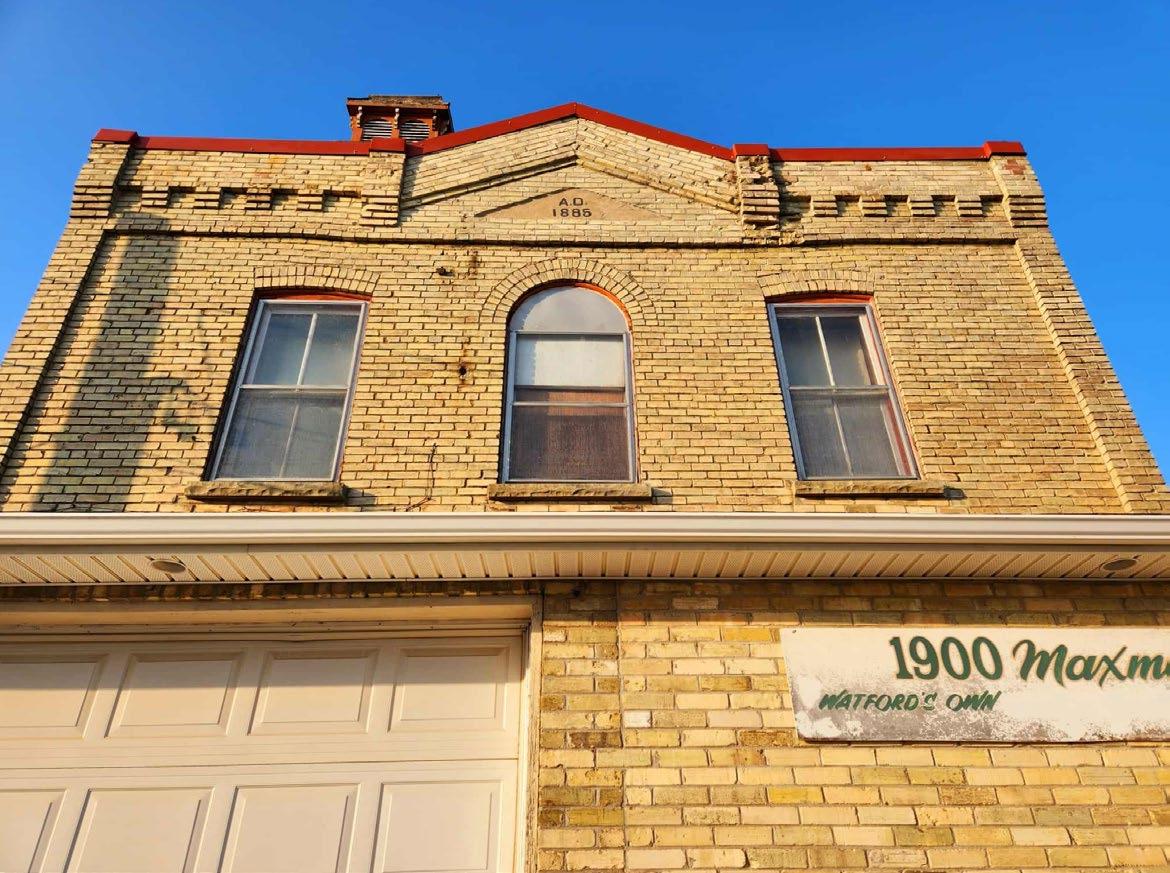
The building before our recent renovations.
One of the first projects the committee has been focusing on is the revitalization of the existing Watford Museum. The Watford Museum is located in the former fire hall and jailhouse, east of Nauvoo Road at 515 Ontario Street, adjacent to the Bluebird Parkette. The structure was built in 1895 and served as home to the Watford Fire Department until 1973. The revitalization and legacy project will create an improved community gathering space and an anchor designation within the Watford Downtown District.
According to the Lambton County Archives, “The most striking feature of the building is the belfry, which was clad in aluminum and trimmed red. The Percival family once lived in a house next door to the fire hall and were the original bell ringers. Historically, the bell was used to mark the time as well as to signal an emergency. Additionally, the bell would ring to mark church services and would toll the ages of pioneers on their funeral days. In 1973, the fire department moved into the old armories building across the street, vacating the old fire hall.”
The building also functioned as the local judicial system after the addition of two jail cells in 1914. The upstairs space was originally used for Council chambers and as a court room. The jail cells are still viewable in their original state today, and remain a notable example of small-town, turn-of-the-century judiciary architecture.
Thanks to the earlier efforts of local volunteers, the previous Watford Historical Society, the Rotary Club of Watford, and Warwick Township, the museum currently displays interesting treasures from the town’s past including an old fire engine, horse sleighs, agricultural machinery, firefighting equipment, and Watford’s very own restored Maxmobile.
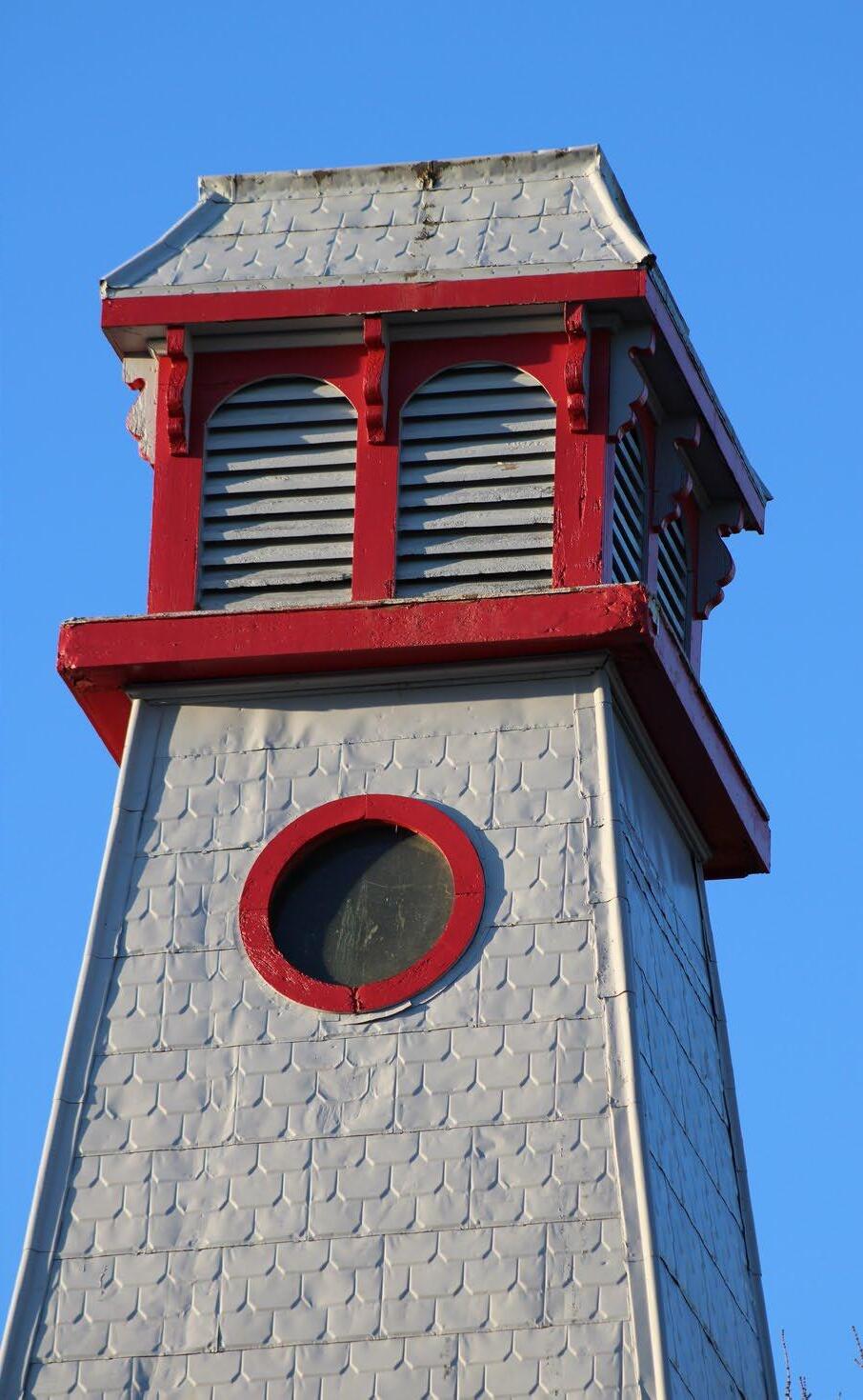
The character-defining bell tower
Under the newly formed committee, the museum has been aptly renamed, The Old Fire Hall Museum. This is a direct nod to its original purpose as the fire hall. The decision was made to initially focus on the preservation of the outside of the building, and on conserving the integrity of the structure. Improvements to the structure, the flashing, brickwork, garage door cladding work, a new roof, and repainting of the bell tower have been undertaken.
The upstairs portion of the building, which is accessed from a staircase outside, has been the more recent primary focus for the committee. It will serve as a working space for archival type activities, processing of items and proper storage, meetings, and record keeping. The renovations in this area include the replacement of the windows while adhering to the original style, new flooring, HVAC, storage shelving units, and counter space. Where possible, the original features such as the wainscotting have been preserved. The Parks and Recreation team in coordination with the committee, has actively overseen and managed this entire project. To help fund the revitalization efforts, $89,000 was received through a successful Building Communities Through Arts and Heritage – Legacy Fund – Funding Application, in addition to the Township of Warwick Council’s Capital Funding Commitment to the project.
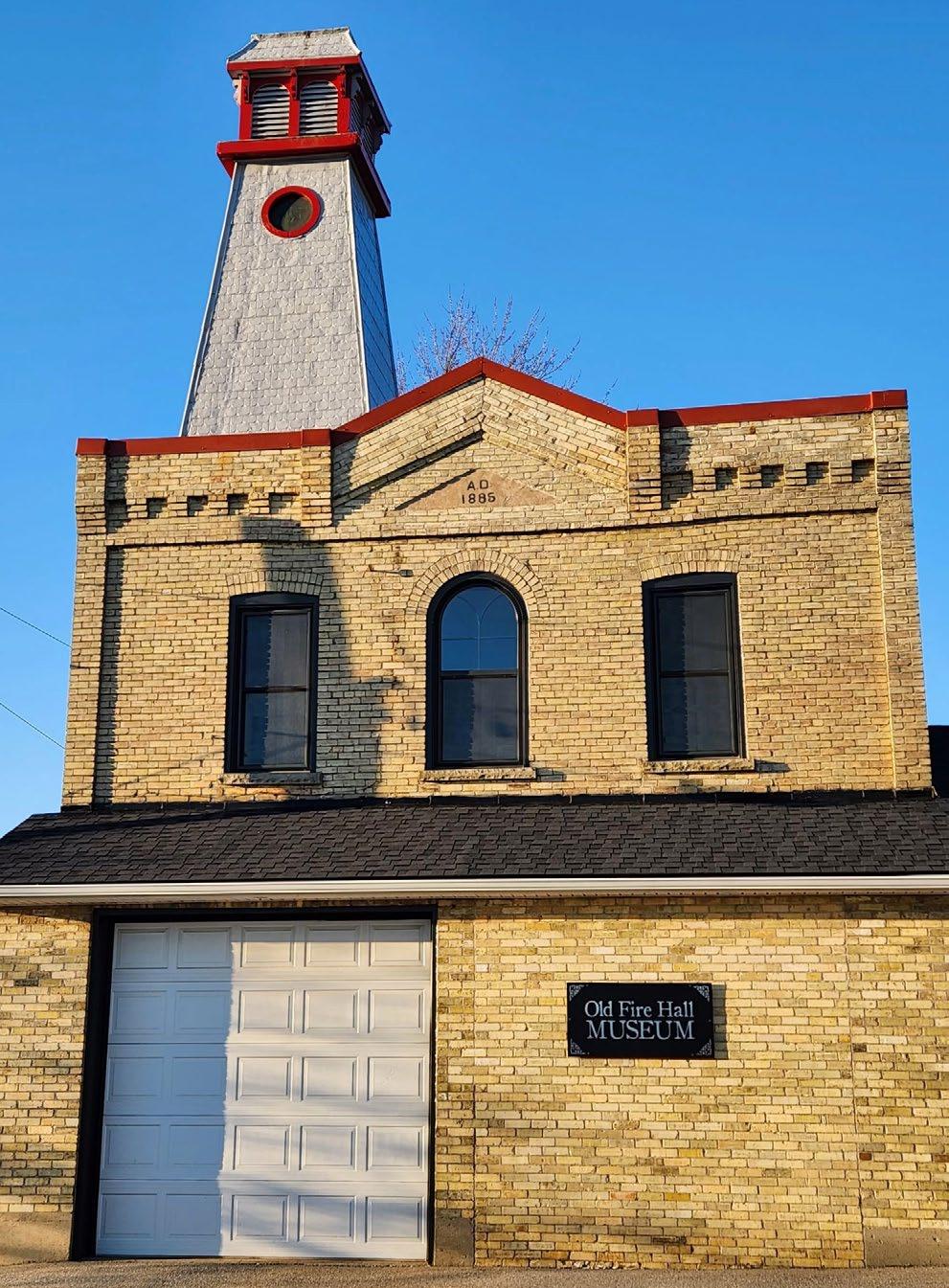
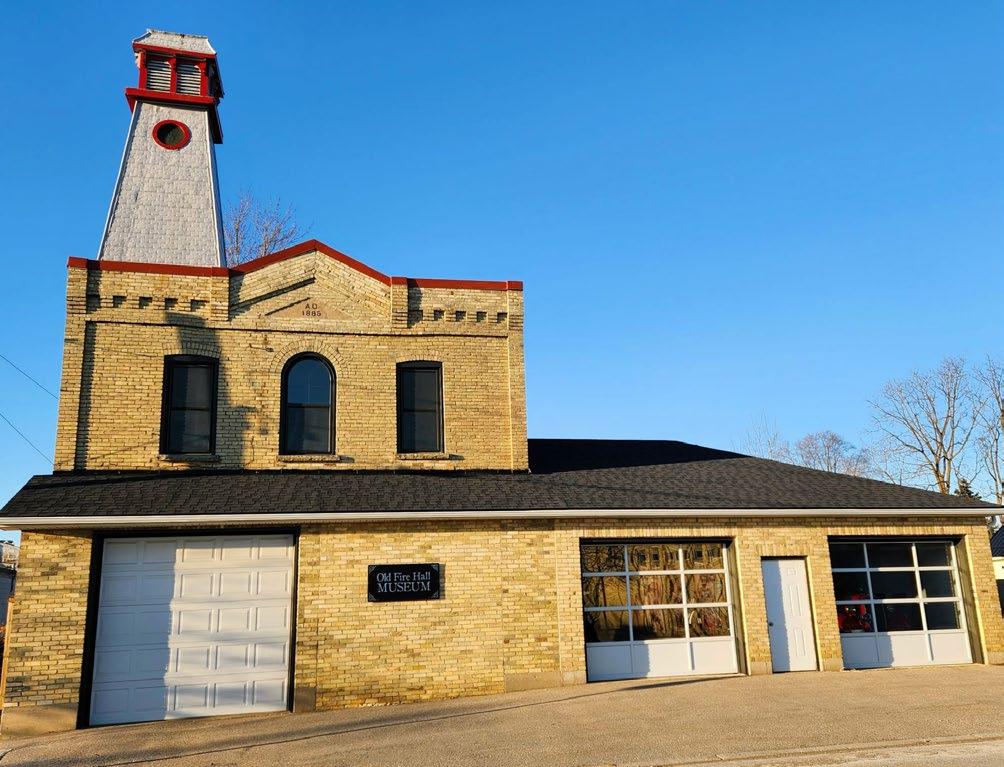
In the future, the goal is to begin focusing on the safe-handling, processing, preservation and recording of all the current, existing artifacts. Once this process has been completed, the interior functionality of the downstairs, the Old Fire Hall Museum, can be addressed.
The Heritage and Historical Committee is excited to be working with the Parks and Recreation Department of Warwick Township in the shared purpose of breathing new life into the Old Fire Hall Museum. We will conserve, record, and make accessible the historical artifacts and buildings of Warwick Township for future generations.
The Old Fire Hall Museum after renovations.
The Old Fire Hall Museum after renovations.
A Weighty History
By David McLean of The Forest Museum
Conduct an internet search of the world’s greatest inventions and you will inevitably see lists with worthy candidates such as the wheel, the plow, the printing press, the steam engine, the light bulb, the telephone, the automobile, the airplane, the computer and, of course, the internet. One invention you likely won’t see listed, however, is the weigh scale. This is surprising considering that this technology, which originated thousands of years ago in the ancient Indus Valley and Egyptian civilizations, has been crucial to numerous areas of human activity requiring accurate measurement, including in commerce, trade, industry, agriculture, engineering, medicine, scientific discovery, and even daily household tasks. I’ll leave it to you to explore the history of weigh scales on your own, but will highlight a few sets of note in our collection.
Bakery Scales - The weigh scales on the right in the image is one of our most recent acquisitions, kindly donated to us by Karen Alberti. Karen and her family were the last owners of the bakery that once operated on our premises. The scales were manufactured by the Barnes Scale Company of Windsor in the early 1930s and would thus have been used in the bakery for over 70 years. The scales on the left in the image also have a direct connection to our building. They were given to Don McCahill (1954-2023) by Glenn (“Skip”) and Murray Metcalfe (1935-2024) as a thank you for Don’s work at the Forest Home Bakery during his high school years. According to his family, Don loved working with the Metcalfe brothers and learning all about the business. He would get up at 3:30 in the morning to go in to help with the baking, come home about 6:30, have a shower, and then head off to school. His family told us that Don’s clothes always smelled of freshly baked bread and that he was typically in bed by 8:00 p.m. The scales were manufactured by the Fairbanks-Morse Company and likely date to the 1920s or 1930s.
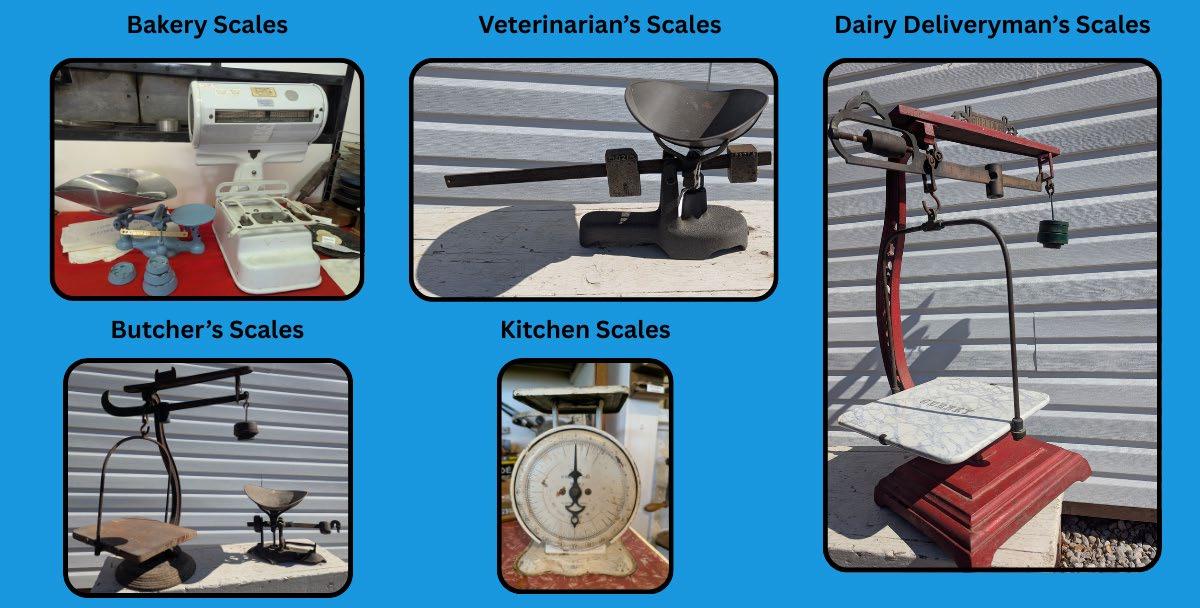
Veterinarian Scales - Dr. Stanley Wall (1889-1968) was born in Forest and grew up on a nearby Plympton Township farm. As a young man, he ventured with his brother George to Northwestern Ontario where he farmed, worked as a forest ranger, and was employed in a mill. Some time after this northern venture he trained as a veterinarian and, by 1916, made his way to France to serve in the Royal Army Veterinary Corps during the First World War. After the war, he returned to Canada and worked as a veterinary surgeon in Oil Springs, Hamilton, and Fort Erie before retiring to Forest. Dr. Wall presumably relied on these scales to accurately measure medications. The set was made in Canada by the Fairbanks-Morse Company and is believed to date to the 1920s or 1930s.
Dairy Deliveryman’s Scales - This beautiful set was donated to us a few years ago by Glen and Joy Starkey. Glen’s grandfather, John Starkey (1888-1966), was a Bosanquet Township farmer who made use of the scales as a deliveryman for Ridge Dairy out of Thedford. The scales were manufactured by the Gurney Scale Company of Hamilton and are believed to date to the late 1800s. The marbled porcelain finish on the platform, meant to ensure hygiene and durability when food or damp goods might be weighed, was a popular feature for “countertop” or “mercantile” scales in this period.
Butcher’s Scales - These two sets of scales once belonged to George Ladell (1868-1940), one of my great-grandfathers. He and his brother William (1869-1955) started up a butchery business in Wyoming in the late 1890s. Later, George and his family moved from their Enniskillen Township farm to one just east of Warwick Village where he became the butcher for a “beef ring” known as the Maple Grove Beef Association. A beef ring was a cooperative, common before widespread home refrigeration, whereby families pooled resources to get fresh beef. In rotation, each member of the beef ring provided a steer to be slaughtered. The meat was then divided equally among the members (thus the need for a good set of scales), ensuring everyone had fresh, quality meat without spoilage. George and his wife, Grace (McLaren) (1872-1939), later moved into Forest, but George continued working as a butcher, at one time making use of a small slaughterhouse located in what is now Esli Dodge Park. This building still exists and has been used as a concession stand for community events in the park. The 50-pound capacity set of scales on the left in the image was manufactured by the Gurney and Ware Company of Hamilton and predates 1885. The 30-pound capacity scales on the right was manufactured by the Renfrew Machine Company in Renfrew, Ontario and likely dates to the 1910s or 1920s.
Kitchen Scales - This set of scales was manufactured by the Pelouze Scale and Manufacturing Company of Chicago and is believed to date to between 1920 and 1940. The scales have a capacity of 24 pounds.
In addition to those described above, our collection of vintage scales includes others of varying size and use. From handheld scales used by sportsmen, to our very hefty platform scales, we invite you to check them out during your next visit to The Forest Museum. Our 2026 season launches on May 23rd. We look forward to seeing you!
Mementos of Rebellion: Prisoner Boxes
By Colleen Inglis, Lambton Heritage Museum
“My mind will still while life remains Be plac’d on you and home.”
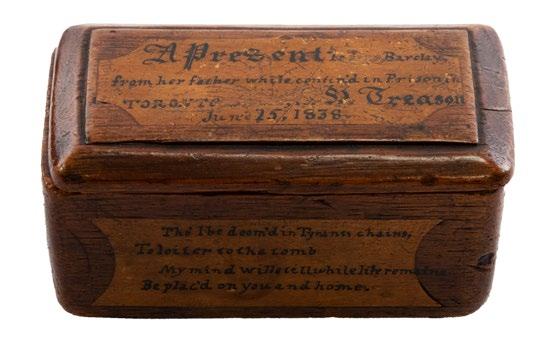
On June 25, 1838, a father imprisoned for treason crafted an intriguing object for one of his daughters. George Barclay Jr. carefully worked and decorated a small wooden box, just 8 cm by 4.5 cm by 4.5 cm. It was carefully carved from walnut. Verses are written in black ink on smooth, inlaid panels on two sides. There is a dedication on the dovetailed, sliding lid.
Beauty is a flowe[r] that fades, Soon it fall’s in time’s cold shade, Virtue is a flower more gay, That never dies nor fades away
Tho’ I be doom’d in Tyrants chains, To loiter to the tomb
My mind will still while life remains Be plac’d on you and home.
A present … Barclay,
From her father while confin’d in Prison in TORONTO … Treason
June 25, 1838
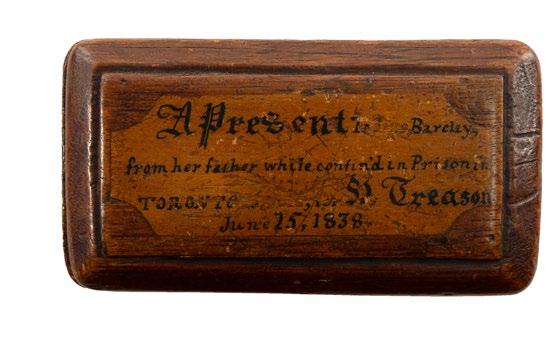
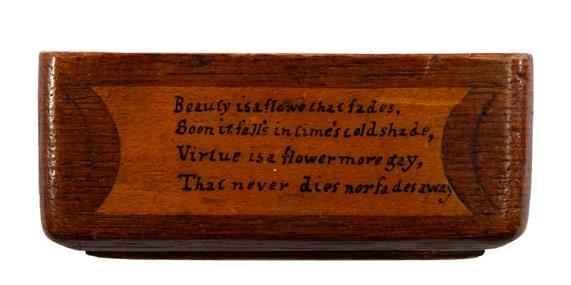
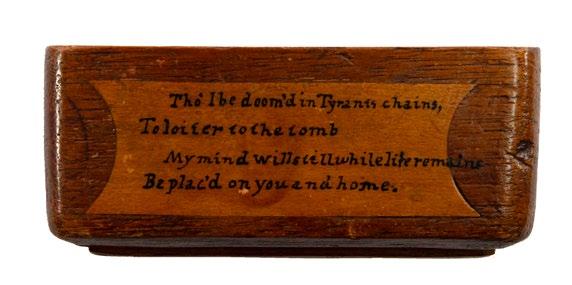
What circumstances led Barclay to inscribe this heartfelt sentiment onto a box for his daughter? The story of rebellion, imprisonment, and creativity brings one of the most historically significant artifacts in our collection to life.
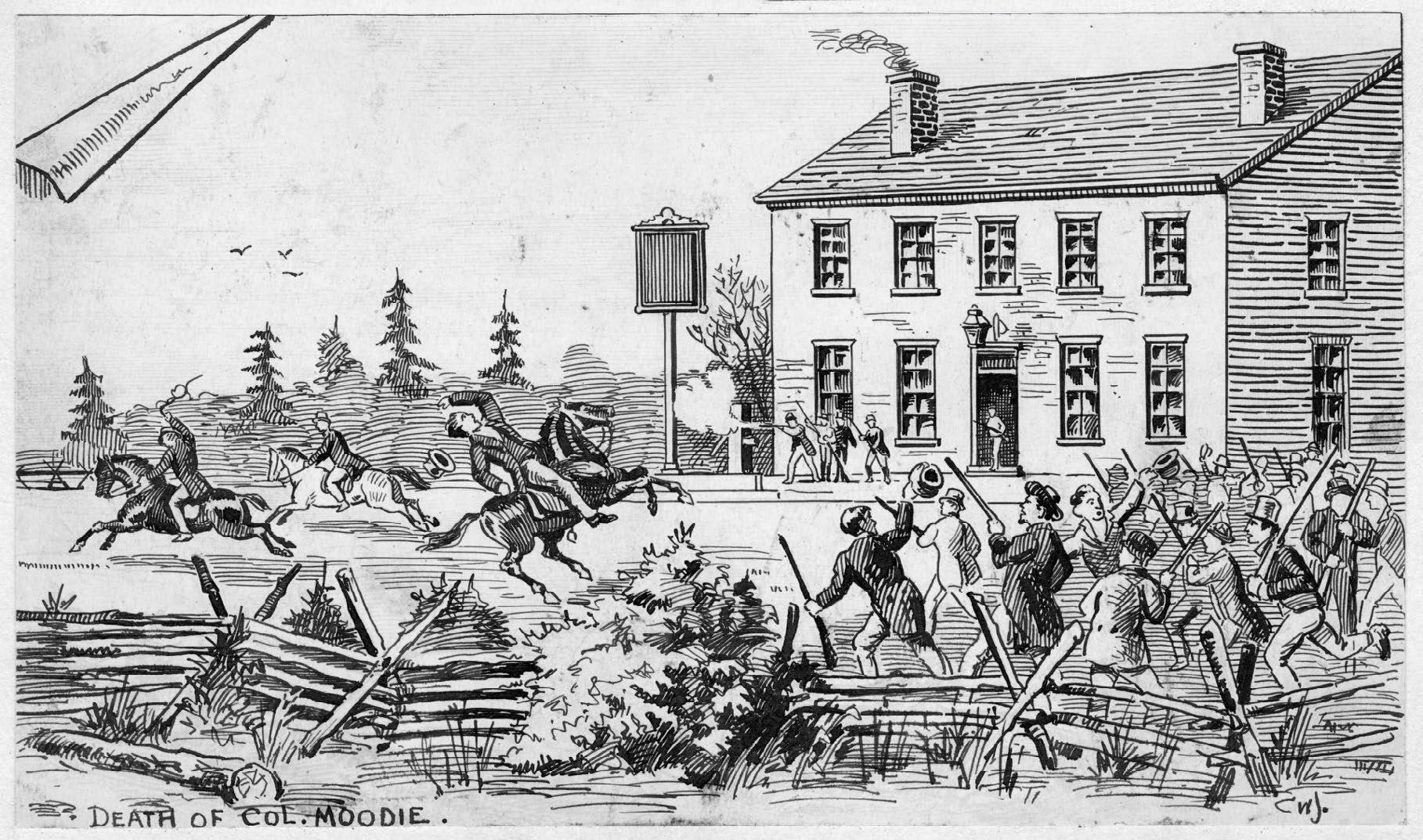
Montgomery’s Tavern
The prisoner box story is rooted in a rebellion that engulfed Upper and Lower Canada in 1837 and 1838. Newspaper publisher and politician William Lyon Mackenzie was a fierce critic of the appointed Legislative Council of Upper Canada. Nicknamed the Family Compact, they were an elite clique of officials, businessmen, and wealthy leaders who ran the colony based on patronage and corruption. Mackenzie roused like-minded citizens, including rebel leaders Samuel Lount and Peter Matthews, to support an uprising in Toronto.
Lambton Heritage Museum Prisoner Box attributed to George Barclay Jr.
They planned to gather on December 7 at Montgomery’s Tavern on Yonge Street. When a warrant was issued for Mackenzie’s arrest, they decided to meet sooner. On December 5, hundreds of men marched down Yonge Street to occupy city hall. But the rebels retreated in confusion after militiamen began shooting at them.
On December 7, Mackenzie sent Matthews with about 60 men to create a diversion at the Don River. They killed one man and set fire to the bridge and some houses before being driven off. Matthews was captured. The same day, 1,000 British soldiers and militia moved in on 300 rebels at Montgomery’s Tavern. In just 20 minutes, the rebels were defeated. Lount was arrested but Mackenzie escaped.
Outcomes of War and Rebellion
The 1837 Rebellion was short-lived, but the conflict continued. Rebels took refuge in the United States and a series of border raids evolved into a greater conflict. Separated from Michigan by only the St. Clair River, citizens of Lambton County were on high alert. In June 1838, skirmishes involving local militias took place near Port Lambton, Sombra, and Dresden. Hostilities ended on December 4, 1838, when the militia defeated the rebels at Windsor.
John George Lambton, Governor-General of British North America, was sent to investigate the causes of rebellion. He produced the Durham Report that recommended uniting Upper Canada and Lower Canada, and suggested reforms to achieve responsible government. The County of Lambton is named after him.
Montgomery’s Tavern. Death of Col. Moodie by Charles William Jefferys.
In 1840, the Act of Union merged the colonies of Upper and Lower Canada into the Province of Canada. Responsible government became a reality in 1848. Both were critical events along Canada’s path to nationhood and independence from Great Britain. In 1849, the Rebellion Losses Bill returned property that was seized from the rebels to their families.
Prisoner Boxes
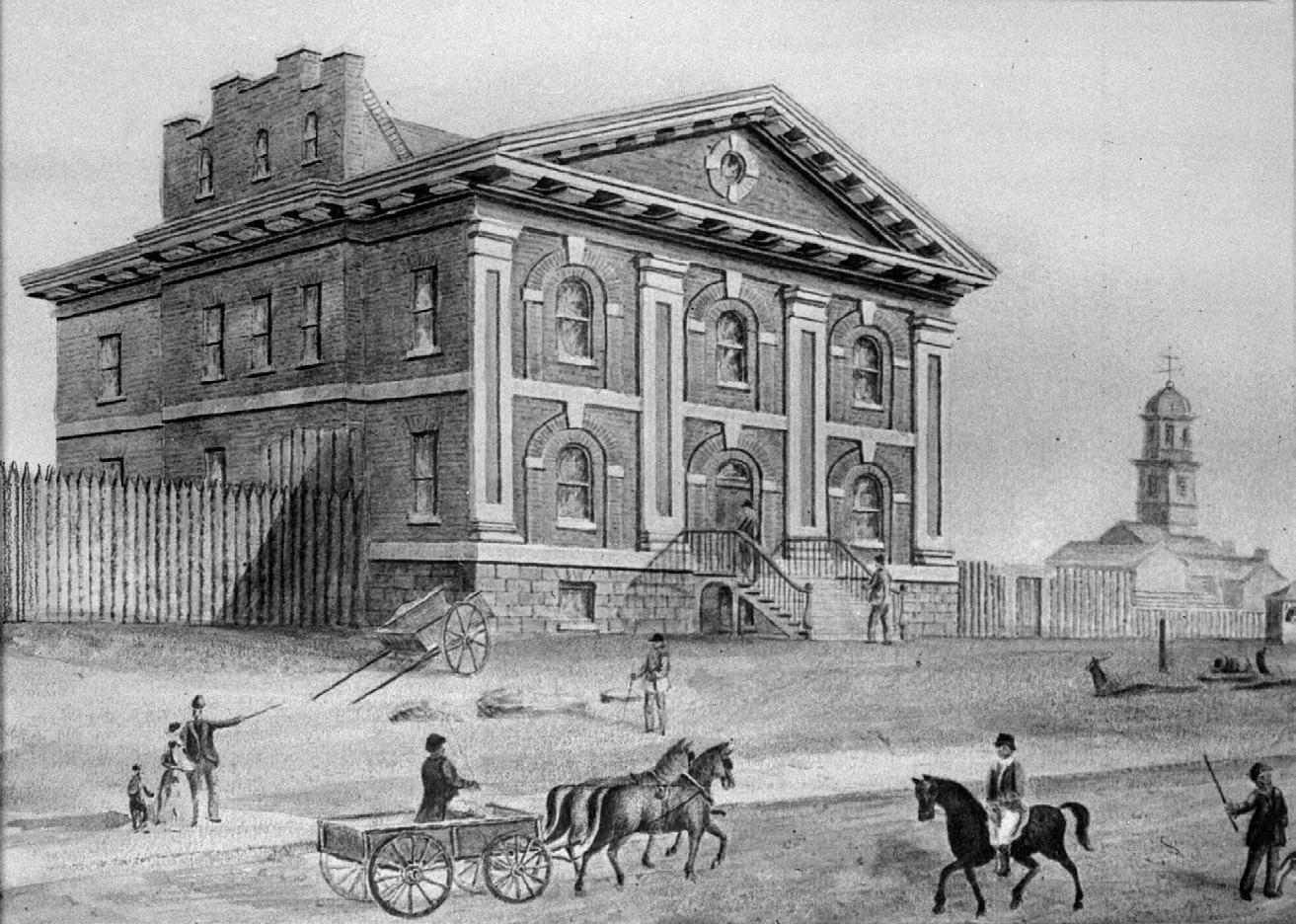
After the rebellion, over 800 insurgents and sympathizers were jailed. More than half awaited trial in Toronto Gaol. Conditions inside were deplorable. Small rooms, each with a little stove and a wood pile, were packed with prisoners.
While incarcerated, more than 50 prisoners constructed boxes from scraps of stove wood. Some made more than one. The boxes were carved from hardwoods like maple, walnut, birch, cherry, and butternut. All have sliding, dovetailed lids, and most are precisely sized to the quarter inch. They are small enough to fit in the palm of your hand.
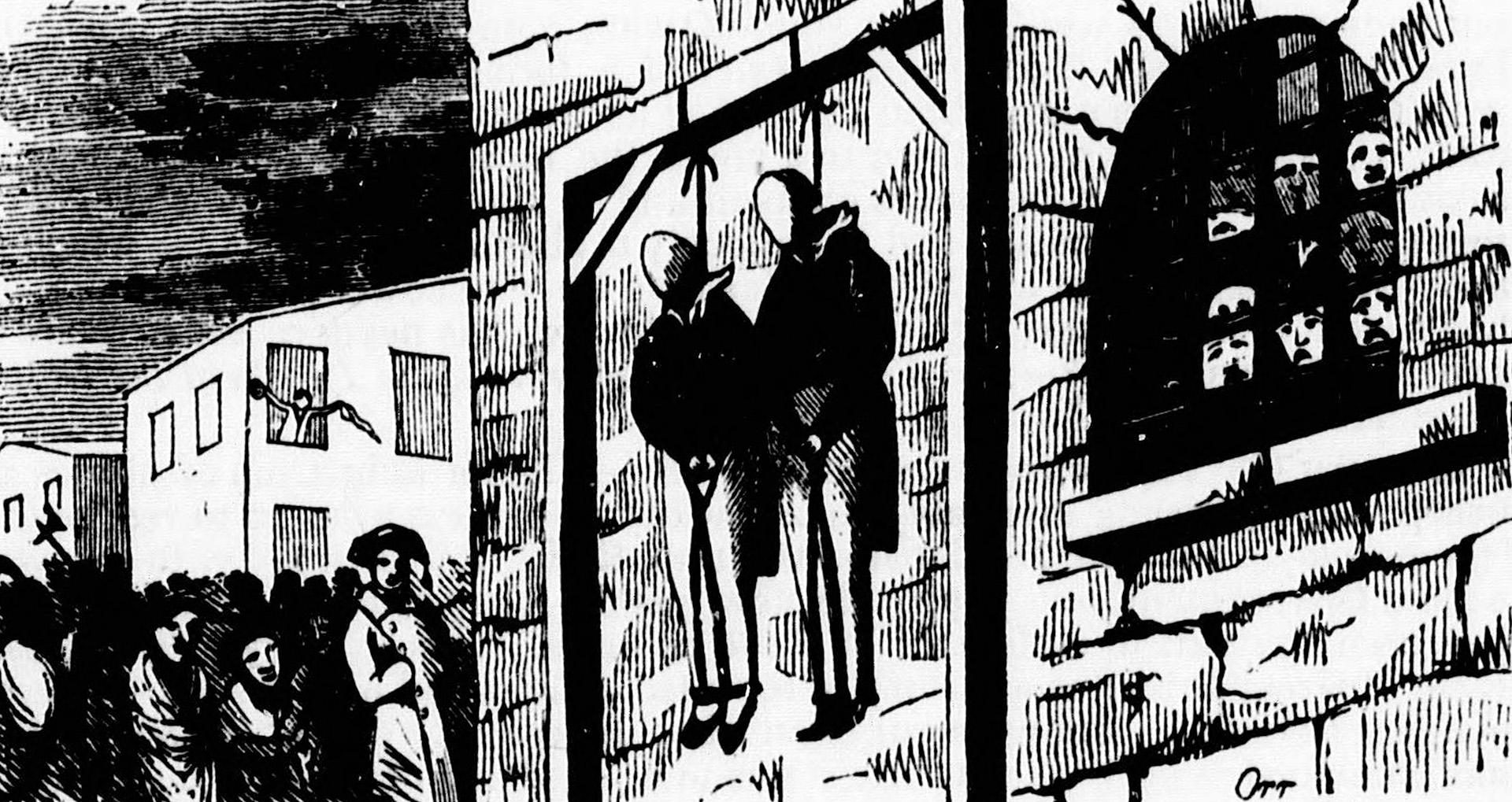
The prisoners faced execution, jail time, banishment, and transportation to distant colonies. They did not expect to return home. They expressed their feelings by writing political, religious, and sentimental verses on the boxes. Many of the boxes recorded the location, date, and name of the maker. The boxes were dedicated to family and friends and memorialized the dead. Rebel leaders, Lount and Matthews, were hanged on April 12, 1838. Most of the prisoner boxes were made between April and late July 1838, possibly inspired by their deaths.
Darryl Withrow has recreated about 20 boxes to learn how they were made. Once believed to be crafted using pocketknives, new research suggests the precise sizing, dovetailed sliding lids, and decorative inlays required tools like chisels, measuring devices, and glue. These must have been smuggled in and hidden from the guards. Withrow believes that because of the skill involved and the consistent style of the boxes, the men may have worked cooperatively. Skilled woodworkers made the lids, poets composed the verses, and tidy writers did the inscriptions. This enabled many men to be involved in the box-making, regardless of skill.
Nearly 100 prisoner boxes have been identified.
Toronto Gaol about 1835 by J.G. Howard (Courtesy of Toronto Public Library).
George Barclay Jr.
The prisoner box in Lambton Heritage Museum’s collection was crafted by George Barclay Jr. He was born in in Cupar, Scotland in 1801. He left Scotland as a teenager in 1817. While his father was working as a minister, Barclay worked on the farm. In 1831, he married Jane Willson at York.
Barclay was one of the rebels who assembled at Montgomery’s Tavern. His accuser, Constable Charles Hadley, swore an oath that “George Barclay seemed to have some command, made himself very conspicuous and threatened him [Hadley] violently.” Colonial Office Records note a comment by Lieutenant Governor Sir George Arthur that,
George Barclay Jun’r was in arms at Montgomery’s and an active follower of Matthews in his expedition to burn the Don Bridge and houses adjoining. His case is aggravated by the robbery of a person whom he and his companions pillaged on the highway. The father of this young man is a Baptist preacher and bears a very bad character for disaffection.
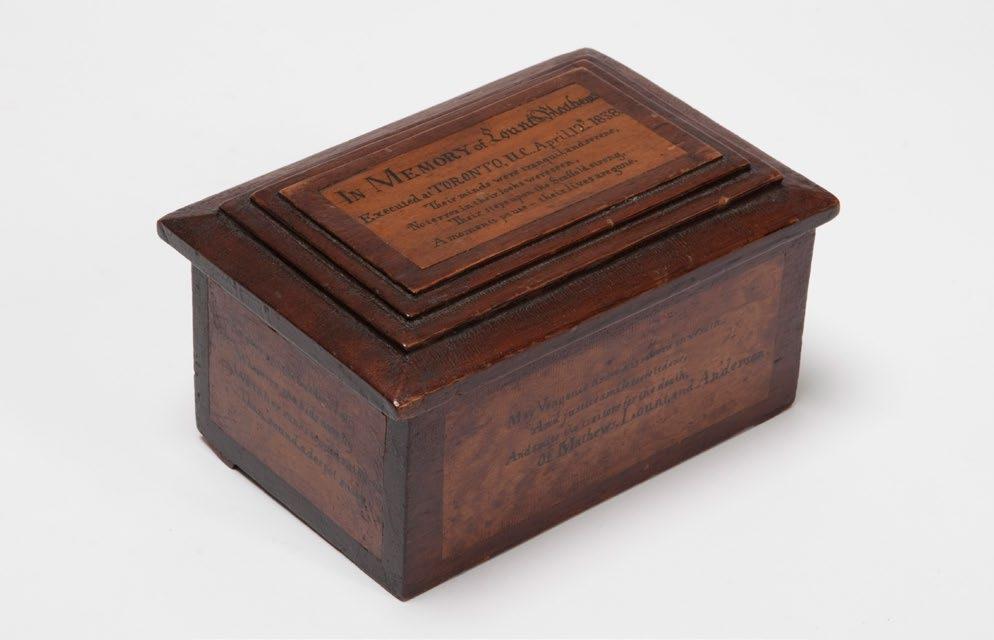
There are several prisoner boxes attributed to George Barclay Jr. This one is from the Toronto History Museums Art and Artifact Collection.
Hanging of Lount and Matthews, April 12, 1838, Caroline Almanack and American Freeman’s Chronicle for 1840.
Rumour has it that Barclay helped Mackenzie escape on December 7. After Mackenzie’s horse was shot, Barclay located a fresh horse for him. And apparently, loyalist soldiers fed their horses from the Barclay oat bin without finding the guns that were buried in the oats. On December 15, Francis Leys, Justice of the Peace for the Home District issued a warrant for Barclay’s arrest. On December 17, the day after his 36th birthday, he was arrested at his home and taken to Toronto Gaol.
George Barclay Jr.’s Fate
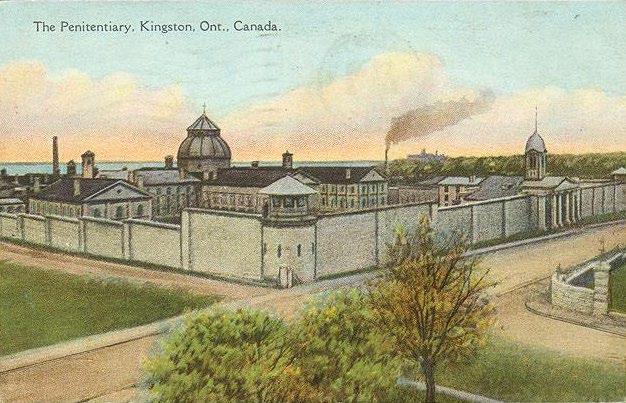
Barclay spent about seven months in Toronto Gaol. He was discharged July 13, 1838, to the Provincial Penitentiary in Kingston. While at the penitentiary, Barclay (convict #262) was interviewed by the President of the Board of Inspectors for the Provincial Penitentiary. Barclay claimed he was induced to participate in the rebellion because,
I was told that Toronto was taken by the Rebels and that it was necessary I should go there to have my name called over. I went with Matthews to Montgomery’s, but was not at the battle. A gun was given to me by Matthew’s orders. McKenzie [sic], Lount and Gibson were the leaders of the Rebellion. … I deserted from him [Matthews] after two or three days. I was apprehended in consequence of a warrant taken out against me by Charles Hadleigh.
Postcard of the Kingston Penitentiary about 1910 (Courtesy of Toronto Public Library).
Barclay was convicted of high treason and sentenced to several years in prison followed by banishment. His wife and father both petitioned unsuccessfully for his release. On March 23, 1839, he was pardoned and discharged as part of a general amnesty for actions taken during the rebellions. A Provincial Penitentiary Report described him as 5 feet, 5 ½ inches tall with a florid complexion.
Barclay sold his farm in Pickering Township in 1848. His family moved to Lobo Township in Middlesex County where a brother-in-law was already living. They settled on a 200-acre plot of solid bush. By 1851, Barclay and Jane had ten children: Jane, Agnes (Nancy), Joshua, George, William, Catherine, John, David, Eli, and Arthur. In addition to 24 acres of crops, they had horses, hogs, and poultry. Barclay died from kidney stones in 1882.
A Legacy of Rebellion
Many of the 1837 rebels were skilled, prosperous, educated, and community minded. They were tired of colonial rule and risked their lives because they believed in a cause. The prisoner boxes carved in the wake of the events of Montgomery’s Tavern are prized by descendants, collectors, and museums. They are tangible evidence of the Upper Canada Rebellion of 1837, and they provide glimpses into the lives of individuals like George Barclay Jr. who were part of an important chapter in Canadian history.
Between Birth and Death
The Short Life of Marion Gayle Fitzgerald
By Alan Campbell, Lambton County Branch of The Ontario Genealogical Society
Author’s Note: Gayle is a distant cousin of mine. My 2x great grandfather is Frederick Fitzgerald, brother to her 2X great grandfather John Fitzgerald.
Marion Gayle Fitzgerald, daughter of Frederick Ardiel and Hilda Marion (McRobie) Fitzgerald, died at the age of 23 in a traffic accident October 23, 1962 at the Municipality of Izmit, Republic of Turkey. This municipality is about 100 kilometres east of Istanbul. Her fiancé, an unnamed American engineer, also in the car, was seriously injured. She had just spent a week vacationing with her parents and was planning to spend her 23rd birthday, October 27th, in London, England with her brother Fred, an employee of Polymer Corporation.
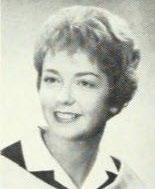
Gayle as she appeared in The Occidentalia, 1960.
The Sarnia Observer reported that, “The body of Miss Fitzgerald, accompanied by her brother Fred is being brought by T.C.A plane to Toronto today.” Immigration passenger cards for Fred and his wife Louise indicate that their Pan Am flight landed in New York October 24th. It would be logical for Pan Am to have flown Gayle’s remains, their own stewardess, to New York. The remains would then have to be transferred to a domestic carrier as Pan Am did not do domestic flights in that time period.
The funeral service was held at D. M. Bradley Funeral Home in Petrolia, Saturday, October 27, 1962. Whoever made up the funeral card identified her place of death as Istanbul, which most people would recognize as opposed to the Municipality of Izmit. Her remains were placed with those of Albert Ernest Fitzgerald [death in 1934] and Alice M[aud] (McCort) Fitzgerald [death in 1923], her grandparents, in the Fitzgerald Mausoleum at Lakeview Cemetery, Sarnia.
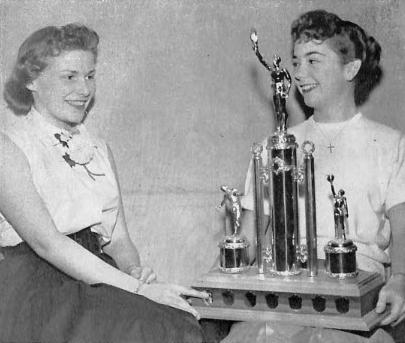
Photo of Gayle holding the Winder Memorial Trophy in the Red & White Review 1955-56.
How easy would it be to built a picture of Gayle’s life?
Marion Gayle Fitzgerald was born in 1939, at Petrolia, to parents Frederick Ardiel Fitzgerald and Marion Hilda Florence McRobie, daughter of John McRobie and Florence Shuttleworth. The succinct marriage notice, in the Sarnia Observer, for her sister Flo’s wedding August 27, 1949, did not provide any information that would suggest that Gayle was part of the wedding party. At 10 years old, she was of the age to have been a flower girl. This marriage was officiated by Father Charbonneau of Our Lady of Mercy Catholic Church, Sarnia.
March 2, 1953 was the achievement night for three Petrolia public schools, Central, Maude Street, and Jubilee. Gayle was graduating from grade eight and earned a proficiency award and received the Ernest Preston award. Ernest Preston was a fire chief and 5 term mayor for Petrolia.
The Fitzgerald family attended St. Andrews Presbyterian Church in Petrolia. Gayle was part of the choir and took part in junior activities.
Gayle was a maid of honour for her sister Shelagh Ruth. Shelagh, a graduate of St. Joseph’s Nursing School in London, Ontario, married James N. Flynn, a patrolman with the Sarnia Police Department, February 23, 1957 at her parents’ home in Petrolia. Reverend R. U. MacLean of the Presbyterian Church in Petrolia officiated. As was the style in news reports of the era, the reporter described Gayle’s outfit. “Her sister, Miss Gayle Fitzgerald, in blue net over satin, wore a bouffant gown with matching brief jacket above the strapless top. Her veiled tiara was of matching blue.”
In the Red & White Review 1955-56, for Petrolia District High School, there is a photograph of Gayle with Noreen Brown holding the Winder Memorial trophy prior to it being presented to the outstanding athlete of the school, Jim Scott, May 11, 1956.
The Red & White Review 1956-57, for Petrolia District High School, recorded Gayle receiving her High School Graduation Diploma from the Honourable Bryan Cathcart and C. E. Janes
M.P.P. at Commencement February 23, 1956. There appeared to be a lost year in the collection of P.D.H.S. yearbooks that I checked because Gayle would probably have graduated the following year, 1957, with a Secondary School Honour Graduation Diploma in order to apply to the University of Western Ontario for admission. The Red & White Review 1958, records January
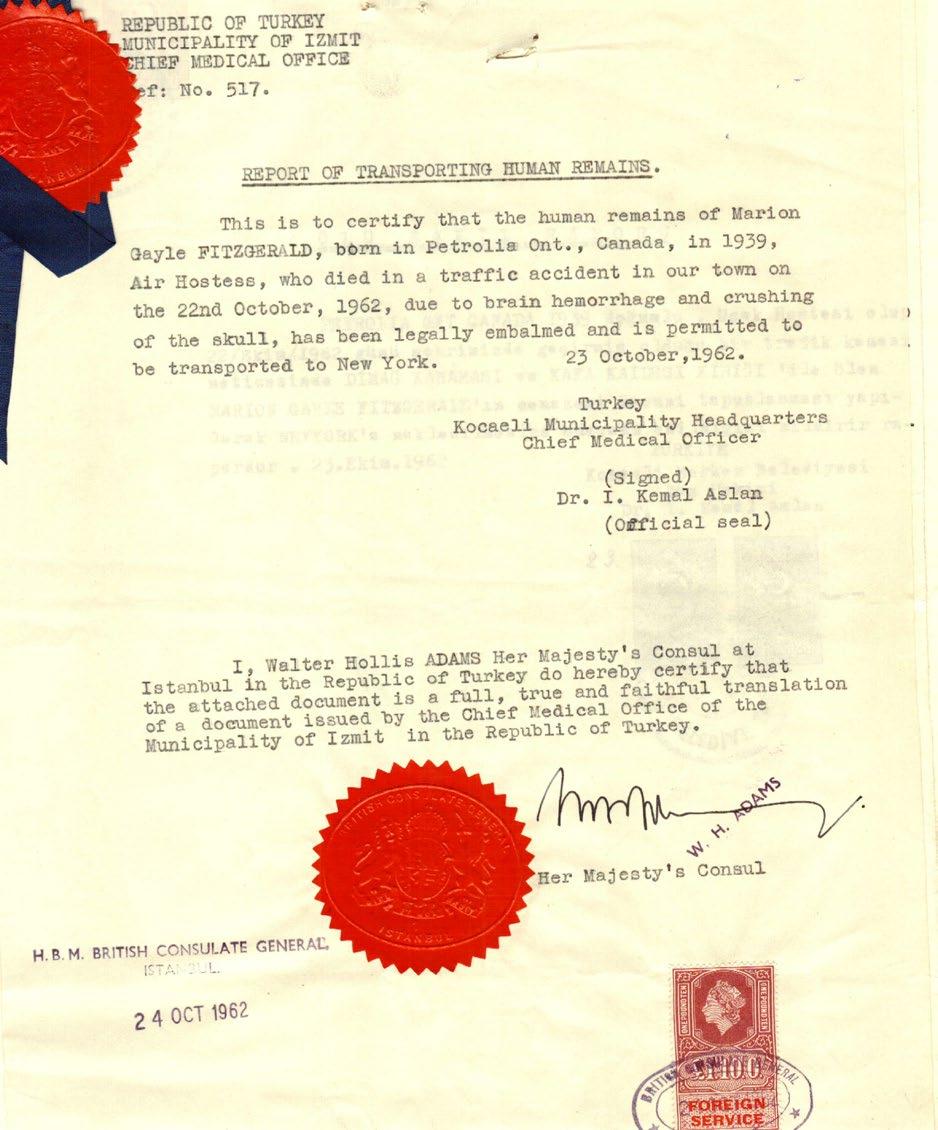
The image of the letter from the Turkish Medical Office is courtesy of Bradley Funeral Home
25, 1958 as the date of Commencement which would be the year after she graduated. The photograph mentioned earlier does seems to indicate that she was present for grade 13 at the school in 1956.

The Occidentalia 1960, a University of Western Ontario yearbook, listed Gayle:
“Fitzgerald M. Gayle; B.A.; General Arts, Petrolia, Ontario. Gamma Phi Beta; Purple Patches, Psychology Club; Players’ Guild.” She was in the photo of the Gamma Phi Beta sonority. Purple Patches and the Player’s Guild were about plays and a variety show. Gayle did not play one of the lead roles and other cast and backstage people were not mentioned.
The author of the newspaper article, Car Crash Kills Area Stewardess, reported that she had been employed by Pan American Airways for two years. Since the author also reported that she had graduated from the University of Western Ontario with a BA in 1960, it is possible this was her first post university occupation. Pan American flew its first Boeing 707 to France October 26, 1958, from New York Idlewild with a refueling stop at Gander, Newfoundland, so it was likely that Gayle was a stewardess on Boeing 707 flights in those two years.
Nothing further was found about her fiancé who remains nameless. Although Gayle’s life was short, it was pleasing be able to find the “tracks” she left behind.
These are typical Pan Am stewardess uniforms from the early 1960s. This image was “scraped” from eBay.
Chloride in the Crude: Investigating the Functionality of a 20th Century Salt Testing Apparatus
By Bryce Koolen, Oil Museum of Canada
Over the past few months, new rolling shelving was installed in the collection storage space at the Oil Museum of Canada. Last summer, the collections staff were very busy inventorying and packing the artifacts in storage so they could be sent off-site during the renovation. During this preparation the collections team stumbled across this device (Figure 1) and became curious about how it did its job.
This is a Kimble Automatic Salt Test, manufactured by the Kimble Glass Company. Based on the style of the logo and the trademark on the glassware, it was made between 1920 and 1947. It was used at Imperial Oil to test petroleum products for salt content, a very important parameter during refining. Salts are removed from crude oil. They can deactivate other important chemicals used in refining and they can also corrode pipelines.
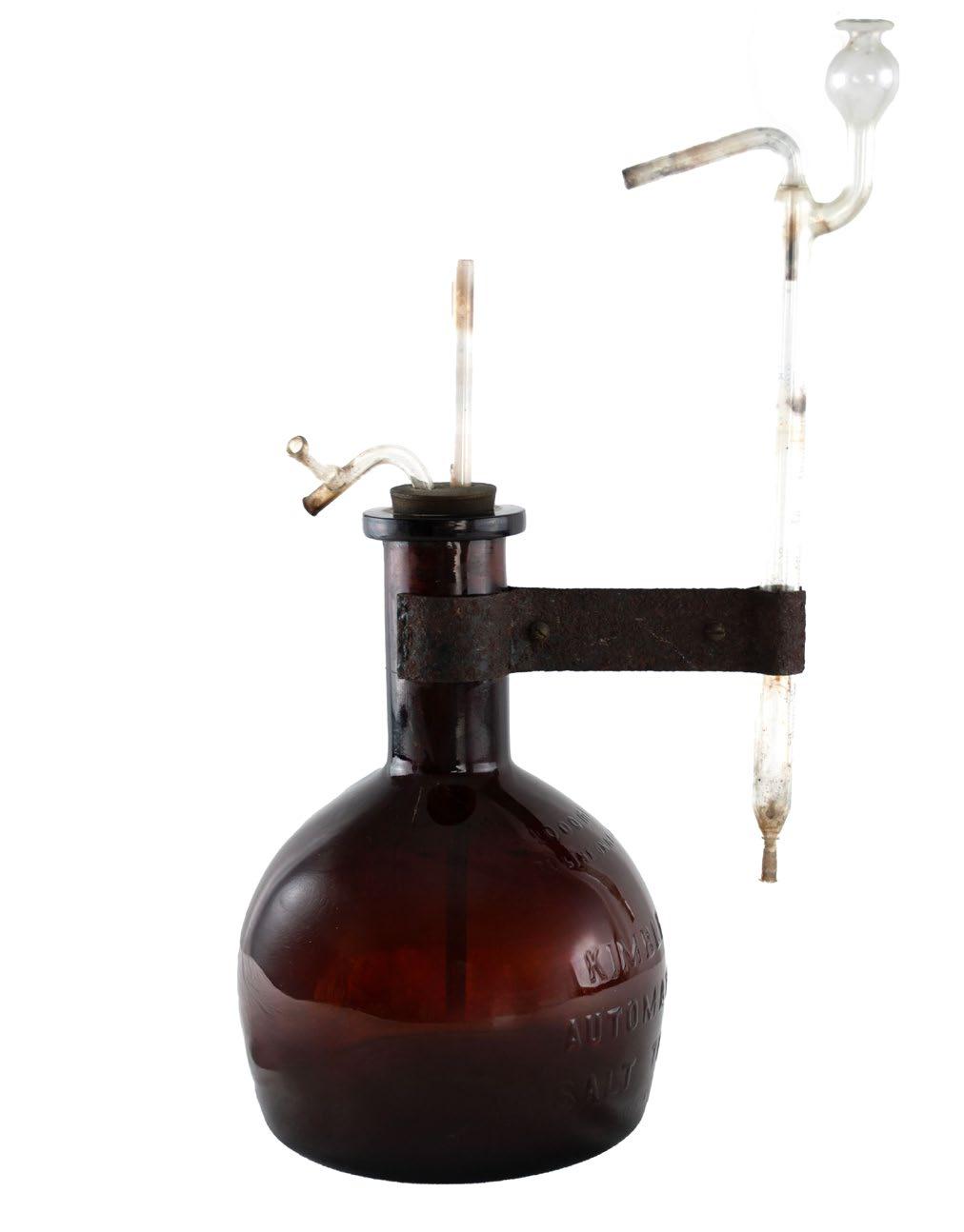
Despite the apparatus’ simplistic and apparently self-explanatory name, the method by which it accomplished its measurement was unclear. Evidently there were pieces missing, as liquid would have no way of travelling between the flask and burette. Operating instructions for a similar device with a different purpose, also manufactured by the Kimble Glass Company, are shown in Figure 2.
This device has a very similar design to the one in the collection and likely has the same functionality. The diagram provided in these instructions made it clear where some of the missing pieces would have been. Just like Figure 2, there would be a rubber piece connecting the glass tubing from the flask to the burette. A bulb would be placed on the shorter, curved glass tubing coming out of the flask. As the instructions describe, the bulb would have been squeezed until the burette was filled to the section labelled “B,” and then released to empty the excess back into the flask. This would ensure that the burette was filled with the correct amount of liquid.
Kimble Automatic Salt Test (OMC 1960.307.001).
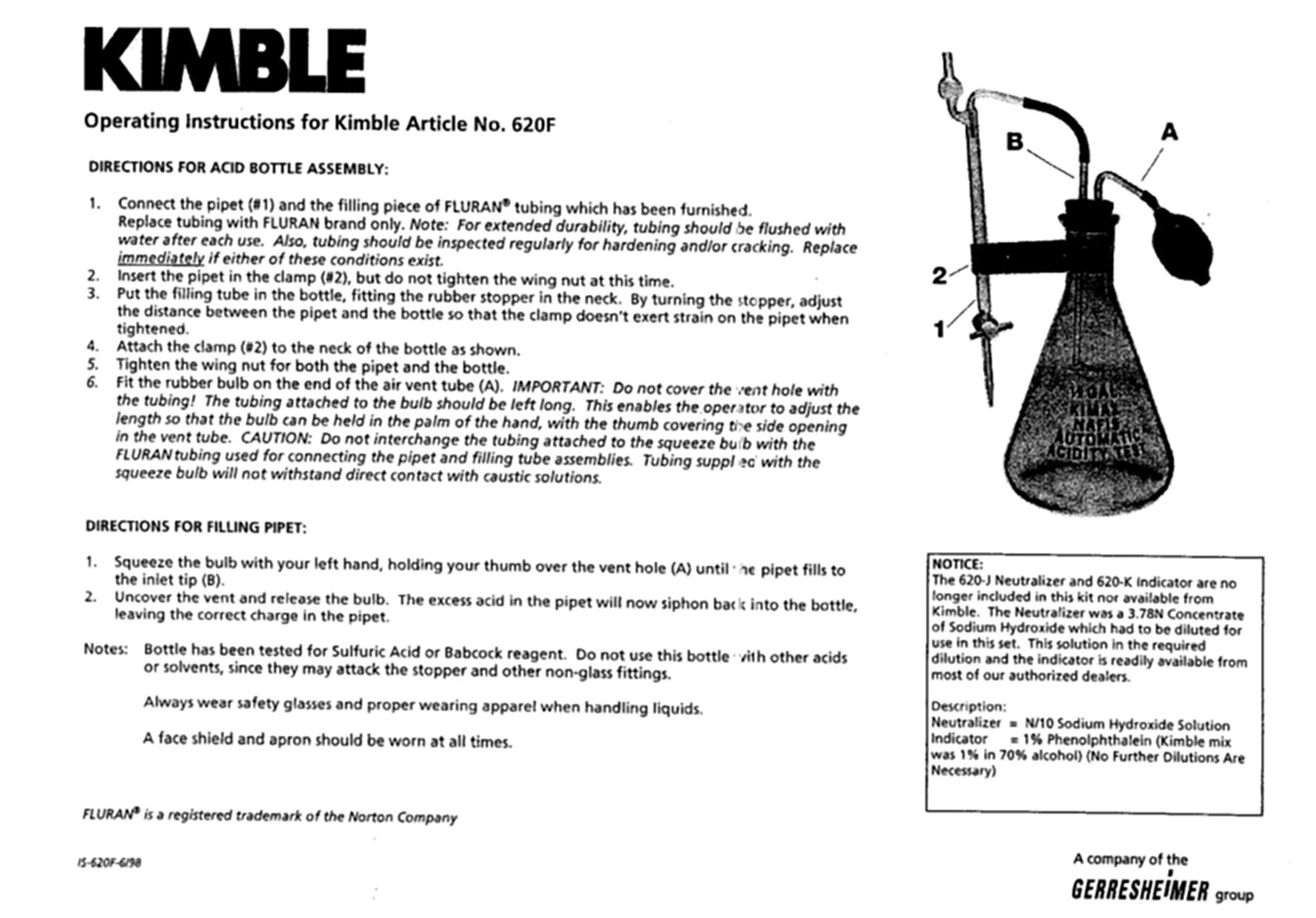
Instructions for the Kimble Automatic Acidity Test.
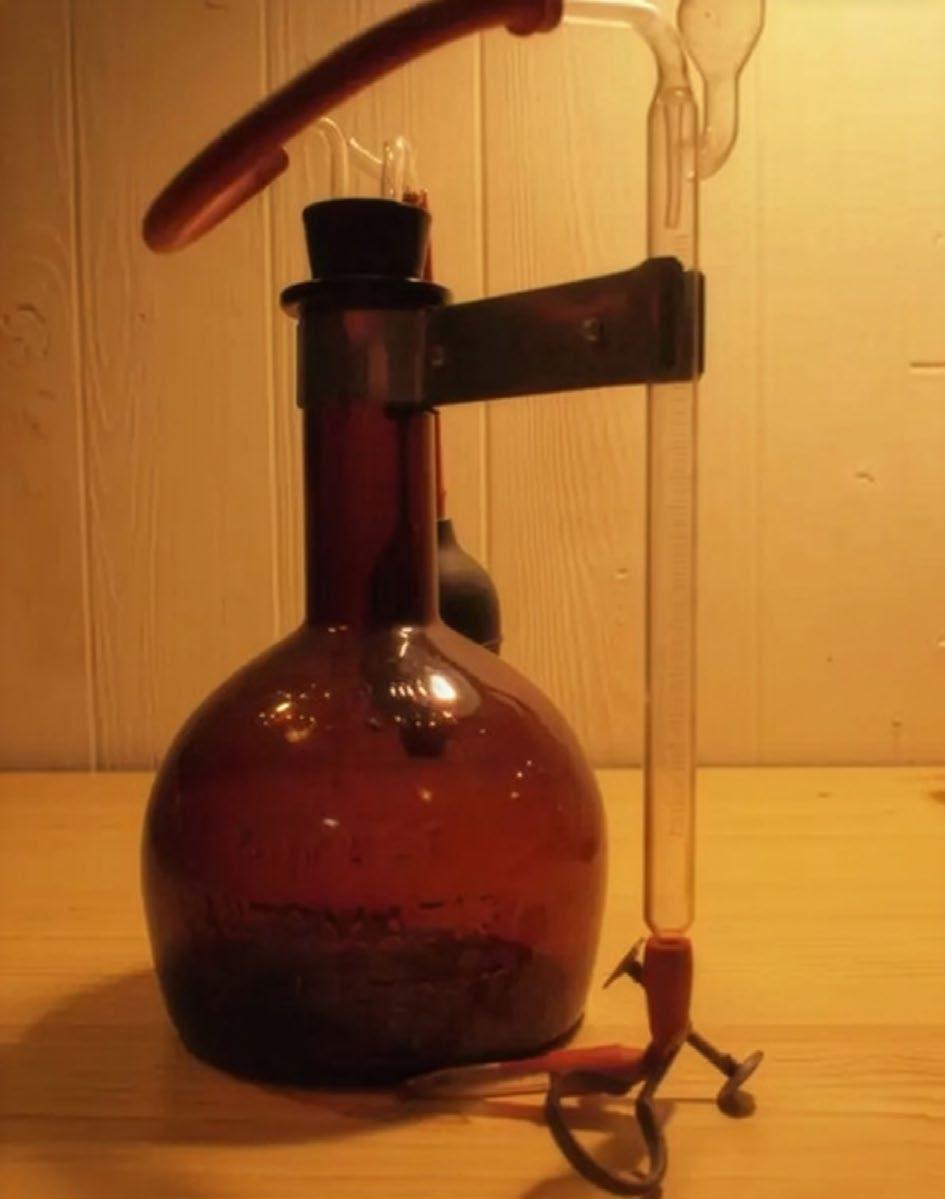
Unlike the device in Figure 2, the bottom of this device’s burette was open with no stopcock. This was strange, as there would be no way of stopping liquid from exiting as soon as it entered. The point of a burette is to hold and dispense liquids in a controlled manner, after all. A Kijiji post advertising a Kimble Automatic Salt Test (Figure 3) showed another small section of glass in a piece of rubber wrapped around the bottom of the burette. The rubber piece was clamped in the middle to create a controlled exit point. This must be how the rate of flow of liquid out of the burette was regulated.
The device likely used a method of testing salt content known as Mohr’s method, invented in 1856. It uses titration, a technique of determining how much of a chemical is in a sample by reacting it with a known quantity of another chemical. Titration was the main method of determining salt content until the 1950s when conductivity became a more mainstream method. Mohr’s method mainly tests for chloride, a component of many salts of interest.
In this technique, silver (I) nitrate is added to a chloride ion-containing sample, forming silver (I) chloride (a white solid). Potassium chromate is used as an indicator, forming silver (I) chromate (a red-brown solid) as soon as the chloride ions have all reacted. The volume of silver (I) nitrate solution needed to form the red-brown colour can be used to calculate the
concentration of chloride ions in the sample. The burette has been calibrated so that instead of being marked with volumes, it is marked with salt percentages.
To use this device, a sample of crude oil would be diluted with acetone and water. The silver (I) nitrate would then be dispensed from the burette into a sample from this diluted crude. Upon appearance of a red-brown colour, the scale would be read, giving the percentage of salt in the sample. The instructions for the device would need to indicate how to prepare the silver (I) nitrate solution so that the salt percentage could be read right off the scale.
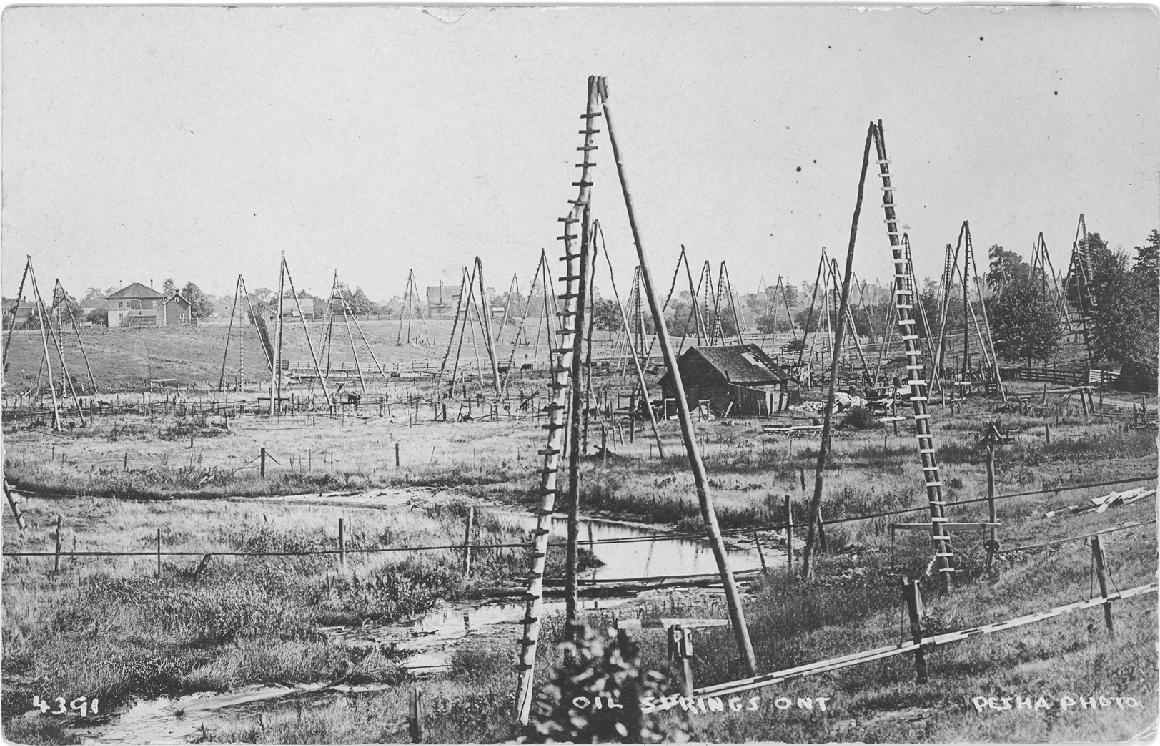
BLACK GOLD FEST
Kimble Automatic Salt Test (Image Source: Kijiji)
The Hill Top … A Summer Club in Canada
By Moore Museum Staff
At the dawn of the twentieth century, a property overlooking the St. Clair River began to shape Corunna’s social and recreational life. Purchased in 1908 by the Brown family, it became known as The Hill Top, a place that evolved from a quiet riverside retreat into a lively destination for leisure, entertainment, and community gatherings, reflecting a bygone era when summer resorts were central to local culture.
The summer club was located on West Beresford Street in Corunna, Ontario, overlooking the St. Clair River. The Club offered all the pleasures of outdoor life. Boating, fishing, lawn games, rowing, canoeing, swimming, and dancing were among the many activities enjoyed there, along with exploring the woodland trails in the surrounding area.
According to a letter written by Maurice Brown on August 27, 1982, “A summer cottage was constructed six or seven years after the property was purchased. This was followed in the 1920s by a four-unit building on the hill and, around 1923, a dance hall along the river.”
The summer club offered a variety of accommodations designed for comfort and leisure. The Hill Top building featured four fully equipped, four-room apartments, each providing scenic views of the surrounding countryside and river. Guests could also enjoy the Bungalow, where refreshments, sandwiches, and salads were served, and the north half of the building offered fully furnished rooms for weekend stays with friends. For entertainment, the Pier Ballroom captivated visitors with its polished, glass-like floor, where the cool river breeze and live music combined to create unforgettable dance evenings that were remembered for years to come.
Mr. Brown also mentioned in his letter that, “Although attendance reached 13,466 in 1926, with 500 to 600 people attending on some nights, the operation was not financially successful.” As a result, Maurice eventually became the sole owner.
The story of The Hill Top Summer Club captures a time when riverside resorts were central to leisure, entertainment, and community life. From quiet afternoons along the St. Clair River to lively weekend dances that drew hundreds, the property reflected both the optimism and challenges of its era. Though its buildings and dance floors no longer host summer crowds, The Hill Top remains an enduring part of Corunna’s local history, remembered for the experiences it offered and the role it played in shaping the community’s social life.
Heritage Sarnia-Lambton Members
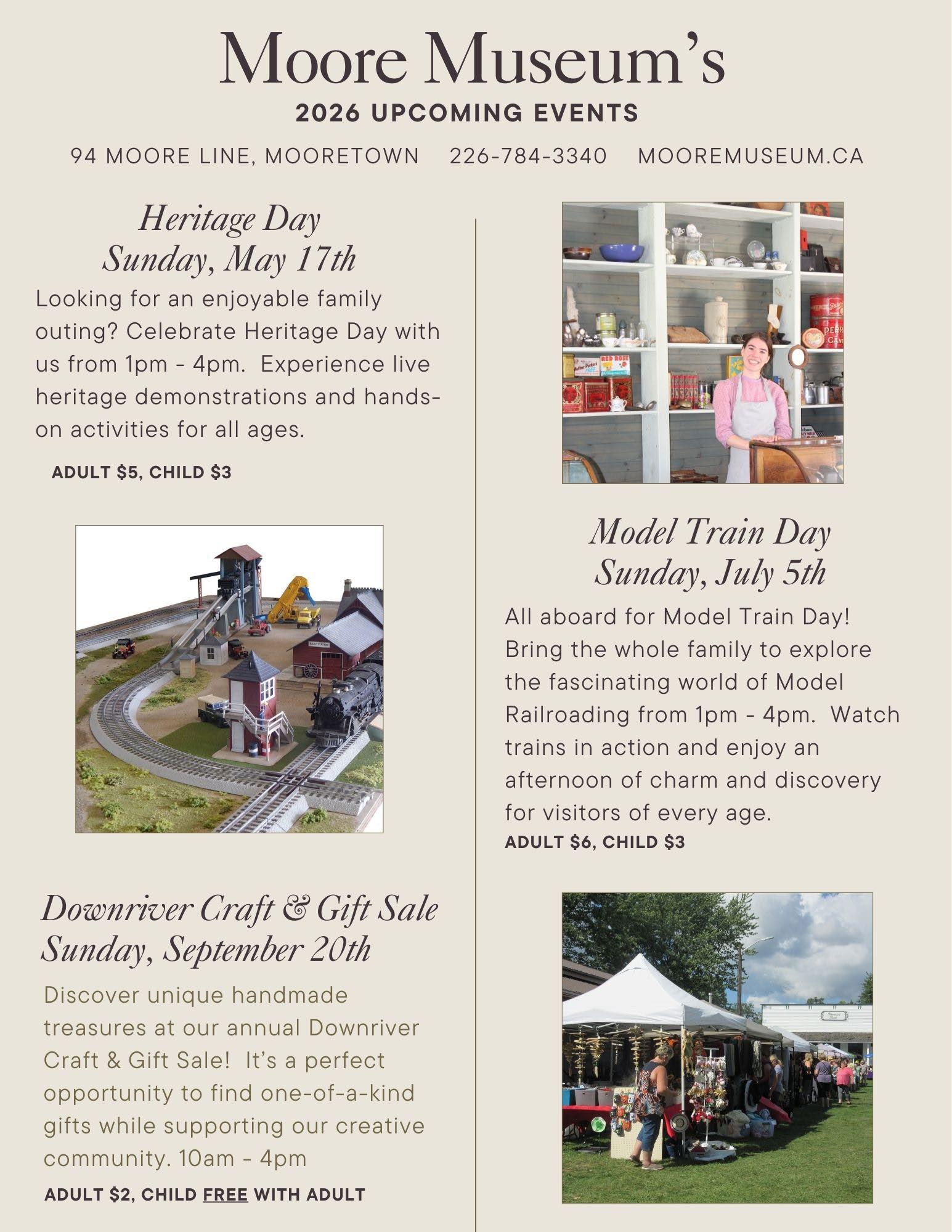
Moore Museum
94 Moore Line, Mooretown, ON N0N 1M0 226-784-3340
mooremuseum.ca
Facebook @mooremuseum
Plympton-Wyoming Museum
6745 Camlachie Road, Camlachie, ON N0N 1E0
plymptonwyomingmuseum.ca
Facebook @plympton-wyomingmuseum
Lambton Heritage Museum
10035 Museum Road, Grand Bend, ON N0M 1T0 519-243-2600
heritagemuseum.ca
Facebook @lambtonheritagemuseum
Oil Museum of Canada
2423 Kelly Road, Oil Springs, ON N0N 1P0 519-834-2840 oilmuseum.ca
Facebook @oilmuseumofcanada
Arkona Lions Museum and Information Centre
8685 Rock Glen Road, Arkona, ON N0M 1B0 519-828-3071
abca.ca/conservationareas/rockglen
Facebook @arkonalionsmuseum
Sombra Museum
3476 St. Clair Parkway, Sombra, ON N0P 2H0 519-892-3982
sombramuseum.webs.com
Facebook @sombramuseum
Lambton County Archives
787 Broadway Street, Wyoming, ON N0N 1T0 519-845-5426
lambtonarchives.ca
Facebook @lambtoncountyarchives
Forest-Lambton Museum
8 Main St. North, Forest, ON N0N 1J0
forestlambtonmuseum.ca
Facebook @forestlambtonmuseum
Additional Contributors
The Ontario Genealogical Society, Lambton Branch
lambton.ogs.on.ca
Facebook @lambtoncountybranch-ontariogenealogical
Sharon Plunkett
On behalf of the Warwick Heritage and Historical Committee