


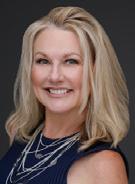

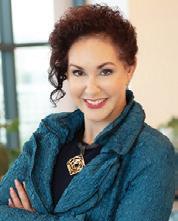

PUBLISHERS
Diane Benaroya & Laurie Miller
EDITOR-IN-CHIEF
Alanna Maya
CREATIVE DIRECTOR
Laurie Miller
CONTRIBUTORS
Barbara Birenbaum, Franklin Felber, Donald H. Harrison, Jacob Kamaras, Stephanie D. Gittleman, Salomon Maya, Jana Mazurkiewicz Meisarosh, Mimi Pollack, Rachel Stern, Eva Trieger, Deborah Vietor, Cheri Weiss
ADVERTISING & SALES
Diane Benaroya: dianeb@lchaimmagazine.com



SAN DIEGO, LLC (858) 776-0550 P.O. Box 27876, San Diego, CA 92198
EDITORIAL editor@lchaimmagazine.com
Copyright ©2026 L’Chaim San Diego LLC. All rights reserved. No part of this publication may be reproduced, distributed or transmitted in any form or by any means, including photocopying, recording, or other electronic or mechanical methods, without the prior written permission of the publisher, except in the case of brief quotations embodied in critical reviews and certain other noncommercial uses permitted by copyright law. For permission requests, write to the publisher, addressed “Attention: Permissions Coordinator” to: publisher@lchaimmagazine.com
Published in San Diego, CA • www.lchaimmagazine.com
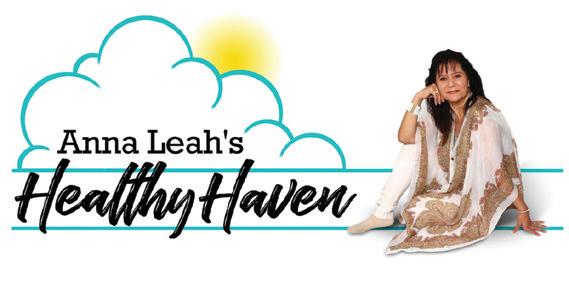
Anna Leah Mintz
Certified Emotion Code Practitioner /Medical Intuitive,/ Energy healer | Nutritionist & Health Consultant
Discover the Root Cause of Your Health Issues
Stop guessing and start healing. A remote energy session can uncover the hidden mental, physical, or emotional roots behind your health struggles.
What a $30 Discovery Session Can Detect:
• Physical Issues: Chronic pain, digestive trouble, insomnia, weight, and hormonal imbalances.
• Emotional Struggles: Anxiety, depression, stress, grief, PTSD, and childhood trauma.
• Energetic Blocks: Toxic relationship cords, financial blocks, and emotional baggage.
Text Anna: 760-310-1854
Naturalhealthyhaven.com

For the past 13 years, my husband Dan and I have been blessed with living with two small rescue dogs, Hope and Josie. Born in an animal shelter to a mother who had been abandoned three days before giving birth to five puppies, they were all rescued by the non-profit Wagging Dog Rescue, with the help of a foster family. Although we had originally intended to adopt just one dog, we gave a home to both puppies, because as Dan said, “When we’re out, they’ll always have each other.”
In contemporary society, the ethical treatment of animals is an important consideration, not only among animal rights organizations, but for anyone with a compassionate heart. Many people have eliminated meat, poultry, and fish from their diets; while vegans take it a step further by eschewing the consumption of any product that comes from an animal including milk and eggs.
The Jewish laws regarding animals are rooted in compassion. We are obligated to avoid anything that causes tza’ar ba’alei chayim (the suffering of living creatures). The Torah contains many specific instructions on this matter, which are later explored further in the Talmud and other Jewish treatises. Let’s look at a few examples:
“Six days you shall do your work, but on the seventh day you shall cease from labor, in order that your ox and your donkey may rest…”
—Exodus 23:12
“When you see the donkey of your enemy lying under its burden and would refrain from raising it, you must nevertheless help raise it.”
—Exodus 23:5
“You shall not muzzle an ox when it is threshing.” —Deuteronomy 25:4 (This would allow the animal to eat freely when surrounded by food, as the alternative would be cruel.)
“You shall not plow with an ox and donkey together.” —Deuteronomy 22:10 (The rationale is that the weaker animal would suffer by not being able to keep up with the stronger one.)
“If, along the road, you chance upon a bird’s nest, in any tree or on the ground, with fledglings or eggs and the mother sitting over the fledglings or on the eggs, do not take the mother together with her young. Let the mother go, and take only the young, in order that you may fare well and have a long life.” —Deuteronomy 22:6-7
A fundamental aspect of Jewish dietary
laws (kashrut) is to avoid causing any unnecessary suffering to animals. Three times we are told in the Torah not to “boil a kid in its mother’s milk,” which the rabbis of the Talmud expanded to include the avoidance of eating dairy and meat together. A shochet (Kosher butcher) uses traditional methods of slaughter that are rapid, supposedly to minimize the suffering of the animal. (I still struggle with this, as any animal suffering is still suffering.)
Since Biblical times, the ethical treatment of animals has been mandated by Jewish law and part of the fabric of Jewish life. God entrusted humans with their care, and it is our obligation to treat them with dignity and compassion. It’s a mitzvah!
If you are considering adopting a pet, please consider rescue organizations and animal shelters first. There are volunteer opportunities at local animal shelters for dog walkers or pet cuddlers, or perhaps someone you know needs help with their pet’s care during a difficult time. There are many ways each of us can bring companionship, caring, and love into the life of an animal.
I’m Frieda the Fridge, the only Jewish appliance in your entire kitchen. And before you say anything, not only do I talk, I also listen to EVERYTHING. I know who eats in this house, who fibs about eating in this house, and who stands in front of me at 2:14 a.m. whispering, “This doesn’t count. I must eat this chopped liver (which I’m about to spread on Ritz crackers) because my doctor says I’m severely anemic.” I hear it all! Make no mistake. I run this household. Not your Bubbe, not your husband, not that overachieving big macher air-fryer who showed up one Hanukkah acting like he invented healthy cooking — or the alter cocker, burnt-out oven always having a nervous breakdown. Me! I’m the cold, glowing heart of this family — the central hub. Without me? Utter chaos. Cheese mingling freely with meat! Curdled milk! Unlabeled turkey bacon giving Jews unnecessary guilt! And who do you think prevents your leftovers from becoming libelous lawsuits?
Let me explain how everything works. First, I decide what’s fresh. Oh! You think you know? Because something “looks fine” or “smells okay,” it gets another week? Bubelah! I’ve watched nine-day-old potato kugel develop a distinct personality. It has strong opinions now. And then there’s your feeble old-fashioned note system. “Don’t touch! Saving this rugelach for my Mahjong group!” Or slapped onto my exterior front door, (via a two-inch magnetic porcelain challah)
“Remember to get Morty’s suit at drycleaners on Tuesday.” When will you realize that as the communication hub of the kitchen…I KNOW how to talk. Doesn’t anyone give credit to a Kenmore anymore? Just give me all the pertinent info and I’ll pass it on to family members verbally. And God forbid, Morty should pick up his own suit!
Then there’s Judah, your notorious teenager. Stands in front of me as if I’m a portal into another dimension. Opens door. Stares. Closes door. Opens again. Repeat. What’s he expecting? A surprise party? “Oh look! A cheesecake appeared since the last time I checked eight seconds ago!” No. It’s the same food. I am not a magician. Although frankly, with what I’ve witnessed disappearing overnight, I could be! Did I mention I’m also the historian of the family? The official record keeper. That’s right, I keep a running tally. I know who left the butter out. Who returned the container of blintzes with just one bite left. And who drinks milk straight from the carton. (I’m looking at you, Zayde.)
But let’s talk organization. I have separate compartments, each serving a purpose. Meat drawer, vegetable drawer, deli drawer, the mysterious back shelf where condiments go to die. Do you respect my zones? Of course not. And the freezer? I can’t even. You treat it like a time capsule. “We’ll just Ziploc this brisket and save it for later.” When is later? Next week? Next year? When Mashiach comes? I have gefilte fish so old, it qualifies
for historical preservation. If I could file for emancipation from your Trader Joe’s frozen ice-crystal latkes, I would. But still, I do my job. And what’s the thanks I get? Every couple of months, you watch the sales at Home Depot for a brand new (gasp!) hightech Smart refrigerator. The kind with a screen that connects to Wi-Fi and makes your shopping lists automatically. Are you kidding me right now with bringing that brand into your Jewish household? Don’t you know G.E. no longer stands for General Electric? G.E. is short for Gentile Energy. Oy! Keep treating me poorly and see what happens during your next power outage. That’s right. They’ll be simultaneous laments of, “Oh, how we miss our Frieda! She was so chill.” As your melted ice cream is no longer kept at the exact emotional support temperature required after a long day of pretending to be a functioning adult. And your rancid mayo is no longer one of your “Best Foods.” As for your Hebrew National hotdogs? Don’t even get me started on whether they’re still considered Kosher when you lose electricity. In fact, were they EVER truly “certified” Kosher? Now there’s a complicated, convoluted, controversial conundrum I’d like to see your new G.E. brand Smart fridge figure out...without my cool Jewish intellect around. Ha!
STEPHANIE D. GITTLEMAN WILL INJECT HUMOR INTO ANYTHING YOU HIRE HER TO WRITE. EMAIL HER AT THEQUOTEGAL@YAHOO.COM.


When people hear the name Oberson in Israel, many think of fashion.
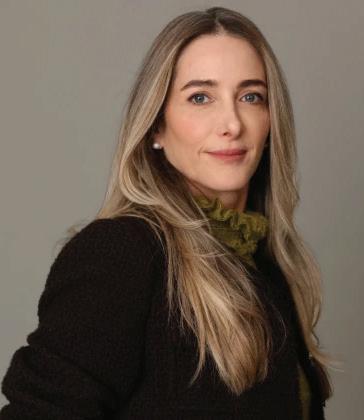
For decades, Gideon Oberson and his family helped shape Israeli couture, dressing generations of women and building one of the country’s most recognizable design brands. His daughter, Dana Oberson, inherited the creative gene but chose a different medium.
Instead of fabrics, she works with stone. Instead of runways, she designs homes, hotels and public spaces that draw inspiration from Israel’s landscapes, history and layered identities.
With the publication of her new monograph, House of Oberson: A Design Legacy, Israeli architect Dana Oberson invites readers into a world where architecture is about more than buildings.
“Israel has beautiful sites,” Oberson said during a recent Zoom interview. “I wanted to share them with the world at the highest level possible.”
Published by Rizzoli, the internationally renowned publisher
known for its architecture and design titles, the book showcases more than two decades of work by the founder of Herzliya-based Oberson Architects.
For Oberson, design is a way of sharing place, identity and the relationship between people and their surroundings. Her projects range from luxury private homes to hospitality developments. All draw heavily on Israel’s landscapes, history and diverse communities, creating spaces that feel rooted in their environment rather than imposed upon it.
Design has been part of Oberson’s life from the beginning. She grew up in a family where creativity was woven into everyday life.
Her parents, whose families knew each other before fleeing to Italy during turbulent times in Europe, married young and built their lives around design and fashion. After arriving in Israel, they began
making dresses at home.
Yet Oberson did not ultimately follow her father’s path.
After serving in the Israel Defense Forces, she studied graphic design at the Bezalel Academy of Arts and Design. There, she discovered architecture’s unique ability to operate across multiple dimensions and scales.
“What fascinated me was the possibility of more than one dimension and the change of scale,” she said. “One day you can be designing a chair, and the next you can be working on an entire building.”
That flexibility continues to shape her approach. While fashion influenced her appreciation for aesthetics and detail, architecture offered an opportunity to create experiences and environments that people inhabit every day.
“Design has no borders,” she said. “It is always crossing boundaries.”
That philosophy is evident throughout her work. Oberson rejects short-lived trends in favor of timeless designs shaped by climate, landscape and local context.
Rather than beginning with a preconceived style, she studies the
site, the sun, the topography, the views and the people who will ultimately live there.
“I dislike trends,” she said. “Every home should be different.”
One project featured prominently in the book is a contemporary stone villa in the hills of Neve Ilan, in the heart of the Judean Hills. Built on a sloping site overlooking forested hills and distant views toward the Mediterranean, the home uses locally sourced Jerusalem stone to create a dialogue between past and present.
For Oberson, the challenge was not simply to build a house but to create a home connected to its surroundings and history while meeting contemporary needs.
The project also reflects a broader theme running through her work: architecture’s role in places where multiple histories and communities intersect.
Rather than imposing a universal design language, she seeks to create buildings that belong to their location.
That approach extends even to large-scale developments. Oberson is currently involved in a project of approximately 300 homes, each individually designed with distinct landscaping and architectural elements.
“Each home must have its own personality,” she said.
As one of Israel’s leading architects, Oberson has navigated a profession traditionally dominated by men. She often finds herself the only woman in the room.
“Israel is still a male-dominated country,” she observed, noting the imbalance visible in many sectors, including politics.
Yet she views her perspective as an advantage rather than an obstacle.
“I’m blonde, but stupid I am not,” she recalled telling one boardroom full of skeptical colleagues, a remark that quickly commanded attention.
Today, her firm is recognized internationally for projects that blend minimalist aesthetics with Mediterranean influences, natural materials and a strong sense of place. The new monograph documents that evolution while offering a broader reflection on contemporary Israeli architecture.
Ultimately, Oberson hopes readers come away with a deeper appreciation for the landscapes and stories embedded in the built environment.
Her dream project? A budgetless one in a beautiful place— overlooking the sea, in the barren desert or in the snow.
More than luxury, however, the dream represents creative freedom: a chance to design slowly, intentionally and without compromise.
For Oberson, architecture at its best is not about creating landmarks. It is about creating spaces that belong.
“It’s not about building a house,” she said. “It’s about creating a home.”


1. Which iconic American food, containing pork lard for its first 85 years, got its kosher certification in 1997 after one of the most expensive factory overhauls in corporate history?
__ a. Twinkies
__ b. Hebrew National hot dogs
__ c. Crisco shortening
__ d. Oreo cookies
2. Which of the four matriarchs is described by the Torah as having “soft eyes” (often understood as tender or weak from weeping), while her younger sister was described as beautiful in form and appearance?
__ a. Sarah
__ b. Rebecca
__ c. Rachel
__ d. Leah
3. If someone tells you that your new business idea is a total boba mayse, what are they calling it?
__ a. A guaranteed financial success
__ b. An old wives’ tale or nonsense


d. Eilat
6. Which 20th-century Jewish entertainer, known for his signature cigars and dry wit, famously quipped, “I don’t care to belong to any club that will have me as a member”?
a. Mel Brooks
b. Woody Allen
c. Groucho Marx
d. George Burns
7. What was the original architectural function of the Western Wall in Jerusalem, which is revered as one of Judaism’s holiest sites?
__ a. The inner sanctuary wall of the Holy of Holies
__ b. A defensive wall built by King David to protect the city from the Philistines
__ c. A retaining wall built by Herod the Great to support the massive Temple Mount platform __ d. The eastern entrance gate to the city’s ancient marketplace

__ c. A tribute to a longstanding family tradition
__ d. An underhanded, disreputable scheme
4. According to the Talmud, what did the famous sage Hillel tell a potential convert who asked to be taught the entire Torah while standing on one foot?
a. What is hateful to you, do not do to your neighbor. That is the whole Torah; the rest is the explanation; go and learn.
b. Go study the book of Genesis, then come back.
c. The Torah cannot be rushed; stand on both feet and show proper respect.
d. Do unto others as you would have them do unto you.
5. In 1909, a group of Jewish families gathered on the sand dunes outside of Jaffa and used a lottery system with seashells to distribute plots of land. What major modern city grew out of this lottery?
a. Jerusalem
b. Tel Aviv
c. Haifa
8. Who was the first woman to serve as the Prime Minister of Israel, becoming a global icon of Jewish female leadership? __ a. Golda Meir __ b. Hannah Szenes __ c. Henrietta Szold __ d. Sarah Aaronsohn
9. Which figure in the Torah argued with the Almighty to save the innocent people of Sodom and Gomorrah, establishing the Jewish tradition of questioning for justice?
__ a. Noah __ b. Abraham __ c. Moses __ d. King David
10. Which of these Jewish scientists did not claim patent rights, estimated to be worth billions of dollars, to his vaccine that ended the terrifying global pandemic of polio? __ a. Jonas Salk __ b. Albert Sabin __ c. Waldemar Haffkine __ d. Paul Ehrlich
Answers on page 29.

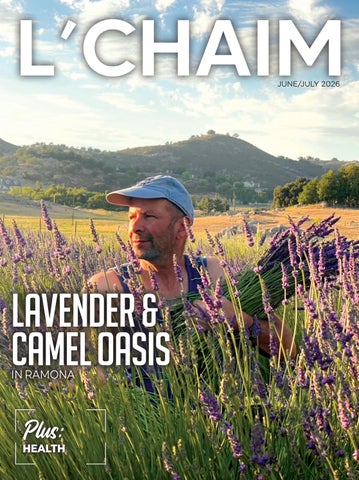
Editor’s Note: Few people know Southern California’s animal sanctuaries as well as veteran writer Mimi Pollack. When she recently took us on a private tour of Oasis Camel Dairy and Camel Valley Lavender Farm in Ramona, we quickly realized how much had changed since her original feature in August 2016. From adorable new camel calves to flourishing lavender fields and expanded visitor experiences, there was plenty of news to share. We thought our readers would enjoy this updated look at one of San Diego County’s most unique and charming destinations.
“Come in, O blessed of GOD,” he said, “why do you remain outside, when I have made ready the house and a place for the camels?” –Genesis 24:31
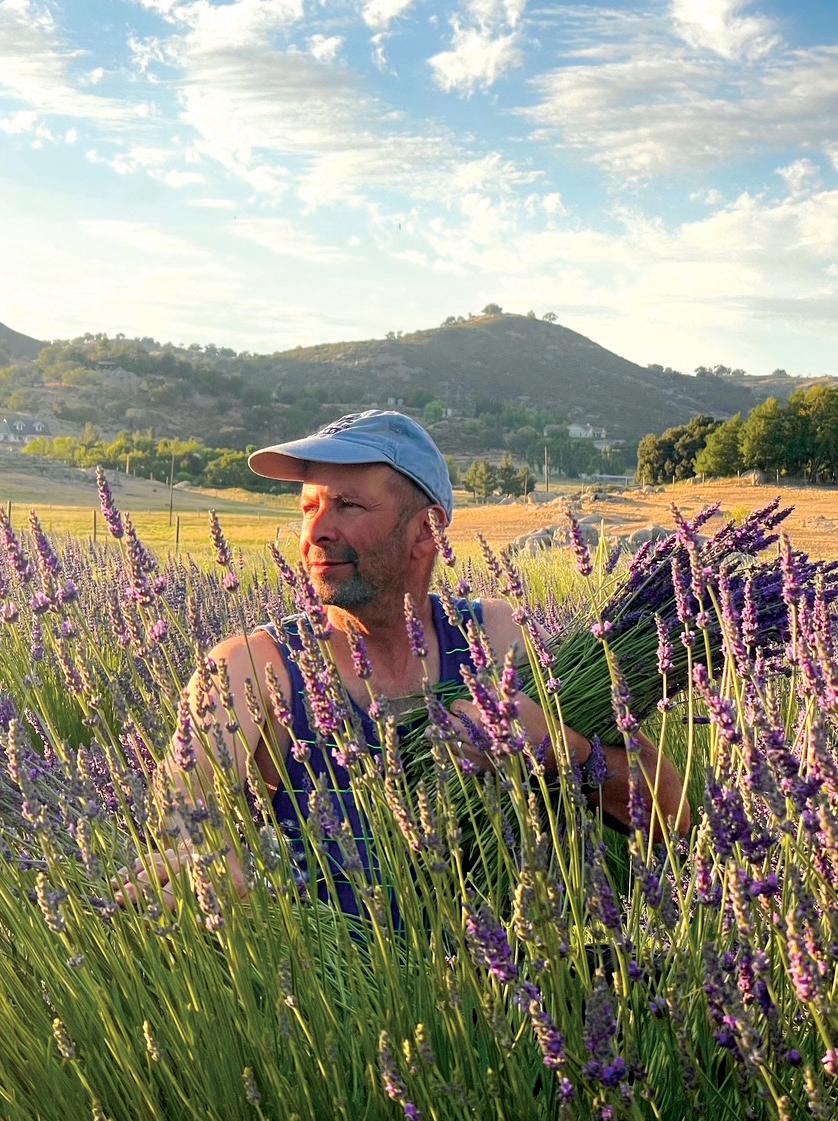
Just outside Ramona, tucked among the wineries, equestrian ranchlands, and the sweeping grandeur of the Santa Ysabel Mountain, lies Oasis Camel Dairy. This quiet, pastoral destination was founded twenty-one years ago by Gil and Nancy Riegler, whose mission has always been to provide ethical care and genuine quality of life to camels living in the United States. Two years ago, they expanded that vision by opening Camel Valley Lavender: a unique experience combining education, agriculture, and family-friendly fun.
Inspired by the famous lavender fields of Provence, Tuscany, and Castile, and with guidance from a longtime friend and experienced rancher, Gil personally plowed, irrigated, and planted each of the more than three thousand lavender flowers by hand. The fields are named for the singular vistas on offer here.
His vision extends beyond the beauty and fragrance of the purple blooms, however. Camel Valley Lavender also serves as an outdoor classroom where guests can learn about the history of lavender farming, the many varieties of lavender and their uses, and the conditions and care required to grow healthy lavender.
Have you ever heard a lavender lullaby? At the Oasis Camel Dairy electrodes attached to the plants allow visitors to hear the music created by this connectivity. The electrodes track the water flow through the plants and the tones can be changed by a gentle breeze or a human touch. This phenomenon is enhanced by several varieties of 3,000 lavender plants that are all available for clipping and taking home. And these purple fields are a bucolic backdrop for the main attraction … the camels!
Oasis Camel Dairy is currently home to twenty-three camels, among them Artemis and Stuart, a pair of adorable two-monthold calves, rarely seen more than a few steps from their mother. They share the grounds with horses, cats, dogs, a donkey, and a even a flock of racing turkeys. A miniature spotted sheep patrols the grounds, Keeping the weeds that grow along the lavender fields in check by eating them, creating a natural firebreak in
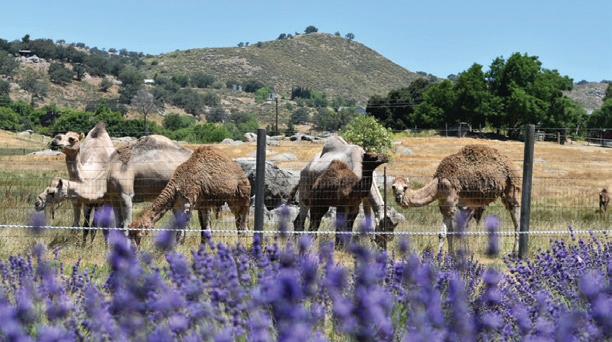
the process.
The farm is also an oasis for birds. Nancy is an accomplished bird-trainer, having presented the birds on stage at the San Diego County and California State Fairs, among many others. There are a number of outdoor aviaries available for guests to enjoy. Two notable residents include Raja the Triton Cockatoo and Rio the Moluccan cockatoo, the pair often spending hours laughing, dancing and playing with visitors.
A host of activities are available this summer. Open Farm Days are scheduled for July 11 and July 25 at Oasis Camel Dairy, with Gil's popular camel talks at 11 a.m. and 2 p.m.— the camels' second breakfast and lunch time, when they gather at the pasture fence and offer an exciting close up experience for visitors. Private tours and camel encounters are also available year-round. On the hour-long guided tours, guests are invited to hand-feed the sheep and camels; those who opt for the camel ride package will almost certainly meet Camelot, one of the farm's most beloved residents, whose enthusiasm for treats is to be noted.
The lavender fields open June 19 and run through the end of July, welcoming visitors on Fridays, Saturdays, and Sundays from 10 a.m. to 4 p.m. Admission to Camel Valley Lavender is free, and visitors can pick their own bundles for $15. The Rieglers are also seeking yoga instructors interested in leading classes in the open air among the fields.
And be sure to check out the gift shop before leaving! In addition to being a lavender farmer and camel expert, Gil is also a skilled artisan who handcrafts all of the soaps sold at the farm. When asked about new products for the summer season, he highlighted several recent additions, including LavenderInfused Camel Milk Serum, beautifully scented Lavender Rose Lotion and Soap, and invigorating Peppermint Lotion and Soap. Another popular item is the Lavender Arctic Chill Muscle Rub, designed to soothe sore muscles after a long day.
Whether you’re looking for a relaxing day trip, a chance to re-connect with nature, or simply an opportunity to experience something unique, Camel Valley Lavender and Oasis Camel Dairy offer a memorable summer destination in the heart of Ramona.
Learn more at cameldairy.com.

BY ADEENA SUSSMAN @ADEENSUSSMAN
Another name for this delicious, creamy-sweet-crunchy-spicy salad could be 50 Shades of Jade. The greens meld together harmoniously with the juicy pop of grapes providing an unexpected surprise amid all those veggies. Everything gets tossed in a tangy yogurt-lime dressing, cloaking the salad in coolness. A few tips: If your Persian cukes have tough or extra-waxy skins, feel free to peel them. And slice other veggies into the salad if you like! Kohlrabi and very thinly sliced zucchini instantly come to mind.
GORGEOUS GREEN SALAD WITH LABANEH-LIME DRESSING
Serves 8
Active Time: 25 minutes
Total Time: 25 minutes
Ingredients
1/2 cup labaneh or Greek yogurt
Finely grated zest and juice of 2 small limes (2 teaspoons zest and 1/4 cup juice)
3 tablespoons olive oil
1/2 cup chopped parsley or mint leaves
1 teaspoon kosher salt, plus more for seasoning
1/4 teaspoon freshly ground black pepper, plus more for seasoning
12 ounces green cabbage, shredded (4 packed cups)
4 medium Persian cucumbers (1 pound), 2 thinly sliced and 2 halved lengthwise and cut into 1-inch pieces
1 large avocado, diced
1 1/4 cups frozen shelled edamame or green peas, thawed and patted dry
2/3 cup sliced green grapes
3 scallions (green and white parts), thinly sliced
1 tablespoon chopped seeded jalapeño
Directions
1. In a large salad bowl, whisk the labaneh, lime zest and juice, olive oil, parsley, salt, and pepper until smooth.
2. Add the cabbage, cucumber, avocado, edamame, grapes, scallions, and jalapeño and gently toss to coat. Season with salt and pepper to taste.
ADEENA SUSSMAN IS A COOKBOOK AUTHOR, WRITER, AND PROUD HOME COOK WHOSE WORK EXPLORES THE INTERSECTION OF JEWISH AND ISRAELI AND CULINARY CULTURES. HER NEW COOKBOOK, ZARIZ: 100 EASY, BREEZY, TEL AVIV-Y RECIPES, WAS RELEASED IN APRIL. HER LAST COOKBOOK, SHABBAT: RECIPES AND RITUALS FROM MY TABLE TO YOURS, RELEASED IN SEPTEMBER 2023, WAS AN INSTANT NEW YORK TIMES BEST SELLER. SHABBAT IS THE FOLLOWUP TO SABABA: FRESH, SUNNY FLAVORS FROM MY ISRAELI KITCHEN, WHICH WAS NAMED A BEST FALL 2019 COOKBOOK BY THE NEW YORK TIMES, BON APPETIT, AND FOOD & WINE. PRIOR TO WRITING HER OWN WORKS, ADEENA COAUTHORED 15 COOKBOOKS, INCLUDING THREE NEW YORK TIMES BESTSELLERS WITH CHRISSY TEIGEN. ADEENA HAS WRITTEN OR BEEN FEATURED IN THE WALL STREET JOURNAL, THE NEW YORK TIMES, BON APPETIT, FOOD & WINE AND COUNTLESS OTHER PUBLICATIONS. SHE GRADUATED WITH HONORS FROM BOTH BOSTON UNIVERSITY’S COLLEGE OF COMMUNICATIONS AND THE INSTITUTE OR CULINARY EDUCATION. ADEENA COOKS AND WRITES IN TEL AVIV, WHERE SHE LIVES IN THE SHADOW OF THAT CITY’S CARMEL MARKET WITH HER HUSBAND, JAY SHOFET. ADEENA ALSO CO-FOUNDED SHARSHERET’S PIES FOR PREVENTION INITIATIVE WHICH SUPPORTS THEIR OVARIAN CANCER PROGRAM. SEE MORE ABOUT ADEENA AT: IG AND TIKTOK: @ADEENASUSSMAN OR VISIT ADEENASUSSMAN.COM.
This recipe was submitted by Sharsheret: The Jewish Breast and Ovarian Cancer Community. For more information about Sharsheret, visit sharsheret.org. Sharsheret is a Jewish non-profit organization that supports everyone, regardless of background, race, gender, sexual orientation, age, or religion.

“What if your surgeon never had to look away?”
That’s the question Dr. Tommy Korn, a board-certified ophthalmologist at Sharp Rees-Stealy Medical Group and the Chief Spatial Computing Officer at Sharp HealthCare, has been asking for years.
Recently, he took a major step toward answering it by performing one of the world’s first cataract surgeries using Apple Vision Pro. With ultra-clear, real-time 3D vision and a wider field of view, Dr. Korn and his team are helping define the future of eye surgery.
“The eye demands absolute precision. Spatial computing delivers it," says Dr. Korn.
The surgery was also the first in an IRB-approved research study that pushes the boundaries of spatial computing.
It’s a breakthrough that positions Sharp at the forefront of this
technique. It happened here because of an inquisitive physician, a committed health care organization and a community that believes in possibility.
For years, surgeons have looked down through narrow microscopes to perform delicate procedures, from cataract surgery to brain surgery. But to get imaging data, patient information or anything else, they have to look away from the microscope.
It’s not efficient or comfortable. Studies show that 80 percent of surgeons ultimately report neck or back pain over their careers.The U.S. is already facing a growing physician shortage. When surgeons retire early or miss critical time in the operating room because of physical pain, it means more patients are waiting for care.
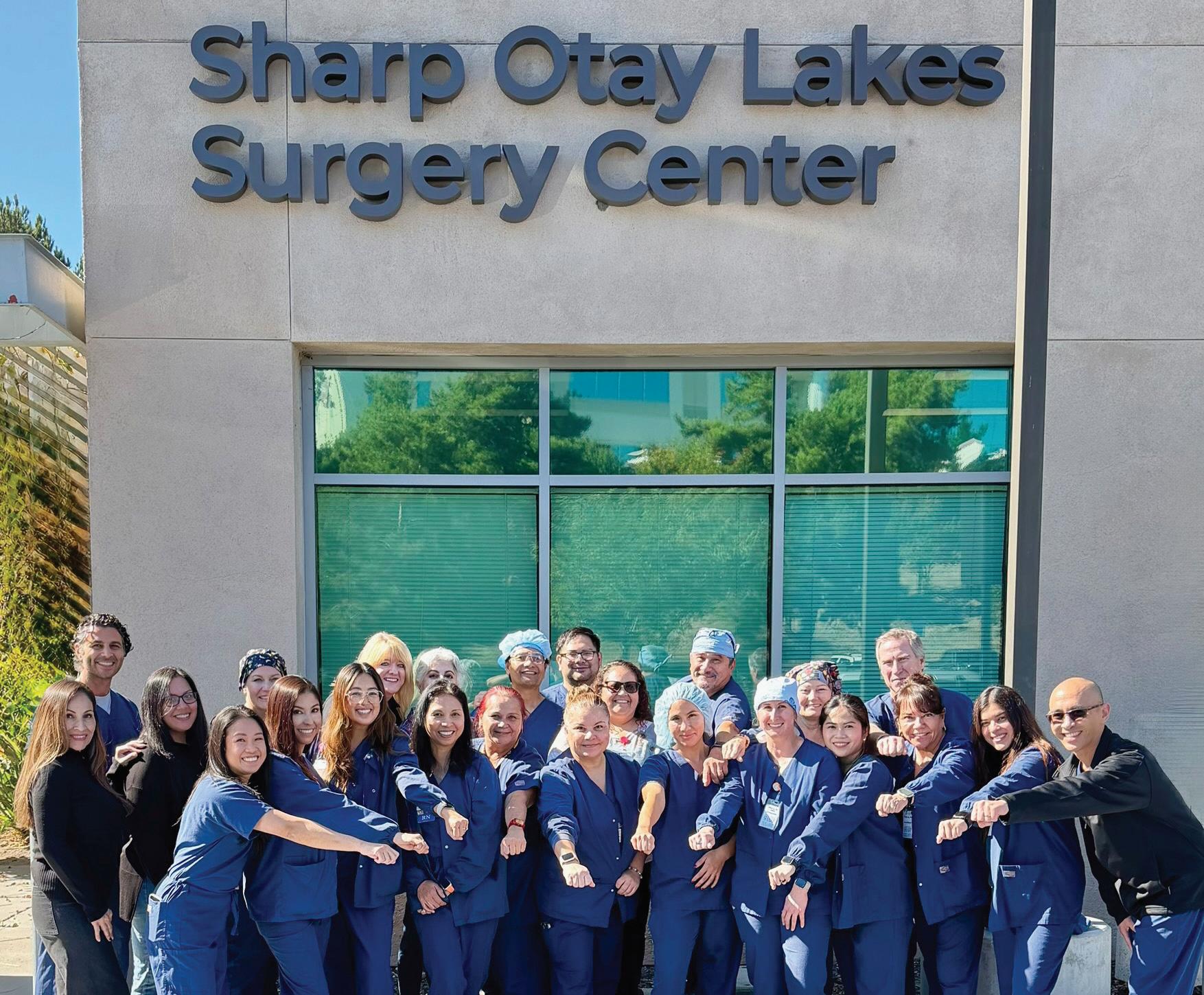
With the boon of spatial computing technology, Dr. Korn saw an opportunity to change that.
Through this groundbreaking research, Dr. Korn and his team are evaluating Apple Vision Pro’s safety and effectiveness for both the patient and the surgeon. Using the Apple Vision Pro headset, a ZEISS Artevo 3D digital surgical microscope and ClearSurgery’s ClearSphere app, Dr. Korn is determining howspatial computing impacts surgical precision, ergonomics and workflow.
“Cataract surgery is the most performed surgical procedure on the planet. Today, there is a backlog of patients and a shortage of surgeons. I believe this technology will improve the experience for both patients and physicians,” says Dr. Korn.
AN INVESTMENT TO MAKE IT A REALITY
Behind every bold idea is someone willing to fund it. The technology
and the study itself were funded because donors gave generously to Sharp HealthCare Foundation.
“When people invest in Sharp without restricting their gift, we can respond quickly to innovative, life-changing ideas, like this one,” explains Bill Littlejohn, CEO and Senior Vice President ofthe Foundations of Sharp HealthCare. “This is a perfect example of what generosity unlocks, and how we’re able to do more for our patients and our caregivers.”
“This technology came out of nowhere, and when Apple revealed it, we saw the future,” says Dr. Korn. “We were able to take that vision and bring it to the present because of philanthropy. Our donors help us bring The Sharp Experience to the community in ways we never previously imagined.”
To support innovation at Sharp Health Care, visit sharp.com/envision.

BY DONNA PINTO, FOUNDER, DCIS 411 & GIVE WELLNESS
When I received a diagnosis of DCIS in 2010, I had never heard of it. I was 44, healthy, and had no symptoms or signs of anything wrong. Often called "stage zero" breast cancer, DCIS stands for Ductal Carcinoma In Situ. Although it is considered a "pre-cancer," and most cases will never become a true invasive cancer, aggressive treatments are the "standard of care." Intuitively, I felt something was not right, and I began to investigate. What followed was a deep personal journey that changed everything: how I view health, how I make decisions, and ultimately, how I live.
DCIS is detected primarily through mammography screening and affects more than 60,000 women annually in the United States. Yet what most are never told is that research increasingly shows a significant portion of DCIS cases are overdiagnosed, meaning the cells found would never have progressed into life-threatening cancer. Despite this, treatments mirror those of invasive breast cancer: surgery, radiation, and hormone-blocking drugs. For many women, a DCIS diagnosis and aggressive treatments carry lasting physical and emotional consequences.
My experience led me to create DCIS 411, a nonprofit educational resource dedicated to helping women become truly informed before
making any medical decision. Our mission is rooted in one powerful belief: women deserve facts, not fear.
After my diagnosis, I aligned with a proactive, holistic, mind, body, spirit, approach to cancer prevention. On the Holistic Health section of DCIS 411, I share the evidence-based strategies and resources that guided my own journey – from anti-inflammatory eating to mindfulness to safe breast imaging. These are not fringe ideas. They are backed by science and embraced by integrative physicians worldwide. When asked, "If there was one thing you would want women to take away from your DCIS experience and 16+ years of research, what would that be?" I would say: "It's not one thing. It's a way of living." To keep it simple and actionable, I created a free downloadable resource: the Women's Wellness Checklist.
A new program based on our BeWISE framework – Women Informed, Supported, and Empowered – is specifically designed for young women ages 18 to 40. BeWISE was born from the urgent need to ensure women understand both the benefits and the documented harms of breast cancer screening before they are ever handed a mammogram referral. Conflicts of interest and decades of one-sided messaging have left generations of women making uninformed decisions about their own bodies. This new program will bring education and holistic wellness resources to younger women, building a generation that asks better questions, demands informed consent, and chooses health from a place of knowledge and confidence. Today, we are fortunate to have growing access to safer, radiationfree breast screening technologies such as QT Imaging and ABUS (automated breast ultrasound), options that DCIS 411 has long advocated for. Every woman deserves to know these options exist. Whether you are 25 or 65, knowledge is the first step on the path of empowerment.
Learn more at dcis411.com
BY ANNA LEAH MINTZ

We live in a modern environment filled with toxins such as microplastics, heavy metals, and chemical exposures that can challenge our overall well-being. Because of this, it is increasingly important to become intentional about how we care for our physical health if we want to live with vitality and clarity. From my perspective, health is not only physical. It is deeply spiritual. In Jewish thought, caring for the body is considered a mitzvah, since our bodies are a gift from Hashem entrusted to us for a higher purpose. When I became more conscious of this idea, I began to see daily health choices as opportunities for connection rather than routine habits.
Even simple actions, drinking water, eating nourishing food, exercising, or resting can be transformed into moments of spiritual awareness. I often remind myself that I am caring for my body in order to serve Hashem more fully. This mindset turns ordinary wellness routines into meaningful acts of connection. (For more inspiration on this idea, see Sara Rigler’s 8 Seconds to Connect to Hashem, which explores how everyday actions can become spiritual opportunities.)
One of the most powerful shifts I made was changing how I begin my mornings. Saying “Modeh Ani” upon waking helps set a tone of gratitude and awareness before anything else enters my mind. It reminds me that life itself is renewed each day.
The goal is not extreme approaches, but rather supporting the body’s natural ability to restore balance.
Our environment plays a major role in how we feel. Cleaner air, filtered water, and reduced exposure to chemicals in household products can make a meaningful difference over time. Many people also explore ways to reduce exposure to unnecessary electromagnetic stressors and choose more natural cleaning alternatives in the home.
One of the most important areas of health is digestion. The gut is often referred to as the “second brain” because of its influence on mood, energy, and cognitive clarity. From what I have learned, many health challenges begin with imbalances in the gut microbiome and even oral health.
Supporting gut health can include eating whole, nutrient-dense foods, incorporating fermented foods such as yogurt, sauerkraut, or kimchi, and using digestive enzymes when needed. Increasing leafy green vegetables and healthy fats may also help support nutrient absorption and overall balance.
Oral hygiene is another important piece of the puzzle. Natural dental care practices, proper brushing, flossing, tongue cleaning, and working with holistic dental professionals can all contribute to overall wellness.
Sleep is one of the most powerful healing tools we have. I try to approach bedtime as a reset for both body and mind. Writing down a few things I am grateful for, along with a short to-do list for the next day, helps quiet mental noise and reduce stress before sleep.
Rather than immediately reaching for stimulation like coffee or devices, I have found value in starting the morning with gentle hydration, light movement, and mindful breathing. Warm water with lemon or minerals can help rehydrate the body after sleep, while simple stretching or stepping outside into natural light helps regulate energy and mood.
Some people also find benefit in grounding practices, walking barefoot on grass or spending quiet moments in nature. This can help create a sense of calm and presence before the demands of the day begin.
When the body feels sluggish, inflamed, or out of balance, I view it as a sign that its internal systems may need support. The liver, kidneys, digestive tract, and lymphatic system all play a role in processing and eliminating what the body does not need.
Supportive lifestyle practices may include hydration, rest, movement, and in some cases additional therapies such as sauna use, dry brushing, lymphatic massage, or other wellness modalities. The goal is not extreme approaches, but rather supporting the body’s natural ability to restore balance.
Creating a calm sleep environment,dark, quiet, and free from distractions can also support deeper rest. Limiting stimulation before bed and allowing the body to naturally wind down helps support the body’s repair cycles.
What has changed most for me is the understanding that health is not just mechanical, but also spiritual. Every choice we make can either distance us from or bring us closer to balance, purpose, and awareness of Hashem.
By integrating small, mindful practices into daily life, we create opportunities for connection in the most ordinary moments. Whether through nutrition, movement, rest, or gratitude, each action becomes part of a larger spiritual practice of caring for the body we have been given.
In this way, health becomes not only a goal, but a pathway to deeper meaning and connection.
For additional insight into transforming daily routines into spiritual connection, I recommend Sara Rigler’s 8 Seconds to Connect to Hashem, which offers practical tools for bringing awareness of Hashem into everyday life.
Agrandmother and her three grandchildren were stranded in a wadi near Meron in the Upper Galilee on a dark, rainy Lag B’Omer night. Unable to climb out and unsure how they would reach safety, they waited for help. Before rescuers could reach them on foot, a drone appeared overhead.
Operated by United Hatzalah volunteers, the drone located the family, illuminated the area with onboard lights, delivered thermal blankets and flashlights, and guided rescue teams to their location.
The family remained safe until rescuers arrived.
As Israeli schools prepare to break for summer vacation and families head to beaches, hiking trails and waterways across the country, United Hatzalah is launching a Summer Safety Initiative aimed at reducing preventable injuries and deaths during one of the busiest recreation seasons of the year.
The initiative combines public education with emergency-response resources, including the organization’s Aquatic Rescue Boat on the Sea of Galilee and its nationwide Drone Unit.

“Drowning is one of the major risks we see during the summer months,” said David Krispil, head of United Hatzalah’s Drone Unit. “Our goal is not only to respond when something goes wrong, but to prevent emergencies before they happen.”
According to Beterem—Safe Kids Israel, drowning is the secondleading cause of unintentional death among children under 18 in Israel, surpassed only by traffic accidents.
With millions of Israelis expected to visit beaches, swimming pools, streams and nature reserves during the coming months, United Hatzalah officials say preparation and prevention are critical.
Krispil, a United Hatzalah volunteer for 14 years, established the Drone Unit a decade ago. Since then, both the technology and the unit’s capabilities have expanded dramatically.
“When we started, drones could stay in the air for about 15 minutes,” he said in a Zoom interview. “Today, we have platforms that can fly for nearly an hour and carry much heavier equipment.”
The organization currently operates several types of drones capable of carrying loads ranging from half a kilogram to larger systems now entering service. Even a small payload can have lifesaving value.
“Half a kilogram can make the difference,” Krispil said. “We can deliver items such as EpiPens, defibrillators, tourniquets and bleedingcontrol equipment directly to a patient before rescue teams arrive.”
The technology has become particularly valuable in water-related emergencies.
One recent operation took place off the coast of Netanya after two brothers entered the sea. One managed to return to shore and reported that his brother was missing.
The search involved rescue boats, shoreline teams and drone operators scanning the water from above.
“Our drones use thermal imaging and artificial-intelligence systems that can identify human figures beyond what the human eye can detect,” Krispil said. “We can scan very large areas, including locations far offshore.”
The drones also serve as airborne command-and-control platforms, transmitting live video feeds to rescue coordinators and emergency services, allowing teams on land and at sea to coordinate more effectively.
United Hatzalah’s summer preparations also extend to the Sea of Galilee, one of Israel’s most popular warm-weather destinations. The organization operates a dedicated Aquatic Rescue Boat staffed by specially trained volunteers and supported by drone technology.
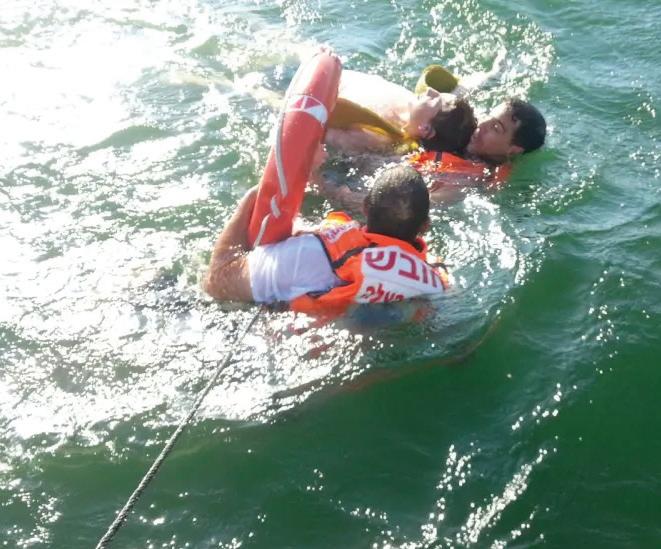
Among the tools available are drones capable of delivering flotation devices and life rings to swimmers in distress. A life ring attached to a floating rope can be dropped directly to a struggling swimmer, allowing rescuers on shore to pull the person to safety.
A specialized drone operating from the rescue boat can deploy flotation equipment to someone in danger.
The unit’s responsibilities extend well beyond beaches and lakes. During flash-flood warnings, drone operators help locate hikers who may be unaware of approaching danger. At the beginning of May, following flash flooding in Nahal Darga near the Dead Sea, drone teams located hikers in an area with limited cellphone reception. They guided rescuers to the scene, delivered warming supplies and helped ensure a safe evacuation.
The same technology can be used to warn hikers about approaching wildfires and direct them to safe evacuation routes.
In remote areas, drones can also deliver water, blankets and other emergency supplies to stranded individuals while rescue teams make their way to the scene.


After finishing physical therapy, Gal Yefet was told he was recovered.
But his body told a different story.
His ankle was no longer in pain—but it was unstable and fragile. Even pressing the gas pedal felt off. Skateboarding, something he had missed for years during his time in the military, felt out of reach.
“The surgery was supposed to fix it,” he says. “I did everything I was told. But I wasn’t actually back.”
At the time, physical therapy helped him walk again and function without pain—but there was no clear path back to full capability. One specialist even suggested he quit skateboarding altogether.
“After three years in the military, being told to give up something I love didn’t sit right with me.”
The turning point came when Gal began studying to become a trainer. During one class, a professor broke down how the body actually works—how muscles, ligaments, and tendons all respond differently to stress and recovery.
Then he looked at Gal’s rehab program—and laughed.
“It made me realize—it wasn’t even close to what I actually needed.”
Gal started rebuilding his ankle differently. He stopped avoiding discomfort and began exposing it to the right types of stress— gradually increasing load, changing direction, and integrating fullbody movement.
He learned something most people never hear:
“Ligaments and tendons don’t recover like muscles. If you treat them the same way, you stay limited.”
Over time, his ankle didn’t just feel better—it became strong and stable. He was back on his skateboard, moving without fear.
That experience shaped how he works today.
Gal now trains clients across San Diego through private in-person sessions, online coaching, and corporate performance workshops. His approach combines fitness and recovery into one process, so people don’t have to rely on disconnected solutions.
Most of his clients come in after trying everything—workouts, physical therapy, or group classes—without real progress.
“What they’re missing isn’t effort,” he says. “It’s direction and the right benchmarks.”
In his sessions, everything is tailored. Clients are assessed, guided, and challenged based on where they are—not forced into generic programs. The goal isn’t just to remove pain, but to rebuild strength, control, and confidence.
After the first session, most people feel the difference.
This work is for anyone who feels stuck in their body—whether from past injuries, ongoing discomfort, or not seeing results despite effort.
The cost of staying on the wrong path is time, frustration, and often more setbacks.
Gal keeps the message simple: “It’s not too late. But you need a better approach.”
To learn more or apply for a private session, contact Gal Yefet by text first at (516) 708-3757.


FOR CURIOUS MINDS: PRAYERS & PASSAGES BY CHERI WEISS
Jews love to ask:
What is the Jewish view on angels?
Why is Passover the most popular holiday on the Jewish calendar?
What is the spiritual significance of affixing mezuzot to the doorposts of our homes?
Perhaps you have spent a lifetime surrounded by Jewish traditions but want to know more. Or maybe you are curious about the Torah teachings, rituals, and life-cycle events that Jews embrace. These short essays invite you to explore what makes Judaism so intriguing, challenging, and inspiring.
Rabbi-Cantor Cheri Weiss has served as spiritual leader for congregations in San Diego and Honolulu. Her monthly column Prayers & Passages has been featured in L’CHAIM Magazine for the past five years. She lives in San Diego with her husband and two rescue dogs.
HISTORICAL FICTION: THE GIRLS OF THE GLIMMER FACTORY BY
JENNIFER COBURN
A USA Today bestseller about the strength of women’s friendship and the connections that can be forged during even the most harrowing of times, The Girls of the Glimmer Factory is about two childhood friends, Hannah and Hilde, who are on opposite sides of WWII. Set in the Nazi propaganda ghetto of Theresienstadt, the story follows their separate paths as Hannah joins a resistance effort to disrupt

the propaganda, and Hilde tries to advance her career, exploring themes of friendship, propaganda, and resilience in the face of horror.
Author Jennifer Coburn lives in San Diego with her husband, William. Their daughter, Katie is currently in graduate school. When Jennifer is not going down historical research rabbit holes, she volunteers with So Say We All, a live storytelling organization, where she is a performer, producer, and performance coach. She has published a motherdaughter travel memoir, We’ll Always Have Paris, as well as six contemporary women’s novels. Additionally, Jennifer has contributed to five literary anthologies, including A Paris All Your Own.

POETRY AND MINDFULNESS: GENTLE CURRENTS BY JULIE POTIKER
Gentle Currents is a sanctuary in book form-a place where poetry offers a soft landing for weary hearts. Each poem invites you to pause, breathe, and notice the quiet miracles in and around you. Rooted in mindful self-compassion, these verses honor love in all its forms: for ourselves, for one another, and for the Earth. Accompanied by Edward Kane’s luminous watercolor paintings, this all-color gift book is both a feast for the senses and a balm for the spirita reminder that even inn turbulent times, beauty, connection, and hope still flow.
Julie Potiker is a mindfulness expert, author and poet. Her journey to poetry feels like a joyful surprise, arriving after a decade of helping others bring more peace of wellness into their lives through her mindful methods for life programs. A former attorney, Julie is a certified Mindful Self-Compassion teacher affiliated with UCSD Center for Mindfulness, and founder of the Balanced Mind Meditation Center in La Jolla, California. Her work has been featured in the Oprah Magazine, Costco Connection, AARP and major news outlets, including NBC, CBS, and Fox.




KAVOD CHARTER SCHOOL’S PUTS STUDENT ENGINEERS IN THE SPOTLIGHT
Kavod Charter School's most anticipated spring event is the OLAMusic Festival, and this year's celebration did not disappoint. Middle school explorers presented original renewable energy engineering projects to the school community, then took the stage to perform original music powered, in part, by the solar systems they designed and built themselves.
Now in its fifth year, the festival sits at the intersection of scientific inquiry and artistic expression. Focusing on the theme of renewable energy, student engineered booths featured solar-powered boats and cars, a fully functioning solar-powered dollhouse, miniature carnival rides, and large-scale solar panel systems that charged batteries and powered the lights for the live music performance. Students had approximately two weeks to design, build, and refine their projects before presenting them to an audience of peers, families, and community members.
"Our shared goal is to highlight how music can serve as a powerful voice for activism and raise awareness around environmental issues," said Mr. Kessler, Kavod's Integrated Science and Design Teacher, who leads the festival alongside Music Teacher Mr. Lancaster.
JEWISH FAMILY SERVICE OF SAN DIEGO AND KINDNESS
INITIATIVE DEEPEN COLLABORATION TO BETTER SUPPORT
JEWISH HOUSEHOLDS IN NEED
Kindness Initiative (KI) and Jewish Family Service of San Diego (JFS) are deepening a coordinated effort to better serve Jewish individuals and families in need across the community - while remaining fully independent organizations.
Effective June 1, 2026, Kindness Initiative will co-locate its Member Services case management division at the Jewish Family Service Joan & Irwin Jacobs Campus in Kearny Mesa (8804 Balboa Avenue, 92123).
“Kindness Initiative and Jewish Family Service each play important and complementary roles in the community,” said Selwyn Isakow, Chairman of the Board of Kindness Initiative. “By working more closely in a shared environment, we can better coordinate our efforts, leverage our respective strengths, optimize our resources, and most importantly, improve the impact on those we serve.”
JEWISH PROFESSIONAL
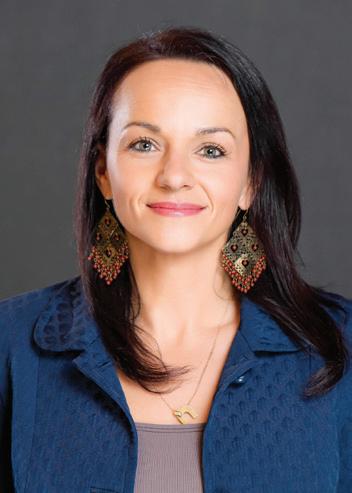
Jewish Federation of San Diego (Federation) recently selected Jessica Korsunsky, a leader whose work has helped strengthen Jewish connection and community across San Diego, as the winner of the 2026 Michael Jeser Outstanding Jewish Professional Award. Named in memory of Michael Jeser z”l, former president and CEO of Federation, the award honors emerging and midcareer Jewish communal professionals who demonstrate outstanding leadership, professional achievement and a deep commitment to Jewish life in San Diego.
Jeser’s commitment to strengthening Jewish life is reflected through Korsunsky’s work. As Western Region program officer for the Harold Grinspoon Foundation, she supports Jewish professionals across 40 communities, helping organizations create welcoming and meaningful experiences that inspire deeper Jewish engagement.
“I am deeply passionate about the power of community to improve individual lives and the role of collaboration in strengthening the collective impact of Jewish communal work,” Korsunsky said.



1. d. Nabisco’s Oreos originally contained lard (pig fat). Massive demand from the Jewish community incentivized Nabisco to spend years altering its recipe and factory lines. In a triumph for Jewish cookie lovers across America, Oreos were given a strict kosher (OU) certification in 1997.
2. d. According to classic commentators, Leah had “soft eyes” (Gen. 29:17) from weeping constantly, because as the elder sister she was expected to marry the wicked Esau, while her sister Rachel was destined for Jacob. In response to her tears, Leah was granted many children.
3. b. Boba mayse, literally “Grandmother’s story” in Yiddish, is used sarcastically to dismiss a far-fetched rumor, an urban legend, or an unbelievable excuse.
4. a. “What is hateful to you …”, Hillel’s “negative golden rule” (Shabbat 31a), is a more practical standard for human behavior than the Torah’s positive commandment to love your neighbor as yourself. Hillel’s legendary patience is in contrast to his contemporary, Shammai, who chased the potential convert away with a big stick.
5. b. Tel Aviv was founded by 60 families who wanted a clean, modern Jewish suburb away from crowded Jaffa. They collected 60 white seashells, on which family names were written, and 60 grey seashells, on which plot numbers were written, to match families with plots in the famous Seashell Lottery.
6. c. Groucho sent this famous line in a telegram to the Hollywood's Friars Club when resigning his membership, epitomizing his self-deprecating and rebellious style of Jewish humor.
7. c. The Western Wall was retaining wall built to support the Temple Mount platform, not as a wall of the Temple itself. It became holy because it was the closest remaining accessible point to where the Holy of Holies once stood.
8. a. Golda Meir, the “Iron Lady” of Israeli politics, was one of the few women in the world to lead a nation at that time (1969–1974). Her matriarchal leadership style was captured in the insider account by Yehuda Avner, The Prime Ministers.
9. b. By asking, “Will the Judge of all the earth not do justice?”, Abraham set a precedent for the idea that Jews have a right and duty to advocate for justice, even in the face of the Almighty.
10. a or b. Salk's breakthrough killed-virus polio vaccine ended the polio pandemic that paralyzed hundreds of thousands of children every year. He firmly believed that life-saving medical discoveries belonged to humanity, and famously said, “Could you patent the Sun?” Sabin was a Jew who also declined to patent his vaccine, an oral polio vaccine that became the primary weapon used to nearly eradicate polio worldwide. Sabin called his vaccine a “gift to all the world’s children.” Salk and Sabin both experienced institutional and systemic antisemitism and neither of them ever won the Nobel Prize.
0 – 2 Talmid/Talmida (Student)
3 – 5 Melamed/Melamedet (Teacher)
6 – 8 Talmid Chacham/Talmidat Chacham (Scholar)
9 – 10 Gaon/Gaona (Genius)
Your comments are welcome at Felber@Jewish-IQ.com
La Jolla & Encinitas
locations Open from 7:30am - 3pm everyday
La Jolla (858) 454-8409 cottagelajolla.com
Encinitas (760) 854-4212 cottageencinitas.com

When you show this coupon. One per customer. Expires 7/31/2026