Preservation Foundation of the Lake County Forest Preserves 2025 Annual Report
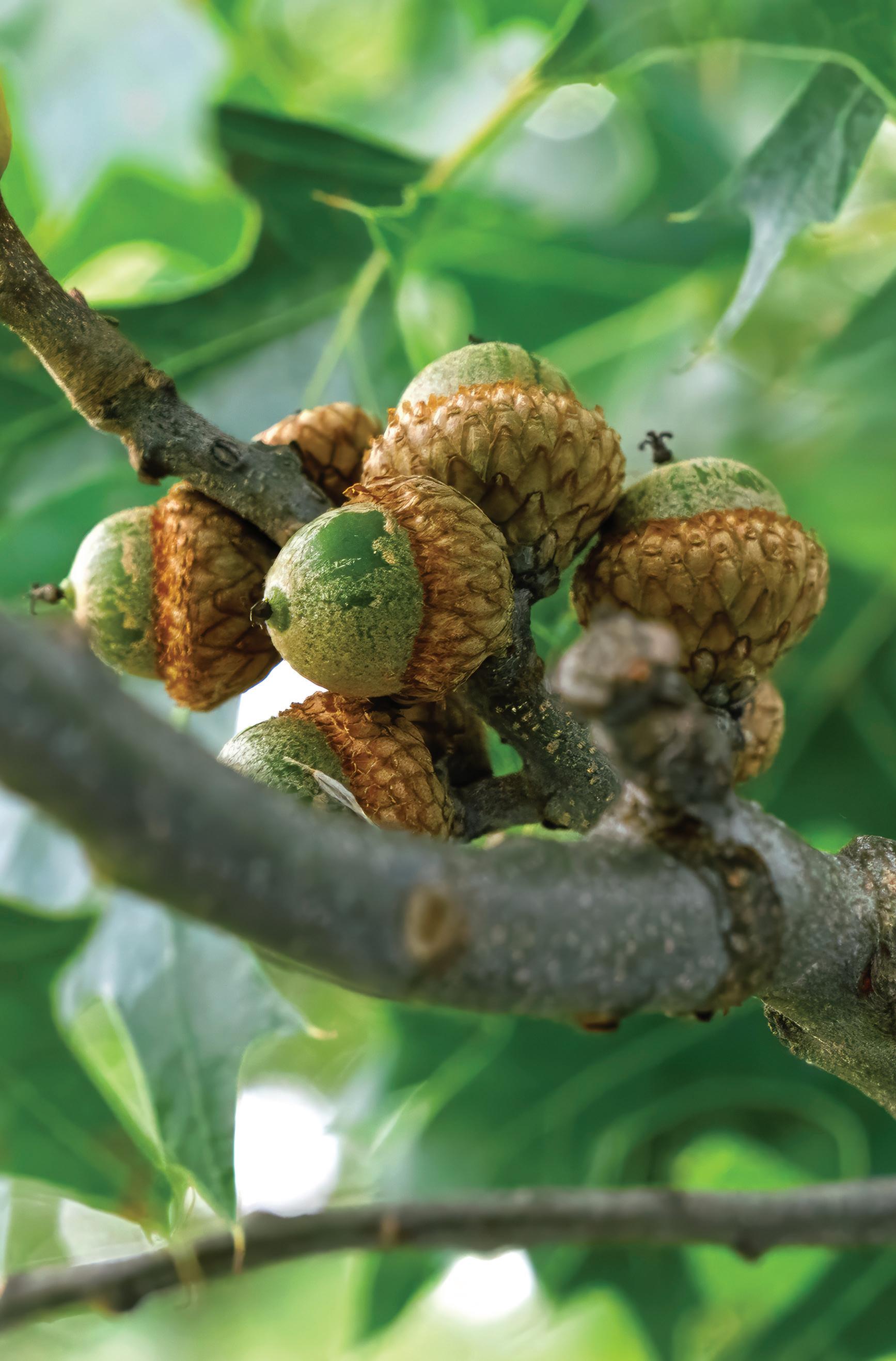
On average, out of 1,000 acorns, only 10–50 will germinate (less than 5%).
Of those, only 1–5 seedlings survive their first year.*
Ultimately, about 1 acorn in 10,000 will ever become a mature oak tree.
*Most are eaten by squirrels, birds, deer or insects. Some dry out or rot, and others germinate but die from shade, drought, frost, fire or competition.
Similarly, the Preservation Foundation’s Annual Fund grows each year through hundreds of mostly modest donations from individuals, companies and foundations. Yet their collective impact is significant, allowing the Forest Preserves’ projects and programs to take root and blossom.
Whether a donor gives $5 or $50,000 to the Annual Fund, that donation is pooled with hundreds of others, allowing us to do so much more than taxpayer funding allows. 1,210
$50,000+ ( 0.5% )
$25,00 0 – 49,999 ( 1 % )
$10,000 – 24,999 ( 1 % )
$5 ,000 – 9,999 ( 2 % )
$2,500 – 4,999 ( 3% )
$1,00 0 – 2,499 ( 10% )
$500 – 999 ( 10% )
$250 – 499 ( 14% ) ..............
$10 0 – 249 ( 28% )
$50 – 99 ( 16% ) $1 – 24 ( 5% )
$2 5 – 49 ( 9 % )
$39,000 Volunteer Retention (3 Yrs)
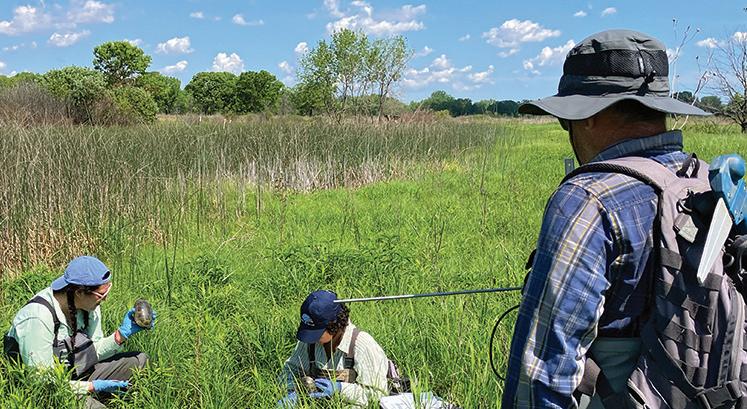
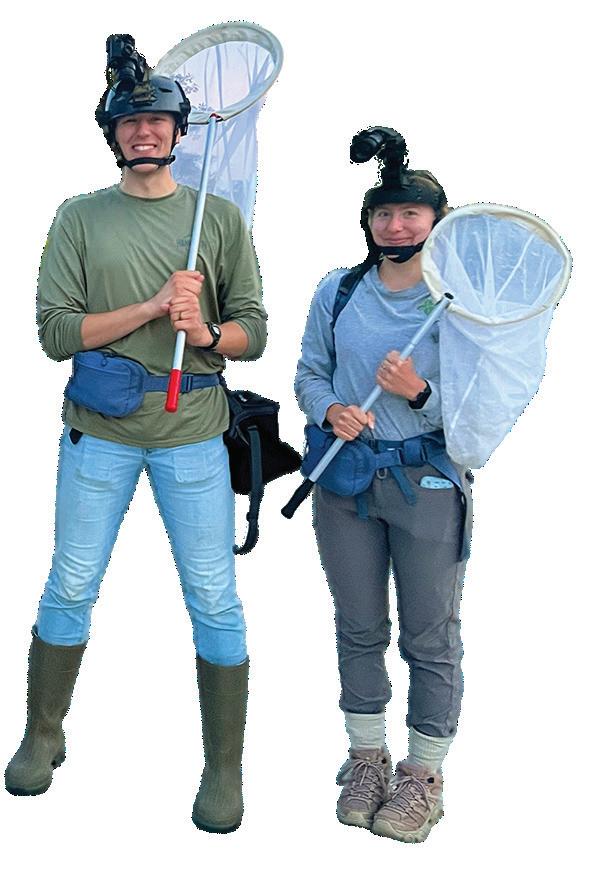
$28,000 Wildlife Quality Assessment
$37,50 0 Beyond the Classroom (3 Yrs)
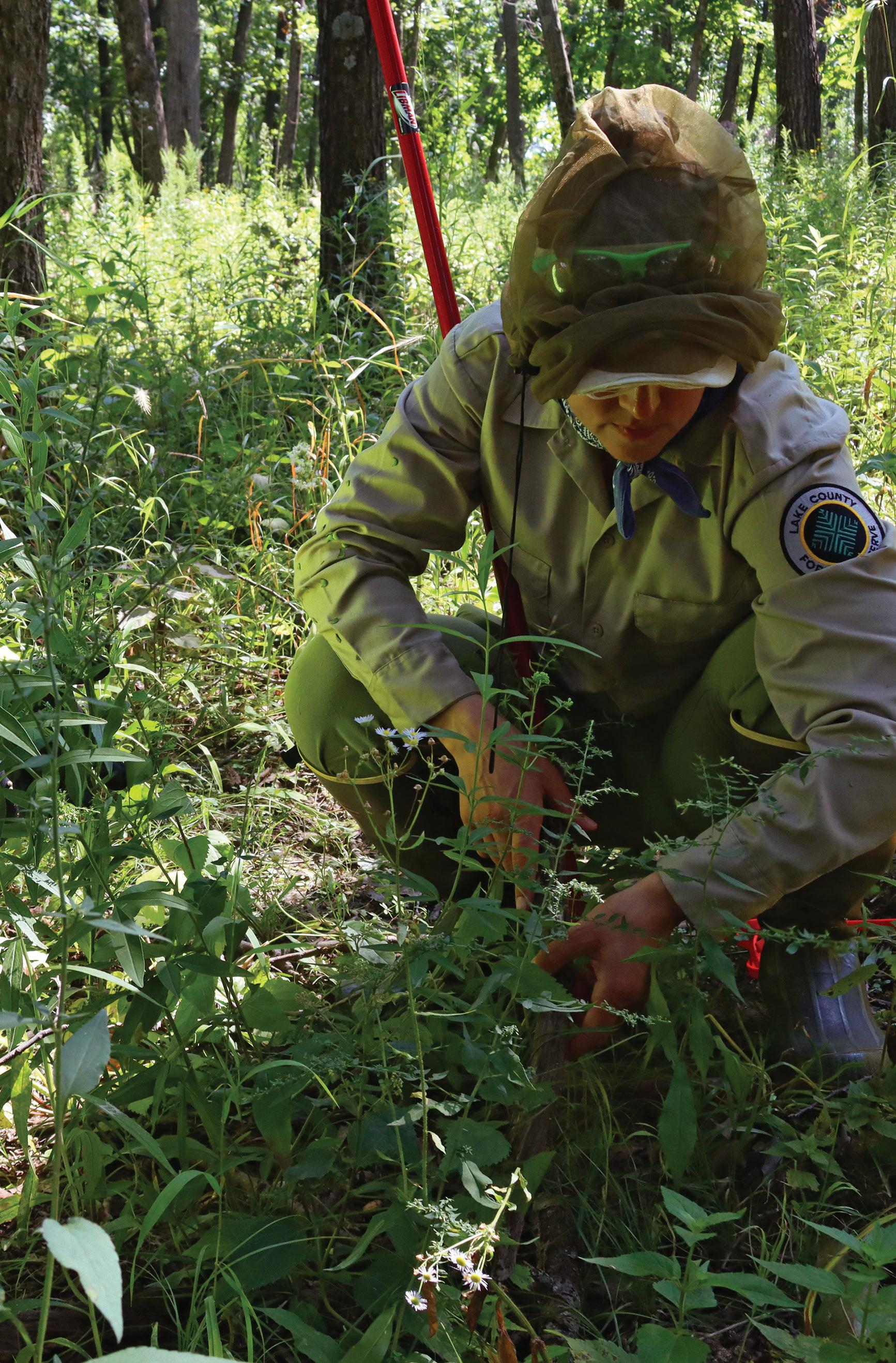
$13,10 0 Summer Conservation Crew
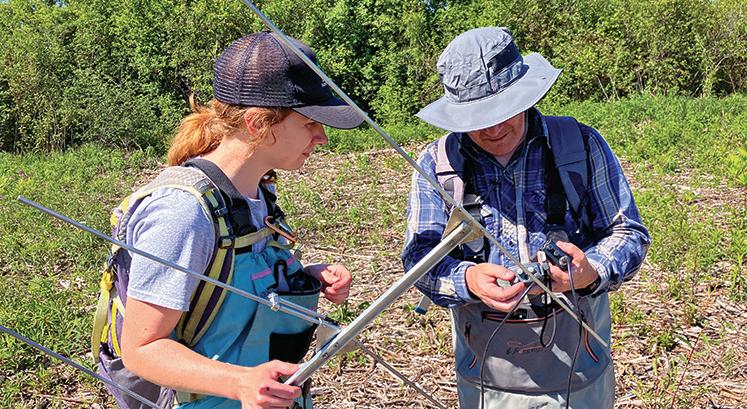
$6,989 Bat Monitoring
$7,000 Native Seed Guide
$20,000 Prescribed Burn Training
$22,875 Lake Plain Coalition
$500 Purple Martin Boxes
$2 5,000 Sustainable Landscaping
$2,000 Photography in the Forest Preserves ........
$114,804 Ecological Monitoring (3 Yrs)
$60,000 Protect Eastern Prairie Fringed Orchid ( 3 Yr s )
$45,000 Rare Plant Recovery ( 3 Yr s )
$3,000 Teacher Appreciation Day
$1,200 Blanding's Turtle Display at Ryerson
$6,000 Gateways Grants
$10,000 Chain O' Lakes Watershed Plan
$14,677 New Natural Resources Lab
$10,000 Floral Resources for Early Spring Pollinators at Greenbelt
2023–2025
Annual Fund Grants
Awarded
From 2023–2025, we awarded 20 Annual Fund grants totaling $466,645. They ranged from a one-time $500 grant to a $114,804 grant payable over three years.
Following are a few highlights of successful programs that reached maturity, thanks to the generosity of our community.
Prescribed Volunteer
Burn Training
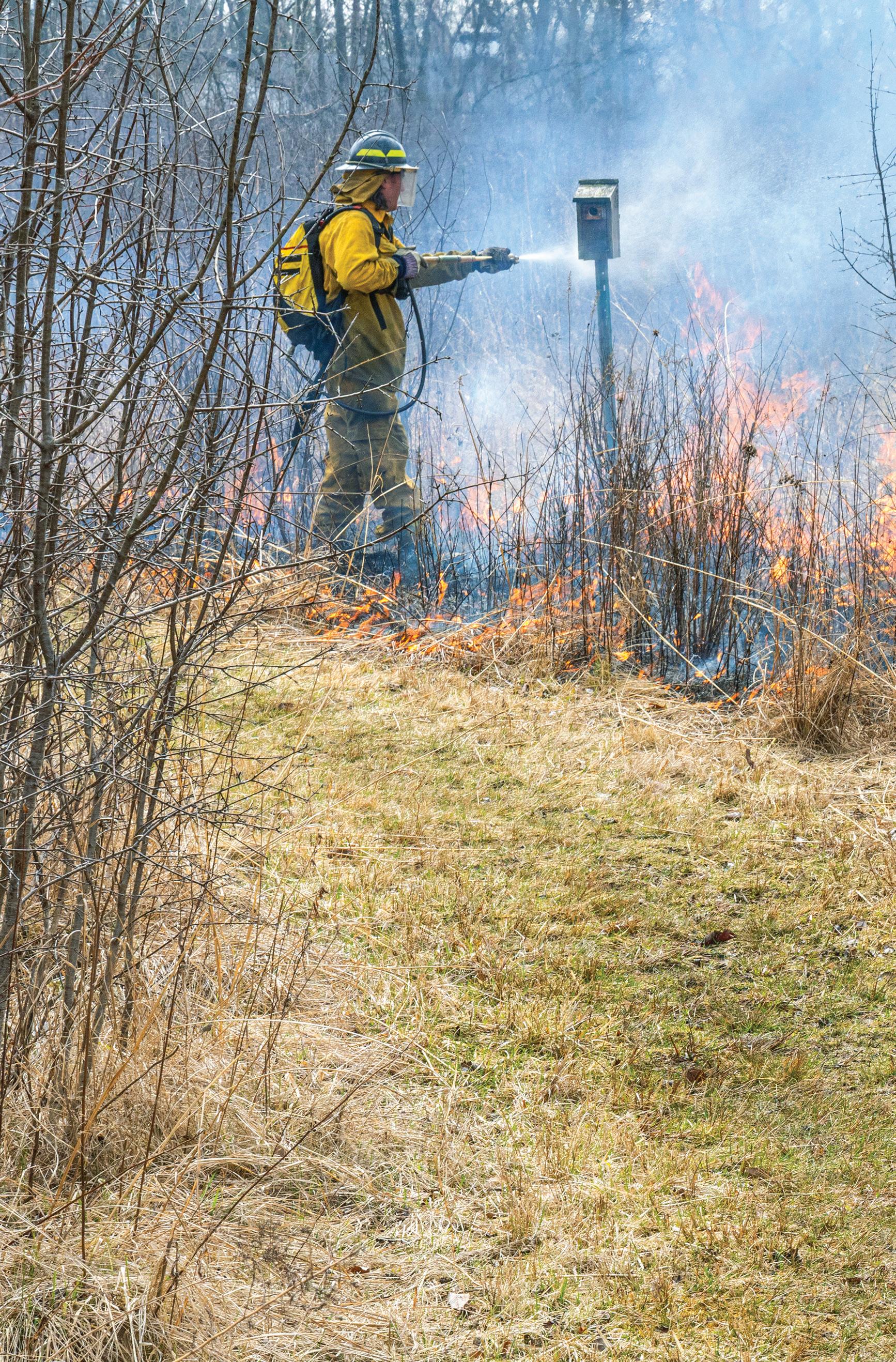
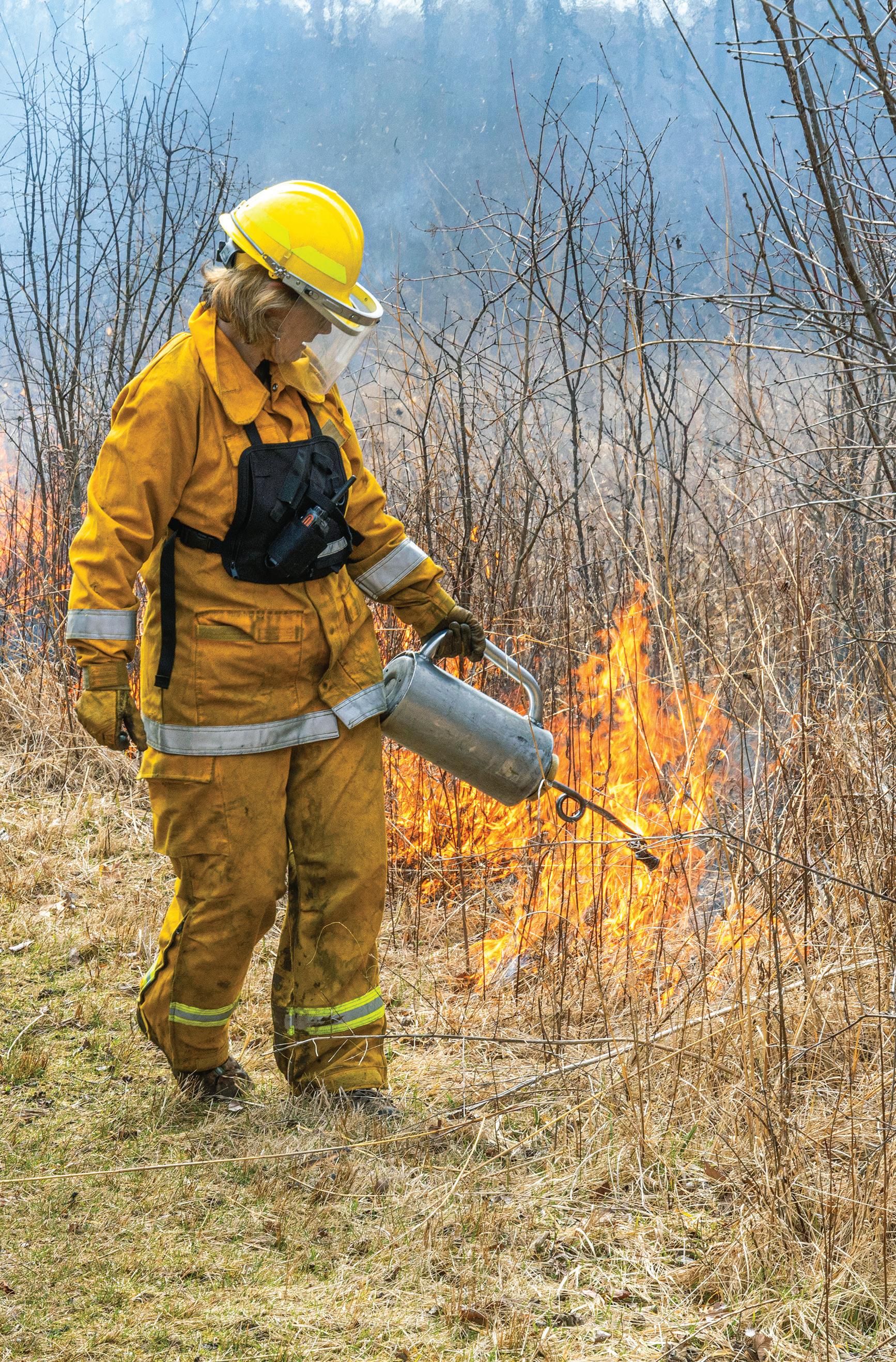
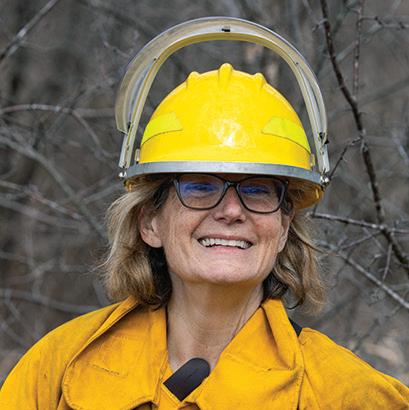
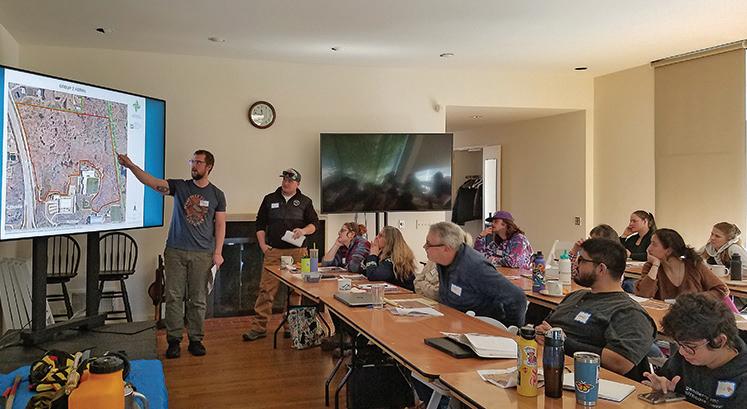
With the staff we have, the Forest Preserves can only burn so much acreage every year. In 2023, with gifts from two donors and a $20,000 Annual Fund grant , the Forest Preserves purchased equipment to train and equip volunteers to assist staff with prescribed burns.
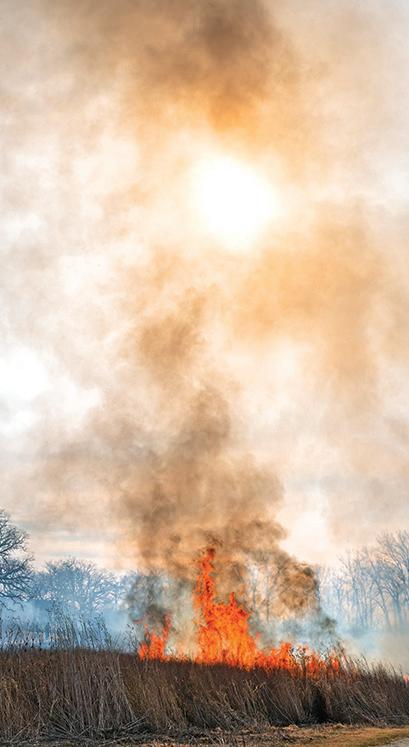
It’s become a familiar roadside sight near many forest preserves each spring and fall. An orange, diamondshaped sign declares: PRESCRIBED BURN, DO NOT REPORT.
In a neighboring prairie, people in yellow, fire-resistant clothing shepherd a line of flames forward.
Some carry drip torches to ignite fuels—dead plant material from previous growing seasons. Others tote backpack sprayers, creating firebreaks and putting out spot fires. A burn boss monitors humidity, wind speed, smoke produced and the fire’s pace.
Walkie-talkies chirp with instructions. Several people supervise the fire. Once the selected acreage is burned, the crew extinguishes any lingering embers. Black ash coats the soil.
Not for long, though. New seedlings will soon poke up, like whiskers regrowing after a shave.
Prescribed burns are the most efficient tool available to manage Lake County’s natural communities. They re-create the periodic wildfires that native plants and animals evolved with.
Through last year, 73 volunteers have completed training and helped with 31 burns covering 190 acres. They focus on high-quality remnant habitats that are often small and difficult to access, making their work even more impactful.
Beyond the Classroom
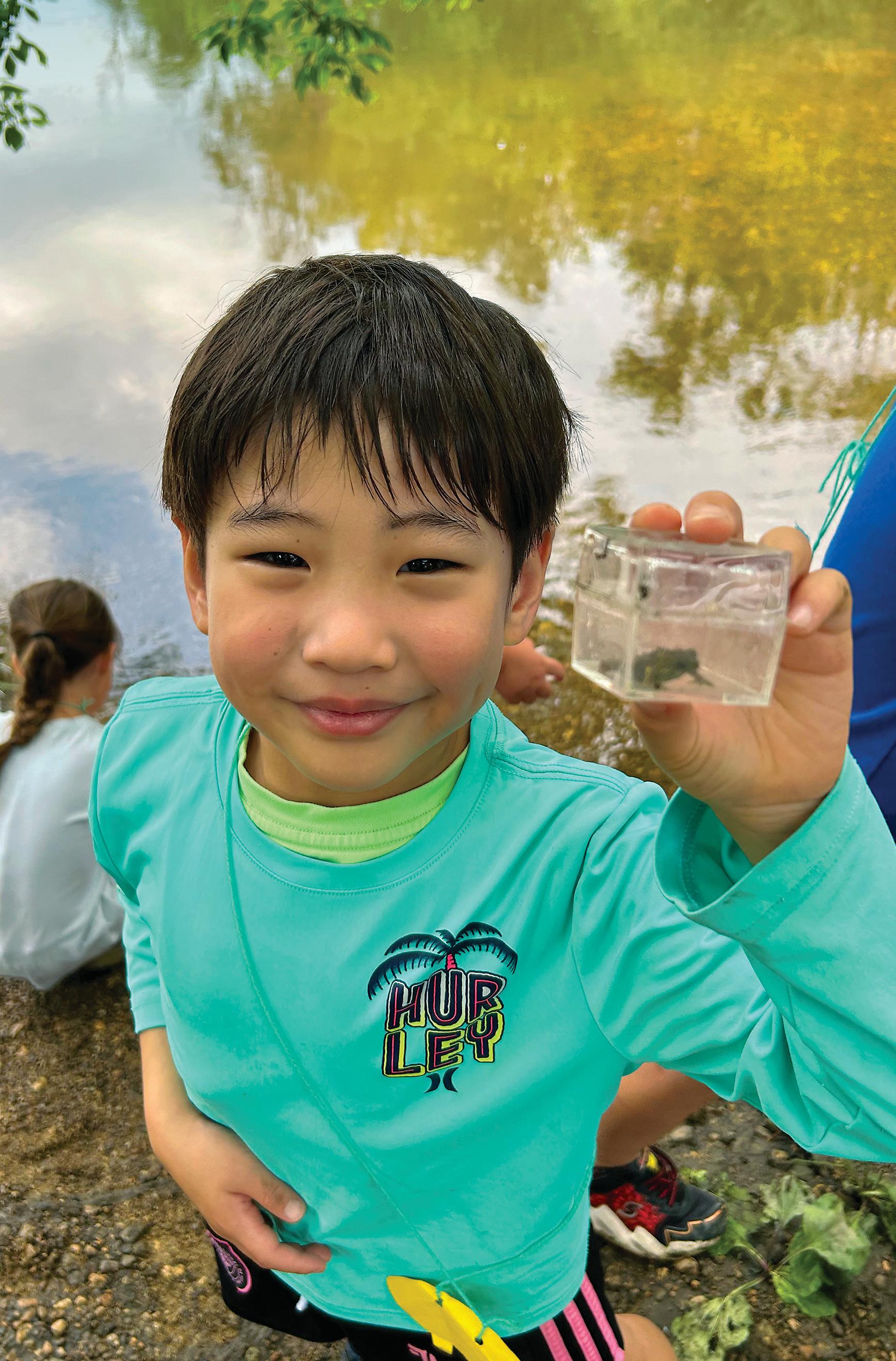
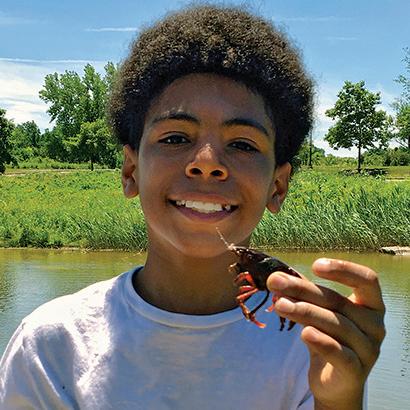
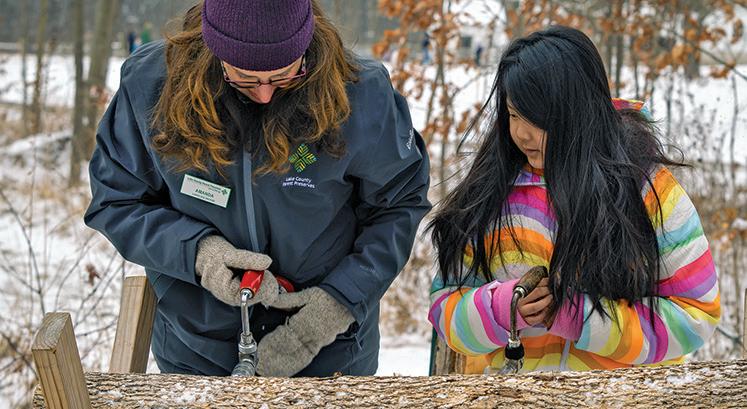
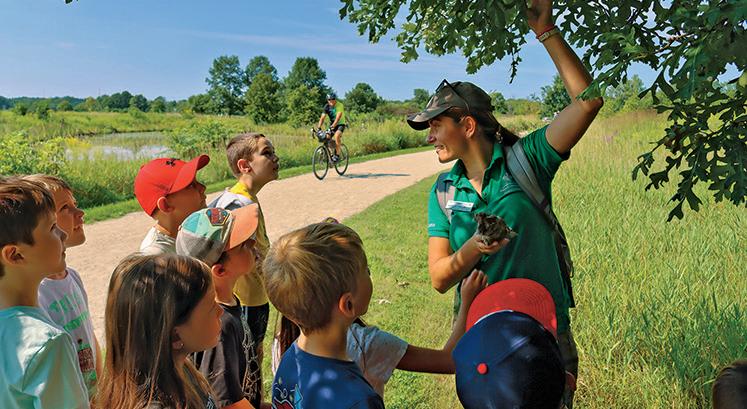
Every year, the Forest Preserves’ environmental and history educators invite thousands of Lake County students to learn outside the classroom.
Whether in a forest preserve or at the Dunn Museum (Libertyville), the goal is to connect students with local history and nature while supporting Illinois Learning Standards.
Yet for many schools in Lake County, the cost of transportation and program fees are an insurmountable barrier.
Beyond the Classroom is changing that. Funded by a $37,500 Annual Fund grant , this program offers a $250 bus stipend to eligible school districts in Beach Park, Fox Lake, Gurnee, Ingleside, North Chicago, Round Lake, Winthrop Harbor and Zion.
Program fee waivers for in-school presentations are also available. That allows schools to benefit from engaging education programs even if they can’t visit a preserve. Since 2022, our educators have taught 359 programs reaching 6,595 students using 109 Beyond the Classroom grants.
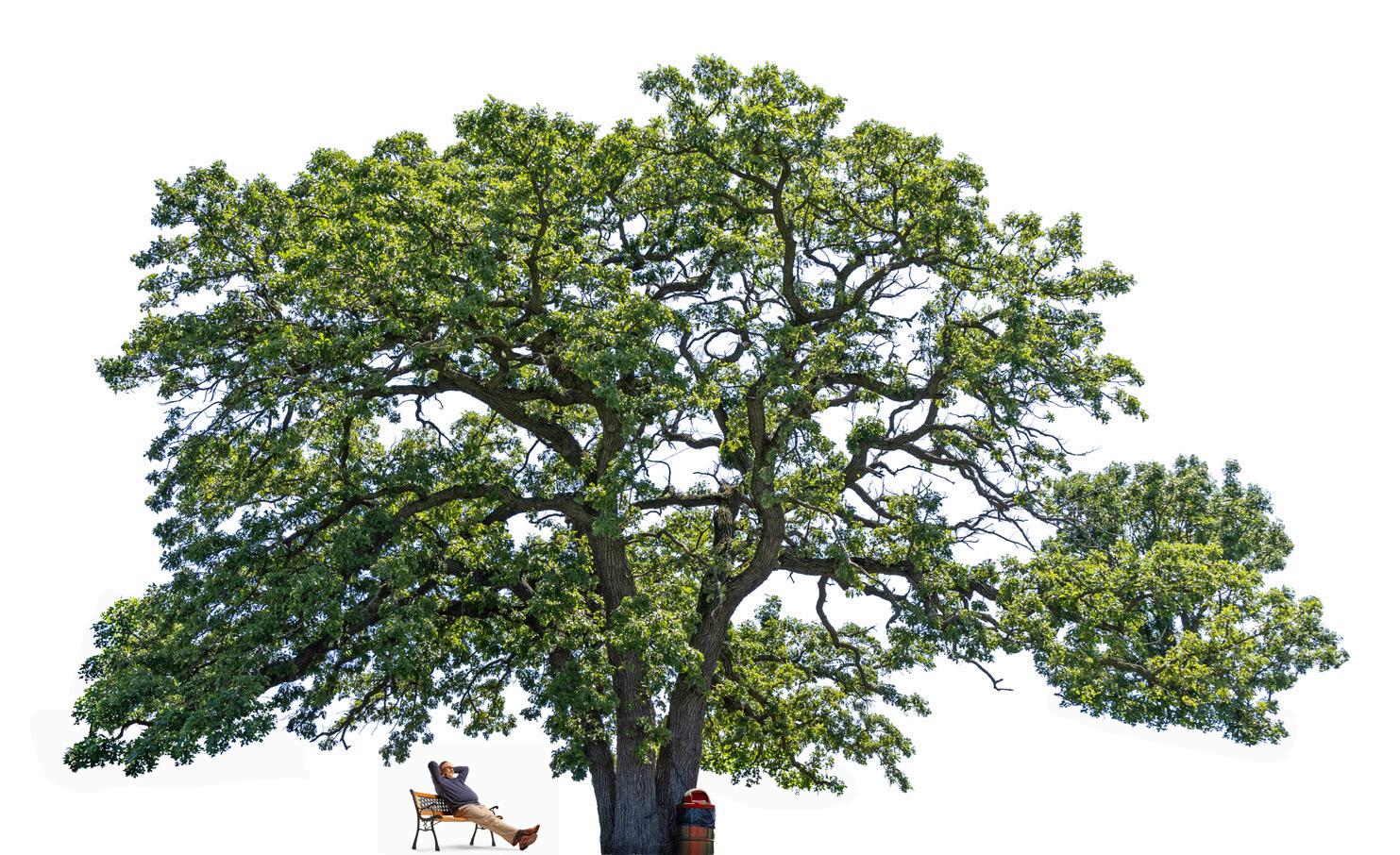
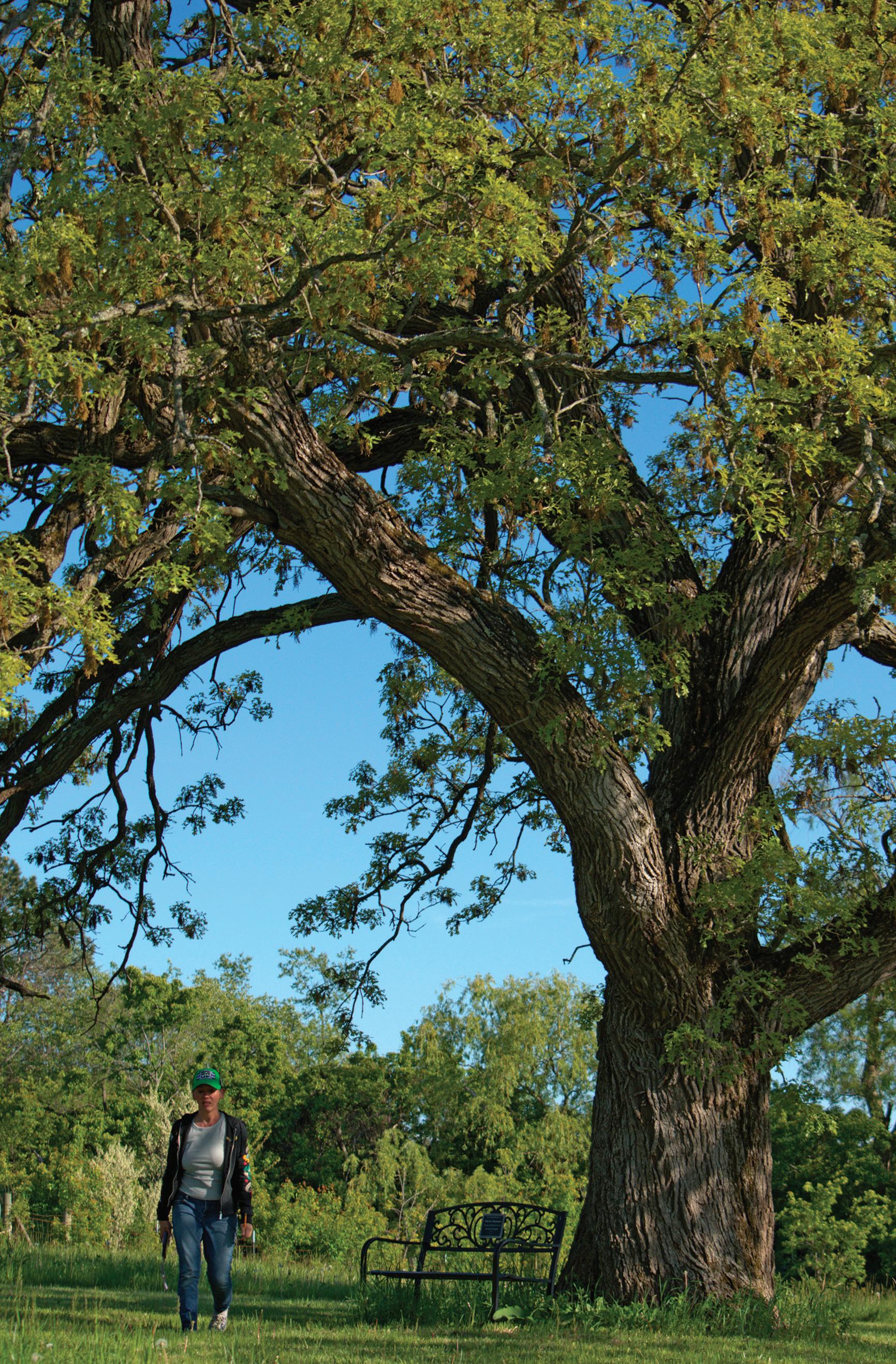
Beating the 10,000-to-1 odds, a mature white oak stands 60–100 feet tall and spreads its vast crown of branches 50–90 feet wide.
The oak pictured above is perched on a hill at Van Patten Woods Forest Preserve (Wadsworth). Estimated to be over 300 years old, it’s one of the largest oaks in Lake County. Yet it too started life as an acorn no longer than 1 inch.
A Super New Gallery
From opening night through the exhibition closing, Alex Ross: Heroes & Villains generated more than $121,000 to support Every Acre Strong, the Community Campaign for the Lake County Forest Preserves.
Unused space at the General Offices (Libertyville) was transformed in the first half of 2025, thanks to donor support and hard work by Forest Preserves carpenters, electricians and painters. By midsummer, the new gallery of the Dunn Museum opened with a sold-out crowd. Visitors traveled from across the country to enjoy “A Night with Alex Ross.”
Renowned comic book artist Alex Ross chose the Dunn Museum to host Heroes & Villains, building upon the success of Marvelocity: the Art of Alex Ross in 2019. Museum staff curated the exhibition, which featured more than 100 original paintings of superheroes and supervillains from the Marvel and DC universes.
A true hero to the Forest Preserves, Ross and his company, Alex Ross Art, contributed in multiple ways to ensure the exhibition was a success. A cash donation also came with in-kind marketing services. And the gift of his presence attracted more than 220 guests to the preview VIP evening before the public opening.
The build-out of the new gallery was more than a gift; it was an investment in the Dunn Museum. The 3,000square-foot expansion is double the size of the other temporary gallery space, allowing the Museum to host temporary and traveling exhibitions year-round.
Photography Preserves in the
Taking an outstanding photograph requires skill with cameras and composition.
A
rare gem of a program! Exceptional presenters and guides—engaging, entertaining and truly interested in being helpful and educational ... Please do more of these.
Taking an outstanding photograph in the forest preserves requires more. Awareness of when migratory birds visit Lake County. Of places where spring wildflowers reliably bloom. Of the weather conditions that spark the liveliest fall colors. This knowledge can take years to accumulate. Enter Photography in the Forest Preserves.
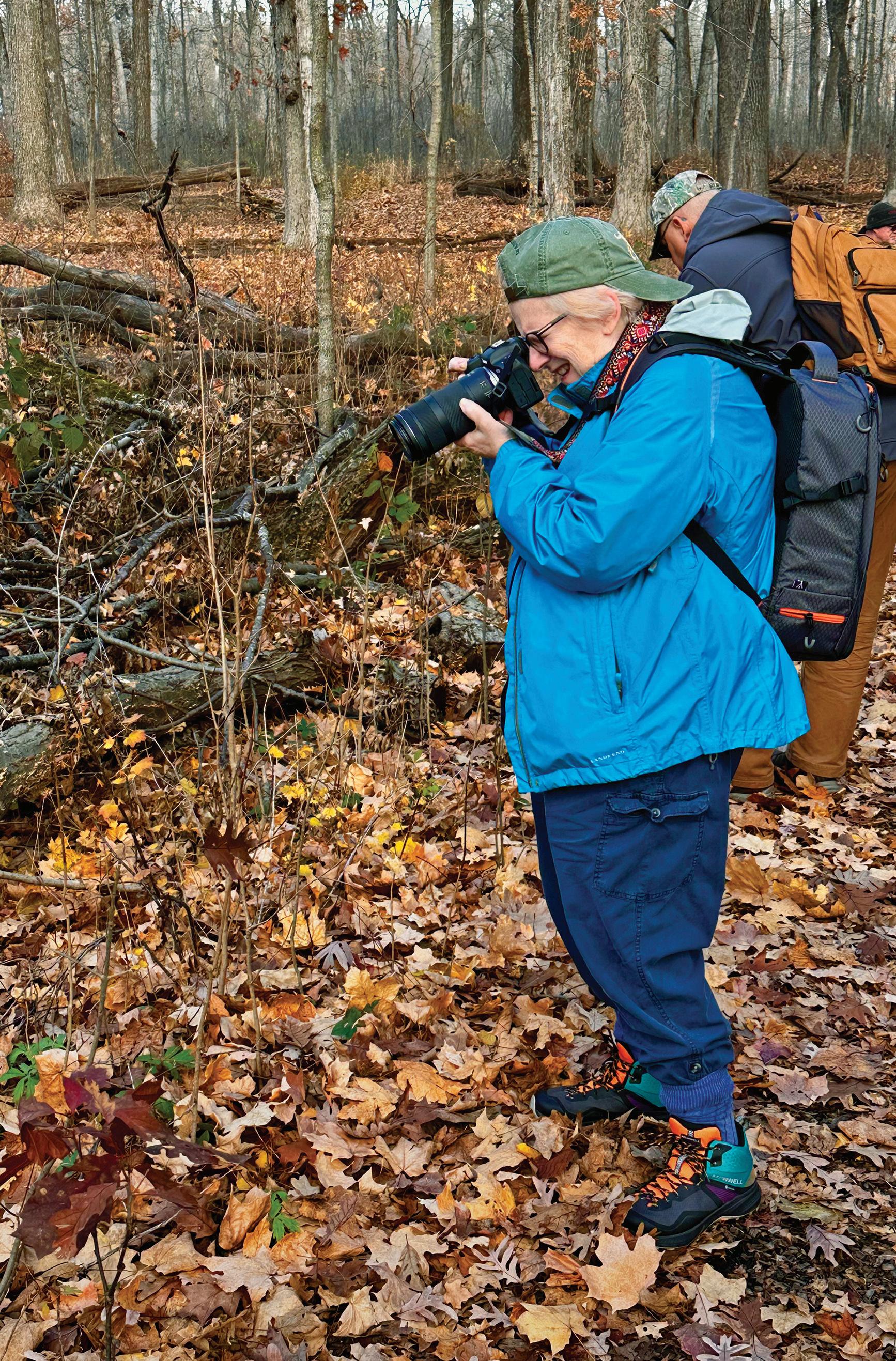
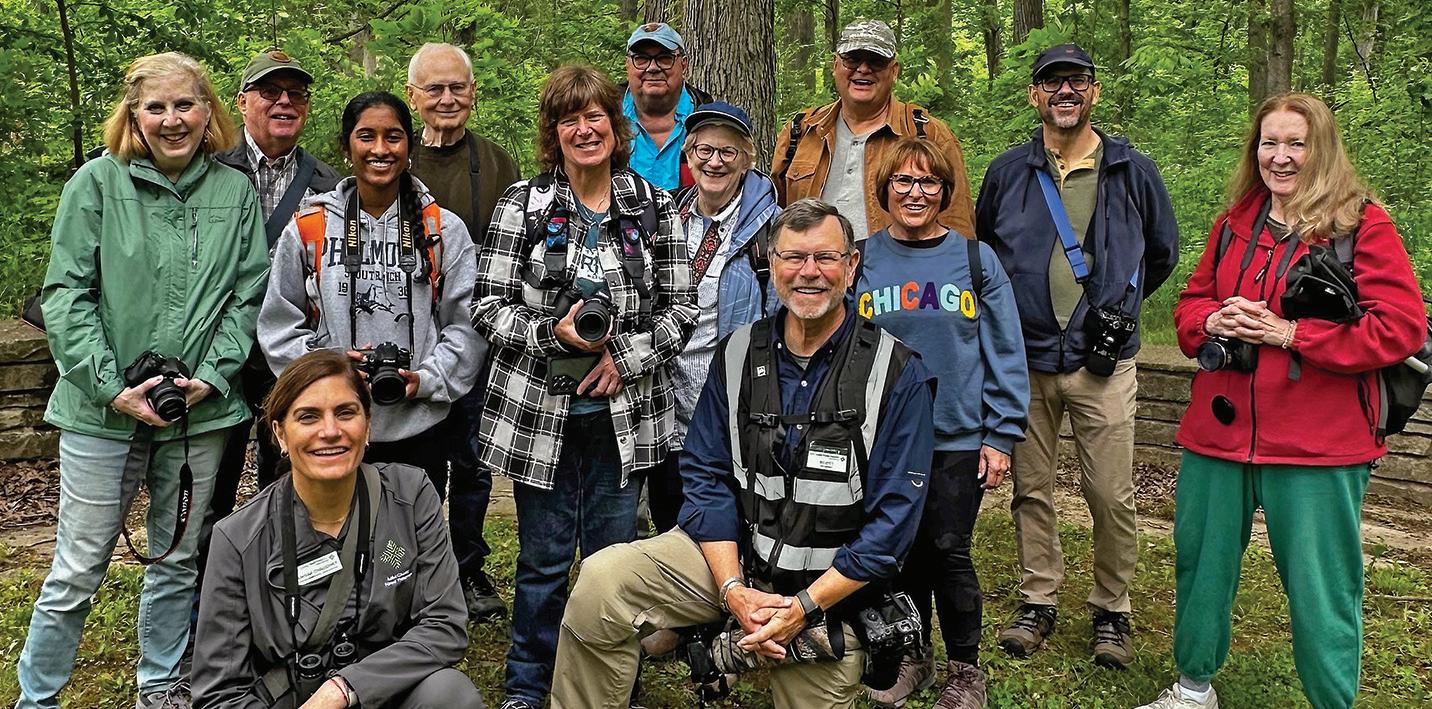
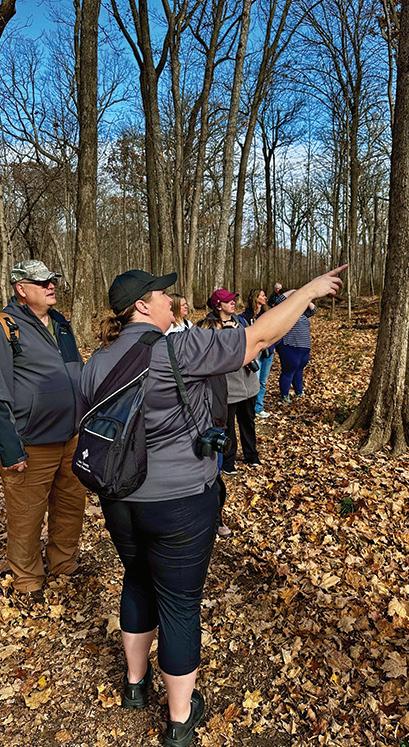
Supported by a $2,000 Annual Fund grant , these quarterly education programs offer amateur photographers a way to learn naturally and photographically.
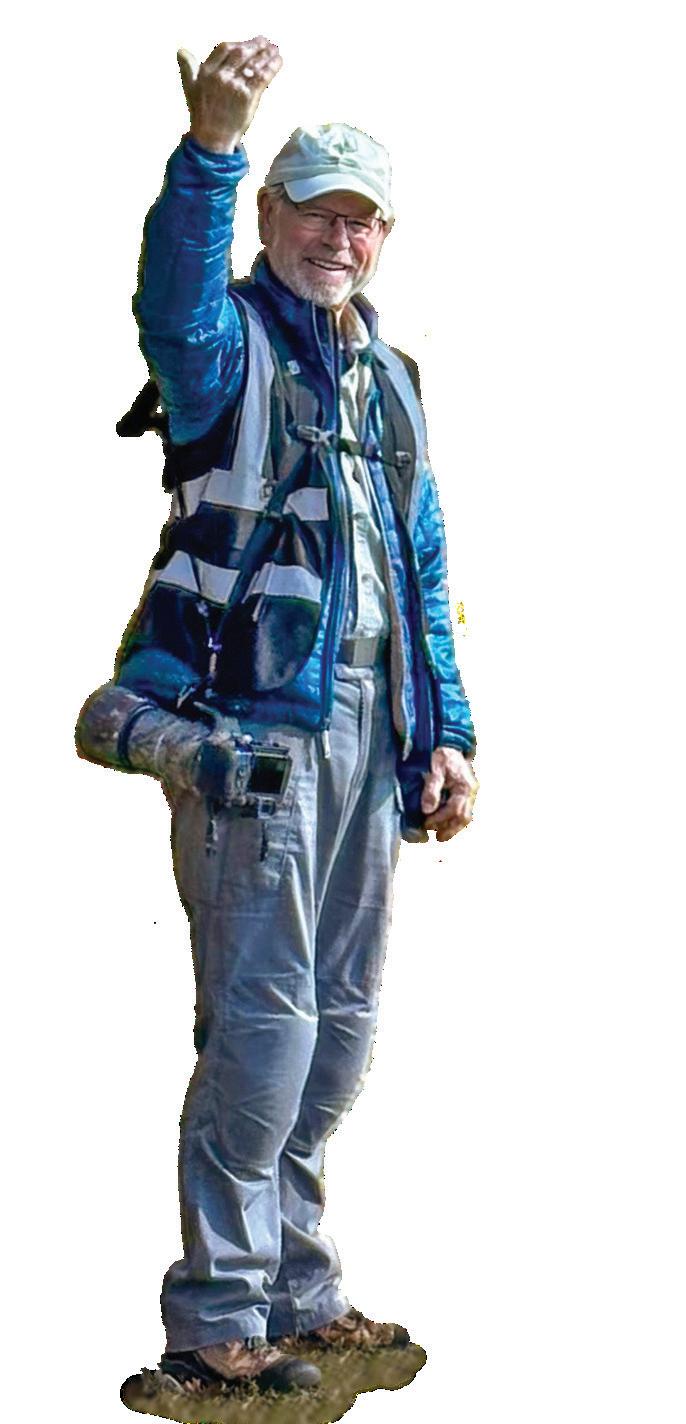
Leading each workshop are a staff environmental educator and Scott McNeill. Scott became a Forest Preserves volunteer photographer in 2023 after retiring from a career in commercial food sales. He’s donated thousands of photos to the agency—some are in these very pages.
The three-hour programs begin with a presentation from Scott, then a hike.
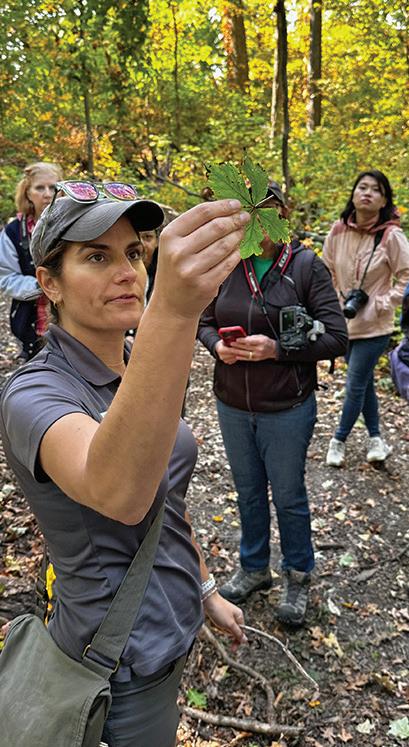
The environmental educator discusses the natural history of what the group encounters. Scott shares practical photographic tips and techniques—camera settings, angles and other advice.
It’s resonating. Programs sell out quickly and participants give high marks.
Keep your head on a swivel. Look up, down and all around. Camera memory is cheap. Shoot. Shoot. Shoot.
Always photograph for you first. Make an image you like before you worry if others will like or enjoy it.
— R. Scott McNeill
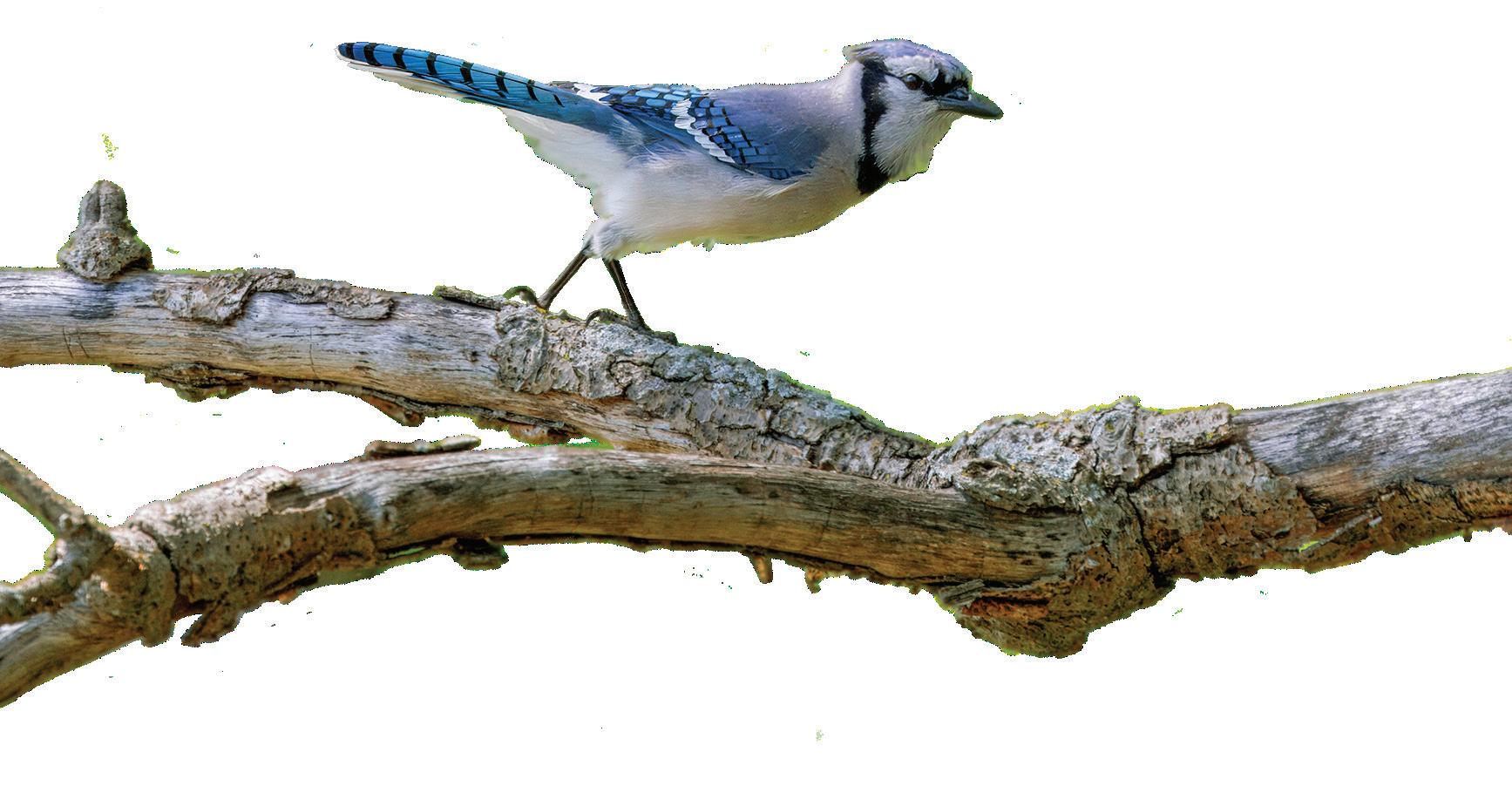
Blue jays* fly acorns up to 1.2 miles away from the parent oak. They tend to bury them in small groups along forest edges with plenty of sunlight.
Another thing working in the oak’s favor? The birds are remarkably good at choosing viable acorns. A healthy acorn feels solid. An ailing one feels empty. The bird’s test is accurate about 90% of the time.
*The species is thought to have helped spread oak trees in Chicagoland after glaciers retreated from the area 10,000–12,000 years ago.
Wildlife Quality Assessment
A
Floristic
Quality
Assessment is a widely accepted tool used to measure habitat quality and the impact of management actions over time. Unfortunately, it only tells part of the story.
To conduct a Floristic Quality Assessment (FQA) of a forest preserve, our ecologists count the presence and abundance of a species then weight that data against the plant’s specific “conservation value.” Native plant species are assigned a value from 1 to 10. Non-native species receive a zero.
The measure is critical to allocating limited resources. Habitats with a high FQA such as a remnant prairie may be a priority, while those with a low FQA—an active farm field—may take a backseat. More importantly, repeating the FQA can indicate if management actions such as prescribed burning have a positive effect.
Land managers all over the country use this wellestablished metric. But it only evaluates plants.
A $28,000 Annual Fund grant will enable the Forest Preserves to create a new measurement tool: a Wildlife Quality Assessment (WQA). For years, we have collected data on wildlife in the preserves: mammals, amphibians, pollinators, birds. To develop this new WQA, we will assign a conservation value to each species so the population of each can be weighted by their level of conservatism. For the first time, creating a fuller picture of habitat quality and the impacts of our work.
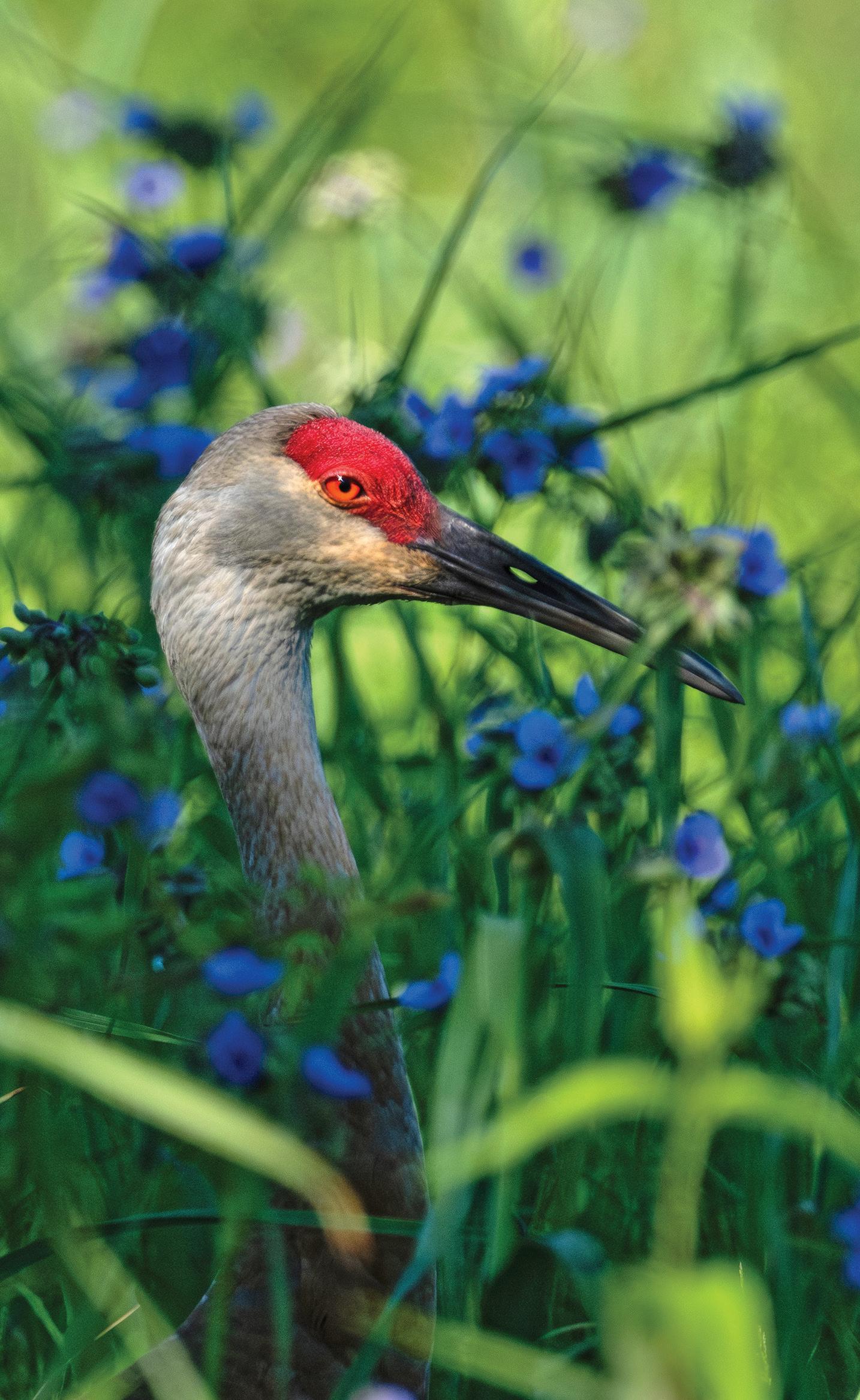
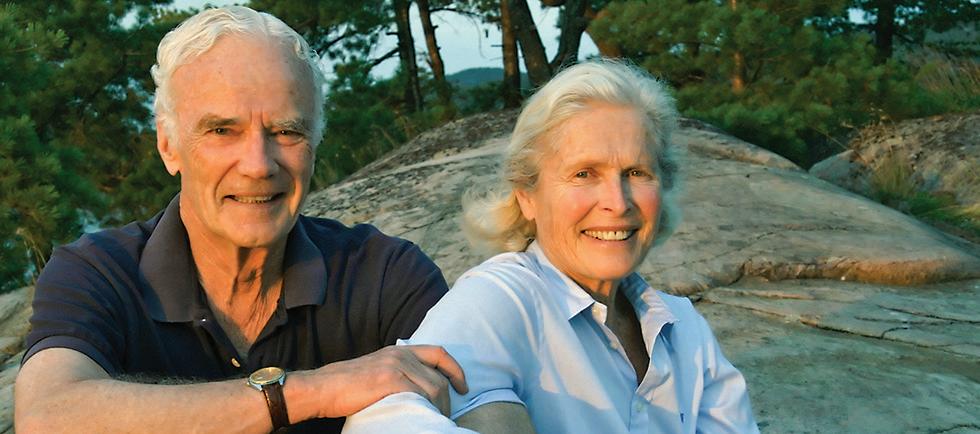
Growing up in Evanston, we often visited my grandparents near Antioch. We watched Lake County’s first forest preserve, Van Patten Woods, take shape. Years later, my husband Stephen and I spotted our first sandhill crane there. It was a thrill because it was an uncommon bird back then.
Today, we see sandhill cranes all over Lake County, and I’m still thrilled by them. Their recovery in our area was not magic or happenstance. It was the result of thoughtful growth of Lake County’s forest preserve system and the sustained investment by residents in the restoration and care of our natural lands.
Nearly 70 years after it was established, the Lake County Forest Preserves stands strong on its own. Forward thinking. Financially sound. Deeply trusted and valued by residents. But the Forest Preserves is far from alone. The Preservation Foundation is its
committed partner, powered by donors like you who give so that the Forest Preserves can do more.
The Foundation’s mission is to extend and accelerate the Forest Preserves goals through philanthropy. The Annual Fund is a perfect expression of that mission. Grants like those described in this report help pilot new projects, test ideas and provide critical matching funds. Like the 10,000 acorns that drop to fertile ground to produce one majestic oak, your gift, combined with countless others, adds up to something truly awe-inspiring.
Preservation Foundation President
Total Funds Raised
$5,079,626
Endowment
$3,818,592
Annual Fund
$306,050
Projects and Programs
$954,984*
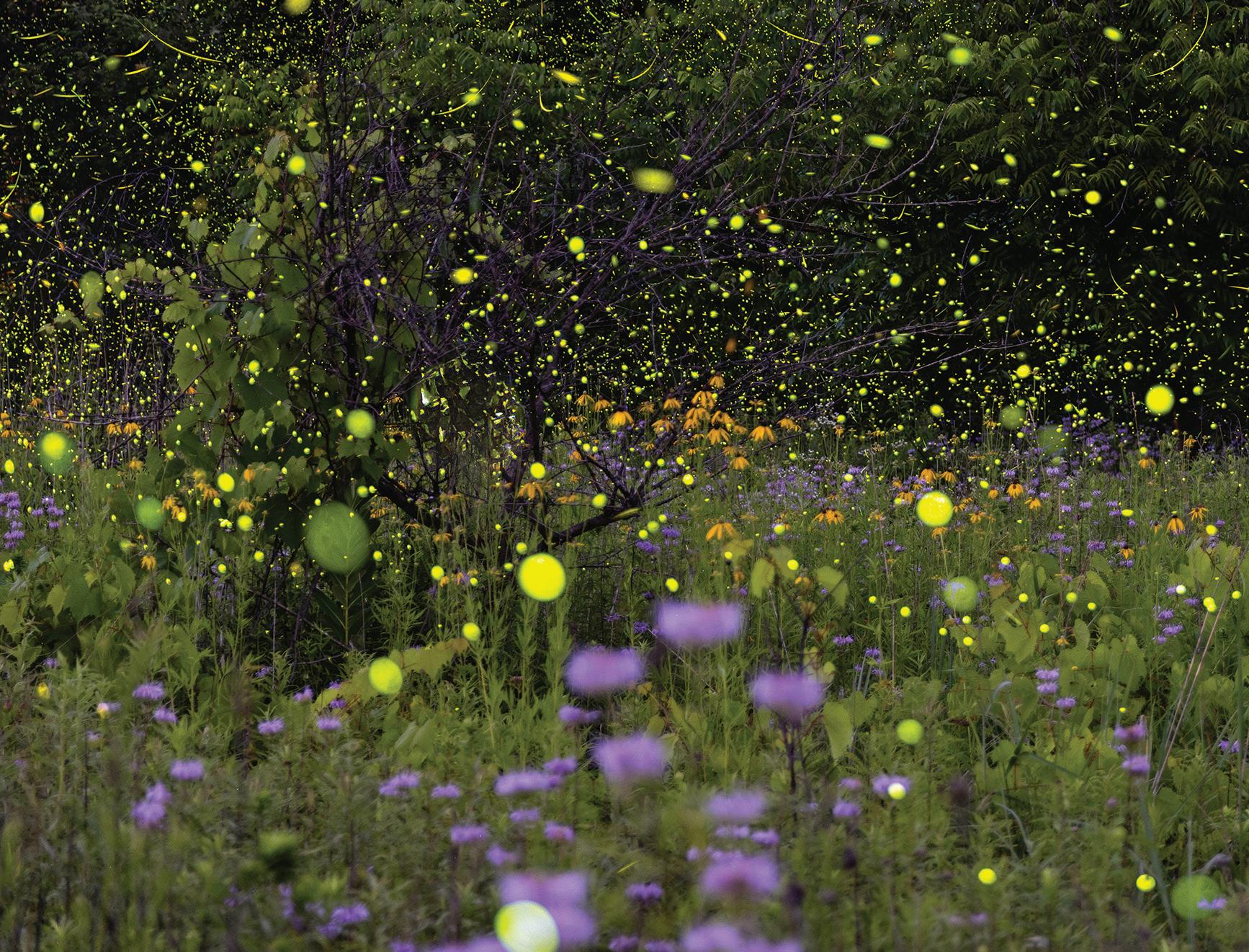
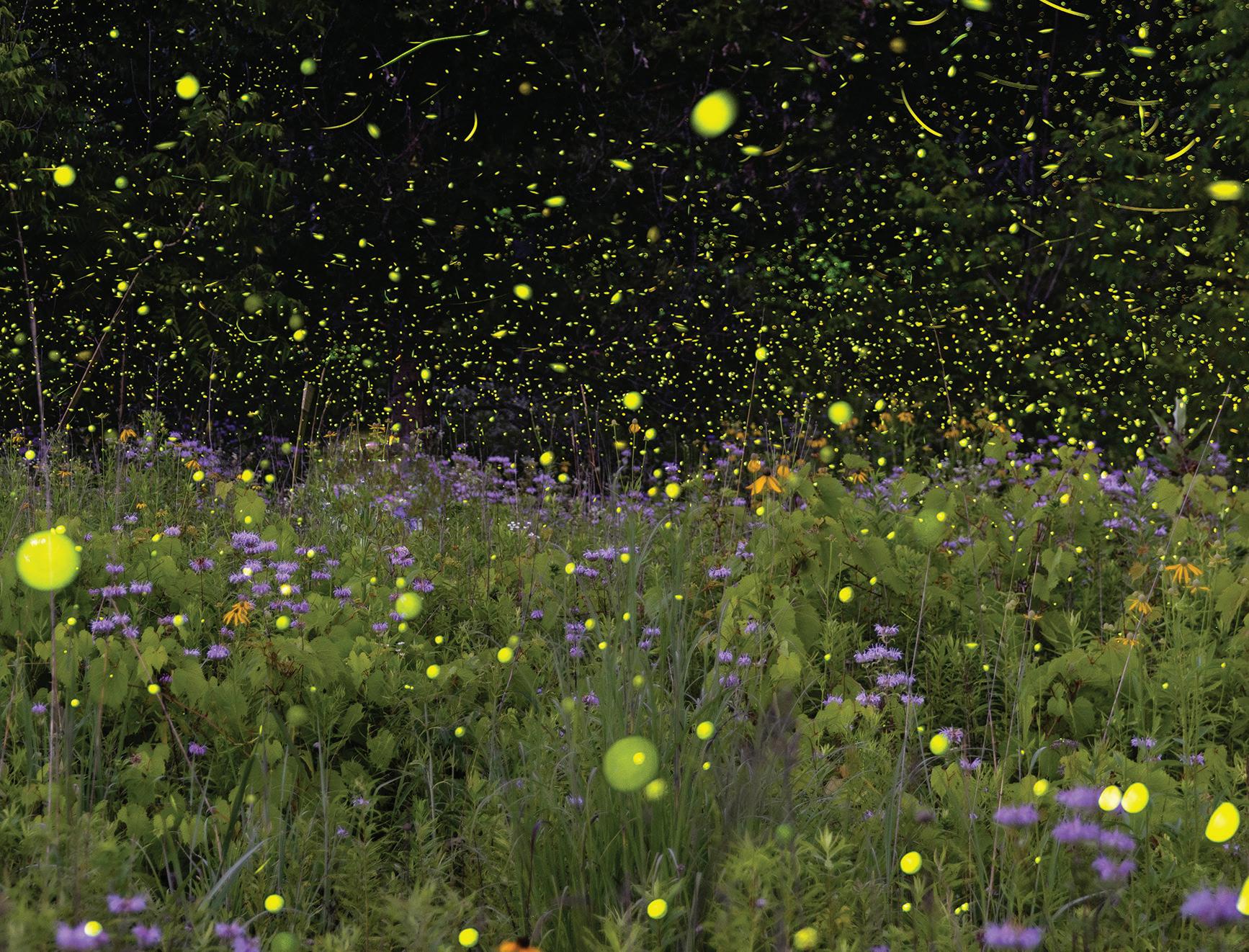
Fireflies at Ryerson Conservation Area (Riverwoods)
A FAMILY TREE LIVES ON
Lake County resident Linda Raymond remembers the sprawling bur oak in the backyard as the heart of family moments over three decades. She pushed her children and grandchildren on swings hung from its sturdy branches. Her daughter was married beneath its wide canopy, where a bench always waited in the shade. Linda spent countless quiet hours there with her late husband, Marvin. “All those memories made that tree a meaningful part of our lives,” she said. When it came time to sell the property in 2025, Linda and her family worried about the tree that had formed the backdrop of 30 years. To preserve it forever, they donated the healthy 300-year-old oak and surrounding 2.5 acres as an addition to Dutch Gap Forest Preserve (Antioch). We were honored to accept the donation and will protect the land and oak forever. After making her generous gift, Linda plans to remain in the area where many of her and Marvin’s five children, nine grandchildren and five great-grandchildren live. Make that two thriving family trees.
Challenges still await any planted acorn. Another animal could dig it up. Surrounding plants might slurp up the sunlight, water and nutrients it needs.
But at least the acorn has a shot. At taking root, unfurling leaves, supporting hundreds of other species and, one day, producing its own acorns.
The Preservation Foundation’s role is a bit like the blue jay’s in this telling.
Finding the projects and ideas that have the best chance of flourishing—then planting them in the right setting.
Thank you for helping us plant more acorns.
$1.02 Million Gift Honors Lifelong Love of Nature
Nature was always in the picture for Paula Lillard and her late husband John. Their childhoods were shaped by winding creeks and the company of trees. The woods were their playground.
When it came time to raise five daughters, they chose homes where the beauty of nature was in the backyard. “We both understood that the human spirit thrives in nature,” Paula said.
Married for 70 years, Paula and John passed that passion down through generations. With nine grandchildren and eight great-grandchildren, their love for the land continues to grow.
Before passing in 2024, John left Paula notes outlining the causes he cared about most. That guidance prompted Paula to donate $1.02 million to the Foundation in 2025 to support the Every Acre Strong campaign. Her gift will create an endowment managed by the Foundation.
It will fund long-term land management at Middlefork Savanna and neighboring properties cared for by the Lake Forest Open Lands Association (LFOLA). John, a co-founder of Wintrust Financial Corporation, was a longtime leader and life director at LFOLA.
Paula called John “a true visionary” who deeply believed in the power of public-private partnerships to protect open spaces. The Lillards’ daughter, Paula Preschlack— who now serves on LFOLA’s board—grew up in a home next to what’s now Middlefork Savanna.
“We spent our days riding ponies, exploring the woods and letting our imaginations grow.” She remembers her father out in the yard with a chainsaw, clearing buckthorn by hand.
“Growing up surrounded by prairies, open skies and towering oak trees, I came to realize how spectacular this landscape is,” Preschlack said. “It’s not just beautiful— it’s inspiring. And it’s right here for all of us to cherish.”
Elizabeth Hough, President
Jefferson McMillan-Wilhoit, Secretary
S. Michael Rummel, Treasurer
Michael Tutty, Vice President
Chad Waynee, Vice President
Matt Cohn
Andrea Danks
Chris Heier
Karen Hunter
James Kirby
Alex Ty Kovach
Nels R. Leutwiler
Billy McKinney
Jessica Vealitzek
John Wasik
Renée Young
Design: Costello Communications, Chicago
Executive Committee
Elizabeth Hough, President
Jefferson McMillan-Wilhoit, Secretary
S. Michael Rummel, Treasurer
Michael Tutty, Vice President
Chad Waynee, Vice President
Marshall Field V
Alex Ty Kovach
Steve Madden
Stephen Neaman
Renée Young
Photography: Jen Berlinghof, Tim Elliott, Liz Rose Fisher, Kyle Hauder, John D. Kavc, Paula Lillard, R. Scott McNeill, Caid Nawrocki, Justine Neslund, Bill Oakes, Brett Peto, Angela Ramirez, Linda Raymond, Thomas G. Wilson
Help Plant More Acorns
Give online LCFPD.org/endowment, or scan the QR code
Give by phone 847-968-3110
Mail a gift Preservation Foundation of the Lake County Forest Preserves 1899 West Winchester Road Libertyville, IL 60048
Leave a legacy Explore ways to provide for the Forest Preserves in your will or estate plan: LCFPD.org/planned-giving