



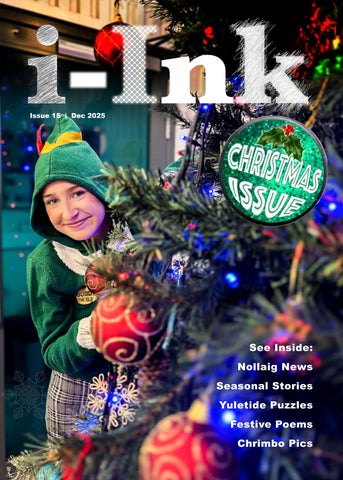
Christmas is a special time here at MSC, Mulgrave Street Campus. Basically because we have SO MUCH FUN! And unless you’ve been living under a rock, you will have noticed the learners & staff of MSC donning Santa hats, Christmas jumpers & all sorts of delightful festive attire.
Of course the elves at i-Ink, could not ignore the fun and excitement of the season, so you can read all about it in this Christmas issue.
Behold the winning team, D’Christmas Baubles, who already deserved a prize for their name alone. These smartie-pants hail from PH1, or Photography Level 5 to me and you. Fair play to them for helping their teachers to finally win a college kahoots quiz. Now they can all hold their heads high, a big Buladh Bos to them all. Next stop, University Challenge.
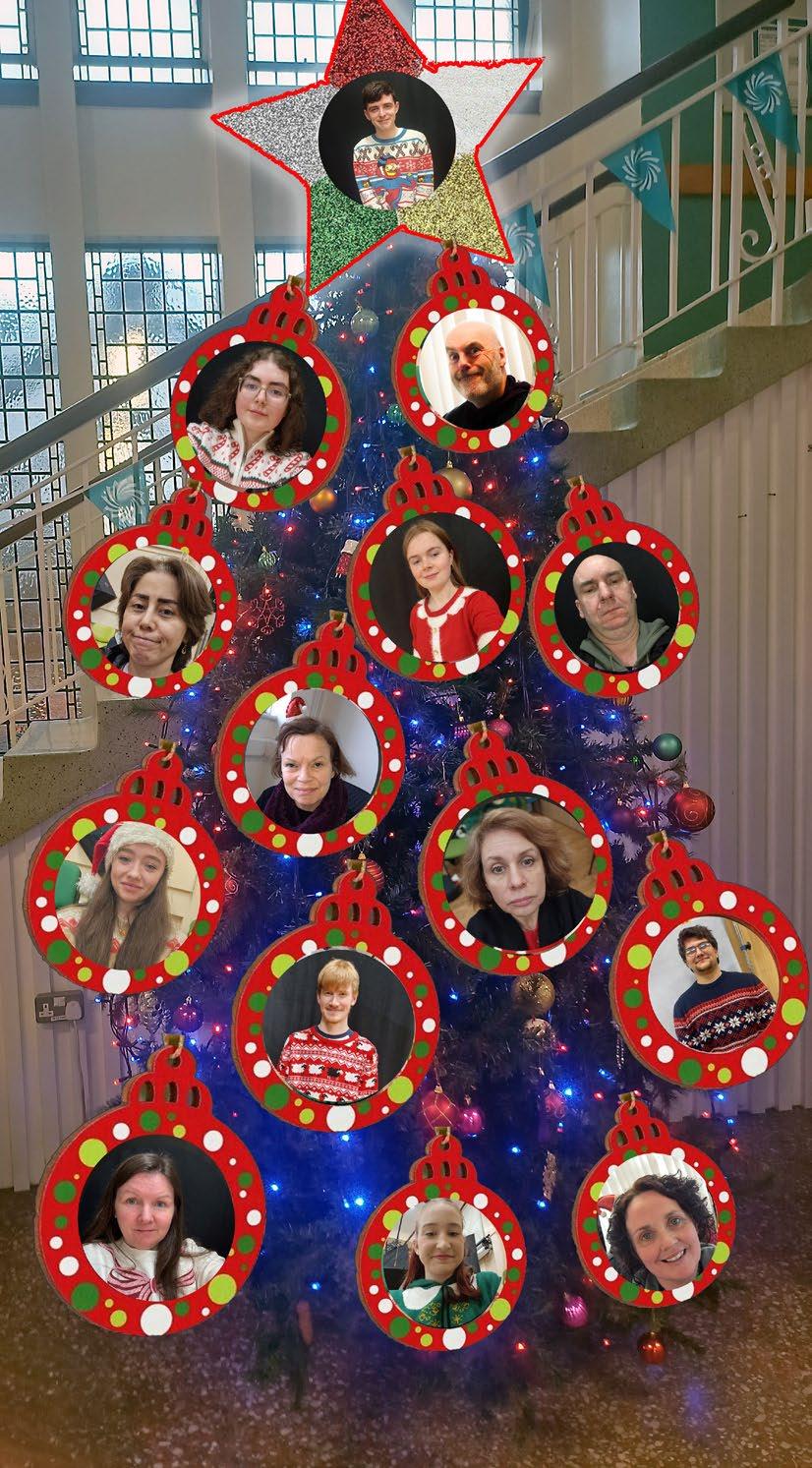
Photo: Aine Flynn, MSC
Orlaith Danaher | i-Ink Resident Elf-Poet
Who needs the perfect Christmas?
Just this year, spice it up a bit and have yourself a Very Horrid Christmas Day…….. Ingredients:
• Three servings of over excited children
• A large helping of frustrated parents
• Twenty Screeching cats fighting two dogs
• 5 Disgruntled visitors
• One faulty oven
• 3 sharp knives
• 1 snow blizzard

• 1 dilapidated Christmas tree Method:
1. First, take 3 over-excited children.
2. Next, make sure they fall down the stairs in their excitement to get their presents.

3. Notice that Rudolph has refused to eat his carrot, thereby upsetting the children.
4. Ensure that batteries for the presents are missing.
5. Add a decent amount of frustration from the parents, because all of the mixed-up presents.
6. Insist on the last book in the series of ‘Diary of a Wimpy Kid’ instead of the first one (which was requested).
7. Then, sabotage the oven to cinder…ise the turkey.
8. Place one very sharp knife at the dinner table to introduce the element of danger!
9. After that, summon a blizzard of snow which guarantees a hazardous drive to the A and E with two screaming children.

10. Leave behind one really furious child which will start one enormous food fight.
11. Leave the kitchen window open to attract hungry dogs looking for the burnt Christmas dinner.
12. Encourage Christmas tree chaos as demented humans and dogs get wrapped up in the light wires.
13. After that, observe nine extremely exhausted and grumpy bandaged people at bedtime.
14. Listen to the loud noises of eight people snoring.
15. Finally, make sure, to be sure, that twenty cats meow on the roof tops all through the night.
You will be guaranteed to have the most Horrid Christmas ever!! Bah…..Humbug!!
Anna Harris
Christmas is celebrated in many parts of the world, but the ways people mark the day can be very different. Some places follow old traditions, some mix local culture with global influence, and some celebrate in warm sunshine rather than winter cold. Here is a simple overview of what Christmas looks like in different regions.
In Ireland, Christmas is one of the most important times of the year. Streets are decorated early, shops stay busy, and people travel home to be with family. Many households attend Christmas Eve or Christmas morning Mass, and candles in windows symbolise welcome. The traditional Christmas dinner includes roast turkey or ham, potatoes, vegetables, and desserts like Christmas pudding or trifle, and people tend to worry in case anyone around them ‘doesn’t have a meal’. Young people also have modern traditions, such as Christmas jumper days and festive nights out. Ireland mixes old customs with modern ones, creating a warm and lively atmosphere.
Many people enjoy this season simply for its atmosphere; lights, music, time off, and kindness

In France, the main celebration is often Christmas Eve, with a long dinner called le réveillon. Families enjoy oysters, salmon, roast meats, and the famous bûche de Noël, a yule log cake. (I used to miss the fruit cake with marzipan and icing when I lived in France). Christmas in France used to be a small affair but increasingly global trends are picked up by young people, and it has become a more prominent. Across Europe, traditions vary: Germany is known for Christmas markets and Advent calendars; Italy focuses on nativity scenes and feasting; and Nordic countries use candles and fires to brighten long dark winters. Food, warmth, and light
Christmas in the USA is bright, bold, and colourful. Homes are decorated with lights, trees, inflatables, and stockings. Different regions have distinctive styles: snowy scenes in the north, outdoor celebrations in the south. Christmas

movies, songs, and the image of Santa have influenced the entire world. Although it can be commercial, it also brings communities together through parades, charity events, and neighbourhood decorations.
Christmas in Africa varies widely across countries and cultures.
East Africa: People attend long, musical church services and share meals such as rice, meat, and chapati.
Southern Africa: Christmas falls in summer, so many families celebrate with outdoor barbecues (braais).

West Africa: Churches are busy, people wear bright clothes, and communities enjoy dancing, festivals, and shared meals. The celebration often focuses on joy, faith, music, and togetherness.

With Christmas arriving in summer, Australians and New Zealanders often celebrate outdoors. Families go to the beach, have barbecues, or enjoy summer concerts. Lighter foods like seafood, salads, and fresh fruit are common. What surprises visitors from the northern hemisphere is the contrast: traditional Christmas cards and decorations show snow, sleighs, and snowmen—even though it is hot and sunny outside. I remember being in New Zealand at Christmas and laughing at the snow-covered decorations while standing in bright summer sunshine. It felt like two seasons at once.
Not everyone celebrates Christmas, but many cultures have their own festivals at this time of year.
Winter celebrations, in all their forms, are about making the darker part of the year feel brighter
An eight-day festival of light. Families light a special candleholder called a menorah, one candle each night. Children may receive small gifts daily, and traditional foods include latkes and doughnuts. It celebrates hope and resilience.
Muslims do not have a major religious festival in December, or a direct equivalent to Christmas, but many still enjoy the winter break by gathering with family, sharing meals, or exchanging small gifts. Some join the general festive atmosphere while skipping the religious parts.
Many people enjoy this season simply for its atmosphere—lights, music, time off, and kindness. Some focus on rest and reflection; others enjoy the food and the company. You do not need to follow the original story to be part of the warmth. Winter celebrations, in all their forms, are about making the darker part of the year feel brighter.


Tobias Heydemann
As Christmas gets closer and closer, we also approach a different event that many people forget about: the winter solstice. It is an astronomical date, marking the shortest day and the longest night of the year. In other words: After this date, the days get longer again. In the Northern Hemisphere, the winter solstice occurs around the 21st or 22nd of December – it is slightly different every year.
Now what is so interesting about this date? The solstice is of cultural significance for many people. The word “solstice” origins from the Latin and translates as “sun stands still”; this is because the sun’s position in the sky appears to not change for the days around the solstice. This has led many cultures around the world to believe that the date is a time of rebirth.
The solstice
Many ancient cultures knew about the solstice. The most impressive example for that is here in Ireland: The world heritage site of Newgrange. Located in the Boyne Valley in County Meath, it is a passage tomb measuring 85 metres in diameter and 13 metres in height. Newgrange was built by Stone Age farmers and is about 5,200 years old, making it older than Stonehenge and the Great Pyramids of Giza. The mound of Newgrange is ringed by 97 large kerbstones, some of which are engraved with megalithic art.
The dawn alignment
But the most fascinating thing about this monument is not just its size – but that Newgrange is perfectly aligned with the winter solstice. Inside the monument is a 19-metre-long passage which leads to a cruciform chamber with a corbelled roof. Above the entrance to the passage is an opening, called the Roof Box, through which, sunlight enters the chamber on the shortest days of the year. Every year from the 19th to the 23rd of December, a narrow beam of light penetrates the opening at dawn. As the sun rises, the light beam reaches the floor of the chamber and gradually extends to the rear of it until the whole room becomes illuminated. The whole event lasts for only 17 minutes, from about 8.58am to 9.15am.
There has been a lot of speculation about why Newgrange was built. Archaeologists agree that the spectacle at the winter solstice marked the beginning of the new year. Additional to that, the beam of light entering the darkness might have served as a symbol for the victory of live over death.
The perfect alignment
It is absolutely breathtaking that a monument that was built thousands of years ago by a farming society is so accurately aligned with the sun that it still serves its function to this day – especially if we consider that it is more than 1,000 years older than the much better known monument of Stonehenge
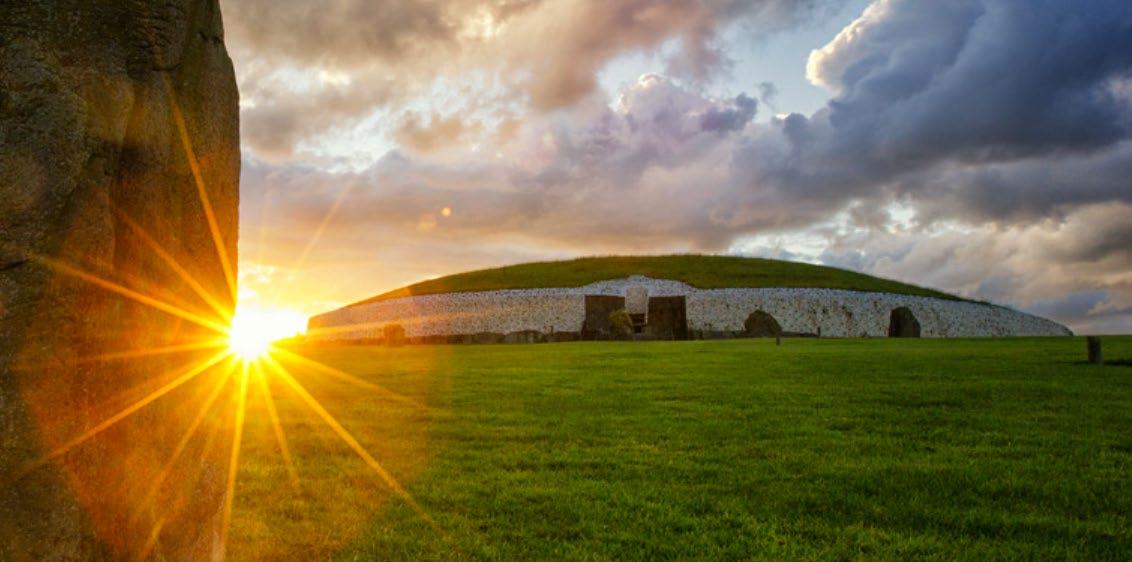
The solstice is of cultural significance for many people.
The word “solstice” originates from the Latin and translates as “sun stands still”
in England. Together with two similar mounds in the Boyne Valley, Knowth and Dowth, Newgrange has been declared as a World Heritage Site by UNESCO.
Visitors can go on guided tours to visit the monuments. On the winter solstice, thousands of people gather around Newgrange to witness the rare moment that has been observed for thousands of years. Only 16 people fit into the chamber of the passage tomb – a lottery decides who will be among the lucky few.
You can enter the lottery for the 2026 solstice on: www.solsticelottery.ie.
Additional to that, there is usually a livestream of the event from inside the chamber. If however the weather does not play into the plan and clouds cover the sky on the solstice morning, as it often they do, there will be no alignment to see.
However, the privileged participants can still immerse themselves and acknowledge the significance, of taking part in the rituals and legacy of their ancestors, now renewed and observed these thousands of years later.

Anna Harris
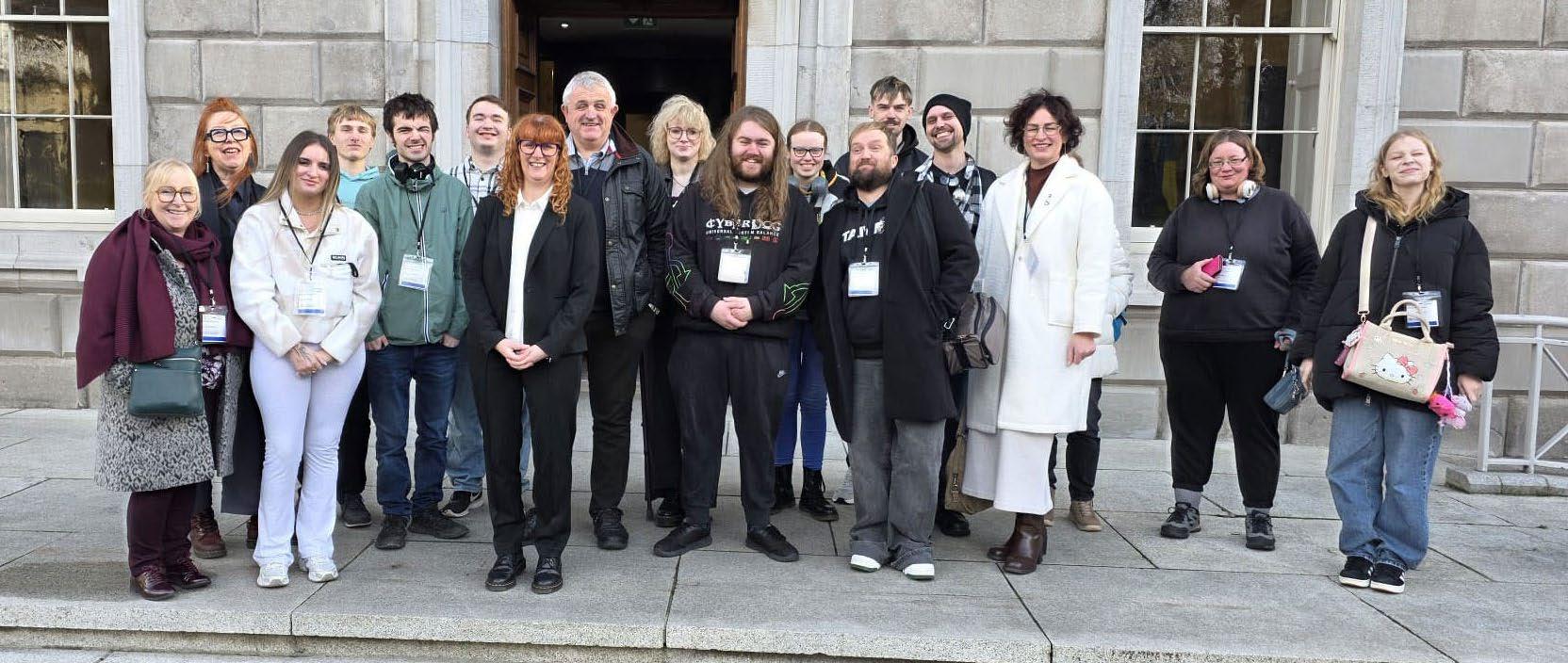
On Tuesday November 18th, two groups, Level 5 Broadcast Journalism and Level 6 Media Production (Radio) traveled to Dublin to visit Leinster House, learn about the Dáil and the Seanad, observe live politics. We were invited to the Dáil by Donna McGettigan, TD for Co. Clare, who would be hosting our visit.
We gathered in the canteen for a head count at 8.30 before setting off. I’d had an early start and eaten breakfast at 6 am but skipped tea in the canteen out of caution about where the next toilet would be.
The minibus was late, and I felt anxious, not knowing how big it would be or whether it would feel crowded, but it arrived eventually, and we all fitted comfortably. The group’s mood was lively, and one student who’d forgotten his ID hoped he’d still be allowed in since we were booked as a group. Frank, our driver, was friendly and gave a brief safety talk before we headed out. We were reminded to behave ourselves, no noisy singing, because we had a VIP with us: Enda Finn, one of the Deputy Principals. It was encouraging to see college management taking an interest in student activities.
The morning was misty through Tipperary and Laois; the mountains wore hats, and visibility was low, but the motorway was quiet. We stopped at Junction 14 for a toilet break, and I grabbed a cup of tea.
We arrived in Dublin just after noon and parked on Nassau Street, leaving Frank with plenty of time for a break. Leinster House is nearby. We entered through the Kildare Street entrance, where clerks seemed surprised to see us - they weren’t expecting us until 2 pm. We waited in the lobby until Donna arrived and spoke with security.
The pre-visit information which I’d read had compared security at Leinster House to airport security, but it wasn’t nearly as intense. We went through the scanners and waited on the other side. Surprisingly, no one asked for our ID. Once collected by Donna, we crossed the Plinth, where outdoor speeches and performances sometimes take place, and through the courtyard to Leinster House.
By coincidence, our visit fell on the day Finance Minister Paschal Donohoe suddenly resigned. Visitors wouldn’t have known anything unusual was happening - no panic, no rushthough Question Time was canceled, which disappointed us.
We collected our badges, were told to return the lanyards at the end but we could keep the paper badges as souvenirs. Then we went to the self-service restaurant. It was initially unclear whether we were meant to eat there or just get a drink, so I got tea and biscuits. Donna said she was covering the cost of refreshments, which was very kind.
I sat with Donna and a few others, and we asked her a few
informal questions. She described her working week as essentially 24/7 but said she enjoyed school and Youthreach visits, which offered small breaks from routine.
I couldn’t resist asking a controversial question about ‘the Bike Shed,’ the infamous structure that drew public criticism for its cost. Donna said we wouldn’t see it on the tour, but I did glimpse it from a window, and it did look well used.
We were then taken to the Dáil gallery. Some of us relied on the lifts and needed ushers to escort us, so we occasionally lagged behind the main group. Willie O’Dea passed us repeatedly without noticing when group members tried to greet him - not that you’re supposed to call out to TDs in Leinster House.
From our seats, we could see both government and opposition benches. The Ceann Comhairle (CC) sat centrally with the clerks. Her role is to maintain order, and although her appointment was controversial as she isn’t an Irish speaker and sometimes struggles to determine whether remarks made in Irish are insulting, she opened the session by leading the prayers in both Irish and English. All sessions open with a short prayer.
Even though I’ve watched Dáil sessions on TV, I was still surprised by the intensity of the speeches. Some TDs spoke with striking anger, and several resisted stopping when their time was up.
The first speaker criticised the cancellation of Question Time, calling it unjust. The CC stayed calm and firm, ending each rant by calling on the next speaker. TDs arriving late bowed to her before taking their seats, but anyone too late found the doors locked.
Being in the gallery, seeing politicians in their ‘natural habitat’ was fascinating, but we weren’t there long before being called out for our official tour.
Those of us using the lift fell slightly behind and joined the tour guide as he described the ‘Taoiseach’s Landing’ where each outgoing Taoiseach’s portrait hangs. We then walked through what had once been the living quarters of the Duke of Leinster and his family.
Next came the Seanad. Those of us with mobility needs were guided to a VIP area on one side, where a warm and talkative usher chatted with us while the main group listened to the guide from across the chamber. When the guide explained that some Senators are nominated by the Taoiseach, one of the Senators sitting together in the centre laughed and raised his hand to show he was one of them. The usher quietly told us his name, though I won’t attempt to repeat it in case I get it wrong. We learned about the different vocational panels and
how some seats are university nominated originating from Trinity College’s historic status as a Protestant and politically influential university.
The ceiling of the Seanad was stunning - ornate and beautifully crafted - though photography was not allowed. As the bell rang, signalling an upcoming Seanad session, Senators began to gather, and we had to move on. Bells throughout Leinster House alert TDs and Senators to sessions and votes. Once the bell stops, they have one minute to get into the chamber before the doors lock. Nearly every room has a TV showing live proceedings so they can keep up.
As we left the Seanad, some of us were able to see the famous Bike Shed from the window of the state chamber.
We made our way back downstairs and gathered in the entrance hall, where we saw a copy of the 1916 Proclamation. It was moving to stand before it - those men signed their names knowing they would likely die, and though some considered them failures at the time, their vision became the foundation of the modern Irish state.
Portraits of key figures hung on the surrounding walls. I looked for Joseph Mary Plunkett - my favourite - but didn’t see him. We were also among the few who got to see the blank space where the President’s portrait would normally hang; Michael D. Higgins had been removed, and Catherine Connolly’s portrait was soon to take his place.
We returned to the Dáil. Those of us using the lift caught a moment of Michael Healy-Rae speaking to a group of school students. I whispered that I could understand him perfectly - rare when it comes to the Healy-Rae family and some Kerrymen, prompting a quiet laugh from the usher and group. From the gallery’s opposite side, we now had a clearer view of the government benches. Healy-Rae reappeared after settling his school group. His brother Danny was there too, mostly absorbed in his phone. It was reassuring to see them, along with Willie O’Dea, actively present in Leinster House. Simon Harris and Micheál Martin sat with Paschal Donohoe, who looked uncomfortable as opposition members rose one by one to wish him well while criticising the government. Mary Lou McDonald’s voice carried strongly as she launched into
her attack, and Simon Harris did indeed look like he was ‘sucking a lemon’ - a look which the media loves capturing.
Ushers and Gardaí patrolled the gallery, reminding us to keep our voices low so the chamber wouldn’t hear us. At one point the Ceann Comhairle acknowledged the gallery, and the politicians waved at us. We waved back, which felt a bit like exchanging the sign of peace at Mass at my church, where we wave to each other
We were able to see one of the original copies of the 1916 Proclamation, which was really special. It was a beautiful vision and it is the foundation of Ireland
Above us, the press gallery watched over everything. I looked over, a little envious. Political journalism is exactly the kind of work I would love to do.
Donna collected us, and we stepped outside for a group Q&A session. We gathered on the steps and took turns asking her questions - mostly the Level 6 students at first, then a few of us from Level 5. I asked what issues people in Clare raised with her most often. She answered clearly: housing and healthcare topped the list, with examples from her constituency work.
I hadn’t realised the Level 6s were still recording, and I fear I disrupted some of their audio by chatting. The excitement of the day had me a bit hyper. Leinster House has sensory tote bags available, and I was lucky to get one—they included stickers, toys, ear plugs, sunglasses, and a lovely bag I’ll keep as a souvenir.
Time was slipping away, so we headed back to Nassau Street, where Frank was waiting. Rush hour in Dublin meant long, slow progress out of the city and continuing delays through the Red Cow and into Kildare. We eventually made a brief refresh stop at Junction 14 before continuing to Limerick.
We reached the college after 8 pm. I made a cup of teathere hadn’t been time earlier - and then biked home. After more tea and a quick catchup with Margaret, who wanted to hear about the trip, I was in bed and asleep.
Michael Quinlivan
As with every year you will see a news cycle kick up once again. However, this year we have seen a change in the field of war by which this whole matter is fought. Due to the recent affordability crisis which has been raised, the line of conversation has instead shifted to trying to sate the populace they whipped to a frenzy. Releasing a segment on their channel discussing the issue at hand. Their solution? Simply don’t buy people gifts. This does fly in the face of their prior argument if taken in isolation but makes perfect sense in the context the social conservatism which has been the beating heart of this movement for years now.

their business model relies on anger. Anger requires movement. Otherwise, that rage dissipates. This is why the vitriol has faltered: You can’t be winning and playing the victim in the same way.
The reality is this war has always been a bad one. For example, the criticism of Xmas removing the religious element of Christmas. In reality, X is actually a Christogram, referring to the Greek letter Xi, which has been used as a shorthand for Jesus for centuries. Originally it was Chi-Ro, which was depicted as the symbol but changed to X as it was easier to represent these ideas to a largely illiterate audience. X is not a symbol intended to exclude Christianity but instead to shorthand it.

This whole event had placed Fox News in an untenable position: Trump has insisted the economy is doing better than ever under his tenure. However,
When we look at some of the other claims, we similarly come up short. For example, a common criticism is how the phrase ‘happy holidays’ similarly obscures Christmas, however, the first recorded use of the phrase is seen in 1863. It grew in common parlance with the song Happy Holidays, written by Irving Berlin and sung by devout Catholic Bing Crosby. As pointed out by YouTuber hbomberguy, ‘Happy Holidays’ is not a way of smothering Christmas but firstly seeking to be more inclusive but also more importantly just having more than one thing to wish people. This also shows the value of representing how many holidays are around this time, as the aforementioned Berlin was Jewish and obviously didn’t celebrate Christmas.
Of course, this will be difficult to do when you are getting everything you want, and they are still unhappy. Rather than interrogating where that anger really comes from, they throw up new distractions to continue the war on a new front. How, you may ask? Spite. It is a victory parade which rings somewhat hollow. It is treated in a near Orwellian method: Rations are increased as something to celebrate but this sense of success will be snatched away at a moment’s notice.
Aine Flynn, MSC
So happy Christmas/ Hanukkah/Bodhi Day/ Feast Day of Our Lady Guadalupe/ Zarathosht Diso/ holidays. Or whatever.
Violetta Soprykina
Christmas is one of the most important holidays for the Ukrainian people. It has been celebrated from generation to generation, adhering to traditions and beliefs. Christmas traditions are deeply rooted in the ancestors, carrying sacred and religious meaning.
In Ukraine, some celebrate Christmas on December 25 or January 7. However, regardless of the date, the celebration has certain traditions and rituals.
Christmas traditions primarily included family unity. Our ancestors believed that if a person was alone on Christmas, they would wander for a whole year.
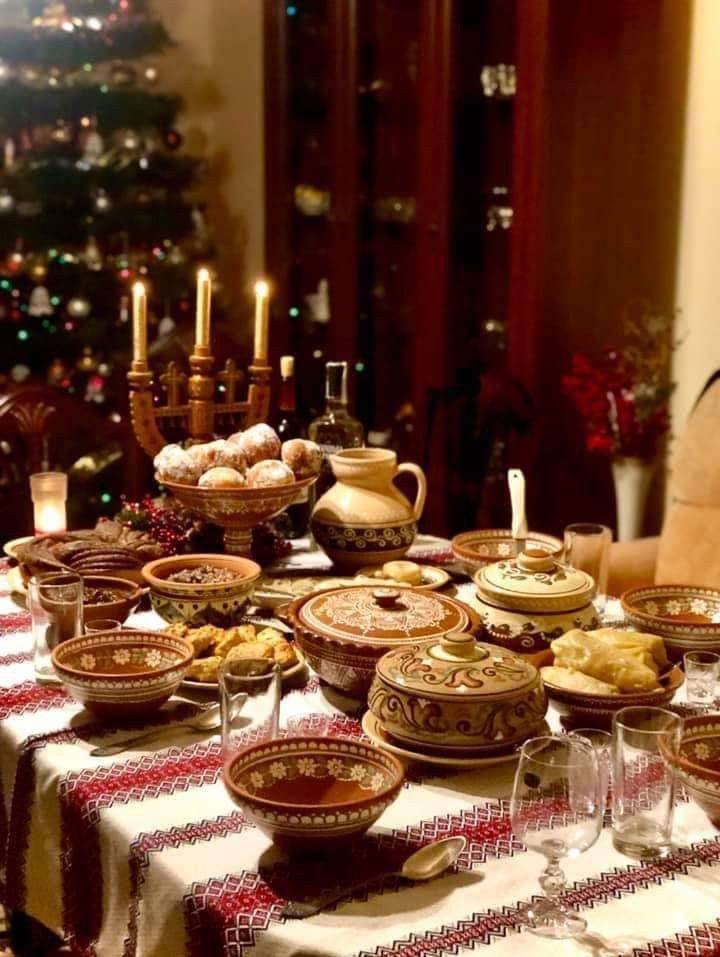
Christmas traditions in Ukraine also include a festive table. The feast begins on Christmas Eve. There should be 12 lean dishes on the table (in honor of the 12 apostles), each of which should be tasted by all family members. The main
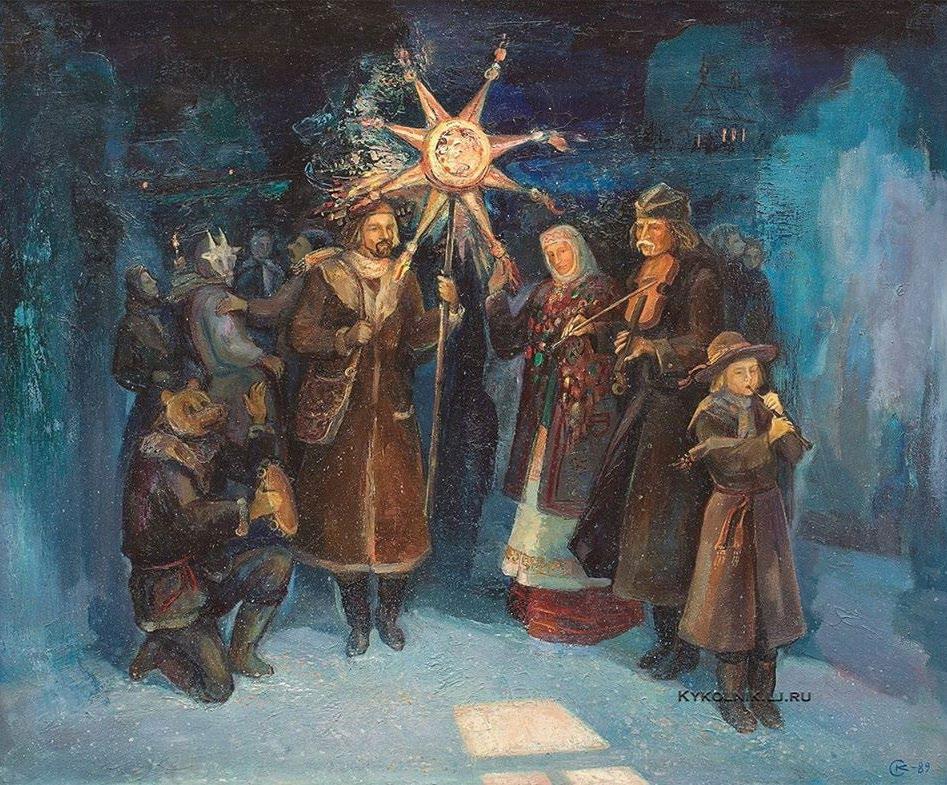
Christmas traditions also include caroling at dusk. Our ancestors staged real performances, singing carols and shchedrivki.
One of the most famous songs heard around the world at Christmas, which is ethnically native to Ukraine, is “Shchedryk” or “Carol of the Bells,” an integral part of Christmas in Ukraine.
To this day, this incredible tradition has been preserved, and now you can see teenagers walking around their neighbors, singing carols and shchedrivki.
Christmas traditions included one of the main symbols—the didukh. The didukh was a sheaf of wheat or rye, which could also contain other herbs. This decoration symbolized a good harvest and was placed in the most prominent place—on the corner of the room, on the table near the icon.
Christmas traditions in Ukraine also included the vertep. This was a theatrical performance depicting the everyday life of Ukrainians. The vertep had a sacred meaning for the Ukrainian people and was a harbinger of a good harvest.
dish is kutia, which is usually placed in the center of the table next to a lit candle. Ukrainian Christmas traditions dictate that kutia be left on the table after the festive dinner for the spirits of deceased ancestors. Our people believe that they visit their homes on Christmas.

One of the main traditions was fortune telling, which is believed to have appeared much earlier than Christmas. To this day, Ukrainian girls perform fortune-telling rituals on Christmas Eve to find out their fate and the name of their future husband.
To celebrate Christmas, Ukrainians had a tradition of wearing festive embroidered vyshivanka, embroidered belts, breastplates or vests, and national outerwear.
So this is a small part of Christmas celebrations in Ukraine.

Jason O’Donoghue
It is a very debatable topic on what makes a Christmas movie, some argue that it depends on the setting of the movie or if it has a festive theme. I would argue that it depends on whether the movies main plot-line is revolved around the Christmas season, but I would not agree that it coincides with a “warm and fuzzy” feeling as there are several known Christmas movies that would argue this point.
“A Nightmare Before Christmas” is a movie that would counter this argument as it is a known festive film as it even has the Christmas title in its name. This film is known to be quite scary to children due to its almost gritty animation. Comparing this to a movie like “Elf”, this movie has the all around “PG” friendly feel and shares many festive moments like singing around the Christmas tree.
I believe what makes a Christmas movie is fully based on how you as the watcher perceive it. If you decide to sit back and it is a tradition to watch “Alvin and The Chipmunks 2: The Squeakuel” then I believe it makes that a Christmas movie, so in speaking I believe that means that any movie can be classed as a Christmas movie.
Another movie that people often debate on whether it is a Christmas movie is the popular one as it comes with the recognisable title of “Die Hard” the film follows our protagonist “John McLean” as he battles a group of terrorists during the Christmas season in one night, I will list now on why this is a popular debate.
Die Hard is not a fun, family, or festive movie in its whole emotion, it is violent as it features swearing and brutal violence. Some people use this as the reason to say that it is not under the Christmas movie genre. Some simply say that the setting itself in the festive season is enough alone to classify it as a Christmas movie.
I believe my point of the time you watch this movie and whether it is a tradition, truly decides its genre of a Christmas movie.

Orlaith Danaher | i-Ink Resident Poet
In winter, when nights are long
And everyone gets annoyed at a certain Christmas song
People start wearing cosy Christmas jumpers with colours vibrant and bold
Some people dream of a white Christmas and some people complain about the weather being cold
Load of luminous lights light up Christmas trees
As families gather close, hearts soft as fleece Santa and his elves bring joy to children around the world
Painting Christmas hope across the world in one great, sparkling slope
And Die-Hard arguments about it being a Christmas film or just an action film climb once more, while Alan Rickman’s brilliance lives on far above the festive scope—still giving fans great hope
All of the primary school and secondary school students in the county are hoping for a snow day
So, they can laugh and run outside and play
While gifts may bring pleasure when we happily receive,
The heart of Christmas is in caring, loving, and helping others achieve