letter editor

We’re almost to the end of the year Roadrunners! As we bring you the final edition of this year it’s nice to look back at all we have accomplished. Through our monthly editions we've seen so many exciting stories and been able to share those stories throughout the LBCC community. We had several new additions to The Commuter this year, from new staff members to fun inclusions like stickers! It has been a year of growth. I have enjoyed getting to know so many new faces through my position here and I’m very grateful for all the opportunities being part of The Commuter has given me. The communities built here on campus are priceless and I’m honored to have been a part of it. I can’t wait to see what next year brings for The Commuter.
about us
join the team from the
Micah Teague Editor-in-Chief
The Commuter is the student-run magazine for LBCC, financed by student fees and advertising. Opinions expressed in The Commuter do not necessarily reflect those of the LBCC administration, faculty and students of LBCC. Editorials, columns, letters, and cartoons reflect the opinions of the authors. LBCC is an equal opportunity educator and employer.
letters welcome
The Commuter encourages readers to use its “Opinion” section to express their views on campus, community, regional and national issues. The Commuter attempts to print all submissions received, but reserves the right to edit for grammar, length, libel, privacy concerns and taste. Opinions expressed by letter submitters do not represent the views of The Commuter staff or the college.
Wanna get together? We’re really nice and fairly cool and we’d love to hear what you have to say. Not big on journalism but love to journal? Perfect. Are you a STEM major with major opinions? Let’s hear ’em. Like writing about ’80s film? Local animals? Snack hacks? Maybe you have a hefty folder of flash fiction on your laptop, just dying to be published and printed. Drop us a line. We’d love to meet you, read you, and support you. Think your ideas might be too weird or too niche for submission? Even better. The Commuter is an award-winning publication because of our wide range of contributions and our unique contributors. So reach out. We’ll be staring at our email inbox in the meantime, not an ounce of chill to be had.
editor-in-chief
MICAH TEAGUE
design editor
KAILYN MCQUISTEN
marketing director
JULIA NEVIUS
SKYLAR WILKERSON
advisor
ROB PRIEWE
contributors
AYDEN HORTT
BRENDA AUTRY
EMILY KINKADE
GEORGE BENNETT
GRACELYN JOHNSON
JESUS SANDOVAL-URIBE
KRYSTAL OVERVIG
LILLY EBERHART-GARAH
MIKE MCREYNOLDS
RENÉE SILVA
SAVANNAH WEST
SID MYDLAND
WYATT MARSHALL
sticker contributors
JESUS SANDOVAL-URIBE
HADASSAH ZDERAD
NICOLE JOHNSON
JACK HAGNER
in this issue:
office director 04 06 08 10 22 26 29 16
Adult Basic Skills
Program Spotlight
‘Art’ You Glad They’re Here?
A Look at LBCC’s Art Club
LBCC Public Safety Officers Set to Trade Batons for Tasers
We Have New Babies at the LBCC Equine Center

Aphantasia
No Pictures, Please

The Best Hikes in Redwood National Park

Thai Food Takedown
Rating Flavor, Authenticity, Spice and More to Find the Best in Town
Between Plates and Sake
A Night at Sada Sushi & Izakaya
WANT TO SEE YOUR NAME HERE? JOIN THE TEAM!
cover photo by MARGIE HARRIS
PROGRAM SPOTLIGHT:
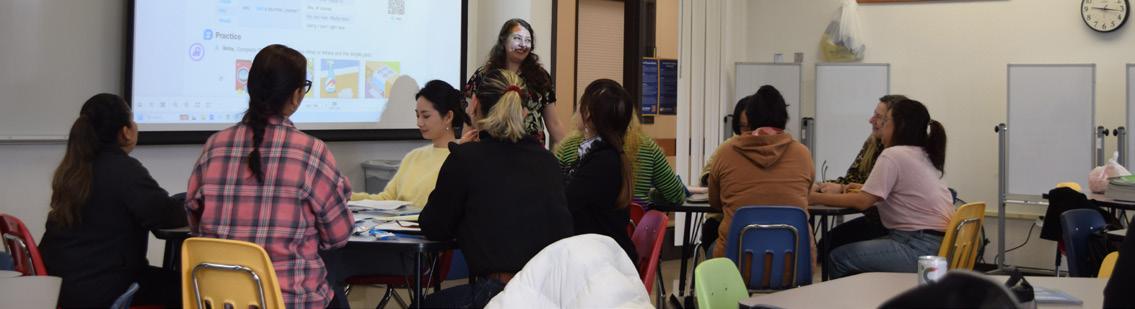
Adult Basic Skills
words and photo by SKYLAR WILKERSON
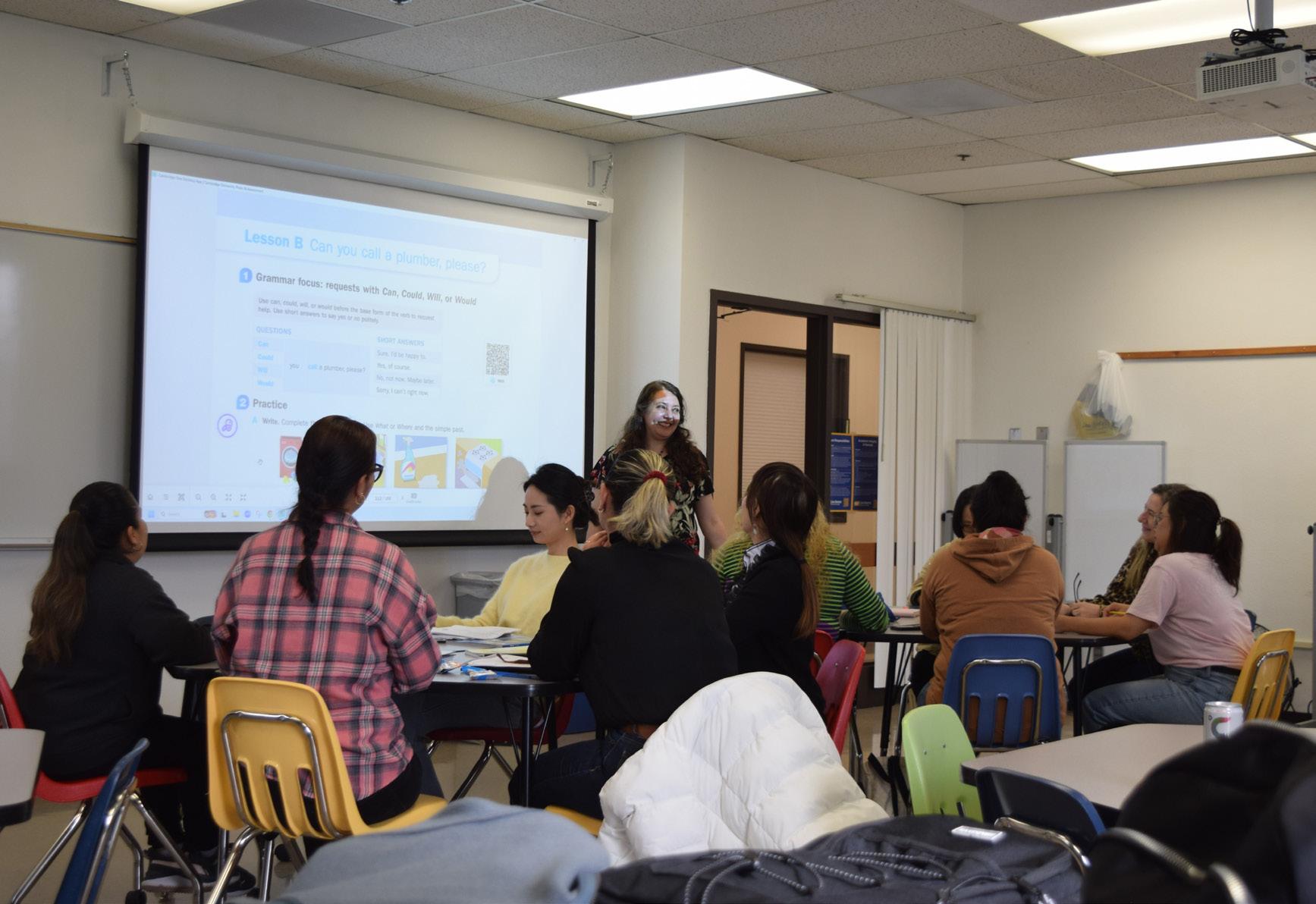
For many students in LBCC’s Adult Basic Skills programs, the classroom isn't just a place to learn algebra or grammar, it’s a place for second chances.
While the traditional student path often follows a straight line from high school to college, the path through Adult Basic Skills is rarely linear, defined instead by resilience, late-night study sessions, and the courage to start over. The Adult Basic Skills department helps empower students to redefine their futures in academic success.
What separates ABS from LBCC’s regular education programs is that it has an approach that is geared primarily to
Adult Basic Skills at a Glance:
Programs: General Educational Development (GED)
Preparation; GED Preparation in Spanish; English Language Acquisition (ELA); Adult Basic Education Pre-College Instruction (ABE)
Key Benefit: Addressing different learning styles and gaps in education. All programs are free (no tuition, books, or fees)
Where: Albany Campus, Takena Hall Main Office (T-232) and Corvallis Campus in the Benton Center
adult learners of all ages. Adult students often balance full-time jobs, parenting, and financial challenges. ABS takes these all into account, helping students in prioritizing and being flexible between their real life and future.
But, what does the ABS department offer?
The department has four main programs: General Educational Development Preparation, GED Preparation in Spanish, English Language Acquisition, and Adult Basic Education Pre-College Instruction.
The GED program prepares students for the high school equivalent GED tests in math, language arts (reading and writing), social studies, and science. It offers students who never took or didn’t finish high school the chance to further their education, while also offering a path into main college courses. The GED program is offered in both English and Spanish. Students must be 16 years or older to take the English program, and 18 years or older for the Spanish program.
One student who is a GED graduate, Erika Driver, wrote of her success story and how she started the GED program: “I dropped out of school in the ninth grade and turned to substance abuse at 18. In 2023 I went to jail for six months on some serious charges; it was then that I decided to get my life together. In September of 2024 I got accepted into the SNAP Training and Employment Program (STEP) to start working on my GED.”
Driver continued, “I worked extremely hard for a year by studying,
raising my hand in classes, and taking practice tests. Once I started testing I passed all of my tests within a threemonth timeframe. I am proud of that because I’ve always been rather embarrassed about my comprehension in school. I’m 27 and this is one of my biggest achievements.”
For other students, the move to the GED program is a strategic choice rather than a fallback. Asher Richmond left high school due to health issues and found himself at a crossroads in 2022. Coming from a family of educators, he wasn’t ready to give up on his goals.
After seeing his uncle find success through the program, Richmond enrolled in the GED program.
“I looked into the program in the area because my uncle had gotten his,“ Richmond noted. While he admits he would have preferred to stay in high school, the GED offered the “on-paper skills“ and the “formality“ of a brush-up he needed to move forward.
Now that he’s finished the program, Richmond is looking toward a future in a “makerspace,” a communal hands-on environment often found in libraries where people learn technical crafts such as 3D printing and woodworking. He views the GED as the stepping stone that allowed him to pursue this path without being held back.
The ELA program is for adults who are permanent residents, immigrants, or refugees in the United States. This program helps students brush up on their reading, writing, listening and speaking in English. It is geared towards students who are looking for work in the United States who want to improve their job skills, or are interested in going to college to earn a career certificate or degree.
The ABE program is for students who already have a high school diploma or GED and who want to strengthen their skills before taking credit-level courses. ABE classes are offered in math basics, computer basics, and college and career readiness (offered in spring term only).
Classes are offered primarily in the evening, after the main campus falls quiet from the regular hustle of students during the daytime and are offered at the main Albany campus, Corvallis Benton Center, or online.
As for the instructors, they serve as facilitators and help coach the student through the course and help them with questions along the way, including overcoming “imposter syndrome,“ which often occurs with students returning to college.
The Adult Basic Skills department's mission is often found in the “intangibles.” For the Department Chair and instructor for ELA Françoise Howard, who has spent over a decade specializing in ELA, the role is less about administrative oversight and more about acting as a “bridge” for those who feel the world has moved on without them.
“Many students come to us feeling like success is out of reach, or that they have somehow failed,” she explained. “Whether it’s a language barrier for an immigrant or a missed diploma for a GED student, they often arrive feeling 'deficient.' Our job isn't just downloading information into their minds. It’s about taking out the 'victim mentality' and replacing it with confidence.”
The impact of the programs often manifests in the smallest, yet most significant, victories: a student finally understanding a complex English idiom they’ve heard at work for years, or a College and Career Readiness student finding the courage to email a professor to request a classroom observation.
“I’ve had a student tell me, 'Teacher, I am a donkey,'“ she said. “I told them, 'You can never say that about yourself.' Seeing that self-deprecating noise go quiet is a delight.”
The Commuter met with Megan Christoph, the program specialist at the ABS office, to better understand the department and what students can do to get started.
You’ve been with the department since 2008. How has your role evolved from being an instructor to your current position?
I taught GED and English Language Acquisition for six years before pivoting to the administrative side. Now, I manage the database that supports the federal grant – specifically the Workforce Innovation and Opportunity Act – which pays for the bulk of our programs here. I handle onboarding, orientation, and progress testing to ensure our students are meeting their goals. Because we are a small department, I also handle registration and answer questions for walk-ins and students just trying to find their footing.
How many students are currently utilizing these programs?
We have about 220 students registered this spring. It’s a very dedicated group. Our ELA students have incredible retention. They are often thrilled to learn that these classes are now free, which wasn't always the case.
We see a bit more attrition in the English GED program simply because “life is big.” Our students are often in their 40s with children and jobs; balancing science, social studies, and math is a major commitment.
Continued on page 9.
The impact of the programs often manifests in the smallest, yet most significant, victories. “

‘Art’ You Glad They’re Here?
words by AUDREY LINDER
IA
n South Santiam Hall, Room 211, six students meet to express their artistic creativity. Four of these students remain invested in their individual projects, while two of them ponder an upcoming school project with diligence.
These two students happen to be Art Club’s co-leaders at LBCC, Ryder LeBlanc and Mei Yung CwmCwlamare.
The Art Club typically meets every Tuesday and Thursday at 4:30 p.m., with hours subject to change. Currently, the club’s meeting times have been hectic because of the approaching Spring Festival — which happened Tuesday, May 12, in the LBCC Courtyard. The regular meetups will return after the event.
The Art Club’s main focus recently has been making Alice in Wonderlandthemed decorations with other clubs for the festival, as well as preparing their own booth. This will consist of faceplaying cards, Cheshire Cat stickers, and a large trellis.
Toward the end of April there stood a giant paper maché pencil in the room, courtesy of club member Jay
Look at LBCC’s Art Club

Underwood. The pencil, along with other decorations, will be showcased at the Spring Fest.
“The more people we get in our club, the more activities we’re actively doing. Because, conceptually, we could do that as a project, but we don’t have a lot of people or commitment to the club — so we’re doing nothing in particular,” said Underwood.
Art Club is also collaborating with the city of Albany to create a mural at the boat house in Waverly Park.
Another club member, Red Walker, sat in the room’s corner working on personal projects.
“It’s nice to do the thing I’m good at with a bunch of other people. And everyone here seems to be pretty nice — pretty chill — to be around. We just need more people in general," said Walker.
Students seeking a safe space to create, share, or discuss art are welcome at the Art Club. At the moment, the club consists of around 40 members via Discord, but in-person attendance is low.
“We also got a big clipboard. And a big pencil," said Walker.
At a Glance:
Art Club Co-Leaders: Ryder LeBlancryder.leblanc.5333@mail.linnbenton.edu
Mei Yung CwmCwlamare - meiyoung. cwmcwlamare.7637@mail.linnbenton.edu
Club advisor: Rob Camp - campr@linnbenton.edu
Council of Clubs: Jaxon Lee - slcclubsengage@linnbenton.edu
Art Club is open to all students and is looking for more members and participation.
Scan the QR code to join their Discord server!
Art Club welcomes all students who are interested and you can sign up either by contacting the club advisor (Rob Camp: campr@linnbenton.edu) or by joining their Discord.
Congrats,
2026
Gra du ates!
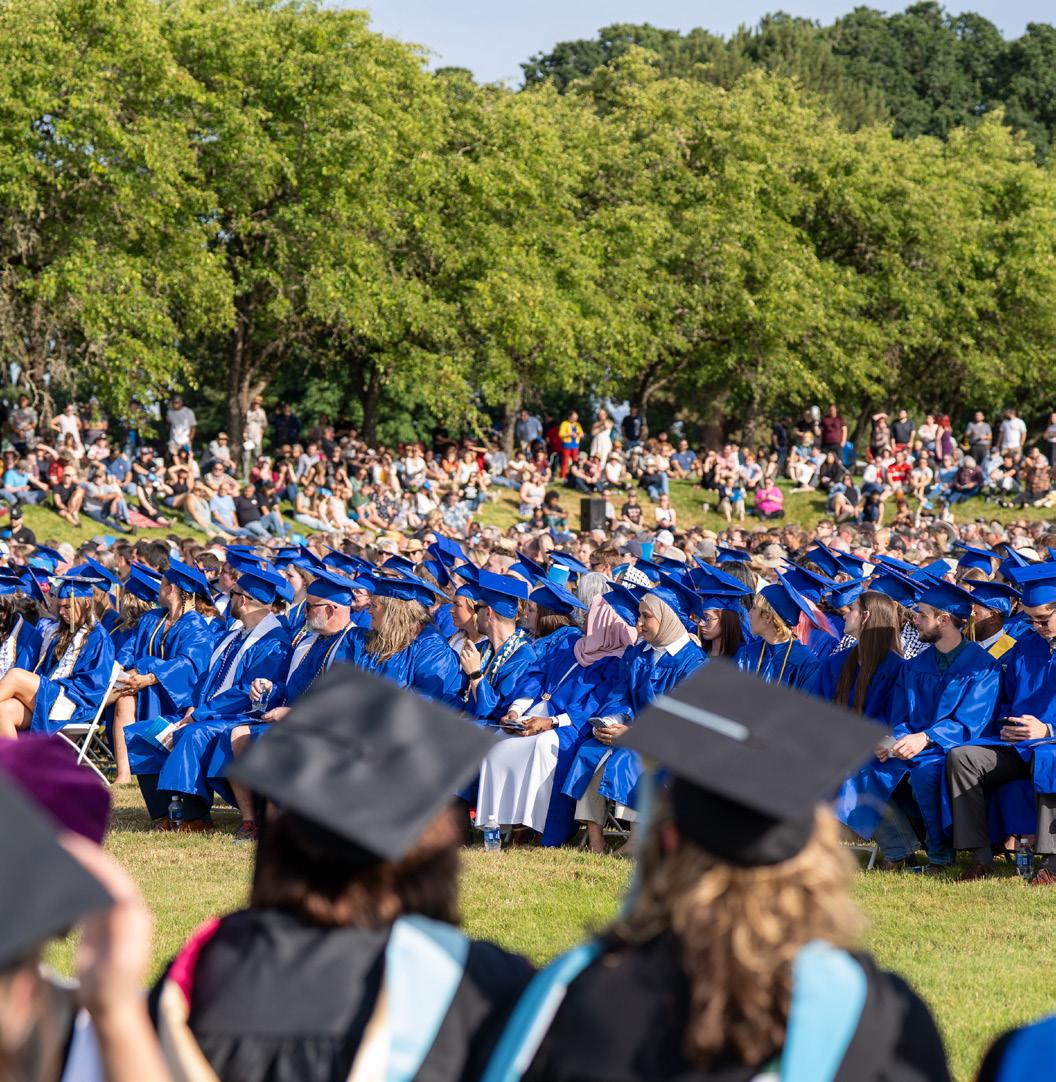
The SLC is hosting a grad party for graduates and their families after the Commencement Ceremony on Thursday, June 11 . Commencement starts at 5:30pm. After, join us in the Courtyard for food, fun, and music.
We’re so proud of you, Roadrunners! th
LBCC Public Safety Officers Set to Trade Batons for Tasers
Linn-Benton Community College is moving toward a significant shift in its campus security profile. Starting as early as the fall 2026 term, public safety officers will transition from carrying traditional metal batons – or no weapons – to being equipped with Tasers.
The decision follows a "new normal" of increased incidents on LB campuses in recent years. The majority of which involve non-students along with a recent physical assault on an officer at the Benton Center in Corvallis.
While the move has sparked both conversation and controversy among students and faculty regarding the campus environment, along with budget questions and how they are being funded, the college’s leadership maintains that the shift is a move to a safer, more modern method of deescalation in an event when it is needed.
The Commuter sat down with College President Lisa Avery to discuss the administration decision of public safety carrying Tasers on campus while also addressing the concerns of some students and staff.
Can you explain the administrative reasoning behind the decision to equip public safety officers with Tasers?
Our public safety director approached the executive team a few months ago to discuss the best strategy for keeping students, staff, and officers safe. She provided research suggesting that Tasers are a safer long-term option for both the officers and the individuals they interact with. The heart of the
decision is trying to minimize risk and avoid hand-to-hand combat with them carrying just batons.
How would you respond to students or staff who feel uneasy about public safety carrying these weapons?
Currently, our officers carry batons. Research suggests that batons are more likely to result in physical fights, which is often worse for both parties. We want public safety to be able to assist, especially in situations involving mental health crises, from a distance rather than engaging in hand-to-hand combat.
Is this a slippery slope toward having a police presence on campus, similar to OSU?
I want to be very clear, we are not "deputizing" our officers. They are not police officers, and we are not moving toward a model where sworn officers carry firearms on campus. This is not a part of a slippery slope; that is not the environment we have at LBCC.
When will this change go into effect on the administration side?
There is an administrative rule change that must be enacted first. I expect that to happen later this
spring term. If approved by the College Council, the implementation would begin in the fall. Officers would spend most of the summer training.
The Commuter also had a Q&A with Director of Safety and Loss Prevention Rhonda Jaasko and Public Safety Coordinator Adam Weaver to discuss the extensive training involved, and the impact on the college community it may cause to students and staff. You mentioned a recent assault at the Benton Center. How did that incident influence the decision?
Jaasko: It was on my "to-do list" from the moment I was hired. An officer at the Benton Center was punched by a person who was either in a mental health crisis or under the influence. The individual, who was not a student, charged the officer and disabled his radio.
Weaver: Watching that on video in real-time without being able to help was difficult. A baton requires you to be in someone’s face to use it. A Taser is a distance defense mechanism; it can be used from 26 feet away. That distance could have drastically changed the outcome of that assault.
words and photo by SKYLAR WILKERSON
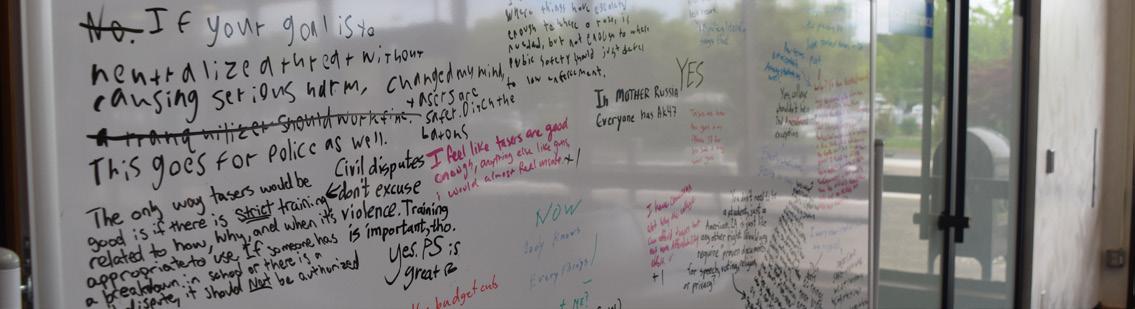
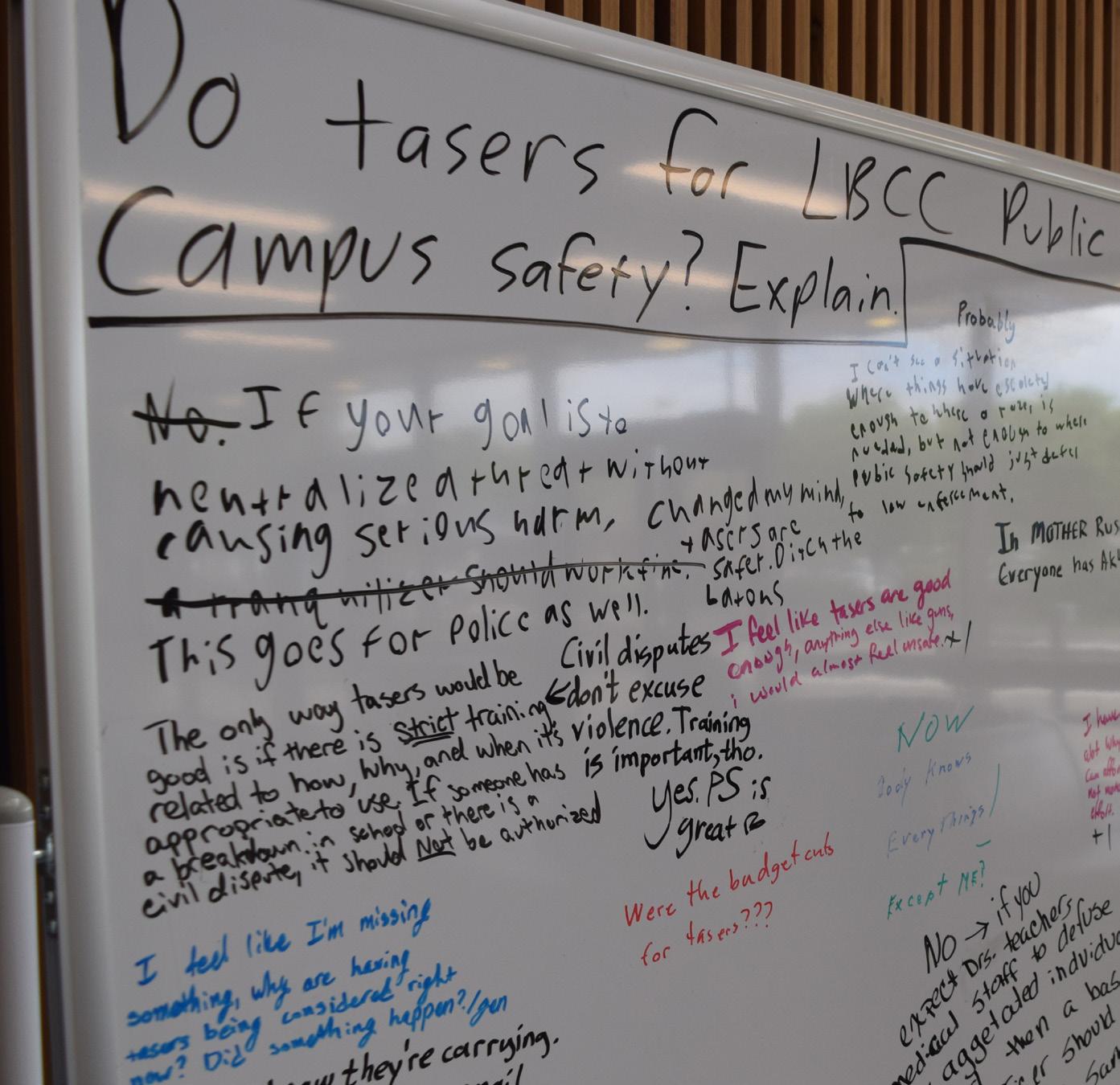
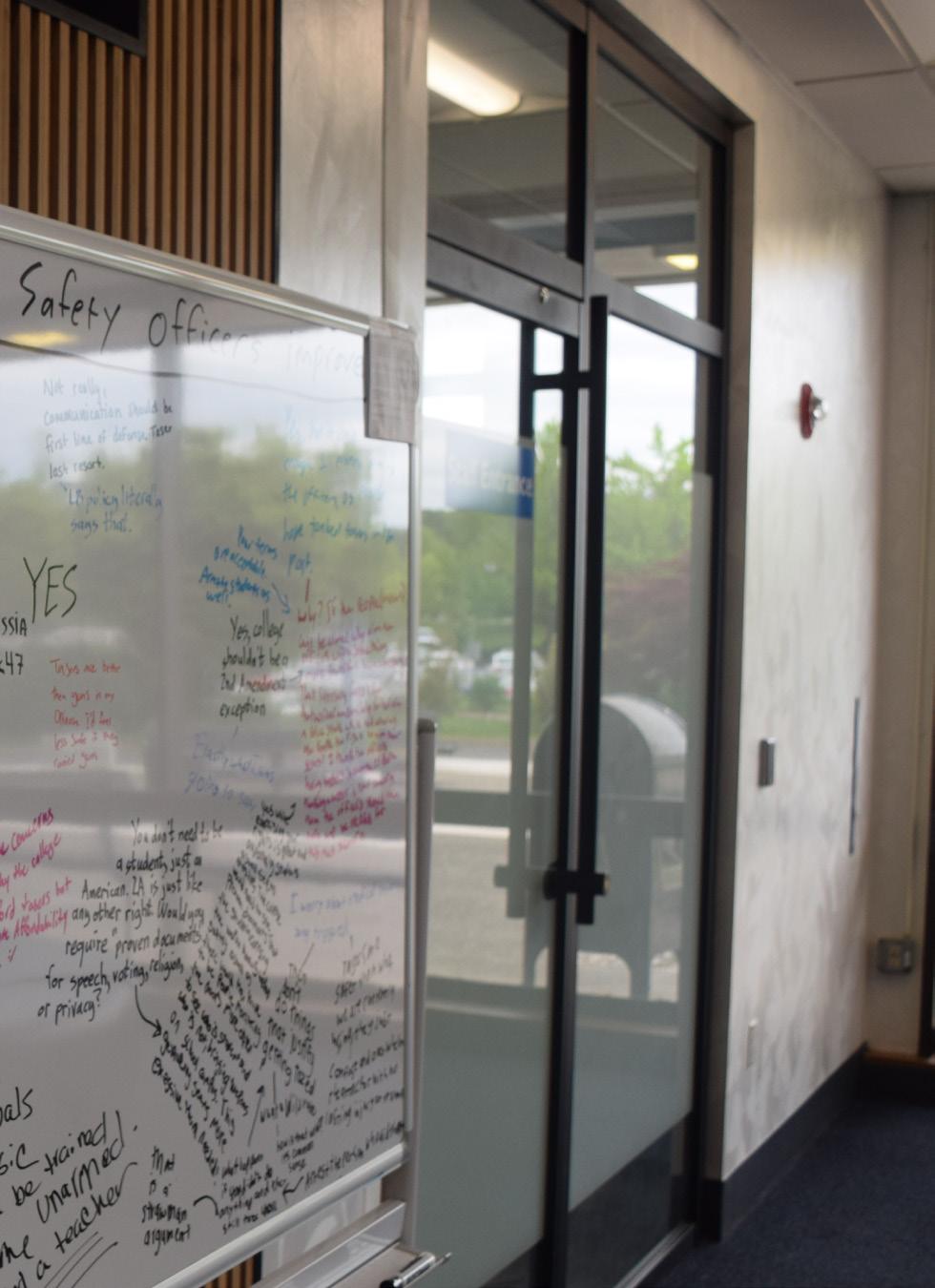
▲ The Civil Discourse whiteboard on campus discusses the upcoming change.
How will officers decide between a genuine threat and someone experiencing a mental health crisis?
Jaasko: The technical training on the equipment is a small piece. The more important part is crisis intervention training. This is a 40-hour class taught by law enforcement and mental health counselors. It focuses on de-escalation and how to differentiate between a behavioral issue and a mental health crisis. We currently have officers scheduled for this training in July. Does the presence of a Taser escalate a situation, or does it help neutralize a threat?
Jaasko: Often, just the presence of a Taser stops the behavior because people have seen what they can do and they choose to comply. We get a lot of compliance by merely having the tool available. We aren't seeing fewer incidents on campus lately; we are seeing an increase in activity, particularly involving the community bus hub.
SPOTLIGHT:
Adult Basic Skills
Continued from page 5.
The staff supporting these 220 students is relatively small. Who is behind the scenes?
We have one contracted faculty member and six adjunct instructors; three for GED and three for ELA. We also have two part-time non-contracted bilingual classified staff in addition to my position. Our faculty and staff have been with the department for a long time and are incredibly committed, despite having to scale back from locations in Albany and Corvallis. We also have a bilingual student navigator, Leo Maldonado, who is vital in helping students transition to college programs. What does success look like for an ABS student in these programs?
It’s surprisingly high. We are meeting all our federal metrics, but the real success is in the transition data. When I look up our GED graduates, a large number of them are currently taking credit classes at LBCC. Even though the college no longer offers the 12-credit tuition waiver for GED grads that it used to, students are still pushing forward. They aren't always looking for a four-year degree at a university, as many are in their 40s and want a certificate or an associate degree so they can increase their earnings and support their families immediately.
For someone looking to start this path, what are their first steps?
For GED and ELA, students apply through LBCC using an application specifically for Adult Basic Skills. They then go through an orientation and testing process.
For our Pre-College Instruction (ABE), students apply as credit students and work with a navigator. We offer math basics, computer basics, and a
College and Career Readiness course. These are designed to help students gain confidence and get comfortable with tools such as Canvas before they start credit-level classes.
Torey Arnold, a part-time biology instructor at LBCC, now has a PhD in biology. He remembers the exact moment he pulled into his community college parking lot for the first time. “I remember thinking, this is going to change my life,” Arnold said.
Arnold’s path was born out of a difficult high school experience defined by bullying and a “decimated” sense of self-worth. He dropped out at 16, but an inner curiosity about the molecular world kept him moving.
“I really liked science ... I was fascinated with how cells work,” he recalled. “I knew if I wanted to be a biologist, I had to take the GED to go to college.”
After taking the test in Michigan and passing with “college-level marks,” Arnold began a 13-year trek through higher education: four years for an associate degree, three for a bachelor’s, and six for his PhD. Arnold noted that the GED felt like a more significant personal milestone than his doctorate.
“Getting the GED, I felt more accomplished in that than getting the PhD,” Arnold recalled. “The amount of dopamine hit I got from the GED ... it was fuel to the fire. It showed me that I was capable, worthwhile, and valued.”
Today, as a teacher and biologist, Arnold’s advice to students starting the programs is to ignore the “stigma” and focus on their own timeline. “It doesn't matter how long it takes. It’s not a race,” he said. “Whatever it is you want to do, that’s got to be the driving motivation. Just get into the pool a little bit and see if it feels right.”
Continued on page 20.
We have new babies at the LBCC equine center
words by AUDREY LINDER AND MIKE MCREYNOLDS
photos by ANNA PHILLINGANE AND MARGIE HARRIS
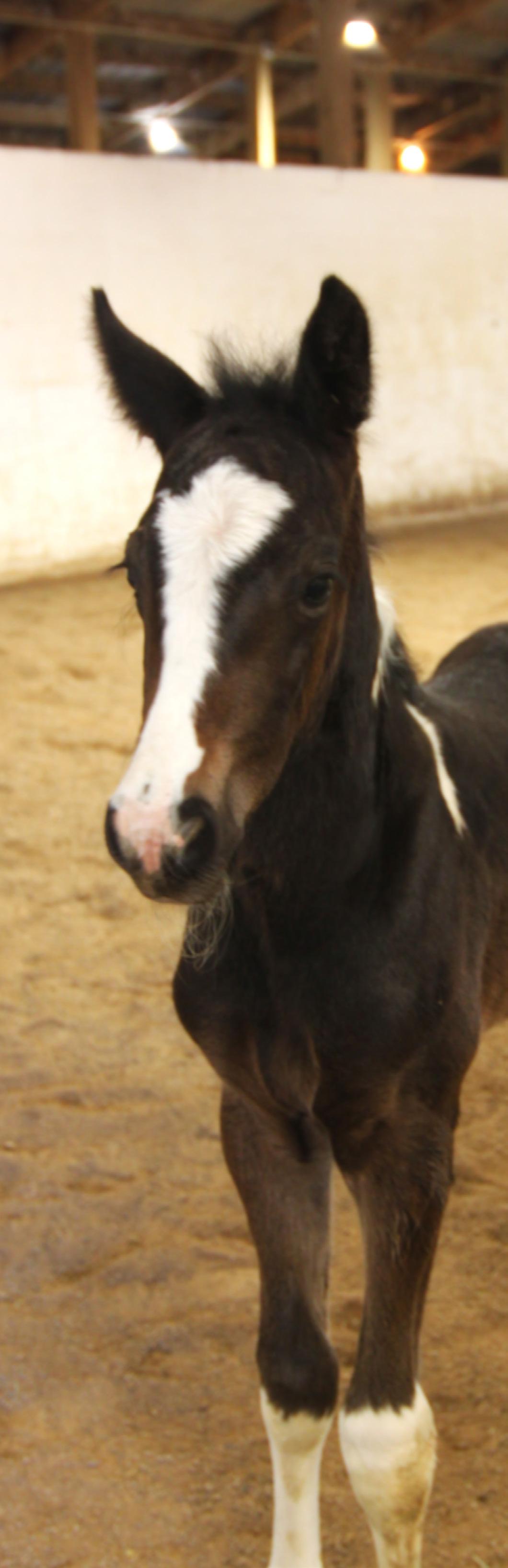
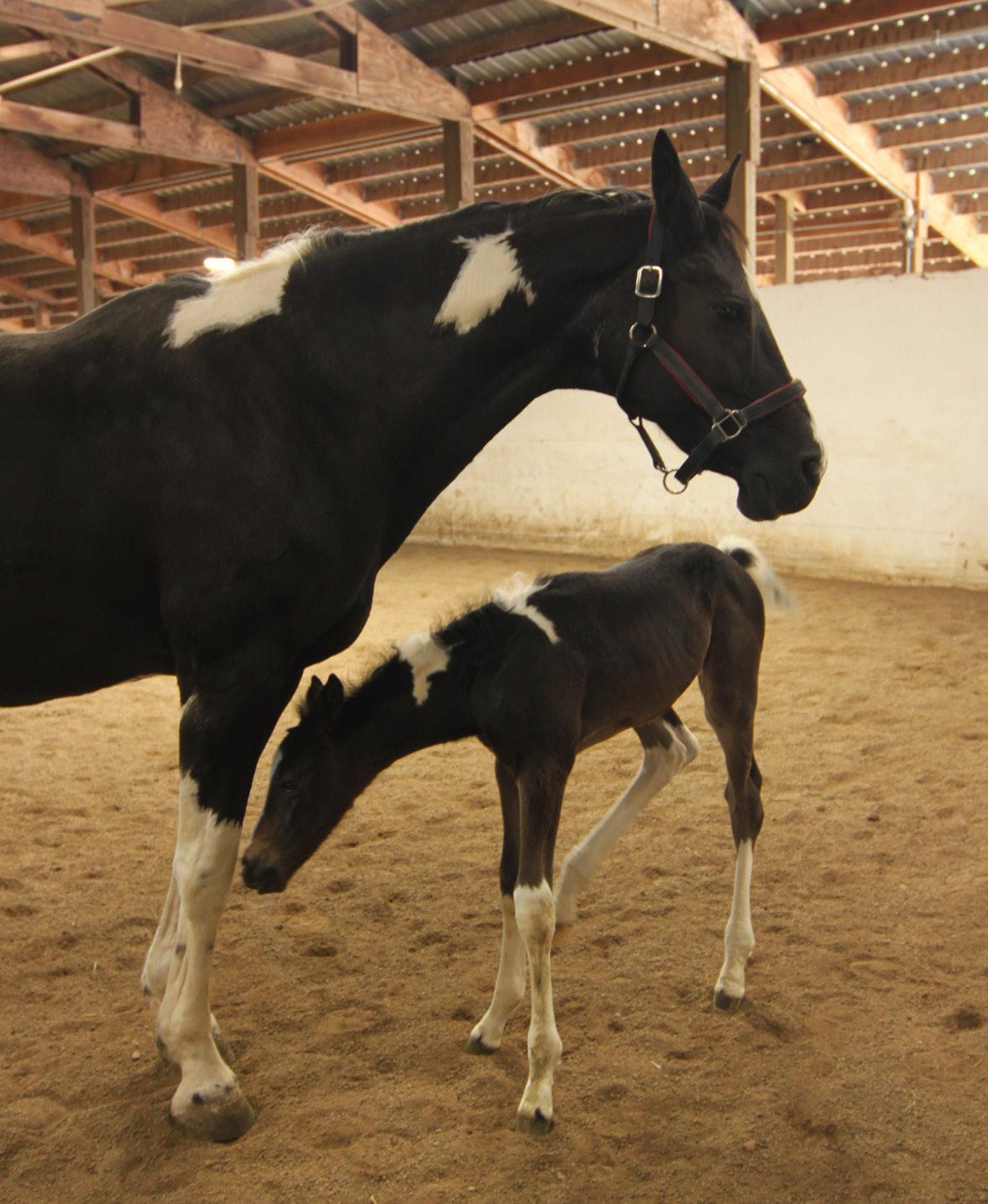
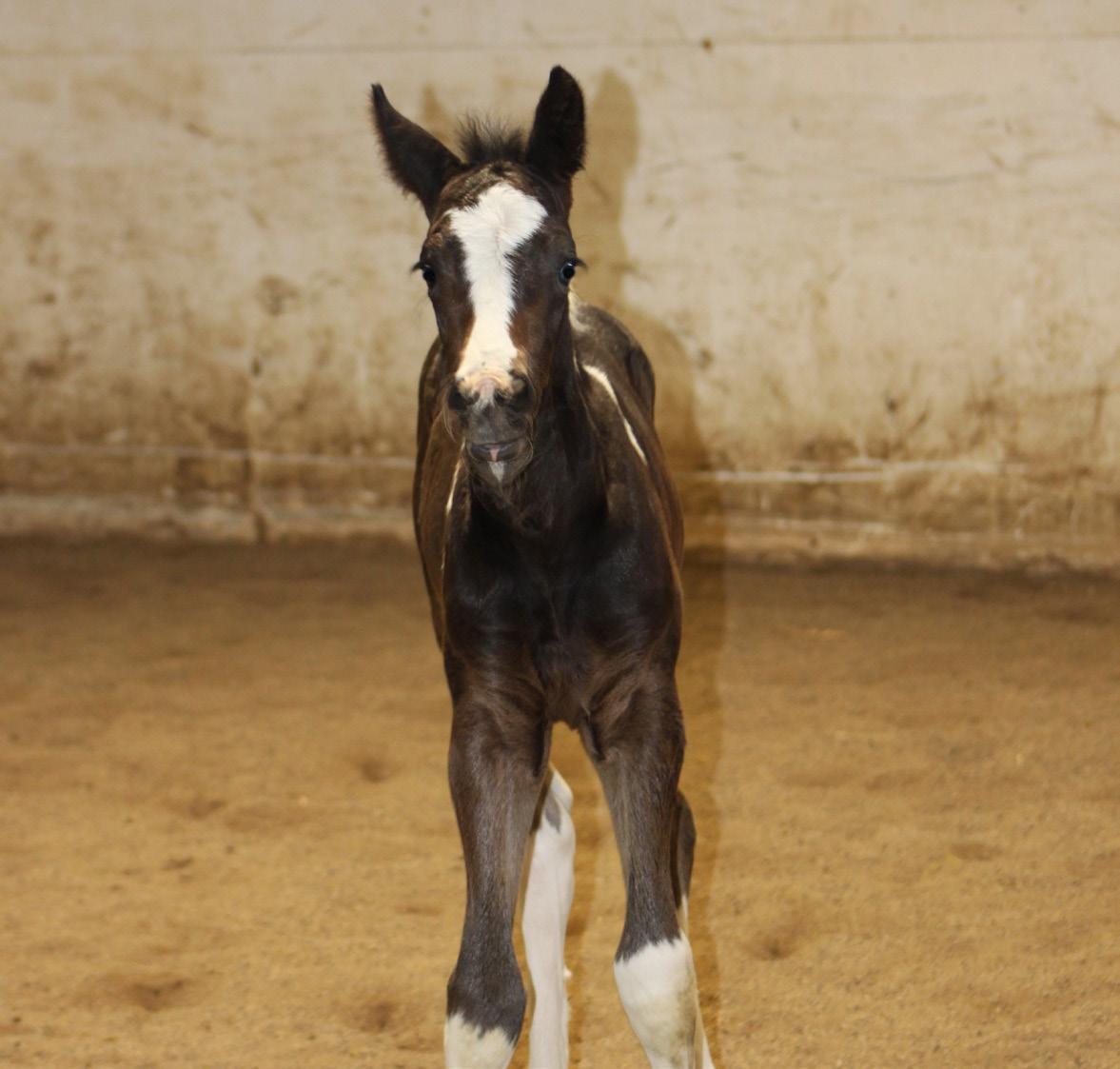
LBCC’s Equine Center welcomed a colt named Poetic Justice who was born on April 19 at 1 a.m to Koda, his mom who is an Oldenburger horse. The owners use his mom, Koda, for jumping, and the caretaker assumed that Poetic Justice will also become a jumping horse in the future.
The foal is pretty easy to manage, but he's very "wise," and "spicy" say those who have been around him. He likes to leave his mother and run around. He's a fast runner and has an attitude. Quite inquisitive. He also likes to suck on his whiskers.
Poetic Justice went home to his owners on April 20. Koda and her foal are not LB horses but instead have owners who provided them for classes. Poetic Justice nurses for about 20 minutes per hour every day, weaning for about 4-6 months. He stood in about an hour after birth and it took him about three days to run properly and with speed.
But that was only the first of the new foals to be born at the Linn-Benton Equine Center this spring. One mare was due May 14 and another mare is due May 24. These two foals may be used to halter-break.
They used Koda as an example of a breeding class at the LB Horse Center, where the students study the birthing process, the milk PH levels, and they keep track of the foal after it is born. The other horses who live permanently at the LB Horse Center are used for lessons in training, breaking, and breeding. The caretaker assumed that Poetic Justice would not be easy to break, due to his spunky, independent nature.
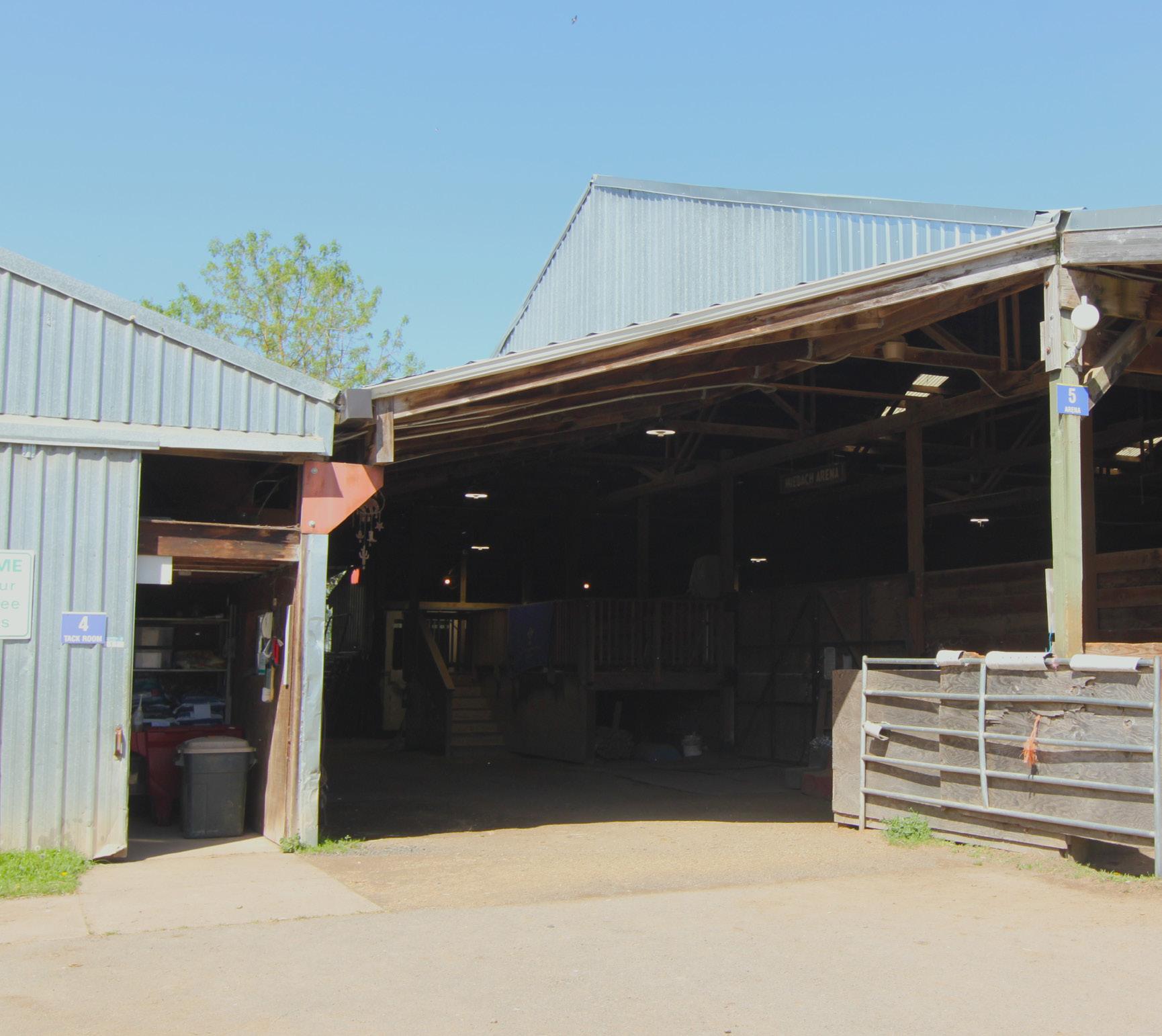
Poetic Justice and his mom, Koda, were hanging out in the
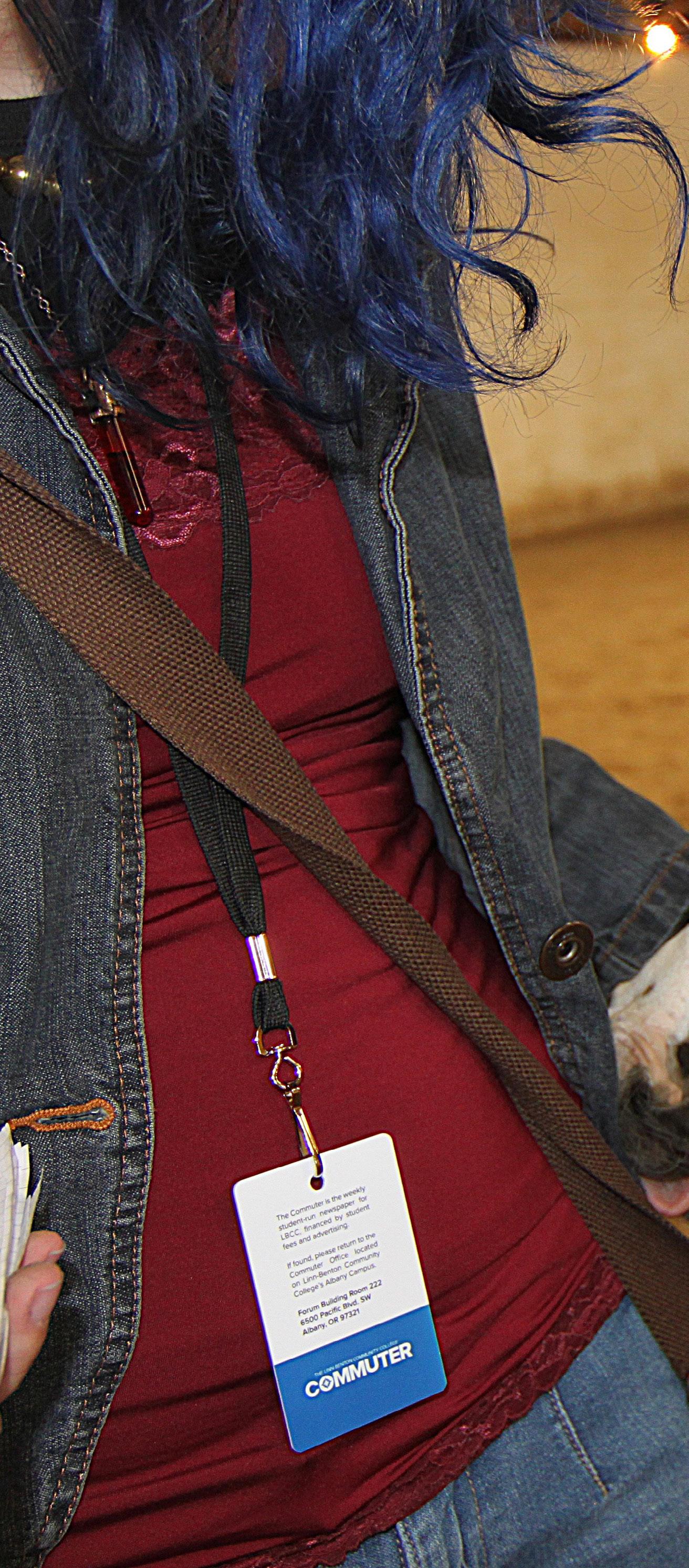
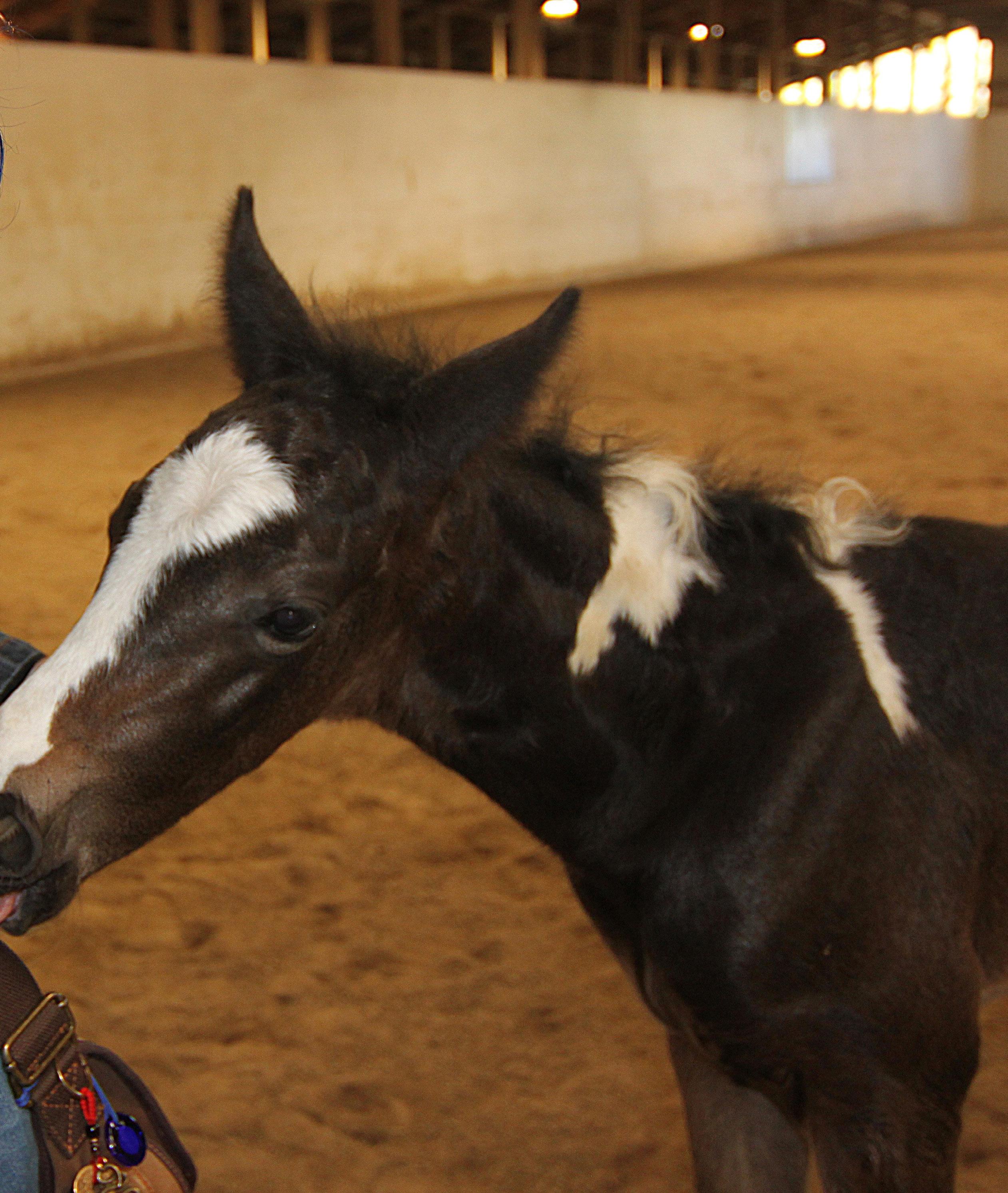
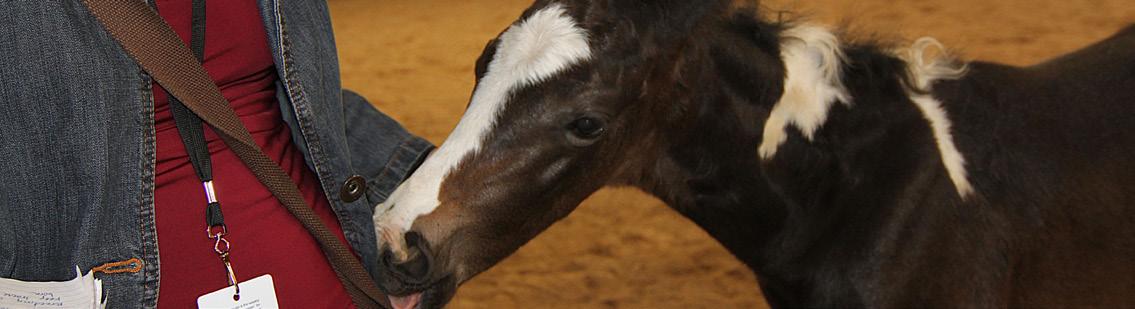
Miebach Arena when we visited. In one of the photos, you can see Poetic Justice nibbling at my denim jacket playfully. He was skittish when approached but eventually grew too curious to maintain distance. He was friendly, soft, and prone to kicking and jumping; full of energy.
His mother, Koda, was approachable, gentle, and calm. She stood and just observed the interactions until the foal ran off, which required Koda to chase after him.
The Commuter recently visited with LBCC’s former equine science faculty member Jenny Strooband, who is now dean of Advanced Manufacturing and Transportation Technology.
What's your role at the Horse Center?
Well, for 25 years or so, I was the faculty in charge of the program. So I was the equine science faculty, but I left that job in January, and so currently I'm just administering the center until they hire my replacement. And so those interviews are ongoing now, but I am teaching a little bit out there. I'm teaching the breeding program right now. I'm teaching the horse breeding lab, but I am administering it and taking care of all the financial cases and that sort of thing.
How long has that program been going on?
The program started in 1986 and I was hired in 2002, when the person who started it retired. Jim Lucas started the program. He's great.
How's the new Ag Center building south of campus coming along?
Great, the livestock barns are almost completed. So the sheep, swine and cattle barns are almost totally done. And then we're making really good progress on the riding arena and the show arena as well. So you can see from the road it's the big blue building that you can see from Highway 34 and Looney Lane. It's coming along really well, and
that's all the first phase of the building project. The second phase of the building project includes the horse barn, so that'll start going in, hopefully here soon. And then the third phase will add a classroom and a wet lab out there, all in the same location, which is going to be great to have us all together.
What kind of input did you or the staff have in designing the new center?
Quite a bit. We were part of the design process with the architects, and it was really just a matter of trying to get everything that we wanted to have, on site and within budget. So that was kind of a real challenge. But we met with the architects for about a year, designing and making plans and so that's been a pretty fun process.
How was this project funded?
We've got a state of Oregon community college construction grant. And so how that works is that we apply for the grant. We were awarded the grant, which was $8 million and then we have to match those funds. So we went out for a bond in 2023. The bond was for the Agricultural Center, for Periwinkle Child Development Center, and the Learning Center remodel at the Benton campus. We had just had some maintenance, deferred maintenance stuff to do. So, the bond, I think it's the entire bond, I believe, was $16 million and then $8 million of that went to match the Ag Center.
The construction started later than was planned. Why the delay and what is the timeline for the rest of the buildings to be completed?
Yeah, we were delayed, and we really struggled to communicate with architects about creating the design that was in our budget? So that took some extra time; we had to wait for the matching funds to know our budget. So the original design they gave us was

significantly out of our budget, and so that did slow us down a little bit.
How is a new facility going to improve the quality of instruction for the students over the old facility?
Well, currently we don't have any livestock facilities at all. So we do have a horse center, but we don't have anything for beef, sheep or swine, and so that's going to be just a huge improvement for us, because right now everything that we do with other species of livestock, we really rely on local farmers and local community members to accommodate us so we can go and use their livestock and try to have some hands-on learning. It's really difficult to do that and to run academic programs relying on private people's livestock. It really limits hands-on experience that students can have. It just really limits what they can learn and what they can do. So this is going to be just a huge improvement
having our own livestock that students can directly handle, directly manage, doing scientific trials, nutrition trials, learning how to vaccinate, learning how to castrate. Just doing all the things that we need to do in animal husbandry in order to be successful and livestock production from the horse side.
The current horse facility was purchased in 2002 but the facility was built in the ’60s, so it's just a very old, small facility. It was not intended for educational use. It was just intended to be a boarding facility. It's currently on 53rd Avenue here in southwest Albany, and the neighborhood's really grown up around it, and so we have a lot of urban expansion and we have 35 horses on less than seven acres. It's just really, really, really tight, so we have just outgrown it.
We've done our best, but the program has grown significantly in the last few decades, and that facility just is no longer adequate. So having the
animals all on one site will help the students to really bond or connect with the animals. You know, there are subtle clues, whether they’re feeling good or bad, stuff like that. That kind of interaction will give them lots of hands-on learning, which is the goal. So, career technical education really thrives when students are able to participate directly in the industry.
Are you going to have a grand opening?
Yeah, I'm not totally sure when, probably in the fall.
Is there anything else that people should know?
Well, agriculture is a huge industry in Oregon, it's the second largest employer after healthcare. So there are a lot of jobs in ag, there are a lot of great, high-paying jobs in agriculture. This expansion that the college is doing in ag is, well, we're really excited about it. We feel it’s really the last career technical education program at LB that hasn't had this update. So the college has updated all the other CTE labs, culinary, auto welding. All those updates have been done. So ag is really the last one.
Once we’ve completed this project, I think the college can be really, really proud of it – stateof-the art, career technical education programs. They've just invested a lot of time, a lot of money, and a lot of energy into improving current career technical education on this campus, and we know that CTE programs are really, really important with pathways right into employment for students and so we feel for our farmers.
We know the average age of a farmer in Linn County is almost 65 years old, so we need young people getting into the industry. It's a great industry for people who want to be outdoors, who don't want to be at a desk. You know those who want to work with the land. Who want to work with livestock. So we feel that it's a great lifestyle. It's a great way to make a living and you know, we're just really, really grateful for the college's support.
You certainly can say that there’s nothing like this in the Pacific Northwest. California has a facility that is very similar, but that's a long way away. California is the largest agricultural economy in the world so, no surprise that they have pretty amazing facilities there. Yeah, good neighbors, really good neighbors to have.





No Pictures, Please APHANTASIA:
words by LILLY EBERHART-GARAH
Iwas talking about painting. Specifically, I was explaining how I mix colors for painting, how when I look at something and try to approximate its hue, I place a sheet of bright white paper next to it in my mind and compare the color to the white sheet. We were in the car. My husband was driving.
“Wait,” he said. There was a pause of the sort that usually precedes a revelation or a wrong turn. “Are you saying you actually… see a piece of paper?”
I clarified that I wasn’t hallucinating. I just imagine it very clearly, like something present in my vision.

He was, to use the clinical term, completely flabbergasted.
What Is Aphantasia?
For most people, thoughts and memories partially recreate sensory experiences. Thinking about coffee might briefly summon its smell. Imagining a beach might produce a faint internal image of waves and sand. In aphantasia, that sensory recreation does not occur. Thoughts remain abstract and conceptual rather than sensory.
‘When someone said “picture this,” he thought it was a figure of speech. But it is not a figure of speech. For many people it is a fairly literal instruction.’
What followed was one of those conversations that quietly reorganizes the furniture of your understanding. By the end of it I had discovered that my husband cannot picture things in his mind. Not vaguely, not poorly, not at all. And, perhaps more remarkably, he had no idea that other people could.
When someone said “picture this,” he thought it was a figure of speech. But it is not a figure of speech. For many people it is a fairly literal instruction.
My husband, it turned out, has aphantasia.
Aphantasia is the absence of mental imagery. People with aphantasia do not experience thoughts as internally generated sights, sounds, smells, tastes, or other sensations. They cannot call up a visual image of a face, a place, an object, or a sheet of white paper. The term was coined in 2015 by neurologist Adam Zeman, though the experience itself is not at all new. People have simply been assuming everyone else’s brain worked the same way theirs did, which turns out to be a very human thing to do and also very frequently wrong.
It is estimated that roughly one to three percent of people have aphantasia, though some estimates run higher. It is not a disorder: it is simply a variation in how the brain processes and represents information. Some people are born with it. Others develop it after illness or injury. Many, like my husband, discover it entirely by accident.
APHANTASIA:
‘Here is what aphantasia is not: it is not a deficit of imagination, creativity, or intelligence.’
What It’s Actually Like
Here is what aphantasia is not: it is not a deficit of imagination, creativity, or intelligence. People with aphantasia can think abstractly, solve problems, write fiction, make art, and hold complex ideas in their heads. They just do it without an internal slideshow.
When I asked my husband to describe what happens when he tries to picture something, he was not exactly sympathetic to the premise of the question.
“That’s a very weird question to me. Like if I asked you, ‘When you try to create a real, living rhinoceros with your mind, what happens?’ I remember one person asking me how I spell words without being able to visualize, and I didn’t understand at all. Apparently, when he thinks of a word, he sees it in a magical imagination space, and then just reads the letters out loud. I thought we all just… knew how words were spelled. I didn’t know there was supposed to be a process. An octopus has eight arms and a beak and it’s rubbery and sassy. I just… know that.
“I’ve had a ton of people ask me how I can think about various things if I can’t picture them, but I always have the opposite question: how can you think about abstract concepts if you have to picture things to know what they are? How do you think about Marxism or hubris or ethics? Whatever abstract
framework you have for working with those concepts, that’s probably the abstract framework I use to work with the concept of where my stove is and how many burners it has.”
One thing that surprises people is that aphantasia can extend beyond vision. Some people with aphantasia also experience little or no imagined sound, smell, taste, or tactile sensation. Others have vivid internal speech but no mental imagery at all. My husband tells me that the only voice in his mind is his own.
My husband falls toward the far end of that spectrum.
“The idea of any sensory imagination whatsoever sounds fully psychotic to me. It sounds like a hallucination. My understanding of the world is that we take in sensory experience and translate it into knowledge and models. I experience my understanding of the world as basically a notebook that I write in. When I see the sunset, I can write down that it happened, and I can roughly describe it, but the notebook can’t store or recreate the sunset itself. Basically, I experience my life as a story I tell myself. “If something can’t be described in words, I can’t really store or work with it. I can recognize colors and tastes, but I have no idea what they’re like unless I’m actively experiencing them. I have essentially no idea what my mother looks like. She says that she’s taller than me, and I have no choice but to believe her.”

Dreaming varies too. Some people with aphantasia dream visually, others describe dreams as conceptual or verbal, some report not experiencing themselves as present in their own dreams, and some report very little in the way of dreams. It exists on a spectrum, and no two people experience it in exactly the same way.
It Turns Out to Be Remarkable
Here is the thing about not having mental imagery: you are also not at the mercy of it.
You know what it’s like in my brain at 3 AM? A raccoon-operated jukebox full of shame memories. That’s not how it is for my husband. His brain in the middle of the night is quiet, except for his own thoughts in his own voice. I asked him, “You really can’t replay embarrassing moments?” He responded, “No. Once they’re over, they become anecdotes.”
The mental imagery that most people experience involuntarily, the intrusive memories, the anxious visualization of everything that could go wrong, the way a song can drag up an image you did not ask for, none of that has the same grip on a person with aphantasia. The brain that does not
‘Here is the thing about not having mental imagery: you are also not at the mercy of it.’
’I also can’t really recall emotional states, so when something unpleasant happens to me, when it’s over, it’s just over.’
picture things is also the brain that is not haunted by pictures.
This has actually been demonstrated in a laboratory. A 2021 study from UNSW Sydney measured participants’ physical fear responses while they read frightening scenarios. Skin conductivity rose quickly in people who could visualize the stories, while in people with aphantasia it remained largely unchanged. When the experiment was repeated using scary images instead of text, both groups responded equally, confirming that the difference was specific to reading rather than emotion itself. The researchers also noted that many people with aphantasia report disliking fiction because visual descriptions make little experiential sense to them, and tend to automatically skip over sensory writing. My husband, for instance, can read a scary book without feeling frightened. To him, the story is very literally just words on a page, not a thing to fear at all. There is no mental movie of the tension, no imagining of the frightening scenes.
He has noticed other advantages too.
“What data we have about aphantasia suggests that people with it have significant resistance to a broad range of mental health issues. I’m simply incapable of experiencing a flashback. I can’t really have intrusive thoughts. I can’t have a song stuck in my head.
“I also can’t really recall emotional states, so when something unpleasant happens to me, when it’s over, it’s just over. I don’t experience social anxiety at all. If a social situation goes hideously wrong, I can just wander off, and then it’s a fun story to laugh about. At Christmas with my family last year, I mispronounced Tom Hanks’ name in an absolutely mortifying way. I took a fifteen minute walk, and by the time I got back, it was a fond memory.”
Meanwhile, I accidentally waved to the wrong person in 2004 and my nervous system still responds to the memory as if it were the Fall of Constantinople.
None of this is to say aphantasia has no social friction. I asked my husband if social disconnect comes up often, such as how it could be genuinely disorienting to discover, mid conversation, that when your partner says “imagine we’re on a beach,” they are having a fundamentally different experience than you are.
“This is a lot less of a thing than you might think. People with aphantasia typically seem not to discover that other people can visualize things until they’re middle aged. I think our inability to imagine any cognitive framework but our own is so powerful that we basically all just automatically reinterpret everything people say to make sense from our perspective. The amazing thing is that, by and large, we can functionally work together and communicate with such fundamentally different ways of thinking.
“That being said, I do now know that when people say you should just imagine your audience naked to make yourself feel more at ease, they literally mean you should see them naked, and that’s deeply weird. You need to stop doing that.”
But the more we talked about it, and we have talked about it a lot because it is extremely interesting, the more it seemed less like there was something missing and more like a different operating system. Not worse, for sure. Just differently configured, with some features that can look a lot like advantages.
Human beings walk around assuming everybody else’s brain works basically the same way theirs does, but we are apparently wandering around with completely different models of consciousness rattling around inside our skulls.
And somehow we still find each other.
For example, five friends are walking together. One friend is carrying a full symphony orchestra in their head, another has a beautifully indexed reference library. The third has an IMAX theater in their mind, the fourth’s brain is a single very competent accountant. The fifth friend is me and she is operating what appears to be three ferrets and a fog machine.
And yet we still manage to enjoy a film together. We fall in love in parking lots. We tell stories. We laugh at each other’s jokes so hard we scare our dogs. We still sit beside each other in cars talking about paint colors until we realize a single true thing at the same time. All of this while experiencing reality through entirely different internal architectures.
I find it astonishing.
You Might Know Someone
Because aphantasia often goes undetected for decades, there is a reasonable chance you know someone who has it and neither of you is aware of it. The discovery process tends to go exactly the way ours did: a specific, concrete description of mental imagery, a long pause, and then a conversation that ends with someone’s understanding of their own brain permanently updated. If any of this is sounding familiar, if you have always assumed “picture it” was metaphorical, if you have never quite understood what people mean when they say a memory feels vivid, it might be worth looking into. The Aphantasia Network at aphantasia.com is a good place to start.
And if you discover it halfway through an ordinary conversation about paint colors, that turns out to be a perfectly valid way to learn.
’But the more we talked about it, and we have talked about it a lot because it is extremely interesting, the more it seemed less like there was something missing and more like a different operating system.’ I


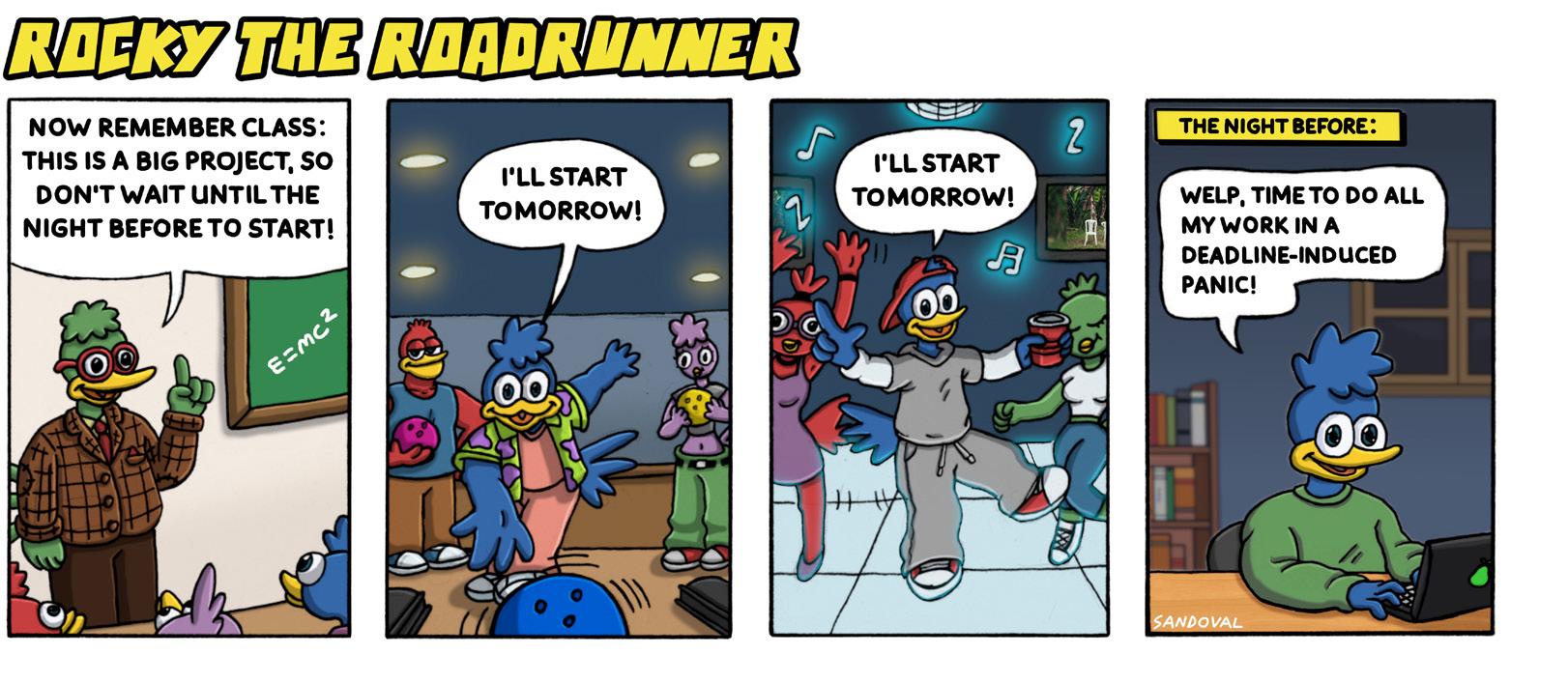
comic by JESUS SANDOVAL-URIBE
RoastRunner’s
w Sp e c i a l
Watermelon

Continued from page 9.
How can students or faculty learn more if they have concerns?
Jaasko: They can contact me directly. I am always willing to talk to everybody. We are also planning to hold open forums where people can just come and ask questions in an unstructured way. We want to make sure we answer the questions that are coming up before the fall implementation.
On May 4, LBCC’s Civil Discourse Club set up its discussion board in Takena Hall and focused on the question about safety officers carrying Tasers. Some of the anonymous responses included:
“I feel like Tasers are good enough, anything else like guns, I would almost feel unsafe.”
“Tasers are better than guns in my opinion. I’d feel less safe if they carried guns.”
“I worry about medical issues being triggered.”
“I feel like I’m missing something, why are having Tasers being considered right now? Did something happen?”
“College shouldn’t be a Second Amendment exception.”
Red Bull
“In Mother Russia everyone has AK-47.”
In a follow-up email, Jaasko responded to questions about the budget concerns on the Civil Discourse board such as “Where are the budget cuts?” and “I have concerns about why the college can afford Tasers but not work affordability effort. :/”
“The Tasers will be purchased using funds that are neither from the operations budget nor personnel funds,” she wrote. Over the years, the college has received money from outside groups using LB’s parking lots.
If you have questions or want more information, contact Jaasko by email: jaaskor@linnbenton.edu or stop by the Public Safety office in Willamette Hall, Room 110 (WH-110).


The Best Hikes in Redwood National Park

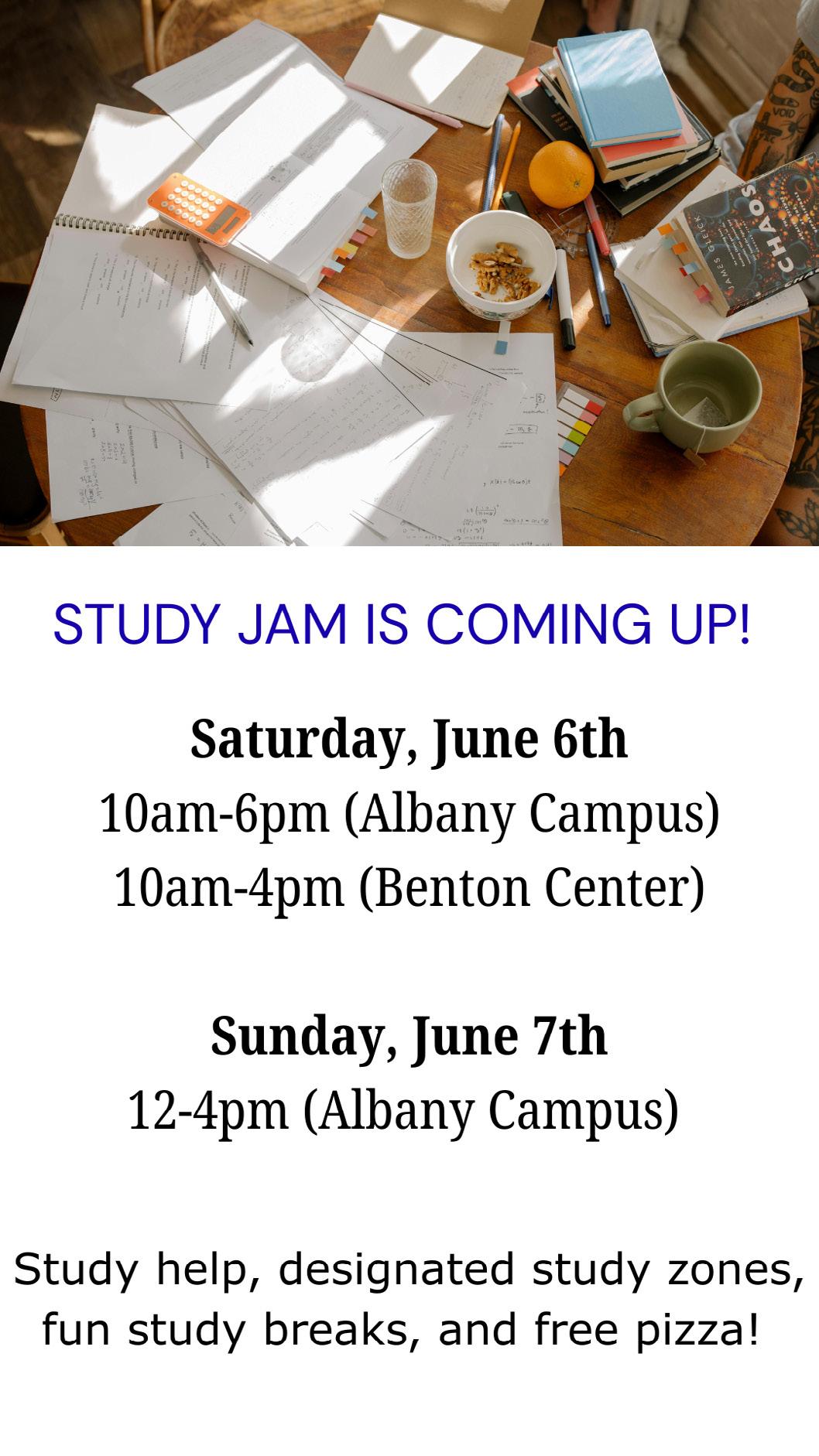
I’ve visited Redwood National and State Parks half a dozen times, and these trails are some of my all-time favorites. They’re all easy to moderate, incredibly scenic, and give you that up-close, jaw-dropping experience with some of the largest trees on Earth.
If you’re looking for hikes that deliver maximum magic without requiring an all-day trek, this list is for you.

IKarl Knapp Trail
Prairie Creek Redwoods State Park
Distance: 2.5 miles out-and-back
Difficulty: Easy to moderate Time: 1–1.5 hours
Before you hit the trails, make sure you’re prepared with the 10 hiking essentials that will make your Redwoods adventure safe and stress-free.
f you want a peaceful hike without the crowds, this is your trail.
The Karl Knapp Trail starts right near the visitor center in Prairie Creek Redwoods State Park, but it somehow still feels quiet and tucked away. Almost immediately, you’re surrounded by lush ferns, towering redwoods, and the soft sound of Prairie Creek winding alongside the trail.
This hike is all about atmosphere. It’s not dramatic or flashy—it’s calm, grounding, and incredibly serene. You’ll walk through classic old-growth forest with filtered light coming through the canopy, and if you go early or later in the day, you might have it almost entirely to yourself.
Midway through the hike, you’ll cross the Newton B. Drury Scenic
Parkway and find yourself face-to-face with the Big Tree. There’s a restroom at the wayside here, making it a great place to take a quick break.
From this point, you also have the option to add on the Circle Trail (0.5 miles) or the Cathedral Tree Trail (0.5 miles) if you want to extend your hike a bit. Or, you can simply continue back along the Karl Knapp Trail, heading through more stunning old-growth forest toward the visitor center.
Best for: a quiet, immersive redwood experience
Tip: Go in the morning or evening for soft light and fewer people
words and photos by BRENDA AUTRY

Redwood National Park
Distance: 1.5-mile loop
Difficulty: Easy Time: 45 minutes – 1 hour
Simpson-Reed Trail
Jedediah Smith Redwoods State Park
Distance: 0.9-mile loop
Difficulty: Easy Time: 30–45 minutes

Located in Redwood National Park, this trail sits at a higher elevation than most of the other hikes in the area—and it feels completely different because of it.
The tall, straight redwoods disappear into the mist, and the entire forest feels quiet and otherworldly.
It’s one of the best spots for photography in the park—especially if you catch that moody fog.
The Lady Bird Johnson Grove loop is one of the most accessible hikes in the park, but don’t let that fool you. When the coastal fog rolls in, this place transforms into something almost surreal.
This trail in Jedediah Smith Redwoods State Park is seriously underrated.
Even though it’s right off Highway 199, the moment you step onto the trail, you feel completely surrounded by dense forest. The redwoods here are massive, and they grow incredibly close together, which makes the whole experience feel immersive and almost enclosed in the best way.
It’s short, easy, and perfect if you’re short on time—or traveling with kids.
Tip: Check the weather and go when fog is likely for that dreamy look
Scan the QR code or more trails and information about the Redwood National and State Parks
Best for: easy hiking + epic photos
Best for: a quick stop with a huge payoff

IStout Memorial Grove Grove of Titans
Jedediah Smith Redwoods State Park
Distance: 0.8-mile loop
Difficulty: Easy Time: 30–45 minutes
Jedediah Smith Redwoods State Park
Distance: ~1.7 miles round-trip
Difficulty: Easy Time: 1–1.5 hours
f you’re looking for the biggest bang for your buck in the Redwoods, this is it.
Located off Howland Hill Road, a historic wagon route turned narrow, unpaved scenic drive, Stout Memorial Grove is one of the most iconic old-growth areas in Jedediah Smith Redwoods State Park. Just getting here feels like part of the adventure—winding through dense forest on a dirt road surrounded by towering redwoods.
The trail itself is short and mostly flat, but the scenery is unreal—think massive trees, moss-covered everything, and soft light filtering through the canopy.
It’s also right along the Smith River, which adds to the magic. You can take a short connector to the River Trail (about 0.2 miles) and spend some time down by the water— it’s the perfect place to slow down and just take it all in.
Tip: Visit early or late to avoid crowds—it’s popular for a reason and the parking lot fills quickly
If you’re looking to be completely awed, this is the trail.
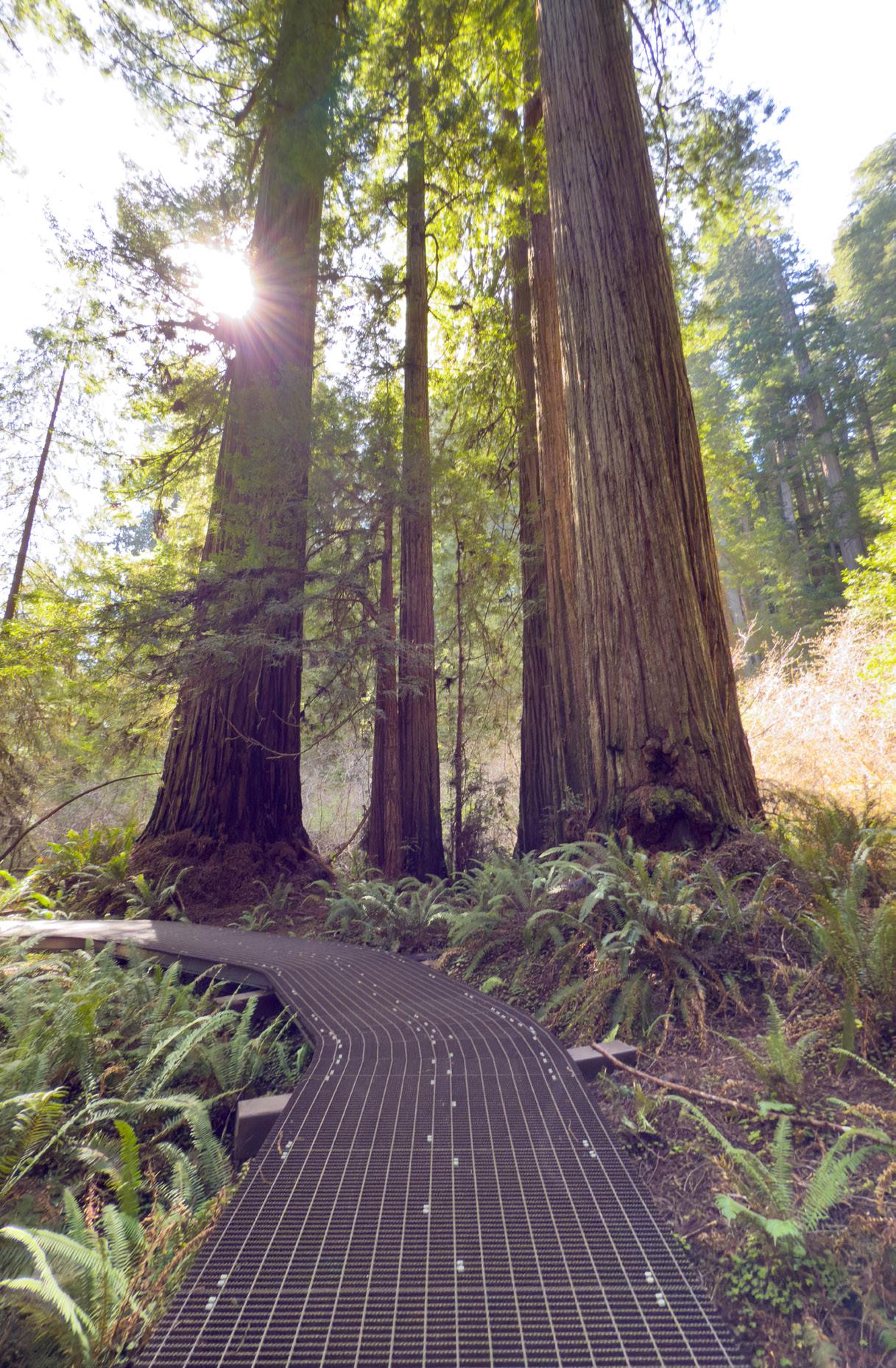
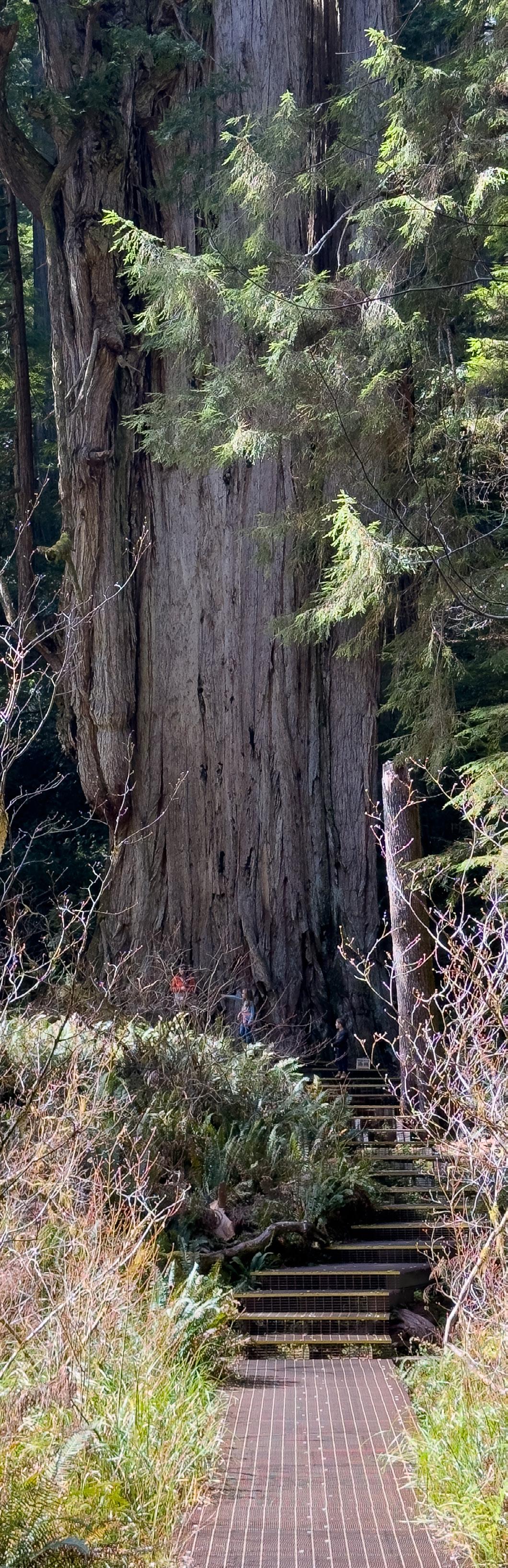
Located off Howland Hill Road, the Grove of Titans was reopened in 2022 with a thoughtfully designed elevated boardwalk that protects the fragile forest floor while allowing visitors to experience this incredible area up close.
This hike takes you deep into one of the most impressive sections of old-growth forest in Jedediah Smith Redwoods State Park, where you’ll be walking among some of the tallest trees on the planet. These ancient redwoods
are truly massive, and the scale is hard to put into words—you’ll feel incredibly small in the best way.
The largest tree in the grove, known as the Lost Monarch, stands around 320 feet tall. And even that number doesn’t fully capture what it feels like to stand beneath it. It’s one of those places where photos just don’t do it justice—you have to see it in person to really understand the scale.
Tip: Pair this with Stout Grove since they’re along the same road.
Best for: classic redwood scenery with minimal effort
Best for: seeing some of the tallest and most awe-inspiring trees on Earth
Fern Canyon
Prairie Creek Redwoods State Park
Distance: ~1 mile loop (plus access trails/ roads)
Difficulty: Easy to moderate
Time: 1–2 hours

This hike feels like you stepped straight into another world. Located in Prairie Creek Redwoods State Park, Fern Canyon is completely different from the rest of the Redwoods. Instead of towering trees, you’ll find yourself in a narrow canyon with walls covered in lush, green ferns.
To access the canyon, you’ll turn off the Newton B. Drury Scenic Parkway onto Davison Road toward Gold Bluffs Beach. You’ll pass through an entrance kiosk where you’ll either pay the $12 day-use fee or show your national park pass. The road is a bit rutted and includes a small stream crossing, though most vehicles can manage it (I even saw a Honda Civic make it through). From the parking lot, it’s a short 0.2-mile walk to the start of the canyon.
If you prefer not to drive, Fern Canyon is also accessible via the James Irvine Trail from Elk Prairie Campground, which adds a bit of hiking but avoids the road entirely.
Once you enter the canyon, you’ll follow a shallow stream, crossing it multiple times on logs or stepping stones. Expect to climb over fallen trees and get your feet a little wet—but that’s part of the fun. The towering ferns, moss-covered walls, and filtered light make it feel almost magical—like you’ve stepped into another world entirely.
Fun fact: scenes from The Lost World: Jurassic Park were filmed here, and once you’re inside the canyon, you’ll understand why.
These hikes are some of the most memorable experiences you can have in the Redwoods. They’re accessible, diverse, and each one offers something completely different—from quiet forest walks to otherworldly canyon adventures.
If you’re planning your trip, you really can’t go wrong with any of these— but if you have time, do them all. Trust me, it’s worth it.
Best for: a totally unique hiking experience
Tip: Bring waterproof shoes or sandals. From May 15–September 15, an entry permit is required for driving to Fern Canyon. Scan the QR code for more information!
THAI FOOD TAKEDOWN
words and photos by BRENDA AUTRY
I visited all four Thai spots in Albany and put them to the test — rating flavor, authenticity, spice and more to find the best in town.
Thai food is one of my favorite Asian cuisines. The complex mix of sweet, sour and spice in nearly every dish makes every meal an adventure. I’ve spent a lot of time traveling through Thailand, and it is one of the few countries I’ve visited where I can’t remember having a bad meal.
Once a rarity in the area, Albany is now home to four Thai restaurants — two brick-and-mortar locations and two food trucks. With so many options, it can be hard to decide where to find your next favorite dish.
So I’ve done the heavy lifting for you and sampled dishes from each restaurant in a taste challenge I’ve dubbed the Thai Food Takedown.
For this taste challenge, I visited all four restaurants. Although each had a different menu, I ordered a similar dish: a stir-fry that included a protein, a vegetable and rice. I also ordered a Thai iced tea — strong black tea with spices such as cardamom, star anise and vanilla, sweetened with condensed milk — which, honestly, I might like even better than Thai food.
I rated each meal on a scale of one to five, with five being the best, in the following categories:
FLAVOR:
Thai dishes should have a complex balance of sweet, sour and spice — and, of course, taste delicious.
AUTHENTICITY:
Made with traditional Thai ingredients like fish sauce, lime, garlic, chili and Thai basil, in a recipe faithful to Thai cuisine.
QUALITY:
All ingredients should be fresh and well-prepared.
SPICE LEVEL:
I ordered all dishes at medium (level 3), not too bland, not too spicy, just right.
THAI ICED TEA:
The tea should have a strong tea and spice flavor, with enough cream to make it sweet but balanced.
VALUE:
The price should match the portion size, ingredient quality and overall experience.
BIG SISTER THAI
KITCHEN
Big Sister Thai Kitchen is a familyowned food cart located at the Barn in North Albany. Its menu includes several Thai specialties and even mango sticky rice, which isn’t offered everywhere — but alas, dessert is not part of this food challenge.
After perusing the menu, I ordered the Spicy Thai Basil Stir Fry with Chicken — a dish that includes vegetables and protein, flavored with Thai basil (aka holy basil, my favorite Thai seasoning) and a sauce made from fish sauce, oyster sauce and soy sauce, plus other ingredients, and served with rice.
After paying, I was given a buzzer and found a space to wait among the covered outdoor picnic tables. It only took about 10 minutes for the buzzer to vibrate, and I was handed my entrée in a small brown box and my tea from the side window, along with utensils and napkins.
Back at the table, I opened the box, which immediately released a cloud of steam as the hot air from the box hit the cooler outside air. The smell was mouthwatering.
The stir-fry consisted of chicken, carrots, onion, bell pepper and basil.
FLAVOR: 4.5/5
The flavor of Thai basil hit me on the first bite, followed by the sour, spicy sauce that coated the ingredients. The flavors danced around in my mouth, and when I mixed the second bite with some rice and a bit more sauce, it was heavenly.
AUTHENTICITY: 4.5/5
The vegetables, sauce and type of basil (Thai) were all true to Thai cooking. The only thing I would have liked was a bit more basil — after the first bite, it was a bit lacking.
QUALITY: 5/5
Every vegetable was crispy, the meat was tender, and the rice was cooked perfectly.
SPICE LEVEL: 4/5
I ordered a spicy 3, and unfortunately it was nowhere near that level. I’d suggest asking for extra if you like it spicy.
THAI ICED TEA: 4.5/5
The tea was made correctly and was very good, though there was a bit too much cream, which muted the flavor of the tea and spices once mixed.
VALUE: 4/5
I paid $18 for the entrée and $6 for the tea. Even though the food was delicious, this was the smallest portion I received from any restaurant and a lot less protein than vegetables, so for value, I’m giving it 4/5.
BIG SISTER THAI KITCHEN SCORE: 26.5/30


THAI EXPRESS ←
Thai Express is the most recent addition to Thai cuisine in Albany. The food cart is located in the pod on Airport Road. I had never been to this cart pod before and was surprised to see so many carts and an enclosed seating area.
The menu is fairly small, but it includes all the classic Thai dishes, such as Pad Thai, drunken noodles, and Thai basil stir-fry — which is what I ordered, with chicken as the protein, along with a Thai iced tea.
I went a little after dinner, so all the carts were fairly quiet, and my order was ready in about 10 minutes. The entrée was served in a clamshell togo container, filled to the brim. The stir-fry included chicken, bell pepper, onion, carrots, baby corn and basil. Unfortunately, it was served on top of the rice rather than alongside it.
FLAVOR: 3.5/5
The flavor of this dish was a bit off. There was a decent amount of basil and spice, but other than that there was no complexity, and honestly, it was not very tasty.
AUTHENTICITY: 3/5
I’ve never seen baby corn in any Thai dish — ever. I’ve also never had a Thai entrée served on top of the rice, which was a letdown and felt very fastfoodish (though I guess it is fast food). Also, the sauce just didn’t taste Thai.
QUALITY: 3/5
Some of the chicken pieces were a bit sinewy, and aside from the bell pepper, the vegetables were rather soggy. The baby corn was definitely canned, and the carrots were barely orange. The rice was too starchy.
SPICE LEVEL: 5/5
The spice level was spot on — not too hot, but enough to tickle the tongue.
THAI ICED TEA: 3.5/5
The Thai iced tea came out premixed, orange throughout, with no tea on the bottom and cream on top. It was either premade or made from a mix — which is exactly what it tasted like.
VALUE: 3.5/5
I paid $14 for the entrée and $5 for the tea. Even though the portion was large, I didn’t really enjoy it.
THAI EXPRESS SCORE: 21.5/30
HOUSE OF NOODLE
House of Noodle is a brickand-mortar restaurant on Santiam Highway. It has been operating in Albany the longest of all the Thai restaurants.
The menu here is extensive — pages of Thai specialties, with some other offerings thrown in as well. They didn’t have a Thai basil dish on the menu, so I ordered the Prik King with Chicken. Prik King is a stir-fry of vegetables and protein seasoned with red curry and kaffir lime leaves — my second favorite Thai ingredient next to Thai basil.
The dish arrived with the entrée on one plate and the rice on another — typical of Thai food. The Prik King consisted of chicken, green beans and carrots with plenty of sauce.
FLAVOR: 5/5
The rich flavor of the sauce exploded in my mouth. The heady spices of the red curry mixed with the tart florals of the kaffir lime leaves left me smiling. Every bite was just as good as the first.
AUTHENTICITY: 5/5
I’ve eaten this same dish in Thailand several times, and this restaurant is about as close as you can get to the real thing without going to Thailand.
QUALITY: 5/5
All the ingredients were fresh and crisp with beautiful colors, the chicken was tender, and the rice was nearly perfect.
SPICE LEVEL: 5/5
I ordered a spicy 3, and I got a spicy 3. It was the perfect amount.
THAI ICED TEA: 4.5/5
The tea was not too sweet, but a little strong and could have used a tiny bit more cream, but it was still delicious.
VALUE: 4.5/5
I paid $19 for this entrée and $5.50 for the tea. The portion here was about one-third larger than what I got at Big Sister, so I think this is definitely a good value.
HOUSE OF NOODLE SCORE: 29/30


JINDA THAI
Jinda is the other brick-and-mortar restaurant on the list, located on 2nd Street in downtown Albany. Of all the restaurants, this one feels and smells the most authentic when you walk in.
I went just before dinner, and there was only one other person seated. Over the course of my meal, several people came in and multiple to-go orders went out, showing how popular this place is.
The menu includes all the classic Thai dishes and even some harder-to-find options, like larb — one of my favorite Thai dishes. For consistency, I ordered the Spicy Thai Basil with Chicken.
The service was quick and friendly, and my food arrived in no time. The portion size was massive, taking up the entire plate, with a bowl of rice on the side. The entrée consisted of chicken, carrots, bell pepper, onion, broccoli, green beans and basil.
FLAVOR: 4.5/5
The flavor of this dish was perfectly complex. All the elements were there — sweet, sour and spicy. It was delicious! My only complaint is that it could have used more basil.
AUTHENTICITY: 4.5/5
The sauce was 100% authentic Thai. The preparation and presentation were equally authentic, though the broccoli was the only questionable addition.
QUALITY: 5/5
Every vegetable was crisp, fresh and cooked to perfection. The rice wasn’t too starchy, and the chicken was tender and flavorful.
SPICE LEVEL: 5/5
This was the spiciest level-3 dish of any restaurant, but it also felt the most correct. If you’re not a fan of spice, order lower here.
THAI ICED TEA: 5/5
This was the best Thai iced tea of the bunch — and maybe one of the best I’ve ever had. The perfect blend of spice, sweetness and strong tea flavors came together beautifully.
VALUE: 5/5
I paid $16.95 for the entrée and $6.50 for the tea. Considering the quality and portion size, this is a great value.
JINDA THAI SCORE: 29/30
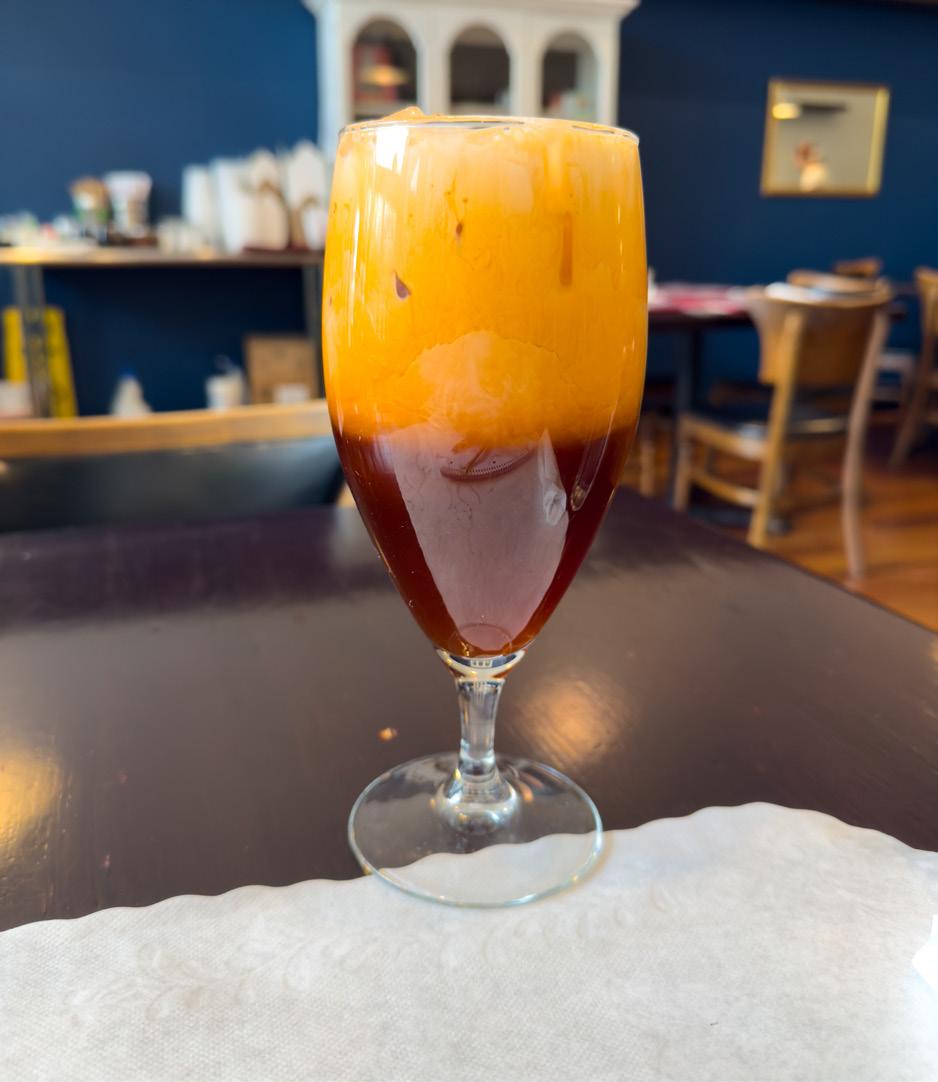
And the winner is - a tie! House of Noodle and Jinda Thai both scored a nearly perfect 29/30! The food at both of these restaurants was truly outstanding and I can highly recommend sampling either or both them!
In second place is Big Sister Thai Kitchen, which scored just slightly below our winners with 26.5/30, but still serves some absolutely delicious Thai food that you should definitely try.
And in third place is Thai Express, which scored a little lower at 21.5/30 and though not my favorite, they are still an affordable option to try and one you may like.
Trying different types of food is one of my favorite ways to experience other cultures and try new —and often delicious— new foods.
Between
PLATES AND SAKE: A Night at Sada Sushi & Izakaya
Tucked along the Willamette River in downtown Corvallis within the Water Street Market complex, Sada Sushi & Izakaya is more than just a place to eat. It’s an experience shaped by decades of expertise and a level of detail you notice from the first bite.
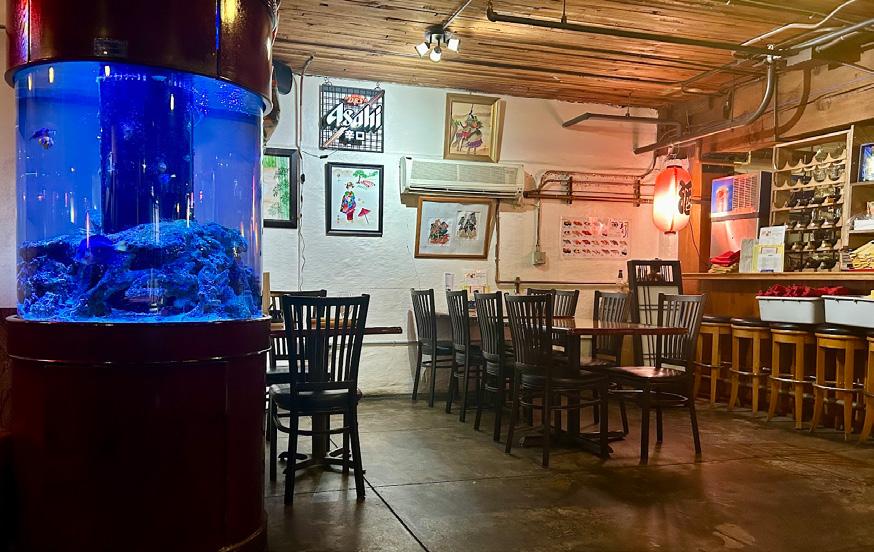
The approach is part of the charm. After entering the market, visitors pass a painted mural of a pioneer storefront and an unexpected red British phone booth before descending a short staircase. Beyond a traditional noren curtain, diners enter a warm, intimate izakaya that feels tucked away from the busy streets outside. Fish tanks line the space, including a tall cylindrical one beside our table, adding a calm, almost meditative presence.
At the center of it all is Sada Sakamoto, whose forty years of sushi experience trace back to Osaka, Japan. That foundation is evident in the menu’s precision and restraint. Nothing feels excessive. Instead, each dish is composed to highlight texture, balance, and freshness, reflecting a clear intention to bring traditional izakaya into a small Oregon dining space.
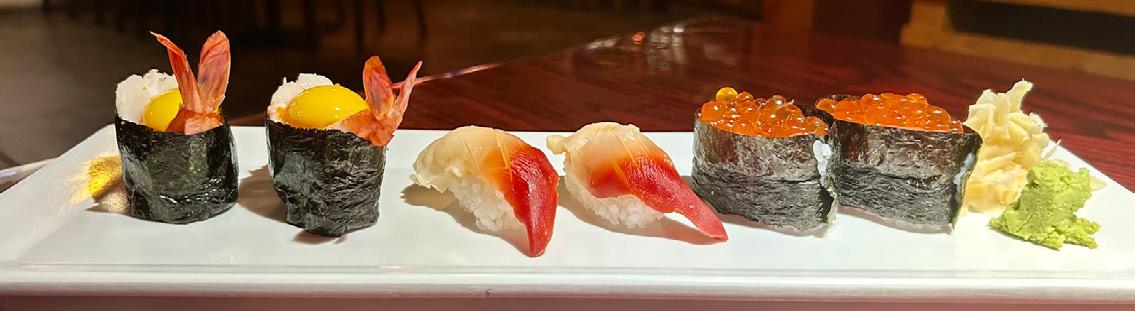
For this visit, I stuck with makizushi and nigiri, accompanied by nigori sake.The ikura arrives glistening, its amber pearls catching the light. It is what I like to call the “boba of the sea,” each bite delivering a briny pop. The hokki gai, or surf clam, stands out for its firmer texture and subtle sweetness, a noticeable step above more casual sushi experiences and well worth ordering here.
The Shrimp Boat stands out immediately. Sweet red prawn is paired with a rich quail yolk and crunchy tobiko, creating a layered bite that feels both refined and deeply satisfying. It is the kind of dish that briefly pauses conversation.
The Ninja Roll leans into creaminess, combining scallop and sauce in a way that complements the slightly sweet sushi rice and savory nori. More subtle than dramatic, it remains wellbalanced and comforting. In contrast, the octopus sunomuno’s lighter flavor may feel understated on its own, but serves as a refreshing palate cleanser between richer bites.
Beyond the food, the izakaya format encourages exploration. Ordering small plates to share alongside a rotating selection of sake creates a relaxed rhythm of shared dishes, long conversations, and sake tasting between courses.
Sada’s sake list is one of the most extensive and approachable in the area, inviting guests to explore freely. While some of the same bottles can be found at lower prices in local markets, the value here lies in the full izakaya experience rather than the sake alone.
This consistency is reflected in customer sentiment. On Tripadvisor, where Sada averages around 4.2 stars, reviewers frequently highlight the balance of quality, service, and atmosphere. One guest noted, “I got the Sushi Deluxe. I am gluten-free and let the server know. She made sure she told the sushi chef so they made my rolls GF. They also had

Sada Sushi & Izakaya
151 NW Monroe Ave. in Corvallis
Price per person: ~$20-$30
Phone: (541) 286-4093
Website: sadasushi.com
Rating: ★★★★★
GF soy sauce/tamari!!! That NEVER happens.” On Google reviews, where ratings trend slightly higher at 4.5, another reviewer summarizes the experience simply: ““Sada Sushi & Izakaya – Taste tradition, precision, and passion.”
Even the cocktails reflect this balance of tradition and creativity. A yuzu Old Fashioned transforms the classic into something bright and citrus-forward, balancing the depth of the whiskey base.
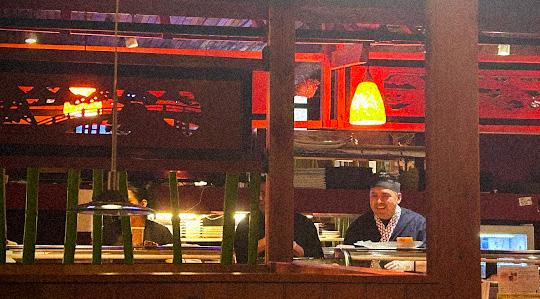
Service is attentive without being intrusive, allowing the food and atmosphere to take center stage. The experience feels intentional from start to finish. Sada Sushi & Izakaya is more than a place to eat sushi. It is a place to slow down, share plates and linger. Guests can choose standard seating, sit at the sushi bar to watch the craft in action, or reserve a six-person tatami room for a more intimate experience.


comic by JESUS
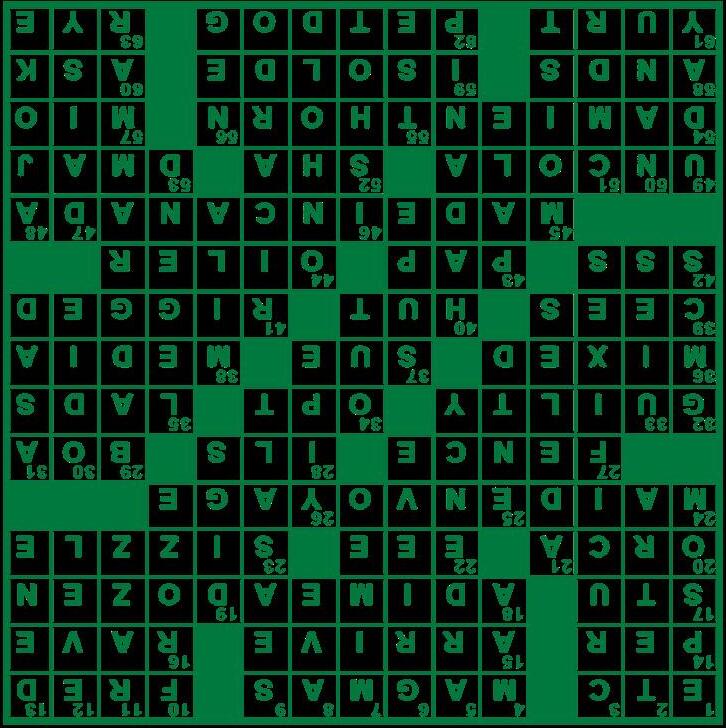
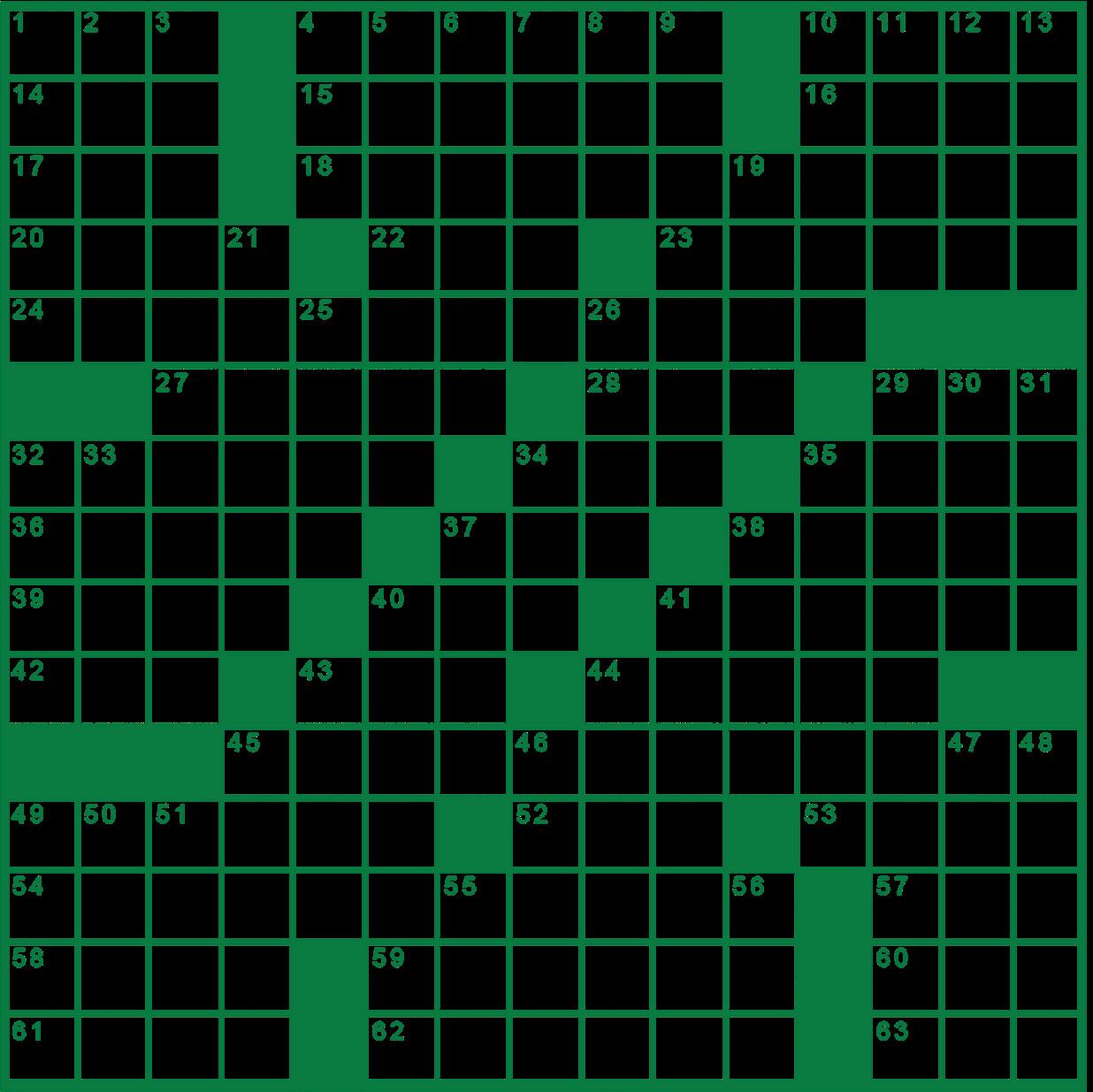
puzzles crossword
across
1. "... and the like": Abbr.
4. Molten materials
10. "The Cat Came Back" singer Penner
14. The / of km/h
15. Hit home?
16. Sing the praises of, with "about" 17. "Disco" guy on "The Simpsons"
18. Cheap and easy to come by
20. Black and white pod member
22. Size for a broad foot
23. Bacon-frying sound
24. Ship's first sailing
27. It might come between neighbours
28. They, to Thierry
29. Feathered neckwear
32. "It was me"
34. With 34-Down, decline to participate
35. Young blokes
36. With 38-Across, art style found in 18-, 24, 45 and 54- Across
37. "So ___ me"
38. See 36-Across
39. Middle keys, on pianos
40. "Gilligan's Island" abode
41. Fixed, as an election
42. Sound of 23-Across
43. Trashy writing
44. "The Great One" before "The Trade"
45. Like French's Ketchup or Dare Maple Leaf Creme Cookies
49. 7-Up, in old ads, with "the"
52. ___ Na Na
53. Key with two sharps: Abbr.
54. Devil-child of "The Omen" films
57. My, in Milano
58. "No ifs, ___ or buts"
59. Tristan's love, in a Wagner opera
60. Be a poser?
61. Dome-shaped Asian home
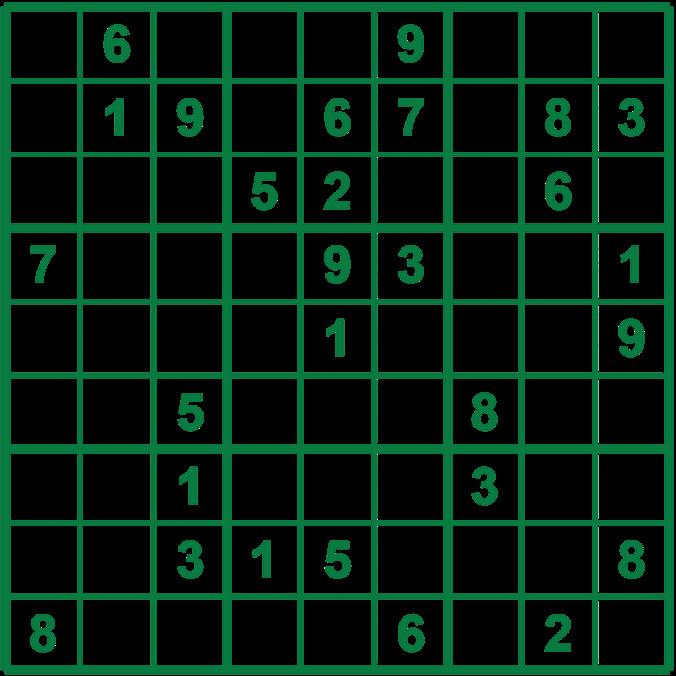
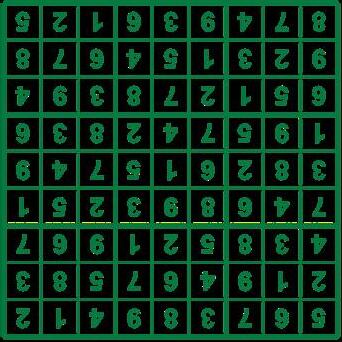
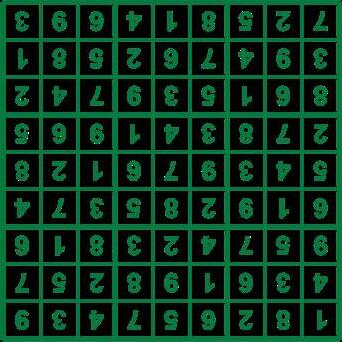
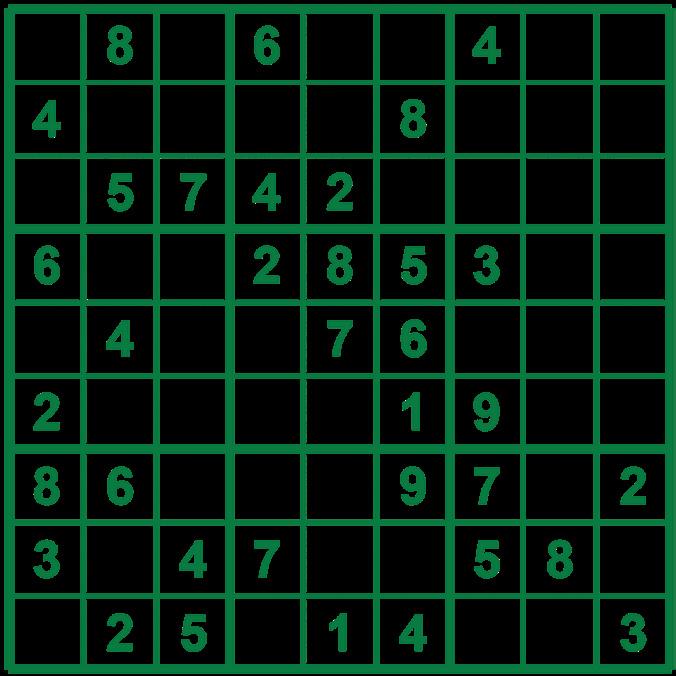
sudoku
62. Family member named Spot, say 63. Canadian Club whiskey, e.g. down
1. ___ salts (bath additive)
2. Aquarium fish
3. They ward off vampires, supposedly
4. Goat's gripe
5. Fervent passion
6. Weep at a wake
7. Old copy machine, with -graph
8. St. crosser
9. "Healthy" potato chip sprinkling
10. Stopped dead in one's tracks
11. Give a hard time to
12. Knievel, who holds the record for surviving the most bones broken in a lifetime
13. First Nation of Canada's north
19. Ribbing insults
21. Belonging to the singer of "Hello" (2015)
25. Recorded in a ledger: Abbr.
26. "Crikey!"
29. This are an examples
30. "Garfield" drooler
31. "Take ___ song and make it better" (Beatles lyric)
32. Dodge rivals
33. Driver's turns that are "pulled"
34. See 34-Across
35. "The ___ of Sleepy Hollow"
37. Apartment building overseer, for short
38. Mrs. Mulroney
40. Swigged from the flask
41. Actor Montalbán, of "Fantasy Island"
43. Visibly ill, in a way
44. Waiting, after hearing "Your call is important to us"
45. Like a towelette
46. "___ the Sheriff" (Bob Marley)
47. Petal puller's flower
48. "It's not ___" ("I'm serious")
49. Son of Saddam
50. Half of Mork's sign-off
51. Capt.'s colleague
55. Deadly fly, when doubled
56. – on a battery: Abbr.
"Out of Order" by Barb Olson