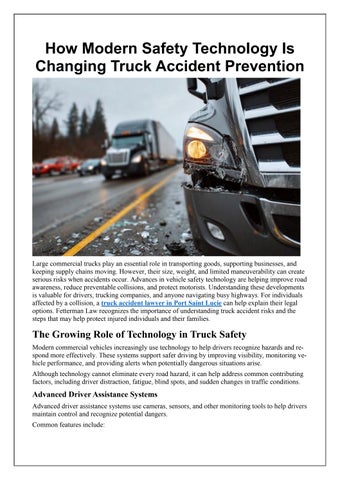
How Modern Safety Technology Is Changing Truck Accident Prevention
Large commercial trucks play an essential role in transporting goods, supporting businesses, and keeping supply chains moving. However, their size, weight, and limited maneuverability can create serious risks when accidents occur. Advances in vehicle safety technology are helping improve road awareness, reduce preventable collisions, and protect motorists. Understanding these developments is valuable for drivers, trucking companies, and anyone navigating busy highways. For individuals affected by a collision, a truck accident lawyer in Port Saint Lucie can help explain their legal options. Fetterman Law recognizes the importance of understanding truck accident risks and the steps that may help protect injured individuals and their families.
The Growing Role of Technology in Truck Safety Modern commercial vehicles increasingly use technology to help drivers recognize hazards and respond more effectively. These systems support safer driving by improving visibility, monitoring vehicle performance, and providing alerts when potentially dangerous situations arise. Although technology cannot eliminate every road hazard, it can help address common contributing factors, including driver distraction, fatigue, blind spots, and sudden changes in traffic conditions.
Advanced Driver Assistance Systems Advanced driver assistance systems use cameras, sensors, and other monitoring tools to help drivers maintain control and recognize potential dangers. Common features include:
• • • • •
Automatic emergency braking: Detects potential collisions and may apply the brakes when necessary. Lane departure warnings: Alerts drivers when a truck begins drifting outside its lane. Blind spot monitoring: Identifies nearby vehicles that may be difficult to see from the driver's seat. Adaptive cruise control: Adjusts vehicle speed to maintain a suitable following distance. Forward collision warnings: Notifies drivers when they approach another vehicle or obstacle too quickly.
These features provide additional support, particularly when trucks travel through congested highways, construction areas, or intersections with complicated traffic patterns.
How Driver Fatigue Monitoring Improves Road Awareness Driver fatigue remains a serious safety concern in commercial transportation. Long periods behind the wheel can affect concentration, reaction speed, and decision-making. Fatigued drivers may struggle to recognize hazards or maintain consistent control of their vehicles. Driver monitoring technology can help identify signs of reduced attention. Depending on the system, cameras and sensors may analyze eye movements, head position, steering behavior, and other indicators of driver alertness.
Supporting Safer Driving Decisions Monitoring systems can provide warnings when they detect possible fatigue or distraction. These alerts encourage drivers to reassess their condition and take appropriate safety measures. However, technology should complement responsible driving practices rather than replace them. Trucking companies must also prioritize proper rest, appropriate scheduling, and training that helps drivers recognize when they are no longer safe to operate a vehicle. Employers can strengthen fatigue prevention by: • • • • •
Educating drivers about the effects of insufficient rest. Encouraging drivers to report fatigue without fear of inappropriate pressure. Maintaining realistic expectations for safe vehicle operation. Reviewing monitoring data to identify recurring safety concerns. Promoting a workplace culture that prioritizes road safety.
A combination of technology, training, and responsible management can help reduce fatigue-related risks.
The Importance of Electronic Logging and Vehicle Data Electronic logging devices record information about commercial vehicle operation and help support compliance with applicable driving regulations. Depending on the equipment installed, trucks may also collect information about braking, speed, engine performance, and vehicle movement. These records can help fleet managers identify unsafe patterns and address mechanical or operational concerns before they contribute to a collision.
Understanding What Vehicle Data Can Reveal Vehicle data may help identify potential warning signs, such as repeated hard braking, sudden acceleration, or recurring maintenance issues. Fleet operators can use these insights to improve training and strengthen preventive maintenance programs.
When a truck accident occurs, certain electronic records may also help investigators understand the circumstances surrounding the incident. Their usefulness depends on the type of system, the information retained, and the condition of the available records. For injured motorists, relevant evidence may help clarify how a collision happened and whether a driver, trucking company, maintenance provider, or another party contributed to the incident.
Why Truck Blind Spots Remain a Major Concern Commercial trucks have substantial blind spots around the front, rear, and sides of their trailers. These areas can make it difficult for drivers to see passenger vehicles, motorcycles, cyclists, and pedestrians. Blind spot monitoring systems and additional cameras can improve a driver's awareness, but they do not eliminate every visibility limitation.
Practical Ways to Reduce Blind Spot Risks Motorists can take precautions when sharing the road with large trucks. • • • • •
Avoid lingering beside a truck, especially near its cab and trailer. Leave adequate space when merging ahead of a commercial vehicle. Avoid cutting closely in front of a truck before turning or slowing down. Maintain a safe following distance to improve visibility. Exercise extra caution around intersections and wide turns.
Truck drivers must also check their mirrors, monitor surrounding traffic, and make lane changes carefully. Both professional drivers and other motorists have an important role in preventing avoidable collisions.
Predictive Maintenance and Mechanical Safety Mechanical failures can contribute to serious truck accidents. Brake problems, tire defects, steering issues, and poorly maintained lighting systems may reduce a truck's ability to operate safely. Predictive maintenance technology helps fleet operators identify possible mechanical problems by analyzing vehicle performance and sensor information. Instead of relying exclusively on routine inspections, maintenance teams can use this information to recognize warning signs and investigate potential defects.
Building a Stronger Maintenance Program Technology works best when combined with thorough inspections and qualified repairs. Fleet operators should maintain accurate service records, investigate recurring mechanical warnings, and ensure that vehicles meet applicable safety requirements. Important maintenance priorities include: • • • • •
Inspecting brakes and monitoring braking performance. Checking tire condition, inflation, and signs of damage. Maintaining steering and suspension components. Testing lights, signals, and visibility equipment. Addressing mechanical warnings before returning a vehicle to service.
Preventive maintenance protects drivers, passengers, and everyone else sharing the road. It also helps trucking businesses identify risks before they develop into more serious safety problems.
Understanding Responsibility After a Truck Accident Even with advanced safety equipment, truck accidents can still occur because of human error, mechanical defects, unsafe operating practices, or hazardous road conditions. Determining responsibility requires careful consideration of the available evidence and the circumstances of the collision. Depending on the situation, potentially relevant evidence may include police reports, photographs, witness statements, vehicle inspection records, electronic data, and driver qualification documents. Responsibility is not automatically limited to the person behind the wheel. A trucking company, maintenance contractor, vehicle manufacturer, or another party may also warrant investigation when the evidence supports their involvement.
Protecting Your Interests After a Collision Anyone involved in a serious truck accident should prioritize immediate safety and seek medical attention when needed. Documenting the scene, preserving relevant records, and obtaining contact information from witnesses may also help protect important evidence. Before making decisions about a potential legal claim, injured individuals can benefit from understanding their rights and the information needed to evaluate their circumstances. Fetterman Law can help individuals understand the legal considerations involved in truck accident claims and explore appropriate next steps based on their situation.
Conclusion Modern safety technology is improving commercial transportation through collision warnings, fatigue monitoring, electronic vehicle records, blind spot detection, and predictive maintenance. However, these tools are most effective when combined with responsible driving, proper training, regular inspections, and a strong commitment to road safety. When a truck collision causes serious injuries, understanding the contributing factors can be essential to protecting your interests. Fetterman Law can help you explore your legal options, understand the evidence relevant to your situation, and determine an appropriate path forward. Contact Fetterman Law to discuss your circumstances and learn how you can take informed steps toward protecting your rights.