




“The special forces unit for complex litigation.”
Lawdragon

A national trial boutique that prosecutes high-stakes, complex business litigation on a success-fee basis, Reid Collins has recovered billions of dollars for our clients and created precedent to protect investors and hold wrongdoers accountabl e.
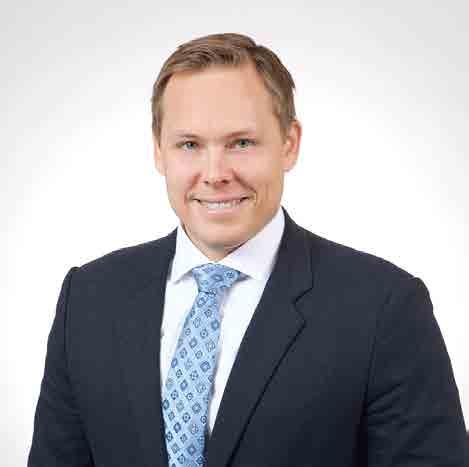
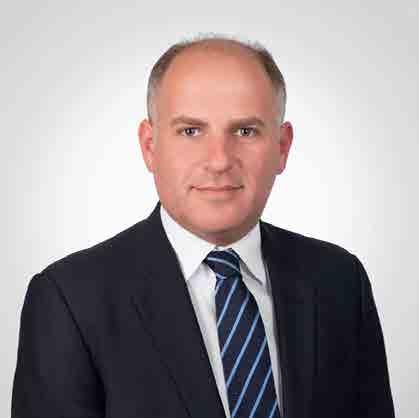
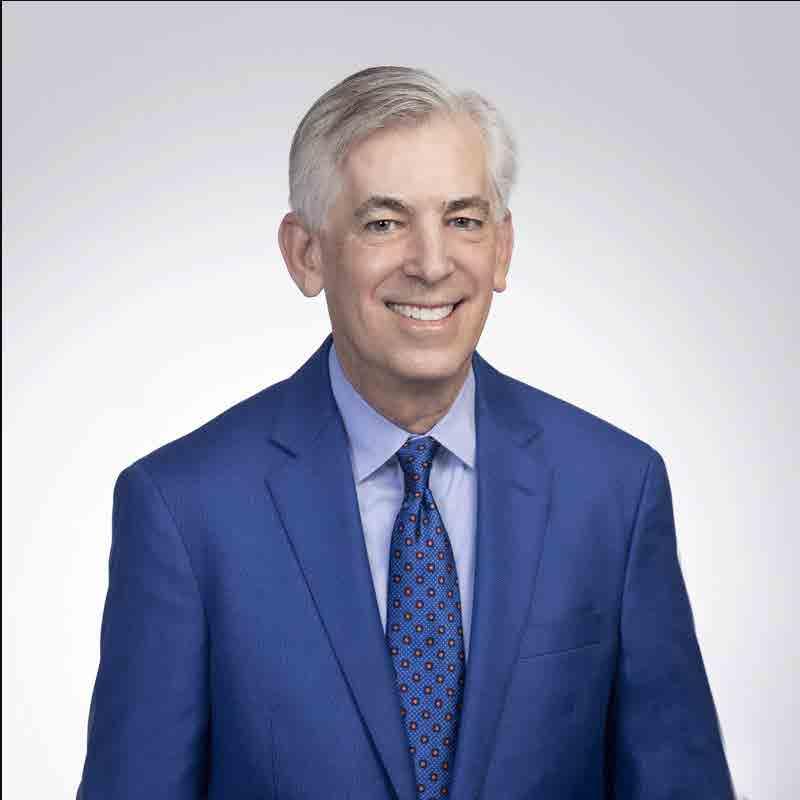
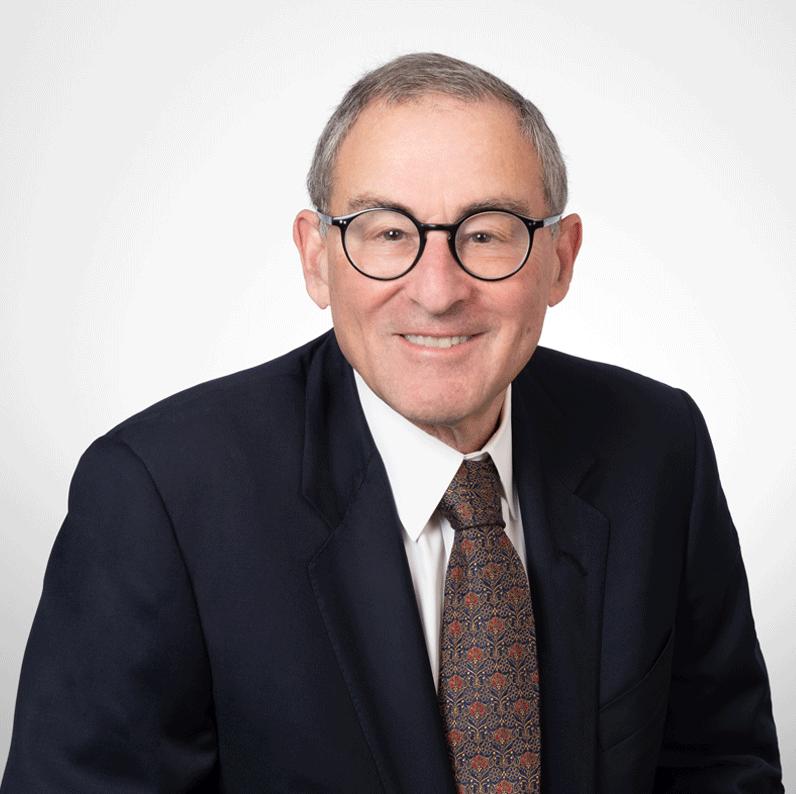
We are proud to congratulate three of our partners on being named to the Lawdragon 500 Leading Lawyers in America.
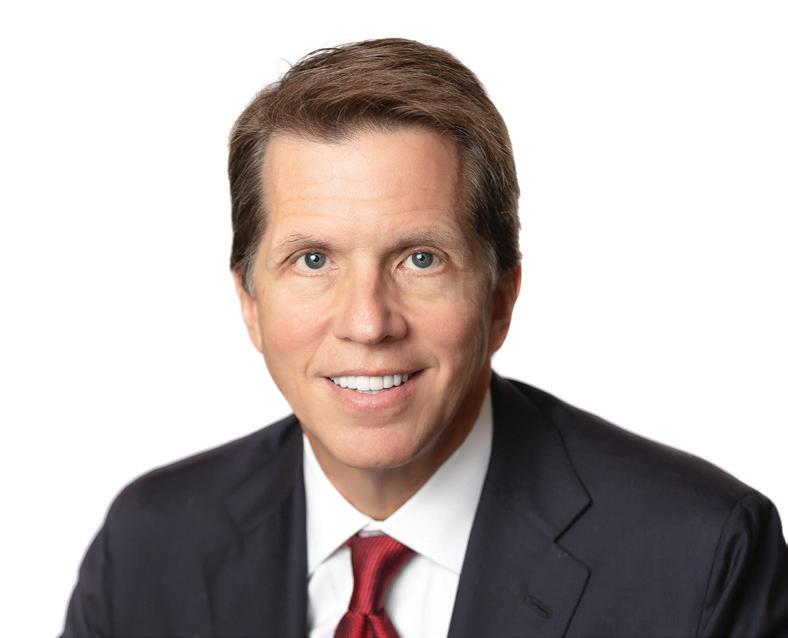
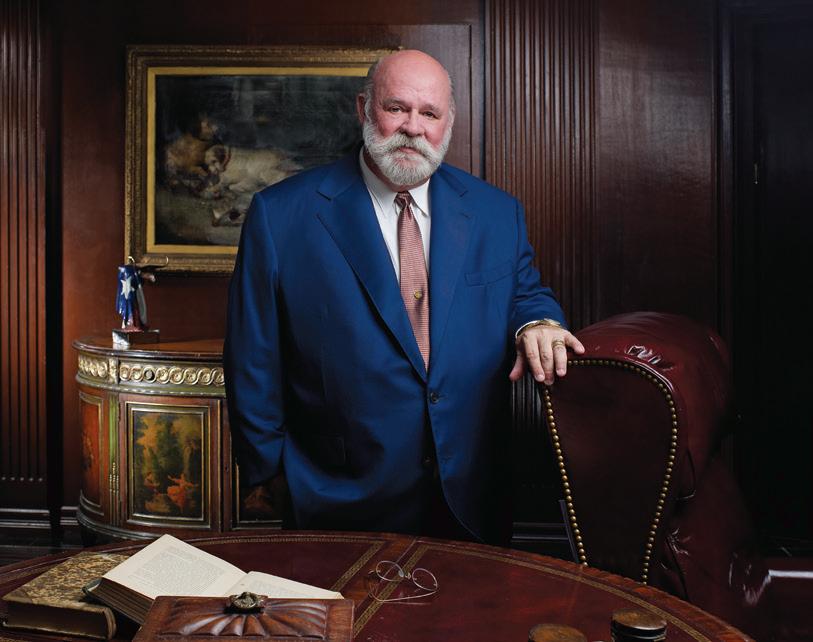
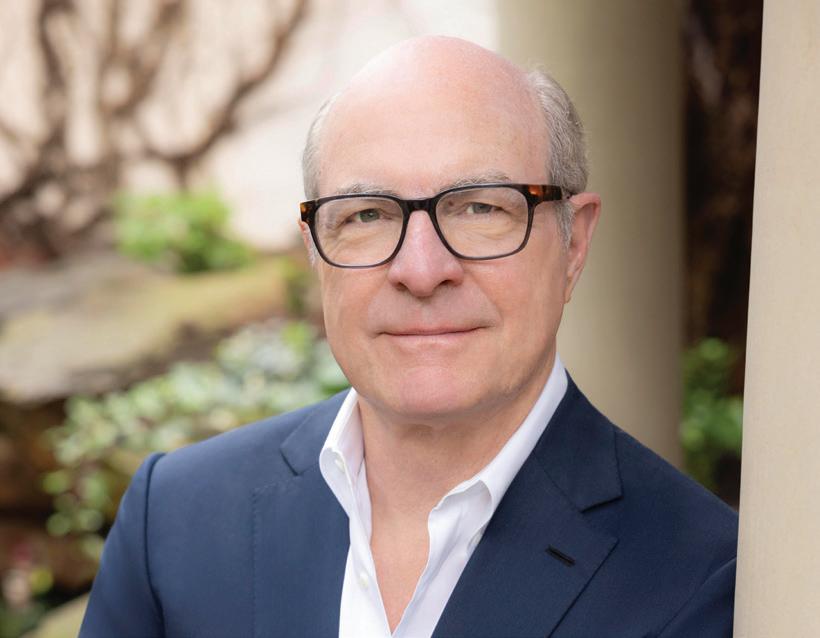
Eric D. Madden | William T. “Bill” Reid IV | Lisa S. Tsai
To learn more about why sophisticated business plaintiffs choose Reid Collins, visit our website. RELENTLESS | REVOLUTIONARY

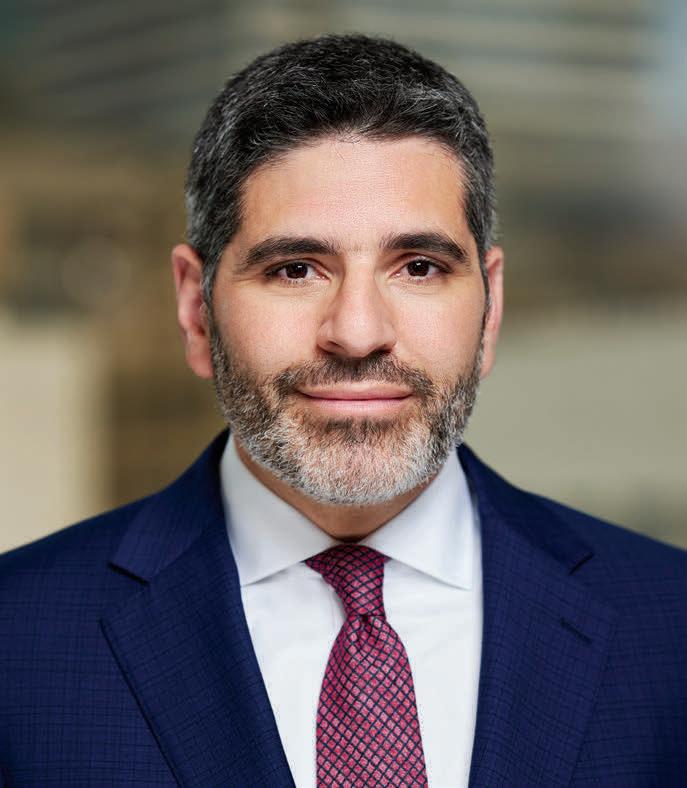

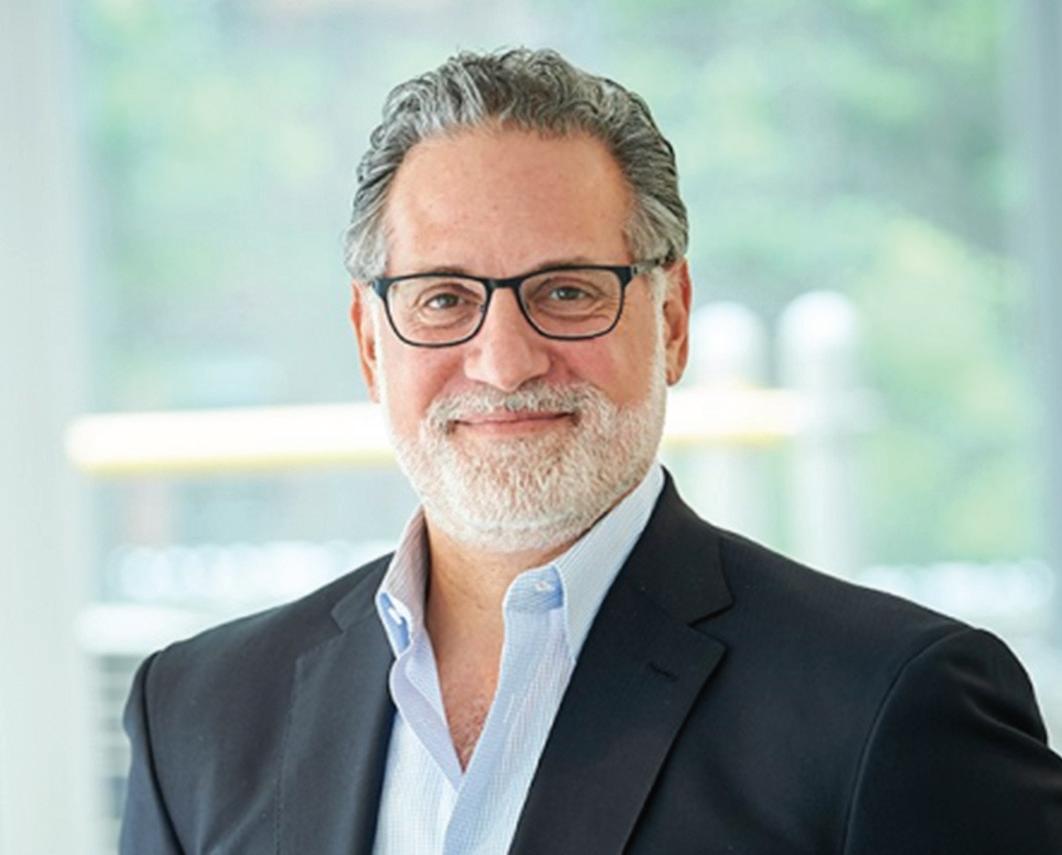
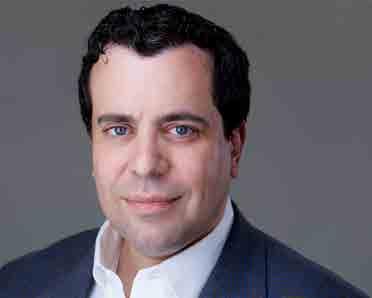
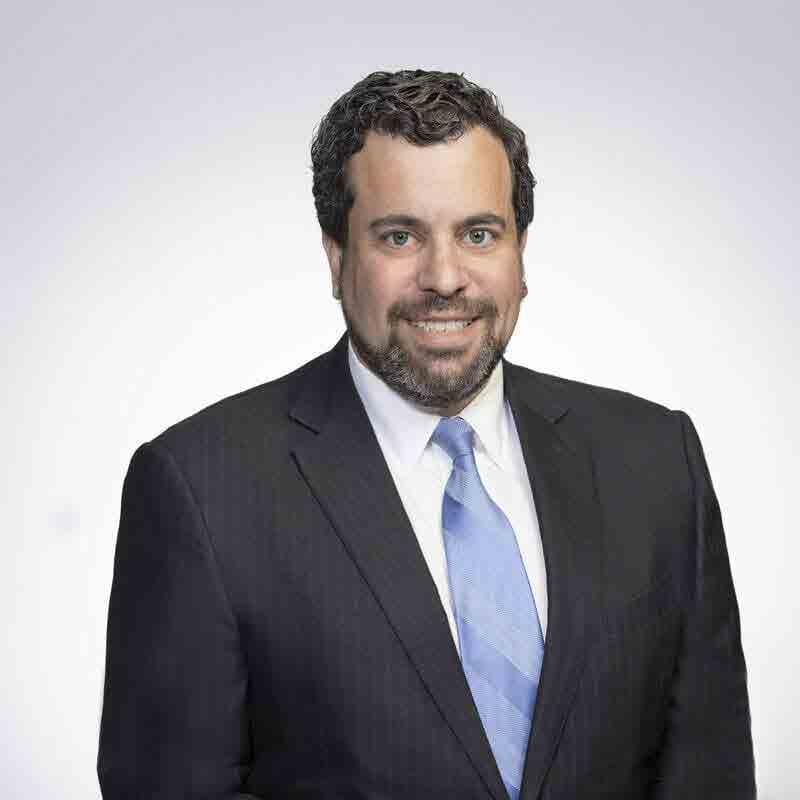
Jeremy A. Lieberman, Managing Partner

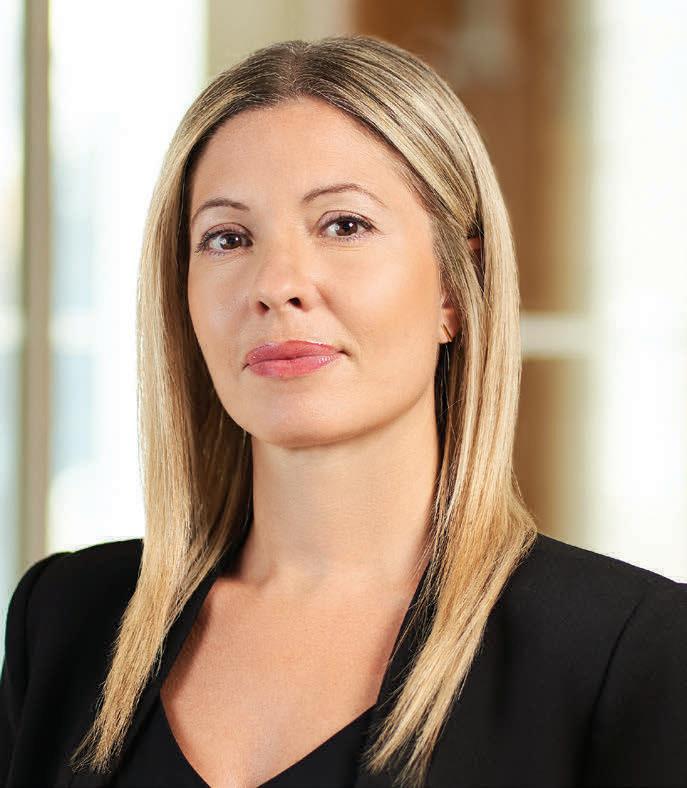
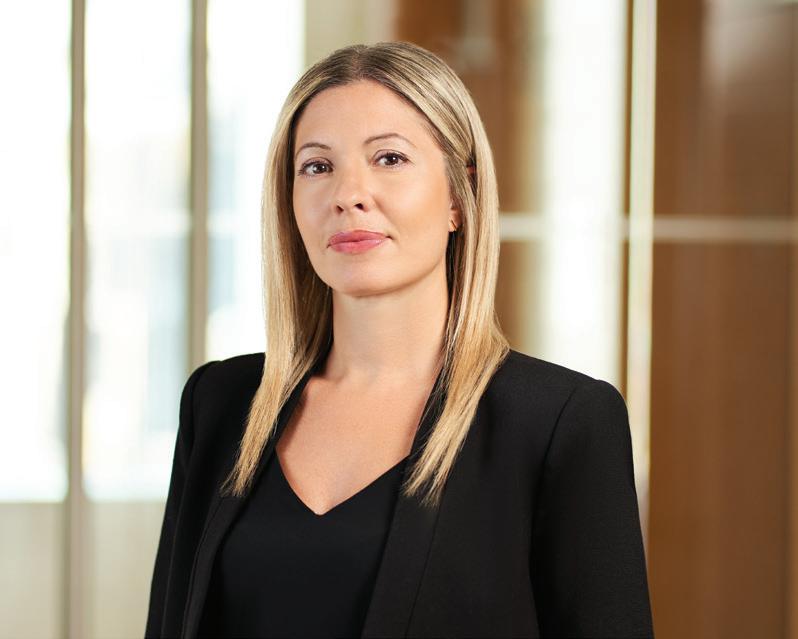
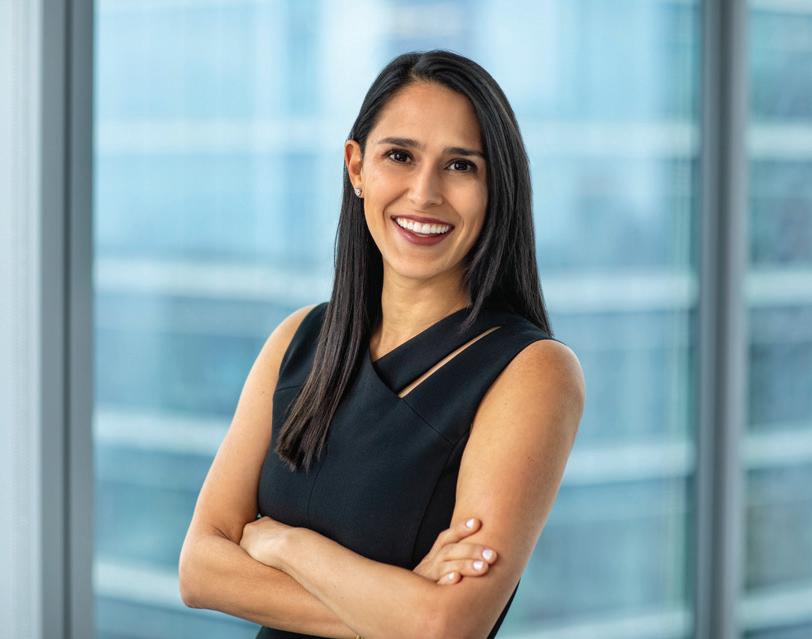
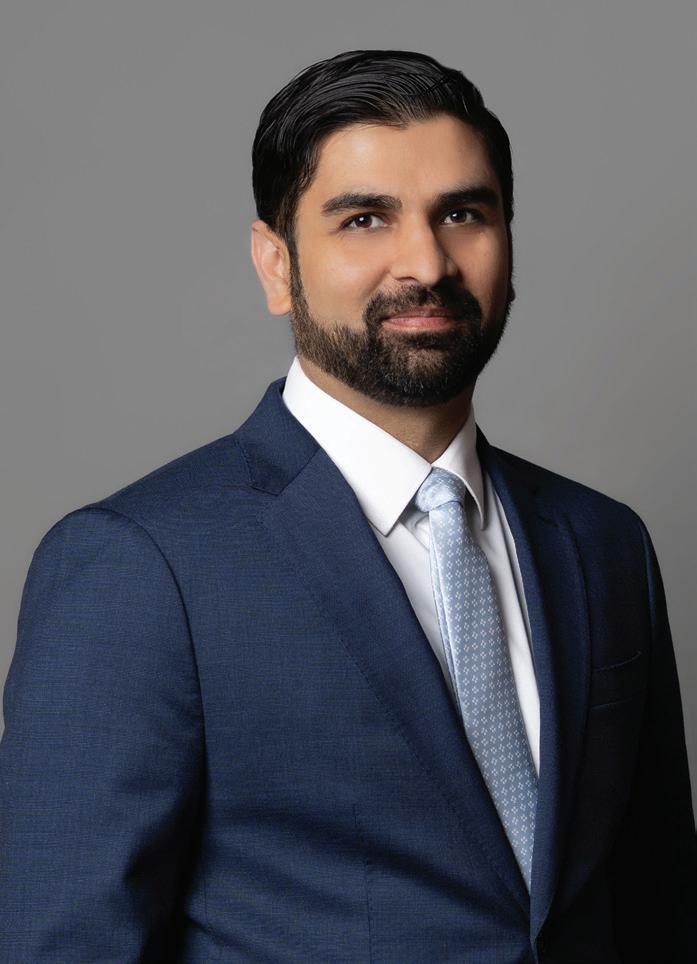
Jennifer Pafiti, Partner and Head of Client Services
WE ALSO CONGRATULATE ALL THE FIRM’S LAWDRAGONS:

Samuel J. Adams • Ari Y. Basser • Gustavo F. Bruckner
Brian Calandra • Patrick V. Dahlstrom* • Emma Gilmore
Marc I. Gross* • Stanley M. Grossman* • Michael Grunfeld
J. Alexander Hood II • Omar Jafri • Louis C. Ludwig
Jordan L. Lurie • Joshua B. Silverman • Jennifer Banner Sobers
Brenda Szydlo • Matthew L. Tuccillo • Austin P. Van
Murielle Steven Walsh • Tamar A. Weinrib • Michael J. Wernke
*Lawdragon Hall of Fame


Once again, Susman Godfrey has more honorees than any other litigation firm on the list.





































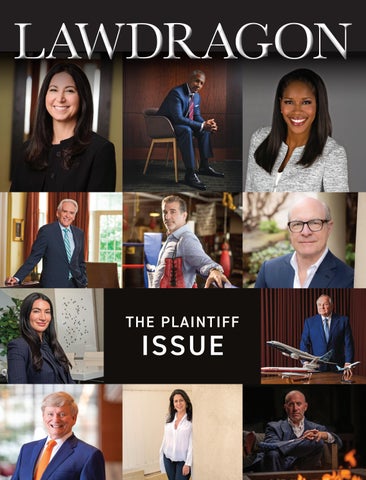
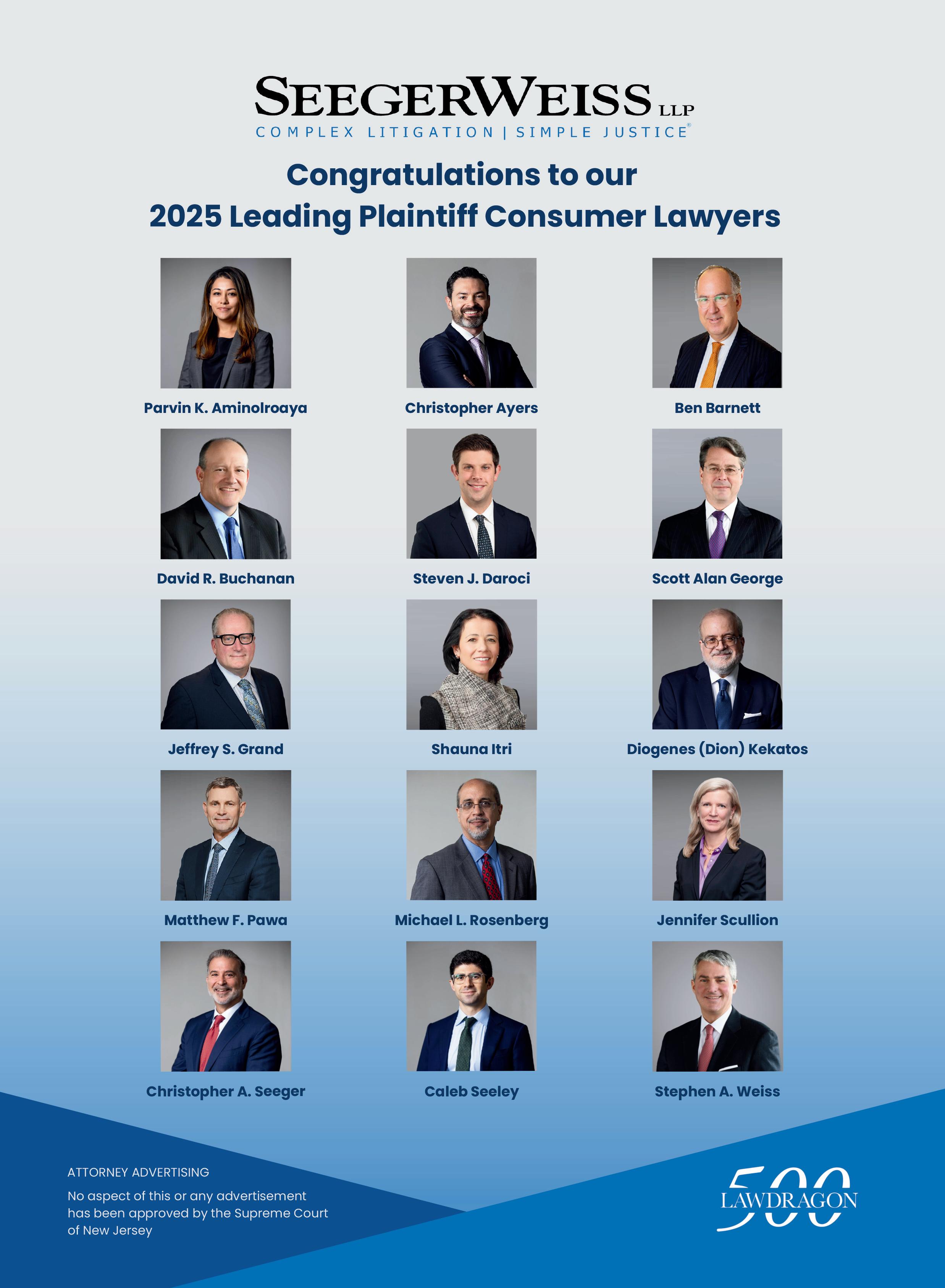
Front cover, from top and left to right: Hannah Ross, Larry Rogers, Sia Baker Barnes, Phil Corboy, Chris Seeger, Russell Budd, Natalie Weatherford, Bob Clifford, Rusty Hardin, Davida Brook, Paul Geller
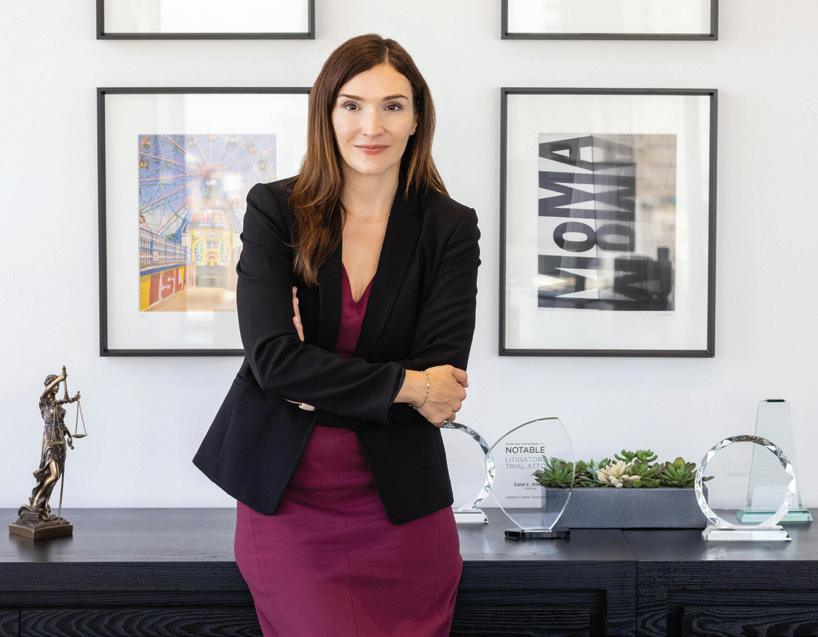
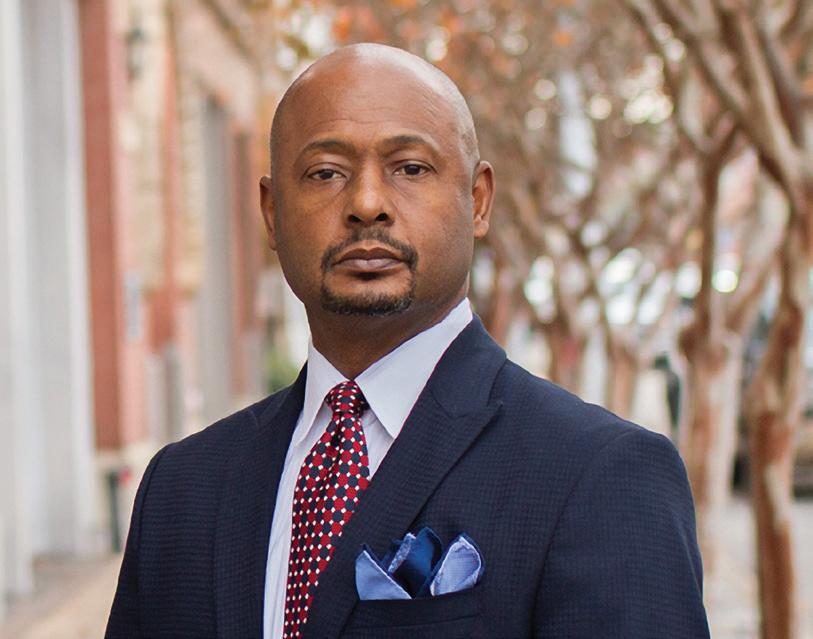
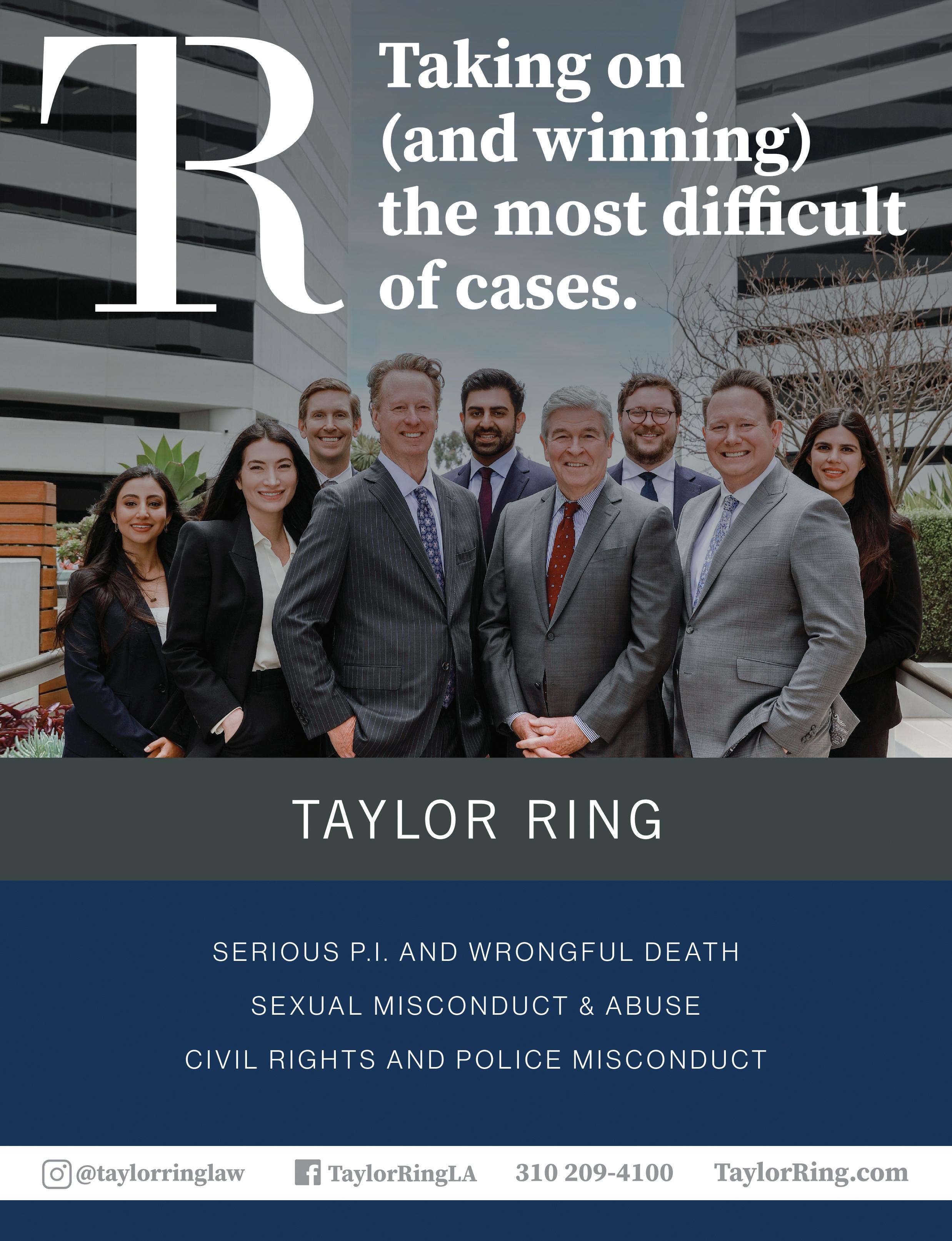
Back cover, from top and left to right: Fu DeBrosse, Steven E. Fineman, Frank Branson, Patrick Regan, Bill Reid, Zina Bash, Kelly Hyman, Parvin Aminolroaya, LaBarron Boone, Stephen Zack, Jennifer Pafiti, Raymond Boucher, Carol Villegas, Mark Lanier, Michael Kelly
Regan Zambri Long’s crusade for plaintiffs has netted billions for clients.
The elite trial team at Keller Rohrback is fighting for environmental justice in a new age of catastrophes.
Insurance has an increasing role in litigation – and Ignite Specialty Risk is at the helm.
The founders of Keller Postman have launched a dedicated new practice – Postman Law.
The partners at Bleichmar Fonti & Auld discuss the eyepopping Tesla Settlement that stunned Delaware.
Pomerantz is working for women in the courtroom and in the boardroom.

12 3
The name “Cavanagh Sorich Law Group” reflects a powerhouse practice that had been forged over a decade.
The lawyers at D’Amico Pettinicchi have been warriors for injured plaintiffs for 35 years.
From our guides to the best of the Plaintiff Consumer, Plaintiff Financial and Civil Rights & Plaintiff Employment bars we present Limelights with:
78 Jeremy Lieberman of Pomerantz
83 Bradley Cosgrove of Clifford Law Offices
87 Jack Hill of Searcy Denney
90 Aimee Ferrer of AXS Law
92 Greg Asciolla DiCello Levitt
97 Shannon McNulty of Clifford Law Offices
101 Edward Ricci of Searcy Denney
104 Rogge Dunn of The Rogge Dunn Group
108 Stephen Garcia of Garcia & Artigliere
111 Lawrence Pearson of Wigdor
115 Adam Slater of Slater Slater Schulman
117 Sherrie Savett of Berger Montague
119 Keith Hebeisen of Clifford Law
123 Sathya Gosselin of Hausfeld
125 Michael J. Willemin of Wigdor
127 Adam Hecht of Searcy Denney
131 Jason Williams of Smith LaCien
“It’s a go-to team for
—

PUBLISHER/CHIEF
EXECUTIVE OFFICER
K atrina D ewey
K atrina @ law D ragon . com
EDITOR-IN-CHIEF/SENIOR VICE PRESIDENT
J ohn r yan
J ohn @ law D ragon com
VICE PRESIDENT, BUSINESS DEVELOPMENT AND SALES
c arlton D yce
carlton @ law D ragon com
SENIOR EDITOR
a lison P reece
a lison @ law D ragon com
ART DIRECTOR
r egina F ran K
regina F ran KD esign @ gmail com
ASSISTANT EDITOR
e mily J ac K oway
e mily @ law D ragon com
EDITORIAL ASSISTANT
m ichelle F ox
michelle @ law D ragon com
CONTRIBUTORS
m eghan h emingway
m atthew h eller
LAWDRAGON PHOTOGRAPHY
l aura B arisonzi , a my c antrell , n ic K c oleman , g reg e n D ries ,
a aron g ang , m ichelle n olan , c hris r enton , J osh r itchie
P rinte D in c ana D a

Issue 31
LAWDRAGON INC.
333 Washington Blvd. #467 Marina Del Rey, CA 90292
© Lawdragon Inc. 2025. All rights reserved. Reproduction in whole or in part without written permission is strictly prohibited. Please disregard all solicitation, reprint and plaque requests from services that do not use an “@lawdragon.com” email. These are unauthorized and fraudulent. We request that you purchase any desired services from Carlton Dyce at carlton@lawdragon.com.
For editorial inquires or to pitch stories, contact John Ryan at john@lawdragon.com.
For reprints or other promotional materials, contact Carlton Dyce at carlton@lawdragon.com.
You can also purchase products at the Lawdragon Shop at www.lawdragon.com/lawdragon-shop.
Power Rogers is proud to announce that every one of our 14 partners was named to the Lawdragon 500 List.


for being named as Lawdragon 500 Leading Lawyers in America.
Joseph Balesteri
Devon Bruce
Kathryn Conway
Carolyn Daley
Sean Houlihan

Dominic LoVerde
James Power
Joseph A. Power Jr.*
Thomas M. Power
Larry R. Rogers Jr.
Larry Rogers, Sr.*
Thomas Siracusa
Jonathan Thomas
Robert R. Thomas (*) Lawdragon Hall of Fame


ONE OF THE UNDENIABLE TRAJECTORIES OF OUR 20 YEARS IN BUSINESS IS THAT EACH OF OUR GUIDES HAS BECOME HARDER AND HARDER TO FINALIZE AS TIME HAS PASSED: WE LEARN ABOUT MORE GREAT LAWYERS FROM OUR OWN EDITORIAL RESEARCH, FROM FEEDBACK TO THE GUIDES AND FROM THE EVER-INCREASING AMOUNT OF HIGH-QUALITY NOMINATIONS THROUGH OUR ONLINE PORTALS.
The cover of this year’s Plaintiff Issue was a microcosm of that challenge. Our attempt to visually express the diverse range of excellence that drives our three Plaintiff guides – across the Financial, Consumer and Civil Rights & Employment practices – could have filled a dozen covers, if not more. But this artwork at least scratched the surface, and we had fun in the effort.
Once again, we feel privileged to have devoted a significant amount of time and hard work to dig far beneath the surface to highlight the work of our honorees through in-depth features and Q&As in our lauded Lawyer Limelight series. Contained here are the many achievements, from slam-dunk victories to unlikely upsets and everything in between – as well as the motivations and personalities that were integral to getting a client or cause across the finish line. As we like to say, these are the stories of heroes.
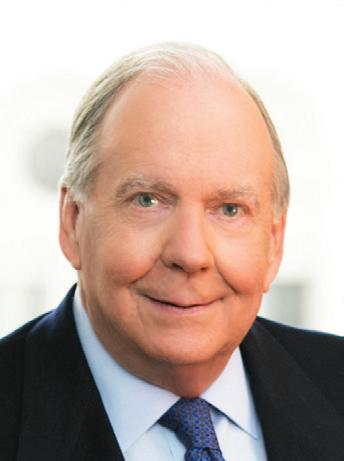
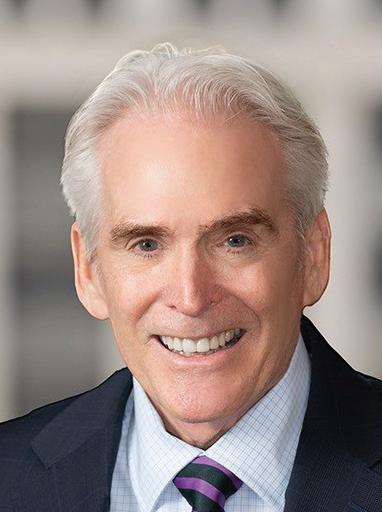
KATRINA DEWEY Publisher and CEO katrina@lawdragon.com
JOHN RYAN Editor-in-Chief john@lawdragon.com
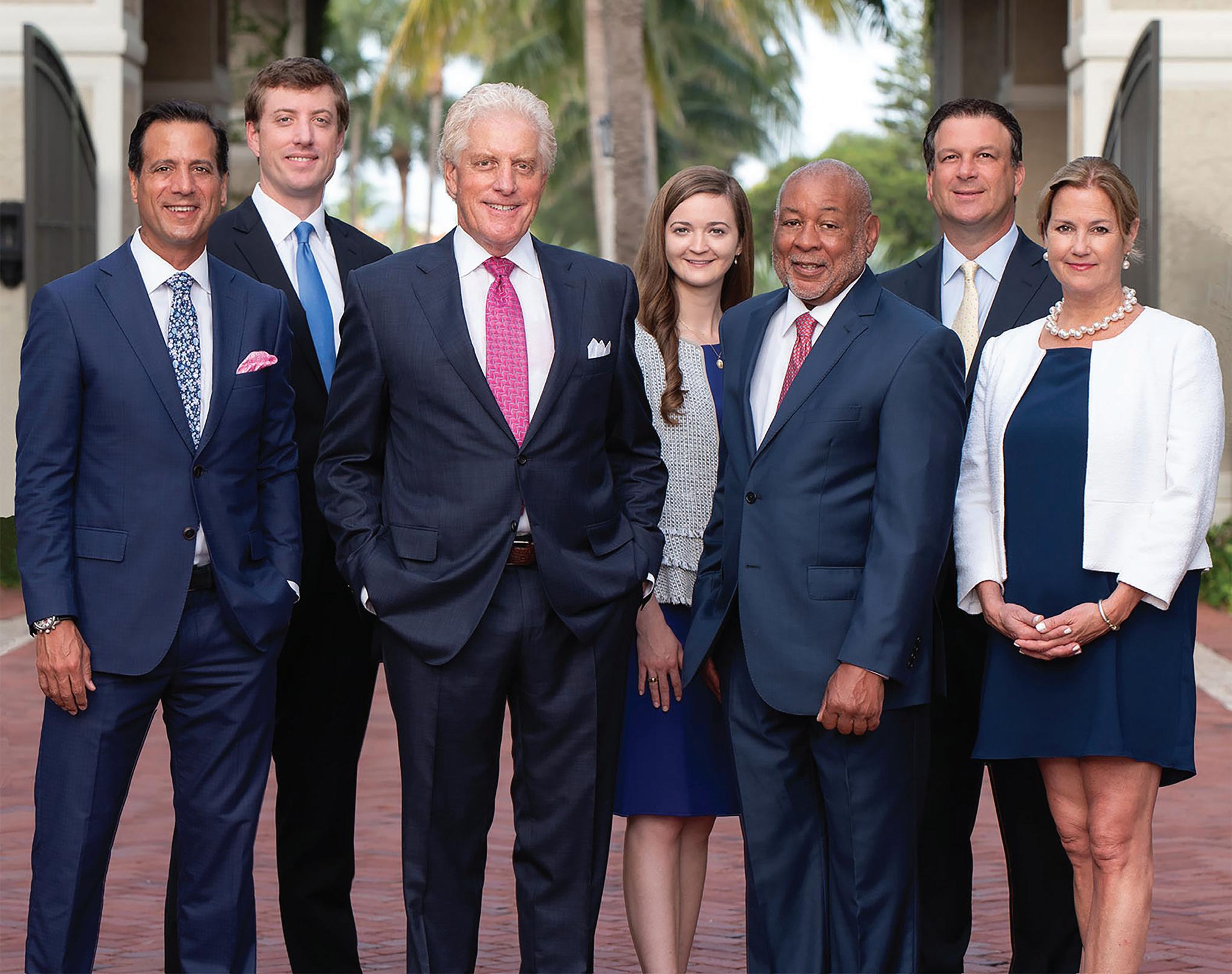
REGAN ZAMBRI LONG’S CRUSADE FOR PLAINTIFFS HAS NETTED BILLIONS FOR CLIENTS.
BY MEGHAN HEMINGWAY
A catastrophic mid-air collision over Washington, D.C., on a cold January morning claimed 67 lives when a U.S. Army UH-60 Black Hawk helicopter struck American Airlines Flight 5342. Both aircraft plunged into the Potomac River, leaving families grieving and investigators searching for answers.
At the center of the legal battle seeking accountability stands Patrick Regan, a nationally recognized personal injury attorney and founding partner of Regan Zambri Long. Known for taking on catastrophic cases and winning them, Regan is leading the investigation into the crash, committed to securing justice for victims and systemic change to prevent future disasters.
Regan brings nearly four decades of experience representing individuals and families in the most demanding personal injury and wrongful death cases in the country. With a track record built on excellence, integrity and results, he has consistently delivered transformative outcomes for his clients and secured multi-million-dollar verdicts and settlements, including an extraordinary $77M wrongful death settlement, one of the largest in the region.
Often called the “go-to personal injury law firm in D.C.,” Regan Zambri Long handles a broad range of consumer advocacy cases, including civil rights, medical malpractice, food safety and bike, auto and aviation accidents. The founders’ influence extends far beyond the courtroom as respected leaders in the legal community, actively involved in national and regional trial lawyer associations, where they help shape best practices and advance plaintiff advocacy.
Founded in 1997 by Patrick Regan, Sal Zambri and Victor Long, Regan Zambri Long has grown into one of Washington, D.C.’s most trusted firms for serious injury matters. With more than a century of combined experience, over $1B in settlements and verdicts, and a reputation for trial-ready representation, the firm’s mission has always been clear: hold the powerful accountable and deliver real justice to the injured.
“We started this firm to champion victims, challenge corporate negligence and force meaningful change,” says Regan. “Not just compensation, but consequences.”
The partners came together with a shared belief that the law should be a force for good, a catalyst for accountability, safety and lasting change. Regan, Zambri and Long each saw too many lives upended by avoidable harm and too many influential institutions avoiding consequences. They created a firm that would not only fight for the injured but also push for safer systems, smarter laws and a legal culture rooted in ethics, integrity and justice.
At Regan Zambri Long, cases don’t come through flashy commercials or cold Google searches. They arrive through trust, reputation and word of mouth.
Nearly every client is a referral, often from lawyers the firm has known for decades or from past clients. It’s the kind of reputation money can’t buy – only years of consistent, ethical, client-first practice can earn.
“Nearly all my cases come through personal referrals from former clients or fellow lawyers who know and trust my work,” says Regan. “Just like choosing a doctor or accountant, people place far more confidence in a recommendation from someone they trust than in an ad or a Google search.”
Regan Zambri Long operates on the principle that every referral is a personal endorsement, which means treating every client like family with professionalism, respect and responsiveness. Big-name defense firms send their own loved ones here, not because of marketing, but because they know this firm shows up for its clients. The lawyers answer their phones at all hours, file real lawsuits instead of chasing quick settlements, and prioritize doing right by the person over simply closing a case.
“When other lawyers refer someone – a family member, a neighbor, or a client – they want to know that person will be treated with the same professionalism, respect, attentiveness and thoroughness that they give their own clients,” says Regan.
Like many of Regan’s cases, the Black Hawk crash litigation was referred by a trusted legal colleague and has since become a central focus for the firm. Regan and his son, Chris Regan, now a partner at the firm as well, are leading the litigation together. As they review the events that led to this disaster, they are uncovering multiple warning signs that contributed to the tragic crash.
“The most devastating part of a case like this is that it never had to happen,” says Chris Regan. “It’s our job to find some justice for the families of the loved ones who died needlessly that day.”
The preliminary investigation into the collision points to serious failures on multiple fronts, with both the helicopter crew and the FAA, particularly air traffic controllers, bearing significant responsibility. The helicopter was allegedly flying unusually high along a known hazardous route with a history of near misses, many of which had gone under-reported.
“That helicopter flight path should never have been used – it became a recipe for disaster,” says Pat Regan. “There’s clear responsibility on behalf of the pilot, clear responsibility on behalf of the FAA for allowing that flight path to continue to be used when there were all these near misses.”
The risk was compounded by the flight being part of a night vision goggle certification test conducted in an urban area, where light pollution significantly impaired the pilots’ peripheral vision. Investigators believe the crew may have mistaken another aircraft for the American Airlines flight, which had been diverted to a different runway. The test was conducted during a busy time in challenging airspace, raising questions about
why it wasn’t scheduled during less congested hours.
“That training flight could have been done at 2 a.m., 3 a.m., 5 a.m.,” says Pat Regan. “Instead, they chose to fly through heavily lit airspace at a busy time.”
The leading litigator also points to what he sees as systemic issues within the FAA, including staffing shortages and insufficient oversight, that further amplified the dangers. Since the crash, the flight path has been permanently closed. According to their litigation, the incident highlights a troubling mix of pilot error, flawed FAA protocols, and poor risk management.
Pat Regan is no stranger to this arena. Early in his career, he tackled a helicopter crash matter involving a fatal power failure over the Tidal Basin in D.C. This litigation immersed Regan in aviation mechanics, pilot training and crash dynamics, sparking a lifelong focus on aviation accident law. Since then, he has handled many cases involving private planes, helicopters and commercial aircraft, developing unmatched expertise in the field.
Regan’s courtroom skill, paired with a comprehensive understanding of federal aviation regulations, makes him one of the nation’s leading authorities in aviation litigation. Over the years, he has successfully represented clients in demanding lawsuits against formidable government entities such as the U.S. Army and the Federal Aviation Administration, where proving liability requires a thorough knowledge of federal procedures and sovereign immunity exceptions under the Federal Tort Claims Act. His ability to take on these technically complex and high-stakes matters has helped establish the firm’s national reputation for excellence.
Sal Zambri became interested in the law during his teen years on Long Island, New York, where a high school teacher recognized his critical-thinking ability and encouraged him to consider a legal career. Now, Zambri is nationally renowned for the results of his work on a variety of personal injury matters. For instance, he has obtained the largest settlement in history ever paid out by the District of Columbia.
Although he handles a wide range of personal injury matters, Zambri’s expertise includes food poisoning and public health litigation, having successfully
handled various cases involving E. coli, Salmonella, Listeria, Hepatitis A, and other foodborne pathogens that often affect vulnerable populations. “These aren’t just stomach bugs; they’re serious medical conditions,” says Zambri. “I’ve had clients die, others need organ transplants, and many are forced to live with chronic illness for life.”
According to Zambri, tracing outbreaks can be incredibly challenging. Long incubation periods – 15–50 days for Hepatitis A – make it difficult to identify the source of contamination unless it’s part of a larger outbreak.
“Medical providers are required to notify state health departments of laboratory-confirmed food poisoning, after which the health departments, along with the CDC, start their own epidemiological traceback, which helps,” says Zambri. “But we can’t rely on that alone. Agencies are underfunded, and without proper oversight, public health suffers. Greed leads to cutbacks in staffing and sanitation, and that’s when things go horribly wrong.”
Zambri is particularly concerned about the lack of mandatory Hepatitis A vaccinations for food service workers. The virus is easily transmitted through even trace amounts of fecal matter. Zambri emphasizes how inexcusable it is to allow such a preventable risk to persist, attributing the inaction largely to the politicization of vaccines. For Zambri, the failure to implement basic public health safeguards like routine immunization for frontline food handlers reflects broader negligence in addressing avoidable threats to public safety.
“There’s no federal requirement, and that’s absurd,” he says. “A simple shot could stop deadly outbreaks.”
Pat Regan and Sal Zambri served as lead counsel in one of Washington, D.C.’s worst transit disasters – the 2009 Metro train collision that killed nine people and seriously injured dozens more. Representing both survivors and the families of those lost, Zambri handled a matter defined by technological failure and systemic breakdown.
“When technology fails, it’s people who pay the price,” says Zambri. “My job is to stand up for those people – dig into every detail, expose where the system broke down, and make sure the human cost isn’t ignored or dismissed.”
The crash occurred when one subway train rear-ended
another due to a failure in the automated control system. The system relied on sensors and signals to detect train positions and regulate speed, but a critical warning – known as a “non-reporting block” – was repeatedly triggered and ultimately disabled, creating a fatal blind spot.
The litigation raised urgent questions about human oversight. The conductor, who died in the crash, was criticized for not activating the emergency stop.
“Automation can’t replace human vigilance,” Zambri says. “When systems fail, people pay with their lives.”
Victor Long is a veteran trial attorney known for securing some of the nation’s largest verdicts and settlements in personal injury law. His record includes a $4.5M settlement for a stroke victim due to medical negligence, $4.2M for injured U.S. Army soldiers in a bus crash, and $3.8M for a child burned by a defective appliance – a verdict that prompted a new safety label in the industry.
For Long, a former DOJ civil rights attorney, it’s all about making change and looking out for those who come long after the case is settled. Though his focus is unique, Long and his co-founders at the firm are aligned in their fight for change, all working to hold institutions responsible. Whether it’s a corporation cutting corners or a government entity denying someone’s rights, the mission remains the same: justice for those who have been wronged.
“The cases that stay with me most are those where we’ve changed the standard of care – shaping safety and medicine to protect future lives,” says Long. “The firm is thorough, expert-driven, and committed to uncovering the full truth, combining legal and medical knowledge to hold parties accountable and achieve meaningful results for clients.”
In one of Long’s many impactful cases, a young woman with juvenile rheumatoid arthritis was given an immunosuppressant – methotrexate – after returning from travel in the Philippines, leading to a severe tubercular brain lesion. The litigation revealed that foreign travelers should be screened for TB exposure before they’re prescribed immunosuppressants, helping to spur a nationwide change in prescribing practices. This result contributed to the nowcommon disclaimers in drug ads advising patients to inform doctors about foreign travel before starting medications like methotrexate.


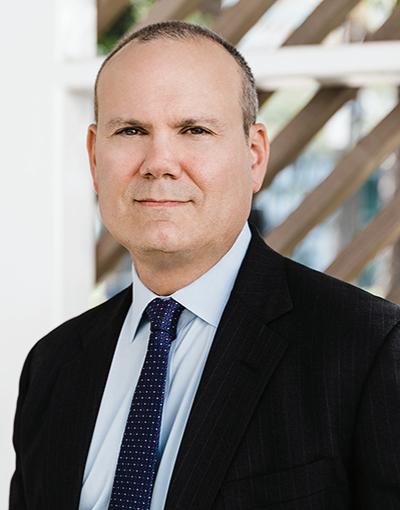
“Law can change the lives of individuals,” says Long. “It changed mine.”
Long’s early work in the Civil Rights Division of the Department of Justice in the ‘80s was a profoundly formative chapter in his legal career. Tasked with enforcing voting rights on Maryland’s Eastern Shore – a region where, despite a large Black population, no Black official had ever been elected – Long helped expose and dismantle racially discriminatory voting structures through detailed historical research. His efforts contributed to the implementation of singlemember voting districts, fundamentally transforming local representation and opening doors for African Americans in both politics and public life.
This experience cemented Long’s belief in the power of the law to drive real, lasting change – a conviction that has guided his work ever since. Long recently secured a favorable settlement for the family of a man who drowned after swimming in a pool where lifeguards failed to provide adequate supervision. While initial reports indicated a heart attack caused his death, medical experts proved the drowning triggered the heart attack, and not the other way around. The firm worked tirelessly to demonstrate that timely assistance during the heart attack would likely have saved him.
“What was so important about that case is we were able to show this didn’t have to happen,” says Long. “If the lifeguards had been paying attention, if he’d gotten help when he needed it, he likely would’ve survived. It really underscored how critical it is to follow safety protocols – and how those split-second decisions can mean everything.”
The litigation not only helped to raise awareness about lifeguard response protocols but also helped establish a legal precedent tying medical causation to negligence in safety supervision and emphasized the intersection of medical expertise with civil litigation.
“The best cases are those where we changed the standard of care,” Long says. “That’s where law becomes legacy.”
The next generation is now stepping up. Chris Regan, working alongside his father, brings fresh energy while maintaining the firm’s hallmark values – client-first service, courtroom excellence and unshakable integrity.
Carrying the legacy torch of high-impact litigation for the Regan family, Chris Regan is quickly earning his place among D.C.’s top trial lawyers. A partner at the firm his father founded, he brings his own command of personal injury law, an instinct for strategic litigation, and a fresh perspective to some of the firm’s most complex matters – including the recent Potomac air disaster.
“He’s got the courtroom instincts and the compassion you can’t teach,” says Pat Regan of his son. “Watching him grow into a leader in this field has been one of the great joys of my career.”
With a shared passion for justice and a unique dynamic as a father-son work duo, Patrick and Chris Regan are building something rare in modern law—a legacy of advocacy that spans generations. Pat Regan attributes their success to setting clear boundaries between home and office from the outset of their work together, to ensure that their family life remained intact.
“Chris and I have been very careful not to let it ruin Christmas,” jokes Regan.
Over the past decade, the two have tried many cases together, including major air crashes and product liability litigation.
“I’ve learned so much from my Dad, and I still learn so much from him every day,” says Chris Regan. “I know I’m biased, but he’s truly the best in the field, and it’s been such an honor to learn and grow alongside him.”
The partners at Regan Zambri Long have united behind a shared belief that the law should aim to fix what’s broken. From aviation to food safety to civil rights, their work isn’t just about monetary gains – they’re about making a difference and changing the law.
Regan Zambri Long is a firm built on trust and a shared mission. It’s been shaped by results and driven by purpose. With a commitment to personalized attention and direct attorney access, the firm fosters lasting relationships – the kind that bring clients back and earn referrals from lawyers across the country. The firm takes on the most demanding cases, stands up to the most formidable defendants, and delivers results that reverberate far beyond the courtroom walls. Whether it’s rewriting safety standards, forcing systemic reform, or giving a voice to the unheard, Regan Zambri Long makes an impact that lasts.
“At the end of the day, it’s not just about winning a case,” says Regan. “It’s about making sure what happened to one client doesn’t happen to anyone else.”


Th elite trial team at Keller Rohrback is fighting for environmental justice in a new age of catastrophes.
BY MATTHEW HELLER
THE ENVIRONMENTAL LAW ATTORNEYS at Keller Rohrback take their cases personally. When devastating fires swept across Oregon on Labor Day 2020, the smoke reached as far as partner Yoona Park’s office in Portland. “People here couldn’t see outside their windows past, like, six feet, because it was just orange outside,” she recalls.
Partner Matthew Preusch is based in Santa Barbara, Calif., a few miles from where, in May 2015, an underground pipeline ruptured, spilling more than 140,000 gallons of crude oil onto beaches and properties along the Pacific Coast. “It happened 20 minutes from my house,” Preusch says. “It was the largest oil spill since 1969 in California. So it was obviously a huge impact for our community.”


Both Park and Preusch are part of the Keller Rohrback teams that have successfully represented victims of the Oregon fires and the Santa Barbara spill in litigation against Berkshire Hathaway-owned utility, PacifiCorp, and Texas midstream crude oil company, Plains All American Pipeline. In the firm’s Seattle office, Lynn Lincoln Sarko, the firm’s managing partner and leader of the Complex Litigation Group, and Daniel Mensher, a leader in the firm’s environmental practice, have helped establish liability against chemical giant Monsanto for manufacturing PCBs that polluted waterways in the Pacific Northwest.
“We live with the harm and we see the harm from these cases every single day,” says Park. “And so, I think it makes these cases so much more personal and meaningful to us, to know that these are the types of cases that we are expending all these hours and energy on.”
This personal connection, Mensher believes, makes it easier to relate to what clients are going through. “One of the things I’m super proud of about my work at KR is we never take our eyes off the ball about what these cases are about, in terms of who is suffering and who has been harmed,” he says.
Says Mensher, “We can bring that sort of empathy and compassionate ability to articulate what is happening to folks who have either lost their home in a fire that was caused by Berkshire Hathaway’s decisions to neglect its obligations to the people in Oregon, or to the Plains Pipeline company that decided to maximize its profits and neglect its responsibilities to the people in California.”
Keller Rohrback, which was founded in Seattle in 1919, cut its environmental law teeth on the litigation over the Exxon Valdez oil spill in Alaska’s Prince William Sound in March 1989, representing fishermen, landowners

and businesses who sued Exxon for damages. Sarko, a former assistant U.S. attorney, was part of the class action trial team that won a landmark $5B verdict against Exxon in 1994 (which was later reduced on appeal to $500M). He was also appointed to administer the settlement funds from the case.
The firm realized early on with the Exxon case that the key to being able to go toe-to-toe with these mega corporations – and their well-funded legal representation – is that you have to match them in skill, talent and resources. “You need to staff these cases like a large defense firm,” Sarko says. “You need to be able to have the resources to match them person by person. You need to have deep pockets.”
Part of the approach means finding the best people for the job, making the firm nimble and taking a multidisciplinary approach. The firm regularly brings in not only environmental experts but corporate experts, bankruptcy experts, electronic discovery experts and appellate experts. And in-house they have the secret ingredient to any science-based case: self-proclaimed nerds.
“If you want nerds, we have people as nerdy as you need,” says Sarko. “We have people with all sorts of science backgrounds. Because it really does take all those pieces together. In no case is anyone responsible for winning alone. It truly is a group effort at this place.”
Mensher came to the firm in 2014 with an academic background, having taught environmental law at Lewis & Clark Law School in Portland for six years. One thing that had come to his attention, he says, was the limitations of the Clean Water Act. “It was not doing a great job of dealing with legacy pollutants like PCBs –pollutants that kind of got into the environment a long time ago, but continued to be a big problem,” he explains. “PCBs last, effectively, forever. The Clean Water Act was really aimed at stopping new discharges of things like PCBs into the environment, but we were left with this massive toxic legacy.”
“We live with the harm and we see the harm from these cases every single day. And so, I think it makes these cases so much more personal and meaningful to us, to know that these are the types of cases that we are expending all these hours and energy on.”
YOONA PARK

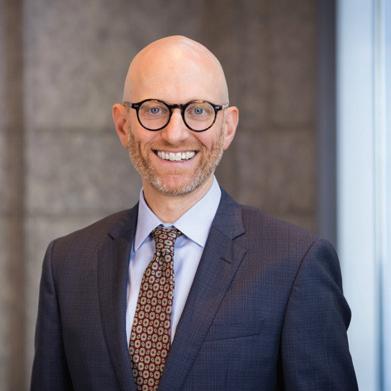
“Monsanto knew what was going on. They sold all these PCBs here. They told people, basically: Go for it, it’s fine if they get into the environment – and now they’re getting off scot-free. And that didn’t seem right to us.”
DANIEL MENSHER
In 2020, the City of Seattle asked Keller Rohrback to take on a case the City filed in 2016, seeking to hold Monsanto accountable for the contamination of the Duwamish River by PCBs it manufactured. Another client, the State of Oregon, brought a similar case in state court in 2018.
According to Mensher, there was evidence going back to the 1930s, when Monsanto began making PCBs, that the company knew they were toxic. “They have boatloads of documents showing this stuff is not good for human health and not good for critters, either,” he says. “They also knew that PCBs lasted forever – heck, that was one of their big selling points – and third, they were marketing these forever chemicals for uses that they knew would mean that PCBs inevitably got into the environment.”
Through discovery, the firm was able to turn up internal documents with damning evidence. “They said things like: We are selling enough PCBs every year to contaminate the entire food chain in the United States,” recalls Mensher. “But instead of doing the right thing and saying, Maybe we ought to be telling people about these risks, they did the exact opposite and said in internal memos things like, We cannot afford to lose a single dollar of our PCB business, so don’t tell anybody about these risks.”
An Oregon assistant attorney general, Donald Pyle, had been working on litigation over the Portland Harbor Superfund site where Oregon taxpayers and businesses were funding a cleanup of PCBs. Mensher recalls that he and Preusch decided to talk to Pyle about it, and they started mind-melding. The federal government had instituted the Comprehensive Environmental Response, Compensation, and Liability Act, or CERCLA, which provided a federal “Superfund” to clean up PCBs and other environmental contaminates. But the group realized one major party was missing from the cleanup efforts: Monsanto.
“Monsanto knew what was going on,” Mensher says. “They sold all these PCBs here. They told
people, basically: Go for it, it’s fine if they get into the environment – and now they’re getting off scotfree. And that didn’t seem right to us.”
Over the course of the Keller Rohrback lawyers’ conversations with Pyle and other Oregon officials, it became clear to the group that PCBs weren’t an issue just in the Portland Harbor, but in fact, PCBs were having effects across the State of Oregon. The State realized that, as Mensher recalls, “We have a bigger story to tell here. Monsanto has created a quiet, slow environmental disaster, and we need to work to hold them responsible.”
A major hurdle for Keller Rohrback in establishing liability against Monsanto was the company’s defense that fault was limited to PCB dischargers. “They said: We made a raw material that was legal and somebody else discharged it into the environment, so we’re not at fault,” Mensher recalls. However, in a key ruling in January 2019, a Multnomah County Circuit Court judge agreed with the State that a key environmental protection statute enacted by the Oregon legislature was more expansive, and “does not by its terms restrict the scope of liability to the person who ‘discharges’ a pollutant. Rather it makes liable ‘the person responsible for’ pollution.”
And, the ruling said, even if, as Monsanto argued, “the person responsible for” should be interpreted to mean the person who was the “primary cause” of the pollution, “a trier of fact could reasonably conclude that defendants were the primary cause” of the PCB pollution in Oregon.
Monsanto also tried to bury the state in discovery requests. “I think they believed that the State would cry uncle and say, we’re done, we don’t want to do this,’” Mensher says. But what Monsanto didn’t realize is they were up against an elite force of legal ecowarriors. Keller Rohrback deployed its discovery team – including its state-of-the-art Legal Technology Group led by Partner Eric Fierro – to find, collect, and review massive amounts of documents and data. Keller worked with the State’s Office of the Attorney General and co-counsel to collect and review data and documents from multiple state agencies, ultimately


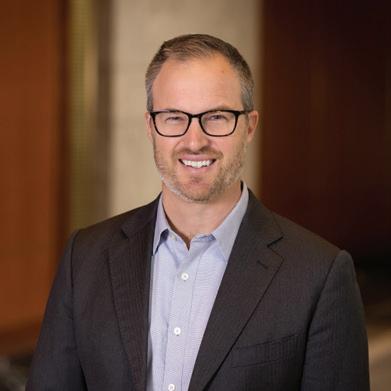
“These are complicated, drawn-out fights, and they involve a lot of expert resources, and they typically do not resolve early. We always have to be prepared for that long fight – and be prepared to try the case if that’s the direction it goes.”
MATTHEW PREUSCH
producing over 11 million pages of documents in response to Monsanto’s expansive discovery requests.
Ultimately, Monsanto settled the Oregon case for $698M and agreed to pay the City of Seattle another $160M – notably more than the $95M that the entire State of Washington obtained from similar litigation.
“We feel pretty darn good that we’ve managed to find a way to litigate these cases in a way that actually begins to get Monsanto to pay its fair share of the cost to clean up PCB contamination,” Mensher says.
In the class action litigation against PacifiCorp, Oregon property owners and residents alleged that, by leaving its power lines energized during critical fire conditions on Labor Day 2020, the utility was a major cause of the widespread wildfires that devastated the region. The case, brought by Keller Rohrback, along with its co-counsel, was the first time a major utility in Oregon was brought to task in the courts for causing a wind-driven wildfire.
One of the hurdles to the litigation was that there wasn’t – and still isn’t – an official government report about the cause of the Labor Day 2020 fires, which destroyed thousands of homes and leveled over a million acres of land. So, the eco-warrior strike force at Keller Rohrback set out to build a case against PacifiCorp from scratch. They hired experts, built a case, and along with their co-counsel, took it all the way through a jury trial.
For the liability claims against PacifiCorp, they handpicked a range of experts, from fire investigators to electrical engineers; metallurgists describing how power lines start fires; arborists explaining how they’re supposed to keep trees trimmed back from the line so they don’t fall on the wires; and various experts speaking to when the company should have shut off the power. It was a novel approach in the trial, to have testimony from these experts about when lines should be de-energized because of dangerous wind conditions. “What’s consistent across all our environmental cases is the importance of finding and working with excellent experts,” Preusch says.
A major battle in the litigation was over certification of an issue-based class. “There had never been a class certified in a utility-caused wildfire case” by a U.S. court, Preusch says. The Keller Rohrback lawyers decided to proceed under Oregon class action law, which is less restrictive than federal law. Granting certification in May 2022, a Multnomah County Circuit Court judge said the plaintiffs had made a sufficient showing of commonality and had “sufficiently established that their factual theories can be proven by evidence [including expert testimony] applicable both to the individual class members and to all class members as a whole.”
In the first trial, the jury returned a liability verdict in favor of the entire class and ordered PacifiCorp to pay punitive damages. At the second trial to determine damages, the jury awarded $7M in economic damages, $23.2M in noneconomic damages, and $7.3M in punitive damages. Appeals are underway, but the team’s success to date has the potential to change the dynamic for wildfire cases in courts across the country. As Preusch says, “Now plaintiffs and their lawyers know what value juries assign to the stories that these people tell about their experiences fleeing from fire. There hadn’t been that data point before.”
Through the team’s robust, novel and compassionate approach to finding justice for victims of these unprecedented wildfires, the team at Keller Rohrback is creating value and hope for fire survivors everywhere – and accountability for the companies who contribute to their spread.
Dan Mensher went to great lengths to investigate the impact of the 2015 Santa Barbara oil spill on the local fishing industry. “I was on fishing boats learning about how sea cucumbers are harvested,” he recalls. The disaster, he says, “had real impacts on people, people who are commercial fishers, people whose livelihoods depend upon being able to take care of resources and then extract resources as well.”
There is a straight line from the Exxon Valdez oil spill case

to this one, as the Keller Rohrback attorneys continue their long history of fighting for victims of oil spills. They filed a case on behalf of fisherman very shortly after the spill happened, in June of 2015, in the Central District of California, against Plains All American Pipeline.
The court certified two plaintiff classes – one consisting of fishers and commercial seafood businesses and the other of residential beachfront property owners or people with a private beach easement. The spill “forced the closure of beaches and fertile fishing grounds,” the complaint noted, and Plains was allegedly at fault for failing to adequately maintain its pipeline, install an automatic shut-off valve on it, and properly respond to the rupture.
As class counsel, Keller Rohrback teamed up with two other firms in California to represent all of the affected people and businesses. “We really pride ourselves on being able to work with a lot of other plaintiffs’ firms, which is necessary in some cases, to pool resources to litigate against these major companies and their defense firms,” Preusch says.
Unlike the Oregon fire case, the Santa Barbara litigation settled before trial, with Plains agreeing to pay $184M to the Fisher Class and $46M to the Property Class.
The court granted final approval in September 2022 after more than seven years of litigation. “These are complicated, drawn-out fights, and they involve a lot of expert resources, and they typically do not resolve early,” Preusch says. “We always have to be prepared for that long fight – and be prepared to try the case if that’s the direction it goes.”
“We love to take cases to trial,” Lynn Sarko says. “But in these cases, the clients are in charge, so they decide where the off-ramp is.”
Out of a total of about 75 attorneys, Keller Rohrback now has about 20 lawyers working full-time on environmental cases, according to Sarko. He sees
plenty of room for more growth.
Given their success with these cases, the firm is in the relatively unique position of being approached by state and local governments who want to bring a case on behalf of their citizens – and are looking to partner with an effective force in the courtroom.
“Government clients are mad as hell and don’t want to take it anymore,” Sarko says. “There’s more interest in going after polluters, whether it’s oil or chemicals or smoke.”
Keller’s environmental law practice has grown in tandem with governments and citizens who are also increasingly invested in fighting corporate malfeasance. “These companies are maximizing profits without care for the impact on the community,” says Mensher, “and then government clients are saying: Wait a second, we’re stuck cleaning up this mess.” Keller Rohrback is proud to put more resources into helping the governments hold those companies accountable and have them pay their fair share of the cleanup costs.
About the firm’s fast-growing Portland office, which has grown from one to seven lawyers in only two years, Park says, “To be able to have an office of excellent lawyers physically present in Oregon has been really key for both the fires cases and for the Oregon PCB case.”
Keller Rohrback is also currently representing the states of Maryland and Delaware, and three California counties in the Bay Area in PCB litigation. In a significant victory for the plaintiffs, the Delaware Supreme Court held in June 2023 that Monsanto could be liable for a public nuisance and trespass caused by PCBs because it continued to supply the chemicals to consumers and industry even though it knew they were hazardous.
“This idea that the last person to touch the product is not the only person on the hook is really getting traction, and that’s bringing corporations like Monsanto to face what they’ve done,” Park says. “Temperatures are rising, climate is changing,” she adds, “but what’s exciting is that we’re able to find new muscle in the law.”
The firm is in the relatively unique position of being approached by state and local governments. “Government clients are mad as hell and don’t want to take it anymore. There’s more interest in going after polluters, whether it’s oil or chemicals or smoke.”
LYNN SARKO

Insurance has an increasing role in litigation –and Ignite Specialty Risk is at the helm.
BY MEGHAN HEMINGWAY
Betweenheavy legal fees, the rising costs of document production, preparation, specialists, court fees and mounds of other considerations – litigation is more expensive than ever. For most, prohibitively so. But justice was never meant to service only those with the means to procure it. That is where Ignite Specialty Risk comes into the picture – an innovative company born of a serious marketplace gap that offers an elite suite of services designed to reshape the litigation insurance landscape.
The company helps litigants access justice by providing insurance products to law firms and capital providers that help ease the burden of financing costly litigation, in turn, enabling parties to achieve efficient and just results. The team is guided and galvanized by Ignite’s central philosophy – litigation does not have to be a liability. If one looks at meritorious litigation as a distressed asset, rather than inevitably painful and expensive, there’s an opportunity for investment that, when properly vetted and structured, can produce significant returns and just outcomes.
Nicole Silver, Ignite’s Lead Underwriter and Head of U.S. Operations, believes Ignite’s products hold much more value than simply de-risking litigation.
“Litigation insurance allows companies to reinvest in their own core operations,” says Silver. “It allows them to focus on what they do best – offering products and
services to clients – rather than expending costs on protracted litigations.”
The Ignite team was intentionally built with their diverse specialties in mind – collectively, the team has backgrounds in insurance, litigation, finance and intellectual property. They work together to deliver creative, tailored solutions for clients across a broad spectrum of industries. Always bespoke, always client focused.
After a successful UK launch in 2022, Ignite brought Silver on to spearhead their U.S. initiative in 2024. Silver brings over 20 years of experience as a litigator, having previously worked at Winston & Strawn and Greenberg Traurig. On Silver’s team stateside is Head of IP Underwriting, Ankit Patel.
“In the U.S., litigation insurance is rapidly evolving –from single-risk M&A-related coverage to portfoliobased policies marketed directly to clients and law firms,” says Patel. “It’s becoming an essential tool for litigation risk management and attracting more mainstream investor interest.”
The U.S. and the UK markets are distinctly different –each with their own unique drivers – and Ignite Specialty Risk is leading innovation in both regions, for different reasons. In the UK, Ignite operates as a nimble, specialized Managing General Agent (MGA), bringing underwriting skill and speed to a more mature market with a longstanding cost-shifting framework. In the U.S., litigation insurance is a fresher concept and Ignite is building a marketplace model, with a focus on innovation and client education. They’re introducing portfolio-based WIP (work in progress) insurance for contingency firms and tailoring products to help clients access better financing.
“Stateside, our products are primarily geared towards commercial litigation portfolios,” says Jamie Molloy, Co-founder and Head of Ignite’s After The Event (ATE) Insurance team. “In the UK, we have a greater focus on single risks – it’s a different landscape.”
Molloy alongside Byron Sumner, Ignite’s CEO and cofounder, has had a hand in developing their innovative financial products from the beginning. They saw a need in the market and built Ignite precisely to fill that gap.
“Ignite was built deliberately to serve the legal expenses market as we do today,” says Sumner. “That’s been our vision from day one – and it still is. We’re here for the long term, and we’ve built a platform around that commitment.”
Lawdragon sat down with the Ignite team to talk about the exciting and burgeoning industry of litigation insurance, where the industry is headed and why Ignite is primed to stay on top.
Lawdragon: Tell me about the financial products that Ignite offers.
Jamie Molloy: Our philosophy really is if we like a piece of meritorious litigation, let’s de-risk it in as many ways as we possibly can. Ignite hasn’t just sold existing products –we’ve created them. So whilst historically in the UK, litigation insurance has been limited to adverse cost insurance because we have this “loser pays” rule, Ignite has been instrumental in creating capital protection insurance products. We provide cover for own solicitor’s fees, Insolvency Practitioner’s fees, and for more unique legal actions, like freezing injunctions, which we regularly get in the UK.
We now have the widest range of product offerings in UK and Europe for all stakeholders in the litigation value chain. We’re also the only insurer in the UK that is underwriting both big-ticket class action work in the Competition Appeal Tribunal, as well as consumerled work in the local county courts situated around England and Wales. This affords us excellent oversight, a real bird’s eye view as to what’s going on in the litigation sector.
LD: So, you were reacting to a need in the market for these insurance products?
Byron Sumner: Yes, but it wasn’t just about the availability of insurance. It was about how it was being delivered. In the UK and Europe, we offer the broadest product suite of any litigation insurer, something we’re genuinely proud of. That breadth reflects a mature market shaped by decades of cost-shifting and adverse costs exposure. But product alone isn’t enough. What clients and intermediaries consistently tell us they value most is service: fast turnaround times, intelligent structuring, candid advice on risk –and conversations with actual litigation insurance experts, not just generalist financial lines underwriters.
When we launched in the U.S. in 2024, we took a different stance. We saw the chance to reshape the market by building something better: a model based on strategic growth, innovation and real client alignment. Ignite was designed to meet those expectations from day one. We’re the speedboat in the harbor – fast, focused and built for this niche. That translates into better outcomes for clients, and into participation on high-quality risks that deliver underwriting profit for our insurance partners.
JM: Litigation ultimately is a form of distressed asset. If you ask anybody involved with litigation, they see it as a challenge with significant financial burden and emotional drain. Litigation finance is one such tool that helps mitigate that, but it’s also at a significant cost. The litigation insurance products we’re offering provide
“Litigation has become so expensive and law firms are requiring scale that even traditional funders cannot meet. Our product helps to deal with the economic need that law firms, lawyers and clients are facing as they pursue litigation.”
— NICOLE SILVER
effectively the same net outcome as litigation funding, but it’s a better value cost to the ultimate payee, which is the litigant or the law firm.
LD: Can you speak to how the need arose in the U.S. market?
Nicole Silver: Litigation has become so expensive and law firms are requiring scale that even traditional funders cannot meet. Our product helps to deal with the economic need that law firms, lawyers and clients are facing as they pursue litigation. In the U.S., we offer portfolio-based WIP insurance for contingency-fee firms, helping them manage risk and access better financing terms.
Ankit Patel: What we are trying to do within the U.S. is to reduce the cost of capital associated with litigation. Traditional lenders do not have the specialty to underwrite litigation risk and insure or lend against litigations. Where Nicole and I add value is bringing our litigation expertise as a component of underwriting to help reduce the cost of capital that may be needed to put out a loan that the law firms or our ultimate clients will procure.
LD: Can you talk about how the role of your company –and legal funding insurance in general – has evolved since they first came on the scene?
JM: Litigation insurance has been around longer than funding in the UK. During the’90s, the UK government wanted to shift the cost of civil legal aid off taxpayers and onto third parties, leading to the rise of No Win, No Fee arrangements and ATE insurance in 2000. What began as a public access-to-justice tool has evolved into a commercial product now used by everyone from impecunious individuals to sophisticated corporates looking to de-risk litigation.
Litigation is a financial headache no matter who you are – but at Ignite, we see it differently. We view litigation as a distressed asset with real potential value at the end. In the U.S., where cost shifting never existed, legal expenses insurance didn’t naturally develop, but we saw the gap and built tailored products to fit that system. It’s not off-the-shelf; it’s built with vision, and it works.
LD: When did corporates start using these products?
JM: From approximately 2009 onwards. Back then, I recall insuring large corporations who had the means to run the litigation, but they deemed it more sensible to buy a product and hedge their risk of that product and share in the proceeds of the litigation with us rather than just take the risk themselves.
NS: Both litigation funding and insurance allow companies to reinvest in their own core products. They’re not taking money out, entering into risky propositions, pursuing litigation and spending money that detracts from what they would otherwise be doing. It allows them to focus on their core business and profit from that exponentially more than if they were taking that same money and channeling it into litigation. It’s thus such an important product that is beneficial for both companies and law firms to know about and utilize.
AP: From a U.S. perspective, this is a relatively new market. Over the past five years, the product has evolved significantly. In the U.S., litigation insurance is rapidly evolving – from single-risk M&A-related coverage to portfolio-based policies marketed directly to law firms. It’s becoming an essential tool for litigation risk management and
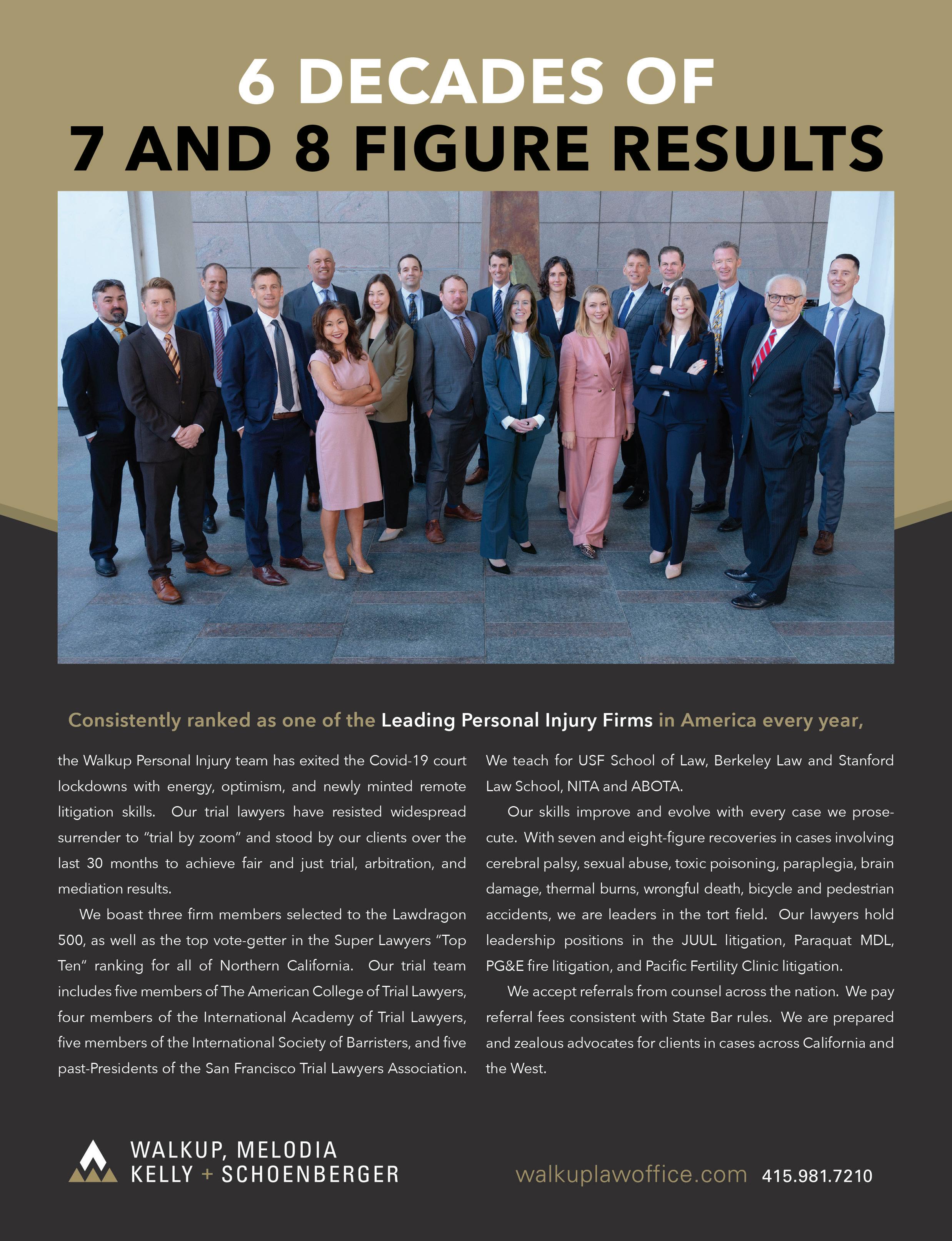
Insightful enough to reinvent the law firm paradigm.
Nimble enough to take on everything in our path.
Bold enough to recover $45 billion for our clients.




“In the U.S., litigation insurance is rapidly evolving – from singlerisk M&A-related coverage to portfoliobased policies marketed directly to law firms. It’s becoming an essential tool for litigation risk management and attracting more interest from mainstream investors.”
attracting more interest from mainstream investors. With the industry shifting over the last year, the product offerings in the U.S. market are still evolving, and I think we’re going to see some new entrants and innovations in the near future.
JM: The challenge for anyone in our shoes is not just designing these products, but it’s also the education piece. The UK market is far more down the chain in terms of establishing itself than the U.S. market. It’s incumbent upon us as thought leaders to educate people who may benefit from our offerings.
LD: How did each of you come to this work?
NS: I’m a lawyer by trade. I practiced for close to 19 years in Big Law. I started my career at Winston & Strawn, then went over to Greenberg Traurig. I am a litigator and my focus was mostly international arbitration, but I did some product liability defense work as well. Prior to coming to Ignite, I worked at a litigation finance company for about a year and a half, and then I came over to the insurance side. I’m very happy I made the move.
AP: I started my career as a patent litigator at Gibbons P.C. and practiced there for a few years. In 2016, I had an opportunity to help launch an IP offering at Ambridge Partners LLC, a well-known transactional risk MGA. That’s where I was introduced to the world of insurance. I launched an IP insurance product offering in the U.S., UK and EMEA and assisted in underwriting transactional risk along with contingent risk – which was quite limited at the time. In 2022, I made the move to Liberty Mutual to exclusively focus on contingent risk, and earlier this year made the move to join Ignite.
LD: Jamie and Byron, you’re both co-founders. Can you tell us about your path to this work?
JM: I left school and chose to go into law. I took what’s called a CILEX qualification in the UK and then basically tried to get any job in the legal sector I possibly could. I ended up working for a litigation insurer based in Gibraltar, underwriting and managing portfolios of personal injury claims. Whilst working there I undertook a bachelor’s degree in law and subsequently a master’s degree in law, both on the weekend – which took seven or eight years. By the time I’d concluded my master’s, I decided that legal practice would’ve been far more boring for me than the opportunity this work presents. I worked at an MGA in the early 2010s, underwriting some patent litigation in the U.S. and a significant volume of litigation in the UK. I moved to another MGA in 2017 and set up their commercial team and then was approached in late 2021 to set up Ignite alongside Byron and Dave [Green]. I just really liked the philosophy of what they were doing. I’ve now been writing litigation insurance for 18 years, across High Court, Court of Appeal, Supreme Court, Competition Appeal Tribunal matters, and now obviously Europe. It’s such a challenging but rewarding opportunity because we are at the forefront of an industry that only has really existed since the early 2000s. We like to think we are very much the pioneers of it.
BS: I studied finance and started out at a Lloyd’s syndicate 1200, working on alternative capital strategies. It gave me early exposure to how capital is structured and deployed in insurance, from reserving
dynamics to debt and equity. I later moved into risk modelling, working closely on delegated authority portfolios at Argo and later A&H statistical analytics at Chubb Europe. That gave me a strong grounding in the technical side of insurance, something that still shapes how I think about pricing and portfolio management today. At Aon, I was introduced to the venture and risk capital ecosystem that underpins the MGA model, and to After-the-Event insurance, which struck me as a fragmented and underserved space. From there, I joined a team to build out casualty treaty business at Ardonagh, before teaming up with David Green to develop a more focused ATE underwriting platform. Jamie joined us soon after, and we raised private equity capital to launch Ignite in March 2022.
LD:What advice would you all have for parties that are looking to engage a litigation insurer maybe for the first time?
JM: We need to wake people up to realize that litigation finance exists – but so does litigation insurance, and it can deliver the same outcome at a fraction of the cost. The real solution is bringing finance and insurance minds together, recognizing that litigation isn’t just a headache – it’s an asset class. It might start out messy, but by the end, it’s polished and valuable. It’s still a young market, and at Ignite, we’re leading it with the biggest, best product lines –they really do speak for themselves.
LD: And what about on the U.S. side? Any advice for people thinking for the first time they might want litigation insurance?
NS: The reason for obtaining litigation insurance is generally so that you will be able to obtain better financing for loans that you may be seeking. Having an insurance policy in place helps you to get better financial terms. It also unlocks a different class of investors who may be more similar to a credit fund or a family office or a pension fund, somebody who, with the possibility of using the policy as collateral, can then lend against that policy. So it is there to help facilitate transactions and to be used as a financial instrument.
AP: I think it’s important to not think of us as traditional insurers in the U.S. who write on an admitted basis. This is a really bespoke line of insurance. Each of our policies are heavily negotiated with the client and their advisors to deliver what is a very tailored insurance solution. We are specialists and we help deliver a solution on behalf of our panel of insurers.
Separately, I think I would advise the clients to be as forthcoming with information as possible. Oftentimes when we get a submission, we read it and we ask ourselves, “What is the need for insurance?” There
are limit requests that don’t make sense, there are case merits that don’t make sense, and there are stories that don’t always align. And the point is to really trust the people you’re working with. If we are questioning, what is the purpose or why are they seeking certain limits, that makes us have doubt as to what that portfolio consists of or what the merits are, and that delays – or sometimes entirely derails – the process of issuing the policy. We only issue policies that make sense in the overall context.
LD: Your team is really at the forefront here. Where is this industry headed?
NS: Litigation insurance is evolving quickly, especially in the U.S., where it’s moving from boutique firms to top Am Law 100 players. The key challenge is education –helping firms and investors understand how insurance can reduce risk and unlock new capital.
JM: We are, as an industry, in the very early days of the development of our product and our marketplace. Inevitably, as time moves on and as awareness grows, so will product adoption. By creating insurance solutions, we can de-risk litigation and attract a broader range of investors beyond traditional hedge funds. Ultimately, our goal is to expand access to justice by making litigation more financially viable for more people.
It’s going to become more commonplace and be used by more law firms, including Big Law firms, particularly as they develop their plaintiff-side practices.
LD: What makes Ignite stand out in the market?
BS: Ignite was built to serve a specialist segment: exposures driven by legal uncertainty. That includes adverse costs, own costs, enforcement risk, and portfolio-level capital protection, a class of contingent risk we understand deeply.
What sets us apart is our combination of technical credibility and execution. We’ve supported around $2B in litigation capital across the U.S., UK, and EU, but we’ve retained the agility and precision of a specialist platform. That means clients get speed, structuring input, and direct conversations with underwriters who not only understand the risk, but also appreciate the commercial drivers behind why these products are purchased in the first place.
In the U.S., we currently offer the largest capacity of any litigation insurer, with the ability to insure limits north of $100M on a single portfolio. That scale, paired with our underwriting track record, puts us at the forefront of the market. As the market evolves, we’re helping define it, alongside clients, brokers, partners and competitors, raising the bar.
maritime, professional defense, employment, and products liability.
At the conclusion of a recent jur y trial representing a major financial institution, the clerk of the cour ts described Skip as “the consummate professional.”
When asked about being selected by Lawdragon, Skip’s comment was simply, “I’m flattered to be included in such distinguished company. ”
His family and friends at Keesal, Young & Logan are proud to use this occasion to thank him for all he did and the way he did it

The founders of Keller Postman have launched a dedicated new practice – Postman Law
BY EMILY JACKOWAY

THE NUMBERS PRODUCED BY LEADING MASS TORT LAW FIRM KELLER POSTMAN ARE STAGGERING. A $60M win in the first trial of the NEC/infant-formula litigation. Seventy-five thousand individual arbitrations against Amazon. The largest privacy-related settlement by a state in history – $1.4B from Meta to the State of Texas this past summer. In all, the firm’s cases add up to more than one million clients represented and $3B recovered to date, relying on the expertise of more than 300 attorneys and staff across six offices in the seven years the firm has been in operation. Now, the founders of Keller Postman are reaching for a new number: one.
Keller Postman’s founders, Ashley Keller, Warren Postman, and Adam Gerchen, recently struck out to form a dedicated personal injury practice: Postman Law. The new firm will represent individuals in a wide range of personal injury matters, from traditional slipand-fall cases and motor vehicle accidents to complex medical malpractice and wrongful death cases. At Postman Law, the attorneys will leverage their experience in high-stakes mass tort litigation in the nation’s highest courts, bringing their prowess to the personal injury space. It’s a bold entry into the market, and a model that Postman says can be “disruptive if done well.”
“There are a lot of small firms who don’t have the resources to do what we do on the litigation side or the client services side,” Postman explains. “We are bringing those principles of aggressive, wellresourced, high-stakes and highly skilled litigation and really great client care to the personal injury space.”
The new firm will have a synergistic relationship with Keller Postman, able to both draw support from its attorneys and benefit from its relationships and resources, including referrals and industry-leading tech systems. That access to the heft of a mass tort firm combined with the unparalleled experience of the founding attorneys means that the new firm will be able to push individual personal injury cases forward aggressively, quickly and innovatively – delivering results when their clients need it most. Facing recent personal trauma and often-mounting medical bills, personal injury clients uniquely require speed, rigor and unparalleled client care; there’s a sense of urgency and empathy in every case.
Keller, Postman and Gerchen have spent the last seven years shaking up the mass actions world on behalf of thousands of individuals. With their stamp firmly made on that space, the innovators are ready to see how they can transform individuals’ lives in the personal injury sphere.
If Keller Postman’s founders aim to cause disruption, it won’t be the first time; when they switched to the plaintiffs’ side by forming Keller Postman in 2018, they took the field by storm – quickly and deeply revolutionizing the mass tort space. The triumvirate are trailblazers in mass arbitrations, a relatively recent development in civil litigation and that they took to new heights. They sought to give individuals access to arbitrations, a move that shook up corporate entities
that may have been used to using arbitration as a tool to skirt accountability. The trio’s fight for individuals in the personal injury space carries a similar theme: giving each person equitable access to the justice system. Keller Postman has taken this fight to multiple major corporations – including Uber, DoorDash, Amazon and TurboTax, representing hundreds of thousands of clients across multiple litigations. By 2021, for instance, Keller Postman had filed 75,000 individual arbitration claims on behalf of Amazon Alexa users who had been recorded without permission. Rather than tackle so many arbitrations, Amazon made an unprecedented move and eliminated its arbitration clause, opening itself up to individual and class-action lawsuits from consumers and changing the legal landscape.
As a result, Keller Postman is currently co-lead counsel in two litigations representing potential classes of clients against Amazon on antitrust claims. In FrameWilson et al v. Amazon.com Inc. and De Coster, et al. v. Amazon.com, the lawyers allege anticompetitive pricing policies led to consumers overpaying for items purchased through both Amazon and non-Amazon retailers. The cases’ estimated damages sit in the eleven to twelve-figure range, and, if certified, could be the largest class in class action history.
In cases like these, Keller Postman dives headfirst into novel areas of law that require creative legal argument. While that level of creativity is not necessary in every personal injury case, the team is skilled at looking at a typical case with fresh eyes and wondering if there might be a different, more successful strategy. “That’s part of our culture – coming to a case and not just accepting the standard playbook, but trying to come up with ways to increase the value and result for the client,” says Postman. “That is really helpful even when you might not expect it to be.”
The firm’s first case puts that creative, complex thinking to the test. In February, the Postman Law team was contacted to represent the family of Saviay’a Robinson in a wrongful death suit in Cook County. Robinson, 24, a father of three and cousin to rapper Quando Rondo, was shot and killed after assailants fired at least 18 rounds into Rondo’s car in Los Angeles in August 2022. Just this past November, however, a federal indictment was released that linked Robinson’s death to a murder-for-hire plot allegedly orchestrated by Grammy-winning rapper Lil Durk (Durk Banks) as a hit on rival rapper Rondo.



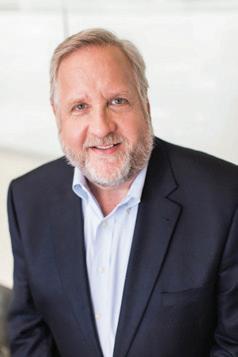
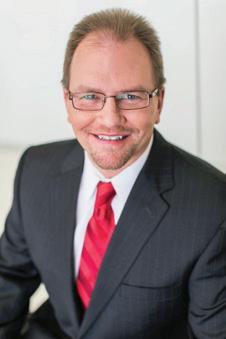

The
biggest shift and most gratifying thing was seeing how our clients on the plaintiffs’ side are really looking to us to solve a problem they can’t handle by themselves – whereas big corporations could swap in another big firm lawyer any day.

So, that feeling was always the basic thing that keeps us excited about plaintiffs’ law. In personal injury, every case is a really individual injury story. Every time I end up talking to a client and hearing their story, I get excited about trying to help them.
”
The federal indictment alleges that Banks, as the leader of Chicago-based rap collective and association Only the Family (OTF), ordered Rondo’s murder through hitmen who used funds from Banks and OTF; one OTF associate allegedly planned and paid for one-way flights from Chicago to California before the shooting, and another allegedly purchased ski masks for the shooters and paid for a hotel room using a credit card in Banks’ name.
When the news broke, Postman Law was contacted by Roden Law, who had a relationship with the Robinson family, was looking for Chicago-based partners for the case, and had exchanged referrals with Keller Postman in the past. Postman Law and Roden Law are now cocounsel in the civil wrongful death case on behalf of Robinson’s family, which is running concurrent to the criminal case against Banks and other alleged conspirators in the plot. The case seeks to recover damages, especially on behalf of Robinson’s three small children who are now without not only their father but the primary earner in their family. “We can’t ever bring him back, but we can try to make sure that they’re set up in a way that takes them through the next 15 years or so that they would have had a father providing for them,” says Marquel Reddish Longtin – Partner and Chief Client Officer at Keller Postman and Postman Law.
“You can’t ever replace the family member who is lost, but [the case] is the mechanism through which they can get some sense of justice and closure,” Postman adds.
While the federal criminal case further untangles the knot of Durk’s alleged involvement in Robinson’s death, the civil case requires creative and sophisticated lawyering, the team says. While the Postman Law lawyers have never taken on a murder-for-hire case before, they are battle-tested in diving into new areas of law. Both in mass tort work and in Postman and Longtin’s prior work on the defense side, “you end up dealing with really novel, complex situations,” says Postman. “So the place of working through a new, complex fact pattern is familiar.”
The case “just shows the breadth of what we’re capable of,” says Longtin. From an open-and-shut slip-and-fall case to a complex interstate murder-for-hire conspiracy, “there’s really not an issue that’s too simple or too complex. And we look forward to taking on all those cases,” she adds.
It may seem counterintuitive that lawyers used to handling massive groups of clients would be uniquely equipped to serve individuals. But that’s the Postman


Law model – and a key aspect of how they’re shaking up the personal injury space.
“We’ve spent the last seven years thinking about how we can make sure an individual client has a good experience, and then how to do that tens of thousands of times,” says Postman. “We make sure that we have processes and systems in place so that balls don’t get dropped. So, now we are going to bring that to personal injury cases.”
As Keller Postman’s Chief Client Officer, Longtin has been the architect of many of those systems – and by bringing her over, Postman Law is putting its full weight behind client service. Longtin, who came to Keller Postman in 2018 from Kirkland & Ellis, has been a partner and Chief Client Officer since 2023. She focuses on combining thoughtful, personalized attention for clients with tech products that help ensure clients are taken care of at a mass scale.
“In personal injury, one of the most important things a client can do is take care of themselves,” Longtin says. One vital way they can do so is through doctor’s appointments. To ensure that every client is receiving the medical care they need, the firm has created technological reminders that will help clients remember when they have doctor’s appointments and even transport them to those appointments. Afterward, the client will receive a text or notification to let their legal team know how the visit went – ensuring on the legal side that lawyers are kept fully up-to-date with any health changes that could impact the case, and on the personal side that lawyers know their clients are getting the care they need throughout the legal process.
The firm’s systems are cutting-edge; Longtin and team are currently developing an AI-assisted medical record review that will service clients both within Keller Postman and Postman Law. The program will operate within an already-existing self-service portal where clients can answer questions, provide updates and upload documents. It’s an example of how the Keller Postman/Postman Law relationship will have beneficial overlap not just on the legal side, but also within client services and technology: The personal injury firm will have the benefit of large-scale investment in cutting-edge client services tech, while the mass tort firm will be benefitted by the Postman Law team curating and employing products for highly individual cases. Keller Postman has a dedicated 30-person tech team to ensure that clients are able to connect with lawyers via tech tools, as well as the 175 non-lawyer staff extensively trained to answer client questions. To that end, clients won’t only be interacting with tech. Longtin explains that most personal injury clients judge their lawyer not by the legal nitty gritty, but by two
things: the result, and how their lawyer makes them feel. “We are really focused on making sure that clients have someone to get ahold of,” says Longtin. “They’re not going to be waiting weeks for updates about the case. They’re going to be able to get ahold of someone, they’re going to be able to know what’s going on in their case, and they’re going to have someone who’s going to walk them through this whole process.”
For Longtin, the key question behind her processes is whether clients feel they have input and agency during an incredibly stressful time in their lives – suffering from a serious injury while worrying about how that event has impacted them financially. While the team works with urgency to get awards to clients as soon as possible, it’s about restoring a lost feeling of agency even before the verdict or settlement is reached. “The number one thing is we want them to feel empowered,” says Longtin. “We don’t want them to feel like victims. We want them to feel like they have a say in what happens next and that they’ve got a little bit of control back.”
Since Postman Law’s launch, the firm has already brought on four attorneys outside of the Keller Postman family. With those new faces outside Chicago, the firm is already delivering on its promise to quickly expand outside its home base of Illinois. The plan is to begin working throughout the Midwest and soon, nationally – a similar model for growth that Keller Postman followed.
As the firm grows, so does the attorneys’ enthusiasm for this new phase in their careers. For Postman, it’s the client stories that he finds the most fulfilling about taking on personal injury cases. He reflects on his switch from defense to plaintiffs’ law when he joined Keller Postman seven years ago: “The biggest shift and most gratifying thing was seeing how our clients on the plaintiffs’ side are really looking to us to solve a problem they can’t handle by themselves – whereas big corporations could swap in another big firm lawyer any day. So, that feeling was always the basic thing that keeps us excited about plaintiffs’ law,” Postman says. “In personal injury, every case is a really individual injury story. Every time I end up talking to a client and hearing their story, I get excited about trying to help them.”
Longtin agrees, adding that on the mass claims side, while you hear many stories, their resolution can often take years. Whereas, in personal injury, she says, “I think it’s going to be really rewarding to be able to work with so many individuals and to be able to see those life-changing settlement awards on a rolling basis – to be able to feel that tangible impact every single day when you go into work.”

The partners at Bleichmar Fonti & Auld discuss the
eyepopping Tesla Settlement that stunned Delaware.
In December 2024, headlines rang out with the news that a Delaware judge had rejected Elon Musk’s bid to reinstate his $56B compensation package as Tesla CEO. The media had been following the compensation case, decided twice by Chancellor Kathaleen St. J. McCormick of the Delaware Court of Chancery, closely and loudly – focusing on the case’s impact on Musk himself.
But just a month later, Chancellor McCormick made another ruling on a Tesla case that had flown much more under the media’s radar. When she approved a staggering nearly $1B settlement in a Tesla board compensation derivative litigation, that stopped Delaware’s changemakers – from the legal industry to corporate leaders – in their tracks.
BY EMILY JACKOWAY
The case was litigated by counsel including the team at leading shareholder-side firm Bleichmar Fonti & Auld (BFA). Working on behalf of their longtime client, the Police & Fire Retirement System of the City of Detroit, the firm and co-counsel were litigating against not Musk specifically, but Tesla’s board of directors. The plaintiffs alleged that the auto company’s board breached fiduciary duty by overcompensating themselves each year from 2017 to 2020.
In an innovative resolution reached shortly before trial, key board members agreed to pay back stock and options valued at $735M and forgo three years of pay, amounting to an additional estimated $184M. All told, the settlement value clocks in at over $919M. In addition, the settlement mandates substantial corporate governance reforms, including requiring an independent compensation consultant to review and assess director compensation for the next five years – and share those assessments with stockholders for review.
BFA turned heads with the result – which is not atypical for the firm. Founded in 2014 by Javier Bleichmar, Joseph A. Fonti and Dominic J. Auld, BFA was born out of a young partnership that had worked together for more than a decade at competitor shareholder firms. The trio were successful together: They were on the team representing the Ontario Teachers’ Pension Plan Board in a securities class action in the U.S. District Court for the Eastern District of Virginia – the “Rocket
Docket,” where the BFA lawyers have returned multiple times since. The team secured a $97.5M settlement, one of the largest settlements in the district at the time. So, they launched their own firm, focusing on highly selective litigation. “We wanted to run a place where every time we filed a case, we could stand up in court and feel like, ‘Yes, we believe in this case,’” Bleichmar says. “We don’t look for easy cases. We look for cases where we think our skill can really change the magnitude of recovery.”
They quickly assembled a team of like-minded litigators, securing significant results in the securities space from the jump. Upon launching, the firm acted as co-lead counsel in a major securities action arising out of the bankruptcy of global financial derivatives broker MF Global – netting a total settlement of $234M. Over the last decade, the firm has shone in the securities space: In 2022, after five years of litigation, the firm secured a $420M settlement in a securities class action on behalf of investors in Teva Pharmaceuticals Industries over allegations that Teva had inflated generic drug prices. The result is among the largest securities class action settlements in the District of Connecticut.
That focus on client service, creative work and highprofile cases quickly gained traction nationwide. In 2016, the New York City-based firm went bicoastal, establishing an office in Oakland, Calif., that focuses on consumer, privacy and antitrust cases. The firm has since added offices in Westchester County, Toronto and Delaware.
“Fundamentally what we do involves intervening when investors are being lied to in some form or another. When we push a case, we believe there is a misleading sense of what the company was telling the public.”
— Javier Bleichmar
“Fundamentally what we do involves intervening when investors are being lied to in some form or another. When we push a case, we believe there is a misleading sense of what the company was telling the public,” Bleichmar says.
Now, they’re taking that outlook and broadening the umbrella to include an increased emphasis on corporate governance work. The launch of the firm’s Wilmington, Delaware office in 2023 cemented that commitment, along with the hiring of Delaware veteran Derrick Farrell to head the practice group. Farrell is a regular in the Delaware Court of Chancery and has appeared multiple times before the Delaware Supreme Court. Notably, he was on the team for the lead plaintiff in In re: Dell Technologies Inc. Class V Stockholders Litigation, in which Dell agreed to pay a staggering $1B cash.
The expansion of the firm’s corporate governance practice is a symbiotic pairing with the securities work, the lawyers say. “Our purpose as a firm is always to protect investors, and specifically our clients who are public pension funds, for public safety personnel like police
officers, firefighters, teachers, union workers, tradesmen and tradeswomen all across America,” says partner Nancy Kulesa, who specializes in securities litigation and the role of client relationships in case selection.
Those clients are just as benefitted by corporate governance claims as they are securities actions, she explains. “The investments that we seek to protect on their behalf are their hard-earned retirement dollars. So whether in the form of a securities case and getting them a return on funds that were wrongfully lost or getting corporate governance changes implemented that ensure the company will be well-run, efficiently run and run with ethics – these things are all very important to our clients.”
Currently in Delaware, Farrell is serving as co-lead counsel in the high-profile Boeing shareholder derivative litigation surrounding alleged systemic issues resulting in 737 MAX crashes. It’s familiar territory for Farrell, who previously took on a Section 220 case against the company.
The emphasis in each of these cases is on impactful litigation that shapes corporate culture and integrity. As for Tesla, “Our client in this case, the Police & Fire Retirement System of the City of Detroit, was very happy to be in the driver’s seat, making change on behalf of its members and on behalf of investors,” Kulesa says.
We spoke with Bleichmar, Fonti, Kulesa, Farrell and partner George Bauer, who as a group spearheaded the case from its nascent stages through to the notable settlement.
Lawdragon: With this result on the heels of your 10th anniversary, how is the Tesla litigation representative of the firm’s efforts over the last decade?
Joe Fonti: The result was a real testament to everything that defines our firm – having the right people in place, dramatically changing the value proposition of the case by our hard work and dedication and supporting a client that believed in us. It was really the culmination of a lot of the sacrifice, effort and risks we took over the years, and bringing in a group of people that could deliver.
Javier Bleichmar: We hire some of the best lawyers around. One phrase that I always come back to is intellectual honesty. It’s a critical value of the firm, but one aspect to believing in intellectual honesty is that, as a process matter, we want to be right in the courts publicly. At the end of the day, we’re a plaintiffs’ firm. We’re not playing defense, we’re playing offense, and so we have to be right. Every single one of our lawyers is absolutely excellent, and that’s how you get good results.
”The Police & Fire Retirement System of the City of Detroit was a long-term client of the firm’s, and they also had long-term holdings in Tesla. So realizing that Tesla didn’t have the best corporate governance, I think the fund decided that they wanted to be at the forefront of effectuating change.“
— Nancy Kulesa
LD: Ms. Kulesa, can you tell me a bit about how you began working on the case?
Nancy Kulesa: I was contacted by co-counsel, who were former colleagues of mine. BFA quickly launched an investigation into the matter, and we believed in the merits early on. It was a unique case, so it took some research and some deep thought. There’s really not a roadmap to this case, but we recognized that the board was being paid outsized compensation and that it was at the expense of investors. We also realized that the vote on director compensation was not disinterested.
Our clients know us for only bringing the most meritorious cases to them. So I think when we bring a case to them, they really do listen. The Police & Fire Retirement System of the City of Detroit was a long-term client of the firm’s, and they also had longterm holdings in Tesla. So realizing that Tesla didn’t have the best corporate governance, I think the fund decided that they wanted to be at the forefront of effectuating change.
LD: And how did the case progress from those early stages?
George Bauer: I think this case is a really shining example of our firm’s philosophy in practice, that when we litigate these cases, we litigate them hard and we litigate them with an eye not to resolving them easily and quickly, but of taking them all the way.
Working with experts, we had to develop our own theories of liability and of damages. What is excessive compensation for a director? How was their compensation excessive? What would be the damages that you would apply for compensation? We had to navigate all of those issues without a roadmap, and we did that effectively. And we did that with the goal of taking the case to trial if we needed to. We had opportunities to resolve the case earlier, and we declined because we believed in the case. We were able to maximize the value for the clients, the stockholders and build a precedent for these types of cases going forward.
LD: Outside of the lack of roadmap, what were the other challenging aspects of the case?
GB: We’re not the only ones who litigated the case with the eye to going all the way. We were litigating against Tesla. They have some of the most top-notch attorneys in the world, and we met them blow by blow. We never wavered; we never backed down. And that goes back to the philosophy of the firm. We’re fighters. When we have a case that we believe in, when we have clients who believe in our case, we don’t stop until we get the results that those clients deserve.
JB: The other thing I would add is that board comp cases are usually not seen as significant cases. That didn’t make a lot of sense to us. The board sits in a place where they’re supposed to be looking at not just maximizing value, but conscientiously making sure that the company’s growing at a good pace and that the shareholders are taking the right amount of risk. So why would people who are effectively gatekeepers be given the incentive of millions and billions in compensation and options, which would create exactly the wrong incentive? We came to the realization that this was completely backwards. You don’t want the board member to be swinging for home runs all the time. That’s not what they’re there for.
LD: What was most fulfilling about the results of the Tesla litigation outside of the historic value of the settlement?
GB: From the Tesla case, I think we can look at the takeaways in terms of micro and macro benefits. I think at the micro level at Tesla specifically, we got in place very meaningful corporate governance reforms. It changes the culture. They’re only in place for five years, but that change of culture for five years could have a material impact, both in terms of what directors do going forward, but also what stockholders expect them to do going forward.
“I think at the micro level at Tesla specifically, we got in place very meaningful corporate governance reforms. It changes the culture. They’re only in place for five years, but that change of culture for five years could have a material impact, both in terms of what directors do going forward, but also what stockholders expect them to do going forward.”
— George Bauer
The macro piece of it, I think, is the precedential value of what we’ve established for other cases. We’ve given a roadmap for other types of cases, but we’ve also established the precedent of, “This is the type of remedy that you should go for. These are meaningful benefits and if you fight hard enough for it, you can achieve that.”
LD: Mr. Farrell, tell me about coming over to the firm not long before the Tesla case settled.
Derrick Farrell: Since I was starting a practice group essentially from scratch, the fact that the cupboard wasn’t bare, so to speak, was a really big draw for me. And Tesla wasn’t just any case in the pipeline; it was a very significant case. But it really flew under the radar. So when the Tesla settlement came out, everybody I knew in town was really shocked that we got this enormous recovery, and that had two significant impacts on the Delaware office. One, it gave us credibility with other firms. In Delaware, you often have to work with other firms. It’s extremely rare for a firm to be on their own. And so having credibility with other firms is very important. It also gave us a whole lot of credibility with the court.
The other thing that drove me to join the firm was the clients, because Nancy and Erin [Woods] have done a really fantastic job of building a large set of clients
at BFA. So getting the office off the ground, having the institutional clients was extremely important and made my job and building this practice quite quickly much easier.
LD: What’s it been like building the office and working with this team?
DF : We’ve been very successful. We’ve gotten now, I believe, four cases over a motion to dismiss in two years. We’ve also staffed up the office with experts in Delaware law pretty quickly, starting with our associate Robert Lackey, who has done a great job of adding value to the Delaware practice. Then my partner Matt Miller, who has been really instrumental, and David MacIsaac, who is one of the best in the business.
JB: Derrick is being a little humble. He’s been able to attract really great talent. These are all people that he worked with in the past and they’re following him to come over. And that’s something that speaks volumes to Derrick’s ability and track record.
LD: Can you tell me a bit about the Boeing case you’re leading now?
DF: As was widely publicized back in January 2024, a door plug blew off an Alaska Airlines Boeing 737 MAX aircraft mid-flight. I view the blowout as a symptom of the problem, not the actual problem. Since the door plug blowout happened, multiple whistleblowers have come forward about the disastrous state of the Boeing factory.
We joined with another group that had filed a case out in the Eastern District of Virginia in the rocket docket, and we filed breach of fiduciary duty claims and federal claims there. The court’s already ruled the federal claims are moving forward. We’re in the middle of discovery. We refiled Delaware claims in Delaware where “Boeing One” was decided in 2019, and we had a lead battle against some really prestigious firms, and we won the lead battle. Not only did we win the lead battle, but it’s the only time I can remember when every single factor the court considers in deciding lead went in our favor. One of the big factors in that was, again, the clients, because we have a huge client in the Boeing case and it’s overseen by a state Attorney General’s Office, and the court was very impressed by the fact that we had the Attorney General involved in this very high-profile matter. So again, the clients are very, very important to this practice.
JF: The Boeing case is actually being coordinated not only with the Delaware team, but with the securities team in New York, which is a testament to how integrated the firm can be when you have the right people.
“We’re here to serve our clients. We’re getting results, setting the benchmark for what it means to get a good result and making our intellectual capital the most valuable thing that we can offer clients and cases.”
— Joe Fonti
DF: That integration has been really critical to getting this practice to where it is today. We’ve been so fortunate. With being so successful, there’s a lot going on. Especially when you’re litigating in the EDVA rocket docket, you need a lot of resources to make that happen.
LD: Ms. Kulesa, from a client perspective, how are dialogues about corporate governance cases different from around a securities case when you’re putting forward a client conversation? What does it mean to them?
NK: Long-term holders want to make sure that the companies they are invested in are well-governed. Ultimately, a company that is well-governed is going to be less inclined to engage in malfeasance. I think it’s very important that we are watching that for our clients and that we make them aware.
LD: How is the expansion of the corporate governance practice important for the firm at this moment and looking ahead to the future?
JF: We launched the firm from scratch and became a significant force in shareholder litigation. We may be the first to do that in over a generation. We see the Delaware team’s office and practice area as the most recent chapter of that narrative. We’re here to serve our clients. We’re getting results, setting the benchmark for what it means to get a good result and making our intellectual capital the most valuable thing that we can offer clients and cases.

BY MEGHAN HEMINGWAY
Pomerantz is a preeminent law firm celebrated for representing defrauded investors and championing shareholder and consumer rights. Some of the firm’s most challenging and ultimately successful cases have been led by a triumvirate of powerhouse women partners: Emma Gilmore, Murielle Steven Walsh and Jennifer Pafiti.
In going up against deep-pocketed, powerful corporations over such issues as the Deutsche Bank “Know Your Customer” misstatements, the Wynn Resorts sexual abuse cover-up, and the scandal surrounding Petrobras, Brazil’s largest oil company, these women demonstrate fearlessness in their dedication to stand up and fight for what is right.

Emma Gilmore, a partner at Pomerantz, was no stranger to high-profile cases when she filed a case against financial juggernaut Deutsche Bank. She had, after all, previously taken on Barclays in a closely watched securities class action over the bank’s use of so-called “dark pool” trading systems, among other highly challenging cases.
“We alleged that Deutsche Bank and its top executives misrepresented to investors that the bank had implemented a robust and strict Know Your Customer program,” says Gilmore. “In truth, what we found out was that Deutsche Bank’s executives repeatedly exempted high-net-worth individuals and politically exposed persons from any meaningful due diligence, enabling their criminal activities through the bank’s facilities.”
Gilmore’s investigations into the claims of the case unearthed some damning internal bank documents.
One particularly egregious example of Deutsche Bank’s misconduct was its preferential treatment of notorious child sex abuser Jeffrey Epstein, whom the Bank internally designated an “Honorary PEP” because of the millions in fees and referrals he was generating for the Bank. Unscrupulously, even after it learned that 40 underage girls had come forward with testimony of Epstein sexually assaulting them, Deutsche Bank’s Reputational Risk Committee agreed to keep Epstein as a client and was “comfortable with . . . continu[ing] business as usual” with Epstein, “not[ing] a number of sizable deals recently.” During the course of his relationship with Deutsche Bank, Epstein and his related entities withdrew huge amounts of money and wired millions of dollars to his victims for the stated purpose of covering hotel expenses, tuition and rent.
Deutsche Bank came to the table with fire, hiring top defense counsel with almost unlimited resources in an effort to challenge Pomerantz’s claims.
“One of the biggest challenges was surviving the defendants’ efforts to dismiss the case,” says Gilmore. “They fought really hard to dismiss the case at the preliminary stages because they knew they had very bad documents internally that they’d have to produce in discovery.”
When the judge denied defendants’ motion to dismiss the claims, Deutsche Bank settled quickly. Pomerantz pushed for a big settlement given the extreme nature of conduct that was involved and the judge’s order, finding that plaintiffs adequately alleged that the
bank and its executives knew that specific processes were being systematically undermined. The court’s opinion pointed to the bank’s pervasive practice of exempting ultra-rich and politically connected clients. Gilmore secured nearly 50 percent of the recoverable damages for investors – an extremely high premium for the palpable misconduct and an unusually high recovery percentage for securities class action settlements.
As a woman, Gilmore felt this win personally. “The Deutsche Bank litigation and settlement serve as important legal precedents aimed at deterring financial institutions from enabling the wealthy and powerful to commit crimes in return for financial benefits,” says Gilmore. “I believe that banks have learned that they can and will be held accountable for failing to implement appropriate Know Your Customer procedures, particularly with respect to ultra-wealthy clients.”
In 2014 a massive scandal related to Brazil’s largest oil company, Petrobras, sent shockwaves through the country, when Venina Velosa de Fonseca – a female whistleblower – was brave enough to come forward.
At the time Fonseca shared her story, Petrobras was the fifth-largest company in the world – and 51 percent of it was owned by the Brazilian government. To say that she was putting her life on the line by speaking up is not an overstatement. The case involved politicians who appointed executives alleged to have colluded with a cartel in a massive, multi-billion-dollar kickback and bribery scheme that wiped out approximately $90B of the company’s value in the blink of six months.
In investigating the claims of the case, Gilmore traveled to Brazil to uncover evidence of fraud. She met with members of the Brazilian police and press and discovered several articles pointing to Fonseca’s account. At Gilmore’s request, Fonseca agreed to come to the U.S. to be deposed; she would wind up being the key witness in the case.
“Fonseca was really a big piece of why we were so successful in the case,” says Gilmore. “She certainly didn’t have to come to the U.S. for a deposition, but she felt like she was doing the right thing by going after the bad guys.”
Fonseca’s testimony exposed the company’s corruption, stating that she was threatened at gunpoint by an unknown assailant after revealing financial irregularities to the energy company’s governing board. She was reportedly then transferred by Petrobras from Brazil to Singapore and was ultimately fired in retaliation for speaking up.
“Not only was Fonseca threatened at gunpoint,” says Gilmore, “she was also receiving calls late at night, with threats being made against her and her daughter. She is a very brave woman and she is lucky to be alive.”
Partner Jennifer Pafiti was also a leading member of the Pomerantz team litigating against Petrobras. Dually qualified to practice law in the U.K. and the U.S., Pafiti was instrumental in convincing the Universities Superannuation Scheme (“USS”), the U.K.’s largest
misconduct against Wynn employees by their former boss, billionaire casino mogul Stephen Wynn. The disparity and imbalance of power between CEO and employee is one thing, but in this case, the CEO was backed up by management, and the complaints by female employees steadily streamed in for years.
“The Wynn case was very egregious,” says Steven Walsh. “The more we found out during the case, the more surprised we were. The behavior was covered up using hush money settlements for the victims, with management complicit.”
The complaints and cover-ups had been swept under the rug until 2018, when The Wall Street Journal broke a story recounting dozens of allegations of sexual misconduct against Steve Wynn. The exposé detailed several former employees’ accounts of sexual coercion
Gilmore recounts this win as being formative and galvanizing. Fonseca –a woman who had been through unthinkable horrors – with Gilmore’s help, was able to face her powerful and corrupt oppressors and come out on top.
private pension fund, to serve as lead plaintiff. Notably, it was the very first time that USS chose to participate actively in such a litigation. Pafiti worked closely with USS throughout the case, guiding them through the intricacies of the American legal system.
After years of hard-fought litigation, Pomerantz achieved a record-breaking settlement of $3B for defrauded investors. It was and remains the largest securities fraud class action settlement in over a decade and the largest settlement ever in a class action involving a foreign issuer.
The web of culpability was tangled in the high-profile securities class action case against Wynn Resorts Ltd., led by powerhouse Pomerantz partner Murielle Steven Walsh. The litigation revealed the company’s concealment of a long-running pattern of sexual
and pressure amounting to a decades-long pattern of misconduct, abuse of power and complicity. When the news broke, investor share prices tanked by 10 percent, Wynn stepped down – and Pomerantz stepped up.
“The case went on for six years, and a number of judges recused themselves, so we faced some pretty serious headwinds,” says Steven Walsh. “Ultimately we prevailed after obtaining a favorable discovery ruling and defeating the defendants’ motions for summary judgment. We achieved a $70M settlement, a significant financial amount for the class. But also important is that we established that this type of issue matters to investors. This case demonstrated in no uncertain terms that a CEO’s personal conduct is important to investors when it affects the company’s bottom line.”
Steven Walsh has always been drawn to needle-moving work. She likes to charter fresh territory and plant a flag before she leaves. Not that long ago, sexual misconduct by a corporation’s executives was not considered actionable in securities litigation.
“I’ve always been interested in taking on the cases that are a little bit more cutting edge,” says Stevens Walsh. “The ones where the law’s just not that settled.”
Jennifer Pafiti is a partner and head of client services at Pomerantz, advocating for women both via casework and within the firm. But when she was a young lawyer in the U.K., the law was very much a boys’ club. It was a different time and Pafiti was well trained in the tools of survival in such spaces, as many women are.
“It was really male dominated, and I felt as a woman you had to work twice as hard to prove half as much,” Pafiti says.
That changed, in part, when Pafiti came to the U.S. where she observed a very different culture and one that has hugely improved in the last ten years, according to Pafiti.
Pafiti leads Pomerantz’s educational initiatives, which include its highly popular Corporate Governance
to speak specifically to Steven Walsh’s experience as a female newly navigating legal culture. To this day, Steven Walsh is passionate about paying it forward and mentoring young female – and male – associates as they come up. From her position at the firm, and experience in the courtroom, Steven Walsh likes to challenge the limitations that society likes to place on women. She sees her job as a mentor as being, in part, to inspire these newer lawyers to reach higher.
“The idea that you can’t do it all, I think, is a disservice to females in the workforce,” says Steven Walsh. “I think you can do it all. You’re just not going to get a lot of sleep and you’re not going to have a lot of downtime.”
Gilmore wholeheartedly agrees. She views mentoring the young women coming up in the firm as an opportunity to offer women advice and advantages
“As the administrative partner, I always have an eye out to make sure that our firm fosters an inclusive and welcoming and equal environment for everybody,” says Stevens Walsh.
“It’s important, especially in this day and age, that female attorneys get as much entoring as they need.”
Roundtables. These unite institutional investors and governance experts to discuss issues that affect institutional investors.
Pomerantz is devoted to fostering a supportive work environment with a team built on trust. With in-house hiring practices, mentorship, and comprehensive anti-harassment and discrimination policies in place, the firm is committed to ensuring the culture stays inclusive and healthy for everyone. A place where all lawyers are supported in an environment that facilitates the excellence that Pomerantz associates and partners are known for.
Steven Walsh, who has been with the firm since 1998, had a supportive female mentor when she started. This was invaluable, as the mentor was able
that she herself may not have received.
“I’ve always had an interest in promoting women into positions of power, including to partnership,” says Gilmore. “I believe there is nothing in the field of law that a man can do that a woman cannot do – it’s just about working hard.”
Pafiti’s mentorship of young attorneys demonstrates her commitment to nurturing the next generation of talent while cultivating an inclusive environment for all. Her collaborative spirit and willingness to listen make her an invaluable team member. She embodies the successful integration of a thriving career and motherhood, setting an empowering example for young women.
With powerful, successful women leading cases, shaping Pomerantz’s work culture, and advocating both in and beyond the courtroom, Pomerantz is impacting change on a deep level – one that can work towards positively reforming systemic structures.

The name “Cavanagh Sorich Law Group” reflects a powerhouse practice that had been forged over a decade.

BY EMILY JACKOWAY
For much of the last 27 years, Tim Cavanagh’s firm has had one name on the door.
Cavanagh started the successful personal injury, medical malpractice and wrongful death firm after spending several years as an associate at Chicago mainstay Corboy & Demetrio. He soon got the itch to hang out his shingle. “I wanted to have my own firm, my own team – to practice with people I wanted to practice with and represent clients I wanted to represent,” he explains. His vision: a firm with the ability to connect deeply with clients in a compact, highly personalized setting.
Since then, Cavanagh has achieved precedent-setting results that have shaken up industries and changed unsafe policies; he’s secured more than 75 verdicts and settlements exceeding $1M in areas including product liability, truck crashes, construction injuries, medical malpractice, police misconduct and more. In 2002, for instance, he obtained a record-breaking $55M verdict in a case against the Canadian National Railroad after an entire family was permanently injured when a train struck their car.
When he met Michael Sorich, he wasn’t necessarily looking for a name partner. Sorich was an Assistant State’s Attorney for the Cook County State’s Attorney’s Office at the time; the two were both working on a wrongful death matter and met in the courtroom.
It turned out to be a fitting introduction. Cavanagh, who himself had been in government practice in his first years as a lawyer, recognized something special in Sorich. It didn’t hurt that Cavanagh’s uncle, chief of the civil division of the Cook County State Attorney’s office, later mentioned Sorich was a standout.
As Cavanagh’s firm continued to grow – the practice now includes nine attorneys, including his wife and longtime legal partner, Stacey Cavanagh – he decided

to take another team member on board. Immediately, he thought of Sorich. In 2016, Sorich joined the firm.
“This was a natural progression, to go represent victims of horrific situations on the plaintiffs’ side,” says Sorich. “At the end of the day, we’re trying to help out somebody in what is typically one of the lowest points in their lives, and trying to get them answers in court. That’s why we’re very aggressive and fight fiercely for what we believe in.”
At the start of 2024, Cavanagh made another big move: eight years into their partnership, he elevated Sorich to name partner. It was a simple choice: “[Sorich]’s talent couldn’t be denied,” Cavanagh says. “He makes the firm better.”
“Judges and juries invariably like Mike,” he continues. “He’s a very nice person, but you have to have an edge in this business. Mike also has an edge. He wants to get after it. He’s competitive; he’s respected.” The firm, now Cavanagh Sorich Law Group, continues the reputation for peerless advocacy it’s maintained for nearly 30 years, with a name that reflects the powerhouse partnership that has been forged in the last decade. Victories just in the past year include multiple seven and eight-figure results for victims of a variety of tragedies resulting from unsafe products, vehicle crashes, bystander shootings and more – further proving that this partnership spells success.
The connection between the two partners formed quickly. Cavanagh knew right away he had chosen wisely by bringing Sorich on board: Before Sorich’s
helpful to find someone who could testify that the fence was down, as the railroad maintained that the fence was always up. Within a week, Sorich tracked down not only someone who could testify seeing the fence down, but the witness was a photographer who had taken a photo of the fence while it was down. Cavanagh was impressed. “I still, to this day, marvel that Mike found it. It made our case and contradicted one of their main defenses in this area,” he says.
Sorich was prepared to dive in quickly thanks to extensive trial experience in government practice. “I had the fortune of Tim putting me on several big cases right away, and I relish that opportunity to learn,” he says. “Tim and I talk so many times a day including at night, it probably drives our wives crazy, but especially early on, I really enjoyed that because I was getting
The pair worked well together, often staying in the office until one or two o’clock in the morning and on weekends. Cavanagh’s trial prowess stemmed from decades litigating plaintiffs’ personal injury and wrongful death cases, while Sorich drew on his extensive experience putting police officers on the stand as a prosecutor.
first year at the firm was out, he had already clinched a nearly $7.5M victory – on one of his first major cases in private practice.
The firm was representing a woman who suffered catastrophic brain injuries when she was struck by a passing commuter train. The train station was unmanned – it sat at a “flag-stop crossing,” where riders flag the train down for it to stop. That day, the train had been rerouted, and it was arriving from the opposite side. Not knowing about the reroute, Cavanagh and Sorich’s client looked to flag in the usual direction and was struck from behind.
The area of the platform she’d been told to wait on was supposed to be secured by a chain-link fence. Cavanagh, Sorich and team argued that the fence was not in place at the time. When he started working on the case, Cavanagh says he made a wish list of evidence – including telling Sorich that it would be
feedback. That learning curve was certainly high, but he was there to teach me the ropes.”
The first case they tried together, meanwhile, was a landmark “code of silence” wrongful death case against the city of Chicago in 2018. The case was brought by the families of Andrew Cazares and Fausto Manzera, two men who were killed when off-duty Chicago Police detective driving under the influence crashed into their car. Cavanagh, Sorich and team represented the Cazares family.
Cavanagh and Sorich alleged that the Chicago Police Department had operated for years on an unwritten “code of silence,” where officers wouldn’t report misconduct by their own. In discovery, the team uncovered multiple previous instances in which fellow police officers had caught this particular officer driving drunk, resulting in two prior car accidents –but had let him go. The case at hand, the legal team
explained, was a tragic result of a wider problem where police officers believed they were able to act with impunity.
The pair worked well together, often staying in the office until one or two o’clock in the morning and on weekends. Cavanagh’s trial prowess stemmed from decades litigating plaintiffs’ personal injury and wrongful death cases, while Sorich drew on his extensive experience putting police officers on the stand as a prosecutor. “That was another lightbulb moment” in the relationship, Cavanagh remembers. Ultimately, the case settled – during closing arguments –for $20M. More importantly, “There is no more code of silence,” Cavanagh says simply.
Current cases, meanwhile, have been defined by the lawyers’ speed and empathy – the key characteristics of CSLG’s approach to any case.
In November 2024, Cavanagh and Sorich obtained a record-breaking $50M settlement for a 35-year-old man who was catastrophically injured in a railroad yard in Chicago. The case settled just weeks away from trial.
That’s not an uncommon occurrence for the pair, who are always prepared to go to court. Last summer, Cavanagh and Sorich represented the families of two young adults who were killed in a semi-truck crash, achieving a $27M settlement just before trial.
And in products liability law, the pair and associate Chris Dietmann also recently secured an $11.1M settlement on behalf of a man who lost all five fingers on his left hand while working with an industrial machine with an unguarded pinch point. Sorich notes that European versions of the company’s machinery had safety devices that, were they on American machines, would mean the plaintiff would not have lost his fingers.
The team prioritizes preserving evidence and having their experts look at the scene right away, with trial front of mind from first contact. “There are instances where we meet the client that morning and we file suit that afternoon,” says Sorich. “Oftentimes it’s that first 48, 72 hours after a crash where you may need to go find surveillance video or you want to make sure that evidence doesn’t go missing down the road when the case goes to trial. We really get after it and fiercely advocate for our clients.” With the pinch point case, they filed suit right away, and quickly did a days-long site inspection that unveiled key evidence.
That speed is combined with empathy. In October of last year, they reached a $1.9M settlement with the
city of Des Plaines, Ill., after a then-15-year-old star guitar player was shot and wounded as a bystander in a police chase. The teen, Ryan Wilder, was in a guitar store when an alleged bank robber fled in; as police followed, an officer opened fire on the alleged robber, killing him and inadvertently wounding Wilder. While surgeons were able to remove the bullet in his stomach, Wilder’s left arm was shredded from his bicep to his forearm. “That police officer had a tough job that day, but Ryan was totally innocent,” says Cavanagh.
Wilder, at the time, was the youngest person to have ever performed at popular Chicago music festival Riot Fest. Four years later, while he has largely healed, he has had to try new instruments; a decrease in dexterity in his left hand means it’s harder to play guitar. Even so, he still loves to play, which Cavanagh took into account: By the end of the case, Cavanagh gifted Wilder a signed Rolling Stones guitar he’d gotten at auction.
It’s that kind of connection with clients, combined with boots-on-the-ground work, that epitomizes the CSLG approach. “I tell the lawyers here, get out of the office. Get out from behind the desk. Go meet with people. We’re all human, and it’s very valuable to get in front of people,” Cavanagh says.
“You have to know your clients; they have to develop a trust,” he continues. “You don’t have to have a relationship with your clients. But boy, it certainly helps that they feel comfortable and that they communicate with you and tell you the good and bad facts.”
Together, the pair plan on continuing the same level of commitment to their clients and the profession that they’ve exemplified for decades, building on the partnership they’ve formed.
“It’s a tremendous opportunity,” says Sorich. “I’m very grateful for Tim. Tim’s been an exceptional mentor. He’s been a friend, and I think we make a true trial team in terms of our skills and the way we feed off one another, particularly in the courtroom.”
“I’m just really excited to see where this all goes, because I think we have a lot of potential to exponentially grow and make this firm even better than what it is now,” he adds.
“We’re excited to move forward,” says Cavanagh. We’ve got a lot to do in this business over the next 15 to 20 years.”
If this is what the first eight years of their partnership has brought, it will be all the more thrilling to see what decades two and three will bring.
LITIGATION IS A FIGHT – and when it concerns the people we care about most, we want that fight done well. When the professionals tasked with taking care of our parents – the people who took care of us –are negligent in their duties, we want justice. When our children are injured by the hospitals and schools that we entrust with their care, we could go to war. But we want someone who knows how to fight the good fight – who has been through the process time and again, litigating countless cases where clients have faced similar struggles.
That’s why the attorneys at D’Amico Pettinicchi Injury Lawyers are go-to warriors. For the last 35 years, the Connecticut personal injury firm has boldly taken on fights thought impossible, while investing the resources necessary to make those fights a success.
practices. D’Amico chose to focus on personal injury and wrongful death litigation, which quickly morphed into an emphasis on the then-nascent field of nursing home litigation. In the years since, he’s secured many of the biggest nursing home verdicts in Connecticut. Known for a careful, methodical approach borne out of a passion for unlocking the mysteries behind the most complex cases, D’Amico is a fierce investigator and a dominant force in the courtroom.
Pettinicchi, meanwhile, chose family law blended with personal injury, with a focus on divorce cases. He continued in family law and personal injury for the next 25 years, where his natural disposition as both a compassionate listener and storyteller dovetailed with hard-hitting trial experience. In 2015, he made the decision to limit his practice exclusively to personal injury law, bringing empathy from his family law work to his injured clients and unifying the firm’s singular mission behind personal injury and wrongful death litigation.
FOR INJURED PLAINTIFFS FOR 35 YEARS.
BY EMILY JACKOWAY
In 1986, Mike D’Amico and Tom Pettinicchi graduated from law school and joined the same firm – a general practice that handled everything from criminal defense to medical malpractice to landlord-tenant disputes. After a few years, they decided to chart their own path and build a more focused practice – one dedicated exclusively to representing plaintiffs and their families. They envisioned a firm that combined top-tier client service with deep expertise, where clients work directly with the partner handling their case and receive exceptional advocacy in a select number of practice areas.
So, in the early days of the firm, the partners sat around a table and decided to specify their preferred
Over the last 35 years, the firm’s mission has remained the same, and its team largely so, as well –with a couple of notable additions. In 2008, the team brought on attorney Christine Norton, whose extensive scientific knowledge and background in medical malpractice defense gives the team an edge in case selection and pre-trial preparation. Then, in 2015, D’Amico’s son, Jeremy D’Amico, joined the firm. In the last decade, he has worked hand-in-hand with the founders, developing a practice characterized by energy, determination, and deep empathy for clients.
The team is dedicated to advocating for society’s most vulnerable: the elderly, children, and individuals with special needs – those too often overlooked or unheard by the system.
Their docket contains high-profile nursing home, wrongful death, and medical malpractice cases, as well as serious motor vehicle accident cases. As lifelong motorcycle riders themselves (with the tattoos to prove it), Mike and Jeremy D’Amico are especially equipped to handle cases involving motorcycle crashes.
Pettinicchi has also taken on high-value motor vehicle cases, yielding multi-million-dollar results. These are big resolutions for Connecticut and its more conservative demographic leanings. Over the years, the firm has built a reputation both from clients and fellow lawyers; their substantial war chest, specialized
“We made a decision early on that we would never let a person’s age or medical history diminish the value of their life in our eyes – or in the courtroom,” says D’Amico. “Everyone deserves dignity, safety, and proper care. When that trust is violated through negligence, accountability isn’t optional – it’s a moral imperative.”
In one of D’Amico’s earliest cases in the field, he represented the family of a nursing home resident –a man in his mid-nineties who was bedbound, mute, deaf and blind. He was on a severely restricted diet, only able to eat pureed food. On one occasion, however, nursing home staff fed him “regular” food. As he ate, the man asphyxiated and, tragically, died. At the time, D’Amico remembers, insurance companies would have typically offered $25,000
The firm’s motto – “We fight the good fight” – has been a driving force for each of the attorneys throughout their careers. With a sophisticated practice walked and talked by plain-spoken, down-to-earth lawyers, theirs is a fight imbued with an uncommon depth of empathy and recognition for human dignity.
expertise and standard for excellence means they are frequently referred cases statewide.
The firm’s motto – “We fight the good fight” – has been a driving force for each of the attorneys throughout their careers. With a sophisticated practice walked and talked by plain-spoken, down-to-earth lawyers, theirs is a fight imbued with an uncommon depth of empathy and recognition for human dignity. In the pursuit of those battles, they have altered the outlook on personal injury law in Connecticut and beyond.
When D’Amico and Pettinicchi began their work, nursing home cases were often dismissed as having little value. Insurers saw no reason to pay much for injuries or deaths involving people with short life expectancies and serious pre-existing conditions. As a result, even strong claims involving real human loss were routinely ignored. But to these attorneys, that never sat right.
to $75,000 for that kind of claim. “Most lawyers in Connecticut at the time would’ve said, ‘We’re not going to pursue that claim. It’s just not practical,’”
D’Amico says. “Or they would have settled the case cheap because all insurance carriers and most judges and mediators felt the same way – that an ailing, elderly person’s life just wasn’t worth much.”
D’Amico was not one of those lawyers. He took on the case for the man’s family with the full force of his formidable strategic and trial skills, treating the case as seriously as he would any other. Disdaining the standard lowball settlement, he invested the time and resources necessary to litigate the case through to trial.
It was a gamble, and D’Amico knew it. But it worked. Ultimately, the jury returned a verdict of more than $2.5M, with the total value coming in at around $4M with interest.
The legal community took notice. After the verdict, a well-respected local attorney called to congratulate D’Amico and his team for pursuing a case that most firms would have turned down. That moment
marked the beginning of a broader shift – D’Amico was helping to spark a new era of advocacy for the elderly in Connecticut.
Referrals began coming in, but keeping the field to himself has never been D’Amico’s style. Instead, he chose to put his knowledge to collective use, educating the Connecticut legal community on the necessity and technicalities of the practice of nursing home litigation through scholarly articles and lectures.
Today, he remains a thought leader in the field of nursing home abuse and neglect, continuing to provide insight and instruction to an area of law unfamiliar to many lawyers – with unique medical records, statutes and regulations. He has served as the President of the Connecticut Trial Lawyers Association and currently serves on the CTLA’s Board of Governors and on its Executive and Medical Malpractice Committees as well as being Co-Chair of the General Tort Committee.
As pioneers in Connecticut nursing home abuse litigation, the firm continues to devote its full strength to these cases – driven in part by Jeremy D’Amico, whose work reflects a deep belief that no one’s age should diminish their right to strong legal representation.
“In all these cases, families are making one of the most painful decisions of their lives: trusting a facility with the care of someone they love,” he says. “When that trust is broken – when someone they love is harmed or lost – it’s not just medical negligence. It’s betrayal.”
In a case currently pending for trial, Jeremy D’Amico is representing the family of a man who suffered from Alzheimer’s, which had progressed to the point that he could neither speak nor move himself. One day, the man began grimacing in pain and had bruises on his back and shoulder. When he was taken to the hospital, doctors discovered not only a fractured shoulder, but additional fractures in his arm, rib and hip, along with extensive bruising throughout his body. Five days later, the man died of the blunt force injuries to his body.
When the family contacted the D’Amico Pettinicchi team for a more extensive investigation, the lawyers contacted a forensic pathologist and autopsy expert. Based on the fracture and bruising pattern, the pathologist concluded that the man fell. But a key question remained: If he couldn’t move independently, how could the man have fallen? The answer, the attorneys argued, is that while changing his clothes, a nurse dropped the man and didn’t tell
anyone – ultimately leading to his death.
“[The insurance company] believed his life didn’t matter because he couldn’t speak or move. But I can tell you, when his family walked into the room, he still smiled,” Jeremy D’Amico says. “That’s presence. That’s connection. That’s humanity. And no one should get away with treating a life like that as disposable. You can’t just drop someone – literally or figuratively – and pretend their life didn’t matter. Not on our watch.”
Unfortunately, many nursing home cases do become wrongful death cases, so the practices go hand in hand, explains Pettinicchi. He remembers a case involving a man with dementia and documented fall risk who was left for hours in an emergency room cubicle without his nurse. Although he kept trying to climb out of bed, no one took any proper measures to protect him. He tried again to climb out of bed, fell to the floor and broke his hip. He never returned home again and shortly thereafter passed away.
“What could’ve been seen as just another injury became something far more serious – and far more tragic. The question we had to answer was: did the fall cause his death, or would he have passed anyway? We proved the truth: that this fall accelerated his decline and took away his quality of life as he knew it to be before the fall,” Pettinicchi says.
There is also incalculable loss when lives are damaged when they’ve barely been lived. Jeremy D’Amico is particularly dedicated to taking on cases on behalf of catastrophically injured children, including young people with special needs, such as autism. The complexities of a child’s injury are often greater than an adult’s: The lawyers must project what effect the injury will have on a child’s mental and physical development, and how that interruption to development will affect their adulthood. It’s a complex puzzle of medicine and psychology requiring rigorous investigation.
In one case, Jeremy D’Amico partnered with his father to represent a boy with autism. This young boy (let’s call him “Anthony”) was riding the bus home from school when the bus drove off the road and crashed into a tree. Anthony suffered multiple skull fractures and internal bleeding, causing nearfatal pressure in his brain. While he survived, his personality changed dramatically following the crash: Anthony became physically aggressive, unmotivated,
and unpredictable, and no longer recognized his family in the same way he had before.
Four years after the crash, an MRI confirmed that Anthony’s brain contained dead brain tissue in the temporal and frontal lobes, as well as evidence of a severe brain injury. But when D’Amico Pettinicchi sued the bus company and the motorist involved in the crash, the defense and their neurology experts testified that Anthony’s behavior was consistent with his behavior before the crash, and any changes were due to his autism combined with the onset of puberty.
even down to the artwork he created in class. One moment stood out: A therapist shared a photo of a whiteboard drawing Anthony had made. He had sketched a stick figure in black marker, scrawled “broken eyes” across it, then colored over the face in red ink.
While Anthony couldn’t speak about the accident to his lawyers, because of the investigation, his lawyers were nonetheless able to hear him. That depth of preparation helped the D’Amicos prepare a powerful story – one the jury responded to.
Not only is the mock courtroom a space to train, but these sessions create a vital baseline for understanding potential jury response. If the attorneys are unsure how jurors may respond to the defense’s liability, particularly in cases with complex technical jargon that can be difficult to translate, that can be tested in the mock courtroom.
The D’Amicos’ investigative skills came into play in combating that argument. “A lot of people think that trial lawyers are all about trying the case in the courtroom when, in fact, 95 percent of the most critical work is done before you ever step foot in court,” Mike D’Amico says.
In this case, Jeremy D’Amico explains, the most difficult challenge was understanding what was going on inside of this young boy’s head when he couldn’t explain himself. The first part of that investigation was conducted by D’Amico himself, who spent multiple weekends with Anthony and his family at their house, going through photo albums and watching old home videos to understand his pre-accident life.
“When you’re representing children who can’t speak for themselves – especially one with special needs – the stakes are higher, and the responsibility is greater. It’s not just about telling their story; it’s about uncovering it. And that begins with listening – not just hearing but truly understanding on the deepest level.”
In building the case, D’Amico brought in one of the nation’s leading autism experts and spoke with behavioral therapists at Anthony’s school, whom he describes as “instrumental” in understanding the child’s experience. They helped paint a clear picture of Anthony’s behavior before and after the accident –
“Anthony couldn’t tell us in words what happened, but that picture told us everything. And we made sure the jury heard it loud and clear.”
In November 2019, the jury returned a $23M verdict, one of the largest in Connecticut history, enabling Anthony to get the care he needs for the rest of his life.
Medical malpractice is another area that demands intensive expert analysis. One of the firm’s key strengths is its deep resources – and its unwavering commitment to using them. “We identify what’s needed, and we spend what it takes. Period. No exceptions,” says Jeremy D’Amico.
“Part of the job of being a lawyer is knowing where to go for resources,” adds Pettinicchi. First and foremost, there’s the in-house expertise. That comes back to Christine Norton, who has been spearheading the team’s pre-litigation medical malpractice research and case evaluations for nearly two decades. In her evaluations, she combines extensive medical
knowledge with an understanding of how medicine interplays with the law.
Over the years she has handled cases involving a wide range of medical fields, including radiology, anesthesiology, obstetrics and gynecology, plastic surgery, pediatrics, dentistry, emergency room medicine, oncology and more. She decides which good fights can be fought, determining whether a medical malpractice claim is justified and provable –and guiding medical research from the case’s earliest days.
Currently, Pettinicchi is working on a medical malpractice case involving a botched colonoscopy. His client went in for a routine exam, and during the process her colon was perforated twice. She became septic and fell dangerously ill, and as a result had two significant sections of her large and small colon removed. Two years later, Pettinicchi says, the woman’s health remains compromised.
Additionally, in a unique move, the team has invested in a fully equipped in-house mock courtroom. Mock jurors are brought in, thoroughly voir dired to ensure impartiality, and then they act as jurors for the attorneys, who “present the facts as fairly as you can to them and not only hear what their decision is, but then ask them questions about how they came up with their decision, what they thought was and wasn’t important,” says Pettinicchi. “You’ll learn both what they heard and what they wanted to hear but didn’t.”
Not only is it a space to train, but these sessions create a vital baseline for understanding potential jury response. If the attorneys are unsure how jurors may respond to the defense’s liability, particularly in cases with complex technical jargon that can be difficult to translate, that can be tested in the mock courtroom.
“The mock courtroom isn’t just a training tool – it’s a truth-telling tool. It lets us listen to jurors in real time, learn what they care about, what confuses them, and what resonates. That knowledge shapes how we build our cases – and how we deliver justice,” says Pettinicchi.
Pettinicchi also explains the jurors’ findings are part of a key math equation for determining damages: If a focus group finds a client 20 percent responsible, the attorneys will consider a reduction off the full value of the case and aim for that number when seeking resolution. It’s just to the plaintiff – an innovative solution to what can otherwise be an ambiguous task.
Finally, as in every choice at the firm, it comes back to the client. Personal injury and wrongful death clients have suffered tragedies that can be difficult to talk about, especially in an unfamiliar setting and before the judge, jury, and gallery.
The mock courtroom gives them an environment to practice their testimony before taking the stand, providing an unparalleled chance for both preparation and comfort.
“We want our clients to walk into court already having felt what it’s like to be on the stand. That kind of preparation doesn’t just help their case – it helps their healing. It turns fear into confidence.”
When the attorneys invest in a case, the results often follow – frequently in the form of seven- and eightfigure verdicts and settlements. But while financial recovery matters, the team sees an equally important outcome: accountability. “This work holds negligent people accountable – those who aren’t careful enough with others’ lives,” says Pettinicchi.
“It’s about justice and deterrence,” Jeremy D’Amico agrees. “It’s about holding people accountable, because when you hold them accountable, the behavior changes. When it becomes more expensive for them to make the mistake than it does to not make the mistake, then they’ll stop. That’s how you protect the next person.”
As their caseload has continued to expand, they are currently looking for an additional collaborator. With such a close-knit team, it’s vital to find the right fit. From the top leadership down, Pettinicchi says, “We pride ourselves in trying to make it feel like a small family. Everybody’s doors are always open. We try to provide an atmosphere where people want to come to work and feel comfortable.”
But that new lawyer will require a fit not only with the lawyers, but with the firm mission, and with the drive to help others and prepare to fight the good fight for the most vulnerable among us.
“There’s a level of motivation that comes from wanting to help those who can’t help themselves,” says Jeremy D’Amico. “That purpose – that calling – is what gets you out of bed in the morning and keeps you up late at night. This isn’t work for the faint of heart. It’s for those who care too much to walk away.”

These are the lawyers you need when the locusts come. You know what we mean: Your loved one is maimed by an exhausted long-haul truck driver, or the victim of a negligent nursing home, or misdiagnosed by a doctor until effective treatment is too late.
Or maybe your business or pension has been swindled, defrauded, shut out of markets, bamboozled and just plain lied to.
Or maybe you just want a fair chance and acceptable conditions in the workplace, an increasingly complicated legal environment with an age of continuous technological innovations.
That’s where these heroes come in: The Lawdragon 500 Leading Plaintiff Consumer Lawyers; the Lawdragon 500 Leading Plaintiff Financial Lawyers; and the Lawdragon 500 Leading Civil Rights & Plaintiff Employment Lawyers.
We’re honored to recognize these standouts of the plaintiffs’ bar – and just as excited for you to read the inspirational stories of recipients featured in our acclaimed Limelight series.
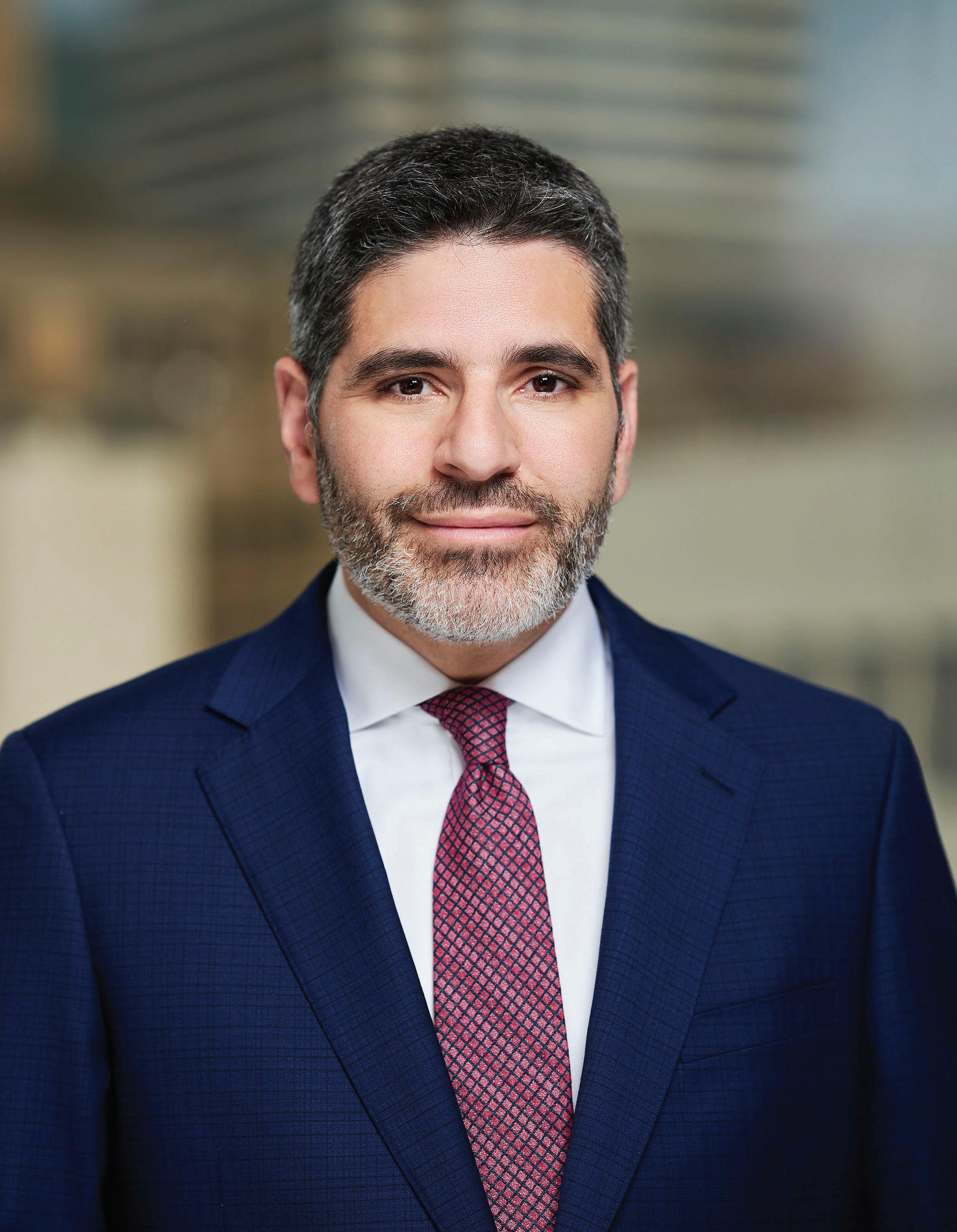
BY MEGHAN HEMINGWAY
We might even know that once the floodgates are open, there is no official “off” switch when it comes to companies collecting our data. But Jeremy Lieberman believes that if we knew more about how our data was being repurposed, leveraged, and wielded in the wild west of our modern tech era, we might be a little angrier about it. We might even demand compensation.
“They’re selling access to us. They’re selling us, and we don’t have a whole lot of control on how that’s being done,” says Lieberman. “And if we don’t understand it, have we really even consented to it?”
As Managing Partner of Pomerantz – a firm famous for its dedication to representing defrauded investors and championing shareholder and consumer rights – Lieberman is a natural leader. He’s been with the firm for over 20 years and his vast portfolio boasts corrective corporate governance and front-page securities class action suits, securing billions of dollars in results for his clients.
Lieberman is trailblazing many headline-making cases featuring the ubiquitous tech giants we’re all familiar with. Lieberman’s current case against Amazon alleges that the company deceived investors through the anti-competitive misuse of confidential third-party seller data. According to Lieberman, the data collected from competitors was used to directly benefit Amazon’s privatelabel business. These claims raise poignant questions as to the legitimacy of a business model that seems obviously in breach of antitrust laws. Further discovery also revealed disturbing insight about the nature of the company’s data collection methods.
“Information came out in our case against Amazon, that Alexa was actually listening to our conversations even when it was off, she was still collecting data,” says Lieberman. While some of us may be familiar with the idea that we are the product in any free service, Lieberman is
urging less complacency, and has concrete ideas about how to reset the balance. “They’re making a whole lot of money for giving it to us “for free,” but at what cost – and why aren’t we participating in the profits?”
With a new administration making waves on the world stage, Lieberman is interested to see how – and if – Big Tech will be held to task. Lieberman’s current cases against Alphabet, Nikola Electric Trucks and Bed Bath & Beyond, among others, are highlighting big issues of privacy, bubble valuation, consolidation and third-party data sharing.
“The FTC has been active and brought a lot of these cases to light, as have the state attorney generals. On the one hand, I think there’s a lot of appeal to attacking Big Tech,” says Lieberman. “On the other hand, all these tech companies just gave millions to the inauguration committee.”
Lawdragon: Let’s jump right in. What can you tell us about the Google case?
Jeremy Lieberman: Google has become such a household name. Colloquially if we’re searching for something online, we “Google” it. Our case deals with how Google basically served in an exchange both as a purchaser of ads and the seller of ads. They are kind of on all three sides of the transaction, as it were. Our case alleges that Google used their dominance in the field of internet searches, and its related advertising business, to disadvantage web publishers and advertisers who use competing products. The case details the company’s failure to disclose those issues. There were even statements made to Congress saying they were not engaged in such practices and that it didn’t matter which exchange you used, if it was Google or another exchange, but it turned out that Google was clearly favoring its own exchange where it could make more money and charge its own prices.
LD: And how about the case against Amazon?
JL: Similarly, our case against Amazon is regarding the access they had to their sellers’ manufacturing and sales point data that they used in order to compete against the sellers. They also made statements to Congress and to the DOJ saying that they weren’t engaged with such practices, but it turned out they were and are now facing heavy scrutiny as a result.
IT’S SO UBIQUITOUS, WE’RE ALL USING THIS STUFF, WE CAN’T
IN OUR MODERN SOCIETY. ON THE OTHER HAND, THEY’RE MAKING A WHOLE LOT OF MONEY FOR GIVING IT TO US “FOR FREE,” BUT AT WHAT COSTS AND WHY AREN’T WE PARTICIPATING IN THE PROFITS?
LD: What attracts you to these types of cases?
JL: You have to look at these tech companies and ask why they are making so much money. It’s not a crime to make a lot of money, but what’s the business model? They’re not manufacturing anything and most of the services are free. The only way they’re making this money is from our information. They’re essentially selling our personal information – so how much are they doing that and how much are they profiting from it and at whose expense? Are we really aware as to how our information is being used, what’s being tracked, what’s not being tracked?
They’re selling access to us. They’re selling us, and we don’t have a whole lot of control on how that’s being done. So that’s really the attraction for me. These tech companies are darlings of the U.S. economy, but you have to understand that the source of their money is really advertising revenues that are based upon our information, our habits, what we say and what we write. I could be talking on the phone to someone about buying furniture and boom, I magically see an advertisement for furniture on whatever website I’m next on. I don’t think that’s a coincidence. The issue there is really that we don’t fully know how we’re being manipulated and used. So if we don’t understand it, have we really even consented to it? I think if anyone really, fully understood how their information can be used, they probably would not consent to it.
In our case against Facebook, they used to get access to Apple’s user IDs for their consumers on the Apple app. At some point, due to a lot of scrutiny, Apple ceased giving Facebook that access. The 14 version of the iPhone had a new feature that made it so consumers needed to
consent in order for Facebook to access that data. Eighty-five percent of customers said, no, they didn’t want to share that data with Facebook. That’s very telling. Most people don’t want this. There’s a whole lot of money being made off of our backs without our consent. Probably if we really understood it, we wouldn’t consent. That business model is really the problem with Big Tech and it’s something that has to be explored. Should we share those profits? It is our customer ID and they’re making revenues on it, so should we get a piece of that? When you raise that question, a whole host of other questions arise.
Information came out in our case against Amazon, that Alexa was actually listening to our conversations even when it was off, she was still collecting data and information. It’s so ubiquitous, we’re all using this stuff, we can’t function without these technologies in our modern society. On the other hand, they’re making a whole lot of money for giving it to us “for free,” but at what costs and why aren’t we participating in the profits?
The power is huge. The consolidation of the industry alone – certain people own so much of the industry. Elon Musk starts with Tesla, then he buys Twitter which becomes X. Now he’s trying to buy Open AI. I’m not trying to weave any conspiracy theories, but that’s certainly a situation where there’s a whole lot of concentrated power and money – and the money’s being made off of the consumer’s back. So there’s definitely concerns and that has to be properly fought. If they can defend properly what their actions are, then sure, go ahead, that’s fine. The thing is if you properly challenge it, you might really hurt the business model of some of these companies. They might have to offer you
THE SEC IS NOT REALLY REGULATING IN THE SENSE OF THE MARKETPLACE. THE RESULT IS A LOT OF COMPANIES THAT HAVE JUST GONE PUBLIC, LIKE X, HAVE NO REAL VALUE OTHER THAN A LOT OF PEOPLE THAT ARE GOOD AT MARKETING AND GOOD AT STOCK PROMOTING.
money in exchange for your data. Shouldn’t Google tell us how much money they made off of us?
LD: That’s brilliant. How would you rate the federal government’s enforcement of Big Tech?
JL: We will really have to see, right? This is a monumental shift in administration. I think tech has been getting a lot of scrutiny – you can’t say that no one’s on the watch. The FTC has been active, the state attorney generals have been active, and whatever the administration ends up doing, I’m sure state AGs will continue to be active, and we will continue to be actively putting some scrutiny on these things and shedding some sunlight on a lot of these activities. On the one hand, I think there’s a lot of appeal to attacking Big Tech. On the other hand, all the se tech companies just gave $1M to the inauguration committee – they wanted to make sure there was a good party for the inauguration. I think the idea was maybe pay $1M and you’ll evade some scrutiny.
Sometimes I feel like the SEC has been asleep. They focus on certain things and they haven’t felt it’s their mission to really weed out fraudulent companies. Their view seems a little more limited and they’re mandated, which creates a need for the type of work we do. But I feel to some degree that the SEC is failing the American investor and the American public. The SEC looks at it as a disclosure mandate, they’re not looking to see whether or not a company is actually viable. They’re not really regulating in the sense of the marketplace. The result is a lot of companies that have just gone public, like X, have no real value other than a lot of people that are good at marketing and good at stock promoting.
If you look at all the Special Purpose Acquisition
Companies (SPAC) IPOs, the average performance of a SPAC is about negative 80 percent. Those are billions of dollars that have been lost in investments. Who’s taking responsibility for that? The SEC should have some type of responsibility to the investors. It’s just not taking a real critical look at the companies and asking the question, “Are we protecting the American public by allowing this security to be traded publicly?” I think if they asked that question, a lot of these stocks would not be put to market.
LD: Do you see that changing?
JL: I think this SEC is definitely going to be more permissive. I think we’re all going to see a lot more crypto and more SPAC. I think it’s bad for the market, but it’s good for big business. I think the mandate is to let more companies go forward to allow crypto to do its thing. Crypto was a very big player in the elections, and I think they’re going to get their investment back. I think you’re going to find that there’s a much more permissive ecosystem for a lot of these companies. And who knows when those chickens actually come home to roost.
LD: Catch us up on the Bed Bath & Beyond case?
JL: It’s been a very interesting case. We were able to successfully get through a motion to dismiss based upon the smiley moon emoji, but the class certification was denied. It was based upon the short amount of trading time in between the losses and misstatements, and Ryan Cohen building up a big position. Right now we’re now asking them to reconsider the denial of class classification, so we’ll have to see where the case progresses from there.
MAYBE THERE SHOULD BE SOME TYPE OF RULE THAT UNLESS THE COMPANY HAS A REAL BUSINESS MODEL OR REAL PROSPECTS AND THERE’S BEEN SOME EXAMINATION
OF THAT, THEN THEY HAVE TO REMAIN PRIVATE FOR A LONG PERIOD OF TIME.
LD: How about the Nikola electric truck case?
JL: Nikola – the electric truck that went down a mountain in neutral and took the entire company with it – is still being litigated. The company founder and former CEO Trevor Milton has been convicted of securities fraud by the DOJ, by a jury in the Southern District of New York. That case is proceeding in discovery and we’re really seeing that pandemic rush in a nutshell – a bubble company valued at $13B drops down to having absolutely zero value, basically overnight. Everyone rushed in to invest and GM didn’t want to lose a foothold and presumably didn’t do due diligence in making sure that there was actually something real there as far as the technology – so it was never a viable business. Unfortunately in those cases, when they go bankrupt the fraud case is too good, and the ability to collect therefore becomes a problem. If you don’t have a deep pocket to go with you, you’re going to have to collect the judgment potentially against the executives – and that becomes a very long, drawn-out process. The question is, why didn’t the SEC scrutinize that before they allowed the company to go public and now trade in? Shouldn’t they have looked to see if there was a real business model there? Maybe there should be some type of rule that unless the company has a real business model or real prospects and there’s been some examination of that, then they have to remain private for a long period of time. A lot of people would want to assassinate me for making that suggestion, but on the Hong Kong exchange, they actually interview the companies. They ask for more information. It’s more of a rigorous process in making sure there’s a real company there.
LD: Are you receiving pushback on the cases you’re trying to bring?
JL: I think it’s too early to say – it’s a real wild west. Usually when you have a wild west situation, you can get lawsuits and cases brought, but the space is just too underdeveloped. People still don’t really understand how our data’s being used, and AI is really in its infancy too.
Sometimes courts will claim we’re just piggybacking on antitrust complaints, or defendants might convince the court that it doesn’t really belong in a securities fraud class action, though we clearly think it does – like with the Alphabet issues. As far as other tech, it really will depend, everything’s so judge dependent, in a way. Certain judges themselves are concerned about how technology is being abused and so they’re sympathetic. Other judges might feel differently. Another issue is if the government gets involved, now there’s the question of, is it politically motivated? So judges might think that certain AGs have their own agenda. We’ve seen some cases where various AGs have brought allegations and the company says, “You can’t trust what he said.”
LD: Did you ever worry about a judge’s political leanings when you started practicing law?
JL: It’s funny. When I first started, I didn’t understand why everyone would ask me who’s the judge of a certain case. I’d say, it doesn’t matter, it’s all about the facts and the judge will apply the law. I didn’t understand it. As I’ve matured, I realized how important that is. People might think that certain judges from certain parties are better and more favorable than other judges from other parties. I find that the exceptions, a lot of times, outweigh the rule –but it’s a concern generally as even our courts these days are becoming more partisan.
BY EMILY JACKOWAY
didn’t begin in a courtroom or a law school lecture hall. It began on a quiet stretch of road, shattered by the sound of twisting metal and broken glass. As a child, he watched his parents struggle in the aftermath of a devastating car crash – an event that seared into him the brutal reality of how one careless act could upend a family’s life. That moment didn’t just leave a mark. It sparked a purpose: to hold the reckless accountable, and to stand for those forced to fight through pain they never asked for.
“I’m going to tell you the story of what happened on my 11th birthday,” he says.
That day, Cosgrove’s father underwent a 22-hour spinal fusion, where surgeons moved his heart and lungs to mend his spine. Four months earlier, he and Cosgrove’s mother were driving into Chicago for work when a truck jackknifed their car. Cosgrove’s father flew out the front window, breaking his back in three spots and the ribs on one side of his body, and cutting off his ear. Cosgrove’s mother suffered a head injury and didn’t recognize Cosgrove for a considerable amount of time. To this day, Cosgrove says his father is still dealing with the long-term effects of having a significant debilitating injury, and his mother still navigates memory difficulties. It was a tragedy that would impact the rest of Cosgrove’s life – in more ways than one.
After the crash, Cosgrove’s parents retained a lawyer, sued the trucking company – and won. “One of my earliest memories was being in the federal court building for my mom and dad’s jury trial and thinking, ‘Boy, I’d really love to help people in the same situation,’” Cosgrove remembers. So, he did.
From then on, Cosgrove’s career path was set: He achieved his childhood goal of becoming a plaintiffs’ personal injury lawyer right out of law school, immediately representing people who had been through the same kinds of tragedies his family had. Not only that, but he spent the first 15 years of his career working with the very lawyer who represented his father – who Cosgrove saw in trial
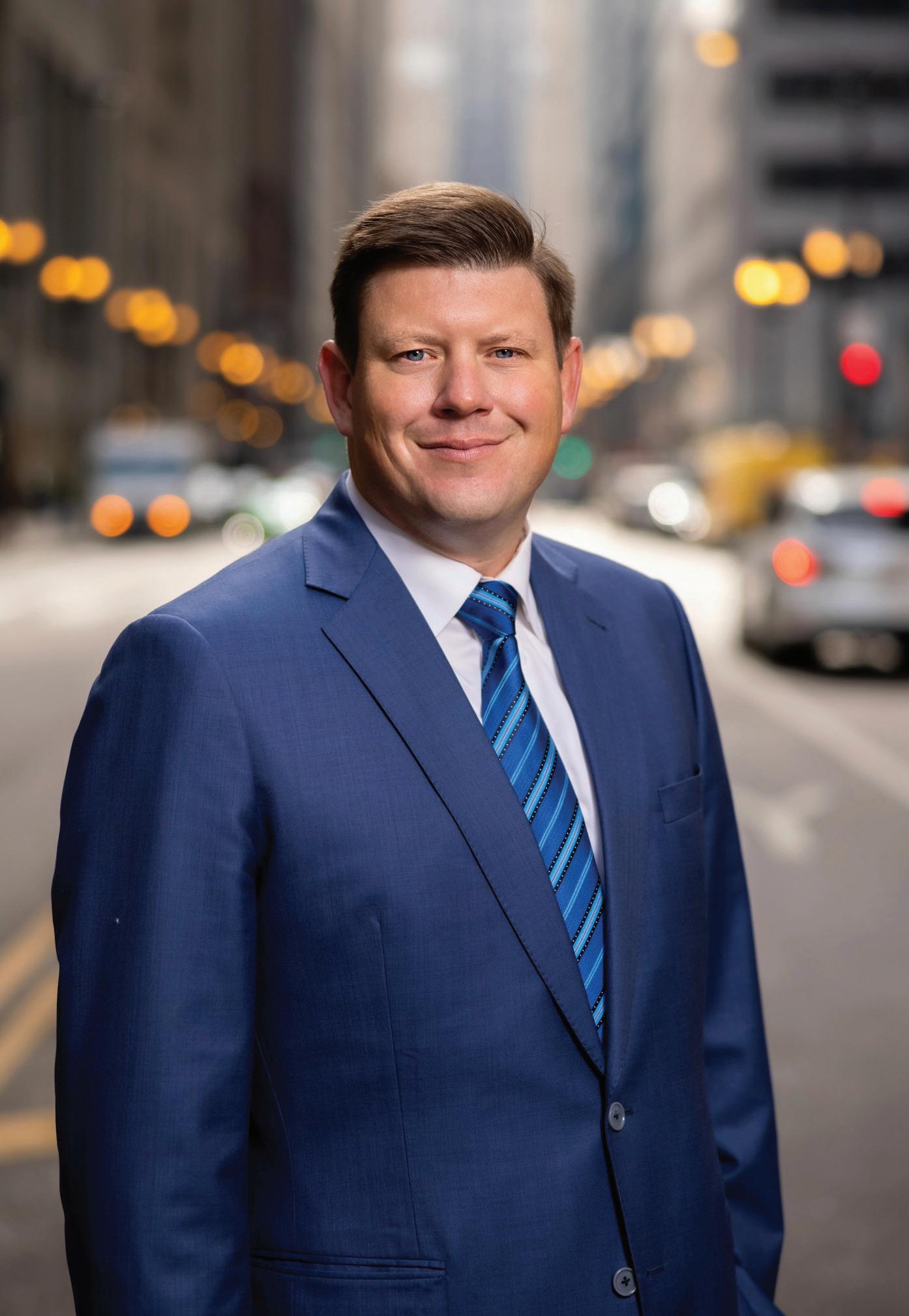
when he was just 11 years old.
That passion proved fruitful. Just four days after being sworn in, Cosgrove began his first jury trial. Within fi ve months of his legal career, he secured a $3M verdict – becoming the youngest lawyer in the history of Illinois to receive a verdict in excess of $1M. Remarkably, the case was on behalf of a family who lost their father in a trucking accident. Those record verdicts have continued, now with his team at renowned plaintiffs’ personal injury boutique Clifford Law Offices, where Cosgrove has been a partner for just over a decade. In the last two years alone, he and his team have secured over $300M in verdicts and settlements for their clients.
In 2019, Cosgrove and his colleagues achieved the highest medical malpractice verdict in the history of Illinois: a landmark $101M verdict on behalf of the Sallis family, whose baby was brain damaged
I’VE DEFINITELY WALKED MILES AND MILES IN THE SHOES OF MY CLIENTS, DEALING WITH THE SAME ISSUES THAT THEY’RE DEALING WITH MY WHOLE ENTIRE LIFE – PRETTY MUCH AS EARLY AS I CAN REMEMBER, AND STILL DEALING WITH IT NOW.
at birth. The baby, now 10 years old, cannot speak or care for himself. The funds Cosgrove and team achieved in the case will provide a lifetime of care –and at nearly double the recovery of the previous highest verdict in the state.
Cosgrove has spearheaded plenty of firsts: In 2014, he took the first case involving Yasmin birth control to trial. His client suffered a debilitating stroke 13 days after being prescribed Yasmin, and Cosgrove made a novel argument – that the physician should not have prescribed an estrogen-based birth control to a patient with an increased risk of a stroke, where a progesterone-only birth control pill would have carried a lower risk. The result: a $14M verdict for Cosgrove’s client.
In another signifi cant matter, in February of last year, he obtained a $39M verdict for another stroke victim – a record in the state. In an original tactic, the case was levied against a managed care group. The suit alleged that the client’s abnormally high blood pressure was not treated when brought to a physician within the defendant Advocate Physician Partners’ network, resulting in a stroke that has left the patient, Antonio DeAngelo, still suffering from hemiparesis and the effects of brain damage from the stroke.
In another recent milestone, Cosgrove secured a $56M jury verdict – the highest in Illinois history against a plastic surgeon – on behalf of the family of Idalia Corcoles, a 39-year-old mother of four who died after a botched cosmetic procedure. The surgeon ignored clear signs of internal bleeding following the operation and failed to intervene, ultimately leading to Corcoles’ death. “The negligence was so egregious, the jury knew they had to do the right thing,” Cosgrove said following the verdict.
In recognition of a career marked by record verdicts and tireless advocacy, Cosgrove was inducted into the Inner Circle of Advocates, an invitation-only
group limited to the top 100 plaintiff trial lawyers in the United States. Known as one of the most prestigious honors in the fi eld, the Inner Circle recognizes attorneys with exceptional jury trial experience, courtroom skills, and a commitment to advancing the craft of trial law. Cosgrove’s inclusion places him among a select group of litigators respected not only for their results, but for their impact on the profession.
Cosgrove is also recognized in the Lawdragon 500 Leading Plaintiff Consumer Lawyers list, a distinction that underscores his national reputation for standing up to powerful institutions and securing justice for those who need it most.
Despite all the headline-grabbing wins, every case remains deeply personal for Cosgrove. “I’ve definitely walked miles and miles in the shoes of my clients, dealing with the same issues that they’re dealing with my whole entire life – pretty much as early as I can remember, and still dealing with it now,” he says.
Lawdragon: After your own experience watching a trial as a child, you immediately had huge trial successes at the start of your career. Did you have a mentor encouraging you?
Bradley Cosgrove: I’ve been lucky to have two great mentors in my life. One is John Ambrose, who was my dad’s lawyer. I started working for him in high school, and he was one of the only two bosses I’ve ever had. I was fortunate enough to be able to work with John through law school and as a lawyer and practiced with him for a number of years. His philosophy was that in order to be a good lawyer, you have to be a person that’s known to try cases. From the very start, he thought it was important that I try cases, and I haven’t stopped since.
My second boss and second mentor is Bob Clifford, the senior partner here at Clifford Law Offices.
LD: And what have you learned from him?
I WOULD SAY THAT THE MAJORITY OF MY CASES ARE MEDICAL MALPRACTICE, BUT I ALSO WORK ON TRUCKING CASES, AVIATION CASES, CONSTRUCTION ACCIDENTS OR WORKPLACE INCIDENTS. I’VE MADE A NAME FOR BEING ONE OF THE GOTO LAWYERS FOR DROWNING CASES IN THE STATE.
BC: Bob is probably the best mentor that any trial lawyer could ask for. He provides endless resources and support, giving you great insights into the ins and outs of the trial world. He has a perfect staff that is equipped to give all of our clients the best representation imaginable. A lot of times we’re up against some of the biggest companies in the world that have the greatest amount of resources that money can buy. Plaintiffs’ offices are not always wellfunded to the tune of being able to go toe-to-toe with Fortune 500 companies. But, being a partner here at Clifford Law Offices, I’m extremely lucky that we’ll really spare no expense and do everything possible to make sure that our clients are put on equal footing with the corporate giants of America and the world.
LD: Tell me about obtaining that $3M victory so early on in your career. What was that like for you?
BC: It was something that I worked incredibly hard on, and I had a terrific trial partner. I literally think I worked 20 hours a day for weeks and weeks leading up to the trial because it was just so important to me to make sure that the clients had the representation that they needed. I knew every single page of the entire file; I knew every single fact in the case; I knew every single piece of exhibit, every piece of evidence. I was the most prepared person in the courtroom, which was the advice that was given to me: If you’re going to try cases, don’t ever let anybody outwork you. I took that to heart.
Shortly after that, I tried my first medical malpractice case and got a $1M verdict. That was the same philosophy: I just worked and worked and worked, and knew every single fact in the case as well or better than anybody else in the courtroom.
LD: Looking at your current caseload, what is the balance of your practice right now?
BC: I would say that the majority of my cases are medical malpractice, but I also work on trucking cases, aviation cases, construction accidents or workplace incidents. I’ve made a name for being one of the go-to lawyers for drowning cases in the state.
LD: How did that happen?
BC: I was a swimmer in college, so I had lots of knowledge of pools and pool safety. Early in my career I had been referred a drowning case that I did very well in. Then, in about 2018, we tried a drowning case for a little boy who drowned at summer camp at a public pool under the supervision of lifeguards and camp counselors. We got a $21.5M verdict, which was a record verdict, and was affirmed on appeal by the Illinois Appellate Court. Once we received that record verdict, we had lots of other drowning matters referred to us, and I’ve been the one to handle them.
LD: Speaking of noteworthy cases in your career, tell me about the historic $101M verdict in the Sallis case, with the baby who suffered a traumatic brain injury at birth.
BC: Sarah King, Keith Hebeisen, Chuck Haskins and I were all part of the trial team on that case. Our motto was that we wanted to get justice for Gerald [Sallis]. It was a very hard-fought case about Gerald, who was the victim of medical negligence by a triage nurse and an ultrasound tech, and the negligence led to a catastrophic brain injury. The hospital defended the case from the very start, claiming that they had nothing to do with the cause of Gerald’s profound, disabling brain injuries. We were able to prove through witnesses that a failure to deliver Gerald in a timely manner led to his catastrophic brain injury
I TRY TO MAKE SURE THAT THE CLIENTS UNDERSTAND THE PROCESS – WHICH CAN BE PRETTY DAUNTING – AND MAKE SURE THE CLIENTS HAVE ASSURANCES THAT WE’RE DOING EVERYTHING POSSIBLE TO GET THE BEST POSSIBLE OUTCOME FOR THEM.
and requirements for attendant care.
LD: What do you find most fulfilling about working on cases which have such a deep personal impact on the clients?
BC: I have a personal investment in all my clients. I still talk to most of my clients from over the years on a regular basis. For example, we had a case that was the largest stroke verdict for an individual plaintiff.
LD: Right – the DeAngelo case.
BC: Originally, when I met with the family, I thought that there was going to be a limitation on insurance and that there weren’t going to be funds available to cover the incident. I just felt terrible for them. Then, we were able to develop a theory of liability in the case that no one else had tried to a jury verdict before: We sued a managed care organization called Advocate Health Partners, which was doing business as Advocate Physician Partners. We claimed that, through their managed care organization, they controlled or had the right to control a doctor in the case. By doing that, we held a managed care organization responsible for their claimed alleged independent contractors. We were able to prove to the jury that the situation was one of complete control. By proving that there was control, we were able to fi nd deeper pockets for potential liability than just the doctor’s liability indicates.
LD: That’s fascinating. How would you describe your style, both in court and with your clients?
BC: I try to be matter-of-fact with my clients and treat them like humans. I try to best serve their needs and make sure that I communicate with them what’s happening with the case and assure them that everything we’re doing is for their best interests.
I try to make sure that the clients understand the process – which can be pretty daunting – and make sure the clients have assurances that we’re doing everything possible to get the best possible outcome for them.
LD: Tell me about working with the team in your office.
BC: Probably the most gratifying thing about being a partner at the Clifford Law Offices is the access that we have to some of the greatest legal minds in the country in the area of plaintiffs’ personal injury. We honestly have someone who has handled every single type of case in plaintiffs’ personal injury available, and in the highest fashion imaginable. And we can knock on their door and have brainstorming sessions with them to make sure our clients are getting the best representation. We have people here who have been there, done it, and are always available to collaborate.
LD: What do you do for fun outside the office?
BC: I really like spending time with my kids and my family. I have a son and a daughter, and I’ve got five brothers and sisters that I see regularly. I like to golf in the summer; I like to ski in the winter.
LD: Finally, your alma mater, the University of Illinois Chicago School of Law, named their 1L trial competition after you.
BC: Yes, the next one coming up will be their third annual. I’ve been a coach for UIC’s Law School for their trial programs, and it’s a great honor to have a trial competition named after me. I feel like I’ve spent a lifetime in the courtroom already.
LD: And so much more time left to spend there.
BC: Amen. I hope so.
BY MEGHAN HEMINGWAY
He represents clients who’ve been catastrophically injured due to the wrongful conduct of others. He meets clients on their darkest days – people who feel stuck at the nexus of “before” and “after” a life-altering event. These folks are in need of guidance as they navigate the system in the face of great loss, and Hill has a deep drive to help. It’s his job, amidst the chaos and emotions that swirl, to get the facts clear, dig into the specifics and relentlessly uncover every facet of the case so he may deliver justice in the wake of unthinkable tragedy.
A former prosecutor, Hill not only excels in, but loves the process of working the case – investigating every nook and cranny and learning it inside and out. Hill prides himself on an unmatched work ethic and stamina that enables him to continue with the same tenacity on the final day of trial as he had on the very first day. He believes there’s no such thing as being overly prepared because, Hill will tell you, there’s usually gold if you keep digging.
“You need to look under every rock to make sure you explore all avenues,” Hill says. “The details really matter, and it’s the digging that is critically important because cases can be won or lost on details that you may not appreciate at first glance.”
In the courtroom, Hill employs a mantra he first heard in the iconic 1989 cinematic thriller, “Roadhouse.” In the film, Patrick Swayze’s character instructs his staff to “be nice until it’s time to not be nice.” This piece of wisdom has long stuck with Hill and can be used to best describe the savvy litigator’s approach to the courtroom.
“Juries don’t want to see uncivil behavior between lawyers or towards a witness. They expect professionalism,” says Hill. “You can be tough, but you can still be nice, until it’s time to not be nice – the trick is learning when it’s time to not be nice.”
Hill’s been working as a plaintiffs’ lawyer for 20 years. After cutting his teeth in the state attorney’s office, Hill quickly found a home at Searcy Denney, where his practice focuses on medical malpractice, product liability and automobile and trucking negligence.
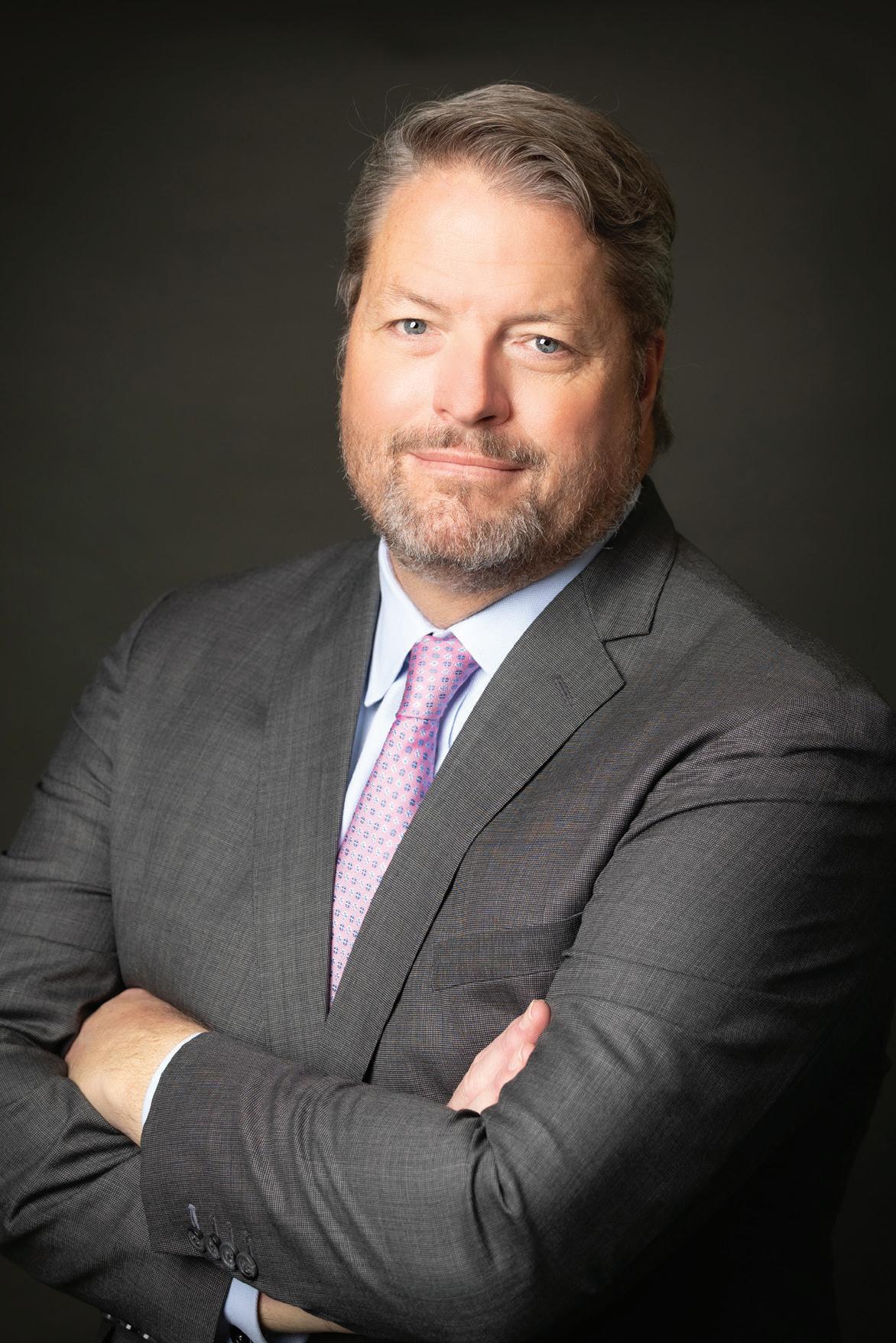
He’s achieved multimillion-dollar wins for his clients –with multiple eight-figure recoveries by way of settlement or verdict.
Though he knows it’s impossible to fully right the horrific wrongs his clients have suffered, Hill is devoted to the details – they’re what help him deliver maximum compensation and as much justice as he possibly can to his deserving clients.
Lawdragon: How did you first become a lawyer?
Jack Hill: My dad was a lawyer in Palm Beach County. He was a general practitioner. He would tell me trial stories about these fantastic trial lawyers and that had an appeal to me as a teenager. He had a great deal of respect for trial lawyers and specifically plaintiffs’ trial lawyers, who happen to be some of the founding members of the Searcy Denney firm. So that seed was planted early on. I happened to go to school with the
sons and daughters of a number of the senior partners in my firm, so I knew who these folks were. But initially, I just liked the idea of going to trial and making your arguments and presenting your case on behalf of your client. I liked the idea of that sort of competition really –that’s where it all started.
LD: Tell us about your time serving as a prosecutor.
JH: I had this plan to do plaintiffs’ trial work, specifically at this firm, probably even before I went to college. So all of the decisions that I made, whether consciously or otherwise, were geared towards getting to do plaintiffs’ trial work at Searcy Denney. Coming out of law school, I had opportunities to join big firms, but I wanted to do trial work to gain experience in the courtroom. And there’s no better place to do that as a young lawyer than either the State Attorney’s office or the public defender’s office. You’re in court literally every day, trying a ton of cases. You learn how to act in court and what it takes to win. Learning the art of trial advocacy by fire for three years as an assistant state attorney was a wonderful experience.
I was also extraordinarily fortunate to be assigned to a particular judge, the Honorable Paul Moyle. Judge Moyle instilled in me early on what’s expected of a lawyer in his courtroom. Learning how to not only prepare, but also to present yourself and your case in a certain way was incredibly impactful for me. Those are lessons that I’ve carried on throughout my career.
LD: Once you moved over into private practice, is there a case that stands out as particularly memorable?
JH: There was a case that was particularly impactful early on. It was incredibly tragic. It dealt with a pickup truck full of landscapers who were rear-ended by another vehicle, causing their truck to catch on fire. Our clients were the family members of one of the folks that burned to death in this crash. He left behind a minor son who was back in Guatemala, who was a survivor under Florida’s Wrongful Death Act. He also had what we would refer to as a “common law” wife – they were not officially married by the state, but they were in a committed relationship and living as husband and wife. Unfortunately, the law in Florida doesn’t recognize common law marriages entered into after 1968, but Florida will recognize common law marriages that are established pursuant to another jurisdiction, whether that other jurisdiction is another state or a foreign country.
So the more we dug, we found out that he and his common law partner were in what’s called a “unión de hecho” under the laws of Guatemala. We hired
Guatemalan lawyers to help explain to the judge how Guatemalan law worked and, ultimately, we were successful in having her recognized as a surviving spouse under Florida’s Wrongful Death Act. So not only was the son able to be compensated for his loss, but his common law wife was able to be compensated for her loss as well.
That case was meaningful, not only due to the horrific loss that these folks suffered in a brutal way, but it taught me early on about the need to dig further. You can’t just say, well, they weren’t married and therefore she’s not a survivor. You must look deeper. You need to look under every rock to make sure you explore all avenues. The details really matter, and it’s the digging that is critically important because cases can be won or lost on details you may not appreciate at first glance.
LD: What drives you to keep doing this work?
JH: I would like to think that every case we handle, particularly those that we’re successful on, has an impact not just for the clients we represent, but for folks coming down the road. I firmly believe that in every case, there’s an opportunity for the wrongdoer to learn when they see what can happen if the rules aren’t followed. With every tragedy, there’s the opportunity for the defendant corporation or the drug manufacturer or the building owner, the trucking company or the hospital to learn from their mistakes in hopes that they don’t repeat them. That is a big part of what we do.
We recently handled a medical malpractice case in the state of Georgia where a veteran was sick, went to the hospital, was discharged, and came back very sick. Ultimately, he ended up losing both of his arms and both of his legs – he was a quadruple amputee, which is extraordinarily rare. But the fact that he was a very self-sufficient, very independent man who enjoyed doing things for others – for him to lose his arms and legs is an unspeakable, unimaginable loss. This gentleman had every reason in the world to have a dour outlook on life. He had every opportunity and every justification to be in a bad mood, to see the worst in everything – but he didn’t. Every time we’d ask him how he was, he would say, “I’m alive, I’m doing great.” The generosity of his spirit – despite what he had been through and would continue to go through for the rest of his life – was really inspiring. If I’m ever having a rough day, I think about that and draw inspiration from him about dealing with true adversity. When I’m talking to folks, the circumstances that bring them to me are oftentimes extraordinarily tragic. You want so badly to do everything you can to fight for
them, and to be their champion. You’ll never be able to right the wrong, but to be able to get them the justice that our civil justice system allows – that’s the fuel that keeps all of us going quite frankly.
LD: What is your approach to client communication?
The answer is a product of not only how my team is set up, but who I am. I learned this from Chris Searcy: Listen to your client. They are trying to tell you how to win their case. I also explain to them that I’m always available. They’re going to be dealing with a lot, and if I’m able to relieve some of their anxiety by running something by me, I want them to do that. I may not be able to fix it, but I may be able to – and the last thing I want is a client sitting around stewing about something when a five-minute phone call with me may be able to alleviate that pressure or alleviate that anxiety.
In the 20 years that I’ve been doing this, I have found clients to be very respectful of my time. But if there’s an issue, if there’s something that I can help the client with – I want to hear about it. I take a very hands-on approach to client relationships.
LD: What do you think makes a great trial lawyer?
JH: Everybody has different personality traits they draw upon as trial lawyers, but I think there are some unifying characteristics. I think the most important thing for being a good trial lawyer is having an almost obsessive desire and ability to work a case up. The cases that are presented in trial, by and large, are won or lost before you get to the courtroom. A good trial lawyer needs to be committed to digging in and doing the work, to getting all of the facts that you need to win your case and to digging deeper and finding out the things that you may not have anticipated.
They also must have the ability to deal with a highpressure job. You’ve got folks who are coming to see you as a result of probably the worst day in their lives and they’ve entrusted their case to you. You need to be able to deal with the highs and lows. It’s like a heavyweight fight – there’ll be rounds that’ll go to one fighter versus the other, but you need to be able to remain standing and victorious in the end.
LD: How would you describe your own style in court?
JH: This is going to sound really cheesy, but I try to model my style on Patrick Swayze in “Roadhouse.” He instructed his staff to “be nice until it’s time to not be nice.” That’s really how I try to conduct myself at all things, but particularly in trial. Juries don’t want to see uncivil behavior between lawyers or towards a witness. They expect professionalism. Even though
we may disagree strongly about the case, it doesn’t mean we need to be discourteous to one another. I try really hard to treat all of my opposing counsel with respect and consideration. If there’s a witness that’s called, you can be tough, but you can still be nice, until it’s time to not be nice – the trick is learning when it’s time to not be nice.
It’s really important for the jury to understand that what you’re arguing is genuine. The jury needs to understand I’m not just saying these things because I’m the plaintiff’s lawyer – I’m saying these things because I believe them. From day one, minute one, you are earning the trust of the jury. If they don’t believe you, they’re not going to decide for you and they’re not going to decide in favor of your client. It’s fundamentally important that the jury understands and believes you to be credible, that they’re able to trust you, and that trust is earned.
LD: Do you do any pro bono or community work?
JH: I’ve been on the board of the Legal Aid Society of Palm Beach County for about eight years. It’s an organization designed and built around providing legal services to folks in Palm Beach County who aren’t able to afford lawyers themselves. They come to Legal Aid and the variety of services that are available at Legal Aid are inspiring – from adoption cases to landlord-tenant issues, to employment discrimination cases. The ability to serve on the board and help guide that process is extraordinarily meaningful to me. It’s an awesome organization and we’re able to help the citizens of Palm Beach County by giving our time to provide lawyers to folks that otherwise wouldn’t be able to get legal representation because of their financial circumstances.
LD: What do you do for fun outside of the office?
JH: I grew up in Palm Beach County and going out on the boat was big in my family. We would scuba dive and spearfish, and now that’s something I enjoy with my wife and two children. We take the boat over to the Bahamas as often as we can. When Hurricane Dorian hit, it ravaged a portion of the Bahamas. As soon as the weather allowed, a bunch of us loaded our boats with generators, food, gas, clothing, diapers and anything we could think of that folks would need. Searcy Denney provided the funding for my boat. Being able to give back to these folks that I had been going to and visiting since I was a kid was really impactful for me. We were able to do that before any of the governmental relief efforts were able to effectively reach them. They were so appreciative and that was really special.
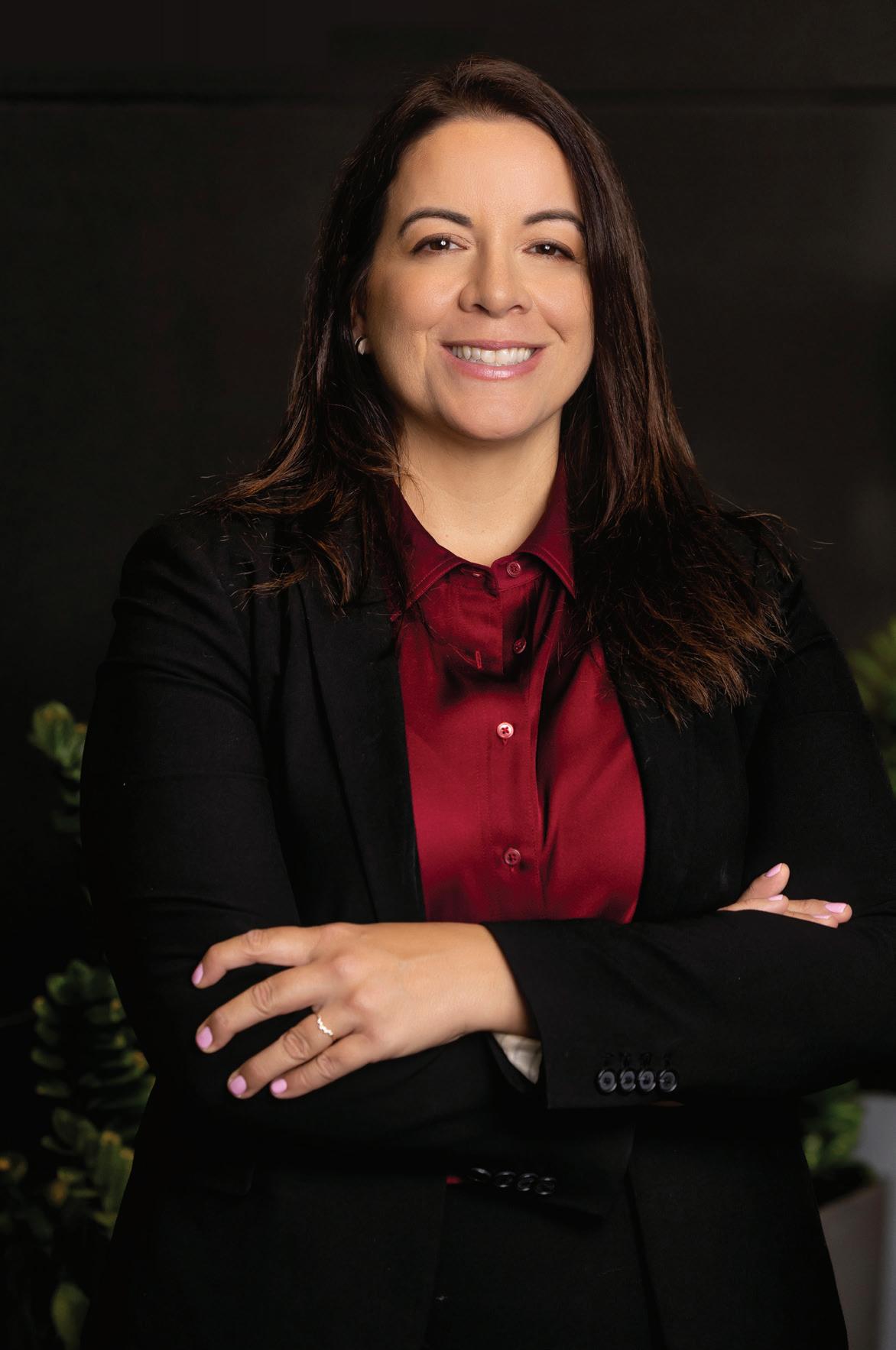
BY EMILY JACKOWAY
may have shifted when she moved from federal to private practice last year, but her core purpose has never wavered: to serve those who need her help the most.
The daughter of two generations of nurses, Ferrer learned early that helping others was an important part of life. She became a lawyer to dedicate her life to service in a different way. She realized that goal from day one: Her legal career started by representing
immigrant victims of domestic violence in family law litigation for a nonprofit in D.C. After a few years as a Big Law litigator at then-named Allen & Overy (now A&O Sherman) in New York, she came back home to Florida for a federal district court clerkship and then joined the Federal Public Defender’s Office in Miami. Ferrer spent the next 14 years serving first as an Assistant Federal Public Defender (AFPD) and then as a Supervising AFPD in the Southern District of Florida, where she tried more than 30 federal jury trials to verdict – cases involving wire and financial fraud, cargo theft, money laundering, immigration claims and more. While an AFPD, she also argued in the 11th Circuit Court of Appeals and had three petitions for writ of certiorari granted to the Supreme Court – each of which resolved favorably for her clients.
Then, in 2023, Ferrer decided to transition to private practice – and over to the plaintiffs’ side. Her former colleague at the FPD, Alex Arteaga-Gomez, had moved to prominent plaintiffs’ personal injury and medical malpractice firm Grossman Roth Yaffa Cohen. She worked there before joining AXS Law earlier this year. Ferrer continues to embrace her ethos of service outside of the office, as well. She has been on the Miami-Dade County Human Rights Commission, a county board that handles employment and housing discrimination claims, since 2016. She is also on the board of a local nonprofit, Engage Miami, that focuses on civic engagement. And she is an active mentor: Ferrer volunteers with the Coral Gables High School mock trial team and teaches trial skills as an adjunct professor at the University of Miami in the litigation skills program, in NITA programs all over the county, and at Emory School of Law.
Because for Ferrer, service isn’t a buzzword. It’s a calling.
Lawdragon: Why were you first drawn to a legal career?
Aimee Ferrer: My sixth-grade yearbook says I want to be a lawyer. I think my mom instilled it in me very young that it was a career I’d be good at. The main thing that drew me as I got older was it seemed like an effective way to help people. I grew up in a real culture of service. My mom’s a nurse. All my grandparents are nurses. It was the idea of serving and giving back, but in a way that dealt with less blood. I never wanted to be a doctor, but I was always leaning towards the law.
LD: Did you know what kind of law you wanted to practice?
AF: I never thought I was going to be a trial lawyer. I went in to law school thinking I was going to do something more collaborative. I did not want to litigate. I did not want my day to involve contentiousness or fighting. I wanted to figure out a way to work in policy or some kind of more collaborative field of law that would help people get along. And then when I first got out of law school, I started in a fellowship at a nonprofit for immigrant victims of domestic violence and family court in D.C. When I started doing that, I realized that I loved litigating and I loved being in the courtroom, and that it was the most fun thing I could ever do. So that re-aimed my whole career trajectory.
LD: How does that work influence what you do now?
AF: A lot of what I do today feels like a continuation of that. I got into this type of work because I like helping individuals, and I feel like our firm is particularly good at helping people who really need help. And then outside work, I also stay very active in the community. I try to keep that ethos of service as part of not just my work life, but my outside of work life.
LD: Coming back to your early career, tell me about what led you to the Federal Public Defender’s Office.
AF: Once I figured out that I wanted to litigate, I was supposed to go to Allen & Overy’s London office doing securities regulation. Then I realized that U.S. lawyers do not litigate in London. So, I called them and said, “Hey, can I start in New York instead? And could I join the litigation department?” And they said, “Absolutely.” So I went there and soaked in a ton of great experience.
It was 2007, 2008. It was right when the mortgage crisis was happening. I dealt mainly with whitecollar criminal defense as well as some SEC internal investigations and DOJ-related internal investigations. I got into the white-collar criminal law sphere very early; I was given great responsibility, and I worked with amazing partners there. Through that work, I realized that if I wanted to litigate, I should probably clerk. I then applied for clerkships here in Miami because this is home, and ended up clerking for Judge Huck, who is a wonderful human being and has been a wonderful mentor. I also do the Coral Gables mock trial coaching with Judge Huck. I have been very lucky in my career in that every opportunity and change I’ve made has been kind of serendipitous in a good way.
Right before I left New York, I went to drinks with friends from A&O, and one of them brought a friend who was a federal public defender in the
district of New Jersey. I did not know that federal public defenders existed. I asked her how she got the job, and she said, “Well, I clerked. At the end of my clerkship, I took out one of the AFPDs who was assigned to my judge’s courtroom, and then I went from there.” So, I was at my clerkship and there was an attorney who was an AFPD in Miami. He was assigned to Judge Huck’s courtroom. I took him out to coffee, and I asked, “How do I get that job?” And he said, “Oh, we’re hiring right now. You should run and apply because it closes in two days.” And I did. I got the AFPD job. It was a dream job at that time in my life and I loved doing the work.
LD: And how does your time at the FPD relate to your private trial practice?
AF: In so many ways. I was lucky enough to get to have a lot of great trial experience. And in many ways the representation of an individual who is in a time of crisis is very similar. It feels like a continuation of the type of work, but without as much trauma and difficulties as in the criminal system. In our cases, there’s obviously been a lot of trauma, but at the time that we are litigating the case, a lot of the trauma has already happened and we’re doing everything to make it better. It’s nice. It feels like a place where you could be really helpful.
LD: What led you to become involved with the Human Rights Commission?
AF: I was looking for more ways to serve. I love local government and politics, and I wanted to be of service, but not necessarily in a political way. We have this local county ordinance that is anti-discrimination on all types of protected classes. It’s broader than federal law and it is also cheaper process-wise than bringing a court case. It’s an easier process because most of the plaintiffs are unrepresented. And, when I was doing criminal work, it was a nice way to keep my foot in the civil world and keep that experience open while also experiencing the quasi-judicial board. You really do experience a little bit of what it feels like to be a judge and getting to bring in my experiences with representing individuals to that in the case where I’m not a party, I am an adjudicator.
It’s a good reminder that sometimes the most important thing is the process being fair. Sometimes you have a pro se person who really just needs to be heard. It may turn out they don’t have a basis in the law, but making sure that the process is fair, and they have an opportunity to be heard, can make their satisfaction with the outcome more likely.
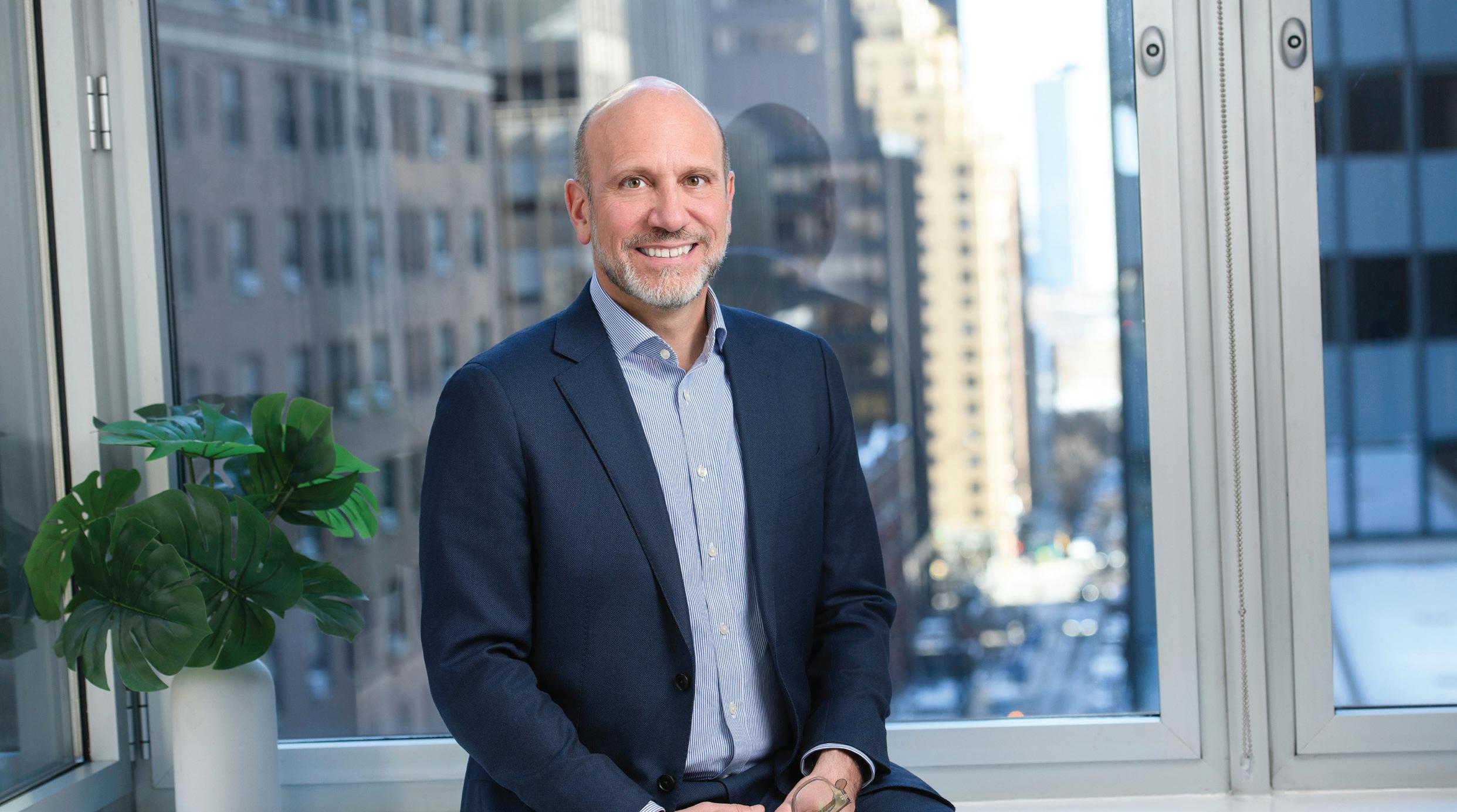
BY MEGHAN HEMINGWAY
for his love of his work in the private sector of antitrust law. Propelled by a sense of responsibility, he gladly shoulders the yolk for those who wouldn’t otherwise see any money for their losses. Asciolla credits his perspective from a long running list of successes, the most recent of which lead to the recovery of $60.5M in damages for his clients in an antitrust “no-poach” matter involving accusations of conspiracy to keep wages down for aerospace workers in Connecticut. Asciolla began his career as an attorney in the Antitrust Division at the Department of Justice before moving into private practice. And while state and federal enforcers remain active prosecuting antitrust actions, Asciolla is equally busy with privately brought matters. Sometimes he works in tandem with regulators, and other times he is part of the
vital private corps of litigators that takes on cases the government might not have the bandwidth for – and gets real results for businesses and consumers.
“Typically, the only way victims are compensated is through private antitrust enforcement,” Asciolla says. “Anything the federal government might recover goes into the U.S. Treasury, and while they use it for good purposes, it doesn’t go to the victims of anticompetitive conduct. It’s critical for private antitrust enforcement to be the third leg of this enforcement regime to regularly get compensation for the actual victims.”
The accomplished antitrust litigator has been in the field for over 30 years, handling complex cases that increase competition in markets vulnerable to monopolies and price-fixing conspiracies that harm consumers. Anticompetitive conduct comes in all shapes and sizes, in every industry, ensuring there’s seldom a dull workday for Asciolla. In over three decades, he has yet to litigate the same case twice.
Asciolla understands his role as a leader in the legal profession and his firm and believes that as a leader, it’s his responsibility to advocate for diversity in
leadership appointments for antitrust cases. He seeks to level the playing field for marginalized groups and believes that an amalgam of diverse perspectives makes for a more comprehensive thought collective and undoubtedly garners better results.
“As a member of the LGBTQIA+ community, it’s vital that leadership represents a diverse slate of individuals who can give various perspectives based on different experiences,” Asciolla explains. “I always try to have a diverse slate when I present to a court –gender diversity, sexual orientation diversity, racial d iversity. It makes for the best team.”
One of Asciolla’s latest cases involves anticompetitive collusion in the world of hockey. Asciolla represents junior league players suing the National Hockey League, Canadian Hockey League and other North American hockey leagues for alleged systemic exploitation that includes claims of abuse and conspiracy to keep wages down. Asciolla, his team and co-counsel recently filed a motion for a preliminary injunction to, among other relief, stop the 2025 player draft, and he and his team are eager to litigate and achieve justice for the teenage victims.
“It feels good to thwart anticompetitive conduct, freeing up markets to vigorous competition,” Asciolla says. “You’re on offense, not defense. You’re doing the affirmative job of driving the litigation. I relish that position.”
Lawdragon: What’s keeping you busy these days?
Greg Asciolla: It’s an exciting time to be an antitrust attorney. Government antitrust enforcers have been extremely active over the last four years, driven by leadership at the Department of Justice and the Federal Trade Commission, especially in the hightech industry, and they’re taking on bigger, riskier and more important cases than they ever have. Based on early indications, we expect that to continue in large part with the new administration. And the State AGs are also incredibly active either bringing their own cases or working with the DOJ and FTC and joining their cases and investigations. It’s certainly been a great time to be part of the antitrust bar.
Of course, while the government’s invaluable to effective antitrust enforcement, and we do bring follow-on cases after they file, a lot of our efforts in the private bar go toward filing proprietary cases –cases where the government isn’t focused. So, truly, what is keeping me busy is a mix of some cases that are government follow-on cases but also a lot of cases that we’ve investigated, developed and filed on our own as a firm.
Algorithmic price fixing, information sharing and other similar matters have really come to the forefront in antitrust. AI will be the next frontier. The government is already focused on potential antitrust violations on the AI front, particularly acquisitions that may reduce competition in this nascent yet quickly burgeoning field. I expect the fallout will reveal attempts to monopolize or other exclusionary conduct as well as possible price-fixing among competitors. Time will tell, and we are watching closely.
LD: How did you get into antitrust law?
GA: I had an early interest in economics – which became a major – during my undergraduate studies, including an introduction to antitrust. When I went to law school, that interest peaked, so, when I finished law school, I went right into the Justice Department in the Antitrust Division. From day one, I started practicing antitrust on behalf of the United States and I never looked back.
I truly enjoy learning about different industries and how markets work. Every case is different – a different product, a different market, a different area to dive deeply into. In antitrust, you get to investigate for as long as needed to potentially uncover anticompetitive conduct. It’s like building a puzzle. You’re talking to potential witnesses, studying the market and publicly available information, working with experts – all to get a potential case off the ground. These are really high-profile cases, and I like that; it certainly makes it a lot more interesting. Highly complex, multifaceted cases are challenging, which is also appealing to me. Cases are national and potentially international and can contain
multiple defendants and products. You have two major government agencies, the Justice Department and the FTC. You have all the State AGs. You have a sophisticated defense bar and plaintiffs’ bar. There’s policy think tanks and in-house counsel. And you have specialized economic and industry experts, as well as a deep bench of academics. You have all these different factors at play.
LD: Are there any formative cases from early on in your career that really stand out?
GA: At the Justice Department, I worked in the Division’s health care task force in the mid ’90s. Not only were we responsible for challenging potential anticompetitive hospital mergers, but this was a time when lower-cost health care was coming to the market, typically in the form of an HMO. We would be looking at conduct in smaller communities where there were efforts by health care providers, doctors and hospitals to band together to block the entry of lower-cost health care. We went into these small towns and enforced the antitrust laws and worked to thwart that conduct that was blocking entry of less expensive health care, which of course is essential for all Americans. Those cases were formative and helped me develop my skill set. I always looked to that effort as something that really shaped how I thought about the importance of antitrust enforcement.
LD: You spent a bit of time on the defense side, at Morgan Lewis. How did that inform your practice?
GA: While I learned a great deal, had tremendous colleagues and mentors, and worked on important cases for my clients, ultimately the defense side didn’t leave me with the greatest satisfaction at the end of the day. Your job is acutely personal. I feel most satisfied with the work I do on the plaintiff side. I think I have that enforcer vibe in my blood. It feels good to challenge anticompetitive conduct, free up markets to vigorous competition, get lower prices and higherquality goods for consumers. And on the plaintiff side, you get to deep dive into extensive investigations, which I find as thrilling as the litigation itself. You’re on offense, not defense. You’re doing the affirmative job
of pushing litigation. I like being in the driver’s seat. I’ll always look back fondly on the time I spent on the defense side and the government, and certainly that breadth of experience has made me a better antitrust lawyer overall. Having the government experience, having the defense experience and knowing that perspective, and then bringing all that to the table on the plaintiff side.
LD: From your perspective, why is private antitrust enforcement so important?
GA: Private antitrust enforcement is an essential component of an efficient and effective antitrust enforcement regime. It is the primary means to get economic justice to the injured parties. We recover monies for the actual victims, whereas any monies recovered by the federal government goes into the U.S. Treasury. It’s critical for private antitrust enforcement to be the third leg of this regime after federal and state enforcers to get compensation for the real victims.
It’s also so important because we bring cases that the government doesn’t bring, either because they do not have the resources or because they know the private bar is well-equipped to take the case head on and get the job done. Much government enforcement focuses on reviewing and challenging mergers and acquisitions; we, on the other hand, focus almost exclusively on conspiracies and monopolization which result in unlawful overcharges to businesses and consumers. Again, we’re an essential tool for effective antitrust enforcement. In many of my cases, we have led the charge by filing a case prior to government involvement, or without any government case at all.
LD: What can you tell us about your current caseload?
GA: We are co-lead counsel in a case involving an alleged price-fixing conspiracy for European government bonds. There was an investigation and a case in the European Union, and we brought the case in the U.S. with no U.S. government involvement. We settled the entire case for $120M. It’s a great
ON A WIDE VARIETY OF EXPERIENCE IS ESSENTIAL WHEN CONFRONTING AND SOLVING DIFFICULT
example of the importance of private enforcement.
Another important case I’m working on now is Generic Pharmaceuticals Pricing Antitrust Litigation. I’m on the plaintiffs’ steering committee. This case alleges over 20 generic drug manufacturers conspired to fix the price of over 200 generic drugs. It is a massive series of cases, and it’s quite complicated. The cases were first filed in 2016, with a variety of plaintiffs’ groups. We represent the end payers, and we have some bellwether cases for several drugs. Those are scheduled to go to trial in 2025. It’s a fascinating, complex case, and we’re looking forward to seeing the result.
LD: You’re also representing junior league hockey players suing the Canadian Hockey League and the National Hockey League. What can you tell us about that case?
GA: The allegations are that the major hockey leagues have engaged in anticompetitive conduct that eliminates competition among the leagues for drafting and retaining minor league players age 1519, which, among other things, allows the league to keep wages down for these young, talented players in Canada and the U.S. These kids are at the mercy of the leagues and have no ability to move, be traded or increase their wages. Our complaint also alleges that players have suffered physical, psychological and sexual abuse. It’s a really tough experience. We recently filed a motion for a preliminary injunction, and we’re seeking, among other things, to stop the 2025 CHL leagues’ drafts.
LD: Very interesting. You are an advocate for diversity in litigation leadership positions. Why is that important to you?
GA: Getting a leadership appointment is incredibly important because lead counsel runs, manages, and are the lead litigators of the case. They are the face of the litigation to the court and defense counsel, making all essential decisions in the litigation. It’s
important that those appointments go to, of course, the most qualified counsel who are best able to represent the interests of the class, as required under the federal rules of civil procedure. But what if there are multiple qualified counsel competing for a leadership position, as is typically the case? Then, the court has authority to consider any other matter relevant to counsel’s ability to fairly and adequately represent the interests of the class. I believe in such situations, diversity is a factor that should be taken into consideration. This provides an opportunity to get highly qualified counsel from historically underrepresented groups into important leadership positions in major antitrust cases. This becomes all the more important given recent developments in the new administration to tear down longstanding efforts to ensure diversity in the workplace. What matters here is what is best for the class, and I believe a leadership slate that reflects the diversity of the victims will bring the greatest benefits and potential success to the class.
I’m a member of the LGBTQIA+ community, and I believe that the most effective leadership comprises a diverse slate of talented, experienced individuals who are able to offer invaluable perspectives based on different experiences. Antitrust litigation is complex, and having available different viewpoints based on a wide variety of experience is essential when confronting and solving difficult issues. You’re going to get the best thinking and ultimately the best results when you have a wide spectrum of folks who can offer something that may not be obvious to others based on diversity, be it gender, be it sexual orientation, be it race. There’s room for improvement in the antitrust bar for more diversity in leadership positions. So, I thought I would make that a priority to educate and to advocate to get more LGBTQIA+ attorneys in leadership positions.
I always try to offer a diverse slate of attorneys and other professionals when I make an application
for leadership to a court – gender diversity, sexual orientation diversity, racial diversity. It improves our ability to achieve the greatest results for the class. We’ve been very successful on that front, achieving several appointments by courts that recognized diversity as a factor in selecting leadership.
A small group of friends, all antitrust lawyers and economists, started an event in Washington, D.C., two years ago. It takes place during the ABA Antitrust Spring Meeting, an annual event attended by over 4,000 antitrust lawyers, economists and academics from around the world. Surrounding that event, we decided to organize a reception for LGBTQIA+ attorneys, economists, academics, students and allies. The first one was held in 2023 at a small art gallery. It was all word-of-mouth, and we were hoping for 30 or 40 people. We had over 125 attendees! It was wildly successful, so we held our second annual event last year in a larger art gallery, and we had over 250 people. It has now become the go-to event of the week. We are looking forward to our third annual event this April.
LD: That’s so great. And what kind of pro bono work do you focus on?
GA: It is some of the most important work I›ve done. I’ve represented LGBTQIA+ young men and women from Rwanda who escaped certain death for their sexual orientation and made it to the U.S. to seek asylum. During the process, they are held at the detention center at Newark airport in New Jersey. I worked with a team of junior associates, and I was responsible for overseeing those cases and mentoring the team during the course of the litigation, including conducting interviews and collecting whatever facts and evidence we could from the U.S. and Rwanda to support their cases. We ultimately presented our evidence to an immigration judge, which included direct and cross examinations. It was a tremendous experience, but also heartwrenching. It brought a humanity to litigation which
is not typically present in an antitrust case.
LD: What kind of conditions were these people facing?
GA: Horrible, unimaginable conditions. Just one example of the many that stay with me involves one young man who, based on his sexual orientation, as a student was regularly beaten and harassed. One time he was forced into a large latrine filled with excrement and maggots and forced to stay there. If that weren’t bad enough, he also had three fingers chopped off with a machete. Ultimately, he was chased out of his village one night by an angry mob coming to cause him harm; he escaped but his boyfriend was killed. He endured all of this just because he’s gay.
Another case involved a woman whose girlfriend was killed and mother targeted for a similar fate, all because she was gay. Even facing certain death in a country that called for the death penalty for those convicted of homosexuality, this young woman organized secret meetings in the back of her restaurant for LGBT+ folks in her community to meet and share stories and experiences. While danger was always lurking, she was prepared. She always kept a pocketful of loose change. When the police would conduct raids of her establishment, she would toss the change in the air, and the coins would bounce around the floor of the front room. While the police would be scurrying about to grab the money, her gay clientele would escape out the back door of the restaurant, their lives saved.
These were truly life-changing and career defining cases that showed me, early in my career, just how important and impactful the profession is not just in our society but around the world. This experience has also kept me grounded during my career and focused on what truly matters in the profession –serving your clients well. I am committed to bringing that level of advocacy to my current antitrust docket and clients, and at the same time I hope to remain a stalwart of the LGBTQIA+ community.

BY EMILY JACKOWAY
career to the pursuit of two goals: seeking the truth and implementing solutions.
Her mission started while working for the state of Illinois at the Criminal Justice Information Authority, where she managed the state’s Chicago Homicide Dataset. “I found that work rewarding because we were taking the data collected from the most violent and tragic of occurrences and using it to make predictions to prevent future crime,” she says. Rather than focusing on the punitive, McNulty prioritizes advocacy and prevention that betters communities as a whole.
That undertaking, along with both grandparents and several other family members serving as police officers, encouraged her to join the Chicago Police Department as a civilian. She spent a decade with
the department, where she served as the Director of Administration in the Bureau of Operational Services and Chief of Staff to the First Deputy Superintendent. While there, she realized that she could seek out different kinds of preventative solutions as a lawyer – and, in law school, she recognized she could be an agent of change on a broad scale through tort law. “Seeing the common denominator of enforcing the law and finding solutions and improving standards of living caused me to gravitate toward practicing in areas of tort law,” she says. “Those were all commonalities with the work at the police department.”
For the last 20 years, she’s fulfilled that undertaking as a partner at Chicago personal injury firm Clifford Law Offices, where she heads up the firm’s mass tort, fraud, whistleblower/qui tam matters and class actions. “Every day is different,” she says. “As they say, variety is the spice of life.”
Over the years, McNulty has achieved striking verdicts and settlements for individuals and client classes. In 2019 she achieved a $34.75M result for a class of plaintiffs who purchased Proline Casement
WHEN I WAS AT THE POLICE DEPARTMENT, MY POLICE
CAPTAIN AT THE TIME CALLED ME IN AND SAID, “YOU NEED TO GO TO LAW SCHOOL.” IT WAS REALLY JUST THAT SIMPLE.
HE WAS SOMEBODY THAT I ADMIRED AND RESPECTED, AND HE HIMSELF WAS A LAWYER.
windows – windows with, the case alleged, a defective design that led to premature rotting. McNulty argued that the defendants had known about the windows’ defects for decades without ever revealing the knowledge to their consumers. Proving there was a design defect was “not an easy task,” she says, “especially when you are against a major corporation.”
But going up against large corporations facing complex issues has been a key part of her practice; she has been involved in some of the nation’s most hot-button, large-scale litigations, affecting realworld change through awareness and policy shifts. She’s particularly seeing policies change in the data privacy sector: She was involved firsthand as liaison counsel in the data privacy suit against TikTok, which was resolved for $92M in 2022. The case centered around a class of users who claimed their personal data was collected and shared without consent. “TikTok was one of those cases where we were looking for conduct to change – to protect young people, in particular,” she says.
McNulty has also been active in bankruptcy and disbursement proceedings for the landmark opioid cases of the last few years. She was a co-lead counsel for the trial team in the Purdue Pharma bankruptcy proceedings – in a trial that involved 41 witnesses and ended in a $250M settlement. She has also been a key member of the team negotiating and implementing an acute care hospital trust that is expected to disburse $45M to hospitals to bolster remedies against the opioid epidemic.
But change doesn’t start and end with case results. McNulty emphasizes the process of litigation is often a solution in itself. In every case, she helps clients rediscover and utilize their own voices to tell their stories, ultimately helping them find a sense of justice
and confidence that can feel lost after a tragedy. “I really believe in active, empathetic listening to restore the client to their strongest position, not only in their case, but in their life,” she says.
Lawdragon: Tell me about what brought you to the law.
Shannon McNulty: When I was at the police department, my police captain at the time called me in and said, “You need to go to law school.” It was really just that simple. He was somebody that I admired and respected, and he himself was a lawyer. When he approached me with that guidance, it made me think. Then, with the help of some of my colleagues, I took the LSAT and was ready for law school at DePaul.
LD: Why did he think a legal career was right for you?
SM: I think he believed that it was a good use of problem-solving and intellect, and it allowed for some independence. And that with a law degree you can have more options to assist in the community and in large organizations – bureaucracies even.
LD: And Clifford Law Offices was your first job out of law school?
SM: That’s right. There was an investigation being reopened at the police department, and it so happened that Clifford Law Offices represented one of the victims. Through that shared experience began a discussion on what area of law I wanted to practice. So, from there, I decided to leave the police department and join Clifford Law Offices.
LD: What stood out to you about the firm?
SM: There was a shared value system amongst the partners and the training of younger lawyers that prioritized people, that emphasized empathy and that was devoted to truth-seeking and bringing justice for
COLLABORATION DOESN’T NECESSARILY MEAN THAT A CO-COUNSEL, AN OPPOSING COUNSEL, OR CLIENT IS GOING TO AGREE WITH ME IN THE MOMENT. BUT I KNOW THAT TALKING
ISSUES AND DEVISING
BEST PATHWAY FOR A CASE.
underserved or underprivileged victims.
LD: Tell me about some of those early cases. How did you know, yes, this is where I want to be?
SM: When I began at the firm, one of the partners was preparing for trial on an aviation case. It was a small private jet that had unfortunately crashed, and there were fatalities. The investigation of those facts was my wheelhouse, and truth-seeking in that case was inspiring. Shortly thereafter, there was a case involving the city and a fire. Some of my experience from my assignment to the communication section of the police department lent itself to the fact-finding mission of that case.
For all of the cases, irrespective of the subject matter, there’s a complexity to developing a case and synthesizing the facts to allow for the trier of fact, namely the jury, to make a decision that ultimately should be just. And in the cases of Clifford Law Offices, that means bringing relief to our clients, the victims of whatever the circumstance of the litigation.
LD: So, it sounds like you always had an idea that you would be a trial lawyer. Is that right?
SM: I think that’s true. I remember in law school when I would say I wanted to be a trial lawyer, my colleagues would point to the amount of work and the time that goes with each case, and that other areas of law may not require the same level of rigor or dedication. None of that was a detraction. There is a satisfaction in being able to investigate the facts, present the facts, and allow for a jury of our peers to make a ruling that is fair and just.
LD: You’ve said in the past that the most fulfilling part of the career is being able to give a voice to your clients. Tell me about how that comes into play.
SM: You meet a person because of a tragedy that’s happened to them and their family, their loved
ones. That is not the best setting in which to meet a person. The stress of whatever has caused us to meet influences how the person thinks. There is raw emotion; there is often anger. You have to become the resource for that person to synthesize all of these bombarding emotions and details and bring that person to a point of being able to tell their story with strength, purpose and confidence. That is a very personal interaction, but it is rewarding when you can look back at the end of a case with the client and reflect on how far you have come together. That is really healing for a client, and it gives them sort of a rebirth at the end of their case. They may have been a victim, but ultimately their voice was heard with strength, poise and truth. That is a really good next chapter for a client.
LD: How do you help them build that confidence to tell their story?
SM: It involves a lot of conversation, allowing the client to speak, listening without judgment, and explaining the law sometimes as if you were a law professor instructing. For many of our clients, there are more nuances to the law than they would’ve ever thought they would have to know or learn. But our clients, I think, are inspired by our dedication, and I think they understand that it is worth them having a good understanding of both the facts and the law.
LD: Going off of that, how would you describe your style as a lawyer, whether that’s with your clients or in court?
SM: I would say, in both instances, it’s collaborative. Collaboration doesn’t necessarily mean that a cocounsel, an opposing counsel, or client is going to agree with me in the moment. But I know that talking through issues and devising solutions is the best pathway for a case.
LD: Looking at your cases, which have been the most
memorable to you throughout your career?
SM: The cases that involve sexual abuse or bullying have been very rewarding in terms of bringing some relief to the victims and their families.
LD: I’m sure.
SM: Then, any time there is a wrongful death case, those are always very difficult for families. That requires a very strong connection with your client. They often feel as though they are the voice of the deceased person. Those are some of the cases that are not necessarily publicly recognized, but you know when you have a connection with a client and it’s just a remarkable feeling to have brought that case to its conclusion.
I’ve represented families where a very small child has lost a parent and now those children are adults and preparing to have their own children. Seeing the lasting effect of well-managed litigation where you have been able to bring some relief, some calm and some security to a family or where you have been able to, in the instances of bullying or sexual abuse, bring the person from just horrible victimhood to a position of strength and control – those are very rewarding cases.
And then there are the larger cases that can become newsworthy. The Proline Casement Windows litigation was one such case, and we met a lot of people all over the country. We were in their homes five or six times throughout the litigation learning about how people live their everyday life and how litigation can just improve one’s quality of life. Similarly, with the opioid litigation, that’s a crisis that affects our entire nation, and working with lawyers to find solutions for so many aspects of that crisis has been very rewarding.
LD: What other cases stand out to you?
SM: I have cases involving Big Pharma and medication pricing, which are very rewarding because you understand that the price of a medication makes a real difference for people –particularly the very young and the very old. Those are our society’s most vulnerable populations.
Certainly, if there is a group of people who are suffering from a major illness and require a particular medication to bring relief from symptoms, it’s discouraging to learn of any allegations that there might be a misconduct in delivering that relief to those vulnerable populations. It’s only right that litigation allows for there to be truth and transparency in these types of transactions.
LD: Do you enjoy going up against those large corporations?
SM: Well, I guess there’s a part of me that does wish no one had to.
LD: Of course.
SM: But I feel very fortunate to have been the recipient of good education and excellent training from my partners under the leadership of Bob Clifford and his dedication of resources to those types of defendants. It’s my privilege to enter that battle.
LD: Your practice mix is so varied. What does your day-to-day look like?
SM: Every day is different. I do have a very wide range of cases. I have very serious personal injury cases. I have consumer fraud cases, I have public nuisance cases, and qui tam cases. The positive aspect of that is that no one day is like another. It does require some skillful planning for managing cases, yet I have become a better lawyer because of that exposure to so many different client types, fact patterns, types of experts, and courts. My cases cause me to be in federal and state court cases all over the country, so there is a fair amount of travel involved, but again, because of the excellent support of the firm, I consider myself fortunate to have those opportunities.
LD: Finally, outside your practice, what do you enjoy doing for fun?
SM: My son is 12 and he is very active in his school and athletic interests. Currently, he’s in baseball, but as a family, we like to golf and I enjoy cooking and traveling, as well. It just feels good to have downtime with family.
BY EMILY JACKOWAY
medical malpractice and personal injury attorney, Edward Ricci has found a consistent weak point in his opponents’ case evaluations. They underestimate his clients.
To insurance companies, Ricci explains his clients are run through a formula that fails to appreciate the human element. To Ricci, though, each client has a story to share. From a radiology nurse left unable to work after an auto accident, to a man who lost his leg following negligent hospital care, Ricci believes in his clients – and, often, so has the jury.
The son of two legal luminaries – a circuit court judge and a plaintiffs’ products liability attorney – Ricci grew up surrounded by the law. But it was his time working at non-profit consumer rights advocacy group Public Citizen after college that convinced him to take the law school plunge. “I realized how the tort system complemented the regulatory system in making the world a safer place,” Ricci remembers.
Now, Ricci has spent more than 15 years fighting to make those changes. A partner at the prominent Florida plaintiffs’ firm Searcy Denney Scarola Barnhart & Shipley, he primarily takes on medical malpractice and automobile negligence cases. Aggressive and passionate in the courtroom, Ricci has secured multiple multimillion-dollar verdicts and settlements for his clients over the years. In 2018, just days after he became a shareholder at the firm, he won a $4.9M award on behalf of a man whose leg had to be amputated, allegedly after he received delayed care from a vascular surgeon. Then, in 2021, Ricci represented a garbage truck driver who was rearended by a motorist – securing a $1.7M verdict on a $100,000 offer.
Surpassing expectations is something Ricci has done repeatedly – he attributes the success to his clients and their stories.
Lawdragon: What did you learn from your mentors at Public Citizen?
Ed Ricci: We focused on writing public comments to proposed regulators for new and amended
automobile crashworthiness protections. The auto industry had a lot of high-powered law firms and lobbyists working on their behalf to try to water down safety rules to protect their bottom line. You don’t have the same profit-driven motive on the side of the consumer to participate in the rulemaking process. Groups like Public Citizen amplified the voices of victims and the public interest. I learned how to write more persuasively, how to research and back up the assertions that we were making with evidence. And, I also just learned a lot about how government agencies go about the rulemaking process.
LD: Tell me about your time as an associate at Searcy Denney early in your career.
ER: During that time, I tried a lot of cases and got a lot of great experience. As the low guy on the totem pole, you sometimes get to try some difficult cases with a less than favorable probability of success. Early
I
OF IT. I LOVE THE FAST PACE. I LOVE THE TACTICAL AND STRATEGIC ASPECTS. I LOVE HAVING A CAPTIVE AUDIENCE. I FIND IT SO EXHILARATING.
on when I started trying cases, I was really taking my lumps, and at one point in time I questioned, “Is this really the right fi t for me? Am I ever going to win a case?” My father always said that you learn more from your losses than you do from your successes. So, each time that I got knocked down, I thought long and hard about what happened. I would rack my brain with “What could I have done differently? Why did this result turn out the way that it did?” I think it really made me a better, tougher lawyer.
Then I started hitting my stride and getting some good verdicts. Honestly, had I not had those early setbacks, I don’t know that I would’ve ended up doing as well as I’ve done in trial. Now, I love trying cases.
LD: What do you love about it?
ER: Oh, I love the performance piece of it. I love the fast pace. I love the tactical and strategic aspects. I love having a captive audience. I find it so exhilarating. I find it enjoyable. I find it fun. And because of that, my peers at the firm know that and I am frequently asked to come in on other people’s cases and try them because I love it. We’ve been getting some good results for our clients.
LD: Speaking of results, what were some of those early cases that you started winning and realizing this was the area you wanted to stay in?
ER: I think the case where I realized that this was something that I could be good at was an uninsured motorist case. We were two associates trying the case. I had gotten an offer that many people thought was worth seriously considering, but I believed strongly in the case. I believed in my client, and I felt like the insurance company, who was, I believe, using some type of algorithm or software to evaluate the case, really hadn’t factored in just how wonderful our client was and the impact that this crash had had on her life. I think they had offered something like $90,000. We turned it down. My client was on board, she believed in herself. We tried it, and we won. I think we hit for $440,000 on that case. The case ended up settling for above policy limits. I didn’t try the case with a senior partner. It was just me and a younger associate. I
handled the case from start to finish and I just realized, “Wow, maybe I am meant to do this work.”
Another one that really sticks out in my mind was the day after I made shareholder. We were in a very conservative venue where I was trying a medical malpractice case. I think that we had been offered $50,000. I was told point-blank that, “Plaintiffs don’t give big verdicts in this county, and you’re not going to make a recovery, and you might as well just go away.” I felt a lot of pressure because here I am, just leaving the dinner that they had for me when I made shareholder, and then driving over to start this trial. And sure enough, I tried the case and ended up hitting for $5M.
LD: Oh, wow. What was the story of that case?
ER: In that case, a gentleman lost his leg due to a delay in treating a blood clot in the popliteal artery. There was a big fight about whether or not a vascular surgeon needed to come in and evaluate our client and when. We ended up proving that the defendant had been consulted on a stat basis and he didn’t show up. Essentially, he had run the clock out on the window of opportunity, and as a result, the leg had to be amputated.
Our client was a very religious man. He had at one point run a shelter for troubled youth. I mean, he was just a really wonderful, charitable guy. I think that again, that was something the insurance company on the other side sort of failed to appreciate: Who this plaintiff really was and how he and his family would present in a rural venue that wasn’t known for large verdicts. The result speaks for itself.
LD: Were there any standout moments in trial that you feel really changed the tide there?
ER: There was one handwritten medical record. It was a little bit difficult to read. And when I was prepping for trial, I always looked through every single exhibit just to make sure that I’m not missing anything that I hadn’t seen or jumped out at me before. And I just noticed this medical record that was handwritten in there. And a lot of times with Adobe, you search for things in records, and if it’s typewritten, it’s likely to come up –
I TEND TO BE AGGRESSIVE. IT’S FUNNY BECAUSE IN MY NORMAL LIFE, I THINK MOST PEOPLE WOULD CALL ME MILD-MANNERED.
but with handwritten notes, it may get missed. So, I just stumbled on this record that nobody had really talked about before, and it was a note from the ER doctor that said, “Stat consult called vascular surgeon.” He had never been asked about this record. So, I had him on the stand and I asked him, “What does stat mean?” He said it means “right away.” So, I said, “I’m going to give you an opportunity to come clean here with this jury and admit that you were consulted on a stat basis, weren’t you?” He said, “No, I wasn’t.” So, I had this record in my back pocket, and then I was able to put that up and show the jury that he was lying. He started twitching and grabbing his mustache and just completely melting down.
LD: Wow. Going off of that story, how you would describe your style in court?
ER: I tend to be aggressive. It’s funny because in my normal life, I think most people would call me mildmannered. I joke around a lot, and I am known for having a playful personality. I think that does come out in trial just because my use of sarcasm. But people will joke, “Are you going to go full Ricci on somebody?” Meaning, “Are you going to go all out on the attack?” So, it’s funny because I do realize that when I end up in the courtroom environment, I tend to be very hard-hitting, direct and confrontational when the situation demands it.
LD: And what cases have been keeping you busy lately?
ER: I’ve got a couple medical malpractice cases that are set for trial coming up. I had an auto case that got tried not so long ago. That was a case where we represented a garbage truck driver for waste management who was driving one of the large garbage trucks, and he got rear-ended by a physician in a BMW. That case was very hard-fought. Again, that was a $50,000 offer, and we were able to prove that case up. We ended up hitting, I think it was $1.7M on that case.
LD: That’s great. And we’ve touched on this throughout, but what do you find most fulfilling about your career?
ER: I like it when we can make a real difference in the lives of our clients. When we go and we try a case –whether we win or lose – if we know that we’ve given our best and that we’ve put everything we can on the line and attempted to get justice for our clients, as much as I hate losing, I still do take satisfaction in knowing that, “Hey, a lot of lawyers wouldn’t have been willing to devote the time and resources that we put into this case.” The justice system isn’t perfect, but it only will work if you’ve got lawyers who are willing to do what it takes. And so I’m always proud of the effort that we as a firm put forward.
LD: Absolutely. And finally, what do you enjoy doing for fun outside of your practice?
ER: I am an avid runner. For the past four years or so, I’ve really gotten into endurance training. I’m amazed at where I am in my running career right now. If you had asked me fi ve years ago whether I ever thought that I would be competing for the times that I’m competing for now, I would’ve told you “No.” The first marathon I ran took me nearly 5 hours and thirty minutes. This past October, I finished the Marine Corp Marathon in three hours and thirty minutes. I’ve learned that through consistency, planning and hard work, it’s amazing what you can get your body to do. It translates into my work life too. Our own beliefs often limit us.
LD: I have actually been trying to get myself back into running, so that was inspiring.
ER: Oh, good! And the other thing is that progress isn’t always linear, and it takes a lot of patience. There are going to be setbacks. But what I’ve noticed with my running is that if I stick with the training plan and I do the work, over the long term, I’m seeing the progress. And that’s really something that I like about running in particular, and about trying cases too. The results are measurable. But, trial work, unlike running, is a team sport. And I’m very fortunate to have a great team here at Searcy Denney. We all work really well together. So, I’m certainly not claiming any individual success for the results that we’ve talked about. It’s always been the product of teamwork.
BY MEGHAN HEMINGWAY
about getting people to see things his way. He’s been a trial attorney for over 35 years, where the art of persuasion is a large part of the equation. Dunn uses every tool in his vast toolbox to convince judges and juries that his version of events is the rightful one. His deep passion for psychology has kept him at the forefront of the field for all of these years.
A self-described, “self-taught psychologist,” Dunn believes that understanding the science of human behavior is the most powerful tool he has on hand. Every month, Dunn researches and writes an article about the psychology of persuasion in D CEO Magazine. An exercise that ensures he keeps up on the latest research in the field, a routine that keeps Dunn sharp in the art himself.
Dunn founded The Rogge Dunn Group and has achieved deep success in building his own firm, a boutique of trial lawyers in Dallas who primarily handle financial, business and employment related disputes.
In addition to his psychological acumen and finely honed courtroom skills, Dunn loves the stage of a courtroom and excels at the art of storytelling – the pauses, the gestures, the art of approaching the bench – and techniques like “accidentally” leaving a blow-up in front of the podium for longer than it needs to be there. But in the end, Dunn maintains that the true secret to his success is a love of helping people.
“If you care about helping people,” Dunn says, “if you take care of your clients and you care – everything else is going to take care of itself.”
Dunn has earned a spot on both The Lawdragon 500 Leading Plaintiff Financial Lawyers and The Lawdragon 500 Leading Civil Rights & Plaintiff Employment Lawyers guides.
Lawdragon: Could you describe your mix of practice for our readers?
Rogge Dunn: I have a varied practice and I specialize in trial law. I represent individuals in the financial industry space – both financial advisors
and firms. Everything from transitioning teams, to regulatory issues, interfacing with the FINRA authorities and assisting FAs who have been accused of regulatory violations, to non-competes, promissory notes, suing for wrongfully forfeited deferred compensation and wrongful discharge. I handle breach of partnership agreements, fiduciary duty and a variety of other business disputes. I’ve handled more than 40 death cases.
LD: Truly runs the gamut.
RD: What has helped me be successful is I’m not a specialist, but I’ve worked on a variety of cases in more than 30 states nationwide. I learn one perspective from a New York lawyer and a different perspective from a Mississippi lawyer. I’m able to take those lessons and put them in my toolkit and pull them out and use them as appropriate for a particular jury. I’m a bit of an odd duck in that I do both plaintiff and defense work. So while my primary work is on the plaintiffs’ side, I grew up doing defense work and I still do some. The lawyers who are all plaintiffs’ lawyers or all defense lawyers tend to wear blinders. When you do both sides, you know how the other side thinks because you’ve been there. That gives me a unique education and experience.
LD:Was that strategic on your part, to understand both sides like that?
RD: No, it happened organically. I truly believe that being an attorney is an incredibly wonderful position to be in because you can really make an impact on people’s lives. I started with Thompson & Knight (now Holland & Knight), a traditional corporate defense firm. About five years into my practice, one of my students’ wives was employed by the city of Greenville and they called and said, “We have a discrimination case against the city of Greenville, and the city offered a very low settlement. We don’t think it’s enough money.” I told them I had never handled an employment case, I didn’t even take employment law in law school, but based on what they had told me – the city of Greenville was wrong. So I said I’d do it on contingent fee. So I took over the case. One of my clients was African American and in this case, you had to prove intentional discrimination – and that’s hard to do. Well, I stumbled across an old postcard with a picture of a sign from the city of Greenville. “This sign was proudly displayed at city hall until 1985 – Welcome to Greenville, the blackest land, the whitest people.”
LD: Oh wow.
IT. TO COMMUNICATE IT IN AN EFFECTIVE MANNER.
RD: This was back in the ‘80s. It was literally taped into my legal brief, it wasn’t an electronic image. I got them four times what had been offered without ever taking a deposition. As they say, the rest is history. I truly enjoyed helping those individuals. I also prosecuted a case for a licensed vocational nurse making $40,000. Her boss was a black belt in karate, and he was bullying her. I won her over $1M and we were both crying after the verdict. She said, “Rogge, you keep all the money. I just wanted vindication.” I said, “No, Patty, this is your money.” You don’t get that level of satisfaction from representing corporations –it’s just money to them.
So that was the genesis of my gravitation to the plaintiff side, and I’ve never looked back. I still have some Fortune 500 corporate clients. Probably 20 percent of my practice is still for corporate defendants, but they’ve got to be good corporate citizens. I’m at the stage of my career where I could retire, so I’ve got to like them. I’m able to pick and choose my clients.
LD: Can you tell us about some big wins you’ve had that stand out?
RD: I won $58M in New Orleans involving the New Orleans Fairgrounds racetrack fire – that is the highest products liability verdict ever in Louisiana. Then I won $7.9M against Goldman Sachs in Los Angeles, which broke my record for the largest wrongful discharge verdict against Goldman Sachs. I helped a West Point graduate win under USERRA – which is that law that protects military men and women if they serve in the military, the reserve or the guard if they are discriminated against. That case was extremely rewarding to help one of our veterans vindicate his rights.
LD: What made you first decide to become a lawyer?
RD: I took a speech class my sophomore year of high school, and the last module of that class was debate –
and I loved debate. If there was a professional debating circuit, I’d do that for a living. That was when I decided I wanted to be a trial lawyer. I buckled down and started making really good grades.
My dad was an alcoholic, so there was no money to go to college. I had to work through high school and college, and I was able to get an academic scholarship and a work study at SMU, and then I worked while going to school, and that’s how I got through school.
LD: Do you remember what kind of jobs you had back then?
RD: Hell yeah. I started sacking groceries the day I turned 16 at Kroger. Then I had a courier job where school got out at 4:00 PM and I drove a courier route from 5:00 PM to 10:00 PM Monday through Friday, and then Saturday mornings 8:00 to noon. So that was pretty intense. I had my own lawn business in college.
LD: No kidding. When did you decide to start your own firm?
RD: I was a senior partner at Cozen & O’Connor. Too many conflicts prevented me from helping people I wanted to represent. I wanted the freedom of a boutique firm.
LD: What do you like about being a generalist?
RD: My job is to take something that’s complex and broad-based and boil it down so the jury, judge or arbitrator can understand it. To communicate it in an effective manner. A good trial lawyer will tell you, you don’t need more than 10 or 15 documents to win a case. I know how to avoid information overload. Every month I write on psychological persuasion techniques. Have you ever heard of The Jam Experiment?
LD: I don’t think so.
RD: This great professor out in California did a study. They went to an Epicurean market – it had mustards
from Germany and jams from England and all these overpriced specialty items. They did an experiment over two days where they set up two tables. One table had four different jars of jam, and the other table had 24 different jams. Which table do you think sold more?
LD: Tell me.
RD: Table one! The one with 24 bottles of jam attracted more attention, but table one, the one with fewer jams, made more in sales. When you give people too many choices, they become overwhelmed. It’s called information overload – they say forget it, that’s too complicated and walk away.
That’s a mistake lawyers make – they give 10 reasons why their clients should win. No! Boil it down to four key essential reasons or the jury will likely quit listening. That’s how you’re going to persuade them. That’s an example of what I bring to the table – the thoughtfulness, and the psychological aspect. I’ve participated in more than 40 mock trials around the country. I’ve learned from some of the best PhD jury consultants. When you’re negotiating with a lawyer who has a lot of heads on the wall and experience going to trial, your client gets a better deal because they know you’re not afraid to go to trial.
LD: Could you describe your style in the courtroom?
RD: I try to keep it dynamic. Jurors are used to watching these shows on TV where a twoweek trial is shown in 30 minutes of airtime, and there’s a lot of surprises and quirks. So I try to keep things exciting. A lot of lawyers now are foolishly using only one-dimensional PowerPoints. I think that’s a huge mistake –I like three dimensional exhibits. I prefer things that you can hold in your hand and you can keep with you and show the jury throughout the trial.
I try to interact with the jury. The worst thing you can do is stand there with your hands locked onto the podium. I keep it active, make eye contact, and I use some PowerPoint, but I prefer to have a good mix of multimedia with three-dimensional exhibits. I once used a blowup and I put it in front of my podium when I finished speaking. The other side didn’t take it down. It was sitting there staring the judge and the jury in the face for the first hour and a half. Little things like that can make a difference.
LD: Do you know how your interest in these psychological aspects of jury engagement came about? Can you pinpoint that?
RD: It started when I began working with jury consultants. I regret majoring in English and economics. If I had to do it all over again, it would’ve been pure psychology. So I’m a self-taught psychologist. The PhDs got me interested in the psychology of persuasion.
LD: You and your wife are very involved in charitable causes. Is there one or two that you find especially meaningful?
RD: I bought the maquette from the first Jurassic Park movie, it’s one ninth size. It was the very first T-Rex used in the very first Jurassic Park, and I donated that to the Perot Museum, which is one of our favorite charities. Also Frontiers of Flight Museum – my wife and I donated money for a tower and they display part of my poster collection.
LD: What inspires you about museums in particular?
RD: The Perot Museum is focused on education for children. I’ve always thought it was a wonderful museum and I used to be on the legal committee there. And then, I love airplanes and they do a lot of STEM work for kids at the Frontiers of Flight Museum, where I am on the board. So that’s certainly something that I enjoy. They also do a lot to honor veterans, which is a cause near and dear to our hearts. My wife’s dad saw combat duty in Korea and my dad was a Korean War vet as well.
LD: Wow. And your kids – are any of them lawyers now?
RD: No lawyers, thank goodness. I would discourage anybody from taking this path. It’s very time intensive and certainly litigation is stressful.
LD: Kind of takes over your life, doesn’t it?
RD: It does. There is a phrase from the 1600s, “The law is a jealous mistress.” And it’s true, if you’re good, and you give a shit.
LD: Right. You really have to love it.
RD: You have to. Or you’re going to turn to alcohol or depression or whatever. If you don’t love litigation, I don’t know how you could handle it.
LD: So you clearly love it. Is that the key to your success?
RD: Probably the biggest key to my success is that I care about helping people. You’ve got to be client focused. If you have a different agenda, maybe you’re not right for this business.
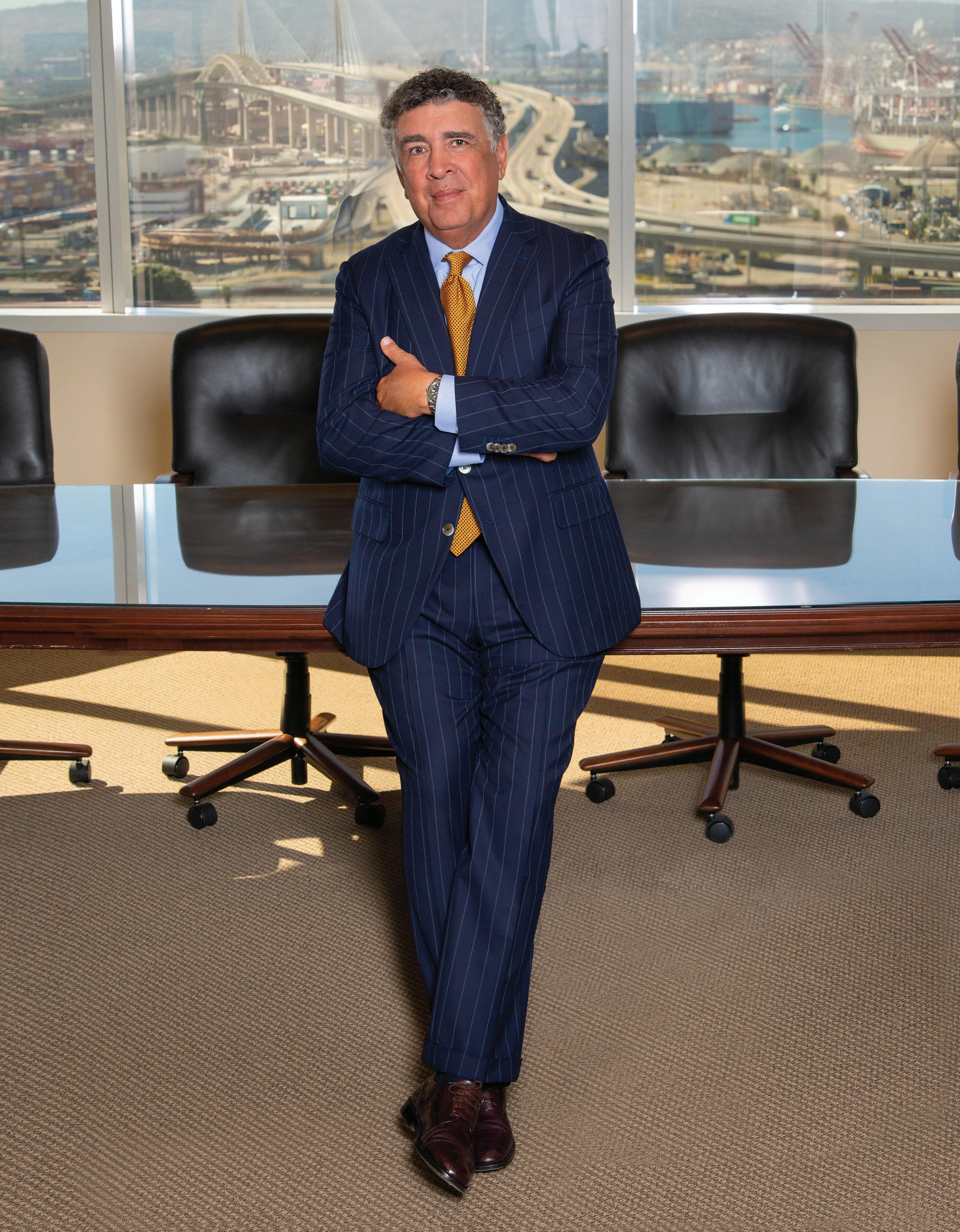
BY ALISON PREECE
lucrative business, with the U.S. market estimated at over $70B. But for the staff and the elderly in their care, that might come as a surprise. Many facilities appear chronically underfunded and in need of maintenance or renovation, which became painfully clear during the rapid spread of infections during the pandemic. What’s more, front-line caregivers are often paid minimum wage, despite the skills needed for this demanding and crucial job.
So where is all that money going?
Stephen Garcia has dedicated his career to fighting for the rights of elders in nursing homes and residential care facilities, advocating for funds to be dedicated to proper care. He has represented elders who had suffered abuse and neglect, and families who have lost loved ones to wrongful death at these facilities for over 25 years. His efforts have frequently led to seven-figure verdicts, and, crucially, called attention to systemic causes of this mistreatment.
Garcia and others at his firm, Garcia & Artigliere, have made incredible strides in seeking justice and protections for elders in care facilities, particularly in recent years with the issue of chronic understaffing.
In one ground-breaking case, he achieved a rare class certification in a lawsuit accusing a residential care facility of understaffing. The case went on to be settled, with the facility agreeing to increase staffing to meet the needs of its residents.
Understaffing is a critical battleground for fi ghting abuse against elders in these facilities, since having more workers, particularly CNAs, or certifi ed nursing assistants, can reduce neglect and ensure each resident is getting appropriate attention and care.
“The people on the floor in nursing homes, they’re good people, by and large,” says Garcia. “It’s not the people on the floor that create the problems, it’s the robber barons who own the facilities. They’re paying themselves eight ways from Sunday, taking money out of the facility that could be paying people fairly, and that’s required for appropriate care.”
Garcia’s advocacy for increased staffing at nursing homes extends beyond lawsuits to legislative lobbying. While he has had some incredible wins, including over $25M in recoveries, it remains a chronic issue that the pandemic only exasperated.
It’s frustrating because, as Garcia explains, “with the robber barons just taking a little less for their riches, say one and a half percent of gross income, they could hire, train and pay fairly sufficient staff to meet the needs of the residents, but nope that will never happen.” Instead, too many facilities are chronically dealing with a small, underpaid staff.
In California, where Garcia does much of his work, a bill was passed a couple years back that required a 10 percent increase in staff at these facilities. He celebrated at the time, but has been frustrated to watch the implementation fall flat.
“They built in a right to be exempt from the law, and every single nursing home claimed to be exempt,” says Garcia. “And the government grants the exemption. It’s all a facade.”
The firm made a decision early on not to take on any Covid-related cases against these facilities. The thinking was, as Garcia explains, “if the government, and our president, and our health professionals can’t figure out what we should be doing, and it’s all constantly evolving, how the heck can these nursing homes be expected to do it?”
That said, the pandemic has correlated with injuries and abuses to the elderly at a frequency that Garcia hasn’t seen since before the revisions to the federal Elder Abuse Act in the early 90s.
In one of his current cases, a resident went missing from a facility – for three whole months. The 87-year-old woman had trouble with walking and other movements, yet the management claims she scaled the 12-foot fence surrounding the facility and wandered off.
“We’re at a curious time right now,” says Garcia, “where litigation and plaintiffs’ lawyers are back to being the last bastion of safety for the poor and underserved.”
Remarkably, Garcia doesn’t seem wearied by these setbacks. Instead, his energy is crackling and robust. He has the force of a silverback gorilla protecting its young, and his passion for his work, several decades into this epic up-hill battle, is glisteningly clear. What keeps him so motivated?
“What keeps me going is the younger people in the field,” says Garcia. “It’s my legacy, and I want to teach them about the intricacies of it, so they can carry on and make meaningful social change. I want to stay around long enough to teach them how to do it right.”
Two of those younger people are Garcia’s son, Taylor who is law school, and daughter, Ali who is heading to law school. He would like to see them both join the firm one day.
“I think my son was preordained to be a trial lawyer,” says Garcia. “He spent a lot of time in the car with me, seeing what I do. My daughter has gone her own path, and wants to effect change outside of the courtroom. She wants to be a politician, and help work in some of the less advantaged areas and provide people with assistance.
“That’s what she plans to do with her law degree, whereas I think my son is probably planning on throwing me out the door and trying cases instead of me,” he quips.
Garcia, who has extensive trial experience, advises the younger generation to “be direct” in the courtroom. “You need to be genuine.” He advises young lawyers to work as waiters or bartenders in order to “develop your interpersonal skills, your ability to be compelling, to evoke emotion and evoke thought.”
Garcia is hands-on, and trains his mentees to be the same. “Paper isn’t going to make you real,” he says. “What’s going to make you real is getting your hands dirty. Do the grunt work when nobody else wants to do the grunt work, and go talk to every witness.”
Beyond being authentic and straightforward in the courtroom, Garcia advises that, “you need work ethic and tactical understanding. They don’t teach you tactical understanding in law school. They don’t teach you how to zig when the book says you should zag. They don’t tell you how, when your trial’s been prepped one way and it’s not going well, how to go home at night and fi gure a new way for the morning.
“Those are the talents that make really remarkable trial lawyers.”
As part of his legacy in this fight for elders’ rights, Garcia has brought on some remarkable people to join him at his firm. Bill Artigliere is a decorated West Point graduate and former star baseball player who has worked side by side with Garcia for going on 15
years, and has been counsel of record in matters leading to well over $100M in awards for elder and infirm adults throughout the country.
Matthew Coman is a former federal prosecutor who served as the Deputy Chief of the Criminal Division in the Eastern District of Louisiana. He has tried an impressive 160-plus jury trials to verdict, and was given the National Award for Superior Performance in Litigation by the U.S. Justice Department for his work prosecuting the former mayor of New Orleans on corruption charges in United States v. C. Ray Nagin
David Medby, of counsel to the firm, has already successfully litigated over 100 cases of elder abuse. He was a former law clerk for Garcia at his prior firm, The Law Offices of Stephen Garcia, and has significant class action experience as well.
“We really focused on creating a very, very strong bench and team players,” says Garcia, “and I think we’ve got the right people in place.”
The firm operates on a full contingency basis, which is a philosophy Garcia inherited from his father and three uncles who were all lawyers.
“That’s just the way I was brought up. You’re taking a chance with the cause you’re supporting, and you’re in it with your clients, trying to help them, and not imposing on them to fund your cases,” says Garcia.
This is particularly advantageous for clients in an elder abuse practice, because these aggrieved plaintiffs often lack the funds to take on a corporate Goliath, despite the merits of their case.
“The way we operate, you don’t have to worry about an inability to pay to seek justice,” says Garcia, “because we’ll make sure you get justice.”
Garcia started practicing shortly before the Elder Abuse and Dependent Adult Civil Protection Act was amended in California in 1991, and much of his career has been bringing that legislation to bear in civil courts.
He doesn’t believe passing new laws is necessary to address the issues he takes on today.
“Legitimate, credible enforcement of the rules they have is all that’s required,” Garcia says. “If they did that, if the state did that, the Department of Public Health did that, we would finally see proper care to our loved ones.”
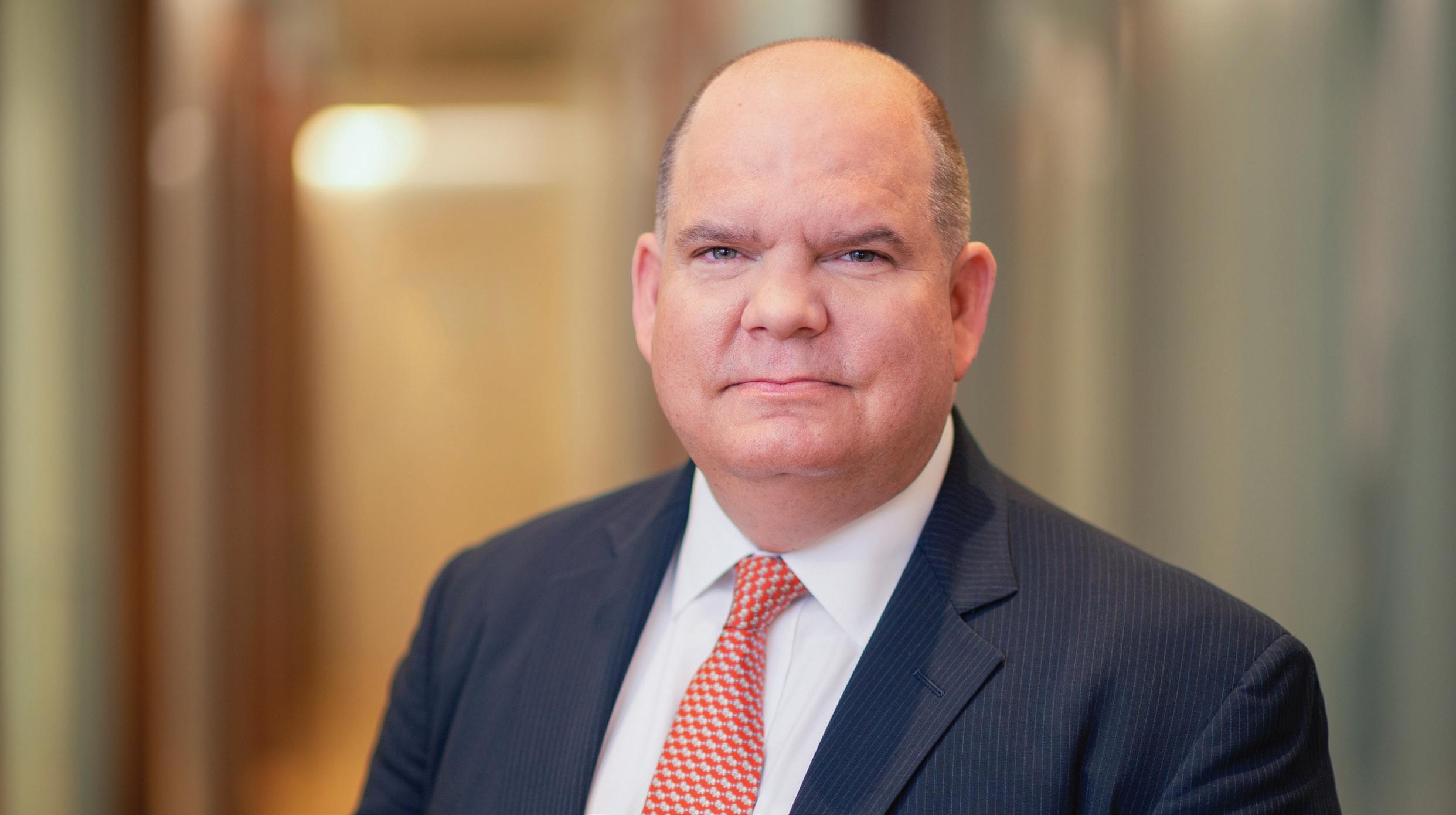
BY EMILY JACKOWAY
Raised in a strong union household, Lawrence Pearson has understood the necessity of robust workers’ rights protections since childhood. For almost that long, he’s also known he would devote his career to employment law.
Throughout his more than 20 years as a litigator, Pearson has worked to move the dial on better conditions for employees, both on the employer and employee sides. He spent a decade representing companies as both a litigator and an advisor, guiding employers through dispute resolution, workplace policy creation and compliance and more. Now, he vigorously represents employees in workplace harassment, discrimination, whistleblower and contract claims as a partner at high-profile employment litigation firm Wigdor.
A dedicated trial lawyer, Pearson’s verdicts, arbitration awards and settlements have totaled more than $50M. On the plaintiffs’ side, he achieved a standout $1.34M award in a sexual harassment suit against the infamous “Taxi King,” Evgeny “Gene” Freidman, who at one point owned more than 800 taxicab medallions in New York City. Pearson’s client came forward during the rise of the #MeToo movement in 2017, contributing another voice to claims against powerful employers at a pivotal moment.
Pearson has also represented both employers and employees on the defense side. In a 2018 arbitration, he obtained a complete dismissal of breach of contract and unjust enrichment claims brought against a senior-level employee – saving the employee from repaying a staggering $2.5M in incentive compensation, as well as interest, attorneys’ fees and costs.
Though the majority of his current practice is employee-side, Pearson continues to advise certain companies, including providing training seminars on employment law compliance as well as prevention of and ethical response to discrimination, sexual
harassment and retaliation in the workplace. It’s a vital space to occupy: Pearson sits at the intersection of representing employers and employees, able to provide employees with insight into company policies or strategies in court, and able to help employers prevent workplace harms before they happen. His knowledge of both sides betters his representation of each – and in every interaction, he is always fighting to prevent future harms.
Pearson has been named to the Lawdragon 500 Leading Plaintiff Employment & Civil Rights Lawyers for the last five years.
Lawdragon: What does the scope of your practice look like?
Lawrence Pearson: The vast majority of our clients are individuals who have experienced and are pursuing legal claims regarding discrimination, harassment and retaliation including whistleblower matters, breach of contract, or sexual assault. We also represent people in a smaller number of civil rights, torts and other cases that present facts or legal issues of particular interest to the firm. Our approach and stock in trade is that we do not take on clients unless they have legal claims that we have a roadmap to trial for, and the clients have committed to going to litigation if that is necessary because a matter has not been resolved.
LD: Before joining Wigdor, you exclusively represented companies. How does your work representing executives in employment claims influence the advice you’re able to give companies, and conversely, how does your intimate knowledge of high-level businesses impact your representation of employees?
LP: Having represented many executives and talked with many more as potential clients gives one a lot of
insight into how situations develop into legal disputes and what drives people to seek legal assistance and start thinking about whether they have legal claims against a company. The importance of simple communication, inclusion, tone, and being careful to foster a feeling of respect and mutuality is key in avoiding having an employee feel cornered, helpless, or forced into things, when often all someone wants is some runway and not to be embarrassed if an employment relationship has to end.
That type of experience can very much help in explaining to plaintiff clients the employer’s and defense counsel’s motivations, how decisions are made, and their tactics or strategy, when an employee client understandably can feel attacked or insulted during negotiations or discussions. Helping a client understand a company’s perspective comes into play for example if you get a lowball settlement offer or a company is making arguments that may seem or are disingenuous or if they are taking a while to get back to you on something, and having been on the other side gives you credibility in explaining that, too.
LD: When you’re advising companies now, what topics are you covering most frequently? Has the advice you’ve provided changed over the years?
LP: Human resources executives and in-house lawyers want careful, proportionate counsel on employee discipline, handling employee complaints and investigations, and how to mediate disputes in the workplace. Many employers also are updating their leave policies and ensuring that their accommodation processes are appropriate. The employers I work with want good relationships with employees, are not looking towards termination as a first resort, and want to not just appear to be in line with contemporary sensibilities and the law, but
to have policies and practices that treat and give employees respect and autonomy that helps head off larger problems. Employers want to avoid disputes, have employees feel heard, and most understand that dealing with employee issues does not have to be adversarial, especially if they are competing to be an employer of choice.
LD: Whether you’re working with employees or employers, how would you describe your style as a lawyer?
LP: My goal from the start of a new client relationship is to find the truths that tie all the details and emails and such together into a theme and throughline, even when they seem contradictory. I like to think that I’m collaborative if there is the opportunity for that, and if not then I lean into the structure of a case and the legal standards as far as prosecuting it. I have several gears as far as how I work with opposing counsel, and if being collaborative doesn’t work there are other ways to get a case to and through trial.
LD: Is there a matter that stands out to you as a favorite over your career?
LP: I would not say a “favorite,” necessarily, but you always remember fondly cases you win, and it was very satisfying winning a verdict in federal court on Long Island on behalf of a man who was targeted for disability discrimination and retaliation by his employer. I remember vividly the initial sinking feeling when the first cause of action or two on the jury verdict sheet did not go our way, and then the relief when the others did, and the terrific feeling of teamwork that our group had during that whole experience, especially the intense few days of trial itself.
LD: Looking back, what first brought you to a legal career?
LP: Being a lawyer seemed to combine things I enjoyed doing for school and also felt I was good at, such as writing, being an advisor, researching to find answers and arguments, while also being a job that was involved in people’s lives and solving problems for them, and making a decent living while doing it (something my dad emphasized).
LD: And what inspired you to pursue employment law specifically?
LP: My father’s proud construction union membership, tons of overtime work and encouragement to be a lawyer played a large role in what I do and how I do it. I also learned from a union lawyer I worked with during law school,
Charles Joyce, that you can be a tough lawyer and advocate but not be a jerk to less senior team members and your opponents and be a good person to be around.
LD: Did any experience from your undergraduate work push you towards a career in the law?
LP: Yes. Along with reading “Which Side Are You On?” by Thomas Geoghegan about the struggles of people in labor unions and working as a union lawyer in the 1970s and 1980s for a class freshman year of college, I also regularly took the opportunity to research and write on labor-related subjects whenever we got a choose-your-own-subject project in class. And somewhere along the way I heard or read that labor and employment law was a “recessionresistant” practice area.
LD: So, safe to say this the type of practice you imagined yourself having while in law school?
LP: Yes – I wrote my law school admissions essay about my interest in employment issues, tracing it all the way back to knowing even when I was a kid that my father was a union member and talking with union stewards on a construction site where I was a temp office assistant one summer during college.
LD: What about after undergrad – did you have any jobs before law school?
LP: I graduated from college in Washington, D.C. one semester early, and went full-time in what had been my part-time job, which was working as a researcher and assistant at a trade organization for the distilled spirits industry. I also worked for the summer before law school as the office manager for an architectural firm in Philadelphia. They literally contributed to me going to law school by even somewhat defraying how much I had to borrow for college and law school, but also were key to getting me better acclimated to office environments and being part of a team.
LD: It sounds like you never wavered much in your chosen career, but if you weren’t a lawyer, what work do you think you’d be doing now?
LP: I’m not sure; I don’t have some path not taken that I regret and think about much. There are lots of things I think I could still do or that would’ve been fun, like writing fiction or being a freelance magazine reporter or essayist. There’s definitely a world where I went to work as a federal government analyst for an agency dealing with international affairs. Certainly, I love photography and used to draw quite a bit as
THERE
TO BE MORE INDIVIDUALS, MOSTLY WOMEN, WHO ARE NOW FEELING SAFE OR DETERMINED ENOUGH
a kid and student. I abandoned thoughts of being an archeologist or a doctor (pediatrics, specifically) pretty early on.
LD: Why did you choose to attend your law school, the University of Pennsylvania?
LP: I was familiar with Philadelphia by visiting friends there throughout college, and Penn Law has a well-known history of having a strong labor and employment law focus, with a journal focusing on it and a few renowned professors on the subject, including Bob Gorman and Clyde Summers (both of whom I was lucky enough to study with). I also really liked Penn Law’s smaller class sizes, great clinical and student practice programs, and was impressed by their career services office. Some financial aid was the cherry on top!
LD: What advice do you have now for current law school students?
LP: Use law school to gain practical experience. Take advantage of clinics, volunteer or pro bono programs and student practice opportunities. Take a good number of classes that include lots of exercises in examining witnesses, arguing and negotiating.
LD: Looking to your practice today, are you noticing any trends?
LP: There continue to be more individuals, mostly women, who are now feeling safe or determined enough to come forward to seek legal representation regarding sexual assault. Public education and support are extremely important in fostering an environment where someone will feel safe enough to come forward. Whistleblower clients also seem more and more prepared with their homework done when they come to us about the retaliation they have been targeted for and their legal claims.
LD: Can you talk a bit about your pro bono work?
LP: I provide pro bono advice and counsel to a few non-profit organizations in their employer capacities.
Helping those organizations grow and get through the craziness of the pandemic, dealing with different issues and policies to avoid problems that would come up, and equip the organization’s people to better serve employees makes it concrete to me the ways employment lawyers can help people.
LD: Do you have a favorite book or movie about the justice system?
LP: “A Civil Action” by Jonathan Harr gave me some of my first real ideas of what the week-to-week work of litigation would actually be during my first year of law school. There are still scenes from that book that I quote to associates (and myself).
Then, as I mentioned, freshman year of college, “Which Side Are You On?” by Thomas Geoghegan literally put me on the path I’m on and got me hooked on labor and employment law. It’s just a gripping, infuriating, and hilarious read in general for anyone who likes stories about Americans trying to get by and dealing with daunting odds.
I also love a song from the Gilbert & Sullivan operetta HMS Pinafore, sung by a character (Sir Joseph Porter) who is the head of the Royal Navy and started his career as a copyist in a law office, became a lawyer and then went to Parliament:
“I always voted at my party’s call / And I never thought of thinking for myself at all / I thought so little, they rewarded me /
By making me the ruler of the Queen’s Navy!”
LD: What do you enjoy doing for fun outside the office?
LP: Walking in Central Park and checking out the new exhibits at the Metropolitan Museum of Art and the New York Historical Society – those are happy places. While going between work, meals and trips to the theater, I also just love snapping photos of cool things that you always spot around New York City.
BY MEGHAN HEMINGWAY
advocate who never backs down. The level of loyalty and commitment he extends to his clients is, in and of itself, a game changer. Slater is interested in successful resolutions that echo far beyond the reaches of the courtrooms they’re won in – he believes in leaving things better than he found them.
A New Yorker through and through, Slater’s first clients were survivors of the 9/11 terror attacks, so victory was non-negotiable. His hard-fought win carried with it a heft and poignance that would ultimately shape Slater’s legal trajectory. The litigator went on to focus his career solely on high-impact cases that do more than simply help individuals – cases that can reconstruct the very fabric of institutions for the benefit of those who come after.
Slater is a force to be reckoned with and his leading track record of results can attest to that. Slater garnered a $2.46B settlement on behalf of Boy Scouts of America clients, the largest sexual abuse settlement in U.S. history. In 2021, Slater secured a $71.5M settlement on behalf of 79 former patients who suffered sexual assault at the hands of predatory gynecologist Robert Hadden.
Driven by a deep desire to help survivors who have suffered injustice due to negligence, Slater gives voice to the voiceless. His recent work focusses on complex, historical sexual abuse matters involving religious, medical and educational institutions.
“I have an unwavering dedication to clients and openminded adaptability,” says Slater. “I take great pride in being able to be nimble as a litigator and approach each case with a fresh perspective.”
Slater has overseen his firm’s filing of approximately 1,800 cases under the New York State’s Adult Survivors Act, as well as 8,400 Child Victims Act cases, nationally. The powerhouse litigator is truly breaking records as he works to break the cycles of violence and abuse.
Lawdragon: Tell us a little bit about Slater Slater Schulman and the work you do at the firm.
Adam Slater: Sure. Slater Slater Schulman is dedicated to representing survivors of traumatic or
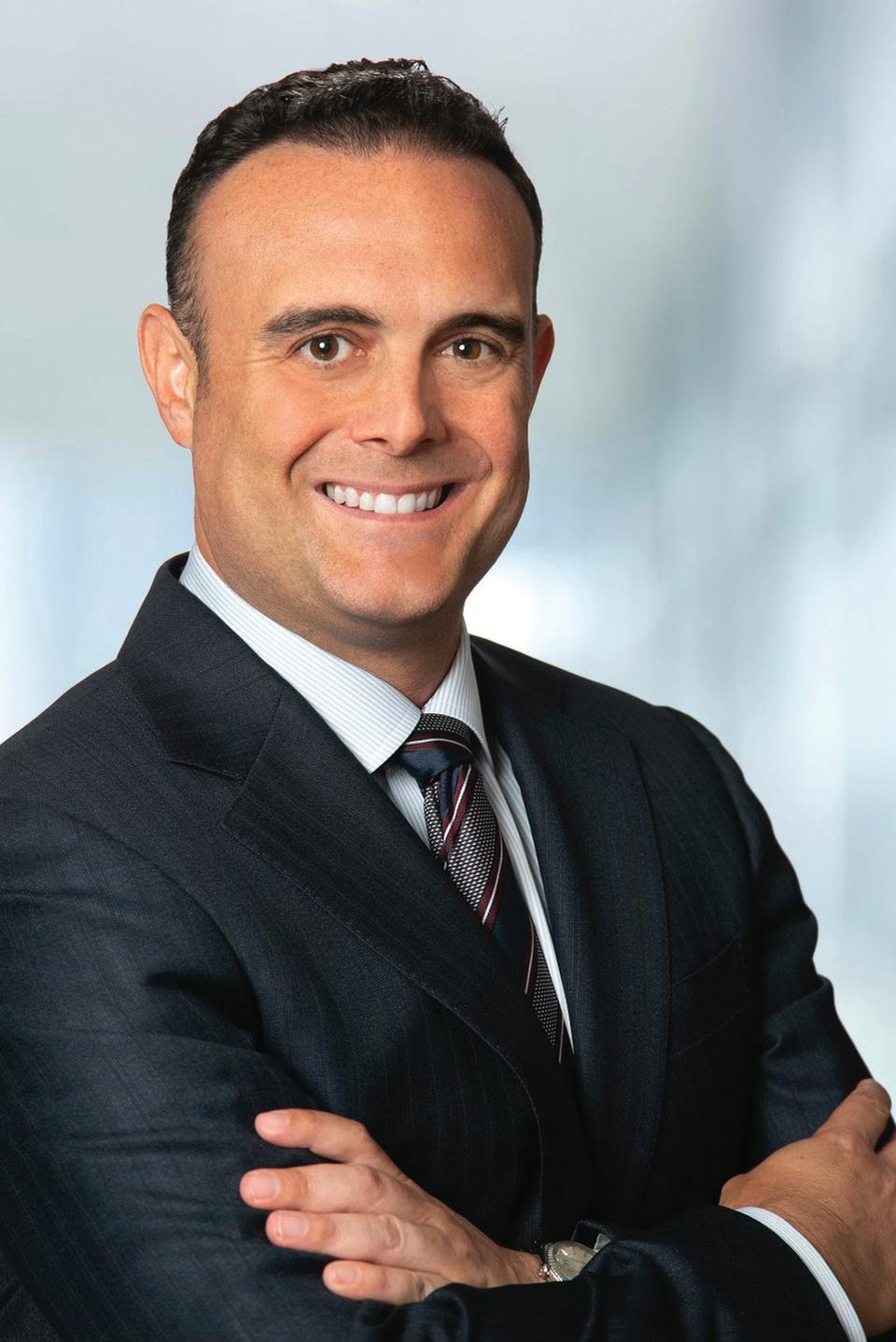
catastrophic events. The firm is full-service, and our renowned attorneys bring an incredible amount of experience to the table. The firm is known for getting results. We’ve achieved successful resolutions on some of the most challenging cases in our industry – 9/11 World Trade Center litigation, Child Victims Act, mass torts, environmental litigation, employment and labor law, pharmaceutical drug litigation, product liability litigation, medical malpractice and personal injury.
LD: What keeps you excited about the work you do?
AS: What energizes me about this work is the human element. Every client we represent is more than just a case – we are representing dedicated workers, first responders, parents, and teachers, each with a unique story of adversity. My firm pairs a traumainformed approach with expert legal counsel. There’s profound satisfaction in knowing that our work not only navigates complex legal waters, but also honors the
deeply personal nature of each client’s journey. It’s this blend of expert counsel, empathy and advocacy that makes every day in this profession meaningful and impactful.
LD: Can you describe a recent matter that you’ve handled?
AS: In 2023, Slater Slater Schulman filed approximately 1,800 cases under New York’s Adult Survivors Act, the highest of any law firm. In addition to the 1,218 cases filed against New York State for alleged abuse in State prisons, 479 cases were filed against the City of New York alleging abuse at Rikers Island, and 74 cases were filed alleging abuse in county-run jails.
LD: What were the key challenges of successfully representing those clients?
AS: The primary challenge in this matter was effectively communicating the opportunity presented by the Adult Survivors Act (ASA) lookback window to potential clients. When you’ve experienced the trauma that these survivors have endured, taking on the very institutions that harbored their abusers can feel daunting – almost impossible. As their attorney, it’s my job to make sure they know that they have the right to hold these institutions accountable, and they won’t be fighting alone.
LD: Is there a specific lesson to be gleaned from this work?
AS: The lesson that I hope that everyone takes away from this work is that people who are incarcerated cannot legally consent to sex. The detainee-guard relationship is one of the most severe power imbalances that exists today. That is why I call my clients the forgotten victims of the #MeToo movement. Incarcerated people are dependent upon correctional staff for everything – their safety, privileges, quality of life, contact with the outside world, and even their eventual liberty. Many of my clients are risking everything by stepping forward to share their harrowing experiences while in the custody of notorious state and federal prisons.
LD: What advice do you have now for current law school students?
AS: My advice to law students is simple, yet crucial: Don’t wait to get real-world experience. Textbooks can teach you theory, but only hands-on experience can truly prepare you for the rigors and unpredictability of legal practice. Getting this experience when I was in law school was invaluable to both my personal & professional development. The best lawyers aren’t
just well-versed in law; they’re adept at applying it in real-world situations. Start building that skill now, and you’ll be way ahead when you begin your career.
LD: Was there an early experience or mentor who really helped shape the course of your professional life?
AS: As a native New Yorker, some of my first clients were survivors of the 9/11 terror attacks. This experience was so eye-opening that it set me on a course in my career to focus on high-impact cases. The cases that I’m most drawn to are ones that not only help individuals, but transform organizations and institutions for the better for future generations.
LD: How would you describe your style as a lawyer?
AS: If I were to define my style as a lawyer, I’d say it’s rooted in unwavering dedication to clients and openminded adaptability. These may seem diametrically opposed, but both are essential to ensuring successful outcomes. I take great pride in being able to be nimble as a litigator and approach each case with a fresh perspective. I take pride in my ability to meet clients where they are.
LD: In the years since you opened the firm, how has the management changed?
AS: The transformation of our firm has been profound, evolving from a small team handling personal injury and malpractice cases to a nationwide firm with 75 attorneys across 11 offices. Our practice areas have expanded dramatically, now focusing significantly on institutional sexual assault cases, while our case volume has grown exponentially. This growth has necessitated major changes in our management approach. Despite these changes, our core mission remains unwavering: to be relentless advocates for our clients, now with greater resources and reach to fight for justice on a larger scale.
LD: Tell us a bit about your pro bono or public interest activities.
AS: My firm is committed to advocating for and safeguarding the legal rights of victims affected by traumatic and catastrophic events in their lives. Our pro bono efforts are evident through the numerous unpaid hours we’ve dedicated to researching laws, championing legislative changes at the federal and state level, and supporting sexual assault victims. In addition, I actively support non-profit organizations such as Safe Horizon, New Horizon Crisis Center and Nassau Suffolk Law Services.
BY MEGHAN HEMINGWAY
SHERRIE SAVETT
WITH serious gravitas. The litigator’s uniquely impressive practice has produced significant societal impacts alongside her many successes. Her list of accolades perfectly complements a track record that boasts huge results in an array of expansive, lengthy and high-stakes cases – proof positive that years of refining her practice has more than paid off.
As Executive Partner and Chair Emeritus at Berger Montague, Savett specializes in False Claims Act, Qui Tam and Whistleblower cases. Her practice is one of precision, persistence and perseverance. Savett has overseen the recovery of more than $3B for federal and state governments, as well as over $500M for whistleblower clients. Savett largely attributes her success to the team of people that she’s proud to lead.
“We are all in the same boat, rowing very hard, and it’s a great relationship,” says Savett, who also serves as cochair of Berger Montague’s Securities Fraud & Investor Protection practice. “I love working in a team. These cases are so hard and prolonged, you can lose hope sometimes – but you keep on fighting and often the tables turn in your direction, and lead to victory.»
Savett knows about putting in the hard yards when it comes to complex litigation. In United States ex rel. Silver v. Omnicare, Inc., PharMerica Corp., et al, Savett and her team battled it out for 13 years, uphill, in a case involving unlawful kickbacks in the form of below cost pricing of drugs to nursing homes by major drug suppliers in order to obtain profi table government reimbursements. The government had declined the case and the opposition was unyielding, but Savett and her team were able to withstand the constant attacks and setbacks and gain ground. The case was settled two weeks before trial for $100M. “Kickback cases are so important,” says Savett, a member of The Lawdragon Hall of Fame. “You’re not allowed to influence a medical decision or a healthcare or federal business decision by using a bribe of any type.”
In March, Savett and her team, along with the law fi rm Reese Marketos, obtained one of the largest judgments in a False Claims Act case in U.S. history in the juggernaut whistleblower case U.S. et al. ex

rel. Penelow v. Janssen Products, LP. Savett and her team at Berger Montague collaborated with Reese Marketos to secure a $1.64B judgment on behalf of two whistleblowers who were experienced drug sales representatives in the pharmaceutical industry. The case uncovered a company wide scheme that spanned almost a decade and that involved the unlawful marketing of two HIV medications for off-label uses.
Together the United States ex rel. Penelow v. Janssen Products, LP and United States ex rel. Silver v. Omnicare, Inc., PharMerica Corp., et al. cases earned Savett and her team recognition by The Anti-Fraud Coalition (TAF Coalition) as the 2024 Lawyers of the Year. The TAF Coalition is a public interest, non-profit organization dedicated to defending and empowering whistleblowers who expose fraud on the government and the financial markets. In a prestigious recognition of her work, Savett was awarded the 2025 Judge Learned Hand Award by
the American Jewish Committee of Philadelphia/ Southern New Jersey. The award acknowledges Savett’s positive impact on the legal community, as well as the broader societal reach she has achieved throughout her distinctive and remarkable career.
Lawdragon: Tell me about your work for the City of Philadelphia under the Fair Housing Act.
Sherrie Savett: The case was against a major United States bank. The Fair Housing Act essentially says you may not discriminate against any group in connection with lending. So, the claim, based largely on statistical analysis, was that the bank was discriminating against Black people and Hispanics by giving more expensive and more onerous term loans to those minority groups – folks that had the same credit credentials as white homeowners. As a result of that discrimination, foreclosures in the minority groups were much greater than with whites who had the same credit credentials. These claims were heavily disputed by the other side. There were parallel cases brought by other cities around the country based on similar theories, but our case for the City of Philadelphia was the most successful of any of them.
Judge Anita Brody, of the Eastern District of Pennsylvania, denied the defendant’s extensive motions to dismiss. We were able to mediate the case and reach a unique and valuable settlement. The $10M settlement was applied in three ways. The largest portion was grants to individuals in those minority populations in Philadelphia to be used for down payments on houses. Several thousand people were now able to buy houses as a result of this settlement. Other portions of the funds were used to renew and restore blighted areas caused by the foreclosures.
It was a very satisfying settlement because in the end, the bank itself was doing something very good for the community. The City was getting the benefi t of gaining more homeowners, and hopefully, good will was generated for that bank because it enabled many lower income families to buy homes.
LD: What can you tell us about Silver v. Omnicare case?
SS: It was a whistleblower case that lasted 13 years and settled two weeks before trial for $100M. It was a rather complex claim. It was a kickback in the world of nursing homes, and it was under the False Claims Act and the Anti-Kickback statute. In the average nursing home, 10-15 percent of patients are covered by Medicare Part A, and most of the rest by Medicare Part D or Medicaid. The nursing homes are responsible for drug payments for the smaller group of Medicare Part
A patients, and the government reimburses the cost of the drugs for the Medicare and Medicaid patients who constitute the bulk of the patients.
PharMerica and Omnicare, the drug suppliers, sold prescription drugs to the nursing homes at below cost for their Part A patients. They signed contracts that included the servicing of drugs for the entire nursing home, and thus they got the benefi t of the profi table reimbursements from the government on the Medicare Part D and Medicaid claims for the great majority of patients in those homes. The kickback was selling drugs below cost in exchange for obtaining the nursing homes’ more profi table federally insured business.
There were round after round of motions to dismiss. One motion to dismiss was based on the public disclosure rule in the False Claims Act that says if the fraud has been revealed in a press release or in a government report in a public way, the case gets dismissed because the whistleblower hasn’t really provided any benefi t. In other words, the fraud was already known.
The district judge dismissed the case on that basis, but we appealed to the 3rd Circuit, and we obtained a reversal. The 3rd Circuit said that the reports that the defendant relied on were too vague, did not identify any entity in particular, and the fraud was not revealed. So we were back in district court again. The discovery in this case was extensive and hard fought. In order to prove our case, we needed to get the financial data relating to thousands of nursing homes – it was a massive project. We performed an intensive analysis of the costs and revenues related to each home. Our analysis of the massive data showed that for certain homes, selling the drugs below the defendants’ own cost to the nursing homes in order to obtain the federal business was still profi table since the government reimbursements for the Medicare Part D patients and the Medicaid patients yielded significant profi ts overall.
In the end, we settled the case, and it was a very successful outcome. Even though the government had initially declined, they did eventually take a serious interest in the case and filed helpful Statements of Interest toward the latter part of the case. But, essentially we had to litigate it all on our own for more than a decade. It was a tremendous battle with excellent defense lawyers, and we reached a settlement at the 11th hour. Read the full Q&A at www. lawdragon.com/lawyer-limelights/sherrie-savett.
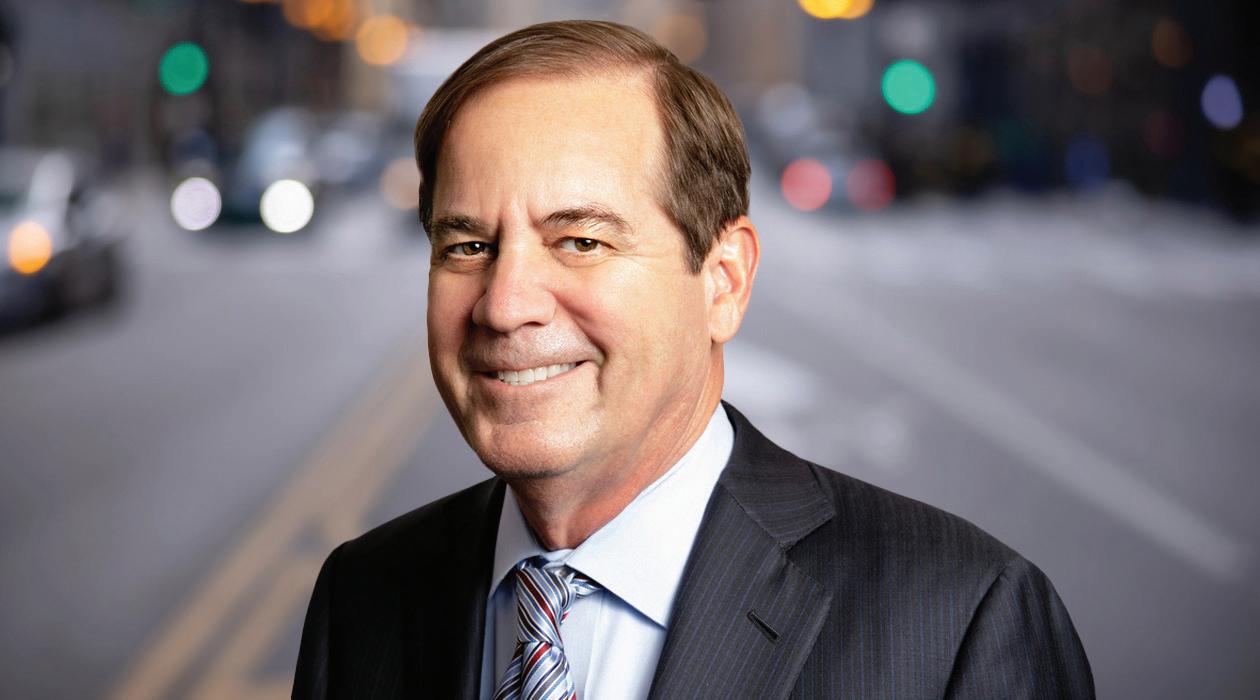
BY MEGHAN HEMINGWAY
since the beginning. A legend in the medical malpractice space in Illinois, Hebeisen has his head on straight and his practice at Clifford Law Offices highly focused. He represents individuals going up against hospitals and doctors in a multitude of matters that vary in scope and complexity.
Starting with a win on his very first case, the decorated and celebrated trial lawyer has been smashing verdicts for his clients for forty years now. From product liability to toxic torts to transportation, Hebeisen knows this arena like the back of his hand. He’s seeing it change in interesting ways, too.
According to Hebeisen, Covid-19 has affected the way juries approach cases. “Jurors are much
more open-minded in medical malpractice cases,” Hebeisen says. “I’ve found that resistance to the notion of finding a healthcare provider or an institution responsible has really gone down.”
Hebeisen is driven by a love of the work and a commitment to his clients – folks who have wrongfully suffered injuries or death due to wrongful practice.
“I’d say there’s a common denominator in all my cases, which is that I do really care about what happens to my clients and I try to do what’s right for them,” says Hebeisen. “I try my hardest to tune out the noise and focus on the goal.”
Hebeisen keeps an eye on the bigger picture and believes politics comes with the territory for any true advocate. Hebeisen has been an active member of the Illinois Trial Lawyers Association for many years, where he served as President from 2005 to 2006.
“You really can’t take this stuff for granted, politics are involved,” says Hebeisen. “If you’re not involved, things will come up out of nowhere and blindside you, and all of a sudden you’ve got a big problem with the laws in your state.”
I THINK WHAT I GOT FROM ALL THREE OF MY MENTORS IS THE
IMPORTANCE OF WORKING VERY HARD AND ALWAYS BEING PREPARED – TO BE MORE PREPARED THAN NECESSARY AND ALWAYS BE MORE PREPARED THAN YOUR OPPONENT. DON’T TAKE SHORTCUTS, BE THE BEST YOU CAN.
Hebeisen is an active leader in numerous other bar associations and even occasionally takes to the state capital to advocate for and against proposed legislation and help shape policy. As someone who uses the law to seek justice, he understands the importance of the legislature in shaping our governance. For Hebeisen, it’s important to fight for our rights before they’ve been stripped from us.
As he says, “Rights get taken away, and then it’s really hard to get them back.”
Lawdragon: How did you decide to become a lawyer?
Keith Hebeisen: I became interested in being a lawyer kind of late in the game. When I graduated from college, I had no intention of going back to school. I had taken the LSAT and actually had a really good score on it, but I spent four years in the concrete construction business after I got out of college. I made a good living; I enjoyed the lifestyle. I didn’t take work home with me, and life was grand until the early 1980s when the economy was messed up and construction dropped. I needed to figure out something else to do, and I ended up applying to law school. I thought that maybe I could be a good lawyer. I initially thought about being a criminal defense lawyer. That was my fantasy when I started law school. But early on, I really got torts into my system. I found it interesting learning about theories of liability and people receiving compensation when somebody harmed them through negligence. Then getting into how to prove these things with the rules of evidence, I really liked that.
LD: How did you start working with Bob Clifford?
KH: It was in my second year. My torts professor called me and a classmate up after class and asked if either of us was interested in working with Bob Clifford, who was then an associate at the Offices of
Philip Corboy. I was kind of nervous, but I said yes. I met with Bob and ended up working for him. He was a great guy to work for. He was very smart. He knew what he was doing, he liked to empower young law students to do things and really learn how to become a lawyer instead of just doing busy work. Although I had a lot of that too. It comes with the territory.
LD: Was he a mentor to you?
KH: He has been my main mentor, one of three significant mentors in my life. I worked in Corboy’s office for a year as a law clerk. So I consider him a mentor too. And another lawyer that I worked for after that, Al Hofeld, was a mentor to me as well. They all had different styles, and I think I was blessed to be exposed to those three different styles because there were things that I learned from each one of them. But ultimately, you have to make things work for yourself. It’s been very valuable to me in developing my own successes.
I think what I got from all three of my mentors is the importance of working very hard and always being prepared – to be more prepared than necessary and always be more prepared than your opponent. Don’t take shortcuts, be the best you can. While training at Corboy’s and Hofeld’s offices, I had the benefi t of seeing both of them try cases when they were at the top of their game. It was a little intimidating sometimes to see what they were doing in a courtroom, but I learned a lot. I didn’t try any cases in my year at Hofeld’s office. I did a lot of discovery and depositions. It was heavily tilted toward medical malpractice, but not exclusively. Now I’ve gotten to the point now in my career, that’s all I do.
LD: How did that come to be?
KH: A combination of choice and circumstance. I was in the right place at the right time and I like doing it. I like the challenges and I think I’m pretty
AFTER 40 YEARS, I DO GET CASES THAT ARE SIMILAR, BUT GENERALLY SPEAKING, EVERY CASE YOU GET YOU HAVE TO LEARN SOMETHING NEW ABOUT MEDICINE.
good at it. Before I tried a case by myself, I tried four cases with Clifford, including his first $1M verdict in 1987. Then, in September of 1987, I tried my first case by myself, without having a more senior lawyer with me. It was not a big value case, and it was not complicated. It was a short trial – the perfect case for a young lawyer to start with. It was a no-offer medical malpractice case against a very experienced partner in a prominent defense firm and I got a $75,000 verdict. It wasn’t a big case but it was a tough case. So it was great – I won my first case. Not too long after that, I had another med mal trial, in a no-offer case that was against another partner in that same big defense firm – another very experienced guy. This time, not only did I get a good verdict, I got a verdict in excess of the insurance coverage. That’s when I started getting my wings, so to speak.
LD: What are some of the challenges you enjoy about med mal?
KH: After 40 years, I do get cases that are similar, but generally speaking, every case you get you have to learn something new about medicine. You have to actually understand how it works and what they’re going to say on the other side. You have to know the medical terminology and be able to do combat with witnesses in a professional manner when you take depositions. These are people who went to medical school and have been practicing for 20 years, and you’ve got to go toe-to-toe with them. That’s one of the biggest challenges. I can lean on my experience with other medical issues, and I talk to my own experts to get educated, but eventually, I’m flying the airplane myself and I have to be able to put all that stuff together.
LD: Tell us about a recent case.
KH: I just received a verdict in the Lopez v. DuPage Medical Group. It was another no-offer case. A 56-year-old ended up with a heart transplant because his primary care doctor was not ordering tests that would›ve revealed that he had triple vessel coronary artery disease – a significant disease that required
intervention. So instead of having bypass surgery, which would›ve been the proper treatment for him, he didn›t get treated until he went into end-stage heart failure six months after the first visit with his doctor. At that time, the only option was to have a heart transplant. Fortunately, he was able to get a heart transplant within a month of when he was admitted to the hospital.
So he ends up with a heart transplant with all the problems that go along with that instead of having a bypass procedure. If there are no complications with bypass surgery, you go on to live another 10 to 15 years. That’s what the difference was for him. Their experts said that the doctor didn’t do anything wrong by not referring him for additional tests, but they also admitted that the tests would’ve disclosed that he had the disease. But if they had diagnosed it six months before, they wouldn’t have been able to do a bypass because he didn’t have adequate targets and therefore he was going to need a heart transplant anyway.
The verdict was $6.35M and now there are post-trial motions pending. One of mine is to impose what’s called an additur, which means increasing the amount of the jury verdict to cover all the medical bills. So the verdict might go up, and we’re in the throes of that right now.
LD: You tried a case a while back where you were awarded a $100M verdict for your client. Can you tell us about that?
KH: Well, first of all, I want to give credit to my partner Sarah King, who actually did a huge percentage of the work on that case. I was sitting in on depositions and brainstorming and participating, but she did most of the heavy lifting to put the case together. So it was in pristine shape by the time we went to trial. This was a case involving an injured child with a single mom. The baby was brain-damaged at birth and had a lot of needs. So we really needed to do everything we could to make sure that she had the funds to pay for things that wouldn’t be paid for by insurance. This
THERE’S A RELATIONSHIP BETWEEN THE TORT LAWS IN THE STATES WITH THE TRIAL BARS THAT ARE ACTIVE AND THOSE THAT ARE NOT. RIGHTS GET TAKEN AWAY, AND THEN IT’S REALLY HARD TO GET THEM BACK.
kid was going to need lifetime care, so the first goal was to try to settle the case and they came in way low on that. So we ended up going to trial.
The trial was about a month long. There were four of us lawyers in total. I negotiated my role with my colleague in the case at the beginning. I didn’t care who did the opening statement, but I wanted to have the closing argument. I got the opportunity and I asked the jury for $175M. When I first started practicing law, nobody would ever ask for that amount of money. I felt very confident and comfortable that I was not being outrageous with what we were asking for based on what the evidence was. And it was possible that they could award less money, which is what they did. The number is a phenomenal number, but what was more important to me was what we were able to do for that mom and her kid. Shortly after that trial, we were able to almost immediately improve the quality of both of their lives through our efforts.
LD: That’s great. What do you love about this work?
KH: I’d say there’s a common denominator in all my cases, which is that I do really care about what happens to my clients and I try to do what’s right for them, even though sometimes it’s not what I would want to do for my ego. I try my hardest to tune out the noise and focus on the goal. I’m trying to accomplish the best I can for this client, no matter what.
LD: What can you tell us about your work with the Illinois Trial Lawyers Association?
KH: I’m a Past President of the Illinois Trial Lawyers Association. Its sole purpose is to preserve the right to trial by jury in Illinois. A lot of that involves fundraising for politicians. It involves going down to Springfield, our state capital, lobbying against bad bills and in favor of good bills.
You really can’t take this stuff for granted. Politics are involved. If you just put blinders on and practice
and try to make a lot of money, fine. But in the meanwhile, if you’re not involved, things will come up out of nowhere – they’ll blindside you, and all of a sudden, you’ve got a big problem with the laws in your state. That’s happened all over the country. Some of the trial bars in other states just don’t seem to get that. I know that because I’m also involved with national politics. I’m on the Board of Governors of The American Association for Justice. I was the chair of the state delegates years ago. I’ve been on the Board of Governors almost forever, since then. I have insight into the big picture in the country. I know what states the trial bars are active in – and to the level they should be – and others that are not. And there’s a relationship between the tort laws in the states with the trial bars that are active and those that are not. Rights get taken away, and then it’s really hard to get them back.
LD: Are there any trends that you’re noticing in your practice at the moment?
KH: I’ve noticed that now in the 2020s, jurors are much more open-minded in medical malpractice cases. They’re more able to believe that negligence does occur. Juries seem to be more able to understand that and respond with a fair verdict for plaintiffs. It certainly wasn’t like that 30 or 40 years ago. It was a hard sell to get people to buy into that concept. They were resistant to it.
I think in some way Covid-19 had a lot to do with that. I can’t prove that, but my belief is that people started looking at life differently. All of us did, in our own way, after going through Covid-19 and the aftermath. People were sitting around, they weren’t working, they couldn’t go anywhere – they were thinking about their life and about how screwed up it all got. I have to believe that’s had a lot to do with the shift I’ve seen in jurors’ attitudes. I’ve found that resistance to the notion of finding a healthcare provider or an institution responsible has really gone down.

BY MEGHAN HEMINGWAY
legal battles reshaping the worlds of sports, tech and media, chances are Sathya Gosselin is a name you know. A partner at the powerhouse plaintiffs’ firm Hausfeld, Gosselin isn’t just litigating the future of antitrust law – he’s helping define it.
Over the past two decades, Gosselin has been at the center of some of the most consequential cases in recent memory. As trial counsel in O’Bannon v. NCAA, in 2014, he helped secure a landmark ruling that forever changed the landscape of college athletics, delivering long-term name, image, and likeness recognition and revenues to student-athletes and negotiating a settlement with Electronic Arts over the unauthorized use of player likenesses. More recently, in 2024, he served as trial counsel in the NFL Sunday Ticket litigation, where a jury awarded $4.7B
in damages to subscribers in an antitrust challenge against the NFL and its teams concerning their refusal to compete over out-of-market telecasts – the case is currently under appeal.
Whether tackling monopolistic practices in professional sports, advocating for athlete rights in sponsorship disputes, or litigating high-stakes commercial cases involving sports and entertainment figures, Gosselin has earned a reputation for sharp strategy, technical precision and quiet force in the courtroom.
“I try to stay laser-focused on client goals and court guidance,” says Gosselin. “If I’ve done my job well, the briefs are crisp and persuasive, the oral arguments are compelling, the cross-examinations are revealing, and the client is happy.”
Based in Hausfeld’s Washington, D.C. office, Gosselin brings a boutique-style, hands-on approach to litigation, working closely with specialized teams to deliver results at both trial and appellate levels. His expertise spans antitrust, commercial, and sports and entertainment law – but his impact extends far beyond the courtroom.
“From the beginning, I’ve been interested in solving problems, helping injured people and businesses, combating abuse and injustice, and forging deep relationships in the profession, all aims that guide my practice daily,” says Gosselin.
A recognized thought leader and trusted voice in the legal community, Gosselin also wears many hats within Hausfeld: Conflicts & Compliance Partner, head of U.S. attorney training, co-lead of U.S. marketing strategy, and mentor to the next generation of trial lawyers. He’s active in the firm’s Global Business Development team, DEI Committee, and Disability Rights Working Group.
Lawdragon: What has been your career trajectory?
Sathya S. Gosselin: I arrived at law school having worked with a number of great public-interest legal organizations: I was the Deputy Director of the ACLU of Texas’s Prison and Jail Accountability Project, an intern with the Political Asylum Project of Austin, and (later, as a law student) an extern with Texas RioGrande Legal Aid and the Texas Civil Rights Project. My goal was to do good in the world with my law degree, with a special emphasis on underserved communities. Early in law school, I became interested in public interest law firms that, at least at that time, were rarely a focus for career development offices: plaintiff-side class action firms that did a mix of antitrust, human rights and civil rights litigation. After much research, I spent a summer working at Hausfeld’s predecessor law firm, witnessing my future mentor Michael Hausfeld in court – and I was hooked. I joined Hausfeld LLP in 2009, just after the firm launched, and was absorbed from the start. A group of smart, tough and compassionate litigators achieving record recoveries for consumers while growing an international business? Sign me up!
LD: Did you always know you wanted to be a litigator?
SG: I am not someone who always wanted to be a litigator, and I think my diversity of interests has made me a well-rounded litigator. I studied religion in college, am passionate about electronic music and the great outdoors, and strive daily to keep a sense of curiosity and adventure, inside and outside of my work life.
LD: Of all the work you’ve done in your career, what case stands out as particularly memorable for you?
SG: I’ve been fortunate to work on some very big cases with great outcomes for our clients. Without question, our landmark O’Bannon v. NCAA antitrust litigation stays with me. Guided by client luminaries Ed O’Bannon, Bill Russell and Oscar Robertson –among many others – Hausfeld took on the NCAA and its decades-long refusal to share revenues with
college athletes despite commercial use of their names, images and likenesses. And we won. Along the way, I built lasting relationships with our clients, college-athlete allies and advocates, professors and academic researchers, sports journalists and dozens of co-counsel. I tried my first big case and was able to learn from veteran trial lawyers as we sustained our victory through numerous appeals. Memorably, I learned of our bench trial victory months later while on my honeymoon abroad.
LD: What trends are you seeing in antitrust litigation these days?
SG: Technology, technology and technology. Whether it’s algorithmic price-fixing, the relationship between AI and authors/content providers, or monopolization challenges to Big Tech firms – technology is a central theme in my practice and the firm’s work globally. And I have seen that same focus at the DOJ and FTC in recent years, across administrations.
LD: You’ve worked on a number of high-profile cases. What is your approach when it comes to the “court of public opinion”?
SG: Outside of my client matters, I enjoy sharing my perspective on larger trends, case developments and rulings when asked. And I consider myself fortunate to work in a field that attracts so much public interest.
LD: That’s great! What do you appreciate about Hausfeld as a platform for the work you do?
SG: The creativity, the shared values and the comradery. I’ve worked with many of my partners for almost two decades, and I continue to learn from each of them as we advance our vision of economic and social justice. From the very beginning, Hausfeld entrusted me with a great deal of responsibility and freedom – to pursue novel and cutting-edge case theories, to take “first chair” with guidance and encouragement, to create community inside and outside of the firm. I try to mirror that mentoring and encouragement with the younger lawyers that I now have the privilege of working with.
Beyond my casework, Hausfeld has also given me the opportunity to take on leadership roles that reflect various other passions of mine – serving as our Conflicts and Compliance Partner, leading professional development across our U.S. attorney group, helping shape our U.S. marketing efforts, and contributing to our global business development coordination. My days are never the same, which keeps me engaged. Read the full Q&A at www.lawdragon. com/lawyer-limelights/sathya-gosselin
BY EMILY JACKOWAY
he wanted to be a litigator, but it was only after joining prominent employment law firm Wigdor right out of law school that he realized where he wanted to focus his practice. The firm – dedicated exclusively to employment, civil rights and sexual harassment and assault cases – has taken on some of the most contentious battles in those spaces. For the last 13 years, Willemin, a partner at the firm, has been a key member of the team.
Seeing Willemin or the fi rm’s name in the news is not uncommon; they are known for going up against well-resourced entities in hot-button cases. Last year, Willemin and team represented R&B singer Cassie in sex trafficking and sexual assault claims against former boyfriend and hip-hop star Sean “Diddy” Combs – a case which sent shockwaves through the music industry and has dominated headlines. While the
case settled quickly, it was an early action in the now more than 20 cases against Combs, who was recently charged on three counts, including sex trafficking.
Currently, Willemin is representing college athletes in a Fair Labor Standards Act case against the NCAA, arguing that athletes are employees of their schools and should be paid as such. The case could have momentous implications for the future of college athletics, and recently survived a motion to dismiss in the 3rd Circuit Court of Appeals.
The key to going up against such powerful figures and highly funded entities, Willemin says, is being one step ahead. “The goal is to be proactive, not reactive, and give the other side something that they haven’t seen before,” he says.
Willemin is a member of the Lawdragon 500 Leading Civil Rights & Plaintiff Employment Lawyers.
Lawdragon: What brought you to Wigdor, and how did you know you wanted to devote your career to this practice area?
Michael Willemin: I was drawn to the firm because of its stellar reputation in the areas of employment, sexual
assault and civil rights litigation. Initially, I did not know that I would end up devoting my career to these practice areas, but it did not take long before I realized I’d found a home in the law, both with respect to the practice areas and the outstanding individuals with whom I’ve been able to work and learn from for the past 13-plus years.
LD: Tell me about the scope of your practice.
MW: The entire Wigdor practice is dedicated to representing victims of employment discrimination and retaliation, sexual assault and civil rights violations. Being so focused is a huge benefit, as it allows Wigdor lawyers to become experts in the fields in which we practice.
LD: So, if this wasn’t your exact plan from the outset, what did you initially envision your career looking like?
MW: I always wanted to be a litigator, but it was not until I arrived at Wigdor that I developed a passion for representing victims of unlawful employment actions, sexual assaults and other civil rights violations. In law school, my goal was to become a prosecutor. In retrospect, while I am sure I would have loved that job as well, I know I am right where I am supposed to be.
LD: Did you have any experience in the area before joining Wigdor?
MW: I did a part time internship at the Rhode Island Commission on Human Rights, which was my first foray into employment discrimination law.
LD: Was there an early experience or mentor who really helped shape the course of your professional life?
MW: It would probably be cliché to say my father, but that would be answer. While I unwisely failed to implement his advice and guidance for the first twentysomething years of my life, I’ve put it to great use in my professional and family life and am a far better person, colleague, husband and father for it.
LD: And what inspired you to be a lawyer?
MW: I watched too much “Law and Order.” Seriously, though, the concept of litigation and trial was always alluring to me. I never gave much thought to any other profession.
LD: What advice do you have now for law students?
MW: Try not to get overly stressed! Once you complete the core curriculum, focus on areas of interest and give yourself a variety of educational and vocational experiences. Ultimately, there might be a better, more interesting and more fulfilling path than whatever you planned to do for a career going into law school. Give yourself a chance to find it.
LD: Are there any memories from your early career that stand out to you?
MW: Early in my career I was given the freedom to litigate a claim against New York City more or less on my own. The litigation gave me the opportunity to depose a variety of important figures and lawyers, including a New York Court of appeals judge. I even had the opportunity to subpoena the then-mayor for a deposition, though the subpoena was quashed after he submitted a declaration denying relevant knowledge!
LD: Your style has been described as aggressive when the situation calls for it, and Wigdor attorneys have a reputation for being relentless warriors. How does that battle-ready attitude help you and the team prevail against well-resourced defendants?
MW: I have the luxury of going up against wellresourced defendants every day. You always have to be thinking one step ahead and outside of the box. The goal is to be proactive, not reactive, and give the other side something that they haven’t seen before.
LD: What has been keeping you busy recently?
MW: The #MeToo movement and the reemergence of the Black Lives Matter movement certainly came with an influx of sexual assault and race discrimination cases, respectively. We are also spending significant time and resources to litigate the validity of pre-dispute forced arbitration agreements, which are extremely detrimental to the achievement of justice society wide.
LD: Have you had any recent results you can share with us?
MW: I am very proud of Wigdor’s recent win at the 3rd Circuit Court of Appeals, which affirmed the lower court’s denial of the NCAA’s motion to dismiss in the Johnson v. NCAA action. The precedential decision held that NCAA Division 1 athletes could be employees under the FLSA. This was the first time a Circuit Court held as such and was in contradiction to the only other circuit to address the issue.
LD: What keeps you excited about this work?
MW: I love the competitive nature of litigation. From something as small as a disagreement over scheduling to something as significant as a federal jury trial, I wake up every day knowing that I will be tested by some of the world’s most powerful companies, individuals and law firms. There is nothing more satisfying than that, particularly when you are representing someone who never believed that they would have an opportunity to fight. Read the full Q&A at www.lawdragon.com/ lawyer-limelights/michael-willemin.
BY EMILY JACKOWAY
trauma for a deposition or a trial is never easy. You have to ask vulnerable people to relive the most horrifying moments of their lives, all while enduring a rigorous interrogation and keeping in mind a legal strategy.
It’s even more difficult when many of those clients are under ten years old.
That’s the case for litigator Adam Hecht, who devotes a large portion of his practice to representing children who have been abused, neglected or assaulted in foster care, schools and healthcare settings.
Hecht first started working on those cases as an Assistant State Attorney in Palm Beach County, Fla. A nationally ranked high school debater and a performer at heart, Hecht was determined to try as many cases as he could right out of law school –so, he became a prosecutor. In all, he tried more than 75 cases at the State Attorney’s office, tackling serious crimes including murder, drug trafficking and child abuse.
It was the latter that impacted him most. “I was very affected by what I saw people do to very young children. Drugs, violent crime – they’re awful. But when you see people hurt children who are the most vulnerable and fragile – they need to be protected,” Hecht says. “So, that’s where I realized, I want to be the one to help them.”
After three years as a prosecutor, Hecht made the transition to the civil side, continuing to represent victims of negligence and abuse in plaintiffs’ personal injury and medical malpractice cases as a shareholder at Florida plaintiffs’ mainstay Searcy Denney Scarola Barnhart & Shipley. While he originally had more of a general injury practice, when Hecht was approached to represent children who were physically and mentally abused by a foster parent, he was brought right back to the cases that impacted him most at the State Attorney’s office. Now, about 60 percent of his practice is devoted to representing children who have been harmed, with the rest of his practice predominantly focused on
medical malpractice cases.
It’s an incredibly different kind of practice, requiring an all-in approach to client relationships; developing the trust of children is different than from adults, especially ones who have been harmed by authority figures in the past. “With children, you have to gain their trust, become friends with them, get to know their likes and dislikes, and you have to spend time with them and their family and not talk about anything that has to do with the case,” he says.
But it’s a calling for Hecht, who not only sees his own children in those he represents daily but recalls what it meant to have a lawyer on his side as a child, when his father was nearly killed in a crash by a drunk driver. “I just remember how we looked to the lawyer for guidance and how he was with us in that very difficult time,” he says.
THERE WAS REALLY NOTHING ELSE THAT I EVER WANTED TO DO. I STARTED SPEECH AND DEBATE WHEN I WAS 12, AND THAT’S PRETTY MUCH WHEN I KNEW I WANTED TO BE A LAWYER.
He has spent the last 15 years doing the same for others.
Lawdragon: Tell me about what it was like watching your family go through the legal process after your father’s accident.
Adam Hecht: When I was nine or 10 years old, my father was driving home from a business meeting when he was hit and almost killed by a drunk driver in an eighteen-wheeler. So, of course, we had to hire an attorney. I don’t remember what I had for breakfast today, but I remember that process. I remember the police offi cer coming to the door notifying my mom that my dad was in the hospital; the lawyer going through that process with my family. So that was one reason why I wanted to be lawyer.
LD: What else brought you to the law?
AH: My sister and I enjoyed performing from a very young age. I took theater classes. I just always enjoyed that rush of performing. It’s like that nervous energy that you get in the pit of your stomach, but it’s a positive energy. I had it when I was young, and I still get it today when I try cases, take depositions or when I’m meeting with clients.
In high school, I attended a performing arts high school here in West Palm Beach, where I was introduced to speech and debate. With debate, I liked the competition and the performance. I thrived on that. I liked trying to persuade people that my side was right.
So – why did I want to be a lawyer? You just put all of that together. There was really nothing else that I ever wanted to do. I started speech and debate when I was 12, and that’s pretty much when I knew I wanted to be a lawyer.
LD: Did you have an idea of what kind of law you wanted to practice?
AH: I knew I wanted to be a trial lawyer. I was told
by a law school mentor, “If you want to be a trial attorney, you have to become a prosecutor.” I never thought about practicing criminal law, but I knew that you would be in the courtroom every day. And I’ll tell you, that was the greatest advice that I was ever given because all of my classmates were applying for these fancy, schmancy jobs at these big law firms. That’s just what they thought they were supposed to do. But I was told, “Don’t worry about the money. You’re going to be making $30,000. You’re probably still going to be living at home. But this is where you’re going to be in court, and this is where you’re going to learn the skills that you’re going to need if you want to be a trial lawyer.”
LD: What were some of those early matters that stood out to you most?
AH: The cases that I remember are the child abuse cases.
LD: Of course.
AH: That’s when I realized there are very bad people in this world. I was very affected by what I saw people do to very young children. Drugs, violent crime – they’re awful. But when you see people hurt children who are the most vulnerable and fragile – they need to be protected. So, that’s where I realized I want to be the one to help them.
From there, I left the State Attorney’s office, and I was fortunate to work at the fi rm that I’m working at now. I came in and I was handling medical malpractice and personal injury cases. Then a couple of years in, I received a phone call regarding children in foster care who were abused physically, mentally, and they were burned. The photos were awful. That brought me back to the State Attorney’s office.
So, that was the first child abuse case that I handled on the civil side. When I was at the State Attorney’s Offi ce, I was putting the bad people in jail and
EVERY TIME I REVIEW ANY DOCUMENTS OR TALK TO THE PARENTS OR CHILDREN, I ALWAYS THINK OF MY CHILDREN. I THINK OF MY DAUGHTER; I THINK ABOUT MY UNBORN SON. WHAT IF THIS HAPPENED TO THEM? AND THAT’S WHY, AGAIN, I ENJOY THIS WORK.
representing the victims. And here, on the civil side, I’m still representing victims. That’s what I like about what I do. I like representing human beings –not corporations. I enjoy working with children and I want to help them. From there, that’s where my practice is now. I represent the families and children that are either in foster care or schools or hospitals and very, very bad things happen to them.
LD: That’s such vital work. What does your day-today look like working on those cases?
AH: These are very time-consuming cases. To get a child to open up to you, you have to spend time with them. You have to get to know them; they have to trust you. It’s not like any area of the law where you can have a business meeting and say, “So tell me what happened.” Children, in my experience, don’t just tell you what happened. And the way that these bad people are caught is not because these children one day say, “Hey, something bad has happened to me.” Typically, the bad person does not do a very good job of keeping a secret and something gets out. Because typically the children are threatened; they’re told by the bad people, “If you say something, you’re never going to see your family again. You’re going to go to jail.” So, the bad people get caught, but it’s not the children that say anything.
LD: It must be an emotionally trying experience, and so different from other cases. What does that process look like, helping the children you work with trust you so they feel comfortable telling their stories?
AH: Typically, when I get the case, I go and meet with them. In other cases you can have Zoom meetings; you can meet with people in your office. You have a lot of phone calls. But with children, you have to go to their house, and you have to spend
time with them and their family and not talk about anything that has to do with the case. Just get to know them. And you have to keep doing it. You have to keep spending time with them to get them to trust you and to open up to you.
And you’ll learn from them. I mean, they’re not going to tell you everything, but they’ll tell you certain things. For instance, they’ll say, “He was being mean to me. He was being rude.” And you have to find out what that means the best way that you can. “What do you mean that he was rude?” And then children don’t want to talk about things anymore. So then you start a new conversation. You start talking about pizza or their favorite ice cream, and then you come back another day and you start again. So you’re a friend, you’re a therapist, and then back in the office you’re a lawyer.
And you’re right, it is emotionally draining. My daughter’s almost three and my wife is pregnant with our second.
LD: Oh, congratulations.
AH: Thank you. Every time I review any documents or talk to the parents or children, I always think of my children. I think of my daughter; I think about my unborn son. What if this happened to them?
And that’s why, again, I enjoy this work. It’s difficult work, its important work, but I think I do the best job for my clients because I put so much into it and take it very personally.
LD: Are there any stories you can share about cases that were particularly impactful for you?
AH: I handled a case where there were four siblings that were placed in foster care, and the foster father murdered one of the siblings – a 4-year-old boy –while a sister and brother watched. Obviously, the foster father was arrested and charged with murder,
I’M VERY CALM. I THINK MY CLIENTS WILL FIND I PROVIDE A SENSE OF CALM IN WHAT CAN BE A VERY TURBULENT PROCESS. I FOCUS ON WHAT I NEED TO DO FOR MY CLIENTS, AND I DON’T LET THE DEFENSE OR INSURANCE COMPANIES PHASE ME. I JUST FOCUS ON WHAT I NEED TO DO.
and then the children gave a deposition. It was very difficult having to prepare a nine- or 10-year-old to talk about what it was like. Sitting in the room and listening to them having to answer questions about watching the death of their brother was certainly the most difficult experience that I’ve had as a lawyer. My job was to prepare them to answer questions. We certainly had to take a lot of breaks. Obviously, in the room, even the lawyers that were asking the questions and representing the defendants were tearing up. These are very difficult and emotional cases for everyone involved.
LD: That’s horrifying. In those kinds of cases, who are you suing?
AH: Sometimes I sue the actual bad actors, the foster parents. Other times I sue the child welfare agencies that had the responsibility of placing the children in a safe home and, once the children are in the home, the responsibility to go into the home and visit the children and make sure that they’re safe. In Florida, typically there are two agencies. There is what is called the lead agency. They are in charge of doing the background checks and making the placements, making sure that the home is safe to actually place the children in. And then there is what is called a case management agency, and they are the entities that have the responsibility of actually going into the home once the children are in the home and providing the case management services, talking to the kids. So typically, those are the defendants you will see in my cases.
LD: With such emotionally fraught matters, how would you describe your style as a lawyer – particularly in terms of how you interact with your clients?
AH: I’m very calm. I think my clients will find I provide a sense of calm in what can be a very turbulent
process. I focus on what I need to do for my clients, and I don’t let the defense or insurance companies phase me. I just focus on what I need to do. And I truly enjoy people. I enjoy talking to them; I enjoy educating them. So I always talk to my clients. Every time something happens in their case I tell them what’s going on. They all have my cell phone. They call me day and night because I understand that if I had a lawyer, I’d want access to my lawyer.
LD: If you know it’s going to be a long process, how do you help prepare your clients?
AH: Just tell them. Really, just having that open line of communication and knowing that I’m going to be here for them the entire way through. They’re going to be talking to me. I was taught by Chris Searcy, the president of Searcy Denney that the best way to win your case is to listen to your clients, because they are going to tell you how to win your case. It seems very simple, but that’s how I believe I’ve been successful for 12 years doing this. You have to listen to your clients, and if you spend time with them, they’re going to tell you how to win.
LD: What do you enjoy doing outside the office to decompress?
AH: I have always enjoyed playing tennis. I played competitively when I was younger. I also love spending time with my daughter, who is almost three. She’s so much fun. She has a lot of energy, so I do not need to work out as much because we probably run around the house a couple miles a day. And then, it’s funny, as I’ve gotten older, I find it very therapeutic to garden. I think it’s that feeling of completion. You’re starting a task and finishing it, and then you get to look at the garden and it looks nice. It’s very calming. We try and stay calm in this crazy world of litigation, but anything that’s calming is important.
BY EMILY JACKOWAY
trial lawyer at Chicago personal injury mainstay Smith LaCien, Jason Williams has yet to take a case to verdict.
He’s never needed to.
In just those few years, Williams has attained a stunning $63.6M in wins for his clients – each one a victim of medical malpractice. The results range from a record-setting $19M awarded to a family who lost a child due to an injury at birth, to a $9.2M settlement reached at the end of 2024 on behalf of a family who lost a husband and father following an alleged delay in treatment at a Chicago-area hospital.
Those wins have been achieved through careful scientific research and fiery determination, proving in advance that going to trial would be the defense’s undoing. “If I had to describe my style, it would be doggedly aggressive,” says Williams.
It’s a dedication he learned at the Virginia Military Institute and while he served in the Army’s 82nd Airborne Division and was deployed overseas. Williams graduated with a degree in International Studies from DePaul. He then earned his J.D. at the Chicago-Kent College of Law at the Illinois Institute of Technology, leading him to a brief stint as a medical malpractice defense lawyer – inspired, in part, by his wife’s career as a doctor. Realizing he preferred being on the front foot, Williams began litigating plaintiffs’ commercial cases for a few years, and eventually opened his own shop, which he ran for eight years. In that time, he litigated a range of cases from medical malpractice to trusts and estates work to cuttingedge technology matters. Notably, he represented 17 governmental entities who had their data stolen in a widespread computer hacking litigation under the Computer Fraud and Abuse Act –including arguing one case in the 7th Circuit. In 2021, Williams moved over to Smith LaCien, where he has exclusively taken on plaintiffs’ medical malpractice cases. He’s seen major wins in that time, often in cases involving babies injured at birth. In 2023, for example, he reached a $13.2M settlement
with Cook County after a baby born in a county hospital was left with cerebral palsy and lifelong motor deficits because his mother was reportedly given too much of a contraction-enhancing drug during labor. Those cases often involve rigorous examination of the medical facts of the case, even attempting to disprove doctors’ medical findings; in one case, he took on the President of the Society for Maternal Fetal Medicine while demonstrating that the mother had likely experienced a placental abruption rather than an amniotic fluid embolism, as the defending hospital claimed.
A leader in the medical malpractice field, Williams is the current co-chair of the Medical Negligence Litigation Group for the American Association for Justice. “One of the true honors is to have a leadership role in the AAJ,” says Williams. “To interact with my peers and other leaders nationwide
I’VE BEEN EXPOSED FOR A LONG TIME TO WHAT MEDICINE LOOKS LIKE WHEN IT WORKS PROPERLY, AND WHAT IT LOOKS LIKE WHEN IT WORKS IMPROPERLY.
that are all ensuring access to our civil justice system for all persons.
“I’m lucky to be able to do the job that I do, and I am blessed to do it with the people that I work with every day,” he adds.
Williams is a member of the Lawdragon 500 Leading Plaintiff Consumer Lawyers.
Lawdragon: How did you come to focus exclusively on medical malpractice?
Jason Williams: I’m married to a physician. So, I’ve had access to amazing teachers of medicine. That has been really helpful in terms of how I review and think about medical malpractice cases. Learning the medicine in a medical malpractice case is really about learning how doctors should behave – the standard of care. I’ve been exposed for a long time to what medicine looks like when it works properly, and what it looks like when it works improperly.
LD: How long have you focused exclusively on medical malpractice?
JW: Well, I started out as a med mal defense lawyer when my wife was in med school. I did that for about four years, and then I transitioned out of it, to commercial litigation and estates and trust litigation. But I would still keep a hand in medical malpractice because people would refer me work, knowing what my wife did.
LD: And how did you meet Todd Smith and come over to Smith LaCien?
JW: The last case that I took to trial on my own – a medical malpractice case – actually ended up going up to the Supreme Court of Illinois, and that’s how I met Todd.
LD: And this was while you had your own shop?
JW: Yeah, I had my own shop for about eight years, and then I had this medical malpractice case. Todd had heard about the case or read the opinion from the appellate court. He was interested in the issue. And I guess we had some mutual friends who put
us in touch. I didn’t know I knew people who knew Todd Smith. I mean, the man is an absolute legend. But Todd and I had a phone call, and he said to me, “This is such an important issue. I’ll help you out in any way that I can.”
LD: Wow.
JW: That just speaks to the quality of human being that Todd Smith is. Not only is he an amazing lawyer, but he’s just one of the most decent and committed people who does what we do. It’s an absolute honor to come to the same office every day. I don’t view what I do as work. I am one of the luckiest people out there in that I get to really try and help people who have been wronged and who’ve been taken advantage of by big corporate medicine. And I get to work with just some of the best people who do this, and I get to learn from them.
LD: That’s beautiful. So you came to the firm not long after that case?
JW: Not long after that case. Todd and I had a conversation where I expressed my gratitude for his help on the case. At one point he said, “Hey, I think we work well together. How would you like coming to work with me?” It took a nanosecond for me to say I would be very interested. I joined the firm shortly after that. And the most important word in that sentence is “with.” We have such a collaborative environment.
LD: Going back, what first interested you in a career in the law?
JW: In high school, I took an elective called American Problems and the Law, and it always interested me. And when I was 16, I went to the Soviet Union. It was the summer of 1989, and I was actually in Berlin about six weeks before the wall came down. I was sitting there watching my TV in my living room in Naperville, Illinois, watching the Berlin Wall come down and just said to myself, “I was just there.”
LD: Wow.
JW: That trip to Europe gave me two things. It
THAT’S WHAT’S REALLY GREAT ABOUT OUR SYSTEM OF CIVIL
JUSTICE IN THIS COUNTRY, IS THAT WE ALL HAVE THE SAME POWER TO HAVE OUR DISPUTES RESOLVED BY 12 EQUAL CITIZENS. IT IS A GREAT LEVELING OF THE PLAYING FIELD.
gave me a sense of wanting to try and fi x problems that I could see as much as I can. But it also gave me a sense of striving to get better and never being satisfi ed.
I had made a decision that I was going to go to the Virginia Military Institute and pursue a career in the military. I ended up in the 82nd Airborne Division jumping out of planes for a living. I learned in the Army that international law is either agreed to or done at the point of a weapon. So, international law is mainly about power, and whoever has the most power makes the rules. And that’s what’s really great about our system of civil justice in this country, is that we all have the same power to have our disputes resolved by 12 equal citizens. It is a great leveling of the playing field.
LD: So, you went to law school after the Army?
JW: After the Army, yeah. I got out of the Army because I met my wife in a bar in Chapel Hill, North Carolina. She was a grad student there. We decided to get married and moved back to Chicago, and then she put me through law school, and then I put her through med school.
LD: That’s great. So, when you switched from the defense side to the plaintiffs’, what inspired that change? Why do you enjoy being on the plaintiffs’ side?
JW: I prefer being a plaintiff because I prefer having the initiative. And the people that we are fortunate enough to represent here have truly been through horrific things. I do a lot of birth injury cases. One thing that’s really compelling to me that I didn’t really quite understand is just how dominated these people’s lives are by having a disabled child. The things that they have to do and the schedules that they have to keep just so that their child’s needs are met are really superhuman. It was amazing to me when I realized that these parents have not gotten
a good night’s sleep since their child was born. The most gratifying aspect of resolving those cases is being able to take care of a disabled child for life. I take great satisfaction in helping these vulnerable kids to live their best possible life. The second most gratifying thing about representing the parents of those clients is that if we can resolve a case for them in a way that takes care of their child, the pressure that comes off of them. The fact that Mom and Dad can now get a good night’s sleep is one of the most gratifying feelings I can imagine.
LD: Can you talk about a couple of those cases that stand out in your mind?
JW: The first one, the defendant was the Cook County Health System. It was a young mom; Dad was not in the picture. The drug Pitocin can be a wonderful drug in moderation to get labor going. When it is overused, it restricts blood flow to the baby. This child was born with severe neurologic disabilities, but his APGAR scores were normal, and he didn’t need NICU admission for about 12 hours afterwards. So, it was an extremely challenging case in a lot of ways. There was absolutely no guarantee as to what was going to happen at trial. But we just kept building our case because we were convinced that our theory was right. We were able to get some really great admissions from the defense experts, and the case resolved. And what was great about this case was we were able to structure part of the settlement money to dedicate to mom being able to go back to school and finish her education, so that she can get some of her life back, too. And this child is now taken care of for life. His mom and family don’t have to be his sole care providers.
The change in Mom’s personality from the beginning of the case to after the settlement was reached with the county, it’s almost like she’s a different person. She’s got a smile now. She cracks jokes. She can actually look long-term for the rest of her life. And
I LIKE HAVING THE INITIATIVE, AND I WOULD SAY THAT MY STYLE IS I WILL EXPLOIT EVERYTHING THE DEFENSE SAYS THAT DOESN’T MAKE SENSE. I DON’T LET RIDICULOUS STATEMENTS PAST.
that didn’t happen while the suit was pending. She was living very much day-to-day, week-to-week. So that was special.
LD: Absolutely. How were you able to get those crucial admissions from the defense experts?
JW: Well, that comes down to just preparation. That is diving into who these experts are, what they’ve said previously on the topic, who they’ve testified for. This particular expert was just a professional witness, even though he puts on his CV that he’s still affiliated with the University of California Health System. One of the most important things that I think any lawyer can do is utilize Freedom of Information Act laws. And for this particular expert, I dove into available information due to California’s Freedom of Information Act, which showed that he hadn’t drawn a salary from any University of California entity since 2017. This deposition happened in 2022. So, we were able to build from that that his opinions really weren’t going to hold up in front of a jury.
LD: Do any other cases stand out in your mind?
JW: Another birth injury case. This was a case that we came into late, which had a signifi cant work up prior to our coming in to help. We realized we needed to change our approach to the case. It was a suburban Chicago hospital that told mom that she had had an amniotic fluid embolism. They said this was not a foreseeable event, and they didn’t do anything wrong. What we were able to prove in that case was that in fact, Mom was having a placental abruption for about an hour and a half beforehand, and that the baby wasn’t getting sufficient blood fl ow and ran out of steam, essentially, because of the oxygen deprivation.
That case was challenging because an amniotic fluid embolism is truly something that can happen. And the treating doctors wrote in the notes at the time, “We think this is an amniotic fluid embolism.” They even probably believed it themselves. But we were able to analyze the fetal heart rate tracings in conjunction with ACOG Publications, the American
College of Obstetricians and Gynecologists, and state that what was more consistent was, based upon the fetal monitoring, that these were all signs of oxygen deprivation, probably due to placental abruption. With an amniotic fluid embolism, the literature says that 50 percent of the time they are misdiagnosed. So, we were able to attack that with some truly amazing experts.
LD: When you were asked to be involved in the case by the referring lawyer, where was it at that process in terms of proving the placental abruption?
JW: Oh, that had not even been done yet. We had to reevaluate the evidence quickly because we didn’t become involved until right at the close of fact discovery.
LD: Wow. Does that case feel representative of the medical investigation that you have to undergo with most of your cases? Or was this a particularly complex one in that way?
JW: Well, that’s what I think separates us at Smith LaCien, is that we do that work. We don’t leave a stone unturned for our clients. And that is from the leadership of Todd and Brian, all the way down.
LD: And in all these cases, how would you describe your style as a lawyer?
JW: Doggedly aggressive. I like having the initiative, and I would say that my style is I will exploit everything the defense says that doesn’t make sense. I don’t let ridiculous statements past.
LD: And what do you enjoy doing outside the office?
JW: I like exploring the world with my wife and daughter when I have the time.
LD: Still keeping up that love from when you were 16.
JW: I have a little bit of a wanderlust. I love experiencing and diving into other cultures, other things I don’t see every day. Anytime you can dig in someplace, you’re always going to find some value. You’re always going to find some joy.

Sher Garner Cahill Richter Klein & Hilbert, L.L.C., located in New Orleans, Louisiana is a nationally renowned full service law firm recognized for commercial litigation and transactions.
Sher Garner Cahill Richter Klein & Hilbert, L.L.C., located in New Orleans, Louisiana is a nationally renowned full service law firm recognized for commercial litigation and transactions.
Our talented team of attorneys provides our clients with the astute knowledge of a large firm practice, but with responsiveness, personal attention and sensible staffing of a smaller firm, all while delivering quality legal services effectively and efficiently. Clients receive the benefit of the firm’s proficiency across all disciplines, through handselected, integrated teams of experienced transactional and litigation lawyers.
Our talented team of attorneys provides our clients with the astute knowledge of a large firm practice, but with responsiveness, personal attention and sensible staffing of a smaller firm, all while delivering quality legal services effectively and efficiently. Clients receive the benefit of the firm’s proficiency across all disciplines, through handselected, integrated teams of experienced transactional and litigation lawyers.
The hallmark of our service is our attention to the needs of our clients that goes beyond the rules of professional responsibility. When representation requires litigation, we are aggressive trial lawyers, who are not afraid to fight to protect our clients’ rights. We also believe in reasonableness and cooperation, however, and adjust our representation to suit the needs of any particular client. A client who brings us a transactional matter can expect an honest and accurate appraisal of the matter and a resolution in the most practical, direct and economically feasible manner.
The hallmark of our service is our attention to the needs of our clients that goes beyond the rules of professional responsibility. When representation requires litigation, we are aggressive trial lawyers, who are not afraid to fight to protect our clients’ rights. We also believe in reasonableness and cooperation, however, and adjust our representation to suit the needs of any particular client. A client who brings us a transactional matter can expect an honest and accurate appraisal of the matter and a resolution in the most practical, direct and economically feasible manner.
Sher Garner Cahill Richter Klein & Hilbert, L.L.C.
Sher Garner Cahill Richter Klein & Hilbert, L.L.C. Co-Managing Members, James M. Garner & Leopold Z. Sher 909 Poydras Street, Suite 2800, New Orleans, LA 70112 (504) 299-2100 • www.shergarner.com
Co-Managing Members, James M. Garner & Leopold Z. Sher 909 Poydras Street, Suite 2800, New Orleans, LA 70112 (504) 299-2100 • www.shergarner.com